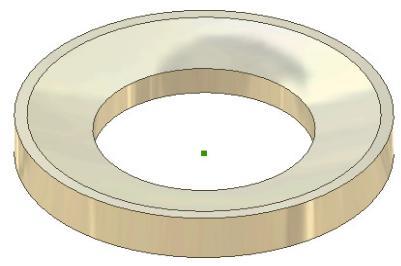
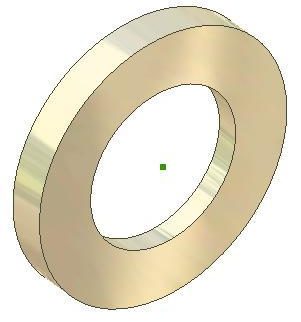
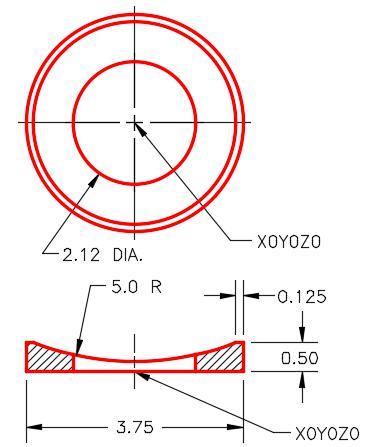
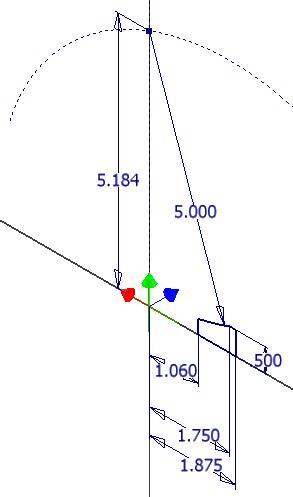
<?xml version="1.0" encoding="UTF-8"?>
<!DOCTYPE html PUBLIC "-//W3C//DTD XHTML 1.1//EN" "http://www.w3.org/TR/xhtml11/DTD/xhtml11.dtd">
<html xmlns="http://www.w3.org/1999/xhtml" xml:lang="en">
<head>
<meta content="text/html; charset=UTF-8" http-equiv="content-type" />
<meta http-equiv="Content-Language" content="en" />
<meta name="generator" content="Pressbooks 6.8.0" />
<meta name="pb-editors" content="Bruce McGarvie" />
<meta name="pb-authors" content="Wally Baumback" />
<meta name="pb-title" content="Introduction to Drafting and Autodesk Inventor" />
<meta name="pb-language" content="en-ca" />
<meta name="pb-cover-image" content="https://opentextbc.ca/autodesk/wp-content/uploads/sites/377/2022/12/OTB267-02-Introduction-to-Drafting-and-Autodesk-Inventor-COVER-STORE.jpg" />
<meta name="pb-short-title" content="Autodesk Inventor" />
<meta name="pb-copyright-year" content="2021" />
<meta name="pb-about-50" content="This book contains self-paced learning modules that were written as a tool to guide and teach you to master Inventor. No two students learn at the same pace, therefore, the modules were written as competency-based bite-size pieces to allow you to work at your own pace. They can be used in correspondence courses, online courses, instructor-lead classes or by individuals teaching themselves to use Inventor in their own home or office." />
<meta name="pb-primary-subject" content="TBG" />
<meta name="pb-publisher" content="BCcampus" />
<meta name="pb-publisher-city" content="Victoria, B.C." />
<meta name="pb-publication-date" content="1636070400" />
<meta name="pb-book-license" content="cc-by" />
<meta name="pb-custom-copyright" content="© 2021 Vancouver Community CollegeThe CC licence permits you to retain, reuse, copy, redistribute, and revise this book—in whole or in part—for free providing the author is attributed as follows:Introduction to Drafting and Autodesk Inventor by Wally Baumback, edited by Bruce McGarvie, and copyrighted by Vancouver Community College is licensed under a CC BY 4.0 licence.Exceptions to the CC BY licence:The following are registered trademarks of Autodesk, Inc., in the USA and/or other countries: AutoCAD®, AutoCAD LT®, Autodesk®, Autodesk Inventor®, AutoLISP®, AutoSketch®, AutoSnap™, AutoTrack™, DesignCenter™, DesignStudio®, DWF™, DWG™, DWGX™, DXF™, Inventor®, Inventor LT™, Mechanical Desktop®, ObjectARX®, ObjectDBX™, RasterDWG®, RealDWG®, Revit®, Revit LT™, SketchBook®, SteeringWheels®, TrustedDWG™, ViewCube®, Visual®, Visual LISP®.Images of Autodesk software are not included under the Creative Commons licence.If you redistribute all or part of this book, it is recommended the following statement be added to the copyright page so readers can access the original book at no cost:Download for free from the B.C. Open Collection.Sample APA-style citation (7th Edition):Baumback, W. (2021). Introduction to drafting and Autodesk Inventor (B. McGarvie, Ed.). BCcampus. https://opentextbc.ca/autodesk/Cover image attribution:“City Light employee at drafting table, 1974” from the Seattle Municipal Archives is licensed under a CC BY 2.0 licence.Ebook ISBN: 978-1-77420-138-1Print ISBN: 978-1-77420-137-4Visit BCcampus Open Education to learn about open education in British Columbia." />
<meta name="pb-is-based-on" content="https://pressbooks.bccampus.ca/autodeskinventor" />
<meta name="pb-additional-subjects" content="UGL, TBC" />
<title>Introduction to Drafting and Autodesk Inventor</title>
</head>
<body lang='en' >
<div id="half-title-page"><h1 class="title">Introduction to Drafting and Autodesk Inventor</h1></div>
<div id="title-page">
			<h1 class="title">Introduction to Drafting and Autodesk Inventor</h1>
		<h2 class="subtitle"></h2>
					<p class="author">Wally Baumback</p>
								<p class="publisher">BCcampus</p>
		<p class="publisher-city">Victoria, B.C.</p>
	</div>
<div id="copyright-page">
	<div class="ugc">
					
<div class="license-attribution"><p><img src="https://opentextbc.ca/autodesk/wp-content/themes/pressbooks-book/packages/buckram/assets/images/cc-by.svg" alt="Icon for the Creative Commons Attribution 4.0 International License" /></p><p>Introduction to Drafting and Autodesk Inventor by Wally Baumback is licensed under a <a rel="license" href="https://creativecommons.org/licenses/by/4.0/">Creative Commons Attribution 4.0 International License</a>, except where otherwise noted.</p></div>

							<p>© 2021 Vancouver Community College</p><p>The CC licence permits you to retain, reuse, copy, redistribute, and revise this book—in whole or in part—for free providing the author is attributed as follows:</p><div class="textbox"><a href="https://opentextbc.ca/autodesk/"><em>Introduction to Drafting and Autodesk Inventor</em></a> by Wally Baumback, edited by Bruce <span dir="ltr" role="presentation">McGarvie,</span> and copyrighted by Vancouver Community College is licensed under a <a href="http://creativecommons.org/licenses/by/4.0/">CC BY 4.0 licence</a>.</div><div>Exceptions to the CC BY licence:</div><div><p>The following are registered trademarks of Autodesk, Inc., in the USA and/or other countries: AutoCAD®, AutoCAD LT®, Autodesk®, Autodesk Inventor®, AutoLISP®, AutoSketch®, AutoSnap™, AutoTrack™, DesignCenter™, DesignStudio®, DWF™, DWG™, DWGX™, DXF™, Inventor®, Inventor LT™, Mechanical Desktop®, ObjectARX®, ObjectDBX™, RasterDWG®, RealDWG®, Revit®, Revit LT™, SketchBook®, SteeringWheels®, TrustedDWG™, ViewCube®, Visual®, Visual LISP®.</p><p>Images of Autodesk software are not included under the Creative Commons licence.</p></div><p>If you redistribute all or part of this book, it is recommended the following statement be added to the copyright page so readers can access the original book at no cost:</p><div class="textbox">Download for free from the <a href="https://collection.bccampus.ca/" target="_blank" rel="noopener">B.C. Open Collection</a>.</div><p><strong>Sample APA-style citation (7th Edition):</strong></p><div class="textbox">Baumback, W. (2021). <em>Introduction to drafting and Autodesk Inventor</em> (B. McGarvie, Ed.). BCcampus. https://opentextbc.ca/autodesk/</div><p><strong>Cover image attribution:</strong></p><div class="textbox">“<a href="https://flic.kr/p/2j8ZsNP">City Light employee at drafting table, 1974</a>” from the <a href="https://www.flickr.com/photos/seattlemunicipalarchives/">Seattle Municipal Archives</a> is licensed under a <a href="https://creativecommons.org/licenses/by/2.0/">CC BY 2.0 licence</a>.</div><p><strong>Ebook ISBN:</strong> 978-1-77420-138-1<br /><strong>Print ISBN:</strong> 978-1-77420-137-4</p><p>Visit <a href="http://open.bccampus.ca/">BCcampus Open Education</a> to learn about open education in British Columbia.</p>
							</div>
</div>
<div id="toc">
	<h1>Contents</h1>
	<ul>
					<li class="front-matter miscellaneous">
	<a href="#front-matter-accessibility-statement">
		<span class="toc-chapter-title">Accessibility Statement</span>
							</a>
	</li>

					<li class="front-matter miscellaneous">
	<a href="#front-matter-for-students-how-to-access-and-use-this-textbook">
		<span class="toc-chapter-title">For Students: How to Access and Use this Textbook</span>
							</a>
	</li>

					<li class="front-matter miscellaneous">
	<a href="#front-matter-about-bccampus-open-education">
		<span class="toc-chapter-title">About BCcampus Open Education</span>
							</a>
	</li>

					<li class="front-matter introduction">
	<a href="#front-matter-introduction">
		<span class="toc-chapter-title">Introduction</span>
							</a>
	</li>

					<li class="front-matter post-introduction miscellaneous">
	<a href="#front-matter-configuring-your-inventor-software">
		<span class="toc-chapter-title">Configuring Your Inventor Software</span>
							</a>
	</li>

					<li class="part">
	<a href="#part-module-1-projects">
					Part 1
			</a>
</li>

					<li class="chapter standard">
	<a href="#chapter-projects">
		<span class="toc-chapter-title">Module 1 Projects</span>
							</a>
	</li>

					<li class="chapter standard">
	<a href="#chapter-inventors-user-interface">
		<span class="toc-chapter-title">Module 2 Inventor’s User Interface</span>
							</a>
	</li>

					<li class="chapter standard">
	<a href="#chapter-viewing-the-2d-sketch-and-3d-model">
		<span class="toc-chapter-title">Module 3 Viewing the 2D Sketch and 3D Model</span>
							</a>
	</li>

					<li class="chapter standard">
	<a href="#chapter-sketching-lines">
		<span class="toc-chapter-title">Module 4 Sketching Lines</span>
							</a>
	</li>

					<li class="chapter standard">
	<a href="#chapter-extruding-part-1">
		<span class="toc-chapter-title">Module 5 Extruding – Part 1</span>
							</a>
	</li>

					<li class="chapter standard">
	<a href="#chapter-competency-test-no-1">
		<span class="toc-chapter-title">Module 6 Competency Test No. 1 Open Book</span>
							</a>
	</li>

					<li class="part">
	<a href="#part-part-1">
					Part 2
			</a>
</li>

					<li class="chapter standard">
	<a href="#chapter-extruding-part-2">
		<span class="toc-chapter-title">Module 7 Extruding – Part 2</span>
							</a>
	</li>

					<li class="chapter standard">
	<a href="#chapter-multiview-drawings">
		<span class="toc-chapter-title">Module 8 Multiview Drawings</span>
							</a>
	</li>

					<li class="chapter standard">
	<a href="#chapter-visualizing-3d-models">
		<span class="toc-chapter-title">Module 9 Visualizing 3D Models</span>
							</a>
	</li>

					<li class="chapter standard">
	<a href="#chapter-slug-2d-sketching-planes">
		<span class="toc-chapter-title">Module 10 2D Sketching Planes</span>
							</a>
	</li>

					<li class="chapter standard">
	<a href="#chapter-competency-test-no-2">
		<span class="toc-chapter-title">Module 11 Competency Test No. 2 Open Book</span>
							</a>
	</li>

					<li class="part">
	<a href="#part-part-3">
					Part 3
			</a>
</li>

					<li class="chapter standard">
	<a href="#chapter-circles">
		<span class="toc-chapter-title">Module 12 Circles</span>
							</a>
	</li>

					<li class="chapter standard">
	<a href="#chapter-arcs">
		<span class="toc-chapter-title">Module 13 Arcs</span>
							</a>
	</li>

					<li class="chapter standard">
	<a href="#chapter-revolving">
		<span class="toc-chapter-title">Module 14 Revolving</span>
							</a>
	</li>

					<li class="chapter standard">
	<a href="#chapter-fillet-and-chamfer-features">
		<span class="toc-chapter-title">Module 15 Fillet and Chamfer Features</span>
							</a>
	</li>

					<li class="chapter standard">
	<a href="#chapter-competency-test-no-3">
		<span class="toc-chapter-title">Module 16 Competency Test No.3 Open Book</span>
							</a>
	</li>

					<li class="part">
	<a href="#part-part-4">
					Part 4
			</a>
</li>

					<li class="chapter standard">
	<a href="#chapter-angles">
		<span class="toc-chapter-title">Module 17 Angles</span>
							</a>
	</li>

					<li class="chapter standard">
	<a href="#chapter-editing-geometry">
		<span class="toc-chapter-title">Module 18 Editing Geometry</span>
							</a>
	</li>

					<li class="chapter standard">
	<a href="#chapter-work-features">
		<span class="toc-chapter-title">Module 19 Work Features</span>
							</a>
	</li>

					<li class="chapter standard">
	<a href="#chapter-modifying-solid-models">
		<span class="toc-chapter-title">Module 20 Modifying Solid Models</span>
							</a>
	</li>

					<li class="chapter standard">
	<a href="#chapter-competency-test-no-4">
		<span class="toc-chapter-title">Module 21 Competency Test No. 4 Open Book</span>
							</a>
	</li>

					<li class="part">
	<a href="#part-part-5">
					Part 5
			</a>
</li>

					<li class="chapter standard">
	<a href="#chapter-assemblies">
		<span class="toc-chapter-title">Module 22 Assemblies</span>
							</a>
	</li>

					<li class="chapter standard">
	<a href="#chapter-presentation-files">
		<span class="toc-chapter-title">Module 23 Presentation Files</span>
							</a>
	</li>

					<li class="chapter standard">
	<a href="#chapter-slug-2d-drawings-part-1">
		<span class="toc-chapter-title">Module 24 2D Drawings – Part 1</span>
							</a>
	</li>

					<li class="chapter standard">
	<a href="#chapter-slug-2d-drawings-part-2">
		<span class="toc-chapter-title">Module 25 2D Drawings – Part 2</span>
							</a>
	</li>

					<li class="chapter standard">
	<a href="#chapter-competency-test-no-5-open-book">
		<span class="toc-chapter-title">Module 26 Competency Test No. 5 Open Book</span>
							</a>
	</li>

					<li class="back-matter appendix">
	<a href="#back-matter-appendix">
		<span class="toc-chapter-title">Appendix Module Index</span>
							</a>
	</li>

					<li class="back-matter miscellaneous">
	<a href="#back-matter-versioning-history">
		<span class="toc-chapter-title">Versioning History</span>
							</a>
	</li>

			</ul>
</div>
<div class="front-matter miscellaneous " id="front-matter-accessibility-statement" title="Accessibility Statement">
	<div class="front-matter-title-wrap">
		<p class="front-matter-number">1</p>
		<h1 class="front-matter-title">Accessibility Statement</h1>
								</div>
	<div class="ugc front-matter-ugc">
				 <p>BCcampus Open Education believes that education must be available to everyone. This means supporting the creation of free, open, and accessible educational resources. We are actively committed to increasing the accessibility and usability of the textbooks we produce.</p> <h1>Accessibility of This Textbook</h1> <p>This textbook is an adaptation of an existing textbook that was not published by us. Due to its size and the complexity of the content, we did not have capacity to remediate the content to bring it up to our accessibility standards at the time of publication. This is something we hope to come back to in the future.</p> <p>In the mean time, we have done our best to be transparent about the existing accessibility barriers and features below:</p> <table class="grid" style="width: 100%; height: 288px;"><caption>Accessibility Checklist</caption> <tbody><tr style="height: 18px;"><th style="height: 18px;" scope="col">Element</th> <th style="height: 18px;" scope="col">Requirements</th> <th style="height: 18px;" scope="col">Pass?</th> </tr> <tr style="height: 18px;"><th style="height: 18px;" scope="row">Headings</th> <td style="height: 18px;">Content is organized under headings and subheadings that are used sequentially.</td> <td style="height: 18px;">Yes</td> </tr> <tr style="height: 36px;"><th style="height: 36px;" scope="row">Images</th> <td style="height: 36px;">Images that convey information include alternative text descriptions. These descriptions are provided in the alt text field, in the surrounding text, or linked to as a long description.</td> <td style="height: 36px;">No</td> </tr> <tr style="height: 18px;"><th style="height: 18px;" scope="row">Images</th> <td style="height: 18px;">Images and text do not rely on colour to convey information.</td> <td style="height: 18px;">Yes</td> </tr> <tr style="height: 36px;"><th style="height: 36px;" scope="row">Images</th> <td style="height: 36px;">Images that are purely decorative or are already described in the surrounding text contain empty alternative text descriptions. (Descriptive text is unnecessary if the image doesn’t convey contextual content information.)</td> <td style="height: 36px;">Yes</td> </tr> <tr style="height: 18px;"><th style="height: 18px;" scope="row">Tables</th> <td style="height: 18px;">Tables include row and/or column headers that have the correct scope assigned.</td> <td style="height: 18px;">Yes</td> </tr> <tr style="height: 18px;"><th style="height: 18px;" scope="row">Tables</th> <td style="height: 18px;">Tables do not have merged or split cells.</td> <td style="height: 18px;">Yes</td> </tr> <tr style="height: 18px;"><th style="height: 18px;" scope="row">Tables</th> <td style="height: 18px;">Tables have adequate cell padding.</td> <td style="height: 18px;">Yes</td> </tr> <tr style="height: 18px;"><th style="height: 18px;" scope="row">Links</th> <td style="height: 18px;">The link text describes the destination of the link.</td> <td style="height: 18px;">Yes</td> </tr> <tr style="height: 18px;"><th style="height: 18px;" scope="row">Links</th> <td style="height: 18px;">Links do not open new windows or tabs. If they do, a textual reference is included in the link text.</td> <td style="height: 18px;">Yes</td> </tr> <tr style="height: 18px;"><th style="height: 18px;"><strong>Links</strong></th> <td style="height: 18px;">Links to files include the file type in the link text.</td> <td style="height: 18px;">Yes</td> </tr> <tr style="height: 18px;"><th style="height: 18px;" scope="row">Font</th> <td style="height: 18px;">Font size is 12 point or higher for body text.</td> <td style="height: 18px;">Yes</td> </tr> <tr style="height: 18px;"><th style="height: 18px;" scope="row">Font</th> <td style="height: 18px;">Font size is 9 point for footnotes or endnotes.</td> <td style="height: 18px;">Yes</td> </tr> <tr style="height: 18px;"><th style="height: 18px;" scope="row">Font</th> <td style="height: 18px;">Font size can be zoomed to 200% in the webbook or book formats.</td> <td style="height: 18px;">Yes</td> </tr> </tbody> </table> <h1>Known Accessibility Issues and Areas for Improvement</h1> <ul><li>The book relies heavily on screenshots from the Autodesk software. These screenshots do not have alt text. While many of the screenshots are described in the surrounding text, the book has not been reviewed to ensure that the surrounding text is an adequate alternative for all images in the book.</li> </ul> <h1>Let Us Know if You are Having Problems Accessing This Book</h1> <p>We are always looking for ways to make our textbooks more accessible. If you have problems accessing this textbook, please contact us to let us know so we can fix the issue.</p> <p>Please include the following information:</p> <ul><li>The name of the textbook</li> <li>The location of the problem by providing a web address or page description.</li> <li>A description of the problem</li> <li>The computer, software, browser, and any assistive technology you are using that can help us diagnose and solve your issue (e.g., Windows 10, Google Chrome (Version 65.0.3325.181), NVDA screen reader)</li> </ul> <p>You can contact us one of the following ways:</p> <ul><li>Web form: <a href="https://collection.bccampus.ca/contact/" target="_blank" rel="noopener" data-url="https://collection.bccampus.ca/contact/">BCcampus OpenEd Help</a></li> <li>Web form: <a href="https://open.bccampus.ca/browse-our-collection/reporting-an-error/" target="_blank" rel="noopener" data-url="https://open.bccampus.ca/browse-our-collection/reporting-an-error/">Report an Error</a></li> </ul> <p>This statement was last updated on November 5, 2021.</p> <p>The Accessibility Checklist table was adapted from one originally created by the <a href="https://press.rebus.community/the-rebus-guide-to-publishing-open-textbooks/back-matter/accessibility-assessment/" data-url="https://press.rebus.community/the-rebus-guide-to-publishing-open-textbooks/back-matter/accessibility-assessment/">Rebus Community</a> and shared under a <a href="https://creativecommons.org/licenses/by/4.0/" data-url="https://creativecommons.org/licenses/by/4.0/">CC BY 4.0 licence</a>.</p> 
	</div>


	</div>
<div class="front-matter miscellaneous " id="front-matter-for-students-how-to-access-and-use-this-textbook" title="For Students: How to Access and Use this Textbook">
	<div class="front-matter-title-wrap">
		<p class="front-matter-number">2</p>
		<h1 class="front-matter-title">For Students: How to Access and Use this Textbook</h1>
								</div>
	<div class="ugc front-matter-ugc">
				 <p>This textbook is available in the following formats:</p> <ul><li><strong>Online webbook</strong>. You can read this textbook online on a computer or mobile device in one of the following browsers: Chrome, Firefox, Edge, and Safari.</li> <li><strong>PDF</strong>. You can download this book as a PDF to read on a computer (Digital PDF) or print it out (Print PDF).</li> <li><strong>Mobile</strong>. If you want to read this textbook on your phone or tablet, you can use the EPUB (eReader) file.</li> <li><strong>HTML</strong>. An HTML file can be opened in a browser. It has very little style so it doesn’t look very nice, but some people might find it useful.</li> </ul> <p>For more information about the accessibility of this textbook, see the Accessibility Statement.</p> <p>You can access the online webbook and download any of the formats for free here: <a href="https://opentextbc.ca/autodesk/" data-url="https://opentextbc.ca/autodesk/">Introduction to Drafting and Autodesk</a>. To download the book in a different format, look for the “Download this book” drop-down menu and select the file type you want.</p> <table style="width: 100%;"><caption>How can I use the different formats?</caption> <tbody><tr><th style="width: 115.917px;" scope="col">Format</th> <th style="width: 134.95px;" scope="col">Internet required?</th> <th style="width: 157.833px;" scope="col">Device</th> <th style="width: 325.95px;" scope="col">Required apps</th> <th style="width: 498.683px;" scope="col">Features</th> </tr> <tr><td style="width: 115.917px;">Online webbook</td> <td style="width: 134.95px;">Yes</td> <td style="width: 157.833px;">Computer, tablet, phone</td> <td style="width: 325.95px;">An Internet browser (Chrome, Firefox, Edge, or Safari)</td> <td style="width: 498.683px;">Option to enlarge text, and compatible with browser text-to-speech tools.</td> </tr> <tr><td style="width: 115.917px;">PDF</td> <td style="width: 134.95px;">No</td> <td style="width: 157.833px;">Computer, print copy</td> <td style="width: 325.95px;">Adobe Reader (for reading on a computer) or a printer</td> <td style="width: 498.683px;">Ability to highlight and annotate the text. If reading on the computer, you can zoom in.</td> </tr> <tr><td style="width: 115.917px;">EPUB</td> <td style="width: 134.95px;">No</td> <td style="width: 157.833px;">Computer, tablet, phone</td> <td style="width: 325.95px;">An eReader app</td> <td style="width: 498.683px;">Option to enlarge text, change font style, size, and colour.</td> </tr> <tr><td style="width: 115.917px;">HTML</td> <td style="width: 134.95px;">No</td> <td style="width: 157.833px;">Computer, tablet, phone</td> <td style="width: 325.95px;">An Internet browser (Chrome, Firefox, Edge, or Safari)</td> <td style="width: 498.683px;">Compatible with browser text-to-speech tools.</td> </tr> </tbody> </table> <h1>Tips for Using This Textbook</h1> <ul><li><strong>Search the textbook</strong>. <ul><li>If using the online webbook, you can use the search bar in the top right corner to search the entire book for a key word or phrase. To search a specific chapter, open that chapter and use your browser’s search feature by hitting <strong>[Cntr] + [f]</strong> on your keyboard if using a Windows computer or <strong>[Command] + [f] </strong>if using a Mac computer.</li> <li>The <strong>[Cntr] + [f]</strong> and <strong>[Command] + [f]</strong> keys will also allow you to search a PDF, HTML, and EPUB files if you are reading them on a computer.</li> <li>If using an book app to read this textbook, the app should have a built-in search tool.</li> </ul> </li> <li><strong>Navigate the textbook</strong>. <ul><li>This textbook has a table of contents to help you navigate through the book easier. If using the online webbook, you can find the full table of contents on the book’s homepage or by selecting “Contents” from the top menu when you are in a chapter.</li> </ul> </li> <li><strong>Annotate the textbook</strong>. <ul><li>If you like to highlight or write on your textbooks, you can do that by getting a print copy, using the Digital PDF in Adobe Reader, or using the highlighting tools in eReader apps.</li> </ul> </li> </ul> 
	</div>


	</div>
<div class="front-matter miscellaneous " id="front-matter-about-bccampus-open-education" title="About BCcampus Open Education">
	<div class="front-matter-title-wrap">
		<p class="front-matter-number">3</p>
		<h1 class="front-matter-title">About BCcampus Open Education</h1>
								</div>
	<div class="ugc front-matter-ugc">
				 <p>The open publishing of <em>Introduction to Drafting and Autodesk Inventor</em> by Wally Baumback was funded by BCcampus Open Education.</p> <p><a href="https://open.bccampus.ca/" data-url="https://open.bccampus.ca/">BCcampus Open Education</a> began in 2012 as the B.C. Open Textbook Project with the goal of making post-secondary education in British Columbia more accessible by reducing students’ costs through the use of open textbooks and other OER. <a href="https://bccampus.ca/about-us/" rel="noopener" data-url="https://bccampus.ca/about-us/">BCcampus</a> supports the post-secondary institutions of British Columbia as they adapt and evolve their teaching and learning practices to enable powerful learning opportunities for the students of B.C. BCcampus Open Education is funded by the <a href="https://www2.gov.bc.ca/gov/content/governments/organizational-structure/ministries-organizations/ministries/advanced-education-skills-training" rel="noopener" data-url="https://www2.gov.bc.ca/gov/content/governments/organizational-structure/ministries-organizations/ministries/advanced-education-skills-training">British Columbia Ministry of Advanced Education and Skills Training</a> and the <a href="http://www.hewlett.org/" rel="noopener" data-url="http://www.hewlett.org/">Hewlett Foundation</a>.</p> <p>Open educational resources (OER) are teaching, learning, and research resources that, through permissions granted by the copyright holder, allow others to use, distribute, keep, or make changes to them. Our open textbooks are openly licensed using a <a href="https://creativecommons.org/licenses/" data-url="https://creativecommons.org/licenses/">Creative Commons licence</a> and are offered in various book formats free of charge, or as printed books that are available at cost.</p> <p>For more information about open education in British Columbia, please visit the <a href="https://open.bccampus.ca/" data-url="https://open.bccampus.ca/">BCcampus Open Education</a> website. If you are an instructor who is using this book for a course, please fill out our <a href="https://open.bccampus.ca/use-open-textbooks/tell-us-youre-using-an-open-textbook/" data-url="https://open.bccampus.ca/use-open-textbooks/tell-us-youre-using-an-open-textbook/">Adoption of an Open Textbook</a> form.</p> <div class="textbox">This book was produced using the following styles: <a href="https://opentextbc.ca/ethicsinlawenforcement/wp-content/uploads/sites/377/2021/11/AutoCAD-Series-Style-Sheet.docx" data-url="https://opentextbc.ca/ethicsinlawenforcement/wp-content/uploads/sites/377/2021/11/AutoCAD-Series-Style-Sheet.docx">Autodesk Inventor Style Sheet [Word file]</a></div> 
	</div>


	</div>
<div class="front-matter introduction " id="front-matter-introduction" title="Introduction">
	<div class="front-matter-title-wrap">
		<p class="front-matter-number">4</p>
		<h1 class="front-matter-title">Introduction</h1>
								</div>
	<div class="ugc front-matter-ugc">
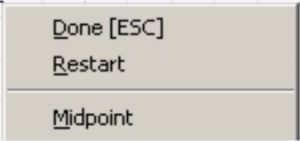
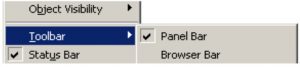
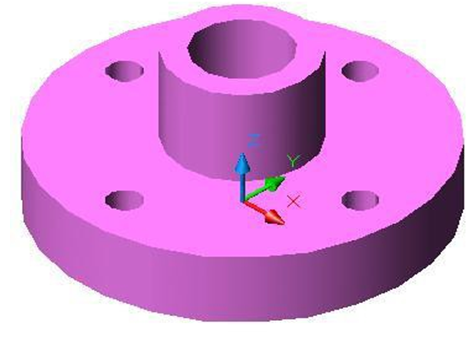
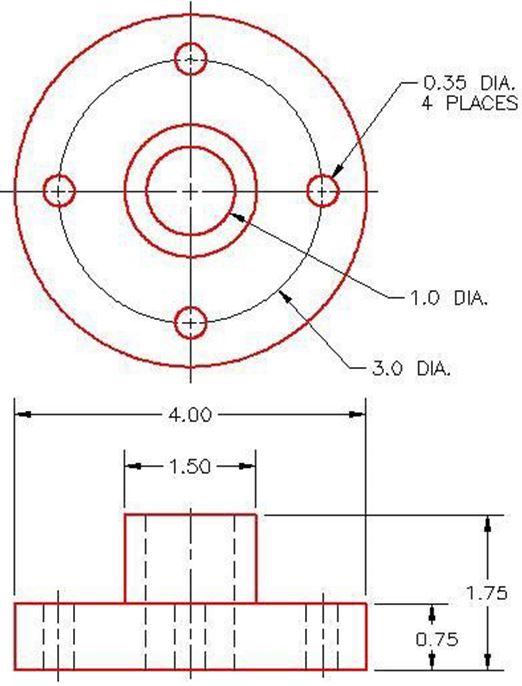
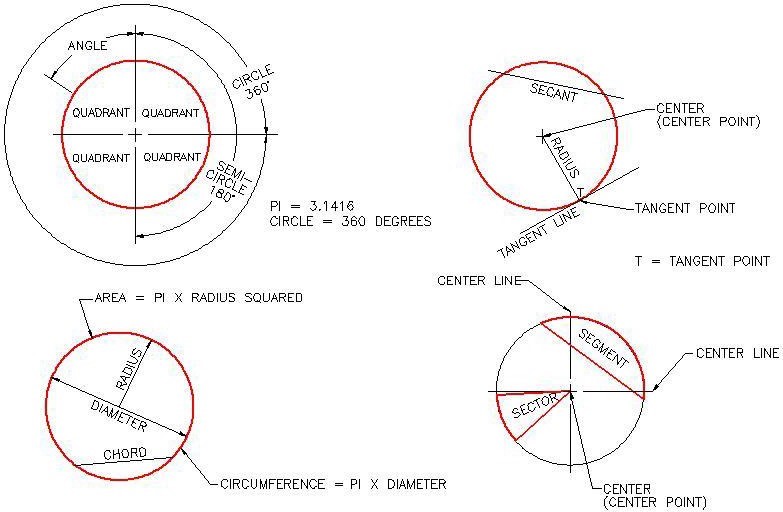
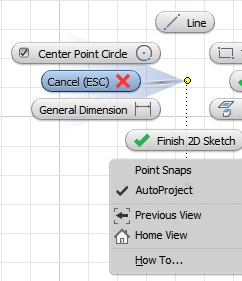
				 <div class="textbox textbox--learning-objectives"><div class="textbox__header"><p class="textbox__title">Learning Outcomes</p> </div> <div class="textbox__content"><p>When you have completed this module, you will be able to:</p> <ol><li>List the software and template files required to complete the Autodesk Inventor book.</li> <li>Describe the Autodesk Inventor book’s philosophy and explain how to use the book to learn how to apply the Inventor commands and features to create Inventor parts, assemblies, and drawings.</li> </ol> </div> </div> <h1>Autodesk Inventor Software Required</h1> <p><em>Introduction to Drafting and Autodesk Inventor</em> was written to be used with Autodesk Inventor Version 2020 and 2021. You must have access to one of these software packages to complete the lab exercises in this book. It can also be used with Inventor 2015 through to 2019, but the interface structure was different and will take a little more poking around to find things.</p> <h1>About the Book</h1> <h2>Philosophy of the Inventor book</h2> <p>This book contains self-paced learning modules that were written as a tool to guide and teach you to master Inventor. No two students learn at the same pace, therefore, the modules were written as competency-based bite-size pieces to allow you to work at your own pace. They can be used in correspondence courses, online courses, instructor-lead classes or by individuals teaching themselves to use Inventor in their own home or office.</p> <h2>Scope of the Inventor books</h2> <p>The Inventor books were written in two parts, Autodesk Inventor and Autodesk Inventor Advanced.</p> <h2>Suggested Prerequisites</h2> <p>To get the most from this book, it is suggested that you have a working knowledge of the Windows operating system that is installed on the computer you are using to learn Inventor. You must be able to send and receive e-mails, complete with attachments. You must also be able to create folders, save files, move files, copy files, rename files, and delete files.</p> <h1>Book Structure and Components</h1> <p>The Autodesk Inventor book modules were written in a very logical step-by-step order. To get the most from this book:</p> <p style="text-align: center;"><span style="color: #ec0000;">Do not skim through them.</span></p> <p style="text-align: center;"><span style="color: #ec0000;">You must read and understand everything in each module.</span></p> <p style="text-align: center;"><span style="color: #ec0000;">Do not jump around inside the module or from module to module. Work your way methodically through each module, page by page.</span></p> <h2>The Modules</h2> <p>The modules were written in a precise order and contain the information you require to learn Inventor. Using Inventor is a never ending learning process and you will continue learning long after you complete these modules.</p> <p>As you work your way through each module, learn and try to understand all of the material. To ensure that you understand it, complete the lab exercise(s) to prove it. Only when you understand everything in the module and can complete the lab exercise(s) in the specified time limit, should you go to the next module.</p> <p>Each module may contain Must Know’s, User Tips, Workalongs, Drafting Lessons, Geometry Lessons, and Lab Exercises.</p> <h2>Must Knows</h2> <p>A <em><span style="color: #ec0000;">Must Know</span> </em>is a an important Inventor principle or fact. You <strong>must </strong>understand and retain each one of these principles as you work your way through the modules. If you cannot understand any one of them, get some help or read back through the module. Do not go on until you fully understand it. See the example below:</p> <p style="text-align: center;"><span style="color: #008000;"><em>(Do not attempt to understand this <span style="text-decoration: underline;">Must Know</span> now, it is here for an example only.)</em></span></p> <div class="textbox shaded"><strong>MUST KNOW:</strong> The ESC key or the right-click menu can be used to end the current command. You must let Inventor know when you want to terminate the command. <img class="aligncenter wp-image-20" src="https://opentextbc.ca/ethicsinlawenforcement/wp-content/uploads/sites/377/2021/07/Done-ESC-300x141.jpg" alt="" width="270" height="127" srcset="https://opentextbc.ca/autodesk/wp-content/uploads/sites/377/2021/07/Done-ESC-300x141.jpg 300w, https://opentextbc.ca/autodesk/wp-content/uploads/sites/377/2021/07/Done-ESC-65x31.jpg 65w, https://opentextbc.ca/autodesk/wp-content/uploads/sites/377/2021/07/Done-ESC-225x106.jpg 225w, https://opentextbc.ca/autodesk/wp-content/uploads/sites/377/2021/07/Done-ESC-350x165.jpg 350w, https://opentextbc.ca/autodesk/wp-content/uploads/sites/377/2021/07/Done-ESC.jpg 537w" title="" /></div> <h2>User Tips</h2> <p><em><span style="color: #ec0000;">User Tips</span> </em>are used in the modules to help you complete models faster and more efficiently. They contain tips, tricks, and ways to use commands that will help you draw faster and increase your productivity. Study them and try to use the tips while doing your labs exercises. Do not memorize them as you will not be tested on them. You can re-read them anytime you wish. They are there to help you work smarter, not harder. For example:</p> <p style="text-align: center;"><span style="color: #008000;"><em>(Do not attempt to understand this <span style="text-decoration: underline;">User Tip</span> now, it is here for an example only.)</em></span></p> <div class="textbox"><strong>USER TIP:</strong> When an Inventor pull-down has a small triangle at the end, there is a flyout menu associated with it. A check mark means that the item is enabled. When there is no check mark, it is disabled.&nbsp; <img class="size-medium wp-image-21 aligncenter" src="https://opentextbc.ca/ethicsinlawenforcement/wp-content/uploads/sites/377/2021/11/flyoutmenu-1-300x67.jpg" alt="" width="300" height="67" srcset="https://opentextbc.ca/autodesk/wp-content/uploads/sites/377/2021/11/flyoutmenu-1-300x67.jpg 300w, https://opentextbc.ca/autodesk/wp-content/uploads/sites/377/2021/11/flyoutmenu-1-1024x229.jpg 1024w, https://opentextbc.ca/autodesk/wp-content/uploads/sites/377/2021/11/flyoutmenu-1-768x172.jpg 768w, https://opentextbc.ca/autodesk/wp-content/uploads/sites/377/2021/11/flyoutmenu-1-1536x343.jpg 1536w, https://opentextbc.ca/autodesk/wp-content/uploads/sites/377/2021/11/flyoutmenu-1-65x15.jpg 65w, https://opentextbc.ca/autodesk/wp-content/uploads/sites/377/2021/11/flyoutmenu-1-225x50.jpg 225w, https://opentextbc.ca/autodesk/wp-content/uploads/sites/377/2021/11/flyoutmenu-1-350x78.jpg 350w, https://opentextbc.ca/autodesk/wp-content/uploads/sites/377/2021/11/flyoutmenu-1.jpg 1616w" title="" /></div> <h2>WORK ALONG</h2> <p><em><span style="color: #ec0000;">Workalongs</span> </em>are there to help you to understand how to use a command or a series of commands to complete models and drawings using Autodesk Inventor. Complete all the steps in each workalong to complete the model or assembly to practice using the command(s) taught in that module. Try to understand how each command works and use those principles to complete the lab exercise on your own.</p> <p style="text-align: center;"><span style="color: #008000;"><em>(Do not attempt to understand this <span style="text-decoration: underline;">Workalong</span> now, it is here for an example only.)</em></span></p> <div class="textbox" style="background-color: #ffffff;"><h2>WORK ALONG Drawing Sketches with Circles</h2> <h2>Step 1</h2> <p>Check the default project and if necessary, set it to <span style="text-decoration: underline;">Inventor Course</span>.</p> <h2>Step 2</h2> <p>Enter the NEW command to start a new part file using the template: <span style="text-decoration: underline;">English-Modules Part (in).ipt</span>.</p> <h2>Step 3</h2> <p>Save the file with the name: <span style="text-decoration: underline;">Inventor Workalong 12-1</span>.</p> <p><img class="aligncenter size-full wp-image-22" src="https://opentextbc.ca/ethicsinlawenforcement/wp-content/uploads/sites/377/2021/11/3d-solid-model.png" alt="" width="467" height="340" srcset="https://opentextbc.ca/autodesk/wp-content/uploads/sites/377/2021/11/3d-solid-model.png 467w, https://opentextbc.ca/autodesk/wp-content/uploads/sites/377/2021/11/3d-solid-model-300x218.png 300w, https://opentextbc.ca/autodesk/wp-content/uploads/sites/377/2021/11/3d-solid-model-65x47.png 65w, https://opentextbc.ca/autodesk/wp-content/uploads/sites/377/2021/11/3d-solid-model-225x164.png 225w, https://opentextbc.ca/autodesk/wp-content/uploads/sites/377/2021/11/3d-solid-model-350x255.png 350w" title="" /></p> <h4>Step 4</h4> <p>Draw the base sketch on the top view. Since this is the XY plane (default plane), use <span style="text-decoration: underline;">Sketch1</span>.</p> <p>&nbsp;</p> <div class="wp-caption aligncenter" id="attachment_23" aria-describedby="caption-attachment-23" style="width: 522px"><img class="size-full wp-image-23" src="https://opentextbc.ca/ethicsinlawenforcement/wp-content/uploads/sites/377/2021/11/dimensione-multiview-drawing.jpg" alt="" width="522" height="686" srcset="https://opentextbc.ca/autodesk/wp-content/uploads/sites/377/2021/11/dimensione-multiview-drawing.jpg 522w, https://opentextbc.ca/autodesk/wp-content/uploads/sites/377/2021/11/dimensione-multiview-drawing-228x300.jpg 228w, https://opentextbc.ca/autodesk/wp-content/uploads/sites/377/2021/11/dimensione-multiview-drawing-65x85.jpg 65w, https://opentextbc.ca/autodesk/wp-content/uploads/sites/377/2021/11/dimensione-multiview-drawing-225x296.jpg 225w, https://opentextbc.ca/autodesk/wp-content/uploads/sites/377/2021/11/dimensione-multiview-drawing-350x460.jpg 350w" title="" /><div class="wp-caption-text" id="caption-attachment-23">Dimensioned Multiview Drawing</div></div> </div> <h2>Geometry and Drafting Lessons</h2> <p>Some modules contain <span style="color: #ec0000;"><em>Drafting Lessons </em></span>and/or <span style="color: #ec0000;"><em>Geometry Lessons</em></span>. They are there to teach you students who do not have any previous drafting/design knowledge or experience. They may also be handy for drafters or designers who need a refresher lesson.</p> <p>If you already know the theory in the lesson, skip it and go on to the next item in the module. If you don’t know it, study it. This theory is not part of the course and you will not be tested on it. You should ensure you read them before you attempt to complete the lab exercises. For example:</p> <p style="text-align: center;"><span style="color: #008000;"><em>(Do not attempt to understand this <span style="text-decoration: underline;">Geometry Lesson</span> now, it is here for an example only.)</em></span></p> <div class="textbox" style="background-color: #ffffff;"><h2>Geometry Lesson: Circles</h2> <p>A <em><span style="color: #ec0000;">circle</span> </em>is defined as a closed curve in which all points on the circle are the same distance from its centre point. The <em><span style="color: #ec0000;">center point</span> </em>is a single XY coordinate. Study Figure 12-1 for a detailed description of the geometry of a circle.</p> <div class="wp-caption aligncenter" id="attachment_24" aria-describedby="caption-attachment-24" style="width: 783px"><img class="size-full wp-image-24" src="https://opentextbc.ca/ethicsinlawenforcement/wp-content/uploads/sites/377/2021/11/12-1.jpg" alt="" width="783" height="512" srcset="https://opentextbc.ca/autodesk/wp-content/uploads/sites/377/2021/11/12-1.jpg 783w, https://opentextbc.ca/autodesk/wp-content/uploads/sites/377/2021/11/12-1-300x196.jpg 300w, https://opentextbc.ca/autodesk/wp-content/uploads/sites/377/2021/11/12-1-768x502.jpg 768w, https://opentextbc.ca/autodesk/wp-content/uploads/sites/377/2021/11/12-1-65x43.jpg 65w, https://opentextbc.ca/autodesk/wp-content/uploads/sites/377/2021/11/12-1-225x147.jpg 225w, https://opentextbc.ca/autodesk/wp-content/uploads/sites/377/2021/11/12-1-350x229.jpg 350w" title="" /><div class="wp-caption-text" id="caption-attachment-24">Figure 12-1<br />Geometry of a Circle</div></div> </div> <h2>Key Principles</h2> <p>Each module contains a list of key principles. The <span style="color: #ec0000;"><em>key principles </em></span>are principles that you should have learned and understand in that module. It is important that you understand each one of these principles as you will be required to use them in future Inventor work. For example:</p> <p style="text-align: center;"><span style="color: #008000;"><em>(Do not attempt to learn the <span style="text-decoration: underline;">Key Principles</span> now, it is here for an example only.)</em></span></p> <div class="textbox textbox--key-takeaways"><div class="textbox__header"><p class="textbox__title">Key Principles in Module 4</p> </div> <div class="textbox__content"><ol><li>The @ symbol means “The last absolute coordinate location”.</li> <li>To close the last line of a series of lines, use either C (Close) or the absolute coordinate of the first point.</li> <li>To delete existing objects on a drawing, you can either use the ERASE command or the Delete key on the keyboard.</li> <li>Objects can either be selected before or after the command is entered.</li> </ol> </div> </div> <h2>Lab Exercises</h2> <p>All lab exercises have a time limit allocated to them. To complete the lab exercise in the specified time limit, you must be able to complete the model or assembly and make any corrections. If you cannot do this in the time allowed, redo the entire lab exercise. It is your way of proving that you have mastered the module.</p> <p>Almost all modules contain at least two lab exercises. It is strongly suggested that you complete all lab exercises, in all modules.</p> <h2>Competency Tests</h2> <p>Every fifth module is a timed competency test module. A <span style="color: #ec0000;"><em>competency test module </em></span>has multiple choice questions and a comprehensive lab exercise to test your mastery of the last four modules that you just completed. If there are any parts of this module that you have trouble completing or you cannot complete in the time allowed, you should go back and reread the module or modules containing the information that you are having trouble with. If necessary, redo any lab exercises to help you learn the material.</p> <h2>Book Conventions and Symbols</h2> <p>The following conventions and symbols are used in the modules to help you understand the material.</p> <h2>Words in Red Italics</h2> <p>Words in <span style="color: #ec0000;"><em>red italics </em></span>are new terms being introduced in that module. They will only appear in italics the first time they are mentioned and will be defined. For example:</p> <p><span style="color: #ec0000;"><em>Construction objects </em></span>are objects that are drawn in the sketch to assist the operator in completing the sketch but will be ignored by Inventor when the sketch is extruded or revolved.</p> <h2>Command Names</h2> <p>Command names are always in uppercase. For example:</p> <p>To construct a fillet, use the FILLET command. The rule of thumb to follow is “If the arc you are drawing is tangent to both objects it is connecting to, use the FILLET command to insert it”.</p> <h2>Author’s Comments</h2> <p>There are author comment’s throughout the modules. For example:</p> <div class="textbox author"><p><strong>AUTHOR’S COMMENTS: </strong>Note the location of X0Y0Z0 icon. The icon’s vertex is located at X0Y0Z0. The red arrow points in the positive X direction, the green arrow points in the positive Y direction and the blue arrow points in the positive Z direction.</p> </div> <div class="textbox textbox--key-takeaways"><div class="textbox__header"><p class="textbox__title">Key Principles in Module Introduction 1</p> </div> <div class="textbox__content"><ol><li>To complete the lab exercises in this book, you must have the template files that accompany it, on your hard disk drive.</li> <li>Do not skim through the modules. You must read and understand everything in each module. Do not jump around inside the module or from module to module. Work your way methodically through each module, page by page.</li> <li>The Inventor Self-paced book’s modules were written as competency-based bite-size pieces to allow you to work at your own pace and learn to use Inventor. Do not go onto the next module until you understand the module you are working on and have completed the lab exercise(s).</li> <li>All lab exercises have a time limit allocated to them. To complete the lab exercise in the specified time limit, you must be able to complete the model or assembly and make any corrections. If you cannot do this in the time allowed, redo the entire lab exercise. It is your way of proving that you have mastered the module.</li> </ol> </div> </div> <p style="text-align: center;"><strong>Do not memorize Inventor – UNDERSTAND it.</strong></p> <p style="text-align: center;"><strong>Have fun on your journey into the fascinating, never-ending world of learning and mastering Inventor.</strong></p> 
	</div>


	</div>
<div class="front-matter miscellaneous post-introduction " id="front-matter-configuring-your-inventor-software" title="Configuring Your Inventor Software">
	<div class="front-matter-title-wrap">
		<p class="front-matter-number">5</p>
		<h1 class="front-matter-title">Configuring Your Inventor Software</h1>
								</div>
	<div class="ugc front-matter-ugc">
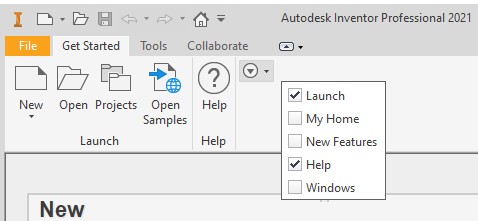
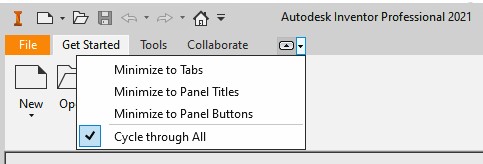
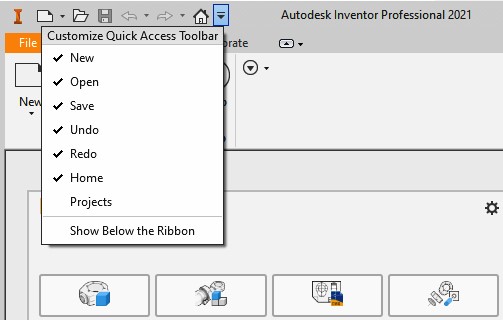
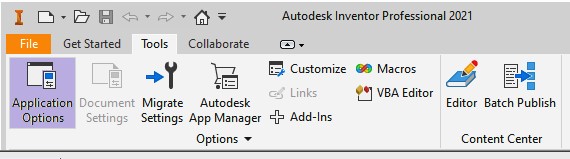
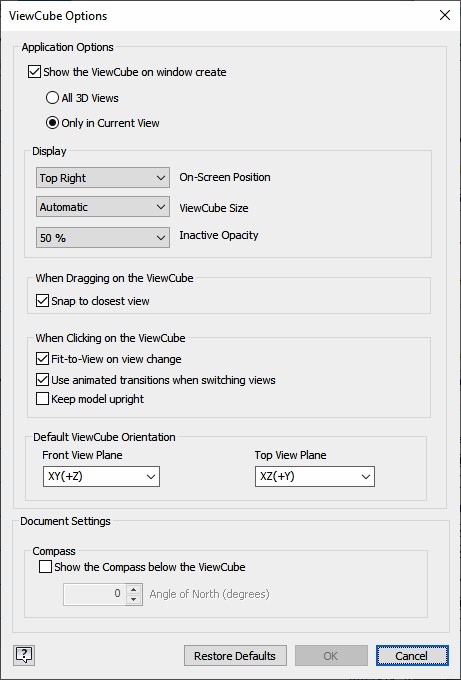
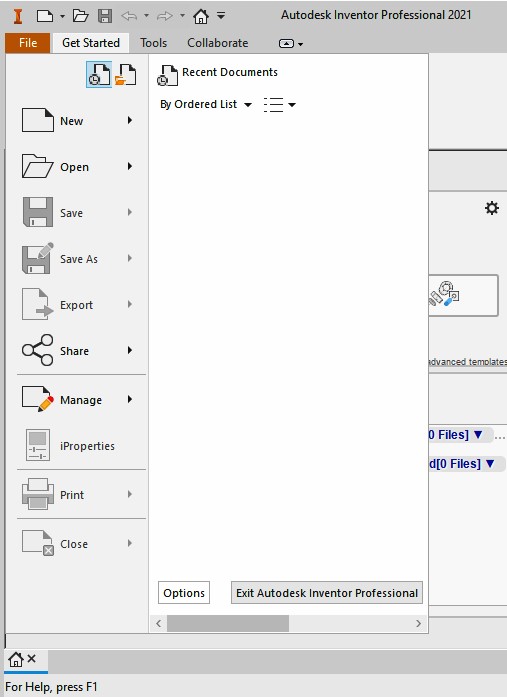
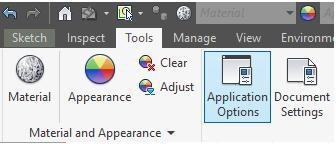
				 <div class="textbox textbox--learning-objectives"><div class="textbox__header"><p class="textbox__title">Learning Outcomes</p> </div> <div class="textbox__content"><p>When you have completed this module, you will be able to:</p> <ol><li>Configure your Inventor software for the Inventor book.</li> </ol> </div> </div> <h1>WORK ALONG: Configuring your Inventor Software for the Inventor book</h1> <p>Complete all of the following steps:</p> <h2>Step 1</h2> <p>Start Inventor. Your screen should appear similar to the figure. Your colors may not be the same, but the basic configuration should be. If any additional dialogue boxes or windows open, close them. (Figure Step 1)</p> <div class="wp-caption aligncenter" id="attachment_38" aria-describedby="caption-attachment-38" style="width: 615px"><a href="https://opentextbc.ca/autodesk/wp-content/uploads/sites/1381/2021/05/Fig-Step-1.jpg" data-url="https://opentextbc.ca/autodesk/wp-content/uploads/sites/1381/2021/05/Fig-Step-1.jpg"><img class="wp-image-26" src="https://opentextbc.ca/ethicsinlawenforcement/wp-content/uploads/sites/377/2021/05/Fig-Step-1.jpg" alt="" width="615" height="326" srcset="https://opentextbc.ca/autodesk/wp-content/uploads/sites/377/2021/05/Fig-Step-1.jpg 1374w, https://opentextbc.ca/autodesk/wp-content/uploads/sites/377/2021/05/Fig-Step-1-300x159.jpg 300w, https://opentextbc.ca/autodesk/wp-content/uploads/sites/377/2021/05/Fig-Step-1-1024x543.jpg 1024w, https://opentextbc.ca/autodesk/wp-content/uploads/sites/377/2021/05/Fig-Step-1-768x407.jpg 768w, https://opentextbc.ca/autodesk/wp-content/uploads/sites/377/2021/05/Fig-Step-1-65x34.jpg 65w, https://opentextbc.ca/autodesk/wp-content/uploads/sites/377/2021/05/Fig-Step-1-225x119.jpg 225w, https://opentextbc.ca/autodesk/wp-content/uploads/sites/377/2021/05/Fig-Step-1-350x186.jpg 350w" title="" /></a><div class="wp-caption-text" id="caption-attachment-38">Figure Step 1 [Click to see image full size]</div></div> <div class="textbox author"><strong>AUTHOR’S COMMENTS:</strong> Inventor 2020 and 2021: Your screen might differ slightly from the one shown in the figure; colors in particular. Inventor 2019 and earlier: The basic header area will be quite similar, but the main screen area will be empty. Similarly, there may be slight differences in the colors and appearance of interface elements throughout this book.</div> <h2>Step 2</h2> <p>Click the arrow icon at the end of the Ribbon menu (beside the Help ? icon). Set the pull- down menu by enabling or disabling features to match the figure. (Figure Step 2)Step 2 Click the arrow icon at the end of the Ribbon menu (beside the Help ? icon). Set the pull- down menu by enabling or disabling features to match the figure. (Figure Step 2)</p> <div class="wp-caption aligncenter" aria-describedby="caption-attachment-38" style="width: 478px"><img class="size-full wp-image-27" src="https://opentextbc.ca/ethicsinlawenforcement/wp-content/uploads/sites/377/2021/11/Fig-Step-2.jpg" alt="" width="478" height="221" srcset="https://opentextbc.ca/autodesk/wp-content/uploads/sites/377/2021/11/Fig-Step-2.jpg 478w, https://opentextbc.ca/autodesk/wp-content/uploads/sites/377/2021/11/Fig-Step-2-300x139.jpg 300w, https://opentextbc.ca/autodesk/wp-content/uploads/sites/377/2021/11/Fig-Step-2-65x30.jpg 65w, https://opentextbc.ca/autodesk/wp-content/uploads/sites/377/2021/11/Fig-Step-2-225x104.jpg 225w, https://opentextbc.ca/autodesk/wp-content/uploads/sites/377/2021/11/Fig-Step-2-350x162.jpg 350w" title="" /><div class="wp-caption-text">Figure Step 2</div></div> <h2>Step 3</h2> <p>Click the small down-arrow icon on the right side of the Pull-down menu. Enable Cycle through All. (Figure Step 3) The arrow with the box around it will now cycle you through three variants of interface display configurations.</p> <div class="wp-caption aligncenter" aria-describedby="caption-attachment-38" style="width: 483px"><img class="size-full wp-image-28" src="https://opentextbc.ca/ethicsinlawenforcement/wp-content/uploads/sites/377/2021/11/Fig-Step-3.jpg" alt="" width="483" height="164" srcset="https://opentextbc.ca/autodesk/wp-content/uploads/sites/377/2021/11/Fig-Step-3.jpg 483w, https://opentextbc.ca/autodesk/wp-content/uploads/sites/377/2021/11/Fig-Step-3-300x102.jpg 300w, https://opentextbc.ca/autodesk/wp-content/uploads/sites/377/2021/11/Fig-Step-3-65x22.jpg 65w, https://opentextbc.ca/autodesk/wp-content/uploads/sites/377/2021/11/Fig-Step-3-225x76.jpg 225w, https://opentextbc.ca/autodesk/wp-content/uploads/sites/377/2021/11/Fig-Step-3-350x119.jpg 350w" title="" /><div class="wp-caption-text">Figure Step 3</div></div> <h2 class="page-break-before">Step 4</h2> <p>Click the arrow icon at the end of the quick-access toolbar (by the little house icon). Make sure the enabled and disabled features match the figure. (Figure Step 4)</p> <div class="wp-caption aligncenter" aria-describedby="caption-attachment-38" style="width: 503px"><img class="size-full wp-image-29" src="https://opentextbc.ca/ethicsinlawenforcement/wp-content/uploads/sites/377/2021/11/Fig-Step-4.jpg" alt="" width="503" height="320" srcset="https://opentextbc.ca/autodesk/wp-content/uploads/sites/377/2021/11/Fig-Step-4.jpg 503w, https://opentextbc.ca/autodesk/wp-content/uploads/sites/377/2021/11/Fig-Step-4-300x191.jpg 300w, https://opentextbc.ca/autodesk/wp-content/uploads/sites/377/2021/11/Fig-Step-4-65x41.jpg 65w, https://opentextbc.ca/autodesk/wp-content/uploads/sites/377/2021/11/Fig-Step-4-225x143.jpg 225w, https://opentextbc.ca/autodesk/wp-content/uploads/sites/377/2021/11/Fig-Step-4-350x223.jpg 350w" title="" /><div class="wp-caption-text">Figure Step 4</div></div> <h2>Step 5</h2> <p>Click <em>Tools </em>on the menu at the top of the window. Click the Application Options icon as shown in Figure Step 5. This will open the Application Options dialogue box (Figure Step 6).</p> <div class="wp-caption aligncenter" aria-describedby="caption-attachment-38" style="width: 570px"><img class="size-full wp-image-30" src="https://opentextbc.ca/ethicsinlawenforcement/wp-content/uploads/sites/377/2021/11/Fig-Step-5.jpg" alt="" width="570" height="159" srcset="https://opentextbc.ca/autodesk/wp-content/uploads/sites/377/2021/11/Fig-Step-5.jpg 570w, https://opentextbc.ca/autodesk/wp-content/uploads/sites/377/2021/11/Fig-Step-5-300x84.jpg 300w, https://opentextbc.ca/autodesk/wp-content/uploads/sites/377/2021/11/Fig-Step-5-65x18.jpg 65w, https://opentextbc.ca/autodesk/wp-content/uploads/sites/377/2021/11/Fig-Step-5-225x63.jpg 225w, https://opentextbc.ca/autodesk/wp-content/uploads/sites/377/2021/11/Fig-Step-5-350x98.jpg 350w" title="" /><div class="wp-caption-text">Figure Step 5</div></div> <h2 class="page-break-before">Step 6</h2> <p>Click on the General tab. Compare the settings of your inventor with the figure. If the settings do not match, change yours to match. (Figure Step 6)</p> <div class="wp-caption aligncenter" aria-describedby="caption-attachment-38" style="width: 500px"><a href="https://opentextbc.ca/autodesk/wp-content/uploads/sites/1381/2021/05/Fig-Step-6.jpg" data-url="https://opentextbc.ca/autodesk/wp-content/uploads/sites/1381/2021/05/Fig-Step-6.jpg"><img class="wp-image-31" src="https://opentextbc.ca/ethicsinlawenforcement/wp-content/uploads/sites/377/2021/11/Fig-Step-6.jpg" alt="" width="500" height="740" srcset="https://opentextbc.ca/autodesk/wp-content/uploads/sites/377/2021/11/Fig-Step-6.jpg 677w, https://opentextbc.ca/autodesk/wp-content/uploads/sites/377/2021/11/Fig-Step-6-203x300.jpg 203w, https://opentextbc.ca/autodesk/wp-content/uploads/sites/377/2021/11/Fig-Step-6-65x96.jpg 65w, https://opentextbc.ca/autodesk/wp-content/uploads/sites/377/2021/11/Fig-Step-6-225x333.jpg 225w, https://opentextbc.ca/autodesk/wp-content/uploads/sites/377/2021/11/Fig-Step-6-350x518.jpg 350w" title="" /></a><div class="wp-caption-text">Figure Step 6 [Click to see image full size]</div></div> <h2 class="page-break-before">Step 7</h2> <p>Enable the Sketch tab. Compare the settings of your inventor with the figure. If the settings do not match, change yours to match. (Figure Step 7)</p> <div class="wp-caption aligncenter" aria-describedby="caption-attachment-38" style="width: 500px"><a href="https://opentextbc.ca/autodesk/wp-content/uploads/sites/1381/2021/05/Fig-Step-7.jpg" data-url="https://opentextbc.ca/autodesk/wp-content/uploads/sites/1381/2021/05/Fig-Step-7.jpg"><img class="wp-image-32" src="https://opentextbc.ca/ethicsinlawenforcement/wp-content/uploads/sites/377/2021/11/Fig-Step-7.jpg" alt="" width="500" height="740" srcset="https://opentextbc.ca/autodesk/wp-content/uploads/sites/377/2021/11/Fig-Step-7.jpg 677w, https://opentextbc.ca/autodesk/wp-content/uploads/sites/377/2021/11/Fig-Step-7-203x300.jpg 203w, https://opentextbc.ca/autodesk/wp-content/uploads/sites/377/2021/11/Fig-Step-7-65x96.jpg 65w, https://opentextbc.ca/autodesk/wp-content/uploads/sites/377/2021/11/Fig-Step-7-225x333.jpg 225w, https://opentextbc.ca/autodesk/wp-content/uploads/sites/377/2021/11/Fig-Step-7-350x518.jpg 350w" title="" /></a><div class="wp-caption-text">Figure Step 7 [Click to see image full size]</div></div> <h2 class="page-break-before">Step 8</h2> <p>Enable the Part tab. Compare the settings of your inventor with the figure. If the settings do not match, change yours to match. (Figure Step 8)</p> <div class="wp-caption aligncenter" aria-describedby="caption-attachment-38" style="width: 500px"><a href="https://opentextbc.ca/autodesk/wp-content/uploads/sites/1381/2021/05/Fig-Step-8.jpg" data-url="https://opentextbc.ca/autodesk/wp-content/uploads/sites/1381/2021/05/Fig-Step-8.jpg"><img class="wp-image-33" src="https://opentextbc.ca/ethicsinlawenforcement/wp-content/uploads/sites/377/2021/11/Fig-Step-8.jpg" alt="" width="500" height="740" srcset="https://opentextbc.ca/autodesk/wp-content/uploads/sites/377/2021/11/Fig-Step-8.jpg 677w, https://opentextbc.ca/autodesk/wp-content/uploads/sites/377/2021/11/Fig-Step-8-203x300.jpg 203w, https://opentextbc.ca/autodesk/wp-content/uploads/sites/377/2021/11/Fig-Step-8-65x96.jpg 65w, https://opentextbc.ca/autodesk/wp-content/uploads/sites/377/2021/11/Fig-Step-8-225x333.jpg 225w, https://opentextbc.ca/autodesk/wp-content/uploads/sites/377/2021/11/Fig-Step-8-350x518.jpg 350w" title="" /></a><div class="wp-caption-text">Figure Step 8 [Click to see image full size]</div></div> <h2 class="page-break-before">Step 9</h2> <p>Enable the Display tab. Compare the settings of your inventor with the figure. If the settings do not match, change yours to match. (Figure Step 9)</p> <div class="wp-caption aligncenter" aria-describedby="caption-attachment-38" style="width: 500px"><a href="https://opentextbc.ca/autodesk/wp-content/uploads/sites/1381/2021/05/Fig-Step-9.jpg" data-url="https://opentextbc.ca/autodesk/wp-content/uploads/sites/1381/2021/05/Fig-Step-9.jpg"><img class="wp-image-34" src="https://opentextbc.ca/ethicsinlawenforcement/wp-content/uploads/sites/377/2021/11/Fig-Step-9.jpg" alt="" width="500" height="740" srcset="https://opentextbc.ca/autodesk/wp-content/uploads/sites/377/2021/11/Fig-Step-9.jpg 677w, https://opentextbc.ca/autodesk/wp-content/uploads/sites/377/2021/11/Fig-Step-9-203x300.jpg 203w, https://opentextbc.ca/autodesk/wp-content/uploads/sites/377/2021/11/Fig-Step-9-65x96.jpg 65w, https://opentextbc.ca/autodesk/wp-content/uploads/sites/377/2021/11/Fig-Step-9-225x333.jpg 225w, https://opentextbc.ca/autodesk/wp-content/uploads/sites/377/2021/11/Fig-Step-9-350x518.jpg 350w" title="" /></a><div class="wp-caption-text">Figure Step 9 [Click to see image full size]</div></div> <h2 class="page-break-before">Step 10</h2> <p>In the Display tab, click the ViewCube box to open the ViewCube Options dialogue box. Compare the settings of your inventor with the figure. If the settings do not match, change yours to match. (Figure Step 10)</p> <div class="wp-caption aligncenter" aria-describedby="caption-attachment-38" style="width: 461px"><img class="size-full wp-image-35" src="https://opentextbc.ca/ethicsinlawenforcement/wp-content/uploads/sites/377/2021/11/Fig-Step-10.jpg" alt="" width="461" height="680" srcset="https://opentextbc.ca/autodesk/wp-content/uploads/sites/377/2021/11/Fig-Step-10.jpg 461w, https://opentextbc.ca/autodesk/wp-content/uploads/sites/377/2021/11/Fig-Step-10-203x300.jpg 203w, https://opentextbc.ca/autodesk/wp-content/uploads/sites/377/2021/11/Fig-Step-10-65x96.jpg 65w, https://opentextbc.ca/autodesk/wp-content/uploads/sites/377/2021/11/Fig-Step-10-225x332.jpg 225w, https://opentextbc.ca/autodesk/wp-content/uploads/sites/377/2021/11/Fig-Step-10-350x516.jpg 350w" title="" /><div class="wp-caption-text">Figure Step 10</div></div> <h2 class="page-break-before">Step 11</h2> <p>Enable the Colors tab. Check that the settings of your Inventor match the figure.</p> <div class="wp-caption aligncenter" aria-describedby="caption-attachment-38" style="width: 500px"><a href="https://opentextbc.ca/autodesk/wp-content/uploads/sites/1381/2021/05/Fig-Step-11.jpg" data-url="https://opentextbc.ca/autodesk/wp-content/uploads/sites/1381/2021/05/Fig-Step-11.jpg"><img class="wp-image-36" src="https://opentextbc.ca/ethicsinlawenforcement/wp-content/uploads/sites/377/2021/11/Fig-Step-11.jpg" alt="" width="500" height="740" srcset="https://opentextbc.ca/autodesk/wp-content/uploads/sites/377/2021/11/Fig-Step-11.jpg 677w, https://opentextbc.ca/autodesk/wp-content/uploads/sites/377/2021/11/Fig-Step-11-203x300.jpg 203w, https://opentextbc.ca/autodesk/wp-content/uploads/sites/377/2021/11/Fig-Step-11-65x96.jpg 65w, https://opentextbc.ca/autodesk/wp-content/uploads/sites/377/2021/11/Fig-Step-11-225x333.jpg 225w, https://opentextbc.ca/autodesk/wp-content/uploads/sites/377/2021/11/Fig-Step-11-350x518.jpg 350w" title="" /></a><div class="wp-caption-text">Figure Step 11 [Click to see image full size]</div></div> <h2>Step 12</h2> <p>Click Close button to close the Application Options dialogue box.</p> <h2>Step 13</h2> <p>Click Tools and then the Customize icon. Click the Marking Menu tab and compare the settings to your copy of Inventor.</p> <div class="wp-caption aligncenter" aria-describedby="caption-attachment-38" style="width: 500px"><a href="https://opentextbc.ca/autodesk/wp-content/uploads/sites/1381/2021/05/Fig-Step-13.jpg" data-url="https://opentextbc.ca/autodesk/wp-content/uploads/sites/1381/2021/05/Fig-Step-13.jpg"><img class="wp-image-37" src="https://opentextbc.ca/ethicsinlawenforcement/wp-content/uploads/sites/377/2021/11/Fig-Step-13.jpg" alt="" width="500" height="407" srcset="https://opentextbc.ca/autodesk/wp-content/uploads/sites/377/2021/11/Fig-Step-13.jpg 1027w, https://opentextbc.ca/autodesk/wp-content/uploads/sites/377/2021/11/Fig-Step-13-300x244.jpg 300w, https://opentextbc.ca/autodesk/wp-content/uploads/sites/377/2021/11/Fig-Step-13-1024x835.jpg 1024w, https://opentextbc.ca/autodesk/wp-content/uploads/sites/377/2021/11/Fig-Step-13-768x626.jpg 768w, https://opentextbc.ca/autodesk/wp-content/uploads/sites/377/2021/11/Fig-Step-13-65x53.jpg 65w, https://opentextbc.ca/autodesk/wp-content/uploads/sites/377/2021/11/Fig-Step-13-225x183.jpg 225w, https://opentextbc.ca/autodesk/wp-content/uploads/sites/377/2021/11/Fig-Step-13-350x285.jpg 350w" title="" /></a><div class="wp-caption-text">Figure Step 13 [Click to see image full size]</div></div> <h2 class="page-break-before">Step 14</h2> <p>Click the Inventor icon located in the top left corner and then Close to exit Inventor, <span style="color: #ec0000;"><strong>OR </strong></span>click the File tab and then exit Inventor by clicking the Exit Autodesk Inventor Professional button in the bottom right corner. (Figure Step 14)</p> <div class="wp-caption aligncenter" aria-describedby="caption-attachment-38" style="width: 507px"><img class="size-full wp-image-38" src="https://opentextbc.ca/ethicsinlawenforcement/wp-content/uploads/sites/377/2021/11/Fig-Step-14.jpg" alt="" width="507" height="697" srcset="https://opentextbc.ca/autodesk/wp-content/uploads/sites/377/2021/11/Fig-Step-14.jpg 507w, https://opentextbc.ca/autodesk/wp-content/uploads/sites/377/2021/11/Fig-Step-14-218x300.jpg 218w, https://opentextbc.ca/autodesk/wp-content/uploads/sites/377/2021/11/Fig-Step-14-65x89.jpg 65w, https://opentextbc.ca/autodesk/wp-content/uploads/sites/377/2021/11/Fig-Step-14-225x309.jpg 225w, https://opentextbc.ca/autodesk/wp-content/uploads/sites/377/2021/11/Fig-Step-14-350x481.jpg 350w" title="" /><div class="wp-caption-text">Figure Step 14</div></div> <div class="textbox author"><strong>AUTHOR’S COMMENTS:</strong> The settings that you made in this module are used in the Autodesk Inventor book and are the defaults for the most part. Having completed this module you should have some idea as to how much Inventor can be customized. After you complete the book, you can configure your Inventor software to suit your personal needs.</div> <h2>Step 15</h2> <div>Go to Module 1.</div> 
	</div>


	</div>
<div class="part-wrapper" id="part-module-1-projects-wrapper">
    <div class="part  " id="part-module-1-projects">
	<div class="part-title-wrap">
		<p class="part-number">I</p>
		<h1 class="part-title">Part 1</h1>
	</div>
	<div class="ugc part-ugc">
		
	</div>
			
				
	</div>
<div class="chapter standard " id="chapter-projects" title="Module 1 Projects">
	<div class="chapter-title-wrap">
		<p class="chapter-number">1</p>
		<h1 class="chapter-title">Module 1 Projects</h1>
								</div>
	<div class="ugc chapter-ugc">
				 <div class="textbox textbox--learning-objectives"><div class="textbox__header"><p class="textbox__title">Learning Outcomes</p> </div> <div class="textbox__content"><p>When you have completed this module, you will be able to:</p> <ol><li>Describe an Inventor project.</li> <li>Create the Inventor project that you will be using to organize and manage the files that you create while completing the Inventor book.</li> </ol> </div> </div> <h1>An Inventor Project</h1> <p>An Inventor <em><span style="color: #ec0000">project</span> </em>is a user named process to logically organize, store, and manage the valid links to the files created for an undertaking. For each project a user created name and a home folder is assigned. Inventor creates a project file that contains the project’s parameters and the paths to the locations of the files in that project. There is no limit to the number of projects that can be created. Inventor assigns a shortcut for each project so that you can easily select the appropriate project when required.</p> <p>A project should be created so that it has a logical connection between the files in it. For example, if you were designing and drawing an office chair, all the individual parts of that chair, the assembly drawings, the design data, and the 2D working drawings would be stored in a project that you might name ‘ Office Chair ‘.</p> <p>When a project is created, Inventor automatically creates a project file and saves it in the home folder of the project. A <em><span style="color: #ec0000">project file</span> </em>is automatically given the extension .ipj and contains the project parameters data as shown in Figure 1-1. This file also specifies the paths to the templates and files in the project. The information, parameters and data contained in the project file can be edited as required.</p> <div class="wp-caption aligncenter" id="attachment_59" aria-describedby="caption-attachment-59" style="width: 321px"><img class="wp-image-41 size-full" src="https://opentextbc.ca/ethicsinlawenforcement/wp-content/uploads/sites/377/2021/05/Fig-1-1.jpg" alt="" width="321" height="216" srcset="https://opentextbc.ca/autodesk/wp-content/uploads/sites/377/2021/05/Fig-1-1.jpg 321w, https://opentextbc.ca/autodesk/wp-content/uploads/sites/377/2021/05/Fig-1-1-300x202.jpg 300w, https://opentextbc.ca/autodesk/wp-content/uploads/sites/377/2021/05/Fig-1-1-65x44.jpg 65w, https://opentextbc.ca/autodesk/wp-content/uploads/sites/377/2021/05/Fig-1-1-225x151.jpg 225w" title="" /><div class="wp-caption-text" id="caption-attachment-59">Figure 1-1<br />Typical Project Parameter Data List</div></div> <div class="textbox shaded"><p><strong>MUST KNOW: </strong>When a project is created, Inventor automatically creates a project file and saves it in the home folder of the project. A project file is automatically given the extension.ipj and contains the data list of the project’s parameters. The extension .ipj is an acronym for Inventor Project.</p> </div> <div class="textbox textbox--examples"><div class="textbox__header"><p class="textbox__title">Inventor Command: PROJECTS</p> </div> <div class="textbox__content"><p>The PROJECTS command is used to create or manage Inventor projects.</p> <p>Shortcut: <strong>None</strong></p> <p><img class="aligncenter wp-image-42 size-full" src="https://opentextbc.ca/ethicsinlawenforcement/wp-content/uploads/sites/377/2021/11/Command-Projects.jpg" alt="" width="344" height="184" srcset="https://opentextbc.ca/autodesk/wp-content/uploads/sites/377/2021/11/Command-Projects.jpg 344w, https://opentextbc.ca/autodesk/wp-content/uploads/sites/377/2021/11/Command-Projects-300x160.jpg 300w, https://opentextbc.ca/autodesk/wp-content/uploads/sites/377/2021/11/Command-Projects-65x35.jpg 65w, https://opentextbc.ca/autodesk/wp-content/uploads/sites/377/2021/11/Command-Projects-225x120.jpg 225w" title="" /></p> </div> </div> <h1 class="page-break-before">WORK ALONG: Creating the Project for the Inventor book</h1> <h2>Step 1</h2> <p>Start Inventor and enable the Get Started tab. In the ribbon menu, click Projects. This will display the Projects window. (Figure Step 1)</p> <div class="wp-caption aligncenter" aria-describedby="caption-attachment-59" style="width: 500px"><a href="https://opentextbc.ca/autodesk/wp-content/uploads/sites/1381/2021/05/Fig-Step-1-1.jpg" data-url="https://opentextbc.ca/autodesk/wp-content/uploads/sites/1381/2021/05/Fig-Step-1-1.jpg"><img class="wp-image-43" src="https://opentextbc.ca/ethicsinlawenforcement/wp-content/uploads/sites/377/2021/11/Fig-Step-1-1.jpg" alt="" width="500" height="481" srcset="https://opentextbc.ca/autodesk/wp-content/uploads/sites/377/2021/11/Fig-Step-1-1.jpg 837w, https://opentextbc.ca/autodesk/wp-content/uploads/sites/377/2021/11/Fig-Step-1-1-300x289.jpg 300w, https://opentextbc.ca/autodesk/wp-content/uploads/sites/377/2021/11/Fig-Step-1-1-768x740.jpg 768w, https://opentextbc.ca/autodesk/wp-content/uploads/sites/377/2021/11/Fig-Step-1-1-65x63.jpg 65w, https://opentextbc.ca/autodesk/wp-content/uploads/sites/377/2021/11/Fig-Step-1-1-225x217.jpg 225w, https://opentextbc.ca/autodesk/wp-content/uploads/sites/377/2021/11/Fig-Step-1-1-350x337.jpg 350w" title="" /></a><div class="wp-caption-text">Figure Step 1 [Click to see image full size]</div></div> <div class="textbox author"><strong>AUTHOR’S COMMENTS: </strong>Do not be concerned if your version of Inventor does not match the figure exactly.</div> <h2 class="page-break-before">Step 2</h2> <p>Click the New button along the bottom of the dialogue box. The Inventor project wizard window will open. Enable the New Single User Project button and then click Next. (Figure Step 2A and 2B)</p> <div class="wp-caption aligncenter" aria-describedby="caption-attachment-59" style="width: 500px"><img class="wp-image-44" src="https://opentextbc.ca/ethicsinlawenforcement/wp-content/uploads/sites/377/2021/11/Fig-Step-2A.jpg" alt="" width="500" height="437" srcset="https://opentextbc.ca/autodesk/wp-content/uploads/sites/377/2021/11/Fig-Step-2A.jpg 571w, https://opentextbc.ca/autodesk/wp-content/uploads/sites/377/2021/11/Fig-Step-2A-300x262.jpg 300w, https://opentextbc.ca/autodesk/wp-content/uploads/sites/377/2021/11/Fig-Step-2A-65x57.jpg 65w, https://opentextbc.ca/autodesk/wp-content/uploads/sites/377/2021/11/Fig-Step-2A-225x197.jpg 225w, https://opentextbc.ca/autodesk/wp-content/uploads/sites/377/2021/11/Fig-Step-2A-350x306.jpg 350w" title="" /><div class="wp-caption-text">Figure Step 2A</div></div> <div class="wp-caption aligncenter" aria-describedby="caption-attachment-59" style="width: 500px"><img class="wp-image-45" src="https://opentextbc.ca/ethicsinlawenforcement/wp-content/uploads/sites/377/2021/11/Fig-Step-2B.jpg" alt="" width="500" height="437" srcset="https://opentextbc.ca/autodesk/wp-content/uploads/sites/377/2021/11/Fig-Step-2B.jpg 571w, https://opentextbc.ca/autodesk/wp-content/uploads/sites/377/2021/11/Fig-Step-2B-300x262.jpg 300w, https://opentextbc.ca/autodesk/wp-content/uploads/sites/377/2021/11/Fig-Step-2B-65x57.jpg 65w, https://opentextbc.ca/autodesk/wp-content/uploads/sites/377/2021/11/Fig-Step-2B-225x197.jpg 225w, https://opentextbc.ca/autodesk/wp-content/uploads/sites/377/2021/11/Fig-Step-2B-350x306.jpg 350w" title="" /><div class="wp-caption-text">Figure Step 2B</div></div> <div class="textbox author"><strong>AUTHOR’S COMMENTS:&nbsp;</strong>Do not be concerned if your version of Inventor does not match the figures exactly.</div> <h2>Step 3</h2> <p>Name the project: <span style="text-decoration: underline">Inventor Course</span>. (Figure Step 3)</p> <div class="wp-caption aligncenter" aria-describedby="caption-attachment-59" style="width: 291px"><img class="size-full wp-image-46" src="https://opentextbc.ca/ethicsinlawenforcement/wp-content/uploads/sites/377/2021/11/Project-File.jpg" alt="" width="291" height="83" srcset="https://opentextbc.ca/autodesk/wp-content/uploads/sites/377/2021/11/Project-File.jpg 291w, https://opentextbc.ca/autodesk/wp-content/uploads/sites/377/2021/11/Project-File-65x19.jpg 65w, https://opentextbc.ca/autodesk/wp-content/uploads/sites/377/2021/11/Project-File-225x64.jpg 225w" title="" /><div class="wp-caption-text">Figure Step 3</div></div> <h2 class="page-break-before">Step 4</h2> <p>Set the location for the Project (Workspace) Folder. To do that, click the Browse button (the one with the 3 dots at the right-hand of the Project (Workspace) Folder) window. In the Browse for Folder dialogue box, locate the folder: <span style="text-decoration: underline">C:\CAD Courses\Inventor\Lab Exercises</span>.&nbsp;Highlight it by selecting it and click OK. (Figure Step 4A and 4B)</p> <div class="wp-caption aligncenter" aria-describedby="caption-attachment-59" style="width: 38px"><img class="wp-image-413 size-full" src="https://opentextbc.ca/ethicsinlawenforcement/wp-content/uploads/sites/377/2021/11/Fig-Step-4A.jpg" alt="" width="38" height="38" title="" /><div class="wp-caption-text">Figure Step 4A</div></div> <div class="wp-caption aligncenter" aria-describedby="caption-attachment-59" style="width: 300px"><img class="wp-image-48" src="https://opentextbc.ca/ethicsinlawenforcement/wp-content/uploads/sites/377/2021/11/Fig-Step-4B.jpg" alt="" width="300" height="311" srcset="https://opentextbc.ca/autodesk/wp-content/uploads/sites/377/2021/11/Fig-Step-4B.jpg 400w, https://opentextbc.ca/autodesk/wp-content/uploads/sites/377/2021/11/Fig-Step-4B-290x300.jpg 290w, https://opentextbc.ca/autodesk/wp-content/uploads/sites/377/2021/11/Fig-Step-4B-65x67.jpg 65w, https://opentextbc.ca/autodesk/wp-content/uploads/sites/377/2021/11/Fig-Step-4B-225x233.jpg 225w, https://opentextbc.ca/autodesk/wp-content/uploads/sites/377/2021/11/Fig-Step-4B-350x362.jpg 350w" title="" /><div class="wp-caption-text">Figure Step 4B</div></div> <div class="textbox author"><strong>AUTHOR’S COMMENTS: </strong>These are the folders that you created when you download the book and templates for the Inventor course. When the Inventor Course project is set as the current project,Inventor will automatically save the files that you create into the folder Lab Exercises – Inventor Course project.</div> <h2 class="page-break-before">Step 5</h2> <p>You should now see the Project (Workspace) Folder location as follows: <span style="color: #ec0000"><strong>C:\CAD Courses\Inventor\Lab Exercises </strong></span>(Figure Step 5)</p> <div class="wp-caption aligncenter" aria-describedby="caption-attachment-59" style="width: 340px"><img class="wp-image-49 size-full" src="https://opentextbc.ca/ethicsinlawenforcement/wp-content/uploads/sites/377/2021/11/Fig-Step-5-1.jpg" alt="" width="340" height="119" srcset="https://opentextbc.ca/autodesk/wp-content/uploads/sites/377/2021/11/Fig-Step-5-1.jpg 340w, https://opentextbc.ca/autodesk/wp-content/uploads/sites/377/2021/11/Fig-Step-5-1-300x105.jpg 300w, https://opentextbc.ca/autodesk/wp-content/uploads/sites/377/2021/11/Fig-Step-5-1-65x23.jpg 65w, https://opentextbc.ca/autodesk/wp-content/uploads/sites/377/2021/11/Fig-Step-5-1-225x79.jpg 225w" title="" /><div class="wp-caption-text">Figure Step 5</div></div> <div class="textbox author"><strong>AUTHOR’S COMMENTS: </strong>C:\CAD Courses\Inventor\Lab Exercises is the Home Folder for the Inventor Course project.</div> <h2>Step 6</h2> <p>The Project File to be created will automatically be created by Inventor. (Figure Step 6)</p> <div class="wp-caption aligncenter" aria-describedby="caption-attachment-59" style="width: 346px"><img class="wp-image-50 size-full" src="https://opentextbc.ca/ethicsinlawenforcement/wp-content/uploads/sites/377/2021/11/Fig-Step-6-1.jpg" alt="" width="346" height="49" srcset="https://opentextbc.ca/autodesk/wp-content/uploads/sites/377/2021/11/Fig-Step-6-1.jpg 346w, https://opentextbc.ca/autodesk/wp-content/uploads/sites/377/2021/11/Fig-Step-6-1-300x42.jpg 300w, https://opentextbc.ca/autodesk/wp-content/uploads/sites/377/2021/11/Fig-Step-6-1-65x9.jpg 65w, https://opentextbc.ca/autodesk/wp-content/uploads/sites/377/2021/11/Fig-Step-6-1-225x32.jpg 225w" title="" /><div class="wp-caption-text">Figure Step 6</div></div> <div class="textbox author"><strong>AUTHOR’S COMMENTS: </strong>Note how the box is grayed out. That means it cannot be edited and is there for information only.</div> <h2 class="page-break-before">Step 7</h2> <p>Check the completed page and ensure it matches the figure. Click the Finish button to complete the project setup. (Figure Step 7)</p> <div class="wp-caption aligncenter" aria-describedby="caption-attachment-59" style="width: 500px"><img class="wp-image-51" src="https://opentextbc.ca/ethicsinlawenforcement/wp-content/uploads/sites/377/2021/11/Fig-Step-7-1.jpg" alt="" width="500" height="348" srcset="https://opentextbc.ca/autodesk/wp-content/uploads/sites/377/2021/11/Fig-Step-7-1.jpg 571w, https://opentextbc.ca/autodesk/wp-content/uploads/sites/377/2021/11/Fig-Step-7-1-300x209.jpg 300w, https://opentextbc.ca/autodesk/wp-content/uploads/sites/377/2021/11/Fig-Step-7-1-65x45.jpg 65w, https://opentextbc.ca/autodesk/wp-content/uploads/sites/377/2021/11/Fig-Step-7-1-225x156.jpg 225w, https://opentextbc.ca/autodesk/wp-content/uploads/sites/377/2021/11/Fig-Step-7-1-350x243.jpg 350w" title="" /><div class="wp-caption-text">Figure Step 7</div></div> <h2 class="page-break-before">Step 8</h2> <p>The Project window will show the new project that you just created. Double click Inventor Course in the Projects name column and note how the check mark icon beside the Inventor Course project indicates it is the current project. (Figure Step 8)</p> <div class="wp-caption aligncenter" aria-describedby="caption-attachment-59" style="width: 500px"><a href="https://opentextbc.ca/autodesk/wp-content/uploads/sites/1381/2021/05/Fig-Step-8-1.jpg" data-url="https://opentextbc.ca/autodesk/wp-content/uploads/sites/1381/2021/05/Fig-Step-8-1.jpg"><img class="wp-image-52" src="https://opentextbc.ca/ethicsinlawenforcement/wp-content/uploads/sites/377/2021/11/Fig-Step-8-1.jpg" alt="" width="500" height="481" srcset="https://opentextbc.ca/autodesk/wp-content/uploads/sites/377/2021/11/Fig-Step-8-1.jpg 837w, https://opentextbc.ca/autodesk/wp-content/uploads/sites/377/2021/11/Fig-Step-8-1-300x289.jpg 300w, https://opentextbc.ca/autodesk/wp-content/uploads/sites/377/2021/11/Fig-Step-8-1-768x740.jpg 768w, https://opentextbc.ca/autodesk/wp-content/uploads/sites/377/2021/11/Fig-Step-8-1-65x63.jpg 65w, https://opentextbc.ca/autodesk/wp-content/uploads/sites/377/2021/11/Fig-Step-8-1-225x217.jpg 225w, https://opentextbc.ca/autodesk/wp-content/uploads/sites/377/2021/11/Fig-Step-8-1-350x337.jpg 350w" title="" /></a><div class="wp-caption-text">Figure Step 8 [Click to see image full size]</div></div> <div class="textbox author"><strong>AUTHOR’S COMMENTS:&nbsp;</strong>Ensure that the <em>Inventor Course </em>project is always the current project when you are working on all exercises in the Inventor book.</div> <h2 class="page-break-before">Step 9</h2> <p>Down near the bottom, expand Folder Options and click the Templates folder to select it. (Figure Step 9)</p> <div class="wp-caption aligncenter" aria-describedby="caption-attachment-59" style="width: 400px"><img class="wp-image-53" src="https://opentextbc.ca/ethicsinlawenforcement/wp-content/uploads/sites/377/2021/11/Fig-Step-9-1.jpg" alt="" width="400" height="338" srcset="https://opentextbc.ca/autodesk/wp-content/uploads/sites/377/2021/11/Fig-Step-9-1.jpg 419w, https://opentextbc.ca/autodesk/wp-content/uploads/sites/377/2021/11/Fig-Step-9-1-300x253.jpg 300w, https://opentextbc.ca/autodesk/wp-content/uploads/sites/377/2021/11/Fig-Step-9-1-65x55.jpg 65w, https://opentextbc.ca/autodesk/wp-content/uploads/sites/377/2021/11/Fig-Step-9-1-225x190.jpg 225w, https://opentextbc.ca/autodesk/wp-content/uploads/sites/377/2021/11/Fig-Step-9-1-350x296.jpg 350w" title="" /><div class="wp-caption-text">Figure Step 9</div></div> <h2>Step 10</h2> <p>While the Templates folder is selected, right-click the mouse. In the right-click menu, click Edit. (Figure Step 10)</p> <div class="wp-caption aligncenter" aria-describedby="caption-attachment-59" style="width: 400px"><img class="wp-image-54" src="https://opentextbc.ca/ethicsinlawenforcement/wp-content/uploads/sites/377/2021/11/Fig-Step-10-1.jpg" alt="" width="400" height="129" srcset="https://opentextbc.ca/autodesk/wp-content/uploads/sites/377/2021/11/Fig-Step-10-1.jpg 478w, https://opentextbc.ca/autodesk/wp-content/uploads/sites/377/2021/11/Fig-Step-10-1-300x97.jpg 300w, https://opentextbc.ca/autodesk/wp-content/uploads/sites/377/2021/11/Fig-Step-10-1-65x21.jpg 65w, https://opentextbc.ca/autodesk/wp-content/uploads/sites/377/2021/11/Fig-Step-10-1-225x72.jpg 225w, https://opentextbc.ca/autodesk/wp-content/uploads/sites/377/2021/11/Fig-Step-10-1-350x113.jpg 350w" title="" /><div class="wp-caption-text">Figure Step 10</div></div> <h2 class="page-break-before">Step 11</h2> <p>Click the Browse icon. (Figure Step 11)</p> <div class="wp-caption aligncenter" aria-describedby="caption-attachment-59" style="width: 500px"><img class="wp-image-55" src="https://opentextbc.ca/ethicsinlawenforcement/wp-content/uploads/sites/377/2021/11/Fig-Step-11-1.jpg" alt="" width="500" height="106" srcset="https://opentextbc.ca/autodesk/wp-content/uploads/sites/377/2021/11/Fig-Step-11-1.jpg 665w, https://opentextbc.ca/autodesk/wp-content/uploads/sites/377/2021/11/Fig-Step-11-1-300x64.jpg 300w, https://opentextbc.ca/autodesk/wp-content/uploads/sites/377/2021/11/Fig-Step-11-1-65x14.jpg 65w, https://opentextbc.ca/autodesk/wp-content/uploads/sites/377/2021/11/Fig-Step-11-1-225x48.jpg 225w, https://opentextbc.ca/autodesk/wp-content/uploads/sites/377/2021/11/Fig-Step-11-1-350x74.jpg 350w" title="" /><div class="wp-caption-text">Figure Step 11</div></div> <div class="textbox author"><strong>AUTHOR’S COMMENTS:&nbsp;</strong>The Browse icon is the small magnifying glass folder icon at the end of the box.</div> <h2>Step 12</h2> <p>In the Browse For Folder dialogue box, locate and select the Templates folder: <strong><span style="color: #ec0000">C:\CAD Courses\Inventor\Templates</span> </strong>(Figure Step 12)</p> <div class="wp-caption aligncenter" aria-describedby="caption-attachment-59" style="width: 320px"><img class="size-full wp-image-56" src="https://opentextbc.ca/ethicsinlawenforcement/wp-content/uploads/sites/377/2021/11/Fig-Step-12.jpg" alt="" width="320" height="352" srcset="https://opentextbc.ca/autodesk/wp-content/uploads/sites/377/2021/11/Fig-Step-12.jpg 320w, https://opentextbc.ca/autodesk/wp-content/uploads/sites/377/2021/11/Fig-Step-12-273x300.jpg 273w, https://opentextbc.ca/autodesk/wp-content/uploads/sites/377/2021/11/Fig-Step-12-65x72.jpg 65w, https://opentextbc.ca/autodesk/wp-content/uploads/sites/377/2021/11/Fig-Step-12-225x248.jpg 225w" title="" /><div class="wp-caption-text">Figure Step 12</div></div> <div class="textbox shaded"><p><strong>MUST KNOW: </strong>The folder location for the templates in the Inventor book should be set to C:\CAD Courses\Inventor\Templates\ in the Inventor Course project.</p> <p><img class="aligncenter wp-image-2008" src="https://opentextbc.ca/ethicsinlawenforcement/wp-content/uploads/sites/377/2021/11/folder-options-1.jpg" alt="" width="440" height="100" title="" /></p> </div> <h2>Step 13</h2> <p>Click OK and the dialogue box will appear similar to the figure. (Figure Step 13)</p> <div class="wp-caption aligncenter" aria-describedby="caption-attachment-59" style="width: 500px"><a href="https://opentextbc.ca/autodesk/wp-content/uploads/sites/1381/2021/05/Fig-Step-13-1.jpg" data-url="https://opentextbc.ca/autodesk/wp-content/uploads/sites/1381/2021/05/Fig-Step-13-1.jpg"><img class="wp-image-58" src="https://opentextbc.ca/ethicsinlawenforcement/wp-content/uploads/sites/377/2021/11/Fig-Step-13-1.jpg" alt="" width="500" height="481" srcset="https://opentextbc.ca/autodesk/wp-content/uploads/sites/377/2021/11/Fig-Step-13-1.jpg 670w, https://opentextbc.ca/autodesk/wp-content/uploads/sites/377/2021/11/Fig-Step-13-1-300x289.jpg 300w, https://opentextbc.ca/autodesk/wp-content/uploads/sites/377/2021/11/Fig-Step-13-1-65x63.jpg 65w, https://opentextbc.ca/autodesk/wp-content/uploads/sites/377/2021/11/Fig-Step-13-1-225x217.jpg 225w, https://opentextbc.ca/autodesk/wp-content/uploads/sites/377/2021/11/Fig-Step-13-1-350x337.jpg 350w" title="" /></a><div class="wp-caption-text">Figure Step 13 [Click to see image full size]</div></div> <div class="textbox author"><strong>AUTHOR’S COMMENTS:&nbsp;</strong>This is the folder location where Inventor will look for template files when you enter the NEW command.</div> <h2>Step 14</h2> <p>Click Apply and Done to complete the new project.</p> <h2>Step 15</h2> <p>Exit Inventor.</p> <h2>Step 16</h2> <p>Open Windows Explorer and locate the folder <span style="text-decoration: underline">Lab Exercises</span> in the folder list. The file <span style="text-decoration: underline">Inventor Course.ipj</span>, that was automatically created by Inventor in this workalong, should appear in the file list. (Figure Step 16)</p> <div class="wp-caption aligncenter" aria-describedby="caption-attachment-59" style="width: 515px"><img class="size-full wp-image-59" src="https://opentextbc.ca/ethicsinlawenforcement/wp-content/uploads/sites/377/2021/11/Fig-Step-16.jpg" alt="" width="515" height="145" srcset="https://opentextbc.ca/autodesk/wp-content/uploads/sites/377/2021/11/Fig-Step-16.jpg 515w, https://opentextbc.ca/autodesk/wp-content/uploads/sites/377/2021/11/Fig-Step-16-300x84.jpg 300w, https://opentextbc.ca/autodesk/wp-content/uploads/sites/377/2021/11/Fig-Step-16-65x18.jpg 65w, https://opentextbc.ca/autodesk/wp-content/uploads/sites/377/2021/11/Fig-Step-16-225x63.jpg 225w, https://opentextbc.ca/autodesk/wp-content/uploads/sites/377/2021/11/Fig-Step-16-350x99.jpg 350w" title="" /><div class="wp-caption-text">Figure Step 16</div></div> <div class="textbox shaded"><p><strong>MUST KNOW:</strong> In the Projects window dialogue box, Inventor Course should always be the current project when you are working on all exercises in the Inventor book.</p> <p><img class="aligncenter size-full wp-image-60" src="https://opentextbc.ca/ethicsinlawenforcement/wp-content/uploads/sites/377/2021/11/Inventor-Course.jpg" alt="" width="401" height="52" srcset="https://opentextbc.ca/autodesk/wp-content/uploads/sites/377/2021/11/Inventor-Course.jpg 401w, https://opentextbc.ca/autodesk/wp-content/uploads/sites/377/2021/11/Inventor-Course-300x39.jpg 300w, https://opentextbc.ca/autodesk/wp-content/uploads/sites/377/2021/11/Inventor-Course-65x8.jpg 65w, https://opentextbc.ca/autodesk/wp-content/uploads/sites/377/2021/11/Inventor-Course-225x29.jpg 225w, https://opentextbc.ca/autodesk/wp-content/uploads/sites/377/2021/11/Inventor-Course-350x45.jpg 350w" title="" /></p> </div> <h1>Key Principles</h1> <div class="textbox textbox--key-takeaways"><div class="textbox__header"><p class="textbox__title">Key Principles in Module 1</p> </div> <div class="textbox__content"><ol><li>An Inventor project is designed to logically organize, store, and manage the valid links to the files created for each undertaking. For each project, a name and a home folder must be assigned.</li> <li>A project file is automatically given the extension .ipj and contains the project’s specifications.</li> <li>check mark beside the Inventor Course project means it is the current project. Ensure that this project is always the current project when working on all exercises in the Inventor book.</li> </ol> </div> </div> 
	</div>


	</div>
<div class="chapter standard " id="chapter-inventors-user-interface" title="Module 2 Inventor’s User Interface">
	<div class="chapter-title-wrap">
		<p class="chapter-number">2</p>
		<h1 class="chapter-title">Module 2 Inventor’s User Interface</h1>
								</div>
	<div class="ugc chapter-ugc">
				 <div class="textbox textbox--learning-objectives"><div class="textbox__header"><p class="textbox__title">Learning Outcomes</p> </div> <div class="textbox__content"><p>When you have completed this module, you will be able to:</p> <ol><li>Describe template files, part files, sketches, and 3D solid models.</li> <li>Describe and configure Inventor’s user interface, its menus, and use of the mouse.</li> <li>Apply the NEW, SAVE, and CLOSE commands to create a new part file using a template plus name, save, and close a file.</li> </ol> </div> </div> <h1>Inventor’s Graphic Window</h1> <p>When a file is active, Inventor will display the Graphic window. The Graphic window has two different modes, the Sketch mode and the Model mode. The <em><span style="color: #ec0000">Sketch mode</span> </em>is used to create and edit 2D sketches that are then extruded or revolved to create 3D solid models. The <span style="color: #ec0000"><em>Model mode </em></span>is used to view, manipulate and modify 3D solid models. You can switch between these two modes to construct or edit and create the solid model. The mode that is currently displayed is called the current mode. The Model mode must be the current mode to save the file.</p> <h2>A 3D Solid Model</h2> <p>A <em><span style="color: #ec0000">3D solid model</span></em>, Figure 2-1, is the best possible computerized representation of a real object. A solid model can be colored or rendered plus the mass properties can be obtained from it. Mass properties are attributes such as volume, weight, surface area, moments of inertia, and centre of gravity. They are taught in Module 20.</p> <div class="wp-caption aligncenter" id="attachment_95" aria-describedby="caption-attachment-95" style="width: 300px"><img class="wp-image-63" src="https://opentextbc.ca/ethicsinlawenforcement/wp-content/uploads/sites/377/2021/05/Figure-2-1.jpg" alt="" width="300" height="361" srcset="https://opentextbc.ca/autodesk/wp-content/uploads/sites/377/2021/05/Figure-2-1.jpg 332w, https://opentextbc.ca/autodesk/wp-content/uploads/sites/377/2021/05/Figure-2-1-249x300.jpg 249w, https://opentextbc.ca/autodesk/wp-content/uploads/sites/377/2021/05/Figure-2-1-65x78.jpg 65w, https://opentextbc.ca/autodesk/wp-content/uploads/sites/377/2021/05/Figure-2-1-225x271.jpg 225w" title="" /><div class="wp-caption-text" id="caption-attachment-95">Figure 2-1<br />A 3D Solid Model</div></div> <h2>An Inventor File</h2> <p>Regardless of the type of files that are created using Inventor, they are called files as compared to files created on a CAD system which are typically called drawings. A <em><span style="color: #ec0000">file</span> </em>can be a 3D solid model (called a part), an assembly, a presentation, or a drawing created in Inventor and saved in digital format. The four types of files, taught in this book, that Inventor can create and save are part files, assembly files, presentation files, and drawing files.</p> <h2>A Part File</h2> <p>A <em><span style="color: #ec0000">part</span> </em>file is one 3D solid model. A part file has the file extension .ipt which is an acronym for Inventor ParT. A part file can be used on its own, used to create a working drawing, used as part of an assembly file, or used as part of a presentation file. Assembly and presentation files are taught in Module 21 to Module 26.</p> <h2>Starting a New File</h2> <p>A new file is started using the NEW command. The NEW command forces you to select the template file that will be used to create the new file. Every new Inventor file must be created from an existing template file. The file currently being editing in Inventor is called the <span style="color: #ec0000"><em>current file </em></span>or sometimes the <span style="color: #ec0000"><em>active file</em></span>.</p> <h2>Templates</h2> <p>A <em><span style="color: #ec0000">template</span> </em>file is simply an Inventor file, set with the desired parameters by its creator, named, and saved. As part of the Inventor book there are two distinct sets of templates provided. One set is in english units and the other set is in metric units. The English templates use the base unit of inches and the metric templates use the base unit of millimeters. Template files can also contain modelling objects so that several similar parts can easily be started from a common pre-built unit.</p> <h2>Saving Files</h2> <p>Inventor keeps the current file in RAM memory. If the computer cashes or the power fails while the operator is working on a file, all the work on the file, since the last time it was saved, will be lost. When the file is saved it saves the current file that is in RAM memory onto the disk drive.</p> <p>Ensure that the current file is saved frequently to avoid losing production time. You should get into the habit of saving the current file every 5 to 10 minutes.</p> <div class="textbox textbox--examples"><div class="textbox__header"><p class="textbox__title">Inventor Command:&nbsp; NEW</p> </div> <div class="textbox__content"><p>The NEW command is used to start a new file.</p> <p><img class="aligncenter size-full wp-image-64" src="https://opentextbc.ca/ethicsinlawenforcement/wp-content/uploads/sites/377/2021/11/Command-NEW.jpg" alt="" width="136" height="103" srcset="https://opentextbc.ca/autodesk/wp-content/uploads/sites/377/2021/11/Command-NEW.jpg 136w, https://opentextbc.ca/autodesk/wp-content/uploads/sites/377/2021/11/Command-NEW-65x49.jpg 65w" title="" /></p> </div> </div> <div class="textbox textbox--examples"><div class="textbox__header"><p class="textbox__title">Inventor Command:&nbsp;SAVE</p> </div> <div class="textbox__content"><p>The SAVE command is used to save the current file from RAM memory onto the disk drive.</p> <p>Shortcut: <strong>CTRL-S</strong></p> <p><img class="aligncenter size-full wp-image-65" src="https://opentextbc.ca/ethicsinlawenforcement/wp-content/uploads/sites/377/2021/11/Command-SAVE.jpg" alt="" width="304" height="237" srcset="https://opentextbc.ca/autodesk/wp-content/uploads/sites/377/2021/11/Command-SAVE.jpg 304w, https://opentextbc.ca/autodesk/wp-content/uploads/sites/377/2021/11/Command-SAVE-300x234.jpg 300w, https://opentextbc.ca/autodesk/wp-content/uploads/sites/377/2021/11/Command-SAVE-65x51.jpg 65w, https://opentextbc.ca/autodesk/wp-content/uploads/sites/377/2021/11/Command-SAVE-225x175.jpg 225w" title="" /></p> </div> </div> <div class="textbox textbox--examples"><div class="textbox__header"><p class="textbox__title">Inventor Command: CLOSE</p> </div> <div class="textbox__content"><p>The CLOSE command is used to close the current file.</p> <p>Shortcut: <strong>None</strong></p> <p><img class="aligncenter wp-image-66" src="https://opentextbc.ca/ethicsinlawenforcement/wp-content/uploads/sites/377/2021/11/Command-CLOSE.jpg" alt="" width="500" height="404" srcset="https://opentextbc.ca/autodesk/wp-content/uploads/sites/377/2021/11/Command-CLOSE.jpg 591w, https://opentextbc.ca/autodesk/wp-content/uploads/sites/377/2021/11/Command-CLOSE-300x242.jpg 300w, https://opentextbc.ca/autodesk/wp-content/uploads/sites/377/2021/11/Command-CLOSE-65x52.jpg 65w, https://opentextbc.ca/autodesk/wp-content/uploads/sites/377/2021/11/Command-CLOSE-225x182.jpg 225w, https://opentextbc.ca/autodesk/wp-content/uploads/sites/377/2021/11/Command-CLOSE-350x282.jpg 350w" title="" /></p> </div> </div> <h2>Inventor’s Menus</h2> <p>Inventor has many different menus that are used by you to give instructions to Inventor while constructing and editing files. The Inventor menus taught in the Inventor book are the Pull-down menu, the Ribbon menu, the Quick Access toolbar, the Browser bar, and the Right-click menu.</p> <h2 class="page-break-before">Inventor’s Pull-Down Menu</h2> <p>To pull down Inventor’s Pull-down menu, click the File tab. If the pull down menu item has a small solid triangle at the end, it has a <em><span style="color: #ec0000">flyout</span> </em>menu associated with it. If you move the cursor on the triangle, the flyout menu will display. See Figure 2-2.</p> <div class="wp-caption aligncenter" aria-describedby="caption-attachment-95" style="width: 428px"><img class="size-full wp-image-67" src="https://opentextbc.ca/ethicsinlawenforcement/wp-content/uploads/sites/377/2021/11/Figure-2-2.jpg" alt="" width="428" height="602" srcset="https://opentextbc.ca/autodesk/wp-content/uploads/sites/377/2021/11/Figure-2-2.jpg 428w, https://opentextbc.ca/autodesk/wp-content/uploads/sites/377/2021/11/Figure-2-2-213x300.jpg 213w, https://opentextbc.ca/autodesk/wp-content/uploads/sites/377/2021/11/Figure-2-2-65x91.jpg 65w, https://opentextbc.ca/autodesk/wp-content/uploads/sites/377/2021/11/Figure-2-2-225x316.jpg 225w, https://opentextbc.ca/autodesk/wp-content/uploads/sites/377/2021/11/Figure-2-2-350x492.jpg 350w" title="" /><div class="wp-caption-text">Figure 2-2<br />The Pull-Down Menu</div></div> <h2 class="page-break-before">Ribbon Menu</h2> <p>The Ribbon menu is used for most of your work in Inventor. See Figure 2-3.</p> <div class="wp-caption aligncenter" aria-describedby="caption-attachment-95" style="width: 748px"><img class="size-full wp-image-68" src="https://opentextbc.ca/ethicsinlawenforcement/wp-content/uploads/sites/377/2021/11/Figure-2-3.jpg" alt="" width="748" height="143" srcset="https://opentextbc.ca/autodesk/wp-content/uploads/sites/377/2021/11/Figure-2-3.jpg 748w, https://opentextbc.ca/autodesk/wp-content/uploads/sites/377/2021/11/Figure-2-3-300x57.jpg 300w, https://opentextbc.ca/autodesk/wp-content/uploads/sites/377/2021/11/Figure-2-3-65x12.jpg 65w, https://opentextbc.ca/autodesk/wp-content/uploads/sites/377/2021/11/Figure-2-3-225x43.jpg 225w, https://opentextbc.ca/autodesk/wp-content/uploads/sites/377/2021/11/Figure-2-3-350x67.jpg 350w" title="" /><div class="wp-caption-text">Figure 2-3<br />A Typical Ribbon Menu</div></div> <h2>Browser Bar</h2> <p>The <span style="color: #ec0000"><em>Browser bar </em></span>displays the hierarchical structure of the model or assembly of the current file. It is your most important and most-used tool to create and modify objects within files. The Browser bar will be taught in more detail in future modules. It is normally docked on the left side of the Graphic window. See Figure 2-4.</p> <div class="wp-caption aligncenter" aria-describedby="caption-attachment-95" style="width: 130px"><img class="size-full wp-image-69" src="https://opentextbc.ca/ethicsinlawenforcement/wp-content/uploads/sites/377/2021/11/Figure-2-4.jpg" alt="" width="130" height="243" srcset="https://opentextbc.ca/autodesk/wp-content/uploads/sites/377/2021/11/Figure-2-4.jpg 130w, https://opentextbc.ca/autodesk/wp-content/uploads/sites/377/2021/11/Figure-2-4-65x122.jpg 65w" title="" /><div class="wp-caption-text">Figure 2-4<br />Browser Bar</div></div> <div class="wp-caption aligncenter" aria-describedby="caption-attachment-95" style="width: 385px"><img class="size-full wp-image-70" src="https://opentextbc.ca/ethicsinlawenforcement/wp-content/uploads/sites/377/2021/11/Figure-2-5.jpg" alt="" width="385" height="303" srcset="https://opentextbc.ca/autodesk/wp-content/uploads/sites/377/2021/11/Figure-2-5.jpg 385w, https://opentextbc.ca/autodesk/wp-content/uploads/sites/377/2021/11/Figure-2-5-300x236.jpg 300w, https://opentextbc.ca/autodesk/wp-content/uploads/sites/377/2021/11/Figure-2-5-65x51.jpg 65w, https://opentextbc.ca/autodesk/wp-content/uploads/sites/377/2021/11/Figure-2-5-225x177.jpg 225w, https://opentextbc.ca/autodesk/wp-content/uploads/sites/377/2021/11/Figure-2-5-350x275.jpg 350w" title="" /><div class="wp-caption-text">Figure 2-5 Right-click Menu</div></div> <h2>Right-Click Menu</h2> <p>When the right mouse button is clicked, it displays the <span style="color: #ec0000"><em>Right-click menu</em></span>. See Figure 2-5. It is sometimes called the <span style="color: #ec0000"><em>Cursor menu </em></span>since it displays at the current location of the cursor. This menu changes automatically depending on the current command or operation being performed. It usually takes the new user a bit of time to get used to using this menu.</p> <h2>Status Bar</h2> <p>The <em><span style="color: #ec0000">Status</span> <span style="color: #ec0000">bar</span></em> is permanently located along the bottom of the Graphic window. It displays the prompts that the current command is issuing, as shown in Figure 2-6, as well as the coordinate locations, as shown in Figure 2-7. These prompts help you understand what information Inventor requires and the cursor location, length, and angle in the current command.</p> <div class="wp-caption aligncenter" aria-describedby="caption-attachment-95" style="width: 303px"><img class="size-full wp-image-71" src="https://opentextbc.ca/ethicsinlawenforcement/wp-content/uploads/sites/377/2021/11/Figure-2-6.jpg" alt="" width="303" height="27" srcset="https://opentextbc.ca/autodesk/wp-content/uploads/sites/377/2021/11/Figure-2-6.jpg 303w, https://opentextbc.ca/autodesk/wp-content/uploads/sites/377/2021/11/Figure-2-6-300x27.jpg 300w, https://opentextbc.ca/autodesk/wp-content/uploads/sites/377/2021/11/Figure-2-6-65x6.jpg 65w, https://opentextbc.ca/autodesk/wp-content/uploads/sites/377/2021/11/Figure-2-6-225x20.jpg 225w" title="" /><div class="wp-caption-text">Figure 2-6&nbsp; Status Bar – Showing a Command<br />Prompt.</div></div> <div class="wp-caption aligncenter" aria-describedby="caption-attachment-95" style="width: 297px"><img class="size-full wp-image-72" src="https://opentextbc.ca/ethicsinlawenforcement/wp-content/uploads/sites/377/2021/11/Figure-2-7.jpg" alt="" width="297" height="28" srcset="https://opentextbc.ca/autodesk/wp-content/uploads/sites/377/2021/11/Figure-2-7.jpg 297w, https://opentextbc.ca/autodesk/wp-content/uploads/sites/377/2021/11/Figure-2-7-65x6.jpg 65w, https://opentextbc.ca/autodesk/wp-content/uploads/sites/377/2021/11/Figure-2-7-225x21.jpg 225w" title="" /><div class="wp-caption-text">Figure 2-7 Status Bar – Showing Coordinate<br />Information</div></div> <h2 class="page-break-before">The Graphic Cursor</h2> <p>The <span style="color: #ec0000"><em>Graphic cursor </em></span>is used to select menu items or objects on the sketch or model. See Figure 2-8.</p> <div class="wp-caption aligncenter" aria-describedby="caption-attachment-95" style="width: 138px"><img class="size-full wp-image-73" src="https://opentextbc.ca/ethicsinlawenforcement/wp-content/uploads/sites/377/2021/11/Figure-2-8-1.jpg" alt="" width="138" height="139" srcset="https://opentextbc.ca/autodesk/wp-content/uploads/sites/377/2021/11/Figure-2-8-1.jpg 138w, https://opentextbc.ca/autodesk/wp-content/uploads/sites/377/2021/11/Figure-2-8-1-65x65.jpg 65w" title="" /><div class="wp-caption-text">Figure 2-8<br />The Graphic Cursor</div></div> <h2>Dialogue Boxes</h2> <p>Inventor commands use many different dialogue boxes to obtain information to be used by the command or current operation. A typical dialogue box is shown in Figure 2-9.</p> <div class="wp-caption aligncenter" aria-describedby="caption-attachment-95" style="width: 269px"><img class="size-full wp-image-74" src="https://opentextbc.ca/ethicsinlawenforcement/wp-content/uploads/sites/377/2021/11/Figure-2-9.jpg" alt="" width="269" height="345" srcset="https://opentextbc.ca/autodesk/wp-content/uploads/sites/377/2021/11/Figure-2-9.jpg 269w, https://opentextbc.ca/autodesk/wp-content/uploads/sites/377/2021/11/Figure-2-9-234x300.jpg 234w, https://opentextbc.ca/autodesk/wp-content/uploads/sites/377/2021/11/Figure-2-9-65x83.jpg 65w, https://opentextbc.ca/autodesk/wp-content/uploads/sites/377/2021/11/Figure-2-9-225x289.jpg 225w" title="" /><div class="wp-caption-text">Figure 2-9 A Typical Dialogue Box</div></div> <h2>The Mouse</h2> <p>Inventor is programed to use the three buttons on the mouse as follows:</p> <p><strong>Left Button:&nbsp; </strong>This is the pick button. Use it to pick objects, pick menu items, or select locations on the sketch or model.</p> <p><strong>Middle Button:&nbsp; </strong>The middle button or the wheel is used to zoom and pan around the Graphic window. This will be discussed in detail in Module 3.</p> <p><strong>Right Button:&nbsp; </strong>The right button displays the Right-click menu. See Figure 2-10. The Right-click menu will change depending on the current command or operation being preformed. It is a very helpful menu and should be used as often as possible when working in Inventor.</p> <h2>Inventor Commands</h2> <p>An Inventor <em><span style="color: #ec0000">command</span> </em>is an instruction from you to Inventor instructing it what operation to perform. Commands can be entered by selecting an item from a Pull-down menu, a Right-click menu, an icon on a Toolbar, an item on the Panel menu, or entering a shortcut on the keyboard. Since there are usually many different ways of entering the same command, you should select the method that works the best for you. There is no right or wrong way to enter a command. You should experiment to find the fastest method to improve your drawing speed and productivity.</p> <h2>Ending the Current Command</h2> <p>When you enter a command, it becomes the <span style="color: #ec0000"><em>current command </em></span>or sometimes called the <em><span style="color: #ec0000">active command</span></em>. Inventor must be instructed to end the current command. There are two methods available to do this. The first is to press the Esc key on the keyboard and the second is click to Done or Cancel on the Right-click menu as shown in Figure 2-10.</p> <div class="wp-caption aligncenter" aria-describedby="caption-attachment-95" style="width: 242px"><img class="size-full wp-image-75" src="https://opentextbc.ca/ethicsinlawenforcement/wp-content/uploads/sites/377/2021/11/Figure-2-10.jpg" alt="" width="242" height="281" srcset="https://opentextbc.ca/autodesk/wp-content/uploads/sites/377/2021/11/Figure-2-10.jpg 242w, https://opentextbc.ca/autodesk/wp-content/uploads/sites/377/2021/11/Figure-2-10-65x75.jpg 65w, https://opentextbc.ca/autodesk/wp-content/uploads/sites/377/2021/11/Figure-2-10-225x261.jpg 225w" title="" /><div class="wp-caption-text">Figure 2-10 Ending a Command</div></div> <h2 class="page-break-before">Undo and Redo Commands</h2> <p>In the current file, any Inventor command or commands can be undone to reverse any changes that they may have made. To do this, click the Undo icon in the Quick Access toolbar as shown in Figure 2-11. Each click will undo the previous step. If the Undo icon was used to undo a command or a series of commands, it can be reversed by clicking the Redo icon. See Figure 2-12.</p> <div class="wp-caption aligncenter" aria-describedby="caption-attachment-95" style="width: 150px"><img class="wp-image-76 size-thumbnail" src="https://opentextbc.ca/ethicsinlawenforcement/wp-content/uploads/sites/377/2021/11/fIG-2-11-150x150.jpg" alt="" width="150" height="150" srcset="https://opentextbc.ca/autodesk/wp-content/uploads/sites/377/2021/11/fIG-2-11-150x150.jpg 150w, https://opentextbc.ca/autodesk/wp-content/uploads/sites/377/2021/11/fIG-2-11-65x66.jpg 65w, https://opentextbc.ca/autodesk/wp-content/uploads/sites/377/2021/11/fIG-2-11.jpg 217w" title="" /><div class="wp-caption-text">Fig 2-11 Undo Icon</div></div> <div class="wp-caption aligncenter" aria-describedby="caption-attachment-95" style="width: 150px"><img class="wp-image-77 size-thumbnail" src="https://opentextbc.ca/ethicsinlawenforcement/wp-content/uploads/sites/377/2021/11/Fig-2-12-150x150.jpg" alt="" width="150" height="150" srcset="https://opentextbc.ca/autodesk/wp-content/uploads/sites/377/2021/11/Fig-2-12-150x150.jpg 150w, https://opentextbc.ca/autodesk/wp-content/uploads/sites/377/2021/11/Fig-2-12-65x65.jpg 65w, https://opentextbc.ca/autodesk/wp-content/uploads/sites/377/2021/11/Fig-2-12.jpg 216w" title="" /><div class="wp-caption-text">Fig 2-11 Redo Icon</div></div> <h1>WORK ALONG: Creating and Saving a Part File</h1> <h2>Step 1</h2> <p>Start Inventor and check the current project. If required, set it to Inventor Course. (Figure Step 1)</p> <div class="wp-caption aligncenter" aria-describedby="caption-attachment-95" style="width: 431px"><img class="size-full wp-image-78" src="https://opentextbc.ca/ethicsinlawenforcement/wp-content/uploads/sites/377/2021/11/Work-along-Project.jpg" alt="" width="431" height="157" srcset="https://opentextbc.ca/autodesk/wp-content/uploads/sites/377/2021/11/Work-along-Project.jpg 431w, https://opentextbc.ca/autodesk/wp-content/uploads/sites/377/2021/11/Work-along-Project-300x109.jpg 300w, https://opentextbc.ca/autodesk/wp-content/uploads/sites/377/2021/11/Work-along-Project-65x24.jpg 65w, https://opentextbc.ca/autodesk/wp-content/uploads/sites/377/2021/11/Work-along-Project-225x82.jpg 225w, https://opentextbc.ca/autodesk/wp-content/uploads/sites/377/2021/11/Work-along-Project-350x127.jpg 350w" title="" /><div class="wp-caption-text">Figure Step 1</div></div> <h2 class="page-break-before">Step 2</h2> <p>Click the NEW command icon in the upper left corner of the screen or under the File tab. In the Create New File dialogue box, enable the folder: <span style="text-decoration: underline">Templates – English</span>. (Figure Step 2A and 2B)</p> <div class="wp-caption aligncenter" aria-describedby="caption-attachment-95" style="width: 61px"><img class="size-full wp-image-445" src="https://opentextbc.ca/ethicsinlawenforcement/wp-content/uploads/sites/377/2021/11/Work-Along-Step-2A.jpg" alt="" width="61" height="126" title="" /><div class="wp-caption-text">Figure Step 2A</div></div> <div class="wp-caption aligncenter" aria-describedby="caption-attachment-95" style="width: 599px"><img class="size-full wp-image-80" src="https://opentextbc.ca/ethicsinlawenforcement/wp-content/uploads/sites/377/2021/11/Work-Along-Step-2B.jpg" alt="" width="599" height="336" srcset="https://opentextbc.ca/autodesk/wp-content/uploads/sites/377/2021/11/Work-Along-Step-2B.jpg 599w, https://opentextbc.ca/autodesk/wp-content/uploads/sites/377/2021/11/Work-Along-Step-2B-300x168.jpg 300w, https://opentextbc.ca/autodesk/wp-content/uploads/sites/377/2021/11/Work-Along-Step-2B-65x36.jpg 65w, https://opentextbc.ca/autodesk/wp-content/uploads/sites/377/2021/11/Work-Along-Step-2B-225x126.jpg 225w, https://opentextbc.ca/autodesk/wp-content/uploads/sites/377/2021/11/Work-Along-Step-2B-350x196.jpg 350w" title="" /><div class="wp-caption-text">Figure Step 2B</div></div> <div class="textbox author"><strong>AUTHOR’S COMMENTS: </strong>If the Create New File dialogue box does not display template files where all the names begin with Modules (i.e. Modules Part (in).ipt), stop this workalong and go back and redo Module 1.</div> <h2 class="page-break-before">Step 3</h2> <p>Select the template: <span style="text-decoration: underline">Modules Part (in).ipt</span> icon and click OK. (Figure Step 3)</p> <div class="wp-caption aligncenter" aria-describedby="caption-attachment-95" style="width: 48px"><img class="size-full wp-image-447" src="https://opentextbc.ca/ethicsinlawenforcement/wp-content/uploads/sites/377/2021/11/Fig-Step-3-1.jpg" alt="" width="48" height="80" title="" /><div class="wp-caption-text">Figure Step 3</div></div> <h2>Step 4</h2> <p>Inventor will display the Graphic window, in Sketch mode, as shown in the figure. (Figure Step 4)</p> <div class="wp-caption aligncenter" aria-describedby="caption-attachment-95" style="width: 615px"><a href="https://opentextbc.ca/autodesk/wp-content/uploads/sites/1381/2021/05/Fig-Step-4-1.jpg" data-url="https://opentextbc.ca/autodesk/wp-content/uploads/sites/1381/2021/05/Fig-Step-4-1.jpg"><img class="wp-image-82" src="https://opentextbc.ca/ethicsinlawenforcement/wp-content/uploads/sites/377/2021/11/Fig-Step-4-1.jpg" alt="" width="615" height="328" srcset="https://opentextbc.ca/autodesk/wp-content/uploads/sites/377/2021/11/Fig-Step-4-1.jpg 1366w, https://opentextbc.ca/autodesk/wp-content/uploads/sites/377/2021/11/Fig-Step-4-1-300x160.jpg 300w, https://opentextbc.ca/autodesk/wp-content/uploads/sites/377/2021/11/Fig-Step-4-1-1024x546.jpg 1024w, https://opentextbc.ca/autodesk/wp-content/uploads/sites/377/2021/11/Fig-Step-4-1-768x409.jpg 768w, https://opentextbc.ca/autodesk/wp-content/uploads/sites/377/2021/11/Fig-Step-4-1-65x35.jpg 65w, https://opentextbc.ca/autodesk/wp-content/uploads/sites/377/2021/11/Fig-Step-4-1-225x120.jpg 225w, https://opentextbc.ca/autodesk/wp-content/uploads/sites/377/2021/11/Fig-Step-4-1-350x187.jpg 350w" title="" /></a><div class="wp-caption-text">Figure Step 4 [Click to see image full size]</div></div> <h2 class="page-break-before">Step 5</h2> <p>Click the Finish Sketch icon to change to Model mode. (Figure Step 5A and 5B)</p> <div class="wp-caption aligncenter" aria-describedby="caption-attachment-95" style="width: 150px"><img class="size-full wp-image-83" src="https://opentextbc.ca/ethicsinlawenforcement/wp-content/uploads/sites/377/2021/11/Fig-Step-5A.jpg" alt="" width="150" height="121" srcset="https://opentextbc.ca/autodesk/wp-content/uploads/sites/377/2021/11/Fig-Step-5A.jpg 150w, https://opentextbc.ca/autodesk/wp-content/uploads/sites/377/2021/11/Fig-Step-5A-65x52.jpg 65w" title="" /><div class="wp-caption-text">Figure Step 5A</div></div> <div class="wp-caption aligncenter" aria-describedby="caption-attachment-95" style="width: 615px"><a href="https://opentextbc.ca/autodesk/wp-content/uploads/sites/1381/2021/05/Fig-Step-5B.jpg" data-url="https://opentextbc.ca/autodesk/wp-content/uploads/sites/1381/2021/05/Fig-Step-5B.jpg"><img class="wp-image-84 size-full" src="https://opentextbc.ca/ethicsinlawenforcement/wp-content/uploads/sites/377/2021/11/Fig-Step-5B.jpg" alt="" width="615" height="346" srcset="https://opentextbc.ca/autodesk/wp-content/uploads/sites/377/2021/11/Fig-Step-5B.jpg 615w, https://opentextbc.ca/autodesk/wp-content/uploads/sites/377/2021/11/Fig-Step-5B-300x169.jpg 300w, https://opentextbc.ca/autodesk/wp-content/uploads/sites/377/2021/11/Fig-Step-5B-65x37.jpg 65w, https://opentextbc.ca/autodesk/wp-content/uploads/sites/377/2021/11/Fig-Step-5B-225x127.jpg 225w, https://opentextbc.ca/autodesk/wp-content/uploads/sites/377/2021/11/Fig-Step-5B-350x197.jpg 350w" title="" /></a><div class="wp-caption-text">Figure Step 5B [Click to see image full size]</div></div> <h2>Step 6</h2> <p>Click the Save icon. It will open the Save As dialogue box. In the File name: box, enter the name: <span style="text-decoration: underline">Inventor Workalong 02-1</span> and click Save. (Figure Step 6A and 6B)</p> <div class="wp-caption aligncenter" aria-describedby="caption-attachment-95" style="width: 149px"><img class="size-full wp-image-85" src="https://opentextbc.ca/ethicsinlawenforcement/wp-content/uploads/sites/377/2021/11/Fig-Step-6A-1.jpg" alt="" width="149" height="149" srcset="https://opentextbc.ca/autodesk/wp-content/uploads/sites/377/2021/11/Fig-Step-6A-1.jpg 149w, https://opentextbc.ca/autodesk/wp-content/uploads/sites/377/2021/11/Fig-Step-6A-1-65x65.jpg 65w" title="" /><div class="wp-caption-text">Figure Step 6A</div></div> <div class="wp-caption aligncenter" aria-describedby="caption-attachment-95" style="width: 500px"><a href="https://opentextbc.ca/autodesk/wp-content/uploads/sites/1381/2021/05/Fig-Step-6B-1.jpg" data-url="https://opentextbc.ca/autodesk/wp-content/uploads/sites/1381/2021/05/Fig-Step-6B-1.jpg"><img class="wp-image-86" src="https://opentextbc.ca/ethicsinlawenforcement/wp-content/uploads/sites/377/2021/11/Fig-Step-6B-1.jpg" alt="" width="500" height="214" srcset="https://opentextbc.ca/autodesk/wp-content/uploads/sites/377/2021/11/Fig-Step-6B-1.jpg 1090w, https://opentextbc.ca/autodesk/wp-content/uploads/sites/377/2021/11/Fig-Step-6B-1-300x128.jpg 300w, https://opentextbc.ca/autodesk/wp-content/uploads/sites/377/2021/11/Fig-Step-6B-1-1024x438.jpg 1024w, https://opentextbc.ca/autodesk/wp-content/uploads/sites/377/2021/11/Fig-Step-6B-1-768x328.jpg 768w, https://opentextbc.ca/autodesk/wp-content/uploads/sites/377/2021/11/Fig-Step-6B-1-65x28.jpg 65w, https://opentextbc.ca/autodesk/wp-content/uploads/sites/377/2021/11/Fig-Step-6B-1-225x96.jpg 225w, https://opentextbc.ca/autodesk/wp-content/uploads/sites/377/2021/11/Fig-Step-6B-1-350x150.jpg 350w" title="" /></a><div class="wp-caption-text">Figure Step 6B [Click to see image full size]</div></div> <div class="textbox author"><strong>AUTHOR’S COMMENTS: </strong>Ensure that the Save in: box displays the folder Lab Exercises. If it does not, check to ensure that the current project is set to Inventor Course</div> <h2>Step 7</h2> <p>The file name should now display on top bar of the Graphic window similar to what is shown in the figure. (Figure Step 7)</p> <div class="wp-caption aligncenter" aria-describedby="caption-attachment-95" style="width: 527px"><img class="size-full wp-image-87" src="https://opentextbc.ca/ethicsinlawenforcement/wp-content/uploads/sites/377/2021/11/Fig-Step-7-2.jpg" alt="" width="527" height="153" srcset="https://opentextbc.ca/autodesk/wp-content/uploads/sites/377/2021/11/Fig-Step-7-2.jpg 527w, https://opentextbc.ca/autodesk/wp-content/uploads/sites/377/2021/11/Fig-Step-7-2-300x87.jpg 300w, https://opentextbc.ca/autodesk/wp-content/uploads/sites/377/2021/11/Fig-Step-7-2-65x19.jpg 65w, https://opentextbc.ca/autodesk/wp-content/uploads/sites/377/2021/11/Fig-Step-7-2-225x65.jpg 225w, https://opentextbc.ca/autodesk/wp-content/uploads/sites/377/2021/11/Fig-Step-7-2-350x102.jpg 350w" title="" /><div class="wp-caption-text">Figure Step 7</div></div> <h2>Step 8</h2> <p>Click the <em>File </em>tab and then the <em>Close </em>icon to close the current part file. (Figure Step 8)</p> <div class="wp-caption aligncenter" aria-describedby="caption-attachment-95" style="width: 147px"><img class="size-full wp-image-88" src="https://opentextbc.ca/ethicsinlawenforcement/wp-content/uploads/sites/377/2021/11/Fig-Step-8-2.jpg" alt="" width="147" height="151" srcset="https://opentextbc.ca/autodesk/wp-content/uploads/sites/377/2021/11/Fig-Step-8-2.jpg 147w, https://opentextbc.ca/autodesk/wp-content/uploads/sites/377/2021/11/Fig-Step-8-2-65x67.jpg 65w" title="" /><div class="wp-caption-text">Figure Step 8</div></div> <h2 class="page-break-before">Step 9</h2> <p>Click the Inventor icon to pull down the menu. On the Pull-down menu, click <em>Exit Autodesk Inventor Professional </em>to exit Inventor. (Figure Step 9)</p> <div class="wp-caption aligncenter" aria-describedby="caption-attachment-95" style="width: 432px"><img class="size-full wp-image-89" src="https://opentextbc.ca/ethicsinlawenforcement/wp-content/uploads/sites/377/2021/11/Fig-Step-9-2.jpg" alt="" width="432" height="638" srcset="https://opentextbc.ca/autodesk/wp-content/uploads/sites/377/2021/11/Fig-Step-9-2.jpg 432w, https://opentextbc.ca/autodesk/wp-content/uploads/sites/377/2021/11/Fig-Step-9-2-203x300.jpg 203w, https://opentextbc.ca/autodesk/wp-content/uploads/sites/377/2021/11/Fig-Step-9-2-65x96.jpg 65w, https://opentextbc.ca/autodesk/wp-content/uploads/sites/377/2021/11/Fig-Step-9-2-225x332.jpg 225w, https://opentextbc.ca/autodesk/wp-content/uploads/sites/377/2021/11/Fig-Step-9-2-350x517.jpg 350w" title="" /><div class="wp-caption-text">Figure Step 9</div></div> <h1>WORK ALONG: Configuring and Working with Inventor’s Interface</h1> <h2>Step 1</h2> <p>Start Inventor and check the current project. If required, set it to Inventor Course.</p> <h2>Step 2</h2> <p>Click the New icon. In the New File dialogue box, enable the folder: <span style="text-decoration: underline">Metric Templates</span>.</p> <h2>Step 3</h2> <p>Select the template: <span style="text-decoration: underline">Module Part (mm).ipt</span>. (Figure Step 3)</p> <div class="wp-caption aligncenter" aria-describedby="caption-attachment-95" style="width: 119px"><img class="size-full wp-image-90" src="https://opentextbc.ca/ethicsinlawenforcement/wp-content/uploads/sites/377/2021/11/Fig-Step-3-modules.jpg" alt="" width="119" height="68" srcset="https://opentextbc.ca/autodesk/wp-content/uploads/sites/377/2021/11/Fig-Step-3-modules.jpg 119w, https://opentextbc.ca/autodesk/wp-content/uploads/sites/377/2021/11/Fig-Step-3-modules-65x37.jpg 65w" title="" /><div class="wp-caption-text">Figure Step 3</div></div> <div class="textbox author"><strong>AUTHOR’S COMMENTS:&nbsp;</strong>The units for this part are millimeters.</div> <h2>Step 4</h2> <p>Click Finish Sketch to exit Sketch mode. While in Model mode, save the part file with the name: <span style="text-decoration: underline">Inventor Workalong 02-2</span>. (Figure Step 4)</p> <div class="wp-caption aligncenter" aria-describedby="caption-attachment-95" style="width: 615px"><a href="https://opentextbc.ca/autodesk/wp-content/uploads/sites/1381/2021/05/Work-Along-Fig-Step-4.jpg" data-url="https://opentextbc.ca/autodesk/wp-content/uploads/sites/1381/2021/05/Work-Along-Fig-Step-4.jpg"><img class="wp-image-91 size-full" src="https://opentextbc.ca/ethicsinlawenforcement/wp-content/uploads/sites/377/2021/11/Work-Along-Fig-Step-4.jpg" alt="" width="615" height="346" srcset="https://opentextbc.ca/autodesk/wp-content/uploads/sites/377/2021/11/Work-Along-Fig-Step-4.jpg 615w, https://opentextbc.ca/autodesk/wp-content/uploads/sites/377/2021/11/Work-Along-Fig-Step-4-300x169.jpg 300w, https://opentextbc.ca/autodesk/wp-content/uploads/sites/377/2021/11/Work-Along-Fig-Step-4-65x37.jpg 65w, https://opentextbc.ca/autodesk/wp-content/uploads/sites/377/2021/11/Work-Along-Fig-Step-4-225x127.jpg 225w, https://opentextbc.ca/autodesk/wp-content/uploads/sites/377/2021/11/Work-Along-Fig-Step-4-350x197.jpg 350w" title="" /></a><div class="wp-caption-text">Figure Step 4 [Click to see image full size]</div></div> <div class="textbox author"><strong>AUTHOR’S COMMENTS:&nbsp;</strong>You must be in Model mode to save the current part file.</div> <h2 class="page-break-before">Step 5</h2> <p>Move the cursor onto the space between the plus (+) sign and the magnifying glass at the top of the Browser bar and press and hold the left mouse button down. While holding the button down, drag the Browser bar into the Graphic window. The Graphic window should appear similar to the figure. (Figure Step 5)</p> <div class="wp-caption aligncenter" aria-describedby="caption-attachment-95" style="width: 615px"><a href="https://opentextbc.ca/autodesk/wp-content/uploads/sites/1381/2021/05/Work-Along-Fig-Step-5.jpg" data-url="https://opentextbc.ca/autodesk/wp-content/uploads/sites/1381/2021/05/Work-Along-Fig-Step-5.jpg"><img class="wp-image-92" src="https://opentextbc.ca/ethicsinlawenforcement/wp-content/uploads/sites/377/2021/11/Work-Along-Fig-Step-5.jpg" alt="" width="615" height="317" srcset="https://opentextbc.ca/autodesk/wp-content/uploads/sites/377/2021/11/Work-Along-Fig-Step-5.jpg 1366w, https://opentextbc.ca/autodesk/wp-content/uploads/sites/377/2021/11/Work-Along-Fig-Step-5-300x155.jpg 300w, https://opentextbc.ca/autodesk/wp-content/uploads/sites/377/2021/11/Work-Along-Fig-Step-5-1024x528.jpg 1024w, https://opentextbc.ca/autodesk/wp-content/uploads/sites/377/2021/11/Work-Along-Fig-Step-5-768x396.jpg 768w, https://opentextbc.ca/autodesk/wp-content/uploads/sites/377/2021/11/Work-Along-Fig-Step-5-65x34.jpg 65w, https://opentextbc.ca/autodesk/wp-content/uploads/sites/377/2021/11/Work-Along-Fig-Step-5-225x116.jpg 225w, https://opentextbc.ca/autodesk/wp-content/uploads/sites/377/2021/11/Work-Along-Fig-Step-5-350x181.jpg 350w" title="" /></a><div class="wp-caption-text">Figure Step 5 [Click to see image full size]</div></div> <div class="textbox author"><strong>AUTHOR’S COMMENTS:&nbsp;</strong>I had you do Step 5 to show you how to undock and move the Browser bar onto the Graphic window. When you do this, it is called a floating menu. When it is attached to one of the four sides, it is called a docked menu.</div> <div class="textbox"><strong>USER TIP: </strong>The Status bar displays Inventor prompts to the you. Watch it closely as it will display what information the current command is looking for from you or coordinate information of the current cursor location.</div> <h2 class="page-break-before">Step 6</h2> <p>Move the cursor onto the space between the plus (+) sign and the magnifying glass at the top of the Browser bar and press and hold the left mouse button down. While holding the button down, drag the Browser bar to the left until its colors fade. Release the left mouse button and the browser bar will dock on the left edge of the screen. (Figure Step 6)</p> <div class="wp-caption aligncenter" aria-describedby="caption-attachment-95" style="width: 615px"><a href="https://opentextbc.ca/autodesk/wp-content/uploads/sites/1381/2021/05/Work-Along-Fig-Step-6.jpg" data-url="https://opentextbc.ca/autodesk/wp-content/uploads/sites/1381/2021/05/Work-Along-Fig-Step-6.jpg"><img class="wp-image-93 size-full" src="https://opentextbc.ca/ethicsinlawenforcement/wp-content/uploads/sites/377/2021/11/Work-Along-Fig-Step-6.jpg" alt="" width="615" height="346" srcset="https://opentextbc.ca/autodesk/wp-content/uploads/sites/377/2021/11/Work-Along-Fig-Step-6.jpg 615w, https://opentextbc.ca/autodesk/wp-content/uploads/sites/377/2021/11/Work-Along-Fig-Step-6-300x169.jpg 300w, https://opentextbc.ca/autodesk/wp-content/uploads/sites/377/2021/11/Work-Along-Fig-Step-6-65x37.jpg 65w, https://opentextbc.ca/autodesk/wp-content/uploads/sites/377/2021/11/Work-Along-Fig-Step-6-225x127.jpg 225w, https://opentextbc.ca/autodesk/wp-content/uploads/sites/377/2021/11/Work-Along-Fig-Step-6-350x197.jpg 350w" title="" /></a><div class="wp-caption-text">Figure Step 6 [Click to see image full size]</div></div> <div class="textbox author"><strong>AUTHOR’S COMMENTS:&nbsp; </strong>You may have to practice docking and undocking the menu and moving them around the Graphic window until you get comfortable doing it. The Graphic window configuration shown in Figure Step 6 is the one I use when working in Inventor. I suggest thatyou use it while working on the workalongs and lab exercises in the Inventor book.</div> <div class="textbox shaded"><p><strong>MUST KNOW: </strong>Either the Esc key on the keyboard or the Cancel on the Right-click menu must be used to end the current command. You must always let Inventor know when to terminate the current command.</p> <p><img class="aligncenter wp-image-94" src="https://opentextbc.ca/ethicsinlawenforcement/wp-content/uploads/sites/377/2021/11/Must-Know-CancelESC.jpg" alt="" width="200" height="200" srcset="https://opentextbc.ca/autodesk/wp-content/uploads/sites/377/2021/11/Must-Know-CancelESC.jpg 252w, https://opentextbc.ca/autodesk/wp-content/uploads/sites/377/2021/11/Must-Know-CancelESC-150x150.jpg 150w, https://opentextbc.ca/autodesk/wp-content/uploads/sites/377/2021/11/Must-Know-CancelESC-65x65.jpg 65w, https://opentextbc.ca/autodesk/wp-content/uploads/sites/377/2021/11/Must-Know-CancelESC-225x225.jpg 225w" title="" /></p> </div> <h2>Step 7</h2> <p>Click Sketch1 in the Browser bar to select it and right click the mouse. In the Right-click menu, click Edit Sketch. (Figure Step 7)</p> <div class="wp-caption aligncenter" aria-describedby="caption-attachment-95" style="width: 300px"><img class="wp-image-95" src="https://opentextbc.ca/ethicsinlawenforcement/wp-content/uploads/sites/377/2021/11/Work-Along-Fig-Step-7.jpg" alt="" width="300" height="323" srcset="https://opentextbc.ca/autodesk/wp-content/uploads/sites/377/2021/11/Work-Along-Fig-Step-7.jpg 412w, https://opentextbc.ca/autodesk/wp-content/uploads/sites/377/2021/11/Work-Along-Fig-Step-7-279x300.jpg 279w, https://opentextbc.ca/autodesk/wp-content/uploads/sites/377/2021/11/Work-Along-Fig-Step-7-65x70.jpg 65w, https://opentextbc.ca/autodesk/wp-content/uploads/sites/377/2021/11/Work-Along-Fig-Step-7-225x242.jpg 225w, https://opentextbc.ca/autodesk/wp-content/uploads/sites/377/2021/11/Work-Along-Fig-Step-7-350x376.jpg 350w" title="" /><div class="wp-caption-text">Figure Step 7</div></div> <h2 class="page-break-before">Step 8</h2> <p>The Graphic window will change to Sketch mode and should appear similar to the figure. (Figure step 8)</p> <div class="wp-caption aligncenter" aria-describedby="caption-attachment-95" style="width: 615px"><a href="https://opentextbc.ca/autodesk/wp-content/uploads/sites/1381/2021/05/Work-Along-Fig-Step-8.jpg" data-url="https://opentextbc.ca/autodesk/wp-content/uploads/sites/1381/2021/05/Work-Along-Fig-Step-8.jpg"><img class="wp-image-96" src="https://opentextbc.ca/ethicsinlawenforcement/wp-content/uploads/sites/377/2021/11/Work-Along-Fig-Step-8.jpg" alt="" width="615" height="328" srcset="https://opentextbc.ca/autodesk/wp-content/uploads/sites/377/2021/11/Work-Along-Fig-Step-8.jpg 1366w, https://opentextbc.ca/autodesk/wp-content/uploads/sites/377/2021/11/Work-Along-Fig-Step-8-300x160.jpg 300w, https://opentextbc.ca/autodesk/wp-content/uploads/sites/377/2021/11/Work-Along-Fig-Step-8-1024x546.jpg 1024w, https://opentextbc.ca/autodesk/wp-content/uploads/sites/377/2021/11/Work-Along-Fig-Step-8-768x409.jpg 768w, https://opentextbc.ca/autodesk/wp-content/uploads/sites/377/2021/11/Work-Along-Fig-Step-8-65x35.jpg 65w, https://opentextbc.ca/autodesk/wp-content/uploads/sites/377/2021/11/Work-Along-Fig-Step-8-225x120.jpg 225w, https://opentextbc.ca/autodesk/wp-content/uploads/sites/377/2021/11/Work-Along-Fig-Step-8-350x187.jpg 350w" title="" /></a><div class="wp-caption-text">Figure Step 8 [Click to see image full size]</div></div> <h2>Step 9</h2> <p>Change to Model mode. Save and close the part file.</p> <div class="textbox shaded"><p><strong>MUST KNOW: </strong>The Browser bar displays the hierarchical structure of the model or assembly of the current file. It is your most important and most-used tool to create and modify files.</p> <p><img class="aligncenter wp-image-97" src="https://opentextbc.ca/ethicsinlawenforcement/wp-content/uploads/sites/377/2021/11/Browser-Bar.jpg" alt="" width="300" height="484" srcset="https://opentextbc.ca/autodesk/wp-content/uploads/sites/377/2021/11/Browser-Bar.jpg 371w, https://opentextbc.ca/autodesk/wp-content/uploads/sites/377/2021/11/Browser-Bar-186x300.jpg 186w, https://opentextbc.ca/autodesk/wp-content/uploads/sites/377/2021/11/Browser-Bar-65x105.jpg 65w, https://opentextbc.ca/autodesk/wp-content/uploads/sites/377/2021/11/Browser-Bar-225x363.jpg 225w, https://opentextbc.ca/autodesk/wp-content/uploads/sites/377/2021/11/Browser-Bar-350x564.jpg 350w" title="" /></p> </div> <div class="textbox shaded"><strong>MUST KNOW: </strong>A part file is one 3D solid model. A part file has the file extension .ipt. The extension .ipt is an acronym for Inventor ParT. Working drawings can be created from the part file or part of an assembly or presentation file.</div> <h1>Key Principles</h1> <div class="textbox textbox--key-takeaways"><div class="textbox__header"><p class="textbox__title">Key Principles in Module 2</p> </div> <div class="textbox__content"><ol><li>When a file is active, Inventor will display the Graphic window. The Graphic window has two different modes, the Sketch mode and the Model mode. They are used to create 3D solid models, called</li> <li>A part file is one 3D solid model. A part file has the file extension .ipt. The file extension .ipt is an acronym for Inventor ParT. Working drawings can be created from the part file or part of an assembly or presentation file.</li> <li>Every new Inventor file must be created from an existing template</li> <li>Inventor keeps the current file in RAM memory. If the computer cashes or the power fails, all the work on the file, since the last time it was saved, will be lost. When the file is saved, Inventor saves what is in RAM memory onto the disk drive. Ensure that the current file is saved frequently to avoid losing production Saving it every 5 to 10 minutes is a good habit to get into.</li> <li>The Browser bar displays current file’s hierarchical</li> <li>The Status bar, located across the bottom of the Graphic window, is a very important part of the operator’s day-to-day work in Inventor.</li> <li>Inventor must be instructed to end the current command. There are two methods available to do this. The first is to press the Esc key on the keyboard and the second is to click Cancel or Done on the right-click menu.</li> </ol> </div> </div> 
	</div>


	</div>
<div class="chapter standard " id="chapter-viewing-the-2d-sketch-and-3d-model" title="Module 3 Viewing the 2D Sketch and 3D Model">
	<div class="chapter-title-wrap">
		<p class="chapter-number">3</p>
		<h1 class="chapter-title">Module 3 Viewing the 2D Sketch and 3D Model</h1>
								</div>
	<div class="ugc chapter-ugc">
				 <div class="textbox textbox--learning-objectives"><div class="textbox__header"><p class="textbox__title">Learning Outcomes</p> </div> <div class="textbox__content"><p>When you have completed this module, you will be able to:</p> <ol><li>Describe how to change the viewing position of the 2D sketch and the 3D model by zooming, panning, and orbiting.</li> <li>Apply the OPEN command to open existing Inventor files.</li> <li>Apply the ZOOM, ORBIT, ZOOM ALL, PAN, and HOME VIEW commands or use the wheel on the mouse to change the viewing position of the 2D sketch and 3D model.</li> </ol> </div> </div> <h1>Viewing the 2D Sketch and 3D Model</h1> <p>In Sketch mode, you are viewing and working on a two dimensional plane. In Model mode, you are viewing and working in three dimensions the same way the human eye see real objects. It is essential for you to be able to change the viewing position of the 2D sketch and the 3D model as required. This is done by zooming, panning, and orbiting to change the viewpoint of the 2D sketch and the 3D model.</p> <h2>Zooming</h2> <p><span style="color: #ec0000"><em>Zooming </em></span>is the process of changing the viewable size of the sketch or model to make it appear either smaller or larger. It is an important tool for you and is used extensively in the drawing and modeling process. As it is zoomed, the size of the sketch or model not changed, Inventor is simply adjusting the distance the object is from your eyes making it appear larger or smaller. I wondered why the Frisbee was getting bigger, and then it struck me…</p> <h2>Panning</h2> <p><em><span style="color: #ec0000">Panning</span> </em>is the process of moving the sketch or model around the Graphic window without actually physically moving it from its location in space. It is an important tool for you and is used extensively while working in Inventor.</p> <h2>Orbiting</h2> <p><em><span style="color: #ec0000">Orbiting</span> </em>is the process of changing the orientation of the sketch or model in relation to your eyes. Rather then changing the orientation of your eyes, Inventor orbits the sketch or model and your eyes remain stationary. The model and sketch are not physically rotated or their orientation in space changed. Orbiting is used extensively when working in Inventor.</p> <h2>Home View</h2> <p>The <span style="color: #ec0000"><em>Home view </em></span>is important to you while working in Inventor. It is the viewing position of the sketch or model to a known isometric view. This view re-establishes your bearings to better visualize the sketch or model because you are viewing it in a known viewing position.</p> <div class="textbox textbox--examples"><div class="textbox__header"><p class="textbox__title">Inventor Command: OPEN</p> </div> <div class="textbox__content"><p>The OPEN button under the <em>Get Started </em>tab command is used to open an existing Inventor file.</p> <p>Shortcut: <strong>CTRL+O</strong></p> <p><img class="aligncenter size-full wp-image-100" src="https://opentextbc.ca/ethicsinlawenforcement/wp-content/uploads/sites/377/2021/05/Command-OPEN.jpg" alt="" width="212" height="221" srcset="https://opentextbc.ca/autodesk/wp-content/uploads/sites/377/2021/05/Command-OPEN.jpg 212w, https://opentextbc.ca/autodesk/wp-content/uploads/sites/377/2021/05/Command-OPEN-65x68.jpg 65w" title="" /></p> </div> </div> <div class="textbox textbox--examples"><div class="textbox__header"><p class="textbox__title">Inventor Command: ZOOM</p> </div> <div class="textbox__content"><p>The ZOOM command is used to zoom the sketch or model.</p> <p>Shortcut: <strong>F3</strong></p> <p><img class="aligncenter wp-image-101" src="https://opentextbc.ca/ethicsinlawenforcement/wp-content/uploads/sites/377/2021/11/Command-ZOOM.jpg" alt="" width="300" height="223" srcset="https://opentextbc.ca/autodesk/wp-content/uploads/sites/377/2021/11/Command-ZOOM.jpg 529w, https://opentextbc.ca/autodesk/wp-content/uploads/sites/377/2021/11/Command-ZOOM-300x223.jpg 300w, https://opentextbc.ca/autodesk/wp-content/uploads/sites/377/2021/11/Command-ZOOM-65x48.jpg 65w, https://opentextbc.ca/autodesk/wp-content/uploads/sites/377/2021/11/Command-ZOOM-225x167.jpg 225w, https://opentextbc.ca/autodesk/wp-content/uploads/sites/377/2021/11/Command-ZOOM-350x260.jpg 350w" title="" /></p> </div> </div> <div class="textbox textbox--examples"><div class="textbox__header"><p class="textbox__title">Inventor Command: ZOOM ALL</p> </div> <div class="textbox__content"><p>The ZOOM ALL command is used display the current sketch or model to fit inside the Graphic window.</p> <p>Shortcut: <strong>HOME</strong></p> <p><img class="aligncenter wp-image-102" src="https://opentextbc.ca/ethicsinlawenforcement/wp-content/uploads/sites/377/2021/11/Command-ZOOM-ALL.jpg" alt="" width="300" height="209" srcset="https://opentextbc.ca/autodesk/wp-content/uploads/sites/377/2021/11/Command-ZOOM-ALL.jpg 527w, https://opentextbc.ca/autodesk/wp-content/uploads/sites/377/2021/11/Command-ZOOM-ALL-300x209.jpg 300w, https://opentextbc.ca/autodesk/wp-content/uploads/sites/377/2021/11/Command-ZOOM-ALL-65x45.jpg 65w, https://opentextbc.ca/autodesk/wp-content/uploads/sites/377/2021/11/Command-ZOOM-ALL-225x157.jpg 225w, https://opentextbc.ca/autodesk/wp-content/uploads/sites/377/2021/11/Command-ZOOM-ALL-350x244.jpg 350w" title="" /></p> </div> </div> <div class="textbox textbox--examples"><div class="textbox__header"><p class="textbox__title">Inventor Command: ORBIT</p> </div> <div class="textbox__content"><p>The ORBIT command is used to orbit the sketch or model around the X, Y, or Z axes. The sketch or model can be orbited while another command is active.</p> <p>Shortcut: <strong>F4</strong></p> <p><img class="aligncenter wp-image-103" src="https://opentextbc.ca/ethicsinlawenforcement/wp-content/uploads/sites/377/2021/11/Command-ORBIT.jpg" alt="" width="300" height="180" srcset="https://opentextbc.ca/autodesk/wp-content/uploads/sites/377/2021/11/Command-ORBIT.jpg 509w, https://opentextbc.ca/autodesk/wp-content/uploads/sites/377/2021/11/Command-ORBIT-300x180.jpg 300w, https://opentextbc.ca/autodesk/wp-content/uploads/sites/377/2021/11/Command-ORBIT-65x39.jpg 65w, https://opentextbc.ca/autodesk/wp-content/uploads/sites/377/2021/11/Command-ORBIT-225x135.jpg 225w, https://opentextbc.ca/autodesk/wp-content/uploads/sites/377/2021/11/Command-ORBIT-350x210.jpg 350w" title="" /></p> </div> </div> <div class="textbox textbox--examples"><div class="textbox__header"><p class="textbox__title">Inventor Command:PAN</p> </div> <div class="textbox__content"><p>The PAN command is used to move the sketch or model in the Graphic window.</p> <p>Shortcut: <strong>F2</strong></p> <p><img class="aligncenter wp-image-104" src="https://opentextbc.ca/ethicsinlawenforcement/wp-content/uploads/sites/377/2021/11/Command-PAN.jpg" alt="" width="300" height="145" srcset="https://opentextbc.ca/autodesk/wp-content/uploads/sites/377/2021/11/Command-PAN.jpg 445w, https://opentextbc.ca/autodesk/wp-content/uploads/sites/377/2021/11/Command-PAN-300x145.jpg 300w, https://opentextbc.ca/autodesk/wp-content/uploads/sites/377/2021/11/Command-PAN-65x31.jpg 65w, https://opentextbc.ca/autodesk/wp-content/uploads/sites/377/2021/11/Command-PAN-225x109.jpg 225w, https://opentextbc.ca/autodesk/wp-content/uploads/sites/377/2021/11/Command-PAN-350x169.jpg 350w" title="" /></p> </div> </div> <div class="textbox textbox--examples"><div class="textbox__header"><p class="textbox__title">Inventor Command: HOME VIEW</p> </div> <div class="textbox__content"><p>The HOME VIEW command is used to display the sketch or model in the home view.</p> <p>Shortcut: <strong>F6</strong></p> <p><img class="aligncenter wp-image-105" src="https://opentextbc.ca/ethicsinlawenforcement/wp-content/uploads/sites/377/2021/11/Command-HOME-VIEW.jpg" alt="" width="400" height="143" srcset="https://opentextbc.ca/autodesk/wp-content/uploads/sites/377/2021/11/Command-HOME-VIEW.jpg 598w, https://opentextbc.ca/autodesk/wp-content/uploads/sites/377/2021/11/Command-HOME-VIEW-300x107.jpg 300w, https://opentextbc.ca/autodesk/wp-content/uploads/sites/377/2021/11/Command-HOME-VIEW-65x23.jpg 65w, https://opentextbc.ca/autodesk/wp-content/uploads/sites/377/2021/11/Command-HOME-VIEW-225x81.jpg 225w, https://opentextbc.ca/autodesk/wp-content/uploads/sites/377/2021/11/Command-HOME-VIEW-350x125.jpg 350w" title="" /></p> </div> </div> <h1 class="page-break-before">WORK ALONG: Viewing the Model</h1> <h2>Step 1</h2> <p>Start Inventor and check the current project. If required, set it to Inventor Course.</p> <h2>Step 2</h2> <p>Click the Open icon. In the Open dialogue box, select the file:</p> <p><span style="text-decoration: underline">Inventor Workalong 03-1.ipt</span> . Note how the file name will appear in the File name: box as shown in the figure. (Figure Step 2)</p> <div class="wp-caption aligncenter" id="attachment_122" aria-describedby="caption-attachment-122" style="width: 500px"><a href="https://opentextbc.ca/autodesk/wp-content/uploads/sites/1381/2021/05/view-fig-step-2.jpg" data-url="https://opentextbc.ca/autodesk/wp-content/uploads/sites/1381/2021/05/view-fig-step-2.jpg"><img class="wp-image-106" src="https://opentextbc.ca/ethicsinlawenforcement/wp-content/uploads/sites/377/2021/11/view-fig-step-2.jpg" alt="" width="500" height="288" srcset="https://opentextbc.ca/autodesk/wp-content/uploads/sites/377/2021/11/view-fig-step-2.jpg 890w, https://opentextbc.ca/autodesk/wp-content/uploads/sites/377/2021/11/view-fig-step-2-300x173.jpg 300w, https://opentextbc.ca/autodesk/wp-content/uploads/sites/377/2021/11/view-fig-step-2-768x442.jpg 768w, https://opentextbc.ca/autodesk/wp-content/uploads/sites/377/2021/11/view-fig-step-2-65x37.jpg 65w, https://opentextbc.ca/autodesk/wp-content/uploads/sites/377/2021/11/view-fig-step-2-225x129.jpg 225w, https://opentextbc.ca/autodesk/wp-content/uploads/sites/377/2021/11/view-fig-step-2-350x201.jpg 350w" title="" /></a><div class="wp-caption-text" id="caption-attachment-122">Figure Step 2 [Click to see image full size]</div></div> <h2>Step 3</h2> <p>If you are asked to convert the appearance, click Yes. (Figure Step 3).</p> <div class="wp-caption aligncenter" aria-describedby="caption-attachment-122" style="width: 500px"><img class="wp-image-107" src="https://opentextbc.ca/ethicsinlawenforcement/wp-content/uploads/sites/377/2021/11/view-fig-step-3.jpg" alt="" width="500" height="126" srcset="https://opentextbc.ca/autodesk/wp-content/uploads/sites/377/2021/11/view-fig-step-3.jpg 718w, https://opentextbc.ca/autodesk/wp-content/uploads/sites/377/2021/11/view-fig-step-3-300x76.jpg 300w, https://opentextbc.ca/autodesk/wp-content/uploads/sites/377/2021/11/view-fig-step-3-65x16.jpg 65w, https://opentextbc.ca/autodesk/wp-content/uploads/sites/377/2021/11/view-fig-step-3-225x57.jpg 225w, https://opentextbc.ca/autodesk/wp-content/uploads/sites/377/2021/11/view-fig-step-3-350x88.jpg 350w" title="" /><div class="wp-caption-text">Figure Step 3</div></div> <h2 class="page-break-before">Step 4</h2> <p>The part will open and display in Model mode and appear similar to the figure. (Figure Step 4).</p> <div class="wp-caption aligncenter" aria-describedby="caption-attachment-122" style="width: 615px"><a href="https://opentextbc.ca/autodesk/wp-content/uploads/sites/1381/2021/05/view-fig-step-4.jpg" data-url="https://opentextbc.ca/autodesk/wp-content/uploads/sites/1381/2021/05/view-fig-step-4.jpg"><img class="wp-image-108" src="https://opentextbc.ca/ethicsinlawenforcement/wp-content/uploads/sites/377/2021/11/view-fig-step-4.jpg" alt="" width="615" height="448" srcset="https://opentextbc.ca/autodesk/wp-content/uploads/sites/377/2021/11/view-fig-step-4.jpg 996w, https://opentextbc.ca/autodesk/wp-content/uploads/sites/377/2021/11/view-fig-step-4-300x219.jpg 300w, https://opentextbc.ca/autodesk/wp-content/uploads/sites/377/2021/11/view-fig-step-4-768x560.jpg 768w, https://opentextbc.ca/autodesk/wp-content/uploads/sites/377/2021/11/view-fig-step-4-65x47.jpg 65w, https://opentextbc.ca/autodesk/wp-content/uploads/sites/377/2021/11/view-fig-step-4-225x164.jpg 225w, https://opentextbc.ca/autodesk/wp-content/uploads/sites/377/2021/11/view-fig-step-4-350x255.jpg 350w" title="" /></a><div class="wp-caption-text">Figure Step 4 [Click to see image full size]</div></div> <div class="textbox author"><strong>AUTHOR’S COMMENTS: </strong>This is a 3D solid model that was created in Inventor and supplied with the Inventor book.</div> <div class="textbox author"><strong>AUTHOR’S COMMENTS: </strong>For this workalong, I am assuming that you have a mouse with a wheel as the middle button. If you do not have a wheel on your mouse, I strongly suggest that you change it with a mouse that has one. It will save you a great deal of drawing time.</div> <h2 class="page-break-before">Step 5</h2> <p>Move the cursor to approximately the centre of the solid model as shown in the figure. While keeping the cursor in the centre, rotate the mouse wheel back and forth. Note how the model appears larger and smaller. (Figure Step 5A and 5B)</p> <div class="wp-caption aligncenter" aria-describedby="caption-attachment-122" style="width: 277px"><img class="size-full wp-image-109" src="https://opentextbc.ca/ethicsinlawenforcement/wp-content/uploads/sites/377/2021/11/view-fig-step-5a.jpg" alt="" width="277" height="273" srcset="https://opentextbc.ca/autodesk/wp-content/uploads/sites/377/2021/11/view-fig-step-5a.jpg 277w, https://opentextbc.ca/autodesk/wp-content/uploads/sites/377/2021/11/view-fig-step-5a-65x64.jpg 65w, https://opentextbc.ca/autodesk/wp-content/uploads/sites/377/2021/11/view-fig-step-5a-225x222.jpg 225w" title="" /><div class="wp-caption-text">Figure Step 5A</div></div> <div class="textbox author"><strong><strong>AUTHOR’S COMMENTS: </strong></strong>Inventor will zoom the model using the location of the cursor as the centre point of the zoom. That is why it is important to locate the cursor in the centre of the model when zooming.<strong><br /> </strong></div> <div class="wp-caption aligncenter" aria-describedby="caption-attachment-122" style="width: 615px"><a href="https://opentextbc.ca/autodesk/wp-content/uploads/sites/1381/2021/05/view-fig-step-5b.jpg" data-url="https://opentextbc.ca/autodesk/wp-content/uploads/sites/1381/2021/05/view-fig-step-5b.jpg"><img class="wp-image-110" src="https://opentextbc.ca/ethicsinlawenforcement/wp-content/uploads/sites/377/2021/11/view-fig-step-5b.jpg" alt="" width="615" height="482" srcset="https://opentextbc.ca/autodesk/wp-content/uploads/sites/377/2021/11/view-fig-step-5b.jpg 928w, https://opentextbc.ca/autodesk/wp-content/uploads/sites/377/2021/11/view-fig-step-5b-300x235.jpg 300w, https://opentextbc.ca/autodesk/wp-content/uploads/sites/377/2021/11/view-fig-step-5b-768x602.jpg 768w, https://opentextbc.ca/autodesk/wp-content/uploads/sites/377/2021/11/view-fig-step-5b-65x51.jpg 65w, https://opentextbc.ca/autodesk/wp-content/uploads/sites/377/2021/11/view-fig-step-5b-225x176.jpg 225w, https://opentextbc.ca/autodesk/wp-content/uploads/sites/377/2021/11/view-fig-step-5b-350x274.jpg 350w" title="" /></a><div class="wp-caption-text">Figure Step 5B [Click to see image full size]</div></div> <div class="textbox author"><strong>AUTHOR’S COMMENTS: </strong>If you don’t have a wheel on your mouse, press F3 and hold it down. While holding it down, press the left mouse button and move the mouse forward to achieve the same results as Step 5.</div> <div class="textbox"><p><strong>USER TIP: </strong>When opening a file in Inventor, ensure that the Open File dialogue box is listing the correct file type(s). To list part files which have the extension .ipt , ensure that *.ipt file type is listed in the File of type: box as shown below. The * means that all files that have the extension .ipt.</p> <p><img class="aligncenter wp-image-111" src="https://opentextbc.ca/ethicsinlawenforcement/wp-content/uploads/sites/377/2021/11/ipt.jpg" alt="" width="615" height="119" srcset="https://opentextbc.ca/autodesk/wp-content/uploads/sites/377/2021/11/ipt.jpg 775w, https://opentextbc.ca/autodesk/wp-content/uploads/sites/377/2021/11/ipt-300x58.jpg 300w, https://opentextbc.ca/autodesk/wp-content/uploads/sites/377/2021/11/ipt-768x149.jpg 768w, https://opentextbc.ca/autodesk/wp-content/uploads/sites/377/2021/11/ipt-65x13.jpg 65w, https://opentextbc.ca/autodesk/wp-content/uploads/sites/377/2021/11/ipt-225x44.jpg 225w, https://opentextbc.ca/autodesk/wp-content/uploads/sites/377/2021/11/ipt-350x68.jpg 350w" title="" /></p> </div> <h2 class="page-break-before">Step 6</h2> <p>Move the cursor near the model and press and hold the wheel down. A small Hand icon will replace the arrow cursor as shown in the figures. While the <span style="text-decoration: underline">Hand</span> icon is displayed, move the mouse to pan the model as shown. (Figure Step 6A, 6B, and 6C)</p> <div class="textbox author"><strong>AUTHOR’S COMMENTS: </strong>If you don’t have a wheel on your mouse, press F2 and hold it down. While holding it down, press the left mouse button and move the mouse to achieve the same results as Step 6.</div> <div class="wp-caption aligncenter" aria-describedby="caption-attachment-122" style="width: 300px"><img class="wp-image-112" src="https://opentextbc.ca/ethicsinlawenforcement/wp-content/uploads/sites/377/2021/11/Hand-Fig-Step-6A.jpg" alt="" width="300" height="313" srcset="https://opentextbc.ca/autodesk/wp-content/uploads/sites/377/2021/11/Hand-Fig-Step-6A.jpg 304w, https://opentextbc.ca/autodesk/wp-content/uploads/sites/377/2021/11/Hand-Fig-Step-6A-288x300.jpg 288w, https://opentextbc.ca/autodesk/wp-content/uploads/sites/377/2021/11/Hand-Fig-Step-6A-65x68.jpg 65w, https://opentextbc.ca/autodesk/wp-content/uploads/sites/377/2021/11/Hand-Fig-Step-6A-225x235.jpg 225w" title="" /><div class="wp-caption-text">Figure Step 6A</div></div> <div class="wp-caption aligncenter" aria-describedby="caption-attachment-122" style="width: 135px"><img class="size-full wp-image-113" src="https://opentextbc.ca/ethicsinlawenforcement/wp-content/uploads/sites/377/2021/11/Hand-Fig-Step-6B.jpg" alt="" width="135" height="111" srcset="https://opentextbc.ca/autodesk/wp-content/uploads/sites/377/2021/11/Hand-Fig-Step-6B.jpg 135w, https://opentextbc.ca/autodesk/wp-content/uploads/sites/377/2021/11/Hand-Fig-Step-6B-65x53.jpg 65w" title="" /><div class="wp-caption-text">Figure Step 6B</div></div> <div class="wp-caption aligncenter" aria-describedby="caption-attachment-122" style="width: 615px"><a href="https://opentextbc.ca/autodesk/wp-content/uploads/sites/1381/2021/05/Hand-Fig-Step-6C.jpg" data-url="https://opentextbc.ca/autodesk/wp-content/uploads/sites/1381/2021/05/Hand-Fig-Step-6C.jpg"><img class="wp-image-114" src="https://opentextbc.ca/ethicsinlawenforcement/wp-content/uploads/sites/377/2021/11/Hand-Fig-Step-6C.jpg" alt="" width="615" height="472" srcset="https://opentextbc.ca/autodesk/wp-content/uploads/sites/377/2021/11/Hand-Fig-Step-6C.jpg 945w, https://opentextbc.ca/autodesk/wp-content/uploads/sites/377/2021/11/Hand-Fig-Step-6C-300x230.jpg 300w, https://opentextbc.ca/autodesk/wp-content/uploads/sites/377/2021/11/Hand-Fig-Step-6C-768x590.jpg 768w, https://opentextbc.ca/autodesk/wp-content/uploads/sites/377/2021/11/Hand-Fig-Step-6C-65x50.jpg 65w, https://opentextbc.ca/autodesk/wp-content/uploads/sites/377/2021/11/Hand-Fig-Step-6C-225x173.jpg 225w, https://opentextbc.ca/autodesk/wp-content/uploads/sites/377/2021/11/Hand-Fig-Step-6C-350x269.jpg 350w" title="" /></a><div class="wp-caption-text">Figure Step 6C [Click to see image full size]</div></div> <div class="textbox shaded"><strong>MUST KNOW: </strong>The HOME VIEW command (F6) is a very important command. It is used to change the viewing position of the 2D sketch or 3D model to a known isometric view. By doing this, it re-establishes your bearings to a known viewing position.</div> <h2 class="page-break-before">Step 7</h2> <p>Press F6 to return the model to its Home view. (Figure Step 7)</p> <div class="wp-caption aligncenter" aria-describedby="caption-attachment-122" style="width: 615px"><a href="https://opentextbc.ca/autodesk/wp-content/uploads/sites/1381/2021/05/Hand-Fig-Step-7.jpg" data-url="https://opentextbc.ca/autodesk/wp-content/uploads/sites/1381/2021/05/Hand-Fig-Step-7.jpg"><img class="wp-image-115" src="https://opentextbc.ca/ethicsinlawenforcement/wp-content/uploads/sites/377/2021/11/Hand-Fig-Step-7.jpg" alt="" width="615" height="449" srcset="https://opentextbc.ca/autodesk/wp-content/uploads/sites/377/2021/11/Hand-Fig-Step-7.jpg 992w, https://opentextbc.ca/autodesk/wp-content/uploads/sites/377/2021/11/Hand-Fig-Step-7-300x219.jpg 300w, https://opentextbc.ca/autodesk/wp-content/uploads/sites/377/2021/11/Hand-Fig-Step-7-768x561.jpg 768w, https://opentextbc.ca/autodesk/wp-content/uploads/sites/377/2021/11/Hand-Fig-Step-7-65x47.jpg 65w, https://opentextbc.ca/autodesk/wp-content/uploads/sites/377/2021/11/Hand-Fig-Step-7-225x164.jpg 225w, https://opentextbc.ca/autodesk/wp-content/uploads/sites/377/2021/11/Hand-Fig-Step-7-350x255.jpg 350w" title="" /></a><div class="wp-caption-text">Figure Step 7 [Click to see image full size]</div></div> <div class="textbox author"><strong>AUTHOR’S COMMENTS:&nbsp;</strong>The Home View command (F6) is a very important command. It is used to change the viewing position of the 2D Sketch or 3D model to a known isometric view. You can re- establish your bearings to better visualize the sketch or model.</div> <h2 class="page-break-before">Step 8</h2> <p>Press F4 and hold it down. While holding it down, move the cursor outside the orbit circle, as shown below. The cursor will change as shown in the figures. Press and hold down the left mouse button. While holding it down, move the mouse and the model will orbit. (Figures 8A, 8B, and 8C)</p> <div class="wp-caption aligncenter" aria-describedby="caption-attachment-122" style="width: 300px"><img class="wp-image-116" src="https://opentextbc.ca/ethicsinlawenforcement/wp-content/uploads/sites/377/2021/11/Hand-Fig-Step-8A.jpg" alt="" width="300" height="281" srcset="https://opentextbc.ca/autodesk/wp-content/uploads/sites/377/2021/11/Hand-Fig-Step-8A.jpg 595w, https://opentextbc.ca/autodesk/wp-content/uploads/sites/377/2021/11/Hand-Fig-Step-8A-300x281.jpg 300w, https://opentextbc.ca/autodesk/wp-content/uploads/sites/377/2021/11/Hand-Fig-Step-8A-65x61.jpg 65w, https://opentextbc.ca/autodesk/wp-content/uploads/sites/377/2021/11/Hand-Fig-Step-8A-225x211.jpg 225w, https://opentextbc.ca/autodesk/wp-content/uploads/sites/377/2021/11/Hand-Fig-Step-8A-350x328.jpg 350w" title="" /><div class="wp-caption-text">Figure Step 8A</div></div> <div class="wp-caption aligncenter" aria-describedby="caption-attachment-122" style="width: 42px"><img class="size-full wp-image-486" src="https://opentextbc.ca/ethicsinlawenforcement/wp-content/uploads/sites/377/2021/11/Hand-Fig-Step-8B.jpg" alt="" width="42" height="29" title="" /><div class="wp-caption-text">Figure Step 8B</div></div> <div class="wp-caption aligncenter" aria-describedby="caption-attachment-122" style="width: 300px"><img class="wp-image-118" src="https://opentextbc.ca/ethicsinlawenforcement/wp-content/uploads/sites/377/2021/11/Hand-Fig-Step-8C.jpg" alt="" width="300" height="314" srcset="https://opentextbc.ca/autodesk/wp-content/uploads/sites/377/2021/11/Hand-Fig-Step-8C.jpg 373w, https://opentextbc.ca/autodesk/wp-content/uploads/sites/377/2021/11/Hand-Fig-Step-8C-287x300.jpg 287w, https://opentextbc.ca/autodesk/wp-content/uploads/sites/377/2021/11/Hand-Fig-Step-8C-65x68.jpg 65w, https://opentextbc.ca/autodesk/wp-content/uploads/sites/377/2021/11/Hand-Fig-Step-8C-225x235.jpg 225w, https://opentextbc.ca/autodesk/wp-content/uploads/sites/377/2021/11/Hand-Fig-Step-8C-350x366.jpg 350w" title="" /><div class="wp-caption-text">Figure Step 8C</div></div> <div class="textbox author"><strong>AUTHOR’S COMMENTS:&nbsp;</strong>When the cursor appears as shown in Figure Step 8B, you are rotating the model around the Z axis only.</div> <h2>Step 9</h2> <p>Press F4 and hold it down. While holding it down, move the Graphic cursor somewhere inside the orbit circle. The icon will change in appearance as shown in the figures. Press the left mouse button and while holding it down, move the mouse. The model will orbit. (Figure Step 9A, 9B, and 9C)</p> <div class="wp-caption aligncenter" aria-describedby="caption-attachment-122" style="width: 300px"><img class="wp-image-119" src="https://opentextbc.ca/ethicsinlawenforcement/wp-content/uploads/sites/377/2021/11/Hand-Fig-Step-9A.jpg" alt="" width="300" height="299" srcset="https://opentextbc.ca/autodesk/wp-content/uploads/sites/377/2021/11/Hand-Fig-Step-9A.jpg 685w, https://opentextbc.ca/autodesk/wp-content/uploads/sites/377/2021/11/Hand-Fig-Step-9A-300x300.jpg 300w, https://opentextbc.ca/autodesk/wp-content/uploads/sites/377/2021/11/Hand-Fig-Step-9A-150x150.jpg 150w, https://opentextbc.ca/autodesk/wp-content/uploads/sites/377/2021/11/Hand-Fig-Step-9A-65x65.jpg 65w, https://opentextbc.ca/autodesk/wp-content/uploads/sites/377/2021/11/Hand-Fig-Step-9A-225x224.jpg 225w, https://opentextbc.ca/autodesk/wp-content/uploads/sites/377/2021/11/Hand-Fig-Step-9A-350x348.jpg 350w" title="" /><div class="wp-caption-text">Figure Step 9A</div></div> <div class="wp-caption aligncenter" aria-describedby="caption-attachment-122" style="width: 88px"><img class="size-full wp-image-120" src="https://opentextbc.ca/ethicsinlawenforcement/wp-content/uploads/sites/377/2021/11/Hand-Fig-Step-9B.jpg" alt="" width="88" height="85" srcset="https://opentextbc.ca/autodesk/wp-content/uploads/sites/377/2021/11/Hand-Fig-Step-9B.jpg 88w, https://opentextbc.ca/autodesk/wp-content/uploads/sites/377/2021/11/Hand-Fig-Step-9B-65x63.jpg 65w" title="" /><div class="wp-caption-text">Figure Step 9B</div></div> <div class="wp-caption aligncenter" aria-describedby="caption-attachment-122" style="width: 300px"><img class="wp-image-121" src="https://opentextbc.ca/ethicsinlawenforcement/wp-content/uploads/sites/377/2021/11/Hand-Fig-Step-9C-1.jpg" alt="" width="300" height="343" srcset="https://opentextbc.ca/autodesk/wp-content/uploads/sites/377/2021/11/Hand-Fig-Step-9C-1.jpg 407w, https://opentextbc.ca/autodesk/wp-content/uploads/sites/377/2021/11/Hand-Fig-Step-9C-1-263x300.jpg 263w, https://opentextbc.ca/autodesk/wp-content/uploads/sites/377/2021/11/Hand-Fig-Step-9C-1-65x74.jpg 65w, https://opentextbc.ca/autodesk/wp-content/uploads/sites/377/2021/11/Hand-Fig-Step-9C-1-225x257.jpg 225w, https://opentextbc.ca/autodesk/wp-content/uploads/sites/377/2021/11/Hand-Fig-Step-9C-1-350x400.jpg 350w" title="" /><div class="wp-caption-text">Figure Step 9C</div></div> <div class="textbox author"><strong>AUTHOR’S COMMENTS:&nbsp;</strong>When the cursor displays as shown in Figure Step 9B, you are orbiting the model around all three axises, X, Y and Z at the same time.</div> <div class="textbox"><strong>USER TIP:</strong> Many Inventor commands have shortcut keys to speed the drawing process. For example, the F4 is the shortcut for the ORBIT command. Using shortcuts are faster than using a menu. It is best to learn and use the shortcuts whenever possible to shorten the drawing time. Inventor shortcuts are shown in the Inventor book and on tooltips in the Inventor menus.</div> <h2 class="page-break-before">Step 10</h2> <p>Press F6 to return the model to its home view. (Figure Step 10)</p> <div class="wp-caption aligncenter" aria-describedby="caption-attachment-122" style="width: 300px"><img class="wp-image-122" src="https://opentextbc.ca/ethicsinlawenforcement/wp-content/uploads/sites/377/2021/11/Hand-Fig-Step-10-1.jpg" alt="" width="300" height="348" srcset="https://opentextbc.ca/autodesk/wp-content/uploads/sites/377/2021/11/Hand-Fig-Step-10-1.jpg 316w, https://opentextbc.ca/autodesk/wp-content/uploads/sites/377/2021/11/Hand-Fig-Step-10-1-258x300.jpg 258w, https://opentextbc.ca/autodesk/wp-content/uploads/sites/377/2021/11/Hand-Fig-Step-10-1-65x75.jpg 65w, https://opentextbc.ca/autodesk/wp-content/uploads/sites/377/2021/11/Hand-Fig-Step-10-1-225x261.jpg 225w" title="" /><div class="wp-caption-text">Figure Step 10</div></div> <div class="textbox author"><strong>AUTHOR’S COMMENTS:&nbsp;</strong>Now that you know how to zoom, pan, and orbit the 3D model. Practice doing this until you are comfortable changing your viewpoint of the model.</div> <h2>Step 11</h2> <p>Close the part without saving it.</p> <div class="textbox"><strong>USER TIP: </strong>While it is not absolutely necessary, it is very helpful to have a mouse with a wheel as the middle button. Rather then using the ZOOM and PAN commands, you can zoom and pan the sketch or model using the wheel. Using the wheel rather then the commands to zoom and pan, will greatly improve your drawing productivity.</div> <h1>Key Principles</h1> <div class="textbox textbox--key-takeaways"><div class="textbox__header"><p class="textbox__title">The Key Principles in Module 3</p> </div> <div class="textbox__content"><ol><li>It is essential for you to be able to change the viewing position of the 2D sketch and 3D This is done by zooming, panning, and orbiting to change viewpoint of the sketch or model.</li> <li>The HOME VIEW command is a very important command. Use it to change the viewing position of the 2D sketch or 3D model to a known isometric view. You can re-establish your bearings to better visualize the sketch or model.</li> <li>Use shortcut keys whenever possible to speed your production. Shortcut keys taught in this module are Home – Zoom All, F2 – Pan, F3 – Zoom, F4 – Orbit, and F6 – Home View.</li> </ol> </div> </div> 
	</div>


	</div>
<div class="chapter standard " id="chapter-sketching-lines" title="Module 4 Sketching Lines">
	<div class="chapter-title-wrap">
		<p class="chapter-number">4</p>
		<h1 class="chapter-title">Module 4 Sketching Lines</h1>
								</div>
	<div class="ugc chapter-ugc">
				 <div class="textbox textbox--learning-objectives"><div class="textbox__header"><p class="textbox__title">Learning Outcomes</p> </div> <div class="textbox__content"><p>When you have completed this module, you will be able to:</p> <ol><li>Describe the Cartesian Coordinate System, parametric solid modeling, the Base sketch, and geometrical constraints.</li> <li>Describe snapping onto grids, lines, endpoints, and midpoints.</li> <li>Describe and apply the PROJECT GEOMETRY command to project the Center Point onto the Base sketch.</li> <li>Following Inventors 2D sketching rules, describe and apply the LINE command to draw the Base sketch of simple solid models.</li> </ol> </div> </div> <h1>Geometry Lesson: Points and Lines</h1> <p>A <em><span style="color: #ec0000;">point</span> </em>is defined as a single XY coordinate. It does not have width, height, or depth. A <em><span style="color: #ec0000;">line</span> </em>is the shortest distance between two XY coordinates. Lines can be horizontal, <span style="color: #ec0000;"><em>vertical</em></span>, or <span style="color: #ec0000;"><em>inclined</em></span>. Lines that are the same distance apart are called <em><span style="color: #ec0000;">parallel</span> </em>lines. <em><span style="color: #ec0000;">Perpendicular</span> </em>lines are at right angles to each other or 90 degrees apart. See Figure 4-1 and 4-2.</p> <div class="wp-caption aligncenter" id="attachment_185" aria-describedby="caption-attachment-185" style="width: 500px"><a href="https://opentextbc.ca/autodesk/wp-content/uploads/sites/1381/2021/05/Fig-4-1.jpg" data-url="https://opentextbc.ca/autodesk/wp-content/uploads/sites/1381/2021/05/Fig-4-1.jpg"><img class="wp-image-125" src="https://opentextbc.ca/ethicsinlawenforcement/wp-content/uploads/sites/377/2021/05/Fig-4-1.jpg" alt="" width="500" height="301" srcset="https://opentextbc.ca/autodesk/wp-content/uploads/sites/377/2021/05/Fig-4-1.jpg 645w, https://opentextbc.ca/autodesk/wp-content/uploads/sites/377/2021/05/Fig-4-1-300x180.jpg 300w, https://opentextbc.ca/autodesk/wp-content/uploads/sites/377/2021/05/Fig-4-1-65x39.jpg 65w, https://opentextbc.ca/autodesk/wp-content/uploads/sites/377/2021/05/Fig-4-1-225x135.jpg 225w, https://opentextbc.ca/autodesk/wp-content/uploads/sites/377/2021/05/Fig-4-1-350x211.jpg 350w" title="" /></a><div class="wp-caption-text" id="caption-attachment-185">Figure 4-1<br />Points and Lines [Click to see image full size]</div></div> <div class="wp-caption aligncenter" aria-describedby="caption-attachment-185" style="width: 615px"><a href="https://opentextbc.ca/autodesk/wp-content/uploads/sites/1381/2021/05/Fig-4-2.jpg" data-url="https://opentextbc.ca/autodesk/wp-content/uploads/sites/1381/2021/05/Fig-4-2.jpg"><img class="wp-image-126" src="https://opentextbc.ca/ethicsinlawenforcement/wp-content/uploads/sites/377/2021/11/Fig-4-2.jpg" alt="" width="615" height="206" srcset="https://opentextbc.ca/autodesk/wp-content/uploads/sites/377/2021/11/Fig-4-2.jpg 836w, https://opentextbc.ca/autodesk/wp-content/uploads/sites/377/2021/11/Fig-4-2-300x100.jpg 300w, https://opentextbc.ca/autodesk/wp-content/uploads/sites/377/2021/11/Fig-4-2-768x257.jpg 768w, https://opentextbc.ca/autodesk/wp-content/uploads/sites/377/2021/11/Fig-4-2-65x22.jpg 65w, https://opentextbc.ca/autodesk/wp-content/uploads/sites/377/2021/11/Fig-4-2-225x75.jpg 225w, https://opentextbc.ca/autodesk/wp-content/uploads/sites/377/2021/11/Fig-4-2-350x117.jpg 350w" title="" /></a><div class="wp-caption-text">Figure 4-2<br />Parallel and Perpendicular Lines [Click to see image full size]</div></div> <h2>The Cartesian Coordinate System</h2> <p>To accurately draw two dimensional (2D) Base sketches, you must understand the Cartesian Coordinate System.</p> <div class="wp-caption aligncenter" aria-describedby="caption-attachment-185" style="width: 500px"><a href="https://opentextbc.ca/autodesk/wp-content/uploads/sites/1381/2021/05/Fig-4-3.jpg" data-url="https://opentextbc.ca/autodesk/wp-content/uploads/sites/1381/2021/05/Fig-4-3.jpg"><img class="wp-image-127" src="https://opentextbc.ca/ethicsinlawenforcement/wp-content/uploads/sites/377/2021/11/Fig-4-3.jpg" alt="" width="500" height="475" srcset="https://opentextbc.ca/autodesk/wp-content/uploads/sites/377/2021/11/Fig-4-3.jpg 575w, https://opentextbc.ca/autodesk/wp-content/uploads/sites/377/2021/11/Fig-4-3-300x285.jpg 300w, https://opentextbc.ca/autodesk/wp-content/uploads/sites/377/2021/11/Fig-4-3-65x62.jpg 65w, https://opentextbc.ca/autodesk/wp-content/uploads/sites/377/2021/11/Fig-4-3-225x214.jpg 225w, https://opentextbc.ca/autodesk/wp-content/uploads/sites/377/2021/11/Fig-4-3-350x332.jpg 350w" title="" /></a><div class="wp-caption-text">Figure 4-3<br />The Cartesian Coordinate System [Click to see image full size]</div></div> <p>The <span style="color: #ec0000;"><em>Cartesian Coordinate System </em></span>consists of two numbered lines crossing perpendicular to one another at their zero values. The horizontal axis is the X axis and the vertical axis is the Y axis. See Figure 4-3. A coordinate value is assigned to each location on the current construction plane. Each coordinate value consists of a pair of numbers, the first is the X coordinate and the second is the Y coordinate, written X,Y. The X and Y values are separated by a comma. For example, X2,Y4 is the location 2 units to the right and 4 units up from X0,Y0 or 0,0.</p> <p>The values can be either positive or negative. Positive numbers are default so the plus sign is not required. If the value is negative, the minus sign must precede the number. For example, -3,5 is X minus 3 and Y positive 5.</p> <h2>Parametric Solid Modeling</h2> <p>Inventor is a true Three Dimensional Parametric Solid Modeling system. A <em><span style="color: #ec0000;">parametric solid model</span> </em>is a 3 dimensional solid model designed with geometrical and dimensional constraints rather then hard dimensions. A model designed in this way can then be modified by changing the dimensions, and/or constraints during or after the design is complete. When one or more constraints are modified, all other dependant constraints will automatically modify the model to conform to the new constraints. Geometric constraints are taught in this modules and dimensional constraints are taught in Module 5.</p> <h2>Geometrical Constraints</h2> <p><span style="color: #ec0000;"><em>Geometrical constraints </em></span>are used to apply geometrical relationships to the objects in the 2D sketch. They specify the geometrical relationship that the objects have to the sketching plane and to one another. Relationships like horizontal, vertical, parallel, or perpendicular are used. By applying geometrical constraints the number of dimensional constraints required to fully constrain the model is reduced. Applying the correct geometrical constraints prevents unwanted changes to a feature when geometry or dimensions are modified.</p> <p>Since the geometrical constraint symbol displays and the constraints are automatically applied as the sketch is drawn, you have control on which constraints are applied to the objects as you are drawing the sketch. Constraints can be added while creating the sketch or by editing the sketch after the solid model is constructed. The geometrical constraints taught in this module are shown in Figure 4-4. Additional geometrical constraints will be taught throughout the Inventor book.</p> <div class="textbox"><strong>USER TIP: </strong>If you draw an incorrect line, you can click the Undo icon to remove it and insert it again. See Module 2, Undo and Redo Commands. It is sometimes easier to undo rather than deleting the line. This will only work if you click Undo icon immediately after you inserted the line and have not exited the LINE command.</div> <div><div class="wp-caption aligncenter" id="attachment_128" aria-describedby="caption-attachment-128" style="width: 936px"><img class="size-full wp-image-128" src="https://opentextbc.ca/ethicsinlawenforcement/wp-content/uploads/sites/377/2021/11/geometric-constraints.jpg" alt="" width="936" height="703" srcset="https://opentextbc.ca/autodesk/wp-content/uploads/sites/377/2021/11/geometric-constraints.jpg 936w, https://opentextbc.ca/autodesk/wp-content/uploads/sites/377/2021/11/geometric-constraints-300x225.jpg 300w, https://opentextbc.ca/autodesk/wp-content/uploads/sites/377/2021/11/geometric-constraints-768x577.jpg 768w, https://opentextbc.ca/autodesk/wp-content/uploads/sites/377/2021/11/geometric-constraints-65x49.jpg 65w, https://opentextbc.ca/autodesk/wp-content/uploads/sites/377/2021/11/geometric-constraints-225x169.jpg 225w, https://opentextbc.ca/autodesk/wp-content/uploads/sites/377/2021/11/geometric-constraints-350x263.jpg 350w" title="" /><div class="wp-caption-text" id="caption-attachment-128">Figure 4-4<br />Geometrical Constraints</div></div> </div> <div></div> <h2>Projecting Reference Geometry</h2> <p><span style="color: #ec0000;"><em>Projected reference geometry </em></span>is geometry that has its position fixed relative to the sketching plane it resides on. Objects in the sketch are constrained with geometrical or dimensional constraints to the reference geometry to constrain it to the sketching plane. If the objects in the sketch are not constrained to the sketching plane, they will free float. A sketch that is not constrained to the sketching plane can never be fully constrained.</p> <p>Inventor allows reference geometry to be projected in many different methods and uses. Many of these methods will be covered in the Inventor book. In this module, projecting the Center Point onto the plane of the Base sketch is taught.</p> <h2>Snapping</h2> <p>It is absolutely imperative that, when required, you snap to grids or locations on objects when drawing 2D sketches. Snapping to these locations ensures that the sketch is drawn accurately and constrained correctly. Inventor has many different snapping locations and they will be taught throughout the Inventor book. For now, the snap locations shown in Figure 4-5 should be used when drawing sketches. Study the figure before starting the workalong.</p> <div class="wp-caption aligncenter" aria-describedby="caption-attachment-185" style="width: 818px"><img class="size-full wp-image-129" src="https://opentextbc.ca/ethicsinlawenforcement/wp-content/uploads/sites/377/2021/11/snap-locations-1.jpg" alt="" width="818" height="779" srcset="https://opentextbc.ca/autodesk/wp-content/uploads/sites/377/2021/11/snap-locations-1.jpg 818w, https://opentextbc.ca/autodesk/wp-content/uploads/sites/377/2021/11/snap-locations-1-300x286.jpg 300w, https://opentextbc.ca/autodesk/wp-content/uploads/sites/377/2021/11/snap-locations-1-768x731.jpg 768w, https://opentextbc.ca/autodesk/wp-content/uploads/sites/377/2021/11/snap-locations-1-65x62.jpg 65w, https://opentextbc.ca/autodesk/wp-content/uploads/sites/377/2021/11/snap-locations-1-225x214.jpg 225w, https://opentextbc.ca/autodesk/wp-content/uploads/sites/377/2021/11/snap-locations-1-350x333.jpg 350w" title="" /><div class="wp-caption-text">Figure 4-5<br />Snap Locations and Symbols</div></div> <div class="textbox textbox--examples"><div class="textbox__header"><p class="textbox__title">Inventor Command:&nbsp;PROJECT GEOMETRY</p> </div> <div class="textbox__content"><p>The PROJECT GEOMETRY command is used to project geometry to a fixed position on the 2D sketch plane.</p> <p>Shortcut: <strong>none</strong></p> <p><img class="aligncenter size-full wp-image-130" src="https://opentextbc.ca/ethicsinlawenforcement/wp-content/uploads/sites/377/2021/11/Project-Geometry.jpg" alt="" width="377" height="169" srcset="https://opentextbc.ca/autodesk/wp-content/uploads/sites/377/2021/11/Project-Geometry.jpg 377w, https://opentextbc.ca/autodesk/wp-content/uploads/sites/377/2021/11/Project-Geometry-300x134.jpg 300w, https://opentextbc.ca/autodesk/wp-content/uploads/sites/377/2021/11/Project-Geometry-65x29.jpg 65w, https://opentextbc.ca/autodesk/wp-content/uploads/sites/377/2021/11/Project-Geometry-225x101.jpg 225w, https://opentextbc.ca/autodesk/wp-content/uploads/sites/377/2021/11/Project-Geometry-350x157.jpg 350w" title="" /></p> </div> </div> <div class="textbox textbox--examples"><div class="textbox__header"><p class="textbox__title">Inventor Command:&nbsp;LINE</p> </div> <div class="textbox__content"><p>The LINE command is used to draw lines on a sketch.</p> <p>Shortcut: <strong>L</strong></p> <p><img class="aligncenter size-full wp-image-131" src="https://opentextbc.ca/ethicsinlawenforcement/wp-content/uploads/sites/377/2021/11/Line.jpg" alt="" width="160" height="126" srcset="https://opentextbc.ca/autodesk/wp-content/uploads/sites/377/2021/11/Line.jpg 160w, https://opentextbc.ca/autodesk/wp-content/uploads/sites/377/2021/11/Line-65x51.jpg 65w" title="" /></p> </div> </div> <div class="textbox textbox--examples"><div class="textbox__header"><p class="textbox__title">Inventor Command: LOOK AT</p> </div> <div class="textbox__content"><p>The LOOK AT command is used to change the users viewpoint to view the model or sketch perpendicular to the selected object, edge, or plane.</p> <p>Shortcut: <strong>PAGE UP</strong></p> <p><img class="aligncenter size-full wp-image-132" src="https://opentextbc.ca/ethicsinlawenforcement/wp-content/uploads/sites/377/2021/11/Look-At.jpg" alt="" width="324" height="146" srcset="https://opentextbc.ca/autodesk/wp-content/uploads/sites/377/2021/11/Look-At.jpg 324w, https://opentextbc.ca/autodesk/wp-content/uploads/sites/377/2021/11/Look-At-300x135.jpg 300w, https://opentextbc.ca/autodesk/wp-content/uploads/sites/377/2021/11/Look-At-65x29.jpg 65w, https://opentextbc.ca/autodesk/wp-content/uploads/sites/377/2021/11/Look-At-225x101.jpg 225w" title="" /></p> </div> </div> <h2>Lines</h2> <p><em><span style="color: #ec0000;">Lines</span> </em>are the drawing objects that are used the most when drawing 2D sketches. A line is defined as the shortest distance between two XY coordinate locations. Once a line is drawn, Inventor knows the location of its endpoints as well as the midpoint of the line. Other lines or drawing objects can be drawn by snapping to those locations. See Figure 4-6.</p> <div class="wp-caption aligncenter" aria-describedby="caption-attachment-185" style="width: 432px"><img class="size-full wp-image-133" src="https://opentextbc.ca/ethicsinlawenforcement/wp-content/uploads/sites/377/2021/11/Fig-4-6.jpg" alt="" width="432" height="136" srcset="https://opentextbc.ca/autodesk/wp-content/uploads/sites/377/2021/11/Fig-4-6.jpg 432w, https://opentextbc.ca/autodesk/wp-content/uploads/sites/377/2021/11/Fig-4-6-300x94.jpg 300w, https://opentextbc.ca/autodesk/wp-content/uploads/sites/377/2021/11/Fig-4-6-65x20.jpg 65w, https://opentextbc.ca/autodesk/wp-content/uploads/sites/377/2021/11/Fig-4-6-225x71.jpg 225w, https://opentextbc.ca/autodesk/wp-content/uploads/sites/377/2021/11/Fig-4-6-350x110.jpg 350w" title="" /><div class="wp-caption-text">Figure 4-6<br />A Line</div></div> <h2>Base Sketch</h2> <p>The <span style="color: #ec0000;"><em>Base sketch </em></span>is the first 2D sketch drawn in a new part. After the Base sketch is complete, it is extruded or revolved to create the Base model. Before drawing the Base sketch, you should study the model being constructed to determine the best plane to draw it on. The best view to use is the view with the most complex contour shape that does not contain arcs and curves. Draw the lines using lengths close to the finished dimensions. They do not have to be 100% accurate in length. The following rules should be followed when drawing the base sketch.</p> <ol><li>The objects in the sketch must meet exactly at their endpoints and cannot overlap.</li> <li>The objects must form a perfect closed polygon and cannot contain any gaps.</li> <li>The objects must have geometrical constraints applied to control the shape of the sketch.</li> <li>Leave fillets and chamfers out of the original sketch. They can be added to the model after it is created. This is taught in Module 15.</li> </ol> <h2>X0Y0Z0</h2> <p>The two bold grid lines on the sketching plane represents the X and Y axis of the Cartesian Coordinate System. The axis lines display can be either enabled or disabled. It should currently be enabled. The horizontal line is the X axis and the vertical line is the Y axis. The point where they intersect is X0Y0Z0 of the sketch. Z is always zero since it is a 2D sketch.</p> <p>The location of X0Y0Z0 on the Base sketch is a very important. You should pick its location on sketch carefully since it dictates the location of X0Y0Z0 on the completed model. See Figure 4-7.</p> <p>&nbsp;</p> <div class="wp-caption aligncenter" aria-describedby="caption-attachment-185" style="width: 269px"><img class="size-full wp-image-134" src="https://opentextbc.ca/ethicsinlawenforcement/wp-content/uploads/sites/377/2021/11/XOYO.jpg" alt="" width="269" height="168" srcset="https://opentextbc.ca/autodesk/wp-content/uploads/sites/377/2021/11/XOYO.jpg 269w, https://opentextbc.ca/autodesk/wp-content/uploads/sites/377/2021/11/XOYO-65x41.jpg 65w, https://opentextbc.ca/autodesk/wp-content/uploads/sites/377/2021/11/XOYO-225x141.jpg 225w" title="" /><div class="wp-caption-text">Figure 4-7<br />X0Y0 Origin Location</div></div> <p>The Coordinate System Indicator shows the X, Y, and Z axis. The arrows always point in the positive X, Y, and Z direction. The red arrow is the X axis , the green arrow is the Y axis, the blue arrow is the z axis. See Figure 4-8 and 4-9.</p> <div class="wp-caption aligncenter" aria-describedby="caption-attachment-185" style="width: 247px"><img class="size-full wp-image-135" src="https://opentextbc.ca/ethicsinlawenforcement/wp-content/uploads/sites/377/2021/11/Fig-4-8.jpg" alt="" width="247" height="213" srcset="https://opentextbc.ca/autodesk/wp-content/uploads/sites/377/2021/11/Fig-4-8.jpg 247w, https://opentextbc.ca/autodesk/wp-content/uploads/sites/377/2021/11/Fig-4-8-65x56.jpg 65w, https://opentextbc.ca/autodesk/wp-content/uploads/sites/377/2021/11/Fig-4-8-225x194.jpg 225w" title="" /><div class="wp-caption-text">Figure 4-8<br />Coordinate System Indicator</div></div> <div class="wp-caption aligncenter" aria-describedby="caption-attachment-185" style="width: 500px"><a href="https://opentextbc.ca/autodesk/wp-content/uploads/sites/1381/2021/05/Fig-4-9.jpg" data-url="https://opentextbc.ca/autodesk/wp-content/uploads/sites/1381/2021/05/Fig-4-9.jpg"><img class="wp-image-136" src="https://opentextbc.ca/ethicsinlawenforcement/wp-content/uploads/sites/377/2021/11/Fig-4-9.jpg" alt="" width="500" height="399" srcset="https://opentextbc.ca/autodesk/wp-content/uploads/sites/377/2021/11/Fig-4-9.jpg 740w, https://opentextbc.ca/autodesk/wp-content/uploads/sites/377/2021/11/Fig-4-9-300x240.jpg 300w, https://opentextbc.ca/autodesk/wp-content/uploads/sites/377/2021/11/Fig-4-9-65x52.jpg 65w, https://opentextbc.ca/autodesk/wp-content/uploads/sites/377/2021/11/Fig-4-9-225x180.jpg 225w, https://opentextbc.ca/autodesk/wp-content/uploads/sites/377/2021/11/Fig-4-9-350x280.jpg 350w" title="" /></a><div class="wp-caption-text">Figure 4-9<br />The Graphic window in 2D Sketch Mode [Click to see image full size]</div></div> <div class="textbox author"><p><strong>AUTHOR’S COMMENTS: </strong>Your Graphic window should appear black as shown in the upper figure below while the Graphic window figures shown in future modules in the Inventor book will have a white background as shown in the lower figure. I used the white background in the book because they displays better.</p> <div class="wp-caption aligncenter" id="attachment_1966" aria-describedby="caption-attachment-1966" style="width: 500px"><a href="https://opentextbc.ca/autodesk/wp-content/uploads/sites/1381/2021/05/authors-comment-graphic-window.jpg" data-url="https://opentextbc.ca/autodesk/wp-content/uploads/sites/1381/2021/05/authors-comment-graphic-window.jpg"><img class="wp-image-1966" src="https://opentextbc.ca/ethicsinlawenforcement/wp-content/uploads/sites/377/2021/11/gwb.png" alt="" width="500" height="375" title="" /></a><div class="wp-caption-text" id="caption-attachment-1966">[Click to see image full size]</div></div> <div class="wp-caption aligncenter" id="attachment_1967" aria-describedby="caption-attachment-1967" style="width: 500px"><a href="https://opentextbc.ca/autodesk/wp-content/uploads/sites/1381/2021/05/gww.png" data-url="https://opentextbc.ca/autodesk/wp-content/uploads/sites/1381/2021/05/gww.png"><img class="wp-image-1967" src="https://opentextbc.ca/ethicsinlawenforcement/wp-content/uploads/sites/377/2021/11/gww.png" alt="" width="500" height="401" title="" /></a><div class="wp-caption-text" id="caption-attachment-1967">[Click to see image full size]</div></div> </div> <div class="textbox shaded"><strong>MUST KNOW: </strong>Inventor allows files to be created in the units of inches, feet, millimeters, centimeters, meters, and microns. In the Inventor book, the units that are used are either inches or millimeters. When you start a new file, the template file you select sets the default units for that file.</div> <h1>WORK ALONG: Drawing the Base Sketch</h1> <h2>Step 1</h2> <p>Start Inventor. Ensure that the current project is Inventor Course.</p> <h2>Step 2</h2> <p>Click the NEW command and start a new part using the template: <span style="text-decoration: underline;">English-Modules Part (in).ipt</span>.</p> <h2>Step 3</h2> <p>Change to Model mode by clicking in the Finish sketch icon.</p> <h2>Step 4</h2> <p>Save the part file with the name: <span style="text-decoration: underline;">Inventor Workalong 04-1</span>. The Graphic window should appear similar to the figure. (Figure Step 4)</p> <div class="wp-caption aligncenter" aria-describedby="caption-attachment-185" style="width: 500px"><a href="https://opentextbc.ca/autodesk/wp-content/uploads/sites/1381/2021/05/Work-Along-Fig-4.jpg" data-url="https://opentextbc.ca/autodesk/wp-content/uploads/sites/1381/2021/05/Work-Along-Fig-4.jpg"><img class="wp-image-139" src="https://opentextbc.ca/ethicsinlawenforcement/wp-content/uploads/sites/377/2021/11/Work-Along-Fig-4.jpg" alt="" width="500" height="404" srcset="https://opentextbc.ca/autodesk/wp-content/uploads/sites/377/2021/11/Work-Along-Fig-4.jpg 675w, https://opentextbc.ca/autodesk/wp-content/uploads/sites/377/2021/11/Work-Along-Fig-4-300x242.jpg 300w, https://opentextbc.ca/autodesk/wp-content/uploads/sites/377/2021/11/Work-Along-Fig-4-65x52.jpg 65w, https://opentextbc.ca/autodesk/wp-content/uploads/sites/377/2021/11/Work-Along-Fig-4-225x182.jpg 225w, https://opentextbc.ca/autodesk/wp-content/uploads/sites/377/2021/11/Work-Along-Fig-4-350x283.jpg 350w" title="" /></a><div class="wp-caption-text">Figure Step 4 [Click to see image full size]</div></div> <h2>Step 5</h2> <p>Change to Sketch mode by right clicking Sketch1 in the Browser bar and click Edit Sketch. (Figure Step 5A and 5B)</p> <div class="wp-caption aligncenter" aria-describedby="caption-attachment-185" style="width: 255px"><img class="size-full wp-image-140" src="https://opentextbc.ca/ethicsinlawenforcement/wp-content/uploads/sites/377/2021/11/Work-Along-Step-5A.jpg" alt="" width="255" height="298" srcset="https://opentextbc.ca/autodesk/wp-content/uploads/sites/377/2021/11/Work-Along-Step-5A.jpg 255w, https://opentextbc.ca/autodesk/wp-content/uploads/sites/377/2021/11/Work-Along-Step-5A-65x76.jpg 65w, https://opentextbc.ca/autodesk/wp-content/uploads/sites/377/2021/11/Work-Along-Step-5A-225x263.jpg 225w" title="" /><div class="wp-caption-text">Figure Step 5A</div></div> <div class="wp-caption aligncenter" aria-describedby="caption-attachment-185" style="width: 500px"><a href="https://opentextbc.ca/autodesk/wp-content/uploads/sites/1381/2021/05/Fig-Step-5B-1.jpg" data-url="https://opentextbc.ca/autodesk/wp-content/uploads/sites/1381/2021/05/Fig-Step-5B-1.jpg"><img class="wp-image-141" src="https://opentextbc.ca/ethicsinlawenforcement/wp-content/uploads/sites/377/2021/11/Fig-Step-5B-1.jpg" alt="" width="500" height="403" srcset="https://opentextbc.ca/autodesk/wp-content/uploads/sites/377/2021/11/Fig-Step-5B-1.jpg 676w, https://opentextbc.ca/autodesk/wp-content/uploads/sites/377/2021/11/Fig-Step-5B-1-300x242.jpg 300w, https://opentextbc.ca/autodesk/wp-content/uploads/sites/377/2021/11/Fig-Step-5B-1-65x52.jpg 65w, https://opentextbc.ca/autodesk/wp-content/uploads/sites/377/2021/11/Fig-Step-5B-1-225x181.jpg 225w, https://opentextbc.ca/autodesk/wp-content/uploads/sites/377/2021/11/Fig-Step-5B-1-350x282.jpg 350w" title="" /></a><div class="wp-caption-text">Figure Step 5B [Click to see image full size]</div></div> <div class="textbox author"><strong>AUTHOR’S COMMENTS:&nbsp;</strong>The Graphic window is now in Sketch mode.</div> <h2>Step 6</h2> <p>The 3D model that you are constructing in this workalong is shown in the figure. (Figure Step 6A)</p> <div class="wp-caption aligncenter" aria-describedby="caption-attachment-185" style="width: 432px"><img class="size-full wp-image-142" src="https://opentextbc.ca/ethicsinlawenforcement/wp-content/uploads/sites/377/2021/11/Fig-Step-6A-2.jpg" alt="" width="432" height="441" srcset="https://opentextbc.ca/autodesk/wp-content/uploads/sites/377/2021/11/Fig-Step-6A-2.jpg 432w, https://opentextbc.ca/autodesk/wp-content/uploads/sites/377/2021/11/Fig-Step-6A-2-294x300.jpg 294w, https://opentextbc.ca/autodesk/wp-content/uploads/sites/377/2021/11/Fig-Step-6A-2-65x66.jpg 65w, https://opentextbc.ca/autodesk/wp-content/uploads/sites/377/2021/11/Fig-Step-6A-2-225x230.jpg 225w, https://opentextbc.ca/autodesk/wp-content/uploads/sites/377/2021/11/Fig-Step-6A-2-350x357.jpg 350w" title="" /><div class="wp-caption-text">Figure Step 6A</div></div> <div class="textbox author"><strong>AUTHOR’S COMMENTS: </strong>Note the location of X0Y0Z0 icon. The icon’s vertex is located at X0Y0Z0. The red arrow points in the positive X direction, the green arrow points in the positive Y direction, and the blue arrow points in the positive Z direction.</div> <div class="textbox author"><strong>AUTHOR’S COMMENTS: </strong>The first thing that you must do before you draw the Base sketch is to select the view with the most complex contour of the model. In this model, it is the top view as shown in Figure Step 6B.</div> <div class="wp-caption aligncenter" aria-describedby="caption-attachment-185" style="width: 376px"><img class="size-full wp-image-143" src="https://opentextbc.ca/ethicsinlawenforcement/wp-content/uploads/sites/377/2021/11/Fig-Step-6B-2.jpg" alt="" width="376" height="224" srcset="https://opentextbc.ca/autodesk/wp-content/uploads/sites/377/2021/11/Fig-Step-6B-2.jpg 376w, https://opentextbc.ca/autodesk/wp-content/uploads/sites/377/2021/11/Fig-Step-6B-2-300x179.jpg 300w, https://opentextbc.ca/autodesk/wp-content/uploads/sites/377/2021/11/Fig-Step-6B-2-65x39.jpg 65w, https://opentextbc.ca/autodesk/wp-content/uploads/sites/377/2021/11/Fig-Step-6B-2-225x134.jpg 225w, https://opentextbc.ca/autodesk/wp-content/uploads/sites/377/2021/11/Fig-Step-6B-2-350x209.jpg 350w" title="" /><div class="wp-caption-text">Figure Step 6B</div></div> <h2>Step 7</h2> <p>Press F6 to change to the Home view. (Figure Step 7)</p> <div class="wp-caption aligncenter" aria-describedby="caption-attachment-185" style="width: 500px"><a href="https://opentextbc.ca/autodesk/wp-content/uploads/sites/1381/2021/05/Fig-Step-7-3.jpg" data-url="https://opentextbc.ca/autodesk/wp-content/uploads/sites/1381/2021/05/Fig-Step-7-3.jpg"><img class="wp-image-144" src="https://opentextbc.ca/ethicsinlawenforcement/wp-content/uploads/sites/377/2021/11/Fig-Step-7-3.jpg" alt="" width="500" height="399" srcset="https://opentextbc.ca/autodesk/wp-content/uploads/sites/377/2021/11/Fig-Step-7-3.jpg 738w, https://opentextbc.ca/autodesk/wp-content/uploads/sites/377/2021/11/Fig-Step-7-3-300x239.jpg 300w, https://opentextbc.ca/autodesk/wp-content/uploads/sites/377/2021/11/Fig-Step-7-3-65x52.jpg 65w, https://opentextbc.ca/autodesk/wp-content/uploads/sites/377/2021/11/Fig-Step-7-3-225x180.jpg 225w, https://opentextbc.ca/autodesk/wp-content/uploads/sites/377/2021/11/Fig-Step-7-3-350x279.jpg 350w" title="" /></a><div class="wp-caption-text">Figure Step 7 [Click to see image full size]</div></div> <div class="textbox author"><strong>AUTHOR’S COMMENTS: </strong>You can draw a sketch in a 2D view or a 3D view. I show in the book drawing in different views. You can draw the sketch in the view that works best for you.</div> <h2 class="page-break-before">Step 8</h2> <p>Click the PROJECT GEOMETRY command. Note the Status bar, it displays the command prompt. Expand the Origin folder in the Browser bar and click Center Point. Press Esc to end the command and note that after you do that, the Status bar displays the Ready prompt. That means there is no current command. (Figure Step 8A, 8B, 8C, and 8D)</p> <div class="wp-caption aligncenter" aria-describedby="caption-attachment-185" style="width: 432px"><img class="size-full wp-image-145" src="https://opentextbc.ca/ethicsinlawenforcement/wp-content/uploads/sites/377/2021/11/Fig-Step-8A.jpg" alt="" width="432" height="193" srcset="https://opentextbc.ca/autodesk/wp-content/uploads/sites/377/2021/11/Fig-Step-8A.jpg 432w, https://opentextbc.ca/autodesk/wp-content/uploads/sites/377/2021/11/Fig-Step-8A-300x134.jpg 300w, https://opentextbc.ca/autodesk/wp-content/uploads/sites/377/2021/11/Fig-Step-8A-65x29.jpg 65w, https://opentextbc.ca/autodesk/wp-content/uploads/sites/377/2021/11/Fig-Step-8A-225x101.jpg 225w, https://opentextbc.ca/autodesk/wp-content/uploads/sites/377/2021/11/Fig-Step-8A-350x156.jpg 350w" title="" /><div class="wp-caption-text">Figure Step 8A</div></div> <div class="wp-caption aligncenter" aria-describedby="caption-attachment-185" style="width: 445px"><img class="size-full wp-image-146" src="https://opentextbc.ca/ethicsinlawenforcement/wp-content/uploads/sites/377/2021/11/Fig-Step-8B.jpg" alt="" width="445" height="87" srcset="https://opentextbc.ca/autodesk/wp-content/uploads/sites/377/2021/11/Fig-Step-8B.jpg 445w, https://opentextbc.ca/autodesk/wp-content/uploads/sites/377/2021/11/Fig-Step-8B-300x59.jpg 300w, https://opentextbc.ca/autodesk/wp-content/uploads/sites/377/2021/11/Fig-Step-8B-65x13.jpg 65w, https://opentextbc.ca/autodesk/wp-content/uploads/sites/377/2021/11/Fig-Step-8B-225x44.jpg 225w, https://opentextbc.ca/autodesk/wp-content/uploads/sites/377/2021/11/Fig-Step-8B-350x68.jpg 350w" title="" /><div class="wp-caption-text">Figure Step 8B</div></div> <div class="wp-caption aligncenter" aria-describedby="caption-attachment-185" style="width: 186px"><img class="size-full wp-image-147" src="https://opentextbc.ca/ethicsinlawenforcement/wp-content/uploads/sites/377/2021/11/Fig-Step-8C.jpg" alt="" width="186" height="312" srcset="https://opentextbc.ca/autodesk/wp-content/uploads/sites/377/2021/11/Fig-Step-8C.jpg 186w, https://opentextbc.ca/autodesk/wp-content/uploads/sites/377/2021/11/Fig-Step-8C-179x300.jpg 179w, https://opentextbc.ca/autodesk/wp-content/uploads/sites/377/2021/11/Fig-Step-8C-65x109.jpg 65w" title="" /><div class="wp-caption-text">Figure Step 8C</div></div> <p>&nbsp;</p> <div class="wp-caption aligncenter" aria-describedby="caption-attachment-185" style="width: 367px"><img class="size-full wp-image-148" src="https://opentextbc.ca/ethicsinlawenforcement/wp-content/uploads/sites/377/2021/11/Fig-Step-8D.jpg" alt="" width="367" height="87" srcset="https://opentextbc.ca/autodesk/wp-content/uploads/sites/377/2021/11/Fig-Step-8D.jpg 367w, https://opentextbc.ca/autodesk/wp-content/uploads/sites/377/2021/11/Fig-Step-8D-300x71.jpg 300w, https://opentextbc.ca/autodesk/wp-content/uploads/sites/377/2021/11/Fig-Step-8D-65x15.jpg 65w, https://opentextbc.ca/autodesk/wp-content/uploads/sites/377/2021/11/Fig-Step-8D-225x53.jpg 225w, https://opentextbc.ca/autodesk/wp-content/uploads/sites/377/2021/11/Fig-Step-8D-350x83.jpg 350w" title="" /><div class="wp-caption-text">Figure Step 8D</div></div> <h2>Step 9</h2> <p>Click the LOOK AT command. Move the cursor onto the Browser bar and click the XY Plane. The Graphic window will change to display the top view. Press Esc to end the command. (Figure Step 9A, 9B, and 9C)</p> <div class="wp-caption aligncenter" aria-describedby="caption-attachment-185" style="width: 324px"><img class="size-full wp-image-149" src="https://opentextbc.ca/ethicsinlawenforcement/wp-content/uploads/sites/377/2021/11/Fig-Step-9A.jpg" alt="" width="324" height="154" srcset="https://opentextbc.ca/autodesk/wp-content/uploads/sites/377/2021/11/Fig-Step-9A.jpg 324w, https://opentextbc.ca/autodesk/wp-content/uploads/sites/377/2021/11/Fig-Step-9A-300x143.jpg 300w, https://opentextbc.ca/autodesk/wp-content/uploads/sites/377/2021/11/Fig-Step-9A-65x31.jpg 65w, https://opentextbc.ca/autodesk/wp-content/uploads/sites/377/2021/11/Fig-Step-9A-225x107.jpg 225w" title="" /><div class="wp-caption-text">Figure Step 9A</div></div> <div class="wp-caption aligncenter" aria-describedby="caption-attachment-185" style="width: 189px"><img class="size-full wp-image-150" src="https://opentextbc.ca/ethicsinlawenforcement/wp-content/uploads/sites/377/2021/11/Fig-Step-9B.jpg" alt="" width="189" height="307" srcset="https://opentextbc.ca/autodesk/wp-content/uploads/sites/377/2021/11/Fig-Step-9B.jpg 189w, https://opentextbc.ca/autodesk/wp-content/uploads/sites/377/2021/11/Fig-Step-9B-185x300.jpg 185w, https://opentextbc.ca/autodesk/wp-content/uploads/sites/377/2021/11/Fig-Step-9B-65x106.jpg 65w" title="" /><div class="wp-caption-text">Figure Step 9B</div></div> <div class="wp-caption aligncenter" aria-describedby="caption-attachment-185" style="width: 500px"><a href="https://opentextbc.ca/autodesk/wp-content/uploads/sites/1381/2021/05/Fig-Step-9C.jpg" data-url="https://opentextbc.ca/autodesk/wp-content/uploads/sites/1381/2021/05/Fig-Step-9C.jpg"><img class="wp-image-151" src="https://opentextbc.ca/ethicsinlawenforcement/wp-content/uploads/sites/377/2021/11/Fig-Step-9C.jpg" alt="" width="500" height="395" srcset="https://opentextbc.ca/autodesk/wp-content/uploads/sites/377/2021/11/Fig-Step-9C.jpg 740w, https://opentextbc.ca/autodesk/wp-content/uploads/sites/377/2021/11/Fig-Step-9C-300x237.jpg 300w, https://opentextbc.ca/autodesk/wp-content/uploads/sites/377/2021/11/Fig-Step-9C-65x51.jpg 65w, https://opentextbc.ca/autodesk/wp-content/uploads/sites/377/2021/11/Fig-Step-9C-225x178.jpg 225w, https://opentextbc.ca/autodesk/wp-content/uploads/sites/377/2021/11/Fig-Step-9C-350x277.jpg 350w" title="" /></a><div class="wp-caption-text">Figure Step 9C [Click to see image full size]</div></div> <h2>Step 10</h2> <p>Press F8. It enables the display of the geometrical constraint icons. To this point, there is only one geometrical constraint applied to sketch. It is the Reference constrain that was applied when you projected the Center Point using the PROJECT GEOMETRY command in Step 8. (Figure Step 10)</p> <div class="wp-caption aligncenter" aria-describedby="caption-attachment-185" style="width: 266px"><img class="size-full wp-image-152" src="https://opentextbc.ca/ethicsinlawenforcement/wp-content/uploads/sites/377/2021/11/Fig-Step-10-2.jpg" alt="" width="266" height="247" srcset="https://opentextbc.ca/autodesk/wp-content/uploads/sites/377/2021/11/Fig-Step-10-2.jpg 266w, https://opentextbc.ca/autodesk/wp-content/uploads/sites/377/2021/11/Fig-Step-10-2-65x60.jpg 65w, https://opentextbc.ca/autodesk/wp-content/uploads/sites/377/2021/11/Fig-Step-10-2-225x209.jpg 225w" title="" /><div class="wp-caption-text">Figure Step 10</div></div> <div class="textbox author"><strong>AUTHOR’S COMMENTS: </strong>The Reference constraint indicates that the Center Point is fixed to a position on the 2D sketch plane. That means that it cannot be moved on the plane and fully constrains the sketch up to this point.</div> <h2>Step 11</h2> <p>Press F9 to disable the display of the geometrical constraint icons.</p> <div class="textbox author"><strong>AUTHOR’S COMMENTS: </strong>In some computers, other background functions may have taken over the F keys. In that case, right- click somewhere in the Graphics window and then click on Hide All Constraints.<strong><br /> </strong></div> <h2>Step 12</h2> <p>Move the cursor somewhere in the Graphic window and right click the mouse. In the Right-click menu, ensure that Snap to Grid is enabled. (Figure Step 12)</p> <div class="wp-caption aligncenter" aria-describedby="caption-attachment-185" style="width: 213px"><img class="size-full wp-image-153" src="https://opentextbc.ca/ethicsinlawenforcement/wp-content/uploads/sites/377/2021/11/Fig-Step-12-1.jpg" alt="" width="213" height="236" srcset="https://opentextbc.ca/autodesk/wp-content/uploads/sites/377/2021/11/Fig-Step-12-1.jpg 213w, https://opentextbc.ca/autodesk/wp-content/uploads/sites/377/2021/11/Fig-Step-12-1-65x72.jpg 65w" title="" /><div class="wp-caption-text">Figure Step 12</div></div> <div class="textbox author"><p><strong>AUTHOR’S COMMENTS: </strong>Snap to Grid can be also enabled in the Status bar as shown below.</p> <p><img class="aligncenter size-full wp-image-154" src="https://opentextbc.ca/ethicsinlawenforcement/wp-content/uploads/sites/377/2021/11/Snap-to-Grid.jpg" alt="" width="391" height="133" srcset="https://opentextbc.ca/autodesk/wp-content/uploads/sites/377/2021/11/Snap-to-Grid.jpg 391w, https://opentextbc.ca/autodesk/wp-content/uploads/sites/377/2021/11/Snap-to-Grid-300x102.jpg 300w, https://opentextbc.ca/autodesk/wp-content/uploads/sites/377/2021/11/Snap-to-Grid-65x22.jpg 65w, https://opentextbc.ca/autodesk/wp-content/uploads/sites/377/2021/11/Snap-to-Grid-225x77.jpg 225w, https://opentextbc.ca/autodesk/wp-content/uploads/sites/377/2021/11/Snap-to-Grid-350x119.jpg 350w" title="" /></p> </div> <h2 class="page-break-before">Step 13</h2> <p>Click the LINE command. Note the Status bar prompt. Move the cursor to X0Y0Z0 and hold it there. A green snap point will display. That means it is snapping to the Center Point geometry that was projected in Step 8. While the green snap point is displayed, click the left mouse button. (Figure Step 13A, 13B, and 13C)</p> <div class="wp-caption aligncenter" aria-describedby="caption-attachment-185" style="width: 178px"><img class="size-full wp-image-155" src="https://opentextbc.ca/ethicsinlawenforcement/wp-content/uploads/sites/377/2021/11/Fig-Step-13A.jpg" alt="" width="178" height="144" srcset="https://opentextbc.ca/autodesk/wp-content/uploads/sites/377/2021/11/Fig-Step-13A.jpg 178w, https://opentextbc.ca/autodesk/wp-content/uploads/sites/377/2021/11/Fig-Step-13A-65x53.jpg 65w" title="" /><div class="wp-caption-text">Figure Step 13A</div></div> <div class="wp-caption aligncenter" aria-describedby="caption-attachment-185" style="width: 384px"><img class="size-full wp-image-156" src="https://opentextbc.ca/ethicsinlawenforcement/wp-content/uploads/sites/377/2021/11/Fig-Step-13B.jpg" alt="" width="384" height="93" srcset="https://opentextbc.ca/autodesk/wp-content/uploads/sites/377/2021/11/Fig-Step-13B.jpg 384w, https://opentextbc.ca/autodesk/wp-content/uploads/sites/377/2021/11/Fig-Step-13B-300x73.jpg 300w, https://opentextbc.ca/autodesk/wp-content/uploads/sites/377/2021/11/Fig-Step-13B-65x16.jpg 65w, https://opentextbc.ca/autodesk/wp-content/uploads/sites/377/2021/11/Fig-Step-13B-225x54.jpg 225w, https://opentextbc.ca/autodesk/wp-content/uploads/sites/377/2021/11/Fig-Step-13B-350x85.jpg 350w" title="" /><div class="wp-caption-text">Figure Step 13B</div></div> <div class="wp-caption aligncenter" aria-describedby="caption-attachment-185" style="width: 377px"><img class="size-full wp-image-157" src="https://opentextbc.ca/ethicsinlawenforcement/wp-content/uploads/sites/377/2021/11/Fig-Step-13C.jpg" alt="" width="377" height="226" srcset="https://opentextbc.ca/autodesk/wp-content/uploads/sites/377/2021/11/Fig-Step-13C.jpg 377w, https://opentextbc.ca/autodesk/wp-content/uploads/sites/377/2021/11/Fig-Step-13C-300x180.jpg 300w, https://opentextbc.ca/autodesk/wp-content/uploads/sites/377/2021/11/Fig-Step-13C-65x39.jpg 65w, https://opentextbc.ca/autodesk/wp-content/uploads/sites/377/2021/11/Fig-Step-13C-225x135.jpg 225w, https://opentextbc.ca/autodesk/wp-content/uploads/sites/377/2021/11/Fig-Step-13C-350x210.jpg 350w" title="" /><div class="wp-caption-text">Figure Step 13C</div></div> <div class="textbox author"><strong>AUTHOR’S COMMENTS: </strong>When snapping to a point in Inventor, it is important to move slowly. If you move the mouse too quickly after clicking the left mouse button, you may miss snapping exactly to the desired point.</div> <h2 class="page-break-before">Step 14</h2> <p>Move the cursor about 4 inches along the positive X axis. Watch the Status bar and it will display the length of the line as the cursor is moved. When it is about 4 inches long and the Horizontal geometrical constraint symbol and the yellow snap point displays, click the left mouse button. (Figure Step 14A and 14B)</p> <div class="wp-caption aligncenter" aria-describedby="caption-attachment-185" style="width: 588px"><img class="size-full wp-image-158" src="https://opentextbc.ca/ethicsinlawenforcement/wp-content/uploads/sites/377/2021/11/Fig-Step-14A.jpg" alt="" width="588" height="286" srcset="https://opentextbc.ca/autodesk/wp-content/uploads/sites/377/2021/11/Fig-Step-14A.jpg 588w, https://opentextbc.ca/autodesk/wp-content/uploads/sites/377/2021/11/Fig-Step-14A-300x146.jpg 300w, https://opentextbc.ca/autodesk/wp-content/uploads/sites/377/2021/11/Fig-Step-14A-65x32.jpg 65w, https://opentextbc.ca/autodesk/wp-content/uploads/sites/377/2021/11/Fig-Step-14A-225x109.jpg 225w, https://opentextbc.ca/autodesk/wp-content/uploads/sites/377/2021/11/Fig-Step-14A-350x170.jpg 350w" title="" /><div class="wp-caption-text">Figure Step 14A</div></div> <div class="wp-caption aligncenter" aria-describedby="caption-attachment-185" style="width: 417px"><img class="size-full wp-image-159" src="https://opentextbc.ca/ethicsinlawenforcement/wp-content/uploads/sites/377/2021/11/Fig-Step-14B.jpg" alt="" width="417" height="63" srcset="https://opentextbc.ca/autodesk/wp-content/uploads/sites/377/2021/11/Fig-Step-14B.jpg 417w, https://opentextbc.ca/autodesk/wp-content/uploads/sites/377/2021/11/Fig-Step-14B-300x45.jpg 300w, https://opentextbc.ca/autodesk/wp-content/uploads/sites/377/2021/11/Fig-Step-14B-65x10.jpg 65w, https://opentextbc.ca/autodesk/wp-content/uploads/sites/377/2021/11/Fig-Step-14B-225x34.jpg 225w, https://opentextbc.ca/autodesk/wp-content/uploads/sites/377/2021/11/Fig-Step-14B-350x53.jpg 350w" title="" /><div class="wp-caption-text">Figure Step 14B</div></div> <div class="textbox author"><strong>AUTHOR’S COMMENTS: </strong>When snapping to a point in Inventor, it is important to move slowly. If you move the mouse too quickly after clicking the left mouse button, you may miss snapping exactly to the desired point.</div> <h2 class="page-break-before">Step 15</h2> <p>Move the cursor about 2 inches in the positive Y direction. When the Perpendicular geometrical constraint symbol displays at the same time as the yellow grid snap point, click the left mouse button. (Figure Step 15A and 15B)</p> <div class="wp-caption aligncenter" aria-describedby="caption-attachment-185" style="width: 567px"><img class="size-full wp-image-160" src="https://opentextbc.ca/ethicsinlawenforcement/wp-content/uploads/sites/377/2021/11/Fig-Step-15A.jpg" alt="" width="567" height="321" srcset="https://opentextbc.ca/autodesk/wp-content/uploads/sites/377/2021/11/Fig-Step-15A.jpg 567w, https://opentextbc.ca/autodesk/wp-content/uploads/sites/377/2021/11/Fig-Step-15A-300x170.jpg 300w, https://opentextbc.ca/autodesk/wp-content/uploads/sites/377/2021/11/Fig-Step-15A-65x37.jpg 65w, https://opentextbc.ca/autodesk/wp-content/uploads/sites/377/2021/11/Fig-Step-15A-225x127.jpg 225w, https://opentextbc.ca/autodesk/wp-content/uploads/sites/377/2021/11/Fig-Step-15A-350x198.jpg 350w" title="" /><div class="wp-caption-text">Figure Step 15A</div></div> <div class="wp-caption aligncenter" aria-describedby="caption-attachment-185" style="width: 455px"><img class="size-full wp-image-161" src="https://opentextbc.ca/ethicsinlawenforcement/wp-content/uploads/sites/377/2021/11/Fig-Step-15B.jpg" alt="" width="455" height="47" srcset="https://opentextbc.ca/autodesk/wp-content/uploads/sites/377/2021/11/Fig-Step-15B.jpg 455w, https://opentextbc.ca/autodesk/wp-content/uploads/sites/377/2021/11/Fig-Step-15B-300x31.jpg 300w, https://opentextbc.ca/autodesk/wp-content/uploads/sites/377/2021/11/Fig-Step-15B-65x7.jpg 65w, https://opentextbc.ca/autodesk/wp-content/uploads/sites/377/2021/11/Fig-Step-15B-225x23.jpg 225w, https://opentextbc.ca/autodesk/wp-content/uploads/sites/377/2021/11/Fig-Step-15B-350x36.jpg 350w" title="" /><div class="wp-caption-text">Figure Step 15B</div></div> <div class="textbox author"><strong>AUTHOR’S COMMENTS:&nbsp;</strong> Move slow and deliberate when snapping to objects or grids.<strong><br /> </strong></div> <h2 class="page-break-before">Step 16</h2> <p>Move the cursor about 2 inches in the negative X direction. When the Perpendicular constraint symbol displays and the yellow snap grid point displays, click the left mouse button. (Figure Step 16A and 16B)</p> <div class="wp-caption aligncenter" aria-describedby="caption-attachment-185" style="width: 567px"><img class="size-full wp-image-162" src="https://opentextbc.ca/ethicsinlawenforcement/wp-content/uploads/sites/377/2021/11/Fig-Step-16A.jpg" alt="" width="567" height="350" srcset="https://opentextbc.ca/autodesk/wp-content/uploads/sites/377/2021/11/Fig-Step-16A.jpg 567w, https://opentextbc.ca/autodesk/wp-content/uploads/sites/377/2021/11/Fig-Step-16A-300x185.jpg 300w, https://opentextbc.ca/autodesk/wp-content/uploads/sites/377/2021/11/Fig-Step-16A-65x40.jpg 65w, https://opentextbc.ca/autodesk/wp-content/uploads/sites/377/2021/11/Fig-Step-16A-225x139.jpg 225w, https://opentextbc.ca/autodesk/wp-content/uploads/sites/377/2021/11/Fig-Step-16A-350x216.jpg 350w" title="" /><div class="wp-caption-text">Figure Step 16A</div></div> <div class="wp-caption aligncenter" aria-describedby="caption-attachment-185" style="width: 446px"><img class="size-full wp-image-163" src="https://opentextbc.ca/ethicsinlawenforcement/wp-content/uploads/sites/377/2021/11/Fig-Step-16B.jpg" alt="" width="446" height="48" srcset="https://opentextbc.ca/autodesk/wp-content/uploads/sites/377/2021/11/Fig-Step-16B.jpg 446w, https://opentextbc.ca/autodesk/wp-content/uploads/sites/377/2021/11/Fig-Step-16B-300x32.jpg 300w, https://opentextbc.ca/autodesk/wp-content/uploads/sites/377/2021/11/Fig-Step-16B-65x7.jpg 65w, https://opentextbc.ca/autodesk/wp-content/uploads/sites/377/2021/11/Fig-Step-16B-225x24.jpg 225w, https://opentextbc.ca/autodesk/wp-content/uploads/sites/377/2021/11/Fig-Step-16B-350x38.jpg 350w" title="" /><div class="wp-caption-text">Figure Step 16B</div></div> <div class="textbox author"><strong>AUTHOR’S COMMENTS: </strong>You do not have to draw lines to their exact length. Just keep them close. It is more important that you are snapping to points and applying the applicable geometrical constraints.</div> <h2 class="page-break-before">Step 17</h2> <p>Move the cursor about 2 inches in the positive Y direction. When the Parallel constraint symbol and the yellow snap grid point displays, click the left mouse button. (Figure Step 17A and 17B)</p> <div class="wp-caption aligncenter" aria-describedby="caption-attachment-185" style="width: 372px"><img class="size-full wp-image-164" src="https://opentextbc.ca/ethicsinlawenforcement/wp-content/uploads/sites/377/2021/11/Fig-Step-17A.jpg" alt="" width="372" height="362" srcset="https://opentextbc.ca/autodesk/wp-content/uploads/sites/377/2021/11/Fig-Step-17A.jpg 372w, https://opentextbc.ca/autodesk/wp-content/uploads/sites/377/2021/11/Fig-Step-17A-300x292.jpg 300w, https://opentextbc.ca/autodesk/wp-content/uploads/sites/377/2021/11/Fig-Step-17A-65x63.jpg 65w, https://opentextbc.ca/autodesk/wp-content/uploads/sites/377/2021/11/Fig-Step-17A-225x219.jpg 225w, https://opentextbc.ca/autodesk/wp-content/uploads/sites/377/2021/11/Fig-Step-17A-350x341.jpg 350w" title="" /><div class="wp-caption-text">Figure Step 17A</div></div> <div class="wp-caption aligncenter" aria-describedby="caption-attachment-185" style="width: 416px"><img class="size-full wp-image-165" src="https://opentextbc.ca/ethicsinlawenforcement/wp-content/uploads/sites/377/2021/11/Fig-Step-17B.jpg" alt="" width="416" height="28" srcset="https://opentextbc.ca/autodesk/wp-content/uploads/sites/377/2021/11/Fig-Step-17B.jpg 416w, https://opentextbc.ca/autodesk/wp-content/uploads/sites/377/2021/11/Fig-Step-17B-300x20.jpg 300w, https://opentextbc.ca/autodesk/wp-content/uploads/sites/377/2021/11/Fig-Step-17B-65x4.jpg 65w, https://opentextbc.ca/autodesk/wp-content/uploads/sites/377/2021/11/Fig-Step-17B-225x15.jpg 225w, https://opentextbc.ca/autodesk/wp-content/uploads/sites/377/2021/11/Fig-Step-17B-350x24.jpg 350w" title="" /><div class="wp-caption-text">Figure Step 17B</div></div> <div class="textbox author"><strong>AUTHOR’S COMMENTS:&nbsp;</strong>Do not be concerned if the Perpendicular constraint is applied in your sketch. Either the Parallel or Perpendicular constrain will work in this sketch.</div> <h2 class="page-break-before">Step 18</h2> <p>Move the cursor about 2 inches in the positive X direction. When the Perpendicular constraint symbol and the yellow snap grid point displays, click the left mouse button. (Figure Step 18A and 18B)</p> <div class="wp-caption aligncenter" aria-describedby="caption-attachment-185" style="width: 439px"><img class="size-full wp-image-166" src="https://opentextbc.ca/ethicsinlawenforcement/wp-content/uploads/sites/377/2021/11/Fig-Step-18A.jpg" alt="" width="439" height="384" srcset="https://opentextbc.ca/autodesk/wp-content/uploads/sites/377/2021/11/Fig-Step-18A.jpg 439w, https://opentextbc.ca/autodesk/wp-content/uploads/sites/377/2021/11/Fig-Step-18A-300x262.jpg 300w, https://opentextbc.ca/autodesk/wp-content/uploads/sites/377/2021/11/Fig-Step-18A-65x57.jpg 65w, https://opentextbc.ca/autodesk/wp-content/uploads/sites/377/2021/11/Fig-Step-18A-225x197.jpg 225w, https://opentextbc.ca/autodesk/wp-content/uploads/sites/377/2021/11/Fig-Step-18A-350x306.jpg 350w" title="" /><div class="wp-caption-text">Figure Step 18A</div></div> <div class="wp-caption aligncenter" aria-describedby="caption-attachment-185" style="width: 429px"><img class="size-full wp-image-167" src="https://opentextbc.ca/ethicsinlawenforcement/wp-content/uploads/sites/377/2021/11/Fig-Step-18B.jpg" alt="" width="429" height="34" srcset="https://opentextbc.ca/autodesk/wp-content/uploads/sites/377/2021/11/Fig-Step-18B.jpg 429w, https://opentextbc.ca/autodesk/wp-content/uploads/sites/377/2021/11/Fig-Step-18B-300x24.jpg 300w, https://opentextbc.ca/autodesk/wp-content/uploads/sites/377/2021/11/Fig-Step-18B-65x5.jpg 65w, https://opentextbc.ca/autodesk/wp-content/uploads/sites/377/2021/11/Fig-Step-18B-225x18.jpg 225w, https://opentextbc.ca/autodesk/wp-content/uploads/sites/377/2021/11/Fig-Step-18B-350x28.jpg 350w" title="" /><div class="wp-caption-text">Figure Step 18B</div></div> <h2 class="page-break-before">Step 19</h2> <p>Move the cursor about 2 inches in the positive Y direction. When the Perpendicular constraint symbol and the yellow snap grid point displays, click the left mouse button. (Figure Step 19)</p> <div class="wp-caption aligncenter" aria-describedby="caption-attachment-185" style="width: 342px"><img class="size-full wp-image-168" src="https://opentextbc.ca/ethicsinlawenforcement/wp-content/uploads/sites/377/2021/11/Fig-Step-19.jpg" alt="" width="342" height="421" srcset="https://opentextbc.ca/autodesk/wp-content/uploads/sites/377/2021/11/Fig-Step-19.jpg 342w, https://opentextbc.ca/autodesk/wp-content/uploads/sites/377/2021/11/Fig-Step-19-244x300.jpg 244w, https://opentextbc.ca/autodesk/wp-content/uploads/sites/377/2021/11/Fig-Step-19-65x80.jpg 65w, https://opentextbc.ca/autodesk/wp-content/uploads/sites/377/2021/11/Fig-Step-19-225x277.jpg 225w" title="" /><div class="wp-caption-text">Figure Step 19</div></div> <h2 class="page-break-before">Step 20</h2> <p>Move the cursor about 4 inches in the negative X direction. When the Perpendicular constraint symbol and the yellow snap grid point displays, on the Y axis, click the left mouse button. (Figure Step 20)</p> <div class="wp-caption aligncenter" aria-describedby="caption-attachment-185" style="width: 330px"><img class="size-full wp-image-169" src="https://opentextbc.ca/ethicsinlawenforcement/wp-content/uploads/sites/377/2021/11/Fig-Step-20.jpg" alt="" width="330" height="423" srcset="https://opentextbc.ca/autodesk/wp-content/uploads/sites/377/2021/11/Fig-Step-20.jpg 330w, https://opentextbc.ca/autodesk/wp-content/uploads/sites/377/2021/11/Fig-Step-20-234x300.jpg 234w, https://opentextbc.ca/autodesk/wp-content/uploads/sites/377/2021/11/Fig-Step-20-65x83.jpg 65w, https://opentextbc.ca/autodesk/wp-content/uploads/sites/377/2021/11/Fig-Step-20-225x288.jpg 225w" title="" /><div class="wp-caption-text">Figure Step 20</div></div> <div class="textbox author"><strong>AUTHOR’S COMMENTS:&nbsp;</strong>Ensure that the yellow grid snap point displays on the Y axis.</div> <h2 class="page-break-before">Step 21</h2> <p>Move the cursor to X0Y0Z0. When the green snap point and the Perpendicular constraint symbol displays, click the left mouse button. (Figure Step 21)</p> <div class="wp-caption aligncenter" aria-describedby="caption-attachment-185" style="width: 354px"><img class="size-full wp-image-170" src="https://opentextbc.ca/ethicsinlawenforcement/wp-content/uploads/sites/377/2021/11/Fig-Step-21.jpg" alt="" width="354" height="498" srcset="https://opentextbc.ca/autodesk/wp-content/uploads/sites/377/2021/11/Fig-Step-21.jpg 354w, https://opentextbc.ca/autodesk/wp-content/uploads/sites/377/2021/11/Fig-Step-21-213x300.jpg 213w, https://opentextbc.ca/autodesk/wp-content/uploads/sites/377/2021/11/Fig-Step-21-65x91.jpg 65w, https://opentextbc.ca/autodesk/wp-content/uploads/sites/377/2021/11/Fig-Step-21-225x317.jpg 225w, https://opentextbc.ca/autodesk/wp-content/uploads/sites/377/2021/11/Fig-Step-21-350x492.jpg 350w" title="" /><div class="wp-caption-text">Figure Step 21</div></div> <div class="textbox author"><strong>AUTHOR’S COMMENTS:&nbsp;</strong>Ensure that green snap point displays before pressing the left mouse button. The green snap point indicates that you are snapping to the projected Center Point.</div> <h2>Step 22</h2> <p>Press Esc to end the LINE command. Note that the Status bar prompts Ready meaning there is no current command. (Figure Step 22)</p> <div class="wp-caption aligncenter" aria-describedby="caption-attachment-185" style="width: 295px"><img class="size-full wp-image-171" src="https://opentextbc.ca/ethicsinlawenforcement/wp-content/uploads/sites/377/2021/11/Fig-Step-22.jpg" alt="" width="295" height="82" srcset="https://opentextbc.ca/autodesk/wp-content/uploads/sites/377/2021/11/Fig-Step-22.jpg 295w, https://opentextbc.ca/autodesk/wp-content/uploads/sites/377/2021/11/Fig-Step-22-65x18.jpg 65w, https://opentextbc.ca/autodesk/wp-content/uploads/sites/377/2021/11/Fig-Step-22-225x63.jpg 225w" title="" /><div class="wp-caption-text">Figure Step 22</div></div> <div class="textbox shaded"><strong>MUST KNOW:</strong> When the Snap to Grid feature is enabled, the points selected will snap to locations on the grid. As a beginner, it is best to draw by snapping to the grid to control the location and size of the sketch. <img class="aligncenter size-full wp-image-172" src="https://opentextbc.ca/ethicsinlawenforcement/wp-content/uploads/sites/377/2021/11/Must-Know-Snap-to-Grid.jpg" alt="" width="149" height="36" srcset="https://opentextbc.ca/autodesk/wp-content/uploads/sites/377/2021/11/Must-Know-Snap-to-Grid.jpg 149w, https://opentextbc.ca/autodesk/wp-content/uploads/sites/377/2021/11/Must-Know-Snap-to-Grid-65x16.jpg 65w" title="" /></div> <h2>Step 23</h2> <p>Click the LOOK AT command and change the view to the top or XY plane. If you have trouble, see Step 9.</p> <h2 class="page-break-before">Step 24</h2> <p>Press F8 to display the geometrical constraint icons. They should appear similar to the figure. (Figure Step 24)</p> <div class="wp-caption aligncenter" aria-describedby="caption-attachment-185" style="width: 493px"><img class="size-full wp-image-173" src="https://opentextbc.ca/ethicsinlawenforcement/wp-content/uploads/sites/377/2021/11/Fig-Step-24.jpg" alt="" width="493" height="604" srcset="https://opentextbc.ca/autodesk/wp-content/uploads/sites/377/2021/11/Fig-Step-24.jpg 493w, https://opentextbc.ca/autodesk/wp-content/uploads/sites/377/2021/11/Fig-Step-24-245x300.jpg 245w, https://opentextbc.ca/autodesk/wp-content/uploads/sites/377/2021/11/Fig-Step-24-65x80.jpg 65w, https://opentextbc.ca/autodesk/wp-content/uploads/sites/377/2021/11/Fig-Step-24-225x276.jpg 225w, https://opentextbc.ca/autodesk/wp-content/uploads/sites/377/2021/11/Fig-Step-24-350x429.jpg 350w" title="" /><div class="wp-caption-text">Figure Step 24</div></div> <div class="textbox author"><strong>AUTHOR’S COMMENTS:&nbsp;</strong>The constraint icons in your sketch may not match the figure exactly.</div> <div class="textbox shaded"><strong>MUST KNOW: </strong>A correctly drawn Base sketch must form a closed polygon. There can be no gaps. Each object in the sketch must meet exactly at their endpoints and cannot overlap.</div> <h2>Step 25</h2> <p>Move the cursor onto the Horizontal geometrical constraint icon. Note how the bottom line display red to indicate that the constraint is applied to that line. (Figure Step 25)</p> <div class="wp-caption aligncenter" aria-describedby="caption-attachment-185" style="width: 499px"><img class="size-full wp-image-174" src="https://opentextbc.ca/ethicsinlawenforcement/wp-content/uploads/sites/377/2021/11/Fig-Step-25.jpg" alt="" width="499" height="138" srcset="https://opentextbc.ca/autodesk/wp-content/uploads/sites/377/2021/11/Fig-Step-25.jpg 499w, https://opentextbc.ca/autodesk/wp-content/uploads/sites/377/2021/11/Fig-Step-25-300x83.jpg 300w, https://opentextbc.ca/autodesk/wp-content/uploads/sites/377/2021/11/Fig-Step-25-65x18.jpg 65w, https://opentextbc.ca/autodesk/wp-content/uploads/sites/377/2021/11/Fig-Step-25-225x62.jpg 225w, https://opentextbc.ca/autodesk/wp-content/uploads/sites/377/2021/11/Fig-Step-25-350x97.jpg 350w" title="" /><div class="wp-caption-text">Figure Step 25</div></div> <h2>Step 26</h2> <p>Move the cursor onto a Parallel geometrical constraint icon and note how another Parallel geometrical constraint icon will highlight showing you which two icons match one another. Note how the two parallel lines will also highlight to indicate that the upper line is constrained to the lower line with a Parallel geometric constraint. (Figure Step 26)</p> <div class="wp-caption aligncenter" aria-describedby="caption-attachment-185" style="width: 460px"><img class="size-full wp-image-175" src="https://opentextbc.ca/ethicsinlawenforcement/wp-content/uploads/sites/377/2021/11/Fig-Step-26.jpg" alt="" width="460" height="238" srcset="https://opentextbc.ca/autodesk/wp-content/uploads/sites/377/2021/11/Fig-Step-26.jpg 460w, https://opentextbc.ca/autodesk/wp-content/uploads/sites/377/2021/11/Fig-Step-26-300x155.jpg 300w, https://opentextbc.ca/autodesk/wp-content/uploads/sites/377/2021/11/Fig-Step-26-65x34.jpg 65w, https://opentextbc.ca/autodesk/wp-content/uploads/sites/377/2021/11/Fig-Step-26-225x116.jpg 225w, https://opentextbc.ca/autodesk/wp-content/uploads/sites/377/2021/11/Fig-Step-26-350x181.jpg 350w" title="" /><div class="wp-caption-text">Figure Step 26</div></div> <h2 class="page-break-before">Step 27</h2> <p>Move the cursor onto the Perpendicular geometrical constraint icon. Note how the two lines highlight. The vertical line is constrained perpendicular to the horizontal line. (Figure Step 27)</p> <div class="wp-caption aligncenter" aria-describedby="caption-attachment-185" style="width: 449px"><img class="size-full wp-image-176" src="https://opentextbc.ca/ethicsinlawenforcement/wp-content/uploads/sites/377/2021/11/Fig-Step-27.jpg" alt="" width="449" height="204" srcset="https://opentextbc.ca/autodesk/wp-content/uploads/sites/377/2021/11/Fig-Step-27.jpg 449w, https://opentextbc.ca/autodesk/wp-content/uploads/sites/377/2021/11/Fig-Step-27-300x136.jpg 300w, https://opentextbc.ca/autodesk/wp-content/uploads/sites/377/2021/11/Fig-Step-27-65x30.jpg 65w, https://opentextbc.ca/autodesk/wp-content/uploads/sites/377/2021/11/Fig-Step-27-225x102.jpg 225w, https://opentextbc.ca/autodesk/wp-content/uploads/sites/377/2021/11/Fig-Step-27-350x159.jpg 350w" title="" /><div class="wp-caption-text">Figure Step 27</div></div> <h2>Step 28</h2> <p>Move the cursor onto the small square icon at the bottom right corner of the object. Note how two Coincident geometrical constraint icons will display indicating both line’s endpoints are at the exact same XY location. (Figure Step 28)</p> <p>&nbsp;</p> <div class="wp-caption aligncenter" aria-describedby="caption-attachment-185" style="width: 236px"><img class="size-full wp-image-177" src="https://opentextbc.ca/ethicsinlawenforcement/wp-content/uploads/sites/377/2021/11/Fig-Step-28.jpg" alt="" width="236" height="111" srcset="https://opentextbc.ca/autodesk/wp-content/uploads/sites/377/2021/11/Fig-Step-28.jpg 236w, https://opentextbc.ca/autodesk/wp-content/uploads/sites/377/2021/11/Fig-Step-28-65x31.jpg 65w, https://opentextbc.ca/autodesk/wp-content/uploads/sites/377/2021/11/Fig-Step-28-225x106.jpg 225w" title="" /><div class="wp-caption-text">Figure Step 28</div></div> <h2 class="page-break-before">Step 29</h2> <p>Press F9 to disable the display of the geometrical constraint icons. Press F6 to display the Home view. The completed sketch should appear as shown in the figure. (Figure Step 29)</p> <div class="wp-caption aligncenter" aria-describedby="caption-attachment-185" style="width: 500px"><a href="https://opentextbc.ca/autodesk/wp-content/uploads/sites/1381/2021/05/Fig-Step-29.jpg" data-url="https://opentextbc.ca/autodesk/wp-content/uploads/sites/1381/2021/05/Fig-Step-29.jpg"><img class="wp-image-178" src="https://opentextbc.ca/ethicsinlawenforcement/wp-content/uploads/sites/377/2021/11/Fig-Step-29.jpg" alt="" width="500" height="393" srcset="https://opentextbc.ca/autodesk/wp-content/uploads/sites/377/2021/11/Fig-Step-29.jpg 577w, https://opentextbc.ca/autodesk/wp-content/uploads/sites/377/2021/11/Fig-Step-29-300x236.jpg 300w, https://opentextbc.ca/autodesk/wp-content/uploads/sites/377/2021/11/Fig-Step-29-65x51.jpg 65w, https://opentextbc.ca/autodesk/wp-content/uploads/sites/377/2021/11/Fig-Step-29-225x177.jpg 225w, https://opentextbc.ca/autodesk/wp-content/uploads/sites/377/2021/11/Fig-Step-29-350x275.jpg 350w" title="" /></a><div class="wp-caption-text">Figure Step 29 [Click to see image full size]</div></div> <h2>Step 30</h2> <p>Return to Model mode.</p> <h2>Step 31</h2> <p>Save and close the file.</p> <div class="textbox author"><p><strong>AUTHOR’S COMMENTS:&nbsp;</strong>The final sketch is shown in black as your screen should. Note that two lines are purple and the remainder are blue. If the two lines do not display purple, redo the workalong. You will learn the importance of this in Module 5.</p> <div class="wp-caption aligncenter" id="attachment_568" aria-describedby="caption-attachment-568" style="width: 500px"><a href="https://opentextbc.ca/autodesk/wp-content/uploads/sites/1381/2021/05/authors-comment-final-sketch.jpg" data-url="https://opentextbc.ca/autodesk/wp-content/uploads/sites/1381/2021/05/authors-comment-final-sketch.jpg"><img class="wp-image-179" src="https://opentextbc.ca/ethicsinlawenforcement/wp-content/uploads/sites/377/2021/11/authors-comment-final-sketch.jpg" alt="" width="500" height="398" srcset="https://opentextbc.ca/autodesk/wp-content/uploads/sites/377/2021/11/authors-comment-final-sketch.jpg 655w, https://opentextbc.ca/autodesk/wp-content/uploads/sites/377/2021/11/authors-comment-final-sketch-300x239.jpg 300w, https://opentextbc.ca/autodesk/wp-content/uploads/sites/377/2021/11/authors-comment-final-sketch-65x52.jpg 65w, https://opentextbc.ca/autodesk/wp-content/uploads/sites/377/2021/11/authors-comment-final-sketch-225x179.jpg 225w, https://opentextbc.ca/autodesk/wp-content/uploads/sites/377/2021/11/authors-comment-final-sketch-350x278.jpg 350w" title="" /></a><div class="wp-caption-text" id="caption-attachment-568">[Click to see image full size]</div></div> </div> <h1 class="page-break-before">Deleting Lines</h1> <p>There are two methods to delete any unwanted drawing object.</p> <h2>Method 1</h2> <p>Ensure that there is no active command and without entering a command, select the drawing object with the cursor. If it is successfully selected, it will change colour. Right click the mouse. In the Right-click menu, click Delete as shown in Figure 4-9.</p> <div class="wp-caption aligncenter" aria-describedby="caption-attachment-185" style="width: 341px"><img class="size-full wp-image-180" src="https://opentextbc.ca/ethicsinlawenforcement/wp-content/uploads/sites/377/2021/11/Fig-4-9-Deleting-Lines.jpg" alt="" width="341" height="220" srcset="https://opentextbc.ca/autodesk/wp-content/uploads/sites/377/2021/11/Fig-4-9-Deleting-Lines.jpg 341w, https://opentextbc.ca/autodesk/wp-content/uploads/sites/377/2021/11/Fig-4-9-Deleting-Lines-300x194.jpg 300w, https://opentextbc.ca/autodesk/wp-content/uploads/sites/377/2021/11/Fig-4-9-Deleting-Lines-65x42.jpg 65w, https://opentextbc.ca/autodesk/wp-content/uploads/sites/377/2021/11/Fig-4-9-Deleting-Lines-225x145.jpg 225w" title="" /><div class="wp-caption-text">Figure 4-9<br />Deleting Lines</div></div> <h2>Method 2</h2> <p>Select the drawing object the same way as in Method 1. When the selected object changes colour, press the Delete key on the keyboard.</p> <div class="textbox author"><strong>AUTHOR’S COMMENTS:&nbsp;</strong>Draw some random lines in Sketch mode. Practice deleting the lines a few times until you can do it easily.</div> <h1>Key Principles</h1> <div class="textbox textbox--key-takeaways"><div class="textbox__header"><p class="textbox__title">Key Principles in Module 4</p> </div> <div class="textbox__content"><ol><li>Inventor is a true Three Dimensional Parametric Solid Modeling system. A parametric solid model is a 3 dimensional solid model designed with parameters and constraints rather then hard dimensions.</li> <li>Geometrical constraints are used to apply geometrical relationships on or between the objects in the 2D sketch. They specify the geometrical relationship the objects have to the sketching plane or one another.</li> <li>It is absolutely imperative that, when required, you snap to grids or pre-defined locations on objects when drawing 2D sketches. Snapping ensures that the sketch is drawn accurately and constrained correctly.</li> <li>The Base sketch is the first sketch drawn. The Base sketch is extruded or revolved to create the Base model. Before drawing the Base sketch, you should select the view with the most complex contour shape to draw the sketch on.</li> <li>Projected geometry is geometry that has its position fixed relative to the sketching plane where it originates. Drawing objects in the sketch are constrained or dimensioned to the projected geometry to constrain it to the sketching plane.</li> </ol> </div> </div> <h1>Lab Exercise 4-1</h1> <p>Time allowed: 40 minutes.</p> <table style="border-collapse: collapse; width: 66.144%;"><tbody><tr><td style="width: 14.0466%;"><strong>Part Name</strong></td> <td style="width: 14.0621%;"><strong>Project</strong></td> <td style="width: 6.79214%;"><strong>Units</strong></td> <td style="width: 19.3314%;"><strong>Template</strong></td> <td style="width: 5.9275%;"><strong>Color</strong></td> <td style="width: 3.71486%;"><strong>Material</strong></td> </tr> <tr><td style="width: 14.0466%;">Inventor Lab 04-1</td> <td style="width: 14.0621%;">Inventor Course</td> <td style="width: 6.79214%;">Inches</td> <td style="width: 19.3314%;">English-Modules Part (in).ipt</td> <td style="width: 5.9275%;">N/A</td> <td style="width: 3.71486%;">N/A</td> </tr> </tbody> </table> <h2>Step 1</h2> <p>Start a new part file with the template: <span style="text-decoration: underline;">English – Modules Part(in).ipt</span> save the file with the name: <span style="text-decoration: underline;">Inventor Lab 04-1</span> as shown above.</p> <h2>Step 2</h2> <p>Project the Center Point onto the Base sketch.</p> <h2 class="page-break-before">Step 3</h2> <p>Draw the Base sketch for the 3D model shown below and apply all of the necessary geometrical constraints. Note the location of X0Y0Z0. (Figure Step 3A and 3B)</p> <div class="wp-caption aligncenter" aria-describedby="caption-attachment-185" style="width: 512px"><img class="size-full wp-image-181" src="https://opentextbc.ca/ethicsinlawenforcement/wp-content/uploads/sites/377/2021/11/Lab-4-1-3A.jpg" alt="" width="512" height="376" srcset="https://opentextbc.ca/autodesk/wp-content/uploads/sites/377/2021/11/Lab-4-1-3A.jpg 512w, https://opentextbc.ca/autodesk/wp-content/uploads/sites/377/2021/11/Lab-4-1-3A-300x220.jpg 300w, https://opentextbc.ca/autodesk/wp-content/uploads/sites/377/2021/11/Lab-4-1-3A-65x48.jpg 65w, https://opentextbc.ca/autodesk/wp-content/uploads/sites/377/2021/11/Lab-4-1-3A-225x165.jpg 225w, https://opentextbc.ca/autodesk/wp-content/uploads/sites/377/2021/11/Lab-4-1-3A-350x257.jpg 350w" title="" /><div class="wp-caption-text">Figure Step 3A</div></div> <div class="wp-caption aligncenter" aria-describedby="caption-attachment-185" style="width: 447px"><img class="size-full wp-image-182" src="https://opentextbc.ca/ethicsinlawenforcement/wp-content/uploads/sites/377/2021/11/Lab-4-1-3B.jpg" alt="" width="447" height="213" srcset="https://opentextbc.ca/autodesk/wp-content/uploads/sites/377/2021/11/Lab-4-1-3B.jpg 447w, https://opentextbc.ca/autodesk/wp-content/uploads/sites/377/2021/11/Lab-4-1-3B-300x143.jpg 300w, https://opentextbc.ca/autodesk/wp-content/uploads/sites/377/2021/11/Lab-4-1-3B-65x31.jpg 65w, https://opentextbc.ca/autodesk/wp-content/uploads/sites/377/2021/11/Lab-4-1-3B-225x107.jpg 225w, https://opentextbc.ca/autodesk/wp-content/uploads/sites/377/2021/11/Lab-4-1-3B-350x167.jpg 350w" title="" /><div class="wp-caption-text">Figure Step 3B<br />Base Sketch</div></div> <div class="textbox author"><p><strong>AUTHOR’S GEOMETRIC CONSTRAINS: </strong>The following figure shows the Base sketch’s geometric constraints suggested by the author to help you learn how to construct and constrain sketches. It is only the suggested method and if you can complete a fully constrained sketch using different construction methods and constraints, that is what is important. You may want to compare your construction method and constraints used with the authors.</p> <div class="wp-caption aligncenter" id="attachment_183" aria-describedby="caption-attachment-183" style="width: 615px"><img class="wp-image-183" src="https://opentextbc.ca/ethicsinlawenforcement/wp-content/uploads/sites/377/2021/11/authors-constrains-base-sketch-1.jpg" alt="" width="615" height="412" srcset="https://opentextbc.ca/autodesk/wp-content/uploads/sites/377/2021/11/authors-constrains-base-sketch-1.jpg 778w, https://opentextbc.ca/autodesk/wp-content/uploads/sites/377/2021/11/authors-constrains-base-sketch-1-300x201.jpg 300w, https://opentextbc.ca/autodesk/wp-content/uploads/sites/377/2021/11/authors-constrains-base-sketch-1-768x514.jpg 768w, https://opentextbc.ca/autodesk/wp-content/uploads/sites/377/2021/11/authors-constrains-base-sketch-1-65x44.jpg 65w, https://opentextbc.ca/autodesk/wp-content/uploads/sites/377/2021/11/authors-constrains-base-sketch-1-225x151.jpg 225w, https://opentextbc.ca/autodesk/wp-content/uploads/sites/377/2021/11/authors-constrains-base-sketch-1-350x234.jpg 350w" title="" /><div class="wp-caption-text" id="caption-attachment-183">Author’s Base Sketch</div></div> </div> <h1>Lab Exercise 4-2</h1> <p>Time allowed: 40 minutes.</p> <table><tbody><tr><td><strong>Part Name</strong></td> <td><strong>Project</strong></td> <td><strong>Units</strong></td> <td><strong>Template</strong></td> <td><strong>Color</strong></td> <td><strong>Material</strong></td> </tr> <tr><td>Inventor Lab 04-2</td> <td>Inventor Course</td> <td>Inches</td> <td>English-Modules Part (in).ipt</td> <td>N/A</td> <td>N/A</td> </tr> </tbody> </table> <h2>Step 1</h2> <p>Start a new part file with the template: <span style="text-decoration: underline;">English – Modules Part(in).ipt</span> and save the file with the name: <span style="text-decoration: underline;">Inventor Lab 04-2</span> as shown above.</p> <h2>Step 2</h2> <p>Project the Center Point onto the Base sketch.</p> <h2 class="page-break-before">Step 3</h2> <p>Draw the Base sketch for the 3D model shown below and apply all of the necessary geometrical constraints. Note the location of X0Y0Z0. (Figure Step 3A and 3B)</p> <div class="wp-caption aligncenter" aria-describedby="caption-attachment-185" style="width: 504px"><img class="size-full wp-image-184" src="https://opentextbc.ca/ethicsinlawenforcement/wp-content/uploads/sites/377/2021/11/Lab-4-2-3A.jpg" alt="" width="504" height="392" srcset="https://opentextbc.ca/autodesk/wp-content/uploads/sites/377/2021/11/Lab-4-2-3A.jpg 504w, https://opentextbc.ca/autodesk/wp-content/uploads/sites/377/2021/11/Lab-4-2-3A-300x233.jpg 300w, https://opentextbc.ca/autodesk/wp-content/uploads/sites/377/2021/11/Lab-4-2-3A-65x51.jpg 65w, https://opentextbc.ca/autodesk/wp-content/uploads/sites/377/2021/11/Lab-4-2-3A-225x175.jpg 225w, https://opentextbc.ca/autodesk/wp-content/uploads/sites/377/2021/11/Lab-4-2-3A-350x272.jpg 350w" title="" /><div class="wp-caption-text">Figure Step 3A</div></div> <div class="wp-caption aligncenter" aria-describedby="caption-attachment-185" style="width: 349px"><img class="wp-image-185 size-full" src="https://opentextbc.ca/ethicsinlawenforcement/wp-content/uploads/sites/377/2021/11/Lab-4-2-3B.jpg" alt="" width="349" height="179" srcset="https://opentextbc.ca/autodesk/wp-content/uploads/sites/377/2021/11/Lab-4-2-3B.jpg 349w, https://opentextbc.ca/autodesk/wp-content/uploads/sites/377/2021/11/Lab-4-2-3B-300x154.jpg 300w, https://opentextbc.ca/autodesk/wp-content/uploads/sites/377/2021/11/Lab-4-2-3B-65x33.jpg 65w, https://opentextbc.ca/autodesk/wp-content/uploads/sites/377/2021/11/Lab-4-2-3B-225x115.jpg 225w" title="" /><div class="wp-caption-text">Figure Step 3B Base Sketch</div></div> <div class="textbox author"><p><strong>AUTHOR’S GEOMETRIC CONSTRAINS:&nbsp;</strong>The following figure shows the Base sketch’s geometric constraints suggested by the author to help you learn how to construct and constrain sketches. It is only the suggested method and if you can complete a fully constrained sketch using different construction methods and constraints, that is what is important. You may want to compare your construction method and constraints used with the authors.</p> <div class="wp-caption aligncenter" id="attachment_186" aria-describedby="caption-attachment-186" style="width: 440px"><img class="size-full wp-image-186" src="https://opentextbc.ca/ethicsinlawenforcement/wp-content/uploads/sites/377/2021/11/authors-constrains-base-sketch.jpg" alt="" width="440" height="690" srcset="https://opentextbc.ca/autodesk/wp-content/uploads/sites/377/2021/11/authors-constrains-base-sketch.jpg 440w, https://opentextbc.ca/autodesk/wp-content/uploads/sites/377/2021/11/authors-constrains-base-sketch-191x300.jpg 191w, https://opentextbc.ca/autodesk/wp-content/uploads/sites/377/2021/11/authors-constrains-base-sketch-65x102.jpg 65w, https://opentextbc.ca/autodesk/wp-content/uploads/sites/377/2021/11/authors-constrains-base-sketch-225x353.jpg 225w, https://opentextbc.ca/autodesk/wp-content/uploads/sites/377/2021/11/authors-constrains-base-sketch-350x549.jpg 350w" title="" /><div class="wp-caption-text" id="caption-attachment-186">Author’s Base Sketch</div></div> </div> 
	</div>


	</div>
<div class="chapter standard " id="chapter-extruding-part-1" title="Module 5 Extruding – Part 1">
	<div class="chapter-title-wrap">
		<p class="chapter-number">5</p>
		<h1 class="chapter-title">Module 5 Extruding – Part 1</h1>
								</div>
	<div class="ugc chapter-ugc">
				 <div class="textbox textbox--learning-objectives"><div class="textbox__header"><p class="textbox__title">Learning Outcomes</p> </div> <div class="textbox__content"><p>When you have completed this module you will be able to:</p> <ol><li>Describe dimensional constraints, linear dimensions, driving and driven dimensions.</li> <li>Apply the GENERAL DIMENSION command to insert the necessary linear dimensions to fully constrain Base sketches.</li> <li>Describe and apply the EXTRUDE command to extrude Base sketches to create the 3D Base model.</li> </ol> </div> </div> <h1>Dimensional Constraints</h1> <p>Unlike geometrical constraints, that are used to apply geometrical relationships between the objects in the sketch, <span style="color: #ec0000"><em>dimensional constraints </em></span>control and report the size of the geometry. Dimensional constraints are sometimes called <span style="color: #ec0000"><em>parametric dimensions</em></span>. To fully constrain a 2D sketch, driving dimensions must be applied. A <span style="color: #ec0000"><em>driving dimension </em></span>is a parametric dimension controlling the size of the object. Inventor will automatically change the overall model to conform to the driving dimensions maintaining the existing geometrical constraints that were assigned in the sketch. Objects of the sketch that are not dimensioned will change to adapt when a driving dimension is applied or an existing driving dimension is changed.</p> <p>Add only the number of driving dimensions that are required to ensure that the model maintains the desired size and shape. Inventor will issue a warning when a dimension is added that over-constrains the sketch. Only driven dimensions will be allowed to be added to a fully constrained sketch.</p> <p>A <span style="color: #ec0000"><em>driven dimension </em></span>is a non-parametric dimension that does not constrain the object. It only displays the current value of the geometry that it is applied to. Driven dimensions are automatically enclosed in parentheses to distinguish them from driving dimensions. You can add as many driven dimensions to the sketch as you wish.</p> <h2 class="page-break-before">Base Model</h2> <p>After the Base sketch is complete and is fully constrained, it is ready to be extruded or revolved to create the base model. The <span style="color: #ec0000"><em>Base model </em></span>is the solid model created from the base sketch by extruding or revolving it. In this module, only extruding the Base sketch to create the Base model is taught. The simplest definition of an extrusion is it adds depth to the Base sketch to create the Base model. See Figure 5-1.</p> <div class="wp-caption aligncenter" id="attachment_240" aria-describedby="caption-attachment-240" style="width: 133px"><img class="wp-image-189 size-full" src="https://opentextbc.ca/ethicsinlawenforcement/wp-content/uploads/sites/377/2021/05/Base-sketch.jpg" alt="" width="133" height="187" srcset="https://opentextbc.ca/autodesk/wp-content/uploads/sites/377/2021/05/Base-sketch.jpg 133w, https://opentextbc.ca/autodesk/wp-content/uploads/sites/377/2021/05/Base-sketch-65x91.jpg 65w" title="" /><div class="wp-caption-text" id="caption-attachment-240">The Base Sketch</div></div> <div class="wp-caption aligncenter" aria-describedby="caption-attachment-240" style="width: 278px"><img class="size-full wp-image-190" src="https://opentextbc.ca/ethicsinlawenforcement/wp-content/uploads/sites/377/2021/11/Extrusion.jpg" alt="" width="278" height="288" srcset="https://opentextbc.ca/autodesk/wp-content/uploads/sites/377/2021/11/Extrusion.jpg 278w, https://opentextbc.ca/autodesk/wp-content/uploads/sites/377/2021/11/Extrusion-65x67.jpg 65w, https://opentextbc.ca/autodesk/wp-content/uploads/sites/377/2021/11/Extrusion-225x233.jpg 225w" title="" /><div class="wp-caption-text">The Extrusion</div></div> <div class="wp-caption aligncenter" aria-describedby="caption-attachment-240" style="width: 286px"><img class="size-full wp-image-191" src="https://opentextbc.ca/ethicsinlawenforcement/wp-content/uploads/sites/377/2021/11/Base-model.jpg" alt="" width="286" height="268" srcset="https://opentextbc.ca/autodesk/wp-content/uploads/sites/377/2021/11/Base-model.jpg 286w, https://opentextbc.ca/autodesk/wp-content/uploads/sites/377/2021/11/Base-model-65x61.jpg 65w, https://opentextbc.ca/autodesk/wp-content/uploads/sites/377/2021/11/Base-model-225x211.jpg 225w" title="" /><div class="wp-caption-text">The Base Model<br />Figure 5-1</div></div> <div class="textbox textbox--examples"><div class="textbox__header"><p class="textbox__title">Inventor Command: EXTRUDE</p> </div> <div class="textbox__content"><p>The EXTRUDE command is used to extrude a 2D sketch to create or edit a 3D solid model.</p> <p>Shortcut: <strong>E</strong></p> <p><img class="aligncenter size-full wp-image-192" src="https://opentextbc.ca/ethicsinlawenforcement/wp-content/uploads/sites/377/2021/11/Extrude-command.jpg" alt="" width="311" height="188" srcset="https://opentextbc.ca/autodesk/wp-content/uploads/sites/377/2021/11/Extrude-command.jpg 311w, https://opentextbc.ca/autodesk/wp-content/uploads/sites/377/2021/11/Extrude-command-300x181.jpg 300w, https://opentextbc.ca/autodesk/wp-content/uploads/sites/377/2021/11/Extrude-command-65x39.jpg 65w, https://opentextbc.ca/autodesk/wp-content/uploads/sites/377/2021/11/Extrude-command-225x136.jpg 225w" title="" /></p> </div> </div> <h2>Dimensioning Sketches</h2> <p>There are many different types of dimensions available to the operator to dimension sketches. The different dimensioning types will be taught throughout the Inventor book. In this module, inserting object linear dimensions is taught.</p> <h2>Linear Dimensions</h2> <p>A <em><span style="color: #ec0000">linear</span> </em>dimension is a dimension measuring the <span style="color: #ec0000"><em>delta X </em></span>or the <span style="color: #ec0000"><em>delta Y </em></span>distance between the two XY locations or endpoints of a line. See Figure 5-2. Linear dimensions are always either horizontal (delta X) or vertical (delta Y). A linear dimension cannot be used to dimension the true length of an inclined line. It will only dimension the true length of a line if the line is horizontal or vertical. If both endpoints of a line lie on the same axis, it can only be dimensioned in one delta direction. Since all lines that were drawn to this point in the book were either horizontal or vertical, linear dimensions will be used for all of the dimensions inserted in this module.</p> <p>&nbsp;</p> <div class="wp-caption aligncenter" aria-describedby="caption-attachment-240" style="width: 321px"><img class="size-full wp-image-193" src="https://opentextbc.ca/ethicsinlawenforcement/wp-content/uploads/sites/377/2021/11/Fig-5-2.jpg" alt="" width="321" height="301" srcset="https://opentextbc.ca/autodesk/wp-content/uploads/sites/377/2021/11/Fig-5-2.jpg 321w, https://opentextbc.ca/autodesk/wp-content/uploads/sites/377/2021/11/Fig-5-2-300x281.jpg 300w, https://opentextbc.ca/autodesk/wp-content/uploads/sites/377/2021/11/Fig-5-2-65x61.jpg 65w, https://opentextbc.ca/autodesk/wp-content/uploads/sites/377/2021/11/Fig-5-2-225x211.jpg 225w" title="" /><div class="wp-caption-text">Fig 5-2<br />Linear Dimensions Applied to<br />Horizontal and Vertical Lines</div></div> <h2 class="page-break-before">Object Linear Dimensions</h2> <p>To insert an <span style="color: #ec0000"><em>object linear dimension</em></span>, enter the GENERAL DIMENSION command and move the cursor onto the line to be dimensioned. When the two headed arrow icon appears, click the left mouse button to select the line as shown in Figure 5-3. After selecting the line, move the cursor in the direction to select the location of the dimension. Click the mouse at the desired location of the dimension.</p> <div class="wp-caption aligncenter" aria-describedby="caption-attachment-240" style="width: 211px"><img class="size-full wp-image-194" src="https://opentextbc.ca/ethicsinlawenforcement/wp-content/uploads/sites/377/2021/11/Fig-5-3.jpg" alt="" width="211" height="289" srcset="https://opentextbc.ca/autodesk/wp-content/uploads/sites/377/2021/11/Fig-5-3.jpg 211w, https://opentextbc.ca/autodesk/wp-content/uploads/sites/377/2021/11/Fig-5-3-65x89.jpg 65w" title="" /><div class="wp-caption-text">Figure 5-3 Object Linear Dimension Icon</div></div> <div class="textbox textbox--examples"><div class="textbox__header"><p class="textbox__title">Inventor Command: GENERAL DIMENSION</p> </div> <div class="textbox__content"><p>The GENERAL DIMENSION command is used to create driving or driven dimensions on a sketch.</p> <p>Shortcut: <strong>D</strong></p> <p><img class="aligncenter size-full wp-image-195" src="https://opentextbc.ca/ethicsinlawenforcement/wp-content/uploads/sites/377/2021/11/General-Dimension.jpg" alt="" width="380" height="168" srcset="https://opentextbc.ca/autodesk/wp-content/uploads/sites/377/2021/11/General-Dimension.jpg 380w, https://opentextbc.ca/autodesk/wp-content/uploads/sites/377/2021/11/General-Dimension-300x133.jpg 300w, https://opentextbc.ca/autodesk/wp-content/uploads/sites/377/2021/11/General-Dimension-65x29.jpg 65w, https://opentextbc.ca/autodesk/wp-content/uploads/sites/377/2021/11/General-Dimension-225x99.jpg 225w, https://opentextbc.ca/autodesk/wp-content/uploads/sites/377/2021/11/General-Dimension-350x155.jpg 350w" title="" /></p> </div> </div> <h1 class="page-break-before">WORK ALONG:&nbsp;Dimensioning and Extruding the Base Sketch</h1> <h2>Step 1</h2> <p>Using the OPEN command, open the part file: <span style="text-decoration: underline">Inventor Workalong 04-1</span> that you completed in Module 4.</p> <h2>Step 2</h2> <p>Change to Sketch mode by editing Sketch1 in the Browser bar. Press F6 to change the view to the Home view. (Figure Step 2)</p> <div class="wp-caption aligncenter" aria-describedby="caption-attachment-240" style="width: 500px"><img class="wp-image-196" src="https://opentextbc.ca/ethicsinlawenforcement/wp-content/uploads/sites/377/2021/11/Work-Along-5-2.jpg" alt="" width="500" height="392" srcset="https://opentextbc.ca/autodesk/wp-content/uploads/sites/377/2021/11/Work-Along-5-2.jpg 694w, https://opentextbc.ca/autodesk/wp-content/uploads/sites/377/2021/11/Work-Along-5-2-300x235.jpg 300w, https://opentextbc.ca/autodesk/wp-content/uploads/sites/377/2021/11/Work-Along-5-2-65x51.jpg 65w, https://opentextbc.ca/autodesk/wp-content/uploads/sites/377/2021/11/Work-Along-5-2-225x176.jpg 225w, https://opentextbc.ca/autodesk/wp-content/uploads/sites/377/2021/11/Work-Along-5-2-350x274.jpg 350w" title="" /><div class="wp-caption-text">Figure Step 2</div></div> <div class="textbox author"><p><strong>AUTHOR’S COMMENTS:</strong> Two lines of the sketch should appear purple and the remainder blue. The purple lines are constrained while the blue ones are not. The reason the two lines are constrained is because they have one endpoint snapped to the Center Point (X0Y0), which is constrained (projected) to the sketching plane. In this workalong, you will be adding dimensional constrains to fully constrain the sketch.</p> <p><img class="aligncenter wp-image-197" src="https://opentextbc.ca/ethicsinlawenforcement/wp-content/uploads/sites/377/2021/11/Author-Comment.jpg" alt="" width="500" height="391" srcset="https://opentextbc.ca/autodesk/wp-content/uploads/sites/377/2021/11/Author-Comment.jpg 693w, https://opentextbc.ca/autodesk/wp-content/uploads/sites/377/2021/11/Author-Comment-300x235.jpg 300w, https://opentextbc.ca/autodesk/wp-content/uploads/sites/377/2021/11/Author-Comment-65x51.jpg 65w, https://opentextbc.ca/autodesk/wp-content/uploads/sites/377/2021/11/Author-Comment-225x176.jpg 225w, https://opentextbc.ca/autodesk/wp-content/uploads/sites/377/2021/11/Author-Comment-350x274.jpg 350w" title="" /></p> </div> <h2>Step 3</h2> <p>Enter the LOOK AT command and when prompted, select one of the lines on the sketch as shown in the figure. (Figure Step 3A and 3B)</p> <div class="wp-caption aligncenter" aria-describedby="caption-attachment-240" style="width: 295px"><img class="size-full wp-image-198" src="https://opentextbc.ca/ethicsinlawenforcement/wp-content/uploads/sites/377/2021/11/Fig-Step-3A.jpg" alt="" width="295" height="262" srcset="https://opentextbc.ca/autodesk/wp-content/uploads/sites/377/2021/11/Fig-Step-3A.jpg 295w, https://opentextbc.ca/autodesk/wp-content/uploads/sites/377/2021/11/Fig-Step-3A-65x58.jpg 65w, https://opentextbc.ca/autodesk/wp-content/uploads/sites/377/2021/11/Fig-Step-3A-225x200.jpg 225w" title="" /><div class="wp-caption-text">Figure Step 3A</div></div> <div class="textbox author"><strong>AUTHOR’S COMMENTS:</strong> For the beginner, it is sometimes easier to dimension the sketch while it is in a 2D view. While this step is not necessary, I used it here to show you different methods of working on the sketch.</div> <div class="wp-caption aligncenter" aria-describedby="caption-attachment-240" style="width: 500px"><img class="wp-image-199" src="https://opentextbc.ca/ethicsinlawenforcement/wp-content/uploads/sites/377/2021/11/Fig-Step-3B.jpg" alt="" width="500" height="386" srcset="https://opentextbc.ca/autodesk/wp-content/uploads/sites/377/2021/11/Fig-Step-3B.jpg 625w, https://opentextbc.ca/autodesk/wp-content/uploads/sites/377/2021/11/Fig-Step-3B-300x231.jpg 300w, https://opentextbc.ca/autodesk/wp-content/uploads/sites/377/2021/11/Fig-Step-3B-65x50.jpg 65w, https://opentextbc.ca/autodesk/wp-content/uploads/sites/377/2021/11/Fig-Step-3B-225x174.jpg 225w, https://opentextbc.ca/autodesk/wp-content/uploads/sites/377/2021/11/Fig-Step-3B-350x270.jpg 350w" title="" /><div class="wp-caption-text">Figure Step 3B</div></div> <h2 class="page-break-before">Step 4</h2> <p>Enter the GENERAL DIMENSION command by pressing D on the keyboard. Move the cursor onto the left vertical line. When the Two Headed Arrow icon appears, select the line by clicking the left mouse button. (Figure Step 4)</p> <div class="wp-caption aligncenter" aria-describedby="caption-attachment-240" style="width: 347px"><img class="size-full wp-image-200" src="https://opentextbc.ca/ethicsinlawenforcement/wp-content/uploads/sites/377/2021/11/Fig-Step-4-2.jpg" alt="" width="347" height="482" srcset="https://opentextbc.ca/autodesk/wp-content/uploads/sites/377/2021/11/Fig-Step-4-2.jpg 347w, https://opentextbc.ca/autodesk/wp-content/uploads/sites/377/2021/11/Fig-Step-4-2-216x300.jpg 216w, https://opentextbc.ca/autodesk/wp-content/uploads/sites/377/2021/11/Fig-Step-4-2-65x90.jpg 65w, https://opentextbc.ca/autodesk/wp-content/uploads/sites/377/2021/11/Fig-Step-4-2-225x313.jpg 225w" title="" /><div class="wp-caption-text">Figure Step 4</div></div> <div class="textbox author"><strong>AUTHOR’S COMMENTS:</strong> It is best to dimension starting at lines that snapped to the Center Point (X0Y0). Create dimensioned in both directions moving around the sketch until the sketch is fully constrained.</div> <h2 class="page-break-before">Step 5</h2> <p>Move the cursor to the left and drag the dimension. Inventor will measure the delta Y length of the line, since it is a vertical line, and display its actual length. In this case, it is 6.0 inches long. Since that is the desired length, accept it by clicking the green Check icon. (Figure Step 5)</p> <div class="wp-caption aligncenter" aria-describedby="caption-attachment-240" style="width: 570px"><img class="size-full wp-image-201" src="https://opentextbc.ca/ethicsinlawenforcement/wp-content/uploads/sites/377/2021/11/Fig-Step-5-2.jpg" alt="" width="570" height="593" srcset="https://opentextbc.ca/autodesk/wp-content/uploads/sites/377/2021/11/Fig-Step-5-2.jpg 570w, https://opentextbc.ca/autodesk/wp-content/uploads/sites/377/2021/11/Fig-Step-5-2-288x300.jpg 288w, https://opentextbc.ca/autodesk/wp-content/uploads/sites/377/2021/11/Fig-Step-5-2-65x68.jpg 65w, https://opentextbc.ca/autodesk/wp-content/uploads/sites/377/2021/11/Fig-Step-5-2-225x234.jpg 225w, https://opentextbc.ca/autodesk/wp-content/uploads/sites/377/2021/11/Fig-Step-5-2-350x364.jpg 350w" title="" /><div class="wp-caption-text">Figure Step 5</div></div> <h2 class="page-break-before">Step 6</h2> <p>Continue to add linear dimensions to fully constrain your sketch. If the length of the lines are correct, accept the dimension. If they are incorrect, change the dimension in the edit box to the actual dimension of the line and then accept it by clicking the green Check icon. (Figure Step 6A, 6B, 6C, and 6D)</p> <div class="wp-caption aligncenter" aria-describedby="caption-attachment-240" style="width: 368px"><img class="size-full wp-image-202" src="https://opentextbc.ca/ethicsinlawenforcement/wp-content/uploads/sites/377/2021/11/Fig-Step-6A-3.jpg" alt="" width="368" height="194" srcset="https://opentextbc.ca/autodesk/wp-content/uploads/sites/377/2021/11/Fig-Step-6A-3.jpg 368w, https://opentextbc.ca/autodesk/wp-content/uploads/sites/377/2021/11/Fig-Step-6A-3-300x158.jpg 300w, https://opentextbc.ca/autodesk/wp-content/uploads/sites/377/2021/11/Fig-Step-6A-3-65x34.jpg 65w, https://opentextbc.ca/autodesk/wp-content/uploads/sites/377/2021/11/Fig-Step-6A-3-225x119.jpg 225w, https://opentextbc.ca/autodesk/wp-content/uploads/sites/377/2021/11/Fig-Step-6A-3-350x185.jpg 350w" title="" /><div class="wp-caption-text">Figure Step 6A</div></div> <div class="wp-caption aligncenter" aria-describedby="caption-attachment-240" style="width: 427px"><img class="size-full wp-image-203" src="https://opentextbc.ca/ethicsinlawenforcement/wp-content/uploads/sites/377/2021/11/Fig-Step-6B-3.jpg" alt="" width="427" height="253" srcset="https://opentextbc.ca/autodesk/wp-content/uploads/sites/377/2021/11/Fig-Step-6B-3.jpg 427w, https://opentextbc.ca/autodesk/wp-content/uploads/sites/377/2021/11/Fig-Step-6B-3-300x178.jpg 300w, https://opentextbc.ca/autodesk/wp-content/uploads/sites/377/2021/11/Fig-Step-6B-3-65x39.jpg 65w, https://opentextbc.ca/autodesk/wp-content/uploads/sites/377/2021/11/Fig-Step-6B-3-225x133.jpg 225w, https://opentextbc.ca/autodesk/wp-content/uploads/sites/377/2021/11/Fig-Step-6B-3-350x207.jpg 350w" title="" /><div class="wp-caption-text">Figure Step 6B</div></div> <div class="wp-caption aligncenter" aria-describedby="caption-attachment-240" style="width: 418px"><img class="size-full wp-image-204" src="https://opentextbc.ca/ethicsinlawenforcement/wp-content/uploads/sites/377/2021/11/Fig-Step-6C.jpg" alt="" width="418" height="248" srcset="https://opentextbc.ca/autodesk/wp-content/uploads/sites/377/2021/11/Fig-Step-6C.jpg 418w, https://opentextbc.ca/autodesk/wp-content/uploads/sites/377/2021/11/Fig-Step-6C-300x178.jpg 300w, https://opentextbc.ca/autodesk/wp-content/uploads/sites/377/2021/11/Fig-Step-6C-65x39.jpg 65w, https://opentextbc.ca/autodesk/wp-content/uploads/sites/377/2021/11/Fig-Step-6C-225x133.jpg 225w, https://opentextbc.ca/autodesk/wp-content/uploads/sites/377/2021/11/Fig-Step-6C-350x208.jpg 350w" title="" /><div class="wp-caption-text">Figure Step 6C</div></div> <div class="wp-caption aligncenter" aria-describedby="caption-attachment-240" style="width: 420px"><img class="size-full wp-image-205" src="https://opentextbc.ca/ethicsinlawenforcement/wp-content/uploads/sites/377/2021/11/Fig-Step-6D.jpg" alt="" width="420" height="233" srcset="https://opentextbc.ca/autodesk/wp-content/uploads/sites/377/2021/11/Fig-Step-6D.jpg 420w, https://opentextbc.ca/autodesk/wp-content/uploads/sites/377/2021/11/Fig-Step-6D-300x166.jpg 300w, https://opentextbc.ca/autodesk/wp-content/uploads/sites/377/2021/11/Fig-Step-6D-65x36.jpg 65w, https://opentextbc.ca/autodesk/wp-content/uploads/sites/377/2021/11/Fig-Step-6D-225x125.jpg 225w, https://opentextbc.ca/autodesk/wp-content/uploads/sites/377/2021/11/Fig-Step-6D-350x194.jpg 350w" title="" /><div class="wp-caption-text">Figure Step 6D</div></div> <h2 class="page-break-before">Step 7</h2> <p>When complete, there should be six driving dimensions. (Figure Step 7)</p> <div class="wp-caption aligncenter" aria-describedby="caption-attachment-240" style="width: 522px"><img class="size-full wp-image-206" src="https://opentextbc.ca/ethicsinlawenforcement/wp-content/uploads/sites/377/2021/11/Fig-Step-7-4.jpg" alt="" width="522" height="548" srcset="https://opentextbc.ca/autodesk/wp-content/uploads/sites/377/2021/11/Fig-Step-7-4.jpg 522w, https://opentextbc.ca/autodesk/wp-content/uploads/sites/377/2021/11/Fig-Step-7-4-286x300.jpg 286w, https://opentextbc.ca/autodesk/wp-content/uploads/sites/377/2021/11/Fig-Step-7-4-65x68.jpg 65w, https://opentextbc.ca/autodesk/wp-content/uploads/sites/377/2021/11/Fig-Step-7-4-225x236.jpg 225w, https://opentextbc.ca/autodesk/wp-content/uploads/sites/377/2021/11/Fig-Step-7-4-350x367.jpg 350w" title="" /><div class="wp-caption-text">Figure Step 7</div></div> <h2 class="page-break-before">Step 8</h2> <p>Add one more dimension as shown in the figure. Note that Inventor will issue a warning that the dimension over-constrains the sketch. Click the Accept button to add it as a driven dimension. (Figure Step 8A and 8B)</p> <div class="wp-caption aligncenter" aria-describedby="caption-attachment-240" style="width: 212px"><img class="size-full wp-image-207" src="https://opentextbc.ca/ethicsinlawenforcement/wp-content/uploads/sites/377/2021/11/Fig-Step-8A-1.jpg" alt="" width="212" height="177" srcset="https://opentextbc.ca/autodesk/wp-content/uploads/sites/377/2021/11/Fig-Step-8A-1.jpg 212w, https://opentextbc.ca/autodesk/wp-content/uploads/sites/377/2021/11/Fig-Step-8A-1-65x54.jpg 65w" title="" /><div class="wp-caption-text">Figure Step 8A</div></div> <div class="textbox author"><strong>AUTHOR’S COMMENTS:</strong> This step is not necessary to fully constrain the sketch. Driven dimensions are added for reference only.</div> <div class="wp-caption aligncenter" aria-describedby="caption-attachment-240" style="width: 500px"><img class="wp-image-208" src="https://opentextbc.ca/ethicsinlawenforcement/wp-content/uploads/sites/377/2021/11/Fig-Step-8B-1.jpg" alt="" width="500" height="181" srcset="https://opentextbc.ca/autodesk/wp-content/uploads/sites/377/2021/11/Fig-Step-8B-1.jpg 659w, https://opentextbc.ca/autodesk/wp-content/uploads/sites/377/2021/11/Fig-Step-8B-1-300x109.jpg 300w, https://opentextbc.ca/autodesk/wp-content/uploads/sites/377/2021/11/Fig-Step-8B-1-65x24.jpg 65w, https://opentextbc.ca/autodesk/wp-content/uploads/sites/377/2021/11/Fig-Step-8B-1-225x82.jpg 225w, https://opentextbc.ca/autodesk/wp-content/uploads/sites/377/2021/11/Fig-Step-8B-1-350x127.jpg 350w" title="" /><div class="wp-caption-text">Figure Step 8B</div></div> <h2 class="page-break-before">Step 9</h2> <p>Without entering a command, move the cursor onto the 2.000 dimension as shown in the figure. When the Move icon displays, click and hold the mouse button down and drag the dimension to the new location shown in the figure. (Figure Step 9A and 9B)</p> <div class="wp-caption aligncenter" aria-describedby="caption-attachment-240" style="width: 365px"><img class="size-full wp-image-209" src="https://opentextbc.ca/ethicsinlawenforcement/wp-content/uploads/sites/377/2021/11/Fig-Step-9A-1.jpg" alt="" width="365" height="318" srcset="https://opentextbc.ca/autodesk/wp-content/uploads/sites/377/2021/11/Fig-Step-9A-1.jpg 365w, https://opentextbc.ca/autodesk/wp-content/uploads/sites/377/2021/11/Fig-Step-9A-1-300x261.jpg 300w, https://opentextbc.ca/autodesk/wp-content/uploads/sites/377/2021/11/Fig-Step-9A-1-65x57.jpg 65w, https://opentextbc.ca/autodesk/wp-content/uploads/sites/377/2021/11/Fig-Step-9A-1-225x196.jpg 225w, https://opentextbc.ca/autodesk/wp-content/uploads/sites/377/2021/11/Fig-Step-9A-1-350x305.jpg 350w" title="" /><div class="wp-caption-text">Figure Step 9A</div></div> <div class="wp-caption aligncenter" aria-describedby="caption-attachment-240" style="width: 467px"><img class="size-full wp-image-210" src="https://opentextbc.ca/ethicsinlawenforcement/wp-content/uploads/sites/377/2021/11/Fig-Step-9B-1.jpg" alt="" width="467" height="289" srcset="https://opentextbc.ca/autodesk/wp-content/uploads/sites/377/2021/11/Fig-Step-9B-1.jpg 467w, https://opentextbc.ca/autodesk/wp-content/uploads/sites/377/2021/11/Fig-Step-9B-1-300x186.jpg 300w, https://opentextbc.ca/autodesk/wp-content/uploads/sites/377/2021/11/Fig-Step-9B-1-65x40.jpg 65w, https://opentextbc.ca/autodesk/wp-content/uploads/sites/377/2021/11/Fig-Step-9B-1-225x139.jpg 225w, https://opentextbc.ca/autodesk/wp-content/uploads/sites/377/2021/11/Fig-Step-9B-1-350x217.jpg 350w" title="" /><div class="wp-caption-text">Figure Step 9B</div></div> <div class="textbox author"><strong>AUTHOR’S COMMENTS: </strong>I use the Move icon to centre the numbers in the dimensions after I complete the sketch. This is not a necessary step but makes the sketch appear more professional.</div> <div class="textbox"><p><strong>USER TIP: </strong>Instead of clicking the green Check icon to accept the displayed dimension in the Edit Dimension dialogue box it is faster to press the Enter key.</p> <p><img class="aligncenter wp-image-211 size-medium" src="https://opentextbc.ca/ethicsinlawenforcement/wp-content/uploads/sites/377/2021/11/Edit-Dimension-300x88.jpg" alt="" width="300" height="88" srcset="https://opentextbc.ca/autodesk/wp-content/uploads/sites/377/2021/11/Edit-Dimension-300x88.jpg 300w, https://opentextbc.ca/autodesk/wp-content/uploads/sites/377/2021/11/Edit-Dimension-65x19.jpg 65w, https://opentextbc.ca/autodesk/wp-content/uploads/sites/377/2021/11/Edit-Dimension-225x66.jpg 225w, https://opentextbc.ca/autodesk/wp-content/uploads/sites/377/2021/11/Edit-Dimension-350x103.jpg 350w, https://opentextbc.ca/autodesk/wp-content/uploads/sites/377/2021/11/Edit-Dimension.jpg 443w" title="" /></p> </div> <h2 class="page-break-before">Step 10</h2> <p>The completed sketch should appear as shown in the figures. (Figure Step 10A, 10B, and 10C)</p> <div class="wp-caption aligncenter" aria-describedby="caption-attachment-240" style="width: 475px"><img class="size-full wp-image-212" src="https://opentextbc.ca/ethicsinlawenforcement/wp-content/uploads/sites/377/2021/11/Fig-Step-10A.jpg" alt="" width="475" height="595" srcset="https://opentextbc.ca/autodesk/wp-content/uploads/sites/377/2021/11/Fig-Step-10A.jpg 475w, https://opentextbc.ca/autodesk/wp-content/uploads/sites/377/2021/11/Fig-Step-10A-239x300.jpg 239w, https://opentextbc.ca/autodesk/wp-content/uploads/sites/377/2021/11/Fig-Step-10A-65x81.jpg 65w, https://opentextbc.ca/autodesk/wp-content/uploads/sites/377/2021/11/Fig-Step-10A-225x282.jpg 225w, https://opentextbc.ca/autodesk/wp-content/uploads/sites/377/2021/11/Fig-Step-10A-350x438.jpg 350w" title="" /><div class="wp-caption-text">Figure Step 10A</div></div> <div class="wp-caption aligncenter" aria-describedby="caption-attachment-240" style="width: 363px"><img class="size-full wp-image-213" src="https://opentextbc.ca/ethicsinlawenforcement/wp-content/uploads/sites/377/2021/11/Fig-Step-10B.jpg" alt="" width="363" height="399" srcset="https://opentextbc.ca/autodesk/wp-content/uploads/sites/377/2021/11/Fig-Step-10B.jpg 363w, https://opentextbc.ca/autodesk/wp-content/uploads/sites/377/2021/11/Fig-Step-10B-273x300.jpg 273w, https://opentextbc.ca/autodesk/wp-content/uploads/sites/377/2021/11/Fig-Step-10B-65x71.jpg 65w, https://opentextbc.ca/autodesk/wp-content/uploads/sites/377/2021/11/Fig-Step-10B-225x247.jpg 225w, https://opentextbc.ca/autodesk/wp-content/uploads/sites/377/2021/11/Fig-Step-10B-350x385.jpg 350w" title="" /><div class="wp-caption-text">Figure Step 10B</div></div> <div class="wp-caption aligncenter" aria-describedby="caption-attachment-240" style="width: 189px"><img class="size-full wp-image-214" src="https://opentextbc.ca/ethicsinlawenforcement/wp-content/uploads/sites/377/2021/11/Fig-Step-10C.jpg" alt="" width="189" height="27" srcset="https://opentextbc.ca/autodesk/wp-content/uploads/sites/377/2021/11/Fig-Step-10C.jpg 189w, https://opentextbc.ca/autodesk/wp-content/uploads/sites/377/2021/11/Fig-Step-10C-65x9.jpg 65w" title="" /><div class="wp-caption-text">Figure Step 10C</div></div> <div class="textbox author"><strong>AUTHOR’S COMMENTS:</strong> All of the lines in your sketch should appear purple and the Status bar should display Fully Constrained as shown in Figure Step 10C.</div> <h2 class="page-break-before">Step 11</h2> <p>Press F6 to change to the Home view. (Figure Step 11)</p> <div class="wp-caption aligncenter" aria-describedby="caption-attachment-240" style="width: 568px"><img class="size-full wp-image-215" src="https://opentextbc.ca/ethicsinlawenforcement/wp-content/uploads/sites/377/2021/11/Fig-Step-11-2.jpg" alt="" width="568" height="315" srcset="https://opentextbc.ca/autodesk/wp-content/uploads/sites/377/2021/11/Fig-Step-11-2.jpg 568w, https://opentextbc.ca/autodesk/wp-content/uploads/sites/377/2021/11/Fig-Step-11-2-300x166.jpg 300w, https://opentextbc.ca/autodesk/wp-content/uploads/sites/377/2021/11/Fig-Step-11-2-65x36.jpg 65w, https://opentextbc.ca/autodesk/wp-content/uploads/sites/377/2021/11/Fig-Step-11-2-225x125.jpg 225w, https://opentextbc.ca/autodesk/wp-content/uploads/sites/377/2021/11/Fig-Step-11-2-350x194.jpg 350w" title="" /><div class="wp-caption-text">Figure Step 11</div></div> <h2>Step 12</h2> <p>Click the LOOK AT command and change the view to the top or XY plane.</p> <h2 class="page-break-before">Step 13</h2> <p>Press F8 to display the geometrical constraint icons. You figure should appears similar as shown in the figure. (Figure Step 13)</p> <div class="wp-caption aligncenter" aria-describedby="caption-attachment-240" style="width: 561px"><img class="size-full wp-image-216" src="https://opentextbc.ca/ethicsinlawenforcement/wp-content/uploads/sites/377/2021/11/Fig-Step-13-2.jpg" alt="" width="561" height="646" srcset="https://opentextbc.ca/autodesk/wp-content/uploads/sites/377/2021/11/Fig-Step-13-2.jpg 561w, https://opentextbc.ca/autodesk/wp-content/uploads/sites/377/2021/11/Fig-Step-13-2-261x300.jpg 261w, https://opentextbc.ca/autodesk/wp-content/uploads/sites/377/2021/11/Fig-Step-13-2-65x75.jpg 65w, https://opentextbc.ca/autodesk/wp-content/uploads/sites/377/2021/11/Fig-Step-13-2-225x259.jpg 225w, https://opentextbc.ca/autodesk/wp-content/uploads/sites/377/2021/11/Fig-Step-13-2-350x403.jpg 350w" title="" /><div class="wp-caption-text">Figure Step 13</div></div> <div class="textbox author"><strong>AUTHOR’S COMMENTS:</strong> Your geometrical constrains may not match the figure exactly. Just ensure that the sketch is fully constrained.</div> <h2 class="page-break-before">Step 14</h2> <p>Enter the EXTRUDE command. The Extrude dialogue box will display. The model being drawn is 5 inches high as shown in the figure. Set the Output box to Solid, the Extents to Distance of 5 and the Extrude Direction to positive Z as shown in the figures. (Figure Step 14A and 14B)</p> <div class="wp-caption aligncenter" aria-describedby="caption-attachment-240" style="width: 300px"><img class="wp-image-217" src="https://opentextbc.ca/ethicsinlawenforcement/wp-content/uploads/sites/377/2021/11/Fig-Step-14A-1.jpg" alt="" width="300" height="310" srcset="https://opentextbc.ca/autodesk/wp-content/uploads/sites/377/2021/11/Fig-Step-14A-1.jpg 627w, https://opentextbc.ca/autodesk/wp-content/uploads/sites/377/2021/11/Fig-Step-14A-1-291x300.jpg 291w, https://opentextbc.ca/autodesk/wp-content/uploads/sites/377/2021/11/Fig-Step-14A-1-65x67.jpg 65w, https://opentextbc.ca/autodesk/wp-content/uploads/sites/377/2021/11/Fig-Step-14A-1-225x232.jpg 225w, https://opentextbc.ca/autodesk/wp-content/uploads/sites/377/2021/11/Fig-Step-14A-1-350x361.jpg 350w" title="" /><div class="wp-caption-text">Figure Step 14A</div></div> <div class="wp-caption aligncenter" aria-describedby="caption-attachment-240" style="width: 500px"><a href="https://opentextbc.ca/autodesk/wp-content/uploads/sites/1381/2021/05/Fig-Step-14B-1.jpg" data-url="https://opentextbc.ca/autodesk/wp-content/uploads/sites/1381/2021/05/Fig-Step-14B-1.jpg"><img class="wp-image-218" src="https://opentextbc.ca/ethicsinlawenforcement/wp-content/uploads/sites/377/2021/11/Fig-Step-14B-1.jpg" alt="" width="500" height="271" srcset="https://opentextbc.ca/autodesk/wp-content/uploads/sites/377/2021/11/Fig-Step-14B-1.jpg 698w, https://opentextbc.ca/autodesk/wp-content/uploads/sites/377/2021/11/Fig-Step-14B-1-300x162.jpg 300w, https://opentextbc.ca/autodesk/wp-content/uploads/sites/377/2021/11/Fig-Step-14B-1-65x35.jpg 65w, https://opentextbc.ca/autodesk/wp-content/uploads/sites/377/2021/11/Fig-Step-14B-1-225x122.jpg 225w, https://opentextbc.ca/autodesk/wp-content/uploads/sites/377/2021/11/Fig-Step-14B-1-350x190.jpg 350w" title="" /></a><div class="wp-caption-text">Figure Step 14B [Click to see image full size]</div></div> <div class="textbox author"><strong>AUTHOR’S COMMENTS: </strong>Note that Inventor will, by default, attempt to extrude in the positive Z direction. This extrude direction can be reversed, when required.</div> <h2 class="page-break-before">Step 15</h2> <p>The completed solid model should now appear as shown in the figure. (Figure Step 15)</p> <div class="wp-caption aligncenter" aria-describedby="caption-attachment-240" style="width: 320px"><img class="size-full wp-image-219" src="https://opentextbc.ca/ethicsinlawenforcement/wp-content/uploads/sites/377/2021/11/Fig-Step-15.jpg" alt="" width="320" height="368" srcset="https://opentextbc.ca/autodesk/wp-content/uploads/sites/377/2021/11/Fig-Step-15.jpg 320w, https://opentextbc.ca/autodesk/wp-content/uploads/sites/377/2021/11/Fig-Step-15-261x300.jpg 261w, https://opentextbc.ca/autodesk/wp-content/uploads/sites/377/2021/11/Fig-Step-15-65x75.jpg 65w, https://opentextbc.ca/autodesk/wp-content/uploads/sites/377/2021/11/Fig-Step-15-225x259.jpg 225w" title="" /><div class="wp-caption-text">Figure Step 15</div></div> <h2>Step 16</h2> <p>Find the Appearance pull-down menu and select the arrow to pull down the Color list. Ensure that the library: <span style="text-decoration: underline">Inventor Material Library</span> is enabled at the bottom of the list. (Figure Step 16A and 16B)</p> <div class="wp-caption aligncenter" aria-describedby="caption-attachment-240" style="width: 500px"><img class="wp-image-220" src="https://opentextbc.ca/ethicsinlawenforcement/wp-content/uploads/sites/377/2021/11/Fig-Step-16A-1.jpg" alt="" width="500" height="182" srcset="https://opentextbc.ca/autodesk/wp-content/uploads/sites/377/2021/11/Fig-Step-16A-1.jpg 633w, https://opentextbc.ca/autodesk/wp-content/uploads/sites/377/2021/11/Fig-Step-16A-1-300x109.jpg 300w, https://opentextbc.ca/autodesk/wp-content/uploads/sites/377/2021/11/Fig-Step-16A-1-65x24.jpg 65w, https://opentextbc.ca/autodesk/wp-content/uploads/sites/377/2021/11/Fig-Step-16A-1-225x82.jpg 225w, https://opentextbc.ca/autodesk/wp-content/uploads/sites/377/2021/11/Fig-Step-16A-1-350x127.jpg 350w" title="" /><div class="wp-caption-text">Figure Step 16A</div></div> <div class="wp-caption aligncenter" aria-describedby="caption-attachment-240" style="width: 305px"><img class="size-full wp-image-221" src="https://opentextbc.ca/ethicsinlawenforcement/wp-content/uploads/sites/377/2021/11/Fig-Step-16B-1.jpg" alt="" width="305" height="458" srcset="https://opentextbc.ca/autodesk/wp-content/uploads/sites/377/2021/11/Fig-Step-16B-1.jpg 305w, https://opentextbc.ca/autodesk/wp-content/uploads/sites/377/2021/11/Fig-Step-16B-1-200x300.jpg 200w, https://opentextbc.ca/autodesk/wp-content/uploads/sites/377/2021/11/Fig-Step-16B-1-65x98.jpg 65w, https://opentextbc.ca/autodesk/wp-content/uploads/sites/377/2021/11/Fig-Step-16B-1-225x338.jpg 225w" title="" /><div class="wp-caption-text">Figure Step 16B</div></div> <h2>Step 17</h2> <p>In the Appearance pull-down menu, select the color: <span style="text-decoration: underline">Aluminum Polished</span> as shown in the figure. (Figure Step 17)</p> <div class="wp-caption aligncenter" aria-describedby="caption-attachment-240" style="width: 279px"><img class="size-full wp-image-222" src="https://opentextbc.ca/ethicsinlawenforcement/wp-content/uploads/sites/377/2021/11/Fig-Step-17.jpg" alt="" width="279" height="264" srcset="https://opentextbc.ca/autodesk/wp-content/uploads/sites/377/2021/11/Fig-Step-17.jpg 279w, https://opentextbc.ca/autodesk/wp-content/uploads/sites/377/2021/11/Fig-Step-17-65x62.jpg 65w, https://opentextbc.ca/autodesk/wp-content/uploads/sites/377/2021/11/Fig-Step-17-225x213.jpg 225w" title="" /><div class="wp-caption-text">Figure Step 17</div></div> <div class="textbox author"><strong><strong>AUTHOR’S COMMENTS: </strong></strong>Ensure that you use the Appearance pull-down list and not the Material pull-down <strong>Figure Step 17</strong> list to the left of the Appearance pull-down list. The Material pull-down list will be covered in Module 20.</div> <div class="textbox author"><strong><strong>AUTHOR’S COMMENTS: </strong></strong>If your Inventor software does not include Inventor Material Library, you can use either the Autodesk Material Library or the Autodesk Appearance Library to set the colors specified in the book.</div> <h2 class="page-break-before">Step 18</h2> <p>The completed part or model should appear as shown in the figure. (Figure Step 18)</p> <div class="wp-caption aligncenter" aria-describedby="caption-attachment-240" style="width: 304px"><img class="size-full wp-image-223" src="https://opentextbc.ca/ethicsinlawenforcement/wp-content/uploads/sites/377/2021/11/Fig-Step-18.jpg" alt="" width="304" height="360" srcset="https://opentextbc.ca/autodesk/wp-content/uploads/sites/377/2021/11/Fig-Step-18.jpg 304w, https://opentextbc.ca/autodesk/wp-content/uploads/sites/377/2021/11/Fig-Step-18-253x300.jpg 253w, https://opentextbc.ca/autodesk/wp-content/uploads/sites/377/2021/11/Fig-Step-18-65x77.jpg 65w, https://opentextbc.ca/autodesk/wp-content/uploads/sites/377/2021/11/Fig-Step-18-225x266.jpg 225w" title="" /><div class="wp-caption-text">Figure Step 18</div></div> <div class="textbox author"><strong>AUTHOR’S COMMENTS:&nbsp;</strong>The colour only changes the model to appear as the assigned colour. It does not specify the material that the solid model is made from. That will be taught in Module 20.</div> <h2>Step 19</h2> <p>Save and close the part file.</p> <div class="textbox shaded"><p><strong>MUST KNOW: </strong>A driving dimension is a parametric dimension controlling the size of the object. Inventor will automatically change the overall sketch to conform to the driving dimensions maintaining the existing geometrical constraints that were used in the design.</p> <div class="wp-caption aligncenter" id="attachment_225" aria-describedby="caption-attachment-225" style="width: 320px"><img class="size-full wp-image-224" src="https://opentextbc.ca/ethicsinlawenforcement/wp-content/uploads/sites/377/2021/11/Driving.jpg" alt="" width="320" height="153" srcset="https://opentextbc.ca/autodesk/wp-content/uploads/sites/377/2021/11/Driving.jpg 320w, https://opentextbc.ca/autodesk/wp-content/uploads/sites/377/2021/11/Driving-300x143.jpg 300w, https://opentextbc.ca/autodesk/wp-content/uploads/sites/377/2021/11/Driving-65x31.jpg 65w, https://opentextbc.ca/autodesk/wp-content/uploads/sites/377/2021/11/Driving-225x108.jpg 225w" title="" /><div class="wp-caption-text" id="caption-attachment-225">Driving Dimension</div></div> <p>A driving dimension is shown below. A driven dimension is a non-parametric dimension that does not constrain the object. It is inserted for reference only and is always displayed enclosed in brackets as shown below.</p> <div class="wp-caption aligncenter" aria-describedby="caption-attachment-225" style="width: 315px"><img class="size-full wp-image-225" src="https://opentextbc.ca/ethicsinlawenforcement/wp-content/uploads/sites/377/2021/11/Driven.jpg" alt="" width="315" height="75" srcset="https://opentextbc.ca/autodesk/wp-content/uploads/sites/377/2021/11/Driven.jpg 315w, https://opentextbc.ca/autodesk/wp-content/uploads/sites/377/2021/11/Driven-300x71.jpg 300w, https://opentextbc.ca/autodesk/wp-content/uploads/sites/377/2021/11/Driven-65x15.jpg 65w, https://opentextbc.ca/autodesk/wp-content/uploads/sites/377/2021/11/Driven-225x54.jpg 225w" title="" /><div class="wp-caption-text">Driven Dimension</div></div> </div> <div class="textbox"><p><strong>USER TIP: </strong>When you open the Extrude dialogue box for the first time, the Marking menu will display on top of the extruded model. You will not be using that menu in the Inventor book.</p> <div class="wp-caption aligncenter" id="attachment_614" aria-describedby="caption-attachment-614" style="width: 500px"><a href="https://opentextbc.ca/autodesk/wp-content/uploads/sites/1381/2021/05/Extrude-dialogue-box.jpg" data-url="https://opentextbc.ca/autodesk/wp-content/uploads/sites/1381/2021/05/Extrude-dialogue-box.jpg"><img class="wp-image-226" src="https://opentextbc.ca/ethicsinlawenforcement/wp-content/uploads/sites/377/2021/11/Extrude-dialogue-box.jpg" alt="" width="500" height="268" srcset="https://opentextbc.ca/autodesk/wp-content/uploads/sites/377/2021/11/Extrude-dialogue-box.jpg 873w, https://opentextbc.ca/autodesk/wp-content/uploads/sites/377/2021/11/Extrude-dialogue-box-300x161.jpg 300w, https://opentextbc.ca/autodesk/wp-content/uploads/sites/377/2021/11/Extrude-dialogue-box-768x412.jpg 768w, https://opentextbc.ca/autodesk/wp-content/uploads/sites/377/2021/11/Extrude-dialogue-box-65x35.jpg 65w, https://opentextbc.ca/autodesk/wp-content/uploads/sites/377/2021/11/Extrude-dialogue-box-225x121.jpg 225w, https://opentextbc.ca/autodesk/wp-content/uploads/sites/377/2021/11/Extrude-dialogue-box-350x188.jpg 350w" title="" /></a><div class="wp-caption-text" id="caption-attachment-614">[Click to see image full size]</div></div> </div> <div class="textbox"><p><strong>USER TIP: </strong>Click the bottom right arrow and enable Pin Mini-Toolbar Position and Auto Fade.</p> <p><img class="aligncenter wp-image-227" src="https://opentextbc.ca/ethicsinlawenforcement/wp-content/uploads/sites/377/2021/11/Pin-Mini-Toolbar.jpg" alt="" width="300" height="330" srcset="https://opentextbc.ca/autodesk/wp-content/uploads/sites/377/2021/11/Pin-Mini-Toolbar.jpg 466w, https://opentextbc.ca/autodesk/wp-content/uploads/sites/377/2021/11/Pin-Mini-Toolbar-273x300.jpg 273w, https://opentextbc.ca/autodesk/wp-content/uploads/sites/377/2021/11/Pin-Mini-Toolbar-65x72.jpg 65w, https://opentextbc.ca/autodesk/wp-content/uploads/sites/377/2021/11/Pin-Mini-Toolbar-225x248.jpg 225w, https://opentextbc.ca/autodesk/wp-content/uploads/sites/377/2021/11/Pin-Mini-Toolbar-350x385.jpg 350w" title="" /></p> <p>Drag the Marking menu to bottom right corner of the Graphic window. It will remain there for the duration while you working on the Inventor book. After you complete the book, you can use change the settings to use the menu any way the works for you.</p> <div class="wp-caption aligncenter" id="attachment_227" aria-describedby="caption-attachment-227" style="width: 500px"><a href="https://opentextbc.ca/autodesk/wp-content/uploads/sites/1381/2021/05/Drag-Marking-Menu.jpg" data-url="https://opentextbc.ca/autodesk/wp-content/uploads/sites/1381/2021/05/Drag-Marking-Menu.jpg"><img class="wp-image-228" src="https://opentextbc.ca/ethicsinlawenforcement/wp-content/uploads/sites/377/2021/11/Drag-Marking-Menu.jpg" alt="" width="500" height="364" srcset="https://opentextbc.ca/autodesk/wp-content/uploads/sites/377/2021/11/Drag-Marking-Menu.jpg 858w, https://opentextbc.ca/autodesk/wp-content/uploads/sites/377/2021/11/Drag-Marking-Menu-300x219.jpg 300w, https://opentextbc.ca/autodesk/wp-content/uploads/sites/377/2021/11/Drag-Marking-Menu-768x559.jpg 768w, https://opentextbc.ca/autodesk/wp-content/uploads/sites/377/2021/11/Drag-Marking-Menu-65x47.jpg 65w, https://opentextbc.ca/autodesk/wp-content/uploads/sites/377/2021/11/Drag-Marking-Menu-225x164.jpg 225w, https://opentextbc.ca/autodesk/wp-content/uploads/sites/377/2021/11/Drag-Marking-Menu-350x255.jpg 350w" title="" /></a><div class="wp-caption-text" id="caption-attachment-227">[Click to see image full size]</div></div> </div> <div class="textbox shaded"><p><strong>MUST KNOW: </strong><span style="color: #ec0000"><strong>Knowing When the Sketch is Fully Constrained</strong></span> It is very important to know when a sketch is fully constrained. A fully constrained sketch is complete and is ready to be extruded or revolved to create or edit the solid model. When the colour scheme is set to High Contrast, the background is black and the lines that are constrained will display purple. The lines that are not yet constrained will display blue. When the sketch is fully constrained, all of the lines in the sketch will display purple. Inventor also reports the current constraint status on the Status bar. See the figures below.</p> <div class="wp-caption aligncenter" id="attachment_231" aria-describedby="caption-attachment-231" style="width: 400px"><img class="wp-image-229" src="https://opentextbc.ca/ethicsinlawenforcement/wp-content/uploads/sites/377/2021/11/Sketch-partially-constrained.jpg" alt="" width="400" height="281" srcset="https://opentextbc.ca/autodesk/wp-content/uploads/sites/377/2021/11/Sketch-partially-constrained.jpg 499w, https://opentextbc.ca/autodesk/wp-content/uploads/sites/377/2021/11/Sketch-partially-constrained-300x211.jpg 300w, https://opentextbc.ca/autodesk/wp-content/uploads/sites/377/2021/11/Sketch-partially-constrained-65x46.jpg 65w, https://opentextbc.ca/autodesk/wp-content/uploads/sites/377/2021/11/Sketch-partially-constrained-225x158.jpg 225w, https://opentextbc.ca/autodesk/wp-content/uploads/sites/377/2021/11/Sketch-partially-constrained-350x246.jpg 350w" title="" /><div class="wp-caption-text" id="caption-attachment-231">Sketch Partially Constrained</div></div> <div class="wp-caption aligncenter" aria-describedby="caption-attachment-231" style="width: 400px"><img class="wp-image-230" src="https://opentextbc.ca/ethicsinlawenforcement/wp-content/uploads/sites/377/2021/11/Sketch-fully-constrained.jpg" alt="" width="400" height="327" data-wp-editing="1" srcset="https://opentextbc.ca/autodesk/wp-content/uploads/sites/377/2021/11/Sketch-fully-constrained.jpg 463w, https://opentextbc.ca/autodesk/wp-content/uploads/sites/377/2021/11/Sketch-fully-constrained-300x245.jpg 300w, https://opentextbc.ca/autodesk/wp-content/uploads/sites/377/2021/11/Sketch-fully-constrained-65x53.jpg 65w, https://opentextbc.ca/autodesk/wp-content/uploads/sites/377/2021/11/Sketch-fully-constrained-225x184.jpg 225w, https://opentextbc.ca/autodesk/wp-content/uploads/sites/377/2021/11/Sketch-fully-constrained-350x286.jpg 350w" title="" /><div class="wp-caption-text">Sketch Fully Constrained</div></div> <p>A special Pinned icon will display in Browser bar on sketches that are fully constrained as shown to the figures.</p> <p><img class="aligncenter wp-image-231 size-medium" src="https://opentextbc.ca/ethicsinlawenforcement/wp-content/uploads/sites/377/2021/11/Sketch-Pinned-Icon-300x180.jpg" alt="" width="300" height="180" srcset="https://opentextbc.ca/autodesk/wp-content/uploads/sites/377/2021/11/Sketch-Pinned-Icon-300x180.jpg 300w, https://opentextbc.ca/autodesk/wp-content/uploads/sites/377/2021/11/Sketch-Pinned-Icon-65x39.jpg 65w, https://opentextbc.ca/autodesk/wp-content/uploads/sites/377/2021/11/Sketch-Pinned-Icon-225x135.jpg 225w, https://opentextbc.ca/autodesk/wp-content/uploads/sites/377/2021/11/Sketch-Pinned-Icon.jpg 326w" title="" /></p> </div> <h1>Key Principles</h1> <div class="textbox textbox--key-takeaways"><div class="textbox__header"><p class="textbox__title">Key Principles in Module 5</p> </div> <div class="textbox__content"><ol><li>Unlike geometrical constraints, that are used to apply geometrical relationships of the objects in a 2D sketch, dimensional constraints control and report the size of the geometry.</li> <li>To fully constrain a 2D sketch, driving dimensions must be applied. A driving dimension is a parametric dimension controlling the size of the object. Inventor will automatically change the overall object to conform to the driving dimensions maintaining the existing geometrical constraints that were assigned in the sketch.</li> <li>A driven dimension is a non-parametric dimension that does not constrain the sketch.</li> <li>It is very important to know when the sketch is fully When it is fully constrained, the sketch is complete and it is ready to be extruded or revolved to create the Base model. When the background colour scheme is set to High Contrast the constrained lines will display purple and lines that are not yet constrained will display blue. When the sketch is fully constrained, all of the lines in the sketch will display purple.</li> <li>After the Base sketch is complete and is fully constrained, it is ready to be extruded to create the Base model. The Base model is the solid model created from the Base sketch.</li> </ol> </div> </div> <h1>Lab Exercise 5-1</h1> <p>Time allowed: 40 minutes.</p> <table><tbody><tr><td><strong>Part Name</strong></td> <td><strong>Project</strong></td> <td><strong>Units</strong></td> <td><strong>Template</strong></td> <td><strong>Color</strong></td> <td><strong>Material</strong></td> </tr> <tr><td>Inventor Lab 04-1</td> <td>Inventor Course</td> <td>Inches</td> <td>English-Modules Part (in).ipt</td> <td>&nbsp;Zinc Chromate 2</td> <td>N/A</td> </tr> </tbody> </table> <h2>Step 1</h2> <p>Open the file: <span style="text-decoration: underline">Inventor Lab 04-1.ipt</span> that you saved in Lab Exercise 4-1 in Module 4.</p> <h2>Step 2</h2> <p>Using the SAVEAS command, save the file with the name: <span style="text-decoration: underline">Inventor Lab 05-1.ipt</span>.</p> <h2>Step 3</h2> <p>Insert the necessary driving dimensions to fully constrain the sketch. Add at least one driven dimension. (Figure Step 3A, 3B, and 3C)</p> <div class="wp-caption aligncenter" aria-describedby="caption-attachment-240" style="width: 500px"><img class="wp-image-232" src="https://opentextbc.ca/ethicsinlawenforcement/wp-content/uploads/sites/377/2021/11/Lab-5-1-3A-e1622163621260.jpg" alt="" width="500" height="374" srcset="https://opentextbc.ca/autodesk/wp-content/uploads/sites/377/2021/11/Lab-5-1-3A-e1622163621260.jpg 692w, https://opentextbc.ca/autodesk/wp-content/uploads/sites/377/2021/11/Lab-5-1-3A-e1622163621260-300x224.jpg 300w, https://opentextbc.ca/autodesk/wp-content/uploads/sites/377/2021/11/Lab-5-1-3A-e1622163621260-65x49.jpg 65w, https://opentextbc.ca/autodesk/wp-content/uploads/sites/377/2021/11/Lab-5-1-3A-e1622163621260-225x168.jpg 225w, https://opentextbc.ca/autodesk/wp-content/uploads/sites/377/2021/11/Lab-5-1-3A-e1622163621260-350x261.jpg 350w" title="" /><div class="wp-caption-text">Figure Step 3A<br />3D Model</div></div> <div class="wp-caption aligncenter" aria-describedby="caption-attachment-240" style="width: 500px"><img class="wp-image-233" src="https://opentextbc.ca/ethicsinlawenforcement/wp-content/uploads/sites/377/2021/11/Lab-5-1-3B-e1622163666298-1024x531.jpg" alt="" width="500" height="259" srcset="https://opentextbc.ca/autodesk/wp-content/uploads/sites/377/2021/11/Lab-5-1-3B-e1622163666298-1024x531.jpg 1024w, https://opentextbc.ca/autodesk/wp-content/uploads/sites/377/2021/11/Lab-5-1-3B-e1622163666298-300x156.jpg 300w, https://opentextbc.ca/autodesk/wp-content/uploads/sites/377/2021/11/Lab-5-1-3B-e1622163666298-768x398.jpg 768w, https://opentextbc.ca/autodesk/wp-content/uploads/sites/377/2021/11/Lab-5-1-3B-e1622163666298-65x34.jpg 65w, https://opentextbc.ca/autodesk/wp-content/uploads/sites/377/2021/11/Lab-5-1-3B-e1622163666298-225x117.jpg 225w, https://opentextbc.ca/autodesk/wp-content/uploads/sites/377/2021/11/Lab-5-1-3B-e1622163666298-350x182.jpg 350w, https://opentextbc.ca/autodesk/wp-content/uploads/sites/377/2021/11/Lab-5-1-3B-e1622163666298.jpg 1203w" title="" /><div class="wp-caption-text">Figure Step 3B<br />Base Sketch Dimensioned</div></div> <div class="wp-caption aligncenter" aria-describedby="caption-attachment-240" style="width: 500px"><a href="https://opentextbc.ca/autodesk/wp-content/uploads/sites/1381/2021/05/Lab-5-1-3C.jpg" data-url="https://opentextbc.ca/autodesk/wp-content/uploads/sites/1381/2021/05/Lab-5-1-3C.jpg"><img class="wp-image-234" src="https://opentextbc.ca/ethicsinlawenforcement/wp-content/uploads/sites/377/2021/11/Lab-5-1-3C.jpg" alt="" width="500" height="256" srcset="https://opentextbc.ca/autodesk/wp-content/uploads/sites/377/2021/11/Lab-5-1-3C.jpg 758w, https://opentextbc.ca/autodesk/wp-content/uploads/sites/377/2021/11/Lab-5-1-3C-300x154.jpg 300w, https://opentextbc.ca/autodesk/wp-content/uploads/sites/377/2021/11/Lab-5-1-3C-65x33.jpg 65w, https://opentextbc.ca/autodesk/wp-content/uploads/sites/377/2021/11/Lab-5-1-3C-225x115.jpg 225w, https://opentextbc.ca/autodesk/wp-content/uploads/sites/377/2021/11/Lab-5-1-3C-350x179.jpg 350w" title="" /></a><div class="wp-caption-text">Figure Step 3C<br />The Base Sketch Fully Constrained [Click to see image full size]</div></div> <h2>Step 4</h2> <p>Extrude the sketch to create the Base model and apply the colour shown above. (Figure Step 4)</p> <div class="wp-caption aligncenter" aria-describedby="caption-attachment-240" style="width: 300px"><img class="wp-image-2024" src="https://opentextbc.ca/ethicsinlawenforcement/wp-content/uploads/sites/377/2021/11/Lab-5-1-4-1-e1624565818495.jpg" alt="" width="300" height="237" title="" /><div class="wp-caption-text">Figure Step 4<br />Completed<br />3D Solid Model<br />Home View</div></div> <div class="textbox author"><strong>AUTHOR’S GEOMETRIC CONSTRAINTS: </strong>The following figure shows the Base sketch’s construction method plus geometric and dimensional constraints suggested by the author to help you learn how to construct and constrain sketches. It is only the suggested method and if you can complete a fully constrained sketch using a different construction method and constraints, that is what is important. You may want to compare your construction method and constraints used with the authors. <div class="wp-caption aligncenter" id="attachment_627" aria-describedby="caption-attachment-627" style="width: 500px"><a href="https://opentextbc.ca/autodesk/wp-content/uploads/sites/1381/2021/05/Lab-5-1-Authors-Geometric-Constrains.jpg" data-url="https://opentextbc.ca/autodesk/wp-content/uploads/sites/1381/2021/05/Lab-5-1-Authors-Geometric-Constrains.jpg"><img class="wp-image-236" src="https://opentextbc.ca/ethicsinlawenforcement/wp-content/uploads/sites/377/2021/11/Lab-5-1-Authors-Geometric-Constrains.jpg" alt="" width="500" height="352" srcset="https://opentextbc.ca/autodesk/wp-content/uploads/sites/377/2021/11/Lab-5-1-Authors-Geometric-Constrains.jpg 798w, https://opentextbc.ca/autodesk/wp-content/uploads/sites/377/2021/11/Lab-5-1-Authors-Geometric-Constrains-300x211.jpg 300w, https://opentextbc.ca/autodesk/wp-content/uploads/sites/377/2021/11/Lab-5-1-Authors-Geometric-Constrains-768x541.jpg 768w, https://opentextbc.ca/autodesk/wp-content/uploads/sites/377/2021/11/Lab-5-1-Authors-Geometric-Constrains-65x46.jpg 65w, https://opentextbc.ca/autodesk/wp-content/uploads/sites/377/2021/11/Lab-5-1-Authors-Geometric-Constrains-225x158.jpg 225w, https://opentextbc.ca/autodesk/wp-content/uploads/sites/377/2021/11/Lab-5-1-Authors-Geometric-Constrains-350x246.jpg 350w" title="" /></a><div class="wp-caption-text" id="caption-attachment-627">[Click to see image full size]</div></div> </div> <h1>Lab Exercise 5-2</h1> <p>Time allowed: 40 minutes.</p> <table><tbody><tr><td><strong>Part Name</strong></td> <td><strong>Project</strong></td> <td><strong>Units</strong></td> <td><strong>Template</strong></td> <td><strong>Color</strong></td> <td><strong>Material</strong></td> </tr> <tr><td>Inventor Lab 04-2</td> <td>Inventor Course</td> <td>Inches</td> <td>N/A</td> <td>Chrome – Polished Blue</td> <td>N/A</td> </tr> </tbody> </table> <h2>Step 1</h2> <p>Open the file: <span style="text-decoration: underline">Inventor Lab 04-2.ipt</span> that you saved in Lab Exercise 4-2 in Module 4.</p> <h2>Step 2</h2> <p>Using the SAVEAS command, save the file with the name: <span style="text-decoration: underline">Inventor Lab 05-2.ipt</span>.</p> <h2 class="page-break-before">Step 3</h2> <p>Insert the necessary driving dimensions to fully constrain the sketch and add at least two driven dimensions. (Figure Step 3A, 3B, and 3C)</p> <div class="wp-caption aligncenter" aria-describedby="caption-attachment-240" style="width: 500px"><img class="wp-image-237" src="https://opentextbc.ca/ethicsinlawenforcement/wp-content/uploads/sites/377/2021/11/Lab-5-2-3A-1.jpg" alt="" width="500" height="381" srcset="https://opentextbc.ca/autodesk/wp-content/uploads/sites/377/2021/11/Lab-5-2-3A-1.jpg 954w, https://opentextbc.ca/autodesk/wp-content/uploads/sites/377/2021/11/Lab-5-2-3A-1-300x228.jpg 300w, https://opentextbc.ca/autodesk/wp-content/uploads/sites/377/2021/11/Lab-5-2-3A-1-768x584.jpg 768w, https://opentextbc.ca/autodesk/wp-content/uploads/sites/377/2021/11/Lab-5-2-3A-1-65x49.jpg 65w, https://opentextbc.ca/autodesk/wp-content/uploads/sites/377/2021/11/Lab-5-2-3A-1-225x171.jpg 225w, https://opentextbc.ca/autodesk/wp-content/uploads/sites/377/2021/11/Lab-5-2-3A-1-350x266.jpg 350w" title="" /><div class="wp-caption-text">Figure Step 3A<br />3D Mode</div></div> <div class="wp-caption aligncenter" aria-describedby="caption-attachment-240" style="width: 500px"><a href="https://opentextbc.ca/autodesk/wp-content/uploads/sites/1381/2021/05/Lab-5-2-3B-1.jpg" data-url="https://opentextbc.ca/autodesk/wp-content/uploads/sites/1381/2021/05/Lab-5-2-3B-1.jpg"><img class="wp-image-238" src="https://opentextbc.ca/ethicsinlawenforcement/wp-content/uploads/sites/377/2021/11/Lab-5-2-3B-1.jpg" alt="" width="500" height="312" srcset="https://opentextbc.ca/autodesk/wp-content/uploads/sites/377/2021/11/Lab-5-2-3B-1.jpg 555w, https://opentextbc.ca/autodesk/wp-content/uploads/sites/377/2021/11/Lab-5-2-3B-1-300x187.jpg 300w, https://opentextbc.ca/autodesk/wp-content/uploads/sites/377/2021/11/Lab-5-2-3B-1-65x41.jpg 65w, https://opentextbc.ca/autodesk/wp-content/uploads/sites/377/2021/11/Lab-5-2-3B-1-225x140.jpg 225w, https://opentextbc.ca/autodesk/wp-content/uploads/sites/377/2021/11/Lab-5-2-3B-1-350x218.jpg 350w" title="" /></a><div class="wp-caption-text">Figure Step 3B<br />Base Sketch Dimensioned [Click to see image full size]</div></div> <div class="wp-caption aligncenter" aria-describedby="caption-attachment-240" style="width: 500px"><a href="https://opentextbc.ca/autodesk/wp-content/uploads/sites/1381/2021/05/Lab-5-2-3C-1.jpg" data-url="https://opentextbc.ca/autodesk/wp-content/uploads/sites/1381/2021/05/Lab-5-2-3C-1.jpg"><img class="wp-image-239" src="https://opentextbc.ca/ethicsinlawenforcement/wp-content/uploads/sites/377/2021/11/Lab-5-2-3C-1.jpg" alt="" width="500" height="295" srcset="https://opentextbc.ca/autodesk/wp-content/uploads/sites/377/2021/11/Lab-5-2-3C-1.jpg 763w, https://opentextbc.ca/autodesk/wp-content/uploads/sites/377/2021/11/Lab-5-2-3C-1-300x177.jpg 300w, https://opentextbc.ca/autodesk/wp-content/uploads/sites/377/2021/11/Lab-5-2-3C-1-65x38.jpg 65w, https://opentextbc.ca/autodesk/wp-content/uploads/sites/377/2021/11/Lab-5-2-3C-1-225x133.jpg 225w, https://opentextbc.ca/autodesk/wp-content/uploads/sites/377/2021/11/Lab-5-2-3C-1-350x206.jpg 350w" title="" /></a><div class="wp-caption-text">Figure Step 3C<br />Base Sketch Fully Constrained [Click to see image full size]</div></div> <h2>Step 4</h2> <p>Extrude the sketch to create the Base model and apply the colour shown above. (Figure Step 4)</p> <div class="wp-caption aligncenter" aria-describedby="caption-attachment-240" style="width: 300px"><img class="wp-image-240" src="https://opentextbc.ca/ethicsinlawenforcement/wp-content/uploads/sites/377/2021/11/Lab-5-2-4-2-e1624565867990.jpg" alt="" width="300" height="256" srcset="https://opentextbc.ca/autodesk/wp-content/uploads/sites/377/2021/11/Lab-5-2-4-2-e1624565867990.jpg 405w, https://opentextbc.ca/autodesk/wp-content/uploads/sites/377/2021/11/Lab-5-2-4-2-e1624565867990-300x256.jpg 300w, https://opentextbc.ca/autodesk/wp-content/uploads/sites/377/2021/11/Lab-5-2-4-2-e1624565867990-65x55.jpg 65w, https://opentextbc.ca/autodesk/wp-content/uploads/sites/377/2021/11/Lab-5-2-4-2-e1624565867990-225x192.jpg 225w, https://opentextbc.ca/autodesk/wp-content/uploads/sites/377/2021/11/Lab-5-2-4-2-e1624565867990-350x298.jpg 350w" title="" /><div class="wp-caption-text">Figure Step 4<br />Completed 3D Solid Model<br />Home View</div></div> <div class="textbox author"><p><strong>AUTHOR’S GEOMETRIC CONSTRAINS: </strong>The following figure shows the Base sketch’s construction method plus geometric and dimensional constraints suggested by the author to help you learn how to construct and constrain sketches. It is only the suggested method and if you can complete a fully constrained sketch using a different construction method and constraints, that is what is important. You may want to compare your construction method and constraints used with the authors.</p> <div class="wp-caption aligncenter" id="attachment_637" aria-describedby="caption-attachment-637" style="width: 500px"><a href="https://opentextbc.ca/autodesk/wp-content/uploads/sites/1381/2021/05/Lab-5-2-Authors-Geometric-Constrains.jpg" data-url="https://opentextbc.ca/autodesk/wp-content/uploads/sites/1381/2021/05/Lab-5-2-Authors-Geometric-Constrains.jpg"><img class="wp-image-241" src="https://opentextbc.ca/ethicsinlawenforcement/wp-content/uploads/sites/377/2021/11/Lab-5-2-Authors-Geometric-Constrains.jpg" alt="" width="500" height="542" srcset="https://opentextbc.ca/autodesk/wp-content/uploads/sites/377/2021/11/Lab-5-2-Authors-Geometric-Constrains.jpg 599w, https://opentextbc.ca/autodesk/wp-content/uploads/sites/377/2021/11/Lab-5-2-Authors-Geometric-Constrains-277x300.jpg 277w, https://opentextbc.ca/autodesk/wp-content/uploads/sites/377/2021/11/Lab-5-2-Authors-Geometric-Constrains-65x70.jpg 65w, https://opentextbc.ca/autodesk/wp-content/uploads/sites/377/2021/11/Lab-5-2-Authors-Geometric-Constrains-225x244.jpg 225w, https://opentextbc.ca/autodesk/wp-content/uploads/sites/377/2021/11/Lab-5-2-Authors-Geometric-Constrains-350x379.jpg 350w" title="" /></a><div class="wp-caption-text" id="caption-attachment-637">[Click to see image full size]</div></div> </div> 
	</div>


	</div>
<div class="chapter standard " id="chapter-competency-test-no-1" title="Module 6 Competency Test No. 1 Open Book">
	<div class="chapter-title-wrap">
		<p class="chapter-number">6</p>
		<h1 class="chapter-title">Module 6 Competency Test No. 1 Open Book</h1>
								</div>
	<div class="ugc chapter-ugc">
				 <div class="textbox textbox--learning-objectives"><div class="textbox__header"><p class="textbox__title">Learning Outcomes</p> </div> <div class="textbox__content"><p>When you have completed this module, you will be able to:</p> <ol><li>Within a one hour time limit, complete a written exam and a lab exercise.</li> </ol> </div> </div> <p>The Inventor book was written with competency based modules. What that means is that you have not completed each module until you have mastered it. The Competency Test module contains multiple choice questions and a comprehensive lab exercise to test your mastery of the set of modules that you completed. There are no answers or keys supplied in a Competency Test module since it is meant to be checked by your instructor. If there are any parts of this module that you have trouble completing, you should go back and reread the module or modules containing the information that you are having trouble with. If necessary, redo as many lab exercises required until you fully understand the material.</p> <p>If you are Completing this book:</p> <ul><li>Without the aid of an instructor, complete the written test and the lab exercise.</li> <li>In a classroom with an instructor, the instructor will give instructions on what to do after you have completed this module.</li> </ul> <h1>Multiple Choice Questions</h1> <p>Select the BEST answer.</p> <ol><li>What keyboard key is used to end the current command? <ol type="A"><li>CTRL</li> <li>TAB</li> <li>ESC</li> <li>SHIFT</li> <li>ENTER</li> </ol> </li> <li>An Inventor _______________is designed to logically organize, store and manage the valid links to the files that are created for each undertaking. <ol type="A"><li>3D Model</li> <li>Project</li> <li>Design</li> <li>2D Sketch</li> <li>Menu</li> </ol> </li> <li>What command is used to zoom the model or the 2D sketch to display the complete model or sketch in the graphic window? <ol type="A"><li>ZOOM</li> <li>PAN</li> <li>ISOMETRIC</li> <li>ZOOM ALL</li> <li>LOOK AT</li> </ol> </li> <li>What are all files created in Inventor called? <ol type="A"><li>Designs</li> <li>Drawings</li> <li>Files</li> <li>3D Models</li> <li>2D Sketches</li> </ol> </li> <li>What command is used to change the viewing position of the model or sketch to a known home view or isometric view? <ol type="A"><li>ZOOM</li> <li>PAN</li> <li>HOME VIEW</li> <li>ZOOM ALL</li> <li>LOOK AT</li> </ol> </li> <li>What is the name of the Inventor file that must be used by the operator when creating any new file? <ol type="A"><li>Design file</li> <li>Drawing file</li> <li>Model file</li> <li>Template file</li> <li>Sketch file</li> </ol> </li> <li>What term describes the process of applying geometrical relationships of objects to one another in a 2D sketch? <ol type="A"><li>Object snapping</li> <li>Dimensional constraints</li> <li>Parametric solid modeling</li> <li>Driven dimensions</li> <li>Geometrical constraints</li> </ol> </li> <li>What file extension is assigned to a part file? <ol type="A"><li>.IPT</li> <li>.IJP</li> <li>.IAM</li> <li>.IDW</li> <li>.IPN</li> </ol> </li> <li>When drawing a base sketch that must be extruded to create the solid model there is a list of rules that should be used. Which one of the following rules is false? <ol type="A"><li>Select the view with the most complex contour shape.</li> <li>Draw the lines using dimensions close to finished dimensions.</li> <li>The objects in the sketch must meet at their endpoints and cannot overlap.</li> <li>The objects in the sketch must have geometrical constraints applied to control the shape.</li> <li>The objects in the sketch cannot be a closed polygon.</li> </ol> </li> <li>What term describes the process of controlling and reporting the size of the geometry in a 2D sketch? <ol type="A"><li>Object snapping</li> <li>Dimensional constraints</li> <li>Parametric solid modeling</li> <li>Driven dimensions</li> <li>Geometrical constraints</li> </ol> </li> </ol> <h1>Lab Exercise 6-1</h1> <p>Time allowed: 60 minutes.</p> <table><tbody><tr><td><strong>Part Name</strong></td> <td><strong>Project</strong></td> <td><strong>Units</strong></td> <td><strong>Template</strong></td> <td><strong>Color</strong></td> <td><strong>Material</strong></td> </tr> <tr><td>Inventor Lab Lab 06-1</td> <td>Inventor Course</td> <td>Inches</td> <td>English-Modules Part (in).ipt</td> <td>Aluminum – Flat</td> <td>N/A</td> </tr> </tbody> </table> <h2>Step 1</h2> <p>Start a new part file with the template: <span style="text-decoration: underline">English- Modules Part(in).ipt</span>, and save the file with the name: <span style="text-decoration: underline">Inventor Lab 06-1</span>, as shown above.</p> <h2>Step 2</h2> <p>Project the Center Point onto the Base sketch.</p> <h2>Step 3</h2> <p>Draw the Base sketch for the object shown in the figure and apply all of the necessary geometrical constraints to maintain the shape of the sketch. Note&nbsp;the location of X0Y0Z0. (Figures Step 3A and 3B)</p> <div class="wp-caption aligncenter" id="attachment_247" aria-describedby="caption-attachment-247" style="width: 400px"><a href="https://opentextbc.ca/autodesk/wp-content/uploads/sites/1381/2021/05/Lab-6-1-3A.jpg" data-url="https://opentextbc.ca/autodesk/wp-content/uploads/sites/1381/2021/05/Lab-6-1-3A.jpg"><img class="wp-image-244" src="https://opentextbc.ca/ethicsinlawenforcement/wp-content/uploads/sites/377/2021/05/Lab-6-1-3A.jpg" alt="" width="400" height="195" srcset="https://opentextbc.ca/autodesk/wp-content/uploads/sites/377/2021/05/Lab-6-1-3A.jpg 566w, https://opentextbc.ca/autodesk/wp-content/uploads/sites/377/2021/05/Lab-6-1-3A-300x146.jpg 300w, https://opentextbc.ca/autodesk/wp-content/uploads/sites/377/2021/05/Lab-6-1-3A-65x32.jpg 65w, https://opentextbc.ca/autodesk/wp-content/uploads/sites/377/2021/05/Lab-6-1-3A-225x110.jpg 225w, https://opentextbc.ca/autodesk/wp-content/uploads/sites/377/2021/05/Lab-6-1-3A-350x171.jpg 350w" title="" /></a><div class="wp-caption-text" id="caption-attachment-247">Figure 3A<br />Base Sketch [Click to see image full size]</div></div> <div class="wp-caption aligncenter" aria-describedby="caption-attachment-247" style="width: 400px"><a href="https://opentextbc.ca/autodesk/wp-content/uploads/sites/1381/2021/05/Lab-6-1-3B.jpg" data-url="https://opentextbc.ca/autodesk/wp-content/uploads/sites/1381/2021/05/Lab-6-1-3B.jpg"><img class="wp-image-245" src="https://opentextbc.ca/ethicsinlawenforcement/wp-content/uploads/sites/377/2021/11/Lab-6-1-3B.jpg" alt="" width="400" height="313" srcset="https://opentextbc.ca/autodesk/wp-content/uploads/sites/377/2021/11/Lab-6-1-3B.jpg 624w, https://opentextbc.ca/autodesk/wp-content/uploads/sites/377/2021/11/Lab-6-1-3B-300x235.jpg 300w, https://opentextbc.ca/autodesk/wp-content/uploads/sites/377/2021/11/Lab-6-1-3B-65x51.jpg 65w, https://opentextbc.ca/autodesk/wp-content/uploads/sites/377/2021/11/Lab-6-1-3B-225x176.jpg 225w, https://opentextbc.ca/autodesk/wp-content/uploads/sites/377/2021/11/Lab-6-1-3B-350x274.jpg 350w" title="" /></a><div class="wp-caption-text">Figure Step 3B<br />3D Model [Click to see image full size]</div></div> <h2>Step 4</h2> <p>Insert the necessary driving dimensions to fully constrain the sketch. Add at least 1 driven dimension.</p> <h2 class="page-break-before">Step 5</h2> <p>Ensure that the sketch is fully constrained and all lines display purple. (Figure Step 5)</p> <div class="wp-caption aligncenter" aria-describedby="caption-attachment-247" style="width: 500px"><img class="wp-image-246" src="https://opentextbc.ca/ethicsinlawenforcement/wp-content/uploads/sites/377/2021/11/Lab-6-1-5.jpg" alt="" width="500" height="250" srcset="https://opentextbc.ca/autodesk/wp-content/uploads/sites/377/2021/11/Lab-6-1-5.jpg 542w, https://opentextbc.ca/autodesk/wp-content/uploads/sites/377/2021/11/Lab-6-1-5-300x150.jpg 300w, https://opentextbc.ca/autodesk/wp-content/uploads/sites/377/2021/11/Lab-6-1-5-65x33.jpg 65w, https://opentextbc.ca/autodesk/wp-content/uploads/sites/377/2021/11/Lab-6-1-5-225x113.jpg 225w, https://opentextbc.ca/autodesk/wp-content/uploads/sites/377/2021/11/Lab-6-1-5-350x175.jpg 350w" title="" /><div class="wp-caption-text">Figure Step 5<br />Fully Constrained Base Sketch [Click to see image full size]</div></div> <h2 class="page-break-before">Step 6</h2> <p>Extrude the sketch to complete the Base model and apply the color: <span style="text-decoration: underline">Aluminum – Flat</span> (Figure Step 6)</p> <div class="wp-caption aligncenter" aria-describedby="caption-attachment-247" style="width: 400px"><img class="wp-image-247" src="https://opentextbc.ca/ethicsinlawenforcement/wp-content/uploads/sites/377/2021/11/Lab-6-1-6-e1624566078129.jpg" alt="" width="400" height="305" srcset="https://opentextbc.ca/autodesk/wp-content/uploads/sites/377/2021/11/Lab-6-1-6-e1624566078129.jpg 498w, https://opentextbc.ca/autodesk/wp-content/uploads/sites/377/2021/11/Lab-6-1-6-e1624566078129-300x229.jpg 300w, https://opentextbc.ca/autodesk/wp-content/uploads/sites/377/2021/11/Lab-6-1-6-e1624566078129-65x50.jpg 65w, https://opentextbc.ca/autodesk/wp-content/uploads/sites/377/2021/11/Lab-6-1-6-e1624566078129-225x172.jpg 225w, https://opentextbc.ca/autodesk/wp-content/uploads/sites/377/2021/11/Lab-6-1-6-e1624566078129-350x267.jpg 350w" title="" /><div class="wp-caption-text">Figure Step 6<br />Completed Solid Model – Home View</div></div> 
	</div>


	</div>

</div>
<div class="part-wrapper" id="part-part-1-wrapper">
    <div class="part  " id="part-part-1">
	<div class="part-title-wrap">
		<p class="part-number">II</p>
		<h1 class="part-title">Part 2</h1>
	</div>
	<div class="ugc part-ugc">
		
	</div>
			
				
	</div>
<div class="chapter standard " id="chapter-extruding-part-2" title="Module 7 Extruding – Part 2">
	<div class="chapter-title-wrap">
		<p class="chapter-number">7</p>
		<h1 class="chapter-title">Module 7 Extruding – Part 2</h1>
								</div>
	<div class="ugc chapter-ugc">
				 <div class="textbox textbox--learning-objectives"><div class="textbox__header"><p class="textbox__title">Learning Outcomes</p> </div> <div class="textbox__content"><p>When you have completed this module, you will be able to:</p> <ol><li>Describe how to construct a solid model using multiple sketches, linear dimensions, plus joining and cutting extrusions.</li> <li>Describe and apply the 2DSKETCH command to create 2D sketches on a solid model. Extrude the sketches to either join them to or cut them from the solid model.</li> </ol> </div> </div> <h1>Point to Point Linear Dimensions</h1> <p>A <span style="color: #ec0000"><em>point to point linear </em></span>dimension is a dimension measuring the delta X or the delta Y distance between two points of an existing object or objects. The points, which are normally the endpoints of a line, could also be centre points of circles or arcs as you will see in future modules. If the points both lie on the same X or Y axis, the dimension can only inserted in one direction. If the points do not lie on the same axis, you have the choice of inserting either the delta X or the delta Y dimension. See Figure 7-1. The three steps used to insert a point to point linear dimension are shown below.</p> <div class="wp-caption aligncenter" id="attachment_300" aria-describedby="caption-attachment-300" style="width: 273px"><img class="size-full wp-image-251" src="https://opentextbc.ca/ethicsinlawenforcement/wp-content/uploads/sites/377/2021/05/Fig-7-1.jpg" alt="" width="273" height="194" srcset="https://opentextbc.ca/autodesk/wp-content/uploads/sites/377/2021/05/Fig-7-1.jpg 273w, https://opentextbc.ca/autodesk/wp-content/uploads/sites/377/2021/05/Fig-7-1-65x46.jpg 65w, https://opentextbc.ca/autodesk/wp-content/uploads/sites/377/2021/05/Fig-7-1-225x160.jpg 225w" title="" /><div class="wp-caption-text" id="caption-attachment-300">Figure 7-1<br />Linear Dimensions Applied To an Inclined Line</div></div> <div class="wp-caption aligncenter" aria-describedby="caption-attachment-300" style="width: 204px"><img class="size-full wp-image-252" src="https://opentextbc.ca/ethicsinlawenforcement/wp-content/uploads/sites/377/2021/11/Step-1.jpg" alt="" width="204" height="179" srcset="https://opentextbc.ca/autodesk/wp-content/uploads/sites/377/2021/11/Step-1.jpg 204w, https://opentextbc.ca/autodesk/wp-content/uploads/sites/377/2021/11/Step-1-65x57.jpg 65w" title="" /><div class="wp-caption-text">Step 1</div></div> <div class="wp-caption aligncenter" aria-describedby="caption-attachment-300" style="width: 205px"><img class="size-full wp-image-253" src="https://opentextbc.ca/ethicsinlawenforcement/wp-content/uploads/sites/377/2021/11/Step-2.jpg" alt="" width="205" height="181" srcset="https://opentextbc.ca/autodesk/wp-content/uploads/sites/377/2021/11/Step-2.jpg 205w, https://opentextbc.ca/autodesk/wp-content/uploads/sites/377/2021/11/Step-2-65x57.jpg 65w" title="" /><div class="wp-caption-text">Step 2</div></div> <div class="wp-caption aligncenter page-break-after" aria-describedby="caption-attachment-300" style="width: 250px"><img class="size-full wp-image-254" src="https://opentextbc.ca/ethicsinlawenforcement/wp-content/uploads/sites/377/2021/11/Step-3.jpg" alt="" width="250" height="192" srcset="https://opentextbc.ca/autodesk/wp-content/uploads/sites/377/2021/11/Step-3.jpg 250w, https://opentextbc.ca/autodesk/wp-content/uploads/sites/377/2021/11/Step-3-65x50.jpg 65w, https://opentextbc.ca/autodesk/wp-content/uploads/sites/377/2021/11/Step-3-225x173.jpg 225w" title="" /><div class="wp-caption-text">Step 3</div></div> <div class="textbox textbox--examples"><div class="textbox__header"><p class="textbox__title">Inventor Command: 2D SKETCH</p> </div> <div class="textbox__content"><p>The 2D SKETCH command is used to create a 2D sketch on a sketching plane or onto an existing 3D solid model.</p> <p>Shortcut: <strong>S</strong></p> <p><img class="aligncenter size-full wp-image-255" src="https://opentextbc.ca/ethicsinlawenforcement/wp-content/uploads/sites/377/2021/11/2D-Sketch.jpg" alt="" width="160" height="135" srcset="https://opentextbc.ca/autodesk/wp-content/uploads/sites/377/2021/11/2D-Sketch.jpg 160w, https://opentextbc.ca/autodesk/wp-content/uploads/sites/377/2021/11/2D-Sketch-65x55.jpg 65w" title="" /></p> </div> </div> <h1>WORK ALONG: Constructing a Solid Model Using Multiple Sketches</h1> <h2>Step 1</h2> <p>Check the default project and if necessary, set it to Inventor Course.</p> <h2>Step 2</h2> <p>Enter the NEW command to start a new part file using the template: <span style="text-decoration: underline">Metric-Modules Part (mm).ipt</span>.</p> <h2 class="page-break-before">Step 3</h2> <p>Save the file with the name: <span style="text-decoration: underline">Inventor Workalong 07-1</span>. (Figure Step 3A and 3B)</p> <div class="wp-caption aligncenter" aria-describedby="caption-attachment-300" style="width: 400px"><img class="wp-image-256" src="https://opentextbc.ca/ethicsinlawenforcement/wp-content/uploads/sites/377/2021/11/work-along-3a.jpg" alt="" width="400" height="490" srcset="https://opentextbc.ca/autodesk/wp-content/uploads/sites/377/2021/11/work-along-3a.jpg 482w, https://opentextbc.ca/autodesk/wp-content/uploads/sites/377/2021/11/work-along-3a-245x300.jpg 245w, https://opentextbc.ca/autodesk/wp-content/uploads/sites/377/2021/11/work-along-3a-65x80.jpg 65w, https://opentextbc.ca/autodesk/wp-content/uploads/sites/377/2021/11/work-along-3a-225x275.jpg 225w, https://opentextbc.ca/autodesk/wp-content/uploads/sites/377/2021/11/work-along-3a-350x428.jpg 350w" title="" /><div class="wp-caption-text">Figure Step 3A<br />Solid Model – Home View</div></div> <div class="textbox author"><strong>AUTHOR’S COMMENTS: </strong>Two views of the model that you will be constructing in this workalong are shown below. Note the location of X0Y0Z0.</div> <div class="wp-caption aligncenter" aria-describedby="caption-attachment-300" style="width: 400px"><img class="wp-image-257" src="https://opentextbc.ca/ethicsinlawenforcement/wp-content/uploads/sites/377/2021/11/work-along-3b.jpg" alt="" width="400" height="351" srcset="https://opentextbc.ca/autodesk/wp-content/uploads/sites/377/2021/11/work-along-3b.jpg 486w, https://opentextbc.ca/autodesk/wp-content/uploads/sites/377/2021/11/work-along-3b-300x263.jpg 300w, https://opentextbc.ca/autodesk/wp-content/uploads/sites/377/2021/11/work-along-3b-65x57.jpg 65w, https://opentextbc.ca/autodesk/wp-content/uploads/sites/377/2021/11/work-along-3b-225x197.jpg 225w, https://opentextbc.ca/autodesk/wp-content/uploads/sites/377/2021/11/work-along-3b-350x307.jpg 350w" title="" /><div class="wp-caption-text">Figure Step 3B<br />Solid Model – Rotated View</div></div> <h2 class="page-break-before">Step 4</h2> <p>Edit Sketch 1 and enter the PROJECT GEOMETRY command and project the Center Point onto the sketching plane. Press Esc to exit the command. (Figure Step 4)</p> <div class="wp-caption aligncenter" aria-describedby="caption-attachment-300" style="width: 220px"><img class="size-full wp-image-258" src="https://opentextbc.ca/ethicsinlawenforcement/wp-content/uploads/sites/377/2021/11/Fig-Step-4-3.jpg" alt="" width="220" height="324" srcset="https://opentextbc.ca/autodesk/wp-content/uploads/sites/377/2021/11/Fig-Step-4-3.jpg 220w, https://opentextbc.ca/autodesk/wp-content/uploads/sites/377/2021/11/Fig-Step-4-3-204x300.jpg 204w, https://opentextbc.ca/autodesk/wp-content/uploads/sites/377/2021/11/Fig-Step-4-3-65x96.jpg 65w" title="" /><div class="wp-caption-text">Figure Step 4</div></div> <h2>Step 5</h2> <p>Draw the Top view of the model starting at X0Y0Z0. This is the Base sketch. (Figure Step 5)</p> <div class="wp-caption aligncenter" aria-describedby="caption-attachment-300" style="width: 449px"><img class="size-full wp-image-259" src="https://opentextbc.ca/ethicsinlawenforcement/wp-content/uploads/sites/377/2021/11/Fig-Step-5-3.jpg" alt="" width="449" height="301" srcset="https://opentextbc.ca/autodesk/wp-content/uploads/sites/377/2021/11/Fig-Step-5-3.jpg 449w, https://opentextbc.ca/autodesk/wp-content/uploads/sites/377/2021/11/Fig-Step-5-3-300x201.jpg 300w, https://opentextbc.ca/autodesk/wp-content/uploads/sites/377/2021/11/Fig-Step-5-3-65x44.jpg 65w, https://opentextbc.ca/autodesk/wp-content/uploads/sites/377/2021/11/Fig-Step-5-3-225x151.jpg 225w, https://opentextbc.ca/autodesk/wp-content/uploads/sites/377/2021/11/Fig-Step-5-3-350x235.jpg 350w" title="" /><div class="wp-caption-text">Figure Step 5</div></div> <div class="textbox author"><strong>AUTHOR’S COMMENTS: </strong>Since the most contoured shape of the model is the Top view, this is the view the should be drawn first.<strong><br /> </strong></div> <h2>Step 6</h2> <p>Add 4 driving dimensions to fully constrain the sketch. Add 2 driven dimensions.</p> <h2>Step 7</h2> <p>Press F8 to display the constraints. (Figure Step 7)</p> <div class="wp-caption aligncenter" aria-describedby="caption-attachment-300" style="width: 500px"><img class="wp-image-260" src="https://opentextbc.ca/ethicsinlawenforcement/wp-content/uploads/sites/377/2021/11/Fig-Step-7-5.jpg" alt="" width="500" height="364" srcset="https://opentextbc.ca/autodesk/wp-content/uploads/sites/377/2021/11/Fig-Step-7-5.jpg 683w, https://opentextbc.ca/autodesk/wp-content/uploads/sites/377/2021/11/Fig-Step-7-5-300x218.jpg 300w, https://opentextbc.ca/autodesk/wp-content/uploads/sites/377/2021/11/Fig-Step-7-5-65x47.jpg 65w, https://opentextbc.ca/autodesk/wp-content/uploads/sites/377/2021/11/Fig-Step-7-5-225x164.jpg 225w, https://opentextbc.ca/autodesk/wp-content/uploads/sites/377/2021/11/Fig-Step-7-5-350x255.jpg 350w" title="" /><div class="wp-caption-text">Figure Step 7</div></div> <h2>Step 8</h2> <p>The sketch should now be fully constrained and all the lines display purple on a black background. (Figure Step 8)</p> <div class="wp-caption aligncenter" aria-describedby="caption-attachment-300" style="width: 193px"><img class="size-full wp-image-261" src="https://opentextbc.ca/ethicsinlawenforcement/wp-content/uploads/sites/377/2021/11/Fig-Step-8-3.jpg" alt="" width="193" height="28" srcset="https://opentextbc.ca/autodesk/wp-content/uploads/sites/377/2021/11/Fig-Step-8-3.jpg 193w, https://opentextbc.ca/autodesk/wp-content/uploads/sites/377/2021/11/Fig-Step-8-3-65x9.jpg 65w" title="" /><div class="wp-caption-text">Figure Step 8</div></div> <h2 class="page-break-before">Step 9</h2> <p>Press F6 to change the view to the Home view. Click the FINISH SKETCH command to return to Model mode. (Figure Step 9)</p> <div class="wp-caption aligncenter" aria-describedby="caption-attachment-300" style="width: 359px"><img class="size-full wp-image-262" src="https://opentextbc.ca/ethicsinlawenforcement/wp-content/uploads/sites/377/2021/11/Fig-Step-9-3.jpg" alt="" width="359" height="321" srcset="https://opentextbc.ca/autodesk/wp-content/uploads/sites/377/2021/11/Fig-Step-9-3.jpg 359w, https://opentextbc.ca/autodesk/wp-content/uploads/sites/377/2021/11/Fig-Step-9-3-300x268.jpg 300w, https://opentextbc.ca/autodesk/wp-content/uploads/sites/377/2021/11/Fig-Step-9-3-65x58.jpg 65w, https://opentextbc.ca/autodesk/wp-content/uploads/sites/377/2021/11/Fig-Step-9-3-225x201.jpg 225w, https://opentextbc.ca/autodesk/wp-content/uploads/sites/377/2021/11/Fig-Step-9-3-350x313.jpg 350w" title="" /><div class="wp-caption-text">Figure Step 9</div></div> <h2>Step 10</h2> <p>Enter E to execute the EXTRUDE command and extrude the model 100 mm in the positive Z direction. (Figure Step 10)</p> <div class="wp-caption aligncenter" aria-describedby="caption-attachment-300" style="width: 500px"><a href="https://opentextbc.ca/autodesk/wp-content/uploads/sites/1381/2021/05/Fig-Step-10-3.jpg" data-url="https://opentextbc.ca/autodesk/wp-content/uploads/sites/1381/2021/05/Fig-Step-10-3.jpg"><img class="wp-image-263" src="https://opentextbc.ca/ethicsinlawenforcement/wp-content/uploads/sites/377/2021/11/Fig-Step-10-3.jpg" alt="" width="500" height="295" srcset="https://opentextbc.ca/autodesk/wp-content/uploads/sites/377/2021/11/Fig-Step-10-3.jpg 759w, https://opentextbc.ca/autodesk/wp-content/uploads/sites/377/2021/11/Fig-Step-10-3-300x177.jpg 300w, https://opentextbc.ca/autodesk/wp-content/uploads/sites/377/2021/11/Fig-Step-10-3-65x38.jpg 65w, https://opentextbc.ca/autodesk/wp-content/uploads/sites/377/2021/11/Fig-Step-10-3-225x133.jpg 225w, https://opentextbc.ca/autodesk/wp-content/uploads/sites/377/2021/11/Fig-Step-10-3-350x207.jpg 350w" title="" /></a><div class="wp-caption-text">Figure Step 10 [Click to see image full size]</div></div> <h2>Step 11</h2> <p>The solid model should appear as shown in the figure. (Figure Step 11)</p> <div class="wp-caption aligncenter" aria-describedby="caption-attachment-300" style="width: 155px"><img class="size-full wp-image-264" src="https://opentextbc.ca/ethicsinlawenforcement/wp-content/uploads/sites/377/2021/11/Fig-Step-11-3.jpg" alt="" width="155" height="206" srcset="https://opentextbc.ca/autodesk/wp-content/uploads/sites/377/2021/11/Fig-Step-11-3.jpg 155w, https://opentextbc.ca/autodesk/wp-content/uploads/sites/377/2021/11/Fig-Step-11-3-65x86.jpg 65w" title="" /><div class="wp-caption-text">Figure Step 11</div></div> <h2>Step 12</h2> <p>Click the 2D SKETCH icon and when prompted, select the right side plane as shown in the figure. Exit the command and the grid will display on the plane in Sketch mode. Press F6 to change to the Home view. (Figure Step 12A, 12B, and 12C)</p> <div class="wp-caption aligncenter" aria-describedby="caption-attachment-300" style="width: 300px"><img class="wp-image-265" src="https://opentextbc.ca/ethicsinlawenforcement/wp-content/uploads/sites/377/2021/11/Fig-Step-12A-e1624566292890.jpg" alt="" width="300" height="400" srcset="https://opentextbc.ca/autodesk/wp-content/uploads/sites/377/2021/11/Fig-Step-12A-e1624566292890.jpg 319w, https://opentextbc.ca/autodesk/wp-content/uploads/sites/377/2021/11/Fig-Step-12A-e1624566292890-225x300.jpg 225w, https://opentextbc.ca/autodesk/wp-content/uploads/sites/377/2021/11/Fig-Step-12A-e1624566292890-65x87.jpg 65w" title="" /><div class="wp-caption-text">Figure Step 12A</div></div> <div class="wp-caption aligncenter" aria-describedby="caption-attachment-300" style="width: 264px"><img class="size-full wp-image-266" src="https://opentextbc.ca/ethicsinlawenforcement/wp-content/uploads/sites/377/2021/11/Fig-Step-12B.jpg" alt="" width="264" height="288" srcset="https://opentextbc.ca/autodesk/wp-content/uploads/sites/377/2021/11/Fig-Step-12B.jpg 264w, https://opentextbc.ca/autodesk/wp-content/uploads/sites/377/2021/11/Fig-Step-12B-65x71.jpg 65w, https://opentextbc.ca/autodesk/wp-content/uploads/sites/377/2021/11/Fig-Step-12B-225x245.jpg 225w" title="" /><div class="wp-caption-text">Figure Step 12B</div></div> <div class="wp-caption aligncenter" aria-describedby="caption-attachment-300" style="width: 300px"><img class="wp-image-267" src="https://opentextbc.ca/ethicsinlawenforcement/wp-content/uploads/sites/377/2021/11/Fig-Step-12C.jpg" alt="" width="300" height="374" srcset="https://opentextbc.ca/autodesk/wp-content/uploads/sites/377/2021/11/Fig-Step-12C.jpg 371w, https://opentextbc.ca/autodesk/wp-content/uploads/sites/377/2021/11/Fig-Step-12C-241x300.jpg 241w, https://opentextbc.ca/autodesk/wp-content/uploads/sites/377/2021/11/Fig-Step-12C-65x81.jpg 65w, https://opentextbc.ca/autodesk/wp-content/uploads/sites/377/2021/11/Fig-Step-12C-225x280.jpg 225w, https://opentextbc.ca/autodesk/wp-content/uploads/sites/377/2021/11/Fig-Step-12C-350x436.jpg 350w" title="" /><div class="wp-caption-text">Figure Step 12C</div></div> <h2>Step 13</h2> <p>Enter L for the LINE command and start the first endpoint of the line by snapping onto the plane edge line. (Figure Step 13)</p> <div class="wp-caption aligncenter" aria-describedby="caption-attachment-300" style="width: 248px"><img class="size-full wp-image-268" src="https://opentextbc.ca/ethicsinlawenforcement/wp-content/uploads/sites/377/2021/11/Fig-Step-13-3.jpg" alt="" width="248" height="312" srcset="https://opentextbc.ca/autodesk/wp-content/uploads/sites/377/2021/11/Fig-Step-13-3.jpg 248w, https://opentextbc.ca/autodesk/wp-content/uploads/sites/377/2021/11/Fig-Step-13-3-238x300.jpg 238w, https://opentextbc.ca/autodesk/wp-content/uploads/sites/377/2021/11/Fig-Step-13-3-65x82.jpg 65w, https://opentextbc.ca/autodesk/wp-content/uploads/sites/377/2021/11/Fig-Step-13-3-225x283.jpg 225w" title="" /><div class="wp-caption-text">Figure Step 13</div></div> <div class="textbox author"><strong>AUTHOR’S COMMENTS: </strong>The exact location on the line is not important. Guess at a location about 25 millimeters from the top. It MUST, however, be snapped onto the edge.<strong><br /> </strong></div> <h2 class="page-break-before">Step 14</h2> <p>Draw three lines, applying perpendicular geometrical constraints and snapping back onto the edge. Guess at the length of the lines making them approximately the correct length. (Figure Step 14)</p> <div class="wp-caption aligncenter" aria-describedby="caption-attachment-300" style="width: 300px"><img class="wp-image-269" src="https://opentextbc.ca/ethicsinlawenforcement/wp-content/uploads/sites/377/2021/11/Fig-Step-14-1.jpg" alt="" width="300" height="339" srcset="https://opentextbc.ca/autodesk/wp-content/uploads/sites/377/2021/11/Fig-Step-14-1.jpg 338w, https://opentextbc.ca/autodesk/wp-content/uploads/sites/377/2021/11/Fig-Step-14-1-265x300.jpg 265w, https://opentextbc.ca/autodesk/wp-content/uploads/sites/377/2021/11/Fig-Step-14-1-65x73.jpg 65w, https://opentextbc.ca/autodesk/wp-content/uploads/sites/377/2021/11/Fig-Step-14-1-225x254.jpg 225w" title="" /><div class="wp-caption-text">Figure Step 14</div></div> <h2 class="page-break-before">Step 15</h2> <p>Press F8 to display the constraint icons. (Figure Step 15)</p> <div class="wp-caption aligncenter" aria-describedby="caption-attachment-300" style="width: 300px"><img class="wp-image-270" src="https://opentextbc.ca/ethicsinlawenforcement/wp-content/uploads/sites/377/2021/11/Fig-Step-15-1.jpg" alt="" width="300" height="364" srcset="https://opentextbc.ca/autodesk/wp-content/uploads/sites/377/2021/11/Fig-Step-15-1.jpg 390w, https://opentextbc.ca/autodesk/wp-content/uploads/sites/377/2021/11/Fig-Step-15-1-247x300.jpg 247w, https://opentextbc.ca/autodesk/wp-content/uploads/sites/377/2021/11/Fig-Step-15-1-65x79.jpg 65w, https://opentextbc.ca/autodesk/wp-content/uploads/sites/377/2021/11/Fig-Step-15-1-225x273.jpg 225w, https://opentextbc.ca/autodesk/wp-content/uploads/sites/377/2021/11/Fig-Step-15-1-350x424.jpg 350w" title="" /><div class="wp-caption-text">Figure Step 15</div></div> <div class="textbox author"><strong>AUTHOR’S COMMENTS:</strong>Your constraints may not match the figure exactly.</div> <h2 class="page-break-before">Step 16</h2> <p>Enter D for the GENERAL DIMENSION command. Move the cursor to bottom corner of the model. When a small point highlights, click the mouse. (Figure Step 16)</p> <div class="wp-caption aligncenter" aria-describedby="caption-attachment-300" style="width: 352px"><img class="size-full wp-image-271" src="https://opentextbc.ca/ethicsinlawenforcement/wp-content/uploads/sites/377/2021/11/Fig-Step-16-1.jpg" alt="" width="352" height="458" srcset="https://opentextbc.ca/autodesk/wp-content/uploads/sites/377/2021/11/Fig-Step-16-1.jpg 352w, https://opentextbc.ca/autodesk/wp-content/uploads/sites/377/2021/11/Fig-Step-16-1-231x300.jpg 231w, https://opentextbc.ca/autodesk/wp-content/uploads/sites/377/2021/11/Fig-Step-16-1-65x85.jpg 65w, https://opentextbc.ca/autodesk/wp-content/uploads/sites/377/2021/11/Fig-Step-16-1-225x293.jpg 225w, https://opentextbc.ca/autodesk/wp-content/uploads/sites/377/2021/11/Fig-Step-16-1-350x455.jpg 350w" title="" /><div class="wp-caption-text">Figure Step 16</div></div> <h2 class="page-break-before">Step 17</h2> <p>For the second point of the dimension, click the end of the line as shown in the figure. Locate and set the dimension to 25. (Figure Step 17A and 17B)</p> <div class="wp-caption aligncenter" aria-describedby="caption-attachment-300" style="width: 357px"><img class="size-full wp-image-272" src="https://opentextbc.ca/ethicsinlawenforcement/wp-content/uploads/sites/377/2021/11/Fig-Step-17A-1.jpg" alt="" width="357" height="481" srcset="https://opentextbc.ca/autodesk/wp-content/uploads/sites/377/2021/11/Fig-Step-17A-1.jpg 357w, https://opentextbc.ca/autodesk/wp-content/uploads/sites/377/2021/11/Fig-Step-17A-1-223x300.jpg 223w, https://opentextbc.ca/autodesk/wp-content/uploads/sites/377/2021/11/Fig-Step-17A-1-65x88.jpg 65w, https://opentextbc.ca/autodesk/wp-content/uploads/sites/377/2021/11/Fig-Step-17A-1-225x303.jpg 225w, https://opentextbc.ca/autodesk/wp-content/uploads/sites/377/2021/11/Fig-Step-17A-1-350x472.jpg 350w" title="" /><div class="wp-caption-text">Figure Step 17A</div></div> <div class="wp-caption aligncenter" aria-describedby="caption-attachment-300" style="width: 445px"><img class="size-full wp-image-273" src="https://opentextbc.ca/ethicsinlawenforcement/wp-content/uploads/sites/377/2021/11/Fig-Step-17B-1.jpg" alt="" width="445" height="528" srcset="https://opentextbc.ca/autodesk/wp-content/uploads/sites/377/2021/11/Fig-Step-17B-1.jpg 445w, https://opentextbc.ca/autodesk/wp-content/uploads/sites/377/2021/11/Fig-Step-17B-1-253x300.jpg 253w, https://opentextbc.ca/autodesk/wp-content/uploads/sites/377/2021/11/Fig-Step-17B-1-65x77.jpg 65w, https://opentextbc.ca/autodesk/wp-content/uploads/sites/377/2021/11/Fig-Step-17B-1-225x267.jpg 225w, https://opentextbc.ca/autodesk/wp-content/uploads/sites/377/2021/11/Fig-Step-17B-1-350x415.jpg 350w" title="" /><div class="wp-caption-text">Figure Step 17B</div></div> <h2 class="page-break-before">Step 18</h2> <p>Add two additional dimensions to fully constrain it. (Figure Step 18A, 18B, and 18C)</p> <div class="wp-caption aligncenter" aria-describedby="caption-attachment-300" style="width: 399px"><img class="size-full wp-image-274" src="https://opentextbc.ca/ethicsinlawenforcement/wp-content/uploads/sites/377/2021/11/Fig-Step-18A-1.jpg" alt="" width="399" height="478" srcset="https://opentextbc.ca/autodesk/wp-content/uploads/sites/377/2021/11/Fig-Step-18A-1.jpg 399w, https://opentextbc.ca/autodesk/wp-content/uploads/sites/377/2021/11/Fig-Step-18A-1-250x300.jpg 250w, https://opentextbc.ca/autodesk/wp-content/uploads/sites/377/2021/11/Fig-Step-18A-1-65x78.jpg 65w, https://opentextbc.ca/autodesk/wp-content/uploads/sites/377/2021/11/Fig-Step-18A-1-225x270.jpg 225w, https://opentextbc.ca/autodesk/wp-content/uploads/sites/377/2021/11/Fig-Step-18A-1-350x419.jpg 350w" title="" /><div class="wp-caption-text">Figure Step 18A</div></div> <div class="wp-caption aligncenter" aria-describedby="caption-attachment-300" style="width: 372px"><img class="size-full wp-image-275" src="https://opentextbc.ca/ethicsinlawenforcement/wp-content/uploads/sites/377/2021/11/Fig-Step-18B-1.jpg" alt="" width="372" height="469" srcset="https://opentextbc.ca/autodesk/wp-content/uploads/sites/377/2021/11/Fig-Step-18B-1.jpg 372w, https://opentextbc.ca/autodesk/wp-content/uploads/sites/377/2021/11/Fig-Step-18B-1-238x300.jpg 238w, https://opentextbc.ca/autodesk/wp-content/uploads/sites/377/2021/11/Fig-Step-18B-1-65x82.jpg 65w, https://opentextbc.ca/autodesk/wp-content/uploads/sites/377/2021/11/Fig-Step-18B-1-225x284.jpg 225w, https://opentextbc.ca/autodesk/wp-content/uploads/sites/377/2021/11/Fig-Step-18B-1-350x441.jpg 350w" title="" /><div class="wp-caption-text">Figure Step 18B</div></div> <div class="wp-caption aligncenter" aria-describedby="caption-attachment-300" style="width: 279px"><img class="size-full wp-image-276" src="https://opentextbc.ca/ethicsinlawenforcement/wp-content/uploads/sites/377/2021/11/Fig-Step-18C.jpg" alt="" width="279" height="29" srcset="https://opentextbc.ca/autodesk/wp-content/uploads/sites/377/2021/11/Fig-Step-18C.jpg 279w, https://opentextbc.ca/autodesk/wp-content/uploads/sites/377/2021/11/Fig-Step-18C-65x7.jpg 65w, https://opentextbc.ca/autodesk/wp-content/uploads/sites/377/2021/11/Fig-Step-18C-225x23.jpg 225w" title="" /><div class="wp-caption-text">Figure Step 18C</div></div> <h2 class="page-break-before">Step 19</h2> <p>Enter E for the EXTRUDE command. (Figure Step 19)</p> <div class="wp-caption aligncenter" aria-describedby="caption-attachment-300" style="width: 500px"><a href="https://opentextbc.ca/autodesk/wp-content/uploads/sites/1381/2021/05/Fig-Step-19-1.jpg" data-url="https://opentextbc.ca/autodesk/wp-content/uploads/sites/1381/2021/05/Fig-Step-19-1.jpg"><img class="wp-image-277" src="https://opentextbc.ca/ethicsinlawenforcement/wp-content/uploads/sites/377/2021/11/Fig-Step-19-1.jpg" alt="" width="500" height="331" srcset="https://opentextbc.ca/autodesk/wp-content/uploads/sites/377/2021/11/Fig-Step-19-1.jpg 695w, https://opentextbc.ca/autodesk/wp-content/uploads/sites/377/2021/11/Fig-Step-19-1-300x199.jpg 300w, https://opentextbc.ca/autodesk/wp-content/uploads/sites/377/2021/11/Fig-Step-19-1-65x43.jpg 65w, https://opentextbc.ca/autodesk/wp-content/uploads/sites/377/2021/11/Fig-Step-19-1-225x149.jpg 225w, https://opentextbc.ca/autodesk/wp-content/uploads/sites/377/2021/11/Fig-Step-19-1-350x232.jpg 350w" title="" /></a><div class="wp-caption-text">Figure Step 19 [Click to see image full size]</div></div> <h2>Step 20</h2> <p>Set the Extents to To, the type to Cut and select the back face to locate where to extrude to. (Figure Step 20)</p> <div class="wp-caption aligncenter" aria-describedby="caption-attachment-300" style="width: 500px"><a href="https://opentextbc.ca/autodesk/wp-content/uploads/sites/1381/2021/05/Fig-Step-20-1.jpg" data-url="https://opentextbc.ca/autodesk/wp-content/uploads/sites/1381/2021/05/Fig-Step-20-1.jpg"><img class="wp-image-278" src="https://opentextbc.ca/ethicsinlawenforcement/wp-content/uploads/sites/377/2021/11/Fig-Step-20-1.jpg" alt="" width="500" height="332" srcset="https://opentextbc.ca/autodesk/wp-content/uploads/sites/377/2021/11/Fig-Step-20-1.jpg 689w, https://opentextbc.ca/autodesk/wp-content/uploads/sites/377/2021/11/Fig-Step-20-1-300x199.jpg 300w, https://opentextbc.ca/autodesk/wp-content/uploads/sites/377/2021/11/Fig-Step-20-1-65x43.jpg 65w, https://opentextbc.ca/autodesk/wp-content/uploads/sites/377/2021/11/Fig-Step-20-1-225x150.jpg 225w, https://opentextbc.ca/autodesk/wp-content/uploads/sites/377/2021/11/Fig-Step-20-1-350x233.jpg 350w" title="" /></a><div class="wp-caption-text">Figure Step 20 [Click to see image full size]</div></div> <h2>Step 21</h2> <p>Your model should appear as shown in the figure. (Figure Step 21)</p> <div class="wp-caption aligncenter" aria-describedby="caption-attachment-300" style="width: 272px"><img class="size-full wp-image-279" src="https://opentextbc.ca/ethicsinlawenforcement/wp-content/uploads/sites/377/2021/11/Fig-Step-21-1.jpg" alt="" width="272" height="392" srcset="https://opentextbc.ca/autodesk/wp-content/uploads/sites/377/2021/11/Fig-Step-21-1.jpg 272w, https://opentextbc.ca/autodesk/wp-content/uploads/sites/377/2021/11/Fig-Step-21-1-208x300.jpg 208w, https://opentextbc.ca/autodesk/wp-content/uploads/sites/377/2021/11/Fig-Step-21-1-65x94.jpg 65w, https://opentextbc.ca/autodesk/wp-content/uploads/sites/377/2021/11/Fig-Step-21-1-225x324.jpg 225w" title="" /><div class="wp-caption-text">Figure Step 21</div></div> <h2 class="page-break-before">Step 22</h2> <p>Click the 2D Sketch icon and select the top plane to start a new sketch. Orbit the model to match the figure. (Figure Step 22)</p> <div class="wp-caption aligncenter" aria-describedby="caption-attachment-300" style="width: 462px"><img class="size-full wp-image-280" src="https://opentextbc.ca/ethicsinlawenforcement/wp-content/uploads/sites/377/2021/11/Fig-Step-22-1.jpg" alt="" width="462" height="408" srcset="https://opentextbc.ca/autodesk/wp-content/uploads/sites/377/2021/11/Fig-Step-22-1.jpg 462w, https://opentextbc.ca/autodesk/wp-content/uploads/sites/377/2021/11/Fig-Step-22-1-300x265.jpg 300w, https://opentextbc.ca/autodesk/wp-content/uploads/sites/377/2021/11/Fig-Step-22-1-65x57.jpg 65w, https://opentextbc.ca/autodesk/wp-content/uploads/sites/377/2021/11/Fig-Step-22-1-225x199.jpg 225w, https://opentextbc.ca/autodesk/wp-content/uploads/sites/377/2021/11/Fig-Step-22-1-350x309.jpg 350w" title="" /><div class="wp-caption-text">Figure Step 22</div></div> <h2 class="page-break-before">Step 23</h2> <p>On the sketch, draw a line across the corner. Make sure that you snap both ends of the line to the edges. Guess at the distance from the corner. (Figure Step 23)</p> <div class="wp-caption aligncenter" aria-describedby="caption-attachment-300" style="width: 512px"><img class="size-full wp-image-281" src="https://opentextbc.ca/ethicsinlawenforcement/wp-content/uploads/sites/377/2021/11/Fig-Step-23.jpg" alt="" width="512" height="351" srcset="https://opentextbc.ca/autodesk/wp-content/uploads/sites/377/2021/11/Fig-Step-23.jpg 512w, https://opentextbc.ca/autodesk/wp-content/uploads/sites/377/2021/11/Fig-Step-23-300x206.jpg 300w, https://opentextbc.ca/autodesk/wp-content/uploads/sites/377/2021/11/Fig-Step-23-65x45.jpg 65w, https://opentextbc.ca/autodesk/wp-content/uploads/sites/377/2021/11/Fig-Step-23-225x154.jpg 225w, https://opentextbc.ca/autodesk/wp-content/uploads/sites/377/2021/11/Fig-Step-23-350x240.jpg 350w" title="" /><div class="wp-caption-text">Figure Step 23</div></div> <h2 class="page-break-before">Step 24</h2> <p>Draw a line on the opposite side and dimension both lines using four point to point dimensions. (Figure Step 24)</p> <div class="wp-caption aligncenter" aria-describedby="caption-attachment-300" style="width: 500px"><a href="https://opentextbc.ca/autodesk/wp-content/uploads/sites/1381/2021/05/Fig-Step-24-1.jpg" data-url="https://opentextbc.ca/autodesk/wp-content/uploads/sites/1381/2021/05/Fig-Step-24-1.jpg"><img class="wp-image-282" src="https://opentextbc.ca/ethicsinlawenforcement/wp-content/uploads/sites/377/2021/11/Fig-Step-24-1.jpg" alt="" width="500" height="362" srcset="https://opentextbc.ca/autodesk/wp-content/uploads/sites/377/2021/11/Fig-Step-24-1.jpg 545w, https://opentextbc.ca/autodesk/wp-content/uploads/sites/377/2021/11/Fig-Step-24-1-300x217.jpg 300w, https://opentextbc.ca/autodesk/wp-content/uploads/sites/377/2021/11/Fig-Step-24-1-65x47.jpg 65w, https://opentextbc.ca/autodesk/wp-content/uploads/sites/377/2021/11/Fig-Step-24-1-225x163.jpg 225w, https://opentextbc.ca/autodesk/wp-content/uploads/sites/377/2021/11/Fig-Step-24-1-350x254.jpg 350w" title="" /></a><div class="wp-caption-text">Figure Step 24 [Click to see image full size]</div></div> <h2 class="page-break-before">Step 25</h2> <p>Your sketch should be fully constrained as shown in the figure. (Figure Step 25)</p> <div class="wp-caption aligncenter" aria-describedby="caption-attachment-300" style="width: 500px"><a href="https://opentextbc.ca/autodesk/wp-content/uploads/sites/1381/2021/05/Fig-Step-25-1.jpg" data-url="https://opentextbc.ca/autodesk/wp-content/uploads/sites/1381/2021/05/Fig-Step-25-1.jpg"><img class="wp-image-283" src="https://opentextbc.ca/ethicsinlawenforcement/wp-content/uploads/sites/377/2021/11/Fig-Step-25-1.jpg" alt="" width="500" height="326" srcset="https://opentextbc.ca/autodesk/wp-content/uploads/sites/377/2021/11/Fig-Step-25-1.jpg 603w, https://opentextbc.ca/autodesk/wp-content/uploads/sites/377/2021/11/Fig-Step-25-1-300x196.jpg 300w, https://opentextbc.ca/autodesk/wp-content/uploads/sites/377/2021/11/Fig-Step-25-1-65x42.jpg 65w, https://opentextbc.ca/autodesk/wp-content/uploads/sites/377/2021/11/Fig-Step-25-1-225x147.jpg 225w, https://opentextbc.ca/autodesk/wp-content/uploads/sites/377/2021/11/Fig-Step-25-1-350x228.jpg 350w" title="" /></a><div class="wp-caption-text">Figure Step 25 [Click to see image full size]</div></div> <h2 class="page-break-before">Step 26</h2> <p>Press F8 to display the constraint icons. (Figure Step 26)</p> <div class="wp-caption aligncenter" aria-describedby="caption-attachment-300" style="width: 500px"><a href="https://opentextbc.ca/autodesk/wp-content/uploads/sites/1381/2021/05/Fig-Step-26-1.jpg" data-url="https://opentextbc.ca/autodesk/wp-content/uploads/sites/1381/2021/05/Fig-Step-26-1.jpg"><img class="wp-image-284" src="https://opentextbc.ca/ethicsinlawenforcement/wp-content/uploads/sites/377/2021/11/Fig-Step-26-1.jpg" alt="" width="500" height="375" srcset="https://opentextbc.ca/autodesk/wp-content/uploads/sites/377/2021/11/Fig-Step-26-1.jpg 713w, https://opentextbc.ca/autodesk/wp-content/uploads/sites/377/2021/11/Fig-Step-26-1-300x225.jpg 300w, https://opentextbc.ca/autodesk/wp-content/uploads/sites/377/2021/11/Fig-Step-26-1-65x49.jpg 65w, https://opentextbc.ca/autodesk/wp-content/uploads/sites/377/2021/11/Fig-Step-26-1-225x169.jpg 225w, https://opentextbc.ca/autodesk/wp-content/uploads/sites/377/2021/11/Fig-Step-26-1-350x263.jpg 350w" title="" /></a><div class="wp-caption-text">Figure Step 26 [Click to see image full size]</div></div> <div class="textbox author"><strong>AUTHOR’S COMMENTS: </strong>Your constraints may not match the figure exactly.<strong><br /> </strong></div> <h2 class="page-break-before">Step 27</h2> <p>Extrude the sketch using the To Next extents. Select the two profiles to extrude and ensure that you enable the Cut icon. (Figure Step 27)</p> <div class="wp-caption aligncenter" aria-describedby="caption-attachment-300" style="width: 500px"><img class="wp-image-285" src="https://opentextbc.ca/ethicsinlawenforcement/wp-content/uploads/sites/377/2021/11/Fig-Step-27-1.jpg" alt="" width="500" height="263" srcset="https://opentextbc.ca/autodesk/wp-content/uploads/sites/377/2021/11/Fig-Step-27-1.jpg 797w, https://opentextbc.ca/autodesk/wp-content/uploads/sites/377/2021/11/Fig-Step-27-1-300x158.jpg 300w, https://opentextbc.ca/autodesk/wp-content/uploads/sites/377/2021/11/Fig-Step-27-1-768x405.jpg 768w, https://opentextbc.ca/autodesk/wp-content/uploads/sites/377/2021/11/Fig-Step-27-1-65x34.jpg 65w, https://opentextbc.ca/autodesk/wp-content/uploads/sites/377/2021/11/Fig-Step-27-1-225x119.jpg 225w, https://opentextbc.ca/autodesk/wp-content/uploads/sites/377/2021/11/Fig-Step-27-1-350x184.jpg 350w" title="" /><div class="wp-caption-text">Figure Step 27 [Click to see image full size]</div></div> <div class="textbox"><strong>USER TIP:</strong> Drawing lines on the plane of a 3D model works a little different then drawing lines on a 2D sketch before the model is extruded. In most cases, Inventor will only allow you to draw one line segment at time when you are drawing a line on the 3D model. Watch the prompts in the Status bar and you will know when you have to reenter the start point again or you can draw the next segment continuous.</div> <h2 class="page-break-before">Step 28</h2> <p>Change to the Home view by pressing F6. Change the colour of the completed model to color: <span style="text-decoration: underline">Light Steel Blue</span>. (Figure Step 28)</p> <div class="wp-caption aligncenter" aria-describedby="caption-attachment-300" style="width: 232px"><img class="size-full wp-image-286" src="https://opentextbc.ca/ethicsinlawenforcement/wp-content/uploads/sites/377/2021/11/Fig-Step-28-1.jpg" alt="" width="232" height="304" srcset="https://opentextbc.ca/autodesk/wp-content/uploads/sites/377/2021/11/Fig-Step-28-1.jpg 232w, https://opentextbc.ca/autodesk/wp-content/uploads/sites/377/2021/11/Fig-Step-28-1-229x300.jpg 229w, https://opentextbc.ca/autodesk/wp-content/uploads/sites/377/2021/11/Fig-Step-28-1-65x85.jpg 65w, https://opentextbc.ca/autodesk/wp-content/uploads/sites/377/2021/11/Fig-Step-28-1-225x295.jpg 225w" title="" /><div class="wp-caption-text">Figure Step 28</div></div> <h2>Step 29</h2> <p>Expand the Browser bar. You can see that the model hierarchy shows the three sketches and an extrusion of each one. (Figure Step 29)</p> <div class="wp-caption aligncenter" aria-describedby="caption-attachment-300" style="width: 192px"><img class="size-full wp-image-287" src="https://opentextbc.ca/ethicsinlawenforcement/wp-content/uploads/sites/377/2021/11/Fig-Step-29-1.jpg" alt="" width="192" height="268" srcset="https://opentextbc.ca/autodesk/wp-content/uploads/sites/377/2021/11/Fig-Step-29-1.jpg 192w, https://opentextbc.ca/autodesk/wp-content/uploads/sites/377/2021/11/Fig-Step-29-1-65x91.jpg 65w" title="" /><div class="wp-caption-text">Figure Step 29</div></div> <h2>Step 30</h2> <p>Save and close the file.</p> <h1>Key Principles</h1> <div class="textbox textbox--key-takeaways"><div class="textbox__header"><p class="textbox__title">Key Principles in Module 7</p> </div> <div class="textbox__content"><ol><li>A point to point linear dimension is a dimension measuring the delta X or the delta Y distance between two points of an existing object or objects.</li> <li>The 2D SKETCH command is used to create a 2D sketch on a sketching plane or onto an existing 3D solid model.Lab Exercise 7.1</li> </ol> </div> </div> <h1>Lab Exercise 7-1</h1> <p>Time allowed: 45 minutes.</p> <table><tbody><tr><td><strong>Part Name</strong></td> <td><strong>Project</strong></td> <td><strong>Units</strong></td> <td><strong>Template</strong></td> <td><strong>Color</strong></td> <td><strong>Material</strong></td> </tr> <tr><td>Inventor Lab 07-1</td> <td>Inventor Course</td> <td>Millimeters</td> <td>Metric-Modules Part (mm).ipt</td> <td>Steel</td> <td>N/A</td> </tr> </tbody> </table> <h2>Step 1</h2> <p>Project the Center Point onto the sketching plane.</p> <h2 class="page-break-before">Step 2</h2> <p>Note the location of X0Y0Z0. Draw the necessary sketches and extrude them to produced the solid model. Apply all of the necessary geometrical and dimensional constraints to fully constrain all sketches. (Figure Step 2A and 2B)</p> <div class="wp-caption aligncenter" aria-describedby="caption-attachment-300" style="width: 400px"><img class="wp-image-288" src="https://opentextbc.ca/ethicsinlawenforcement/wp-content/uploads/sites/377/2021/11/Lab-7-1-2A.jpg" alt="" width="400" height="284" srcset="https://opentextbc.ca/autodesk/wp-content/uploads/sites/377/2021/11/Lab-7-1-2A.jpg 744w, https://opentextbc.ca/autodesk/wp-content/uploads/sites/377/2021/11/Lab-7-1-2A-300x213.jpg 300w, https://opentextbc.ca/autodesk/wp-content/uploads/sites/377/2021/11/Lab-7-1-2A-65x46.jpg 65w, https://opentextbc.ca/autodesk/wp-content/uploads/sites/377/2021/11/Lab-7-1-2A-225x160.jpg 225w, https://opentextbc.ca/autodesk/wp-content/uploads/sites/377/2021/11/Lab-7-1-2A-350x248.jpg 350w" title="" /><div class="wp-caption-text">Figure Step 2A<br />3D Model</div></div> <div class="wp-caption aligncenter" aria-describedby="caption-attachment-300" style="width: 500px"><img class="wp-image-289" src="https://opentextbc.ca/ethicsinlawenforcement/wp-content/uploads/sites/377/2021/11/Lab-7-1-2B.jpg" alt="" width="500" height="262" srcset="https://opentextbc.ca/autodesk/wp-content/uploads/sites/377/2021/11/Lab-7-1-2B.jpg 734w, https://opentextbc.ca/autodesk/wp-content/uploads/sites/377/2021/11/Lab-7-1-2B-300x157.jpg 300w, https://opentextbc.ca/autodesk/wp-content/uploads/sites/377/2021/11/Lab-7-1-2B-65x34.jpg 65w, https://opentextbc.ca/autodesk/wp-content/uploads/sites/377/2021/11/Lab-7-1-2B-225x118.jpg 225w, https://opentextbc.ca/autodesk/wp-content/uploads/sites/377/2021/11/Lab-7-1-2B-350x184.jpg 350w" title="" /><div class="wp-caption-text">Figure Step 2B<br />Suggested Base Sketch</div></div> <h2 class="page-break-before">Step 3</h2> <p>Apply the colour shown above. (Figure Step 3)</p> <div class="wp-caption aligncenter" aria-describedby="caption-attachment-300" style="width: 300px"><img class="wp-image-290" src="https://opentextbc.ca/ethicsinlawenforcement/wp-content/uploads/sites/377/2021/11/Lab-7-1-3.jpg" alt="" width="300" height="242" srcset="https://opentextbc.ca/autodesk/wp-content/uploads/sites/377/2021/11/Lab-7-1-3.jpg 616w, https://opentextbc.ca/autodesk/wp-content/uploads/sites/377/2021/11/Lab-7-1-3-300x242.jpg 300w, https://opentextbc.ca/autodesk/wp-content/uploads/sites/377/2021/11/Lab-7-1-3-65x52.jpg 65w, https://opentextbc.ca/autodesk/wp-content/uploads/sites/377/2021/11/Lab-7-1-3-225x181.jpg 225w, https://opentextbc.ca/autodesk/wp-content/uploads/sites/377/2021/11/Lab-7-1-3-350x282.jpg 350w" title="" /><div class="wp-caption-text">Figure Step 3<br />Completed Solid Model – Home View</div></div> <div class="textbox author"><p><strong>AUTHOR’S GEOMETRIC CONSTRAINS:</strong> The following three figures shows the base and additional sketch’s construction method plus geometric and dimensional constraints suggested by the author to help you learn how to construct and constrain sketches. It is only the suggested method and if you can complete a fully constrained sketches using different construction methods and constraints, that is what is important. You may want to compare your construction method and constraints used with the authors.</p> <div class="wp-caption aligncenter" id="attachment_293" aria-describedby="caption-attachment-293" style="width: 560px"><img class="size-full wp-image-291" src="https://opentextbc.ca/ethicsinlawenforcement/wp-content/uploads/sites/377/2021/11/Authors-Base-Sketch.jpg" alt="" width="560" height="646" srcset="https://opentextbc.ca/autodesk/wp-content/uploads/sites/377/2021/11/Authors-Base-Sketch.jpg 560w, https://opentextbc.ca/autodesk/wp-content/uploads/sites/377/2021/11/Authors-Base-Sketch-260x300.jpg 260w, https://opentextbc.ca/autodesk/wp-content/uploads/sites/377/2021/11/Authors-Base-Sketch-65x75.jpg 65w, https://opentextbc.ca/autodesk/wp-content/uploads/sites/377/2021/11/Authors-Base-Sketch-225x260.jpg 225w, https://opentextbc.ca/autodesk/wp-content/uploads/sites/377/2021/11/Authors-Base-Sketch-350x404.jpg 350w" title="" /><div class="wp-caption-text" id="caption-attachment-293">Author’s Base Sketch</div></div> <div class="wp-caption aligncenter" aria-describedby="caption-attachment-293" style="width: 568px"><img class="size-full wp-image-292" src="https://opentextbc.ca/ethicsinlawenforcement/wp-content/uploads/sites/377/2021/11/Authors-Sketch-35.jpg" alt="" width="568" height="530" srcset="https://opentextbc.ca/autodesk/wp-content/uploads/sites/377/2021/11/Authors-Sketch-35.jpg 568w, https://opentextbc.ca/autodesk/wp-content/uploads/sites/377/2021/11/Authors-Sketch-35-300x280.jpg 300w, https://opentextbc.ca/autodesk/wp-content/uploads/sites/377/2021/11/Authors-Sketch-35-65x61.jpg 65w, https://opentextbc.ca/autodesk/wp-content/uploads/sites/377/2021/11/Authors-Sketch-35-225x210.jpg 225w, https://opentextbc.ca/autodesk/wp-content/uploads/sites/377/2021/11/Authors-Sketch-35-350x327.jpg 350w" title="" /><div class="wp-caption-text">Author’s Sketch</div></div> <div class="wp-caption aligncenter" aria-describedby="caption-attachment-293" style="width: 592px"><img class="size-full wp-image-293" src="https://opentextbc.ca/ethicsinlawenforcement/wp-content/uploads/sites/377/2021/11/Authors-Sketch-25.jpg" alt="" width="592" height="406" srcset="https://opentextbc.ca/autodesk/wp-content/uploads/sites/377/2021/11/Authors-Sketch-25.jpg 592w, https://opentextbc.ca/autodesk/wp-content/uploads/sites/377/2021/11/Authors-Sketch-25-300x206.jpg 300w, https://opentextbc.ca/autodesk/wp-content/uploads/sites/377/2021/11/Authors-Sketch-25-65x45.jpg 65w, https://opentextbc.ca/autodesk/wp-content/uploads/sites/377/2021/11/Authors-Sketch-25-225x154.jpg 225w, https://opentextbc.ca/autodesk/wp-content/uploads/sites/377/2021/11/Authors-Sketch-25-350x240.jpg 350w" title="" /><div class="wp-caption-text">Author’s Sketch</div></div> </div> <h1>Lab Exercise 7-2</h1> <p>Time allowed: 45 minutes.</p> <table><tbody><tr><td><strong>Part Name</strong></td> <td><strong>Project</strong></td> <td><strong>Units</strong></td> <td><strong>Template</strong></td> <td><strong>Color</strong></td> <td><strong>Material</strong></td> </tr> <tr><td>Inventor Lab 07-2</td> <td>Inventor Course</td> <td>Millimeters</td> <td>Metric-Modules Part (mm).ipt</td> <td>Chrome – Polished</td> <td>N/A</td> </tr> </tbody> </table> <h2>Step 1</h2> <p>Project the Center Point onto the base sketching plane.</p> <h2 class="page-break-before">Step 2</h2> <p>Note the location of X0Y0Z0. Draw the necessary sketches and extrude them to produced the solid model. Apply all of the necessary geometrical and dimensional constraints to fully constrain all sketches. (Figure Step 2A, 2B, and 2C)</p> <div class="wp-caption aligncenter" aria-describedby="caption-attachment-300" style="width: 400px"><img class="wp-image-294" src="https://opentextbc.ca/ethicsinlawenforcement/wp-content/uploads/sites/377/2021/11/Lab-7-2-2A.jpg" alt="" width="400" height="342" srcset="https://opentextbc.ca/autodesk/wp-content/uploads/sites/377/2021/11/Lab-7-2-2A.jpg 712w, https://opentextbc.ca/autodesk/wp-content/uploads/sites/377/2021/11/Lab-7-2-2A-300x256.jpg 300w, https://opentextbc.ca/autodesk/wp-content/uploads/sites/377/2021/11/Lab-7-2-2A-65x56.jpg 65w, https://opentextbc.ca/autodesk/wp-content/uploads/sites/377/2021/11/Lab-7-2-2A-225x192.jpg 225w, https://opentextbc.ca/autodesk/wp-content/uploads/sites/377/2021/11/Lab-7-2-2A-350x299.jpg 350w" title="" /><div class="wp-caption-text">Figure Step 2A<br />3D Model – Home View</div></div> <div class="wp-caption aligncenter" aria-describedby="caption-attachment-300" style="width: 400px"><img class="wp-image-295" src="https://opentextbc.ca/ethicsinlawenforcement/wp-content/uploads/sites/377/2021/11/Lab-7-2-2B.jpg" alt="" width="400" height="279" srcset="https://opentextbc.ca/autodesk/wp-content/uploads/sites/377/2021/11/Lab-7-2-2B.jpg 584w, https://opentextbc.ca/autodesk/wp-content/uploads/sites/377/2021/11/Lab-7-2-2B-300x210.jpg 300w, https://opentextbc.ca/autodesk/wp-content/uploads/sites/377/2021/11/Lab-7-2-2B-65x45.jpg 65w, https://opentextbc.ca/autodesk/wp-content/uploads/sites/377/2021/11/Lab-7-2-2B-225x157.jpg 225w, https://opentextbc.ca/autodesk/wp-content/uploads/sites/377/2021/11/Lab-7-2-2B-350x245.jpg 350w" title="" /><div class="wp-caption-text">Figure Step 2B<br />A Rotated View of the 3D Model</div></div> <div class="wp-caption aligncenter" aria-describedby="caption-attachment-300" style="width: 359px"><img class="size-full wp-image-296" src="https://opentextbc.ca/ethicsinlawenforcement/wp-content/uploads/sites/377/2021/11/Lab-7-2-2C.jpg" alt="" width="359" height="304" srcset="https://opentextbc.ca/autodesk/wp-content/uploads/sites/377/2021/11/Lab-7-2-2C.jpg 359w, https://opentextbc.ca/autodesk/wp-content/uploads/sites/377/2021/11/Lab-7-2-2C-300x254.jpg 300w, https://opentextbc.ca/autodesk/wp-content/uploads/sites/377/2021/11/Lab-7-2-2C-65x55.jpg 65w, https://opentextbc.ca/autodesk/wp-content/uploads/sites/377/2021/11/Lab-7-2-2C-225x191.jpg 225w, https://opentextbc.ca/autodesk/wp-content/uploads/sites/377/2021/11/Lab-7-2-2C-350x296.jpg 350w" title="" /><div class="wp-caption-text">Figure Step 2C<br />Suggested Base View</div></div> <h2>Step 3</h2> <p>Apply the colour shown above. (Figure Step 3)</p> <div class="wp-caption aligncenter" aria-describedby="caption-attachment-300" style="width: 301px"><img class="wp-image-297 size-full" src="https://opentextbc.ca/ethicsinlawenforcement/wp-content/uploads/sites/377/2021/11/Lab-7-2-3-e1624566567101.jpg" alt="" width="301" height="374" srcset="https://opentextbc.ca/autodesk/wp-content/uploads/sites/377/2021/11/Lab-7-2-3-e1624566567101.jpg 301w, https://opentextbc.ca/autodesk/wp-content/uploads/sites/377/2021/11/Lab-7-2-3-e1624566567101-241x300.jpg 241w, https://opentextbc.ca/autodesk/wp-content/uploads/sites/377/2021/11/Lab-7-2-3-e1624566567101-65x81.jpg 65w, https://opentextbc.ca/autodesk/wp-content/uploads/sites/377/2021/11/Lab-7-2-3-e1624566567101-225x280.jpg 225w" title="" /><div class="wp-caption-text">Figure Step 3<br />Completed Solid Model – Home View</div></div> <h2>Step 4</h2> <p>Save the file with the name: <span style="text-decoration: underline">Inventor Lab 07-2</span> as shown above.</p> <div class="textbox author"><p><strong>AUTHOR’S GEOMETRIC CONSTRAINTS:</strong> The following three figures shows the base and additional sketch’s construction method plus geometric and dimensional constraints suggested by the author to help you learn how to construct and constrain sketches. It is only the suggested method and if you can complete a fully constrained sketches using different construction methods and constraints, that is what is important. You may want to compare your construction method and constraints used with the authors.</p> </div> <div class="wp-caption aligncenter" aria-describedby="caption-attachment-300" style="width: 500px"><a href="https://opentextbc.ca/autodesk/wp-content/uploads/sites/1381/2021/05/Authors-Geometric-Constrains-Base-Sketch.jpg" data-url="https://opentextbc.ca/autodesk/wp-content/uploads/sites/1381/2021/05/Authors-Geometric-Constrains-Base-Sketch.jpg"><img class="wp-image-298" src="https://opentextbc.ca/ethicsinlawenforcement/wp-content/uploads/sites/377/2021/11/Authors-Geometric-Constrains-Base-Sketch.jpg" alt="" width="500" height="359" srcset="https://opentextbc.ca/autodesk/wp-content/uploads/sites/377/2021/11/Authors-Geometric-Constrains-Base-Sketch.jpg 705w, https://opentextbc.ca/autodesk/wp-content/uploads/sites/377/2021/11/Authors-Geometric-Constrains-Base-Sketch-300x215.jpg 300w, https://opentextbc.ca/autodesk/wp-content/uploads/sites/377/2021/11/Authors-Geometric-Constrains-Base-Sketch-65x47.jpg 65w, https://opentextbc.ca/autodesk/wp-content/uploads/sites/377/2021/11/Authors-Geometric-Constrains-Base-Sketch-225x161.jpg 225w, https://opentextbc.ca/autodesk/wp-content/uploads/sites/377/2021/11/Authors-Geometric-Constrains-Base-Sketch-350x251.jpg 350w" title="" /></a><div class="wp-caption-text">Author’s Base Sketch [Click to see image full size]</div></div> <div class="wp-caption aligncenter" aria-describedby="caption-attachment-300" style="width: 364px"><img class="size-full wp-image-299" src="https://opentextbc.ca/ethicsinlawenforcement/wp-content/uploads/sites/377/2021/11/Authors-Sketch-1.jpg" alt="" width="364" height="676" srcset="https://opentextbc.ca/autodesk/wp-content/uploads/sites/377/2021/11/Authors-Sketch-1.jpg 364w, https://opentextbc.ca/autodesk/wp-content/uploads/sites/377/2021/11/Authors-Sketch-1-162x300.jpg 162w, https://opentextbc.ca/autodesk/wp-content/uploads/sites/377/2021/11/Authors-Sketch-1-65x121.jpg 65w, https://opentextbc.ca/autodesk/wp-content/uploads/sites/377/2021/11/Authors-Sketch-1-225x418.jpg 225w, https://opentextbc.ca/autodesk/wp-content/uploads/sites/377/2021/11/Authors-Sketch-1-350x650.jpg 350w" title="" /><div class="wp-caption-text">Author’s Sketch</div></div> <div class="wp-caption aligncenter" aria-describedby="caption-attachment-300" style="width: 278px"><img class="size-full wp-image-300" src="https://opentextbc.ca/ethicsinlawenforcement/wp-content/uploads/sites/377/2021/11/Authors-Sketch-2.jpg" alt="" width="278" height="374" srcset="https://opentextbc.ca/autodesk/wp-content/uploads/sites/377/2021/11/Authors-Sketch-2.jpg 278w, https://opentextbc.ca/autodesk/wp-content/uploads/sites/377/2021/11/Authors-Sketch-2-223x300.jpg 223w, https://opentextbc.ca/autodesk/wp-content/uploads/sites/377/2021/11/Authors-Sketch-2-65x87.jpg 65w, https://opentextbc.ca/autodesk/wp-content/uploads/sites/377/2021/11/Authors-Sketch-2-225x303.jpg 225w" title="" /><div class="wp-caption-text">Author’s Sketch</div></div> 
	</div>


	</div>
<div class="chapter standard " id="chapter-multiview-drawings" title="Module 8 Multiview Drawings">
	<div class="chapter-title-wrap">
		<p class="chapter-number">8</p>
		<h1 class="chapter-title">Module 8 Multiview Drawings</h1>
								</div>
	<div class="ugc chapter-ugc">
				 <div class="textbox textbox--learning-objectives"><div class="textbox__header"><p class="textbox__title">Learning Outcomes</p> </div> <div class="textbox__content"><p>When you have completed this module, you will be able to:</p> <ol><li>Describe multiview drawings, the glass box principle, the three standard views, object lines, and hidden lines.</li> <li>From a 3D pictorial of an object, draw a multiview drawing using the three standard views.</li> </ol> </div> </div> <p><span style="color: #ec0000"><strong>NOTE: If you understand multiview drawings, object lines, hidden lines, and you can draw the three standard views of an object, skip this module.</strong></span></p> <h1>Multiview Drawing</h1> <p>The drafting and design world uses a system of representing a three- dimensional object by drawing two-dimensional views. It is called a <span style="color: #ec0000"><em>multiview drawing</em>.</span> To explain this system of drawing, the object shown in Figure 8-1 will be used in this module. To draw a two-dimensional view of one side of the object, place a imaginary plane parallel to the side and project the view of the object perpendicular onto the plane. This is called <span style="color: #ec0000"><em>orthographic projection</em></span>. Imagine the plane to a sheet of glass. See Figure 8-2.</p> <div class="wp-caption aligncenter" id="attachment_318" aria-describedby="caption-attachment-318" style="width: 240px"><img class="size-full wp-image-1035" src="https://opentextbc.ca/ethicsinlawenforcement/wp-content/uploads/sites/377/2021/05/Fig-8-1-1.jpg" alt="" width="240" height="240" title="" /><div class="wp-caption-text" id="caption-attachment-318">Figure 8-1<br />The 3D Model</div></div> <div class="wp-caption aligncenter" aria-describedby="caption-attachment-318" style="width: 256px"><img class="size-full wp-image-304" src="https://opentextbc.ca/ethicsinlawenforcement/wp-content/uploads/sites/377/2021/05/Fig-8-2.jpg" alt="" width="256" height="278" srcset="https://opentextbc.ca/autodesk/wp-content/uploads/sites/377/2021/05/Fig-8-2.jpg 256w, https://opentextbc.ca/autodesk/wp-content/uploads/sites/377/2021/05/Fig-8-2-65x71.jpg 65w, https://opentextbc.ca/autodesk/wp-content/uploads/sites/377/2021/05/Fig-8-2-225x244.jpg 225w" title="" /><div class="wp-caption-text">Figure 8-2<br />Projecting the<br />Two-Dimensional View</div></div> <h2>The Glass Box Principle</h2> <p>To carry this principal further, place a plane on each side of the object for a total of six planes or sheets of glass to form a glass box. This is called the <span style="color: #ec0000"><em>Glass Box Principle</em></span>, see Figure 8-3. Picture unfolding the glass box onto a flat two-dimensional plane as shown in Figure 8-4. All six views are now visible at the same time.</p> <div class="wp-caption aligncenter" aria-describedby="caption-attachment-318" style="width: 162px"><img class="size-full wp-image-1037" src="https://opentextbc.ca/ethicsinlawenforcement/wp-content/uploads/sites/377/2021/11/Fig-8-3.jpg" alt="" width="162" height="180" title="" /><div class="wp-caption-text">Figure 8-3<br />The Glass Box Principle</div></div> <div class="wp-caption aligncenter" aria-describedby="caption-attachment-318" style="width: 500px"><a href="https://opentextbc.ca/autodesk/wp-content/uploads/sites/1381/2021/05/Fig-8-4.jpg" data-url="https://opentextbc.ca/autodesk/wp-content/uploads/sites/1381/2021/05/Fig-8-4.jpg"><img class="wp-image-306" src="https://opentextbc.ca/ethicsinlawenforcement/wp-content/uploads/sites/377/2021/11/Fig-8-4.jpg" alt="" width="500" height="408" srcset="https://opentextbc.ca/autodesk/wp-content/uploads/sites/377/2021/11/Fig-8-4.jpg 652w, https://opentextbc.ca/autodesk/wp-content/uploads/sites/377/2021/11/Fig-8-4-300x245.jpg 300w, https://opentextbc.ca/autodesk/wp-content/uploads/sites/377/2021/11/Fig-8-4-65x53.jpg 65w, https://opentextbc.ca/autodesk/wp-content/uploads/sites/377/2021/11/Fig-8-4-225x184.jpg 225w, https://opentextbc.ca/autodesk/wp-content/uploads/sites/377/2021/11/Fig-8-4-350x286.jpg 350w" title="" /></a><div class="wp-caption-text">Figure 8-4<br />The Glass Box Unfolded [Click to see image full size]</div></div> <h2 class="page-break-before">The Three Standard Views</h2> <p>In almost all objects, three views are adequate to describe it. In fact, there are many objects that only need two views and some that only need one view to describe it. The six views are Top, Front, Right Side, Left Side, Rear, and Bottom. The three standard views are the <span style="color: #ec0000"><em>Top</em></span>, <span style="color: #ec0000"><em>Front</em></span>, and <span style="color: #ec0000"><em>Right Side</em>.</span> They must be drawn in the positions shown in Figure 8-5 and they must be aligned.</p> <div class="wp-caption aligncenter" aria-describedby="caption-attachment-318" style="width: 300px"><img class="wp-image-307" src="https://opentextbc.ca/ethicsinlawenforcement/wp-content/uploads/sites/377/2021/11/Fig-8-5.jpg" alt="" width="300" height="300" srcset="https://opentextbc.ca/autodesk/wp-content/uploads/sites/377/2021/11/Fig-8-5.jpg 392w, https://opentextbc.ca/autodesk/wp-content/uploads/sites/377/2021/11/Fig-8-5-300x300.jpg 300w, https://opentextbc.ca/autodesk/wp-content/uploads/sites/377/2021/11/Fig-8-5-150x150.jpg 150w, https://opentextbc.ca/autodesk/wp-content/uploads/sites/377/2021/11/Fig-8-5-65x65.jpg 65w, https://opentextbc.ca/autodesk/wp-content/uploads/sites/377/2021/11/Fig-8-5-225x225.jpg 225w, https://opentextbc.ca/autodesk/wp-content/uploads/sites/377/2021/11/Fig-8-5-350x350.jpg 350w" title="" /><div class="wp-caption-text">Figure 8-5<br />The Three Standard Views</div></div> <h2>Picking the Standard Three Views</h2> <p>The three standard views are always selected as shown in Figure 8-6.</p> <div class="wp-caption aligncenter" aria-describedby="caption-attachment-318" style="width: 368px"><img class="size-full wp-image-308" src="https://opentextbc.ca/ethicsinlawenforcement/wp-content/uploads/sites/377/2021/11/Fig-8-6.jpg" alt="" width="368" height="304" srcset="https://opentextbc.ca/autodesk/wp-content/uploads/sites/377/2021/11/Fig-8-6.jpg 368w, https://opentextbc.ca/autodesk/wp-content/uploads/sites/377/2021/11/Fig-8-6-300x248.jpg 300w, https://opentextbc.ca/autodesk/wp-content/uploads/sites/377/2021/11/Fig-8-6-65x54.jpg 65w, https://opentextbc.ca/autodesk/wp-content/uploads/sites/377/2021/11/Fig-8-6-225x186.jpg 225w, https://opentextbc.ca/autodesk/wp-content/uploads/sites/377/2021/11/Fig-8-6-350x289.jpg 350w" title="" /><div class="wp-caption-text">Figure 8-6<br />Picking the Three Standard Views</div></div> <h2>Drawing the Views</h2> <p>Usually it is best to draw the view with the most irregular shape first and then project lines to the other two views. For the object in Figure 8-7, the front view should be drawn first and then the top and right side views are projected. Notice how the views have to align. Figure 8-7 shows two different methods of projecting lines from the top view to the right side view or vise versa. The distance between the views is not important.</p> <div class="wp-caption aligncenter" aria-describedby="caption-attachment-318" style="width: 368px"><img class="size-full wp-image-309" src="https://opentextbc.ca/ethicsinlawenforcement/wp-content/uploads/sites/377/2021/11/Fig-8-7.jpg" alt="" width="368" height="666" srcset="https://opentextbc.ca/autodesk/wp-content/uploads/sites/377/2021/11/Fig-8-7.jpg 368w, https://opentextbc.ca/autodesk/wp-content/uploads/sites/377/2021/11/Fig-8-7-166x300.jpg 166w, https://opentextbc.ca/autodesk/wp-content/uploads/sites/377/2021/11/Fig-8-7-65x118.jpg 65w, https://opentextbc.ca/autodesk/wp-content/uploads/sites/377/2021/11/Fig-8-7-225x407.jpg 225w, https://opentextbc.ca/autodesk/wp-content/uploads/sites/377/2021/11/Fig-8-7-350x633.jpg 350w" title="" /><div class="wp-caption-text">Figure 8-7<br />Two Methods for View Layout and Alignment</div></div> <h2>Drafting Lesson Object and Hidden Lines</h2> <p>Lines and features that can be seen in the views are drawn with continuous or solid lines. They are called <span style="color: #ec0000"><em>object lines</em></span>. Even though they are called object lines, they can be circular in shape. To completely describe an object in a multiview drawing, the drafter must also show all lines or features that are hidden in that view. They are called <span style="color: #ec0000"><em>hidden lines </em></span>and their linetype is dashed. Study the multiview drawing below and take note how the holes going through the object are shown with hidden lines. See Figures 8-8 and 8-9.</p> <div class="wp-caption aligncenter" aria-describedby="caption-attachment-318" style="width: 291px"><img class="size-full wp-image-310" src="https://opentextbc.ca/ethicsinlawenforcement/wp-content/uploads/sites/377/2021/11/Fig-8-8.jpg" alt="" width="291" height="324" srcset="https://opentextbc.ca/autodesk/wp-content/uploads/sites/377/2021/11/Fig-8-8.jpg 291w, https://opentextbc.ca/autodesk/wp-content/uploads/sites/377/2021/11/Fig-8-8-269x300.jpg 269w, https://opentextbc.ca/autodesk/wp-content/uploads/sites/377/2021/11/Fig-8-8-65x72.jpg 65w, https://opentextbc.ca/autodesk/wp-content/uploads/sites/377/2021/11/Fig-8-8-225x251.jpg 225w" title="" /><div class="wp-caption-text">Figure 8-8<br />The Model</div></div> <div class="wp-caption aligncenter" aria-describedby="caption-attachment-318" style="width: 425px"><img class="size-full wp-image-311" src="https://opentextbc.ca/ethicsinlawenforcement/wp-content/uploads/sites/377/2021/11/Fig-8-9.jpg" alt="" width="425" height="376" srcset="https://opentextbc.ca/autodesk/wp-content/uploads/sites/377/2021/11/Fig-8-9.jpg 425w, https://opentextbc.ca/autodesk/wp-content/uploads/sites/377/2021/11/Fig-8-9-300x265.jpg 300w, https://opentextbc.ca/autodesk/wp-content/uploads/sites/377/2021/11/Fig-8-9-65x58.jpg 65w, https://opentextbc.ca/autodesk/wp-content/uploads/sites/377/2021/11/Fig-8-9-225x199.jpg 225w, https://opentextbc.ca/autodesk/wp-content/uploads/sites/377/2021/11/Fig-8-9-350x310.jpg 350w" title="" /><div class="wp-caption-text">Figure 8-9<br />The Multiview Drawing of the Model</div></div> <h1>Key Principles</h1> <div class="textbox textbox--key-takeaways"><div class="textbox__header"><p class="textbox__title">Key Principles in Module 8</p> </div> <div class="textbox__content"><ol><li>The drafting and design world uses a system of representing a three-dimensional object by drawing two-dimensional This is called a multiview drawing.</li> <li>The three standard views of a multiview drawing are the Top, Front, and Right Side.</li> <li>When drawing a multiview drawing, the three standard views of an object must be drawn in the correct position and must be aligned. The distance between the views is not important.</li> </ol> </div> </div> <h1>Lab Exercise 8-1</h1> <p>Time allowed: 15 minutes.</p> <h2>Step 1</h2> <p>Sketch the Top, Front and Right Side views of the Object 8-1.</p> <h2>Step 2</h2> <p>Use one grid on the model equal to one grid on the drawing. See the example.</p> <h2>Step 3</h2> <p>When complete, check your answers at the end of this chapter.</p> <div class="wp-caption aligncenter" aria-describedby="caption-attachment-318" style="width: 605px"><img class="size-full wp-image-312" src="https://opentextbc.ca/ethicsinlawenforcement/wp-content/uploads/sites/377/2021/11/Example.jpg" alt="" width="605" height="301" srcset="https://opentextbc.ca/autodesk/wp-content/uploads/sites/377/2021/11/Example.jpg 605w, https://opentextbc.ca/autodesk/wp-content/uploads/sites/377/2021/11/Example-300x149.jpg 300w, https://opentextbc.ca/autodesk/wp-content/uploads/sites/377/2021/11/Example-65x32.jpg 65w, https://opentextbc.ca/autodesk/wp-content/uploads/sites/377/2021/11/Example-225x112.jpg 225w, https://opentextbc.ca/autodesk/wp-content/uploads/sites/377/2021/11/Example-350x174.jpg 350w" title="" /><div class="wp-caption-text">Example</div></div> <div class="textbox author"><strong>AUTHOR’S COMMENTS: </strong>Do this lab using paper and pencil. To print a paper copy of the graph paper on your printer, you can configure and print it free of charge using the website <a href="http://www.printfreegraphpaper.com/" data-url="http://www.printfreegraphpaper.com/"><span style="color: windowtext;text-decoration: none">www.printfreegraphpaper.com. </span></a>Set the graph paper to 1/4″ Cartesian graph paper.</div> <div class="wp-caption aligncenter" aria-describedby="caption-attachment-318" style="width: 500px"><img class="wp-image-313" src="https://opentextbc.ca/ethicsinlawenforcement/wp-content/uploads/sites/377/2021/11/8-1-8-1.jpg" alt="" width="500" height="301" srcset="https://opentextbc.ca/autodesk/wp-content/uploads/sites/377/2021/11/8-1-8-1.jpg 1231w, https://opentextbc.ca/autodesk/wp-content/uploads/sites/377/2021/11/8-1-8-1-300x181.jpg 300w, https://opentextbc.ca/autodesk/wp-content/uploads/sites/377/2021/11/8-1-8-1-1024x616.jpg 1024w, https://opentextbc.ca/autodesk/wp-content/uploads/sites/377/2021/11/8-1-8-1-768x462.jpg 768w, https://opentextbc.ca/autodesk/wp-content/uploads/sites/377/2021/11/8-1-8-1-65x39.jpg 65w, https://opentextbc.ca/autodesk/wp-content/uploads/sites/377/2021/11/8-1-8-1-225x135.jpg 225w, https://opentextbc.ca/autodesk/wp-content/uploads/sites/377/2021/11/8-1-8-1-350x211.jpg 350w" title="" /><div class="wp-caption-text">Object 8-1</div></div> <h1>Lab Exercise 8-2</h1> <p>Time allowed: 60 minutes.</p> <h2>Step 1</h2> <p>Sketch the Top, Front, and Right Side views of each model.</p> <h2>Step 2</h2> <p>Use one grid on the model equal to one grid on the drawing.</p> <h2>Step 3</h2> <p>Check your answers at the end of this chapter. Do not look at the answers until you have completed your sketch.</p> <div class="textbox author"><strong>AUTHOR’S COMMENTS:</strong> Do this lab using paper and pencil. To print a paper copy of the graph paper on your printer, you can configure and print it free of charge using the website <a href="http://www.printfreegraphpaper.com/" data-url="http://www.printfreegraphpaper.com/">www.printfreegraphpaper.com. </a>Set the graph paper to 1/4″ Cartesian graph paper.</div> <div class="wp-caption aligncenter" aria-describedby="caption-attachment-318" style="width: 500px"><img class="wp-image-1049" src="https://opentextbc.ca/ethicsinlawenforcement/wp-content/uploads/sites/377/2021/11/Object-8-2.jpg" alt="" width="500" height="219" title="" /><div class="wp-caption-text">Object 8-2</div></div> <div class="wp-caption aligncenter" aria-describedby="caption-attachment-318" style="width: 500px"><img class="wp-image-1050" src="https://opentextbc.ca/ethicsinlawenforcement/wp-content/uploads/sites/377/2021/11/Object-8-3.jpg" alt="" width="500" height="233" title="" /><div class="wp-caption-text">Object 8-3</div></div> <div class="wp-caption aligncenter" aria-describedby="caption-attachment-318" style="width: 500px"><img class="wp-image-316" src="https://opentextbc.ca/ethicsinlawenforcement/wp-content/uploads/sites/377/2021/11/Lab-8-2-8-4.jpg" alt="" width="500" height="228" srcset="https://opentextbc.ca/autodesk/wp-content/uploads/sites/377/2021/11/Lab-8-2-8-4.jpg 836w, https://opentextbc.ca/autodesk/wp-content/uploads/sites/377/2021/11/Lab-8-2-8-4-300x137.jpg 300w, https://opentextbc.ca/autodesk/wp-content/uploads/sites/377/2021/11/Lab-8-2-8-4-768x350.jpg 768w, https://opentextbc.ca/autodesk/wp-content/uploads/sites/377/2021/11/Lab-8-2-8-4-65x30.jpg 65w, https://opentextbc.ca/autodesk/wp-content/uploads/sites/377/2021/11/Lab-8-2-8-4-225x103.jpg 225w, https://opentextbc.ca/autodesk/wp-content/uploads/sites/377/2021/11/Lab-8-2-8-4-350x160.jpg 350w" title="" /><div class="wp-caption-text">Object 8-4</div></div> <div class="wp-caption aligncenter" aria-describedby="caption-attachment-318" style="width: 600px"><img class="wp-image-317" src="https://opentextbc.ca/ethicsinlawenforcement/wp-content/uploads/sites/377/2021/11/Lab-8-2-8-5.jpg" alt="" width="600" height="262" srcset="https://opentextbc.ca/autodesk/wp-content/uploads/sites/377/2021/11/Lab-8-2-8-5.jpg 1156w, https://opentextbc.ca/autodesk/wp-content/uploads/sites/377/2021/11/Lab-8-2-8-5-300x131.jpg 300w, https://opentextbc.ca/autodesk/wp-content/uploads/sites/377/2021/11/Lab-8-2-8-5-1024x447.jpg 1024w, https://opentextbc.ca/autodesk/wp-content/uploads/sites/377/2021/11/Lab-8-2-8-5-768x336.jpg 768w, https://opentextbc.ca/autodesk/wp-content/uploads/sites/377/2021/11/Lab-8-2-8-5-65x28.jpg 65w, https://opentextbc.ca/autodesk/wp-content/uploads/sites/377/2021/11/Lab-8-2-8-5-225x98.jpg 225w, https://opentextbc.ca/autodesk/wp-content/uploads/sites/377/2021/11/Lab-8-2-8-5-350x153.jpg 350w" title="" /><div class="wp-caption-text">Object 8-5</div></div> <div class="wp-caption aligncenter" aria-describedby="caption-attachment-318" style="width: 600px"><img class="wp-image-318" src="https://opentextbc.ca/ethicsinlawenforcement/wp-content/uploads/sites/377/2021/11/Lab-8-2-8-6.jpg" alt="" width="600" height="269" srcset="https://opentextbc.ca/autodesk/wp-content/uploads/sites/377/2021/11/Lab-8-2-8-6.jpg 1128w, https://opentextbc.ca/autodesk/wp-content/uploads/sites/377/2021/11/Lab-8-2-8-6-300x134.jpg 300w, https://opentextbc.ca/autodesk/wp-content/uploads/sites/377/2021/11/Lab-8-2-8-6-1024x458.jpg 1024w, https://opentextbc.ca/autodesk/wp-content/uploads/sites/377/2021/11/Lab-8-2-8-6-768x344.jpg 768w, https://opentextbc.ca/autodesk/wp-content/uploads/sites/377/2021/11/Lab-8-2-8-6-65x29.jpg 65w, https://opentextbc.ca/autodesk/wp-content/uploads/sites/377/2021/11/Lab-8-2-8-6-225x101.jpg 225w, https://opentextbc.ca/autodesk/wp-content/uploads/sites/377/2021/11/Lab-8-2-8-6-350x157.jpg 350w" title="" /><div class="wp-caption-text">Object 8-6</div></div> <p><img class="aligncenter wp-image-1051" src="https://opentextbc.ca/ethicsinlawenforcement/wp-content/uploads/sites/377/2021/11/8-1-to-8-6.jpg" alt="" width="700" height="879" title="" /></p> 
	</div>


	</div>
<div class="chapter standard " id="chapter-visualizing-3d-models" title="Module 9 Visualizing 3D Models">
	<div class="chapter-title-wrap">
		<p class="chapter-number">9</p>
		<h1 class="chapter-title">Module 9 Visualizing 3D Models</h1>
								</div>
	<div class="ugc chapter-ugc">
				 <div class="textbox textbox--learning-objectives"><div class="textbox__header"><p class="textbox__title">Learning Outcomes</p> </div> <div class="textbox__content"><p>When you have completed this module, you will be able to:</p> <ol><li>Using multiview drawings, visualize and sketch isometric drawings of 3D models on isometric grid paper.</li> </ol> </div> </div> <h1>Visualizing 3D Models</h1> <p>In the first six modules, all of the wireframe models that you constructed were referenced to a given 3D view of the model. Since most technical drawings used in the drafting and design world are 2D multiview drawings, 3D models must be able to be drawn using a multiview drawing as a reference to find the model’s shape and dimensions. To construct a 3D model, you must be able to mentally visualize the 3D model using a multiview drawing as a reference.</p> <p>.A good way for you to learn to visualize a 3D model from a 2D multiview drawing is to first draw the model as an isometric drawing. By doing this, it is easier to form a mental image from the multiview drawing. After practicing this for while, you will be able to visualize and construct 3D models without drawing the isometric first.</p> <div class="wp-caption aligncenter" id="attachment_350" aria-describedby="caption-attachment-350" style="width: 300px"><img class="wp-image-322" src="https://opentextbc.ca/ethicsinlawenforcement/wp-content/uploads/sites/377/2021/05/Fig-9-1.jpg" alt="" width="300" height="300" srcset="https://opentextbc.ca/autodesk/wp-content/uploads/sites/377/2021/05/Fig-9-1.jpg 384w, https://opentextbc.ca/autodesk/wp-content/uploads/sites/377/2021/05/Fig-9-1-300x300.jpg 300w, https://opentextbc.ca/autodesk/wp-content/uploads/sites/377/2021/05/Fig-9-1-150x150.jpg 150w, https://opentextbc.ca/autodesk/wp-content/uploads/sites/377/2021/05/Fig-9-1-65x65.jpg 65w, https://opentextbc.ca/autodesk/wp-content/uploads/sites/377/2021/05/Fig-9-1-225x225.jpg 225w, https://opentextbc.ca/autodesk/wp-content/uploads/sites/377/2021/05/Fig-9-1-350x350.jpg 350w" title="" /><div class="wp-caption-text" id="caption-attachment-350">Figure 9-1<br />An Isometric Drawing</div></div> <p>An <span style="color: #ec0000"><em>isometric drawing </em></span>is a 2-dimensional drawing that has the XYZ axis drawn at 120 degrees apart as shown in Figure 9-1. In this module, drawing the isometric on an isometric grid will be taught. An isometric grid has the grid lines drawn at 120 degrees as shown in Figure 7-2. Figure 9-3 shows a rectangular box drawn on the isometric grid.</p> <div class="wp-caption aligncenter" aria-describedby="caption-attachment-350" style="width: 300px"><img class="wp-image-323" src="https://opentextbc.ca/ethicsinlawenforcement/wp-content/uploads/sites/377/2021/11/Fig-9-2.jpg" alt="" width="300" height="315" srcset="https://opentextbc.ca/autodesk/wp-content/uploads/sites/377/2021/11/Fig-9-2.jpg 320w, https://opentextbc.ca/autodesk/wp-content/uploads/sites/377/2021/11/Fig-9-2-286x300.jpg 286w, https://opentextbc.ca/autodesk/wp-content/uploads/sites/377/2021/11/Fig-9-2-65x68.jpg 65w, https://opentextbc.ca/autodesk/wp-content/uploads/sites/377/2021/11/Fig-9-2-225x236.jpg 225w" title="" /><div class="wp-caption-text">Figure 9-2<br />An Isometric Grid</div></div> <div class="wp-caption aligncenter" aria-describedby="caption-attachment-350" style="width: 300px"><img class="wp-image-324" src="https://opentextbc.ca/ethicsinlawenforcement/wp-content/uploads/sites/377/2021/11/Fig-9-3.jpg" alt="" width="300" height="286" srcset="https://opentextbc.ca/autodesk/wp-content/uploads/sites/377/2021/11/Fig-9-3.jpg 352w, https://opentextbc.ca/autodesk/wp-content/uploads/sites/377/2021/11/Fig-9-3-300x286.jpg 300w, https://opentextbc.ca/autodesk/wp-content/uploads/sites/377/2021/11/Fig-9-3-65x62.jpg 65w, https://opentextbc.ca/autodesk/wp-content/uploads/sites/377/2021/11/Fig-9-3-225x215.jpg 225w, https://opentextbc.ca/autodesk/wp-content/uploads/sites/377/2021/11/Fig-9-3-350x334.jpg 350w" title="" /><div class="wp-caption-text">Figure 9-3<br />A Rectangular Box Drawn on an Isometric Grid</div></div> <h1 class="page-break-before">WORK ALONG: Sketching an Isometric Drawing of a 3D Model – Part 1</h1> <p>This workalong demonstrates how the multiview drawing of the 3D model, shown in Figure 9-4, is drawn as an isometric drawing.</p> <div class="textbox author"><strong>AUTHOR’S COMMENTS: </strong>One grid on the multiview drawing is equal to one grid on the isometric grid.<strong><br /> </strong></div> <div class="textbox author"><strong>AUTHOR’S COMMENTS: </strong>Complete this workalong using paper and pencil. To print a paper copy of the graph paper on your printer, you can configure and print it free of charge using the website: <a href="http://www.printfreegraphpaper.com/" data-url="http://www.printfreegraphpaper.com/">www.printfreegraphpaper.com. </a>Set the graph paper to 1/4″ Isometric graph paper.<strong><br /> </strong></div> <div class="wp-caption aligncenter" aria-describedby="caption-attachment-350" style="width: 311px"><img class="size-full wp-image-325" src="https://opentextbc.ca/ethicsinlawenforcement/wp-content/uploads/sites/377/2021/11/Fig-9-4.jpg" alt="" width="311" height="271" srcset="https://opentextbc.ca/autodesk/wp-content/uploads/sites/377/2021/11/Fig-9-4.jpg 311w, https://opentextbc.ca/autodesk/wp-content/uploads/sites/377/2021/11/Fig-9-4-300x261.jpg 300w, https://opentextbc.ca/autodesk/wp-content/uploads/sites/377/2021/11/Fig-9-4-65x57.jpg 65w, https://opentextbc.ca/autodesk/wp-content/uploads/sites/377/2021/11/Fig-9-4-225x196.jpg 225w" title="" /><div class="wp-caption-text">Figure 9-4<br />Multiview Drawing</div></div> <h2 class="page-break-before">Step 1</h2> <p>Using a pencil and eraser, complete this workalong to create the isometric sketch of the 3D model. (Figure Step 1)</p> <div class="wp-caption aligncenter" aria-describedby="caption-attachment-350" style="width: 300px"><img class="wp-image-326" src="https://opentextbc.ca/ethicsinlawenforcement/wp-content/uploads/sites/377/2021/11/Fig-Step-1-2.jpg" alt="" width="300" height="288" srcset="https://opentextbc.ca/autodesk/wp-content/uploads/sites/377/2021/11/Fig-Step-1-2.jpg 356w, https://opentextbc.ca/autodesk/wp-content/uploads/sites/377/2021/11/Fig-Step-1-2-300x288.jpg 300w, https://opentextbc.ca/autodesk/wp-content/uploads/sites/377/2021/11/Fig-Step-1-2-65x62.jpg 65w, https://opentextbc.ca/autodesk/wp-content/uploads/sites/377/2021/11/Fig-Step-1-2-225x216.jpg 225w, https://opentextbc.ca/autodesk/wp-content/uploads/sites/377/2021/11/Fig-Step-1-2-350x336.jpg 350w" title="" /><div class="wp-caption-text">Figure Step 1</div></div> <h2>Step 2</h2> <p>Sketch the rectangular box using the length, width, and height of the overall size of the 3D model. The overall size of the 3D model is 6 grids long, 5 grids wide and 5 grids high. (Figure Step 2)</p> <div class="wp-caption aligncenter" aria-describedby="caption-attachment-350" style="width: 296px"><img class="size-full wp-image-327" src="https://opentextbc.ca/ethicsinlawenforcement/wp-content/uploads/sites/377/2021/11/Fig-Step-2-1.jpg" alt="" width="296" height="288" srcset="https://opentextbc.ca/autodesk/wp-content/uploads/sites/377/2021/11/Fig-Step-2-1.jpg 296w, https://opentextbc.ca/autodesk/wp-content/uploads/sites/377/2021/11/Fig-Step-2-1-65x63.jpg 65w, https://opentextbc.ca/autodesk/wp-content/uploads/sites/377/2021/11/Fig-Step-2-1-225x219.jpg 225w" title="" /><div class="wp-caption-text">Figure Step 2</div></div> <h2 class="page-break-before">Step 3</h2> <p>Cut the shape away, one view at a time. Draw the Front view first. (Figure Step 3A and 3B)</p> <div class="wp-caption aligncenter" aria-describedby="caption-attachment-350" style="width: 324px"><img class="size-full wp-image-328" src="https://opentextbc.ca/ethicsinlawenforcement/wp-content/uploads/sites/377/2021/11/Fig-Step-3A-1.jpg" alt="" width="324" height="315" srcset="https://opentextbc.ca/autodesk/wp-content/uploads/sites/377/2021/11/Fig-Step-3A-1.jpg 324w, https://opentextbc.ca/autodesk/wp-content/uploads/sites/377/2021/11/Fig-Step-3A-1-300x292.jpg 300w, https://opentextbc.ca/autodesk/wp-content/uploads/sites/377/2021/11/Fig-Step-3A-1-65x63.jpg 65w, https://opentextbc.ca/autodesk/wp-content/uploads/sites/377/2021/11/Fig-Step-3A-1-225x219.jpg 225w" title="" /><div class="wp-caption-text">Figure Step 3A</div></div> <div class="wp-caption aligncenter" aria-describedby="caption-attachment-350" style="width: 325px"><img class="size-full wp-image-329" src="https://opentextbc.ca/ethicsinlawenforcement/wp-content/uploads/sites/377/2021/11/Fig-Step-3B-1.jpg" alt="" width="325" height="314" srcset="https://opentextbc.ca/autodesk/wp-content/uploads/sites/377/2021/11/Fig-Step-3B-1.jpg 325w, https://opentextbc.ca/autodesk/wp-content/uploads/sites/377/2021/11/Fig-Step-3B-1-300x290.jpg 300w, https://opentextbc.ca/autodesk/wp-content/uploads/sites/377/2021/11/Fig-Step-3B-1-65x63.jpg 65w, https://opentextbc.ca/autodesk/wp-content/uploads/sites/377/2021/11/Fig-Step-3B-1-225x217.jpg 225w" title="" /><div class="wp-caption-text">Figure Step 3B</div></div> <h2 class="page-break-before">Step 4</h2> <p>In the Right Side view, remove the top left side of the object to match the multiview’s right side view. (Figure Step 4)</p> <div class="wp-caption aligncenter" aria-describedby="caption-attachment-350" style="width: 296px"><img class="size-full wp-image-330" src="https://opentextbc.ca/ethicsinlawenforcement/wp-content/uploads/sites/377/2021/11/Fig-Step-4-4.jpg" alt="" width="296" height="288" srcset="https://opentextbc.ca/autodesk/wp-content/uploads/sites/377/2021/11/Fig-Step-4-4.jpg 296w, https://opentextbc.ca/autodesk/wp-content/uploads/sites/377/2021/11/Fig-Step-4-4-65x63.jpg 65w, https://opentextbc.ca/autodesk/wp-content/uploads/sites/377/2021/11/Fig-Step-4-4-225x219.jpg 225w" title="" /><div class="wp-caption-text">Figure Step 4</div></div> <h2>Step 5</h2> <p>In the Top view, remove the bottom right corner to complete the isometric drawing. (Figure Step 5A and 5B)</p> <div class="wp-caption aligncenter" aria-describedby="caption-attachment-350" style="width: 324px"><img class="size-full wp-image-331" src="https://opentextbc.ca/ethicsinlawenforcement/wp-content/uploads/sites/377/2021/11/Fig-Step-5A-1.jpg" alt="" width="324" height="313" srcset="https://opentextbc.ca/autodesk/wp-content/uploads/sites/377/2021/11/Fig-Step-5A-1.jpg 324w, https://opentextbc.ca/autodesk/wp-content/uploads/sites/377/2021/11/Fig-Step-5A-1-300x290.jpg 300w, https://opentextbc.ca/autodesk/wp-content/uploads/sites/377/2021/11/Fig-Step-5A-1-65x63.jpg 65w, https://opentextbc.ca/autodesk/wp-content/uploads/sites/377/2021/11/Fig-Step-5A-1-225x217.jpg 225w" title="" /><div class="wp-caption-text">Figure Step 5A</div></div> <div class="wp-caption aligncenter" aria-describedby="caption-attachment-350" style="width: 325px"><img class="size-full wp-image-332" src="https://opentextbc.ca/ethicsinlawenforcement/wp-content/uploads/sites/377/2021/11/Fig-Step-5B-2.jpg" alt="" width="325" height="315" srcset="https://opentextbc.ca/autodesk/wp-content/uploads/sites/377/2021/11/Fig-Step-5B-2.jpg 325w, https://opentextbc.ca/autodesk/wp-content/uploads/sites/377/2021/11/Fig-Step-5B-2-300x291.jpg 300w, https://opentextbc.ca/autodesk/wp-content/uploads/sites/377/2021/11/Fig-Step-5B-2-65x63.jpg 65w, https://opentextbc.ca/autodesk/wp-content/uploads/sites/377/2021/11/Fig-Step-5B-2-225x218.jpg 225w" title="" /><div class="wp-caption-text">Figure Step 5B</div></div> <h1 class="page-break-before">WORK ALONG: Sketching an Isometric Drawing of a 3D Model – Part 2</h1> <p>This workalong demonstrates how the multiview drawing of the 3D model, shown in Figure 9-5, is drawn as an isometric drawing.</p> <div class="textbox author"><strong>AUTHOR’S COMMENTS: </strong>One grid on the multiview drawing is equal to one grid on the isometric grid.<strong><br /> </strong></div> <div class="textbox author"><strong>AUTHOR’S COMMENTS: </strong>Complete this workalong using paper and pencil. To print a paper copy of the graph paper on your printer, you can configure and print it free of charge using the website: <a href="http://www.printfreegraphpaper.com/" data-url="http://www.printfreegraphpaper.com/">www.printfreegraphpaper.com. </a>Set the graph paper to 1/4″ Isometric graph paper.<strong><br /> </strong></div> <div class="wp-caption aligncenter" aria-describedby="caption-attachment-350" style="width: 276px"><img class="size-full wp-image-333" src="https://opentextbc.ca/ethicsinlawenforcement/wp-content/uploads/sites/377/2021/11/Fig-9-5.jpg" alt="" width="276" height="313" srcset="https://opentextbc.ca/autodesk/wp-content/uploads/sites/377/2021/11/Fig-9-5.jpg 276w, https://opentextbc.ca/autodesk/wp-content/uploads/sites/377/2021/11/Fig-9-5-265x300.jpg 265w, https://opentextbc.ca/autodesk/wp-content/uploads/sites/377/2021/11/Fig-9-5-65x74.jpg 65w, https://opentextbc.ca/autodesk/wp-content/uploads/sites/377/2021/11/Fig-9-5-225x255.jpg 225w" title="" /><div class="wp-caption-text">Figure 9-5<br />Multiview Drawing</div></div> <h2 class="page-break-before">Step 1</h2> <p>Using a pencil and eraser, complete this workalong to create the isometric sketch of the 3D model. (Figure Step 1)</p> <div class="wp-caption aligncenter" aria-describedby="caption-attachment-350" style="width: 300px"><img class="wp-image-334" src="https://opentextbc.ca/ethicsinlawenforcement/wp-content/uploads/sites/377/2021/11/Fig-Step-1-3.jpg" alt="" width="300" height="288" srcset="https://opentextbc.ca/autodesk/wp-content/uploads/sites/377/2021/11/Fig-Step-1-3.jpg 356w, https://opentextbc.ca/autodesk/wp-content/uploads/sites/377/2021/11/Fig-Step-1-3-300x288.jpg 300w, https://opentextbc.ca/autodesk/wp-content/uploads/sites/377/2021/11/Fig-Step-1-3-65x62.jpg 65w, https://opentextbc.ca/autodesk/wp-content/uploads/sites/377/2021/11/Fig-Step-1-3-225x216.jpg 225w, https://opentextbc.ca/autodesk/wp-content/uploads/sites/377/2021/11/Fig-Step-1-3-350x336.jpg 350w" title="" /><div class="wp-caption-text">Figure Step 1</div></div> <div class="textbox author"><strong>AUTHOR’S COMMENTS: </strong>Solve one view at time. Pick the view with the hardest contour to start with. In this case, start with the Front view.<strong><br /> </strong></div> <h2>Step 2</h2> <p>The figures show the necessary steps. Try to complete the isometric without looking at the figure. (Figure Step 2A, 2B, 2C, and 2D)</p> <div class="wp-caption aligncenter" aria-describedby="caption-attachment-350" style="width: 276px"><img class="size-full wp-image-335" src="https://opentextbc.ca/ethicsinlawenforcement/wp-content/uploads/sites/377/2021/11/Fig-Step-2A-1.jpg" alt="" width="276" height="280" srcset="https://opentextbc.ca/autodesk/wp-content/uploads/sites/377/2021/11/Fig-Step-2A-1.jpg 276w, https://opentextbc.ca/autodesk/wp-content/uploads/sites/377/2021/11/Fig-Step-2A-1-65x66.jpg 65w, https://opentextbc.ca/autodesk/wp-content/uploads/sites/377/2021/11/Fig-Step-2A-1-225x228.jpg 225w" title="" /><div class="wp-caption-text">Figure Step 2A</div></div> <div class="wp-caption aligncenter" aria-describedby="caption-attachment-350" style="width: 278px"><img class="size-full wp-image-336" src="https://opentextbc.ca/ethicsinlawenforcement/wp-content/uploads/sites/377/2021/11/Fig-Step-2B-1.jpg" alt="" width="278" height="280" srcset="https://opentextbc.ca/autodesk/wp-content/uploads/sites/377/2021/11/Fig-Step-2B-1.jpg 278w, https://opentextbc.ca/autodesk/wp-content/uploads/sites/377/2021/11/Fig-Step-2B-1-150x150.jpg 150w, https://opentextbc.ca/autodesk/wp-content/uploads/sites/377/2021/11/Fig-Step-2B-1-65x65.jpg 65w, https://opentextbc.ca/autodesk/wp-content/uploads/sites/377/2021/11/Fig-Step-2B-1-225x227.jpg 225w" title="" /><div class="wp-caption-text">Figure Step 2B</div></div> <div class="wp-caption aligncenter" aria-describedby="caption-attachment-350" style="width: 272px"><img class="size-full wp-image-337" src="https://opentextbc.ca/ethicsinlawenforcement/wp-content/uploads/sites/377/2021/11/Fig-Step-2C.jpg" alt="" width="272" height="280" srcset="https://opentextbc.ca/autodesk/wp-content/uploads/sites/377/2021/11/Fig-Step-2C.jpg 272w, https://opentextbc.ca/autodesk/wp-content/uploads/sites/377/2021/11/Fig-Step-2C-65x67.jpg 65w, https://opentextbc.ca/autodesk/wp-content/uploads/sites/377/2021/11/Fig-Step-2C-225x232.jpg 225w" title="" /><div class="wp-caption-text">Figure Step 2C</div></div> <div class="wp-caption aligncenter" aria-describedby="caption-attachment-350" style="width: 272px"><img class="size-full wp-image-338" src="https://opentextbc.ca/ethicsinlawenforcement/wp-content/uploads/sites/377/2021/11/Fig-Step-2D.jpg" alt="" width="272" height="280" srcset="https://opentextbc.ca/autodesk/wp-content/uploads/sites/377/2021/11/Fig-Step-2D.jpg 272w, https://opentextbc.ca/autodesk/wp-content/uploads/sites/377/2021/11/Fig-Step-2D-65x67.jpg 65w, https://opentextbc.ca/autodesk/wp-content/uploads/sites/377/2021/11/Fig-Step-2D-225x232.jpg 225w" title="" /><div class="wp-caption-text">Figure Step 2D</div></div> <h1>Key Principles</h1> <div class="textbox textbox--key-takeaways"><div class="textbox__header"><p class="textbox__title">Key Principles in Module 9</p> </div> <div class="textbox__content"><ol><li>1 An isometric drawing is a 2-dimensional drawing that has the XYZ axis drawn 120 degrees apart.</li> <li>To sketch an isometric circle, first consider which one of the three isometric planes it is located on.</li> </ol> </div> </div> <h1>Lab Exercise 9-1</h1> <p>Time allowed: 90 minutes.</p> <div class="textbox author"><strong>AUTHOR’S COMMENTS: </strong>Complete this workalong using paper and pencil. To print a paper copy of the graph paper on your printer, you can configure and print it free of charge using the website: <a href="http://www.printfreegraphpaper.com/" data-url="http://www.printfreegraphpaper.com/">www.printfreegraphpaper.com. </a>Set the graph paper to 1/4″ Isometric graph paper.</div> <h2>Step 1</h2> <p>Using the 4 multiview drawings shown below, using pencil and eraser and the graph paper you printed, sketch the isometric drawing of each 3D model.</p> <h2>Step 2</h2> <p>Using what was just taught, draw isometric drawings of the four objects: <span style="text-decoration: underline">Object 9-1</span> to <span style="text-decoration: underline">Object 9-4</span>. For the answers, see the end of this chapter. Try to visualize the 3D model by looking at the multiview drawing and then draw the isometric. Do not look at the answers until you have done your best to complete the isometric drawing of each object.</p> <div class="wp-caption aligncenter" aria-describedby="caption-attachment-350" style="width: 300px"><img class="wp-image-339" src="https://opentextbc.ca/ethicsinlawenforcement/wp-content/uploads/sites/377/2021/11/Object-9-1.jpg" alt="" width="300" height="324" srcset="https://opentextbc.ca/autodesk/wp-content/uploads/sites/377/2021/11/Object-9-1.jpg 611w, https://opentextbc.ca/autodesk/wp-content/uploads/sites/377/2021/11/Object-9-1-278x300.jpg 278w, https://opentextbc.ca/autodesk/wp-content/uploads/sites/377/2021/11/Object-9-1-65x70.jpg 65w, https://opentextbc.ca/autodesk/wp-content/uploads/sites/377/2021/11/Object-9-1-225x243.jpg 225w, https://opentextbc.ca/autodesk/wp-content/uploads/sites/377/2021/11/Object-9-1-350x378.jpg 350w" title="" /><div class="wp-caption-text">Object 9-1</div></div> <div class="wp-caption aligncenter" aria-describedby="caption-attachment-350" style="width: 300px"><img class="wp-image-340" src="https://opentextbc.ca/ethicsinlawenforcement/wp-content/uploads/sites/377/2021/11/Obj-9-2.jpg" alt="" width="300" height="279" srcset="https://opentextbc.ca/autodesk/wp-content/uploads/sites/377/2021/11/Obj-9-2.jpg 308w, https://opentextbc.ca/autodesk/wp-content/uploads/sites/377/2021/11/Obj-9-2-300x279.jpg 300w, https://opentextbc.ca/autodesk/wp-content/uploads/sites/377/2021/11/Obj-9-2-65x60.jpg 65w, https://opentextbc.ca/autodesk/wp-content/uploads/sites/377/2021/11/Obj-9-2-225x209.jpg 225w" title="" /><div class="wp-caption-text">Object 9-2</div></div> <div class="wp-caption aligncenter" aria-describedby="caption-attachment-350" style="width: 300px"><img class="wp-image-341" src="https://opentextbc.ca/ethicsinlawenforcement/wp-content/uploads/sites/377/2021/11/Obj-9-3.jpg" alt="" width="300" height="300" srcset="https://opentextbc.ca/autodesk/wp-content/uploads/sites/377/2021/11/Obj-9-3.jpg 302w, https://opentextbc.ca/autodesk/wp-content/uploads/sites/377/2021/11/Obj-9-3-300x300.jpg 300w, https://opentextbc.ca/autodesk/wp-content/uploads/sites/377/2021/11/Obj-9-3-150x150.jpg 150w, https://opentextbc.ca/autodesk/wp-content/uploads/sites/377/2021/11/Obj-9-3-65x65.jpg 65w, https://opentextbc.ca/autodesk/wp-content/uploads/sites/377/2021/11/Obj-9-3-225x225.jpg 225w" title="" /><div class="wp-caption-text">Object 9-3</div></div> <div class="wp-caption aligncenter" aria-describedby="caption-attachment-350" style="width: 300px"><img class="size-full wp-image-342" src="https://opentextbc.ca/ethicsinlawenforcement/wp-content/uploads/sites/377/2021/11/Obj-9-4.jpg" alt="" width="300" height="306" srcset="https://opentextbc.ca/autodesk/wp-content/uploads/sites/377/2021/11/Obj-9-4.jpg 300w, https://opentextbc.ca/autodesk/wp-content/uploads/sites/377/2021/11/Obj-9-4-294x300.jpg 294w, https://opentextbc.ca/autodesk/wp-content/uploads/sites/377/2021/11/Obj-9-4-65x66.jpg 65w, https://opentextbc.ca/autodesk/wp-content/uploads/sites/377/2021/11/Obj-9-4-225x230.jpg 225w" title="" /><div class="wp-caption-text">Object 9-4</div></div> <div class="wp-caption aligncenter" aria-describedby="caption-attachment-350" style="width: 300px"><img class="wp-image-343" src="https://opentextbc.ca/ethicsinlawenforcement/wp-content/uploads/sites/377/2021/11/2Obj-9-1.jpg" alt="" width="300" height="291" srcset="https://opentextbc.ca/autodesk/wp-content/uploads/sites/377/2021/11/2Obj-9-1.jpg 356w, https://opentextbc.ca/autodesk/wp-content/uploads/sites/377/2021/11/2Obj-9-1-300x291.jpg 300w, https://opentextbc.ca/autodesk/wp-content/uploads/sites/377/2021/11/2Obj-9-1-65x63.jpg 65w, https://opentextbc.ca/autodesk/wp-content/uploads/sites/377/2021/11/2Obj-9-1-225x218.jpg 225w, https://opentextbc.ca/autodesk/wp-content/uploads/sites/377/2021/11/2Obj-9-1-350x339.jpg 350w" title="" /><div class="wp-caption-text">Object 9-1</div></div> <div class="wp-caption aligncenter" aria-describedby="caption-attachment-350" style="width: 300px"><img class="wp-image-344" src="https://opentextbc.ca/ethicsinlawenforcement/wp-content/uploads/sites/377/2021/11/2Obj-9-2.jpg" alt="" width="300" height="287" srcset="https://opentextbc.ca/autodesk/wp-content/uploads/sites/377/2021/11/2Obj-9-2.jpg 358w, https://opentextbc.ca/autodesk/wp-content/uploads/sites/377/2021/11/2Obj-9-2-300x287.jpg 300w, https://opentextbc.ca/autodesk/wp-content/uploads/sites/377/2021/11/2Obj-9-2-65x62.jpg 65w, https://opentextbc.ca/autodesk/wp-content/uploads/sites/377/2021/11/2Obj-9-2-225x216.jpg 225w, https://opentextbc.ca/autodesk/wp-content/uploads/sites/377/2021/11/2Obj-9-2-350x335.jpg 350w" title="" /><div class="wp-caption-text">Object 9-2</div></div> <div class="wp-caption aligncenter" aria-describedby="caption-attachment-350" style="width: 300px"><img class="wp-image-345" src="https://opentextbc.ca/ethicsinlawenforcement/wp-content/uploads/sites/377/2021/11/2Obj-9-3.jpg" alt="" width="300" height="291" srcset="https://opentextbc.ca/autodesk/wp-content/uploads/sites/377/2021/11/2Obj-9-3.jpg 354w, https://opentextbc.ca/autodesk/wp-content/uploads/sites/377/2021/11/2Obj-9-3-300x291.jpg 300w, https://opentextbc.ca/autodesk/wp-content/uploads/sites/377/2021/11/2Obj-9-3-65x63.jpg 65w, https://opentextbc.ca/autodesk/wp-content/uploads/sites/377/2021/11/2Obj-9-3-225x218.jpg 225w, https://opentextbc.ca/autodesk/wp-content/uploads/sites/377/2021/11/2Obj-9-3-350x339.jpg 350w" title="" /><div class="wp-caption-text">Object 9-3</div></div> <div class="wp-caption aligncenter" aria-describedby="caption-attachment-350" style="width: 300px"><img class="wp-image-346" src="https://opentextbc.ca/ethicsinlawenforcement/wp-content/uploads/sites/377/2021/11/2Obj-9-4.jpg" alt="" width="300" height="290" srcset="https://opentextbc.ca/autodesk/wp-content/uploads/sites/377/2021/11/2Obj-9-4.jpg 353w, https://opentextbc.ca/autodesk/wp-content/uploads/sites/377/2021/11/2Obj-9-4-300x290.jpg 300w, https://opentextbc.ca/autodesk/wp-content/uploads/sites/377/2021/11/2Obj-9-4-65x63.jpg 65w, https://opentextbc.ca/autodesk/wp-content/uploads/sites/377/2021/11/2Obj-9-4-225x217.jpg 225w, https://opentextbc.ca/autodesk/wp-content/uploads/sites/377/2021/11/2Obj-9-4-350x338.jpg 350w" title="" /><div class="wp-caption-text">Object 9-4</div></div> <div class="wp-caption aligncenter" aria-describedby="caption-attachment-350" style="width: 300px"><img class="wp-image-347" src="https://opentextbc.ca/ethicsinlawenforcement/wp-content/uploads/sites/377/2021/11/3Obj-9-1.jpg" alt="" width="300" height="251" srcset="https://opentextbc.ca/autodesk/wp-content/uploads/sites/377/2021/11/3Obj-9-1.jpg 376w, https://opentextbc.ca/autodesk/wp-content/uploads/sites/377/2021/11/3Obj-9-1-300x251.jpg 300w, https://opentextbc.ca/autodesk/wp-content/uploads/sites/377/2021/11/3Obj-9-1-65x54.jpg 65w, https://opentextbc.ca/autodesk/wp-content/uploads/sites/377/2021/11/3Obj-9-1-225x188.jpg 225w, https://opentextbc.ca/autodesk/wp-content/uploads/sites/377/2021/11/3Obj-9-1-350x292.jpg 350w" title="" /><div class="wp-caption-text">Object 9-1</div></div> <div class="wp-caption aligncenter" aria-describedby="caption-attachment-350" style="width: 300px"><img class="wp-image-348" src="https://opentextbc.ca/ethicsinlawenforcement/wp-content/uploads/sites/377/2021/11/3Obj-9-2.jpg" alt="" width="300" height="334" srcset="https://opentextbc.ca/autodesk/wp-content/uploads/sites/377/2021/11/3Obj-9-2.jpg 321w, https://opentextbc.ca/autodesk/wp-content/uploads/sites/377/2021/11/3Obj-9-2-270x300.jpg 270w, https://opentextbc.ca/autodesk/wp-content/uploads/sites/377/2021/11/3Obj-9-2-65x72.jpg 65w, https://opentextbc.ca/autodesk/wp-content/uploads/sites/377/2021/11/3Obj-9-2-225x250.jpg 225w" title="" /><div class="wp-caption-text">Object 9-2</div></div> <div class="wp-caption aligncenter" aria-describedby="caption-attachment-350" style="width: 300px"><img class="wp-image-349" src="https://opentextbc.ca/ethicsinlawenforcement/wp-content/uploads/sites/377/2021/11/3Obj-9-3.jpg" alt="" width="300" height="337" srcset="https://opentextbc.ca/autodesk/wp-content/uploads/sites/377/2021/11/3Obj-9-3.jpg 346w, https://opentextbc.ca/autodesk/wp-content/uploads/sites/377/2021/11/3Obj-9-3-267x300.jpg 267w, https://opentextbc.ca/autodesk/wp-content/uploads/sites/377/2021/11/3Obj-9-3-65x73.jpg 65w, https://opentextbc.ca/autodesk/wp-content/uploads/sites/377/2021/11/3Obj-9-3-225x253.jpg 225w" title="" /><div class="wp-caption-text">Object 9-3</div></div> <div class="wp-caption aligncenter" aria-describedby="caption-attachment-350" style="width: 300px"><img class="wp-image-350" src="https://opentextbc.ca/ethicsinlawenforcement/wp-content/uploads/sites/377/2021/11/3Obj-9-4.jpg" alt="" width="300" height="284" srcset="https://opentextbc.ca/autodesk/wp-content/uploads/sites/377/2021/11/3Obj-9-4.jpg 348w, https://opentextbc.ca/autodesk/wp-content/uploads/sites/377/2021/11/3Obj-9-4-300x284.jpg 300w, https://opentextbc.ca/autodesk/wp-content/uploads/sites/377/2021/11/3Obj-9-4-65x61.jpg 65w, https://opentextbc.ca/autodesk/wp-content/uploads/sites/377/2021/11/3Obj-9-4-225x213.jpg 225w" title="" /><div class="wp-caption-text">Object 9-4</div></div> 
	</div>


	</div>
<div class="chapter standard " id="chapter-slug-2d-sketching-planes" title="Module 10 2D Sketching Planes">
	<div class="chapter-title-wrap">
		<p class="chapter-number">10</p>
		<h1 class="chapter-title">Module 10 2D Sketching Planes</h1>
								</div>
	<div class="ugc chapter-ugc">
				 <div class="textbox textbox--learning-objectives"><div class="textbox__header"><p class="textbox__title">Learning Outcomes</p> </div> <div class="textbox__content"><p>When you have completed this module, you will be able to:</p> <ol><li>Describe the three predefined 2D sketching planes and the view of the model that they are on.</li> <li>Construct solid models by drawing the Base sketch on either the Front or Right Side instead of the default Top view.</li> <li>Describe a consumed and an unconsumed sketch.</li> </ol> </div> </div> <h1>2D Sketching Planes</h1> <p>Up to this point in the book, the Base sketch has been drawn on the XY plane. The XY plane is the Top view of the model and the default plane as configured in the templates that are being used to complete the workalongs and lab exercises in the Inventor book. The models that have been constructed up to this point in the modules were all designed so that the Base sketch was drawn on the XY plane or the Top view. In this module, learning how to construct solid models by drawing the Base sketch on either the front or right side planes will be taught.</p> <p>Inventor has p three predefined planes that can be used to draw the Base sketch. They are the XY, XZ, and YZ planes. The XY plane is the Top view, the XZ plane is the Front view and the YZ is the Right Side view of the model.</p> <p>Keep in mind the rule that was taught in Module 4. ‘ It is best to draw the Base sketch on the plane that has the most complex contour. Contours with arcs and curves should be avoided ‘.</p> <h2 class="page-break-before">The Three Predefined Planes</h2> <p>To help visualize the <span style="color: #ec0000"><em>three predefined planes </em></span>used in Inventor, the 3D model shown in Figure 10-1 is used in this module. The glass box principle that was taught in Module 8 is used to help you visualize Inventor’s three predefined planes. See Figure 10-2.</p> <div class="wp-caption aligncenter" id="attachment_387" aria-describedby="caption-attachment-387" style="width: 218px"><img class="size-full wp-image-353" src="https://opentextbc.ca/ethicsinlawenforcement/wp-content/uploads/sites/377/2021/05/Fig-10-1.jpg" alt="" width="218" height="251" srcset="https://opentextbc.ca/autodesk/wp-content/uploads/sites/377/2021/05/Fig-10-1.jpg 218w, https://opentextbc.ca/autodesk/wp-content/uploads/sites/377/2021/05/Fig-10-1-65x75.jpg 65w" title="" /><div class="wp-caption-text" id="caption-attachment-387">Figure 10-1<br />The 3D Model</div></div> <div class="wp-caption aligncenter" aria-describedby="caption-attachment-387" style="width: 398px"><img class="wp-image-354 size-full" src="https://opentextbc.ca/ethicsinlawenforcement/wp-content/uploads/sites/377/2021/11/10-2.jpg" alt="" width="398" height="327" srcset="https://opentextbc.ca/autodesk/wp-content/uploads/sites/377/2021/11/10-2.jpg 398w, https://opentextbc.ca/autodesk/wp-content/uploads/sites/377/2021/11/10-2-300x246.jpg 300w, https://opentextbc.ca/autodesk/wp-content/uploads/sites/377/2021/11/10-2-65x53.jpg 65w, https://opentextbc.ca/autodesk/wp-content/uploads/sites/377/2021/11/10-2-225x185.jpg 225w, https://opentextbc.ca/autodesk/wp-content/uploads/sites/377/2021/11/10-2-350x288.jpg 350w" title="" /><div class="wp-caption-text">Figure 10-2 The Glass Box</div></div> <h2 class="page-break-before">Consumed and Unconsumed Sketches</h2> <p>A <span style="color: #ec0000"><em>consumed sketch </em></span>is a 2D sketch that has been extruded or revolved to create a 3D solid model. An <em><span style="color: #ec0000">unconsumed sketch</span> </em>is a 2D sketch that is blank or one that has not been extruded or revolved.</p> <p>The Browser bar will display which sketches have been consumed and which ones are unconsumed. See Figure 10-3. Sketch1 is unconsumed while Sketch2, Sketch3, and Sketch4 have been extruded and are consumed.</p> <div class="wp-caption aligncenter" aria-describedby="caption-attachment-387" style="width: 216px"><img class="size-full wp-image-355" src="https://opentextbc.ca/ethicsinlawenforcement/wp-content/uploads/sites/377/2021/11/10-3-consumed-unconsumed.jpg" alt="" width="216" height="296" srcset="https://opentextbc.ca/autodesk/wp-content/uploads/sites/377/2021/11/10-3-consumed-unconsumed.jpg 216w, https://opentextbc.ca/autodesk/wp-content/uploads/sites/377/2021/11/10-3-consumed-unconsumed-65x89.jpg 65w" title="" /><div class="wp-caption-text">Figure 10-3<br />Consumed and Unconsumed Sketches</div></div> <div class="textbox"><p><strong>USER TIP: </strong> A 2D sketch can be drawn in the orthographic view or in the 3D Home view. In fact, any 3D orbited view can be used. When drawing in a 3D view, it is always best to draw in the Home view since this helps you maintain a good mental picture of the model.</p> <div class="wp-caption aligncenter" id="attachment_357" aria-describedby="caption-attachment-357" style="width: 284px"><img class="size-full wp-image-356" src="https://opentextbc.ca/ethicsinlawenforcement/wp-content/uploads/sites/377/2021/11/2D-orthographic-view.jpg" alt="" width="284" height="164" srcset="https://opentextbc.ca/autodesk/wp-content/uploads/sites/377/2021/11/2D-orthographic-view.jpg 284w, https://opentextbc.ca/autodesk/wp-content/uploads/sites/377/2021/11/2D-orthographic-view-65x38.jpg 65w, https://opentextbc.ca/autodesk/wp-content/uploads/sites/377/2021/11/2D-orthographic-view-225x130.jpg 225w" title="" /><div class="wp-caption-text" id="caption-attachment-357">2D Orthographic View</div></div> <div class="wp-caption aligncenter" aria-describedby="caption-attachment-357" style="width: 205px"><img class="size-full wp-image-357" src="https://opentextbc.ca/ethicsinlawenforcement/wp-content/uploads/sites/377/2021/11/3D-homeview.jpg" alt="" width="205" height="230" srcset="https://opentextbc.ca/autodesk/wp-content/uploads/sites/377/2021/11/3D-homeview.jpg 205w, https://opentextbc.ca/autodesk/wp-content/uploads/sites/377/2021/11/3D-homeview-65x73.jpg 65w" title="" /><div class="wp-caption-text">3D Home View</div></div> </div> <div class="textbox shaded"><strong>MUST KNOW:</strong> Inventor has three predefined planes that can be used to draw the Base sketch on. They are the XY, XZ and YZ planes. The XY plane is the Top view, the XZ plane is the Front view and the YZ is the Right Side view of the Base model.</div> <h1>WORK ALONG: Working with 2D Sketching Planes</h1> <h2>Step 1</h2> <p>Start a new part file using the template: <span style="text-decoration: underline">English-Modules Part (in).ipt</span>.</p> <h2>Step 2</h2> <p>In Sketch mode, press F6 to change to the Home view. The Graphic window and the Browser bar will appear as shown in the figure. (Figure Step 2)</p> <div class="wp-caption aligncenter" aria-describedby="caption-attachment-387" style="width: 500px"><a href="https://opentextbc.ca/autodesk/wp-content/uploads/sites/1381/2021/05/Fig-Step-2-2.jpg" data-url="https://opentextbc.ca/autodesk/wp-content/uploads/sites/1381/2021/05/Fig-Step-2-2.jpg"><img class="wp-image-358" src="https://opentextbc.ca/ethicsinlawenforcement/wp-content/uploads/sites/377/2021/11/Fig-Step-2-2.jpg" alt="" width="500" height="261" srcset="https://opentextbc.ca/autodesk/wp-content/uploads/sites/377/2021/11/Fig-Step-2-2.jpg 658w, https://opentextbc.ca/autodesk/wp-content/uploads/sites/377/2021/11/Fig-Step-2-2-300x157.jpg 300w, https://opentextbc.ca/autodesk/wp-content/uploads/sites/377/2021/11/Fig-Step-2-2-65x34.jpg 65w, https://opentextbc.ca/autodesk/wp-content/uploads/sites/377/2021/11/Fig-Step-2-2-225x118.jpg 225w, https://opentextbc.ca/autodesk/wp-content/uploads/sites/377/2021/11/Fig-Step-2-2-350x183.jpg 350w" title="" /></a><div class="wp-caption-text">Figure Step 2 [Click to see image full size]</div></div> <div class="textbox author"><strong>AUTHOR’S COMMENTS: </strong>This is the Top view or the XY plane since that is Inventor’s default plane. Note that Sketch1 is always on the default plane.</div> <h2>Step 3</h2> <p>In the Browser bar, expand the folder: <span style="text-decoration: underline">Origin</span> as shown in the figure. Place the cursor on the XY Plane. Note the orientation of the plane on the sketch. (Figure Step 3)</p> <div class="wp-caption aligncenter" aria-describedby="caption-attachment-387" style="width: 500px"><a href="https://opentextbc.ca/autodesk/wp-content/uploads/sites/1381/2021/05/Fig-Step-3-2.jpg" data-url="https://opentextbc.ca/autodesk/wp-content/uploads/sites/1381/2021/05/Fig-Step-3-2.jpg"><img class="wp-image-359" src="https://opentextbc.ca/ethicsinlawenforcement/wp-content/uploads/sites/377/2021/11/Fig-Step-3-2.jpg" alt="" width="500" height="256" srcset="https://opentextbc.ca/autodesk/wp-content/uploads/sites/377/2021/11/Fig-Step-3-2.jpg 636w, https://opentextbc.ca/autodesk/wp-content/uploads/sites/377/2021/11/Fig-Step-3-2-300x153.jpg 300w, https://opentextbc.ca/autodesk/wp-content/uploads/sites/377/2021/11/Fig-Step-3-2-65x33.jpg 65w, https://opentextbc.ca/autodesk/wp-content/uploads/sites/377/2021/11/Fig-Step-3-2-225x115.jpg 225w, https://opentextbc.ca/autodesk/wp-content/uploads/sites/377/2021/11/Fig-Step-3-2-350x179.jpg 350w" title="" /></a><div class="wp-caption-text">Figure Step 3 [Click to see image full size]</div></div> <h2>Step 4</h2> <p>Place the cursor on the XZ Plane in the Browser bar. Note the orientation of the plane on the sketch. The XZ Plane is the Front view<strong>. </strong>(Figure Step 4)</p> <div class="wp-caption aligncenter" aria-describedby="caption-attachment-387" style="width: 500px"><a href="https://opentextbc.ca/autodesk/wp-content/uploads/sites/1381/2021/05/Fig-Step-4-5.jpg" data-url="https://opentextbc.ca/autodesk/wp-content/uploads/sites/1381/2021/05/Fig-Step-4-5.jpg"><img class="wp-image-360" src="https://opentextbc.ca/ethicsinlawenforcement/wp-content/uploads/sites/377/2021/11/Fig-Step-4-5.jpg" alt="" width="500" height="289" srcset="https://opentextbc.ca/autodesk/wp-content/uploads/sites/377/2021/11/Fig-Step-4-5.jpg 578w, https://opentextbc.ca/autodesk/wp-content/uploads/sites/377/2021/11/Fig-Step-4-5-300x173.jpg 300w, https://opentextbc.ca/autodesk/wp-content/uploads/sites/377/2021/11/Fig-Step-4-5-65x38.jpg 65w, https://opentextbc.ca/autodesk/wp-content/uploads/sites/377/2021/11/Fig-Step-4-5-225x130.jpg 225w, https://opentextbc.ca/autodesk/wp-content/uploads/sites/377/2021/11/Fig-Step-4-5-350x202.jpg 350w" title="" /></a><div class="wp-caption-text">Figure Step 4 [Click to see image full size]</div></div> <h2>Step 5</h2> <p>Place the cursor on the YZ Plane in the Browser bar. Note the orientation of the plane on the sketch. This is the Right Side view. (Figure Step 5)</p> <div class="wp-caption aligncenter" aria-describedby="caption-attachment-387" style="width: 500px"><a href="https://opentextbc.ca/autodesk/wp-content/uploads/sites/1381/2021/05/Fig-Step-5-4.jpg" data-url="https://opentextbc.ca/autodesk/wp-content/uploads/sites/1381/2021/05/Fig-Step-5-4.jpg"><img class="wp-image-361" src="https://opentextbc.ca/ethicsinlawenforcement/wp-content/uploads/sites/377/2021/11/Fig-Step-5-4.jpg" alt="" width="500" height="262" srcset="https://opentextbc.ca/autodesk/wp-content/uploads/sites/377/2021/11/Fig-Step-5-4.jpg 654w, https://opentextbc.ca/autodesk/wp-content/uploads/sites/377/2021/11/Fig-Step-5-4-300x157.jpg 300w, https://opentextbc.ca/autodesk/wp-content/uploads/sites/377/2021/11/Fig-Step-5-4-65x34.jpg 65w, https://opentextbc.ca/autodesk/wp-content/uploads/sites/377/2021/11/Fig-Step-5-4-225x118.jpg 225w, https://opentextbc.ca/autodesk/wp-content/uploads/sites/377/2021/11/Fig-Step-5-4-350x184.jpg 350w" title="" /></a><div class="wp-caption-text">Figure Step 5 [Click to see image full size]</div></div> <h2>Step 6</h2> <p>Place the cursor anywhere in the Graphic window and right click the mouse. In the Right-click menu, click Finish 2D Sketch.</p> <div class="textbox author"><strong>AUTHOR’S COMMENTS: </strong>The object shown in Figures 10-3 and 10-4 is the model that you will be constructing in this workalong.</div> <div class="wp-caption aligncenter" aria-describedby="caption-attachment-387" style="width: 252px"><img class="size-full wp-image-362" src="https://opentextbc.ca/ethicsinlawenforcement/wp-content/uploads/sites/377/2021/11/10-3.jpg" alt="" width="252" height="281" srcset="https://opentextbc.ca/autodesk/wp-content/uploads/sites/377/2021/11/10-3.jpg 252w, https://opentextbc.ca/autodesk/wp-content/uploads/sites/377/2021/11/10-3-65x72.jpg 65w, https://opentextbc.ca/autodesk/wp-content/uploads/sites/377/2021/11/10-3-225x251.jpg 225w" title="" /><div class="wp-caption-text">Figure 10-3<br />3D Model – Home View</div></div> <div class="wp-caption aligncenter" aria-describedby="caption-attachment-387" style="width: 500px"><a href="https://opentextbc.ca/autodesk/wp-content/uploads/sites/1381/2021/05/10-4.jpg" data-url="https://opentextbc.ca/autodesk/wp-content/uploads/sites/1381/2021/05/10-4.jpg"><img class="wp-image-363" src="https://opentextbc.ca/ethicsinlawenforcement/wp-content/uploads/sites/377/2021/11/10-4.jpg" alt="" width="500" height="391" srcset="https://opentextbc.ca/autodesk/wp-content/uploads/sites/377/2021/11/10-4.jpg 807w, https://opentextbc.ca/autodesk/wp-content/uploads/sites/377/2021/11/10-4-300x235.jpg 300w, https://opentextbc.ca/autodesk/wp-content/uploads/sites/377/2021/11/10-4-768x601.jpg 768w, https://opentextbc.ca/autodesk/wp-content/uploads/sites/377/2021/11/10-4-65x51.jpg 65w, https://opentextbc.ca/autodesk/wp-content/uploads/sites/377/2021/11/10-4-225x176.jpg 225w, https://opentextbc.ca/autodesk/wp-content/uploads/sites/377/2021/11/10-4-350x274.jpg 350w" title="" /></a><div class="wp-caption-text">Figure 10-4<br />Dimensioned Multiview Drawing [Click to see image full size]</div></div> <div class="textbox author"><strong>AUTHOR’S COMMENTS: </strong>Before starting the Base sketch you must pick the best view to draw it on. It should, in most cases, be the view with the most complex contour. For this model, the best view to use is the Front view or the XZ plane.</div> <h2 class="page-break-before">Step 7</h2> <p>Save the part file with the name: <span style="text-decoration: underline">Inventor Workalong 10-1</span>. In Model mode, expand the folder: <span style="text-decoration: underline">Origin</span> in the Browser bar and right-click the XZ plane. In the Right-click menu, click New Sketch as shown in figure. (Figure Step 7)</p> <div class="wp-caption aligncenter" aria-describedby="caption-attachment-387" style="width: 500px"><a href="https://opentextbc.ca/autodesk/wp-content/uploads/sites/1381/2021/05/Fig-Step-7-6.jpg" data-url="https://opentextbc.ca/autodesk/wp-content/uploads/sites/1381/2021/05/Fig-Step-7-6.jpg"><img class="wp-image-364" src="https://opentextbc.ca/ethicsinlawenforcement/wp-content/uploads/sites/377/2021/11/Fig-Step-7-6.jpg" alt="" width="500" height="450" srcset="https://opentextbc.ca/autodesk/wp-content/uploads/sites/377/2021/11/Fig-Step-7-6.jpg 626w, https://opentextbc.ca/autodesk/wp-content/uploads/sites/377/2021/11/Fig-Step-7-6-300x270.jpg 300w, https://opentextbc.ca/autodesk/wp-content/uploads/sites/377/2021/11/Fig-Step-7-6-65x58.jpg 65w, https://opentextbc.ca/autodesk/wp-content/uploads/sites/377/2021/11/Fig-Step-7-6-225x202.jpg 225w, https://opentextbc.ca/autodesk/wp-content/uploads/sites/377/2021/11/Fig-Step-7-6-350x315.jpg 350w" title="" /></a><div class="wp-caption-text">Figure Step 7 [Click to see image full size]</div></div> <div class="textbox author"><strong>AUTHOR’S COMMENTS: </strong>Since Sketch1 was not used, it is blank and is an unconsumed sketch.</div> <h2 class="page-break-before">Step 8</h2> <p>The Graphic window will change to Sketch mode. Change to the Home view. Note that in the Browser bar a new sketch will appear and named Sketch2. (Figure Step 8)</p> <div class="wp-caption aligncenter" aria-describedby="caption-attachment-387" style="width: 500px"><a href="https://opentextbc.ca/autodesk/wp-content/uploads/sites/1381/2021/05/Fig-Step-8-4.jpg" data-url="https://opentextbc.ca/autodesk/wp-content/uploads/sites/1381/2021/05/Fig-Step-8-4.jpg"><img class="wp-image-365" src="https://opentextbc.ca/ethicsinlawenforcement/wp-content/uploads/sites/377/2021/11/Fig-Step-8-4.jpg" alt="" width="500" height="365" srcset="https://opentextbc.ca/autodesk/wp-content/uploads/sites/377/2021/11/Fig-Step-8-4.jpg 775w, https://opentextbc.ca/autodesk/wp-content/uploads/sites/377/2021/11/Fig-Step-8-4-300x219.jpg 300w, https://opentextbc.ca/autodesk/wp-content/uploads/sites/377/2021/11/Fig-Step-8-4-768x561.jpg 768w, https://opentextbc.ca/autodesk/wp-content/uploads/sites/377/2021/11/Fig-Step-8-4-65x47.jpg 65w, https://opentextbc.ca/autodesk/wp-content/uploads/sites/377/2021/11/Fig-Step-8-4-225x164.jpg 225w, https://opentextbc.ca/autodesk/wp-content/uploads/sites/377/2021/11/Fig-Step-8-4-350x256.jpg 350w" title="" /></a><div class="wp-caption-text">Figure Step 8 [Click to see image full size]</div></div> <div class="textbox author"><strong>AUTHOR’S COMMENTS: </strong>Since Sketch1 was not used, it is blank and is an unconsumed sketch.</div> <h2 class="page-break-before">Step 9</h2> <p>Project the Center Point onto the sketch plane. Draw the Base sketch for the model applying all of the necessary geometrical constraints to maintain the shape of the sketch. Note the location of X0Y0Z0. Insert the necessary driving dimensions to fully constrain the sketch. (Figure Step 9)</p> <div class="wp-caption aligncenter" aria-describedby="caption-attachment-387" style="width: 615px"><img class="wp-image-366" src="https://opentextbc.ca/ethicsinlawenforcement/wp-content/uploads/sites/377/2021/11/Fig-Step-9-4.jpg" alt="" width="615" height="640" srcset="https://opentextbc.ca/autodesk/wp-content/uploads/sites/377/2021/11/Fig-Step-9-4.jpg 657w, https://opentextbc.ca/autodesk/wp-content/uploads/sites/377/2021/11/Fig-Step-9-4-288x300.jpg 288w, https://opentextbc.ca/autodesk/wp-content/uploads/sites/377/2021/11/Fig-Step-9-4-65x68.jpg 65w, https://opentextbc.ca/autodesk/wp-content/uploads/sites/377/2021/11/Fig-Step-9-4-225x234.jpg 225w, https://opentextbc.ca/autodesk/wp-content/uploads/sites/377/2021/11/Fig-Step-9-4-350x364.jpg 350w" title="" /><div class="wp-caption-text">Figure Step 9 [Click to see image full size]</div></div> <div class="textbox author"><strong>AUTHOR’S COMMENTS: </strong>All the lines in the sketch should display purple If they do not, start the workalong over again.</div> <h2 class="page-break-before">Step 10</h2> <p>Press PAGE UP key to execute the LOOK UP/VIEW FACE command. Select one of the lines to change the sketch to the 2D view of the the XZ plane. Press F8 to display the geometrical constraint icons. They should appear similar to the figure. (Figure Step 10)</p> <div class="wp-caption aligncenter" aria-describedby="caption-attachment-387" style="width: 615px"><a href="https://opentextbc.ca/autodesk/wp-content/uploads/sites/1381/2021/05/Fig-Step-10-4.jpg" data-url="https://opentextbc.ca/autodesk/wp-content/uploads/sites/1381/2021/05/Fig-Step-10-4.jpg"><img class="wp-image-367" src="https://opentextbc.ca/ethicsinlawenforcement/wp-content/uploads/sites/377/2021/11/Fig-Step-10-4.jpg" alt="" width="615" height="463" srcset="https://opentextbc.ca/autodesk/wp-content/uploads/sites/377/2021/11/Fig-Step-10-4.jpg 738w, https://opentextbc.ca/autodesk/wp-content/uploads/sites/377/2021/11/Fig-Step-10-4-300x226.jpg 300w, https://opentextbc.ca/autodesk/wp-content/uploads/sites/377/2021/11/Fig-Step-10-4-65x49.jpg 65w, https://opentextbc.ca/autodesk/wp-content/uploads/sites/377/2021/11/Fig-Step-10-4-225x169.jpg 225w, https://opentextbc.ca/autodesk/wp-content/uploads/sites/377/2021/11/Fig-Step-10-4-350x263.jpg 350w" title="" /></a><div class="wp-caption-text">Figure Step 10 [Click to see image full size]</div></div> <div class="textbox author"><strong>AUTHOR’S COMMENTS: </strong>The constraint icons in your sketch may not match the figure exactly.</div> <h2 class="page-break-before">Step 11</h2> <p>Right-click anywhere in the Graphic window. In the Right-click menu, click Finish 2D Sketch to return to Model mode. (Figure Step 11)</p> <div class="wp-caption aligncenter" aria-describedby="caption-attachment-387" style="width: 219px"><img class="size-full wp-image-368" src="https://opentextbc.ca/ethicsinlawenforcement/wp-content/uploads/sites/377/2021/11/Fig-Step-11-4.jpg" alt="" width="219" height="204" srcset="https://opentextbc.ca/autodesk/wp-content/uploads/sites/377/2021/11/Fig-Step-11-4.jpg 219w, https://opentextbc.ca/autodesk/wp-content/uploads/sites/377/2021/11/Fig-Step-11-4-65x61.jpg 65w" title="" /><div class="wp-caption-text">Figure Step 11</div></div> <h2>Step 12</h2> <p>Save the part with the name: <span style="text-decoration: underline">Inventor Workalong 10-1</span>. Extrude the sketch to create the solid model as shown in figure. (Figure Step 12)</p> <div class="wp-caption aligncenter" aria-describedby="caption-attachment-387" style="width: 300px"><img class="wp-image-369" src="https://opentextbc.ca/ethicsinlawenforcement/wp-content/uploads/sites/377/2021/11/Fig-Step-12-2.jpg" alt="" width="300" height="307" srcset="https://opentextbc.ca/autodesk/wp-content/uploads/sites/377/2021/11/Fig-Step-12-2.jpg 368w, https://opentextbc.ca/autodesk/wp-content/uploads/sites/377/2021/11/Fig-Step-12-2-294x300.jpg 294w, https://opentextbc.ca/autodesk/wp-content/uploads/sites/377/2021/11/Fig-Step-12-2-65x66.jpg 65w, https://opentextbc.ca/autodesk/wp-content/uploads/sites/377/2021/11/Fig-Step-12-2-225x230.jpg 225w, https://opentextbc.ca/autodesk/wp-content/uploads/sites/377/2021/11/Fig-Step-12-2-350x358.jpg 350w" title="" /><div class="wp-caption-text">Figure Step 12</div></div> <h2 class="page-break-before">Step 13<strong><br /> </strong></h2> <p>Using the 2D SKETCH command, or even better the shortcut S, start a new sketch and select the right side as the plane to draw it on. (Figure Step 13)</p> <div class="wp-caption aligncenter" aria-describedby="caption-attachment-387" style="width: 300px"><img class="wp-image-370" src="https://opentextbc.ca/ethicsinlawenforcement/wp-content/uploads/sites/377/2021/11/Fig-Step-13-4.jpg" alt="" width="300" height="293" srcset="https://opentextbc.ca/autodesk/wp-content/uploads/sites/377/2021/11/Fig-Step-13-4.jpg 352w, https://opentextbc.ca/autodesk/wp-content/uploads/sites/377/2021/11/Fig-Step-13-4-300x293.jpg 300w, https://opentextbc.ca/autodesk/wp-content/uploads/sites/377/2021/11/Fig-Step-13-4-65x64.jpg 65w, https://opentextbc.ca/autodesk/wp-content/uploads/sites/377/2021/11/Fig-Step-13-4-225x220.jpg 225w, https://opentextbc.ca/autodesk/wp-content/uploads/sites/377/2021/11/Fig-Step-13-4-350x342.jpg 350w" title="" /><div class="wp-caption-text">Figure Step 13</div></div> <h2>Step 14</h2> <p>The grid will display on the right side. It will be Sketch3 in the Browser bar. (Figure Step 14)</p> <div class="wp-caption aligncenter" aria-describedby="caption-attachment-387" style="width: 332px"><img class="size-full wp-image-371" src="https://opentextbc.ca/ethicsinlawenforcement/wp-content/uploads/sites/377/2021/11/Fig-Step-14-2.jpg" alt="" width="332" height="324" srcset="https://opentextbc.ca/autodesk/wp-content/uploads/sites/377/2021/11/Fig-Step-14-2.jpg 332w, https://opentextbc.ca/autodesk/wp-content/uploads/sites/377/2021/11/Fig-Step-14-2-300x293.jpg 300w, https://opentextbc.ca/autodesk/wp-content/uploads/sites/377/2021/11/Fig-Step-14-2-65x63.jpg 65w, https://opentextbc.ca/autodesk/wp-content/uploads/sites/377/2021/11/Fig-Step-14-2-225x220.jpg 225w" title="" /><div class="wp-caption-text">Figure Step 14</div></div> <h2 class="page-break-before">Step 15</h2> <p>Draw three lines for the slot. Apply all of the necessary geometrical and dimensional constraints to fully constrain the sketch. (Figure Step 15)</p> <div class="wp-caption aligncenter" aria-describedby="caption-attachment-387" style="width: 496px"><a href="https://opentextbc.ca/autodesk/wp-content/uploads/sites/1381/2021/05/Fig-Step-15-2.jpg" data-url="https://opentextbc.ca/autodesk/wp-content/uploads/sites/1381/2021/05/Fig-Step-15-2.jpg"><img class="wp-image-372 size-full" src="https://opentextbc.ca/ethicsinlawenforcement/wp-content/uploads/sites/377/2021/11/Fig-Step-15-2.jpg" alt="" width="496" height="488" srcset="https://opentextbc.ca/autodesk/wp-content/uploads/sites/377/2021/11/Fig-Step-15-2.jpg 496w, https://opentextbc.ca/autodesk/wp-content/uploads/sites/377/2021/11/Fig-Step-15-2-300x295.jpg 300w, https://opentextbc.ca/autodesk/wp-content/uploads/sites/377/2021/11/Fig-Step-15-2-65x64.jpg 65w, https://opentextbc.ca/autodesk/wp-content/uploads/sites/377/2021/11/Fig-Step-15-2-225x221.jpg 225w, https://opentextbc.ca/autodesk/wp-content/uploads/sites/377/2021/11/Fig-Step-15-2-350x344.jpg 350w" title="" /></a><div class="wp-caption-text">Figure Step 15 [Click to see image full size]</div></div> <div class="textbox author"><strong>AUTHOR’S COMMENTS: </strong>Ensure that you snap onto the edge when you start the first line and end the third line. By doing that, you only are required to draw 3 lines to fully constrain the sketch. See Module 7 if you have trouble doing this.</div> <div class="textbox author"><strong>AUTHOR’S COMMENTS: </strong>All three lines in the sketch should display purple to indicate the sketch is fully constrained. Do not continue on with this workalong until the sketch is fully constrained.</div> <h2 class="page-break-before">Step 16</h2> <p>Press F8 to enable the display of the constraint icons. They should be similar to the figure. (Figure Step 16)</p> <div class="wp-caption aligncenter" aria-describedby="caption-attachment-387" style="width: 425px"><img class="size-full wp-image-373" src="https://opentextbc.ca/ethicsinlawenforcement/wp-content/uploads/sites/377/2021/11/Fig-Step-16-2.jpg" alt="" width="425" height="418" srcset="https://opentextbc.ca/autodesk/wp-content/uploads/sites/377/2021/11/Fig-Step-16-2.jpg 425w, https://opentextbc.ca/autodesk/wp-content/uploads/sites/377/2021/11/Fig-Step-16-2-300x295.jpg 300w, https://opentextbc.ca/autodesk/wp-content/uploads/sites/377/2021/11/Fig-Step-16-2-65x64.jpg 65w, https://opentextbc.ca/autodesk/wp-content/uploads/sites/377/2021/11/Fig-Step-16-2-225x221.jpg 225w, https://opentextbc.ca/autodesk/wp-content/uploads/sites/377/2021/11/Fig-Step-16-2-350x344.jpg 350w" title="" /><div class="wp-caption-text">Figure Step 16</div></div> <div class="textbox author"><strong>AUTHOR’S COMMENTS: </strong>Your sketch my not match the figure exactly. Ensure that your sketch fully constrained.</div> <h2 class="page-break-before">Step 17</h2> <p>Press F9 to disable the display of the constraint icons. Extrude the sketch using the To next. (Figure Step 17)</p> <div class="wp-caption aligncenter" aria-describedby="caption-attachment-387" style="width: 300px"><img class="wp-image-374" src="https://opentextbc.ca/ethicsinlawenforcement/wp-content/uploads/sites/377/2021/11/Fig-Step-17-1.jpg" alt="" width="300" height="314" srcset="https://opentextbc.ca/autodesk/wp-content/uploads/sites/377/2021/11/Fig-Step-17-1.jpg 465w, https://opentextbc.ca/autodesk/wp-content/uploads/sites/377/2021/11/Fig-Step-17-1-287x300.jpg 287w, https://opentextbc.ca/autodesk/wp-content/uploads/sites/377/2021/11/Fig-Step-17-1-65x68.jpg 65w, https://opentextbc.ca/autodesk/wp-content/uploads/sites/377/2021/11/Fig-Step-17-1-225x235.jpg 225w, https://opentextbc.ca/autodesk/wp-content/uploads/sites/377/2021/11/Fig-Step-17-1-350x366.jpg 350w" title="" /><div class="wp-caption-text">Figure Step 17</div></div> <div class="textbox author"><strong>AUTHOR’S COMMENTS: </strong>In some computers, other background functions may have taken over the F keys. In that case, right-click somewhere in the Graphics window and then click on Hide All Constraints.</div> <h2 class="page-break-before">Step 18</h2> <p>Start a new sketch on the top plane as shown in the figure. (Figure Step 18)</p> <div class="wp-caption aligncenter" aria-describedby="caption-attachment-387" style="width: 430px"><img class="size-full wp-image-375" src="https://opentextbc.ca/ethicsinlawenforcement/wp-content/uploads/sites/377/2021/11/Fig-Step-18-1.jpg" alt="" width="430" height="336" srcset="https://opentextbc.ca/autodesk/wp-content/uploads/sites/377/2021/11/Fig-Step-18-1.jpg 430w, https://opentextbc.ca/autodesk/wp-content/uploads/sites/377/2021/11/Fig-Step-18-1-300x234.jpg 300w, https://opentextbc.ca/autodesk/wp-content/uploads/sites/377/2021/11/Fig-Step-18-1-65x51.jpg 65w, https://opentextbc.ca/autodesk/wp-content/uploads/sites/377/2021/11/Fig-Step-18-1-225x176.jpg 225w, https://opentextbc.ca/autodesk/wp-content/uploads/sites/377/2021/11/Fig-Step-18-1-350x273.jpg 350w" title="" /><div class="wp-caption-text">Figure Step 18</div></div> <h2 class="page-break-before">Step 19</h2> <p>Draw the 2D sketch on the new sketching plane and insert the necessary dimensions to fully constrain it. (Figure Step 19)</p> <div class="wp-caption aligncenter" aria-describedby="caption-attachment-387" style="width: 500px"><a href="https://opentextbc.ca/autodesk/wp-content/uploads/sites/1381/2021/05/Fig-Step-19-2.jpg" data-url="https://opentextbc.ca/autodesk/wp-content/uploads/sites/1381/2021/05/Fig-Step-19-2.jpg"><img class="wp-image-376" src="https://opentextbc.ca/ethicsinlawenforcement/wp-content/uploads/sites/377/2021/11/Fig-Step-19-2.jpg" alt="" width="500" height="290" srcset="https://opentextbc.ca/autodesk/wp-content/uploads/sites/377/2021/11/Fig-Step-19-2.jpg 689w, https://opentextbc.ca/autodesk/wp-content/uploads/sites/377/2021/11/Fig-Step-19-2-300x174.jpg 300w, https://opentextbc.ca/autodesk/wp-content/uploads/sites/377/2021/11/Fig-Step-19-2-65x38.jpg 65w, https://opentextbc.ca/autodesk/wp-content/uploads/sites/377/2021/11/Fig-Step-19-2-225x130.jpg 225w, https://opentextbc.ca/autodesk/wp-content/uploads/sites/377/2021/11/Fig-Step-19-2-350x203.jpg 350w" title="" /></a><div class="wp-caption-text">Figure Step 19 [Click to see image full size]</div></div> <div class="textbox author"><strong>AUTHOR’S COMMENTS: </strong>Ensure that you snap onto the edge. That way, you will only be required to draw three lines to fully constrain the sketch.</div> <h2 class="page-break-before">Step 20</h2> <p>Extrude the top sketch to complete the solid model. (Figure Step 20)</p> <div class="wp-caption aligncenter" aria-describedby="caption-attachment-387" style="width: 300px"><img class="wp-image-377" src="https://opentextbc.ca/ethicsinlawenforcement/wp-content/uploads/sites/377/2021/11/Fig-Step-20-2.jpg" alt="" width="300" height="300" srcset="https://opentextbc.ca/autodesk/wp-content/uploads/sites/377/2021/11/Fig-Step-20-2.jpg 304w, https://opentextbc.ca/autodesk/wp-content/uploads/sites/377/2021/11/Fig-Step-20-2-300x300.jpg 300w, https://opentextbc.ca/autodesk/wp-content/uploads/sites/377/2021/11/Fig-Step-20-2-150x150.jpg 150w, https://opentextbc.ca/autodesk/wp-content/uploads/sites/377/2021/11/Fig-Step-20-2-65x65.jpg 65w, https://opentextbc.ca/autodesk/wp-content/uploads/sites/377/2021/11/Fig-Step-20-2-225x225.jpg 225w" title="" /><div class="wp-caption-text">Figure Step 20</div></div> <h2>Step 21</h2> <p>Change the view to the Home view and apply the color: <span style="text-decoration: underline">Chrome – Polished Black</span>. Orbit the model to check the bottom. (Figure Step 21)</p> <div class="wp-caption aligncenter" aria-describedby="caption-attachment-387" style="width: 300px"><img class="wp-image-378" src="https://opentextbc.ca/ethicsinlawenforcement/wp-content/uploads/sites/377/2021/11/Fig-Step-21-2.jpg" alt="" width="300" height="300" srcset="https://opentextbc.ca/autodesk/wp-content/uploads/sites/377/2021/11/Fig-Step-21-2.jpg 344w, https://opentextbc.ca/autodesk/wp-content/uploads/sites/377/2021/11/Fig-Step-21-2-300x300.jpg 300w, https://opentextbc.ca/autodesk/wp-content/uploads/sites/377/2021/11/Fig-Step-21-2-150x150.jpg 150w, https://opentextbc.ca/autodesk/wp-content/uploads/sites/377/2021/11/Fig-Step-21-2-65x65.jpg 65w, https://opentextbc.ca/autodesk/wp-content/uploads/sites/377/2021/11/Fig-Step-21-2-225x225.jpg 225w" title="" /><div class="wp-caption-text">Figure Step 21</div></div> <h2>Step 22</h2> <p>Save and close the file.</p> <h1>Key Principles</h1> <div class="textbox textbox--key-takeaways"><div class="textbox__header"><p class="textbox__title">Key Principles in Module 10</p> </div> <div class="textbox__content"><ol><li>Inventor has three predefined planes that can be used to draw the Base sketch on. They are the XY, XZ and YZ planes. The XY plane is the Top view, the XZ plane is the Front view, and the YZ is the Right Side view of the Base model.</li> <li>A consumed sketch is a 2D sketch that has been extruded or revolved. An unconsumed sketch is a 2D sketch that is blank or one that has not been extruded or revolved.</li> </ol> </div> </div> <h1>Lab Exercise 10-1</h1> <p>Time allowed: 45 minutes.</p> <table><tbody><tr><td><strong>Part Name</strong></td> <td><strong>Project</strong></td> <td><strong>Units</strong></td> <td><strong>Template</strong></td> <td><strong>Color</strong></td> <td><strong>Material</strong></td> </tr> <tr><td>Inventor Lab Lab 10-1</td> <td>Inventor Course</td> <td>Inches</td> <td>English-Modules Part (in).ipt</td> <td>Titanium – Polished</td> <td>N/A</td> </tr> </tbody> </table> <h2>Step 1</h2> <p>Project the Center Point onto the base sketching plane.</p> <h2 class="page-break-before">Step 2</h2> <p>Note the location of X0Y0Z0. Draw the necessary sketches and extrude them to produced the solid model shown below. Apply all of the necessary geometrical and dimensional constraints to fully constrain all sketches. (Figure Step 2A and 2B)</p> <div class="wp-caption aligncenter" aria-describedby="caption-attachment-387" style="width: 500px"><a href="https://opentextbc.ca/autodesk/wp-content/uploads/sites/1381/2021/05/10-1-2A.jpg" data-url="https://opentextbc.ca/autodesk/wp-content/uploads/sites/1381/2021/05/10-1-2A.jpg"><img class="wp-image-379" src="https://opentextbc.ca/ethicsinlawenforcement/wp-content/uploads/sites/377/2021/11/10-1-2A.jpg" alt="" width="500" height="421" srcset="https://opentextbc.ca/autodesk/wp-content/uploads/sites/377/2021/11/10-1-2A.jpg 705w, https://opentextbc.ca/autodesk/wp-content/uploads/sites/377/2021/11/10-1-2A-300x253.jpg 300w, https://opentextbc.ca/autodesk/wp-content/uploads/sites/377/2021/11/10-1-2A-65x55.jpg 65w, https://opentextbc.ca/autodesk/wp-content/uploads/sites/377/2021/11/10-1-2A-225x190.jpg 225w, https://opentextbc.ca/autodesk/wp-content/uploads/sites/377/2021/11/10-1-2A-350x295.jpg 350w" title="" /></a><div class="wp-caption-text">Figure Step 2A<br />Dimensioned Multiview Drawing [Click to see image full size]</div></div> <div class="wp-caption aligncenter" aria-describedby="caption-attachment-387" style="width: 411px"><img class="size-full wp-image-380" src="https://opentextbc.ca/ethicsinlawenforcement/wp-content/uploads/sites/377/2021/11/10-1-2B.jpg" alt="" width="411" height="393" srcset="https://opentextbc.ca/autodesk/wp-content/uploads/sites/377/2021/11/10-1-2B.jpg 411w, https://opentextbc.ca/autodesk/wp-content/uploads/sites/377/2021/11/10-1-2B-300x287.jpg 300w, https://opentextbc.ca/autodesk/wp-content/uploads/sites/377/2021/11/10-1-2B-65x62.jpg 65w, https://opentextbc.ca/autodesk/wp-content/uploads/sites/377/2021/11/10-1-2B-225x215.jpg 225w, https://opentextbc.ca/autodesk/wp-content/uploads/sites/377/2021/11/10-1-2B-350x335.jpg 350w" title="" /><div class="wp-caption-text">Figure Step 2B<br />Suggested Base Sketch – Front XZ Plane</div></div> <h2 class="page-break-before">Step 3</h2> <p>Apply the colour as shown above. (Figure Step 3)</p> <div class="wp-caption aligncenter" aria-describedby="caption-attachment-387" style="width: 300px"><a href="https://opentextbc.ca/autodesk/wp-content/uploads/sites/1381/2021/05/10-1-Step-3.jpg" data-url="https://opentextbc.ca/autodesk/wp-content/uploads/sites/1381/2021/05/10-1-Step-3.jpg"><img class="wp-image-381" src="https://opentextbc.ca/ethicsinlawenforcement/wp-content/uploads/sites/377/2021/11/10-1-Step-3.jpg" alt="" width="300" height="273" srcset="https://opentextbc.ca/autodesk/wp-content/uploads/sites/377/2021/11/10-1-Step-3.jpg 504w, https://opentextbc.ca/autodesk/wp-content/uploads/sites/377/2021/11/10-1-Step-3-300x273.jpg 300w, https://opentextbc.ca/autodesk/wp-content/uploads/sites/377/2021/11/10-1-Step-3-65x59.jpg 65w, https://opentextbc.ca/autodesk/wp-content/uploads/sites/377/2021/11/10-1-Step-3-225x204.jpg 225w, https://opentextbc.ca/autodesk/wp-content/uploads/sites/377/2021/11/10-1-Step-3-350x318.jpg 350w" title="" /></a><div class="wp-caption-text">Figure Step 3 Completed Solid Model – Home View [Click to see image full size]</div></div> <div class="textbox author"><strong>AUTHOR’S GEOMETRIC CONSTRAINS: </strong>The following three figures shows the base and additional sketch’s construction method plus geometric and dimensional constraints suggested by the author to help you learn how to construct and constrain sketches. It is only the suggested method and if you can complete a fully constrained sketches using different construction methods and constraints, that is what is important. You may want to compare your construction method and constraints used with the authors.</div> <div class="wp-caption aligncenter" aria-describedby="caption-attachment-387" style="width: 500px"><a href="https://opentextbc.ca/autodesk/wp-content/uploads/sites/1381/2021/05/authors-base-sketch-1.jpg" data-url="https://opentextbc.ca/autodesk/wp-content/uploads/sites/1381/2021/05/authors-base-sketch-1.jpg"><img class="wp-image-382" src="https://opentextbc.ca/ethicsinlawenforcement/wp-content/uploads/sites/377/2021/11/authors-base-sketch-1.jpg" alt="" width="500" height="329" srcset="https://opentextbc.ca/autodesk/wp-content/uploads/sites/377/2021/11/authors-base-sketch-1.jpg 736w, https://opentextbc.ca/autodesk/wp-content/uploads/sites/377/2021/11/authors-base-sketch-1-300x197.jpg 300w, https://opentextbc.ca/autodesk/wp-content/uploads/sites/377/2021/11/authors-base-sketch-1-65x43.jpg 65w, https://opentextbc.ca/autodesk/wp-content/uploads/sites/377/2021/11/authors-base-sketch-1-225x148.jpg 225w, https://opentextbc.ca/autodesk/wp-content/uploads/sites/377/2021/11/authors-base-sketch-1-350x230.jpg 350w" title="" /></a><div class="wp-caption-text">Author’s Base Sketch [Click to see image full size]</div></div> <div class="wp-caption aligncenter" aria-describedby="caption-attachment-387" style="width: 500px"><a href="https://opentextbc.ca/autodesk/wp-content/uploads/sites/1381/2021/05/10-1-authors-sketch.jpg" data-url="https://opentextbc.ca/autodesk/wp-content/uploads/sites/1381/2021/05/10-1-authors-sketch.jpg"><img class="wp-image-383" src="https://opentextbc.ca/ethicsinlawenforcement/wp-content/uploads/sites/377/2021/11/10-1-authors-sketch.jpg" alt="" width="500" height="364" srcset="https://opentextbc.ca/autodesk/wp-content/uploads/sites/377/2021/11/10-1-authors-sketch.jpg 723w, https://opentextbc.ca/autodesk/wp-content/uploads/sites/377/2021/11/10-1-authors-sketch-300x218.jpg 300w, https://opentextbc.ca/autodesk/wp-content/uploads/sites/377/2021/11/10-1-authors-sketch-65x47.jpg 65w, https://opentextbc.ca/autodesk/wp-content/uploads/sites/377/2021/11/10-1-authors-sketch-225x164.jpg 225w, https://opentextbc.ca/autodesk/wp-content/uploads/sites/377/2021/11/10-1-authors-sketch-350x255.jpg 350w" title="" /></a><div class="wp-caption-text">Author’s Sketch [Click to see image full size]</div></div> <div class="wp-caption aligncenter" aria-describedby="caption-attachment-387" style="width: 500px"><a href="https://opentextbc.ca/autodesk/wp-content/uploads/sites/1381/2021/05/10-1-authors-sketch2.jpg" data-url="https://opentextbc.ca/autodesk/wp-content/uploads/sites/1381/2021/05/10-1-authors-sketch2.jpg"><img class="wp-image-384" src="https://opentextbc.ca/ethicsinlawenforcement/wp-content/uploads/sites/377/2021/11/10-1-authors-sketch2.jpg" alt="" width="500" height="289" srcset="https://opentextbc.ca/autodesk/wp-content/uploads/sites/377/2021/11/10-1-authors-sketch2.jpg 562w, https://opentextbc.ca/autodesk/wp-content/uploads/sites/377/2021/11/10-1-authors-sketch2-300x173.jpg 300w, https://opentextbc.ca/autodesk/wp-content/uploads/sites/377/2021/11/10-1-authors-sketch2-65x38.jpg 65w, https://opentextbc.ca/autodesk/wp-content/uploads/sites/377/2021/11/10-1-authors-sketch2-225x130.jpg 225w, https://opentextbc.ca/autodesk/wp-content/uploads/sites/377/2021/11/10-1-authors-sketch2-350x202.jpg 350w" title="" /></a><div class="wp-caption-text">Author’s Sketch [Click to see image full size]</div></div> <div class="textbox author"><strong>AUTHOR’S COMMENTS: </strong>Your sketches may not match the figures exactly. Ensure that each sketch is fully constrained.</div> <h1 class="page-break-before">Lab Exercise 10-2</h1> <p>Time allowed: 45 minutes.</p> <table style="width: 818px"><tbody><tr><td style="width: 169px"><strong>Part Name</strong></td> <td style="width: 125px"><strong>Project</strong></td> <td style="width: 95px"><strong>Units</strong></td> <td style="width: 220px"><strong>Template</strong></td> <td style="width: 130px"><strong>Color</strong></td> <td style="width: 79px"><strong>Material</strong></td> </tr> <tr><td style="width: 169px">Inventor Lab Lab 10-2</td> <td style="width: 125px">Inventor Course</td> <td style="width: 95px">Millimeters</td> <td style="width: 220px">Metric-Modules Part (mm).ipt</td> <td style="width: 130px">Zinc Chromate 2</td> <td style="width: 79px">N/A</td> </tr> </tbody> </table> <h2>Step 1</h2> <p>Project the Center Point onto the base sketching plane.</p> <h2>Step 2</h2> <p>Note the location of X0Y0Z0. Draw the necessary sketches and extrude them to produced the solid model. Apply all of the necessary geometrical and dimensional constraints to fully constrain all sketches. (Figure Step 2A and 2B)</p> <div class="wp-caption aligncenter" aria-describedby="caption-attachment-387" style="width: 500px"><a href="https://opentextbc.ca/autodesk/wp-content/uploads/sites/1381/2021/05/10-2-2A.jpg" data-url="https://opentextbc.ca/autodesk/wp-content/uploads/sites/1381/2021/05/10-2-2A.jpg"><img class="wp-image-385" src="https://opentextbc.ca/ethicsinlawenforcement/wp-content/uploads/sites/377/2021/11/10-2-2A.jpg" alt="" width="500" height="460" srcset="https://opentextbc.ca/autodesk/wp-content/uploads/sites/377/2021/11/10-2-2A.jpg 688w, https://opentextbc.ca/autodesk/wp-content/uploads/sites/377/2021/11/10-2-2A-300x276.jpg 300w, https://opentextbc.ca/autodesk/wp-content/uploads/sites/377/2021/11/10-2-2A-65x60.jpg 65w, https://opentextbc.ca/autodesk/wp-content/uploads/sites/377/2021/11/10-2-2A-225x207.jpg 225w, https://opentextbc.ca/autodesk/wp-content/uploads/sites/377/2021/11/10-2-2A-350x322.jpg 350w" title="" /></a><div class="wp-caption-text">Figure Step 2A<br />Dimensioned Multiview Drawing [Click to see image full size]</div></div> <div class="wp-caption aligncenter" aria-describedby="caption-attachment-387" style="width: 349px"><img class="size-full wp-image-386" src="https://opentextbc.ca/ethicsinlawenforcement/wp-content/uploads/sites/377/2021/11/10-2-2B.jpg" alt="" width="349" height="401" srcset="https://opentextbc.ca/autodesk/wp-content/uploads/sites/377/2021/11/10-2-2B.jpg 349w, https://opentextbc.ca/autodesk/wp-content/uploads/sites/377/2021/11/10-2-2B-261x300.jpg 261w, https://opentextbc.ca/autodesk/wp-content/uploads/sites/377/2021/11/10-2-2B-65x75.jpg 65w, https://opentextbc.ca/autodesk/wp-content/uploads/sites/377/2021/11/10-2-2B-225x259.jpg 225w" title="" /><div class="wp-caption-text">Figure Step 2B<br />Suggested Base Sketch – Right Side YZ Plane</div></div> <h2>Step 3</h2> <p>Apply the colour shown above. (Figure Step 3)</p> <div class="wp-caption aligncenter" aria-describedby="caption-attachment-387" style="width: 300px"><img class="wp-image-387" src="https://opentextbc.ca/ethicsinlawenforcement/wp-content/uploads/sites/377/2021/11/10-2-3.jpg" alt="" width="300" height="298" srcset="https://opentextbc.ca/autodesk/wp-content/uploads/sites/377/2021/11/10-2-3.jpg 384w, https://opentextbc.ca/autodesk/wp-content/uploads/sites/377/2021/11/10-2-3-300x298.jpg 300w, https://opentextbc.ca/autodesk/wp-content/uploads/sites/377/2021/11/10-2-3-150x150.jpg 150w, https://opentextbc.ca/autodesk/wp-content/uploads/sites/377/2021/11/10-2-3-65x64.jpg 65w, https://opentextbc.ca/autodesk/wp-content/uploads/sites/377/2021/11/10-2-3-225x223.jpg 225w, https://opentextbc.ca/autodesk/wp-content/uploads/sites/377/2021/11/10-2-3-350x347.jpg 350w" title="" /><div class="wp-caption-text">Figure Step 3 Completed Solid Model – Home View [Click to see image full size]</div></div> <div class="textbox author"><strong>AUTHOR’S GEOMETRIC CONSTRAINS: </strong>The following figures shows the sketch’s construction method plus geometric and dimensional constraints suggested by the author to help you learn how to construct and constrain sketches. It is only the suggested method and if you can complete a fully constrained sketch using a different construction method and constraints, that is what is important. You may want to compare your construction method and constraints used with the authors.</div> <div class="wp-caption aligncenter" aria-describedby="caption-attachment-387" style="width: 500px"><a href="https://opentextbc.ca/autodesk/wp-content/uploads/sites/1381/2021/05/10-2-authors-base-sketch.jpg" data-url="https://opentextbc.ca/autodesk/wp-content/uploads/sites/1381/2021/05/10-2-authors-base-sketch.jpg"><img class="wp-image-388" src="https://opentextbc.ca/ethicsinlawenforcement/wp-content/uploads/sites/377/2021/11/10-2-authors-base-sketch.jpg" alt="" width="500" height="345" srcset="https://opentextbc.ca/autodesk/wp-content/uploads/sites/377/2021/11/10-2-authors-base-sketch.jpg 821w, https://opentextbc.ca/autodesk/wp-content/uploads/sites/377/2021/11/10-2-authors-base-sketch-300x207.jpg 300w, https://opentextbc.ca/autodesk/wp-content/uploads/sites/377/2021/11/10-2-authors-base-sketch-768x530.jpg 768w, https://opentextbc.ca/autodesk/wp-content/uploads/sites/377/2021/11/10-2-authors-base-sketch-65x45.jpg 65w, https://opentextbc.ca/autodesk/wp-content/uploads/sites/377/2021/11/10-2-authors-base-sketch-225x155.jpg 225w, https://opentextbc.ca/autodesk/wp-content/uploads/sites/377/2021/11/10-2-authors-base-sketch-350x242.jpg 350w" title="" /></a><div class="wp-caption-text">Author’s Base Sketch [Click to see image full size]</div></div> <div class="wp-caption aligncenter" aria-describedby="caption-attachment-387" style="width: 500px"><a href="https://opentextbc.ca/autodesk/wp-content/uploads/sites/1381/2021/05/10-2-authors-sketch.jpg" data-url="https://opentextbc.ca/autodesk/wp-content/uploads/sites/1381/2021/05/10-2-authors-sketch.jpg"><img class="wp-image-389" src="https://opentextbc.ca/ethicsinlawenforcement/wp-content/uploads/sites/377/2021/11/10-2-authors-sketch.jpg" alt="" width="500" height="291" srcset="https://opentextbc.ca/autodesk/wp-content/uploads/sites/377/2021/11/10-2-authors-sketch.jpg 638w, https://opentextbc.ca/autodesk/wp-content/uploads/sites/377/2021/11/10-2-authors-sketch-300x174.jpg 300w, https://opentextbc.ca/autodesk/wp-content/uploads/sites/377/2021/11/10-2-authors-sketch-65x38.jpg 65w, https://opentextbc.ca/autodesk/wp-content/uploads/sites/377/2021/11/10-2-authors-sketch-225x131.jpg 225w, https://opentextbc.ca/autodesk/wp-content/uploads/sites/377/2021/11/10-2-authors-sketch-350x204.jpg 350w" title="" /></a><div class="wp-caption-text">Author’s Sketch [Click to see image full size]</div></div> <div class="textbox author"><strong>AUTHOR’S COMMENTS: </strong>Your sketches may not match the figures exactly. Ensure that each sketch is fully constrained.</div> 
	</div>


	</div>
<div class="chapter standard " id="chapter-competency-test-no-2" title="Module 11 Competency Test No. 2 Open Book">
	<div class="chapter-title-wrap">
		<p class="chapter-number">11</p>
		<h1 class="chapter-title">Module 11 Competency Test No. 2 Open Book</h1>
								</div>
	<div class="ugc chapter-ugc">
				 <div class="textbox textbox--learning-objectives"><div class="textbox__header"><p class="textbox__title">Learning Outcomes</p> </div> <div class="textbox__content"><p>When you have completed this module, you will be able to:</p> <ol><li>Within a one hour time limit, complete a written exam and the lab exercise.</li> </ol> </div> </div> <p>If you are Completing this book:</p> <ul><li>Without the aid of an instructor, complete the written test and the lab exercise.</li> <li>In a classroom with an instructor, the instructor will give instructions on what to do after you have completed this module.</li> </ul> <h1>Multiple Choice Questions</h1> <p>Select the BEST answer.</p> <ol><li>What view of the model is the XZ plane in Inventor? <ol type="A"><li>Left Side</li> <li>Right Side</li> <li>Top</li> <li>Bottom</li> <li>Front</li> </ol> </li> <li>Which one of Inventor’s menus shows if a sketch is consumed or unconsumed? <ol type="A"><li>Status bar</li> <li>Standard menu</li> <li>Browser bar</li> <li>Panel bar</li> <li>2D Sketch panel</li> </ol> </li> <li>What command is used to draw a 2D Sketch on the existing solid model? <ol type="A"><li>NEW</li> <li>LOOK AT</li> <li>2D SKETCH</li> <li>EXTRUDE</li> <li>LINE</li> </ol> </li> <li>Which plane is the default plane used in the templates supplied with the Inventor book? <ol type="A"><li>ZY</li> <li>XZ</li> <li>XY</li> <li>YX</li> <li>YZ</li> </ol> </li> <li>Which of the following best describes a consumed 2D sketch? <ol type="A"><li>It is blank.</li> <li>It has been extruded or revolved to create a 3D feature.</li> <li>It has been deleted.</li> <li>It cannot be edited.</li> <li>It has been dimensioned.</li> </ol> </li> <li>In Figure 11-1, what is the purpose of the middle icon in the EXTRUDE dialogue box?<br /> <div class="wp-caption alignright" id="attachment_853" aria-describedby="caption-attachment-853" style="width: 55px"><img class="size-full wp-image-853" src="https://opentextbc.ca/ethicsinlawenforcement/wp-content/uploads/sites/377/2021/05/Fig-11-1.jpg" alt="" width="55" height="113" title="" /><div class="wp-caption-text" id="caption-attachment-853">Figure 11-1</div></div> <ol type="A"><li>Cut</li> <li>Subtract</li> <li>Add</li> <li>Join</li> <li>Intersect</li> </ol> </li> <li>What kind of dimension does a linear dimension insert? <ol type="A"><li>Line</li> <li>Object</li> <li>Horizontal only</li> <li>Vertical only</li> <li>Delta X or Delta Y</li> </ol> </li> <li>What view of the model is the XY plane in Inventor? <ol type="A"><li>Left Side</li> <li>Right Side</li> <li>Top</li> <li>Bottom</li> <li>Front</li> </ol> </li> <li>On the colour scheme <span style="text-decoration: underline">High Contrast</span>, what colour will the sketch appear when it is fully constrained? <ol type="A"><li>Black</li> <li>White</li> <li>Purple</li> <li>Blue</li> <li>Green</li> </ol> </li> <li>What view of the model is the YZ plane in Inventor? <ol type="A"><li>Rotated</li> <li>Right Side</li> <li>Top</li> <li>Bottom</li> <li>Front</li> </ol> </li> </ol> <h1>Lab Exercise 11-1 Part B</h1> <p>Time allowed: 60 minutes.</p> <table><tbody><tr><td><strong>Part Name</strong></td> <td><strong>Project</strong></td> <td><strong>Units</strong></td> <td><strong>Template</strong></td> <td><strong>Color</strong></td> <td><strong>Material</strong></td> </tr> <tr><td>Inventor Lab Lab 11-1</td> <td>Inventor Course</td> <td>Millimeters</td> <td>Metric-Modules Part (mm).ipt</td> <td>Orange</td> <td>N/A</td> </tr> </tbody> </table> <h2>Step 1</h2> <p>Project the Center Point onto the Base sketch.</p> <h2 class="page-break-before">Step 2</h2> <p>Note the location of X0Y0Z0. Draw the necessary sketches and extrude them to produced the solid model. Apply all of the necessary geometrical and dimensional constraints to fully constrain all sketches. Ensure that all lines on all sketches display purple on a black background. (Figure Step 2A and 2B)</p> <div class="wp-caption aligncenter" id="attachment_397" aria-describedby="caption-attachment-397" style="width: 500px"><a href="https://opentextbc.ca/autodesk/wp-content/uploads/sites/1381/2021/05/Fig-11-1-2A.jpg" data-url="https://opentextbc.ca/autodesk/wp-content/uploads/sites/1381/2021/05/Fig-11-1-2A.jpg"><img class="wp-image-393" src="https://opentextbc.ca/ethicsinlawenforcement/wp-content/uploads/sites/377/2021/05/Fig-11-1-2A.jpg" alt="" width="500" height="478" srcset="https://opentextbc.ca/autodesk/wp-content/uploads/sites/377/2021/05/Fig-11-1-2A.jpg 720w, https://opentextbc.ca/autodesk/wp-content/uploads/sites/377/2021/05/Fig-11-1-2A-300x287.jpg 300w, https://opentextbc.ca/autodesk/wp-content/uploads/sites/377/2021/05/Fig-11-1-2A-65x62.jpg 65w, https://opentextbc.ca/autodesk/wp-content/uploads/sites/377/2021/05/Fig-11-1-2A-225x215.jpg 225w, https://opentextbc.ca/autodesk/wp-content/uploads/sites/377/2021/05/Fig-11-1-2A-350x334.jpg 350w" title="" /></a><div class="wp-caption-text" id="caption-attachment-397">Figure Step 2A<br />Dimensioned Drawing [Click to see image full size]</div></div> <div class="wp-caption aligncenter" aria-describedby="caption-attachment-397" style="width: 255px"><img class="size-full wp-image-394" src="https://opentextbc.ca/ethicsinlawenforcement/wp-content/uploads/sites/377/2021/11/11-1-2B.jpg" alt="" width="255" height="360" srcset="https://opentextbc.ca/autodesk/wp-content/uploads/sites/377/2021/11/11-1-2B.jpg 255w, https://opentextbc.ca/autodesk/wp-content/uploads/sites/377/2021/11/11-1-2B-213x300.jpg 213w, https://opentextbc.ca/autodesk/wp-content/uploads/sites/377/2021/11/11-1-2B-65x92.jpg 65w, https://opentextbc.ca/autodesk/wp-content/uploads/sites/377/2021/11/11-1-2B-225x318.jpg 225w" title="" /><div class="wp-caption-text">Figure Step 2B<br />Suggested Base View –<br />Front – XZ Plane</div></div> <h2>Step 3</h2> <p>Apply the colour shown above. (Figure Step 3A, 3B, and 3C)</p> <div class="wp-caption aligncenter" aria-describedby="caption-attachment-397" style="width: 300px"><img class="wp-image-395" src="https://opentextbc.ca/ethicsinlawenforcement/wp-content/uploads/sites/377/2021/11/Fig-11-1-3-e1624568312188.jpg" alt="" width="300" height="332" srcset="https://opentextbc.ca/autodesk/wp-content/uploads/sites/377/2021/11/Fig-11-1-3-e1624568312188.jpg 311w, https://opentextbc.ca/autodesk/wp-content/uploads/sites/377/2021/11/Fig-11-1-3-e1624568312188-271x300.jpg 271w, https://opentextbc.ca/autodesk/wp-content/uploads/sites/377/2021/11/Fig-11-1-3-e1624568312188-65x72.jpg 65w, https://opentextbc.ca/autodesk/wp-content/uploads/sites/377/2021/11/Fig-11-1-3-e1624568312188-225x249.jpg 225w" title="" /><div class="wp-caption-text">Figure Step 3A<br />Completed Solid Model –<br />Home View</div></div> <div class="wp-caption aligncenter" aria-describedby="caption-attachment-397" style="width: 300px"><img class="wp-image-396" src="https://opentextbc.ca/ethicsinlawenforcement/wp-content/uploads/sites/377/2021/11/Fig-11-1-3A-e1624568293814.jpg" alt="" width="300" height="330" srcset="https://opentextbc.ca/autodesk/wp-content/uploads/sites/377/2021/11/Fig-11-1-3A-e1624568293814.jpg 312w, https://opentextbc.ca/autodesk/wp-content/uploads/sites/377/2021/11/Fig-11-1-3A-e1624568293814-273x300.jpg 273w, https://opentextbc.ca/autodesk/wp-content/uploads/sites/377/2021/11/Fig-11-1-3A-e1624568293814-65x71.jpg 65w, https://opentextbc.ca/autodesk/wp-content/uploads/sites/377/2021/11/Fig-11-1-3A-e1624568293814-225x247.jpg 225w" title="" /><div class="wp-caption-text">Figure Step 3A<br />Solid Model – Rotated View</div></div> <div class="wp-caption aligncenter" aria-describedby="caption-attachment-397" style="width: 300px"><img class="wp-image-397" src="https://opentextbc.ca/ethicsinlawenforcement/wp-content/uploads/sites/377/2021/11/Fig-11-1-3A-2-e1624568342930.jpg" alt="" width="300" height="277" srcset="https://opentextbc.ca/autodesk/wp-content/uploads/sites/377/2021/11/Fig-11-1-3A-2-e1624568342930.jpg 350w, https://opentextbc.ca/autodesk/wp-content/uploads/sites/377/2021/11/Fig-11-1-3A-2-e1624568342930-300x277.jpg 300w, https://opentextbc.ca/autodesk/wp-content/uploads/sites/377/2021/11/Fig-11-1-3A-2-e1624568342930-65x60.jpg 65w, https://opentextbc.ca/autodesk/wp-content/uploads/sites/377/2021/11/Fig-11-1-3A-2-e1624568342930-225x208.jpg 225w" title="" /><div class="wp-caption-text">Figure Step 3A<br />Solid Model – Rotated View</div></div> 
	</div>


	</div>

</div>
<div class="part-wrapper" id="part-part-3-wrapper">
    <div class="part  " id="part-part-3">
	<div class="part-title-wrap">
		<p class="part-number">III</p>
		<h1 class="part-title">Part 3</h1>
	</div>
	<div class="ugc part-ugc">
		
	</div>
			
				
	</div>
<div class="chapter standard " id="chapter-circles" title="Module 12 Circles">
	<div class="chapter-title-wrap">
		<p class="chapter-number">12</p>
		<h1 class="chapter-title">Module 12 Circles</h1>
								</div>
	<div class="ugc chapter-ugc">
				 <div class="textbox textbox--learning-objectives"><div class="textbox__header"><p class="textbox__title">Learning Outcomes</p> </div> <div class="textbox__content"><p>When you have completed this module, you will be able to:</p> <ol><li>Describe construction objects and their use in a 2D sketch.</li> <li>Describe drawing circles and offsets in a 2D sketch.</li> <li>Apply the CENTER POINT CIRCLE and OFFSET commands to complete 2D sketches.</li> </ol> </div> </div> <h1>Geometry Lesson: Circles</h1> <p>A <em><span style="color: #ec0000">circle</span> </em>is defined as a closed curve in which all points are the same distance from its centre point. The centre point is a single XY coordinate. A circle is 360 degrees and can be divided into four <span style="color: #ec0000"><em>quadrants</em></span>. All points on a circle are at a given distance from is centre point. The distance between any of the points and the centre is called the <span style="color: #ec0000"><em>radius</em></span>.</p> <p>Study the drawings in Figure 12-1, 12-2, 12-3, and 12-4 for a description of the geometry of a circle.</p> <div class="wp-caption aligncenter" id="attachment_411" aria-describedby="caption-attachment-411" style="width: 300px"><a href="https://opentextbc.ca/autodesk/wp-content/uploads/sites/1381/2021/05/12-1-2.jpg" data-url="https://opentextbc.ca/autodesk/wp-content/uploads/sites/1381/2021/05/12-1-2.jpg"><img class="wp-image-1053" src="https://opentextbc.ca/ethicsinlawenforcement/wp-content/uploads/sites/377/2021/05/12-1-2.jpg" alt="" width="300" height="288" title="" /></a><div class="wp-caption-text" id="caption-attachment-411">Figure 12-1<br />Geometry of a Circle – Part 1 [Click to see image full size]</div></div> <div class="wp-caption aligncenter" aria-describedby="caption-attachment-411" style="width: 300px"><a href="https://opentextbc.ca/autodesk/wp-content/uploads/sites/1381/2021/05/12-2-2.jpg" data-url="https://opentextbc.ca/autodesk/wp-content/uploads/sites/1381/2021/05/12-2-2.jpg"><img class="wp-image-1061" src="https://opentextbc.ca/ethicsinlawenforcement/wp-content/uploads/sites/377/2021/05/12-2-2.jpg" alt="" width="300" height="241" title="" /></a><div class="wp-caption-text">Figure 12-2<br />Geometry of a Circle – Part 2 [Click to see image full size]</div></div> <div class="wp-caption aligncenter" aria-describedby="caption-attachment-411" style="width: 300px"><a href="https://opentextbc.ca/autodesk/wp-content/uploads/sites/1381/2021/05/12-3-3.jpg" data-url="https://opentextbc.ca/autodesk/wp-content/uploads/sites/1381/2021/05/12-3-3.jpg"><img class="wp-image-1060" src="https://opentextbc.ca/ethicsinlawenforcement/wp-content/uploads/sites/377/2021/05/12-3-3.jpg" alt="" width="300" height="299" title="" /></a><div class="wp-caption-text">Figure 12-3<br />Geometry of a Circle – Part 3 [Click to see image full size]</div></div> <div class="wp-caption aligncenter" aria-describedby="caption-attachment-411" style="width: 300px"><img class="wp-image-1062" src="https://opentextbc.ca/ethicsinlawenforcement/wp-content/uploads/sites/377/2021/05/12-4-3.jpg" alt="" width="300" height="318" title="" /><div class="wp-caption-text">Figure 12-4<br />Geometry of a Circle – Part 4</div></div> <h1>Drafting Lesson: Reading Dimensions for Circles and Arcs</h1> <p>When reading the dimensions for circles and arcs, consider the following: Circles are dimensioned as diameters. For example: 2.0 DIA.</p> <p>Arcs are dimensioned as radii. For example: 1.5 R</p> <p>When there is more than one circle of the same diameter, they are only dimensioned once. For example: 0.5 DIA., 4 PLACES</p> <p>Sometimes multiple arcs are dimensioned as typical (TYP.). For example: 2.0 R TYP. This simply means that there is at least one additional arc of the same size, See Figure 12-5.</p> <div class="wp-caption aligncenter" aria-describedby="caption-attachment-411" style="width: 376px"><img class="size-full wp-image-1063" src="https://opentextbc.ca/ethicsinlawenforcement/wp-content/uploads/sites/377/2021/05/12-5-3.jpg" alt="" width="376" height="224" title="" /><div class="wp-caption-text">Figure 12-5<br />Typical Drawing</div></div> <div class="textbox textbox--examples"><div class="textbox__header"><p class="textbox__title">Inventor Command: CENTER POINT CIRCLE</p> </div> <div class="textbox__content"><p>The CENTER POINT CIRCLE command is used to draw a circle by entering the location of its centre point and its radius.</p> <p>Shortcut: <strong>C</strong></p> <p><img class="aligncenter wp-image-1064" src="https://opentextbc.ca/ethicsinlawenforcement/wp-content/uploads/sites/377/2021/05/centre-pt-circle-1.jpg" alt="" width="500" height="167" title="" /></p> </div> </div> <div class="textbox textbox--examples"><div class="textbox__header"><p class="textbox__title">Inventor Command: OFFSET</p> </div> <div class="textbox__content"><p>The OFFSET command is used to draw an object parallel to an existing object.</p> <p>Shortcut: <strong>O</strong></p> <p><img class="aligncenter wp-image-1065" src="https://opentextbc.ca/ethicsinlawenforcement/wp-content/uploads/sites/377/2021/05/offset-1.jpg" alt="" width="500" height="125" title="" /></p> </div> </div> <p><em><span style="color: #ec0000">Construction objects</span> </em>are objects that are drawn in the sketch to assist you to complete the sketch but will be ignored by Inventor when the sketch is extruded or revolved to create the Base model. Geometrical and dimensional constraints can be applied to construction objects the same as they are to drawing objects. Construction objects and drawing objects only differ in the properties of the objects. They are both drawn and manipulated the same way in a 2D sketch.</p> <p>There are two methods of creating construction objects as follows:</p> <h2 class="page-break-before">Method 1</h2> <p>Enable the Construction icon, see Figure 12-6, and then draw the objects. All objects drawn while the Construction icon is enabled, will be created as construction objects.</p> <div class="wp-caption aligncenter" aria-describedby="caption-attachment-411" style="width: 392px"><img class="size-full wp-image-1066" src="https://opentextbc.ca/ethicsinlawenforcement/wp-content/uploads/sites/377/2021/05/12-6-3.jpg" alt="" width="392" height="159" title="" /><div class="wp-caption-text">Figure 12-6</div></div> <h2>Method 2</h2> <p>Draw the object with the Construction icon disabled. After the drawing object(s) is created, select it. While it is selected, click the Construction icon. Construction objects will appear as a dashed lines as shown in Figure 12-7.</p> <div class="wp-caption aligncenter" aria-describedby="caption-attachment-411" style="width: 216px"><img class="size-full wp-image-1067" src="https://opentextbc.ca/ethicsinlawenforcement/wp-content/uploads/sites/377/2021/05/12-7-3.jpg" alt="" width="216" height="162" title="" /><div class="wp-caption-text">Figure 12-7<br />Construction Objects</div></div> <p><img class="aligncenter size-full wp-image-410" src="https://opentextbc.ca/ethicsinlawenforcement/wp-content/uploads/sites/377/2021/05/Geometrical-Constraints-2.jpg" alt="" width="1399" height="289" srcset="https://opentextbc.ca/autodesk/wp-content/uploads/sites/377/2021/05/Geometrical-Constraints-2.jpg 1399w, https://opentextbc.ca/autodesk/wp-content/uploads/sites/377/2021/05/Geometrical-Constraints-2-300x62.jpg 300w, https://opentextbc.ca/autodesk/wp-content/uploads/sites/377/2021/05/Geometrical-Constraints-2-1024x212.jpg 1024w, https://opentextbc.ca/autodesk/wp-content/uploads/sites/377/2021/05/Geometrical-Constraints-2-768x159.jpg 768w, https://opentextbc.ca/autodesk/wp-content/uploads/sites/377/2021/05/Geometrical-Constraints-2-65x13.jpg 65w, https://opentextbc.ca/autodesk/wp-content/uploads/sites/377/2021/05/Geometrical-Constraints-2-225x46.jpg 225w, https://opentextbc.ca/autodesk/wp-content/uploads/sites/377/2021/05/Geometrical-Constraints-2-350x72.jpg 350w" title="" /></p> <p><img class="aligncenter size-full wp-image-411" src="https://opentextbc.ca/ethicsinlawenforcement/wp-content/uploads/sites/377/2021/11/snap-symbols-6.jpg" alt="" width="1119" height="250" srcset="https://opentextbc.ca/autodesk/wp-content/uploads/sites/377/2021/11/snap-symbols-6.jpg 1119w, https://opentextbc.ca/autodesk/wp-content/uploads/sites/377/2021/11/snap-symbols-6-300x67.jpg 300w, https://opentextbc.ca/autodesk/wp-content/uploads/sites/377/2021/11/snap-symbols-6-1024x229.jpg 1024w, https://opentextbc.ca/autodesk/wp-content/uploads/sites/377/2021/11/snap-symbols-6-768x172.jpg 768w, https://opentextbc.ca/autodesk/wp-content/uploads/sites/377/2021/11/snap-symbols-6-65x15.jpg 65w, https://opentextbc.ca/autodesk/wp-content/uploads/sites/377/2021/11/snap-symbols-6-225x50.jpg 225w, https://opentextbc.ca/autodesk/wp-content/uploads/sites/377/2021/11/snap-symbols-6-350x78.jpg 350w" title="" /></p> <div class="textbox"><strong>USER TIP: </strong>Some commands require you to select one or more drawing objects when there is no command active. For example, the <span style="color: #000000">DELETE </span>command. The Status bar will display Ready when there is no command active. To select one object at a time, select the object by clicking it with the left mouse button. The selected object will highlight and change colour. To select more then one object at time, hold down either the <span style="color: #ec0000">CTRL </span>or <span style="color: #ec0000">SHIFT</span> key while selecting the objects. When all objects have been selected, click the command icon or enter the command on the command line.</div> <h1 class="page-break-before">WORK ALONG: Drawing Circles and Cylindrical Models</h1> <h2>Step 1</h2> <p>Check the default project and if necessary, set it to <span style="text-decoration: underline">Inventor Course</span>.</p> <h2>Step 2</h2> <p>Enter the NEW command to start a new part file using the template: <span style="text-decoration: underline">English-Modules Part (in).ipt</span>.</p> <h2>Step 3</h2> <p>Save the file with the name: <span style="text-decoration: underline">Inventor Workalong 12-1</span>. (Figure Step 3A and 3B)</p> <div class="wp-caption aligncenter" aria-describedby="caption-attachment-411" style="width: 300px"><a href="https://opentextbc.ca/autodesk/wp-content/uploads/sites/1381/2021/05/work-along-3a-2.jpg" data-url="https://opentextbc.ca/autodesk/wp-content/uploads/sites/1381/2021/05/work-along-3a-2.jpg"><img class="wp-image-1072" src="https://opentextbc.ca/ethicsinlawenforcement/wp-content/uploads/sites/377/2021/11/work-along-3a-2.jpg" alt="" width="300" height="227" title="" /></a><div class="wp-caption-text">Figure Step 3A<br />3D Model<br />Home View [Click to see image full size]</div></div> <div class="wp-caption aligncenter" aria-describedby="caption-attachment-411" style="width: 500px"><a href="https://opentextbc.ca/autodesk/wp-content/uploads/sites/1381/2021/05/work-along-3b-2.jpg" data-url="https://opentextbc.ca/autodesk/wp-content/uploads/sites/1381/2021/05/work-along-3b-2.jpg"><img class="wp-image-1073" src="https://opentextbc.ca/ethicsinlawenforcement/wp-content/uploads/sites/377/2021/11/work-along-3b-2.jpg" alt="" width="500" height="652" title="" /></a><div class="wp-caption-text">Figure Step 3B<br />Dimensioned Multiview Drawing [Click to see image full size]</div></div> <h2>Step 4</h2> <p>Draw the Base sketch on the Top view. Since this is the XY plane (the default plane), use Sketch1.</p> <h2>Step 5</h2> <p>Project the Center Point onto the sketching plane.</p> <h2 class="page-break-before">Step 6</h2> <p>Enter the CENTER POINT CIRCLE command and draw a 4.0 inch diameter circle. Watch the Status bar. The first prompt will be to select the centre point for the circle. For the centre point location, snap to the Center Point that was projected onto the sketching plane. Select the radius by guessing 2 inches from the centre. (Figure Step 6)</p> <div class="wp-caption aligncenter" aria-describedby="caption-attachment-411" style="width: 315px"><img class="size-full wp-image-1074" src="https://opentextbc.ca/ethicsinlawenforcement/wp-content/uploads/sites/377/2021/11/Fig-Step-6-3.jpg" alt="" width="315" height="304" title="" /><div class="wp-caption-text">Figure Step 6</div></div> <div class="textbox author"><strong>AUTHOR’S COMMENTS: </strong>You can guess at the location of the radius since you will be constraining its size with a dimension later. Ensure that the green dot appears when you snap to the Center Point.<strong><br /> </strong></div> <h2 class="page-break-before">Step 7</h2> <p>Click the OFFSET command and when prompted, select the circle. Right-click the mouse. In the Right-click menu, ensure that Loop Select is enabled. Move the mouse towards the centre, guess at the diameter size of the 1.0 inch. (Figure Step 7A, 7B, and 7C)</p> <div class="wp-caption aligncenter" aria-describedby="caption-attachment-411" style="width: 300px"><img class="wp-image-1075" src="https://opentextbc.ca/ethicsinlawenforcement/wp-content/uploads/sites/377/2021/11/Fig-7A-1.jpg" alt="" width="300" height="296" title="" /><div class="wp-caption-text">Figure Step 7A</div></div> <div class="wp-caption aligncenter" aria-describedby="caption-attachment-411" style="width: 300px"><img class="wp-image-1076" src="https://opentextbc.ca/ethicsinlawenforcement/wp-content/uploads/sites/377/2021/11/Fig-7B-1.jpg" alt="" width="300" height="259" title="" /><div class="wp-caption-text">Figure Step 7B</div></div> <div class="wp-caption aligncenter" aria-describedby="caption-attachment-411" style="width: 500px"><a href="https://opentextbc.ca/autodesk/wp-content/uploads/sites/1381/2021/05/Fig-7C-1.jpg" data-url="https://opentextbc.ca/autodesk/wp-content/uploads/sites/1381/2021/05/Fig-7C-1.jpg"><img class="wp-image-1077" src="https://opentextbc.ca/ethicsinlawenforcement/wp-content/uploads/sites/377/2021/11/Fig-7C-1.jpg" alt="" width="500" height="512" title="" /></a><div class="wp-caption-text">Figure Step 7C [Click to see image full size]</div></div> <div class="textbox author"><strong>AUTHOR’S COMMENTS: </strong>Using the OFFSET command to draw the two additional circles will automatically constrain their centre to the centre of the offset circle.<strong><br /> </strong></div> <h2>Step 8</h2> <p>Click the Construction icon to enable it. (Figure Step 8)</p> <div class="wp-caption aligncenter" aria-describedby="caption-attachment-411" style="width: 392px"><img class="size-full wp-image-1078" src="https://opentextbc.ca/ethicsinlawenforcement/wp-content/uploads/sites/377/2021/11/Fig-Step-8-7.jpg" alt="" width="392" height="159" title="" /><div class="wp-caption-text">Figure Step 8</div></div> <h2 class="page-break-before">Step 9</h2> <p>Using what you just learned, enter the OFFSET command and offset the large circle to draw the 3 inch diameter construction circle. (Figure Step 9)</p> <div class="wp-caption aligncenter" aria-describedby="caption-attachment-411" style="width: 257px"><img class="size-full wp-image-1079" src="https://opentextbc.ca/ethicsinlawenforcement/wp-content/uploads/sites/377/2021/11/Fig-Step-9-7.jpg" alt="" width="257" height="248" title="" /><div class="wp-caption-text">Figure Step 9</div></div> <div class="textbox author"><strong>AUTHOR’S COMMENTS: </strong>By inserting a construction circle, it will not be part of the extrusion later. Guess at the radius as you will be constraining its size with a dimension later.<strong><br /> </strong></div> <h2>Step 10</h2> <p>Click the Tools menu. Click the Applications Options icon to open the Applications Options dialogue box. Enable the Sketch tab. In the Display area, disable Axes. Click OK to close the dialogue box. (Figure Step 10A and 10B)</p> <div class="wp-caption aligncenter" aria-describedby="caption-attachment-411" style="width: 336px"><img class="size-full wp-image-1080" src="https://opentextbc.ca/ethicsinlawenforcement/wp-content/uploads/sites/377/2021/11/Fig-Step-10A-3.jpg" alt="" width="336" height="144" title="" /><div class="wp-caption-text">Figure Step 10A</div></div> <div class="wp-caption aligncenter" aria-describedby="caption-attachment-411" style="width: 500px"><a href="https://opentextbc.ca/autodesk/wp-content/uploads/sites/1381/2021/05/Fig-Step-10B-3.jpg" data-url="https://opentextbc.ca/autodesk/wp-content/uploads/sites/1381/2021/05/Fig-Step-10B-3.jpg"><img class="wp-image-1081" src="https://opentextbc.ca/ethicsinlawenforcement/wp-content/uploads/sites/377/2021/11/Fig-Step-10B-3.jpg" alt="" width="500" height="269" title="" /></a><div class="wp-caption-text">Figure Step 10B [Click to see image full size]</div></div> <div class="textbox author"><strong>AUTHOR’S COMMENTS: </strong>I am having you disable the display of the axes as they get in the way of drawing this sketch. If you wish, you can leave them disabled or enable their display after you complete this workalong.<strong><br /> </strong></div> <h2>Step 11</h2> <p>Dimension the three circles. Press F8 to display the geometrical constraint icons. (Figure Step 11)</p> <div class="wp-caption aligncenter" aria-describedby="caption-attachment-411" style="width: 300px"><a href="https://opentextbc.ca/autodesk/wp-content/uploads/sites/1381/2021/05/Fig-Step-11-7.jpg" data-url="https://opentextbc.ca/autodesk/wp-content/uploads/sites/1381/2021/05/Fig-Step-11-7.jpg"><img class="wp-image-1082" src="https://opentextbc.ca/ethicsinlawenforcement/wp-content/uploads/sites/377/2021/11/Fig-Step-11-7.jpg" alt="" width="300" height="288" title="" /></a><div class="wp-caption-text">Figure Step 11 [Click to see image full size]</div></div> <div class="textbox author"><strong>AUTHOR’S COMMENTS: </strong>Your sketch should be fully constrained.<strong><br /> </strong></div> <h2 class="page-break-before">Step 12</h2> <p>Using the LINE command, draw a line by first snapping to the Center Point and ending it by snapping onto the circle. Make sure that the Horizontal constraint icon displays when you are drawing the line. The constraint icons should appear similar to the figure. (Figure Step 12)</p> <div class="wp-caption aligncenter" aria-describedby="caption-attachment-411" style="width: 300px"><img class="wp-image-1083" src="https://opentextbc.ca/ethicsinlawenforcement/wp-content/uploads/sites/377/2021/11/Fig-Step-12-5.jpg" alt="" width="300" height="304" title="" /><div class="wp-caption-text">Figure Step 12 [Click to see image full size]</div></div> <div class="textbox author"><strong>AUTHOR’S COMMENTS: </strong>Since the Construction Line icon is enabled from Step 8, this will be a construction line. In other words, used to construct and constrain the sketch but not included in the extruded.<strong><br /> </strong></div> <div class="textbox author"><strong>AUTHOR’S COMMENTS: </strong>Ensure that you snap to the Center Point and onto the circle circumference for the other end.<strong><br /> </strong></div> <h2 class="page-break-before">Step 13</h2> <p>Using the LINE command, draw three additional construction lines by first snapping to the Center Point and ending them by snapping onto the circle. The constraint icons should appear similar to the figure. (Figure Step 13)</p> <div class="wp-caption aligncenter" aria-describedby="caption-attachment-411" style="width: 436px"><img class="size-full wp-image-1084" src="https://opentextbc.ca/ethicsinlawenforcement/wp-content/uploads/sites/377/2021/11/Fig-Step-13-7.jpg" alt="" width="436" height="442" title="" /><div class="wp-caption-text">Figure Step 13</div></div> <div class="textbox author"><strong>AUTHOR’S COMMENTS:</strong>&nbsp;Your sketch should be fully constrained.<strong><br /> </strong></div> <h2 class="page-break-before">Step 14</h2> <p>Press F8 to display the constraint icons. (Figure Step 14)</p> <div class="wp-caption aligncenter" aria-describedby="caption-attachment-411" style="width: 467px"><img class="size-full wp-image-1085" src="https://opentextbc.ca/ethicsinlawenforcement/wp-content/uploads/sites/377/2021/11/Fig-Step-14-4.jpg" alt="" width="467" height="439" title="" /><div class="wp-caption-text">Figure Step 14</div></div> <h2>Step 15</h2> <p>Click the Construction icon to disable it.</p> <h2 class="page-break-before">Step 16</h2> <p>Enter the CENTER POINT CIRCLE command. With the cursor in the sketching window, right-click the mouse. In the Right-click menu, select Intersection. Select the construction circle and then the construction line. Notice how the cursor will display a plus sign beside it. When you select the line, the green snap indicator will display. Select a location for the radius of the circle by guessing at its size. (Figure Step 16A, 16B, 16C, and 16D)</p> <div class="wp-caption aligncenter" aria-describedby="caption-attachment-411" style="width: 300px"><img class="wp-image-1086" src="https://opentextbc.ca/ethicsinlawenforcement/wp-content/uploads/sites/377/2021/11/Fig-Step-16A-4.jpg" alt="" width="300" height="213" title="" /><div class="wp-caption-text">Figure Step 16A</div></div> <div class="wp-caption aligncenter" aria-describedby="caption-attachment-411" style="width: 300px"><a href="https://opentextbc.ca/autodesk/wp-content/uploads/sites/1381/2021/05/Fig-Step-16B-4.jpg" data-url="https://opentextbc.ca/autodesk/wp-content/uploads/sites/1381/2021/05/Fig-Step-16B-4.jpg"><img class="wp-image-1087" src="https://opentextbc.ca/ethicsinlawenforcement/wp-content/uploads/sites/377/2021/11/Fig-Step-16B-4.jpg" alt="" width="300" height="112" title="" /></a><div class="wp-caption-text">Figure Step 16B [Click to see image full size]</div></div> <div class="wp-caption aligncenter" aria-describedby="caption-attachment-411" style="width: 300px"><a href="https://opentextbc.ca/autodesk/wp-content/uploads/sites/1381/2021/05/Fig-Step-16C-1.jpg" data-url="https://opentextbc.ca/autodesk/wp-content/uploads/sites/1381/2021/05/Fig-Step-16C-1.jpg"><img class="wp-image-1088" src="https://opentextbc.ca/ethicsinlawenforcement/wp-content/uploads/sites/377/2021/11/Fig-Step-16C-1.jpg" alt="" width="300" height="127" title="" /></a><div class="wp-caption-text">Figure Step 16C [Click to see image full size]</div></div> <div class="wp-caption aligncenter" aria-describedby="caption-attachment-411" style="width: 300px"><a href="https://opentextbc.ca/autodesk/wp-content/uploads/sites/1381/2021/05/Fig-Step-16D-1.jpg" data-url="https://opentextbc.ca/autodesk/wp-content/uploads/sites/1381/2021/05/Fig-Step-16D-1.jpg"><img class="wp-image-1089" src="https://opentextbc.ca/ethicsinlawenforcement/wp-content/uploads/sites/377/2021/11/Fig-Step-16D-1.jpg" alt="" width="300" height="109" title="" /></a><div class="wp-caption-text">Figure Step 16D [Click to see image full size]</div></div> <h2>Step 17</h2> <p>Using what you just learned in Step 14, insert the 3 additional circles. For now, the diameter of the circles is not important. (Figure Step 17)</p> <div class="wp-caption aligncenter" aria-describedby="caption-attachment-411" style="width: 489px"><a href="https://opentextbc.ca/autodesk/wp-content/uploads/sites/1381/2021/05/Fig-Step-17-4.jpg" data-url="https://opentextbc.ca/autodesk/wp-content/uploads/sites/1381/2021/05/Fig-Step-17-4.jpg"><img class="wp-image-1090" src="https://opentextbc.ca/ethicsinlawenforcement/wp-content/uploads/sites/377/2021/11/Fig-Step-17-4.jpg" alt="" width="489" height="491" title="" /></a><div class="wp-caption-text">Figure Step 17 [Click to see image full size]</div></div> <div class="textbox author"><strong>AUTHOR’S COMMENTS: </strong>Ensure that you snap to the intersection of the construction circle and the construction line when you locate the centre for each circle.<strong><br /> </strong></div> <h2>Step 18</h2> <p>Dimension one circle only. (Figure Step 18)</p> <div class="wp-caption aligncenter" aria-describedby="caption-attachment-411" style="width: 500px"><a href="https://opentextbc.ca/autodesk/wp-content/uploads/sites/1381/2021/05/Fig-Step-18-3.jpg" data-url="https://opentextbc.ca/autodesk/wp-content/uploads/sites/1381/2021/05/Fig-Step-18-3.jpg"><img class="wp-image-1091" src="https://opentextbc.ca/ethicsinlawenforcement/wp-content/uploads/sites/377/2021/11/Fig-Step-18-3.jpg" alt="" width="500" height="278" title="" /></a><div class="wp-caption-text">Figure Step 18 [Click to see image full size]</div></div> <h2>Step 19</h2> <p>Ensure that there is no active command and select the Equal constrain icon. (Figure Step 19)</p> <div class="wp-caption aligncenter" aria-describedby="caption-attachment-411" style="width: 500px"><img class="wp-image-1092" src="https://opentextbc.ca/ethicsinlawenforcement/wp-content/uploads/sites/377/2021/11/Fig-Step-19-4.jpg" alt="" width="500" height="214" title="" /><div class="wp-caption-text">Figure Step 19</div></div> <h2 class="page-break-before">Step 20</h2> <p>For the first circle, select the top (dimensioned circle) and for the second circle select one of the other circles. It will constrain the second circle as equal in size to the dimensioned circle. (Figure Step 20A and 20B)</p> <div class="wp-caption aligncenter" aria-describedby="caption-attachment-411" style="width: 500px"><a href="https://opentextbc.ca/autodesk/wp-content/uploads/sites/1381/2021/05/Fig-Step-20A-1.jpg" data-url="https://opentextbc.ca/autodesk/wp-content/uploads/sites/1381/2021/05/Fig-Step-20A-1.jpg"><img class="wp-image-1093" src="https://opentextbc.ca/ethicsinlawenforcement/wp-content/uploads/sites/377/2021/11/Fig-Step-20A-1.jpg" alt="" width="500" height="498" title="" /></a><div class="wp-caption-text">Figure Step 20A [Click to see image full size]</div></div> <div class="wp-caption aligncenter" aria-describedby="caption-attachment-411" style="width: 442px"><a href="https://opentextbc.ca/autodesk/wp-content/uploads/sites/1381/2021/05/Fig-Step-20B-1.jpg" data-url="https://opentextbc.ca/autodesk/wp-content/uploads/sites/1381/2021/05/Fig-Step-20B-1.jpg"><img class="wp-image-1094 size-full" src="https://opentextbc.ca/ethicsinlawenforcement/wp-content/uploads/sites/377/2021/11/Fig-Step-20B-1.jpg" alt="" width="442" height="433" title="" /></a><div class="wp-caption-text">Figure Step 20B [Click to see image full size]</div></div> <h2 class="page-break-before">Step 21</h2> <p>Using what you learned in Step 20, constrain the additional 2 circles with the Equal constraint to equal the dimensioned circle. The constraint icons should appear similar to the figure. (Figure Step 21)</p> <div class="wp-caption aligncenter" aria-describedby="caption-attachment-411" style="width: 496px"><a href="https://opentextbc.ca/autodesk/wp-content/uploads/sites/1381/2021/05/Fig-Step-21-4.jpg" data-url="https://opentextbc.ca/autodesk/wp-content/uploads/sites/1381/2021/05/Fig-Step-21-4.jpg"><img class="wp-image-1095 size-full" src="https://opentextbc.ca/ethicsinlawenforcement/wp-content/uploads/sites/377/2021/11/Fig-Step-21-4.jpg" alt="" width="496" height="491" title="" /></a><div class="wp-caption-text">Figure Step 21 [Click to see image full size]</div></div> <h2 class="page-break-before">Step 22</h2> <p>Change the view to the Home view. The sketch should be fully constrained and display purple. (Figure Step 22)</p> <div class="wp-caption aligncenter" aria-describedby="caption-attachment-411" style="width: 615px"><a href="https://opentextbc.ca/autodesk/wp-content/uploads/sites/1381/2021/05/Fig-Step-22-3.jpg" data-url="https://opentextbc.ca/autodesk/wp-content/uploads/sites/1381/2021/05/Fig-Step-22-3.jpg"><img class="wp-image-1096" src="https://opentextbc.ca/ethicsinlawenforcement/wp-content/uploads/sites/377/2021/11/Fig-Step-22-3.jpg" alt="" width="615" height="347" title="" /></a><div class="wp-caption-text">Figure Step 22 [Click to see image full size]</div></div> <h2>Step 23</h2> <p>Extrude the sketch as shown in the figure. (Figure Step 23A and 23B)</p> <div class="wp-caption aligncenter" aria-describedby="caption-attachment-411" style="width: 615px"><a href="https://opentextbc.ca/autodesk/wp-content/uploads/sites/1381/2021/05/Fig-Step-23A-1.jpg" data-url="https://opentextbc.ca/autodesk/wp-content/uploads/sites/1381/2021/05/Fig-Step-23A-1.jpg"><img class="wp-image-1097" src="https://opentextbc.ca/ethicsinlawenforcement/wp-content/uploads/sites/377/2021/11/Fig-Step-23A-1.jpg" alt="" width="615" height="246" title="" /></a><div class="wp-caption-text">Figure Step 23A [Click to see image full size]</div></div> <div class="wp-caption aligncenter" aria-describedby="caption-attachment-411" style="width: 400px"><img class="wp-image-1098" src="https://opentextbc.ca/ethicsinlawenforcement/wp-content/uploads/sites/377/2021/11/Fig-Step-23B-1.jpg" alt="" width="400" height="275" title="" /><div class="wp-caption-text">Figure Step 23B</div></div> <h2>Step 24</h2> <p>Start a new sketch on the top plane of the model. Using the OFFSET command, offset the outside diameter of the object to insert a 1.5 inch circle. Add the diameter dimension as shown in figure. (Figure Step 24)</p> <div class="wp-caption aligncenter" aria-describedby="caption-attachment-411" style="width: 425px"><img class="size-full wp-image-1099" src="https://opentextbc.ca/ethicsinlawenforcement/wp-content/uploads/sites/377/2021/11/Fig-Step-24-3.jpg" alt="" width="425" height="285" title="" /><div class="wp-caption-text">Figure Step 24</div></div> <div class="textbox author"><strong>AUTHOR’S COMMENTS: </strong>Since you used the OFFSET command to draw the circle, the centre of the circle will be automatically constrained and the sketch will be fully constrained.<strong><br /> </strong></div> <h2 class="page-break-before">Step 25</h2> <p>Extrude the sketch as shown in figure. (Figure Step 25)</p> <div class="wp-caption aligncenter" aria-describedby="caption-attachment-411" style="width: 615px"><a href="https://opentextbc.ca/autodesk/wp-content/uploads/sites/1381/2021/05/Fig-Step-25-3.jpg" data-url="https://opentextbc.ca/autodesk/wp-content/uploads/sites/1381/2021/05/Fig-Step-25-3.jpg"><img class="wp-image-1100" src="https://opentextbc.ca/ethicsinlawenforcement/wp-content/uploads/sites/377/2021/11/Fig-Step-25-3.jpg" alt="" width="615" height="264" title="" /></a><div class="wp-caption-text">Figure Step 25 [Click to see image full size]</div></div> <div class="textbox author"><strong>AUTHOR’S COMMENTS:</strong>&nbsp;Notice how the <span style="text-decoration: underline">Join</span> icon is enabled. This is because you are joining onto the existing solid.<strong><br /> </strong></div> <h2>Step 26</h2> <p>Change the colour to: <span style="text-decoration: underline">Chrome -Polished Black</span>. (Figure Step 26)</p> <div class="wp-caption aligncenter" aria-describedby="caption-attachment-411" style="width: 280px"><img class="size-full wp-image-1101" src="https://opentextbc.ca/ethicsinlawenforcement/wp-content/uploads/sites/377/2021/11/Fig-Step-26-3.jpg" alt="" width="280" height="216" title="" /><div class="wp-caption-text">Figure Step 26</div></div> <h2>Step 27</h2> <p>Save and close the file.</p> <h1>Key Principles</h1> <div class="textbox textbox--key-takeaways"><div class="textbox__header"><p class="textbox__title">&nbsp;Key Principles in Module 12</p> </div> <div class="textbox__content"><ol><li>Construction objects are objects that are drawn in the sketch to assist you in completing the sketch but will be ignored by Inventor when the sketch is extruded or revolved. Geometrical and dimensional constraints can be applied to construction objects the same as they are to drawing Construction objects and drawing objects only differ in the properties of the objects. They are both drawn and manipulated the same way in a 2D sketch.</li> <li>To select more then one object at time, hold down either the CTRL or SHIFT key while selecting the objects.</li> </ol> </div> </div> <h1>Lab Exercise 12-1</h1> <p>Time allowed: 45 minutes.</p> <table><tbody><tr><td><strong>Part Name</strong></td> <td><strong>Project</strong></td> <td><strong>Units</strong></td> <td><strong>Template</strong></td> <td><strong>Color</strong></td> <td><strong>Material</strong></td> </tr> <tr><td>Inventor Lab Lab 12-1</td> <td>Inventor Course</td> <td>Millimeters</td> <td>Metric-Modules Part (mm).ipt</td> <td>Aluminum – Flat</td> <td>N/A</td> </tr> </tbody> </table> <h2>Step 1</h2> <p>Project the Center Point onto the Base plane.</p> <h2>Step 2</h2> <p>Note the location of X0Y0Z0. Draw the necessary sketches and extrude them to produced the solid model shown below. Apply all of the necessary geometrical and dimensional constraints to fully constrain all sketches. (Figure Step 2A and 2B)</p> <div class="wp-caption aligncenter" aria-describedby="caption-attachment-411" style="width: 240px"><img class="size-full wp-image-1106" src="https://opentextbc.ca/ethicsinlawenforcement/wp-content/uploads/sites/377/2021/11/12-1-2A.jpg" alt="" width="240" height="220" title="" /><div class="wp-caption-text">Figure Step 2A<br />Solid Model – Home View</div></div> <div class="wp-caption aligncenter" aria-describedby="caption-attachment-411" style="width: 500px"><a href="https://opentextbc.ca/autodesk/wp-content/uploads/sites/1381/2021/05/12-1-2B.jpg" data-url="https://opentextbc.ca/autodesk/wp-content/uploads/sites/1381/2021/05/12-1-2B.jpg"><img class="wp-image-1107" src="https://opentextbc.ca/ethicsinlawenforcement/wp-content/uploads/sites/377/2021/11/12-1-2B.jpg" alt="" width="500" height="253" title="" /></a><div class="wp-caption-text">Figure Step 2B<br />Dimensioned Multiview Drawing [Click to see image full size]</div></div> <h2>Step 3</h2> <p>Apply the colour shown above. (Figure Step 3A and 3B)</p> <div class="wp-caption aligncenter" aria-describedby="caption-attachment-411" style="width: 270px"><img class="size-full wp-image-1108" src="https://opentextbc.ca/ethicsinlawenforcement/wp-content/uploads/sites/377/2021/11/12-1-3A.jpg" alt="" width="270" height="235" title="" /><div class="wp-caption-text">Figure Step 3A<br />Solid Model – Home View</div></div> <div class="wp-caption aligncenter" aria-describedby="caption-attachment-411" style="width: 248px"><img class="size-full wp-image-1109" src="https://opentextbc.ca/ethicsinlawenforcement/wp-content/uploads/sites/377/2021/11/12-1-3B.jpg" alt="" width="248" height="297" title="" /><div class="wp-caption-text">Figure Step 3B<br />Suggested Base Sketch –<br />Front – XZ Plane</div></div> <h2><span style="color: #008000">Hint:</span></h2> <p>The small holes do NOT go all the way through the flange.</p> <div class="textbox author"><p><strong>AUTHOR’S GEOMETRIC CONSTRAINTS:&nbsp;</strong>The following figures shows the sketch’s construction method plus geometric and dimensional constraints suggested by the author to help you learn how to construct and constrain sketches. It is only the suggested method and if you can complete a fully constrained sketch using a different construction method and constraints, that is what is important. You may want to compare your construction method and constraints with the authors.</p> <div class="wp-caption aligncenter" id="attachment_1110" aria-describedby="caption-attachment-1110" style="width: 500px"><a href="https://opentextbc.ca/autodesk/wp-content/uploads/sites/1381/2021/05/base-sketch-1.jpg" data-url="https://opentextbc.ca/autodesk/wp-content/uploads/sites/1381/2021/05/base-sketch-1.jpg"><img class="wp-image-1110" src="https://opentextbc.ca/ethicsinlawenforcement/wp-content/uploads/sites/377/2021/11/base-sketch-1.jpg" alt="" width="500" height="478" title="" /></a><div class="wp-caption-text" id="caption-attachment-1110">Base Sketch [Click to see image full size]</div></div> <div class="wp-caption aligncenter" id="attachment_1111" aria-describedby="caption-attachment-1111" style="width: 500px"><a href="https://opentextbc.ca/autodesk/wp-content/uploads/sites/1381/2021/05/sketch-2.jpg" data-url="https://opentextbc.ca/autodesk/wp-content/uploads/sites/1381/2021/05/sketch-2.jpg"><img class="wp-image-1111" src="https://opentextbc.ca/ethicsinlawenforcement/wp-content/uploads/sites/377/2021/11/sketch-2.jpg" alt="" width="500" height="494" title="" /></a><div class="wp-caption-text" id="caption-attachment-1111">Sketch 2 [Click to see image full size]</div></div> </div> <h1>Lab Exercise 12-2</h1> <p>Time allowed: 45 minutes.</p> <table><tbody><tr><td><strong>Part Name</strong></td> <td><strong>Project</strong></td> <td><strong>Units</strong></td> <td><strong>Template</strong></td> <td><strong>Color</strong></td> <td><strong>Material</strong></td> </tr> <tr><td>Inventor Lab Lab 12-2</td> <td>Inventor Course</td> <td>Inches</td> <td>&nbsp;English-Modules Part (in).ipt</td> <td>White</td> <td>N/A</td> </tr> </tbody> </table> <h2>Step 1</h2> <p>Project the Center Point onto the base plane.</p> <h2 class="page-break-before">Step 2</h2> <p>Note the location of X0Y0Z0. Draw the necessary sketches and extrude them to produced the solid model shown below. Apply all of the necessary geometrical and dimensional constraints to fully constrain all sketches. (Figure Step 2A and 2B)</p> <div class="wp-caption aligncenter" aria-describedby="caption-attachment-411" style="width: 500px"><a href="https://opentextbc.ca/autodesk/wp-content/uploads/sites/1381/2021/05/12-2-2A.jpg" data-url="https://opentextbc.ca/autodesk/wp-content/uploads/sites/1381/2021/05/12-2-2A.jpg"><img class="wp-image-1112" src="https://opentextbc.ca/ethicsinlawenforcement/wp-content/uploads/sites/377/2021/11/12-2-2A.jpg" alt="" width="500" height="429" title="" /></a><div class="wp-caption-text">Figure Step 2A<br />Dimensioned Multiview Drawing [Click to see image full size]</div></div> <div class="wp-caption aligncenter" aria-describedby="caption-attachment-411" style="width: 498px"><img class="wp-image-1113 size-full" src="https://opentextbc.ca/ethicsinlawenforcement/wp-content/uploads/sites/377/2021/11/12-2-2B.jpg" alt="" width="498" height="598" title="" /><div class="wp-caption-text">Figure Step 2B<br />Suggested Base Sketch –<br />Front – XZ Plane [Click to see image full size]</div></div> <h2>Hint</h2> <p>Draw the base sketch on the Front view or XZ plane.</p> <h2 class="page-break-before">Step 3</h2> <p>Apply the colour shown above. (Figure Step 3A and 3B)</p> <div class="wp-caption aligncenter" aria-describedby="caption-attachment-411" style="width: 300px"><a href="https://opentextbc.ca/autodesk/wp-content/uploads/sites/1381/2021/05/12-2-3A.jpg" data-url="https://opentextbc.ca/autodesk/wp-content/uploads/sites/1381/2021/05/12-2-3A.jpg"><img class="wp-image-1114" src="https://opentextbc.ca/ethicsinlawenforcement/wp-content/uploads/sites/377/2021/11/12-2-3A.jpg" alt="" width="300" height="317" title="" /></a><div class="wp-caption-text">Figure Step 3A<br />Completed Solid Model – Home View [Click to see image full size]</div></div> <div class="wp-caption aligncenter" aria-describedby="caption-attachment-411" style="width: 300px"><a href="https://opentextbc.ca/autodesk/wp-content/uploads/sites/1381/2021/05/12-2-3B.jpg" data-url="https://opentextbc.ca/autodesk/wp-content/uploads/sites/1381/2021/05/12-2-3B.jpg"><img class="wp-image-1115" src="https://opentextbc.ca/ethicsinlawenforcement/wp-content/uploads/sites/377/2021/11/12-2-3B.jpg" alt="" width="300" height="216" title="" /></a><div class="wp-caption-text">Figure Step 3B<br />Completed Solid Model – Bottom View [Click to see image full size]</div></div> 
	</div>


	</div>
<div class="chapter standard " id="chapter-arcs" title="Module 13 Arcs">
	<div class="chapter-title-wrap">
		<p class="chapter-number">13</p>
		<h1 class="chapter-title">Module 13 Arcs</h1>
								</div>
	<div class="ugc chapter-ugc">
				 <div class="textbox textbox--learning-objectives"><div class="textbox__header"><p class="textbox__title">Learning Outcomes</p> </div> <div class="textbox__content"><p>When you have completed this module, you will be able to:</p> <ol><li>Describe the geometry of an arc and how arcs are drawn in Inventor.</li> <li>Describe how to snap to midpoints of lines.</li> <li>Apply the CENTER POINT ARC command to draw arcs in 2D sketches.</li> </ol> </div> </div> <h1>Drawing Arcs</h1> <p>There are three commands available to draw arcs in Inventor. In this module, drawing arcs using the CENTER POINT ARC command will be taught. Similar to the CIRCLE command, the CENTER POINT ARC command also requires you to select the centre point and the radius. Drawing arcs additionally require you to locate the start point and end point or the arc. Arcs can be constructed clockwise or counterclockwise.</p> <h1>Geometry Lesson: Arcs</h1> <p>An <em><span style="color: #ec0000">ARC</span> </em>is defined as an open curve in which all points are the same distance from its centre point. Study the drawings in Figure 13-1 and 13-2.for a description of the geometry of an arc.</p> <div class="wp-caption aligncenter" id="attachment_458" aria-describedby="caption-attachment-458" style="width: 500px"><img class="wp-image-1117" src="https://opentextbc.ca/ethicsinlawenforcement/wp-content/uploads/sites/377/2021/05/Fig-13-1.jpg" alt="" width="500" height="172" title="" /><div class="wp-caption-text" id="caption-attachment-458">Figure 13-1<br />Geometry of an Arc – Part 1</div></div> <div class="wp-caption aligncenter" aria-describedby="caption-attachment-458" style="width: 500px"><img class="wp-image-1120" src="https://opentextbc.ca/ethicsinlawenforcement/wp-content/uploads/sites/377/2021/05/Fig-13-2-1.jpg" alt="" width="500" height="280" title="" /><div class="wp-caption-text">Figure 13-2<br />Geometry of an Arc – Part 2</div></div> <div class="textbox textbox--examples"><div class="textbox__header"><p class="textbox__title">Inventor Command: CENTER POINT ARC</p> </div> <div class="textbox__content"><p>The CENTER POINT ARC command is used to draw an arc by entering the location of its centre point, radius, start point and end point.</p> <p>Shortcut: <strong>A</strong></p> <p><img class="aligncenter wp-image-1121" src="https://opentextbc.ca/ethicsinlawenforcement/wp-content/uploads/sites/377/2021/05/centre-pt-arc.jpg" alt="" width="500" height="278" title="" /></p> </div> </div> <h1><img class="aligncenter size-full wp-image-457" src="https://opentextbc.ca/ethicsinlawenforcement/wp-content/uploads/sites/377/2021/05/snap-symbols-7.jpg" alt="" width="1286" height="379" srcset="https://opentextbc.ca/autodesk/wp-content/uploads/sites/377/2021/05/snap-symbols-7.jpg 1286w, https://opentextbc.ca/autodesk/wp-content/uploads/sites/377/2021/05/snap-symbols-7-300x88.jpg 300w, https://opentextbc.ca/autodesk/wp-content/uploads/sites/377/2021/05/snap-symbols-7-1024x302.jpg 1024w, https://opentextbc.ca/autodesk/wp-content/uploads/sites/377/2021/05/snap-symbols-7-768x226.jpg 768w, https://opentextbc.ca/autodesk/wp-content/uploads/sites/377/2021/05/snap-symbols-7-65x19.jpg 65w, https://opentextbc.ca/autodesk/wp-content/uploads/sites/377/2021/05/snap-symbols-7-225x66.jpg 225w, https://opentextbc.ca/autodesk/wp-content/uploads/sites/377/2021/05/snap-symbols-7-350x103.jpg 350w" title="" /></h1> <p><img class="aligncenter size-full wp-image-458" src="https://opentextbc.ca/ethicsinlawenforcement/wp-content/uploads/sites/377/2021/11/geometrical-constraints-3.jpg" alt="" width="1288" height="350" srcset="https://opentextbc.ca/autodesk/wp-content/uploads/sites/377/2021/11/geometrical-constraints-3.jpg 1288w, https://opentextbc.ca/autodesk/wp-content/uploads/sites/377/2021/11/geometrical-constraints-3-300x82.jpg 300w, https://opentextbc.ca/autodesk/wp-content/uploads/sites/377/2021/11/geometrical-constraints-3-1024x278.jpg 1024w, https://opentextbc.ca/autodesk/wp-content/uploads/sites/377/2021/11/geometrical-constraints-3-768x209.jpg 768w, https://opentextbc.ca/autodesk/wp-content/uploads/sites/377/2021/11/geometrical-constraints-3-65x18.jpg 65w, https://opentextbc.ca/autodesk/wp-content/uploads/sites/377/2021/11/geometrical-constraints-3-225x61.jpg 225w, https://opentextbc.ca/autodesk/wp-content/uploads/sites/377/2021/11/geometrical-constraints-3-350x95.jpg 350w" title="" /></p> <h1>WORK ALONG: Drawing Models with Arcs</h1> <h2>Step1</h2> <p>Check the default project and if necessary, set it to Inventor Course.</p> <h2>Step 2</h2> <p>Enter the NEW command to start a new part file using the template: <span style="text-decoration: underline">Metric-Modules Part (mm).ipt</span>.</p> <h2>Step 3</h2> <p>Save the file with the name: <span style="text-decoration: underline">Inventor Workalong 13-1</span>. (Figure Step 3A and 3B)</p> <div class="wp-caption aligncenter" aria-describedby="caption-attachment-458" style="width: 300px"><a href="https://opentextbc.ca/autodesk/wp-content/uploads/sites/1381/2021/05/work-along-3A-arcs.jpg" data-url="https://opentextbc.ca/autodesk/wp-content/uploads/sites/1381/2021/05/work-along-3A-arcs.jpg"><img class="wp-image-1124" src="https://opentextbc.ca/ethicsinlawenforcement/wp-content/uploads/sites/377/2021/11/work-along-3A-arcs.jpg" alt="" width="300" height="227" title="" /></a><div class="wp-caption-text">Figure Step 3A<br />3D Model – Home View [Click to see image full size]</div></div> <div class="wp-caption aligncenter" aria-describedby="caption-attachment-458" style="width: 500px"><a href="https://opentextbc.ca/autodesk/wp-content/uploads/sites/1381/2021/05/work-along-3B-arcs.jpg" data-url="https://opentextbc.ca/autodesk/wp-content/uploads/sites/1381/2021/05/work-along-3B-arcs.jpg"><img class="wp-image-1125" src="https://opentextbc.ca/ethicsinlawenforcement/wp-content/uploads/sites/377/2021/11/work-along-3B-arcs.jpg" alt="" width="500" height="355" title="" /></a><div class="wp-caption-text">Figure Step 3B<br />Dimensioned Multiview Drawing [Click to see image full size]</div></div> <div class="textbox"><strong>USER TIP: </strong>When drawing arcs, do your best to tie the centre point, the start point, and the end point to existing geometry. It will decrease the number of dimensions that are required to constrain the arc.</div> <h2>Step 4</h2> <p>Edit Sketch1. Project the Center Point onto the sketch.</p> <h2 class="page-break-before">Step 5</h2> <p>Draw a sketch of the Top view of the model. Apply all of the geometrical and dimensional constraints to fully constrain it. (Figure Step 5)</p> <div class="wp-caption aligncenter" aria-describedby="caption-attachment-458" style="width: 500px"><a href="https://opentextbc.ca/autodesk/wp-content/uploads/sites/1381/2021/05/Fig-Step-5-6.jpg" data-url="https://opentextbc.ca/autodesk/wp-content/uploads/sites/1381/2021/05/Fig-Step-5-6.jpg"><img class="wp-image-1126" src="https://opentextbc.ca/ethicsinlawenforcement/wp-content/uploads/sites/377/2021/11/Fig-Step-5-6.jpg" alt="" width="500" height="359" title="" /></a><div class="wp-caption-text">Figure Step 5 [Click to see image full size]</div></div> <div class="textbox author"><strong>AUTHOR’S COMMENTS:&nbsp;</strong>Your geometrical and dimensional constrains may not match the figure exactly. Just ensure that your sketch is fully constrained.</div> <h2 class="page-break-before">Step 6</h2> <p>Extrude the sketch in the positive Z direction. (Figure Step 6)</p> <div class="wp-caption aligncenter" aria-describedby="caption-attachment-458" style="width: 300px"><img class="wp-image-1127" src="https://opentextbc.ca/ethicsinlawenforcement/wp-content/uploads/sites/377/2021/11/Fig-Step-6-4.jpg" alt="" width="300" height="221" title="" /><div class="wp-caption-text">Figure Step 6</div></div> <h2>Step 7</h2> <p>Start a new sketch on the right side as shown in the figure. (Figure Step 7)</p> <div class="wp-caption aligncenter" aria-describedby="caption-attachment-458" style="width: 400px"><img class="wp-image-1128" src="https://opentextbc.ca/ethicsinlawenforcement/wp-content/uploads/sites/377/2021/11/Fig-Step-7-8.jpg" alt="" width="400" height="296" title="" /><div class="wp-caption-text">Figure Step 7</div></div> <h2 class="page-break-before">Step 8</h2> <p>Enter the CENTER POINT ARC command and when prompted for the centre point, right click the mouse. In the Right-click menu, select Midpoint. (Figure Step 8)</p> <div class="wp-caption aligncenter" aria-describedby="caption-attachment-458" style="width: 300px"><img class="wp-image-1129" src="https://opentextbc.ca/ethicsinlawenforcement/wp-content/uploads/sites/377/2021/11/Fig-Step-8-8.jpg" alt="" width="300" height="563" title="" /><div class="wp-caption-text">Figure Step 8</div></div> <h2 class="page-break-before">Step 9</h2> <p>Move the cursor onto the vertical edge. When the green snap icon appears, click the left mouse button. (Figure Step 9)</p> <div class="wp-caption aligncenter" aria-describedby="caption-attachment-458" style="width: 331px"><img class="size-full wp-image-1130" src="https://opentextbc.ca/ethicsinlawenforcement/wp-content/uploads/sites/377/2021/11/Fig-Step-9-8.jpg" alt="" width="331" height="383" title="" /><div class="wp-caption-text">Figure Step 9</div></div> <h2 class="page-break-before">Step 10</h2> <p>Move the cursor approximately 10 mm along the edge and when the Snap onto icon displays, click the mouse. (Figure Step 10)</p> <div class="wp-caption aligncenter" aria-describedby="caption-attachment-458" style="width: 400px"><img class="wp-image-1131" src="https://opentextbc.ca/ethicsinlawenforcement/wp-content/uploads/sites/377/2021/11/Fig-Step-10-5.jpg" alt="" width="400" height="499" title="" /><div class="wp-caption-text">Figure Step 10</div></div> <h2 class="page-break-before">Step 11</h2> <p>Move the cursor to the other side of the centre and when the Snap onto icon displays, click the mouse. (Figure Step 11)</p> <div class="wp-caption aligncenter" aria-describedby="caption-attachment-458" style="width: 392px"><img class="size-full wp-image-1132" src="https://opentextbc.ca/ethicsinlawenforcement/wp-content/uploads/sites/377/2021/11/Fig-Step-11-8.jpg" alt="" width="392" height="496" title="" /><div class="wp-caption-text">Figure Step 11</div></div> <h2 class="page-break-before">Step 12</h2> <p>Press F8 to display the constraint icons. (Figure Step 12)</p> <div class="wp-caption aligncenter" aria-describedby="caption-attachment-458" style="width: 348px"><img class="size-full wp-image-1133" src="https://opentextbc.ca/ethicsinlawenforcement/wp-content/uploads/sites/377/2021/11/Fig-Step-12-6.jpg" alt="" width="348" height="606" title="" /><div class="wp-caption-text">Figure Step 12</div></div> <h2 class="page-break-before">Step 13</h2> <p>Move the cursor onto the Coincident icon and note the display of two coincident icons. (Figure Step 13)</p> <div class="wp-caption aligncenter" aria-describedby="caption-attachment-458" style="width: 302px"><img class="size-full wp-image-1134" src="https://opentextbc.ca/ethicsinlawenforcement/wp-content/uploads/sites/377/2021/11/Fig-Step-13-8.jpg" alt="" width="302" height="675" title="" /><div class="wp-caption-text">Figure Step 13</div></div> <div class="textbox author"><strong>AUTHOR’S COMMENTS: </strong>When two constraint icons display, it means that the endpoint of the arc is exactly on the line and the line is exactly on the endpoint of the arc.</div> <div class="textbox author"><strong>AUTHOR’S COMMENTS: </strong>Note that the bottom endpoint of the arc is not constrained with a Coincident constraint.</div> <h2>Step 14</h2> <p>In the Graphic window, right click the mouse. In the Right-click menu, click Create Constraint and then Coincident. (Figure Step 14)</p> <div class="wp-caption aligncenter" aria-describedby="caption-attachment-458" style="width: 367px"><img class="size-full wp-image-1135" src="https://opentextbc.ca/ethicsinlawenforcement/wp-content/uploads/sites/377/2021/11/Fig-Step-14-5.jpg" alt="" width="367" height="355" title="" /><div class="wp-caption-text">Figure Step 14</div></div> <h2 class="page-break-before">Step 15</h2> <p>Select the edge for the first point. (Figure Step 15)</p> <div class="wp-caption aligncenter" aria-describedby="caption-attachment-458" style="width: 223px"><img class="size-full wp-image-1136" src="https://opentextbc.ca/ethicsinlawenforcement/wp-content/uploads/sites/377/2021/11/Fig-Step-15-4.jpg" alt="" width="223" height="447" title="" /><div class="wp-caption-text">Figure Step 15</div></div> <h2 class="page-break-before">Step 16</h2> <p>For the second point, move the cursor onto the endpoint of the arc. When a small red point will displays, click the mouse. (Figure Step 16)</p> <div class="wp-caption aligncenter" aria-describedby="caption-attachment-458" style="width: 195px"><img class="size-full wp-image-1137" src="https://opentextbc.ca/ethicsinlawenforcement/wp-content/uploads/sites/377/2021/11/Fig-Step-16-3.jpg" alt="" width="195" height="565" title="" /><div class="wp-caption-text">Figure Step 16</div></div> <h2 class="page-break-before">Step 17</h2> <p>Press F8. Locate the cursor onto the Coincident icon and note the display of two coincident icons. (Figure Step 17)</p> <div class="wp-caption aligncenter" aria-describedby="caption-attachment-458" style="width: 313px"><img class="size-full wp-image-1138" src="https://opentextbc.ca/ethicsinlawenforcement/wp-content/uploads/sites/377/2021/11/Fig-Step-17-5.jpg" alt="" width="313" height="673" title="" /><div class="wp-caption-text">Figure Step 17</div></div> <div class="textbox author"><strong>AUTHOR’S COMMENTS:&nbsp;</strong>Both ends of the arc are now geometrically constrained to the edge of model.</div> <h2 class="page-break-before">Step 18</h2> <p>The arc should now display purple indicating it is fully constrained. (Figure Step 18)</p> <div class="wp-caption aligncenter" aria-describedby="caption-attachment-458" style="width: 418px"><img class="size-full wp-image-1139" src="https://opentextbc.ca/ethicsinlawenforcement/wp-content/uploads/sites/377/2021/11/Fig-Step-18-4.jpg" alt="" width="418" height="466" title="" /><div class="wp-caption-text">Figure Step 18</div></div> <h2 class="page-break-before">Step 19</h2> <p>Finish the sketch and extrude the arc by using the Cut option. (Figure Step 19)</p> <div class="wp-caption aligncenter" aria-describedby="caption-attachment-458" style="width: 500px"><a href="https://opentextbc.ca/autodesk/wp-content/uploads/sites/1381/2021/05/Fig-Step-19-5.jpg" data-url="https://opentextbc.ca/autodesk/wp-content/uploads/sites/1381/2021/05/Fig-Step-19-5.jpg"><img class="wp-image-1140" src="https://opentextbc.ca/ethicsinlawenforcement/wp-content/uploads/sites/377/2021/11/Fig-Step-19-5.jpg" alt="" width="500" height="342" title="" /></a><div class="wp-caption-text">Figure Step 19 [Click to see image full size]</div></div> <h2 class="page-break-before">Step 20</h2> <p>Start a new sketch on the front side. (Figure Step 20)</p> <div class="wp-caption aligncenter" aria-describedby="caption-attachment-458" style="width: 500px"><a href="https://opentextbc.ca/autodesk/wp-content/uploads/sites/1381/2021/05/Fig-Step-20-3.jpg" data-url="https://opentextbc.ca/autodesk/wp-content/uploads/sites/1381/2021/05/Fig-Step-20-3.jpg"><img class="wp-image-1141" src="https://opentextbc.ca/ethicsinlawenforcement/wp-content/uploads/sites/377/2021/11/Fig-Step-20-3.jpg" alt="" width="500" height="378" title="" /></a><div class="wp-caption-text">Figure Step [Click to see image full size]</div></div> <h2 class="page-break-before">Step 21</h2> <p>Draw a line perpendicular from the midpoint of the edge. (Figure Step 21)</p> <div class="wp-caption aligncenter" aria-describedby="caption-attachment-458" style="width: 322px"><img class="size-full wp-image-1142" src="https://opentextbc.ca/ethicsinlawenforcement/wp-content/uploads/sites/377/2021/11/Fig-Step-21-5.jpg" alt="" width="322" height="445" title="" /><div class="wp-caption-text">Figure Step 21</div></div> <div class="textbox author"><strong>AUTHOR’S COMMENTS:&nbsp;</strong>Ensure that you snap to the midpoint of the edge.</div> <h2 class="page-break-before">Step 22</h2> <p>Change the line to a construction line by selecting the line and then click the Construction icon. (Figure Step 22A, 22B, and 22C)</p> <div class="wp-caption aligncenter" aria-describedby="caption-attachment-458" style="width: 317px"><img class="size-full wp-image-1143" src="https://opentextbc.ca/ethicsinlawenforcement/wp-content/uploads/sites/377/2021/11/Fig-Step-22A.jpg" alt="" width="317" height="397" title="" /><div class="wp-caption-text">Figure Step 22A</div></div> <div class="wp-caption aligncenter" aria-describedby="caption-attachment-458" style="width: 377px"><img class="size-full wp-image-1144" src="https://opentextbc.ca/ethicsinlawenforcement/wp-content/uploads/sites/377/2021/11/Fig-Step-22B.jpg" alt="" width="377" height="170" title="" /><div class="wp-caption-text">Figure Step 22B</div></div> <div class="wp-caption aligncenter" aria-describedby="caption-attachment-458" style="width: 271px"><img class="size-full wp-image-1145" src="https://opentextbc.ca/ethicsinlawenforcement/wp-content/uploads/sites/377/2021/11/Fig-Step-22C.jpg" alt="" width="271" height="378" title="" /><div class="wp-caption-text">Figure Step 22C</div></div> <h2 class="page-break-before">Step 23</h2> <p>Offset the construction line on each side. (Figure Step 23)</p> <div class="wp-caption aligncenter" aria-describedby="caption-attachment-458" style="width: 338px"><img class="size-full wp-image-1146" src="https://opentextbc.ca/ethicsinlawenforcement/wp-content/uploads/sites/377/2021/11/Fig-Step-23-1.jpg" alt="" width="338" height="433" title="" /><div class="wp-caption-text">Figure Step 23</div></div> <h2 class="page-break-before">Step 24</h2> <p>Insert two dimensions. (Figure Step 24)</p> <div class="wp-caption aligncenter" aria-describedby="caption-attachment-458" style="width: 338px"><img class="size-full wp-image-1147" src="https://opentextbc.ca/ethicsinlawenforcement/wp-content/uploads/sites/377/2021/11/Fig-Step-24-4.jpg" alt="" width="338" height="462" title="" /><div class="wp-caption-text">Figure Step 24</div></div> <h2 class="page-break-before">Step 25</h2> <p>Draw an arc locating the centre at the end of the construction line. (Figure Step 25)</p> <div class="wp-caption aligncenter" aria-describedby="caption-attachment-458" style="width: 285px"><img class="size-full wp-image-1148" src="https://opentextbc.ca/ethicsinlawenforcement/wp-content/uploads/sites/377/2021/11/Fig-Step-25-4.jpg" alt="" width="285" height="449" title="" /><div class="wp-caption-text">Figure Step 25</div></div> <h2 class="page-break-before">Step 26</h2> <p>Insert the required dimensions to constrain the sketch. (Figure Step 26)</p> <div class="wp-caption aligncenter" aria-describedby="caption-attachment-458" style="width: 363px"><img class="size-full wp-image-1149" src="https://opentextbc.ca/ethicsinlawenforcement/wp-content/uploads/sites/377/2021/11/Fig-Step-26-4.jpg" alt="" width="363" height="387" title="" /><div class="wp-caption-text">Figure Step 26</div></div> <h2 class="page-break-before">Step 27</h2> <p>Enable the display of the constraint icons. (Figure Step 27)</p> <div class="wp-caption aligncenter" aria-describedby="caption-attachment-458" style="width: 469px"><img class="size-full wp-image-1150" src="https://opentextbc.ca/ethicsinlawenforcement/wp-content/uploads/sites/377/2021/11/Fig-Step-27-2.jpg" alt="" width="469" height="541" title="" /><div class="wp-caption-text">Figure Step 27</div></div> <h2 class="page-break-before">Step 28</h2> <p>Use what you learned in Step 14 to 17, create the additional Coincident constraints to fully constrain the sketch. (Figure Step 28)</p> <div class="wp-caption aligncenter" aria-describedby="caption-attachment-458" style="width: 446px"><img class="size-full wp-image-1151" src="https://opentextbc.ca/ethicsinlawenforcement/wp-content/uploads/sites/377/2021/11/Fig-Step-28-2.jpg" alt="" width="446" height="507" title="" /><div class="wp-caption-text">Figure Step 28</div></div> <h2 class="page-break-before">Step 29</h2> <p>Extrude the sketch to complete the model. (Figure Step 29)</p> <div class="wp-caption aligncenter" aria-describedby="caption-attachment-458" style="width: 352px"><img class="size-full wp-image-1152" src="https://opentextbc.ca/ethicsinlawenforcement/wp-content/uploads/sites/377/2021/11/Fig-Step-29-2.jpg" alt="" width="352" height="264" title="" /><div class="wp-caption-text">Figure Step 29</div></div> <h2>Step 30</h2> <p>Change the colour to: <span style="text-decoration: underline">Titanium – Polished</span>. (Figure Step 30).</p> <div class="wp-caption aligncenter" aria-describedby="caption-attachment-458" style="width: 368px"><img class="size-full wp-image-1153" src="https://opentextbc.ca/ethicsinlawenforcement/wp-content/uploads/sites/377/2021/11/Fig-Step-30.jpg" alt="" width="368" height="279" title="" /><div class="wp-caption-text">Figure Step 30</div></div> <h2>Step 31</h2> <p>Save and close the file.</p> <h1>Key Principles</h1> <div class="textbox textbox--key-takeaways"><div class="textbox__header"><p class="textbox__title">Key Principles in Module 13</p> </div> <div class="textbox__content"><ol><li>There are three commands available to draw arcs in Inventor. Similar to the CIRCLE command, the CENTER POINT ARC command also requires you to select the location of the centre point and the radius. Drawing arcs additionally requires you to locate the start point and end point or the arc. Arcs can be constructed clockwise or counterclockwise.</li> <li>When drawing arcs, do your best to tie the centre point, the start point, and the end point to existing geometry. This will decrease the number of dimensions that are required to constrain the arc.</li> </ol> </div> </div> <h1>Lab Exercise 13-1</h1> <p>Time allowed: 45 minutes.</p> <table><tbody><tr><td><strong>Part Name</strong></td> <td><strong>Project</strong></td> <td><strong>Units</strong></td> <td><strong>Template</strong></td> <td><strong>Color</strong></td> <td><strong>Material</strong></td> </tr> <tr><td>Inventor Lab Lab 13-1</td> <td>Inventor Course</td> <td>Inches</td> <td>&nbsp;English-Modules Part (in).ipt</td> <td>Chrome – Polished</td> <td>N/A</td> </tr> </tbody> </table> <h2>Step 1</h2> <p>Project the Center Point onto the Base sketch.</p> <h2 class="page-break-before">Step 2</h2> <p>Note the location of X0Y0Z0. Draw the necessary sketches and extrude them to produced the solid model shown below. Apply all of the necessary geometrical and dimensional constraints to fully constrain all sketches. (Figure Step 2A and 2B)</p> <div class="wp-caption aligncenter" aria-describedby="caption-attachment-458" style="width: 500px"><a href="https://opentextbc.ca/autodesk/wp-content/uploads/sites/1381/2021/05/13-1-2A.jpg" data-url="https://opentextbc.ca/autodesk/wp-content/uploads/sites/1381/2021/05/13-1-2A.jpg"><img class="wp-image-1154" src="https://opentextbc.ca/ethicsinlawenforcement/wp-content/uploads/sites/377/2021/11/13-1-2A.jpg" alt="" width="500" height="456" title="" /></a><div class="wp-caption-text">Figure Step 2A<br />Dimensioned Multiview Drawing [Click to see image full size]</div></div> <div class="wp-caption aligncenter" aria-describedby="caption-attachment-458" style="width: 283px"><img class="size-full wp-image-1155" src="https://opentextbc.ca/ethicsinlawenforcement/wp-content/uploads/sites/377/2021/11/Lab-13-1-2B.jpg" alt="" width="283" height="382" title="" /><div class="wp-caption-text">Figure Step 2B<br />Suggested Base Sketch<br />– Right Side – YZ Plane</div></div> <h2 class="page-break-before">Step 3</h2> <p>Apply the colour shown above. (Figure Step 3)</p> <div class="wp-caption aligncenter" aria-describedby="caption-attachment-458" style="width: 300px"><img class="wp-image-1156" src="https://opentextbc.ca/ethicsinlawenforcement/wp-content/uploads/sites/377/2021/11/Lab-13-1-3.jpg" alt="" width="300" height="283" title="" /><div class="wp-caption-text">Figure Step 3 Solid Model – Home View</div></div> <h1 class="page-break-before">Lab Exercise 13-2</h1> <p>Time allowed: 45 minutes.</p> <table><tbody><tr><td><strong>Part Name</strong></td> <td><strong>Project</strong></td> <td><strong>Units</strong></td> <td><strong>Template</strong></td> <td><strong>Color</strong></td> <td><strong>Material</strong></td> </tr> <tr><td>Inventor Lab Lab 13-2</td> <td>Inventor Course</td> <td>Millimeters</td> <td>Metric-Modules Part (mm).ipt</td> <td>Copper – Satin</td> <td>N/A</td> </tr> </tbody> </table> <h2>Step 1</h2> <p>Project the Center Point onto the Base sketch.</p> <h2>Step 2</h2> <p>Note the location of X0Y0Z0. Draw the necessary sketches and extrude them to produced the solid model shown below. Apply all of the necessary geometrical and dimensional constraints to fully constrain all sketches. (Figure Step 2A and 2B)</p> <div class="wp-caption aligncenter" aria-describedby="caption-attachment-458" style="width: 500px"><a href="https://opentextbc.ca/autodesk/wp-content/uploads/sites/1381/2021/05/13-2-2A.jpg" data-url="https://opentextbc.ca/autodesk/wp-content/uploads/sites/1381/2021/05/13-2-2A.jpg"><img class="wp-image-1157" src="https://opentextbc.ca/ethicsinlawenforcement/wp-content/uploads/sites/377/2021/11/13-2-2A.jpg" alt="" width="500" height="402" title="" /></a><div class="wp-caption-text">Figure Step 2A<br />Dimensioned Multiview Drawing [Click to see image full size]</div></div> <div class="wp-caption aligncenter" aria-describedby="caption-attachment-458" style="width: 301px"><img class="size-full wp-image-1158" src="https://opentextbc.ca/ethicsinlawenforcement/wp-content/uploads/sites/377/2021/11/13-2-2B.jpg" alt="" width="301" height="246" title="" /><div class="wp-caption-text">Figure Step 2B<br />Suggested Base Sketch –<br />Front – XZ Plane</div></div> <h2>Step 3</h2> <p>Apply the colour shown above. (Figure Step 3)</p> <div class="wp-caption aligncenter" aria-describedby="caption-attachment-458" style="width: 300px"><img class="wp-image-1159" src="https://opentextbc.ca/ethicsinlawenforcement/wp-content/uploads/sites/377/2021/11/Lab-13-2-3.jpg" alt="" width="300" height="235" title="" /><div class="wp-caption-text">Figure Step 3<br />Completed Solid Model –<br />Home View</div></div> 
	</div>


	</div>
<div class="chapter standard " id="chapter-revolving" title="Module 14 Revolving">
	<div class="chapter-title-wrap">
		<p class="chapter-number">14</p>
		<h1 class="chapter-title">Module 14 Revolving</h1>
								</div>
	<div class="ugc chapter-ugc">
				 <div class="textbox textbox--learning-objectives"><div class="textbox__header"><p class="textbox__title">Learning Outcomes</p> </div> <div class="textbox__content"><p>When you have completed this module, you will be able to:</p> <ol><li>Describe a centerline object and explain how it is inserted and used in a 2D Sketch.</li> <li>Describe how a Base sketch is revolved with and without the use of a centerline to create a solid model.</li> <li>Apply the REVOLVE command to create a solid model from a Base sketch.</li> </ol> </div> </div> <h1>Revolving</h1> <p>When drawing symmetrical objects it is much easier to create the model by <em><span style="color: #ec0000">revolving</span> </em>the Base sketch around an <em><span style="color: #ec0000">axis</span> </em>rather then extruding it. The axis, which can be one of the lines in the sketch or a centerline, must always be located in the centre of the symmetrical model. The sketch can be revolved any angle between 0 and 360 degrees.</p> <p>In this module, the basic features of the REVOLVE command are taught. The Inventor Advanced book will cover the more advanced features.</p> <p>The models in Figure 14-1 and 14-2 were created by revolving the same Base sketch around an axis. Take note how the two solid models that were created using the same sketch are quite different. In Figure 14-1, the line on left side of the sketch was used as the axis while in Figure 14-2, it was the centerline that was used as an axis or revolution.</p> <div class="wp-caption aligncenter" id="attachment_1161" aria-describedby="caption-attachment-1161" style="width: 300px"><img class="wp-image-1161" src="https://opentextbc.ca/ethicsinlawenforcement/wp-content/uploads/sites/377/2021/05/14-1.jpg" alt="" width="300" height="216" title="" /><div class="wp-caption-text" id="caption-attachment-1161">Figure 14-1<br />A 2D Sketch Revolved Around a<br />Line in the Sketch</div></div> <div class="wp-caption aligncenter" id="attachment_1162" aria-describedby="caption-attachment-1162" style="width: 300px"><img class="wp-image-1162" src="https://opentextbc.ca/ethicsinlawenforcement/wp-content/uploads/sites/377/2021/05/14-2.jpg" alt="" width="300" height="219" title="" /><div class="wp-caption-text" id="caption-attachment-1162">Figure 14-2<br />The Same 2D Sketch Revolved<br />around a Centerline</div></div> <div class="textbox textbox--examples"><div class="textbox__header"><p class="textbox__title">Inventor Command: REVOLVE</p> </div> <div class="textbox__content"><p>The REVOLVE command is used to create a solid model by revolving the Base sketch around an axis.</p> <p>Shortcut: <strong>R</strong></p> <p><img class="aligncenter size-full wp-image-1163" src="https://opentextbc.ca/ethicsinlawenforcement/wp-content/uploads/sites/377/2021/05/revolve.jpg" alt="" width="263" height="152" title="" /></p> </div> </div> <h1>Centerlines</h1> <p>A <em><span style="color: #ec0000">centerline</span> </em>is a line with its properties set to act as a centerline. In the REVOLVE command, a centerline is automatically recognized as the axis for the revolution. The two methods of drawing a centerline, which is similar to drawing construction a line, are as follows:</p> <h2>Method 1</h2> <p>Draw the line using the LINE command and then select it. While it is selected, click the Centerline icon.</p> <h2>Method 2</h2> <p>Enable the Centerline icon and then draw the line, using the LINE command. The Centerline icon is shown in Figure 14-3. A centerline will display as the centerline linetype.</p> <div class="wp-caption aligncenter" id="attachment_1164" aria-describedby="caption-attachment-1164" style="width: 298px"><img class="size-full wp-image-1164" src="https://opentextbc.ca/ethicsinlawenforcement/wp-content/uploads/sites/377/2021/05/14-3.jpg" alt="" width="298" height="151" title="" /><div class="wp-caption-text" id="caption-attachment-1164">Figure 14-3<br />Centerline Icon</div></div> <h1 class="page-break-before">WORK ALONG: Revolving a Sketch Without using a Centerline</h1> <h2>Step 1</h2> <p>Check the default project and if necessary, set it to Inventor Course.</p> <h2>Step 2</h2> <p>Using the NEW command, start a new part file using the template: <span style="text-decoration: underline">English-Modules Part (in).ipt</span>.</p> <h2>Step 3</h2> <p>Save the file with the name: <span style="text-decoration: underline">Inventor Workalong 14-1</span>. (Figure Step 3A and 3B)</p> <div class="wp-caption aligncenter" id="attachment_1165" aria-describedby="caption-attachment-1165" style="width: 252px"><img class="size-full wp-image-1165" src="https://opentextbc.ca/ethicsinlawenforcement/wp-content/uploads/sites/377/2021/05/work-along-3A-2.jpg" alt="" width="252" height="353" title="" /><div class="wp-caption-text" id="caption-attachment-1165">Figure Step 3A<br />3D Model</div></div> <div class="wp-caption aligncenter page-break-after" id="attachment_1195" aria-describedby="caption-attachment-1195" style="width: 500px"><a href="https://opentextbc.ca/autodesk/wp-content/uploads/sites/1381/2021/05/work-along-3B-2.jpg" data-url="https://opentextbc.ca/autodesk/wp-content/uploads/sites/1381/2021/05/work-along-3B-2.jpg"><img class="wp-image-1195" src="https://opentextbc.ca/ethicsinlawenforcement/wp-content/uploads/sites/377/2021/05/work-along-3B-2.jpg" alt="" width="500" height="714" title="" /></a><div class="wp-caption-text" id="caption-attachment-1195">Figure Step 3B<br />Dimensioned Multiview Drawing [Click to see image full size]</div></div> <div class="textbox author"><strong>AUTHOR’S COMMENTS: </strong>In this and the next workalong, you will be constructing the same solid model. In this workalong without the use of a centerline, and the next workalong with the use of a centerline. Either method is an acceptable way of creating the solid model. These two workalongs will allow you to practice both methods.<strong><br /> </strong></div> <h2>Step 4</h2> <p>Start a new sketch on the Front or XZ Plane. Project the Center Point onto the sketch.</p> <h2 class="page-break-before">Step 5</h2> <p>Draw and dimension one-half of the Front view as shown in the figure. Ensure that the sketch is fully constrained (Figure Step 5)</p> <div class="wp-caption aligncenter" id="attachment_1167" aria-describedby="caption-attachment-1167" style="width: 335px"><img class="size-full wp-image-1167" src="https://opentextbc.ca/ethicsinlawenforcement/wp-content/uploads/sites/377/2021/05/Fig-Step-5-7.jpg" alt="" width="335" height="631" title="" /><div class="wp-caption-text" id="caption-attachment-1167">Figure Step 5</div></div> <div class="textbox author"><strong>AUTHOR’S COMMENTS: </strong>Note how the sketch is a profile of the object, that when revolved, will create the solid model. For now, ignore the centre hole and the 4 small holes. The line located in the centre of the model is used as the axis. The holes will be inserting after the sketch is revolved to complete the solid model.</div> <div class="textbox author"><strong>AUTHOR’S COMMENTS: </strong>Your geometrical and dimensional constrains may not match the figure exactly. Ensure that the sketch is fully constrained.<strong><br /> </strong></div> <h2>Step 6</h2> <p>In Model mode, enter the REVOLVE command. It will highlight the sketch automatically as the area to revolve. (Figure Step 6)</p> <div class="wp-caption aligncenter" id="attachment_1168" aria-describedby="caption-attachment-1168" style="width: 500px"><a href="https://opentextbc.ca/autodesk/wp-content/uploads/sites/1381/2021/05/Fig-Step-6-5.jpg" data-url="https://opentextbc.ca/autodesk/wp-content/uploads/sites/1381/2021/05/Fig-Step-6-5.jpg"><img class="wp-image-1168" src="https://opentextbc.ca/ethicsinlawenforcement/wp-content/uploads/sites/377/2021/05/Fig-Step-6-5.jpg" alt="" width="500" height="333" title="" /></a><div class="wp-caption-text" id="caption-attachment-1168">Figure Step 6 [Click to see image full size]</div></div> <h2 class="page-break-before">Step 7</h2> <p>In the Revolve dialogue box, set the Extents to Full and enable the Axis icon. Select the line on the right side of the sketch as the axis. The Full setting means that it will be revolved 360 degrees. (Figure Step 7)</p> <div class="wp-caption aligncenter" id="attachment_1169" aria-describedby="caption-attachment-1169" style="width: 500px"><a href="https://opentextbc.ca/autodesk/wp-content/uploads/sites/1381/2021/05/Fig-Step-7-9.jpg" data-url="https://opentextbc.ca/autodesk/wp-content/uploads/sites/1381/2021/05/Fig-Step-7-9.jpg"><img class="wp-image-1169" src="https://opentextbc.ca/ethicsinlawenforcement/wp-content/uploads/sites/377/2021/05/Fig-Step-7-9.jpg" alt="" width="500" height="333" title="" /></a><div class="wp-caption-text" id="caption-attachment-1169">Figure Step 7 [Click to see image full size]</div></div> <h2>Step 8</h2> <p>After you select the axis, the REVOLVE command will display the Base model as it is revolved. If this is the desired outcome, click OK. (Figure Step 8A and 8B)</p> <div class="wp-caption aligncenter" id="attachment_1170" aria-describedby="caption-attachment-1170" style="width: 500px"><a href="https://opentextbc.ca/autodesk/wp-content/uploads/sites/1381/2021/05/Fig-Step-8A-2.jpg" data-url="https://opentextbc.ca/autodesk/wp-content/uploads/sites/1381/2021/05/Fig-Step-8A-2.jpg"><img class="wp-image-1170" src="https://opentextbc.ca/ethicsinlawenforcement/wp-content/uploads/sites/377/2021/05/Fig-Step-8A-2.jpg" alt="" width="500" height="306" title="" /></a><div class="wp-caption-text" id="caption-attachment-1170">Figure Step 8A [Click to see image full size]</div></div> <div class="wp-caption aligncenter" id="attachment_1171" aria-describedby="caption-attachment-1171" style="width: 264px"><img class="size-full wp-image-1171" src="https://opentextbc.ca/ethicsinlawenforcement/wp-content/uploads/sites/377/2021/05/Fig-Step-8B-2.jpg" alt="" width="264" height="392" title="" /><div class="wp-caption-text" id="caption-attachment-1171">Figure Step 8B</div></div> <h2>Step 9</h2> <p>Start a new sketch on the top plane of the model. (Figure Step 9)</p> <div class="wp-caption aligncenter" id="attachment_1172" aria-describedby="caption-attachment-1172" style="width: 446px"><img class="size-full wp-image-1172" src="https://opentextbc.ca/ethicsinlawenforcement/wp-content/uploads/sites/377/2021/05/Fig-Step-9-9.jpg" alt="" width="446" height="324" title="" /><div class="wp-caption-text" id="caption-attachment-1172">Figure Step 9</div></div> <h2>Step 10</h2> <p>Using what you learned in Module 12, draw a construction circle and four construction lines. Insert a dimension for the diameter of the circle. Ensure that the sketch is fully constrained. (Figure Step 10)</p> <div class="wp-caption aligncenter" id="attachment_1173" aria-describedby="caption-attachment-1173" style="width: 421px"><img class="size-full wp-image-1173" src="https://opentextbc.ca/ethicsinlawenforcement/wp-content/uploads/sites/377/2021/05/Fig-Step-10-6.jpg" alt="" width="421" height="384" title="" /><div class="wp-caption-text" id="caption-attachment-1173">Figure Step 10</div></div> <div class="textbox author"><strong>AUTHOR’S COMMENTS:</strong>&nbsp;Ensure that you snap the lines correctly when you draw them. If you don’t, you will have trouble fully constraining the sketch. If you have trouble doing this step, look at the workalong in Module12.<strong><br /> </strong></div> <h2 class="page-break-before">Step 11</h2> <p>Using the technique that you learned in Module 12, draw the 4 circles. Dimension one and constrain the additional 3 with an Equal constraint. (Figure Step 11A and 11B)</p> <div class="wp-caption aligncenter" id="attachment_1174" aria-describedby="caption-attachment-1174" style="width: 486px"><img class="size-full wp-image-1174" src="https://opentextbc.ca/ethicsinlawenforcement/wp-content/uploads/sites/377/2021/05/Fig-Step-11A.jpg" alt="" width="486" height="458" title="" /><div class="wp-caption-text" id="caption-attachment-1174">Figure Step 11A</div></div> <div class="wp-caption aligncenter" id="attachment_1175" aria-describedby="caption-attachment-1175" style="width: 503px"><img class="size-full wp-image-1175" src="https://opentextbc.ca/ethicsinlawenforcement/wp-content/uploads/sites/377/2021/05/Fig-Step-11B.jpg" alt="" width="503" height="493" title="" /><div class="wp-caption-text" id="caption-attachment-1175">Figure Step 11B</div></div> <div class="textbox author"><strong>AUTHOR’S COMMENTS: </strong>Your geometrical and dimensional constrains may not match the figure exactly. Ensure that your sketch is fully constrained.<strong><br /> </strong></div> <h2 class="page-break-before">Step 12</h2> <p>Extrude the four circles to the To Next extents. (Figure Step 12)</p> <div class="wp-caption aligncenter" id="attachment_1176" aria-describedby="caption-attachment-1176" style="width: 500px"><a href="https://opentextbc.ca/autodesk/wp-content/uploads/sites/1381/2021/05/Fig-Step-12-7.jpg" data-url="https://opentextbc.ca/autodesk/wp-content/uploads/sites/1381/2021/05/Fig-Step-12-7.jpg"><img class="wp-image-1176" src="https://opentextbc.ca/ethicsinlawenforcement/wp-content/uploads/sites/377/2021/05/Fig-Step-12-7.jpg" alt="" width="500" height="290" title="" /></a><div class="wp-caption-text" id="caption-attachment-1176">Figure Step 12 [Click to see image full size]</div></div> <h2>Step 13</h2> <p>Start another sketch on the top plane and draw a circle by offsetting the outside diameter. Dimension the circle and extrude it to complete the model. (Figure Step 13)</p> <div class="wp-caption aligncenter" id="attachment_1177" aria-describedby="caption-attachment-1177" style="width: 500px"><a href="https://opentextbc.ca/autodesk/wp-content/uploads/sites/1381/2021/05/Fig-Step-13-9.jpg" data-url="https://opentextbc.ca/autodesk/wp-content/uploads/sites/1381/2021/05/Fig-Step-13-9.jpg"><img class="wp-image-1177" src="https://opentextbc.ca/ethicsinlawenforcement/wp-content/uploads/sites/377/2021/05/Fig-Step-13-9.jpg" alt="" width="500" height="386" title="" /></a><div class="wp-caption-text" id="caption-attachment-1177">Figure Step 13 [Click to see image full size]</div></div> <div class="textbox author"><strong>AUTHOR’S COMMENTS: </strong>Using an offset, will automatically constrain the circle.<strong><br /> </strong></div> <h2>Step 14</h2> <p>Change the colour to: Aluminum – Polished. (Figure Step 14)</p> <div class="wp-caption aligncenter" id="attachment_1178" aria-describedby="caption-attachment-1178" style="width: 288px"><img class="size-full wp-image-1178" src="https://opentextbc.ca/ethicsinlawenforcement/wp-content/uploads/sites/377/2021/05/Fig-Step-14-6.jpg" alt="" width="288" height="432" title="" /><div class="wp-caption-text" id="caption-attachment-1178">Figure Step 14</div></div> <h2>Step 15</h2> <p>Save and close the file.</p> <h1>WORK ALONG: Revolving a Sketch using a Centerline</h1> <h2>Step 1</h2> <p>Check the default project and if necessary, set it to Inventor Course.</p> <h2>Step 2</h2> <p>Enter the NEW command to start a new part file using the template: <span style="text-decoration: underline">English-Modules Part (in).ipt</span>.</p> <h2 class="page-break-before">Step 3</h2> <p>Save the file with the name: <span style="text-decoration: underline">Inventor Workalong 14-2</span>. (Figure Step 3)</p> <div class="wp-caption aligncenter" id="attachment_1183" aria-describedby="caption-attachment-1183" style="width: 437px"><img class="size-full wp-image-1183" src="https://opentextbc.ca/ethicsinlawenforcement/wp-content/uploads/sites/377/2021/05/work-along-revolve-3.jpg" alt="" width="437" height="682" title="" /><div class="wp-caption-text" id="caption-attachment-1183">Figure Step 3<br />Dimensioned Multiview Drawing</div></div> <h2>Step 4</h2> <p>Start a new sketch on the Front or XZ Plane. Draw and dimension a line start it by snapping to the Center Point. Draw it 5 inches in the negative Y direction. This is the length of the model. This is centerline of the solid model. Change the line’s properties to a centerline. (Figure Step 4A and 4B)</p> <div class="wp-caption aligncenter" id="attachment_1184" aria-describedby="caption-attachment-1184" style="width: 248px"><img class="size-full wp-image-1184" src="https://opentextbc.ca/ethicsinlawenforcement/wp-content/uploads/sites/377/2021/05/Fig-Step-4A-1.jpg" alt="" width="248" height="823" title="" /><div class="wp-caption-text" id="caption-attachment-1184">Figure Step 4A</div></div> <div class="wp-caption aligncenter" id="attachment_1185" aria-describedby="caption-attachment-1185" style="width: 409px"><img class="size-full wp-image-1185" src="https://opentextbc.ca/ethicsinlawenforcement/wp-content/uploads/sites/377/2021/05/Fig-Step-4B-1.jpg" alt="" width="409" height="121" title="" /><div class="wp-caption-text" id="caption-attachment-1185">Figure Step 4B</div></div> <h2 class="page-break-before">Step 5</h2> <p>Draw and dimension one-half of the Front view as shown in the figure. (Figure Step 5A and 5B)</p> <div class="wp-caption aligncenter" id="attachment_1186" aria-describedby="caption-attachment-1186" style="width: 300px"><a href="https://opentextbc.ca/autodesk/wp-content/uploads/sites/1381/2021/05/Fig-Step-5A-2.jpg" data-url="https://opentextbc.ca/autodesk/wp-content/uploads/sites/1381/2021/05/Fig-Step-5A-2.jpg"><img class="wp-image-1186" src="https://opentextbc.ca/ethicsinlawenforcement/wp-content/uploads/sites/377/2021/05/Fig-Step-5A-2.jpg" alt="" width="300" height="625" title="" /></a><div class="wp-caption-text" id="caption-attachment-1186">Figure Step 5A [Click to see image full size]</div></div> <div class="wp-caption aligncenter" id="attachment_1188" aria-describedby="caption-attachment-1188" style="width: 300px"><a href="https://opentextbc.ca/autodesk/wp-content/uploads/sites/1381/2021/05/work-along-5b.jpg" data-url="https://opentextbc.ca/autodesk/wp-content/uploads/sites/1381/2021/05/work-along-5b.jpg"><img class="wp-image-1188" src="https://opentextbc.ca/ethicsinlawenforcement/wp-content/uploads/sites/377/2021/05/work-along-5b.jpg" alt="" width="300" height="464" title="" /></a><div class="wp-caption-text" id="caption-attachment-1188">Figure Step 5B [Click to see image full size]</div></div> <div class="textbox author"><strong>AUTHOR’S COMMENTS: </strong>Your geometrical and dimensional constrains may not match the figure exactly. Just ensure that your sketch is fully constrained.</div> <h2 class="page-break-before">Step 6</h2> <p>Return to Model mode and enter the REVOLVE command. Since a centerline is part of the sketch, the REVOLVE command will automatically use it as the axis to revolve the sketch around. It will display the outcome of the revolution. (Figure Step 6)</p> <div class="wp-caption aligncenter" id="attachment_1189" aria-describedby="caption-attachment-1189" style="width: 500px"><a href="https://opentextbc.ca/autodesk/wp-content/uploads/sites/1381/2021/05/Fig-Step-6-revolve.jpg" data-url="https://opentextbc.ca/autodesk/wp-content/uploads/sites/1381/2021/05/Fig-Step-6-revolve.jpg"><img class="wp-image-1189" src="https://opentextbc.ca/ethicsinlawenforcement/wp-content/uploads/sites/377/2021/05/Fig-Step-6-revolve.jpg" alt="" width="500" height="296" title="" /></a><div class="wp-caption-text" id="caption-attachment-1189">Figure Step 6 [Click to see image full size]</div></div> <h2>Step 7</h2> <p>In a new sketch, add the four smaller circles and extrude them to complete the model.</p> <h2>Step 8</h2> <p>Change the colour to: <span style="text-decoration: underline">Aluminum – Polished</span>. (Figure Step 8)</p> <div class="wp-caption aligncenter" id="attachment_1190" aria-describedby="caption-attachment-1190" style="width: 288px"><img class="size-full wp-image-1190" src="https://opentextbc.ca/ethicsinlawenforcement/wp-content/uploads/sites/377/2021/05/work-along-fig-step-8-1.jpg" alt="" width="288" height="432" title="" /><div class="wp-caption-text" id="caption-attachment-1190">Figure Step 8</div></div> <h2>Step 9</h2> <p>Save and close the file.</p> <h1 class="page-break-before">Drafting Lesson: Cross Sections</h1> <p>When a view of an object requires a clearer description of its interior or it is hard to dimension because of the hidden lines, a cross section view can be drawn in place of the normal multiview. See Figure 32-1</p> <div class="wp-caption aligncenter" id="attachment_1191" aria-describedby="caption-attachment-1191" style="width: 224px"><img class="size-full wp-image-1191" src="https://opentextbc.ca/ethicsinlawenforcement/wp-content/uploads/sites/377/2021/05/Fig-32-1.jpg" alt="" width="224" height="248" title="" /><div class="wp-caption-text" id="caption-attachment-1191">Figure 32-1<br />Normal Front and Right Side View of an Object</div></div> <p>A <em><span style="color: #ec0000">cross section</span> </em>view, also called a <span style="color: #ec0000"><em>section</em></span>, is a view of the object as if it were cut along a cutting plane and the two pieces pulled apart exposing the inside of the object. See Figure 32-2 and 32-3.</p> <p>&nbsp;</p> <div class="wp-caption aligncenter" id="attachment_1197" aria-describedby="caption-attachment-1197" style="width: 336px"><img class="size-full wp-image-1197" src="https://opentextbc.ca/ethicsinlawenforcement/wp-content/uploads/sites/377/2021/05/Fig-32-2-1.jpg" alt="" width="336" height="344" title="" /><div class="wp-caption-text" id="caption-attachment-1197">Figure 32-2<br />A Front view and Right<br />Side Section View</div></div> <div class="wp-caption aligncenter" id="attachment_1198" aria-describedby="caption-attachment-1198" style="width: 240px"><img class="size-full wp-image-1198" src="https://opentextbc.ca/ethicsinlawenforcement/wp-content/uploads/sites/377/2021/05/Fig-32-3-1.jpg" alt="" width="240" height="171" title="" /><div class="wp-caption-text" id="caption-attachment-1198">Figure 32-3<br />3D Model of the Object<br />Showing it Cut on the<br />Cutting Plane Line</div></div> <p>A <em><span style="color: #ec0000">cutting plane</span> </em>line is the line along the object where the cut would have been made. See Figure 32-2. The arrows point in the direction that you are looking when drawing the section view. The surfaces of the object that are solid, when cut, are crosshatched.</p> <h1>Key Principles</h1> <div class="textbox textbox--key-takeaways"><div class="textbox__header"><p class="textbox__title">Key Principles in Module 14</p> </div> <div class="textbox__content"><ol><li>When drawing symmetrical objects, it is much easier to create the model by revolving the Base sketch around an axis rather then extruding it. The axis, which can be one of the lines in the sketch or a centerline, must always be located in the centre of the symmetrical MODEL.</li> <li>A centerline is a line with its properties set to act as a centerline.</li> </ol> </div> </div> <h1 class="page-break-before">Lab Exercise 14-1</h1> <p>Time allowed: 60 minutes.</p> <table style="width: 792px"><tbody><tr><td style="width: 127.717px"><strong>Part Name</strong></td> <td style="width: 95.8px"><strong>Project</strong></td> <td style="width: 78.3667px"><strong>Units</strong></td> <td style="width: 197.167px"><strong>Template</strong></td> <td style="width: 133.017px"><strong>Color</strong></td> <td style="width: 62.4833px"><strong>Material</strong></td> </tr> <tr><td style="width: 127.717px">Inventor Lab Lab 14-1</td> <td style="width: 95.8px">Inventor Course</td> <td style="width: 78.3667px">Millimeters</td> <td style="width: 197.167px">Metric-Modules Part (mm).ipt</td> <td style="width: 133.017px">Copper – Polished</td> <td style="width: 62.4833px">N/A</td> </tr> </tbody> </table> <h2>Step 1</h2> <p>Project the Center Point onto the Base plane.</p> <h2>Step 2</h2> <p>Note the location of X0Y0Z0. Draw the Base sketch and revolve it create the Base model of the object shown below. Revolve it by using a line in the sketch. Do not draw a centerline. (Figure Step 2A and 2B)</p> <div class="wp-caption aligncenter" id="attachment_1200" aria-describedby="caption-attachment-1200" style="width: 500px"><img class="wp-image-1200" src="https://opentextbc.ca/ethicsinlawenforcement/wp-content/uploads/sites/377/2021/05/14-2-2A.jpg" alt="" width="500" height="368" title="" /><div class="wp-caption-text" id="caption-attachment-1200">Figure Step 2A<br />Dimensioned Multiview Drawing</div></div> <div class="wp-caption aligncenter" id="attachment_1201" aria-describedby="caption-attachment-1201" style="width: 162px"><img class="size-full wp-image-1201" src="https://opentextbc.ca/ethicsinlawenforcement/wp-content/uploads/sites/377/2021/05/14-2-2B.jpg" alt="" width="162" height="317" title="" /><div class="wp-caption-text" id="caption-attachment-1201">Figure Step 2B<br />Suggested Base<br />Sketch – Right Side –<br />YZ Plane</div></div> <h2>Step 3</h2> <p>Apply all of the necessary geometrical and dimensional constraints to fully constrain all sketches.</p> <h2 class="page-break-before">Step 4</h2> <p>Apply the colour shown above. (Figure Step 4A and 4B)</p> <div class="wp-caption aligncenter" id="attachment_1207" aria-describedby="caption-attachment-1207" style="width: 292px"><img class="wp-image-1207 size-full" src="https://opentextbc.ca/ethicsinlawenforcement/wp-content/uploads/sites/377/2021/05/14-1-4a-e1624569937583.jpg" alt="" width="292" height="309" title="" /><div class="wp-caption-text" id="caption-attachment-1207">Figure Step 4A<br />Completed Solid Model<br />– Home View</div></div> <div class="wp-caption aligncenter" id="attachment_1208" aria-describedby="caption-attachment-1208" style="width: 314px"><img class="wp-image-1208 size-full" src="https://opentextbc.ca/ethicsinlawenforcement/wp-content/uploads/sites/377/2021/05/14-1-4b-e1624569950323.jpg" alt="" width="314" height="326" title="" /><div class="wp-caption-text" id="caption-attachment-1208">Figure Step 4B<br />Completed Model<br />– Rear View</div></div> <h2 class="page-break-before">Step 5</h2> <p>Add the four small holes on a new sketch and extrude them.</p> <div class="textbox author"><strong>AUTHOR’S GEOMETRIC CONSTRAINS: </strong>The following figures shows the sketch’s construction method plus geometric and dimensional constraints suggested by the author to help you learn how to construct and constrain sketches. It is only the suggested method and if you can complete a fully constrained sketch using a different construction method and constraints, that is what is important. You may want to compare your construction method and constraints with the authors.</div> <div class="textbox author"><strong>AUTHOR’S COMMENTS:&nbsp;</strong>Your geometrical and dimensional constrains may not match the figure exactly. Just ensure that your sketch is fully constrained.</div> <div class="wp-caption aligncenter" id="attachment_1220" aria-describedby="caption-attachment-1220" style="width: 500px"><img class="wp-image-1220" src="https://opentextbc.ca/ethicsinlawenforcement/wp-content/uploads/sites/377/2021/05/Base-Skitch.jpg" alt="" width="500" height="499" title="" /><div class="wp-caption-text" id="caption-attachment-1220">Base Sketch</div></div> <h1 class="page-break-before">Lab Exercise 14-2</h1> <p>Time allowed: 60 minutes.</p> <table><tbody><tr><td><strong>Part Name</strong></td> <td><strong>Project</strong></td> <td><strong>Units</strong></td> <td><strong>Template</strong></td> <td><strong>Color</strong></td> <td><strong>Material</strong></td> </tr> <tr><td>Inventor Lab Lab 14-2</td> <td>Inventor Course</td> <td>Inches</td> <td>English-Modules Part (in).ipt</td> <td>Zinc</td> <td>N/A</td> </tr> </tbody> </table> <h2>Step 1</h2> <p>Project the Center Point onto the Base plane.</p> <h2>Step 2</h2> <p>Note the location of X0Y0Z0. Draw the Base sketch and revolve it create the Base model of the object shown below. Revolve it by using a centerline. (Figure Step 2A, 2B, 2C, 2D, and 2E)</p> <div class="wp-caption aligncenter" id="attachment_1211" aria-describedby="caption-attachment-1211" style="width: 500px"><img class="wp-image-1211" src="https://opentextbc.ca/ethicsinlawenforcement/wp-content/uploads/sites/377/2021/05/14-2-2A-1.jpg" alt="" width="500" height="368" title="" /><div class="wp-caption-text" id="caption-attachment-1211">Figure Step 2A<br />Dimensioned Multiview Drawing</div></div> <div class="wp-caption aligncenter" id="attachment_1212" aria-describedby="caption-attachment-1212" style="width: 162px"><img class="size-full wp-image-1212" src="https://opentextbc.ca/ethicsinlawenforcement/wp-content/uploads/sites/377/2021/05/14-2-2B-1.jpg" alt="" width="162" height="317" title="" /><div class="wp-caption-text" id="caption-attachment-1212">Figure Step 2B<br />Suggested<br />Base Sketch –<br />YZ Plane</div></div> <div class="wp-caption aligncenter" id="attachment_1213" aria-describedby="caption-attachment-1213" style="width: 458px"><img class="size-full wp-image-1213" src="https://opentextbc.ca/ethicsinlawenforcement/wp-content/uploads/sites/377/2021/05/14-2-2C.jpg" alt="" width="458" height="352" title="" /><div class="wp-caption-text" id="caption-attachment-1213">Figure Step 2C<br />Detail of Keyway</div></div> <div class="wp-caption aligncenter" id="attachment_1214" aria-describedby="caption-attachment-1214" style="width: 443px"><img class="size-full wp-image-1214" src="https://opentextbc.ca/ethicsinlawenforcement/wp-content/uploads/sites/377/2021/05/14-2-2D-1.jpg" alt="" width="443" height="192" title="" /><div class="wp-caption-text" id="caption-attachment-1214">Figure Step 2D<br />Keyway is Flat Across the Top</div></div> <div class="wp-caption aligncenter" id="attachment_1215" aria-describedby="caption-attachment-1215" style="width: 256px"><img class="size-full wp-image-1215" src="https://opentextbc.ca/ethicsinlawenforcement/wp-content/uploads/sites/377/2021/05/14-2-2E-1.jpg" alt="" width="256" height="287" title="" /><div class="wp-caption-text" id="caption-attachment-1215">Figure Step 2E<br />Solid Model – Home View</div></div> <p>&nbsp;</p> <h2>Step 3</h2> <p>Apply all of the necessary geometrical and dimensional constraints to fully constrain all sketches.</p> <h2 class="page-break-before">Step 4</h2> <p>Apply the colour shown above. (Figure Step 4A and 4B)</p> <div class="wp-caption aligncenter" id="attachment_1216" aria-describedby="caption-attachment-1216" style="width: 300px"><img class="wp-image-1216" src="https://opentextbc.ca/ethicsinlawenforcement/wp-content/uploads/sites/377/2021/05/14-2-Fig-Step-4A-e1624570032272.jpg" alt="" width="300" height="326" title="" /><div class="wp-caption-text" id="caption-attachment-1216">Figure Step 4A<br />Completed Model –<br />Home View</div></div> <div class="wp-caption aligncenter" id="attachment_1217" aria-describedby="caption-attachment-1217" style="width: 300px"><img class="wp-image-1217" src="https://opentextbc.ca/ethicsinlawenforcement/wp-content/uploads/sites/377/2021/05/14-2-Fig-Step-4B-e1624570055314.jpg" alt="" width="300" height="290" title="" /><div class="wp-caption-text" id="caption-attachment-1217">Figure Step 4B<br />Completed Model<br />– Rotated View</div></div> <h2 class="page-break-before">Step 5</h2> <p>Add the four small holes and the key on new sketches and extrude them.</p> <div class="textbox author"><strong>AUTHOR’S GEOMETRIC CONSTRAINS: </strong>The following figures shows the sketch’s construction method plus geometric and dimensional constraints suggested by the author to help you learn how to construct and constrain sketches. It is only the suggested method and if you can complete a fully constrained sketch using a different construction method and constraints, that is what is important. You may want to compare your construction method and constraints with the authors.</div> <div class="textbox author"><strong>AUTHOR’S COMMENTS:&nbsp;</strong>Your geometrical and dimensional constrains may not match the figure exactly. Just ensure that your sketch is fully constrained.</div> <div class="wp-caption aligncenter" id="attachment_1219" aria-describedby="caption-attachment-1219" style="width: 462px"><img class="size-full wp-image-1219" src="https://opentextbc.ca/ethicsinlawenforcement/wp-content/uploads/sites/377/2021/05/Base-Sketch-1.jpg" alt="" width="462" height="761" title="" /><div class="wp-caption-text" id="caption-attachment-1219">Base Sketch</div></div> <div class="wp-caption aligncenter" id="attachment_1221" aria-describedby="caption-attachment-1221" style="width: 474px"><img class="size-full wp-image-1221" src="https://opentextbc.ca/ethicsinlawenforcement/wp-content/uploads/sites/377/2021/05/Key-Sketch.jpg" alt="" width="474" height="741" title="" /><div class="wp-caption-text" id="caption-attachment-1221">Key Sketch</div></div> 
	</div>


	</div>
<div class="chapter standard " id="chapter-fillet-and-chamfer-features" title="Module 15 Fillet and Chamfer Features">
	<div class="chapter-title-wrap">
		<p class="chapter-number">15</p>
		<h1 class="chapter-title">Module 15 Fillet and Chamfer Features</h1>
								</div>
	<div class="ugc chapter-ugc">
				 <div class="textbox textbox--learning-objectives"><div class="textbox__header"><p class="textbox__title">Learning Outcomes</p> </div> <div class="textbox__content"><p>When you have completed this module, you will be able to:</p> <ol><li>1 Describe fillet and chamfer features.</li> <li>Apply the FILLET and CHAMFER commands to create fillets and chamfers on solid models.</li> </ol> </div> </div> <h1>Fillets</h1> <p>A <em><span style="color: #ec0000">fillet</span> </em>is a tangent arc. A fillet is simply an arc which is tangent at both ends. It can be tangent to two lines, a line and an arc, or two arcs. Technically, it is a fillet when material is added to the object model and a <em><span style="color: #ec0000">round</span> </em>is when material is removed from the object. See Figure 15-1 and 15-2. Most CAD systems, including Inventor, use the term fillet for both.</p> <p>There are two basic methods of inserting fillets in Inventor. In this module, inserting the fillets after the solid model is created will be taught. They are called features. In the Inventor Advanced book, drawing fillets on the 2D sketch will be taught. It is always better to insert the fillets as features since that makes them much easier to edit after the solid model is created.</p> <div class="wp-caption aligncenter" id="attachment_1223" aria-describedby="caption-attachment-1223" style="width: 500px"><img class="wp-image-1223" src="https://opentextbc.ca/ethicsinlawenforcement/wp-content/uploads/sites/377/2021/05/15-1.jpg" alt="" width="500" height="269" title="" /><div class="wp-caption-text" id="caption-attachment-1223">Figure 15-1<br />Fillets Dimensioned in 2D</div></div> <div class="wp-caption aligncenter" id="attachment_1224" aria-describedby="caption-attachment-1224" style="width: 346px"><img class="size-full wp-image-1224" src="https://opentextbc.ca/ethicsinlawenforcement/wp-content/uploads/sites/377/2021/05/15-2.jpg" alt="" width="346" height="351" title="" /><div class="wp-caption-text" id="caption-attachment-1224">Figure 15-2<br />How Fillets Appear on the<br />Solid Model</div></div> <h1>Geometry Lesson Tangency – Part 1</h1> <p>A <span style="color: #ec0000"><em>point of tangency </em></span>is the theoretical point where a line joins an arc or where two arcs join each other making a smooth transition. A line tangent to a circle passes the circle and touches it on only one point on the circle. The point where they touch is called the point of tangency. See Figure 15-3.</p> <div class="wp-caption aligncenter" id="attachment_1225" aria-describedby="caption-attachment-1225" style="width: 500px"><img class="wp-image-1225" src="https://opentextbc.ca/ethicsinlawenforcement/wp-content/uploads/sites/377/2021/05/15-3.jpg" alt="" width="500" height="259" title="" /><div class="wp-caption-text" id="caption-attachment-1225">Figure 15-3<br />Tangency – Part 1</div></div> <div class="textbox textbox--examples"><div class="textbox__header"><p class="textbox__title">Inventor Command: FILLET</p> </div> <div class="textbox__content"><p>The FILLET command is used to insert a fillet feature on a solid model.</p> <p>Shortcut: <strong>F</strong></p> <p><img class="aligncenter size-full wp-image-1229" src="https://opentextbc.ca/ethicsinlawenforcement/wp-content/uploads/sites/377/2021/05/fillet.jpg" alt="" width="455" height="144" title="" /></p> </div> </div> <h1>WORK ALONG: Creating Models With Fillet Features</h1> <h2>Step 1</h2> <p>Check the default project and if necessary, set it to Inventor Course.</p> <h2>Step 2</h2> <p>Enter the NEW command to start a new part file using the template: <span style="text-decoration: underline">English-Modules Part (in).ipt</span>.</p> <h2>Step 3</h2> <p>Save the file with the name: <span style="text-decoration: underline">Inventor Workalong 15-1</span>. (Figure Step 3A and 3B)</p> <div class="wp-caption aligncenter" id="attachment_1230" aria-describedby="caption-attachment-1230" style="width: 300px"><img class="wp-image-1230" src="https://opentextbc.ca/ethicsinlawenforcement/wp-content/uploads/sites/377/2021/05/work-along-3a-3.jpg" alt="" width="300" height="269" title="" /><div class="wp-caption-text" id="caption-attachment-1230">Figure Step 3A<br />3D Model</div></div> <div class="wp-caption aligncenter" id="attachment_1231" aria-describedby="caption-attachment-1231" style="width: 500px"><img class="wp-image-1231" src="https://opentextbc.ca/ethicsinlawenforcement/wp-content/uploads/sites/377/2021/05/work-along-3b-3.jpg" alt="" width="500" height="431" title="" /><div class="wp-caption-text" id="caption-attachment-1231">Figure Step 3B</div></div> <h2 class="page-break-before">Step 4</h2> <p>Draw the Base sketch on the Front view. Ensure that it is fully constrained. Extrude the sketch to create the Base model. (Figure Step 4A and 4B)</p> <div class="wp-caption aligncenter" id="attachment_1232" aria-describedby="caption-attachment-1232" style="width: 500px"><img class="wp-image-1232" src="https://opentextbc.ca/ethicsinlawenforcement/wp-content/uploads/sites/377/2021/05/Step-4A.jpg" alt="" width="500" height="596" title="" /><div class="wp-caption-text" id="caption-attachment-1232">Figure Step 4A</div></div> <div class="wp-caption aligncenter" id="attachment_1233" aria-describedby="caption-attachment-1233" style="width: 300px"><img class="wp-image-1233" src="https://opentextbc.ca/ethicsinlawenforcement/wp-content/uploads/sites/377/2021/05/Step-4B.jpg" alt="" width="300" height="315" title="" /><div class="wp-caption-text" id="caption-attachment-1233">Figure Step 4B</div></div> <h2>Step 5</h2> <p>Enter the FILLET command and in the Fillet dialogue box, click the radius to edit it. Change the radius to 1.50. (Figure Step 5)</p> <div class="wp-caption aligncenter" id="attachment_1234" aria-describedby="caption-attachment-1234" style="width: 300px"><a href="https://opentextbc.ca/autodesk/wp-content/uploads/sites/1381/2021/05/Step-5.jpg" data-url="https://opentextbc.ca/autodesk/wp-content/uploads/sites/1381/2021/05/Step-5.jpg"><img class="wp-image-1234" src="https://opentextbc.ca/ethicsinlawenforcement/wp-content/uploads/sites/377/2021/05/Step-5.jpg" alt="" width="300" height="211" title="" /></a><div class="wp-caption-text" id="caption-attachment-1234">Figure Step 5 [Click to see image full size]</div></div> <h2 class="page-break-before">Step 6</h2> <p>Click the Pencil icon to change to the Arrow icon. When the Plus icon appears beside the cursor, select the top left corner of the model. (Figure Step 6A and 6B)</p> <div class="wp-caption aligncenter" id="attachment_1235" aria-describedby="caption-attachment-1235" style="width: 500px"><a href="https://opentextbc.ca/autodesk/wp-content/uploads/sites/1381/2021/05/Step-6A.jpg" data-url="https://opentextbc.ca/autodesk/wp-content/uploads/sites/1381/2021/05/Step-6A.jpg"><img class="wp-image-1235" src="https://opentextbc.ca/ethicsinlawenforcement/wp-content/uploads/sites/377/2021/05/Step-6A.jpg" alt="" width="500" height="232" title="" /></a><div class="wp-caption-text" id="caption-attachment-1235">Figure Step 6A [Click to see image full size]</div></div> <div class="wp-caption aligncenter" id="attachment_1236" aria-describedby="caption-attachment-1236" style="width: 300px"><img class="wp-image-1236" src="https://opentextbc.ca/ethicsinlawenforcement/wp-content/uploads/sites/377/2021/05/Step-6B.jpg" alt="" width="300" height="308" title="" /><div class="wp-caption-text" id="caption-attachment-1236">Figure Step 6B</div></div> <div class="textbox author"><strong>AUTHOR’S COMMENTS:&nbsp;</strong>This is the Top view or the XY plane since that is Inventor’s default plane. Note that Sketch1 is always on the default plane.</div> <div class="textbox"><strong>USER TIP:</strong> Another reason that it is best to create fillets on the solid model rather than on the skech is that you can then insert them as the last feature to complete the model. The reason that this is important is once the fillet is created the corners are lost on the model. Without the corners, there is nothing to measure from when placing geometry.</div> <h2><img class="aligncenter size-full wp-image-552" src="https://opentextbc.ca/ethicsinlawenforcement/wp-content/uploads/sites/377/2021/05/snap-symbols-8.jpg" alt="" width="1092" height="269" srcset="https://opentextbc.ca/autodesk/wp-content/uploads/sites/377/2021/05/snap-symbols-8.jpg 1092w, https://opentextbc.ca/autodesk/wp-content/uploads/sites/377/2021/05/snap-symbols-8-300x74.jpg 300w, https://opentextbc.ca/autodesk/wp-content/uploads/sites/377/2021/05/snap-symbols-8-1024x252.jpg 1024w, https://opentextbc.ca/autodesk/wp-content/uploads/sites/377/2021/05/snap-symbols-8-768x189.jpg 768w, https://opentextbc.ca/autodesk/wp-content/uploads/sites/377/2021/05/snap-symbols-8-65x16.jpg 65w, https://opentextbc.ca/autodesk/wp-content/uploads/sites/377/2021/05/snap-symbols-8-225x55.jpg 225w, https://opentextbc.ca/autodesk/wp-content/uploads/sites/377/2021/05/snap-symbols-8-350x86.jpg 350w" title="" />Step 7</h2> <p>Insert the same fillet on the opposite side of the model. (Figure Step 7)</p> <div class="wp-caption aligncenter" id="attachment_1238" aria-describedby="caption-attachment-1238" style="width: 300px"><img class="wp-image-1238" src="https://opentextbc.ca/ethicsinlawenforcement/wp-content/uploads/sites/377/2021/11/Step-7.jpg" alt="" width="300" height="293" title="" /><div class="wp-caption-text" id="caption-attachment-1238">Figure Step 7</div></div> <h2 class="page-break-before">Step 8</h2> <p>Start a new sketch and enter the CENTER POINT CIRCLE command. Right click the mouse. In the Right-click menu, select Center. Select the arc and draw a 1 inch Diam circle. Dimension and extrude it.(Figure Step 8A, 8B, 8C, and 8D)</p> <div class="wp-caption aligncenter" id="attachment_1239" aria-describedby="caption-attachment-1239" style="width: 439px"><img class="size-full wp-image-1239" src="https://opentextbc.ca/ethicsinlawenforcement/wp-content/uploads/sites/377/2021/11/Step-8A.jpg" alt="" width="439" height="354" title="" /><div class="wp-caption-text" id="caption-attachment-1239">Figure Step 8A</div></div> <div class="wp-caption aligncenter" id="attachment_1242" aria-describedby="caption-attachment-1242" style="width: 401px"><img class="size-full wp-image-1242" src="https://opentextbc.ca/ethicsinlawenforcement/wp-content/uploads/sites/377/2021/11/Step8B.jpg" alt="" width="401" height="355" title="" /><div class="wp-caption-text" id="caption-attachment-1242">Figure Step 8B</div></div> <div class="wp-caption aligncenter" id="attachment_1240" aria-describedby="caption-attachment-1240" style="width: 406px"><img class="size-full wp-image-1240" src="https://opentextbc.ca/ethicsinlawenforcement/wp-content/uploads/sites/377/2021/11/Step-8C.jpg" alt="" width="406" height="566" title="" /><div class="wp-caption-text" id="caption-attachment-1240">Figure Step 8C</div></div> <div class="wp-caption aligncenter" id="attachment_1241" aria-describedby="caption-attachment-1241" style="width: 411px"><img class="size-full wp-image-1241" src="https://opentextbc.ca/ethicsinlawenforcement/wp-content/uploads/sites/377/2021/11/Step-8D.jpg" alt="" width="411" height="417" title="" /><div class="wp-caption-text" id="caption-attachment-1241">Figure Step 8D</div></div> <div class="textbox shaded"><strong>MUST KNOW: </strong>A fillet is a tangent arc. A fillet is simply an arc that is tangent at both ends. It can be tangent to two lines, a line and an arc, or two arcs but it must be tangent at both ends. Technically, a fillet is when material is added to the object. It is called a round when material is removed from the object.</div> <h2 class="page-break-before">Step 9</h2> <p>Start a new sketch. On it, draw and dimension the slot and extrude it. (Figure Step 9A and 9B)</p> <div class="wp-caption aligncenter" id="attachment_1243" aria-describedby="caption-attachment-1243" style="width: 615px"><a href="https://opentextbc.ca/autodesk/wp-content/uploads/sites/1381/2021/05/Step-9A.jpg" data-url="https://opentextbc.ca/autodesk/wp-content/uploads/sites/1381/2021/05/Step-9A.jpg"><img class="wp-image-1243" src="https://opentextbc.ca/ethicsinlawenforcement/wp-content/uploads/sites/377/2021/11/Step-9A.jpg" alt="" width="615" height="353" title="" /></a><div class="wp-caption-text" id="caption-attachment-1243">Figure Step 9A [Click to see image full size]</div></div> <div class="wp-caption aligncenter" id="attachment_1244" aria-describedby="caption-attachment-1244" style="width: 400px"><img class="wp-image-1244" src="https://opentextbc.ca/ethicsinlawenforcement/wp-content/uploads/sites/377/2021/11/Step-9B.jpg" alt="" width="400" height="487" title="" /><div class="wp-caption-text" id="caption-attachment-1244">Figure Step 9B</div></div> <h2 class="page-break-before">Step 10</h2> <p>Using what you just learned, insert the 1 inch radius fillets. (Figure Step 10)</p> <div class="wp-caption aligncenter" id="attachment_1245" aria-describedby="caption-attachment-1245" style="width: 615px"><a href="https://opentextbc.ca/autodesk/wp-content/uploads/sites/1381/2021/05/Step-10.jpg" data-url="https://opentextbc.ca/autodesk/wp-content/uploads/sites/1381/2021/05/Step-10.jpg"><img class="wp-image-1245" src="https://opentextbc.ca/ethicsinlawenforcement/wp-content/uploads/sites/377/2021/11/Step-10.jpg" alt="" width="615" height="275" title="" /></a><div class="wp-caption-text" id="caption-attachment-1245">Figure Step 10 [Click to see image full size]</div></div> <h2>Step 11</h2> <p>Insert the fillets as shown on the figures. Ensure that you set the correct radius for each fillet. (Figure Step 11A and 11B)</p> <div class="wp-caption aligncenter" id="attachment_1246" aria-describedby="caption-attachment-1246" style="width: 300px"><img class="wp-image-1246" src="https://opentextbc.ca/ethicsinlawenforcement/wp-content/uploads/sites/377/2021/11/Step-11A.jpg" alt="" width="300" height="305" title="" /><div class="wp-caption-text" id="caption-attachment-1246">Figure Step 11A</div></div> <div class="wp-caption aligncenter" id="attachment_1247" aria-describedby="caption-attachment-1247" style="width: 300px"><img class="wp-image-1247" src="https://opentextbc.ca/ethicsinlawenforcement/wp-content/uploads/sites/377/2021/11/Step-11B.jpg" alt="" width="300" height="253" title="" /><div class="wp-caption-text" id="caption-attachment-1247">Figure Step 11B</div></div> <h2>Step 12</h2> <p>Enter the FILLET command and in the Fillet dialogue box, set the Radius to 0.0875. Set the Select mode to Loop and select the edge as shown in the figure. (Figure Step 12)</p> <div class="wp-caption aligncenter" id="attachment_1248" aria-describedby="caption-attachment-1248" style="width: 615px"><a href="https://opentextbc.ca/autodesk/wp-content/uploads/sites/1381/2021/05/Step-12.jpg" data-url="https://opentextbc.ca/autodesk/wp-content/uploads/sites/1381/2021/05/Step-12.jpg"><img class="wp-image-1248" src="https://opentextbc.ca/ethicsinlawenforcement/wp-content/uploads/sites/377/2021/11/Step-12.jpg" alt="" width="615" height="282" title="" /></a><div class="wp-caption-text" id="caption-attachment-1248">Figure Step 12 [Click to see image full size]</div></div> <h2 class="page-break-before">Step 13</h2> <p>To complete the model, change the colour to: <span style="text-decoration: underline">Chrome – Polished Black</span>. (Figure Step 13)</p> <div class="wp-caption aligncenter" id="attachment_1249" aria-describedby="caption-attachment-1249" style="width: 300px"><img class="wp-image-1249" src="https://opentextbc.ca/ethicsinlawenforcement/wp-content/uploads/sites/377/2021/11/Step-13.jpg" alt="" width="300" height="285" title="" /><div class="wp-caption-text" id="caption-attachment-1249">Figure Step 13</div></div> <h2>Step 14</h2> <p>Save and close the file.</p> <div class="textbox"><p><strong>USER TIP: </strong>Inventor allows two methods of inserting fillets and chamfers. The first method is to create the solid model using extrude or revolution just as you have being doing to this point in the course and then insert the fillets on the solid model.The second method is drawing the fillets in the 2D sketch and they will be created when the sketch is extruded or revolved. The first method is the BEST method and should be used whenever possible. One reason that it is the best method is it allows you to decide the order of filleting. This is especially important where two or more fillets meet or intersect on the model. This is the method you will be using in this module.</p> </div> <h1>Chamfers</h1> <p>A <em><span style="color: #ec0000">chamfer</span></em>is similar to a fillet except instead of an arc being inserted, it inserts an inclined line. See Figure 15-4. Figure 15-5 shows a multiview drawing with the chamfers dimensioned. There are two basic methods of inserting chamfers in Inventor, the same as fillets. In this module, you will learn how to insert them as features after the solid model is created as shown in Figure 15-6.</p> <div class="wp-caption aligncenter" id="attachment_1251" aria-describedby="caption-attachment-1251" style="width: 264px"><img class="size-full wp-image-1251" src="https://opentextbc.ca/ethicsinlawenforcement/wp-content/uploads/sites/377/2021/11/15-4-1.jpg" alt="" width="264" height="239" title="" /><div class="wp-caption-text" id="caption-attachment-1251">Figure 15-4<br />Chamfers</div></div> <div class="wp-caption aligncenter" id="attachment_1252" aria-describedby="caption-attachment-1252" style="width: 360px"><img class="size-full wp-image-1252" src="https://opentextbc.ca/ethicsinlawenforcement/wp-content/uploads/sites/377/2021/11/15-5-1.jpg" alt="" width="360" height="264" title="" /><div class="wp-caption-text" id="caption-attachment-1252">Figure 15-5<br />Chamfers in a Multiview Drawing</div></div> <div class="wp-caption aligncenter" id="attachment_1253" aria-describedby="caption-attachment-1253" style="width: 288px"><img class="size-full wp-image-1253" src="https://opentextbc.ca/ethicsinlawenforcement/wp-content/uploads/sites/377/2021/11/15-6-1.jpg" alt="" width="288" height="320" title="" /><div class="wp-caption-text" id="caption-attachment-1253">Figure 15-6<br />Chamfers on the Solid Model</div></div> <div class="textbox textbox--examples"><div class="textbox__header"><p class="textbox__title">Inventor Command: CHAMFER</p> </div> <div class="textbox__content"><p>The CHAMFER command is used to create a chamfer feature on a solid model.</p> <p>Shortcut: <strong>CTRL+ Shift+K</strong></p> <p><img class="aligncenter wp-image-1254" src="https://opentextbc.ca/ethicsinlawenforcement/wp-content/uploads/sites/377/2021/11/chamfer.jpg" alt="" width="446" height="175" title="" /></p> </div> </div> <h1>WORK ALONG: Creating Models with Chamfer Features</h1> <h2>Step 1</h2> <p>Open the file: <span style="text-decoration: underline">Inventor Lab 13-1.ipt</span> that you created in Module 13.</p> <h2 class="page-break-before">Step 2</h2> <p>Using the SAVEAS command, save the file with the name: <span style="text-decoration: underline">Inventor Workalong 15-2</span>. (Figure Step 2A and 2B)</p> <div class="wp-caption aligncenter" id="attachment_1255" aria-describedby="caption-attachment-1255" style="width: 300px"><img class="wp-image-1255" src="https://opentextbc.ca/ethicsinlawenforcement/wp-content/uploads/sites/377/2021/11/work-along-2a.jpg" alt="" width="300" height="266" title="" /><div class="wp-caption-text" id="caption-attachment-1255">Figure Step 2A</div></div> <div class="wp-caption aligncenter" id="attachment_1256" aria-describedby="caption-attachment-1256" style="width: 500px"><img class="wp-image-1256" src="https://opentextbc.ca/ethicsinlawenforcement/wp-content/uploads/sites/377/2021/11/work-along-2B.jpg" alt="" width="500" height="492" title="" /><div class="wp-caption-text" id="caption-attachment-1256">Figure Step 2B<br />Dimensioned Multiview Drawing</div></div> <h2 class="page-break-before">Step 3</h2> <p>Enter the CHAMFER command. In the Chamfer dialogue box, ensure that the equal side icon and Edges icon are enabled. Set the distance to 1.0. Select the bottom right corner of the model. (Figure Step 3)</p> <div class="wp-caption aligncenter" id="attachment_1259" aria-describedby="caption-attachment-1259" style="width: 500px"><a href="https://opentextbc.ca/autodesk/wp-content/uploads/sites/1381/2021/05/work-along-step-3-1.jpg" data-url="https://opentextbc.ca/autodesk/wp-content/uploads/sites/1381/2021/05/work-along-step-3-1.jpg"><img class="wp-image-1259" src="https://opentextbc.ca/ethicsinlawenforcement/wp-content/uploads/sites/377/2021/11/work-along-step-3-1.jpg" alt="" width="500" height="220" title="" /></a><div class="wp-caption-text" id="caption-attachment-1259">Figure Step 3 [Click to see image full size]</div></div> <h2>Step 4</h2> <p>Set the distance to 0.125 and insert the chamfer on the around the top as shown in the figure. (Figure Step 4)</p> <div class="wp-caption aligncenter" id="attachment_1260" aria-describedby="caption-attachment-1260" style="width: 500px"><a href="https://opentextbc.ca/autodesk/wp-content/uploads/sites/1381/2021/05/work-along-step-4-1.jpg" data-url="https://opentextbc.ca/autodesk/wp-content/uploads/sites/1381/2021/05/work-along-step-4-1.jpg"><img class="wp-image-1260" src="https://opentextbc.ca/ethicsinlawenforcement/wp-content/uploads/sites/377/2021/11/work-along-step-4-1.jpg" alt="" width="500" height="200" title="" /></a><div class="wp-caption-text" id="caption-attachment-1260">Figure Step 4 [Click to see image full size]</div></div> <h2 class="page-break-before">Step 5</h2> <p>Using what you just learned, insert the fillet and chamfers on the model as shown in the figure. (Figure Step 5)</p> <div class="wp-caption aligncenter" id="attachment_1261" aria-describedby="caption-attachment-1261" style="width: 300px"><img class="wp-image-1261" src="https://opentextbc.ca/ethicsinlawenforcement/wp-content/uploads/sites/377/2021/11/work-along-step-5-1.jpg" alt="" width="300" height="259" title="" /><div class="wp-caption-text" id="caption-attachment-1261">Figure Step 5</div></div> <h2>Step 6</h2> <p>Insert the 0.10 chamfers around the outside as shown in the figure. (Figure Step 6)</p> <div class="wp-caption aligncenter" id="attachment_1262" aria-describedby="caption-attachment-1262" style="width: 500px"><a href="https://opentextbc.ca/autodesk/wp-content/uploads/sites/1381/2021/05/work-along-step-6-1.jpg" data-url="https://opentextbc.ca/autodesk/wp-content/uploads/sites/1381/2021/05/work-along-step-6-1.jpg"><img class="wp-image-1262" src="https://opentextbc.ca/ethicsinlawenforcement/wp-content/uploads/sites/377/2021/11/work-along-step-6-1.jpg" alt="" width="500" height="225" title="" /></a><div class="wp-caption-text" id="caption-attachment-1262">Figure Step 6 [Click to see image full size]</div></div> <h2 class="page-break-before">Step 7</h2> <p>The completed model should appear as shown in the figure. (Figure Step 7)</p> <div class="wp-caption aligncenter" id="attachment_1263" aria-describedby="caption-attachment-1263" style="width: 300px"><img class="wp-image-1263" src="https://opentextbc.ca/ethicsinlawenforcement/wp-content/uploads/sites/377/2021/11/work-along-step-7-1.jpg" alt="" width="300" height="259" title="" /><div class="wp-caption-text" id="caption-attachment-1263">Figure Step 7</div></div> <h2>Step 8</h2> <p>Save and close the file.</p> <div class="textbox"><strong>USER TIP:</strong> Many commands can be used while you are activity using another command. The ORBIT command is one of them. To increase your drawing speed, you can preform an operation on one side of a model and then, while you are still in the command, press F4 and rotate the model. Then preform the operation on another side. This would have worked well for Step 11 as you could have placed the fillet on the other side of the hole in the same FILLET command.</div> <h1>Key Principles</h1> <div class="textbox textbox--key-takeaways"><div class="textbox__header"><p class="textbox__title">Key Principles in Module 15</p> </div> <div class="textbox__content"><ol><li>A fillet is a tangent arc. A fillet is simply an arc which is tangent at both ends. It can be tangent to two lines, a line and an arc or two arcs.</li> <li>A chamfer is similar to a fillet except instead of an arc being inserted, it creates an inclined line.</li> <li>There are two basic methods of inserting fillets in Inventor. In this module, inserting the fillets after the solid model is created will be taught. They are called features. In the Inventor Advanced Modules, drawing fillets on the 2D sketch will be taught. It is always better to insert the fillets as features since that makes them much easier to draw and edit after the solid model is created.</li> </ol> </div> </div> <h1>Lab Exercise 15-1</h1> <p>Time allowed: 60 minutes.</p> <table><tbody><tr><td><strong>Part Name</strong></td> <td><strong>Project</strong></td> <td><strong>Units</strong></td> <td><strong>Template</strong></td> <td><strong>Color</strong></td> <td><strong>Material</strong></td> </tr> <tr><td>Inventor Lab Lab 15-1</td> <td>Inventor Course</td> <td>mm</td> <td>Metric-Modules Part (mm).ipt</td> <td>Steel – Galvanized</td> <td>N/A</td> </tr> </tbody> </table> <h2>Step 1</h2> <p>Project the Center Point onto the Base plane.</p> <h2>Step 2</h2> <p>Note the location of X0Y0Z0. Draw the necessary sketches and extrude them to produced the solid model shown in the figures. Apply all of the necessary geometrical and dimensional constraints to fully constrain all sketches. (Figure Step 2A, 2B, and 2C)</p> <div class="wp-caption aligncenter" id="attachment_1266" aria-describedby="caption-attachment-1266" style="width: 500px"><img class="wp-image-1266" src="https://opentextbc.ca/ethicsinlawenforcement/wp-content/uploads/sites/377/2021/11/15-1-2A.jpg" alt="" width="500" height="406" title="" /><div class="wp-caption-text" id="caption-attachment-1266">Figure Step 2A<br />Dimensioned Multiview Drawing</div></div> <div class="wp-caption aligncenter" id="attachment_1267" aria-describedby="caption-attachment-1267" style="width: 355px"><img class="wp-image-1267" src="https://opentextbc.ca/ethicsinlawenforcement/wp-content/uploads/sites/377/2021/11/15-1-2B.jpg" alt="" width="355" height="400" title="" /><div class="wp-caption-text" id="caption-attachment-1267">Figure Step 2B<br />Suggested Base Sketch –<br />Front – XZ Plane</div></div> <div class="wp-caption aligncenter" id="attachment_1268" aria-describedby="caption-attachment-1268" style="width: 300px"><img class="wp-image-1268" src="https://opentextbc.ca/ethicsinlawenforcement/wp-content/uploads/sites/377/2021/11/15-1-2C.jpg" alt="" width="300" height="228" title="" /><div class="wp-caption-text" id="caption-attachment-1268">Figure Step 2C<br />3D Model – Home View</div></div> <h2>Step 3</h2> <p>Insert the fillets and chamfers as features after the model is constructed.</p> <h2 class="page-break-before">Step 4</h2> <p>Apply the colour shown above.</p> <div class="textbox author"><strong>AUTHOR’S GEOMETRIC CONSTRAINS: </strong>The following figures shows the construction method suggested by the author to help you learn how to construct models. It is only the suggested method and if you can complete a fully constrained sketch and complete the model, that is what is important. You may want to compare your construction methods with the authors.</div> <p><img class="aligncenter wp-image-1596" src="https://opentextbc.ca/ethicsinlawenforcement/wp-content/uploads/sites/377/2021/11/figures-agc.png" alt="" width="500" height="529" title="" /></p> <h1 class="page-break-before">Lab Exercise 15-2</h1> <p>Time allowed: 30 minutes.</p> <table><tbody><tr><td><strong>Part Name</strong></td> <td><strong>Project</strong></td> <td><strong>Units</strong></td> <td><strong>Template</strong></td> <td><strong>Color</strong></td> <td><strong>Material</strong></td> </tr> <tr><td>Inventor Lab Lab 15-2</td> <td>Inventor Course</td> <td>Inches</td> <td>N/A</td> <td>Aluminum – Polished</td> <td>N/A</td> </tr> </tbody> </table> <h2>Step 1</h2> <p>Open the file: <span style="text-decoration: underline">Inventor Lab 14-2.ipt</span> that you created in Module 14.</p> <h2>Step 2</h2> <p>Using the SAVEAS command, save it with the name: <span style="text-decoration: underline">Inventor Lab 15-2</span>.</p> <h2>Step 3</h2> <p>Add the fillets and chamfers as features as shown in the figures. (Figure Step 3A, 3B, and 3C)</p> <div class="wp-caption aligncenter" id="attachment_1273" aria-describedby="caption-attachment-1273" style="width: 500px"><img class="wp-image-1273" src="https://opentextbc.ca/ethicsinlawenforcement/wp-content/uploads/sites/377/2021/11/15-2-3A.jpg" alt="" width="500" height="386" title="" /><div class="wp-caption-text" id="caption-attachment-1273">Figure Step 3A<br />Dimensioned Multiview Drawing</div></div> <div class="wp-caption aligncenter" id="attachment_1274" aria-describedby="caption-attachment-1274" style="width: 300px"><img class="wp-image-1274" src="https://opentextbc.ca/ethicsinlawenforcement/wp-content/uploads/sites/377/2021/11/15-2-3B.jpg" alt="" width="300" height="335" title="" /><div class="wp-caption-text" id="caption-attachment-1274">Figure Step 3B<br />Solid Model –<br />Home View</div></div> <div class="wp-caption aligncenter" id="attachment_1275" aria-describedby="caption-attachment-1275" style="width: 272px"><img class="size-full wp-image-1275" src="https://opentextbc.ca/ethicsinlawenforcement/wp-content/uploads/sites/377/2021/11/15-2-3C.jpg" alt="" width="272" height="280" title="" /><div class="wp-caption-text" id="caption-attachment-1275">Figure Step 3C<br />Solid Model –<br />Rotated View</div></div> 
	</div>


	</div>
<div class="chapter standard " id="chapter-competency-test-no-3" title="Module 16 Competency Test No.3 Open Book">
	<div class="chapter-title-wrap">
		<p class="chapter-number">16</p>
		<h1 class="chapter-title">Module 16 Competency Test No.3 Open Book</h1>
								</div>
	<div class="ugc chapter-ugc">
				 <div class="textbox textbox--learning-objectives"><div class="textbox__header"><p class="textbox__title">Learning Outcomes</p> </div> <div class="textbox__content"><p>When you have completed this module, you will be able to:</p> <ol><li>Within a two hour time limit, complete a written exam and a lab exercises.</li> </ol> </div> </div> <h1>Competency Tests</h1> <p>The Inventor book was written with competency based modules. What that means is that you have not completed each module until you have mastered it. The Competency Test module contains multiple choice questions and a comprehensive lab exercise to test your mastery of the set of modules that you completed. There are no answers or keys supplied in a Competency Test module since it is meant to be checked by your instructor. If there are any parts of this module that you have trouble completing, you should go back and reread the module or modules containing the information that you are having trouble with. If necessary, redo as many lab exercises required until you fully understand the material.</p> <p>If you are Completing this book:</p> <ul><li>Without the aid of an instructor, complete the written test and the lab exercise.</li> <li>In a classroom with an instructor, the instructor will give instructions on what to do after you have completed this module.</li> </ul> <h1>Multiple Choice Questions</h1> <p>Select the BEST answer.</p> <ol><li>Which on of the following statements is true? <ol type="A"><li>Construction objects are drawn with the command CONSTRUCTION.</li> <li>Construction objects will not be used when the sketch is converted into a 3D feature.</li> <li>Construction objects cannot be used to constrain the sketch.</li> <li>Construction objects cannot be used as dimensional constraints.</li> <li>Construction objects will be used when the sketch is converted into a 3D feature.</li> </ol> </li> <li>When is it <span style="text-decoration: underline">best</span> to place fillets and chamfers on a solid model? <ol type="A"><li>The last thing you do to complete the solid.</li> <li>The first thing after the base sketch it is revolved.</li> <li>Before the base model is created.</li> <li>When the sketches are being created.</li> <li>The first thing after the base sketch is extruded.</li> </ol> </li> <li>Which snap mode is used to snap to the location where two object cross? <ol type="A"><li>On</li> <li>Midpoint</li> <li>Intersection</li> <li>Point</li> <li>Center</li> </ol> </li> <li>Which one of the following function keys, when pressed, enables the display of the constraint icons? <ol type="A"><li>F2</li> <li>F4</li> <li>F6</li> <li>F8</li> <li>F10</li> </ol> </li> <li>What two commands are used to create a solid model? <ol type="A"><li>REVOLVE AND OFFSET</li> <li>EXTRUDE and REVOLVE</li> <li>EXTRUDE and FILLET</li> <li>PROJECT and SOLID</li> <li>EXTRUDE and MODEL</li> </ol> </li> <li>Which key or keys, when pressed while you are selecting objects, will allow you to select more then one object in the selection set? <ol type="A"><li>Only TAB</li> <li>Either ALT or SHIFT</li> <li>Either CTRL or ALT</li> <li>Either TAB or CTRL</li> <li>Either CTRL or SHIFT.</li> </ol> </li> <li>What does the REVOLVE command do when it finds a centerline in the base sketch it is revolving? <ol type="A"><li>It automatically uses the centerline as the axis of revolution.</li> <li>It prompts you to select the axis of revolution.</li> <li>It extrudes the base sketch using it as the centre.</li> <li>It ignores the centerline.</li> <li>It allows you to select another axis as the axis of revolution.</li> </ol> </li> <li>Which snap mode is used when you want to snap to the centre of a line? <ol type="A"><li>On</li> <li>Midpoint</li> <li>Intersection</li> <li>Point</li> <li>Center</li> </ol> </li> <li>Which geometrical constraint is used to make 4 circles all the same diameter when only one of them is dimensioned? <ol type="A"><li>Tangent</li> <li>Concentric</li> <li>Coincident</li> <li>Center</li> <li>Equal</li> </ol> </li> <li>What one of the following is used to change the properties of a selected object from a drawing object to a construction object? <ol type="A"><li>Construction menu</li> <li>Construction icon</li> <li>Construction line</li> <li>Construction circle</li> <li>Construction object</li> </ol> </li> </ol> <h1 class="page-break-before">Lab Exercise 16-1</h1> <p>Time allowed: 60 minutes.</p> <table><tbody><tr><td><strong>Part Name</strong></td> <td><strong>Project</strong></td> <td><strong>Units</strong></td> <td><strong>Template</strong></td> <td><strong>Color</strong></td> <td><strong>Material</strong></td> </tr> <tr><td>Inventor Lab Lab 16-1</td> <td>Inventor Course</td> <td>Inches</td> <td>English-Modules Part (in).ipt</td> <td>Chrome – Polished Blue</td> <td>N/A</td> </tr> </tbody> </table> <h2>Step 1</h2> <p>Note the location of X0Y0Z0. Draw the necessary sketches and revolve or extrude them to produce the 3D model. (Figure Step 1)</p> <div class="wp-caption aligncenter" id="attachment_1277" aria-describedby="caption-attachment-1277" style="width: 500px"><a href="https://opentextbc.ca/autodesk/wp-content/uploads/sites/1381/2021/05/16-1-step-1.jpg" data-url="https://opentextbc.ca/autodesk/wp-content/uploads/sites/1381/2021/05/16-1-step-1.jpg"><img class="wp-image-1277" src="https://opentextbc.ca/ethicsinlawenforcement/wp-content/uploads/sites/377/2021/05/16-1-step-1.jpg" alt="" width="500" height="420" title="" /></a><div class="wp-caption-text" id="caption-attachment-1277">Figure Step 1<br />Dimensioned Multiview Drawing [Click to see image full size]</div></div> <h2 class="page-break-before">Step 2</h2> <p>Draw the base sketch on the Front view. (Figure Step 2)</p> <div class="wp-caption aligncenter" id="attachment_1278" aria-describedby="caption-attachment-1278" style="width: 425px"><img class="size-full wp-image-1278" src="https://opentextbc.ca/ethicsinlawenforcement/wp-content/uploads/sites/377/2021/05/16-1-2.jpg" alt="" width="425" height="403" title="" /><div class="wp-caption-text" id="caption-attachment-1278">Figure Step 2<br />Suggested Base Sketch –<br />Front View (XZ Plane)</div></div> <h2>Step 3</h2> <p>Apply all of the necessary geometrical and dimensional constraints to fully constrain all sketches. Ensure that all objects, on all sketches, display purple on a black background.</p> <h2>Step 4</h2> <p>Create the fillets and chamfers after the solid model is totally constructed.</p> <h2 class="page-break-before">Step 5</h2> <p>Apply the colour shown. (Figure Step 5A, 5B, and 5C)</p> <div class="wp-caption aligncenter" id="attachment_1279" aria-describedby="caption-attachment-1279" style="width: 300px"><img class="wp-image-1279" src="https://opentextbc.ca/ethicsinlawenforcement/wp-content/uploads/sites/377/2021/05/16-1-5a.jpg" alt="" width="300" height="244" title="" /><div class="wp-caption-text" id="caption-attachment-1279">Figure Step 5A<br />Solid Model – Home View</div></div> <div class="wp-caption aligncenter" id="attachment_1281" aria-describedby="caption-attachment-1281" style="width: 300px"><img class="wp-image-1281" src="https://opentextbc.ca/ethicsinlawenforcement/wp-content/uploads/sites/377/2021/05/16-1-5b.jpg" alt="" width="300" height="224" title="" /><div class="wp-caption-text" id="caption-attachment-1281">Figure Step 5B<br />Solid Model – Rotated View</div></div> <div class="wp-caption aligncenter" id="attachment_1282" aria-describedby="caption-attachment-1282" style="width: 300px"><img class="wp-image-1282" src="https://opentextbc.ca/ethicsinlawenforcement/wp-content/uploads/sites/377/2021/05/16-1-5c.jpg" alt="" width="300" height="274" title="" /><div class="wp-caption-text" id="caption-attachment-1282">Figure Step 5C<br />Solid Model – Rotated View</div></div> <p>&nbsp;</p> <h1 class="page-break-before">Lab Exercise 16-2</h1> <p>Time allowed: 60 minutes.</p> <table><tbody><tr><td><strong>Part Name</strong></td> <td><strong>Project</strong></td> <td><strong>Units</strong></td> <td><strong>Template</strong></td> <td><strong>Color</strong></td> <td><strong>Material</strong></td> </tr> <tr><td>Inventor Lab Lab 16-2</td> <td>Inventor Course</td> <td>Millimeters</td> <td>Metric-Modules Part (mm).ipt</td> <td>Silicon Nitrite – Polished</td> <td>N/A</td> </tr> </tbody> </table> <h2>Step 1</h2> <p>Note the location of X0Y0Z0. Draw the base sketch on the Right Side view and revolve it to create the base model. (Figure Step 1A, 1B, 1C, and 1D)</p> <div class="wp-caption aligncenter" id="attachment_1284" aria-describedby="caption-attachment-1284" style="width: 500px"><a href="https://opentextbc.ca/autodesk/wp-content/uploads/sites/1381/2021/05/16-2-1A.jpg" data-url="https://opentextbc.ca/autodesk/wp-content/uploads/sites/1381/2021/05/16-2-1A.jpg"><img class="wp-image-1284" src="https://opentextbc.ca/ethicsinlawenforcement/wp-content/uploads/sites/377/2021/05/16-2-1A.jpg" alt="" width="500" height="367" title="" /></a><div class="wp-caption-text" id="caption-attachment-1284">Figure Step 1A<br />Dimensioned Multiview Drawing [Click to see image full size]</div></div> <div class="wp-caption aligncenter" id="attachment_1285" aria-describedby="caption-attachment-1285" style="width: 200px"><img class="wp-image-1285" src="https://opentextbc.ca/ethicsinlawenforcement/wp-content/uploads/sites/377/2021/05/16-2-1B.jpg" alt="" width="200" height="411" title="" /><div class="wp-caption-text" id="caption-attachment-1285">Figure Step 1B<br />Suggested Base<br />Sketch – Right Side<br />View (YZ Plane)</div></div> <div class="wp-caption aligncenter" id="attachment_1290" aria-describedby="caption-attachment-1290" style="width: 300px"><img class="wp-image-1290" src="https://opentextbc.ca/ethicsinlawenforcement/wp-content/uploads/sites/377/2021/05/16-2-1C-1.jpg" alt="" width="300" height="317" title="" /><div class="wp-caption-text" id="caption-attachment-1290">Figure Step 1C<br />Keyway Detail</div></div> <div class="wp-caption aligncenter" id="attachment_1291" aria-describedby="caption-attachment-1291" style="width: 300px"><img class="wp-image-1291" src="https://opentextbc.ca/ethicsinlawenforcement/wp-content/uploads/sites/377/2021/05/16-2-1D-1.jpg" alt="" width="300" height="358" title="" /><div class="wp-caption-text" id="caption-attachment-1291">Figure Step 1D Section Detail</div></div> <h2>Step 2</h2> <p>Draw the necessary sketches and extrude them to complete the model.</p> <h2>Step 3</h2> <p>Apply all of the necessary geometrical and dimensional constraints to fully constrain all sketches. Ensure that all objects, on all sketches, display purple on a black background.</p> <h2>Step 4</h2> <p>Create the fillets after the solid model is totally constructed.</p> <h2 class="page-break-before">Step 5</h2> <p>Apply the colour shown. (Figure Step 5A and 5B)</p> <div class="wp-caption aligncenter" id="attachment_1288" aria-describedby="caption-attachment-1288" style="width: 300px"><img class="wp-image-1288" src="https://opentextbc.ca/ethicsinlawenforcement/wp-content/uploads/sites/377/2021/05/16-2-5A.jpg" alt="" width="300" height="333" title="" /><div class="wp-caption-text" id="caption-attachment-1288">Figure Step 5A<br />Solid Model – Home View</div></div> <div class="wp-caption aligncenter" id="attachment_1289" aria-describedby="caption-attachment-1289" style="width: 300px"><img class="wp-image-1289" src="https://opentextbc.ca/ethicsinlawenforcement/wp-content/uploads/sites/377/2021/05/16-2-5B.jpg" alt="" width="300" height="284" title="" /><div class="wp-caption-text" id="caption-attachment-1289">Figure Step 5B<br />Solid Model – Rotated View</div></div> 
	</div>


	</div>

</div>
<div class="part-wrapper" id="part-part-4-wrapper">
    <div class="part  " id="part-part-4">
	<div class="part-title-wrap">
		<p class="part-number">IV</p>
		<h1 class="part-title">Part 4</h1>
	</div>
	<div class="ugc part-ugc">
		
	</div>
			
				
	</div>
<div class="chapter standard " id="chapter-angles" title="Module 17 Angles">
	<div class="chapter-title-wrap">
		<p class="chapter-number">17</p>
		<h1 class="chapter-title">Module 17 Angles</h1>
								</div>
	<div class="ugc chapter-ugc">
				 <div class="textbox textbox--learning-objectives"><div class="textbox__header"><p class="textbox__title">Learning Outcomes</p> </div> <div class="textbox__content"><p>When you have completed this module, you will be able to:</p> <ol><li>Describe drawing inclined lines, aligned and angular dimensions, loops, trimming, and extending.</li> <li>Apply the GENERAL DIMENSIONS command to insert aligned and angular dimensions on a sketch.</li> <li>Apply the TRIM and EXTEND commands to trim and extend objects in a sketch.</li> </ol> </div> </div> <h1>Drafting Lesson: Auxiliary Views</h1> <p>When a model has an inclined side, its plane is not parallel to the horizontal and vertical sides of the glass box. If the inclined view is drawn in one of the predefined views in a multiview drawing, some or all parts of the object will not be their true size and shape. To correct this, an auxiliary view is drawn instead of a predefined view. An <em><span style="color: #ec0000">auxiliary</span> </em>view is a view looking perpendicular to the inclined plane as shown in Figure 17-1.</p> <div class="wp-caption aligncenter" id="attachment_653" aria-describedby="caption-attachment-653" style="width: 615px"><a href="https://opentextbc.ca/autodesk/wp-content/uploads/sites/1381/2021/05/17-1.jpg" data-url="https://opentextbc.ca/autodesk/wp-content/uploads/sites/1381/2021/05/17-1.jpg"><img class="wp-image-1293" src="https://opentextbc.ca/ethicsinlawenforcement/wp-content/uploads/sites/377/2021/05/17-1.jpg" alt="" width="615" height="273" title="" /></a><div class="wp-caption-text" id="caption-attachment-653">Figure 17-1<br />An Auxiliary View [Click to see image full size]</div></div> <h1>Drafting Lesson: Broken Views and Break Lines</h1> <p>To simplify or speed up drawing some of the views of a multiview drawing are only partially drawn. In these cases, the <em><span style="color: #ec0000">cutoff</span> </em>(sometimes called the <span style="color: #ec0000"><em><span style="color: #000000"><span style="color: #ec0000">broken</span>)</span> </em><span style="color: #000000">portion </span></span>of the view is not required for the reader to visualize the object. Auxiliary views are frequently cutoff. When a view is cutoff, a <span style="color: #ec0000"><em>break line </em></span>is drawn to indicate where the view was broken as shown in Figure 17-2. A short break line and a long break line are drawn differently as show in Figure 17-2.</p> <div class="wp-caption aligncenter" aria-describedby="caption-attachment-653" style="width: 500px"><img class="wp-image-1295" src="https://opentextbc.ca/ethicsinlawenforcement/wp-content/uploads/sites/377/2021/05/17-2-1.jpg" alt="" width="500" height="458" title="" /><div class="wp-caption-text">Figure 17-2<br />Broken Views and Break Lines</div></div> <div class="wp-caption aligncenter" aria-describedby="caption-attachment-653" style="width: 189px"><img class="size-full wp-image-1296" src="https://opentextbc.ca/ethicsinlawenforcement/wp-content/uploads/sites/377/2021/05/short-break.jpg" alt="" width="189" height="50" title="" /><div class="wp-caption-text">Short Break</div></div> <p>&nbsp;</p> <div class="wp-caption aligncenter" aria-describedby="caption-attachment-653" style="width: 247px"><img class="size-full wp-image-1297" src="https://opentextbc.ca/ethicsinlawenforcement/wp-content/uploads/sites/377/2021/05/long-break.jpg" alt="" width="247" height="44" title="" /><div class="wp-caption-text">Long Break</div></div> <div class="wp-caption aligncenter" aria-describedby="caption-attachment-653" style="width: 224px"><img class="size-full wp-image-1298" src="https://opentextbc.ca/ethicsinlawenforcement/wp-content/uploads/sites/377/2021/05/an-example-of-break-lines.jpg" alt="" width="224" height="130" title="" /><div class="wp-caption-text">An Example of Using Break Lines</div></div> <div class="textbox textbox--examples"><div class="textbox__header"><p class="textbox__title">Inventor Command: TRIM</p> </div> <div class="textbox__content"><p>The TRIM command is used to trim a portion of an existing line or arc. The object to be trimmed must intersect an existing object. If it does not intersect an object, the complete object will be deleted instead of being trimmed.</p> <p>Shortcut: <strong>X</strong></p> <p><img class="aligncenter wp-image-1300" src="https://opentextbc.ca/ethicsinlawenforcement/wp-content/uploads/sites/377/2021/05/trim.jpg" alt="" width="526" height="194" title="" /></p> </div> </div> <div class="textbox textbox--examples"><div class="textbox__header"><p class="textbox__title">Inventor Command: EXTEND</p> </div> <div class="textbox__content"><p>The TRIM command is used to trim a portion of an existing line or arc. The object to be trimmed must intersect an existing object. If it does not intersect an object, the complete object will be deleted instead of being trimmed.</p> <p>Shortcut: <strong>X</strong></p> <p><img class="aligncenter size-full wp-image-1301" src="https://opentextbc.ca/ethicsinlawenforcement/wp-content/uploads/sites/377/2021/05/extend.jpg" alt="" width="526" height="229" title="" /></p> </div> </div> <h2>Drawing and Dimensioning Inclined Lines</h2> <p>Drawing and dimensioning inclined lines in sketches is a simple operation in Inventor compared to most CAD systems. The reason for this is that you can guess at the angle when drawing the inclined line rather then entering the exact number of degrees. After the sketch is complete, the angle is dimensioned using the exact angle and Inventor will adjust the sketch to match.</p> <h2>Aligned Dimensions</h2> <p>An <em><span style="color: #ec0000">aligned</span> </em>dimension is a dimension measuring the true length of a line or the true distance between two points. See Figure 17-3. The extension lines will be perpendicular and the dimension line will be parallel to the line or an imaginary line between two points.</p> <div class="wp-caption aligncenter" aria-describedby="caption-attachment-653" style="width: 312px"><img class="size-full wp-image-1302" src="https://opentextbc.ca/ethicsinlawenforcement/wp-content/uploads/sites/377/2021/05/17-3.jpg" alt="" width="312" height="198" title="" /><div class="wp-caption-text">Figure 17-3<br />An Aligned Dimension</div></div> <h2 class="page-break-before">Placing an Aligned Dimension</h2> <p>To place an aligned dimension, enter the GENERAL DIMENSION command or the shortcut D and regardless if you are selecting a line, two points, or two lines to dimension, the same Aligned dimension icon will display as shown in Figures 17-4 and Figure 17-5.</p> <div class="wp-caption aligncenter" aria-describedby="caption-attachment-653" style="width: 159px"><img class="size-full wp-image-1303" src="https://opentextbc.ca/ethicsinlawenforcement/wp-content/uploads/sites/377/2021/05/17-4.jpg" alt="" width="159" height="188" title="" /><div class="wp-caption-text">Figure 17-4<br />Placing a Aligned<br />Dimension</div></div> <div class="wp-caption aligncenter" aria-describedby="caption-attachment-653" style="width: 64px"><img class="size-full wp-image-1304" src="https://opentextbc.ca/ethicsinlawenforcement/wp-content/uploads/sites/377/2021/05/17-5.jpg" alt="" width="64" height="55" title="" /><div class="wp-caption-text">Figure 17-5<br />Aligned<br />Dimension Icon</div></div> <h2>Angular Dimensions</h2> <p>An <em><span style="color: #ec0000">angular</span> </em>dimension is a dimension measuring the angle between two lines or the angle between the imaginary lines between three points. See Figure 17-6. The lines cannot be parallel to each other.</p> <div class="wp-caption aligncenter" aria-describedby="caption-attachment-653" style="width: 176px"><img class="size-full wp-image-1306" src="https://opentextbc.ca/ethicsinlawenforcement/wp-content/uploads/sites/377/2021/05/17-6.jpg" alt="" width="176" height="144" title="" /><div class="wp-caption-text">Figure 17-6 Angular Dimension</div></div> <h2>Placing an Angular Dimension</h2> <p>To place an angular dimension, enter the GENERAL DIMENSION command or the shortcut D and either select two lines or three points to place the angular dimension between.</p> <h2 class="page-break-before">The Two-Line Method</h2> <p>Select the first line. It will change colour. Move the cursor onto the second line and without selecting it, note how it changes colour. The Angular Dimension icon will display as shown in Figure 17-7. Select the second line. Drag the dimension to locate it. See Figure 17-8</p> <div class="wp-caption aligncenter" aria-describedby="caption-attachment-653" style="width: 339px"><img class="size-full wp-image-1309" src="https://opentextbc.ca/ethicsinlawenforcement/wp-content/uploads/sites/377/2021/05/17-7-1.jpg" alt="" width="339" height="319" title="" /><div class="wp-caption-text">Figure 17-7<br />Placing an Angular Dimension – Two line Method</div></div> <div class="wp-caption aligncenter" aria-describedby="caption-attachment-653" style="width: 348px"><img class="size-full wp-image-1310" src="https://opentextbc.ca/ethicsinlawenforcement/wp-content/uploads/sites/377/2021/05/17-8-1.jpg" alt="" width="348" height="291" title="" /><div class="wp-caption-text">Figure 17-8<br />The Angular Dimension – Two line Method</div></div> <h2 class="page-break-before">The Three-Point Method</h2> <p>Select the first two points and move the cursor onto the third point as shown in Figure 17-9. The second point MUST be the vertex of the angle. The Angular Dimension icon will display as shown in Figure 17-9. Select the third point and drag the angular dimension to the desired location. See Figure 17-10.</p> <div class="wp-caption aligncenter" aria-describedby="caption-attachment-653" style="width: 350px"><img class="size-full wp-image-1311" src="https://opentextbc.ca/ethicsinlawenforcement/wp-content/uploads/sites/377/2021/05/Fig-17-9.jpg" alt="" width="350" height="274" title="" /><div class="wp-caption-text">Figure 17-9<br />Placing an Angular Dimension – Three Point Method</div></div> <div class="wp-caption aligncenter" aria-describedby="caption-attachment-653" style="width: 356px"><img class="size-full wp-image-1312" src="https://opentextbc.ca/ethicsinlawenforcement/wp-content/uploads/sites/377/2021/05/Fig-17-10.jpg" alt="" width="356" height="302" title="" /><div class="wp-caption-text">Figure 17-10<br />The Angular Dimension – Three Point Method</div></div> <p><img class="aligncenter wp-image-614 size-large" src="https://opentextbc.ca/ethicsinlawenforcement/wp-content/uploads/sites/377/2021/05/geo-constraints-symbols-1024x212.jpg" alt="" width="1024" height="212" srcset="https://opentextbc.ca/autodesk/wp-content/uploads/sites/377/2021/05/geo-constraints-symbols-1024x212.jpg 1024w, https://opentextbc.ca/autodesk/wp-content/uploads/sites/377/2021/05/geo-constraints-symbols-300x62.jpg 300w, https://opentextbc.ca/autodesk/wp-content/uploads/sites/377/2021/05/geo-constraints-symbols-768x159.jpg 768w, https://opentextbc.ca/autodesk/wp-content/uploads/sites/377/2021/05/geo-constraints-symbols-1536x318.jpg 1536w, https://opentextbc.ca/autodesk/wp-content/uploads/sites/377/2021/05/geo-constraints-symbols-65x13.jpg 65w, https://opentextbc.ca/autodesk/wp-content/uploads/sites/377/2021/05/geo-constraints-symbols-225x47.jpg 225w, https://opentextbc.ca/autodesk/wp-content/uploads/sites/377/2021/05/geo-constraints-symbols-350x73.jpg 350w, https://opentextbc.ca/autodesk/wp-content/uploads/sites/377/2021/05/geo-constraints-symbols.jpg 1622w" title="" /></p> <h1>WORK ALONG: Drawing Models that Contain Inclined Lines</h1> <h2>Step 1</h2> <p>Check the default project and if necessary, set it to Inventor Course.</p> <h2>Step 2</h2> <p>Using the NEW command start a new part file using the template: <span style="text-decoration: underline">English-Modules Part (in).ipt</span>.</p> <h2 class="page-break-before">Step 3</h2> <p>Save the file with the name: <span style="text-decoration: underline">Inventor Workalong 17-1</span>. (Figure Step 3A, 3B, and 3C)</p> <div class="wp-caption aligncenter" aria-describedby="caption-attachment-653" style="width: 500px"><a href="https://opentextbc.ca/autodesk/wp-content/uploads/sites/1381/2021/05/work-along-fig-step-3a.jpg" data-url="https://opentextbc.ca/autodesk/wp-content/uploads/sites/1381/2021/05/work-along-fig-step-3a.jpg"><img class="wp-image-1317" src="https://opentextbc.ca/ethicsinlawenforcement/wp-content/uploads/sites/377/2021/11/work-along-fig-step-3a.jpg" alt="" width="500" height="558" title="" /></a><div class="wp-caption-text">Figure Step 3A<br />Dimensioned Multiview Drawing [Click to see image full size]</div></div> <div class="wp-caption aligncenter" aria-describedby="caption-attachment-653" style="width: 332px"><img class="size-full wp-image-1319" src="https://opentextbc.ca/ethicsinlawenforcement/wp-content/uploads/sites/377/2021/11/work-along-fig-step-3b.jpg" alt="" width="332" height="477" title="" /><div class="wp-caption-text">Figure Step 3B<br />Auxiliary View</div></div> <div class="wp-caption aligncenter" aria-describedby="caption-attachment-653" style="width: 259px"><img class="size-full wp-image-1316" src="https://opentextbc.ca/ethicsinlawenforcement/wp-content/uploads/sites/377/2021/11/work-along-3c.jpg" alt="" width="259" height="314" title="" /><div class="wp-caption-text">Figure Step 3C<br />3D Model<br />Home View</div></div> <h2>Step 4</h2> <p>Start the Base sketch on the Front or XZ plane.</p> <h2>Step 5</h2> <p>Project the Center Point onto the sketch.</p> <h2 class="page-break-before">Step 6</h2> <p>Draw the three top lines of the Front view and dimension them. Ensure that the sketch is fully constrained. (Figure Step 6)</p> <div class="wp-caption aligncenter" aria-describedby="caption-attachment-653" style="width: 500px"><img class="wp-image-1320" src="https://opentextbc.ca/ethicsinlawenforcement/wp-content/uploads/sites/377/2021/11/Step-6.jpg" alt="" width="500" height="390" title="" /><div class="wp-caption-text">Figure Step 6</div></div> <h2>Step 7</h2> <p>Enter the OFFSET command. When prompted, select the top line. (Figure Step 7)</p> <div class="wp-caption aligncenter" aria-describedby="caption-attachment-653" style="width: 272px"><img class="size-full wp-image-1321" src="https://opentextbc.ca/ethicsinlawenforcement/wp-content/uploads/sites/377/2021/11/Step-7-1.jpg" alt="" width="272" height="193" title="" /><div class="wp-caption-text">Figure Step 7</div></div> <h2 class="page-break-before">Step 8</h2> <p>Right click the mouse and in the Right-click menu, select Continue. Move the cursor down about 0.5 inches. The offset line will drag with it. Click to select the location. (Figure Step 8)</p> <div class="wp-caption aligncenter" aria-describedby="caption-attachment-653" style="width: 298px"><img class="size-full wp-image-1322" src="https://opentextbc.ca/ethicsinlawenforcement/wp-content/uploads/sites/377/2021/11/Step-8.jpg" alt="" width="298" height="280" title="" /><div class="wp-caption-text">Figure Step 8</div></div> <h2 class="page-break-before">Step 9</h2> <p>Do the same for the other two lines. (Figure Step 9)</p> <div class="wp-caption aligncenter" aria-describedby="caption-attachment-653" style="width: 500px"><img class="wp-image-1323" src="https://opentextbc.ca/ethicsinlawenforcement/wp-content/uploads/sites/377/2021/11/Step-9.jpg" alt="" width="500" height="413" title="" /><div class="wp-caption-text">Figure Step 9</div></div> <h2 class="page-break-before">Step 10</h2> <p>Enter the TRIM command. When prompted, select the overlapping end of the lines on the top intersection. (Figure Step 10A and 10B)</p> <div class="wp-caption aligncenter" aria-describedby="caption-attachment-653" style="width: 325px"><img class="size-full wp-image-1324" src="https://opentextbc.ca/ethicsinlawenforcement/wp-content/uploads/sites/377/2021/11/Stepe-10A.jpg" alt="" width="325" height="233" title="" /><div class="wp-caption-text">Figure Step 10A</div></div> <div class="wp-caption aligncenter" aria-describedby="caption-attachment-653" style="width: 291px"><img class="size-full wp-image-1325" src="https://opentextbc.ca/ethicsinlawenforcement/wp-content/uploads/sites/377/2021/11/Step-10B.jpg" alt="" width="291" height="277" title="" /><div class="wp-caption-text">Figure Step 10B</div></div> <h2 class="page-break-before">Step 11</h2> <p>Enter the EXTEND command and extend the lines at the bottom intersection by selecting each of them. (Figure Step 11A and 11B)</p> <div class="wp-caption aligncenter" aria-describedby="caption-attachment-653" style="width: 350px"><img class="size-full wp-image-1326" src="https://opentextbc.ca/ethicsinlawenforcement/wp-content/uploads/sites/377/2021/11/Step-11A-1.jpg" alt="" width="350" height="259" title="" /><div class="wp-caption-text">Figure Step 11A</div></div> <div class="wp-caption aligncenter" aria-describedby="caption-attachment-653" style="width: 321px"><img class="size-full wp-image-1327" src="https://opentextbc.ca/ethicsinlawenforcement/wp-content/uploads/sites/377/2021/11/Step-11B-1.jpg" alt="" width="321" height="278" title="" /><div class="wp-caption-text">Figure Step 11B</div></div> <div class="textbox shaded"><p><strong>MUST KNOW: </strong>When inserting an angular dimension, only one dimension can be placed at a time even though there is a choice of placing the dimension in four different locations and two different angles. The figure on the right shows the four different angular dimension locations and the two different angles that can be inserted.</p> <p><img class="aligncenter size-full wp-image-1328" src="https://opentextbc.ca/ethicsinlawenforcement/wp-content/uploads/sites/377/2021/11/must-know-angular.png" alt="" width="256" height="218" title="" /></p> </div> <h2>Step 12</h2> <p>Add three dimensions for the 0.5 thickness. The sketch should be fully constrained. (Figure Step 12)</p> <div class="wp-caption aligncenter" aria-describedby="caption-attachment-653" style="width: 590px"><img class="size-full wp-image-1329" src="https://opentextbc.ca/ethicsinlawenforcement/wp-content/uploads/sites/377/2021/11/Step-12-1.jpg" alt="" width="590" height="454" title="" /><div class="wp-caption-text">Figure Step 12</div></div> <h2 class="page-break-before">Step 13</h2> <p>Press F6 to return to Home view.</p> <h2>Step 14</h2> <p>Extrude the sketch. (Figure Step 14)</p> <div class="wp-caption aligncenter" aria-describedby="caption-attachment-653" style="width: 300px"><img class="wp-image-1331" src="https://opentextbc.ca/ethicsinlawenforcement/wp-content/uploads/sites/377/2021/11/Step-14.jpg" alt="" width="300" height="345" title="" /><div class="wp-caption-text">Figure Step 14</div></div> <h2 class="page-break-before">Step 15</h2> <p>Start a new sketch on the top plane. Draw three lines and add the dimensions to fully constrain the sketch. (Figure Step 15)</p> <div class="wp-caption aligncenter" aria-describedby="caption-attachment-653" style="width: 481px"><img class="size-full wp-image-1332" src="https://opentextbc.ca/ethicsinlawenforcement/wp-content/uploads/sites/377/2021/11/Step-15.jpg" alt="" width="481" height="305" title="" /><div class="wp-caption-text">Figure Step 15</div></div> <h2>Step 16</h2> <p>Extrude the sketch using the cut option. (Figure Step 16)</p> <div class="wp-caption aligncenter" aria-describedby="caption-attachment-653" style="width: 270px"><img class="size-full wp-image-1335" src="https://opentextbc.ca/ethicsinlawenforcement/wp-content/uploads/sites/377/2021/11/Step-16.jpg" alt="" width="270" height="182" title="" /><div class="wp-caption-text">Figure Step 16</div></div> <h2 class="page-break-before">Step 17</h2> <p>Start a new sketch on the inclined plane. Draw three construction lines and dimension them to locate the centre of the circles. Ensure that the lines are fully constrained. (Figure Step 17)</p> <div class="wp-caption aligncenter" aria-describedby="caption-attachment-653" style="width: 484px"><img class="size-full wp-image-1333" src="https://opentextbc.ca/ethicsinlawenforcement/wp-content/uploads/sites/377/2021/11/Step-17.jpg" alt="" width="484" height="518" title="" /><div class="wp-caption-text">Figure Step 17</div></div> <div class="textbox author"><strong>AUTHOR’S COMMENTS:&nbsp;</strong>Draw the vertical line from the midpoint of the top edge to the midpoint of the bottom edge. That way it will not have to be dimensioned. Draw the horizontal lines perpendicular to the vertical line or one of the edges and snap onto the edge lines.</div> <h2 class="page-break-before">Step 18</h2> <p>Insert two circles locating their centers at the intersection of the construction lines. Dimension only one of them and then apply the Equal constrain to the other circle. (Figure Step 18)</p> <div class="wp-caption aligncenter" aria-describedby="caption-attachment-653" style="width: 408px"><img class="size-full wp-image-1334" src="https://opentextbc.ca/ethicsinlawenforcement/wp-content/uploads/sites/377/2021/11/Step-18.jpg" alt="" width="408" height="421" title="" /><div class="wp-caption-text">Figure Step 18</div></div> <h2 class="page-break-before">Step 19</h2> <p>Draw a line from one circle to the other. Don’t worry about constraining them tangent at this time. Ensure that the Snap On icon appears when you select the endpoint of the lines. (Figure 19A and 19B)</p> <div class="wp-caption aligncenter" aria-describedby="caption-attachment-653" style="width: 126px"><img class="size-full wp-image-1336" src="https://opentextbc.ca/ethicsinlawenforcement/wp-content/uploads/sites/377/2021/11/Step-19A.jpg" alt="" width="126" height="80" title="" /><div class="wp-caption-text">Figure<br />Step 19A</div></div> <div class="wp-caption aligncenter" aria-describedby="caption-attachment-653" style="width: 380px"><img class="size-full wp-image-1337" src="https://opentextbc.ca/ethicsinlawenforcement/wp-content/uploads/sites/377/2021/11/Step-19B.jpg" alt="" width="380" height="441" title="" /><div class="wp-caption-text">Figure<br />Step 19B</div></div> <h2 class="page-break-before">Step 20</h2> <p>In the right-click menu, select Create Constrain – Tangent. (Figure Step 20).</p> <div class="wp-caption aligncenter" aria-describedby="caption-attachment-653" style="width: 313px"><img class="size-full wp-image-1338" src="https://opentextbc.ca/ethicsinlawenforcement/wp-content/uploads/sites/377/2021/11/Step-20.jpg" alt="" width="313" height="380" title="" /><div class="wp-caption-text">Figure<br />Step 20</div></div> <h2 class="page-break-before">Step 21</h2> <p>Apply the Tangent constraint between the circle and the line. Repeat with the other circle. (Figure Step 21A and 21B)</p> <div class="wp-caption aligncenter" aria-describedby="caption-attachment-653" style="width: 300px"><a href="https://opentextbc.ca/autodesk/wp-content/uploads/sites/1381/2021/05/Step-21A.jpg" data-url="https://opentextbc.ca/autodesk/wp-content/uploads/sites/1381/2021/05/Step-21A.jpg"><img class="wp-image-1339" src="https://opentextbc.ca/ethicsinlawenforcement/wp-content/uploads/sites/377/2021/11/Step-21A.jpg" alt="" width="300" height="273" title="" /></a><div class="wp-caption-text">Figure Step 21A [Click to see image full size]</div></div> <div class="wp-caption aligncenter" aria-describedby="caption-attachment-653" style="width: 300px"><a href="https://opentextbc.ca/autodesk/wp-content/uploads/sites/1381/2021/05/Step-21B.jpg" data-url="https://opentextbc.ca/autodesk/wp-content/uploads/sites/1381/2021/05/Step-21B.jpg"><img class="wp-image-1340" src="https://opentextbc.ca/ethicsinlawenforcement/wp-content/uploads/sites/377/2021/11/Step-21B.jpg" alt="" width="300" height="329" title="" /></a><div class="wp-caption-text">Figure Step 21B [Click to see image full size]</div></div> <h2 class="page-break-before">Step 22</h2> <p>Trim the circles. This will take four steps. (Figure Step 22)</p> <div class="wp-caption aligncenter" aria-describedby="caption-attachment-653" style="width: 281px"><img class="size-full wp-image-1341" src="https://opentextbc.ca/ethicsinlawenforcement/wp-content/uploads/sites/377/2021/11/Step-22.jpg" alt="" width="281" height="380" title="" /><div class="wp-caption-text">Figure Step 22</div></div> <h2 class="page-break-before">Step 23</h2> <p>Extrude the sketch. (Figure Step 23)</p> <div class="wp-caption aligncenter" aria-describedby="caption-attachment-653" style="width: 312px"><img class="size-full wp-image-1342" src="https://opentextbc.ca/ethicsinlawenforcement/wp-content/uploads/sites/377/2021/11/Step-23.jpg" alt="" width="312" height="352" title="" /><div class="wp-caption-text">Figure Step 23</div></div> <h2>Step 24</h2> <p>Draw a 2D Sketch on the bottom plane. Using what you just learned, ensure that you constrain the lines tangent to the circles and then trim. (Figure Step 24A and 24B)</p> <div class="wp-caption aligncenter" aria-describedby="caption-attachment-653" style="width: 300px"><a href="https://opentextbc.ca/autodesk/wp-content/uploads/sites/1381/2021/05/Step-24.jpg" data-url="https://opentextbc.ca/autodesk/wp-content/uploads/sites/1381/2021/05/Step-24.jpg"><img class="wp-image-1343" src="https://opentextbc.ca/ethicsinlawenforcement/wp-content/uploads/sites/377/2021/11/Step-24.jpg" alt="" width="300" height="191" title="" /></a><div class="wp-caption-text">Figure Step 24A [Click to see image full size]</div></div> <div class="wp-caption aligncenter" aria-describedby="caption-attachment-653" style="width: 530px"><img class="size-full wp-image-1344" src="https://opentextbc.ca/ethicsinlawenforcement/wp-content/uploads/sites/377/2021/11/Step-24B.jpg" alt="" width="530" height="618" title="" /><div class="wp-caption-text">Figure Step 24B</div></div> <h2 class="page-break-before">Step 25</h2> <p>Extrude the sketch. (Figure Step 25)</p> <div class="wp-caption aligncenter" aria-describedby="caption-attachment-653" style="width: 300px"><img class="wp-image-1345" src="https://opentextbc.ca/ethicsinlawenforcement/wp-content/uploads/sites/377/2021/11/Step-25.jpg" alt="" width="300" height="200" title="" /><div class="wp-caption-text">Figure Step 25</div></div> <h2>Step 26</h2> <p>Insert the fillets and change to the color: <span style="text-decoration: underline">Orange</span> to complete the solid model. (Figure Step 26)</p> <div class="wp-caption aligncenter" aria-describedby="caption-attachment-653" style="width: 300px"><img class="wp-image-1346" src="https://opentextbc.ca/ethicsinlawenforcement/wp-content/uploads/sites/377/2021/11/Step-26.jpg" alt="" width="300" height="346" title="" /><div class="wp-caption-text">Figure Step 26</div></div> <h2>Step 27</h2> <p>Save and close the part file.</p> <div class="textbox"><p><strong>USER TIP: </strong>When inserting an aligned dimension and the Linear dimension icon displays, as shown in the figure immediate right, rather then the Aligned dimension icon, you can change that and force Inventor to place an aligned dimension. Right-click the mouse while the icon is displayed. In the Right-click menu, select Aligned as shown in the figure far right. This will also work in reverse. If the Aligned dimension icon displays, you can instruct Inventor to place a linear dimension either horizontal or vertical.</p> <p><img class="aligncenter wp-image-1347" src="https://opentextbc.ca/ethicsinlawenforcement/wp-content/uploads/sites/377/2021/11/when-inserting-an-aligned.jpg" alt="" width="459" height="247" title="" /></p> </div> <div class="textbox"><p><strong>USER TIP: </strong>The TRIM command can be used to completely delete an object rather then just trimming it. If the object to be deleted does not intersect another object, simply press X and select the object to be deleted. If it intersects another object, it will take you more picks to delete it, but, it is still possible. The reason that it is best to use the TRIM command rather then the DELETE command to delete objects is the fact that TRIM has a shortcut (X) while the DELETE command does not have a shortcut. Entering a shortcut on the keyboard is faster then clicking an icon.</p> <p><img class="aligncenter size-full wp-image-1349" src="https://opentextbc.ca/ethicsinlawenforcement/wp-content/uploads/sites/377/2021/11/user-tip.jpg" alt="" width="168" height="138" title="" /></p> </div> <div class="textbox shaded"><p><strong>MUST KNOW:</strong> When offsetting most objects, the offset object can be geometrically constrained to the existing object. If the angle of the object that was offset is modified or the object is moved, the object that was offset will maintain its position in relation to the offset object. In the Right-click menu, during the OFFSET command, the Constrain Offset can be enabled or disabled as required. See the figure on the right.</p> <p><img class="aligncenter size-full wp-image-1350" src="https://opentextbc.ca/ethicsinlawenforcement/wp-content/uploads/sites/377/2021/11/must-know-loop-select.jpg" alt="" width="263" height="249" title="" /></p> </div> <h1>Key Principles</h1> <div class="textbox textbox--key-takeaways"><div class="textbox__header"><p class="textbox__title">Key Principles in Module 17</p> </div> <div class="textbox__content"><ol><li>You can guess at the angle when drawing inclined lines rather then entering the exact number of degrees. After the sketch is complete, the angles are dimensioned using the exact angle and Inventor will adjust the sketch to match.</li> <li>The TRIM command is used to trim a portion of an existing line or arc. The object to be trimmed must intersect an existing object. If it does not intersect an object, the complete object will be deleted instead of being trimmed.</li> <li>The EXTEND command is used to extend the length of an existing line or arc.</li> </ol> </div> </div> <h1>Lab Exercise 17-1</h1> <p>Time allowed: 60 minutes.</p> <table><tbody><tr><td><strong>Part Name</strong></td> <td><strong>Project</strong></td> <td><strong>Units</strong></td> <td><strong>Template</strong></td> <td><strong>Color</strong></td> <td><strong>Material</strong></td> </tr> <tr><td>Inventor Lab 17-1</td> <td>Inventor Course</td> <td>Millimeters</td> <td>&nbsp;Metric-Modules Part (mm).ipt</td> <td>Beige</td> <td>N/A</td> </tr> </tbody> </table> <h2>Step 1</h2> <p>Project the Center Point onto the base plane.</p> <h2>Step 2</h2> <p>Note the location of X0Y0Z0. Draw the necessary sketches and extrude or revolve them to produce the solid model shown below. Apply all of the necessary geometrical and dimensional constraints to maintain the objects shape and size. (Figure Step 2A and 2B)</p> <div class="wp-caption aligncenter" aria-describedby="caption-attachment-653" style="width: 500px"><a href="https://opentextbc.ca/autodesk/wp-content/uploads/sites/1381/2021/05/17-1-2A.jpg" data-url="https://opentextbc.ca/autodesk/wp-content/uploads/sites/1381/2021/05/17-1-2A.jpg"><img class="wp-image-1351" src="https://opentextbc.ca/ethicsinlawenforcement/wp-content/uploads/sites/377/2021/11/17-1-2A.jpg" alt="" width="500" height="371" title="" /></a><div class="wp-caption-text">Figure Step 2A<br />Dimensioned Multiview Drawing [Click to see image full size]</div></div> <div class="wp-caption aligncenter" aria-describedby="caption-attachment-653" style="width: 242px"><img class="size-full wp-image-1352" src="https://opentextbc.ca/ethicsinlawenforcement/wp-content/uploads/sites/377/2021/11/17-1-2B.jpg" alt="" width="242" height="310" title="" /><div class="wp-caption-text">Figure Step 2B<br />Suggested Base<br />Sketch – Front (XZ)<br />Plane</div></div> <h2>Step 3</h2> <p>Apply the colour shown above. (Figure Step 3)</p> <div class="wp-caption aligncenter" aria-describedby="caption-attachment-653" style="width: 359px"><img class="wp-image-649 size-full" src="https://opentextbc.ca/ethicsinlawenforcement/wp-content/uploads/sites/377/2021/11/Fig-Step-3-3.jpg" alt="" width="359" height="438" srcset="https://opentextbc.ca/autodesk/wp-content/uploads/sites/377/2021/11/Fig-Step-3-3.jpg 359w, https://opentextbc.ca/autodesk/wp-content/uploads/sites/377/2021/11/Fig-Step-3-3-246x300.jpg 246w, https://opentextbc.ca/autodesk/wp-content/uploads/sites/377/2021/11/Fig-Step-3-3-65x79.jpg 65w, https://opentextbc.ca/autodesk/wp-content/uploads/sites/377/2021/11/Fig-Step-3-3-225x275.jpg 225w, https://opentextbc.ca/autodesk/wp-content/uploads/sites/377/2021/11/Fig-Step-3-3-350x427.jpg 350w" title="" /><div class="wp-caption-text">Figure Step 3<br />Completed Solid Model<br />Home View</div></div> <div class="wp-caption aligncenter" aria-describedby="caption-attachment-653" style="width: 500px"><a href="https://opentextbc.ca/autodesk/wp-content/uploads/sites/1381/2021/05/authors-base-sketch-2.jpg" data-url="https://opentextbc.ca/autodesk/wp-content/uploads/sites/1381/2021/05/authors-base-sketch-2.jpg"><img class="wp-image-1354" src="https://opentextbc.ca/ethicsinlawenforcement/wp-content/uploads/sites/377/2021/11/authors-base-sketch-2.jpg" alt="" width="500" height="367" title="" /></a><div class="wp-caption-text">Author’s Base Sketch [Click to see image full size]</div></div> <h2>Step 4</h2> <p>Create all fillets after the solid model is totally constructed.</p> <h1>Lab Exercise 17-2</h1> <p>Time allowed: 60 minutes.</p> <table><tbody><tr><td><strong>Part Name</strong></td> <td><strong>Project</strong></td> <td><strong>Units</strong></td> <td><strong>Template</strong></td> <td><strong>Color</strong></td> <td><strong>Material</strong></td> </tr> <tr><td>Inventor Lab 17-2</td> <td>Inventor Course</td> <td>Inches</td> <td>English-Modules Part (in).ipt</td> <td>Nickle</td> <td>N/A</td> </tr> </tbody> </table> <h2>Step 1</h2> <p>Project the Center Point onto the base plane.</p> <h2 class="page-break-before">Step 2</h2> <p>Note the location of X0Y0Z0. Draw the necessary sketches and extrude or revolve them to produce the solid model shown below. Apply all of the necessary geometrical and dimensional constraints to maintain the objects shape and size. (Figure Step 2A and 2B)</p> <div class="wp-caption aligncenter" aria-describedby="caption-attachment-653" style="width: 500px"><a href="https://opentextbc.ca/autodesk/wp-content/uploads/sites/1381/2021/05/17-2-2a.jpg" data-url="https://opentextbc.ca/autodesk/wp-content/uploads/sites/1381/2021/05/17-2-2a.jpg"><img class="wp-image-1355" src="https://opentextbc.ca/ethicsinlawenforcement/wp-content/uploads/sites/377/2021/11/17-2-2a.jpg" alt="" width="500" height="527" title="" /></a><div class="wp-caption-text">Figure Step 2A<br />Dimensioned Multiview Drawing [Click to see image full size]</div></div> <div class="wp-caption aligncenter" aria-describedby="caption-attachment-653" style="width: 500px"><a href="https://opentextbc.ca/autodesk/wp-content/uploads/sites/1381/2021/05/17-2-2b.jpg" data-url="https://opentextbc.ca/autodesk/wp-content/uploads/sites/1381/2021/05/17-2-2b.jpg"><img class="wp-image-1356" src="https://opentextbc.ca/ethicsinlawenforcement/wp-content/uploads/sites/377/2021/11/17-2-2b.jpg" alt="" width="500" height="348" title="" /></a><div class="wp-caption-text">Figure Step 2B<br />Suggested Base Sketch –<br />Top (XY) Plane) [Click to see image full size]</div></div> <h2>Step 3</h2> <p>Apply the colour shown above. (Figure Step 3)</p> <div class="wp-caption aligncenter" aria-describedby="caption-attachment-653" style="width: 264px"><img class="wp-image-653 size-full" src="https://opentextbc.ca/ethicsinlawenforcement/wp-content/uploads/sites/377/2021/11/17-2-Fig-Step-3.jpg" alt="" width="264" height="199" srcset="https://opentextbc.ca/autodesk/wp-content/uploads/sites/377/2021/11/17-2-Fig-Step-3.jpg 264w, https://opentextbc.ca/autodesk/wp-content/uploads/sites/377/2021/11/17-2-Fig-Step-3-65x49.jpg 65w, https://opentextbc.ca/autodesk/wp-content/uploads/sites/377/2021/11/17-2-Fig-Step-3-225x170.jpg 225w" title="" /><div class="wp-caption-text">Figure Step 3<br />Completed Solid Model – Home View<br />Author’s</div></div> <h2 class="page-break-before">Step 4</h2> <p>Create all fillets after the solid model is totally constructed.</p> <div class="wp-caption aligncenter" aria-describedby="caption-attachment-653" style="width: 500px"><a href="https://opentextbc.ca/autodesk/wp-content/uploads/sites/1381/2021/05/authors-base-sketch-2-1.jpg" data-url="https://opentextbc.ca/autodesk/wp-content/uploads/sites/1381/2021/05/authors-base-sketch-2-1.jpg"><img class="wp-image-1357" src="https://opentextbc.ca/ethicsinlawenforcement/wp-content/uploads/sites/377/2021/11/authors-base-sketch-2-1.jpg" alt="" width="500" height="340" title="" /></a><div class="wp-caption-text">Author’s Base Sketch [Click to see image full size]</div></div> 
	</div>


	</div>
<div class="chapter standard " id="chapter-editing-geometry" title="Module 18 Editing Geometry">
	<div class="chapter-title-wrap">
		<p class="chapter-number">18</p>
		<h1 class="chapter-title">Module 18 Editing Geometry</h1>
								</div>
	<div class="ugc chapter-ugc">
				 <div class="textbox textbox--learning-objectives"><div class="textbox__header"><p class="textbox__title">Learning Outcomes</p> </div> <div class="textbox__content"><p>When you have completed this module, you will be able to:</p> <ol><li>Describe how to select objects using windows and crossing windows.</li> <li>Describe and apply the THREE POINT ARC, TWO POINT RECTANGLE, and COPY commands.</li> </ol> </div> </div> <h1><span style="background-color: #ffffff">Methods of Selecting Objects</span></h1> <div class="wp-caption aligncenter" id="attachment_715" aria-describedby="caption-attachment-715" style="width: 845px"><img class="wp-image-657 size-full" src="https://opentextbc.ca/ethicsinlawenforcement/wp-content/uploads/sites/377/2021/05/18-1.jpg" alt="" width="845" height="671" srcset="https://opentextbc.ca/autodesk/wp-content/uploads/sites/377/2021/05/18-1.jpg 845w, https://opentextbc.ca/autodesk/wp-content/uploads/sites/377/2021/05/18-1-300x238.jpg 300w, https://opentextbc.ca/autodesk/wp-content/uploads/sites/377/2021/05/18-1-768x610.jpg 768w, https://opentextbc.ca/autodesk/wp-content/uploads/sites/377/2021/05/18-1-65x52.jpg 65w, https://opentextbc.ca/autodesk/wp-content/uploads/sites/377/2021/05/18-1-225x179.jpg 225w, https://opentextbc.ca/autodesk/wp-content/uploads/sites/377/2021/05/18-1-350x278.jpg 350w" title="" /><div class="wp-caption-text" id="caption-attachment-715">Figure 18-1 Methods of Selecting Objects</div></div> <h2>&nbsp;Selecting Objects</h2> <p>Up to this point in the book, the only way that has been shown how to select objects was to pick them, one at a time. A quicker and more efficient method of selecting multiple objects is to use either a window or a crossing window. Study Figure 18-1 and start using windows and crossing windows when selecting multiple objects in both Sketch or Model mode.</p> <div class="textbox textbox--examples"><div class="textbox__header"><p class="textbox__title">Inventor Command: THREE POINT ARC</p> </div> <div class="textbox__content"><p>The THREE POINT ARC command is used to draw an arc by selecting the two endpoints of the arc and a third point anywhere on the circumference of the arc.</p> <p>Shortcut: <strong>none</strong></p> <p><img class="aligncenter size-full wp-image-1375" src="https://opentextbc.ca/ethicsinlawenforcement/wp-content/uploads/sites/377/2021/11/3-pt-arch-2.jpg" alt="" width="370" height="250" title="" /></p> </div> </div> <div class="textbox author"><p><strong>AUTHOR’S COMMENTS:&nbsp;</strong>Construct the arc either clockwise or counterclockwise. Point 3 MUST always be on the circumference of the arc, between Point 1 and Point 2. See Figure 18-2.</p> <div class="wp-caption aligncenter" id="attachment_1361" aria-describedby="caption-attachment-1361" style="width: 500px"><img class="wp-image-1361" src="https://opentextbc.ca/ethicsinlawenforcement/wp-content/uploads/sites/377/2021/11/18-2-e1624489697454.jpg" alt="" width="500" height="273" title="" /><div class="wp-caption-text" id="caption-attachment-1361">Figure 18-2<br />Construction Techniques for Arcs</div></div> </div> <div class="textbox textbox--examples"><div class="textbox__header"><p class="textbox__title">Inventor Command: TWO POINT RECTANGLE</p> </div> <div class="textbox__content"><p>The TWO POINT RECTANGLE command is used to draw a rectangle or a square by selecting two points of its opposite corners.</p> <p>Shortcut: <strong>none</strong></p> <p><img class="aligncenter size-full wp-image-1362" src="https://opentextbc.ca/ethicsinlawenforcement/wp-content/uploads/sites/377/2021/11/2-pt-rectangle.jpg" alt="" width="424" height="296" title="" /></p> </div> </div> <div class="textbox textbox--examples"><div class="textbox__header"><p class="textbox__title">Inventor Command: COPY</p> </div> <div class="textbox__content"><p>The COPY command is used in Sketch mode to copy 2D geometry from one XY location to another.</p> <p>Shortcut: <strong>none</strong></p> <p><img class="aligncenter size-full wp-image-1364" src="https://opentextbc.ca/ethicsinlawenforcement/wp-content/uploads/sites/377/2021/11/copy-1.jpg" alt="" width="734" height="212" title="" /></p> </div> </div> <h1>WORK ALONG: Drawing a Solid Model with Arcs and Rectangles</h1> <h2>Step 1</h2> <p>Check the current project and if necessary, set it to Inventor Course.</p> <h2>Step 2</h2> <p>Using the NEW command, start a new part file using the template: <span style="text-decoration: underline">English-Modules Part (in).ipt</span>.</p> <h2 class="page-break-before">Step 3</h2> <p>Save the file with the name: <span style="text-decoration: underline">Inventor Workalong 18-1</span>. (Figure Step 3A, 3B, 3C, and 3D)</p> <div class="wp-caption aligncenter" aria-describedby="caption-attachment-715" style="width: 500px"><a href="https://opentextbc.ca/autodesk/wp-content/uploads/sites/1381/2021/05/Fig-Step-3A-3.jpg" data-url="https://opentextbc.ca/autodesk/wp-content/uploads/sites/1381/2021/05/Fig-Step-3A-3.jpg"><img class="wp-image-1378" src="https://opentextbc.ca/ethicsinlawenforcement/wp-content/uploads/sites/377/2021/11/Fig-Step-3A-3.jpg" alt="" width="500" height="529" title="" /></a><div class="wp-caption-text">Figure Step 3A<br />Dimensioned Multiview Drawing [Click to see image full size]</div></div> <div class="wp-caption aligncenter" aria-describedby="caption-attachment-715" style="width: 500px"><a href="https://opentextbc.ca/autodesk/wp-content/uploads/sites/1381/2021/05/work-along-3b-4.jpg" data-url="https://opentextbc.ca/autodesk/wp-content/uploads/sites/1381/2021/05/work-along-3b-4.jpg"><img class="wp-image-1379" src="https://opentextbc.ca/ethicsinlawenforcement/wp-content/uploads/sites/377/2021/11/work-along-3b-4.jpg" alt="" width="500" height="258" title="" /></a><div class="wp-caption-text">Figure Step 3B<br />Dimensioned Detail Drawing [Click to see image full size]</div></div> <div class="wp-caption aligncenter" aria-describedby="caption-attachment-715" style="width: 300px"><a href="https://opentextbc.ca/autodesk/wp-content/uploads/sites/1381/2021/05/work-along-3c-1.jpg" data-url="https://opentextbc.ca/autodesk/wp-content/uploads/sites/1381/2021/05/work-along-3c-1.jpg"><img class="wp-image-1380" src="https://opentextbc.ca/ethicsinlawenforcement/wp-content/uploads/sites/377/2021/11/work-along-3c-1.jpg" alt="" width="300" height="391" title="" /></a><div class="wp-caption-text">Figure Step 3C<br />3D Model – Home View [Click to see image full size]</div></div> <div class="wp-caption aligncenter" aria-describedby="caption-attachment-715" style="width: 300px"><a href="https://opentextbc.ca/autodesk/wp-content/uploads/sites/1381/2021/05/work-along-3d.jpg" data-url="https://opentextbc.ca/autodesk/wp-content/uploads/sites/1381/2021/05/work-along-3d.jpg"><img class="wp-image-1381" src="https://opentextbc.ca/ethicsinlawenforcement/wp-content/uploads/sites/377/2021/11/work-along-3d.jpg" alt="" width="300" height="348" title="" /></a><div class="wp-caption-text">Figure Step 3D<br />3D Model – Rotated View [Click to see image full size]</div></div> <h2>Step 4</h2> <p>Start the Base sketch on the Front or XZ plane. Project the Center Point onto the sketch.</p> <h2 class="page-break-before">Step 5</h2> <p>Draw the four outside lines of the Base sketch. (Figure Step 5)</p> <div class="wp-caption aligncenter" aria-describedby="caption-attachment-715" style="width: 349px"><img class="size-full wp-image-1382" src="https://opentextbc.ca/ethicsinlawenforcement/wp-content/uploads/sites/377/2021/11/step-5.jpg" alt="" width="349" height="434" title="" /><div class="wp-caption-text">Figure Step 5</div></div> <h2 class="page-break-before">Step 6</h2> <p>Offset all four lines as shown in the figure. (Figure Step 6)</p> <div class="wp-caption aligncenter" aria-describedby="caption-attachment-715" style="width: 362px"><img class="size-full wp-image-1386" src="https://opentextbc.ca/ethicsinlawenforcement/wp-content/uploads/sites/377/2021/11/step-6-1.jpg" alt="" width="362" height="425" title="" /><div class="wp-caption-text">Figure Step 6</div></div> <h2 class="page-break-before">Step 7</h2> <p>Trim and dimension the sketch ensuring that it is totally constrained. (Figure Step 7)</p> <div class="wp-caption aligncenter" aria-describedby="caption-attachment-715" style="width: 477px"><img class="size-full wp-image-1383" src="https://opentextbc.ca/ethicsinlawenforcement/wp-content/uploads/sites/377/2021/11/Step-7-2.jpg" alt="" width="477" height="499" title="" /><div class="wp-caption-text">Figure Step 7</div></div> <h2 class="page-break-before">Step 8</h2> <p>Press F6 to change the view to the Home view. All of the lines in the sketch should appear purple. Extrude the sketch. (Figure Step 8)</p> <div class="wp-caption aligncenter" aria-describedby="caption-attachment-715" style="width: 300px"><img class="wp-image-1384" src="https://opentextbc.ca/ethicsinlawenforcement/wp-content/uploads/sites/377/2021/11/Step-8-1.jpg" alt="" width="300" height="418" title="" /><div class="wp-caption-text">Figure Step 8</div></div> <h2>Sketching Without the Grid</h2> <p>Up to this point in the Inventor book, the grid display has been enabled in Sketch mode. To the more experienced operator, grid display can be disabled in Sketch mode. On some sketches, it is sometimes easier to draw without the grid getting in the way.</p> <h2 class="page-break-before">Step 9</h2> <p>Start a new sketch on the right side face as shown in the figure. (Figure Step 9)</p> <div class="wp-caption aligncenter" aria-describedby="caption-attachment-715" style="width: 260px"><img class="size-full wp-image-1385" src="https://opentextbc.ca/ethicsinlawenforcement/wp-content/uploads/sites/377/2021/11/Step-9-1.jpg" alt="" width="260" height="334" title="" /><div class="wp-caption-text">Figure Step 9</div></div> <h2>Step 10</h2> <p>Using what you already learned, open the Application Options dialogue box.</p> <h2>Step 11</h2> <p>Enable the Sketch tab.</p> <h2 class="page-break-before">Step 12</h2> <p>In the Display area, disable Grid Lines. (Figure Step 12)</p> <div class="wp-caption aligncenter" aria-describedby="caption-attachment-715" style="width: 400px"><img class="wp-image-1387" src="https://opentextbc.ca/ethicsinlawenforcement/wp-content/uploads/sites/377/2021/11/Step-12-2.jpg" alt="" width="400" height="190" title="" /><div class="wp-caption-text">Figure Step 12</div></div> <div class="textbox author"><strong>AUTHOR’S COMMENTS:</strong> Disabling the grid display in a sketch can help when drawing some sketches.</div> <h2>Step 13</h2> <p>Draw a construction line 0.5 inches below the top edge and dimension it. Ensure that it is fully constrained. (Figure Step 13)</p> <div class="wp-caption aligncenter" aria-describedby="caption-attachment-715" style="width: 300px"><a href="https://opentextbc.ca/autodesk/wp-content/uploads/sites/1381/2021/05/Step-13-1.jpg" data-url="https://opentextbc.ca/autodesk/wp-content/uploads/sites/1381/2021/05/Step-13-1.jpg"><img class="wp-image-1388" src="https://opentextbc.ca/ethicsinlawenforcement/wp-content/uploads/sites/377/2021/11/Step-13-1.jpg" alt="" width="300" height="289" title="" /></a><div class="wp-caption-text">Figure Step 13 [Click to see image full size]</div></div> <div class="textbox author"><strong>AUTHOR’S COMMENTS: </strong>Do not offset an edge. Draw the line, using the LINE command, constrain it perpendicular to one of the edges.</div> <h2 class="page-break-before">Step 14</h2> <p>Click the THREE POINT ARC command. Snap the first point to one end of the construction line, snap the second point to the other end of the construction line. For the third point, snap it to the midpoint of the top edge. (Figure Step 14A, 14B, and 14C)</p> <div class="wp-caption aligncenter" aria-describedby="caption-attachment-715" style="width: 288px"><img class="size-full wp-image-1389" src="https://opentextbc.ca/ethicsinlawenforcement/wp-content/uploads/sites/377/2021/11/Step-14A.jpg" alt="" width="288" height="284" title="" /><div class="wp-caption-text">Figure Step 14A</div></div> <div class="wp-caption aligncenter" aria-describedby="caption-attachment-715" style="width: 288px"><img class="size-full wp-image-1390" src="https://opentextbc.ca/ethicsinlawenforcement/wp-content/uploads/sites/377/2021/11/Step-14B.jpg" alt="" width="288" height="288" title="" /><div class="wp-caption-text">Figure Step 14B</div></div> <div class="wp-caption aligncenter" aria-describedby="caption-attachment-715" style="width: 268px"><img class="size-full wp-image-1391" src="https://opentextbc.ca/ethicsinlawenforcement/wp-content/uploads/sites/377/2021/11/Step-14C.jpg" alt="" width="268" height="288" title="" /><div class="wp-caption-text">Figure Step 14C</div></div> <h2>Step 15</h2> <p>Using the CREATE CONSTRAIN command, apply the Tangent constraint to the arc and the top edge. This should fully constrain the sketch. (Figure Step 15)</p> <div class="wp-caption aligncenter" aria-describedby="caption-attachment-715" style="width: 300px"><a href="https://opentextbc.ca/autodesk/wp-content/uploads/sites/1381/2021/05/Step-15-1.jpg" data-url="https://opentextbc.ca/autodesk/wp-content/uploads/sites/1381/2021/05/Step-15-1.jpg"><img class="wp-image-1392" src="https://opentextbc.ca/ethicsinlawenforcement/wp-content/uploads/sites/377/2021/11/Step-15-1.jpg" alt="" width="300" height="259" title="" /></a><div class="wp-caption-text">Figure Step 15 [Click to see image full size]</div></div> <h2 class="page-break-before">Step 16</h2> <p>Extrude the sketch. (Figure Step 16A and 16B)</p> <div class="wp-caption aligncenter" aria-describedby="caption-attachment-715" style="width: 615px"><a href="https://opentextbc.ca/autodesk/wp-content/uploads/sites/1381/2021/05/Step-16A.jpg" data-url="https://opentextbc.ca/autodesk/wp-content/uploads/sites/1381/2021/05/Step-16A.jpg"><img class="wp-image-1393" src="https://opentextbc.ca/ethicsinlawenforcement/wp-content/uploads/sites/377/2021/11/Step-16A.jpg" alt="" width="615" height="326" title="" /></a><div class="wp-caption-text">Figure Step 16A [Click to see image full size]</div></div> <div class="wp-caption aligncenter" aria-describedby="caption-attachment-715" style="width: 271px"><img class="size-full wp-image-1394" src="https://opentextbc.ca/ethicsinlawenforcement/wp-content/uploads/sites/377/2021/11/Step-16B.jpg" alt="" width="271" height="255" title="" /><div class="wp-caption-text">Figure Step 16B</div></div> <h2 class="page-break-before">Step 17</h2> <p>Using what you just learned, start a new sketch on the top of the model. On it, draw three construction lines and a three point arc. Ensure that the sketch is fully constrained. Extrude the sketch. (Figure Step 17A and 17B)</p> <div class="wp-caption aligncenter" aria-describedby="caption-attachment-715" style="width: 300px"><a href="https://opentextbc.ca/autodesk/wp-content/uploads/sites/1381/2021/05/Step-17A-e1624489958568.jpg" data-url="https://opentextbc.ca/autodesk/wp-content/uploads/sites/1381/2021/05/Step-17A-e1624489958568.jpg"><img class="wp-image-1395" src="https://opentextbc.ca/ethicsinlawenforcement/wp-content/uploads/sites/377/2021/11/Step-17A-e1624489958568.jpg" alt="" width="300" height="182" title="" /></a><div class="wp-caption-text">Figure 17A [Click to see image full size]</div></div> <div class="wp-caption aligncenter" aria-describedby="caption-attachment-715" style="width: 300px"><a href="https://opentextbc.ca/autodesk/wp-content/uploads/sites/1381/2021/05/Step-17A-e1624489972380.png" data-url="https://opentextbc.ca/autodesk/wp-content/uploads/sites/1381/2021/05/Step-17A-e1624489972380.png"><img class="wp-image-1396" src="https://opentextbc.ca/ethicsinlawenforcement/wp-content/uploads/sites/377/2021/11/Step-17A-e1624489972380.png" alt="" width="300" height="184" title="" /></a><div class="wp-caption-text">Figure 17B</div></div> <h2 class="page-break-before">Step 18</h2> <p>Start a new sketch on the lower plane. (Figure Step 18)</p> <div class="wp-caption aligncenter" aria-describedby="caption-attachment-715" style="width: 415px"><img class="size-full wp-image-1397" src="https://opentextbc.ca/ethicsinlawenforcement/wp-content/uploads/sites/377/2021/11/Step-18-1.jpg" alt="" width="415" height="570" title="" /><div class="wp-caption-text">Figure Step 18</div></div> <div class="textbox author"><strong>AUTHOR’S COMMENTS: </strong>I have shown the new sketch with the grid displayed only to help you visualize what plane the sketch is on.</div> <h2 class="page-break-before">Step 19</h2> <p>On the sketch, using the TWO POINT RECTANGLE command, draw a rectangle by selecting two opposite corners. Guess at the location and size. (Figure Step 19)</p> <div class="wp-caption aligncenter" aria-describedby="caption-attachment-715" style="width: 300px"><a href="https://opentextbc.ca/autodesk/wp-content/uploads/sites/1381/2021/05/Step-19.jpg" data-url="https://opentextbc.ca/autodesk/wp-content/uploads/sites/1381/2021/05/Step-19.jpg"><img class="wp-image-1398" src="https://opentextbc.ca/ethicsinlawenforcement/wp-content/uploads/sites/377/2021/11/Step-19.jpg" alt="" width="300" height="206" title="" /></a><div class="wp-caption-text">Figure Step 19 [Click to see image full size]</div></div> <h2>Step 20</h2> <p>Insert four dimensions, one from each edge. Check to ensure that the sketch is fully constrained and extrude it. (Figure Step 20A and 20B)</p> <div class="wp-caption aligncenter" aria-describedby="caption-attachment-715" style="width: 300px"><img class="wp-image-1399" src="https://opentextbc.ca/ethicsinlawenforcement/wp-content/uploads/sites/377/2021/11/Step-20A.jpg" alt="" width="300" height="211" title="" /><div class="wp-caption-text">Figure Step 20A [Click to see image full size]</div></div> <div class="wp-caption aligncenter" aria-describedby="caption-attachment-715" style="width: 300px"><img class="wp-image-1400" src="https://opentextbc.ca/ethicsinlawenforcement/wp-content/uploads/sites/377/2021/11/Step-20B-e1624489996986.jpg" alt="" width="300" height="389" title="" /><div class="wp-caption-text">Figure Step 20B</div></div> <h2 class="page-break-before">Step 21</h2> <p>Start a new sketch on the back plane and place a construction line as shown in the figure. Do not offset the edge. Ensure that you constrain the line perpendicular to the bottom or top edge. You can guess at the start point and the length of the line. (Figure Step 21)</p> <div class="wp-caption aligncenter" aria-describedby="caption-attachment-715" style="width: 300px"><img class="wp-image-1401" src="https://opentextbc.ca/ethicsinlawenforcement/wp-content/uploads/sites/377/2021/11/Step-21.jpg" alt="" width="300" height="357" title="" /><div class="wp-caption-text">Figure Step 21 [Click to see image full size]</div></div> <h2 class="page-break-before">Step 22</h2> <p>Change the property of the line to a construction line. Insert one circle at the each end of the line. Snap to the end of the line to locate the centre of the circles. (Figure Step 22)</p> <div class="wp-caption aligncenter" aria-describedby="caption-attachment-715" style="width: 274px"><img class="size-full wp-image-1402" src="https://opentextbc.ca/ethicsinlawenforcement/wp-content/uploads/sites/377/2021/11/Step-22-1.jpg" alt="" width="274" height="467" title="" /><div class="wp-caption-text">Figure Step 22</div></div> <h2 class="page-break-before">Step 23</h2> <p>Using what you learned already, dimension one of the circles and then create an Equal constraint for the other one. Draw lines on either side of the circle. Ensure that you snap the end of the lines onto the circles. Constrain the lines to the circle with the Tangent constraint. Trim the circles. (Figure Step 23A, 23B, and 23C)</p> <div class="wp-caption aligncenter" aria-describedby="caption-attachment-715" style="width: 247px"><img class="size-full wp-image-1403" src="https://opentextbc.ca/ethicsinlawenforcement/wp-content/uploads/sites/377/2021/11/Step-23A.jpg" alt="" width="247" height="327" title="" /><div class="wp-caption-text">Figure Step 23A</div></div> <div class="wp-caption aligncenter" aria-describedby="caption-attachment-715" style="width: 270px"><img class="size-full wp-image-1404" src="https://opentextbc.ca/ethicsinlawenforcement/wp-content/uploads/sites/377/2021/11/Step-23B.jpg" alt="" width="270" height="354" title="" /><div class="wp-caption-text">Figure Step 23B</div></div> <div class="wp-caption aligncenter" aria-describedby="caption-attachment-715" style="width: 175px"><img class="size-full wp-image-1405" src="https://opentextbc.ca/ethicsinlawenforcement/wp-content/uploads/sites/377/2021/11/Step-23C.jpg" alt="" width="175" height="400" title="" /><div class="wp-caption-text">Figure Step 23C</div></div> <h2>Step 24</h2> <p>Draw a construction line from the end of the construction line at the top circle, constraining it perpendicular to one of the vertical lines. Draw it approximately 1 inch long. (Figure Step 24)</p> <div class="wp-caption aligncenter" aria-describedby="caption-attachment-715" style="width: 294px"><img class="size-full wp-image-1406" src="https://opentextbc.ca/ethicsinlawenforcement/wp-content/uploads/sites/377/2021/11/Step-24-1.jpg" alt="" width="294" height="336" title="" /><div class="wp-caption-text">Figure Step 24</div></div> <h2 class="page-break-before">Step 25</h2> <p>Click the COPY command and select the two lines and the arcs as shown in the figure. Ensure that the Select icon is enabled. (Figure Step 25)</p> <div class="wp-caption aligncenter" aria-describedby="caption-attachment-715" style="width: 615px"><a href="https://opentextbc.ca/autodesk/wp-content/uploads/sites/1381/2021/05/Step-25-1.jpg" data-url="https://opentextbc.ca/autodesk/wp-content/uploads/sites/1381/2021/05/Step-25-1.jpg"><img class="wp-image-1407" src="https://opentextbc.ca/ethicsinlawenforcement/wp-content/uploads/sites/377/2021/11/Step-25-1.jpg" alt="" width="615" height="311" title="" /></a><div class="wp-caption-text">Figure Step 25 [Click to see image full size]</div></div> <h2>Step 26</h2> <p>Enable the From icon and select the end of the construction line for the From location. (Figure Step 26)</p> <div class="wp-caption aligncenter" aria-describedby="caption-attachment-715" style="width: 615px"><a href="https://opentextbc.ca/autodesk/wp-content/uploads/sites/1381/2021/05/Step-26-1.jpg" data-url="https://opentextbc.ca/autodesk/wp-content/uploads/sites/1381/2021/05/Step-26-1.jpg"><img class="wp-image-1408" src="https://opentextbc.ca/ethicsinlawenforcement/wp-content/uploads/sites/377/2021/11/Step-26-1.jpg" alt="" width="615" height="310" title="" /></a><div class="wp-caption-text">Figure Step 26 [Click to see image full size]</div></div> <h2 class="page-break-before">Step 27</h2> <p>Enable the To icon and select the other end of the construction line for the To location. (Figure Step 27)</p> <div class="wp-caption aligncenter" aria-describedby="caption-attachment-715" style="width: 615px"><a href="https://opentextbc.ca/autodesk/wp-content/uploads/sites/1381/2021/05/Step-27.jpg" data-url="https://opentextbc.ca/autodesk/wp-content/uploads/sites/1381/2021/05/Step-27.jpg"><img class="wp-image-1409" src="https://opentextbc.ca/ethicsinlawenforcement/wp-content/uploads/sites/377/2021/11/Step-27.jpg" alt="" width="615" height="301" title="" /></a><div class="wp-caption-text">Figure Step 27</div></div> <h2>Step 28</h2> <p>If you get the warning message, click Yes.</p> <h2 class="page-break-before">Step 29</h2> <p>Dimension the sketch until it is fully constrained. (Figure Step 29)</p> <div class="wp-caption aligncenter" aria-describedby="caption-attachment-715" style="width: 300px"><a href="https://opentextbc.ca/autodesk/wp-content/uploads/sites/1381/2021/05/Step-29.jpg" data-url="https://opentextbc.ca/autodesk/wp-content/uploads/sites/1381/2021/05/Step-29.jpg"><img class="wp-image-1410" src="https://opentextbc.ca/ethicsinlawenforcement/wp-content/uploads/sites/377/2021/11/Step-29.jpg" alt="" width="300" height="374" title="" /></a><div class="wp-caption-text">Figure Step 29 [Click to see image full size]</div></div> <h2 class="page-break-before">Step 30</h2> <p>Return to Model mode and extrude the slots. Extrude them 0.25 inches deep. (Figure Step 30)</p> <div class="wp-caption aligncenter" aria-describedby="caption-attachment-715" style="width: 615px"><a href="https://opentextbc.ca/autodesk/wp-content/uploads/sites/1381/2021/05/Step-30.jpg" data-url="https://opentextbc.ca/autodesk/wp-content/uploads/sites/1381/2021/05/Step-30.jpg"><img class="wp-image-1411" src="https://opentextbc.ca/ethicsinlawenforcement/wp-content/uploads/sites/377/2021/11/Step-30.jpg" alt="" width="615" height="316" title="" /></a><div class="wp-caption-text">Figure Step 30 [Click to see image full size]</div></div> <h2>Step 31</h2> <p>Start a new sketch on the bottom of the extruded slots. Enter the OFFSET command and right-click one of the arcs. In the Right-click menu, enable Loop Select. Select the other arc and the lines to complete the loop. (Figure Step 31A and 31B)</p> <div class="wp-caption aligncenter" aria-describedby="caption-attachment-715" style="width: 256px"><img class="size-full wp-image-1412" src="https://opentextbc.ca/ethicsinlawenforcement/wp-content/uploads/sites/377/2021/11/Step-31A.jpg" alt="" width="256" height="327" title="" /><div class="wp-caption-text">Figure Step 31A</div></div> <div class="wp-caption aligncenter" aria-describedby="caption-attachment-715" style="width: 129px"><img class="size-full wp-image-1413" src="https://opentextbc.ca/ethicsinlawenforcement/wp-content/uploads/sites/377/2021/11/Step-31B.jpg" alt="" width="129" height="340" title="" /><div class="wp-caption-text">Figure Step 31B</div></div> <h2>Step 32</h2> <p>Offset the slot towards the inside. Guess at the offset distance. (Figure Step 32)</p> <div class="wp-caption aligncenter" aria-describedby="caption-attachment-715" style="width: 121px"><img class="size-full wp-image-1414" src="https://opentextbc.ca/ethicsinlawenforcement/wp-content/uploads/sites/377/2021/11/Step-32.jpg" alt="" width="121" height="320" title="" /><div class="wp-caption-text">Figure Step 32</div></div> <h2 class="page-break-before">Step 33</h2> <p>Dimension the offset. (Figure Step 33)</p> <div class="wp-caption aligncenter" aria-describedby="caption-attachment-715" style="width: 130px"><img class="size-full wp-image-1415" src="https://opentextbc.ca/ethicsinlawenforcement/wp-content/uploads/sites/377/2021/11/Step-33.jpg" alt="" width="130" height="329" title="" /><div class="wp-caption-text">Figure Step 33</div></div> <h2 class="page-break-before">Step 34</h2> <p>Extrude the slot To Next. (Figure Step 34)</p> <div class="wp-caption aligncenter" aria-describedby="caption-attachment-715" style="width: 304px"><img class="size-full wp-image-1416" src="https://opentextbc.ca/ethicsinlawenforcement/wp-content/uploads/sites/377/2021/11/Step-34.jpg" alt="" width="304" height="384" title="" /><div class="wp-caption-text">Figure Step 34</div></div> <h2>Step 35</h2> <p>Redo Step 31 to 34 on the other slot to complete the solid model.</p> <h2 class="page-break-before">Step 36 <strong><br /> </strong></h2> <p>Set the colour to: <span style="text-decoration: underline">Dark Red</span>. (Figure Step 36)</p> <div class="wp-caption aligncenter" aria-describedby="caption-attachment-715" style="width: 263px"><img class="size-full wp-image-1417" src="https://opentextbc.ca/ethicsinlawenforcement/wp-content/uploads/sites/377/2021/11/Step-36.jpg" alt="" width="263" height="370" title="" /><div class="wp-caption-text">Figure Step 36</div></div> <h2>Step 37</h2> <p>Save and close the file.</p> <div class="textbox shaded"><p><strong>MUST KNOW: </strong>A window selects all of the objects that are totally inside of it defined by two user picks. A window always appears as a solid line and is created by picking the first point on the left and moving right to pick the second point.A crossing window selects all of the objects that are totally inside and the ones that cross it defined by two user picks. A crossing Window always appear as dashed lines and is created by picking the first point on the right and moving left to select the second point.</p> <p>To select a window or crossing window, select the first point by moving the cursor to the desired location and press the left mouse button down. While holding it down, move to the cursor to second desired location and release the mouse button.</p> <div class="wp-caption aligncenter" id="attachment_1421" aria-describedby="caption-attachment-1421" style="width: 361px"><img class="size-full wp-image-1421" src="https://opentextbc.ca/ethicsinlawenforcement/wp-content/uploads/sites/377/2021/11/a-window-1.jpg" alt="" width="361" height="222" title="" /><div class="wp-caption-text" id="caption-attachment-1421">A Window</div></div> <div class="wp-caption aligncenter" id="attachment_1420" aria-describedby="caption-attachment-1420" style="width: 366px"><img class="size-full wp-image-1420" src="https://opentextbc.ca/ethicsinlawenforcement/wp-content/uploads/sites/377/2021/11/crossing-window-1.jpg" alt="" width="366" height="216" title="" /><div class="wp-caption-text" id="caption-attachment-1420">A Crossing Window</div></div> </div> <h1>Key Principles</h1> <div class="textbox textbox--key-takeaways"><div class="textbox__header"><p class="textbox__title">Key Principles in Module 18</p> </div> <div class="textbox__content"><ol><li>A window appears as a solid rectangle selecting only the objects totally inside the window. A crossing window appears as a dashed rectangle selecting all of the objects that it crosses and the ones that are totally inside the crossing window.</li> </ol> </div> </div> <h1 class="page-break-before">Lab Exercise 18-1</h1> <p>Time allowed: 60 minutes.</p> <table><tbody><tr><td><strong>Part Name</strong></td> <td><strong>Project</strong></td> <td><strong>Units</strong></td> <td><strong>Template</strong></td> <td><strong>Color</strong></td> <td><strong>Material</strong></td> </tr> <tr><td>Inventor Lab 18-1</td> <td>Inventor Course</td> <td>Millimeters</td> <td>Metric-Modules Part (mm).ipt</td> <td>Zinc</td> <td>N/A</td> </tr> </tbody> </table> <h2>Step 1</h2> <p>Project the Center Point onto the base plane.</p> <h2>Step 2</h2> <p>Note the location of X0Y0Z0. Draw the necessary sketches and extrude or revolve them to produce the solid model shown below. Apply all of the necessary geometrical and dimensional constraints to maintain the objects shape and size. (Figure Step 2A, 2B, 2C, and 2D)</p> <div class="wp-caption aligncenter" aria-describedby="caption-attachment-715" style="width: 417px"><img class="wp-image-1423 size-full" src="https://opentextbc.ca/ethicsinlawenforcement/wp-content/uploads/sites/377/2021/11/18-1-2a-e1624490190577.jpg" alt="" width="417" height="274" title="" /><div class="wp-caption-text">Figure Step 2A<br />3D Model – Home View</div></div> <div class="wp-caption aligncenter" aria-describedby="caption-attachment-715" style="width: 500px"><a href="https://opentextbc.ca/autodesk/wp-content/uploads/sites/1381/2021/05/18-1-2b.jpg" data-url="https://opentextbc.ca/autodesk/wp-content/uploads/sites/1381/2021/05/18-1-2b.jpg"><img class="wp-image-1424" src="https://opentextbc.ca/ethicsinlawenforcement/wp-content/uploads/sites/377/2021/11/18-1-2b.jpg" alt="" width="500" height="405" title="" /></a><div class="wp-caption-text">Figure Step 2B<br />Dimensioned Multiview Drawing [Click to see image full size]</div></div> <div class="wp-caption aligncenter" aria-describedby="caption-attachment-715" style="width: 500px"><a href="https://opentextbc.ca/autodesk/wp-content/uploads/sites/1381/2021/05/18-1-2c-e1624490216844.jpg" data-url="https://opentextbc.ca/autodesk/wp-content/uploads/sites/1381/2021/05/18-1-2c-e1624490216844.jpg"><img class="wp-image-1428" src="https://opentextbc.ca/ethicsinlawenforcement/wp-content/uploads/sites/377/2021/11/18-1-2c-e1624490216844.jpg" alt="" width="500" height="442" title="" /></a><div class="wp-caption-text">Figure Step 2C<br />Dimensioned Auxiliary View [Click to see image full size]</div></div> <div class="wp-caption aligncenter" aria-describedby="caption-attachment-715" style="width: 471px"><img class="size-full wp-image-1429" src="https://opentextbc.ca/ethicsinlawenforcement/wp-content/uploads/sites/377/2021/11/18-1-2d.jpg" alt="" width="471" height="306" title="" /><div class="wp-caption-text">Figure Step 2D<br />Suggested Base Sketch –<br />Front (XZ) Plane</div></div> <h2>Step 3</h2> <p>Apply the colour shown above. (Figure Step 3A and 3B)</p> <div class="wp-caption aligncenter" aria-describedby="caption-attachment-715" style="width: 500px"><img class="wp-image-1425" src="https://opentextbc.ca/ethicsinlawenforcement/wp-content/uploads/sites/377/2021/11/18-1-3a.jpg" alt="" width="500" height="347" title="" /><div class="wp-caption-text">Figure Step 3A<br />Solid Model – Home View</div></div> <div class="wp-caption aligncenter" aria-describedby="caption-attachment-715" style="width: 458px"><img class="size-full wp-image-1426" src="https://opentextbc.ca/ethicsinlawenforcement/wp-content/uploads/sites/377/2021/11/18-1-3b.jpg" alt="" width="458" height="432" title="" /><div class="wp-caption-text">Figure Step 3B<br />Solid Model – Rotated View</div></div> <h1 class="page-break-before">Lab Exercise 18-2</h1> <p>Time allowed: 60 minutes.</p> <table><tbody><tr><td><strong>Part Name</strong></td> <td><strong>Project</strong></td> <td><strong>Units</strong></td> <td><strong>Template</strong></td> <td><strong>Color</strong></td> <td><strong>Material</strong></td> </tr> <tr><td>Inventor Lab 18-2</td> <td>Inventor Course</td> <td>Inches</td> <td>English-Modules Part (in).ipt</td> <td>Galvanized (texture)</td> <td>N/A</td> </tr> </tbody> </table> <h2>Step 1</h2> <p>Project the Center Point onto the base plane.</p> <h2 class="page-break-before">Step 2</h2> <p>Note the location of X0Y0Z0. Draw the necessary sketches and extrude or revolve them to produce the solid model shown below. Apply all of the necessary geometrical and dimensional constraints to maintain the objects shape and size. (Figure Step 2A and 2B)</p> <div class="wp-caption aligncenter" aria-describedby="caption-attachment-715" style="width: 166px"><img class="size-full wp-image-710" src="https://opentextbc.ca/ethicsinlawenforcement/wp-content/uploads/sites/377/2021/11/18-2-fig-step-2a.jpg" alt="" width="166" height="331" srcset="https://opentextbc.ca/autodesk/wp-content/uploads/sites/377/2021/11/18-2-fig-step-2a.jpg 166w, https://opentextbc.ca/autodesk/wp-content/uploads/sites/377/2021/11/18-2-fig-step-2a-150x300.jpg 150w, https://opentextbc.ca/autodesk/wp-content/uploads/sites/377/2021/11/18-2-fig-step-2a-65x130.jpg 65w" title="" /><div class="wp-caption-text">Figure Step 2A<br />Suggested Base<br />Sketch – Right Side<br />(YZ Plane)</div></div> <div class="wp-caption aligncenter" aria-describedby="caption-attachment-715" style="width: 859px"><img class="size-full wp-image-711" src="https://opentextbc.ca/ethicsinlawenforcement/wp-content/uploads/sites/377/2021/11/18-2-fig-step-2b-1.jpg" alt="" width="859" height="833" srcset="https://opentextbc.ca/autodesk/wp-content/uploads/sites/377/2021/11/18-2-fig-step-2b-1.jpg 859w, https://opentextbc.ca/autodesk/wp-content/uploads/sites/377/2021/11/18-2-fig-step-2b-1-300x291.jpg 300w, https://opentextbc.ca/autodesk/wp-content/uploads/sites/377/2021/11/18-2-fig-step-2b-1-768x745.jpg 768w, https://opentextbc.ca/autodesk/wp-content/uploads/sites/377/2021/11/18-2-fig-step-2b-1-65x63.jpg 65w, https://opentextbc.ca/autodesk/wp-content/uploads/sites/377/2021/11/18-2-fig-step-2b-1-225x218.jpg 225w, https://opentextbc.ca/autodesk/wp-content/uploads/sites/377/2021/11/18-2-fig-step-2b-1-350x339.jpg 350w" title="" /><div class="wp-caption-text">Figure Step 2B<br />Dimensioned Multiview Drawing</div></div> <div class="wp-caption aligncenter" aria-describedby="caption-attachment-715" style="width: 580px"><img class="size-full wp-image-2119" src="https://opentextbc.ca/ethicsinlawenforcement/wp-content/uploads/sites/377/2021/11/Authors-Base-Sketch-2-2.jpg" alt="" width="580" height="789" title="" /><div class="wp-caption-text">Author`s Base Sketch</div></div> <div class="wp-caption aligncenter" aria-describedby="caption-attachment-715" style="width: 243px"><img class="size-full wp-image-713" src="https://opentextbc.ca/ethicsinlawenforcement/wp-content/uploads/sites/377/2021/11/Authors-Base-Model-1.jpg" alt="" width="243" height="303" srcset="https://opentextbc.ca/autodesk/wp-content/uploads/sites/377/2021/11/Authors-Base-Model-1.jpg 243w, https://opentextbc.ca/autodesk/wp-content/uploads/sites/377/2021/11/Authors-Base-Model-1-241x300.jpg 241w, https://opentextbc.ca/autodesk/wp-content/uploads/sites/377/2021/11/Authors-Base-Model-1-65x81.jpg 65w, https://opentextbc.ca/autodesk/wp-content/uploads/sites/377/2021/11/Authors-Base-Model-1-225x281.jpg 225w" title="" /><div class="wp-caption-text">Author’s Base Model</div></div> <h2 class="page-break-before">Step 3</h2> <p>Apply the colour shown above. (Figure Step 3A and 3B)</p> <div class="wp-caption aligncenter" aria-describedby="caption-attachment-715" style="width: 430px"><img class="size-full wp-image-714" src="https://opentextbc.ca/ethicsinlawenforcement/wp-content/uploads/sites/377/2021/11/18-2-fig-step-3a.jpg" alt="" width="430" height="514" srcset="https://opentextbc.ca/autodesk/wp-content/uploads/sites/377/2021/11/18-2-fig-step-3a.jpg 430w, https://opentextbc.ca/autodesk/wp-content/uploads/sites/377/2021/11/18-2-fig-step-3a-251x300.jpg 251w, https://opentextbc.ca/autodesk/wp-content/uploads/sites/377/2021/11/18-2-fig-step-3a-65x78.jpg 65w, https://opentextbc.ca/autodesk/wp-content/uploads/sites/377/2021/11/18-2-fig-step-3a-225x269.jpg 225w, https://opentextbc.ca/autodesk/wp-content/uploads/sites/377/2021/11/18-2-fig-step-3a-350x418.jpg 350w" title="" /><div class="wp-caption-text">Figure Step 3A<br />Solid Model – Home View</div></div> <div class="wp-caption aligncenter" aria-describedby="caption-attachment-715" style="width: 341px"><img class="size-full wp-image-715" src="https://opentextbc.ca/ethicsinlawenforcement/wp-content/uploads/sites/377/2021/11/18-2-fig-step-3b.jpg" alt="" width="341" height="480" srcset="https://opentextbc.ca/autodesk/wp-content/uploads/sites/377/2021/11/18-2-fig-step-3b.jpg 341w, https://opentextbc.ca/autodesk/wp-content/uploads/sites/377/2021/11/18-2-fig-step-3b-213x300.jpg 213w, https://opentextbc.ca/autodesk/wp-content/uploads/sites/377/2021/11/18-2-fig-step-3b-65x91.jpg 65w, https://opentextbc.ca/autodesk/wp-content/uploads/sites/377/2021/11/18-2-fig-step-3b-225x317.jpg 225w" title="" /><div class="wp-caption-text">Figure Step 3B<br />Solid Model – Rotated View</div></div> <h2>Step 4</h2> <p>Create all fillets after the solid model is totally constructed.</p> 
	</div>


	</div>
<div class="chapter standard " id="chapter-work-features" title="Module 19 Work Features">
	<div class="chapter-title-wrap">
		<p class="chapter-number">19</p>
		<h1 class="chapter-title">Module 19 Work Features</h1>
								</div>
	<div class="ugc chapter-ugc">
				 <div class="textbox textbox--learning-objectives"><div class="textbox__header"><p class="textbox__title">Learning Outcomes</p> </div> <div class="textbox__content"><p>When you have completed this module, you will be able to:</p> <ol><li>Describe and apply the POLYGON, TANGENT CIRCLE, and THREAD commands.</li> <li>Describe work features including Work Points, Work Axes, and Work Planes and explain how they are used in model construction.</li> <li>Describe and apply the WORK POINT, WORK AXIS, and WORK PLANE commands.</li> </ol> </div> </div> <h1>Geometry Lesson: Regular Polygons</h1> <p>A <em><span style="color: #ec0000">polygon</span> </em>is defined as any plane figure bounded by straight lines. A <em><span style="color: #ec0000">regular polygon</span> </em>is a polygon that has equal angles, equal sides and can be inscribed in or circumscribed around a circle. The first eight regular polygons are shown in Figure 19-1.</p> <div class="wp-caption aligncenter" id="attachment_821" aria-describedby="caption-attachment-821" style="width: 500px"><img class="wp-image-1434" src="https://opentextbc.ca/ethicsinlawenforcement/wp-content/uploads/sites/377/2021/05/19-1-e1624491109299.jpg" alt="" width="500" height="315" title="" /><div class="wp-caption-text" id="caption-attachment-821">Figure 19-1<br />Regular Polygons<br />Work</div></div> <p>Any regular polygon can be inscribed in or circumscribed around a circle as shown, using a hexagon, in Figure 19-2.</p> <div class="wp-caption aligncenter" aria-describedby="caption-attachment-821" style="width: 494px"><img class="size-full wp-image-1435" src="https://opentextbc.ca/ethicsinlawenforcement/wp-content/uploads/sites/377/2021/05/19-2.jpg" alt="" width="494" height="220" title="" /><div class="wp-caption-text">Figure 19-2<br />Inscribed and Circumscribed Regular Polygon</div></div> <p>It is important to understand and know the geometry involved to construct a triangle, square, hexagon, and octagon as shown in Figure 19-3. Study each one and try to understand how they are constructed and the angles used to construct them.</p> <div class="wp-caption aligncenter" aria-describedby="caption-attachment-821" style="width: 615px"><img class="wp-image-1436" src="https://opentextbc.ca/ethicsinlawenforcement/wp-content/uploads/sites/377/2021/05/19-3.jpg" alt="" width="615" height="491" title="" /><div class="wp-caption-text">Figure 19-3<br />Geometry of Four Regular Polygons</div></div> <div class="textbox textbox--examples"><div class="textbox__header"><p class="textbox__title">Inventor Command:&nbsp;POLYGON</p> </div> <div class="textbox__content"><p>The POLYGON command is used to draw a regular polygon on a 2D sketch. You can select the number of sides and choose between either an inscribed or a circumscribed polygon.</p> <p>Shortcut: <strong>none</strong></p> <p><img class="aligncenter wp-image-1439" src="https://opentextbc.ca/ethicsinlawenforcement/wp-content/uploads/sites/377/2021/05/polygon.jpg" alt="" width="500" height="293" title="" /></p> </div> </div> <div class="textbox textbox--examples"><div class="textbox__header"><p class="textbox__title">Inventor Command:&nbsp;TANGENT CIRCLE</p> </div> <div class="textbox__content"><p>The TANGENT CIRCLE command is used to draw a circle tangent to three lines.</p> <p>Shortcut: <strong>none</strong></p> <p><img class="aligncenter wp-image-1440" src="https://opentextbc.ca/ethicsinlawenforcement/wp-content/uploads/sites/377/2021/05/tangent-circle.jpg" alt="" width="300" height="191" title="" /></p> </div> </div> <div class="textbox textbox--examples"><div class="textbox__header"><p class="textbox__title">Inventor Command: AUTO DIMENSION</p> </div> <div class="textbox__content"><p>The AUTO DIMENSION command is used to add dimensions or constrains automatically to fully constrain a sketch.</p> <p>Shortcut: <strong>none</strong></p> <p><img class="aligncenter wp-image-1441" src="https://opentextbc.ca/ethicsinlawenforcement/wp-content/uploads/sites/377/2021/05/auto-dimension.jpg" alt="" width="500" height="150" title="" /></p> </div> </div> <h2>Drawing Threads</h2> <p>The THREAD command is used to draw exterior threads or interior threads on a 3D solid model. See Figure 19-4 The threads created using the THREAD command are not actual threads constructed on the model. They are simply a graphical representation of the threads. A real life solid model created from the Inventor part would not be threaded. Actual threads can be created but this is a much more advanced feature that is taught in the Inventor Advanced book. The thread specifications can be applied to the thread in the sketch and then be used when creating the working drawing of the part.</p> <div class="wp-caption aligncenter" aria-describedby="caption-attachment-821" style="width: 400px"><img class="wp-image-1442" src="https://opentextbc.ca/ethicsinlawenforcement/wp-content/uploads/sites/377/2021/05/19-4-1-e1624491159378.jpg" alt="" width="400" height="265" title="" /><div class="wp-caption-text">Figure 19-4<br />External and Internal Threads</div></div> <div class="textbox textbox--examples"><div class="textbox__header"><p class="textbox__title">Inventor Command: THREAD</p> </div> <div class="textbox__content"><p>The THREAD command is used to draw a graphical representation of an outside or inside diameter thread. The thread specifications can also added to the thread properties.</p> <p>Shortcut: <strong>none</strong></p> <p><img class="aligncenter wp-image-1443" src="https://opentextbc.ca/ethicsinlawenforcement/wp-content/uploads/sites/377/2021/05/thread.jpg" alt="" width="300" height="183" title="" /></p> </div> </div> <h1 class="page-break-before">WORK ALONG: Drawing Polygons and Threads – Part 1</h1> <h2>Step 1</h2> <p>Using the NEW command start a new part file using the template: <span style="text-decoration: underline">English-Modules Part (in).ipt</span>.</p> <h2>Step 2</h2> <p>Save the file with the name: <span style="text-decoration: underline">Inventor Workalong 19-1</span>. (Figure Step 2A, 2B, and 2C)</p> <div class="wp-caption aligncenter" aria-describedby="caption-attachment-821" style="width: 189px"><img class="size-full wp-image-1444" src="https://opentextbc.ca/ethicsinlawenforcement/wp-content/uploads/sites/377/2021/05/work-along-2a-1.jpg" alt="" width="189" height="396" title="" /><div class="wp-caption-text">Figure Step 2A<br />3D Model –<br />Home View</div></div> <div class="wp-caption aligncenter" aria-describedby="caption-attachment-821" style="width: 500px"><img class="wp-image-1445" src="https://opentextbc.ca/ethicsinlawenforcement/wp-content/uploads/sites/377/2021/05/work-along-2b.jpg" alt="" width="500" height="663" title="" /><div class="wp-caption-text">Figure Step 2B<br />Dimensioned Multiview Drawing</div></div> <div class="wp-caption aligncenter" aria-describedby="caption-attachment-821" style="width: 452px"><img class="size-full wp-image-1446" src="https://opentextbc.ca/ethicsinlawenforcement/wp-content/uploads/sites/377/2021/05/work-along-2c.jpg" alt="" width="452" height="182" title="" /><div class="wp-caption-text">Figure Step 2C<br />Detail</div></div> <h2>Step 3</h2> <p>Draw the Base sketch on the Top or XY plane.</p> <h2>Step 4</h2> <p>Project the Center Point onto the Base sketch.</p> <h2>Step 5</h2> <p>Enter the POLYGON command and set the number of sides to 6. (Figure Step 5)</p> <div class="wp-caption aligncenter" aria-describedby="caption-attachment-821" style="width: 500px"><img class="wp-image-1447" src="https://opentextbc.ca/ethicsinlawenforcement/wp-content/uploads/sites/377/2021/05/work-along-step-5-2.jpg" alt="" width="500" height="276" title="" /><div class="wp-caption-text">Figure Step 5</div></div> <h2 class="page-break-before">Step 6</h2> <p>Enable the Circumscribed Polygon icon. Snap to the Center Point for the centre and select a radius of approximately 0.75 inches. (Figure Step 6)</p> <div class="wp-caption aligncenter" aria-describedby="caption-attachment-821" style="width: 29px"><img class="wp-image-1448 size-full" src="https://opentextbc.ca/ethicsinlawenforcement/wp-content/uploads/sites/377/2021/05/FIG-STEP-6-3.jpg" alt="" width="29" height="28" title="" /><div class="wp-caption-text">Fig Step 6</div></div> <div class="textbox author"><strong>AUTHOR’S COMMENTS:&nbsp;</strong>A circumscribed polygon is used in this sketch because the edge to edge dimension was given rather then corner to corner.</div> <h2>Step 7</h2> <p>Add the dimension from the Center Point to the left line. (Figure Step 7)</p> <div class="wp-caption aligncenter" aria-describedby="caption-attachment-821" style="width: 293px"><img class="size-full wp-image-1449" src="https://opentextbc.ca/ethicsinlawenforcement/wp-content/uploads/sites/377/2021/05/work-along-step-7-2.jpg" alt="" width="293" height="329" title="" /><div class="wp-caption-text">Figure Step 7</div></div> <h2 class="page-break-before">Step 8</h2> <p>Enter the AUTO DIMENSION command. Note that one dimension or constraint is required to fully constrain the sketch. Click Apply. (Figure Step 8A, 8B, and 8C</p> <div class="wp-caption aligncenter" aria-describedby="caption-attachment-821" style="width: 500px"><img class="wp-image-1450" src="https://opentextbc.ca/ethicsinlawenforcement/wp-content/uploads/sites/377/2021/05/work-along-step-8a.jpg" alt="" width="500" height="155" title="" /><div class="wp-caption-text">Figure Step 8A</div></div> <div class="wp-caption aligncenter" aria-describedby="caption-attachment-821" style="width: 300px"><img class="wp-image-1451" src="https://opentextbc.ca/ethicsinlawenforcement/wp-content/uploads/sites/377/2021/05/work-along-step-8b.jpg" alt="" width="300" height="170" title="" /><div class="wp-caption-text">Figure Step 8B</div></div> <div class="wp-caption aligncenter" aria-describedby="caption-attachment-821" style="width: 300px"><img class="wp-image-1452" src="https://opentextbc.ca/ethicsinlawenforcement/wp-content/uploads/sites/377/2021/05/work-along-step-8c.jpg" alt="" width="300" height="175" title="" /><div class="wp-caption-text">Figure Step 8C</div></div> <div class="textbox author"><strong>AUTHOR’S COMMENTS:&nbsp;</strong>This will add a constraint to fully constrain the sketch. The AUTO DIMENSION command is used to automatically add the dimensions or constraints to fully constrain it.</div> <h2 class="page-break-before">Step 9</h2> <p>Extrude the hexagon in the negative Z direction. (Figure Step 9)</p> <div class="wp-caption aligncenter" aria-describedby="caption-attachment-821" style="width: 500px"><a href="https://opentextbc.ca/autodesk/wp-content/uploads/sites/1381/2021/05/work-along-step-9-1.jpg" data-url="https://opentextbc.ca/autodesk/wp-content/uploads/sites/1381/2021/05/work-along-step-9-1.jpg"><img class="wp-image-1453" src="https://opentextbc.ca/ethicsinlawenforcement/wp-content/uploads/sites/377/2021/05/work-along-step-9-1.jpg" alt="" width="500" height="280" title="" /></a><div class="wp-caption-text">Figure Step 9 [Click to see image full size]</div></div> <h2>Step 10</h2> <p>Start a new sketch on the bottom side of the Base model. Enter the TANGENT CIRCLE command. When prompted, select any three edges. (Figure Step 10)</p> <div class="wp-caption aligncenter" aria-describedby="caption-attachment-821" style="width: 300px"><img class="wp-image-1454" src="https://opentextbc.ca/ethicsinlawenforcement/wp-content/uploads/sites/377/2021/05/work-along-step-10-1.jpg" alt="" width="300" height="265" title="" /><div class="wp-caption-text">Figure Step 10</div></div> <div class="textbox author"><strong>AUTHOR’S COMMENTS:&nbsp;</strong>Since you are inserting a circle tangent inside of a regular polygon, any three edges can be selected.</div> <h2>Step 11</h2> <p>Extrude the circle 0.016 inches. Ensure that you enable the <span style="text-decoration: underline">Join</span> icon and extrude it away from the bolt head. (Figure Step 11)</p> <div class="wp-caption aligncenter" aria-describedby="caption-attachment-821" style="width: 500px"><a href="https://opentextbc.ca/autodesk/wp-content/uploads/sites/1381/2021/05/work-along-step-11.jpg" data-url="https://opentextbc.ca/autodesk/wp-content/uploads/sites/1381/2021/05/work-along-step-11.jpg"><img class="wp-image-1455" src="https://opentextbc.ca/ethicsinlawenforcement/wp-content/uploads/sites/377/2021/05/work-along-step-11.jpg" alt="" width="500" height="246" title="" /></a><div class="wp-caption-text">Figure Step 11 [Click to see image full size]</div></div> <h2>Step 12</h2> <p>Start a new sketch on the extruded circle. Draw and dimension a 1 inch circle using the centre of the circle to snap to. Extrude the circle 3 inches. (Figure Step 12A and 12B)</p> <div class="wp-caption aligncenter" aria-describedby="caption-attachment-821" style="width: 363px"><img class="size-full wp-image-1456" src="https://opentextbc.ca/ethicsinlawenforcement/wp-content/uploads/sites/377/2021/05/work-along-step-12a-1.jpg" alt="" width="363" height="353" title="" /><div class="wp-caption-text">Figure Step 12A</div></div> <div class="wp-caption aligncenter" aria-describedby="caption-attachment-821" style="width: 225px"><img class="wp-image-1457 size-full" src="https://opentextbc.ca/ethicsinlawenforcement/wp-content/uploads/sites/377/2021/05/work-along-step-12b-1-e1624491261313.jpg" alt="" width="225" height="385" title="" /><div class="wp-caption-text">Figure Step 12B</div></div> <h2>Step 13</h2> <p>Using the CHAMFER command, chamfer the bottom of the bolt. (Figure Step 13)</p> <div class="wp-caption aligncenter" aria-describedby="caption-attachment-821" style="width: 500px"><a href="https://opentextbc.ca/autodesk/wp-content/uploads/sites/1381/2021/05/work-along-step-13.jpg" data-url="https://opentextbc.ca/autodesk/wp-content/uploads/sites/1381/2021/05/work-along-step-13.jpg"><img class="wp-image-1458" src="https://opentextbc.ca/ethicsinlawenforcement/wp-content/uploads/sites/377/2021/05/work-along-step-13.jpg" alt="" width="500" height="268" title="" /></a><div class="wp-caption-text">Figure Step 13 [Click to see image full size]</div></div> <h2 class="page-break-before">Step 14</h2> <p>Enter the THREAD command. Enable the Location tab and set the Length to 1.5 and then select the cylinder as the face to thread. Do not close the dialogue box. (Figure Step 14)</p> <div class="wp-caption aligncenter" aria-describedby="caption-attachment-821" style="width: 500px"><a href="https://opentextbc.ca/autodesk/wp-content/uploads/sites/1381/2021/05/work-along-step-14-e1624491291689.jpg" data-url="https://opentextbc.ca/autodesk/wp-content/uploads/sites/1381/2021/05/work-along-step-14-e1624491291689.jpg"><img class="wp-image-1459" src="https://opentextbc.ca/ethicsinlawenforcement/wp-content/uploads/sites/377/2021/05/work-along-step-14-e1624491291689.jpg" alt="" width="500" height="281" title="" /></a><div class="wp-caption-text">Figure Step 14 [Click to see image full size]</div></div> <h2>Step 15</h2> <p>Enable the Specification tab. Set the thread specifications as shown in the figure. Click OK to execute the command. (Figure Step 15A and 15B)</p> <div class="wp-caption aligncenter" aria-describedby="caption-attachment-821" style="width: 500px"><a href="https://opentextbc.ca/autodesk/wp-content/uploads/sites/1381/2021/05/work-along-step-15a-e1624491322825.jpg" data-url="https://opentextbc.ca/autodesk/wp-content/uploads/sites/1381/2021/05/work-along-step-15a-e1624491322825.jpg"><img class="wp-image-1460" src="https://opentextbc.ca/ethicsinlawenforcement/wp-content/uploads/sites/377/2021/05/work-along-step-15a-e1624491322825.jpg" alt="" width="500" height="281" title="" /></a><div class="wp-caption-text">Figure Step 15A [Click to see image full size]</div></div> <div class="wp-caption aligncenter" aria-describedby="caption-attachment-821" style="width: 256px"><img class="size-full wp-image-1461" src="https://opentextbc.ca/ethicsinlawenforcement/wp-content/uploads/sites/377/2021/05/work-along-step-15b.jpg" alt="" width="256" height="414" title="" /><div class="wp-caption-text">Figure Step 15B</div></div> <h2>Step 16</h2> <p>Change the view to the Home view and change the colour to: <span style="text-decoration: underline">Metal-Brass</span>. (Figure Step 16)</p> <div class="wp-caption aligncenter" aria-describedby="caption-attachment-821" style="width: 198px"><img class="wp-image-1462 size-full" src="https://opentextbc.ca/ethicsinlawenforcement/wp-content/uploads/sites/377/2021/05/work-along-step-16-1-e1624491361107.jpg" alt="" width="198" height="347" title="" /><div class="wp-caption-text">Figure Step 16</div></div> <h2>Step 17</h2> <p>Save and close the file.</p> <div class="textbox shaded"><strong>MUST KNOW:</strong> The threads created by the THREAD command are not actual threads constructed on the model. They are simply a graphical representation of the threads. A real life solid model created from the Inventor part file would not be threaded.</div> <h1>WORK ALONG: Drawing Polygons and Threads – Part 2</h1> <h2>Step 1</h2> <p>Check the default project and if necessary, set it to Inventor Course.</p> <h2>Step 2</h2> <p>Using the NEW command start a new part file using the template: <span style="text-decoration: underline">English-Modules Part (in).ipt</span>.</p> <h2>Step 3</h2> <p>Save the file with the name: <span style="text-decoration: underline">Inventor Workalong 19-2</span>.</p> <h2 class="page-break-before">Step 4</h2> <p>Using what you learned in the last workalong, construct the nut shown in the multiview drawing. (Figure Step 4A and 4B)</p> <div class="wp-caption aligncenter" aria-describedby="caption-attachment-821" style="width: 408px"><img class="size-full wp-image-1463" src="https://opentextbc.ca/ethicsinlawenforcement/wp-content/uploads/sites/377/2021/05/work-along-step-fig-4a.jpg" alt="" width="408" height="478" title="" /><div class="wp-caption-text">Figure Step 4A<br />Dimensioned Multiview Drawing</div></div> <div class="wp-caption aligncenter" aria-describedby="caption-attachment-821" style="width: 300px"><img class="wp-image-1464" src="https://opentextbc.ca/ethicsinlawenforcement/wp-content/uploads/sites/377/2021/05/work-along-step-fig-4b-e1624491381537.jpg" alt="" width="300" height="312" title="" /><div class="wp-caption-text">Figure Step 4B 3D Model – Home View</div></div> <h2>Step 5</h2> <p>Change the colour to: <span style="text-decoration: underline">Metal-Brass</span>. (Figure Step 5A and 5B)</p> <div class="wp-caption aligncenter" aria-describedby="caption-attachment-821" style="width: 214px"><img class="wp-image-1465 size-full" src="https://opentextbc.ca/ethicsinlawenforcement/wp-content/uploads/sites/377/2021/05/work-along-step-fig-5a-e1624491423601.jpg" alt="" width="214" height="209" title="" /><div class="wp-caption-text">Figure Step 5A</div></div> <div class="wp-caption aligncenter" aria-describedby="caption-attachment-821" style="width: 228px"><img class="wp-image-1466 size-full" src="https://opentextbc.ca/ethicsinlawenforcement/wp-content/uploads/sites/377/2021/05/work-along-step-fig-5b-e1624491435124.jpg" alt="" width="228" height="236" title="" /><div class="wp-caption-text">Figure Step 5B</div></div> <h1>Work Features</h1> <p><span style="color: #ec0000"><em>Work Features</em></span> consists of points, axes, and planes that can be inserted on a solid model or in Model space. They are used as a construction aids to draw the model. You can insert them when existing geometry cannot be used to add geometry. The three work features available in Inventor are the work point, the work axis, and the work plane. See Figure 19-5. This module is an introduction to work features only and will teach the user how to create and use them in part modeling. They are also used in assemblies.</p> <div class="wp-caption aligncenter" aria-describedby="caption-attachment-821" style="width: 500px"><img class="wp-image-1467" src="https://opentextbc.ca/ethicsinlawenforcement/wp-content/uploads/sites/377/2021/05/19-5-1.jpg" alt="" width="500" height="374" title="" /><div class="wp-caption-text">Figure 19-5<br />Work Features</div></div> <h2>Work Points</h2> <p>A <em><span style="color: #ec0000">Work Point</span> </em>is a parametric construction point or a single XYZ location that is inserted and then used as a work feature. Once a Work Point is inserted on the model, it can be projected onto part faces, linear edges, or onto an arc or circle using the PROJECT GEOMETRY command. Work Points can also be constrained to the centre points of arcs, circles, and ellipses. In this module, inserting Work Points on the model or in 3D space will be taught.</p> <h2>Work Axes</h2> <p>A <span style="color: #ec0000"><em>Work Axis</em></span> is a parametric construction line or two XYZ locations joined by a line that is inserted and then used as a work feature. Even though a Work Axis appears as a specified length, as far as Inventor is concerned, it is infinite in length and can be expanded to any length required.</p> <p>Use Work Axes when creating models to mark symmetry lines, centre lines, or distances between revolved feature axes. Work Axes can be used along the symmetry lines of circular features such as cylinders, shafts, or holes. They can also be created as a work axis on a linear edge, a sketch line, or a 3D sketch line.</p> <h2>Work Planes</h2> <p>A <em><span style="color: #ec0000">Work Plane</span></em> is parametric construction plane or four XYZ locations joined by lines inserted on the model or in model space and then used as a work feature. Even though a Work Plane appears as a rectangular plane of a given size, it is actually infinite in size and can be expanded to any size required.</p> <p>Work Planes can be placed at any orientation in space, offset from existing faces, or rotated around an axis or edge. A work plane can be used as a sketch plane and dimensioned or constrained to other features or components. Each work plane has its own internal coordinate system. The order in which geometry is selected determines the origin and positive directions of the coordinate system axes.</p> <div class="textbox textbox--examples"><div class="textbox__header"><p class="textbox__title">Inventor Command: WORK POINT</p> </div> <div class="textbox__content"><p>The WORK POINT command is used to insert a Work Point on the model or in Model space.</p> <p>Shortcut:&nbsp;<strong>. (period)</strong></p> <p><img class="aligncenter size-full wp-image-1468" src="https://opentextbc.ca/ethicsinlawenforcement/wp-content/uploads/sites/377/2021/05/workpoint.jpg" alt="" width="398" height="472" title="" /></p> </div> </div> <div class="textbox textbox--examples"><div class="textbox__header"><p class="textbox__title">Inventor Command: WORK AXIS</p> </div> <div class="textbox__content"><p>The WORK AXIS command is used to insert a Work Axis on the model or in Model space.</p> <p>Shortcut:&nbsp;<strong>/ (forward slash)</strong></p> <p><img class="aligncenter size-full wp-image-1469" src="https://opentextbc.ca/ethicsinlawenforcement/wp-content/uploads/sites/377/2021/05/work-axis.jpg" alt="" width="462" height="453" title="" /></p> </div> </div> <div class="textbox textbox--examples"><div class="textbox__header"><p class="textbox__title">Inventor Command: WORK PLANE</p> </div> <div class="textbox__content"><p>The WORK PLANE command is used to insert a Work Plane on the model or in Model space.</p> <p>Shortcut:<strong>] (right bracket)</strong></p> <p><img class="aligncenter size-full wp-image-1470" src="https://opentextbc.ca/ethicsinlawenforcement/wp-content/uploads/sites/377/2021/05/work-plane.jpg" alt="" width="324" height="636" title="" /></p> </div> </div> <h1>WORK ALONG: Creating Work Features</h1> <h2>Step 1</h2> <p>Check the default project and if necessary, set it to Inventor Course.</p> <h2>Step 2</h2> <p>Using the NEW command start a new part file using the template: <span style="text-decoration: underline">English-Modules Part (in).ipt</span>.</p> <h2 class="page-break-before">Step 3</h2> <p>Save the file with the name: <span style="text-decoration: underline">Inventor Workalong 19-3</span>.</p> <h2>Step 4</h2> <p>Create the solid model shown in the figures. (Figure Step 4A and 4B)</p> <div class="wp-caption aligncenter" aria-describedby="caption-attachment-821" style="width: 486px"><img class="size-full wp-image-1471" src="https://opentextbc.ca/ethicsinlawenforcement/wp-content/uploads/sites/377/2021/05/4a-3d-model-home.jpg" alt="" width="486" height="309" title="" /><div class="wp-caption-text">Figure Step 4A<br />3D Model – Home View</div></div> <div class="wp-caption aligncenter" aria-describedby="caption-attachment-821" style="width: 500px"><a href="https://opentextbc.ca/autodesk/wp-content/uploads/sites/1381/2021/05/4d-dimensioned-multiview-draw.jpg" data-url="https://opentextbc.ca/autodesk/wp-content/uploads/sites/1381/2021/05/4d-dimensioned-multiview-draw.jpg"><img class="wp-image-1472" src="https://opentextbc.ca/ethicsinlawenforcement/wp-content/uploads/sites/377/2021/05/4d-dimensioned-multiview-draw.jpg" alt="" width="500" height="374" title="" /></a><div class="wp-caption-text">Figure Step 4B<br />Dimensioned Multiview Drawing [Click to see image full size]</div></div> <h2 class="page-break-before">Step 5</h2> <p>Insert a Work Point at the apparent intersection of two edges. Click the WORK POINT command and then Intersection of Two Lines. Select the edges shown in the figure. Note how they highlight and extend. (Figure Step 5A, 5B, and 5C)</p> <div class="wp-caption aligncenter" aria-describedby="caption-attachment-821" style="width: 300px"><img class="wp-image-1474" src="https://opentextbc.ca/ethicsinlawenforcement/wp-content/uploads/sites/377/2021/05/step-5-1.jpg" alt="" width="300" height="320" title="" /><div class="wp-caption-text">Figure Step 5A</div></div> <div class="wp-caption aligncenter" aria-describedby="caption-attachment-821" style="width: 410px"><img class="size-full wp-image-1475" src="https://opentextbc.ca/ethicsinlawenforcement/wp-content/uploads/sites/377/2021/05/Step-5B-point.jpg" alt="" width="410" height="338" title="" /><div class="wp-caption-text">Figure Step 5B</div></div> <div class="wp-caption aligncenter" aria-describedby="caption-attachment-821" style="width: 376px"><img class="size-full wp-image-1476" src="https://opentextbc.ca/ethicsinlawenforcement/wp-content/uploads/sites/377/2021/05/Step-5C-point.jpg" alt="" width="376" height="338" title="" /><div class="wp-caption-text">Figure Step 5C</div></div> <div class="textbox author"><strong>AUTHOR’S COMMENTS:&nbsp;</strong>The Work Point will be inserted at the apparent intersection of the two selected edges.</div> <h2>Step 6</h2> <p>Insert a Work Point at the intersection of three planes. Click the WORK POINT command and then Intersection of Three Planes. Select the planes shown in the figures. (Figure Step 6A, 6B, 6C, 6D, and 6E)</p> <div class="wp-caption aligncenter" aria-describedby="caption-attachment-821" style="width: 300px"><img class="wp-image-1477" src="https://opentextbc.ca/ethicsinlawenforcement/wp-content/uploads/sites/377/2021/05/Step-6A-point.jpg" alt="" width="300" height="273" title="" /><div class="wp-caption-text">Figure Step 6A</div></div> <div class="wp-caption aligncenter" aria-describedby="caption-attachment-821" style="width: 484px"><img class="wp-image-1478 size-full" src="https://opentextbc.ca/ethicsinlawenforcement/wp-content/uploads/sites/377/2021/05/Step-6B-point-e1624491493323.jpg" alt="" width="484" height="348" title="" /><div class="wp-caption-text">Figure Step 6B</div></div> <div class="wp-caption aligncenter" aria-describedby="caption-attachment-821" style="width: 500px"><img class="wp-image-1479" src="https://opentextbc.ca/ethicsinlawenforcement/wp-content/uploads/sites/377/2021/05/Step-6C-point-e1624491505345.jpg" alt="" width="500" height="286" title="" /><div class="wp-caption-text">Figure Step 6C</div></div> <div class="wp-caption aligncenter" aria-describedby="caption-attachment-821" style="width: 500px"><img class="wp-image-1480" src="https://opentextbc.ca/ethicsinlawenforcement/wp-content/uploads/sites/377/2021/05/Step-6D-point.jpg" alt="" width="500" height="282" title="" /><div class="wp-caption-text">Figure Step 6D</div></div> <div class="wp-caption aligncenter" aria-describedby="caption-attachment-821" style="width: 499px"><img class="size-full wp-image-1481" src="https://opentextbc.ca/ethicsinlawenforcement/wp-content/uploads/sites/377/2021/05/Step-6E-point.jpg" alt="" width="499" height="382" title="" /><div class="wp-caption-text">Figure Step 6E</div></div> <h2 class="page-break-before">Step 7</h2> <p>To insert a Work Point at the midpoint of an edge. Click the WORK POINT command and then On Vertex, Sketch point, or Midpoint. Snap to the midpoint of the edge shown in the figure. The midpoint will highlight with a yellow work point symbol. Select it when it appears. (Figure Step 7A, 7B, and 7C)</p> <div class="wp-caption aligncenter" aria-describedby="caption-attachment-821" style="width: 300px"><img class="wp-image-1482" src="https://opentextbc.ca/ethicsinlawenforcement/wp-content/uploads/sites/377/2021/05/Step-7A-point.jpg" alt="" width="300" height="191" title="" /><div class="wp-caption-text">Figure Step 7A</div></div> <div class="wp-caption aligncenter" aria-describedby="caption-attachment-821" style="width: 374px"><img class="size-full wp-image-1483" src="https://opentextbc.ca/ethicsinlawenforcement/wp-content/uploads/sites/377/2021/05/Step-7B-point.jpg" alt="" width="374" height="351" title="" /><div class="wp-caption-text">Figure Step 7B</div></div> <div class="wp-caption aligncenter" aria-describedby="caption-attachment-821" style="width: 511px"><img class="size-full wp-image-765" src="https://opentextbc.ca/ethicsinlawenforcement/wp-content/uploads/sites/377/2021/05/Step-7C-point-1.jpg" alt="" width="511" height="388" srcset="https://opentextbc.ca/autodesk/wp-content/uploads/sites/377/2021/05/Step-7C-point-1.jpg 511w, https://opentextbc.ca/autodesk/wp-content/uploads/sites/377/2021/05/Step-7C-point-1-300x228.jpg 300w, https://opentextbc.ca/autodesk/wp-content/uploads/sites/377/2021/05/Step-7C-point-1-65x49.jpg 65w, https://opentextbc.ca/autodesk/wp-content/uploads/sites/377/2021/05/Step-7C-point-1-225x171.jpg 225w, https://opentextbc.ca/autodesk/wp-content/uploads/sites/377/2021/05/Step-7C-point-1-350x266.jpg 350w" title="" /><div class="wp-caption-text">Figure Step 7C</div></div> <div class="mceTemp"></div> <div class="textbox author"><strong>AUTHOR’S COMMENTS:&nbsp;</strong>You should now have three Work Points inserted.</div> <h2 class="page-break-before">Step 8</h2> <p>Work Features will display as items in the Browser bar. Note the three Work Points that you just inserted. The visibility of Work Features can be enabled or disabled in the Right-click menu. (Figure 8A and 8B)</p> <div class="wp-caption aligncenter" aria-describedby="caption-attachment-821" style="width: 245px"><img class="size-full wp-image-1485" src="https://opentextbc.ca/ethicsinlawenforcement/wp-content/uploads/sites/377/2021/11/Step-8A-point.jpg" alt="" width="245" height="329" title="" /><div class="wp-caption-text">Figure Step 8A</div></div> <div class="wp-caption aligncenter" aria-describedby="caption-attachment-821" style="width: 300px"><img class="wp-image-1498" src="https://opentextbc.ca/ethicsinlawenforcement/wp-content/uploads/sites/377/2021/11/Step-8B-point.jpg" alt="" width="300" height="604" title="" /><div class="wp-caption-text">Figure Step 8B</div></div> <h2 class="page-break-before">Step 9</h2> <p>Insert a Work Axis on the centerline of the cylinder. Enter the WORK AXIS command and then Through Center of Circular or Elliptical Edge. Select the cylinder as shown in the figure. Note how the cylinder highlights. The axis will appear as a colored line. (Figure Step 9A, 9B, and 9C)</p> <div class="wp-caption aligncenter" aria-describedby="caption-attachment-821" style="width: 300px"><img class="wp-image-1486" src="https://opentextbc.ca/ethicsinlawenforcement/wp-content/uploads/sites/377/2021/11/Step-9A-1.jpg" alt="" width="300" height="307" title="" /><div class="wp-caption-text">Figure Step 9A</div></div> <div class="wp-caption aligncenter" aria-describedby="caption-attachment-821" style="width: 314px"><img class="wp-image-1487 size-full" src="https://opentextbc.ca/ethicsinlawenforcement/wp-content/uploads/sites/377/2021/11/Step-9B-1-e1624491571717.jpg" alt="" width="314" height="452" title="" /><div class="wp-caption-text">Figure Step 9B</div></div> <div class="wp-caption aligncenter" aria-describedby="caption-attachment-821" style="width: 235px"><img class="size-full wp-image-1488" src="https://opentextbc.ca/ethicsinlawenforcement/wp-content/uploads/sites/377/2021/11/Step-9C.jpg" alt="" width="235" height="397" title="" /><div class="wp-caption-text">Figure Step 9C</div></div> <h2>Step 10</h2> <p>Insert a Work Axis between two Work Points. Enter the WORK AXIS command and then Through Two Points. Select the Work Points on the front edge and the back corner. (Figure Step 10A, 10B, 10C, and 10D)</p> <div class="wp-caption aligncenter" aria-describedby="caption-attachment-821" style="width: 300px"><img class="wp-image-1489" src="https://opentextbc.ca/ethicsinlawenforcement/wp-content/uploads/sites/377/2021/11/Step-10A.jpg" alt="" width="300" height="200" title="" /><div class="wp-caption-text">Figure Step 10A</div></div> <div class="wp-caption aligncenter" aria-describedby="caption-attachment-821" style="width: 500px"><img class="wp-image-1490" src="https://opentextbc.ca/ethicsinlawenforcement/wp-content/uploads/sites/377/2021/11/Step-10B-1-e1624491597333.jpg" alt="" width="500" height="225" title="" /><div class="wp-caption-text">Figure Step 10B</div></div> <div class="wp-caption aligncenter" aria-describedby="caption-attachment-821" style="width: 500px"><img class="wp-image-1491" src="https://opentextbc.ca/ethicsinlawenforcement/wp-content/uploads/sites/377/2021/11/Step-10C.jpg" alt="" width="500" height="234" title="" /><div class="wp-caption-text">Figure Step 10C</div></div> <div class="wp-caption aligncenter" aria-describedby="caption-attachment-821" style="width: 500px"><img class="wp-image-1492" src="https://opentextbc.ca/ethicsinlawenforcement/wp-content/uploads/sites/377/2021/11/Step-10D.jpg" alt="" width="500" height="260" title="" /><div class="wp-caption-text">Figure Step 10D</div></div> <h2 class="page-break-before">Step 11</h2> <p>Insert a Work Axis at the intersection of two non-parallel faces. Enter the WORK AXIS command and then Intersection of Two Planes. Select the face on the left side and then the face on the right side. The Work Axis will appear at the apparent intersection of the two faces. (Figure Step 11A, 11B, 11C, and 11D)</p> <div class="wp-caption aligncenter" aria-describedby="caption-attachment-821" style="width: 300px"><img class="wp-image-1493" src="https://opentextbc.ca/ethicsinlawenforcement/wp-content/uploads/sites/377/2021/11/Step-11A-2.jpg" alt="" width="300" height="242" title="" /><div class="wp-caption-text">Figure Step 11A</div></div> <div class="wp-caption aligncenter" aria-describedby="caption-attachment-821" style="width: 400px"><img class="wp-image-1494" src="https://opentextbc.ca/ethicsinlawenforcement/wp-content/uploads/sites/377/2021/11/Step-11B-2.jpg" alt="" width="400" height="210" title="" /><div class="wp-caption-text">Figure Step 11B</div></div> <div class="wp-caption aligncenter" aria-describedby="caption-attachment-821" style="width: 388px"><img class="size-full wp-image-1495" src="https://opentextbc.ca/ethicsinlawenforcement/wp-content/uploads/sites/377/2021/11/Step-11C.jpg" alt="" width="388" height="220" title="" /><div class="wp-caption-text">Figure Step 11C</div></div> <div class="wp-caption aligncenter" aria-describedby="caption-attachment-821" style="width: 400px"><img class="wp-image-1496" src="https://opentextbc.ca/ethicsinlawenforcement/wp-content/uploads/sites/377/2021/11/Step-11D.jpg" alt="" width="400" height="205" title="" /><div class="wp-caption-text">Figure Step 11D</div></div> <h2>Step 12</h2> <p>Work Features will display as items in the Browser bar. Note the three Work Axes that you just inserted. (Figure Step 12)</p> <div class="wp-caption aligncenter" aria-describedby="caption-attachment-821" style="width: 292px"><img class="size-full wp-image-1497" src="https://opentextbc.ca/ethicsinlawenforcement/wp-content/uploads/sites/377/2021/11/Step-12-3.jpg" alt="" width="292" height="478" title="" /><div class="wp-caption-text">Figure Step 12</div></div> <h2 class="page-break-before">Step 13</h2> <p>Insert a Work Plane from an existing face and through a Work Axis at a specified angle. Enter the WORK PLANE command and then Plane. Select the face on the right side of the model and then select the Work Axis at the centre of the cylinder. Enter the angle between the new Work Plane and the face. In this case, 90 degrees or perpendicular. (Figure Step 13A, 13B, 13C, and 13D)</p> <div class="wp-caption aligncenter" aria-describedby="caption-attachment-821" style="width: 300px"><img class="wp-image-1501" src="https://opentextbc.ca/ethicsinlawenforcement/wp-content/uploads/sites/377/2021/11/Step-13A.jpg" alt="" width="300" height="157" title="" /><div class="wp-caption-text">Figure Step 13A</div></div> <div class="wp-caption aligncenter" aria-describedby="caption-attachment-821" style="width: 500px"><img class="wp-image-1502" src="https://opentextbc.ca/ethicsinlawenforcement/wp-content/uploads/sites/377/2021/11/Step-13B-e1624491666881.jpg" alt="" width="500" height="364" title="" /><div class="wp-caption-text">Figure Step 13B</div></div> <div class="wp-caption aligncenter" aria-describedby="caption-attachment-821" style="width: 500px"><img class="wp-image-1503" src="https://opentextbc.ca/ethicsinlawenforcement/wp-content/uploads/sites/377/2021/11/Step-13C-e1624491694847.jpg" alt="" width="500" height="371" title="" /><div class="wp-caption-text">Figure Step 13C</div></div> <div class="wp-caption aligncenter" aria-describedby="caption-attachment-821" style="width: 500px"><img class="wp-image-1504" src="https://opentextbc.ca/ethicsinlawenforcement/wp-content/uploads/sites/377/2021/11/Step-13D-e1624491722269.jpg" alt="" width="500" height="340" title="" /><div class="wp-caption-text">Figure Step 13D</div></div> <h2 class="page-break-before">Step 14</h2> <p>Insert an offset Work Plane. Enter the WORK PLANE command and then <span style="text-decoration: underline">Offset from Plane</span>. Select the face on the right side. Hold down the left mouse button and drag the plane into the model. The Offset dialogue box will display. Enter the offset distance of -1.25 inches. (Figure Step 14A, 14B, and 14C)</p> <div class="textbox author"><strong>AUTHOR’S COMMENTS:&nbsp;</strong>The offset is negative since that is the negative Z direction of the work plane.</div> <div class="wp-caption aligncenter" aria-describedby="caption-attachment-821" style="width: 247px"><img class="size-full wp-image-1505" src="https://opentextbc.ca/ethicsinlawenforcement/wp-content/uploads/sites/377/2021/11/Step-14A-1.jpg" alt="" width="247" height="171" title="" /><div class="wp-caption-text">Figure Step 14A</div></div> <div class="wp-caption aligncenter" aria-describedby="caption-attachment-821" style="width: 345px"><img class="size-full wp-image-1506" src="https://opentextbc.ca/ethicsinlawenforcement/wp-content/uploads/sites/377/2021/11/Step-14B-1.jpg" alt="" width="345" height="430" title="" /><div class="wp-caption-text">Figure Step 14B</div></div> <div class="wp-caption aligncenter" aria-describedby="caption-attachment-821" style="width: 500px"><img class="wp-image-1507" src="https://opentextbc.ca/ethicsinlawenforcement/wp-content/uploads/sites/377/2021/11/Step-14C-1.jpg" alt="" width="500" height="287" title="" /><div class="wp-caption-text">Figure Step 14C</div></div> <h2>Step 15</h2> <p>Move the cursor to the edge of the newly inserted work plane and when the double arrow icon appears, press and hold down the left mouse button. While holding it down, drag it to enlarge the plane. Do this for all four corners. (Figure Step 15A and 15B)</p> <div class="textbox author"><strong>AUTHOR’S COMMENTS:&nbsp;</strong>To get the double arrow to appear, you sometimes have to move the cursor to the corner and click the mouse.</div> <div class="wp-caption aligncenter" aria-describedby="caption-attachment-821" style="width: 478px"><img class="size-full wp-image-1508" src="https://opentextbc.ca/ethicsinlawenforcement/wp-content/uploads/sites/377/2021/11/Step-15A.jpg" alt="" width="478" height="359" title="" /><div class="wp-caption-text">Figure Step 15A</div></div> <div class="wp-caption aligncenter" aria-describedby="caption-attachment-821" style="width: 457px"><img class="size-full wp-image-1509" src="https://opentextbc.ca/ethicsinlawenforcement/wp-content/uploads/sites/377/2021/11/Step-15B.jpg" alt="" width="457" height="310" title="" /><div class="wp-caption-text">Figure Step 15B</div></div> <div class="textbox author"><strong>AUTHOR’S COMMENTS:&nbsp;</strong>Work axes and work planes can be expanded to any size you require.</div> <h2>Step 16</h2> <p>Insert a Work Plane on a work axis and at an angle to an existing plane. Enter the WORK PLANE command and then Plane. Select the Work Axis shown in the figure. Select the bottom plane next and enter the angle of 90 degrees. (Figure Step 16A, 16B, 16C, 16D, and 16E)</p> <div class="wp-caption aligncenter" aria-describedby="caption-attachment-821" style="width: 615px"><img class="wp-image-1510" src="https://opentextbc.ca/ethicsinlawenforcement/wp-content/uploads/sites/377/2021/11/step-16a-work-plane.jpg" alt="" width="615" height="348" title="" /><div class="wp-caption-text">Figure Step 16A</div></div> <div class="wp-caption aligncenter" aria-describedby="caption-attachment-821" style="width: 500px"><img class="wp-image-1511" src="https://opentextbc.ca/ethicsinlawenforcement/wp-content/uploads/sites/377/2021/11/step-16b-work-plane.jpg" alt="" width="500" height="320" title="" /><div class="wp-caption-text">Figure Step 16B</div></div> <div class="wp-caption aligncenter" aria-describedby="caption-attachment-821" style="width: 500px"><img class="wp-image-1512" src="https://opentextbc.ca/ethicsinlawenforcement/wp-content/uploads/sites/377/2021/11/step-16d-work-plane.jpg" alt="" width="500" height="248" title="" /><div class="wp-caption-text">Figure Step 16D</div></div> <div class="wp-caption aligncenter" aria-describedby="caption-attachment-821" style="width: 500px"><img class="wp-image-1513" src="https://opentextbc.ca/ethicsinlawenforcement/wp-content/uploads/sites/377/2021/11/step-16e-work-plane.jpg" alt="" width="500" height="353" title="" /><div class="wp-caption-text">Figure Step 16E</div></div> <h2 class="page-break-before">Step 17</h2> <p>The Browser bar should now appear as shown in the figure. (Figure Step 17)</p> <div class="wp-caption aligncenter" aria-describedby="caption-attachment-821" style="width: 265px"><img class="size-full wp-image-1515" src="https://opentextbc.ca/ethicsinlawenforcement/wp-content/uploads/sites/377/2021/11/work-along-Step-17-1.jpg" alt="" width="265" height="489" title="" /><div class="wp-caption-text">Figure Step 17</div></div> <h2 class="page-break-before">Step 18</h2> <p>Disable the visibility of all Work Features. Your solid model should appear as shown in the figure. (Figure Step 18)</p> <div class="wp-caption aligncenter" aria-describedby="caption-attachment-821" style="width: 409px"><img class="size-full wp-image-1518" src="https://opentextbc.ca/ethicsinlawenforcement/wp-content/uploads/sites/377/2021/11/Step-18-2.jpg" alt="" width="409" height="272" title="" /><div class="wp-caption-text">Figure Step 18</div></div> <div class="textbox author"><strong>AUTHOR’S COMMENTS:&nbsp;</strong>You will now be using the drawings shown in Figures 19-6 and 19-7 and inserting Work Features to add the detail on the model.</div> <div class="wp-caption aligncenter" aria-describedby="caption-attachment-821" style="width: 398px"><img class="size-full wp-image-1516" src="https://opentextbc.ca/ethicsinlawenforcement/wp-content/uploads/sites/377/2021/11/Figure-19-6.jpg" alt="" width="398" height="492" title="" /><div class="wp-caption-text">Figure 19-6<br />Dimensioned Multiview Drawing</div></div> <div class="wp-caption aligncenter" aria-describedby="caption-attachment-821" style="width: 500px"><img class="wp-image-1517" src="https://opentextbc.ca/ethicsinlawenforcement/wp-content/uploads/sites/377/2021/11/Figure-19-7-e1624491776966.jpg" alt="" width="500" height="316" title="" /><div class="wp-caption-text">Figure 19-7<br />3D Model – Home View</div></div> <h2>Step 19</h2> <p>Using the offset method, insert a Work Plane -2.25 inches from the right side face. Expand the size of the Work Plane. Start a new sketch on the Work Plane. (Figure Step 19A and 19B)</p> <div class="wp-caption aligncenter" aria-describedby="caption-attachment-821" style="width: 500px"><img class="wp-image-1519" src="https://opentextbc.ca/ethicsinlawenforcement/wp-content/uploads/sites/377/2021/11/Step-19A-1-e1624491800506.jpg" alt="" width="500" height="220" title="" /><div class="wp-caption-text">Figure Step 19A</div></div> <div class="wp-caption aligncenter" aria-describedby="caption-attachment-821" style="width: 500px"><img class="wp-image-1520" src="https://opentextbc.ca/ethicsinlawenforcement/wp-content/uploads/sites/377/2021/11/Step-19B-1.jpg" alt="" width="500" height="313" title="" /><div class="wp-caption-text">Figure Step 19B</div></div> <h2>Step 20</h2> <p>Enter the TWO POINT RECTANGLE command and right click the mouse. Ensure that AutoProject is enabled. Draw a rectangle by snapping to the bottom right corner. Dimension the square and ensure it is fully constrained. Extrude the sketch. (Figure Step 20A, 20B, 20C, and 20D)</p> <div class="wp-caption aligncenter" aria-describedby="caption-attachment-821" style="width: 134px"><img class="size-full wp-image-1521" src="https://opentextbc.ca/ethicsinlawenforcement/wp-content/uploads/sites/377/2021/11/Fig-Step-20A-2.jpg" alt="" width="134" height="157" title="" /><div class="wp-caption-text">Figure Step 20A</div></div> <div class="wp-caption aligncenter" aria-describedby="caption-attachment-821" style="width: 368px"><img class="size-full wp-image-1523" src="https://opentextbc.ca/ethicsinlawenforcement/wp-content/uploads/sites/377/2021/11/Fig-Step-20B-2.jpg" alt="" width="368" height="350" title="" /><div class="wp-caption-text">Figure Step 20B</div></div> <div class="wp-caption aligncenter" aria-describedby="caption-attachment-821" style="width: 500px"><img class="wp-image-1524" src="https://opentextbc.ca/ethicsinlawenforcement/wp-content/uploads/sites/377/2021/11/Fig-Step-20C-e1624491826438.jpg" alt="" width="500" height="413" title="" /><div class="wp-caption-text">Figure Step 20C</div></div> <div class="wp-caption aligncenter" aria-describedby="caption-attachment-821" style="width: 394px"><img class="size-full wp-image-1525" src="https://opentextbc.ca/ethicsinlawenforcement/wp-content/uploads/sites/377/2021/11/Fig-Step-20D.jpg" alt="" width="394" height="321" title="" /><div class="wp-caption-text">Figure Step 20D</div></div> <h2>Step 21</h2> <p>Start a new sketch and draw two lines. Dimension and extrude it. (Figure Step 21A and 21B)</p> <div class="wp-caption aligncenter" aria-describedby="caption-attachment-821" style="width: 469px"><img class="wp-image-1526 size-full" src="https://opentextbc.ca/ethicsinlawenforcement/wp-content/uploads/sites/377/2021/11/Fig-Step-21A-e1624491856824.jpg" alt="" width="469" height="447" title="" /><div class="wp-caption-text">Figure Step 21A</div></div> <div class="wp-caption aligncenter" aria-describedby="caption-attachment-821" style="width: 448px"><img class="size-full wp-image-1527" src="https://opentextbc.ca/ethicsinlawenforcement/wp-content/uploads/sites/377/2021/11/Fig-Step-21B.jpg" alt="" width="448" height="362" title="" /><div class="wp-caption-text">Figure Step 21B</div></div> <h2>Step 22</h2> <p>Insert a Work Plane -0.375 inches in from the front face. (Figure Step 22)</p> <div class="wp-caption aligncenter" aria-describedby="caption-attachment-821" style="width: 500px"><img class="wp-image-1529" src="https://opentextbc.ca/ethicsinlawenforcement/wp-content/uploads/sites/377/2021/11/Fig-Step-22-4.jpg" alt="" width="500" height="320" title="" /><div class="wp-caption-text">Figure Step 22</div></div> <h2 class="page-break-before">Step 23</h2> <p>Draw a triangle and insert two dimensions to fully constrain it. (Figure Step 23)</p> <div class="wp-caption aligncenter" aria-describedby="caption-attachment-821" style="width: 500px"><a href="https://opentextbc.ca/autodesk/wp-content/uploads/sites/1381/2021/05/Fig-Step-23-2.jpg" data-url="https://opentextbc.ca/autodesk/wp-content/uploads/sites/1381/2021/05/Fig-Step-23-2.jpg"><img class="wp-image-1530" src="https://opentextbc.ca/ethicsinlawenforcement/wp-content/uploads/sites/377/2021/11/Fig-Step-23-2.jpg" alt="" width="500" height="264" title="" /></a><div class="wp-caption-text">Figure Step 23 [Click to see image full size]</div></div> <h2>Step 24</h2> <p>Extrude the sketch 0.125 inches in both directions to complete the part. (Figure Step 24)</p> <div class="wp-caption aligncenter" aria-describedby="caption-attachment-821" style="width: 500px"><a href="https://opentextbc.ca/autodesk/wp-content/uploads/sites/1381/2021/05/Fig-Step-24-5.jpg" data-url="https://opentextbc.ca/autodesk/wp-content/uploads/sites/1381/2021/05/Fig-Step-24-5.jpg"><img class="wp-image-1531" src="https://opentextbc.ca/ethicsinlawenforcement/wp-content/uploads/sites/377/2021/11/Fig-Step-24-5.jpg" alt="" width="500" height="230" title="" /></a><div class="wp-caption-text">Figure Step 24 [Click to see image full size]</div></div> <div class="textbox author"><strong>AUTHOR’S COMMENTS:&nbsp;</strong>I placed the sketch at the centre of the rib so I extruded it one-half its width in both directions.</div> <h2 class="page-break-before">Step 25</h2> <p>Disable the visibility of all Work Features. The completed solid model should appear as shown in the figure. (Figure Step 25)</p> <div class="wp-caption aligncenter" aria-describedby="caption-attachment-821" style="width: 300px"><img class="wp-image-1532" src="https://opentextbc.ca/ethicsinlawenforcement/wp-content/uploads/sites/377/2021/11/Fig-Step-25-5-e1624491914282.jpg" alt="" width="300" height="181" title="" /><div class="wp-caption-text">Figure Step 25</div></div> <div class="textbox author"><strong>AUTHOR’S COMMENTS:&nbsp;</strong>As you can see there are may ways to insert and use Work Features. Practice inserting them as you construct future models. Read Inventor’s Help files if you have trouble.</div> <h2>Step 26</h2> <p>Change to the Home view. (Figure Step 26)</p> <div class="wp-caption aligncenter" aria-describedby="caption-attachment-821" style="width: 500px"><a href="https://opentextbc.ca/autodesk/wp-content/uploads/sites/1381/2021/05/Fig-Step-26-5.jpg" data-url="https://opentextbc.ca/autodesk/wp-content/uploads/sites/1381/2021/05/Fig-Step-26-5.jpg"><img class="wp-image-1533" src="https://opentextbc.ca/ethicsinlawenforcement/wp-content/uploads/sites/377/2021/11/Fig-Step-26-5.jpg" alt="" width="500" height="408" title="" /></a><div class="wp-caption-text">Figure Step 26 [Click to see image full size]</div></div> <h2>Step 27</h2> <p>Save and close the part.</p> <h1>Key Principles</h1> <div class="textbox textbox--key-takeaways"><div class="textbox__header"><p class="textbox__title">Key Principles in Module 19</p> </div> <div class="textbox__content"><ol><li>The POLYGON command is used to draw a regular polygon on a 2D sketch. You can select the number of sides and choose between either an inscribed or a circumscribed polygon.</li> <li>The threads created by the THREAD command are not actual threads constructed on the model. They are simply a graphical representation of the threads.</li> <li>The TANGENT CIRCLE command is used to draw a circle tangent to three lines.</li> <li>The AUTO DIMENSION command is used to add dimensions or constrains automatically to fully constrain a sketch.</li> <li>The three Work Features available in Inventor are the Work Point, the Work Axis, and the Work Plane.</li> <li>A Work Point is a parametric construction point or a single XYZ location that is inserted and then used as a Work Feature.</li> <li>A Work Axis is a parametric construction line or two XYZ locations joined by a line that is inserted and then used as a Work Feature.</li> <li>A Work Plane is parametric construction plane or four XYZ locations joined by lines inserted on the model or Model space and then used as a Work Feature.</li> </ol> </div> </div> <h1>Lab Exercise 19-1</h1> <p>Time allowed: 90 minutes.</p> <table><tbody><tr><td><strong>Part Name</strong></td> <td><strong>Project</strong></td> <td><strong>Units</strong></td> <td><strong>Template</strong></td> <td><strong>Color</strong></td> <td><strong>Material</strong></td> </tr> <tr><td>Inventor Lab Lab 19-1</td> <td>Inventor Course</td> <td>Millimeters</td> <td>Metric – Modules Part (mm).ipt</td> <td>Chrome – Black Polished</td> <td>N/A</td> </tr> </tbody> </table> <h2>Step 1</h2> <p>Draw the Base sketch on the Front view.</p> <h2>Step 2</h2> <p>Project the Center Point onto the Base plane.</p> <h2>Step 3</h2> <p>Note the location of X0Y0Z0. Draw the necessary sketches and EXTRUDE them to produce the solid model shown below. Apply all of the necessary geometrical and dimensional constraints to maintain the objects shape and size. (Figure Step 3A, 3B, 3C, 3D, and 3E)</p> <div class="wp-caption aligncenter" aria-describedby="caption-attachment-821" style="width: 300px"><img class="wp-image-1535" src="https://opentextbc.ca/ethicsinlawenforcement/wp-content/uploads/sites/377/2021/11/19-1-3A-e1624491974334.jpg" alt="" width="300" height="281" title="" /><div class="wp-caption-text">Figure Step 3A<br />3D Model – Orbited View</div></div> <div class="wp-caption aligncenter" aria-describedby="caption-attachment-821" style="width: 300px"><img class="wp-image-1536" src="https://opentextbc.ca/ethicsinlawenforcement/wp-content/uploads/sites/377/2021/11/19-1-3B-e1624491950530.jpg" alt="" width="300" height="278" title="" /><div class="wp-caption-text">Figure Step 3B<br />3D Model – Home View</div></div> <div class="wp-caption aligncenter" aria-describedby="caption-attachment-821" style="width: 300px"><img class="wp-image-1537" src="https://opentextbc.ca/ethicsinlawenforcement/wp-content/uploads/sites/377/2021/11/19-1-3C.jpg" alt="" width="300" height="284" title="" /><div class="wp-caption-text">Figure Step 3C<br />Solid Model – Home View</div></div> <div class="wp-caption aligncenter" aria-describedby="caption-attachment-821" style="width: 300px"><img class="wp-image-1538" src="https://opentextbc.ca/ethicsinlawenforcement/wp-content/uploads/sites/377/2021/11/19-1-3D-e1624492000322.jpg" alt="" width="300" height="289" title="" /><div class="wp-caption-text">Figure Step 3D<br />3D Model – Orbited View</div></div> <div class="wp-caption aligncenter" aria-describedby="caption-attachment-821" style="width: 500px"><a href="https://opentextbc.ca/autodesk/wp-content/uploads/sites/1381/2021/05/Figure-Step-1E-e1624492020501.jpg" data-url="https://opentextbc.ca/autodesk/wp-content/uploads/sites/1381/2021/05/Figure-Step-1E-e1624492020501.jpg"><img class="wp-image-1540" src="https://opentextbc.ca/ethicsinlawenforcement/wp-content/uploads/sites/377/2021/11/Figure-Step-1E-e1624492020501.jpg" alt="" width="500" height="326" title="" /></a><div class="wp-caption-text">Figure Step 1E<br />Left Side View – Multiview Drawing [Click to see image full size]</div></div> <div class="wp-caption aligncenter" aria-describedby="caption-attachment-821" style="width: 500px"><a href="https://opentextbc.ca/autodesk/wp-content/uploads/sites/1381/2021/05/Figure-Step-1F.jpg" data-url="https://opentextbc.ca/autodesk/wp-content/uploads/sites/1381/2021/05/Figure-Step-1F.jpg"><img class="wp-image-1541" src="https://opentextbc.ca/ethicsinlawenforcement/wp-content/uploads/sites/377/2021/11/Figure-Step-1F.jpg" alt="" width="500" height="332" title="" /></a><div class="wp-caption-text">Figure Step 1F<br />Right Side View – Multiview Drawing [Click to see image full size]</div></div> <h2>Step 4</h2> <p>Create the fillets and chamfers after the model is totally constructed.</p> <h2>Step 5</h2> <p>Apply the colour shown above.</p> <h1>Lab Exercise 19-2</h1> <p>Time allowed: 90 minutes.</p> <table><tbody><tr><td><strong>Part Name</strong></td> <td><strong>Project</strong></td> <td><strong>Units</strong></td> <td><strong>Template</strong></td> <td><strong>Color</strong></td> <td><strong>Material</strong></td> </tr> <tr><td>Inventor Lab Lab 19-2</td> <td>Inventor Course</td> <td>Millimeters</td> <td>Metric – Modules Part (mm).ipt</td> <td>Chrome – Black Polished</td> <td>N/A</td> </tr> </tbody> </table> <h2>Step 1</h2> <p>Draw the Base sketch on the Right Side view.</p> <h2>Step 2</h2> <p>Project the Center Point onto the Base plane.</p> <h2>Step 3</h2> <p>Note the location of X0Y0Z0. Draw the same model you just drew in Lab Exercise 19-1. In this exercise, REVOLVE the Base sketch and then add sketches and extrude them to complete the model. Apply all of the necessary geometrical and dimensional constraints to maintain the objects shape and size. (Figure Step 3A, 3B, 3C, and 3D)</p> <div class="wp-caption aligncenter" aria-describedby="caption-attachment-821" style="width: 305px"><img class="wp-image-816" src="https://opentextbc.ca/ethicsinlawenforcement/wp-content/uploads/sites/377/2021/11/19-1-3A-1.jpg" alt="" width="305" height="280" srcset="https://opentextbc.ca/autodesk/wp-content/uploads/sites/377/2021/11/19-1-3A-1.jpg 459w, https://opentextbc.ca/autodesk/wp-content/uploads/sites/377/2021/11/19-1-3A-1-300x276.jpg 300w, https://opentextbc.ca/autodesk/wp-content/uploads/sites/377/2021/11/19-1-3A-1-65x60.jpg 65w, https://opentextbc.ca/autodesk/wp-content/uploads/sites/377/2021/11/19-1-3A-1-225x207.jpg 225w, https://opentextbc.ca/autodesk/wp-content/uploads/sites/377/2021/11/19-1-3A-1-350x322.jpg 350w" title="" /><div class="wp-caption-text">Figure Step 3A<br />3D Model – Orbited View</div></div> <div class="wp-caption aligncenter" aria-describedby="caption-attachment-821" style="width: 305px"><img class="wp-image-817" src="https://opentextbc.ca/ethicsinlawenforcement/wp-content/uploads/sites/377/2021/11/19-1-3B-1.jpg" alt="" width="305" height="353" srcset="https://opentextbc.ca/autodesk/wp-content/uploads/sites/377/2021/11/19-1-3B-1.jpg 457w, https://opentextbc.ca/autodesk/wp-content/uploads/sites/377/2021/11/19-1-3B-1-259x300.jpg 259w, https://opentextbc.ca/autodesk/wp-content/uploads/sites/377/2021/11/19-1-3B-1-65x75.jpg 65w, https://opentextbc.ca/autodesk/wp-content/uploads/sites/377/2021/11/19-1-3B-1-225x260.jpg 225w, https://opentextbc.ca/autodesk/wp-content/uploads/sites/377/2021/11/19-1-3B-1-350x405.jpg 350w" title="" /><div class="wp-caption-text">Figure Step 3B<br />3D Model – Home View</div></div> <div class="wp-caption aligncenter" aria-describedby="caption-attachment-821" style="width: 300px"><img class="wp-image-1543" src="https://opentextbc.ca/ethicsinlawenforcement/wp-content/uploads/sites/377/2021/11/19-2-3C.jpg" alt="" width="300" height="280" title="" /><div class="wp-caption-text">Figure Step 3C<br />Solid Model – Home View</div></div> <div class="wp-caption aligncenter" aria-describedby="caption-attachment-821" style="width: 300px"><img class="wp-image-1544" src="https://opentextbc.ca/ethicsinlawenforcement/wp-content/uploads/sites/377/2021/11/19-1-3D-1-e1624492062291.jpg" alt="" width="300" height="291" title="" /><div class="wp-caption-text">Figure Step 3D<br />Solid Model – Orbited View</div></div> <div class="wp-caption aligncenter" aria-describedby="caption-attachment-821" style="width: 709px"><img class="wp-image-820" src="https://opentextbc.ca/ethicsinlawenforcement/wp-content/uploads/sites/377/2021/11/19-2-Authors-Base-Sketch.jpg" alt="" width="709" height="600" srcset="https://opentextbc.ca/autodesk/wp-content/uploads/sites/377/2021/11/19-2-Authors-Base-Sketch.jpg 933w, https://opentextbc.ca/autodesk/wp-content/uploads/sites/377/2021/11/19-2-Authors-Base-Sketch-300x254.jpg 300w, https://opentextbc.ca/autodesk/wp-content/uploads/sites/377/2021/11/19-2-Authors-Base-Sketch-768x650.jpg 768w, https://opentextbc.ca/autodesk/wp-content/uploads/sites/377/2021/11/19-2-Authors-Base-Sketch-65x55.jpg 65w, https://opentextbc.ca/autodesk/wp-content/uploads/sites/377/2021/11/19-2-Authors-Base-Sketch-225x191.jpg 225w, https://opentextbc.ca/autodesk/wp-content/uploads/sites/377/2021/11/19-2-Authors-Base-Sketch-350x296.jpg 350w" title="" /><div class="wp-caption-text">Author’s Base Sketch</div></div> <div class="wp-caption aligncenter" aria-describedby="caption-attachment-821" style="width: 264px"><img class="size-full wp-image-821" src="https://opentextbc.ca/ethicsinlawenforcement/wp-content/uploads/sites/377/2021/11/19-2-Authors-Base-Model.jpg" alt="" width="264" height="305" srcset="https://opentextbc.ca/autodesk/wp-content/uploads/sites/377/2021/11/19-2-Authors-Base-Model.jpg 264w, https://opentextbc.ca/autodesk/wp-content/uploads/sites/377/2021/11/19-2-Authors-Base-Model-260x300.jpg 260w, https://opentextbc.ca/autodesk/wp-content/uploads/sites/377/2021/11/19-2-Authors-Base-Model-65x75.jpg 65w, https://opentextbc.ca/autodesk/wp-content/uploads/sites/377/2021/11/19-2-Authors-Base-Model-225x260.jpg 225w" title="" /><div class="wp-caption-text">Author’s Base Model</div></div> <h2>Step 4</h2> <p>Create the fillets and chamfers after the model is totally constructed.</p> <h2>Step 5</h2> <p>Apply the colour shown above.</p> <h1 class="page-break-before">Lab Exercise 19-3</h1> <p>Time allowed: 90 minutes.</p> <table class="grid"><tbody><tr><td scope="col"><strong>Part Name</strong>: Inventor Lab 19-3</td> <td scope="col"><strong>Project</strong>: Inventor Course</td> <td scope="col"><strong>Units</strong>: Millimeters</td> </tr> <tr><td><strong>Template</strong>: Metric – Modules Part (mm).ipt</td> <td><strong>Color</strong>: Galvanized (texture)</td> <td><strong>Material</strong>: N/A</td> </tr> </tbody> </table> <h2>Step 1</h2> <p>Project the Center Point onto the Base sketch.</p> <h2>Step 2</h2> <p>Draw the necessary sketches and extrude or revolve them to produce the solid model shown below. Apply all of the necessary geometrical and dimensional constraints to maintain the objects shape and size. (Figure Step 2A, 2B, 2C, 2D, and 2E)</p> <div class="wp-caption aligncenter" aria-describedby="caption-attachment-821" style="width: 305px"><img class="wp-image-1550 size-full" src="https://opentextbc.ca/ethicsinlawenforcement/wp-content/uploads/sites/377/2021/11/19-3-Fig-Step-2a-e1624573473978.jpg" alt="" width="305" height="338" title="" /><div class="wp-caption-text">Figure Step 2A<br />3D Model – Home View</div></div> <div class="wp-caption aligncenter" aria-describedby="caption-attachment-821" style="width: 500px"><a href="https://opentextbc.ca/autodesk/wp-content/uploads/sites/1381/2021/05/Figure-Step-2B.jpg" data-url="https://opentextbc.ca/autodesk/wp-content/uploads/sites/1381/2021/05/Figure-Step-2B.jpg"><img class="wp-image-1551" src="https://opentextbc.ca/ethicsinlawenforcement/wp-content/uploads/sites/377/2021/11/Figure-Step-2B.jpg" alt="" width="500" height="375" title="" /></a><div class="wp-caption-text">Figure Step 2B [Click to see image full size]</div></div> <div class="wp-caption aligncenter" aria-describedby="caption-attachment-821" style="width: 615px"><img class="wp-image-1552" src="https://opentextbc.ca/ethicsinlawenforcement/wp-content/uploads/sites/377/2021/11/19-3-Fig-step-2c.jpg" alt="" width="615" height="317" title="" /><div class="wp-caption-text">Figure Step 2C<br />Suggested Base Sketch – Author’s Base Model Top (XY) Plane</div></div> <div class="wp-caption aligncenter" aria-describedby="caption-attachment-821" style="width: 615px"><img class="wp-image-1553" src="https://opentextbc.ca/ethicsinlawenforcement/wp-content/uploads/sites/377/2021/11/19-3-Authors-Base-Sketch.jpg" alt="" width="615" height="490" title="" /><div class="wp-caption-text">Author’s Base Sketch</div></div> <div class="wp-caption aligncenter" aria-describedby="caption-attachment-821" style="width: 300px"><img class="wp-image-1554" src="https://opentextbc.ca/ethicsinlawenforcement/wp-content/uploads/sites/377/2021/11/19-3-Fig-Step-2d-e1624573493888.jpg" alt="" width="300" height="328" title="" /><div class="wp-caption-text">Figure Step 2D<br />Solid Model – Home View<br />With Work Planes</div></div> <div class="wp-caption aligncenter" aria-describedby="caption-attachment-821" style="width: 300px"><img class="wp-image-1555" src="https://opentextbc.ca/ethicsinlawenforcement/wp-content/uploads/sites/377/2021/11/19-3-Fig-Step-2e.jpg" alt="" width="300" height="350" title="" /><div class="wp-caption-text">Figure Step 2E<br />Solid Model – Home View</div></div> <h2>Step 3</h2> <p>Create the fillets and chamfers after the model is totally constructed.</p> <h2>Step 4</h2> <p>Apply the colour shown above.</p> 
	</div>


	</div>
<div class="chapter standard " id="chapter-modifying-solid-models" title="Module 20 Modifying Solid Models">
	<div class="chapter-title-wrap">
		<p class="chapter-number">20</p>
		<h1 class="chapter-title">Module 20 Modifying Solid Models</h1>
								</div>
	<div class="ugc chapter-ugc">
				 <div class="textbox textbox--learning-objectives"><div class="textbox__header"><p class="textbox__title">Learning Outcomes</p> </div> <div class="textbox__content"><p>When you have completed this module, you will be able to:</p> <ol><li>Describe how to edit the dimensions and part features of an existing solid model using the Browser bar to aid you.</li> <li>Describe how to hide and/or suppress features in the solid model.</li> <li>Describe and apply the MEASURE command to measure lengths, loops, angles, or areas of a solid model in either two dimensions or three dimensions.</li> <li>Describe how to set the material and change the colour of faces of the solid model.</li> <li>Describe how to obtain the physical properties of a solid model.</li> </ol> </div> </div> <h1>Modifying Solid Models</h1> <p>The ability to modify solid models is as important to the drafter/designer as being able to construct models. Since most parts are modified after the initial design or revised and used in another project, it is very important that you can modify solid models rather then redraw them. The true power of Inventor is its ability to modify a solid and have it conform to the geometrical and dimensional constraints applied to it when it was constructed without having to redraw it. In this module, the basics of modifying solid models is taught. The Inventor Advanced book will cover the more advanced methods of modifying solid models.</p> <h2>Working with the Browser Bar</h2> <p>The Browser bar is used extensively as a tool to assist you when modifying solid models. It displays the work features and the part features for the current part.</p> <h2 class="page-break-before">Features</h2> <p><span style="color: #ec0000"><em>Work features</em> </span>are the basic sketching planes (XY, XZ, YZ), the axes (X, Y, Z) and the Center Point as shown in Figure 20-1.<em><span style="color: #ec0000">Part features</span></em> are the 3D features added to the solid model in model construction. The part features for the active part are shown in Figure 20-2.</p> <div class="wp-caption aligncenter" id="attachment_920" aria-describedby="caption-attachment-920" style="width: 199px"><img class="size-full wp-image-830" src="https://opentextbc.ca/ethicsinlawenforcement/wp-content/uploads/sites/377/2021/05/20-1.jpg" alt="" width="199" height="262" srcset="https://opentextbc.ca/autodesk/wp-content/uploads/sites/377/2021/05/20-1.jpg 199w, https://opentextbc.ca/autodesk/wp-content/uploads/sites/377/2021/05/20-1-65x86.jpg 65w" title="" /><div class="wp-caption-text" id="caption-attachment-920">Figure 20-1<br />Work Features</div></div> <div class="wp-caption aligncenter" aria-describedby="caption-attachment-920" style="width: 193px"><img class="size-full wp-image-831" src="https://opentextbc.ca/ethicsinlawenforcement/wp-content/uploads/sites/377/2021/11/20-2.jpg" alt="" width="193" height="300" srcset="https://opentextbc.ca/autodesk/wp-content/uploads/sites/377/2021/11/20-2.jpg 193w, https://opentextbc.ca/autodesk/wp-content/uploads/sites/377/2021/11/20-2-65x101.jpg 65w" title="" /><div class="wp-caption-text">Figure 20-2<br />Part Features</div></div> <h2 class="page-break-before">Edges and Faces</h2> <p><em><span style="color: #ec0000">Edges</span> </em>are the lines, circles, or arcs located between the planes that form the solid model. Faces are the planes between the edges of the solid. A face can also be circular or cylindrical in shade, for example the hole in the model. Figure 20-3 shows each visible face of a solid model in a different colour.</p> <div class="wp-caption aligncenter" aria-describedby="caption-attachment-920" style="width: 300px"><img class="wp-image-832" src="https://opentextbc.ca/ethicsinlawenforcement/wp-content/uploads/sites/377/2021/11/20-3-e1624573619475.jpg" alt="" width="300" height="247" srcset="https://opentextbc.ca/autodesk/wp-content/uploads/sites/377/2021/11/20-3-e1624573619475.jpg 359w, https://opentextbc.ca/autodesk/wp-content/uploads/sites/377/2021/11/20-3-e1624573619475-300x247.jpg 300w, https://opentextbc.ca/autodesk/wp-content/uploads/sites/377/2021/11/20-3-e1624573619475-65x53.jpg 65w, https://opentextbc.ca/autodesk/wp-content/uploads/sites/377/2021/11/20-3-e1624573619475-225x185.jpg 225w, https://opentextbc.ca/autodesk/wp-content/uploads/sites/377/2021/11/20-3-e1624573619475-350x288.jpg 350w" title="" /><div class="wp-caption-text">Figure 20-3<br />Edges and Faces</div></div> <h1>WORK ALONG: Modifying a Solid Model</h1> <h2>Step 1</h2> <p>Open the part file: <span style="text-decoration: underline">Inventor Workalong 20-1.ipt</span>. This is one of the parts that you received when you download your book. It should be in the folder: <span style="text-decoration: underline">Lab Exercise</span>. (Figure Step 1A and 1B)</p> <div class="wp-caption aligncenter" aria-describedby="caption-attachment-920" style="width: 234px"><img class="wp-image-833 size-full" src="https://opentextbc.ca/ethicsinlawenforcement/wp-content/uploads/sites/377/2021/11/Fig-Step-1A-e1624573662525.jpg" alt="" width="234" height="225" srcset="https://opentextbc.ca/autodesk/wp-content/uploads/sites/377/2021/11/Fig-Step-1A-e1624573662525.jpg 234w, https://opentextbc.ca/autodesk/wp-content/uploads/sites/377/2021/11/Fig-Step-1A-e1624573662525-65x63.jpg 65w, https://opentextbc.ca/autodesk/wp-content/uploads/sites/377/2021/11/Fig-Step-1A-e1624573662525-225x216.jpg 225w" title="" /><div class="wp-caption-text">Figure Step 1A</div></div> <div class="wp-caption aligncenter" aria-describedby="caption-attachment-920" style="width: 243px"><img class="size-full wp-image-834" src="https://opentextbc.ca/ethicsinlawenforcement/wp-content/uploads/sites/377/2021/11/Fig-Step-1B.jpg" alt="" width="243" height="340" srcset="https://opentextbc.ca/autodesk/wp-content/uploads/sites/377/2021/11/Fig-Step-1B.jpg 243w, https://opentextbc.ca/autodesk/wp-content/uploads/sites/377/2021/11/Fig-Step-1B-214x300.jpg 214w, https://opentextbc.ca/autodesk/wp-content/uploads/sites/377/2021/11/Fig-Step-1B-65x91.jpg 65w, https://opentextbc.ca/autodesk/wp-content/uploads/sites/377/2021/11/Fig-Step-1B-225x315.jpg 225w" title="" /><div class="wp-caption-text">Figure Step 1B</div></div> <h2>Step 2</h2> <p>The Filter icon located at the top of the Browser bar allows you to enable or disable the visibility of the features in the Browser bar. Click the Filter icon. The filter list will display. (Figure Step 2A and 2B)</p> <div class="wp-caption aligncenter" aria-describedby="caption-attachment-920" style="width: 25px"><img class="wp-image-912 size-full" src="https://opentextbc.ca/ethicsinlawenforcement/wp-content/uploads/sites/377/2021/11/Fig-Step-2A-2.jpg" alt="" width="25" height="21" title="" /><div class="wp-caption-text">Figure Step 2A</div></div> <div class="wp-caption aligncenter" aria-describedby="caption-attachment-920" style="width: 244px"><img class="size-full wp-image-836" src="https://opentextbc.ca/ethicsinlawenforcement/wp-content/uploads/sites/377/2021/11/Fig-STep-2B-3.jpg" alt="" width="244" height="346" srcset="https://opentextbc.ca/autodesk/wp-content/uploads/sites/377/2021/11/Fig-STep-2B-3.jpg 244w, https://opentextbc.ca/autodesk/wp-content/uploads/sites/377/2021/11/Fig-STep-2B-3-212x300.jpg 212w, https://opentextbc.ca/autodesk/wp-content/uploads/sites/377/2021/11/Fig-STep-2B-3-65x92.jpg 65w, https://opentextbc.ca/autodesk/wp-content/uploads/sites/377/2021/11/Fig-STep-2B-3-225x319.jpg 225w" title="" /><div class="wp-caption-text">Figure Step 2B</div></div> <h2>Step 3</h2> <p>Click Hide Work Features to enable it. The work features are now hidden for the current part. (Figure Step 3A and 3B)</p> <div class="wp-caption aligncenter" aria-describedby="caption-attachment-920" style="width: 259px"><img class="size-full wp-image-837" src="https://opentextbc.ca/ethicsinlawenforcement/wp-content/uploads/sites/377/2021/11/Fig-Step-3A-2.jpg" alt="" width="259" height="365" srcset="https://opentextbc.ca/autodesk/wp-content/uploads/sites/377/2021/11/Fig-Step-3A-2.jpg 259w, https://opentextbc.ca/autodesk/wp-content/uploads/sites/377/2021/11/Fig-Step-3A-2-213x300.jpg 213w, https://opentextbc.ca/autodesk/wp-content/uploads/sites/377/2021/11/Fig-Step-3A-2-65x92.jpg 65w, https://opentextbc.ca/autodesk/wp-content/uploads/sites/377/2021/11/Fig-Step-3A-2-225x317.jpg 225w" title="" /><div class="wp-caption-text">Figure Step 3A</div></div> <div class="wp-caption aligncenter" aria-describedby="caption-attachment-920" style="width: 256px"><img class="size-full wp-image-838" src="https://opentextbc.ca/ethicsinlawenforcement/wp-content/uploads/sites/377/2021/11/Fig-Step-3B-2.jpg" alt="" width="256" height="369" srcset="https://opentextbc.ca/autodesk/wp-content/uploads/sites/377/2021/11/Fig-Step-3B-2.jpg 256w, https://opentextbc.ca/autodesk/wp-content/uploads/sites/377/2021/11/Fig-Step-3B-2-208x300.jpg 208w, https://opentextbc.ca/autodesk/wp-content/uploads/sites/377/2021/11/Fig-Step-3B-2-65x94.jpg 65w, https://opentextbc.ca/autodesk/wp-content/uploads/sites/377/2021/11/Fig-Step-3B-2-225x324.jpg 225w" title="" /><div class="wp-caption-text">Figure Step 3B</div></div> <h2>Step 4</h2> <p>Since you want the work features to display most of the time, click the Filter icon again and disable the Hide Work Features. (Figure Step 4)</p> <div class="wp-caption aligncenter" aria-describedby="caption-attachment-920" style="width: 244px"><img class="size-full wp-image-839" src="https://opentextbc.ca/ethicsinlawenforcement/wp-content/uploads/sites/377/2021/11/Fig-Step-4-6.jpg" alt="" width="244" height="346" srcset="https://opentextbc.ca/autodesk/wp-content/uploads/sites/377/2021/11/Fig-Step-4-6.jpg 244w, https://opentextbc.ca/autodesk/wp-content/uploads/sites/377/2021/11/Fig-Step-4-6-212x300.jpg 212w, https://opentextbc.ca/autodesk/wp-content/uploads/sites/377/2021/11/Fig-Step-4-6-65x92.jpg 65w, https://opentextbc.ca/autodesk/wp-content/uploads/sites/377/2021/11/Fig-Step-4-6-225x319.jpg 225w" title="" /><div class="wp-caption-text">Figure Step 4</div></div> <h2>Step 5</h2> <p>The Part icon is the first icon inside the Browser bar window. It displays the name of the active part. (Figure Step 5)</p> <div class="wp-caption aligncenter" aria-describedby="caption-attachment-920" style="width: 165px"><img class="size-full wp-image-840" src="https://opentextbc.ca/ethicsinlawenforcement/wp-content/uploads/sites/377/2021/11/Fig-Step-5-5.jpg" alt="" width="165" height="17" srcset="https://opentextbc.ca/autodesk/wp-content/uploads/sites/377/2021/11/Fig-Step-5-5.jpg 165w, https://opentextbc.ca/autodesk/wp-content/uploads/sites/377/2021/11/Fig-Step-5-5-65x7.jpg 65w" title="" /><div class="wp-caption-text">Figure Step 5</div></div> <h2>Step 6</h2> <p>Right-click the part name. In the Right-click menu, click Expand All Children. Note how all the folders and part features will expand to display every feature in the current part. Right click the menu again and this time, click Collapse All Children. (Figure Step 6A, 6B, and 6C)</p> <div class="wp-caption aligncenter" aria-describedby="caption-attachment-920" style="width: 244px"><img class="size-full wp-image-841" src="https://opentextbc.ca/ethicsinlawenforcement/wp-content/uploads/sites/377/2021/11/Fig-Step-6A-4.jpg" alt="" width="244" height="409" srcset="https://opentextbc.ca/autodesk/wp-content/uploads/sites/377/2021/11/Fig-Step-6A-4.jpg 244w, https://opentextbc.ca/autodesk/wp-content/uploads/sites/377/2021/11/Fig-Step-6A-4-179x300.jpg 179w, https://opentextbc.ca/autodesk/wp-content/uploads/sites/377/2021/11/Fig-Step-6A-4-65x109.jpg 65w, https://opentextbc.ca/autodesk/wp-content/uploads/sites/377/2021/11/Fig-Step-6A-4-225x377.jpg 225w" title="" /><div class="wp-caption-text">Figure Step 6A</div></div> <div class="wp-caption aligncenter" aria-describedby="caption-attachment-920" style="width: 243px"><img class="size-full wp-image-842" src="https://opentextbc.ca/ethicsinlawenforcement/wp-content/uploads/sites/377/2021/11/Fig-Step-6B-4.jpg" alt="" width="243" height="526" srcset="https://opentextbc.ca/autodesk/wp-content/uploads/sites/377/2021/11/Fig-Step-6B-4.jpg 243w, https://opentextbc.ca/autodesk/wp-content/uploads/sites/377/2021/11/Fig-Step-6B-4-139x300.jpg 139w, https://opentextbc.ca/autodesk/wp-content/uploads/sites/377/2021/11/Fig-Step-6B-4-65x141.jpg 65w, https://opentextbc.ca/autodesk/wp-content/uploads/sites/377/2021/11/Fig-Step-6B-4-225x487.jpg 225w" title="" /><div class="wp-caption-text">Figure Step 6B</div></div> <div class="wp-caption aligncenter" aria-describedby="caption-attachment-920" style="width: 249px"><img class="size-full wp-image-843" src="https://opentextbc.ca/ethicsinlawenforcement/wp-content/uploads/sites/377/2021/11/Fig-Step-6C-1.jpg" alt="" width="249" height="403" srcset="https://opentextbc.ca/autodesk/wp-content/uploads/sites/377/2021/11/Fig-Step-6C-1.jpg 249w, https://opentextbc.ca/autodesk/wp-content/uploads/sites/377/2021/11/Fig-Step-6C-1-185x300.jpg 185w, https://opentextbc.ca/autodesk/wp-content/uploads/sites/377/2021/11/Fig-Step-6C-1-65x105.jpg 65w, https://opentextbc.ca/autodesk/wp-content/uploads/sites/377/2021/11/Fig-Step-6C-1-225x364.jpg 225w" title="" /><div class="wp-caption-text">Figure Step 6C</div></div> <h2 class="page-break-before">Step 7</h2> <p>Right-click the part feature Extrusion1. In the Right-click menu, click Show Dimensions. Note how the 2D sketch dimensions and the extrusion dimension will display on the model. (Figure Step 7)</p> <div class="wp-caption aligncenter" aria-describedby="caption-attachment-920" style="width: 500px"><a href="https://opentextbc.ca/autodesk/wp-content/uploads/sites/1381/2021/05/Fig-Step-7-7.jpg" data-url="https://opentextbc.ca/autodesk/wp-content/uploads/sites/1381/2021/05/Fig-Step-7-7.jpg"><img class="wp-image-844" src="https://opentextbc.ca/ethicsinlawenforcement/wp-content/uploads/sites/377/2021/11/Fig-Step-7-7.jpg" alt="" width="500" height="309" srcset="https://opentextbc.ca/autodesk/wp-content/uploads/sites/377/2021/11/Fig-Step-7-7.jpg 727w, https://opentextbc.ca/autodesk/wp-content/uploads/sites/377/2021/11/Fig-Step-7-7-300x185.jpg 300w, https://opentextbc.ca/autodesk/wp-content/uploads/sites/377/2021/11/Fig-Step-7-7-65x40.jpg 65w, https://opentextbc.ca/autodesk/wp-content/uploads/sites/377/2021/11/Fig-Step-7-7-225x139.jpg 225w, https://opentextbc.ca/autodesk/wp-content/uploads/sites/377/2021/11/Fig-Step-7-7-350x216.jpg 350w" title="" /></a><div class="wp-caption-text">Figure Step 7 [Click to see image full size]</div></div> <h2 class="page-break-before">Step 8</h2> <p>Right-click Extrusion1 again. In the Right-click menu, click Edit Sketch. The Graphic window will change to Sketch mode and display the sketch. (Figure Step 8)</p> <div class="wp-caption aligncenter" aria-describedby="caption-attachment-920" style="width: 378px"><img class="size-full wp-image-845" src="https://opentextbc.ca/ethicsinlawenforcement/wp-content/uploads/sites/377/2021/11/Fig-Step-8-6.jpg" alt="" width="378" height="366" srcset="https://opentextbc.ca/autodesk/wp-content/uploads/sites/377/2021/11/Fig-Step-8-6.jpg 378w, https://opentextbc.ca/autodesk/wp-content/uploads/sites/377/2021/11/Fig-Step-8-6-300x290.jpg 300w, https://opentextbc.ca/autodesk/wp-content/uploads/sites/377/2021/11/Fig-Step-8-6-65x63.jpg 65w, https://opentextbc.ca/autodesk/wp-content/uploads/sites/377/2021/11/Fig-Step-8-6-225x218.jpg 225w, https://opentextbc.ca/autodesk/wp-content/uploads/sites/377/2021/11/Fig-Step-8-6-350x339.jpg 350w" title="" /><div class="wp-caption-text">Figure Step 8</div></div> <h2>Step 9</h2> <p>Double click any dimension in the sketch and the Edit Dimension dialogue box will open as shown in the figure. You could now change the dimension, if required, which in turn will change the size of the model. Close the dialogue box without making any changes and return to Model mode. (Figure Step 9)</p> <div class="wp-caption aligncenter" aria-describedby="caption-attachment-920" style="width: 292px"><img class="size-full wp-image-846" src="https://opentextbc.ca/ethicsinlawenforcement/wp-content/uploads/sites/377/2021/11/Fig-Step-9-6.jpg" alt="" width="292" height="266" srcset="https://opentextbc.ca/autodesk/wp-content/uploads/sites/377/2021/11/Fig-Step-9-6.jpg 292w, https://opentextbc.ca/autodesk/wp-content/uploads/sites/377/2021/11/Fig-Step-9-6-65x59.jpg 65w, https://opentextbc.ca/autodesk/wp-content/uploads/sites/377/2021/11/Fig-Step-9-6-225x205.jpg 225w" title="" /><div class="wp-caption-text">Figure Step 9</div></div> <h2 class="page-break-before">Step 10</h2> <p>Right-click Extrusion1. In the right-click menu, click Edit Feature. Since this feature is an extrusion, the Extrude dialogue box will open. If required, the extrude feature could be edited. Click the Cancel button to close it. (Figure Step 10A and 10B)</p> <div class="wp-caption aligncenter" aria-describedby="caption-attachment-920" style="width: 253px"><img class="size-full wp-image-847" src="https://opentextbc.ca/ethicsinlawenforcement/wp-content/uploads/sites/377/2021/11/Fig-Step-10A-2.jpg" alt="" width="253" height="417" srcset="https://opentextbc.ca/autodesk/wp-content/uploads/sites/377/2021/11/Fig-Step-10A-2.jpg 253w, https://opentextbc.ca/autodesk/wp-content/uploads/sites/377/2021/11/Fig-Step-10A-2-182x300.jpg 182w, https://opentextbc.ca/autodesk/wp-content/uploads/sites/377/2021/11/Fig-Step-10A-2-65x107.jpg 65w, https://opentextbc.ca/autodesk/wp-content/uploads/sites/377/2021/11/Fig-Step-10A-2-225x371.jpg 225w" title="" /><div class="wp-caption-text">Figure Step 10A</div></div> <div class="wp-caption aligncenter" aria-describedby="caption-attachment-920" style="width: 500px"><a href="https://opentextbc.ca/autodesk/wp-content/uploads/sites/1381/2021/05/Fig-Step-10B-2.jpg" data-url="https://opentextbc.ca/autodesk/wp-content/uploads/sites/1381/2021/05/Fig-Step-10B-2.jpg"><img class="wp-image-848" src="https://opentextbc.ca/ethicsinlawenforcement/wp-content/uploads/sites/377/2021/11/Fig-Step-10B-2.jpg" alt="" width="500" height="240" srcset="https://opentextbc.ca/autodesk/wp-content/uploads/sites/377/2021/11/Fig-Step-10B-2.jpg 534w, https://opentextbc.ca/autodesk/wp-content/uploads/sites/377/2021/11/Fig-Step-10B-2-300x144.jpg 300w, https://opentextbc.ca/autodesk/wp-content/uploads/sites/377/2021/11/Fig-Step-10B-2-65x31.jpg 65w, https://opentextbc.ca/autodesk/wp-content/uploads/sites/377/2021/11/Fig-Step-10B-2-225x108.jpg 225w, https://opentextbc.ca/autodesk/wp-content/uploads/sites/377/2021/11/Fig-Step-10B-2-350x168.jpg 350w" title="" /></a><div class="wp-caption-text">Figure Step 10B [Click to see image full size]</div></div> <h2 class="page-break-before">Step 11</h2> <p>Right-click Extrusion3 as shown in the figure. In the right-click menu, click Find in Window. Note how the extrude on the left side will fully display in the window. This is a handy feature to use when your part is complicated or if you are using a part you are not familiar with. (Figure Step 11)</p> <div class="wp-caption aligncenter" aria-describedby="caption-attachment-920" style="width: 275px"><img class="size-full wp-image-849" src="https://opentextbc.ca/ethicsinlawenforcement/wp-content/uploads/sites/377/2021/11/Fig-Step-11-6.jpg" alt="" width="275" height="358" srcset="https://opentextbc.ca/autodesk/wp-content/uploads/sites/377/2021/11/Fig-Step-11-6.jpg 275w, https://opentextbc.ca/autodesk/wp-content/uploads/sites/377/2021/11/Fig-Step-11-6-230x300.jpg 230w, https://opentextbc.ca/autodesk/wp-content/uploads/sites/377/2021/11/Fig-Step-11-6-65x85.jpg 65w, https://opentextbc.ca/autodesk/wp-content/uploads/sites/377/2021/11/Fig-Step-11-6-225x293.jpg 225w" title="" /><div class="wp-caption-text">Figure Step 11</div></div> <h2 class="page-break-before">Step 12</h2> <p>Using what you learned in Steps 8 to 11, edit the sketch in Extrusion1 to match the dimensions shown in the figure. When you are done, click Finish Sketch to return to Model mode and the model will resize to reflect the changes you made to the dimensions. (Figure Step 12)</p> <div class="wp-caption aligncenter" aria-describedby="caption-attachment-920" style="width: 457px"><img class="size-full wp-image-850" src="https://opentextbc.ca/ethicsinlawenforcement/wp-content/uploads/sites/377/2021/11/Fig-Step-12-4.jpg" alt="" width="457" height="418" srcset="https://opentextbc.ca/autodesk/wp-content/uploads/sites/377/2021/11/Fig-Step-12-4.jpg 457w, https://opentextbc.ca/autodesk/wp-content/uploads/sites/377/2021/11/Fig-Step-12-4-300x274.jpg 300w, https://opentextbc.ca/autodesk/wp-content/uploads/sites/377/2021/11/Fig-Step-12-4-65x59.jpg 65w, https://opentextbc.ca/autodesk/wp-content/uploads/sites/377/2021/11/Fig-Step-12-4-225x206.jpg 225w, https://opentextbc.ca/autodesk/wp-content/uploads/sites/377/2021/11/Fig-Step-12-4-350x320.jpg 350w" title="" /><div class="wp-caption-text">Figure Step 12</div></div> <h2 class="page-break-before">Step 13</h2> <p>Edit Extrusion1 to change the extrusion depth from 3 inches to 4 inches. Click OK. (Figure Step 13)</p> <div class="wp-caption aligncenter" aria-describedby="caption-attachment-920" style="width: 500px"><a href="https://opentextbc.ca/autodesk/wp-content/uploads/sites/1381/2021/05/Fig-Step-13-6.jpg" data-url="https://opentextbc.ca/autodesk/wp-content/uploads/sites/1381/2021/05/Fig-Step-13-6.jpg"><img class="wp-image-851" src="https://opentextbc.ca/ethicsinlawenforcement/wp-content/uploads/sites/377/2021/11/Fig-Step-13-6.jpg" alt="" width="500" height="259" srcset="https://opentextbc.ca/autodesk/wp-content/uploads/sites/377/2021/11/Fig-Step-13-6.jpg 829w, https://opentextbc.ca/autodesk/wp-content/uploads/sites/377/2021/11/Fig-Step-13-6-300x156.jpg 300w, https://opentextbc.ca/autodesk/wp-content/uploads/sites/377/2021/11/Fig-Step-13-6-768x398.jpg 768w, https://opentextbc.ca/autodesk/wp-content/uploads/sites/377/2021/11/Fig-Step-13-6-65x34.jpg 65w, https://opentextbc.ca/autodesk/wp-content/uploads/sites/377/2021/11/Fig-Step-13-6-225x117.jpg 225w, https://opentextbc.ca/autodesk/wp-content/uploads/sites/377/2021/11/Fig-Step-13-6-350x182.jpg 350w" title="" /></a><div class="wp-caption-text">Figure Step 13 [Click to see image full size]</div></div> <h2 class="page-break-before">Step 14</h2> <p>Edit the dimensions in the sketch for the part feature Extrusion4 to the dimensions shown in the figure. Return to Model mode. (Figure Step 14A and 14B)</p> <div class="wp-caption aligncenter" aria-describedby="caption-attachment-920" style="width: 340px"><img class="wp-image-852 size-full" src="https://opentextbc.ca/ethicsinlawenforcement/wp-content/uploads/sites/377/2021/11/Fig-Step-14A-2-e1624574254341.jpg" alt="" width="340" height="453" srcset="https://opentextbc.ca/autodesk/wp-content/uploads/sites/377/2021/11/Fig-Step-14A-2-e1624574254341.jpg 340w, https://opentextbc.ca/autodesk/wp-content/uploads/sites/377/2021/11/Fig-Step-14A-2-e1624574254341-225x300.jpg 225w, https://opentextbc.ca/autodesk/wp-content/uploads/sites/377/2021/11/Fig-Step-14A-2-e1624574254341-65x87.jpg 65w" title="" /><div class="wp-caption-text">Figure Step 14A</div></div> <div class="wp-caption aligncenter" aria-describedby="caption-attachment-920" style="width: 293px"><img class="wp-image-853 size-full" src="https://opentextbc.ca/ethicsinlawenforcement/wp-content/uploads/sites/377/2021/11/Fig-Step-14B-2-e1624574039662.jpg" alt="" width="293" height="235" srcset="https://opentextbc.ca/autodesk/wp-content/uploads/sites/377/2021/11/Fig-Step-14B-2-e1624574039662.jpg 293w, https://opentextbc.ca/autodesk/wp-content/uploads/sites/377/2021/11/Fig-Step-14B-2-e1624574039662-65x52.jpg 65w, https://opentextbc.ca/autodesk/wp-content/uploads/sites/377/2021/11/Fig-Step-14B-2-e1624574039662-225x180.jpg 225w" title="" /><div class="wp-caption-text">Figure Step 14B</div></div> <h2 class="page-break-before">Step 15</h2> <p>Since Sketch1 is an unconsumed sketch, it can be deleted. Select it and right click it. In the Right-click menu, select Delete. (Figure Step 15)</p> <div class="wp-caption aligncenter" aria-describedby="caption-attachment-920" style="width: 246px"><img class="size-full wp-image-854" src="https://opentextbc.ca/ethicsinlawenforcement/wp-content/uploads/sites/377/2021/11/Fig-Step-15-3.jpg" alt="" width="246" height="300" srcset="https://opentextbc.ca/autodesk/wp-content/uploads/sites/377/2021/11/Fig-Step-15-3.jpg 246w, https://opentextbc.ca/autodesk/wp-content/uploads/sites/377/2021/11/Fig-Step-15-3-65x79.jpg 65w, https://opentextbc.ca/autodesk/wp-content/uploads/sites/377/2021/11/Fig-Step-15-3-225x274.jpg 225w" title="" /><div class="wp-caption-text">Figure Step 15</div></div> <div class="textbox author"><strong>AUTHOR’S COMMENTS:</strong> The names of the part features in the Browser bar can be renamed to names that make more sense to the user. To change a name, click the existing name twice in the Browser bar and it will change to edit mode.</div> <h2 class="page-break-before">Step 16</h2> <p>Expand the children. Change the name of Sketch2 to Base Sketch – Front View. (Figure Step 16A and 16B)</p> <div class="wp-caption aligncenter" aria-describedby="caption-attachment-920" style="width: 272px"><img class="size-full wp-image-855" src="https://opentextbc.ca/ethicsinlawenforcement/wp-content/uploads/sites/377/2021/11/Fig-Step-16A-3.jpg" alt="" width="272" height="272" srcset="https://opentextbc.ca/autodesk/wp-content/uploads/sites/377/2021/11/Fig-Step-16A-3.jpg 272w, https://opentextbc.ca/autodesk/wp-content/uploads/sites/377/2021/11/Fig-Step-16A-3-150x150.jpg 150w, https://opentextbc.ca/autodesk/wp-content/uploads/sites/377/2021/11/Fig-Step-16A-3-65x65.jpg 65w, https://opentextbc.ca/autodesk/wp-content/uploads/sites/377/2021/11/Fig-Step-16A-3-225x225.jpg 225w" title="" /><div class="wp-caption-text">Figure Step 16A</div></div> <div class="wp-caption aligncenter" aria-describedby="caption-attachment-920" style="width: 251px"><img class="size-full wp-image-856" src="https://opentextbc.ca/ethicsinlawenforcement/wp-content/uploads/sites/377/2021/11/Fig-Step-16B-3.jpg" alt="" width="251" height="320" srcset="https://opentextbc.ca/autodesk/wp-content/uploads/sites/377/2021/11/Fig-Step-16B-3.jpg 251w, https://opentextbc.ca/autodesk/wp-content/uploads/sites/377/2021/11/Fig-Step-16B-3-235x300.jpg 235w, https://opentextbc.ca/autodesk/wp-content/uploads/sites/377/2021/11/Fig-Step-16B-3-65x83.jpg 65w, https://opentextbc.ca/autodesk/wp-content/uploads/sites/377/2021/11/Fig-Step-16B-3-225x287.jpg 225w" title="" /><div class="wp-caption-text">Figure Step 16B</div></div> <h2 class="page-break-before">Step 17</h2> <p>Change the names of all the part features and their children to match the names in the figure. Change the name of the part to: <span style="text-decoration: underline">Inventor Workalong 20-1 Finished.ipt</span> as shown in the figure. (Figure Step 17)</p> <div class="wp-caption aligncenter" aria-describedby="caption-attachment-920" style="width: 281px"><img class="size-full wp-image-857" src="https://opentextbc.ca/ethicsinlawenforcement/wp-content/uploads/sites/377/2021/11/Fig-Step-17-3.jpg" alt="" width="281" height="377" srcset="https://opentextbc.ca/autodesk/wp-content/uploads/sites/377/2021/11/Fig-Step-17-3.jpg 281w, https://opentextbc.ca/autodesk/wp-content/uploads/sites/377/2021/11/Fig-Step-17-3-224x300.jpg 224w, https://opentextbc.ca/autodesk/wp-content/uploads/sites/377/2021/11/Fig-Step-17-3-65x87.jpg 65w, https://opentextbc.ca/autodesk/wp-content/uploads/sites/377/2021/11/Fig-Step-17-3-225x302.jpg 225w" title="" /><div class="wp-caption-text">Figure Step 17</div></div> <div class="textbox author"><strong>AUTHOR’S COMMENTS:</strong> When you edit the name of the file in the Browser bar, it will NOT change the name of the current file. When you save the file, it will be saved with it original name.</div> <div class="textbox author"><strong>AUTHOR’S COMMENTS:</strong> At the end of the part features in the Browser bar is the End of Part icon. Inventor will stop displaying the model when it finds this icon in the part features list. The icon can be dragged to any location desired.</div> <h2 class="page-break-before">Step 18</h2> <p>Move the cursor onto the End of Part icon and hold down the left mouse button. When the End of Part has a red rectangle around it, drag it to the location shown in the figure. (Figure Step 18A, 18B, and 18C)</p> <div class="wp-caption aligncenter" aria-describedby="caption-attachment-920" style="width: 253px"><img class="size-full wp-image-858" src="https://opentextbc.ca/ethicsinlawenforcement/wp-content/uploads/sites/377/2021/11/Fig-Step-18A-2.jpg" alt="" width="253" height="266" srcset="https://opentextbc.ca/autodesk/wp-content/uploads/sites/377/2021/11/Fig-Step-18A-2.jpg 253w, https://opentextbc.ca/autodesk/wp-content/uploads/sites/377/2021/11/Fig-Step-18A-2-65x68.jpg 65w, https://opentextbc.ca/autodesk/wp-content/uploads/sites/377/2021/11/Fig-Step-18A-2-225x237.jpg 225w" title="" /><div class="wp-caption-text">Figure Step 18A</div></div> <div class="wp-caption aligncenter" aria-describedby="caption-attachment-920" style="width: 256px"><img class="size-full wp-image-859" src="https://opentextbc.ca/ethicsinlawenforcement/wp-content/uploads/sites/377/2021/11/Fig-Step-18B-2.jpg" alt="" width="256" height="265" srcset="https://opentextbc.ca/autodesk/wp-content/uploads/sites/377/2021/11/Fig-Step-18B-2.jpg 256w, https://opentextbc.ca/autodesk/wp-content/uploads/sites/377/2021/11/Fig-Step-18B-2-65x67.jpg 65w, https://opentextbc.ca/autodesk/wp-content/uploads/sites/377/2021/11/Fig-Step-18B-2-225x233.jpg 225w" title="" /><div class="wp-caption-text">Figure Step 18B</div></div> <div class="wp-caption aligncenter" aria-describedby="caption-attachment-920" style="width: 326px"><img class="size-full wp-image-860" src="https://opentextbc.ca/ethicsinlawenforcement/wp-content/uploads/sites/377/2021/11/Fig-Step-18C-1.jpg" alt="" width="326" height="272" srcset="https://opentextbc.ca/autodesk/wp-content/uploads/sites/377/2021/11/Fig-Step-18C-1.jpg 326w, https://opentextbc.ca/autodesk/wp-content/uploads/sites/377/2021/11/Fig-Step-18C-1-300x250.jpg 300w, https://opentextbc.ca/autodesk/wp-content/uploads/sites/377/2021/11/Fig-Step-18C-1-65x54.jpg 65w, https://opentextbc.ca/autodesk/wp-content/uploads/sites/377/2021/11/Fig-Step-18C-1-225x188.jpg 225w" title="" /><div class="wp-caption-text">Figure Step 18C</div></div> <h2>Step 19</h2> <p>Drag the End of Part icon back to the bottom of the part feature list in the Browser bar. (Figure Step 19A and 19B)</p> <div class="wp-caption aligncenter" aria-describedby="caption-attachment-920" style="width: 275px"><img class="size-full wp-image-861" src="https://opentextbc.ca/ethicsinlawenforcement/wp-content/uploads/sites/377/2021/11/Fig-Step-19A.jpg" alt="" width="275" height="291" srcset="https://opentextbc.ca/autodesk/wp-content/uploads/sites/377/2021/11/Fig-Step-19A.jpg 275w, https://opentextbc.ca/autodesk/wp-content/uploads/sites/377/2021/11/Fig-Step-19A-65x69.jpg 65w, https://opentextbc.ca/autodesk/wp-content/uploads/sites/377/2021/11/Fig-Step-19A-225x238.jpg 225w" title="" /><div class="wp-caption-text">Figure Step 19A</div></div> <div class="wp-caption aligncenter" aria-describedby="caption-attachment-920" style="width: 248px"><img class="size-full wp-image-862" src="https://opentextbc.ca/ethicsinlawenforcement/wp-content/uploads/sites/377/2021/11/Fig-Step-19B.jpg" alt="" width="248" height="216" srcset="https://opentextbc.ca/autodesk/wp-content/uploads/sites/377/2021/11/Fig-Step-19B.jpg 248w, https://opentextbc.ca/autodesk/wp-content/uploads/sites/377/2021/11/Fig-Step-19B-65x57.jpg 65w, https://opentextbc.ca/autodesk/wp-content/uploads/sites/377/2021/11/Fig-Step-19B-225x196.jpg 225w" title="" /><div class="wp-caption-text">Figure Step 19B</div></div> <h2>Step 20</h2> <p>Using the SAVEAS command, save the file with the name: <span style="text-decoration: underline">Inventor Workalong 20-1 Finished</span>. Close the part.</p> <h2>Measuring the Model</h2> <p>Inventor has four commands available to measure distances, angles, loops lengths and areas. They also allow the user to set the units and decimal precision of how it displays the answers. Answers can be accumulated. Measurements can be made in either 3D (Model mode) or 2D (Sketch mode).</p> <div class="textbox textbox--examples"><div class="textbox__header"><p class="textbox__title">Inventor Command: MEASURE DISTANCE, MEASURE ANGLE, MEASURE LOOP, MEASURE AREA</p> </div> <div class="textbox__content"><p>The MEASURE command is used to measure distances, angles, loops lengths and areas. It can be used in model mode or sketch mode. If it is used in Model mode, it measures in 3D and in Sketch mode, it measures in 2D.</p> <p>Shortcut: <strong>None</strong></p> <p><img class="aligncenter size-full wp-image-863" src="https://opentextbc.ca/ethicsinlawenforcement/wp-content/uploads/sites/377/2021/11/measure-command.jpg" alt="" width="297" height="117" srcset="https://opentextbc.ca/autodesk/wp-content/uploads/sites/377/2021/11/measure-command.jpg 297w, https://opentextbc.ca/autodesk/wp-content/uploads/sites/377/2021/11/measure-command-65x26.jpg 65w, https://opentextbc.ca/autodesk/wp-content/uploads/sites/377/2021/11/measure-command-225x89.jpg 225w" title="" /></p> </div> </div> <h1>WORK ALONG: Measuring a Solid Model</h1> <h2>Step 1</h2> <p>Open part file: <span style="text-decoration: underline">Inventor Workalong 20-1.ipt</span>. (Figure Step 1)</p> <div class="wp-caption aligncenter" aria-describedby="caption-attachment-920" style="width: 273px"><img class="size-full wp-image-864" src="https://opentextbc.ca/ethicsinlawenforcement/wp-content/uploads/sites/377/2021/11/work-along-step-1.jpg" alt="" width="273" height="247" srcset="https://opentextbc.ca/autodesk/wp-content/uploads/sites/377/2021/11/work-along-step-1.jpg 273w, https://opentextbc.ca/autodesk/wp-content/uploads/sites/377/2021/11/work-along-step-1-65x59.jpg 65w, https://opentextbc.ca/autodesk/wp-content/uploads/sites/377/2021/11/work-along-step-1-225x204.jpg 225w" title="" /><div class="wp-caption-text">Figure Step 1</div></div> <h2 class="page-break-before">Step 2</h2> <p>Click the MEASURE DISTANCE command. The Measure Distance dialogue box will display as shown in the figure. Move this dialogue box close to your model to make measuring easier. (Figure Step 2).</p> <div class="wp-caption aligncenter" aria-describedby="caption-attachment-920" style="width: 356px"><img class="size-full wp-image-865" src="https://opentextbc.ca/ethicsinlawenforcement/wp-content/uploads/sites/377/2021/11/work-along-step-2.jpg" alt="" width="356" height="387" srcset="https://opentextbc.ca/autodesk/wp-content/uploads/sites/377/2021/11/work-along-step-2.jpg 356w, https://opentextbc.ca/autodesk/wp-content/uploads/sites/377/2021/11/work-along-step-2-276x300.jpg 276w, https://opentextbc.ca/autodesk/wp-content/uploads/sites/377/2021/11/work-along-step-2-65x71.jpg 65w, https://opentextbc.ca/autodesk/wp-content/uploads/sites/377/2021/11/work-along-step-2-225x245.jpg 225w, https://opentextbc.ca/autodesk/wp-content/uploads/sites/377/2021/11/work-along-step-2-350x380.jpg 350w" title="" /><div class="wp-caption-text">Figure Step 2</div></div> <h2>Step 3</h2> <p>Note that when you are in Measuring mode, the Graphic cursor appears as a ruler icon. The ruler icon indicates that you are measuring in document units. This will be covered in greater detail later in the module. (Figure Step 3)</p> <div class="wp-caption aligncenter" aria-describedby="caption-attachment-920" style="width: 72px"><img class="wp-image-866 size-full" src="https://opentextbc.ca/ethicsinlawenforcement/wp-content/uploads/sites/377/2021/11/work-along-step-3.jpg" alt="" width="72" height="83" srcset="https://opentextbc.ca/autodesk/wp-content/uploads/sites/377/2021/11/work-along-step-3.jpg 72w, https://opentextbc.ca/autodesk/wp-content/uploads/sites/377/2021/11/work-along-step-3-65x75.jpg 65w" title="" /><div class="wp-caption-text">Figure Step 3</div></div> <h2 class="page-break-before">Step 4</h2> <p>Move the cursor to the bottom left corner of the model and click the left mouse button. Note how it displays a small snap circle indicating that you are snapping to an exact endpoint. (Figure Step 4)</p> <div class="wp-caption aligncenter" aria-describedby="caption-attachment-920" style="width: 326px"><img class="size-full wp-image-867" src="https://opentextbc.ca/ethicsinlawenforcement/wp-content/uploads/sites/377/2021/11/work-along-step-4.jpg" alt="" width="326" height="344" srcset="https://opentextbc.ca/autodesk/wp-content/uploads/sites/377/2021/11/work-along-step-4.jpg 326w, https://opentextbc.ca/autodesk/wp-content/uploads/sites/377/2021/11/work-along-step-4-284x300.jpg 284w, https://opentextbc.ca/autodesk/wp-content/uploads/sites/377/2021/11/work-along-step-4-65x69.jpg 65w, https://opentextbc.ca/autodesk/wp-content/uploads/sites/377/2021/11/work-along-step-4-225x237.jpg 225w" title="" /><div class="wp-caption-text">Figure Step 4</div></div> <h2 class="page-break-before">Step 5</h2> <p>When you snap to a location on the model, the XYZ coordinate location will display as shown in the figure. In this case, it is X0Y0Z0 of the model or the Center Point. (Figure Step 5)</p> <div class="wp-caption aligncenter" aria-describedby="caption-attachment-920" style="width: 299px"><img class="wp-image-868 size-full" src="https://opentextbc.ca/ethicsinlawenforcement/wp-content/uploads/sites/377/2021/11/work-along-step-5-e1624574486396.jpg" alt="" width="299" height="425" srcset="https://opentextbc.ca/autodesk/wp-content/uploads/sites/377/2021/11/work-along-step-5-e1624574486396.jpg 299w, https://opentextbc.ca/autodesk/wp-content/uploads/sites/377/2021/11/work-along-step-5-e1624574486396-211x300.jpg 211w, https://opentextbc.ca/autodesk/wp-content/uploads/sites/377/2021/11/work-along-step-5-e1624574486396-65x92.jpg 65w, https://opentextbc.ca/autodesk/wp-content/uploads/sites/377/2021/11/work-along-step-5-e1624574486396-225x320.jpg 225w" title="" /><div class="wp-caption-text">Figure Step 5</div></div> <h2 class="page-break-before">Step 6</h2> <p>To clear the Measure Distance dialogue box and start a new measurement, click the small triangle inside the dialogue box. In the pull-down menu, select Restart. (Figure Step 6)</p> <div class="wp-caption aligncenter" aria-describedby="caption-attachment-920" style="width: 400px"><img class="size-full wp-image-869" src="https://opentextbc.ca/ethicsinlawenforcement/wp-content/uploads/sites/377/2021/11/work-along-step-6.jpg" alt="" width="400" height="275" srcset="https://opentextbc.ca/autodesk/wp-content/uploads/sites/377/2021/11/work-along-step-6.jpg 400w, https://opentextbc.ca/autodesk/wp-content/uploads/sites/377/2021/11/work-along-step-6-300x206.jpg 300w, https://opentextbc.ca/autodesk/wp-content/uploads/sites/377/2021/11/work-along-step-6-65x45.jpg 65w, https://opentextbc.ca/autodesk/wp-content/uploads/sites/377/2021/11/work-along-step-6-225x155.jpg 225w, https://opentextbc.ca/autodesk/wp-content/uploads/sites/377/2021/11/work-along-step-6-350x241.jpg 350w" title="" /><div class="wp-caption-text">Figure Step 6</div></div> <h2 class="page-break-before">Step 7</h2> <p>Move the cursor to bottom right corner of the right side of the model. Click it to snap to the corner. The XYZ location will display in the dialogue box as shown in the figure. (Figure Step 7)</p> <div class="wp-caption aligncenter" aria-describedby="caption-attachment-920" style="width: 291px"><img class="wp-image-870 size-full" src="https://opentextbc.ca/ethicsinlawenforcement/wp-content/uploads/sites/377/2021/11/work-along-step-7-e1624574555789.jpg" alt="" width="291" height="428" srcset="https://opentextbc.ca/autodesk/wp-content/uploads/sites/377/2021/11/work-along-step-7-e1624574555789.jpg 291w, https://opentextbc.ca/autodesk/wp-content/uploads/sites/377/2021/11/work-along-step-7-e1624574555789-204x300.jpg 204w, https://opentextbc.ca/autodesk/wp-content/uploads/sites/377/2021/11/work-along-step-7-e1624574555789-65x96.jpg 65w, https://opentextbc.ca/autodesk/wp-content/uploads/sites/377/2021/11/work-along-step-7-e1624574555789-225x331.jpg 225w" title="" /><div class="wp-caption-text">Figure Step 7</div></div> <h2 class="page-break-before">Step 8</h2> <p>Clear the dialogue box by clicking Restart. Measure the length of an edge. Move the cursor onto the left edge of the right side of the model as shown in the figure. (Figure Step 8)</p> <div class="wp-caption aligncenter" aria-describedby="caption-attachment-920" style="width: 300px"><img class="wp-image-871 size-full" src="https://opentextbc.ca/ethicsinlawenforcement/wp-content/uploads/sites/377/2021/11/work-along-step-8-e1624574580139.jpg" alt="" width="300" height="340" srcset="https://opentextbc.ca/autodesk/wp-content/uploads/sites/377/2021/11/work-along-step-8-e1624574580139.jpg 300w, https://opentextbc.ca/autodesk/wp-content/uploads/sites/377/2021/11/work-along-step-8-e1624574580139-265x300.jpg 265w, https://opentextbc.ca/autodesk/wp-content/uploads/sites/377/2021/11/work-along-step-8-e1624574580139-65x74.jpg 65w, https://opentextbc.ca/autodesk/wp-content/uploads/sites/377/2021/11/work-along-step-8-e1624574580139-225x255.jpg 225w" title="" /><div class="wp-caption-text">Figure Step 8</div></div> <h2 class="page-break-before">Step 9</h2> <p>When you click the mouse, the length of the edge will display in the dialogue box. In this case, it is 3 inches long. (Figure Step 9)</p> <div class="wp-caption aligncenter" aria-describedby="caption-attachment-920" style="width: 293px"><img class="wp-image-872 size-full" src="https://opentextbc.ca/ethicsinlawenforcement/wp-content/uploads/sites/377/2021/11/work-along-step-9-e1624574599779.jpg" alt="" width="293" height="340" srcset="https://opentextbc.ca/autodesk/wp-content/uploads/sites/377/2021/11/work-along-step-9-e1624574599779.jpg 293w, https://opentextbc.ca/autodesk/wp-content/uploads/sites/377/2021/11/work-along-step-9-e1624574599779-259x300.jpg 259w, https://opentextbc.ca/autodesk/wp-content/uploads/sites/377/2021/11/work-along-step-9-e1624574599779-65x75.jpg 65w, https://opentextbc.ca/autodesk/wp-content/uploads/sites/377/2021/11/work-along-step-9-e1624574599779-225x261.jpg 225w" title="" /><div class="wp-caption-text">Figure Step 9</div></div> <h2 class="page-break-before">Step 10</h2> <p>While the dialogue box is still displaying the length of the edge, click the opposite edge. Note how the dialogue box now displays both the length of the edge and the distance between the edges. A line showing the measured distance will display to show you what is being measured. (Figure Step 10)</p> <div class="wp-caption aligncenter" aria-describedby="caption-attachment-920" style="width: 324px"><img class="size-full wp-image-873" src="https://opentextbc.ca/ethicsinlawenforcement/wp-content/uploads/sites/377/2021/11/work-along-step-10.jpg" alt="" width="324" height="446" srcset="https://opentextbc.ca/autodesk/wp-content/uploads/sites/377/2021/11/work-along-step-10.jpg 324w, https://opentextbc.ca/autodesk/wp-content/uploads/sites/377/2021/11/work-along-step-10-218x300.jpg 218w, https://opentextbc.ca/autodesk/wp-content/uploads/sites/377/2021/11/work-along-step-10-65x89.jpg 65w, https://opentextbc.ca/autodesk/wp-content/uploads/sites/377/2021/11/work-along-step-10-225x310.jpg 225w" title="" /><div class="wp-caption-text">Figure Step 10</div></div> <h2 class="page-break-before">Step 11</h2> <p>To measure a three dimensional distance, click the two corners shown in the figure. The 3D dimension between the corners will display as well as the XYZ location of the last corner and the delta XYZ distances. (Figure Step 11A and 11B)</p> <div class="wp-caption aligncenter" aria-describedby="caption-attachment-920" style="width: 300px"><img class="wp-image-874" src="https://opentextbc.ca/ethicsinlawenforcement/wp-content/uploads/sites/377/2021/11/work-along-step-11A.jpg" alt="" width="300" height="453" srcset="https://opentextbc.ca/autodesk/wp-content/uploads/sites/377/2021/11/work-along-step-11A.jpg 321w, https://opentextbc.ca/autodesk/wp-content/uploads/sites/377/2021/11/work-along-step-11A-199x300.jpg 199w, https://opentextbc.ca/autodesk/wp-content/uploads/sites/377/2021/11/work-along-step-11A-65x98.jpg 65w, https://opentextbc.ca/autodesk/wp-content/uploads/sites/377/2021/11/work-along-step-11A-225x340.jpg 225w" title="" /><div class="wp-caption-text">Figure Step 11A</div></div> <div class="wp-caption aligncenter" aria-describedby="caption-attachment-920" style="width: 234px"><img class="size-full wp-image-875" src="https://opentextbc.ca/ethicsinlawenforcement/wp-content/uploads/sites/377/2021/11/work-along-step-11B.jpg" alt="" width="234" height="394" srcset="https://opentextbc.ca/autodesk/wp-content/uploads/sites/377/2021/11/work-along-step-11B.jpg 234w, https://opentextbc.ca/autodesk/wp-content/uploads/sites/377/2021/11/work-along-step-11B-178x300.jpg 178w, https://opentextbc.ca/autodesk/wp-content/uploads/sites/377/2021/11/work-along-step-11B-65x109.jpg 65w, https://opentextbc.ca/autodesk/wp-content/uploads/sites/377/2021/11/work-along-step-11B-225x379.jpg 225w" title="" /><div class="wp-caption-text">Figure Step 11B</div></div> <h2>Step 12</h2> <p>Measure the angle between the two edges by clicking the small triangle at the end of the dialogue box. In the pull-down menu, select Measure Angle. Select the two edges. The angle will display graphically and as an exact number in decimal degrees. (Figure Step 12A and 12B)</p> <div class="wp-caption aligncenter" aria-describedby="caption-attachment-920" style="width: 299px"><img class="size-full wp-image-876" src="https://opentextbc.ca/ethicsinlawenforcement/wp-content/uploads/sites/377/2021/11/work-along-step-12A.jpg" alt="" width="299" height="131" srcset="https://opentextbc.ca/autodesk/wp-content/uploads/sites/377/2021/11/work-along-step-12A.jpg 299w, https://opentextbc.ca/autodesk/wp-content/uploads/sites/377/2021/11/work-along-step-12A-65x28.jpg 65w, https://opentextbc.ca/autodesk/wp-content/uploads/sites/377/2021/11/work-along-step-12A-225x99.jpg 225w" title="" /><div class="wp-caption-text">Figure Step 12A</div></div> <div class="wp-caption aligncenter" aria-describedby="caption-attachment-920" style="width: 234px"><img class="size-full wp-image-877" src="https://opentextbc.ca/ethicsinlawenforcement/wp-content/uploads/sites/377/2021/11/work-along-step-12B.jpg" alt="" width="234" height="300" srcset="https://opentextbc.ca/autodesk/wp-content/uploads/sites/377/2021/11/work-along-step-12B.jpg 234w, https://opentextbc.ca/autodesk/wp-content/uploads/sites/377/2021/11/work-along-step-12B-65x83.jpg 65w, https://opentextbc.ca/autodesk/wp-content/uploads/sites/377/2021/11/work-along-step-12B-225x288.jpg 225w" title="" /><div class="wp-caption-text">Figure Step 12B</div></div> <h2>Step 13</h2> <p>Change the command to Measure Loop. Click the face on the Front view. Note how the complete loop (the perimeter) around the front plane will highlight and the loop distance of 22 inches will display in the dialogue box. (Figure Step 13A and 13B)</p> <div class="wp-caption aligncenter" aria-describedby="caption-attachment-920" style="width: 328px"><img class="size-full wp-image-878" src="https://opentextbc.ca/ethicsinlawenforcement/wp-content/uploads/sites/377/2021/11/work-along-step-13A.jpg" alt="" width="328" height="147" srcset="https://opentextbc.ca/autodesk/wp-content/uploads/sites/377/2021/11/work-along-step-13A.jpg 328w, https://opentextbc.ca/autodesk/wp-content/uploads/sites/377/2021/11/work-along-step-13A-300x134.jpg 300w, https://opentextbc.ca/autodesk/wp-content/uploads/sites/377/2021/11/work-along-step-13A-65x29.jpg 65w, https://opentextbc.ca/autodesk/wp-content/uploads/sites/377/2021/11/work-along-step-13A-225x101.jpg 225w" title="" /><div class="wp-caption-text">Figure Step 13A</div></div> <div class="wp-caption aligncenter" aria-describedby="caption-attachment-920" style="width: 232px"><img class="size-full wp-image-879" src="https://opentextbc.ca/ethicsinlawenforcement/wp-content/uploads/sites/377/2021/11/work-along-step-13B.jpg" alt="" width="232" height="280" srcset="https://opentextbc.ca/autodesk/wp-content/uploads/sites/377/2021/11/work-along-step-13B.jpg 232w, https://opentextbc.ca/autodesk/wp-content/uploads/sites/377/2021/11/work-along-step-13B-65x78.jpg 65w, https://opentextbc.ca/autodesk/wp-content/uploads/sites/377/2021/11/work-along-step-13B-225x272.jpg 225w" title="" /><div class="wp-caption-text">Figure Step 13B</div></div> <h2>Step 14</h2> <p>Measure the area of the right side face by changing the command to Measure Area. Click the face on the right side and the area to be measured will highlight. The area will display in the dialogue box. Since there is a hole in this plane, the area will be measured minus the hole. (Figure Step 14A and 14B)</p> <div class="wp-caption aligncenter" aria-describedby="caption-attachment-920" style="width: 314px"><img class="size-full wp-image-880" src="https://opentextbc.ca/ethicsinlawenforcement/wp-content/uploads/sites/377/2021/11/work-along-step-14A.jpg" alt="" width="314" height="137" srcset="https://opentextbc.ca/autodesk/wp-content/uploads/sites/377/2021/11/work-along-step-14A.jpg 314w, https://opentextbc.ca/autodesk/wp-content/uploads/sites/377/2021/11/work-along-step-14A-300x131.jpg 300w, https://opentextbc.ca/autodesk/wp-content/uploads/sites/377/2021/11/work-along-step-14A-65x28.jpg 65w, https://opentextbc.ca/autodesk/wp-content/uploads/sites/377/2021/11/work-along-step-14A-225x98.jpg 225w" title="" /><div class="wp-caption-text">Figure Step 14A</div></div> <div class="wp-caption aligncenter" aria-describedby="caption-attachment-920" style="width: 209px"><img class="size-full wp-image-881" src="https://opentextbc.ca/ethicsinlawenforcement/wp-content/uploads/sites/377/2021/11/work-along-step-14B.jpg" alt="" width="209" height="323" srcset="https://opentextbc.ca/autodesk/wp-content/uploads/sites/377/2021/11/work-along-step-14B.jpg 209w, https://opentextbc.ca/autodesk/wp-content/uploads/sites/377/2021/11/work-along-step-14B-194x300.jpg 194w, https://opentextbc.ca/autodesk/wp-content/uploads/sites/377/2021/11/work-along-step-14B-65x100.jpg 65w" title="" /><div class="wp-caption-text">Figure Step 14B</div></div> <h2>Step 15</h2> <p>Suppress the hole feature on the right side face so that you can measure the area of the face without subtracting the hole. Right-click the feature in the Browser bar. In the Right-click menu, select Suppress Feature. Note how Extrusion4 is now grayed out. (Figure Step 15)</p> <div class="wp-caption aligncenter" aria-describedby="caption-attachment-920" style="width: 500px"><img class="wp-image-882" src="https://opentextbc.ca/ethicsinlawenforcement/wp-content/uploads/sites/377/2021/11/work-along-step-15.jpg" alt="" width="500" height="282" srcset="https://opentextbc.ca/autodesk/wp-content/uploads/sites/377/2021/11/work-along-step-15.jpg 620w, https://opentextbc.ca/autodesk/wp-content/uploads/sites/377/2021/11/work-along-step-15-300x169.jpg 300w, https://opentextbc.ca/autodesk/wp-content/uploads/sites/377/2021/11/work-along-step-15-65x37.jpg 65w, https://opentextbc.ca/autodesk/wp-content/uploads/sites/377/2021/11/work-along-step-15-225x127.jpg 225w, https://opentextbc.ca/autodesk/wp-content/uploads/sites/377/2021/11/work-along-step-15-350x198.jpg 350w" title="" /><div class="wp-caption-text">Figure Step 15</div></div> <h2 class="page-break-before">Step 16</h2> <p>Using what you just learned, measure the area of the right-side minus the hole. After you measure it, unsuppress the hole feature. (Figure Step 16)</p> <div class="wp-caption aligncenter" aria-describedby="caption-attachment-920" style="width: 500px"><img class="wp-image-883" src="https://opentextbc.ca/ethicsinlawenforcement/wp-content/uploads/sites/377/2021/11/work-along-step-16.jpg" alt="" width="500" height="262" srcset="https://opentextbc.ca/autodesk/wp-content/uploads/sites/377/2021/11/work-along-step-16.jpg 623w, https://opentextbc.ca/autodesk/wp-content/uploads/sites/377/2021/11/work-along-step-16-300x157.jpg 300w, https://opentextbc.ca/autodesk/wp-content/uploads/sites/377/2021/11/work-along-step-16-65x34.jpg 65w, https://opentextbc.ca/autodesk/wp-content/uploads/sites/377/2021/11/work-along-step-16-225x118.jpg 225w, https://opentextbc.ca/autodesk/wp-content/uploads/sites/377/2021/11/work-along-step-16-350x184.jpg 350w" title="" /><div class="wp-caption-text">Figure Step 16</div></div> <h2>Step 17</h2> <p>Click Tools and then click Document Settings. This will open the Document Setting dialogue box for the current part. Do not make any changes at this time. Click Close to close the dialogue box. (Figure Step 17A and 17B)</p> <div class="wp-caption aligncenter" aria-describedby="caption-attachment-920" style="width: 241px"><img class="size-full wp-image-884" src="https://opentextbc.ca/ethicsinlawenforcement/wp-content/uploads/sites/377/2021/11/work-along-step-17a.jpg" alt="" width="241" height="145" srcset="https://opentextbc.ca/autodesk/wp-content/uploads/sites/377/2021/11/work-along-step-17a.jpg 241w, https://opentextbc.ca/autodesk/wp-content/uploads/sites/377/2021/11/work-along-step-17a-65x39.jpg 65w, https://opentextbc.ca/autodesk/wp-content/uploads/sites/377/2021/11/work-along-step-17a-225x135.jpg 225w" title="" /><div class="wp-caption-text">Figure Step 17A</div></div> <div class="wp-caption aligncenter" aria-describedby="caption-attachment-920" style="width: 500px"><img class="wp-image-885" src="https://opentextbc.ca/ethicsinlawenforcement/wp-content/uploads/sites/377/2021/11/work-along-step-17b.jpg" alt="" width="500" height="464" srcset="https://opentextbc.ca/autodesk/wp-content/uploads/sites/377/2021/11/work-along-step-17b.jpg 552w, https://opentextbc.ca/autodesk/wp-content/uploads/sites/377/2021/11/work-along-step-17b-300x278.jpg 300w, https://opentextbc.ca/autodesk/wp-content/uploads/sites/377/2021/11/work-along-step-17b-65x60.jpg 65w, https://opentextbc.ca/autodesk/wp-content/uploads/sites/377/2021/11/work-along-step-17b-225x209.jpg 225w, https://opentextbc.ca/autodesk/wp-content/uploads/sites/377/2021/11/work-along-step-17b-350x325.jpg 350w" title="" /><div class="wp-caption-text">Figure Step 17B</div></div> <div class="textbox author"><strong>AUTHOR’S COMMENTS:</strong> The units and precision that Inventor has been displaying to your measurement commands have been preset in the document settings. Document settings are preset in the template file that you selected when you started the part. If required, you can make changes to the settings.</div> <h2 class="page-break-before">Step 18</h2> <p>Enter the MEASURE command. Click the small triangle at the end. In the pull-down menu, select Precision and then 5 places. An example of an area measurement with a precision of 5 decimals points is shown in the figure.</p> <div class="wp-caption aligncenter" aria-describedby="caption-attachment-920" style="width: 400px"><img class="wp-image-886" src="https://opentextbc.ca/ethicsinlawenforcement/wp-content/uploads/sites/377/2021/11/measure-step-18.jpg" alt="" width="400" height="296" srcset="https://opentextbc.ca/autodesk/wp-content/uploads/sites/377/2021/11/measure-step-18.jpg 527w, https://opentextbc.ca/autodesk/wp-content/uploads/sites/377/2021/11/measure-step-18-300x222.jpg 300w, https://opentextbc.ca/autodesk/wp-content/uploads/sites/377/2021/11/measure-step-18-65x48.jpg 65w, https://opentextbc.ca/autodesk/wp-content/uploads/sites/377/2021/11/measure-step-18-225x167.jpg 225w, https://opentextbc.ca/autodesk/wp-content/uploads/sites/377/2021/11/measure-step-18-350x259.jpg 350w" title="" /><div class="wp-caption-text">Figure Step 18</div></div> <h2>Step 19</h2> <p>Change the precision to display All Decimals. A sample of an answer to an area measurement is shown in the figure. (Figure Step 19)</p> <div class="wp-caption aligncenter" aria-describedby="caption-attachment-920" style="width: 400px"><img class="wp-image-887" src="https://opentextbc.ca/ethicsinlawenforcement/wp-content/uploads/sites/377/2021/11/measure-step-19.jpg" alt="" width="400" height="265" srcset="https://opentextbc.ca/autodesk/wp-content/uploads/sites/377/2021/11/measure-step-19.jpg 540w, https://opentextbc.ca/autodesk/wp-content/uploads/sites/377/2021/11/measure-step-19-300x199.jpg 300w, https://opentextbc.ca/autodesk/wp-content/uploads/sites/377/2021/11/measure-step-19-65x43.jpg 65w, https://opentextbc.ca/autodesk/wp-content/uploads/sites/377/2021/11/measure-step-19-225x149.jpg 225w, https://opentextbc.ca/autodesk/wp-content/uploads/sites/377/2021/11/measure-step-19-350x232.jpg 350w" title="" /><div class="wp-caption-text">Figure Step 19</div></div> <div class="textbox author"><strong>AUTHOR’S COMMENTS:</strong> When the precision is set to All Decimals, the Graphic cursor will change to the Micrometer icon as shown in Figure below.<img class="aligncenter size-full wp-image-989" src="https://opentextbc.ca/ethicsinlawenforcement/wp-content/uploads/sites/377/2021/11/micrometer-icon.jpg" alt="" width="41" height="42" title="" /></div> <h2>Step 20</h2> <p>Change the precision back to three decimal places. (Figure Step 20)</p> <div class="wp-caption aligncenter" aria-describedby="caption-attachment-920" style="width: 400px"><img class="wp-image-889" src="https://opentextbc.ca/ethicsinlawenforcement/wp-content/uploads/sites/377/2021/11/measure-step-20.jpg" alt="" width="400" height="275" srcset="https://opentextbc.ca/autodesk/wp-content/uploads/sites/377/2021/11/measure-step-20.jpg 537w, https://opentextbc.ca/autodesk/wp-content/uploads/sites/377/2021/11/measure-step-20-300x206.jpg 300w, https://opentextbc.ca/autodesk/wp-content/uploads/sites/377/2021/11/measure-step-20-65x45.jpg 65w, https://opentextbc.ca/autodesk/wp-content/uploads/sites/377/2021/11/measure-step-20-225x155.jpg 225w, https://opentextbc.ca/autodesk/wp-content/uploads/sites/377/2021/11/measure-step-20-350x241.jpg 350w" title="" /><div class="wp-caption-text">Figure Step 20</div></div> <h2 class="page-break-before">Step 21</h2> <p>Change the colour to: <span style="text-decoration: underline">Aluminum Cast</span>. (Figure Step 21)</p> <div class="wp-caption aligncenter" aria-describedby="caption-attachment-920" style="width: 291px"><img class="size-full wp-image-890" src="https://opentextbc.ca/ethicsinlawenforcement/wp-content/uploads/sites/377/2021/11/measure-step-21.jpg" alt="" width="291" height="273" srcset="https://opentextbc.ca/autodesk/wp-content/uploads/sites/377/2021/11/measure-step-21.jpg 291w, https://opentextbc.ca/autodesk/wp-content/uploads/sites/377/2021/11/measure-step-21-65x61.jpg 65w, https://opentextbc.ca/autodesk/wp-content/uploads/sites/377/2021/11/measure-step-21-225x211.jpg 225w" title="" /><div class="wp-caption-text">Figure Step 21</div></div> <h2>Step 22</h2> <p>Save and close the part.</p> <h1>Geometry Lesson: Physical Properties</h1> <table><tbody><tr><th style="width: 21.1102%" scope="row">Mass:</th> <td style="width: 70.4535%">the quantity of the matter contained in the solid model. This is determined by multiplying the volume of the solid times the density of the material it is made from. Mass is not dependent on gravity which makes it different but proportional to the weight. Mass is used when considering a measure of a solid’s resistance to inertia.</td> </tr> <tr><th style="width: 21.1102%" scope="row">Volume:</th> <td style="width: 70.4535%">The amount of space occupied by the solid model.</td> </tr> <tr><th style="width: 21.1102%" scope="row">Density:</th> <td style="width: 70.4535%">The weight of material usually expressed per cubic inch or cubic millimeter. i.e. 21.55^3in or 42.87^3mm</td> </tr> <tr><th style="width: 21.1102%" scope="row">Center of Gravity:</th> <td style="width: 70.4535%">Geometrical centre of the solid model. It is also called the <span style="color: #ec0000">centroid</span>. If the density of the solid is uniform, the centre of gravity or centroid is located at the centre of the mass.</td> </tr> <tr><th style="width: 21.1102%" scope="row">Mass =</th> <td style="width: 70.4535%">Volume X Density Expressed as lbmass, grams or kg</td> </tr> <tr><th style="width: 21.1102%" scope="row">Area =</th> <td style="width: 70.4535%">Length X Width of a 2D plane. Expressed as sq in or sq mm. ie. 10.5^2in or 23.5^2mm</td> </tr> <tr><th style="width: 21.1102%" scope="row">Volume –</th> <td style="width: 70.4535%">cubic inches or millimeters. Expressed as cu in or cu mm ie. 120.5^3in or 55.3^3mm</td> </tr> <tr><th style="width: 21.1102%" scope="row">lbmass –</th> <td style="width: 70.4535%">pounds</td> </tr> <tr><th style="width: 21.1102%" scope="row">kg –</th> <td style="width: 70.4535%">kilograms 1 kg = 1000 grams 1 kg = 2.2 pounds</td> </tr> <tr><th style="width: 21.1102%" scope="row">in –</th> <td style="width: 70.4535%">inches</td> </tr> <tr><th style="width: 21.1102%" scope="row">mm –</th> <td style="width: 70.4535%">millimeters 1 in = 25.4 mm</td> </tr> <tr><th style="width: 21.1102%" scope="row">Inventor will display answers in scientific notation to control the number of decimals displayed:</th> <td style="width: 70.4535%">For Example 1,250,000 = 1.25E+006 (move the decimal 6 places positively)<br /> 0.0001 = 1.0E-004 (move the decimal 4 places negatively)</td> </tr> </tbody> </table> <h2>Face Coloring</h2> <p>Sometimes it is helpful to be able to change the colour of a face. This is especially helpful when working with complex parts or to display different textures on a model. For example, this can happen during manufacturing when a part is cast and has machined surfaces. By applying the cast material to the part and then changing the faces of the machined areas to a polished texture/color, the model will appear more realistic.</p> <p>A face colour overrides the part colour and, if applicable, the feature colour for selected faces. In this module, only faces coloring will be taught. The general rules when changing the colour of faces are:</p> <ol><li>A face colour overrides the part feature colour which in turn overrides the part colour.</li> <li>If the part has been assigned a transparent colour, the face colour you apply will change the colour but it will be transparent.</li> <li>If a thread texture is applied to the feature, a change to the face colour affects the base colour used in the thread texture.</li> <li>If the face colour has been changed and the feature is colored as a pattern, the patterned features will not display the face colour.</li> </ol> <div class="wp-caption aligncenter" aria-describedby="caption-attachment-920" style="width: 300px"><img class="wp-image-891" src="https://opentextbc.ca/ethicsinlawenforcement/wp-content/uploads/sites/377/2021/11/20-3-1.jpg" alt="" width="300" height="245" srcset="https://opentextbc.ca/autodesk/wp-content/uploads/sites/377/2021/11/20-3-1.jpg 382w, https://opentextbc.ca/autodesk/wp-content/uploads/sites/377/2021/11/20-3-1-300x245.jpg 300w, https://opentextbc.ca/autodesk/wp-content/uploads/sites/377/2021/11/20-3-1-65x53.jpg 65w, https://opentextbc.ca/autodesk/wp-content/uploads/sites/377/2021/11/20-3-1-225x184.jpg 225w, https://opentextbc.ca/autodesk/wp-content/uploads/sites/377/2021/11/20-3-1-350x286.jpg 350w" title="" /><div class="wp-caption-text">Figure 20-3<br />Edges and Faces</div></div> <h2>Physical Properties</h2> <p>The <em><span style="color: #ec0000">physical properties</span></em> of a solid model include the mass, volume, centre of gravity, and inertial properties. Using the physical properties helps you to evaluate how the designed model correlates to its physical counterpart. For example, the weight of a solid model made from different materials could easily be found.</p> <h2>Assigning the Material to the Model</h2> <p>Up to this point in the book, only colour or texture has been assigned to the solid model. In this module, assigning the actual material that the part is made from will be taught.</p> <h1 class="page-break-before">WORK ALONG: Coloring Faces and Working with Physical Properties</h1> <h2>Step 1</h2> <p>Open part file: <span style="text-decoration: underline">Inventor Workalong 20-1.ipt</span>. (Figure Step 1)</p> <div class="wp-caption aligncenter" aria-describedby="caption-attachment-920" style="width: 291px"><img class="wp-image-892 size-full" src="https://opentextbc.ca/ethicsinlawenforcement/wp-content/uploads/sites/377/2021/11/colouring-step-1-e1624574787223.jpg" alt="" width="291" height="262" srcset="https://opentextbc.ca/autodesk/wp-content/uploads/sites/377/2021/11/colouring-step-1-e1624574787223.jpg 291w, https://opentextbc.ca/autodesk/wp-content/uploads/sites/377/2021/11/colouring-step-1-e1624574787223-65x59.jpg 65w, https://opentextbc.ca/autodesk/wp-content/uploads/sites/377/2021/11/colouring-step-1-e1624574787223-225x203.jpg 225w" title="" /><div class="wp-caption-text">Figure Step 1</div></div> <h2 class="page-break-before">Step 2</h2> <p>Click the right side face to select it and right click the mouse. In the Right-click menu, select Properties. In the Face Properties dialogue box, select: <span style="text-decoration: underline">Blue – Wall Paint – Glossy</span>. (Figure Step 2A, 2B, and 2C)</p> <div class="wp-caption aligncenter" aria-describedby="caption-attachment-920" style="width: 354px"><img class="size-full wp-image-893" src="https://opentextbc.ca/ethicsinlawenforcement/wp-content/uploads/sites/377/2021/11/colouring-step-2a.jpg" alt="" width="354" height="396" srcset="https://opentextbc.ca/autodesk/wp-content/uploads/sites/377/2021/11/colouring-step-2a.jpg 354w, https://opentextbc.ca/autodesk/wp-content/uploads/sites/377/2021/11/colouring-step-2a-268x300.jpg 268w, https://opentextbc.ca/autodesk/wp-content/uploads/sites/377/2021/11/colouring-step-2a-65x73.jpg 65w, https://opentextbc.ca/autodesk/wp-content/uploads/sites/377/2021/11/colouring-step-2a-225x252.jpg 225w, https://opentextbc.ca/autodesk/wp-content/uploads/sites/377/2021/11/colouring-step-2a-350x392.jpg 350w" title="" /><div class="wp-caption-text">Figure Step 2A</div></div> <div class="wp-caption aligncenter" aria-describedby="caption-attachment-920" style="width: 290px"><img class="wp-image-894 size-full" src="https://opentextbc.ca/ethicsinlawenforcement/wp-content/uploads/sites/377/2021/11/colouring-step-2b-e1624574808692.jpg" alt="" width="290" height="234" srcset="https://opentextbc.ca/autodesk/wp-content/uploads/sites/377/2021/11/colouring-step-2b-e1624574808692.jpg 290w, https://opentextbc.ca/autodesk/wp-content/uploads/sites/377/2021/11/colouring-step-2b-e1624574808692-65x52.jpg 65w, https://opentextbc.ca/autodesk/wp-content/uploads/sites/377/2021/11/colouring-step-2b-e1624574808692-225x182.jpg 225w" title="" /><div class="wp-caption-text">Figure Step 2B</div></div> <div class="wp-caption aligncenter" aria-describedby="caption-attachment-920" style="width: 301px"><img class="wp-image-895 size-full" src="https://opentextbc.ca/ethicsinlawenforcement/wp-content/uploads/sites/377/2021/11/colouring-step-2c-e1624574821135.jpg" alt="" width="301" height="265" srcset="https://opentextbc.ca/autodesk/wp-content/uploads/sites/377/2021/11/colouring-step-2c-e1624574821135.jpg 301w, https://opentextbc.ca/autodesk/wp-content/uploads/sites/377/2021/11/colouring-step-2c-e1624574821135-65x57.jpg 65w, https://opentextbc.ca/autodesk/wp-content/uploads/sites/377/2021/11/colouring-step-2c-e1624574821135-225x198.jpg 225w" title="" /><div class="wp-caption-text">Figure Step 2C</div></div> <h2 class="page-break-before">Step 3</h2> <p>Using what you just learned, change three additional faces as shown in the figure to Green, Orange and Red. (Figure Step 3)</p> <div class="wp-caption aligncenter" aria-describedby="caption-attachment-920" style="width: 300px"><img class="wp-image-896 size-full" src="https://opentextbc.ca/ethicsinlawenforcement/wp-content/uploads/sites/377/2021/11/colouring-step-3-e1624574856104.jpg" alt="" width="300" height="259" srcset="https://opentextbc.ca/autodesk/wp-content/uploads/sites/377/2021/11/colouring-step-3-e1624574856104.jpg 300w, https://opentextbc.ca/autodesk/wp-content/uploads/sites/377/2021/11/colouring-step-3-e1624574856104-65x56.jpg 65w, https://opentextbc.ca/autodesk/wp-content/uploads/sites/377/2021/11/colouring-step-3-e1624574856104-225x194.jpg 225w" title="" /><div class="wp-caption-text">Figure Step 3</div></div> <h2>Step 4</h2> <p>Click the View tab. Click the CENTER OF GRAVITY command. Note how the Center of Gravity icon will display located at the centre of gravity or centroid of the model. It also displays the positive X, Y and Z axis. (Figure Step 4A and 4B)</p> <div class="wp-caption aligncenter" aria-describedby="caption-attachment-920" style="width: 300px"><img class="wp-image-897 size-medium" src="https://opentextbc.ca/ethicsinlawenforcement/wp-content/uploads/sites/377/2021/11/work-along-step-4a-1-300x125.jpg" alt="" width="300" height="125" srcset="https://opentextbc.ca/autodesk/wp-content/uploads/sites/377/2021/11/work-along-step-4a-1-300x125.jpg 300w, https://opentextbc.ca/autodesk/wp-content/uploads/sites/377/2021/11/work-along-step-4a-1-65x27.jpg 65w, https://opentextbc.ca/autodesk/wp-content/uploads/sites/377/2021/11/work-along-step-4a-1-225x94.jpg 225w, https://opentextbc.ca/autodesk/wp-content/uploads/sites/377/2021/11/work-along-step-4a-1-350x146.jpg 350w, https://opentextbc.ca/autodesk/wp-content/uploads/sites/377/2021/11/work-along-step-4a-1.jpg 618w" title="" /><div class="wp-caption-text">Figure Step 4A</div></div> <div class="wp-caption aligncenter" aria-describedby="caption-attachment-920" style="width: 289px"><img class="wp-image-898 size-full" src="https://opentextbc.ca/ethicsinlawenforcement/wp-content/uploads/sites/377/2021/11/work-along-step-4b-e1624574885301.jpg" alt="" width="289" height="241" srcset="https://opentextbc.ca/autodesk/wp-content/uploads/sites/377/2021/11/work-along-step-4b-e1624574885301.jpg 289w, https://opentextbc.ca/autodesk/wp-content/uploads/sites/377/2021/11/work-along-step-4b-e1624574885301-65x54.jpg 65w, https://opentextbc.ca/autodesk/wp-content/uploads/sites/377/2021/11/work-along-step-4b-e1624574885301-225x188.jpg 225w" title="" /><div class="wp-caption-text">Figure Step 4B</div></div> <h2>Step 5</h2> <p>Rotate the model so that you can see the location of Center of Gravity icon from a better viewpoint . (Figure Step 5)</p> <div class="wp-caption aligncenter" aria-describedby="caption-attachment-920" style="width: 416px"><img class="size-full wp-image-899" src="https://opentextbc.ca/ethicsinlawenforcement/wp-content/uploads/sites/377/2021/11/colouring-step-5.jpg" alt="" width="416" height="304" srcset="https://opentextbc.ca/autodesk/wp-content/uploads/sites/377/2021/11/colouring-step-5.jpg 416w, https://opentextbc.ca/autodesk/wp-content/uploads/sites/377/2021/11/colouring-step-5-300x219.jpg 300w, https://opentextbc.ca/autodesk/wp-content/uploads/sites/377/2021/11/colouring-step-5-65x48.jpg 65w, https://opentextbc.ca/autodesk/wp-content/uploads/sites/377/2021/11/colouring-step-5-225x164.jpg 225w, https://opentextbc.ca/autodesk/wp-content/uploads/sites/377/2021/11/colouring-step-5-350x256.jpg 350w" title="" /><div class="wp-caption-text">Figure Step 5</div></div> <h2>Step 6</h2> <p>Disable the display of the Center of Gravity icon.</p> <h2 class="page-break-before">Step 7</h2> <p>Right-click the part name in the Browser bar. In the Right-click menu, select iProperties. This will open the Properties dialogue box for the current part. (Figure step 7A and 7B)</p> <div class="wp-caption aligncenter" aria-describedby="caption-attachment-920" style="width: 275px"><img class="size-full wp-image-900" src="https://opentextbc.ca/ethicsinlawenforcement/wp-content/uploads/sites/377/2021/11/colouring-step-7A.jpg" alt="" width="275" height="414" srcset="https://opentextbc.ca/autodesk/wp-content/uploads/sites/377/2021/11/colouring-step-7A.jpg 275w, https://opentextbc.ca/autodesk/wp-content/uploads/sites/377/2021/11/colouring-step-7A-199x300.jpg 199w, https://opentextbc.ca/autodesk/wp-content/uploads/sites/377/2021/11/colouring-step-7A-65x98.jpg 65w, https://opentextbc.ca/autodesk/wp-content/uploads/sites/377/2021/11/colouring-step-7A-225x339.jpg 225w" title="" /><div class="wp-caption-text">Figure Step 7A</div></div> <div class="wp-caption aligncenter" aria-describedby="caption-attachment-920" style="width: 400px"><a href="https://opentextbc.ca/autodesk/wp-content/uploads/sites/1381/2021/05/colouring-step-7B.jpg" data-url="https://opentextbc.ca/autodesk/wp-content/uploads/sites/1381/2021/05/colouring-step-7B.jpg"><img class="wp-image-901" src="https://opentextbc.ca/ethicsinlawenforcement/wp-content/uploads/sites/377/2021/11/colouring-step-7B.jpg" alt="" width="400" height="397" srcset="https://opentextbc.ca/autodesk/wp-content/uploads/sites/377/2021/11/colouring-step-7B.jpg 652w, https://opentextbc.ca/autodesk/wp-content/uploads/sites/377/2021/11/colouring-step-7B-300x298.jpg 300w, https://opentextbc.ca/autodesk/wp-content/uploads/sites/377/2021/11/colouring-step-7B-150x150.jpg 150w, https://opentextbc.ca/autodesk/wp-content/uploads/sites/377/2021/11/colouring-step-7B-65x65.jpg 65w, https://opentextbc.ca/autodesk/wp-content/uploads/sites/377/2021/11/colouring-step-7B-225x223.jpg 225w, https://opentextbc.ca/autodesk/wp-content/uploads/sites/377/2021/11/colouring-step-7B-350x347.jpg 350w" title="" /></a><div class="wp-caption-text">Figure Step 7B [Click to see image full size]</div></div> <div class="textbox author"><strong>AUTHOR’S COMMENTS:</strong> When a Default material is assigned it means that no actual material has been assigned to the part. Even though the colour of the solid is set to Aluminum (Cast), that is only the appearance of the model. The material that the solid model is made from must also be assigned.</div> <h2 class="page-break-before">Step 8</h2> <p>Enable the Physical tab. Note how the material is shown as Default. Pull down the Material list and select: <span style="text-decoration: underline">Aluminum 6061</span>. (Figure Step 8)</p> <div class="wp-caption aligncenter" aria-describedby="caption-attachment-920" style="width: 400px"><img class="wp-image-902" src="https://opentextbc.ca/ethicsinlawenforcement/wp-content/uploads/sites/377/2021/11/colouring-step-8-1.jpg" alt="" width="400" height="253" srcset="https://opentextbc.ca/autodesk/wp-content/uploads/sites/377/2021/11/colouring-step-8-1.jpg 474w, https://opentextbc.ca/autodesk/wp-content/uploads/sites/377/2021/11/colouring-step-8-1-300x190.jpg 300w, https://opentextbc.ca/autodesk/wp-content/uploads/sites/377/2021/11/colouring-step-8-1-65x41.jpg 65w, https://opentextbc.ca/autodesk/wp-content/uploads/sites/377/2021/11/colouring-step-8-1-225x142.jpg 225w, https://opentextbc.ca/autodesk/wp-content/uploads/sites/377/2021/11/colouring-step-8-1-350x222.jpg 350w" title="" /><div class="wp-caption-text">Figure Step 8</div></div> <h2>Step 9</h2> <p>Change the Requested Accuracy to Very High. The Density box displays the density of the material: <span style="text-decoration: underline">Aluminum 6061</span>. (Figure Step 9)</p> <div class="wp-caption aligncenter" aria-describedby="caption-attachment-920" style="width: 400px"><img class="wp-image-903" src="https://opentextbc.ca/ethicsinlawenforcement/wp-content/uploads/sites/377/2021/11/colouring-step-9-1.jpg" alt="" width="400" height="340" srcset="https://opentextbc.ca/autodesk/wp-content/uploads/sites/377/2021/11/colouring-step-9-1.jpg 465w, https://opentextbc.ca/autodesk/wp-content/uploads/sites/377/2021/11/colouring-step-9-1-300x255.jpg 300w, https://opentextbc.ca/autodesk/wp-content/uploads/sites/377/2021/11/colouring-step-9-1-65x55.jpg 65w, https://opentextbc.ca/autodesk/wp-content/uploads/sites/377/2021/11/colouring-step-9-1-225x191.jpg 225w, https://opentextbc.ca/autodesk/wp-content/uploads/sites/377/2021/11/colouring-step-9-1-350x297.jpg 350w" title="" /><div class="wp-caption-text">Figure Step 9</div></div> <h2 class="page-break-before">Step 10</h2> <p>Using what you learned earlier in the workalong, open the Document Settings dialogue box and in the Units tab, change the Mass to gram. (Figure Step 10)</p> <div class="wp-caption aligncenter" aria-describedby="caption-attachment-920" style="width: 400px"><img class="wp-image-904" src="https://opentextbc.ca/ethicsinlawenforcement/wp-content/uploads/sites/377/2021/11/colouring-step-10-1.jpg" alt="" width="400" height="213" srcset="https://opentextbc.ca/autodesk/wp-content/uploads/sites/377/2021/11/colouring-step-10-1.jpg 556w, https://opentextbc.ca/autodesk/wp-content/uploads/sites/377/2021/11/colouring-step-10-1-300x160.jpg 300w, https://opentextbc.ca/autodesk/wp-content/uploads/sites/377/2021/11/colouring-step-10-1-65x35.jpg 65w, https://opentextbc.ca/autodesk/wp-content/uploads/sites/377/2021/11/colouring-step-10-1-225x120.jpg 225w, https://opentextbc.ca/autodesk/wp-content/uploads/sites/377/2021/11/colouring-step-10-1-350x186.jpg 350w" title="" /><div class="wp-caption-text">Figure Step 10</div></div> <h2 class="page-break-before">Step 11</h2> <p>Note how the mass (weight) is now displayed in grams. (Figure Step 11)</p> <div class="wp-caption aligncenter" aria-describedby="caption-attachment-920" style="width: 470px"><img class="size-full wp-image-905" src="https://opentextbc.ca/ethicsinlawenforcement/wp-content/uploads/sites/377/2021/11/colouring-step-11.jpg" alt="" width="470" height="662" srcset="https://opentextbc.ca/autodesk/wp-content/uploads/sites/377/2021/11/colouring-step-11.jpg 470w, https://opentextbc.ca/autodesk/wp-content/uploads/sites/377/2021/11/colouring-step-11-213x300.jpg 213w, https://opentextbc.ca/autodesk/wp-content/uploads/sites/377/2021/11/colouring-step-11-65x92.jpg 65w, https://opentextbc.ca/autodesk/wp-content/uploads/sites/377/2021/11/colouring-step-11-225x317.jpg 225w, https://opentextbc.ca/autodesk/wp-content/uploads/sites/377/2021/11/colouring-step-11-350x493.jpg 350w" title="" /><div class="wp-caption-text">Figure Step 11</div></div> <h2>Step 12</h2> <p>Change the material to: <span style="text-decoration: underline">Cast Steel</span>. Note how the density and the mass change since steel is much denser then aluminum.</p> <h2>Step 13</h2> <p>Change the material back to: <span style="text-decoration: underline">Aluminum-6061</span>. Close the Properties dialogue box.</p> <h2>Step 14</h2> <p>Save and close the part.</p> <h1>Key Principles</h1> <div class="textbox textbox--key-takeaways"><div class="textbox__header"><p class="textbox__title">Key Principles in Module 20</p> </div> <ol><li>The Browser bar is used extensively as a tool to assist you when modifying solid models.</li> <li>Work features are the basic sketching planes (XY, XZ, YZ), the axes (X, Y, Z) and the Center Point. Part features are the 3D features added to the solid model in model construction.</li> <li>Edges are the lines, circles or arcs located between the planes that form the solid model. Faces are the planes between the edges of the solid.</li> <li>Inventor has four commands available to measure distances, angles, loops lengths, and areas. They also allow you to set the units and decimal precision of how it displays the answers. Answers can be accumulated. Measurements can be made in either 3D (Model mode) or 2D (Sketch mode) mode.</li> </ol> </div> <h1 class="page-break-before">Lab Exercise 20-1</h1> <p>Time allowed: 60 minutes.</p> <table class="grid"><tbody><tr><td scope="col"><strong>Part Name</strong>: Inventor Lab 20-1</td> <td scope="col"><strong>Project</strong>: Inventor Course</td> <td scope="col"><strong>Units</strong>: Millimeters</td> </tr> <tr><td><strong>Template</strong>: Metric – Modules Part (mm).ipt</td> <td><strong>Color</strong>: Aluminum (Cast)</td> <td><strong>Material</strong>: Aluminum – 6061</td> </tr> </tbody> </table> <h2>Step 1</h2> <p>Open the part: <span style="text-decoration: underline">Inventor Lab 19-3.ipt</span> that you created in Module 19. (Figure Step 1)</p> <div class="wp-caption aligncenter" aria-describedby="caption-attachment-920" style="width: 300px"><img class="wp-image-906" src="https://opentextbc.ca/ethicsinlawenforcement/wp-content/uploads/sites/377/2021/11/20-1-1.jpg" alt="" width="300" height="402" srcset="https://opentextbc.ca/autodesk/wp-content/uploads/sites/377/2021/11/20-1-1.jpg 329w, https://opentextbc.ca/autodesk/wp-content/uploads/sites/377/2021/11/20-1-1-224x300.jpg 224w, https://opentextbc.ca/autodesk/wp-content/uploads/sites/377/2021/11/20-1-1-65x87.jpg 65w, https://opentextbc.ca/autodesk/wp-content/uploads/sites/377/2021/11/20-1-1-225x302.jpg 225w" title="" /><div class="wp-caption-text">Figure Step 1<br />Modified Solid Model</div></div> <h2>Step 2</h2> <p>Save the file as: <span style="text-decoration: underline">Inventor Lab 20-1</span>.</p> <h2>Step 3</h2> <p>Change the model colour to: <span style="text-decoration: underline">Aluminum (Cast)</span>.</p> <h2 class="page-break-before">Step 4</h2> <p>Expand All the Children in the Browser bar.</p> <h2>Step 5</h2> <p>Edit the Base sketch and change the dimensions of the overall length from 180 to 200 and the overall width from 140 to 175 in the figure. (Figure Step 5)</p> <div class="wp-caption aligncenter" aria-describedby="caption-attachment-920" style="width: 500px"><a href="https://opentextbc.ca/autodesk/wp-content/uploads/sites/1381/2021/05/20-1-5-2-e1624575076913.jpg" data-url="https://opentextbc.ca/autodesk/wp-content/uploads/sites/1381/2021/05/20-1-5-2-e1624575076913.jpg"><img class="wp-image-907" src="https://opentextbc.ca/ethicsinlawenforcement/wp-content/uploads/sites/377/2021/11/20-1-5-2-e1624575076913.jpg" alt="" width="500" height="377" srcset="https://opentextbc.ca/autodesk/wp-content/uploads/sites/377/2021/11/20-1-5-2-e1624575076913.jpg 628w, https://opentextbc.ca/autodesk/wp-content/uploads/sites/377/2021/11/20-1-5-2-e1624575076913-300x226.jpg 300w, https://opentextbc.ca/autodesk/wp-content/uploads/sites/377/2021/11/20-1-5-2-e1624575076913-65x49.jpg 65w, https://opentextbc.ca/autodesk/wp-content/uploads/sites/377/2021/11/20-1-5-2-e1624575076913-225x170.jpg 225w, https://opentextbc.ca/autodesk/wp-content/uploads/sites/377/2021/11/20-1-5-2-e1624575076913-350x264.jpg 350w" title="" /></a><div class="wp-caption-text">Figure Step 5<br />Editing the Base Sketch [Click to see image full size]</div></div> <h2>Step 6</h2> <p>Edit the feature Extrusion1 and change the thickness of the base sketch from 15mm to 20 mm. Return to model mode.</p> <h2 class="page-break-before">Step 7</h2> <p>Using the next five figures below, change the colors of the machined faces shown to: <span style="text-decoration: underline">Aluminum (Polished)</span>. (Figure Step 7A, 7B, 7C, 7D, and 7E)</p> <div class="wp-caption aligncenter" aria-describedby="caption-attachment-920" style="width: 300px"><img class="wp-image-908" src="https://opentextbc.ca/ethicsinlawenforcement/wp-content/uploads/sites/377/2021/11/20-1-7A.jpg" alt="" width="300" height="392" srcset="https://opentextbc.ca/autodesk/wp-content/uploads/sites/377/2021/11/20-1-7A.jpg 350w, https://opentextbc.ca/autodesk/wp-content/uploads/sites/377/2021/11/20-1-7A-230x300.jpg 230w, https://opentextbc.ca/autodesk/wp-content/uploads/sites/377/2021/11/20-1-7A-65x85.jpg 65w, https://opentextbc.ca/autodesk/wp-content/uploads/sites/377/2021/11/20-1-7A-225x294.jpg 225w" title="" /><div class="wp-caption-text">Figure Step 7A<br />Solid Model – Colored Faces</div></div> <div class="wp-caption aligncenter" aria-describedby="caption-attachment-920" style="width: 300px"><img class="wp-image-909" src="https://opentextbc.ca/ethicsinlawenforcement/wp-content/uploads/sites/377/2021/11/20-1-7B.jpg" alt="" width="300" height="264" srcset="https://opentextbc.ca/autodesk/wp-content/uploads/sites/377/2021/11/20-1-7B.jpg 620w, https://opentextbc.ca/autodesk/wp-content/uploads/sites/377/2021/11/20-1-7B-300x264.jpg 300w, https://opentextbc.ca/autodesk/wp-content/uploads/sites/377/2021/11/20-1-7B-65x57.jpg 65w, https://opentextbc.ca/autodesk/wp-content/uploads/sites/377/2021/11/20-1-7B-225x198.jpg 225w, https://opentextbc.ca/autodesk/wp-content/uploads/sites/377/2021/11/20-1-7B-350x308.jpg 350w" title="" /><div class="wp-caption-text">Figure Step 7B<br />Solid Model – Colored Faces</div></div> <div class="wp-caption aligncenter" aria-describedby="caption-attachment-920" style="width: 300px"><img class="wp-image-910" src="https://opentextbc.ca/ethicsinlawenforcement/wp-content/uploads/sites/377/2021/11/20-1-7C.jpg" alt="" width="300" height="219" srcset="https://opentextbc.ca/autodesk/wp-content/uploads/sites/377/2021/11/20-1-7C.jpg 639w, https://opentextbc.ca/autodesk/wp-content/uploads/sites/377/2021/11/20-1-7C-300x219.jpg 300w, https://opentextbc.ca/autodesk/wp-content/uploads/sites/377/2021/11/20-1-7C-65x47.jpg 65w, https://opentextbc.ca/autodesk/wp-content/uploads/sites/377/2021/11/20-1-7C-225x164.jpg 225w, https://opentextbc.ca/autodesk/wp-content/uploads/sites/377/2021/11/20-1-7C-350x255.jpg 350w" title="" /><div class="wp-caption-text">Figure Step 7C<br />Solid Model – Colored Faces</div></div> <div class="wp-caption aligncenter" aria-describedby="caption-attachment-920" style="width: 300px"><img class="wp-image-911" src="https://opentextbc.ca/ethicsinlawenforcement/wp-content/uploads/sites/377/2021/11/20-1-7D.jpg" alt="" width="300" height="189" srcset="https://opentextbc.ca/autodesk/wp-content/uploads/sites/377/2021/11/20-1-7D.jpg 522w, https://opentextbc.ca/autodesk/wp-content/uploads/sites/377/2021/11/20-1-7D-300x189.jpg 300w, https://opentextbc.ca/autodesk/wp-content/uploads/sites/377/2021/11/20-1-7D-65x41.jpg 65w, https://opentextbc.ca/autodesk/wp-content/uploads/sites/377/2021/11/20-1-7D-225x142.jpg 225w, https://opentextbc.ca/autodesk/wp-content/uploads/sites/377/2021/11/20-1-7D-350x221.jpg 350w" title="" /><div class="wp-caption-text">Figure Step 7D<br />Solid Model – Colored Faces</div></div> <div class="wp-caption aligncenter" aria-describedby="caption-attachment-920" style="width: 300px"><img class="wp-image-912" src="https://opentextbc.ca/ethicsinlawenforcement/wp-content/uploads/sites/377/2021/11/20-1-7E.jpg" alt="" width="300" height="389" srcset="https://opentextbc.ca/autodesk/wp-content/uploads/sites/377/2021/11/20-1-7E.jpg 426w, https://opentextbc.ca/autodesk/wp-content/uploads/sites/377/2021/11/20-1-7E-232x300.jpg 232w, https://opentextbc.ca/autodesk/wp-content/uploads/sites/377/2021/11/20-1-7E-65x84.jpg 65w, https://opentextbc.ca/autodesk/wp-content/uploads/sites/377/2021/11/20-1-7E-225x292.jpg 225w, https://opentextbc.ca/autodesk/wp-content/uploads/sites/377/2021/11/20-1-7E-350x454.jpg 350w" title="" /><div class="wp-caption-text">Figure Step 7E<br />Solid Model – Colored Faces</div></div> <h1>Lab Exercise 20-2</h1> <p>Time allowed: 60 minutes.</p> <table class="grid"><tbody><tr><td scope="col"><strong>Part Name</strong>: Inventor Lab 20-2</td> <td scope="col"><strong>Project</strong>: Inventor Course</td> <td scope="col"><strong>Units</strong>: Inches</td> </tr> <tr><td><strong>Template</strong>: N/A</td> <td><strong>Color</strong>: Blue Gray (Light)</td> <td><strong>Material</strong>: Cast Iron</td> </tr> </tbody> </table> <h2 class="page-break-before">Step 1</h2> <p>Open part: <span style="text-decoration: underline">Inventor Lab 18-2.ipt</span> that you created in Module 18. (Figure Step 1A and 1B)</p> <div class="wp-caption aligncenter" aria-describedby="caption-attachment-920" style="width: 300px"><img class="wp-image-913" src="https://opentextbc.ca/ethicsinlawenforcement/wp-content/uploads/sites/377/2021/11/20-2-1A.jpg" alt="" width="300" height="359" srcset="https://opentextbc.ca/autodesk/wp-content/uploads/sites/377/2021/11/20-2-1A.jpg 379w, https://opentextbc.ca/autodesk/wp-content/uploads/sites/377/2021/11/20-2-1A-250x300.jpg 250w, https://opentextbc.ca/autodesk/wp-content/uploads/sites/377/2021/11/20-2-1A-65x78.jpg 65w, https://opentextbc.ca/autodesk/wp-content/uploads/sites/377/2021/11/20-2-1A-225x270.jpg 225w, https://opentextbc.ca/autodesk/wp-content/uploads/sites/377/2021/11/20-2-1A-350x419.jpg 350w" title="" /><div class="wp-caption-text">Figure Step 1A<br />Solid Model – Home View</div></div> <div class="wp-caption aligncenter" aria-describedby="caption-attachment-920" style="width: 300px"><img class="wp-image-914" src="https://opentextbc.ca/ethicsinlawenforcement/wp-content/uploads/sites/377/2021/11/20-2-1B-e1624575166398.jpg" alt="" width="300" height="355" srcset="https://opentextbc.ca/autodesk/wp-content/uploads/sites/377/2021/11/20-2-1B-e1624575166398.jpg 379w, https://opentextbc.ca/autodesk/wp-content/uploads/sites/377/2021/11/20-2-1B-e1624575166398-254x300.jpg 254w, https://opentextbc.ca/autodesk/wp-content/uploads/sites/377/2021/11/20-2-1B-e1624575166398-65x77.jpg 65w, https://opentextbc.ca/autodesk/wp-content/uploads/sites/377/2021/11/20-2-1B-e1624575166398-225x266.jpg 225w, https://opentextbc.ca/autodesk/wp-content/uploads/sites/377/2021/11/20-2-1B-e1624575166398-350x414.jpg 350w" title="" /><div class="wp-caption-text">Figure Step 1B<br />Solid Model – Without the Small Fillets</div></div> <h2>Step 2</h2> <p>Save the file as: <span style="text-decoration: underline">Inventor Lab 20-2</span>.</p> <h2>Step 3</h2> <p>Change the colour to: <span style="text-decoration: underline">Blue Gray (Light)</span></p> <h2>Step 4</h2> <p>Move the End of Part Icon up above the small fillets as shown below. (Figure Step 4)</p> <div class="wp-caption aligncenter" aria-describedby="caption-attachment-920" style="width: 278px"><img class="size-full wp-image-915" src="https://opentextbc.ca/ethicsinlawenforcement/wp-content/uploads/sites/377/2021/11/20-2-4.jpg" alt="" width="278" height="484" srcset="https://opentextbc.ca/autodesk/wp-content/uploads/sites/377/2021/11/20-2-4.jpg 278w, https://opentextbc.ca/autodesk/wp-content/uploads/sites/377/2021/11/20-2-4-172x300.jpg 172w, https://opentextbc.ca/autodesk/wp-content/uploads/sites/377/2021/11/20-2-4-65x113.jpg 65w, https://opentextbc.ca/autodesk/wp-content/uploads/sites/377/2021/11/20-2-4-225x392.jpg 225w" title="" /><div class="wp-caption-text">Figure Step 4</div></div> <h2 class="page-break-before">Step 5</h2> <p>Find the following with a precision of 5 decimal points. (Figure Step 5)</p> <div class="wp-caption aligncenter" aria-describedby="caption-attachment-920" style="width: 300px"><img class="wp-image-916" src="https://opentextbc.ca/ethicsinlawenforcement/wp-content/uploads/sites/377/2021/11/20-2-5.jpg" alt="" width="300" height="286" srcset="https://opentextbc.ca/autodesk/wp-content/uploads/sites/377/2021/11/20-2-5.jpg 570w, https://opentextbc.ca/autodesk/wp-content/uploads/sites/377/2021/11/20-2-5-300x286.jpg 300w, https://opentextbc.ca/autodesk/wp-content/uploads/sites/377/2021/11/20-2-5-65x62.jpg 65w, https://opentextbc.ca/autodesk/wp-content/uploads/sites/377/2021/11/20-2-5-225x214.jpg 225w, https://opentextbc.ca/autodesk/wp-content/uploads/sites/377/2021/11/20-2-5-350x333.jpg 350w" title="" /><div class="wp-caption-text">Figure Step 5</div></div> <p>A The XYZ coordinates of corner A.<br /> ____________________________</p> <p>B The distance from corner B to corner C.<br /> ____________________________</p> <p>C The distance from corner B to corner D.<br /> ____________________________</p> <p>D The area of the shaded area the figure. Do NOT include the area of the cylinder. (Figure Step 5D)</p> <p>____________________________</p> <p>E The perimeter of the shaded plane. (Figure Step 5E)</p> <p>____________________________</p> <div class="wp-caption aligncenter" aria-describedby="caption-attachment-920" style="width: 300px"><img class="wp-image-917" src="https://opentextbc.ca/ethicsinlawenforcement/wp-content/uploads/sites/377/2021/11/20-5DE-e1624575229905.jpg" alt="" width="300" height="267" srcset="https://opentextbc.ca/autodesk/wp-content/uploads/sites/377/2021/11/20-5DE-e1624575229905.jpg 414w, https://opentextbc.ca/autodesk/wp-content/uploads/sites/377/2021/11/20-5DE-e1624575229905-300x267.jpg 300w, https://opentextbc.ca/autodesk/wp-content/uploads/sites/377/2021/11/20-5DE-e1624575229905-65x58.jpg 65w, https://opentextbc.ca/autodesk/wp-content/uploads/sites/377/2021/11/20-5DE-e1624575229905-225x200.jpg 225w, https://opentextbc.ca/autodesk/wp-content/uploads/sites/377/2021/11/20-5DE-e1624575229905-350x311.jpg 350w" title="" /><div class="wp-caption-text">Figure Step 5D and 5E)</div></div> <p>F The area of the shaded area of the figure WITHOUT the eight small holes. (Figure Step 5F)<br /> ____________________________</p> <div class="wp-caption aligncenter" aria-describedby="caption-attachment-920" style="width: 300px"><img class="wp-image-918" src="https://opentextbc.ca/ethicsinlawenforcement/wp-content/uploads/sites/377/2021/11/20-5F-e1624575252733.jpg" alt="" width="300" height="258" srcset="https://opentextbc.ca/autodesk/wp-content/uploads/sites/377/2021/11/20-5F-e1624575252733.jpg 509w, https://opentextbc.ca/autodesk/wp-content/uploads/sites/377/2021/11/20-5F-e1624575252733-300x258.jpg 300w, https://opentextbc.ca/autodesk/wp-content/uploads/sites/377/2021/11/20-5F-e1624575252733-65x56.jpg 65w, https://opentextbc.ca/autodesk/wp-content/uploads/sites/377/2021/11/20-5F-e1624575252733-225x193.jpg 225w, https://opentextbc.ca/autodesk/wp-content/uploads/sites/377/2021/11/20-5F-e1624575252733-350x300.jpg 350w" title="" /><div class="wp-caption-text">Figure Step 5F</div></div> <h2>Step 6</h2> <p>Move the End of Part icon back to bottom.</p> <h2 class="page-break-before">Step 7</h2> <p>Using the two figures, change the colors of the faces shown to: <span style="text-decoration: underline">Blue Pastel</span>. (Figure Step 7A and 7B)</p> <div class="wp-caption aligncenter" aria-describedby="caption-attachment-920" style="width: 300px"><img class="wp-image-919" src="https://opentextbc.ca/ethicsinlawenforcement/wp-content/uploads/sites/377/2021/11/20-7A.jpg" alt="" width="300" height="346" srcset="https://opentextbc.ca/autodesk/wp-content/uploads/sites/377/2021/11/20-7A.jpg 468w, https://opentextbc.ca/autodesk/wp-content/uploads/sites/377/2021/11/20-7A-260x300.jpg 260w, https://opentextbc.ca/autodesk/wp-content/uploads/sites/377/2021/11/20-7A-65x75.jpg 65w, https://opentextbc.ca/autodesk/wp-content/uploads/sites/377/2021/11/20-7A-225x260.jpg 225w, https://opentextbc.ca/autodesk/wp-content/uploads/sites/377/2021/11/20-7A-350x404.jpg 350w" title="" /><div class="wp-caption-text">Figure Step 7A<br />Solid Model – Colored Faces</div></div> <div class="wp-caption aligncenter" aria-describedby="caption-attachment-920" style="width: 300px"><img class="wp-image-920" src="https://opentextbc.ca/ethicsinlawenforcement/wp-content/uploads/sites/377/2021/11/20-7B.jpg" alt="" width="300" height="238" srcset="https://opentextbc.ca/autodesk/wp-content/uploads/sites/377/2021/11/20-7B.jpg 526w, https://opentextbc.ca/autodesk/wp-content/uploads/sites/377/2021/11/20-7B-300x238.jpg 300w, https://opentextbc.ca/autodesk/wp-content/uploads/sites/377/2021/11/20-7B-65x52.jpg 65w, https://opentextbc.ca/autodesk/wp-content/uploads/sites/377/2021/11/20-7B-225x179.jpg 225w, https://opentextbc.ca/autodesk/wp-content/uploads/sites/377/2021/11/20-7B-350x278.jpg 350w" title="" /><div class="wp-caption-text">Figure Step 7B<br />Solid Model – Colored Faces</div></div> <h2>Step 8</h2> <p>Set the material to: Cast Iron and find the following:</p> <p>A The mass in pounds.<br /> ____________________________</p> <p>B The mass in grams.<br /> ____________________________</p> <h2>Step 9</h2> <p>Save and close the part.</p> 
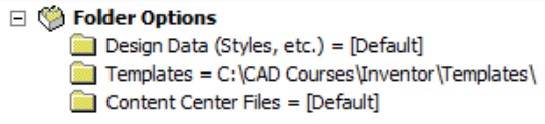
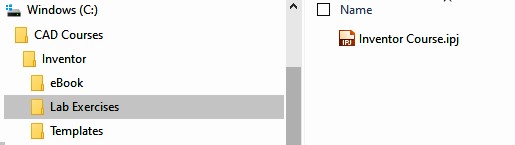

	</div>


	</div>
<div class="chapter standard " id="chapter-competency-test-no-4" title="Module 21 Competency Test No. 4 Open Book">
	<div class="chapter-title-wrap">
		<p class="chapter-number">21</p>
		<h1 class="chapter-title">Module 21 Competency Test No. 4 Open Book</h1>
								</div>
	<div class="ugc chapter-ugc">
				 <div class="textbox textbox--learning-objectives"><div class="textbox__header"><p class="textbox__title">Learning Outcomes</p> </div> <div class="textbox__content"><p>When you have completed this module, you will be able to:</p> <ol><li>Within a two hour time limit, complete a written exam and a lab exercise.</li> </ol> </div> </div> <p>The Inventor book was written with competency based modules. What that means is that you have not completed each module until you have mastered it. The Competency Test module contains multiple choice questions and a comprehensive lab exercise to test your mastery of the set of modules that you completed. There are no answers or keys supplied in a Competency Test module since it is meant to be checked by your instructor. If there are any parts of this module that you have trouble completing, you should go back and reread the module or modules containing the information that you are having trouble with. If necessary, redo as many lab exercises required until you fully understand the material.</p> <p>If you are Completing this book:</p> <ul><li>Without the aid of an instructor, complete the written test and the lab exercise.</li> <li>In a classroom with an instructor, the instructor will give instructions on what to do after you have completed this module.</li> </ul> <h1>Multiple Choice Questions</h1> <p>Select the BEST answer.</p> <ol><li>When you are selecting objects with a window, which window selects all the objects that are totally inside it and the ones that it crosses? <ol type="A"><li>Square Window</li> <li>Crossing Window</li> <li>Extruded Window</li> <li>Rectangular Window</li> <li>Polygon Window</li> </ol> </li> <li>What is the name for two or more objects that are connected at their endpoints and then treated as one object in the OFFSET command? <ol type="A"><li>Loop</li> <li>Continuous</li> <li>Area</li> <li>Polyloop</li> <li>Window</li> </ol> </li> <li>What are the basic sketching planes (XY, XZ, YZ), the three axis (X, Y, Z) and the Center Point called? <ol type="A"><li>Work Planes</li> <li>Work Points</li> <li>Work Features</li> <li>Work Sketches</li> <li>Work Axis</li> </ol> </li> <li>What is the maximum number of sides that the POLYGON command can draw a regular polygon? <ol type="A"><li>20</li> <li>100</li> <li>120</li> <li>180</li> <li>256</li> </ol> </li> <li>When the graphic cursor appears as a ruler, what units are you measuring in? Select the BEST answer. <ol type="A"><li>English Units</li> <li>Document Units</li> <li>System Units</li> <li>Metric Units</li> <li>Actual Units</li> </ol> </li> <li>What command is used to extend the length of an existing line or an arc? <ol type="A"><li>LENGTHEN</li> <li>EXTEND</li> <li>LINE</li> <li>LENGTH</li> <li>STRETCH</li> </ol> </li> <li>What does an aligned dimension measure? <ol type="A"><li>The delta X or delta Y distance between two points.</li> <li>The diameter of circle or radius of an arc.</li> <li>The true length of a line or the true distance between two points.</li> <li>The horizontal or vertical distance between two points.</li> <li>The angle between two lines or the angle between the imaginary lines between three points.</li> </ol> </li> <li>What best describes the threads created using the THREAD command? <ol type="A"><li>Graphical representations of the actual thread.</li> <li>A texture</li> <li>The actual thread.</li> <li>They are enlarged to look better.</li> <li>Center</li> </ol> </li> <li>What is a parametric construction plane inserted on the model or in model space called? <ol type="A"><li>A Work Plane</li> <li>A Work Point</li> <li>A Work Feature</li> <li>A Work Sketch</li> <li>A Work Model</li> </ol> </li> <li>What is an angular dimension measuring? <ol type="A"><li>The delta X or delta Y distance between two points.</li> <li>The diameter of circle or radius of an arc.</li> <li>The true length of a line or the true distance between two points.</li> <li>The horizontal or vertical distance between two points.</li> <li>The angle between two lines or the angle between the imaginary lines between three points.</li> </ol> </li> </ol> <h1 class="page-break-before">Lab Exercise 21-1</h1> <p>Time allowed: 2 hours.</p> <table><tbody><tr><td><strong>Part Name</strong></td> <td><strong>Project</strong></td> <td><strong>Units</strong></td> <td><strong>Template</strong></td> <td><strong>Color</strong></td> <td><strong>Material</strong></td> </tr> <tr><td>Inventor Lab 21-1</td> <td>Inventor Course</td> <td>Millimeters</td> <td>Metric-Modules Part (mm).ipt</td> <td>Machined-Aluminum</td> <td>Aluminum-6061</td> </tr> </tbody> </table> <h2>Step 1</h2> <p>Project the Center Point onto the Base plane.</p> <h2>Step 2</h2> <p>Note the location of X0Y0Z0. Draw the necessary sketches and extrude them to produce the solid model shown below. Apply all of the necessary geometrical and dimensional constraints to maintain the objects shape and size. All sketches must be fully constrained. (Figure Step 2A and 2B)</p> <div class="wp-caption aligncenter" id="attachment_1623" aria-describedby="caption-attachment-1623" style="width: 424px"><img class="size-full wp-image-1623" src="https://opentextbc.ca/ethicsinlawenforcement/wp-content/uploads/sites/377/2021/05/21-1-2A.jpg" alt="" width="424" height="432" title="" /><div class="wp-caption-text" id="caption-attachment-1623">Figure Step 2A<br />Suggested Base Sketch –<br />Right Side (YZ) Plane</div></div> <div class="wp-caption aligncenter" id="attachment_1624" aria-describedby="caption-attachment-1624" style="width: 500px"><a href="https://opentextbc.ca/autodesk/wp-content/uploads/sites/1381/2021/05/21-1-2B.jpg" data-url="https://opentextbc.ca/autodesk/wp-content/uploads/sites/1381/2021/05/21-1-2B.jpg"><img class="wp-image-1624" src="https://opentextbc.ca/ethicsinlawenforcement/wp-content/uploads/sites/377/2021/05/21-1-2B.jpg" alt="" width="500" height="480" title="" /></a><div class="wp-caption-text" id="caption-attachment-1624">Figure Step 2B<br />Dimensioned Multiview Drawing<br />Competency [Click to see image full size]</div></div> <h2>Step 3</h2> <p>Create the fillets and chamfers after the model is totally constructed.</p> <h2 class="page-break-before">Step 4</h2> <p>Apply the colour shown above. (Figure Step 4)</p> <div class="wp-caption aligncenter" id="attachment_1625" aria-describedby="caption-attachment-1625" style="width: 303px"><img class="wp-image-1625 size-full" src="https://opentextbc.ca/ethicsinlawenforcement/wp-content/uploads/sites/377/2021/05/21-1-4-e1624575337531.jpg" alt="" width="303" height="309" title="" /><div class="wp-caption-text" id="caption-attachment-1625">Figure Step 4<br />Solid Model<br />Home View</div></div> <h2 class="page-break-before">Step 5</h2> <p>Move the End of Part Icon up above the fillets as shown in the figure. Suppress all of the threaded features. (Figure Step 5)</p> <div class="wp-caption aligncenter" id="attachment_1626" aria-describedby="caption-attachment-1626" style="width: 300px"><img class="wp-image-1626" src="https://opentextbc.ca/ethicsinlawenforcement/wp-content/uploads/sites/377/2021/05/21-1-6.jpg" alt="" width="300" height="339" title="" /><div class="wp-caption-text" id="caption-attachment-1626">Figure Step 6</div></div> <h2>Step 6</h2> <p>Find the following to a precision of 6 decimal points: (Figure Step 6)</p> <div class="wp-caption aligncenter" id="attachment_1627" aria-describedby="caption-attachment-1627" style="width: 300px"><img class="wp-image-1627" src="https://opentextbc.ca/ethicsinlawenforcement/wp-content/uploads/sites/377/2021/05/21-1-7.jpg" alt="" width="300" height="281" title="" /><div class="wp-caption-text" id="caption-attachment-1627">Figure Step 7</div></div> <p><strong>A</strong> The XYZ coordinates of corner D.</p> <p>____________________________</p> <p><strong>B </strong>The length of the edge from corner A to corner B.</p> <p>____________________________</p> <p><strong>C </strong>The distance from corner A to corner C.</p> <p>____________________________</p> <p><strong>D </strong>The distance from corner C to corner D.</p> <p>____________________________</p> <p><strong>E </strong>The angle between the edges B to C and B</p> <p>____________________________</p> <h2>Step 8</h2> <p>The area of the shaded area of Figure Step 8. Do NOT include the area of features on the plane.</p> <p><strong>____________________________</strong></p> <h2>Step 9</h2> <p>The perimeter of the shaded plane in Figure Step 9.</p> <p><strong>____________________________</strong></p> <div class="wp-caption aligncenter" id="attachment_1629" aria-describedby="caption-attachment-1629" style="width: 300px"><img class="wp-image-1629" src="https://opentextbc.ca/ethicsinlawenforcement/wp-content/uploads/sites/377/2021/05/21-1-9-e1624575383909.jpg" alt="" width="300" height="315" title="" /><div class="wp-caption-text" id="caption-attachment-1629">Figure Step 9</div></div> <h2 class="page-break-before">Step 10</h2> <p>The area of the shaded area of Figure Step 10. The area should include the complete surface without any features.</p> <p><strong>____________________________</strong></p> <div class="wp-caption aligncenter" id="attachment_1630" aria-describedby="caption-attachment-1630" style="width: 300px"><img class="wp-image-1630" src="https://opentextbc.ca/ethicsinlawenforcement/wp-content/uploads/sites/377/2021/05/21-1-10.jpg" alt="" width="300" height="330" title="" /><div class="wp-caption-text" id="caption-attachment-1630">Figure Step 10</div></div> <h2>Step 11</h2> <p>Using the three figures below, change the colors of the faces shown to: <span style="text-decoration: underline">Aluminum – Polished</span>. (Figure Step 11A, 11B, and 11C)</p> <div class="wp-caption aligncenter" id="attachment_1631" aria-describedby="caption-attachment-1631" style="width: 304px"><img class="size-full wp-image-1631" src="https://opentextbc.ca/ethicsinlawenforcement/wp-content/uploads/sites/377/2021/05/21-1-11A.jpg" alt="" width="304" height="330" title="" /><div class="wp-caption-text" id="caption-attachment-1631">Figure Step 11A</div></div> <div class="wp-caption aligncenter" id="attachment_1632" aria-describedby="caption-attachment-1632" style="width: 300px"><img class="wp-image-1632" src="https://opentextbc.ca/ethicsinlawenforcement/wp-content/uploads/sites/377/2021/05/21-1-11B.jpg" alt="" width="300" height="373" title="" /><div class="wp-caption-text" id="caption-attachment-1632">Figure Step 11B</div></div> <div class="wp-caption aligncenter" id="attachment_1633" aria-describedby="caption-attachment-1633" style="width: 300px"><img class="wp-image-1633" src="https://opentextbc.ca/ethicsinlawenforcement/wp-content/uploads/sites/377/2021/05/21-1-11C-e1624575446303.jpg" alt="" width="300" height="253" title="" /><div class="wp-caption-text" id="caption-attachment-1633">Figure Step 11C</div></div> <h2>Step 12</h2> <ul><li>If you are a student completing this course in a classroom setting, your instructor will give you instructions on what to do after you complete this module.</li> <li>If you are an online student doing this course by correspondence, send an email to your instructor with the answers from the measurement questions in this module. For example:</li> </ul> <table class="shaded" style="border-collapse: collapse;width: 49.9996%"><tbody><tr><td style="width: 65.4167px"><strong>7A</strong></td> <td style="width: 539.367px">The XYZ coordinates of corner D is ___________ .</td> </tr> <tr><td style="width: 65.4167px"><strong>7B</strong></td> <td style="width: 539.367px">The length of the edge from corner A to corner B is ___________ .</td> </tr> <tr><td style="width: 65.4167px"><strong>7C</strong></td> <td style="width: 539.367px">The distance from corner A to corner C is ___________ .</td> </tr> <tr><td style="width: 65.4167px"><strong>7D</strong></td> <td style="width: 539.367px">The distance from corner C to corner D is ___________ .</td> </tr> <tr><td style="width: 65.4167px"><strong>7E</strong></td> <td style="width: 539.367px">The angle between the edges B to C and B to A is ___________ .</td> </tr> <tr><td style="width: 65.4167px"><strong>8</strong></td> <td style="width: 539.367px">The area of the shaded area of Figure Step 8 is ___________ .</td> </tr> <tr><td style="width: 65.4167px"><strong>9</strong></td> <td style="width: 539.367px">The perimeter of the shaded plane in Figure Step 9 is ___________ .</td> </tr> <tr><td style="width: 65.4167px"><strong>10</strong></td> <td style="width: 539.367px">The area of the shaded area of Figure Step 10 is ___________ .</td> </tr> <tr><td style="width: 65.4167px"><strong>12A</strong></td> <td style="width: 539.367px">The mass of the solid model in grams is ___________ .</td> </tr> <tr><td style="width: 65.4167px"><strong>12B</strong></td> <td style="width: 539.367px">The mass of the solid model in pounds is ___________ .</td> </tr> </tbody> </table> <p>The answers in the email can be given as follows:</p> <table class="shaded" style="height: 180px;width: 675px"><tbody><tr style="height: 18px"><td style="height: 18px;width: 65.3667px"><strong>7A</strong></td> <td style="height: 18px;width: 576.517px">&nbsp;___________ .</td> </tr> <tr style="height: 18px"><td style="height: 18px;width: 65.3667px"><strong>7B</strong></td> <td style="height: 18px;width: 576.517px">___________ .</td> </tr> <tr style="height: 18px"><td style="height: 18px;width: 65.3667px"><strong>7C</strong></td> <td style="height: 18px;width: 576.517px">___________ .</td> </tr> <tr style="height: 18px"><td style="height: 18px;width: 65.3667px"><strong>7D</strong></td> <td style="height: 18px;width: 576.517px">___________ .</td> </tr> <tr style="height: 18px"><td style="height: 18px;width: 65.3667px"><strong>7E</strong></td> <td style="height: 18px;width: 576.517px">___________ .</td> </tr> <tr style="height: 18px"><td style="height: 18px;width: 65.3667px"><strong>8</strong></td> <td style="height: 18px;width: 576.517px">___________ .</td> </tr> <tr style="height: 18px"><td style="height: 18px;width: 65.3667px"><strong>9</strong></td> <td style="height: 18px;width: 576.517px">___________ .</td> </tr> <tr style="height: 18px"><td style="height: 18px;width: 65.3667px"><strong>10</strong></td> <td style="height: 18px;width: 576.517px">___________ .</td> </tr> <tr style="height: 18px"><td style="height: 18px;width: 65.3667px"><strong>12A</strong></td> <td style="height: 18px;width: 576.517px">___________ .</td> </tr> <tr style="height: 18px"><td style="height: 18px;width: 65.3667px"><strong>12B</strong></td> <td style="height: 18px;width: 576.517px">___________ .</td> </tr> </tbody> </table> 
	</div>


	</div>

</div>
<div class="part-wrapper" id="part-part-5-wrapper">
    <div class="part  " id="part-part-5">
	<div class="part-title-wrap">
		<p class="part-number">V</p>
		<h1 class="part-title">Part 5</h1>
	</div>
	<div class="ugc part-ugc">
		
	</div>
			
				
	</div>
<div class="chapter standard " id="chapter-assemblies" title="Module 22 Assemblies">
	<div class="chapter-title-wrap">
		<p class="chapter-number">22</p>
		<h1 class="chapter-title">Module 22 Assemblies</h1>
								</div>
	<div class="ugc chapter-ugc">
				 <div class="textbox textbox--learning-objectives"><div class="textbox__header"><p class="textbox__title">Learning Outcomes</p> </div> <div class="textbox__content"><p>When you have completed this module, you will be able to:</p> <ol><li>Describe an assembly and explain the difference between a top-down and a bottom-up assembly.</li> <li>Describe and apply the SLICE GRAPHICS command.</li> <li>Describe the PLACE COMPONENT and PLACE CONSTRAINT commands and apply them to assemble a series of parts to create an assembled model.</li> </ol> </div> </div> <h1>An Assembly File</h1> <p>An <span style="color: #ec0000"><em>assembly</em> </span>file contains the information required to assemble two or more part files to create an assembled model. See Figure 22-1. As the model is assembled, assembly constraints must be assigned so that each part knows how it aligns or fits with the other parts in the assembled model. A part (.ipt) file that has been placed in the assembly can be edited while in the assembly file and the modifications will be saved back to the original part file. On the other hand, if the original part file is modified after the assembly file has being created, the modifications will automatically display in the assembly. An assembly file does not actually contain any of the part files that are placed in the file, it simply contains a reference to them.</p> <div class="wp-caption aligncenter" id="attachment_1636" aria-describedby="caption-attachment-1636" style="width: 287px"><img class="wp-image-1636 size-full" src="https://opentextbc.ca/ethicsinlawenforcement/wp-content/uploads/sites/377/2021/05/22-1-e1624575552909.jpg" alt="" width="287" height="479" title="" /><div class="wp-caption-text" id="caption-attachment-1636">Figure 22-1<br />An Assembled Model</div></div> <p>A <em><span style="color: #ec0000">reference</span> </em>is a link back to the part files. The part files that have been placed in an assembly file must be available to Inventor to display them when an assembly file is opened. The current project file keeps track of those links and will automatically keep track of the location of all the part files. If an assembly file is sent to a client or an associate, the part files that were placed in the assembly file must also be included.</p> <h2>Creating an Assembly File</h2> <p>To create an assembly file, use the NEW command and select an assembly template rather than a part template. An assembly file has the extension .iam. IAM is an acronym for Inventor Assembly.</p> <div class="textbox shaded"><strong>MUST KNOW:</strong> An assembly file contains the information required to assemble two or more part files to create the assembled model. An assembly file has the file extension .iam. IAM is an acronym for Inventor Assembly.</div> <h2>Bottom-up vs Top-down</h2> <p>Assembly files can be created using either the bottom-up or the top-down method. A <span style="color: #ec0000"><em>bottom-up</em></span> assembly is an assembly created from a series of part files that were previously created and saved in their own .ipt file. A <em><span style="color: #ec0000">top-down</span></em> assembly is an assembly file where all parts of the assembly are created on the fly. In other word, they are created in the active assembly file, one at a time. They are aligned and constrained in their correct position in relationship to the other parts in the assembled model. Inventor will save each part in its own file with the extension .ipt. In the Inventor book, only the bottom-up method is taught.</p> <h2>The Browser Bar in an Assembly</h2> <p>When an assembly is the active file, the Browser bar will display all of the parts that have been placed in the assembly. If a part in the browser is expanded it will display its children which includes its alignment and constraints to the other parts of the assembled model. See Figure 22-2.</p> <div class="wp-caption aligncenter" id="attachment_1637" aria-describedby="caption-attachment-1637" style="width: 276px"><img class="size-full wp-image-1637" src="https://opentextbc.ca/ethicsinlawenforcement/wp-content/uploads/sites/377/2021/05/22-2.jpg" alt="" width="276" height="401" title="" /><div class="wp-caption-text" id="caption-attachment-1637">Figure 22-2<br />An Assemble in<br />the Browser Bar<br />Inventor</div></div> <p>If the same part is placed more then once into the assembly file, the Browser bar will number them accordingly. For example, this may happen if an assembly required two identical bolts. Only one part file is created and named Bolt.ipt. It is then placed into the assembly file twice. The Browser bar would number the bolts parts as follows:</p> <p>On the first occurrence: Bolt:1</p> <p>On the second occurrence: Bolt:2</p> <div class="textbox textbox--examples"><div class="textbox__header"><p class="textbox__title">Inventor Command: SLICE GRAPHICS</p> </div> <div class="textbox__content"><p>The SLICE GRAPHICS command is used to slice away the model on the active sketching plane temporarily removing all of the material in front of the sketching plane. The sketching plane must be active before using this command.Shortcut: <strong>F7</strong></p> <p><img class="aligncenter wp-image-1640" src="https://opentextbc.ca/ethicsinlawenforcement/wp-content/uploads/sites/377/2021/05/F7.jpg" alt="" width="300" height="113" title="" /></p> <p><img class="aligncenter wp-image-1940" src="https://opentextbc.ca/ethicsinlawenforcement/wp-content/uploads/sites/377/2021/05/slice-graphics.png" alt="" width="500" height="133" title="" /></p> </div> </div> <h1>WORK ALONG: Creating the Parts for an Assembly</h1> <h2>Step 1</h2> <p>Check the default project and if necessary, set it to Inventor Course.</p> <h2>Step 2</h2> <p>Use the following instructions to complete all parts in this workalong. Create the following parts and ensure that you do the following:</p> <p><strong>A</strong> Each part must be saved in its own .ipt file.</p> <p><strong>B</strong> Project the Center Point onto the Base sketch plane and note the location of X0Y0Z0.</p> <p><strong>C</strong> Draw the necessary sketches and extrude or revolve them to produce the solid model shown. Apply all of the necessary geometrical and dimensional constraints to fully constrain each sketch.<br /> <strong>D</strong> Apply the colour and material shown.</p> <h2 class="page-break-before">Step 3</h2> <p>Construct Part A. (Figure Step 3A, 3B, and 3C)</p> <p><strong>Part: </strong>Base</p> <p><strong>Part Name: </strong>Inventor Workalong 22-1A</p> <p><strong>Template: </strong>English-Modules Part (in).ipt</p> <p><strong>Color: </strong>Stainless – Brushed</p> <p><strong>Material: </strong>Stainless Steel</p> <div class="wp-caption aligncenter" id="attachment_1642" aria-describedby="caption-attachment-1642" style="width: 251px"><img class="wp-image-1642 size-full" src="https://opentextbc.ca/ethicsinlawenforcement/wp-content/uploads/sites/377/2021/05/22-3a-e1624575591399.jpg" alt="" width="251" height="165" title="" /><div class="wp-caption-text" id="caption-attachment-1642">Figure Step 3A<br />Solid Model – Home View</div></div> <div class="wp-caption aligncenter" id="attachment_1643" aria-describedby="caption-attachment-1643" style="width: 296px"><img class="wp-image-1643 size-full" src="https://opentextbc.ca/ethicsinlawenforcement/wp-content/uploads/sites/377/2021/05/22-3b-e1624575616599.jpg" alt="" width="296" height="279" title="" /><div class="wp-caption-text" id="caption-attachment-1643">Figure Step 3B<br />Solid Model – Orbited View</div></div> <div class="wp-caption aligncenter" id="attachment_1644" aria-describedby="caption-attachment-1644" style="width: 500px"><a href="https://opentextbc.ca/autodesk/wp-content/uploads/sites/1381/2021/05/work-along-creating-step-3C.jpg" data-url="https://opentextbc.ca/autodesk/wp-content/uploads/sites/1381/2021/05/work-along-creating-step-3C.jpg"><img class="wp-image-1644" src="https://opentextbc.ca/ethicsinlawenforcement/wp-content/uploads/sites/377/2021/05/work-along-creating-step-3C.jpg" alt="" width="500" height="656" title="" /></a><div class="wp-caption-text" id="caption-attachment-1644">Figure Step 3C<br />Dimensioned Multiview Drawing [Click to see image full size]</div></div> <h2 class="page-break-before">Step 4</h2> <p>Construct Part B. (Figure Step 4A and 4B)</p> <p>Note: See Steps 3 to 14 if you require help creating this model.</p> <p><strong>Part: </strong>Post</p> <p><strong>Part Name: </strong>Inventor Workalong 22-1B</p> <p><strong>Template: </strong>English-Modules Part (in).ipt</p> <p><strong>Color: </strong>Chrome – Black Polished</p> <p><strong>Material: </strong>Steel</p> <div class="wp-caption aligncenter" id="attachment_1645" aria-describedby="caption-attachment-1645" style="width: 276px"><img class="wp-image-1645 size-full" src="https://opentextbc.ca/ethicsinlawenforcement/wp-content/uploads/sites/377/2021/05/work-along-creating-step-4A-e1624575658200.jpg" alt="" width="276" height="532" title="" /><div class="wp-caption-text" id="caption-attachment-1645">Figure Step 4A<br />Solid Model –<br />Home View</div></div> <div class="wp-caption aligncenter" id="attachment_1646" aria-describedby="caption-attachment-1646" style="width: 431px"><img class="size-full wp-image-1646" src="https://opentextbc.ca/ethicsinlawenforcement/wp-content/uploads/sites/377/2021/05/22-4b.jpg" alt="" width="431" height="702" title="" /><div class="wp-caption-text" id="caption-attachment-1646">Figure Step 4B<br />Dimensioned Multiview Drawing</div></div> <h2 class="page-break-before">Step 5</h2> <p>Draw the Base model of part 22-1B by extruding circles. Your Base model should appear as shown in the figure. (Figure Step 5)</p> <div class="wp-caption aligncenter" id="attachment_1647" aria-describedby="caption-attachment-1647" style="width: 169px"><img class="size-full wp-image-1647" src="https://opentextbc.ca/ethicsinlawenforcement/wp-content/uploads/sites/377/2021/05/22-5.jpg" alt="" width="169" height="327" title="" /><div class="wp-caption-text" id="caption-attachment-1647">Figure Step 5</div></div> <h2>Step 6</h2> <p>Start a new sketch on the top of the model and draw a construction line from the centre to the edge of the top plane along the Y axis as shown in the figure. Hint: Ensure that you draw the line along the Y axis by snapping to the centre of the circle and to the grid on the Y axis. The length of the line is not important. (Figure Step 6)</p> <div class="wp-caption aligncenter" id="attachment_1648" aria-describedby="caption-attachment-1648" style="width: 300px"><img class="wp-image-1648" src="https://opentextbc.ca/ethicsinlawenforcement/wp-content/uploads/sites/377/2021/05/22-6.jpg" alt="" width="300" height="233" title="" /><div class="wp-caption-text" id="caption-attachment-1648">Figure Step 6</div></div> <h2 class="page-break-before">Step 7</h2> <p>Insert a Work Plane in the centre of the model using the Perpendicular to a Line method. Enter the WORK PLANE command and move the cursor to the end of the construction line. The Work Plane icon will display as shown in the figure. Click the end of the line when the icon displays. (Figure Step 7)</p> <div class="wp-caption aligncenter" id="attachment_1649" aria-describedby="caption-attachment-1649" style="width: 300px"><img class="wp-image-1649" src="https://opentextbc.ca/ethicsinlawenforcement/wp-content/uploads/sites/377/2021/05/22-7-e1624575723676.jpg" alt="" width="300" height="209" title="" /><div class="wp-caption-text" id="caption-attachment-1649">Figure Step 7</div></div> <div class="textbox"><strong>USER TIP:</strong> Before drawing each part, the orientation of the part when it is placed in the future assembly, should be considered. Doing that, will save a lot of time when creating the assembly model since it can be placed without any manipulation.</div> <h2>Step 8</h2> <p>Move the cursor onto the Y axis and it will display as shown in the figure. When the Y axis is displayed, click it and the Work Plane will display as shown. (Figure Step 8A and 8B)</p> <div class="wp-caption aligncenter" id="attachment_1650" aria-describedby="caption-attachment-1650" style="width: 293px"><img class="size-full wp-image-1650" src="https://opentextbc.ca/ethicsinlawenforcement/wp-content/uploads/sites/377/2021/05/22-8a.jpg" alt="" width="293" height="218" title="" /><div class="wp-caption-text" id="caption-attachment-1650">Figure Step 8A</div></div> <div class="wp-caption aligncenter" id="attachment_1651" aria-describedby="caption-attachment-1651" style="width: 295px"><img class="size-full wp-image-1651" src="https://opentextbc.ca/ethicsinlawenforcement/wp-content/uploads/sites/377/2021/05/22-8b.jpg" alt="" width="295" height="249" title="" /><div class="wp-caption-text" id="caption-attachment-1651">Figure Step 8B</div></div> <h2>Step 9</h2> <p>Enlarge the Work Plane to extend it past the edges of the model. One way to do this is to use the LOOK AT/VIEW FACE command and change the view so that it is looking perpendicular to the plane as shown in the figure. (Figure Step 9)</p> <div class="wp-caption aligncenter" id="attachment_1652" aria-describedby="caption-attachment-1652" style="width: 295px"><img class="size-full wp-image-1652" src="https://opentextbc.ca/ethicsinlawenforcement/wp-content/uploads/sites/377/2021/05/22-9.jpg" alt="" width="295" height="414" title="" /><div class="wp-caption-text" id="caption-attachment-1652">Figure Step 9</div></div> <h2 class="page-break-before">Step 10</h2> <p>Start a new sketch on the Work Plane. (Figure 10)</p> <div class="wp-caption aligncenter" id="attachment_1653" aria-describedby="caption-attachment-1653" style="width: 293px"><img class="size-full wp-image-1653" src="https://opentextbc.ca/ethicsinlawenforcement/wp-content/uploads/sites/377/2021/05/22-10.jpg" alt="" width="293" height="613" title="" /><div class="wp-caption-text" id="caption-attachment-1653">Figure Step 10</div></div> <h2 class="page-break-before">Step 11</h2> <p>Enter the SLICE GRAPHIC command (F7) and the model will display from the sketching plane back. Disable the grid display. It is easier to draw this sketch without the grid. (Figure Step11)</p> <div class="wp-caption aligncenter" id="attachment_1654" aria-describedby="caption-attachment-1654" style="width: 231px"><img class="size-full wp-image-1654" src="https://opentextbc.ca/ethicsinlawenforcement/wp-content/uploads/sites/377/2021/05/22-11.jpg" alt="" width="231" height="517" title="" /><div class="wp-caption-text" id="caption-attachment-1654">Figure Step 11</div></div> <div class="textbox"><strong>USER TIP:</strong> When enlarging the work plane, the cursor must display as the Stretch Move Stretch Cursor (two arrows) as shown. If you Cursor Cursor have trouble changing the cursor from the Move Cursor, zoom in closer and move the cursor onto one of the corners of the plane.</div> <h2 class="page-break-before">Step 12</h2> <p>Using the PROJECT GEOMETRY command, project the Z axis and the X axis onto the sketching plane. (Figure Step 12A and 12B)</p> <div class="wp-caption aligncenter" id="attachment_1655" aria-describedby="caption-attachment-1655" style="width: 461px"><img class="size-full wp-image-1655" src="https://opentextbc.ca/ethicsinlawenforcement/wp-content/uploads/sites/377/2021/05/22-12a.jpg" alt="" width="461" height="338" title="" /><div class="wp-caption-text" id="caption-attachment-1655">Figure Step 12A</div></div> <div class="wp-caption aligncenter" id="attachment_1656" aria-describedby="caption-attachment-1656" style="width: 464px"><img class="size-full wp-image-1656" src="https://opentextbc.ca/ethicsinlawenforcement/wp-content/uploads/sites/377/2021/05/22-12b.jpg" alt="" width="464" height="387" title="" /><div class="wp-caption-text" id="caption-attachment-1656">Figure Step 12B</div></div> <h2 class="page-break-before">Step 13</h2> <p>Using the OFFSET command, construct offsets to both the Z and X axis to start the construction of the slot. Trim the lines in the sketch and insert the dimensions to fully constrain the sketch. Ensure that you dimension from both sides of the Z axis as shown in the figure. (Figure Step 13A and 13B)</p> <div class="wp-caption aligncenter" id="attachment_1657" aria-describedby="caption-attachment-1657" style="width: 265px"><img class="size-full wp-image-1657" src="https://opentextbc.ca/ethicsinlawenforcement/wp-content/uploads/sites/377/2021/05/22-13a.jpg" alt="" width="265" height="622" title="" /><div class="wp-caption-text" id="caption-attachment-1657">Figure Step 13A</div></div> <div class="wp-caption aligncenter" id="attachment_1658" aria-describedby="caption-attachment-1658" style="width: 298px"><img class="size-full wp-image-1658" src="https://opentextbc.ca/ethicsinlawenforcement/wp-content/uploads/sites/377/2021/05/22-13b.jpg" alt="" width="298" height="622" title="" /><div class="wp-caption-text" id="caption-attachment-1658">Figure Step 13B</div></div> <div class="textbox shaded"><strong>MUST KNOW:</strong> An assembly file does do not contain any of the part files that are placed in the assembled model. It simply contains a reference to the part files. A reference is a link back to the part files. The part files that have been placed in an assembly file must be available to Inventor to display them when the assembly file is opened.<br /> The project file keeps track of those links and will automatically keep track of the location of all the files. If an assembly file (.iam) is sent to a client or an associate, the part files (.ipt) that were placed in the assembly file must also be included otherwise they will not display when the file is opened.</div> <h2 class="page-break-before">Step 14</h2> <p>Extrude the sketch. Set it to extrude in both directions and to cut. Set the distance to All. Complete the part by adding the hole, the threads, the fillets, the colour, and the material as specified in Figure 14A, 14B, and 14C.</p> <div class="wp-caption aligncenter" id="attachment_1659" aria-describedby="caption-attachment-1659" style="width: 500px"><a href="https://opentextbc.ca/autodesk/wp-content/uploads/sites/1381/2021/05/22-14a.jpg" data-url="https://opentextbc.ca/autodesk/wp-content/uploads/sites/1381/2021/05/22-14a.jpg"><img class="wp-image-1659" src="https://opentextbc.ca/ethicsinlawenforcement/wp-content/uploads/sites/377/2021/05/22-14a.jpg" alt="" width="500" height="355" title="" /></a><div class="wp-caption-text" id="caption-attachment-1659">Figure Step 14A [Click to see image full size]</div></div> <div class="wp-caption aligncenter" id="attachment_1660" aria-describedby="caption-attachment-1660" style="width: 184px"><img class="size-full wp-image-1660" src="https://opentextbc.ca/ethicsinlawenforcement/wp-content/uploads/sites/377/2021/05/22-14b.jpg" alt="" width="184" height="377" title="" /><div class="wp-caption-text" id="caption-attachment-1660">Figure 14B</div></div> <div class="wp-caption aligncenter" id="attachment_1661" aria-describedby="caption-attachment-1661" style="width: 236px"><img class="wp-image-1661 size-full" src="https://opentextbc.ca/ethicsinlawenforcement/wp-content/uploads/sites/377/2021/05/22-14c-e1624575869218.jpg" alt="" width="236" height="345" title="" /><div class="wp-caption-text" id="caption-attachment-1661">Figure 14C</div></div> <h2>Step 15</h2> <p>Create Part C. (Figure Step 15A, 15B, 15C, and 15D):</p> <p><strong>Part:</strong> Wedge Ring</p> <p><strong>Part Name:</strong> Inventor Workalong 22-1C<br /> <strong>Template: </strong>English-Modules Part (in).ipt<br /> <strong>Color:</strong> Titanium – Polished<br /> <strong>Material:</strong> Titanium</p> <div class="wp-caption aligncenter" id="attachment_1662" aria-describedby="caption-attachment-1662" style="width: 300px"><img class="wp-image-1662" src="https://opentextbc.ca/ethicsinlawenforcement/wp-content/uploads/sites/377/2021/05/22-15a.jpg" alt="" width="300" height="199" title="" /><div class="wp-caption-text" id="caption-attachment-1662">Figure Step 15A<br />Solid Model – Home View</div></div> <div class="wp-caption aligncenter" id="attachment_1663" aria-describedby="caption-attachment-1663" style="width: 301px"><img class="wp-image-1663 size-full" src="https://opentextbc.ca/ethicsinlawenforcement/wp-content/uploads/sites/377/2021/05/22-15b-e1624575890724.jpg" alt="" width="301" height="322" title="" /><div class="wp-caption-text" id="caption-attachment-1663">Figure Step 15B<br />Solid Model<br />– Orbited View</div></div> <div class="wp-caption aligncenter" id="attachment_1664" aria-describedby="caption-attachment-1664" style="width: 369px"><img class="size-full wp-image-1664" src="https://opentextbc.ca/ethicsinlawenforcement/wp-content/uploads/sites/377/2021/05/22-15c.jpg" alt="" width="369" height="447" title="" /><div class="wp-caption-text" id="caption-attachment-1664">Figure Step 15C<br />Dimensioned Multiview Drawing</div></div> <div class="wp-caption aligncenter" id="attachment_1665" aria-describedby="caption-attachment-1665" style="width: 293px"><img class="size-full wp-image-1665" src="https://opentextbc.ca/ethicsinlawenforcement/wp-content/uploads/sites/377/2021/05/22-15d.jpg" alt="" width="293" height="497" title="" /><div class="wp-caption-text" id="caption-attachment-1665">Figure Step 15D<br />The Base Sketch</div></div> <div class="textbox author"><strong>AUTHOR’S COMMENTS:</strong> If you project the X and Z axis onto the plane, the same way you did in Step 12 and then construct arcs and offset lines it will be much easier to construct the Base sketch for this part. The last step is to revolve the sketch to complete the solid model.</div> <h2 class="page-break-before">Step 16</h2> <p>Construct Part D. (Figure Step 16A and 16B)<br /> <strong>Part:</strong> Wedge<br /> <strong>Part Name:</strong> Inventor Workalong 22-1D<br /> <strong>Template:</strong> English-Modules Part (in).ipt<br /> <strong>Color:</strong> Chrome – Polished<br /> <strong>Material:</strong> Steel</p> <div class="wp-caption aligncenter" id="attachment_1666" aria-describedby="caption-attachment-1666" style="width: 300px"><img class="wp-image-1666" src="https://opentextbc.ca/ethicsinlawenforcement/wp-content/uploads/sites/377/2021/05/22-16a.jpg" alt="" width="300" height="174" title="" /><div class="wp-caption-text" id="caption-attachment-1666">Figure Step 16A<br />Solid Model – Home View</div></div> <div class="wp-caption aligncenter" id="attachment_1667" aria-describedby="caption-attachment-1667" style="width: 400px"><a href="https://opentextbc.ca/autodesk/wp-content/uploads/sites/1381/2021/05/22-16b.jpg" data-url="https://opentextbc.ca/autodesk/wp-content/uploads/sites/1381/2021/05/22-16b.jpg"><img class="wp-image-1667" src="https://opentextbc.ca/ethicsinlawenforcement/wp-content/uploads/sites/377/2021/05/22-16b.jpg" alt="" width="400" height="369" title="" /></a><div class="wp-caption-text" id="caption-attachment-1667">Figure Step 16B<br />Dimensioned Multiview Drawing [Click to see image full size]</div></div> <h2 class="page-break-before">Step 17</h2> <p>Change the face colour of the top face of the part to: Metal Steel (Knurled) as shown in Figure 16A.</p> <h2>Step 18</h2> <p>Construct Part F as follows: (Figure Step 18A and 18B)<br /> <strong>Part:</strong> Handle<br /> <strong>Part Name:</strong> Inventor Workalong 22-1E<br /> <strong>Template:</strong> English-Modules Part (in).ipt<br /> <strong>Color:</strong> Metal-AL-6061 – Machined<br /> <strong>Material:</strong> Steel</p> <div class="wp-caption aligncenter" id="attachment_1668" aria-describedby="caption-attachment-1668" style="width: 317px"><img class="wp-image-1668 size-full" src="https://opentextbc.ca/ethicsinlawenforcement/wp-content/uploads/sites/377/2021/05/22-18a-e1624575962262.jpg" alt="" width="317" height="205" title="" /><div class="wp-caption-text" id="caption-attachment-1668">Figure Step 18A<br />Solid Model – Home View</div></div> <div class="wp-caption aligncenter" id="attachment_1669" aria-describedby="caption-attachment-1669" style="width: 500px"><img class="wp-image-1669" src="https://opentextbc.ca/ethicsinlawenforcement/wp-content/uploads/sites/377/2021/05/22-18b.jpg" alt="" width="500" height="202" title="" /><div class="wp-caption-text" id="caption-attachment-1669">Figure Step 18B<br />Dimensioned Multiview Drawing</div></div> <h2 class="page-break-before">Step 19</h2> <p>Construct Part E as follows: (Figure Step 19A, 19B, and 19C)<br /> <strong>Part:</strong> Screw<br /> <strong>Part Name:</strong> Inventor Workalong 22-1F<br /> <strong>Template:</strong> English-Modules Part (in).ipt<br /> <strong>Color:</strong> Metal-AL-6061 – Machined<br /> <strong>Material:</strong> Steel</p> <div class="wp-caption aligncenter" id="attachment_1670" aria-describedby="caption-attachment-1670" style="width: 500px"><a href="https://opentextbc.ca/autodesk/wp-content/uploads/sites/1381/2021/05/22-19a.jpg" data-url="https://opentextbc.ca/autodesk/wp-content/uploads/sites/1381/2021/05/22-19a.jpg"><img class="wp-image-1670" src="https://opentextbc.ca/ethicsinlawenforcement/wp-content/uploads/sites/377/2021/05/22-19a.jpg" alt="" width="500" height="627" title="" /></a><div class="wp-caption-text" id="caption-attachment-1670">Figure Step 19A<br />Dimensioned Multiview Drawing [Click to see image full size]</div></div> <div class="wp-caption aligncenter" id="attachment_1671" aria-describedby="caption-attachment-1671" style="width: 102px"><img class="size-full wp-image-1671" src="https://opentextbc.ca/ethicsinlawenforcement/wp-content/uploads/sites/377/2021/05/22-19b.jpg" alt="" width="102" height="351" title="" /><div class="wp-caption-text" id="caption-attachment-1671">Figure Step 19B<br />Solid Model –<br />Home View</div></div> <div class="wp-caption aligncenter" id="attachment_1672" aria-describedby="caption-attachment-1672" style="width: 161px"><img class="size-full wp-image-1672" src="https://opentextbc.ca/ethicsinlawenforcement/wp-content/uploads/sites/377/2021/05/22-19c.jpg" alt="" width="161" height="448" title="" /><div class="wp-caption-text" id="caption-attachment-1672">Figure Step<br />19C<br />Solid Model –<br />Orbited View</div></div> <h2>Step 20</h2> <p>Change the face colour of the cylindrical top of the part to: <span style="text-decoration: underline">Metal Steel (Knurled)</span> as shown in the solid model figure.</p> <div class="textbox textbox--examples"><div class="textbox__header"><p class="textbox__title">Inventor Command: PLACE COMPONENT</p> </div> <div class="textbox__content"><p>The PLACE COMPONENT command is used to insert a part or a component into an assembly file.</p> <p>Shortcut: <strong>P</strong></p> <p><img class="aligncenter size-full wp-image-1673" src="https://opentextbc.ca/ethicsinlawenforcement/wp-content/uploads/sites/377/2021/05/place-component.jpg" alt="" width="283" height="220" title="" /></p> </div> </div> <div class="textbox textbox--examples"><div class="textbox__header"><p class="textbox__title">Inventor Command: PLACE CONSTRAINT</p> </div> <div class="textbox__content"><p>The PLACE CONSTRAINT command is used to apply constraints of one part to another in the assembled model.</p> <p>Shortcut: <strong>C</strong></p> <p><img class="aligncenter size-full wp-image-1674" src="https://opentextbc.ca/ethicsinlawenforcement/wp-content/uploads/sites/377/2021/05/place-constraint.jpg" alt="" width="422" height="167" title="" /></p> </div> </div> <h1>Grounded Parts</h1> <p>By default, the first part that is placed into an assembly file will be grounded. A <em><span style="color: #ec0000">grounded</span> </em>part is a part that has all of it degrees of freedom removed and is fully constrained in that file. It is important to ground at least one part of every assembly. If no parts are grounded, the assembly can be moved around in model space. Once one part is grounded, the other parts can be constrained to it making their movement relative to the grounded part. If required, more then one part can be grounded.</p> <p>In the Browser bar, a grounded part will display a Push Pin icon as shown in Figure 22-3 and 22-4. To enable or disable a part being grounded, right-click the part in the Browser bar. In the Right-click menu, select Grounded. In Figure 22-5, the selected part is currently grounded, enabled and visible.</p> <div class="wp-caption aligncenter" id="attachment_1675" aria-describedby="caption-attachment-1675" style="width: 257px"><img class="wp-image-1675 size-full" src="https://opentextbc.ca/ethicsinlawenforcement/wp-content/uploads/sites/377/2021/05/22-3.jpg" alt="" width="257" height="192" title="" /><div class="wp-caption-text" id="caption-attachment-1675">Figure 22-3 Grounded Part as it Displays in the Browser Bar</div></div> <div class="wp-caption aligncenter" id="attachment_1676" aria-describedby="caption-attachment-1676" style="width: 180px"><img class="size-full wp-image-1676" src="https://opentextbc.ca/ethicsinlawenforcement/wp-content/uploads/sites/377/2021/05/22-4.jpg" alt="" width="180" height="19" title="" /><div class="wp-caption-text" id="caption-attachment-1676">Figure 22-4<br />Grounded Part Icon</div></div> <h2>Part Visibility</h2> <p>The visibility of parts in an assembly can be enabled or disabled. When the part’s visibility is disabled in the assembly, the part’s icon in the Browser bar will display greyed out.</p> <h2>Enabled Parts</h2> <p>Parts can be enabled or disabled in the assembly file. If a part is enabled, it displays and can be selected in the assembly. If it is disabled, only an outline displays and It cannot be selected. Sometimes it is easier to disable some parts to make it easier to place additional parts.</p> <h2>Assembly Constrains</h2> <p>There are many different constraints used when creating an assembly. In this module, only the mate constraint will be taught. A <span style="color: #ec0000"><em>mate constraint</em></span> constrains two assembled parts to one another by mating their centerlines and/or by mating a face on one part to a face on the other part. Mating is the most common way to assemble two parts together. It often takes more then one constraint to assemble two parts together. Both parts must have a symmetrical feature to mate them using the centerline method.</p> <div class="wp-caption aligncenter" id="attachment_1677" aria-describedby="caption-attachment-1677" style="width: 293px"><img class="size-full wp-image-1677" src="https://opentextbc.ca/ethicsinlawenforcement/wp-content/uploads/sites/377/2021/05/22-5-Part-Visibility.jpg" alt="" width="293" height="495" title="" /><div class="wp-caption-text" id="caption-attachment-1677">Figure 22-5<br />The Right-click Menu for a Part<br />in an Assembly File</div></div> <div class="textbox shaded"><strong>MUST KNOW:</strong> By default, the first part that is placed into an assembly file will be grounded. A grounded part is a part that has all of it degrees of freedom removed and is fully constrained in that file. It is important to ground at least one part in every assembly since if no parts are grounded, the assembly can be moved around model space. Once one part is grounded, the other parts can be constrained to it making their movement relative to the grounded part.</div> <div class="textbox"><strong>USER TIP:</strong> The Browser bar contains a great deal of information about the active assembly file. The grounded part has a Push Pin icon. If a part is disabled, it will display a green part icon and if its visibility is disabled, the part icon will be grey as you can see in the figure.<img class="aligncenter wp-image-1727" src="https://opentextbc.ca/ethicsinlawenforcement/wp-content/uploads/sites/377/2021/05/user-tip-inventor-workalong-1.jpg" alt="" width="361" height="275" title="" /></div> <h1>WORKALONG: Creating an Assembly</h1> <h2>Step 1</h2> <p>Check the default project and if necessary, set it to Inventor Course.</p> <h2>Step 2</h2> <p>Using the NEW command, enable the English tab and select the temple file: <span style="text-decoration: underline">Modules Assembly (in).iam</span>. Save and name the assembly: <span style="text-decoration: underline">Inventor workalong 22-1</span>. (Figure Step 2)</p> <div class="wp-caption aligncenter" id="attachment_1679" aria-describedby="caption-attachment-1679" style="width: 56px"><img class="size-full wp-image-1679" src="https://opentextbc.ca/ethicsinlawenforcement/wp-content/uploads/sites/377/2021/05/work-along-assembly-step-2.jpg" alt="" width="56" height="81" title="" /><div class="wp-caption-text" id="caption-attachment-1679">Figure<br />Step 2</div></div> <h2 class="page-break-before">Step 3</h2> <p>Enter the PLACE COMPONENT command. In the Place Component dialogue box insert part files: <span style="text-decoration: underline">Inventor Workalong 22-1A.ipt</span> and <span style="text-decoration: underline">Inventor Workalong 22-1B.ipt</span> into the assembly file. (Figure Step 3A and 3B)</p> <div class="wp-caption aligncenter" id="attachment_1680" aria-describedby="caption-attachment-1680" style="width: 400px"><a href="https://opentextbc.ca/autodesk/wp-content/uploads/sites/1381/2021/05/work-along-assembly-step-3a.jpg" data-url="https://opentextbc.ca/autodesk/wp-content/uploads/sites/1381/2021/05/work-along-assembly-step-3a.jpg"><img class="wp-image-1680" src="https://opentextbc.ca/ethicsinlawenforcement/wp-content/uploads/sites/377/2021/05/work-along-assembly-step-3a.jpg" alt="" width="400" height="241" title="" /></a><div class="wp-caption-text" id="caption-attachment-1680">Figure Step 3A [Click to see image full size]</div></div> <div class="wp-caption aligncenter" id="attachment_1681" aria-describedby="caption-attachment-1681" style="width: 300px"><img class="wp-image-1681" src="https://opentextbc.ca/ethicsinlawenforcement/wp-content/uploads/sites/377/2021/05/work-along-creating-step-3B.jpg" alt="" width="300" height="240" title="" /><div class="wp-caption-text" id="caption-attachment-1681">Figure Step 3B</div></div> <div class="textbox"><strong>USER TIP:</strong> By default, the PLACE COMPONENT command places multiple parts. To insert the part more than once into the assembly file, click once for each part. Ensure that you move the cursor so you are not inserting one part on top of another one. When you have inserted the required part(s), press Esc to exit the command.</div> <div class="textbox author"><strong>AUTHOR’S COMMENTS:</strong> Where you locate the parts is not important but ensure that you insert each part only once.</div> <h2>Step 4</h2> <p>Disable the grounding of part 22-1A and enable the grounding of part 22-1B. (Figure Step 4A, 4B, and 4C)</p> <div class="wp-caption aligncenter" id="attachment_1682" aria-describedby="caption-attachment-1682" style="width: 261px"><img class="size-full wp-image-1682" src="https://opentextbc.ca/ethicsinlawenforcement/wp-content/uploads/sites/377/2021/05/work-along-assembly-step-4a.jpg" alt="" width="261" height="206" title="" /><div class="wp-caption-text" id="caption-attachment-1682">Figure Step 4A</div></div> <div class="wp-caption aligncenter" id="attachment_1683" aria-describedby="caption-attachment-1683" style="width: 294px"><img class="size-full wp-image-1683" src="https://opentextbc.ca/ethicsinlawenforcement/wp-content/uploads/sites/377/2021/05/work-along-assembly-step-4b.jpg" alt="" width="294" height="443" title="" /><div class="wp-caption-text" id="caption-attachment-1683">Figure Step 4B</div></div> <div class="wp-caption aligncenter" id="attachment_1684" aria-describedby="caption-attachment-1684" style="width: 291px"><img class="size-full wp-image-1684" src="https://opentextbc.ca/ethicsinlawenforcement/wp-content/uploads/sites/377/2021/05/work-along-assembly-step-4c.jpg" alt="" width="291" height="451" title="" /><div class="wp-caption-text" id="caption-attachment-1684">Figure Step 4C</div></div> <h2>Step 5</h2> <p>Enter the PLACE CONSTRAINT command. In the Place Constraint dialogue box set Type to Mate, Selections to 1, Offset to 0.000 and Solution to Mate. (Figure Step 5)</p> <div class="wp-caption aligncenter" id="attachment_1685" aria-describedby="caption-attachment-1685" style="width: 355px"><img class="size-full wp-image-1685" src="https://opentextbc.ca/ethicsinlawenforcement/wp-content/uploads/sites/377/2021/05/work-along-assembly-step-5.jpg" alt="" width="355" height="241" title="" /><div class="wp-caption-text" id="caption-attachment-1685">Figure Step 5</div></div> <h2>Step 6</h2> <p>Move the cursor onto the part 22-1A and move it until the Centerline constraint symbol appears. When it displays as shown in the figure, select it. Move the cursor onto the part 22-1B and do the same. Part 22-1A will move onto Part 22-1B. Click Apply. (Figure Step 6A, 6B, and 6C)</p> <div class="wp-caption aligncenter" id="attachment_1686" aria-describedby="caption-attachment-1686" style="width: 300px"><img class="wp-image-1686" src="https://opentextbc.ca/ethicsinlawenforcement/wp-content/uploads/sites/377/2021/05/work-along-assembly-step-6a-e1624576076847.jpg" alt="" width="300" height="201" title="" /><div class="wp-caption-text" id="caption-attachment-1686">Figure Step 6A</div></div> <div class="wp-caption aligncenter" id="attachment_1687" aria-describedby="caption-attachment-1687" style="width: 250px"><img class="size-full wp-image-1687" src="https://opentextbc.ca/ethicsinlawenforcement/wp-content/uploads/sites/377/2021/05/work-along-assembly-step-6b.jpg" alt="" width="250" height="479" title="" /><div class="wp-caption-text" id="caption-attachment-1687">Figure Step 6B</div></div> <div class="wp-caption aligncenter" id="attachment_1688" aria-describedby="caption-attachment-1688" style="width: 266px"><img class="wp-image-1688 size-full" src="https://opentextbc.ca/ethicsinlawenforcement/wp-content/uploads/sites/377/2021/05/work-along-assembly-step-6c-e1624576097899.jpg" alt="" width="266" height="351" title="" /><div class="wp-caption-text" id="caption-attachment-1688">Figure Step 6C</div></div> <div class="textbox author"><strong>AUTHOR’S COMMENTS:</strong> Since part 22-1B is the grounded part, it will remain stationary and part 22-1A will move.</div> <h2>Step 7</h2> <p>Move the cursor onto the top of the base on part 22-1B as shown in the figure. The mate arrow will display pointing up. Press F4 and rotate the model. Select the mate constraint for the bottom of the part 22-1A. (Figure Step 7A, 7B, and 7C)</p> <div class="wp-caption aligncenter" id="attachment_1689" aria-describedby="caption-attachment-1689" style="width: 252px"><img class="size-full wp-image-1689" src="https://opentextbc.ca/ethicsinlawenforcement/wp-content/uploads/sites/377/2021/05/work-along-assembly-step-7a.jpg" alt="" width="252" height="140" title="" /><div class="wp-caption-text" id="caption-attachment-1689">Figure Step 7A</div></div> <div class="wp-caption aligncenter" id="attachment_1690" aria-describedby="caption-attachment-1690" style="width: 300px"><img class="wp-image-1690" src="https://opentextbc.ca/ethicsinlawenforcement/wp-content/uploads/sites/377/2021/05/work-along-assembly-step-7B-e1624576110600.jpg" alt="" width="300" height="264" title="" /><div class="wp-caption-text" id="caption-attachment-1690">Figure Step 7B</div></div> <div class="wp-caption aligncenter" id="attachment_1691" aria-describedby="caption-attachment-1691" style="width: 282px"><img class="size-full wp-image-1691" src="https://opentextbc.ca/ethicsinlawenforcement/wp-content/uploads/sites/377/2021/05/work-along-assembly-step-7C.jpg" alt="" width="282" height="241" title="" /><div class="wp-caption-text" id="caption-attachment-1691">Figure Step 7C</div></div> <h2 class="page-break-before">Step 8</h2> <p>Press F6 to change the Home view. (Figure Step 8)</p> <div class="wp-caption aligncenter" id="attachment_1692" aria-describedby="caption-attachment-1692" style="width: 225px"><img class="wp-image-1692 size-full" src="https://opentextbc.ca/ethicsinlawenforcement/wp-content/uploads/sites/377/2021/05/work-along-assembly-step-8-e1624576133735.jpg" alt="" width="225" height="280" title="" /><div class="wp-caption-text" id="caption-attachment-1692">Figure Step 8</div></div> <h2>Step 9</h2> <p>Enter the PLACE COMPONENT (P) command and insert part 22-1C, 22-1D, 22-1E, and 22-1F. Ensure that you place each part only once. (Figure Step 9)</p> <div class="wp-caption aligncenter" id="attachment_1693" aria-describedby="caption-attachment-1693" style="width: 500px"><img class="wp-image-1693" src="https://opentextbc.ca/ethicsinlawenforcement/wp-content/uploads/sites/377/2021/05/work-along-assembly-step-9.jpg" alt="" width="500" height="321" title="" /><div class="wp-caption-text" id="caption-attachment-1693">Figure Step 9</div></div> <h2 class="page-break-before">Step 10</h2> <p>Using what you just learned, assemble and constrain part 22-1C. (Figure Step 10)</p> <div class="wp-caption aligncenter" id="attachment_1694" aria-describedby="caption-attachment-1694" style="width: 296px"><img class="wp-image-1694 size-full" src="https://opentextbc.ca/ethicsinlawenforcement/wp-content/uploads/sites/377/2021/05/work-along-assembly-step-10-e1624576337502.jpg" alt="" width="296" height="397" title="" /><div class="wp-caption-text" id="caption-attachment-1694">Figure Step 10</div></div> <h2 class="page-break-before">Step 11</h2> <p>Using the PLACE CONSTRAINT command, constrain the arc in part 22-1D to the arc in part 22-1C. (Figure Step 11)</p> <div class="wp-caption aligncenter" id="attachment_1695" aria-describedby="caption-attachment-1695" style="width: 210px"><img class="wp-image-1695 size-full" src="https://opentextbc.ca/ethicsinlawenforcement/wp-content/uploads/sites/377/2021/05/work-along-assembly-step-11-e1624576360941.jpg" alt="" width="210" height="284" title="" /><div class="wp-caption-text" id="caption-attachment-1695">Figure Step 11</div></div> <h2>Step 12</h2> <p>In the Offset box, set the offset to 0.015. Enable the Pick Part First box. See the Author’s Comments below. (Figure Step 12)</p> <div class="wp-caption aligncenter" id="attachment_1696" aria-describedby="caption-attachment-1696" style="width: 360px"><img class="size-full wp-image-1696" src="https://opentextbc.ca/ethicsinlawenforcement/wp-content/uploads/sites/377/2021/05/work-along-assembly-step-12.jpg" alt="" width="360" height="240" title="" /><div class="wp-caption-text" id="caption-attachment-1696">Figure Step 12</div></div> <div class="textbox author"><strong>AUTHOR’S COMMENTS:</strong> The offset number was calculated by subtracting the width of the slot (0.75) and the width of the wedge (0.72) and then dividing by 2. That will centre the Wedge in the slot of the Post.</div> <div class="textbox author"><strong>AUTHOR’S COMMENTS:</strong> When the Pick Part First box is enabled, the PLACE CONSTRAINT command allows the user to select the part first and then the constraint to be used. Sometimes it is easier to use the two pick method.</div> <h2>Step 13</h2> <p>To constrain the wedge in the slot, select one side of the slot and one side of the wedge as the mate surfaces. (Figure Step 13A, 13B, and 13C)</p> <div class="wp-caption aligncenter" id="attachment_1697" aria-describedby="caption-attachment-1697" style="width: 250px"><img class="wp-image-1697" src="https://opentextbc.ca/ethicsinlawenforcement/wp-content/uploads/sites/377/2021/05/work-along-assembly-step-13A.jpg" alt="" width="250" height="346" title="" /><div class="wp-caption-text" id="caption-attachment-1697">Figure Step 13A</div></div> <div class="wp-caption aligncenter" id="attachment_1698" aria-describedby="caption-attachment-1698" style="width: 300px"><img class="wp-image-1698" src="https://opentextbc.ca/ethicsinlawenforcement/wp-content/uploads/sites/377/2021/05/work-along-assembly-step-13B.jpg" alt="" width="300" height="215" title="" /><div class="wp-caption-text" id="caption-attachment-1698">Figure Step 13B</div></div> <div class="wp-caption aligncenter" id="attachment_1702" aria-describedby="caption-attachment-1702" style="width: 233px"><img class="size-full wp-image-1702" src="https://opentextbc.ca/ethicsinlawenforcement/wp-content/uploads/sites/377/2021/05/work-along-assembly-step-13C-2.jpg" alt="" width="233" height="336" title="" /><div class="wp-caption-text" id="caption-attachment-1702">Figure Step 13C</div></div> <h2 class="page-break-before">Step 14</h2> <p>Using what you just learned, constrain the last two parts to complete the assembly. (Figure Step 14)</p> <div class="wp-caption aligncenter" id="attachment_1703" aria-describedby="caption-attachment-1703" style="width: 238px"><img class="size-full wp-image-1703" src="https://opentextbc.ca/ethicsinlawenforcement/wp-content/uploads/sites/377/2021/05/work-along-assembly-step-14.jpg" alt="" width="238" height="448" title="" /><div class="wp-caption-text" id="caption-attachment-1703">Figure Step 14</div></div> <div class="textbox author"><strong>AUTHOR’S COMMENTS:</strong> You will have to constrain both parts with a centerline constraint and an offset constraint.</div> <h2>Step 15</h2> <p>Save and close the file.</p> <h1>Key Principles</h1> <div class="textbox textbox--key-takeaways"><div class="textbox__header"><p class="textbox__title">Key Principles in Module 22</p> </div> <ol><li>An assembly file contains the information required to assemble two or more part files to create the assembled model. An assembly file has the file extension .iam.</li> <li>An assembly file does do not contain any of the part files that are placed in the assembled model. It simply contains a reference to the part files. If an assembly file (.iam) is sent to a client or an associate, the part files (.ipt) that were placed in the assembly file must also be included otherwise they will not display when the assembly file is opened.</li> <li>By default, the first part that is placed into an assembly file will be grounded. A grounded part is a part that has all of it degrees of freedom removed and is fully constrained in that file.</li> <li>There are many different constraints used when creating an assembly. A mate constraint constrains two assembled parts to one another by mating their centerlines and/or by mating a plane on one part to a plane on the other part.</li> </ol> </div> <h1>Lab Exercise 22-1</h1> <p>Time allowed: 180 minutes.</p> <table><tbody><tr><td><strong>Part Name</strong></td> <td><strong>Project</strong></td> <td><strong>Units</strong></td> <td><strong>Template</strong></td> <td><strong>Color</strong></td> <td><strong>Material</strong></td> </tr> <tr><td>Inventor Lab 22-1</td> <td>Inventor Course</td> <td>Millimeters</td> <td>See Below</td> <td>See Below</td> <td>See Below</td> </tr> </tbody> </table> <h2>Step 1</h2> <p>Create the following parts.</p> <h2>Step 2</h2> <p>Each part must have its own file. In each part, ensure that you do the following:<br /> <strong>A</strong> Select your own location of X0Y0Z0.<br /> <strong>B</strong> Draw the necessary sketches and extrude or revolve them to produce the solid model shown. Apply all of the necessary geometrical and dimensional constraints to fully constrain all sketches. (Figure Step 2A and 2B)</p> <p><strong>C</strong> Apply the colour and material shown.</p> <div class="textbox author"><strong>AUTHOR’S COMMENTS:</strong> Ensure that you draw each part in the correct orientation so that they can be assembled together.</div> <p class="page-break-before"><strong>Part:</strong> Tire</p> <p><strong>Part Name:</strong> Inventor Lab 22-1A<br /> <strong>Template:</strong> Metric-Modules Part (mm).ipt<br /> <strong>Color:</strong> Rubber – Green – Version 1.1<br /> <strong>Material:</strong> Rubber</p> <div class="wp-caption aligncenter" id="attachment_1704" aria-describedby="caption-attachment-1704" style="width: 271px"><img class="size-full wp-image-1704" src="https://opentextbc.ca/ethicsinlawenforcement/wp-content/uploads/sites/377/2021/05/22-1-2A.jpg" alt="" width="271" height="298" title="" /><div class="wp-caption-text" id="caption-attachment-1704">Figure Step 2A<br />Solid Model – Home View</div></div> <div class="wp-caption aligncenter page-break-after" id="attachment_1705" aria-describedby="caption-attachment-1705" style="width: 500px"><img class="wp-image-1705" src="https://opentextbc.ca/ethicsinlawenforcement/wp-content/uploads/sites/377/2021/05/22-1-2B.jpg" alt="" width="500" height="282" title="" /><div class="wp-caption-text" id="caption-attachment-1705">Figure Step 2B<br />Dimensioned Multiview Drawing</div></div> <p><strong class="page-break-before">Part:</strong> Frame<br /> <strong>Part Name: </strong>Inventor Lab 22-1B<br /> <strong>Template:</strong> Metric-Modules Part (mm).ipt<br /> <strong>Color:</strong> Aluminum – Polished<br /> <strong>Material:</strong> Steel (Figure Step 2C and 2D)</p> <div class="wp-caption aligncenter" id="attachment_1706" aria-describedby="caption-attachment-1706" style="width: 169px"><img class="size-full wp-image-1706" src="https://opentextbc.ca/ethicsinlawenforcement/wp-content/uploads/sites/377/2021/05/22-1-2C.jpg" alt="" width="169" height="237" title="" /><div class="wp-caption-text" id="caption-attachment-1706">Figure Step 2C<br />Solid Model – Home View</div></div> <div class="wp-caption aligncenter page-break-after" id="attachment_1707" aria-describedby="caption-attachment-1707" style="width: 500px"><a href="https://opentextbc.ca/autodesk/wp-content/uploads/sites/1381/2021/05/22-1-2D.jpg" data-url="https://opentextbc.ca/autodesk/wp-content/uploads/sites/1381/2021/05/22-1-2D.jpg"><img class="wp-image-1707" src="https://opentextbc.ca/ethicsinlawenforcement/wp-content/uploads/sites/377/2021/05/22-1-2D.jpg" alt="" width="500" height="393" title="" /></a><div class="wp-caption-text" id="caption-attachment-1707">Figure Step 2D<br />Dimensioned Multiview drawing [Click to see image full size]</div></div> <p><strong class="page-break-before">Part:</strong> Bushing<br /> <strong>Part Name:</strong> Inventor Lab 22-1C<br /> <strong>Template:</strong> Metric-Modules Part (mm).ipt<br /> <strong>Color:</strong> Brass – Satin<br /> <strong>Material:</strong> Brass (Figure Step 2E and 2F)</p> <div class="wp-caption aligncenter" id="attachment_1708" aria-describedby="caption-attachment-1708" style="width: 265px"><img class="size-full wp-image-1708" src="https://opentextbc.ca/ethicsinlawenforcement/wp-content/uploads/sites/377/2021/05/22-1-2E.jpg" alt="" width="265" height="224" title="" /><div class="wp-caption-text" id="caption-attachment-1708">Figure Step 2E<br />Solid Model –<br />Home View</div></div> <div class="wp-caption aligncenter page-break-after" id="attachment_1709" aria-describedby="caption-attachment-1709" style="width: 479px"><img class="size-full wp-image-1709" src="https://opentextbc.ca/ethicsinlawenforcement/wp-content/uploads/sites/377/2021/05/22-1-2F.jpg" alt="" width="479" height="336" title="" /><div class="wp-caption-text" id="caption-attachment-1709">Figure Step 2F<br />Dimensioned Multiview Drawing</div></div> <p><strong class="page-break-before">Part:</strong> Pin<br /> <strong>Part Name:</strong> Inventor Lab 22-1D<br /> <strong>Template:</strong> Metric-Modules Part (mm).ipt<br /> <strong>Color:</strong> Semi – Polished<br /> <strong>Material:</strong> Steel (Figure Step 2G, 2H and 2J)</p> <div class="wp-caption aligncenter" id="attachment_1710" aria-describedby="caption-attachment-1710" style="width: 300px"><img class="wp-image-1710" src="https://opentextbc.ca/ethicsinlawenforcement/wp-content/uploads/sites/377/2021/05/22-1-2G-e1624576469861.jpg" alt="" width="300" height="223" title="" /><div class="wp-caption-text" id="caption-attachment-1710">Figure Step 2G<br />Solid Model – Home View</div></div> <div class="wp-caption aligncenter" id="attachment_1714" aria-describedby="caption-attachment-1714" style="width: 300px"><img class="wp-image-1714" src="https://opentextbc.ca/ethicsinlawenforcement/wp-content/uploads/sites/377/2021/05/22-1-2H-1.jpg" alt="" width="300" height="157" title="" /><div class="wp-caption-text" id="caption-attachment-1714">Figure Step 2H<br />Solid Model – Orbited View</div></div> <div class="wp-caption aligncenter page-break-after" id="attachment_1712" aria-describedby="caption-attachment-1712" style="width: 500px"><a href="https://opentextbc.ca/autodesk/wp-content/uploads/sites/1381/2021/05/22-1-2J.jpg" data-url="https://opentextbc.ca/autodesk/wp-content/uploads/sites/1381/2021/05/22-1-2J.jpg"><img class="wp-image-1712" src="https://opentextbc.ca/ethicsinlawenforcement/wp-content/uploads/sites/377/2021/05/22-1-2J.jpg" alt="" width="500" height="215" title="" /></a><div class="wp-caption-text" id="caption-attachment-1712">Figure Step 2J<br />Figure Step 2H<br />Solid Model – Orbited View<br />Dimensioned Multiview Drawing [Click to see image full size]</div></div> <p><strong class="page-break-before">Part:</strong> 10 mm Nut<br /> <strong>Part Name: </strong>Inventor Lab 22-1E<br /> <strong>Template:</strong> Metric-Modules Part (mm).ipt<br /> <strong>Color:</strong> Semi – Polished<br /> <strong>Material: </strong>Steel (Figure Step 2K and 2L)</p> <div class="wp-caption aligncenter" id="attachment_1715" aria-describedby="caption-attachment-1715" style="width: 231px"><img class="wp-image-1715 size-full" src="https://opentextbc.ca/ethicsinlawenforcement/wp-content/uploads/sites/377/2021/05/22-1-2K-1-e1624576530340.jpg" alt="" width="231" height="229" title="" /><div class="wp-caption-text" id="caption-attachment-1715">Figure Step 2K<br />Solid Model – Home View</div></div> <div class="wp-caption aligncenter page-break-after" id="attachment_1716" aria-describedby="caption-attachment-1716" style="width: 403px"><img class="size-full wp-image-1716" src="https://opentextbc.ca/ethicsinlawenforcement/wp-content/uploads/sites/377/2021/05/22-1-2L.jpg" alt="" width="403" height="260" title="" /><div class="wp-caption-text" id="caption-attachment-1716">Figure Step 2L<br />Dimensioned Multiview Drawing</div></div> <p><strong class="page-break-before">Part:</strong> Bolt<br /> <strong>Part Name:</strong> Inventor Lab 22-1F<br /> <strong>Template:</strong> Metric-Modules Part (mm).ipt<br /> <strong>Color:</strong> Semi – Polished<br /> <strong>Material:</strong> Steel (Figure Step 2M and 2N)</p> <div class="wp-caption aligncenter" id="attachment_1717" aria-describedby="caption-attachment-1717" style="width: 197px"><img class="wp-image-1717 size-full" src="https://opentextbc.ca/ethicsinlawenforcement/wp-content/uploads/sites/377/2021/05/22-1-2M-e1624576541379.jpg" alt="" width="197" height="382" title="" /><div class="wp-caption-text" id="caption-attachment-1717">Figure Step 2M<br />Solid Model –<br />Home View</div></div> <div class="wp-caption aligncenter page-break-after" id="attachment_1718" aria-describedby="caption-attachment-1718" style="width: 402px"><img class="size-full wp-image-1718" src="https://opentextbc.ca/ethicsinlawenforcement/wp-content/uploads/sites/377/2021/05/22-1-2N.jpg" alt="" width="402" height="508" title="" /><div class="wp-caption-text" id="caption-attachment-1718">Figure Step 2N<br />Dimensioned Multiview Drawing</div></div> <p><strong class="page-break-before">Part:</strong> 12 mm Nut<br /> <strong>Part Name:</strong> Inventor Lab 22-1G<br /> <strong>Template:</strong> Metric-Modules Part (mm).ipt<br /> <strong>Color:</strong> Semi-Polished<br /> <strong>Material:</strong> Steel (Figure Step 2P and 2Q)</p> <div class="wp-caption aligncenter" id="attachment_1719" aria-describedby="caption-attachment-1719" style="width: 183px"><img class="size-full wp-image-1719" src="https://opentextbc.ca/ethicsinlawenforcement/wp-content/uploads/sites/377/2021/05/22-1-2P.jpg" alt="" width="183" height="171" title="" /><div class="wp-caption-text" id="caption-attachment-1719">Figure Step 2P<br />Solid Model – Home<br />View</div></div> <div class="wp-caption aligncenter page-break-after" id="attachment_1720" aria-describedby="caption-attachment-1720" style="width: 294px"><img class="size-full wp-image-1720" src="https://opentextbc.ca/ethicsinlawenforcement/wp-content/uploads/sites/377/2021/05/22-1-2Q.jpg" alt="" width="294" height="363" title="" /><div class="wp-caption-text" id="caption-attachment-1720">Figure Step 2Q<br />Dimensioned Multiview Drawing</div></div> <p><strong class="page-break-before">Part:</strong> Washer<br /> <strong>Part Name: </strong>Inventor Lab 22-1H<br /> <strong>Template:</strong> Metric-Modules Part (mm).ipt<br /> <strong>Color:</strong> Semi-Polished<br /> <strong>Material:</strong> Steel (Figure Step 2R and 2S)</p> <div class="wp-caption aligncenter" id="attachment_1721" aria-describedby="caption-attachment-1721" style="width: 284px"><img class="size-full wp-image-1721" src="https://opentextbc.ca/ethicsinlawenforcement/wp-content/uploads/sites/377/2021/05/22-1-2R.jpg" alt="" width="284" height="187" title="" /><div class="wp-caption-text" id="caption-attachment-1721">Figure Step 2R<br />Solid Model –<br />Home View</div></div> <div class="wp-caption aligncenter page-break-after" id="attachment_1722" aria-describedby="caption-attachment-1722" style="width: 352px"><img class="size-full wp-image-1722" src="https://opentextbc.ca/ethicsinlawenforcement/wp-content/uploads/sites/377/2021/05/22-1-2S.jpg" alt="" width="352" height="374" title="" /><div class="wp-caption-text" id="caption-attachment-1722">Figure Step 2S<br />Dimensioned Multiview Drawing</div></div> <h2>Step 3</h2> <p>Open a new assembly file.</p> <p><strong>Assembly:</strong> Caster<br /> <strong>File Name:</strong> Inventor Lab 22-1.iam<br /> <strong>Template:</strong> Metric – Modules Assembly (mm).iam</p> <h2>Step 4</h2> <p>Set the Tire as the grounded part.</p> <h2 class="page-break-before">Step 5</h2> <p>Start with assembling the Bushing into the Tire first. (Figure Step 5)</p> <div class="wp-caption aligncenter" id="attachment_1723" aria-describedby="caption-attachment-1723" style="width: 282px"><img class="wp-image-1723 size-full" src="https://opentextbc.ca/ethicsinlawenforcement/wp-content/uploads/sites/377/2021/05/22-1-Step-5-e1624576707276.jpg" alt="" width="282" height="293" title="" /><div class="wp-caption-text" id="caption-attachment-1723">Figure Step 5</div></div> <h2 class="page-break-before">Step 6</h2> <p>Assemble the remaining parts to complete the assemble file. (Figure Step 6A and 6B)</p> <div class="wp-caption aligncenter" id="attachment_1724" aria-describedby="caption-attachment-1724" style="width: 264px"><img class="wp-image-1724 size-full" src="https://opentextbc.ca/ethicsinlawenforcement/wp-content/uploads/sites/377/2021/05/22-1-Step-6a.jpg" alt="" width="264" height="408" title="" /><div class="wp-caption-text" id="caption-attachment-1724">Figure Step 6A Assembled Model – Home View</div></div> <div class="wp-caption aligncenter" id="attachment_1725" aria-describedby="caption-attachment-1725" style="width: 199px"><img class="size-full wp-image-1725" src="https://opentextbc.ca/ethicsinlawenforcement/wp-content/uploads/sites/377/2021/05/22-1-Step-6b.jpg" alt="" width="199" height="445" title="" /><div class="wp-caption-text" id="caption-attachment-1725">Figure Step 6B<br />Assembled Model –<br />Orbited View</div></div> <p>&nbsp;</p> <div class="textbox author"><strong>AUTHOR’S COMMENTS:</strong> There are 2 washers. One above and one below the frame.</div> 
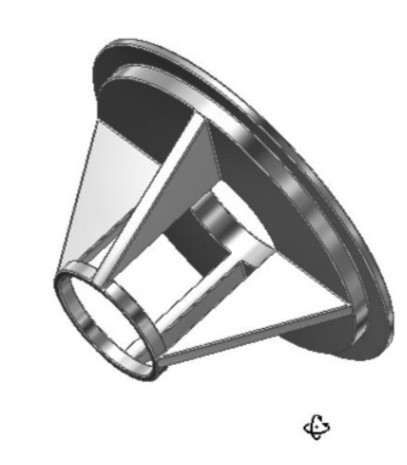
	</div>


	</div>
<div class="chapter standard " id="chapter-presentation-files" title="Module 23 Presentation Files">
	<div class="chapter-title-wrap">
		<p class="chapter-number">23</p>
		<h1 class="chapter-title">Module 23 Presentation Files</h1>
								</div>
	<div class="ugc chapter-ugc">
				 <div class="textbox textbox--learning-objectives"><div class="textbox__header"><p class="textbox__title">Learning Outcomes</p> </div> <div class="textbox__content"><p>When you have completed this module, you will be able to:</p> <ol><li>Describe a presentation file, an exploded assembly, and an animation.</li> <li>Describe and apply the CREATE VIEW, PRECISE VIEW ROTATION, TWEAK COMPONENT, and ANIMATE commands to create, tweak, and play the animation of an exploded assembly.</li> </ol> </div> </div> <h1>Presentation Files</h1> <p>After the model is assembled in the assembly file, a presentation file can be created using it. A <em><span style="color: #ec0000;">presentation file</span></em> is a file in which a view of an assembly is exploded and can be animated. It can also be rotated so that is can be viewed from different angles. A presentation file is created using the NEW command and selecting a presentation template. A presentation file has the extension .ipn. IPN is an acronym for Inventor PreseNtation.</p> <h2>Exploded Views</h2> <p>An <span style="color: #ec0000;"><em>exploded view</em></span> shows the assembly as if it were dismantled and the components of the assembly shown in the order and orientation that they fit together to create the assembly. Assemblies can be exploded automatically by Inventor, tweaked manually, or a combination of the two methods, complete with trails. A <span style="color: #ec0000;"><em>tweak</em> </span>is the distance that the part is moved from the grounded part while the <span style="color: #ec0000;"><em>trails</em> </span>are the lines in an exploded view that show the relationship of the component to the assembly. Combined, they indicate the direction and distance that a component was moved to create the view. Exploded assembly drawings are used in design presentations, catalogues, and assembly instruction. Figure 23-1 shows an exploded and rotated view of an assembly.</p> <div class="wp-caption aligncenter" id="attachment_1731" aria-describedby="caption-attachment-1731" style="width: 252px"><img class="wp-image-1731" src="https://opentextbc.ca/ethicsinlawenforcement/wp-content/uploads/sites/377/2021/05/23-1-1.jpg" alt="" width="252" height="600" title="" /><div class="wp-caption-text" id="caption-attachment-1731">Figure 23-1<br />An Exploded and Rotated<br />Presentation Model</div></div> <h2>Animations</h2> <p>An <span style="color: #ec0000;"><em>animation</em> </span>is a series of images of an exploded assembly showing each components tweak at a set interval speed making a small motion picture of an assembly or a disassembly.</p> <h2>Tweaking</h2> <p><span style="color: #ec0000;"><em>Tweaking</em> </span>is the process of moving the components from the grounded component. The tweak is the distance measured from the grounded unit. In the automated explosion method, the tweak distance is same for each part. If the tweak distance is set to 35, that means the first part is 35 mm from its location and the second part is 70 mm etc. This can be seen if the children in the Browser bar are expanded as shown in Figure 23-2. To tweak components manually, use the TWEAK COMPONENT command.</p> <div class="wp-caption aligncenter" id="attachment_1730" aria-describedby="caption-attachment-1730" style="width: 314px"><img class="size-full wp-image-1730" src="https://opentextbc.ca/ethicsinlawenforcement/wp-content/uploads/sites/377/2021/05/23-2.jpg" alt="" width="314" height="450" title="" /><div class="wp-caption-text" id="caption-attachment-1730">Figure 23-2<br />Tweaking</div></div> <h2>Animating the Exploded Assembly</h2> <p>After the exploded assembly is tweaked, it can animated to show the assembly and the disassembly of the model. An animation is simply a series of <em><span style="color: #ec0000;">frames</span> </em>or pictures of the assembly displayed one frame at a time. The amount of time between frames is called the <em><span style="color: #ec0000;">interval</span></em>. The larger the interval, the slower the animation and the shorter the interval, the faster the animation. The number of repetitions can also be set.</p> <div class="textbox textbox--examples"><div class="textbox__header"><p class="textbox__title">Inventor Command: CREATE VIEW or INSERT MODEL</p> </div> <div class="textbox__content"><p>The CREATE VIEW or INSERT MODEL commands are used to insert the model of the assembly file.</p> <p>Shortcut: <strong>none</strong></p> <p><img class="aligncenter wp-image-1734" src="https://opentextbc.ca/ethicsinlawenforcement/wp-content/uploads/sites/377/2021/05/Create-View-or-Insert-Model-.jpg" alt="" width="500" height="122" title="" /></p> </div> </div> <div class="textbox textbox--examples"><div class="textbox__header"><p class="textbox__title">Inventor Command: TWEAK COMPONENTS</p> </div> <div class="textbox__content"><p>The TWEAK COMPONENTS command is used to move a component farther or closer from the grounded component to create or edit an exploded view of the assembly. It can also be used to rotate the components.</p> <p>Shortcut: <strong>T</strong></p> <p><img class="aligncenter size-full wp-image-1733" src="https://opentextbc.ca/ethicsinlawenforcement/wp-content/uploads/sites/377/2021/05/tweak-components.jpg" alt="" width="265" height="110" title="" /></p> </div> </div> <div class="textbox textbox--examples"><div class="textbox__header"><p class="textbox__title">Inventor Command: ANIMATE</p> </div> <div class="textbox__content"><p>The ANIMATE command is used to set the parameters and play an animation of an assembly or disassembly of a assembled model.</p> <p>Shortcut: <strong>none</strong></p> <p><img class="aligncenter size-full wp-image-1735" src="https://opentextbc.ca/ethicsinlawenforcement/wp-content/uploads/sites/377/2021/05/animate.jpg" alt="" width="239" height="111" title="" /></p> </div> </div> <div class="textbox shaded"><strong>MUST KNOW:</strong> A presentation file is a file in which a view of an assembly is created, rotated, exploded, and animated. To create a presentation file, use the NEW command and select a presentation template. A presentation file has the extension .ipn. IPN is an acronym for Inventor Presentation.</div> <h1>WORK ALONG: Creating an Assembly and Presentation File</h1> <h2>Step 1</h2> <p>Check the default project and if necessary, set it to Inventor Course.</p> <h2>Step 2</h2> <p>Use the following instructions to complete all parts in this workalong. Create the following parts and ensure that you do the following:<br /> <strong>A</strong> Each part must be saved in its own .ipt file.<br /> <strong>B</strong> Project the Center Point onto the Base sketch plane and note the location of X0Y0Z0.<br /> <strong>C</strong> Draw the necessary sketches and extrude or revolve them to produce the solid model. Apply all of the necessary geometrical and dimensional constraints to fully constrain it.<br /> <strong>D</strong> Apply the colour and material shown.</p> <h2>Step 3</h2> <p>Create the part file as follows:<br /> <strong>Part:</strong> Base<br /> <strong>Part Name:</strong> Inventor Workalong 23-1A Template: Metric-Modules Part (mm).ipt Color: Aluminum Cast Material: Aluminum 6061 (Figure Step 3A and 3B)</p> <p><strong>Template:</strong> Metric-Modules Part (mm).ipt</p> <p><strong>Color:</strong> Aluminum</p> <p><strong>Cast Material:</strong> Aluminum 6061 (Figure Step 3A and 3B)</p> <div class="wp-caption aligncenter" id="attachment_1736" aria-describedby="caption-attachment-1736" style="width: 283px"><img class="size-full wp-image-1736" src="https://opentextbc.ca/ethicsinlawenforcement/wp-content/uploads/sites/377/2021/05/work-along-assembly-3a.jpg" alt="" width="283" height="314" title="" /><div class="wp-caption-text" id="caption-attachment-1736">Figure Step 3A<br />Solid Model – Home View</div></div> <div class="wp-caption aligncenter" id="attachment_1737" aria-describedby="caption-attachment-1737" style="width: 500px"><a href="https://opentextbc.ca/autodesk/wp-content/uploads/sites/1381/2021/05/work-along-assembly-3b.jpg" data-url="https://opentextbc.ca/autodesk/wp-content/uploads/sites/1381/2021/05/work-along-assembly-3b.jpg"><img class="wp-image-1737" src="https://opentextbc.ca/ethicsinlawenforcement/wp-content/uploads/sites/377/2021/05/work-along-assembly-3b.jpg" alt="" width="500" height="716" title="" /></a><div class="wp-caption-text" id="caption-attachment-1737">Figure Step 3B<br />Dimensioned Multiview Drawing [Click to see image full size]</div></div> <h2 class="page-break-before">Step 4</h2> <p>Change the colour of the machined faces to: <span style="text-decoration: underline;">Mirror</span>.</p> <p><strong>Part:</strong> Slotted Wheel<br /> <strong>Part Name:</strong> Inventor Workalong 23-1B<br /> <strong>Template:</strong> Metric-Modules Part (mm).ipt<br /> <strong>Color:</strong> Mirror<br /> <strong>Material:</strong> Chrome – Polished Blue (Figure Step 4A, 4B, and 4C)</p> <div class="wp-caption aligncenter" id="attachment_1738" aria-describedby="caption-attachment-1738" style="width: 300px"><img class="wp-image-1738" src="https://opentextbc.ca/ethicsinlawenforcement/wp-content/uploads/sites/377/2021/05/work-along-assembly-4a.jpg" alt="" width="300" height="178" title="" /><div class="wp-caption-text" id="caption-attachment-1738">Figure Step 4A<br />Solid Model – Home View</div></div> <div class="wp-caption aligncenter" id="attachment_1739" aria-describedby="caption-attachment-1739" style="width: 300px"><img class="wp-image-1739" src="https://opentextbc.ca/ethicsinlawenforcement/wp-content/uploads/sites/377/2021/05/work-along-assembly-4b.jpg" alt="" width="300" height="253" title="" /><div class="wp-caption-text" id="caption-attachment-1739">Figure Step 4B<br />Solid Model – Orbited View</div></div> <div class="wp-caption aligncenter page-break-after" id="attachment_1740" aria-describedby="caption-attachment-1740" style="width: 500px"><img class="wp-image-1740" src="https://opentextbc.ca/ethicsinlawenforcement/wp-content/uploads/sites/377/2021/05/work-along-assembly-4c.jpg" alt="" width="500" height="498" title="" /><div class="wp-caption-text" id="caption-attachment-1740">Figure Step 4C<br />Dimensioned Multiview Drawing</div></div> <p><strong class="page-break-before">Part: </strong>Connecting Shaft<strong><br /> Part Name:</strong> Inventor Workalong 23-1C<strong><br /> Template: </strong>Metric-Modules Part (mm).ipt<strong><br /> Color: </strong>Copper – Polished<strong><br /> Material: </strong>Copper (Figure Step 4D and 4E)</p> <div class="wp-caption aligncenter" id="attachment_1741" aria-describedby="caption-attachment-1741" style="width: 209px"><img class="size-full wp-image-1741" src="https://opentextbc.ca/ethicsinlawenforcement/wp-content/uploads/sites/377/2021/05/work-along-assembly-4d.jpg" alt="" width="209" height="487" title="" /><div class="wp-caption-text" id="caption-attachment-1741">Figure Step 4D<br />Solid Model –<br />Home View</div></div> <div class="wp-caption aligncenter page-break-after" id="attachment_1742" aria-describedby="caption-attachment-1742" style="width: 413px"><img class="size-full wp-image-1742" src="https://opentextbc.ca/ethicsinlawenforcement/wp-content/uploads/sites/377/2021/05/work-along-assembly-4e.jpg" alt="" width="413" height="633" title="" /><div class="wp-caption-text" id="caption-attachment-1742">Figure Step 4E<br />Dimensioned Multiview Drawing</div></div> <p><strong class="page-break-before">Part:</strong> Spacer<br /> <strong>Part Name:</strong> Inventor Workalong 23-1D<br /> <strong>Template:</strong> Metric-Modules Part (mm).ipt<br /> <strong>Color:</strong> Blue – Wall Paint – Glossy<br /> <strong>Material:</strong> ABS Plastic (Figure Step 4F and 4G)</p> <div class="wp-caption aligncenter" id="attachment_1743" aria-describedby="caption-attachment-1743" style="width: 214px"><img class="size-full wp-image-1743" src="https://opentextbc.ca/ethicsinlawenforcement/wp-content/uploads/sites/377/2021/05/work-along-assembly-4f.jpg" alt="" width="214" height="233" title="" /><div class="wp-caption-text" id="caption-attachment-1743">Figure Step 4F<br />Solid Model –<br />Home View</div></div> <div class="wp-caption aligncenter page-break-after" id="attachment_1744" aria-describedby="caption-attachment-1744" style="width: 349px"><img class="size-full wp-image-1744" src="https://opentextbc.ca/ethicsinlawenforcement/wp-content/uploads/sites/377/2021/05/work-along-assembly-4g.jpg" alt="" width="349" height="423" title="" /><div class="wp-caption-text" id="caption-attachment-1744">Figure Step 4G<br />Dimensioned<br />Multiview Drawing</div></div> <p><strong class="page-break-before">Part:</strong> Washer<br /> <strong>Part Name:</strong> Inventor Workalong 23-1E<br /> <strong>Template:</strong> Metric-Modules Part (mm).ipt<br /> <strong>Color:</strong> Steel – Polished<br /> <strong>Material:</strong> Steel (Figure Step 4H and 4J)</p> <div class="wp-caption aligncenter" id="attachment_1745" aria-describedby="caption-attachment-1745" style="width: 346px"><img class="size-full wp-image-1745" src="https://opentextbc.ca/ethicsinlawenforcement/wp-content/uploads/sites/377/2021/05/work-along-assembly-4h.jpg" alt="" width="346" height="211" title="" /><div class="wp-caption-text" id="caption-attachment-1745">Figure Step 4H<br />Solid Model –<br />Home View</div></div> <div class="wp-caption aligncenter page-break-after" id="attachment_1746" aria-describedby="caption-attachment-1746" style="width: 425px"><img class="wp-image-1746 size-full" src="https://opentextbc.ca/ethicsinlawenforcement/wp-content/uploads/sites/377/2021/05/work-along-assembly-4j.jpg" alt="" width="425" height="379" title="" /><div class="wp-caption-text" id="caption-attachment-1746">Figure Step 4J Dimensioned Multiview Drawing</div></div> <p><strong class="page-break-before">Part:</strong> Nut<br /> <strong>Part Name:</strong> Inventor Workalong 23-1F<br /> <strong>Template:</strong> Metric-Modules Part (mm).ipt<br /> <strong>Color:</strong> Steel – Polished<br /> <strong>Material:</strong> Steel (Figure Step 4K and 4L)</p> <div class="wp-caption aligncenter" id="attachment_1747" aria-describedby="caption-attachment-1747" style="width: 237px"><img class="wp-image-1747 size-full" src="https://opentextbc.ca/ethicsinlawenforcement/wp-content/uploads/sites/377/2021/05/work-along-assembly-4k-e1624577059186.jpg" alt="" width="237" height="204" title="" /><div class="wp-caption-text" id="caption-attachment-1747">Figure Step 4K<br />Solid Model –<br />Home View</div></div> <div class="wp-caption aligncenter" id="attachment_1748" aria-describedby="caption-attachment-1748" style="width: 395px"><img class="size-full wp-image-1748" src="https://opentextbc.ca/ethicsinlawenforcement/wp-content/uploads/sites/377/2021/05/work-along-assembly-4l.jpg" alt="" width="395" height="439" title="" /><div class="wp-caption-text" id="caption-attachment-1748">Figure Step 4L<br />Dimensioned<br />Multiview Drawing</div></div> <h2 class="page-break-before">Step 5</h2> <p>Assemble all of the parts that you just created as shown in the figures.<br /> <strong>Assembly:</strong> Slotted Connector<br /> <strong>Assembly Name:</strong> Inventor Workalong 23-1.iam<br /> <strong>Template:</strong> Metric-Modules Assembly (mm).iam (Figure Step 5A and 5B)</p> <div class="wp-caption aligncenter" id="attachment_1749" aria-describedby="caption-attachment-1749" style="width: 300px"><img class="wp-image-1749" src="https://opentextbc.ca/ethicsinlawenforcement/wp-content/uploads/sites/377/2021/05/work-along-assembly-5a.jpg" alt="" width="300" height="412" title="" /><div class="wp-caption-text" id="caption-attachment-1749">Figure Step 5A<br />Assembly – Home View</div></div> <div class="wp-caption aligncenter" id="attachment_1750" aria-describedby="caption-attachment-1750" style="width: 300px"><img class="wp-image-1750" src="https://opentextbc.ca/ethicsinlawenforcement/wp-content/uploads/sites/377/2021/05/work-along-assembly-5b.jpg" alt="" width="300" height="407" title="" /><div class="wp-caption-text" id="caption-attachment-1750">Figure Step 5B<br />Assembly – Orbited View</div></div> <h2>Step 6</h2> <p>Enter the NEW command and enable the Metric tab. Select the template file: <span style="text-decoration: underline;">Modules Presentation (mm).ipn</span> (Figure Step 6)</p> <div class="wp-caption aligncenter" id="attachment_1751" aria-describedby="caption-attachment-1751" style="width: 73px"><img class="size-full wp-image-1751" src="https://opentextbc.ca/ethicsinlawenforcement/wp-content/uploads/sites/377/2021/05/work-along-assembly-6.jpg" alt="" width="73" height="83" title="" /><div class="wp-caption-text" id="caption-attachment-1751">Figure<br />Step 6</div></div> <h2 class="page-break-before">Step 7</h2> <p>Enter the CREATE VIEW command. It will open the Select Assembly dialogue box. (Figure Step 7)</p> <div class="wp-caption aligncenter" id="attachment_1752" aria-describedby="caption-attachment-1752" style="width: 341px"><img class="size-full wp-image-1752" src="https://opentextbc.ca/ethicsinlawenforcement/wp-content/uploads/sites/377/2021/05/work-along-assembly-7.jpg" alt="" width="341" height="299" title="" /><div class="wp-caption-text" id="caption-attachment-1752">Figure Step 7</div></div> <h2>Step 8</h2> <p>Click the Search Folder icon at the end of the file name. It will open the Open dialogue box. In the Lab Exercises folder, select the file: <span style="text-decoration: underline;">Inventor Workalong 23-1.iam</span> and click Open. (Figure Step 8)</p> <div class="wp-caption aligncenter" id="attachment_1753" aria-describedby="caption-attachment-1753" style="width: 400px"><a href="https://opentextbc.ca/autodesk/wp-content/uploads/sites/1381/2021/05/work-along-assembly-8.jpg" data-url="https://opentextbc.ca/autodesk/wp-content/uploads/sites/1381/2021/05/work-along-assembly-8.jpg"><img class="wp-image-1753" src="https://opentextbc.ca/ethicsinlawenforcement/wp-content/uploads/sites/377/2021/05/work-along-assembly-8.jpg" alt="" width="400" height="227" title="" /></a><div class="wp-caption-text" id="caption-attachment-1753">Figure Step 8 [Click to see image full size]</div></div> <h2 class="page-break-after">Step 9</h2> <p>In the Select Assembly dialogue box enable Automatic and Create Trails in the Explosion Method area. Enter the Distance of 35 mm. Click OK. The exploded assembly should appear as shown in the figure. (Figure Step 9A and 9B)</p> <div class="wp-caption aligncenter" id="attachment_1754" aria-describedby="caption-attachment-1754" style="width: 300px"><a href="https://opentextbc.ca/autodesk/wp-content/uploads/sites/1381/2021/05/work-along-assembly-9a.jpg" data-url="https://opentextbc.ca/autodesk/wp-content/uploads/sites/1381/2021/05/work-along-assembly-9a.jpg"><img class="wp-image-1754" src="https://opentextbc.ca/ethicsinlawenforcement/wp-content/uploads/sites/377/2021/05/work-along-assembly-9a.jpg" alt="" width="300" height="269" title="" /></a><div class="wp-caption-text" id="caption-attachment-1754">Figure Step 9A [Click to see image full size]</div></div> <div class="wp-caption aligncenter" id="attachment_1755" aria-describedby="caption-attachment-1755" style="width: 272px"><img class="wp-image-1755 size-full" src="https://opentextbc.ca/ethicsinlawenforcement/wp-content/uploads/sites/377/2021/05/work-along-assembly-9b-e1624577162278.jpg" alt="" width="272" height="517" title="" /><div class="wp-caption-text" id="caption-attachment-1755">Figure Step 9B</div></div> <h2>Step 10</h2> <p>Enter the PRECISE VIEW ROTATION command. In the Incremental View Rotate dialogue box, set the Increment to 10. (Figure Step 10)</p> <div class="wp-caption aligncenter" id="attachment_1756" aria-describedby="caption-attachment-1756" style="width: 329px"><img class="size-full wp-image-1756" src="https://opentextbc.ca/ethicsinlawenforcement/wp-content/uploads/sites/377/2021/05/work-along-assembly-10.jpg" alt="" width="329" height="158" title="" /><div class="wp-caption-text" id="caption-attachment-1756">Figure Step 10</div></div> <div class="textbox author"><strong>AUTHOR’S COMMENTS:</strong> The Increment setting sets the number of degrees the assembly will rotate per click.</div> <h2>Step 11</h2> <p>Click the Right Rotate icon twice. This will rotate the model 20 degrees to the right. Click the Up Rotate icon once. This will rotate the model 10 degrees upwards. (Figure Step 11)</p> <div class="wp-caption aligncenter" id="attachment_1757" aria-describedby="caption-attachment-1757" style="width: 292px"><img class="wp-image-1757 size-full" src="https://opentextbc.ca/ethicsinlawenforcement/wp-content/uploads/sites/377/2021/05/work-along-assembly-11-e1624577194574.jpg" alt="" width="292" height="598" title="" /><div class="wp-caption-text" id="caption-attachment-1757">Figure Step 11</div></div> <h2 class="page-break-before">Step 12</h2> <p>Enter the TWEAK COMPONENTS command. It will open the Tweak Component dialogue box. Set it as shown in the figure. (Figure Step 12)</p> <div class="wp-caption aligncenter" id="attachment_1758" aria-describedby="caption-attachment-1758" style="width: 300px"><img class="wp-image-1758" src="https://opentextbc.ca/ethicsinlawenforcement/wp-content/uploads/sites/377/2021/05/work-along-assembly-12.jpg" alt="" width="300" height="195" title="" /><div class="wp-caption-text" id="caption-attachment-1758">Figure Step 12</div></div> <h2>Step 13</h2> <p>Ensuring that Direction is enabled, zoom in and move the cursor on the top of the nut. When the direction icon is displayed as shown in the figure, click the left mouse button. (Figure Step 13A and 13B)</p> <div class="wp-caption aligncenter" id="attachment_1759" aria-describedby="caption-attachment-1759" style="width: 206px"><img class="size-full wp-image-1759" src="https://opentextbc.ca/ethicsinlawenforcement/wp-content/uploads/sites/377/2021/05/work-along-assembly-13a.jpg" alt="" width="206" height="218" title="" /><div class="wp-caption-text" id="caption-attachment-1759">Figure Step 13A</div></div> <div class="wp-caption aligncenter" id="attachment_1760" aria-describedby="caption-attachment-1760" style="width: 226px"><img class="size-full wp-image-1760" src="https://opentextbc.ca/ethicsinlawenforcement/wp-content/uploads/sites/377/2021/05/work-along-assembly-13b.jpg" alt="" width="226" height="533" title="" /><div class="wp-caption-text" id="caption-attachment-1760">Figure Step 13B</div></div> <div class="textbox author"><strong>AUTHOR’S COMMENTS:</strong> Since the Transformations is set to the Z direction and a distance of 185 mm the Nut will move 185 mm in the Z direction.</div> <h2 class="page-break-before">Step 14</h2> <p>Look at the Browser bar for the tweak you just created. It will show two tweaks for part:</p> <p><span style="text-decoration: underline;">Inventor Workalong 23-1F:1,</span> which is the nut. The 175.000 mm tweak was created in the automatic explosion in Step 9 and the 185.000 mm from the manual tweak you just completed. (Figure Step 14)</p> <div class="wp-caption aligncenter" id="attachment_1761" aria-describedby="caption-attachment-1761" style="width: 205px"><img class="size-full wp-image-1761" src="https://opentextbc.ca/ethicsinlawenforcement/wp-content/uploads/sites/377/2021/05/work-along-assembly-14.jpg" alt="" width="205" height="197" title="" /><div class="wp-caption-text" id="caption-attachment-1761">Figure Step 14</div></div> <div class="textbox author"><strong>AUTHOR’S COMMENTS:</strong> The 175.00 mm is 5 X 35.00. The nut is the fifth part to move from the grounded part.</div> <h2>Step 15</h2> <p>Click the Clear button to clear the current settings. Using the Browser bar in Figure Step 15A, manually tweak the assembly to match the figure shown in Figure Step 15B. (Figure Step 15A and 15B)</p> <div class="wp-caption aligncenter" id="attachment_1762" aria-describedby="caption-attachment-1762" style="width: 245px"><img class="size-full wp-image-1762" src="https://opentextbc.ca/ethicsinlawenforcement/wp-content/uploads/sites/377/2021/05/work-along-assembly-15a.jpg" alt="" width="245" height="364" title="" /><div class="wp-caption-text" id="caption-attachment-1762">Figure Step 15A</div></div> <div class="wp-caption aligncenter" id="attachment_1763" aria-describedby="caption-attachment-1763" style="width: 214px"><img class="wp-image-1763 size-full" src="https://opentextbc.ca/ethicsinlawenforcement/wp-content/uploads/sites/377/2021/05/work-along-assembly-15b-e1624577257658.jpg" alt="" width="214" height="543" title="" /><div class="wp-caption-text" id="caption-attachment-1763">Figure Step 15B</div></div> <h2 class="page-break-before">Step 16</h2> <p>Enter the ANIMATE command. It will open the Animation dialogue box. Set the Interval to 25 and the Repetitions to 1. (Figure Step 16)</p> <div class="wp-caption aligncenter" id="attachment_1764" aria-describedby="caption-attachment-1764" style="width: 300px"><img class="wp-image-1764" src="https://opentextbc.ca/ethicsinlawenforcement/wp-content/uploads/sites/377/2021/05/work-along-assembly-16.jpg" alt="" width="300" height="144" title="" /><div class="wp-caption-text" id="caption-attachment-1764">Figure Step 16</div></div> <h2>Step 17</h2> <p>Study Figure Step 17A, 17B, 17C, and 17D. Play the animation of the assembly that you created in this workalong. Try the different options allowed in the Motion box. (Figure Step 17A, 17B, 17C, and 17D)</p> <div class="wp-caption aligncenter" id="attachment_1765" aria-describedby="caption-attachment-1765" style="width: 300px"><img class="wp-image-1765" src="https://opentextbc.ca/ethicsinlawenforcement/wp-content/uploads/sites/377/2021/05/work-along-assembly-17a..jpg" alt="" width="300" height="143" title="" /><div class="wp-caption-text" id="caption-attachment-1765">Figure Step 17A</div></div> <div class="wp-caption aligncenter" id="attachment_1766" aria-describedby="caption-attachment-1766" style="width: 300px"><img class="wp-image-1766" src="https://opentextbc.ca/ethicsinlawenforcement/wp-content/uploads/sites/377/2021/05/work-along-assembly-17b.jpg" alt="" width="300" height="138" title="" /><div class="wp-caption-text" id="caption-attachment-1766">Figure Step 17B</div></div> <div class="wp-caption aligncenter" id="attachment_1767" aria-describedby="caption-attachment-1767" style="width: 300px"><img class="wp-image-1767" src="https://opentextbc.ca/ethicsinlawenforcement/wp-content/uploads/sites/377/2021/05/work-along-assembly-17c.jpg" alt="" width="300" height="137" title="" /><div class="wp-caption-text" id="caption-attachment-1767">Figure Step 17C</div></div> <div class="wp-caption aligncenter" id="attachment_1770" aria-describedby="caption-attachment-1770" style="width: 300px"><img class="wp-image-1770" src="https://opentextbc.ca/ethicsinlawenforcement/wp-content/uploads/sites/377/2021/05/work-along-assembly-17d-1.jpg" alt="" width="300" height="141" title="" /><div class="wp-caption-text" id="caption-attachment-1770">Figure Step 17D</div></div> <h2>Step 18</h2> <p>Set the Interval to 15 and the Repetitions to 3. Play the animation using these parameters both forward and in reverse. (Figure Step 18)</p> <div class="wp-caption aligncenter" id="attachment_1769" aria-describedby="caption-attachment-1769" style="width: 300px"><img class="wp-image-1769" src="https://opentextbc.ca/ethicsinlawenforcement/wp-content/uploads/sites/377/2021/05/work-along-assembly-18.jpg" alt="" width="300" height="142" title="" /><div class="wp-caption-text" id="caption-attachment-1769">Figure Step 18</div></div> <h2>Step 19</h2> <p>Save and close the file.</p> <div class="textbox"><p><strong>USER TIP:</strong> The tweaked distance can be edited in the Browser bar. Locate the tweak you want to change and select it. Once selected, it will highlight and at the bottom of the browser bar you can change the distance as shown in figure below left. The revised tweak will display as shown in the figure below right.</p> <p><img class="aligncenter size-full wp-image-1060" src="https://opentextbc.ca/ethicsinlawenforcement/wp-content/uploads/sites/377/2021/05/browser-bar-1.jpg" alt="" width="463" height="465" srcset="https://opentextbc.ca/autodesk/wp-content/uploads/sites/377/2021/05/browser-bar-1.jpg 463w, https://opentextbc.ca/autodesk/wp-content/uploads/sites/377/2021/05/browser-bar-1-300x300.jpg 300w, https://opentextbc.ca/autodesk/wp-content/uploads/sites/377/2021/05/browser-bar-1-150x150.jpg 150w, https://opentextbc.ca/autodesk/wp-content/uploads/sites/377/2021/05/browser-bar-1-65x65.jpg 65w, https://opentextbc.ca/autodesk/wp-content/uploads/sites/377/2021/05/browser-bar-1-225x226.jpg 225w, https://opentextbc.ca/autodesk/wp-content/uploads/sites/377/2021/05/browser-bar-1-350x352.jpg 350w" title="" /></p> <p><img class="aligncenter size-full wp-image-1061" src="https://opentextbc.ca/ethicsinlawenforcement/wp-content/uploads/sites/377/2021/11/browser-bar-2.jpg" alt="" width="456" height="334" srcset="https://opentextbc.ca/autodesk/wp-content/uploads/sites/377/2021/11/browser-bar-2.jpg 456w, https://opentextbc.ca/autodesk/wp-content/uploads/sites/377/2021/11/browser-bar-2-300x220.jpg 300w, https://opentextbc.ca/autodesk/wp-content/uploads/sites/377/2021/11/browser-bar-2-65x48.jpg 65w, https://opentextbc.ca/autodesk/wp-content/uploads/sites/377/2021/11/browser-bar-2-225x165.jpg 225w, https://opentextbc.ca/autodesk/wp-content/uploads/sites/377/2021/11/browser-bar-2-350x256.jpg 350w" title="" /></p> </div> <h1>Key Principles</h1> <div class="textbox textbox--key-takeaways"><div class="textbox__header"><p class="textbox__title">Key Principles in Module 23</p> </div> <ol><li>A presentation file is a file in which a view of an assembly is exploded and can be animated. It can be rotated so that is can be viewed from different angles.</li> <li>An exploded view shows the assembly as if it were dismantled and the components of the assembly shown in the order and orientation they fit together to create the assembly.</li> <li>A tweak is the distance that the part is moved from the grounded part while the trails are the lines in an exploded view that show the relationship of the component to the assembly.</li> <li>After the exploded assembly is tweaked, it can animated to show the assembly and the disassembly of the model. An animation is simply a series of frames or pictures of the assembly displayed one frame at a time. The amount of time between frames is called the interval.</li> </ol> </div> 
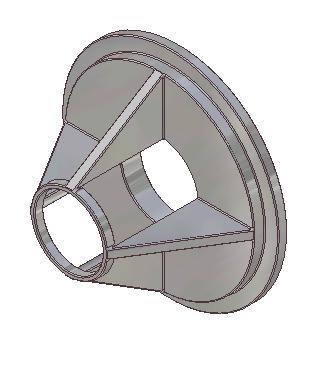
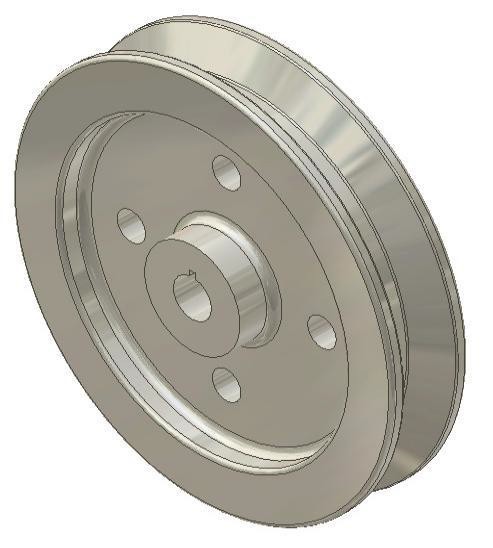
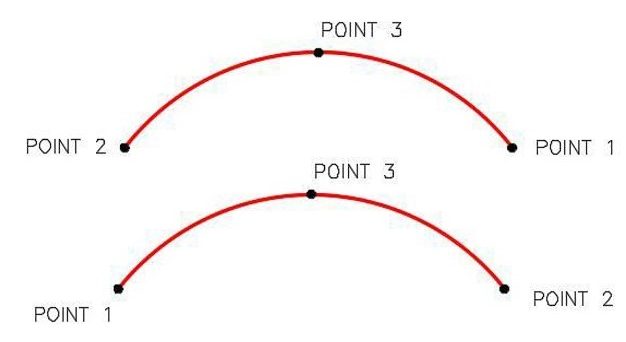
	</div>


	</div>
<div class="chapter standard " id="chapter-slug-2d-drawings-part-1" title="Module 24 2D Drawings – Part 1">
	<div class="chapter-title-wrap">
		<p class="chapter-number">24</p>
		<h1 class="chapter-title">Module 24 2D Drawings – Part 1</h1>
								</div>
	<div class="ugc chapter-ugc">
				 <div class="textbox textbox--learning-objectives"><div class="textbox__header"><p class="textbox__title">Learning Outcomes</p> </div> <div class="textbox__content"><p>When you have completed this module, you will be able to:</p> <ol><li>Describe 2D drawing files, drawing sheets, and drawing sizes.</li> <li>Describe and apply the commands BASE VIEW, PROJECTED VIEW, SECTION VIEW, and NEW SHEET to create multiview and isometric views of a solid model on a drawing sheet.</li> </ol> </div> </div> <h1>Drawing Files</h1> <p>A <span style="color: #ec0000"><em>drawing file</em></span> contains one or more drawing sheets on which 2 dimensional and/or 3 dimensional scaled views of the solid models contained in part, assembly, or presentation files. The views can be created complete with hidden lines or shading. Annotation can be automatically or manually added to the views as required. A typical drawing sheet with an orthographic, section, and isometric view of a model is shown in Figure 24-1. Dimensioning, inserting text, and filling in the titleblock are taught in Module 25. When the drawing is complete, it can be printed or plotted on paper. A drawing file has the file extension .idw. IDW is an acronym for Inventor Drawing.</p> <div class="wp-caption aligncenter" id="attachment_1066" aria-describedby="caption-attachment-1066" style="width: 615px"><a href="https://opentextbc.ca/autodesk/wp-content/uploads/sites/1381/2021/05/24-1.jpg" data-url="https://opentextbc.ca/autodesk/wp-content/uploads/sites/1381/2021/05/24-1.jpg"><img class="wp-image-1773" src="https://opentextbc.ca/ethicsinlawenforcement/wp-content/uploads/sites/377/2021/05/24-1.jpg" alt="" width="615" height="401" title="" /></a><div class="wp-caption-text" id="caption-attachment-1066">Figure 24-1<br />A Typical Drawing Sheet in a Drawing File [Click to see image full size]</div></div> <h2>Model Views</h2> <p>A<span style="color: #ec0000"><em>model view</em></span> is a scaled view orientated at an angle and direction that the solid model or assembly is being viewed and displayed on the drawing sheet. There is no limit to the number of views or the number of solid models from part, assembly, or presentation files that can be placed on a drawing sheet. Views can also be automatically annotated or labeled. There are eight predefined views that you can select from when creating the view. The predefined views are the; base, projection, auxiliary, section, detail, broken, breakout, and overlay.</p> <h2>The Base</h2> <p>A <em><span style="color: #ec0000">Base view</span></em> is the first view created on the drawing sheet. It controls the scale, orientation, and location of the views projected from it. The orthographic and/or isometric views in the drawing are created from the Base view. For example, if a multiview drawing was being created from a solid model, the Front view is created first as a Base view. The Front view would control the scale and location of the projected Top and Right Side views. See Figure 24-2. To change the scale of all views, only the scale of the Front (Base) view would have to be changed and the Top and Right Side views would automatically change scale to match. If the Front view was moved, the Top and Right Side views would move accordingly to keep their multiview position.</p> <div class="wp-caption aligncenter" aria-describedby="caption-attachment-1066" style="width: 421px"><img class="size-full wp-image-1774" src="https://opentextbc.ca/ethicsinlawenforcement/wp-content/uploads/sites/377/2021/05/24-2.jpg" alt="" width="421" height="403" title="" /><div class="wp-caption-text">Figure 24-2<br />Multiview Drawing</div></div> <h2>Projected Views</h2> <p>A <em><span style="color: #ec0000">projected view</span></em> is a view projected from a Base view. The scale of a projected view cannot be set since the Base view that you projected it from controls its scale. The Base view also controls the orientation and location of the projected views.</p> <h2>Drawing Sheets</h2> <p>A <em><span style="color: #ec0000">drawing sheet</span></em> represents a blank piece of paper complete with titleblock and border. The size of drawing sheet can be set by the user. The sheet size can be a custom size set by you or one of the ANSI or ISO drawing sheet standards listed in the table shown in Figure 24-3.</p> <p>There is no maximum number of drawing sheets that can be created for each drawing file but there must be at least one sheet. Sheets can be created or deleted but Inventor will NOT allow all of them to be deleted since one sheet must exist at all times.</p> <p>The drawing sheet can be assigned a drawing border and a titleblock which can be created or edited by you. Custom drawing template files containing borders and titleblocks are supplied with the Inventor book.</p> <div class="textbox shaded"><strong>MUST KNOW:</strong> There is no maximum number of drawing sheets that can be created for each drawing file but there must be at least one sheet. One sheet must exist in each drawing file at all times.</div> <h2>ANSI and ISO Standard Drawing Sheet Sizes</h2> <div class="wp-caption aligncenter" aria-describedby="caption-attachment-1066" style="width: 1292px"><img class="size-full wp-image-1066" src="https://opentextbc.ca/ethicsinlawenforcement/wp-content/uploads/sites/377/2021/05/24-3.jpg" alt="" width="1292" height="416" srcset="https://opentextbc.ca/autodesk/wp-content/uploads/sites/377/2021/05/24-3.jpg 1292w, https://opentextbc.ca/autodesk/wp-content/uploads/sites/377/2021/05/24-3-300x97.jpg 300w, https://opentextbc.ca/autodesk/wp-content/uploads/sites/377/2021/05/24-3-1024x330.jpg 1024w, https://opentextbc.ca/autodesk/wp-content/uploads/sites/377/2021/05/24-3-768x247.jpg 768w, https://opentextbc.ca/autodesk/wp-content/uploads/sites/377/2021/05/24-3-65x21.jpg 65w, https://opentextbc.ca/autodesk/wp-content/uploads/sites/377/2021/05/24-3-225x72.jpg 225w, https://opentextbc.ca/autodesk/wp-content/uploads/sites/377/2021/05/24-3-350x113.jpg 350w" title="" /><div class="wp-caption-text">Figure 24-3<br />Standard ANSI and ISO Drawing Sheet Sizes</div></div> <h2>View Style</h2> <p>A<em><span style="color: #ec0000">view style</span></em> can be displayed in one of three different styles. The three styles are <span style="color: #ec0000"><em>hidden line</em></span>, <span style="color: #ec0000"><em>hidden line removed</em></span>, and <em><span style="color: #ec0000">shaded</span> </em>as shown in Figure 24-4. The style of a view can be changed as required after the view has been placed.</p> <h2>View Scale</h2> <p>The <span style="color: #ec0000"><em>scale</em> </span>of the view is a factor of the number that it is set to. For example, if the scale is set to 1 then the factor of 1 X 1 = 1, full scale or 1:1. If the scale is set to 2 then 2 X 1 = 2 or a scale of 2:1 which is twice the size of the original model. On the other hand, if the scale factor is set to 0.5 then 0.5 X 1 = 0.5 or the scale of 1:2 which would display the view one-half the size of the original model.</p> <div class="wp-caption aligncenter" aria-describedby="caption-attachment-1066" style="width: 496px"><img class="wp-image-1777 size-full" src="https://opentextbc.ca/ethicsinlawenforcement/wp-content/uploads/sites/377/2021/11/24-4-1-e1624577408475.jpg" alt="" width="496" height="133" title="" /><div class="wp-caption-text">Figure 24-3<br />View Styles</div></div> <div class="textbox shaded"><strong>MUST KNOW:</strong> A drawing file contains one or more 2 dimensional drawing sheets on which a 2D and/or 3D scaled views of solid models contained in part, assembly, and presentation files. A drawing file has the file extension .idw. IDW is an acronym for Inventor Drawing.</div> <div class="textbox textbox--examples"><div class="textbox__header"><p class="textbox__title">Inventor Command:&nbsp; BASE VIEW</p> </div> <div class="textbox__content"><p>The BASE VIEW command is used to create a Base view of the solid model contained in a part, assembly, or presentation file on the drawing sheet. The scale, style, labeling, and orientation of the view can be set when the view is created.</p> <p>Shortcut: <strong>none</strong></p> <p><img class="aligncenter wp-image-1068 size-medium" src="https://opentextbc.ca/ethicsinlawenforcement/wp-content/uploads/sites/377/2021/11/base-view-1-300x157.jpg" alt="" width="300" height="157" srcset="https://opentextbc.ca/autodesk/wp-content/uploads/sites/377/2021/11/base-view-1-300x157.jpg 300w, https://opentextbc.ca/autodesk/wp-content/uploads/sites/377/2021/11/base-view-1-65x34.jpg 65w, https://opentextbc.ca/autodesk/wp-content/uploads/sites/377/2021/11/base-view-1-225x117.jpg 225w, https://opentextbc.ca/autodesk/wp-content/uploads/sites/377/2021/11/base-view-1-350x183.jpg 350w, https://opentextbc.ca/autodesk/wp-content/uploads/sites/377/2021/11/base-view-1.jpg 732w" title="" /></p> </div> </div> <div class="textbox textbox--examples"><div class="textbox__header"><p class="textbox__title">Inventor Command: PROJECTED VIEW</p> </div> <div class="textbox__content"><p>The PROJECTED VIEW command is used to create a projected view from a Base view. The style, labeling, and direction from the Base view can be set by you when the view is created.</p> <p>Shortcut: <strong>none</strong></p> <p><img class="aligncenter wp-image-1069 size-medium" src="https://opentextbc.ca/ethicsinlawenforcement/wp-content/uploads/sites/377/2021/11/projected-view-2-300x135.jpg" alt="" width="300" height="135" srcset="https://opentextbc.ca/autodesk/wp-content/uploads/sites/377/2021/11/projected-view-2-300x135.jpg 300w, https://opentextbc.ca/autodesk/wp-content/uploads/sites/377/2021/11/projected-view-2-65x29.jpg 65w, https://opentextbc.ca/autodesk/wp-content/uploads/sites/377/2021/11/projected-view-2-225x101.jpg 225w, https://opentextbc.ca/autodesk/wp-content/uploads/sites/377/2021/11/projected-view-2-350x157.jpg 350w, https://opentextbc.ca/autodesk/wp-content/uploads/sites/377/2021/11/projected-view-2.jpg 707w" title="" /></p> </div> </div> <div class="textbox textbox--examples"><div class="textbox__header"><p class="textbox__title">Inventor Command: SECTION VIEW</p> </div> <div class="textbox__content"><p>The SECTION VIEW command is used to create a Section view from an existing view. The location, style, labeling, and direction from the selected view can be set by you when the view is created.</p> <p>Shortcut: <strong>none</strong></p> <p><img class="aligncenter wp-image-1070 size-medium" src="https://opentextbc.ca/ethicsinlawenforcement/wp-content/uploads/sites/377/2021/11/section-view-1-300x113.jpg" alt="" width="300" height="113" srcset="https://opentextbc.ca/autodesk/wp-content/uploads/sites/377/2021/11/section-view-1-300x113.jpg 300w, https://opentextbc.ca/autodesk/wp-content/uploads/sites/377/2021/11/section-view-1-768x288.jpg 768w, https://opentextbc.ca/autodesk/wp-content/uploads/sites/377/2021/11/section-view-1-65x24.jpg 65w, https://opentextbc.ca/autodesk/wp-content/uploads/sites/377/2021/11/section-view-1-225x84.jpg 225w, https://opentextbc.ca/autodesk/wp-content/uploads/sites/377/2021/11/section-view-1-350x131.jpg 350w, https://opentextbc.ca/autodesk/wp-content/uploads/sites/377/2021/11/section-view-1.jpg 821w" title="" /></p> </div> </div> <div class="textbox"><strong>USER TIP:</strong> ANSI is an acronym for American National Standard Institute. ANSI has set drawing standards that are widely adapted and followed by most companies working in English or Imperial measurements. To read more about ANSI see: http://www.ansi.org/<br /> ISO is an acronym for International Organization for Standardization. ISO has set the drawing standards that are widely adapted and followed by most companies working in Metric measurements. To read more about ISO see: http://www.iso.org/iso/en/ISOOnline.frontpage</div> <h1>WORK ALONG: Creating 2D Drawings</h1> <h2>Step 1</h2> <p>Check the default project and if necessary, set it to: <span style="text-decoration: underline">Inventor Course</span>.</p> <h2>Step 2</h2> <p>Enter the NEW command to start a new drawing file. Enable the English tab and select the template: <span style="text-decoration: underline">Modules Drawing ANSI (in).idw</span>. (Figure Step 2)</p> <div class="wp-caption aligncenter" aria-describedby="caption-attachment-1066" style="width: 53px"><img class="size-full wp-image-1782" src="https://opentextbc.ca/ethicsinlawenforcement/wp-content/uploads/sites/377/2021/11/work-along-2d-Fig-2.jpg" alt="" width="53" height="107" title="" /><div class="wp-caption-text">Figure<br />Step 2</div></div> <div class="textbox author"><strong>AUTHOR’S COMMENTS:</strong> See the User Tip before WORKALONG: Creating 2D Drawings for a explanation of the acronyms ANSI and ISO.</div> <h2 class="page-break-before">Step 3</h2> <p>When the drawing file is opened, it will display an A size drawing complete with border and titleblock. Save the file with the name: <span style="text-decoration: underline">Inventor Workalong 24-1</span>. (Figure Step 3)</p> <div class="wp-caption aligncenter" aria-describedby="caption-attachment-1066" style="width: 615px"><a href="https://opentextbc.ca/autodesk/wp-content/uploads/sites/1381/2021/05/work-along-2d-Fig-3.jpg" data-url="https://opentextbc.ca/autodesk/wp-content/uploads/sites/1381/2021/05/work-along-2d-Fig-3.jpg"><img class="wp-image-1783" src="https://opentextbc.ca/ethicsinlawenforcement/wp-content/uploads/sites/377/2021/11/work-along-2d-Fig-3.jpg" alt="" width="615" height="518" title="" /></a><div class="wp-caption-text">Figure Step 3 [Click to see image full size]</div></div> <h2 class="page-break-before">Step 4</h2> <p>Enter the BASE VIEW command to create the Base view. It will open the Drawing View dialogue box. Set the Orientation (view) to Front and the Style to Hidden Line. Ensure that the dialogue box matches the figure. (Figure Step 4)</p> <div class="wp-caption aligncenter" aria-describedby="caption-attachment-1066" style="width: 500px"><a href="https://opentextbc.ca/autodesk/wp-content/uploads/sites/1381/2021/05/work-along-2d-Fig-4.jpg" data-url="https://opentextbc.ca/autodesk/wp-content/uploads/sites/1381/2021/05/work-along-2d-Fig-4.jpg"><img class="wp-image-1784" src="https://opentextbc.ca/ethicsinlawenforcement/wp-content/uploads/sites/377/2021/11/work-along-2d-Fig-4.jpg" alt="" width="500" height="264" title="" /></a><div class="wp-caption-text">Figure Step 4 [Click to see image full size]</div></div> <h2>Step 5</h2> <p>Click OK. In the Open dialogue box, select the part: <span style="text-decoration: underline">Inventor Workalong 22-1D.ipt</span>. (Figure Step 5)</p> <div class="wp-caption aligncenter" aria-describedby="caption-attachment-1066" style="width: 500px"><a href="https://opentextbc.ca/autodesk/wp-content/uploads/sites/1381/2021/05/work-along-2d-Fig-5.jpg" data-url="https://opentextbc.ca/autodesk/wp-content/uploads/sites/1381/2021/05/work-along-2d-Fig-5.jpg"><img class="wp-image-1785" src="https://opentextbc.ca/ethicsinlawenforcement/wp-content/uploads/sites/377/2021/11/work-along-2d-Fig-5.jpg" alt="" width="500" height="275" title="" /></a><div class="wp-caption-text">Figure Step 5 [Click to see image full size]</div></div> <h2 class="page-break-before">Step 6</h2> <p>Select the location for the Front view. Don’t be too concerned where you locate it since it can be moved later. Try to locate it close to where it is shown in the figure. (Figure Step 6A and 6B)</p> <div class="wp-caption aligncenter" aria-describedby="caption-attachment-1066" style="width: 500px"><a href="https://opentextbc.ca/autodesk/wp-content/uploads/sites/1381/2021/05/work-along-2d-Fig-6a.jpg" data-url="https://opentextbc.ca/autodesk/wp-content/uploads/sites/1381/2021/05/work-along-2d-Fig-6a.jpg"><img class="wp-image-1786" src="https://opentextbc.ca/ethicsinlawenforcement/wp-content/uploads/sites/377/2021/11/work-along-2d-Fig-6a.jpg" alt="" width="500" height="341" title="" /></a><div class="wp-caption-text">Figure Step 6A [Click to see image full size]</div></div> <div class="wp-caption aligncenter" aria-describedby="caption-attachment-1066" style="width: 500px"><a href="https://opentextbc.ca/autodesk/wp-content/uploads/sites/1381/2021/05/work-along-2d-Fig-6b-e1624577552226.jpg" data-url="https://opentextbc.ca/autodesk/wp-content/uploads/sites/1381/2021/05/work-along-2d-Fig-6b-e1624577552226.jpg"><img class="wp-image-1787" src="https://opentextbc.ca/ethicsinlawenforcement/wp-content/uploads/sites/377/2021/11/work-along-2d-Fig-6b-e1624577552226.jpg" alt="" width="500" height="263" title="" /></a><div class="wp-caption-text">Figure Step 6B [Click to see image full size]</div></div> <h2 class="page-break-before">Step 7</h2> <p>Enter the PROJECT VIEW command and select the Base view as the view to project from. (Figure Step 7)</p> <div class="wp-caption aligncenter" aria-describedby="caption-attachment-1066" style="width: 217px"><img class="size-full wp-image-1788" src="https://opentextbc.ca/ethicsinlawenforcement/wp-content/uploads/sites/377/2021/11/work-along-2d-Fig-7.jpg" alt="" width="217" height="199" title="" /><div class="wp-caption-text">Figure Step 7</div></div> <h2 class="page-break-before">Step 8</h2> <p>Move the cursor up to locate the Top view. Click the mouse at the desired location. Right click the mouse. In the Right-click menu, select Create. (Figure Step 8A and 8B)</p> <div class="wp-caption aligncenter" aria-describedby="caption-attachment-1066" style="width: 207px"><img class="size-full wp-image-1789" src="https://opentextbc.ca/ethicsinlawenforcement/wp-content/uploads/sites/377/2021/11/work-along-2d-Fig-8a.jpg" alt="" width="207" height="574" title="" /><div class="wp-caption-text">Figure Step 8A</div></div> <div class="wp-caption aligncenter" aria-describedby="caption-attachment-1066" style="width: 251px"><img class="size-full wp-image-1790" src="https://opentextbc.ca/ethicsinlawenforcement/wp-content/uploads/sites/377/2021/11/work-along-2d-Fig-8b.jpg" alt="" width="251" height="555" title="" /><div class="wp-caption-text">Figure Step 8B</div></div> <h2>Step 9</h2> <p>Using what you just learned, use the PROJECT VIEW command to create the Right Side view. (Figure Step 9)</p> <div class="wp-caption aligncenter" aria-describedby="caption-attachment-1066" style="width: 500px"><img class="wp-image-1791" src="https://opentextbc.ca/ethicsinlawenforcement/wp-content/uploads/sites/377/2021/11/work-along-2d-Fig-9-e1624577644414.jpg" alt="" width="500" height="107" title="" /><div class="wp-caption-text">Figure Step 9</div></div> <h2 class="page-break-before">Step 10</h2> <p>Your drawing should now contain the Top, Front and Right Side views of the part. (Figure Step 10)</p> <div class="wp-caption aligncenter" aria-describedby="caption-attachment-1066" style="width: 601px"><a href="https://opentextbc.ca/autodesk/wp-content/uploads/sites/1381/2021/05/work-along-2d-Fig-10.jpg" data-url="https://opentextbc.ca/autodesk/wp-content/uploads/sites/1381/2021/05/work-along-2d-Fig-10.jpg"><img class="wp-image-1792 size-full" src="https://opentextbc.ca/ethicsinlawenforcement/wp-content/uploads/sites/377/2021/11/work-along-2d-Fig-10.jpg" alt="" width="601" height="777" title="" /></a><div class="wp-caption-text">Figure Step 10 [Click to see image full size]</div></div> <h2 class="page-break-before">Step 11</h2> <p>Enter the PROJECT VIEW command. Select the Base view (Front view) and project an Isometric view from it. (Figure Step 11)</p> <div class="wp-caption aligncenter" aria-describedby="caption-attachment-1066" style="width: 506px"><img class="size-full wp-image-1793" src="https://opentextbc.ca/ethicsinlawenforcement/wp-content/uploads/sites/377/2021/11/work-along-2d-Fig-11.jpg" alt="" width="506" height="487" title="" /><div class="wp-caption-text">Figure Step 11</div></div> <h2 class="page-break-before">Step 12</h2> <p>Right click the Isometric view. In the Right-click menu, click Edit View. (Figure Step 12)</p> <div class="wp-caption aligncenter" aria-describedby="caption-attachment-1066" style="width: 350px"><img class="size-full wp-image-1794" src="https://opentextbc.ca/ethicsinlawenforcement/wp-content/uploads/sites/377/2021/11/work-along-2d-Fig-12.jpg" alt="" width="350" height="278" title="" /><div class="wp-caption-text">Figure Step 12</div></div> <h2>Step 13</h2> <p>In the Edit View dialogue box enable the display View/Scale label (turn the light bulb on). Set the Scale to 0.75:1, View Identifier to ISOMETRIC and the Style to Shaded. (Figure Step 13A and 13B)</p> <div class="wp-caption aligncenter" aria-describedby="caption-attachment-1066" style="width: 500px"><a href="https://opentextbc.ca/autodesk/wp-content/uploads/sites/1381/2021/05/work-along-2d-Fig-13a.jpg" data-url="https://opentextbc.ca/autodesk/wp-content/uploads/sites/1381/2021/05/work-along-2d-Fig-13a.jpg"><img class="wp-image-1795" src="https://opentextbc.ca/ethicsinlawenforcement/wp-content/uploads/sites/377/2021/11/work-along-2d-Fig-13a.jpg" alt="" width="500" height="87" title="" /></a><div class="wp-caption-text">Figure Step 13A [Click to see image full size]</div></div> <div class="wp-caption aligncenter" aria-describedby="caption-attachment-1066" style="width: 500px"><a href="https://opentextbc.ca/autodesk/wp-content/uploads/sites/1381/2021/05/work-along-2d-Fig-13b.jpg" data-url="https://opentextbc.ca/autodesk/wp-content/uploads/sites/1381/2021/05/work-along-2d-Fig-13b.jpg"><img class="wp-image-1796" src="https://opentextbc.ca/ethicsinlawenforcement/wp-content/uploads/sites/377/2021/11/work-along-2d-Fig-13b.jpg" alt="" width="500" height="647" title="" /></a><div class="wp-caption-text">Figure Step 13B [Click to see image full size]</div></div> <h2 class="page-break-before">Step 14</h2> <p>Right click the file name in the Browser bar. In the Right-click menu, click New Sheet. An A size drawing sheet will display in the Graphic window. The new sheet will be labeled Sheet:2 and will display in the Browser bar. (Figure Step 14)</p> <div class="wp-caption aligncenter" aria-describedby="caption-attachment-1066" style="width: 170px"><img class="size-full wp-image-1797" src="https://opentextbc.ca/ethicsinlawenforcement/wp-content/uploads/sites/377/2021/11/work-along-2d-Fig-14.jpg" alt="" width="170" height="187" title="" /><div class="wp-caption-text">Figure Step 14</div></div> <h2>Step 15</h2> <p>Right-click Sheet:2. In the Right-click menu, click Edit Sheet. In the Edit Sheet dialogue box, pull down the Size list and select B to change Sheet 2 to a B size. Ensure that Landscape is enable. (Figure 15A, 15B, and 15C)</p> <div class="wp-caption aligncenter" aria-describedby="caption-attachment-1066" style="width: 297px"><img class="size-full wp-image-1798" src="https://opentextbc.ca/ethicsinlawenforcement/wp-content/uploads/sites/377/2021/11/work-along-2d-Fig-15a.jpg" alt="" width="297" height="354" title="" /><div class="wp-caption-text">Figure Step 15A</div></div> <div class="wp-caption aligncenter" aria-describedby="caption-attachment-1066" style="width: 300px"><img class="wp-image-1799" src="https://opentextbc.ca/ethicsinlawenforcement/wp-content/uploads/sites/377/2021/11/work-along-2d-Fig-15b.jpg" alt="" width="300" height="319" title="" /><div class="wp-caption-text">Figure Step 15B</div></div> <div class="wp-caption aligncenter" aria-describedby="caption-attachment-1066" style="width: 396px"><a href="https://opentextbc.ca/autodesk/wp-content/uploads/sites/1381/2021/05/work-along-2d-Fig-15c.jpg" data-url="https://opentextbc.ca/autodesk/wp-content/uploads/sites/1381/2021/05/work-along-2d-Fig-15c.jpg"><img class="wp-image-1800 size-full" src="https://opentextbc.ca/ethicsinlawenforcement/wp-content/uploads/sites/377/2021/11/work-along-2d-Fig-15c.jpg" alt="" width="396" height="260" title="" /></a><div class="wp-caption-text">Figure Step 15C [Click to see image full size]</div></div> <h2 class="page-break-before">Step 16</h2> <p>Using what you just learned, create a Base view of Top view of part: Inventor Workalong 22-1C.ipt that you created in Module 22. (Figure Step 16)</p> <div class="wp-caption aligncenter" aria-describedby="caption-attachment-1066" style="width: 615px"><a href="https://opentextbc.ca/autodesk/wp-content/uploads/sites/1381/2021/05/work-along-2d-Fig-16.jpg" data-url="https://opentextbc.ca/autodesk/wp-content/uploads/sites/1381/2021/05/work-along-2d-Fig-16.jpg"><img class="wp-image-1801" src="https://opentextbc.ca/ethicsinlawenforcement/wp-content/uploads/sites/377/2021/11/work-along-2d-Fig-16.jpg" alt="" width="615" height="394" title="" /></a><div class="wp-caption-text">Figure Step 16 [Click to see image full size]</div></div> <h2 class="page-break-before">Step 17</h2> <p>Enter the SECTION VIEW command. Move the cursor to the centre of the circle on the Top view until it displays the green snap circle. You may have to move the cursor touching the circle circumference and then move back to the centre. Do NOT select the green snap circle, wait until it displays. Move the cursor to the right and you will see a dashed line indicating an implied line which is orthographic or horizontal, in this case. move outside the view. The yellow grid snap circle will display. Select a location when the grid snap is displayed. (Figure Step 17A and 17B)</p> <div class="wp-caption aligncenter" aria-describedby="caption-attachment-1066" style="width: 274px"><img class="size-full wp-image-1802" src="https://opentextbc.ca/ethicsinlawenforcement/wp-content/uploads/sites/377/2021/11/work-along-2d-Fig-17a.jpg" alt="" width="274" height="253" title="" /><div class="wp-caption-text">Figure Step 17A</div></div> <div class="wp-caption aligncenter" aria-describedby="caption-attachment-1066" style="width: 278px"><img class="size-full wp-image-1803" src="https://opentextbc.ca/ethicsinlawenforcement/wp-content/uploads/sites/377/2021/11/work-along-2d-Fig-17b.jpg" alt="" width="278" height="252" title="" /><div class="wp-caption-text">Figure Step 17B</div></div> <h2 class="page-break-before">Step 18</h2> <p>Move the cursor across to the other side of the view and when the geometry constraint (horizontal) displays, select a location about the same distance from the view as you did for the other side of the view. Right-click the mouse. In the Right-click menu, select Continue. (Figure Step 18A and 18B)</p> <div class="wp-caption aligncenter" aria-describedby="caption-attachment-1066" style="width: 259px"><img class="size-full wp-image-1804" src="https://opentextbc.ca/ethicsinlawenforcement/wp-content/uploads/sites/377/2021/11/work-along-2d-Fig-18a.jpg" alt="" width="259" height="245" title="" /><div class="wp-caption-text">Figure 18A</div></div> <div class="wp-caption aligncenter" aria-describedby="caption-attachment-1066" style="width: 313px"><img class="size-full wp-image-1805" src="https://opentextbc.ca/ethicsinlawenforcement/wp-content/uploads/sites/377/2021/11/work-along-2d-Fig-18b.jpg" alt="" width="313" height="321" title="" /><div class="wp-caption-text">Figure 18B</div></div> <h2 class="page-break-before">Step 19</h2> <p>Move the cursor down and the section view will display. The Section View dialogue box will open. Set the dialogue box as shown in the figure. (Figure Step 19A and 19B)</p> <div class="wp-caption aligncenter" aria-describedby="caption-attachment-1066" style="width: 615px"><a href="https://opentextbc.ca/autodesk/wp-content/uploads/sites/1381/2021/05/work-along-2d-Fig-19a.jpg" data-url="https://opentextbc.ca/autodesk/wp-content/uploads/sites/1381/2021/05/work-along-2d-Fig-19a.jpg"><img class="wp-image-1806" src="https://opentextbc.ca/ethicsinlawenforcement/wp-content/uploads/sites/377/2021/11/work-along-2d-Fig-19a.jpg" alt="" width="615" height="328" title="" /></a><div class="wp-caption-text">Figure 19A [Click to see image full size]</div></div> <div class="wp-caption aligncenter" aria-describedby="caption-attachment-1066" style="width: 294px"><img class="size-full wp-image-1807" src="https://opentextbc.ca/ethicsinlawenforcement/wp-content/uploads/sites/377/2021/11/work-along-2d-Fig-19b.jpg" alt="" width="294" height="337" title="" /><div class="wp-caption-text">Figure 19B</div></div> <h2 class="page-break-before">Step 20</h2> <p>Using the BASE VIEW command, create an Isometric view and set the scale to 1.25:1. (Figure Step 20)</p> <div class="wp-caption aligncenter" aria-describedby="caption-attachment-1066" style="width: 615px"><a href="https://opentextbc.ca/autodesk/wp-content/uploads/sites/1381/2021/05/work-along-2d-Fig-20.jpg" data-url="https://opentextbc.ca/autodesk/wp-content/uploads/sites/1381/2021/05/work-along-2d-Fig-20.jpg"><img class="wp-image-1808" src="https://opentextbc.ca/ethicsinlawenforcement/wp-content/uploads/sites/377/2021/11/work-along-2d-Fig-20.jpg" alt="" width="615" height="405" title="" /></a><div class="wp-caption-text">Figure Step 20 [Click to see image full size]</div></div> <h2>Step 21</h2> <p>Save and close the drawing file.</p> <div class="textbox"><strong>USER TIP:</strong> The default labels and colors can be configured for each drawing file. Originally, these setting came from the template file that you used to start the drawing file. Any changes that you make will only affect the current drawing file. Enter the DOCUMENT SETTINGS command. See figure right. To change the default labels of the sheets, simply edit the value as shown in the figure below. To change the background colour of the Sheet, the Sheet Outline, Highlight or Selection, select the one you want from the Color dialogue box. In this example, the colour of the sheet was change to white.<img class="aligncenter wp-image-1810" src="https://opentextbc.ca/ethicsinlawenforcement/wp-content/uploads/sites/377/2021/11/document-settings-1.jpg" alt="" width="300" height="168" title="" /><img class="aligncenter wp-image-1812" src="https://opentextbc.ca/ethicsinlawenforcement/wp-content/uploads/sites/377/2021/11/sheet-1.jpg" alt="" width="400" height="177" title="" /><img class="aligncenter wp-image-1813" src="https://opentextbc.ca/ethicsinlawenforcement/wp-content/uploads/sites/377/2021/11/blank-learning-module.jpg" alt="" width="300" height="370" title="" /><img class="aligncenter size-full wp-image-1814" src="https://opentextbc.ca/ethicsinlawenforcement/wp-content/uploads/sites/377/2021/11/colours.jpg" alt="" width="305" height="463" title="" /></div> <div class="textbox"><strong>USER TIP:</strong> To move a view on the drawing sheet, move the cursor onto the view’s border. When you are on the border, it will highlight as shown in Step 1. If the view is a base view or a projected view that has a view dependent on it, the Graphic cursor will display as shown on the left. If the view is a Base view or a projected view that does NOT have view dependent on it, the cursor will display as shown on the right. To move a view, simply press and hold down the left mouse button and drag it to desired location as shown in Step 2.</div> <h1>Key Principles</h1> <div class="textbox textbox--key-takeaways"><div class="textbox__header"><p class="textbox__title">Key Principles in Module 24</p> </div> <div class="textbox__content"><ol><li>A drawing file contains one or more 2 dimensional drawing sheets on which a 2D and/or 3D scaled views of solid models contained in part, assembly, and presentation files. A drawing file has the file extension .idw. IDW is an acronym for Inventor Drawing.</li> <li>A Base view is the first view created by the user. It controls the scale, orientation, and location of the orthographic views projected from it.</li> <li>A projected view is a view projected from a Base view. The scale of a projected view cannot be set since the Base view that you projected it from controls its scale. The Base view also controls the orientation and location of the projected views.</li> <li>A drawing sheet represents a blank piece of paper complete with titleblock and border. The size of drawing sheet can be set by the user. The sheet size can be a custom size set by the user or one of the ANSI or ISO drawing sheet standards.</li> <li>There is no maximum number of drawing sheets that can be created for each drawing file but there must be at least one sheet. One sheet must exist in each drawing file at all times.</li> <li>A view style can be displayed in one of three different styles. The three styles are hidden line, hidden line removed, and shaded. The style of a view can be changed as required after the view has been placed.</li> <li>The scale of the view is a factor of the number that it is set to.<br /> <div class="wp-caption aligncenter" id="attachment_1815" aria-describedby="caption-attachment-1815" style="width: 136px"><img class="wp-image-1815 size-full" src="https://opentextbc.ca/ethicsinlawenforcement/wp-content/uploads/sites/377/2021/11/move.jpg" alt="" width="136" height="131" title="" /><div class="wp-caption-text" id="caption-attachment-1815">Move</div></div> <div class="wp-caption aligncenter" id="attachment_1816" aria-describedby="caption-attachment-1816" style="width: 149px"><img class="size-full wp-image-1816" src="https://opentextbc.ca/ethicsinlawenforcement/wp-content/uploads/sites/377/2021/11/project.jpg" alt="" width="149" height="89" title="" /><div class="wp-caption-text" id="caption-attachment-1816">Project</div></div> <div class="wp-caption aligncenter" id="attachment_1817" aria-describedby="caption-attachment-1817" style="width: 300px"><img class="wp-image-1817" src="https://opentextbc.ca/ethicsinlawenforcement/wp-content/uploads/sites/377/2021/11/user-tip-step-1.jpg" alt="" width="300" height="179" title="" /><div class="wp-caption-text" id="caption-attachment-1817">Step 1</div></div> <div class="wp-caption aligncenter" id="attachment_1818" aria-describedby="caption-attachment-1818" style="width: 300px"><img class="wp-image-1818" src="https://opentextbc.ca/ethicsinlawenforcement/wp-content/uploads/sites/377/2021/11/user-tip-step-2.jpg" alt="" width="300" height="187" title="" /><div class="wp-caption-text" id="caption-attachment-1818">Step 2</div></div> </li> </ol> </div> </div> <h1 class="page-break-before">Lab Exercise 24-1</h1> <p>Time allowed: 2 hours.</p> <table><tbody><tr><td><strong>Part Name</strong></td> <td><strong>Project</strong></td> <td><strong>Units</strong></td> <td><strong>Template</strong></td> <td><strong>Color</strong></td> <td><strong>Material</strong></td> </tr> <tr><td>See Below</td> <td>Inventor Course</td> <td>Inches</td> <td>See Below</td> <td>N/A</td> <td>N/A</td> </tr> </tbody> </table> <h2>Step 1</h2> <p>Create the following drawings and ensure the following:<br /> <strong>A</strong> There is a separate file for each drawing sheet.<br /> <strong>B</strong> Create the same views as shown.<br /> <strong>C</strong> If the scale is not indicated, set it to full scale or 1:1.<br /> <strong>D</strong> Each drawing file has only one drawing sheet.<br /> <strong>E</strong> Save the drawing files with the Drawing Name shown for each part.</p> <p><strong>Part:</strong> Base<br /> <strong>Drawing Size:</strong> B<br /> <strong>Drawing Name:</strong> Inventor Lab 24-1A.idw Part Name: Inventor Workalong 22-1A.ipt</p> <p><strong>Template:</strong> English-Modules Drawing ANSI (in).idw (Figure Step 1A)</p> <div class="wp-caption aligncenter" aria-describedby="caption-attachment-1066" style="width: 615px"><a href="https://opentextbc.ca/autodesk/wp-content/uploads/sites/1381/2021/05/24-1-1A.jpg" data-url="https://opentextbc.ca/autodesk/wp-content/uploads/sites/1381/2021/05/24-1-1A.jpg"><img class="wp-image-1819" src="https://opentextbc.ca/ethicsinlawenforcement/wp-content/uploads/sites/377/2021/11/24-1-1A.jpg" alt="" width="615" height="398" title="" /></a><div class="wp-caption-text">Figure Step 1A [Click to see image full size]</div></div> <p><strong class="page-break-before">Part:</strong> Post<br /> <strong>Drawing Size:</strong> C<br /> <strong>Drawing Name:</strong> Inventor Lab 24-1B.idw<br /> <strong>Part Name:</strong> Inventor Workalong 22-1B.ipt<br /> <strong>Template:</strong> English-Modules Drawing ANSI (in).idw (Figure Step 1B)</p> <div class="wp-caption aligncenter page-break-after" aria-describedby="caption-attachment-1066" style="width: 615px"><a href="https://opentextbc.ca/autodesk/wp-content/uploads/sites/1381/2021/05/24-1-1B.jpg" data-url="https://opentextbc.ca/autodesk/wp-content/uploads/sites/1381/2021/05/24-1-1B.jpg"><img class="wp-image-1820" src="https://opentextbc.ca/ethicsinlawenforcement/wp-content/uploads/sites/377/2021/11/24-1-1B.jpg" alt="" width="615" height="475" title="" /></a><div class="wp-caption-text">Figure Step 1B [Click to see image full size]</div></div> <p><strong class="page-break-before">Part:</strong> Screw<br /> <strong>Drawing Size:</strong> A<br /> <strong>Drawing Name:</strong> Inventor Lab 24-1C.idw<br /> <strong>Part Name:</strong> Inventor Workalong 22-1E.ipt<br /> <strong>Template:</strong> English-Modules D</p> <p>rawing ANSI (in).idw (Figure Step 1C)</p> <div class="wp-caption aligncenter page-break-after" aria-describedby="caption-attachment-1066" style="width: 500px"><a href="https://opentextbc.ca/autodesk/wp-content/uploads/sites/1381/2021/05/24-1-1C.jpg" data-url="https://opentextbc.ca/autodesk/wp-content/uploads/sites/1381/2021/05/24-1-1C.jpg"><img class="wp-image-1821" src="https://opentextbc.ca/ethicsinlawenforcement/wp-content/uploads/sites/377/2021/11/24-1-1C.jpg" alt="" width="500" height="636" title="" /></a><div class="wp-caption-text">Figure Step 1C [Click to see image full size]</div></div> <p><strong class="page-break-before">Assembly:</strong> Tool Holder<br /> <strong>Drawing Size:</strong> A<br /> <strong>Drawing Name:</strong> Inventor Lab 24-1.idw<br /> <strong>Part Name:</strong> Inventor Workalong 22-1.iam<br /> <strong>Template:</strong> English-Modules Drawing ANSI (in).idw (Figure Step 1D)</p> <div class="wp-caption aligncenter" aria-describedby="caption-attachment-1066" style="width: 500px"><a href="https://opentextbc.ca/autodesk/wp-content/uploads/sites/1381/2021/05/24-1-1D.jpg" data-url="https://opentextbc.ca/autodesk/wp-content/uploads/sites/1381/2021/05/24-1-1D.jpg"><img class="wp-image-1822" src="https://opentextbc.ca/ethicsinlawenforcement/wp-content/uploads/sites/377/2021/11/24-1-1D.jpg" alt="" width="500" height="647" title="" /></a><div class="wp-caption-text">Figure Step 1D [Click to see image full size]</div></div> 
	</div>


	</div>
<div class="chapter standard " id="chapter-slug-2d-drawings-part-2" title="Module 25 2D Drawings – Part 2">
	<div class="chapter-title-wrap">
		<p class="chapter-number">25</p>
		<h1 class="chapter-title">Module 25 2D Drawings – Part 2</h1>
								</div>
	<div class="ugc chapter-ugc">
				 <div class="textbox textbox--learning-objectives"><div class="textbox__header"><p class="textbox__title">Learning Outcomes</p> </div> <div class="textbox__content"><p>When you have completed this module, you will be able to:</p> <ol><li>Describe basic dimensioning, centerlines, and standard styles.</li> <li>Describe and apply the STYLES EDITOR command to copy and edit standard styles to create your own dimension and text styles.</li> <li>Describe and apply the RETRIEVE DIMENSION, CENTERLINES, and GENERAL DIMENSION commands to place model and drawing dimensions and centerlines on drawing views.</li> <li>Describe how styles are exported out of and imported into drawing files.</li> </ol> </div> </div> <h1>Drafting Lesson: Basic Dimensioning Terms</h1> <p>Figure 25-1 shows the basic dimensioning terms that you will need to know when setting the standards for dimensioning style.</p> <div class="wp-caption aligncenter" id="attachment_1140" aria-describedby="caption-attachment-1140" style="width: 500px"><a href="https://opentextbc.ca/autodesk/wp-content/uploads/sites/1381/2021/05/25-1.jpg" data-url="https://opentextbc.ca/autodesk/wp-content/uploads/sites/1381/2021/05/25-1.jpg"><img class="wp-image-1824" src="https://opentextbc.ca/ethicsinlawenforcement/wp-content/uploads/sites/377/2021/05/25-1.jpg" alt="" width="500" height="392" title="" /></a><div class="wp-caption-text" id="caption-attachment-1140">Figure 25-1<br />Basic Dimensioning Terminology [Click to see image full size]</div></div> <h2>Dimensioning</h2> <p><span style="color: #ec0000"><em>Dimensioning</em> </span>is the process of adding size descriptions to the orthographic views of the model that are placed on a drawing. Once a orthographic views of the model are dimensioned, the drawing sheet can then be plotted and used for construction or reference. Up to this point in the modules only shape and size descriptions have been added to the solid models that are been constructed by adding geometrical and dimensional constraints. Since Inventor knows the exact size of the solid models, the drafter/designer only has to control which dimensions are shown and where to position them.<br /> Dimensioning is a complex subject, not difficult, but there is a lot to learn. Therefore, in the Inventor Modules, learning to control the appearance and location of the basic dimension types is taught. As the Inventor user gets more experience dimensioning he/she can experiment with some of the advanced dimensioning features.</p> <h2>Dimensioning Styles</h2> <p>A <span style="color: #ec0000"><em>dimensioning style</em></span> is a named set of variables or settings that controls the way the dimensions will appear on the drawing. There are many different settings in a dimensioning style so it will take the user some time to get used to setting them. Be patient and practice editing styles and inserting dimensions as often as possible.<br /> Inventor comes with several preset dimensioning styles which are part of the template that was used when the drawing file was created. They can be edited but cannot be renamed. It is better to create a new style by copying an renaming one of the Inventor standards and make the necessary changes to it. After the editing is complete, name the style with an appropriate name and save it so that it can be identified and used again at a later date. Dimensioning styles can also be exported and imported from one drawing to another.</p> <h2>Text Styles</h2> <p>A <em><span style="color: #ec0000">text style</span></em> is a named set of variables or settings that controls the way text will appear on a drawing. Inventor comes with several preset text styles which were part of the template that was used when the drawing file was created. Although they can be edited, they cannot be renamed. If changes are required, it is better to create a new text style by copying one of the Inventor standards and make the necessary changes to it. After the editing is complete name the style with an appropriate name and save it so that it can identified and used at a later date. Text styles can also be exported and imported from one drawing to another.</p> <h2>Centerlines</h2> <p>A <em><span style="color: #ec0000">centerline</span> </em>is used in technical drawings to indicate the location of the axis of symmetry. Placing centerlines on all objects that have a symmetrical shape will help others who are reading the drawing. The proper use of centerlines also cut down on the number of dimensions that are required on a drawing to fully describe the object.</p> <h2>Placing Dimensions</h2> <p>The two types dimensions that can placed on a drawing are model dimensions and drawing dimensions.</p> <h2><span style="color: #ec0000"><em>Model Dimensions</em></span></h2> <p><span style="color: #ec0000"><em>Model dimensions</em></span> are the driven and driving dimensions that were placed in the 2D sketch when the model was being constructed. The RETRIEVE DIMENSION command is used to retrieve the dimensions from the model and display them on the drawing. If the driven dimensions in the original sketches are changed in the future, the model dimensions in the drawing will automatically change since they are showing the actual size of the model.</p> <h2>Drawing Dimensions</h2> <p><em><span style="color: #ec0000">Drawing dimensions</span></em> are dimensions that are placed in the drawing using the GENERAL DIMENSION command. Dimensions are placed exactly where they are located in the 2D sketch when the model was created. Inventor will obtain the actual sizes and if the model is changed in the future, the drawing dimensions will automatically change to reflect the new size of the model.</p> <div class="textbox textbox--examples"><div class="textbox__header"><p class="textbox__title">Inventor Command: STYLES EDITOR</p> </div> <div class="textbox__content"><p>The STYLES EDITOR command is used to create and/or edit the styles and standards used by a drawing file.</p> <p>Shortcut: <strong>none</strong></p> <p><img class="aligncenter wp-image-1825" src="https://opentextbc.ca/ethicsinlawenforcement/wp-content/uploads/sites/377/2021/05/styles-editor.jpg" alt="" width="400" height="155" title="" /></p> </div> </div> <div class="textbox textbox--examples"><div class="textbox__header"><p class="textbox__title">Inventor Command: RETRIEVE DIMENSIONS</p> </div> <div class="textbox__content"><p>The RETRIEVE DIMENSIONS command is used to retrieve model dimensions from the sketches used to create the solid model. Only dimensions that are parallel to the plane of the view will display. The user can select the dimensions that they want to display on the drawing.</p> <p>Shortcut: <strong>none</strong></p> <p><img class="aligncenter wp-image-1826" src="https://opentextbc.ca/ethicsinlawenforcement/wp-content/uploads/sites/377/2021/05/retrieve-dimensions.jpg" alt="" width="400" height="153" title="" /></p> </div> </div> <div class="textbox textbox--examples"><div class="textbox__header"><p class="textbox__title">Inventor Command: TEXT</p> </div> <div class="textbox__content"><p>The TEXT command is used to place text on the a drawing sheet. It uses the default text style when the text is inserted.</p> <p>Shortcut: <strong>none</strong></p> <p><img class="aligncenter wp-image-1827" src="https://opentextbc.ca/ethicsinlawenforcement/wp-content/uploads/sites/377/2021/05/text.jpg" alt="" width="400" height="148" title="" /></p> </div> </div> <h1>Drafting Lesson: Center Lines</h1> <p>In multiview drawings, the <em><span style="color: #ec0000">center line</span></em> is used to indicate the location of the axis of symmetry. Placing centre lines on all objects that have a symmetrical shape will help the reader and save the you from inserting a lot of dimensions as you will see in future modules. Below are some examples of typical applications of the use of centre lines in a multiview drawing.</p> <p>A ‘ C ‘ with an ‘ L ‘ through it is the symbol for a centre line. Center lines are drawn as repeating long and short lines. See Figure 37-2.</p> <div class="wp-caption aligncenter" aria-describedby="caption-attachment-1140" style="width: 490px"><img class="size-full wp-image-1828" src="https://opentextbc.ca/ethicsinlawenforcement/wp-content/uploads/sites/377/2021/05/37-2.jpg" alt="" width="490" height="82" title="" /><div class="wp-caption-text">Figure 37-2</div></div> <p>Figure 37-3 shows a centre line indicating the centre of the circle with two short lines called a <em><span style="color: #ec0000">center mark</span></em> intersecting at the centre. Note in the right side view, the centre line follows the length of the cylinder.</p> <div class="wp-caption aligncenter" aria-describedby="caption-attachment-1140" style="width: 500px"><img class="wp-image-1829" src="https://opentextbc.ca/ethicsinlawenforcement/wp-content/uploads/sites/377/2021/05/37-3.jpg" alt="" width="500" height="203" title="" /><div class="wp-caption-text">Figure Step 37-3</div></div> <p>When the symmetry ends, so does the centre line. Note how the centre line ends on the left side of the arc. See Figure 37-4</p> <div class="wp-caption aligncenter" aria-describedby="caption-attachment-1140" style="width: 268px"><img class="size-full wp-image-1830" src="https://opentextbc.ca/ethicsinlawenforcement/wp-content/uploads/sites/377/2021/05/37-4.jpg" alt="" width="268" height="157" title="" /><div class="wp-caption-text">Figure Step 37-4</div></div> <p>Figure 37-5 shows the centre lines along with the hidden lines that indicate a hole going through the object. The centre line on the top and bottom circles stops at the circle.</p> <div class="wp-caption aligncenter" aria-describedby="caption-attachment-1140" style="width: 400px"><img class="wp-image-1831" src="https://opentextbc.ca/ethicsinlawenforcement/wp-content/uploads/sites/377/2021/05/37-5.jpg" alt="" width="400" height="278" title="" /><div class="wp-caption-text">Figure Step 37-5</div></div> <p>In Figure 37-6, note how centre lines are drawn for an array of circles.</p> <div class="wp-caption aligncenter" aria-describedby="caption-attachment-1140" style="width: 383px"><img class="wp-image-1832 size-full" src="https://opentextbc.ca/ethicsinlawenforcement/wp-content/uploads/sites/377/2021/05/37-6-e1624578408397.jpg" alt="" width="383" height="385" title="" /><div class="wp-caption-text">Figure Step 37-6</div></div> <p>There are four icons used to place centerlines on the drawing. In this module, you will be using three of them. The Center Mark, Centerline, and Centered Pattern icons are shown in Diagrams F1, G1 and H1. Diagrams F2, G2 and H2 show what centerline the applicable icon will place.</p> <div class="wp-caption aligncenter" aria-describedby="caption-attachment-1140" style="width: 157px"><img class="size-full wp-image-1834" src="https://opentextbc.ca/ethicsinlawenforcement/wp-content/uploads/sites/377/2021/05/diagram-f1.jpg" alt="" width="157" height="108" title="" /><div class="wp-caption-text">DIAGRAM F1</div></div> <div class="wp-caption aligncenter" aria-describedby="caption-attachment-1140" style="width: 239px"><img class="size-full wp-image-1835" src="https://opentextbc.ca/ethicsinlawenforcement/wp-content/uploads/sites/377/2021/05/diagram-f2.jpg" alt="" width="239" height="239" title="" /><div class="wp-caption-text">DIAGRAM F2</div></div> <div class="wp-caption aligncenter" aria-describedby="caption-attachment-1140" style="width: 277px"><img class="size-full wp-image-1836" src="https://opentextbc.ca/ethicsinlawenforcement/wp-content/uploads/sites/377/2021/05/diagram-g1.jpg" alt="" width="277" height="198" title="" /><div class="wp-caption-text">DIAGRAM G1</div></div> <div class="wp-caption aligncenter" aria-describedby="caption-attachment-1140" style="width: 402px"><img class="size-full wp-image-1837" src="https://opentextbc.ca/ethicsinlawenforcement/wp-content/uploads/sites/377/2021/05/diagram-g2.jpg" alt="" width="402" height="83" title="" /><div class="wp-caption-text">DIAGRAM G2</div></div> <div class="wp-caption aligncenter" aria-describedby="caption-attachment-1140" style="width: 146px"><img class="size-full wp-image-1839" src="https://opentextbc.ca/ethicsinlawenforcement/wp-content/uploads/sites/377/2021/05/diagram-h1.jpg" alt="" width="146" height="108" title="" /><div class="wp-caption-text">DIAGRAM H1</div></div> <div class="wp-caption aligncenter" aria-describedby="caption-attachment-1140" style="width: 224px"><img class="size-full wp-image-1838" src="https://opentextbc.ca/ethicsinlawenforcement/wp-content/uploads/sites/377/2021/05/diagram-h2.jpg" alt="" width="224" height="225" title="" /><div class="wp-caption-text">DIAGRAM H2</div></div> <h1>WORK ALONG: Creating Dimensioning and Text Styles</h1> <h2>Step 1</h2> <p>Check the default project and if necessary, set it to: <span style="text-decoration: underline">Inventor Course</span>.</p> <h2 class="page-break-before">Step 2</h2> <p>Open the drawing file: <span style="text-decoration: underline">Inventor Lab 24-1A.idw</span>. (Figure Step 2)</p> <div class="wp-caption aligncenter" aria-describedby="caption-attachment-1140" style="width: 615px"><a href="https://opentextbc.ca/autodesk/wp-content/uploads/sites/1381/2021/05/work-along-fig-step-2.jpg" data-url="https://opentextbc.ca/autodesk/wp-content/uploads/sites/1381/2021/05/work-along-fig-step-2.jpg"><img class="wp-image-1840" src="https://opentextbc.ca/ethicsinlawenforcement/wp-content/uploads/sites/377/2021/05/work-along-fig-step-2.jpg" alt="" width="615" height="381" title="" /></a><div class="wp-caption-text">Figure Step 2 [Click to see image full size]</div></div> <h2>Step 3</h2> <p>Enter the STYLES EDITOR command to open the Styles and Standard Editor dialogue box. Expand the children under the heading Dimension from the list of styles and standards on the left side of the dialogue box. The seven dimensioning styles listed are the styles that are already contained in your drawing. They were in the template file that you used when you created the drawing. (Figure Step 3)</p> <div class="wp-caption aligncenter" aria-describedby="caption-attachment-1140" style="width: 500px"><img class="wp-image-1841" src="https://opentextbc.ca/ethicsinlawenforcement/wp-content/uploads/sites/377/2021/05/work-along-fig-step-3.jpg" alt="" width="500" height="178" title="" /><div class="wp-caption-text">Figure Step 3</div></div> <h2 class="page-break-before">Step 4</h2> <p>Right-click the dimensioning style: <span style="text-decoration: underline">Default (ANSI)</span>. In the New Style Name dialogue box, enter the name: <span style="text-decoration: underline">Modules in ANSI</span>. Ensure that you enable the Add to Standard and then click OK. (Figure Step 4A and 4B)</p> <div class="wp-caption aligncenter" aria-describedby="caption-attachment-1140" style="width: 400px"><img class="wp-image-1842" src="https://opentextbc.ca/ethicsinlawenforcement/wp-content/uploads/sites/377/2021/05/work-along-fig-step-4a.jpg" alt="" width="400" height="565" title="" /><div class="wp-caption-text">Figure Step 4A</div></div> <div class="wp-caption aligncenter" aria-describedby="caption-attachment-1140" style="width: 300px"><img class="wp-image-1843" src="https://opentextbc.ca/ethicsinlawenforcement/wp-content/uploads/sites/377/2021/05/work-along-fig-step-4b.jpg" alt="" width="300" height="185" title="" /><div class="wp-caption-text">Figure Step 4B</div></div> <div class="textbox author"><strong>AUTHOR’S COMMENTS:</strong> You are copying the Default ANSI (in) dimensioning style to create your own style. It is always best to copy from an existing style. That way, you get the existing standards and you only have to change the items that you require to suit your new style.</div> <h2>Step 5</h2> <p>Click the dimensioning style: <span style="text-decoration: underline">Modules in (ANSI)</span> in the style list on the left side of the dialogue box to make it the current style. Note that on the right side of the dialogue box your newly created style is listed at the top above the tabs. This indicates it can be edited in the dialogue box. Enable the Units tab. (Figure Step 5A and 5B).</p> <div class="wp-caption aligncenter" aria-describedby="caption-attachment-1140" style="width: 277px"><img class="size-full wp-image-1844" src="https://opentextbc.ca/ethicsinlawenforcement/wp-content/uploads/sites/377/2021/05/work-along-fig-step-5a.jpg" alt="" width="277" height="285" title="" /><div class="wp-caption-text">Figure Step 5A</div></div> <div class="wp-caption aligncenter" aria-describedby="caption-attachment-1140" style="width: 500px"><img class="wp-image-1845" src="https://opentextbc.ca/ethicsinlawenforcement/wp-content/uploads/sites/377/2021/05/work-along-fig-step-5b.jpg" alt="" width="500" height="307" title="" /><div class="wp-caption-text">Figure Step 5B</div></div> <h2>Step 6</h2> <p>Change the Linear and Angular box to match the settings shown in the figure. (Figure Step 6)</p> <div class="wp-caption aligncenter" aria-describedby="caption-attachment-1140" style="width: 500px"><img class="wp-image-1846" src="https://opentextbc.ca/ethicsinlawenforcement/wp-content/uploads/sites/377/2021/05/work-along-fig-step-6-1.jpg" alt="" width="500" height="310" title="" /><div class="wp-caption-text">Figure Step 6</div></div> <h2 class="page-break-before">Step 7</h2> <p>Enable the Display tab and if necessary, make any changes until it matches the figure. (Figure Step 7)</p> <div class="wp-caption aligncenter" aria-describedby="caption-attachment-1140" style="width: 500px"><img class="wp-image-1847" src="https://opentextbc.ca/ethicsinlawenforcement/wp-content/uploads/sites/377/2021/05/work-along-fig-step-7-1.jpg" alt="" width="500" height="383" title="" /><div class="wp-caption-text">Figure Step 7</div></div> <h2 class="page-break-before">Step 8</h2> <p>Enable the Options tab and if necessary, make any changes until it matches the figure. (Figure Step 8)</p> <div class="wp-caption aligncenter" aria-describedby="caption-attachment-1140" style="width: 500px"><img class="wp-image-1848" src="https://opentextbc.ca/ethicsinlawenforcement/wp-content/uploads/sites/377/2021/05/work-along-fig-step-8-1.jpg" alt="" width="500" height="358" title="" /><div class="wp-caption-text">Figure Step 8</div></div> <h2 class="page-break-before">Step 9</h2> <p>Enable the Notes and Leaders tab and if necessary, make any changes until it matches the figure. (Figure Step 9)</p> <div class="wp-caption aligncenter" aria-describedby="caption-attachment-1140" style="width: 500px"><img class="wp-image-1849" src="https://opentextbc.ca/ethicsinlawenforcement/wp-content/uploads/sites/377/2021/05/work-along-fig-step-9.jpg" alt="" width="500" height="400" title="" /><div class="wp-caption-text">Figure Step 9</div></div> <h2>Step 10</h2> <p>Click the Save button to save the changes you made to the dimensioning style: <span style="text-decoration: underline">Modules in ANSI</span>. Click <span style="text-decoration: underline">Done</span> to close the dialogue box. (Figure Step 10)</p> <div class="wp-caption aligncenter" aria-describedby="caption-attachment-1140" style="width: 590px"><img class="size-full wp-image-1850" src="https://opentextbc.ca/ethicsinlawenforcement/wp-content/uploads/sites/377/2021/05/work-along-fig-step-10.jpg" alt="" width="590" height="58" title="" /><div class="wp-caption-text">Figure Step 10</div></div> <div class="textbox shaded"><strong>MUST KNOW:</strong> The default dimension styles cannot be renamed nor should they be altered. It is always best to create your own style using a default style to copy from. After you edit it to make the changes to suit the required style, name and save the style. Pick an appropriate name so that you can easily find and use it in the future.</div> <h2 class="page-break-before">Step 11</h2> <p>Expand the children under the heading Text from the list of styles and standards on the left side of the dialogue box. The style names listed are the text styles that are already contained in your drawing. (Figure Step 11)</p> <div class="wp-caption aligncenter" aria-describedby="caption-attachment-1140" style="width: 268px"><img class="size-full wp-image-1851" src="https://opentextbc.ca/ethicsinlawenforcement/wp-content/uploads/sites/377/2021/05/work-along-fig-step-11.jpg" alt="" width="268" height="429" title="" /><div class="wp-caption-text">Figure Step 11</div></div> <h2 class="page-break-after">Step 12</h2> <p>Right click the style: <span style="text-decoration: underline">Note Text (ANSI)</span>. In the right-click menu, select New Style. (Figure Step 12)</p> <div class="wp-caption aligncenter" aria-describedby="caption-attachment-1140" style="width: 300px"><img class="wp-image-1852" src="https://opentextbc.ca/ethicsinlawenforcement/wp-content/uploads/sites/377/2021/05/work-along-fig-step-12.jpg" alt="" width="300" height="256" title="" /><div class="wp-caption-text">Figure Step 12</div></div> <h2 class="page-break-before">Step 13</h2> <p>This will open the New Style Name dialogue box as shown in the figure. Note that since the text style: <span style="text-decoration: underline">Note Text (ANSI)</span> was the current style, you will be starting with a copy of its settings. Enter the name: <span style="text-decoration: underline">Modules Note Text (ANSI)</span> and click OK. Ensure that Add to standard is enabled. (Figure Step 13)</p> <div class="wp-caption aligncenter" aria-describedby="caption-attachment-1140" style="width: 300px"><img class="wp-image-1853" src="https://opentextbc.ca/ethicsinlawenforcement/wp-content/uploads/sites/377/2021/05/work-along-fig-step-13.jpg" alt="" width="300" height="183" title="" /><div class="wp-caption-text">Figure Step 13</div></div> <h2>Step 14</h2> <p>Make any changes necessary to match the figure. (Figure Step 14)</p> <div class="wp-caption aligncenter" aria-describedby="caption-attachment-1140" style="width: 580px"><img class="size-full wp-image-1140" src="https://opentextbc.ca/ethicsinlawenforcement/wp-content/uploads/sites/377/2021/05/work-along-fig-step-14.jpg" alt="" width="580" height="381" srcset="https://opentextbc.ca/autodesk/wp-content/uploads/sites/377/2021/05/work-along-fig-step-14.jpg 580w, https://opentextbc.ca/autodesk/wp-content/uploads/sites/377/2021/05/work-along-fig-step-14-300x197.jpg 300w, https://opentextbc.ca/autodesk/wp-content/uploads/sites/377/2021/05/work-along-fig-step-14-65x43.jpg 65w, https://opentextbc.ca/autodesk/wp-content/uploads/sites/377/2021/05/work-along-fig-step-14-225x148.jpg 225w, https://opentextbc.ca/autodesk/wp-content/uploads/sites/377/2021/05/work-along-fig-step-14-350x230.jpg 350w" title="" /><div class="wp-caption-text">Figure Step 14</div></div> <h2>Step 15</h2> <p>Click the Save button to save the changes you made to the text style.</p> <h2 class="page-break-before">Step 16</h2> <p>Use what you learned earlier in the workalong, make the dimensioning style: <span style="text-decoration: underline">Modules in ANSI</span> the active style. (Figure Step 16)</p> <div class="wp-caption aligncenter" aria-describedby="caption-attachment-1140" style="width: 400px"><img class="wp-image-1858" src="https://opentextbc.ca/ethicsinlawenforcement/wp-content/uploads/sites/377/2021/11/work-along-fig-step-16.jpg" alt="" width="400" height="281" title="" /><div class="wp-caption-text">Figure Step 16</div></div> <h2>Step 17</h2> <p>Enable the Text tab. Pull down the Primary Text Style pull-down box and select the text style: <span style="text-decoration: underline">Modules Note Text (ANS)I</span>. This will make it the default text style for the dimensioning style: <span style="text-decoration: underline">Modules in ANSI</span>. (Figure Step 17)</p> <div class="wp-caption aligncenter" aria-describedby="caption-attachment-1140" style="width: 378px"><img class="size-full wp-image-1859" src="https://opentextbc.ca/ethicsinlawenforcement/wp-content/uploads/sites/377/2021/11/work-along-fig-step-17.jpg" alt="" width="378" height="277" title="" /><div class="wp-caption-text">Figure Step 17</div></div> <h2>Step 18</h2> <p>The Text tab in the active dimension style: Modules in ANSI should appear as shown in the figure.</p> <h2>Step 19</h2> <p>Click the Done button and if you are asked to Save Edits, click Yes. (Figure Step 19)</p> <div class="wp-caption aligncenter" aria-describedby="caption-attachment-1140" style="width: 365px"><img class="size-full wp-image-1860" src="https://opentextbc.ca/ethicsinlawenforcement/wp-content/uploads/sites/377/2021/11/work-along-fig-step-19.jpg" alt="" width="365" height="174" title="" /><div class="wp-caption-text">Figure Step 19</div></div> <h2>Step 20</h2> <p>Save and close the drawing file.</p> <h1>WORK ALONG: Adding Annotation to the Drawing</h1> <h2>Step 1</h2> <p>Check the default project and if necessary, set it to: <span style="text-decoration: underline">Inventor Course</span>.</p> <h2>Step 2</h2> <p>Open the drawing file: <span style="text-decoration: underline">Inventor Lab 24-1A.idw</span>.</p> <h2 class="page-break-before">Step 3</h2> <p>Click the Centerline icon to place the vertical centerline on the Top view. For the first point, snap to the midpoint of the line on the top of the view. For the second point, snap to the midpoint of the bottom line of the Top view. Move the cursor a short distance below the Top view and click it to indicate the distance the centerline is to go past the view. (Figure Step 3A, 3B, 3C, and 3D)</p> <div class="wp-caption aligncenter" aria-describedby="caption-attachment-1140" style="width: 266px"><img class="size-full wp-image-1863" src="https://opentextbc.ca/ethicsinlawenforcement/wp-content/uploads/sites/377/2021/11/work-along-annotation-fig-3a.jpg" alt="" width="266" height="184" title="" /><div class="wp-caption-text">Figure Step 3A</div></div> <div class="wp-caption aligncenter" aria-describedby="caption-attachment-1140" style="width: 400px"><img class="wp-image-1864" src="https://opentextbc.ca/ethicsinlawenforcement/wp-content/uploads/sites/377/2021/11/work-along-annotation-fig-3b.jpg" alt="" width="400" height="257" title="" /><div class="wp-caption-text">Figure Step 3B</div></div> <div class="wp-caption aligncenter" aria-describedby="caption-attachment-1140" style="width: 400px"><img class="wp-image-1865" src="https://opentextbc.ca/ethicsinlawenforcement/wp-content/uploads/sites/377/2021/11/work-along-annotation-fig-3c.jpg" alt="" width="400" height="262" title="" /><div class="wp-caption-text">Figure Step 3C</div></div> <div class="wp-caption aligncenter" aria-describedby="caption-attachment-1140" style="width: 400px"><img class="wp-image-1866" src="https://opentextbc.ca/ethicsinlawenforcement/wp-content/uploads/sites/377/2021/11/work-along-annotation-fig-3d.jpg" alt="" width="400" height="282" title="" /><div class="wp-caption-text">Figure Step 3D</div></div> <h2>Step 4</h2> <p>Using what you just learned, place the centerline on the Front view. (Figure Step 4)</p> <div class="wp-caption aligncenter" aria-describedby="caption-attachment-1140" style="width: 400px"><img class="wp-image-1867" src="https://opentextbc.ca/ethicsinlawenforcement/wp-content/uploads/sites/377/2021/11/work-along-annotation-fig-4.jpg" alt="" width="400" height="114" title="" /><div class="wp-caption-text">Figure Step 4</div></div> <div class="textbox author"><strong>AUTHOR’S COMMENTS:</strong> Note that because the centerline in the Front view is so short, the break lines do not appear.</div> <h2 class="page-break-before">Step 5</h2> <p>Open the Style and Standard Editor dialogue box. On the left side, expand the children in the Center Mark heading. Select Center Mark (ANSI) to make it the current style. (Figure Step 5)</p> <div class="wp-caption aligncenter" aria-describedby="caption-attachment-1140" style="width: 300px"><img class="wp-image-1868" src="https://opentextbc.ca/ethicsinlawenforcement/wp-content/uploads/sites/377/2021/11/work-along-annotation-fig-5.jpg" alt="" width="300" height="209" title="" /><div class="wp-caption-text">Figure Step 5</div></div> <h2>Step 6</h2> <p>Right-click the standard style: <span style="text-decoration: underline">Center Mark (ANSI)</span> and click New Style. In the New Style Name dialogue box, enter the name: <span style="text-decoration: underline">Modules Center Line Short (ANSI)</span>. (Figure Step 6)</p> <div class="wp-caption aligncenter" aria-describedby="caption-attachment-1140" style="width: 300px"><img class="wp-image-1869" src="https://opentextbc.ca/ethicsinlawenforcement/wp-content/uploads/sites/377/2021/11/work-along-annotation-fig-6.jpg" alt="" width="300" height="247" title="" /><div class="wp-caption-text">Figure Step 6</div></div> <h2 class="page-break-before">Step 7</h2> <p>Select the new style that you just created to make it the current style. Make the changes shown in the figure. (Figure Step 7)</p> <div class="wp-caption aligncenter" aria-describedby="caption-attachment-1140" style="width: 400px"><img class="wp-image-1870" src="https://opentextbc.ca/ethicsinlawenforcement/wp-content/uploads/sites/377/2021/11/work-along-annotation-fig-7.jpg" alt="" width="400" height="338" title="" /><div class="wp-caption-text">Figure Step 7</div></div> <h2>Step 8</h2> <p>Select the centerline in the Front view. It will highlight. (Figure Step 8)</p> <div class="wp-caption aligncenter" aria-describedby="caption-attachment-1140" style="width: 350px"><img class="size-full wp-image-1871" src="https://opentextbc.ca/ethicsinlawenforcement/wp-content/uploads/sites/377/2021/11/work-along-annotation-fig-8.jpg" alt="" width="350" height="130" title="" /><div class="wp-caption-text">Figure Step 8</div></div> <h2 class="page-break-before">Step 9</h2> <p>With the centerline selected, look on the Inventor Standard pull-down menu. Note how it shows Standard as the centerline type for selected object. Select the centerline style: <span style="text-decoration: underline">Modules Center Line Short ANSI</span>. (Figure Step 9A and 9B)</p> <div class="wp-caption aligncenter" aria-describedby="caption-attachment-1140" style="width: 232px"><img class="size-full wp-image-1872" src="https://opentextbc.ca/ethicsinlawenforcement/wp-content/uploads/sites/377/2021/11/work-along-annotation-fig-9a.jpg" alt="" width="232" height="124" title="" /><div class="wp-caption-text">Figure Step 9A</div></div> <div class="wp-caption aligncenter" aria-describedby="caption-attachment-1140" style="width: 322px"><img class="size-full wp-image-1873" src="https://opentextbc.ca/ethicsinlawenforcement/wp-content/uploads/sites/377/2021/11/work-along-annotation-fig-9b.jpg" alt="" width="322" height="83" title="" /><div class="wp-caption-text">Figure Step 9B</div></div> <div class="textbox"><strong>USER TIP:</strong> When creating and dimensioning the 2D sketches in future models, keep in mind how the RETRIEVE DIMENSION command works. It retrieves both driven and driving dimensions that are parallel to the plane of each vew. After placing the driven dimension to constrain the sketch, add the necessary driving<br /> dimensions so that when you create the drawing and dimension the model, it will retrieve all of the dimensions required. That way, you will may not have to place any general dimensions.</div> <h2>Step 10</h2> <p>Enter the RETRIEVE DIMENSION command and in the Retrieve Dimensions dialogue box, ensure that Select View icon is enabled. Select the Top view. (Figure Step 10)</p> <div class="wp-caption aligncenter" aria-describedby="caption-attachment-1140" style="width: 500px"><a href="https://opentextbc.ca/autodesk/wp-content/uploads/sites/1381/2021/05/work-along-annotation-fig-10.jpg" data-url="https://opentextbc.ca/autodesk/wp-content/uploads/sites/1381/2021/05/work-along-annotation-fig-10.jpg"><img class="wp-image-1874" src="https://opentextbc.ca/ethicsinlawenforcement/wp-content/uploads/sites/377/2021/11/work-along-annotation-fig-10.jpg" alt="" width="500" height="179" title="" /></a><div class="wp-caption-text">Figure Step 10 [Click to see image full size]</div></div> <h2 class="page-break-before">Step 11</h2> <p>In the Select Source box, enable Select Parts. Select all objects. The dimensions that you inserted in the sketches that are parallel to the plane will display. (Figure Step 11)</p> <div class="wp-caption aligncenter" aria-describedby="caption-attachment-1140" style="width: 500px"><a href="https://opentextbc.ca/autodesk/wp-content/uploads/sites/1381/2021/05/work-along-annotation-fig-11.jpg" data-url="https://opentextbc.ca/autodesk/wp-content/uploads/sites/1381/2021/05/work-along-annotation-fig-11.jpg"><img class="wp-image-1875" src="https://opentextbc.ca/ethicsinlawenforcement/wp-content/uploads/sites/377/2021/11/work-along-annotation-fig-11.jpg" alt="" width="500" height="173" title="" /></a><div class="wp-caption-text">Figure Step 11 [Click to see image full size]</div></div> <h2>Step 12</h2> <p>Ensure that the Select Dimension icon is enabled select the dimension(s) that are selected in the figure. (Figure Step 12)</p> <div class="wp-caption aligncenter" aria-describedby="caption-attachment-1140" style="width: 500px"><a href="https://opentextbc.ca/autodesk/wp-content/uploads/sites/1381/2021/05/work-along-annotation-fig-12.jpg" data-url="https://opentextbc.ca/autodesk/wp-content/uploads/sites/1381/2021/05/work-along-annotation-fig-12.jpg"><img class="wp-image-1877" src="https://opentextbc.ca/ethicsinlawenforcement/wp-content/uploads/sites/377/2021/11/work-along-annotation-fig-12.jpg" alt="" width="500" height="211" title="" /></a><div class="wp-caption-text">Figure Step 12 [Click to see image full size]</div></div> <div class="textbox author"><strong>AUTHOR’S COMMENTS:</strong> The dimensions that display on the view may be different then the ones shown here. It depends how you constructed the model for this part. Select the dimensions to the best of your ability. If you cannot display all the dimensions shown, you can add them as drawing dimensions later in the workalong.</div> <h2 class="page-break-before">Step 13</h2> <p>Using what you just learned, select the dimensions for the Front view of the model. In this case, there was only one. (Figure Step 13)</p> <div class="wp-caption aligncenter" aria-describedby="caption-attachment-1140" style="width: 345px"><img class="size-full wp-image-1878" src="https://opentextbc.ca/ethicsinlawenforcement/wp-content/uploads/sites/377/2021/11/work-along-annotation-fig-13.jpg" alt="" width="345" height="431" title="" /><div class="wp-caption-text">Figure Step 13</div></div> <div class="textbox author"><strong>AUTHOR’S COMMENTS:</strong> The dimensions that display on your model may be different then the one shown here. It depends how you constructed the model for this part. Select the dimension to best of your ability.</div> <div class="textbox"><strong>USER TIP:</strong> To relocated a dimension on a drawing, move the cursor onto the dimension. When the cursor is on a dimension, it will highlight and the Move icon will display as shown in the figure to the right. The <span style="text-decoration: underline">Move</span> cursor is shown in the figure on the left. When the Move cursor displays, press and hold down on the left mouse button and drag the cursor to approximately the location you want to place the dimension. As you do that, Inventor will display a temporary centerline indicating the centre location between the extension lines as shown in the figure to the right. It will help you centre the dimension text. When you have the dimension positioned, release the mouse button.<img class="aligncenter size-full wp-image-1880" src="https://opentextbc.ca/ethicsinlawenforcement/wp-content/uploads/sites/377/2021/11/user-tip-1.500.jpg" alt="" width="266" height="151" title="" /><img class="aligncenter size-full wp-image-1881" src="https://opentextbc.ca/ethicsinlawenforcement/wp-content/uploads/sites/377/2021/11/user-tip2-1.500.jpg" alt="" width="253" height="204" title="" /></div> <h2 class="page-break-before">Step 14</h2> <p>Move the dimensions to match the figure as close as possible. (Figure Step 14)</p> <div class="wp-caption aligncenter" aria-describedby="caption-attachment-1140" style="width: 400px"><img class="wp-image-1879" src="https://opentextbc.ca/ethicsinlawenforcement/wp-content/uploads/sites/377/2021/11/work-along-annotation-fig-14-1.jpg" alt="" width="400" height="447" title="" /><div class="wp-caption-text">Figure Step 14</div></div> <div class="textbox author"><strong>AUTHOR’S COMMENTS:</strong> Use the move technique shown in the User Tip on Page 25-18. Note: If you are missing some of the dimensions that are shown in the figure, don’t be concerned. You can add them as drawing dimensions later in the module.</div> <h2 class="page-break-before">Step 15</h2> <p>Select all of the dimensions. Change the dimensioning style to: <span style="text-decoration: underline">Modules in ANSI</span>. To do this, while the dimensions are selected, pull down the standards list. From the dimension style list, find and select the style: <span style="text-decoration: underline">Modules in ANSI</span> in the pull-down list on the Inventor Standard menu. (Figure Step 15A , 15B, and 15C)</p> <div class="wp-caption aligncenter" aria-describedby="caption-attachment-1140" style="width: 400px"><a href="https://opentextbc.ca/autodesk/wp-content/uploads/sites/1381/2021/05/work-along-annotation-fig-15a-1.jpg" data-url="https://opentextbc.ca/autodesk/wp-content/uploads/sites/1381/2021/05/work-along-annotation-fig-15a-1.jpg"><img class="wp-image-1882" src="https://opentextbc.ca/ethicsinlawenforcement/wp-content/uploads/sites/377/2021/11/work-along-annotation-fig-15a-1.jpg" alt="" width="400" height="427" title="" /></a><div class="wp-caption-text">Figure Step 15A [Click to see image full size]</div></div> <div class="wp-caption aligncenter" aria-describedby="caption-attachment-1140" style="width: 196px"><img class="size-full wp-image-1883" src="https://opentextbc.ca/ethicsinlawenforcement/wp-content/uploads/sites/377/2021/11/work-along-annotation-fig-15b-1.jpg" alt="" width="196" height="254" title="" /><div class="wp-caption-text">Figure Step 15B</div></div> <div class="wp-caption aligncenter" aria-describedby="caption-attachment-1140" style="width: 400px"><a href="https://opentextbc.ca/autodesk/wp-content/uploads/sites/1381/2021/05/work-along-annotation-fig-15c-1.jpg" data-url="https://opentextbc.ca/autodesk/wp-content/uploads/sites/1381/2021/05/work-along-annotation-fig-15c-1.jpg"><img class="wp-image-1884" src="https://opentextbc.ca/ethicsinlawenforcement/wp-content/uploads/sites/377/2021/11/work-along-annotation-fig-15c-1.jpg" alt="" width="400" height="395" title="" /></a><div class="wp-caption-text">Figure Step 15C [Click to see image full size]</div></div> <h2>Step 16</h2> <p>Set the default dimensioning style before you insert the drawing dimensions. Pull-down the style standards list and select: <span style="text-decoration: underline">Modules in (ANSI)</span>. It should now display as shown in the figure. When you insert your dimensions they will use the default dimensioning style. (Figure Step 16)</p> <div class="wp-caption aligncenter" aria-describedby="caption-attachment-1140" style="width: 200px"><img class="size-full wp-image-1885" src="https://opentextbc.ca/ethicsinlawenforcement/wp-content/uploads/sites/377/2021/11/work-along-annotation-fig-16.jpg" alt="" width="200" height="79" title="" /><div class="wp-caption-text">Figure Step 16</div></div> <h2 class="page-break-before">Step 17</h2> <p>Add the remainder of the dimensions to match the figure. This is done using the GENERAL DIMENSION (D) command, just like you did when creating your 2D sketches. (Figure Step 17A and17B)</p> <div class="wp-caption aligncenter" aria-describedby="caption-attachment-1140" style="width: 199px"><img class="size-full wp-image-1886" src="https://opentextbc.ca/ethicsinlawenforcement/wp-content/uploads/sites/377/2021/11/work-along-annotation-fig-17a.jpg" alt="" width="199" height="112" title="" /><div class="wp-caption-text">Figure Step 17A</div></div> <div class="wp-caption aligncenter" aria-describedby="caption-attachment-1140" style="width: 400px"><a href="https://opentextbc.ca/autodesk/wp-content/uploads/sites/1381/2021/05/work-along-annotation-fig-17b.jpg" data-url="https://opentextbc.ca/autodesk/wp-content/uploads/sites/1381/2021/05/work-along-annotation-fig-17b.jpg"><img class="wp-image-1887" src="https://opentextbc.ca/ethicsinlawenforcement/wp-content/uploads/sites/377/2021/11/work-along-annotation-fig-17b.jpg" alt="" width="400" height="437" title="" /></a><div class="wp-caption-text">Figure Step 17B [Click to see image full size]</div></div> <h2 class="page-break-before">Step 18</h2> <p>To add or edit dimension text, click the text and right-click the mouse. In the Right-click menu, select Text. This will open the Format Text dialogue box. (Figure Step 18)</p> <div class="wp-caption aligncenter" aria-describedby="caption-attachment-1140" style="width: 400px"><img class="wp-image-1888" src="https://opentextbc.ca/ethicsinlawenforcement/wp-content/uploads/sites/377/2021/11/work-along-annotation-fig-18.jpg" alt="" width="400" height="385" title="" /><div class="wp-caption-text">Figure Step 18</div></div> <h2 class="page-break-before">Step 19</h2> <p>In the text box at the bottom of the dialogue box you will see the symbols &lt;&lt; &gt;&gt;. This symbol indicates the actual model dimension. You cannot edit the dimension since Inventor gets the dimension from the model. To add text, click the cursor behind the symbol and enter a comma. Press the Enter key to go to a new line. Add the Figure Step 18 text 4 PLACES. (Figure Step 19)</p> <div class="wp-caption aligncenter" aria-describedby="caption-attachment-1140" style="width: 500px"><img class="wp-image-1889" src="https://opentextbc.ca/ethicsinlawenforcement/wp-content/uploads/sites/377/2021/11/work-along-annotation-fig-19.jpg" alt="" width="500" height="336" title="" /><div class="wp-caption-text">Figure Step 19</div></div> <div class="textbox shaded"><strong>MUST KNOW:</strong> The dimension text symbol “&lt;&lt; &gt;&gt;” signifies that the actual dimension number is a model or drawing dimension size. Inventor will obtain the actual dimension from the solid model and display it on the drawing. You cannot edit this number nor can you delete it. If the size of the model is modified, the dimension Inventor displays will change to reflect the true size of the model.</div> <h2 class="page-break-before">Step 20</h2> <p>Using what you just learned, add the text to the other radius dimension. (Figure Step 20)</p> <div class="wp-caption aligncenter" aria-describedby="caption-attachment-1140" style="width: 473px"><img class="wp-image-1890" src="https://opentextbc.ca/ethicsinlawenforcement/wp-content/uploads/sites/377/2021/11/work-along-annotation-fig-20.jpg" alt="" width="473" height="460" title="" /><div class="wp-caption-text">Figure Step 20</div></div> <h2 class="page-break-before">Step 21</h2> <p>To fill-in the titleblock, simply change the drawing’s properties. To do that, right-click the drawing’s icon in the Browser bar. In the Right-click menu, click iProperties. The titleblock has been programmed to extract the properties of the current drawing file. It will open the Inventor Properties dialogue box. (Figure Step 21)</p> <div class="wp-caption aligncenter" aria-describedby="caption-attachment-1140" style="width: 286px"><img class="size-full wp-image-1891" src="https://opentextbc.ca/ethicsinlawenforcement/wp-content/uploads/sites/377/2021/11/work-along-annotation-fig-21.jpg" alt="" width="286" height="273" title="" /><div class="wp-caption-text">Figure Step 21</div></div> <h2>Step 22</h2> <p>Enable the Summary tab. Enter TOOL HOLDER – BASE in the Title box and your name in the Author box. (Figure Step 22)</p> <div class="wp-caption aligncenter" aria-describedby="caption-attachment-1140" style="width: 300px"><img class="wp-image-1892" src="https://opentextbc.ca/ethicsinlawenforcement/wp-content/uploads/sites/377/2021/11/work-along-annotation-fig-22.jpg" alt="" width="300" height="239" title="" /><div class="wp-caption-text">Figure Step 22</div></div> <h2 class="page-break-before">Step 23</h2> <p>Enable the Project tab. Enter WORKALONG 25-1A in the Part Number box. Your titleblock should now appear as shown in figure. (Figure Step 23A and 23B)</p> <div class="wp-caption aligncenter" aria-describedby="caption-attachment-1140" style="width: 300px"><img class="wp-image-1893" src="https://opentextbc.ca/ethicsinlawenforcement/wp-content/uploads/sites/377/2021/11/work-along-annotation-fig-23A.jpg" alt="" width="300" height="187" title="" /><div class="wp-caption-text">Figure Step 23A</div></div> <div class="wp-caption aligncenter" aria-describedby="caption-attachment-1140" style="width: 500px"><img class="wp-image-1894" src="https://opentextbc.ca/ethicsinlawenforcement/wp-content/uploads/sites/377/2021/11/work-along-annotation-fig-23B.jpg" alt="" width="500" height="134" title="" /><div class="wp-caption-text">Figure Step 23B</div></div> <h2>Step 24</h2> <p>Enter the TEXT command and select the location to place the text on the drawing. The cursor will display as a plus sign. Move it to just above the titleblock as shown in the figure. (Figure Step 24)</p> <div class="wp-caption aligncenter" aria-describedby="caption-attachment-1140" style="width: 435px"><img class="size-full wp-image-1895" src="https://opentextbc.ca/ethicsinlawenforcement/wp-content/uploads/sites/377/2021/11/work-along-annotation-fig-24.jpg" alt="" width="435" height="113" title="" /><div class="wp-caption-text">Figure Step 24</div></div> <h2 class="page-break-before">Step 25</h2> <p>When you select the location for the text, the Format Text dialogue box will open. In the text box along the bottom of the dialogue box enter the text as shown in the figure. Ensure that the default text style is set to: Modules Note Text (ANSI) as shown in the dialogue box. (Figure Step 25)</p> <div class="wp-caption aligncenter" aria-describedby="caption-attachment-1140" style="width: 400px"><img class="wp-image-1896" src="https://opentextbc.ca/ethicsinlawenforcement/wp-content/uploads/sites/377/2021/11/work-along-annotation-fig-25.jpg" alt="" width="400" height="244" title="" /><div class="wp-caption-text">Figure Step 25</div></div> <h2>Step 26</h2> <p>The completed drawing should appear similar to the figure. (Figure Step 26)</p> <div class="wp-caption aligncenter" aria-describedby="caption-attachment-1140" style="width: 615px"><a href="https://opentextbc.ca/autodesk/wp-content/uploads/sites/1381/2021/05/work-along-annotation-fig-26.jpg" data-url="https://opentextbc.ca/autodesk/wp-content/uploads/sites/1381/2021/05/work-along-annotation-fig-26.jpg"><img class="wp-image-1897" src="https://opentextbc.ca/ethicsinlawenforcement/wp-content/uploads/sites/377/2021/11/work-along-annotation-fig-26.jpg" alt="" width="615" height="400" title="" /></a><div class="wp-caption-text">Figure Step 26 [Click to see image full size]</div></div> <h2 class="page-break-before">Step 27</h2> <p>Save and close the drawing.</p> <h2>Exporting and Importing Styles</h2> <p>When a style is created in a drawing file it is only useable in that drawing file. To save you re-creating the style in each new drawing file, the style can be saved as a file on the hard drive and then retrieve into another drawing. Saving the style file from a drawing is called exporting and retrieving it into a drawing is called importing.</p> <h1>WORK ALONG: Exporting and Importing Styles</h1> <h2>Step 1</h2> <p>Using Windows Explorer, create the folder: <span style="text-decoration: underline">Style Library</span> in the existing folder: <span style="text-decoration: underline">C:\CAD Courses\Inventor Course</span>. (Figure Step 1)</p> <div class="wp-caption aligncenter" aria-describedby="caption-attachment-1140" style="width: 140px"><img class="size-full wp-image-1898" src="https://opentextbc.ca/ethicsinlawenforcement/wp-content/uploads/sites/377/2021/11/work-along-export-fig-step-1.jpg" alt="" width="140" height="128" title="" /><div class="wp-caption-text">Figure Step 1</div></div> <h2>Step 2</h2> <p>Start Inventor and check the default project. If necessary, set it to: <span style="text-decoration: underline">Inventor Course</span>.</p> <h2>Step 3</h2> <p>Open the drawing: <span style="text-decoration: underline">Inventor Lab 24-1A.idw</span></p> <h2 class="page-break-before">Step 4</h2> <p>Open the Style and Standard Editor dialogue box. Find and select the style: <span style="text-decoration: underline">Modules in (ANSI)</span> under the Dimension heading. It is the dimensioning style that you created earlier in the module. Right-click the name. In the Right-click menu, select Export. (Figure Step 4)</p> <div class="wp-caption aligncenter" aria-describedby="caption-attachment-1140" style="width: 300px"><img class="wp-image-1899" src="https://opentextbc.ca/ethicsinlawenforcement/wp-content/uploads/sites/377/2021/11/work-along-export-fig-step-4.jpg" alt="" width="300" height="332" title="" /><div class="wp-caption-text">Figure Step 4</div></div> <h2>Step 5</h2> <p>Select the Style Library folder you created in Step 1. In the File name: box, enter the file name: <span style="text-decoration: underline">Modules in (ANSI)</span>. (Figure Step 5)</p> <div class="wp-caption aligncenter" aria-describedby="caption-attachment-1140" style="width: 500px"><img class="wp-image-1900" src="https://opentextbc.ca/ethicsinlawenforcement/wp-content/uploads/sites/377/2021/11/work-along-export-fig-step-5.jpg" alt="" width="500" height="261" title="" /><div class="wp-caption-text">Figure Step 5</div></div> <h2 class="page-break-before">Step 6</h2> <p>Open a new drawing file. Enter the STYLE EDITOR command and in the dialogue box, click the Import box located along the bottom of the box. (Figure Step 6)</p> <div class="wp-caption aligncenter" aria-describedby="caption-attachment-1140" style="width: 292px"><img class="size-full wp-image-1901" src="https://opentextbc.ca/ethicsinlawenforcement/wp-content/uploads/sites/377/2021/11/work-along-export-fig-step-6.jpg" alt="" width="292" height="409" title="" /><div class="wp-caption-text">Figure Step 6</div></div> <h2 class="page-break-before">Step 7</h2> <p>This will open the Import style definition dialogue box. Click the folder Style Library and select the file: <span style="text-decoration: underline">Modules in (ANSI) .styxml</span> that you exported in Step 5. (Figure Step 7)</p> <div class="wp-caption aligncenter" aria-describedby="caption-attachment-1140" style="width: 500px"><img class="wp-image-1902" src="https://opentextbc.ca/ethicsinlawenforcement/wp-content/uploads/sites/377/2021/11/work-along-export-fig-step-7.jpg" alt="" width="500" height="336" title="" /><div class="wp-caption-text">Figure Step 7</div></div> <h2>Step 8</h2> <p>Activate the file: <span style="text-decoration: underline">Inventor Lab 24-1A.idw</span> and export the other two styles that you created in this drawing. Figure Step 8 shows the three styles that should now be in the Style Library folder. You can check it using Windows Explorer. (Figure Step 8)</p> <div class="wp-caption aligncenter" aria-describedby="caption-attachment-1140" style="width: 500px"><img class="wp-image-1903" src="https://opentextbc.ca/ethicsinlawenforcement/wp-content/uploads/sites/377/2021/11/work-along-export-fig-step-8.jpg" alt="" width="500" height="115" title="" /><div class="wp-caption-text">Figure Step 8</div></div> <h2 class="page-break-before">Step 9</h2> <p>Open a new drawing file. Enter the STYLE EDITOR command and in the dialogue box click the Import box located along the bottom of the box. This will open the Import style definition dialogue box. This will open the Import style definition dialogue box. With the Look in: box displaying the folder Style Library, select the file: <span style="text-decoration: underline">Modules in (ANSI) .styxml</span> that you exported in Step 5. (Figure Step 9)</p> <div class="wp-caption aligncenter" aria-describedby="caption-attachment-1140" style="width: 500px"><img class="wp-image-1904" src="https://opentextbc.ca/ethicsinlawenforcement/wp-content/uploads/sites/377/2021/11/work-along-export-fig-step-9.jpg" alt="" width="500" height="253" title="" /><div class="wp-caption-text">Figure Step 9</div></div> <h1>Key Principles</h1> <div class="textbox textbox--key-takeaways"><div class="textbox__header"><p class="textbox__title">Key Principles in Module 25</p> </div> <div class="textbox__content"><ol><li>The default styles cannot be renamed nor should they be altered. It is always best to create your own named style using a default style to copy from.</li> <li>A style is a named set of variables or settings that controls the way the annotation will appear on the drawing.</li> <li>The RETRIEVE DIMENSION command is used to retrieve the driven and driving dimensions from the model and display them on the drawing. If the driven dimensions in the original sketches are changed, the model dimensions in the drawing will automatically change.</li> </ol> </div> </div> <h1 class="page-break-before">Lab Exercise 25-1</h1> <table><tbody><tr><td><strong>Part Name</strong></td> <td><strong>Project</strong></td> <td><strong>Units</strong></td> <td><strong>Template</strong></td> <td><strong>Color</strong></td> <td><strong>Material</strong></td> </tr> <tr><td>See Below</td> <td>Inventor Course</td> <td>Inches</td> <td>See Below</td> <td>N/A</td> <td>N/A</td> </tr> </tbody> </table> <h2>Step 1</h2> <p>Create the drawing shown below. Ensure that you:<br /> <strong>A</strong> Retrieve as many model dimensions as you can.<br /> <strong>B</strong> Add the drawing dimensions to complete the drawing as shown below.<br /> <strong>C</strong> Import the dimension style: Modules in (ANSI) and use it as the dimensioning style in your drawing. Match the drawing shown below.</p> <p class="page-break-after"><strong>D</strong> Save the drawing files with the drawing name shown below.</p> <p><strong class="page-break-before">Part:</strong> Post<br /> <strong>Drawing Size:</strong> D<br /> <strong>Drawing Name:</strong> Inventor Lab 25-1.idw<br /> <strong>Part Name:</strong> Inventor Workalong 22-1B.ipt<br /> <strong>Template:</strong> English-Modules Drawing ANSI (in).idw (Figure Step 1A, 1B, and 1C)</p> <div class="wp-caption aligncenter" aria-describedby="caption-attachment-1140" style="width: 367px"><img class="size-full wp-image-1905" src="https://opentextbc.ca/ethicsinlawenforcement/wp-content/uploads/sites/377/2021/11/25-1-1A.jpg" alt="" width="367" height="697" title="" /><div class="wp-caption-text">Figure Step 1A</div></div> <div class="wp-caption aligncenter" aria-describedby="caption-attachment-1140" style="width: 615px"><a href="https://opentextbc.ca/autodesk/wp-content/uploads/sites/1381/2021/05/25-1-1B.jpg" data-url="https://opentextbc.ca/autodesk/wp-content/uploads/sites/1381/2021/05/25-1-1B.jpg"><img class="wp-image-1906" src="https://opentextbc.ca/ethicsinlawenforcement/wp-content/uploads/sites/377/2021/11/25-1-1B.jpg" alt="" width="615" height="384" title="" /></a><div class="wp-caption-text">Figure Step 1B [Click to see image full size]</div></div> <div class="wp-caption aligncenter" aria-describedby="caption-attachment-1140" style="width: 615px"><img class="wp-image-1907" src="https://opentextbc.ca/ethicsinlawenforcement/wp-content/uploads/sites/377/2021/11/25-1-1C.jpg" alt="" width="615" height="178" title="" /><div class="wp-caption-text">Figure Step 1C</div></div> 
	</div>


	</div>
<div class="chapter standard " id="chapter-competency-test-no-5-open-book" title="Module 26 Competency Test No. 5 Open Book">
	<div class="chapter-title-wrap">
		<p class="chapter-number">26</p>
		<h1 class="chapter-title">Module 26 Competency Test No. 5 Open Book</h1>
								</div>
	<div class="ugc chapter-ugc">
				 <div class="textbox textbox--learning-objectives"><div class="textbox__header"><p class="textbox__title">Learning Outcomes</p> </div> <div class="textbox__content"><p>When you have completed this module, you will be able to:</p> <ol><li>Within a six hour time limit, complete a written exam and the lab exercise.</li> </ol> </div> </div> <p>The Inventor book was written with competency based modules. What that means is that you have not completed each module until you have mastered it. The Competency Test module contains multiple choice questions and a comprehensive lab exercise to test your mastery of the set of modules that you completed. There are no answers or keys supplied in a Competency Test module since it is meant to be checked by your instructor. If there are any parts of this module that you have trouble completing, you should go back and reread the module or modules containing the information that you are having trouble with. If necessary, redo as many lab exercises required until you fully understand the material.</p> <p>If you are Completing this book:</p> <ul><li>Without the aid of an instructor, complete the written test and the lab exercise.</li> <li>In a classroom with an instructor, the instructor will give instructions on what to do after you have completed this module.</li> </ul> <h1>Multiple Choice Questions</h1> <p>Select the BEST answer.</p> <ol><li>What file extension does a presentation file have? <ol type="A"><li>.ipt</li> <li>.idw</li> <li>.iam</li> <li>.iaf</li> <li>.ipn</li> </ol> </li> <li>What is the term used in an assembly file that refers to the part files linked to the assembly? <ol type="A"><li>link</li> <li>location</li> <li>indicator</li> <li>source</li> <li>reference</li> </ol> </li> <li>What does the symbol “&lt;&lt;&gt;&gt;” signify in a dimension text? <ol type="A"><li>A reference dimension.</li> <li>The actual dimension number is a model or drawing dimension size.</li> <li>The text size.</li> <li>The dimension units of the model or drawing dimension.</li> <li>That there is no dimension.</li> </ol> </li> <li>What is the name of first view you create on a drawing that controls the scale, orientation and location of the orthographical views projected from it? <ol type="A"><li>Section View</li> <li>Multiview</li> <li>Projected View</li> <li>Base view</li> <li>Orthographic view</li> </ol> </li> <li>What command is used to get the model dimensions for a view? <ol type="A"><li>GET DIMENSION</li> <li>GENERAL DIMENSION</li> <li>RETRIEVE DIMENSION</li> <li>RECOVER DIMENSION</li> <li>OBTAIN DIMENSION</li> </ol> </li> <li>What is the minimum and maximum number of drawing sheets that can exist in a single drawing file? <ol type="A"><li>Minimum – 1 Maximum – none</li> <li>Minimum – 1 Maximum – 10</li> <li>Minimum – 0 Maximum – none</li> <li>Minimum – 1 Maximum – 100</li> <li>Minimum – 0 Maximum – 10</li> </ol> </li> <li>What file extension does a drawing file have? <ol type="A"><li>.ipt</li> <li>.idw</li> <li>.iam</li> <li>.iaf</li> <li>.ipn</li> </ol> </li> <li>What is the method of the construction called when an assembly file is created from a series of part files that were previously created and saved in their own .IPT file? <ol type="A"><li>Part Assembly</li> <li>Bottom-up Assembly</li> <li>IPT Assembly</li> <li>Top-down Assembly</li> <li>Series Assembly</li> </ol> </li> <li>What is the term used to describe the distances that the parts are moved from the grounded part in an explode assembly file? <ol type="A"><li>Distance</li> <li>Exploded</li> <li>Trails</li> <li>Animation</li> <li>Tweak</li> </ol> </li> <li>What file extension does an assembly file have? <ol type="A"><li>.ipt</li> <li>.idw</li> <li>.iam</li> <li>.iaf</li> <li>.ipn</li> </ol> </li> </ol> <h1 class="page-break-before">Lab Exercise 26-1</h1> <p>Time allowed: 6 hours.</p> <table><tbody><tr><td><strong>Part Name</strong></td> <td><strong>Project</strong></td> <td><strong>Units</strong></td> <td><strong>Template</strong></td> <td><strong>Color</strong></td> <td><strong>Material</strong></td> </tr> <tr><td>Inventor Lab 26-1</td> <td>Inventor Course</td> <td>Inches</td> <td>See Below</td> <td>See Below</td> <td>See Below</td> </tr> </tbody> </table> <h2>Step 1</h2> <p>Create the following parts. Each part must have its own file and constructed as follows:</p> <p><strong>A</strong> Project the Center Point onto the Base plane.<br /> <strong>B</strong> Select your own location for X0Y0Z0.<br /> <strong>C</strong> Draw the necessary sketches and extrude or revolve them to produce the solid models. Apply all of the necessary geometrical and dimensional constraints to maintain the objects shape and size. All sketches must be fully constrained.<br /> <strong>D</strong> Apply the colour and material shown.<br /> <strong>E</strong> Ensure that you draw each part in the correct orientation so that they can be easily assembled together. The Home view for each part will help you. (Figure Step 1A, 1B, and 1C)</p> <div class="wp-caption aligncenter" id="attachment_1909" aria-describedby="caption-attachment-1909" style="width: 300px"><img class="wp-image-1909" src="https://opentextbc.ca/ethicsinlawenforcement/wp-content/uploads/sites/377/2021/05/26-1-1A.jpg" alt="" width="300" height="365" title="" /><div class="wp-caption-text" id="caption-attachment-1909">Figure Step 1A<br />Solid Model – Home View</div></div> <div class="wp-caption aligncenter" id="attachment_1910" aria-describedby="caption-attachment-1910" style="width: 300px"><img class="wp-image-1910" src="https://opentextbc.ca/ethicsinlawenforcement/wp-content/uploads/sites/377/2021/05/26-1-1B-e1624579298752.jpg" alt="" width="300" height="307" title="" /><div class="wp-caption-text" id="caption-attachment-1910">Figure Step 1B<br />Solid Model – Orbited View</div></div> <div class="wp-caption aligncenter page-break-after" id="attachment_1911" aria-describedby="caption-attachment-1911" style="width: 500px"><a href="https://opentextbc.ca/autodesk/wp-content/uploads/sites/1381/2021/05/26-1-1C.jpg" data-url="https://opentextbc.ca/autodesk/wp-content/uploads/sites/1381/2021/05/26-1-1C.jpg"><img class="wp-image-1911" src="https://opentextbc.ca/ethicsinlawenforcement/wp-content/uploads/sites/377/2021/05/26-1-1C.jpg" alt="" width="500" height="629" title="" /></a><div class="wp-caption-text" id="caption-attachment-1911">Figure Step 1C<br />Dimensioned Multiview Drawing [Click to see image full size]</div></div> <p><strong>Part:</strong> Base<br /> <strong>Part Name:</strong> Inventor Lab 26-1A<br /> <strong>Template:</strong> English-Modules Part (in).ipt<br /> <strong>Color:</strong> Steel – Polished<br /> <strong>Material:</strong> Stainless Steel</p> <p><strong>Part:</strong> Adjustment Shaft<br /> <strong>Part Name:</strong> Inventor Lab 26-1B<br /> <strong>Template:</strong> English-Modules Part (in).ipt<br /> <strong>Color:</strong> Brass – Satin<br /> <strong>Material:</strong> Soft Yellow Brass (Figure Step 1D, 1E, and 1F)</p> <div class="wp-caption aligncenter" id="attachment_1912" aria-describedby="caption-attachment-1912" style="width: 89px"><img class="size-full wp-image-1912" src="https://opentextbc.ca/ethicsinlawenforcement/wp-content/uploads/sites/377/2021/05/26-1-1D.jpg" alt="" width="89" height="380" title="" /><div class="wp-caption-text" id="caption-attachment-1912">Figure Step 1D<br />Solid Model –<br />Home View</div></div> <div class="wp-caption aligncenter" id="attachment_1913" aria-describedby="caption-attachment-1913" style="width: 162px"><img class="size-full wp-image-1913" src="https://opentextbc.ca/ethicsinlawenforcement/wp-content/uploads/sites/377/2021/05/26-1-1E.jpg" alt="" width="162" height="451" title="" /><div class="wp-caption-text" id="caption-attachment-1913">Figure Step 1E<br />Solid Model –<br />Orbited View</div></div> <div class="wp-caption aligncenter page-break-after" id="attachment_1914" aria-describedby="caption-attachment-1914" style="width: 444px"><img class="size-full wp-image-1914" src="https://opentextbc.ca/ethicsinlawenforcement/wp-content/uploads/sites/377/2021/05/26-1-1F.jpg" alt="" width="444" height="560" title="" /><div class="wp-caption-text" id="caption-attachment-1914">Figure Step 1F<br />Dimensioned Multiview Drawing</div></div> <p><strong class="page-break-before">Part:</strong> Adjusting Nut<br /> <strong>Part Name:</strong> Inventor Lab 26-1C<br /> <strong>Template:</strong> English-Modules Part (in).ipt<br /> <strong>Color:</strong> Nickel<br /> <strong>Material:</strong> Non-Alloy Steel (Figure Step 1G and 1H)<br /> <span style="color: #008000"><strong>Note:</strong> </span>Knurl the outside of the nut.</p> <div class="wp-caption aligncenter" id="attachment_1915" aria-describedby="caption-attachment-1915" style="width: 300px"><img class="wp-image-1915" src="https://opentextbc.ca/ethicsinlawenforcement/wp-content/uploads/sites/377/2021/05/26-1-1G-e1624579370883.jpg" alt="" width="300" height="264" title="" /><div class="wp-caption-text" id="caption-attachment-1915">Figure Step 1G<br />Solid Model – Home View</div></div> <div class="wp-caption aligncenter page-break-after" id="attachment_1916" aria-describedby="caption-attachment-1916" style="width: 396px"><img class="size-full wp-image-1916" src="https://opentextbc.ca/ethicsinlawenforcement/wp-content/uploads/sites/377/2021/05/26-1-1H.jpg" alt="" width="396" height="414" title="" /><div class="wp-caption-text" id="caption-attachment-1916">Figure Step 1H<br />Dimensioned Multiview Drawing</div></div> <p><strong class="page-break-before">Part:</strong> V-Shaft<br /> <strong>Part Name:</strong> Inventor Lab 26-1D<br /> <strong>Template:</strong> English-Modules Part (in).ipt<br /> <strong>Color:</strong> Chrome – Polished Blue<br /> <strong>Material:</strong> Stainless Steel (Figure Step 1J and 1K)</p> <div class="wp-caption aligncenter" id="attachment_1917" aria-describedby="caption-attachment-1917" style="width: 147px"><img class="wp-image-1917 size-full" src="https://opentextbc.ca/ethicsinlawenforcement/wp-content/uploads/sites/377/2021/05/26-1-1J-e1624579400147.jpg" alt="" width="147" height="384" title="" /><div class="wp-caption-text" id="caption-attachment-1917">Figure Step 1J Solid Model – Home View</div></div> <div class="wp-caption aligncenter page-break-after" id="attachment_1918" aria-describedby="caption-attachment-1918" style="width: 400px"><img class="wp-image-1918" src="https://opentextbc.ca/ethicsinlawenforcement/wp-content/uploads/sites/377/2021/05/26-1-1K.jpg" alt="" width="400" height="481" title="" /><div class="wp-caption-text" id="caption-attachment-1918">Figure Step 1K<br />Dimensioned Multiview Drawing</div></div> <p><strong class="page-break-before">Part:</strong> Set Screw<br /> <strong>Part Name:</strong> Inventor Lab 26-1E<br /> <strong>Template:</strong> English-Modules Part (in).ipt<br /> <strong>Color:</strong> Steel – Polished<br /> <strong>Material:</strong> Steel (Figure Step 1L, 1M, and 1N)</p> <div class="wp-caption aligncenter" id="attachment_1919" aria-describedby="caption-attachment-1919" style="width: 240px"><img class="wp-image-1919 size-full" src="https://opentextbc.ca/ethicsinlawenforcement/wp-content/uploads/sites/377/2021/05/26-1-1L-e1624579447417.jpg" alt="" width="240" height="175" title="" /><div class="wp-caption-text" id="caption-attachment-1919">Figure Step 1L<br />Solid Model –<br />Home View</div></div> <div class="wp-caption aligncenter" id="attachment_1920" aria-describedby="caption-attachment-1920" style="width: 221px"><img class="wp-image-1920 size-full" src="https://opentextbc.ca/ethicsinlawenforcement/wp-content/uploads/sites/377/2021/05/26-1-1M-e1624579457141.jpg" alt="" width="221" height="173" title="" /><div class="wp-caption-text" id="caption-attachment-1920">Figure Step 1M<br />Solid Model –<br />Orbited View<br />Figure</div></div> <div class="wp-caption aligncenter page-break-after" id="attachment_1921" aria-describedby="caption-attachment-1921" style="width: 400px"><img class="wp-image-1921" src="https://opentextbc.ca/ethicsinlawenforcement/wp-content/uploads/sites/377/2021/05/26-1-1N.jpg" alt="" width="400" height="347" title="" /><div class="wp-caption-text" id="caption-attachment-1921">Figure Step 1N<br />Dimensioned Multiview Drawing</div></div> <p><strong class="page-break-before">Part:</strong> Bolt<br /> <strong>Part Name:</strong> Inventor Lab 26-1F<br /> <strong>Template:</strong> English-Modules Part (in).ipt<br /> <strong>Color:</strong> Metal-AL-6061 – Machined<br /> <strong>Material:</strong> Steel (Figure Step 1P and 1Q)</p> <div class="wp-caption aligncenter" id="attachment_1922" aria-describedby="caption-attachment-1922" style="width: 152px"><img class="wp-image-1922 size-full" src="https://opentextbc.ca/ethicsinlawenforcement/wp-content/uploads/sites/377/2021/05/26-1-1P-e1624579485989.jpg" alt="" width="152" height="359" title="" /><div class="wp-caption-text" id="caption-attachment-1922">Figure Step 1P<br />Solid Model –<br />Home View</div></div> <div class="wp-caption aligncenter page-break-after" id="attachment_1923" aria-describedby="caption-attachment-1923" style="width: 400px"><img class="wp-image-1923" src="https://opentextbc.ca/ethicsinlawenforcement/wp-content/uploads/sites/377/2021/05/26-1-1Q.jpg" alt="" width="400" height="532" title="" /><div class="wp-caption-text" id="caption-attachment-1923">Figure Step 1Q<br />Dimensioned Multiview Drawing</div></div> <p><strong class="page-break-before">Part:</strong> Washer<br /> <strong>Part Name:</strong> Inventor Lab 26-1G<br /> <strong>Template:</strong> English-Modules Part (in).ipt<br /> <strong>Color:</strong> Metal-AL-6061 – Machined<br /> <strong>Material:</strong> Steel (Figure Step 1R and 1S)</p> <div class="wp-caption aligncenter" id="attachment_1924" aria-describedby="caption-attachment-1924" style="width: 278px"><img class="wp-image-1924 size-full" src="https://opentextbc.ca/ethicsinlawenforcement/wp-content/uploads/sites/377/2021/05/26-1-1R-e1624579527195.jpg" alt="" width="278" height="176" title="" /><div class="wp-caption-text" id="caption-attachment-1924">Figure Step 1R<br />Solid Model –<br />Home View</div></div> <div class="wp-caption aligncenter page-break-after" id="attachment_1925" aria-describedby="caption-attachment-1925" style="width: 364px"><img class="size-full wp-image-1925" src="https://opentextbc.ca/ethicsinlawenforcement/wp-content/uploads/sites/377/2021/05/26-1-1S.jpg" alt="" width="364" height="352" title="" /><div class="wp-caption-text" id="caption-attachment-1925">Figure Step 1S<br />Dimensioned Multiview Drawing</div></div> <p><strong class="page-break-before">Part:</strong> Nut<br /> <strong>Part Name:</strong> Inventor Lab 26-1H<br /> <strong>Template:</strong> English-Modules Part (in).ipt<br /> <strong>Color:</strong> Metal-AL-6061 – Machined<br /> <strong>Material:</strong> Steel (Figure Step 1T and 1U)</p> <div class="wp-caption aligncenter" id="attachment_1926" aria-describedby="caption-attachment-1926" style="width: 183px"><img class="wp-image-1926 size-full" src="https://opentextbc.ca/ethicsinlawenforcement/wp-content/uploads/sites/377/2021/05/26-1-1T-e1624579546148.jpg" alt="" width="183" height="180" title="" /><div class="wp-caption-text" id="caption-attachment-1926">Figure Step 1T<br />Solid Model –<br />Home View</div></div> <div class="wp-caption aligncenter" id="attachment_1927" aria-describedby="caption-attachment-1927" style="width: 400px"><img class="wp-image-1927" src="https://opentextbc.ca/ethicsinlawenforcement/wp-content/uploads/sites/377/2021/05/26-1-1U.jpg" alt="" width="400" height="358" title="" /><div class="wp-caption-text" id="caption-attachment-1927">Figure Step 1U<br />Dimensioned Multiview Drawing<br />Competency</div></div> <h2 class="page-break-before">Step 2</h2> <p>Assemble the parts that you created in Step 1 to create the Machine Jack assembly as shown in figures below. There are two washers, one above and one below the base. The washer under the base should be assembled with 0.5 inches offset from the bottom of the base. Save the assembly using the following name:</p> <p><strong class="page-break-before">Assembly:</strong> Machine Jack<br /> <strong>Assembly Name:</strong> Inventor Lab 26-2A<br /> <strong>Template:</strong> English-Modules Assembly (in).iam (Figure Step 2A and 2B)</p> <div class="wp-caption aligncenter" id="attachment_1928" aria-describedby="caption-attachment-1928" style="width: 289px"><img class="wp-image-1928 size-full" src="https://opentextbc.ca/ethicsinlawenforcement/wp-content/uploads/sites/377/2021/05/Step-2A-Assembled-e1624579573892.jpg" alt="" width="289" height="479" title="" /><div class="wp-caption-text" id="caption-attachment-1928">Figure Step 2A<br />Assembled Solid Model –<br />Home View</div></div> <div class="wp-caption aligncenter" id="attachment_1929" aria-describedby="caption-attachment-1929" style="width: 266px"><img class="wp-image-1929 size-full" src="https://opentextbc.ca/ethicsinlawenforcement/wp-content/uploads/sites/377/2021/05/Step-2B-Assembled-e1624579587163.jpg" alt="" width="266" height="455" title="" /><div class="wp-caption-text" id="caption-attachment-1929">Figure Step 2B<br />Assembled Solid Model –<br />Orbited View</div></div> <h2>Step 3</h2> <p>With the assembly file: Inventor Lab 26-2A.iam as the active file, save a copy of it naming it: <span style="text-decoration: underline">Inventor Lab 26-2B.iam</span>.</p> <h2 class="page-break-before">Step 4</h2> <p>Open the assembly file: Inventor Lab 26-2B.iam that you just copied. Change the colour of the Base and the Adjusting Nut in the assembly file to Clear – Blue as shown in the figures below.</p> <p><strong>Assembly:</strong> Machine Jack<br /> <strong>Assembly Name:</strong> Inventor Lab 26-2B<br /> <strong>Template:</strong> N/A (Figure Step 4A and 4B)</p> <div class="wp-caption aligncenter" id="attachment_1930" aria-describedby="caption-attachment-1930" style="width: 300px"><img class="wp-image-1930" src="https://opentextbc.ca/ethicsinlawenforcement/wp-content/uploads/sites/377/2021/05/Step-4A-1-e1624579629171.jpg" alt="" width="300" height="480" title="" /><div class="wp-caption-text" id="caption-attachment-1930">Figure Step 4A<br />Assembled Solid Model –<br />Home View</div></div> <div class="wp-caption aligncenter" id="attachment_1931" aria-describedby="caption-attachment-1931" style="width: 300px"><img class="wp-image-1931" src="https://opentextbc.ca/ethicsinlawenforcement/wp-content/uploads/sites/377/2021/05/Step-4B-1.jpg" alt="" width="300" height="411" title="" /><div class="wp-caption-text" id="caption-attachment-1931">Figure Step 4B<br />Assembled Solid Model –<br />Orbited View</div></div> <h2 class="page-break-before">Step 5</h2> <p>Create a presentation file using the assembly file Inventor Lab 26-2A. Tweak it to match as close as you can to Figure Step 5.</p> <div class="wp-caption aligncenter" id="attachment_1932" aria-describedby="caption-attachment-1932" style="width: 239px"><img class="size-full wp-image-1932" src="https://opentextbc.ca/ethicsinlawenforcement/wp-content/uploads/sites/377/2021/05/Step-5-1-1.jpg" alt="" width="239" height="710" title="" /><div class="wp-caption-text" id="caption-attachment-1932">Figure Step 5</div></div> <h2>Step 6</h2> <p>Set the animation Interval to 20 and the Repetitions to 2. Test the animation.</p> <p><strong>Presentation:</strong> Machine Jack<br /> <strong>Presentation Name:</strong> Inventor Lab 26-2A<br /> <strong>Template:</strong> N/A</p> <h2>Step 7</h2> <p>Create the following drawing as follows:</p> <p><strong>A</strong> Create one drawing file complete with two sheets as shown in Figure 4A, 4B and Figure 7A, 7B.<br /> <strong>B</strong> Create the same views shown in the drawings.<br /> <strong>C</strong> If the scale is not indicated, set it to full scale or 1:1.<br /> <strong>D</strong> Save the drawing file with the drawing name: Inventor Lab 26-1.idw Figure Step 5<br /> <strong>E</strong> Complete the titleblock in both drawings sheets.</p> <p class="page-break-before"><strong>Drawing Name:</strong> Inventor Lab 26-1.idw</p> <p><strong>Template:</strong> English-Modules Drawing ANSI (in).idw</p> <p><strong>Sheet:</strong> 1<br /> <strong>Part:</strong> Base<br /> <strong>Drawing Size:</strong> C<br /> <strong>Part Name:</strong> Inventor Lab 26-1A.ipt (Figure Step 7A and 7B)</p> <div class="wp-caption aligncenter" id="attachment_1933" aria-describedby="caption-attachment-1933" style="width: 500px"><a href="https://opentextbc.ca/autodesk/wp-content/uploads/sites/1381/2021/05/Step-7A.jpg" data-url="https://opentextbc.ca/autodesk/wp-content/uploads/sites/1381/2021/05/Step-7A.jpg"><img class="wp-image-1933" src="https://opentextbc.ca/ethicsinlawenforcement/wp-content/uploads/sites/377/2021/05/Step-7A.jpg" alt="" width="500" height="533" title="" /></a><div class="wp-caption-text" id="caption-attachment-1933">Figure Step 7A [Click to see image full size]</div></div> <div class="wp-caption aligncenter page-break-after" id="attachment_1934" aria-describedby="caption-attachment-1934" style="width: 615px"><a href="https://opentextbc.ca/autodesk/wp-content/uploads/sites/1381/2021/05/Step-7B.jpg" data-url="https://opentextbc.ca/autodesk/wp-content/uploads/sites/1381/2021/05/Step-7B.jpg"><img class="wp-image-1934" src="https://opentextbc.ca/ethicsinlawenforcement/wp-content/uploads/sites/377/2021/05/Step-7B.jpg" alt="" width="615" height="477" title="" /></a><div class="wp-caption-text" id="caption-attachment-1934">Figure Step 7B [Click to see image full size]</div></div> <p><strong class="page-break-before">Sheet:</strong> 2<br /> <strong>Part:</strong> Post<br /> <strong>Drawing Size:</strong> A<br /> <strong>Part Name:</strong> Inventor Lab 26-1D.ipt (Figure Step 7C and 7D)</p> <div class="wp-caption aligncenter" id="attachment_1935" aria-describedby="caption-attachment-1935" style="width: 373px"><img class="size-full wp-image-1935" src="https://opentextbc.ca/ethicsinlawenforcement/wp-content/uploads/sites/377/2021/05/Step-7C.jpg" alt="" width="373" height="558" title="" /><div class="wp-caption-text" id="caption-attachment-1935">Figure Step 7C</div></div> <div class="wp-caption aligncenter" id="attachment_1936" aria-describedby="caption-attachment-1936" style="width: 457px"><img class="size-full wp-image-1936" src="https://opentextbc.ca/ethicsinlawenforcement/wp-content/uploads/sites/377/2021/05/Step-7D.jpg" alt="" width="457" height="590" title="" /><div class="wp-caption-text" id="caption-attachment-1936">Figure Step 7D</div></div> 
	</div>


	</div>

</div>
<div class="back-matter appendix " id="back-matter-appendix" title="Appendix Module Index">
	<div class="back-matter-title-wrap">
		<p class="back-matter-number">1</p>
		<h1 class="back-matter-title"><span class="display-none">Appendix Module Index</span></h1>
								</div>
	<div class="ugc back-matter-ugc">
				 <div class="textbox author"><strong>AUTHOR’S COMMENTS:</strong> If using a digital copy, you can also search for specific terms. See <a class="internal" href="#front-matter-for-students-how-to-access-and-use-this-textbook" data-url="/autodesk/front-matter/for-students-how-to-access-and-use-this-textbook/">For Students: How to Access and Use this Textbook</a> for instructions on how to search digital versions of this book.</div> <div class="textbox textbox--learning-objectives"><div class="textbox__header"><p class="textbox__title">Autodesk Inventor Module Index</p> </div> <div class="textbox__content"><p>2D drawings………………………………… Module 24</p> <p>2D sketching planes………………………. Module 10</p> <p>2DSKETCH……………………………………. Module 7</p> <p>aligned dimensions……………………….. Module 17</p> <p>angles…………………………………………. Module 17</p> <p>angular dimensions……………………….. Module 17</p> <p>ANIMATE…………………………………….. Module 23</p> <p>Animation…………………………………… Module 23</p> <p>arcs……………………………………………. Module 13</p> <p>assemblies…………………………………… Module 22</p> <p>base sketch………………………………….. Module 4</p> <p>BASEVIEW&nbsp; ………………………………….. Module 24</p> <p>Cartesian Coordinate System……………. Module 4</p> <p>CENTERPOINTARC …………………………. Module 13</p> <p>CENTER POINT CIRCLE&nbsp; ……………………. Module 12</p> <p>Centerline…………………………………….. Module 14</p> <p>CENTERLINES………………………………… Module 25</p> <p>CHAMFER…………………………………….. Module 15</p> <p>chamfers……………………………………… Module 15</p> <p>circles………………………………………….. Module 12</p> <p>CLOSE………………………………………….. Module 2</p> <p>configure Inventor software Introduction 2</p> <p>consumed sketch…………………………… Module 10</p> <p>CREATEVIEW………………………………… Module 23</p> <p>crossing windows&nbsp; …………………………. Module 18</p> <p>dimensional constraints………………….. Module 5</p> <p>drawing sheets……………………………… Module 24</p> <p>Drafting Settings dialogue box………….. Module 18</p> <p>drawing file extension names…………… Module 2</p> <p>drawing extents&nbsp; &nbsp;…………………………… Module 9</p> <p>driven dimensions&nbsp; ………………………… Module 5</p> <p>driving dimensions&nbsp;&nbsp; ……………………….. Module 5</p> <p>editing geometry&nbsp; &nbsp;…………………………. Module 18</p> <p>EXTEND&nbsp; &nbsp;……………………………………… Module 17</p> <p>extending&nbsp; &nbsp;…………………………………… Module 17</p> <p>EXTRUDE…………………………………….. Module 5</p> <p>Extruding…………………………………….. Module 5</p> <p>Faces………………………………………….. Module 20</p> <p>FILLET…………………………………………. Module 5</p> <p>Fillets………………………………………….. Module 15</p> <p>GENERALDIMENSION…………………….. Module 5</p> <p>geometrical constraints………………….. Module 4</p> <p>glass box principle…………………………. Module 8</p> <p>hidden lines…………………………………. Module 8</p> <p>HOME………………………………………… Module 3</p> <p>inclined lines………………………………… Module 17</p> <p>isometric drawing…………………………. Module 9</p> <p>ISOMETRIC………………………………….. Module 3</p> <p>linear dimensions…………………………. Module 5</p> <p>loops………………………………………….. Module 17</p> <p>MEASURE……………………………………. Module 2</p> <p>Menus………………………………………… Module 2</p> <p>modifying solid models………………….. Module 20</p> <p>mouse………………………………………… Module 2</p> <p>MOVE…………………………………………. Module 18</p> <p>multiview drawings……………………….. Module 8</p> <p>NEW…………………………………………… Module 2</p> <p>NEWSHEET………………………………….. Module 24</p> <p>object lines………………………………….. Module 8</p> <p>OFFSET……………………………………….. Module 12</p> <p>Offsets……………………………………….. Module 12</p> <p>OPEN………………………………………….. Module 3</p> <p>ORBIT…………………………………………. Module 3</p> <p>Orbiting………………………………………. Module 3</p> <p>PAN……………………………………………. Module 3</p> <p>Panning………………………………………. Module 3</p> <p>physical properties………………………… Module 20</p> <p>PLACECOMPONENT……………………….. Module 22</p> <p>PLACECONSTRAINT……………………….. Module 22</p> <p>POLYGON……………………………………. Module 19</p> <p>PRECISE VIEW ROTATION……………….. Module 23</p> <p>presentation files………………………….. Module 23</p> <p>project………………………………………… Module 1</p> <p>PROJECTGEOMETRY………………………. Module 4</p> <p>PROJECTEDVIEW…………………………… Module 24</p> <p>RETRIEVE DIMENSION……………………. Module 25</p> <p>REVOLVE…………………………………….. Module 14</p> <p>Revolving…………………………………….. Module 14</p> <p>ROTATE………………………………………. Module 3</p> <p>SAVE………………………………………….. Module 2</p> <p>SECTIONVIEW………………………………. Module 24</p> <p>sketching lines……………………………… Module 4</p> <p>SLICEGRAPHICS…………………………….. Module 22</p> <p>Snapping…………………………………….. Module 4</p> <p>STYLEEDITOR……………………………….. Module 25</p> <p>TANGENTCIRCLE…………………………… Module 9</p> <p>template files……………………………….. Module 2</p> <p>THREAD………………………………………. Module 19</p> <p>three standard views……………………… Module 8</p> <p>THREEPOINTARC…………………………… Module 18</p> <p>TRIM………………………………………….. Module 17</p> <p>Trimming…………………………………….. Module 17</p> <p>TWEAKCOMPONENT……………………… Module 23</p> <p>TWO POINT RECTANGLE…………………. Module 18</p> <p>unconsumed sketch………………………. Module 10</p> <p>user interface………………………………. Module 2</p> <p>visualizing 3D models…………………….. Module 9</p> <p>windows……………………………………… Module 18</p> <p>work features………………………………. Module 19</p> <p>work point…………………………………… Module 19</p> <p>work planes…………………………………. Module 19</p> <p>work axis…………………………………….. Module 19</p> <p>WORKPLANE………………………………… Module 19</p> <p>WORKPOINT………………………………… Module 19</p> <p>WORKAXIS…………………………………… Module 19</p> </div> </div> 
	</div>


	</div>
<div class="back-matter miscellaneous " id="back-matter-versioning-history" title="Versioning History">
	<div class="back-matter-title-wrap">
		<p class="back-matter-number">2</p>
		<h1 class="back-matter-title">Versioning History</h1>
								</div>
	<div class="ugc back-matter-ugc">
				 <p>This page provides a record of edits and changes made to this book since its initial publication. Whenever edits or updates are made in the text, we provide a record and description of those changes here. If the change is minor, the version number increases by 0.01. If the edits involve substantial updates, the version number increases to the next full number.</p> <p>The files posted by this book always reflect the most recent version. If you find an error in this book, please fill out the <a href="https://open.bccampus.ca/browse-our-collection/reporting-an-error/" target="_blank" rel="noopener" data-url="https://open.bccampus.ca/browse-our-collection/reporting-an-error/">Report an Error</a> form.</p> <table style="border-collapse: collapse; width: 100%;"><tbody><tr><th style="width: 10%;" scope="col">Version</th> <th style="width: 15%;" scope="col">Date</th> <th style="width: 35%;" scope="col">Change</th> <th style="width: 40%;" scope="col">Details</th> </tr> <tr><td style="width: 10%;">1.00</td> <td style="width: 15%;">November 5, 2021</td> <td style="width: 35%;">Book published.</td> <td style="width: 40%;"></td> </tr> <tr><td style="width: 10%;">1.01</td> <td style="width: 15%;">August 23, 2023</td> <td style="width: 35%;">Fixed typo.</td> <td style="width: 40%;">Removed excess letters in “Learning Objectives” text box heading in <a href="#chapter-sketching-lines" data-url="https://opentextbc.ca/autodesk/chapter/sketching-lines/">Module 4 Sketching Lines</a>.</td> </tr> </tbody> </table> 
	</div>


	</div>

</body>
</html>