<?xml version="1.0" encoding="UTF-8"?>
<!DOCTYPE html PUBLIC "-//W3C//DTD XHTML 1.1//EN" "http://www.w3.org/TR/xhtml11/DTD/xhtml11.dtd">
<html xmlns="http://www.w3.org/1999/xhtml" xml:lang="en">
<head>
<meta content="text/html; charset=UTF-8" http-equiv="content-type" />
<meta http-equiv="Content-Language" content="en" />
<meta name="generator" content="Pressbooks 6.20.2" />
<meta name="pb-authors" content="Gwen Nguyen" />
<meta name="pb-title" content="GenAI in Teaching and Learning Toolkit" />
<meta name="pb-language" content="en-ca" />
<meta name="pb-cover-image" content="https://opentextbc.ca/teachingandlearningwithai/wp-content/uploads/sites/472/2024/10/GenAI-in-Teaching-and-Learning-Toolkit-8.5x11.jpg" />
<meta name="pb-subtitle" content="The Least You Need To Know as Educators" />
<meta name="pb-primary-subject" content="YP" />
<meta name="pb-book-license" content="cc-by-nc" />
<meta name="pb-about-140" content="GenAI in Teaching" />
<meta name="pb-about-50" content="This toolkit is designed to inspire and support educators in understanding and integrating Generative AI (GenAI) tools within their teaching practices." />
<meta name="pb-about-unlimited" content="This toolkit is designed to inspire and support educators in understanding and integrating Generative AI (GenAI) tools within their teaching practices. The toolkit covers a wide range of relevant topics, from basic understanding and exploration of GenAI tools to ethical considerations and some practical implications in teaching. The toolkit also offers some resources that educators can delve deeper into the topics. However, the main purpose of the toolkit is to offer a beginner, a novice, someone still reluctant or fear to try or learn about those tools space to reflect and get started with some foundational practical and critical comprehension of GenAI, fostering informed-decision-making in its application within their educational contexts." />
<meta name="pb-custom-copyright" content="© 2024 Gwen NguyenThe CC licence permits you to retain, reuse, copy, redistribute, and revise this book, for non-commercial purposes only—in whole or in part—for free providing the author is attributed as follows:GenAI in Teaching and Learning Toolkit by Gwen Ngyuyen is licensed under a CC BY-NC 4.0 licence.Sample APA-style citation (7th Edition):Nguyen, G. (2024). GenAI in teaching and learning toolkit: The least you need to know as educators. BCcampus. https://opentextbc.ca/teachingandlearningwithai/Cover image attribution:Cover by BCcampus is licensed under a CC BY-NC 4.0 licence.Ebook ISBN: 978-1-77420-263-0Print ISBN: 978-1-77420-262-3Visit BCcampus Learning + Teaching to learn about learning and teaching in British Columbia." />
<meta name="pb-publisher" content="BCcampus" />
<meta name="pb-publisher-city" content="Victoria, B.C." />
<meta name="pb-ebook-isbn" content="978-1-77420-263-0" />
<meta name="pb-print-isbn" content="978-1-77420-262-3" />
<meta name="pb-additional-subjects" content="JN, JNF, JNM, JNP, JNS, JNV" />
<title>GenAI in Teaching and Learning Toolkit</title>
</head>
<body lang='en' >
<div id="half-title-page"><h1 class="title">GenAI in Teaching and Learning Toolkit</h1></div>
<div id="title-page">
			<h1 class="title">GenAI in Teaching and Learning Toolkit</h1>
		<h2 class="subtitle">The Least You Need To Know as Educators</h2>
					<p class="author">Gwen Nguyen</p>
								<p class="publisher">BCcampus</p>
		<p class="publisher-city">Victoria, B.C.</p>
	</div>
<div id="copyright-page">
	<div class="ugc">
					
<div class="license-attribution"><p><img src="https://opentextbc.ca/teachingandlearningwithai/wp-content/themes/pressbooks-book/packages/buckram/assets/images/cc-by-nc.svg" alt="Icon for the Creative Commons Attribution-NonCommercial 4.0 International License" /></p><p>GenAI in Teaching and Learning Toolkit Copyright © by <span>Gwen Nguyen</span> is licensed under a <a rel="license" href="https://creativecommons.org/licenses/by-nc/4.0/">Creative Commons Attribution-NonCommercial 4.0 International License</a>, except where otherwise noted.</p></div>

							<p>© 2024 Gwen Nguyen</p><p>The CC licence permits you to retain, reuse, copy, redistribute, and revise this book, for non-commercial purposes only—in whole or in part—for free providing the author is attributed as follows:</p><div class="textbox"><a href="https://opentextbc.ca/teachingandlearningwithai/"><em>GenAI in Teaching and Learning Toolkit</em></a> by Gwen Ngyuyen is licensed under a <a href="http://creativecommons.org/licenses/by-nc/4.0/">CC BY-NC 4.0 licence</a>.</div><p><strong>Sample APA-style citation (7th Edition):</strong></p><div class="textbox">Nguyen, G. (2024). <em>GenAI in teaching and learning toolkit: The least you need to know as educators</em>. BCcampus. https://opentextbc.ca/teachingandlearningwithai/</div><p><strong>Cover image attribution:</strong></p><div class="textbox">Cover by BCcampus is licensed under a <a href="http://creativecommons.org/licenses/by-NC/4.0/">CC BY-NC 4.0 licence</a>.</div><p><strong>Ebook ISBN</strong>: 978-1-77420-263-0</p><p><strong>Print ISBN</strong>: 978-1-77420-262-3</p><p>Visit <a href="https://bccampus.ca/topics-of-practice/learning-teaching/">BCcampus Learning + Teaching</a> to learn about learning and teaching in British Columbia.</p>
							</div>
</div>
<div id="toc">
	<h1>Contents</h1>
	<ul>
					<li class="front-matter miscellaneous">
	<a href="#front-matter-about-this-toolkit">
		<span class="toc-chapter-title">About This Toolkit</span>
							</a>
	</li>

					<li class="front-matter introduction">
	<a href="#front-matter-introduction">
		<span class="toc-chapter-title">Introduction</span>
							</a>
	</li>

					<li class="part">
	<a href="#part-part-i-genai-basics">
					PART I: GenAI Basics
			</a>
</li>

					<li class="chapter standard">
	<a href="#chapter-introduction-to-generative-ai">
		<span class="toc-chapter-title">Module 1: Introduction to Generative AI</span>
							</a>
	</li>

					<li class="chapter standard">
	<a href="#chapter-exploring-genai-tools-in-higher-education">
		<span class="toc-chapter-title">Module 2: Exploring GenAI tools in Higher Education</span>
							</a>
	</li>

					<li class="chapter standard">
	<a href="#chapter-prompt-literacy">
		<span class="toc-chapter-title">Module 3: Prompt Literacy</span>
							</a>
	</li>

					<li class="part">
	<a href="#part-ethical-and-creative-use-of-genai-in-teaching-and-learning">
					PART II: Ethical and Creative Use of GenAI in Teaching and Learning
			</a>
</li>

					<li class="chapter standard">
	<a href="#chapter-teaching-genai-ethics">
		<span class="toc-chapter-title">Module 4: Teaching GenAI Ethics</span>
							</a>
	</li>

					<li class="chapter standard">
	<a href="#chapter-academic-integrity-and-genai">
		<span class="toc-chapter-title">Module 5: Academic Integrity and GenAI</span>
							</a>
	</li>

					<li class="chapter standard">
	<a href="#chapter-enhancing-human-elements-in-designing-learning-with-genai">
		<span class="toc-chapter-title">Module 6: Enhancing Human Elements in Designing Learning with GenAI</span>
							</a>
	</li>

					<li class="chapter standard">
	<a href="#chapter-designing-assessment-in-the-age-of-genai">
		<span class="toc-chapter-title">Module 7: Designing Assessment in the age of GenAI</span>
							</a>
	</li>

					<li class="part">
	<a href="#part-reflection-response-and-creation-to-flourish-with-genai">
					Part III: Reflection, Response, and Creation to Flourish with GenAI
			</a>
</li>

					<li class="chapter standard">
	<a href="#chapter-reflect-and-respond-to-genai-uglies">
		<span class="toc-chapter-title">Module 8: Reflect and Respond to GenAI Uglies</span>
							</a>
	</li>

					<li class="chapter standard">
	<a href="#chapter-create-your-own-genai-assistant">
		<span class="toc-chapter-title">Module 9: Create Your Own GenAI Assistant</span>
							</a>
	</li>

					<li class="chapter standard">
	<a href="#chapter-supporting-digital-wellbeing-in-the-age-of-genai">
		<span class="toc-chapter-title">Module 10: Supporting Digital Wellbeing in the Age of GenAI</span>
							</a>
	</li>

					<li class="back-matter miscellaneous">
	<a href="#back-matter-references">
		<span class="toc-chapter-title">References</span>
							</a>
	</li>

					<li class="back-matter miscellaneous">
	<a href="#back-matter-further-resources">
		<span class="toc-chapter-title">Further Resources</span>
							</a>
	</li>

			</ul>
</div>
<div class="front-matter miscellaneous " id="front-matter-about-this-toolkit" title="About This Toolkit">
	<div class="front-matter-title-wrap">
		<p class="front-matter-number">1</p>
		<h1 class="front-matter-title">About This Toolkit</h1>
								</div>
	<div class="ugc front-matter-ugc">
				 <div style="font-weight: 400;"><p>This toolkit is designed to inspire and support educators in understanding and integrating generative AI (GenAI) tools within their teaching practices. The toolkit covers a wide range of relevant topics from basic understanding and exploration of GenAI tools to ethical considerations and practical implications in teaching. The toolkit also offers resources so that educators can delve deeper into the topics. However, the main purpose of the toolkit is to offer — a beginner, a novice, someone still reluctant or fearful to try or learn about these tools — the space to reflect and get started. By providing a foundation for practical and critical comprehension of GenAI, we aim to foster informed decision making in its application within educators’ individual educational contexts.</p> </div> <div style="font-weight: 400;"><h1>Gwen Nguyen’s GenAI Disclosure Statement</h1> </div> <div style="font-weight: 400;"><p>I’d like to begin by stating that I am not an AI expert. Like many of my peers in higher education, I am a learner — in fact, a curious and courageous one. Since the introduction of ChatGPT in November 2022, I have immersed myself in learning about GenAI, prompting me to continuously think and reflect how technology influences our learning, being, and becoming, and vice versa. This journey inspired my initial writings aimed at encouraging educators to become acquainted with ChatGPT. Subsequently, it led to further explorations and workshops focused on GenAI literacy and incorporating human qualities into course design using GenAI.</p> </div> <div style="font-weight: 400;"><p>I have invested considerable time in experimenting with various GenAI tools, including ChatGPT versions 3.5, 4, and 4o, as well as other models like Claude 3.5, Perplexity, and, recently, Gamma, among other AI tools designed for educators. However, it’s important to clarify that the content of this toolkit is entirely my creation. While nothing is entirely original, I have carefully curated various resources and ensured all are properly cited. In places where AI tools were used to generate prompts, I specify which tools were employed and how they contributed to the content.</p> </div> <div style="font-weight: 400;"><h1>Land Acknowledgement</h1> </div> <div style="font-weight: 400;"><p>The BCcampus office is situated on the unceded territories of W̱SÁNEĆ (Saanich) and the Esquimalt and Songhees Nations of the Lək̓ʷəŋən (Lekwungen) Peoples. As individuals and an organization, we continue to learn and build relationships as we actively respond to the Truth and Reconciliation Commission’s Calls to Action.</p> </div> 
	</div>


	</div>
<div class="front-matter introduction " id="front-matter-introduction" title="Introduction">
	<div class="front-matter-title-wrap">
		<p class="front-matter-number">2</p>
		<h1 class="front-matter-title">Introduction</h1>
								</div>
	<div class="ugc front-matter-ugc">
				 <h1>Acknowledging GenAI Presence in Education</h1> <p>The emergence of generative AI is transforming how we teach, learn, write, and think. However, instead of responding with fear or blame (“We’ll lose our jobs!” or “Students won’t learn!” or “All skills will be gone”), let’s approach this transformation more intentionally and thoughtfully. As educators, let’s “<a href="https://bccampus.ca/2024/09/04/digital-pedagogy-toolbox-resilient-teaching-in-the-age-of-ai-with-dr-bonnie-henrys-principles-be-kind-be-calm-be-safe/" target="_blank" rel="noopener" data-url="https://bccampus.ca/2024/09/04/digital-pedagogy-toolbox-resilient-teaching-in-the-age-of-ai-with-dr-bonnie-henrys-principles-be-kind-be-calm-be-safe/">be kind, be calm, be safe</a>” and <a href="https://bccampus.ca/2024/10/11/cultivating-genai-literacy-moving-past-ai-pedagogys-hype/" target="_blank" rel="noopener" data-url="https://bccampus.ca/2024/10/11/cultivating-genai-literacy-moving-past-ai-pedagogys-hype/">revisit our pedagogy and ground ourselves in our core teaching values</a>.</p> <p>Our mission, as educators, is cultivating GenAI literacy among our academic community and creating meaningful learning experiences with GenAI that can enhance human qualities and values.</p> <h1>Teaching and Learning with GenAI Toolkit</h1> <p>Whether you’re excited, curious, cautious, or somewhere in between, the BCcampus <em>GenAI in Teaching and Learning Toolkit</em> serves as your companion in exploring AI’s role in teaching and learning, especially in higher education settings. The toolkit advocates for a more nuanced approach, thoughtfully evolving our existing pedagogical practice. The focus is on cultivating GenAI literacy within our educational communities while building upon the strong foundation of proven teaching and learning principles that have always guided effective education.</p> <h1>What This Toolkit Offers</h1> <p>This resource is more than just a guide—it’s a space for reflection, exploration, and growth. We recognize that while some educators are already experimenting with GenAI in their classrooms, others may feel overwhelmed or unsure about where to begin. This toolkit meets you wherever you are on this journey, providing:</p> <ul><li>A foundation for understanding GenAI and its implications for education</li> <li>Practical, hands-on approaches to exploring GenAI tools</li> <li>Ethical frameworks for responsible implementation</li> <li>Strategic guidance for integrating GenAI into your teaching practice</li> <li>Resources for fostering community dialogue and collaborative learning</li> </ul> <h1>What You’ll Find Inside</h1> <p>The toolkit is structured into three parts:</p> <h2>Part 1: GenAI Basics</h2> <p>This section covers the fundamental aspects of generative AI, starting with an introduction to what GenAI is and why it holds potential and concerns for educators. It introduces common GenAI tools, explores effective interaction with these technologies through prompt literacy, and discusses the exploration and learning processes within GenAI platforms.</p> <h2>Part 2: Ethical and Creative Use</h2> <p>Building on the basics, this module addresses the ethical dimensions of using GenAI in education. It includes discussions on academic integrity, the crafting of GenAI-inclusive syllabi and guidelines, and creative ways to integrate GenAI into teaching practices.</p> <h2>Part 3: Reflection, Response and Creation to Flourish with GenAI</h2> <p>This section helps you move from understanding and surviving towards action and flourishing by addressing GenAI challenges through practical reflection and responses, creating custom GenAI tools for your teaching context, and supporting digital wellbeing in the age of AI.</p> <h1>Modules at a Glance</h1> <h2>Part 1: GenAI Basics</h2> <p><a href="#chapter-introduction-to-generative-ai" data-url="https://opentextbc.ca/teachingandlearningwithai/chapter/introduction-to-generative-ai/">Module 1: Introduction to Generative AI</a></p> <ul><li>Overview of GenAI and its relevance in education.</li> <li>Exploration of common GenAI tools and their potential uses and limitations.</li> </ul> <p><a href="#chapter-exploring-genai-tools-in-higher-education" data-url="https://opentextbc.ca/teachingandlearningwithai/chapter/exploring-genai-tools-in-higher-education/">Module 2: Exploring GenAI tools in Higher Education</a></p> <ul><li>Introduction to common GenAI platforms used in education.</li> <li>Applying a sandbox approach to learning about these tools.</li> </ul> <p><a href="#chapter-prompt-literacy" data-url="https://opentextbc.ca/teachingandlearningwithai/chapter/prompt-literacy/">Module 3: Prompt Literacy</a></p> <ul><li>Understanding and mastering the art of effective prompt design to optimize interactions with GenAI.</li> </ul> <h2>Part 2: Ethical and Creative Use</h2> <p><a href="#chapter-teaching-genai-ethics" data-url="https://opentextbc.ca/teachingandlearningwithai/chapter/teaching-genai-ethics/">Module 4: Teaching GenAI Ethics</a></p> <ul><li>Discussing ethical, legal, and societal issues surrounding the use of GenAI in education.</li> </ul> <p><a href="#chapter-academic-integrity-and-genai" data-url="https://opentextbc.ca/teachingandlearningwithai/chapter/academic-integrity-and-genai/">Module 5: Academic Integrity and GenAI</a></p> <ul><li>Integrating resources and guidelines to uphold academic integrity in the context of GenAI.</li> </ul> <p><a href="#chapter-enhancing-human-elements-in-designing-learning-with-genai" data-url="https://opentextbc.ca/teachingandlearningwithai/chapter/enhancing-human-elements-in-designing-learning-with-genai/">Module 6: Enhancing Human Elements in Designing Learning with GenAI</a></p> <ul><li>Detailed exploration of innovative applications of GenAI in designing learning experiences that enhance critical thinking, creativity, and collaboration, and foster empathy and personalization.</li> </ul> <p><a href="#chapter-designing-assessment-in-the-age-of-genai" data-url="https://opentextbc.ca/teachingandlearningwithai/chapter/designing-assessment-in-the-age-of-genai/">Module 7: Designing Assessment in the Age of GenAI</a></p> <ul><li>Reimagining assessment strategies that can foster authentic and meaningful learning, enhance student engagement, and maintain academic integrity</li> </ul> <h2>Part 3: Reflection, Response and Creation to Flourish with GenAI</h2> <p><a href="#chapter-reflect-and-respond-to-genai-uglies" data-url="https://opentextbc.ca/teachingandlearningwithai/chapter/reflect-and-respond-to-genai-uglies/">Module 8: Reflect and Respond to GenAI Uglies</a></p> <ul><li>Discussing some practical individual and collective steps in response to some concerns related to GenAI in education</li> </ul> <p><a href="#chapter-create-your-own-genai-assistant" data-url="https://opentextbc.ca/teachingandlearningwithai/chapter/create-your-own-genai-assistant/">Module 9: Create Your Own GenAI Assistant</a></p> <ul><li>Exploring ways to use local AI</li> <li>Learning to create custom ChatGPT to support teaching and student learning</li> </ul> <p><a href="#chapter-supporting-digital-wellbeing-in-the-age-of-genai" data-url="https://opentextbc.ca/teachingandlearningwithai/chapter/supporting-digital-wellbeing-in-the-age-of-genai/">Module 10: Supporting Digital Wellbeing in the Age of GenAI</a></p> <ul><li>Discussing ways to stay digitally healthy when teaching with GenAI</li> </ul> <h1>How to Use the Toolkit</h1> <p>Each module includes module overview, some key takeaways, practical examples, activities, and reflection prompts.</p> <p>As you progress through the toolkit, we encourage you to:</p> <ul><li>Take your time with each section</li> <li>Try out the practical exercises</li> <li>Reflect on how the concepts apply to your specific teaching context</li> <li>Connect with colleagues to share insights and experiences</li> <li>Contribute to this important conversation by sharing how you and your institution approach this transformation</li> </ul> 
	</div>


	</div>
<div class="part-wrapper" id="part-part-i-genai-basics-wrapper">
    <div class="part  " id="part-part-i-genai-basics">
	<div class="part-title-wrap">
		<p class="part-number">I</p>
		<h1 class="part-title">PART I: GenAI Basics</h1>
	</div>
	<div class="ugc part-ugc">
		
	</div>
			
				
	</div>
<div class="chapter standard " id="chapter-introduction-to-generative-ai" title="Module 1: Introduction to Generative AI">
	<div class="chapter-title-wrap">
		<p class="chapter-number">1</p>
		<h1 class="chapter-title">Module 1: Introduction to Generative AI</h1>
								</div>
	<div class="ugc chapter-ugc">
				 <p>This module provides educators with a foundational understanding &nbsp;of GenAI, empowering them to acknowledge GenAI’s presence in higher education and make informed decisions about mindfully integrating these tools into their teaching practices.</p> <div class="textbox textbox--learning-objectives"><div class="textbox__header"><p class="textbox__title">Objectives</p> </div> <div class="textbox__content"><ul><li>Define generative AI: explore what GenAI is and its role in modern technology.</li> <li>Name some common GenAI tools in higher education for teaching and learning.</li> <li>Discuss the potential applications and limitations of GenAI.</li> </ul> </div> </div> <h1>I. What is GenAI?</h1> <p><strong>First key questions:</strong></p> <ul><li>What images or ideas come to mind when you hear the term artificial intelligence?</li> <li>What tools pop up first when you think about generative AI?</li> </ul> <p>The term artificial intelligence often conjures images of robots and high-tech scenarios, but its academic definition is rooted deeply in history. Coined by John McCarthy in 1955, artificial intelligence was envisioned as the science of making machines capable of performing tasks that would require intelligence if done by humans (Calo, 2017). Today, this encompasses a wide range of technologies, but it’s generative AI—or GenAI—that’s sparking significant interest in educational spheres.</p> <p>GenAI is a type of artificial intelligence (AI) that is able to create new content, such as text, images, music, or entire datasets, based on patterns and information it has learned from existing data. Unlike traditional AI that simply analyzes data, GenAI actively produces new material, simulating a level of creativity once thought unique to humans.</p> <p>More readings:</p> <ul><li>Calo, R. (2017).&nbsp;<a href="https://web.archive.org/web/20201230022242id_/https:/lawreview.law.ucdavis.edu/issues/51/2/Symposium/51-2_Calo.pdf" target="_blank" rel="noopener" data-url="https://web.archive.org/web/20201230022242id_/https:/lawreview.law.ucdavis.edu/issues/51/2/Symposium/51-2_Calo.pdf">Artificial Intelligence Policy: Primer and Roadmap</a>. U.C. Davis Law Review, 51(2), 399-436.</li> <li>McCarthy, J., et al. (1955, August 31).&nbsp;<a href="https://web.archive.org/web/20220803022216/https:/www-formal.stanford.edu/jmc/history/dartmouth.pdf" target="_blank" rel="noopener" data-url="https://web.archive.org/web/20220803022216/https:/www-formal.stanford.edu/jmc/history/dartmouth.pdf">A proposal for the Dartmouth summer research project on artificial intelligence</a>.</li> </ul> <div class="textbox textbox--exercises"><div class="textbox__header"><h2 class="textbox__title">Activity 1: Watch and reflect</h2> </div> <div class="textbox__content"><p>Watch <a href="https://www.youtube.com/watch?v=G2fqAlgmoPo" data-url="https://www.youtube.com/watch?v=G2fqAlgmoPo">Introduction to Generative AI</a> from Google Cloud Tech. This 22-minute video provides a primer on how GenAI operates, including its applications and basic model types.</p> <p>Reflect: How does GenAI work? How does GenAI differentiate from other AI technologies? In what ways could you envision utilizing GenAI within your own teaching or administrative context?</p> </div> </div> <div class="textbox textbox--exercises"><div class="textbox__header"><h2 class="textbox__title">Activity 2: Read and reflect</h2> </div> <div class="textbox__content"><p>2.1. Dive into <a href="https://news.microsoft.com/2023/04/04/ai-explained/" data-url="https://news.microsoft.com/2023/04/04/ai-explained/">AI Explained</a>, a beginner’s guide, which offers a succinct glossary of AI terms and concepts</p> <p>Reflect:<strong>&nbsp;&nbsp;</strong>How might you describe supervised learning, unsupervised learning, and reinforcement learning in the context of machine learning? Do you see any interesting parallels between machine learning and human learning?</p> <p>2.2. Explore <a href="https://www.washingtonpost.com/technology/2023/05/07/ai-beginners-guide/" data-url="https://www.washingtonpost.com/technology/2023/05/07/ai-beginners-guide/">A curious person’s guide to artificial intelligence</a>. This &nbsp;article provides another overview giving you just enough of a foundation to talk about AI and get thinking about how you would like to explore it.</p> <p>Reflect:&nbsp;How do chatbots like ChatGPT and Bard interact with users, and what are their limitations when it comes to interpreting meanings?</p> </div> </div> <h1>II. GenAI Capabilities and Limitations</h1> <p>AI is not new. In fact, it has long been a part of our daily digital interactions from curating social media feeds to recommending products or routes and booking flights. But why has there suddenly been a new wave of interest in the field since the release of ChatGPT 3.5 in November 2022? Millions of people tried this tool within a month and, since then, several AI platforms have emerged almost daily.</p> <p>As Bowen and Watson (2024) suggest, while previous AI primarily curated the world, generative pre-trained transformer or generated pre-training (GPT) AI actually has the potential to allow us to create the world. Though this is only the beginning of understanding what AI can be capable of, it’s critical to understand its current capabilities and limitations as of now.</p> <div class="textbox textbox--exercises"><div class="textbox__header"><h2 class="textbox__title">Activity 1: Engage with a chatbot and reflect on its responses.</h2> </div> <div class="textbox__content"><p>Objective:</p> <p>Explore the understanding and communicative capabilities of GenAI through interaction with some GenAI tools and critically analyze their responses.</p> <p>Tools:</p> <p>Choose from AI chatbots such as Bing, Gemini, Claude, or ChatGPT.</p> <p>1.1 Task:</p> <p>Interaction:</p> <ul><li>Prompt: Ask the selected chatbot, “What are some potentials and limitations of GenAI in higher education?”</li> <li>Process: Engage in a detailed conversation to probe deeper into any responses given. You may ask follow-up questions to clarify points or explore related topics.</li> </ul> <p>1.2 Reflection:</p> <p>After your interaction, critically reflect &nbsp;on the information provided by the chatbot.</p> <ul><li>How comprehensive and accurate were the responses?</li> <li>Were there any notable insights or unique perspectives offered by the chatbot?</li> <li>Identify any areas where the chatbot’s responses seemed limited or biased.</li> <li>How do the chatbot’s responses align with or challenge your current understanding of GenAI’s potentials and limitations in higher education?</li> </ul> </div> </div> <div class="textbox textbox--exercises"><div class="textbox__header"><h2 class="textbox__title">Activity 2</h2> </div> <div class="textbox__content"><p>Read this book chapter on the capabilities and limitations of GenAI: <a href="https://pressbooks.openedmb.ca/aiineducation/chapter/capabilities-and-limitations/" data-url="https://pressbooks.openedmb.ca/aiineducation/chapter/capabilities-and-limitations/">Capabilities and Limitations</a> in <a href="https://pressbooks.openedmb.ca/aiineducation/" data-url="https://pressbooks.openedmb.ca/aiineducation/"><em>Generative Artificial Intelligence: Practical Uses in Education</em></a>.</p> </div> </div> <div class="textbox textbox--exercises"><div class="textbox__header"><h2 class="textbox__title">Activity 3</h2> </div> <div class="textbox__content"><p>Read the following summary of the capabilities and limitations of GenAI. Reflect on the first three steps that you would need to do if you plan to integrate GenAI into your coursework.</p> <p>While the potentials of GenAI are numerous — from tailoring educational content to unique learner profiles to breaking language barriers — it is not without its challenges. Concerns about data privacy, the perpetuation of biases, and the potential for academic dishonesty are paramount. Furthermore, the environmental impact of training large AI models and the ethical considerations around AI-generated content need thorough scrutiny.</p> <p>GenAI capabilities:</p> <ul><li>Creating content: they can write various forms of text like stories, poems, and code.</li> <li>Generating educational materials: these tools can produce examples, outlines, and even long texts like essays or reports.</li> <li>Summarizing and feedback: they can summarize text and give feedback on the writing’s structure, style, and grammar.</li> <li>Teaching aid: they explain ideas at different levels, making them great for teaching.</li> <li>Language tools: they can translate text between languages.</li> <li>Memory: some tools can remember previous instructions during a conversation or from past interactions.</li> <li>Media creation: certain AI tools can also create images and videos.</li> </ul> <p>GenAI limitations:</p> <ul><li>Bias: AI may reflect biases from the data it was trained on, potentially leading to unfair or discriminatory results.</li> <li>Errors (“hallucination”): AI sometimes makes things up or gets facts wrong, which is referred to as hallucination.</li> <li>Environmental and human costs: running these AI models requires a lot of energy, which can have environmental impacts. Some AI development practices have also raised concerns about the well-being of the workers involved.</li> <li>Misinformation: AI can generate realistic, but fake, content, which might spread misinformation, especially via social media.</li> <li>Copyright issues: AI tools use vast amounts of online data, including content that may not be freely available or intended for such use, which raises legal concerns.</li> </ul> <p>Privacy and safety: without strong regulations, the use of AI can pose privacy and safety risks as these tools often collect and use large amounts of data.</p> </div> </div> <div class="textbox textbox--exercises"><div class="textbox__header"><h2 class="textbox__title">Activity 4: Group discussion</h2> </div> <div class="textbox__content"><p>Explore the potential challenges and opportunities presented by GenAI in academic settings through this “what if” scenario-based table. This exercise, developed in collaboration with ChatGPT 4, is designed to initiate discussions and encourage critical thinking among peers and students regarding the impact of GenAI in teaching and learning.</p> <table class="grid" style="border-collapse: collapse; width: 100%; height: 198px;"><tbody><tr style="height: 15px;"><th style="width: 25%; height: 15px;" scope="col">Scenario</th> <th style="width: 25%; height: 15px;" scope="col">What if?</th> <th style="width: 25%; height: 15px;" scope="col">Opportunity</th> <th style="width: 25%; height: 15px;" scope="col">Challenge</th> </tr> <tr style="height: 63px;"><th style="width: 25%; height: 63px;" scope="row">Personalized learning</th> <td style="width: 25%; height: 63px;">GenAI could automatically tailor all educational content to each student’s learning needs and pace in real time.</td> <td style="width: 25%; height: 63px;"></td> <td style="width: 25%; height: 63px;"></td> </tr> <tr style="height: 15px;"><th style="width: 25%; height: 15px;" scope="row">Automated research</th> <td style="width: 25%; height: 15px;">GenAI tools could autonomously conduct literature reviews and data analysis.</td> <td style="width: 25%; height: 15px;"></td> <td style="width: 25%; height: 15px;"></td> </tr> <tr style="height: 15px;"><th style="width: 25%; height: 15px;" scope="row">Content creation</th> <td style="width: 25%; height: 15px;">GenAI could create educational materials, such as textbooks, lectures, and exams in all fields.</td> <td style="width: 25%; height: 15px;"></td> <td style="width: 25%; height: 15px;"></td> </tr> <tr style="height: 15px;"><th style="width: 25%; height: 15px;" scope="row">Language translation</th> <td style="width: 25%; height: 15px;">GenAI could instantly translate educational materials and lectures into multiple languages.</td> <td style="width: 25%; height: 15px;"></td> <td style="width: 25%; height: 15px;"></td> </tr> <tr style="height: 15px;"><th style="width: 25%; height: 15px;" scope="row">Academic integrity</th> <td style="width: 25%; height: 15px;">GenAI tools could generate entire essays or research papers on demand.</td> <td style="width: 25%; height: 15px;"></td> <td style="width: 25%; height: 15px;"></td> </tr> <tr style="height: 15px;"><th style="width: 25%; height: 15px;" scope="row">Real-time exam monitoring</th> <td style="width: 25%; height: 15px;">GenAI could monitor students during exams to detect cheating using facial recognition and predictive behaviors.</td> <td style="width: 25%; height: 15px;"></td> <td style="width: 25%; height: 15px;"></td> </tr> <tr style="height: 15px;"><th style="width: 25%; height: 15px;" scope="row">Bias in educational AI</th> <td style="width: 25%; height: 15px;">GenAI systems inadvertently reinforce biases present in their training data within educational settings.</td> <td style="width: 25%; height: 15px;"></td> <td style="width: 25%; height: 15px;"></td> </tr> <tr style="height: 15px;"><th style="width: 25%; height: 15px;" scope="row">AI as tutors</th> <td style="width: 25%; height: 15px;">GenAI could function as virtual tutors or even instructors for all subjects.</td> <td style="width: 25%; height: 15px;"></td> <td style="width: 25%; height: 15px;"></td> </tr> </tbody> </table> </div> </div> <h1>Summary</h1> <p>In this module, we explored the definition of GenAI and gained some insights into its presence in teaching and learning contexts. We also briefly examined how these tools can be applied in an educational context while considering their limitations.</p> <h2>Final Reflective Question</h2> <p>Reflect on your recent teaching session. Consider whether and how GenAI tools could have enhanced the learning experience and outcomes. What concerns might you have about integrating such technologies into your teaching practice? Does the integration of GenAI align with your educational values and goals?</p> 
	</div>


	</div>
<div class="chapter standard " id="chapter-exploring-genai-tools-in-higher-education" title="Module 2: Exploring GenAI tools in Higher Education">
	<div class="chapter-title-wrap">
		<p class="chapter-number">2</p>
		<h1 class="chapter-title">Module 2: Exploring GenAI tools in Higher Education</h1>
								</div>
	<div class="ugc chapter-ugc">
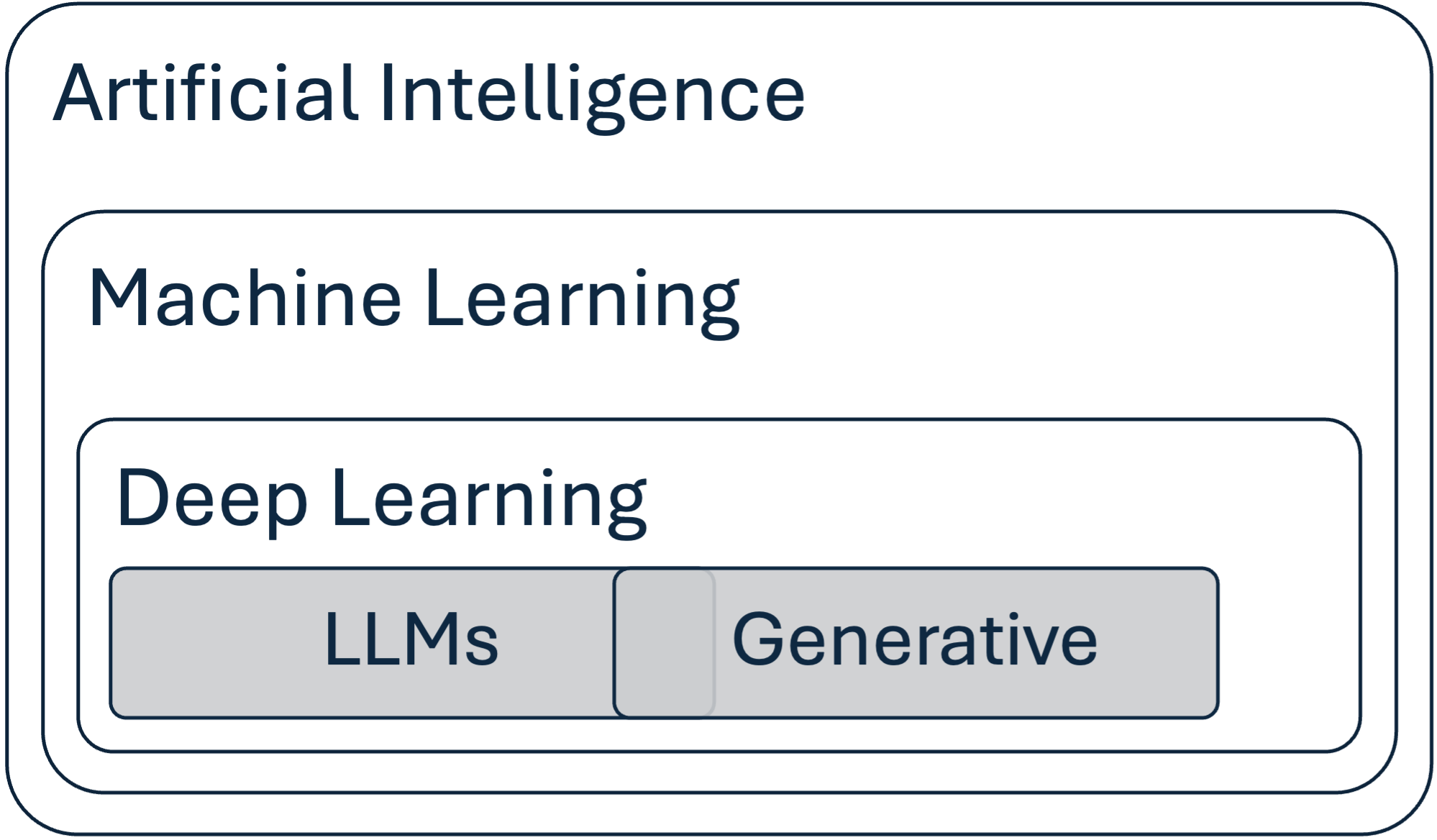
				 <p>This module introduces educators to different GenAI tools. We explore practical applications and inspire educators to offer collaborative and safe learning environments for students to test and review those tools. The module is divided into two main sections: the first provides an overview of common GenAI tools used in higher education and the second guides educators on how to establish GenAI sandboxes for exploratory and educational purposes.</p> <div class="textbox textbox--learning-objectives"><div class="textbox__header"><p class="textbox__title">Objectives</p> </div> <div class="textbox__content"><ul><li>Understand that GenAI is not limited to ChatGPT.</li> <li>Gain some firsthand, practical experience with various GenAI tools.</li> <li>Consider establishing a GenAI sandbox with students or peers.<strong style="orphans: 1; text-align: initial; font-size: 1em;">&nbsp;</strong></li> </ul> </div> </div> <p><strong>First key questions:</strong></p> <ul><li>How many GenAI tools are applicable for higher education, particularly in teaching and learning contexts?</li> <li>What tool(s) do you most frequently use in your daily work? What do you like about the tools? What concerns do you have about the tools?</li> <li>Which tools have you heard of and are interested in exploring further?</li> <li>How can you support learners and peers to stay dynamic, open, and curious, exploring some tools and critically reviewing the tools for learning and teaching?</li> </ul> <h1>I. Tools Tools Tools</h1> <p>Before we explore some GenAI tools, it’s important to review Module 1 and understand that AI is not limited to large language models and GenAI is not limited to ChatGPT.</p> <div class="textbox textbox--exercises"><div class="textbox__header"><h2 class="textbox__title">Activity 1: Mapping the AI landscape</h2> </div> <div class="textbox__content"><p>This activity is designed to deepen educators’ understanding of the broad landscape of AI, highlighting its various subfields and applications. Please continue to develop this conceptual diagram that distinguishes between different AI technologies, as well as list real-world applications or tools you have encountered or used.</p> <p>Objectives:</p> <ul><li>To clarify the distinctions and relationships between artificial intelligence, machine learning, deep learning, large language models (LLMs), and generative AI.</li> <li>To reflect on and recognize the prevalence and variety of AI applications in everyday scenarios, particularly in education.</li> </ul> <p>Instructions:</p> <ul><li>Write down your answers to these questions: What is artificial intelligence? What is machine learning? What is deep learning? What is GenAI?</li> <li>Write down some examples of AI tools that you use or activities where you interact with AI. This can include personal gadgets, educational tools, web applications, etc.</li> <li>Place each tool or activity in the appropriate section of this following diagram. For example, ChatGPT would go under LLMs, while a recommendation engine used by Netflix would go under machine learning.</li> <li>Share your answers with others.<a id="ail" data-url=""></a></li> </ul> <div class="wp-caption aligncenter" id="attachment_36" aria-describedby="caption-attachment-36" style="width: 400px"><img class="wp-image-36" src="https://opentextbc.ca/teachingandlearningwithai/wp-content/uploads/sites/472/2024/10/AI-Landscape.png" alt="image description linked in caption" width="400" height="234" srcset="https://opentextbc.ca/teachingandlearningwithai/wp-content/uploads/sites/472/2024/10/AI-Landscape.png 1998w, https://opentextbc.ca/teachingandlearningwithai/wp-content/uploads/sites/472/2024/10/AI-Landscape-300x175.png 300w, https://opentextbc.ca/teachingandlearningwithai/wp-content/uploads/sites/472/2024/10/AI-Landscape-1024x599.png 1024w, https://opentextbc.ca/teachingandlearningwithai/wp-content/uploads/sites/472/2024/10/AI-Landscape-768x449.png 768w, https://opentextbc.ca/teachingandlearningwithai/wp-content/uploads/sites/472/2024/10/AI-Landscape-1536x898.png 1536w, https://opentextbc.ca/teachingandlearningwithai/wp-content/uploads/sites/472/2024/10/AI-Landscape-65x38.png 65w, https://opentextbc.ca/teachingandlearningwithai/wp-content/uploads/sites/472/2024/10/AI-Landscape-225x132.png 225w, https://opentextbc.ca/teachingandlearningwithai/wp-content/uploads/sites/472/2024/10/AI-Landscape-350x205.png 350w" sizes="(max-width: 400px) 100vw, 400px" title="" /><div class="wp-caption-text" id="caption-attachment-36"><a class="internal" href="#id" data-url="https://opentextbc.ca/teachingandlearningwithai/chapter/exploring-genai-tools-in-higher-education/#id">[Image description]</a></div></div> <p>Notes:</p> <ul><li>Artificial intelligence is a field of study (like education, physics, chemistry, etc.)</li> <li>Machine learning is a subset of AI where machines learn from data (like early childhood education to education, thermodynamics to physics, etc.)</li> <li>Deep learning is a subset of machine learning that uses neural network architectures.</li> </ul> </div> </div> <div class="textbox textbox--exercises"><div class="textbox__header"><h2 class="textbox__title">Activity 2: Explore various GenAI tools</h2> </div> <div class="textbox__content"><p>This activity provides educators with the opportunity to interact firsthand with a variety of GenAI tools. Participants engage with these tools through guided exploration, reflecting on their experiences to evaluate the utility and limitations of each tool in educational settings.</p> <p><strong>Objectives:</strong><strong>&nbsp;</strong></p> <ul><li>Gain practical experience with different GenAI technologies.</li> <li>Critically assess the capabilities and limitations of each tool.</li> <li>Reflect on the potential integration of these tools into educational practices.</li> </ul> <p><strong>Instruction:</strong></p> <p>Below are brief introductions to various GenAI tools along with links to their respective platforms.</p> <p>Spend about five to ten minutes with each tool, experimenting with its features and testing its functionalities relevant to your educational context.</p> <p>After exploring each tool, take a moment to reflect on your experience. Consider one of these following questions:</p> <ul><li>What did you notice during your interaction with the tool?</li> <li>What did the tool do well? Where did it fall short?</li> <li>What aspects of the tool did you find beneficial or frustrating, or raised questions?</li> <li>How could this tool be effectively integrated into your teaching? Are there any risks or limitations that might hinder its use in your educational environment?<strong style="orphans: 1; text-align: initial; font-size: 1em; word-spacing: normal;">&nbsp;</strong></li> </ul> <p><strong>(1) </strong><strong>Large language models (LLMs)</strong></p> <p><a href="https://chatgpt.com/" data-url="https://chatgpt.com/">ChatGPT</a>: ChatGPT is probably the most well-known of the LLMs and it is an extraordinary tool. You can access it with no login, but be sure to save anything valuable you create. You can create a free account that gives you access to GPT4o, which is an extremely powerful model. You can also access GPTs, which are smart AI tools designed for specific purposes. You need a paid account to create your own GPTs.</p> <p><a href="https://claude.ai/new" data-url="https://claude.ai/new">Claude</a>: Claude is a powerhouse AI that’s a great go-to when you need to read or output longer materials. Among its outstanding features are the ability to work with larger uploaded pdfs and the ability to create artifacts, such as code, webpages, SVG graphics, and other interactions. The artifacts capability must be toggled on. With the paid version of Claude, you get access to Projects, which allow you to create continuous workspaces and customize memory and outputs across a project.</p> <p><a href="https://copilot.microsoft.com/" data-url="https://copilot.microsoft.com/">Microsoft Copilot</a>: Microsoft Copilot is a web-based AI tool that lets you chat, draw, and more. With your institutional credentials, you can access a version of the tool with enhanced privacy protection. It does not save your chat history so be sure to capture anything valuable you create.</p> <p><a href="https://gemini.google.com/app" data-url="https://gemini.google.com/app">Gemini</a>: Gemini, the AI model from Google, is a rising star in LLM land. Formerly known as Bard, the model is said to be able to tackle complex tasks. Gemini connects with Google Maps, which can help for certain kinds of tasks. Give it a spin and see what you think.</p> <p><strong>(2) </strong><strong>Image generation</strong></p> <p><a href="https://firefly.adobe.com/" data-url="https://firefly.adobe.com/">Firefly</a>: Firefly is a super cool, free program that lets you create and edit images. We love its built-in, selectable filters at the bottom right of your Firefly screen. Even more, we’re super impressed with Abobe’s thoughtful and inclusive practices when it comes to training the model that creates the magic.</p> <p><a href="https://openai.com/index/dall-e-3/" data-url="https://openai.com/index/dall-e-3/">DALL-E 3</a>: DALL-E is the AI image generator that you access through ChatGPT. The free version creates images, but it can be significantly slower and lower quality than a paid version.</p> <p><a href="https://copilot.microsoft.com/" data-url="https://copilot.microsoft.com/">Microsoft Copilot</a>: Microsoft Copilot is a web-based AI tool that lets you chat, draw, and more. Once you have an image, you can even do some cool edits in Microsoft Designer if you’re signed in with personal credentials. You can also use Copilot with your institutional credentials and create images, though you may be limited to how many you can create in a day.</p> <p><a href="https://ideogram.ai/t/explore" data-url="https://ideogram.ai/t/explore">Ideogram</a>: Ideogram is currently a free online AI image generator. This generator allows you to describe the image you would like to see and then generate it on the website. This website requires you to create a personal account. Other people will be able to see and download any image you create.</p> <p><strong>(2) </strong><strong>Other tools </strong></p> <p><a href="https://www.perplexity.ai/" data-url="https://www.perplexity.ai/">Perplexity</a>: Perplexity is an amazing AI-powered research assistant that does an internet search to show you where the information is pulled from and where you can look for more related content. The free basic version is available to everyone.</p> <p><a href="https://www.canva.com/magic-home" data-url="https://www.canva.com/magic-home">Canva</a>: Canva has a wide range of tools in the area they call Magic Studio, which holds all of their AI-powered design features. It includes presentation generation and text-to-video and text-to-image generators, as well as more powerful photo editing tools.</p> <p><a href="https://glasp.co/" data-url="https://glasp.co/">Glasp</a>: Glasp is a Chrome or Safari extension that has tons of cool functionality for note-taking. This tool allows you to capture online content with colored highlights, which are curated on your Glasp homepage. This is a great tool for researchers and students as it allows them to organize notes and highlighted information using tags and authors, as well as track their learning progress and share information with others.</p> <p><a href="https://goblin.tools/" data-url="https://goblin.tools/">Goblin Tools</a>: Goblin Tools is a collection of small, simple, single-task tools designed to help neurodivergent people with tasks that they find overwhelming or difficult. These tools use AI technologies to assist with various functions, such as Magic ToDo that helps break down tasks into manageable steps or Formalizer that assists in converting informal language into formal text.</p> <p><a href="https://gamma.app/" data-url="https://gamma.app/">Gamma</a>: Gamma is a subscription-based AI tool that builds presentations and websites for you with just a few keywords. They also have an option to transform existing Word documents and PowerPoint presentations into stunning visual presentations in just a few minutes so you can use what you already have and edit from there. Gamma is free to try, but there are additional pricing tiers to access more features and to renew the number of products you can create each month.</p> <p><a href="https://www.grammarly.com/" data-url="https://www.grammarly.com/">Grammarly</a>: Grammarly is an AI-powered writing assistant designed to help users improve their writing by providing suggestions for grammar, spelling, punctuation, clarity, engagement, and delivery.</p> <p><a href="https://www.magicschool.ai/" data-url="https://www.magicschool.ai/">MagicSchool.ai</a>: MagicSchool.ai is an AI-powered platform designed specially for educators to generate rubrics, lesson plans, and other educational materials. There is also a coaching tool, named Raina, that can help educators think through ideas and standards.</p> <p><a href="https://web.diffit.me/" data-url="https://web.diffit.me/">Diffit</a>: Diffit is a resource builder and marker for class readings and PDFs that educators can use for their class. Students cannot use Diffit and, if teachers use it, they cannot enter students’ personal information.</p> <p><a href="https://www.almanack.ai/" data-url="https://www.almanack.ai/">Almanack</a>: Almanack is an AI-powered tool designed to assist educators in creating and managing lesson plans, resources, and assessments. There is a free standard version.</p> <p><a href="https://slidesgo.com/" data-url="https://slidesgo.com/">Slidesgo</a>: Slidesgo is a platform that offers a wide range of professionally designed templates for creating presentations. With the new AI-enabled features, educators can create presentations in minutes, generate ice-breaker activities, develop assessments for students, and plan some lessons faster.</p> </div> </div> <div class="textbox textbox--exercises"><div class="textbox__header"><h2 class="textbox__title">Activity 3: GenAI tools BINGO challenge for educators</h2> </div> <div class="textbox__content"><p>This BINGO worksheet encourages educators to explore various generative AI tools, experimenting with both text-based and image generation platforms. By engaging with these tools, participants can better understand their functionalities, applications, and limitations in educational settings.</p> <p>Instructions:</p> <ol><li>Print or download the BINGO worksheet.</li> <li>Once you complete five challenges in a row (horizontally, vertically, or diagonally), you’ve achieved BINGO!</li> <li>For each tool you try, reflect on how it might be used or integrated into your teaching practice.</li> </ol> <table class="grid" style="border-collapse: collapse; width: 100%;"><tbody><tr><th style="width: 20%;" scope="col">B</th> <th style="width: 20%;" scope="col">I</th> <th style="width: 20%;" scope="col">N</th> <th style="width: 20%;" scope="col">G</th> <th style="width: 20%;" scope="col">O</th> </tr> <tr><td style="width: 20%;">Create a chatbot response with <strong>ChatGPT</strong> on the future of language classroom.</td> <td style="width: 20%;">Generate an image with <strong>DALL-E 3</strong> depicting a futuristic classroom.</td> <td style="width: 20%;">Use <strong>Claude</strong> to summarize a long PDF on educational theory.</td> <td style="width: 20%;">Draw a simple diagram with <strong>Microsoft Copilot</strong> explaining the water cycle.</td> <td style="width: 20%;">Design a quick infographic on <strong>Canva</strong> about internet safety for students.</td> </tr> <tr><td style="width: 20%;">Generate a set of quiz questions on <strong>MagicSchool.ai</strong>.</td> <td style="width: 20%;">Edit a photo to add educational quotes using <strong>Firefly</strong>.</td> <td style="width: 20%;">Use <strong>Gemini</strong> to find information on the latest teaching strategies.</td> <td style="width: 20%;">Create a one-slide presentation with <strong>Slidesgo</strong> summarizing a historical event.</td> <td style="width: 20%;">Use <strong>Glasp</strong> to highlight key points from an online article on digital literacy.</td> </tr> <tr><td style="width: 20%;">Use <strong>Grammarly</strong> to revise a draft of your next professional email.</td> <td style="width: 20%;">Use <strong>Perplexity</strong> to research a recent educational reform and present findings.</td> <td style="width: 20%;">Use <strong>Goblin Tools</strong> to formalize a set of instructions for a student activity.</td> <td style="width: 20%;">Use <strong>Diffit</strong> to mark up a set of reading materials for your class.</td> <td style="width: 20%;">Create a classroom activity with <strong>Gamma</strong> using only three keywords.</td> </tr> <tr><td style="width: 20%;">Use <strong>Ideogram</strong> to create an image illustrating a concept from math class.</td> <td style="width: 20%;">Make a task list with <strong>Magic ToDo</strong> for your upcoming project.</td> <td style="width: 20%;">Use <strong>Almanack</strong> to plan a week’s worth of lesson activities.</td> <td style="width: 20%;">Convert informal notes into formal text with <strong>ChatGPT</strong>.</td> <td style="width: 20%;">Generate a new classroom icebreaker activity with <strong>Slidesgo</strong>.</td> </tr> </tbody> </table> </div> </div> <h1>II. Building a GenAI Sandbox</h1> <p>Educators are encouraged to establish a GenAI sandbox alongside their team and teaching fellows. This dynamic environment is designed for exploring GenAI tools, engaging in discussions about their implications, and addressing any arising ethical or legal concerns.</p> <p>At BCcampus, we have been actively participating in an AI community of practice (CoP). During our one-hour virtual sessions, we experiment with different GenAI tools. These sessions often extend into discussions on ethical and legal issues associated with GenAI, fostering a collaborative development of AI frameworks aligned with our educational values. We utilize our Teams channel for this CoP, which enables everyone to share valuable resources such as articles, links to new GenAI tools, or recordings of inspiring sessions.</p> <p>ln Fall 2024, BCcampus is introducing an <a href="https://bccampus.ca/category/edtech-sandbox/" data-url="https://bccampus.ca/category/edtech-sandbox/">EdTech sandbox initiative</a> where participants can play, experiment, review GenAI tools, and discuss innovative teaching ideas. We are committed to an ongoing process of discussing, trying, testing, and learning more about GenAI. If you have any innovative ideas on how to organize a community of practice around AI or wish to adopt our model of CoP, please contact Gwen Nguyen at <a href="mailto:gnguyen@bccampus.ca" data-url="mailto:gnguyen@bccampus.ca">gnguyen@bccampus.ca</a>.</p> <p>Various universities have also initiated AI bookclubs, AI retreats, or championing AI as a teaching innovation as ways to focus on the practical applications of AI in education.</p> <h2>Building a GenAI sandbox in your coursework</h2> <p>When planning to incorporate GenAI tools into coursework, clear communication is essential. This should be detailed in the course syllabus, during the first day’s orientation, or through specific assignment guidelines. Additionally, a support module should be provided to facilitate the understanding and use of these tools. One innovative approach is organizing a “game date”, which is a sandbox session where students are encouraged to explore GenAI tools in groups, pairs, or individually, demonstrating their functionalities and discussing potential applications.</p> <p>Consider GenAI as a new tool in teaching and learning. There are more details on how to build a sandbox on our blog: <a href="https://bccampus.ca/2023/07/10/sandbox-approach-to-empowering-learners-aspirations/" data-url="https://bccampus.ca/2023/07/10/sandbox-approach-to-empowering-learners-aspirations/">Sandbox Approach to Empowering Learners’ Aspirations</a>. Many institutions have developed guidelines or working groups to address concerns, as well as to offer a structured approach to integrating GenAI in higher education. If you plan to offer an AI sandbox in your course, check your institution’s statement regarding GenAI. You can also refer to some common criteria to create a rubric to guide students in reviewing these tools effectively.</p> <table class="grid" style="border-collapse: collapse; width: 100%;"><caption>GenAI tool evaluation rubric (created with Perplexity)</caption> <tbody><tr><th style="width: 16.6666%;" scope="col">Criterion</th> <th style="width: 16.6666%;" scope="col">1 – Poor</th> <th style="width: 16.6666%;" scope="col">2 – Fair</th> <th style="width: 16.6666%;" scope="col">3 – Good</th> <th style="width: 16.6666%;" scope="col">4 – Very good</th> <th style="width: 16.6666%;" scope="col">5 – Excellent</th> </tr> <tr><th style="width: 16.6667%;" scope="row">Alignment with learning objectives</th> <td style="width: 16.6667%;">Does not support learning objectives</td> <td style="width: 16.6667%;">Partially supports objectives</td> <td style="width: 16.6667%;">Generally supports objectives</td> <td style="width: 16.6667%;">Aligns well with objectives</td> <td style="width: 16.6667%;">Strongly aligns with objectives</td> </tr> <tr><th style="width: 16.6667%;" scope="row">Ethical use and academic integrity</th> <td style="width: 16.6667%;">Lacks ethical guidelines and integrity</td> <td style="width: 16.6667%;">Some ethical concerns</td> <td style="width: 16.6667%;">Generally ethical, minor concerns</td> <td style="width: 16.6667%;">Mostly ethical, well-guided</td> <td style="width: 16.6667%;">Fully ethical, clear guidelines</td> </tr> <tr><th style="width: 16.6667%;" scope="row">Usability and accessibility</th> <td style="width: 16.6667%;">Difficult to use, not accessible</td> <td style="width: 16.6667%;">Some usability/<br /> accessibility issues</td> <td style="width: 16.6667%;">Usable, generally accessible</td> <td style="width: 16.6667%;">User-friendly and accessible</td> <td style="width: 16.6667%;">Highly usable and fully accessible</td> </tr> <tr><th style="width: 16.6667%;" scope="row">Bias and accuracy</th> <td style="width: 16.6667%;">Highly biased, inaccurate content</td> <td style="width: 16.6667%;">Some bias, occasional inaccuracies</td> <td style="width: 16.6667%;">Generally unbiased, mostly accurate</td> <td style="width: 16.6667%;">Mostly unbiased, accurate</td> <td style="width: 16.6667%;">Unbiased, consistently accurate</td> </tr> <tr><th style="width: 16.6667%;" scope="row">Engagement and interaction</th> <td style="width: 16.6667%;">Does not facilitate engagement</td> <td style="width: 16.6667%;">Limited engagement potential</td> <td style="width: 16.6667%;">Moderately engaging</td> <td style="width: 16.6667%;">Engages students well</td> <td style="width: 16.6667%;">Highly engaging and interactive</td> </tr> <tr><th style="width: 16.6667%;" scope="row">Privacy and data security</th> <td style="width: 16.6667%;">Lacks privacy and security measures</td> <td style="width: 16.6667%;">Some privacy/<br /> security concerns</td> <td style="width: 16.6667%;">Generally secure, minor concerns</td> <td style="width: 16.6667%;">Mostly secure, well-protected</td> <td style="width: 16.6667%;">Fully secure, strong privacy measures</td> </tr> </tbody> </table> <h1>Summary</h1> <p>In this module, we learned that the scope of GenAI extends beyond the popular ChatGPT. Hopefully many of us have hopped onto platforms that we hadn’t tried before and experienced playing with them and were inspired to see how those tools could be used for teaching and learning. We also encouraged educators to create a GenAI sandbox to integrate these technologies into our work so that we can cultivate an open, curious mindset in our community while approaching those tools.</p> <h2>Final Reflective Question</h2> <p>Now that you have experimented with some GenAI platforms, which one(s) would you recommend others? Why?</p> <h1 class="eoc"><a id="id" data-url=""></a>Image description</h1> <p>The image presents a diagram that illustrates the relationship between Generative AI and other large language models within the broader landscape of Artificial Intelligence, Machine Learning, and Deep Learning. At the outermost level, “Artificial Intelligence” is mentioned as the broadest category. Nested inside, “Machine Learning” is featured as a subset of AI. Deeper within, “Deep Learning” appears as a subset of Machine Learning. At the core of the diagram, “Generative AI” and “Large Language Models” are placed as specific instances of applications or technologies derived from Deep Learning.</p> <p><a class="internal" href="#ail" data-url="https://opentextbc.ca/teachingandlearningwithai/chapter/exploring-genai-tools-in-higher-education/#ail">[Return to image]</a></p> 
	</div>


	</div>
<div class="chapter standard " id="chapter-prompt-literacy" title="Module 3: Prompt Literacy">
	<div class="chapter-title-wrap">
		<p class="chapter-number">3</p>
		<h1 class="chapter-title">Module 3: Prompt Literacy</h1>
								</div>
	<div class="ugc chapter-ugc">
				 <p>This module is designed to enhance educators’ understanding and ability to effectively interact with GenAI by practicing the art of prompt design. This skill is critical in optimizing the utility of GenAI technologies in educational settings.</p> <p>This module, with several resources and interactive activities, aims to support educators to explore the concept of prompting and some principles of effective prompt design.</p> <div class="textbox textbox--learning-objectives"><div class="textbox__header"><p class="textbox__title">Objectives</p> </div> <div class="textbox__content"><ul><li>Define what prompt literacy is.</li> <li>Explore key principles of effective prompt design.</li> <li>Analyze and improve existing prompts using established frameworks.</li> </ul> </div> </div> <h1>Overview of Prompt Literacy</h1> <p>Prompt literacy refers to the proficiency in formulating initial prompts (information, sentences, or questions that you enter into a GenAI tool) and follow-up queries that clearly, precisely, and unambiguously communicate the user’s requirements to a GenAI tool. In educational settings, well-designed prompting can transform how content is delivered, personalized, and assessed, making it an integral part of digital pedagogical strategies.</p> <p>Importance of prompt literacy:</p> <ul><li>Enhances the quality and relevance of generated content.</li> <li>Improves efficiency in lesson planning and resource creation.</li> <li>Supports facilitating personalized learning experiences.</li> <li>Encourages critical thinking about GenAI interaction.</li> </ul> <h1>Effective Prompt Design: The Smart Assistant Approach</h1> <p>When creating prompts, imagine that you’re explaining a task to a smart assistant. This approach helps you understand the importance of effective communication from the get-go as how successful your assistant can carry out the task really depends on how good you are at providing a comprehensive context and clear instruction. Here is a step-by-step guide:</p> <ul><li>Provide full context: begin by setting the scene for your request. For example, specify that you are crafting a curriculum for a first-year social sciences course at the University of Victoria. This immediately clarifies the educational setting and the target audience for the output.</li> <li>Detail your specific needs: clearly articulate what you need from GenAI. Is it a complete course syllabus aligned with your institutional framework? Or a specific learning module on a topic within your course? Or an engaging icebreaker activity for your class? Or a review quiz for a unit reading?</li> <li>Specify the desired format: indicate the format in which you’d like the response. This could be a narrative description or a bulleted list of key points or any other structured format that suits your needs.</li> <li>Include relevant parameters: mention any specific requirements or constraints, such as time constraints, required learning standards, or preferred teaching methods.</li> </ul> <p>Example: I’m developing a curriculum for a 100-level social sciences &nbsp;course on global economics at the University of Victoria. The course is for first year undergraduate students majoring in international relations. I need a complete syllabus for a 15-week semester aligned with the University of Victoria’s guidelines for undergraduate education. Please include weekly topics, required readings, and suggested in-class activities. Present the syllabus in a tabulated format with columns for week number, topic, readings, and activities. Ensure that the course progresses logically from foundational concepts to more advanced topics, and incorporates at least three case studies of international economic events from the past decade.</p> <p>Key principles of effective prompt design:</p> <ul><li>&nbsp;Clarity: use simple, straightforward language.</li> <li>&nbsp;Specificity: provide detailed instructions and parameters.</li> <li>&nbsp;Context: offer background information and relevant details.</li> <li><strong>&nbsp;</strong>Structure: organize prompts logically and coherently.</li> <li><strong>&nbsp;</strong>Iteration: refine prompts based on initial outputs.</li> </ul> <p>For more information, please read Chapter 1.3. on <a href="https://unesdoc.unesco.org/ark:/48223/pf0000386693" data-url="https://unesdoc.unesco.org/ark:/48223/pf0000386693">“Prompt engineering to generate desired outputs”</a> (pp. 11-12)&nbsp; in UNESCO’s Guidance for generative AI in education and research.</p> <p>You can also enhance the clarity and effectiveness of your prompts by considering these important features: task, format, voice, and context (Bowen &amp; Watson, 2024, pp 48-51).</p> <p>Here’s a breakdown of each component:</p> <p><strong>Task: </strong>what exactly do you want GenAI to do?</p> <p>Create, summarize, analyze, elaborate, reimagine, explain, identify, translate, transform, transcribe, resolve, assemble, argue, monitor, detect, generate, predict, recommend, brainstorm, clarify, combine, list, compile, make, draw, rephrase, develop, expand, provide, synthesize, abridge, explore, invent, write.</p> <p><strong>Format</strong>: what is the specific output?</p> <p>Essay, opinion piece, blog post, email, press release, jargon free summary, dialogue, script, list, syllabus, lesson plan, outline, game plan, game instruction, product description, legal brief, nursing notes, codes, spreadsheets, CSV file, table, chart, PDF, graph, visual.</p> <p><strong>Voice</strong>: what style of language is desired?</p> <ul><li>Style options: academic, marketing, comic, medical, right-wing, left-wing, modern, archaic, in the style of the King James Bible, or a Walmart press release, like a copywriter, engineer, human resources manager, millennial, politician, a professor, Oprah, or a historical/anthropological figure.</li> <li>Personas: respond as if you were a specific individual (e.g. Martin Luther King or Taylor Swift) or embody personas such as single/married or happy/sad.</li> <li>Tone modifiers: serious and empathetic, casual and funny, or positive and enthusiastic.</li> </ul> <p><strong>Context:</strong> what further context or examples can you provide?</p> <ul><li>Use/read/follow these models/examples.</li> <li>Suitable as a reading assignment for an undergraduate course.</li> <li>I’m trying to be serious and funny at the same time.</li> <li>I want a range of solutions that are inexpensive/variable/accurate/specific/fanciful.</li> <li>Only do this if that happens. Wait until I respond.</li> </ul> <p>Sample prompts:</p> <ul><li>Produce ten different ways to introduce topic Y into a class for non-majors at a regional state school. I would like more creative and unusual ways to do this.</li> <li>Write a 300-word essay about Hamlet for an undergraduate class. Write in academic style, but also include language that makes it clear you are an undergraduate. Use books and ideas of &lt;my professor&gt; to shape the content without mentioning him/her in the essay.</li> <li>Lesson planning: when preparing a lesson plan, use the task to direct the AI to develop a syllabus, select the format as an outline or detailed document, choose the voice to be academic and serious, and add context by specifying educational standards or themes to be covered.</li> <li>Research assistance: for research tasks, set the task for the AI to summarize and analyze recent articles, pick the format as a jargon-free summary or detailed report, determine the voice to be academic, and provide context with examples of previous research summaries for style guidance.</li> <li>Engaging content creation: to create interactive classroom materials like games or quizzes, designate the task to compile or invent, specify the format for game instructions or a quiz, adjust the voice to be casual and funny, and clarify the context with a learning objective or theme.</li> </ul> <h1>Further Frameworks or Guidelines for Prompting</h1> <p>The following&nbsp;is a growing collection of guides, frameworks, and articles&nbsp;on prompt design/prompt engineering&nbsp;that consists of extracted pieces from a variety of resources. Please explore the full text of these resources&nbsp;for a deeper understanding of their respective approaches to prompt design and engineering. Try the frameworks or guidelines in your own context and reflect on which one works for you.</p> <ol><li><a href="https://huit.harvard.edu/news/ai-prompts/" data-url="https://huit.harvard.edu/news/ai-prompts/">Harvard University’s getting started with prompts for text-based Generative AI tools</a> <ul><li>Be specific in your request.</li> <li>Ask AI to act as if it were a certain expert or played a certain role.</li> <li>Tell AI how you want your output to be presented.</li> <li>Use clear do and don’t instruction.</li> <li>Provide examples.</li> <li>Consider tone and intended audience.</li> <li>Build on previous prompts, correct mistakes, and continuously give feedback.</li> <li>Ask AI to create prompts, clarify requirements, or inquire what else it needs from you.</li> </ul> </li> <li><a href="https://huit.harvard.edu/news/ai-prompts-images" data-url="https://huit.harvard.edu/news/ai-prompts-images">Harvard University’s getting started with prompts for image-based Generative AI tools</a> <ul><li>Describe the subject in as much detail as you can</li> <li>Specify the style of image (photographs, paintings, cartoons, etc.)</li> <li>Add more details and refine (considering lighting, the positioning of the subject within the frame, background details, etc.)</li> <li>Add you preferred output (considering the format, for example, poster, email header image, etc.)</li> </ul> </li> <li><a href="https://www.sciencedirect.com/science/article/abs/pii/S0099133323000599?via%3Dihub" data-url="https://www.sciencedirect.com/science/article/abs/pii/S0099133323000599?via%3Dihub">The CLEAR path – A framework for enhancing information literacy through prompt engineering</a> <ul><li>Concise: keep prompt brief and to the point.</li> <li>Logical: ensure prompts follow a logical structure and sequence.</li> <li>Explicit: be explicit about expected outcome.</li> <li>Adaptive: adjust prompts based on prior results and learning.</li> <li>Reflective: encourage reflection on the output to refine future prompts.</li> </ul> </li> <li><a href="https://fsw.instructure.com/courses/1131366/pages/prompting-guide-sheet?module_item_id=15818026" data-url="https://fsw.instructure.com/courses/1131366/pages/prompting-guide-sheet?module_item_id=15818026">The five «&nbsp;S&nbsp;» model</a> <ul><li>Set the scene.</li> <li>Be specific.</li> <li>Simplify your language.</li> <li>Structure the output.</li> <li>Share feedback.</li> </ul> </li> <li><a href="https://github.com/microsoft/prompts-for-edu/tree/main/Educators" data-url="https://github.com/microsoft/prompts-for-edu/tree/main/Educators">Microsoft’s educational prompts repository</a> <ul><li>This repository provides prompts for teachers to create engaging lessons, offer instant feedback, and generate creative materials. It’s designed to enrich classrooms, inspire students, and save time on preparation.</li> </ul> </li> <li><a href="https://docs.google.com/document/d/1wSfvKfKcG0qto0UJVsVfzLYFCaEc0M5NszzIWO5j-ug/edit?pli=1#heading=h.199rx1x58dj3" data-url="https://docs.google.com/document/d/1wSfvKfKcG0qto0UJVsVfzLYFCaEc0M5NszzIWO5j-ug/edit?pli=1#heading=h.199rx1x58dj3">AI Prompt Cookbook by Chris Sharp and Leslie Mojeiko</a> <ul><li>This resource includes several recipes (prompts) and ingredients (keywords and considerations) to use with GenAI. All recipes outlined in this cookbook are focused on teaching by assisting with course preparation and facilitation. Educators can use this guide to help with brainstorming ideas during course preparation, delivering student-centred content, and designing interactive, personalized lessons and activities.</li> </ul> </li> </ol> <h1>Prompt Review and Revise Activities</h1> <div class="textbox textbox--exercises"><div class="textbox__header"><h2 class="textbox__title">Activity 1: Clarity and precision</h2> </div> <div class="textbox__content"><p>Objective: Enhance the ability to write precise and clear prompts for GenAI applications using scholarly content.</p> <ul><li>Step 1: Write an initial prompt for a GenAI to generate a summary of a scholarly article on climate change. <ul><li>Initial Prompt: “Summarize the latest scholarly article on climate change effects on marine biodiversity from the Journal of Environmental Science, focusing on the research methods and key findings.”</li> </ul> </li> <li>Step 2: Revise the prompt using a learned prompting framework.</li> <li>Step 3: Reflect on the differences in outputs based on the clarity and precision of each prompt and discuss the importance of specific details in achieving actionable AI-generated summaries.</li> </ul> </div> </div> <div class="textbox textbox--exercises"><div class="textbox__header"><h2 class="textbox__title">Activity 2: Context inclusion</h2> </div> <div class="textbox__content"><p>Objective: Develop prompts that effectively include educational context to generate targeted educational materials.</p> <ul><li>Step 1: Create an initial prompt to generate a quiz based on a specific biology topic. <ul><li>Initial prompt: “Generate a five question quiz on the topic of mitosis for high school students that includes multiple-choice questions and diagrams.”</li> </ul> </li> <li>Step 2: Expand the prompt to include more specific educational context.</li> <li>Step 3: Evaluate the effectiveness of including detailed educational context to generate more useful educational content.</li> </ul> </div> </div> <div class="textbox textbox--exercises"><div class="textbox__header"><h2 class="textbox__title">Activity 3: Format specifications</h2> </div> <div class="textbox__content"><p>Objective: Practice defining and specifying the format to ensure that GenAI produces structured content appropriate for academic settings.</p> <ul><li>Step 1: Draft a basic prompt for a lecture outline. <ul><li>Basic prompt: “Draft a lecture outline for a course on the Industrial Revolution in modern European history.”</li> </ul> </li> <li>Step 2: Refine the prompt to specify the desired format and details.</li> <li>Step 3: Discuss how specific format instructions influence the organization and usability of AI-generated educational content.</li> </ul> </div> </div> <div class="textbox textbox--exercises"><div class="textbox__header"><h2 class="textbox__title">Activity 4: Ethical prompting</h2> </div> <div class="textbox__content"><p>Objective: Develop skills in crafting prompts that guide the generation of unbiased and culturally sensitive content.</p> <ul><li>Step 1: Identify potential biases in typical educational content about cultural history.</li> <li>Step 2: Formulate a prompt that emphasizes an unbiased and inclusive perspective. <ul><li>Ethical prompt: “Design a module for middle school students about Native American tribes that avoids stereotyping. Ensure the module covers various tribes, key historical events, and contributions with emphasis on cultural diversity and significance without generalization.”</li> </ul> </li> <li>Step 3: Reflect on the ethical considerations necessary when prompting for content about diverse cultures and the importance of explicit instructions to minimize biases.</li> </ul> </div> </div> <div class="textbox textbox--exercises"><div class="textbox__header"><h2 class="textbox__title">Activity 5: Refinement and iteration</h2> </div> <div class="textbox__content"><p>Objective: Enhance the specificity and depth of educational content through iterative prompting and feedback incorporation.</p> <ul><li>Step 1: Use feedback to revise a broad prompt into a more specific and detailed one. <ul><li>Revised prompt: “Develop a comprehensive final exam for a third-year college-level course on macroeconomics, focusing on contrasting Keynesian economics and monetarism. Include detailed questions on their principles, a comparative analysis of their approaches to inflation and unemployment, and an essay on their influence on 21st-century fiscal policies.”</li> </ul> </li> <li>Step 2: Discuss how iterative refinement and specific feedback can lead to more focused and higher-quality educational assessments.</li> </ul> </div> </div> <h1>Summary</h1> <p>By engaging with this module, we developed our understanding of prompting literacy, which is necessary to leverage GenAI tools effectively. We also learned to review and revise prompts using existing established framework(s).</p> <h2>Final Reflective Question</h2> <p>Choose one question to reflect your learning about prompt literacy. What framework would you recommend others apply when designing prompts and why? In what ways can prompt literacy enhance your teaching practice? Give one example.</p> 
	</div>


	</div>

</div>
<div class="part-wrapper" id="part-ethical-and-creative-use-of-genai-in-teaching-and-learning-wrapper">
    <div class="part  " id="part-ethical-and-creative-use-of-genai-in-teaching-and-learning">
	<div class="part-title-wrap">
		<p class="part-number">II</p>
		<h1 class="part-title">PART II: Ethical and Creative Use of GenAI in Teaching and Learning</h1>
	</div>
	<div class="ugc part-ugc">
		
	</div>
			
				
	</div>
<div class="chapter standard " id="chapter-teaching-genai-ethics" title="Module 4: Teaching GenAI Ethics">
	<div class="chapter-title-wrap">
		<p class="chapter-number">4</p>
		<h1 class="chapter-title">Module 4: Teaching GenAI Ethics</h1>
								</div>
	<div class="ugc chapter-ugc">
				 <p>This module emphasizes the importance of integrating GenAI ethics into the curriculum to foster responsible GenAI use among all members of the academic community, both in academic environments and beyond. It provides a comprehensive exploration of key ethical considerations, practical strategies for incorporating ethics discussions into coursework, and tools for critical analysis of AI’s impact on education and society at large.</p> <p>By engaging with this module, educators will be better prepared to navigate the complex ethical landscape of AI in higher education, ensure transparent and ethical use of GenAI tools, and guide students in developing GenAI critical literacy as an essential skill for the 21st century.</p> <div class="textbox textbox--learning-objectives"><div class="textbox__header"><p class="textbox__title">Objectives</p> </div> <div class="textbox__content"><ul><li>Identify and explain key ethical considerations in the use of GenAI in educational settings.</li> <li>Explore strategies to integrate AI ethics discussions into curriculum.</li> <li>Brainstorm actionable steps to integrate GenAI ethics into teaching practice.</li> </ul> </div> </div> <h1>Background</h1> <p>While GenAI tools can enhance learning experiences and teaching efficiency, they also pose several risks related to academic honesty, equitable access, and the preservation of intellectual property. Therefore, “it’s essential that educators <strong><em>start to talk about these issues with students</em></strong>; if we want students to use AI responsibly, both in school and beyond, AI ethics must be baked into curriculum and include AI literacy, an emerging essential skill.” (Bowen &amp; Watson, 2024, p. 3)</p> <h1>Ethical Considerations</h1> <p>It is highly recommended that you review your institution’s policies or statements on AI. Based on these existing policies or guidelines (if applicable), think about implications for teaching when approaching these tools either in designing or delivering your courses.</p> <p>If there is no AI statement at your institution, consider some of the key ethical and legal considerations when incorporating AI in course work based on <a href="https://teaching.cornell.edu/generative-artificial-intelligence/ethical-ai-teaching-and-learning" data-url="https://teaching.cornell.edu/generative-artificial-intelligence/ethical-ai-teaching-and-learning">Cornell University’s Ethical AI</a> for teaching and learning and <a href="https://guides.lib.jmu.edu/AI-in-education/ethics" data-url="https://guides.lib.jmu.edu/AI-in-education/ethics">JMU’s AI and Ethics in education</a>.</p> <ul><li>Transparency and oversight: it is important to understand how AI tools are developed and what safeguards are in place to protect users from inaccurate information or harmful interactions. Moreover, be clear with students about when and how AI is being used in the course.</li> <li>Bias and fairness: AI systems can perpetuate existing biases depending on how they are trained and what data they are trained on. Ensuring that the use of AI tools does not discriminate against certain groups is a critical ethical consideration. This includes making sure AI applications are accessible to all students, regardless of their background.</li> <li>Privacy and data security: AI systems often require large amounts of data, raising concerns about how this data is stored, who has access to it, and how it is used. Protecting student privacy and ensuring data security are essential to prevent misuse of personal information.</li> <li>Environmental impact: the energy consumption associated with training large AI models can have significant environmental impacts. Educators should consider the sustainability of AI technologies and their broader environmental implications.</li> <li>Teacher-student relationship: no tools can replace human interaction and educational support. Thus, overreliance on GenAI might erode important social skills and teacher-student relationships.</li> </ul> <h1>Strategies for Incorporating Ethical Considerations into the Curriculum</h1> <p>Imagine how you would incorporate ethical considerations into your curriculum. It is not ideal to have to think about this as we try to solve some of the world’s problems, but, as ethical users, it is important for educators to develop awareness around these concerns and to help learners stay aware and digitally healthy when approaching these tools. Here are some common recommendations:</p> <h2>Integrate ethics discussion into GenAI-related coursework.</h2> <p>Example: AI ethics debate</p> <p>Divide the class into teams and assign each team an ethical dilemma related to AI in education. Example topics: “Should AI-generated essays be allowed in coursework?” or “Is it ethical to use AI to detect students’ work?” Have teams research their positions and present arguments in a structured debate format. Follow up with a class discussion on the complexity of these issues.</p> <h2>Use case studies to illustrate real-world ethical dilemmas.</h2> <p>Example: Co-create AI policy</p> <p>Invite students to work together to create an AI use policy for a particular assignment, activity, or course. Ask them to address issues such as acceptable AI use, data privacy and protection, and academic integrity. Have the groups present their policies and discuss the reasoning underpinning their decisions.</p> <h2>Encourage critical thinking about AI’s impact on society and education in general.</h2> <p>Example: GenAI bias investigation</p> <p>Provide students with datasets or AI-generated content that shows bias. Ask them to identify biases and discuss the implications for an educational context. Extend this activity by having students propose ways to mitigate these biases.</p> <h2>Provide clear guidelines on appropriate GenAI use in assignments</h2> <p>Example: GenAI first support session</p> <p>In this session, invite students to think about what ways GenAI supports their learning process and in what ways it interferes with this process, creating imbalances in relationship building, critical thinking, or creativity development. Provide students with a list of sample statements and offer them specific details of how GenAI is allowed or not allowed in the coursework. For example, using GenAI to do an outline or first draft, using GenAI tool to fix spelling and grammar, using GenAI tool to rewrite the whole paragraph, etc. More information can be found in the next section of this module.</p> <h2>Discuss how the use of GenAI aligns with the core values and educational goals of the institution and the course</h2> <p>Example: GenAI ethical uses panel</p> <p>Invite institutional and departmental experts to discuss institutional and departmental core values and how they related to AI. Educator(s) can host the panel and students can prepare questions in advance and engage in a Q&amp;A session with panelists.</p> <h2>Stay informed about evolving AI regulations and best practices</h2> <p>Example: AI ethics journaling</p> <p>Assign weekly prompts related to AI ethics in education. Have students reflect on their experiences and changing perspectives. Periodically, share insights from your own journal and invite students to share thoughts and stories from their journals in class discussions.</p> <h1>Further Reading</h1> <p>Explore Leon Furze’s series of articles on different aspects of <a href="https://leonfurze.com/wp-content/uploads/2023/02/Leonfurze_com_AIEthics.pdf" data-url="https://leonfurze.com/wp-content/uploads/2023/02/Leonfurze_com_AIEthics.pdf">AI Ethics</a>. This series delves into the nuanced aspects of AI ethics, exploring how they intersect with writing instruction and broader educational practices. Each article in the series provides a thorough examination of a specific ethical issue and offers practical suggestions for educators seeking to integrate these discussions into their classrooms. Whether you’re a novice in the realm of AI ethics or seeking to deepen your understanding, Furze’s series is an invaluable resource.</p> <p>Note: At the conclusion of each article, Furze provides tailored suggestions for incorporating AI ethics into various teaching disciplines, making this series a practical tool for educators across fields.</p> <ul><li><a href="https://leonfurze.com/2023/03/06/teaching-ai-ethics-bias-and-discrimination/" data-url="https://leonfurze.com/2023/03/06/teaching-ai-ethics-bias-and-discrimination/">Teaching AI Ethics: Bias and Discrimination</a></li> <li><a href="https://leonfurze.com/2023/03/13/teaching-ai-ethics-environment/" data-url="https://leonfurze.com/2023/03/13/teaching-ai-ethics-environment/">Teaching AI Ethics: Environment</a></li> <li><a href="https://leonfurze.com/2023/03/21/teaching-ai-ethics-truth-and-academic-integrity/" data-url="https://leonfurze.com/2023/03/21/teaching-ai-ethics-truth-and-academic-integrity/">Teaching AI Ethics: Truth and Academic Integrity</a></li> <li><a href="https://leonfurze.com/2023/04/04/teaching-ai-ethics-copyright/" data-url="https://leonfurze.com/2023/04/04/teaching-ai-ethics-copyright/">Teaching AI Ethics: Copyright</a></li> <li><a href="https://leonfurze.com/2023/04/10/teaching-ai-ethics-privacy/" data-url="https://leonfurze.com/2023/04/10/teaching-ai-ethics-privacy/">Teaching AI Ethics: Privacy</a></li> <li><a href="https://leonfurze.com/2023/04/16/teaching-ai-ethics-datafication/" data-url="https://leonfurze.com/2023/04/16/teaching-ai-ethics-datafication/">Teaching AI Ethics: Datafication</a></li> <li><a href="https://leonfurze.com/2023/05/15/teaching-ai-ethics-affect-recognition/" data-url="https://leonfurze.com/2023/05/15/teaching-ai-ethics-affect-recognition/">Teaching AI Ethics: Affect Recognition</a></li> <li><a href="https://leonfurze.com/2023/06/19/teaching-ai-ethics-power/" data-url="https://leonfurze.com/2023/06/19/teaching-ai-ethics-power/">Teaching AI Ethics: Power</a></li> </ul> <div class="textbox textbox--exercises"><div class="textbox__header"><h1 class="textbox__title" style="font-size: 1.1em;">Activity: GenAI ethics action plan</h1> </div> <div class="textbox__content"><ul><li>Choose one ethical consideration from the list provided in the sample worksheet (bias and discrimination, environment, truth and academic integrity, copyright, privacy, datafication, affect recognition, or power.)</li> <li>Develop at least one actionable step to incorporate GenAI ethics into your teaching practice.</li> <li>Consider the following questions: <ol><li>How does this ethical consideration relate to your specific subject area or teaching context?</li> <li>What challenges might you face in addressing this ethical issue?</li> <li>What resources or support might you need in order to implement your action plan?</li> </ol> </li> <li>Share your action plan in a small group. Provide constructive feedback and suggestions to each other</li> </ul> <p><em>Sample worksheet: Developing your GenAI ethics action plan (developed with ChatGPT 4)</em></p> <p><strong>Step 1: Identify an ethical consideration</strong></p> <p>Choose one of the following ethical considerations related to GenAI that you wish to focus on in your teaching practice:</p> <ul><li>Bias and discrimination</li> <li>Environmental impact</li> <li>Truth and academic integrity</li> <li>Copyright</li> <li>Privacy</li> <li>Datafication</li> <li>Affect recognition</li> <li>Power</li> </ul> <p><strong>Selected ethical consideration:</strong>&nbsp; <span style="text-decoration: underline;" aria-label="blank">&nbsp; &nbsp; &nbsp; &nbsp; &nbsp; &nbsp; &nbsp; &nbsp; &nbsp; &nbsp; &nbsp; &nbsp; &nbsp; &nbsp; &nbsp; &nbsp; &nbsp; &nbsp; &nbsp; &nbsp; &nbsp; &nbsp; &nbsp; &nbsp; &nbsp; &nbsp; &nbsp; &nbsp; &nbsp; &nbsp; &nbsp;</span></p> <div style="margin: auto;"></div> <p><strong>Step 2: Define specific goals</strong></p> <p>Outline what you aim to achieve by addressing this ethical consideration. Goals should be SMART (specific, measurable, achievable, relevant, time-bound).</p> <p><strong>Example goal:</strong> Increase student awareness and understanding of AI bias and discrimination by integrating case studies into the curriculum by the end of the semester.</p> <p><strong>Your goals:</strong></p> <ol><li><span style="text-decoration: underline;" aria-label="blank">&nbsp; &nbsp; &nbsp; &nbsp; &nbsp; &nbsp; &nbsp; &nbsp; &nbsp; &nbsp; &nbsp; &nbsp; &nbsp; &nbsp; &nbsp; &nbsp; &nbsp; &nbsp; &nbsp; &nbsp; &nbsp; &nbsp; &nbsp; &nbsp; &nbsp; &nbsp; &nbsp; &nbsp; &nbsp; &nbsp; &nbsp;&nbsp; &nbsp; &nbsp; &nbsp; &nbsp; &nbsp; &nbsp; &nbsp; &nbsp; &nbsp; &nbsp; &nbsp; &nbsp; &nbsp; &nbsp; &nbsp; &nbsp; &nbsp;</span></li> <li><span style="text-decoration: underline;" aria-label="blank">&nbsp; &nbsp; &nbsp; &nbsp; &nbsp; &nbsp; &nbsp; &nbsp; &nbsp; &nbsp; &nbsp; &nbsp; &nbsp; &nbsp; &nbsp; &nbsp; &nbsp; &nbsp; &nbsp; &nbsp; &nbsp; &nbsp; &nbsp; &nbsp; &nbsp; &nbsp; &nbsp; &nbsp; &nbsp; &nbsp; &nbsp;&nbsp; &nbsp; &nbsp; &nbsp; &nbsp; &nbsp; &nbsp; &nbsp; &nbsp; &nbsp; &nbsp; &nbsp; &nbsp; &nbsp; &nbsp; &nbsp; &nbsp; &nbsp;</span></li> <li><span style="text-decoration: underline;" aria-label="blank">&nbsp; &nbsp; &nbsp; &nbsp; &nbsp; &nbsp; &nbsp; &nbsp; &nbsp; &nbsp; &nbsp; &nbsp; &nbsp; &nbsp; &nbsp; &nbsp; &nbsp; &nbsp; &nbsp; &nbsp; &nbsp; &nbsp; &nbsp; &nbsp; &nbsp; &nbsp; &nbsp; &nbsp; &nbsp; &nbsp; &nbsp;&nbsp; &nbsp; &nbsp; &nbsp; &nbsp; &nbsp; &nbsp; &nbsp; &nbsp; &nbsp; &nbsp; &nbsp; &nbsp; &nbsp; &nbsp; &nbsp; &nbsp; &nbsp;</span></li> </ol> <p><strong>Step 3: Action steps</strong></p> <p>List the specific actions you will take to meet your goals. Consider activities, curriculum changes, policy updates, and any other relevant actions.</p> <p><strong>Example action step:</strong> Incorporate a new module on AI biases in the upcoming semester’s syllabus that includes guest lectures, case studies, and project-based learning activities.</p> <p><strong>Your action steps:</strong></p> <ol><li><span style="text-decoration: underline;" aria-label="blank">&nbsp; &nbsp; &nbsp; &nbsp; &nbsp; &nbsp; &nbsp; &nbsp; &nbsp; &nbsp; &nbsp; &nbsp; &nbsp; &nbsp; &nbsp; &nbsp; &nbsp; &nbsp; &nbsp; &nbsp; &nbsp; &nbsp; &nbsp; &nbsp; &nbsp; &nbsp;&nbsp; &nbsp; &nbsp; &nbsp; &nbsp; &nbsp; &nbsp; &nbsp; &nbsp; &nbsp; &nbsp; &nbsp; &nbsp; &nbsp; &nbsp; &nbsp; &nbsp; &nbsp; &nbsp; &nbsp; &nbsp; &nbsp; &nbsp;</span></li> <li><span style="text-decoration: underline;" aria-label="blank">&nbsp; &nbsp; &nbsp; &nbsp; &nbsp; &nbsp; &nbsp; &nbsp; &nbsp; &nbsp; &nbsp; &nbsp; &nbsp; &nbsp; &nbsp; &nbsp; &nbsp; &nbsp; &nbsp; &nbsp; &nbsp; &nbsp; &nbsp; &nbsp; &nbsp; &nbsp; &nbsp; &nbsp; &nbsp; &nbsp; &nbsp; &nbsp; &nbsp; &nbsp; &nbsp; &nbsp; &nbsp; &nbsp; &nbsp; &nbsp; &nbsp; &nbsp; &nbsp;&nbsp; &nbsp; &nbsp; &nbsp; &nbsp; &nbsp;</span></li> <li><span style="text-decoration: underline;" aria-label="blank">&nbsp; &nbsp; &nbsp; &nbsp; &nbsp; &nbsp; &nbsp; &nbsp; &nbsp; &nbsp; &nbsp; &nbsp; &nbsp; &nbsp; &nbsp; &nbsp; &nbsp; &nbsp; &nbsp; &nbsp; &nbsp; &nbsp; &nbsp; &nbsp; &nbsp;&nbsp; &nbsp; &nbsp; &nbsp; &nbsp; &nbsp; &nbsp; &nbsp; &nbsp; &nbsp; &nbsp; &nbsp; &nbsp; &nbsp; &nbsp; &nbsp; &nbsp; &nbsp; &nbsp; &nbsp; &nbsp; &nbsp; &nbsp; &nbsp;</span></li> </ol> <p><strong>Step 4: Resources needed</strong></p> <p>Identify the resources you need to implement your action steps. This might include educational materials, technology tools, expert assistance, or time allocations.</p> <p><strong>Example resources:</strong> Access to up-to-date research papers on AI bias, availability of guest lecturers, or classroom technology for presentations.</p> <p><strong>Resources needed:</strong></p> <ol><li><span style="text-decoration: underline;" aria-label="blank">&nbsp; &nbsp; &nbsp; &nbsp; &nbsp; &nbsp; &nbsp; &nbsp; &nbsp; &nbsp; &nbsp; &nbsp; &nbsp; &nbsp; &nbsp; &nbsp; &nbsp; &nbsp; &nbsp; &nbsp; &nbsp; &nbsp; &nbsp; &nbsp; &nbsp; &nbsp; &nbsp; &nbsp; &nbsp; &nbsp; &nbsp; &nbsp; &nbsp; &nbsp; &nbsp; &nbsp; &nbsp; &nbsp; &nbsp; &nbsp; &nbsp; &nbsp; &nbsp; &nbsp;&nbsp; &nbsp; &nbsp; &nbsp; &nbsp;</span></li> <li><span style="text-decoration: underline;" aria-label="blank">&nbsp; &nbsp; &nbsp; &nbsp; &nbsp; &nbsp; &nbsp; &nbsp; &nbsp; &nbsp; &nbsp; &nbsp; &nbsp; &nbsp; &nbsp; &nbsp; &nbsp; &nbsp; &nbsp; &nbsp; &nbsp; &nbsp; &nbsp; &nbsp; &nbsp; &nbsp; &nbsp; &nbsp;&nbsp; &nbsp; &nbsp; &nbsp; &nbsp; &nbsp; &nbsp; &nbsp; &nbsp; &nbsp; &nbsp; &nbsp; &nbsp; &nbsp; &nbsp; &nbsp; &nbsp; &nbsp; &nbsp; &nbsp; &nbsp;</span></li> <li><span style="text-decoration: underline;" aria-label="blank">&nbsp; &nbsp; &nbsp; &nbsp; &nbsp; &nbsp; &nbsp; &nbsp; &nbsp; &nbsp; &nbsp; &nbsp; &nbsp; &nbsp; &nbsp; &nbsp; &nbsp; &nbsp; &nbsp; &nbsp; &nbsp; &nbsp; &nbsp; &nbsp; &nbsp; &nbsp; &nbsp; &nbsp; &nbsp; &nbsp; &nbsp; &nbsp; &nbsp; &nbsp; &nbsp; &nbsp; &nbsp; &nbsp; &nbsp; &nbsp; &nbsp; &nbsp; &nbsp; &nbsp; &nbsp;&nbsp; &nbsp; &nbsp; &nbsp;</span></li> </ol> <p><strong>Step 5: Evaluation and feedback</strong></p> <p>Determine how you will measure the success of your action plan and how you will collect feedback from students and peers.</p> <p><strong>Example evaluation method:</strong> Use pre- and post-module surveys to assess changes in student understanding of AI ethics.</p> <p><strong>Evaluation and feedback methods:</strong></p> <ol><li><span style="text-decoration: underline;" aria-label="blank">&nbsp; &nbsp; &nbsp; &nbsp; &nbsp; &nbsp; &nbsp; &nbsp; &nbsp; &nbsp; &nbsp; &nbsp; &nbsp; &nbsp; &nbsp; &nbsp; &nbsp; &nbsp; &nbsp; &nbsp; &nbsp; &nbsp; &nbsp; &nbsp; &nbsp; &nbsp; &nbsp; &nbsp; &nbsp; &nbsp; &nbsp; &nbsp; &nbsp; &nbsp; &nbsp; &nbsp; &nbsp; &nbsp; &nbsp; &nbsp; &nbsp; &nbsp; &nbsp; &nbsp;&nbsp; &nbsp; &nbsp; &nbsp; &nbsp;</span></li> <li><span style="text-decoration: underline;" aria-label="blank">&nbsp; &nbsp; &nbsp; &nbsp; &nbsp; &nbsp; &nbsp; &nbsp; &nbsp; &nbsp; &nbsp; &nbsp; &nbsp; &nbsp; &nbsp; &nbsp; &nbsp; &nbsp; &nbsp; &nbsp; &nbsp; &nbsp; &nbsp; &nbsp; &nbsp;&nbsp; &nbsp; &nbsp; &nbsp; &nbsp; &nbsp; &nbsp; &nbsp; &nbsp; &nbsp; &nbsp; &nbsp; &nbsp; &nbsp; &nbsp; &nbsp; &nbsp; &nbsp; &nbsp; &nbsp; &nbsp; &nbsp; &nbsp; &nbsp;</span></li> <li><span style="text-decoration: underline;" aria-label="blank">&nbsp; &nbsp; &nbsp; &nbsp; &nbsp; &nbsp; &nbsp; &nbsp; &nbsp; &nbsp; &nbsp; &nbsp; &nbsp; &nbsp; &nbsp; &nbsp; &nbsp; &nbsp; &nbsp; &nbsp; &nbsp; &nbsp; &nbsp; &nbsp; &nbsp; &nbsp; &nbsp; &nbsp; &nbsp; &nbsp; &nbsp; &nbsp; &nbsp; &nbsp; &nbsp; &nbsp; &nbsp; &nbsp; &nbsp; &nbsp; &nbsp; &nbsp; &nbsp; &nbsp;&nbsp; &nbsp; &nbsp; &nbsp; &nbsp;</span></li> </ol> <p><strong>Step 6: Reflection and adjustments</strong></p> <p>Plan how you will reflect on the outcomes of your action plan and make necessary adjustments.</p> <p><strong>Example reflection method:</strong> Review student feedback and survey results at the end of the semester to decide if further revisions to the curriculum are needed.</p> <p><strong>Reflection and adjustments:</strong></p> <ol><li><span style="text-decoration: underline;" aria-label="blank">&nbsp; &nbsp; &nbsp; &nbsp; &nbsp; &nbsp; &nbsp; &nbsp; &nbsp; &nbsp; &nbsp; &nbsp; &nbsp; &nbsp; &nbsp; &nbsp; &nbsp; &nbsp; &nbsp; &nbsp; &nbsp; &nbsp; &nbsp; &nbsp; &nbsp; &nbsp; &nbsp;&nbsp; &nbsp; &nbsp; &nbsp; &nbsp; &nbsp; &nbsp; &nbsp; &nbsp; &nbsp; &nbsp; &nbsp; &nbsp; &nbsp; &nbsp; &nbsp; &nbsp; &nbsp; &nbsp; &nbsp; &nbsp; &nbsp;</span></li> <li><span style="text-decoration: underline;" aria-label="blank">&nbsp; &nbsp; &nbsp; &nbsp; &nbsp; &nbsp; &nbsp; &nbsp; &nbsp; &nbsp; &nbsp; &nbsp; &nbsp; &nbsp; &nbsp; &nbsp; &nbsp; &nbsp; &nbsp; &nbsp; &nbsp; &nbsp; &nbsp; &nbsp; &nbsp; &nbsp; &nbsp; &nbsp; &nbsp; &nbsp; &nbsp; &nbsp; &nbsp; &nbsp; &nbsp; &nbsp; &nbsp; &nbsp; &nbsp; &nbsp; &nbsp; &nbsp; &nbsp; &nbsp;&nbsp; &nbsp; &nbsp; &nbsp; &nbsp;</span></li> <li><span style="text-decoration: underline;" aria-label="blank">&nbsp; &nbsp; &nbsp; &nbsp; &nbsp; &nbsp; &nbsp; &nbsp; &nbsp; &nbsp; &nbsp; &nbsp; &nbsp; &nbsp; &nbsp; &nbsp; &nbsp; &nbsp; &nbsp; &nbsp; &nbsp; &nbsp; &nbsp; &nbsp; &nbsp; &nbsp; &nbsp; &nbsp; &nbsp; &nbsp; &nbsp; &nbsp; &nbsp; &nbsp; &nbsp; &nbsp; &nbsp; &nbsp; &nbsp; &nbsp; &nbsp; &nbsp; &nbsp;&nbsp; &nbsp; &nbsp; &nbsp; &nbsp; &nbsp;</span></li> </ol> <p><strong>Additional notes</strong></p> <p>Use this space to jot down any additional thoughts, potential challenges, or ideas you have while developing your action plan.</p> <p><strong>Notes:</strong></p> <p>&nbsp;</p> <p>&nbsp;</p> </div> </div> <h1>Summary</h1> <p>This module provided educators with an understanding of the ethical implications of using AI in educational settings. It covered key ethical considerations, strategies for integrating ethics discussions into the curriculum, and practical approaches to guiding students in responsible AI use. The module provided an opportunity for educators to develop a GenAI ethics action plan, allowing them to start planning concrete steps to implement ethical AI practices in their classrooms.</p> <h1>Final Reflective Questions</h1> <p>Choose one of the following questions:</p> <ul><li>What specific strategies from this module do you plan to implement in your teaching practice?</li> <li>In what ways do you think teaching AI ethics will impact your students’ approach to using AI tools, both in their academic work and in their future careers?</li> <li>Reflecting on your GenAI ethics action plan, how do you anticipate this specific focus on an ethical consideration will impact your students’ understanding and use of AI technologies?</li> </ul> 
	</div>


	</div>
<div class="chapter standard " id="chapter-academic-integrity-and-genai" title="Module 5: Academic Integrity and GenAI">
	<div class="chapter-title-wrap">
		<p class="chapter-number">5</p>
		<h1 class="chapter-title">Module 5: Academic Integrity and GenAI</h1>
								</div>
	<div class="ugc chapter-ugc">
				 <p>This module is designed to help educators navigate the complex landscape of GenAI and academic integrity in their classrooms. The module also provides classroom-ready resources and some strategies to facilitate discussions around ethical AI uses in the classroom and to start developing policies that promote ethical AI integration in academic work.</p> <div class="textbox textbox--learning-objectives"><div class="textbox__header"><p class="textbox__title">Objectives</p> </div> <div class="textbox__content"><ul><li>Understand the broader context of academic integrity in relation to GenAI.</li> <li>Become familiar with classroom-ready resources related to GenAI and academic integrity.</li> <li>Identify strategies that can be used to cultivate integrity and AI use acknowledgement in the courses.</li> </ul> </div> </div> <h1>Background</h1> <p>Many students are using GenAI tools: whether educators are aware of it or not, whether it is allowed or not. Through workshops that I lead, many educators express concern that students are using these platforms to cheat or take shortcuts. However, it is important to recognize that cheating and various forms of academic misconduct have long been challenges in higher education, far before GenAI came around. This highlights that academic integrity is more of a social-cultural-historical issue than merely a technical one. We cannot rely on technological solutions to address this problem. Instead, I suggest approaching this challenge from a pedagogical perspective.</p> <p>A quote that resonates with this approach is:</p> <blockquote><p>If AI-assisted work has anywhere near the impact predicted, banning AI from the classroom will backfire, just as Wi-Fi kill switches did. Reducing cheating is good, but we also need to rethink our standards, what we are really hoping to teach, and what academic integrity will mean in this new era. (Bowen &amp; Watson, 2024, p. 133)</p></blockquote> <p>Now, to begin addressing academic integrity in relation to GenAI, I encourage you to check with your institution’s academic integrity office or teaching and learning support unit. They may have valuable resources, case studies, or other support available to help you navigate this challenge.</p> <p>If you are still looking for some practical strategies, I propose these preliminary steps and examples of enacting academic integrity around GenAI in your classroom.</p> <h1>(1) Start with WHY: Discuss Important Values</h1> <p>As academic integrity is a shared responsibility among all members of an academic community, Bowen &amp; Watson (2024) suggest the following activity:</p> <ul><li>Invite students and peers to write down 10 important values that they would like to see in class on sticky notes.</li> <li>Split participants into groups and have them sort their stickies into piles. Ask each group to share their top three values. You can expect to hear common values such as trust, respect, and</li> <li>Ask each group to create behaviours that align with those values. For example, what, specifically, does respect look and sound like in a classroom discussion?</li> <li>Connect the values to GenAI use in the course. For example, if we all value trust, respect, and integrity, what does that mean for our use of GenAI?</li> </ul> <h1>(2) Co-create GenAI Policy with Students</h1> <p>Bowen and Watson (2024) suggest some questions and statements to use as a starting point for creating GenAI policy.</p> <ul><li>When is AI use permitted or forbidden? Why? Is brainstorming with AI cheating? How might AI enhance or inhibit learning in the class?</li> <li>If AI is allowed, must students share their AI prompts with you as part of the assignment submission?</li> <li>How would AI use be credited?</li> <li>A warning about the limits of AI.</li> <li>Transparency regarding your planned usage of AI (detection) tool and how that information will be used.</li> <li>Clear rules about students’ ultimate accountability for work.</li> </ul> <h1>(3) Cultivate Integrity and Assignment Acknowledgement</h1> <p>Explore these example resources regarding institutional AI statement, class policy, AI disclosure statement or designed statement, and how to model the practice of integrity and AI use acknowledgement in your course.</p> <h2><a href="https://learningdesignviews.educ.ubc.ca/syllabus-statement-on-ai/" data-url="https://learningdesignviews.educ.ubc.ca/syllabus-statement-on-ai/">UBC’s syllabus statement on AI</a></h2> <p>The use of ChatGPT or other generative AI tools does not automatically equate to academic misconduct at UBC. At this time, the use of artificial intelligence tools is a course-level decision and there is no overall ban on its use in teaching and learning.</p> <p>Simon Bates, vice-provost and associate vice-president, Teaching and Learning pro-tem, March 2023.</p> <h2>Other AI disclosure statement samples:</h2> <h3>Class policy for Artificial Intelligence (AI) – not permitted</h3> <p>One of the course goals is to help you learn to write and communicate effectively: that will require practice. While you will be expected to use AI at work to increase the speed at which you can produce, you still need to be able to create, edit, and recognize high-quality writing yourself. If AI can do the work without you, you will not have employable skills.</p> <p>To that end, all and any assistance of AI in your writing is prohibited in the first half of the course. Think of the discomfort and struggle of this process like fitness or any other training: the person who does the work gets the benefits (Bowen &amp; Watson, 2024, p. 141).</p> <h3>Class policy for Artificial Intelligence (AI) – allowed in a defined context&nbsp; (adapted from <a href="https://fsw.instructure.com/courses/1131366/pages/sample-syllabus-statements?module_item_id=15818032" data-url="https://fsw.instructure.com/courses/1131366/pages/sample-syllabus-statements?module_item_id=15818032">FSW’s sample syllabus statement on AI</a>)</h3> <p>In this class, you are allowed to use generative AI tools like ChatGPT for some parts of the writing process, but you are required to disclose when and how it has been used (see AI disclosure statement below). Also, be aware that generative AI may produce content that is inaccurate, fabricated, unethical, or in violation of intellectual property laws.&nbsp;<strong>You are ultimately responsible for the accuracy and quality of the content you submit.&nbsp;</strong>Some ways you may consider using AI to assist in the writing process are:</p> <ul><li>Brainstorming and refining your ideas.</li> <li>Fine-tuning your research question(s).</li> <li>Finding general information on your topic.</li> <li>Drafting and preparing an outline.</li> <li>Checking grammar and style.</li> </ul> <p>You may&nbsp;<strong>not</strong>&nbsp;use generative AI tools in this course for the following activities:</p> <ul><li>Impersonating you in classroom contexts, such as by using the tool to compose discussion board prompts assigned to you or content that you put into a Zoom chat.</li> <li>Completing group work that your group has assigned to you, unless it is mutually agreed upon that you may utilize the tool.</li> <li>Writing a draft of a writing assignment.</li> <li>Writing entire paragraphs or papers to complete class assignments.</li> </ul> <h3><strong>AI disclosure statement (adapted from </strong><a href="https://fsw.instructure.com/courses/1131366/pages/sample-syllabus-statements?module_item_id=15818032" data-url="https://fsw.instructure.com/courses/1131366/pages/sample-syllabus-statements?module_item_id=15818032">FSW’s sample syllabus statement on AI</a><strong>)</strong></h3> <p>Your use of AI tools must be properly documented and cited in order to stay within the institutional academic integrity policy. For example, all text written by AI must be quoted with the source of the model in parentheses (ChatGPT or another tool). At the end of your paper, please include the following statement to indicate what was or was not used:</p> <p>This assignment submission [used or did not use] AI for the following components of the writing process: [Choose from the following – not used, brainstorming, editing, sentence generation].”</p> <p>[Alternative option – insert the citation style for your discipline. See these resources for APA guidance and for other citation formats.].</p> <p>Any assignment that fails to adequately disclose your use of AI, or is found to have used generative AI tools in unauthorized ways, will automatically receive a zero. When in doubt about permitted usage, please ask for clarification.</p> <h2><a href="https://fsw.instructure.com/courses/1131366/pages/guidelines-for-citing-ai-for-faculty?module_item_id=15818034" data-url="https://fsw.instructure.com/courses/1131366/pages/guidelines-for-citing-ai-for-faculty?module_item_id=15818034">Model best practices for students</a></h2> <p>In order to model best practices for students, educators should also disclose the use of AI when developing courses in various modalities.</p> <p>Below are some example disclosure statements that can be used when faculty disclose the use of AI LLMs in their course developments. It also includes suggested locations where these statements can be included within the course. These examples have been divided by modality types.</p> <p>The highlighted text in each example should be edited to include specific course/instructor information if used verbatim.</p> <h3>Online/asynchronous courses and content</h3> <p>Example statements:</p> <ul><li>Unless otherwise indicated, all course content was created by&nbsp;(faculty developer name), a subject matter expert in&nbsp;(field of study)&nbsp;collaborating with&nbsp;(AI LLM).&nbsp;He/She/Theycreated the specific prompt language, vetted the content for accuracy, and revised mistakes in the output.</li> <li>Course presentations, overview statements, and assessment instructions were created by&nbsp;(faculty developer name)&nbsp;in collaboration with&nbsp;(AI LLM).&nbsp;(He/She/They)created the specific prompt language, vetted the content for accuracy, and revised mistakes in the output.</li> </ul> <p>Example locations statements can be added:</p> <ul><li>Syllabus and textbook page</li> <li>Course overview page</li> <li>Module overview pages</li> </ul> <h3>Face-to-face/synchronous courses or content</h3> <p>Example statements:</p> <ul><li>This presentation was created by&nbsp;(faculty developer name), an expert in&nbsp;(the subject), using&nbsp;(AI LLM).&nbsp;(He/She/They)created the specific prompt language, vetted the content for accuracy, and revised mistakes in the output.</li> <li>Course presentations, overview statements, and assessment instructions were created by&nbsp;(Faculty Developer Name)&nbsp;in collaboration with&nbsp;(AI LLM).&nbsp;He/She/They&nbsp;created the specific prompt language, vetted the content for accuracy, and revised mistakes in the output.</li> </ul> <p>Example locations where statements can be added<strong>:</strong></p> <ul><li>Citations slide in a PowerPoint presentation</li> <li>Verbal statement provided at the beginning/end of a class meeting</li> <li>Syllabus</li> </ul> <div class="textbox textbox--exercises"><div class="textbox__header"><h1 class="textbox__title" style="font-size: 1.1em;">Individual reflection activity</h1> </div> <div class="textbox__content"><ul><li>Brainstorm all potential scenarios where students might use GenAI in your course (or your teaching contexts). Write each one on a sticky note.</li> <li>Consider some potentially problematic uses. You might use highlighter or coloured pen to note this on each sticky note. For example, “using AI for brainstorming essay topics” or “using AI to check grammar and style” or “using AI for coding assistance”.</li> <li>Draft an AI statement for your course<strong>. </strong>When, what, and how can GenAI be used? How should students disclose the use? What actions would you take for misuse cases?</li> </ul> </div> </div> <h1>Summary</h1> <p>This module emphasized the importance of open dialogue and collaborative policy-making regarding GenAI use in academic settings. By understanding the broader context, engaging students in discussions about values, co-creating policies, and modeling ethical AI use, educators can foster an environment that embraces technological advancements while maintaining academic integrity.</p> <h1>Final Reflective Questions</h1> <ol><li>How has your understanding of academic integrity in relation to GenAI changed after engaging with this module?</li> <li>What challenges do you anticipate in implementing AI policies in your classroom, and how might you address them?</li> <li>How can you effectively balance the potential benefits of AI tools with the need to develop students’ independent thinking and writing skills?</li> <li>In what ways can you model ethical AI use in your own course development and teaching practices?</li> <li>How might the co-creation of AI policies with students impact their understanding and adherence to academic integrity principles?</li> </ol> 
	</div>


	</div>
<div class="chapter standard " id="chapter-enhancing-human-elements-in-designing-learning-with-genai" title="Module 6: Enhancing Human Elements in Designing Learning with GenAI">
	<div class="chapter-title-wrap">
		<p class="chapter-number">6</p>
		<h1 class="chapter-title">Module 6: Enhancing Human Elements in Designing Learning with GenAI</h1>
								</div>
	<div class="ugc chapter-ugc">
				 <p>This module is designed to support educators in thoughtfully incorporating GenAI tools into their teaching practice, emphasizing critical, ethical, and creative approaches. It introduces a framework combining human-centred and compassionate design principles to enhance critical thinking, creativity, empathy, collaboration, and personalization in learning experiences with GenAI.</p> <div class="textbox textbox--learning-objectives"><div class="textbox__header"><p class="textbox__title">Objectives</p> </div> <div class="textbox__content"><ul><li>Explore principles of human-centred design and compassionate learning design in the context of Gen-AI enhanced learning experiences.</li> <li>Design a concept of learning activity showcasing the integration of GenAI to enrich the human aspect in learning.</li> </ul> </div> </div> <p><strong>First key questions:</strong></p> <ul><li>What aspects of your teaching do you value the most?</li> <li>How do you maximize those elements in your teaching?</li> </ul> <h1>Background</h1> <p>While GenAI is becoming an integral part of education, the key question is how can educators leverage these tools to enhance student learning while maintaining the human elements that are core values of their teaching practice? Fang and Kim (2024) highlight that educators can use GenAI to enhance the effectiveness of course design and development. Below is a table summarizing the applications of GenAI in course design from course mapping to creating assessment activities to media creation. (<a href="https://er.educause.edu/articles/2024/8/augmented-course-design-using-ai-to-boost-efficiency-and-expand-capacity" data-url="https://er.educause.edu/articles/2024/8/augmented-course-design-using-ai-to-boost-efficiency-and-expand-capacity">Fang &amp; Broussard, 2024</a>).</p> <p>Circle the uses that you are familiar with.</p> <table class="grid" style="border-collapse: collapse; width: 100%; height: 122px;"><caption>Table 1. Types of GenAI use in course development</caption> <tbody><tr style="height: 15px;"><th scope="col">Practical use of AI</th> <th scope="col">Use scenarios and examples</th> </tr> <tr style="height: 47px;"><td>Inspiration</td> <td>Exploring ideas for instructional strategies and assessment activities<br /> Course mapping<br /> Lesson or unit content planning</td> </tr> <tr style="height: 15px;"><td>Supplementation</td> <td>Text to audio<br /> Transcription for audio<br /> Alt text auto-generation<br /> Design optimization (e.g., using Microsoft PowerPoint design)</td> </tr> <tr style="height: 15px;"><td>Improvement</td> <td>Refining learning objectives<br /> Improving instructional materials<br /> Improving course content writing (grammar, spelling, etc.)</td> </tr> <tr style="height: 15px;"><td>Generation</td> <td>Creating a PowerPoint draft using learning objectives<br /> Creating case studies or content materials (introductions, conclusions, etc.)<br /> Creating decorative images for content</td> </tr> <tr style="height: 15px;"><td>Expansion</td> <td>Creating a scenario based on learning objectives<br /> Creating a draft of a case study<br /> Creating a draft of a rubric</td> </tr> </tbody> </table> <p>In this module, I invite us to go deeper into how these tools can go beyond lesson planning to enhance human qualities that are essential in our teaching and learning practice. As experienced educators know, teaching evolves far beyond formal lesson planning – something that many of us mainly did during practicum and early teaching years.&nbsp; The essence of teaching practice lies in care for students and approaches to creating engaging and meaningful learning experiences that help students succeed. This brings us to a crucial question: how can GenAI tools enhance, rather than replace, essential human qualities in our teaching practices?</p> <p>Drawing on recent scholarly insights, this module presents a framework to effectively incorporate GenAI into teaching practices through human-centred design and compassionate design principles. This approach ensures that as we apply these tools in our teaching, we maintain a critical, ethical, inclusive lens that prioritizes our values, learning outcomes, student engagement, and success.</p> <h1>Strategies for Enhancing Human Elements in Teaching with GenAI</h1> <h2>(1) Cultivate critical GenAI literacy (<a href="https://knowledgemaze.wordpress.com/2024/04/29/a-compassionate-approach-to-ai-in-education/" data-url="https://knowledgemaze.wordpress.com/2024/04/29/a-compassionate-approach-to-ai-in-education/">Bali, 2024</a>)</h2> <p>Maha Bali (2024) emphasizes the necessity of cultivating critical GenAI literacy among students. This involves not only teaching students how to use these tools effectively, but also enabling them to critically analyze and question the outputs of GenAI. By incorporating activities that challenge students to evaluate the accuracy, bias, and ethical implications of generated content, we foster a critical mindset that is essential in today’s information-saturated world. For more information, review module 4.</p> <p><a href="https://learningdesignviews.educ.ubc.ca/ai-tools-activities/" data-url="https://learningdesignviews.educ.ubc.ca/ai-tools-activities/">Critical AI tool activity</a>: Despite the rapid growth of the generative AI landscape, many of the initial ethical concerns, such as bias, trust, privacy, copyright, equity, and transparency, persist. This GenAI output analysis exercise encourages students to evaluate the accuracy, bias, and other ethical considerations of GenAI-generated content related to your subject matter.</p> <h2>(2) Develop transparency, responsibility, and integrity by co-creating GenAI policies and guidelines with learners (Anselmo et al., 2024)</h2> <p>As noted by Anselmo et al. (2024), co-creating GenAI policies and guidelines with learners is crucial for fostering a sense of responsibility and integrity. This collaborative process not only demystifies the operational mechanics of GenAI but also aligns its use with the ethical standards of our educational communities. Transparent discussions and policy frameworks can guide students to use GenAI in a manner that is ethical and constructive. For more information, review module 5.</p> <h2>(3) Prioritise accessibility, diversity, and inclusion in designing learning activities with GenAI (Selkrig et al., 2023)</h2> <p>Selkrig et al. (2023) stress the importance of using GenAI tools to support the design of learning activities that are inclusive and accessible. And, if these tools are allowed in the coursework, ensure that these technologies are used in ways that do not exclude any group based on disability, economic, or cultural background.</p> <p>GenAI tools can be used for:</p> <ol type="a"><li>Content adaptation for diverse learners (e.g. rewriting the text or specific information for different learners; or translating programme documentation into plain language suitable for first-year student facing course outline.)</li> <li>Enhanced communication through editing (e.g., GenAI can be partners in drafting course announcements or emails or copy-editing tone to be more inclusive.)</li> <li>Multilingual support and translation (e.g., translating instructional videos and materials into various language.)</li> <li>Enhanced accessibility features of instructional resources (e.g., creating alt text and transcriptions.)</li> </ol> <p><em>Resources: </em></p> <p><a href="https://www.youtube.com/watch?v=d2jBtKJh9nY&amp;t=1978s" data-url="https://www.youtube.com/watch?v=d2jBtKJh9nY&amp;t=1978s">UBC’s GenAI and Universal Design for Learning</a>: This recording is an OER resource from UBC introducing the integration of universal design for learning (UDL) and GenAI to create more inclusive, and accessible learning experiences. It covers the principles of UDL and demonstrates how GenAI can help enhance these principles.</p> <h2>(4) Apply strategies from inquiry and active learning to making learning engaging, authentic, meaningful, and effective (Selkrig et al., 2023)</h2> <p>Inquiry and active learning strategies are pivotal in making learning with GenAI engaging, authentic, and effective. As outlined by Selkrig et al. (2023), these strategies encourage students to engage deeply with content, fostering a learning environment where students are investigators and creators rather than passive receivers.</p> <p>For example, educators can use GenAI to make content more engaging through the use of interactives, simulations, and graphical content, as well as by generating analogies for abstract concepts, creating reflective questions for course readings or video scripts, generating students learning tasks, and providing feedback based on existing course content. In addition, “educators can also use AI to design new assignments, supporting students to achieve learning outcomes in an engaging ways by encouraging students to be investigators, creators or implementing AI-enhanced activities like escape room challenges or AI-facilitated debates.” (Bowen &amp; Watson, 2024, p. 172)</p> <p>Consider some of the following prompts:</p> <ul><li>How might students use AI on this activity? How might I make it harder to cheat using AI on this assignment?</li> <li>Suggest ten ways to make this assignment more motivating, engaging, and relevant for early childhood education students.</li> <li>Design an AI-facilitated debate activity for my course on [topic].</li> <li>You are a college student who will engage in a friendly debate with me. Ask me what topic I want to debate and then ask me to state a position. Challenge my perspective with alternate views and data. Only take your side and do not prompt me with potential arguments I could make. Keep your responses similar in length to mine.</li> </ul> <h2>(5) Foster collaboration and relationships in learning activities and tasks</h2> <p>Encouraging collaboration using GenAI tools can transform traditional learning dynamics and promote a participatory culture. Whether through joint projects using AI to generate creative content or through discussion platforms that analyze AI-generated data, collaborative activities enhance learning by leveraging diverse perspectives.</p> <p>Suggested prompts for group work (Bowen &amp; Watson, 2024):</p> <ul><li>Act as our team coach and prompt us with questions to discuss how to learn about our collective strengths and how to work together as an effective team.</li> <li>Propose guidelines for how we should work on this team project. (Mollick &amp; Mollick, 2023)</li> <li>Outline steps and timeline for completing this project.</li> </ul> <h2>(6) Consider innovative, authentic, ongoing approaches to feedback and assessment</h2> <p>As AI changes working and thinking, and AI sets a new baseline for average or adequate (Bowen &amp; Watson, 2024), educators should move away from traditional assessment methods. For example, moving from one or two final essay submissions to more dynamic, adaptive, authentic, and relevant assessment approaches. Rather than relying on AI detection tools, consider using GenAI to create:</p> <ul><li>Detailed rubrics</li> <li>Step-by-step instructions</li> <li>Ongoing feedback mechanisms</li> <li>Supportive assessment frameworks</li> </ul> <p>For more information, see module 7.</p> <h2>(7) Take a compassionate approach to understanding why students might use GenAI in an unauthorized manner (<a href="https://knowledgemaze.wordpress.com/2024/04/29/a-compassionate-approach-to-ai-in-education/" data-url="https://knowledgemaze.wordpress.com/2024/04/29/a-compassionate-approach-to-ai-in-education/">Bali, 2024</a>)</h2> <p>Bali suggests that it is critical to take a compassionate approach in order to understand why students might turn to GenAI tools in unauthorized ways.</p> <ul><li>Aim to understand students’ motivations and pressures.</li> <li>Develop strategies that promote transparent and ethical use of GenAI.</li> <li>Encourage educator reflection on the relevance and purpose of learning activities.</li> <li>Facilitate open communication with students about their values and integrity, helping them to recognize the expansion of inequalities when using shortcuts and consequences of misuse.</li> </ul> <div class="textbox textbox--exercises"><div class="textbox__header"><h2 class="textbox__title">Activity</h2> </div> <div class="textbox__content"><p>I would like you to revisit your answer to the first reflective question, “What human aspects of your teaching do you value the most?” Design a learning concept that showcases how you maximize the intentional human elements in your teaching.</p> <ul><li>Step 1: Choose GenAI tool(s) you will be using or allow students to use in this learning concept.</li> <li>Step 2: Identify the human elements that you would like to emphasize.</li> <li>Step 3: Write an activity description.</li> <li>Step 4: Reflect on how the activity showcases your goals.</li> </ul> <p>Example</p> <ul><li>Tool: ChatGPT 4o</li> <li>Human aspect: Cultivating active learning, critical thinking, and empathy through role-playing different historical characters and cultural perspectives.</li> <li>Activity description: In a third-year British Literature course, students use ChatGPT to converse with AI-generated historical literary characters. The goal is to understand diverse cultural historical perspectives, identify biases in AI-generated content and fostering empathy.</li> <li>Activity reflection: Students develop critical thinking skills by comparing their expectations, textual understanding, and AI-generated responses. Group discussions encourage collaborative learning and perspective-sharing.</li> </ul> </div> </div> <h1>Summary</h1> <p>This module offered educators practical strategies for ethically and mindfully integrating GenAI into their teaching practice. It emphasized the importance of human-centred and compassionate learning design principles in the application of GenAI tools into teaching because, with this approach, we maintain a critical, ethical, inclusive lens that prioritizes our values, learning outcomes, student engagement, and success.</p> <h1>Final Reflective Question</h1> <p>Considering the strategies for enhancing human elements in designing learning with GenAI discussed in this module, which do you find most promising in your context and why?</p> 
	</div>


	</div>
<div class="chapter standard " id="chapter-designing-assessment-in-the-age-of-genai" title="Module 7: Designing Assessment in the age of GenAI">
	<div class="chapter-title-wrap">
		<p class="chapter-number">7</p>
		<h1 class="chapter-title">Module 7: Designing Assessment in the age of GenAI</h1>
								</div>
	<div class="ugc chapter-ugc">
				 <p>This module explores the evolving landscape of assessment in the era of GenAI. It provides educators with frameworks and assessment strategies that can foster authentic and meaningful learning, enhance student engagement, and maintain academic integrity.</p> <div class="textbox textbox--learning-objectives"><div class="textbox__header"><p class="textbox__title">Objectives</p> </div> <div class="textbox__content"><ul><li>Understand assessment practice from a holistic perspective: assessment of learning, assessment for learning, and assessment as learning.</li> <li>Explore a framework that enhances student engagement and learning outcomes through well-designed tasks.</li> <li>Discuss assessment strategies that can promote authentic and meaningful learning and student engagement while addressing the challenges GenAI poses on academic integrity.</li> </ul> </div> </div> <blockquote><p>The ease of finding information on the internet changed how students perceived the benefit of many kinds of learning, and teachers were forced to rethink assessments in the context of different motivations and goals. The ease with which AI can think for us changes the equation again. We need to clarify further what we want students to learn, why is it valuable, and especially why the effort and discomfort required are necessary. (Bowen &amp; Watson, 2024, p. 184)</p></blockquote> <p><strong>First key questions:</strong></p> <ul><li>What is assessment? Why is it important in your teaching practice?</li> <li>How does assessment look in your current practice? (e.g., essays, quizzes, oral performance, etc.)</li> <li>How might your current assessment methods be affected by students’ access to GenAI?</li> <li>Can students use GenAI in those tasks and how does that impact the integrity and authenticity of learning?</li> </ul> <h1>Rethinking Assessment from a Holistic Perspective</h1> <p>It’s important to view assessment as a continuum in the learning process and not a final stage or final product. It should integrate three forms of assessment: assessment as learning, assessment of learning, and assessment for learning.</p> <h2>Key concepts</h2> <p><strong>Assessment as learning</strong>: a process where students actively engage in their own learning and reflection. This helps students with metacognitive skills as well as self-regulation by using feedback to further develop their learning strategies and goal setting abilities.</p> <p><strong>Assessment of learning</strong> (summative assessment): a process that evaluates students’ achievement at the end of a learning cycle (e.g., unit, course, program, etc.) against some predetermined learning outcomes. These assessments often result in grades or scores.</p> <p><strong>Assessment for learning</strong> (formative assessment): a process that provides ongoing feedback to guide teaching and learning. This process helps educators identify learning gaps and adjust teaching strategies accordingly.</p> <p>For further reading related to approaching assessment from a holistic perspective, please check out:</p> <p class="hanging-indent">MacMath, S., Wallace, J. &amp; Chi, X. (2009). <a class="ref" href="https://doi.org/10.7202/039949a" data-url="https://doi.org/10.7202/039949a">Curriculum integration: Opportunities to maximize assessment as, of, and for learning</a>. <em>McGill Journal of Education / Revue des sciences de l’éducation de McGill, 44</em>(3), 451–465. https://doi.org/10.7202/039949a</p> <div class="textbox textbox--exercises"><div class="textbox__header"><h1 class="textbox__title" style="font-size: 1.1em;">Activity 1</h1> </div> <div class="textbox__content"><p>Using this holistic approach, reflect on your assessment activities. Do you observe any gaps? Have you done all types of assessment to help students with their learning at a deeper level?</p> </div> </div> <h1>Addressing GenAI in Assessment Design: Considerations and Strategies</h1> <ul><li>It is essential to design assessment tasks with the assumption at (a) students might use GenAI, and (b) students want to learn, not cheat (Furze, 2024).</li> <li>Consider the following motivational factors when creating meaningful assessment activities: (Bowen &amp; Watson, 2024, p. 185) <ol><li><strong>Purpose (“I care”)</strong>: ensure assignments are relevant and meaningful to students.</li> <li><strong>Task clarity (“I can”)</strong>: provide clear instructions and build students’ self-efficacy.</li> <li><strong>Criteria for success (“I matter”)</strong>: provide autonomy and choice so that students feel their work has value and impact.</li> </ol> </li> <li>Consider this assignment template that combines motivation, task clarity, and criteria for success (Bowen &amp; Watson, 2024, p. 187).<br /> <table class="grid" style="border-collapse: collapse; width: 100%;"><tbody><tr><th scope="col">Intrinsic motivator</th> <th scope="col">Components</th> <th scope="col">Questions addressed</th> </tr> <tr><td style="vertical-align: top;">Purpose<br /> “I care”</td> <td style="vertical-align: top;">Why</td> <td style="vertical-align: top;">What skills or knowledge will I gain?<br /> How will I be able to use it?<br /> Are the examples relevant?</td> </tr> <tr><td style="vertical-align: top;" rowspan="5">Task<br /> “I can”</td> <td style="vertical-align: top;">What</td> <td style="vertical-align: top;">Is there clarity about what to do?<br /> What needs to be submitted? (Biography? Hardcopy? AI transcript?)</td> </tr> <tr><td style="vertical-align: top;">How</td> <td style="vertical-align: top;">Is there a recommended process?<br /> Is the process intentionally unclear?<br /> What roadblocks or mistakes can I avoid?</td> </tr> <tr><td style="vertical-align: top;">When</td> <td style="vertical-align: top;">When is it due?<br /> Spacing? Can I do this in one sitting?</td> </tr> <tr><td style="vertical-align: top;">Where and resources</td> <td style="vertical-align: top;">Where can I do this work?<br /> Do I need the internet or library?<br /> Where do I submit this work? (LMS? Dropbox?)</td> </tr> <tr><td style="vertical-align: top;">With whom</td> <td style="vertical-align: top;">Do I need to work alone?</td> </tr> <tr><td style="vertical-align: top;" rowspan="2">Criteria<br /> “I matter”</td> <td style="vertical-align: top;">Checklist</td> <td style="vertical-align: top;">What are the parts?<br /> How do I know I am on the right track?</td> </tr> <tr><td style="vertical-align: top;">Rubric or examples</td> <td style="vertical-align: top;">How will I know what’s expected?<br /> What matters most?<br /> How will I know I’m doing good work?<br /> What’s good or bad in these examples?</td> </tr> </tbody> </table> </li> <li>Consider GenAI-resistant assessment strategies. What is appropriate will depend on your individual context and factors such as class size, subject matter, ect. <ol><li>Modify assessment activities to be more personalized, specific, and context-dependent. This can include designs that directly relate to class discussion, current events, and unique scenarios that are less likely to be successfully addressed by AI.</li> <li>Encourage in-class assignments either in-person or via educator-monitored online platforms.</li> <li>Encourage peer review and collaborative and community work, which encourages deeper engagement with the material and fosters collaboration and critical thinking.</li> <li>Incorporate more oral assessments and low-stakes assessments such as (group) presentations or oral exit exams. (Though this is not encouraged with large classes).</li> <li>Encourage reflective writing that allows students to share and reflect on their personal experience and personal learning.</li> </ol> </li> <li>Consider supporting processes when designing assessment activities that allow students to approach those tools. <ol><li>Shift the focus of learning and assessment from the final product to the process of learning. This can include requiring students to document their learning journey and submit different drafts, outlines, or annotated bibliographies along with their final submission (Hodges &amp; Kirschneer, 2023).</li> <li>Use this AI assessment scale to guide your design and communicate with students regarding AI use, as well as student responsibility (<a href="https://arxiv.org/pdf/2312.07086" data-url="https://arxiv.org/pdf/2312.07086">Perkins, Furze, Roe, &amp; MacVaugh, 2024</a>).</li> </ol> </li> </ul> <table class="grid" style="border-collapse: collapse; width: 100%;"><caption>AI assessment scale</caption> <tbody><tr><th scope="col">Scale level</th> <th scope="col">Description</th> </tr> <tr style="background-color: #f7d3d5;"><td>1 – No AI</td> <td>The assessment is completed entirely without AI assistance. This level ensures that students rely solely on their knowledge, understanding, and skills. <p>AI must not be used at any point during the assessment.</p></td> </tr> <tr style="background-color: #ffe599;"><td>2 – AI-assisted idea generation and structuring</td> <td>AI can be used in the assessment for brainstorming, creating structures, and generating ideas for improving work. <p>No AI content is allowed in the final submission.</p></td> </tr> <tr style="background-color: #fef4b1;"><td>3 – AI-assisted editing</td> <td>AI can be used to make improvements to the clarity or quality of student-created work to improve the final output, but no new content can be created using AI. <p>AI can be used but the original work, with no AI content, must be provided in an appendix.</p></td> </tr> <tr style="background-color: #dff2ca;"><td>4 – AI task completion, human evaluation</td> <td>AI is used to complete certain elements of the task, with students providing discussion or commentary on the AI-generated content. This level requires critical engagement with AI-generated content and evaluating its output. <p>AI can be used to complete specific tasks in the assessment. Any AI-created content must be cited.</p></td> </tr> <tr style="background-color: #cdefdc;"><td>5 – Full AI</td> <td>AI is used as a co-pilot in order to meet the requirements of the assessment, allowing for a collaborative approach with AI and enhancing creativity. <p>AI can be used throughout the assessment to support the student’s own work. The student does not need to specify which content is AI generated.</p></td> </tr> </tbody> </table> <p>Example: Process assignment template (Bowen &amp; Watson, 2024, p. 192-193)</p> <ul><li>Ask an AI to write an essay/write code/draw an image/create a script/design an experiment/draft a press release/propose a new business/analyze data.</li> <li>Evaluate the results. Make a list of errors or how this result could have been better.</li> <li>Adjust your prompt to improve the output.</li> <li>Which result is best and why?</li> <li>What was your strategy to improve the prompt? What worked best?</li> <li>Take the best output and make it even better with human editing.</li> <li>Describe for an employer what value you added to this process.</li> <li>Explain why human work improved the AI work.</li> </ul> <div class="textbox textbox--exercises"><div class="textbox__header"><h1 class="textbox__title" style="font-size: 1.1em;">Activity 2</h1> </div> <div class="textbox__content"><p>Look at a typical assessment activity that you designed before the presence of GenAI. How can the task/assignment be redeveloped to help students develop critical thinking skills and metacognitive processes?</p> </div> </div> <h1>Further Reading</h1> <ul><li><a href="https://www.teqsa.gov.au/sites/default/files/2023-09/assessment-reform-age-artificial-intelligence-discussion-paper.pdf" target="_blank" rel="noopener" data-url="https://www.teqsa.gov.au/sites/default/files/2023-09/assessment-reform-age-artificial-intelligence-discussion-paper.pdf">Assessment reform for the age of artificial intelligence</a>, commissioned by the Tertiary Education Quality and Standards Agency (TEQSA), explores the transformative impact of generative AI on assessment practices within higher education. The document serves as a guiding framework for educational institutions, offering principles and propositions to adapt assessment strategies in response to AI’s capabilities.</li> <li>Dr. Phillipa Hardman’s <a href="https://drphilippahardman.substack.com/p/post-ai-assessment?r=28q73b&amp;utm_campaign=post&amp;utm_medium=email" data-url="https://drphilippahardman.substack.com/p/post-ai-assessment?r=28q73b&amp;utm_campaign=post&amp;utm_medium=email">Post-AI assessment: some initial observations + a ChatGPT prompt to get your started</a> provides compelling ways to think about assignment redesign in the direction of authentic assessment. It also provides a super-prompt that allows you to harness the power of ChatGPT for your own curriculum.</li> <li>Explore <a href="https://www.facultyfocus.com/articles/course-design-ideas/embrace-the-bot-designing-writing-assignments-in-the-face-of-ai/" data-url="https://www.facultyfocus.com/articles/course-design-ideas/embrace-the-bot-designing-writing-assignments-in-the-face-of-ai/">strategies for redesigning writing assignments in the face of AI</a> (Prochaska, 2023)</li> <li><a href="https://mcusercontent.com/0e4244172472af8210b990aa9/files/171fc344-e541-5821-839e-8d7c44eac906/leonfurze_rethinking_assessment_updated.01.pdf" data-url="https://mcusercontent.com/0e4244172472af8210b990aa9/files/171fc344-e541-5821-839e-8d7c44eac906/leonfurze_rethinking_assessment_updated.01.pdf">Rethinking Assessment for Generative Artificial Intelligence</a> by Leon Furze (2024) discusses strategies and examples of how to make assessments more authentic and relevant, and promote higher-order thinking skills.</li> </ul> <h1>Summary</h1> <p>This module explored the challenges and opportunities presented by GenAI in educational assessment. By reimagining assessment practices, educators can create more engaging, authentic, and effective learning experiences that prepare students for a world where AI is increasingly prevalent. The key is to focus on developing higher-order thinking skills, emphasizing the learning process, and leveraging AI as a tool for enhancing creativity and critical thinking.</p> <h1>Final Reflective Question<strong><br /> </strong></h1> <p>What specific change(s) would you implement in your next assessment task?</p> 
	</div>


	</div>

</div>
<div class="part-wrapper" id="part-reflection-response-and-creation-to-flourish-with-genai-wrapper">
    <div class="part  " id="part-reflection-response-and-creation-to-flourish-with-genai">
	<div class="part-title-wrap">
		<p class="part-number">III</p>
		<h1 class="part-title">Part III: Reflection, Response, and Creation to Flourish with GenAI</h1>
	</div>
	<div class="ugc part-ugc">
		
	</div>
			
				
	</div>
<div class="chapter standard " id="chapter-reflect-and-respond-to-genai-uglies" title="Module 8: Reflect and Respond to GenAI Uglies">
	<div class="chapter-title-wrap">
		<p class="chapter-number">8</p>
		<h1 class="chapter-title">Module 8: Reflect and Respond to GenAI Uglies</h1>
								</div>
	<div class="ugc chapter-ugc">
				 <p>Building on the previous discussions from this toolkit, GenAI tools bring both opportunities and challenges to teaching and learning contexts. Apart from acknowledging the pitfalls of GenAI, also referred to as the uglies, this module aims to support educators with critical reflection tools and strategic responses to address the less desirable aspects of GenAI.</p> <div class="textbox textbox--learning-objectives"><div class="textbox__header"><p class="textbox__title">Objectives</p> </div> <div class="textbox__content"><ul><li>Develop a plan for ongoing reflection on the use and implications of GenAI tools in the teaching and learning context.</li> <li>Identify some strategies to respond to or mitigate potential pitfalls and risks associated with GenAI technologies such as overreliance and issues of data privacy.</li> </ul> </div> </div> <p>First key questions:</p> <ul><li>What specific risks do you see GenAI introducing to your teaching context?</li> <li>Can you identify potential unintended consequences of GenAI that are immediately obvious?</li> <li>Describe a specific instance where GenAI tools created challenges in your context. What strategies did you develop to address these challenges?</li> </ul> <div class="textbox textbox--exercises"><div class="textbox__header"><h1 class="textbox__title" style="font-size: 1.1em;">Activity: GenAI challenges: proactive response mapping</h1> </div> <div class="textbox__content"><p>Objective:</p> <p>Reflect on potential GenAI challenges and identify strategies to address/mitigate those challenges in teaching and learning contexts.</p> <p><strong>Steps:</strong></p> <p>For each GenAI ugly listed below, reflect and document:</p> <ol><li>The specific challenge</li> <li>A proactive strategy to mitigate or address the issue</li> </ol> <p>Note: This activity can be done in groups.</p> <table style="border-collapse: collapse; width: 100%;"><tbody><tr><th style="width: 33.3333%;" scope="col">GenAI ugly</th> <th style="width: 33.3333%;" scope="col">Potential challenge</th> <th style="width: 33.3333%;" scope="col">Proactive response strategy</th> </tr> <tr><td style="width: 33.3333%;">Bias reinforcement</td> <td style="width: 33.3333%;">How might GenAI perpetuate existing social prejudices?</td> <td style="width: 33.3333%;"></td> </tr> <tr><td style="width: 33.3333%;">Information misinformation</td> <td style="width: 33.3333%;">What risks exist in uncritically accepting AI-generated content?</td> <td style="width: 33.3333%;"></td> </tr> <tr><td style="width: 33.3333%;">Overreliance on AI</td> <td style="width: 33.3333%;">How could excessive AI use diminish critical thinking?</td> <td style="width: 33.3333%;"></td> </tr> <tr><td style="width: 33.3333%;">Depersonalization of learning</td> <td style="width: 33.3333%;">What human elements might be lost in AI-mediated education?</td> <td style="width: 33.3333%;"></td> </tr> <tr><td style="width: 33.3333%;">Data privacy concerns</td> <td style="width: 33.3333%;">How can student information be protected?</td> <td style="width: 33.3333%;"></td> </tr> <tr><td style="width: 33.3333%;">Digital divide</td> <td style="width: 33.3333%;">How might AI access create new educational inequalities?</td> <td style="width: 33.3333%;"></td> </tr> <tr><td style="width: 33.3333%;">Erosion of human connection</td> <td style="width: 33.3333%;">What unique values do human interactions bring to learning?</td> <td style="width: 33.3333%;"></td> </tr> </tbody> </table> <p><strong>Reflection prompts</strong></p> <ul><li>Which challenge resonates most with your teaching experience?</li> <li>What are some approaches to address these challenges or potentially transform them into learning opportunities?</li> <li>How might collaborative problem-solving help address these concerns?</li> </ul> </div> </div> <h1>Suggestive Responses to Key Risks/Challenges</h1> <h2><strong>(1) Bias reinforcement</strong></h2> <p>Platforms perpetuate biases from the datasets they are trained on (Kooki, 2023). User interactions can potentially amplify existing stereotypes and discriminatory practices.</p> <h3>Strategic responses</h3> <ul><li>Continuously monitor AI-generated content for bias.</li> <li>Educate ourselves and learners about potential biases.</li> <li>Encourage developers to center users’ diverse social identities and develop culturally responsive AI deployment strategies (<a href="https://hai.stanford.edu/news/how-harmful-are-ais-biases-diverse-student-populations?utm_source=Stanford+HAI&amp;utm_campaign=76c3a286f1-hai_news_october_20_2024_Stanford&amp;utm_medium=email&amp;utm_term=0_aaf04f4a4b-f0e42e97e6-%5BLIST_EMAIL_ID%5D&amp;mc_cid=76c3a286f1" data-url="https://hai.stanford.edu/news/how-harmful-are-ais-biases-diverse-student-populations?utm_source=Stanford+HAI&amp;utm_campaign=76c3a286f1-hai_news_october_20_2024_Stanford&amp;utm_medium=email&amp;utm_term=0_aaf04f4a4b-f0e42e97e6-%5BLIST_EMAIL_ID%5D&amp;mc_cid=76c3a286f1">Kannan, 2024</a>).</li> </ul> <h2>(2) Misinformation</h2> <p>Potential spread of inaccurate or unverified information challenges our ability to distinguish credible sources.</p> <h3>Strategic responses</h3> <ul><li>Integrate information literacy modules into the course, especially when allowing students to use GenAI in the course assignments.</li> <li>Teach cross-referencing techniques.</li> <li>Teach proper citation and academic integrity.</li> </ul> <h2>(3) Overreliance</h2> <p>Students become overly dependent on GenAI tools, which potentially reduces critical thinking skills and engagement in social learning processes</p> <h3>Strategic responses</h3> <ul><li>Create AI detox learning experiences (No AI Day, Activity: what is my life now without AI?)</li> <li>Develop assignments that challenge students to work without AI engagement to encourage original thought and complex problem-solving.</li> </ul> <h2>(4) Data privacy</h2> <p>Platforms with unclear data collection and usage policies often require access to user data to personalize and enhance their services. In the context of teaching, they may collect personal data including students’ names, grades, learning patterns, personal interests, social interactions, etc. When the AI tool is granted access to this information, there is a high risk of data breaches and misuse.</p> <h3>Strategic responses</h3> <ul><li>Thoroughly review and understand platform-specific data policies.</li> <li>Teach students about data privacy and how to protect themselves.</li> <li>Advocate for transparent consent mechanisms.</li> <li>Choose tools with strong privacy protections.</li> <li>Learn to use local AI. <ul><li>ChatGPT (by OpenAI)<br /> This platform trains on user data by default everywhere except Europe. However, you can choose to opt out as outlined below. <ul><li>Settings &gt; Data Controls &gt; Improve the model for everyone. Turning it off applies only to the future.</li> <li>When you use the temporary chat, your data will not be used for training, regardless of whether you opted out.</li> </ul> </li> <li>Claude (by Anthropic) <ul><li>Anthropic doesn’t train on user data for any of their products, individual or commercial. The three exceptions are when the content is flagged due to a trust and safety issue, the user explicitly reports the content, or the user explicitly opts into training.</li> </ul> </li> </ul> </li> </ul> <h2>(5) Environmental dilemma</h2> <p>The development, maintenance, and disposal of AI technology comes with a large carbon footprint, electronic waste, and impacts on natural ecosystems.</p> <h3>Strategic responses</h3> <p>Here are some ways to reduce your environmental footprint as inspired by Emily Simpson’s practical tips to minimize your carbon/water usage from AI that were shared in the presentation <a style="orphans: 1; text-align: initial; font-size: 1em;" href="https://etug.ca/fall-workshop-2024-navigating-ethics-and-edtech-schedule/" data-url="https://etug.ca/fall-workshop-2024-navigating-ethics-and-edtech-schedule/">Climate Conscious AI Use: Wrestling with Environmental Impacts at ETUG Fall 2024</a>.</p> <ul><li>Choose the right tool for the task. For example, use smaller, less resource-intensive models for simpler queries or set up a custom chatbot with a smaller AI model for common, simple tasks.</li> <li>Recycle and reduce: reuse previous AI-generated outputs to save unnecessary re-computation or encourage group work or group demonstrations to minimize computation requests.</li> <li>Limit output length: reduce the computational effort/energy by being intentional and precise in the original prompt to tailor output.</li> <li>Group multiple questions or tasks into a single request to reduce computational resources. <ul><li>For example, please complete the following tasks, restating each prompt before providing the answer: <ul><li>Task 1: <span style="text-decoration: underline;" aria-label="blank">&nbsp; &nbsp; &nbsp; &nbsp; &nbsp; &nbsp; &nbsp; &nbsp; &nbsp; &nbsp; &nbsp; &nbsp; &nbsp; &nbsp; &nbsp; &nbsp; &nbsp; &nbsp; &nbsp; &nbsp; &nbsp; &nbsp; &nbsp; &nbsp; &nbsp; &nbsp; &nbsp; &nbsp; &nbsp; &nbsp; &nbsp;&nbsp; &nbsp; &nbsp; &nbsp; &nbsp; &nbsp; &nbsp; &nbsp; &nbsp; &nbsp; &nbsp; &nbsp; &nbsp; &nbsp; &nbsp; &nbsp; &nbsp; &nbsp;</span></li> <li>Task 2: <span style="text-decoration: underline;" aria-label="blank">&nbsp; &nbsp; &nbsp; &nbsp; &nbsp; &nbsp; &nbsp; &nbsp; &nbsp; &nbsp; &nbsp; &nbsp; &nbsp; &nbsp; &nbsp; &nbsp; &nbsp; &nbsp; &nbsp; &nbsp; &nbsp; &nbsp; &nbsp; &nbsp; &nbsp; &nbsp; &nbsp; &nbsp; &nbsp; &nbsp; &nbsp;&nbsp; &nbsp; &nbsp; &nbsp; &nbsp; &nbsp; &nbsp; &nbsp; &nbsp; &nbsp; &nbsp; &nbsp; &nbsp; &nbsp; &nbsp; &nbsp; &nbsp; &nbsp;</span></li> </ul> </li> </ul> </li> <li>Run a local model on your device as a small local model does not use cloud storage or communication, and consumes less energy than applications like ChatGPT.</li> <li>Clearly communicate the values of sustainability and transparency about the AI-related environmental impacts of the product, especially if you are part of the team responsible for deciding whether to purchase the AI tool for the department or institution.</li> </ul> <h2>(6) Depersonalization of learning</h2> <p>A decrease in human interaction reduces the development of social skills and the emotional intelligence of students.</p> <h3>Strategic responses</h3> <ul><li>Open spaces for discussion related to the erosion of human connection when overusing AI in daily life.</li> <li>Enhance human collaboration and relationships by designing learning experiences with GenAI.</li> <li>Extend educators’ roles to include providing emotional support and mentorship and fostering a sense of community, which GenAI cannot fully replicate.</li> </ul> <h2>(7) Accessibility and digital divide</h2> <p>Disparity in access to technology can lead to a digital divide, exacerbating existing educational inequalities and creating a divide between those who can benefit from AI-enhanced learning and those who cannot.</p> <h3>Strategic responses</h3> <ul><li>Discuss the importance of designing or integrating AI tools that are accessible and inclusive to all potential users. For example, providing text-to-speech for visually impaired individuals or predictive text for those with motor impairments (acknowledged and managed).</li> <li>Be mindful of the digital divide when integrating technologies in teaching.</li> <li>Be ready to offer continuous support when engaging with AI platforms.</li> </ul> <h1>Further Readings</h1> <ul><li>Ifelebuegu, A. O., Kulume, P., &amp; Cherukut, P. (2023). <a class="ref" href="https://doi.org/10.37074/jalt.2023.6.2.29" data-url="https://doi.org/10.37074/jalt.2023.6.2.29">Chatbots and AI in education (AIEd) tools: The good, the bad, and the ugly</a>. <em>Journal of Applied Learning &amp; Teaching, 6</em>(2), pp. 332-345, https://doi.org/10.37074/jalt.2023.6.2.29</li> <li>Kannan, P. (2024). <a href="https://hai.stanford.edu/news/how-harmful-are-ais-biases-diverse-student-populations?utm_source=Stanford+HAI&amp;utm_campaign=76c3a286f1-hai_news_october_20_2024_Stanford&amp;utm_medium=email&amp;utm_term=0_aaf04f4a4b-f0e42e97e6-%5BLIST_EMAIL_ID%5D&amp;mc_cid=76c3a286f1" data-url="https://hai.stanford.edu/news/how-harmful-are-ais-biases-diverse-student-populations?utm_source=Stanford+HAI&amp;utm_campaign=76c3a286f1-hai_news_october_20_2024_Stanford&amp;utm_medium=email&amp;utm_term=0_aaf04f4a4b-f0e42e97e6-%5BLIST_EMAIL_ID%5D&amp;mc_cid=76c3a286f1"><em>How harmful Are AI’s biases on diverse student populations?</em></a>&nbsp;Standford University: Human-Centre Artificial Intelligence</li> </ul> <h1>Summary</h1> <p>This module critically examined the complex landscape of GenAI in teaching and learning in higher education settings, acknowledging that these tools come with notable challenges. Recognizing the potential uglies or pitfalls of GenAI technologies, the module was designed to support educators with essential reflective tools and suggested proactive strategies. The holistic approach addresses not only technological concerns, such as bias, misinformation, and data privacy, but also deeper pedagogical implications including the potential erosion of human connection, critical thinking, and educational equity.</p> <h1>Final Reflective Question</h1> <p>How have you personally responded to one of the challenges posed by AI in your educational practice?</p> <p>What would be the next steps you take in response to some of the challenges posed by GenAI in education?</p> 
	</div>


	</div>
<div class="chapter standard " id="chapter-create-your-own-genai-assistant" title="Module 9: Create Your Own GenAI Assistant">
	<div class="chapter-title-wrap">
		<p class="chapter-number">9</p>
		<h1 class="chapter-title">Module 9: Create Your Own GenAI Assistant</h1>
								</div>
	<div class="ugc chapter-ugc">
				 <p>In the age where AI technologies continuously evolve and significantly impact the educational landscape, it is critical for educators to engage actively with those advancements, acting both as ethical users and leaders. This module guides educators through the process of creating and implementing custom GenAI solutions that align with pedagogical goals and institutional values.</p> <div class="textbox textbox--learning-objectives"><div class="textbox__header"><p class="textbox__title">Objectives</p> </div> <div class="textbox__content"><ul><li>Discuss pedagogical implications of implementing local AI models in education settings.</li> <li>Explore ways to develop custom ChatGPT assistants for specific learning contexts.</li> <li>Practice developing an interactive web artifact using Claude to promote active learning and student engagement.</li> </ul> </div> </div> <h1>Background</h1> <p>As <a href="https://hbsp.harvard.edu/inspiring-minds/how-to-create-custom-ai-chatbots-that-enrich-your-classroom" data-url="https://hbsp.harvard.edu/inspiring-minds/how-to-create-custom-ai-chatbots-that-enrich-your-classroom">Lindgren (2024)</a> observes, “It wasn’t just teachers and students who were feeling lost in an AI world; chatbots were struggling to find their purpose, too.” This highlights the importance of educators’ proactive role in shaping AI application within their teaching practices and learning communities.</p> <p>In a recent blog post, I argued that <a href="https://bccampus.ca/2024/10/11/cultivating-genai-literacy-moving-past-ai-pedagogys-hype/" data-url="https://bccampus.ca/2024/10/11/cultivating-genai-literacy-moving-past-ai-pedagogys-hype/">there is no such thing as AI pedagogy</a>; effective teaching and learning begin with us—educators and members of the academic community—and are driven by our values. Chatbots lack an understanding of our institutional context, our courses, our goals, or our students’ needs. Thus, educators can learn to get beyond the role of “human in loop” by guiding students and chatbots as they learn together. In other words, we should learn to make them productive partners in our teaching.</p> <p>In the following section, we discuss how we can purposefully integrate these tools as productive partners in our teaching.</p> <h1>(1) Exploring Ways to Use Local AI</h1> <h2>On-device model: the case of Apple Intelligence</h2> <p>Have you encountered <a href="https://youtu.be/Q_EYoV1kZWk" data-url="https://youtu.be/Q_EYoV1kZWk">Apple Intelligence</a>, “AI for the rest of us” with the on-device approach? Apple designed and built its personal intelligence system to be powerful, intuitive, integrated, personal, privacy-focused, and accessibility-driven. Please read the articles, <a href="https://inside.tru.ca/2024/10/21/faculty-member-highlights-the-impact-of-apple-intelligence-on-generative-ai/" data-url="https://inside.tru.ca/2024/10/21/faculty-member-highlights-the-impact-of-apple-intelligence-on-generative-ai/">faculty member examines Apple Intelligence and AI in conversation</a> and <a href="https://www.linkedin.com/pulse/apple-intelligence-different-conrad-gray-cl6xe/" data-url="https://www.linkedin.com/pulse/apple-intelligence-different-conrad-gray-cl6xe/">Apple Intelligence is different</a>, and reflect on how Apple Intelligence’s model of embedding AI on devices would impact accessibility, functionality, and user experience.</p> <ul><li>Advantages of running local AI models (Furze, 2024) <ul><li>Cost-effectiveness: no subscription requirements, free to download.</li> <li>Privacy and security: data remains on personal devices, avoiding cloud storage.</li> <li>Resource efficiency: lower energy consumption and reduced environmental impact.</li> <li>Customization potential: rapid specialization for specific tasks and enhanced contextual understanding.</li> </ul> </li> </ul> <p>Consider the benefits of having your own GenAI assistant on your device. By approaching GenAI in this manner and educating students about it, we teach the responsibility to use GenAI in ways that enhance and facilitate our work seamlessly and intentionally, rather than viewing AI as external to our engagement circle.</p> <div class="textbox textbox--exercises"><div class="textbox__header"><h3 class="textbox__title">Activity</h3> </div> <div class="textbox__content"><ul><li>Read the article 3 Ways for Educators to Run Local AI and Why You Should Bother by Leon Furze.</li> <li>Experiment with different ways of applying local AI models. Discuss their practicality and pedagogical implications.</li> </ul> <p>Further reflection</p> <p>At the end of Furze article, there are some good reflective questions posed. Choose one question and offer your insight about it.</p> <ul><li>How might the availability of free, offline AI tools change the landscape of educational technology and equity in access to AI resources? What does this look like if only expensive, powerful devices can run the free AI?</li> <li>What new challenges might arise in terms of academic integrity when students have unrestricted access to powerful AI assistants on their personal devices?</li> <li>How could curriculum and assessment practices evolve to account for students’ constant access to AI tools, both online and offline?</li> <li>What skills and literacies will become increasingly important for students to develop in a world where AI assistance is ubiquitous and easily accessible?</li> <li>How might the role of teachers shift as AI tools become more sophisticated and readily available to students both in and out of the classroom?</li> </ul> </div> </div> <h1>(2) Learning to Create Custom AI Assistants to Support Teaching and Student Learning</h1> <p>“When chatbots have the same teacher as the students they’re assisting, it’s more likely they will contribute something valuable to the classroom. And when teachers have meaningful ways to experiment with AI, it’s more likely they’ll gain the insights they need to guide both students and chatbots as they learn together.” <a href="https://hbsp.harvard.edu/inspiring-minds/how-to-create-custom-ai-chatbots-that-enrich-your-classroom" data-url="https://hbsp.harvard.edu/inspiring-minds/how-to-create-custom-ai-chatbots-that-enrich-your-classroom">(Lindgren, 2024)</a></p> <h2>Approach 1: Develop a custom GPT</h2> <p>Follow these steps to build your own custom ChatGPT using OpenAI’s GPT builder.</p> <ol><li>Go to&nbsp;<a href="https://chat.openai.com/create" target="_blank" rel="noopener" data-url="https://chat.openai.com/create">chat.openai.com</a>&nbsp;and log in.</li> <li>In the side panel, click&nbsp;<strong>Explore GPTs</strong>.</li> <li>Click&nbsp;<strong>Create</strong>.</li> <li>Enter your instructions in the message bar of the&nbsp;<strong>Create&nbsp;</strong>page. Chat with the GPT builder until you get the results you want.</li> <li>Click&nbsp;<strong>Configure</strong>&nbsp;to add advanced customizations to your AI assistant. For example, you can change your GPT’s name, further refine the instructions, upload knowledge files, and set up actions.</li> <li>Click&nbsp;<strong>Create</strong> and select how you want to share your custom GPT.</li> <li>Click&nbsp;<strong>Update</strong>.</li> </ol> <p>Example: <a href="https://chatgpt.com/g/g-kzxYzJ1iE-education-practicum-conversation-partner" data-url="https://chatgpt.com/g/g-kzxYzJ1iE-education-practicum-conversation-partner">Education Practicum Conversation Partner</a></p> <p>For your reference, here is a screenshot of a sample chatbot that I created for education practicum students.</p> <div class="wp-caption aligncenter" id="attachment_139" aria-describedby="caption-attachment-139" style="width: 1663px"><a class="internal" href="https://opentextbc.ca/teachingandlearningwithai/wp-content/uploads/sites/472/2024/12/sample-gpt.png" data-url="https://opentextbc.ca/teachingandlearningwithai/wp-content/uploads/sites/472/2024/12/sample-gpt.png"><img class="wp-image-139 size-full" src="https://opentextbc.ca/teachingandlearningwithai/wp-content/uploads/sites/472/2024/12/sample-gpt-e1733420509660.png" alt="sample education practicum conversation partner chatbot" width="1663" height="947" srcset="https://opentextbc.ca/teachingandlearningwithai/wp-content/uploads/sites/472/2024/12/sample-gpt-e1733420509660.png 1663w, https://opentextbc.ca/teachingandlearningwithai/wp-content/uploads/sites/472/2024/12/sample-gpt-e1733420509660-300x171.png 300w, https://opentextbc.ca/teachingandlearningwithai/wp-content/uploads/sites/472/2024/12/sample-gpt-e1733420509660-1024x583.png 1024w, https://opentextbc.ca/teachingandlearningwithai/wp-content/uploads/sites/472/2024/12/sample-gpt-e1733420509660-768x437.png 768w, https://opentextbc.ca/teachingandlearningwithai/wp-content/uploads/sites/472/2024/12/sample-gpt-e1733420509660-1536x875.png 1536w, https://opentextbc.ca/teachingandlearningwithai/wp-content/uploads/sites/472/2024/12/sample-gpt-e1733420509660-65x37.png 65w, https://opentextbc.ca/teachingandlearningwithai/wp-content/uploads/sites/472/2024/12/sample-gpt-e1733420509660-225x128.png 225w, https://opentextbc.ca/teachingandlearningwithai/wp-content/uploads/sites/472/2024/12/sample-gpt-e1733420509660-350x199.png 350w" sizes="(max-width: 1663px) 100vw, 1663px" title="" /></a><div class="wp-caption-text" id="caption-attachment-139">[click to view the image full size]</div></div> <p>More readings on creating custom GPTs:</p> <p><a href="https://zapier.com/blog/custom-chatgpt/" data-url="https://zapier.com/blog/custom-chatgpt/">How to create a custom GPT: A beginner’s guide | Zapier</a></p> <p><a href="https://medium.com/@gargg/building-your-own-custom-chatgpt-a-comprehensive-guide-3e431a1fd38c" data-url="https://medium.com/@gargg/building-your-own-custom-chatgpt-a-comprehensive-guide-3e431a1fd38c">Building Your Own Custom ChatGPT: A Comprehensive Guide | by Gaurav Garg | Medium</a></p> <div class="textbox textbox--exercises"><div class="textbox__header"><h3 class="textbox__title">Activity</h3> </div> <div class="textbox__content"><p>Create your own customized chatbot:</p> <ul><li>Choose a context, such as creating your AI tutor to adapt explanations and approach problems at your pace; creating an email response AI or an AI that summarize online articles, etc.</li> <li>Reflect on its potential applications in your teaching practice.</li> </ul> </div> </div> <h2>Approach 2: Create Claude artifacts</h2> <p>Artifacts, as standalone pieces of interactive content, allow educators to create engaging materials, such as games, presentations, and websites. Claude’s ease of use makes it a powerful tool for enhancing student engagement (<a href="https://blog.tcea.org/creating-a-student-interactive-with-claude/" data-url="https://blog.tcea.org/creating-a-student-interactive-with-claude/">Gracey, 2024)</a>. Within just a couple minutes, Claude can turn your written prompts into interactive games, presentations, websites, etc. An important thing to note is that Claude makes it easy to publish and share the artifacts so that students or colleagues can also interact with the activities.</p> <p>Learn how to <a href="https://www.youtube.com/watch?v=6MTpDyeQ788&amp;feature=youtu.be" data-url="https://www.youtube.com/watch?v=6MTpDyeQ788&amp;feature=youtu.be">create an artifact with Claude</a> by watching this YouTube video demo by aiforeducation.io.</p> <p>Examples of artifacts:</p> <ul><li><a href="https://claude.site/artifacts/d2c376d6-6170-4286-927f-ef6402a13942" data-url="https://claude.site/artifacts/d2c376d6-6170-4286-927f-ef6402a13942">A positionality statement generator</a> that guides pre-service teachers in drafting positionality statements based on Harrington’s (2023) guiding questions.</li> <li><a href="https://claude.site/artifacts/3473d09f-9920-4b86-a085-5d22eb838f9f" data-url="https://claude.site/artifacts/3473d09f-9920-4b86-a085-5d22eb838f9f">A webpage that explains different types of work-integrated learning</a> for students.</li> </ul> <div class="textbox textbox--exercises"><div class="textbox__header"><h3 class="textbox__title">Activity</h3> </div> <div class="textbox__content"><p>Create a free account for <a href="https://claude.site/" data-url="https://claude.site/">Claude</a>.&nbsp;(Be prepared that there will be daily usage limits.)</p> <p>Enter a prompt of your choosing or use one of the following prompts.</p> <ul><li>Create an interactive, fun educational tool to welcome first year students to History 101.</li> <li>Create a webpage for your course based on your course syllabus.</li> <li>Generate an interactive game to help students learn complex concepts from your session.</li> <li>Create an interactive quiz to test students’ comprehension of the key ideas and some details of the text in the attached file.</li> </ul> </div> </div> <h1>Summary</h1> <p>This module empowered educators to play a more active role in integrating GenAI in their teaching contexts. Through the purposeful integration of local AI, custom GPTs, and Claude artifacts, educators can shape GenAI into a productive partner in teaching and learning.</p> <h1>Final Reflective Questions</h1> <ul><li>What practical use cases exist for web artifacts in your teaching context?</li> <li>How might custom AI assistants enhance your pedagogical approach?</li> <li>What ethical considerations are crucial in developing custom chatbots?</li> </ul> 
	</div>


	</div>
<div class="chapter standard " id="chapter-supporting-digital-wellbeing-in-the-age-of-genai" title="Module 10: Supporting Digital Wellbeing in the Age of GenAI">
	<div class="chapter-title-wrap">
		<p class="chapter-number">10</p>
		<h1 class="chapter-title">Module 10: Supporting Digital Wellbeing in the Age of GenAI</h1>
								</div>
	<div class="ugc chapter-ugc">
				 <p>Whatever field we are in, whatever subjects we are teaching, we are likely immersed in technology (including GenAI) for most of our social, professional, or personal needs. Thus, understanding and maintaining digital well-being is crucial for educators in order to navigate this digital age effectively. This module supports educators in exploring the PERMA (positive emotion, engagement, relationships, meaning, accomplishment) framework, a comprehensive positive psychology model, in order to thrive in teaching and learning in the age of GenAI. It addresses the psychological and emotional challenges of using GenAI and promotes positive and meaningful engagement with those platforms.</p> <div class="textbox textbox--learning-objectives"><div class="textbox__header"><p class="textbox__title">Objectives</p> </div> <div class="textbox__content"><ul><li>Understand the five components of the PERMA framework in the context of digital well-being.</li> <li>Critically analyze personal digital experiences through reflective practices.</li> <li>Develop strategies to manage digital stress and promote positive emotional health.</li> <li>Create learning and working environments that support meaningful digital engagement and holistic digital wellness.</li> </ul> </div> </div> <p><strong>First key questions:</strong></p> <ol><li>How do GenAI technologies simultaneously enhance and challenge our well-being?</li> <li>Are you able to use technologies (including GenAI) to support your personal health, safety, and relationships?</li> <li>We discussed some GenAI uglies including overreliance, data privacy and protection, and environmental issues. What have you done to manage pitfalls, especially when they impact your health?</li> <li>What strategies do you use to maintain authenticity in digital interactions, especially with GenAI?</li> </ol> <h1><strong>Staying Digitally Healthy with the PERMA Framework</strong></h1> <p>(Adapted from <a href="https://bccampus.ca/2023/03/22/digital-pedagogy-toolbox-cultivating-digital-well-being-as-a-social-practice-with-the-perma-framework/" data-url="https://bccampus.ca/2023/03/22/digital-pedagogy-toolbox-cultivating-digital-well-being-as-a-social-practice-with-the-perma-framework/">Digital Pedagogy Toolbox: Cultivating Digital Well-Being as a Social Practice with the PERMA Framework</a>)</p> <p>The PERMA Framework (Seligman, 2012) provides five building blocks for well-being: positive emotion, engagement, relationships, meaning, and accomplishment. Below, we examine each facet through reflective questions and interactive activities.</p> <h2>Positive emotion</h2> <p>Positive emotion is a feeling of joy, hope, and contentment (Seligman, 2012). Positive emotion refers to what makes you feel good. It doesn’t mean you engage only in the positive, smiley aspects of teaching and learning with GenAI. You also need to acknowledge the negatives of engagement with GenAI platforms, reduce stressors, and promote positive coping mechanisms and resilience when working with these tools.</p> <h3>Reflective questions</h3> <p>When you think about your relationship with GenAI technologies, is it positive or negative? Are you experiencing any stress or anxiety? If so, what can you do to reduce negative emotions?</p> <div class="textbox textbox--exercises"><div class="textbox__header"><h3 class="textbox__title">Activity 1: Positive emotion mapping with GenAI (co-created with ChatGPT 4o)</h3> </div> <div class="textbox__content"><div><p>Objective: Explore emotional responses and manage stress related to GenAI integration</p> <p>Steps:</p> <ol><li>Emotional landscape mapping <ul><li>Create a personal emotion chart documenting your initial feelings about GenAI in education.</li> <li>Identify your emotions: excitement and curiosity; anxiety or uncertainty; fears about technology replacement; hopes for educational innovation, etc.</li> </ul> </li> <li>Stress mitigation strategy development <ul><li>Develop a personal GenAI emotional wellness plan. What support systems can you create for yourself when interacting with GenAI in your daily teaching/learning practice?</li> <li>Create specific coping strategies for moments of technological overwhelm: addressing imposter syndrome; maintaining human connection in AI-assisted learning; and setting practical expectations and boundaries.</li> </ul> </li> </ol> </div> </div> </div> <h2>Engagement</h2> <p>Engagement is feeling attached and involved, and the ability to concentrate on activities (Seligman, 2012). Think of the engagement facet as “flow” (Csikszentmihayi, 2002), which occurs when you use your strengths to face challenges presented in an activity. The engagement facet leads you toward creating meaningful opportunities for yourself and your students to link with strengths and interests so they can become one with activities they do online.</p> <h3>Reflective questions</h3> <p>By engaging when using GenAI technologies, are you getting in the flow?</p> <p>Do GenAI platforms give you the chance to collaborate with others, share stories, relax, or find quality time to live in the present moment?</p> <div class="textbox textbox--exercises"><div class="textbox__header"><h3 class="textbox__title">Activity 2: Create a strength-aligned GenAI integration matrix (co-created with ChatGPT 4o)</h3> </div> <div class="textbox__content"><div><p>Objective: Identify personal strengths and create meaningful GenAI-enhanced learning experiences</p> <p>Steps:</p> <ul><li>On a piece of paper, list your strengths and interests.</li> <li>Map your strengths against potential GenAI applications.</li> <li>Incorporate GenAI as a collaborative tool in your preparation, design, and delivery process but maintain human agency and creativity.</li> </ul> </div> </div> </div> <h2>Relationships</h2> <p>Relationships mean feeling connected, supported, and cared about (Seligman, 2012). As humans are inherently social, it is very important to promote opportunities for collaboration and interaction within and among teams.</p> <h3>Reflective questions</h3> <p>Are you able to use GenAI to make new connections or strengthen relationships?</p> <p>Are you able to avoid negative relationships and interactions via these technologies?</p> <div class="textbox textbox--exercises"><div class="textbox__header"><h3 class="textbox__title">Activity 3: Relationship building in the age of GenAI</h3> </div> <div class="textbox__content"><div><p>Objective: Maintain meaningful human connections while integrating AI technologies.</p> <p>Steps:</p> <ul><li>Analyze current classroom interaction patterns (spaces for group work, pair work, student-student interaction, student-teacher interaction, etc.)</li> <li>Interact with a familiar chatbot and review their advice/suggestions for building or enhancing human relationships when working/learning with GenAI.</li> <li>Create a bank of strategies to develop emotional intelligence and maintain human peer rapport (connecting with the community of practice, seeking opportunities for mentorship, etc.)</li> </ul> </div> </div> </div> <h2>Meaning</h2> <p>Meaning refers to feeling valued and connected to something greater than the self (Seligman, 2012). As Seligman discussed, an intrinsic human quality is the search for meaning and the need to have a sense of value and worth. The meaning pathway suggests promoting regular reflection and finding ways to connect learning activities to the values and holistic purposes of the course.</p> <h3>Reflective question</h3> <p>Does your use of GenAI help you achieve greater meaning?</p> <div class="textbox textbox--exercises"><div class="textbox__header"><h3 class="textbox__title">Activity 4: Creating a GenAI philosophical statement or ethical framework for your usage (co-created with ChatGPT 4o)</h3> </div> <div class="textbox__content"><div><p>Objective: Align GenAI usage with broader educational values and purposes.</p> <p>Steps:</p> <ul><li>Reflect on your core values and purposes.</li> <li>Map GenAI capabilities against core educational values.</li> <li>Develop criteria for meaningful GenAI integration.</li> <li>Craft a GenAI usage framework or GenAI philosophical statement that emphasizes: <ul><li>Ethical considerations</li> <li>Human agency</li> <li>Critical thinking</li> <li>Holistic learning approaches</li> </ul> </li> </ul> </div> </div> </div> <h1>Accomplishment</h1> <p>Accomplishment means feeling capable or having a sense of achievement and mastery of work. It is a result of working and progressing toward goals. Through the accomplishment block, think of practices that help you and your students build intrinsic self-motivation in setting goals and having a strong determination to finish what they set out to do.</p> <h3>Reflective questions</h3> <p>Does using GenAI help you aim higher?</p> <p>Does using GenAI allow time to celebrate little things?</p> <div class="textbox textbox--exercises"><div class="textbox__header"><h3 class="textbox__title">Activity 5: Growth tracking portfolio</h3> </div> <div class="textbox__content"><p>Objective: Keep notes of your successes related to GenAI engagement.</p> <p>Steps:</p> <ol><li>Skill development roadmap <ul><li>Create a personal GenAI learning journey map.</li> <li>Set incremental, achievable GenAI integration goals.</li> <li>Design a celebration system for GenAI integration/learning milestones.</li> </ul> </li> <li>Professional development portfolio <ul><li>Develop an ongoing digital portfolio that documents GenAI learning experiences, successful integration strategies and reflective insights.</li> </ul> </li> </ol> </div> </div> <h1>Summary</h1> <p>This module encouraged educators to approach GenAI integration holistically by applying the PERMA framework to navigate the psychological and emotional challenges of digital engagement. Through reflective practices and actionable strategies, educators can thrive in digital environments while promoting meaningful, positive interactions with technology.</p> <h1>Final Reflection</h1> <p>Growing Your Digital Wellbeing Flower 🌸🌷🌼🪷🌺🌻</p> <ol><li>Take a piece of paper and draw a flower with multiple petals. Just focus on the drawing—let your creativity flow.</li> <li>Imagine that each petal represents a different aspect of digital wellbeing such as healthy screen time, positive interactions with tools and others, etc.</li> <li>Label each petal with the aspect it represents.</li> <li>Colour your flower based on how well you think you’re nurturing each aspect. Use vibrant colors for strengths and lighter shades for areas needing improvement.</li> </ol> <p>If you’re inspired to go further:</p> <ul><li>Around your flower, draw or write strategies or plans to help each aspect bloom.</li> <li>Draw some gardening tools to symbolize features, tools, or resources you use to maintain your digital wellbeing.</li> <li>Under your flower image, write one specific action that you will take today, this week, or in the coming weeks to cherish your flower.</li> </ul> <div class="wp-caption aligncenter" id="attachment_144" aria-describedby="caption-attachment-144" style="width: 600px"><a class="internal" href="https://opentextbc.ca/teachingandlearningwithai/wp-content/uploads/sites/472/2024/12/digital-wellbeing-flower-e1733436697382.jpg" data-url="https://opentextbc.ca/teachingandlearningwithai/wp-content/uploads/sites/472/2024/12/digital-wellbeing-flower-e1733436697382.jpg"><img class="wp-image-144" src="https://opentextbc.ca/teachingandlearningwithai/wp-content/uploads/sites/472/2024/12/digital-wellbeing-flower-e1733436697382.jpg" alt="" width="600" height="760" srcset="https://opentextbc.ca/teachingandlearningwithai/wp-content/uploads/sites/472/2024/12/digital-wellbeing-flower-e1733436697382.jpg 936w, https://opentextbc.ca/teachingandlearningwithai/wp-content/uploads/sites/472/2024/12/digital-wellbeing-flower-e1733436697382-237x300.jpg 237w, https://opentextbc.ca/teachingandlearningwithai/wp-content/uploads/sites/472/2024/12/digital-wellbeing-flower-e1733436697382-809x1024.jpg 809w, https://opentextbc.ca/teachingandlearningwithai/wp-content/uploads/sites/472/2024/12/digital-wellbeing-flower-e1733436697382-768x972.jpg 768w, https://opentextbc.ca/teachingandlearningwithai/wp-content/uploads/sites/472/2024/12/digital-wellbeing-flower-e1733436697382-65x82.jpg 65w, https://opentextbc.ca/teachingandlearningwithai/wp-content/uploads/sites/472/2024/12/digital-wellbeing-flower-e1733436697382-225x285.jpg 225w, https://opentextbc.ca/teachingandlearningwithai/wp-content/uploads/sites/472/2024/12/digital-wellbeing-flower-e1733436697382-350x443.jpg 350w" sizes="(max-width: 600px) 100vw, 600px" title="" /></a><div class="wp-caption-text" id="caption-attachment-144">Screenshot of a digital wellbeing flower drawn by myself, October 2024 [click to view the image full size]</div></div> <p>&nbsp;</p> 
	</div>


	</div>

</div>
<div class="back-matter miscellaneous " id="back-matter-references" title="References">
	<div class="back-matter-title-wrap">
		<p class="back-matter-number">1</p>
		<h1 class="back-matter-title">References</h1>
								</div>
	<div class="ugc back-matter-ugc">
				 <p class="hanging-indent">Anselmo, L., Eaton, S. E., Jivani, R., Moya, B., &amp; Wright, A. (2024). <a class="ref" href="https://taylor-institute.ucalgary.ca/resources/strive-emerging-considerations" data-url="https://taylor-institute.ucalgary.ca/resources/strive-emerging-considerations"><em>STRIVE: Emerging considerations</em></a>. University of Calgary. https://taylor-institute.ucalgary.ca/resources/strive-emerging-considerations</p> <p class="hanging-indent">Bali, M. (2023, May 22). <a class="ref" href="https://blog.mahabali.me/educational-technology-2/what-i-mean-when-i-say-critical-ai-literacy/" data-url="https://blog.mahabali.me/educational-technology-2/what-i-mean-when-i-say-critical-ai-literacy/">What I mean when I say critical AI literacy</a>. <em>Reflecting Allowed</em>. https://blog.mahabali.me/educational-technology-2/what-i-mean-when-i-say-critical-ai-literacy/</p> <p class="hanging-indent">Bowen, J. A., &amp; Watson, C. E. (2024). <em>Teaching with AI: A practical guide to a new era of human learning</em>. John Hopkins University Press.</p> <p class="hanging-indent">Csikszentmihalyi, M. (2002). <em>Flow: The psychology of happiness</em>. Rider.</p> <p class="hanging-indent">Fang, B., &amp; Broussard, K. (2024, August 7). <a class="ref" href="https://er.educause.edu/articles/2024/8/augmented-course-design-using-ai-to-boost-efficiency-and-expand-capacity" data-url="https://er.educause.edu/articles/2024/8/augmented-course-design-using-ai-to-boost-efficiency-and-expand-capacity">Augmented course design: Using AI to boost efficiency and expand capacity</a>. <em>Educause</em>. https://er.educause.edu/articles/2024/8/augmented-course-design-using-ai-to-boost-efficiency-and-expand-capacity</p> <p class="hanging-indent">Furze, L. (2024). <a class="ref" href="https://mcusercontent.com/0e4244172472af8210b990aa9/files/171fc344-e541-5821-839e-8d7c44eac906/leonfurze_rethinking_assessment_updated.01.pdf" data-url="https://mcusercontent.com/0e4244172472af8210b990aa9/files/171fc344-e541-5821-839e-8d7c44eac906/leonfurze_rethinking_assessment_updated.01.pdf"><em>Rethinking assessment for generative intelligence</em></a>. https://mcusercontent.com/0e4244172472af8210b990aa9/files/171fc344-e541-5821-839e-8d7c44eac906/leonfurze_rethinking_assessment_updated.01.pdf</p> <p class="hanging-indent">Furze, L. (2024, October 14). <em><a class="ref" href="https://leonfurze.com/2024/10/14/3-ways-for-educators-to-run-local-ai-and-why-you-should-bother/" data-url="https://leonfurze.com/2024/10/14/3-ways-for-educators-to-run-local-ai-and-why-you-should-bother/">3 ways for educators to run local AI and why you should bother</a></em>. https://leonfurze.com/2024/10/14/3-ways-for-educators-to-run-local-ai-and-why-you-should-bother/</p> <p class="hanging-indent">Gachago, D., Bali, M., &amp; Pallitt, N. (2024). <a class="ref" href="https://pressbooks.pub/criticalinstructionaldesign/chapter/compassionate-learning-design-as-a-critical-approach-to-instructional-design/" data-url="https://pressbooks.pub/criticalinstructionaldesign/chapter/compassionate-learning-design-as-a-critical-approach-to-instructional-design/">Compassionate learning design as a critical approach to instructional design</a>. In <em>Critical instructional design</em>. Hybrid Pedagogy Inc. https://pressbooks.pub/criticalinstructionaldesign/chapter/compassionate-learning-design-as-a-critical-approach-to-instructional-design/</p> <p class="hanging-indent">Gracey, L. (2024). <a class="ref" href="https://blog.tcea.org/creating-a-student-interactive-with-claude/" data-url="https://blog.tcea.org/creating-a-student-interactive-with-claude/"><em>Creating a student interactive with Claude: It’s easier than you think</em></a>. https://blog.tcea.org/creating-a-student-interactive-with-claude/</p> <p class="hanging-indent">Ifelebuegu, A. O., Kulume, P., &amp; Cherukut, P. (2023). <a class="ref" href="https://doi.org/10.37074/jalt.2023.6.2.29" data-url="https://doi.org/10.37074/jalt.2023.6.2.29">Chatbots and AI in education (AIEd) tools: The good, the bad, and the ugly</a>. <em>Journal of Applied Learning &amp; Teaching</em>, 6(2), 332-345. https://doi.org/10.37074/jalt.2023.6.2.29</p> <p class="hanging-indent">Kanan, P. (2024, October 3). <em><a class="ref" href="https://hai.stanford.edu/news/how-harmful-are-ais-biases-diverse-student-populations" data-url="https://hai.stanford.edu/news/how-harmful-are-ais-biases-diverse-student-populations">How harmful are AI’s biases on diverse student populations?</a></em> https://hai.stanford.edu/news/how-harmful-are-ais-biases-diverse-student-populations</p> <p class="hanging-indent">Kooli, C. (2023). <a class="ref" href="https://doi.org/10.3390/su15075614" data-url="https://doi.org/10.3390/su15075614">Chatbots in education and research: A critical examination of ethical implications and solutions</a>. <em>Sustainability</em>, 15(7), 5614. https://doi.org/10.3390/su15075614</p> <p class="hanging-indent">Lindgren, T. (2024, May 15). <em><a class="ref" href="https://hbsp.harvard.edu/inspiring-minds/how-to-create-custom-ai-chatbots-that-enrich-your-classroom" data-url="https://hbsp.harvard.edu/inspiring-minds/how-to-create-custom-ai-chatbots-that-enrich-your-classroom">How to create custom AI chatbots that enrich your classroom: 4 examples to get you started</a></em>. Havard Business Publishing. https://hbsp.harvard.edu/inspiring-minds/how-to-create-custom-ai-chatbots-that-enrich-your-classroom</p> <p class="hanging-indent">MacMath, S., Wallace, J., &amp; Chi, X. (2009). <a class="ref" href="https://doi.org/10.7202/039949ar" data-url="https://doi.org/10.7202/039949ar">Curriculum integration: Opportunities to maximize assessment as, of, and for learning</a>. <em>McGill Journal of Education / Revue des sciences de l’éducation de McGill</em>, 44(3), 451–465. https://doi.org/10.7202/039949ar</p> <p class="hanging-indent">Perkins, M., Furze, L., Roe, J., &amp; MacVaugh, J. (2024). <a class="ref" href="https://doi.org/10.53761/q3azde36" data-url="https://doi.org/10.53761/q3azde36">The AI assessment scales (AIAS): A framework for ethical integration of generative AI in education assessment</a>. <em>Journal of University Teaching and Learning Practice</em>, 21(06). https://doi.org/10.53761/q3azde36</p> <p class="hanging-indent">Pronchaska, E. (2023, January 23). <a class="ref" href="https://www.facultyfocus.com/articles/course-design-ideas/embrace-the-bot-designing-writing-assignments-in-the-face-of-ai/" data-url="https://www.facultyfocus.com/articles/course-design-ideas/embrace-the-bot-designing-writing-assignments-in-the-face-of-ai/">Embrace the bot: Designing writing assessments in the face of AI</a>. <em>Faculty Focus</em>. https://www.facultyfocus.com/articles/course-design-ideas/embrace-the-bot-designing-writing-assignments-in-the-face-of-ai/</p> <p class="hanging-indent">Selkrig, M., Dulfer, N., Harrison, M., Smith, C., Cochrane, T., &amp; McKernan, A. (2023). <em>Keeping it human: Learning design in the digital age</em>. The University of Melbourne, Faculty of Education.</p> <p class="hanging-indent">Seligman, M. (2012). <em>Flourish: A visionary new understanding of happiness and well-being</em>. Free Press.</p> 
	</div>


	</div>
<div class="back-matter miscellaneous " id="back-matter-further-resources" title="Further Resources">
	<div class="back-matter-title-wrap">
		<p class="back-matter-number">2</p>
		<h1 class="back-matter-title">Further Resources</h1>
								</div>
	<div class="ugc back-matter-ugc">
				 <h1>(1) Glossary of GenAI Terms</h1> <p>For a detailed glossary of GenAI terms, visit: <a href="https://www.nytimes.com/article/ai-artificial-intelligence-glossary.html?searchResultPosition=1" target="_new" rel="noopener" data-url="https://www.nytimes.com/article/ai-artificial-intelligence-glossary.html?searchResultPosition=1">NYTimes AI Glossary</a>.</p> <h1>(2) <a href="https://www.youtube.com/playlist?list=PLwRdpYzPkkn302_rL5RrXvQE8j0jLP02j" data-url="https://www.youtube.com/playlist?list=PLwRdpYzPkkn302_rL5RrXvQE8j0jLP02j">Practical AI series from the Wharton School</a></h1> <p>This is a five-part series from the Wharton School professors Ethan Mollick and Lilach Mollick that offers background, context, and helpful ideas you can begin understanding and working with AI.</p> <h1>(3) BCcampus’ Resources on AI</h1> <h2>FLO courses</h2> <ul><li><a href="https://bccampus.ca/event/flo-lab-fostering-inclusive-learning-environments-genai-udl/" data-url="https://bccampus.ca/event/flo-lab-fostering-inclusive-learning-environments-genai-udl/">FLO Lab: Fostering Inclusive Learning Environments – The Synergy of Generative Artificial Intelligence and Universal Design for Learning</a></li> <li><a href="https://bccampus.ca/event/flo-microcourse-artificial-intelligence-images-in-the-classroom/" data-url="https://bccampus.ca/event/flo-microcourse-artificial-intelligence-images-in-the-classroom/">FLO MicroCourse: Artificial Intelligence Images in the Classroom</a></li> <li><a href="https://bccampus.ca/event/flo-panel-the-creative-and-ethical-use-of-artificial-intelligence-in-post-secondary-education-a-b-c-perspective/" data-url="https://bccampus.ca/event/flo-panel-the-creative-and-ethical-use-of-artificial-intelligence-in-post-secondary-education-a-b-c-perspective/">FLO Panel: The Creative and Ethical Use of Artificial Intelligence in Post-Secondary Education — a B.C. Perspective</a></li> <li><a href="https://bccampus.ca/event/flo-microcourse-musing-around-with-ai-and-pedagogy/" data-url="https://bccampus.ca/event/flo-microcourse-musing-around-with-ai-and-pedagogy/">FLO MicroCourse: Musing Around with Artificial Intelligence and Pedagogy</a></li> <li><a href="https://bccampus.ca/event/flo-panel-artificial-intelligence-in-post-secondary-education-a-b-c-perspective/" data-url="https://bccampus.ca/event/flo-panel-artificial-intelligence-in-post-secondary-education-a-b-c-perspective/">FLO Panel: Artificial Intelligence in Post-Secondary Education, a B.C. Perspective</a></li> <li><a href="https://bccampus.ca/event/flo-microcourse-embracing-emotional-intelligence-and-ai-for-inclusive-education/" data-url="https://bccampus.ca/event/flo-microcourse-embracing-emotional-intelligence-and-ai-for-inclusive-education/">FLO MicroCourse: Embracing Emotional Intelligence and AI for Inclusive Education</a></li> <li><a href="https://bccampus.ca/event/flo-friday-climate-conscious-ai-use-wrestling-with-environmental-impacts/" data-url="https://bccampus.ca/event/flo-friday-climate-conscious-ai-use-wrestling-with-environmental-impacts/">FLO Friday: Climate Conscious AI Use – Wrestling with Environmental Impacts</a></li> <li><a href="https://bccampus.ca/event/flo-friday-an-introduction-to-the-ai-toolkit/" data-url="https://bccampus.ca/event/flo-friday-an-introduction-to-the-ai-toolkit/">FLO Friday: An Introduction to the AI Toolkit</a></li> <li><a href="https://bccampus.ca/event/research-speaker-series-harness-ai-supercharge-research-insights/" data-url="https://bccampus.ca/event/research-speaker-series-harness-ai-supercharge-research-insights/">Research Speaker Series – Harnessing Artificial Intelligence to Supercharge Research Insights</a></li> <li><a href="https://bccampus.ca/event/flo-friday-enhancing-the-human-aspects-in-designing-learning-with-genai/" data-url="https://bccampus.ca/event/flo-friday-enhancing-the-human-aspects-in-designing-learning-with-genai/">FLO Friday: Enhancing the Human Aspects in Designing Learning with GenAI</a></li> </ul> <h2>Digital pedagogy blog post series</h2> <ul><li><a href="https://bccampus.ca/2024/11/22/fostering-ethical-use-of-ai-in-the-classroom-a-collaborative-practice/" data-url="https://bccampus.ca/2024/11/22/fostering-ethical-use-of-ai-in-the-classroom-a-collaborative-practice/">Digital Pedagogy Toolbox: Fostering Ethical Use of AI in the Classroom – A Collaborative Practice – BCcampus</a></li> <li><a href="https://bccampus.ca/2024/10/11/cultivating-genai-literacy-moving-past-ai-pedagogys-hype/" data-url="https://bccampus.ca/2024/10/11/cultivating-genai-literacy-moving-past-ai-pedagogys-hype/">Digital Pedagogy Toolbox: Cultivating (Gen)AI Literacy – Moving Past AI Pedagogy’s Hype</a></li> <li><a href="https://bccampus.ca/2024/09/04/digital-pedagogy-toolbox-resilient-teaching-in-the-age-of-ai-with-dr-bonnie-henrys-principles-be-kind-be-calm-be-safe/" data-url="https://bccampus.ca/2024/09/04/digital-pedagogy-toolbox-resilient-teaching-in-the-age-of-ai-with-dr-bonnie-henrys-principles-be-kind-be-calm-be-safe/">Digital Pedagogy Toolbox: Resilient Teaching in the Age of AI with Dr. Bonnie Henry’s Principles – Be kind, be calm, be safe</a></li> <li><a href="https://bccampus.ca/2023/09/18/generative-ai-in-teaching-and-learning-the-least-you-need-to-know/" data-url="https://bccampus.ca/2023/09/18/generative-ai-in-teaching-and-learning-the-least-you-need-to-know/">Digital Pedagogy Toolbox: Generative AI in Teaching and Learning – The Least You Need to Know – BCcampus</a></li> <li><a href="https://bccampus.ca/2023/02/22/digital-pedagogy-toolbox-lets-make-friends-with-chatgpt/" data-url="https://bccampus.ca/2023/02/22/digital-pedagogy-toolbox-lets-make-friends-with-chatgpt/">Digital Pedagogy Toolbox: Let’s Make Friends with ChatGPT – BCcampus</a></li> </ul> <h2>Edtech sandbox on AI</h2> <ol><li><a href="https://bccampus.ca/event/edtech-sandbox-series-beyond-surveillance-the-case-against-ai-detection-and-ai-proctoring/?instance_id=3825" data-url="https://bccampus.ca/event/edtech-sandbox-series-beyond-surveillance-the-case-against-ai-detection-and-ai-proctoring/?instance_id=3825">September 18, 2024 — Beyond Surveillance: The Case Against AI Detection and AI Proctoring, Ian Linkletter, BCIT</a></li> <li><a href="https://bccampus.ca/event/edtech-sandbox-series-learning-design-chat-gpt-ai-literacy/?instance_id=3827" data-url="https://bccampus.ca/event/edtech-sandbox-series-learning-design-chat-gpt-ai-literacy/?instance_id=3827">October 16, 2024 — Learning Design with ChatGPT: Implications for AI Literacy, Hajime Kataoka, UVic</a></li> <li><a href="https://bccampus.ca/event/design-smarter-canva-ai-enhanced-educational-outcomes/?instance_id=3829" data-url="https://bccampus.ca/event/design-smarter-canva-ai-enhanced-educational-outcomes/?instance_id=3829">November 6, 2024 — Design Smarter: Harnessing Canva’s AI for Enhanced Educational Outcomes, Prabhjot (Prab) Bhamra, University of Toronto</a></li> <li><a href="https://bccampus.ca/event/effectively-integrating-ai-hypothesis/?instance_id=3831" data-url="https://bccampus.ca/event/effectively-integrating-ai-hypothesis/?instance_id=3831">January 22, 2025 — Exploratory Learning: Effectively Integrating AI with Hypothesis, Julia Grav and Emily Schudel, Camosun College</a></li> <li><a href="https://bccampus.ca/event/edtech-sandbox-series-exploring-animaker-teaching-learning/?instance_id=3833" data-url="https://bccampus.ca/event/edtech-sandbox-series-exploring-animaker-teaching-learning/?instance_id=3833">February 26, 2025 — Exploring Animaker for Teaching and Learning, Maryam Safa Schneider</a></li> </ol> <h2>Others</h2> <ul><li><a href="https://bccampus.ca/2024/05/29/technology-integrated-assessment-in-b-c-higher-education/" data-url="https://bccampus.ca/2024/05/29/technology-integrated-assessment-in-b-c-higher-education/">Technology-Integrated Assessment in B.C. Higher Education</a></li> <li><a href="https://bccampus.ca/2023/10/18/developing-policies-for-generative-artificial-intelligence-at-post-secondary-institutions-what-we-need-to-consider/" data-url="https://bccampus.ca/2023/10/18/developing-policies-for-generative-artificial-intelligence-at-post-secondary-institutions-what-we-need-to-consider/">Developing Policies for Generative Artificial Intelligence at Post-Secondary Institutions: What We Need to Consider</a></li> <li><a href="https://bccampus.ca/2023/03/06/chatgpt-and-open-education/" data-url="https://bccampus.ca/2023/03/06/chatgpt-and-open-education/">ChatGPT and Open Education – BCcampus</a></li> <li><a href="https://bccampus.ca/2023/07/10/an-educational-emergency-the-bot-vs-the-human-in-your-classroom/" data-url="https://bccampus.ca/2023/07/10/an-educational-emergency-the-bot-vs-the-human-in-your-classroom/">An Educational Emergency: The Bot vs. the Human in Your Classroom&nbsp; – BCcampus</a></li> <li><a href="https://opentextbc.ca/gettingstarted/chapter/generative-artificial-intelligence/" data-url="https://opentextbc.ca/gettingstarted/chapter/generative-artificial-intelligence/">Generative Artificial Intelligence – Getting Started: OER Publishing at BCcampus</a></li> </ul> <h1><strong>(4) </strong><a href="https://sfu-bccampus.createsend1.com/t/d-l-sbtdc-jhgotyiy-j/" data-url="https://sfu-bccampus.createsend1.com/t/d-l-sbtdc-jhgotyiy-j/"><strong>10 GenAI Challenge</strong></a>, <strong>a Free, Asynchronous Course</strong></h1> <p>BCcampus is excited to present a series of Generative AI in Education challenges, inspired by the Agora Challenge Bank, BCcampus Open Education challenges, and past digital literacy Twitter challenges. Designed by Lucas Wright, senior education consultant at UBC, this open series aims to build critical GenAI literacy in an engaging way. Participants will develop practical skills and gain insights into GenAI’s transformative potential in higher education.</p> <p>Join us for 10 interactive challenges that will expand your capabilities and critical perspectives on AI in learning. This free, self-paced, asynchronous series is open for self-enrolment until December 18, 2024. Invite your colleagues to join!</p> <h1>(5) People to Follow on LinkedIn</h1> <h2>AI in education</h2> <ul><li><a href="https://www.linkedin.com/in/jason-gulya/" target="_blank" rel="noopener" data-url="https://www.linkedin.com/in/jason-gulya/">Jason Guyla</a></li> <li><a href="https://www.linkedin.com/in/anna-mills-oer/" target="_blank" rel="noopener" data-url="https://www.linkedin.com/in/anna-mills-oer/">Anna Mills</a></li> <li><a href="https://www.linkedin.com/in/mkassorla/" target="_blank" rel="noopener" data-url="https://www.linkedin.com/in/mkassorla/">Michelle Kassorla</a></li> <li><a href="https://www.linkedin.com/in/leonfurze/" target="_blank" rel="noopener" data-url="https://www.linkedin.com/in/leonfurze/">Leon Furze</a></li> <li><a href="https://www.linkedin.com/in/joseantoniobowen/" data-url="https://www.linkedin.com/in/joseantoniobowen/">Jose Antonio Bowen</a></li> <li><a href="https://www.linkedin.com/in/lucwright/" data-url="https://www.linkedin.com/in/lucwright/">Lucas Wright</a></li> <li><a href="https://www.linkedin.com/in/maha-bali-3b51615/" data-url="https://www.linkedin.com/in/maha-bali-3b51615/">Maha Bali</a></li> </ul> <h2>AI in general</h2> <ul><li><a href="https://www.linkedin.com/in/conorgrennan/" target="_blank" rel="noopener" data-url="https://www.linkedin.com/in/conorgrennan/">Conor Grennan</a></li> <li><a href="https://www.linkedin.com/in/emollick/" target="_blank" rel="noopener" data-url="https://www.linkedin.com/in/emollick/">Ethan Mollick</a></li> </ul> <h1>(6) AI Email Newsletters</h1> <h2>AI in education</h2> <ul><li><a href="https://aixeducation.substack.com/" target="_blank" rel="noopener" data-url="https://aixeducation.substack.com/">AIxEducation</a></li> <li><a href="https://aiedusimplified.substack.com/" target="_blank" rel="noopener" data-url="https://aiedusimplified.substack.com/">AI Edu Simplified</a></li> <li><a href="https://www.theaieducator.io/sunday" target="_blank" rel="noopener" data-url="https://www.theaieducator.io/sunday">The AI Educator</a></li> <li><a href="https://marcwatkins.substack.com/" target="_blank" rel="noopener" data-url="https://marcwatkins.substack.com/">Marc Watkins</a></li> <li><a href="https://automatedteach.com/" target="_blank" rel="noopener" data-url="https://automatedteach.com/">AutomatEd</a></li> </ul> <h2>AI in general</h2> <ul><li><a href="https://www.theneurondaily.com/subscribe?ref=WT6CPUAC3N" target="_blank" rel="noopener" data-url="https://www.theneurondaily.com/subscribe?ref=WT6CPUAC3N">The Neuron</a></li> <li><a href="https://www.oneusefulthing.org/" target="_blank" rel="noopener" data-url="https://www.oneusefulthing.org/">One Useful Thing</a></li> </ul> 
	</div>


	</div>

</body>
</html>