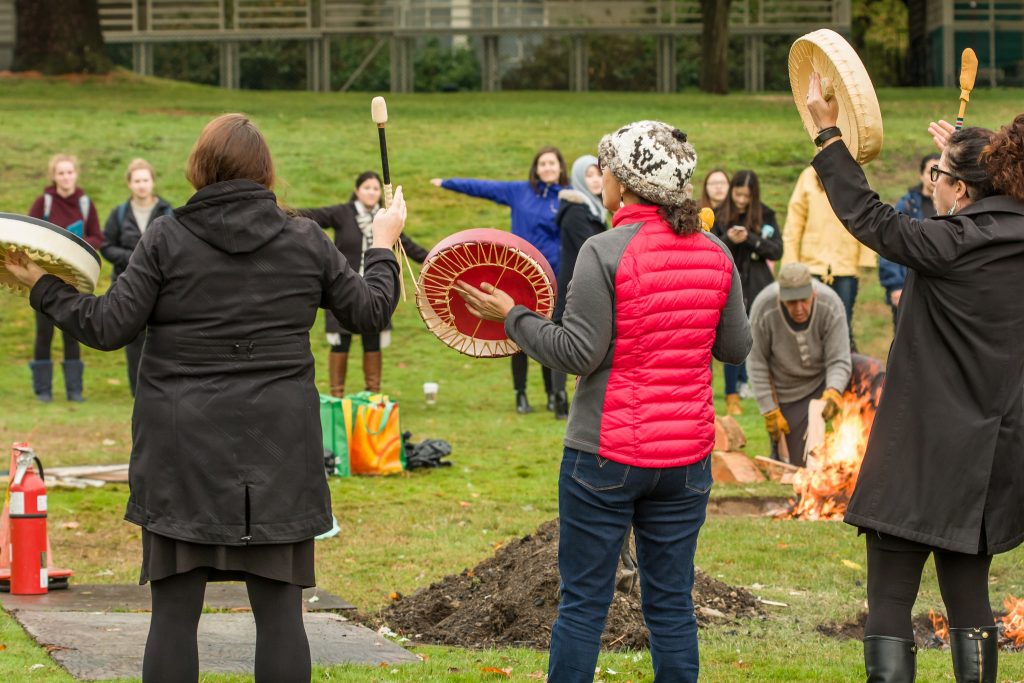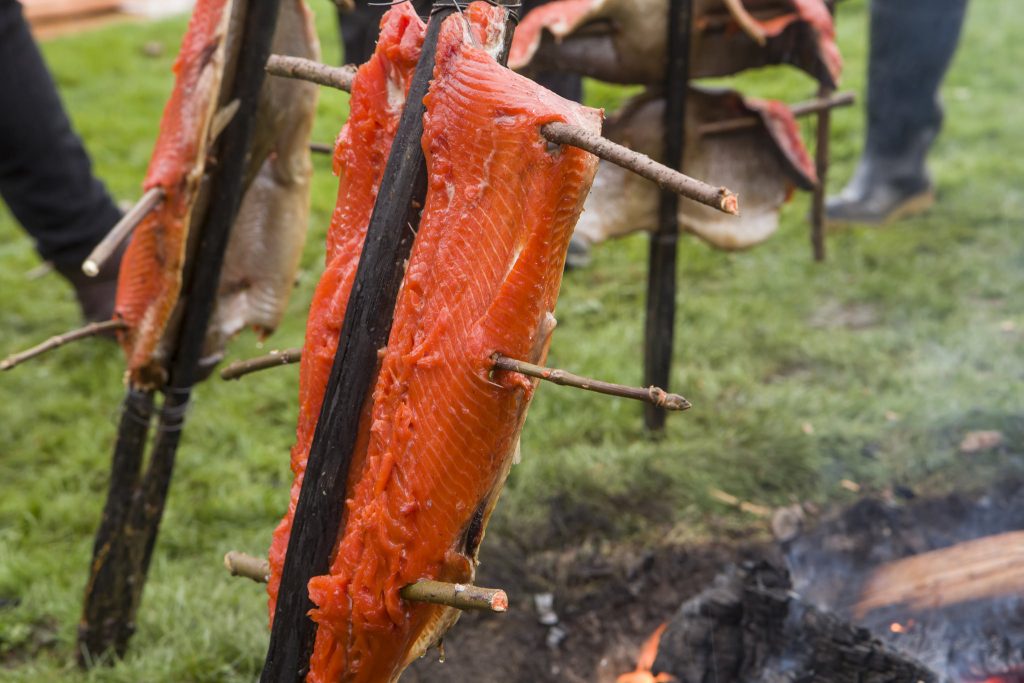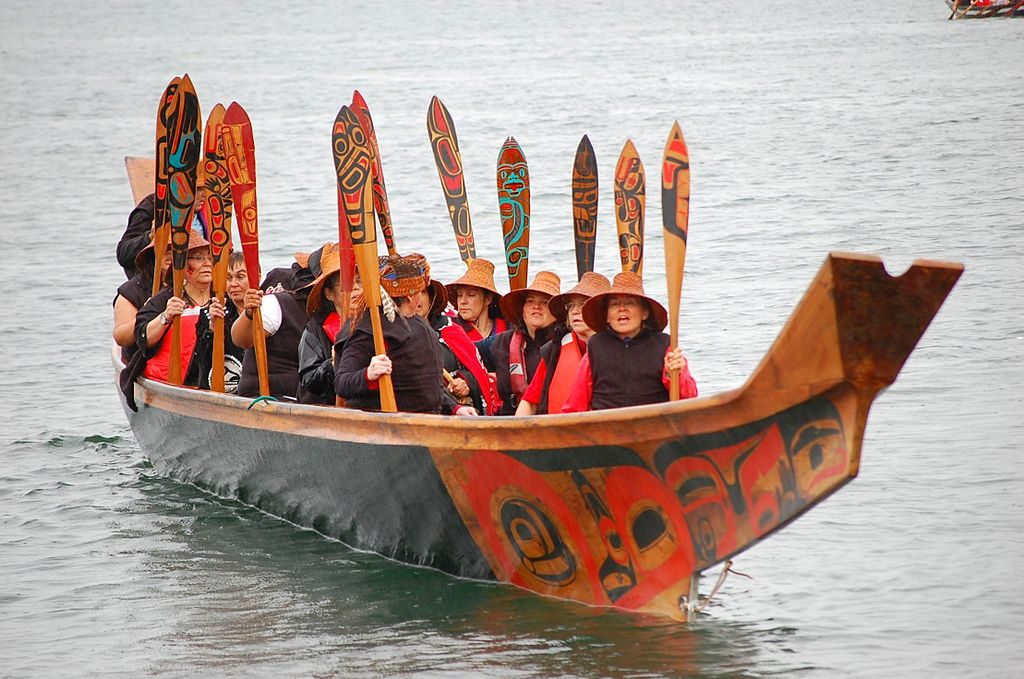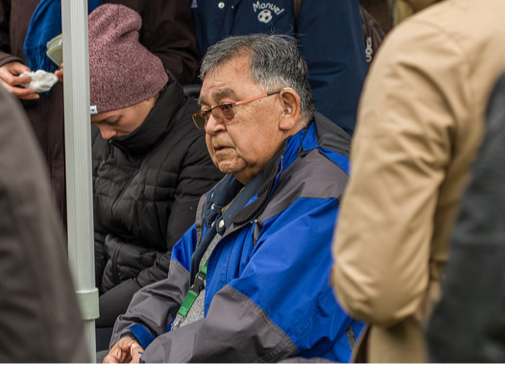
<?xml version="1.0" encoding="UTF-8"?>
<!DOCTYPE html PUBLIC "-//W3C//DTD XHTML 1.1//EN" "http://www.w3.org/TR/xhtml11/DTD/xhtml11.dtd">
<html xmlns="http://www.w3.org/1999/xhtml" xml:lang="en">
<head>
<meta content="text/html; charset=UTF-8" http-equiv="content-type" />
<meta http-equiv="Content-Language" content="en" />
<meta name="generator" content="Pressbooks 6.17.1" />
<meta name="pb-authors" content="Sybil Harrison" />
<meta name="pb-authors" content="Janice Simcoe" />
<meta name="pb-authors" content="Dawn Smith" />
<meta name="pb-authors" content="Jennifer Stein" />
<meta name="pb-title" content="Pulling Together: A Guide for Leaders and Administrators" />
<meta name="pb-language" content="en" />
<meta name="pb-cover-image" content="https://opentextbc.ca/indigenizationleadersadministrators/wp-content/uploads/sites/228/2018/09/Indigenization_Cover-Pages_Leaders-and-Administrators.jpg" />
<meta name="pb-book-license" content="cc-by-nc" />
<meta name="pb-is-based-on" content="https://opentextbc.ca/indigenizationleadersadminstrators" />
<meta name="pb-custom-copyright" content="The CC licence permits you to retain, reuse, copy, redistribute, and revise this book — in whole or in part — for free, providing the author is attributed as follows: Pulling Together: A Guide for Leaders and Administrators by Sybil Harrison, Janice Simcoe, Dawn Smith, and Jennifer Stein is used under a CC BY-NC 4.0 licence.This textbook can be referenced. In APA style, it should appear as follows:Harrison, S., Simcoe, J., Smith, D., &amp; Stein, J. (2018). Pulling Together: A Guide for Leaders and Administrators. Victoria, BC: BCcampus. Retrieved from https://opentextbc.ca/indigenizationleadersadministrators/Ebook ISBN: 978-1-77420-052-0Print ISBN: 978-1-77420-051-3Artist StatementInspired by the annual gathering of ocean-going canoes through Tribal Journeys, ‘Pulling Together’ created by Kwakwaka’wakw artist, Lou-ann Neel, is intended to represent the connections each of us has to our respective Nations and to one another as we Pull Together. Working toward our common visions, we move forward in sync, so we can continue to build and manifest strong, healthy communities with foundations rooted in our ancient ways.Thank you to all of the writers and contributors to the guides. We asked writers to share a phrase from their Indigenous languages on paddling or pulling together…‘alhgoh ts’ut’o ~ Wicēhtowin ~kən limt p cyʕap ~ si’sixwanuxw ~ ƛihšƛ ~Alh ka net tsa doh ~ snuhwulh ~Hilzaqz as q̓íǧuála q̓úsa m̓ánáǧuala wíw̓úyalax̌sṃ ~k’idéin át has jeewli.àat ~ Na’tsa’maht ~S’yat kii ga goot’deem ~ Yequx deni nanadin ~Mamook isickThank you to the Indigenization Project Steering Committee, project advisors and BCcampus staff who offered their precious time and energy to guide this project. Your expertise, gifts, and generosity were deeply appreciated.Project Steering CommitteeVerna Billy-Minnabarriet, Nicola Valley Institute of TechnologyJo Chrona, First Nations Education Steering CommitteeMarlene Erickson, College of New Caledonia, BC Aboriginal Post-Secondary CoordinatorsJan Hare, University of British ColumbiaColleen Hodgson, Métis Nation British ColumbiaDeborah Hull, Project co-chair, Ministry of Advanced Education, Skills and TrainingJanice Simcoe, Project co-chair, Camosun College, I-LEADKory Wilson, BC Institute of TechnologyBCcampusDianne Biin, Project Manager and Content DeveloperMichelle Glubke, Senior ManagerLucas Wright, Open Education AdvisorSupported by" />
<meta name="pb-subtitle" content="Pulling Together: A guide for Indigenization of post-secondary institutions. A professional learning series." />
<meta name="pb-publisher" content="BCcampus" />
<meta name="pb-publisher-city" content="Victoria, BC" />
<meta name="pb-publication-date" content="1536105600" />
<meta name="pb-ebook-isbn" content="978-1-77420-052-0" />
<meta name="pb-print-isbn" content="978-1-77420-051-3" />
<title>Pulling Together: A Guide for Leaders and Administrators</title>
</head>
<body lang='en' >
<div id="half-title-page"><h1 class="title">Pulling Together: A Guide for Leaders and Administrators</h1></div>
<div id="title-page">
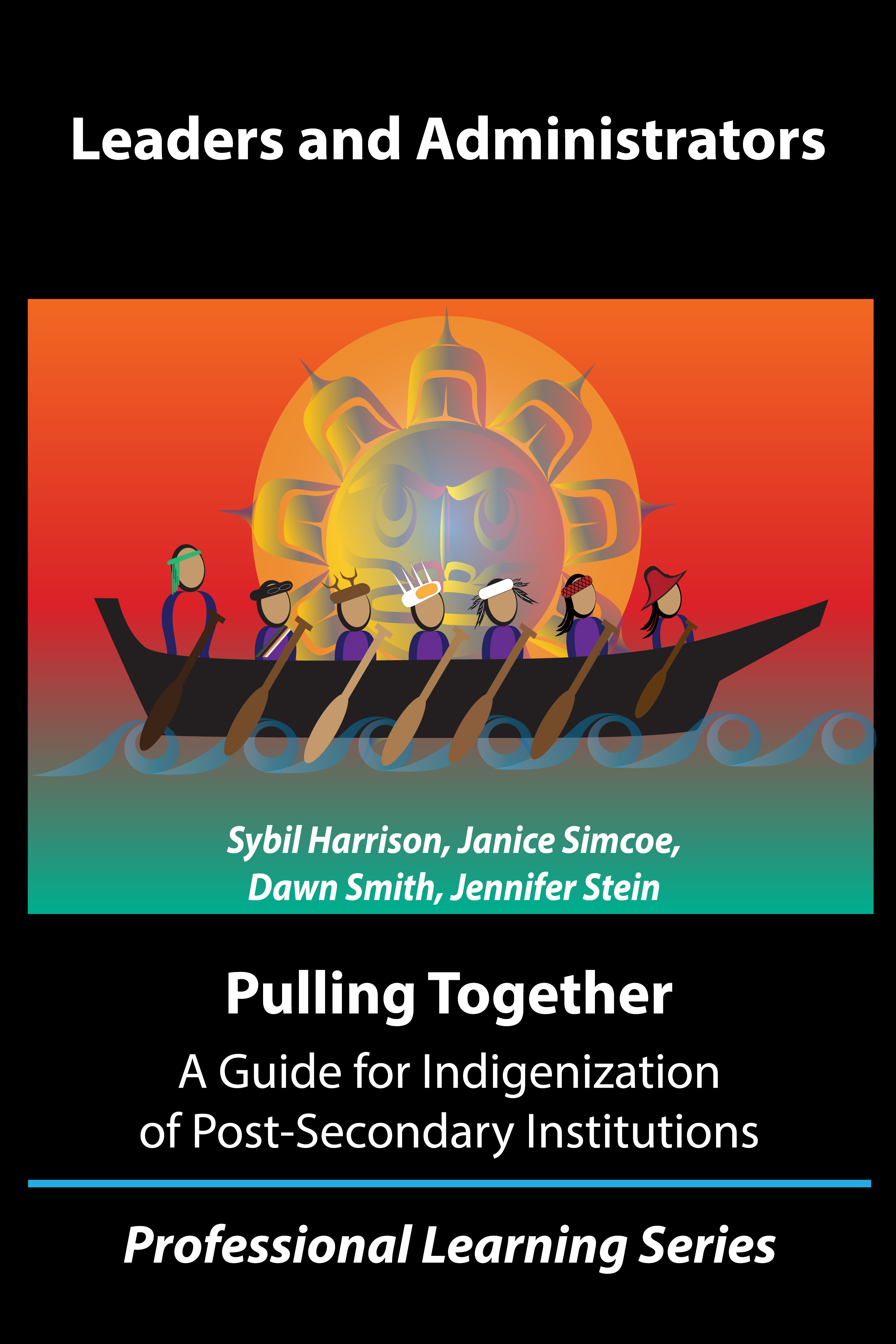
			 <p><img src="https://opentextbc.ca/indigenizationleadersadministrators/wp-content/uploads/sites/228/2018/06/Indigenization_Cover-Pages_Leaders-and-Administrators.jpg" alt="" width="853" height="1280" class="alignnone wp-image-439" srcset="https://opentextbc.ca/indigenizationleadersadministrators/wp-content/uploads/sites/228/2018/06/Indigenization_Cover-Pages_Leaders-and-Administrators.jpg 2500w, https://opentextbc.ca/indigenizationleadersadministrators/wp-content/uploads/sites/228/2018/06/Indigenization_Cover-Pages_Leaders-and-Administrators-200x300.jpg 200w, https://opentextbc.ca/indigenizationleadersadministrators/wp-content/uploads/sites/228/2018/06/Indigenization_Cover-Pages_Leaders-and-Administrators-768x1152.jpg 768w, https://opentextbc.ca/indigenizationleadersadministrators/wp-content/uploads/sites/228/2018/06/Indigenization_Cover-Pages_Leaders-and-Administrators-683x1024.jpg 683w, https://opentextbc.ca/indigenizationleadersadministrators/wp-content/uploads/sites/228/2018/06/Indigenization_Cover-Pages_Leaders-and-Administrators-65x98.jpg 65w, https://opentextbc.ca/indigenizationleadersadministrators/wp-content/uploads/sites/228/2018/06/Indigenization_Cover-Pages_Leaders-and-Administrators-225x338.jpg 225w, https://opentextbc.ca/indigenizationleadersadministrators/wp-content/uploads/sites/228/2018/06/Indigenization_Cover-Pages_Leaders-and-Administrators-350x525.jpg 350w" sizes="(max-width: 853px) 100vw, 853px" title="" /></p> <div class="media-attributions clear"><h3>Media Attributions</h3><ul><li>Indigenization_Cover-Pages_Leaders-and-Administrators </li></ul></div> 

	</div>
<div id="copyright-page">
	<div class="ugc">
					
<div class="license-attribution"><p><img src="https://opentextbc.ca/indigenizationleadersadministrators/wp-content/themes/pressbooks-book/packages/buckram/assets/images/cc-by-nc.svg" alt="Icon for the Creative Commons Attribution-NonCommercial 4.0 International License" /></p><p>Pulling Together: A Guide for Leaders and Administrators Copyright © 2018 by <span>Sybil Harrison; Janice Simcoe; Dawn Smith; and Jennifer Stein</span> is licensed under a <a rel="license" href="https://creativecommons.org/licenses/by-nc/4.0/">Creative Commons Attribution-NonCommercial 4.0 International License</a>, except where otherwise noted.</p></div>

							<p>The CC licence permits you to retain, reuse, copy, redistribute, and revise this book &#8212; in whole or in part &#8212; for free, providing the author is attributed as follows:</p><div class="textbox" style="text-align: center;"><em>Pulling Together: A Guide for Leaders and Administrators</em> by Sybil Harrison, Janice Simcoe, Dawn Smith, and Jennifer Stein is used under a <a href="https://creativecommons.org/licenses/by-nc/4.0/">CC BY-NC 4.0</a> licence.</div><p>This textbook can be referenced. In APA style, it should appear as follows:</p><div class="textbox" style="text-align: center;">Harrison, S., Simcoe, J., Smith, D., &#38; Stein, J. (2018). <em>Pulling Together: A Guide for Leaders and Administrators</em>. Victoria, BC: BCcampus. Retrieved from https://opentextbc.ca/indigenizationleadersadministrators/</div><p><strong>Ebook ISBN:</strong> 978-1-77420-052-0</p><p><strong>Print ISBN:</strong> 978-1-77420-051-3</p><h3>Artist Statement</h3><p>Inspired by the annual gathering of ocean-going canoes through Tribal Journeys, ‘Pulling Together’ created by Kwakwaka’wakw artist, Lou-ann Neel, is intended to represent the connections each of us has to our respective Nations and to one another as we Pull Together. Working toward our common visions, we move forward in sync, so we can continue to build and manifest strong, healthy communities with foundations rooted in our ancient ways.</p><p>Thank you to all of the writers and contributors to the guides. We asked writers to share a phrase from their Indigenous languages on paddling or pulling together…</p><p style="text-align: center;">‘alhgoh ts&#8217;ut&#8217;o ~ Wicēhtowin ~<br />kən limt p cyʕap ~ si’sixwanuxw ~ ƛihšƛ ~<br />Alh ka net tsa doh ~ snuhwulh ~<br />Hilzaqz as q̓íǧuála q̓úsa m̓ánáǧuala wíw̓úyalax̌sṃ ~<br />k&#8217;idéin át has jeewli.àat ~ Na’tsa’maht ~<br />S’yat kii ga goot’deem ~ Yequx deni nanadin ~<br />Mamook isick</p><p>Thank you to the Indigenization Project Steering Committee, project advisors and BCcampus staff who offered their precious time and energy to guide this project. Your expertise, gifts, and generosity were deeply appreciated.</p><h3>Project Steering Committee</h3><p>Verna Billy-Minnabarriet, Nicola Valley Institute of Technology<br />Jo Chrona, First Nations Education Steering Committee<br />Marlene Erickson, College of New Caledonia, BC Aboriginal Post-Secondary Coordinators<br />Jan Hare, University of British Columbia<br />Colleen Hodgson, Métis Nation British Columbia<br />Deborah Hull, Project co-chair, Ministry of Advanced Education, Skills and Training<br />Janice Simcoe, Project co-chair, Camosun College, I-LEAD<br />Kory Wilson, BC Institute of Technology</p><h3>BCcampus</h3><p>Dianne Biin, Project Manager and Content Developer<br />Michelle Glubke, Senior Manager<br />Lucas Wright, Open Education Advisor</p><h3>Supported by</h3><p><img src="https://opentextbc.ca/indigenizationleadersadministrators/wp-content/uploads/sites/228/2018/07/BCcampus_15logo_horiz.jpg" alt="BCcampus" class="wp-image-152 alignright" width="188" height="69" /></p><p><img src="https://opentextbc.ca/indigenizationleadersadministrators/wp-content/uploads/sites/228/2018/07/bcid_h_rgb_pos.jpg" alt="Government of British COlumbia" class="alignleft" width="207" height="80" /></p>
							</div>
</div>
<div id="toc">
	<h1>Contents</h1>
	<ul>
					<li class="front-matter miscellaneous">
	<a href="#front-matter-accessibility-statement">
		<span class="toc-chapter-title">Accessibility Statement</span>
							</a>
	</li>

					<li class="front-matter miscellaneous">
	<a href="#front-matter-overview-wake-siah-kopa-purpose-of-this-guide">
		<span class="toc-chapter-title">Overview</span>
							</a>
	</li>

					<li class="front-matter acknowledgements">
	<a href="#front-matter-waw-nowitka-acknowledgements">
		<span class="toc-chapter-title">Waw Nowitka: Acknowledgements</span>
							</a>
	</li>

					<li class="front-matter miscellaneous">
	<a href="#front-matter-indigenous-values">
		<span class="toc-chapter-title">Indigenous Values</span>
							</a>
	</li>

					<li class="front-matter foreword">
	<a href="#front-matter-nuu-chah-nulth-prayer">
		<span class="toc-chapter-title">Nuu-chah-nulth Prayer</span>
							</a>
	</li>

					<li class="front-matter introduction">
	<a href="#front-matter-introduction">
		<span class="toc-chapter-title">Introduction</span>
							</a>
	</li>

					<li class="front-matter post-introduction miscellaneous">
	<a href="#front-matter-ikta-what-is-indigenization">
		<span class="toc-chapter-title">Ikta: What is Indigenization?</span>
							</a>
	</li>

					<li class="part">
	<a href="#part-main-body">
					Section 1: Chetwood Black Bear
			</a>
</li>

					<li class="chapter standard">
	<a href="#chapter-chapter-1">
		<span class="toc-chapter-title">Chetwood (Black Bear)</span>
							</a>
	</li>

					<li class="chapter standard">
	<a href="#chapter-mamook-kloshe-prepare">
		<span class="toc-chapter-title">Mamook Kloshe (Prepare)</span>
							</a>
	</li>

					<li class="chapter standard">
	<a href="#chapter-mahsh-boat-launch">
		<span class="toc-chapter-title">Mahsh (Boat Launch)</span>
							</a>
	</li>

					<li class="chapter standard">
	<a href="#chapter-summary-1">
		<span class="toc-chapter-title">Summary</span>
							</a>
	</li>

					<li class="part">
	<a href="#part-kahkah-raven">
					Section 2: Kahkah (Raven)
			</a>
</li>

					<li class="chapter standard">
	<a href="#chapter-kahkah-raven">
		<span class="toc-chapter-title">Kahkah (Raven)</span>
							</a>
	</li>

					<li class="chapter standard">
	<a href="#chapter-isick-paddle">
		<span class="toc-chapter-title">Isick (Paddle)</span>
							</a>
	</li>

					<li class="chapter standard">
	<a href="#chapter-elip-nanitch-discover">
		<span class="toc-chapter-title">Elip Nanitch (Discover)</span>
							</a>
	</li>

					<li class="chapter standard">
	<a href="#chapter-summary-2">
		<span class="toc-chapter-title">Summary</span>
							</a>
	</li>

					<li class="part">
	<a href="#part-leloo-wolf">
					Section 3: Leloo (Wolf)
			</a>
</li>

					<li class="chapter standard">
	<a href="#chapter-leloo-wolf">
		<span class="toc-chapter-title">Leloo (Wolf)</span>
							</a>
	</li>

					<li class="chapter standard">
	<a href="#chapter-iskum-gather">
		<span class="toc-chapter-title">Iskum (Gather)</span>
							</a>
	</li>

					<li class="chapter standard">
	<a href="#chapter-summary-3">
		<span class="toc-chapter-title">Summary</span>
							</a>
	</li>

					<li class="part">
	<a href="#part-sammon-salmon">
					Section 4: Sammon (Salmon)
			</a>
</li>

					<li class="chapter standard">
	<a href="#chapter-sammon-salmon">
		<span class="toc-chapter-title">Sammon (Salmon)</span>
							</a>
	</li>

					<li class="chapter standard">
	<a href="#chapter-lolo-illahee-bring-home">
		<span class="toc-chapter-title">Lolo Illahee (Bring Home)</span>
							</a>
	</li>

					<li class="chapter standard">
	<a href="#chapter-okoke-nikas-share">
		<span class="toc-chapter-title">Okoke Nikas (Share)</span>
							</a>
	</li>

					<li class="chapter standard">
	<a href="#chapter-summary-4">
		<span class="toc-chapter-title">Summary</span>
							</a>
	</li>

					<li class="part">
	<a href="#part-winapee-future">
					Section 5: Winapee (Future)
			</a>
</li>

					<li class="chapter standard">
	<a href="#chapter-winapee-future">
		<span class="toc-chapter-title">Winapee (Future)</span>
							</a>
	</li>

					<li class="chapter standard">
	<a href="#chapter-summary-5">
		<span class="toc-chapter-title">Summary</span>
							</a>
	</li>

					<li class="back-matter miscellaneous">
	<a href="#back-matter-journey-well">
		<span class="toc-chapter-title">Journey Well</span>
							</a>
	</li>

					<li class="back-matter suggested-reading">
	<a href="#back-matter-additional-resources">
		<span class="toc-chapter-title">Additional Resources</span>
							</a>
	</li>

					<li class="back-matter bibliography">
	<a href="#back-matter-references">
		<span class="toc-chapter-title">References</span>
							</a>
	</li>

					<li class="back-matter glossary">
	<a href="#back-matter-glossary-of-terms">
		<span class="toc-chapter-title">Glossary of Terms</span>
							</a>
	</li>

					<li class="back-matter miscellaneous">
	<a href="#back-matter-appendix-a-adapting-this-guide">
		<span class="toc-chapter-title">Appendix A: Adapting this Guide</span>
							</a>
	</li>

					<li class="back-matter miscellaneous">
	<a href="#back-matter-versioning-history">
		<span class="toc-chapter-title">Versioning History</span>
							</a>
	</li>

			</ul>
</div>
<div class="front-matter miscellaneous " id="front-matter-accessibility-statement" title="Accessibility Statement">
	<div class="front-matter-title-wrap">
		<p class="front-matter-number">1</p>
		<h1 class="front-matter-title">Accessibility Statement</h1>
								</div>
	<div class="ugc front-matter-ugc">
				 <h1>Accessibility features of the web version of this resource</h1> <p>The <a href="https://opentextbc.ca/indigenizationleadersadministrators/" data-url="https://opentextbc.ca/indigenizationleadersadministrators/">web version of the <em>Pulling Together: A Guide for Leaders and Administrators</em></a><span class="footnote"><span class="footnote-indirect" data-fnref="444-1"></span></span> has been designed with accessibility in mind by incorporating the following features:</p> <ul><li>It has been optimized for people who use screen-reader technology. <ul><li>all content can be navigated using a keyboard</li> <li>links, headings, and tables are formatted to work with screen readers</li> <li>images have alt tags</li> </ul> </li> <li>Information is not conveyed by colour alone.</li> <li>The option to increase font size (see tab on top right of screen)</li> </ul> <h1>Other file formats available</h1> <p>In addition to the web version, this book is available in a number of file formats including PDF, EPUB (for eReaders), MOBI (for Kindles), and various editable files. Here is a link to where you can <a href="https://opentextbc.ca/indigenizationleadersadministrators/" data-url="https://opentextbc.ca/indigenizationleadersadministrators/">download this book in another file format</a>.<span class="footnote"><span class="footnote-indirect" data-fnref="444-2"></span></span> Look for the “Download this book” drop-down menu to select the file type you want.</p> <p>Those using a print copy of this resource can find the URLs for any websites mentioned in this resource in the footnotes.</p> <h1>Known accessibility issues and areas for improvement</h1> <p>While we strive to ensure that this resource is as accessible and usable as possible, we might not always get it right. Any issues we identify will be listed below. There are currently no known issues.</p> <h1>Accessibility standards</h1> <p>The web version of this resource has been designed to meet <a href="https://www.w3.org/TR/WCAG20/" data-url="https://www.w3.org/TR/WCAG20/">Web Content Accessibility Guidelines 2.0</a>,<span class="footnote"><span class="footnote-indirect" data-fnref="444-3"></span></span> level AA. In addition, it follows all guidelines in <a href="#back-matter-appendix-checklist-for-accessibility-toolkit" data-url="/accessibilitytoolkit/back-matter/appendix-checklist-for-accessibility-toolkit/">Accessibility Toolkit: Checklist for Accessibility</a>.<span class="footnote"><span class="footnote-indirect" data-fnref="444-4"></span></span> The development of this toolkit involved working with students with various print disabilities who provided their personal perspectives and helped test the content.</p> <h1>Let us know if you are having problems accessing this guide</h1> <p>We are always looking for ways to make our resources more accessible. If you have problems accessing this resource, please contact us to let us know so we can fix the issue.</p> <p>Please include the following information:</p> <ul><li>The location of the problem by providing a web address or page description</li> <li>A description of the problem</li> <li>The computer, software, browser, and any assistive technology you are using that can help us diagnose and solve your issue <ul><li>e.g., Windows 10, Google Chrome (Version 65.0.3325.181), NVDA screen reader</li> </ul> </li> </ul> <p>You can contact us through the following web form: <a href="https://open.bccampus.ca/browse-our-collection/reporting-an-error/" target="_blank" rel="noopener" data-url="https://open.bccampus.ca/browse-our-collection/reporting-an-error/">Report an Error</a></p> <p><strong>This statement was last updated on August 6, 2019. </strong></p> 
	</div>
			
				
				<div class="footnotes"><div id='444-1'>Web version: <em>https://opentextbc.ca/indigenizationleadersadministrators/</em></div><div id='444-2'>Download this book in another file format: <i>https://opentextbc.ca/indigenizationleadersadministrators/</i></div><div id='444-3'>Web Content Accessibility Guidelines 2.0: https://www.w3.org/TR/WCAG20/</div><div id='444-4'>Accessibility Toolkit: Checklist for Accessibility: https://opentextbc.ca/accessibilitytoolkit/back-matter/appendix-checklist-for-accessibility-toolkit/</div></div>
	</div>
<div class="front-matter miscellaneous " id="front-matter-overview-wake-siah-kopa-purpose-of-this-guide" title="Overview">
	<div class="front-matter-title-wrap">
		<p class="front-matter-number">2</p>
		<h1 class="front-matter-title">Overview</h1>
								</div>
	<div class="ugc front-matter-ugc">
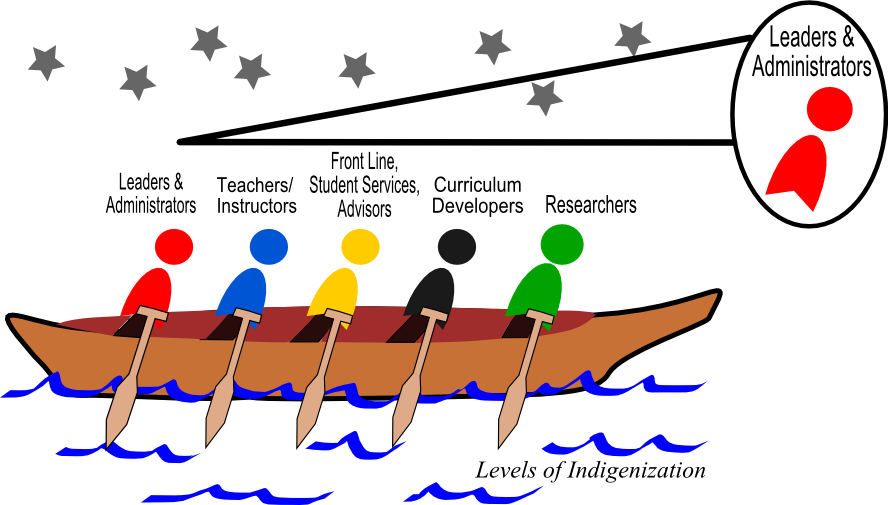
				 <h1><span style="color: #000000;">Purpose of this guide</span></h1> <p>The <em>Leaders and Administrators</em> <em>Guide</em> is part of an open professional learning series developed for staff across post-secondary institutions in British Columbia. Guides in the series include: <a href="https://opentextbc.ca/indigenizationfoundations/" data-url="https://opentextbc.ca/indigenizationfoundations/">Foundations</a>;<span class="footnote"><span class="footnote-indirect" data-fnref="21-1"></span></span>&nbsp;<a href="https://opentextbc.ca/indigenizationleadersadministrators/" data-url="https://opentextbc.ca/indigenizationleadersadministrators/">Leaders and Administrators</a>;<span class="footnote"><span class="footnote-indirect" data-fnref="21-2"></span></span>&nbsp;<a href="https://opentextbc.ca/indigenizationcurriculumdevelopers/" data-url="https://opentextbc.ca/indigenizationcurriculumdevelopers/">Curriculum Developers</a>;<a data-url=""><span class="footnote"><span class="footnote-indirect" data-fnref="21-3"></span></span>&nbsp;</a><a href="https://opentextbc.ca/indigenizationinstructors/" data-url="https://opentextbc.ca/indigenizationinstructors/">Teachers and Instructors</a>;<a data-url=""><span class="footnote"><span class="footnote-indirect" data-fnref="21-4"></span></span>&nbsp;</a><a href="https://opentextbc.ca/indigenizationfrontlineworkers/" data-url="https://opentextbc.ca/indigenizationfrontlineworkers/">Front-line Staff, Student Services, and Advisors</a>;<a data-url=""><span class="footnote"><span class="footnote-indirect" data-fnref="21-5"></span></span> and </a><a href="https://opentextbc.ca/indigenizationresearchers/" data-url="https://opentextbc.ca/indigenizationresearchers/">Researchers</a>.<a data-url=""><span class="footnote"><span class="footnote-indirect" data-fnref="21-6"></span></span>.&nbsp;</a>These guides are the result of the Indigenization Project, a collaboration between BCcampus and the Ministry of Advanced Education, Skills and Training. The project was supported by a steering committee of Indigenous education leaders from BC universities, colleges, and institutes, the First Nations Education Steering Committee, the Indigenous Adult and Higher Learning Association, and Métis Nation BC.</p> <p>These guides are intended to support the systemic change occurring across post-secondary institutions through Indigenization, decolonization, and reconciliation. A guiding principle from the Truth and Reconciliation Commission of Canada process states why this change is happening.</p> <blockquote><p>Reconciliation requires constructive action on addressing the ongoing legacies of colonialism that have had destructive impacts on Aboriginal peoples’ education, cultures and languages, health, child welfare, the administration of justice, and economic opportunities and prosperity. (2015, p. 3)</p></blockquote> <p>We all have a role to play. As noted by Universities Canada, “[h]igher education offers great potential for reconciliation and a renewed relationship between Indigenous and non-Indigenous people in Canada.” (2015) Similarly, Colleges and Institutions Canada notes that “Indigenous education will strengthen colleges’ and institutes’ contribution to improving the lives of learners and communities.” (2015) These guides provide a way for all faculty and staff to Indigenize their practice in post-secondary education.</p> <div class="wp-caption aligncenter" id="attachment_122" aria-describedby="caption-attachment-122" style="width: 746px"><a href="https://opentextbc.ca/indigenizationleadersadministrators/wp-content/uploads/sites/228/2018/03/canoe-leader-emphasis-v2.png" data-url="https://opentextbc.ca/indigenizationleadersadministrators/wp-content/uploads/sites/228/2018/03/canoe-leader-emphasis-v2.png"><img class="wp-image-122" src="https://opentextbc.ca/indigenizationleadersadministrators/wp-content/uploads/sites/228/2018/03/canoe-leader-emphasis-v2.png" alt="Leaders and administrators must help paddle the canoe to achieve Indigenization." width="746" height="424" srcset="https://opentextbc.ca/indigenizationleadersadministrators/wp-content/uploads/sites/228/2018/03/canoe-leader-emphasis-v2.png 888w, https://opentextbc.ca/indigenizationleadersadministrators/wp-content/uploads/sites/228/2018/03/canoe-leader-emphasis-v2-300x171.png 300w, https://opentextbc.ca/indigenizationleadersadministrators/wp-content/uploads/sites/228/2018/03/canoe-leader-emphasis-v2-768x437.png 768w, https://opentextbc.ca/indigenizationleadersadministrators/wp-content/uploads/sites/228/2018/03/canoe-leader-emphasis-v2-65x37.png 65w, https://opentextbc.ca/indigenizationleadersadministrators/wp-content/uploads/sites/228/2018/03/canoe-leader-emphasis-v2-225x128.png 225w, https://opentextbc.ca/indigenizationleadersadministrators/wp-content/uploads/sites/228/2018/03/canoe-leader-emphasis-v2-350x199.png 350w" sizes="(max-width: 746px) 100vw, 746px" title="" /></a><div class="wp-caption-text" id="caption-attachment-122">Fig 0.2: Pulling Together: A Canoe Journey</div></div> <p>The Indigenization Project can be described as an evolving story of how diverse people can journey forward in a canoe (Fig 0.1). In Indigenous methodology, stories emphasize our relationships with our environment, our communities, and with each other. To stay on course, we are guided by the stars in the sky, with each star a project principle: deliver holistically, learn from one another, work together, share strengths, value collaboration, deepen the learning, engage respectfully, and learn to work in discomfort. As we look ahead, we do not forget our past.</p> <p>The canoe holds Indigenous Peoples and the key people in post-secondary education whose roles support, lead, and build <a href="#Indigenization" data-url="/indigenizationleadersadministrators/back-matter/glossary/#Indigenization"><strong>Indigenization</strong></a>. Our combined strengths give us balance and the ability to steer and paddle in unison as we sit side by side. The paddles are the open resources. As we learn to pull together, we understand that our shared knowledge makes us stronger and makes us one.</p> <p>The perpetual motion and depth of water reflects the evolving process of Indigenization. Indigenization is relational and collaborative and involves various levels of transformation, from inclusion and integration to infusion of Indigenous perspectives and approaches in education. As we learn together, we ask new questions, so we continue our journey with curiosity and optimism, always looking for new stories to share.</p> <p>We hope these guides support you in your learning journey. As open education resources they can be adapted to fit local context, in collaboration with Indigenous Peoples who connect with and advise your institution. We expect that as more educators use and revise these guides, they will evolve over time.</p> <h1><span style="color: #000000;">How to use and adapt this guide</span></h1> <p>The inspiration for the <em>Leaders and Administrators Guide</em> is the leadership demonstrated at Camosun College in advancing Indigenization. For 12 years, the college, located on the traditional territories of the Lkwungen and&nbsp;W̱SÁNEĆ&nbsp;peoples, has worked collaboratively to make space for Indigenous ways of knowing and being within the institution, paving the way for positive change.</p> <p>The guide contains a number of sections that include reflections and other activities that can be done either individually or collectively. The best way to use the guide is to spend approximately 20 hours (4 hours per section) engaging with the material and resources, which will support your understanding of Indigenization. You will spend time reading and reflecting, and you are encouraged to journal or record your insights, learnings, and reflections. As a leader and learner, you will need to be patient, open, and ready to receive the gifts of Indigenization.</p> <p>This guide can be used as part of a learning community or in a group learning experience, adapting and augmenting it to include Indigenization pathways at your institution for Indigenous students and communities.</p> <p>The <em>Leaders and Administrators</em> <em>Guide</em>&nbsp;is not a definitive resource, since First Nation, Métis and Inuit perspectives and approaches are diverse across the province. We invite you to augment it with your own stories and examples, and, where possible, include Indigenous voice and perspectives from your area in the materials.</p> <p>To learn more about Indigenous-Canadian relationships since contact, please go to the <a href="https://opentextbc.ca/indigenizationfoundations/" data-url="https://opentextbc.ca/indigenizationfoundations/"><em>Foundations Guide</em></a>.</p> <p><strong>Note:</strong>&nbsp;For a technical description of how to adapt this guide please see <a href="#back-matter-appendix-a-adapting-this-guide" data-url="/indigenizationleadersadministrators/back-matter/appendix-a-adapting-this-guide/">Appendix A</a>.</p> <div class="media-attributions clear"><h3>Media Attributions</h3><ul><li>Fig 0.2: Pulling Together: A Canoe Journey Story, Leaders &amp; Administrators emphasis © Dianne Biin is licensed under a <a rel="license" href="https://creativecommons.org/licenses/by/4.0/" data-url="https://creativecommons.org/licenses/by/4.0/">CC BY (Attribution)</a> license</li></ul></div> 
	</div>
			
				
				<div class="footnotes"><div id='21-1'>Pulling Together: Foundations Guide: https://opentextbc.ca/indigenizationfoundations/</div><div id='21-2'>Pulling Together: A Guide for Leaders and Administrators: https://opentextbc.ca/indigenizationleadersadministrators/</div><div id='21-3'>Pulling Together: A Guide for Curriculum Developers: https://opentextbc.ca/indigenizationcurriculumdevelopers/</div><div id='21-4'>Pulling Together: A Guide for Teachers and Instructors: https://opentextbc.ca/indigenizationinstructors/</div><div id='21-5'>Pulling Together: A Guide for Front-Line Staff, Student Services, and Advisors: https://opentextbc.ca/indigenizationfrontlineworkers/</div><div id='21-6'>Pulling Together: A Guide for Researchers, Hiłḱ̠ala: https://opentextbc.ca/indigenizationresearchers/</div></div>
	</div>
<div class="front-matter acknowledgements " id="front-matter-waw-nowitka-acknowledgements" title="Waw Nowitka: Acknowledgements">
	<div class="front-matter-title-wrap">
		<p class="front-matter-number">3</p>
		<h1 class="front-matter-title">Waw Nowitka: Acknowledgements</h1>
								</div>
	<div class="ugc front-matter-ugc">
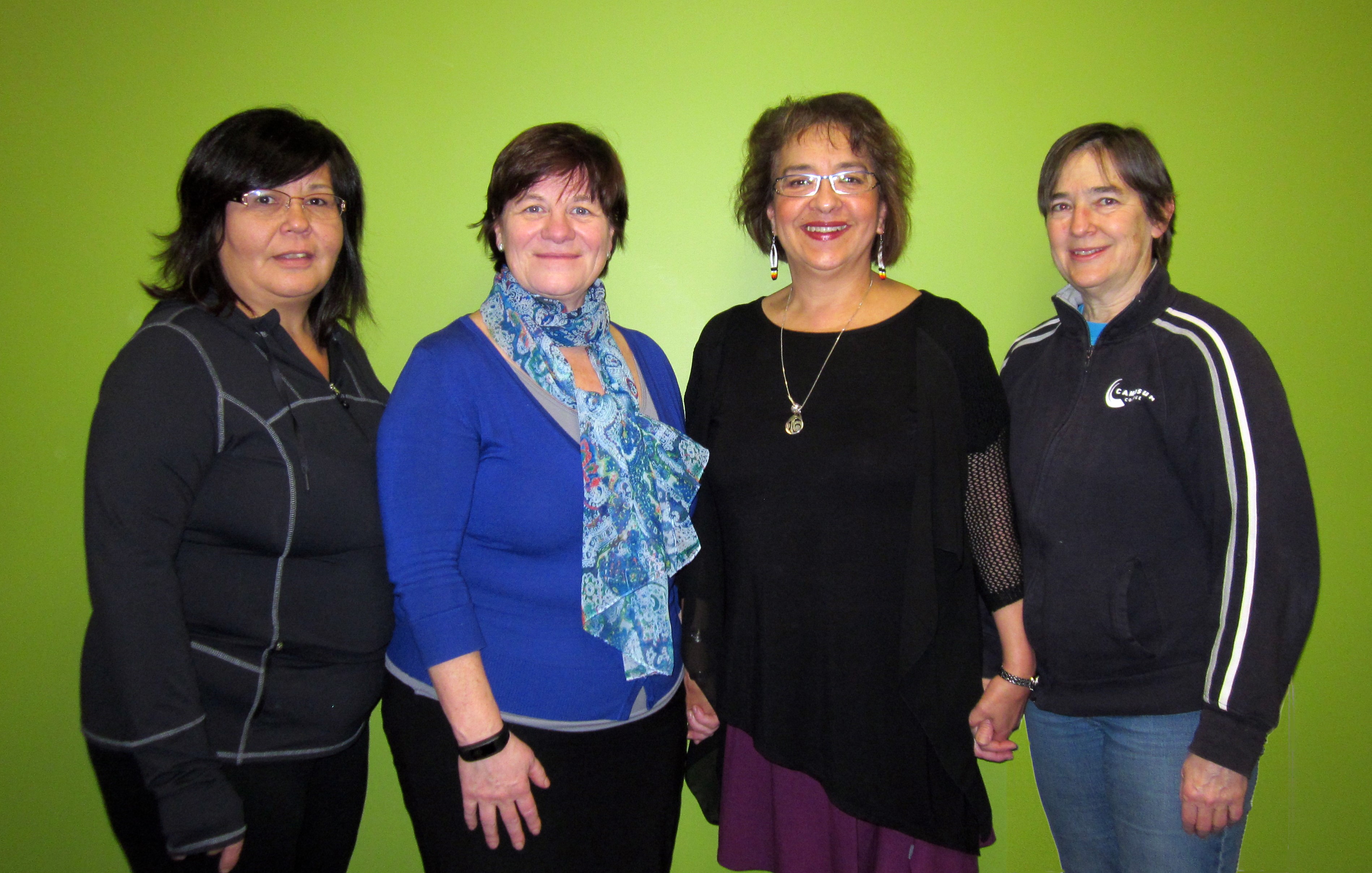
				 <p><em>Pulling Together: A</em> <em>G</em><em>uide for Leaders and Administrators</em> was designed as an educational resource for post-secondary leaders by a Camosun College–based team, which included:</p> <div class="wp-caption aligncenter" id="attachment_18" aria-describedby="caption-attachment-18" style="width: 1030px"><a href="https://opentextbc.ca/indigenizationleadersadministrators/wp-content/uploads/sites/228/2018/03/IMG_1364_improved.jpg" data-url="https://opentextbc.ca/indigenizationleadersadministrators/wp-content/uploads/sites/228/2018/03/IMG_1364_improved.jpg"><img src="https://opentextbc.ca/indigenizationleadersadminstrators/wp-content/uploads/sites/228/2018/03/IMG_1364_improved-1024x652.jpg" alt="&amp;quot;&amp;quot;" width="1030" height="656" class="wp-image-18" srcset="https://opentextbc.ca/indigenizationleadersadministrators/wp-content/uploads/sites/228/2018/03/IMG_1364_improved-1024x652.jpg 1024w, https://opentextbc.ca/indigenizationleadersadministrators/wp-content/uploads/sites/228/2018/03/IMG_1364_improved-300x191.jpg 300w, https://opentextbc.ca/indigenizationleadersadministrators/wp-content/uploads/sites/228/2018/03/IMG_1364_improved-768x489.jpg 768w, https://opentextbc.ca/indigenizationleadersadministrators/wp-content/uploads/sites/228/2018/03/IMG_1364_improved-65x41.jpg 65w, https://opentextbc.ca/indigenizationleadersadministrators/wp-content/uploads/sites/228/2018/03/IMG_1364_improved-225x143.jpg 225w, https://opentextbc.ca/indigenizationleadersadministrators/wp-content/uploads/sites/228/2018/03/IMG_1364_improved-350x223.jpg 350w" sizes="(max-width: 1030px) 100vw, 1030px" title="" /></a><div class="wp-caption-text" id="caption-attachment-18">Fig 0.1: Camosun College Team. Left to right: Dawn Smith, Sybil Harrison, Janice Simcoe, and Jennifer Stein.</div></div> <p>Janice Simcoe (Anishnabe), Director, Indigenous Education and Community Connections</p> <p>Sybil Harrison, Director, Learning Services</p> <p>Jennifer Stein, Instructional Designer</p> <p>Dawn Smith (Nuu-chah-nulth), Indigenization Education Developer</p> <p>&nbsp;</p> <p>The Camosun College team acknowledges the invaluable Indigenous leadership of the past and present who have spent countless hours advancing Indigenous education. As a team, we acknowledge and respect the self-determining vision for Indigenous control over Indigenous education.</p> <p>Special thanks and appreciation to leaders who have graciously participated in the development of the <em>Leaders and Administrators Guide</em>. The leaders recognized for their contributions are:</p> <p>Skip Dick (Songhees), Elder<br /> Sherri Bell, President, Camosun College<br /> John Boraas, Vice-President Education, Camosun College<br /> Joan Yates, Vice-President Student Experiences, Camosun College<br /> Ian Humphries, Dean School of Access, Camosun College<br /> Nella Nelson (Kwakwaka’wakw), Administrator for Aboriginal Nations Education, Victoria School District 61<br /> Corrine Michel (Secwepemc), Indigenization Coordinator, Camosun College<br /> Kendra Underwood (W̱SÁNEĆ), Director, Saanich Adult Education Centre<br /> Angus Graeme, President, Selkirk College<br /> Kathleen Absolon (Nishnaabeg), Jackie Price (Inuit), and Linda Smith (Maori)</p> <div class="media-attributions clear"><h3>Media Attributions</h3><ul><li>Fig 0.1: “Camosun College Team” © Andrea Kuchaway is licensed under a <a rel="license" href="https://creativecommons.org/licenses/by/4.0/" data-url="https://creativecommons.org/licenses/by/4.0/">CC BY (Attribution)</a> license</li></ul></div> 
	</div>


	</div>
<div class="front-matter miscellaneous " id="front-matter-indigenous-values" title="Indigenous Values">
	<div class="front-matter-title-wrap">
		<p class="front-matter-number">4</p>
		<h1 class="front-matter-title">Indigenous Values</h1>
								</div>
	<div class="ugc front-matter-ugc">
				 <p>First Nations, Métis, and Inuit share similar values, which are foundational to leadership. For this guide, the seven values articulated by Nishnaabeg author Leanne Simpson (2011) in her book <em>Dancing on Our Turtle’s Back: Stories of Nishnaabeg Re-Creation, Resurgence and a New Emergence</em> (pp. 124–127) provide the vehicle or vessel for the journey. <strong><em><span class="glossary-term">Kokum Dibaajimowinan</span></em></strong>, the grandmothers’ teachings around courage, truth, respect, love, honesty, wisdom, and humility, are common values typically reflected in Indigenous teachings.</p> <div class="textbox shaded"><p style="text-align: center;">Aakde’ewin (<em>Courage</em>)</p> <p>The Nishaabeg have the phrase <strong><em><span class="glossary-term">Aakde’ewin</span></em></strong>, which translates as “courage” or the “art of being brave.” Simpson describes it as meaning “strong-hearted” – “not in the physical sense, but in relation to <em>Debwewin</em> (truth). <em>Aakde’yin</em> might be used to describe the weakest person physically, but this kind of strength comes from knowing who one is, grounding in self-knowledge.”</p> <p style="text-align: center;">Debwewin (<em>Truth</em>)</p> <p>The art of truth, or <strong><em><span class="glossary-term">Debwewin</span></em></strong>, also translates as “sound of the heart,” where speaking from the heart is emphasized. Understanding <em>Debwewin</em> means knowing what it takes to be a good human being. Simpson adds, “being a good person was being a person whose word you could trust.”</p> <p style="text-align: center;">Mnaadendiwin (<em>Respect</em>)</p> <p><strong><em><span class="glossary-term">Mnaadendiwin</span></em></strong> translates as “respect” or the “art of respect” – the act of deeply cherishing each other. We are to work toward seeing each other and cherishing each other for who we are, and in doing so we become one. Simpson adds, “We become a family of deeply cherished individuals of one mind.”</p> <p style="text-align: center;">Zaagidewin (<em>Love</em>)</p> <p><strong><em><span class="glossary-term">Zaagidewin</span></em></strong> translates as “love.” It is unconditional love, which is “similar to the qualities expressed in Gzhwe (great mystery, Creator). He spoke of one bearing their soul and heart nakedly, expressing a complete vulnerability, reminding me of a newborn baby. When one comes to another bearing his or her soul, completely trusting that the other person will be non-judgmental, caring and gentle, he or she come expecting acceptance, gentleness, kindness and nurturing.”</p> <p style="text-align: center;">Gwekwaadiziwin (<em>Honesty</em>)</p> <p><strong><em><span class="glossary-term">Gwekwaadiziwin</span></em></strong> describes living a straight or honest life. Another term for this value is <em>Kaazhaadizi</em>. A person with <em>Kaazhaadizi</em> embodies love, is totally giving, and openly accepts another person. Simply, it is to be kind.</p> <p style="text-align: center;">Nbwaakawin (<em>Wisdom</em>)</p> <p>“One way that gentleness, kindness and humility are expressed in our intellectual pursuits is through the concept of <strong><em><span class="glossary-term">Nbwaakawin</span></em></strong>, commonly translated as knowledge,” Simpson writes. <em>Nbwaakawin</em> “means to put others before one’s own self. In other words, you can think about yourself after you have thought about others, so that even though you might have knowledge or know about a particular concept, you cannot always show what you know. In a sense <em>Nbwaakawin</em> keeps ego in check.”</p> <p style="text-align: center;">Dbadendiziwin <em>(Humility)</em></p> <p>Simpson concludes with <strong><em><span class="glossary-term">Dbadendiziwin</span></em></strong>, the art of humility or humbleness, which “is to never look upon yourself as being better than anyone else.” <em>Dbadendiziwin</em> also means to look after or maintain oneself.</p> </div> 
	</div>


	</div>
<div class="front-matter foreword " id="front-matter-nuu-chah-nulth-prayer" title="Nuu-chah-nulth Prayer">
	<div class="front-matter-title-wrap">
		<p class="front-matter-number">5</p>
		<h1 class="front-matter-title">Nuu-chah-nulth Prayer</h1>
								</div>
	<div class="ugc front-matter-ugc">
				 <p style="text-align: center;">Offered by Levi Martin of Tla-o-qui-aht,<br /> February 2013 (Smith, 2017)</p> <p style="text-align: center;">wai kaš nas haa łapi hawaał<br /> (why kash nahs haa thla-pi haawaylth)</p> <p style="text-align: center;"><em>Praise the light of day, the creator</em></p> <p style="text-align: center;">wai kaš nas haa łapi hawaał<br /> (why kash nahs haa thla-pi haawaylth)</p> <p style="text-align: center;"><em>Praise the light of day, the creator</em></p> <p style="text-align: center;">łaak łaakʷas suu tił hawaał<br /> (thalk thlakwas soo tilth haawaylth)</p> <p style="text-align: center;"><em>I am pleading with you, creator</em></p> <p style="text-align: center;">qaa ciiʔis łim̕aq sti<br /> (kaa chii is thelee-muks stee)</p> <p style="text-align: center;"><em>Give me strength</em></p> <p style="text-align: center;">haaʔakʷap̕s hawaał<br /> (haa akwa piss hawaylth)</p> <p style="text-align: center;"><em>Keep me strong</em></p> <p style="text-align: center;">čaa maa pił ʔa p̕is<br /> (chaa akwa piss hawaylth)</p> <p style="text-align: center;"><em>Help me to stand with honour, dignity, and respect</em></p> <div class="wp-caption aligncenter" id="attachment_225" aria-describedby="caption-attachment-225" style="width: 300px"><a href="https://opentextbc.ca/indigenizationleadersadministrators/wp-content/uploads/sites/228/2018/03/Ehattesaht-Territory.-D.-Smith-©-2017.-CC-BY-300x225.png" data-url="https://opentextbc.ca/indigenizationleadersadministrators/wp-content/uploads/sites/228/2018/03/Ehattesaht-Territory.-D.-Smith-©-2017.-CC-BY-300x225.png"><img class="wp-image-225 size-medium" src="https://opentextbc.ca/indigenizationleadersadministrators/wp-content/uploads/sites/228/2018/03/Ehattesaht-Territory.-D.-Smith-©-2017.-CC-BY-300x225-300x225.png" alt="Ehattesaht Territory. Lake and Mountains" width="300" height="225" srcset="https://opentextbc.ca/indigenizationleadersadministrators/wp-content/uploads/sites/228/2018/03/Ehattesaht-Territory.-D.-Smith-©-2017.-CC-BY-300x225.png 300w, https://opentextbc.ca/indigenizationleadersadministrators/wp-content/uploads/sites/228/2018/03/Ehattesaht-Territory.-D.-Smith-©-2017.-CC-BY-300x225-65x49.png 65w, https://opentextbc.ca/indigenizationleadersadministrators/wp-content/uploads/sites/228/2018/03/Ehattesaht-Territory.-D.-Smith-©-2017.-CC-BY-300x225-225x169.png 225w" sizes="(max-width: 300px) 100vw, 300px" title="" /></a><div class="wp-caption-text" id="caption-attachment-225">Fig 0.3: Ehattesaht Territory.</div></div> <h3 class="eoc">Text Attributions</h3> <p>Nuu-chah-nulth prayer&nbsp;is offered by Levi Martin as an original prayer to share. It is not subject to the Creative Commons license and must be cited when used as “offered by Levi Martin, Tla-o-qui-aht”. Traditionally, if you offer a&nbsp;<span id="DWT119" class="ZmSearchResult">prayer</span>&nbsp;you are granting it’s use and reciprocity for when it’s needed. As you receive this prayer, always cite who gave you the&nbsp;<span id="DWT125" class="ZmSearchResult">prayer&nbsp;</span>before you use it.</p> <div class="media-attributions clear"><h3>Media Attributions</h3><ul><li>Fig 0.3: “Ehattesaht Territory” © D. Smith is licensed under a <a rel="license" href="https://creativecommons.org/licenses/by/4.0/" data-url="https://creativecommons.org/licenses/by/4.0/">CC BY (Attribution)</a> license</li></ul></div> 
	</div>


	</div>
<div class="front-matter introduction " id="front-matter-introduction" title="Introduction">
	<div class="front-matter-title-wrap">
		<p class="front-matter-number">6</p>
		<h1 class="front-matter-title">Introduction</h1>
								</div>
	<div class="ugc front-matter-ugc">
				 <div class="textbox shaded"><p>Indigenous languages help provide context and reflect the lived experience of Indigenous Peoples. <strong><span class="glossary-term">Chinook jargon</span></strong>, which was developed by Indigenous Peoples to communicate across cultures, nations, and languages, is therefore used throughout this guide. In the spirit of reviving Chinook jargon as an inclusive means of communicating, it has been integrated in the text wherever possible.</p> <p>The choice of Chinook jargon was inspired by Dawn Smith’s memories of her Grandpa Moses Smith of Ehattesaht. Moses was Nuu-chah-nulth and grew up speaking the Ehattesaht dialect and hearing both Chinook jargon and English. He sought to keep Chinook jargon alive throughout his life and would often say it was a sophisticated way to facilitate communication among diverse groups.</p> </div> <p>Indigenization in post-secondary institutions is not necessarily a new aspect of governance or academia; however, following the publication of the Truth and Reconciliation Commission of Canada’s (TRC) final report and its corresponding 94 Calls to Action, Indigenization became a renewed priority for many post-secondary institutions in Canada. Indigenization is a growing discourse, as well as a welcomed process within most Canadian post-secondary institutions. Further, Indigenization is inclusive of First Nations, Métis, and Inuit perspectives.</p> <p>The TRC recognized the role of education in the lives of Indigenous Peoples, and the responsibility education now has in reconciling and in addressing the historical and current injustices faced by Indigenous Peoples. TRC Commissioner Murray Sinclair (Ojibway) stated that “education is the key to reconciliation,” adding, “education got us into this mess, and education will get us out of this mess” (CBC, 2015).</p> <p>Indigenization is a personal journey that begins with looking inward and seeking opportunities to learn. And, like most Indigenous journeys, it involves sacrifice and ceremony. Each stage of this journey will provide a different perspective, intended to give you the time and space to reflect and prepare yourself to act in accordance with your new learning. A number of post-secondary leaders who continue to inspire change and lead by example have influenced the development of this guide. The guide therefore includes qualitative research that draws on specific interviews with Indigenous people and post-secondary leaders.</p> <p class="page-break-before">The Indigenization journey includes seven distinct stages:</p> <p><em>Mamook kloshe</em> – prepare</p> <p><em>Mahsh – </em>boat launch</p> <p><em>Isick</em> – paddle</p> <p><em>Elip nanitch</em> – discover</p> <p><em>Iskum</em> – gather</p> <p><em>Lolo illahee</em> – bring home</p> <p><em>Okoke</em> <em>nikas</em> – share</p> <p>This guide is therefore structured around the stages of a journey – preparation, launch, paddle, discover, gather, bring home, and share. Together, these stages speak to the journey of achieving something great: traditionally it would have been whaling or a canoe journey to a neighbouring territory; today the greatness that is sought is Indigenization.</p> <p>Each stage of the journey includes aspects of nature that connect us to the land and animals:</p> <p><em><img class="aligncenter wp-image-183" src="https://opentextbc.ca/indigenizationleadersadministrators/wp-content/uploads/sites/228/2018/03/bear-311465_1280-2-1024x678.png" alt="bear icon" width="183" height="103" title="" /></em></p> <p style="text-align: center;"><em>Chetwood</em>, the black bear, represents intentionality and our values, which help <strong>prepare</strong> and <strong>launch</strong> the journey.</p> <p style="text-align: center;"><em><img class="aligncenter wp-image-186" src="https://opentextbc.ca/indigenizationleadersadministrators/wp-content/uploads/sites/228/2018/03/animal-2025562_1280-1024x921.png" alt="raven icon" width="167" height="150" srcset="https://opentextbc.ca/indigenizationleadersadministrators/wp-content/uploads/sites/228/2018/03/animal-2025562_1280-1024x921.png 1024w, https://opentextbc.ca/indigenizationleadersadministrators/wp-content/uploads/sites/228/2018/03/animal-2025562_1280-300x270.png 300w, https://opentextbc.ca/indigenizationleadersadministrators/wp-content/uploads/sites/228/2018/03/animal-2025562_1280-768x691.png 768w, https://opentextbc.ca/indigenizationleadersadministrators/wp-content/uploads/sites/228/2018/03/animal-2025562_1280-65x58.png 65w, https://opentextbc.ca/indigenizationleadersadministrators/wp-content/uploads/sites/228/2018/03/animal-2025562_1280-225x202.png 225w, https://opentextbc.ca/indigenizationleadersadministrators/wp-content/uploads/sites/228/2018/03/animal-2025562_1280-350x315.png 350w, https://opentextbc.ca/indigenizationleadersadministrators/wp-content/uploads/sites/228/2018/03/animal-2025562_1280.png 1280w" sizes="(max-width: 167px) 100vw, 167px" title="" /></em></p> <p style="text-align: center;"><em>Kahhah</em>, the raven, represents our behaviour, which includes the determination to <strong>paddle</strong> to the place where we will <strong>discover</strong> what we need to be successful in the journey.</p> <p><em><img class="aligncenter wp-image-185" src="https://opentextbc.ca/indigenizationleadersadministrators/wp-content/uploads/sites/228/2018/03/animal-2026286_1280-1024x864.png" alt="wolf icon" width="169" height="134" title="" /></em></p> <p style="text-align: center;"><em>Leloo</em>, the wolf, is the one who <strong>gathers</strong> the community that chooses to travel together.</p> <p><em><img class="aligncenter wp-image-188" src="https://opentextbc.ca/indigenizationleadersadministrators/wp-content/uploads/sites/228/2018/03/fish-41004_1280-1024x878.png" alt="salmon icon" width="163" height="179" title="" /></em></p> <p style="text-align: center;"><em>Sammon</em>, the salmon, represents the wealth to <strong>bring home</strong> from the journey and <strong>share</strong> with community<em>.</em></p> <div class="media-attributions clear"><h3>Media Attributions</h3><ul><li>Bear is licensed under a <a rel="license" href="https://creativecommons.org/publicdomain/zero/1.0/" data-url="https://creativecommons.org/publicdomain/zero/1.0/">CC0 (Creative Commons Zero)</a> license</li><li>Raven is licensed under a <a rel="license" href="https://creativecommons.org/publicdomain/zero/1.0/" data-url="https://creativecommons.org/publicdomain/zero/1.0/">CC0 (Creative Commons Zero)</a> license</li><li>Wolf is licensed under a <a rel="license" href="https://creativecommons.org/publicdomain/zero/1.0/" data-url="https://creativecommons.org/publicdomain/zero/1.0/">CC0 (Creative Commons Zero)</a> license</li><li>Salmon is licensed under a <a rel="license" href="https://creativecommons.org/publicdomain/zero/1.0/" data-url="https://creativecommons.org/publicdomain/zero/1.0/">CC0 (Creative Commons Zero)</a> license</li></ul></div> 
	</div>


	</div>
<div class="front-matter miscellaneous post-introduction " id="front-matter-ikta-what-is-indigenization" title="Ikta: What is Indigenization?">
	<div class="front-matter-title-wrap">
		<p class="front-matter-number">7</p>
		<h1 class="front-matter-title">Ikta: What is Indigenization?</h1>
								</div>
	<div class="ugc front-matter-ugc">
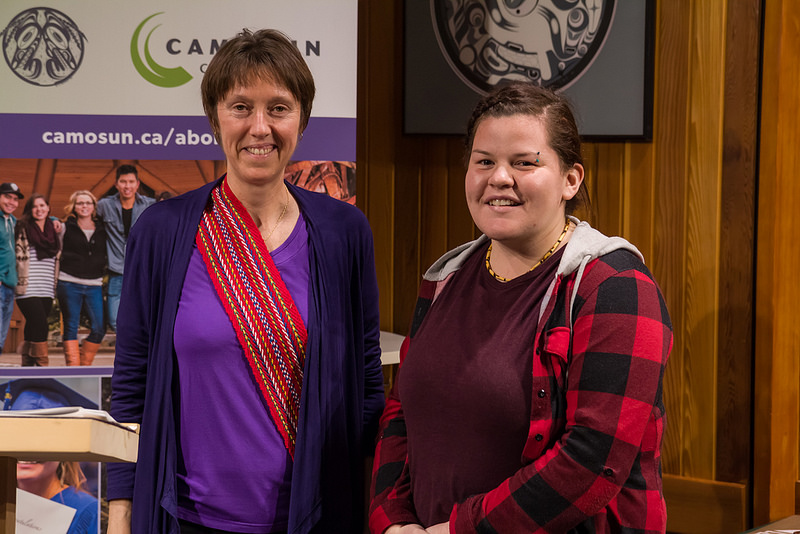
				 <p>Indigenization is a journey filled with <strong><em><span class="glossary-term">yaa-yuk-miss</span></em></strong> (Atleo, 2004). This is a Nuu-chah-nulth term that expresses both the love and pain involved in transformative experiences. Indigenization is a process that requires an appreciation of the sacred and that must include ceremony. One must prepare emotionally, mentally, spiritually, and physically for the journey of Indigenization.</p> <p>The Indigenization process strives to share Indigenous ways of knowing, being, and doing in ways that will&nbsp;educate and engage all members of the college or university community and foster the effective inclusion of Indigenous learners and educators.</p> <p>In <em>Reconciliation within the Academy: Why Is Indigenization So Difficult? </em>by Michael Bopp, Lee Brown, and Jonathan Robb (2017, p. 2), Indigenization is defined as “the process of creating a supportive and comfortable space inside our institutions within which Indigenous people can succeed.” Certainly this is not the only definition; however, it is offered as a workable articulation of Indigenization.</p> <p>Bopp, Brown, and Robb (2017) write that success in Indigenization is not just about students completing their course work, but also about “reframing knowledge production and transmission within the academy from an Indigenous perspective.”</p> <div class="wp-caption alignleft" id="attachment_27" aria-describedby="caption-attachment-27" style="width: 442px"><a href="https://opentextbc.ca/indigenizationleadersadminstrators/wp-content/uploads/sites/223/2018/03/24748459438_2b92464bef_c.jpg" data-url="https://opentextbc.ca/indigenizationleadersadminstrators/wp-content/uploads/sites/223/2018/03/24748459438_2b92464bef_c.jpg"><img class="wp-image-27" src="https://opentextbc.ca/indigenizationleadersadminstrators/wp-content/uploads/sites/228/2018/03/24748459438_2b92464bef_c-300x200.jpg" alt="&amp;quot;&amp;quot;" width="442" height="294" srcset="https://opentextbc.ca/indigenizationleadersadministrators/wp-content/uploads/sites/228/2018/03/24748459438_2b92464bef_c-300x200.jpg 300w, https://opentextbc.ca/indigenizationleadersadministrators/wp-content/uploads/sites/228/2018/03/24748459438_2b92464bef_c-768x513.jpg 768w, https://opentextbc.ca/indigenizationleadersadministrators/wp-content/uploads/sites/228/2018/03/24748459438_2b92464bef_c-65x43.jpg 65w, https://opentextbc.ca/indigenizationleadersadministrators/wp-content/uploads/sites/228/2018/03/24748459438_2b92464bef_c-225x150.jpg 225w, https://opentextbc.ca/indigenizationleadersadministrators/wp-content/uploads/sites/228/2018/03/24748459438_2b92464bef_c-350x234.jpg 350w, https://opentextbc.ca/indigenizationleadersadministrators/wp-content/uploads/sites/228/2018/03/24748459438_2b92464bef_c.jpg 800w" sizes="(max-width: 442px) 100vw, 442px" title="" /></a><div class="wp-caption-text" id="caption-attachment-27">Fig 0.4: Instructor Artemis Fire (Métis) with student award recipient Christie Robbins (‘Namgis).</div></div> <p>Indigenization acknowledges the invisibility of Indigenous Peoples within post-secondary institutions and the absence of Indigenous knowledge within institutional frameworks. To address these gaps, Indigenized institutions will seek Indigenous voices in educational decision making and maintain partnerships with local Indigenous communities, organizations, and institutions while being responsive to these communities’ aspirations of self-determination.</p> <p>Indigenization means using “culturally responsive curriculum and pedagogy.” Indigenized curriculum should help ensure that non-Indigenous people develop skills and knowledge to enable them to work with and live alongside their Indigenous neighbours knowledgably and respectfully.</p> <p>And finally, Indigenization depends on the reciprocal nature of mentorship, where Indigenous scholars and leaders lend their support to allies by sharing their knowledge and experience to ensure the retention and success of Indigenous learners.</p> <div class="media-attributions clear"><h3>Media Attributions</h3><ul><li>Fig 0.4: “Eyēʔ Sqȃ’lewen Student Awards Nov 23 2017-025 © Camosun AV Services is licensed under a <a rel="license" href="https://creativecommons.org/licenses/by-nc/4.0/" data-url="https://creativecommons.org/licenses/by-nc/4.0/">CC BY-NC (Attribution NonCommercial)</a> license</li></ul></div> 
	</div>


	</div>
<div class="part-wrapper" id="part-main-body-wrapper">
    <div class="part  " id="part-main-body">
	<div class="part-title-wrap">
		<p class="part-number">I</p>
		<h1 class="part-title">Section 1: Chetwood Black Bear</h1>
	</div>
	<div class="ugc part-ugc">
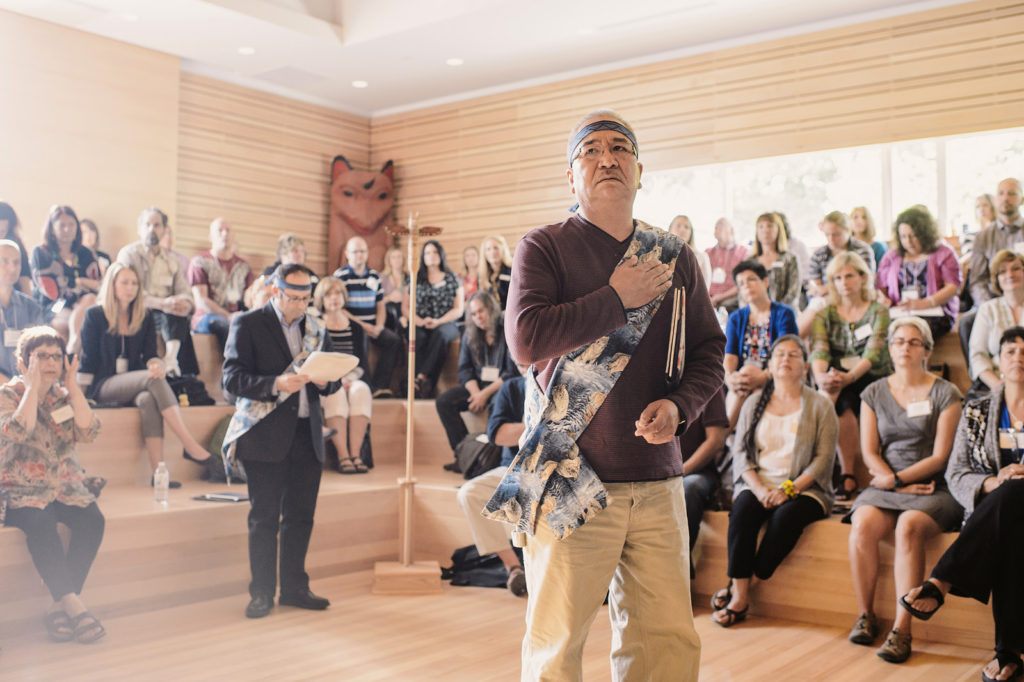
		<hr class="hrspecial" style="text-align: center; width: 100%;" /> <div class="wp-caption aligncenter" id="attachment_356" aria-describedby="caption-attachment-356" style="width: 1024px"><img src="https://opentextbc.ca/indigenizationleadersadministrators/wp-content/uploads/sites/228/2018/03/7876728304_f3d331db9a_h-1024x682.jpg" alt="Mark Point leading a prayer at the Indigenzing the Academy Conference at UFV" width="1024" height="682" class="wp-image-356 size-large" srcset="https://opentextbc.ca/indigenizationleadersadministrators/wp-content/uploads/sites/228/2018/03/7876728304_f3d331db9a_h-1024x682.jpg 1024w, https://opentextbc.ca/indigenizationleadersadministrators/wp-content/uploads/sites/228/2018/03/7876728304_f3d331db9a_h-300x200.jpg 300w, https://opentextbc.ca/indigenizationleadersadministrators/wp-content/uploads/sites/228/2018/03/7876728304_f3d331db9a_h-768x511.jpg 768w, https://opentextbc.ca/indigenizationleadersadministrators/wp-content/uploads/sites/228/2018/03/7876728304_f3d331db9a_h-65x43.jpg 65w, https://opentextbc.ca/indigenizationleadersadministrators/wp-content/uploads/sites/228/2018/03/7876728304_f3d331db9a_h-225x150.jpg 225w, https://opentextbc.ca/indigenizationleadersadministrators/wp-content/uploads/sites/228/2018/03/7876728304_f3d331db9a_h-350x233.jpg 350w, https://opentextbc.ca/indigenizationleadersadministrators/wp-content/uploads/sites/228/2018/03/7876728304_f3d331db9a_h.jpg 1600w" sizes="(max-width: 1024px) 100vw, 1024px" title="" /><div class="wp-caption-text" id="caption-attachment-356">Fig 1.1: Mark Point, University of the Fraser Valley</div></div> <div class="media-attributions clear"><h3>Media Attributions</h3><ul><li>Fig 1.1: Mark Point, University of the Fraser Valley © <a rel="dc:creator" href="https://www.flickr.com/photos/ufv/" data-url="https://www.flickr.com/photos/ufv/">University of the Fraser Valley</a> is licensed under a <a rel="license" href="https://creativecommons.org/licenses/by/4.0/" data-url="https://creativecommons.org/licenses/by/4.0/">CC BY (Attribution)</a> license</li></ul></div>
	</div>
			
				
	</div>
<div class="chapter standard " id="chapter-chapter-1" title="Chetwood (Black Bear)">
	<div class="chapter-title-wrap">
		<p class="chapter-number">1</p>
		<h1 class="chapter-title">Chetwood (Black Bear)</h1>
								</div>
	<div class="ugc chapter-ugc">
				 <p><img src="https://opentextbc.ca/indigenizationleadersadministrators/wp-content/uploads/sites/228/2018/03/bear-311465_1280-2-300x199.png" alt="Bear icon" width="300" height="199" class="alignnone wp-image-183 size-medium" srcset="https://opentextbc.ca/indigenizationleadersadministrators/wp-content/uploads/sites/228/2018/03/bear-311465_1280-2-300x199.png 300w, https://opentextbc.ca/indigenizationleadersadministrators/wp-content/uploads/sites/228/2018/03/bear-311465_1280-2-768x509.png 768w, https://opentextbc.ca/indigenizationleadersadministrators/wp-content/uploads/sites/228/2018/03/bear-311465_1280-2-1024x678.png 1024w, https://opentextbc.ca/indigenizationleadersadministrators/wp-content/uploads/sites/228/2018/03/bear-311465_1280-2-65x43.png 65w, https://opentextbc.ca/indigenizationleadersadministrators/wp-content/uploads/sites/228/2018/03/bear-311465_1280-2-225x149.png 225w, https://opentextbc.ca/indigenizationleadersadministrators/wp-content/uploads/sites/228/2018/03/bear-311465_1280-2-350x232.png 350w, https://opentextbc.ca/indigenizationleadersadministrators/wp-content/uploads/sites/228/2018/03/bear-311465_1280-2.png 1280w" sizes="(max-width: 300px) 100vw, 300px" title="" /></p> <blockquote><p>FOR YOU TODAY, my friends, I raise sacred smoke. For you who are troubled confused, doubtful, lonely, afraid, addicted, unwell, bothered or alone, I raise sacred smoke. For those of you in sorrow, grief or pain, I raise sacred smoke. For those of you who work for people, for change, for spiritual evolution, for upward and onward growth of our common humanity and the well-being of our planet, I raise sacred smoke. For those of you in joy, in the glow of small or great triumphs, who live in love, faith, courage and respect, I raise sacred smoke. And, in the act of all this, I raise also for myself.<br /> – Richard Wagamese (2016, p. 86)</p></blockquote> <div class="textbox textbox--learning-objectives"><div class="textbox__header"><p class="textbox__title">Purpose of this section</p> </div> <div class="textbox__content"><p>Explore&nbsp;the importance of Indigenization for yourself and&nbsp;your&nbsp;institution.</p> <p>On completing&nbsp;this&nbsp;section,&nbsp;you will&nbsp;be able to:</p> <ul><li>identify your personal values and beliefs.</li> <li>explain why Indigenization is important for you&nbsp;and why you want to&nbsp;Indigenize&nbsp;your practice and/or&nbsp;your institution.</li> <li>identify who else needs&nbsp;to&nbsp;be&nbsp;involved&nbsp;in Indigenization.</li> </ul> <p>Estimated time&nbsp;to complete this section is&nbsp;four&nbsp;hours.&nbsp;The&nbsp;activities&nbsp;can be done either individually or&nbsp;as&nbsp;a&nbsp;group.</p> </div> </div> <p><em>Chetwood</em> represents the intentionality of our values as individuals and as educational leaders. In this section, you will begin to explore and identify your personal values along with those of your institution and consider what organizational policies and practices are in place with respect to Indigenization. As you begin to recognize your personal values and those of the institution, your intentions as a leader with respect to building relationships with Indigenous Peoples and community will be strengthened.</p> <p><em>Chetwood</em> represents two aspects of the Indigenization journey: <em>Mamook kloshe</em>, preparing for the journey, and <em>Mahsh</em>, the act of launching the journey or setting your canoe in the water. Preparation involves knowing yourself first, and understanding the <em>why</em> of Indigenization and territorial acknowledgement, while recognizing the emotional connections between what you know about Indigenous Peoples and what you have learned. Finally, the launch is implementing what you have learned by forming relationships with Indigenous Peoples and communities.</p> <div class="media-attributions clear"><h3>Media Attributions</h3><ul><li>Bear is licensed under a <a rel="license" href="https://creativecommons.org/publicdomain/zero/1.0/" data-url="https://creativecommons.org/publicdomain/zero/1.0/">CC0 (Creative Commons Zero)</a> license</li></ul></div> 
	</div>


	</div>
<div class="chapter standard " id="chapter-mamook-kloshe-prepare" title="Mamook Kloshe (Prepare)">
	<div class="chapter-title-wrap">
		<p class="chapter-number">2</p>
		<h1 class="chapter-title">Mamook Kloshe (Prepare)</h1>
								</div>
	<div class="ugc chapter-ugc">
				 <p>Integral to an Indigenous worldview is the value placed on preparing to undertake a significant journey. Preparation typically involves ceremony, such as smudging or praying, to provide safety and guidance for those involved in the journey. The ceremony also provides time to reflect and consider the purpose of a journey. In terms of the Indigenization journey, this is when you might open yourself up and find the courage to be challenged, to learn new ways of knowing and being, and to unlearn some of your beliefs and assumptions.</p> <p>In <em>Wisdom Sits in Place: Landscape and Language among the Western Apache</em>, Keith Basso (1996, p. 105) writes, “To know who you are, you have to have a place to come from.” He stresses the importance of place and acknowledgement of place, particularly in terms of understanding your values and beliefs in relation to your surrounding environment and how it sustains your life. Acknowledgement of place also connects us to a people, a culture, and a history that has been largely ignored in education</p> <p>You must also seek to understand the <em>why</em> of Indigenization, while making an emotional connection to the content. You must first explore and identify your own personal biases, prejudices, and perceptions of Indigenous Peoples before embarking on the institutional Indigenization journey. Knowing yourself, and your values and beliefs, is an essential aspect of this journey.</p> <p>Nella Nelson of the Kwakwaka’wakw peoples and administrator for School District 61’s (Victoria) Aboriginal Nations Education encourages individuals to explore and examine who they are. She said:</p> <blockquote><p>It starts with self, understanding, because all learning takes place in relationships, so first of all you have to have that relationship with yourself…. Once you understand and know yourself, you can then move forward in doing the research and being involved. It’s important to face that and look at it. Then you can start to unravel what the story is and the history of our people.</p></blockquote> <p>Nella pointed out that you must be prepared to confront the story and history of Canada with openness and self-awareness.</p> <p>Angus Graeme, president of Selkirk College, made a similar point. He said:</p> <blockquote><p>You have to spend time reflecting on and learning about what this work truly means and how critically important&nbsp;it is.&nbsp;It’s about knowing yourself as a human being first. Knowing what your values and beliefs are. And it is so important to understand that before engaging in relationship building with Indigenous Peoples and communities.</p></blockquote> <p>Knowing yourself is an important aspect of Indigenization, particularly as it relates to the values and beliefs of the local Indigenous Peoples. For example, the Nuu-chah-nulth believe that everything is connected and one, and therefore if one element is missing it affects everything else connected to it. Nuu-chah-nulth value salmon, and their fishing practices reflect their reverence (e.g., traps designed to allow small fish to escape).</p> <p>Part of the Indigenization journey is understanding the <em>why</em>. Individuals often question, challenge, and ask why we should Indigenize, why Indigenization is so important, and what it means for students. These are important questions, requiring you to be ready for and open to the complexities of the Indigenization journey. It is a process that requires time and patience as you navigate the multiple layers of history, colonization, and the experiences of Indigenous Peoples.</p> <p>Camosun College’s Indigenization coordinator, Corrine Michel, believes that getting people to understand why Indigenization is important is the first step. She said, “People aren’t aware of the impacts of colonization, so you have to go right back to Canadian and colonial history and explain it.” Explaining colonial history takes courage, time, and patience; remembering the seven grandmother teachings is helpful.</p> <p>John Boraas, Camosun College’s vice-president of education, shared his personal experience of coming to the college. He grew up in northern BC and started his career there. He felt he had a good idea of what Indigenization meant based on his experience teaching Indigenous students. However, on arriving at Camosun he realized he had to “up his game” when new colleagues like Janice Simcoe, director of Indigenous education and community connections, challenged him on his assumptions about and approaches to Indigenous education. He recognized that he needed to explore more deeply the pedagogies and practices related to Indigenization. He also recognized that his journey required him to move from a practice informed by personal experience to what he describes as a more “head approach,” moving from the emotional to the intellectual and compelling him to take a deep dive into the literature and scholarship of Indigenization.</p> <p>Indigenous educators take seriously the responsibility to help others in a good way, particularly to support the learning journey of those who have embarked upon Indigenization. Nella observed that while schools now present the history of Canada more realistically, there is still the question, why do we have to do this? In response, she explains that Indigenous Peoples are a part of Canadian history, and the question really should be, why <em>aren’t</em> we Indigenizing? She added, “It is a time when we begin to do the work for ourselves. Everybody is on a journey, Aboriginal and non-Aboriginal, when you’re Indigenizing curriculum.”</p> <p>In her role as Indigenization coordinator, Corrine always creates space and time for critical conversations, often starting at the very basic level with colleagues who have not made the connection between colonization and its assimilationist policies and the conditions for Indigenous Peoples.</p> <p>Joan Yates, Camosun College’s vice-president of student experience, emphasizes that a fundamental part of her job is to encourage people to understand the <em>why</em> of Indigenization. While the <em>what</em> and the <em>how</em> are important, Joan believes that as leaders, the visceral piece is the <em>why</em>, because, as she said, “If you do not get people’s hearts engaged in [Indigenization] then you are not going to see change.” Joan added:</p> <blockquote><p>When explaining the <em>why</em>, I talk about the economy and the social components. I do hear from staff and especially students that people don’t have the full story. That somehow when you have the emphasis on Indigenization you’re being politically correct. No, we’re doing things to acknowledge what should have been acknowledged, which to me is a better definition of politically correct. Correcting wrongs. So there are things I would prefer that students don’t say, and I think it persists because people haven’t been fully integrated into the <em>why</em> piece. As leaders we have to own the <em>why</em>.</p></blockquote> <p>Part of the learning journey is to understand who Indigenous Peoples are through their experiences with colonization and government policy and practice. As you work through the materials and resources in this guide and elsewhere, you begin to recognize the injustices Indigenous Peoples face, particularly by reading about residential schools, child welfare, or violence. Indigenous scholar Dr. Lee Brown notes that when there is an emotional connection to the content, an individual will naturally be inclined to connect with difficult or challenging materials.</p> <p>Nella was drawing on the teachings of Dr. Lee Brown herself when she stated, “You cannot change an attitude without an emotional experience,” adding that doing the good work in education brings your heart into the process, and that is what will transform education and teachers.</p> <p>Sherri Bell came to Camosun College to serve as its president in 2015, after working as Superintendent of School District 61, where she developed a deep connection and relationship with Nella. Sherri described her pride as a Canadian as coupled with an anger that emerged as she began to learn about the history of Canada and its Indigenous Peoples. She also recognized the efforts of Dr. Lee Brown when she made the connection to the deep learning that occurs when there is an emotional connection to the content. “That’s what we’re talking about,” Sherri said, “the emotional connection to a story. Your own learning can’t take place until there is visceral emotional connection to the content.” Put yourself in the shoes of those who have experienced tremendous pain at the hands of educators in residential schools. Only then can you imagine what it must have been like to experience cultural genocide.</p> <p>In a similar way, Joan noted that her understanding of Indigenization did not really form until she became a parent, when she made the connection between residential schools and her own child. “What if they took my precious child away from me?” she said. It was this emotional reaction that allowed her to truly relate to the experiences of Indigenous Peoples.</p> 
	</div>


	</div>
<div class="chapter standard " id="chapter-mahsh-boat-launch" title="Mahsh (Boat Launch)">
	<div class="chapter-title-wrap">
		<p class="chapter-number">3</p>
		<h1 class="chapter-title">Mahsh (Boat Launch)</h1>
								</div>
	<div class="ugc chapter-ugc">
				 <p>As an educational leader, once you have determined who you are and what your personal values and beliefs are, then you can recognize your responsibility to work genuinely and respectfully with Indigenous Peoples and communities. Building bridges and relationships with Indigenous Peoples and communities takes not only time and patience, but also the ability to be present and to listen intently.</p> <p>Kendra Underwood, director of the W̱SÁNEĆ Adult Education Centre, shared the history of the relationship of her communities, Tsartlip, Tsawout, Tseycum, and Pauquachin, with Camosun College. The education centre and the college have long provided programs and services together, and in 2012 their 40 years of working together was reflected in a formal relationship agreement.</p> <p>Kendra believes a genuine interest in partnering with First Nations communities is essential in building relationships. When working together, it is important to honour the knowledge and expertise that First Nations bring to the partnership. Additionally, an appropriate amount of time is required to nurture those relationships, on the part of both the First Nation community and the college or university. Time must be provided for leadership to come together to discuss what an effective post-secondary–nation partnership can look like.</p> <p>Kendra added, “It is so important for senior leadership, not only at the community level, to be present, but also at the post-secondary institution level too, to have a president sit down and meet with a chair of a school board or a Chief of a community.” She also noted that different post-secondary partners or new faculty members approach the school often; her advice would be to come and ask, humbly, “What would be your recommendation?” This kind of openness, transparency, and humility, being unsure but willing to ask the questions while feeling comfortable to say when you are feeling outside of your element, is greatly appreciated. “We might not know the answers,” she said, “but we will try to find the answers.”</p> <p>Nella also spoke about the work involved in building relationships: “You have to build bridges. When you build those bridges, it makes a difference in how things shift and change.” Bridges are built through awareness of Indigenous Peoples and collectively sharing stories of who the people you share this land with are. Efforts to integrate Indigenous ways of knowing and being are advancing; however, racism remains an issue to be confronted. Nella noted that she shares stories to help build bridges, “because it’s the stories that will connect hearts, not the facts.”</p> <p>Angus stated:</p> <blockquote><p>Our work started with shifting the focus in our Aboriginal Services department from solely recruitment and advising functions to a more comprehensive student support and relationships approach…. During this time we also focused efforts and strengthened relationships with leaders in the regional First Nations on whose traditional territories Selkirk College has campuses and learning centres (West Kootenay Boundary region) as well as the regional Métis community.</p></blockquote> <p>Ian Humphries, dean of the School of Access at Camosun College, embraces his role in the institution, building relationships with local Indigenous communities. John Boraas encourages his peers to focus on building relationships, noting that you must do the listening part; do not assume you know, because the issues vary from place to place.</p> 
	</div>


	</div>
<div class="chapter standard " id="chapter-summary-1" title="Summary">
	<div class="chapter-title-wrap">
		<p class="chapter-number">4</p>
		<h1 class="chapter-title">Summary</h1>
								</div>
	<div class="ugc chapter-ugc">
				 <p>Preparation is important when embarking on a journey. Knowing yourself and your values and beliefs will help you understand the <em>why </em>of Indigenization. Understanding the <em>why</em> will in turn strengthen your ability to develop and maintain relationships with Indigenous Peoples and communities in a way that will benefit students, staff, and the institution as a whole.</p> <div class="textbox textbox--exercises"><div class="textbox__header"><p class="textbox__title">Activity 1: Self-Reflection</p> </div> <div class="textbox__content"><p>Time: 20 min</p> <p>Type: Individual</p> <p>Identify your core values, both personally and professionally, and compare them with the <a href="#front-matter-indigenous-values" data-url="https://opentextbc.ca/indigenizationleadersadministrators/front-matter/indigenous-values/">Indigenous values</a><span class="footnote"><span class="footnote-indirect" data-fnref="36-1"></span></span> shared at the beginning of this guide.</p> <ol><li>What are the similarities and dissimilarities between them?</li> <li>Do any of the Indigenous values particularly resonate for you?</li> </ol> </div> </div> <div class="textbox textbox--exercises"><div class="textbox__header"><p class="textbox__title">Activity 2: Strategic Plans and Principles</p> </div> <div class="textbox__content"><p>Time: 30 min</p> <p>Type: Individual</p> <p>Look at your institution’s strategic plan. Have any Indigenous values been reflected in it?</p> <p>If not, review Colleges and Institutes Canada’s (CICan) <a href="https://www.collegesinstitutes.ca/policyfocus/indigenous-learners/protocol/" data-url="https://www.collegesinstitutes.ca/policyfocus/indigenous-learners/protocol/">Indigenous Education Protocol for Colleges and Institutes </a><span class="footnote"><span class="footnote-indirect" data-fnref="36-2"></span></span> and <a href="https://www.univcan.ca/wp-content/uploads/2015/11/principles-on-indigenous-education-universities-canada-june-2015.pdf" data-url="https://www.univcan.ca/wp-content/uploads/2015/11/principles-on-indigenous-education-universities-canada-june-2015.pdf">Universities Canada principles on Indigenous education [PDF]</a>.<span class="footnote"><span class="footnote-indirect" data-fnref="36-3"></span></span></p> <ol><li>Has your institution endorsed either of these documents?</li> <li>If so, has your institution created accountability measures to meet these protocols and principles?</li> </ol> </div> </div> 
	</div>
			
				
				<div class="footnotes"><div id='36-1'>Indigenous values: https://opentextbc.ca/indigenizationleadersadministrators/front-matter/indigenous-values/</div><div id='36-2'>Indigenous Education Protocol for Colleges and Institutes: https://www.collegesinstitutes.ca/policyfocus/indigenous-learners/protocol/</div><div id='36-3'>Universities Canada principles on Indigenous education: https://www.univcan.ca/wp-content/uploads/2015/11/principles-on-indigenous-education-universities-canada-june-2015.pdf<span style="font-size: 1em;"></div></div>
	</div>

</div>
<div class="part-wrapper" id="part-kahkah-raven-wrapper">
    <div class="part  " id="part-kahkah-raven">
	<div class="part-title-wrap">
		<p class="part-number">II</p>
		<h1 class="part-title">Section 2: Kahkah (Raven)</h1>
	</div>
	<div class="ugc part-ugc">
		<div class="wp-caption alignnone" id="attachment_457" aria-describedby="caption-attachment-457" style="width: 1024px"><img src="https://opentextbc.ca/indigenizationleadersadministrators/wp-content/uploads/sites/228/2018/03/30306819410_35f142e4d6_k-1-1024x683-1.jpg" alt="" width="1024" height="683" class="wp-image-457 size-full" srcset="https://opentextbc.ca/indigenizationleadersadministrators/wp-content/uploads/sites/228/2018/03/30306819410_35f142e4d6_k-1-1024x683-1.jpg 1024w, https://opentextbc.ca/indigenizationleadersadministrators/wp-content/uploads/sites/228/2018/03/30306819410_35f142e4d6_k-1-1024x683-1-300x200.jpg 300w, https://opentextbc.ca/indigenizationleadersadministrators/wp-content/uploads/sites/228/2018/03/30306819410_35f142e4d6_k-1-1024x683-1-768x512.jpg 768w, https://opentextbc.ca/indigenizationleadersadministrators/wp-content/uploads/sites/228/2018/03/30306819410_35f142e4d6_k-1-1024x683-1-65x43.jpg 65w, https://opentextbc.ca/indigenizationleadersadministrators/wp-content/uploads/sites/228/2018/03/30306819410_35f142e4d6_k-1-1024x683-1-225x150.jpg 225w, https://opentextbc.ca/indigenizationleadersadministrators/wp-content/uploads/sites/228/2018/03/30306819410_35f142e4d6_k-1-1024x683-1-350x233.jpg 350w" sizes="(max-width: 1024px) 100vw, 1024px" title="" /><div class="wp-caption-text" id="caption-attachment-457">Fig 2.1: Eyēʔ Sqȃ’lewen staff at pit cook, Camosun College, 2016.</div></div> <div class="media-attributions clear"><h3>Media Attributions</h3><ul><li><a rel="cc:attributionURL" href="https://www.flickr.com/photos/26399591@N03/30306819410/" data-url="https://www.flickr.com/photos/26399591@N03/30306819410/">Fig 2.1: Camas Pit Cook Oct 27 2016-071</a> © <a rel="dc:creator" href="https://www.flickr.com/photos/26399591@N03/" data-url="https://www.flickr.com/photos/26399591@N03/">Camosun College AV Services</a> is licensed under a <a rel="license" href="https://creativecommons.org/licenses/by-nc/4.0/" data-url="https://creativecommons.org/licenses/by-nc/4.0/">CC BY-NC (Attribution NonCommercial)</a> license</li></ul></div>
	</div>
			
				
	</div>
<div class="chapter standard " id="chapter-kahkah-raven" title="Kahkah (Raven)">
	<div class="chapter-title-wrap">
		<p class="chapter-number">5</p>
		<h1 class="chapter-title">Kahkah (Raven)</h1>
								</div>
	<div class="ugc chapter-ugc">
				 <p><img class="aligncenter wp-image-186" src="https://opentextbc.ca/indigenizationleadersadministrators/wp-content/uploads/sites/228/2018/03/animal-2025562_1280-1024x921.png" alt="Raven icon" width="251" height="217" title="" /></p> <blockquote><p>I always think about what my grandmother said to me – “You’re being made ready for your real work.”</p> <p>– Edna Manitowabi (Ojibway) (Anderson &amp; Lawrence, 2003, p. 121)</p></blockquote> <div class="textbox textbox--learning-objectives"><div class="textbox__header"><p class="textbox__title">Purpose of this section</p> </div> <div class="textbox__content"><p>Make connections between yourself and Indigenous Peoples and communities.On completing this section you will be able to:</p> <ul><li>identify current practices that demonstrate respect for place, language, protocols, and ceremony.</li> <li>apply an Indigenous perspective to your institution’s policies and practices.</li> </ul> <p>Estimated time to complete this section is four hours. The activities can be done either individually or as a group.</p> </div> </div> <p>The raven, <em>kahkah,</em> and its behaviour are important for Indigenous Peoples on <strong><span class="glossary-term">Turtle Island</span></strong>. There are many stories about the <em>kahkah</em>. For example, in Nuu-chah-nulth oral history, <em>kahkah</em> is closely linked to creation and the light of day (Atleo, 2004, p. 6). <em>Kahkah</em> is highly revered for its intellect and determination and for bringing the light of the day, which also brings hope and illuminates the way forward.</p> <p>In this section, you will see how Indigenization can be supported and shaped through storytelling, as stories help to bridge concepts and build common understanding. The use of stories also helps shape behaviour as you learn how to communicate with learners, partners, and colleagues across the institution and Indigenous communities.&nbsp;<em>Kahkah</em> learns by&nbsp;mimicking, watching, and including others, and through trial and error.&nbsp;The stories shared in this section highlight how you can shape behaviours and processes to support and build promising practices for your institution.</p> <p>As you have already begun to explore, build, and maintain relationships with Indigenous Peoples and communities, you are now ready to <em>paddle </em>together to a place where you will <em>discover </em>new learning(s). As you paddle toward your destination, stories are shared, bringing everyone together to a place where they will begin to discover the courage it&nbsp;takes to Indigenize. Along the way, the complexities of Indigenization arise and will be challenging to tackle, but they are part of the journey of a lifetime (the doing) – an educational journey that you take both on your own and with others and your mentors, learning to open yourself up to love, courage, and humility.</p> <div class="media-attributions clear"><h3>Media Attributions</h3><ul><li>Raven is licensed under a <a rel="license" href="https://creativecommons.org/publicdomain/zero/1.0/" data-url="https://creativecommons.org/publicdomain/zero/1.0/">CC0 (Creative Commons Zero)</a> license</li></ul></div> 
	</div>


	</div>
<div class="chapter standard " id="chapter-isick-paddle" title="Isick (Paddle)">
	<div class="chapter-title-wrap">
		<p class="chapter-number">6</p>
		<h1 class="chapter-title">Isick (Paddle)</h1>
								</div>
	<div class="ugc chapter-ugc">
				 <p>Now that your Indigenization journey has launched, this is the time to consider how to synchronize the paddle strokes. Often a journey involves getting to know one another in the canoe, by telling stories and recognizing what needs to be done to reach the destination.</p> <p>Nella Nelson shared the following:</p> <blockquote><p>I’m really blessed because my mom is a real social butterfly and did lots of visiting, and we didn’t have television. What I didn’t realize then was that I was incorporating the stories I heard. Now I find that every time I’m going to do a presentation I’m always thinking about a story or an experience that I can share, because it’s the stories that will bridge the hearts, not the facts. What you’re doing is going to that heart place, and people will then take that experience on for themselves. They can see themselves in your story. So stories are really critical in how we broach and work through things, and like I said, I have been really blessed to be a witness to a lot of stories.</p></blockquote> <div class="wp-caption aligncenter" id="attachment_461" aria-describedby="caption-attachment-461" style="width: 703px"><img src="https://opentextbc.ca/indigenizationleadersadministrators/wp-content/uploads/sites/228/2018/03/OrangeShirtDay-1.png" alt="" width="703" height="406" class="wp-image-461 size-full" srcset="https://opentextbc.ca/indigenizationleadersadministrators/wp-content/uploads/sites/228/2018/03/OrangeShirtDay-1.png 703w, https://opentextbc.ca/indigenizationleadersadministrators/wp-content/uploads/sites/228/2018/03/OrangeShirtDay-1-300x173.png 300w, https://opentextbc.ca/indigenizationleadersadministrators/wp-content/uploads/sites/228/2018/03/OrangeShirtDay-1-65x38.png 65w, https://opentextbc.ca/indigenizationleadersadministrators/wp-content/uploads/sites/228/2018/03/OrangeShirtDay-1-225x130.png 225w, https://opentextbc.ca/indigenizationleadersadministrators/wp-content/uploads/sites/228/2018/03/OrangeShirtDay-1-350x202.png 350w" sizes="(max-width: 703px) 100vw, 703px" title="" /><div class="wp-caption-text" id="caption-attachment-461">Fig 2.2: Left to right: Geoff Wilmshurst, Joan Yates, John Boraas, Sherri Bell Orange Shirt Day, Camosun College, 2016.</div></div> <p>Angus Graeme described how Selkirk College fundraised and built a Gathering Place at the Castlegar campus. The 2012 opening of the Gathering Place was a watershed moment, after which the college began offering more comprehensive student supports, ceremony, celebrations of traditions, and learning experiences for students and the community. Angus said:</p> <blockquote><p>We have held three multi-day youth conferences celebrating Indigenous youth, culture, and learning. We started an Elders-in-residence program in 2015. We have brought a number of important guest speakers to the college (including Wab Kinew and Justice Murray Sinclair). We have regular cultural activities in the Gathering Place and at our other sites (drumming, smudges, Elders, cultural evenings). Staff in our Aboriginal Services department are currently renewing and expanding our Indigenization Plan for the college…. We are currently undertaking SSHRC-funded research with our nation partners on reconciliation through college education.</p></blockquote> <p>Ceremony and coming together in community to share stories are among the most effective ways to <em>isick</em>. It creates the bonds and connections that facilitate paddling together.</p> <p>Camosun College has embraced storytelling as an effective way of bringing to life college values around Indigenization. In February each year, the entire college community gathers for Conversations Day. An invited speaker, such as Richard Wagamese and Chief Robert Joseph, shares their story. The listeners – 700 people representing every part of the college – then take time to connect in small groups and talk on more personal level. The day also features speakers from the college who address the audience with their own personal story. The stories and the opportunity to listen, laugh, and cry together cement the bonds of relationship across the college.</p> <p>In the process of preparing to <em>isick </em>you begin to build an understanding of who Indigenous Peoples are and the need to Indigenize your institution. Understanding the <em>why</em> of Indigenization provides the time and space to develop a genuine acknowledgement of Indigenous Peoples. Protocols such as acknowledging territory in an institutional ceremony like graduation come more naturally. It is important to know and understand who the Indigenous Peoples of the territory you work, live, and play on are. Territorial acknowledgements vary, so take time to learn what is most appropriate or acceptable on your territory, and learn to adjust when you visit other institutions.</p> <div class="media-attributions clear"><h3>Media Attributions</h3><ul><li><a rel="cc:attributionURL" href="https://www.flickr.com/photos/26399591@N03/30117157805/" data-url="https://www.flickr.com/photos/26399591@N03/30117157805/">Fig 2.2: Orange Shirt Day Sept 30 2016-047</a> © <a rel="dc:creator" href="https://www.flickr.com/photos/26399591@N03/" data-url="https://www.flickr.com/photos/26399591@N03/">Camosun College AV Services</a> is licensed under a <a rel="license" href="https://creativecommons.org/licenses/by-nc/4.0/" data-url="https://creativecommons.org/licenses/by-nc/4.0/">CC BY-NC (Attribution NonCommercial)</a> license</li></ul></div> 
	</div>


	</div>
<div class="chapter standard " id="chapter-elip-nanitch-discover" title="Elip Nanitch (Discover)">
	<div class="chapter-title-wrap">
		<p class="chapter-number">7</p>
		<h1 class="chapter-title">Elip Nanitch (Discover)</h1>
								</div>
	<div class="ugc chapter-ugc">
				 <p>Indigenization is a journey of discovery, a learning process that requires acceptance, courage, curiosity, and humility. The post-secondary leaders interviewed spoke at great length about the importance of learning, of taking the time to educate yourself about Canada’s history in relation to Indigenous Peoples and the issues facing Indigenous Peoples today. For example, John Boraas spoke about his desire to delve into the literature and scholarship of Indigenization, while Sherri Bell and others identified TELŦIN TŦE WILNEW<span class="footnote"><span class="footnote-indirect" data-fnref="44-1"></span></span> as a foundational resource that significantly helped them develop a better understanding who Indigenous Peoples are.</p> <p>TELŦIN TŦE WILNEW was launched at Camosun in 2009, and since then over 350 instructors, staff, and administrators have completed the program. TELŦIN TŦE WILNEW is delivered by Indigenous facilitators, face-to-face in circle gatherings and through online engagement. The five-week course (a four-hour-a-week commitment) provides insight into an Indigenous worldview, describes the impact of colonization and how it affects students attending the college today, and guides participants in the development of new teaching and learning methods.</p> <p>Camosun College leaders described how TELŦIN TŦE WILNEW helped prepare them to engage in a good way in building relationships with Indigenous Peoples and communities. Learning about the historical context of Indigenous Peoples’ experiences in Canada angered most leaders, but motivated them as well.</p> <p>Ian Humphries was motivated to apply his skills as a project manager to this task; he noted, “Indigenization is more than just talk; it is about operationalizing it.” Ian led the development of a project plan to frame Camosun’s response to the TRC’s 94 Calls to Action. He added that adopting a project management approach to Indigenization ensures that you know who is doing what and how much that is going to cost. It is important to know that progress is being made, and that helps to ensure that the work gets done. Roadmaps are helpful from a leadership perspective.</p> <p>Sherri Bell noted that it is her job to make sure things are moving forward, that the strategic pieces are in place, and that improvements are being made. The plan is the North Star, leading travellers to their destination.</p> <p>The post-secondary leaders who were interviewed stressed the need for mentorship and role models in the process of Indigenization. John reflected on how Janice Simcoe has guided him over the years. Sherri mentioned the support and mentoring she received over the years as an administrator in the K–12 sectors, and how she developed relationships with new mentors and Elders at the college. Ian echoed these sentiments, stating that working with Indigenous faculty, staff, and Elders had an incredible impact on him in his learning journey.</p> 
	</div>
			
				
				<div class="footnotes"><div id='44-1'>TELŦIN TŦE WILNEW is a SENĆOŦEN term meaning “understanding Indigenous Peoples.”</div></div>
	</div>
<div class="chapter standard " id="chapter-summary-2" title="Summary">
	<div class="chapter-title-wrap">
		<p class="chapter-number">8</p>
		<h1 class="chapter-title">Summary</h1>
								</div>
	<div class="ugc chapter-ugc">
				 <p>In this section you have heard stories about the importance of listening, learning, and sharing, all of which are helpful in building relationships with Indigenous Peoples and communities. When there has been listening, learning, and sharing, the acknowledgement of territory can then be informed and done with respect for the local Indigenous community. Institutional direction that provides for the advancement of Indigenization, including Indigenous mentorship and role models, is equally important.</p> <div class="textbox textbox--exercises"><div class="textbox__header"><p class="textbox__title">Activity 1: Protocols and Ceremonies</p> </div> <div class="textbox__content"><p>Time: Ongoing</p> <p>Type: Individual</p> <p>Identify ceremonies and other events at your institution that support collaboration with Indigenous Peoples and communities.</p> <ol><li>How is your institution supporting capacity building in areas of Indigenous research and educational development?</li> <li>How do leaders in your institution demonstrate respect for place, language, ceremonies, and protocols?</li> </ol> </div> </div> <div class="textbox textbox--exercises"><div class="textbox__header"><p class="textbox__title">Activity 2: What would you do?</p> </div> <div class="textbox__content"><ol><li>What are your recommendations for Indigenization at your institution?</li> </ol> </div> </div> 
	</div>


	</div>

</div>
<div class="part-wrapper" id="part-leloo-wolf-wrapper">
    <div class="part  " id="part-leloo-wolf">
	<div class="part-title-wrap">
		<p class="part-number">III</p>
		<h1 class="part-title">Section 3: Leloo (Wolf)</h1>
	</div>
	<div class="ugc part-ugc">
		<hr class="hrspecial" style="text-align: center; width: 100%;" /> <div class="wp-caption aligncenter" id="attachment_359" aria-describedby="caption-attachment-359" style="width: 1024px"><img src="https://opentextbc.ca/indigenizationleadersadministrators/wp-content/uploads/sites/228/2018/03/638877351_53a056b98e_b-1-1024x681.jpg" alt="Pow Wow drumming only hands and drum sticks visible" width="1024" height="681" class="wp-image-359 size-large" srcset="https://opentextbc.ca/indigenizationleadersadministrators/wp-content/uploads/sites/228/2018/03/638877351_53a056b98e_b-1.jpg 1024w, https://opentextbc.ca/indigenizationleadersadministrators/wp-content/uploads/sites/228/2018/03/638877351_53a056b98e_b-1-300x200.jpg 300w, https://opentextbc.ca/indigenizationleadersadministrators/wp-content/uploads/sites/228/2018/03/638877351_53a056b98e_b-1-768x511.jpg 768w, https://opentextbc.ca/indigenizationleadersadministrators/wp-content/uploads/sites/228/2018/03/638877351_53a056b98e_b-1-65x43.jpg 65w, https://opentextbc.ca/indigenizationleadersadministrators/wp-content/uploads/sites/228/2018/03/638877351_53a056b98e_b-1-225x150.jpg 225w, https://opentextbc.ca/indigenizationleadersadministrators/wp-content/uploads/sites/228/2018/03/638877351_53a056b98e_b-1-350x233.jpg 350w" sizes="(max-width: 1024px) 100vw, 1024px" title="" /><div class="wp-caption-text" id="caption-attachment-359">Fig 3.1: Pow Wow</div></div> <div class="media-attributions clear"><h3>Media Attributions</h3><ul><li>Fig 3.1: Pow Wow © <a rel="dc:creator" href="https://www.flickr.com/photos/edsonmartins/" data-url="https://www.flickr.com/photos/edsonmartins/">Edson Martins</a> is licensed under a <a rel="license" href="https://creativecommons.org/licenses/by-nc-nd/4.0/" data-url="https://creativecommons.org/licenses/by-nc-nd/4.0/">CC BY-NC-ND (Attribution NonCommercial NoDerivatives)</a> license</li></ul></div>
	</div>
			
				
	</div>
<div class="chapter standard " id="chapter-leloo-wolf" title="Leloo (Wolf)">
	<div class="chapter-title-wrap">
		<p class="chapter-number">9</p>
		<h1 class="chapter-title">Leloo (Wolf)</h1>
								</div>
	<div class="ugc chapter-ugc">
				 <p><img src="https://opentextbc.ca/indigenizationleadersadministrators/wp-content/uploads/sites/228/2018/03/animal-2026286_1280-1024x864.png" alt="Wolf icon" width="250" height="253" class="aligncenter wp-image-185" title="" /></p> <p>&nbsp;</p> <blockquote><p>I raise the pipe of my being to the rising sun in openness and humility. With my eyes closed, I give thanks to the Life Giver and ask for strength to be humble through the course of this day. I smudge myself with sacred medicines and give thanks for the blessings that are already present in my life. I ask for nothing. I only offer thanks. Then in gratitude and humility, I enter the journey of the day. This is wakefulness, this is become, this is ceremony—and I am made more.</p> <p>– Richard Wagamese (2016, p. 137)</p></blockquote> <div class="textbox textbox--learning-objectives"><div class="textbox__header"><p class="textbox__title">Purpose of this section</p> </div> <div class="textbox__content"><p>Explore educational partnerships with Indigenous Peoples and communities, and ways in which they are created and maintained.</p> <p>On completing this section you will be able to:</p> <ul><li>unpack the complexities of community-based engagement and relationship building.</li> <li>recognized the importance of leadership and collaboration</li> </ul> <p>Estimated time to complete this section is four hours. The activities can be done either individually or as a group.</p> </div> </div> <p><em>Leloo</em> is representative of the gathering aspect of the journey; you will gather not only new knowledge, but food or resources as well. These harvesting activities, if you like, require a collaborative effort that lends itself to the unfolding of transformative experiences by working together.</p> <p>As you work through this section, you will recognize the complexity of community-based engagement and relationship building. Take time to explore the diversity of Indigenous governing structures, which might include both Chief and Council and hereditary Chiefs. It’s important to consider how your institution’s governance structures – board, executive and leadership, senate, and education councils – engage with local Indigenous leaders and their governance structures.</p> <div class="media-attributions clear"><h3>Media Attributions</h3><ul><li>Wolf is licensed under a <a rel="license" href="https://creativecommons.org/publicdomain/zero/1.0/" data-url="https://creativecommons.org/publicdomain/zero/1.0/">CC0 (Creative Commons Zero)</a> license</li></ul></div> 
	</div>


	</div>
<div class="chapter standard " id="chapter-iskum-gather" title="Iskum (Gather)">
	<div class="chapter-title-wrap">
		<p class="chapter-number">10</p>
		<h1 class="chapter-title">Iskum (Gather)</h1>
								</div>
	<div class="ugc chapter-ugc">
				 <p>Gathering resources to bring home and share requires a certain level of knowledge. As you paddle, your curiosities about Indigenization grow and the journey becomes less intimidating. However, Indigenization is layered and, as John Boraas stressed, “Indigenization is complex!” Accepting Indigenization and its challenges requires leadership and a commitment to the process. Indigenization cannot be explained in a single book or article, as there are numerous perspectives on it; however, there is a need to understand the <em>why</em> of Indigenizing the institution.</p> <p>Much time and consideration must be spent asking yourself the question, Why <em>not </em>Indigenize? Gathering resources also means taking what you have learned and forming your perspective on Indigenization in a way that benefits others within the institution. As previously noted, perhaps the biggest challenge is getting people to understand the <em>why</em> of Indigenization. Many people do not know the impacts of colonization or the history of Canada in relation to Indigenous Peoples because they have not yet made the connections between assimilationist policies and practices and Indigenous Peoples.</p> <p>Start at the most basic level when embarking on Indigenization, to mitigate assumptions about Indigenous Peoples. And recognize the importance of understanding your responsibility in relation to Indigenization. Corrine Michel emphasized that Indigenization is everyone’s responsibility. Responsibility for this work needs to be embedded across the institution, with many people, in order for the work to have an impact. Too often, Indigenization has been seen as the purview only of the Indigenous education department and its faculty.</p> <p>From a community perspective, Kendra Underwood highlighted the nature of the partnership that the W̱SÁNEĆ Tribal School and Adult Education Centre has had with Camosun College, together offering local community and academic programming to support the educational vision of the W̱SÁNEĆ First Nations. Kendra noted that over the more than 40 years the two organizations have worked together, they have gone from a handshake to a partnership agreement to the existing relationship agreement, and a genuine interest to partner and a commitment to working in a good way continue to exist.</p> <p>Kendra spoke to the nature of community partnerships and what is at their core: relationships. It is about working together to value and honour the knowledge and expertise that a First Nation brings to the table, and reciprocity in terms of the contributions that both partners make to deliver programming, especially in community-based education. Kendra’s advice for building relationships is to be honest, open, and up-front: she always deeply respects someone if they come to her to share their uncertainty and ask for recommendations. The openness, transparency, and humbleness of being unsure, but asking questions anyway, is valued and appreciated in community. The community might not know the answers, but will appreciate the humility, and there will be a willingness to support and guide or make recommendations if challenges arise during program delivery. Uncertainty will exist on both sides of the partnership; being up-front and open is the best policy.</p> <div class="wp-caption alignright" id="attachment_468" aria-describedby="caption-attachment-468" style="width: 300px"><a href="http://camosun.ca/learn/school/indigenous-education-community-connections/about/publications/wsanec-agreement12.pdf" data-url="http://camosun.ca/learn/school/indigenous-education-community-connections/about/publications/wsanec-agreement12.pdf"><img src="https://opentextbc.ca/indigenizationleadersadministrators/wp-content/uploads/sites/228/2018/03/RelationshipAgreement-300x295-1-300x295.png" alt="" width="300" height="295" class="wp-image-468 size-medium" srcset="https://opentextbc.ca/indigenizationleadersadministrators/wp-content/uploads/sites/228/2018/03/RelationshipAgreement-300x295-1.png 300w, https://opentextbc.ca/indigenizationleadersadministrators/wp-content/uploads/sites/228/2018/03/RelationshipAgreement-300x295-1-65x64.png 65w, https://opentextbc.ca/indigenizationleadersadministrators/wp-content/uploads/sites/228/2018/03/RelationshipAgreement-300x295-1-225x221.png 225w" sizes="(max-width: 300px) 100vw, 300px" title="" /></a><div class="wp-caption-text" id="caption-attachment-468">Relationship Agreement 2012-2017 [PDF] Camosun College and W̱SÁNEĆ Adult Education Centre</div></div> <p>Kendra said that many First Nation communities are approachable. Sometimes just acknowledging that we’re in unknown territory and that we’re both very humble in our approach can help us work together to overcome any obstacles or barriers that we might face. Camosun College and W̱SÁNEĆ Adult Education Centre work together to address community needs while closing the educational gaps. Other community relationships are fostered by Elder representation on advisory councils and providing Elder support for students. Events such as Camosun’s Indigenous Welcome Feast, Orange Shirt Day, and the pit cook also help bring Camosun College and local Indigenous communities together.</p> <div class="media-attributions clear"><h3>Media Attributions</h3><ul><li><a rel="cc:attributionURL" href="http://camosun.ca/learn/school/indigenous-education-community-connections/about/publications/wsanec-agreement12.pdf" data-url="http://camosun.ca/learn/school/indigenous-education-community-connections/about/publications/wsanec-agreement12.pdf">Relationship Agreement 2012-2017 [PDF]</a> © Camosun College and W̱SÁNEĆ Adult Education Centre </li></ul></div> 
	</div>


	</div>
<div class="chapter standard " id="chapter-summary-3" title="Summary">
	<div class="chapter-title-wrap">
		<p class="chapter-number">11</p>
		<h1 class="chapter-title">Summary</h1>
								</div>
	<div class="ugc chapter-ugc">
				 <p>Leadership plays an important role in Indigenization, providing a sense of the responsibility to engage respectfully with Indigenous Peoples and communities. Understanding the diverse nature of Indigenous Peoples and governing structures provides opportunities to work together in delivering much-needed educational services to Indigenous Peoples and communities.</p> <div class="textbox textbox--exercises"><div class="textbox__header"><p class="textbox__title">Activity 1: Ways to build community partnerships</p> </div> <div class="textbox__content"><p><strong>Time</strong>: 1 – 2 hours</p> <p><strong>Type</strong>: Individual, Group</p> <ol><li>How are community partnerships fostered at your institution?</li> <li>Review the <a href="http://iahla.ca//wp-content/uploads/2019/06/PUBLICATION-IAHLA-Toolkit-Dec-2011.pdf" data-url="http://iahla.ca//wp-content/uploads/2019/06/PUBLICATION-IAHLA-Toolkit-Dec-2011.pdf">Post-Secondary Education Partnership Agreement Toolkit [PDF]</a>.<span class="footnote"><span class="footnote-indirect" data-fnref="55-1"></span></span> What can you do to ensure that Indigenous perspectives are an integral component of the institutional fabric?</li> </ol> </div> </div> <div class="textbox textbox--exercises"><div class="textbox__header"><p class="textbox__title">Activity 2: Taking responsibility</p> </div> <div class="textbox__content"><p><strong>Time</strong>: Ongoing</p> <p><strong>Type</strong>: Individual</p> <p>Take a moment to write down:</p> <ol><li>What your responsibility is in maintaining or creating Indigenous partnerships in your institution?</li> <li>How are you going to achieve this?</li> <li>How are you going to paddle together?</li> <li>What will your contributions be?</li> </ol> </div> </div> <p>&nbsp;</p> 
	</div>
			
				
				<div class="footnotes"><div id='55-1'>Post-Secondary Education Partnership Agreement Toolkit: http://iahla.ca/wp-content/uploads/IAHLA-Toolkit-Dec-2011.pdf</div></div>
	</div>

</div>
<div class="part-wrapper" id="part-sammon-salmon-wrapper">
    <div class="part  " id="part-sammon-salmon">
	<div class="part-title-wrap">
		<p class="part-number">IV</p>
		<h1 class="part-title">Section 4: Sammon (Salmon)</h1>
	</div>
	<div class="ugc part-ugc">
		<div class="wp-caption alignnone" id="attachment_471" aria-describedby="caption-attachment-471" style="width: 1024px"><img src="https://opentextbc.ca/indigenizationleadersadministrators/wp-content/uploads/sites/228/2018/03/26153316449_a35dcacb4a_k-1024x683-1.jpg" alt="" width="1024" height="683" class="wp-image-471 size-full" srcset="https://opentextbc.ca/indigenizationleadersadministrators/wp-content/uploads/sites/228/2018/03/26153316449_a35dcacb4a_k-1024x683-1.jpg 1024w, https://opentextbc.ca/indigenizationleadersadministrators/wp-content/uploads/sites/228/2018/03/26153316449_a35dcacb4a_k-1024x683-1-300x200.jpg 300w, https://opentextbc.ca/indigenizationleadersadministrators/wp-content/uploads/sites/228/2018/03/26153316449_a35dcacb4a_k-1024x683-1-768x512.jpg 768w, https://opentextbc.ca/indigenizationleadersadministrators/wp-content/uploads/sites/228/2018/03/26153316449_a35dcacb4a_k-1024x683-1-65x43.jpg 65w, https://opentextbc.ca/indigenizationleadersadministrators/wp-content/uploads/sites/228/2018/03/26153316449_a35dcacb4a_k-1024x683-1-225x150.jpg 225w, https://opentextbc.ca/indigenizationleadersadministrators/wp-content/uploads/sites/228/2018/03/26153316449_a35dcacb4a_k-1024x683-1-350x233.jpg 350w" sizes="(max-width: 1024px) 100vw, 1024px" title="" /><div class="wp-caption-text" id="caption-attachment-471">Fig 4.1: Women singing and drumming, pit cook, Camosun College, 2017.</div></div> <div class="media-attributions clear"><h3>Media Attributions</h3><ul><li><a rel="cc:attributionURL" href="https://www.flickr.com/photos/26399591@N03/26153316449/" data-url="https://www.flickr.com/photos/26399591@N03/26153316449/">Fig 4.1:&nbsp;Camas Pit Cook Oct 19 2017-010</a> © <a rel="dc:creator" href="https://www.flickr.com/photos/26399591@N03/" data-url="https://www.flickr.com/photos/26399591@N03/">Camosun College AV Services</a> is licensed under a <a rel="license" href="https://creativecommons.org/licenses/by-nc/4.0/" data-url="https://creativecommons.org/licenses/by-nc/4.0/">CC BY-NC (Attribution NonCommercial)</a> license</li></ul></div>
	</div>
			
				
	</div>
<div class="chapter standard " id="chapter-sammon-salmon" title="Sammon (Salmon)">
	<div class="chapter-title-wrap">
		<p class="chapter-number">12</p>
		<h1 class="chapter-title">Sammon (Salmon)</h1>
								</div>
	<div class="ugc chapter-ugc">
				 <p><img src="https://opentextbc.ca/indigenizationleadersadministrators/wp-content/uploads/sites/228/2018/03/fish-41004_1280-1024x878.png" alt="Salmon icon" width="252" height="223" class="aligncenter wp-image-188" title="" /></p> <blockquote><p>Chi-Miigwech for helping me on my search<br /> Help me to listen with an open mind<br /> And to see with an open heart<br /> Help me recognize the leadership and wisdom of those before me<br /> And to honour the knowledge of those today and those of the past<br /> Give me the landmarks so that I can remember my own path for those to come<br /> Help me to not get lost on this search<br /> And to gather with humility and integrity<br /> Zhiway miishnaun G’chi’ Manidoo…<br /> Chi’miigwech G’chi’Manido for your guidance<br /> (Minogiizhigokwe)</p> <p>– Kathleen E. Absolon (2011, p. 32)</p></blockquote> <div class="textbox textbox--learning-objectives"><div class="textbox__header"><p class="textbox__title">Purpose of this section</p> </div> <div class="textbox__content"><p>Explore institutional change, now that you have explored your values and beliefs, and the community that your institution serves.</p> <p>On completing this section you will understand:</p> <ul><li>how institutional change occurs.</li> <li>why it is important to create environments of caring and giving.</li> </ul> <p>Estimated time to complete this section is four hours. The activities can be done either individually or as a group.</p> </div> </div> <p>In the <em>sammon</em> phase of this journey, you will begin to reflect on how you might develop and resource Indigenization work rather than considering Indigenization as a stand-alone initiative or pilot. This will facilitate embedding Indigenization in all plans (strategic, financial, student engagement, academic) and in governance. In this phase, you will also explore how to share accountability for Indigenization among all levels of administration and leadership while recognizing equity of Indigenous expertise, knowledge, and practice (human resource policies, workload, roles and responsibilities). Finally, you will learn about resourcing and requiring training for instructors in community-based programs and services. As a leader, you are responsible for <em>bringing home</em> the harvest or knowledge and <em>sharing</em> it, as an act of generosity. The three areas of <em>sammon</em> are the voices of experience, reciprocity, and generosity.</p> <div class="media-attributions clear"><h3>Media Attributions</h3><ul><li>Salmon is licensed under a <a rel="license" href="https://creativecommons.org/publicdomain/zero/1.0/" data-url="https://creativecommons.org/publicdomain/zero/1.0/">CC0 (Creative Commons Zero)</a> license</li></ul></div> 
	</div>


	</div>
<div class="chapter standard " id="chapter-lolo-illahee-bring-home" title="Lolo Illahee (Bring Home)">
	<div class="chapter-title-wrap">
		<p class="chapter-number">13</p>
		<h1 class="chapter-title">Lolo Illahee (Bring Home)</h1>
								</div>
	<div class="ugc chapter-ugc">
				 <p>In this journey, the return home with the bounty of the harvest is important. The community gathers to help with the processing of the harvest, and here we draw on the <em>voices of experience</em> to help us understand what is involved in the harvest process, which requires everyone to work together.</p> <p>The voices of experience share the importance of institutional strategic planning and developing project plans as a way to communicate the institution’s priorities. Sherri Bell noted:</p> <blockquote><p>As a leader of the institution, I am responsible for making sure that we are moving forward. I’ve been part of many things where there’s lots of talk, but it’s always better to be moving forward with a plan, seeing things happen. So that strategic piece is something that is the head part but the act of doing is super important as well.</p></blockquote> <p>The collective doing is an essential aspect of working together to promote institutional change.</p> <div class="wp-caption alignnone" id="attachment_474" aria-describedby="caption-attachment-474" style="width: 1024px"><img class="wp-image-474 size-full" src="https://opentextbc.ca/indigenizationleadersadministrators/wp-content/uploads/sites/228/2018/03/29975022654_ba320687eb_k-1-1024x683-1.jpg" alt="" width="1024" height="683" srcset="https://opentextbc.ca/indigenizationleadersadministrators/wp-content/uploads/sites/228/2018/03/29975022654_ba320687eb_k-1-1024x683-1.jpg 1024w, https://opentextbc.ca/indigenizationleadersadministrators/wp-content/uploads/sites/228/2018/03/29975022654_ba320687eb_k-1-1024x683-1-300x200.jpg 300w, https://opentextbc.ca/indigenizationleadersadministrators/wp-content/uploads/sites/228/2018/03/29975022654_ba320687eb_k-1-1024x683-1-768x512.jpg 768w, https://opentextbc.ca/indigenizationleadersadministrators/wp-content/uploads/sites/228/2018/03/29975022654_ba320687eb_k-1-1024x683-1-65x43.jpg 65w, https://opentextbc.ca/indigenizationleadersadministrators/wp-content/uploads/sites/228/2018/03/29975022654_ba320687eb_k-1-1024x683-1-225x150.jpg 225w, https://opentextbc.ca/indigenizationleadersadministrators/wp-content/uploads/sites/228/2018/03/29975022654_ba320687eb_k-1-1024x683-1-350x233.jpg 350w" sizes="(max-width: 1024px) 100vw, 1024px" title="" /><div class="wp-caption-text" id="caption-attachment-474">Fig 4.2: Camosun College pit cook, 2017.</div></div> <p>Ian Humphries spoke to the focus needed when working with a project plan for Indigenization:</p> <blockquote><p>The plan is far more than just checkmarks. It’s very important to have some sense of progression, and know that the work is getting done. We’ve had discussions at the college about the little train that goes up the hill but doesn’t quite manage to get over the top. But my interest in project charters and project plans is that it really helps me in terms of making sure the stuff gets done, of getting the train over the hill. We get so busy, so many things going on, so it’s good we have a roadmap to keep us on course.</p></blockquote> <p>Developing an institutional work plan is a critical aspect of any new initiative. When doing so, it is important to be mindful of the relationships and consultation with Indigenous Peoples and communities.</p> <p>Angus Graeme noted that Selkirk College has signed memoranda of understanding with the Okanagan (Syilx) Nation, the Ktunaxa Nation, the Colville Confederated Tribes (Lakes/Sinixt), and Métis Nation British Columbia. The memoranda outline the principles and commitments Selkirk has made to its partner communities to serve Indigenous students. Selkirk has also signed institutional memoranda with the Nicola Valley Institute of Technology and the En’owkin Centre, and is a very proud signatory to Colleges and Institutes Canada’s (CICan) national Indigenous Education Protocol.</p> <p>Working in consultation and in partnership with Indigenous Peoples and communities supports collaboration, which in turn supports student success. Leadership is an essential component of Indigenization. Janice Simcoe recalled working with Liz Ashton, former president of Camosun College, who acknowledged that Indigenization was something that had to happen. “She didn’t try to run it,” Janice said. “She didn’t try to be the expert on it. She just said, yes, this is one of the things that we’re going to do as a college.” Liz Ashton and others helped pave the way, and her leadership reduced resistance.</p> <p>Some of the best advice given by the post-secondary leaders that we interviewed was to learn to take risks, be vulnerable, and be curious. Sherri noted that she could take risks and make mistakes because the Indigenous faculty and staff provided her with a safe space and an opportunity to make the mistakes and take risks. John Boraas explained how taking risks, being vulnerable, and being curious have followed him into his personal life, and how he has challenged family and friends on their assumptions about Indigenous Peoples.</p> <div class="textbox"><h1>Dos and don’ts of Indigenization</h1> <p>A quick snapshot offered by the voices of experience:</p> <h2 style="text-align: center;">Do:</h2> <p>Build genuine relationship with Indigenous Peoples and communities</p> <p>Be patient with yourself and others</p> <p>Be willing to help others learn</p> <p>Take risks</p> <p>Be vulnerable</p> <p>Be curious</p> <p>Give Indigenization time</p> <p>Be prepared to challenge learners on what they have learned about Indigenous Peoples</p> <p>Be open</p> <p>Acknowledge efforts of allies</p> <h2 style="text-align: center;">Don’t:</h2> <p>Make assumptions</p> <p>Be adversarial</p> <p>Attack learners</p> <p>Be afraid to make mistakes</p> <p>Alienate learners</p> <p>Be afraid to ask questions</p> </div> <div class="media-attributions clear"><h3>Media Attributions</h3><ul><li><a rel="cc:attributionURL" href="https://www.flickr.com/photos/26399591@N03/29975022654/" data-url="https://www.flickr.com/photos/26399591@N03/29975022654/">Fig 4.2: Camas Pit Cook Oct 27 2016-057</a> © <a rel="dc:creator" href="https://www.flickr.com/photos/26399591@N03/" data-url="https://www.flickr.com/photos/26399591@N03/">Camosun College AV Services</a> is licensed under a <a rel="license" href="https://creativecommons.org/licenses/by-nc/4.0/" data-url="https://creativecommons.org/licenses/by-nc/4.0/">CC BY-NC (Attribution NonCommercial)</a> license</li></ul></div> 
	</div>


	</div>
<div class="chapter standard " id="chapter-okoke-nikas-share" title="Okoke Nikas (Share)">
	<div class="chapter-title-wrap">
		<p class="chapter-number">14</p>
		<h1 class="chapter-title">Okoke Nikas (Share)</h1>
								</div>
	<div class="ugc chapter-ugc">
				 <p><em>Reciprocity</em> is a shared value among Indigenous Peoples, and the act of giving and receiving is an important aspect of Indigenization. To illustrate reciprocity, Janice remembered colleagues who emerged as allies. One person at the Teaching and Learning Centre provided guidance and mentorship with respect to organizational change:</p> <blockquote><p>She was mentoring us and listening to us, and doing the most wonderful thing that an ally could do, which is practising real reciprocity. When she was mentoring us, she also was very openly learning from us, not so that she would be wiser and smarter and have greater expertise, but because she really wanted to learn.</p></blockquote> <p>Reciprocity is demonstrated by acknowledging the efforts of those who take time to understand who Indigenous Peoples are, particularly allies at all levels of education. Nella Nelson added:</p> <blockquote><p>I really want to acknowledge our allies and champions from all different races that have been willing to risk themselves to do things and to weave content in. Scared that they might be infringing on protocol but willing to do it and to walk with us and to champion for us. There aren’t enough of us to do it alone. We need to honour that they’re taking their time to work with us and willing to share their experience with children. I think we need to hold our hands up to them and acknowledge those allies and champions who are also doing it with us.</p></blockquote> <p><em>Generosity</em> is at the core of who Indigenous Peoples are, and it is a value that is held in high regard. Generosity is found in many stories depicting the way in which we should live our lives. Dr. Martin Brokenleg (2010, pp. 8–11) includes generosity in the Circle of Courage, noting that the spirit of generosity is thought to be the character that is cultivated by concern for others, so that the child can say, “I have a purpose for my life.” Further, Brokenleg notes that this</p> <blockquote><p>virtue was reflected in the pre-eminent value of generosity. The central goal in Native American child-rearing is to teach the importance of being generous and unselfish. In the words of a Lakota Elder, “You should be able to give away your most cherished possession without your heart beating faster.” In helping others, youth create their own proof of worthiness: they make a positive contribution to another human life.</p></blockquote> <p>Nella’s sentiments were similar, but with the focus on service. She said:</p> <blockquote><p>As an Indigenous person who is seen as leader in the community or facilitating change process, you can never lose sight of the fact that you are who you are because of your family. Community leaders need to be visible in the community and they need to give back to the community. You must be of service to your community, and that means volunteering on those boards at the various organizations, to be present at the activities. It’s important to never lose sight of your roots.</p></blockquote> <p>John noted, “The generosity shown by Indigenous people and communities is admirable, influencing leaders to apply the same principle in their practice.”</p> 
	</div>


	</div>
<div class="chapter standard " id="chapter-summary-4" title="Summary">
	<div class="chapter-title-wrap">
		<p class="chapter-number">15</p>
		<h1 class="chapter-title">Summary</h1>
								</div>
	<div class="ugc chapter-ugc">
				 <p>Founded on values of reciprocity and generosity, the voices of experience help bring home new learnings on Indigenization to share with others. Listening to these voices, we learn the importance of consultation with Indigenous Peoples and communities in developing work plans, Memorandum of Understandings, and more.</p> <div class="textbox textbox--exercises"><div class="textbox__header"><p class="textbox__title">Activity 1: Reflect on teachings you have received about Indigenization</p> </div> <div class="textbox__content"><p><strong>Time</strong>: Ongoing</p> <p><strong>Type</strong>:&nbsp;Individual</p> <ol><li>What are the key learnings you want to share with others? And how will you share them and encourage others to Indigenize and travel with you?</li> <li>How does your institution create spaces for/instances of reciprocity for learners, staff, and community?</li> </ol> </div> </div> <div class="textbox textbox--exercises"><div class="textbox__header"><p class="textbox__title">Activity 2: Acts of reconciliation</p> </div> <div class="textbox__content"><p><strong>Time</strong>: Ongoing</p> <p><strong>Type</strong>:&nbsp;Individual</p> <ol><li>Review the <a href="http://activehistory.ca/2017/08/150-acts-of-reconciliation-for-the-last-150-days-of-canadas-150/" data-url="http://activehistory.ca/2017/08/150-acts-of-reconciliation-for-the-last-150-days-of-canadas-150/">150 Acts of Reconciliation</a><span class="footnote"><span class="footnote-indirect" data-fnref="66-1"></span></span> and create your own personal Indigenization Action Plan.</li> </ol> </div> </div> <p>&nbsp;</p> 
	</div>
			
				
				<div class="footnotes"><div id='66-1'>150 Acts of Reconciliation: http://activehistory.ca/2017/08/150-acts-of-reconciliation-for-the-last-150-days-of-canadas-150/</div></div>
	</div>

</div>
<div class="part-wrapper" id="part-winapee-future-wrapper">
    <div class="part  " id="part-winapee-future">
	<div class="part-title-wrap">
		<p class="part-number">V</p>
		<h1 class="part-title">Section 5: Winapee (Future)</h1>
	</div>
	<div class="ugc part-ugc">
		<hr class="hrspecial" style="text-align: center; width: 100%;" /> <div class="wp-caption aligncenter" id="attachment_361" aria-describedby="caption-attachment-361" style="width: 1024px"><img src="https://opentextbc.ca/indigenizationleadersadministrators/wp-content/uploads/sites/228/2018/03/Haida_canoe-1024x679.jpg" alt="" width="1024" height="679" class="wp-image-361 size-large" srcset="https://opentextbc.ca/indigenizationleadersadministrators/wp-content/uploads/sites/228/2018/03/Haida_canoe.jpg 1024w, https://opentextbc.ca/indigenizationleadersadministrators/wp-content/uploads/sites/228/2018/03/Haida_canoe-300x199.jpg 300w, https://opentextbc.ca/indigenizationleadersadministrators/wp-content/uploads/sites/228/2018/03/Haida_canoe-768x509.jpg 768w, https://opentextbc.ca/indigenizationleadersadministrators/wp-content/uploads/sites/228/2018/03/Haida_canoe-65x43.jpg 65w, https://opentextbc.ca/indigenizationleadersadministrators/wp-content/uploads/sites/228/2018/03/Haida_canoe-225x149.jpg 225w, https://opentextbc.ca/indigenizationleadersadministrators/wp-content/uploads/sites/228/2018/03/Haida_canoe-350x232.jpg 350w" sizes="(max-width: 1024px) 100vw, 1024px" title="" /><div class="wp-caption-text" id="caption-attachment-361">Fig 5.1: Haida Canoe</div></div> <div class="media-attributions clear"><h3>Media Attributions</h3><ul><li>Fig 5.1: Haida Canoe © <a rel="dc:creator" href="https://www.flickr.com/photos/northernbc/" data-url="https://www.flickr.com/photos/northernbc/">Susan Clarke</a> is licensed under a <a rel="license" href="https://creativecommons.org/licenses/by/4.0/" data-url="https://creativecommons.org/licenses/by/4.0/">CC BY (Attribution)</a> license</li></ul></div>
	</div>
			
				
	</div>
<div class="chapter standard " id="chapter-winapee-future" title="Winapee (Future)">
	<div class="chapter-title-wrap">
		<p class="chapter-number">16</p>
		<h1 class="chapter-title">Winapee (Future)</h1>
								</div>
	<div class="ugc chapter-ugc">
				 <blockquote><h3>Creation</h3> <p>I know nothing<br /> of great mysteries<br /> know less of creation<br /> I do know<br /> that the farther backward<br /> In time that I travel<br /> the more grandmothers<br /> and farther forward<br /> the more grandchildren<br /> I am obligated to both</p> <p>– Lee Maracle (1996, p. 8)</p></blockquote> <div class="textbox textbox--learning-objectives"><div class="textbox__header"><p class="textbox__title">Purpose of this Section</p> </div> <div class="textbox__content"><p>Apply what you have learned to your practice.</p> <p>On completing this section you will be able to:</p> <ul><li>recognize processes that influence Indigenization.</li> <li>implement aspirations for Indigenization.</li> </ul> <p>Estimated time to complete this section is four hours. Activities can be done either individually or as a group.</p> </div> </div> <div class="wp-caption alignright" id="attachment_325" aria-describedby="caption-attachment-325" style="width: 505px"><a href="https://opentextbc.ca/indigenizationleadersadministrators/wp-content/uploads/sites/228/2018/03/Elder-Skip-Dick-pit-cook-Camosun-College-2017.-Camosun-College-AV-Services-©-2017.-Permission-to-use.png" data-url="https://opentextbc.ca/indigenizationleadersadministrators/wp-content/uploads/sites/228/2018/03/Elder-Skip-Dick-pit-cook-Camosun-College-2017.-Camosun-College-AV-Services-©-2017.-Permission-to-use.png"><img src="https://opentextbc.ca/indigenizationleadersadministrators/wp-content/uploads/sites/228/2018/03/Elder-Skip-Dick-pit-cook-Camosun-College-2017.-Camosun-College-AV-Services-©-2017.-Permission-to-use.png" alt="A man in a rain jacket" width="505" height="375" class="wp-image-325 size-full" srcset="https://opentextbc.ca/indigenizationleadersadministrators/wp-content/uploads/sites/228/2018/03/Elder-Skip-Dick-pit-cook-Camosun-College-2017.-Camosun-College-AV-Services-©-2017.-Permission-to-use.png 505w, https://opentextbc.ca/indigenizationleadersadministrators/wp-content/uploads/sites/228/2018/03/Elder-Skip-Dick-pit-cook-Camosun-College-2017.-Camosun-College-AV-Services-©-2017.-Permission-to-use-300x223.png 300w, https://opentextbc.ca/indigenizationleadersadministrators/wp-content/uploads/sites/228/2018/03/Elder-Skip-Dick-pit-cook-Camosun-College-2017.-Camosun-College-AV-Services-©-2017.-Permission-to-use-65x48.png 65w, https://opentextbc.ca/indigenizationleadersadministrators/wp-content/uploads/sites/228/2018/03/Elder-Skip-Dick-pit-cook-Camosun-College-2017.-Camosun-College-AV-Services-©-2017.-Permission-to-use-225x167.png 225w, https://opentextbc.ca/indigenizationleadersadministrators/wp-content/uploads/sites/228/2018/03/Elder-Skip-Dick-pit-cook-Camosun-College-2017.-Camosun-College-AV-Services-©-2017.-Permission-to-use-350x260.png 350w" sizes="(max-width: 505px) 100vw, 505px" title="" /></a><div class="wp-caption-text" id="caption-attachment-325">Fig 5.1: Elder Skip Dick, pit cook, Camosun College, 2017.</div></div> <p>Elder Skip Dick reminded us that children are the reason why we do the important work of Indigenization in education. Indigenous teachings are mindful of the past, present, and future. Indigenization should reflect the teachings of ancestors and keep the needs of future generations at its core. The leaders interviewed for this guide were asked what they hope to see 25 years in the future in regard to Indigenization.</p> <p>Angus Graeme said that Selkirk College will soon be delivering a new three-credit course, Regional Perspectives, developed by experts and knowledge-keepers from partner nations. New ideas around supporting First Nations and Métis students to transition to employment are taking shape and inspiring the college. He added:</p> <blockquote><p>All of this work and the plans we have for the future related to indigeneity, decolonization, and reconciliation at Selkirk College start with students at the centre. The work is fundamental and transformative for our college. We are serving our students, Indigenous and non-Indigenous, more effectively and more completely, and we are providing important leadership in our communities. We are a much better and complete college on this journey. And we continue to improve. The journey is long but worth every step….</p> <p>What does Indigenization look like in 25 years? I believe that for a college to be successful, Indigeneity will be so engrained in the governance, operations, courses, programs, and services at the college that the term <em>Indigenization</em> will no longer be needed. Indigenous students will be confident and successful, proud of who they are, and proud of their cultures, traditions, and languages. We will have increased the number of faculty and staff who identify as Indigenous. The college will be a vibrant place of learning. Wouldn’t it be amazing if 25 years from now (if not sooner!) the president of the college were an Indigenous person and a Selkirk College alumni?</p></blockquote> <p>Ian Humphries shared the following:</p> <blockquote><p>In terms of the dream piece, I would love to be in a place, and this is referenced in our Reconciliation Plan, where everyone has the knowledge, there is no more ignorance about what happened in Canada historically with respect to colonialism and its impact. Camosun will be a place where Indigenous students feel very comfortable and supported, and it’s a place where our non-Indigenous students develop a much better understanding of Canada’s history.</p></blockquote> <p>John Boraas values the idea of the seven generations, the Indigenous pedagogy that encourages learners to consider the three previous generations, while looking ahead at the next four generations. He hopes that this perspective becomes engrained into institutional governance and planning.</p> <p>Kendra Underwood shared the vision of growing the tribal school. She said:</p> <blockquote><p>I think it would be amazing to look forward to see First Nation satellite campuses very closely attached to our post-secondary institutions. I think that would also help us to alleviate a misconception that still is present, not only within the partnerships at times, but in the province around post-secondary community-based partnerships as simply being a facility rental agreement. And for anyone that works in community-based education and delivers partnership programming, we know that our programs are so much more than a fee-for-service or a facility-rental agreement.</p></blockquote> <p>Corrine Michel said:</p> <blockquote><p>Our vision for Indigenization at Camosun is for Indigenous ways of knowing and being, doing and relating to become natural at the college. I think this is already happening; people do consider Indigenization. They don’t always know how to do it, but before, they weren’t even aware of having to ask the question and they were just trying to get around it – in curriculum approval processes, for example. I now see people really understanding the value and necessity of Indigenization by building relationships, and ensuring that Indigenous Peoples are seen in a positive light by bringing Indigenous scholarship into courses. Incorporating the circle of courage into curriculum is something I hope for, so that some of those affective elements like sense of belonging and sharing and generosity are incorporated into the way courses are run.</p></blockquote> <p>Linda Smith suggested that teachers must “love our children as learners, and empower them with the courage they need to journey into the future with all the hopes and dreams of their ancestors.” Further, she noted, “educational success gives our people options to decide their own future.”</p> <p>The journey to Indigenize is not a journey to take lightly; in fact, you must be well prepared for such a challenging but rewarding journey. We know that for the journey to be a success, the launch will require teamwork, as it cannot be done in isolation. This journey prepares us to paddle together in one direction, to discover the unknown, and to gather the newly acquired knowledge and bring it home to share</p> <p>The journey to Indigenize your practice also provides space for other important aspects of education, such as diversity and inclusion. In this respect, to Indigenize your practice in post-secondary education is to humanize your practice.</p> <div class="media-attributions clear"><h3>Media Attributions</h3><ul><li><a rel="cc:attributionURL" href="https://www.flickr.com/photos/26399591@N03/37875971246/" data-url="https://www.flickr.com/photos/26399591@N03/37875971246/">Fig 5.1: Camas Pit Cook Oct 19 2017-054</a> © <a rel="dc:creator" href="https://www.flickr.com/photos/26399591@N03/" data-url="https://www.flickr.com/photos/26399591@N03/">Camosun College AV Services</a> is licensed under a <a rel="license" href="https://creativecommons.org/licenses/by-nc/4.0/" data-url="https://creativecommons.org/licenses/by-nc/4.0/">CC BY-NC (Attribution NonCommercial)</a> license</li></ul></div> 
	</div>


	</div>
<div class="chapter standard " id="chapter-summary-5" title="Summary">
	<div class="chapter-title-wrap">
		<p class="chapter-number">17</p>
		<h1 class="chapter-title">Summary</h1>
								</div>
	<div class="ugc chapter-ugc">
				 <p>You now have a knowledge base for Indigenization. The <em>sammon</em> phase of the journey is about integrating Indigenization into the institution and its systems, while providing insights into the process and looking forward into the future.</p> <div class="textbox textbox--exercises"><div class="textbox__header"><p class="textbox__title">Activity 1: Self-Reflection</p> </div> <div class="textbox__content"><p><strong>Time:&nbsp;</strong>Ongoing</p> <p><strong>Type:&nbsp;</strong>Self-refection</p> <p>How do you see yourself influencing Indigenization in your own practice and/or your department, school, or faculty?</p> </div> </div> <div class="textbox textbox--exercises"><div class="textbox__header"><p class="textbox__title">Activity 2: Integrating Indigenization</p> </div> <div class="textbox__content"><p><strong>Time:&nbsp;</strong>Ongoing</p> <p><strong>Type:&nbsp;</strong>Self-refection</p> <p>Now that you have come this far in your learning, and as a leader and/or administrator, you have the capacity to lead the Indigenization process. What will you do to build your institution’s Indigenization story and to paddle with Indigenous Peoples and communities into the future?</p> </div> </div> <p>&nbsp;</p> 
	</div>


	</div>

</div>
<div class="back-matter miscellaneous " id="back-matter-journey-well" title="Journey Well">
	<div class="back-matter-title-wrap">
		<p class="back-matter-number">1</p>
		<h1 class="back-matter-title">Journey Well</h1>
								</div>
	<div class="ugc back-matter-ugc">
				 <p>In practical terms, Indigenization represents willingness on the part of educational leaders to bring knowledge and awareness of Indigenous Peoples – First Nations, Métis, and Inuit – to the forefront of institutional policy and practice. The journey to Indigenize your practice really begins with you and your desire to deliver good education to all students. This journey is not without connections between the heart (emotional) and the mind (intellectual), nor is it easy work. If you have made it to the end of this guide, you have likely encountered <em>yaa-yuk-miss</em> (love and pain) along the way. However, you have prevailed and stayed true to yourself in overcoming the challenges and barriers. Your sincere effort to complete this journey will benefit not only you and your understanding of who Indigenous Peoples are, but others as well. You have done well and should be proud of yourself; keep up the good work, because now it is time to take on the important work of Indigenization.</p> <p>We leave you with the words of Sitting Bull: “Let us put our minds together to see what kind of life we can build for our children.”</p> <p><span class="pullquote-right">“Let us put our minds together to see what kind of life we can build for our children.”</span></p> 
	</div>


	</div>
<div class="back-matter suggested-reading " id="back-matter-additional-resources" title="Additional Resources">
	<div class="back-matter-title-wrap">
		<p class="back-matter-number">2</p>
		<h1 class="back-matter-title">Additional Resources</h1>
								</div>
	<div class="ugc back-matter-ugc">
				 <p>There is a rich and growing body of books, articles, videos, and websites focusing on Indigenizing education. The following resources have been chosen to support the journey outlined in this guide.</p> <p class="hanging-indent">Archibald, J. (2008). <em>Indigenous storywork: Educating the heart, mind, body, and spirit</em>. UBC Press.</p> <p class="hanging-indent">Battiste, M. (2013). <em>Decolonizing education: Nourishing the learning spirit</em>. UBC Press.</p> <p class="hanging-indent">Bishop, A. (2015). <em>Becoming an ally: Breaking the cycle of oppression in people</em>. Fernwood.</p> <p class="hanging-indent">Cahana,&nbsp;K., &amp; Ou, E. (directors). (2017).&nbsp;<em><a href="http://www.cbc.ca/news2/interactives/dancing-towards-the-light-nunavut-youth/" data-url="http://www.cbc.ca/news2/interactives/dancing-towards-the-light-nunavut-youth/">Dancing towards the light</a></em>. Canadian Broadcasting Corporation.&nbsp;http://www.cbc.ca/news2/interactives/dancing-towards-the-light-nunavut-youth/</p> <p class="hanging-indent">Cajete, G. (2015). <em>Indigenous community: Rekindling the teachings of the seventh fire</em>. Living Justice Press.</p> <p class="hanging-indent">Camosun College, Centre for Indigenous Education and Community Connections (Eyēʔ&nbsp;Sqȃ’lewen). (2017).&nbsp;<a href="http://camosun.ca/learn/school/indigenous-education-community-connections/aboriginal-service-plan/aboriginal-service-plan.pdf" data-url="http://camosun.ca/learn/school/indigenous-education-community-connections/aboriginal-service-plan/aboriginal-service-plan.pdf"><em>Aboriginal service plan: Final report 2016–2017</em> [PDF]</a>.&nbsp;&nbsp;http://camosun.ca/learn/school/indigenous-education-community-connections/aboriginal-service-plan/aboriginal-service-plan.pdf</p> <p class="hanging-indent">Camosun College, Centre for Indigenous Education and Community Connections (Eyēʔ&nbsp;Sqȃ’lewen). (n.d.).&nbsp;<em><a href="http://camosun.ca/about/indigenization/index.html" data-url="http://camosun.ca/about/indigenization/index.html">Indigenization initiative: Inspiring relationships</a></em>.&nbsp;http://camosun.ca/about/indigenization/index.html</p> <p class="hanging-indent">Camosun College, Centre for Indigenous Education and Community Connections (Eyēʔ&nbsp;Sqȃ’lewen). (2013).&nbsp;<a href="http://camosun.ca/learn/school/indigenous-education-community-connections/about/publications/indigenization-plan13.pdf" data-url="http://camosun.ca/learn/school/indigenous-education-community-connections/about/publications/indigenization-plan13.pdf"><em>Inspiring relationships: Indigenization plan</em> [PDF]</a>.&nbsp;http://camosun.ca/learn/school/indigenous-education-community-connections/about/publications/indigenization-plan13.pdf</p> <p class="hanging-indent">Canadian Association of University Teachers. (n.d.).&nbsp;<em><a href="https://www.caut.ca/content/guide-acknowledging-first-peoples-traditional-territory" data-url="https://www.caut.ca/content/guide-acknowledging-first-peoples-traditional-territory">Guide to&nbsp;acknowledging First Peoples and&nbsp;traditional&nbsp;territory</a></em>.&nbsp;https://www.caut.ca/content/guide-acknowledging-first-peoples-traditional-territory</p> <p class="hanging-indent">Canadian Broadcasting Corporation.&nbsp;(2013).&nbsp;<a href="https://curio.ca/en/video/reds-whites-the-blues-822/" data-url="https://curio.ca/en/video/reds-whites-the-blues-822/"><em>Reds, whites &amp; the blues</em>.</a>&nbsp;(CBC&nbsp;Newsworld&nbsp;documentary; available to Curia.ca subscribers only.)&nbsp;https://curio.ca/en/video/reds-whites-the-blues-822/</p> <p class="hanging-indent">Canadian Broadcasting Corporation. (June 2015). <em><a href="http://www.cbc.ca/player/play/2668647786" data-url="http://www.cbc.ca/player/play/2668647786">Interview with&nbsp;Justice Murray Sinclair&nbsp;on&nbsp;The National</a></em>.&nbsp;http://www.cbc.ca/player/play/2668647786</p> <p class="hanging-indent">Colleges and Institutes Canada. (n.d.).&nbsp;<em><a href="https://www.collegesinstitutes.ca/what-we-do/our-priorities/accelerating-reconciliation/indigenous-education-protocol/" data-url="https://www.collegesinstitutes.ca/what-we-do/our-priorities/accelerating-reconciliation/indigenous-education-protocol/">Indigenous&nbsp;education protocol</a></em>. https://www.collegesinstitutes.ca/what-we-do/our-priorities/accelerating-reconciliation/indigenous-education-protocol/</p> <p class="hanging-indent">Davis, L. (2010). <em>Alliances: Re/Envisioning Indigenous-non-Indigenous relationships</em>. University of Toronto Press.</p> <p class="hanging-indent">de Oliveira Andreotti, V., Stein, S., Ahenakew, C., &amp; Hunt, D. (2015).&nbsp;<a href="https://jps.library.utoronto.ca/index.php/des/article/view/22168" data-url="https://jps.library.utoronto.ca/index.php/des/article/view/22168">Mapping interpretations of decolonization in the context of higher education</a>. <em>Decolonization: Indigeneity, Education and Society, 4</em>(1), 21–40. https://jps.library.utoronto.ca/index.php/des/article/view/22168</p> <p class="hanging-indent">Doerfler, J., Sinclair,&nbsp;Niigaanwewidam&nbsp;J., &amp; Stark, H.&nbsp;Kiiwetinepinesiik&nbsp;(Eds.). (2013).&nbsp;<em>Centering Anishinaabeg studies: Understanding the world through stories.</em> University of Manitoba Press.</p> <p class="hanging-indent">Fraser, C., &amp; Komarnisky, S. (2017).&nbsp;<em><a href="http://camosun.ca/about/indigenization/index.html" data-url="http://camosun.ca/about/indigenization/index.html">150 acts of reconciliation for the last 150 days of Canada’s 150</a></em>. ActiveHistory.ca.&nbsp;http://activehistory.ca/2017/08/150-acts-of-reconciliation-for-the-last-150-days-of-canadas-150/</p> <p class="hanging-indent">Gallop, C.J., &amp; Bastien, N. (2016). <a href="https://doi.org/10.47678/cjhe.v46i2.184772" data-url="https://doi.org/10.47678/cjhe.v46i2.184772">Supporting success: Aboriginal students in higher education</a>. <em>Canadian Journal of Higher Education, 46</em>(2), 206–224.&nbsp; https://doi.org/10.47678/cjhe.v46i2.184772</p> <p class="hanging-indent">Giroux, M. (2017, November 19). <em><a href="http://theconversation.com/if-indigenizing-education-feels-this-good-we-arent-doing-it-right-87166" data-url="http://theconversation.com/if-indigenizing-education-feels-this-good-we-arent-doing-it-right-87166">If “indigenizing” education feels this good, we aren’t doing it right</a></em>.&nbsp;The Conversation.&nbsp;http://theconversation.com/if-indigenizing-education-feels-this-good-we-arent-doing-it-right-87166</p> <p class="hanging-indent">Johnson, S. (Mukwa Musayett). (2017). <em><a href="https://towards-indigenizing.trubox.ca/foundations/" data-url="https://towards-indigenizing.trubox.ca/foundations/">Towards Indigenizing higher ed: An online storytelling series</a></em>. Thompson Rivers University. https://towards-indigenizing.trubox.ca/foundations/</p> <p class="hanging-indent">KAIROS Canada. (n.d.). <em><a href="https://www.kairosblanketexercise.org/" data-url="https://www.kairosblanketexercise.org/">What is the KAIROS blanket exercise</a>?</em>&nbsp;&nbsp;https://www.kairosblanketexercise.org/</p> <p class="hanging-indent">Kahane, P. (2017). <em>Collaborating with the enemy: How to work with people you don’t agree with or like or trust</em>. Berrett-Koehler.</p> <p class="hanging-indent">Kuokkanen, R. (2008).&nbsp;<em>Reshaping the&nbsp;university:&nbsp;Responsibility, Indigenous&nbsp;epistemes, and the&nbsp;logic of the&nbsp;gift</em>. UBC Press.</p> <p class="hanging-indent">On Being. (n.d.).&nbsp;<em><a href="https://onbeing.org/social-healing-at-on-being/civil-conversations-project/" data-url="https://onbeing.org/social-healing-at-on-being/civil-conversations-project/">Civil conversations project</a></em>. https://onbeing.org/social-healing-at-on-being/civil-conversations-project/</p> <p class="hanging-indent">On Being, Civil Conversations Project. (2017).&nbsp;<a href="https://onbeing.org/wp-content/uploads/2020/07/8.5x11_BetterConversationsGuide_July2020_FINAL.pdf" data-url="https://onbeing.org/wp-content/uploads/2020/07/8.5x11_BetterConversationsGuide_July2020_FINAL.pdf"><em>Better conversations: A starter guide</em> [PDF]</a>. Krista Tippett Public Productions. https://onbeing.org/wp-content/uploads/2020/07/8.5x11_BetterConversationsGuide_July2020_FINAL.pdf</p> <p class="hanging-indent">Pete, S. (2016). <a href="https://journals.library.ualberta.ca/aps/index.php/aps/article/view/27455" data-url="https://journals.library.ualberta.ca/aps/index.php/aps/article/view/27455">100 ways: Indigenizing and decolonizing academic programs</a>.&nbsp;<em>Aboriginal&nbsp;Policy&nbsp;Studies,&nbsp;6</em>(1), 81–89.&nbsp;doi:&nbsp;http://dx.doi.org/10.5663/aps.v6i1.27455</p> <p class="hanging-indent">Sellars, B. (2012).&nbsp;<em>They&nbsp;called&nbsp;me&nbsp;number&nbsp;one: Secrets and&nbsp;survival at an Indian&nbsp;residential&nbsp;school</em>. Talon Books.</p> <p class="hanging-indent">Sinclair,&nbsp;Niigaanwewidam&nbsp;J. (2016).&nbsp;<a href="https://www.youtube.com/watch?v=egZ9w2Xkp90&amp;feature=youtu.be" data-url="https://www.youtube.com/watch?v=egZ9w2Xkp90&amp;feature=youtu.be"><em>What does an Indigenous university look like</em>?</a> TEDx Talks. https://youtu.be/egZ9w2Xkp90</p> <p class="hanging-indent">Sinek, S. (2009). <a href="https://www.ted.com/talks/simon_sinek_how_great_leaders_inspire_action?language=en" target="_blank" rel="noopener noreferrer" data-url="https://www.ted.com/talks/simon_sinek_how_great_leaders_inspire_action?language=en"><em>How&nbsp;great&nbsp;leaders&nbsp;inspire&nbsp;action</em>.</a> TED. https://www.ted.com/talks/simon_sinek_how_great_leaders_inspire_action?language=en</p> <p class="hanging-indent">S’TENISTOLW&nbsp;2017: Indigenous Adult Education&nbsp;Conference&nbsp;(August 23–25, 2017,&nbsp;Camosun&nbsp;College). Keynote speaker videos:</p> <ul><li><p class="hanging-indent"><a href="https://www.youtube.com/watch?v=SbEkTaO9rN8&amp;feature=youtu.be" data-url="https://www.youtube.com/watch?v=SbEkTaO9rN8&amp;feature=youtu.be">Graham&nbsp;Hingangaroa&nbsp;Smith</a>:&nbsp;https://youtu.be/SbEkTaO9rN8</p> </li> <li><p class="hanging-indent"><a href="https://www.youtube.com/watch?v=QA77dSeLmRA&amp;feature=youtu.be" data-url="https://www.youtube.com/watch?v=QA77dSeLmRA&amp;feature=youtu.be">Kathy&nbsp;Absolon</a>:&nbsp;https://youtu.be/QA77dSeLmRA</p> </li> <li><p class="hanging-indent"><a href="https://www.youtube.com/watch?v=QA77dSeLmRA&amp;feature=youtu.be" data-url="https://www.youtube.com/watch?v=QA77dSeLmRA&amp;feature=youtu.be">Linda&nbsp;Tuhiwa</a>:&nbsp;https://youtu.be/QA77dSeLmRA</p> </li> </ul> <p class="hanging-indent">Truth and Reconciliation Commission of Canada.&nbsp;(2015). <a href="http://nctr.ca/assets/reports/Calls_to_Action_English2.pdf" data-url="http://nctr.ca/assets/reports/Calls_to_Action_English2.pdf"><em>Truth and Reconciliation Commission of Canada:&nbsp;Calls to action</em> [PDF]</a>.&nbsp;http://nctr.ca/assets/reports/Calls_to_Action_English2.pdf</p> <p class="hanging-indent">Truth and Reconciliation Commission of Canada. (2015).&nbsp;<em><a href="https://publications.gc.ca/site/eng/9.800288/publication.html" data-url="https://publications.gc.ca/site/eng/9.800288/publication.html">Honouring the truth, reconciling for the future: Summary of the final report of the Truth and Reconciliation Commission of Canada</a></em>. https://publications.gc.ca/site/eng/9.800288/publication.html</p> <p class="hanging-indent">Tuhiwai Smith, L. (2012).&nbsp;<em>Decolonizing&nbsp;methodologies: Research and Indigenous Peoples</em>. Zed Books.</p> <p class="hanging-indent">Universities Canada. (2015).&nbsp;<em><a href="https://www.univcan.ca/media-room/media-releases/universities-canada-principles-on-indigenous-education/" data-url="https://www.univcan.ca/media-room/media-releases/universities-canada-principles-on-indigenous-education/">Universities Canada principles on Indigenous education</a></em>.&nbsp;https://www.univcan.ca/media-room/media-releases/universities-canada-principles-on-indigenous-education/</p> <p class="hanging-indent">University of Victoria, Nicola Valley Institute of Technology, &amp; Indigenous and Higher Learning Association. (2011). <a href="http://iahla.ca//wp-content/uploads/2019/06/PUBLICATION-IAHLA-Toolkit-Dec-2011.pdf" data-url="http://iahla.ca//wp-content/uploads/2019/06/PUBLICATION-IAHLA-Toolkit-Dec-2011.pdf"><em>Post-secondary education partnership agreement toolkit</em> [PDF]</a>. http://iahla.ca//wp-content/uploads/2019/06/PUBLICATION-IAHLA-Toolkit-Dec-2011.pdf</p> <p class="hanging-indent">University of Alberta. (n.d.). <em><a href="https://www.ualberta.ca/admissions-programs/online-courses/indigenous-canada" data-url="https://www.ualberta.ca/admissions-programs/online-courses/indigenous-canada">Indigenous Canada (Massive Open Online Course/MOOC)</a></em>.&nbsp;https://www.ualberta.ca/admissions-programs/online-courses/indigenous-canada</p> <p class="hanging-indent">University of British Columbia. (n.d.). <em><a href="http://pdce.educ.ubc.ca/reconciliation/" data-url="http://pdce.educ.ubc.ca/reconciliation/">Reconciliation through Indigenous&nbsp;education (Massive Open Online Course/MOOC)</a></em>.&nbsp;http://pdce.educ.ubc.ca/reconciliation/</p> <p class="hanging-indent">Vowel, C. (2016, September 23). <em><a href="http://apihtawikosisan.com/2016/09/beyond-territorial-acknowledgments/" data-url="http://apihtawikosisan.com/2016/09/beyond-territorial-acknowledgments/">Beyond territorial acknowledgements</a></em>. Âpihtawikosisân . http://apihtawikosisan.com/2016/09/beyond-territorial-acknowledgments/</p> <p class="hanging-indent">Vowel, C. (2017).&nbsp;<a href="https://www.youtube.com/watch?v=_h8ucu3J-tk&amp;feature=youtu.be" data-url="https://www.youtube.com/watch?v=_h8ucu3J-tk&amp;feature=youtu.be"><em>Indigenization in the time of pipelines</em></a>. 2016–2017 Weweni Indigenous Scholars Speaker Series, University of Winnipeg. https://youtu.be/_h8ucu3J-tk</p> <p class="hanging-indent">W̱SÁNEĆ School Board &amp;&nbsp;Camosun&nbsp;College. (2012).&nbsp;<a href="http://camosun.ca/learn/school/indigenous-education-community-connections/about/publications/wsanec-agreement12.pdf" data-url="http://camosun.ca/learn/school/indigenous-education-community-connections/about/publications/wsanec-agreement12.pdf"><em>Relationship&nbsp;agreement 2012–2017</em> [PDF]</a>.&nbsp;http://camosun.ca/learn/school/indigenous-education-community-connections/about/publications/wsanec-agreement12.pdf</p> 
	</div>


	</div>
<div class="back-matter bibliography " id="back-matter-references" title="References">
	<div class="back-matter-title-wrap">
		<p class="back-matter-number">3</p>
		<h1 class="back-matter-title">References</h1>
								</div>
	<div class="ugc back-matter-ugc">
				 <p class="hanging-indent">Absolon, K. (2011).&nbsp;<em>Kaandossiwin:&nbsp;How&nbsp;we&nbsp;come&nbsp;to&nbsp;know</em>. Fernwood.</p> <p class="hanging-indent">Anderson, K.,&nbsp;&amp; Lawrence, B. (2003).&nbsp;<em>Strong&nbsp;women&nbsp;stories: Native&nbsp;vision and&nbsp;community&nbsp;survival</em>. Sumach Press.</p> <p class="hanging-indent">Atleo,&nbsp;E.&nbsp;R.&nbsp;(Umeek)&nbsp;(2004).&nbsp;<em>A Nuu-chah-nulth&nbsp;worldview:&nbsp;Tsawalk</em>. UBC Press.</p> <p class="hanging-indent">Basso, K. (1996).&nbsp;<em>Wisdom&nbsp;sits in&nbsp;place: Landscape and&nbsp;language&nbsp;among the&nbsp;Western Apache</em>. University of New Mexico Press.</p> <p class="hanging-indent">Bopp, M., Brown, L., &amp; Robb, J. (2017). <em>Reconciliation within the academy: Why is Indigenization so difficult?</em> Four Worlds Centre for Development Learning.</p> <p class="hanging-indent">Brokenleg, M.&nbsp;(2010).&nbsp;The resilience revolution: Our original collaboration.&nbsp;<em>Reclaiming Children and Youth, 18</em>(4)&nbsp;8–11.&nbsp;Retrieved from http://martinbrokenleg.com/wp-content/uploads/2016/02/Brokenleg_18_4.pdf</p> <p class="hanging-indent">Canadian Broadcasting Corporation (June 2015). <em>Interview with&nbsp;Justice Murray Sinclair&nbsp;on&nbsp;The National</em>. http://www.cbc.ca/player/play/2668647786</p> <p class="hanging-indent">Colleges and Institutes Canada. (2015). <em>Indigenous education protocol for colleges and institutes</em>. https://www.collegesinstitutes.ca/what-we-do/our-priorities/accelerating-reconciliation/indigenous-education-protocol/</p> <p class="hanging-indent">Maracle, L.&nbsp;(1996).&nbsp;<em>I am&nbsp;woman: A Native&nbsp;perspective on&nbsp;sociology and&nbsp;feminism</em>. Press Gang.</p> <p class="hanging-indent">Simpson, Leanne&nbsp;Betasamosake&nbsp;(2011).&nbsp;<em>Dancing on&nbsp;our&nbsp;turtle’s&nbsp;back: Stories of&nbsp;Nishnaabeg&nbsp;re-creation,&nbsp;resurgence, and a&nbsp;new&nbsp;emergence</em>. ARP Books.</p> <p class="hanging-indent">Smith,&nbsp;Dawn.&nbsp;(2017).&nbsp;<em>Doctoral&nbsp;thesis (in progress)</em>.&nbsp;University of British Columbia.</p> <p class="hanging-indent">Truth and Reconciliation Commission of Canada. (2015). <em>What we have learned. Principles of truth and reconciliation</em>.&nbsp;http://www.trc.ca/assets/pdf/Principles%20of%20Truth%20and%20Reconciliation.pdf</p> <p class="hanging-indent">Universities Canada. (2015, June 29). <em>Universities Canada principles on Indigenous education</em>. https://www.univcan.ca/media-room/media-releases/universities-canada-principles-on-indigenous-education/</p> <p class="hanging-indent">Wagamese, R. (2016).&nbsp;<em>Embers: One Ojibway’s&nbsp;meditation</em>. Douglas &amp; McIntyre.</p> 
	</div>


	</div>
<div class="back-matter glossary " id="back-matter-glossary-of-terms" title="Glossary of Terms">
	<div class="back-matter-title-wrap">
		<p class="back-matter-number">4</p>
		<h1 class="back-matter-title">Glossary of Terms</h1>
								</div>
	<div class="ugc back-matter-ugc">
				 <dl data-type="glossary"><dt data-type="glossterm"><dfn id="dfn-aakdeewin">Aakde’ewin</dfn></dt> <dd data-type="glossdef"><p>one of the seven grandmothers’ teachings (<em>Kokum Dibaajimowinan</em>), in Anishinaabemowin, means courage, the art of being brave, or being “strong-hearted,” not in the physical sense but in the sense of self-knowledge.</p> </dd> <dt data-type="glossterm"><dfn id="dfn-chinook-jargon">Chinook jargon</dfn></dt> <dd data-type="glossdef"><p>developed by Indigenous Peoples as an inclusive means of communicating across cultures, nations, and languages.</p> </dd> <dt data-type="glossterm"><dfn id="dfn-dbadendiziwin">Dbadendiziwin</dfn></dt> <dd data-type="glossdef"><p>one of the seven grandmothers’ teachings (<em>Kokum Dibaajimowinan</em>), in Anishinaabemowin, means the art of humility, never looking upon yourself as better than anyone else, and looking after yourself.</p> </dd> <dt data-type="glossterm"><dfn id="dfn-debwewin">Debwewin</dfn></dt> <dd data-type="glossdef"><p>one of the seven grandmothers’ teachings (<em>Kokum Dibaajimowinan</em>), in Anishinaabemowin, means truth, or “sound of the heart” in the sense of speaking from the heart.</p> </dd> <dt data-type="glossterm"><dfn id="dfn-gwekwaadiziwin">Gwekwaadiziwin</dfn></dt> <dd data-type="glossdef"><p>one of the seven grandmothers’ teachings (<em>Kokum Dibaajimowinan</em>), in Anishinaabemowin, means living a straight or honest life.</p> </dd> <dt data-type="glossterm"><dfn id="dfn-ikta">ikta</dfn></dt> <dd data-type="glossdef"><p>“what” in Chinook jargon.</p> </dd> <dt data-type="glossterm"><dfn id="dfn-indigenization">Indigenization</dfn></dt> <dd data-type="glossdef"><p>a relational and collaborative process that involves various levels of transformation, from inclusion and integration to infusion of Indigenous perspectives and approaches in education.</p> </dd> <dt data-type="glossterm"><dfn id="dfn-kahta">kahta</dfn></dt> <dd data-type="glossdef"><p>“how” in Chinook jargon.</p> </dd> <dt data-type="glossterm"><dfn id="dfn-kokum-dibaajimowinan">Kokum Dibaajimowinan</dfn></dt> <dd data-type="glossdef"><p>in Anishinaabemowin, means the grandmothers’ teachings around courage, truth, respect, love, honesty, wisdom, and humility, common values typically reflected in Indigenous teachings.</p> </dd> <dt data-type="glossterm"><dfn id="dfn-mnaadendiwin">Mnaadendiwin</dfn></dt> <dd data-type="glossdef"><p>one of the seven grandmothers’ teachings (<em>Kokum Dibaajimowinan</em>), in Anishinaabemowin, means respect, or deeply cherishing each other.</p> </dd> <dt data-type="glossterm"><dfn id="dfn-nbwaakawin">Nbwaakawin</dfn></dt> <dd data-type="glossdef"><p>one of the seven grandmothers’ teachings (<em>Kokum Dibaajimowinan</em>), in Anishinaabemowin, means putting others before yourself, and keeping ego in check.</p> </dd> <dt data-type="glossterm"><dfn id="dfn-turtle-island">Turtle Island</dfn></dt> <dd data-type="glossdef"><p>the name the Lenape, Iroquois, Anishnaabe, and other Woodland Nations gave to North America. The name comes from a story about Sky Woman. Many Indigenous people, Indigenous rights activists, and environmental activists now use the term for North America.</p> </dd> <dt data-type="glossterm"><dfn id="dfn-wake-siah-kopa">wake siah kopa</dfn></dt> <dd data-type="glossdef"><p>near, “not far there” in Chinook jargon.</p> </dd> <dt data-type="glossterm"><dfn id="dfn-yaa-yuk-miss">yaa-yuk-miss</dfn></dt> <dd data-type="glossdef"><p>a Nuu-chah-nulth term that expresses both the love and pain involved in transformative experiences.</p> </dd> <dt data-type="glossterm"><dfn id="dfn-zaagidewin">Zaagidewin</dfn></dt> <dd data-type="glossdef"><p>one of the seven grandmothers’ teachings (<em>Kokum Dibaajimowinan</em>), in Anishinaabemowin, means love, or unconditional love.</p> </dd> </dl> 
	</div>


	</div>
<div class="back-matter miscellaneous " id="back-matter-appendix-a-adapting-this-guide" title="Appendix A: Adapting this Guide">
	<div class="back-matter-title-wrap">
		<p class="back-matter-number">5</p>
		<h1 class="back-matter-title">Appendix A: Adapting this Guide</h1>
								</div>
	<div class="ugc back-matter-ugc">
				 <h1>What is Pressbooks?</h1> <p>Pressbooks is a web-based authoring tool based on the WordPress authoring platform. If you’ve created a website using WordPress, you’ll find some similarities working with Pressbooks. &nbsp;Pressbooks allows you to create content once and publish it in many different formats. &nbsp;These export formats enable the resource to be easily imported and edited in different platforms such as WordPress, Wikis and even learning management systems. The formats appear at the bottom of the web version of the resource to allow other users to easily export and adapt the resource. These features will allow the resources we are developing to be used, adapted, contextualized and localized by different institutions and communities. Pressbooks&nbsp;will make the resource more available to different users by giving them the option of accessing it on the web, on their mobile devices or print it out as a PDF document. By designing each part of the resource as a standalone guide, institutions will be able to select and adapt the sections to use, edit, and adapt for their context. These features will allow the resources we are developing to be used, adapted, contextualized, and localized by different institutions and communities.</p> <table class="grid" style="width: 100%;"><caption>Export formats</caption> <tbody><tr style="height: 46px;"><th scope="row">Print PDF</th> <td>Allows documents to be easily shared while retaining the same visual formatting. It is page-oriented and has a static layout. Print PDF optimized for printing.</td> </tr> <tr style="height: 23px;"><th scope="row">Digital PDF</th> <td>&nbsp;For digital PDF distribution.</td> </tr> <tr style="height: 23px;"><th scope="row">xHTML</th> <td>&nbsp;This format allows the resource to used and edited in different systems.</td> </tr> <tr style="height: 46px;"><th scope="row">WordPress&nbsp;XML</th> <td>&nbsp;These files can be imported into WordPress and the resources can be easily adapted into an interactive website.</td> </tr> <tr style="height: 93px;"><th scope="row">EPUB</th> <td>EPUB files are designed for portability. These files are used for most eBooks and other eReaders. The point of these files is not to provide editing capability, but to deliver a comprehensive package that contains all elements of a book including text and images — like a zipped package — to a device for reading.</td> </tr> </tbody> </table> <h1>Ways that I can adapt this guide</h1> <p>Pressbooks is available to staff and faculty at all post-secondary institutions in B.C. at&nbsp;<a href="https://pressbooks.bccampus.ca/" data-url="https://pressbooks.bccampus.ca/">https://pressbooks.bccampus.ca/</a>.&nbsp; This allows each institution program or course to copy this guide into your own instance of Pressbooks and adapt it to include local content, context, and resources. You can then export the guide you have created into any of the different formats above. You can also import this guide into your local instance and revise it, localize it, and adapt it there. This will also enable you to add multimedia or even interactive components.</p> 
	</div>


	</div>
<div class="back-matter miscellaneous " id="back-matter-versioning-history" title="Versioning History">
	<div class="back-matter-title-wrap">
		<p class="back-matter-number">6</p>
		<h1 class="back-matter-title">Versioning History</h1>
								</div>
	<div class="ugc back-matter-ugc">
				 <p>This page provides a record of changes made to this guide since publication. Each set of edits is acknowledged with a 0.01 increase in the version number. The exported files for this guide reflect the most recent version.</p> <p>If you find an error in this guide, please fill out the <a href="https://open.bccampus.ca/browse-our-collection/reporting-an-error/" target="_blank" rel="noopener" data-url="https://open.bccampus.ca/browse-our-collection/reporting-an-error/">Report an Error</a> form.<span class="footnote"><span class="footnote-indirect" data-fnref="481-1"></span></span></p> <table style="border-collapse: collapse; width: 100%; height: 146px;"><caption>Versioning History</caption> <tbody><tr style="height: 18px;"><th style="width: 25%; height: 18px;" scope="col">Version</th> <th style="width: 25%; height: 18px;" scope="col">Date</th> <th style="width: 25%; height: 18px;" scope="col">Type of change</th> <th style="width: 25%; height: 18px;" scope="col">Description</th> </tr> <tr style="height: 18px;"><td style="width: 25%; height: 18px;">1.00</td> <td style="width: 25%; height: 18px;">September 5, 2018</td> <td style="width: 25%; height: 18px;">Book published.</td> <td style="width: 25%; height: 18px;"></td> </tr> <tr style="height: 92px;"><td style="width: 25%; height: 92px;">1.01</td> <td style="width: 25%; height: 92px;">August 6, 2019</td> <td style="width: 25%; height: 92px;">Updated the book’s theme.</td> <td style="width: 25%; height: 92px;">The styles of this book have been updated, which may affect the page numbers of the PDF and print copy.</td> </tr> <tr style="height: 18px;"><td style="width: 25%; height: 18px;">1.02</td> <td style="width: 25%; height: 18px;">October 2, 2019</td> <td style="width: 25%; height: 18px;">ISBNs and Metadata.</td> <td style="width: 25%; height: 18px;">eBook and Print ISBNs, licence and publisher information added.</td> </tr> <tr><td style="width: 25%;">1.03</td> <td style="width: 25%;">October 16, 2020</td> <td style="width: 25%;">Updated broken links.</td> <td style="width: 25%;">Corrected broken links for <ul><li>Better Conversations: A starter guide</li> <li>Post-Secondary Education Toolkit</li> <li>How great leaders inspire action</li> <li>TRC: What we have learned. Principles of Truth and Reconciliation</li> </ul> </td> </tr> <tr><td style="width: 25%;">1.04</td> <td style="width: 25%;">September 12, 2024</td> <td style="width: 25%;">Glossary, broken links, and formatting updates.</td> <td style="width: 25%;">Re-applied glossary terms using the Pressbooks glossary tool for accessibility. <p>Removed link to private video of Gregory Cajete in S’TENISTOLW 2017: Indigenous Adult Education Conference.</p> <p>Fixed broken links in Additional Resources and References and applied APA 7th edition.</p> <p>Updated heading levels for accessibility.</p> <p>Removed MOBI in “Export formats” table in <a style="font-family: inherit; font-size: inherit;" href="#back-matter-appendix-a-adapting-this-guide" data-url="https://opentextbc.ca/indigenizationleadersadministrators/back-matter/appendix-a-adapting-this-guide/">Appendix A: Adapting this Guide</a> as it is no longer supported by Pressbooks.</p></td> </tr> </tbody> </table> 
	</div>
			
				
				<div class="footnotes"><div id='481-1'>Report an Open Textbook Error: https://open.bccampus.ca/use-open-textbooks/reporting-an-open-textbook-error/</div></div>
	</div>

</body>
</html>