<?xml version="1.0" encoding="UTF-8"?>
<!DOCTYPE html PUBLIC "-//W3C//DTD XHTML 1.1//EN" "http://www.w3.org/TR/xhtml11/DTD/xhtml11.dtd">
<html xmlns="http://www.w3.org/1999/xhtml" xml:lang="en">
<head>
<meta content="text/html; charset=UTF-8" http-equiv="content-type" />
<meta http-equiv="Content-Language" content="en" />
<meta name="generator" content="Pressbooks 6.27.1" />
<meta name="pb-authors" content="Shantel Ivits" />
<meta name="pb-cover-image" content="https://opentextbc.ca/abealf6/wp-content/uploads/sites/87/2022/12/OTB087-01-BC-Reads-Adult-Literacy-Fundamental-English-Course-Pack-6-COVER-STORE.jpg" />
<meta name="pb-title" content="BC Reads: Adult Literacy Fundamental English - Course Pack 6" />
<meta name="pb-language" content="en" />
<meta name="pb-copyright-year" content="2015" />
<meta name="pb-copyright-holder" content="Shantel Ivits" />
<meta name="pb-book-license" content="cc-by" />
<meta name="pb-custom-copyright" content="© 2015 Shantel IvitsThe CC licence permits you to retain, reuse, copy, redistribute, and revise this book—in whole or in part—for free providing the author is attributed as follows:BC Reads: Adult Literacy Fundamental English – Course Pack 6 by Shantel Ivits is used under a CC BY 4.0 licence.If you redistribute all or part of this book, you must include the following on the copyright page:Download for free from the B.C. Open Collection.This textbook can be referenced. In APA citation style, it should appear as follows:Ivits, S. (2015). BC Reads: Adult Literacy Fundamental English – Course Pack 6. Victoria, B.C.: BCampus. Retrieved from https://opentextbc.ca/abealf6/.Cover image attribution:Narrative by Jonny Lindner  is in the public domain.Visit BCcampus Open Education to learn about open education in British Columbia." />
<meta name="pb-about-50" content="This course pack is designed to meet the learning outcomes for Adult Literacy Fundamental English Level 6 (roughly equivalent to grades 7.5 to 9 in the K-12 system). Every chapter includes a level-appropriate, high-interest reading of between 500 and 1,000 words. The readings are freely available in a separate reader with convenient links to the readings in each chapter of this course pack. Font size and line spacing can be adjusted in the online view, and have been enhanced for the print and PDF versions for easier reading. This course pack has been reviewed by subject experts from colleges and universities." />
<meta name="pb-about-unlimited" content="This course pack is designed to meet the learning outcomes for Adult Literacy Fundamental English Level 6 (roughly equivalent to grades 7.5 to 9 in the K-12 system). Every chapter includes a level-appropriate, high-interest reading of between 500 and 1,000 words. The readings are freely available in a separate reader with convenient links to the readings in each chapter of this course pack. Each chapter includes pre-reading questions that can be used for individual reflection, journalling or class discussion, vocabulary-building exercises, comprehension questions, grammar lessons and practice exercises, and writing tasks.This course pack makes use of a number of graphic organizers to help students order their thoughts in a visual way, as well as a Digital Story Progress Sheet and Paragraph Writing Checklist. In the appendix, there are: a list of all graphic organizers and forms used in the course pack and writing assessment checklists. Font size and line spacing can be adjusted in the online view, and have been enhanced for the print and PDF versions for easier reading. This course pack has been reviewed by subject experts from colleges and universities." />
<meta name="pb-primary-subject" content="CJCR" />
<meta name="pb-short-title" content="BC Reads: Course Pack 6" />
<meta name="pb-publisher" content="BCcampus" />
<meta name="pb-publisher-city" content="Victoria, B.C., Canada" />
<meta name="pb-publication-date" content="1426032000" />
<meta name="pb-ebook-isbn" content="978-1-989623-95-4" />
<meta name="pb-print-isbn" content="978-1-989623-94-7" />
<meta name="pb-keywords-tags" content="English, digital, literacy, storytelling, adult, fundamental, adult basic education, ABE, writing, technology" />
<meta name="pb-bisac-subject" content="LANGUAGE ARTS &amp; DISCIPLINES / General, LANGUAGE ARTS &amp; DISCIPLINES / Spelling, LANGUAGE ARTS &amp; DISCIPLINES / Vocabulary, LANGUAGE ARTS &amp; DISCIPLINES / Reading Skills, LANGUAGE ARTS &amp; DISCIPLINES / Grammar &amp; Punctuation" />
<title>BC Reads: Adult Literacy Fundamental English - Course Pack 6</title>
</head>
<body lang='en' >
<div id="half-title-page"><h1 class="title">BC Reads: Adult Literacy Fundamental English - Course Pack 6</h1></div>
<div id="title-page">
			<h1 class="title">BC Reads: Adult Literacy Fundamental English - Course Pack 6</h1>
		<h2 class="subtitle"></h2>
					<p class="author">Shantel Ivits</p>
														<p class="publisher">BCcampus</p>
		<p class="publisher-city">Victoria, B.C., Canada</p>
	</div>
<div id="copyright-page">
	<div class="ugc">
					
<div class="license-attribution"><p><img src="https://opentextbc.ca/abealf6/wp-content/themes/pressbooks-book/packages/buckram/assets/images/cc-by.svg" alt="Icon for the Creative Commons Attribution 4.0 International License" role="presentation" /></p><p>BC Reads: Adult Literacy Fundamental English - Course Pack 6 Copyright © 2015 by <span>Shantel Ivits</span> is licensed under a <a rel="license" href="https://creativecommons.org/licenses/by/4.0/">Creative Commons Attribution 4.0 International License</a>, except where otherwise noted.</p></div>

							<p>© 2015 Shantel Ivits</p><p>The CC licence permits you to retain, reuse, copy, redistribute, and revise this book—in whole or in part—for free providing the author is attributed as follows:</p><div class="textbox"><a href="https://opentextbc.ca/abealf6/"><em>BC Reads: Adult Literacy Fundamental English – Course Pack 6</em></a> by Shantel Ivits is used under a <a href="http://creativecommons.org/licenses/by/4.0/">CC BY 4.0 licence</a>.</div><p>If you redistribute all or part of this book, you must include the following on the copyright page:</p><div class="textbox">Download for free from the <a href="https://collection.bccampus.ca/" target="_blank" rel="noopener">B.C. Open Collection</a>.</div><p>This textbook can be referenced. In APA citation style, it should appear as follows:</p><div class="textbox">Ivits, S. (2015). <em>BC Reads: Adult Literacy Fundamental English – Course Pack 6</em>. Victoria, B.C.: BCampus. Retrieved from https://opentextbc.ca/abealf6/.</div><p><strong>Cover image attribution:</strong></p><div class="textbox"><a href="https://pixabay.com/en/narrative-history-dream-tell-794978/">Narrative</a> by <a href="https://pixabay.com/en/users/Comfreak-51581/">Jonny Lindner</a>  is in the <a href="https://en.wikipedia.org/wiki/Public_domain">public domain</a>.</div><p>Visit <a href="http://open.bccampus.ca/">BCcampus Open Education</a> to learn about open education in British Columbia.</p>
							</div>
</div>
<div id="toc">
	<h1>Contents</h1>
	<ul>
					<li class="front-matter introduction">
	<a href="#front-matter-introduction">
		<span class="toc-chapter-title">About the Book</span>
							</a>
	</li>

					<li class="front-matter post-introduction acknowledgements">
	<a href="#front-matter-acknowledgements">
		<span class="toc-chapter-title">Acknowledgments</span>
							</a>
	</li>

					<li class="front-matter introduction">
	<a href="#front-matter-notes-to-the-instructor">
		<span class="toc-chapter-title">Notes to the Instructor</span>
							</a>
	</li>

					<li class="part">
	<a href="#part-main-body">
					Main Body
			</a>
</li>

					<li class="chapter standard">
	<a href="#chapter-chapter-1">
		<span class="toc-chapter-title">Storytelling Goes Digital</span>
							</a>
	</li>

					<li class="chapter standard">
	<a href="#chapter-whats-your-story">
		<span class="toc-chapter-title">What's Your Story?</span>
							</a>
	</li>

					<li class="chapter standard">
	<a href="#chapter-what-do-you-think-your-story-means">
		<span class="toc-chapter-title">What's Your Message?</span>
							</a>
	</li>

					<li class="chapter standard">
	<a href="#chapter-setting-the-tone">
		<span class="toc-chapter-title">Setting the Tone</span>
							</a>
	</li>

					<li class="chapter standard">
	<a href="#chapter-writing-the-script">
		<span class="toc-chapter-title">Writing the Script</span>
							</a>
	</li>

					<li class="chapter standard">
	<a href="#chapter-seeing-and-hearing-your-digital-story">
		<span class="toc-chapter-title">Seeing and Hearing Your Digital Story</span>
							</a>
	</li>

					<li class="chapter standard">
	<a href="#chapter-getting-started-with-wevideo">
		<span class="toc-chapter-title">Getting Started With WeVideo</span>
							</a>
	</li>

					<li class="chapter standard">
	<a href="#chapter-bringing-it-all-together">
		<span class="toc-chapter-title">Bringing It All Together</span>
							</a>
	</li>

					<li class="chapter standard">
	<a href="#chapter-sharing-your-digital-story">
		<span class="toc-chapter-title">Sharing Your Digital Story</span>
							</a>
	</li>

					<li class="back-matter appendix">
	<a href="#back-matter-graphic-organizers">
		<span class="toc-chapter-title">Appendix 1: Graphic Organizers</span>
							</a>
	</li>

					<li class="back-matter appendix">
	<a href="#back-matter-digital-story-progress-sheet">
		<span class="toc-chapter-title">Appendix 2: Digital Story Progress Sheet</span>
							</a>
	</li>

					<li class="back-matter appendix">
	<a href="#back-matter-appendix">
		<span class="toc-chapter-title">Appendix 3: Paragraph Writing Checklist</span>
							</a>
	</li>

					<li class="back-matter appendix">
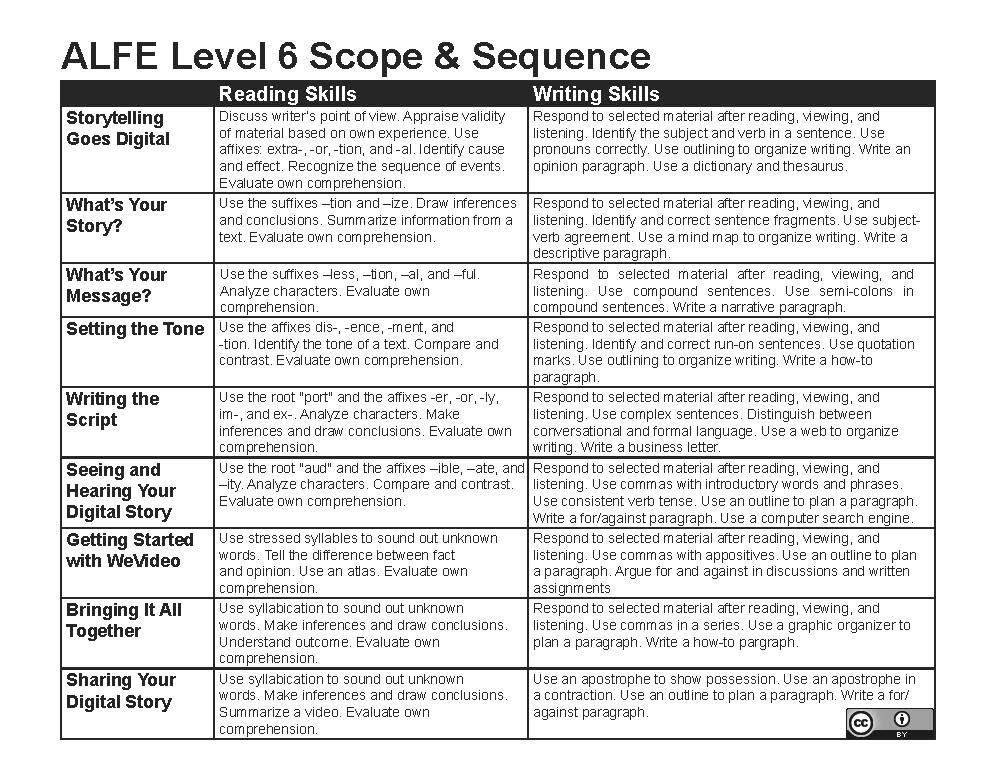
	<a href="#back-matter-appendix-4-level-6-scope-and-sequence">
		<span class="toc-chapter-title">Appendix 4: Level 6 Scope and Sequence</span>
							</a>
	</li>

					<li class="back-matter bibliography">
	<a href="#back-matter-bibliography">
		<span class="toc-chapter-title">Bibliography</span>
							</a>
	</li>

					<li class="back-matter about-the-author">
	<a href="#back-matter-about-the-author">
		<span class="toc-chapter-title">About the Author</span>
							</a>
	</li>

					<li class="back-matter miscellaneous">
	<a href="#back-matter-versioning-history">
		<span class="toc-chapter-title">Versioning History</span>
							</a>
	</li>

			</ul>
</div>
<div class="front-matter introduction " id="front-matter-introduction" title="About the Book">
	<div class="front-matter-title-wrap">
		<p class="front-matter-number">1</p>
		<h1 class="front-matter-title">About the Book</h1>
								</div>
	<div class="ugc front-matter-ugc">
				 <p><em>BC Reads: Adult Literacy Fundamental English – Course Pack 6</em>&nbsp; was created by Shantel Ivits.&nbsp;This creation is a part of the&nbsp;<a href="http://open.bccampus.ca/" data-url="http://open.bccampus.ca/">B.C. Open Textbook project</a>.</p> <p>The B.C. Open Textbook project began in 2012 with the goal of making post-secondary education in British Columbia more accessible by reducing student cost through the use of openly licensed textbooks. The B.C. Open Textbook project is administered by BCcampus and funded by the British Columbia Ministry of Advanced Education.</p> <p>Open textbooks are open educational resources (OER); they are instructional resources created and shared in ways so that more people have access to them. This is a different model than traditionally copyrighted materials. OER are defined as teaching, learning, and research resources that reside in the public domain or have been released under an intellectual property license that permits their free use and re-purposing by others (<a href="http://www.hewlett.org/programs/education/open-educational-resources" data-url="http://www.hewlett.org/programs/education/open-educational-resources">Hewlett Foundation</a>).</p> <p>Our open textbooks are openly licensed using a&nbsp;<a href="https://creativecommons.org/licenses/" data-url="https://creativecommons.org/licenses/">Creative Commons&nbsp;license</a>, and&nbsp;are offered in various e-book formats free of charge, or as printed books that are available at cost.</p> <p>For more information about this project, please contact&nbsp;<a href="mailto:opentext@bccampus.ca" data-url="mailto:opentext@bccampus.ca">opentext@bccampus.ca</a>.</p> <p>If you are an instructor who is using this book for a course, <a href="https://open.bccampus.ca/use-open-textbooks/tell-us-youre-using-an-open-textbook/" data-url="https://open.bccampus.ca/use-open-textbooks/tell-us-youre-using-an-open-textbook/">please let us know</a>.</p> 
	</div>


	</div>
<div class="front-matter acknowledgements post-introduction " id="front-matter-acknowledgements" title="Acknowledgments">
	<div class="front-matter-title-wrap">
		<p class="front-matter-number">2</p>
		<h1 class="front-matter-title">Acknowledgments</h1>
								</div>
	<div class="ugc front-matter-ugc">
				 <p>These books were developed on the unceded territories of the Musqueam, Squamish, and Tsleil-Waututh Nations.&nbsp;Huy tseep q’u!&nbsp;Chen kw’enmántumiyap!&nbsp;Kw’as hoy!</p> <p>I feel very fortunate to have had the opportunity to work on this project alongside a dedicated team of basic education instructors from across British Columbia. This series was shepherded by Leanne Caillier-Smith (College of the Rockies) and benefited enormously from the insight and encouragement of Julia Dodge (University of the Fraser Valley), Chandra McCann (Okanagan College), Jan Weiten (Vancouver Community College), and Melinda Worfolk (College of New Caledonia). The above five mentioned are representatives of the BC Adult Literacy Articulation Committee and were the advisory committee members for this project. It has been a pleasure to scaffold my own learning among such brilliant and passionate educators.</p> <p>Huge thanks to Lauri Aesoph of BCcampus for introducing me to the exciting open textbook movement and managing all aspects of the publication of these books &nbsp;— from layout and image selection to copyediting and print –so adeptly.</p> <p>I am incredibly lucky to work with and have the support of the Basic Education Department at Vancouver Community College: Rita Acton, Cynthia Bluman, Andrew Candela, Lynn Horvat, Alayna Kruger, Jo Lemay, Edie Mackenzie, Rene Merkel, Tara Mollel, Leah Rasmussen, Linda Rider, Mary Thompson-Boyd, Jan Weiten, our Program Assistant, Nadia Kawas, and our Dean, David Wells. I am also deeply grateful to the basic education students at Vancouver Community College for all that you teach me about dreams, resilience, and perseverance.</p> <p>A special thank you to my partner, Marria, for always lending my words an eager ear, and for keeping the world around me turning even though my head was perpetually stuck in these books.</p> 
	</div>


	</div>
<div class="front-matter introduction post-introduction " id="front-matter-notes-to-the-instructor" title="Notes to the Instructor">
	<div class="front-matter-title-wrap">
		<p class="front-matter-number">3</p>
		<h1 class="front-matter-title">Notes to the Instructor</h1>
								</div>
	<div class="ugc front-matter-ugc">
				 <p>In the days before YouTube, I created my first digital story without knowing that the genre had a name and was part of a growing movement of do-it-yourself media. Digital storytelling has since become a popular tool in literacy teaching and learning. I experienced this firsthand as part of the Literacy Lives teaching team at Simon Fraser University. At the end of the program, learners were assigned the task of creating a digital story to share their learning in the program. The results were tear-jerkingly&nbsp;powerful.</p> <p>More recently, I had the opportunity to be a storytelling mentor in a project called&nbsp;Cancer’s Margins. For this project, people&nbsp;made digital stories sharing&nbsp;what it was like to live&nbsp;in the intersection of queerness and cancer. As a result of the deeply moving and transformative experiences I’ve had with&nbsp;these projects, I am excited to share a digital storytelling curriculum specifically tailored to basic education students. It is based on the excellent work of the Center for Digital Storytelling in Berkeley, California.</p> <p>This course pack embeds fundamental English and computer literacy learning in a project-based curriculum that has a whole lot of soul. It is designed to meet the learning outcomes for Adult Literacy Fundamental English Level 6, as outlined in the&nbsp;<a href="http://www.aved.gov.bc.ca/abe/docs/handbook.pdf" target="_blank" data-url="http://www.aved.gov.bc.ca/abe/docs/handbook.pdf">ABE in BC 2014/2015 Articulation Handbook</a>. This is roughly equivalent to grades 7.5 to 9 in the K-12 system.</p> <p>This course pack is designed to be used with <em><a href="http://opentextbc.ca/abealfreader6/" target="_blank" data-url="http://opentextbc.ca/abealfreader6/">BC Reads Adult Literacy Fundamental English – Reader 6</a></em>. The reader includes 11 level-appropriate texts that describe, step-by-step, how to create a digital story. Each text contains between 500 and 1,000 words. Convenient links to these readings are found throughout this course pack.</p> <p>Each chapter of the course pack contains:</p> <ul><li>Pre-reading questions that can be used for individual reflection, journaling, or class discussion.</li> <li>Vocabulary-building exercises</li> <li>Word attack strategies</li> <li>Comprehension questions</li> <li>Grammar lessons and practice exercises</li> <li>Writing tasks</li> </ul> <p>For detailed information, please refer to the Level 6 Scope and Sequence document, also available in printable form in <a href="http://opentextbc.ca/abealf6/back-matter/appendix-4-level-6-scope-and-sequence/" data-url="http://opentextbc.ca/abealf6/back-matter/appendix-4-level-6-scope-and-sequence/">Appendix 4</a>.</p> <p>To help students develop their computer literacy skills, the online version of this book contains videos that allow learners&nbsp;to watch a skill being performed. These&nbsp;videos are followed by step-by-step written instructions to further support&nbsp;learners&nbsp;as they&nbsp;try out&nbsp;each new&nbsp;skill.</p> <p>Creating a digital story is a deeply personal process. For this reason, I do not encourage instructors to assess learning based on the end product of the digital story. Evaluation&nbsp;of the digital story may add pressure and anxiety that can detract from the learning process. The process is more important than the product. A variety of assignments and assessment tools are suggested throughout the course pack that will allow instructors and learners to measure learning in more effective and ethical ways. For example, in <a href="http://opentextbc.ca/abealf6/back-matter/appendix/" data-url="http://opentextbc.ca/abealf6/back-matter/appendix/">Appendix 3</a>, you will find a checklist to score the writing tasks assigned at the end of each chapter.</p> <p>It is also crucial that learners have the final say&nbsp;about how their digital story will be shared. For ethical guidelines, please see the Center for Digital Storytelling’s&nbsp;<a href="http://storycenter.org/ethical-practice/" target="_blank" data-url="http://storycenter.org/ethical-practice/">Digital Storyteller’s Bill of Rights</a>.</p> <p>This course pack includes&nbsp;a number of graphic organizers to help students organize their thoughts in a visual way. In <a href="http://opentextbc.ca/abealf6/back-matter/graphic-organizers/" data-url="http://opentextbc.ca/abealf6/back-matter/graphic-organizers/">Appendix 1</a>, you can access and print a complete set of these&nbsp;graphic organizers. Students can also download and print them as needed, through the links embedded throughout the course pack. <a href="http://opentextbc.ca/abealf6/back-matter/digital-story-progress-sheet/" data-url="http://opentextbc.ca/abealf6/back-matter/digital-story-progress-sheet/">Appendix 2</a> contains a Digital Story Progress Sheet and <a href="http://opentextbc.ca/abealf6/back-matter/appendix/" data-url="http://opentextbc.ca/abealf6/back-matter/appendix/">Appendix 3</a> has a Paragraph Writing Checklist; each of these pages contains both a link and print-friendly version.</p> <p>You may wish to use this program online, or you may wish to print it for your students by downloading it as a PDF. This program was designed to suit both options. An Internet connection is needed to watch the digital stories that are highlighted throughout the curriculum, as well as to access the web-based tool that allows learners to build their own digital stories.</p> <p>Font size and line spacing can be adjusted in the online view, and have been enhanced for the print and PDF versions for easier reading. (In addition, both epub and mobi files are offered for students with e-readers and Kindles.)</p> <p>This course pack has been reviewed by subject experts from colleges and universities.</p> <p>I hope these pages help learners find new meaning in their everyday relationships and experiences, as well as equip them with new tools to share their voice and perspectives with the world.</p> <p>-Shantel Ivits</p> 
	</div>


	</div>
<div class="part-wrapper" id="part-main-body-wrapper">
    <div class="chapter standard " id="chapter-chapter-1" title="Storytelling Goes Digital">
	<div class="chapter-title-wrap">
		<p class="chapter-number">1</p>
		<h1 class="chapter-title">Storytelling Goes Digital</h1>
								</div>
	<div class="ugc chapter-ugc">
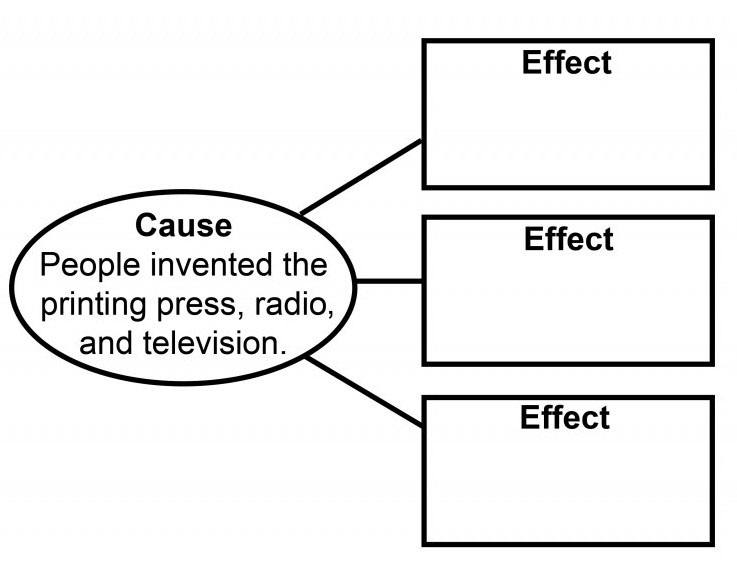
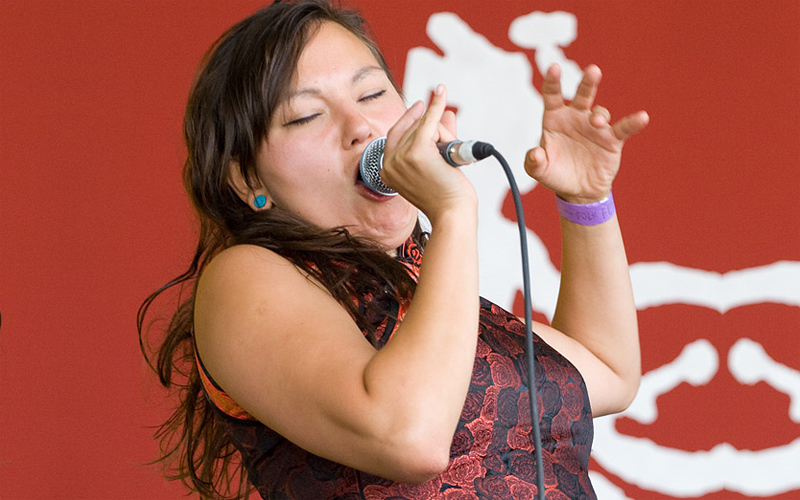
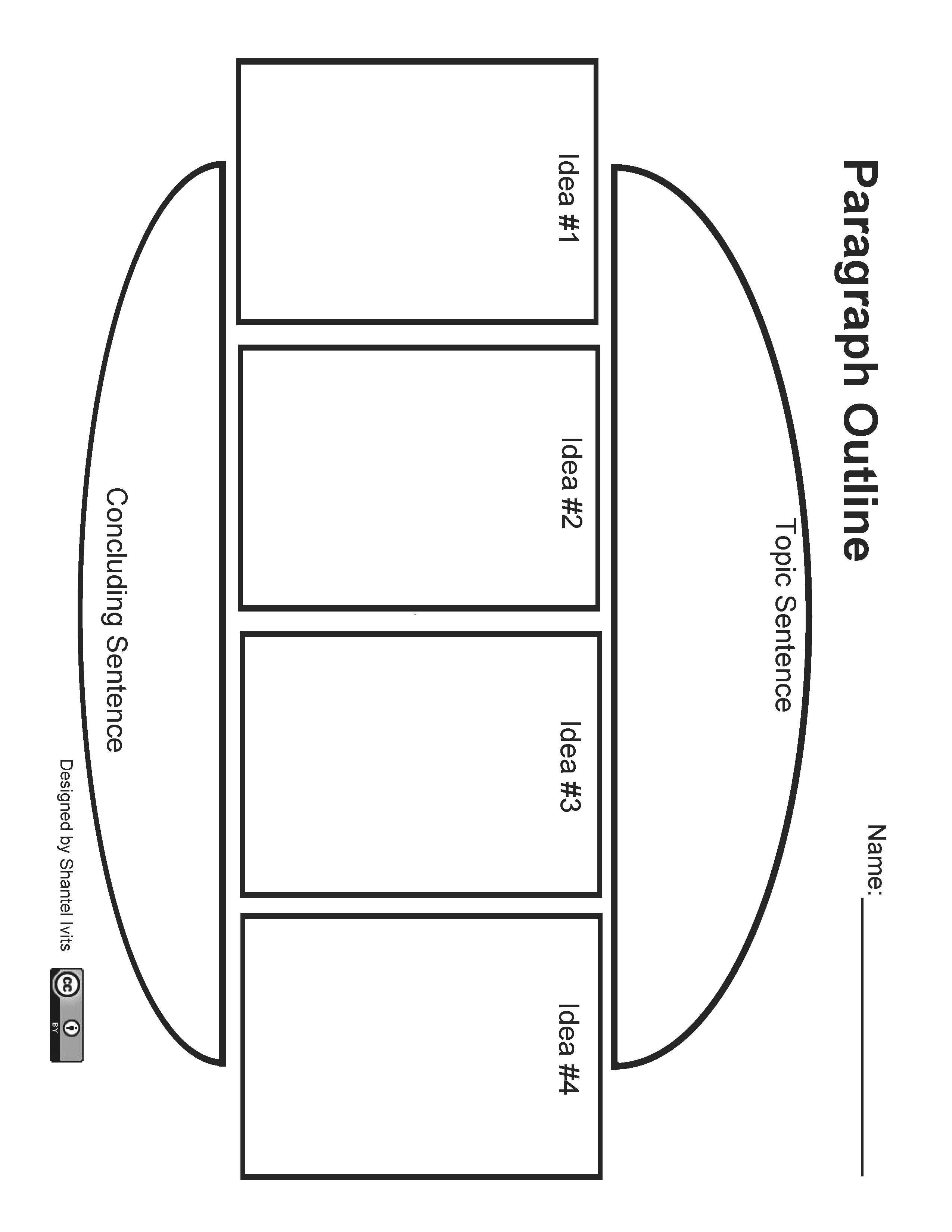
				 <div class="bcc-box bcc-highlight"><h3 itemprop="educationalUse">Learning&nbsp;Goals</h3> <p>In this chapter, you will learn to:</p> <ul><li>Use your own experience to decide if information is accurate</li> <li>Use&nbsp;the affixes extra-, -or, -tion, and&nbsp;-al</li> <li>Identify cause and effect</li> <li>Discuss and respond to the digital story <em>All the Truly Important Things</em></li> <li>Recognize the sequence of events</li> <li>Identify the subject and verb in a sentence</li> <li>Use pronouns correctly</li> <li>Write an opinion paragraph</li> </ul> </div> <div class="wp-caption aligncenter" id="attachment_151" aria-describedby="caption-attachment-151" style="width: 450px"><a href="http://opentextbc.ca/abealf6/wp-content/uploads/sites/87/2015/06/spirit-751277_1280.jpg" data-url="http://opentextbc.ca/abealf6/wp-content/uploads/sites/87/2015/06/spirit-751277_1280.jpg"><img src="http://opentextbc.ca/abealf6/wp-content/uploads/sites/87/2015/06/spirit-751277_1280-1024x768.jpg" alt="http://pixabay.com/en/spirit-soul-book-smoke-memories-751277/" class="wp-image-151" height="338" width="450" srcset="https://opentextbc.ca/abealf6/wp-content/uploads/sites/87/2015/06/spirit-751277_1280-1024x768.jpg 1024w, https://opentextbc.ca/abealf6/wp-content/uploads/sites/87/2015/06/spirit-751277_1280-300x225.jpg 300w, https://opentextbc.ca/abealf6/wp-content/uploads/sites/87/2015/06/spirit-751277_1280-65x49.jpg 65w, https://opentextbc.ca/abealf6/wp-content/uploads/sites/87/2015/06/spirit-751277_1280-225x169.jpg 225w, https://opentextbc.ca/abealf6/wp-content/uploads/sites/87/2015/06/spirit-751277_1280-350x263.jpg 350w, https://opentextbc.ca/abealf6/wp-content/uploads/sites/87/2015/06/spirit-751277_1280.jpg 1280w" sizes="auto, (max-width: 450px) 100vw, 450px" title="" /></a><div class="wp-caption-text" id="caption-attachment-151">Storybook</div></div> <h1><span style="color: #003366">Get Ready to Read</span></h1> <ul><li>How did you experience stories as a child? How is this different from the way that children today experience stories?</li> <li>What is your favourite way to experience a story: in person or through books, TV, radio, or video games?</li> <li>We need stories that are windows into new worlds as well as mirrors of our own worlds. Do you think that there are enough stories that mirror, or reflect, your cultural background and experiences?</li> </ul> <h1><span style="color: #003366">Vocabulary</span></h1> <p>Readers sometimes scan a text for specific information rather than reading every word. When you scan a text, choose a word to look for. Then run your eyes quickly over many lines to find that word.</p> <h5><strong><span style="color: #003366">Scan <em><a href="http://opentextbc.ca/abealfreader6/chapter/chapter-1/" target="_blank" data-url="http://opentextbc.ca/abealfreader6/chapter/chapter-1/">Storytelling Goes Digital</a></em>&nbsp;to find a bold word for each of the following.</span></strong></h5> <p style="padding-left: 30px">1. A way of seeing and understanding the world</p> <p style="padding-left: 30px">2.&nbsp;An extremely small living thing that can spread from one animal to another and can cause illness</p> <p style="padding-left: 30px">3. Connected to the Internet</p> <p style="padding-left: 30px">4. Normal or usual</p> <p style="padding-left: 30px">5. Someone who has a lot of experience using a skill for their job</p> <p style="padding-left: 30px">6. Something that is created by people</p> <p style="padding-left: 30px">7. The part or job someone has in a family, community, or group</p> <p style="padding-left: 30px">8. To cause two or more things to be together</p> <p style="padding-left: 30px">9. To say something out loud for an audience</p> <p style="padding-left: 30px">10. To show respect for someone or something</p> <div class="textbox shaded" style="text-align: center"><span style="color: #800080">Check your work with the Answer Key at the end of this chapter.</span></div> <div class="bcc-box bcc-success"><h3 itemprop="educationalUse">Word Patterns</h3> <p><strong>extra</strong>– is a prefix that means “beyond”</p> <p>–<strong>or</strong> is a suffix that means “one who”</p> <p>–<strong>tion</strong> is a suffix that means “the act of”</p> <p>–<strong>al</strong> is a suffix that means “related to”</p> </div> <h5><strong><span style="color: #003366">Use the vocabulary words and affixes above to build a word for each&nbsp;definition below.</span></strong></h5> <p style="padding-left: 30px">11. ___________________________: one who invents</p> <p style="padding-left: 30px">12. ___________________________: related to a virus</p> <p style="padding-left: 30px">13. ___________________________: the act of combining</p> <p style="padding-left: 30px">14. ___________________________: beyond ordinary</p> <div class="textbox shaded" style="text-align: center"><span style="color: #800080">Check your work with the Answer Key at the end of this chapter.</span></div> <h1><span style="color: #003366">Reading Strategy</span></h1> <p>Readers check their understanding of a text while they read. In this book, you will practice strategies for checking whether you are really thinking about the words on a page. One strategy is to stop after each paragraph and ask yourself: Can I picture what the text is describing, like a movie playing in my mind? If you can’t picture it, then go back and try to visualize as you re-read the paragraph. If you like to draw, you can even doodle the pictures you see in your mind in the space beside the paragraph.</p> <p><span style="color: #000000">Try this strategy as you read <em><a href="http://opentextbc.ca/abealfreader6/chapter/chapter-1/" target="_blank" data-url="http://opentextbc.ca/abealfreader6/chapter/chapter-1/">Storytelling Goes Digital</a></em>.</span></p> <h1><span style="color: #003366">Check Your Understanding</span></h1> <p style="padding-left: 30px">1. A <strong>cause</strong> is a reason something happens. An <strong>effect</strong> is what happens. People invented the printing press, radio, and television. Name three effects of these inventions.<br /> <a href="http://opentextbc.ca/abealf6/wp-content/uploads/sites/87/2015/07/cause-effect.jpg" data-url="http://opentextbc.ca/abealf6/wp-content/uploads/sites/87/2015/07/cause-effect.jpg"><img src="http://opentextbc.ca/abealf6/wp-content/uploads/sites/87/2015/07/cause-effect.jpg" alt="cause effect" class="aligncenter wp-image-632" height="431" width="552" srcset="https://opentextbc.ca/abealf6/wp-content/uploads/sites/87/2015/07/cause-effect.jpg 737w, https://opentextbc.ca/abealf6/wp-content/uploads/sites/87/2015/07/cause-effect-300x234.jpg 300w, https://opentextbc.ca/abealf6/wp-content/uploads/sites/87/2015/07/cause-effect-65x51.jpg 65w, https://opentextbc.ca/abealf6/wp-content/uploads/sites/87/2015/07/cause-effect-225x175.jpg 225w, https://opentextbc.ca/abealf6/wp-content/uploads/sites/87/2015/07/cause-effect-350x273.jpg 350w" sizes="auto, (max-width: 552px) 100vw, 552px" title="" /></a></p> <p style="padding-left: 30px">2. What three examples of professional storytellers are mentioned in the text?</p> <p style="padding-left: 30px">3. What is a digital story?</p> <p style="padding-left: 30px">4. Stories are usually told from the point of view of an author or a character. <strong>Point of view</strong> refers to the&nbsp;way someone sees and understands the world. <em><a href="http://opentextbc.ca/abealfreader6/chapter/chapter-1/" data-url="http://opentextbc.ca/abealfreader6/chapter/chapter-1/">Storytelling Goes Digital</a></em> says that not enough stories are told from the&nbsp;points of view of women, working class people, queer and trans people, and people with disabilities. Do you think this is accurate, based on stories you’ve seen in movies, books, TV shows, and video games? Can you think of other groups that don’t have enough stories told from their point of view?</p> <div class="wp-caption aligncenter" id="attachment_282" aria-describedby="caption-attachment-282" style="width: 450px"><a href="http://opentextbc.ca/abealf6/wp-content/uploads/sites/87/2015/06/network-698598_1280.jpg" data-url="http://opentextbc.ca/abealf6/wp-content/uploads/sites/87/2015/06/network-698598_1280.jpg"><img src="http://opentextbc.ca/abealf6/wp-content/uploads/sites/87/2015/06/network-698598_1280-1024x576.jpg" alt="http://pixabay.com/en/network-computer-laptop-connection-698598/" class="wp-image-282" height="253" width="450" srcset="https://opentextbc.ca/abealf6/wp-content/uploads/sites/87/2015/06/network-698598_1280-1024x576.jpg 1024w, https://opentextbc.ca/abealf6/wp-content/uploads/sites/87/2015/06/network-698598_1280-300x169.jpg 300w, https://opentextbc.ca/abealf6/wp-content/uploads/sites/87/2015/06/network-698598_1280-65x37.jpg 65w, https://opentextbc.ca/abealf6/wp-content/uploads/sites/87/2015/06/network-698598_1280-225x127.jpg 225w, https://opentextbc.ca/abealf6/wp-content/uploads/sites/87/2015/06/network-698598_1280-350x197.jpg 350w, https://opentextbc.ca/abealf6/wp-content/uploads/sites/87/2015/06/network-698598_1280.jpg 1280w" sizes="auto, (max-width: 450px) 100vw, 450px" title="" /></a><div class="wp-caption-text" id="caption-attachment-282">Digital stories</div></div> <p style="padding-left: 30px">5. Below are six main events from the digital story <em><a href="https://www.youtube.com/watch?v=PYoBIV75aPw" data-url="https://www.youtube.com/watch?v=PYoBIV75aPw">All the Truly Important Things</a></em>. The events are not in the correct <strong>sequence</strong>, or order. Put the events in the correct sequence.</p> <p style="padding-left: 60px">a. A doctor told Eric, “All the truly important things in life, you haven’t lost.” Eric did not believe the doctor.</p> <p style="padding-left: 60px">b. Eric trained to be a doctor for people with HIV.</p> <p style="padding-left: 60px">c. Eric was diagnosed with HIV and felt lost.</p> <p style="padding-left: 60px">d. Eric became a doctor to a person who had just been diagnosed with HIV. Eric told him, “All the truly important things in life, you haven’t lost.”</p> <p style="padding-left: 60px">e. Someone asked Eric if it was hard for him to work with people with HIV, since he also has HIV. Eric realized it was deeply joyful to be able to give people hope. He realized what his doctor had said was true.</p> <p style="padding-left: 60px">f. Eric graduated from medical school and moved to San Francisco to find love.</p> <div class="textbox shaded" style="text-align: center"><span style="color: #800080">Check your work with the Answer Key at the end of this chapter.</span></div> <h1><span style="color: #003366">Subjects and Verbs</span></h1> <div class="bcc-box bcc-success"><h3 itemprop="educationalUse">Grammar&nbsp;Rule</h3> <p>The <strong>subject</strong> of a sentence is the person, place, thing, or idea doing the action. Sometimes the subject’s action is simply being or having.</p> <ul><li>The subject can be a person:</li> </ul> <p style="padding-left: 30px">Example: <span style="text-decoration: underline">Queen Elizabeth I</span> had more than two thousand dresses.</p> <ul><li>The subject can be a place:</li> </ul> <p style="padding-left: 30px">Example: <span style="text-decoration: underline">Indiana</span> has a town named Santa Claus.</p> <ul><li>The subject can be a thing:</li> </ul> <p style="padding-left: 30px">Example: <span style="text-decoration: underline">The Bible</span> is the most shoplifted book in America.</p> </div> <h5><strong><span style="color: #003366">Look at these sentences. <span style="text-decoration: underline">Underline</span> the subjects.</span></strong></h5> <p style="padding-left: 30px">1. Your thumb is the same length as your nose.</p> <p style="padding-left: 30px">2. Twins do not have the same fingerprints.</p> <p style="padding-left: 30px">3. It is impossible to sneeze with your eyes open.</p> <p style="padding-left: 30px">4. An eyebrow has about 450 hairs.</p> <p style="padding-left: 30px">5. Canada has more doughnut shops per person than anywhere else in the world.</p> <p style="padding-left: 30px">6. Fortune cookies were invented in Los Angeles.</p> <p style="padding-left: 30px">7. At 122 years old, Jeanne Calment lived the longest life of any human.</p> <p style="padding-left: 30px">8. Every morning, I wake up to the sound of a rooster crowing.</p> <div class="textbox shaded" style="text-align: center"><span style="color: #800080">Check your work with the Answer Key at the end of this chapter.</span></div> <div class="bcc-box bcc-success"><h3 itemprop="educationalUse">Grammar&nbsp;Rule</h3> <ul><li>A <strong>verb</strong> is often an action word. The action verbs in the sentences below are underlined.</li> </ul> <p style="padding-left: 30px">Example: I <span style="text-decoration: underline">washed</span> the dishes. Then I <span style="text-decoration: underline">mopped</span> the floor.</p> <ul><li>Some verbs can be tricky to identify because they don’t seem like actions. For example, <em>be</em> and <em>have</em> are verbs. These verbs have many different forms. Forms of <em>be</em> include <em>is</em>, <em>am</em>, <em>are</em>, <em>was</em>, <em>were</em>, and <em>will be</em>. Forms of have include <em>has</em>, <em>had</em>, and <em>will have</em>.</li> </ul> <p style="padding-left: 30px">Example: I <span style="text-decoration: underline">am</span> 50 years old.</p> <p style="padding-left: 30px">Example: Bob <span style="text-decoration: underline">has</span> a small cabin in the woods.</p> <ul><li>Some verbs are two, three, or four words long! These verbs have a main verb and some helping verbs. Words like <em>can, could, should, may, might, will, would, </em>and <em>must</em> are helping verbs.</li> </ul> <p style="padding-left: 30px">Examples:</p> <p style="padding-left: 30px">I <span style="text-decoration: underline">will follow</span> you into the dark.</p> <p style="padding-left: 30px">The baby <span style="text-decoration: underline">should go</span> to bed.</p> <p style="padding-left: 30px">He <span style="text-decoration: underline">has been playing</span> piano for three hours.</p> </div> <h5><strong><span style="color: #003366"><span style="text-decoration: underline">Underline</span> the verbs in these sentences.</span></strong></h5> <p style="padding-left: 30px">9. Grapes explode when you put them in the microwave.</p> <p style="padding-left: 30px">10. Before birth, chicks can talk to each other from inside their eggs.</p> <p style="padding-left: 30px">11. Antarctica has one ATM machine.</p> <p style="padding-left: 30px">12. Paper was invented in China.</p> <p style="padding-left: 30px">13. Scientists are building a car-plane.</p> <p style="padding-left: 30px">14. The thunder will scare the dog.</p> <p style="padding-left: 30px">15. I have been working at the same job for 20 years.</p> <p style="padding-left: 30px">16. The comet flew across the night sky.</p> <p style="padding-left: 30px">17. The child spilled his milk all over the floor.</p> <p style="padding-left: 30px">18. We will dance all night long.</p> <p style="padding-left: 30px">19. The bottle had a message in it.</p> <p style="padding-left: 30px">20. The X-ray shows that your finger is broken.</p> <div class="textbox shaded" style="text-align: center"><span style="color: #800080">Check your work with the Answer Key at the end of this chapter.</span></div> <h1><span style="color: #003366">Pronouns</span></h1> <div class="bcc-box bcc-success"><h3 itemprop="educationalUse">Grammar&nbsp;Rule</h3> <p>A <strong>pronoun</strong> is a word that takes the place of a noun. Look at the two groups of sentences below. Which one sounds better?</p> <ul><li><em>Eric</em> is a doctor who has HIV. <em>Eric</em> treats other people who have HIV. <em>Eric</em> helps them feel hopeful. Recently, <em>Eric</em> made a digital story about his journey.</li> <li><em>Eric</em> is a doctor who has HIV. He treats other people who have HIV. <em>He</em> helps them feel hopeful. Recently, <em>he</em> made a digital story about his journey.</li> </ul> <p>In the first group of sentences, it sounds strange to keep repeating the name <em>Eric</em>. In the second group of sentences, the pronoun <em>he</em> took the place of the noun <em>Eric</em>. The language flows more smoothly. Pronouns let us avoid repeating the name of a person, place, or thing.</p> <p><em>He, she, they, we,</em> and <em>it</em> are pronouns that can replace a subject — the person, place, or thing doing an action.</p> </div> <h5><strong><span style="color: #003366">Replace the subject in the second sentence with the correct pronoun.</span></strong></h5> <p style="padding-left: 30px">1. Tanya Tagaq is a singer from Nunavut. Tanya performs a style of music called Inuit throat singing.</p> <p style="padding-left: 30px">2. Tat<span class="Apple-style-span">é</span> BlackBear is from the Lakota Nation. Tat<span class="Apple-style-span">é</span> knows seven words in the Lakota language.</p> <p style="padding-left: 30px">3. Evan Adams and Adam Beach starred in a movie called <em>Smoke Signals</em>. Evan Adams and Adam Beach are both actors from Canada.</p> <p style="padding-left: 30px">4. Thomas King and I have something in common. Thomas King and I are both writers.</p> <p style="padding-left: 30px">5. Louis Riel was the father of Manitoba. Louis Riel was also the leader of the Métis people on the Canadian prairies.</p> <p style="padding-left: 30px">6. Coyote and Raven are found in many Aboriginal stories. Coyote and Raven are famous for playing tricks on others.</p> <p style="padding-left: 30px">7. Sweetgrass is a sacred plant in First Nations cultures. Sweetgrass is known for its ability to heal and get rid of negative thoughts.</p> <div class="wp-caption aligncenter" id="attachment_348" aria-describedby="caption-attachment-348" style="width: 300px"><a href="http://opentextbc.ca/abealf6/wp-content/uploads/sites/87/2015/06/TanyaTagaqGillis2007-crop.jpg" data-url="http://opentextbc.ca/abealf6/wp-content/uploads/sites/87/2015/06/TanyaTagaqGillis2007-crop.jpg"><img src="http://opentextbc.ca/abealf6/wp-content/uploads/sites/87/2015/06/TanyaTagaqGillis2007-crop-300x188.jpg" alt="https://upload.wikimedia.org/wikipedia/commons/9/90/TanyaTagaqGillis2007-crop.jpg" class="wp-image-348 size-medium" height="188" width="300" srcset="https://opentextbc.ca/abealf6/wp-content/uploads/sites/87/2015/06/TanyaTagaqGillis2007-crop-300x188.jpg 300w, https://opentextbc.ca/abealf6/wp-content/uploads/sites/87/2015/06/TanyaTagaqGillis2007-crop-65x41.jpg 65w, https://opentextbc.ca/abealf6/wp-content/uploads/sites/87/2015/06/TanyaTagaqGillis2007-crop-225x141.jpg 225w, https://opentextbc.ca/abealf6/wp-content/uploads/sites/87/2015/06/TanyaTagaqGillis2007-crop-350x219.jpg 350w, https://opentextbc.ca/abealf6/wp-content/uploads/sites/87/2015/06/TanyaTagaqGillis2007-crop.jpg 800w" sizes="auto, (max-width: 300px) 100vw, 300px" title="" /></a><div class="wp-caption-text" id="caption-attachment-348">Tanya Tagaq</div></div> <div class="textbox shaded" style="text-align: center"><span style="color: #800080">Check your work with the Answer Key at the end of this chapter.</span></div> <div class="bcc-box bcc-success"><h3 itemprop="educationalUse">Grammar Rule</h3> <p>In the above exercises, you learned that <em>he, she, they, we</em>, and <em>it</em> are pronouns that can replace a subject — the person, place, or thing doing an action.</p> <p><em>Me, him, her, them, it,</em> and <em>us</em> are pronouns that replace the person or thing receiving the action.</p> </div> <h5><strong><span style="color: #003366">Fill in the blanks with the correct pronouns. <span style="text-decoration: underline">Underline</span> the noun it replaces.</span></strong></h5> <p>Example:</p> <ul><li>I own that book, but I have not read ________ yet.</li> <li>I own that <span style="text-decoration: underline">book</span>, but I have not read &nbsp; ___<span style="text-decoration: underline">it</span>___ &nbsp;yet.</li> </ul> <p style="padding-left: 30px">8. Jack ate the apple, even though it did not belong to ____________.</p> <p style="padding-left: 30px">9. The kids had to go to bed by 8:00 p.m. Their parents would not let ___________ stay up any later.</p> <p style="padding-left: 30px">10. The shirt fits me, but I probably won’t wear _____________.</p> <p style="padding-left: 30px">11. Billie and I are going to the movies. Do you want to come with ____________?</p> <p style="padding-left: 30px">12. I want to know how to get to Nanaimo. Will you tell ____________?</p> <p style="padding-left: 30px">13. Sue just got an iPhone. Sam gave it to _______________.</p> <div class="textbox shaded" style="text-align: center"><span style="color: #800080">Check your work with the Answer Key at the end of this chapter.</span></div> <h1><span style="color: #003366">Writing</span></h1> <p>During your time as a student, you will likely be asked to write many kinds of paragraphs. In this book, you will learn how to write paragraphs that describe things, explain how to do things, tell a story, or give an opinion. No matter what kind of writing task you are working on, there is a strategy you can use to stay on track. It’s called TOWER. The letters in TOWER stand for Think, Organize, Write, Edit, and Rewrite.</p> <div class="bcc-box bcc-info"><h3 itemprop="educationalUse">Writing Task</h3> <p>“Thomas King is the best storyteller in the world.”</p> <p>“Movies and television shows do not&nbsp;have enough main characters with disabilities.”</p> <p>“Canada needs more Canadian television shows.”</p> <p>Each of the above statements is an opinion. Unlike a fact, an opinion is something that people may&nbsp;agree or disagree about. An <strong>opinion paragraph</strong> is a group of sentences that state an opinion and explain your position. The author may want to&nbsp;convince the&nbsp;reader to agree with him or her. To be convincing,&nbsp;the&nbsp;paragraph will usually give at least three reasons, facts, or examples that support the belief.</p> <p>Follow the steps below to write an opinion paragraph on this topic.</p> <p>Imagine a world with no Internet. In your opinion, would the world be a better place or a worse place? Give reasons for your opinion.</p> <p><strong>1. Think:</strong> Try free-writing about this topic for five minutes. Free-writing is an activity where you write everything that comes to your mind. Don’t stop writing, even for a second. Don’t worry about grammar or whether your ideas are any good. The point of free-writing is to come up with&nbsp;as many ideas as possible. When five minutes are up, look back at the ideas you came up with. It’s time to make some decisions. What will your opinion be? Do you think the world would be a better place without the Internet? Are there any details you want to&nbsp;use from your free-writing&nbsp;to support your opinion? Can you think of any additional ideas to support your opinion?</p> <p><strong>2. Organize:</strong> Ask your instructor for the <a href="http://opentextbc.ca/abealf6/wp-content/uploads/sites/87/2015/06/Paragraph-Outline1.pdf" target="_blank" data-url="http://opentextbc.ca/abealf6/wp-content/uploads/sites/87/2015/06/Paragraph-Outline1.pdf">Paragraph Outline</a> worksheet, or open and print one from the link. You will also find a printable version in <a href="http://opentextbc.ca/abealf6/back-matter/graphic-organizers/" data-url="http://opentextbc.ca/abealf6/back-matter/graphic-organizers/">Appendix 1</a>. Fill in&nbsp;the outline with your best ideas.</p> <p><strong>3. Write:</strong> Follow&nbsp;your outline as you write&nbsp;a first draft of your opinion paragraph.&nbsp;Don’t worry too much about spelling and grammar. Just get your ideas down in a way that makes sense. At this point, you may want to put your draft aside so you can look at it with fresh eyes later.</p> <p><strong>4. Edit:</strong>&nbsp;Use a different colour to make edits to your writing. Check to see how it sounds when you read it out loud. Is the meaning clear? Are there any details that are missing or off topic? Should you use different sentence types to make it flow more smoothly? Are there any words that you want to change to make your writing more alive? (Use a&nbsp;thesaurus to find more interesting vocabulary words.) Are all your sentences complete? Do you need to check the spelling of any words in a dictionary?</p> <p><strong>5. Rewrite</strong>:&nbsp;Write a final copy of your paragraph that includes all your edits. You may wish to type it on a computer. Finally, hand it in to your instructor.</p> </div> <div class="textbox shaded"><h2>Answer Key</h2> <table><tbody><tr><td colspan="2"><strong>Vocabulary</strong></td> </tr> <tr><td><strong>QUESTION</strong></td> <td><strong>ANSWER</strong></td> </tr> <tr><td>1</td> <td>point of view</td> </tr> <tr><td>2</td> <td>virus</td> </tr> <tr><td>3</td> <td>online</td> </tr> <tr><td>4</td> <td>ordinary</td> </tr> <tr><td>5</td> <td>professional</td> </tr> <tr><td>6</td> <td>invention</td> </tr> <tr><td>7</td> <td>role</td> </tr> <tr><td>8</td> <td>combine</td> </tr> <tr><td>9</td> <td>recite</td> </tr> <tr><td>10</td> <td>honour</td> </tr> <tr><td>11</td> <td>inventor</td> </tr> <tr><td>12</td> <td>viral</td> </tr> <tr><td>13</td> <td>combination</td> </tr> <tr><td>14</td> <td>extraordinary</td> </tr> <tr><td colspan="2"><strong>Check Your Understanding&nbsp;&nbsp;</strong></td> </tr> <tr><td><strong>QUESTION</strong></td> <td><strong>ANSWER</strong></td> </tr> <tr><td>1</td> <td>These inventions made it possible to share stories with a large audience around the world. Storytelling became a job for professionals. Big companies got to decide whose stories would be told, and some voices were left out.</td> </tr> <tr><td>2</td> <td>Three examples of professional storytellers are mentioned in the text are authors, journalists, and filmmakers.</td> </tr> <tr><td>3</td> <td>A digital story is a short movie made by an ordinary person. It combines images and sound to tell a story about that person’s life.</td> </tr> <tr><td>4</td> <td>Answers will vary.</td> </tr> <tr><td>5</td> <td>f,&nbsp;c, a, b, e, d</td> </tr> <tr><td colspan="2"><b>Subjects and Verbs</b></td> </tr> <tr><td><strong>QUESTION</strong></td> <td><strong>ANSWER</strong></td> </tr> <tr><td>1</td> <td>Your <span style="text-decoration: underline">thumb</span> is the same length as your nose.</td> </tr> <tr><td>2</td> <td><span style="text-decoration: underline">Twins</span> do not have the same fingerprints.</td> </tr> <tr><td>3</td> <td><span style="text-decoration: underline">It</span> is impossible to sneeze with your eyes open.</td> </tr> <tr><td>4</td> <td>An&nbsp;<span style="text-decoration: underline">eyebrow</span> has about 450 hairs.</td> </tr> <tr><td>5</td> <td><span style="text-decoration: underline">Canada</span> has more doughnut shops per person than anywhere else in the world.</td> </tr> <tr><td>6</td> <td><span style="text-decoration: underline">Fortune cookies</span> were invented in Los Angeles.</td> </tr> <tr><td>7</td> <td>At 122 years old, <span style="text-decoration: underline">Jeanne Calment</span> lived the longest life of any human.</td> </tr> <tr><td>8</td> <td><span style="line-height: 1.5">Every morning, </span><span style="text-decoration: underline">I</span> <span style="line-height: 1.5">wake up to the sound of a rooster crowing.</span></td> </tr> <tr><td>9</td> <td><span style="line-height: 1.5">Grapes </span><span style="text-decoration: underline">explode</span> <span style="line-height: 1.5">when you put them in the microwave.</span></td> </tr> <tr><td>10</td> <td>Before birth, chicks <span style="text-decoration: underline">can talk</span> to each other from inside their eggs.</td> </tr> <tr><td>11</td> <td>Antarctica <span style="text-decoration: underline">has</span> one ATM machine.</td> </tr> <tr><td>12</td> <td>Paper <span style="text-decoration: underline">was invented</span> in China.</td> </tr> <tr><td>13</td> <td>Scientists <span style="text-decoration: underline">are building</span> a car-plane.</td> </tr> <tr><td>14</td> <td>The thunder <span style="text-decoration: underline">will scare</span> the dog.</td> </tr> <tr><td>15</td> <td>I <span style="text-decoration: underline">have been working</span> at the same job for 20 years.</td> </tr> <tr><td>16</td> <td>The comet <span style="text-decoration: underline">flew</span> across the night sky.</td> </tr> <tr><td>17</td> <td>The child <span style="text-decoration: underline">spilled</span> his milk all over the floor.</td> </tr> <tr><td>18</td> <td>We <span style="text-decoration: underline">will dance</span> all night long.</td> </tr> <tr><td>19</td> <td>The bottle <span style="text-decoration: underline">had</span> a message in it.</td> </tr> <tr><td>20</td> <td>The X-ray <span style="text-decoration: underline">shows</span> that your finger <span style="text-decoration: underline">is</span> broken.</td> </tr> <tr><td colspan="2"><strong>Pronoun Reference</strong></td> </tr> <tr><td><strong>QUESTION</strong></td> <td><strong>ANSWER</strong></td> </tr> <tr><td>1</td> <td>Tanya Tagaq is a singer from Nunavut. <span style="text-decoration: underline">She</span>&nbsp;performs a style of music called Inuit throat singing.</td> </tr> <tr><td>2</td> <td>Tate BlackBear is from the Lakota Nation. <span style="text-decoration: underline">He</span>&nbsp;knows seven words in the Lakota language.</td> </tr> <tr><td>3</td> <td>Evan Adams and Adam Beach starred in a movie called <em>Smoke Signals</em>. <span style="text-decoration: underline">They</span>&nbsp;are both actors from Canada.</td> </tr> <tr><td>4</td> <td>Thomas King and I have something in common. <span style="text-decoration: underline">We</span>&nbsp;are both writers.</td> </tr> <tr><td>5</td> <td>Louis Riel was the father of Manitoba. <span style="text-decoration: underline">He</span>&nbsp;was also the leader of the Métis people on the Canadian prairies.</td> </tr> <tr><td>6</td> <td>Coyote and Raven are found in many Aboriginal stories. <span style="text-decoration: underline">They</span>&nbsp;are famous for playing tricks on others.</td> </tr> <tr><td>7</td> <td>Sweetgrass is a sacred plant in First Nations cultures. <span style="text-decoration: underline">It</span>&nbsp;is known for its ability to heal and get rid of negative thoughts.</td> </tr> <tr><td>8</td> <td>Jack ate the apple, even though it did not belong to <span style="text-decoration: underline">him</span>.</td> </tr> <tr><td>9</td> <td>The kids had to go to bed by 8 p.m. Their parents would not let <span style="text-decoration: underline">them</span>&nbsp;stay up any later.</td> </tr> <tr><td>10</td> <td>The shirt fits me, but I probably won’t wear <span style="text-decoration: underline">it</span>.</td> </tr> <tr><td>11</td> <td>Billie and I are going to the movies. Do you want to come with <span style="text-decoration: underline">us</span>?</td> </tr> <tr><td>12</td> <td>I want to know how to get to Nanaimo. Will you tell <span style="text-decoration: underline">me</span>?</td> </tr> <tr><td>13</td> <td>Sue just got an iPhone. Sam gave it to <span style="text-decoration: underline">her</span>.</td> </tr> </tbody> </table> </div> <h2>Attributions</h2> <p><strong>Story book</strong><br /> <a href="http://pixabay.com/en/spirit-soul-book-smoke-memories-751277/" data-url="http://pixabay.com/en/spirit-soul-book-smoke-memories-751277/">Image</a> by&nbsp;<a class="hover_opacity" href="https://pixabay.com/en/users/bennimax-871885/" data-url="https://pixabay.com/en/users/bennimax-871885/">bennimax</a>&nbsp;is in the <a href="https://pixabay.com/en/service/terms/#download_terms" data-url="https://pixabay.com/en/service/terms/#download_terms">public domain</a>.</p> <p><strong>Digital stories&nbsp;</strong><br /> <a href="http://pixabay.com/en/network-computer-laptop-connection-698598/" data-url="http://pixabay.com/en/network-computer-laptop-connection-698598/">Image</a> by&nbsp;<a class="hover_opacity" href="https://pixabay.com/en/users/gr8effect-66428/" data-url="https://pixabay.com/en/users/gr8effect-66428/">gr8effect</a>&nbsp;is in the <a href="https://pixabay.com/en/service/terms/#download_terms" data-url="https://pixabay.com/en/service/terms/#download_terms">public domain</a>.</p> <p><strong>Tanya Tagaq&nbsp;</strong><br /> <a href="https://commons.wikimedia.org/wiki/File:TanyaTagaqGillis2007-crop.jpg" data-url="https://commons.wikimedia.org/wiki/File:TanyaTagaqGillis2007-crop.jpg">Tanya Tagaq</a>&nbsp;by&nbsp;<a href="https://en.wikipedia.org/wiki/User:Martica1974" class="extiw" title="en:User:Martica1974" data-url="https://en.wikipedia.org/wiki/User:Martica1974">Martica1974</a>&nbsp;is used under a&nbsp;<a href="https://creativecommons.org/licenses/by-sa/3.0/deed.en" data-url="https://creativecommons.org/licenses/by-sa/3.0/deed.en">CC BY SA 3.0</a> license.</p> 
	</div>


	</div>
<div class="chapter standard " id="chapter-whats-your-story" title="What's Your Story?">
	<div class="chapter-title-wrap">
		<p class="chapter-number">2</p>
		<h1 class="chapter-title">What's Your Story?</h1>
								</div>
	<div class="ugc chapter-ugc">
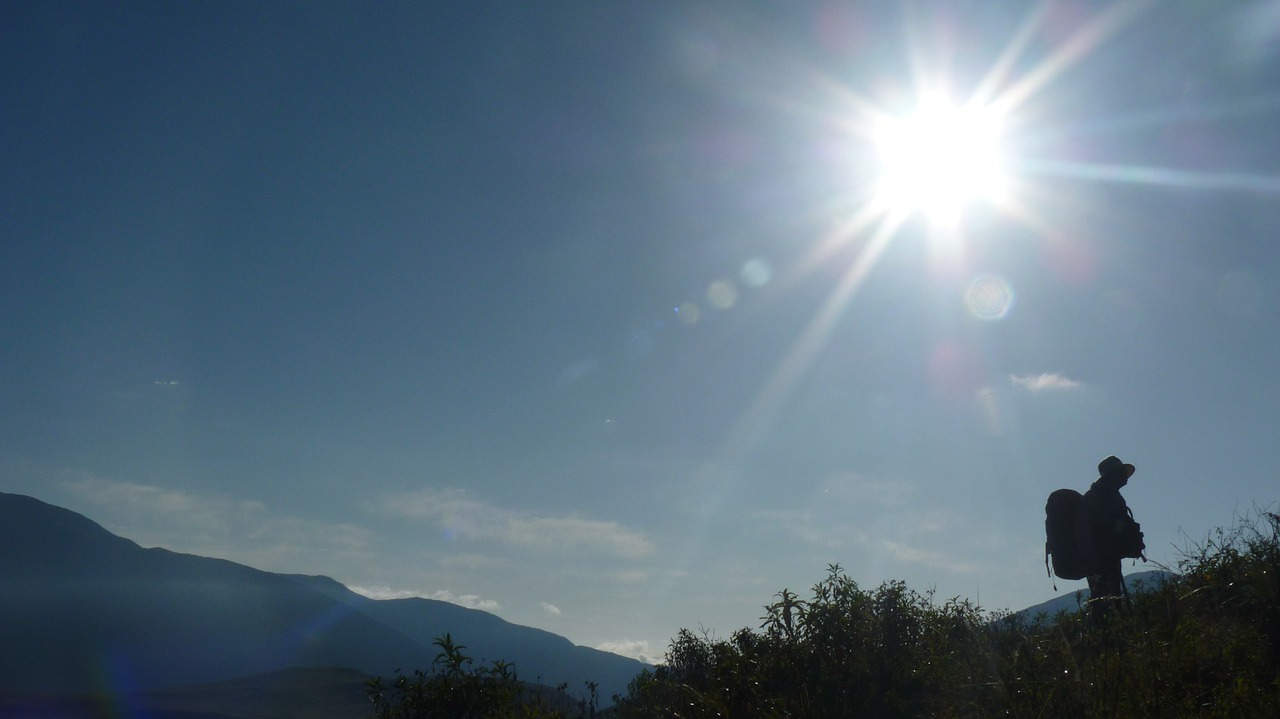
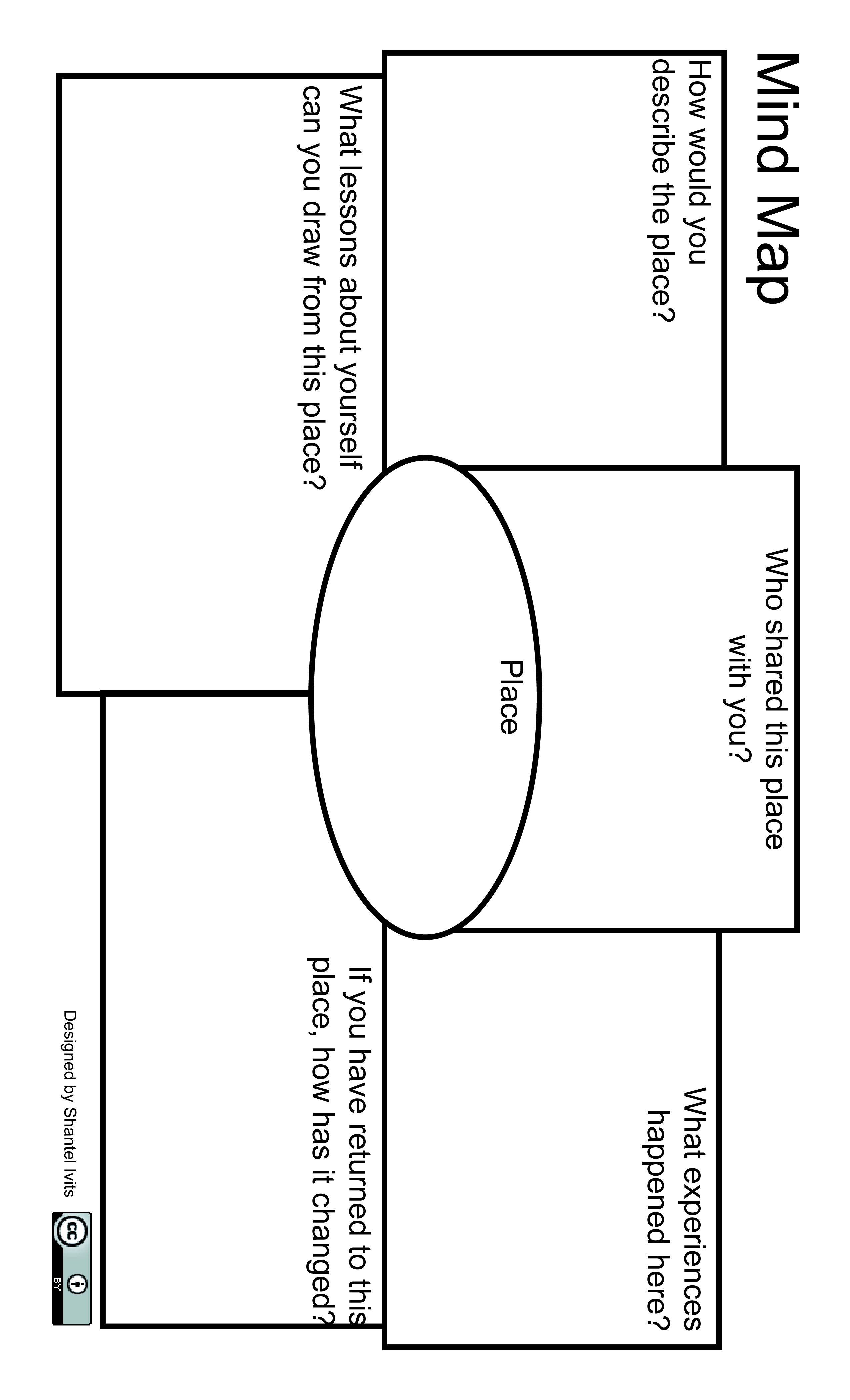
				 <div class="bcc-box bcc-highlight"><h3 itemprop="educationalUse">Learning&nbsp;Goals</h3> <p>In this chapter, you will learn to:</p> <ul><li>Use the suffixes -tion and -ize to understand meaning</li> <li>Draw inferences and conclusions</li> <li>Summarize information from a text</li> <li>Discuss and respond to the digital story <em>7th Word</em></li> <li>Identify and correct sentence fragments</li> <li>Use subject-verb agreement</li> <li>Write a descriptive paragraph that describes an important place in your life</li> </ul> </div> <h1><span style="color: #003366">Get Ready to Read<br /> </span></h1> <div class="wp-caption aligncenter" id="attachment_285" aria-describedby="caption-attachment-285" style="width: 450px"><a href="http://opentextbc.ca/abealf6/wp-content/uploads/sites/87/2015/06/hiking-76871_1280.jpg" data-url="http://opentextbc.ca/abealf6/wp-content/uploads/sites/87/2015/06/hiking-76871_1280.jpg"><img src="http://opentextbc.ca/abealf6/wp-content/uploads/sites/87/2015/06/hiking-76871_1280-1024x575.jpg" alt="http://pixabay.com/en/hiking-trekking-blue-sky-sun-76871/" class="wp-image-285" height="253" width="450" srcset="https://opentextbc.ca/abealf6/wp-content/uploads/sites/87/2015/06/hiking-76871_1280-1024x575.jpg 1024w, https://opentextbc.ca/abealf6/wp-content/uploads/sites/87/2015/06/hiking-76871_1280-300x169.jpg 300w, https://opentextbc.ca/abealf6/wp-content/uploads/sites/87/2015/06/hiking-76871_1280-65x37.jpg 65w, https://opentextbc.ca/abealf6/wp-content/uploads/sites/87/2015/06/hiking-76871_1280-225x126.jpg 225w, https://opentextbc.ca/abealf6/wp-content/uploads/sites/87/2015/06/hiking-76871_1280-350x197.jpg 350w, https://opentextbc.ca/abealf6/wp-content/uploads/sites/87/2015/06/hiking-76871_1280.jpg 1280w" sizes="auto, (max-width: 450px) 100vw, 450px" title="" /></a><div class="wp-caption-text" id="caption-attachment-285">Adventure</div></div> <ul><li>What is your favourite kind of story: funny, scary, dramatic, fantasy, or romantic?</li> <li>Try to think of a famous story (book, movie, TV show, video game) about: <ul><li>a relationship</li> <li>an adventure</li> <li>an accomplishment</li> <li>a special place</li> <li>a job or hobby</li> <li>a discovery</li> </ul> </li> <li>How do you feel when your instructor asks you to write a story?</li> </ul> <h1><span style="color: #003366">Vocabulary</span></h1> <h5><strong><span style="color: #003366">Scan <em><a href="http://opentextbc.ca/abealfreader6/chapter/whats-your-story/" target="_blank" data-url="http://opentextbc.ca/abealfreader6/chapter/whats-your-story/">What’s Your Story?</a></em>&nbsp;to find a bold word for each of the following.<br /> </span></strong></h5> <p style="padding-left: 30px">1. A group of people or things that are&nbsp;similar in some way</p> <p style="padding-left: 30px">2. A person who is involved in an activity</p> <p style="padding-left: 30px">3. Changed or affected by someone or something</p> <p style="padding-left: 30px">4. Produced or caused something</p> <p style="padding-left: 30px">5. Producing good effects on the body or mind</p> <p style="padding-left: 30px">6. So confusing or difficult you feel like you can’t do it</p> <p style="padding-left: 30px">7. Something that greatly affects people’s emotions</p> <p style="padding-left: 30px">8. Succeeding at something by working hard</p> <p style="padding-left: 30px">9. The act of saying who or what something is</p> <p style="padding-left: 30px">10. Very useful, helpful, or important</p> <div class="textbox shaded" style="text-align: center"><span style="color: #800080">Check your work with the Answer Key at the end of this chapter.</span></div> <div class="bcc-box bcc-success"><h3 itemprop="educationalUse">Word Pattern</h3> <p>–<strong>tion</strong> is a suffix that means “the act of.”</p> <p>–<strong>ize</strong> is a suffix that means “make or become.”</p> </div> <h5><strong><span style="color: #003366">Use the vocabulary words and affixes above to build a word for each&nbsp;definition below.</span></strong></h5> <p style="padding-left: 30px">11. ___________________________: the act of participating</p> <p style="padding-left: 30px">12. ___________________________: to make categories</p> <p style="padding-left: 30px">13. ___________________________: the act of identifying</p> <p style="padding-left: 30px">14. ___________________________: to make a drama</p> <div class="textbox shaded" style="text-align: center"><span style="color: #800080">Check your work with the Answer Key at the end of this chapter.</span></div> <h1><span style="color: #003366">Reading Strategy</span></h1> <p>Readers check their understanding of a text while they read. One strategy is to stop after each paragraph and try to retell the main idea in your own words.</p> <p>Try this strategy as you read <em><a href="http://opentextbc.ca/abealfreader6/chapter/whats-your-story/" target="_blank" data-url="http://opentextbc.ca/abealfreader6/chapter/whats-your-story/">What’s Your Story?</a></em></p> <h1><span style="color: #003366">Check Your Understanding</span></h1> <p>1. A good way to check your understanding of a text is to summarize it. A <strong>summary</strong> is an explanation of the main ideas of a text. A summary&nbsp;does not include details or examples. It does not include your opinion of the text. Write a summary of&nbsp;the six types of stories described in this chapter.</p> <p>2. An <strong>inference</strong> is an educated guess about what a text is saying, using your knowledge and logic. <em><a href="http://opentextbc.ca/abealfreader6/chapter/whats-your-story/" target="_blank" data-url="http://opentextbc.ca/abealfreader6/chapter/whats-your-story/">What’s Your Story</a></em>&nbsp;suggests that students should avoid exploring personal stories with lots of difficult emotions when at school. Make an inference about why this might be a good idea.</p> <p>3. As we read, we form our own thoughts about the text. We form judgments, or opinions. This is often called <strong>drawing conclusions</strong>. Draw a conclusion about&nbsp;which category <em><a href="https://www.youtube.com/watch?v=dB58Z85J70Q" target="_blank" data-url="https://www.youtube.com/watch?v=dB58Z85J70Q">7th Word</a></em> fits into best. Give reasons.</p> <div class="textbox shaded" style="text-align: center"><span style="color: #800080">Check your work with the Answer Key at the end of this chapter.</span></div> <div class="bcc-box bcc-info"><h3 itemprop="educationalUse">Writing Task</h3> <p>Another&nbsp;way to check our understanding of a text is to apply what we have learned. Try this:</p> <p style="padding-left: 30px">1. In the text, locate&nbsp;the five activities Joe Lambert recommends for finding a story to tell.</p> <p style="padding-left: 30px">2. Choose&nbsp;one of these activities and try it.</p> <p style="padding-left: 30px">3. Play with your story ideas until you find the seed of a story you want to tell.</p> <p style="padding-left: 30px">4. Write down the basics of your story idea, so that you don’t forget them&nbsp;later.</p> <p style="padding-left: 30px">5. Share your idea with your instructor.</p> </div> <h1><span style="color: #003366">Sentence Fragments&nbsp;</span></h1> <div class="bcc-box bcc-success"><h3 itemprop="educationalUse">Grammar Rule</h3> <p>A <strong>complete sentence</strong> needs three things: a subject, a verb, and a complete thought. If a sentence is missing one of these, it is called a <strong>fragment</strong>.&nbsp;Sentence fragments are a common mistake in people’s writing.</p> <ul><li>This sentence is missing a <em>subject</em>: Is the second-largest country in the world.</li> </ul> <p style="padding-left: 60px">Fixed: Canada is the second-largest country in the world.</p> <ul><li>This sentence is missing a <em>verb</em>: James Naismith, the inventor of basketball.</li> </ul> <p style="padding-left: 60px">Fixed: James Naismith was the inventor of basketball.</p> <ul><li>This sentence is missing a <em>complete thought</em>: Unless it rains.</li> </ul> <p style="padding-left: 60px">Fixed: We will have a picnic tomorrow unless it rains.</p> </div> <h5><strong><span style="color: #003366">Are these complete sentences or fragments?</span></strong></h5> <p style="padding-left: 30px">1. The photo on the wall.</p> <p style="padding-left: 30px">2. The car had a flat tire.</p> <p style="padding-left: 30px">3. In a hurry.</p> <p style="padding-left: 30px">4. Sleeping until noon.</p> <p style="padding-left: 30px">5. I think I lost a $50.00 bill.</p> <p style="padding-left: 30px">6. On Tuesday morning.</p> <p style="padding-left: 30px">7. A sale on tomatoes.</p> <p style="padding-left: 30px">8. Sofia’s ice cream melted in the sun.</p> <p style="padding-left: 30px">9. We are cheering for the Toronto Blue Jays.</p> <h5><strong><span style="color: #003366">What is missing from these sentences: a&nbsp;subject, verb, or complete thought?</span></strong></h5> <p style="padding-left: 30px">10. If you have a sunburn.</p> <p style="padding-left: 30px">11. Will send you an email.</p> <p style="padding-left: 30px">12. Since it is a holiday.</p> <p style="padding-left: 30px">13. The tiger at the zoo.</p> <p style="padding-left: 30px">14. When we walk the dog.</p> <div class="textbox shaded" style="text-align: center"><span style="color: #800080">Check your work with the Answer Key at the end of this chapter.</span></div> <h1><span style="color: #003366">Subject-Verb Agreement</span></h1> <div class="bcc-box bcc-success"><h3 itemprop="educationalUse">Grammar&nbsp;Rule</h3> <p>You have learned that <strong>subject</strong> refers to the people, places, or things that do the action in a sentence.&nbsp;In this lesson, you’ll study how verbs must “agree” with their subjects.</p> <ul><li>If the subject is singular, then the verb must be singular.<br /> Example: She listens to the radio every morning.<br /> <span style="text-decoration: underline">She</span> is the singular subject, and <span style="text-decoration: underline">listens</span> is the singular verb.</li> </ul> <ul><li>If the subject is plural, then the verb must be plural.<br /> Example: They listen to the radio every morning.<br /> <span style="text-decoration: underline">They</span> is the plural subject, and <span style="text-decoration: underline">listen</span> is the plural verb.</li> </ul> <p><strong>Collective nouns</strong> are nouns that name a group of persons or things. A collective noun is often considered to be singular.</p> <table style="height: 62px; width: 647px;"><tbody><tr><td style="text-align: center">band</td> <td style="text-align: center">crowd</td> <td style="text-align: center">gang</td> </tr> <tr><td style="text-align: center">staff</td> <td style="text-align: center">team</td> <td style="text-align: center">pair</td> </tr> </tbody> </table> <p><strong>Non-count nouns</strong> are things we cannot count. A non-count noun is considered to be singular.</p> <table style="height: 62px; width: 638px;"><tbody><tr><td style="text-align: center">news</td> <td style="text-align: center">water</td> <td style="text-align: center">advice</td> <td style="text-align: center">milk</td> <td style="text-align: center">bread</td> <td style="text-align: center">fruit</td> </tr> <tr><td style="text-align: center">rain</td> <td style="text-align: center">coffee</td> <td style="text-align: center">tea</td> <td style="text-align: center">clothing</td> <td style="text-align: center">sugar</td> <td style="text-align: center">rice</td> </tr> </tbody> </table> </div> <h5><strong><span style="color: #003366">Choose the verb that agrees with each subject.</span></strong></h5> <p style="padding-left: 30px">1. This coffee looks/look very strong.</p> <p style="padding-left: 30px">2. The band play/plays at the pub on Monday nights.</p> <p style="padding-left: 30px">3. We plans/plan to get married this summer.</p> <p style="padding-left: 30px">4. The staff at the hotel is/are always very friendly.</p> <p style="padding-left: 30px">5. Juan and Ted has/have two cats.</p> <p style="padding-left: 30px">6. The team is/are hoping to win the Stanley Cup.</p> <p style="padding-left: 30px">7. My new pair of shoes have/has gone missing.</p> <p style="padding-left: 30px">8. The water was/were so warm, I jumped right in.</p> <p style="padding-left: 30px">9. The fruit is/are ripe and ready to eat.</p> <p style="padding-left: 30px">10. The crowd go/goes wild when Omar goes on stage.</p> <p style="padding-left: 30px">11. The caves is/are fun to explore.</p> <div class="textbox shaded" style="text-align: center"><span style="color: #800080">Check your work with the Answer Key at the end of this chapter.</span></div> <div class="bcc-box bcc-success"><h3 itemprop="educationalUse">Grammar&nbsp;Rule</h3> <p>These pronouns go with singular verbs:</p> <table style="height: 62px; width: 635px;"><tbody><tr><td style="text-align: center">anybody</td> <td style="text-align: center">anyone</td> <td style="text-align: center">everybody</td> <td style="text-align: center">everyone</td> </tr> <tr><td style="text-align: center">nobody</td> <td style="text-align: center">no one</td> <td style="text-align: center">somebody</td> <td style="text-align: center">someone</td> </tr> </tbody> </table> <p style="padding-left: 30px">Example: Everybody is welcome at&nbsp;our party.<br /> <span style="text-decoration: underline">Everybody</span> is the singular subject and <span style="text-decoration: underline">i</span><span style="text-decoration: underline">s</span> is the singular verb.</p> <p>Subjects with the following words usually go with singular verbs:</p> <table style="height: 62px; width: 662px;"><tbody><tr><td style="text-align: center">any</td> <td style="text-align: center">each</td> <td style="text-align: center">either</td> <td style="text-align: center">every</td> </tr> <tr><td style="text-align: center">neither</td> <td style="text-align: center">none</td> <td style="text-align: center">one</td> <td style="text-align: center"></td> </tr> </tbody> </table> <p style="padding-left: 30px">Example: Each of the apples has a big brown spot.<br /> <span style="text-decoration: underline">Each</span> is the subject and&nbsp;<span style="text-decoration: underline">h</span><span style="text-decoration: underline">as</span> is the singular verb.</p> </div> <h5><strong><span style="color: #003366">Choose the verb that agrees with each subject.</span></strong></h5> <p style="padding-left: 30px">12. Neither of the fields is/are growing corn this year.</p> <p style="padding-left: 30px">13. Each chapter was/were better than the one before it.</p> <p style="padding-left: 30px">14. None of these socks have/has a match.</p> <p style="padding-left: 30px">15. One of these tickets is/are the winner.</p> <p style="padding-left: 30px">16. The buses get/gets very crowded at around 5:00 p.m.</p> <p style="padding-left: 30px">17. No one is/are sitting next to me on the plane.</p> <p style="padding-left: 30px">18. Somebody have/has left me a phone message.</p> <p style="padding-left: 30px">19. Everybody was/were late for the party.</p> <p style="padding-left: 30px">20. Stamps is/are expensive now.</p> <p style="padding-left: 30px">21. A book of stamps is/are $10.00.</p> <div class="textbox shaded" style="text-align: center"><span style="color: #800080">Check your work with the Answer Key at the end of this chapter.</span></div> <div class="bcc-box bcc-info"><h3 itemprop="educationalUse">Writing Task</h3> <p>Follow the steps below to write a descriptive&nbsp;paragraph on a place in your life.</p> <p><strong>1. Think:</strong>&nbsp;Brainstorm a big list of places that have played a role in your life. For example, the place could be a home, a town, a gathering place, a mountain, or a forest. Then, choose one place from your list and&nbsp;fill out the <a href="http://opentextbc.ca/abealf6/wp-content/uploads/sites/87/2015/07/Mind-Map3.pdf" data-url="http://opentextbc.ca/abealf6/wp-content/uploads/sites/87/2015/07/Mind-Map3.pdf">Mind Map</a>. Ask your instructor for a copy or open and print one from the link. You will also find a printable version in <a href="http://opentextbc.ca/abealf6/back-matter/graphic-organizers/" data-url="http://opentextbc.ca/abealf6/back-matter/graphic-organizers/">Appendix 1</a>.</p> <p><strong>2. Organize:</strong>&nbsp;Choose the&nbsp;best ideas from your Mind Map. Put a number next to each idea, to show what you will write about first, second, third, and so on.</p> <p><strong>3. Write:</strong>&nbsp;Follow&nbsp;your outline as you write&nbsp;a first draft of your descriptive&nbsp;paragraph.&nbsp;Don’t worry too much about spelling and grammar. Just get your ideas down in a way that makes sense. At this point, you may want to put your draft aside so you can look at it with fresh eyes later.</p> <p><strong>4. Edit:</strong>&nbsp;Use a different colour to make edits to your writing. Check to see how it sounds when you read it out loud. Is the meaning clear? Are there any details that are missing or off topic? Should you use different sentence types to make it flow more smoothly? Are there any words that you want to change to make your writing more alive? (Use a thesaurus to find more interesting vocabulary words.) Are all your sentences complete? Do you need to check the spelling of any words in a dictionary?</p> <p><strong>5. Rewrite</strong>:&nbsp;Write a final copy of your paragraph that includes all your edits. You may wish to type it on a computer. Finally, hand it in to your instructor.</p> </div> <div class="textbox shaded"><h2>Answer Key</h2> <table><tbody><tr><td colspan="2"><strong>Vocabulary</strong></td> </tr> <tr><td><strong>QUESTION</strong></td> <td><strong>ANSWER</strong></td> </tr> <tr><td>1</td> <td>category</td> </tr> <tr><td>2</td> <td>participant</td> </tr> <tr><td>3</td> <td>influenced</td> </tr> <tr><td>4</td> <td>generated</td> </tr> <tr><td>5</td> <td>therapeutic</td> </tr> <tr><td>6</td> <td>overwhelming</td> </tr> <tr><td>7</td> <td>dramatic</td> </tr> <tr><td>8</td> <td>achieving</td> </tr> <tr><td>9</td> <td>identifies</td> </tr> <tr><td>10</td> <td>valuable</td> </tr> <tr><td>11</td> <td>participation</td> </tr> <tr><td>12</td> <td>categorize</td> </tr> <tr><td>13</td> <td>identification</td> </tr> <tr><td>14</td> <td>dramatize</td> </tr> <tr><td colspan="2"><strong>Check Your Understanding&nbsp;&nbsp;</strong></td> </tr> <tr><td><strong>QUESTION</strong></td> <td><strong>ANSWER</strong></td> </tr> <tr><td>1</td> <td><em>What’s Your Story</em> describes six story types. Some&nbsp;stories are about someone important in a person’s&nbsp;life. Other stories are about adventures and what was&nbsp;realized along the way. There are stories about accomplishments and stories about an important place. There are stories about what a person does as a job, hobby, or volunteer. Finally, there are discovery stories about how&nbsp;a person learned something new.</td> </tr> <tr><td>2</td> <td>Answers may vary. It can be unsafe to explore difficult experiences when we do not have the right emotional supports around us. Sharing our difficult stories can trigger other people’s bad memories. We can feel embarrassed if we share&nbsp;information about ourselves that we later wish we had kept private.</td> </tr> <tr><td>3</td> <td>Answers may vary. <em>7th Word</em> may be described as a discovery story because Taté discovered that he knew&nbsp;a seventh word in the Lakota language.</td> </tr> <tr><td colspan="2"><b>Sentence Fragments</b></td> </tr> <tr><td><strong>QUESTION</strong></td> <td><strong>ANSWER</strong></td> </tr> <tr><td>1</td> <td>fragment</td> </tr> <tr><td>2</td> <td>sentence</td> </tr> <tr><td>3</td> <td>fragment</td> </tr> <tr><td>4</td> <td>fragment</td> </tr> <tr><td>5</td> <td>sentence</td> </tr> <tr><td>6</td> <td>fragment</td> </tr> <tr><td>7</td> <td>fragment</td> </tr> <tr><td>8</td> <td>sentence</td> </tr> <tr><td>9</td> <td>sentence</td> </tr> <tr><td>10</td> <td>complete thought</td> </tr> <tr><td>11</td> <td>subject</td> </tr> <tr><td>12</td> <td>complete thought</td> </tr> <tr><td>13</td> <td>verb</td> </tr> <tr><td>14</td> <td>complete thought</td> </tr> <tr><td colspan="2"><b>Subject Verb Agreement</b></td> </tr> <tr><td><strong>QUESTION</strong></td> <td><strong>ANSWER</strong></td> </tr> <tr><td>1</td> <td>This <strong>coffee</strong> <span style="text-decoration: underline">looks</span> very strong.</td> </tr> <tr><td>2</td> <td>The <strong>band</strong> <span style="text-decoration: underline">plays</span> at the pub on Monday nights.</td> </tr> <tr><td>3</td> <td><strong>We</strong> <span style="text-decoration: underline">plan</span> to get married this summer.</td> </tr> <tr><td>4</td> <td>The <strong>staff</strong> at the hotel <span style="text-decoration: underline">is</span> always very friendly.</td> </tr> <tr><td>5</td> <td><strong>Juan</strong> and <strong>Ted</strong> <span style="text-decoration: underline">have</span> two cats.</td> </tr> <tr><td>6</td> <td>The <strong>team</strong> <span style="text-decoration: underline">is</span> hoping to win the Stanley Cup.</td> </tr> <tr><td>7</td> <td>My new <strong>pair</strong> of shoes <span style="text-decoration: underline">has</span> gone missing.</td> </tr> <tr><td>8</td> <td>The <strong>water</strong> <span style="text-decoration: underline">was</span> so warm, I jumped right in.</td> </tr> <tr><td>9</td> <td>The <strong>fruit</strong> <span style="text-decoration: underline">is</span> ripe and ready to eat.</td> </tr> <tr><td>10</td> <td>The <strong>crowd</strong> <span style="text-decoration: underline">goes</span> wild when Omar goes on stage.</td> </tr> <tr><td>11</td> <td>The <strong>caves</strong> <span style="text-decoration: underline">are</span> fun to explore.</td> </tr> <tr><td>12</td> <td><strong>Neither</strong> of the fields <span style="text-decoration: underline">is</span> growing corn this year.</td> </tr> <tr><td>13</td> <td><strong>Each</strong> chapter <span style="text-decoration: underline">was</span> better than the one before it.</td> </tr> <tr><td>14</td> <td><strong>None</strong> of these socks <span style="text-decoration: underline">has</span> a match.</td> </tr> <tr><td>15</td> <td><strong>One</strong> of these tickets <span style="text-decoration: underline">is</span> the winner.</td> </tr> <tr><td>16</td> <td>The <strong>buses</strong> <span style="text-decoration: underline">get</span> very crowded at around 5:00 p.m.</td> </tr> <tr><td>17</td> <td><strong>No</strong> <strong>one</strong> <span style="text-decoration: underline">is</span> sitting next to me on the plane.</td> </tr> <tr><td>18</td> <td><strong>Somebody</strong> <span style="text-decoration: underline">has</span> left me a phone message.</td> </tr> <tr><td>19</td> <td><strong>Everybody</strong> <span style="text-decoration: underline">was</span> late for the party.</td> </tr> <tr><td>20</td> <td><strong>Stamps</strong> <span style="text-decoration: underline">are</span> expensive now.</td> </tr> <tr><td>21</td> <td>A <strong>book</strong> of stamps <span style="text-decoration: underline">is</span> $10.00.</td> </tr> </tbody> </table> </div> <h2>Attribution</h2> <p><strong>Adventure</strong><br /> <a href="http://pixabay.com/en/hiking-trekking-blue-sky-sun-76871/" data-url="http://pixabay.com/en/hiking-trekking-blue-sky-sun-76871/">Image</a>&nbsp;by&nbsp;<a class="hover_opacity" href="https://pixabay.com/en/users/sebadelval-18044/" data-url="https://pixabay.com/en/users/sebadelval-18044/">sebadelval</a>&nbsp;is in the <a href="https://pixabay.com/en/service/terms/#download_terms" data-url="https://pixabay.com/en/service/terms/#download_terms">public domain</a>.</p> 
	</div>


	</div>
<div class="chapter standard " id="chapter-what-do-you-think-your-story-means" title="What's Your Message?">
	<div class="chapter-title-wrap">
		<p class="chapter-number">3</p>
		<h1 class="chapter-title">What's Your Message?</h1>
								</div>
	<div class="ugc chapter-ugc">
				 <div class="bcc-box bcc-highlight"><h3 itemprop="educationalUse">Learning&nbsp;Goals</h3> <p>In this chapter, you will learn to:</p> <ul><li>Use the suffixes -less, -tion, -al, and -ful to understand the meaning of words</li> <li>Discuss and respond to the digital story <em>Go Around</em></li> <li>Analyze characters</li> <li>Use compound sentences</li> <li>Use semi-colons in compound sentences</li> <li>Write a narrative paragraph about a story from your childhood</li> </ul> </div> <div class="wp-caption aligncenter" id="attachment_287" aria-describedby="caption-attachment-287" style="width: 450px"><a href="http://opentextbc.ca/abealf6/wp-content/uploads/sites/87/2015/06/megaphone-50092_640.jpg" data-url="http://opentextbc.ca/abealf6/wp-content/uploads/sites/87/2015/06/megaphone-50092_640.jpg"><img src="http://opentextbc.ca/abealf6/wp-content/uploads/sites/87/2015/06/megaphone-50092_640.jpg" alt="http://pixabay.com/en/megaphone-shout-action-call-scream-50092/" class="wp-image-287" height="298" width="450" srcset="https://opentextbc.ca/abealf6/wp-content/uploads/sites/87/2015/06/megaphone-50092_640.jpg 640w, https://opentextbc.ca/abealf6/wp-content/uploads/sites/87/2015/06/megaphone-50092_640-300x199.jpg 300w, https://opentextbc.ca/abealf6/wp-content/uploads/sites/87/2015/06/megaphone-50092_640-65x43.jpg 65w, https://opentextbc.ca/abealf6/wp-content/uploads/sites/87/2015/06/megaphone-50092_640-225x149.jpg 225w, https://opentextbc.ca/abealf6/wp-content/uploads/sites/87/2015/06/megaphone-50092_640-350x232.jpg 350w" sizes="auto, (max-width: 450px) 100vw, 450px" title="" /></a><div class="wp-caption-text" id="caption-attachment-287">Megaphone</div></div> <h1><span style="color: #003366">Get Ready to Read</span></h1> <ul><li>Think back to stories you heard as a child. Share a story from your childhood that had a lesson.</li> <li>Think of an experience you had that taught you a lesson. What was the experience? What did you learn?</li> </ul> <h1><span style="color: #003366">Vocabulary</span></h1> <h5><strong><span style="color: #003366">Scan <em><a href="http://opentextbc.ca/abealfreader6/chapter/whatsyourmessage/" target="_blank" data-url="http://opentextbc.ca/abealfreader6/chapter/whatsyourmessage/">What’s Your Message</a> </em>to find a bold word for each of the following.<br /> </span></strong></h5> <p style="padding-left: 30px">1. An event that is not planned and causes harm</p> <p style="padding-left: 30px">2. An understanding of something, or the message of something</p> <p style="padding-left: 30px">3. Someone who puts energy into something</p> <p style="padding-left: 30px">4. Something used to treat pain or illness</p> <p style="padding-left: 30px">5. The people who watch, read, or listen to something</p> <p style="padding-left: 30px">6. Think carefully about something</p> <p style="padding-left: 30px">7. Full of meaning, importance, and value</p> <p style="padding-left: 30px">8. Eagerly using an opportunity</p> <p style="padding-left: 30px">9. Identified an illness in someone</p> <p style="padding-left: 30px">10. Looking at something closely to learn about it</p> <div class="textbox shaded" style="text-align: center"><span style="color: #800080">Check your work with the Answer Key at the end of this chapter.</span></div> <div class="bcc-box bcc-success"><h3 itemprop="educationalUse">Word Patterns</h3> <p>–<strong>less</strong> is a suffix that means “without.”</p> <p>–<strong>tion</strong> is a suffix that means “the act of.”</p> <p>–<strong>al</strong> is a suffix that means “related to.”</p> <p>–<strong>ful</strong> is a suffix that means “full of.”</p> </div> <h5><strong><span style="color: #003366">Use the vocabulary words and affixes above to build a word for each&nbsp;definition below.</span></strong></h5> <p style="padding-left: 30px">11. ___________________________: full of insight</p> <p style="padding-left: 30px">12. ___________________________: the act of examining</p> <p style="padding-left: 30px">13. ___________________________: the act of reflecting</p> <p style="padding-left: 30px">14. ___________________________: related to medicine</p> <p style="padding-left: 30px">15. ___________________________: to have no meaning</p> <div class="textbox shaded" style="text-align: center"><span style="color: #800080">Check your work with the Answer Key at the end of this chapter.</span></div> <h1><span style="color: #003366">Reading Strategy</span></h1> <p>Readers check their understanding of a text while they read. One strategy is to stop a few times in the text to ask yourself: Can I answer any of the five W questions: who, what, where, when, or why? If you are able to answer at least three of these questions, then you are thinking about what you are reading.</p> <p>Try this strategy as you read <em><a href="http://opentextbc.ca/abealfreader6/chapter/whatsyourmessage/" target="_blank" data-url="http://opentextbc.ca/abealfreader6/chapter/whatsyourmessage/">What’s Your Message?</a></em></p> <h1><span style="color: #003366">Check Your Understanding</span></h1> <p style="padding-left: 30px">1. According to the text, what kinds of stories do we tend to remember best?</p> <p style="padding-left: 30px">2. What are two purposes of storytelling mentioned in the text?</p> <p style="padding-left: 30px">3. What two things caused Cathy to feel afraid to speak up and use her voice?</p> <p style="padding-left: 30px">4. How does&nbsp;<em><a href="https://www.youtube.com/watch?v=cVuF6lHZ-BE" data-url="https://www.youtube.com/watch?v=cVuF6lHZ-BE">Go Around</a></em> show who Cathy is, and why she is who she is?</p> <div class="textbox shaded" style="text-align: center"><span style="color: #800080">Check your work with the Answer Key at the end of this chapter.</span></div> <div class="bcc-box bcc-info"><h3 itemprop="educationalUse">Writing Task</h3> <p>Think about the seed of a story you selected in the last chapter. How does this story show who you are? How does this story show why you are who you are?</p> </div> <h1><span style="color: #003366">Compound Sentences</span></h1> <p>In this book, you are learning to write simple sentences, compound sentences, and complex sentences. Using a variety of sentence types can make your writing more interesting. A variety of sentences can also help your writing flow more smoothly.</p> <div class="bcc-box bcc-success"><h3 itemprop="educationalUse">Grammar&nbsp;Rule</h3> <p>A <strong>compound sentence</strong> is made by joining two complete sentences using a comma and one of these joining words: <em>for, and, nor, but, or, yet,</em> or <em>so</em>. To remember these joining words, think of the word FANBOYS.</p> <table><tbody><tr><td><strong>For</strong></td> <td>Use to explain</td> <td>I will not ride my bike today<strong>, for</strong>&nbsp;it is raining.</td> </tr> <tr><td><strong>And</strong></td> <td>Use to add information</td> <td>Today I visited my sister<strong>, and</strong>&nbsp;we had a really good talk.</td> </tr> <tr><td><strong>Nor</strong></td> <td>Use to list items that are not options</td> <td>I will not sell my ring<strong>, nor</strong>&nbsp;will I give it away.</td> </tr> <tr><td><strong>But</strong></td> <td>Use to show contrast</td> <td>We have run out of blueberry pie<strong>, but</strong>&nbsp;we still have apple pie.</td> </tr> <tr><td><strong>Or</strong></td> <td>Use to list options</td> <td>Do you want to watch&nbsp;<em>Jaws</em><strong>, or</strong>&nbsp;would you rather watch&nbsp;<em>Titanic</em>?</td> </tr> <tr><td><strong>Yet</strong></td> <td>Use to add surprising information</td> <td>It takes 42 muscles to frown<strong>, yet</strong>&nbsp;it only takes 17 muscles to smile.</td> </tr> <tr><td><strong>So</strong></td> <td>Use to show cause and effect</td> <td>I had a cold<strong>, so&nbsp;</strong>I drank some orange juice.</td> </tr> </tbody> </table> </div> <h5><strong><span style="color: #003366">Combine the two complete sentences into one compound sentence. Replace the period with a comma and one of the appropriate FANBOYS.</span></strong></h5> <p style="padding-left: 30px">1. The heat was too much. I took a cold shower.</p> <p style="padding-left: 30px">2. The Canadian North is called the Land of the Midnight Sun. Sometimes the sun shines all day and all night.</p> <p style="padding-left: 30px">3. It was a very expensive restaurant. The service was terrible.</p> <p style="padding-left: 30px">4. We wanted to put a vegetable garden in the yard. The landlord said we could.</p> <p style="padding-left: 30px">5. I want to travel to the United States. I don’t have a passport.</p> <p style="padding-left: 30px">6. Do you want a marshmallow? Would you rather roast a wiener?</p> <div class="textbox shaded" style="text-align: center"><span style="color: #800080">Check your work with the Answer Key at the end of this chapter.</span></div> <h1><span style="color: #003366">Semi-Colons</span></h1> <div class="bcc-box bcc-success"><h3 itemprop="educationalUse">Grammar&nbsp;Rule</h3> <p>You have learned to write complete sentences. You have also learned to write compound sentences by joining two complete sentences together using a comma and one of the FANBOYS. You can also&nbsp;use a <strong>semi-colon</strong> to join two complete sentences together. This is only done when the two sentences are closely related.</p> <p>For example, it is correct to write:</p> <ul><li>I will not ride my bike today. It is raining.</li> <li>I will not ride my bike today, for it is raining.</li> <li>I will not ride my bike today<strong>;</strong> it is raining.</li> </ul> <ul><li>It takes 42 muscles to frown. It only takes 17 muscles to smile.</li> <li>It takes 42 muscles to frown, but it only takes 17 muscles to smile.</li> <li>It takes 42 muscles to frown<strong>;</strong> it only takes 17 muscles to smile.</li> </ul> </div> <h5><strong><span style="color: #003366">Below are some simple sentences and compound sentences. Rewrite them using a semi-colon.</span></strong></h5> <p style="padding-left: 30px">1. It was a miracle that Frida Kahlo lived past 18 years old. She was in a terrible bus accident that broke her spine in three places.</p> <p style="padding-left: 30px">2. Frida was in a lot of pain, so a nurse brought her some art supplies to take her mind off it.</p> <p style="padding-left: 30px">3. Frida used painting as a way to express the pain she was in. Her art spoke to people even though she had no special training as an artist.</p> <p style="padding-left: 30px">4. Frida’s paintings became famous, and she is now known as one of Mexico’s greatest artists.</p> <p style="padding-left: 30px">5. Frida spent a lot of time in bed, so she surrounded herself with monkeys, dogs, parrots, and frogs for company.</p> <p style="padding-left: 30px">6. Frida Kahlo’s house is now a museum. People can go there to see many of her original paintings.</p> <div class="wp-caption aligncenter" id="attachment_346" aria-describedby="caption-attachment-346" style="width: 216px"><a href="http://opentextbc.ca/abealf6/wp-content/uploads/sites/87/2015/06/Frida1.jpg" data-url="http://opentextbc.ca/abealf6/wp-content/uploads/sites/87/2015/06/Frida1.jpg"><img src="http://opentextbc.ca/abealf6/wp-content/uploads/sites/87/2015/06/Frida1-216x300.jpg" alt="https://upload.wikimedia.org/wikipedia/commons/c/cf/Frida1.jpg" class="wp-image-346 size-medium" height="300" width="216" srcset="https://opentextbc.ca/abealf6/wp-content/uploads/sites/87/2015/06/Frida1-216x300.jpg 216w, https://opentextbc.ca/abealf6/wp-content/uploads/sites/87/2015/06/Frida1-738x1024.jpg 738w, https://opentextbc.ca/abealf6/wp-content/uploads/sites/87/2015/06/Frida1-65x90.jpg 65w, https://opentextbc.ca/abealf6/wp-content/uploads/sites/87/2015/06/Frida1-225x312.jpg 225w, https://opentextbc.ca/abealf6/wp-content/uploads/sites/87/2015/06/Frida1-350x486.jpg 350w, https://opentextbc.ca/abealf6/wp-content/uploads/sites/87/2015/06/Frida1.jpg 1153w" sizes="auto, (max-width: 216px) 100vw, 216px" title="" /></a><div class="wp-caption-text" id="caption-attachment-346">Frida Kahlo</div></div> <div class="textbox shaded" style="text-align: center"><span style="color: #800080">Check your work with the Answer Key at the end of this chapter.</span></div> <div class="bcc-box bcc-info"><h3 itemprop="educationalUse">Writing Task</h3> <p>Follow the steps below to write a narrative&nbsp;paragraph about a story from your childhood that has a lesson.</p> <p><strong>1. Think:</strong>&nbsp;Brainstorm a list of stories you heard as a child. Think of ones that are meant to teach&nbsp;a lesson.&nbsp;&nbsp;Then, choose the one story you want to tell.</p> <p><strong>2. Organize:</strong>&nbsp;Ask your instructor for the <a href="http://opentextbc.ca/abealf6/wp-content/uploads/sites/87/2015/07/Tell-a-Story2.pdf" data-url="http://opentextbc.ca/abealf6/wp-content/uploads/sites/87/2015/07/Tell-a-Story2.pdf">Tell a Story</a> worksheet, or open and print one from the link. You will also find a printable version in <a href="http://opentextbc.ca/abealf6/back-matter/graphic-organizers/" data-url="http://opentextbc.ca/abealf6/back-matter/graphic-organizers/">Appendix 1</a>. Fill in&nbsp;the outline with the story events. Put them in the correct order.</p> <p><strong>3. Write:</strong>&nbsp;Follow&nbsp;your outline as you write&nbsp;a first draft of your narrative&nbsp;paragraph.&nbsp;Don’t worry too much about spelling and grammar. Just get your ideas down in a way that makes sense. At this point, you may want to put your draft aside so you can look at it with fresh eyes later.</p> <p><strong>4. Edit:</strong>&nbsp;Use a different colour to make edits to your writing. Check to see how it sounds when you read it out loud. Is the meaning clear? Are there any details that are missing or off topic? Should you use different sentence types to make it flow more smoothly? Are there any words that you want to change to make your writing more alive? (Use a thesaurus to find more interesting vocabulary.) Are all your sentences complete? Do you need to check the spelling of any words in a dictionary?</p> <p><strong>5. Rewrite</strong>:&nbsp;Write a final copy of your paragraph that includes all your edits. You may wish to type it on a computer. Finally, hand it in to your instructor.</p> </div> <div class="textbox shaded"><h2>Answer Key</h2> <table><tbody><tr><td colspan="2"><strong>Vocabulary</strong></td> </tr> <tr><td><strong>QUESTION</strong></td> <td><strong>ANSWER</strong></td> </tr> <tr><td>1</td> <td>accident</td> </tr> <tr><td>2</td> <td>insight</td> </tr> <tr><td>3</td> <td>active</td> </tr> <tr><td>4</td> <td>medicine</td> </tr> <tr><td>5</td> <td>audience</td> </tr> <tr><td>6</td> <td>reflect</td> </tr> <tr><td>7</td> <td>meaningful</td> </tr> <tr><td>8</td> <td>embracing</td> </tr> <tr><td>9</td> <td>diagnosed</td> </tr> <tr><td>10</td> <td>examining</td> </tr> <tr><td>11</td> <td>insightful</td> </tr> <tr><td>12</td> <td>examination</td> </tr> <tr><td>13</td> <td>reflection</td> </tr> <tr><td>14</td> <td>medical or medicinal</td> </tr> <tr><td>15</td> <td>meaningless</td> </tr> <tr><td colspan="2"><strong>Check Your Understanding&nbsp;&nbsp;</strong></td> </tr> <tr><td><strong>QUESTION</strong></td> <td><strong>ANSWER</strong></td> </tr> <tr><td>1</td> <td>The&nbsp;kinds of stories we tend to remember best are the ones that hold an insight into what it means to be human.</td> </tr> <tr><td>2</td> <td>One purpose of&nbsp;storytelling mentioned in the text is for the storyteller&nbsp;to share an important lesson with the audience. A second purpose of storytelling is for the storyteller&nbsp;to find a lesson.</td> </tr> <tr><td>3</td> <td>Cathy felt afraid to speak up and use her voice because she was in an abusive relationship. She also once warned&nbsp;a pilot that the helicopter was in danger, but he did not listen.</td> </tr> <tr><td>4</td> <td>Answers may vary.&nbsp;<em>Go Around</em>&nbsp;shows that Cathy is strong and brave. She was strong and brave enough to speak up when a situation was not safe, even though&nbsp;she had a history of staying quiet or being unheard. An experience of being listened to helped her be the person she is today: someone who is confident and able to use her voice.</td> </tr> <tr><td colspan="2"><b>Compound Sentences</b></td> </tr> <tr><td><strong>QUESTION</strong></td> <td><strong>ANSWER</strong></td> </tr> <tr><td>1</td> <td>The heat was too much<strong>, so</strong> I took a cold shower.</td> </tr> <tr><td>2</td> <td>The Canadian North is called the Land of the Midnight Sun<strong>, for&nbsp;</strong>sometimes the sun shines all day and all night.</td> </tr> <tr><td>3</td> <td>It was a very expensive restaurant<strong>, yet</strong> the service was terrible. (<strong>but</strong> is also possible)</td> </tr> <tr><td>4</td> <td>We wanted to put a vegetable garden in the yard<strong>, and</strong> the landlord said we could.</td> </tr> <tr><td>5</td> <td>I want to travel to the United States<strong>, but</strong> I don’t have a passport.</td> </tr> <tr><td>6</td> <td>Do you want a marshmallow<strong>, or</strong> would you rather roast a wiener?</td> </tr> <tr><td colspan="2"><b>Semi-Colons</b></td> </tr> <tr><td><strong>QUESTION</strong></td> <td><strong>ANSWER</strong></td> </tr> <tr><td>1</td> <td>It was a miracle that Frida Kahlo lived past 18 years old; she was in a terrible bus accident that broke her spine in three places.</td> </tr> <tr><td>2</td> <td>Frida was in a lot of pain; a nurse brought her some art supplies to take her mind off it.</td> </tr> <tr><td>3</td> <td>Frida used painting as a way to express the pain she was in; her art spoke to people even though she had no special training as an artist.</td> </tr> <tr><td>4</td> <td>Frida’s paintings became famous; she is now known as one of Mexico’s greatest artists.</td> </tr> <tr><td>5</td> <td>Frida spent a lot of time in bed; she surrounded herself with monkeys, dogs, parrots, and frogs for company.</td> </tr> <tr><td>6</td> <td>Frida Kahlo’s house is now a museum; people can go there to see many of her original paintings.</td> </tr> </tbody> </table> </div> <h2>Attributions</h2> <p><strong>Megaphone</strong><br /> <a href="http://pixabay.com/en/megaphone-shout-action-call-scream-50092/" data-url="http://pixabay.com/en/megaphone-shout-action-call-scream-50092/">Image</a> by&nbsp;<a class="hover_opacity" href="https://pixabay.com/en/users/mickyroo-5398/" data-url="https://pixabay.com/en/users/mickyroo-5398/">mickyroo</a>&nbsp;is in the <a href="https://pixabay.com/en/service/terms/#download_terms" data-url="https://pixabay.com/en/service/terms/#download_terms">public domain</a>.</p> <p><strong>Frida Kahlo</strong><br /> <a href="https://commons.wikimedia.org/wiki/File:Frida1.jpg" data-url="https://commons.wikimedia.org/wiki/File:Frida1.jpg">Frida1</a> by&nbsp;<a href="https://commons.wikimedia.org/w/index.php?title=User:Caferspar&amp;action=edit&amp;redlink=1" class="new" title="User:Caferspar (page does not exist)" data-url="https://commons.wikimedia.org/w/index.php?title=User:Caferspar&amp;action=edit&amp;redlink=1">Caferspar</a>&nbsp;is used under a <a href="https://creativecommons.org/licenses/by-sa/4.0/deed.en" data-url="https://creativecommons.org/licenses/by-sa/4.0/deed.en">CC BY SA 4.0 </a>license.</p> 
	</div>


	</div>
<div class="chapter standard " id="chapter-setting-the-tone" title="Setting the Tone">
	<div class="chapter-title-wrap">
		<p class="chapter-number">4</p>
		<h1 class="chapter-title">Setting the Tone</h1>
								</div>
	<div class="ugc chapter-ugc">
				 <div class="bcc-box bcc-highlight"><h3 itemprop="educationalUse">Learning&nbsp;Goals</h3> <p>In this chapter, you will learn to:</p> <ul><li>Use the affixes dis-, -ence, -ment, and -tion to understand words</li> <li>Identify the tone of a text</li> <li>Discuss and respond to the digital story <em>Tanya</em></li> <li>Compare and contrast</li> <li>Identify and correct run-on sentences</li> <li>Use quotation marks</li> <li>Write a how-to paragraph about being a good listener</li> </ul> </div> <div class="wp-caption aligncenter" id="attachment_289" aria-describedby="caption-attachment-289" style="width: 450px"><a href="http://opentextbc.ca/abealf6/wp-content/uploads/sites/87/2015/06/warm-feeling-651473_1280.jpg" data-url="http://opentextbc.ca/abealf6/wp-content/uploads/sites/87/2015/06/warm-feeling-651473_1280.jpg"><img src="http://opentextbc.ca/abealf6/wp-content/uploads/sites/87/2015/06/warm-feeling-651473_1280-1024x681.jpg" alt="http://pixabay.com/en/warm-feeling-great-grandfather-sweet-651473/" class="wp-image-289" height="299" width="450" srcset="https://opentextbc.ca/abealf6/wp-content/uploads/sites/87/2015/06/warm-feeling-651473_1280-1024x681.jpg 1024w, https://opentextbc.ca/abealf6/wp-content/uploads/sites/87/2015/06/warm-feeling-651473_1280-300x199.jpg 300w, https://opentextbc.ca/abealf6/wp-content/uploads/sites/87/2015/06/warm-feeling-651473_1280-65x43.jpg 65w, https://opentextbc.ca/abealf6/wp-content/uploads/sites/87/2015/06/warm-feeling-651473_1280-225x150.jpg 225w, https://opentextbc.ca/abealf6/wp-content/uploads/sites/87/2015/06/warm-feeling-651473_1280-350x233.jpg 350w, https://opentextbc.ca/abealf6/wp-content/uploads/sites/87/2015/06/warm-feeling-651473_1280.jpg 1280w" sizes="auto, (max-width: 450px) 100vw, 450px" title="" /></a><div class="wp-caption-text" id="caption-attachment-289">Happiness</div></div> <h1><span style="color: #003366;">Get Ready to Read</span></h1> <ul><li>In one minute, make a list of as many feeling words as you can think of, such as “happy” or “sad.”</li> <li>How do people benefit from sharing their feelings with other people?</li> <li>Do you like talking to others about your feelings? Why or why not?</li> </ul> <h1><span style="color: #003366;">Vocabulary</span></h1> <h5><strong><span style="color: #003366;">Scan&nbsp;<em><a href="http://opentextbc.ca/abealfreader6/chapter/setting-the-tone/" target="_blank" rel="noopener" data-url="http://opentextbc.ca/abealfreader6/chapter/setting-the-tone/">Setting the Tone</a>&nbsp;</em>to find a bold word for each of the following.<br /> </span></strong></h5> <p style="padding-left: 30px;">1. As a whole or in general</p> <p style="padding-left: 30px;">2. Described as larger or greater than it really is</p> <p style="padding-left: 30px;">3. Entertained</p> <p style="padding-left: 30px;">4. Feeling like you can do something well</p> <p style="padding-left: 30px;">5. Sadness from being apart from other people</p> <p style="padding-left: 30px;">6. To be very interested in something or someone</p> <p style="padding-left: 30px;">7. To have power</p> <p style="padding-left: 30px;">8. Influenced by someone in a good way</p> <p style="padding-left: 30px;">9. Very excited and happy</p> <p style="padding-left: 30px;">10. Wanting to learn more about something or someone</p> <p style="padding-left: 30px;">11. Pretending, cheating, or lying</p> <div class="textbox shaded" style="text-align: center;"><span style="color: #800080;">Check your work with the Answer Key at the end of this chapter.</span></div> <div class="bcc-box bcc-success"><h3 itemprop="educationalUse">Word Patterns</h3> <p><strong>dis</strong>– is a prefix that means “opposite of.”</p> <p>–<strong>ence</strong> is a suffix that means “having the quality of.”</p> <p>–<strong>ment</strong> is a suffix that means “a state or process.”</p> <p>–<strong>tion</strong> is a suffix that means “the act of.”</p> </div> <h5><strong><span style="color: #003366;">Use the vocabulary words and affixes above to build a word for each&nbsp;definition below.</span></strong></h5> <p style="padding-left: 30px;">12. ___________________________: the opposite of dishonest</p> <p style="padding-left: 30px;">13. ___________________________: the act of exaggerating</p> <p style="padding-left: 30px;">14. ___________________________:&nbsp;having a confident feeling</p> <p style="padding-left: 30px;">15. ___________________________:&nbsp;the state of being empowered or the process of becoming empowered</p> <div class="textbox shaded" style="text-align: center;"><span style="color: #800080;">Check your work with the Answer Key at the end of this chapter.</span></div> <div class="wp-caption aligncenter" id="attachment_296" aria-describedby="caption-attachment-296" style="width: 500px"><a href="http://opentextbc.ca/abealf6/wp-content/uploads/sites/87/2015/06/tone3.jpg" data-url="http://opentextbc.ca/abealf6/wp-content/uploads/sites/87/2015/06/tone3.jpg"><img src="http://opentextbc.ca/abealf6/wp-content/uploads/sites/87/2015/06/tone3.jpg" alt="tone3" class="wp-image-296" height="98" width="500" srcset="https://opentextbc.ca/abealf6/wp-content/uploads/sites/87/2015/06/tone3.jpg 722w, https://opentextbc.ca/abealf6/wp-content/uploads/sites/87/2015/06/tone3-300x59.jpg 300w, https://opentextbc.ca/abealf6/wp-content/uploads/sites/87/2015/06/tone3-65x13.jpg 65w, https://opentextbc.ca/abealf6/wp-content/uploads/sites/87/2015/06/tone3-225x44.jpg 225w, https://opentextbc.ca/abealf6/wp-content/uploads/sites/87/2015/06/tone3-350x68.jpg 350w" sizes="auto, (max-width: 500px) 100vw, 500px" title="" /></a><div class="wp-caption-text" id="caption-attachment-296">Emotions</div></div> <h1><span style="color: #003366;">Reading Strategy</span></h1> <p>Readers check their understanding of a text while they read. When you struggle to figure out a word, don’t just skip it. Try this strategy instead. When you see a word you do not know, underline it. Go back and read the words before it. Then read the words after it. Now think of a word that would make sense for the word you underlined. Does it sound right? Does it make sense?</p> <p>Try this strategy as you read <em><a href="http://opentextbc.ca/abealfreader6/chapter/setting-the-tone/" target="_blank" rel="noopener" data-url="http://opentextbc.ca/abealfreader6/chapter/setting-the-tone/">Setting the Tone</a>.</em></p> <h1><span style="color: #003366;">Check Your Understanding</span></h1> <p style="padding-left: 30px;">1. How&nbsp;do stories reduce the distance between people?</p> <p style="padding-left: 30px;">2. What does tone refer to?</p> <p style="padding-left: 30px;">3. Draw a conclusion about&nbsp;some of the feelings Monte experiences in <em><a href="https://www.youtube.com/watch?v=D0zA9q7qJZc" data-url="https://www.youtube.com/watch?v=D0zA9q7qJZc">Tanya</a></em>.</p> <p style="padding-left: 30px;">4. How would you describe the overall tone of <em><a href="https://www.youtube.com/watch?v=D0zA9q7qJZc" data-url="https://www.youtube.com/watch?v=D0zA9q7qJZc">Tanya</a></em>?</p> <p style="padding-left: 30px;">5. <strong>Compare</strong> means to look at how two things are the same. <strong>Contrast</strong> means to look at how two things are different. Make a&nbsp;chart like the one below to compare and contrast <em><a href="https://www.youtube.com/watch?v=PYoBIV75aPw" data-url="https://www.youtube.com/watch?v=PYoBIV75aPw">All the Truly Important Things</a></em> and <em><a href="https://www.youtube.com/watch?v=D0zA9q7qJZc" data-url="https://www.youtube.com/watch?v=D0zA9q7qJZc">Tanya</a></em>.</p> <table style="height: 152px; width: 636px;"><tbody><tr><td></td> <td><em>All the Truly Important Things</em></td> <td><em>Tanya</em></td> </tr> <tr><td>What illness plays an important role in the story?</td> <td></td> <td></td> </tr> <tr><td>Whose point of view is the story told from?</td> <td></td> <td></td> </tr> <tr><td>What kind of relationship is the main character looking for?</td> <td></td> <td></td> </tr> <tr><td>What important message is given to the main character?</td> <td></td> <td></td> </tr> </tbody> </table> <div class="textbox shaded" style="text-align: center;"><span style="color: #800080;">Check your work with the Answer Key at the end of this chapter.</span></div> <div class="bcc-box bcc-info"><h3 itemprop="educationalUse">Writing Task</h3> <p>Think back to the events in your story. What feelings did you have during those moments?&nbsp;What overall tone would you like to create in your story?</p> </div> <h1><span style="color: #003366;">Run-On Sentences</span></h1> <div class="bcc-box bcc-success"><h3 itemprop="educationalUse">Grammar&nbsp;Rule</h3> <p>When two sentences are combined without a comma and one of the FANBOYS, or without a semi-colon, the result is a <strong>run-on sentence</strong>. Run-on sentences are a common sentence writing error.</p> <p>Example:&nbsp;The blue whale is the biggest animal in the world a baby blue whale is bigger than an elephant.</p> <p>This run-on sentence can be fixed in three ways:</p> <ol><li>Separate the two complete sentences with a <span style="text-decoration: underline;">period</span>:<br /> The blue whale is the biggest animal in the world. A baby blue whale is bigger than an elephant.</li> <li>Separate the two sentences with a <span style="text-decoration: underline;">comma</span> and one of the <span style="text-decoration: underline;">FANBOYS</span>:<br /> The blue whale is the biggest animal in the world, and a baby blue whale is bigger than an elephant.</li> <li>Separate the two complete sentences with a <span style="text-decoration: underline;">semi-colon</span>:<br /> The blue whale is the biggest animal in the world; a baby blue whale is bigger than an elephant.</li> </ol> </div> <h5><span style="color: #003366;"><strong>The sentences below are run-on sentences. Correct them using one of the strategies above.</strong></span></h5> <p style="padding-left: 30px;">1. People thought the <em>Titanic</em> could not sink but it sank during its first trip across the ocean.</p> <p style="padding-left: 30px;">2. It was a calm and clear night yet the <em>Titanic</em> hit an iceberg.</p> <p style="padding-left: 30px;">3. There were about 2,200 people on the <em>Titanic</em> the lifeboats could only carry about 1,100 people.</p> <p style="padding-left: 30px;">4. The <em>Titanic</em> called for help the nearby ships did not get there fast enough.</p> <p style="padding-left: 30px;">5. That night, 675 people were saved and 1,503 people died.</p> <div class="wp-caption aligncenter" id="attachment_350" aria-describedby="caption-attachment-350" style="width: 300px"><a href="http://opentextbc.ca/abealf6/wp-content/uploads/sites/87/2015/06/Titanic-Cobh-Harbour-1912.jpg" data-url="http://opentextbc.ca/abealf6/wp-content/uploads/sites/87/2015/06/Titanic-Cobh-Harbour-1912.jpg"><img src="http://opentextbc.ca/abealf6/wp-content/uploads/sites/87/2015/06/Titanic-Cobh-Harbour-1912-300x135.jpg" alt="https://upload.wikimedia.org/wikipedia/commons/d/db/Titanic-Cobh-Harbour-1912.JPG" class="wp-image-350 size-medium" height="135" width="300" srcset="https://opentextbc.ca/abealf6/wp-content/uploads/sites/87/2015/06/Titanic-Cobh-Harbour-1912-300x135.jpg 300w, https://opentextbc.ca/abealf6/wp-content/uploads/sites/87/2015/06/Titanic-Cobh-Harbour-1912-1024x460.jpg 1024w, https://opentextbc.ca/abealf6/wp-content/uploads/sites/87/2015/06/Titanic-Cobh-Harbour-1912-65x29.jpg 65w, https://opentextbc.ca/abealf6/wp-content/uploads/sites/87/2015/06/Titanic-Cobh-Harbour-1912-225x101.jpg 225w, https://opentextbc.ca/abealf6/wp-content/uploads/sites/87/2015/06/Titanic-Cobh-Harbour-1912-350x157.jpg 350w" sizes="auto, (max-width: 300px) 100vw, 300px" title="" /></a><div class="wp-caption-text" id="caption-attachment-350"><em>Titanic</em></div></div> <div class="textbox shaded" style="text-align: center;"><span style="color: #800080;">Check your work with the Answer Key at the end of this chapter.</span></div> <h1><span style="color: #003366;">Quotation Marks</span></h1> <div class="bcc-box bcc-success"><h3 itemprop="educationalUse">Grammar Rule</h3> <p>A <strong>direct quotation</strong> gives the exact words of a speaker.</p> <p>Cathy said<strong>, “O</strong>ne of the things that <strong>I</strong> loved about being a flight nurse was that <strong>my</strong> opinion really mattered<strong>.”</strong></p> <p>An <strong>indirect quotation</strong> gives the speaker’s message using different words.</p> <p>Cathy said that one of the things <strong>she</strong> loved about being a flight nurse was that <strong>her</strong> opinion really mattered.</p> </div> <h5><strong><span style="color: #003366;">1. Which of these sentences have direct quotations?</span></strong></h5> <p style="padding-left: 30px;">a. The pilot commented, “They are putting us down in a hole.”</p> <p style="padding-left: 30px;">b. Cathy said she was the only one who saw the wires below the helicopter.</p> <p style="padding-left: 30px;">c. Cathy explained that they had trained for that moment.</p> <p style="padding-left: 30px;">d. Cathy said, “Go around.”</p> <div class="textbox shaded" style="text-align: center;"><span style="color: #800080;">Check your work with the Answer Key at the end of this chapter.</span></div> <div class="bcc-box bcc-success"><h3 itemprop="educationalUse">Grammar&nbsp;Rule</h3> <p>Look at the direct quotations from the exercise above. Notice:</p> <ul><li>What letters get a capital letter</li> <li>Where the quotation marks go</li> <li>Where the comma goes</li> <li>Where the end punctuation goes</li> </ul> </div> <p>The famous <em>Mona Lisa</em> painting hangs in a museum in Paris, France. In 1911, that painting went missing. The police discovered that it had been stolen by a man named Vincenzo Perugia. Below is a conversation between Vincenzo and a police officer.</p> <div class="wp-caption aligncenter" id="attachment_351" aria-describedby="caption-attachment-351" style="width: 198px"><a href="http://opentextbc.ca/abealf6/wp-content/uploads/sites/87/2015/06/677px-Mona_Lisa.jpg" data-url="http://opentextbc.ca/abealf6/wp-content/uploads/sites/87/2015/06/677px-Mona_Lisa.jpg"><img src="http://opentextbc.ca/abealf6/wp-content/uploads/sites/87/2015/06/677px-Mona_Lisa-198x300.jpg" alt="https://upload.wikimedia.org/wikipedia/commons/thumb/6/6a/Mona_Lisa.jpg/677px-Mona_Lisa.jpg" class="wp-image-351 size-medium" height="300" width="198" srcset="https://opentextbc.ca/abealf6/wp-content/uploads/sites/87/2015/06/677px-Mona_Lisa-198x300.jpg 198w, https://opentextbc.ca/abealf6/wp-content/uploads/sites/87/2015/06/677px-Mona_Lisa.jpg 677w, https://opentextbc.ca/abealf6/wp-content/uploads/sites/87/2015/06/677px-Mona_Lisa-65x98.jpg 65w, https://opentextbc.ca/abealf6/wp-content/uploads/sites/87/2015/06/677px-Mona_Lisa-225x340.jpg 225w, https://opentextbc.ca/abealf6/wp-content/uploads/sites/87/2015/06/677px-Mona_Lisa-350x529.jpg 350w" sizes="auto, (max-width: 198px) 100vw, 198px" title="" /></a><div class="wp-caption-text" id="caption-attachment-351">Mona Lisa</div></div> <h5><strong><span style="color: #003366;">Add punctuation to these direct quotations.</span></strong></h5> <p style="padding-left: 30px;">2. The police officer asked Why did you steal the painting?</p> <p style="padding-left: 30px;">3. Vincenzo said the <em>Mona Lisa</em> belongs in Italy.</p> <p style="padding-left: 30px;">4. The police officer replied No, it belongs in a museum in Paris, France. Why would you say the painting belongs in Italy?</p> <p style="padding-left: 30px;">5. Vincenzo answered the <em>Mona Lisa</em> was painted by Leonardo Da Vinci, an Italian. The painting was in Italy for hundreds of years. Then France stole the painting during a war.</p> <p style="padding-left: 30px;">6. The police officer asked So you stole the painting from the museum in Paris to return it to Italy?</p> <p style="padding-left: 30px;">7. Vincenzo said That’s exactly right.</p> <p style="padding-left: 30px;">8. The police officer said Vincenzo Perugia, you are under arrest.</p> <div class="textbox shaded" style="text-align: center;"><span style="color: #800080;">Check your work with the Answer Key at the end of this chapter.</span></div> <div class="bcc-box bcc-info"><h3 itemprop="educationalUse">Writing Task</h3> <p>A how-to paragraph is a group of sentences that give instructions about&nbsp;how to do an activity. To be helpful to the reader, this paragraph should break the activity into many small steps and explain each one in the correct order.</p> <p>Follow the steps below to write a how-to paragraph on this topic:</p> <p>Imagine a friend wants to tell&nbsp;you something important. Explain how to be a good listener to your friend.</p> <p><strong>1. Think:</strong>&nbsp;Try free-writing about this topic for five minutes. Free-writing is an activity where you write everything that comes to your mind. Don’t stop writing, even for a second. Don’t worry about grammar or whether your ideas are any good. The point of free-writing is to come up with&nbsp;as many ideas as possible. When five minutes are up, look back at the ideas you came up with.&nbsp;Which ideas do you want to use in your paragraph?</p> <p><strong>2. Organize:</strong>&nbsp;Ask your instructor for the <a href="http://opentextbc.ca/abealf6/wp-content/uploads/sites/87/2015/06/Paragraph-Outline1.pdf" target="_blank" rel="noopener" data-url="http://opentextbc.ca/abealf6/wp-content/uploads/sites/87/2015/06/Paragraph-Outline1.pdf">Paragraph Outline</a> worksheet, or open and print one from the link. You will also find a printable version in <a href="http://opentextbc.ca/abealf6/back-matter/graphic-organizers/" data-url="http://opentextbc.ca/abealf6/back-matter/graphic-organizers/">Appendix 1</a>. Fill in&nbsp;the outline with your best ideas about how to be a good listener. Put them in an order that makes sense.</p> <p><strong>3. Write:</strong>&nbsp;Follow&nbsp;your outline as you write&nbsp;a first draft of your how-to&nbsp;paragraph.&nbsp;Don’t worry too much about spelling and grammar. Just get your ideas down in a way that makes sense. At this point, you may want to put your draft aside so you can look at it with fresh eyes later.</p> <p><strong>4. Edit:</strong>&nbsp;Use a different colour to make edits to your writing. Check to see how it sounds when you read it out loud. Is the meaning clear? Are there any details that are missing or off topic? Should you use different sentence types to make it flow more smoothly? Are there any words that you want to change to make your writing more alive? (Use a thesaurus to find more interesting vocabulary words.) Are all your sentences complete? Do you need to check the spelling of any words in a dictionary?</p> <p><strong>5. Rewrite</strong>:&nbsp;Write a final copy of your paragraph that includes all your edits. You may wish to type it on a computer. Finally, hand it in to your instructor.</p> </div> <div class="textbox shaded"><h2>Answer Key</h2> <table style="width: 100%;"><tbody><tr><td colspan="2"><strong>Vocabulary</strong></td> </tr> <tr><td><strong>QUESTION</strong></td> <td><strong>ANSWER</strong></td> </tr> <tr><td>1</td> <td>overall</td> </tr> <tr><td>2</td> <td>exaggerated</td> </tr> <tr><td>3</td> <td>amused</td> </tr> <tr><td>4</td> <td>confident</td> </tr> <tr><td>5</td> <td>loneliness</td> </tr> <tr><td>6</td> <td>fascinated</td> </tr> <tr><td>7</td> <td>empowered</td> </tr> <tr><td>8</td> <td>inspired</td> </tr> <tr><td>9</td> <td>thrilled</td> </tr> <tr><td>10</td> <td>curious</td> </tr> <tr><td>11</td> <td>dishonest</td> </tr> <tr><td>12</td> <td>honest</td> </tr> <tr><td>13</td> <td>exaggeration</td> </tr> <tr><td>14</td> <td>confidence</td> </tr> <tr><td>15</td> <td>empowerment</td> </tr> <tr><td colspan="2"><strong>Check Your Understanding&nbsp;&nbsp;</strong></td> </tr> <tr><td><strong>QUESTION</strong></td> <td><strong>ANSWER</strong></td> </tr> <tr><td>1</td> <td>Stories reduce the distance between people by tapping into emotion.</td> </tr> <tr><td>2</td> <td>Tone refers to the overall emotional feel of the story.</td> </tr> <tr><td>3</td> <td>Answers may vary. Monte likely experienced loneliness before she met Tanya. She was surprised when she learned that Tanya knew her middle name. She may have felt flattered and thankful that Tanya chose her as a friend. She probably also felt deep sadness that Tanya was so sick.</td> </tr> <tr><td>4</td> <td>Answers may vary. The overall tone of&nbsp;<em>Tanya&nbsp;</em>might be described as amazed. Monte is amazed by her friend’s efforts&nbsp;to raise awareness about the children of parents with HIV. Monte is also amazed that Tanya chose to be her friend. The tone might also be described as loving, because Monte feels so much love for her friend.</td> </tr> <tr><td>5</td> <td><table style="height: 152px; width: 100%;"><tbody><tr><td></td> <td><em>All the Truly Important Things</em></td> <td><em>Tanya</em></td> </tr> <tr><td>What illness plays an important role in the story?</td> <td>&nbsp;HIV</td> <td>&nbsp;HIV</td> </tr> <tr><td>Whose point of view is the story told from?</td> <td>&nbsp;Eric, a man with HIV</td> <td>Monte, a woman whose friend has HIV</td> </tr> <tr><td>What kind of relationship is the main character looking for?</td> <td>&nbsp;Romance</td> <td>&nbsp;Friendship</td> </tr> <tr><td>What important message is given to the main character?</td> <td>&nbsp;“All the truly important things in life, you have not lost.”</td> <td>&nbsp;“All we got is where we’re going.”</td> </tr> </tbody> </table> </td> </tr> <tr><td colspan="2"><b>Run-On Sentences</b></td> </tr> <tr><td><strong>QUESTION</strong></td> <td><strong>ANSWER</strong></td> </tr> <tr><td>1</td> <td>People thought the <em>Titanic</em> could not sink<strong>,</strong> <strong>but</strong> it sank during its first trip across the ocean.</td> </tr> <tr><td></td> <td>People thought the <em>Titanic</em> could not sink<strong>;&nbsp;</strong>it sank during its first trip across the ocean.</td> </tr> <tr><td></td> <td>People thought the <em>Titanic</em> could not sink<b>.</b>&nbsp;It sank during its first trip across the ocean.</td> </tr> <tr><td>2</td> <td>It was a calm and clear night<strong>,</strong> <strong>yet</strong> the <em>Titanic</em> hit an iceberg.</td> </tr> <tr><td></td> <td>It was a calm and clear night<strong>.</strong> The <em>Titanic</em> hit an iceberg.</td> </tr> <tr><td></td> <td>(A semi-colon would be strange in this sentence because the two sentences are not closely related.)</td> </tr> <tr><td>3</td> <td>There were about 2,200 people on the <em>Titanic</em><strong>, but</strong> the lifeboats could only carry about 1,100 people.</td> </tr> <tr><td></td> <td>There were about 2,200 people on the <em>Titanic</em><strong>.</strong> The lifeboats could only carry about 1,100 people.</td> </tr> <tr><td></td> <td>There were about 2,200 people on the <em>Titanic</em><strong>;</strong> the lifeboats could only carry about 1,100 people.</td> </tr> <tr><td>4</td> <td>&nbsp;The <em>Titanic</em> called for help<strong>, but</strong> the nearby ships did not get there fast enough.</td> </tr> <tr><td></td> <td>&nbsp;The <em>Titanic</em> called for help<strong>;</strong> the nearby ships did not get there fast enough.</td> </tr> <tr><td></td> <td>The <em>Titanic</em> called for help<strong>.</strong> The nearby ships did not get there fast enough.</td> </tr> <tr><td>5</td> <td>That night, 675 people were&nbsp;saved<strong>,</strong> <strong>and</strong> 1,503 people died.</td> </tr> <tr><td></td> <td>That night, 675 people were&nbsp;saved<b>;</b>&nbsp;1,503 people died.</td> </tr> <tr><td></td> <td>That night, 675 people were saved<b>.</b>&nbsp;1,503 people died.</td> </tr> <tr><td colspan="2"><b>Quotation Marks</b></td> </tr> <tr><td>QUESTION</td> <td><strong>ANSWER</strong></td> </tr> <tr><td>1</td> <td>a and d are direct quotations.</td> </tr> <tr><td>2</td> <td>The police officer asked, <strong>“</strong>Why did you steal the painting?<strong>”</strong></td> </tr> <tr><td>3</td> <td>Vincenzo said,<strong>“</strong>The Mona Lisa belongs in Italy.<strong>”</strong></td> </tr> <tr><td>4</td> <td>The police officer replied, <strong>“</strong>No, it belongs in a museum in Paris, France. Why would you say the painting belongs in Italy?<strong>”</strong></td> </tr> <tr><td>5</td> <td>Vincenzo answered, <strong>“</strong>The Mona Lisa was painted by Leonardo Da Vinci, an Italian. The painting was in Italy for hundreds of years. Then France stole the painting during a war.<strong>”</strong></td> </tr> <tr><td>6</td> <td>The police officer asked,<strong>“</strong>So you stole the painting from the museum in Paris to return it to Italy?<strong>”</strong></td> </tr> <tr><td>7</td> <td>Vincenzo said,<strong>“</strong>That’s exactly right.<strong>”</strong></td> </tr> <tr><td>8</td> <td>The police officer said, <strong>“</strong>Vincenzo Perugia, you are under arrest.<strong>”</strong></td> </tr> </tbody> </table> </div> <h2>Attributions</h2> <p><strong>Happiness</strong><br /> <a href="http://pixabay.com/en/warm-feeling-great-grandfather-sweet-651473/" data-url="http://pixabay.com/en/warm-feeling-great-grandfather-sweet-651473/">Image</a>&nbsp;by&nbsp;<a class="hover_opacity" href="https://pixabay.com/en/users/jackal1974630-805914/" data-url="https://pixabay.com/en/users/jackal1974630-805914/">jackal1974630</a>&nbsp;is in the <a href="https://pixabay.com/en/service/terms/#download_terms" data-url="https://pixabay.com/en/service/terms/#download_terms">public domain</a>.</p> <p><strong>Emotions</strong></p> <p>Emotions are a compilation of images by <a href="https://pixabay.com/en/users/Alexas_Fotos-686414/" data-url="https://pixabay.com/en/users/Alexas_Fotos-686414/">Alexas Fotos</a>&nbsp;all in the <a href="https://en.wikipedia.org/wiki/public_domain" class="extiw" title="w:public domain" data-url="https://en.wikipedia.org/wiki/public_domain">public domain</a>.</p> <p><strong>Titanic</strong><br /> <a href="https://commons.wikimedia.org/wiki/File:Titanic-Cobh-Harbour-1912.JPG" data-url="https://commons.wikimedia.org/wiki/File:Titanic-Cobh-Harbour-1912.JPG">Titanic</a>&nbsp;is in the&nbsp;<a href="https://en.wikipedia.org/wiki/public_domain" class="extiw" title="w:public domain" data-url="https://en.wikipedia.org/wiki/public_domain">public domain</a>.</p> <p><strong>Mona Lisa</strong><br /> <a href="https://commons.wikimedia.org/wiki/File:Mona_Lisa.jpg" data-url="https://commons.wikimedia.org/wiki/File:Mona_Lisa.jpg">Mona Lisa</a>&nbsp;is in the&nbsp;<a href="https://en.wikipedia.org/wiki/public_domain" class="extiw" title="w:public domain" data-url="https://en.wikipedia.org/wiki/public_domain">public domain</a>.</p> 
	</div>


	</div>
<div class="chapter standard " id="chapter-writing-the-script" title="Writing the Script">
	<div class="chapter-title-wrap">
		<p class="chapter-number">5</p>
		<h1 class="chapter-title">Writing the Script</h1>
								</div>
	<div class="ugc chapter-ugc">
				 <div class="bcc-box bcc-highlight"><h3 itemprop="educationalUse">Learning&nbsp;Goals</h3> <p>In this chapter, you will learn to:</p> <ul><li>Use the root “port” and the affixes -er,&nbsp;-or, -ly, im-, and ex-</li> <li>Discuss and respond to the digital story <em>Memory</em></li> <li>Analyze characters</li> <li>Make inferences and draw conclusions</li> <li>Use complex sentences</li> <li>Distinguish between conversational and formal language</li> <li>Write a cover letter to apply for a job</li> </ul> </div> <div class="wp-caption aligncenter" id="attachment_298" aria-describedby="caption-attachment-298" style="width: 450px"><a href="http://opentextbc.ca/abealf6/wp-content/uploads/sites/87/2015/06/office-581127_1280.jpg" data-url="http://opentextbc.ca/abealf6/wp-content/uploads/sites/87/2015/06/office-581127_1280.jpg"><img src="http://opentextbc.ca/abealf6/wp-content/uploads/sites/87/2015/06/office-581127_1280-1024x682.jpg" alt="office-581127_1280" class="wp-image-298" height="300" width="450" srcset="https://opentextbc.ca/abealf6/wp-content/uploads/sites/87/2015/06/office-581127_1280-1024x682.jpg 1024w, https://opentextbc.ca/abealf6/wp-content/uploads/sites/87/2015/06/office-581127_1280-300x200.jpg 300w, https://opentextbc.ca/abealf6/wp-content/uploads/sites/87/2015/06/office-581127_1280-65x43.jpg 65w, https://opentextbc.ca/abealf6/wp-content/uploads/sites/87/2015/06/office-581127_1280-225x150.jpg 225w, https://opentextbc.ca/abealf6/wp-content/uploads/sites/87/2015/06/office-581127_1280-350x233.jpg 350w, https://opentextbc.ca/abealf6/wp-content/uploads/sites/87/2015/06/office-581127_1280.jpg 1280w" sizes="auto, (max-width: 450px) 100vw, 450px" title="" /></a><div class="wp-caption-text" id="caption-attachment-298">Book</div></div> <h1><span style="color: #003366;">Get Ready to Read</span></h1> <ul><li>Describe a memorable scene from a favourite movie, TV show, book, or video game. Where does the scene take place? Who is in the scene? What happens?</li> <li>Can you think of a single event in your life that changed you? What was the event? How did you change?</li> </ul> <h1><span style="color: #003366;">Vocabulary</span></h1> <h5><strong><span style="color: #003366;">Scan&nbsp;<em><a href="http://opentextbc.ca/abealfreader6/chapter/writing-the-script/" target="_blank" rel="noopener" data-url="http://opentextbc.ca/abealfreader6/chapter/writing-the-script/">Writing the Script</a></em>&nbsp;to find a bold word for each of the following.<br /> </span></strong></h5> <p style="padding-left: 30px;">1. An opinion about what someone should do</p> <p style="padding-left: 30px;">2. Easy to see or notice</p> <p style="padding-left: 30px;">3. Forcing a person to leave a country</p> <p style="padding-left: 30px;">4. Having a strong effect on someone or something</p> <p style="padding-left: 30px;">5. Involving physical or emotional violence</p> <p style="padding-left: 30px;">6. Parts of a story where action takes place</p> <p style="padding-left: 30px;">7. Something that is done to make up for damage</p> <p style="padding-left: 30px;">8. The ability to think in a reasonable way</p> <p style="padding-left: 30px;">9. Did nothing to respond to something or someone</p> <p style="padding-left: 30px;">10. Too much of something</p> <p style="padding-left: 30px;">11. Very surprised or upset</p> <div class="textbox shaded" style="text-align: center;"><span style="color: #800080;">Check your work with the Answer Key at the end of this chapter.</span></div> <div class="bcc-box bcc-success"><h3 itemprop="educationalUse">Word Patterns</h3> <p><strong>port</strong> is a root that means “carry.”</p> <p>–<strong>er</strong> and –<strong>or</strong> are suffixes that mean “someone who.”</p> <p>–<strong>ly</strong> is a suffix that means “in a certain way, time or place.”</p> <p><strong>im</strong>– is a prefix meaning “not” or “in.”</p> <p><strong>ex</strong>– is a prefix meaning “out of.”</p> </div> <h5><strong><span style="color: #003366;">Use the vocabulary words, roots, and affixes above to build a word for each&nbsp;definition below.</span></strong></h5> <p style="padding-left: 30px;">12. ___________________________: one who gives advice</p> <p style="padding-left: 30px;">13. ___________________________: in an obvious way</p> <p style="padding-left: 30px;">14. ___________________________: to carry something into a place</p> <p style="padding-left: 30px;">15. ___________________________: to carry something out of a place</p> <div class="textbox shaded" style="text-align: center;"><span style="color: #800080;">Check your work with the Answer Key at the end of this chapter.</span></div> <h1><span style="color: #003366;">Reading Strategy</span></h1> <p>Readers check their understanding of a text while they read. One strategy is to ask questions while you read, and then look for the answers. What do you wonder when you read the sentence below?</p> <blockquote><p>One of the most common pieces of advice given to storytellers is, “Show, don’t tell.”</p></blockquote> <p>You might wonder, “What does ‘Show, don’t tell’ mean?” Continue reading with this question in mind. Asking questions and looking for answers helps keep your brain thinking while you read.</p> <p>Try this strategy as you read <em><a href="http://opentextbc.ca/abealfreader6/chapter/writing-the-script/" target="_blank" rel="noopener" data-url="http://opentextbc.ca/abealfreader6/chapter/writing-the-script/">Writing the Script</a></em>.</p> <h1><span style="color: #003366;">Check Your Understanding</span></h1> <p style="padding-left: 30px;">1. What does “show, don’t tell” mean?</p> <p style="padding-left: 30px;">2. In your own words, describe the difference between a scene and a summary.</p> <p style="padding-left: 30px;">3. What kind of scene is usually important to include in a story?</p> <p style="padding-left: 30px;">4. How long should the script of a digital story be?</p> <p style="padding-left: 30px;">5. How long is a digital story?</p> <p style="padding-left: 30px;">6. Name two things a digital storyteller can rely on to tell a story, other than words.</p> <p style="padding-left: 30px;">7. What can happen if a storyteller gives the audience too much information?</p> <p style="padding-left: 30px;">8. What is the moment of change in <em><a href="https://www.youtube.com/watch?v=9NgO-qu9UL4" data-url="https://www.youtube.com/watch?v=9NgO-qu9UL4">Memory</a></em>?</p> <p style="padding-left: 30px;">9. What detail tells you that Salomeja has changed?</p> <p style="padding-left: 30px;">10. How do you think Salomeja changed?</p> <div class="textbox shaded" style="text-align: center;"><span style="color: #800080;">Check your work with the Answer Key at the end of this chapter.</span></div> <div class="bcc-box bcc-info"><h3 itemprop="educationalUse">Writing Task</h3> <p>Think back to the moment of change in your story. What scenes are important to include to help someone understand how you changed? What details show that you changed?</p> <p>Ask your instructor for a single cue card. Take 10 minutes to write a first draft of your story. Write whatever comes to mind. Don’t worry about grammar or spelling. Write using a conversational tone, as if you are talking to a dear friend. Don’t stop until your time runs out or you have filled up your cue card.</p> <div class="wp-caption aligncenter" id="attachment_299" aria-describedby="caption-attachment-299" style="width: 300px"><a href="http://opentextbc.ca/abealf6/wp-content/uploads/sites/87/2015/06/flash-card-147112_1280.png" data-url="http://opentextbc.ca/abealf6/wp-content/uploads/sites/87/2015/06/flash-card-147112_1280.png"><img src="http://opentextbc.ca/abealf6/wp-content/uploads/sites/87/2015/06/flash-card-147112_1280-1024x812.png" alt="http://pixabay.com/en/flash-card-paper-lines-blank-write-147112/" class="wp-image-299" height="238" width="300" srcset="https://opentextbc.ca/abealf6/wp-content/uploads/sites/87/2015/06/flash-card-147112_1280-1024x812.png 1024w, https://opentextbc.ca/abealf6/wp-content/uploads/sites/87/2015/06/flash-card-147112_1280-300x238.png 300w, https://opentextbc.ca/abealf6/wp-content/uploads/sites/87/2015/06/flash-card-147112_1280-65x52.png 65w, https://opentextbc.ca/abealf6/wp-content/uploads/sites/87/2015/06/flash-card-147112_1280-225x178.png 225w, https://opentextbc.ca/abealf6/wp-content/uploads/sites/87/2015/06/flash-card-147112_1280-350x278.png 350w, https://opentextbc.ca/abealf6/wp-content/uploads/sites/87/2015/06/flash-card-147112_1280.png 1280w" sizes="auto, (max-width: 300px) 100vw, 300px" title="" /></a><div class="wp-caption-text" id="caption-attachment-299">Cue card</div></div> <p>Take a break from your story. Complete the exercises on complex sentences and conversational versus formal language below. Before moving on to the next chapter, write a second draft of your script. Decide whether you need to include any more details or events to help the audience understand your story. Use conversational language.</p> </div> <h1><span style="color: #003366;">Complex Sentences</span></h1> <div class="bcc-box bcc-success"><h3 itemprop="educationalUse">Grammar&nbsp;Rule</h3> <p>You have learned that a <strong>compound sentence</strong> is made by joining two complete sentences. On the other hand, a <strong>complex sentence</strong> is made by joining one complete sentence with a sentence fragment. Together, they make one complete sentence.</p> <p>You can put the two parts in whatever order you prefer. Below are two correct complex&nbsp;sentences:</p> <ul><li>While peeling onions, you can chew gum to keep from crying.<br /> or</li> <li>You can chew gum to keep from crying while peeling onions.</li> </ul> <p>Both sentences are made of a sentence fragment (“while peeling onions”) and a complete sentence (“You can chew gum to keep from crying.”).</p> <p>If you put the fragment first, follow it with a comma. If you put the fragment last, do not use a comma.</p> <p>Fragments often begin with one of these words:</p> <table style="height: 92px; width: 100%;"><tbody><tr><td style="text-align: center;">after</td> <td style="text-align: center;">although</td> <td style="text-align: center;">as</td> <td style="text-align: center;">because</td> <td style="text-align: center;">before</td> </tr> <tr><td style="text-align: center;">even if</td> <td style="text-align: center;">even though</td> <td style="text-align: center;">if</td> <td style="text-align: center;">in order to</td> <td style="text-align: center;">since</td> </tr> <tr><td style="text-align: center;">so that</td> <td style="text-align: center;">unless</td> <td style="text-align: center;">until</td> <td style="text-align: center;">when</td> <td style="text-align: center;">while</td> </tr> </tbody> </table> </div> <h5><strong><span style="color: #003366;">Read each complex sentence below. Insert commas as needed. Remember that not all complex sentences need a comma.<br /> </span></strong></h5> <p><span style="color: #000000;">Below are some tips for renting a house.</span></p> <p style="padding-left: 30px;">1. Before you sign an agreement make sure you know what your rent includes.</p> <p style="padding-left: 30px;">2. After you sign an agreement ask your landlord for a copy.</p> <p style="padding-left: 30px;">3. Rent is due on the first day of the month unless you have a different agreement with your landlord.</p> <p style="padding-left: 30px;">4. Pay your rent by cheque or money order if you can.</p> <p style="padding-left: 30px;">5. When you move in check the house with the landlord to make sure the place is clean and everything works.</p> <p style="padding-left: 30px;">6. Once you finish checking the house with the landlord get a copy of the inspection report.</p> <p style="padding-left: 30px;">7. If the landlord asks you to pay a damage deposit the amount cannot be greater than a half-month’s rent.</p> <p style="padding-left: 30px;">8. If a repair is needed tell your landlord right away.</p> <div class="wp-caption aligncenter" id="attachment_353" aria-describedby="caption-attachment-353" style="width: 300px"><a href="http://opentextbc.ca/abealf6/wp-content/uploads/sites/87/2015/06/3344771391_e73b2404ed_o.jpg" data-url="http://opentextbc.ca/abealf6/wp-content/uploads/sites/87/2015/06/3344771391_e73b2404ed_o.jpg"><img src="http://opentextbc.ca/abealf6/wp-content/uploads/sites/87/2015/06/3344771391_e73b2404ed_o-300x225.jpg" alt="https://www.flickr.com/photos/cincyproject/3344771391" class="wp-image-353 size-medium" height="225" width="300" srcset="https://opentextbc.ca/abealf6/wp-content/uploads/sites/87/2015/06/3344771391_e73b2404ed_o-300x225.jpg 300w, https://opentextbc.ca/abealf6/wp-content/uploads/sites/87/2015/06/3344771391_e73b2404ed_o-65x49.jpg 65w, https://opentextbc.ca/abealf6/wp-content/uploads/sites/87/2015/06/3344771391_e73b2404ed_o-225x169.jpg 225w, https://opentextbc.ca/abealf6/wp-content/uploads/sites/87/2015/06/3344771391_e73b2404ed_o-350x263.jpg 350w, https://opentextbc.ca/abealf6/wp-content/uploads/sites/87/2015/06/3344771391_e73b2404ed_o.jpg 800w" sizes="auto, (max-width: 300px) 100vw, 300px" title="" /></a><div class="wp-caption-text" id="caption-attachment-353">Apartment for rent</div></div> <div class="textbox shaded" style="text-align: center;"><span style="color: #800080;">Check your work with the Answer Key at the end of this chapter.</span></div> <h5><strong><span style="color: #003366;">Look at the sentence fragments below. Use your own ideas and the rules you have learned to turn them into complex sentences.</span></strong></h5> <p style="padding-left: 30px;">9. When I first started studying English</p> <p style="padding-left: 30px;">10. Before I came to school today</p> <p style="padding-left: 30px;">11. While our class is on a break</p> <p style="padding-left: 30px;">12. If I work hard</p> <p style="padding-left: 30px;">13. After I get home from school</p> <div class="textbox shaded" style="text-align: center;"><span style="color: #800080;">Ask your instructor to check your work.</span></div> <h5><strong><span style="color: #003366;">Look at the complete sentences below. Use the word in brackets and your own ideas to turn them into complex sentences.</span></strong></h5> <p style="padding-left: 30px;">14. I was going to do my homework. (after)</p> <p style="padding-left: 30px;">15. I put on lots of sunscreen. (before)</p> <p style="padding-left: 30px;">16. Swimming pools can be a lot of fun. (although)</p> <p style="padding-left: 30px;">17. The library is a good place to study. (unless)</p> <p style="padding-left: 30px;">18. Tim decided to go to a yoga class. (in order to)</p> <div class="textbox shaded" style="text-align: center;"><span style="color: #800080;">Ask your instructor to check your work.</span></div> <h1><span style="color: #003366;">Conversational versus Formal Language</span></h1> <div class="bcc-box bcc-success"><h3 itemprop="educationalUse">Grammar&nbsp;Rule</h3> <p>We write for many different audiences. The language we use depends on our audience. Imagine you are writing a note to a close friend. You would probably write in a <strong>conversational style</strong> that is similar to how you speak.</p> <p>&nbsp;</p> <p>Hey Laurel,</p> <p>How’s it going? I’m coming to Toronto this summer. Wanna meet up? It’d be great to see you!</p> <p>Hugs,</p> <p>Shantel</p> <p>&nbsp;</p> <p>Then imagine writing a letter to apply for a job. You would probably write in a much more <strong>formal style</strong>. You would follow standard grammar rules. You would spell words correctly. You would avoid using contractions (like <em>how’s</em>).</p> <p>&nbsp;</p> <p>Dear Sir or Madam,</p> <p>I am writing to apply for the position of server at Seabreeze Restaurant. My resume is attached. I look forward to hearing from you.</p> <p>Sincerely,</p> <p>Shantel Ivits</p> <p>Generally, instructors expect students’ paragraph writing to be more formal than conversational. Personal writing (such as journal writing) and creative writing (such as stories) are often more conversational than formal.</p> </div> <h5><strong><span style="color: #003366;">Are the phrases and sentences below conversational or formal?<br /> </span></strong></h5> <p style="padding-left: 30px;">1. Hi Ben</p> <p style="padding-left: 30px;">2. To whom it may concern</p> <p style="padding-left: 30px;">3. What’s up?</p> <p style="padding-left: 30px;">4. Talk to you soon.</p> <p style="padding-left: 30px;">5. I look forward to hearing from you.</p> <p style="padding-left: 30px;">6. Take care</p> <p style="padding-left: 30px;">7. Respectfully yours</p> <p style="padding-left: 30px;">8. Yup, I agree.</p> <p style="padding-left: 30px;">9. Indeed</p> <p style="padding-left: 30px;">10. May I please borrow your eraser?</p> <p style="padding-left: 30px;">11. Can I use your eraser?</p> <p style="padding-left: 30px;">12. This totally sucks.</p> <p style="padding-left: 30px;">13. I am not fond of this.</p> <p style="padding-left: 30px;">14. That’s so awesome!</p> <p style="padding-left: 30px;">15. I am very pleased by this news.</p> <div class="textbox shaded" style="text-align: center;"><span style="color: #800080;">Check your work with the Answer Key at the end of this chapter.</span></div> <div class="bcc-box bcc-info"><h3 itemprop="educationalUse">Writing Task</h3> <p>A well-written cover letter is an important part of a job application. A cover letter should follow a standard business letter format. It&nbsp;should be written using formal language.</p> <p><strong>1. Think:</strong> Think of a job you would like to apply for. Make a web&nbsp;to brainstorm reasons you are qualified for the job. Ask your instructor for a <a href="http://opentextbc.ca/abealf6/wp-content/uploads/sites/87/2015/07/Web3.pdf" target="_blank" rel="noopener" data-url="http://opentextbc.ca/abealf6/wp-content/uploads/sites/87/2015/07/Web3.pdf">Make a Web</a> worksheet, or open and print one from the link. You will also find a printable version in <a href="http://opentextbc.ca/abealf6/back-matter/graphic-organizers/" data-url="http://opentextbc.ca/abealf6/back-matter/graphic-organizers/">Appendix 1</a>.</p> <p><strong>2. Organize:</strong> Look at the example below to see the standard format for a business letter. Think about what information you will include in the different parts of your letter.</p> <p><a href="http://opentextbc.ca/abealf6/wp-content/uploads/sites/87/2015/06/Business-Letter.jpg" data-url="http://opentextbc.ca/abealf6/wp-content/uploads/sites/87/2015/06/Business-Letter.jpg"><img src="http://opentextbc.ca/abealf6/wp-content/uploads/sites/87/2015/06/Business-Letter-791x1024.jpg" alt="Business Letter" class="aligncenter wp-image-196" height="647" width="500" srcset="https://opentextbc.ca/abealf6/wp-content/uploads/sites/87/2015/06/Business-Letter-791x1024.jpg 791w, https://opentextbc.ca/abealf6/wp-content/uploads/sites/87/2015/06/Business-Letter-232x300.jpg 232w, https://opentextbc.ca/abealf6/wp-content/uploads/sites/87/2015/06/Business-Letter-65x84.jpg 65w, https://opentextbc.ca/abealf6/wp-content/uploads/sites/87/2015/06/Business-Letter-225x291.jpg 225w, https://opentextbc.ca/abealf6/wp-content/uploads/sites/87/2015/06/Business-Letter-350x453.jpg 350w" sizes="auto, (max-width: 500px) 100vw, 500px" title="" /></a></p> <p><strong>3. Write:</strong> Write a first draft of your cover letter.&nbsp;Don’t worry too much about spelling and grammar. Just get your ideas down in a way that makes sense. At this point, you may want to put your draft aside so you can look at it with fresh eyes later.</p> <p><strong>4. Edit:</strong>&nbsp;Use a different colour to make edits to your writing. Check to see how it sounds when you read it out loud. Is the meaning clear? Are there any details that are missing or off topic? Should you use different sentence types to make it flow more smoothly? Are there any words that you want to change to make your writing more alive? (Use a thesaurus to find more interesting vocabulary words.) Are all your sentences complete? Do you need to check the spelling of any words in a dictionary?</p> <p><strong>5. Rewrite</strong>:&nbsp;Write a final copy of your cover letter that includes all your edits. You may wish to type it on a computer. Finally, hand in your cover letter&nbsp;to your instructor.</p> </div> <div class="textbox shaded"><h2>Answer Key</h2> <table><tbody><tr><td colspan="2"><strong>Vocabulary</strong></td> </tr> <tr><td><strong>QUESTION</strong></td> <td><strong>ANSWER</strong></td> </tr> <tr><td>1</td> <td>advice</td> </tr> <tr><td>2</td> <td>obvious</td> </tr> <tr><td>3</td> <td>deporting</td> </tr> <tr><td>4</td> <td>powerfully</td> </tr> <tr><td>5</td> <td>abusive</td> </tr> <tr><td>6</td> <td>scenes</td> </tr> <tr><td>7</td> <td>compensation</td> </tr> <tr><td>8</td> <td>common sense</td> </tr> <tr><td>9</td> <td>ignored</td> </tr> <tr><td>10</td> <td>overloaded</td> </tr> <tr><td>11</td> <td>stunned</td> </tr> <tr><td>12</td> <td>advisor</td> </tr> <tr><td>13</td> <td>obviously</td> </tr> <tr><td>14</td> <td>import</td> </tr> <tr><td>15</td> <td>export</td> </tr> <tr><td colspan="2"><strong>Check Your Understanding&nbsp;&nbsp;</strong></td> </tr> <tr><td><strong>QUESTION</strong></td> <td><strong>ANSWER</strong></td> </tr> <tr><td>1</td> <td>“Show, don’t tell” means to allow the audience to understand the story through scenes, rather than through a summary of events.</td> </tr> <tr><td>2</td> <td>A scene and a summary are different because a scene paints a picture with actions, conversation, and emotion. A summary tells the basic facts of what happened.</td> </tr> <tr><td>3</td> <td>It&nbsp;is usually important to include the moment when a character changes in a story.</td> </tr> <tr><td>4</td> <td>The script of a digital story should be 250 to 375 words.</td> </tr> <tr><td>5</td> <td>A digital story is three to five minutes long.</td> </tr> <tr><td>6</td> <td>A&nbsp;digital storyteller can rely on&nbsp;the audience’s common sense and images to help tell the story.</td> </tr> <tr><td>7</td> <td>If&nbsp;a storyteller gives the audience too much information, the audience may get bored.</td> </tr> <tr><td>8</td> <td>The moment of change in&nbsp;<em>Memory&nbsp;</em>is when Salomeja holds a second funeral for her father, using the compensation money she has received.</td> </tr> <tr><td>9</td> <td>The fact&nbsp;that Salomeja did not cry during her father’s funeral, but did cry during his second funeral, tells the audience she has changed.</td> </tr> <tr><td>10</td> <td>Answers may vary. The second funeral changed Salomeja because she was no longer troubled by the feelings of receiving the compensation money for her father’s suffering. She was able to free herself of some of her anger and sadness about&nbsp;what had happened to her father, because she used the money to honour him in a lasting way. This probably helped Salomeja&nbsp;to accept her father’s&nbsp;death.</td> </tr> <tr><td colspan="2"><b>Complex Sentences</b></td> </tr> <tr><td><strong>QUESTION</strong></td> <td><strong>ANSWER</strong></td> </tr> <tr><td>1</td> <td>Before you sign an agreement, make sure you know what your rent includes.</td> </tr> <tr><td>2</td> <td>After you sign an agreement, ask your landlord for a copy.</td> </tr> <tr><td>3</td> <td>Rent is due on the first day of the month unless you have a different agreement with your landlord.</td> </tr> <tr><td>4</td> <td>Pay your rent by cheque or money order if you can.</td> </tr> <tr><td>5</td> <td>When you move in, check the house with the landlord to make sure the place is clean and everything works.</td> </tr> <tr><td>6</td> <td>Once you finish checking the house with the landlord, get a copy of the inspection report.</td> </tr> <tr><td>7</td> <td>If the landlord asks you to pay a damage deposit, the amount cannot be greater than a half-month’s rent.</td> </tr> <tr><td>8</td> <td>If a repair is needed, tell your landlord right away.</td> </tr> <tr><td colspan="2"><b>Conversational Versus Formal English</b></td> </tr> <tr><td><strong>QUESTION</strong></td> <td><strong>ANSWER</strong></td> </tr> <tr><td>1</td> <td>conversational</td> </tr> <tr><td>2</td> <td>formal</td> </tr> <tr><td>3</td> <td>conversational</td> </tr> <tr><td>4</td> <td>conversational</td> </tr> <tr><td>5</td> <td>formal</td> </tr> <tr><td>6</td> <td>conversational</td> </tr> <tr><td>7</td> <td>formal</td> </tr> <tr><td>8</td> <td>conversational</td> </tr> <tr><td>9</td> <td>formal</td> </tr> <tr><td>10</td> <td>formal</td> </tr> <tr><td>11</td> <td>conversational</td> </tr> <tr><td>12</td> <td>conversational</td> </tr> <tr><td>13</td> <td>formal</td> </tr> <tr><td>14</td> <td>conversational</td> </tr> <tr><td>15</td> <td>formal</td> </tr> </tbody> </table> </div> <h2>Attributions</h2> <p><strong>Book</strong><br /> <a href="http://pixabay.com/en/office-creative-coffee-designer-581127/" data-url="http://pixabay.com/en/office-creative-coffee-designer-581127/">Image</a>&nbsp;by&nbsp;<a class="hover_opacity" href="https://pixabay.com/en/users/markusspiske-670330/" data-url="https://pixabay.com/en/users/markusspiske-670330/">markusspiske</a>&nbsp;is in the&nbsp;<a href="https://pixabay.com/go/?t=%2Fservice%2Fterms%2F%23download_terms" target="_blank" rel="noopener" data-url="https://pixabay.com/go/?t=%2Fservice%2Fterms%2F%23download_terms">public domain</a>.</p> <p><strong>Cue card</strong><br /> <a href="http://pixabay.com/en/flash-card-paper-lines-blank-write-147112/" data-url="http://pixabay.com/en/flash-card-paper-lines-blank-write-147112/">Image</a>&nbsp;by&nbsp;<a class="hover_opacity" href="https://pixabay.com/en/users/OpenClipartVectors-30363/" data-url="https://pixabay.com/en/users/OpenClipartVectors-30363/">OpenClipartVectors</a>&nbsp;is in the&nbsp;<a href="https://pixabay.com/go/?t=%2Fservice%2Fterms%2F%23download_terms" target="_blank" rel="noopener" data-url="https://pixabay.com/go/?t=%2Fservice%2Fterms%2F%23download_terms">public domain</a>.</p> <p><strong>Apartment for rent</strong><br /> <a href="https://www.flickr.com/photos/cincyproject/3344771391" data-url="https://www.flickr.com/photos/cincyproject/3344771391">Image</a>&nbsp;by&nbsp;<a href="https://www.flickr.com/photos/cincyproject/" class="owner-name truncate" title="Go to cincy Project's photostream" data-url="https://www.flickr.com/photos/cincyproject/">cincy Project</a>&nbsp;is&nbsp;used under a <a href="https://creativecommons.org/licenses/by/2.0/" data-url="https://creativecommons.org/licenses/by/2.0/">CC BY 2.0</a> license.</p> 
	</div>


	</div>
<div class="chapter standard " id="chapter-seeing-and-hearing-your-digital-story" title="Seeing and Hearing Your Digital Story">
	<div class="chapter-title-wrap">
		<p class="chapter-number">6</p>
		<h1 class="chapter-title">Seeing and Hearing Your Digital Story</h1>
								</div>
	<div class="ugc chapter-ugc">
				 <div class="bcc-box bcc-highlight"><h3 itemprop="educationalUse">Learning&nbsp;Goals</h3> <p>In this chapter, you will learn to:</p> <ul><li>Use the root “aud” and the affixes -ible, -ate, and -ity to understand words</li> <li>Discuss and respond to the digital story <em>Grand Canyons</em></li> <li>Analyze characters</li> <li>Compare and contrast</li> <li>Use commas with introductory words and phrases</li> <li>Use consistent verb tense</li> <li>Write a paragraph about the advantages and disadvantages of divorce</li> <li>Use a computer search engine</li> </ul> </div> <div class="wp-caption aligncenter" id="attachment_301" aria-describedby="caption-attachment-301" style="width: 450px"><a href="http://opentextbc.ca/abealf6/wp-content/uploads/sites/87/2015/06/photo-256887_1280.jpg" data-url="http://opentextbc.ca/abealf6/wp-content/uploads/sites/87/2015/06/photo-256887_1280.jpg"><img src="http://opentextbc.ca/abealf6/wp-content/uploads/sites/87/2015/06/photo-256887_1280-1024x678.jpg" alt="http://pixabay.com/en/photo-photographer-old-photos-256887/" class="wp-image-301" height="298" width="450" srcset="https://opentextbc.ca/abealf6/wp-content/uploads/sites/87/2015/06/photo-256887_1280-1024x678.jpg 1024w, https://opentextbc.ca/abealf6/wp-content/uploads/sites/87/2015/06/photo-256887_1280-300x199.jpg 300w, https://opentextbc.ca/abealf6/wp-content/uploads/sites/87/2015/06/photo-256887_1280-65x43.jpg 65w, https://opentextbc.ca/abealf6/wp-content/uploads/sites/87/2015/06/photo-256887_1280-225x149.jpg 225w, https://opentextbc.ca/abealf6/wp-content/uploads/sites/87/2015/06/photo-256887_1280-350x232.jpg 350w, https://opentextbc.ca/abealf6/wp-content/uploads/sites/87/2015/06/photo-256887_1280.jpg 1280w" sizes="auto, (max-width: 450px) 100vw, 450px" title="" /></a><div class="wp-caption-text" id="caption-attachment-301">Pictures</div></div> <h1><span style="color: #003366">Get Ready to Read</span></h1> <ul><li>Do you think it is wrong to download music, TV shows, and movies without paying?</li> <li>Do you know how to do any of these tasks? <ul><li>Download pictures from the Internet</li> <li>Scan pictures onto a computer</li> <li>Transfer pictures from a digital camera to a computer</li> </ul> </li> <li>Which of these would you most like to learn? Why?</li> </ul> <h1><span style="color: #003366">Vocabulary</span></h1> <h5><strong><span style="color: #003366">Scan&nbsp;<em><a href="http://opentextbc.ca/abealfreader6/chapter/seeing-and-hearing-your-digital-story/" target="_blank" data-url="http://opentextbc.ca/abealfreader6/chapter/seeing-and-hearing-your-digital-story/">Seeing and Hearing Your Digital Story</a></em> to find a bold word for each of the following.<br /> </span></strong></h5> <p style="padding-left: 30px">1. A document with a format for something that can be used many times</p> <p style="padding-left: 30px">2. To be able to use or get something</p> <p style="padding-left: 30px">3. When a file is copied from the Internet onto a&nbsp;computer</p> <p style="padding-left: 30px">4. Computer files containing written information</p> <p style="padding-left: 30px">5. Possible to get or use</p> <p style="padding-left: 30px">6. Parts of something that are related to hearing or the ears</p> <p style="padding-left: 30px">7. Parts of something that are related to seeing or the eyes</p> <p style="padding-left: 30px">8. Someone who helps a workshop or discussion go smoothly</p> <p style="padding-left: 30px">9. The right to do something, from the person with the power to make decisions about what is allowed</p> <div class="textbox shaded" style="text-align: center"><span style="color: #800080">Check your work with the Answer Key at the end of this chapter.</span></div> <div class="bcc-box bcc-success"><h3 itemprop="educationalUse">Word Patterns</h3> <p><strong>aud</strong> is a root that means “hear.”</p> <p>–<strong>ible</strong> is a suffix that means “able to be.”</p> <p>–<strong>ate</strong> is a suffix that makes the adjective or verb form of a word.</p> <p>–<strong>ity</strong> is a suffix that expresses a state or condition.</p> </div> <h5><strong><span style="color: #003366">Use the vocabulary words and affixes above to build a word for each&nbsp;definition below.</span></strong></h5> <p style="padding-left: 30px">10. ___________________________: able to be accessed</p> <p style="padding-left: 30px">11. ___________________________: what a facilitator does (verb)</p> <p style="padding-left: 30px">12. ___________________________: able to be heard</p> <p style="padding-left: 30px">13. ___________________________: the state of being available</p> <div class="textbox shaded" style="text-align: center"><span style="color: #800080">Check your work with the Answer Key at the end of this chapter.</span></div> <div class="wp-caption aligncenter" id="attachment_303" aria-describedby="caption-attachment-303" style="width: 450px"><a href="http://opentextbc.ca/abealf6/wp-content/uploads/sites/87/2015/06/headphones-690685_1280.jpg" data-url="http://opentextbc.ca/abealf6/wp-content/uploads/sites/87/2015/06/headphones-690685_1280.jpg"><img src="http://opentextbc.ca/abealf6/wp-content/uploads/sites/87/2015/06/headphones-690685_1280-1024x683.jpg" alt="http://pixabay.com/en/headphones-headset-audio-technology-690685/" class="wp-image-303" height="300" width="450" srcset="https://opentextbc.ca/abealf6/wp-content/uploads/sites/87/2015/06/headphones-690685_1280-1024x683.jpg 1024w, https://opentextbc.ca/abealf6/wp-content/uploads/sites/87/2015/06/headphones-690685_1280-300x200.jpg 300w, https://opentextbc.ca/abealf6/wp-content/uploads/sites/87/2015/06/headphones-690685_1280-65x43.jpg 65w, https://opentextbc.ca/abealf6/wp-content/uploads/sites/87/2015/06/headphones-690685_1280-225x150.jpg 225w, https://opentextbc.ca/abealf6/wp-content/uploads/sites/87/2015/06/headphones-690685_1280-350x234.jpg 350w, https://opentextbc.ca/abealf6/wp-content/uploads/sites/87/2015/06/headphones-690685_1280.jpg 1280w" sizes="auto, (max-width: 450px) 100vw, 450px" title="" /></a><div class="wp-caption-text" id="caption-attachment-303">Headphones</div></div> <h1><span style="color: #003366">Reading Strategy</span></h1> <p>Readers use texts for many different purposes. We read stories for enjoyment. We read the news to find out what is happening in the world. We read cookbooks to follow a recipe. We read instructions to find out how to put together or use something new. Before you read, think about your purpose for reading. It is easier to use a text when we know why we are using it. The next text you will read is called&nbsp;<em><a href="http://opentextbc.ca/abealfreader6/chapter/seeing-and-hearing-your-digital-story/" data-url="http://opentextbc.ca/abealfreader6/chapter/seeing-and-hearing-your-digital-story/">Seeing and Hearing Your Digital Story</a>.</em>&nbsp;Below are some examples of purposes for reading this text:</p> <ul><li>To get some ideas for the kinds of images and sounds you could put in your digital story</li> <li>To learn how to make a storyboard</li> <li>To&nbsp;find out about how copyright laws work</li> <li>To learn how to get or make picture files for your digital story</li> </ul> <p>You may wish to re-read a text a few times, with a different purpose each time. This is a way to get as much information, enjoyment, and reading practice from a text as possible.</p> <p>Try setting a purpose for reading both <em><a href="http://opentextbc.ca/abealfreader6/chapter/seeing-and-hearing-your-digital-story/" target="_blank" data-url="http://opentextbc.ca/abealfreader6/chapter/seeing-and-hearing-your-digital-story/">Seeing and Hearing Your Digital Story</a> </em>and <em><a href="http://opentextbc.ca/abealfreader6/chapter/upload-your-computer-files/" target="_blank" data-url="http://opentextbc.ca/abealfreader6/chapter/upload-your-computer-files/">Uploading Your Computer Files</a>.</em></p> <h1><span style="color: #003366"><a id="check1" data-url=""></a>Check Your Understanding</span></h1> <p style="padding-left: 30px">1. What are some examples of visual elements found in digital stories?</p> <p style="padding-left: 30px">2. What are some examples of audio elements found in digital stories?</p> <p style="padding-left: 30px">3. What is copyright?</p> <p style="padding-left: 30px">4. What is a storyboard?</p> <p style="padding-left: 30px">5. How did Daniel’s feelings about his family photos from the Grand Canyon trip change over time?</p> <p style="padding-left: 30px">6. What is the difference between a computer file and a computer folder?</p> <p style="padding-left: 30px">7. Name three ways you can put images on a&nbsp;computer.</p> <p style="padding-left: 30px">8. Follow the instructions in <em><a href="http://opentextbc.ca/abealfreader6/chapter/upload-your-computer-files/" target="_blank" data-url="http://opentextbc.ca/abealfreader6/chapter/upload-your-computer-files/">Uploading Your Computer Files</a></em> to upload your images to a computer that is connected to the Internet.</p> <div class="textbox shaded" style="text-align: center"><span style="color: #800080">Check your work with the Answer Key at the end of this chapter.</span></div> <div class="bcc-box bcc-info"><h3 itemprop="educationalUse">Writing Task</h3> <p>Use the <a href="http://opentextbc.ca/abealfreader6/wp-content/uploads/sites/87/2015/07/Storyboard-Template.pdf" target="_blank" data-url="http://opentextbc.ca/abealfreader6/wp-content/uploads/sites/87/2015/07/Storyboard-Template.pdf">Storyboard</a> template to plan your digital story. (You will find a printable version in <a href="http://opentextbc.ca/abealf6/back-matter/graphic-organizers/" data-url="http://opentextbc.ca/abealf6/back-matter/graphic-organizers/">Appendix 1</a>.) You will probably need more than one copy of the template to fit your whole story. When you are done, keep your storyboard somewhere safe. You will need it later.</p> </div> <h1><span style="color: #003366">Commas with Introductory Words and Phrases</span></h1> <div class="bcc-box bcc-success"><h3 itemprop="educationalUse">Grammar&nbsp;Rule</h3> <ul><li>Use a comma after introductory words like <em>yes, no, well, oh, after all, by the way, okay</em>, and so on.</li> </ul> <p style="padding-left: 60px">Examples:</p> <p style="padding-left: 60px"><strong>Yes,</strong> I would love to go to the concert with you.</p> <p style="padding-left: 60px"><strong>By the way,</strong> that shirt looks great on you.</p> <ul><li>Use a comma after linking words like <em>first</em>, <em>next</em>, <em>then</em>, <em>also</em>, <em>for example</em>, and so on.</li> </ul> <p style="padding-left: 60px">Examples:</p> <p style="padding-left: 60px"><strong>First,</strong> squeeze some toothpaste onto your toothbrush.</p> <p style="padding-left: 60px"><strong>Next,</strong> run your toothbrush under some water from the tap.</p> <ul><li>Use a comma to set off the name of a person you are speaking to or writing to.</li> </ul> <p style="padding-left: 60px">Examples:</p> <p style="padding-left: 60px"><strong>Sammy, </strong>the phone is for you.</p> <p style="padding-left: 60px">I would like to join you<strong>, Raj,</strong> but I have to make dinner.</p> </div> <h5><strong><span style="color: #003366">Put commas where they belong.</span></strong></h5> <p style="padding-left: 30px">1. Sal can you remind me how to iron my shirt?</p> <p style="padding-left: 30px">2. First set up the ironing board. Then plug in the iron.</p> <p style="padding-left: 30px">3. Yes I did that already.</p> <p style="padding-left: 30px">4. Now pop up the collar. Iron the front of the collar. Then iron the back of the collar.</p> <p style="padding-left: 30px">5. What should I do after that Sal?</p> <p style="padding-left: 30px">6. Unbutton the cuffs. Next lay the first cuff flat and iron the front and back. By the way you can spray some water on the shirt to help get the wrinkles out.</p> <p style="padding-left: 30px">7. Oh this is a lot of work. I think I’ll just wear a wrinkled shirt. Anyway thanks for your help.</p> <div class="textbox shaded" style="text-align: center"><span style="color: #800080">Check your work with the Answer Key at the end of this chapter.</span></div> <h1><span style="color: #003366">Consistent Verb Tense</span></h1> <div class="bcc-box bcc-success"><h3 itemprop="educationalUse">Grammar&nbsp;Rule</h3> <p>Using a <strong>consistent verb tense</strong> means using the same verb tense in a sentence or paragraph. In other words, writers should avoid switching between past, present, and future tense, unless they have a good reason.</p> <p>Can you spot the change in verb tense below?</p> <p style="padding-left: 30px">U.S. President John F. Kennedy and his wife, Jackie, arrived in Texas on a sunny day in 1963. They drove away from the airport in a black, open-topped car and waved to the crowds gathered on the streets. Suddenly, three or four gunshots rang out. President Kennedy’s hand went to his neck. He has been shot. At one o’clock that day, the world hears the news that President John F. Kennedy is dead.</p> <p>For no good reason, the paragraph shifts from past tense to present tense with this line: He <strong>has</strong> been shot. At one o’clock that day, the world <strong>hears</strong> the news that President John F. Kennedy <strong>is</strong> dead.</p> </div> <h5><span style="color: #003366"><strong><span style="text-decoration: underline">Underline</span> the verbs in these sentences. Make any corrections to keep the verb tense consistent, unless there is a good reason for the tense to change.</strong> </span></h5> <p style="padding-left: 30px">1. The police searched for the murderer. An officer named J.D. Tippet noticed a man who was behaving strangely. Tippet wanted to speak to the man, but the man will pull out a gun and kill him.</p> <p style="padding-left: 30px">2. Police find the murderer, Lee Harvey Oswald, in a theatre. Oswald’s gun was found near a window that looked&nbsp;onto the street where Kennedy was shot. Oswald was charged with the two murders and taken to jail.</p> <p style="padding-left: 30px">3. Two days later, Oswald was being moved to another jail. As he comes out of the police building in handcuffs, another man shot him. That man, Jack Ruby, said he wanted to save Jackie Kennedy from the pain of a long trial.</p> <p style="padding-left: 30px">4. Today, people wonder whether Lee Harvey Oswald really killed John F. Kennedy. More than 50 people who were there that day will say&nbsp;that they heard gunshots coming from a small grassy hill in front of the president’s car. The mystery remains unsolved.</p> <div class="wp-caption aligncenter" id="attachment_355" aria-describedby="caption-attachment-355" style="width: 300px"><a href="http://opentextbc.ca/abealf6/wp-content/uploads/sites/87/2015/06/JFK_limousine.png" data-url="http://opentextbc.ca/abealf6/wp-content/uploads/sites/87/2015/06/JFK_limousine.png"><img src="http://opentextbc.ca/abealf6/wp-content/uploads/sites/87/2015/06/JFK_limousine-300x240.png" alt="JFK_limousine" class="wp-image-355 size-medium" height="240" width="300" srcset="https://opentextbc.ca/abealf6/wp-content/uploads/sites/87/2015/06/JFK_limousine-300x240.png 300w, https://opentextbc.ca/abealf6/wp-content/uploads/sites/87/2015/06/JFK_limousine-1024x820.png 1024w, https://opentextbc.ca/abealf6/wp-content/uploads/sites/87/2015/06/JFK_limousine-65x52.png 65w, https://opentextbc.ca/abealf6/wp-content/uploads/sites/87/2015/06/JFK_limousine-225x180.png 225w, https://opentextbc.ca/abealf6/wp-content/uploads/sites/87/2015/06/JFK_limousine-350x280.png 350w, https://opentextbc.ca/abealf6/wp-content/uploads/sites/87/2015/06/JFK_limousine.png 1968w" sizes="auto, (max-width: 300px) 100vw, 300px" title="" /></a><div class="wp-caption-text" id="caption-attachment-355">John F. Kennedy</div></div> <div class="bcc-box bcc-info"><h3 itemprop="educationalUse">Writing Task</h3> <p><em>Grand Canyons</em>&nbsp;is a digital story about how the divorce of Daniel’s parents affected him. Divorce is when a married couple decides to legally end their marriage.</p> <p>Follow the steps below to write a paragraph on one of these topics:</p> <p style="text-align: center">What are the advantages of divorce? — or — What are the disadvantages of divorce?</p> <p><strong>1. Think:</strong>&nbsp;Try free-writing about both the advantages and&nbsp;disadvantages of divorce for five minutes. Free-writing is an activity where you write everything that comes to your mind. Don’t stop writing, even for a second. Don’t worry about grammar or whether your ideas are any good. The point of free-writing is to come up with&nbsp;as many ideas as possible. When five minutes are up, look back at the ideas you came up with. It’s time to make some decisions. What topic would you rather write about? What&nbsp;details can you use from your free-writing? Can you think of any additional ideas to support your opinion?</p> <p><strong>2. Organize:</strong>&nbsp;Ask your instructor for the <a href="http://opentextbc.ca/abealf6/wp-content/uploads/sites/87/2015/06/Paragraph-Outline1.pdf" target="_blank" data-url="http://opentextbc.ca/abealf6/wp-content/uploads/sites/87/2015/06/Paragraph-Outline1.pdf">Paragraph Outline</a> worksheet, or open and print one from the link. You will also find a printable version in <a href="http://opentextbc.ca/abealf6/back-matter/graphic-organizers/" data-url="http://opentextbc.ca/abealf6/back-matter/graphic-organizers/">Appendix 1</a>. Fill in&nbsp;the outline with your best ideas.</p> <p><strong>3. Write:</strong>&nbsp;Follow&nbsp;your outline as you write&nbsp;a first draft of your opinion paragraph.&nbsp;Don’t worry too much about spelling and grammar. Just get your ideas down in a way that makes sense. At this point, you may want to put your draft aside so you can look at it with fresh eyes later.</p> <p><strong>4. Edit:</strong>&nbsp;Use a different colour to make edits to your writing. Check to see how it sounds when you read it out loud. Is the meaning clear? Are there any details that are missing or off topic? Should you use different sentence types to make it flow more smoothly? Are there any words that you want to change to make your writing more alive? (Use a thesaurus to find more interesting vocabulary words.) Are all your sentences complete? Do you need to check the spelling of any words in a dictionary?</p> <p><strong>5. Rewrite</strong>:&nbsp;Write a final copy of your paragraph that includes all your edits. You may wish to type it on a computer. Finally, hand it in to your instructor.</p> </div> <div class="textbox shaded"><h2>Answer Key</h2> <table><tbody><tr><td colspan="2"><strong>Vocabulary</strong></td> </tr> <tr><td><strong>QUESTION</strong></td> <td><strong>ANSWER</strong></td> </tr> <tr><td>1</td> <td>template</td> </tr> <tr><td>2</td> <td>access</td> </tr> <tr><td>3</td> <td>downloaded</td> </tr> <tr><td>4</td> <td>documents</td> </tr> <tr><td>5</td> <td>available</td> </tr> <tr><td>6</td> <td>audio elements</td> </tr> <tr><td>7</td> <td>visual elements</td> </tr> <tr><td>8</td> <td>facilitator</td> </tr> <tr><td>9</td> <td>permission</td> </tr> <tr><td>10</td> <td>accessible</td> </tr> <tr><td>11</td> <td>facilitate</td> </tr> <tr><td>12</td> <td>audible</td> </tr> <tr><td>13</td> <td>availability</td> </tr> <tr><td colspan="2"><b>Check Your Understanding</b></td> </tr> <tr><td><strong>QUESTION</strong></td> <td><strong>ANSWER</strong></td> </tr> <tr><td>1</td> <td>Examples of visual elements found in digital stories include photos, drawing, maps, videos, letters, pages from a book, album covers, and clothing.</td> </tr> <tr><td>2</td> <td>Examples of audio elements found in digital stories include a voiceover and a soundtrack.</td> </tr> <tr><td>3</td> <td>Copyright is a law that says the owner of a creative work gets to decide how their work is used.</td> </tr> <tr><td>4</td> <td>A storyboard is a place to plan what an audience will see and hear during each part of a visual story.</td> </tr> <tr><td>5</td> <td>At first, Daniel thought the photos from the Grand Canyon trip were funny. Over time, he did not find them funny anymore because his parents divorced soon after the photos were taken. He thinks now that his parents’&nbsp;happiness in the photos was probably fake.</td> </tr> <tr><td>6</td> <td>A&nbsp;computer file is a picture, document, or recording on a computer.&nbsp;A computer folder is a place that holds files.</td> </tr> <tr><td>7</td> <td>You can put images on your computer by downloading them from the Internet, scanning them, or transferring them from a digital camera.</td> </tr> <tr><td colspan="2"><strong>Commas with Introductory Words and Phrases</strong></td> </tr> <tr><td><strong>QUESTION</strong></td> <td><strong>ANSWER</strong></td> </tr> <tr><td>1</td> <td>Sal, can you remind me how to iron my shirt?</td> </tr> <tr><td>2</td> <td>First, set up the ironing board. Then, plug in the iron.</td> </tr> <tr><td>3</td> <td>Yes, I did that already.</td> </tr> <tr><td>4</td> <td>Now, pop up the collar. Iron the front of the collar. Then, iron the back of the collar.</td> </tr> <tr><td>5</td> <td>What should I do after that, Sal?</td> </tr> <tr><td>6</td> <td>Unbutton the cuffs. Next, lay the first cuff flat and iron the front and back. By the way, you can spray some water on the shirt to help get the wrinkles out.</td> </tr> <tr><td>7</td> <td>Oh, this is a lot of work. I think I’ll just wear a wrinkled shirt. Anyway, thanks for your help.</td> </tr> <tr><td colspan="2"><strong>Consistent Verb Tense</strong></td> </tr> <tr><td><strong>QUESTION</strong></td> <td><strong>ANSWER</strong></td> </tr> <tr><td>1</td> <td>The police <span style="text-decoration: underline">searched</span> for the murderer. An officer <span style="text-decoration: underline">named</span> J.D. Tippet <span style="text-decoration: underline">noticed</span> a man who <span style="text-decoration: underline">was behaving</span> strangely. Tippet <span style="text-decoration: underline">wanted</span> to speak to the man, but the man <strong><span style="text-decoration: underline">pulled</span></strong>&nbsp;out a gun and <span style="text-decoration: underline"><strong>killed</strong></span>&nbsp;him.</td> </tr> <tr><td>2</td> <td>Police <strong><span style="text-decoration: underline">found</span></strong>&nbsp;the murderer, Lee Harvey Oswald, in a theatre. Oswald’s gun <span style="text-decoration: underline">was found</span> near a window that <span style="text-decoration: underline">looked</span>&nbsp;onto the street where Kennedy <span style="text-decoration: underline">was shot</span>. Oswald <span style="text-decoration: underline">was charged</span> with the two murders and <span style="text-decoration: underline">taken</span> to jail.</td> </tr> <tr><td>3</td> <td>Two days later, Oswald <span style="text-decoration: underline">was being moved</span> to another jail. As he <span style="text-decoration: underline"><strong>came</strong></span>&nbsp;out of the police building in handcuffs, another man <span style="text-decoration: underline">shot</span> him. That man, Jack Ruby, <span style="text-decoration: underline">said</span> he <span style="text-decoration: underline">wanted</span> to <span style="text-decoration: underline">save</span> Jackie Kennedy from the pain of a long trial.</td> </tr> <tr><td>4</td> <td>Today, people <span style="text-decoration: underline">wonder</span> whether Lee Harvey Oswald really <span style="text-decoration: underline">killed</span> John F. Kennedy. More than 50 people who <span style="text-decoration: underline">were</span> there that day <strong><span style="text-decoration: underline">said</span></strong> that they <span style="text-decoration: underline">heard</span> gunshots coming from a small grassy hill in front of the president’s car. The mystery <span style="text-decoration: underline">remains</span> unsolved.</td> </tr> </tbody> </table> </div> <h2>Attributions</h2> <p><strong>Pictures</strong><br /> <a href="http://pixabay.com/en/photo-photographer-old-photos-256887/" data-url="http://pixabay.com/en/photo-photographer-old-photos-256887/">Image</a> by&nbsp;<a class="hover_opacity" href="https://pixabay.com/en/users/jarmoluk-143740/" data-url="https://pixabay.com/en/users/jarmoluk-143740/">jarmoluk</a>&nbsp;is in the&nbsp;<a href="https://pixabay.com/go/?t=%2Fservice%2Fterms%2F%23download_terms" target="_blank" data-url="https://pixabay.com/go/?t=%2Fservice%2Fterms%2F%23download_terms">public domain</a>.</p> <p><strong>Headphones</strong><a href="http://pixabay.com/en/headphones-headset-audio-technology-690685/" data-url="http://pixabay.com/en/headphones-headset-audio-technology-690685/"><br /> Headphones</a>&nbsp;by <a class="hover_opacity" href="https://pixabay.com/en/users/Unsplash-242387/" data-url="https://pixabay.com/en/users/Unsplash-242387/">Unsplash</a>&nbsp;is in the&nbsp;<a href="https://pixabay.com/go/?t=%2Fservice%2Fterms%2F%23download_terms" target="_blank" data-url="https://pixabay.com/go/?t=%2Fservice%2Fterms%2F%23download_terms">public domain</a>.</p> <p><strong>John F. Kennedy</strong><br /> <a href="https://commons.wikimedia.org/wiki/File:JFK_limousine.png" data-url="https://commons.wikimedia.org/wiki/File:JFK_limousine.png">JFK Limousine</a> by&nbsp;<a href="https://commons.wikimedia.org/wiki/User:Hohum" title="User:Hohum" class="mw-userlink" data-url="https://commons.wikimedia.org/wiki/User:Hohum">Hohum</a>&nbsp;is in the&nbsp;<a href="https://en.wikipedia.org/wiki/public_domain" class="extiw" title="w:public domain" data-url="https://en.wikipedia.org/wiki/public_domain">public domain</a>.</p> 
	</div>


	</div>
<div class="chapter standard " id="chapter-getting-started-with-wevideo" title="Getting Started With WeVideo">
	<div class="chapter-title-wrap">
		<p class="chapter-number">7</p>
		<h1 class="chapter-title">Getting Started With WeVideo</h1>
								</div>
	<div class="ugc chapter-ugc">
				 <div class="bcc-box bcc-highlight"><h3 itemprop="educationalUse" style="text-align: center">Learning&nbsp;Goals</h3> <p>In this chapter, you will learn to:</p> <ul><li>Use&nbsp;stressed syllables to sound out unknown words</li> <li>Use commas with appositives</li> <li>Discuss and respond to the digital story <em>Sofas</em></li> <li>Tell the difference between fact and opinion</li> <li>Use an atlas</li> <li>Argue for and against something in discussions and written assignments</li> </ul> </div> <div class="wp-caption aligncenter" id="attachment_305" aria-describedby="caption-attachment-305" style="width: 400px"><a href="http://opentextbc.ca/abealf6/wp-content/uploads/sites/87/2015/06/mouse-285123_1280.jpg" data-url="http://opentextbc.ca/abealf6/wp-content/uploads/sites/87/2015/06/mouse-285123_1280.jpg"><img src="http://opentextbc.ca/abealf6/wp-content/uploads/sites/87/2015/06/mouse-285123_1280-1024x422.jpg" alt="http://pixabay.com/en/mouse-computer-it-equipment-285123/" class="wp-image-305" height="165" width="400" srcset="https://opentextbc.ca/abealf6/wp-content/uploads/sites/87/2015/06/mouse-285123_1280-1024x422.jpg 1024w, https://opentextbc.ca/abealf6/wp-content/uploads/sites/87/2015/06/mouse-285123_1280-300x124.jpg 300w, https://opentextbc.ca/abealf6/wp-content/uploads/sites/87/2015/06/mouse-285123_1280-65x27.jpg 65w, https://opentextbc.ca/abealf6/wp-content/uploads/sites/87/2015/06/mouse-285123_1280-225x93.jpg 225w, https://opentextbc.ca/abealf6/wp-content/uploads/sites/87/2015/06/mouse-285123_1280-350x144.jpg 350w, https://opentextbc.ca/abealf6/wp-content/uploads/sites/87/2015/06/mouse-285123_1280.jpg 1280w" sizes="auto, (max-width: 400px) 100vw, 400px" title="" /></a><div class="wp-caption-text" id="caption-attachment-305">Mouse</div></div> <h1><span style="color: #003366">Get Ready to Read</span></h1> <ul><li>How often do you use the Internet? What do you use it for?</li> <li>What are the advantages&nbsp;of knowing how to use the Internet?</li> <li>Do you use email?</li> <li>What are the advantages&nbsp;of having an email address?</li> </ul> <h1><span style="color: #003366">Vocabulary</span></h1> <h5><strong><span style="color: #003366">Scan <em><a href="http://opentextbc.ca/abealfreader6/chapter/getting-started-with-wevideo/" target="_blank" data-url="http://opentextbc.ca/abealfreader6/chapter/getting-started-with-wevideo/">Getting Started with WeVideo</a></em>&nbsp;to find a bold word for each of the following.<br /> </span></strong></h5> <p style="padding-left: 30px">1. A computer program used to find and look at websites</p> <p style="padding-left: 30px">2. A group of people, organizations, or countries that have joined together for a particular purpose</p> <p style="padding-left: 30px">3. A system on a computer that lets you do certain tasks, like typing documents, playing games, editing images, or making films</p> <p style="padding-left: 30px">4. An area on a computer screen where files and programs can be placed, like objects on a desk</p> <p style="padding-left: 30px">5. Something a&nbsp;person sets up to use the Internet services of a company</p> <p style="padding-left: 30px">6. Part of an Internet browser where you type in the address of the website you wish to visit</p> <p style="padding-left: 30px">7. A way of sharing art and information.</p> <p style="padding-left: 30px">8. Copying files from a&nbsp;computer to the Internet</p> <p style="padding-left: 30px">9. To release a book you wrote or something you made on the Internet to the public</p> <p style="padding-left: 30px">10. To start a connection between a computer and some other system</p> <div class="textbox shaded" style="text-align: center"><span style="color: #800080">Check your work with the Answer Key at the end of this chapter.</span></div> <div class="bcc-box bcc-success"><h3 itemprop="educationalUse">Word Patterns</h3> <p>A <strong>syllable</strong> is a beat in a word. In words with more that one syllable, one syllable will be pronounced more strongly than another. The syllable you say more strongly is referred to as the <strong>stressed</strong> <strong>syllable</strong>.</p> <p>For example, the word program has two syllables: pro-gram. The first syllable is stressed: PRO – gram.</p> </div> <h5><strong><span style="color: #003366">Find the stressed syllable in these words.</span></strong></h5> <p style="padding-left: 30px">11. ac-count</p> <p style="padding-left: 30px">12. log-in</p> <p style="padding-left: 30px">13. In-ter-net brow-ser</p> <p style="padding-left: 30px">14. ad-dress bar</p> <p style="padding-left: 30px">15. pub-lish</p> <p style="padding-left: 30px">16. me-di-a</p> <p style="padding-left: 30px">17. up-load-ing</p> <p style="padding-left: 30px">18. desk-top</p> <p style="padding-left: 30px">19. co-al-i-tion</p> <div class="textbox shaded" style="text-align: center"><span style="color: #800080">Check your work with the Answer Key at the end of this chapter.</span></div> <h1><span style="color: #003366">Reading Strategy</span></h1> <p><a href="http://opentextbc.ca/abealfreader5/chapter/the-big-five-personality/" data-url="http://opentextbc.ca/abealfreader5/chapter/the-big-five-personality/"></a>Read <em><a href="http://opentextbc.ca/abealfreader6/chapter/getting-started-with-wevideo/" target="_blank" data-url="http://opentextbc.ca/abealfreader6/chapter/getting-started-with-wevideo/">Getting Started with WeVideo</a>&nbsp;</em>in<em>&nbsp;<a href="http://opentextbc.ca/abealfreader6/" data-url="http://opentextbc.ca/abealfreader6/">BC Reads: Adult Literacy Fundamental English – Reader 6</a>.</em>&nbsp;After you have read through the text, complete questions 1 to 4 from Check Your Understanding (below). Then follow the instructions in&nbsp;<a href="http://opentextbc.ca/abealfreader6/" data-url="http://opentextbc.ca/abealfreader6/">Reader&nbsp;6</a> to:</p> <ul><li>Create a WeVideo account</li> <li>Enter your account</li> <li>Upload your visual media</li> </ul> <p>Next, read about and watch the digital story&nbsp;<em><a href="https://www.youtube.com/watch?v=VPrnDD51Y5s" data-url="https://www.youtube.com/watch?v=VPrnDD51Y5s">Sofas</a></em>. Complete questions 5 to 8 from Check Your Understanding (below). Then read&nbsp;<em><a href="http://opentextbc.ca/abealfreader6/chapter/record-your-voiceover/" target="_blank" data-url="http://opentextbc.ca/abealfreader6/chapter/record-your-voiceover/">Recording Your Voiceover</a></em>. Follow the steps to record the&nbsp;voiceover for your digital story.</p> <h1><span style="color: #003366"><a id="check2" data-url=""></a>Check Your Understanding</span></h1> <p style="padding-left: 30px">1. What is WeVideo?</p> <p style="padding-left: 30px">2. Why do you need an email address to use WeVideo?</p> <p style="padding-left: 30px">3. Why is it important not to publish your digital story until you are sure it is finished?</p> <p style="padding-left: 30px">4. All of the digital stories in this book were made in the United States. <em><a href="https://www.youtube.com/watch?v=VPrnDD51Y5s" data-url="https://www.youtube.com/watch?v=VPrnDD51Y5s">Sofas</a></em> was made in Illinois. <a href="https://www.youtube.com/watch?v=LEoTKxr9EyY" data-url="https://www.youtube.com/watch?v=LEoTKxr9EyY"><em>Grand</em> <em>Canyons</em></a> took place in Arizona. &nbsp;<a href="https://www.youtube.com/watch?v=cVuF6lHZ-BE" data-url="https://www.youtube.com/watch?v=cVuF6lHZ-BE"><em>Go</em> <em>Around</em></a> was made in Ohio. <em><a href="https://www.youtube.com/watch?v=dB58Z85J70Q" data-url="https://www.youtube.com/watch?v=dB58Z85J70Q">7th Word</a></em> was made in Washington.&nbsp;<em><a href="https://www.youtube.com/watch?v=D0zA9q7qJZc" data-url="https://www.youtube.com/watch?v=D0zA9q7qJZc">Tanya</a></em> and <em><a href="https://www.youtube.com/watch?v=PYoBIV75aPw" data-url="https://www.youtube.com/watch?v=PYoBIV75aPw">All the Truly Important Things</a></em> were made in California. Ask your instructor for an atlas. Find a map of the United States. Use the atlas&nbsp;to label each of these states on the map below: Illinois, Arizona, Ohio, Washington, and California.</p> <div class="wp-caption aligncenter" id="attachment_112" aria-describedby="caption-attachment-112" style="width: 350px"><a href="http://opentextbc.ca/abealf6/wp-content/uploads/sites/87/2015/06/usa-35713_1280.png" data-url="http://opentextbc.ca/abealf6/wp-content/uploads/sites/87/2015/06/usa-35713_1280.png"><img src="http://opentextbc.ca/abealf6/wp-content/uploads/sites/87/2015/06/usa-35713_1280-1024x581.png" alt="http://pixabay.com/en/usa-map-united-states-of-america-35713/" class="wp-image-112" height="199" width="350" srcset="https://opentextbc.ca/abealf6/wp-content/uploads/sites/87/2015/06/usa-35713_1280-1024x581.png 1024w, https://opentextbc.ca/abealf6/wp-content/uploads/sites/87/2015/06/usa-35713_1280-300x170.png 300w, https://opentextbc.ca/abealf6/wp-content/uploads/sites/87/2015/06/usa-35713_1280-65x37.png 65w, https://opentextbc.ca/abealf6/wp-content/uploads/sites/87/2015/06/usa-35713_1280-225x128.png 225w, https://opentextbc.ca/abealf6/wp-content/uploads/sites/87/2015/06/usa-35713_1280-350x199.png 350w, https://opentextbc.ca/abealf6/wp-content/uploads/sites/87/2015/06/usa-35713_1280.png 1280w" sizes="auto, (max-width: 350px) 100vw, 350px" title="" /></a><div class="wp-caption-text" id="caption-attachment-112">Map of the United States</div></div> <h5><span style="color: #003366"><strong>5. A fact is information that a person can prove to be true. An opinion is a judgment or belief that people may disagree about. Which of the statements below are facts? Which are opinions?</strong></span></h5> <p style="padding-left: 60px">a. The greatest teachers of our time are Martin Luther King Jr, Gandhi, and living room sofas.</p> <p style="padding-left: 60px">b. Wayne’s father must have been a bad person.</p> <p style="padding-left: 60px">c. Wayne’s mother died before Wayne turned one year old.</p> <p style="padding-left: 60px">d. Wayne was homeless.</p> <p style="padding-left: 60px">e. The government does not do enough to help homeless people.</p> <p style="padding-left: 30px">6. Think about how Wayne uses his voice to tell his story. What effect do his pauses have on you as a viewer?</p> <p style="padding-left: 30px">7. What do you like about how Wayne uses his voice to tell his story?</p> <p style="padding-left: 30px">8. How do you want to use your voice to tell your story?</p> <div class="textbox shaded" style="text-align: center"><span style="color: #800080">Check your work with the Answer Key at the end of this chapter.</span></div> <h1><span style="color: #003366">Commas with Appositives</span></h1> <div class="bcc-box bcc-success"><h3 itemprop="educationalUse">Grammar&nbsp;Rule</h3> <p>Extra information in a sentence is called an <strong>appositive</strong>. If you delete the appositive, you will still have a complete sentence.</p> <p>Use a comma before and after the appositive.</p> <table><tbody><tr><td><strong>Sentence</strong></td> <td><strong>Sentence with&nbsp;an appositive</strong></td> </tr> <tr><td>Mel Blanc was not a fan of carrots.</td> <td>Mel Blanc, the voice of Bugs Bunny, was not a fan of carrots.</td> </tr> <tr><td>The world’s tallest mountains are growing about 2.4 inches taller every year.</td> <td>The world’s tallest mountains, the Himalayas, are growing about 2.4 inches taller every year.</td> </tr> </tbody> </table> <p>&nbsp;</p> <p>If the appositive comes at the end of the sentence, only use a comma before the appositive.</p> <table><tbody><tr><td><strong>Sentence</strong></td> <td><strong>Sentence with an appositive</strong></td> </tr> <tr><td>We decided to take a boat down the Nile.</td> <td>We decided to take a boat down the Nile, the longest river in the world.</td> </tr> <tr><td>Our basement has a cellar.</td> <td>Our basement has a cellar, a cool room for storing food.</td> </tr> </tbody> </table> </div> <h5><strong><span style="color: #003366">Fill in the commas in the sentences below.</span></strong></h5> <p style="padding-left: 30px">1. Thomas Edison the inventor of the light bulb was afraid of the dark.</p> <p style="padding-left: 30px">2. The Python a new type of car can drive on land and in water.</p> <p style="padding-left: 30px">3. The sphinx which is hairless type of cat was first bred in Ontario.</p> <p style="padding-left: 30px">4. The snack which was delicious did not fill me up.</p> <p style="padding-left: 30px">5. The wool sweater a gift from my son was very itchy.</p> <p style="padding-left: 30px">6. Pass me the Phillip’s head screwdriver the one with the X-shaped tip.</p> <p style="padding-left: 30px">7. We are moving to Prince Rupert which is known as the City of Rainbows.</p> <p style="padding-left: 30px">8. Mexico City which is 2,249 metres above the sea is one of the highest capital cities in the world.</p> <p style="padding-left: 30px">9. This watch belonged to my great-grandfather who died in World War I.</p> <p style="padding-left: 30px">10. Inside the wooden barn was a sow which is a female pig.</p> <p style="padding-left: 30px">11. Her laugh which was very loud made others laugh, too.</p> <div class="textbox shaded" style="text-align: center"><span style="color: #800080">Check your work with the Answer Key at the end of this chapter.</span></div> <div class="bcc-box bcc-info"><h3 itemprop="educationalUse">Writing Task</h3> <p>The digital story <em><a href="https://www.youtube.com/watch?v=VPrnDD51Y5s" data-url="https://www.youtube.com/watch?v=VPrnDD51Y5s">Sofas</a></em> is about a man named Wayne who used to be homeless. Follow the steps below to write an opinion paragraph on this topic:</p> <p style="text-align: center">The government should do more to help homeless people. Agree or disagree.</p> <p><strong>1. Think:</strong>&nbsp;Brainstorm as many ideas as you can for both sides of this topic.&nbsp;Don’t worry about grammar or whether your ideas are any good. The point of brainstorming&nbsp;is to come up with&nbsp;as many ideas as possible. When five minutes are up, look back at the ideas you came up with. Do you agree or disagree with the topic statement? Can you think of any additional sentences&nbsp;you should add to support your opinion?</p> <p><strong>2. Organize:</strong>&nbsp;Ask your instructor for the <a href="http://opentextbc.ca/abealf6/wp-content/uploads/sites/87/2015/06/Paragraph-Outline1.pdf" target="_blank" data-url="http://opentextbc.ca/abealf6/wp-content/uploads/sites/87/2015/06/Paragraph-Outline1.pdf">Paragraph Outline</a> worksheet, or open and print one from the link. You will find a printable version in <a href="http://opentextbc.ca/abealf6/back-matter/graphic-organizers/" data-url="http://opentextbc.ca/abealf6/back-matter/graphic-organizers/">Appendix 1</a>. Fill in&nbsp;the outline with your best ideas.</p> <p><strong>3. Write:</strong>&nbsp;Follow&nbsp;your outline as you write&nbsp;a first draft of your opinion paragraph.&nbsp;Don’t worry too much about spelling and grammar. Just get your ideas down in a way that makes sense. At this point, you may want to put your draft aside so you can look at it with fresh eyes later.</p> <p><strong>4. Edit:</strong>&nbsp;Use a different colour to make edits to your writing. Check to see how it sounds when you read it out loud. Is the meaning clear? Are there any details that are missing or off topic? Should you use different sentence types to make it flow more smoothly? Are there any words that you want to change to make your writing more alive? (Use a thesaurus to find more interesting vocabulary words.) Are all your sentences complete? Do you need to check the spelling of any words in a dictionary?</p> <p><strong>5. Rewrite</strong>:&nbsp;Write a final copy of your paragraph that includes all your edits. You may wish to type it on a computer. Finally, hand it in to your instructor.</p> </div> <div class="textbox shaded"><h2>Answer Key</h2> <table><tbody><tr><td colspan="2"><strong>Vocabulary</strong></td> </tr> <tr><td><strong>QUESTION</strong></td> <td><strong>ANSWER</strong></td> </tr> <tr><td>1</td> <td>Internet browser</td> </tr> <tr><td>2</td> <td>coalition</td> </tr> <tr><td>3</td> <td>program</td> </tr> <tr><td>4</td> <td>desktop</td> </tr> <tr><td>5</td> <td>account</td> </tr> <tr><td>6</td> <td>address bar</td> </tr> <tr><td>7</td> <td>media</td> </tr> <tr><td>8</td> <td>uploading</td> </tr> <tr><td>9</td> <td>publish</td> </tr> <tr><td>10</td> <td>log in</td> </tr> <tr><td>11</td> <td>ac-COUNT</td> </tr> <tr><td>12</td> <td>LOG-in</td> </tr> <tr><td>13</td> <td>IN-ter-net BROW-ser</td> </tr> <tr><td>14</td> <td>AD-dress bar</td> </tr> <tr><td>15</td> <td>PUB-lish</td> </tr> <tr><td>16</td> <td>ME-di-a</td> </tr> <tr><td>17</td> <td>UP-load-ing</td> </tr> <tr><td>18</td> <td>DESK-top</td> </tr> <tr><td>19</td> <td>co-al-I-tion</td> </tr> <tr><td colspan="2"><strong>Check Your Understanding&nbsp;&nbsp;</strong></td> </tr> <tr><td><strong>QUESTION</strong></td> <td><strong>ANSWER</strong></td> </tr> <tr><td>1</td> <td>WeVideo is a program that can be used to make digital stories.</td> </tr> <tr><td>2</td> <td>You need an email address to use WeVideo because your email address is your log-in name.</td> </tr> <tr><td>3</td> <td>It is important not to publish your digital story until you are sure it is finished because a free account only lets you publish five minutes of video.</td> </tr> <tr><td>4</td> <td>&nbsp;<a href="http://opentextbc.ca/abealf6/wp-content/uploads/sites/87/2015/06/USA-labelled1.jpg" data-url="http://opentextbc.ca/abealf6/wp-content/uploads/sites/87/2015/06/USA-labelled1.jpg"><img src="http://opentextbc.ca/abealf6/wp-content/uploads/sites/87/2015/06/USA-labelled1-1024x581.jpg" alt="USA labelled" class="aligncenter wp-image-183" height="255" width="450" srcset="https://opentextbc.ca/abealf6/wp-content/uploads/sites/87/2015/06/USA-labelled1-1024x581.jpg 1024w, https://opentextbc.ca/abealf6/wp-content/uploads/sites/87/2015/06/USA-labelled1-300x170.jpg 300w, https://opentextbc.ca/abealf6/wp-content/uploads/sites/87/2015/06/USA-labelled1-65x37.jpg 65w, https://opentextbc.ca/abealf6/wp-content/uploads/sites/87/2015/06/USA-labelled1-225x128.jpg 225w, https://opentextbc.ca/abealf6/wp-content/uploads/sites/87/2015/06/USA-labelled1-350x199.jpg 350w, https://opentextbc.ca/abealf6/wp-content/uploads/sites/87/2015/06/USA-labelled1.jpg 1280w" sizes="auto, (max-width: 450px) 100vw, 450px" title="" /></a></td> </tr> <tr><td>5a</td> <td>opinion</td> </tr> <tr><td>5b</td> <td>opinion</td> </tr> <tr><td>5c</td> <td>fact</td> </tr> <tr><td>5d</td> <td>fact</td> </tr> <tr><td>5e</td> <td>opinion</td> </tr> <tr><td>6</td> <td>Answers may vary. Wayne’s pauses allow the viewer time to think about what he is saying. As a result, the viewer may feel the emotions in the story more strongly.</td> </tr> <tr><td>7</td> <td>Answers may vary. Wayne’s voice has expression that carries emotion. He stresses some words more strongly than others to create rhythm. He also uses some repetition that makes his words almost seem like a poem or song. The way Wayne reads his script sounds very natural, like he is having a conversation.</td> </tr> <tr><td>8</td> <td>Answers will vary.</td> </tr> <tr><td colspan="2"><b>Commas with Appositives</b></td> </tr> <tr><td><strong>QUESTION</strong></td> <td><strong>ANSWER</strong></td> </tr> <tr><td>1</td> <td>Thomas Edison, the inventor of the light bulb, was afraid of the dark.</td> </tr> <tr><td>2</td> <td>The Python, a new type of car, can drive on land and in water.</td> </tr> <tr><td>3</td> <td>The sphinx, which is hairless type of cat, was first bred in Ontario.</td> </tr> <tr><td>4</td> <td>The snack, which was delicious, did not fill me up.</td> </tr> <tr><td>5</td> <td>The wool sweater, a gift from my son, was very itchy.</td> </tr> <tr><td>6</td> <td>Pass me the Phillip’s head screwdriver, the one with the X-shaped tip.</td> </tr> <tr><td>7</td> <td>We are moving to Prince Rupert, which is known as the City of Rainbows.</td> </tr> <tr><td>8</td> <td>Mexico City, which is 2,249 metres above the sea, is one of the highest capital cities in the world.</td> </tr> <tr><td>9</td> <td>This watch belonged to my great-grandfather, who died in World War I.</td> </tr> <tr><td>10</td> <td>Inside the wooden barn was a sow, which is a female pig.</td> </tr> <tr><td>11</td> <td>Her laugh, which was very loud, made others laugh, too.</td> </tr> </tbody> </table> </div> <h3>Attributions</h3> <p><strong>Mouse</strong><br /> <a href="http://pixabay.com/en/mouse-computer-it-equipment-285123/" data-url="http://pixabay.com/en/mouse-computer-it-equipment-285123/">Image</a>&nbsp;by&nbsp;<a class="hover_opacity" href="https://pixabay.com/en/users/jarmoluk-143740/" data-url="https://pixabay.com/en/users/jarmoluk-143740/">jarmoluk</a>&nbsp;is in the&nbsp;<a href="https://pixabay.com/go/?t=%2Fservice%2Fterms%2F%23download_terms" target="_blank" data-url="https://pixabay.com/go/?t=%2Fservice%2Fterms%2F%23download_terms">public domain</a>.</p> <p><strong>Map of the United States</strong><br /> <a href="http://pixabay.com/en/usa-map-united-states-of-america-35713/" data-url="http://pixabay.com/en/usa-map-united-states-of-america-35713/">Image</a>&nbsp;by&nbsp;<a class="hover_opacity" href="https://pixabay.com/en/users/ClkerFreeVectorImages-3736/" data-url="https://pixabay.com/en/users/ClkerFreeVectorImages-3736/">ClkerFreeVectorImages</a>&nbsp;is in the&nbsp;<a href="https://pixabay.com/go/?t=%2Fservice%2Fterms%2F%23download_terms" target="_blank" data-url="https://pixabay.com/go/?t=%2Fservice%2Fterms%2F%23download_terms">public domain</a>.</p> 
	</div>


	</div>
<div class="chapter standard " id="chapter-bringing-it-all-together" title="Bringing It All Together">
	<div class="chapter-title-wrap">
		<p class="chapter-number">8</p>
		<h1 class="chapter-title">Bringing It All Together</h1>
								</div>
	<div class="ugc chapter-ugc">
				 <div class="bcc-box bcc-highlight"><h3 itemprop="educationalUse">Learning&nbsp;Goals</h3> <p>In this chapter, you will learn to:</p> <ul><li>Know the rules for dividing words into syllables</li> <li>Make inferences and draw conclusions</li> <li>Discuss and respond to the digital story <em>Mountain of Stories</em></li> <li>Understand&nbsp;outcome</li> <li>Use commas in a series</li> <li>Write a how-to paragraph about supporting someone when they “come out”</li> </ul> </div> <div class="wp-caption aligncenter" id="attachment_307" aria-describedby="caption-attachment-307" style="width: 450px"><a href="http://opentextbc.ca/abealf6/wp-content/uploads/sites/87/2015/06/pictures-661946_1280.jpg" data-url="http://opentextbc.ca/abealf6/wp-content/uploads/sites/87/2015/06/pictures-661946_1280.jpg"><img src="http://opentextbc.ca/abealf6/wp-content/uploads/sites/87/2015/06/pictures-661946_1280-1024x806.jpg" alt="http://pixabay.com/en/pictures-filmstrip-photos-661946/" class="wp-image-307" height="354" width="450" srcset="https://opentextbc.ca/abealf6/wp-content/uploads/sites/87/2015/06/pictures-661946_1280-1024x806.jpg 1024w, https://opentextbc.ca/abealf6/wp-content/uploads/sites/87/2015/06/pictures-661946_1280-300x236.jpg 300w, https://opentextbc.ca/abealf6/wp-content/uploads/sites/87/2015/06/pictures-661946_1280-65x51.jpg 65w, https://opentextbc.ca/abealf6/wp-content/uploads/sites/87/2015/06/pictures-661946_1280-225x177.jpg 225w, https://opentextbc.ca/abealf6/wp-content/uploads/sites/87/2015/06/pictures-661946_1280-350x276.jpg 350w, https://opentextbc.ca/abealf6/wp-content/uploads/sites/87/2015/06/pictures-661946_1280.jpg 1280w" sizes="auto, (max-width: 450px) 100vw, 450px" title="" /></a><div class="wp-caption-text" id="caption-attachment-307">Filmstrip</div></div> <h1><span style="color: #003366">Getting Ready to Read</span></h1> <p>Look at this list of book and movie titles. Which titles do you find interesting? Why?</p> <ul><li><em>To Kill a Mockingbird</em></li> <li><em>Me Talk Pretty One Day</em></li> <li><em>John Dies at the End</em></li> <li><em>No Country for Old Men</em></li> <li><em>After. Life</em></li> <li><em>Breakfast at Tiffany’s</em></li> <li><em>There Will Be Blood</em></li> <li><em>The Motorcycle Diaries</em></li> </ul> <p>Can you think of a movie with a soundtrack that you enjoyed?</p> <h1><span style="color: #003366">Vocabulary</span></h1> <h5><strong><span style="color: #003366">Scan&nbsp;<em><a href="http://opentextbc.ca/abealfreader6/chapter/bringing-it-all-together/" target="_blank" data-url="http://opentextbc.ca/abealfreader6/chapter/bringing-it-all-together/">Bringing It All Together</a>&nbsp;</em>to find a bold word for each of the following.<br /> </span></strong></h5> <p style="padding-left: 30px">1. A bar along the bottom or side of a window that you move with a mouse to see parts of the window that are hidden</p> <p style="padding-left: 30px">2. A song on a record or CD</p> <p style="padding-left: 30px">3. An arrow that is on a computer screen and can be moved with a mouse</p> <p style="padding-left: 30px">4. An example of what something will look like</p> <p style="padding-left: 30px">5. Not named</p> <p style="padding-left: 30px">6. Notice or pay attention to</p> <p style="padding-left: 30px">7. To put something where people can see it</p> <p style="padding-left: 30px">8. Related to boys and men</p> <p style="padding-left: 30px">9. Related to girls and women</p> <p style="padding-left: 30px">10. To become visible</p> <div class="textbox shaded" style="text-align: center"><span style="color: #800080">Check your work with the Answer Key at the end of this chapter.</span></div> <div class="bcc-box bcc-success"><h3 itemprop="educationalUse">Word Patterns</h3> <p>Knowing the rules for dividing words into syllables can help you sound out words you do not know.</p> <ul><li>When a word has the pattern <strong>vowel-consonant-consonant-vowel</strong> (<strong>VCCV</strong>), you usually divide between the consonants.</li> </ul> <p style="padding-left: 60px">Example: ap-pear&nbsp;&nbsp;&nbsp;&nbsp;&nbsp;&nbsp;&nbsp;&nbsp;&nbsp;&nbsp;&nbsp;&nbsp;&nbsp;&nbsp;&nbsp;&nbsp; win-dow</p> <ul><li>When a word has the pattern <strong>vowel-consonant-vowel</strong> (<strong>VCV</strong>), you usually divide after the first vowel, but if that doesn’t sound right, try dividing after the last vowel.</li> </ul> <p style="padding-left: 60px">Examples: What sounds right: ref-und or re-fund? Re-fund sounds right.</p> <p style="padding-left: 60px">What sounds right: mom-ent or mo-ment? Mo-ment sounds right.</p> <ul><li>With compound words, each word gets its own syllable.</li> </ul> <p style="padding-left: 60px">Example: scroll bar</p> </div> <h5><strong><span style="color: #003366">Divide these words into syllables.</span></strong></h5> <p style="padding-left: 30px">11. robot</p> <p style="padding-left: 30px">12. relax</p> <p style="padding-left: 30px">13. student</p> <p style="padding-left: 30px">14. myself</p> <p style="padding-left: 30px">15. hotel</p> <p style="padding-left: 30px">16. tulip</p> <p style="padding-left: 30px">17. human</p> <p style="padding-left: 30px">18. handbag</p> <p style="padding-left: 30px">19. hello</p> <p style="padding-left: 30px">20. contest</p> <p style="padding-left: 30px">21. dentist</p> <p style="padding-left: 30px">22. invent</p> <p style="padding-left: 30px">23. absent</p> <p style="padding-left: 30px">24. fishpond</p> <div class="textbox shaded" style="text-align: center"><span style="color: #800080">Check your work with the Answer Key at the end of this chapter.</span></div> <h1><span style="color: #003366">Reading Strategy</span></h1> <p><a href="http://opentextbc.ca/abealfreader5/chapter/the-big-five-personality/" data-url="http://opentextbc.ca/abealfreader5/chapter/the-big-five-personality/"></a>Read <a href="http://opentextbc.ca/abealfreader6/chapter/bringing-it-all-together/" target="_blank" data-url="http://opentextbc.ca/abealfreader6/chapter/bringing-it-all-together/"><i>Bringing It All Together</i>.</a> After you have read through the text, answer questions 1 to 5 from Check Your Understanding (below). Then use&nbsp;the storyboard you made earlier and the instructions in the text to:</p> <ul><li>Give your digital story a title</li> <li>Add images to the storyboard</li> <li>Change the timing of the images</li> <li>Add a soundtrack</li> </ul> <p>When you need a break from video editing, read about and watch the digital story <em><a href="https://www.youtube.com/watch?v=j_QNVfNXEgY" target="_blank" data-url="https://www.youtube.com/watch?v=j_QNVfNXEgY">Mountain of Stories</a></em>. Answer the Check Your Understanding questions 6 to 13 (below).</p> <h1><span style="color: #003366"><a id="CP6" data-url=""></a>Check Your Understanding</span></h1> <p style="padding-left: 30px">1. What are the four main parts of the WeVideo Editor?</p> <p style="padding-left: 30px">2. How do you save your video in WeVideo?</p> <p style="padding-left: 30px">3. What is the MyMedia folder?</p> <p style="padding-left: 30px">4. What is the purpose of the preview screen?</p> <p style="padding-left: 30px">5. What is the purpose of the storyboard in&nbsp;the WeVideo Editor?</p> <p style="padding-left: 30px">6. What&nbsp;does “Two-Spirit” refer to?</p> <p style="padding-left: 30px">7. Why is it often difficult for people to come out as queer, trans, or Two-Spirit?</p> <p style="padding-left: 30px">8. Why do you think coming out is important for queer, trans, and Two-Spirit people to do — even if it is difficult? Make an inference using your own knowledge.</p> <p style="padding-left: 30px">9. The <strong>outcome</strong> of a story refers to how everything turns out in the end. Nazbah comes out to her mother as Two-Spirit in a letter. She is worried because she does not hear from her mother for three months. What is the outcome of the story?</p> <p style="padding-left: 30px">10. How do the images in <em><a href="https://www.youtube.com/watch?v=j_QNVfNXEgY" target="_blank" data-url="https://www.youtube.com/watch?v=j_QNVfNXEgY">Mountain of Stories</a></em> help you understand the story?</p> <p style="padding-left: 30px">11. How does the music in <em><a href="https://www.youtube.com/watch?v=j_QNVfNXEgY" target="_blank" data-url="https://www.youtube.com/watch?v=j_QNVfNXEgY">Mountain of Stories</a></em> help you understand the story?</p> <p style="padding-left: 30px">12. How does Nazbah’s voice help you understand the story?</p> <p style="padding-left: 30px">13. What tone do the images, music, and Nazbah’s voice work together to create?</p> <div class="textbox shaded" style="text-align: center;padding-left: 30px"><span style="color: #800080">Check your work with the Answer Key at the end of this chapter.</span></div> <h1><span style="color: #003366">Commas in a Series</span></h1> <div class="bcc-box bcc-success"><h3 itemprop="educationalUse">Grammar&nbsp;Rule</h3> <p>Commas can be used to separate items in a series, or a list. Look at&nbsp;how the comma is used in these sentences:</p> <ul><li>The shop had every flavour of ice cream except chocolate, vanilla, and strawberry.</li> <li>She speaks English, French, and Arabic.</li> <li>Our hotel room was a disappointment. The mattress was lumpy, the air conditioning was broken, and the window looked onto a brick wall.</li> </ul> <p>Notice that the comma does not go before the first word in the list. Also notice that the word “and” or “or” appears before the last item in the list. The comma goes before “and” or “or,” not after.</p> <p>The list should have three or more items. If there are only two items in the list, do not use a comma.</p> <ul><li>The spy took a gun and a hairbrush everywhere he went.<em>&nbsp;</em></li> </ul> </div> <h5><strong><span style="color: #003366">Fill in the commas in the sentences below.</span></strong></h5> <p style="padding-left: 30px">1. Carrots can be orange purple white red or yellow.</p> <p style="padding-left: 30px">2. At the picnic, we had sandwiches watermelon and lemonade.</p> <p style="padding-left: 30px">3. In my pocket, I found a button a bandage a tissue and a dollar.</p> <p style="padding-left: 30px">4. I saw lots of tropical fish a turtle and some starfish when I went snorkeling.</p> <p style="padding-left: 30px">5. The recipe calls for cocoa sugar eggs milk and flour.</p> <p style="padding-left: 30px">6. A sheep a duck and a rooster were the first passengers ever to ride in a hot air balloon.</p> <p style="padding-left: 30px">7. Niagara Falls froze over in the years 1911 1932 and 2014.</p> <p style="padding-left: 30px">8. A pirate named Captain William Kidd may have buried his treasure in New York Connecticut or Rhode Island.</p> <p style="padding-left: 30px">9. We sat in the vet’s waiting room beside a dog with a cone around its neck and a kitten with a broken leg.</p> <p style="padding-left: 30px">10. Newfoundland is home to places called Bad Bay Bleak Island Misery Point and Cape Despair.</p> <p style="padding-left: 30px">11. There is a house in New Jersey shaped like an elephant a house in Oklahoma shaped like a chicken and a house in Massachusetts made entirely out of newspapers.</p> <p style="padding-left: 30px">12. This weekend, I went for a hike read a good book and played board games with my nephew.</p> <div class="textbox shaded" style="text-align: center"><span style="color: #800080">Check your work with the Answer Key at the end of this chapter.</span></div> <div class="bcc-box bcc-info"><h3 itemprop="educationalUse">Writing Task</h3> <p><em>Mountain of Stories</em> is a story about coming out as Two-Spirit. Follow the steps below to write an opinion paragraph on this topic:</p> <p style="text-align: center">How can a friend or family member be supportive of someone who comes out as queer, trans, or Two-Spirit?</p> <p><strong>1. Think:</strong> Try free-writing about this topic for five minutes. Free-writing is an activity where you write everything that comes to your mind. Don’t stop writing, even for a second. Don’t worry about grammar or whether your ideas are any good. The point of free-writing is to come up with&nbsp;as many ideas as possible. When five minutes are up, look back at the ideas you came up with.</p> <p><strong>2. Organize:</strong>&nbsp;Ask your instructor for the <a href="http://opentextbc.ca/abealf6/wp-content/uploads/sites/87/2015/09/How-To-Paragraph-Planner.pdf" data-url="http://opentextbc.ca/abealf6/wp-content/uploads/sites/87/2015/09/How-To-Paragraph-Planner.pdf">How To</a>&nbsp;paragraph planner, or open and print one from the link. You will find a printable version in <a href="http://opentextbc.ca/abealf6/back-matter/graphic-organizers/" data-url="http://opentextbc.ca/abealf6/back-matter/graphic-organizers/">Appendix 1</a>. Fill in&nbsp;the outline with your best ideas.</p> <p><strong>3. Write:</strong>&nbsp;Follow&nbsp;your outline as you write&nbsp;a first draft of your how-to&nbsp;paragraph.&nbsp;Don’t worry too much about spelling and grammar. Just get your ideas down in a way that makes sense. At this point, you may want to put your draft aside so you can look at it with fresh eyes later.</p> <p><strong>4. Edit:</strong>&nbsp;Use a different colour to make edits to your writing. Check to see how it sounds when you read it out loud. Is the meaning clear? Are there any details that are missing or off topic? Should you use different sentence types to make it flow more smoothly? Are there any words that you want to change to make your writing more alive? (Use a thesaurus to find more interesting vocabulary.) Are all your sentences complete? Do you need to check the spelling of any words in a dictionary?</p> <p><strong>5. Rewrite</strong>:&nbsp;Write a final copy of your paragraph that includes all your edits. You may wish to type it on a computer. Finally, hand in your paragraph to your instructor.</p> </div> <div class="textbox shaded"><h2>Answer Key</h2> <table><tbody><tr><td colspan="2"><strong>Vocabulary</strong></td> </tr> <tr><td><strong>QUESTION</strong></td> <td><strong>ANSWER</strong></td> </tr> <tr><td>1</td> <td>scroll bar</td> </tr> <tr><td>2</td> <td>track</td> </tr> <tr><td>3</td> <td>mouse pointer</td> </tr> <tr><td>4</td> <td>preview</td> </tr> <tr><td>5</td> <td>untitled</td> </tr> <tr><td>6</td> <td>note</td> </tr> <tr><td>7</td> <td>display</td> </tr> <tr><td>8</td> <td>masculine</td> </tr> <tr><td>9</td> <td>feminine</td> </tr> <tr><td>10</td> <td>appear</td> </tr> <tr><td>11</td> <td>ro-bot</td> </tr> <tr><td>12</td> <td>re-lax</td> </tr> <tr><td>13</td> <td>stu-dent</td> </tr> <tr><td>14</td> <td>my-self</td> </tr> <tr><td>15</td> <td>ho-tel</td> </tr> <tr><td>16</td> <td>tu-lip</td> </tr> <tr><td>17</td> <td>hu-man</td> </tr> <tr><td>18</td> <td>hand-bag</td> </tr> <tr><td>19</td> <td>hel-lo</td> </tr> <tr><td>20</td> <td>con-test</td> </tr> <tr><td>21</td> <td>den-tist</td> </tr> <tr><td>22</td> <td>in-vent</td> </tr> <tr><td>23</td> <td>ab-sent</td> </tr> <tr><td>24</td> <td>fish-pond</td> </tr> <tr><td colspan="2"><strong>Check Your Understanding&nbsp;&nbsp;</strong></td> </tr> <tr><td><strong>QUESTION</strong></td> <td><strong>ANSWER</strong></td> </tr> <tr><td>1</td> <td>The four main parts of the WeVideo Editor are the menu, the media folder, the preview screen, and the storyboard.</td> </tr> <tr><td>2</td> <td>You save your video in WeVideo by clicking on the menu and then clicking SAVE.</td> </tr> <tr><td>3</td> <td>The MyMedia folder is the place that holds all your media files, like pictures and sound clips.</td> </tr> <tr><td>4</td> <td>The purpose of the preview screen is to let you see what your video looks like as you build it.</td> </tr> <tr><td>5</td> <td>The purpose of the storyboard in&nbsp;the WeVideo Editor is to let you arrange your pictures in the right order, decide how long each picture will appear for, and add a soundtrack.</td> </tr> <tr><td>6</td> <td>“Two-Spirit” refers to an Aboriginal person who has both a masculine and feminine spirit.</td> </tr> <tr><td>7</td> <td>It is often difficult for people to come out as queer, trans, or Two-Spirit because they may lose friends and family, receive unfair treatment, or be victims of violence.</td> </tr> <tr><td>8</td> <td>Answers may vary. It is important for queer, trans, and Two-Spirit people to come out so that they can honestly express who they are, find acceptance, meet others like them, and love&nbsp;themselves.</td> </tr> <tr><td>9</td> <td>The outcome of the story is that Nazbah’s stepfather tells her mother that there have always been Two-Spirit people in their community, and Nazbah must be accepted and loved. As a result, Nazbah’s mother decides she must love Nazbah twice as much to make up for the&nbsp;other people who may not accept her.</td> </tr> <tr><td>10</td> <td>Answers may vary. The images in&nbsp;<em>Mountain of Stories</em>&nbsp;help the audience connect with the characters (Nazbah, her mom, and her stepdad) because we can see their faces. The pictures of the mountains help the audience feel Nazbah’s connection to the land and her ancestors.</td> </tr> <tr><td>11</td> <td>Answers may vary. The music in&nbsp;<em>Mountain of Stories</em>&nbsp;helps the audience appreciate Nazbah’s Aboriginal culture and how this shapes her identity and how her family feels about her identity.</td> </tr> <tr><td>12</td> <td>Answers may vary. The emotion in Nazbah’s voice helps the audience feel connected to her and to care about her story.</td> </tr> <tr><td>13</td> <td>Answers may vary. The images, music, and Nazbah’s voice work together to create a feeling of strength. At first, the tone is worried because Nazbah is afraid she will be rejected. By the end, Nazbah’s&nbsp;acceptance from her mother allows her to feel strong enough to deal with a world that may not be so accepting.</td> </tr> <tr><td colspan="2"><b>Commas in a Series</b></td> </tr> <tr><td><strong>QUESTION</strong></td> <td><strong>ANSWER</strong></td> </tr> <tr><td>1</td> <td>Carrots can be orange, purple, white, red, or yellow.</td> </tr> <tr><td>2</td> <td>At the picnic, we had sandwiches, watermelon, and lemonade.</td> </tr> <tr><td>3</td> <td>In my pocket, I found a button, a bandage, a tissue, and a dollar.</td> </tr> <tr><td>4</td> <td>I saw lots of tropical fish, a turtle, and some starfish when I went snorkeling.</td> </tr> <tr><td>5</td> <td>The recipe calls for cocoa, sugar, eggs, milk, and flour.</td> </tr> <tr><td>6</td> <td>A sheep, a duck, and a rooster were the first passengers ever to ride in a hot air balloon.</td> </tr> <tr><td>7</td> <td>Niagara Falls froze over in the years 1911, 1932, and 2014.</td> </tr> <tr><td>8</td> <td>A pirate named Captain William Kidd may have buried his treasure in New York, Connecticut, or Rhode Island.</td> </tr> <tr><td>9</td> <td>We sat in the vet’s waiting room beside a dog with a cone around its neck and a kitten with a broken leg. (No comma is needed because there are only two items in the list.)</td> </tr> <tr><td>10</td> <td>Newfoundland is home to places called Bad Bay, Bleak Island, Misery Point, and Cape Despair.</td> </tr> <tr><td>11</td> <td>There is a house in New Jersey shaped like an elephant, a house in Oklahoma shaped like a chicken, and a house in Massachusetts made entirely out of newspapers.</td> </tr> <tr><td>12</td> <td>This weekend, I went for a hike, read a good book, and played board games with my nephew.</td> </tr> </tbody> </table> </div> <h3>Attribution</h3> <p><strong>Filmstrip</strong><br /> <a href="http://pixabay.com/en/pictures-filmstrip-photos-661946/" data-url="http://pixabay.com/en/pictures-filmstrip-photos-661946/">Image</a>&nbsp;by&nbsp;<a class="hover_opacity" href="https://pixabay.com/en/users/Erbs55-735405/" data-url="https://pixabay.com/en/users/Erbs55-735405/">Erbs55</a>&nbsp;is in the&nbsp;<a href="https://pixabay.com/go/?t=%2Fservice%2Fterms%2F%23download_terms" target="_blank" data-url="https://pixabay.com/go/?t=%2Fservice%2Fterms%2F%23download_terms">Public Domain</a>.</p> 
	</div>


	</div>
<div class="chapter standard " id="chapter-sharing-your-digital-story" title="Sharing Your Digital Story">
	<div class="chapter-title-wrap">
		<p class="chapter-number">9</p>
		<h1 class="chapter-title">Sharing Your Digital Story</h1>
								</div>
	<div class="ugc chapter-ugc">
				 <div class="bcc-box bcc-highlight"><h3 itemprop="educationalUse">Learning&nbsp;Goals</h3> <p>In this chapter, you will learn to:</p> <ul><li>Know the rules for dividing words into syllables</li> <li>Make inferences and draw conclusions</li> <li>Discuss and respond to the digital story <em>The</em>&nbsp;<em>8th Step</em></li> <li>Use an apostrophe to show possession</li> <li>Use an apostrophe in a contraction</li> <li>Write a paragraph about the advantages of learning to make digital stories</li> </ul> </div> <div class="wp-caption aligncenter" id="attachment_309" aria-describedby="caption-attachment-309" style="width: 450px"><a href="http://opentextbc.ca/abealf6/wp-content/uploads/sites/87/2015/06/theatre-603076_1280.jpg" data-url="http://opentextbc.ca/abealf6/wp-content/uploads/sites/87/2015/06/theatre-603076_1280.jpg"><img src="http://opentextbc.ca/abealf6/wp-content/uploads/sites/87/2015/06/theatre-603076_1280-1024x576.jpg" alt="http://pixabay.com/en/theatre-seats-screen-603076/" class="wp-image-309" height="253" width="450" srcset="https://opentextbc.ca/abealf6/wp-content/uploads/sites/87/2015/06/theatre-603076_1280-1024x576.jpg 1024w, https://opentextbc.ca/abealf6/wp-content/uploads/sites/87/2015/06/theatre-603076_1280-300x169.jpg 300w, https://opentextbc.ca/abealf6/wp-content/uploads/sites/87/2015/06/theatre-603076_1280-65x37.jpg 65w, https://opentextbc.ca/abealf6/wp-content/uploads/sites/87/2015/06/theatre-603076_1280-225x127.jpg 225w, https://opentextbc.ca/abealf6/wp-content/uploads/sites/87/2015/06/theatre-603076_1280-350x197.jpg 350w, https://opentextbc.ca/abealf6/wp-content/uploads/sites/87/2015/06/theatre-603076_1280.jpg 1280w" sizes="auto, (max-width: 450px) 100vw, 450px" title="" /></a><div class="wp-caption-text" id="caption-attachment-309">Theatre</div></div> <h1><span style="color: #003366">Get Ready to Read</span></h1> <ul><li>Do you use Facebook or other forms of social media?</li> <li>What kind of information are you comfortable sharing on the Internet?</li> <li>What are the risks of sharing personal information on the Internet?</li> </ul> <h1><span style="color: #003366">Vocabulary</span></h1> <h5><strong><span style="color: #003366">Scan <em><a href="http://opentextbc.ca/abealfreader6/chapter/sharing-your-digital-story/" target="_blank" data-url="http://opentextbc.ca/abealfreader6/chapter/sharing-your-digital-story/">Sharing&nbsp;Your Digital Story</a></em>&nbsp;to find a bold word for each of the following.<br /> </span></strong></h5> <p style="padding-left: 30px">1. Able to be seen and heard by many people</p> <p style="padding-left: 30px">2. A form of something that is different from other forms</p> <p style="padding-left: 30px">3. A series of actions that produce something</p> <p style="padding-left: 30px">4. The feeling that you have done something good or important</p> <p style="padding-left: 30px">5. Happening at the end</p> <p style="padding-left: 30px">6. Something that is made as a result of a process</p> <p style="padding-left: 30px">7. The act or process of bringing something into existence</p> <p style="padding-left: 30px">8. The address where a website can be found online. It usually begins with www.</p> <p style="padding-left: 30px">9. To change something into a different form</p> <div class="textbox shaded" style="text-align: center"><span style="color: #800080">Check your work with the Answer Key at the end of this chapter.</span></div> <div class="bcc-box bcc-success"><h3 itemprop="educationalUse">Word Patterns</h3> <p>Knowing the rules for dividing words into syllables can help you sound out words you do not know.</p> <p>Rules for dividing words into syllables:</p> <p style="padding-left: 30px">1. Prefixes and suffixes are usually separate syllables.</p> <p>Examples: dis-agree &nbsp; &nbsp; &nbsp; &nbsp; &nbsp; &nbsp; &nbsp; re-fresh &nbsp; &nbsp; &nbsp; &nbsp; &nbsp; &nbsp; &nbsp; &nbsp; &nbsp; &nbsp; &nbsp;long-est</p> <p style="padding-left: 30px">2. &nbsp;Sometimes, two consonants make one sound. This is the case with <strong>sh</strong>, <strong>ch</strong>, <strong>th</strong>, <strong>wh</strong>, and&nbsp;<strong>ck</strong>). Keep these consonants together.</p> <p>Example: rock-et</p> <p style="padding-left: 30px">3. In a word ending in a consonant and <strong>le</strong>, divide the word just before the consonant.</p> <p>Example: ti-tle</p> </div> <h5><strong><span style="color: #003366">Divide these words into syllables.</span></strong></h5> <p style="padding-left: 30px">10. plateful</p> <p style="padding-left: 30px">11. nonsense</p> <p style="padding-left: 30px">12. unlikely</p> <p style="padding-left: 30px">13. antifreeze</p> <p style="padding-left: 30px">14. shipment</p> <p style="padding-left: 30px">15. kindness</p> <p style="padding-left: 30px">16. hopeless</p> <p style="padding-left: 30px">17. able</p> <p style="padding-left: 30px">18. simple</p> <p style="padding-left: 30px">19. struggle</p> <p style="padding-left: 30px">20. table</p> <p style="padding-left: 30px">21. pocket</p> <p style="padding-left: 30px">22. candle</p> <p style="padding-left: 30px">23. raffle</p> <p style="padding-left: 30px">24. bathtub</p> <p style="padding-left: 30px">25. wishful</p> <div class="textbox shaded" style="text-align: center"><span style="color: #800080">Check your work with the Answer Key at the end of this chapter.</span></div> <h1><span style="color: #003366">Reading Strategy</span></h1> <p><a href="http://opentextbc.ca/abealfreader5/chapter/the-big-five-personality/" data-url="http://opentextbc.ca/abealfreader5/chapter/the-big-five-personality/"></a>Read <i><a href="http://opentextbc.ca/abealfreader6/chapter/sharing-your-digital-story/" target="_blank" data-url="http://opentextbc.ca/abealfreader6/chapter/sharing-your-digital-story/">Sharing Your Digital Story</a> </i>and watch <i><a href="https://www.youtube.com/watch?v=FxO0BRZVt8I" target="_blank" data-url="https://www.youtube.com/watch?v=FxO0BRZVt8I">The 8th Step</a>.</i>&nbsp;Then, answer the questions from Check Your Understanding (below). Next, follow the instructions to publish your video.</p> <h1><span style="color: #003366">Check Your Understanding</span></h1> <p style="padding-left: 30px">1. Write a summary of <a href="https://www.youtube.com/watch?v=FxO0BRZVt8I" target="_blank" data-url="https://www.youtube.com/watch?v=FxO0BRZVt8I"><em>The</em>&nbsp;<em>8th Step</em></a>. Remember to include&nbsp;only the main ideas, and not the details or your opinion.</p> <p style="padding-left: 30px">2. If Ed’s story was meant for his dog, why do you think he shared it with the online world?</p> <p style="padding-left: 30px">3. What does it mean to “publish” your digital story?</p> <p style="padding-left: 30px">4. In your opinion, what are the reasons for&nbsp;sharing your story with the online world?</p> <p style="padding-left: 30px">5. In your opinion, what are the reasons against&nbsp;sharing your story with the online world?</p> <p style="padding-left: 30px">6. Who is the audience for your digital story?</p> <p style="padding-left: 30px">7. How would you like to share your digital story?</p> <div class="textbox shaded" style="text-align: center"><span style="color: #800080">Check your work with the Answer Key at the end of this chapter.</span></div> <h1><span style="color: #003366">Contractions</span></h1> <div class="bcc-box bcc-success"><h3 itemprop="educationalUse">Grammar Rule</h3> <p>An apostrophe is used in place of the missing letter or letters in a <strong>contraction</strong>.</p> <p>Don’t = do not</p> <ul><li>I hope your kids <strong>don’t</strong> throw a party when you are away.</li> </ul> <p>I’m = I am</p> <ul><li><strong>I’m</strong> never leaving this sofa.</li> </ul> <p>I’ve = I have</p> <ul><li><strong>I’ve</strong> lost my winning lottery ticket.</li> </ul> </div> <h5><strong><span style="color: #003366">Change the <span style="text-decoration: underline">underlined</span> words into contractions. Use apostrophes as needed.</span></strong></h5> <p style="padding-left: 30px">1. <span style="text-decoration: underline">Let us</span> light the birthday candles.</p> <p style="padding-left: 30px">2. <span style="text-decoration: underline">I am</span> pressing the brakes, but this car isn’t stopping!</p> <p style="padding-left: 30px">3. If <span style="text-decoration: underline">you are</span> going to the beach, can I join you?</p> <p style="padding-left: 30px">4. <span style="text-decoration: underline">There is</span> a sale at the bookstore tomorrow.</p> <p style="padding-left: 30px">5. <span style="text-decoration: underline">We have</span> picked 10&nbsp;pounds of berries.</p> <p style="padding-left: 30px">6. <span style="text-decoration: underline">You would</span> be surprised by how spicy this curry is.</p> <p style="padding-left: 30px">7. Come here. <span style="text-decoration: underline">I will</span> fix your necktie for you.</p> <p style="padding-left: 30px">8. <span style="text-decoration: underline">Do not</span> shake the pop. <span style="text-decoration: underline">It is</span> going to explode!</p> <p style="padding-left: 30px">9. The singer <span style="text-decoration: underline">could not</span> figure out how to turn on the microphone.</p> <p style="padding-left: 30px">10. <span style="text-decoration: underline">Do not</span> play the bagpipes at midnight.</p> <p style="padding-left: 30px">11. If you <span style="text-decoration: underline">are not</span> going to eat your shrimp, I will.</p> <p style="padding-left: 30px">12. I <span style="text-decoration: underline">cannot</span> wait for the weekend.</p> <div class="textbox shaded" style="text-align: center"><span style="color: #800080">Check your work with the Answer Key at the end of this chapter.</span></div> <h1><span style="color: #003366">Using an Apostrophe to Show Possession</span></h1> <div class="bcc-box bcc-success"><h3 itemprop="educationalUse">Grammar Rule</h3> <ul><li>Use an apostrophe and <strong>s</strong> to write the possessive form of a singular noun.</li> </ul> <p style="padding-left: 60px">The <strong>dog’s</strong> water dish should always be full.</p> <ul><li>Use only an apostrophe to write the possessive form of a plural noun that ends in <strong>s</strong>.</li> </ul> <p style="padding-left: 60px">All the <strong>students’</strong> desks were placed in straight rows.</p> <ul><li>Use an apostrophe and <strong>s</strong> to write the possessive form of a plural noun that does not end in <strong>s</strong>.</li> </ul> <p style="padding-left: 60px">The Canadian <strong>women’s</strong> hockey team won the gold medal.</p> </div> <h5><strong><span style="color: #003366">Insert apostrophes into the sentences below.</span></strong></h5> <p style="padding-left: 30px">1. The worlds most popular instrument is the harmonica.</p> <p style="padding-left: 30px">2. The soccer players uniforms were yellow and black.</p> <p style="padding-left: 30px">3. The kites tail waved in the wind.</p> <p style="padding-left: 30px">4. Grandmas attic is full of beautiful old furniture.</p> <p style="padding-left: 30px">5. The two sailors favourite pub was called The Captains Mess.</p> <p style="padding-left: 30px">6. They called her the Peoples Princess.</p> <p style="padding-left: 30px">7. The childrens shoes were covered in mud.</p> <p style="padding-left: 30px">8. The cats fourth leg was missing.</p> <p style="padding-left: 30px">9. All four hens eggs have hatched.</p> <p style="padding-left: 30px">10. The pirates parrot only seems to know bad words.</p> <div class="textbox shaded" style="text-align: center"><span style="color: #800080">Check your work with the Answer Key at the end of this chapter.</span></div> <div class="bcc-box bcc-info"><h3 itemprop="educationalUse">Writing Task</h3> <p>Follow the steps below to write a paragraph on this topic:</p> <p style="text-align: center">What were the advantages of learning to make a digital story?</p> <p><strong>1. Think:</strong>&nbsp;Try free-writing&nbsp;for five minutes about the advantages of learning to make a digital story. Free-writing is an activity where you write everything that comes to your mind. Don’t stop writing, even for a second. Don’t worry about grammar or whether your ideas are any good. The point of free-writing is to come up with&nbsp;as many ideas as possible. When five minutes are up, look back at the ideas you came up with.</p> <p><strong>2. Organize:</strong>&nbsp;Ask your instructor for the <a href="http://opentextbc.ca/abealf6/wp-content/uploads/sites/87/2015/06/Paragraph-Outline1.pdf" target="_blank" data-url="http://opentextbc.ca/abealf6/wp-content/uploads/sites/87/2015/06/Paragraph-Outline1.pdf">Paragraph Outline</a> worksheet, or open and print one from the link. You will find a printable version in <a href="http://opentextbc.ca/abealf6/back-matter/graphic-organizers/" data-url="http://opentextbc.ca/abealf6/back-matter/graphic-organizers/">Appendix 1</a>. Fill in&nbsp;the outline with your best ideas.</p> <p><strong>3. Write:</strong>&nbsp;Follow&nbsp;your outline as you write&nbsp;a first draft of your paragraph.&nbsp;Don’t worry too much about spelling and grammar. Just get your ideas down in a way that makes sense. At this point, you may want to put your draft aside so you can look at it with fresh eyes later.</p> <p><strong>4. Edit:</strong>&nbsp;Use a different colour to make edits to your writing. Check to see how it sounds when you read it out loud. Is the meaning clear? Are there any details that are missing or off topic? Should you use different sentence types to make it flow more smoothly? Are there any words that you want to change to make your writing more alive? (Use a thesaurus to find more interesting vocabulary words.) Are all your sentences complete? Do you need to check the spelling of any words in a dictionary?</p> <p><strong>5. Rewrite</strong>:&nbsp;Write a final copy of your paragraph that includes all your edits. You may wish to type it on a computer. Finally, hand it in to your instructor.</p> </div> <div class="textbox shaded"><h2>Answer Key</h2> <table><tbody><tr><td colspan="2"><strong>Vocabulary</strong></td> </tr> <tr><td><strong>QUESTION</strong></td> <td><strong>ANSWER</strong></td> </tr> <tr><td>1</td> <td>public</td> </tr> <tr><td>2</td> <td>version</td> </tr> <tr><td>3</td> <td>process</td> </tr> <tr><td>4</td> <td>rewarding</td> </tr> <tr><td>5</td> <td>final</td> </tr> <tr><td>6</td> <td>product</td> </tr> <tr><td>7</td> <td>creation</td> </tr> <tr><td>8</td> <td>web address</td> </tr> <tr><td>9</td> <td>convert</td> </tr> <tr><td>10</td> <td>plate-ful</td> </tr> <tr><td>11</td> <td>non-sense</td> </tr> <tr><td>12</td> <td>un-like-ly</td> </tr> <tr><td>13</td> <td>anti-freeze</td> </tr> <tr><td>14</td> <td>ship-ment</td> </tr> <tr><td>15</td> <td>kind-ness</td> </tr> <tr><td>16</td> <td>hope-less</td> </tr> <tr><td>17</td> <td>a-ble</td> </tr> <tr><td>18</td> <td>sim-ple</td> </tr> <tr><td>19</td> <td>strug-gle</td> </tr> <tr><td>20</td> <td>ta-ble</td> </tr> <tr><td>21</td> <td>pock-et</td> </tr> <tr><td>22</td> <td>can-dle</td> </tr> <tr><td>23</td> <td>raf-fle</td> </tr> <tr><td>24</td> <td>bath-tub</td> </tr> <tr><td>25</td> <td>wish-ful</td> </tr> <tr><td colspan="2"><strong>Check Your Understanding&nbsp;&nbsp;</strong></td> </tr> <tr><td><strong>QUESTION</strong></td> <td><strong>ANSWER</strong></td> </tr> <tr><td>1</td> <td>Answers may vary. <em>The 8th Step</em> is a digital story about a man whose dog was taken away from him when he went into treatment for an addiction. During the story, the man tells&nbsp;his dog about the things they used to do together and what a good friend the dog was. After 20 years, the man explains to his dog why he disappeared one day and expresses how sorry he is.</td> </tr> <tr><td>2</td> <td>Ed may have&nbsp;shared&nbsp;his story with the online world because he could never share it with his dog. The dog would not understand. Even if the dog could understand, he had likely passed away by the time Ed made the story. Publicly admitting how his addiction affected his dog may may have helped Ed to forgive himself.</td> </tr> <tr><td>3</td> <td>“Publishing” your digital story means converting it to a final version&nbsp;that can be shared with others, if you choose.</td> </tr> <tr><td>4</td> <td>Answers may vary.&nbsp;People may want to share their digital story with the online world as a way to express themselves, to help others who have been through a similar situation, to honour someone, or to share a lesson.</td> </tr> <tr><td>5</td> <td>Answers may vary.&nbsp;People may not want to share their digital story with the online world because their story may contain personal information that is meant to be shared with people they know, or no one at all. The process of making the digital story may have been more important than the final product.</td> </tr> <tr><td>6</td> <td>Answers may vary.</td> </tr> <tr><td>7</td> <td>Answers may vary.</td> </tr> <tr><td colspan="2"><b>Using Apostrophes in Contractions</b></td> </tr> <tr><td><strong>QUESTION</strong></td> <td><strong>ANSWER</strong></td> </tr> <tr><td>1</td> <td>Let’s light the birthday candles.</td> </tr> <tr><td>2</td> <td>I’m pressing the brakes, but this car isn’t stopping!</td> </tr> <tr><td>3</td> <td>If you’re going to the beach, can I join you?</td> </tr> <tr><td>4</td> <td>There’s a sale at the bookstore tomorrow.</td> </tr> <tr><td>5</td> <td>We’ve picked 10 pounds of berries.</td> </tr> <tr><td>6</td> <td>You’d be surprised by how spicy this curry is.</td> </tr> <tr><td>7</td> <td>Come here. I’ll fix your necktie for you.</td> </tr> <tr><td>8</td> <td>Don’t shake the pop. It’s going to explode!</td> </tr> <tr><td>9</td> <td>The singer couldn’t figure out how to turn on the microphone.</td> </tr> <tr><td>10</td> <td>Don’t play the bagpipes at midnight.</td> </tr> <tr><td>11</td> <td>If you aren’t going to eat your shrimp, I will.</td> </tr> <tr><td>12</td> <td>I can’t wait for the weekend.</td> </tr> <tr><td colspan="2"><b>Using Apostrophes to Show Possession</b></td> </tr> <tr><td><strong>QUESTION</strong></td> <td><strong>ANSWER</strong></td> </tr> <tr><td>1</td> <td>The world’s most popular instrument is the harmonica.</td> </tr> <tr><td>2</td> <td>The soccer players’ uniforms were yellow and black.</td> </tr> <tr><td>3</td> <td>The kite’s tail waved in the wind.</td> </tr> <tr><td>4</td> <td>Grandma’s attic is full of beautiful old furniture.</td> </tr> <tr><td>5</td> <td>The two sailors’ favourite pub was called The Captain’s Mess.</td> </tr> <tr><td>6</td> <td>They called her the People’s Princess.</td> </tr> <tr><td>7</td> <td>The children’s shoes were covered in mud.</td> </tr> <tr><td>8</td> <td>The cat’s fourth leg was missing.</td> </tr> <tr><td>9</td> <td>All four hens’ eggs have hatched.</td> </tr> <tr><td>10</td> <td>The pirate’s parrot only seems to know bad words.</td> </tr> </tbody> </table> </div> <h3>Attribution</h3> <p><strong>Theatre</strong><br /> <a href="http://pixabay.com/en/theatre-seats-screen-603076/" data-url="http://pixabay.com/en/theatre-seats-screen-603076/">Image</a>&nbsp;by&nbsp;<a class="hover_opacity" href="https://pixabay.com/en/users/funnytools-230707/" data-url="https://pixabay.com/en/users/funnytools-230707/">funnytools</a>&nbsp;is in the&nbsp;<a href="https://pixabay.com/go/?t=%2Fservice%2Fterms%2F%23download_terms" target="_blank" data-url="https://pixabay.com/go/?t=%2Fservice%2Fterms%2F%23download_terms">public domain</a>.</p> 
	</div>


	</div>

</div>
<div class="back-matter appendix " id="back-matter-graphic-organizers" title="Appendix 1: Graphic Organizers">
	<div class="back-matter-title-wrap">
		<p class="back-matter-number">1</p>
		<h1 class="back-matter-title">Appendix 1: Graphic Organizers</h1>
								</div>
	<div class="ugc back-matter-ugc">
				 <p>Below is a list of all the graphic organizers and forms used in this book. These links are convenient for students and instructors using the web version of this book.</p> <ol><li><a href="http://opentextbc.ca/abealf6/wp-content/uploads/sites/87/2015/06/Paragraph-Outline1.pdf" data-url="http://opentextbc.ca/abealf6/wp-content/uploads/sites/87/2015/06/Paragraph-Outline1.pdf">Paragraph Outline</a></li> <li><a href="http://opentextbc.ca/abealf6/wp-content/uploads/sites/87/2015/07/Mind-Map3.pdf" data-url="http://opentextbc.ca/abealf6/wp-content/uploads/sites/87/2015/07/Mind-Map3.pdf">Mind Map</a></li> <li><a href="http://opentextbc.ca/abealf6/wp-content/uploads/sites/87/2015/07/Tell-a-Story2.pdf" data-url="http://opentextbc.ca/abealf6/wp-content/uploads/sites/87/2015/07/Tell-a-Story2.pdf">Tell a Story</a></li> <li><a href="http://opentextbc.ca/abealf6/wp-content/uploads/sites/87/2015/07/Web3.pdf" data-url="http://opentextbc.ca/abealf6/wp-content/uploads/sites/87/2015/07/Web3.pdf">Make a Web</a></li> <li><a href="http://opentextbc.ca/abealfreader6/wp-content/uploads/sites/87/2015/07/Storyboard-Template.pdf" data-url="http://opentextbc.ca/abealfreader6/wp-content/uploads/sites/87/2015/07/Storyboard-Template.pdf">Storyboard</a></li> <li><a href="http://opentextbc.ca/abealf6/wp-content/uploads/sites/87/2015/09/How-To-Paragraph-Planner.pdf" data-url="http://opentextbc.ca/abealf6/wp-content/uploads/sites/87/2015/09/How-To-Paragraph-Planner.pdf">How To</a>&nbsp;paragraph planner</li> </ol> <p>Print-friendly versions of these same graphic organizers and forms are also provided on the following pages.<br /> <a href="http://opentextbc.ca/abealf6/wp-content/uploads/sites/87/2015/06/Paragraph-Outline-e1434944942439.png" data-url="http://opentextbc.ca/abealf6/wp-content/uploads/sites/87/2015/06/Paragraph-Outline-e1434944942439.png"><img src="http://opentextbc.ca/abealf6/wp-content/uploads/sites/87/2015/06/Paragraph-Outline-e1434944942439-791x1024.png" alt="Paragraph Outline" width="900" height="1165" class="aligncenter wp-image-381" srcset="https://opentextbc.ca/abealf6/wp-content/uploads/sites/87/2015/06/Paragraph-Outline-e1434944942439-791x1024.png 791w, https://opentextbc.ca/abealf6/wp-content/uploads/sites/87/2015/06/Paragraph-Outline-e1434944942439-232x300.png 232w, https://opentextbc.ca/abealf6/wp-content/uploads/sites/87/2015/06/Paragraph-Outline-e1434944942439-65x84.png 65w, https://opentextbc.ca/abealf6/wp-content/uploads/sites/87/2015/06/Paragraph-Outline-e1434944942439-225x291.png 225w, https://opentextbc.ca/abealf6/wp-content/uploads/sites/87/2015/06/Paragraph-Outline-e1434944942439-350x453.png 350w" sizes="auto, (max-width: 900px) 100vw, 900px" title="" /></a><a href="http://opentextbc.ca/abealf6/wp-content/uploads/sites/87/2015/07/Mind-Map-01.jpg" data-url="http://opentextbc.ca/abealf6/wp-content/uploads/sites/87/2015/07/Mind-Map-01.jpg"><img src="http://opentextbc.ca/abealf6/wp-content/uploads/sites/87/2015/07/Mind-Map-01-622x1024.jpg" alt="Mind-Map-01" width="550" height="906" class="aligncenter wp-image-639" srcset="https://opentextbc.ca/abealf6/wp-content/uploads/sites/87/2015/07/Mind-Map-01-622x1024.jpg 622w, https://opentextbc.ca/abealf6/wp-content/uploads/sites/87/2015/07/Mind-Map-01-182x300.jpg 182w, https://opentextbc.ca/abealf6/wp-content/uploads/sites/87/2015/07/Mind-Map-01-65x107.jpg 65w, https://opentextbc.ca/abealf6/wp-content/uploads/sites/87/2015/07/Mind-Map-01-225x371.jpg 225w, https://opentextbc.ca/abealf6/wp-content/uploads/sites/87/2015/07/Mind-Map-01-350x576.jpg 350w" sizes="auto, (max-width: 550px) 100vw, 550px" title="" /></a></p> <p><a href="http://opentextbc.ca/abealf6/wp-content/uploads/sites/87/2015/07/Tell-a-Story2-01.jpg" data-url="http://opentextbc.ca/abealf6/wp-content/uploads/sites/87/2015/07/Tell-a-Story2-01.jpg"><img src="http://opentextbc.ca/abealf6/wp-content/uploads/sites/87/2015/07/Tell-a-Story2-01-791x1024.jpg" alt="Tell-a-Story2-01" width="600" height="776" class="aligncenter wp-image-642" srcset="https://opentextbc.ca/abealf6/wp-content/uploads/sites/87/2015/07/Tell-a-Story2-01-791x1024.jpg 791w, https://opentextbc.ca/abealf6/wp-content/uploads/sites/87/2015/07/Tell-a-Story2-01-232x300.jpg 232w, https://opentextbc.ca/abealf6/wp-content/uploads/sites/87/2015/07/Tell-a-Story2-01-65x84.jpg 65w, https://opentextbc.ca/abealf6/wp-content/uploads/sites/87/2015/07/Tell-a-Story2-01-225x291.jpg 225w, https://opentextbc.ca/abealf6/wp-content/uploads/sites/87/2015/07/Tell-a-Story2-01-350x453.jpg 350w" sizes="auto, (max-width: 600px) 100vw, 600px" title="" /></a><br /> <a href="http://opentextbc.ca/abealf6/wp-content/uploads/sites/87/2015/07/Web3-01.jpg" data-url="http://opentextbc.ca/abealf6/wp-content/uploads/sites/87/2015/07/Web3-01.jpg"><img src="http://opentextbc.ca/abealf6/wp-content/uploads/sites/87/2015/07/Web3-01-791x1024.jpg" alt="Web3-01" width="890" height="1152" class="aligncenter wp-image-644" srcset="https://opentextbc.ca/abealf6/wp-content/uploads/sites/87/2015/07/Web3-01-791x1024.jpg 791w, https://opentextbc.ca/abealf6/wp-content/uploads/sites/87/2015/07/Web3-01-232x300.jpg 232w, https://opentextbc.ca/abealf6/wp-content/uploads/sites/87/2015/07/Web3-01-65x84.jpg 65w, https://opentextbc.ca/abealf6/wp-content/uploads/sites/87/2015/07/Web3-01-225x291.jpg 225w, https://opentextbc.ca/abealf6/wp-content/uploads/sites/87/2015/07/Web3-01-350x453.jpg 350w" sizes="auto, (max-width: 890px) 100vw, 890px" title="" /></a></p> <p><a href="http://opentextbc.ca/abealf6/wp-content/uploads/sites/87/2015/07/Storyboard-Template-01.jpg" data-url="http://opentextbc.ca/abealf6/wp-content/uploads/sites/87/2015/07/Storyboard-Template-01.jpg"><img src="http://opentextbc.ca/abealf6/wp-content/uploads/sites/87/2015/07/Storyboard-Template-01-622x1024.jpg" alt="Storyboard-Template-01" width="500" height="824" class="aligncenter wp-image-648" srcset="https://opentextbc.ca/abealf6/wp-content/uploads/sites/87/2015/07/Storyboard-Template-01-622x1024.jpg 622w, https://opentextbc.ca/abealf6/wp-content/uploads/sites/87/2015/07/Storyboard-Template-01-182x300.jpg 182w, https://opentextbc.ca/abealf6/wp-content/uploads/sites/87/2015/07/Storyboard-Template-01-65x107.jpg 65w, https://opentextbc.ca/abealf6/wp-content/uploads/sites/87/2015/07/Storyboard-Template-01-225x371.jpg 225w, https://opentextbc.ca/abealf6/wp-content/uploads/sites/87/2015/07/Storyboard-Template-01-350x576.jpg 350w" sizes="auto, (max-width: 500px) 100vw, 500px" title="" /></a></p> <p><a href="http://opentextbc.ca/abealf6/wp-content/uploads/sites/87/2015/09/How-To-Paragraph-Planner-e1442871389895.jpg" data-url="http://opentextbc.ca/abealf6/wp-content/uploads/sites/87/2015/09/How-To-Paragraph-Planner-e1442871389895.jpg"><img src="http://opentextbc.ca/abealf6/wp-content/uploads/sites/87/2015/09/How-To-Paragraph-Planner-e1442871389895.jpg" alt="How-To-Paragraph-Planner" width="875" height="1132" class="aligncenter wp-image-765" srcset="https://opentextbc.ca/abealf6/wp-content/uploads/sites/87/2015/09/How-To-Paragraph-Planner-e1442871389895.jpg 910w, https://opentextbc.ca/abealf6/wp-content/uploads/sites/87/2015/09/How-To-Paragraph-Planner-e1442871389895-232x300.jpg 232w, https://opentextbc.ca/abealf6/wp-content/uploads/sites/87/2015/09/How-To-Paragraph-Planner-e1442871389895-792x1024.jpg 792w, https://opentextbc.ca/abealf6/wp-content/uploads/sites/87/2015/09/How-To-Paragraph-Planner-e1442871389895-65x84.jpg 65w, https://opentextbc.ca/abealf6/wp-content/uploads/sites/87/2015/09/How-To-Paragraph-Planner-e1442871389895-225x291.jpg 225w, https://opentextbc.ca/abealf6/wp-content/uploads/sites/87/2015/09/How-To-Paragraph-Planner-e1442871389895-350x453.jpg 350w" sizes="auto, (max-width: 875px) 100vw, 875px" title="" /></a></p> 
	</div>


	</div>
<div class="back-matter appendix " id="back-matter-digital-story-progress-sheet" title="Appendix 2: Digital Story Progress Sheet">
	<div class="back-matter-title-wrap">
		<p class="back-matter-number">2</p>
		<h1 class="back-matter-title">Appendix 2: Digital Story Progress Sheet</h1>
								</div>
	<div class="ugc back-matter-ugc">
				 <p>Learners can refer to the&nbsp;<a href="http://opentextbc.ca/abealf6/wp-content/uploads/sites/87/2015/09/Digital-Story-Checklist.pdf" data-url="http://opentextbc.ca/abealf6/wp-content/uploads/sites/87/2015/09/Digital-Story-Checklist.pdf">Digital Story Progress Sheet</a> to keep track of tasks completed at the end of each chapter. A print-friendly version is provided below.</p> <p><a href="http://opentextbc.ca/abealf6/wp-content/uploads/sites/87/2015/09/Digital-Story-Checklist.jpg" data-url="http://opentextbc.ca/abealf6/wp-content/uploads/sites/87/2015/09/Digital-Story-Checklist.jpg"><img src="http://opentextbc.ca/abealf6/wp-content/uploads/sites/87/2015/09/Digital-Story-Checklist-791x1024.jpg" alt="Digital Story Checklist" width="700" height="906" class="aligncenter wp-image-766" srcset="https://opentextbc.ca/abealf6/wp-content/uploads/sites/87/2015/09/Digital-Story-Checklist-791x1024.jpg 791w, https://opentextbc.ca/abealf6/wp-content/uploads/sites/87/2015/09/Digital-Story-Checklist-232x300.jpg 232w, https://opentextbc.ca/abealf6/wp-content/uploads/sites/87/2015/09/Digital-Story-Checklist-65x84.jpg 65w, https://opentextbc.ca/abealf6/wp-content/uploads/sites/87/2015/09/Digital-Story-Checklist-225x291.jpg 225w, https://opentextbc.ca/abealf6/wp-content/uploads/sites/87/2015/09/Digital-Story-Checklist-350x453.jpg 350w, https://opentextbc.ca/abealf6/wp-content/uploads/sites/87/2015/09/Digital-Story-Checklist.jpg 1700w" sizes="auto, (max-width: 700px) 100vw, 700px" title="" /></a></p> <p>&nbsp;</p> 
	</div>


	</div>
<div class="back-matter appendix " id="back-matter-appendix" title="Appendix 3: Paragraph Writing Checklist">
	<div class="back-matter-title-wrap">
		<p class="back-matter-number">3</p>
		<h1 class="back-matter-title">Appendix 3: Paragraph Writing Checklist</h1>
								</div>
	<div class="ugc back-matter-ugc">
				 <p>Learners should refer to the&nbsp;<a href="http://opentextbc.ca/abealf6/wp-content/uploads/sites/87/2015/08/Paragraph-Writing-Checklist_2.pdf" target="_blank" data-url="http://opentextbc.ca/abealf6/wp-content/uploads/sites/87/2015/08/Paragraph-Writing-Checklist_2.pdf">Paragraph Writing Checklist</a>&nbsp;to self-evaluate their paragraph writing. This checklist can also be used by instructors to evaluate student progress.&nbsp;A print-friendly version is provided below.</p> <p><a href="http://opentextbc.ca/abealf6/wp-content/uploads/sites/87/2015/08/Paragraph-Writing-Checklist_2-01.jpg" data-url="http://opentextbc.ca/abealf6/wp-content/uploads/sites/87/2015/08/Paragraph-Writing-Checklist_2-01.jpg"><img src="http://opentextbc.ca/abealf6/wp-content/uploads/sites/87/2015/08/Paragraph-Writing-Checklist_2-01-791x1024.jpg" alt="Paragraph-Writing-Checklist_2-01" width="791" height="1024" class="aligncenter wp-image-672 size-large" srcset="https://opentextbc.ca/abealf6/wp-content/uploads/sites/87/2015/08/Paragraph-Writing-Checklist_2-01-791x1024.jpg 791w, https://opentextbc.ca/abealf6/wp-content/uploads/sites/87/2015/08/Paragraph-Writing-Checklist_2-01-232x300.jpg 232w, https://opentextbc.ca/abealf6/wp-content/uploads/sites/87/2015/08/Paragraph-Writing-Checklist_2-01-65x84.jpg 65w, https://opentextbc.ca/abealf6/wp-content/uploads/sites/87/2015/08/Paragraph-Writing-Checklist_2-01-225x291.jpg 225w, https://opentextbc.ca/abealf6/wp-content/uploads/sites/87/2015/08/Paragraph-Writing-Checklist_2-01-350x453.jpg 350w" sizes="auto, (max-width: 791px) 100vw, 791px" title="" /></a></p> 
	</div>


	</div>
<div class="back-matter appendix " id="back-matter-appendix-4-level-6-scope-and-sequence" title="Appendix 4: Level 6 Scope and Sequence">
	<div class="back-matter-title-wrap">
		<p class="back-matter-number">4</p>
		<h1 class="back-matter-title">Appendix 4: Level 6 Scope and Sequence</h1>
								</div>
	<div class="ugc back-matter-ugc">
				 <p>For detailed information on the contents of each chapter in this course pack, please refer to the <a href="http://opentextbc.ca/abealf6/wp-content/uploads/sites/87/2015/09/Level-6-Scope-Sequence.pdf" data-url="http://opentextbc.ca/abealf6/wp-content/uploads/sites/87/2015/09/Level-6-Scope-Sequence.pdf">Level 6 Scope and Sequence</a> document. A print-friendly version is provided below.</p> <p><a href="http://opentextbc.ca/abealf6/wp-content/uploads/sites/87/2015/09/Level-6-Scope-Sequence.jpg" data-url="http://opentextbc.ca/abealf6/wp-content/uploads/sites/87/2015/09/Level-6-Scope-Sequence.jpg"><img src="http://opentextbc.ca/abealf6/wp-content/uploads/sites/87/2015/09/Level-6-Scope-Sequence-e1442596822494.jpg" alt="Level 6 Scope &amp;amp; Sequence" width="700" height="905" class="aligncenter wp-image-747" srcset="https://opentextbc.ca/abealf6/wp-content/uploads/sites/87/2015/09/Level-6-Scope-Sequence-e1442596822494.jpg 774w, https://opentextbc.ca/abealf6/wp-content/uploads/sites/87/2015/09/Level-6-Scope-Sequence-e1442596822494-232x300.jpg 232w, https://opentextbc.ca/abealf6/wp-content/uploads/sites/87/2015/09/Level-6-Scope-Sequence-e1442596822494-65x84.jpg 65w, https://opentextbc.ca/abealf6/wp-content/uploads/sites/87/2015/09/Level-6-Scope-Sequence-e1442596822494-225x291.jpg 225w, https://opentextbc.ca/abealf6/wp-content/uploads/sites/87/2015/09/Level-6-Scope-Sequence-e1442596822494-350x453.jpg 350w" sizes="auto, (max-width: 700px) 100vw, 700px" title="" /></a></p> <p>&nbsp;</p> 
	</div>


	</div>
<div class="back-matter bibliography " id="back-matter-bibliography" title="Bibliography">
	<div class="back-matter-title-wrap">
		<p class="back-matter-number">5</p>
		<h1 class="back-matter-title">Bibliography</h1>
								</div>
	<div class="ugc back-matter-ugc">
				 <p>Asian and Pacific Islander Wellness Centre. [APIWellness]. (2012, May 2).&nbsp;<em>All the truly important things…</em>&nbsp;[Video File]. Retrieved from <a href="https://www.youtube.com/watch?v=PYoBIV75aPw" data-url="https://www.youtube.com/watch?v=PYoBIV75aPw">https://www.youtube.com/watch?v=PYoBIV75aPw</a></p> <p>Asian and Pacific Islander Wellness Centre.&nbsp;<em>Banyan Tree Project.</em>&nbsp;Retrieved from <a href="http://banyantreeproject.org/wp2014/" data-url="http://banyantreeproject.org/wp2014/">http://banyantreeproject.org/wp2014/</a></p> <p>Both, N. (2012). <em>The totally awesome book of useless information.</em> New York: Penguin.</p> <p>Center for Digital Storytelling. (n.d.)&nbsp;<em>Ethical practice in digital storytelling.</em>&nbsp;Retrieved from <a href="http://storycenter.org/ethical-practice/" data-url="http://storycenter.org/ethical-practice/">http://storycenter.org/ethical-practice/</a></p> <p>Center for Digital Storytelling. [CenterOfTheStory]. (2012, April 2).&nbsp;<em>7th Word – a digital story by Tate Blackbear.</em>&nbsp;[Video File]. Retrieved from <a href="https://www.youtube.com/watch?v=dB58Z85J70Q" data-url="https://www.youtube.com/watch?v=dB58Z85J70Q">https://www.youtube.com/watch?v=dB58Z85J70Q</a></p> <p>Center for Digital Storytelling. [CenterOfTheStory]. (2012, April 2).&nbsp;<em>Memory- a digital story by Salomeja Karaseviciute.</em>&nbsp;[Video File]. Retrieved from <a href="https://www.youtube.com/watch?v=9NgO-qu9UL4" data-url="https://www.youtube.com/watch?v=9NgO-qu9UL4">https://www.youtube.com/watch?v=9NgO-qu9UL4</a></p> <p>Center for Digital Storytelling. [CenterOfTheStory]. (2012, April 2).&nbsp;<em>Mountain of stories – a digital story by Nazbah Tom.</em>&nbsp;[Video File]. Retrieved from <a href="https://www.youtube.com/watch?v=j_QNVfNXEgY" data-url="https://www.youtube.com/watch?v=j_QNVfNXEgY">https://www.youtube.com/watch?v=j_QNVfNXEgY</a></p> <p>Center for Digital Storytelling. [CenterOfTheStory]. (2012, April 2).&nbsp;<em>Sofas – a digital story by Wayne Richards.</em>&nbsp;[Video File]. Retrieved from <a href="https://www.youtube.com/watch?v=VPrnDD51Y5s" data-url="https://www.youtube.com/watch?v=VPrnDD51Y5s">https://www.youtube.com/watch?v=VPrnDD51Y5s</a></p> <p>Center for Digital Storytelling. [CenterOfTheStory]. (2012, April 2).&nbsp;<em>Tanya – a digital story by Monte Hollis.</em>&nbsp;[Video File]. Retrieved from <a href="https://www.youtube.com/watch?v=D0zA9q7qJZc" data-url="https://www.youtube.com/watch?v=D0zA9q7qJZc">https://www.youtube.com/watch?v=D0zA9q7qJZc</a></p> <p>Center for Digital Storytelling. [CenterOfTheStory]. (2012, April 2).&nbsp;<em>The 8th step – a digital story by Ed Popvitz.</em>&nbsp;[Video File]. Retrieved from <a href="https://www.youtube.com/watch?v=FxO0BRZVt8I" data-url="https://www.youtube.com/watch?v=FxO0BRZVt8I">https://www.youtube.com/watch?v=FxO0BRZVt8I</a></p> <p>Dhillon, S. (2014, Nov 7). Hundreds of homeless die on BC streets, report finds.&nbsp;<em>The Globe and Mail.</em>&nbsp;Retrieved from <a href="http://www.theglobeandmail.com/news/british-columbia/hundreds-of-homeless-die-on-bc-streets-report-finds/article21491192/" data-url="http://www.theglobeandmail.com/news/british-columbia/hundreds-of-homeless-die-on-bc-streets-report-finds/article21491192/">http://www.theglobeandmail.com/news/british-columbia/hundreds-of-homeless-die-on-bc-streets-report-finds/article21491192/</a></p> <p>King, T. (2003).&nbsp;<em>The truth about stories: A Native narrative.</em>&nbsp;Toronto: Anansi.</p> <p>Lambert, J. (2010).&nbsp;<em>Digital storytelling cookbook.</em>&nbsp;Berkeley, CA: Digital Diner.</p> <p>Lambert, J. (2013).&nbsp;<em>Digital storytelling: Capturing lives, creating community.</em>&nbsp;New York: Routledge.</p> <p>Lambert, J. (2013).&nbsp;<em>Seven stages: Story and the human experience.</em>&nbsp;Berkeley, CA: Digital Diner.</p> <p>Myers, L. (2012). <em>That’s strange but true: The world’s most astonishing facts and records.</em> New York: Time for Kids.</p> <p>Ojibwe Cultural Foundation. (n.d.).&nbsp;<em>Nishtales: Walking and talking with Nanabush.</em>&nbsp;Retrieved from <a href="http://nanabush.ca" data-url="http://nanabush.ca">http://nanabush.ca</a></p> <p><em>Pixabay</em>. Retrieved from <a href="http://www.pixabay.com" data-url="http://www.pixabay.com">www.pixabay.com</a></p> <p>The Center for Medical Transport Research. [The Center for Medical Transport Research]. (2014, March 10).&nbsp;<em>Go around – a digital story by Cathy Jaynes.</em>&nbsp;Retrieved from <a href="https://www.youtube.com/watch?v=cVuF6lHZ-BE" data-url="https://www.youtube.com/watch?v=cVuF6lHZ-BE">https://www.youtube.com/watch?v=cVuF6lHZ-BE</a></p> <p>Weinshenker, D. [theshenk]. (2006, Dec 13).&nbsp;<em>Grand canyons.</em>&nbsp;[Video File]. Retrieved from <a href="https://www.youtube.com/watch?v=LEoTKxr9EyY" data-url="https://www.youtube.com/watch?v=LEoTKxr9EyY">https://www.youtube.com/watch?v=LEoTKxr9EyY</a></p> <p><em>WeVideo.</em>&nbsp;Retrieved from <a href="http://www.WeVideo.com" data-url="http://www.WeVideo.com">www.WeVideo.com</a></p> <p>Wilson, B. A. (1996).&nbsp;<em>Wilson reading system instructor manual.</em>&nbsp;Oxford, MA: Wilson Language Training.</p> 
	</div>


	</div>
<div class="back-matter about-the-author " id="back-matter-about-the-author" title="About the Author">
	<div class="back-matter-title-wrap">
		<p class="back-matter-number">6</p>
		<h1 class="back-matter-title">About the Author</h1>
								</div>
	<div class="ugc back-matter-ugc">
				 <p><img src="http://opentextbc.ca/abealf6/wp-content/uploads/sites/87/2015/06/ivits_shantel_15_0056_bw-683x1024.jpg" alt="ivits_shantel_15_0056_bw" width="373" height="559" class="aligncenter wp-image-278" srcset="https://opentextbc.ca/abealf6/wp-content/uploads/sites/87/2015/06/ivits_shantel_15_0056_bw-683x1024.jpg 683w, https://opentextbc.ca/abealf6/wp-content/uploads/sites/87/2015/06/ivits_shantel_15_0056_bw-200x300.jpg 200w, https://opentextbc.ca/abealf6/wp-content/uploads/sites/87/2015/06/ivits_shantel_15_0056_bw-65x98.jpg 65w, https://opentextbc.ca/abealf6/wp-content/uploads/sites/87/2015/06/ivits_shantel_15_0056_bw-225x338.jpg 225w, https://opentextbc.ca/abealf6/wp-content/uploads/sites/87/2015/06/ivits_shantel_15_0056_bw-350x525.jpg 350w" sizes="auto, (max-width: 373px) 100vw, 373px" title="" /></p> <p>Shantel Ivits is an instructor in the Basic Education Department at Vancouver Community College, on the unceded territories of the Musqueam, Squamish, and Tsleil-Waututh Nations.</p> <p>Shantel has designed curriculum for the National Film Board of Canada, the British Columbia Teachers’ Federation, and many community-based projects.</p> <p>Over the past decade, they have taught in literacy programs, university bridging programs, an ESL academy, and K-12 public schools.</p> <p>They hold a Bachelor of Arts in English Literature from Trent University, as well as a Bachelor of Education and a Master of Arts in Educational Studies from the University of British Columbia.</p> <p>Shantel identifies as a queer and trans person with white settler privilege. Their goal as an educator is to help people build their capacity to reach their goals and create more socially just communities.</p> <p>Shantel also enjoys raising awareness that ‘they’ can be used as a singular pronoun!</p> 
	</div>


	</div>
<div class="back-matter miscellaneous " id="back-matter-versioning-history" title="Versioning History">
	<div class="back-matter-title-wrap">
		<p class="back-matter-number">7</p>
		<h1 class="back-matter-title">Versioning History</h1>
								</div>
	<div class="ugc back-matter-ugc">
				 <p>This page provides a record of edits and changes made to this book since its initial publication. Whenever edits or updates are made in the text, we provide a record and description of those changes here. If the change is minor, the version number increases by 0.1. If the edits involve substantial updates, the version number increases to the next full number.</p> <p>The files posted by this book always reflect the most recent version. If you find an error in this book, please fill out the <a href="https://collection.bccampus.ca/report-error/" target="_blank" rel="noopener" data-url="https://collection.bccampus.ca/report-error/">Report an Error</a> form.</p> <table style="border-collapse: collapse; width: 100%;"><tbody><tr><th style="width: 10%;" scope="col">Version</th> <th style="width: 15%;" scope="col">Date</th> <th style="width: 35%;" scope="col">Change</th> <th style="width: 40%;" scope="col">Details</th> </tr> <tr><td style="width: 10%;">1.0</td> <td style="width: 15%;">November 9, 2015</td> <td style="width: 35%;">Book published.</td> <td style="width: 40%;"></td> </tr> <tr><td style="width: 10%;">1.1</td> <td style="width: 15%;">June 11, 2019</td> <td style="width: 35%;">Updated the book’s theme.</td> <td style="width: 40%;">The styles of this book have been updated, which may affect the page numbers of the PDF and print copy.</td> </tr> </tbody> </table> 
	</div>


	</div>

</body>
</html>