<?xml version="1.0" encoding="UTF-8"?>
<!DOCTYPE html PUBLIC "-//W3C//DTD XHTML 1.1//EN" "http://www.w3.org/TR/xhtml11/DTD/xhtml11.dtd">
<html xmlns="http://www.w3.org/1999/xhtml" xml:lang="en">
<head>
<meta content="text/html; charset=UTF-8" http-equiv="content-type" />
<meta http-equiv="Content-Language" content="en" />
<meta name="generator" content="Pressbooks 6.17.1" />
<meta name="pb-editors" content="Danielle Collins" />
<meta name="pb-editors" content="Barbara Johnston" />
<meta name="pb-authors" content="Tracy M. Christianson, RN, BSN, MN, DHEd, CCNE" />
<meta name="pb-authors" content="Kimberley Morris, RN, BN, MN" />
<meta name="pb-reviewers" content="Lisa Beveridge" />
<meta name="pb-title" content="Personal Care Skills for Health Care Assistants - 2nd Edition" />
<meta name="pb-language" content="en-ca" />
<meta name="pb-cover-image" content="https://opentextbc.ca/hcalabtheoryandpractice/wp-content/uploads/sites/430/2024/10/OTB329-02_Personal-Care-Skills-for-Health-Care-Assistants-COVER.jpg" />
<meta name="pb-copyright-year" content="2023" />
<meta name="pb-publication-date" content="1682812800" />
<meta name="pb-copyright-holder" content="Tracy Christianson and Kimberly Morris, Thompson Rivers University" />
<meta name="pb-book-license" content="cc-by-nc-sa" />
<meta name="pb-is-based-on" content="https://hcalabtheoryandpractice.pressbooks.tru.ca" />
<meta name="pb-about-50" content="The OER is founded on best-practices related to the competencies and skills for health care assistant (HCA) students, specifically in HCA programs following the British Columbia Provincial curriculum - Health Care Assistant Program Provincial Curriculum 2023. However, the content covered within this textbook can be applied to most HCA program curriculum and offers students the opportunity to acquire personal care and assistance skills within the parameters of the HCA role. The content helps the student learn the theoretical principles and concepts along with understanding the steps of practical skills required to maintain and promote the comfort, safety and independence of individuals in community and facility contexts." />
<meta name="pb-custom-copyright" content="© 2024 Tracy M. Christianson &amp; Kimberley MorrisPersonal Care Skills for Health Care Assistants was adapted from a number of open educational resources listed in About This Book. It was shared under a Memorandum of Understanding with BCcampus to be adapted as an open education resource (OER).In September 2024, this textbook has been reviewed by Lisa Beveridge, Tracy M. Christianson, and Kimberly Morris, edited by Barbara Johnston to align with British Columbia’s Health Care Assistant Program Provincial Curriculum 2023.The CC licence permits you to retain, reuse, copy, redistribute, and revise this book—in whole or in part—for free providing it is for non-commercial purposes, and remixed or adapted work is reshared under the same license, and the author is attributed as follows:Personal Care Skills for Health Care Assistants – 2nd Edition by Tracy M. Christianson &amp; Kimberley Morris is licensed under a CC BY-NC-SA 4.0 licence.If you redistribute all or part of this book, it is recommended the following statement be added to the copyright page so readers can access the original book at no cost:Download for free from the B.C. Open Collection.Sample APA-style citation (7th Edition):Christianson, T. M, &amp; Morris, K. (2024). Personal care skills for Health Care Assistants – 2nd edition. BCcampus. https://opentextbc.ca/hcalabtheoryandpractice/Cover image attribution:“Caring” by OpenClipart has been designated to the public domain.Ebook ISBN: 978-1-77420-261-6Print ISBN: 978-1-77420-260-9Visit BCcampus Open Education to learn about open education in British Columbia." />
<meta name="pb-about-unlimited" content="The OER is founded on best-practices related to the competencies and skills for health care assistant (HCA) students, specifically in HCA programs following the British Columbia Provincial curriculum – Health Care Assistant Program Provincial Curriculum 2023. However, the content covered within this textbook can be applied to most HCA program curriculum and offers students the opportunity to acquire personal care and assistance skills within the parameters of the HCA role. The content helps the student learn the theoretical principles and concepts along with understanding the steps of practical skills required to maintain and promote the comfort, safety and independence of individuals in community and facility contexts." />
<meta name="pb-primary-subject" content="MQG" />
<meta name="pb-ebook-isbn" content="978-1-77420-261-6" />
<meta name="pb-print-isbn" content="978-1-77420-260-9" />
<title>Personal Care Skills for Health Care Assistants - 2nd Edition</title>
</head>
<body lang='en' >
<div id="half-title-page"><h1 class="title">Personal Care Skills for Health Care Assistants - 2nd Edition</h1></div>
<div id="title-page">
			<h1 class="title">Personal Care Skills for Health Care Assistants - 2nd Edition</h1>
		<h2 class="subtitle"></h2>
					<p class="author">Tracy M. Christianson, RN, BSN, MN, DHEd, CCNE and Kimberley Morris, RN, BN, MN</p>
								<p class="publisher"></p>
		<p class="publisher-city"></p>
	</div>
<div id="copyright-page">
	<div class="ugc">
					
<div class="license-attribution"><p><img src="https://opentextbc.ca/hcalabtheoryandpractice/wp-content/themes/pressbooks-book/packages/buckram/assets/images/cc-by-nc-sa.svg" alt="Icon for the Creative Commons Attribution-NonCommercial-ShareAlike 4.0 International License" /></p><p>Personal Care Skills for Health Care Assistants - 2nd Edition Copyright © 2023 by <span>Tracy Christianson and Kimberly Morris, Thompson Rivers University</span> is licensed under a <a rel="license" href="https://creativecommons.org/licenses/by-nc-sa/4.0/">Creative Commons Attribution-NonCommercial-ShareAlike 4.0 International License</a>, except where otherwise noted.</p></div>

							<p>© 2024 Tracy M. Christianson &#38; Kimberley Morris</p><p><a href="https://opentextbc.ca/hcalabtheoryandpractice/"><em>Personal Care Skills for Health Care Assistants</em></a> was adapted from a number of open educational resources listed in <a href="https://opentextbc.ca/hcalabtheoryandpractice/front-matter/about-this-book/">About This Book</a>. It was shared under a Memorandum of Understanding with BCcampus to be adapted as an open education resource (OER).</p><p>In September 2024, this textbook has been reviewed by Lisa Beveridge, Tracy M. Christianson, and Kimberly Morris, edited by Barbara Johnston to align with British Columbia&#8217;s <a href="https://opentextbc.ca/hcacurriculum/">Health Care Assistant Program Provincial Curriculum 2023</a>.</p><p>The CC licence permits you to retain, reuse, copy, redistribute, and revise this book—in whole or in part—for free providing it is for non-commercial purposes, and remixed or adapted work is reshared under the same license, and the author is attributed as follows:</p><div class="textbox"><a href="https://opentextbc.ca/hcalabtheoryandpractice/"><em>Personal Care Skills for Health Care Assistants &#8211; 2nd Edition</em></a> by Tracy M. Christianson &#38; Kimberley Morris is licensed under a <a href="http://creativecommons.org/licenses/by-nc-sa/4.0/">CC BY-NC-SA 4.0 licence</a>.</div><p>If you redistribute all or part of this book, it is recommended the following statement be added to the copyright page so readers can access the original book at no cost:</p><div class="textbox">Download for free from the <a href="https://collection.bccampus.ca/">B.C. Open Collection</a>.</div><p><strong>Sample APA-style citation (7th Edition):</strong></p><div class="textbox">Christianson, T. M, &#38; Morris, K. (2024). <em>Personal care skills for Health Care Assistants &#8211; 2nd edition</em>. BCcampus. https://opentextbc.ca/hcalabtheoryandpractice/</div><p><strong>Cover image attribution:</strong></p><div class="textbox">&#8220;<a href="https://freesvg.org/caring">Caring</a>&#8221; by <a href="https://freesvg.org/by/OpenClipart">OpenClipart</a> has been designated to the <a href="https://creativecommons.org/share-your-work/public-domain/pdm/">public domain</a>.</div><p><strong>Ebook ISBN: </strong>978-1-77420-261-6</p><p><strong>Print ISBN: </strong>978-1-77420-260-9</p><p>Visit <a href="http://open.bccampus.ca/">BCcampus Open Education</a> to learn about open education in British Columbia.</p>
							</div>
</div>
<div id="toc">
	<h1>Contents</h1>
	<ul>
					<li class="front-matter miscellaneous">
	<a href="#front-matter-acknowledgments">
		<span class="toc-chapter-title">Acknowledgments</span>
							</a>
	</li>

					<li class="front-matter introduction">
	<a href="#front-matter-about-this-book">
		<span class="toc-chapter-title">About This Book</span>
							</a>
	</li>

					<li class="front-matter post-introduction miscellaneous">
	<a href="#front-matter-how-to-navigate-this-book">
		<span class="toc-chapter-title">How to navigate this book</span>
							</a>
	</li>

					<li class="front-matter miscellaneous">
	<a href="#front-matter-accessibility">
		<span class="toc-chapter-title">Accessibility</span>
							</a>
	</li>

					<li class="part">
	<a href="#part-the-clients-environment">
					Unit 1 – The Client’s Environment
			</a>
</li>

					<li class="chapter numberless">
	<a href="#chapter-introduction-1">
		<span class="toc-chapter-title">1.1 Introduction</span>
							</a>
	</li>

					<li class="chapter numberless">
	<a href="#chapter-the-external-environment">
		<span class="toc-chapter-title">1.2 The External Environment</span>
							</a>
	</li>

					<li class="part">
	<a href="#part-infection-control-and-handwashing">
					Unit 2 – Infection Control and Handwashing
			</a>
</li>

					<li class="chapter numberless">
	<a href="#chapter-introduction-2">
		<span class="toc-chapter-title">2.1 Introduction</span>
							</a>
	</li>

					<li class="chapter numberless">
	<a href="#chapter-infections">
		<span class="toc-chapter-title">2.2 Infections</span>
							</a>
	</li>

					<li class="chapter numberless">
	<a href="#chapter-infection-prevention-and-control-practices">
		<span class="toc-chapter-title">2.3 Infection Prevention and Control Practices</span>
							</a>
	</li>

					<li class="chapter numberless">
	<a href="#chapter-hand-hygiene">
		<span class="toc-chapter-title">2.4 Hand Hygiene</span>
							</a>
	</li>

					<li class="chapter numberless">
	<a href="#chapter-routine-practices">
		<span class="toc-chapter-title">2.5 Routine Practices and Personal Protective Equipment</span>
							</a>
	</li>

					<li class="chapter numberless">
	<a href="#chapter-point-of-care-risk-assessment-pcra">
		<span class="toc-chapter-title">2.6 Point-of-Care Risk Assessment (PCRA)</span>
							</a>
	</li>

					<li class="part">
	<a href="#part-body-mechanics">
					Unit 3 – Body Mechanics
			</a>
</li>

					<li class="chapter numberless">
	<a href="#chapter-introduction-3">
		<span class="toc-chapter-title">3.1 Introduction</span>
							</a>
	</li>

					<li class="chapter numberless">
	<a href="#chapter-body-mechanics">
		<span class="toc-chapter-title">3.2 Body Mechanics</span>
							</a>
	</li>

					<li class="chapter numberless">
	<a href="#chapter-body-mechanics-resources">
		<span class="toc-chapter-title">3.3 Body Mechanics Resources</span>
							</a>
	</li>

					<li class="part">
	<a href="#part-personal-care-skills">
					Unit 4 – Personal Care Skills
			</a>
</li>

					<li class="chapter numberless">
	<a href="#chapter-introduction-4">
		<span class="toc-chapter-title">4.1 Introduction</span>
							</a>
	</li>

					<li class="chapter numberless">
	<a href="#chapter-oral-hygiene">
		<span class="toc-chapter-title">4.2 Oral Hygiene</span>
							</a>
	</li>

					<li class="chapter numberless">
	<a href="#chapter-personal-hygiene-care">
		<span class="toc-chapter-title">4.3 Personal Hygiene Care</span>
							</a>
	</li>

					<li class="chapter numberless">
	<a href="#chapter-perineal-care">
		<span class="toc-chapter-title">4.4 Perineal Care</span>
							</a>
	</li>

					<li class="chapter numberless">
	<a href="#chapter-back-rub">
		<span class="toc-chapter-title">4.5 Back Rub</span>
							</a>
	</li>

					<li class="chapter numberless">
	<a href="#chapter-shaving-the-client">
		<span class="toc-chapter-title">4.6 Shaving the Client</span>
							</a>
	</li>

					<li class="chapter numberless">
	<a href="#chapter-nail-care">
		<span class="toc-chapter-title">4.7 Nail Care</span>
							</a>
	</li>

					<li class="chapter numberless">
	<a href="#chapter-grooming-and-dressing">
		<span class="toc-chapter-title">4.8 Grooming and Dressing</span>
							</a>
	</li>

					<li class="chapter numberless">
	<a href="#chapter-anti-embolism-stockings">
		<span class="toc-chapter-title">4.9 Anti-Embolism Stockings</span>
							</a>
	</li>

					<li class="part">
	<a href="#part-bed-making">
					Unit 5 – Bed Making
			</a>
</li>

					<li class="chapter numberless">
	<a href="#chapter-introduction-5">
		<span class="toc-chapter-title">5.1 Introduction</span>
							</a>
	</li>

					<li class="chapter numberless">
	<a href="#chapter-types-of-bed-positions">
		<span class="toc-chapter-title">5.2 Types of Bed Positions</span>
							</a>
	</li>

					<li class="chapter numberless">
	<a href="#chapter-bedmaking-procedures">
		<span class="toc-chapter-title">5.3 Bedmaking Procedures</span>
							</a>
	</li>

					<li class="part">
	<a href="#part-assisting-with-nutrition-needs">
					Unit 6 – Assisting with Nutrition Needs
			</a>
</li>

					<li class="chapter numberless">
	<a href="#chapter-introduction-6">
		<span class="toc-chapter-title">6.1 Introduction</span>
							</a>
	</li>

					<li class="chapter numberless">
	<a href="#chapter-swallowing-and-dysphagia">
		<span class="toc-chapter-title">6.2 Swallowing and Dysphagia</span>
							</a>
	</li>

					<li class="chapter numberless">
	<a href="#chapter-assisting-with-eating">
		<span class="toc-chapter-title">6.3 Assisting with Eating</span>
							</a>
	</li>

					<li class="chapter numberless">
	<a href="#chapter-special-diets">
		<span class="toc-chapter-title">6.4 Special Diets</span>
							</a>
	</li>

					<li class="part">
	<a href="#part-assisting-with-elimination-needs">
					Unit 7 – Assisting with Elimination Needs
			</a>
</li>

					<li class="chapter numberless">
	<a href="#chapter-introduction-7">
		<span class="toc-chapter-title">7.1 Introduction</span>
							</a>
	</li>

					<li class="chapter numberless">
	<a href="#chapter-urinary-elimination">
		<span class="toc-chapter-title">7.2 Urinary Elimination</span>
							</a>
	</li>

					<li class="chapter numberless">
	<a href="#chapter-bowel-elimination">
		<span class="toc-chapter-title">7.3 Bowel Elimination</span>
							</a>
	</li>

					<li class="chapter numberless">
	<a href="#chapter-specimen-collection">
		<span class="toc-chapter-title">7.4 Specimen Collection</span>
							</a>
	</li>

					<li class="chapter numberless">
	<a href="#chapter-ostomies">
		<span class="toc-chapter-title">7.5 Ostomies</span>
							</a>
	</li>

					<li class="part">
	<a href="#part-mechanical-lifts-and-transfers">
					Unit 8 – Mechanical Lifts and Transfers
			</a>
</li>

					<li class="chapter numberless">
	<a href="#chapter-introduction-8">
		<span class="toc-chapter-title">8.1 Introduction</span>
							</a>
	</li>

					<li class="chapter numberless">
	<a href="#chapter-lifts-versus-transfers">
		<span class="toc-chapter-title">8.2 Lifts vs. Transfers</span>
							</a>
	</li>

					<li class="chapter numberless">
	<a href="#chapter-positioning-clients-in-bed">
		<span class="toc-chapter-title">8.3 Positioning Clients in Bed</span>
							</a>
	</li>

					<li class="chapter numberless">
	<a href="#chapter-levels-of-assistance">
		<span class="toc-chapter-title">8.4 Levels of Assistance</span>
							</a>
	</li>

					<li class="chapter numberless">
	<a href="#chapter-types-of-client-transfers">
		<span class="toc-chapter-title">8.5 Types of Client Transfers Overview</span>
							</a>
	</li>

					<li class="chapter numberless">
	<a href="#chapter-transfers-without-mechanical-assistive-devices">
		<span class="toc-chapter-title">8.6 Transfers without Mechanical Assistive Devices</span>
							</a>
	</li>

					<li class="chapter numberless">
	<a href="#chapter-assistive-devices">
		<span class="toc-chapter-title">8.7 Assistive Devices</span>
							</a>
	</li>

					<li class="chapter numberless">
	<a href="#chapter-client-ambulation-using-assistive-devices">
		<span class="toc-chapter-title">8.8 Client Ambulation Using Assistive Devices</span>
							</a>
	</li>

					<li class="chapter numberless">
	<a href="#chapter-transferring-a-client-using-a-mechanical-lift">
		<span class="toc-chapter-title">8.9 Transferring a Client Using a Mechanical Lift</span>
							</a>
	</li>

					<li class="chapter numberless">
	<a href="#chapter-fall-prevention">
		<span class="toc-chapter-title">8.10 Fall Prevention</span>
							</a>
	</li>

					<li class="part">
	<a href="#part-assisting-with-oxygen-needs-and-vital-signs">
					Unit 9 – Assisting with Oxygen Needs and Vital Signs
			</a>
</li>

					<li class="chapter numberless">
	<a href="#chapter-introduction-9">
		<span class="toc-chapter-title">9.1 Introduction</span>
							</a>
	</li>

					<li class="chapter numberless">
	<a href="#chapter-the-need-for-oxygen">
		<span class="toc-chapter-title">9.2 The Need for Oxygen</span>
							</a>
	</li>

					<li class="chapter numberless">
	<a href="#chapter-oxygen-sources">
		<span class="toc-chapter-title">9.3 Oxygen Sources</span>
							</a>
	</li>

					<li class="chapter numberless">
	<a href="#chapter-positive-airway-pressure-cpap">
		<span class="toc-chapter-title">9.4 Positive Airway Pressure (CPAP and BiPAP)</span>
							</a>
	</li>

					<li class="chapter standard">
	<a href="#chapter-vital-signs">
		<span class="toc-chapter-title">9.5 Vital Signs</span>
							</a>
	</li>

					<li class="chapter numberless">
	<a href="#chapter-temperature">
		<span class="toc-chapter-title">9.6 Temperature</span>
							</a>
	</li>

					<li class="chapter numberless">
	<a href="#chapter-pulse">
		<span class="toc-chapter-title">9.7 Pulse</span>
							</a>
	</li>

					<li class="chapter numberless">
	<a href="#chapter-respiration">
		<span class="toc-chapter-title">9.8 Respiration</span>
							</a>
	</li>

					<li class="chapter numberless">
	<a href="#chapter-oxygen-saturation">
		<span class="toc-chapter-title">9.9 Oxygen Saturation</span>
							</a>
	</li>

					<li class="chapter numberless">
	<a href="#chapter-blood-pressure">
		<span class="toc-chapter-title">9.10 Blood Pressure</span>
							</a>
	</li>

					<li class="chapter numberless">
	<a href="#chapter-weight-and-height">
		<span class="toc-chapter-title">9.11 Weight and Height</span>
							</a>
	</li>

					<li class="part">
	<a href="#part-acute-care-environment">
					Unit 10 – Acute Care Environment
			</a>
</li>

					<li class="chapter numberless">
	<a href="#chapter-introduction-10">
		<span class="toc-chapter-title">10.1 Introduction</span>
							</a>
	</li>

					<li class="chapter numberless">
	<a href="#chapter-caring-for-clients-with-tubes-and-devices">
		<span class="toc-chapter-title">10.2 Caring for Clients with Tubes and Devices</span>
							</a>
	</li>

					<li class="chapter numberless">
	<a href="#chapter-the-role-of-the-hca-in-emergency-response">
		<span class="toc-chapter-title">10.3 The Role of the HCA in Emergency Response</span>
							</a>
	</li>

					<li class="part">
	<a href="#part-home-management">
					Unit 11 – Home Management
			</a>
</li>

					<li class="chapter numberless">
	<a href="#chapter-introduction-11">
		<span class="toc-chapter-title">11.1 Introduction</span>
							</a>
	</li>

					<li class="chapter numberless">
	<a href="#chapter-safety-in-the-home">
		<span class="toc-chapter-title">11.2 Safety in the Home</span>
							</a>
	</li>

					<li class="chapter numberless">
	<a href="#chapter-falls">
		<span class="toc-chapter-title">11.3 Falls</span>
							</a>
	</li>

					<li class="chapter numberless">
	<a href="#chapter-burns">
		<span class="toc-chapter-title">11.4 Burns</span>
							</a>
	</li>

					<li class="chapter numberless">
	<a href="#chapter-cuts">
		<span class="toc-chapter-title">11.5 Cuts</span>
							</a>
	</li>

					<li class="chapter numberless">
	<a href="#chapter-poisoning-and-choking">
		<span class="toc-chapter-title">11.6 Poisoning and Choking</span>
							</a>
	</li>

					<li class="chapter numberless">
	<a href="#chapter-fire-safety">
		<span class="toc-chapter-title">11.7 Fire Safety</span>
							</a>
	</li>

					<li class="chapter numberless">
	<a href="#chapter-infection-control-in-the-home">
		<span class="toc-chapter-title">11.8 Infection Control in the Home</span>
							</a>
	</li>

					<li class="chapter standard">
	<a href="#chapter-body-mechanics-in-the-home">
		<span class="toc-chapter-title">11.9 Body Mechanics in the Home</span>
							</a>
	</li>

					<li class="chapter numberless">
	<a href="#chapter-pets">
		<span class="toc-chapter-title">11.10 Pets</span>
							</a>
	</li>

					<li class="chapter numberless">
	<a href="#chapter-transportation-safety">
		<span class="toc-chapter-title">11.11 Personal and Transportation Safety</span>
							</a>
	</li>

					<li class="chapter standard">
	<a href="#chapter-community-resources">
		<span class="toc-chapter-title">11.12 Community Resources</span>
							</a>
	</li>

					<li class="part">
	<a href="#part-assisting-with-medication">
					Unit 12 – Assisting with Medication
			</a>
</li>

					<li class="chapter numberless">
	<a href="#chapter-introduction-12">
		<span class="toc-chapter-title">12.1 Introduction</span>
							</a>
	</li>

					<li class="chapter numberless">
	<a href="#chapter-medication-administration-versus-medication-assistance">
		<span class="toc-chapter-title">12.2 Medication Administration vs. Medication Assistance</span>
							</a>
	</li>

					<li class="chapter numberless">
	<a href="#chapter-medication-rights-and-safety-checks">
		<span class="toc-chapter-title">12.3 Medication Rights and Safety Checks</span>
							</a>
	</li>

					<li class="chapter numberless">
	<a href="#chapter-general-procedures-for-medication-assistance">
		<span class="toc-chapter-title">12.4 General Procedures for Medication Assistance and Administration</span>
							</a>
	</li>

					<li class="chapter numberless">
	<a href="#chapter-medication-record-and-documentation-2">
		<span class="toc-chapter-title">12.5 Medication Record and Documentation</span>
							</a>
	</li>

					<li class="part">
	<a href="#part-hot-and-cold-applications-the-hca-role">
					Unit 13 – Hot and Cold Applications: The HCA Role
			</a>
</li>

					<li class="chapter numberless">
	<a href="#chapter-introduction-13">
		<span class="toc-chapter-title">13.1 Introduction</span>
							</a>
	</li>

					<li class="chapter numberless">
	<a href="#chapter-hot-and-cold-applications-the-role-of-the-hca">
		<span class="toc-chapter-title">13.2 Hot and Cold Applications: The Role of the HCA</span>
							</a>
	</li>

					<li class="back-matter glossary">
	<a href="#back-matter-glossary-terms">
		<span class="toc-chapter-title">Glossary Terms</span>
							</a>
	</li>

					<li class="back-matter miscellaneous">
	<a href="#back-matter-videos">
		<span class="toc-chapter-title">Videos</span>
							</a>
	</li>

					<li class="back-matter miscellaneous">
	<a href="#back-matter-versioning-history">
		<span class="toc-chapter-title">Versioning History</span>
							</a>
	</li>

			</ul>
</div>
<div class="front-matter miscellaneous " id="front-matter-acknowledgments" title="Acknowledgments">
	<div class="front-matter-title-wrap">
		<p class="front-matter-number">1</p>
		<h1 class="front-matter-title">Acknowledgments</h1>
								</div>
	<div class="ugc front-matter-ugc">
				 <p>This book would not have been possible without the support of the following individuals who did much of the background work to bring this resource to life.</p> <p>Jessica Obando, BCS</p> <p>Ewan Urquhart, BSc</p> <p>Temilola Olaleye, BSN, MN</p> <p>Linda Samoah, BSN, MN</p> <p>We would like to express our sincere gratitude to Lisa Beveridge, BSN, MHA, for her invaluable leadership in guiding the 2024 updates to this textbook, ensuring it remains aligned with the current Health Care Assistant (HCA) Curriculum and the evolving role of Health Care Assistants. Her previous contributions to the 2023 HCA curriculum updates have also been instrumental in shaping this resource.</p> <p>A special thanks to Barb Johnston for her meticulous editing services, which have greatly enhanced the quality of this resource. Her attention to detail has ensured that the content meets the highest standards of clarity and accuracy.</p> 
	</div>


	</div>
<div class="front-matter introduction " id="front-matter-about-this-book" title="About This Book">
	<div class="front-matter-title-wrap">
		<p class="front-matter-number">2</p>
		<h1 class="front-matter-title">About This Book</h1>
								</div>
	<div class="ugc front-matter-ugc">
				 <p>This open education resource (OER) textbook was designed around the laboratory manual used by the faculty at Thompson Rivers University (TRU) Health Care Assistant program (Christianson, T., &amp; Morris, K., Chardon, J., Flurey, L., &amp; Nordick, L.(2022). <i>TRU Health Care Assistant Program HEAL 1150 Healing 3: Personal Care and Assistance Course Manual.</i> Thompson Rivers University. It was enhanced with resources and materials from other OERs that are noted below.</p> <p>The OER was updated in September 2024 and is founded on best practices related to the competencies and skills for Health Care Assistant (HCA) students, specifically in HCA programs following the British Columbia Provincial curriculum <a href="https://opentextbc.ca/hcacurriculum/" data-url="https://opentextbc.ca/hcacurriculum/">Health Care Assistant Program Provincial Curriculum 2023</a>. However, the content covered within this textbook can be applied to most HCA program curriculum and offers students the opportunity to acquire personal care and assistance skills within the parameters of the HCA role. The content helps the student learn the theoretical principles and concepts along with understanding the steps of practical skills required to maintain and promote the comfort, safety and independence of individuals in community and facility contexts.</p> <div class="textbox textbox--key-takeaways"><div class="textbox__header"><p class="textbox__title">British Columbia Provincial Curriculum (2023) Educational Outcomes</p> </div> <div class="textbox__content"><ol><li><strong>Perform personal care skills in an organized manner ensuring the comfort and appropriate independence of the client:</strong> <ul><li>1.1 Organize and implement care according to client needs.</li> <li>1.2 Encourage independence of the client as much as possible.</li> <li>1.3 Encourage client communication and engagement during personal care.</li> <li>1.4 Maintain client privacy and dignity.</li> <li>1.5 Assist the client with personal hygiene and grooming.</li> <li>1.6 Assist the client with movement and ambulation.</li> <li>1.7 Use aids to promote comfort, relaxation, and sleep.</li> <li>1.8 Take and record vital signs accurately (temperature, pulse, respirations).</li> <li>1.9 Assist the client with eating and drinking.</li> <li>1.10 Assist the client with medication as per the client’s care plan. (HCAs are not permitted to administer medication by any method without regulated health professional authorization).</li> <li>1.11 Provide specialized, sensitive care for the dying client in line with palliative care principles.</li> </ul> </li> <li><strong>Apply an informed problem-solving process to the provision of care and assistance:</strong> <ul><li>2.1 Observe the client and situation.</li> <li>2.2 Observe for changes in the client’s health status.</li> <li>2.3 Identify priorities for care within the care plan.</li> <li>2.4 Use appropriate health care team members as resources to augment one’s own problem-solving and decision-making.</li> <li>2.5 Follow the care plan for each client.</li> <li>2.6 Conduct caregiving or assisting activities.</li> <li>2.7 Reflect on and evaluate effectiveness of care or assistance.</li> <li>2.8 Carry out recording requirements.</li> <li>2.9 Use creativity and flexibility when required to adapt care and assistance to a variety of contexts.</li> </ul> </li> <li><strong>Provide personal care and assistance within the parameters of the HCA role:</strong> <ul><li>3.1 Comply with the legal parameters of practice for the HCA role.</li> <li>3.2 Collaborate with other members of the health care team.</li> <li>3.3 Use appropriate lines of communication.</li> <li>3.4 Demonstrate dependability, reliability, honesty, and integrity.</li> <li>3.5 Adhere to the client’s activities of daily living (ADL) and care plan.</li> </ul> </li> <li><strong>Provide care and assistance in ways that maintain safety for self and others in a variety of contexts:</strong> <ul><li>4.1 Wear safe and appropriate clothing, including identification.</li> <li>4.2 Observe the environment prior to commencing care.</li> <li>4.3 Adjust the environment, as appropriate, to ensure safety and promote efficiency.</li> <li>4.4 Organize time and equipment for safety and efficiency.</li> <li>4.5 Adhere to the principles of body mechanics.</li> <li>4.6 Adhere to the principles of medical asepsis and infection-control practices.</li> <li>4.7 Recognize and make wise choices in situations of potential risk to self or others.</li> <li>4.8 Exhibit flexible and adaptable behaviour in a variety of contexts.</li> <li>4.9 Recognize and respond appropriately to emergency situations.</li> </ul> </li> </ol> </div> </div> <h1>Adaptations</h1> <p>List of OERs used:</p> <ul><li>Alberta Health Services. (2022). <a href="https://www.albertahealthservices.ca/assets/info/seniors/if-sen-map-program-in-alberta.pdf" data-url="https://www.albertahealthservices.ca/assets/info/seniors/if-sen-map-program-in-alberta.pdf">Medication Assistance Program (MAP) manual</a>, <a href="https://creativecommons.org/licenses/by-nc-sa/4.0/" data-url="https://creativecommons.org/licenses/by-nc-sa/4.0/">CC BY-NC-SA licence</a>, adapted with permission.</li> <li>Alberta Health Services. (2016). <a href="https://pdf4pro.com/cdn/health-care-aide-role-in-medication-assistance-27c3.pdf" data-url="https://pdf4pro.com/cdn/health-care-aide-role-in-medication-assistance-27c3.pdf">Health care aide role in medication assistance: A Companion to the </a><span style="text-align: initial; font-size: 14pt;"><a href="https://pdf4pro.com/cdn/health-care-aide-role-in-medication-assistance-27c3.pdf" data-url="https://pdf4pro.com/cdn/health-care-aide-role-in-medication-assistance-27c3.pdf">Alberta provincial continuing care Medication Assistance Program (MAP) manual</a></span>, <span style="text-align: initial; font-size: 14pt;">adapted with permission.</span></li> <li>Anderson, R., Rees, G., &amp; McCutcheon, J. (n.d.). <a href="https://pressbooks.bccampus.ca/clinicalproceduresforsaferpatientcaretrubscn/" data-url="https://pressbooks.bccampus.ca/clinicalproceduresforsaferpatientcaretrubscn/">Clinical procedures for safer patient care – Thompson Rivers University Edition</a>,&nbsp;<a href="http://creativecommons.org/licenses/by/4.0/" data-url="http://creativecommons.org/licenses/by/4.0/">CC BY 4.0 licence</a>.</li> <li>Ernstmeyer, K., &amp; Christman, E. (Eds.) (2021). Nursing skills – Chippewa Valley Technical College. <a href="https://wtcs.pressbooks.pub/nursingskills/" data-url="https://wtcs.pressbooks.pub/nursingskills/">https://wtcs.pressbooks.pub/nursingskills/</a></li> <li>Girdi-Papp, M. (2022). Comparative Oral+ENT Biology. <a href="https://archive.org/details/cnx-org-col23864/mode/2up" target="_blank" rel="noopener" data-url="https://archive.org/details/cnx-org-col23864/mode/2up">Comparative Oral+ENT Biology : Marcos Gridi-Papp : Free Download, Borrow, and Streaming : Internet Archive</a> . Chapter 20, p. 438-450.<a href="http://creativecommons.org/licenses/by/4.0/" data-url="http://creativecommons.org/licenses/by/4.0/">CC BY 4.0 licence</a>.</li> <li>Interior Health, Home Support Transformation. (2017). Community Health Worker medication competency program: Course manual. Unpublished with Permission to adapt.</li> <li>McLain, K., O’Hara-Leslie, E., &amp; Wade, A. (n.d.). Foundations for assisting in home care. <a href="https://milnepublishing.geneseo.edu/home-health-aide/" target="_blank" rel="noopener" data-url="https://milnepublishing.geneseo.edu/home-health-aide/">Foundations for Assisting in Home Care – Open Textbook (geneseo.edu)</a>, <a href="http://creativecommons.org/licenses/by/4.0/" data-url="http://creativecommons.org/licenses/by/4.0/">CC BY 4.0 licence</a>.</li> <li>Provincial Infection Control Network of British Columbia [PICNet]. (2014). <a href="https://www.picnet.ca/resources/rescarebooklet/" target="_blank" rel="noopener" data-url="https://www.picnet.ca/resources/rescarebooklet/">Infection control quick-reference guide for residential care facilities (Volume 2) [PDF]</a>. PHSA. <a href="http://www.picnet.ca/practice-guidelines" target="_blank" rel="noopener" data-url="http://www.picnet.ca/practice-guidelines">PICNet Guidelines</a>.</li> </ul> <h2>Unit 1</h2> <p>No OER used.</p> <h2>Unit 2</h2> <p>Clinical Procedures for Safe Patient Care /Anderson, Doyle, &amp; McCutcheon</p> <ul><li>Added “terms to know”</li> <li>Checklist 1 now Checklist 2.4.1 with no changes to attributions</li> </ul> <p>Provincial Infection Control Network of British Columbia [PICNet]</p> <ul><li>2.2 – Infections used except “vaccinations”</li> <li>All attributions updated</li> <li>Eliminated Alcohol based hand rub section</li> </ul> <h2>Unit 3</h2> <p>Adapted from Clinical Procedures for Safe Patient Care / Anderson, Doyle, &amp; McCutcheon</p> <ul><li>Reorganized section to have Musculoskeletal Injuries come after Principles of Body Mechanics.</li> <li>Added information re: maintaining proper body mechanics, Patient handling injury prevention and Musculoskeletal Injuries (potential health effects, prevention and treatment)</li> <li>Deleted critical thinking exercises</li> </ul> <p>Foundations for Assisting in Home Care / McLain,&nbsp;Wade, &amp; O’Hara-Leslie</p> <ul><li>Used “Maintaining Proper Body Mechanics” from Chapter 10 “ Care of the Home and Personal Belongings.” Unit C “Ways to Be Safe and Save Energy and Time.”</li> </ul> <h2>Unit 4</h2> <p>Foundations for Assisting in Home Care – Unit B / McLain,&nbsp;Wade, &amp; O’Hara-Leslie</p> <ul><li>Added “Terms to Know”</li> <li>Changed “Home Health Aide/Personal Care Aide” to “Health care assistant”</li> <li>Omitted procedure steps for tasks</li> </ul> <h2>Unit 5</h2> <p>Adapted from Occupational therapy Assistant Student Resource – Used “Patient body Positions” from slide #21; notes section and Clinical Procedures for Safe Patient Care /Anderson, Doyle, &amp; McCutcheon</p> <ul><li>Some rephrasing of introductory paragraph and body position descriptions.</li> <li>Removed information re: children and post-partum women.</li> <li>Combined descriptions of bed positions from both OERs.</li> <li>Added pictures of position types.</li> </ul> <p>Bedmaking Procedures adapted from Foundations for Assisting in Home Care / McLain, Wade, &amp; O’Hara-Leslie</p> <ul><li>Procedures re-organized into a table format with ‘Steps’ and ‘Rationale’ columns.</li> <li>Rationale added to some steps</li> <li>Added procedure table re: ‘How to Mitre a Corner” with photos.</li> <li>Videos added after procedure tables.</li> </ul> <h2>Unit 6</h2> <p>Comparative Oral+ENT Biology, Girdi-Papp</p> <ul><li>Sections on swallowing and dysphagia simplified for the target audience</li> </ul> <p>Foundations for Assisting in Home Care / McLain,&nbsp;Wade, &amp; O’Hara-Leslie</p> <ul><li>Added “Terms to Know”</li> <li>Changed “Home Health Aide/Personal Care Aide” to “Health care assistant”</li> <li>Formatted procedure steps into procedure tables throughout</li> </ul> <h2>Unit 7</h2> <p>Much of this unit was adapted from Foundations for Assisting in Home Care/McLain, Wade, &amp; O’Hara-Leslie</p> <ul><li>Added “Terms to Know”</li> <li>Added introductory sections: “Normal Urinary Elimination”, “Characteristics of Urine”</li> <li>Added “Guidelines” for assisting with urinary elimination.</li> <li>Changed title to “Assisting with Urinary Elimination”</li> <li>Changed “patient” to “client”</li> <li>Changed “Home Health Aide/Personal Care Aide” to Health Care Assistant.</li> <li>Added picture of assistive devices (Figure 7.2.2)</li> <li>Procedures re-organized into a table format with ‘Steps’ and ‘Rationale’ columns.</li> <li>Added picture of condom catheter and urinary drainage bag (7.2.3,7.2.4)</li> <li>Added videos for each procedure</li> <li>Using a Bedpan</li> <li>Using a Urinal</li> <li>Applying a Condom Catheter</li> <li>Providing Perineal Care with an Indwelling Catheter</li> <li>Emptying a Urinary Drainage Bag</li> <li>Added pictures (7.2.5, 7.2.6) depicting drainage bag position and emptying the drainage bag</li> <li>The statement “if required by care plan” added to procedure step “Lower the bed to its lowest setting and ensure side rails are raised”</li> <li>Changed “nurses” to “Health Care Assistants”</li> </ul> <p>Adapted from Clinical Procedures for Safe Patient Care/Anderson, Doyle, &amp; McCutcheon “Procedure: Administering a rectal suppository or enema”</p> <ul><li>Utilized checklist 47: Medication Administered Rectally</li> <li>Changed title to: Procedure: Medication Administered Rectally</li> <li>Changed “patient” to “client”</li> <li>Adapted some steps to be appropriate to HCA level</li> <li>Figure 7.3.7 has been replaced</li> <li>“Procedure: Changing an Ostomy Appliance (flange and pouch)</li> <li>Changed “patient” to “client”</li> <li>Information adapted to level of HCA role</li> </ul> <p>Section 7.5 Ostomies: Adapted from Nursing Skills – Chippewa Valley Technical College</p> <ul><li>information adapted to level of HCA role</li> <li>Physical and emotional Assessment; Urostomy care removed</li> </ul> <h2>Unit 8</h2> <p>Clinical Procedures for Safe Patient Care / Anderson, Doyle, &amp; McCutcheon</p> <ul><li>Omitted learning Objectives 1-3</li> <li>Added “Terms to Know”</li> <li>Omitted sub-section 3.23.2</li> <li>Omitted link to “Interior Health Patient Handling Procedure: One person manual</li> <li>Omitted link to “Safe Patient Handling Assessment Form from Winnipeg Health Region</li> <li>Checklist 1 now Checklist 2.4.1 with no changes to attributions</li> <li>Table 3.7 now Table 8.1.1 with bullet 7 omitted</li> <li>Checklist 24 now Checklist 8.2.1</li> <li>Checklist 27 now Checklist 8.3.1</li> <li>Table 3.5 now Table 8.5.1</li> <li>Checklist 26 now Checklist 8.6.2</li> <li>Table 3.4 now Table 8.7.1</li> <li>Table 3.6 now Table 8.9.1</li> <li>Updated links for PHSA courses</li> <li>Updated link for Mobility Decision Support Tool link</li> <li>Updated link for Lateral Transfer Sliding Board</li> <li>Changed “residential” to “long-term care</li> <li>Added the sentence, “In British Columbia, the British Columbia Patient Safety and Learning System is used.”</li> </ul> <p>Foundations for Assisting in Home Care / McLain,&nbsp;Wade, &amp; O’Hara-Leslie</p> <ul><li>Changed “home health aide/personal care aide” to “HCA”</li> </ul> <h2>Unit 9</h2> <p>Section 9.2 Adapted from Chapter 11 “Oxygen Therapy” in Nursing Skills – Chippewa Valley Technical College</p> <ul><li>Learning objectives deleted</li> <li>Added 3 sentences Oxygen is considered a medication and, therefore, requires a prescription and continuous monitoring by the RN/LPN to ensure its safe and effective use. As a Health Care Assistant, your role is to provide safe care to clients who are receiving oxygen therapy. Depending on your facility/agency, you may be trained to provide oral suctioning and transfer a client’s oxygen source from a liquid canister to an oxygen concentrator or portable cylinder</li> </ul> <p>Section titled “Cautions with Oxygen Therapy ” adapted from Clinical Procedures for Safe Patient Care / Anderson, Doyle, &amp; McCutcheon</p> <ul><li>Changed ‘patient’ to ‘client’</li> <li>&nbsp;Table 9.2.1 Oxygen Safety Guidelines for Home and Hospital added in additional information regarding ordering of ABGs “This is not the responsibility of the Health Care Assistant”</li> </ul> <h3>Section 9.3</h3> <ul><li>Table 9.3.1 Adapted from Nursing Skills – Chippewa Valley Technical College</li> <li>Created from information in Chapter 11, section 11.3 “Oxygenation equipment”.</li> <li>“Patient” changed to “client”</li> <li>Table 9.3.2 Adapted from Clinical Procedures for Safe Patient Care / Anderson, Doyle, &amp; McCutcheon</li> <li>Title changed to “Types of Oxygen Tubing and Equipment</li> <li>“patient” changed to “client”</li> <li>Figure 9.3.5 replaced “nasal cannula” figure</li> <li>Figure 9.3.6 replaced “simple face mask” figure</li> <li>Figure 9.3.7 replaced figure 5.1</li> <li>Figure 9.3.10 replaced Figure 5.2</li> <li>Figure 9.3.11 replaced figure 5.3</li> <li>Video added: Oxygen Therapy</li> </ul> <h3>Section 9.4</h3> <p>Adapted from Nursing Skills – Chippewa Valley Technical College</p> <ul><li>Information removed linking to previous sections of textbook</li> <li>‘patient’ changed to ‘client’</li> <li>“patient and/or nurse” changed to “client, nurse and/or Health Care Assistant”</li> <li>“BiPAP” title changed to “Bilevel Positive Airway Pressure (BiPAP)</li> <li>Reference to image removed as image not utilized.</li> <li>Video “Using a CPAP” added</li> </ul> <h3>Section 9.5</h3> <p>Adapted from Vital Sign Measurement Across the Lifespan – 2nd Canadian Edition</p> <ul><li>“registered Nurse” changed to “Health Care Assistant”</li> <li>Under “Infection Prevention and Control” content removed re: hand gel and handwashing – Instead, readers are directed to review this content in Unit 2: Infection control</li> <li>Videos and H5Ps removed</li> <li>“Pain Assessment” section removed</li> <li>“Significance of Measurements” section changed to acknowledge the role of the Health Care Assistant in vital sign measurement.</li> </ul> <h3>Section 9.6</h3> <p>Adapted from Vital Sign Measurement Across the Lifespan – 2nd Canadian Edition</p> <ul><li>Figure 9.6.1 replaced figure 2.1</li> <li>“Healthcare provider” changed to “LPN/RN” or “Health Care Assistant”</li> <li>H5Ps removed or put at end of Section</li> <li>Reference to “OER #2” removed</li> <li>“Points to Consider” re: newborns and infants removed</li> <li>Clarification of the HCA role added .</li> <li>Summary changed to clarify the role of the Health Care Assistant and LPN/RN in measuring temperature.</li> </ul> <h3>Section 9.7</h3> <p>Adapted from Vital Sign Measurement Across the Lifespan – 2nd Canadian Edition</p> <ul><li>Reference to OER#1 and OER #2 removed</li> <li>“Points to consider” re-written to clarify role of HCA and LPN/RN</li> <li>Information related to assessment of findings removed</li> <li>“Health Care provider” changed to “Health care Assistant”</li> <li>Information re: use of doppler device removed</li> </ul> <h3>Section 9.8</h3> <p>Adapted from Vital Sign Measurement Across the Lifespan – 2nd Canadian Edition</p> <ul><li>Reference to OER#1 and OER #2 removed</li> <li>Wording changed to clarify role of HCA and LPN/RN</li> <li>Clarification of HCA, LPN/RN role added</li> </ul> <h3>Section 9.10</h3> <p>Adapted from Vital Sign Measurement Across the Lifespan – 2nd Canadian Edition</p> <ul><li>Reference to OER#1 and OER #2 removed</li> <li>Content related to infants and children removed</li> <li>Points to consider regarding SP02 and hypoxic tissue injury removed</li> <li>Reference to arterial lines removed</li> <li>Figure 4.1 replaced with figure 9.9.1</li> <li>Figure 4.2 replaced with figure 9.9.2</li> <li>Figure 4.3 removed</li> <li>Clarification of HCA, LPN/RN role added</li> <li>“Points to consider” removed</li> <li>Chapter summary re-written to address changes made and HCA/LPN/RN role</li> </ul> <h3>Section 9.10</h3> <p>Adapted from Vital Sign Measurement Across the Lifespan – 2nd Canadian Edition</p> <ul><li>Reference to OER#1 and OER #2 removed</li> <li>Clarification of HCA, LPN/RN role added</li> <li>Points to consider regarding taking BP in both arms for first time removed</li> <li>Factors that Influence Blood Pressure section not included</li> <li>Most Information related to manual BP deleted.</li> <li>Chapter summary re-written to reflect HCA/LPN/RN role</li> <li>Section 9.11</li> </ul> <p>Adapted from Foundations for Assisting in Home Care / McLain, Wade, &amp; O’Hara-Leslie</p> <ul><li>Changed Home Health Aide/Personal Care Aide to Health Care Assistant</li> <li>Added “height” to introductory sentence</li> <li>Changed “patient” to “client”</li> <li>Procedure “weighing a client” changed to a table</li> <li>Added procedure “Measuring a client’s height in bed”</li> </ul> <p>Body Mass Index section adapted from Nursing Skills – Chippewa Valley Technical College</p> <ul><li>Figure 1.2.4 replaced with Figure 9.11.1</li> <li>Explanation of BMI table changed to fit kg/metres.</li> </ul> <h2>Unit 10</h2> <p>Clinical Procedures for Safe Patient Care / Anderson, Doyle, &amp; McCutcheon</p> <ul><li>Added “Terms to Know”</li> <li>“While the HCA does not need to know the exact purpose of the tube, you should know the location of the tube to understand what to expect” was added.</li> </ul> <h2>Unit 11</h2> <p>Adapted from Foundations for Assisting in Home Care / McLain, Wade, &amp; O’Hara-Leslie</p> <ul><li>Changed Home Health Aide/Personal Care Aide to Health Care Assistant</li> <li>Chapter re-arranged</li> <li>U.S. statistics re: unintentional injuries replaced with Canadian statistics.</li> <li>Community resources section added</li> </ul> <h2>Unit 12</h2> <p>Interior Health. (2017). Interior Health Home Health Unregulated Care Provider</p> <ul><li>Updated image attributes with Creative Commons Licensed images</li> <li>Changed “Community Health Worker/CHW” to “Health care assistant/HCA”</li> <li>Definitions used with definitions added</li> <li>Team involved changed&nbsp;“LPN supervisor” to “supervisor”</li> </ul> <p>Alberta Health Services, Medication Competency program. Adapted with permission.</p> <ul><li>“unregulated health care provider” changed to “Health Care Assistant”</li> <li>Changed the “7 Rights” to “6 Critical Rights”</li> <li>Used the Examples 1 &amp; 2 Attributes</li> <li>Medication Record – changed “regulated health care provider” to “nurse”</li> <li>Changed “HS Service Plan” to “care plan”</li> <li>Additional quiz questions added</li> </ul> 
	</div>


	</div>
<div class="front-matter miscellaneous post-introduction " id="front-matter-how-to-navigate-this-book" title="How to navigate this book">
	<div class="front-matter-title-wrap">
		<p class="front-matter-number">3</p>
		<h1 class="front-matter-title">How to navigate this book</h1>
								</div>
	<div class="ugc front-matter-ugc">
				 <p>To move on to the next page, click on the “Next” button at the bottom right of your screen.</p> <p><img class="aligncenter wp-image-679" src="https://opentextbc.ca/hcalabtheoryandpractice/wp-content/uploads/sites/430/2023/02/next_1.jpg" alt="" width="300" height="56" srcset="https://opentextbc.ca/hcalabtheoryandpractice/wp-content/uploads/sites/430/2023/02/next_1.jpg 423w, https://opentextbc.ca/hcalabtheoryandpractice/wp-content/uploads/sites/430/2023/02/next_1-300x56.jpg 300w, https://opentextbc.ca/hcalabtheoryandpractice/wp-content/uploads/sites/430/2023/02/next_1-65x12.jpg 65w, https://opentextbc.ca/hcalabtheoryandpractice/wp-content/uploads/sites/430/2023/02/next_1-225x42.jpg 225w, https://opentextbc.ca/hcalabtheoryandpractice/wp-content/uploads/sites/430/2023/02/next_1-350x65.jpg 350w" sizes="(max-width: 300px) 100vw, 300px" title="" /></p> <p>&nbsp;</p> <p>To move to the previous page, click on the “Previous” button at the bottom left of your screen.</p> <p><img class="aligncenter wp-image-680" src="https://opentextbc.ca/hcalabtheoryandpractice/wp-content/uploads/sites/430/2023/02/previous.jpg" alt="" width="300" height="53" srcset="https://opentextbc.ca/hcalabtheoryandpractice/wp-content/uploads/sites/430/2023/02/previous.jpg 576w, https://opentextbc.ca/hcalabtheoryandpractice/wp-content/uploads/sites/430/2023/02/previous-300x53.jpg 300w, https://opentextbc.ca/hcalabtheoryandpractice/wp-content/uploads/sites/430/2023/02/previous-65x12.jpg 65w, https://opentextbc.ca/hcalabtheoryandpractice/wp-content/uploads/sites/430/2023/02/previous-225x40.jpg 225w, https://opentextbc.ca/hcalabtheoryandpractice/wp-content/uploads/sites/430/2023/02/previous-350x62.jpg 350w" sizes="(max-width: 300px) 100vw, 300px" title="" /></p> <p>To scroll back up to the top of the page, click on the up arrow button in the bottom middle of your screen (Note: this will only appear if the page is long.)</p> <p><img class="aligncenter wp-image-681" src="https://opentextbc.ca/hcalabtheoryandpractice/wp-content/uploads/sites/430/2023/02/top.jpg" alt="" width="100" height="100" srcset="https://opentextbc.ca/hcalabtheoryandpractice/wp-content/uploads/sites/430/2023/02/top.jpg 150w, https://opentextbc.ca/hcalabtheoryandpractice/wp-content/uploads/sites/430/2023/02/top-65x65.jpg 65w" sizes="(max-width: 100px) 100vw, 100px" title="" /></p> <p>To jump to a specific chapter or sub-chapter, click on “Contents” in the top left section of the page and click on the chapter or sub-chapter of interest to jump to it.</p> <p><img class="aligncenter wp-image-682" src="https://opentextbc.ca/hcalabtheoryandpractice/wp-content/uploads/sites/430/2023/02/TOB.jpg" alt="" width="400" height="431" srcset="https://opentextbc.ca/hcalabtheoryandpractice/wp-content/uploads/sites/430/2023/02/TOB.jpg 546w, https://opentextbc.ca/hcalabtheoryandpractice/wp-content/uploads/sites/430/2023/02/TOB-279x300.jpg 279w, https://opentextbc.ca/hcalabtheoryandpractice/wp-content/uploads/sites/430/2023/02/TOB-65x70.jpg 65w, https://opentextbc.ca/hcalabtheoryandpractice/wp-content/uploads/sites/430/2023/02/TOB-225x242.jpg 225w, https://opentextbc.ca/hcalabtheoryandpractice/wp-content/uploads/sites/430/2023/02/TOB-350x377.jpg 350w" sizes="(max-width: 400px) 100vw, 400px" title="" /></p> 
	</div>


	</div>
<div class="front-matter miscellaneous post-introduction " id="front-matter-accessibility" title="Accessibility">
	<div class="front-matter-title-wrap">
		<p class="front-matter-number">4</p>
		<h1 class="front-matter-title">Accessibility</h1>
								</div>
	<div class="ugc front-matter-ugc">
				 <p>The web version of&nbsp;<a href="https://opentextbc.ca/hcalabtheoryandpractice/" data-url="https://opentextbc.ca/hcalabtheoryandpractice/">HCA Lab Theory and Practice</a>&nbsp;has been designed to meet&nbsp;<a href="https://www.w3.org/TR/WCAG20/" data-url="https://www.w3.org/TR/WCAG20/">Web Content Accessibility Guidelines 2.0</a>, level AA. In addition, it follows all guidelines in&nbsp;<a href="https://opentextbc.ca/accessibilitytoolkit/back-matter/appendix-checklist-for-accessibility-toolkit/" data-url="https://opentextbc.ca/accessibilitytoolkit/back-matter/appendix-checklist-for-accessibility-toolkit/">Appendix A: Checklist for Accessibility</a>&nbsp;of the&nbsp;<a href="https://opentextbc.ca/accessibilitytoolkit/" data-url="https://opentextbc.ca/accessibilitytoolkit/"><em>Accessibility Toolkit – 2nd Edition</em></a>. It includes:</p> <ul><li><strong>Easy navigation</strong>. This resource has a linked table of contents and uses headings in each chapter to make navigation easy.</li> <li><strong>Accessible videos</strong>. All videos in this resource have captions.</li> <li><strong>Accessible images</strong>. All images in this resource that convey information have alternative text. Images that are decorative have empty alternative text.</li> <li><strong>Accessible links</strong>. All links use descriptive link text.</li> </ul> <table style="width: 100%; height: 435px;"><caption>Accessibility Checklist</caption> <tbody><tr style="height: 30px;"><th style="height: 18px;" scope="col">Element</th> <th style="height: 18px;" scope="col">Requirements</th> <th style="height: 18px;" scope="col">Pass?</th> </tr> <tr style="height: 30px;"><th style="height: 18px;" scope="row">Headings</th> <td style="height: 18px;">Content is organized under headings and subheadings that are used sequentially.</td> <td style="height: 18px;">Yes</td> </tr> <tr style="height: 46px;"><th style="height: 35px;" scope="row">Images</th> <td style="height: 35px;">Images that convey information include alternative text descriptions. These descriptions are provided in the alt text field, in the surrounding text, or linked to as a long description.</td> <td style="height: 35px;">Yes</td> </tr> <tr style="height: 30px;"><th style="height: 18px;" scope="row">Images</th> <td style="height: 18px;">Images and text do not rely on colour to convey information.</td> <td style="height: 18px;">Yes</td> </tr> <tr style="height: 61px;"><th style="height: 44px;" scope="row">Images</th> <td style="height: 44px;">Images that are purely decorative or are already described in the surrounding text contain empty alternative text descriptions. (Descriptive text is unnecessary if the image doesn’t convey contextual content information.)</td> <td style="height: 44px;">Yes</td> </tr> <tr style="height: 30px;"><th style="height: 18px;" scope="row">Tables</th> <td style="height: 18px;">Tables include row and/or column headers that have the correct scope assigned.</td> <td style="height: 18px;">Yes</td> </tr> <tr style="height: 30px;"><th style="height: 18px;" scope="row">Tables</th> <td style="height: 18px;">Tables include a title or caption.</td> <td style="height: 18px;">Yes</td> </tr> <tr style="height: 30px;"><th style="height: 18px;" scope="row">Tables</th> <td style="height: 18px;">Tables do not have merged or split cells.</td> <td style="height: 18px;">No</td> </tr> <tr style="height: 30px;"><th style="height: 18px;" scope="row">Tables</th> <td style="height: 18px;">Tables have adequate cell padding.</td> <td style="height: 18px;">Yes</td> </tr> <tr style="height: 30px;"><th style="height: 18px;" scope="row">Links</th> <td style="height: 18px;">The link text describes the destination of the link.</td> <td style="height: 18px;">Yes</td> </tr> <tr style="height: 46px;"><th style="height: 29px;" scope="row">Links</th> <td style="height: 29px;">Links do not open new windows or tabs. If they do, a textual reference is included in the link text.</td> <td style="height: 29px;">Yes</td> </tr> <tr style="height: 30px;"><th style="height: 18px;" scope="row">Links</th> <td style="height: 18px;">Links to files include the file type in the link text.</td> <td style="height: 18px;">Yes</td> </tr> <tr style="height: 46px;"><th style="height: 29px;" scope="row">Video</th> <td style="height: 29px;">All videos include high-quality (i.e., not machine generated) captions of all speech content and relevant non-speech content.</td> <td style="height: 29px;">No</td> </tr> <tr style="height: 30px;"><th style="height: 18px;" scope="row">Video</th> <td style="height: 18px;">All videos with contextual visuals (graphs, charts, etc.) are described audibly in the video.</td> <td style="height: 18px;">Yes</td> </tr> <tr style="height: 46px;"><th style="height: 29px;" scope="row">H5P</th> <td style="height: 29px;">All H5P activities have been tested for accessibility by the H5P team and have passed their testing.</td> <td style="height: 29px;">Yes</td> </tr> <tr style="height: 46px;"><th style="height: 35px;" scope="row">H5P</th> <td style="height: 35px;">All H5P activities that include images, videos, and/or audio content meet the accessibility requirements for those media types.</td> <td style="height: 35px;">Yes</td> </tr> <tr style="height: 30px;"><th style="height: 18px;" scope="row">Font</th> <td style="height: 18px;">Font size is 12 point or higher for body text.</td> <td style="height: 18px;">Yes</td> </tr> <tr style="height: 30px;"><th style="height: 18px;" scope="row">Font</th> <td style="height: 18px;">Font size is 9 point for footnotes or endnotes.</td> <td style="height: 18px;">Yes</td> </tr> <tr style="height: 30px;"><th style="height: 18px;" scope="row">Font</th> <td style="height: 18px;">Font size can be zoomed to 200% in the webbook or eBook formats.</td> <td style="height: 18px;">Yes</td> </tr> </tbody> </table> <h1>Known Accessibility Issues and Areas for Improvement</h1> <ul><li>Tables use merged cells but they have been structured to work properly with screen readers.</li> <li>These videos (in order of appearance) do not have edited captions: <ul><li><strong>Unit 2</strong> <ul><li><a href="https://www.youtube.com/watch?v=19Rpe5wmqYE" data-url="https://www.youtube.com/watch?v=19Rpe5wmqYE">Soap and Water</a> by Learning Hub (2022) on YouTube.</li> <li><a href="https://www.youtube.com/watch?v=_WCzsSC18Io" data-url="https://www.youtube.com/watch?v=_WCzsSC18Io">Alcohol Based Hand Rub</a> by Learning Hub (2022) on YouTube.</li> <li><a href="https://www.youtube.com/watch?v=FcCbvnxT0vI" data-url="https://www.youtube.com/watch?v=FcCbvnxT0vI">PPE Donning for Medical Mask</a> by Learning Hub (2022) on YouTube.</li> <li><a href="https://www.youtube.com/watch?v=pL8blsiZfF8" data-url="https://www.youtube.com/watch?v=pL8blsiZfF8">PPE Doffing for Medical Mask</a> by Learning Hub (2022) on YouTube.</li> </ul> </li> <li><strong>Unit 3</strong> <ul><li><em><a href="https://youtu.be/OyK0oE5rwFY" data-url="https://youtu.be/OyK0oE5rwFY">The benefits of good posture – Murat Dalkilinç</a>,</em> by TED-Ed (2015), on YouTube.</li> </ul> </li> <li><strong>Unit 4</strong> <ul><li><a href="https://youtu.be/AKahdz1cT98" data-url="https://youtu.be/AKahdz1cT98"><em>How to help with tooth brushing</em></a>, by CareChannel (2019) [St. Elizabeth Foundation] on YouTube.</li> <li><em><a href="https://youtu.be/X8M1TizcGeI" data-url="https://youtu.be/X8M1TizcGeI">Denture Care (How to Care for Someone’s Dentures)</a>,</em> by CareChannel (2019) [St. Elizabeth Foundation] on YouTube.</li> <li><em><a href="https://media.bccampus.ca/media/Chapter%201-%20Considerations%20for%20AM%20Care/0_m3jtuj4o" data-url="https://media.bccampus.ca/media/Chapter%201-%20Considerations%20for%20AM%20Care/0_m3jtuj4o">Chapter 1- Considerations for AM Care – BCcampus,</a></em> written and produced by Chantal Lortie and Natasha Fontaine (2022), from Selkirk College and COTR, and licensed under a <a href="https://creativecommons.org/licenses/by-nc/4.0/" data-url="https://creativecommons.org/licenses/by-nc/4.0/">CC BY-NC 4.0</a> licence.</li> <li><a href="https://media.bccampus.ca/media/Chapter%202-%20Before%20Beginning%20AM%20Care/0_4ina7bke" data-url="https://media.bccampus.ca/media/Chapter%202-%20Before%20Beginning%20AM%20Care/0_4ina7bke">Chapter 2- Before Beginning AM Care – BCcampus,</a> also written and produced by Chantal Lortie and Natasha Fontaine (2022), from Selkirk College and COTR, and licensed under a <a href="https://creativecommons.org/licenses/by-nc/4.0/" data-url="https://creativecommons.org/licenses/by-nc/4.0/">CC BY-NC 4.0</a> licence.</li> <li><a href="https://media.bccampus.ca/playlist/details/0_jm3aeehd/categoryId/175673" data-url="https://media.bccampus.ca/playlist/details/0_jm3aeehd/categoryId/175673">Personal Care – Health Care Playlist</a>, watch the Personal Care (Chapters 3–10) videos, from BCcampus. These videos were written and produced by Chantal Lortie and Natasha Fontaine (2022), from Selkirk College and College of the Rockies (COTR), and licensed under a <a href="https://creativecommons.org/licenses/by-nc/4.0/" data-url="https://creativecommons.org/licenses/by-nc/4.0/">CC BY-NC 4.0</a> licence.</li> <li><a href="https://youtu.be/3sH9MD49ZJM" data-url="https://youtu.be/3sH9MD49ZJM"><em>Backrub Skills Demonstration</em></a> by Frances Payne Bolton School of Nursing (2010) on YouTube.</li> <li><em><a href="https://youtu.be/o0JX3DwHKbU" data-url="https://youtu.be/o0JX3DwHKbU">Helping Someone Shave</a>,</em> presented by CareChannel (2019) [St. Elizabeth Foundation] on YouTube.</li> <li><em><a href="https://youtu.be/Jgc1L2a8iRo" data-url="https://youtu.be/Jgc1L2a8iRo">How to Care for Nails</a>,</em> presented by CareChannel (2019) [St. Elizabeth Foundation] on YouTube.</li> <li><a href="https://youtu.be/X9PF5FYxAE0" data-url="https://youtu.be/X9PF5FYxAE0"><em>How to Help with Getting Dressed – Caregiver Tips,</em></a> presented by the St. Elizabeth Foundation on YouTube CareChannel (2019).</li> <li><a href="https://youtu.be/Pf7uXvQ4kQk" data-url="https://youtu.be/Pf7uXvQ4kQk"><em>How to Help with Compression Stockings – Tips for Caregivers </em></a>by CareChannel (2019), on YouTube.</li> </ul> </li> <li><strong>Unit 5</strong> <ul><li><a href="https://youtu.be/WEB_vNsTcX8" data-url="https://youtu.be/WEB_vNsTcX8"><em>B 301 Unoccupied Bed</em></a> by Skills Lab (2017) on YouTube.</li> <li><a href="https://youtu.be/cx5G1VdC9UA" data-url="https://youtu.be/cx5G1VdC9UA"><em>B 302 Occupied Care </em>video</a>&nbsp;by <a class="yt-simple-endpoint style-scope yt-formatted-string" href="https://www.youtube.com/@skillslab8541" data-url="https://www.youtube.com/@skillslab8541">Skill</a>s <a class="yt-simple-endpoint style-scope yt-formatted-string" href="https://www.youtube.com/@skillslab8541" data-url="https://www.youtube.com/@skillslab8541">Lab</a> (2017) on YouTube.</li> </ul> </li> <li><strong>Unit 6</strong> <ul><li><a href="https://www.youtube.com/watch?v=jK1o3LSQmB0" data-url="https://www.youtube.com/watch?v=jK1o3LSQmB0">Understanding Dysphagia</a>&nbsp;by Nestlé Health Science Canada (2011), on YouTube.</li> <li><a href="https://www.youtube.com/watch?v=uA5V-ivcEes" data-url="https://www.youtube.com/watch?v=uA5V-ivcEes">Feed a Resident in a Chair CNA Skill NEW!</a>&nbsp;by 4yourCNA (2016) on YouTube.</li> <li><a href="https://www.youtube.com/watch?v=faw_mOmoDxk" data-url="https://www.youtube.com/watch?v=faw_mOmoDxk">PEARSON VUE/CREDENTIA 2022 – FEEDS CLIENT WHO CANNOT FEED SELF</a> by Nurse Jar (2019), on YouTube.</li> </ul> </li> </ul> </li> </ul> <p>Adapted from the&nbsp;<a href="https://opentextbc.ca/accessibilitytoolkit" rel="cc:attributionURL" data-url="https://opentextbc.ca/accessibilitytoolkit">Accessibility Toolkit – 2nd Edition</a>&nbsp;by BCcampus, licensed under&nbsp;<a href="https://creativecommons.org/licenses/by/4.0/" rel="license" data-url="https://creativecommons.org/licenses/by/4.0/">CC-BY</a>.</p> 
	</div>


	</div>
<div class="part-wrapper" id="part-the-clients-environment-wrapper">
    <div class="part  " id="part-the-clients-environment">
	<div class="part-title-wrap">
		<p class="part-number">I</p>
		<h1 class="part-title">Unit 1 – The Client’s Environment</h1>
	</div>
	<div class="ugc part-ugc">
		
	</div>
			
				
	</div>
<div class="chapter numberless " id="chapter-introduction-1" title="1.1 Introduction">
	<div class="chapter-title-wrap">
		<p class="chapter-number"></p>
		<h1 class="chapter-title">1.1 Introduction</h1>
								</div>
	<div class="ugc chapter-ugc">
				 <p style="text-align: left;">This unit concerns the client’s immediate environment, which can positively or negatively impact their health and well-being. We can adapt the environment to promote health. Keeping the client’s unit or room clean and in order enhances their well-being. These housekeeping practices also protect clients from harmful microorganisms and other hazards. This unit also explores additional ways in which the client’s environment influences their health.</p> <div class="textbox textbox--learning-objectives"><div class="textbox__header"><p class="textbox__title">Learning Objectives</p> </div> <div class="textbox__content"><p>Upon completion of this unit<span style="text-align: initial; font-size: 1em;">, the successful student will be able to:</span></p> <ol><li>Describe a clean, comfortable, safe, and attractive environment.</li> </ol> </div> </div> 
	</div>


	</div>
<div class="chapter numberless " id="chapter-the-external-environment" title="1.2 The External Environment">
	<div class="chapter-title-wrap">
		<p class="chapter-number"></p>
		<h1 class="chapter-title">1.2 The External Environment</h1>
								</div>
	<div class="ugc chapter-ugc">
				 <p>The environment is defined here as everything that can affect a person, that is, every aspect of their surroundings. This includes ventilation, temperature, and odours. All equipment and surroundings in a client’s environment must be constantly monitored, and any sources of danger must be removed. Good housekeeping practices at home and in the health care facility have an effect on the health of clients, and good practices concern every health care worker.</p> <h1>Ventilation</h1> <p>Ventilation is the movement of air in the room. Proper ventilation provides clean air with the proper amount of moisture, and at a comfortable temperature.</p> <div class="wp-caption aligncenter" id="attachment_1542" aria-describedby="caption-attachment-1542" style="width: 287px"><img class="wp-image-29" src="https://opentextbc.ca/hcalabtheoryandpractice/wp-content/uploads/sites/430/2024/09/View_into_a_garden_through_an_open_ground_floor_window_in_Germany-scaled-1.jpg" alt="" width="287" height="226" title="" /><div class="wp-caption-text" id="caption-attachment-1542"><strong>Figure 1.2.1</strong> Ventilating with an open window</div></div> <div class="textbox shaded"><p><strong>How to ventilate a room: </strong>Because warm air is lighter than cold air, open a window from the top and bottom to get the air to circulate whenever possible. An electric fan can also keep the air circulating in a room.</p> <p><strong>Precaution:</strong> Avoid strong air currents or drafts directly on a person. If needed, put up a screen to protect the client from drafts and ensure they are dressed appropriately.</p> </div> <h1>Temperature</h1> <p>Temperature affects our comfort and mood. The most comfortable temperature is between 20ºC–23ºC, with a slightly higher temperature for bathing. When the temperature is too high, we lose fluids through perspiration. Be sure to offer extra fluids in hotter temperatures. When the temperature is low, use extra blankets, shawls, or bed socks to prevent loss of body heat.</p> <h1>Humidity</h1> <p style="text-align: left;"><span style="text-align: initial; font-size: 1em;">Humidity is the percentage of moisture in the air. The body feels most comfortable when humidity is between 30% and 60%. If the humidity is lower, the nasal passages become dry and crack. Humidifiers or vaporizers can be used in environments with low humidity. Moist air, or high humidity air, will feel cooler if the air is moving. Fans can be used to circulate the air.</span></p> <div class="wp-caption aligncenter" aria-describedby="caption-attachment-1542" style="width: 185px"><img class="wp-image-1532 size-medium" src="https://opentextbc.ca/hcalabtheoryandpractice/wp-content/uploads/sites/430/2024/09/Ultrasonic_humidifier-185x300.jpg" alt="" width="185" height="300" srcset="https://opentextbc.ca/hcalabtheoryandpractice/wp-content/uploads/sites/430/2024/09/Ultrasonic_humidifier-185x300.jpg 185w, https://opentextbc.ca/hcalabtheoryandpractice/wp-content/uploads/sites/430/2024/09/Ultrasonic_humidifier-631x1024.jpg 631w, https://opentextbc.ca/hcalabtheoryandpractice/wp-content/uploads/sites/430/2024/09/Ultrasonic_humidifier-768x1246.jpg 768w, https://opentextbc.ca/hcalabtheoryandpractice/wp-content/uploads/sites/430/2024/09/Ultrasonic_humidifier-947x1536.jpg 947w, https://opentextbc.ca/hcalabtheoryandpractice/wp-content/uploads/sites/430/2024/09/Ultrasonic_humidifier-1263x2048.jpg 1263w, https://opentextbc.ca/hcalabtheoryandpractice/wp-content/uploads/sites/430/2024/09/Ultrasonic_humidifier-65x105.jpg 65w, https://opentextbc.ca/hcalabtheoryandpractice/wp-content/uploads/sites/430/2024/09/Ultrasonic_humidifier-225x365.jpg 225w, https://opentextbc.ca/hcalabtheoryandpractice/wp-content/uploads/sites/430/2024/09/Ultrasonic_humidifier-350x568.jpg 350w, https://opentextbc.ca/hcalabtheoryandpractice/wp-content/uploads/sites/430/2024/09/Ultrasonic_humidifier.jpg 1576w" sizes="(max-width: 185px) 100vw, 185px" title="" /><div class="wp-caption-text"><strong>Figure 1.2.2</strong> Room humidifier</div></div> <h1>Odours</h1> <p>Odours come from body discharge, perspiration, cooking, decaying food, and many other sources. Odours are most noticeable when they first strike the nose. Unpleasant odours take away the appetite. Sodium bicarbonate (baking soda) is useful for removing odours.</p> <div class="textbox"><p><strong>How to Control Odours</strong></p> <ul><li>Dispose refuse and garbage by wrapping it and putting it in a closed container. <strong>Do not</strong> put smelly garbage in the wastepaper basket!</li> <li>Cover <span class="glossary-term">bedpans</span>, <span class="glossary-term">urinals</span>, and <span class="glossary-term">emesis</span>&nbsp;basins to reduce offensive odours from body discharges.</li> <li>Avoid being a source of odour: ensure your breath is fresh, your body odour is minimal, and avoid using or wearing scented products.</li> <li>Remove old, dead flowers and stagnant water.</li> <li>Remove leftover food and beverages.</li> </ul> </div> <h1>Light</h1> <div>Everyone feels better in a bright sunny room. Regulate the light in a client’s room by using shades, blinds, and drapes. Older people require more light to see, but try to avoid glare. For safety, some people may require a night light.</div> <div class="wp-caption aligncenter" aria-describedby="caption-attachment-1542" style="width: 300px"><img class="wp-image-1533 size-medium" src="https://opentextbc.ca/hcalabtheoryandpractice/wp-content/uploads/sites/430/2024/09/Natural-Lighting-08-0514010003-300x200.jpg" alt="" width="300" height="200" srcset="https://opentextbc.ca/hcalabtheoryandpractice/wp-content/uploads/sites/430/2024/09/Natural-Lighting-08-0514010003-300x200.jpg 300w, https://opentextbc.ca/hcalabtheoryandpractice/wp-content/uploads/sites/430/2024/09/Natural-Lighting-08-0514010003-768x512.jpg 768w, https://opentextbc.ca/hcalabtheoryandpractice/wp-content/uploads/sites/430/2024/09/Natural-Lighting-08-0514010003-65x43.jpg 65w, https://opentextbc.ca/hcalabtheoryandpractice/wp-content/uploads/sites/430/2024/09/Natural-Lighting-08-0514010003-225x150.jpg 225w, https://opentextbc.ca/hcalabtheoryandpractice/wp-content/uploads/sites/430/2024/09/Natural-Lighting-08-0514010003-350x233.jpg 350w, https://opentextbc.ca/hcalabtheoryandpractice/wp-content/uploads/sites/430/2024/09/Natural-Lighting-08-0514010003.jpg 1000w" sizes="(max-width: 300px) 100vw, 300px" title="" /><div class="wp-caption-text"><strong>Figure 1.2.3</strong> Sunny living space</div></div> <h1>Colour</h1> <div>Colour can be soothing or stimulating. Posters, pictures and plants add interest and stimulate communication.</div> <div class="wp-caption aligncenter" aria-describedby="caption-attachment-1542" style="width: 300px"><img class="wp-image-1534 size-medium" src="https://opentextbc.ca/hcalabtheoryandpractice/wp-content/uploads/sites/430/2024/09/Color_wheel_palette-300x300.png" alt="" width="300" height="300" srcset="https://opentextbc.ca/hcalabtheoryandpractice/wp-content/uploads/sites/430/2024/09/Color_wheel_palette-300x300.png 300w, https://opentextbc.ca/hcalabtheoryandpractice/wp-content/uploads/sites/430/2024/09/Color_wheel_palette-150x150.png 150w, https://opentextbc.ca/hcalabtheoryandpractice/wp-content/uploads/sites/430/2024/09/Color_wheel_palette-65x65.png 65w, https://opentextbc.ca/hcalabtheoryandpractice/wp-content/uploads/sites/430/2024/09/Color_wheel_palette-225x225.png 225w, https://opentextbc.ca/hcalabtheoryandpractice/wp-content/uploads/sites/430/2024/09/Color_wheel_palette-350x350.png 350w, https://opentextbc.ca/hcalabtheoryandpractice/wp-content/uploads/sites/430/2024/09/Color_wheel_palette.png 640w" sizes="(max-width: 300px) 100vw, 300px" title="" /><div class="wp-caption-text"><strong>Figure 1.2.4</strong> Colour palette</div></div> <h1>Noise</h1> <p>Noise is generally very disturbing. Noise may be generated by staff carelessly talking, laughing, or calling one another across a room. In fact, people are the source of most noise. Try to keep noise under control as much as possible.</p> <div class="wp-caption aligncenter" aria-describedby="caption-attachment-1542" style="width: 300px"><img class="wp-image-1535 size-medium" src="https://opentextbc.ca/hcalabtheoryandpractice/wp-content/uploads/sites/430/2024/09/noise-300x225.jpg" alt="" width="300" height="225" srcset="https://opentextbc.ca/hcalabtheoryandpractice/wp-content/uploads/sites/430/2024/09/noise-300x225.jpg 300w, https://opentextbc.ca/hcalabtheoryandpractice/wp-content/uploads/sites/430/2024/09/noise-768x576.jpg 768w, https://opentextbc.ca/hcalabtheoryandpractice/wp-content/uploads/sites/430/2024/09/noise-65x49.jpg 65w, https://opentextbc.ca/hcalabtheoryandpractice/wp-content/uploads/sites/430/2024/09/noise-225x169.jpg 225w, https://opentextbc.ca/hcalabtheoryandpractice/wp-content/uploads/sites/430/2024/09/noise-350x263.jpg 350w, https://opentextbc.ca/hcalabtheoryandpractice/wp-content/uploads/sites/430/2024/09/noise.jpg 1024w" sizes="(max-width: 300px) 100vw, 300px" title="" /><div class="wp-caption-text"><strong>Figure 1.2.5</strong> Too noisy!</div></div> <h1>Neatness and Order</h1> <p>Some people thrive on neatness and others on clutter. A client’s unit or space should have enough order to be safe, but avoid rigid standards for clients who enjoy a bit of untidiness. It is important, however, to be sure to remove soiled linen and unused equipment promptly.</p> <table class="no-lines" style="border-collapse: collapse; width: 100%;"><tbody><tr><td style="width: 50%; border-color: white;"><div class="wp-caption aligncenter" id="attachment_1536" aria-describedby="caption-attachment-1536" style="width: 225px"><img class="wp-image-1536 size-medium" src="https://opentextbc.ca/hcalabtheoryandpractice/wp-content/uploads/sites/430/2024/09/Closet_2009_Australia-225x300.jpg" alt="" width="225" height="300" srcset="https://opentextbc.ca/hcalabtheoryandpractice/wp-content/uploads/sites/430/2024/09/Closet_2009_Australia-225x300.jpg 225w, https://opentextbc.ca/hcalabtheoryandpractice/wp-content/uploads/sites/430/2024/09/Closet_2009_Australia-65x87.jpg 65w, https://opentextbc.ca/hcalabtheoryandpractice/wp-content/uploads/sites/430/2024/09/Closet_2009_Australia-350x467.jpg 350w, https://opentextbc.ca/hcalabtheoryandpractice/wp-content/uploads/sites/430/2024/09/Closet_2009_Australia.jpg 675w" sizes="(max-width: 225px) 100vw, 225px" title="" /><div class="wp-caption-text" id="caption-attachment-1536"><strong>Figure 1.2.6</strong> Untidy closet</div></div> </td> <td style="width: 50%; border-color: white;"><div class="wp-caption aligncenter" id="attachment_35" aria-describedby="caption-attachment-35" style="width: 282px"><img class="wp-image-35" src="https://opentextbc.ca/hcalabtheoryandpractice/wp-content/uploads/sites/430/2024/09/closet-3-scaled-1.jpg" alt="" width="282" height="189" title="" /><div class="wp-caption-text" id="caption-attachment-35"><strong>Figure 1.2.7</strong> Tidy closet</div></div> </td> </tr> </tbody> </table> <h1>Privacy</h1> <p>Privacy is essential for the client’s well-being, and some clients are more private than others. Please be respectful of each client’s need for privacy.</p> <div class="wp-caption aligncenter" aria-describedby="caption-attachment-1542" style="width: 281px"><img class="wp-image-1538 size-medium" src="https://opentextbc.ca/hcalabtheoryandpractice/wp-content/uploads/sites/430/2024/09/9620859693_4e8e3f54c6_o-281x300.jpg" alt="" width="281" height="300" srcset="https://opentextbc.ca/hcalabtheoryandpractice/wp-content/uploads/sites/430/2024/09/9620859693_4e8e3f54c6_o-281x300.jpg 281w, https://opentextbc.ca/hcalabtheoryandpractice/wp-content/uploads/sites/430/2024/09/9620859693_4e8e3f54c6_o-961x1024.jpg 961w, https://opentextbc.ca/hcalabtheoryandpractice/wp-content/uploads/sites/430/2024/09/9620859693_4e8e3f54c6_o-768x819.jpg 768w, https://opentextbc.ca/hcalabtheoryandpractice/wp-content/uploads/sites/430/2024/09/9620859693_4e8e3f54c6_o-1441x1536.jpg 1441w, https://opentextbc.ca/hcalabtheoryandpractice/wp-content/uploads/sites/430/2024/09/9620859693_4e8e3f54c6_o-1922x2048.jpg 1922w, https://opentextbc.ca/hcalabtheoryandpractice/wp-content/uploads/sites/430/2024/09/9620859693_4e8e3f54c6_o-65x69.jpg 65w, https://opentextbc.ca/hcalabtheoryandpractice/wp-content/uploads/sites/430/2024/09/9620859693_4e8e3f54c6_o-225x240.jpg 225w, https://opentextbc.ca/hcalabtheoryandpractice/wp-content/uploads/sites/430/2024/09/9620859693_4e8e3f54c6_o-350x373.jpg 350w, https://opentextbc.ca/hcalabtheoryandpractice/wp-content/uploads/sites/430/2024/09/9620859693_4e8e3f54c6_o.jpg 1990w" sizes="(max-width: 281px) 100vw, 281px" title="" /><div class="wp-caption-text"><strong>Figure 1.2.8</strong> Respecting privacy</div></div> <h1>Safety in the Environment</h1> <p>The Health Care Assistant needs to be constantly aware of the hazards in the environment. Use prevention as the best strategy to avoid accidents. Below are guidelines that will promote safety in the environment.</p> <div class="wp-caption alignright" aria-describedby="caption-attachment-1542" style="width: 274px"><img class="wp-image-1539 size-medium" src="https://opentextbc.ca/hcalabtheoryandpractice/wp-content/uploads/sites/430/2024/09/Safety_tea_cup-274x300.jpg" alt="" width="274" height="300" srcset="https://opentextbc.ca/hcalabtheoryandpractice/wp-content/uploads/sites/430/2024/09/Safety_tea_cup-274x300.jpg 274w, https://opentextbc.ca/hcalabtheoryandpractice/wp-content/uploads/sites/430/2024/09/Safety_tea_cup-65x71.jpg 65w, https://opentextbc.ca/hcalabtheoryandpractice/wp-content/uploads/sites/430/2024/09/Safety_tea_cup-225x246.jpg 225w, https://opentextbc.ca/hcalabtheoryandpractice/wp-content/uploads/sites/430/2024/09/Safety_tea_cup-350x383.jpg 350w, https://opentextbc.ca/hcalabtheoryandpractice/wp-content/uploads/sites/430/2024/09/Safety_tea_cup.jpg 640w" sizes="(max-width: 274px) 100vw, 274px" title="" /><div class="wp-caption-text"><strong>Figure 1.2.9</strong> Safety tea cup</div></div> <ul><li>Wipe up spills immediately.</li> <li>Remove items off the floor, which might be tripped over or bumped into.</li> <li>Keep beds in the lowest position, with brakes on and side rails up, if needed.</li> <li>Use handrails and grab bars in bathrooms and corridors.</li> <li>Test&nbsp;the&nbsp;temperature&nbsp;of&nbsp;baths&nbsp;and&nbsp;solutions,&nbsp;etc.</li> <li>Supervise smokers carefully and never allow smoking in bed.</li> <li>Leave furniture and equipment in its usual location, so that people won’t stumble over it.</li> <li>Use extra precautions when oxygen is in use.</li> </ul> <h1 style="text-align: left;">Fire and Safety Rules and Precautions</h1> <p style="text-align: left;">It is important to know the fire and safety rules and precautions in every environment where you work and live. Know where the fire extinguishers are in the building!</p> <div class="wp-caption aligncenter" aria-describedby="caption-attachment-1542" style="width: 225px"><img class="wp-image-38 size-full" src="https://opentextbc.ca/hcalabtheoryandpractice/wp-content/uploads/sites/430/2024/09/fire-extinguisher.jpg" alt="" width="225" height="225" title="" /><div class="wp-caption-text"><strong>Figure 1.2.10</strong> Fire safety</div></div> <h1>Report and Record</h1> <p>Report and record all faulty furniture, equipment, and supplies, as these may create a hazard. <strong>Do not</strong> use equipment if it is faulty!</p> <div class="wp-caption aligncenter" aria-describedby="caption-attachment-1542" style="width: 282px"><img class="wp-image-1541 size-medium" src="https://opentextbc.ca/hcalabtheoryandpractice/wp-content/uploads/sites/430/2024/09/Notepad-117597_640-282x300.png" alt="" width="282" height="300" srcset="https://opentextbc.ca/hcalabtheoryandpractice/wp-content/uploads/sites/430/2024/09/Notepad-117597_640-282x300.png 282w, https://opentextbc.ca/hcalabtheoryandpractice/wp-content/uploads/sites/430/2024/09/Notepad-117597_640-768x817.png 768w, https://opentextbc.ca/hcalabtheoryandpractice/wp-content/uploads/sites/430/2024/09/Notepad-117597_640-65x69.png 65w, https://opentextbc.ca/hcalabtheoryandpractice/wp-content/uploads/sites/430/2024/09/Notepad-117597_640-225x239.png 225w, https://opentextbc.ca/hcalabtheoryandpractice/wp-content/uploads/sites/430/2024/09/Notepad-117597_640-350x372.png 350w, https://opentextbc.ca/hcalabtheoryandpractice/wp-content/uploads/sites/430/2024/09/Notepad-117597_640.png 845w" sizes="(max-width: 282px) 100vw, 282px" title="" /><div class="wp-caption-text"><strong>Figure 1.2.11</strong> Report and record</div></div> <p>Housekeeping procedures are part of the client’s care in an institution and a client’s care in the home. You are responsible for the client’s immediate surroundings.</p> <p>Your responsibilities for cleaning will vary for each job assignment, but it is important to know what has to be done and whether you or someone else will be doing it.</p> <div class="textbox shaded"><strong>Bacteria can settle on dust. When dust is stirred up and moves through the air, it carries bacteria with it.&nbsp;</strong></div> <div class="wp-caption aligncenter" aria-describedby="caption-attachment-1542" style="width: 300px"><img class="wp-image-1542 size-medium" src="https://opentextbc.ca/hcalabtheoryandpractice/wp-content/uploads/sites/430/2024/09/She_was_spreading_the_sheet_over_the_bed_Harry_Whittier_Frees-300x191.jpg" alt="" width="300" height="191" srcset="https://opentextbc.ca/hcalabtheoryandpractice/wp-content/uploads/sites/430/2024/09/She_was_spreading_the_sheet_over_the_bed_Harry_Whittier_Frees-300x191.jpg 300w, https://opentextbc.ca/hcalabtheoryandpractice/wp-content/uploads/sites/430/2024/09/She_was_spreading_the_sheet_over_the_bed_Harry_Whittier_Frees-65x41.jpg 65w, https://opentextbc.ca/hcalabtheoryandpractice/wp-content/uploads/sites/430/2024/09/She_was_spreading_the_sheet_over_the_bed_Harry_Whittier_Frees-225x143.jpg 225w, https://opentextbc.ca/hcalabtheoryandpractice/wp-content/uploads/sites/430/2024/09/She_was_spreading_the_sheet_over_the_bed_Harry_Whittier_Frees-350x223.jpg 350w, https://opentextbc.ca/hcalabtheoryandpractice/wp-content/uploads/sites/430/2024/09/She_was_spreading_the_sheet_over_the_bed_Harry_Whittier_Frees.jpg 640w" sizes="(max-width: 300px) 100vw, 300px" title="" /><div class="wp-caption-text"><strong>Figure 1.2.12</strong>&nbsp;Making a bed this way can stir up dust and bacteria</div></div> <p>Pay attention to the following items in the client’s environment:</p> <ul><li data-leveltext="•" data-font="Palatino Linotype" data-listid="133" data-aria-posinset="0" data-aria-level="1">The bedside table or dresser requires special attention. It can be a source of odour, unsightliness, and infection. All tissues and other disposables must be discarded. All surfaces, inside and out, should be wiped clean.</li> <li data-leveltext="•" data-font="Palatino Linotype" data-listid="133" data-aria-posinset="0" data-aria-level="1">Bedpans, commodes, and urinals require thorough cleaning after each use.</li> <li data-leveltext="•" data-font="Palatino Linotype" data-listid="133" data-aria-posinset="0" data-aria-level="1">Denture cups and water glasses used for mouth care must be kept clean. The toothbrush should stored so that it is not in contact with anything else.</li> <li data-leveltext="•" data-font="Palatino Linotype" data-listid="133" data-aria-posinset="0" data-aria-level="1">Washcloths and towels are replaced daily or more often, if necessary.</li> <li data-leveltext="•" data-font="Palatino Linotype" data-listid="133" data-aria-posinset="0" data-aria-level="1">A client’s personal belongings should be stored neatly in drawers or in the closet.</li> <li data-leveltext="•" data-font="Palatino Linotype" data-listid="133" data-aria-posinset="0" data-aria-level="1">Old newspapers and magazines should be recycled or discarded (with the client’s permission).</li> <li data-leveltext="•" data-font="Palatino Linotype" data-listid="133" data-aria-posinset="0" data-aria-level="1">Specific cleaning of some items must be done after each use: <ul><li data-leveltext="•" data-font="Palatino Linotype" data-listid="133" data-aria-posinset="0" data-aria-level="1">Soap dish, basin, or denture cup.</li> <li data-leveltext="•" data-font="Palatino Linotype" data-listid="133" data-aria-posinset="0" data-aria-level="1">Feces (bowel waste), blood, or vomit should be washed off first with cold water, or they will stick. Then, rewash thoroughly with soap and warm water.</li> <li data-leveltext="•" data-font="Palatino Linotype" data-listid="133" data-aria-posinset="0" data-aria-level="1">Pure water will not dissolve fatty substances, such as Vaseline or mineral oil. Soaps&nbsp;and&nbsp;detergents&nbsp;must&nbsp;be&nbsp;mixed&nbsp;with warm&nbsp;water to&nbsp;dissolve&nbsp;such substances.</li> </ul> </li> <li data-leveltext="•" data-font="Palatino Linotype" data-listid="133" data-aria-posinset="0" data-aria-level="1">In an institution, the cleaning and dietary staff will be responsible for cleanliness in the kitchen.</li> </ul> <h1>The Client’s Unit or Bedroom</h1> <div style="font-weight: 400; text-align: justify;"><p><span style="text-align: initial; font-size: 1em;">The client’s unit is their only personal space in the facility. It is an important area — it is their <strong>home </strong>and <strong>we </strong>are the guests.&nbsp;</span></p> </div> <div style="font-weight: 400; text-align: justify;"><p><span style="text-align: initial; font-size: 1em;">The areas surrounding the client’s bed, including the bedside table, overbed table, chair, daily equipment (used routinely), clothes closet, and personal articles, are </span><span style="text-align: initial; font-size: 1em;">essential&nbsp;parts&nbsp;of&nbsp;the&nbsp;unit.</span></p> <p><strong style="text-align: initial; font-size: 1em;">It is important to assist the client by keeping their environment clean and orderly, and to ensure necessary equipment is available. Each time you leave the unit, check that the following safety features are met:</strong></p> </div> <ul><li data-leveltext="•" data-font="Palatino Linotype" data-listid="133" data-aria-posinset="0" data-aria-level="1">Bed is clean and neatly made.</li> <li data-leveltext="•" data-font="Palatino Linotype" data-listid="133" data-aria-posinset="0" data-aria-level="1">Bed is left in lowest position.</li> <li data-leveltext="•" data-font="Palatino Linotype" data-listid="133" data-aria-posinset="0" data-aria-level="1">Call bell is within reach of the client at all times while the client is in the room.</li> <li data-leveltext="•" data-font="Palatino Linotype" data-listid="133" data-aria-posinset="0" data-aria-level="1">Bedside table drawers containing personal articles (brush and comb, glasses, hearing aid) are within easy reach.</li> <li data-leveltext="•" data-font="Palatino Linotype" data-listid="133" data-aria-posinset="0" data-aria-level="1">Bedside table top and drawers are clean.</li> <li data-leveltext="•" data-font="Palatino Linotype" data-listid="133" data-aria-posinset="0" data-aria-level="1">Unit is sufficiently in order and safe according to the needs of the individual client.</li> <li data-leveltext="•" data-font="Palatino Linotype" data-listid="133" data-aria-posinset="0" data-aria-level="1">Side rails are up or down, as indicated in the care plan.</li> </ul> <div class="wp-caption aligncenter" aria-describedby="caption-attachment-1542" style="width: 300px"><img class="wp-image-41 size-medium" src="https://opentextbc.ca/hcalabtheoryandpractice/wp-content/uploads/sites/430/2024/09/hospital-bed-scaled-1.jpg" alt="" width="300" height="200" title="" /><div class="wp-caption-text"><strong>Figure 1.2.13</strong> Creating a safe environment</div></div> <div class="textbox textbox--key-takeaways"><div class="textbox__header"><p class="textbox__title">Summary</p> </div> <div class="textbox__content"><ul><li>The environment can have a positive or negative effect on a person’s health and well-being.</li> <li>People will have different ideas about what makes a pleasing environment.</li> <li>Safety is a key consideration in all aspects of the environment.</li> </ul> </div> </div> <div class="textbox textbox--exercises"><div class="textbox__header"><p class="textbox__title">Critical Thinking Questions:</p> </div> <div class="textbox__content"><ol><li>Consider a time when you have been feeling unwell. What features of the environment contributed to your feelings of comfort or discomfort?</li> <li>Consider caring for someone who is ill. What characteristics of the environment would make it easier for you to provide care?</li> <li>How can we balance the environmental needs of the client with the needs of the health care worker?</li> </ol> </div> </div> <div class="textbox"><div class="textbox__header">Review Questions</div> <div class="h5p"><div class="textbox interactive-content"><span class="interactive-content__icon"></span> <p>An interactive H5P element has been excluded from this version of the text. You can view it online here:<br /> <a href="https://opentextbc.ca/hcalabtheoryandpractice/?p=1544#h5p-1" title="True/False Chapter 1 Review" data-url="https://opentextbc.ca/hcalabtheoryandpractice/?p=1544#h5p-1">https://opentextbc.ca/hcalabtheoryandpractice/?p=1544#h5p-1</a> </p> </div> </div> <div class="pdf"><p><strong>Chapter 1 True/False</strong></p> <ol><li>Housekeeping is not part of the HCA’s role so you needn’t be concerned about dust.</li> <li>The temperature of our environment can affect our comfort and mood.</li> <li>Everyone thrives in a neat and tidy environment.</li> <li>Often a source of noise in a client’s environment comes from the staff themselves.</li> </ol> </div> </div> <h1>Chapter 1 Attributions and References</h1> <h2>Unit 1.2 Image Attributions</h2> <ul><li><strong>Figure 1.2.1</strong> <a href="https://commons.wikimedia.org/wiki/File:View_into_a_garden_through_an_open_ground_floor_window_in_Germany.jpg" data-url="https://commons.wikimedia.org/wiki/File:View_into_a_garden_through_an_open_ground_floor_window_in_Germany.jpg">View into a garden through an open ground floor window in Germany</a> by Karl432, via Wikimedia Commons, is used under a <a href="https://creativecommons.org/licenses/by-sa/4.0/deed.en" data-url="https://creativecommons.org/licenses/by-sa/4.0/deed.en">CC BY-SA 4.0</a> license.</li> <li><strong>Figure 1.2.2</strong> <a href="https://commons.wikimedia.org/wiki/File:Ultrasonic_humidifier.jpg" data-url="https://commons.wikimedia.org/wiki/File:Ultrasonic_humidifier.jpg">Ultrasonic humidifier</a> by MaxSem, via Wikimedia Commons, is in the <a title="w:en:public domain" href="https://en.wikipedia.org/wiki/en:public_domain" data-url="https://en.wikipedia.org/wiki/en:public_domain">public domain.</a></li> <li><strong>Figure 1.2.3</strong> <a href="https://unsplash.com/photos/jn7uVeCdf6U" data-url="https://unsplash.com/photos/jn7uVeCdf6U">Sunny living space</a> by Jarek Ceborski/ Jarosław Ceborski on Unsplash, is used under the <a href="https://unsplash.com/license" data-url="https://unsplash.com/license">Unsplash License</a></li> <li><strong>Figure 1.2.4</strong>&nbsp;<a href="https://commons.wikimedia.org/wiki/File:Colour_wheel_palette.png" data-url="https://commons.wikimedia.org/wiki/File:Colour_wheel_palette.png">Colour Palette</a> by Kiloueka, via Wikimedia Commons, is used under a <a href="https://creativecommons.org/licenses/by-sa/4.0/deed.en" data-url="https://creativecommons.org/licenses/by-sa/4.0/deed.en">CC BY-SA 4.0</a> license.</li> <li><strong>Figure 1.2.5</strong> <a href="https://www.flickr.com/photos/avlxyz/13052115585" data-url="https://www.flickr.com/photos/avlxyz/13052115585">Too noisy</a> by Alpha, via Flickr, is used under a <a href="https://creativecommons.org/licenses/by-nc-sa/2.0/" data-url="https://creativecommons.org/licenses/by-nc-sa/2.0/">CC BY-NC-SA 2.0</a> license.</li> <li><strong>Figure 1.2.6</strong> <a href="https://commons.wikimedia.org/wiki/File:Closet_2009_Australia.JPG" data-url="https://commons.wikimedia.org/wiki/File:Closet_2009_Australia.JPG">Messy closet</a> by Matthew Paul Argall, via Wikimedia Commons, was released into the <a title="w:en:public domain" href="https://en.wikipedia.org/wiki/en:public_domain" data-url="https://en.wikipedia.org/wiki/en:public_domain">public domain</a>.</li> <li><strong>Figure 1.2.7</strong> <a href="https://www.flickr.com/photos/rachelpasch/3661158937" data-url="https://www.flickr.com/photos/rachelpasch/3661158937">A neat closet </a>by Rachel, via Flickr, is used under a <a href="https://creativecommons.org/licenses/by-nc/2.0/" data-url="https://creativecommons.org/licenses/by-nc/2.0/">CC BY-NC 2.0</a> license.</li> <li><strong>Figure 1.2.8</strong> <a href="https://www.flickr.com/photos/electropod/9620859693" data-url="https://www.flickr.com/photos/electropod/9620859693">Please Knock &amp; Ring Both Bells</a> by Andrew Barclay, via Flickr, is used under a <a href="https://creativecommons.org/licenses/by-nc-nd/2.0/" data-url="https://creativecommons.org/licenses/by-nc-nd/2.0/">CC BY-NC-ND 2.0</a> license.</li> <li><strong>Figure 1.2.9</strong>&nbsp;<a href="https://commons.wikimedia.org/wiki/File:Safety_tea_cup.jpg" data-url="https://commons.wikimedia.org/wiki/File:Safety_tea_cup.jpg">Think Safety First </a>by Jogi don, via Wikimedia Commons, is licensed under <a href="https://creativecommons.org/licenses/by-sa/4.0/deed.en" data-url="https://creativecommons.org/licenses/by-sa/4.0/deed.en">CC BY-SA 4.0</a> license.</li> <li><strong>Figure 1.2.10</strong> <a href="https://commons.wikimedia.org/wiki/File:Fire_extinguisher_with_sign.JPG" data-url="https://commons.wikimedia.org/wiki/File:Fire_extinguisher_with_sign.JPG">Fire extinguisher with sign</a> by Mpelletier1, via Wikimedia Commons, is used under a <a href="https://creativecommons.org/licenses/by-sa/3.0/deed.en" data-url="https://creativecommons.org/licenses/by-sa/3.0/deed.en">CC BY-SA 3.0</a> license.</li> <li><strong>Figure 1.2.11</strong> <a href="https://commons.wikimedia.org/wiki/File:Notepad-117597_640.png" data-url="https://commons.wikimedia.org/wiki/File:Notepad-117597_640.png">Report and Record</a> from OpenClipArtVectors is licensed under a <a href="https://creativecommons.org/publicdomain/zero/1.0/deed.en" data-url="https://creativecommons.org/publicdomain/zero/1.0/deed.en">CC0 1.0 Unversal Public Domain Dedication</a> license.</li> <li><strong>Figure 1.2.12</strong> <a href="https://commons.wikimedia.org/wiki/File:She_was_spreading_the_sheet_over_the_bed,_Harry_Whittier_Frees.jpg" data-url="https://commons.wikimedia.org/wiki/File:She_was_spreading_the_sheet_over_the_bed,_Harry_Whittier_Frees.jpg">Making a bed</a> by Harry Whittier Frees, via Wikimedia Commons, is in the <a title="en:public domain" href="https://en.wikipedia.org/wiki/public_domain" data-url="https://en.wikipedia.org/wiki/public_domain">p</a><a title="en:public domain" href="https://en.wikipedia.org/wiki/public_domain" data-url="https://en.wikipedia.org/wiki/public_domain">ublic</a> <a title="en:public domain" href="https://en.wikipedia.org/wiki/public_domain" data-url="https://en.wikipedia.org/wiki/public_domain">domain</a>. [Original source: Frees, H. W.&nbsp;<a href="https://archive.org/details/sandmanhiskittyc00free/page/27/mode/1up" rel="nofollow" data-url="https://archive.org/details/sandmanhiskittyc00free/page/27/mode/1up">The Sandman: His Kittycat Stories.</a> Boston: The Page Company. 1917]</li> <li><strong>Figure 1.2.13</strong> <a href="https://unsplash.com/photos/XwguHkKQqSA" data-url="https://unsplash.com/photos/XwguHkKQqSA">Creating a safe environment</a> on Unsplash, is used under the <a href="https://unsplash.com/license" data-url="https://unsplash.com/license">Unsplash License.</a></li> </ul> 
	</div>


	</div>

</div>
<div class="part-wrapper" id="part-infection-control-and-handwashing-wrapper">
    <div class="part  " id="part-infection-control-and-handwashing">
	<div class="part-title-wrap">
		<p class="part-number">II</p>
		<h1 class="part-title">Unit 2 – Infection Control and Handwashing</h1>
	</div>
	<div class="ugc part-ugc">
		
	</div>
			
				
	</div>
<div class="chapter numberless " id="chapter-introduction-2" title="2.1 Introduction">
	<div class="chapter-title-wrap">
		<p class="chapter-number"></p>
		<h1 class="chapter-title">2.1 Introduction</h1>
								</div>
	<div class="ugc chapter-ugc">
				 <p>Infections have become a major health and safety issue for health care workers and clients. People who are older or have chronic health issues are even more at risk for infections due to their altered and weakened immune systems. As members of the health care team, Health Care Assistants (HCAs) need to know the most current health and safety issues and know how to follow the guidelines and policies to prevent the transmission of these infectious agents. It is important for you, the HCA, to understand how infections are spread and why infection control guidelines and policies are in place — to protect your clients and you! Proper hand hygiene is the best way to prevent the spread of infection.</p> <p>In health care, the use of effective and safe infection prevention and control practices is everyone’s responsibility. Infection prevention and control guidelines are mandated in all health care settings to protect patients and clients, health care personnel, and families from transmitting organisms that cause infections. This unit will review the principles of infection prevention and control practices, medical asepsis, and the use of additional precautions and personal protective equipment to control and prevent the spread of infection in health care settings.</p> <div class="textbox textbox--learning-objectives"><div class="textbox__header"><p class="textbox__title">Learning Objectives</p> </div> <div class="textbox__content"><p>Upon completion of this unit<span style="text-align: initial; font-size: 1em;">, the successful student will be able to:</span></p> <ol><li>Define and describe infection prevention and control practices.</li> <li>Identify five ways microorganisms are spread — called “modes of transmission.”</li> <li>Describe the need for safety and protection from microorganisms, including antibiotic-resistant organisms.</li> <li>Identify the Health Care Assistant’s role in reducing or preventing the spread of microorganisms when providing personal care and assistance.</li> <li>Explain the use of routine practices/standard precautions and additional precautions.</li> <li>Demonstrate the correct hand hygiene technique using principles of medical asepsis.</li> <li>Demonstrate gloving and ungloving according to the correct procedure.</li> <li>Identify when additional precautions are used.</li> </ol> </div> </div> <div class="textbox textbox--key-takeaways"><div class="textbox__header"><p class="textbox__title" style="text-align: left;">Terms to Know</p> </div> <div class="textbox__content"><div style="font-weight: 400;"><ul><li><span class="glossary-term">Alcohol-based hand rub (ABHR)</span></li> <li><span class="glossary-term">Antibiotic-resistant organisms (ARO)</span></li> <li><span class="glossary-term">Asepsis</span></li> <li><span class="glossary-term">Bacteria</span></li> <li><span class="glossary-term">Fungus</span></li> <li><span class="glossary-term">Health care associated infections (HAIs)</span></li> <li><span class="glossary-term">Infection</span></li> <li><span class="glossary-term">Infection prevention and control (IPAC)</span></li> <li><span class="glossary-term">Medical asepsis</span></li> <li><span class="glossary-term">Microorganisms</span></li> <li><span class="glossary-term">Pathogens</span></li> <li><span class="glossary-term">Personal protective equipment (PPE)</span></li> <li><span class="glossary-term">Point-of-care-risk assessment (PCRA)</span></li> <li><span class="glossary-term">Routine practices</span></li> <li><span class="glossary-term">Virus</span></li> </ul> </div> </div> </div> 
	</div>


	</div>
<div class="chapter numberless " id="chapter-infections" title="2.2 Infections">
	<div class="chapter-title-wrap">
		<p class="chapter-number"></p>
		<h1 class="chapter-title">2.2 Infections</h1>
								</div>
	<div class="ugc chapter-ugc">
				 <h1>What Is an Infection?</h1> <p>An <span class="glossary-term">infection</span> is any illness caused by the growth of a <span class="glossary-term">pathogen</span> on, or in, a person. These pathogens can be <span class="glossary-term">bacteria</span>, <span class="glossary-term">viruses</span>, or <span class="glossary-term">fungi</span>. The common cold is caused by a virus, and so is influenza (the flu), and COVID-19.</p> <p>Infections can range from fairly minor, like coughs and colds, to more serious ones, like septicemia (blood poisoning) and wound infections. Infections can spread quickly unless certain measures are taken.</p> <div class="wp-caption aligncenter" id="attachment_51" aria-describedby="caption-attachment-51" style="width: 201px"><img class="wp-image-47 size-medium" src="https://opentextbc.ca/hcalabtheoryandpractice/wp-content/uploads/sites/430/2024/09/hand-person-winter-people-girl-woman-1079549-pxhere.com-scaled-1.jpg" alt="" width="201" height="300" title="" /><div class="wp-caption-text" id="caption-attachment-51"><strong>Figure 2.2.1</strong> Infections spread quickly!</div></div> <p>When a pathogen is commonly found on our body without causing an illness, we call it colonization. People who are colonized will have no signs or symptoms; they feel fine. In certain circumstances, pathogens may go further to cause an infection. For example, <em>Escherichia coli (E. coli)</em> is a common species of bacteria found naturally in the intestine, where it helps produce vitamins K and B. While most strains of <em>E. coli</em> are harmless to humans, they can cause gastrointestinal problems like diarrhea, and in more severe cases, bacterial meningitis or pneumonia.</p> <p>Some people are more at risk for infection because their immune systems are weakened. Clients with certain health conditions — those with diabetes, heart and skin diseases, or those with a weaker immune system — are also more at risk for infections.</p> <p>&nbsp;</p> <div class="wp-caption aligncenter" aria-describedby="caption-attachment-51" style="width: 300px"><img class="wp-image-48 size-medium" src="https://opentextbc.ca/hcalabtheoryandpractice/wp-content/uploads/sites/430/2024/09/red-blue-pink-close-facial-expression-lip-937257-pxhere.com-scaled-1.jpg" alt="" width="300" height="200" title="" /><div class="wp-caption-text"><strong>Figure 2.2.2 </strong>School sores, or impetigo, is highly contagious</div></div> <h2 style="font-weight: 400;"><span class="TextRun MacChromeBold SCXW94795189 BCX9" xml:lang="EN-US" data-contrast="none"><span class="NormalTextRun SCXW94795189 BCX9" data-ccp-parastyle="heading 4">Resident</span> <span class="NormalTextRun SCXW94795189 BCX9" data-ccp-parastyle="heading 4">and</span> <span class="NormalTextRun SCXW94795189 BCX9" data-ccp-parastyle="heading 4">Transient</span> <span class="NormalTextRun SCXW94795189 BCX9" data-ccp-parastyle="heading 4">Flora</span></span><span class="EOP SCXW94795189 BCX9" data-ccp-props="{&quot;201341983&quot;:0,&quot;335559685&quot;:759,&quot;335559738&quot;:59,&quot;335559739&quot;:0,&quot;335559740&quot;:240}">&nbsp;</span></h2> <div style="font-weight: 400;"><div class="wp-caption alignright" id="attachment_49" aria-describedby="caption-attachment-49" style="width: 300px"><img class="wp-image-49 size-medium" src="https://opentextbc.ca/hcalabtheoryandpractice/wp-content/uploads/sites/430/2024/09/plant-leaf-flower-petal-pattern-green-718582-pxhere.com_.jpg" alt="" width="300" height="214" title="" /><div class="wp-caption-text" id="caption-attachment-49"><strong>Figure 2.2.3</strong> Bacteria infection</div></div> <p style="text-align: left;"><strong><span class="TextRun MacChromeBold SCXW209590618 BCX9" xml:lang="EN-US" data-contrast="none"><span class="NormalTextRun SCXW209590618 BCX9" data-ccp-parastyle="heading 2">Not</span> a<span class="NormalTextRun SCXW209590618 BCX9" data-ccp-parastyle="heading 2">ll</span> g<span class="NormalTextRun SCXW209590618 BCX9" data-ccp-parastyle="heading 2">erms</span> c<span class="NormalTextRun SCXW209590618 BCX9" data-ccp-parastyle="heading 2">ause</span> i<span class="NormalTextRun SCXW209590618 BCX9" data-ccp-parastyle="heading 2">nfections!</span></span> </strong><span style="font-size: 14pt;">Billions of bacteria live in or on our bodies. This is normal and healthy, as these germs are part of the body’s resident flora. The parts of the body they typically colonize include the surface of the skin, mucous membranes (eyes, nose, mouth), digestive tract (gut, bowel), and upper respiratory system (mouth, nose and throat). These pathogens do not cause harm.</span></p> </div> <p style="text-align: left;">Transient flora <span style="text-align: initial; font-size: 1em;">are just passing through. Although they may attempt to colonize the same areas of the body as the resident flora, transient germs cannot remain in the </span><span style="text-align: initial; font-size: 1em;">body for extended periods.&nbsp;</span></p> <p style="text-align: left;"><span style="text-align: initial; font-size: 1em;">This is due to:&nbsp;</span></p> <ul><li>Competition from resident flora</li> <li>Elimination by the body’s immune system</li> <li>Physical or chemical changes within the body that discourage the growth of transient germs</li> </ul> <h2 style="font-weight: 400;">How Infections Occur</h2> <p>Under normal conditions, neither resident nor transient pathogens cause harm. However, if the opportunity arises, some of these pathogens are able to cause infections. This can happen due to various conditions, including:</p> <ul style="font-weight: 400;"><li style="text-align: justify;">When the immune system isn’t working properly, normal flora can overpopulate or move into areas of the body where they do not normally live.</li> <li style="text-align: justify;">When the balance of normal pathogens is disrupted — for example, when a person takes broad-spectrum antibiotics — transient pathogens that are usually crowded out by resident pathogens have an <span style="text-align: initial; font-size: 1em;">opportunity to take over. Tougher, or antibiotic-resistant bacteria, can get the upper hand.</span></li> <li style="text-align: justify;">Disease can result when normal flora can enter an area of the body that they do not normally get into. Catheters or surgical wounds can allow pathogens into areas of the body that are normally sterile.</li> </ul> <div class="wp-caption aligncenter" aria-describedby="caption-attachment-51" style="width: 300px"><img class="wp-image-50 size-medium" src="https://opentextbc.ca/hcalabtheoryandpractice/wp-content/uploads/sites/430/2024/09/cold-winter-medicine-health-hot-pharmacy-566564-pxhere.com-scaled-1.jpg" alt="" width="300" height="200" title="" /><div class="wp-caption-text"><strong>Figure 2.2.4</strong> Antibiotics can disrupt the balance of normal pathogens</div></div> <h2 style="font-weight: 400;">Chain of Infection</h2> <p style="text-align: left;">The chain of infection is a way of describing how an infection spreads from one person to another. Let’s say an infectious germ is living and multiplying in a person. The person coughs into their hand, then touches a door handle, leaving pathogens there. Another person touches the door handle, then touches their eyes, nose, or mouth. The pathogens have just found a way into the next person, completing the chain of infection.</p> <h2 style="font-weight: 400;">Breaking the Chain of Infection</h2> <p style="text-align: left;">The development of an infection involves a set of complex interrelationships between the source of the <span class="glossary-term">microorganism</span>, the susceptible host, and the environment. For infection to occur, it requires the transmission of microorganisms from the source to a susceptible host. One way to understand this complex connection is the chain of infection, which can have six links: the infectious agent, reservoir, portal of exit, mode of transmission, portal of entry and susceptible host (see Figure 2.2.5). Breaking any one of the links in the chain of infection will prevent infection from occurring.</p> <div class="wp-caption aligncenter" aria-describedby="caption-attachment-51" style="width: 600px"><img class="wp-image-51" src="https://opentextbc.ca/hcalabtheoryandpractice/wp-content/uploads/sites/430/2024/09/Screenshot-2023-01-22-at-1.33.17-PM.png" alt="" width="600" height="271" title="" /><div class="wp-caption-text"><a id="Fig2_2_5" data-url=""></a> <strong>Figure 2.2.5a and 2.2.5b</strong> The chain of infection. (Image courtesy of Public Health Agency of Canada (2016]). [<a class="internal" href="#LongDesc2_2_5" data-url="https://opentextbc.ca/hcalabtheoryandpractice/chapter/infections/#LongDesc2_2_5">Long description</a>]</div></div> <div class="textbox textbox--exercises"><div class="textbox__header"><p class="textbox__title">Critical Thinking Question</p> </div> <div class="textbox__content"><p>What are some ways you could break the chain of infection and thereby reduce your chances of infection?</p> </div> </div> <div class="textbox"><div class="textbox__header">Review Questions&nbsp;</div> <div class="h5p"><div class="textbox interactive-content"><span class="interactive-content__icon"></span> <p>An interactive H5P element has been excluded from this version of the text. You can view it online here:<br /> <a href="https://opentextbc.ca/hcalabtheoryandpractice/?p=1552#h5p-2" title="Drag words Ch 2.4" data-url="https://opentextbc.ca/hcalabtheoryandpractice/?p=1552#h5p-2">https://opentextbc.ca/hcalabtheoryandpractice/?p=1552#h5p-2</a> </p> </div> </div> <div class="pdf"><p>Match the words with the chain of infection:</p> <ol><li>Mode of transmission:</li> <li>Pathogen:</li> <li>Portal of entry:</li> <li>Portal of exit:</li> <li>Reservoir:</li> <li>Susceptible host:</li> </ol> <p>Options:</p> <ol type="a"><li>Direct contact, air, medical instruments, other objects, other vectors</li> <li>Bodily fluids, respiratory droplets</li> <li>People, inanimate objects</li> <li>Microorganisms, such as bacteria, fungi, viruses, prions, protozoa, worms</li> <li>Client, health care worker</li> <li>Open wounded, nasal cavity, mucus membranes</li> </ol> </div> </div> <h3>Image descriptions</h3> <p><a id="LongDesc2_2_5" class="internal" data-url=""></a><strong>Figure 2.2.5a and 2.2.5b The chain of infection</strong></p> <p>Figure 2.2.5a shows the chain of infection, a framework for understanding the complex relationship between infection and host during transmission. The chain can have six links: the infection agent, reservoir, portal of exit, mode of transmission, portal of entry and susceptible host.</p> <p>Figure 2.2.5b shows that breaking any of the links in the chain of infection, as shown in Figure 2.2.5a, will prevent an infection from occurring.</p> <p>[Back to <a class="internal" href="#Fig2_2_5" data-url="https://opentextbc.ca/hcalabtheoryandpractice/chapter/infections/#Fig2_2_5">Figure 2.2.5</a>]</p> 
	</div>


	</div>
<div class="chapter numberless " id="chapter-infection-prevention-and-control-practices" title="2.3 Infection Prevention and Control Practices">
	<div class="chapter-title-wrap">
		<p class="chapter-number"></p>
		<h1 class="chapter-title">2.3 Infection Prevention and Control Practices</h1>
								</div>
	<div class="ugc chapter-ugc">
				 <p><span xml:lang="EN-US"><span class="glossary-term">Infection prevention and control (IPAC)</span> </span><span xml:lang="EN-US">practices are evidence-based procedures and practices that can prevent and reduce disease transmission, and eliminate sources of potential infections (PIDAC, 2012). When used consistently, IPAC practices will prevent the t</span><span xml:lang="EN-US">ransfer of </span><span xml:lang="EN-US"><span class="glossary-term">health care associated infections (HAIs)</span> </span><span xml:lang="EN-US">in all health care settings. HAIs, previously called nosocomial infections, are infections that occur </span><span xml:lang="EN-US">in any health care setting as a result of contact with a pathogen that was not present at the time the person infected was admitted (World Health Organization, 2009a).</span></p> <p><span xml:lang="EN-US">Two types of techniques are used to prevent infection in the hospital setting. The first, </span><span xml:lang="EN-US"><span class="glossary-term">medical asepsis</span></span><span xml:lang="EN-US">&nbsp;or clean technique, has been used in the past to describe measures for reducing and preventing the spread of organisms (Perry, Potter &amp; Ostendorf, 2014). The second, </span><span xml:lang="EN-US"><span class="glossary-term">sterilization</span></span><span xml:lang="EN-US">, also known as sterile asepsis, is a strict technique to eliminate all microorganisms from an area (Perry et al., 2014). When a patient/client is suspected of having or is confirmed to have certain pathogens or clinical presentations, additional precautions are implemented by the health care worker in addition to routine practices (PIDAC, 2012). These additional precautions are based on how an infection is transmitted, such as by contact, droplet, or air.</span></p> <p><span xml:lang="EN-US">Additional precautions use </span><span xml:lang="EN-US"><span class="glossary-term">personal protective equipment (PPE)</span></span><span xml:lang="EN-US">, such as gowns, eyewear, face shields, and masks, along with environmental controls to prevent transmission of infection. To reduce and prevent the spread of HAIs, a system of recommended IPAC routine practices are to be used consistently with all patients/clients at all times in all health care settings (Public Health Agency of Canada, 2012b). The principles of routine practices are based on the premise that all patients/clients are potentially infectious, even when asymptomatic, and IPAC routine practices should be used to prevent exposure to blood, body fluids, secretions, excretions, mucous membranes, non-intact skin, or soiled items (PIDAC, 2012).&nbsp;</span></p> <h1>Principles of&nbsp;Asepsis</h1> <p style="font-weight: 400; text-align: justify;">When providing care and even cleaning, the Health Care Assistant should always work from clean to dirty to prevent the spread of microorganisms. For example, in bathrooms clean the toilet last. If the toilet is cleaned first, microorganisms will spread over everything else in the room that the cleaning cloth or hands touch. Cleaning should also progress from far to near and/or top to bottom to prevent the spread of microorganisms. These same principles apply to the personal care provided to clients. As an example, if you are washing a client’s face, start with the inner of the eye farthest away from you.</p> <div class="textbox textbox--key-takeaways"><div class="textbox__header"><p class="textbox__title">Key Takeaways — Principles of Asepsis</p> </div> <div class="textbox__content"><p style="text-align: left;">When providing care, follow the principle of asepsis and work from:</p> <ul><li style="text-align: left;"><strong>Clean to dirty. </strong>Start with the cleanest parts first.</li> <li style="text-align: left;"><strong>Far to near. </strong>Start from part farthest away from you.</li> <li style="text-align: left;"><strong>Top to bottom. </strong>Start at the head and work down.</li> </ul> </div> </div> 
	</div>


	</div>
<div class="chapter numberless " id="chapter-hand-hygiene" title="2.4 Hand Hygiene">
	<div class="chapter-title-wrap">
		<p class="chapter-number"></p>
		<h1 class="chapter-title">2.4 Hand Hygiene</h1>
								</div>
	<div class="ugc chapter-ugc">
				 <h1>Hand Hygiene Best Practices</h1> <p style="text-align: left;">Hand hygiene is the most important part of practice for health care workers and is the single most effective way to stop the spread of infections; failure to properly perform hand hygiene is the leading cause of hospital associated infections and the spread of <span class="glossary-term">antibiotic resistant organisms (ARO)</span> (BC Centre for Disease Control, 2014; WHO, 2009a). Hand hygiene is a general term used to describe any action of hand cleaning and refers to the removal or destruction of soil, oil, or organic material, as well as the removal of microbial contamination acquired by contact with clients or the environment. Hand hygiene may be performed using an <span class="glossary-term">alcohol-based hand rub (ABHR)</span> or soap and water.</p> <h2 style="text-align: left;">Hand Hygiene</h2> <div class="wp-caption alignright" id="attachment_1560" aria-describedby="caption-attachment-1560" style="width: 181px"><img class="size-medium wp-image-1554" src="https://opentextbc.ca/hcalabtheoryandpractice/wp-content/uploads/sites/430/2024/09/germs-on-hands-181x300.jpg" alt="" width="181" height="300" srcset="https://opentextbc.ca/hcalabtheoryandpractice/wp-content/uploads/sites/430/2024/09/germs-on-hands-181x300.jpg 181w, https://opentextbc.ca/hcalabtheoryandpractice/wp-content/uploads/sites/430/2024/09/germs-on-hands-65x108.jpg 65w, https://opentextbc.ca/hcalabtheoryandpractice/wp-content/uploads/sites/430/2024/09/germs-on-hands-225x373.jpg 225w, https://opentextbc.ca/hcalabtheoryandpractice/wp-content/uploads/sites/430/2024/09/germs-on-hands.jpg 241w" sizes="(max-width: 181px) 100vw, 181px" title="" /><div class="wp-caption-text" id="caption-attachment-1560"><strong>Figure 2.4.1</strong> Hands carry germs</div></div> <p style="text-align: left;">Even if your hands appear clean, they may carry germs. Hands pick up <span class="glossary-term">microorganisms</span> (germs) in several ways. When people who are sick sneeze or cough, the germs that are making them sick are expelled into the air in tiny droplets. If these droplets get onto your hands, and then you touch your mouth, eyes, or nose without washing away the germs, you can pick up the infection.</p> <p style="text-align: left;">Washing your hands prevents you from getting sick and educes the risk of infecting others. If you don’t wash your hands properly before coming into contact with others, you can infect them with the germs on your hands. Other people can also get sick from the germs unwashed hands leave on shared objects like doorknobs, keyboards, and other equipment in the home or workplace.</p> <p style="text-align: left;">Hand hygiene is all about keeping your hands clean and the skin healthy. This is done by:</p> <ul><li style="text-align: left;">Washing your hands with soap and water, or cleaning with alcohol-based hand rub (ABHR).</li> <li style="text-align: left;">Using moisturizer to protect your skin — this prevents chapping and skin breakdown.</li> <li style="text-align: left;">Not wearing jewellery or artificial nails — these interfere with cleaning your hands properly, and can harbor germs.</li> </ul> <div class="wp-caption alignleft" aria-describedby="caption-attachment-1560" style="width: 178px"><img class="wp-image-1555" src="https://opentextbc.ca/hcalabtheoryandpractice/wp-content/uploads/sites/430/2024/09/painted-nails-200x300.jpg" alt="" width="178" height="267" srcset="https://opentextbc.ca/hcalabtheoryandpractice/wp-content/uploads/sites/430/2024/09/painted-nails-200x300.jpg 200w, https://opentextbc.ca/hcalabtheoryandpractice/wp-content/uploads/sites/430/2024/09/painted-nails-65x97.jpg 65w, https://opentextbc.ca/hcalabtheoryandpractice/wp-content/uploads/sites/430/2024/09/painted-nails-225x337.jpg 225w, https://opentextbc.ca/hcalabtheoryandpractice/wp-content/uploads/sites/430/2024/09/painted-nails-350x524.jpg 350w, https://opentextbc.ca/hcalabtheoryandpractice/wp-content/uploads/sites/430/2024/09/painted-nails.jpg 668w" sizes="(max-width: 178px) 100vw, 178px" title="" /><div class="wp-caption-text"><strong>Figure 2.4.2</strong> Hand jewellery and false nails hide germs</div></div> <h2>Hand Jewellery and False Nails</h2> <p style="text-align: left;">Hand jewellery such as rings, bracelets, and watches interfere with proper hand cleaning and can hide germs. You should either not wear these to work or remove them when cleaning your hands. Long nails, false nails, chipped nail polish, and nail jewellery can also harbour germs, which is why most health care facilities have policies against health care providers wearing them.</p> <div class="wp-caption alignright" aria-describedby="caption-attachment-1560" style="width: 213px"><img class="wp-image-1556" src="https://opentextbc.ca/hcalabtheoryandpractice/wp-content/uploads/sites/430/2024/09/Band-aid-300x225.jpg" alt="Figure 2.4.3 Change Bandages Regularly" width="213" height="160" srcset="https://opentextbc.ca/hcalabtheoryandpractice/wp-content/uploads/sites/430/2024/09/Band-aid-300x225.jpg 300w, https://opentextbc.ca/hcalabtheoryandpractice/wp-content/uploads/sites/430/2024/09/Band-aid-65x49.jpg 65w, https://opentextbc.ca/hcalabtheoryandpractice/wp-content/uploads/sites/430/2024/09/Band-aid-225x169.jpg 225w, https://opentextbc.ca/hcalabtheoryandpractice/wp-content/uploads/sites/430/2024/09/Band-aid-350x263.jpg 350w, https://opentextbc.ca/hcalabtheoryandpractice/wp-content/uploads/sites/430/2024/09/Band-aid.jpg 400w" sizes="(max-width: 213px) 100vw, 213px" title="" /><div class="wp-caption-text"><strong>Figure 2.4.3</strong> Change bandages regularly</div></div> <h2>Hand Care</h2> <p style="text-align: left;">It’s important that you keep the skin of your hands in good health, so that it doesn’t become dry or chapped and prone to&nbsp;<span style="font-size: 1em; text-align: initial;">breakdown. You should use hand lotion to prevent your skin from becoming dry. If you suffer from frequent skin breakdown (dermatitis), you should consult your workplace health provider or doctor.</span></p> <p style="text-align: left;">If you have a cut on your hand, it’s important to cover it with a bandage so that no germs get into it. Be sure to change the bandage regularly, as you can’t properly clean a bandage, and you don’t want a dirty bandage to become a way for germs to spread.</p> <h1>Proper Methods of Handwashing</h1> <p style="text-align: left;">Although handwashing might seem like a simple task, you should follow these steps to thoroughly rid your hands of germs.</p> <h2>What Kind of Soap to Use?</h2> <ul><li style="text-align: left;">Use plain soap that does not contain antibacterial agents. Plain soap will remove the dirt and grease that attract bad bacteria.</li> <li style="text-align: left;">Plain soap will not kill the good bacteria that live on the hands.</li> <li style="text-align: left;">Using antibacterial products unnecessarily increases the concentration of antibiotics in the water supply and in the environment and increases the risk of antibiotic resistant organisms.</li> <li style="text-align: left;">Liquid soaps are better than bar soaps, because germs can live on bar soaps.</li> </ul> <div class="wp-caption aligncenter" aria-describedby="caption-attachment-1560" style="width: 165px"><img class="wp-image-1557" src="https://opentextbc.ca/hcalabtheoryandpractice/wp-content/uploads/sites/430/2024/09/pexels-anna-shvets-3943901-200x300.jpg" alt="Figure 2.4.4 Liquid Soap Dispenser" width="165" height="248" srcset="https://opentextbc.ca/hcalabtheoryandpractice/wp-content/uploads/sites/430/2024/09/pexels-anna-shvets-3943901-200x300.jpg 200w, https://opentextbc.ca/hcalabtheoryandpractice/wp-content/uploads/sites/430/2024/09/pexels-anna-shvets-3943901-65x98.jpg 65w, https://opentextbc.ca/hcalabtheoryandpractice/wp-content/uploads/sites/430/2024/09/pexels-anna-shvets-3943901-225x338.jpg 225w, https://opentextbc.ca/hcalabtheoryandpractice/wp-content/uploads/sites/430/2024/09/pexels-anna-shvets-3943901-350x525.jpg 350w, https://opentextbc.ca/hcalabtheoryandpractice/wp-content/uploads/sites/430/2024/09/pexels-anna-shvets-3943901.jpg 640w" sizes="(max-width: 165px) 100vw, 165px" title="" /><div class="wp-caption-text"><strong>Figure 2.4.4</strong> Liquid soap dispenser</div></div> <h2>Steps When Using Soap</h2> <ol><li style="text-align: justify;">Remove any hand or arm jewellery you may be wearing.</li> <li style="text-align: justify;">Wet your hands with warm water.</li> <li style="text-align: justify;">Apply plain soap to your hands and rub together for 20 seconds (the length of time it takes to sing “Twinkle, Twinkle Little Star” or “Happy Birthday”).</li> <li style="text-align: justify;">Wash the front and back of your hands, as well as between your fingers and under your nails.</li> <li style="text-align: justify;">Rinse your hands well for 10 seconds under warm running water, using a rubbing motion.</li> <li style="text-align: justify;">Wipe and dry your hands gently with a paper towel or a clean towel. Drying them vigorously can damage the skin.</li> <li style="text-align: justify;">Turn off the tap using the paper towel so that you do not re-contaminate your hands. When using a public bathroom, use the same paper towel to open the door when you leave.</li> <li style="text-align: justify;">If skin dryness is a problem, use a moisturizing lotion.</li> </ol> <div class="wp-caption aligncenter" aria-describedby="caption-attachment-1560" style="width: 300px"><img class="size-medium wp-image-60" src="https://opentextbc.ca/hcalabtheoryandpractice/wp-content/uploads/sites/430/2024/09/hand-photography-flower-leg-wash-mouth-1395311-pxhere.com-scaled-1.jpg" alt="" width="300" height="224" title="" /><div class="wp-caption-text"><strong>Figure 2.4.5</strong> Wash your hands thoroughly</div></div> <h2>&nbsp;Steps When Using Alcohol-Based Hand Rub</h2> <ol><li>Alcohol-based hand rubs or ABHRs are quick to use. They are especially convenient when soap and water are not available.</li> <li>Make sure your hands are dry, as wet hands will dilute the alcohol-based hand product.</li> <li>Use enough of the product to cover all the surfaces of your hands and&nbsp;fingers.</li> <li>Rub your hands together until the product has evaporated.</li> <li>If dry skin is a problem, use a moisturizing lotion.</li> <li>Alcohol-based hand rubs don’t work if your hands are greasy or visibly dirty. These products don’t clean your hands and are not a substitute for handwashing. If your hands are visibly soiled, it is best to use soap and water.</li> <li>If it’s not possible to wash with soap and water, use towelettes to remove the soil, then use an alcohol-based hand rub.</li> </ol> <div class="wp-caption aligncenter" aria-describedby="caption-attachment-1560" style="width: 300px"><img class="size-medium wp-image-61" src="https://opentextbc.ca/hcalabtheoryandpractice/wp-content/uploads/sites/430/2024/09/liquid-soap-scaled-1.jpg" alt="" width="300" height="150" title="" /><div class="wp-caption-text"><strong>Figure 2.4.6</strong> Alcohol-based hand rub dispenser</div></div> <div class="textbox textbox--examples"><div class="textbox__header"><p class="textbox__title">&nbsp;The following videos, presented by the Provincial Infection Control Network of British Columbia (PICNet), demonstrate the techniques for hand hygiene using soapy and water and ABHR.</p> </div> <div class="textbox__content"><div class="textbox interactive-content interactive-content--oembed"><span class="interactive-content__icon"></span> <p>One or more interactive elements has been excluded from this version of the text. You can view them online here: <a href="#oembed-3" title="Soap and Water" data-url="https://opentextbc.ca/hcalabtheoryandpractice/?p=1575#oembed-3">https://opentextbc.ca/hcalabtheoryandpractice/?p=1575#oembed-3</a> </p> </div> <p><a href="https://www.youtube.com/watch?v=19Rpe5wmqYE" data-url="https://www.youtube.com/watch?v=19Rpe5wmqYE">Soap and Water</a> by LearningHub (2022) on YouTube</p> <div class="textbox interactive-content interactive-content--oembed"><span class="interactive-content__icon"></span> <p>One or more interactive elements has been excluded from this version of the text. You can view them online here: <a href="#oembed-4" title="Alcohol Based Hand Rub" data-url="https://opentextbc.ca/hcalabtheoryandpractice/?p=1575#oembed-4">https://opentextbc.ca/hcalabtheoryandpractice/?p=1575#oembed-4</a> </p> </div> <p><a href="https://www.youtube.com/watch?v=_WCzsSC18Io" data-url="https://www.youtube.com/watch?v=_WCzsSC18Io">Alcohol Based Hand Rub</a> by LearningHub (2022) on YouTube</p> </div> </div> <h1>&nbsp;Soap and Water, or ABHR?</h1> <div class="wp-caption alignright" aria-describedby="caption-attachment-1560" style="width: 237px"><img class="wp-image-1560" src="https://opentextbc.ca/hcalabtheoryandpractice/wp-content/uploads/sites/430/2024/09/question-mark-gee7fa26e9_640-300x300.jpg" alt="" width="237" height="237" srcset="https://opentextbc.ca/hcalabtheoryandpractice/wp-content/uploads/sites/430/2024/09/question-mark-gee7fa26e9_640-300x300.jpg 300w, https://opentextbc.ca/hcalabtheoryandpractice/wp-content/uploads/sites/430/2024/09/question-mark-gee7fa26e9_640-150x150.jpg 150w, https://opentextbc.ca/hcalabtheoryandpractice/wp-content/uploads/sites/430/2024/09/question-mark-gee7fa26e9_640-65x65.jpg 65w, https://opentextbc.ca/hcalabtheoryandpractice/wp-content/uploads/sites/430/2024/09/question-mark-gee7fa26e9_640-225x225.jpg 225w, https://opentextbc.ca/hcalabtheoryandpractice/wp-content/uploads/sites/430/2024/09/question-mark-gee7fa26e9_640-350x350.jpg 350w, https://opentextbc.ca/hcalabtheoryandpractice/wp-content/uploads/sites/430/2024/09/question-mark-gee7fa26e9_640.jpg 640w" sizes="(max-width: 237px) 100vw, 237px" title="" /><div class="wp-caption-text"><strong>Figure 2.4.7</strong> Soap or ABHR?</div></div> <p>ABHR contains 60% to 90% alcohol concentration and is recommended for hand hygiene in health care settings (CDC, 2012). ABHRs:</p> <ul><li>Kill the majority of germs (including viruses) from hands</li> <li>Are easy to use and have high levels of availability at the point of care</li> <li>Require less time to use than soap and water (20 to 30 seconds)</li> <li>Provide better skin tolerability</li> </ul> <p style="text-align: left;">ABHR doesn’t remove dirt. If you have handled something that has left your hands soiled (e.g., raw chicken, a soiled diaper), then soap and water need to be used to remove the soil. Regardless of which method you use, make sure you clean all areas of your hands – palms, backs, fingers, nails — and don’t forget your thumbs.</p> <div class="textbox textbox--key-takeaways"><div class="textbox__header"><p class="textbox__title">Wash your hands regularly to prevent spreading infection!</p> </div> <div class="textbox__content"><p style="text-align: center;"><strong>All health care providers are required to perform hand hygiene before and after touching any object that comes in contact with the client.</strong></p> </div> </div> <p>As illustrated in Figure 2.4.8, there are five key moments at which to perform hand hygiene to break the chain of infection when you are working in health care.</p> <div class="wp-caption aligncenter" aria-describedby="caption-attachment-1560" style="width: 766px"><a class="internal" href="https://pressbooks.bccampus.ca/hcalabtheoryandpractice/wp-content/uploads/sites/430/2023/01/5-moments-full.png" data-url="https://pressbooks.bccampus.ca/hcalabtheoryandpractice/wp-content/uploads/sites/430/2023/01/5-moments-full.png"><img class="wp-image-63 size-full" src="https://opentextbc.ca/hcalabtheoryandpractice/wp-content/uploads/sites/430/2024/09/5-moments-full.png" alt="" width="766" height="916" title="" /></a><div class="wp-caption-text"><strong>Figure 2.4.8</strong> Five moments of hand hygiene [Click to view image full size]</div></div> <div class="textbox textbox--key-takeaways"><div class="textbox__header"><p class="textbox__title">Five Moments for Hand Hygiene in Health Care</p> </div> <div class="textbox__content"><ul><li>Before initial contact with each client or items in their environment</li> <li>Before performing an invasive/aseptic procedure</li> <li>After care involving risk of exposure to, or contact with, body fluids</li> <li>After contact or touching the client</li> <li>After contact with a client or their environment</li> </ul> </div> </div> <div class="textbox"><div class="textbox__header"><em>Review: Recall the 5 Moments of Hand Hygiene</em></div> <div class="h5p"><div class="textbox interactive-content"><span class="interactive-content__icon"></span> <p>An interactive H5P element has been excluded from this version of the text. You can view it online here:<br /> <a href="https://opentextbc.ca/hcalabtheoryandpractice/?p=1575#h5p-3" title="Review: Recall the 5 Moments of Hand Hygiene" data-url="https://opentextbc.ca/hcalabtheoryandpractice/?p=1575#h5p-3">https://opentextbc.ca/hcalabtheoryandpractice/?p=1575#h5p-3</a> </p> </div> </div> <div class="pdf"><p><img class="aligncenter wp-image-64 size-full" src="https://opentextbc.ca/hcalabtheoryandpractice/wp-content/uploads/sites/430/2024/09/5-moments-full-1-e1682456100167.png" alt="" width="693" height="515" title="" /></p> <ol><li>Before touching the patient/client <ol><li>WHEN? Clean your hands before touching a patient/client when approaching them.</li> <li>WHY? To protect the patient/client against harmful germs carried on your hands.</li> </ol> </li> <li>Before clean/aseptic procedure <ul><li>WHEN? Clean your hands immediately before performing a clean/aseptic procedure.</li> <li>WHY? To protect the patient/client against harmful germs, including the patient/client’s own, from entering their body.</li> </ul> </li> <li>After body fluid exposure risk <ul><li>WHEN? Clean your hands immediately after an exposure risk to body fluids (and after glove removal).</li> <li>WHY? To protect yourself and the health-care environment from harmful patient/client germs.</li> </ul> </li> <li>After touching a patient/client <ul><li>WHEN? Clean your hands immediately after touching a patient/client and their immediate surroundings, when leaving the patient/client’s side.</li> <li>WHY? To protect yourself and the health-care environment from harmful patient/client germs.</li> </ul> </li> <li>After touching patient/client surroundings <ul><li>WHEN? Clean your hands after touching any object or furniture in the patient/client’s immediate surroundings, when leaving – even if the patient/client has not been touched.</li> <li>WHY? To protect yourself and the health-care environment from harmful patient/client germs.</li> </ul> </li> </ol> </div> </div> <h1>Non-Sterile (Clean) Gloves</h1> <p>Both hand hygiene and clean glove use are strategies to prevent transmission of infections through hand contact. In the context of patient/client care, it makes sense to think of glove use and hand hygiene as complementary strategies to prevent transmission of pathogens. Gloves are critical to prevent the transmission of organisms when hand hygiene alone is not enough in an outbreak such as <em>Clostridium difficile</em> or the norovirus, or when a patient/client has a suspected or known pathogen. Studies have shown that gloves reduce transmission of microbes from the hands of health care workers (PIDAC, 2012). Checklist 2.4.1 provides the correct steps for applying and removing non-sterile gloves.</p> <p>Non-sterile gloves are <span style="text-decoration: underline;">single use</span> and should be applied:</p> <ul><li>Before an aseptic procedure</li> <li>When anticipating contact with blood or body fluid, non-intact skin, secretions, excretions, mucous membranes, or equipment or environmental surfaces contaminated with the above blood or body fluids</li> <li>When in contact with a patient/client, their equipment or environment during additional precautions</li> </ul> <p>Non-sterile gloves should be removed:</p> <ul><li>If gloves are damaged and integrity is compromised</li> <li>When contact with blood, body fluid, non-intact skin, or mucous membranes has ended</li> <li>When contact with a single patient/client and their surroundings has ended (or when contact with a contaminated body site on a patient/client has ended)</li> <li>When there is an indication for hand hygiene</li> </ul> <p><strong>Checklist 2.4.1</strong>: Applying and Removing Non-Sterile Gloves</p> <div class="textbox shaded"><p><strong>Disclaimer:&nbsp;Always review and follow your agency policy regarding this specific skill.</strong></p> <p><strong>Safety considerations:</strong></p> <ul><li>Hands must be clean and dry before putting on gloves. Gloves do not replace the need for hand hygiene.</li> <li>Hand hygiene must be performed every time gloves are removed. Gloves are not completely free of leaks or 100%&nbsp;tear-proof, and hands may become contaminated when gloves are removed.</li> <li>Gloves are for single-patient/client use and must be removed after caring for one patient/client. Reuse of gloves has been associated with the transmission of antibiotic-resistant organisms.</li> <li>Change or remove gloves if moving from a contaminated site to a non-contaminated site on the same person or if touching the environment.</li> <li>Wear gloves that fit properly. Different sizes are available.</li> <li>Gloves must be removed immediately and discarded in a waste bin after the activity for which they were used and before exiting a patient/client’s environment.</li> <li>Gloves are not required for health care activities where contact is limited to intact skin, such as taking blood pressure.</li> <li>Indiscriminate or improper glove use (e.g., wearing gloves all the time) has been linked to the transmission of pathogens.</li> <li>Gloves should fit snugly around wrists and hands for use with a gown to provide a better skin barrier.</li> </ul> </div> <table class="grid" style="width: 100%;"><caption>How to Don (Apply) Non-Sterile Gloves<span class="footnote"><span class="footnote-indirect" data-fnref="1575-1"></span></span></caption> <thead><tr><th scope="col">STEP</th> <th scope="col">ACTION</th> <th style="width: 25.3266%;" scope="col">&nbsp;ADDITIONAL INFORMATION</th> </tr> </thead> <tbody><tr><th scope="row">1.</th> <td>Perform hand hygiene.</td> <td style="width: 25.3266%;"><div class="wp-caption aligncenter" id="attachment_5972" aria-describedby="caption-attachment-5972"><div class="wp-caption aligncenter" id="attachment_65" aria-describedby="caption-attachment-65" style="width: 150px"><img class="wp-image-65" src="https://opentextbc.ca/hcalabtheoryandpractice/wp-content/uploads/sites/430/2024/09/Figure-2.4.9-Hand-hygiene-with.jpg" alt="" width="150" height="159" title="" /><div class="wp-caption-text" id="caption-attachment-65"><strong>Figure 2.4.9</strong> Hand hygiene with ABHR</div></div> </div> </td> </tr> <tr><th scope="row">2.</th> <td>Select the appropriate size of non-sterile gloves. Remove gloves one at a time out of the box, touching only the top of the cuff.</td> <td style="width: 25.3266%;"><div class="wp-caption aligncenter" id="attachment_5557" aria-describedby="caption-attachment-5557"><div class="wp-caption aligncenter" id="attachment_1149" aria-describedby="caption-attachment-1149" style="width: 150px"><img class="wp-image-1149" src="https://opentextbc.ca/hcalabtheoryandpractice/wp-content/uploads/sites/430/2024/09/Figure-2.4.10-scaled-1.jpg" alt="" width="150" height="99" title="" /><div class="wp-caption-text" id="caption-attachment-1149"><strong>Figure 2.4.10</strong> Remove gloves from box</div></div> </div> </td> </tr> <tr><th scope="row">3.</th> <td>Put hand through opening and pull up to the wrist.</td> <td style="width: 25.3266%;"><div class="wp-caption aligncenter" id="attachment_5558" aria-describedby="caption-attachment-5558"><div class="wp-caption aligncenter" id="attachment_1151" aria-describedby="caption-attachment-1151" style="width: 150px"><img class="wp-image-1151" src="https://opentextbc.ca/hcalabtheoryandpractice/wp-content/uploads/sites/430/2024/09/Figure-2.4.11-Apply-first-glove-scaled-1.jpg" alt="" width="150" height="109" title="" /><div class="wp-caption-text" id="caption-attachment-1151"><strong>Figure 2.4.11</strong> Apply first glove</div></div> </div> </td> </tr> <tr><th scope="row">4.</th> <td>Repeat procedure with the second hand.</td> <td style="width: 25.3266%;"><div class="wp-caption aligncenter" id="attachment_5559" aria-describedby="caption-attachment-5559"><div class="wp-caption aligncenter" id="attachment_1152" aria-describedby="caption-attachment-1152" style="width: 150px"><img class="wp-image-1152" src="https://opentextbc.ca/hcalabtheoryandpractice/wp-content/uploads/sites/430/2024/09/Figure-2.4.12-Apply-second-glove-scaled-1.jpg" alt="" width="150" height="140" title="" /><div class="wp-caption-text" id="caption-attachment-1152"><strong>Figure 2.4.12</strong> Apply second glove</div></div> </div> </td> </tr> <tr><th scope="row">5.</th> <td>Adjust gloves to cover wrists or gown as required.</td> <td style="text-align: left; width: 25.3266%;">Prevents the contamination of the wrists.</td> </tr> <tr><th scope="row">6.</th> <td>Complete care as required.</td> <td style="width: 25.3266%;"><div class="wp-caption aligncenter" id="attachment_5560" aria-describedby="caption-attachment-5560"><div class="wp-caption aligncenter" aria-describedby="caption-attachment-51" style="width: 150px"><img class="wp-image-51 size-thumbnail" src="https://opentextbc.ca/hcalabtheoryandpractice/wp-content/uploads/sites/430/2024/09/DSC_1514-150x150-1.jpg" alt="Non-sterile gloved hands" width="150" height="150" title="" /><div class="wp-caption-text"><strong>Figure 2.4.13</strong> Non-sterile gloved hands</div></div> </div> </td> </tr> </tbody> </table> <table class="grid" style="width: 100%;"><caption>How to Doff (Remove) Gloves<span class="footnote"><span class="footnote-indirect" data-fnref="1575-2"></span></span></caption> <thead><tr><th style="width: 5.92965%;" scope="col">STEPS</th> <th style="width: 68.5427%;" scope="col">ACTION</th> <th style="width: 25.4272%;" scope="col">Additional Information</th> </tr> </thead> <tbody><tr><td style="width: 5.92965%;">1.</td> <td style="width: 68.5427%;">Grasp glove on the outside about 1.25 cm below the cuff (edge of the glove opening). Do not touch the wrist with the other hand.</td> <td style="width: 25.4272%;"><div class="wp-caption aligncenter" id="attachment_5561" aria-describedby="caption-attachment-5561"><div class="wp-caption aligncenter" id="attachment_52" aria-describedby="caption-attachment-52" style="width: 150px"><img class="wp-image-52 size-thumbnail" src="https://opentextbc.ca/hcalabtheoryandpractice/wp-content/uploads/sites/430/2024/09/DSC_1516-150x150-1.jpg" alt="" width="150" height="150" title="" /><div class="wp-caption-text" id="caption-attachment-52"><strong>Figure 2.4.14</strong> Grasp glove on the outside 1.25 cm below the cuff</div></div> </div> </td> </tr> <tr><td style="width: 5.92965%;">2.</td> <td style="width: 68.5427%;">Pull down glove, turning it inside out. Hold the inside-out glove in the gloved hand.</td> <td style="width: 25.4272%;"><div class="wp-caption aligncenter" id="attachment_5563" aria-describedby="caption-attachment-5563"><div class="wp-caption aligncenter" id="attachment_53" aria-describedby="caption-attachment-53" style="width: 150px"><img class="wp-image-53 size-thumbnail" src="https://opentextbc.ca/hcalabtheoryandpractice/wp-content/uploads/sites/430/2024/09/DSC_1518-150x150-1.jpg" alt="Pull glove off inside out" width="150" height="150" title="" /><div class="wp-caption-text" id="caption-attachment-53"><strong>Figure 2.4.15</strong> Pull glove off</div></div><div class="wp-caption-text" id="caption-attachment-5563"></div></div> <div class="wp-caption aligncenter" id="attachment_5564" aria-describedby="caption-attachment-5564"><div class="wp-caption aligncenter" id="attachment_54" aria-describedby="caption-attachment-54" style="width: 150px"><img class="wp-image-54 size-thumbnail" src="https://opentextbc.ca/hcalabtheoryandpractice/wp-content/uploads/sites/430/2024/09/DSC_1520-150x150-1.jpg" alt="" width="150" height="150" title="" /><div class="wp-caption-text" id="caption-attachment-54"><strong>Figure 2.4.16</strong> Inside out</div></div> </div> </td> </tr> <tr><td style="width: 5.92965%;">3.</td> <td style="width: 68.5427%;">Gather the inside-out glove in the gloved hand.</td> <td style="width: 25.4272%;"><div class="wp-caption aligncenter" id="attachment_5565" aria-describedby="caption-attachment-5565"><div class="wp-caption aligncenter" id="attachment_1153" aria-describedby="caption-attachment-1153" style="width: 150px"><img class="wp-image-1153" src="https://opentextbc.ca/hcalabtheoryandpractice/wp-content/uploads/sites/430/2024/09/Figure-2.4.17-Gather-inside-out-glove-in-remaining-gloved-hand-scaled-1.jpg" alt="" width="150" height="120" title="" /><div class="wp-caption-text" id="caption-attachment-1153"><strong>Figure 2.4.17</strong> Gather inside-out glove in remaining gloved hand</div></div> </div> </td> </tr> <tr><td style="width: 5.92965%;">4.</td> <td style="width: 68.5427%;">Insert finger of the bare hand under the cuff of the gloved hand.</td> <td style="width: 25.4272%;"><div class="wp-caption aligncenter" id="attachment_5567" aria-describedby="caption-attachment-5567"><div class="wp-caption aligncenter" id="attachment_1154" aria-describedby="caption-attachment-1154" style="width: 150px"><img class="wp-image-1154" src="https://opentextbc.ca/hcalabtheoryandpractice/wp-content/uploads/sites/430/2024/09/Figure-2.4.18-Insert-finger-under-cuff-of-gloved-hand-scaled-1.jpg" alt="" width="150" height="85" title="" /><div class="wp-caption-text" id="caption-attachment-1154"><strong>Figure 2.4.18</strong> Insert finger under cuff of gloved hand</div></div><div class="wp-caption-text" id="caption-attachment-5567"></div></div> </td> </tr> <tr><td style="width: 5.92965%;">5.</td> <td style="width: 68.5427%;">Pull down the glove until it is inside out, drawing it over the first glove.</td> <td style="width: 25.4272%;"><div class="wp-caption aligncenter" id="attachment_5569" aria-describedby="caption-attachment-5569"><div class="wp-caption aligncenter" id="attachment_1155" aria-describedby="caption-attachment-1155" style="width: 150px"><img class="wp-image-1155" src="https://opentextbc.ca/hcalabtheoryandpractice/wp-content/uploads/sites/430/2024/09/Figure-2.4.19-Remove-second-glove-scaled-1.jpg" alt="" width="150" height="143" title="" /><div class="wp-caption-text" id="caption-attachment-1155"><strong>Figure 2.4.19</strong> Remove second glove</div></div><div class="wp-caption-text" id="caption-attachment-5569"></div></div> </td> </tr> <tr><td style="width: 5.92965%;">6.</td> <td style="width: 68.5427%;">Discard gloves in a garbage container.</td> <td style="width: 25.4272%;">This step reduces the spread of microorganisms. <div class="wp-caption aligncenter" id="attachment_5570" aria-describedby="caption-attachment-5570"><div class="wp-caption aligncenter" id="attachment_1156" aria-describedby="caption-attachment-1156" style="width: 150px"><img class="wp-image-1156" src="https://opentextbc.ca/hcalabtheoryandpractice/wp-content/uploads/sites/430/2024/09/Figure-2.4.20-Discard-used-non-sterile-gloves-scaled-1.jpg" alt="" width="150" height="99" title="" /><div class="wp-caption-text" id="caption-attachment-1156"><strong>Figure 2.4.20</strong> Discard used non-sterile gloves</div></div><div class="wp-caption-text" id="caption-attachment-5570"></div></div> </td> </tr> <tr><td style="width: 5.92965%;">7.</td> <td style="width: 68.5427%;">Perform hand hygiene.</td> <td style="width: 25.4272%;">This step reduces the spread of microorganisms. <div class="wp-caption aligncenter" aria-describedby="caption-attachment-5972"><div class="wp-caption aligncenter" aria-describedby="caption-attachment-65" style="width: 150px"><img class="wp-image-65" src="https://opentextbc.ca/hcalabtheoryandpractice/wp-content/uploads/sites/430/2024/09/Figure-2.4.9-Hand-hygiene-with.jpg" alt="" width="150" height="159" title="" /><div class="wp-caption-text"><strong>Figure 2.4.21</strong> Hand hygiene with ABHR</div></div> </div> </td> </tr> </tbody> </table> <div class="textbox textbox--exercises"><div class="textbox__header"><p class="textbox__title">Critical Thinking Exercises</p> </div> <div class="textbox__content"><ol><li>Name four factors that decrease the effectiveness of hand hygiene.</li> <li>What are two ways to reduce or prevent skin irritation with hand hygiene or non-sterile (clean) glove use?</li> </ol> </div> </div> 
	</div>
			
				
				<div class="footnotes"><div id='1575-1'>(Data sources: Braswell &amp; Spruce, 2012; PIDAC, 2012; Poutanen et al., 2005; PHAC, 2012a; WHO, 2009a.)</div><div id='1575-2'>(Data sources: Braswell &amp; Spruce, 2012; PIDAC, 2012; Poutanen et al., 2005; PHAC, 2012a; WHO, 2009a.)</div></div>
	</div>
<div class="chapter numberless " id="chapter-routine-practices" title="2.5 Routine Practices and Personal Protective Equipment">
	<div class="chapter-title-wrap">
		<p class="chapter-number"></p>
		<h1 class="chapter-title">2.5 Routine Practices and Personal Protective Equipment</h1>
								</div>
	<div class="ugc chapter-ugc">
				 <h1>Routine Practices</h1> <p style="text-align: left;"><span class="glossary-term">Routine practices</span> are the infection prevention and control (IPC) practices to use in the routine care of all clients at all times in all health care settings and are determined by the circumstances of the client, the environment, and the care activity to be performed. This is often referred to medical asepsis or clean technique, used to describe measures for reducing and preventing the spread of organisms (Perry, Potter &amp; Ostendorf, 2014).</p> <p style="text-align: left;">Routine practices include:</p> <ul><li><span class="glossary-term">Point-of-care-risk assessment</span></li> <li style="text-align: left;">Hand hygiene program (including point-of-care ABHR)</li> <li style="text-align: left;">Source control (triage, early diagnosis and treatment, respiratory hygiene, spatial separation)</li> <li style="text-align: left;">Client placement, accommodation, and flow</li> <li style="text-align: left;">Aseptic technique</li> <li style="text-align: left;">Use of <span class="glossary-term">personal protective equipment (PPE)</span></li> <li style="text-align: left;">Sharps safety and prevention of bloodborne pathogen transmission</li> <li>Management of the client care environment: <ul><li style="text-align: left;">Cleaning of the client care environment</li> <li style="text-align: left;">Cleaning and disinfection of non-critical client care equipment</li> <li style="text-align: left;">Handling of waste and linen</li> </ul> </li> </ul> <p style="text-align: left;">The routine precautions taken to prevent transmission of infectious microorganisms are used in the care of <strong>all</strong> persons.</p> <p style="text-align: left;"><strong>Routine practices apply to all clients.</strong> They prevent the spread of infection from:</p> <ul><li style="text-align: left;">Blood</li> <li style="text-align: left;">All body fluids, secretions and excretions (except sweat)</li> <li style="text-align: left;">Non-intact skin (skin with open breaks)</li> <li style="text-align: left;">Mucous membranes</li> </ul> <div class="textbox shaded"><h2 style="text-align: center;">Routine Practices Overview</h2> <p><strong>Wash hands</strong></p> <ul><li>Before handling client</li> <li>After contact with blood and/or bodily fluids or any contaminated items</li> <li>After gloves are removed</li> </ul> <p><strong>Wear gloves</strong></p> <ul><li>When your hands are likely to come in contact with blood and/or bodily fluids and contaminate items</li> <li>For contact with mucous membranes and non-intake skin</li> <li><strong>Remove</strong> gloves between clients</li> </ul> <p><strong>Client care equipment</strong></p> <ul><li>Handle client care equipment with care to prevent contaminating the environment (there maybe unknown sources of blood or bodily fluids)</li> </ul> <p><strong>Linen</strong></p> <ul><li>Place used and contaminated linen directly into the linen hamper</li> <li>Do not put used linen on the floor (spreads germs beyond the client’s environment)</li> <li>Keep dirty linen away from your body</li> </ul> </div> <h1>Personal Protective Equipment (PPE)</h1> <div class="wp-caption aligncenter" id="attachment_1576" aria-describedby="caption-attachment-1576" style="width: 168px"><img class="wp-image-1576" src="https://opentextbc.ca/hcalabtheoryandpractice/wp-content/uploads/sites/430/2024/09/pexels-evg-kowalievska-4066498-200x300.jpg" alt="" width="168" height="252" srcset="https://opentextbc.ca/hcalabtheoryandpractice/wp-content/uploads/sites/430/2024/09/pexels-evg-kowalievska-4066498-200x300.jpg 200w, https://opentextbc.ca/hcalabtheoryandpractice/wp-content/uploads/sites/430/2024/09/pexels-evg-kowalievska-4066498-65x98.jpg 65w, https://opentextbc.ca/hcalabtheoryandpractice/wp-content/uploads/sites/430/2024/09/pexels-evg-kowalievska-4066498-225x338.jpg 225w, https://opentextbc.ca/hcalabtheoryandpractice/wp-content/uploads/sites/430/2024/09/pexels-evg-kowalievska-4066498-350x525.jpg 350w, https://opentextbc.ca/hcalabtheoryandpractice/wp-content/uploads/sites/430/2024/09/pexels-evg-kowalievska-4066498.jpg 640w" sizes="(max-width: 168px) 100vw, 168px" title="" /><div class="wp-caption-text" id="caption-attachment-1576"><strong>Figure 2.5.1</strong> personal protective equipment (PPE)</div></div> <p>Following routine practices and additional precautions involves the use of <span class="glossary-term">PPE personal protective equipment</span>&nbsp;and requires health care providers to wear gloves, gowns, and eye <span style="text-align: initial; font-size: 1em;">protection. Each agency/facility will have a policy and procedures for when and what types of PPE the health care staff should use. Donning (putting on) and doffing (taking off) requires the provider to follow the proper order of putting on and taking of the PPE to ensure infection control. Figures 2.5.2 and 2.5.3 offer you the correct procedures for donning and doffing PPE.</span></p> <div class="textbox shaded"><p style="text-align: center;"><strong>While it is important to use personal protective equipment when it is appropriate, it is equally important to know how to remove your PPE!</strong></p> <p style="text-align: center;">&nbsp;If you walk around the facility wearing any PPE (like gloves), you will spread germs.</p> </div> <div class="wp-caption aligncenter" id="attachment_2003" aria-describedby="caption-attachment-2003" style="width: 600px"><img class="wp-image-2003" src="https://opentextbc.ca/hcalabtheoryandpractice/wp-content/uploads/sites/430/2024/09/Donning-PPE.jpg" alt="" width="600" height="776" srcset="https://opentextbc.ca/hcalabtheoryandpractice/wp-content/uploads/sites/430/2024/09/Donning-PPE.jpg 1700w, https://opentextbc.ca/hcalabtheoryandpractice/wp-content/uploads/sites/430/2024/09/Donning-PPE-232x300.jpg 232w, https://opentextbc.ca/hcalabtheoryandpractice/wp-content/uploads/sites/430/2024/09/Donning-PPE-791x1024.jpg 791w, https://opentextbc.ca/hcalabtheoryandpractice/wp-content/uploads/sites/430/2024/09/Donning-PPE-768x994.jpg 768w, https://opentextbc.ca/hcalabtheoryandpractice/wp-content/uploads/sites/430/2024/09/Donning-PPE-1187x1536.jpg 1187w, https://opentextbc.ca/hcalabtheoryandpractice/wp-content/uploads/sites/430/2024/09/Donning-PPE-1583x2048.jpg 1583w, https://opentextbc.ca/hcalabtheoryandpractice/wp-content/uploads/sites/430/2024/09/Donning-PPE-65x84.jpg 65w, https://opentextbc.ca/hcalabtheoryandpractice/wp-content/uploads/sites/430/2024/09/Donning-PPE-225x291.jpg 225w, https://opentextbc.ca/hcalabtheoryandpractice/wp-content/uploads/sites/430/2024/09/Donning-PPE-350x453.jpg 350w" sizes="(max-width: 600px) 100vw, 600px" title="" /><div class="wp-caption-text" id="caption-attachment-2003"><strong><a id="Fig2_5_2" class="internal" data-url=""></a>Figure 2.5.2</strong> Putting on (Donning) Personal Protective Equipment (PPE). [<a class="internal" href="#LongDescFig2_5_2" data-url="https://opentextbc.ca/hcalabtheoryandpractice/chapter/routine-practices/#LongDescFig2_5_2">Image description</a>]</div></div> <div class="wp-caption aligncenter" id="attachment_2004" aria-describedby="caption-attachment-2004" style="width: 600px"><img class="wp-image-2004" src="https://opentextbc.ca/hcalabtheoryandpractice/wp-content/uploads/sites/430/2024/09/Doffing-PPE.jpg" alt="" width="600" height="776" srcset="https://opentextbc.ca/hcalabtheoryandpractice/wp-content/uploads/sites/430/2024/09/Doffing-PPE.jpg 1700w, https://opentextbc.ca/hcalabtheoryandpractice/wp-content/uploads/sites/430/2024/09/Doffing-PPE-232x300.jpg 232w, https://opentextbc.ca/hcalabtheoryandpractice/wp-content/uploads/sites/430/2024/09/Doffing-PPE-791x1024.jpg 791w, https://opentextbc.ca/hcalabtheoryandpractice/wp-content/uploads/sites/430/2024/09/Doffing-PPE-768x994.jpg 768w, https://opentextbc.ca/hcalabtheoryandpractice/wp-content/uploads/sites/430/2024/09/Doffing-PPE-1187x1536.jpg 1187w, https://opentextbc.ca/hcalabtheoryandpractice/wp-content/uploads/sites/430/2024/09/Doffing-PPE-1583x2048.jpg 1583w, https://opentextbc.ca/hcalabtheoryandpractice/wp-content/uploads/sites/430/2024/09/Doffing-PPE-65x84.jpg 65w, https://opentextbc.ca/hcalabtheoryandpractice/wp-content/uploads/sites/430/2024/09/Doffing-PPE-225x291.jpg 225w, https://opentextbc.ca/hcalabtheoryandpractice/wp-content/uploads/sites/430/2024/09/Doffing-PPE-350x453.jpg 350w" sizes="(max-width: 600px) 100vw, 600px" title="" /><div class="wp-caption-text" id="caption-attachment-2004"><strong><a id="Fig2_5_3" class="internal" data-url=""></a>Figure 2.5.3</strong> Taking off (Doffing) Personal Protective Equipment (PPE).[<a class="internal" href="#LongDescFig2_5_3" data-url="https://opentextbc.ca/hcalabtheoryandpractice/chapter/routine-practices/#LongDescFig2_5_3">Image description</a>]</div></div> <div class="textbox textbox--examples"><div class="textbox__header"><p class="textbox__title">&nbsp;The following videos presented by the Provincial Infection Control Network of British Columbia (PICNET) demonstrate the techniques for Donning and Doffing PPE.</p> </div> <div class="textbox__content"><div class="textbox interactive-content interactive-content--oembed"><span class="interactive-content__icon"></span> <p>One or more interactive elements has been excluded from this version of the text. You can view them online here: <a href="#oembed-3" title="PPE Donning for Medical Mask" data-url="https://opentextbc.ca/hcalabtheoryandpractice/?p=1579#oembed-3">https://opentextbc.ca/hcalabtheoryandpractice/?p=1579#oembed-3</a> </p> </div> <p><a href="https://www.youtube.com/watch?v=FcCbvnxT0vI" data-url="https://www.youtube.com/watch?v=FcCbvnxT0vI">PPE Donning for Medical Mask</a> by LearningHub (2022) on YouTube</p> <div class="textbox interactive-content interactive-content--oembed"><span class="interactive-content__icon"></span> <p>One or more interactive elements has been excluded from this version of the text. You can view them online here: <a href="#oembed-4" title="PPE Doffing for Medical Mask" data-url="https://opentextbc.ca/hcalabtheoryandpractice/?p=1579#oembed-4">https://opentextbc.ca/hcalabtheoryandpractice/?p=1579#oembed-4</a> </p> </div> <p><a href="https://www.youtube.com/watch?v=pL8blsiZfF8" data-url="https://www.youtube.com/watch?v=pL8blsiZfF8">PPE Doffing for Medical Mask</a> by LearningHub (2022) on YouTube</p> </div> </div> <h3>Image descriptions</h3> <p><strong><a id="LongDescFig2_5_2" class="internal" data-url=""></a>Figure 2.5.2 Putting on (Donning) Personal Protective Equipment (PPE)</strong></p> <p>An infographic by Alberta Health Services describing 5 steps of putting on or donning personal protective equipment:</p> <ol><li>Hand Hygiene <ol type="a"><li>Using an alcohol-based hand rub is the preferred way to clean your hands.</li> <li>If your hands look or feel dirty, soap and water must be used to wash your hands.</li> </ol> </li> <li>Gown <ol type="a"><li>Make sure the gown covers from neck to knees to wrist.</li> <li>Tie at the back of neck and waist.</li> </ol> </li> <li>Procedure/Surgical mask and N95 respirator <ol type="a"><li>Procedure/Surgical mask <ul type="a"><li>Secure the ties or elastic around your head so the mask stays in place.</li> <li>Fit the moldable band to the nose bridge. Fit snugly to your face and below chin.</li> </ul> </li> <li>N95 respirator. There are different styles of N95 respirators. They include: molded cup, flat-fold, and v-fold. <ol type="a"><li>Hold the N95 respirator in your hand.</li> <li>Position the N95 respirator under your chin with the nose piece up. Secure both of the elastic bands around your head so the N95 respirator stays in place.</li> <li>Use both hands to mold the metal band of the N95 respirator around the bridge of your nose.</li> <li>Seal check: Place both hands completely over the respirator, being careful not to disturb the position, and exhale sharply.</li> </ol> </li> </ol> </li> <li>Eye protection or face shields <ol type="a"><li>Place over the eyes (or face).</li> <li>Adjust to fit.</li> </ol> </li> <li>Gloves <ul type="a"><li>Pull the cuffs of the gloves over the cuffs of the gown.</li> </ul> </li> </ol> <p>[Back to <a class="internal" href="#Fig2_5_2" data-url="https://opentextbc.ca/hcalabtheoryandpractice/chapter/routine-practices/#Fig2_5_2">Figure 2.5.2</a>]</p> <p><strong><a id="LongDescFig2_5_3" class="internal" data-url=""></a>Figure 2.5.3 Taking off (Doffing) Personal Protective Equipment (PPE)</strong></p> <p>An infographic by Alberta Health Services describing 7 steps of taking off or doffing personal protective equipment:</p> <ol><li>Remove Gloves <ol type="a"><li>Grasp the outside edge of the glove near the wrist and peel away from the hand, turning the glove inside-out. <ul type="a"><li>Hold the glove in the opposite gloved hand.</li> </ul> </li> <li>Slide an ungloved finger or thumb under the wrist of the remaining glove.</li> <li>Peel the glove off and over the first glove, making a bag for both gloves.</li> <li>Put the gloves in the garbage.</li> </ol> </li> <li>Hand hygiene <ol type="a"><li>Using an alcohol-based hand rub is the preferred way to clean your hands.</li> <li>If your hands look or feel dirty, soap and water must be used to wash your hands.</li> </ol> </li> <li>Gown <ol type="a"><li>Carefully unfasten ties.</li> <li>Grasp the outside of the gown at the back of the shoulders and pull the gown down over the arms.</li> <li>Turn the gown inside out during removal.</li> <li>Put in hamper or, if disposable, put in garbage.</li> </ol> </li> <li>Hand hygiene <ol type="a"><li>Clean your hands. (See No. 2)</li> <li>Exit the patient room, close the door and clean your hands again.</li> </ol> </li> <li>Eye protection or face shield <ol type="a"><li>Handle only by headband or ear pieces.</li> <li>Carefully pull away from face.</li> <li>Put reusable items in appropriate area<br /> for cleaning.</li> <li>Put disposable items into garbage</li> </ol> </li> <li>Mask or N95 Respirator. There are different styles of N95 respirators but all styles have the same basic steps for doffing. <ol type="a"><li>Bend forward slightly and carefully remove the mask from your face by touching only the ties or elastic bands.</li> <li>Start with the bottom tie, then remove the top tie.</li> <li>Throw the mask in the garbage</li> </ol> </li> <li>Hand hygiene. <ul><li>Clean your hands. (See No. 2)</li> </ul> </li> </ol> <p>[Back to <a class="internal" href="#Fig2_5_3" data-url="https://opentextbc.ca/hcalabtheoryandpractice/chapter/routine-practices/#Fig2_5_3">Figure 2.5.3</a>]</p> 
	</div>


	</div>
<div class="chapter numberless " id="chapter-point-of-care-risk-assessment-pcra" title="2.6 Point-of-Care Risk Assessment (PCRA)">
	<div class="chapter-title-wrap">
		<p class="chapter-number"></p>
		<h1 class="chapter-title">2.6 Point-of-Care Risk Assessment (PCRA)</h1>
								</div>
	<div class="ugc chapter-ugc">
				 <p>Point-of-care risk assessment (PCRA) is performed by all health care workers to determine the appropriate infection prevention and control measures for safe client care and to protect the worker from exposure to microorganisms. Remember how infections are spread, as this can help you perform a better PCRA and break the chain of infection.</p> <p>Prior to every client interaction, you, as an HCA, have a responsibility to evaluate the infectious risk posed to yourself and other clients, visitors and workers by a client, situation, or procedure. The PCRA is an evaluation of the risk factors related to the interaction between you, the client, and the client’s environment to evaluate their potential for exposure to infectious agents and identify risks for transmission.</p> <p>PCRA is when you evaluate the risk involved in providing care to a client who appears sick, or letting them interact with other clients. It may sound complicated, but in reality, health care workers conduct point-of-care risk assessments and observations of the client’s health status many times a day, often without thinking about it. For example, when you approach a client, you automatically note their mental status, ease of breathing, skin colour, etc. An infection control PCRA is simply an extension of this. The following section offers some questions to consider and Figure 2.6.1 shows the steps for deciding on the precautions you would take.</p> <h1>&nbsp;PCRA Questions to Ask Yourself</h1> <p>Ask yourself the following questions before and during a PCRA:</p> <ul><li>What contact will I have with the client? (direct hands-on care vs. no hands-on care; contact with mucus membranes or non-intact skin)</li> <li>What care activities am I going to perform? Is there a risk of splashes/sprays? Likely to stimulate a cough? Or gagging?</li> <li>If the client has diarrhea, are they continent? If incontinent, can stool be contained in an adult incontinence product?</li> <li>Is the client able and willing to perform hand hygiene? Or respiratory hygiene (covering their cough/sneeze)?</li> <li>Is the client able to follow instructions?</li> <li>Is the client in a shared room? Is there a better room/space that I should use to provide this care?</li> <li>Is there personal protective equipment that I should put on prior to this care activity?<a id="Fig2_6_1" data-url=""></a></li> </ul> <div class="wp-caption aligncenter" id="attachment_80" aria-describedby="caption-attachment-80" style="width: 719px"><img class="wp-image-80" src="https://opentextbc.ca/hcalabtheoryandpractice/wp-content/uploads/sites/430/2024/09/Screenshot-2023-01-22-at-4.12.00-PM.png" alt="image description linked in caption" width="719" height="416" title="" /><div class="wp-caption-text" id="caption-attachment-80"><strong>Figure 2.6.1</strong> PCRA decision algorithm [<a class="internal" href="#LongDescFig2_6_1" data-url="https://opentextbc.ca/hcalabtheoryandpractice/chapter/point-of-care-risk-assessment-pcra/#LongDescFig2_6_1">Image description</a>]</div></div> <h1>Who Should Do PCRAs?</h1> <p>Everyone that interacts with clients should be doing PCRAs. It can be as simple as noting if they’re coughing today when they weren’t yesterday. Health care workers should routinely perform PCRAs throughout the day to apply control measures for their safety and the safety of clients and others in the health care environment.</p> <p>For example, a PCRA is performed when a health care worker evaluates a client’s situation to:</p> <ul><li>Determine the priority for single rooms, or for roommate selection, if rooms are to be shared by clients.</li> <li>Determine the possibility of exposure to blood, body fluids, secretions and excretions and non-intact skin, and select appropriate control measures (e.g., PPE) to prevent exposure.</li> <li>Determine the need for additional precautions when routine practices are inadequate to prevent exposure.</li> </ul> <p>Have a look at Table 2.6.1 that uses <em>Clostridium difficile</em> (<em>C. difficile</em>) as an example of infection with contact spread to better understand the PCRA you might use in your work. It provides you with greater understanding of what would be higher risk, and helps you make better choices for the need of additional precautions to go along with your routine practices.</p> <table class="grid" style="border-collapse: collapse; width: 100%; height: 252px;"><caption>&nbsp;<strong>Table 2.6.1</strong> PCRA Example using C. Difficile<span class="footnote"><span class="footnote-indirect" data-fnref="1581-1"></span></span></caption> <tbody><tr style="height: 18px;"><th style="width: 20%; height: 18px;" scope="col">Source</th> <th style="width: 40%; height: 18px;" scope="col">Higher transmission risk</th> <th style="width: 40%; height: 18px;" scope="col">Lower transmission risk</th> </tr> <tr style="height: 18px;"><th style="vertical-align: top; height: 72px;" rowspan="4" scope="row">Infectious agent/infected source</th> <td style="height: 18px;">Frequent diarrhea</td> <td style="height: 18px;">Formed stools</td> </tr> <tr style="height: 18px;"><td style="height: 18px;">Incontinence</td> <td style="height: 18px;">Continence</td> </tr> <tr style="height: 18px;"><td style="height: 18px;">Poor hygiene</td> <td style="height: 18px;">Good hygiene</td> </tr> <tr style="height: 18px;"><td style="height: 18px;">Not capable of self-care due to physical condition, age, or cognitive impairment</td> <td style="height: 18px;">Capable of self-care</td> </tr> <tr style="height: 18px;"><th style="vertical-align: top; height: 126px;" rowspan="6" scope="row">Environment</th> <td style="height: 18px;">High patient/client nurse ratio</td> <td style="height: 18px;">Low patient/client nurse ratio</td> </tr> <tr style="height: 18px;"><td style="height: 18px;">Shared bathroom, shared sink</td> <td style="height: 18px;">Single room, private in-room toilet, designated patient/client handwashing sink</td> </tr> <tr style="height: 18px;"><td style="height: 18px;">Shared commode without cleaning between patients/clients</td> <td style="height: 18px;">Dedicated commode</td> </tr> <tr style="height: 18px;"><td style="height: 18px;">No hand hygiene at point-of-care</td> <td style="height: 18px;">Hand hygiene at point-of-care</td> </tr> <tr style="height: 36px;"><td style="height: 36px;">No designated staff handwashing sink or sink is used for other purposes or sink is dirty</td> <td style="height: 36px;">Accessible, designated, clean staff handwashing sink</td> </tr> <tr style="height: 18px;"><td style="height: 18px;">Inadequate housekeeping</td> <td style="height: 18px;">Appropriate housekeeping</td> </tr> <tr style="height: 18px;"><th style="vertical-align: top; height: 36px;" rowspan="2" scope="row">Susceptible host (patient/client)</th> <td style="height: 18px;">Receiving direct patient/client care</td> <td style="height: 18px;">Capable of self-care</td> </tr> <tr style="height: 18px;"><td style="height: 18px;">Poor personal hygiene</td> <td style="height: 18px;">Good personal hygiene</td> </tr> </tbody> </table> <h1>Additional Precautions Practices</h1> <p>Another practice used in health care is the use of <span class="glossary-term">additional precautions</span>. Additional precautions are usually determined by the infection control team (Perry et al., 2014). When a client is suspected of having or is confirmed to have certain pathogens or clinical presentations, additional precautions are implemented by the health care worker in addition to routine practices (PIDAC, 2012).</p> <p>The type of additional precautions to use along with the routine precautions will depend on how the particular pathogen is spread and this will determine the type of additional precautions to be used. There are generally three types of infection spread that require consideration for <span class="glossary-term">additional precautions</span>: Contact, Droplet, and airborne. For example, Methicillin resistant <em>Staphylococcus aureus</em> (MRSA) requires contact precautions as the bacteria is spread by both direct and indirect contact. The infection control team will advise which additional precautions staff will use. Table 2.6.2 provides you with some examples you will likely see in your practice and to understand when additional precautions are used.</p> <p>Some infections may need a combination of additional precautions (contact, droplet, airborne) since some microorganisms can be transferred by more than one route. Regardless of the additional precautions, <strong>you still need to use the routine practices even with the additional precautions.</strong></p> <table class="grid" style="border-collapse: collapse; width: 100%;"><caption>&nbsp;<strong>Table 2.6.2 </strong>Additional Precautions<span class="footnote"><span class="footnote-indirect" data-fnref="1581-2"></span></span></caption> <tbody><tr><th style="width: 25%;" scope="row"></th> <th style="width: 25%;" scope="col">Contact Transmission</th> <th style="width: 25%;" scope="col">Droplet Transmission</th> <th style="width: 25%;" scope="col">Airborne Transmission</th> </tr> <tr><th style="width: 25%;" scope="row">Precautions</th> <td style="width: 25%;"><ul><li>gloves</li> <li>gown</li> </ul> </td> <td style="width: 25%;"><ul><li>gloves</li> <li>gown</li> <li>surgical mask</li> <li>eye protection</li> </ul> </td> <td style="width: 25%;"><ul><li>N95 respirator</li> </ul> </td> </tr> <tr><th style="width: 25%;" scope="row">Common infections</th> <td style="width: 25%;"><ul><li>Norovirus &amp; other GI infections</li> <li>C. difficile</li> <li>MRSA</li> <li>Scabies</li> </ul> </td> <td style="width: 25%;"><ul><li>Influenza</li> <li>Common cold</li> <li>Whooping Cough</li> </ul> </td> <td style="width: 25%;"><ul><li>Tuberculosis</li> <li>Measles</li> <li>Chicken pox</li> <li>Rubella</li> </ul> </td> </tr> <tr><th style="width: 25%;" scope="row">Examples of symptoms</th> <td style="width: 25%;"><ul><li>Diarrhea or vomiting</li> <li>Open wounds</li> <li>Patches of open skin</li> </ul> </td> <td style="width: 25%;"><ul><li>Coughing</li> <li>Sneezing</li> </ul> </td> <td style="width: 25%;"><ul><li>Chronic cough</li> <li>Fever with unidentified rash</li> </ul> </td> </tr> </tbody> </table> <div class="textbox textbox--key-takeaways"><div class="textbox__header"><p class="textbox__title">Summary</p> </div> <div class="textbox__content"><ol><li>Following infection preventative and control practices and guidelines prevents or stops the spread of infections to health care workers, clients, and visitors.</li> <li>Infection prevention and control starts with good hand hygiene!</li> <li>Infection prevention and control practices guide health care workers to practise safely. Using routine practices and conducting point-of-care risk assessments can eliminated the transmission of microorganisms and knowing how and where to use additional precautions can help you as an HCA to stop the spread of infection.</li> </ol> </div> </div> <h3>Image descriptions</h3> <p><strong><a id="LongDescFig2_6_1" class="internal" data-url=""></a>Figure 2.6.1 PCRA Decision Algorithm</strong></p> <p>The following is a flowchart PiCNET (2014, p. 15) describes the decision-making process around PCRA:</p> <ol><li>Notice the Symptoms <ul><li>Cough</li> <li>Diarrhea</li> <li>Vomiting</li> <li>Rash</li> </ul> </li> <li>Do they also have a fever?</li> <li>If yes, are the symptoms new?</li> <li>If yes: <ol type="a"><li>Is there something I should do? E.g., personal protective equipment.</li> <li>Is there something I should advise the client to do? E.g. respiratory etiquette, or mask.</li> <li>Who should I tell? E.g., physician or charge nurse.</li> <li>Have I seen more than one person with these symptoms today? <ul><li>Could this be an outbreak?</li> <li>Implement outbreak control strategies and contact Public Health</li> </ul> </li> </ol> </li> </ol> <p>[Back to <a class="internal" href="#Fig2_6_1" data-url="https://opentextbc.ca/hcalabtheoryandpractice/chapter/point-of-care-risk-assessment-pcra/#Fig2_6_1">Figure 2.6.1</a>]</p> <h1>Chapter 2 Attributions and References</h1> <h2>Unit 2.2 Image Attributions</h2> <ul><li><strong>Figure 2.2.1 </strong><a href="https://pxhere.com/en/photo/1079549" data-url="https://pxhere.com/en/photo/1079549">Infections Spread Quickly!</a> from PxHere, is used under a <a href="https://creativecommons.org/publicdomain/zero/1.0/" data-url="https://creativecommons.org/publicdomain/zero/1.0/">CC0 Public Domain</a> licence.</li> <li><strong>Figure 2.2.2</strong> <a href="https://pxhere.com/en/photo/937257" data-url="https://pxhere.com/en/photo/937257">School Sores, or Impetigo, is Highly Contagious</a> from PxHere, is used under a <a href="https://creativecommons.org/publicdomain/zero/1.0/" data-url="https://creativecommons.org/publicdomain/zero/1.0/">CC0 Public Domain</a> licence.</li> <li><div style="font-weight: 400;"><strong>Figure 2.2.3</strong> <a href="https://pxhere.com/en/photo/718582" data-url="https://pxhere.com/en/photo/718582">Bacteria Infection</a> from PxHere, is used under a <a href="https://creativecommons.org/publicdomain/zero/1.0/" data-url="https://creativecommons.org/publicdomain/zero/1.0/">CC0 Public Domain</a> licence.</div> </li> <li><strong>Figure 2.2.4 </strong><a href="https://pxhere.com/en/photo/566564" data-url="https://pxhere.com/en/photo/566564">Antibiotics Can Disrupt the Balance of Normal Pathogens</a> from PxHere, is used under a <a href="https://creativecommons.org/publicdomain/zero/1.0/" data-url="https://creativecommons.org/publicdomain/zero/1.0/">CC0 Public Domain</a> licence.</li> <li><strong>Figure 2.2.5</strong> The Chain of Infection by the Public Health Agency of Canada (2016), <a href="https://www.canada.ca/en/transparency/terms.html" data-url="https://www.canada.ca/en/transparency/terms.html">for non-commercial reproduction</a>. Original created by Dr. Donna Moralejo, Associate Professor, Memorial University.</li> </ul> <h2>Unit 2.4 Image Attributions</h2> <ul><li><strong>Figure 2.4.1 </strong><a href="https://www.flickr.com/photos/tbsmith/3654276952" data-url="https://www.flickr.com/photos/tbsmith/3654276952">Left 4 Germs : One about scrubbing your hands…</a> by tbSMITH, via Flickr, is used under a <a href="https://creativecommons.org/licenses/by-nc-nd/2.0/" data-url="https://creativecommons.org/licenses/by-nc-nd/2.0/">CC BY-NC-ND 2.0</a>&nbsp;licence.</li> <li><strong>Figure 2.4.2 </strong><a href="https://depositphotos.com/335598704/free-stock-photo-female-hands-lunar-black-manicure.html" data-url="https://depositphotos.com/335598704/free-stock-photo-female-hands-lunar-black-manicure.html">Female hands with lunar black manicure</a> by FineShine, via <a href="https://depositphotos.com/stock-photos/nature.html" data-url="https://depositphotos.com/stock-photos/nature.html">depositphotos.com</a> , is used under an <a href="https://depositphotos.com/free-license-with-attribution.html" data-url="https://depositphotos.com/free-license-with-attribution.html">Attributed Free License</a>.</li> <li><strong>Figure 2.4.3 </strong><a href="https://www.flickr.com/photos/thomwatson/4695965" data-url="https://www.flickr.com/photos/thomwatson/4695965">My boo-boo 3</a> by Thom Watson, via Flickr, is used under a <a href="https://creativecommons.org/licenses/by-nc-sa/2.0/" data-url="https://creativecommons.org/licenses/by-nc-sa/2.0/">CC BY-NC-SA 2.0</a> license.</li> <li><strong>Figure 2.4.4 </strong><a href="https://www.pexels.com/photo/person-washing-hands-3943901/" data-url="https://www.pexels.com/photo/person-washing-hands-3943901/">Person Washing Hands</a> by Anna Shvets, via Pexels, is used under the <a href="https://www.pexels.com/license/" data-url="https://www.pexels.com/license/">Pexels license</a>.</li> <li><strong>Figure 2.4.5 </strong><a href="https://pxhere.com/en/photo/1395311" data-url="https://pxhere.com/en/photo/1395311">Wash Your Hands Thoroughly</a> from PxHere, is used under a <a href="https://creativecommons.org/publicdomain/zero/1.0/" data-url="https://creativecommons.org/publicdomain/zero/1.0/">CC0 Public Domain</a> licence.</li> <li><strong>Figure 2.4.6</strong> <a href="https://pixnio.com/people/female-women/hand-sanitizer-from-an-automatic-dispenser" data-url="https://pixnio.com/people/female-women/hand-sanitizer-from-an-automatic-dispenser">Dispenser Photo</a> by Amanda Mills, USCDCP, via Pixnio, is used under a <a href="https://creativecommons.org/publicdomain/zero/1.0/" data-url="https://creativecommons.org/publicdomain/zero/1.0/">CC0 Public Domain</a> licence.</li> <li><strong>Figure 2.4.7</strong> <a href="https://pixabay.com/illustrations/question-mark-question-response-1019993/" data-url="https://pixabay.com/illustrations/question-mark-question-response-1019993/">Question Mark Question Answer Search Engine Icon</a> by Peggy_Marco, via Pixabay, is used under the <a href="https://pixabay.com/de/service/terms/" data-url="https://pixabay.com/de/service/terms/">Pixabay License</a>.</li> <li><strong>Figure 2.4.8</strong>&nbsp;<a href="https://www.who.int/teams/integrated-health-services/infection-prevention-control/hand-hygiene/training-tools" data-url="https://www.who.int/teams/integrated-health-services/infection-prevention-control/hand-hygiene/training-tools">Five Moments of Hand Hygiene</a> from WHO IPC Training tools, is used under a <a href="https://creativecommons.org/licenses/by-nc/3.0/igo/" data-url="https://creativecommons.org/licenses/by-nc/3.0/igo/">CC BY-NC-SA 3.0 IGO</a> license.</li> <li><strong>Figure 2.4.9 </strong><a href="https://opentextbc.ca/clinicalskills/chapter/1-6-hand-hygiene/" data-url="https://opentextbc.ca/clinicalskills/chapter/1-6-hand-hygiene/">Hand hygiene with ABHR</a> by Doyle &amp; McCutcheon (2015), via BCcampus, is used under a <a href="http://creativecommons.org/licenses/by/4.0/" data-url="http://creativecommons.org/licenses/by/4.0/">CC BY 4.0</a>&nbsp;licence.</li> <li><strong>Figure 2.4.10 </strong><a href="https://opentextbc.ca/clinicalskills/chapter/1-6-hand-hygiene/" data-url="https://opentextbc.ca/clinicalskills/chapter/1-6-hand-hygiene/">Remove gloves from box</a> by Doyle &amp; McCutcheon (2015), via BCcampus, is used under a <a href="http://creativecommons.org/licenses/by/4.0/" data-url="http://creativecommons.org/licenses/by/4.0/">CC BY 4.0</a> licence.</li> <li><strong>Figure 2.4.11 </strong><a href="https://opentextbc.ca/clinicalskills/chapter/1-6-hand-hygiene/" data-url="https://opentextbc.ca/clinicalskills/chapter/1-6-hand-hygiene/">Apply first glove</a> by Doyle &amp; McCutcheon (2015), via BCcampus, is used under a <a href="http://creativecommons.org/licenses/by/4.0/" data-url="http://creativecommons.org/licenses/by/4.0/">CC BY 4.0</a> licence.</li> <li><strong>Figure 2.4.12 </strong><a href="https://opentextbc.ca/clinicalskills/chapter/1-6-hand-hygiene/" data-url="https://opentextbc.ca/clinicalskills/chapter/1-6-hand-hygiene/">Apply second glove</a> by Doyle &amp; McCutcheon (2015), via BCcampus, is used under a <a href="http://creativecommons.org/licenses/by/4.0/" data-url="http://creativecommons.org/licenses/by/4.0/">CC BY 4.0</a> licence.</li> <li><strong>Figure 2.4.13 </strong><a href="https://opentextbc.ca/clinicalskills/chapter/1-6-hand-hygiene/" data-url="https://opentextbc.ca/clinicalskills/chapter/1-6-hand-hygiene/">Non-sterile gloved hands</a> by Doyle &amp; McCutcheon (2015), via BCcampus, is used under a <a href="http://creativecommons.org/licenses/by/4.0/" data-url="http://creativecommons.org/licenses/by/4.0/">CC BY 4.0</a> licence.</li> <li><strong>Figure 2.4.14 </strong><a href="https://opentextbc.ca/clinicalskills/chapter/1-6-hand-hygiene/" data-url="https://opentextbc.ca/clinicalskills/chapter/1-6-hand-hygiene/">Grasp glove on the outside 1/2 inch below the cuff</a> by Doyle &amp; McCutcheon (2015), via BCcampus, is used under a <a href="http://creativecommons.org/licenses/by/4.0/" data-url="http://creativecommons.org/licenses/by/4.0/">CC BY 4.0</a>&nbsp;licence.</li> <li><strong>Figure 2.4.15 </strong><a href="https://opentextbc.ca/clinicalskills/chapter/1-6-hand-hygiene/" data-url="https://opentextbc.ca/clinicalskills/chapter/1-6-hand-hygiene/">Pull glove off …</a>&nbsp;by Doyle &amp; McCutcheon (2015), via BCcampus, is used under a <a href="http://creativecommons.org/licenses/by/4.0/" data-url="http://creativecommons.org/licenses/by/4.0/">CC BY 4.0</a> licence.</li> <li><strong>Figure 2.4.16 </strong><a href="https://opentextbc.ca/clinicalskills/chapter/1-6-hand-hygiene/" data-url="https://opentextbc.ca/clinicalskills/chapter/1-6-hand-hygiene/">… inside out</a> by Doyle &amp; McCutcheon (2015), via BCcampus, is used under a <a href="http://creativecommons.org/licenses/by/4.0/" data-url="http://creativecommons.org/licenses/by/4.0/">CC BY 4.0</a> licence.</li> <li><strong>Figure 2.4.17 </strong><a href="https://opentextbc.ca/clinicalskills/chapter/1-6-hand-hygiene/" data-url="https://opentextbc.ca/clinicalskills/chapter/1-6-hand-hygiene/">Gather inside-out glove in remaining gloved hand</a> by Doyle &amp; McCutcheon (2015), via BCcampus, is used under a <a href="http://creativecommons.org/licenses/by/4.0/" data-url="http://creativecommons.org/licenses/by/4.0/">CC BY 4.0</a>&nbsp;licence.</li> <li><strong>Figure 2.4.18 </strong><a href="https://opentextbc.ca/clinicalskills/chapter/1-6-hand-hygiene/" data-url="https://opentextbc.ca/clinicalskills/chapter/1-6-hand-hygiene/">Insert finger under cuff of gloved hand</a> by Doyle &amp; McCutcheon (2015), via BCcampus, is used under a <a href="http://creativecommons.org/licenses/by/4.0/" data-url="http://creativecommons.org/licenses/by/4.0/">CC BY 4.0</a>&nbsp;licence.</li> <li><strong>Figure 2.4.19 </strong><a href="https://opentextbc.ca/clinicalskills/chapter/1-6-hand-hygiene/" data-url="https://opentextbc.ca/clinicalskills/chapter/1-6-hand-hygiene/">Remove second glove</a> by Doyle &amp; McCutcheon (2015), via BCcampus, is used under a <a href="http://creativecommons.org/licenses/by/4.0/" data-url="http://creativecommons.org/licenses/by/4.0/">CC BY 4.0</a> licence.</li> <li><strong>Figure 2.4.20 </strong><a href="https://opentextbc.ca/clinicalskills/chapter/1-6-hand-hygiene/" data-url="https://opentextbc.ca/clinicalskills/chapter/1-6-hand-hygiene/">Discard used non-sterile gloves</a> by Doyle &amp; McCutcheon (2015), via BCcampus, is used under a <a href="http://creativecommons.org/licenses/by/4.0/" data-url="http://creativecommons.org/licenses/by/4.0/">CC BY 4.0</a> licence.</li> <li><strong>Figure 2.4.21 </strong><a href="https://opentextbc.ca/clinicalskills/chapter/1-6-hand-hygiene/" data-url="https://opentextbc.ca/clinicalskills/chapter/1-6-hand-hygiene/">Hand hygiene with ABHR</a> by Doyle &amp; McCutcheon (2015), via BCcampus, is used under a <a href="http://creativecommons.org/licenses/by/4.0/" data-url="http://creativecommons.org/licenses/by/4.0/">CC BY 4.0</a> licence.</li> </ul> <h2>Unit 2.5 Image Attributions</h2> <ul><li><strong>Figure 2.5.1</strong> <a href="https://pxhere.com/en/photo/1648569" data-url="https://pxhere.com/en/photo/1648569">personal protective equipment (PPE)</a> from PxHere, is used under a <a href="https://creativecommons.org/publicdomain/zero/1.0/" data-url="https://creativecommons.org/publicdomain/zero/1.0/">CC0 Public Domain</a> licence.</li> <li><strong>Figure 2.5.2</strong> <a href="https://www.albertahealthservices.ca/assets/Infofor/hp/if-hp-ipc-donning-ppe-poster.pdf" data-url="https://www.albertahealthservices.ca/assets/Infofor/hp/if-hp-ipc-donning-ppe-poster.pdf">Putting on (Donning) Personal Protective Equipment (PPE)</a> by <a href="https://www.albertahealthservices.ca/" data-url="https://www.albertahealthservices.ca/">Alberta Health Services</a> is licensed under a <a href="https://creativecommons.org/licenses/by-nc-sa/4.0/" data-url="https://creativecommons.org/licenses/by-nc-sa/4.0/">CC BY-NC-SA license</a>.</li> <li><strong>Figure 2.5.3 </strong><a href="https://www.albertahealthservices.ca/assets/Infofor/hp/if-hp-ipc-doffing-ppe-poster.pdf" data-url="https://www.albertahealthservices.ca/assets/Infofor/hp/if-hp-ipc-doffing-ppe-poster.pdf">Taking off (Doffing) Personal Protective Equipment (PPE)</a> by <a href="https://www.albertahealthservices.ca/" data-url="https://www.albertahealthservices.ca/">Alberta Health Services</a> is licensed under a <a href="https://creativecommons.org/licenses/by-nc-sa/4.0/" data-url="https://creativecommons.org/licenses/by-nc-sa/4.0/">CC BY-NC-SA license</a>.</li> </ul> <h2>Unit 2.6 Image Attributions</h2> <ul><li><strong>Figure 2.6.1</strong> <a href="https://www.picnet.ca/resources/rescarebooklet/" data-url="https://www.picnet.ca/resources/rescarebooklet/">PCRA Decision Algorithm</a> from the Provincial Infection Control Network of BC (PICNet, 2014, p. 15), is used under a <a href="https://creativecommons.org/licenses/by-nc-nd/4.0/" data-url="https://creativecommons.org/licenses/by-nc-nd/4.0/"><span class="cc-license-identifier">CC BY-NC-ND 4.0</span></a> licence.</li> <li><strong>Table 2.6.1 </strong><a href="https://www.canada.ca/en/public-health/services/publications/diseases-conditions/routine-practices-precautions-health care-associated-infections/part-a.html#:~:text=Table%C2%A02%3A%20Factors%20influencing%20transmission%20risk%20using%20C.%20difficile%20as%20an%20example%20of%20contact%20spread" data-url="https://www.canada.ca/en/public-health/services/publications/diseases-conditions/routine-practices-precautions-health care-associated-infections/part-a.html#:~:text=Table%C2%A02%3A%20Factors%20influencing%20transmission%20risk%20using%20C.%20difficile%20as%20an%20example%20of%20contact%20spread">PCRA Example Using C. Difficile is from Table 2</a> in the Public Health Agency of Canada (2016), via Government of Canada website, <a href="https://www.canada.ca/en/transparency/terms.html" data-url="https://www.canada.ca/en/transparency/terms.html">for non-commercial reproduction</a>.</li> <li><strong>Table 2.6.2 </strong><a href="https://www.picnet.ca/resources/rescarebooklet/" data-url="https://www.picnet.ca/resources/rescarebooklet/">Additional Precautions PPE</a>&nbsp;from the Provincial Infection Control Network of BC (PICNet, 2014, p. 18), is used under a <a href="https://creativecommons.org/licenses/by-nc-nd/4.0/" data-url="https://creativecommons.org/licenses/by-nc-nd/4.0/"><span class="cc-license-identifier">CC BY-NC-ND 4.0</span></a>&nbsp;licence.</li> </ul> <h2>Videos</h2> <ul><li><a href="https://www.youtube.com/watch?v=19Rpe5wmqYE" data-url="https://www.youtube.com/watch?v=19Rpe5wmqYE">Soap and Water</a> by LearningHub (2022) is licensed under a Standard YouTube License.</li> <li><a href="https://www.youtube.com/watch?v=_WCzsSC18Io" data-url="https://www.youtube.com/watch?v=_WCzsSC18Io">Alcohol Based Hand Rub</a> by LearningHub (2022) is licensed under a Standard YouTube License.</li> <li><a href="https://www.youtube.com/watch?v=FcCbvnxT0vI" data-url="https://www.youtube.com/watch?v=FcCbvnxT0vI">PPE Donning for Medical Mask</a> by LearningHub (2022) is licensed under a Standard YouTube License.</li> <li><a href="https://www.youtube.com/watch?v=pL8blsiZfF8" data-url="https://www.youtube.com/watch?v=pL8blsiZfF8">PPE Doffing for Medical Mask</a> by LearningHub (2022) is licensed under a Standard YouTube License.</li> </ul> <h2>References</h2> <p class="hanging-indent">BC Centre for Disease Control (BCCDC). (2014).&nbsp;<em>Hand hygiene</em>. Retrieved from&nbsp;http://www.bccdc.ca/prevention/HandHygiene/default.htm.</p> <p class="hanging-indent">Braswell, M. L., &amp; Spruce, L. (2012). Implementing AORN recommended practices for surgical attire.&nbsp;<em>AORN Journal</em>,&nbsp;<em>95</em>(1), 122-140. doi: 10.1016/j.aorn.2011.10.017.</p> <p class="hanging-indent">Centers for Disease Control and Prevention (CDC). (2007).&nbsp;<em>Part III: Precautions to prevent the transmission of infectious agents</em>. Retrieved from&nbsp;http://www.cdc.gov/hicpac/2007IP/2007ip_part3.html.</p> <p class="hanging-indent">Centers for Disease Control (CDC). (2012).&nbsp;<em>Frequently asked questions about Clostridium difficile for health care providers</em>. https://www.cdc.gov/HAI/organisms/cdiff/Cdiff_infect.html</p> <p class="hanging-indent">Doyle, G. R., &amp; McCutcheon, J. A. (2015, November 23 ). Clinical procedures for safer patient care. British Columbia Institute of Technology (BCIT)/ BCcampus. https://opentextbc.ca/clinicalskills/</p> <p class="hanging-indent">LearningHub. (2022, February 28). Alcohol based hand rub [Video]. YouTube. https://www.youtube.com/watch?v=_WCzsSC18Io</p> <p class="hanging-indent">LearningHub. (2022, February 28). PPE doffing for medical mask [Video]. YouTube. https://www.youtube.com/watch?v=pL8blsiZfF8</p> <p class="hanging-indent">LearningHub. (2022, February 28). PPE donning for medical mask [Video]. YouTube. https://www.youtube.com/watch?v=FcCbvnxT0vI</p> <p class="hanging-indent">LearningHub. (2022, February 28). Soap and water [Video]. YouTube. https://www.youtube.com/watch?v=19Rpe5wmqYE</p> <p class="hanging-indent">Longtin, Y., Sax, H., Allegranzi, B., Schneider, F., &amp; Pittet, D. (2011). Hand hygiene.&nbsp;<em>New England Journal of Medicine</em>,&nbsp;<em>34</em>(13) 24–28. http://www.nejm.org/doi/pdf/10.1056/NEJMvcm0903599.</p> <p class="hanging-indent">Patrick, M., &amp; Van Wicklin, S. A. (2012). Implementing AORN recommended practices for hand hygiene.&nbsp;<em>AORN Journal</em>,&nbsp;<em>9</em>(4), 492–507. https://doi.org/10.1016/j.aorn.2012.01.019</p> <p class="hanging-indent">Poutanen, S. M., Vearncombe, M., McGeer, A. J., Gardam, M., Large, G., &amp; Simor, A. E. (2005). Nosocomial acquisition of methicillin-resistant Staphylococcus aureus during an outbreak of severe acute respiratory syndrome. <em>Infection control and hospital epidemiology, 26</em>(2), 134–137. https://doi.org/10.1086/502516</p> <p class="hanging-indent">Provincial Infection Control Network of British Columbia [PICNet]. (n.d.). Guidelines &amp; toolkits. Provincial Health Services Authority (PHSA). https://www.picnet.ca/practice-guidelines</p> <p class="hanging-indent">Provincial Infection Control Network of British Columbia [PICNet]. (2014). Infection control quick-reference guide for residential care facilities (Volume 2) [PDF]. PHSA. https://www.picnet.ca/resources/rescarebooklet/ www.picnet.ca/practice-guidelines</p> <p class="hanging-indent">Perry, A. G., Potter, P. A., &amp; Ostendorf, W. R. (2014).&nbsp;<em>Clinical skills and nursing techniques</em> (8th ed.). Elsevier-Mosby.</p> <p class="hanging-indent">Provincial Infectious Diseases Advisory Committee (PIDAC). (2012).&nbsp;<em>Routine practices and additional precautions in all health care settings</em>&nbsp;(3rd ed.). Public Health Ontario.&nbsp; http://www.publichealthontario.ca/en/eRepository/RPAP_All_HealthCare_Settings_Eng2012.pdf.</p> <p class="hanging-indent">Public Health Agency of Canada (PHAC). (2012a).&nbsp;<em>Hand hygiene practices in health care settings</em>. Government of Canada. http://publications.gc.ca/site/eng/430135/publication.html.</p> <p class="hanging-indent">Public Health Agency of Canada (PHAC). (2012b).&nbsp;<em>Routine practices and additional precautions for preventing the transmission of infection in health care settings</em>. Government of Canada. http://www.phac-aspc.gc.ca/nois-sinp/guide/ summary-sommaire/tihs-tims-eng.php</p> <p class="hanging-indent">Public Health Agency of Canada. (2012). <em>Routine practices and additional precautions assessment and educational tools: Protecting Canadians from illness </em>[PDF]. File HP40-65-2012). Government of Canada.&nbsp; https://publications.gc.ca/collections/collection_2013/aspc-phac/HP40-65-2012-eng.pdf</p> <p class="hanging-indent">Public Health Agency of Canada. (2016). <em>Routine practices and additional precautions for preventing the transmission of infection in health care settings.</em> Government of Canada. https://www.canada.ca/en/public-health/services/publications/diseases-conditions/routine-practices-precautions-health care-associated-infections/part-a.html [Date modified: 2017-09-05]</p> <p class="hanging-indent">Public Health Agency of Canada. (2016). Appendix X: Technique for putting on and taking off personal protective equipment [images]. In <em>Routine practices and additional precautions for preventing the transmission of infection in health care settings</em>. Government of Canada. https://www.canada.ca/en/public-health/services/publications/diseases-conditions/routine-practices-precautions-health care-associated-infections/part-a.html [Date modified: 2017-09-05] [Images Reproduced with permission from the Ontario Ministry of Health and Long-Term Care.]</p> <p class="hanging-indent">Rees, J. (2017, October 2). <em>Putting on sterile gloves VIMEO (2017 remake)</em> [Video]. The University of Edinburgh. Media Hopper Create. https://media.ed.ac.uk/media/Putting+on+sterile+gloves+VIMEO+%282017+remake%29/1_wjlyrirj</p> <p class="hanging-indent">Sorrentino, S., Remmert, L., &amp; Wilks, M. (2019).&nbsp; <em>Mosby’s Canadian textbook for the support worker</em> (4th ed.). Elsevier Canada.</p> <p class="hanging-indent">World Health Organization (WHO). (2009a). <em>WHO guidelines for hand hygiene in health care: First global patient safety challenge</em>. http://whqlibdoc.who.int/publications/2009/9789241597906_eng.pdf?ua=1.</p> <p class="hanging-indent">World Health Organization (WHO). (2009b, May 5). Figure 2. My five moments for hand hygiene [Image]. In <em>Hand hygiene technical reference manual: to be used by health-care workers, trainers and observers of hand hygiene practices</em>&nbsp;[PDF]. https://www.who.int/publications/i/item/9789241598606</p> 
	</div>
			
				
				<div class="footnotes"><div id='1581-1'>Courtesy of the Public Health Agency of Canada, 2016).</div><div id='1581-2'>Courtesy of the Provincial Infection Control Network of British Columbia (PICNet, 2014, p. 18)</div></div>
	</div>

</div>
<div class="part-wrapper" id="part-body-mechanics-wrapper">
    <div class="part  " id="part-body-mechanics">
	<div class="part-title-wrap">
		<p class="part-number">III</p>
		<h1 class="part-title">Unit 3 – Body Mechanics</h1>
	</div>
	<div class="ugc part-ugc">
		
	</div>
			
				
	</div>
<div class="chapter numberless " id="chapter-introduction-3" title="3.1 Introduction">
	<div class="chapter-title-wrap">
		<p class="chapter-number"></p>
		<h1 class="chapter-title">3.1 Introduction</h1>
								</div>
	<div class="ugc chapter-ugc">
				 <p>Body mechanics is defined as “the efficient and careful use of the body in moving and lifting.” The goals of body mechanics are to conserve energy and to prevent injury. A thorough knowledge of body mechanics is essential if you are to safely carry out your role as a Health Care Assistant. Body mechanics, however, is not just confined to your working hours. All areas of your life demand a conscious awareness of the need to practice safe body mechanics.</p> <p>When working as an HCA, you cannot avoid lifting, whether it is assisting a client or lifting a load of laundry. However, you can control how you are lifting. Back, wrist, and shoulder injuries are all too common among health care workers. Many of these injuries could be prevented if workers used correct body mechanics and kept themselves physically fit.</p> <div class="textbox textbox--learning-objectives"><div class="textbox__header"><p class="textbox__title">Learning Objectives</p> </div> <div class="textbox__content"><p>Upon completion of this unit<span style="text-align: initial; font-size: 1em;">, the successful student will be able to:</span></p> <ol><li style="text-align: justify;">Describe body mechanics and principles of body mechanics.</li> <li style="text-align: justify;">Describe the main functions of the spine.</li> <li style="text-align: justify;">Explain good body alignment and good posture.</li> <li style="text-align: justify;">Explain how we maintain a healthy back.</li> <li style="text-align: justify;">Describe guidelines for good body mechanics.</li> <li style="text-align: justify;">Describe musculoskeletal injury.</li> </ol> </div> </div> <div class="textbox textbox--key-takeaways"><div class="textbox__header"><p class="textbox__title" style="text-align: left;">Terms to Know</p> </div> <div class="textbox__content"><div style="font-weight: 400;"><ul><li><span class="glossary-term">Body alignment</span></li> <li><span class="glossary-term">Body balance</span></li> <li><span class="glossary-term">Body mechanics</span></li> <li><span class="glossary-term">Body movement</span></li> <li><span class="glossary-term">Centre of gravity</span></li> <li><span class="glossary-term">Wide base of support</span></li> </ul> </div> </div> </div> 
	</div>


	</div>
<div class="chapter numberless " id="chapter-body-mechanics" title="3.2 Body Mechanics">
	<div class="chapter-title-wrap">
		<p class="chapter-number"></p>
		<h1 class="chapter-title">3.2 Body Mechanics</h1>
								</div>
	<div class="ugc chapter-ugc">
				 <p><span class="glossary-term">Body mechanics</span> involve the coordinated effort of muscles, bones, and the nervous system to maintain balance, posture, and alignment during moving, transferring, and positioning clients. Proper body mechanics allow individuals to carry out activities without an excessive use of energy, and it helps prevent injuries for clients and health care providers (Perry, Potter &amp; Ostendorf, 2018).</p> <h1>Elements of Body Mechanics</h1> <p><span class="glossary-term">Body movement</span> requires coordinated muscle activity and neurological integration. It involves the&nbsp;basic elements of body alignment (posture), balance, and coordinated movement. Body alignment&nbsp;and posture bring body parts into position to promote optimal balance and body function. When&nbsp;the body is well aligned, whether standing, sitting, or lying, the strain on the joints, muscles,&nbsp;tendons, and ligaments is minimized (WorkSafeBC, 2013).</p> <p><span class="glossary-term">Body alignment</span> is achieved by placing one body part in line with another body part in a vertical&nbsp;or horizontal line. Correct alignment contributes to body balance and decreases strain on musculoskeletal structures. Without this balance, the risk of falls and injuries increases. In the language of body mechanics, the <span class="glossary-term">centre of gravity</span> is the centre of the weight of an object or person. A lower centre of gravity increases stability. This can be achieved by bending the knees and bringing the centre of gravity closer to the base of support, keeping the back straight. A <span class="glossary-term">wide base of support</span> is the foundation for stability, and is achieved by placing feet a comfortable, shoulder-width distance apart. When a vertical line falls from the centre of gravity through the wide base of support, <span class="glossary-term">body balance</span> is achieved. If the vertical line moves outside the base of support, the body will lose balance.</p> <p>The diagram in Figure 3.2.1 demonstrates: (A) a well-aligned person whose balance is maintained and whose line of gravity falls within the base of support; (B) balance is not maintained when the line of gravity falls outside the base of support; and (C) balance is regained when the line of gravity falls within the base of support.</p> <div class="wp-caption aligncenter" id="attachment_90" aria-describedby="caption-attachment-90" style="width: 500px"><img class="wp-image-86" src="https://opentextbc.ca/hcalabtheoryandpractice/wp-content/uploads/sites/430/2024/09/CentreGravity-2.png" alt="" width="500" height="251" title="" /><div class="wp-caption-text" id="caption-attachment-90"><strong>Figure 3.2.1</strong> Centre of gravity</div></div> <h1>Principles of Body Mechanics</h1> <p>Table 3.2.1 describes the principles of body mechanics that should be applied during all client-handling activities.</p> <table class="grid" style="width: 100%;"><caption>Table 3.2.1 Principles of Body Mechanics<span class="footnote"><span class="footnote-indirect" data-fnref="1589-1"></span></span></caption> <thead><tr><th style="width: 31.6171%;" scope="col">Action</th> <th style="width: 65.9898%;" scope="col">Principle</th> </tr> </thead> <tbody><tr><td style="width: 31.6171%;">Evaluate the environment.</td> <td style="width: 65.9898%;">Evaluate the weight of the load before lifting, and determine if assistance is required.</td> </tr> <tr><td style="width: 31.6171%;">Plan the move.</td> <td style="width: 65.9898%;">Plan the move: gather all supplies and clear the area of obstacles.</td> </tr> <tr><td style="width: 31.6171%;">Avoid stretching and twisting.</td> <td style="width: 65.9898%;">Avoid stretching, reaching, and twisting, which may place the line of gravity outside the base of support.</td> </tr> <tr><td style="width: 31.6171%;">Ensure proper body stance.</td> <td style="width: 65.9898%;"><ul><li>Keep stance (feet) shoulder-width apart.</li> <li>Tighten abdominal, gluteal, and leg muscles in anticipation of the move.</li> <li>Stand up straight to protect the back and provide balance.</li> </ul> </td> </tr> <tr><td style="width: 31.6171%;">Stand close to the person or object being moved.</td> <td style="width: 65.9898%;"><ul><li>Place the weight of the object being moved close to your centre of gravity for balance.</li> <li>Hold objects close to your centre of gravity.</li> <li>When you are about to transfer, remain as close as possible to the object or person you are assisting. Use the long and strong muscles of arms and legs, not the back muscles.</li> </ul> <div class="mceTemp"></div> <div class="wp-caption aligncenter" id="attachment_88" aria-describedby="caption-attachment-88" style="width: 200px"><img class="wp-image-87" src="https://opentextbc.ca/hcalabtheoryandpractice/wp-content/uploads/sites/430/2024/09/Figure-3.2.2-Hold-objects-close-to-your-centre-of-gravity.jpg" alt="" width="200" height="206" title="" /><div class="wp-caption-text" id="caption-attachment-88"><strong>Figure 3.2.2 </strong>Hold objects close to your centre of gravity</div></div> <div class="wp-caption aligncenter" aria-describedby="caption-attachment-88" style="width: 200px"><img class="wp-image-88" src="https://opentextbc.ca/hcalabtheoryandpractice/wp-content/uploads/sites/430/2024/09/pivot-transfer-1.jpg" alt="" width="200" height="182" title="" /><div class="wp-caption-text"><strong>Figure 3.2.3&nbsp;</strong>Note the caregiver’s centre of gravity and proximity to the client</div></div> </td> </tr> <tr><td style="width: 31.6171%;">Face direction of the movement.</td> <td style="width: 65.9898%;">Facing the direction of the movement prevents abnormal twisting of the spine.</td> </tr> <tr><td style="width: 31.6171%;">Avoid lifting.</td> <td style="width: 65.9898%;"><ul><li>Turning, rolling, pivoting, and leverage require less work than lifting.</li> <li>Do not lift if possible; use mechanical lifts as required.</li> <li>Encourage the client to help as much as possible.</li> <li>Note: Many agencies have “no lift” policies.</li> </ul> </td> </tr> <tr><td style="width: 31.6171%;">Work at waist level.</td> <td style="width: 65.9898%;"><ul><li>Keep all work at waist level to avoid stooping.</li> <li>Raise the height of the bed or object if possible.</li> <li>Do not bend at the waist.</li> </ul> </td> </tr> <tr><td style="width: 31.6171%;">Reduce friction between surfaces.</td> <td style="width: 65.9898%;"><ul><li>Reduce friction between surfaces so that less force is required to move the client.</li> <li>Special sliding sheets can be used to ease client transfers or positioning.</li> </ul> </td> </tr> <tr><td style="width: 31.6171%;">Bend the knees.</td> <td style="width: 65.9898%;">Bending the knees maintains your centre of gravity and lets the strong muscles of your legs do the lifting.</td> </tr> <tr><td style="width: 31.6171%;">Push the object rather than pull it, and maintain continuous movement.</td> <td style="width: 65.9898%;"><ul><li>It is easier to push an object than to pull it.</li> <li>Less energy is required to keep an object moving than to stop and start it.</li> </ul> </td> </tr> <tr><td style="width: 31.6171%;">Use assistive devices.</td> <td style="width: 65.9898%;">Use assistive devices (gait belt, slider boards, mechanical lifts) as required to position clients and transfer them from one surface to another.</td> </tr> <tr><td style="width: 31.6171%;">Work with others.</td> <td style="width: 65.9898%;">The person with the heaviest load should coordinate all the effort of the others involved in the handling technique.</td> </tr> </tbody> </table> <h2 style="text-align: left;">Maintaining&nbsp;Proper&nbsp;Body&nbsp;Mechanics</h2> <ul><li>When standing, keep your feet about hip width apart (about 30 cm [12 inches]). This provides a strong base of support and balance for you to work.</li> <li>Always bend at your hips and knees when lifting or stooping instead of bending at the waist and overextending your back.</li> <li>Use the larger and stronger&nbsp;muscles&nbsp;of your thighs, hips, shoulders, and upper arms while bending or lifting objects. This protects your back and smaller muscles from injury.</li> <li>Hold heavy objects close to your body when lifting or carrying them.</li> <li>Turn your entire body, including your head and legs, toward the care activity you are doing, rather than twisting.</li> <li>Remember good posture. Keep your back and trunk straight and aligned with your hips and your head facing forward toward the direction you are working. This prevents twisting,&nbsp;which increases your risk of injury.</li> <li>Always raise the bed to waist height when working with a client who is in bed, or when making a bed. This prevents unnecessary bending of your back.</li> <li>When pushing, place one leg forward. When pulling, move one leg back. This provides you with a stronger and more stable base of support than if both legs were next to each other.</li> <li>Whenever possible, have another person help you with lifting, rolling, or moving clients.</li> <li>Have others help you with lifting or moving heavy objects.</li> <li>Do not perform care activities that will be physically dangerous to you, or for which you may not physically be capable.</li> <li>Keep in mind that when moving a client, the path or direction in which you are moving must be clear of objects that could get in the way and cause potential injury.</li> <li>Always lock the brakes on the bed and wheelchair before transferring a client. This prevents the bed or wheelchair from moving and causing potential injury to you or the client.</li> </ul> <h1>Client Handling Injury Prevention</h1> <p>Health care providers experience musculoskeletal injuries (MSI) when the physical demands of the care activity exceed the physical capabilities of the worker, resulting in strain or sprain-type injuries. Understanding the risk factors, the early signs, and symptoms of injury, and the work procedures that control or minimize the risks will help keep you, the HCA, safer at work.</p> <p>The role of an HCA is hard work. You may know many caregivers who were injured during work; some never returning to the job they love and are well-trained to perform. Some of the care activities required to care for clients can be physically demanding. This can make it difficult to provide care while being careful with your body. However, it is important for you to remain healthy and safe at work.</p> <p>Moving and assisting clients is not like moving boxes — which have convenient handles and behave predictably. When assisting a client during care routines, HCAs develop a relationship with that person, which can interfere with the ability to be objective about the risks involved. Being able to quickly and accurately observe and evaluate the client’s ability to participate, being mindful of the risk factors, knowing the available transfer options and equipment, and being aware of your own abilities helps to reduce the likelihood and consequences of injury. The prevention of MSIs often requires changing work practices and redesigning job duties.</p> <p>Being a health care provider puts you at high risk of injury. As a result, employers place a high priority on maintaining a safe work environment for employees while providing quality client care. For example, employers may implement “no manual lifting” policies and programs to keep everyone safe. The no-lift model of care approach seeks to reduce unnecessary risk and introduces and promotes safer ways of moving and assisting clients while providing high-quality care. A program for the prevention of client-handling injuries should have management commitment and support, proper and safe client-handling equipment, equipment maintenance, employee training, advanced training for resource staff, and offer a shared ownership approach to safe client handling (Interior Health, 2011; Workers Compensation BC, 2008).</p> <h1>Musculoskeletal Injury (MSI)</h1> <div class="wp-caption alignleft" aria-describedby="caption-attachment-90" style="width: 200px"><img class="wp-image-89 size-full" src="https://opentextbc.ca/hcalabtheoryandpractice/wp-content/uploads/sites/430/2024/09/Rotator_cuff_tear.jpg" alt="" width="200" height="200" title="" /><div class="wp-caption-text"><strong>Figure 3.2.4</strong> A type of MSI is a torn rotator cuff.</div></div> <p style="text-align: justify;">MSI has been defined as an injury or disorder of the muscles, tendons, ligaments, joints, nerves, blood vessels or related soft tissue, including a sprain, strain, and inflammation that may be caused or aggravated by work (Workers’ Compensation Board of British Columbia, 2009).</p> <p>Workers may notice pain, numbness, tingling, or weakness while on the job.</p> <p>Sometimes pain is just a part of a person’s everyday life, and can be ignored. Other times, it can be a result of an injury or disease. To decrease the chances of injury or disease, it may be necessary to reduce exposures to physical movements at work that have the potential to place you, the HCA, at risk of injury (like strain) or disease (like tendinitis or carpal tunnel syndrome). It is important to note that each individual’s response to a physical exposure is different. The human body was designed to be active, so eliminating all physical activity is also unhealthy (Workers’ Compensation Board of British Columbia, 2009).</p> <p>It is important for you and your employer to recognize the signs and symptoms that could indicate an MSI. Signs that can be observed include swelling, redness, and/or difficulty moving a particular body part. Symptoms that can be felt but not observed include numbness, tingling, and/or pain. Signs and symptoms of MSI may appear suddenly — from a single incident, for example — or appear gradually over a longer period, from repetitive movements. If you are experiencing signs or symptoms of MSI, inform your supervisor and report to the first aid attendant (if there is one) or see a health care provider. An MSI may be treated more effectively if it is discovered and reported early (Workers’ Compensation Board of British Columbia, 2009).</p> <h2 style="text-align: justify;">Potential Health Effects</h2> <p>An MSI can affect your ability to perform duties and activities at work and at home. Early signs or symptoms of MSIs can progress into conditions such as the following, which can have long-term effects:</p> <ul><li>Muscle strains to the neck, back, shoulders, or legs</li> </ul> <ul><li>Tendinitis (swelling of a tendon, which is a band of tissue that attaches muscle to bone)</li> </ul> <ul><li>Carpal tunnel syndrome (pressure on a nerve in the wrist, resulting in numbness, tingling, pain, or weakness in the hand, wrist, or forearm)</li> </ul> <p>Such effects generally occur due to the physical demands of some care activities. These care activities include force (lifting, pulling, or gripping an object); repetition (lack of rest or variation in muscle use, or when learning a new care activity); work posture (awkward position, reaching overhead, or twisting); and local contact stress (tools or edges digging into the hand or wrist). The amount of risk from these effects depends on how long and often you do the care activity in a given day over time.</p> <p><strong>Example: </strong></p> <p>An HCA repeatedly bends over low-positioned beds to give care.</p> <div class="wp-caption aligncenter" aria-describedby="caption-attachment-90" style="width: 300px"><img class="wp-image-90" src="https://opentextbc.ca/hcalabtheoryandpractice/wp-content/uploads/sites/430/2024/09/Bad-body-mechanics-1536x1152-1.jpg" alt="" width="300" height="225" title="" /><div class="wp-caption-text"><strong>Figure 3.2.5</strong> Poor body mechanics</div></div> <p>Table 3.2.2 lists risk factors that contribute to MSI.</p> <table class="grid" style="border-collapse: collapse; width: 100%;"><caption>Table 3.2.2 Factors that Contribute to MSIs<span class="footnote"><span class="footnote-indirect" data-fnref="1589-2"></span></span></caption> <thead><tr><th scope="col">Factor</th> <th scope="col">Special Information</th> </tr> </thead> <tbody><tr><th scope="row">Ergonomic Risk Factors</th> <td><strong>Force:</strong> Lifting, lowering, carrying, pushing, pulling, and grip all involve force. Strong forces and light forces present risk for MSI. <p><strong>Repetition:</strong> Using the same group of muscles over and over with little time for muscles to recover.</p> <p><strong>Work posture:</strong> The position of different parts of the body, particularly awkward positions, can exert force on the muscles and bones, which causes strain. When a joint bends excessively or awkwardly, or outside its range of motion, MSI can occur. This also includes static postures. Workers need to change their body posture and move about periodically.</p> <p><strong>Local contact stress:</strong> Refers to when hard or sharp objects come into contact with the skin, and the nerves and tissues become damaged by pressure.</p></td> </tr> <tr><th scope="row">Individual Risk Factors</th> <td>Poor work practice; poor overall health (smoking, drinking alcohol, or obesity); poor rest and recovery; poor fitness, hydration, or nutrition.</td> </tr> </tbody> </table> <h2>MSI Prevention</h2> <p>As the saying goes, “Prevention is the best medicine.” As a health care worker, you are in the best position to understand the demands of the job, recognize the risks, and prevent MSI. If you experience or see unsafe working conditions or equipment, you should report them immediately to your supervisor, so changes can be made to eliminate or minimize risk.</p> <h2>MSI Treatment</h2> <p>If you experience any strain or other injury, report it as soon as you are able. Treatment will vary according to the type of MSI. Treatment can include the application of cold or heat, medication, physical therapy, and even surgery. An MSI may be treated more effectively if it is discovered and reported early. (Workers’ Compensation Board of British Columbia, 2009)</p> <div class="textbox textbox--key-takeaways"><div class="textbox__header"><p class="textbox__title">Key Principles -Client Handling Injury Prevention Program</p> </div> <div class="textbox__content"><ol><li>Health care employers have a responsibility to provide a safe workplace for their staff, strive for a healthy work environment, and recruit and retain adequate numbers of professionally qualified staff.</li> </ol> <ol start="2"><li>Research over the last 30 years has documented the cumulative risk of lifting and transferring clients to nursing personnel. The research has shown that lifting and transferring concerns must be promptly addressed to avoid increasing the likelihood and consequences of injury to staff, and clients.</li> </ol> <ol start="3"><li>Interventions based solely on techniques or education have no impact on working practices or injury rates. Assistive equipment and transfer devices need to be available and in good working function. They should be used and promoted to improve safety and function in acute care, complex care, and home settings.</li> </ol> <ol start="4"><li>A point-of-care risk assessment that identifies the client’s ability to participate in their care is important. Swift and open communication of the plan, and any adjustment required due to the client’s changing ability is essential.</li> </ol> <ol start="5"><li>Assistive equipment and transfer devices need to be available and in good working function. They should be used and promoted as a way to improve safety and function in acute, long-term care, and home settings.</li> </ol> <ol start="6"><li>It is essential to share decision-making within the team on the most appropriate ways of moving and assisting clients, to ensure a consistent approach by all care providers. All staff interacting with a client need to know how to observe and evaluate the client’s ability to participate in their care, and have the skills to make choices that protect the safety of the client and themselves (Interior Health Authority, 2011; Workers Compensation BC, 2008).</li> </ol> <p>&nbsp;</p> </div> </div> <div class="textbox"><div class="textbox__header">Review Questions</div> <div class="h5p"><div class="textbox interactive-content"><span class="interactive-content__icon"></span> <p>An interactive H5P element has been excluded from this version of the text. You can view it online here:<br /> <a href="https://opentextbc.ca/hcalabtheoryandpractice/?p=1589#h5p-31" title="Ch 3.2 Review Question 1" data-url="https://opentextbc.ca/hcalabtheoryandpractice/?p=1589#h5p-31">https://opentextbc.ca/hcalabtheoryandpractice/?p=1589#h5p-31</a> </p> </div> <div class="textbox interactive-content"><span class="interactive-content__icon"></span> <p>An interactive H5P element has been excluded from this version of the text. You can view it online here:<br /> <a href="https://opentextbc.ca/hcalabtheoryandpractice/?p=1589#h5p-32" title="Ch 3.2 Review Question 2" data-url="https://opentextbc.ca/hcalabtheoryandpractice/?p=1589#h5p-32">https://opentextbc.ca/hcalabtheoryandpractice/?p=1589#h5p-32</a> </p> </div> <div class="textbox interactive-content"><span class="interactive-content__icon"></span> <p>An interactive H5P element has been excluded from this version of the text. You can view it online here:<br /> <a href="https://opentextbc.ca/hcalabtheoryandpractice/?p=1589#h5p-33" title="Ch 3.2 Review Question 3" data-url="https://opentextbc.ca/hcalabtheoryandpractice/?p=1589#h5p-33">https://opentextbc.ca/hcalabtheoryandpractice/?p=1589#h5p-33</a> </p> </div> <div class="textbox interactive-content"><span class="interactive-content__icon"></span> <p>An interactive H5P element has been excluded from this version of the text. You can view it online here:<br /> <a href="https://opentextbc.ca/hcalabtheoryandpractice/?p=1589#h5p-34" title="Ch 3.2 Review Question 4" data-url="https://opentextbc.ca/hcalabtheoryandpractice/?p=1589#h5p-34">https://opentextbc.ca/hcalabtheoryandpractice/?p=1589#h5p-34</a> </p> </div> </div> <div class="pdf"><ol><li>These types of muscles should be used when lifting/moving to prevent injuries: <ol type="a"><li>Large</li> <li>Small</li> </ol> </li> <li>Which of the following is the correct way to lift a heavy object? <ol type="a"><li>Hold items far away from the body</li> <li>Bend knees and squat down when lifting or setting down objects</li> <li>Lift with straight legs</li> <li>Bend from the waist</li> </ol> </li> <li>Body Balance is achieved when relatively low centre of gravity is balanced over a wide stable base <ol type="a"><li>True</li> <li>False</li> </ol> </li> <li>Fill in the missing words: The efficient and careful use of the body in moving and lifting describes&nbsp; <span style="text-decoration: underline;" aria-label="blank">&nbsp; &nbsp; &nbsp; &nbsp; &nbsp; &nbsp; &nbsp; &nbsp; &nbsp;</span>&nbsp;.</li> </ol> </div> </div> 
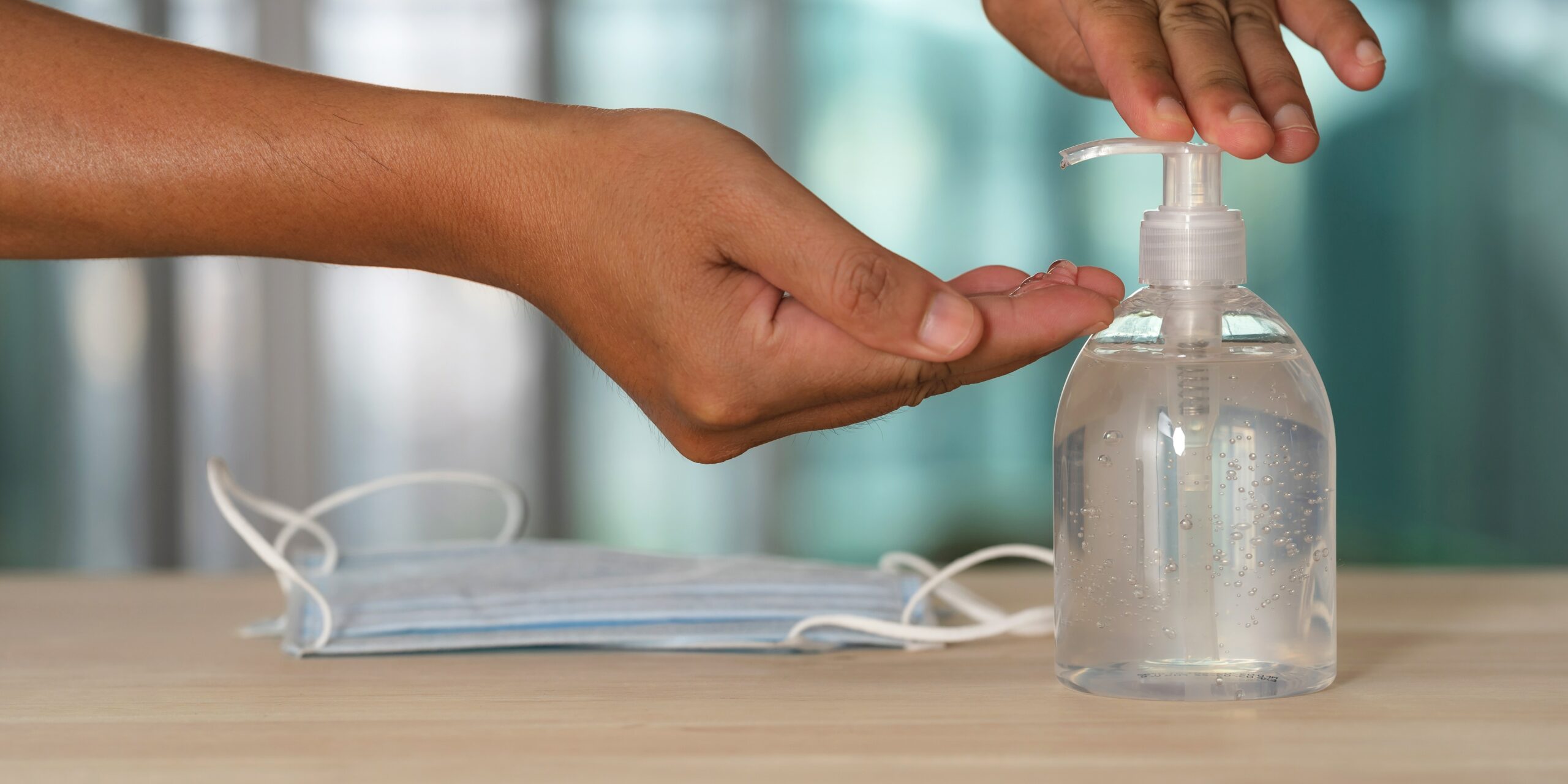
	</div>
			
				
				<div class="footnotes"><div id='1589-1'>(Data sources: Berman &amp; Snyder, 2016; Perry et al., 2018; Registered Nursing, n.d.; WorkSafeBC, 2013)</div><div id='1589-2'>(Data sources: Perry et al., 2018; WorkSafeBC, 2008; WorkSafeBC, 2013)</div></div>
	</div>
<div class="chapter numberless " id="chapter-body-mechanics-resources" title="3.3 Body Mechanics Resources">
	<div class="chapter-title-wrap">
		<p class="chapter-number"></p>
		<h1 class="chapter-title">3.3 Body Mechanics Resources</h1>
								</div>
	<div class="ugc chapter-ugc">
				 <div class="wp-caption alignright" id="attachment_93" aria-describedby="caption-attachment-93" style="width: 250px"><img class="wp-image-93" src="https://opentextbc.ca/hcalabtheoryandpractice/wp-content/uploads/sites/430/2024/09/back-pain.jpg" alt="" width="250" height="125" title="" /><div class="wp-caption-text" id="caption-attachment-93"><strong>Figure 3.3.1</strong> Back Pain</div></div> <p>There are many resources available to help you stay safe at work. <em><a href="https://www.worksafebc.com/en/resources/health-safety/books-guides/back-talk-an-owners-manual-for-backs?lang=en" data-url="https://www.worksafebc.com/en/resources/health-safety/books-guides/back-talk-an-owners-manual-for-backs?lang=en">Back Talk: An Owner’s Manual for Backs </a></em>from WorkSafeBC (2014)&nbsp;is an especially useful resource for Health Care Assistants. It provides information about the care and maintenance of your back.</p> <div class="textbox textbox--examples"><div class="textbox__header"><p class="textbox__title">To better understand the importance of posture, watch the following video.</p> </div> <div class="textbox__content"><div class="textbox interactive-content interactive-content--oembed"><span class="interactive-content__icon"></span> <p>One or more interactive elements has been excluded from this version of the text. You can view them online here: <a href="#oembed-2" title="The benefits of good posture - Murat Dalkilinç" data-url="https://opentextbc.ca/hcalabtheoryandpractice/?p=1591#oembed-2">https://opentextbc.ca/hcalabtheoryandpractice/?p=1591#oembed-2</a> </p> </div> <p><em><a href="https://www.youtube.com/watch?v=OyK0oE5rwFY" data-url="https://www.youtube.com/watch?v=OyK0oE5rwFY">The benefits of good posture – Murat Dalkilinç</a>,</em> by TED-Ed (2015) video.</p> </div> </div> <div class="textbox textbox--key-takeaways"><div class="textbox__header"><p class="textbox__title">Summary</p> </div> <div class="textbox__content"><p style="text-align: justify;">Good body mechanics can save you energy and prevent injury as you work as an HCA. Back, wrist, and shoulder injuries are all too common among health care workers; using correct body mechanics and keeping physically fit can help reduce such injuries. In fact, proper body mechanics should be applied to all areas of your life.</p> </div> </div> <h1>Chapter 3 Attributions and References</h1> <h2>Image Attributions</h2> <ul><li><strong>Figure 3.2.1 </strong><a href="https://commons.wikimedia.org/wiki/File:Centre_of_Gravity.png" data-url="https://commons.wikimedia.org/wiki/File:Centre_of_Gravity.png">Centre of Gravity</a> by Doyle and McCutcheon (2015), via Wikimedia Commons, is used under a <a href="https://creativecommons.org/licenses/by/4.0/deed.en" data-url="https://creativecommons.org/licenses/by/4.0/deed.en"><span class="cc-license-identifier">CC BY 4.0</span></a> licence.</li> <li><strong>Figure 3.2.2 </strong><a href="https://pressbooks.bccampus.ca/clinicalproceduresforsaferpatientcaretrubscn/chapter/3-2-body-mechanics/" data-url="https://pressbooks.bccampus.ca/clinicalproceduresforsaferpatientcaretrubscn/chapter/3-2-body-mechanics/">Equilibrium Principle image on Table 3.2 Principles of Body Mechanics</a> from Doyle and McCutcheon (2015) is used under a <a href="https://creativecommons.org/licenses/by/4.0/deed.en" data-url="https://creativecommons.org/licenses/by/4.0/deed.en"><span class="cc-license-identifier">CC BY 4.0</span></a> licence.</li> <li><strong>Figure 3.2.3 </strong><a href="https://commons.wikimedia.org/wiki/File:Home_Care_Transfer_Pivot.png" data-url="https://commons.wikimedia.org/wiki/File:Home_Care_Transfer_Pivot.png">Home Care Transfer Pivot</a> by <a href="https://commons.wikimedia.org/wiki/User:BruceBlaus" data-url="https://commons.wikimedia.org/wiki/User:BruceBlaus">BruceBlaus</a>, via Wikimedia Commons, is used under a&nbsp;<a href="https://creativecommons.org/licenses/by-sa/4.0/deed.en" data-url="https://creativecommons.org/licenses/by-sa/4.0/deed.en">CC BY-SA 4.0</a> licence.</li> <li><strong>Figure 3.2.4</strong>&nbsp;<a href="https://commons.wikimedia.org/wiki/File:Rotator_cuff_tear.jpg" data-url="https://commons.wikimedia.org/wiki/File:Rotator_cuff_tear.jpg">Torn Rotator Cuff</a> by Nucleus Communications, via Wikimedia Commons, is used under a <a href="https://creativecommons.org/licenses/by/4.0/deed.en" data-url="https://creativecommons.org/licenses/by/4.0/deed.en">CC BY SA-4.0</a> licence.</li> <li><strong>Figure 3.2.5</strong> Poor body mechanics&nbsp;by Kim Morris, HCA Program/ Thompson Rivers University, is used under a&nbsp;<a href="https://creativecommons.org/licenses/by/2.0/" data-url="https://creativecommons.org/licenses/by/2.0/">CC BY 2.0</a> licence.</li> <li><strong>Figure 3.3.1</strong> <a href="https://www.flickr.com/photos/152511098@N08/33348393655" data-url="https://www.flickr.com/photos/152511098@N08/33348393655">Back pain</a> by David Cross, via Flickr, is used under a <a href="https://creativecommons.org/licenses/by-nc-sa/2.0/" data-url="https://creativecommons.org/licenses/by-nc-sa/2.0/">CC-BY-NC-SA 2.0</a> licence.</li> </ul> <h2>Video</h2> <ul><li><em><a href="https://youtu.be/OyK0oE5rwFY" data-url="https://youtu.be/OyK0oE5rwFY">The benefits of good posture – Murat Dalkilinç</a>,</em> by TED-Ed (2015) is licensed under a Standard YouTube License.</li> </ul> <h2>References</h2> <p class="hanging-indent">Berman, A., &amp; Snyder, S. J. (2016).&nbsp;<em>Skills in clinical nursing</em> (8th ed.). Pearson.</p> <p class="hanging-indent">Interior Health Authority (2011). Safe patient handling. <em>Patient handling injury prevention program</em>. http://www.interiorhealth.ca/information.aspx?id=12726&amp;terms=injury+prevention</p> <p class="hanging-indent">Perry, A. G., Potter, P. A., &amp; Ostendorf, W. R. (2018).&nbsp;<em>Clinical nursing skills and techniques&nbsp;</em>(9th ed.). Elsevier-Mosby.</p> <p class="hanging-indent">Registered Nursing. (n.d.).&nbsp;<em>Ergonomic principles: NCLEX-RN</em>. https://www.registerednursing.org/nclex/ergonomic-principles/</p> <p class="hanging-indent">TED-Ed. (2015, July 30). <em>The benefits of good posture – Murat Dalkilinç</em> (Video). YouTube. https://www.youtube.com/watch?v=OyK0oE5rwFY</p> <p class="hanging-indent">Thomas, D., McMahon, A., &amp; Thomas, Y. L. (2012). Figure 4.1 [image]. In <em>Moving and handling guidelines 2012</em> (p. 88). Accident Compensation Corporation/ACC New Zealand. http://www.acc.co.nz/assets/provider/acc6075-moving-and-handling-people-guidelines.pdf</p> <p class="hanging-indent">Workers’ Compensation Board of British Columbia (2009). Understanding the risks of musculoskeletal injury (MSI); An educational guide for workers on sprains, strains and other MSI’s. (pp. 1–3). Workers’ Compensation Board of B.C. https://www.worksafebc.com/en/resources/health-safety/books-guides/understanding-the-risks-of-musculoskeletal-injury-msi-an-educational-guide-for-workers-on-sprains-strains-and-other-msis?lang=en</p> <p class="hanging-indent">WorkSafeBC. (2008).&nbsp;<em>Understanding the risks of musculoskeletal injury (MSI): An educational guide for workers on sprains, strains, and other MSIs</em>. http://www.worksafebc.com/publications/Health_and_Safety/by_topic/assets/pdf/msi_workers.pdf.</p> <p class="hanging-indent">WorkSafeBC. (2013).&nbsp;<em>Preventing musculoskeletal injury (MSI)</em>. http://www.worksafebc.com/publications/health_and_safety/by_topic/assets/pdf/msi_employers.pdf.</p> <p class="hanging-indent">WorkSafeBC. (2014, December). <em>Back talk: An owner’s manual for backs</em> [PDF]. https://www.worksafebc.com/en/resources/health-safety/books-guides/back-talk-an-owners-manual-for-backs?lang=en</p> 
	</div>


	</div>

</div>
<div class="part-wrapper" id="part-personal-care-skills-wrapper">
    <div class="part  " id="part-personal-care-skills">
	<div class="part-title-wrap">
		<p class="part-number">IV</p>
		<h1 class="part-title">Unit 4 – Personal Care Skills</h1>
	</div>
	<div class="ugc part-ugc">
		
	</div>
			
				
	</div>
<div class="chapter numberless " id="chapter-introduction-4" title="4.1 Introduction">
	<div class="chapter-title-wrap">
		<p class="chapter-number"></p>
		<h1 class="chapter-title">4.1 Introduction</h1>
								</div>
	<div class="ugc chapter-ugc">
				 <h1>Daily Personal Care</h1> <p>When you work as a Health Care Assistant, much of the time is spent assisting clients with personal care activities that they are no longer able to do on their own. Most people are used to taking care of their personal needs and privacy, so the loss of this independence is often difficult for clients to accept. When you are caring for clients, allow them to do as much of their own care as they are able, respect their sense of modesty, and try to avoid any embarrassment to them. When you give personal care, give it in a pleasant, efficient way and don’t physically expose the client any more than is absolutely necessary. Some clients need only a minimal amount of help; others are totally dependent on you.</p> <p>People may require personal care for a variety of reasons. Assistance with personal care may be temporary while a person recovers from an injury or illness, or it may be permanent and required for the remainder of their lives.</p> <h1>Types of Patients/Clients Who May Need Personal Care</h1> <p>HCAs provide personal care to a range of patients/clients, including:</p> <ul><li>Patients/clients recovering from an illness or accident</li> <li>Patients/clients with a long-term chronic condition (e.g., heart failure, diabetes, HIV/AIDS)</li> <li>Frail patients/clients or those of advanced age</li> <li>Patients/clients who are permanently disabled</li> <li>Patient/clients who are dying</li> </ul> <p style="text-align: left;">Providing personal care is a priority for the HCA. It is the most important care activity they do. Personal care provision demonstrates to the client that you are concerned about their physical health and general well-being.</p> <p>Care activities are divided into two types:</p> <ul><li>Tasks: care activities that HCAs are educated and trained to perform as part of their assigned HCA role.</li> <li>Restricted activities: higher-risk care activities outlined in health professional regulations that an HCA cannot perform without authorization (delegation) by a regulated health professional, such as a registered nurse. Restricted activities are not considered HCA tasks.</li> </ul> <p>This unit explores the importance of providing personal care, and provides instruction for performing tasks related to personal care. The importance of infection control and how HCAs can work to break the chain of infection to keep clients healthy is discussed. Bathing, oral care, dressing/grooming, and toileting are topics reviewed in this unit, with an explanation of how HCAs can help with these types of tasks.</p> <div class="textbox textbox--learning-objectives"><div class="textbox__header"><p class="textbox__title">Learning Objectives</p> </div> <div class="textbox__content"><p>Upon completion of this unit<span style="text-align: initial; font-size: 1em;">, the successful student will be able to:</span></p> <ol><li>Know the steps to assist the client with daily personal hygiene.</li> <li>Describe proper oral care.</li> <li>Know the steps to assist the client with bathing.</li> <li>Understand proper personal hygiene and perineal care.</li> <li>Understand proper skin care to decrease the risk of skin breakdown.</li> <li>Know the steps to assist the client with dressing and grooming.</li> <li>Learn the proper application of anti-embolism stockings.</li> </ol> </div> </div> <div class="textbox textbox--key-takeaways"><div class="textbox__header"><p class="textbox__title">Terms to Know</p> </div> <div class="textbox__content"><ul><li><span class="glossary-term">A.M. care</span></li> <li><span class="glossary-term">Anti-embolism stockings</span></li> <li><span class="glossary-term">Full bed bath</span></li> <li><span class="glossary-term">Labia</span></li> <li><span class="glossary-term">Partial bed bath</span></li> <li><span class="glossary-term">Perineal care (peri-care)</span></li> <li><span class="glossary-term">Perineum</span></li> <li><span class="glossary-term">P.M. care</span></li> <li><span class="glossary-term">Urethra</span></li> <li><span class="glossary-term">Urinary meatus</span></li> </ul> </div> </div> 
	</div>


	</div>
<div class="chapter numberless " id="chapter-oral-hygiene" title="4.2 Oral Hygiene">
	<div class="chapter-title-wrap">
		<p class="chapter-number"></p>
		<h1 class="chapter-title">4.2 Oral Hygiene</h1>
								</div>
	<div class="ugc chapter-ugc">
				 <p>An essential, but often overlooked part of daily personal care is oral hygiene. It involves cleaning of the client’s mouth, and teeth or dentures. Oral hygiene removes debris (which can harbour microorganisms), stimulates circulation, reduces unpleasant odours, and improves the tastes of foods.</p> <p>Depending upon your client, you may only need to assist them with oral hygiene, or you may need to provide total oral hygiene care. Performing or assisting with oral hygiene is an important task of the HCA. Oral hygiene should be performed at least twice per day, with morning and evening care. Oral hygiene may also be performed after eating meals and any time the client requests. Regular, daily flossing helps remove plaque and food debris, which promotes bacteria, from the client’s mouth. Unclean mouths harbour bacteria, which can cause additional health problems for the client. Having a clean mouth promotes a sense of comfort and self-esteem for the client, and improves the overall taste of food.</p> <p>Providing oral care also gives HCAs an opportunity to observe the health of the client’s teeth, gums, and tongue. HCAs should encourage their clients to independently perform as much of their oral care as possible. For clients who are unable to grasp the handle of a toothbrush, special toothbrushes may be available for them. A split rubber ball or tape can be used to build up the handle of the toothbrush to make it easier for the client to hold. An electric toothbrush may also be used. Avoid using hydrogen peroxide or alcohol-based products, because they promote mouth irritation and mucosal membrane breakdown. For some clients, using a toothbrush may be unsafe, such as those who are unable to spit or who are unconscious. For these patients, special mouth swabs are available for use. Oral care should be provided every 2 hours for clients who are unconscious or unable to drink. Apply a moisturizing ointment, such as a lip balm, to the client’s lips to prevent skin breakdown, chapping, and drying of the lips.</p> <h1>Assisting Clients with Oral Hygiene</h1> <table class="grid" style="border-collapse: collapse; width: 100%;"><caption><strong>Table 4.2.1 Procedure: Patients Who Can Brush Their Own Teeth or Need Some Assistance</strong></caption> <thead><tr><th scope="col">STEP</th> <th scope="col">ACTION</th> <th scope="col">REASON/CONSIDERATIONS</th> </tr> </thead> <tbody><tr style="height: 15px;"><th scope="row">1.</th> <td style="vertical-align: top;">Explain the procedure to the client. Provide privacy.</td> <td style="width: 48.0863%; height: 15px; vertical-align: top;"></td> </tr> <tr style="height: 15px;"><th scope="row">2.</th> <td style="vertical-align: top;">Wash and dry hands. Always wear gloves when providing oral care.</td> <td style="width: 48.0863%; height: 15px; vertical-align: top;"></td> </tr> <tr style="height: 218px;"><th scope="row">3.</th> <td style="vertical-align: top;">Assemble equipment. You will need: <ul><li>emesis basin</li> <li>water</li> <li>cup</li> <li>toothbrush</li> <li>toothpaste</li> <li>mouthwash</li> <li>a towel</li> </ul> </td> <td style="width: 48.0863%; height: 218px; vertical-align: top;"><div class="wp-caption aligncenter" id="attachment_99" aria-describedby="caption-attachment-99" style="width: 300px"><img class="wp-image-99 size-medium" src="https://opentextbc.ca/hcalabtheoryandpractice/wp-content/uploads/sites/430/2024/09/hand-finger-clean-health-mouth-dentist-873811-pxhere.com-scaled-1.jpg" alt="" width="300" height="200" title="" /><div class="wp-caption-text" id="caption-attachment-99"><strong>Figure 4.2.1</strong> Dental supplies</div></div> </td> </tr> <tr style="height: 31px;"><th scope="row">4.</th> <td style="vertical-align: top;">Ensure the client is in an upright position for safety. If the client is able to brush their own teeth, provide equipment and assist as needed.</td> <td style="width: 48.0863%; height: 31px; vertical-align: top;">A high sitting position prevents choking or aspiration.</td> </tr> <tr style="height: 31px;"><th scope="row">5.</th> <td style="vertical-align: top;">Wet the toothbrush and apply a small amount of toothpaste to the bristles on the brush.</td> <td style="width: 48.0863%; height: 31px; vertical-align: top;"></td> </tr> <tr style="height: 47px;"><th scope="row">6.</th> <td style="vertical-align: top;">Hold the toothbrush at a 45-degree angle to the gum line. Brush one tooth at a time in an up-and-down motion. Start from the top of the gum line and work down the tooth.</td> <td style="width: 48.0863%; height: 47px; vertical-align: top;"></td> </tr> <tr style="height: 15px;"><th scope="row">7.</th> <td style="vertical-align: top;">Start at the upper teeth and then complete the lower teeth.</td> <td style="width: 48.0863%; height: 15px; vertical-align: top;"></td> </tr> <tr style="height: 15px;"><th scope="row">8.</th> <td style="vertical-align: top;">To clean biting surfaces of teeth and the tongue, use a back-and-forth motion.</td> <td style="width: 48.0863%; height: 15px; vertical-align: top;"></td> </tr> <tr style="height: 15px;"><th scope="row">9.</th> <td style="vertical-align: top;">Be sure to brush all surfaces of the teeth, gums, tongue, and mouth.</td> <td style="width: 48.0863%; height: 15px; vertical-align: top;"></td> </tr> <tr style="height: 31px;"><th scope="row">10</th> <td style="vertical-align: top;">Ensure the client adequately rinses their mouth with clean water and dries their lips and face.</td> <td style="width: 48.0863%; height: 31px; vertical-align: top;"></td> </tr> <tr style="height: 31px;"><th scope="row">11.</th> <td style="vertical-align: top;">Offer lip and/or mouth moisturizer as needed, and according to the client’s preferences.</td> <td style="width: 48.0863%; height: 31px; vertical-align: top;"></td> </tr> </tbody> </table> <div class="textbox textbox--examples"><div class="textbox__header"><p class="textbox__title">Watch the following video</p> </div> <div class="textbox__content"><div class="textbox interactive-content interactive-content--oembed"><span class="interactive-content__icon"></span> <p>One or more interactive elements has been excluded from this version of the text. You can view them online here: <a href="#oembed-3" title="How to help with tooth brushing" data-url="https://opentextbc.ca/hcalabtheoryandpractice/?p=1600#oembed-3">https://opentextbc.ca/hcalabtheoryandpractice/?p=1600#oembed-3</a> </p> </div> <p><em><a href="https://www.youtube.com/watch?v=AKahdz1cT98" data-url="https://www.youtube.com/watch?v=AKahdz1cT98">How to help with tooth brushing</a>,</em> by CareChannel (2019) on YouTube. <a href="https://carechannel.elizz.com/" data-url="https://carechannel.elizz.com/">CareChannel</a> was developed by the Saint Elizabeth Foundation. Presented by Elizz. Funded by The Ontario Ministry Of Health Long Term Care.</p> </div> </div> <h2>Patients Who Are Unable to Perform Mouth Hygiene Independently</h2> <table class="grid" style="border-collapse: collapse; width: 100%;"><caption>Table 4.2.2 Procedure: Patients Who Are Unable to Perform Mouth Hygiene Independently, Such as an Unconscious Client</caption> <thead><tr><th scope="col">STEP</th> <th scope="col">ACTION</th> <th scope="col">REASON/CONSIDERATIONS</th> </tr> </thead> <tbody><tr><th>1.</th> <td style="vertical-align: top;">Explain the procedure to the client. Provide privacy.</td> <td style="width: 46.1063%; vertical-align: top;"></td> </tr> <tr style="height: 15px;"><th scope="row">2.</th> <td style="vertical-align: top;">Complete hand hygiene and assemble needed equipment. Always wear gloves when providing oral care.</td> <td style="width: 46.1063%; vertical-align: top;"></td> </tr> <tr><th>3.</th> <td style="vertical-align: top;">Assemble equipment. You will need: <ul><li>emesis basin</li> <li>water</li> <li>cup</li> <li>two toothbrushes, to help hold the mouth open and the other to brush</li> <li>mouth swab</li> <li>wooden tongue blade</li> <li>gauze</li> <li>toothpaste</li> <li>mouthwash</li> <li>moisturizer</li> <li>towel</li> <li>lip and mouth moisturizer</li> </ul> </td> <td style="width: 46.1063%; vertical-align: top;"></td> </tr> <tr style="height: 15px;"><th scope="row">4.</th> <td style="vertical-align: top;">Put the client in a side-lying position. Turn their head to the side.</td> <td style="width: 46.1063%; height: 15px; vertical-align: top;">To prevent possible choking or aspiration.</td> </tr> <tr style="height: 31px;"><th scope="row">5.</th> <td style="vertical-align: top;">Place a towel or waterproof pad under their cheek and chin to prevent the client or bed linens from getting wet.</td> <td style="width: 46.1063%; height: 31px; vertical-align: top;"></td> </tr> <tr style="height: 31px;"><th scope="row">6.</th> <td style="vertical-align: top;">Place an emesis or kidney basin against the side of their mouth and cheek.</td> <td style="width: 46.1063%; height: 31px; vertical-align: top;">To catch liquid and secretions.</td> </tr> <tr style="height: 245px;"><th scope="row">7.</th> <td style="vertical-align: top;">Open the client’s mouth by placing gentle pressure on their chin and upper mouth. Use a second toothbrush, such as the type in Figure 4.2.1, or place a padded tongue depressor to help keep the client’s mouth open and prevent them from biting down. To make a padded tongue blade, place two wooden tongue blades together. Wrap gauze over the top half and tape it into place.</td> <td style="width: 46.1063%; height: 245px; vertical-align: top;">Never put your fingers inside a client’s mouth because the client may bite down, even if they do not mean to. <div class="wp-caption aligncenter" id="attachment_1595" aria-describedby="caption-attachment-1595" style="width: 300px"><img class="wp-image-1595 size-medium" src="https://opentextbc.ca/hcalabtheoryandpractice/wp-content/uploads/sites/430/2024/09/brusing-300x149.jpg" alt="" width="300" height="149" srcset="https://opentextbc.ca/hcalabtheoryandpractice/wp-content/uploads/sites/430/2024/09/brusing-300x149.jpg 300w, https://opentextbc.ca/hcalabtheoryandpractice/wp-content/uploads/sites/430/2024/09/brusing-65x32.jpg 65w, https://opentextbc.ca/hcalabtheoryandpractice/wp-content/uploads/sites/430/2024/09/brusing-225x112.jpg 225w, https://opentextbc.ca/hcalabtheoryandpractice/wp-content/uploads/sites/430/2024/09/brusing-350x174.jpg 350w, https://opentextbc.ca/hcalabtheoryandpractice/wp-content/uploads/sites/430/2024/09/brusing.jpg 740w" sizes="(max-width: 300px) 100vw, 300px" title="" /><div class="wp-caption-text" id="caption-attachment-1595"><strong>Figure 4.2.2 </strong>“Open wide!” Two toothbrush techniques</div></div> </td> </tr> <tr><th scope="row">8.</th> <td style="vertical-align: top;">Brush teeth gently, using a dry toothbrush or a mouth swab. Dip the swab in water and squeeze the excess solution from the swab. Swab all surfaces of their teeth, gums, inside their cheeks, the roof of their mouth, and their tongue. Use clean swabs as necessary.</td> <td style="vertical-align: top;">Suction excess secretions as directed in the care plan.</td> </tr> <tr style="height: 31px;"><th scope="row">9.</th> <td style="vertical-align: top;">Rinse the client’s entire mouth with a clean swab. Ensure there are no pooled secretions.</td> <td style="width: 46.1063%; height: 31px; vertical-align: top;"></td> </tr> <tr style="height: 15px;"><th scope="row">10.</th> <td style="vertical-align: top;">Ensure the client’s mouth, face, and neck are dry.</td> <td style="width: 46.1063%; height: 15px; vertical-align: top;"></td> </tr> <tr style="height: 15px;"><th scope="row">11.</th> <td style="vertical-align: top;">Apply moisturizer to lips and/or mouth.</td> <td style="width: 46.1063%; height: 15px; vertical-align: top;"></td> </tr> <tr style="height: 31px;"><th scope="row">12.</th> <td style="vertical-align: top;">Return the client to a comfortable position. Lower the bed to its lowest height and raise the side rails.</td> <td style="width: 46.1063%; height: 31px; vertical-align: top;"></td> </tr> <tr style="height: 15px;"><th scope="row">13.</th> <td style="vertical-align: top;">Put away your equipment and supplies.</td> <td style="width: 46.1063%; height: 15px; vertical-align: top;"></td> </tr> <tr style="height: 15px;"><th scope="row">14.</th> <td style="vertical-align: top;">Remove your gloves and wash and dry your hands.</td> <td style="width: 46.1063%; height: 15px; vertical-align: top;"></td> </tr> <tr style="height: 47px;"><th scope="row">15.</th> <td style="vertical-align: top;">Document the completion of the task and record any changes in condition or behaviour. Report any tooth or mouth conditions observed, such as sores, open areas, or bleeding from gums, tongue, or broken teeth.</td> <td style="width: 46.1063%; height: 47px; vertical-align: top;"></td> </tr> </tbody> </table> <h2>Denture Care</h2> <table class="grid" style="border-collapse: collapse; width: 100%;"><caption><strong>Table 4.2.3 Procedure: Dental Care</strong></caption> <thead><tr><th scope="col">STEP</th> <th scope="col">ACTION</th> <th scope="col">REASON/CONSIDERATIONS</th> </tr> </thead> <tbody><tr><th>1.</th> <td style="vertical-align: top;">Explain the procedure to the client. Provide privacy.</td> <td style="width: 46.0511%; vertical-align: top;"><div class="mceTemp"></div> </td> </tr> <tr><th>2.</th> <td style="vertical-align: top;">Complete hand hygiene. Always wear gloves when providing oral care.</td> <td style="width: 46.0511%; vertical-align: top;"><div class="mceTemp"></div> </td> </tr> <tr style="height: 15px;"><th scope="row">3.</th> <td style="vertical-align: top;">Assemble needed equipment: <ul><li>gauze pad or washcloth</li> <li>water</li> <li>denture cup</li> <li>denture cleaning produce</li> <li>toothbrush</li> <li>toothpaste</li> <li>mouth swab</li> <li>mouthwash</li> <li>denture cream or adhesive</li> <li>lip and mouth moisturizer</li> </ul> </td> <td style="width: 46.0511%; height: 15px; vertical-align: top;"><div class="wp-caption aligncenter" id="attachment_1596" aria-describedby="caption-attachment-1596" style="width: 300px"><img class="wp-image-1596" src="https://opentextbc.ca/hcalabtheoryandpractice/wp-content/uploads/sites/430/2024/09/Screenshot-2023-01-23-at-8.41.37-PM.png" alt="" width="300" height="212" srcset="https://opentextbc.ca/hcalabtheoryandpractice/wp-content/uploads/sites/430/2024/09/Screenshot-2023-01-23-at-8.41.37-PM.png 788w, https://opentextbc.ca/hcalabtheoryandpractice/wp-content/uploads/sites/430/2024/09/Screenshot-2023-01-23-at-8.41.37-PM-300x212.png 300w, https://opentextbc.ca/hcalabtheoryandpractice/wp-content/uploads/sites/430/2024/09/Screenshot-2023-01-23-at-8.41.37-PM-768x544.png 768w, https://opentextbc.ca/hcalabtheoryandpractice/wp-content/uploads/sites/430/2024/09/Screenshot-2023-01-23-at-8.41.37-PM-65x46.png 65w, https://opentextbc.ca/hcalabtheoryandpractice/wp-content/uploads/sites/430/2024/09/Screenshot-2023-01-23-at-8.41.37-PM-225x159.png 225w, https://opentextbc.ca/hcalabtheoryandpractice/wp-content/uploads/sites/430/2024/09/Screenshot-2023-01-23-at-8.41.37-PM-350x248.png 350w" sizes="(max-width: 300px) 100vw, 300px" title="" /><div class="wp-caption-text" id="caption-attachment-1596"><strong>Figure 4.2.3</strong> Types of partial dentures</div></div> </td> </tr> <tr style="height: 15px;"><th scope="row">4.</th> <td style="vertical-align: top;">Assist the client to remove dentures, if needed, by placing a tissue, gauze pad, or washcloth underneath the client’s denture line and gently pulling forward to break the suction. You may need to gently rock the dentures from side to side or forward to break the suction.</td> <td style="width: 46.0511%; height: 15px; vertical-align: top;"></td> </tr> <tr style="height: 15px;"><th scope="row">5.</th> <td style="vertical-align: top;">Carefully place dentures in a water filled cup or container.</td> <td style="width: 46.0511%; height: 15px; vertical-align: top;"><div class="wp-caption aligncenter" id="attachment_1597" aria-describedby="caption-attachment-1597" style="width: 300px"><img class="wp-image-1597 size-medium" src="https://opentextbc.ca/hcalabtheoryandpractice/wp-content/uploads/sites/430/2024/09/Slide2-1-300x292.jpg" alt="" width="300" height="292" srcset="https://opentextbc.ca/hcalabtheoryandpractice/wp-content/uploads/sites/430/2024/09/Slide2-1-300x292.jpg 300w, https://opentextbc.ca/hcalabtheoryandpractice/wp-content/uploads/sites/430/2024/09/Slide2-1-65x63.jpg 65w, https://opentextbc.ca/hcalabtheoryandpractice/wp-content/uploads/sites/430/2024/09/Slide2-1-225x219.jpg 225w, https://opentextbc.ca/hcalabtheoryandpractice/wp-content/uploads/sites/430/2024/09/Slide2-1-350x340.jpg 350w, https://opentextbc.ca/hcalabtheoryandpractice/wp-content/uploads/sites/430/2024/09/Slide2-1.jpg 477w" sizes="(max-width: 300px) 100vw, 300px" title="" /><div class="wp-caption-text" id="caption-attachment-1597"><strong>Figure 4.2.4</strong> Denture container (be sure to wear gloves)</div></div> </td> </tr> <tr style="height: 15px;"><th scope="row">6.</th> <td style="vertical-align: top;">Carry the dentures to the sink using a denture cup to prevent accidental breakage.</td> <td style="width: 46.0511%; height: 15px; vertical-align: top;"></td> </tr> <tr style="height: 15px;"><th scope="row">7.</th> <td style="vertical-align: top;">Place a towel in the sink while you are washing them. Hold them firmly.</td> <td style="width: 46.0511%; height: 15px; vertical-align: top;">This will prevent you from accidentally breaking dentures on the hard surface of the sink.</td> </tr> <tr style="height: 15px;"><th scope="row">8.</th> <td style="vertical-align: top;">Clean dentures as you would teeth. Use denture cleaning products. Use warm, but not hot, water. Rinse dentures completely.</td> <td style="width: 46.0511%; height: 15px; vertical-align: top;">Hot water can cause dentures to warp and no longer fit the client correctly. <div class="wp-caption aligncenter" id="attachment_103" aria-describedby="caption-attachment-103" style="width: 300px"><img class="wp-image-103 size-medium" src="https://opentextbc.ca/hcalabtheoryandpractice/wp-content/uploads/sites/430/2024/09/Slide1-1.jpg" alt="" width="300" height="208" title="" /><div class="wp-caption-text" id="caption-attachment-103"><strong>Figure 4.2.5</strong> Denture care</div></div> </td> </tr> <tr style="height: 15px;"><th scope="row">9.</th> <td style="vertical-align: top;">Provide or assist with mouth care prior to replacing dentures. Assist the client to brush their gums and tongue with toothpaste and a toothbrush. Ensure they rinse their mouth completely. Offer alcohol-free mouthwash.</td> <td style="width: 46.0511%; height: 15px; vertical-align: top;"></td> </tr> <tr style="height: 15px;"><th scope="row">10.</th> <td style="vertical-align: top;">If returning dentures to the client’s mouth, apply denture cream or adhesive, as needed.</td> <td style="width: 46.0511%; height: 15px; vertical-align: top;"></td> </tr> <tr style="height: 15px;"><th scope="row">11.</th> <td style="vertical-align: top;">Assist the client to place the dentures back in their mouth. To reinsert dentures, insert at an angle, pressing firmly onto the gum line.</td> <td style="width: 46.0511%; height: 15px; vertical-align: top;"></td> </tr> <tr><th scope="row">12.</th> <td style="vertical-align: top;">If storing dentures, store them in clean, cool water in a container with a closed top.</td> <td style="width: 46.0511%; vertical-align: top;">To prevent accidental breaking or misplacement. If in a facility, ensure the client’s name is on the denture cup to prevent loss or confusion.</td> </tr> <tr><th scope="row">13.</th> <td style="vertical-align: top;">Remove your gloves. Wash and dry your hands.</td> <td style="width: 46.0511%; vertical-align: top;"></td> </tr> <tr><th scope="row">14.</th> <td style="vertical-align: top;">Document the completion of the task and record any changes in the client’s condition or behaviour. Report any tooth or mouth conditions you’ve observed, or if dentures are broken or missing.</td> <td style="width: 46.0511%; vertical-align: top;"></td> </tr> </tbody> </table> <div class="textbox textbox--examples"><div class="textbox__header"><p class="textbox__title">Watch this video:</p> </div> <div class="textbox__content"><div class="textbox interactive-content interactive-content--oembed"><span class="interactive-content__icon"></span> <p>One or more interactive elements has been excluded from this version of the text. You can view them online here: <a href="#oembed-4" title="Denture Care (How To Care For Someone's Dentures)" data-url="https://opentextbc.ca/hcalabtheoryandpractice/?p=1600#oembed-4">https://opentextbc.ca/hcalabtheoryandpractice/?p=1600#oembed-4</a> </p> </div> <p><a href="https://www.youtube.com/watch?v=X8M1TizcGeI" data-url="https://www.youtube.com/watch?v=X8M1TizcGeI">Denture Care (How to Care for Someone’s Dentures)</a> by CareChannel (2019)</p> </div> </div> <h2>&nbsp;Flossing Your Client’s Teeth</h2> <table class="grid" style="border-collapse: collapse; width: 100%;"><caption><strong>Table 4.2.4 Procedure: Flossing</strong></caption> <thead><tr><th scope="col">STEP</th> <th scope="col">ACTION</th> <th scope="col">REASON/CONSIDERATIONS</th> </tr> </thead> <tbody><tr style="height: 15px;"><th scope="row">1.</th> <td>Explain the procedure to the client. Provide privacy.</td> <td style="width: 46.6162%; height: 15px;"></td> </tr> <tr><th>2.</th> <td>Complete hand hygiene. Always wear gloves when providing oral care.</td> <td style="width: 46.6162%;"></td> </tr> <tr style="height: 247px;"><th scope="row">3.</th> <td><ul><li>Assemble needed equipment.</li> <li>If assisting with flossing, break off about 45 cm (18 inches) of floss.</li> <li>Wind ends of floss around your pointer or middle finger.</li> <li>Wrap the other end of the floss around the same finger on the opposite hand.</li> <li>Or use a dental flosser (see Figure 4.2.6), as this may be easier to use.</li> </ul> </td> <td style="width: 46.6162%; height: 247px;"><div class="wp-caption aligncenter" id="attachment_1599" aria-describedby="caption-attachment-1599" style="width: 300px"><img class="size-medium wp-image-1599" src="https://opentextbc.ca/hcalabtheoryandpractice/wp-content/uploads/sites/430/2024/09/27513306118_e3f9d85d4f_c-300x200.jpg" alt="" width="300" height="200" srcset="https://opentextbc.ca/hcalabtheoryandpractice/wp-content/uploads/sites/430/2024/09/27513306118_e3f9d85d4f_c-300x200.jpg 300w, https://opentextbc.ca/hcalabtheoryandpractice/wp-content/uploads/sites/430/2024/09/27513306118_e3f9d85d4f_c-768x512.jpg 768w, https://opentextbc.ca/hcalabtheoryandpractice/wp-content/uploads/sites/430/2024/09/27513306118_e3f9d85d4f_c-65x43.jpg 65w, https://opentextbc.ca/hcalabtheoryandpractice/wp-content/uploads/sites/430/2024/09/27513306118_e3f9d85d4f_c-225x150.jpg 225w, https://opentextbc.ca/hcalabtheoryandpractice/wp-content/uploads/sites/430/2024/09/27513306118_e3f9d85d4f_c-350x233.jpg 350w, https://opentextbc.ca/hcalabtheoryandpractice/wp-content/uploads/sites/430/2024/09/27513306118_e3f9d85d4f_c.jpg 799w" sizes="(max-width: 300px) 100vw, 300px" title="" /><div class="wp-caption-text" id="caption-attachment-1599"><strong>Figure 4.2.6</strong> Dental flossers</div></div> </td> </tr> <tr style="height: 47px;"><th scope="row">4.</th> <td>Hold the floss tightly between your thumb and forefingers. Starting at the top and back of the mouth, guide the floss between two teeth. Use a gentle rubbing motion to guide the floss between the teeth.</td> <td style="width: 46.6162%; height: 47px;">Do not quickly snap the floss between the teeth, or you can cause pain or injury.</td> </tr> <tr style="height: 63px;"><th scope="row">5.</th> <td><ul><li>Once you reach the gum line, curve the floss into a C shape against one tooth.</li> <li>For upper teeth, move the floss away from the gum line with a gentle downward motion against the tooth.</li> <li>For lower teeth, use an upward motion against the tooth, away from the gum line.</li> </ul> </td> <td style="width: 46.6162%; height: 63px;"></td> </tr> <tr style="height: 15px;"><th scope="row">6.</th> <td>Repeat for each tooth, using a clean section of floss for every one to two teeth.</td> <td style="width: 46.6162%; height: 15px;"></td> </tr> <tr style="height: 31px;"><th scope="row">7.</th> <td>Allow the client to rinse and dry their mouth. Dispose of floss. Do not reuse floss.</td> <td style="width: 46.6162%; height: 31px;"></td> </tr> <tr style="height: 15px;"><th scope="row">8.</th> <td>Remove your gloves. Wash and dry your hands.</td> <td style="width: 46.6162%; height: 15px;"></td> </tr> </tbody> </table> 
	</div>


	</div>
<div class="chapter numberless " id="chapter-personal-hygiene-care" title="4.3 Personal Hygiene Care">
	<div class="chapter-title-wrap">
		<p class="chapter-number"></p>
		<h1 class="chapter-title">4.3 Personal Hygiene Care</h1>
								</div>
	<div class="ugc chapter-ugc">
				 <p style="text-align: left;">Personal hygiene care is provided in both supportive care facilities and in a client’s home. Personal hygiene care includes the basic personal hygiene that is done either by the client or by the HCA every morning and evening.</p> <div class="textbox textbox--examples"><div class="textbox__header"><p class="textbox__title">Considerations for A.M. Care</p> </div> <div class="textbox__content"><p style="text-align: left;">Watch this video, <em><a href="https://media.bccampus.ca/media/Chapter%201-%20Considerations%20for%20AM%20Care/0_m3jtuj4o" data-url="https://media.bccampus.ca/media/Chapter%201-%20Considerations%20for%20AM%20Care/0_m3jtuj4o">Chapter 1- Considerations for A.M. Care – </a></em><a href="https://media.bccampus.ca/media/Chapter%201-%20Considerations%20for%20AM%20Care/0_m3jtuj4o" data-url="https://media.bccampus.ca/media/Chapter%201-%20Considerations%20for%20AM%20Care/0_m3jtuj4o">BCcampus,</a> written and produced by Chantal Lortie and Natasha Fontaine (2022), from Selkirk College and COTR, and licensed under a <a href="https://creativecommons.org/licenses/by-nc/4.0/" data-url="https://creativecommons.org/licenses/by-nc/4.0/">CC BY-NC 4.0</a> licence.</p> </div> </div> <p style="text-align: left;">The skills outlined below describe personal hygiene in a supportive care facility. It can, of course, be adapted to provide care in the home. When doing personal hygiene care (often referred to as morning or <span class="glossary-term">A.M. care</span>, and bedtime or <span class="glossary-term">P.M. care</span><span style="font-size: 1em;">) you usually do not give the client a full bath. The areas that are washed, rinsed, and dried are:</span></p> <ul><li style="text-align: left;">Face including eyes, neck, and behind the ears</li> <li style="text-align: left;">Axilla (underarm area) and under breasts</li> <li style="text-align: left;">Hands</li> <li style="text-align: left;">Back from neck to lower back</li> <li style="text-align: left;">Perineal (genital) area</li> </ul> <div class="textbox textbox--examples"><div class="textbox__header"><p class="textbox__title">Before Beginning A.M. Care</p> </div> <div class="textbox__content"><p style="text-align: left;">Next, watch this video, <a href="https://media.bccampus.ca/media/Chapter%202-%20Before%20Beginning%20AM%20Care/0_4ina7bke" data-url="https://media.bccampus.ca/media/Chapter%202-%20Before%20Beginning%20AM%20Care/0_4ina7bke">Chapter 2- Before Beginning A.M. Care – BCcampus,</a> also written and produced by Chantal Lortie and Natasha Fontaine (2022), from Selkirk College and COTR, and licensed under a <a href="https://creativecommons.org/licenses/by-nc/4.0/" data-url="https://creativecommons.org/licenses/by-nc/4.0/">CC BY-NC 4.0</a> licence.</p> </div> </div> <h1>Bathing</h1> <p style="text-align: left;">Assisting a client with regular bathing is important for their health and for promoting self-esteem and healing. Clients who are recovering from an injury or illness, who have a chronic condition, who are permanently disabled, who are dying, or who are frail, may require assistance for performing this essential task (Sorrentino, et al., 2019; Taylor, et al., 2001). This is an important part of the job of an HCA. The care plan will direct the HCA as to the frequency and type of bath that should be performed. At minimum, a client should have their face, underarms, under breasts or folds, hands, and genital areas cleansed daily in the morning and evening.</p> <p style="text-align: left;">Providing personal care gives HCAs an opportunity to observe and communicate with clients (Sorrentino, et al., 2019). Covering the areas to be washed with the bath blanket or towel maintains warmth and dignity. Providing personal hygiene care gives the HCA the opportunity to observe the client’s skin condition by uncovering and observing each area as you wash. The HCA should observe the client’s skin for changes in colour, temperature, swelling, new bruises, open areas, red areas, or sores. These should be documented and the supervisor informed.</p> <p style="text-align: left;">Health Care Assistants should always encourage the client to perform any personal hygiene task they are able to, and help as needed. Some clients are able to bathe or shower independently, or with minimal assistance. Some clients will require total care, meaning the HCA will have to provide their personal hygiene care completely (McLain, et al., 2018). If a client is immobile, weak, or frail, bed baths should be provided instead of risking a fall in a bathtub. Never allow a weak or frail client to stand in a shower alone. In these types of situations, a tub or bed bath may be more appropriate. The HCA can also shampoo the client’s hair in bed by using a shampoo tray or a no-rinse shampoo cap.</p> <p style="text-align: left;">Clients have a right to refuse any treatment, including bathing. The HCA should educate the client about the importance of bathing and try to find out why the client does not want a bath. Sometimes, they may not want a bath at a particular time, but would be willing to have one at a later time. Document the reason for refusal and inform the supervisor (Sorrentino, et al., 2019; Taylor, et al., 2001).</p> <p style="text-align: left;">When providing or assisting with a bath, the water temperature should be checked. The temperature should be no greater than 40°C. Allow clients to test the water temperature to determine whether it is comfortable for them. It is important, when providing or assisting with a bath, that the client is provided privacy (Sorrentino, et al., 2019; McLain, et al., 2018). This includes closing doors, drawing curtains, and limiting access to the area for others while the client is bathing. Towels, gowns, or bath blankets can be used to cover the client’s body, exposing only the body part being washed during bed baths. Sometimes allowing the client to get into the bath with their gown or shirt on will not only make the client feel comfortable, but will also make the bathing experience go more smoothly.</p> <p style="text-align: left;">Providing a back rub after a bath, before bed, or anytime a client needs to relax is an important skill for the Health Care Assistant, but is often overlooked. This is an excellent way to teach a client how to relax, observe their skin, and promote good circulation. Giving a proper back rub is discussed later in this unit.</p> <p style="text-align: left;">Instructions for providing a tub or shower bath, assisting with a transfer into and out of a tub, providing a bed bath, and providing a shampoo in bed are also discussed later in the unit.</p> <h2>Tub or Shower Bath</h2> <table class="grid" style="border-collapse: collapse; width: 100%;"><caption>Table 4.3.1 Procedure: Tub or Shower Bath</caption> <thead><tr><th scope="col">STEP</th> <th scope="col">ACTION</th> <th scope="col">REASON</th> </tr> </thead> <tbody><tr style="height: 15px;"><th scope="row">1.</th> <td>Read the client’s care plan.</td> <td style="width: 44.7794%; height: 15px;"></td> </tr> <tr style="height: 15px;"><th scope="row">2.</th> <td>Wash and dry hands according to proper handwashing guidelines.</td> <td style="width: 44.7794%; height: 15px;"></td> </tr> <tr style="height: 15px;"><th scope="row">3.</th> <td>Assemble equipment needed: <ul><li>soap</li> <li>shampoo/conditioner</li> <li>washcloths</li> <li>towels</li> <li>personal items</li> <li>clean clothing</li> </ul> </td> <td style="width: 44.7794%; height: 15px;">Good organization is time efficient.</td> </tr> <tr style="height: 15px;"><th scope="row">4.</th> <td>Ensure the bathroom is warm and comfortable. Take care that it is not too cold or too hot.</td> <td style="width: 44.7794%; height: 15px;">Client comfort.</td> </tr> <tr style="height: 15px;"><th scope="row">5.</th> <td>Remove any fall risk hazards, such as loose rugs, from the floor.</td> <td style="width: 44.7794%; height: 15px;">Safety.</td> </tr> <tr style="height: 15px;"><th scope="row">6.</th> <td>Place any safety devices in the tub or shower as needed (e.g., shower chair, rubber mats).</td> <td style="width: 44.7794%; height: 15px;"><div class="wp-caption aligncenter" id="attachment_1601" aria-describedby="caption-attachment-1601" style="width: 225px"><img class="wp-image-1601 size-medium" src="https://opentextbc.ca/hcalabtheoryandpractice/wp-content/uploads/sites/430/2024/09/Transfer_bench-225x300.jpg" alt="" width="225" height="300" srcset="https://opentextbc.ca/hcalabtheoryandpractice/wp-content/uploads/sites/430/2024/09/Transfer_bench-225x300.jpg 225w, https://opentextbc.ca/hcalabtheoryandpractice/wp-content/uploads/sites/430/2024/09/Transfer_bench-768x1024.jpg 768w, https://opentextbc.ca/hcalabtheoryandpractice/wp-content/uploads/sites/430/2024/09/Transfer_bench-65x87.jpg 65w, https://opentextbc.ca/hcalabtheoryandpractice/wp-content/uploads/sites/430/2024/09/Transfer_bench-350x467.jpg 350w, https://opentextbc.ca/hcalabtheoryandpractice/wp-content/uploads/sites/430/2024/09/Transfer_bench.jpg 960w" sizes="(max-width: 225px) 100vw, 225px" title="" /><div class="wp-caption-text" id="caption-attachment-1601"><strong>Figure 4.3.1</strong> Shower chair</div></div> </td> </tr> <tr style="height: 15px;"><th scope="row">7.</th> <td>Ensure safety items such as handrails and grab bars are in good working order. Immediately inform a supervisor if they are not.</td> <td style="width: 44.7794%; height: 15px;"></td> </tr> <tr style="height: 15px;"><th scope="row">8.</th> <td>Turn on the water and test the water temperature using a bath thermometer. Water temperature should be no higher than 40°C. If providing a tub bath, fill the bath and test the temperature before putting the client in the tub.</td> <td style="width: 44.7794%; height: 15px;">&nbsp;To prevent scalding injury</td> </tr> <tr style="height: 15px;"><th scope="row">9.</th> <td>Allow the client to test the water temperature for their comfort. Adjust as needed.</td> <td style="width: 44.7794%; height: 15px;"></td> </tr> <tr style="height: 45px;"><th scope="row">10.</th> <td>Assist the client to the bathroom. If the client is ambulatory, assist as needed to undress just before transferring them into the tub or shower. This prevents them from chilling.</td> <td style="width: 44.7794%; height: 45px;"></td> </tr> <tr style="height: 60px;"><th scope="row">11.</th> <td>If the client is independent, give them privacy to bathe, if they prefer. If leaving a client unattended, check on them every 5 minutes or more frequently as needed. Ensure the client knows how to use safety items, such as shower chairs and grab bars.</td> <td style="width: 44.7794%; height: 60px;">Tub baths, or very warm showers, can lead to a person feeling faint, nauseous, or tired. Baths should not last longer than 20 minutes and should be discontinued at the first sign of client discomfort, weakness, or complaints of feeling faint.</td> </tr> <tr style="height: 45px;"><th scope="row">12.</th> <td>If the client is standing to shower, stay in the bathroom and monitor the client’s need for assistance. If they are weak, always stay with them in the bathroom, providing privacy as possible.</td> <td style="width: 44.7794%; height: 45px;"></td> </tr> <tr style="height: 45px;"><th scope="row">13.</th> <td>Never let a weak person stand to bathe or leave them alone in the bath. You can stay in the bathroom and draw the shower curtain to provide privacy. Communicate with the client frequently to let them know you are there to help.</td> <td style="width: 44.7794%; height: 45px;"></td> </tr> <tr style="height: 15px;"><th scope="row">14.</th> <td>Water should be turned off, and the tub drained, before assisting the client to transfer out of the tub.</td> <td style="width: 44.7794%; height: 15px;"></td> </tr> </tbody> </table> <h2>Partial Bed Bath</h2> <p style="text-align: left;">Health Care Assistants should always encourage the client to perform any personal hygiene task they are able to, and help as needed. Some clients will require personal hygiene care in bed because they are unable to move to the bath or shower. Providing a bed bath allows a client to receive personal hygiene care with minimal movement on their part. There are two types of bed baths: full and partial. A <span class="glossary-term">full or complete bed bath</span> requires the care provider to clean the client’s entire body — head-to-toe. Whereas a <span class="glossary-term">partial bed bath</span> is washing the important areas, such as the face, neck, axilla, hands, and peri-area. <span class="glossary-term">Perineal care (peri-care)</span> involves cleaning the urethral meatus, vagina or penis, <span class="glossary-term">perineum</span> (the area between the vagina or penis and the anus), and anal areas. Peri-care is critical as this area is prone to infection and must be cleaned daily, especially if the client is incontinent.</p> <div class="textbox shaded" style="text-align: center;"><strong>Disclaimer: There are variations to personal hygiene care. The important aspect is maintaining asepsis (working from cleanest to dirtiest, far to near, and top to bottom).</strong></div> <table class="grid" style="border-collapse: collapse; width: 100%;"><caption>Table 4.3.2 Procedure: Personal Hygiene Care (Partial Bed Bath)</caption> <thead><tr><th scope="col">STEP</th> <th scope="col">ACTION</th> <th scope="col">REASON</th> </tr> </thead> <tbody><tr style="height: 15px;"><th style="height: 18px;" scope="col">1.</th> <td style="height: 18px;">Read the client’s care plan.</td> <td style="width: 46.281%; height: 18px;"></td> </tr> <tr style="height: 15px;"><th style="height: 18px;" scope="col">2.</th> <td style="height: 18px;">Call the client by their name. Introduce yourself and explain what you are going to do.</td> <td style="width: 46.281%; height: 18px;">Minimizes embarrassment to the client by using clear and respectful communication.</td> </tr> <tr style="height: 60px;"><th style="height: 240px;" scope="col">3.</th> <td style="height: 240px;">Wash your hands. Set up the environment and provide privacy. Make sure windows are closed and the room is warm enough. Assemble all supplies. For washing, you should have the following supplies ready: <ul><li>washbasin with warm water</li> <li>soap or peri-wash</li> <li>2 large towels</li> <li>2 washcloths</li> <li>clean gown</li> <li>2 pairs of gloves, lotion</li> </ul> </td> <td style="width: 46.281%; height: 240px;">Good organization saves time.</td> </tr> <tr style="height: 15px;"><th style="height: 18px;" scope="col">4.</th> <td style="height: 18px;">Raise the bed to working height.</td> <td style="width: 46.281%; height: 18px;">Allows the use of correct body mechanics and protects you from back injury.</td> </tr> <tr style="height: 15px;"><th style="height: 18px;" scope="col">5.</th> <td style="height: 18px;">Lower the bed rails nearest to you. Place the towel across the client’s chest.</td> <td style="width: 46.281%; height: 18px;">Safety and client’s comfort.</td> </tr> <tr style="height: 15px;"><th style="height: 249px;" scope="col">6.</th> <td style="height: 249px;">Make a bath mitt with the washcloth by folding it over your hand. Wet the bath mitt and squeeze out excess water. Keep access to the water basin close to prevent dripping water over the client.</td> <td style="width: 46.281%; height: 249px;">Provides a thick, soft surface to wash with. <p style="text-align: center;"><strong>Bath mitt</strong></p> <div class="wp-caption aligncenter" id="attachment_1602" aria-describedby="caption-attachment-1602" style="width: 300px"><img class="wp-image-1602 size-medium" src="https://opentextbc.ca/hcalabtheoryandpractice/wp-content/uploads/sites/430/2024/09/Screenshot-2023-01-24-at-7.31.35-PM-300x157.png" alt="" width="300" height="157" srcset="https://opentextbc.ca/hcalabtheoryandpractice/wp-content/uploads/sites/430/2024/09/Screenshot-2023-01-24-at-7.31.35-PM-300x157.png 300w, https://opentextbc.ca/hcalabtheoryandpractice/wp-content/uploads/sites/430/2024/09/Screenshot-2023-01-24-at-7.31.35-PM-768x403.png 768w, https://opentextbc.ca/hcalabtheoryandpractice/wp-content/uploads/sites/430/2024/09/Screenshot-2023-01-24-at-7.31.35-PM-65x34.png 65w, https://opentextbc.ca/hcalabtheoryandpractice/wp-content/uploads/sites/430/2024/09/Screenshot-2023-01-24-at-7.31.35-PM-225x118.png 225w, https://opentextbc.ca/hcalabtheoryandpractice/wp-content/uploads/sites/430/2024/09/Screenshot-2023-01-24-at-7.31.35-PM-350x183.png 350w, https://opentextbc.ca/hcalabtheoryandpractice/wp-content/uploads/sites/430/2024/09/Screenshot-2023-01-24-at-7.31.35-PM.png 996w" sizes="(max-width: 300px) 100vw, 300px" title="" /><div class="wp-caption-text" id="caption-attachment-1602"><strong>Figure 4.3.2</strong> Mitt technique</div></div> </td> </tr> <tr style="height: 15px;"><th style="height: 269px;" scope="col">7.</th> <td style="height: 269px;"><strong>Eyes</strong> <ul><li>Do not use soap.</li> <li>Wash from the inner eye by the nose outwards. Do this as often as necessary to cleanse the eye. Use a different part of the face cloth with each wipe.</li> <li>Rinse the cloth before proceeding to wash the second eye.</li> </ul> <p>Note: Many clients will have mucous crusting caked along the eyelashes. To remove this crusting, fold a warm wet washcloth and place it over the eyes for a few minutes. Remove the cloth and gently wash away the crusting using the procedure for washing the eyes.</p></td> <td style="width: 46.281%; height: 269px;"><div class="wp-caption aligncenter" id="attachment_1603" aria-describedby="caption-attachment-1603" style="width: 176px"><img class="wp-image-1603" src="https://opentextbc.ca/hcalabtheoryandpractice/wp-content/uploads/sites/430/2024/09/Screenshot-2023-01-24-at-7.40.45-PM-230x300.png" alt="" width="176" height="229" srcset="https://opentextbc.ca/hcalabtheoryandpractice/wp-content/uploads/sites/430/2024/09/Screenshot-2023-01-24-at-7.40.45-PM-230x300.png 230w, https://opentextbc.ca/hcalabtheoryandpractice/wp-content/uploads/sites/430/2024/09/Screenshot-2023-01-24-at-7.40.45-PM-65x85.png 65w, https://opentextbc.ca/hcalabtheoryandpractice/wp-content/uploads/sites/430/2024/09/Screenshot-2023-01-24-at-7.40.45-PM-225x294.png 225w, https://opentextbc.ca/hcalabtheoryandpractice/wp-content/uploads/sites/430/2024/09/Screenshot-2023-01-24-at-7.40.45-PM-350x457.png 350w, https://opentextbc.ca/hcalabtheoryandpractice/wp-content/uploads/sites/430/2024/09/Screenshot-2023-01-24-at-7.40.45-PM.png 522w" sizes="(max-width: 176px) 100vw, 176px" title="" /><div class="wp-caption-text" id="caption-attachment-1603"><strong>Figure 4.3.3 </strong>Technique for washing the eyes</div></div> </td> </tr> <tr style="height: 15px;"><th style="height: 167px;" scope="col">8.</th> <td style="height: 167px;"><strong>Face, Head, Neck, and Ears</strong> <ul><li>Start with face, then wash forehead, neck, and ears (outer ear and behind ear).</li> <li>Wash, rinse and dry.</li> <li>Ask the client if they want to use soap on their face.</li> </ul> </td> <td style="width: 46.281%; height: 167px;">This follows the principles of asepsis (working from clean to dirty) to prevent the transfer of microorganisms. <p>Many clients have dry skin and do not need soap on their faces. Soap will dry the skin more.</p></td> </tr> <tr style="height: 15px;"><th style="height: 221px;" scope="col">9.</th> <td style="height: 221px;"><strong>Axilla and Breasts</strong> <ul><li>Remove gown.</li> <li>Cover chest with a towel. If there is no other cover, use gown to cover the client’s chest.</li> <li>Expose only areas to be washed.</li> <li>Observe skin for redness, rash, scratches, broken skin,</li> <li>Lift breasts to observe and wash.</li> <li>Wash, rinse and dry axilla and under breasts.</li> <li>Then wash under each arm.</li> </ul> </td> <td style="width: 46.281%; height: 221px;">Privacy, self-esteem. <p>Always encourage independence and range of motion for joints.</p></td> </tr> <tr style="height: 60px;"><th style="height: 151px;" scope="col">10.</th> <td style="height: 151px;"><strong>Hands</strong> <ul><li>Wash the client’s hands with a washcloth and dry thoroughly.</li> <li>If possible, it is desirable to soak the hands in a basin of water for comfort and thoroughness of cleansing. This can be done in bed with the basin placed on a towel, or with the client sitting up and the basin on the overbed table.</li> </ul> </td> <td style="width: 46.281%; height: 151px;">Putting the client’s hand in a basin of water is a more thorough way of washing the hand than just wiping it with a washcloth. It is also comforting and relaxing.</td> </tr> <tr style="height: 30px;"><th style="height: 30px;" scope="col">11.</th> <td style="height: 30px;">Assist client to put on clean gown. Apply deodorant as desired by the client.</td> <td style="width: 46.281%; height: 30px;">Self-esteem and comfort, as well as client comfort and privacy.</td> </tr> <tr style="height: 15px;"><th style="height: 36px;" scope="col">12.</th> <td style="height: 36px;"><strong>Perineal Area</strong> <p>See Perineal Care (4.4) for detailed information on perineal care.</p></td> <td style="width: 46.281%; height: 36px;"></td> </tr> <tr style="height: 45px;"><th style="height: 132px;" scope="col">13.</th> <td style="height: 132px;"><ul><li>After completing perineal care, raise side rail.</li> <li>Empty and rinse wash basin and fill with clean water.</li> <li>Return to bedside and lower side rail.</li> <li>Turn the client on their side away from you.</li> </ul> </td> <td style="width: 46.281%; height: 132px;">For safety and medical asepsis.</td> </tr> <tr style="height: 30px;"><th style="height: 114px;" scope="col">14.</th> <td style="height: 114px;"><strong>Back</strong> <ul><li>Place the towel along back on the bed.</li> <li>Wash, rinse, and dry from the nape of neck to lower back.</li> </ul> </td> <td style="width: 46.281%; height: 114px;">To prevent water dripping on bed linens to maintain medical asepsis.</td> </tr> <tr style="height: 45px;"><th style="height: 141px;" scope="col">15.</th> <td style="height: 141px;"><strong>Back Massage</strong> <ul><li>Gently massage and check the entire back.</li> <li>Gently massage all bony prominences and pressure areas with non-prescription moisturizing lotion.</li> <li>Do not rub any reddened areas.</li> </ul> </td> <td style="width: 46.281%; height: 141px;">To promote self-esteem and comfort. <p>Do not massage or rub hot reddened areas, as these may be the start of a pressure sore.</p></td> </tr> <tr style="height: 30px;"><th style="height: 105px;" scope="col">16.</th> <td style="height: 105px;"><ul><li>Assist the client onto their back.</li> <li>Lower bed to lowest setting, return call bell.</li> <li>Open curtains.</li> </ul> </td> <td style="width: 46.281%; height: 105px;"></td> </tr> <tr style="height: 30px;"><th style="height: 78px;" scope="col">17.</th> <td style="height: 78px;"><ul><li>Clean area by placing dirty linen in hamper.</li> <li>Rinse the wash basin and return it and other items to the nightstand.</li> </ul> </td> <td style="width: 46.281%; height: 78px;">To maintain a tidy environment.</td> </tr> <tr style="height: 15px;"><th style="height: 18px;" scope="col">18.</th> <td style="height: 18px;">Wash hands.</td> <td style="width: 46.281%; height: 18px;">To maintain <span class="glossary-term">medical asepsis</span>&nbsp;to prevent cross-contamination.</td> </tr> <tr style="height: 15px;"><th style="height: 18px;" scope="col">19.</th> <td style="height: 18px;">Report and record observations to supervisor.</td> <td style="width: 46.281%; height: 18px;"></td> </tr> </tbody> </table> <div class="textbox textbox--examples"><div class="textbox__header"><p class="textbox__title">Video: The “Personal Care – Health Care” video playlist demonstrates the techniques for Personal Hygiene Care.</p> </div> <div class="textbox__content"><p>From the <a href="https://media.bccampus.ca/playlist/details/0_jm3aeehd/categoryId/175673" data-url="https://media.bccampus.ca/playlist/details/0_jm3aeehd/categoryId/175673">Personal Care – Health Care Playlist</a>, watch the Personal Care (Chapters 3–10) videos, from BCcampus. These videos were written and produced by Chantal Lortie and Natasha Fontaine (2022), from Selkirk College and College of the Rockies (COTR), and licensed under a <a href="https://creativecommons.org/licenses/by-nc/4.0/" data-url="https://creativecommons.org/licenses/by-nc/4.0/">CC BY-NC 4.0</a> licence.</p> </div> </div> 
	</div>


	</div>
<div class="chapter numberless " id="chapter-perineal-care" title="4.4 Perineal Care">
	<div class="chapter-title-wrap">
		<p class="chapter-number"></p>
		<h1 class="chapter-title">4.4 Perineal Care</h1>
								</div>
	<div class="ugc chapter-ugc">
				 <p>The <span class="glossary-term">perineum</span>&nbsp;is the tiny patch of sensitive skin between the genitals (vaginal opening or scrotum) and anus, and it’s also the bottom region of the pelvic cavity. The perineum may refer to just the part of your body you can see (the skin in between your genitals and your anus). Some might refer the perineum as the perineal area, genital area, or the triangle area between the legs.</p> <p><span class="glossary-term">Perineal care (peri-care)</span>&nbsp;is bathing the genitalia and surrounding area. Some clients may be embarrassed, but this is part of client care. It is important to maintain a professional, matter-of-fact attitude. As with all good caregiving efforts, remember to allow the client to do as much as they can on their own. You can start by providing the client with a wet washcloth, soap, and a towel and then instructing them to wash the perineal area. You may need to say it in simpler terms so they understand, such as, “I’ll give you a washcloth so you can wash between your legs or your private area.” Remind clients with uncircumcised penises to retract the foreskin to cleanse the penis.</p> <p>Cleanliness of the genital area is an important part of everyone’s care, particularly if the client is having difficulty controlling bowel and bladder function. This procedure is part of personal hygiene care and must be done whenever the client is soiled or wet.</p> <h1>Perineal Care for a Client with a Vulva</h1> <p>This procedure should always be a part of A.M. care.</p> <table class="grid" style="border-collapse: collapse; width: 100%;"><caption>Table 4.4.1 Procedure: Perineal Care for a Client with a Vulva</caption> <thead><tr><th style="width: 6%;" scope="col">STEP</th> <th style="width: 47%;" scope="col">ACTION</th> <th style="width: 47%;" scope="col">REASON</th> </tr> </thead> <tbody><tr style="height: 15px;"><th scope="col">1.</th> <td>With the client lying on their back, uncover the perineal area only.</td> <td style="width: 46.3516%; height: 15px;">Provides privacy and warmth.</td> </tr> <tr style="height: 15px;"><th scope="col">2.</th> <td>Put on gloves.</td> <td style="width: 46.3516%; height: 15px;">Medical asepsis to avoid contact with mucous membranes.</td> </tr> <tr><th scope="col">3.</th> <td><ul><li>Separate the labia and use a clean part of the washcloth for each stroke.</li> <li>Wash from <span class="glossary-term">urinary meatus</span> down to perineum (from front to back) as many times as needed.</li> <li><strong>Use a clean part of the washcloth for each stroke.</strong></li> </ul> </td> <td><div class="wp-caption aligncenter" id="attachment_1605" aria-describedby="caption-attachment-1605" style="width: 300px"><img class="wp-image-1605 size-medium" src="https://opentextbc.ca/hcalabtheoryandpractice/wp-content/uploads/sites/430/2024/09/Screenshot-2023-01-24-at-8.08.50-PM-300x234.png" alt="" width="300" height="234" srcset="https://opentextbc.ca/hcalabtheoryandpractice/wp-content/uploads/sites/430/2024/09/Screenshot-2023-01-24-at-8.08.50-PM-300x234.png 300w, https://opentextbc.ca/hcalabtheoryandpractice/wp-content/uploads/sites/430/2024/09/Screenshot-2023-01-24-at-8.08.50-PM-768x598.png 768w, https://opentextbc.ca/hcalabtheoryandpractice/wp-content/uploads/sites/430/2024/09/Screenshot-2023-01-24-at-8.08.50-PM-65x51.png 65w, https://opentextbc.ca/hcalabtheoryandpractice/wp-content/uploads/sites/430/2024/09/Screenshot-2023-01-24-at-8.08.50-PM-225x175.png 225w, https://opentextbc.ca/hcalabtheoryandpractice/wp-content/uploads/sites/430/2024/09/Screenshot-2023-01-24-at-8.08.50-PM-350x273.png 350w, https://opentextbc.ca/hcalabtheoryandpractice/wp-content/uploads/sites/430/2024/09/Screenshot-2023-01-24-at-8.08.50-PM.png 796w" sizes="(max-width: 300px) 100vw, 300px" title="" /><div class="wp-caption-text" id="caption-attachment-1605"><strong>Figure 4.4.1 </strong>Perineal care on a client with a vulva</div></div> <p><strong>Asepsis: Wash from top to bottom and clean to dirty to prevent cross-contamination.</strong></p></td> </tr> <tr style="height: 31px;"><th scope="col">4.</th> <td><ul><li>Wash down the <span class="glossary-term">labia</span> minora and majora.</li> <li>Far then near, top to bottom.</li> <li>Rinse all areas well, using a clean part of the cloth for each stroke.</li> </ul> </td> <td style="width: 46.3516%; height: 31px;"></td> </tr> <tr style="height: 47px;"><th scope="col">5.</th> <td><ul><li>Wash across supra-pubic area (far to&nbsp;near).</li> <li>Wash groin, starting on the farthest side, including the upper and inner thigh (top to bottom).</li> <li>Rinse and dry all areas well.</li> </ul> </td> <td style="width: 46.3516%; height: 47px;"></td> </tr> <tr style="height: 15px;"><th scope="col">6.</th> <td>Turn the client on their side facing away from you.</td> <td style="width: 46.3516%; height: 15px;"></td> </tr> <tr style="height: 15px;"><th scope="col">7.</th> <td>Wash and rinse buttocks.</td> <td style="width: 46.3516%; height: 15px;"></td> </tr> <tr style="height: 31px;"><th scope="col">8.</th> <td><ul><li>Wash anus using a “J stroke” action.</li> <li>Then rinse using a corner of the towel or a fresh washcloth.</li> </ul> </td> <td style="width: 46.3516%; height: 31px;"><strong>Asepsis</strong>. <strong>Do not rinse or place the washcloth in the basin after washing the anal area.</strong></td> </tr> <tr style="height: 15px;"><th scope="col">9.</th> <td>Dry buttocks then dry anus.</td> <td style="width: 46.3516%; height: 15px;"></td> </tr> <tr style="height: 15px;"><th scope="col">10.</th> <td>Remove gloves.</td> <td style="width: 46.3516%; height: 15px;"></td> </tr> <tr style="height: 15px;"><th scope="col">11.</th> <td>Wash hands or use hand sanitizer.</td> <td style="width: 46.3516%; height: 15px;"></td> </tr> </tbody> </table> <h1>Perineal Care for a Client with a Penis</h1> <p>This procedure should always be a part of A.M. care.</p> <table class="grid" style="border-collapse: collapse; width: 100%%;"><caption>Table 4.4.2 Procedure: Perineal Care for a Client with a Penis</caption> <thead><tr><th style="width: 6%;" scope="col">STEP</th> <th style="width: 47%;" scope="col">ACTION</th> <th style="width: 47%;" scope="col">REASON</th> </tr> </thead> <tbody><tr style="height: 15px;"><th scope="row">1.</th> <td>With the client lying on their back, uncover the perineal area only.</td> <td style="width: 44.5636%; height: 15px;">Provides privacy and warmth</td> </tr> <tr style="height: 31px;"><th scope="row">2.</th> <td>Put on gloves.</td> <td style="width: 44.5636%; height: 31px;"><span class="glossary-term">Medical asepsis</span> to avoid contact with mucous membranes.</td> </tr> <tr style="height: 260px;"><th scope="row">3.</th> <td><ul><li>Draw back foreskin, if uncircumcised.</li> <li>Wash the head of the penis from the <span class="glossary-term">urinary meatus</span> outward in a circular motion, <strong>using a clean part of the cloth for each stroke</strong>.</li> <li>Rinse well using the same method.</li> <li><strong>Return the foreskin.</strong></li> </ul> </td> <td style="width: 44.5636%; height: 260px;"><div class="wp-caption aligncenter" id="attachment_113" aria-describedby="caption-attachment-113" style="width: 300px"><img class="wp-image-113 size-full" src="https://opentextbc.ca/hcalabtheoryandpractice/wp-content/uploads/sites/430/2024/09/Screenshot-2023-01-25-at-4.27.35-PM-e1682012898429.png" alt="" width="300" height="142" title="" /><div class="wp-caption-text" id="caption-attachment-113"><strong>Figure 4.4.2 </strong>Perineal care for a client with a penis</div></div> <p><strong>Principles of asepsis: wash from near to far and top to bottom to prevent cross-contamination.</strong></p></td> </tr> <tr style="height: 31px;"><th scope="row">4.</th> <td>Wash shaft of penis from head of penis toward the body, using a clean part of the cloth for each stroke.</td> <td style="width: 44.5636%; height: 31px;">To prevent cross-contamination.</td> </tr> <tr style="height: 31px;"><th scope="row">5.</th> <td>Wash down the upper surface of the scrotum.</td> <td style="width: 44.5636%; height: 31px;"></td> </tr> <tr style="height: 47px;"><th scope="row">6.</th> <td><ul><li>Wash across supra-pubic area.</li> <li>Wash groin starting on farthest side, including upper and inner thigh.</li> <li>Rinse and dry all areas well.</li> </ul> </td> <td style="width: 44.5636%; height: 47px;"><strong>Principles of asepsis: wash from near to far and top to bottom to prevent cross-contamination.</strong></td> </tr> <tr style="height: 15px;"><th scope="row">7.</th> <td>Turn the client on their side facing away from you.</td> <td style="width: 44.5636%; height: 15px;"></td> </tr> <tr style="height: 15px;"><th scope="row">8.</th> <td>Wash and rinse the buttocks.</td> <td style="width: 44.5636%; height: 15px;"></td> </tr> <tr style="height: 31px;"><th scope="row">9.</th> <td><ul><li>Wash the anus using a “J stroke” action.</li> <li>Then rinse using a corner of the towel or a fresh washcloth.</li> </ul> </td> <td style="width: 44.5636%; height: 31px;"><strong>Asepsis. Do not rinse or place the washcloth in the basin after washing the anal area.</strong></td> </tr> <tr style="height: 15px;"><th scope="row">10.</th> <td>Dry buttocks, then dry the anus.</td> <td style="width: 44.5636%; height: 15px;"></td> </tr> <tr style="height: 15px;"><th scope="row">11.</th> <td>Remove gloves.</td> <td style="width: 44.5636%; height: 15px;"></td> </tr> <tr style="height: 15px;"><th scope="row">12.</th> <td>Wash hands/use hand sanitizer.</td> <td style="width: 44.5636%; height: 15px;"></td> </tr> </tbody> </table> <h2 style="text-align: left;"><strong style="text-align: initial; font-size: 1em;">Additional Notes and Adaptations for Perineal Care</strong></h2> <p style="text-align: left;">If the client is very difficult to turn or finds it painful to turn, you can use an adaptation to personal hygiene care and perineal care.</p> <p style="text-align: left;">After washing the face, axilla, and hands, you may then wash the perineal area. You then remove your gloves, change the wash water, and obtain a new washcloth and towel. Then position the client on their side (Sim’s position), wash their back, and then put on new gloves and wash the anal area. By doing hygiene care in this sequence, you reduce the number of times you must turn the client, but you are still following all the principles of&nbsp;asepsis.</p> <p style="text-align: left;">If the client wears an incontinent brief, you can then put that on while the client is on their side. Fanfold one side of the brief and tuck it under the client. Check for correct placement of the brief. It should cover their buttocks and groin area. The top part of the brief will be about 2.5–7.5 cm (1–3 inches) above their buttocks. Roll the client to the other side. Let them know they will feel a “bump” from the brief as they roll over it. Ensure the bed rails are up. Move to the other side of the bed. Pull the other half of the brief from under the client. Assist the client back to the supine position (client is lying on their back). Pull the brief up between their legs. Peel tape from tabs and fold each side inward toward the front. Secure tape to the front of the brief.</p> <div class="textbox textbox--examples"><div class="textbox__header"><p class="textbox__title">The “Personal Care – Health Care” video playlist demonstrates the techniques for Personal Hygiene Care.</p> </div> <div class="textbox__content"><p>From the <a href="https://media.bccampus.ca/playlist/details/0_jm3aeehd/categoryId/175673" data-url="https://media.bccampus.ca/playlist/details/0_jm3aeehd/categoryId/175673">Personal Care – Health Care Playlist</a> videos, watch Chapters 8–10. These videos are from BCcampus, written and produced by Chantal Lortie and Natasha Fontaine (2022), from Selkirk College and COTR, and licensed under a <a href="https://creativecommons.org/licenses/by-nc/4.0/" data-url="https://creativecommons.org/licenses/by-nc/4.0/">CC BY-NC 4.0</a> licence.</p> </div> </div> 
	</div>


	</div>
<div class="chapter numberless " id="chapter-back-rub" title="4.5 Back Rub">
	<div class="chapter-title-wrap">
		<p class="chapter-number"></p>
		<h1 class="chapter-title">4.5 Back Rub</h1>
								</div>
	<div class="ugc chapter-ugc">
				 <p style="text-align: justify;">Back rubs can conveniently be given after baths, before bedtime, or after repositioning. Back rubs help boost relaxation, stimulate circulation, and promote sleep. Back rubs do not need to be long, and typically take about 5 minutes of your time. Always ensure it is okay to provide a back rub. Health Care Assistants must check with their supervisor and check the care plan. Again, giving a back rub gives the HCA the opportunity to observe skin condition for rashes, bruises, red, white, or open areas, and other signs of skin breakdown. Always report and record observations of any changes in skin condition.</p> <h1>Purpose for Giving a Back Rub</h1> <ul><li>To give comfort</li> <li>To stimulate blood circulation</li> <li>To promote rest and sleep</li> <li>To prevent pressure sores</li> <li>To observe the skin condition</li> <li>To relax and relieve tension in tissues and muscles</li> <li>To refresh the client and relieve fatigue</li> </ul> <h1>General Instructions for Giving a Back Rub</h1> <ul><li>Back care is given as a part of A.M. care and P.M. care.</li> <li>When giving a back rub, use more pressure (gentle) on the upward strokes towards the head and less pressure on the downward strokes.</li> <li>Back rubs may be contraindicated in clients susceptible to clotting disorders — check with the supervisor.</li> <li>Do not take your hands off of the client’s back until the end of the procedure.</li> <li>Stop the back rub if, at any time, the client reports discomfort or no longer wishes you to continue.</li> </ul> <table class="grid" style="border-collapse: collapse; width: 100%;"><caption>Table 4.5.1 Procedure: Back Rub</caption> <thead><tr style="height: 15px;"><th scope="col">STEP</th> <th scope="col">ACTION</th> <th scope="col">REASON</th> </tr> </thead> <tbody><tr style="height: 15px;"><th scope="row">1.</th> <td>Explain the procedure and position to the client.</td> <td style="width: 42.3715%; height: 15px;"></td> </tr> <tr style="height: 15px;"><th scope="row">2.</th> <td>Perform hand hygiene and gather all supplies.</td> <td style="width: 42.3715%; height: 15px;">Good organization is time efficient.</td> </tr> <tr style="height: 15px;"><th scope="row">3.</th> <td>Adjust bed to a comfortable height.</td> <td style="width: 42.3715%; height: 15px;">Prevent back strain and injury.</td> </tr> <tr style="height: 15px;"><th scope="row">4.</th> <td>Provide privacy and adjust the light, temperature, and sound in the room.</td> <td style="width: 42.3715%; height: 31px;">Client comfort.</td> </tr> <tr style="height: 30px;"><th scope="row">5.</th> <td>Lower the side rails and help the client assume a prone or side-lying position (Sim’s position).</td> <td style="width: 42.3715%; height: 31px;"></td> </tr> <tr style="height: 15px;"><th scope="row">6.</th> <td>Expose the client’s back, shoulders, upper arms, and buttocks, and cover the remainder of the body.</td> <td style="width: 42.3715%; height: 31px;"></td> </tr> <tr style="height: 30px;"><th scope="row">7.</th> <td>Use lotion that has been warmed in a basin of warm water, or by running the bottle under warm water for a few minutes.</td> <td style="width: 42.3715%; height: 31px;"><strong>Do not heat lotion in the microwave. Rationale: It may explode or be too hot and burn the skin.</strong></td> </tr> <tr style="height: 30px;"><th scope="row">8.</th> <td><ul><li>Place a small amount of lotion in your hand, and rub your palms together to warm the lotion and lubricate your hands.</li> <li>Caution the client that the lotion may still feel cool.</li> </ul> </td> <td style="width: 42.3715%; height: 47px;">This lubricates your hands during the back rub, and helps warm the lotion so the client does not feel too cold.</td> </tr> <tr style="height: 45px;"><th scope="row">9.</th> <td><ul><li>Apply both hands to the sacral area (the lower back), applying gentle pressure moving upward along each side of the spine.</li> <li>Massage in a circular motion, strokes moving upwards from buttocks to shoulders, and then back down the outer part of the back (see Figure 4.5.1).</li> </ul> </td> <td style="width: 42.3715%; height: 107px;">Use gloves only if you or the client have any open cuts, wounds, or sores to prevent infection.</td> </tr> <tr style="height: 15px;"><th scope="row">10.</th> <td>Continue this massage pattern for about 2–3 minutes.</td> <td style="width: 42.3715%; height: 15px;"></td> </tr> <tr style="height: 45px;"><th scope="row">11.</th> <td>You may change the pattern to small circular motions, either making a circular movement moving upward along the spine and outward from the spine, and laterally alongside the back, down to the iliac crest (hip) or downward and inward toward the spine (see Figure 4.5.1)</td> <td style="width: 42.3715%; height: 63px;"></td> </tr> <tr><th scope="row">12.</th> <td>Continue this massage pattern for about 2–3 minutes.</td> <td><div class="wp-caption aligncenter" id="attachment_1608" aria-describedby="caption-attachment-1608" style="width: 300px"><img class="wp-image-1608 size-medium" src="https://opentextbc.ca/hcalabtheoryandpractice/wp-content/uploads/sites/430/2024/09/Back-rub-300x174.jpg" alt="" width="300" height="174" srcset="https://opentextbc.ca/hcalabtheoryandpractice/wp-content/uploads/sites/430/2024/09/Back-rub-300x174.jpg 300w, https://opentextbc.ca/hcalabtheoryandpractice/wp-content/uploads/sites/430/2024/09/Back-rub-65x38.jpg 65w, https://opentextbc.ca/hcalabtheoryandpractice/wp-content/uploads/sites/430/2024/09/Back-rub-225x131.jpg 225w, https://opentextbc.ca/hcalabtheoryandpractice/wp-content/uploads/sites/430/2024/09/Back-rub-350x203.jpg 350w, https://opentextbc.ca/hcalabtheoryandpractice/wp-content/uploads/sites/430/2024/09/Back-rub.jpg 653w" sizes="(max-width: 300px) 100vw, 300px" title="" /><div class="wp-caption-text" id="caption-attachment-1608"><strong>Figure 4.5.1</strong> Back rub motions</div></div> </td> </tr> <tr style="height: 30px;"><th scope="row">13.</th> <td>When you are almost done with the back rub, let the client know so they are prepared for&nbsp;the ending of their back rub.</td> <td style="width: 42.3715%; height: 31px;"></td> </tr> <tr style="height: 30px;"><th scope="row">14.</th> <td><ul><li>Wipe away any excess lotion.</li> <li>Assist the client with dressing.</li> <li>Position the client for comfort.</li> </ul> </td> <td></td> </tr> <tr style="height: 15px;"><th scope="row">15.</th> <td><ul><li>Lower the bed to its lowest setting.</li> <li>Ensure the side rails are up.</li> </ul> </td> <td></td> </tr> <tr style="height: 15px;"><th scope="row">16.</th> <td>Put away equipment and supplies. Dispose of any dirty linens.</td> <td></td> </tr> <tr style="height: 15px;"><th scope="row">17.</th> <td>Wash and dry your hands.</td> <td></td> </tr> <tr style="height: 31px;"><th scope="row">18.</th> <td>Document the client’s response and record any changes in condition or behaviour.</td> <td></td> </tr> </tbody> </table> <div class="textbox textbox--examples"><div class="textbox__header"><p class="textbox__title">Watch the video:</p> </div> <div class="textbox__content"><div class="textbox interactive-content interactive-content--oembed"><span class="interactive-content__icon"></span> <p>One or more interactive elements has been excluded from this version of the text. You can view them online here: <a href="#oembed-2" title="Backrub Skills Demonstration" data-url="https://opentextbc.ca/hcalabtheoryandpractice/?p=1609#oembed-2">https://opentextbc.ca/hcalabtheoryandpractice/?p=1609#oembed-2</a> </p> </div> <p><a href="https://www.youtube.com/watch?v=3sH9MD49ZJM" data-url="https://www.youtube.com/watch?v=3sH9MD49ZJM">Backrub Skills Demonstration</a> by Frances Payne Bolton School of Nursing (2010).</p> </div> </div> <div class="textbox textbox--key-takeaways"><div class="textbox__header"><p class="textbox__title">Key Takeaways</p> </div> <div class="textbox__content"><p>Back rubs are important because they:</p> <ul><li>Provide relaxation and comfort.</li> <li>Can be given as part of the bathing process or in the evening care.</li> <li>Are soothing and often a highlight for the immobile client.</li> <li>Help prevent skin breakdown.</li> <li>Offer direct observation of the client’s skin condition.</li> </ul> </div> </div> 
	</div>


	</div>
<div class="chapter numberless " id="chapter-shaving-the-client" title="4.6 Shaving the Client">
	<div class="chapter-title-wrap">
		<p class="chapter-number"></p>
		<h1 class="chapter-title">4.6 Shaving the Client</h1>
								</div>
	<div class="ugc chapter-ugc">
				 <p>Shaving facial hair may help a client feel good about themselves and helps them to maintain their appearance in the way it was prior to becoming unable to provide their own care. It also helps the client to appear familiar and well-cared to their family and friends, which can be comforting during periods of illness. What is not often highlighted is that some women may also need shaving. As women age, excess hair may appear on their upper lip and chin, and they or their family may wish to have these areas shaved.</p> <p>Remember to always allow the person to do the shaving if they are able to. The HCA can help by preparing the items they will use for shaving. You can also hold up the hand mirror or provide extra light so they can see better. However, before shaving a client, HCAs should obtain their consent. Inquire about their preferences as they will have a certain way based on years of shaving routine (starting on the neck vs. starting with the sideburns), and ask what types of products they like. Always wear gloves during shaving due to the risk of bleeding. While consideration is given for the type of razor a client prefers, electric razors are most often used in care facilities due to the risk of injury from manual razors and the fact that some clients are on medication or have conditions that put them at a higher risk of bleeding. So it is always important to check the care plan to ensure that the client can be shaved with a razor that has a blade. Shaving cream should always be used with safety razor blades. Shaving cream is not to be used when using an electric razor. <strong>Never share or use someone else’s razor</strong> <strong>on a client</strong>, as blood-borne diseases can be spread this way due to the possibility of blood on the client’s razor.</p> <table class="grid" style="border-collapse: collapse; width: 100%;"><caption>Table 4.6.1 Procedure: Shaving the Client</caption> <thead><tr style="height: 15px;"><th scope="col">STEP</th> <th scope="col">ACTION</th> <th scope="col">REASON</th> </tr> </thead> <tbody><tr style="height: 15px;"><th scope="row">1.</th> <td>Explain the procedure to the client.</td> <td></td> </tr> <tr style="height: 15px;"><th scope="row">2.</th> <td>Wash and dry your hands. Always wear gloves when shaving.</td> <td></td> </tr> <tr style="height: 15px;"><th scope="row">3.</th> <td>Assemble equipment, for example: <ul><li>safety razor/electric razor</li> <li>shaving cream</li> <li>washcloths</li> <li>towels, basin with water</li> <li>lotion</li> <li>aftershave</li> </ul> </td> <td></td> </tr> <tr style="height: 15px;"><th scope="row">4.</th> <td><ul><li>Provide privacy and comfort to the client.</li> <li>If the client is in a bed, adjust the bed to a safe working height.</li> <li>Lock the brakes.</li> <li>If the client is sitting in a wheelchair, ensure the brakes are on.</li> </ul> </td> <td style="width: 43.9172%; height: 120px;"></td> </tr> <tr style="height: 15px;"><th scope="row">5.</th> <td>Place a towel under client’s chin, covering their shoulders and the front of their chest.</td> <td style="width: 43.9172%; height: 31px;"></td> </tr> <tr style="height: 15px;"><th scope="row">6.</th> <td>If the client is able to shave independently, place all equipment and supplies within reach and help as needed. Ensure safety razor blades are sharp.</td> <td style="width: 43.9172%; height: 47px;">A dull blade can irritate the skin and increase the risk of cuts and bleeding.</td> </tr> <tr style="height: 15px;"><th scope="row">7.</th> <td><ul><li>Wash the client’s face with warm water, leaving the area to be shaved wet.</li> <li>You can leave a warm towel on the client’s face and neck for several minutes to help soften their hair.</li> <li>If using an electric shaver, dry the client’s face after washing it.</li> </ul> </td> <td style="width: 43.9172%; height: 120px;">This helps avoid cuts and makes for a smoother shave.</td> </tr> <tr style="height: 15px;"><th scope="row">8.</th> <td>Rub shaving cream into client’s beard and mustache if using a razor.</td> <td style="width: 43.9172%; height: 310px;">&nbsp; <div class="wp-caption aligncenter" id="attachment_119" aria-describedby="caption-attachment-119" style="width: 288px"><img class="wp-image-119 size-full" src="https://opentextbc.ca/hcalabtheoryandpractice/wp-content/uploads/sites/430/2024/09/Wet_shaving-4.jpg" alt="" width="288" height="216" title="" /><div class="wp-caption-text" id="caption-attachment-119"><strong>Figure 4.6.1 </strong>Using shaving cream or wet shaving provides a smoother shave.</div></div> <p>The shaving cream helps soften the skin and hair, and provides a smoother shave.</p></td> </tr> <tr style="height: 15px;"><th scope="row">9.</th> <td><ul><li>Pull skin taut in the area to be shaved.</li> <li>Shave one area at a time.</li> </ul> </td> <td style="width: 43.9172%; height: 72px;"></td> </tr> <tr><th scope="row">10.</th> <td><ul><li>Shave using gentle, short strokes in the same direction.</li> <li>Shave in the direction of hair growth.</li> </ul> </td> <td style="width: 43.9172%; height: 248px;"><div class="wp-caption aligncenter" id="attachment_120" aria-describedby="caption-attachment-120" style="width: 300px"><img class="size-medium wp-image-120" src="https://opentextbc.ca/hcalabtheoryandpractice/wp-content/uploads/sites/430/2024/09/pexels-rodnae-productions-7697667-scaled-1.jpg" alt="" width="300" height="200" title="" /><div class="wp-caption-text" id="caption-attachment-120"><strong>Figure 4.6.2 </strong>Man getting his beard shaved.</div></div> </td> </tr> <tr style="height: 155px;"><th scope="row">11.</th> <td><ul type="a"><li>Rinse the safety razor often. Apply shaving cream as needed. Ensure the water temperature does not get too cool while shaving.</li> <li>If using an electric razor, pull skin taut. If using a foil shaver (a single-head shaver, which is usually rectangular shaped), shave with smooth and even movements in an up-and-down direction along the line of hair growth.</li> <li>If using a three-head shaver (a shaver with three round heads set inside a triangle), shave in a circular motion. Make sure to shave the client’s chin and neck.</li> </ul> </td> <td style="width: 43.9172%; height: 199px;"></td> </tr> <tr style="height: 47px;"><th scope="row">12.</th> <td><ul><li>Once shaving is complete, rinse and pat dry the client’s face.</li> <li>Offer a mirror so they can inspect the shave.</li> <li>Touch up any areas the client requests.</li> </ul> </td> <td style="width: 43.9172%; height: 88px;"></td> </tr> <tr style="height: 31px;"><th scope="row">13.</th> <td>If the client has cuts from shaving, blot the area with a gauze pad until it stops bleeding.</td> <td style="width: 43.9172%; height: 31px;"></td> </tr> <tr style="height: 31px;"><th scope="row">14.</th> <td>Apply moisturizer and/or aftershave, per the client’s request and preferences. Avoid applying lotion or aftershave to irritated or cut skin.</td> <td style="width: 43.9172%; height: 31px;"></td> </tr> <tr style="height: 31px;"><th scope="row">15.</th> <td>Ensure the bed is at its lowest height, and side rails are up.</td> <td style="width: 43.9172%; height: 31px;">Ensure safety.</td> </tr> <tr style="height: 15px;"><th scope="row">16.</th> <td><ul><li>Remove your gloves.</li> <li>Wash and dry your hands.</li> </ul> </td> <td style="width: 43.9172%; height: 15px;"></td> </tr> <tr style="height: 47px;"><th scope="row">17.</th> <td>Document and report any cuts the client received during shaving and/or any skin conditions observed, such as red, irritated skin, broken skin, or pimples, boils, or cuts.</td> <td style="width: 43.9172%; height: 47px;"></td> </tr> </tbody> </table> <h2>Shaving Underarms and Legs</h2> <p>To assist with shaving underarms and legs, follow the same procedures and guidelines as above. Shave leg hair from ankle to knee, using short, smooth strokes upward. Some clients also like to shave their knee to thigh area. Ask the client what their preference is. Apply shaving cream to legs or underarms prior to shaving. Ensure the razor used is sharp, not dull. Shave underarm hair in short, smooth strokes. Underarm hair can grow in all directions. Always shave in the direction of hair growth.</p> <div class="textbox textbox--examples"><div class="textbox__header"><p class="textbox__title">Watch the video:</p> </div> <div class="textbox__content"><div class="textbox interactive-content interactive-content--oembed"><span class="interactive-content__icon"></span> <p>One or more interactive elements has been excluded from this version of the text. You can view them online here: <a href="#oembed-2" title="Helping Someone Shave" data-url="https://opentextbc.ca/hcalabtheoryandpractice/?p=1612#oembed-2">https://opentextbc.ca/hcalabtheoryandpractice/?p=1612#oembed-2</a> </p> </div> <p><a href="https://www.youtube.com/watch?v=o0JX3DwHKbU" data-url="https://www.youtube.com/watch?v=o0JX3DwHKbU">Helping Someone Shave</a>, presented by the St. Elizabeth Foundation on YouTube CareChannel (2019). This video demonstrates the techniques for Personal Hygiene Care when you help someone shave.</p> </div> </div> 
	</div>


	</div>
<div class="chapter numberless " id="chapter-nail-care" title="4.7 Nail Care">
	<div class="chapter-title-wrap">
		<p class="chapter-number"></p>
		<h1 class="chapter-title">4.7 Nail Care</h1>
								</div>
	<div class="ugc chapter-ugc">
				 <p>Providing hand, foot, and nail care for a client offers an opportunity for HCAs to observe the health of their client’s skin, nails, and the strength of their hands and feet. It also provides a sense of comfort and promotes self-esteem for the client.</p> <p>While many clients may enjoy having their hands and feet cared for, take special care with clients who do not find it pleasurable. Additionally, some clients have sensitive feet and may be ticklish. You should always tell a client when you are going to touch their feet and inform them of what you are doing so that the client expects the touch.</p> <p>HCAs may assist with hand and foot care tasks that are listed below. However, a regulated health professional, such as a registered nurse, must first assess the client before the HCA can be assigned to the following tasks:</p> <ul><li>Observing for any changes and reporting to the supervisor</li> <li>Nail clipping for clients <strong>without</strong> chronic diseases or conditions like diabetes, swollen feet, compromised skin, or compromised nail integrity.</li> <li>Soaking, massaging, and applying lotion to hands and feet as per the care plan.</li> </ul> <p>Clients with chronic diseases or compromised skin/nail integrity require special care from a podiatrist or specially trained nurse. While it is acceptable for HCAs to wash and inspect these clients’ hands and feet, they should <strong>never </strong>clip their fingernails or toenails (Sorrentino, et al., 2019; McLain, et al., 2018). Nail care should not be provided by HCAs for clients with the following chronic diseases and conditions:</p> <ul><li>Diabetes or circulation problems</li> <li>Swelling in hands or feet</li> <li>Medications that affect blood clotting</li> <li>Fingernails or toenails that are weak, brittle, thick, or ingrown</li> <li>Infections, rashes, or skin damage in hands, fingernails, feet, or toenails</li> </ul> <p>Make sure to follow directions from a supervisor and those written in the care plan for any nail care that is performed.</p> <h1>Hand and Nail Care​</h1> <table class="grid" style="border-collapse: collapse; width: 100%;"><caption>Table 4.7.1 Procedure: Hand and Nail Care​</caption> <thead><tr style="height: 15px;"><th style="height: 18px;" scope="col">STEP</th> <th style="height: 18px; width: 47%;" scope="col">ACTION</th> <th style="height: 18px; width: 47%;" scope="col">REASON/CONSIDERATIONS</th> </tr> </thead> <tbody><tr style="height: 15px;"><th scope="row">1.</th> <td style="vertical-align: top;">Gather information from the activities of daily living, care plan, report, and team leader before beginning.</td> <td style="vertical-align: top;">This helps ensure that you are aware of the client’s needs and any changes to the client’s health status that may impact your ability to complete the task.</td> </tr> <tr style="height: 15px;"><th scope="row">2.</th> <td style="vertical-align: top;">Before entering the clients room, perform hand hygiene.</td> <td style="vertical-align: top;">This reduces the spread of pathogens between client rooms.</td> </tr> <tr style="height: 15px;"><th scope="row">3.</th> <td style="vertical-align: top;">Confirm the client’s identity and explain the procedure. Evaluate the client’s needs (e.g., do they need to use the toilet, are they thirsty, are they experiencing any pain?).</td> <td style="vertical-align: top;">This ensures that the client is ready for the procedure.</td> </tr> <tr><th scope="row">4.</th> <td style="vertical-align: top;">Observe the client’s hands for rashes, open areas, skin colour, temperature, swelling, excessive dryness, and calluses.</td> <td style="width: 42.9574%; vertical-align: top;">If you notice any changes in the health or condition of the client’s skin or nails compared to the information you received from the nurse, the activities of daily living plan, or the care plan, or if anything has changed since the last time you trimmed the client’s nails, or if you have any concerns about the client’s condition, report these changes to the nurse first. <p><strong>Do not</strong> proceed with the nail cutting until the nurse has reassessed the client’s hands and fingernails and you have received confirmation that you can proceed.</p></td> </tr> <tr style="height: 60px;"><th scope="row">5.</th> <td style="vertical-align: top;">Perform hand hygiene.</td> <td style="vertical-align: top;">This can be done by washing your hands or using hand sanitizer, as per the infection prevention and control standards. <p>This procedure does not require gloves unless the client’s hands are visibly soiled or isolation precautions are in place.</p></td> </tr> <tr style="height: 30px;"><th scope="row">6.</th> <td style="vertical-align: top;">Gather all necessary equipment and place them on the overbed table. This includes: <ul><li>a large wash basin</li> <li>towel</li> <li>small nail clippers</li> <li>nail file (emery board)</li> <li>wooden nail stick</li> <li>paper towels</li> <li>no rinse soap</li> <li>lotion</li> </ul> </td> <td style="vertical-align: top;">It is important to collect all the equipment prior to starting the task. This will allow you to save time and energy by decreasing the chance you will need to leave the client to collect forgotten equipment. <p>&nbsp;</p></td> </tr> <tr style="height: 15px;"><th scope="row">7.</th> <td style="vertical-align: top;">Assist the client to sit on a chair and position the overbed table in front of the client. Ensure that the client is comfortable and place the call bell within reach.</td> <td style="vertical-align: top;">Having the call bell within reach allows you or the client to call for assistance without getting up and moving all the supplies out of the way. <p>If necessary, this procedure can also be done while the client is in bed, with a basin on top of a soaker pad or some absorbent cloth.</p></td> </tr> <tr style="height: 30px;"><th scope="row">8.</th> <td style="vertical-align: top;">Spread the paper towels on the overbed table.</td> <td style="vertical-align: top;">You will need the paper towel later as part of the nail cleaning and clipping.</td> </tr> <tr style="height: 15px;"><th scope="row">9.</th> <td style="vertical-align: top;">Provide privacy.</td> <td style="vertical-align: top;">This supports the client’s dignity.</td> </tr> <tr style="height: 15px;"><th scope="row">10.</th> <td style="vertical-align: top;">Fill the basin half way with warm water, which is about 40°C. <p>If you do not have a thermometer, check the temperature of the water with the inside of your wrist.</p> <p>Allow the client to test the water for comfort.</p></td> <td style="vertical-align: top;">Water should feel warm, not hot, cold, or cool, as warm water is most comfortable for soaking. <p>Do not use your fingertips to test the water as they may have small calluses and be slightly less sensitive to heat.</p> <p>Be aware that clients who have circulation issues may not feel the water temperature appropriately.</p> <p>It is acceptable to warm up the water if needed, but ensure that it is not too hot, to avoid burning the client.</p></td> </tr> <tr style="height: 15px;"><th scope="row">11.</th> <td style="vertical-align: top;">Place the basin on the paper towels.</td> <td style="vertical-align: top;"></td> </tr> <tr style="height: 15px;"><th scope="row">12.</th> <td style="vertical-align: top;">Have the client immerse their hands in the water and soak for up to 5 minutes.</td> <td style="vertical-align: top;">Soaking hands and fingernails in warm water helps to clean and soften the fingernails prior to cutting. <p>However, soaking for longer than 5 minutes causes the skin to swell, which may cause issues with nail cutting because the swollen skin could get trapped more easily in the nail clipper. Consider how your skin looks like a prune after you have been swimming. These bumps in the skin make it more difficult to safely cut the nails.</p></td> </tr> <tr style="height: 15px;"><th scope="row">13.</th> <td style="vertical-align: top;">Remove the client’s hands from the basin and take the time to dry them thoroughly.</td> <td style="vertical-align: top;">Do not cut nails instantly after soaking fingers, as skin around the fingernails can be puffy and more prone to cuts when moistened.</td> </tr> <tr style="height: 15px;"><th scope="row">14.</th> <td style="vertical-align: top;">Gently clean under each fingernail using the wooden cuticle stick. <p>After cleaning each nail, wipe the nail debris on one of the paper towels.</p></td> <td style="vertical-align: top;">Cleaning under the nails allows you to see how much of the nail can be carefully trimmed. <p>Be very careful not to dig too deep under the nails, as this could cause pain or bleeding.</p> <p>Do not interact with the cuticles. Managing cuticles is outside of the HCA role.</p></td> </tr> <tr><th>15.</th> <td style="vertical-align: top;">Dispose of the paper towel when finished cleaning under the nails.</td> <td style="vertical-align: top;">This maintains a clean working area.</td> </tr> <tr><th>16.</th> <td style="vertical-align: top;">Carefully clip the client’s nails in a gentle curve using the nail clippers so that nails are even with or just below tips of the fingers. <p>Do not clip the sides. Instead, use the nail file to shorten the sides and sharp edges.</p></td> <td style="vertical-align: top;">Clipping the sides of the nail may cause you to accidentally cut the skin as visibility is poor and skin often gets trapped in the clippers along with the nail. <p>Also, take care not to clip the nail too short as this can cause injury and pain.</p> <p>If the client is accidentally cut by the nail clippers, inform the nurse right away.</p></td> </tr> <tr><th>17.</th> <td style="vertical-align: top;">After clipping, or if not clipping, use an emery board or a file to carefully shorten, shape, and smooth the nails. <p>To maintain nail integrity, file in one direction instead of back and forth.</p></td> <td style="vertical-align: top;">Filing back and forth can create small tears and splits in the nail, leading to weakening and broken nails.</td> </tr> <tr><th>18.</th> <td style="vertical-align: top;">Once you have completed clipping the client’s nails, dispose of the paper towel with the nail clippings.</td> <td style="vertical-align: top;">This maintains a clean working area.</td> </tr> <tr><th>19.</th> <td style="vertical-align: top;">Offer the client a hand massage using lotion. If the client has their own preferred lotion, use that lotion to respect their preference. If able, use a lotion where the first few ingredients do not include alcohol.</td> <td style="vertical-align: top;">Lotions with heavy alcohol content dry the skin. It is especially important to avoid heavy alcohol content with diabetic clients as dry skin tends to crack, which creates portals of entry for bacteria and wound formation.</td> </tr> <tr><th>20.</th> <td style="vertical-align: top;">Gently massage the hands.</td> <td style="vertical-align: top;">Most people like to receive massage and a gentle hand massage can provide comfort and relaxation to the client.</td> </tr> <tr><th>21.</th> <td style="vertical-align: top;">Return the client to a comfortable position.</td> <td style="vertical-align: top;"></td> </tr> <tr><th>22.</th> <td style="vertical-align: top;">Please ensure the call bell is within reach.</td> <td style="vertical-align: top;"></td> </tr> <tr><th>23.</th> <td style="vertical-align: top;">Clean the nail clippers with alcohol and clean and replace your equipment as per facility policy. <p>If you are using communal nail clippers, ensure proper medical asepsis and sterilization of the equipment as per facility policy.</p></td> <td style="width: 42.9574%; vertical-align: top;">Unless sterilization procedures are in place at the facility, using communal (shared) nail clippers is <strong>not</strong> advised.</td> </tr> <tr><th>24.</th> <td style="vertical-align: top;">Perform hand hygiene.</td> <td style="vertical-align: top;"></td> </tr> <tr><th>25.</th> <td style="vertical-align: top;">Report and record your observations.</td> <td style="vertical-align: top;"></td> </tr> </tbody> </table> <h1>Foot and Nail Care</h1> <table class="grid" style="border-collapse: collapse; width: 100%;"><caption><strong>Table 4.7.2 Procedure: Foot and Nail Care</strong></caption> <thead><tr style="height: 15px;"><th scope="col">STEP</th> <th style="width: 47%;" scope="col">ACTION</th> <th style="width: 47%;" scope="col">REASON/CONSIDERATIONS</th> </tr> </thead> <tbody><tr><th scope="row">1.</th> <td style="vertical-align: top;">Gather information from the activities of daily living, care plan, report, and team leader before beginning.</td> <td style="vertical-align: top;">This helps ensure that you are aware of the client’s needs and changes to their health status that may impact your ability to complete the task. <p>Some facilities do not allow their staff to cut toenails and have a specialized foot care nurse visit on a regular basis. Ensure you know your facility’s policies regarding nail cutting.&nbsp;If you are not cutting toenails, you may still be able to soak feet and provide a massage.</p></td> </tr> <tr><th scope="row">2.</th> <td style="vertical-align: top;">Before entering the clients room, perform hand hygiene.</td> <td style="vertical-align: top;">This reduces the spread of pathogens between client rooms.</td> </tr> <tr style="height: 47px;"><th scope="row">3.</th> <td style="vertical-align: top;">Confirm the client’s identity and explain the procedure. Evaluate the client’s needs (e.g., do they need to use the toilet, are they thirsty, are they experiencing any pain?).</td> <td style="vertical-align: top;">This ensures that the client is ready for the procedure.</td> </tr> <tr style="height: 47px;"><th scope="row">4.</th> <td style="vertical-align: top;">Gather all necessary equipment and place the equipment on the overbed table. This includes: <ul><li>large wash basin</li> <li>basin cover</li> <li>large nail clippers</li> <li>nail file (emery board)</li> <li>wooden nail stick</li> <li>white bath towel</li> <li>washcloth</li> <li>paper towels</li> <li>no rinse soap</li> <li>lotion</li> <li>gloves</li> </ul> </td> <td style="vertical-align: top;">It is important to collect all the equipment prior to starting the task. This will save you time and energy by decreasing the chance that you will need to leave the client to collect forgotten equipment.</td> </tr> <tr style="height: 15px;"><th scope="row">5.</th> <td style="vertical-align: top;">Assist the client to sit on a chair.&nbsp;Ensure that the client is comfortable and place the call bell within reach.</td> <td style="vertical-align: top;">Having the call bell within reach allows you or the client to call for assistance without getting up and moving all the supplies out of the way.</td> </tr> <tr style="height: 15px;"><th scope="row">6.</th> <td style="vertical-align: top;">Spread the paper towels on the overbed table.</td> <td style="vertical-align: top;">You will need the paper towel later as part of the nail cleaning and clipping.</td> </tr> <tr><th scope="row">7.</th> <td style="vertical-align: top;">Provide privacy.</td> <td style="vertical-align: top;">This supports the client’s dignity.</td> </tr> <tr style="height: 31px;"><th scope="row">8.</th> <td style="height: 31px; width: 43.0228%; vertical-align: top;">Apply the basin cover to the basin.</td> <td style="width: 44.9645%; height: 31px; vertical-align: top;">Disinfection and sterilization procedures will vary from facility to facility. In some facilities, a basin cover will not be used. Follow the disinfection and sterilization of equipment procedures as per your facility’s policy.</td> </tr> <tr style="height: 15px;"><th scope="row">9.</th> <td style="vertical-align: top;">Fill the basin half-way with warm water, which is about 40°C. <p>If you do not have a thermometer, check the temperature of the water with the inside of your wrist.</p> <p>Allow the client to test the water for comfort.</p></td> <td style="vertical-align: top;">Water should feel warm, not hot, cold, or cool, as warm water is most comfortable for soaking. <p>Do not use your fingertips to test the water as they have small calluses and are slightly less sensitive to heat.</p> <p>Be aware that clients who have circulation issues may not feel the water temperature appropriately.</p> <p>It is acceptable to warm up the water if needed, but ensure that it is not too hot, in order to avoid burning the client.</p></td> </tr> <tr style="height: 31px;"><th scope="row">10.</th> <td style="vertical-align: top;">Apply gloves and assist the client with the removal of their footwear.</td> <td style="vertical-align: top;">Footwear can be dirty.</td> </tr> <tr style="height: 15px;"><th scope="row">11.</th> <td style="vertical-align: top;">Spread paper towels on the floor under the client’s feet so that their feet are not touching the floor.</td> <td style="vertical-align: top;">The floor is considered contaminated.</td> </tr> <tr style="height: 15px;"><th scope="row">12.</th> <td style="vertical-align: top;">Inspect the client’s footwear for holes, foul odours, and the need for replacement. Give each shoe a quick shake to see if anything falls out of them.</td> <td style="vertical-align: top;">Clients who have memory challenges and/or circulation issues may put bandages or cotton swabs between their toes. However, these can fall off and stick to the inside of the shoe, causing pressure and skin integrity problems. <p>If the client walks barefoot or in socks in home support or assisting living settings, they may unknowingly pick up debris from the floor and transfer it into the shoe.</p></td> </tr> <tr style="height: 18px;"><th scope="row">13.</th> <td style="vertical-align: top;">Change your gloves.</td> <td style="vertical-align: top;">Footwear can be dirty, so change your gloves after removing the footwear before proceeding with foot care.</td> </tr> <tr style="height: 18px;"><th scope="row">14.</th> <td style="vertical-align: top;">Place the wash basin on paper towels so that the basin is not touching the floor.</td> <td style="vertical-align: top;">The floor is considered contaminated.</td> </tr> <tr style="height: 18px;"><th scope="row">15.</th> <td style="vertical-align: top;">Help the client immerse their feet in the water. Soak the feet for up to 5 minutes.</td> <td style="vertical-align: top;">Soaking feet in warm water helps to clean and soften the toenails prior to cutting. However, soaking for longer than 5 minutes will cause the skin to swell, causing issues with nail cutting because the swollen skin could get trapped easily in the nail clipper. <p>Diabetic skin should be soaked as little as possible as soaking will increase dryness of the skin, therefore increasing the risk for skin cracks.</p></td> </tr> <tr style="height: 18px;"><th scope="row">16.</th> <td style="vertical-align: top;">Remove the client’s feet from the basin and take the time to dry them thoroughly, especially between the toes.</td> <td style="vertical-align: top;">Taking the time to dry thoroughly also ensures that you are not cutting the nails right after soaking the feet, as the skin around the nails can be puffy and so more prone to cuts.</td> </tr> <tr style="height: 18px;"><th scope="row">17.</th> <td style="vertical-align: top;">As you dry observe the feet for rashes, open areas, skin colour, temperature, swelling, excessive dryness, calluses, or corns. <p>Inspect between the toes and check the toenail health and length.</p> <p>Use a white towel as white will show any discharge or blood.</p></td> <td style="vertical-align: top;">If you notice any changes in the health or condition of the client’s skin or nails compared to the information you received from the nurse, the activities of daily living plan, or the care plan, or if anything has changed since the last time you trimmed the client’s nails, or if you have any concerns about their condition, report these changes to the nurse first. <p><strong>Do not</strong> proceed with the nail cutting until the nurse has reassessed the client’s feet and toenails and you have received confirmation that you can proceed.</p></td> </tr> <tr style="height: 18px;"><th scope="row">18.</th> <td style="vertical-align: top;">Gently clean under each toe using the wooden cuticle stick. <p>After cleaning each nail, wipe the nail debris on one of the paper towels.</p></td> <td style="vertical-align: top;">Cleaning under the nails allows you to see how much of the nail can be carefully trimmed. <p>Be very careful not to dig too deep under the nails as this could cause pain or bleeding.</p> <p>Do not interact with the cuticles. Managing cuticles is outside of the HCA role.</p></td> </tr> <tr><th scope="row">19.</th> <td style="vertical-align: top;">Dispose of the paper towel when done cleaning under the toenails.</td> <td style="vertical-align: top;">This maintains a clean working area.</td> </tr> <tr><th scope="row">20.</th> <td style="vertical-align: top;">Carefully clip the client’s toenails in a gentle curve using the large nail clippers so that nails are even with or just below tips of the toe. <p>Do not clip the sides. Instead use the nail file to shorten the sides/ sharp edges.</p></td> <td style="vertical-align: top;">Clipping the sides of the toe nail may cause you to accidentally cut the skin as visibility is poor and skin often gets trapped in the clippers along with the nail. <p>Also, take care not to clip the nail too short as this can cause injury and pain.</p> <p>If the client is accidentally cut by the nail clippers, inform the nurse right away.</p></td> </tr> <tr><th scope="row">21.</th> <td style="vertical-align: top;">After clipping, or if not clipping, use an emery board or a file to carefully shorten, shape, and smooth the toenails. <p>To maintain nail integrity, file in one direction instead of back and forth.</p></td> <td style="vertical-align: top;">Filing back and forth can create small tears and splits in the nail, leading to weakening&nbsp; and broken nails.</td> </tr> <tr><th scope="row">22.</th> <td style="vertical-align: top;">Once you have completed clipping the client’s nails, dispose of the paper towel with the nail clippings.</td> <td style="vertical-align: top;">This maintains a clean working area.</td> </tr> <tr><th scope="row">23.</th> <td style="vertical-align: top;">Apply lotion and massage the client’s feet. <p>Using your thumbs, massage the top of the client’s foot. Work from the ankle to the toes and downwards to the side of the feet.</p> <p>Next, massage the sole of the foot, working from the toes to the heel and from the middle to the sides.</p> <p>Ensure all lotion is absorbed, especially if any ends up between the toes. You can use the towel to wipe away excess lotion.</p></td> <td style="vertical-align: top;">Leaving excess lotion between the toes could increase the chances for bacterial growth in that area. <p>If the client has their own preferred lotion, use that lotion to respect their preference.</p> <p>However, if able, use a lotion where first few ingredients do not include alcohol as this dries the skin.</p></td> </tr> <tr style="height: 18px;"><th scope="row">24.</th> <td style="vertical-align: top;">Re-apply the client’s socks and footwear.</td> <td style="vertical-align: top;"></td> </tr> <tr style="height: 18px;"><th scope="row">25.</th> <td style="vertical-align: top;">Remove your gloves.</td> <td style="vertical-align: top;"></td> </tr> <tr style="height: 18px;"><th scope="row">26.</th> <td style="vertical-align: top;">Perform hand hygiene.</td> <td style="vertical-align: top;"></td> </tr> <tr style="height: 18px;"><th scope="row">27.</th> <td style="vertical-align: top;">Return the client to a comfortable position.</td> <td style="vertical-align: top;"></td> </tr> <tr style="height: 18px;"><th scope="row">28.</th> <td style="vertical-align: top;">Ensure that the call bell is within reach.</td> <td style="vertical-align: top;"></td> </tr> <tr><th scope="row">29.</th> <td style="vertical-align: top;">Apply new gloves.</td> <td style="vertical-align: top;"></td> </tr> <tr><th scope="row">30.</th> <td style="vertical-align: top;">Clean the nail clippers with alcohol.&nbsp;If you are using communal nail clippers, ensure proper medical asepsis and sterilization of the equipment as per facility policy. <p>If using a basin cover, dispose of the water before removing the basin cover. Then clean and disinfect the basin as per facility policy.</p></td> <td style="vertical-align: top;">Unless sterilization procedures are in place at the facility, using communal (shared) nail clippers is <strong>not</strong> advised.</td> </tr> <tr><th scope="row">31.</th> <td style="vertical-align: top;">Remove gloves.</td> <td style="vertical-align: top;"></td> </tr> <tr><th scope="row">32.</th> <td style="vertical-align: top;">Perform hand hygiene.</td> <td style="vertical-align: top;"></td> </tr> <tr style="height: 10px;"><th scope="row">33.</th> <td style="vertical-align: top;">Report and record your observations.</td> <td style="vertical-align: top;"></td> </tr> </tbody> </table> <div class="textbox textbox--examples"><div class="textbox__header"><p class="textbox__title">Watch the videos:</p> </div> <div class="textbox__content"><div class="textbox interactive-content"><span class="interactive-content__icon"></span> <p>An interactive H5P element has been excluded from this version of the text. You can view it online here:<br /> <a href="https://opentextbc.ca/hcalabtheoryandpractice/?p=110#h5p-41" title="Nail Care videos activity" data-url="https://opentextbc.ca/hcalabtheoryandpractice/?p=110#h5p-41">https://opentextbc.ca/hcalabtheoryandpractice/?p=110#h5p-41</a> </p> </div> <p><a href="https://media.bccampus.ca/media/Hand+and+Nail+Care+for+HCAs/0_t61hfo79" data-url="https://media.bccampus.ca/media/Hand+and+Nail+Care+for+HCAs/0_t61hfo79">Hand and Nail Care for Health Care Assistants</a> by Daniela Randell and Lisa Beveridge from Vancouver Community College, is licensed under <a href="https://creativecommons.org/licenses/by-nc/4.0/" data-url="https://creativecommons.org/licenses/by-nc/4.0/">CC BY-NC 4.0</a>.</p> <p><a href="https://media.bccampus.ca/media/Foot+and+Nail+Care+for+HCAs/0_2dak1av3" data-url="https://media.bccampus.ca/media/Foot+and+Nail+Care+for+HCAs/0_2dak1av3">Foot and Nail Care for Health Care Assistants</a> by Daniela Randell and Lisa Beveridge from Vancouver Community College, is licensed under <a href="https://creativecommons.org/licenses/by-nc/4.0/" data-url="https://creativecommons.org/licenses/by-nc/4.0/">CC BY-NC 4.0</a>.</p> <div class="pdf"><ol><li>Under what conditions can HCAs clip a client’s fingernails and toenails? <ol type="A"><li>Only after the client has been assessed by a regulated health professional.</li> <li>After the HCA receives nail care training during their HCA program.</li> <li>On clients without chronic diseases or compromised skin or nail integrity.</li> <li>A and C</li> <li>B and C</li> <li>A, B, and C</li> </ol> </li> <li>Which of the following clients is NOT suitable for nail clipping by an HCA? <ol type="A"><li>A client with healthy nails and no chronic diseases.</li> <li>A client with swollen hands.</li> <li>A client who has been assessed by a registered nurse.</li> <li>A client who does not take medications affecting blood clotting.</li> </ol> </li> <li>Why are HCAs restricted from performing nail care on clients with diabetes? <ol type="A"><li>Because the client has not been assessed by a regulated health professional.</li> <li>Because clients with diabetes often have compromised skin or nail integrity.</li> <li>Because clients with diabetes often have circulation problems.</li> <li>Because clients with diabetes have very thick or ingrown nails.</li> <li>B and C</li> </ol> </li> <li>What should you do if you notice a difference in the client’s hand or fingernail condition from the information provided by the nurse or care plan? <ol type="A"><li>Continue with the fingernail cutting</li> <li>Report back to the nurse first</li> <li>Ignore the changes</li> <li>Ask the client if they are feeling okay</li> </ol> </li> <li>Which of the following conditions should be checked before proceeding with nail cutting? <ol type="A"><li>Rashes, open areas, skin colour</li> <li>Skin temperature, swelling, excessive dryness</li> <li>Calluses and any changes from the previous assessment</li> <li>All of the above</li> </ol> </li> <li>What is the recommended maximum duration for soaking a client’s hands and feet before cutting their nails? <ol type="A"><li>2 minutes</li> <li>5 minutes</li> <li>10 minutes</li> <li>15 minutes</li> </ol> </li> <li>Why is it important not to soak a client’s hands or feet for longer than 5 minutes before cutting their nails? <ol type="A"><li>The water will get cold</li> <li>It will make the nails harder to cut</li> <li>The skin will swell, making it easier to trap in the nail clipper</li> <li>It will dry out the skin</li> </ol> </li> <li>What is the recommended method for clipping a client’s toenails? <ol type="A"><li>Clip the nails straight across</li> <li>Clip the sides of the nails</li> <li>Clip the nails in a gentle curve, even with or just below the tips of the toes</li> <li>Clip the nails as short as possible</li> </ol> </li> <li>When should you provide foot care and toenail cutting after observing a potential issue with the client’s feet? <ol type="A"><li>Immediately, without consulting anyone</li> <li>Only after the nurse has reassessed the client’s feet and given confirmation</li> <li>After discussing your concerns with the client’s primary HCA</li> <li>When the client insists on having their toenails cut</li> </ol> </li> <li>Hand care, foot care, and the cutting of healthy and non-compromised fingernail and toenails are: <ol type="A"><li>Restricted activities that must be delegated to HCAs</li> <li>Care activities that only nurses can perform</li> <li>Tasks that can be assigned to HCAs</li> <li>Care activities that only specialized foot care nurses can perform</li> </ol> </li> </ol> </div> </div> </div> 
	</div>


	</div>
<div class="chapter numberless " id="chapter-grooming-and-dressing" title="4.8 Grooming and Dressing">
	<div class="chapter-title-wrap">
		<p class="chapter-number"></p>
		<h1 class="chapter-title">4.8 Grooming and Dressing</h1>
								</div>
	<div class="ugc chapter-ugc">
				 <p style="text-align: left;">For people living with physical or cognitive impairments, dressing and grooming tasks are often difficult to manage alone, and they might get frustrated because they cannot do what they once were able to do — they may take their frustration out on the people around them. As an HCA, you can help and encourage your clients to feel supported and capable. All your clients’ daily living activities should include basic personal grooming habits that enhance their well-being and self-esteem. When assisting with grooming and dressing, the HCA needs to understand the client’s needs, preferences, and their ability to carry out those tasks. Client diversity and individuality should be respected.</p> <p style="text-align: left;">Grooming and getting dressed involves several steps and the use of many different skills. Sometimes caregivers forget that older adults, and those with cognitive impairments, find it challenging to carry out these steps. If the client becomes confused or frustrated, they may become irritable, uncooperative, or upset. Below are some strategies that you can use to help clients manage their grooming and dressing:</p> <ul><li><strong>Keep the environment calm and pleasant.</strong> Turn down, or turn off, any TV or loud music.</li> <li><strong>Provide</strong> <strong>frequent, gentle reminders. </strong>This will help your client feel supported and capable.</li> <li><strong>Find appropriate preferences.</strong> Consider what your client finds important in their clothes. For example, let the client wear their favourite colour.</li> <li><strong>Use friendly conversation. </strong>This is a helpful and positive distraction technique to keep the client’s anxieties lower.</li> <li><strong>Space out grooming tasks. </strong>Get clients to complete one thing at a time (allow them to wash their face before asking them to brush their teeth, for example).</li> <li><strong>Simplify clothing choices.</strong> Putting out an outfit for the care receiver to wear, or give an option of only two outfits.</li> <li><strong>Be flexible.</strong> Wearing a bra or pantyhose may not be important to them, especially if it’s an added stressor.</li> <li><strong>Give time. </strong>Allow the clients to do as much as they can for themselves. For example, let the client put the sweater on and help with the small buttons.</li> <li><strong>Consider easy-to-use clothes. </strong>Adaptive clothing may include large front fasteners (zippers or Velcro), elastic waistbands, and slip-on shoes.</li> <li><strong>Minimize stress. </strong>If the person has a weak side, for example, put the painful or weak arm into a shirt, pullover, or jacket before the strong arm. When taking them off, take out the strong arm first.</li> </ul> <div class="textbox shaded" style="text-align: center;"><span style="color: #000000;"><strong>Allow the client to do as much as possible on their own, but intervene if you can see that they are getting frustrated.</strong></span></div> <div class="textbox textbox--examples"><div class="textbox__header"><p class="textbox__title">Watch the video</p> </div> <div class="textbox__content"><div class="textbox interactive-content interactive-content--oembed"><span class="interactive-content__icon"></span> <p>One or more interactive elements has been excluded from this version of the text. You can view them online here: <a href="#oembed-2" title="How to Help with Getting Dressed - Caregiver Tips" data-url="https://opentextbc.ca/hcalabtheoryandpractice/?p=1614#oembed-2">https://opentextbc.ca/hcalabtheoryandpractice/?p=1614#oembed-2</a> </p> </div> <p><a href="https://www.youtube.com/watch?v=X9PF5FYxAE0" data-url="https://www.youtube.com/watch?v=X9PF5FYxAE0"><em>How to Help with Getting Dressed – Caregiver Tips</em></a>, presented by the St. Elizabeth Foundation on YouTube CareChannel (2019).</p> </div> </div> 
	</div>


	</div>
<div class="chapter numberless " id="chapter-anti-embolism-stockings" title="4.9 Anti-Embolism Stockings">
	<div class="chapter-title-wrap">
		<p class="chapter-number"></p>
		<h1 class="chapter-title">4.9 Anti-Embolism Stockings</h1>
								</div>
	<div class="ugc chapter-ugc">
				 <p>Some clients may be prescribed by their doctor special compression or anti-embolism stockings to wear on their legs. <span class="glossary-term">Anti-embolism stockings</span> help force blood in superficial veins of the legs to deeper veins, prevent stagnation of blood in the veins of the legs, and promote venous return to the heart (Sorrentino, et al., 2019; Taylor, et al., 2001). A physician’s order is required for their use. These types of stockings are used for clients with poor circulation, who have limited activity, or are at risk for getting a blood clot. They are also used to help prevent or reduce swelling.</p> <p>Several manufacturers produce men’s and women’s stockings that apply pressure to the legs from the foot to mid-thigh or higher. Some apply mild pressure; others apply pressure equivalent to that of an elastic bandage. Anti-embolism stockings are made of elastic material and available in either knee-high or thigh-high length. They are also available in a variety of colours. Many people who are on their feet or remain in one position a great deal, such as HCAs, nurses, salespeople, and businesspeople, find them useful. The stockings should be fitted correctly to the person’s measurements.</p> <p>Stockings should be placed on the client’s legs prior to the client getting out of bed in the morning, to prevent blood pooling in the lower legs which causes swelling (Sorrentino, et al., 2019; Taylor, et al., 2001). Follow the instructions written in the care plan for guidelines for when to apply, how long the client should wear these stockings each day, and when to remove the stockings. Anti-embolism stockings should always be removed during morning care, the legs inspected, and the stockings reapplied before the client is out of bed.</p> <h1 style="text-align: justify;">General Guidelines</h1> <ul><li>Apply the stockings in the morning before the client is out of bed and while the client is supine position (where client lies flat on their back, facing upward). Some stockings fit only the left or right leg. If the client is sitting or has been up and about, have them lie down with their legs and feet well-elevated for at least 15 minutes before applying the stockings. After the leg vessels are congested with blood, the effectiveness of the stockings is defeated.</li> <li>Do not massage the legs. If a clot is present, it may break away from the vessel wall and circulate in the bloodstream.</li> <li>Check the legs regularly for redness, blistering, swelling, and pain. Some people recommend checking the legs at least once every 8 hours; others recommend twice a day.</li> <li>The stockings should be removed completely once a day.</li> <li>Launder the stockings as necessary, but at least every three days, as soiled stockings irritate the skin.</li> <li>Always ensure there are no wrinkles in the stockings, as these can cause pressure sores to develop.</li> </ul> <table class="grid" style="border-collapse: collapse; width: 100%;"><caption>Table 4.9 Anti-Embolism Stockings Procedure</caption> <thead><tr style="height: 15px;"><th scope="col">STEP</th> <th scope="col">ACTION</th> <th scope="col">REASON</th> </tr> </thead> <tbody><tr style="height: 45px;"><th scope="row">1.</th> <td><ul><li>Explain the procedure to the client.</li> <li>Ensure they understand the importance of wearing these elastic support stockings.</li> <li>Seek guidance from a supervisor as needed, and report refusal to wear stockings.</li> </ul> </td> <td style="width: 43.9966%; height: 45px;">&nbsp; <div class="wp-caption aligncenter" id="attachment_1615" aria-describedby="caption-attachment-1615" style="width: 300px"><img class="wp-image-1615 size-medium" src="https://opentextbc.ca/hcalabtheoryandpractice/wp-content/uploads/sites/430/2024/09/Screenshot-2023-01-29-at-9.15.12-AM-300x259.png" alt="" width="300" height="259" srcset="https://opentextbc.ca/hcalabtheoryandpractice/wp-content/uploads/sites/430/2024/09/Screenshot-2023-01-29-at-9.15.12-AM-300x259.png 300w, https://opentextbc.ca/hcalabtheoryandpractice/wp-content/uploads/sites/430/2024/09/Screenshot-2023-01-29-at-9.15.12-AM-768x664.png 768w, https://opentextbc.ca/hcalabtheoryandpractice/wp-content/uploads/sites/430/2024/09/Screenshot-2023-01-29-at-9.15.12-AM-65x56.png 65w, https://opentextbc.ca/hcalabtheoryandpractice/wp-content/uploads/sites/430/2024/09/Screenshot-2023-01-29-at-9.15.12-AM-225x194.png 225w, https://opentextbc.ca/hcalabtheoryandpractice/wp-content/uploads/sites/430/2024/09/Screenshot-2023-01-29-at-9.15.12-AM-350x303.png 350w, https://opentextbc.ca/hcalabtheoryandpractice/wp-content/uploads/sites/430/2024/09/Screenshot-2023-01-29-at-9.15.12-AM.png 826w" sizes="(max-width: 300px) 100vw, 300px" title="" /><div class="wp-caption-text" id="caption-attachment-1615"><strong>Figure 4.9.1</strong> Styles of stockings</div></div> </td> </tr> <tr style="height: 15px;"><th scope="row">2.</th> <td>Wash and dry your hands.</td> <td style="width: 43.9966%; height: 15px;"></td> </tr> <tr style="height: 15px;"><th scope="row">3.</th> <td>Assemble equipment, for example: <ul><li>support stockings</li> <li>lotion</li> <li>shoes</li> </ul> </td> <td style="width: 43.9966%; height: 15px;"></td> </tr> <tr style="height: 45px;"><th scope="row">4.</th> <td>If the client has been moving around out of bed, have them lie down with their legs elevated for 15 minutes before applying the stockings.</td> <td style="width: 43.9966%; height: 45px;">To decrease any accumulated blood in the lower extremities.</td> </tr> <tr style="height: 45px;"><th scope="row">5.</th> <td><ul><li>Make sure legs are clean and dry.</li> <li>Observe skin for condition and changes, such as sores, swelling, and changes in colour.</li> <li>Make note of any observed changes and any client complaints, such as numbness, pain, or tingling in the lower extremities.</li> </ul> </td> <td style="width: 43.9966%; height: 45px;">Allows you to advise your supervisor right away, as the client may require medical care.</td> </tr> <tr style="height: 15px;"><th scope="row">6.</th> <td>You may use powder or lotion on the client’s legs before applying the stockings.</td> <td style="width: 43.9966%; height: 15px;">This provides comfort to the client, eases the application of stockings, and protects the client’s skin.</td> </tr> <tr style="height: 15px;"><th scope="row">7.</th> <td><ul><li>Raise the bed to waist height.</li> <li>Position client in the supine position.</li> </ul> </td> <td style="width: 43.9966%; height: 15px;"></td> </tr> <tr style="height: 15px;"><th scope="row">8.</th> <td>Apply stockings according to the care plan and as a supervisor directs.</td> <td style="width: 43.9966%; height: 15px;"></td> </tr> <tr style="height: 15px;"><th scope="row">9.</th> <td><ul><li>Place your hand and arm inside one stocking and turn it inside out up to the heel of the&nbsp;stocking.</li> <li>Grasp the heel of the stocking with your fingers of the hand holding the stocking.</li> <li>If the stockings do not appear to fit well and appear to be digging into the top of the client’s leg,&nbsp;inform a supervisor right away.</li> </ul> </td> <td style="width: 43.9966%; height: 15px;">If the stocking does not fit well, the client may need to be refitted for the appropriately sized stocking.</td> </tr> <tr style="height: 47px;"><th scope="row">10.</th> <td>Move the stocking down over your arm so that the length of the stocking is now bunched near your hand.</td> <td style="width: 43.9966%; height: 47px;"></td> </tr> <tr style="height: 47px;"><th scope="row">11.</th> <td>Carefully take the client’s foot and position the opening of the stocking that is near your hand over the client’s toes.</td> <td style="width: 43.9966%; height: 47px;"></td> </tr> <tr style="height: 63px;"><th scope="row">12.</th> <td><ul><li>Place the foot of the stocking over the client’s toes, then over the foot, then over the heel.</li> <li>Pull the stocking up slowly as you move it upwards over the client’s leg.</li> </ul> </td> <td style="width: 43.9966%; height: 63px;"></td> </tr> <tr style="height: 31px;"><th scope="row">13.</th> <td>Gently pull the top of the stocking up over the entire calf, smoothing out all wrinkles.</td> <td style="width: 43.9966%; height: 31px;">This helps to prevent skin breakdown.</td> </tr> <tr style="height: 31px;"><th scope="row">14.</th> <td>Make sure the heel of the foot is in the heel pocket of the stocking.</td> <td style="width: 43.9966%; height: 31px;"></td> </tr> <tr style="height: 79px;"><th scope="row">15.</th> <td>If there are no toe openings, gently pull on the tip of the stocking by the toes to relieve pressure. For stockings with toe openings, the client’s toes should be positioned appropriately in the toe area.</td> <td style="width: 43.9966%; height: 79px;">To allow circulation to be readily observed.</td> </tr> <tr style="height: 15px;"><th scope="row">16.</th> <td>Repeat with the other leg.</td> <td style="width: 43.9966%; height: 15px;"></td> </tr> <tr style="height: 18px;"><th scope="row">17.</th> <td>Discard gloves if you are wearing them, and wash your hands.</td> <td style="width: 43.9966%; height: 18px;">To prevent spread of infection.</td> </tr> <tr style="height: 47px;"><th scope="row">18.</th> <td>Report and record any changes in skin colour, temperature, swelling, sores on legs, and client complaints.</td> <td style="width: 43.9966%; height: 47px;"></td> </tr> </tbody> </table> <div class="textbox textbox--examples"><div class="textbox__header"><p class="textbox__title">Watch the video:</p> </div> <div class="textbox__content"><div class="textbox interactive-content interactive-content--oembed"><span class="interactive-content__icon"></span> <p>One or more interactive elements has been excluded from this version of the text. You can view them online here: <a href="#oembed-2" title="How to Help with Compression Stockings - Tips for Caregivers" data-url="https://opentextbc.ca/hcalabtheoryandpractice/?p=1616#oembed-2">https://opentextbc.ca/hcalabtheoryandpractice/?p=1616#oembed-2</a> </p> </div> <p><a href="https://www.youtube.com/watch?v=Pf7uXvQ4kQk" data-url="https://www.youtube.com/watch?v=Pf7uXvQ4kQk"><em>How to Help with Compression Stockings – Tips for Caregivers </em></a>by CareChannel (2019).</p> </div> </div> <div class="textbox textbox--key-takeaways"><div class="textbox__header"><p class="textbox__title">Summary</p> </div> <div class="textbox__content"><p style="text-align: justify;">The promotion of client comfort is a critical component of the care provided by health care providers. Because one of the main objectives of implementing hygiene procedures is the achievement of results related to comfort and well-being, it is important to note that client comfort is a therapeutic goal of the care team.</p> <p style="text-align: justify;">The procedures performed to meet personal hygiene needs are not complicated, but they are very important as they promote comfort and are part of the daily basic nursing care routine. Assisting clients with personal hygiene, or doing these tasks for them, also gives them a sense of safety and security, and assures that clients’ basic needs are understood — and their needs are being met!</p> </div> </div> <div class="textbox textbox--exercises"><div class="textbox__header"><p class="textbox__title">Review Questions</p> </div> <div class="textbox__content"><div class="h5p"><div class="textbox interactive-content"><span class="interactive-content__icon"></span> <p>An interactive H5P element has been excluded from this version of the text. You can view it online here:<br /> <a href="https://opentextbc.ca/hcalabtheoryandpractice/?p=1616#h5p-35" title="Chapter 4 Review Questions" data-url="https://opentextbc.ca/hcalabtheoryandpractice/?p=1616#h5p-35">https://opentextbc.ca/hcalabtheoryandpractice/?p=1616#h5p-35</a> </p> </div> </div> <div class="pdf"><ol><li>When providing perineal care to clients always work from dirtiest to cleanest. <ol type="a"><li>True</li> <li>False</li> </ol> </li> <li>Perineal care is part of morning care and does not need to be done at other times if the client is soiled or wet. <ol type="a"><li>True</li> <li>False</li> </ol> </li> <li>Good hygiene: <ol type="a"><li>Is relaxing</li> <li>Prevents body and breath odours</li> <li>Cleanses the body</li> <li>Increases circulation</li> <li>All of the above</li> </ol> </li> <li>What are the areas washed when giving a partial bed bath? (Select all that apply.) <ol class="twocolumn" type="a"><li>Face</li> <li>Feet</li> <li>Perineal area</li> <li>Buttocks</li> <li>Axillae</li> <li>Back</li> <li>Hands</li> <li>All of the above</li> </ol> </li> <li>When giving care you should wear gloves at all times. <ol type="a"><li>True</li> <li>False</li> </ol> </li> <li>As a Health Care Assistant, it is important for you to observe the client’s teeth and gums. What signs of early problems would you report promptly? <ol type="a"><li>Bleeding, swelling, or redness of the gums</li> <li>Rough, sharp, or chipped areas on dentures</li> <li>Dry, cracked, swollen, or blistered lips</li> <li>Missing or loose teeth</li> <li>Foul breath</li> <li>All of the above</li> </ol> </li> <li>A complete bed bath: <ol type="a"><li>Involves washing the entire body while the client is still in bed</li> <li>Is used when the client can complete most their care on their own</li> <li>Is given to all clients</li> <li>Involves bathing the face, hands, axillae, back, buttocks and perineal area</li> </ol> </li> <li>Which of the following is the correct way to wash the female perineal area: <ol type="a"><li>Wash in a circular motion from the outside to inside</li> <li>Wash from the anal area toward the urtethra</li> <li>Wash from the urethra to the anal area</li> <li>Wash back and forth over the entire area several times</li> </ol> </li> <li>A back massage: <ul><li>A. Relaxes muscles and stimulates circulation</li> <li>B. Is a part of morning and evening care.</li> <li>C. Should last 3–5 minutes</li> <li>D. Allows the HCA time to observe the clients skin condition</li> </ul> <ol type="a"><li>A, B, C</li> <li>A, B, D</li> <li>B, C, D</li> <li>A, C, D</li> <li>All of the above</li> </ol> </li> <li>The presence of bleeding gums during oral hygiene procedures is usually a sign of inflammation and means less mouth care is needed. <ol type="a"><li>True</li> <li>False</li> </ol> </li> </ol> </div> </div> </div> <h1>Chapter 4 Attributions and References</h1> <h2>Unit 4.2 Image Attributions</h2> <ul><li><strong>Figure 4.2.1</strong> <a href="https://pxhere.com/en/photo/873811" data-url="https://pxhere.com/en/photo/873811">Dental Supplies</a>&nbsp;from PxHere, is used under a <a href="https://creativecommons.org/publicdomain/zero/1.0/" data-url="https://creativecommons.org/publicdomain/zero/1.0/">CC0 Public Domain</a>&nbsp;licence.</li> <li><strong>Figure 4.2.2</strong>&nbsp;<a href="https://www.nidcr.nih.gov/sites/default/files/2019-09/oral-health-aging-brushing.pdf" data-url="https://www.nidcr.nih.gov/sites/default/files/2019-09/oral-health-aging-brushing.pdf">Oral Health and Aging: Information for Caregivers</a>, by the National Institute of Dental and Craniofacial Research (2019), is&nbsp;used under a <a href="https://creativecommons.org/publicdomain/zero/1.0/" data-url="https://creativecommons.org/publicdomain/zero/1.0/">CC0 Public Domain</a> licence.</li> <li><strong>Figure 4.2.3</strong>&nbsp;<a href="https://www.authoritydental.org/cheap-dentures" data-url="https://www.authoritydental.org/cheap-dentures">Types of Partial Dentures</a> from Authority Dental, is used under a <a href="https://creativecommons.org/licenses/by/2.0/" data-url="https://creativecommons.org/licenses/by/2.0/">CC BY 2.0</a> licence.</li> <li><strong>Figure 4.2.4</strong>&nbsp;<a href="https://www.flickr.com/photos/dental-photos/50729733086" data-url="https://www.flickr.com/photos/dental-photos/50729733086">Denture Container</a> by Authority Dental, via Flickr, is used under a <a href="https://creativecommons.org/licenses/by/2.0/" data-url="https://creativecommons.org/licenses/by/2.0/">CC BY 2.0</a>&nbsp;licence.</li> <li><strong>Figure 4.2.5</strong> <a href="https://www.flickr.com/photos/dental-photos/50729733006/" data-url="https://www.flickr.com/photos/dental-photos/50729733006/">Cleaning denture with denture brush technical picture</a> by Authority Dental, via Flickr, is used under a <a href="https://creativecommons.org/licenses/by/2.0/" data-url="https://creativecommons.org/licenses/by/2.0/">CC BY 2.0</a> licence.</li> <li><strong>Figure 4.2.6</strong> <a href="https://www.flickr.com/photos/149561324@N03/27513306118" data-url="https://www.flickr.com/photos/149561324@N03/27513306118">Turquoise dental floss sticks</a> by <a id="yui_3_16_0_1_1680128642415_1793" class="owner-name truncate" title="Go to Marco Verch’s photostream" href="https://www.flickr.com/photos/149561324@N03/" data-track="attributionNameClick" data-url="https://www.flickr.com/photos/149561324@N03/">Marco Verch</a>, via Flickr, is used under a <a href="https://creativecommons.org/licenses/by/2.0/" data-url="https://creativecommons.org/licenses/by/2.0/">CC BY 2.0</a> licence.</li> </ul> <h2>Unit 4.3&nbsp;Image Attributions</h2> <ul><li><strong>Figure 4.3.1</strong> <a href="https://commons.wikimedia.org/wiki/File:Transfer_bench.jpg" data-url="https://commons.wikimedia.org/wiki/File:Transfer_bench.jpg">Transfer Bench</a> by Roger Mommaerts via Wikimedia Commons, is used under a <a href="https://creativecommons.org/licenses/by-sa/2.0" data-url="https://creativecommons.org/licenses/by-sa/2.0">CC BY-SA 2.0</a> licence.</li> <li><strong>Figure 4.3.2</strong> Mitt Technique by HCA Program/ Thompson Rivers University,&nbsp;is used under a <a href="https://creativecommons.org/licenses/by/2.0/" data-url="https://creativecommons.org/licenses/by/2.0/">CC BY 2.0</a> license.</li> <li><strong>Figure 4.3.3</strong> Cleaning Eyes by HCA Program/ Thompson Rivers University,&nbsp;is used under a <a href="https://creativecommons.org/licenses/by/2.0/" data-url="https://creativecommons.org/licenses/by/2.0/">CC BY 2.0</a> license.</li> </ul> <h2>Unit 4.4 Image Attributions</h2> <ul><li><strong>Figure 4.4.1</strong> Female Perineal Care by HCA Program/ Thompson Rivers University,&nbsp;is used under a <a href="https://creativecommons.org/licenses/by/2.0/" data-url="https://creativecommons.org/licenses/by/2.0/">CC BY 2.0</a> license.</li> <li><strong>Figure 4.4.2</strong> Male Perineal Care by HCA Program/ Thompson Rivers University, is used under a <a href="https://creativecommons.org/licenses/by/2.0/" data-url="https://creativecommons.org/licenses/by/2.0/">CC BY 2.0</a> license.</li> </ul> <h2>Unit 4.5 Image Attributions</h2> <ul><li><strong>Figure 4.5.1</strong> Back Rub Motions by T. Christianson, HCA Program/ Thompson Rivers University,&nbsp;is used under a <a href="https://creativecommons.org/licenses/by/2.0/" data-url="https://creativecommons.org/licenses/by/2.0/">CC BY 2.0</a> licence.</li> </ul> <h2>Unit 4.6 Image Attributions</h2> <ul><li><strong>Figure 4.6.1</strong> <a href="https://commons.wikimedia.org/wiki/File:Wet_shaving.jpg" data-url="https://commons.wikimedia.org/wiki/File:Wet_shaving.jpg">Wet Shave</a>&nbsp;by Lbeaumont, via Wikimedia Commons, is used under a <a href="https://creativecommons.org/licenses/by-sa/4.0" data-url="https://creativecommons.org/licenses/by-sa/4.0">CC BY-SA 4.0</a>&nbsp;licence.</li> <li><strong>Figure 4.6.2</strong> <a href="https://www.pexels.com/photo/photo-of-a-man-getting-his-beard-shaved-7697667/" data-url="https://www.pexels.com/photo/photo-of-a-man-getting-his-beard-shaved-7697667/">Photo of a man getting his beard shaved</a>, by RODNAE Productions, from Pexels.com, is used under the <a href="https://www.pexels.com/license/" data-url="https://www.pexels.com/license/">Pexels License</a>.</li> </ul> <h2>Unit 4.7 Image Attributions</h2> <ul><li><strong>Figure 4.7.1</strong> <a href="https://www.pexels.com/photo/close-up-shot-of-a-person-getting-a-nail-file-7755212/" data-url="https://www.pexels.com/photo/close-up-shot-of-a-person-getting-a-nail-file-7755212/">Person Getting a Nail File</a> by RODNAE Productions, on Pexels.com, is used under the <a href="https://www.pexels.com/license/" data-url="https://www.pexels.com/license/">Pexels License</a>.</li> <li><strong>Figure 4.7.2</strong> <a href="https://www.flickr.com/photos/amyashcraft/5292760918/" data-url="https://www.flickr.com/photos/amyashcraft/5292760918/">Pedicures</a> by Amy the Nurse, via Flickr, is used under a <a href="https://creativecommons.org/licenses/by-nc-nd/2.0/" data-url="https://creativecommons.org/licenses/by-nc-nd/2.0/">CC BY-NC-ND 2.0</a>&nbsp;license.</li> </ul> <h2>Unit 4.9 Image Attributions</h2> <ul><li><strong>Figure 4.9.1</strong> <a href="https://commons.wikimedia.org/wiki/File:Knee-high_and_thigh-high_anti-embolism_compression_stockings.jpg" data-url="https://commons.wikimedia.org/wiki/File:Knee-high_and_thigh-high_anti-embolism_compression_stockings.jpg">Knee-high and thigh-high anti-embolism compression stockings</a> by Lentpjuve, via Wikimedia Commons, is used under a <a href="https://creativecommons.org/licenses/by-sa/4.0" data-url="https://creativecommons.org/licenses/by-sa/4.0">CC BY-SA 4.0</a> licence.</li> </ul> <h2>Videos</h2> <ul><li><a href="https://youtu.be/AKahdz1cT98" data-url="https://youtu.be/AKahdz1cT98"><em>How to help with tooth brushing</em></a>, by CareChannel (2019) [St. Elizabeth Foundation] is licensed under a Standard YouTube License.</li> <li><em><a href="https://youtu.be/X8M1TizcGeI" data-url="https://youtu.be/X8M1TizcGeI">Denture Care (How to Care for Someone’s Dentures)</a>,</em> by CareChannel (2019) [St. Elizabeth Foundation] is licensed under a Standard YouTube License.</li> <li><em><a href="https://media.bccampus.ca/media/Chapter%201-%20Considerations%20for%20AM%20Care/0_m3jtuj4o" data-url="https://media.bccampus.ca/media/Chapter%201-%20Considerations%20for%20AM%20Care/0_m3jtuj4o">Chapter 1- Considerations for A.M. Care – BCcampus,</a></em> written and produced by Chantal Lortie and Natasha Fontaine (2022), from Selkirk College and COTR, and licensed under a <a href="https://creativecommons.org/licenses/by-nc/4.0/" data-url="https://creativecommons.org/licenses/by-nc/4.0/">CC BY-NC 4.0</a> licence.</li> <li><a href="https://media.bccampus.ca/media/Chapter%202-%20Before%20Beginning%20AM%20Care/0_4ina7bke" data-url="https://media.bccampus.ca/media/Chapter%202-%20Before%20Beginning%20AM%20Care/0_4ina7bke">Chapter 2- Before Beginning A.M. Care – BCcampus,</a> also written and produced by Chantal Lortie and Natasha Fontaine (2022), from Selkirk College and COTR, and licensed under a <a href="https://creativecommons.org/licenses/by-nc/4.0/" data-url="https://creativecommons.org/licenses/by-nc/4.0/">CC BY-NC 4.0</a> licence.</li> <li><a href="https://media.bccampus.ca/playlist/details/0_jm3aeehd/categoryId/175673" data-url="https://media.bccampus.ca/playlist/details/0_jm3aeehd/categoryId/175673">Personal Care – Health Care Playlist</a>, watch the Personal Care (Chapters 3–10) videos, from BCcampus. These videos were written and produced by Chantal Lortie and Natasha Fontaine (2022), from Selkirk College and College of the Rockies (COTR), and licensed under a <a href="https://creativecommons.org/licenses/by-nc/4.0/" data-url="https://creativecommons.org/licenses/by-nc/4.0/">CC BY-NC 4.0</a> licence.</li> <li><a href="https://youtu.be/3sH9MD49ZJM" data-url="https://youtu.be/3sH9MD49ZJM"><em>Backrub Skills Demonstration</em></a> by Frances Payne Bolton School of Nursing (2010) is licensed under a Standard YouTube License.</li> <li><em><a href="https://youtu.be/o0JX3DwHKbU" data-url="https://youtu.be/o0JX3DwHKbU">Helping Someone Shave</a>,</em> presented by CareChannel (2019) [St. Elizabeth Foundation] is licensed under a Standard YouTube License.</li> <li><em><a href="https://youtu.be/Jgc1L2a8iRo" data-url="https://youtu.be/Jgc1L2a8iRo">How to Care for Nails</a>,</em> presented by CareChannel (2019) [St. Elizabeth Foundation] is licensed under a Standard YouTube License.</li> <li><a href="https://youtu.be/X9PF5FYxAE0" data-url="https://youtu.be/X9PF5FYxAE0"><em>How to Help with Getting Dressed – Caregiver Tips,</em></a> presented by the St. Elizabeth Foundation on YouTube CareChannel is licensed under a Standard YouTube License.</li> <li><a href="https://youtu.be/Pf7uXvQ4kQk" data-url="https://youtu.be/Pf7uXvQ4kQk"><em>How to Help with Compression Stockings – Tips for Caregivers </em></a>by CareChannel (2019)is licensed under a Standard YouTube License.</li> </ul> <h2>References</h2> <p class="hanging-indent">McLain, K., Wade, A., &amp; O’Hara-Leslie, E. (2018, April 27). <em>Foundations for assisting in home care</em>. SUNY Broome Community College. https://textbooks.opensuny.org/foundations-for-assisting-in-home-care/</p> <p class="hanging-indent">National Institute of Dental and Craniofacial Research (2019, July). Oral health and aging: Information for caregivers [PDF]. National Institute of Health/ US Government. https://www.nidcr.nih.gov/sites/default/files/2019-09/oral-health-aging-brushing.pdf</p> <p class="hanging-indent">Open Learning Media. (2012). <em>HCA program</em> [Digital images]. Thompson Rivers University.</p> <p class="hanging-indent">Sorrentino, S., Remmert, L. N., &amp; Wilk, M. J. (2017). M<em>osby’s Canadian textbook for the support worker</em>. Elsevier (4th ed.) Elsevier Canada.</p> <p class="hanging-indent">Taylor, C., Lillis, C. &amp; LeMone, P. (2001). <em>Fundamentals of nursing: The art and science of nursing care</em>. Lippincott, Williams &amp; Wilkins.</p> 
	</div>


	</div>

</div>
<div class="part-wrapper" id="part-bed-making-wrapper">
    <div class="part  " id="part-bed-making">
	<div class="part-title-wrap">
		<p class="part-number">V</p>
		<h1 class="part-title">Unit 5 – Bed Making</h1>
	</div>
	<div class="ugc part-ugc">
		
	</div>
			
				
	</div>
<div class="chapter numberless " id="chapter-introduction-5" title="5.1 Introduction">
	<div class="chapter-title-wrap">
		<p class="chapter-number"></p>
		<h1 class="chapter-title">5.1 Introduction</h1>
								</div>
	<div class="ugc chapter-ugc">
				 <p style="text-align: left;">A well-made bed is an essential contribution to the client’s feeling of well-being. Comfort and appearance of the bed are important, and the Health Care Assistant must be able to make a bed that is neat and free of wrinkles. Most beds found in health care facilities can be adjusted to suit the client’s needs and comfort.</p> <div class="textbox textbox--learning-objectives"><div class="textbox__header"><p class="textbox__title">Learning Objectives</p> </div> <div class="textbox__content"><p>Upon completion of this unit<span style="text-align: initial; font-size: 1em;">, the successful student will be able to:</span></p> <ol><li><span style="text-align: initial; font-size: 1em;">M</span>ake and straighten beds (unoccupied and occupied).</li> <li>Identify the basic bed positions.</li> <li>Describe how to handle linens according to the rules of medical asepsis.</li> <li>Describe general rules for bed making.</li> <li>Describe competent bed-making procedures.</li> </ol> </div> </div> <div class="textbox textbox--key-takeaways"><div class="textbox__header"><p class="textbox__title">Terms to Know</p> </div> <div class="textbox__content"><ul><li><span class="glossary-term">Fanfold</span></li> <li><span class="glossary-term">Fitted sheet</span></li> <li><span class="glossary-term">Flat sheet</span></li> <li><span class="glossary-term">Fowler's position</span></li> <li><span class="glossary-term">Mitre</span></li> <li><span class="glossary-term">Reverse Trendelenberg</span></li> <li><span class="glossary-term">Semi-Fowler's position</span></li> <li><span class="glossary-term">Slider sheets</span></li> <li><span class="glossary-term">Soaker pad</span></li> <li><span xml:lang="EN-US" data-contrast="auto"><span class="glossary-term">Supine position</span></span></li> <li><span class="glossary-term">Trendelenberg position</span></li> </ul> </div> </div> 
	</div>


	</div>
<div class="chapter numberless " id="chapter-types-of-bed-positions" title="5.2 Types of Bed Positions">
	<div class="chapter-title-wrap">
		<p class="chapter-number"></p>
		<h1 class="chapter-title">5.2 Types of Bed Positions</h1>
								</div>
	<div class="ugc chapter-ugc">
				 <p style="text-align: left;">Hospital beds can be adjusted into various positions based on the client’s needs, diagnosis, or condition. It is important to know these common bed positions, so that you can effectively communicate with the health care team.</p> <h1><span style="text-align: initial; font-size: 1em;">Fowler’s Position&nbsp;</span></h1> <p style="text-align: left;">The standard client position is the <span class="glossary-term">Fowler's position</span>, where the client is in a semi-upright seated position, at about a 45–60-degree angle, with the knees either bent or straight. This position is considered standard because it allows the client’s abdominal muscles to relax, making it easier to breathe and eat. It is frequently used for clients with oral or nasal gastric feeding tubes because it minimizes the risk of aspiration. In addition, peristalsis and swallowing are aided by the effect of gravitational pull. This is a common position to provide client comfort and care.</p> <p style="text-align: left;">High Fowler’s position is used to describe a client’s position, where the upper body is positioned approximately 60–90 degrees in relation to the lower body. This position may be used while you assist a client to eat when they are at risk for choking and aspiration.</p> <div class="wp-caption aligncenter" id="attachment_1622" aria-describedby="caption-attachment-1622" style="width: 301px"><img class="wp-image-135 size-full" style="font-size: 1em;" src="https://opentextbc.ca/hcalabtheoryandpractice/wp-content/uploads/sites/430/2024/09/Fowlers_Position.jpg" alt="" width="301" height="201" title="" /><div class="wp-caption-text" id="caption-attachment-1622"><strong>Figure 5.2.1</strong> Fowler’s position</div></div> <h1>Semi-Fowler’s</h1> <p>The client sits at a 30–45-degree angle. <span class="glossary-term">Semi-Fowler's position</span>&nbsp;is slightly lower than the Fowler’s position. It can also be used for clients with a feeding tube.</p> <div class="wp-caption aligncenter" aria-describedby="caption-attachment-1622" style="width: 301px"><img class="wp-image-136 size-full" src="https://opentextbc.ca/hcalabtheoryandpractice/wp-content/uploads/sites/430/2024/09/Semi-Fowlers_position-1.jpg" alt="" width="301" height="201" title="" /><div class="wp-caption-text"><strong>Figure 5.2.2</strong> Semi-Fowler’s position</div></div> <h1>Trendelenberg</h1> <p style="text-align: left;">In the <span class="glossary-term">Trendelenberg position</span>,&nbsp;the client lies flat on their back in the <span class="glossary-term">supine position</span>, with their feet elevated higher than their head by about 15–30 degrees. This position is used in situations such as hypotension and medical emergencies as it helps promote venous return to major organs, such as the head and heart.</p> <div class="wp-caption aligncenter" aria-describedby="caption-attachment-1622" style="width: 300px"><img class="wp-image-137 size-medium" src="https://opentextbc.ca/hcalabtheoryandpractice/wp-content/uploads/sites/430/2024/09/Trendelenburg_position-scaled-1.jpg" alt="" width="300" height="199" title="" /><div class="wp-caption-text"><strong>Figure 5.2.3</strong> Trendelenburg position</div></div> <h1>Reverse Trendelenberg</h1> <p>With the <span class="glossary-term">reverse Trendelenburg position</span>, the head is slightly higher than the feet at 15–30 degrees. This position may be used to promote gastric emptying.</p> <div class="wp-caption aligncenter" aria-describedby="caption-attachment-1622" style="width: 300px"><img class="wp-image-1622 size-medium" src="https://opentextbc.ca/hcalabtheoryandpractice/wp-content/uploads/sites/430/2024/09/Reverse_Trendelenburg_position_01-300x300.gif" alt="" width="300" height="300" srcset="https://opentextbc.ca/hcalabtheoryandpractice/wp-content/uploads/sites/430/2024/09/Reverse_Trendelenburg_position_01-300x300.gif 300w, https://opentextbc.ca/hcalabtheoryandpractice/wp-content/uploads/sites/430/2024/09/Reverse_Trendelenburg_position_01-150x150.gif 150w, https://opentextbc.ca/hcalabtheoryandpractice/wp-content/uploads/sites/430/2024/09/Reverse_Trendelenburg_position_01-768x768.gif 768w, https://opentextbc.ca/hcalabtheoryandpractice/wp-content/uploads/sites/430/2024/09/Reverse_Trendelenburg_position_01-65x65.gif 65w, https://opentextbc.ca/hcalabtheoryandpractice/wp-content/uploads/sites/430/2024/09/Reverse_Trendelenburg_position_01-225x225.gif 225w, https://opentextbc.ca/hcalabtheoryandpractice/wp-content/uploads/sites/430/2024/09/Reverse_Trendelenburg_position_01-350x350.gif 350w" sizes="(max-width: 300px) 100vw, 300px" title="" /><div class="wp-caption-text"><strong>Figure 5.2.4</strong> Reverse Trendelenburg position</div></div> 
	</div>


	</div>
<div class="chapter numberless " id="chapter-bedmaking-procedures" title="5.3 Bedmaking Procedures">
	<div class="chapter-title-wrap">
		<p class="chapter-number"></p>
		<h1 class="chapter-title">5.3 Bedmaking Procedures</h1>
								</div>
	<div class="ugc chapter-ugc">
				 <h1>Making an Unoccupied Bed</h1> <p>While making a bed may seem like a simple task, in health care settings there specific steps and reasoning for doing so. In this unit you will review these steps for making both an unoccupied and occupied bed.</p> <table class="grid" style="border-collapse: collapse; width: 100%;"><caption><strong>Table 5.3.1 Procedure: Making an Unoccupied Bed</strong></caption> <thead><tr style="height: 15px;"><th scope="col">STEP</th> <th scope="col">ACTION</th> <th scope="col">REASON/CONSIDERATIONS</th> </tr> </thead> <tbody><tr><th scope="col">1.</th> <td><ul><li>Wash and dry your hands.</li> <li>Apply gloves if linens are soiled with blood or body fluids.</li> </ul> </td> <td style="width: 42.8123%; height: 60px;">Following routine practices prevents the spread of pathogens. <p>&nbsp;</p></td> </tr> <tr style="height: 88px;"><th scope="col">2.</th> <td><ul><li>Assemble equipment and supplies, such as clean linens and pillows.</li> <li>Check the care plan to see what the bed make-up requirements are for the client.</li> <li>Remember to carry linens away from your body.</li> </ul> </td> <td style="width: 42.8123%; height: 120px;">Promotes organization and efficiency.<br /> Carrying linens away from yourself prevents the bacteria on your clothes from getting on the clean linens.</td> </tr> <tr style="height: 73px;"><th scope="col">3.</th> <td><ul><li>Assemble supplies in the order they will be used: bottom or <span class="glossary-term">fitted sheet</span>, <span class="glossary-term">slider sheets</span>, <span class="glossary-term">soaker pad</span>, top or <span class="glossary-term">flat sheet</span>, blanket, bedspread, and pillowcases.</li> <li>Turn the pile of linens upside down and place on a clean surface within your reach.</li> </ul> </td> <td style="width: 42.8123%; height: 120px;">&nbsp;Promotes organization and efficiency.</td> </tr> <tr style="height: 118px;"><th scope="col">4.</th> <td><ul><li>Raise the bed to waist level.</li> <li>Work on one side of the bed at a time.</li> <li>Lower the bed rails on the side you are working.</li> <li>Move to the other side of the bed as needed.</li> </ul> </td> <td style="width: 42.8123%; height: 117px;">Follows principles of body mechanics and reduces the risk of musculoskeletal injury. Completing one side of the bed first promotes efficiency. <p>&nbsp;</p></td> </tr> <tr style="height: 15px;"><th scope="col">5.</th> <td>Remove and fold any bedding to be reused (such as blankets, comforters, or quilts) and place them on a clean surface.</td> <td style="width: 42.8123%; height: 31px;"></td> </tr> <tr style="height: 73px;"><th scope="col">6.</th> <td><ul><li>Remove soiled linens and place in the appropriate receptacle (e.g., hamper).</li> <li>Roll soiled linens away from you inside out. Discard in the appropriate container.</li> </ul> </td> <td style="width: 42.8123%; height: 104px;">Decreases spread of pathogens. Do not shake linens, as this will release microorganisms into the air.</td> </tr> <tr style="height: 58px;"><th scope="col">7.</th> <td>Discard gloves and wash your hands.</td> <td style="width: 42.8123%; height: 57px;">Follows routine practices.</td> </tr> <tr style="height: 58px;"><th scope="col">8.</th> <td><ul><li>Place the bottom or fitted sheet in the middle of the bed lengthwise.</li> <li>The fold/crease should be in the centre of the bed.</li> </ul> </td> <td style="width: 42.8123%; height: 88px;">Ensures even placement of bottom sheet.</td> </tr> <tr style="height: 15px;"><th scope="col">9.</th> <td>Unfold half of the sheet on the side you are working, and tuck the corners under the mattress.</td> <td style="width: 42.8123%; height: 31px;">Completing one side of the bed first promotes efficiency.</td> </tr> <tr style="height: 15px;"><th scope="col">10.</th> <td><span class="glossary-term">Fanfold</span> (accordion style) the other half of the sheet and leave in the centre of the bed.</td> <td style="width: 42.8123%; height: 31px;"><div class="wp-caption aligncenter" id="attachment_1624" aria-describedby="caption-attachment-1624" style="width: 300px"><img class="wp-image-1624 size-medium" src="https://opentextbc.ca/hcalabtheoryandpractice/wp-content/uploads/sites/430/2024/09/fanfolded-sheets-1-300x225.jpg" alt="" width="300" height="225" srcset="https://opentextbc.ca/hcalabtheoryandpractice/wp-content/uploads/sites/430/2024/09/fanfolded-sheets-1-300x225.jpg 300w, https://opentextbc.ca/hcalabtheoryandpractice/wp-content/uploads/sites/430/2024/09/fanfolded-sheets-1-1024x768.jpg 1024w, https://opentextbc.ca/hcalabtheoryandpractice/wp-content/uploads/sites/430/2024/09/fanfolded-sheets-1-768x576.jpg 768w, https://opentextbc.ca/hcalabtheoryandpractice/wp-content/uploads/sites/430/2024/09/fanfolded-sheets-1-1536x1152.jpg 1536w, https://opentextbc.ca/hcalabtheoryandpractice/wp-content/uploads/sites/430/2024/09/fanfolded-sheets-1-65x49.jpg 65w, https://opentextbc.ca/hcalabtheoryandpractice/wp-content/uploads/sites/430/2024/09/fanfolded-sheets-1-225x169.jpg 225w, https://opentextbc.ca/hcalabtheoryandpractice/wp-content/uploads/sites/430/2024/09/fanfolded-sheets-1-350x263.jpg 350w, https://opentextbc.ca/hcalabtheoryandpractice/wp-content/uploads/sites/430/2024/09/fanfolded-sheets-1.jpg 2016w" sizes="(max-width: 300px) 100vw, 300px" title="" /><div class="wp-caption-text" id="caption-attachment-1624"><strong>Figure 5.3.1</strong> Fanfolded sheets (bottom sheet, slider sheet, and soaker pad)</div></div> </td> </tr> <tr style="height: 15px;"><th scope="col">11.</th> <td><ul><li>Place the slider sheet across the bed.</li> <li>Fanfold it to the other side of the bed. The top edge will lay just below the pillow.</li> </ul> </td> <td style="width: 42.8123%; height: 31px;"></td> </tr> <tr style="height: 15px;"><th scope="col">12.</th> <td><ul><li>Place the soaker pad in the centre of the bed.</li> <li>Open it on the side you are working.</li> <li>Fanfold it to the other side of the bed.</li> </ul> </td> <td style="width: 42.8123%; height: 31px;"></td> </tr> <tr style="height: 15px;"><th scope="col">13.</th> <td><ul><li>Place top sheet in centre of the bed lengthwise.</li> <li>Fanfold it to the other side of the bed.</li> </ul> </td> <td style="width: 42.8123%; height: 31px;"></td> </tr> <tr style="height: 15px;"><th scope="col">14.</th> <td>Go to the opposite side of the bed.</td> <td style="width: 42.8123%; height: 15px;">Completing one side of the bed first promotes efficiency.</td> </tr> <tr style="height: 73px;"><th scope="col">15.</th> <td><ul><li>Repeat steps 8–11, opening the fitted sheet and tucking it under the edges of the bed.</li> <li>Unfold the remaining half of the top sheet and bed pad.</li> </ul> </td> <td style="width: 42.8123%; height: 72px;"></td> </tr> <tr style="height: 15px;"><th scope="col">16.</th> <td>Add blankets and bedspreads.</td> <td style="width: 42.8123%; height: 15px;"></td> </tr> <tr style="height: 103px;"><th scope="col">17.</th> <td><span class="glossary-term">Mitre</span> corners of the bedding<br /> (See Table 5.3.2 procedure: How to Mitre a Corner, below.)</td> <td style="width: 42.8123%; height: 102px;"></td> </tr> <tr style="height: 58px;"><th scope="col">18.</th> <td><ul><li>Bring the top sheet and blankets down over the bedspread, forming a cuff.</li> <li>Smooth out any wrinkles.</li> </ul> </td> <td style="width: 42.8123%; height: 57px;"></td> </tr> <tr style="height: 15px;"><th scope="col">19.</th> <td>Remove the soiled pillowcase by turning it down and placing it inside out.</td> <td style="width: 42.8123%; height: 31px;">This step reduces spread of pathogens</td> </tr> <tr style="height: 103px;"><th scope="col">20.</th> <td><strong>Putting a Pillowcase on a Pillow</strong> <p>Method 1: Grasp the pillow in one hand and fold it in half so that it makes a V shape. Guide the pillow into the open end of the pillowcase, which is in your other hand. Smooth out the pillow inside the case.</p> <p>Method 2: Grasp the end of a pillowcase at the centre of bottom seams. With your other hand, gather up the pillowcase so it is covering your hand. Grasp the pillow with the hand that is covered by the pillowcase. Pull the pillowcase down and over the pillow.</p></td> <td style="width: 42.8123%; height: 126px;"></td> </tr> <tr style="height: 58px;"><th scope="col">21.</th> <td><ul><li>Lower the bed to its lowest height.</li> <li>Follow the care plan for bed rails.</li> </ul> </td> <td style="width: 42.8123%; height: 57px;">Reduces risk of injury to the client.</td> </tr> <tr style="height: 30px;"><th scope="col">22.</th> <td><ul><li>Remove and dispose of your gloves if used.</li> <li>Wash and dry your hands.</li> </ul> </td> <td style="width: 42.8123%; height: 31px;">Following routine practices reduces spread of pathogens.</td> </tr> <tr style="height: 15px;"><th scope="col">23.</th> <td>Document completion of task if required.</td> <td style="width: 42.8123%; height: 15px;"></td> </tr> </tbody> </table> <div class="textbox textbox--examples"><div class="textbox__header"><p class="textbox__title">Watch this video for a more complete visual representation of how to make an unoccupied bed:</p> </div> <div class="textbox__content"><div class="textbox interactive-content interactive-content--oembed"><span class="interactive-content__icon"></span> <p>One or more interactive elements has been excluded from this version of the text. You can view them online here: <a href="#oembed-2" title="How To Make An Unoccupied Bed" data-url="https://opentextbc.ca/hcalabtheoryandpractice/?p=1632#oembed-2">https://opentextbc.ca/hcalabtheoryandpractice/?p=1632#oembed-2</a> </p> </div> <p><a href="https://media.bccampus.ca/media/t/0_jr3cz658" data-url="https://media.bccampus.ca/media/t/0_jr3cz658"><em>How To Make An Unoccupied Bed</em></a> by Kim Morris, RN, BN, MN; Tracy Christianson, RN, BSN, MN, DHEd, CCNE; Lynnette Fleury, RN, BSN, MSN; and Leon Racicot is licensed under a <a href="https://creativecommons.org/licenses/by/4.0/" data-url="https://creativecommons.org/licenses/by/4.0/">CC BY 4.0 licence</a>.</p> </div> </div> <h1>Mitre the Corners</h1> <table class="grid" style="border-collapse: collapse; width: 100%;"><caption>Table 5.3.2 Procedure: How to Mitre a Corner</caption> <thead><tr><th scope="col">STEP</th> <th scope="col">ACTION</th> <th scope="col">EXAMPLE</th> </tr> </thead> <tbody><tr><th scope="col">1.</th> <td>Begin with the bedspread and sheet tucked at the end of the bed, and the remainder hanging over the side of the bed.</td> <td><div class="wp-caption aligncenter" id="attachment_1625" aria-describedby="caption-attachment-1625" style="width: 300px"><img class="wp-image-1625 size-medium" src="https://opentextbc.ca/hcalabtheoryandpractice/wp-content/uploads/sites/430/2024/09/Mitred-corner-1-300x169.jpg" alt="" width="300" height="169" srcset="https://opentextbc.ca/hcalabtheoryandpractice/wp-content/uploads/sites/430/2024/09/Mitred-corner-1-300x169.jpg 300w, https://opentextbc.ca/hcalabtheoryandpractice/wp-content/uploads/sites/430/2024/09/Mitred-corner-1-1024x575.jpg 1024w, https://opentextbc.ca/hcalabtheoryandpractice/wp-content/uploads/sites/430/2024/09/Mitred-corner-1-768x431.jpg 768w, https://opentextbc.ca/hcalabtheoryandpractice/wp-content/uploads/sites/430/2024/09/Mitred-corner-1-1536x863.jpg 1536w, https://opentextbc.ca/hcalabtheoryandpractice/wp-content/uploads/sites/430/2024/09/Mitred-corner-1-65x37.jpg 65w, https://opentextbc.ca/hcalabtheoryandpractice/wp-content/uploads/sites/430/2024/09/Mitred-corner-1-225x126.jpg 225w, https://opentextbc.ca/hcalabtheoryandpractice/wp-content/uploads/sites/430/2024/09/Mitred-corner-1-350x197.jpg 350w, https://opentextbc.ca/hcalabtheoryandpractice/wp-content/uploads/sites/430/2024/09/Mitred-corner-1.jpg 1894w" sizes="(max-width: 300px) 100vw, 300px" title="" /><div class="wp-caption-text" id="caption-attachment-1625"><strong>Figure 5.3.2</strong> Step 1</div></div> </td> </tr> <tr><th scope="col">2.</th> <td>Grasp the edge of the bedding about 45 cm (18 inches) away from the end of the bed.</td> <td style="width: 42.6634%;"><div class="wp-caption aligncenter" id="attachment_1626" aria-describedby="caption-attachment-1626" style="width: 300px"><img class="wp-image-1626 size-medium" src="https://opentextbc.ca/hcalabtheoryandpractice/wp-content/uploads/sites/430/2024/09/Mitred-corner-2-300x195.jpg" alt="" width="300" height="195" srcset="https://opentextbc.ca/hcalabtheoryandpractice/wp-content/uploads/sites/430/2024/09/Mitred-corner-2-300x195.jpg 300w, https://opentextbc.ca/hcalabtheoryandpractice/wp-content/uploads/sites/430/2024/09/Mitred-corner-2-768x498.jpg 768w, https://opentextbc.ca/hcalabtheoryandpractice/wp-content/uploads/sites/430/2024/09/Mitred-corner-2-65x42.jpg 65w, https://opentextbc.ca/hcalabtheoryandpractice/wp-content/uploads/sites/430/2024/09/Mitred-corner-2-225x146.jpg 225w, https://opentextbc.ca/hcalabtheoryandpractice/wp-content/uploads/sites/430/2024/09/Mitred-corner-2-350x227.jpg 350w, https://opentextbc.ca/hcalabtheoryandpractice/wp-content/uploads/sites/430/2024/09/Mitred-corner-2.jpg 852w" sizes="(max-width: 300px) 100vw, 300px" title="" /><div class="wp-caption-text" id="caption-attachment-1626"><strong>Figure 5.3.3</strong> Step 2</div></div> </td> </tr> <tr><th scope="col">3.</th> <td><ul><li>Bring it up to the top of the bed.</li> <li>Hold it taut (tight) at about a 45-degree angle.</li> <li>It will have a triangular shape.</li> </ul> </td> <td style="width: 42.6634%;"><div class="wp-caption aligncenter" id="attachment_1627" aria-describedby="caption-attachment-1627" style="width: 300px"><img class="wp-image-1627 size-medium" src="https://opentextbc.ca/hcalabtheoryandpractice/wp-content/uploads/sites/430/2024/09/mitred-corner-3-300x228.jpg" alt="" width="300" height="228" srcset="https://opentextbc.ca/hcalabtheoryandpractice/wp-content/uploads/sites/430/2024/09/mitred-corner-3-300x228.jpg 300w, https://opentextbc.ca/hcalabtheoryandpractice/wp-content/uploads/sites/430/2024/09/mitred-corner-3-1024x779.jpg 1024w, https://opentextbc.ca/hcalabtheoryandpractice/wp-content/uploads/sites/430/2024/09/mitred-corner-3-768x585.jpg 768w, https://opentextbc.ca/hcalabtheoryandpractice/wp-content/uploads/sites/430/2024/09/mitred-corner-3-65x49.jpg 65w, https://opentextbc.ca/hcalabtheoryandpractice/wp-content/uploads/sites/430/2024/09/mitred-corner-3-225x171.jpg 225w, https://opentextbc.ca/hcalabtheoryandpractice/wp-content/uploads/sites/430/2024/09/mitred-corner-3-350x266.jpg 350w, https://opentextbc.ca/hcalabtheoryandpractice/wp-content/uploads/sites/430/2024/09/mitred-corner-3.jpg 1382w" sizes="(max-width: 300px) 100vw, 300px" title="" /><div class="wp-caption-text" id="caption-attachment-1627"><strong>Figure 5.3.4</strong> Step 3</div></div> </td> </tr> <tr><th scope="col">4.</th> <td>Lay the triangular shape against the side of the mattress.</td> <td style="width: 42.6634%;"><div class="wp-caption aligncenter" id="attachment_1628" aria-describedby="caption-attachment-1628" style="width: 300px"><img class="wp-image-1628 size-medium" src="https://opentextbc.ca/hcalabtheoryandpractice/wp-content/uploads/sites/430/2024/09/Mitred-3-300x267.jpg" alt="" width="300" height="267" srcset="https://opentextbc.ca/hcalabtheoryandpractice/wp-content/uploads/sites/430/2024/09/Mitred-3-300x267.jpg 300w, https://opentextbc.ca/hcalabtheoryandpractice/wp-content/uploads/sites/430/2024/09/Mitred-3-768x685.jpg 768w, https://opentextbc.ca/hcalabtheoryandpractice/wp-content/uploads/sites/430/2024/09/Mitred-3-65x58.jpg 65w, https://opentextbc.ca/hcalabtheoryandpractice/wp-content/uploads/sites/430/2024/09/Mitred-3-225x201.jpg 225w, https://opentextbc.ca/hcalabtheoryandpractice/wp-content/uploads/sites/430/2024/09/Mitred-3-350x312.jpg 350w, https://opentextbc.ca/hcalabtheoryandpractice/wp-content/uploads/sites/430/2024/09/Mitred-3.jpg 941w" sizes="(max-width: 300px) 100vw, 300px" title="" /><div class="wp-caption-text" id="caption-attachment-1628"><strong>Figure 5.3.5</strong> Step 4</div></div> </td> </tr> <tr><th scope="col">5.</th> <td><ul><li>Tuck the bedspread and sheet under the mattress.</li> <li>You should end up with a visible diagonal fold in the bedspread.</li> </ul> </td> <td style="width: 42.6634%;"><div class="wp-caption aligncenter" id="attachment_146" aria-describedby="caption-attachment-146" style="width: 300px"><img class="wp-image-146 size-medium" src="https://opentextbc.ca/hcalabtheoryandpractice/wp-content/uploads/sites/430/2024/09/mitred-corner-final-.jpg" alt="" width="300" height="294" title="" /><div class="wp-caption-text" id="caption-attachment-146"><strong>Figure 5.3.6</strong> Step 5</div></div> </td> </tr> </tbody> </table> <h1>Making an Occupied Bed</h1> <table class="grid" style="border-collapse: collapse; width: 100%;"><caption>Table 5.3.3 Procedure: Making an Occupied Bed&nbsp;</caption> <thead><tr style="height: 15px;"><th style="width: 5.82915%;" scope="col">STEP</th> <th style="width: 51.0553%;" scope="col">ACTION</th> <th style="width: 43.0151%;" scope="col">REASON/CONSIDERATIONS</th> </tr> </thead> <tbody><tr style="height: 15px;"><th style="width: 5.82915%;" scope="row">1.</th> <td style="width: 51.0553%;">Identify your client and explain the procedure.</td> <td style="width: 43.0151%;">Promotes safety. Communicating with the client promotes co-operation.</td> </tr> <tr style="height: 15px;"><th style="width: 5.82915%;" scope="row">2.</th> <td style="width: 51.0553%;"><ul><li>Wash and dry your hands.</li> <li>Don gloves if linens are soiled with blood or body fluids.</li> </ul> </td> <td style="width: 43.0151%;">Following routine practices prevents the spread of pathogens.</td> </tr> <tr style="height: 15px;"><th style="width: 5.82915%;" scope="row">3.</th> <td style="width: 51.0553%;"><ul><li>Assemble equipment and supplies, such as clean linens and pillows.</li> <li>Assemble supplies in the order they will be used: bottom or fitted sheet, slider sheets, soaker pad, top or flat sheet, then blanket, bedspread, and pillowcases.</li> <li>Turn the pile of linens upside down and place on a clean surface within your reach.</li> <li>Remember to carry linens away from your body.</li> </ul> </td> <td style="width: 43.0151%;">Promotes organization and efficiency. <p>Carrying linens away from your body prevents the bacteria on your clothes from getting on the clean linens.</p></td> </tr> <tr style="height: 15px;"><th style="width: 5.82915%;" scope="row">4.</th> <td style="width: 51.0553%;"><ul><li>Raise the bed to waist level. Remember to use good body mechanics and never lean over the bed.</li> <li>Work on one side of the bed at a time.</li> <li>Move to the other side of the bed as needed.</li> <li>Lower the bed rails on the side you are working.</li> </ul> </td> <td style="width: 43.0151%;">Follows principles of body mechanics and reduces the risk of musculoskeletal injuries. Completing one side of the bed first promotes efficiency.</td> </tr> <tr style="height: 15px;"><th style="width: 5.82915%;" scope="row">5.</th> <td style="width: 51.0553%;">Remove and fold any bedding to be reused (such as blankets, comforters or quilts) and place them on a clean surface.</td> <td style="width: 43.0151%;">Do not shake linens as this will release microorganisms the air.</td> </tr> <tr style="height: 15px;"><th style="width: 5.82915%;" scope="row">6.</th> <td style="width: 51.0553%;"><ul><li>Loosen bedding on the side you are working.</li> <li>Loosen top sheet at foot and bottom or flat sheet at the foot and top of the bed.</li> <li>Leave top sheet or a bath blanket on the client.</li> </ul> </td> <td style="width: 43.0151%;">Leaving the client covered provides warmth and privacy.</td> </tr> <tr style="height: 15px;"><th style="width: 5.82915%;" scope="row">7.</th> <td style="width: 51.0553%;"><ul><li>Raise the bed to waist level. Never lean over the bed.</li> <li>Work on one side of the bed at a time.</li> <li>Move to the other side of the bed as needed.</li> <li>Lower the bed rails on the side you are working.</li> </ul> </td> <td style="width: 43.0151%;">Follows principles of body mechanics and reduces risk of musculoskeletal injuries.</td> </tr> <tr style="height: 15px;"><th style="width: 5.82915%;" scope="row">8.</th> <td style="width: 51.0553%;">Leave the pillow under client’s head for comfort.</td> <td style="width: 43.0151%;"></td> </tr> <tr style="height: 15px;"><th style="width: 5.82915%;" scope="row">9.</th> <td style="width: 51.0553%;"><ul><li>Turn the client to the opposite side from which you are working.</li> <li>Ensure the bed rail on the opposite side is raised.</li> <li>Position for safety and comfort.</li> </ul> </td> <td style="width: 43.0151%;"></td> </tr> <tr style="height: 15px;"><th style="width: 5.82915%;" scope="row">10.</th> <td style="width: 51.0553%;"><ul><li>Roll the soiled bottom sheet and bed pad toward the client.</li> <li>The soiled sheet and mattress pad should be rolled inward, so the soiled part does not touch the client.</li> </ul> </td> <td style="width: 43.0151%;"><div class="wp-caption aligncenter" style="width: 300px"><img src="https://opentextbc.ca/hcalabtheoryandpractice/wp-content/uploads/sites/430/2024/09/fanfolded-sheets-3-300x225.jpg" alt="" width="300" height="225" title="" /><div class="wp-caption-text"><strong>Figure 5.3.7</strong> Roll soiled sheets toward the client</div></div> <p>Prevents spread of pathogens.</p></td> </tr> <tr style="height: 15px;"><th style="width: 5.82915%;" scope="row">11.</th> <td style="width: 51.0553%;">Gently tuck the soiled sheets under the client.</td> <td style="width: 43.0151%;"></td> </tr> <tr style="height: 79px;"><th style="width: 5.82915%;" scope="row">12.</th> <td style="width: 51.0553%;"><ul><li>Position the clean bottom or fitted sheet lengthwise along the length of the client.</li> <li>Tuck the clean bottom sheet next to and under the soiled sheets underneath the client.</li> <li>Be sure the clean sheet is underneath the soiled sheet.</li> <li>Tuck the bottom sheet in at the head and foot, under the mattress and smooth out any wrinkles.</li> </ul> </td> <td style="width: 43.0151%;">This will ensure the new sheet stays clean, and that it will be easy to move to the other side after you turn the client onto their opposite side. Smoothing out wrinkles reduces skin irritation.</td> </tr> <tr style="height: 47px;"><th style="width: 5.82915%;" scope="row">13.</th> <td style="width: 51.0553%;"><ul><li>Open half the slider sheet on your side.</li> <li>Fanfold (fold it up accordion style) the remaining half.</li> <li>Tuck this under the client, over the clean sheet but under the soiled sheet.</li> </ul> </td> <td style="width: 43.0151%;"><div class="wp-caption aligncenter" style="width: 300px"><img src="https://opentextbc.ca/hcalabtheoryandpractice/wp-content/uploads/sites/430/2024/09/fanfolded-sheets-2-300x225.jpg" alt="" width="300" height="225" title="" /><div class="wp-caption-text"><strong>Figure 5.3.8</strong> Fanfolded clean sheets</div></div> </td> </tr> <tr style="height: 63px;"><th style="width: 5.82915%;" scope="row">14.</th> <td style="width: 51.0553%;"><ul><li>Turn the client to the clean side of the bed. Let them know that they will feel a “bump” as they roll over the linens underneath them.</li> <li>Position the client for safety and comfort.</li> <li>If the bed has rails, ensure the bed rails are positioned up before you move to the opposite side of the bed.</li> </ul> </td> <td style="width: 43.0151%;">Promotes safety and comfort.</td> </tr> <tr style="height: 15px;"><th style="width: 5.82915%;" scope="row">15.</th> <td style="width: 51.0553%;">Go to the opposite side of the bed.</td> <td style="width: 43.0151%;"></td> </tr> <tr style="height: 47px;"><th style="width: 5.82915%;" scope="row">16.</th> <td style="width: 51.0553%;"><ul><li>Loosen the bottom sheet at the head and foot of the bed.</li> <li>Roll the soiled bottom sheet and bed pad into a ball so that the soiled part of the linen is inside, and away from clean areas.</li> <li>Place soiled linen in the appropriate receptacle.</li> </ul> </td> <td style="width: 43.0151%;">Reduces the spread of pathogens.</td> </tr> <tr style="height: 31px;"><th style="width: 5.82915%;" scope="row">17.</th> <td style="width: 51.0553%;"><ul><li>Remove your gloves and wash your hands.</li> <li>If you move away from the bed, ensure the bed rails are up.</li> </ul> </td> <td style="width: 43.0151%;">Following routine practices reduces spread of pathogens. A raised bed rail promotes safety.</td> </tr> <tr style="height: 31px;"><th style="width: 5.82915%;" scope="row">18.</th> <td style="width: 51.0553%;"><ul><li>Roll the clean bottom sheet, slider sheet, and soaker pad out from under the client.</li> <li>Tuck in corners and smooth out wrinkles.</li> </ul> </td> <td style="width: 43.0151%;">Smoothing out wrinkles reduces skin irritation.</td> </tr> <tr style="height: 15px;"><th style="width: 5.82915%;" scope="row">19.</th> <td style="width: 51.0553%;">Re-position the client back to the centre of the bed.</td> <td style="width: 43.0151%;"></td> </tr> <tr style="height: 31px;"><th style="width: 5.82915%;" scope="row">20.</th> <td style="width: 51.0553%;"><ul><li>Remove the soiled top sheet and replace with the clean top sheet.</li> <li>Replace blankets and top bedding over the client.</li> </ul> </td> <td style="width: 43.0151%;"></td> </tr> <tr style="height: 15px;"><th style="width: 5.82915%;" scope="row">21.</th> <td style="width: 51.0553%;">Bring the top sheet and blanket down over the top bedding to form a cuff.</td> <td style="width: 43.0151%;"></td> </tr> <tr style="height: 31px;"><th style="width: 5.82915%;" scope="row">22.</th> <td style="width: 51.0553%;">Remove soiled pillowcases and replace with clean pillowcases, as outlined in the Making an Unoccupied Bed procedure (Table 5.3.1).</td> <td style="width: 43.0151%;"></td> </tr> <tr style="height: 31px;"><th style="width: 5.82915%;" scope="row">23.</th> <td style="width: 51.0553%;">At the foot of the bed, make a toe pleat by lifting all linens with pinched fingers.</td> <td style="width: 43.0151%;">This allows the client to have room to move their feet and prevents deformities of the feet from pressure made by tight linens.</td> </tr> <tr style="height: 15px;"><th style="width: 5.82915%;" scope="row">24.</th> <td style="width: 51.0553%;">Position the client for comfort.</td> <td style="width: 43.0151%;"></td> </tr> <tr style="height: 31px;"><th style="width: 5.82915%;" scope="row">25.</th> <td style="width: 51.0553%;"><ul><li>Lower the bed to its lowest setting.</li> <li>Ensure side rails are positioned according to care plan.</li> </ul> </td> <td style="width: 43.0151%;">Ensures safety of client.</td> </tr> <tr style="height: 15px;"><th style="width: 5.82915%;" scope="row">26.</th> <td style="width: 51.0553%;">Remove gloves, and wash and dry your hands.</td> <td style="width: 43.0151%;">Following routine practices reduces spread of pathogens.</td> </tr> <tr style="height: 31px;"><th style="width: 5.82915%;" scope="row">27.</th> <td style="width: 51.0553%;">Observe, record, and report any changes in condition or behaviour.</td> <td style="width: 43.0151%;">Communication with the health care team is an important aspect of the HCA role.</td> </tr> </tbody> </table> <div class="textbox textbox--examples"><div class="textbox__header"><p class="textbox__title">Watch the video for a more complete visual representation of how to make an occupied bed:</p> </div> <div class="textbox__content"><p>Video coming soon.</p> </div> </div> <div class="textbox textbox--key-takeaways"><div class="textbox__header"><p class="textbox__title">Summary</p> </div> <div class="textbox__content"><p>The simple task of making a well-made bed contributes to a client’s well-being. A comfortable and tidy made bed can also prevent future health issues.</p> </div> </div> <div class="textbox"><div class="textbox__header">Review Questions</div> <div class="h5p"><div class="textbox interactive-content"><span class="interactive-content__icon"></span> <p>An interactive H5P element has been excluded from this version of the text. You can view it online here:<br /> <a href="https://opentextbc.ca/hcalabtheoryandpractice/?p=1632#h5p-36" title="Ch. 5 Review Question 1" data-url="https://opentextbc.ca/hcalabtheoryandpractice/?p=1632#h5p-36">https://opentextbc.ca/hcalabtheoryandpractice/?p=1632#h5p-36</a> </p> </div> <div class="textbox interactive-content"><span class="interactive-content__icon"></span> <p>An interactive H5P element has been excluded from this version of the text. You can view it online here:<br /> <a href="https://opentextbc.ca/hcalabtheoryandpractice/?p=1632#h5p-37" title="Ch. 5 Review Question 2" data-url="https://opentextbc.ca/hcalabtheoryandpractice/?p=1632#h5p-37">https://opentextbc.ca/hcalabtheoryandpractice/?p=1632#h5p-37</a> </p> </div> <div class="textbox interactive-content"><span class="interactive-content__icon"></span> <p>An interactive H5P element has been excluded from this version of the text. You can view it online here:<br /> <a href="https://opentextbc.ca/hcalabtheoryandpractice/?p=1632#h5p-38" title="Ch. 5 Review Question 3" data-url="https://opentextbc.ca/hcalabtheoryandpractice/?p=1632#h5p-38">https://opentextbc.ca/hcalabtheoryandpractice/?p=1632#h5p-38</a> </p> </div> </div> <div class="pdf"><ol><li>A well made bed contributes to the client’s comfort and safety. <ol type="a"><li>True</li> <li>False</li> </ol> </li> <li>Standard precautions are not required for bedmaking procedures. <ol type="a"><li>True</li> <li>False</li> </ol> </li> <li>The Fowler’s position <ol type="a"><li>has the head of the bed higher than the feet</li> <li>has the feet higher than the client’s head</li> <li>is used for sleeping only</li> <li>is used when the client is eating</li> </ol> </li> </ol> </div> </div> <h1>Chapter 5 Attributions and References</h1> <h2>Unit 5.2 Image Attributions</h2> <ul><li><strong>5.2.1</strong>&nbsp;<a href="https://commons.wikimedia.org/wiki/File:Fowler%27s_Position.jpg" data-url="https://commons.wikimedia.org/wiki/File:Fowler%27s_Position.jpg">Fowler’s Position</a> by Doyle and McCutcheon (2015), via Wikimedia Commons, is used under a <a href="https://creativecommons.org/licenses/by/4.0/deed.en" data-url="https://creativecommons.org/licenses/by/4.0/deed.en">CC BY SA-4.0</a> licence.</li> <li><strong>5.2.2 </strong><a href="https://commons.wikimedia.org/wiki/File:Semi-Fowler%27s_position.jpg" data-url="https://commons.wikimedia.org/wiki/File:Semi-Fowler%27s_position.jpg">Semi-Fowler’s Position</a> by Doyle and McCutcheon (2015), via Wikimedia Commons, is used under a <a href="https://creativecommons.org/licenses/by/4.0/deed.en" data-url="https://creativecommons.org/licenses/by/4.0/deed.en">CC BY SA-4.0</a> licence.</li> <li><strong>5.2.3&nbsp;</strong><a href="https://pressbooks.bccampus.ca/clinicalproceduresforsaferpatientcaretrubscn/wp-content/uploads/sites/472/2018/06/Sept-22-2015-097.jpg" data-url="https://pressbooks.bccampus.ca/clinicalproceduresforsaferpatientcaretrubscn/wp-content/uploads/sites/472/2018/06/Sept-22-2015-097.jpg">Trendelenberg Position</a> by Doyle and McCutcheon (2015), via BCcampus, is used under a <a href="https://creativecommons.org/licenses/by/4.0/deed.en" data-url="https://creativecommons.org/licenses/by/4.0/deed.en">CC BY SA-4.0</a> licence.</li> <li><strong>5.2.3 </strong><a href="https://commons.wikimedia.org/wiki/File:Reverse_Trendelenburg_position_01.gif" data-url="https://commons.wikimedia.org/wiki/File:Reverse_Trendelenburg_position_01.gif">Reverse Trendelenberg</a> by Saltanat ebli, via Wikimedia Commons, is used under a <a href="https://creativecommons.org/publicdomain/zero/1.0/deed.en" data-url="https://creativecommons.org/publicdomain/zero/1.0/deed.en">CC0 1.0 Public Domain</a> licence.</li> </ul> <h2>Unit 5.3 Image Attributions</h2> <ul><li><strong>5.3.1 </strong>Fanfolded sheets by Kim Morris, HCA Program/ Thompson Rivers University, is used under a <a href="https://creativecommons.org/licenses/by/2.0/" data-url="https://creativecommons.org/licenses/by/2.0/">CC BY 2.0</a> licence.</li> <li><strong>5.3.2 </strong>Step 1 by Kim Morris, HCA Program/ Thompson Rivers University, is used under a <a href="https://creativecommons.org/licenses/by/2.0/" data-url="https://creativecommons.org/licenses/by/2.0/">CC BY 2.0</a> licence.</li> <li><strong>5.3.3 </strong>Step 2 by Kim Morris, HCA Program/ Thompson Rivers University, is used under a <a href="https://creativecommons.org/licenses/by/2.0/" data-url="https://creativecommons.org/licenses/by/2.0/">CC BY 2.0</a> licence.</li> <li><strong>5.3.4 </strong>Step 3 by Kim Morris, HCA Program/ Thompson Rivers University, is used under a <a href="https://creativecommons.org/licenses/by/2.0/" data-url="https://creativecommons.org/licenses/by/2.0/">CC BY 2.0</a> licence.</li> <li><strong>5.3.5 </strong>Step 4 by Kim Morris, HCA Program/ Thompson Rivers University, is used under a <a href="https://creativecommons.org/licenses/by/2.0/" data-url="https://creativecommons.org/licenses/by/2.0/">CC BY 2.0</a> licence.</li> <li><strong>5.3.6</strong>&nbsp;Step 5 by Kim Morris, HCA Program/ Thompson Rivers University, is used under a <a href="https://creativecommons.org/licenses/by/2.0/" data-url="https://creativecommons.org/licenses/by/2.0/">CC BY 2.0</a> licence.</li> <li><strong>5.3.7 </strong>Roll soiled sheets toward the client&nbsp;by Kim Morris, HCA Program/ Thompson Rivers University, is used under a <a href="https://creativecommons.org/licenses/by/2.0/" data-url="https://creativecommons.org/licenses/by/2.0/">CC BY</a> licence.</li> <li><strong>5.3.8 </strong>Fanfolded clean sheets by Kim Morris, HCA Program/ Thompson Rivers University, is used under a <a href="https://creativecommons.org/licenses/by/2.0/" data-url="https://creativecommons.org/licenses/by/2.0/">CC BY 2.0</a>&nbsp;licence.</li> </ul> <h2>Videos</h2> <ul><li><a href="https://youtu.be/WEB_vNsTcX8" data-url="https://youtu.be/WEB_vNsTcX8"><em>B 301 Unoccupied Bed</em></a> by Skills Lab (2017) is licensed under a Standard YouTube License.</li> <li><a href="https://youtu.be/cx5G1VdC9UA" data-url="https://youtu.be/cx5G1VdC9UA"><em>B 302 Occupied Care </em>video</a>&nbsp;by <a class="yt-simple-endpoint style-scope yt-formatted-string" href="https://www.youtube.com/@skillslab8541" data-url="https://www.youtube.com/@skillslab8541">Skill</a>s <a class="yt-simple-endpoint style-scope yt-formatted-string" href="https://www.youtube.com/@skillslab8541" data-url="https://www.youtube.com/@skillslab8541">Lab</a> (2017) is licensed under a Standard YouTube License.</li> </ul> <h2>References</h2> <p class="hanging-indent">Doyle, G. R. &amp; McCutcheon, J. A. (2015, November 23). 3.5 Positioning patients in bed [Digital Images]. In <em>Clinical procedures for safer patient care. </em>British Columbia Institute of Technology (BCIT)/ BCcampus. https://opentextbc.ca/clinicalskills/chapter/3-4-positioning-a-patient-in-bed/</p> 
	</div>


	</div>

</div>
<div class="part-wrapper" id="part-assisting-with-nutrition-needs-wrapper">
    <div class="part  " id="part-assisting-with-nutrition-needs">
	<div class="part-title-wrap">
		<p class="part-number">VI</p>
		<h1 class="part-title">Unit 6 – Assisting with Nutrition Needs</h1>
	</div>
	<div class="ugc part-ugc">
		
	</div>
			
				
	</div>
<div class="chapter numberless " id="chapter-introduction-6" title="6.1 Introduction">
	<div class="chapter-title-wrap">
		<p class="chapter-number"></p>
		<h1 class="chapter-title">6.1 Introduction</h1>
								</div>
	<div class="ugc chapter-ugc">
				 <p>Many of the clients you will be caring for will need some help with meals. They may be unable to feed themselves because of weakness or disability. Be aware of their feelings of loss regarding this skill when you assist them to eat. It is important to determine how much the clients can do themselves and encourage independence, but it is also important to know when to assist clients when they need support to eat. In some circumstances, for example, during illness, it may be necessary to record a client’s <span class="glossary-term">food or fluid intake</span>&nbsp;and compare this to total output. In this unit, we explore how HCAs can support clients who either cannot feed themselves or are at risk for choking.</p> <div class="textbox textbox--learning-objectives"><div class="textbox__header"><p class="textbox__title">Learning Objectives</p> </div> <div class="textbox__content"><p>Upon completion of this unit<span style="text-align: initial; font-size: 1em;">, the successful student will be able to:</span></p> <ol><li>Describe nutrition in relation to common health challenges.</li> <li>Identify differences related to diversity and how that affects nutritional choices.</li> <li>Identify components of common special diets.</li> <li>Explain the purpose of enteral nutrition.</li> <li>Differentiate between choking and dysphagia.</li> <li>Demonstrate the set-up of a food tray.</li> <li>Demonstrate providing minimal to moderate assistance to help a person eat.</li> <li>Demonstrate providing full assistance to a person who is unable to feed themselves.</li> <li>Report and record food and fluid intake and output.</li> </ol> </div> </div> <div class="textbox textbox--key-takeaways"><div class="textbox__header"><p class="textbox__title">Terms to Know</p> </div> <div class="textbox__content"><ul><li><span class="glossary-term">Asphyxia</span></li> <li><span class="glossary-term">Aspiration</span></li> <li><span class="glossary-term">Bolus</span></li> <li><span class="glossary-term">Dysphagia</span></li> <li><span class="glossary-term">Enteral nutrition</span></li> <li><span class="glossary-term">Gavage tube</span></li> <li><span class="glossary-term">Regurgitation</span></li> </ul> </div> </div> 
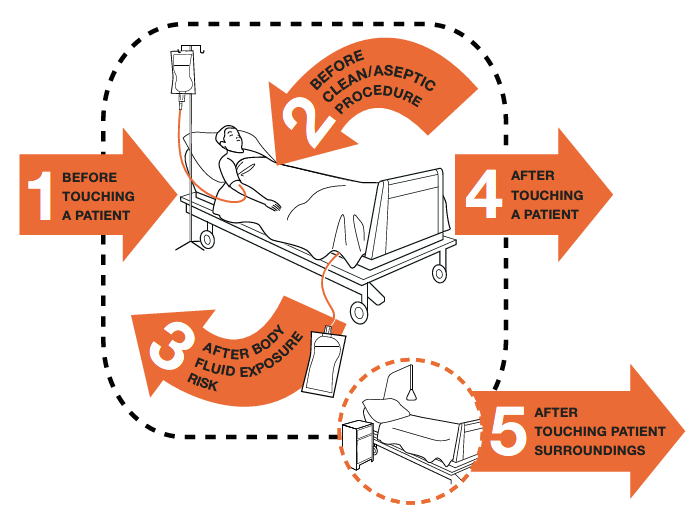
	</div>


	</div>
<div class="chapter numberless " id="chapter-swallowing-and-dysphagia" title="6.2 Swallowing and Dysphagia">
	<div class="chapter-title-wrap">
		<p class="chapter-number"></p>
		<h1 class="chapter-title">6.2 Swallowing and Dysphagia</h1>
								</div>
	<div class="ugc chapter-ugc">
				 <h1>Swallowing</h1> <p>Before discussing how to support clients with their dietary needs, let us review the mechanism of swallowing. <span class="glossary-term">Swallowing</span>&nbsp;is the transport of a substance from the mouth to the stomach. It is an important part of eating and drinking. The chewed food or drink that is moved in one swallow is called a <span class="glossary-term">bolus</span>. The most common complications with swallowing are choking and dysphagia (Girdi-Papp, 2022).</p> <div class="wp-caption aligncenter" id="attachment_1636" aria-describedby="caption-attachment-1636" style="width: 233px"><img class="wp-image-154 size-medium" src="https://opentextbc.ca/hcalabtheoryandpractice/wp-content/uploads/sites/430/2024/09/Illu_conducting_passages.svg_.png" alt="" width="233" height="300" title="" /><div class="wp-caption-text" id="caption-attachment-1636"><strong>Figure 6.2.1</strong> Regions of the human respiratory tract.</div></div> <p style="text-align: left;">The entire swallowing process takes about 4–8 seconds for solid food, and about one second for very soft food and liquids. Although this sounds quick and effortless, swallowing is a complex process that involves both the muscles of the tongue and the muscles of the pharynx and esophagus. It is aided by the presence of mucus and saliva. Swallowing consists of three phases — oral, pharyngeal, and esophageal — and involves many smooth muscles of the pharynx and esophagus. The oral phase is voluntary and controlled by the cerebral cortex, whereas the pharyngeal and esophageal phases are non-voluntary processes (<span class="cf0">Girdi-Papp, 2022)</span>.</p> <div class="wp-caption aligncenter" aria-describedby="caption-attachment-1636" style="width: 300px"><img class="size-medium wp-image-1636" src="https://opentextbc.ca/hcalabtheoryandpractice/wp-content/uploads/sites/430/2024/09/Screenshot-2023-01-29-at-9.41.37-AM-300x295.png" alt="" width="300" height="295" srcset="https://opentextbc.ca/hcalabtheoryandpractice/wp-content/uploads/sites/430/2024/09/Screenshot-2023-01-29-at-9.41.37-AM-300x295.png 300w, https://opentextbc.ca/hcalabtheoryandpractice/wp-content/uploads/sites/430/2024/09/Screenshot-2023-01-29-at-9.41.37-AM-768x756.png 768w, https://opentextbc.ca/hcalabtheoryandpractice/wp-content/uploads/sites/430/2024/09/Screenshot-2023-01-29-at-9.41.37-AM-65x64.png 65w, https://opentextbc.ca/hcalabtheoryandpractice/wp-content/uploads/sites/430/2024/09/Screenshot-2023-01-29-at-9.41.37-AM-225x221.png 225w, https://opentextbc.ca/hcalabtheoryandpractice/wp-content/uploads/sites/430/2024/09/Screenshot-2023-01-29-at-9.41.37-AM-350x344.png 350w, https://opentextbc.ca/hcalabtheoryandpractice/wp-content/uploads/sites/430/2024/09/Screenshot-2023-01-29-at-9.41.37-AM.png 884w" sizes="(max-width: 300px) 100vw, 300px" title="" /><div class="wp-caption-text"><strong>ƒFigure 6.2.2</strong> Swallowing movements during juice drinking filmed in MRI.&nbsp;<a href="https://upload.wikimedia.org/wikipedia/commons/b/be/Real-time_MRI_-_Swallowing_%28Pineapple_Juice%29.ogv" data-url="https://upload.wikimedia.org/wikipedia/commons/b/be/Real-time_MRI_-_Swallowing_%28Pineapple_Juice%29.ogv">Click to watch.</a></div></div> <h1>Dysphagia</h1> <p><span class="glossary-term">Dysphagia</span> is difficulty in swallowing. It can have various causes and involve different parts of the swallowing mechanism or anatomy. Dysphagia frequently produces coughing, choking, or <span class="glossary-term">pulmonary aspiration</span> and subsequent <span class="glossary-term">aspiration pneumonia</span>. Dysphagia can also lead to dehydration and weight loss (Girdi-Papp, 2022). There are two types of dysphagia: oropharyngeal and esophageal.</p> <p style="text-align: left;">Oropharyngeal dysphagia includes difficulty controlling the position of food in the mouth, difficulty initiating a swallow, nasal regurgitation, and a gurgling voice after swallowing. Clients identify the mouth or neck as the site of the problem. These problems are common among older individuals, and clients who have had strokes, head and neck cancer, and progressive neurologic diseases like Parkinson’s disease, Alzheimer’s disease, or multiple sclerosis (<span class="cf0">Girdi-Papp, 2022)</span>.</p> <p style="text-align: left;">In esophageal dysphagia, clients indicate an inability to swallow solid food, saying that it is held up or stuck before it reaches the stomach or is regurgitated. Various diseases in or adjacent to the esophagus can result in dysphagia, and the treatment depends on the cause (<span class="cf0">Girdi-Papp, 2022)</span>. There are several triggers that can cause a client to have difficulty swallowing, so it is important to know what the signs of dysphagia are and ask yourself:</p> <ul><li style="text-align: left;">Is the diet the right texture?</li> <li style="text-align: left;">Is the fluid the right consistency?</li> <li style="text-align: left;">Is the client positioned correctly?</li> <li style="text-align: left;">Are the bites and drink the right size?</li> <li style="text-align: left;">Is the client eating too fast?</li> <li style="text-align: left;">Does the client need adaptive utensils?</li> </ul> <p style="text-align: left;">If the answer is “yes” to any of the above questions, either intervene and self-correct where appropriate, and consult with the care team to discuss the need for a reassessment of the client’s care plan.</p> <p style="text-align: left;">Many treatments are used in dysphagia because it is not a disease, but a symptom or condition associated with a wide variety of diseases. Treatments can include swallowing therapy, dietary changes, feeding tubes, certain medications, and surgery.</p> <div class="textbox textbox--examples"><div class="textbox__header"><p class="textbox__title">Watch the video <em>Understanding Dysphagia</em> by Nestlé Health Science Canada (2011) on YouTube.</p> </div> <div class="textbox__content"><div class="textbox interactive-content interactive-content--oembed"><span class="interactive-content__icon"></span> <p>One or more interactive elements has been excluded from this version of the text. You can view them online here: <a href="#oembed-2" title="Understanding Dysphagia" data-url="https://opentextbc.ca/hcalabtheoryandpractice/?p=1637#oembed-2">https://opentextbc.ca/hcalabtheoryandpractice/?p=1637#oembed-2</a> </p> </div> </div> </div> <h1>Choking</h1> <p>Choking is a life-threatening medical emergency that occurs when the air passage into the lungs is blocked by food or another object. This obstruction can be partial or complete. The disruption of normal breathing by choking hinders oxygen delivery to the body, resulting in <span class="glossary-term">asphyxia</span>. Although oxygen stored in the blood and lungs can keep a person alive for several minutes after breathing stops, choking is potentially fatal. It is a major cause of unintentional injury-related death (Girdi-Papp, 2022).</p> <p>Deaths from choking most often occur in the very young (&lt; 1 year old) and in older adults (&gt; 75 years). The obstruction of the airway most commonly occurs at the pharynx or trachea. Foods that can adapt their shape to that of the pharynx, such as bananas, marshmallows, or gelatinous candies, are particularly dangerous. Choking is frequently caused by tumours, swelling of the airway tissues due to infections, and neurological disorders (Girdi-Papp, 2022). Complications of choking include:</p> <ul><li>Brain damage, which typically occurs if the body is deprived of air for 3 minutes.</li> <li>Death, which will usually occur if breathing is not restored in 6–8 minutes.</li> </ul> <h2>Causes</h2> <p>Children younger than age three are especially at risk of choking because they explore the environment by putting objects in their mouth. Their airway is smaller in diameter than an adult’s airway, and their coughing may not be as effective as that of an adult in clearing an airway obstruction. However, choking in adults is most often caused by food. Risk factors include:</p> <ul><li>Medical conditions that affect the coordination of swallowing, such as: <ul><li>Strokes</li> <li>Parkinson’s disease</li> <li>Alzheimer’s disease</li> </ul> </li> <li>Using alcohol or sedatives</li> <li>Undergoing a procedure involving the oral cavity or pharynx</li> </ul> <p>In the prevention of choking in clients with dysphagia, the appropriate selection of food items with smaller particle sizes, smoother texture, and fluidity can reduce the risk.</p> 
	</div>


	</div>
<div class="chapter numberless " id="chapter-assisting-with-eating" title="6.3 Assisting with Eating">
	<div class="chapter-title-wrap">
		<p class="chapter-number"></p>
		<h1 class="chapter-title">6.3 Assisting with Eating</h1>
								</div>
	<div class="ugc chapter-ugc">
				 <p>An important part of the Health Care Assistant’s job is to assist clients with eating. This may include planning and preparing meals, shopping for ingredients, serving food, and assisting with eating. Eating habits and nutrition can be affected by a number of diversity factors, such as culture, personal choices, religions, allergies, finances, aging, and illness.</p> <div class="textbox beige">Food and nutritional decisions are influenced by culture, religion, and belief systems. How and what food is prepared depends on diverse preferences and practices. For example, in some cultures, beef is not commonly eaten. As an HCA, it is important to understand the food preferences and diverse backgrounds of your clients to ensure you are offering person-centred care.</div> <p>Supporting older adults to meet their dietary needs requires you to understand the effects that aging has on clients’ appetites. Physical changes, vision, hearing, and poor-fitting dentures can all affect their ability to eat. Other factors from chronic illnesses, such as arthritis or cognitive impairments, can impact their control of eating and mealtime.</p> <h1>Considerations</h1> <p>HCAs can provide a pleasant atmosphere during mealtime by ensuring there are no unpleasant odours. Empty trash cans and remove urinals or bedpans from sight. Offer to assist the client to the bathroom and perform oral care prior to eating to make mealtime more comfortable. Ensure clients who wear dentures have them in their mouths prior to eating. This allows the client to better chew and digest their food.</p> <p>Clients should always be in an upright position during mealtimes. This helps to prevent choking. For clients with swallowing or choking difficulties, they should be kept in an upright position for 30–60 minutes after their meal is complete.</p> <p>Some clients may only need assistance with preparing food as they are able to eat independently. Many types of adaptive equipment, such as special plates, cups, and eating utensils, are available to help people be as independent as possible while eating. Other clients require complete support during eating, and the HCA will need to assist the client to eat. You should sit next to clients while assisting with eating and offer to keep those who are independent company. Mealtime is a good time to get to know clients. Clients who prefer to pray or have religious or spiritual practices before meals should be allowed to practice these rituals. Give privacy as appropriate and requested (McLain, et al., 2018; Sorrentino, et al., 2019).</p> <p>HCAs should offer foods that are appealing to their clients, and allow them to choose the foods they would like to eat, as appropriate. Follow care plan guidelines when preparing special diets.</p> <h1>Assisting with Eating</h1> <table class="grid" style="border-collapse: collapse; width: 100%;"><caption>Table 6.3.1 Procedure: Assisting with Eating</caption> <thead><tr><th scope="col">STEP</th> <th scope="col">ACTION</th> <th scope="col">REASON</th> </tr> </thead> <tbody><tr style="height: 15px;"><th scope="row">1.</th> <td><ul><li>Inform the client that it is mealtime.</li> <li>Provide choices about foods.</li> </ul> </td> <td></td> </tr> <tr style="height: 15px;"><th scope="row">2.</th> <td>Perform hand hygiene.</td> <td>Prevents the spread of infection.</td> </tr> <tr style="height: 15px;"><th scope="row">3.</th> <td>Assemble equipment needed, such as: <ul><li>bowl</li> <li>plates</li> <li>cup</li> <li>eating utensils</li> <li>napkins</li> </ul> </td> <td></td> </tr> <tr style="height: 15px;"><th scope="row">4.</th> <td>Prepare the client’s environment by ensuring there are no unpleasant odours or sights.</td> <td>Makes meal time more enjoyable.</td> </tr> <tr style="height: 30px;"><th scope="row">5.</th> <td><ul><li>Offer oral care prior to eating.</li> <li>Assist with applying dentures.</li> <li>Assist or encourage the client to put on glasses so they can see their food.</li> </ul> </td> <td>Enhances the taste of foods, helps clients chew more effectively, and lets them see what they are eating.</td> </tr> <tr style="height: 15px;"><th scope="row">6.</th> <td>Position the client in a high upright sitting position.</td> <td>Prevents the client from choking or aspirating food or fluids.</td> </tr> <tr style="height: 15px;"><th scope="row">7.</th> <td>Allow the client time to pray before eating if they wish.</td> <td>Respects cultural preferences.</td> </tr> <tr style="height: 15px;"><th scope="row">8.</th> <td>Arrange food attractively on the plate.</td> <td>Enhances mealtime.</td> </tr> <tr style="height: 15px;"><th scope="row">9.</th> <td><ul><li>Encourage the client to do as much as they are capable.</li> <li>Assist only as needed.</li> </ul> </td> <td>Maintains independence.</td> </tr> <tr style="height: 15px;"><th scope="row">10.</th> <td>Cut food into small, bite-sized pieces if the client is unable to do so.</td> <td></td> </tr> <tr style="height: 15px;"><th scope="row">11.</th> <td><ul><li>Place a napkin under the chin or a cover-up over the chest.</li> <li>Replace soiled napkins as needed.</li> </ul> </td> <td></td> </tr> <tr style="height: 15px;"><th scope="row">12.</th> <td>Inform the client of food temperatures, especially for hot food.</td> <td>Prevents injury.</td> </tr> <tr style="height: 15px;"><th scope="row">13.</th> <td><ul><li>Use a fork and spoon gently when fully assisting the client to eat.</li> <li>Never force food or fluids into a client’s mouth.</li> </ul> </td> <td>Prevents injury, choking or aspiration of food or fluids.</td> </tr> <tr style="height: 15px;"><th scope="row">14.</th> <td>Allow adequate time between bites before offering the next bite.</td> <td>Prevents choking or aspiration of food or fluids.</td> </tr> <tr style="height: 15px;"><th scope="row">15.</th> <td>Encourage the client to chew food well before proceeding to taking the next bite.</td> <td>Prevents choking or aspiration of food or fluids.</td> </tr> <tr style="height: 15px;"><th scope="row">16.</th> <td><ul><li>Sit next to or facing the client if assisting with eating or while providing company during mealtimes.</li> <li>Allow the client to eat alone if they prefer.</li> <li>Check on them every 5–10 minutes.</li> </ul> </td> <td>Mealtime is a good time for HCAs to get to know their clients. Make eating time a pleasurable experience.</td> </tr> <tr style="height: 31px;"><th scope="row">17.</th> <td>For clients who have difficulty swallowing, HCAs should limit their conversation while the clients are chewing.</td> <td>Prevents choking or aspiration of food or fluids.</td> </tr> <tr style="height: 47px;"><th scope="row">18.</th> <td><ul><li>Encourage, or assist, if needed, wiping&nbsp;off&nbsp;the mouth or face.</li> <li>Use straws or training cups as appropriate to allow ease of drinking and promotion of independence.</li> </ul> </td> <td>Special plates with guards, and padded eating utensils, helps to promote independence.</td> </tr> <tr style="height: 31px;"><th scope="row">19.</th> <td><ul><li>Remove uneaten food, liquid, and soiled dishes once the client is done eating.</li> <li>Clean the client’s&nbsp;area and all used dishes.</li> </ul> </td> <td></td> </tr> <tr style="height: 31px;"><th scope="row">20.</th> <td>If the client has swallowing problems, keep them in an upright position for 30–60 minutes after eating.</td> <td></td> </tr> <tr style="height: 31px;"><th scope="row">21.</th> <td>Offer hand and mouth hygiene when the client has finished their meal.</td> <td></td> </tr> <tr style="height: 15px;"><th scope="row">22.</th> <td>Wash and dry your hands.</td> <td></td> </tr> <tr style="height: 31px;"><th scope="row">23.</th> <td>Document and report any chewing or swallowing problems, changes in appetite, and amount of food eaten and fluids taken in as intake.</td> <td></td> </tr> </tbody> </table> <h1>Assisting a Client with Dysphagia</h1> <table class="grid" style="border-collapse: collapse; width: 100%;"><caption>Table 6.3.2 Procedure: Assisting a Client with Dysphagia</caption> <thead><tr><th scope="col">STEP</th> <th scope="col">ACTION</th> <th scope="col">REASON</th> </tr> </thead> <tbody><tr style="height: 15px;"><th scope="row">1.</th> <td>Review the client’s chart to identify: <ul><li>The presence of a therapeutic diet</li> <li>Medical considerations (e.g., cardiovascular accident, Parkinson’s disease, neurological disease)</li> <li>Aspiration precautions</li> <li>Need for or level of assistance</li> <li>Other client specific considerations (e.g., glasses, dentures, hearing aid, table allocation, assistive devices)</li> </ul> </td> <td style="height: 194px;">Ensures you are following the correct dietary plan.</td> </tr> <tr style="height: 15px;"><th style="height: 18px;" scope="row">2.</th> <td style="height: 18px;">Perform hand hygiene and gather required equipment if necessary.</td> <td style="height: 18px;">Prevents the spread of infection.</td> </tr> <tr><th scope="row">3.</th> <td><strong>Prepare tray and meal area. Check for:</strong> <ul><li>correct diet</li> <li>need to add thickener as ordered</li> <li>utensils</li> <li>napkin</li> </ul> </td> <td></td> </tr> <tr><th scope="row">4.</th> <td><strong>Observe the client. Watch for:</strong> <ul><li>Signs and symptoms for dysphagia: <ul><li>Gurgling or wet or change in voice</li> <li>Coughing while eating</li> <li>Drooling during a meal</li> <li>Food pocketing in the cheek</li> </ul> </li> <li>Comprehension</li> <li>Ability to assist: <ul><li>Monitor throughout the meal</li> <li>Need for assistive eating utensils or dining aids</li> </ul> </li> <li>Position: <ul><li>Sitting upright</li> <li>Head slightly tilted forward</li> <li>Chin tucked down while swallowing food</li> <li>Supportive devices as required</li> </ul> </li> </ul> </td> <td>Ensures there are no additional or underlying issues that would put the client at further risk of choking.</td> </tr> <tr style="height: 30px;"><th style="height: 105px;" scope="row">5.</th> <td style="height: 105px;"><ul><li>Offer oral care prior to eating.</li> <li>Assist with applying dentures.</li> <li>Assist or encourage the client to put on glasses so they can see their food.</li> </ul> </td> <td style="height: 105px;">Enhances the taste of foods, helps clients chew more effectively, and lets them see what they are eating.</td> </tr> <tr style="height: 15px;"><th scope="row">6.</th> <td>Position the client in a high upright sitting position.</td> <td>Prevents the client from choking or aspirating food or fluids.</td> </tr> <tr><th scope="row">7.</th> <td>Allow the client time to pray before eating if they wish.</td> <td>Respects cultural preferences.</td> </tr> <tr><th scope="row">8.</th> <td>Arrange food attractively on the plate.</td> <td>Enhances mealtime.</td> </tr> <tr><th scope="row">9.</th> <td><ul><li>Encourage the client to do as much as they are capable.</li> <li>Assist only as needed.</li> </ul> </td> <td>Maintains independence</td> </tr> <tr><th scope="row">10.</th> <td>Cut food into small, bite-sized pieces if the client is unable to do so.</td> <td></td> </tr> <tr><th scope="row">11.</th> <td><ul><li>Place a napkin under the chin or a cover-up over the chest.</li> <li>Replace soiled napkins as needed.</li> </ul> </td> <td></td> </tr> <tr><th scope="row">12.</th> <td>Allow adequate time between bites before offering the next bite.</td> <td>Prevents choking or aspiration of food or fluids.</td> </tr> <tr style="height: 15px;"><th style="height: 18px;" scope="row">13.</th> <td style="height: 18px;">Encourage the client to chew food well before they take the next bite.</td> <td style="height: 18px;">Prevents choking or aspiration of food or fluids.</td> </tr> <tr style="height: 15px;"><th style="height: 167px;" scope="row">14.</th> <td style="height: 167px;"><strong>Observe and evaluate the client eating</strong> <ul><li>Use small ½ teaspoonful bite-size amounts.</li> <li>Encourage a minimum of two complete swallows to clear food before the next spoonful.</li> <li>Check for pocketing (with tongue depressor, pen light and gloves).</li> <li>Provide prompting, encouragement and direction as needed.</li> </ul> </td> <td style="height: 167px;">Prevents choking or aspiration of food or fluids.</td> </tr> <tr style="height: 15px;"><th scope="row">15.</th> <td><strong>During the meal</strong> <ul><li>Promote independence and autonomy.</li> <li>Create a social environment: <ul><li>Acknowledge client’s preferences.</li> <li>Minimal communication while the client is eating.</li> </ul> </li> </ul> </td> <td style="height: 167px;">Special plates with guards, and padded eating utensils, help to promote independence.</td> </tr> <tr><th scope="row">16.</th> <td><ul><li>Remove uneaten food, liquid, and soiled dishes once the client is done eating.</li> <li>Clean the client’s area and all used dishes.</li> </ul> </td> <td></td> </tr> <tr><th scope="row">17.</th> <td>Keep the client in an upright position for 30 minutes after eating.</td> <td>Prevents regurgitation and risk of aspiration.</td> </tr> <tr><th scope="row">18.</th> <td>Offer hand and mouth hygiene when the client has finished their meal.</td> <td></td> </tr> <tr><th scope="row">19.</th> <td>Wash and dry your hands</td> <td></td> </tr> <tr><th scope="row">20.</th> <td>Document and report any chewing or swallowing problems, changes in appetite, and amount of food eaten and fluids taken in as intake.</td> <td></td> </tr> </tbody> </table> <div class="textbox"><div class="textbox__header">Review Questions</div> <div class="h5p"><div class="textbox interactive-content"><span class="interactive-content__icon"></span> <p>An interactive H5P element has been excluded from this version of the text. You can view it online here:<br /> <a href="https://opentextbc.ca/hcalabtheoryandpractice/?p=1638#h5p-4" title="Chapter 6.3 Self Check Activity" data-url="https://opentextbc.ca/hcalabtheoryandpractice/?p=1638#h5p-4">https://opentextbc.ca/hcalabtheoryandpractice/?p=1638#h5p-4</a> </p> </div> </div> <div class="pdf"><p>Self Check Activity Unit 6.3 – True/False</p> <ol><li>It is very important for a client with a swallowing problem to be in an upright position during mealtime and to be kept upright for 30–60 minutes after eating to prevent choking.</li> <li>It is okay to pull all the food items together in the blender instead of blending each separately when preparing a pureed diet for a client, as this saves time.</li> </ol> </div> </div> 
	</div>


	</div>
<div class="chapter numberless " id="chapter-special-diets" title="6.4 Special Diets">
	<div class="chapter-title-wrap">
		<p class="chapter-number"></p>
		<h1 class="chapter-title">6.4 Special Diets</h1>
								</div>
	<div class="ugc chapter-ugc">
				 <p>There are times when physicians order special diets for their clients for different reasons, such as disease, weight control, or physical or neurological changes that put clients at risk of choking. But just like any meal planning, the client’s preferences, culture, religion, allergies, and intolerances are taken into consideration.</p> <p>In care facilities, when a client does not have any dietary restrictions, their diet would be called either a regular or general diet. However, there are many types of special diets that you may see in your practice. For example, there are restricted diets, such as the diabetic diet, sodium-controlled diet, or a gluten-free diet. There are also diets that have modified texture due to illness, disease, or neurological and physical disabilities. A clear-liquid diet would be for acute illness or for post-operative patients, or the mechanical soft diet may be used for gastrointestinal disorder, or moving from a liquid diet. Whatever diet is ordered for the client, it is chosen based on a thorough assessment of the client’s history, health status, and ability to swallow, and it will be outlined in their care plan.</p> <h1>Considerations</h1> <p>Below are important considerations for clients who require special diets:</p> <ul><li>If the client has facial weakness, arm/hand weakness, or paralysis, assist with eating from the client’s strong side and place eating utensils on their stronger side.</li> <li>If the client has a swallowing problem, allow longer periods between bites for adequate&nbsp;chewing and swallowing. Encourage the client to tuck their chin down and bend their body forward while swallowing. This encourages the food to move down the esophagus.</li> <li>Limit the amount of conversation while the client is chewing and swallowing.</li> <li>Ensure that food is cut into bite-sized pieces and that food is the appropriate consistency (pureed), according to the client’s prescribed diet.</li> </ul> <h1>Types of Modified Texture Diets<a id="f6.4.1" class="internal" data-url=""></a></h1> <div class="wp-caption aligncenter" id="attachment_1640" aria-describedby="caption-attachment-1640" style="width: 600px"><img class="wp-image-1318" src="https://opentextbc.ca/hcalabtheoryandpractice/wp-content/uploads/sites/430/2024/09/Texture-Modified-Diets-UK-IDDSI-scaled-1.jpg" alt="" width="600" height="848" title="" /><div class="wp-caption-text" id="caption-attachment-1640"><strong>Figure 6.4.1</strong> Texture-Modified Diets (Infographic courtesy IDDSI, 2022). <a class="internal" href="#id6.4.1" data-url="https://opentextbc.ca/hcalabtheoryandpractice/chapter/special-diets/#id6.4.1">[Image description]</a></div></div> <table class="grid aligncenter" style="border-collapse: collapse; width: 100%;"><caption><strong>Table 6.4.1:</strong> Liquid Consistencies<span class="footnote"><span class="footnote-indirect" data-fnref="1645-1"></span></span></caption> <tbody><tr><th scope="col">LEVEL</th> <th scope="col">TYPE</th> <th scope="col">DESCRIPTION/ CHARACTERISTICS</th> </tr> <tr><th scope="row">0</th> <td>Thin drinks</td> <td><ul><li>Flow like water</li> <li>Can flow through a straw</li> </ul> </td> </tr> <tr><th scope="row">1</th> <td>Slightly thick drinks</td> <td><ul><li>Are thicker than water</li> <li>Can flow through a straw</li> </ul> </td> </tr> <tr><th scope="row">2</th> <td>Sippable drinks</td> <td><ul><li>Pour quickly from a spoon, but slower than thin drinks and slightly thick drinks</li> <li>Need some effort to drink this thickness using a standard straw</li> </ul> </td> </tr> <tr><th scope="row">3</th> <td>Moderately thick drinks</td> <td><ul><li>Can be drunk from a cup or taken with a spoon</li> <li>Have a smooth texture with no lumps, fibres, or seeds</li> <li>Need some effort to drink them through a wide diameter straw</li> </ul> </td> </tr> </tbody> </table> <p>Adaptive eating devices are modified utensils, dishes, and cups that make it easier for people with different types of physical difficulties to eat, including clients who may be weak or have difficulty grasping utensils. These devices can enhance mealtime and client independence, as well. While there are many such devices on the market, they can easily be made by simply building up the hand of eating utensils with gauze and tape.</p> <div class="wp-caption aligncenter" aria-describedby="caption-attachment-1640" style="width: 274px"><img class="wp-image-1640 size-medium" src="https://opentextbc.ca/hcalabtheoryandpractice/wp-content/uploads/sites/430/2024/09/Adaptive-Utensil-274x300.jpg" alt="" width="274" height="300" srcset="https://opentextbc.ca/hcalabtheoryandpractice/wp-content/uploads/sites/430/2024/09/Adaptive-Utensil-274x300.jpg 274w, https://opentextbc.ca/hcalabtheoryandpractice/wp-content/uploads/sites/430/2024/09/Adaptive-Utensil-65x71.jpg 65w, https://opentextbc.ca/hcalabtheoryandpractice/wp-content/uploads/sites/430/2024/09/Adaptive-Utensil-225x246.jpg 225w, https://opentextbc.ca/hcalabtheoryandpractice/wp-content/uploads/sites/430/2024/09/Adaptive-Utensil-350x383.jpg 350w, https://opentextbc.ca/hcalabtheoryandpractice/wp-content/uploads/sites/430/2024/09/Adaptive-Utensil.jpg 768w" sizes="(max-width: 274px) 100vw, 274px" title="" /><div class="wp-caption-text"><strong>Figure 6.4.2 </strong>Adaptive utensils</div></div> <div class="textbox shaded">Clients with visual impairments may need to be instructed about the position of food on their plate. An easy way to do this is to use the clock method. Instruct clients about position of their food using the face of a clock as a guide. For example, “The peas are at 2 o’clock, the meatloaf is at 6 o’clock and the rice is at 9 o’clock.”</div> <h1>Special Diets: Enteral Nutrition</h1> <p>Some clients, because of illness, injury, or surgery, have extreme difficulty chewing or swallowing and as a result have additional dietary considerations. For such clients, it is unsafe to eat or drink by mouth, therefore a physician will order all foods, fluids, and medications to be given through a tube. Only licensed health care workers can administer the foods, fluids, and medications through the tube, but as an HCA you will care for clients who have had these procedures, so it is important for you to understand.</p> <p><span class="glossary-term">Enteral nutrition</span> is provided to people who cannot chew or swallow foods or fluids past their esophagus into their stomachs. Enteral nutrition is a liquid nutritional formula delivered into the gastrointestinal tract through a gavage tube. The need for enteral nutrition may occur due to trauma or cancers to the face, mouth, esophagus, or neck. Also, people with advanced dementia who no longer know how to eat may have an enteral nutritional feeding tube. Many people refer to these tubes to as G-tubes, and there are many types of G-tubes depending on where they are surgically placed (Sorrentino, et al., 2019).</p> <table class="grid" style="font-weight: 400; width: 100%;"><caption>Table 6.4.2: Types of Enteral Nutritional Feeding Tubes<span class="footnote"><span class="footnote-indirect" data-fnref="1645-2"></span></span></caption> <tbody><tr style="height: 58px;"><th style="width: 60%;" scope="row">Nasogastric (NG) tube: <p>Inserted through the nose into the stomach</p></th> <td>&nbsp; <div><dl id="attachment_147"><dt><img src="https://opentextbc.ca/hcalabtheoryandpractice/wp-content/uploads/sites/430/2024/09/NG-Tube-300x238.jpg" alt="" width="300" height="238" title="" /></dt> <dd><strong>Figure 6.4.3</strong> Nasogastric (NG) tube</dd> </dl> </div> </td> </tr> <tr style="height: 58px;"><th style="width: 60%;" scope="row">Naso-intestinal (NG) tube: <p>Inserted through the nose into the small intestine</p></th> <td>&nbsp; <div><dl id="attachment_148"><dt><img src="https://opentextbc.ca/hcalabtheoryandpractice/wp-content/uploads/sites/430/2024/09/Nas-Intestinal-Tube-300x230.jpg" alt="" width="300" height="230" title="" /></dt> <dd><strong>Figure 6.4.4</strong> Naso-intestinal NG tube</dd> </dl> </div> </td> </tr> <tr style="height: 58px;"><th style="width: 60%;" scope="row">Gastrostomy (G-tube) tube: <p>Inserted directly into the stomach through a surgical opening. Types of tubes include the J-tube and the PEG-tube as noted below.</p></th> <td>&nbsp; <div><dl id="attachment_149"><dt><img src="https://opentextbc.ca/hcalabtheoryandpractice/wp-content/uploads/sites/430/2024/09/PEG-tube-300x235.jpg" alt="" width="300" height="235" title="" /></dt> <dd><strong>Figure 6.4.5</strong> Gastronomy (G-tube)</dd> </dl> </div> </td> </tr> <tr style="height: 73px;"><th style="width: 60%;" scope="row">Jejunostomy (J-tube) tube or gastro-jejunostomy (GJ) tube: <p>Placed in surgical opening in middle of small intestine (jejunum). Access is both stomach and jejunum. Typically, the tube is placed in a G-tube stoma with a narrower long tube into the small intestine. Used with clients at high risk of aspiration.</p></th> <td><div><dl id="attachment_150"><dt><img src="https://opentextbc.ca/hcalabtheoryandpractice/wp-content/uploads/sites/430/2024/09/J-Tube-300x287.jpg" alt="" width="300" height="287" title="" /></dt> <dd><strong>Figure 6.4.6</strong> J-Tube or Gastro-jejunostomy (GJ) tube</dd> </dl> </div> </td> </tr> <tr style="height: 73px;"><th style="width: 60%;" scope="row">Percutaneous endoscopic gastrostomy (PEG) tube: <p>Using an endoscope to see into the stomach, the physician will make a puncture wound (<span class="glossary-term">ostomy</span>) in the skin and into the stomach. A short tube is inserted into the stomach through the puncture wound and the tube sits flush against the skin.</p> <p>&nbsp;</p></th> <td>&nbsp; <div><dl><dt><img class="aligncenter" src="https://opentextbc.ca/hcalabtheoryandpractice/wp-content/uploads/sites/430/2024/09/PEG-tube-300x235.jpg" alt="" width="300" height="235" title="" /></dt> <dd><strong>Figure 6.4.7</strong> PEG tube</dd> </dl> </div> </td> </tr> </tbody> </table> <p style="text-align: left;">How often a client receives enteral nutrition depends on how the physician or dietician orders them, as well as the type of tube in place. There could be scheduled feedings given four times per day or these could be continuous over the day. Naso-intestinal and jejunostomy tube feedings are always continuous.</p> <h2>What Is the HCA Role in Enteral Nutrition?</h2> <p>As an HCA, your role with enteral nutrition and feeding tubes will mostly be observation, unless this task has been delegated to you by a regulated health professional, such as a registered nurse. Clients with enteral feeding tubes are at risk for <span class="glossary-term">aspiration</span>. These tubes can move from the stomach or intestine and into the esophagus or airway because clients move, or they or their caregivers may accidentally pull on the tube. Also, with such tubes <span class="glossary-term">regurgitation</span>&nbsp;may occur due to delayed stomach emptying and over-feeding. To prevent regurgitation and aspiration, have the client in a semi-Fowler’s or sitting position during feeding and for at least one hour after eating to promote digestion. Also, avoid putting the client in a left-lying side position as this prevents stomach emptying.</p> <h2>Observations and Comfort Measures</h2> <p>As the HCA caring for clients with enteral feeding tubes, it is essential you use your skills to make observations and provide comfort because aspiration is not the only risk with this type of feeding. Delayed stomach emptying, diarrhea, and constipation can also occur, so observe and report any of the following immediately to your supervisor:</p> <ul><li>Coughing or gurgling voice</li> <li>Nausea, vomiting</li> <li>Diarrhea</li> <li>Discomfort during the tube feeding</li> <li>Stomach distention (enlarged or swollen)</li> <li>Elevated temperature and/or pulse rate</li> <li>Redness, swelling, drainage, odour, pain at <span class="glossary-term">ostomy</span> site</li> </ul> <p>Because most people with enteral feeding tubes do not take anything by mouth NPO, mouth care is extremely important. Dry mouth and lips and sore throat can cause discomfort; therefore, good oral hygiene will be required. Brush teeth, moisturize lips and mouth, and if allowed, offer ice chips or hard candy to suck on. If the tube is placed into the nose, the tubes can put pressure on the nose and it becomes irritated and red. Try to reposition the tube slightly away from the nostril; tape or tube holders can be used to help with this and be sure to clean the nose at least every 4 hours. To prevent the tube from being pulled out of place, pin or secure the tubing to the client’s gown with a rubber band and safety pin or secure-strip with enough slack to allow movement.</p> <h1>Measuring Intake</h1> <p>To maintain adequate health, individuals need to take in a certain amount of fluid per day. Depending on a client’s condition, they may either be encouraged to drink fluids or limit their fluid intake. Fluid that is taken in is called intake. Fluids are usually measured using millilitres (ml). One cup of liquid is 8 ounces or 250 ml.</p> <p>The amount of food that is eaten can also be measured. This can be done by weighing the food prior to serving and subtracting the amount left to get the total food intake. Food intake can also be measured by determining the total percentage eaten. If all the meal is consumed, the intake is 100%. If none of the meal is consumed, the intake is 0%. A quarter of the meal consumed would be 25% and half the meal consumed would be 50% (McLain, et al., 2018; Sorrentino, et al., 2019). The facility policy will specify the unit of measurement to be used.</p> <ul><li>Explain to the client the importance of recording their intake. Throughout your shift, monitor or ask the client what and how much they have had to eat or drink.</li> <li>During food preparation, measure the amount of food or liquid that is served. Use standard measuring cups and spoons to properly measure intake. Record this in the appropriate place.</li> <li>Once the client has finished eating or drinking, subtract the amount they have consumed from the amount you served. Record this number as their input. Input for fluid should be recorded as millitres (ml).</li> <li>Record the weight or percentage of food consumed in the appropriate place.</li> <li>Document all food and drink intake. The agency may provide a specific intake and output (I &amp; O) sheet. Health care staff including HCAs should report any observations or changes in condition or behaviour.</li> </ul> <div class="textbox textbox--learning-objectives"><div class="textbox__header"><p class="textbox__title">Learning Activity</p> </div> <div class="textbox__content"><p>Complete this <a href="https://ecampusontario.pressbooks.pub/mavgs/part/introduction/[" data-url="https://ecampusontario.pressbooks.pub/mavgs/part/introduction/["><em>Meal Assistance Virtual Game Simulation Activity</em></a>&nbsp;by Hughes, Kenmir, &amp; Romaniuk ( n.d.).</p> <p><a href="https://ecampusontario.pressbooks.pub/mavgs/part/introduction/" data-url="https://ecampusontario.pressbooks.pub/mavgs/part/introduction/">https://ecampusontario.pressbooks.pub/mavgs/part/introduction/</a></p> <p>When you have completed this, answer the reflective questions and complete the Test Your Knowledge quiz found at the end of this activity.</p> </div> </div> <div class="textbox textbox--key-takeaways"><div class="textbox__header"><p class="textbox__title">Summary</p> </div> <div class="textbox__content"><p style="text-align: justify;">There are many factors that affect individuals’ eating and nutrition. Factors such as culture, religion, age, illness, and disability to name a few. It is important to understand your clients’ preferences and needs by getting to know them and following the care plan. It is also important to know who is at risk of choking, and how you can prevent such situations. Following the care plan is especially important when assisting a client to eat. It is also important to know how to record and report the intake of foods and fluids.</p> </div> </div> <h2>Image Descriptions</h2> <p><a id="id6.4.1" class="internal" data-url=""></a><strong>Figure 6.4.1 Texture-Modified Diets (Infographic courtesy IDDSI, 2022).</strong></p> <p>Texture modified diets.</p> <p>“Dysphasia is when an individual has difficulty swallowing making it hard for them to eat and drink. Their food and drink may need to be modified to make it safer and minimising the risk of choking and aspiration.”</p> <p>The Modified Food Groups</p> <ul><li>Level 3 – Liquidised <ul><li>All food items should be prepared separately.</li> <li>It should be completely smooth, passed through a sieve and lump free with a moderately thick liquid consistency. No thin liquid should separate.</li> </ul> </li> <li>Level 4 – Pureed <ul><li>Food should be smooth, without lumps or separated liquid. It should hold its shape on a spoon and be a mousse like consistency.</li> <li>Extra gravy or sauce should not be added.</li> </ul> </li> <li>Level 5 – Minced and Moist <ul><li>Food particles should be no bigger than 4 mm. Tender and moist with a fine minced consistency with no separated liquid.</li> <li>Extra gravy or sauce should not be added.</li> </ul> </li> <li>Level 6 – Soft and -Sized <ul><li>Food particles should be no bigger than 15 mm × 15 mm and soft enough to press down with a fork without regaining shape.</li> <li>Gravy or sauce should be bound within the dish and not served separately.</li> </ul> </li> <li>EC 7 -Easy to Chew <ul><li>Age appropriate foods that are a soft/tender texture that can be cut with a fork or spoon. No hard, tough, stringy textures with pips, seeds, bones or gristle.</li> </ul> </li> <li>Level 7 – Regular <ul><li>Everyday foods of different textures, Chewing required, includes mixed consistencies e.g., cereal with milk, soup with vegetables &amp; sandwiches.</li> </ul> </li> </ul> <p>Ingredients to avoid in Levels 3-7 Easy to Chew: Foods with husks, seeds, pips, or fibrous textures. No hard, crunchy or sticky textures. If in doubt pass ingredients through a fine sieve and thicken to correct consistency.</p> <p>[Back to <a class="internal" href="#f6.4.1" data-url="https://opentextbc.ca/hcalabtheoryandpractice/chapter/special-diets/#f6.4.1">Figure 6.4.1</a>]</p> <h1>Chapter 6 Attributions and References</h1> <h2>Unit 6.2 Image Attributions</h2> <ul><li><strong>Figure 6.2.1</strong> <a href="https://commons.wikimedia.org/wiki/File:Illu_conducting_passages.svg" data-url="https://commons.wikimedia.org/wiki/File:Illu_conducting_passages.svg">Illu conducting passages</a>&nbsp;[adapted], by Jmarchn, via Wikimedia Commons, is in the <a class="extiw" title="w:en:Public domain" href="https://en.wikipedia.org/wiki/en:Public_domain" data-url="https://en.wikipedia.org/wiki/en:Public_domain">pub</a><a class="extiw" title="w:en:Public domain" href="https://en.wikipedia.org/wiki/en:Public_domain" data-url="https://en.wikipedia.org/wiki/en:Public_domain">lic</a> <a class="extiw" title="w:en:Public domain" href="https://en.wikipedia.org/wiki/en:Public_domain" data-url="https://en.wikipedia.org/wiki/en:Public_domain">domain</a>. [Vectorized version of&nbsp;<a title="File:Illu conducting passages.jpg" href="https://commons.wikimedia.org/wiki/File:Illu_conducting_passages.jpg" data-url="https://commons.wikimedia.org/wiki/File:Illu_conducting_passages.jpg">File:Illu conducting passages.jpg</a>, which was a work of the US Government. Originally from <a href="https://training.seer.cancer.gov/anatomy/respiratory/passages/" data-url="https://training.seer.cancer.gov/anatomy/respiratory/passages/">SEER Training, U.S. National Cancer Institute</a>.]</li> <li><strong>Figure 6.2.2</strong>. <a href="https://commons.wikimedia.org/wiki/File:Real-time_MRI_-_Swallowing_(Pineapple_Juice).ogv" data-url="https://commons.wikimedia.org/wiki/File:Real-time_MRI_-_Swallowing_(Pineapple_Juice).ogv">Real-time MRI – Swallowing (Pineapple Juice)</a> (https://commons.wikimedia.org/wiki/File:Real-time_MRI_-_Swallowing_(Pineapple_Juice).ogv) by <a href="https://www.mpinat.mpg.de/en/frahm/" data-url="https://www.mpinat.mpg.de/en/frahm/">Biomedizinische NMR Forschungs GmbH</a> (https://www.mpinat.mpg.de/en/frahm/), via Wikimedia Commons is used under a <a href="https://creativecommons.org/licenses/by-sa/3.0/deed.en" data-url="https://creativecommons.org/licenses/by-sa/3.0/deed.en"><span class="cc-license-identifier">CC BY-SA 3.0</span></a> (https://creativecommons.org/licenses/by-sa/3.0/deed.en) licence.</li> </ul> <h2>Unit 6.4 Image Attributions</h2> <ul><li><strong>Figure 6.4.1</strong> <span xml:lang="EN-CA"><a href="https://iddsi.org/United-Kingdom" data-url="https://iddsi.org/United-Kingdom">Textures-Modified Diets</a>&nbsp;© The International Dysphagia Diet Standardisation Initiative 2019. This infographic is used under a&nbsp;<a href="https://creativecommons.org/licenses/by-sa/4.0/legalcode" data-url="https://creativecommons.org/licenses/by-sa/4.0/legalcode">CC BY SA 4.0</a>. Derivative works extending beyond language translation are NOT PERMITTED.<br /> </span></li> <li><strong>Figure 6.4.2</strong> Adaptive Utensils by AMorice CC0</li> <li><strong>Figure 6.4.3</strong> <a href="https://commons.wikimedia.org/wiki/File:Diagram_showing_the_position_of_a_nasogastric_tube_CRUK_340.svg" data-url="https://commons.wikimedia.org/wiki/File:Diagram_showing_the_position_of_a_nasogastric_tube_CRUK_340.svg">Diagram showing the position of a nasogastric tube CRUK 340</a>&nbsp;by Cancer Research UK, via Wikimedia Commons, is used under a <a href="https://creativecommons.org/licenses/by-sa/4.0/deed.en" data-url="https://creativecommons.org/licenses/by-sa/4.0/deed.en">CC BY-SA 4.0</a> licence.</li> <li><strong>Figure 6.4.4 </strong>[adapted] <a href="https://commons.wikimedia.org/wiki/File:Diagram_showing_the_position_of_a_nasogastric_tube_CRUK_340.svg" data-url="https://commons.wikimedia.org/wiki/File:Diagram_showing_the_position_of_a_nasogastric_tube_CRUK_340.svg">Diagram showing the position of a nasogastric tube CRUK 340</a>&nbsp;by Cancer Research UK, via Wikimedia Commons, is used under a <a href="https://creativecommons.org/licenses/by-sa/4.0/deed.en" data-url="https://creativecommons.org/licenses/by-sa/4.0/deed.en">CC BY-SA 4.0</a> licence.</li> <li><strong>Figure 6.4.5 </strong><a href="https://commons.wikimedia.org/wiki/File:Diagram_showing_the_position_of_a_percutaneous_endoscopic_gastrostomy_%28PEG%29_feeding_tube_CRUK_341.svg" data-url="https://commons.wikimedia.org/wiki/File:Diagram_showing_the_position_of_a_percutaneous_endoscopic_gastrostomy_%28PEG%29_feeding_tube_CRUK_341.svg">Diagram showing the position of a percutaneous endoscopic gastrostomy (PEG) feeding tube CRUK 341</a>&nbsp;by Cancer Research UK, via Wikimedia Commons, is used under a <a href="https://creativecommons.org/licenses/by-sa/4.0/deed.en" data-url="https://creativecommons.org/licenses/by-sa/4.0/deed.en">CC BY-SA 4.0</a> licence.</li> <li><strong>Figure 6.4.6</strong> <a href="https://commons.wikimedia.org/wiki/File:Diagram_showing_the_position_of_a_percutaneous_jejunostomy_feeding_tube_CRUK_342.svg" data-url="https://commons.wikimedia.org/wiki/File:Diagram_showing_the_position_of_a_percutaneous_jejunostomy_feeding_tube_CRUK_342.svg">Diagram showing the position of a percutaneous jejunostomy feeding tube CRUK 342</a>&nbsp;by Cancer Research UK, via Wikimedia Commons, is used under a <a href="https://creativecommons.org/licenses/by-sa/4.0/deed.en" data-url="https://creativecommons.org/licenses/by-sa/4.0/deed.en">CC BY-SA 4.0</a>&nbsp;licence.</li> <li><strong>Figure 6.4.7</strong> <a href="https://commons.wikimedia.org/wiki/File:Diagram_showing_the_position_of_a_percutaneous_endoscopic_gastrostomy_(PEG)_feeding_tube_CRUK_341.svg" data-url="https://commons.wikimedia.org/wiki/File:Diagram_showing_the_position_of_a_percutaneous_endoscopic_gastrostomy_(PEG)_feeding_tube_CRUK_341.svg">Diagram showing the position of a percutaneous endoscopic gastrostomy (PEG) feeding tube CRUK 341.svg</a> by Cancer Research UK, via Wikimedia Commons, is used under a <a href="https://creativecommons.org/licenses/by-sa/4.0/deed.en" data-url="https://creativecommons.org/licenses/by-sa/4.0/deed.en">CC BY-SA 4.0</a> licence.</li> </ul> <h2>Videos</h2> <ul><li><a href="https://www.youtube.com/watch?v=uA5V-ivcEes" data-url="https://www.youtube.com/watch?v=uA5V-ivcEes">Feed a Resident in a Chair CNA Skill NEW!</a> by 4yourCNA (2016)&nbsp;is licensed under a Standard YouTube License.</li> <li><a href="https://www.youtube.com/watch?v=faw_mOmoDxk" data-url="https://www.youtube.com/watch?v=faw_mOmoDxk">PEARSON VUE/CREDENTIA 2022 – FEEDS CLIENT WHO CANNOT FEED SELF</a> by Nurse Jar (2019)&nbsp;is licensed under a Standard YouTube License.</li> <li><a href="https://www.youtube.com/watch?v=jK1o3LSQmB0" data-url="https://www.youtube.com/watch?v=jK1o3LSQmB0">Understanding Dysphagia</a> by Nestlé Health Science Canada (2011)&nbsp;is licensed under a Standard YouTube License.</li> </ul> <h2>References</h2> <p class="hanging-indent"><!--StartFragment --></p> <p class="pf0 hanging-indent"><span class="cf0">Girdi-Papp, M. (2022). <em>Comparative oral+ENT biology</em>. (pp. 438–450).</span><span class="cf2">&nbsp;OpenStax CNX.&nbsp;</span></p> <p class="hanging-indent">Hughes, M., Kenmir, A., Romaniuk, D., &amp; Vander Meeren, P. (n.d.). <a href="https://ecampusontario.pressbooks.pub/mavgs/" data-url="https://ecampusontario.pressbooks.pub/mavgs/">Meal assistance virtual gaming simulation – Simple book publishing</a>. ECampus Ontario. https://ecampusontario.pressbooks.pub/mavgs/</p> <p><!--StartFragment --></p> <p><!--EndFragment --></p> <p class="hanging-indent">International Dysphagia Diet Standardisation Initiative (IDDSI). (2019, July). <em>Complete IDDSI framework</em><br /> <em>detailed definitions 2.0</em>. https://iddsi.org/IDDSI/media/images/Complete_IDDSI_Framework_Final_31July2019.pdf.</p> <p class="hanging-indent">International Dysphagia Diet Standardisation Initiative (IDDSI). (2022, September). <em>Textured modified diets</em> [Infographic/PDF]. UK IDDSI Reference Group (UKIRG). https://iddsi.org/IDDSI/media/images/CountrySpecific/UnitedKingdom/Texture-Modified-Diets-(UK-IDDSI-Festival).png.</p> <p class="hanging-indent">McLain, K., O’Hara-Leslie, E., &amp; Wade, A. (n.d.). <em>Foundations for assisting in home care</em>. Milne Publishing/SUNY Geneseo. https://milnepublishing.geneseo.edu/home-health-aide/</p> <p class="hanging-indent">Nurse Jar. (2019, April 13). PEARSON VUE/CREDENTIA 2022 – FEEDS CLIENT WHO CANNOT FEED SELF (Video). YouTube. https://www.youtube.com/watch?v=faw_mOmoDxk</p> <p>Sorrentino, S., Remmert, L., &amp; Wilks, M. (2019). <em>Mosby’s Canadian textbook for the support worker</em> (4th ed.). Elsevier Canada.</p> <p class="hanging-indent">Biomedizinische NMR Forschungs GmbH. (2011, September 16). Real-time magnetic resonance imaging at a resolution of 20 ms [GIF]. <i>Wikimedia Commons. </i>https://commons.wikimedia.org/wiki/File:Real-time_MRI_-_Swallowing_(Pineapple_Juice).ogv</p> 
	</div>
			
				
				<div class="footnotes"><div id='1645-1'>
(Source: IDDSI, 2019) <a href="https://creativecommons.org/licenses/by-sa/4.0/" data-url="https://creativecommons.org/licenses/by-sa/4.0/">CC BY SA 4.0</a>
</div><div id='1645-2'>(Source: Sorrentino, et al., 2019)</div></div>
	</div>

</div>
<div class="part-wrapper" id="part-assisting-with-elimination-needs-wrapper">
    <div class="part  " id="part-assisting-with-elimination-needs">
	<div class="part-title-wrap">
		<p class="part-number">VII</p>
		<h1 class="part-title">Unit 7 – Assisting with Elimination Needs</h1>
	</div>
	<div class="ugc part-ugc">
		
	</div>
			
				
	</div>
<div class="chapter numberless " id="chapter-introduction-7" title="7.1 Introduction">
	<div class="chapter-title-wrap">
		<p class="chapter-number"></p>
		<h1 class="chapter-title">7.1 Introduction</h1>
								</div>
	<div class="ugc chapter-ugc">
				 <p>The elimination of waste products from the body is a basic need. It is also a natural process, and most healthy people have regular fecal and urinary elimination habits. When people become dependent on others for care, elimination habits are often disrupted, and control can be lost. As HCA students, you will become familiar with alternative ways of assisting clients with their elimination needs.</p> <p>When assisting clients with urinary and bowel elimination, it is important to understand what type of care activity is required to help the client meet their needs. There are two types of care activities:</p> <ul><li>Tasks: care activities that HCAs are educated and trained to perform as part of their assigned HCA role (for example, assisting a client to use the toilet).</li> <li>Restricted activities: higher-risk care activities outlined in health professional regulations that an HCA cannot perform without authorization (delegation) by a regulated health professional, such as a registered nurse (for example, giving a rectal suppository or enema). Restricted activities are not considered HCA tasks.</li> </ul> <div class="textbox textbox--learning-objectives"><div class="textbox__header"><p class="textbox__title">Learning Objectives</p> </div> <div class="textbox__content"><p style="text-align: left;">Upon completion of this unit<span style="text-align: initial; font-size: 1em;">, the successful student will be able to:</span></p> <ol><li style="text-align: left;">Describe the guidelines for maintaining normal urinary and bowel elimination.</li> <li style="text-align: left;">List the required observations for urine and bowel movements.</li> <li style="text-align: left;">List factors affecting urinary and bowel elimination.</li> <li style="text-align: left;">Describe the care required by clients experiencing elimination problems (catheters, suppositories, enemas, ostomies).</li> <li style="text-align: left;">Describe procedures for collecting urine and stool specimens.</li> </ol> </div> </div> <div class="textbox textbox--key-takeaways"><div class="textbox__header"><p class="textbox__title">Terms to Know</p> </div> <div class="textbox__content"><ul><li><span class="glossary-term">Bedpan</span></li> <li><span class="glossary-term">Bladder</span></li> <li><span class="glossary-term">Colostomy</span></li> <li><span class="glossary-term">Condom catheter</span></li> <li><span class="glossary-term">Constipation</span></li> <li><span class="glossary-term">Defecation</span></li> <li><span class="glossary-term">Diarrhea</span></li> <li><span class="glossary-term">Excreted</span></li> <li><span class="glossary-term">Fecal impaction</span></li> <li><span class="glossary-term">Fecal incontinence</span></li> <li><span class="glossary-term">Feces</span></li> <li><span class="glossary-term">Flatulence</span></li> <li><span class="glossary-term">Flatus</span></li> <li><span class="glossary-term">Foreskin</span></li> <li><span class="glossary-term">Frequency</span></li> <li><span class="glossary-term">Ileostomy</span></li> <li><span class="glossary-term">Indwelling catheter</span></li> <li><span class="glossary-term">Meatus</span></li> <li><span class="glossary-term">Stool</span></li> <li><span class="glossary-term">Ostomy</span></li> <li><span class="glossary-term">Peristalsis</span></li> <li><span class="glossary-term">Shaft</span></li> <li><span style="text-align: initial; font-size: 1em;"><span class="glossary-term">Uncircumcised</span></span></li> <li><span class="glossary-term">Urgency</span></li> <li><span class="glossary-term">Urinal</span></li> <li><span class="glossary-term">Urinate</span></li> <li><span class="glossary-term">Urinary incontinence</span></li> <li><span class="glossary-term">Urinary catheter</span></li> <li><span class="glossary-term">Void</span></li> </ul> </div> </div> 
	</div>


	</div>
<div class="chapter numberless " id="chapter-urinary-elimination" title="7.2 Urinary Elimination">
	<div class="chapter-title-wrap">
		<p class="chapter-number"></p>
		<h1 class="chapter-title">7.2 Urinary Elimination</h1>
								</div>
	<div class="ugc chapter-ugc">
				 <h1>Normal Urinary Elimination</h1> <p style="text-align: left;">The kidneys filter the blood to remove waste products and also assist in maintaining fluid balance in the body. The result is the production of urine. Healthy adults produce between 1–2 litres of urine per day. Urine production is affected by a variety of factors such as disease process, age, medications, diet, and exercise. It is important for the HCA to monitor the client’s urinary output, colour, clarity, odour, <span class="glossary-term">frequency</span>, and any complaints of pain or discomfort when <span class="glossary-term">voiding</span>. Any abnormalities or changes should be documented and reported, as these can indicate health related changes. Therefore, it is important to know what the range of normal is for each observation.</p> <h2>Characteristics of Urine</h2> <table class="grid" style="width: 100%;"><caption>Table 7.2.1 Characteristics of Normal Urine</caption> <tbody><tr style="height: 15px;"><th scope="col">Characteristic</th> <th scope="col">What is Normal?</th> </tr> <tr style="height: 15px;"><td>Colour</td> <td>Can range from pale/light yellow to straw- coloured (see Figure 7.2.1: Urine Hydration Chart)</td> </tr> <tr style="height: 15px;"><td>Clarity</td> <td>Clear; no visible particles</td> </tr> <tr style="height: 15px;"><td>Odour</td> <td>Faint, mild odour</td> </tr> <tr style="height: 60px;"><td>Frequency</td> <td><ul><li>Average is 6–7 times in 24 hours.</li> <li>Dependent upon amount of fluid intake, type of fluid, activity, and medications.</li> </ul> </td> </tr> <tr style="height: 15px;"><td><span class="glossary-term">Urgency</span></td> <td><ul><li>A fuller <span class="glossary-term">bladder</span> will cause increased urgency.</li> <li>Pregnancy can cause pressure on the bladder resulting in a feeling of urgency.</li> </ul> </td> </tr> <tr style="height: 15px;"><td>Pain or discomfort</td> <td>Normally, there should be no pain or discomfort with urination.</td> </tr> </tbody> </table> <div class="wp-caption aligncenter" id="attachment_1654" aria-describedby="caption-attachment-1654" style="width: 512px"><img class="wp-image-669 size-full" src="https://opentextbc.ca/hcalabtheoryandpractice/wp-content/uploads/sites/430/2024/09/Urine_Hydration_chart.png" alt="From the lightest colour to the darkest, urine hydration level is hydrated, mildly hydrated, dehydrated and extremely dehydrated." width="512" height="420" title="" /><div class="wp-caption-text" id="caption-attachment-1654"><strong>Figure 7.2.1 </strong>Urine hydration chart</div></div> <table class="grid" style="width: 100%;"><caption>Table 7.2.2 Abnormal Characteristics of Urine</caption> <tbody><tr style="height: 15px;"><th style="width: 14.5729%;" scope="col">Characteristic</th> <th style="width: 34.8743%;" scope="col">Abnormal Characteristics</th> <th style="width: 50.4523%;" scope="col">Possible Causes</th> </tr> <tr style="height: 47px;"><td style="width: 14.5729%;">Colour</td> <td style="width: 34.8743%;">Amber, orange, brown, or red</td> <td style="width: 50.4523%;"><ul><li>Some foods cause colour change in urine (beets, rhubarb, blueberries)</li> <li>Vitamins and some medications can cause a bright yellow or orange hue</li> <li>Dehydration causes urine to be more concentrated and thus darker</li> <li>Blood in the urine may cause a red tinge</li> </ul> </td> </tr> <tr style="height: 15px;"><td style="width: 14.5729%;">Clarity</td> <td style="width: 34.8743%;">Cloudy, shreds of mucous, blood clots</td> <td style="width: 50.4523%;">Could indicate a urinary tract infection (UTI) or other kidney disorder</td> </tr> <tr style="height: 31px;"><td style="width: 14.5729%;">Odour</td> <td style="width: 34.8743%;">Strong, foul</td> <td style="width: 50.4523%;"><ul><li>Concentrated urine from dehydration can have a stronger odour</li> <li>Foul odour can indicate a UTI or other infection</li> <li>Some foods such as asparagus can cause urine odour to change</li> </ul> </td> </tr> <tr style="height: 31px;"><td style="width: 14.5729%;">Frequency/urgency</td> <td style="width: 34.8743%;">Increased frequency (more than 7 times in 24 hours) and feeling a constant need to void</td> <td style="width: 50.4523%;">Can indicate a UTI or other medical condition such as diabetes or prostate problems in men</td> </tr> <tr style="height: 15px;"><td style="width: 14.5729%;">Pain or discomfort</td> <td style="width: 34.8743%;">Burning, stinging sensation on voiding</td> <td style="width: 50.4523%;">Can indicate a UTI or other infection.</td> </tr> </tbody> </table> <h2>Explore More</h2> <p>The following video provide you with more information about urine and urinary infections.</p> <div class="textbox textbox--examples"><div class="textbox__header"><p class="textbox__title">Videos: Characteristics of Urine and Urinary Tract Infections</p> </div> <div class="textbox__content"><p>Watch <a href="https://www.youtube.com/embed/NAT40dWPlWs" data-url="https://www.youtube.com/embed/NAT40dWPlWs"><em>What Your Urine Colour Says About Your Health | Urinary System Breakdown | #DeepDives</em></a> by Health (2021) on YouTube.</p> <div class="textbox interactive-content interactive-content--oembed"><span class="interactive-content__icon"></span> <p>One or more interactive elements has been excluded from this version of the text. You can view them online here: <a href="#oembed-8" title="What Your Urine Color Says About Your Health | Urinary System Breakdown | #DeepDives" data-url="https://opentextbc.ca/hcalabtheoryandpractice/?p=1655#oembed-8">https://opentextbc.ca/hcalabtheoryandpractice/?p=1655#oembed-8</a> </p> </div> <p>Next, watch the video, <a href="https://www.youtube.com/embed/lY2bZjggc08" data-url="https://www.youtube.com/embed/lY2bZjggc08"><em>Urinary Tract Infections, Animation</em></a> by Alila Medical Media (2016) on YouTube.</p> <div class="textbox interactive-content interactive-content--oembed"><span class="interactive-content__icon"></span> <p>One or more interactive elements has been excluded from this version of the text. You can view them online here: <a href="#oembed-9" title="Urinary Tract Infections, Animation." data-url="https://opentextbc.ca/hcalabtheoryandpractice/?p=1655#oembed-9">https://opentextbc.ca/hcalabtheoryandpractice/?p=1655#oembed-9</a> </p> </div> </div> </div> <h1>Assisting with Urinary Elimination</h1> <p style="text-align: left;">The Health Care Assistant plays an important role in assisting clients to maintain normal elimination patterns. By following the guidelines below, you can support independence and possibly prevent urinary elimination problems. <strong>Always check the care plan.</strong></p> <div class="textbox textbox--learning-objectives"><div class="textbox__header"><p class="textbox__title">HCA Guidelines for Urinary Elimination</p> </div> <div class="textbox__content"><ul><li>Follow routine practices when assisting with elimination.</li> <li>Encourage fluids as per the care plan.</li> <li>Provide assistance promptly.</li> <li>Encourage clients to call when feeling the need to void.</li> <li>Provide comfort and privacy to the client as necessary.</li> <li>Utilize adaptive devices as per the care plan (e.g., raised toilet seat, mechanical lifts, commode, and urinal).</li> <li>Ensure the safety of the client (provide call bell, stand by if client is unsteady).</li> <li>Provide peri-care after if the client is unable to do it themselves.</li> <li>Ensure to wash the client’s hands afterwards, as well as your own.</li> <li>Note characteristics of urine and report anything abnormal to supervisor.</li> </ul> </div> </div> <h2>Urinary Elimination: Using Equipment and Devices</h2> <p style="text-align: left;">Clients may need to use a variety of different devices and equipment to assist them with their urinary elimination needs. Clients who are unable to get out of bed due to mobility issues or injury may benefit from using a <span class="glossary-term">bedpan</span>. Clients with a penis may benefit from using a <span class="glossary-term">urinal</span>&nbsp;at the bedside to prevent having to walk to the bathroom. Some clients need a <span class="glossary-term">urinary catheter</span>. Clients with a penis may require <span class="glossary-term">condom catheters</span>, which are external urinary drainage systems where a condom is applied to the penis and attached to a urinary drainage bag. Other clients may have <span class="glossary-term">indwelling catheters</span>&nbsp;in which the catheter is inserted into their <span class="glossary-term">bladder</span>. The catheter is attached to an external urinary drainage bag.</p> <p style="text-align: left;">The Health Care Assistant has an important role in providing assistance with elimination and cleansing the genital area after elimination. This section discusses how to offer a client a bedpan or urinal, how to apply a condom catheter, and how to cleanse the genital area and catheter tubing. Instruction is provided <span style="text-align: initial; font-size: 1em;">about how to empty urinary drainage bags that are attached to&nbsp;</span>condom catheter<span style="text-align: initial; font-size: 1em;">s and&nbsp;</span>indwelling catheter<span style="text-align: initial; font-size: 1em;">s, and how to properly measure urine output.</span></p> <div class="wp-caption aligncenter" aria-describedby="caption-attachment-1654" style="width: 300px"><img class="wp-image-1649 size-medium" style="font-size: 1em;" src="https://opentextbc.ca/hcalabtheoryandpractice/wp-content/uploads/sites/430/2024/09/Home_Care_Bedpans__Urinals-300x225.png" alt="" width="300" height="225" srcset="https://opentextbc.ca/hcalabtheoryandpractice/wp-content/uploads/sites/430/2024/09/Home_Care_Bedpans__Urinals-300x225.png 300w, https://opentextbc.ca/hcalabtheoryandpractice/wp-content/uploads/sites/430/2024/09/Home_Care_Bedpans__Urinals-768x576.png 768w, https://opentextbc.ca/hcalabtheoryandpractice/wp-content/uploads/sites/430/2024/09/Home_Care_Bedpans__Urinals-65x49.png 65w, https://opentextbc.ca/hcalabtheoryandpractice/wp-content/uploads/sites/430/2024/09/Home_Care_Bedpans__Urinals-225x169.png 225w, https://opentextbc.ca/hcalabtheoryandpractice/wp-content/uploads/sites/430/2024/09/Home_Care_Bedpans__Urinals-350x263.png 350w, https://opentextbc.ca/hcalabtheoryandpractice/wp-content/uploads/sites/430/2024/09/Home_Care_Bedpans__Urinals.png 1024w" sizes="(max-width: 300px) 100vw, 300px" title="" /><div class="wp-caption-text"><strong>Figure 7.2.2</strong> Urinary and bowel assistive equipment</div></div> <h3>Using a Bedpan</h3> <p style="text-align: justify;">Clients who are unable to get out of bed due to mobility issues or surgery may need to use a bedpan when urinating or for bowel movements. The standard bedpan looks like a toilet seat and has a wide, hi<span style="text-align: initial; font-size: 1em;">gh rim. These types of bedpans are placed under the client with the widest end under their </span>buttocks<span style="text-align: initial; font-size: 1em;">. The fracture pan has a lower, thinner rim. The smaller, flatter end is placed under the buttocks. The higher end with the handle is placed facing the client’s feet. The fracture pan should be used for clients who are unable to lift their hips for bedpan placement after back or spinal injuries or surgeries.</span></p> <table class="grid" style="border-collapse: collapse; width: 100%;"><caption>Table 7.2.3 Procedure: Use of a Bedpan</caption> <thead><tr><th scope="col">STEP</th> <th scope="col">ACTIONS</th> <th scope="col">REASON</th> </tr> </thead> <tbody><tr><th scope="row">1.</th> <td>Check the client’s care plan.</td> <td>Ensures you have information specific to this client’s care.</td> </tr> <tr style="height: 15px;"><th style="height: 36px;" scope="row">2.</th> <td style="height: 36px;">Perform hand hygiene before preparing supplies.</td> <td style="height: 36px;">Follows routine practices to prevent the spread of pathogens.</td> </tr> <tr style="height: 15px;"><th scope="row">3.</th> <td>Assemble equipment and supplies: <ul><li>non-sterile gloves</li> <li>bedpan</li> <li>incontinent pad or waterproof pad</li> <li>toilet paper</li> </ul> </td> <td>Gloves are needed for contact with blood/body fluids. <p>Incontinent pad or waterproof pad protects bed linens.</p></td> </tr> <tr style="height: 15px;"><th scope="row">4.</th> <td>Provide privacy for the client by closing doors and/or curtains.</td> <td>Maintains the privacy and dignity of the client.</td> </tr> <tr style="height: 15px;"><th scope="row">5.</th> <td>Explain the procedure to the client.</td> <td>Clients have a right to information about their care.</td> </tr> <tr style="height: 15px;"><th scope="row">6.</th> <td>Raise the bed to working height.</td> <td>Positioning helps prevent injury to the HCA.</td> </tr> <tr style="height: 15px;"><th scope="row">7.</th> <td>Fold down the top linens just enough to slide the bedpan under the client.</td> <td>Maintains privacy and dignity of the client.</td> </tr> <tr style="height: 10px;"><th scope="row">8.</th> <td>Place an incontinent pad or waterproof pad under the client as needed.</td> <td>Protects bed linens from urine or feces in case of accidental spilling of bedpan contents.</td> </tr> <tr style="height: 31px;"><th scope="row">9.</th> <td>Assist the client with removing their pants and undergarments if they are unable to do so.</td> <td></td> </tr> <tr style="height: 63px;"><th scope="row">10.</th> <td>Place a bedpan near the client’s hips. <p>Position a standard bedpan with the wider edge aligned with the buttocks.</p> <p>Position a fracture pan with the flatter end under the client’s buttocks and the handle toward the foot of the bed.</p></td> <td></td> </tr> <tr style="height: 63px;"><th scope="row">11.</th> <td><ul><li>If the client is able, they can bend their knees and lift their hips as you slide the bedpan under their buttocks.</li> <li>You can provide assistance for the client as they raise their hips by placing one hand at the small of their back to help raise their buttocks.</li> </ul> </td> <td></td> </tr> <tr style="height: 110px;"><th scope="row">12.</th> <td><ul><li>If the client is unable to lift their hips, roll them to the side facing opposite you.</li> <li>Position the waterproof pad under the client’s hips.</li> <li>Then, position the bedpan under their buttocks, pressing firmly but gently downward on the bedpan, against their buttocks.</li> <li>Hold the bedpan securely against the client as you roll the client back toward you.</li> <li>Check to ensure the bedpan is adequately underneath the client’s buttocks.</li> </ul> </td> <td>Correct positioning ensures client comfort and prevents spillage of bedpan contents.</td> </tr> <tr style="height: 31px;"><th scope="row">13.</th> <td><ul><li>Clean the client’s perineum.</li> <li>For clients with a vulva, wipe the buttocks from front to back, away from the vaginal area.</li> </ul> </td> <td>Ensures bacteria from the anal area and the feces do not enter the vaginal area and cause a possible infection.</td> </tr> <tr style="height: 31px;"><th scope="row">14.</th> <td><ul><li>Lower the bed to its lowest setting.</li> <li>Reposition the client for comfort.</li> <li>If required by the client’s care plan, ensure the bed side rails are raised.</li> </ul> </td> <td>Provides safety and comfort.</td> </tr> <tr style="height: 47px;"><th scope="row">15.</th> <td><ul><li>Dispose the contents of the bedpan into the toilet.</li> <li>Clean the bedpan according to your facility policy.</li> <li>Dry and put the bedpan away.</li> </ul> </td> <td>&nbsp;Decreases odours and ensures cleanliness of client’s environment.</td> </tr> <tr style="height: 31px;"><th scope="row">16.</th> <td><ul><li>Measure urine as required.</li> <li>Document output of urine or feces as appropriate.</li> </ul> </td> <td>Ensures communication of client’s health status to other team members.</td> </tr> <tr style="height: 15px;"><th scope="row">17.</th> <td>Dispose of your gloves, and wash and dry your hands.</td> <td>Follows routine practices to prevent the spread of pathogens.</td> </tr> <tr style="height: 31px;"><th scope="row">18.</th> <td>Document the procedure and any observations or changes you noticed in the client’s condition or behaviour.</td> <td>Ensures communication of the client’s health status to other team members.</td> </tr> </tbody> </table> <div class="textbox textbox--examples"><div class="textbox__header"><p class="textbox__title">Watch the video:</p> </div> <div class="textbox__content"><div class="textbox interactive-content interactive-content--oembed"><span class="interactive-content__icon"></span> <p>One or more interactive elements has been excluded from this version of the text. You can view them online here: <a href="#oembed-10" title="How to use a Bed Pan - Tips for Caregivers" data-url="https://opentextbc.ca/hcalabtheoryandpractice/?p=1655#oembed-10">https://opentextbc.ca/hcalabtheoryandpractice/?p=1655#oembed-10</a> </p> </div> <p><a href="https://www.youtube.com/embed/kD8ChQSZIxs" data-url="https://www.youtube.com/embed/kD8ChQSZIxs">How to use a Bedpan – Tips for Caregivers&nbsp;by CareChannel</a> (2019) by CareChannel. <a href="http://elizz.com/carechannel" data-url="http://elizz.com/carechannel">CareChannel</a> is developed by the Saint Elizabeth Foundation, presented by Elizz, and funded by The Ontario Ministry of Health Long Term Care.</p> </div> </div> <h3><span style="text-align: initial; font-size: 1em;">Using a Urinal</span></h3> <p style="text-align: left;">The use of a urinal helps a clients with penises privately and safely <span class="glossary-term">urinate</span>, without having to ambulate to the bathroom or commode. Many clients with a penis find it easier to urinate in a high sitting or standing position. Assist the client into the position they are most comfortable with, and which they can safely assume during urination. Health Care Assistants may need to assist some clients with positioning and holding the urinal while they urinate.</p> <table class="grid" style="border-collapse: collapse; width: 100%;"><caption>Table 7.2.4 Procedure: Use of a Urinal</caption> <thead><tr><th scope="col">STEP</th> <th style="width: 46%;" scope="col">ACTION</th> <th style="width: 46%;" scope="col">REASON</th> </tr> </thead> <tbody><tr><th scope="row">1.</th> <td>Check the client’s care plan.</td> <td>Ensures you have information specific to this client’s care.</td> </tr> <tr><th scope="row">2.</th> <td>Perform hand hygiene before preparing supplies.</td> <td>Follows routine practices to prevent the spread of pathogens.</td> </tr> <tr><th scope="row">3.</th> <td>Assemble equipment and supplies: <ul><li>non-sterile gloves</li> <li>urinal</li> <li>incontinent pad or waterproof pad</li> <li>toilet paper</li> </ul> </td> <td>Gloves are needed for contact with blood/body fluids. <p>Incontinent pad or waterproof pad protects bed linens.</p></td> </tr> <tr style="height: 31px;"><th scope="row">4.</th> <td>Provide privacy for the client by closing doors and/or curtains.</td> <td>Maintains privacy and dignity of the client.</td> </tr> <tr style="height: 15px;"><th scope="row">5.</th> <td>Explain the procedure to the client.</td> <td>Clients have a right to information about their care.</td> </tr> <tr style="height: 15px;"><th scope="row">6.</th> <td>Raise the bed to working height.</td> <td>Positioning helps prevent injury to the HCA.</td> </tr> <tr style="height: 63px;"><th scope="row">7.</th> <td><ul><li>Raise the head of the bed to put the client in a sitting position in bed or at the side of the bed.</li> <li>Alternatively, assist the client to a standing position.</li> </ul> </td> <td>Some clients with penises may find it easier to void when in a standing position.</td> </tr> <tr style="height: 31px;"><th scope="row">8.</th> <td>Place an incontinent pad or waterproof pad under client’s hips as needed.</td> <td>Helps protect bed linens from urine in case of accidental spilling of urinal contents.</td> </tr> <tr style="height: 17px;"><th scope="row">9.</th> <td>If the client is able, hand them the urinal.</td> <td>Promotes independence.</td> </tr> <tr style="height: 63px;"><th scope="row">10.</th> <td><ul><li>If the client requires assistance, place the urinal&nbsp;between the client’s legs.</li> <li>Position the head of&nbsp;the penis into the&nbsp;urinal, ensuring it is completely inside the container.</li> </ul> </td> <td></td> </tr> <tr style="height: 49px;"><th scope="row">11.</th> <td><ul><li>Be with the client while assisting with urination.</li> <li>Allow for quiet during this time.</li> <li>Provide privacy by covering the client with a blanket if they are in bed.</li> </ul> </td> <td>Maintains the privacy and dignity of the client.</td> </tr> <tr style="height: 96px;"><th scope="row">12.</th> <td><ul><li>Provide privacy for the client to urinate if they do not require assistance by leaving the room.</li> <li>Check on the client every 5 minutes, knocking before entering.</li> <li>Provide toilet paper.</li> </ul> </td> <td>Maintains the privacy and dignity of the client.</td> </tr> <tr style="height: 17px;"><th scope="row">13.</th> <td>Discard gloves and wash your hands.</td> <td>Follows routine practices to prevent the spread of pathogens.</td> </tr> <tr style="height: 31px;"><th scope="row">14.</th> <td>When the client has finished using the urinal, wash your hands and don clean gloves.</td> <td>Follows routine practices to prevent the spread of pathogens.</td> </tr> <tr style="height: 33px;"><th scope="row">15.</th> <td>Close the cap on the urinal.</td> <td>Prevents spillage of contents.</td> </tr> <tr style="height: 31px;"><th scope="row">16.</th> <td><ul><li>Lower the bed to the lowest height.</li> <li>If required by the client’s care plan, ensure the bed rails are raised.</li> </ul> </td> <td>Ensures client safety.</td> </tr> <tr style="height: 15px;"><th scope="row">17.</th> <td>Remove the urinal&nbsp;and supplies.</td> <td>Ensures cleanliness of the client’s environment.</td> </tr> <tr style="height: 17px;"><th scope="row">18.</th> <td>Measure urine and record output as required.</td> <td>Ensures communication of the client’s health status to other team members.</td> </tr> <tr style="height: 31px;"><th scope="row">19.</th> <td><ul><li>Dispose of urine into toilet.</li> <li>Flush toilet.</li> <li>Rinse and then store urinal.</li> <li>Do not store a&nbsp;urinal&nbsp;on a&nbsp;bedside table.</li> <li>Hang the urinal on a bed rail near the client, so they can easily access it.</li> </ul> </td> <td>Decreases odours and ensures cleanliness of the client’s environment.</td> </tr> <tr style="height: 30px;"><th scope="row">20.</th> <td>Dispose of gloves and wash your hands.</td> <td>Follows routine practices to prevent the spread of pathogens.</td> </tr> <tr style="height: 15px;"><th scope="row">21.</th> <td>Document the procedure and any observations or changes in the client’s condition or behaviour that you’ve observed.</td> <td>Ensures communication of the client’s health status to other team members.</td> </tr> </tbody> </table> <div class="textbox textbox--examples"><div class="textbox__header"><p class="textbox__title">Watch the video,</p> </div> <div class="textbox__content"><div class="textbox interactive-content interactive-content--oembed"><span class="interactive-content__icon"></span> <p>One or more interactive elements has been excluded from this version of the text. You can view them online here: <a href="#oembed-11" title="Assisting with a Urinal" data-url="https://opentextbc.ca/hcalabtheoryandpractice/?p=1655#oembed-11">https://opentextbc.ca/hcalabtheoryandpractice/?p=1655#oembed-11</a> </p> </div> <p><a href="https://www.youtube.com/embed/YBI3QjJ6Y1I" data-url="https://www.youtube.com/embed/YBI3QjJ6Y1I"><em>Assisting with a Urinal</em></a> by Ashraf Z Qotmosh (2020).</p> </div> </div> <h3>Condom Catheter</h3> <div class="wp-caption alignright" aria-describedby="caption-attachment-1654" style="width: 225px"><img class="wp-image-1650 size-medium" src="https://opentextbc.ca/hcalabtheoryandpractice/wp-content/uploads/sites/430/2024/09/Condom_Catheter-225x300.png" alt="" width="225" height="300" srcset="https://opentextbc.ca/hcalabtheoryandpractice/wp-content/uploads/sites/430/2024/09/Condom_Catheter-225x300.png 225w, https://opentextbc.ca/hcalabtheoryandpractice/wp-content/uploads/sites/430/2024/09/Condom_Catheter-65x87.png 65w, https://opentextbc.ca/hcalabtheoryandpractice/wp-content/uploads/sites/430/2024/09/Condom_Catheter-350x467.png 350w, https://opentextbc.ca/hcalabtheoryandpractice/wp-content/uploads/sites/430/2024/09/Condom_Catheter.png 768w" sizes="(max-width: 225px) 100vw, 225px" title="" /><div class="wp-caption-text"><strong>Figure 7.2.3</strong> Condom catheter</div></div> <p style="text-align: left;"><span class="glossary-term">Condom catheters</span> are worn by some clients with penises to assist with urination. This urinary drainage system allows a client to engage in their normal activities, without being concerned about problems with urination, such as incontinence. It is a less invasive urinary drainage system than an indwelling catheter&nbsp;and has a low risk of infection. It is important for Health Care Assistants to ensure the tubing to this urinary drainage system is not kinked or twisted, and that the drainage collection bag is worn below the level of the&nbsp;bladder.</p> <div class="wp-caption aligncenter" aria-describedby="caption-attachment-1654" style="width: 225px"><img class="wp-image-174 size-medium" src="https://opentextbc.ca/hcalabtheoryandpractice/wp-content/uploads/sites/430/2024/09/urinary-drainage-bag-scaled-1.jpg" alt="" width="225" height="300" title="" /><div class="wp-caption-text"><strong>Figure 7.2.4</strong> Urinary drainage bag</div></div> <table class="grid" style="border-collapse: collapse; width: 100%;"><caption>Table 7.2.5 Procedure: Assisting with the Use of a Condom Catheter</caption> <thead><tr style="height: 15px;"><th scope="col">STEP</th> <th style="width: 46%;" scope="col">ACTION</th> <th style="width: 46%;" scope="col">REASON</th> </tr> </thead> <tbody><tr style="height: 55px;"><th scope="row">1.</th> <td>Check the client’s care plan.</td> <td>Ensures you have information specific to this client’s care.</td> </tr> <tr style="height: 15px;"><th scope="row">2.</th> <td>Perform hand hygiene before preparing supplies.</td> <td>Follows routine practices to prevent the spread of pathogens.</td> </tr> <tr style="height: 134px;"><th scope="row">3.</th> <td>Assemble equipment and supplies: <ul><li>soap or peri-wash</li> <li>washcloth</li> <li>towel</li> <li>condom catheter</li> <li>drainage bag</li> </ul> </td> <td>Gloves are needed for contact with blood/body fluids.</td> </tr> <tr><th scope="row">4.</th> <td>Provide privacy for the client by closing doors and/or curtains.</td> <td>Maintains privacy and dignity of the client.</td> </tr> <tr><th scope="row">5.</th> <td>Explain the procedure to the client.</td> <td>Clients have a right to information about their care.</td> </tr> <tr><th scope="row">6.</th> <td>Raise bed to working height; place client in a supine position.</td> <td>Positioning helps prevent injury to the HCA.</td> </tr> <tr><th scope="row">7.</th> <td>Only expose genital area.</td> <td>Maintains privacy and dignity of the client.</td> </tr> <tr style="height: 31px;"><th scope="row">8.</th> <td>Remove the old condom catheter if one is in place by detaching it from the drainage system&nbsp;tubing and rolling the condom down and off the penis, starting at the base of the penis and rolling towards the tip of the penis. Dispose of the old condom catheter.</td> <td>Ensures cleanliness of the client’s environment.</td> </tr> <tr><th scope="row">9.</th> <td>Wash the penis carefully with soap and warm water (temperature no greater than 40ºC Celsius). For <span class="glossary-term">uncircumcised</span> clients, push the <span class="glossary-term">foreskin</span> down the <span class="glossary-term">shaft</span>&nbsp;of the penis and clean the head (glans) of the penis. The glans of the penis should be washed using a circular motion from the opening of the urinary <span class="glossary-term">meatus</span> outward. Wash the shaft of the penis using downward strokes. Remember to move the foreskin back up. If the foreskin is not reduced (put back into its original place), swelling will result due to circulation of blood to the penis being cut off.</td> <td>If the foreskin is not reduced (put back into its original place), swelling will result due to circulation of blood to the penis being cut off.</td> </tr> <tr><th scope="row">10.</th> <td>Observe the penis for sores, open or red areas, and broken skin.</td> <td></td> </tr> <tr><th scope="row">11.</th> <td>Attach the condom catheter to the tubing of the collection system. <p>Note: If a drainage bag is being reused, swab the end of the drainage bag tubing with an alcohol wipe prior to connecting to the condom catheter.</p></td> <td>Swabbing with an alcohol wipe will decrease the risk of a urinary tract infection from contaminated tubing.</td> </tr> <tr><th scope="row">12.</th> <td>Push pubic hair away from the shaft&nbsp;of the penis.</td> <td>Prevents the pubic hair from sticking to the condom.</td> </tr> <tr><th scope="row">13.</th> <td><ul><li>Hold the base of the penis with your non-dominant hand.</li> <li>With your dominant hand, roll the condom catheter onto the penis, starting at the tip of the penis and then over the&nbsp;shaft&nbsp;of the penis, toward the base.</li> <li>Leave about 2.5 cm (1 inch) of space between the glans of the penis and the drainage tip to prevent irritation.</li> </ul> </td> <td></td> </tr> <tr><th scope="row">14.</th> <td>If tape is being used to secure the condom in place, apply it in a spiral manner, starting at the top of the penis, and working downward.</td> <td></td> </tr> <tr><th scope="row">15.</th> <td>Ensure the tubing for the collection system is connected to the condom.</td> <td></td> </tr> <tr><th scope="row">16.</th> <td><ul><li>A Velcro or stabilization device may be used to secure the tubing to the client’s thigh.</li> <li>Use according to care plan or agency guidelines.</li> </ul> </td> <td></td> </tr> <tr><th scope="row">17.</th> <td><ul><li>Ensure the tip of the condom is not twisted.</li> <li>Ensure the tubing to the collection system is not kinked or twisted.</li> <li>The collection system tubing and drainage bag should always be kept below the level of the bladder.</li> </ul> </td> <td>Ensures urine from the drainage bag does not move back up to the penis.</td> </tr> <tr><th scope="row">18.</th> <td>Lower the bed to its lowest position. <p>If required by the client’s care plan, ensure the bed rails are raised.</p></td> <td>Provides safety for the client.</td> </tr> <tr><th scope="row">19.</th> <td>Discard used supplies.</td> <td>Ensures cleanliness of the client’s environment.</td> </tr> <tr><th scope="row">20.</th> <td>Discard gloves and wash your hands.</td> <td>Follows routine practices to prevent the spread of pathogens.</td> </tr> <tr style="height: 15px;"><th scope="row">21.</th> <td>Document the application of the condom catheter and any skin conditions that you’ve observed on your client, such as sores, swelling, red, or raw areas.</td> <td>Ensures communication of the client’s health status to other team members.</td> </tr> </tbody> </table> <div class="textbox textbox--examples"><div class="textbox__header"><p class="textbox__title">Watch the video:</p> </div> <div class="textbox__content"><div class="textbox interactive-content interactive-content--oembed"><span class="interactive-content__icon"></span> <p>One or more interactive elements has been excluded from this version of the text. You can view them online here: <a href="#oembed-12" title="How To Apply A Condom Catheter" data-url="https://opentextbc.ca/hcalabtheoryandpractice/?p=1655#oembed-12">https://opentextbc.ca/hcalabtheoryandpractice/?p=1655#oembed-12</a> </p> </div> <p><a href="https://media.bccampus.ca/media/How+To+Apply+A+Condom+Catheter/0_ffba2hsg" data-url="https://media.bccampus.ca/media/How+To+Apply+A+Condom+Catheter/0_ffba2hsg">How To Apply A Condom Catheter</a> by Kim Morris, RN, BN, MN; Tracy Christianson, RN, BSN, MN, DHEd, CCNE; Lynnette Fleury, RN, BSN, MSN; and Leon Racicot is licensed under a <a href="https://creativecommons.org/licenses/by/4.0/" data-url="https://creativecommons.org/licenses/by/4.0/">CC BY 4.0 licence</a>.</p> </div> </div> <h3>Cleaning the Skin and Indwelling Catheter Tubing</h3> <p>Providing personal hygiene care is an important part of the Health Care Assistant’s job. Cleaning the catheter tubing should be completed daily, when providing bathing and perineal care for the client. Providing perineal care and cleaning the catheter tubing are both tasks. However, some elements of catheter care involve restricted activities. HCAs must have client-specific delegation from a regulated health professional to perform any restricted activities.</p> <table class="grid" style="border-collapse: collapse; width: 100%;"><caption>Table 7.2.6 Procedure: Assisting with Cleaning the Skin and Indwelling Catheter Tubing</caption> <thead><tr><th scope="col">STEP</th> <th scope="col">ACTION</th> <th scope="col">REASON</th> </tr> </thead> <tbody><tr><th scope="row">1.</th> <td>Check the client’s care plan.</td> <td>Ensures you have information specific to this client’s care.</td> </tr> <tr style="height: 15px;"><th scope="row">2.</th> <td>Perform hand hygiene before preparing supplies.</td> <td>Follows routine practices to prevent the spread of pathogens.</td> </tr> <tr><th scope="row">3.</th> <td>Assemble equipment and supplies: <ul><li>soap or peri-wash</li> <li>washcloth</li> <li>towel</li> <li>condom catheter</li> <li>drainage bag</li> </ul> </td> <td>Gloves are needed for contact with blood/body fluids.</td> </tr> <tr><th scope="row">4.</th> <td>Provide privacy for the client by closing doors and/or curtains.</td> <td>Maintains privacy and dignity of the client.</td> </tr> <tr><th scope="row">5.</th> <td>Explain the procedure to the client.</td> <td>Clients have a right to information about their care.</td> </tr> <tr><th scope="row">6.</th> <td><ul><li>Raise bed to working height.</li> <li>Place the client in a supine position.</li> </ul> </td> <td>Prevents injury to the HCA.</td> </tr> <tr><th scope="row">7.</th> <td>Only expose genital area.</td> <td>Maintains privacy and dignity of the client.</td> </tr> <tr style="height: 31px;"><th scope="row">8.</th> <td>Position the client on their back to expose the perineal area and catheter tubing.</td> <td></td> </tr> <tr style="height: 17px;"><th scope="row">9.</th> <td>Place a towel or disposable protective pad under the client.</td> <td>Prevents bed linens from becoming soiled.</td> </tr> <tr style="height: 63px;"><th scope="row">10.</th> <td>Wash the client’s genital area gently with soap and warm water (no greater than 40°C). <p><strong>Clients with a Penis</strong></p> <ul><li>Start at the meatus (urinary opening) and clean outward in a circular motion.</li> <li>Clean the shaft of the penis with downward strokes.</li> <li>For uncircumcised clients, gently push back on the foreskin to clean under this area.</li> <li>You should use a clean area of the washcloth with each stroke.</li> <li>Remember to replace the foreskin.</li> </ul> <p><strong>Clients with a Vulva</strong></p> <ul><li>Separate the labia and use a clean part of the washcloth to wipe from front to back on each side — use a clean part of the washcloth for each stroke.</li> <li>Wipe from top to bottom down the middle to the opening of the vagina.</li> <li>Clean the area between the vagina and anus last, washing from front to back.</li> <li>Never move from back to front.</li> </ul> </td> <td></td> </tr> <tr><th scope="row">11.</th> <td><ul><li>The catheter tip is inside the bladder.</li> <li>Pulling on the tubing could cause injury to the bladder.</li> </ul> </td> <td>Take care to avoid pulling on the catheter at any time, as this could cause injury to the client.</td> </tr> <tr><th scope="row">12.</th> <td>Hold the tubing with one hand close to the meatus, while gently cleansing the length of the tubing — starting from the point of entry (urinary opening) and moving down the tubing.</td> <td>Prevents the pubic hair from sticking to the condom.</td> </tr> <tr><th scope="row">13.</th> <td><ul><li>A warm soapy washcloth can be used, unless otherwise directed in the care plan.</li> <li>Replace with clean washcloths as needed.</li> <li>When done washing the tubing, use a clean, wet washcloth to rinse the tubing.</li> <li>Always move from the urinary opening downward.</li> </ul> </td> <td>Never clean the bottom part of the tubing and move toward the urinary opening. This could introduce bacteria into the urinary system.</td> </tr> <tr><th scope="row">14.</th> <td><ul><li>Observe the genital area around the catheter for sores, swelling, crusting, leakage, or bleeding.</li> <li>Document and report these observations.</li> </ul> </td> <td>Ensures communication of the client’s health status to other team members.</td> </tr> <tr><th scope="row">15.</th> <td>Ensure the catheter tubing is taped or that a catheter securement device is in place, according to the care plan.</td> <td>Prevents kinking of the tubing.</td> </tr> <tr><th scope="row">16.</th> <td><ul><li>Position the client so that the catheter tubing does not kink or pull.</li> <li>The urinary drainage bag should be below the level of the client’s bladder.</li> </ul> </td> <td></td> </tr> <tr><th scope="row">17.</th> <td><ul><li>Dispose of dirty linens and water.</li> <li>Remove the bed protector or towel from under the client.</li> </ul> </td> <td>Ensures cleanliness of the client’s environment.</td> </tr> <tr><th scope="row">18.</th> <td>Lower the bed to its lowest setting, and if required by care plan, ensure the side rails are raised.</td> <td>Provides safety for the client.</td> </tr> <tr><th scope="row">19.</th> <td>Discard gloves and wash your hands.</td> <td>Follows routine practices to prevent the spread of pathogens.</td> </tr> <tr><th scope="row">A20.</th> <td>Record the time of procedure and any observations or changes observed in the client’s behaviour or condition.</td> <td>Ensures communication of the client’s health status to other team members.</td> </tr> </tbody> </table> <div class="textbox textbox--examples"><div class="textbox__header"><p class="textbox__title">Watch the video:</p> </div> <div class="textbox__content"><div class="textbox interactive-content interactive-content--oembed"><span class="interactive-content__icon"></span> <p>One or more interactive elements has been excluded from this version of the text. You can view them online here: <a href="#oembed-13" title="How to perform Perineal Care with an Indwelling Catheter" data-url="https://opentextbc.ca/hcalabtheoryandpractice/?p=1655#oembed-13">https://opentextbc.ca/hcalabtheoryandpractice/?p=1655#oembed-13</a> </p> </div> <p><a href="https://www.youtube.com/embed/kVMfKVJN5J0" data-url="https://www.youtube.com/embed/kVMfKVJN5J0">How to Perform Perineal Care with an Indwelling Catheter</a>, by University of Manitoba Nursing Skills (2018).</p> </div> </div> <h3>Emptying the Urinary Drainage Bag</h3> <p>Drainage bags on urinary collection systems, such as those from indwelling catheters or condom catheters, need to be emptied regularly. Health Care Assistants should frequently check that the tubing on the catheter system is not twisted or kinked, and ensure that drainage bags are below bladder level. Never hang them from the client’s bed rails, as the bag will move when the bed rails are raised or lowered.</p> <table class="grid" style="border-collapse: collapse; width: 100%;"><tbody><tr><td style="width: 50%; border-color: white;"><div class="wp-caption aligncenter" id="attachment_175" aria-describedby="caption-attachment-175" style="width: 225px"><img class="wp-image-175 size-full" src="https://opentextbc.ca/hcalabtheoryandpractice/wp-content/uploads/sites/430/2024/09/urinary-drainage-bag.jpg" alt="" width="225" height="225" title="" /><div class="wp-caption-text" id="caption-attachment-175"><strong>Figure 7.2.5 </strong>Drainage bag position</div></div> </td> <td style="width: 50%; border-color: white;"><div class="wp-caption aligncenter" id="attachment_1653" aria-describedby="caption-attachment-1653" style="width: 300px"><img class="wp-image-1653 size-medium" src="https://opentextbc.ca/hcalabtheoryandpractice/wp-content/uploads/sites/430/2024/09/Empty_the_Urinary_Drainage_Bag-300x300.png" alt="" width="300" height="300" srcset="https://opentextbc.ca/hcalabtheoryandpractice/wp-content/uploads/sites/430/2024/09/Empty_the_Urinary_Drainage_Bag-300x300.png 300w, https://opentextbc.ca/hcalabtheoryandpractice/wp-content/uploads/sites/430/2024/09/Empty_the_Urinary_Drainage_Bag-150x150.png 150w, https://opentextbc.ca/hcalabtheoryandpractice/wp-content/uploads/sites/430/2024/09/Empty_the_Urinary_Drainage_Bag-65x65.png 65w, https://opentextbc.ca/hcalabtheoryandpractice/wp-content/uploads/sites/430/2024/09/Empty_the_Urinary_Drainage_Bag-225x225.png 225w, https://opentextbc.ca/hcalabtheoryandpractice/wp-content/uploads/sites/430/2024/09/Empty_the_Urinary_Drainage_Bag-350x350.png 350w, https://opentextbc.ca/hcalabtheoryandpractice/wp-content/uploads/sites/430/2024/09/Empty_the_Urinary_Drainage_Bag.png 600w" sizes="(max-width: 300px) 100vw, 300px" title="" /><div class="wp-caption-text" id="caption-attachment-1653"><strong>Figure 7.2.6 </strong>Empty the drainage bag</div></div> </td> </tr> </tbody> </table> <table class="grid" style="border-collapse: collapse; width: 100%;"><caption>Table 7.2.7 Procedure: Assisting with Emptying the Urinary Drainage Bag</caption> <thead><tr><th scope="col">STEP</th> <th style="width: 46%;" scope="col">ACTION</th> <th style="width: 46%;" scope="col">REASON</th> </tr> </thead> <tbody><tr><th scope="row">1.</th> <td>Check the client’s care plan.</td> <td>Ensures you have information specific to this client’s care.</td> </tr> <tr><th scope="row">2.</th> <td>Perform hand hygiene and don gloves.</td> <td>Follows routine practices to prevent the spread of pathogens. <p>Gloves are needed for contact with blood/body fluids.</p></td> </tr> <tr><th scope="row">3.</th> <td>Assemble equipment and supplies: <ul><li>measuring pitcher or graduate cylinder</li> <li>paper towel</li> </ul> </td> <td></td> </tr> <tr><th scope="row">4.</th> <td>Provide privacy for the client by closing doors and/or curtains.</td> <td>Maintains the privacy and dignity of the client.</td> </tr> <tr><th scope="row">5.</th> <td>Explain the procedure to the client.</td> <td>Clients have a right to information about their care.</td> </tr> <tr><th scope="row">6.</th> <td>Place the measuring pitcher or graduate cylinder below the drainage bag on a paper towel.</td> <td>Protects floor from contamination.</td> </tr> <tr><th scope="row">7.</th> <td>Release the drain from the holder.</td> <td></td> </tr> <tr style="height: 31px;"><th scope="row">8.</th> <td>Open the clamp on the drainage bag without allowing the drain to touch the measuring cylinder.</td> <td>Prevents transfer of bacteria from cylinder to drain.</td> </tr> <tr><th scope="row">9.</th> <td>Allow contents to pour into a measuring container.</td> <td></td> </tr> <tr><th scope="row">10.</th> <td>Take care to prevent urine from splashing onto your face or clothing.</td> <td></td> </tr> <tr><th scope="row">11.</th> <td>Clamp the drainage bag and clean the end of the drain with an alcohol wipe.</td> <td>Prevents transfer of bacteria to drainage bag.</td> </tr> <tr><th scope="row">12.</th> <td>Position the clamp back into its holder.</td> <td></td> </tr> <tr><th scope="row">13.</th> <td><ul><li>Measure the amount of urine at eye level while it is sitting on a flat surface.</li> <li>Record this as output.</li> </ul> </td> <td>Measuring at eye level ensures greater accuracy of measurement.</td> </tr> <tr><th scope="row">14.</th> <td><ul><li>Dispose of urine in the toilet.</li> <li>Flush the toilet.</li> <li>Clean the measuring container and store.</li> </ul> </td> <td>Decreases odours and ensures cleanliness of the client’s environment.</td> </tr> <tr><th scope="row">15.</th> <td>Discard gloves and wash your hands.</td> <td>Follows routine practices to prevent the spread of pathogens.</td> </tr> <tr><th scope="row">16.</th> <td><ul><li>Document procedure, output, and any observed changes in behaviour or condition.</li> <li>Report observations about changes in urine colour, odour, amount, or characteristics, such as cloudiness, mucus, or blood present.</li> <li>Note the condition of the drainage bag and catheter tubing.</li> <li>Report concerns or the need to replace catheter tubing or the drainage bag to a supervisor.</li> </ul> </td> <td>Ensures communication of the client’s health status to other team members.</td> </tr> </tbody> </table> <h3>Measuring Urinary Output</h3> <p style="text-align: left;">Fluid taken into the body must be eliminated from the body. The urine that is <span class="glossary-term">excreted</span> from the body is called&nbsp;output. It is important for Health Care Assistants to measure the output of their clients to ensure optimal health. A client may have a condition in which the health care provider wants to ensure that their&nbsp;<span class="glossary-term">intake</span> equals their output. This helps to maintain adequate fluid balance. Fluids are usually measured using millilitres (ml). The agency will specify the unit of measurement for Health Care Assistants.</p> <p style="text-align: left;">Urinals&nbsp;and catheter drainage systems have measuring lines on the system. The amount of urine at the number indicates the amount of output. For clients who use a toilet, commode, or&nbsp;bedpan, urine contents can be emptied into a graduated or other measuring pitcher to provide an accurate measurement of output. Contents can be disposed of down the toilet once the urine has been measured.</p> <table class="grid" style="border-collapse: collapse; width: 100%;"><caption>Table 7.2.8 Procedure: Measuring Urinary Output</caption> <thead><tr><th scope="row">STEP</th> <th style="width: 46%;" scope="row">ACTION</th> <th style="width: 46%;" scope="row">REASON</th> </tr> </thead> <tbody><tr><th scope="row">1.</th> <td>Explain to the client the importance of measuring urinary output.</td> <td>Clients have a right to information about their care.</td> </tr> <tr><th scope="row">2.</th> <td>Always wash hands and don gloves when measuring urinary output.</td> <td>Following routine practices prevents the spread of pathogens. <p>Gloves are needed for contact with blood/body fluids.</p></td> </tr> <tr><th scope="row">3.</th> <td>Pour urine from a bedpan, commode, urinal, or urinary drainage bag into a measuring pitcher or cylinder.</td> <td></td> </tr> <tr><th scope="row">4.</th> <td>Place the measuring pitcher on a paper towel on a flat surface.</td> <td>Measuring on a flat surface ensures accuracy.</td> </tr> <tr><th scope="row">5.</th> <td>Note the amount of urine at eye level. Record amount. Amount of urine should be documented in millilitres (ml).</td> <td>Measuring at eye level ensures greater accuracy of measurement.</td> </tr> <tr><th scope="row">6.</th> <td>Discard urine into the toilet, unless the urine is needed for a specimen.</td> <td></td> </tr> <tr><th scope="row">7.</th> <td>If you notice anything unusual about the urine, save the urine to be inspected by a supervisor.</td> <td>Ensures communication of the client’s health status to other team members.</td> </tr> <tr><th scope="row">8.</th> <td>Flush the toilet.</td> <td>Decreases odours.</td> </tr> <tr><th scope="row">9.</th> <td>Rinse bedpans, commodes, urinals, and measuring pitchers that were used.</td> <td>Decreases odours.</td> </tr> <tr><th scope="row">10.</th> <td>Store equipment in the appropriate place.</td> <td>Ensures cleanliness of the client’s environment.</td> </tr> <tr><th scope="row">11.</th> <td>Discard gloves and wash your hands.</td> <td>Following routine practices prevents the spread of pathogens.</td> </tr> <tr><th scope="row">12.</th> <td><ul><li>Document all output.</li> <li>Report any observations or changes in condition or behaviour.</li> </ul> </td> <td>Ensures communication of the client’s health status to other team members.</td> </tr> <tr><th scope="row">13.</th> <td>Record and report changes in the characteristics of the client’s urine, including colour, amount, odour, blood or mucus in the urine, or if the client has difficulty or pain while urinating.</td> <td>Ensures communication of the client’s health status to other team members.</td> </tr> </tbody> </table> <div class="textbox textbox--examples"><div class="textbox__header"><p class="textbox__title">Watch the video:</p> </div> <div class="textbox__content"><div class="textbox interactive-content interactive-content--oembed"><span class="interactive-content__icon"></span> <p>One or more interactive elements has been excluded from this version of the text. You can view them online here: <a href="#oembed-14" title="Empty Urinary Drainage Bag CNA Skill Prometric" data-url="https://opentextbc.ca/hcalabtheoryandpractice/?p=1655#oembed-14">https://opentextbc.ca/hcalabtheoryandpractice/?p=1655#oembed-14</a> </p> </div> <p><em><a href="https://www.youtube.com/embed/WbVW_R7XIBY" data-url="https://www.youtube.com/embed/WbVW_R7XIBY">Empty Urinary Drainage Bag CNA Skill NEW</a></em>, by 4yourCNA (2016)</p> </div> </div> <h1>Urinary Incontinence</h1> <p style="text-align: left;"><span class="glossary-term">Urinary incontinence</span> is the involuntary loss of urine. Although abnormal, it is a common symptom that can seriously affect the physical, psychological, and social well-being of affected individuals of all ages. It has been estimated that one in five women develop urinary incontinence, but many are too embarrassed to discuss the condition with their health care providers. Some believe it’s a normal part of aging and something that they have to live with. The result can be isolation and depression when they limit their activities and social interactions because of embarrassment due to incontinence. Health care assistants can decrease incontinence by providing regular toileting opportunities to the client. This will greatly impact the client’s dignity and self-esteem. There are a variety of incontinence products available. They can provide the client with a sense of continence, and help to keep clothing and bed linens dry. Changing the incontinence products when wet and providing thorough and frequent skin care will prevent odour, discomfort, and skin breakdown.</p> <div class="wp-caption alignright" aria-describedby="caption-attachment-1654" style="width: 161px"><img class="wp-image-1654" src="https://opentextbc.ca/hcalabtheoryandpractice/wp-content/uploads/sites/430/2024/09/IncontinenceProduct-174x300.jpg" alt="" width="161" height="278" srcset="https://opentextbc.ca/hcalabtheoryandpractice/wp-content/uploads/sites/430/2024/09/IncontinenceProduct-174x300.jpg 174w, https://opentextbc.ca/hcalabtheoryandpractice/wp-content/uploads/sites/430/2024/09/IncontinenceProduct-595x1024.jpg 595w, https://opentextbc.ca/hcalabtheoryandpractice/wp-content/uploads/sites/430/2024/09/IncontinenceProduct-65x112.jpg 65w, https://opentextbc.ca/hcalabtheoryandpractice/wp-content/uploads/sites/430/2024/09/IncontinenceProduct-225x387.jpg 225w, https://opentextbc.ca/hcalabtheoryandpractice/wp-content/uploads/sites/430/2024/09/IncontinenceProduct-350x603.jpg 350w, https://opentextbc.ca/hcalabtheoryandpractice/wp-content/uploads/sites/430/2024/09/IncontinenceProduct.jpg 640w" sizes="(max-width: 161px) 100vw, 161px" title="" /><div class="wp-caption-text"><strong>Figure 7.2.7 </strong>Incontinence product</div></div> <h2>Types of Urinary Incontinence</h2> <p style="text-align: left;">Continence is achieved through an interplay of the physiology of the bladder, urethra, sphincter, pelvic floor, and&nbsp;the nervous system coordinating these organs. A disruption in any of these areas can cause several types of urinary&nbsp;incontinence.</p> <ul><li style="text-align: left;"><strong>Stress urinary incontinence</strong> is the involuntary loss of urine with intra-abdominal pressure (e.g., laughing and coughing) or physical exertion (e.g., jumping). It is caused by weak pelvic floor muscles that are often the result of pregnancy and vaginal delivery, menopause, and vaginal hysterectomy.</li> <li style="text-align: left;"><strong>Urge urinary incontinence</strong> (also referred to as “overactive bladder”) is urine leakage caused by&nbsp;the sensation of a strong desire to void (urgency). It can be caused by increased sensitivity to&nbsp;stimulation by the detrusor muscle in the bladder or decreased inhibitory control of the central&nbsp;nervous system.</li> <li style="text-align: left;"><strong>Mixed urinary incontinence</strong> is a mix of urinary frequency, urgency, and stress incontinence.</li> <li style="text-align: left;"><strong>Overflow incontinence</strong> occurs when small amounts of urine leak from a bladder that is always full. This condition tends to occur in clients with enlarged prostates that prevent the complete emptying of the bladder.</li> <li style="text-align: left;"><strong>Functional incontinence</strong> occurs in older adults who have normal bladder control, but have a problem getting to the toilet because of arthritis or other disorders that make it hard to move quickly or manipulate zippers or buttons. Clients with dementia also have an increased risk for functional incontinence.</li> </ul> 
	</div>


	</div>
<div class="chapter numberless " id="chapter-bowel-elimination" title="7.3 Bowel Elimination">
	<div class="chapter-title-wrap">
		<p class="chapter-number"></p>
		<h1 class="chapter-title">7.3 Bowel Elimination</h1>
								</div>
	<div class="ugc chapter-ugc">
				 <h1>Normal Bowel Elimination</h1> <p>The stomach breaks down ingested food by means of stomach acid and enzymes. This product is called chyme. Chyme is passed into the small intestine through <span class="glossary-term">peristalsis</span>. Chemical digestion and absorption of nutrients is the main function of the small intestine. The large intestine continues to absorb nutrients and fluid. The resulting waste is called <span class="glossary-term">feces</span> and is stored in the colon and rectum until the urge to <span class="glossary-term">defecate</span> is felt. The HCA should monitor the client’s bowel movements and note the frequency, consistency, colour, odour and any pain or discomfort experienced during bowel movements. This will assist the nurse in adjusting the client’s diet or medications.</p> <div class="textbox textbox--examples"><div class="textbox__header"><p class="textbox__title">Watch the video:</p> </div> <div class="textbox__content"><div class="textbox interactive-content interactive-content--oembed"><span class="interactive-content__icon"></span> <p>One or more interactive elements has been excluded from this version of the text. You can view them online here: <a href="#oembed-5" title="How your digestive system works - Emma Bryce" data-url="https://opentextbc.ca/hcalabtheoryandpractice/?p=1663#oembed-5">https://opentextbc.ca/hcalabtheoryandpractice/?p=1663#oembed-5</a> </p> </div> <p><a href="https://www.youtube.com/watch?v=Og5xAdC8EUI&amp;amp;t" data-url="https://www.youtube.com/watch?v=Og5xAdC8EUI&amp;amp;t"><em>How Your Digestive System Works – Emma Bryce</em></a>, from TED-Ed (2017).</p> </div> </div> <div class="textbox textbox--examples"><div class="textbox__header"><p class="textbox__title">Watch the video:</p> </div> <div class="textbox__content"><div class="textbox interactive-content interactive-content--oembed"><span class="interactive-content__icon"></span> <p>One or more interactive elements has been excluded from this version of the text. You can view them online here: <a href="#oembed-6" title="What is peristalsis?" data-url="https://opentextbc.ca/hcalabtheoryandpractice/?p=1663#oembed-6">https://opentextbc.ca/hcalabtheoryandpractice/?p=1663#oembed-6</a> </p> </div> <p><a href="https://www.youtube.com/watch?v=kVjeNZA5pi4" data-url="https://www.youtube.com/watch?v=kVjeNZA5pi4"><em>What is Peristalsis?</em></a> by Mister Science (2018).</p> </div> </div> <h2>Characteristics of Normal Bowel Movements</h2> <p style="text-align: left;">There is a range of normal when considering the frequency of bowel movements. It is important to know what is normal for your client. Some people have bowel movements daily, for others normal is every 2–3 days. The frequency of a person’s bowel movements can be affected by many factors, such as activity, age, medications, diet, fluid intake, and elimination habits. The Bristol Stool Chart (Figure 7.3.1) can assist you in identifying the consistency of the bowel movement.<a id="f7.3.1" class="internal" data-url=""></a></p> <div class="wp-caption aligncenter" id="attachment_180" aria-describedby="caption-attachment-180" style="width: 507px"><img class="wp-image-180 size-full" src="https://opentextbc.ca/hcalabtheoryandpractice/wp-content/uploads/sites/430/2024/09/Bristol-tool-chart-.png" alt="" width="507" height="660" title="" /><div class="wp-caption-text" id="caption-attachment-180"><strong>Figure 7.3.1</strong> Bristol Stool Chart <a class="internal" href="#id7.3.1" data-url="https://opentextbc.ca/hcalabtheoryandpractice/chapter/bowel-elimination/#id7.3.1">[Image description]</a></div></div> <table class="grid" style="width: 100%;"><caption><strong>Table 7.3.1</strong> Characteristics of Normal Bowel Elimination</caption> <tbody><tr style="height: 15px;"><td style="height: 15px; width: 129.7px;"><strong>Characteristic:</strong></td> <td style="height: 15px; width: 838px;"><strong>What is Normal?&nbsp;</strong></td> </tr> <tr style="height: 15px;"><td style="height: 15px; width: 129.7px;">Colour</td> <td style="height: 15px; width: 838px;">Normally brown due to presence of bile.</td> </tr> <tr style="height: 31px;"><td style="height: 31px; width: 129.7px;">Amount</td> <td style="height: 31px; width: 838px;">Normal can range from 3 times a day to 3 times a week. It is important to know what is normal for an individual, so changes can be identified.</td> </tr> <tr style="height: 15px;"><td style="height: 15px; width: 129.7px;">Consistency</td> <td style="height: 15px; width: 838px;">Normal is soft and formed.</td> </tr> <tr style="height: 15px;"><td style="height: 15px; width: 129.7px;">Odour</td> <td style="height: 15px; width: 838px;">Normal feces have a distinct odour.</td> </tr> <tr style="height: 15px;"><td style="height: 15px; width: 129.7px;">Shape</td> <td style="height: 15px; width: 838px;">Should be tube shaped, like the colon.</td> </tr> <tr style="height: 15px;"><td style="height: 15px; width: 129.7px;">Size</td> <td style="height: 15px; width: 838px;">Can vary depending on diet and elimination habits.</td> </tr> <tr style="height: 31px;"><td style="height: 31px; width: 129.7px;">Pain or Discomfort</td> <td style="height: 31px; width: 838px;">There should not be pain or discomfort felt with normal elimination.</td> </tr> </tbody> </table> <h2>Abnormal Bowel Elimination</h2> <table class="grid" style="width: 100%;"><caption><strong>Table 7.3.2</strong> Characteristics of Abnormal Bowel Elimination</caption> <thead><tr style="height: 15px;"><th scope="col">Characteristic</th> <th scope="col">Abnormal</th> <th scope="col">Possible Causes</th> </tr> </thead> <tbody><tr style="height: 151px;"><td style="height: 151px;">Colour</td> <td style="height: 151px;">Black, red, green or other</td> <td style="height: 151px;"><ul><li>Black stool: Clients on iron supplements are likely to have black, tarry (sticky and unformed) stool. <span style="font-family: inherit; font-size: inherit;">Bleeding higher up in the digestive tract will also cause this.</span></li> <li>Red stool: Bleeding in lower digestive tract, or eating beets will cause red coloured stool.</li> <li>Pale or clay coloured: <span style="font-family: inherit; font-size: inherit;">Can indicate disease or infection.</span></li> <li>Green: may be diet related or disease/infection.</li> </ul> </td> </tr> <tr style="height: 88px;"><td style="height: 88px;">Amount</td> <td style="height: 88px;">Any increase or decrease from the client’s normal should be reported and monitored</td> <td style="height: 88px;"><ul><li><strong>Increased:</strong> Can indicate infection (gastrointestinal virus or bacteria), diet related, or related to some medications.</li> <li><strong>Decreased:</strong> Constipation, medications</li> </ul> </td> </tr> <tr style="height: 63px;"><td style="height: 63px;">Consistency/Shape</td> <td style="height: 63px;">See Bristol Stool Chart (Figure 7.3.1) for variations in consistency/shape</td> <td style="height: 63px;">Harder consistency can indicate lack of fluids/fibre in diet. Loose consistency can indicate infection, changes in diet, allergies or intolerances, or other disease processes. A thinner shape could indicate also indicate disease process.</td> </tr> <tr style="height: 31px;"><td style="height: 31px;">Odour</td> <td style="height: 31px;">Foul; different from usual stool</td> <td style="height: 31px;">Foul or unusual odour can be the result of changes in diet, medications or infection</td> </tr> <tr style="height: 88px;"><td style="height: 88px;">Size</td> <td style="height: 88px;">Increase or decrease in normal should be monitored</td> <td style="height: 88px;"><ul><li>Smaller stool: Could indicate constipation.</li> <li>Larger stool: Could indicate change in diet, or infrequent bowel movements.</li> </ul> </td> </tr> <tr style="height: 31px;"><td style="height: 31px;">Pain or Discomfort</td> <td style="height: 31px;">Abdominal pain, cramping, rectal pain</td> <td style="height: 31px;">Any pain or discomfort with defecation should be reported, as there are a variety of factors and causes.</td> </tr> </tbody> </table> <h1>Assisting with Bowel Elimination</h1> <p style="text-align: left;">The Health Care Assistant plays an important role in assisting clients to maintain normal elimination patterns. By following the guidelines below, you can support independence and prevent constipation. Always ensure to check the care plan.</p> <div class="textbox textbox--learning-objectives"><div class="textbox__header"><p class="textbox__title">Guidelines for Assisting with Bowel Elimination</p> </div> <div class="textbox__content"><ul><li>Follow routine practices when assisting with elimination.</li> <li>Encourage fluids and appropriate fibre in diet as per the client’s care plan.</li> <li>Encourage exercise as appropriate.</li> <li>Provide assistance promptly. This is particularly important with the urge to defecate. If the client is not attended to promptly, the result may be that the urge goes away for several hours, contributing to constipation. The other result may be incontinence.</li> <li>Encourage clients to call when feeling the need to defecate.</li> <li>Provide for comfort and privacy as necessary.</li> <li>Ensure optimal positioning. If possible the client’s knees should be slightly higher than their hips.</li> <li>Utilize adaptive devices as per the care plan (raised toilet seat, mechanical lifts, commode, bedpan).</li> <li>Ensure safety of the client (provide the call bell and stand by if the client is unsteady).</li> <li>Provide peri-care after if the client is unable to do it themselves.</li> <li>Ensure to wash the client’s hands afterwards as well as your own.</li> <li>Record and report the time and amount of stool and anything abnormal to supervisor.</li> </ul> </div> </div> <h1>Problems with Bowel Elimination</h1> <h2>Constipation</h2> <p style="text-align: left;"><span class="glossary-term">Constipation</span>&nbsp;is a common problem experienced in older adults. Many factors contribute to constipation: age, medications, lack of adequate fluids or fibre, lack of exercise, delaying urge to defecate, lack of privacy. Frequent or constant constipation can lead to a variety of other health issues such as hemorrhoids, <span class="glossary-term">fecal impaction</span>, and bowel obstruction. HCAs play an important role in preventing constipation in clients. Although prevention is key, HCAs may be involved in assisting with or caring for clients who have required other measures to address the constipation such as rectal suppositories, enemas or disimpaction.</p> <div class="textbox shaded"><p>Rectal suppositories and enemas are restricted activities taught in the HCA curriculum that an HCA could only perform if:</p> <ul><li>It is delegated to the HCA by a regulated health professional (i.e., a registered nurse)</li> <li>It is delegated for a specific client</li> <li>The HCA performing the restricted activity is over the age of 19</li> <li>It is indicated in the client’s care plan</li> </ul> </div> <table class="grid" style="border-collapse: collapse; width: 100%;"><caption><strong>Table 7.3.3</strong>&nbsp;Procedure: Administering a Rectal Suppository or Enema<span class="footnote"><span class="footnote-indirect" data-fnref="1663-1"></span></span></caption> <thead><tr><th scope="col">STEP</th> <th style="width: 46%;" scope="col">ACTION</th> <th style="width: 46%;" scope="col">REASON</th> </tr> </thead> <tbody><tr><th scope="row">1.</th> <td>Check the client’s care plan.</td> <td>Ensures you have information specific to this client’s care.</td> </tr> <tr><th scope="row">2.</th> <td>Perform hand hygiene before preparing supplies.</td> <td>Following routine practices prevents the spread of pathogens.</td> </tr> <tr><th scope="row">3.</th> <td>Assemble equipment and supplies: <ul><li>non-sterile gloves</li> <li>water-soluble lubricant</li> <li>incontinent pad or waterproof pad</li> </ul> </td> <td><ul><li>Gloves are needed for contact with blood/body fluids.</li> <li>Lubricant reduces friction as the suppository enters rectal canal.</li> <li>Incontinent pad or waterproof pad protects bed linens.</li> </ul> </td> </tr> <tr><th scope="row">4.</th> <td>Explain the procedure to the client. If client prefers to self-administer the suppository/enema, give specific instructions to client on correct procedure.</td> <td><ul><li>Clients have a right to information about their care.</li> <li>Client may feel more comfortable self-administering suppository. If so provide glove, lubricant, and instructions.</li> </ul> </td> </tr> <tr><th scope="row">5.</th> <td>Raise bed to working height. <ul><li>Position client on left side with upper leg flexed over lower leg toward the waist (Sim’s position).</li> <li>Provide privacy and drape the client with only the buttocks and anal area exposed.</li> <li>Place an incontinent pad or waterproof pad underneath the client’s buttocks.</li> </ul> </td> <td><ul><li>Positioning helps prevent injury to the HCA administering the suppository.</li> <li>This protects client’s privacy and facilitates relaxation.</li> <li>Some literature suggests that left side-lying Sim’s position lessens the likelihood of the suppository being expelled.</li> <li>Incontinent or waterproof pad protects linens from potential fecal drainage.</li> </ul> </td> </tr> <tr><th scope="row">6.</th> <td>Apply clean, non-sterile gloves.</td> <td><div class="wp-caption aligncenter" style="width: 156px"><img src="https://opentextbc.ca/hcalabtheoryandpractice/wp-content/uploads/sites/430/2024/09/Hospital_worker_putting_on_sterile_gloves-156x300.jpg" alt="" width="156" height="300" title="" /><div class="wp-caption-text"><strong>Figure 7.3.2</strong> Gloves</div></div> <p>Gloves protect the HCA from contact with mucous membranes and body fluids.</p></td> </tr> <tr><th scope="row">7.</th> <td><ul><li>Remove wrapper from suppository/tip of enema and lubricate rounded tip of suppository and index finger of dominant hand with lubricant.</li> <li>Lubricate rounded tip of suppository or tip of enema.</li> </ul> </td> <td><div class="bc-figure figure" id="attachment_6449" aria-describedby="caption-attachment-6449"><div><dl id="attachment_377"><dt></dt><div class="wp-caption aligncenter" style="width: 300px"><img src="https://opentextbc.ca/hcalabtheoryandpractice/wp-content/uploads/sites/430/2024/09/Enema_prepared_disposable-scaled-1.jpg" alt="" width="300" height="107" title="" /><div class="wp-caption-text"><strong>Figure 7.3.3</strong> Disposable enema</div></div> </dl> </div> <div><dl><dt></dt><div class="wp-caption aligncenter" style="width: 167px"><img src="https://opentextbc.ca/hcalabtheoryandpractice/wp-content/uploads/sites/430/2024/09/DSC_2117-150x150-1.jpg" alt="Lubricate rounded tip of suppository" width="167" height="167" title="" /><div class="wp-caption-text"><strong>Figure 7.3.4</strong> Lubricant</div></div> <dd><span style="font-family: inherit; font-size: inherit;">Lubricant reduces friction as suppository/enema enters rectal canal. Inserting the rounded top promotes client comfort.</span></dd> </dl> </div> </div> </td> </tr> <tr><th scope="row">8.</th> <td><ul><li>Separate buttocks with non-dominant hand and, using gloved index finger of dominant hand, insert suppository (rounded tip toward client) into rectum toward umbilicus while having client take a deep breath, exhale through the mouth, and relax anal sphincter.</li> <li>If enema: Expel air from enema and then insert tip of enema into rectum toward umbilicus while having client take a deep breath, exhale through the mouth, and relax anal sphincter.</li> </ul> </td> <td><ul><li>Ensure the suppository is removed from the package.</li> <li>Upon insertion, you should feel the anal sphincter close around your finger.</li> <li>Forcing the suppository/enema through a clenched sphincter will cause pain.</li> </ul> </td> </tr> <tr><th scope="row">9.</th> <td><ul><li>With your gloved finger, insert suppository along wall of rectum about 5 cm beyond anal sphincter. Do not insert the suppository into feces.</li> <li>If enema: Roll plastic bottle from bottom to tip until all solution has entered rectum and colon.</li> </ul> </td> <td><ul><li>Suppository should be against rectal mucosa for absorption and therapeutic action. Inserting suppository into feces will decrease its effectiveness.</li> <li>If the client experiences cramping during enema administration, stop. Ask the client to take a deep breath. Resume administration when cramps subside. Hold buttock cheeks together if client feels immediate need for a bowel movement.</li> </ul> </td> </tr> <tr><th scope="row">10.</th> <td>Remove finger and wipe client’s anal area.</td> <td>Wiping removes excess lubricant and provides comfort to the client.</td> </tr> <tr><th scope="row">11.</th> <td>Ask the client to remain on side for 5–10 minutes.</td> <td>This position helps prevent the expulsion of suppository.</td> </tr> <tr><th scope="row">12.</th> <td><ul><li>Discard gloves by turning them inside out and disposing of them and any used supplies as per agency policy.</li> <li>Perform hand hygiene.</li> </ul> </td> <td>Using gloves reduces transfer of microorganisms. <div class="wp-caption aligncenter" style="width: 150px"><img src="https://opentextbc.ca/hcalabtheoryandpractice/wp-content/uploads/sites/430/2024/09/DSC_1530-150x150-1.jpg" alt="" width="150" height="150" title="" /><div class="wp-caption-text"><strong>Figure 7.3.5</strong> Dispose of gloves</div></div> <div class="wp-caption aligncenter" style="width: 300px"><img src="https://opentextbc.ca/hcalabtheoryandpractice/wp-content/uploads/sites/430/2024/09/kelly-sikkema-WIYtZU3PxsI-unsplash-scaled-1.jpg" alt="" width="300" height="200" title="" /><div class="wp-caption-text"><strong>Figure 7.3.6</strong> Using an ABHR</div></div> <div class="bc-figure figure" aria-describedby="caption-attachment-5570"></div> <div class="bc-figure figure" aria-describedby="caption-attachment-5972"><div class="bc-figcaption figcaption" id="caption-attachment-5972"></div></div> </td> </tr> <tr><th scope="row">13.</th> <td><ul><li>Ensure call bell is nearby and bedpan or commode is available and close by.</li> <li>Client may need assistance; refer to care plan.</li> </ul> </td> <td>If suppository is a laxative or stool softener, client will require a bedpan/commode or close proximity to toilet. <div class="wp-caption aligncenter" style="width: 126px"><img src="https://opentextbc.ca/hcalabtheoryandpractice/wp-content/uploads/sites/430/2024/09/call-bell-scaled-1.jpg" alt="" width="126" height="168" title="" /><div class="wp-caption-text"><strong>Figure 7.3.7</strong> Ensure call bell is available to client</div></div> <div class="bc-figure figure" id="attachment_6378" aria-describedby="caption-attachment-6378"><div class="bc-figcaption figcaption" id="caption-attachment-6378"></div></div> </td> </tr> <tr><th scope="row">14.</th> <td>Document procedure as per agency policy and include client’s tolerance of administration.</td> <td>Timely and accurate documentation promotes client safety.</td> </tr> </tbody> </table> <div class="textbox textbox--examples"><div class="textbox__header"><p class="textbox__title">Watch the video:</p> </div> <div class="textbox__content"><div class="textbox interactive-content interactive-content--oembed"><span class="interactive-content__icon"></span> <p>One or more interactive elements has been excluded from this version of the text. You can view them online here: <a href="#oembed-7" title="How To Give A Suppository Or Enema" data-url="https://opentextbc.ca/hcalabtheoryandpractice/?p=1663#oembed-7">https://opentextbc.ca/hcalabtheoryandpractice/?p=1663#oembed-7</a> </p> </div> <p><em><a href="https://www.youtube.com/watch?v=j-6ybQpytP8&amp;amp;t=154s" data-url="https://www.youtube.com/watch?v=j-6ybQpytP8&amp;amp;t=154s">How to Give a Suppository orEnema</a></em>, by CareChannel (2019).</p> </div> </div> <div class="textbox textbox--examples"><div class="textbox__header"><p class="textbox__title">Watch the video:</p> </div> <div class="textbox__content"><div class="textbox interactive-content interactive-content--oembed"><span class="interactive-content__icon"></span> <p>One or more interactive elements has been excluded from this version of the text. You can view them online here: <a href="#oembed-8" title="Perineal Care and Brief Change" data-url="https://opentextbc.ca/hcalabtheoryandpractice/?p=1663#oembed-8">https://opentextbc.ca/hcalabtheoryandpractice/?p=1663#oembed-8</a> </p> </div> <p><a href="https://www.youtube.com/watch?v=APTh9ABnCEU" data-url="https://www.youtube.com/watch?v=APTh9ABnCEU"><em>Perineal Care and Brief Change</em></a>, by University of Manitoba Nursing Skills (2018).</p> </div> </div> <h3>Image Descriptions</h3> <p><strong><a id="id7.3.1" class="internal" data-url=""></a>Figure 7.3.1 Bristol Stool Chart</strong></p> <ul><li>Type 1 – separate hard lumps, like nuts (hard to pass)</li> <li>Type 2 – sausage-shape but lumpy</li> <li>Type 3 – like a sausage but with cracks on its surface</li> <li>Type 4 – like a sausage or snakes, smooth and soft</li> <li>Type 5 – soft blobs with clear-cut edges (passed easily)</li> <li>Type 6 – fluffy pieces with ragged edges, a mushy stool</li> <li>Type 7 – watery, no solid pieces, entirely liquid</li> </ul> <p><a class="internal" href="#f7.3.1" data-url="https://opentextbc.ca/hcalabtheoryandpractice/chapter/bowel-elimination/#f7.3.1">[Back to Figure 7.3.1]</a></p> 
	</div>
			
				
				<div class="footnotes"><div id='1663-1'>(Data sources: BCIT, 2015; Lilley, et al., 2016; Perry, et al., 2018)</div></div>
	</div>
<div class="chapter numberless " id="chapter-specimen-collection" title="7.4 Specimen Collection">
	<div class="chapter-title-wrap">
		<p class="chapter-number"></p>
		<h1 class="chapter-title">7.4 Specimen Collection</h1>
								</div>
	<div class="ugc chapter-ugc">
				 <h1>Obtaining Urine Specimen for Culture</h1> <p style="text-align: left;">As an HCA you may be asked to collect a urine specimen for testing. There are a variety of tests that can be completed on urine, and the type of test will determine how the urine is collected. Below are several types of urine tests and the accompanying procedures.</p> <h2>Routine Urine Specimen</h2> <p style="text-align: left;">This common urine specimen tests for blood, sugar, ketones, white blood cells and other substances in the urine. Adults with cognitive impairments may not be able to understand the need for peri-care prior to collection, which is needed for a mid-stream collection.</p> <p style="text-align: left;">See Table 7.4.1 to learn the correct procedure for collecting a routine urine specimen.</p> <table class="grid" style="border-collapse: collapse; width: 100%;"><caption><strong>Table 7.4.1</strong> Procedure: Collecting a Routine Urine Specimen</caption> <thead><tr><th scope="col">STEP</th> <th style="width: 46%;" scope="col">ACTION</th> <th style="width: 46%;" scope="col">REASON</th> </tr> </thead> <tbody><tr><th scope="row">1.</th> <td>Check the client’s care plan.</td> <td>Ensures you have information specific to this client’s care.</td> </tr> <tr><th scope="row">2.</th> <td>Perform hand hygiene.</td> <td>Follows routine practices to prevent the spread of pathogens.</td> </tr> <tr><th scope="row">3.</th> <td>Assemble equipment and supplies: <ul><li>bedpan, urinal or other specimen collection container</li> <li>label</li> <li>specimen container with lid</li> <li>supplies for peri-care if needed (washcloth, soap or peri-wash)</li> </ul> </td> <td><div class="wp-caption aligncenter" style="width: 300px"><img src="https://opentextbc.ca/hcalabtheoryandpractice/wp-content/uploads/sites/430/2024/09/Urine_sample-300x300.jpg" alt="" width="300" height="300" title="" /><div class="wp-caption-text"><strong>Figure 7.4.1</strong> Urine Specimen</div></div> </td> </tr> <tr><th scope="row">4.</th> <td>Provide privacy for the client by closing doors and/or curtains.</td> <td>Maintains the privacy and dignity of the client.</td> </tr> <tr><th scope="row">5.</th> <td>Explain the procedure to the client.</td> <td>Clients have a right to information about their care.</td> </tr> <tr><th scope="row">6.</th> <td>Label the specimen container.</td> <td>Ensures the correct test is performed on the correct client.</td> </tr> <tr><th scope="row">7.</th> <td>Put on gloves.</td> <td>Gloves are needed for contact with blood/body fluids.</td> </tr> <tr><th scope="row">8.</th> <td><ul><li>Assist client to void into urinal, bedpan, or specimen collection container.</li> <li>Do not put toilet paper into the container.</li> </ul> </td> <td>Avoids contamination of specimen (toilet paper will contaminate the specimen).</td> </tr> <tr><th scope="row">9.</th> <td><ul><li>Assist client as needed.</li> <li>Pour urine from bedpan, urinal or collection container into specimen container.</li> <li>Fill at least halfway (approximately 120 ml).</li> <li>Dispose of excess urine into toilet.</li> </ul> </td> <td></td> </tr> <tr><th scope="row">10.</th> <td><ul><li>Ensure lid is securely on container and container is labelled correctly.</li> <li>Store according to facility policy.</li> </ul> </td> <td>The urine specimen needs to be refrigerated if there is not a laboratory on site.</td> </tr> <tr><th scope="row">11.</th> <td>Clean up supplies, remove gloves and perform hand hygiene.</td> <td></td> </tr> </tbody> </table> <h2>Mid-Stream Urine Specimen</h2> <p style="text-align: left;">This type of specimen requires peri-care to be done prior to collecting the sample. The client is also instructed to void a small amount, then void again into the specimen collection container. This ensures that microorganisms from outside the body are not contaminating the specimen. This may be more difficult to obtain from clients who have cognitive impairment.</p> <h2>24-Hour Urine Specimen</h2> <p style="text-align: left;">A 24-hour urine specimen includes all urine voided over a 24-hour period. This may be ordered for measuring kidney function. A large container will be used to collect the urine over the time period.</p> 
	</div>


	</div>
<div class="chapter numberless " id="chapter-ostomies" title="7.5 Ostomies">
	<div class="chapter-title-wrap">
		<p class="chapter-number"></p>
		<h1 class="chapter-title">7.5 Ostomies</h1>
								</div>
	<div class="ugc chapter-ugc">
				 <p style="text-align: left;">An <span class="glossary-term">ostomy</span> is a surgical procedure that creates an opening (<span class="glossary-term">stoma</span>) from an area inside the body to the outside of the body. In ostomies related to elimination, a stoma is an opening on the abdomen that is connected to the gastrointestinal or urinary system to allow waste (urine or feces) to be collected in a pouch. See Figure 7.5.1 for an image of a stoma. A stoma can be permanent, such as when an organ is removed, or temporary, such as when an organ requires time to heal. Ostomies are created for clients with conditions such as cancer of the bowel or bladder, inflammatory bowel diseases, or perforation of the colon.</p> <div class="wp-caption aligncenter" id="attachment_1670" aria-describedby="caption-attachment-1670" style="width: 300px"><img class="wp-image-1666 size-medium" src="https://opentextbc.ca/hcalabtheoryandpractice/wp-content/uploads/sites/430/2024/09/ostomy-stoma-300x237.jpg" alt="" width="300" height="237" srcset="https://opentextbc.ca/hcalabtheoryandpractice/wp-content/uploads/sites/430/2024/09/ostomy-stoma-300x237.jpg 300w, https://opentextbc.ca/hcalabtheoryandpractice/wp-content/uploads/sites/430/2024/09/ostomy-stoma-768x607.jpg 768w, https://opentextbc.ca/hcalabtheoryandpractice/wp-content/uploads/sites/430/2024/09/ostomy-stoma-65x51.jpg 65w, https://opentextbc.ca/hcalabtheoryandpractice/wp-content/uploads/sites/430/2024/09/ostomy-stoma-225x178.jpg 225w, https://opentextbc.ca/hcalabtheoryandpractice/wp-content/uploads/sites/430/2024/09/ostomy-stoma-350x276.jpg 350w, https://opentextbc.ca/hcalabtheoryandpractice/wp-content/uploads/sites/430/2024/09/ostomy-stoma.jpg 1023w" sizes="(max-width: 300px) 100vw, 300px" title="" /><div class="wp-caption-text" id="caption-attachment-1670"><strong>Figure 7.5.1</strong> Stoma</div></div> <p style="text-align: left;">There are several different kinds of ostomies related to elimination. Common types of ostomies include the following:</p> <ul style="text-align: left;"><li><strong>Ileostomy: </strong>The lower end of the small intestine (ileum) is attached to a stoma to bypass the colon,&nbsp;rectum, and anus.</li> <li><strong>Colostomy:&nbsp;</strong>The colon is attached to a stoma to bypass the rectum and the anus.</li> <li><strong>Urostomy: </strong>The ureters (tubes that carry urine from the kidney to the bladder) are attached to a stoma to bypass the bladder.</li> </ul> <p style="text-align: left;">Figures 7.5.2 and 7.5.3 show the anatomical locations of <span class="glossary-term">ileostomies</span> and various sites of <span class="glossary-term">colostomies</span>. It is important to understand the site of a client’s colostomy because the site impacts the characteristics of the waste. For example, due to the natural digestive process of the colon and absorption of water, waste from an ileostomy or a colostomy placed in the anterior ascending colon will be watery compared to waste from an ostomy placed in the descending colon.</p> <table class="grid" style="border-collapse: collapse; width: 100%;"><tbody><tr><td style="width: 50%; border-color: white;"><div class="wp-caption aligncenter" id="attachment_1667" aria-describedby="caption-attachment-1667" style="width: 300px"><img class="wp-image-1667 size-medium" src="https://opentextbc.ca/hcalabtheoryandpractice/wp-content/uploads/sites/430/2024/09/ileostomy-diagram-300x300.jpg" alt="" width="300" height="300" srcset="https://opentextbc.ca/hcalabtheoryandpractice/wp-content/uploads/sites/430/2024/09/ileostomy-diagram-300x300.jpg 300w, https://opentextbc.ca/hcalabtheoryandpractice/wp-content/uploads/sites/430/2024/09/ileostomy-diagram-150x150.jpg 150w, https://opentextbc.ca/hcalabtheoryandpractice/wp-content/uploads/sites/430/2024/09/ileostomy-diagram-65x65.jpg 65w, https://opentextbc.ca/hcalabtheoryandpractice/wp-content/uploads/sites/430/2024/09/ileostomy-diagram-225x225.jpg 225w, https://opentextbc.ca/hcalabtheoryandpractice/wp-content/uploads/sites/430/2024/09/ileostomy-diagram-350x350.jpg 350w, https://opentextbc.ca/hcalabtheoryandpractice/wp-content/uploads/sites/430/2024/09/ileostomy-diagram.jpg 416w" sizes="(max-width: 300px) 100vw, 300px" title="" /><div class="wp-caption-text" id="caption-attachment-1667"><strong>Figure 7.5.2</strong> Location of an ileostomy compared to colostomies</div></div> </td> <td style="width: 50%; border-color: white;"><div class="wp-caption aligncenter" id="attachment_192" aria-describedby="caption-attachment-192" style="width: 293px"><img class="wp-image-192" src="https://opentextbc.ca/hcalabtheoryandpractice/wp-content/uploads/sites/430/2024/09/ostomy.jpg" alt="" width="293" height="293" title="" /><div class="wp-caption-text" id="caption-attachment-192"><strong>Figure 7.5.3</strong> Colostomy types</div></div> </td> </tr> </tbody> </table> <p style="text-align: left;">The tissue of a stoma is very delicate. Immediately after surgery, a stoma is swollen, but it will shrink in size over several weeks. A healthy, healed stoma appears moist and dark red or pink in colour. Stomas that are swollen; dry; have malodorous discharge; or are bluish, purple, black, or pale should be reported to the provider. The skin surrounding a stoma can easily become irritated from the pouch adhesive or leakage of fluid from the stoma, so the nurse must perform interventions to prevent skin breakdown. Any identified signs of skin breakdown should be reported to the provider.</p> <p style="text-align: left;">Stoma appliances are supplied as a one- or two-piece set. A two-piece set consists of an ostomy barrier (also called a wafer) and a pouch. The ostomy barrier is the part of the appliance that sticks to the skin with a hole that is fitted around the stoma. The pouch collects the waste and must be emptied regularly. It attaches to the ostomy barrier in a clicking motion to secure the two parts, similar to how a plastic storage container cover snaps to a container to create a seal. The pouching system must be completely sealed to prevent the leaking of the waste and to protect the surrounding peristomal skin. The pouch has an end with an opening where the waste is drained and is closed using a plastic clip o<span style="background-color: #ffffff;">r Velcro strip.</span></p> <p style="text-align: left;">In a one-piece stoma appliance set, the ostomy barrier and the pouch are one piece. See Figure 7.5.4 for an image of a stoma with an ostomy barrier in place. See Figure 7.5.5 for an image of a client with an ileostomy appliance with a pouch attached. The flange is the adhesive part of the ostomy pouching system that secures it to the body.</p> <div class="wp-caption aligncenter" aria-describedby="caption-attachment-1670" style="width: 300px"><img class="wp-image-193 size-full" src="https://opentextbc.ca/hcalabtheoryandpractice/wp-content/uploads/sites/430/2024/09/ostomy-and-flange.jpg" alt="" width="300" height="168" title="" /><div class="wp-caption-text"><strong>Figure 7.5.4</strong> Ostomy barrier</div></div> <div class="wp-caption aligncenter" aria-describedby="caption-attachment-1670" style="width: 300px"><img class="wp-image-1670 size-medium" src="https://opentextbc.ca/hcalabtheoryandpractice/wp-content/uploads/sites/430/2024/09/Ileostomy_2016-09-09_4158-300x214.jpg" alt="" width="300" height="214" srcset="https://opentextbc.ca/hcalabtheoryandpractice/wp-content/uploads/sites/430/2024/09/Ileostomy_2016-09-09_4158-300x214.jpg 300w, https://opentextbc.ca/hcalabtheoryandpractice/wp-content/uploads/sites/430/2024/09/Ileostomy_2016-09-09_4158-768x547.jpg 768w, https://opentextbc.ca/hcalabtheoryandpractice/wp-content/uploads/sites/430/2024/09/Ileostomy_2016-09-09_4158-65x46.jpg 65w, https://opentextbc.ca/hcalabtheoryandpractice/wp-content/uploads/sites/430/2024/09/Ileostomy_2016-09-09_4158-225x160.jpg 225w, https://opentextbc.ca/hcalabtheoryandpractice/wp-content/uploads/sites/430/2024/09/Ileostomy_2016-09-09_4158-350x249.jpg 350w, https://opentextbc.ca/hcalabtheoryandpractice/wp-content/uploads/sites/430/2024/09/Ileostomy_2016-09-09_4158.jpg 800w" sizes="(max-width: 300px) 100vw, 300px" title="" /><div class="wp-caption-text"><strong>Figure 7.5.5 </strong>Ostomy pouch</div></div> <p style="text-align: left;">Individuals with colostomies, ileostomies, and urostomies have no sensation and no control over the output of the stoma. Depending on the type of system, the ostomy appliance can last from four to seven days, but the pouch must be changed if there is leaking, odour, excessive skin exposure, or itching or burning under the skin barrier. Clients with pouches can swim and take showers with the pouching system on.</p> <h1 style="text-align: left;">Changing an Ostomy Appliance (Flange and Pouch)</h1> <div class="textbox shaded"><strong>Some elements of ostomy care involve restricted activities. HCAs must have client-specific delegation from a regulated health professional to perform any restricted activities.&nbsp;</strong></div> <h2>Safety Considerations</h2> <ul><li>Pouching system should be changed every 4 to 7 days, depending on the client and type of pouch. Notify supervisor if there is skin breakdown, if there are challenges with flange adhesion, or if there are other concerns related to the pouching system.</li> <li>Clients should participate in the care of their ostomy, if able, and health care providers should promote client and family involvement.</li> <li>Encourage the client to empty the pouch when it is one-third to one-half full of urine, flatus, or feces as they become heavy and have increased risk of spillage.</li> <li>Ostomy product choices may be limited in acute care settings. Other choices are available in community retail settings. Encourage the client/family to explore other options.</li> <li>Observe the centre of the flange for evidence of leaking. Waste on the peristomal skin can cause skin breakdown. Leaking flanges must be changed immediately.</li> <li>An ostomy belt may be used to help hold the ostomy pouch in place.</li> <li>Factors that affect the pouching system include sweating, high heat, moist or oily skin, and physical exercise.</li> <li>Always report minor skin irritations immediately. Skin that is sore, wet, or red is difficult to seal with a flange.</li> <li>Change ileostomy appliances <strong>prior</strong> to eating to decrease the likelihood that a bowel movement will occur during appliance change.</li> </ul> <table class="grid" style="width: 100%;"><caption>Table 7.5.1 Procedure:&nbsp;Changing an Ostomy Appliance<span class="footnote"><span class="footnote-indirect" data-fnref="1686-1"></span></span></caption> <thead><tr><th scope="col">STEP</th> <th scope="col">ACTION</th> <th scope="col">ADDITIONAL INFORMATION</th> </tr> </thead> <tbody><tr><th style="width: 5.82915%;" scope="row">1.</th> <td style="width: 46.8342%;">Perform hand hygiene.</td> <td style="width: 47.1357%;">This prevents the spread of microorganisms. <div class="wp-caption aligncenter" id="attachment_1671" aria-describedby="caption-attachment-1671" style="width: 300px"><img class="wp-image-1671 size-medium" src="https://opentextbc.ca/hcalabtheoryandpractice/wp-content/uploads/sites/430/2024/09/Cleaning_hands-300x200.jpg" alt="" width="300" height="200" srcset="https://opentextbc.ca/hcalabtheoryandpractice/wp-content/uploads/sites/430/2024/09/Cleaning_hands-300x200.jpg 300w, https://opentextbc.ca/hcalabtheoryandpractice/wp-content/uploads/sites/430/2024/09/Cleaning_hands-768x511.jpg 768w, https://opentextbc.ca/hcalabtheoryandpractice/wp-content/uploads/sites/430/2024/09/Cleaning_hands-65x43.jpg 65w, https://opentextbc.ca/hcalabtheoryandpractice/wp-content/uploads/sites/430/2024/09/Cleaning_hands-225x150.jpg 225w, https://opentextbc.ca/hcalabtheoryandpractice/wp-content/uploads/sites/430/2024/09/Cleaning_hands-350x233.jpg 350w, https://opentextbc.ca/hcalabtheoryandpractice/wp-content/uploads/sites/430/2024/09/Cleaning_hands.jpg 849w" sizes="(max-width: 300px) 100vw, 300px" title="" /><div class="wp-caption-text" id="caption-attachment-1671"><strong>Figure 7.5.6 </strong>Hand hygiene</div></div> </td> </tr> <tr><th style="width: 5.82915%;" scope="row">2.</th> <td style="width: 46.8342%;">Gather supplies, including: <ul><li>flange</li> <li>ostomy bag and clip</li> <li>scissors,</li> <li>stoma measuring guide</li> <li>waterproof pad</li> <li>pen</li> <li>adhesive remover for old flange</li> <li>stomahesive paste or powder</li> <li>warm wet cloth(s) and dry cloth</li> <li>non-sterile gloves</li> </ul> </td> <td style="width: 47.1357%;"><div class="wp-caption aligncenter" id="attachment_1672" aria-describedby="caption-attachment-1672" style="width: 199px"><img class="size-medium wp-image-1672" src="https://opentextbc.ca/hcalabtheoryandpractice/wp-content/uploads/sites/430/2024/09/ostomy-supplies-scaled-1-199x300.jpg" alt="" width="199" height="300" srcset="https://opentextbc.ca/hcalabtheoryandpractice/wp-content/uploads/sites/430/2024/09/ostomy-supplies-scaled-1-199x300.jpg 199w, https://opentextbc.ca/hcalabtheoryandpractice/wp-content/uploads/sites/430/2024/09/ostomy-supplies-scaled-1-678x1024.jpg 678w, https://opentextbc.ca/hcalabtheoryandpractice/wp-content/uploads/sites/430/2024/09/ostomy-supplies-scaled-1-768x1159.jpg 768w, https://opentextbc.ca/hcalabtheoryandpractice/wp-content/uploads/sites/430/2024/09/ostomy-supplies-scaled-1-1018x1536.jpg 1018w, https://opentextbc.ca/hcalabtheoryandpractice/wp-content/uploads/sites/430/2024/09/ostomy-supplies-scaled-1-1357x2048.jpg 1357w, https://opentextbc.ca/hcalabtheoryandpractice/wp-content/uploads/sites/430/2024/09/ostomy-supplies-scaled-1-65x98.jpg 65w, https://opentextbc.ca/hcalabtheoryandpractice/wp-content/uploads/sites/430/2024/09/ostomy-supplies-scaled-1-225x340.jpg 225w, https://opentextbc.ca/hcalabtheoryandpractice/wp-content/uploads/sites/430/2024/09/ostomy-supplies-scaled-1-350x528.jpg 350w, https://opentextbc.ca/hcalabtheoryandpractice/wp-content/uploads/sites/430/2024/09/ostomy-supplies-scaled-1.jpg 1696w" sizes="(max-width: 199px) 100vw, 199px" title="" /><div class="wp-caption-text" id="caption-attachment-1672"><strong>Figure 7.5.7</strong> Ostomy Supplies</div></div> </td> </tr> <tr><th style="width: 5.82915%;" scope="row">3.</th> <td style="width: 46.8342%;">Identify the client and review the procedure. Encourage the client to participate as much as possible, or observe and assist client as they complete the procedure.</td> <td style="height: 30px; width: 47.1357%;">Proper identification complies with agency policy. Encouraging clients to participate helps them adjust to having an ostomy.</td> </tr> <tr><th style="width: 5.82915%;" scope="row">4.</th> <td style="width: 46.8342%;">Create privacy. Place waterproof pad under pouch.</td> <td style="height: 15px; width: 47.1357%;">The pad prevents the spilling of effluent on client and bed sheets.</td> </tr> <tr style="height: 185px;"><th style="width: 5.82915%;" scope="row">5.</th> <td style="width: 46.8342%;">Apply gloves. Remove the ostomy bag, and measure and empty contents. Place the old pouching system in a garbage bag.</td> <td style="height: 185px; width: 47.1357%;"><div class="wp-caption aligncenter" id="attachment_197" aria-describedby="caption-attachment-197" style="width: 232px"><img class="wp-image-197 size-full" src="https://opentextbc.ca/hcalabtheoryandpractice/wp-content/uploads/sites/430/2024/09/Removing-ostomy-bag-from-flange-0011.jpg" alt="" width="232" height="182" title="" /><div class="wp-caption-text" id="caption-attachment-197"><strong>Figure 7.5.8 </strong>Removing an ostomy bag</div></div> </td> </tr> <tr><th style="width: 5.82915%;" scope="row">6.</th> <td style="width: 46.8342%;">Remove the flange by gently pulling it toward the stoma. Support the skin with your other hand. An adhesive remover may be used.</td> <td style="width: 47.1357%;">Gentle removal helps prevent skin tears. An adhesive remover may be used to decrease skin and hair stripping. <div class="wp-caption aligncenter" id="attachment_198" aria-describedby="caption-attachment-198" style="width: 182px"><img class="wp-image-198 size-full" src="https://opentextbc.ca/hcalabtheoryandpractice/wp-content/uploads/sites/430/2024/09/Removing-flange-001.jpg" alt="" width="182" height="198" title="" /><div class="wp-caption-text" id="caption-attachment-198"><strong>Figure 7.5.9</strong> Removing a flange</div></div> </td> </tr> <tr><th style="width: 5.82915%;" scope="row">7.</th> <td style="width: 46.8342%;">Clean the stoma gently by wiping with warm water. Do not use soap.</td> <td style="width: 47.1357%;">Aggressive cleaning can cause bleeding. If removing the stomahesive paste from the skin, use a dry cloth first. <p>Clean the stoma and peristomal skin.</p> <div class="wp-caption aligncenter" id="attachment_199" aria-describedby="caption-attachment-199" style="width: 215px"><img class="wp-image-199 size-full" src="https://opentextbc.ca/hcalabtheoryandpractice/wp-content/uploads/sites/430/2024/09/Cleaning-stoma-and-peristomal-skin-001.jpg" alt="" width="215" height="150" title="" /><div class="wp-caption-text" id="caption-attachment-199"><strong>Figure 7.5.10 </strong>Cleaning a stoma</div></div> </td> </tr> <tr><th style="width: 5.82915%;" scope="row">8.</th> <td style="width: 46.8342%;">Observe the stoma and peristomal skin.</td> <td style="width: 47.1357%;">A stoma should be pink to red in colour, preferrably moist and raised above skin level. <div class="wp-caption aligncenter" id="attachment_200" aria-describedby="caption-attachment-200" style="width: 87px"><img class="wp-image-200 size-full" src="https://opentextbc.ca/hcalabtheoryandpractice/wp-content/uploads/sites/430/2024/09/Assess-stoma-001.jpg" alt="" width="87" height="106" title="" /><div class="wp-caption-text" id="caption-attachment-200"><strong>Figure 7.5.11 </strong>Healthy stoma</div></div> <p><strong>Observe stoma</strong></p> <p>Skin surrounding the stoma should be intact and free from wounds, rashes, or skin breakdown. Notify your supervisor if you are concerned about the condition of the peristomal skin.</p></td> </tr> <tr><th style="width: 5.82915%;" scope="row">9.</th> <td style="width: 46.8342%;">Measure the stoma diameter using the measuring guide (tracing template) and cut out stoma hole. <p>Trace diameter of the measuring guide onto the flange, and cut on the outside of the pen marking.</p></td> <td style="width: 47.1357%;">The opening should be 2 mm&nbsp;larger than the stoma size. <p>Keep the measurement guide with the client’s supplies for future use. Trace template.</p> <div class="wp-caption aligncenter" id="attachment_1678" aria-describedby="caption-attachment-1678" style="width: 242px"><img class="wp-image-201 size-full" src="https://opentextbc.ca/hcalabtheoryandpractice/wp-content/uploads/sites/430/2024/09/Tracing-stoma-size-from-tracing-template-001.jpg" alt="" width="242" height="197" title="" /><div class="wp-caption-text" id="caption-attachment-1678"><strong>Figure 7.5.12 </strong>Measuring stoma size</div></div> <p>Once the size is traced onto back of flange, cut out the size to fit the stoma.</p> <div class="wp-caption aligncenter" aria-describedby="caption-attachment-1678" style="width: 300px"><img class="wp-image-1678 size-medium" src="https://opentextbc.ca/hcalabtheoryandpractice/wp-content/uploads/sites/430/2024/09/flange-measuring-300x199.jpg" alt="" width="300" height="199" srcset="https://opentextbc.ca/hcalabtheoryandpractice/wp-content/uploads/sites/430/2024/09/flange-measuring-300x199.jpg 300w, https://opentextbc.ca/hcalabtheoryandpractice/wp-content/uploads/sites/430/2024/09/flange-measuring-768x509.jpg 768w, https://opentextbc.ca/hcalabtheoryandpractice/wp-content/uploads/sites/430/2024/09/flange-measuring-65x43.jpg 65w, https://opentextbc.ca/hcalabtheoryandpractice/wp-content/uploads/sites/430/2024/09/flange-measuring-225x149.jpg 225w, https://opentextbc.ca/hcalabtheoryandpractice/wp-content/uploads/sites/430/2024/09/flange-measuring-350x232.jpg 350w, https://opentextbc.ca/hcalabtheoryandpractice/wp-content/uploads/sites/430/2024/09/flange-measuring.jpg 1024w" sizes="(max-width: 300px) 100vw, 300px" title="" /><div class="wp-caption-text"><strong>Figure 7.5.13 </strong>Cutting flange to size</div></div> <p>Check the flange to ensure a proper fit to the stoma.</p> <div class="wp-caption aligncenter" aria-describedby="caption-attachment-1678" style="width: 250px"><img class="wp-image-203 size-full" src="https://opentextbc.ca/hcalabtheoryandpractice/wp-content/uploads/sites/430/2024/09/Assess-if-flange-is-the-correct-size-for-stoma-001.jpg" alt="" width="250" height="192" title="" /><div class="wp-caption-text"><strong>Figure 7.5.14 </strong>Fitting flange to stoma</div></div> </td> </tr> <tr><th style="width: 5.82915%;" scope="row">10.</th> <td style="width: 46.8342%;">Prepare skin and apply accessory products as required or according to agency policy.</td> <td style="width: 47.1357%;">Peristomal skin prep. <p>Accessory products may include stomahesive paste, stomahesive powder, or products used to create a skin sealant to adhere pouching system to skin to prevent leaking.</p> <p>Wet skin will prevent the flange from adhering to the skin.</p> <div class="wp-caption aligncenter" id="attachment_205" aria-describedby="caption-attachment-205" style="width: 159px"><img class="wp-image-204 size-full" src="https://opentextbc.ca/hcalabtheoryandpractice/wp-content/uploads/sites/430/2024/09/Prepare-peristomal-skin-for-flnage-001-e1442766619416.jpg" alt="" width="159" height="281" title="" /><div class="wp-caption-text" id="caption-attachment-205"><strong>Figure 7.5.15 </strong>Prepping peristomal skin</div></div> <p>Apply stomahesive paste.</p> <div class="wp-caption aligncenter" aria-describedby="caption-attachment-205" style="width: 208px"><img class="wp-image-205 size-full" src="https://opentextbc.ca/hcalabtheoryandpractice/wp-content/uploads/sites/430/2024/09/Applying-stomahersive-paste-001.jpg" alt="" width="208" height="147" title="" /><div class="wp-caption-text"><strong>Figure 7.5.16 </strong>Applying stomahesive paste</div></div> </td> </tr> <tr><th style="width: 5.82915%;" scope="row">11.</th> <td style="width: 46.8342%;">Remove the inner backing on the flange and apply flange over stoma. Leave the border tape on. Apply pressure. Hold in place for 1 minute to warm the flange to meld to the client’s body. Then remove outer border backing and press gently to create seal.</td> <td style="width: 47.1357%;">The warmth of the hand can help the appliance adhere to the skin and prevent leakage. <p>Remove backing from flange.</p> <div class="wp-caption aligncenter" id="attachment_207" aria-describedby="caption-attachment-207" style="width: 223px"><img class="wp-image-206 size-full" src="https://opentextbc.ca/hcalabtheoryandpractice/wp-content/uploads/sites/430/2024/09/Remove-backing-from-flange-001.jpg" alt="" width="223" height="194" title="" /><div class="wp-caption-text" id="caption-attachment-207"><strong>Figure 7.5.17 </strong>Preparing flange</div></div> <p>Apply flange around stoma.</p> <div class="wp-caption aligncenter" aria-describedby="caption-attachment-207" style="width: 182px"><img class="wp-image-198 size-full" src="https://opentextbc.ca/hcalabtheoryandpractice/wp-content/uploads/sites/430/2024/09/Removing-flange-001.jpg" alt="" width="182" height="198" title="" /><div class="wp-caption-text"><strong>Figure 7.5.18 </strong>Applying flange</div></div> <p>Press gently to create seal.</p> <div class="wp-caption aligncenter" aria-describedby="caption-attachment-207" style="width: 220px"><img class="wp-image-207 size-full" src="https://opentextbc.ca/hcalabtheoryandpractice/wp-content/uploads/sites/430/2024/09/Stoma-A-001.jpg" alt="" width="220" height="197" title="" /><div class="wp-caption-text"><strong>Figure 7.5.19 </strong>Sealing flange</div></div> </td> </tr> <tr><th style="width: 5.82915%;" scope="row">12.</th> <td style="width: 46.8342%;">Apply the ostomy bag. Attach the clip to the bottom of the bag.</td> <td style="width: 47.1357%;">Apply ostomy pouch. This step prevents the effluent from soiling the client or bed. <div class="wp-caption aligncenter" id="attachment_1685" aria-describedby="caption-attachment-1685" style="width: 232px"><img class="wp-image-208 size-full" src="https://opentextbc.ca/hcalabtheoryandpractice/wp-content/uploads/sites/430/2024/09/Removing-ostomy-bag-from-flange-001.jpg" alt="" width="232" height="182" title="" /><div class="wp-caption-text" id="caption-attachment-1685"><strong>Figure 7.5.20 </strong>Applying ostomy pouch</div></div> <p>Attach clip to bottom of bag.</p> <div class="wp-caption aligncenter" aria-describedby="caption-attachment-1685" style="width: 199px"><img class="wp-image-1685 size-medium" src="https://opentextbc.ca/hcalabtheoryandpractice/wp-content/uploads/sites/430/2024/09/attach-clip-to-bag-199x300.jpg" alt="" width="199" height="300" srcset="https://opentextbc.ca/hcalabtheoryandpractice/wp-content/uploads/sites/430/2024/09/attach-clip-to-bag-199x300.jpg 199w, https://opentextbc.ca/hcalabtheoryandpractice/wp-content/uploads/sites/430/2024/09/attach-clip-to-bag-65x98.jpg 65w, https://opentextbc.ca/hcalabtheoryandpractice/wp-content/uploads/sites/430/2024/09/attach-clip-to-bag-225x340.jpg 225w, https://opentextbc.ca/hcalabtheoryandpractice/wp-content/uploads/sites/430/2024/09/attach-clip-to-bag-350x529.jpg 350w, https://opentextbc.ca/hcalabtheoryandpractice/wp-content/uploads/sites/430/2024/09/attach-clip-to-bag.jpg 678w" sizes="(max-width: 199px) 100vw, 199px" title="" /><div class="wp-caption-text"><strong>Figure 7.5.21 </strong>Closing ostomy pouch</div></div> </td> </tr> <tr><th style="width: 5.82915%;" scope="row">13.</th> <td style="width: 46.8342%;">Hold palm of hand over ostomy pouch for 2 minutes to assist with appliance adhering to skin.</td> <td style="height: 30px; width: 47.1357%;">Some flanges are heat activated and adhere better when warmth is applied.</td> </tr> <tr><th style="width: 5.82915%;" scope="row">14.</th> <td style="width: 46.8342%;">Clean up supplies, and place the client in a comfortable position. Remove garbage from the client’s room.</td> <td style="height: 30px; width: 47.1357%;">Removing garbage helps decrease odour.</td> </tr> <tr><th style="width: 5.82915%;" scope="row">15.</th> <td style="width: 46.8342%;">Perform hand hygiene.</td> <td style="height: 15px; width: 47.1357%;">This minimizes the transmission of microorganisms.</td> </tr> <tr><th style="width: 5.82915%;" scope="row">16.</th> <td style="width: 46.8342%;">Document procedure.</td> <td style="width: 47.1357%;">Follow agency policy for documentation. Document the appearance of the stoma and peristomal skin, products used, and the client’s ability to tolerate procedure and assistance with procedure.</td> </tr> </tbody> </table> <div class="textbox textbox--examples"><div class="textbox__header"><p class="textbox__title">Watch the video：</p> </div> <div class="textbox__content"><div class="textbox interactive-content interactive-content--oembed"><span class="interactive-content__icon"></span> <p>One or more interactive elements has been excluded from this version of the text. You can view them online here: <a href="#oembed-3" title="Ostomy Bag Pouch Change | Ostomy Care Nursing | Colostomy, Ileostomy Bag Change" data-url="https://opentextbc.ca/hcalabtheoryandpractice/?p=1686#oembed-3">https://opentextbc.ca/hcalabtheoryandpractice/?p=1686#oembed-3</a> </p> </div> <p><a href="https://www.youtube.com/watch?v=h8CtsPAaa5Y" data-url="https://www.youtube.com/watch?v=h8CtsPAaa5Y"><em>Ostomy Bag Pouch Change | Ostomy Care Nursing | Colostomy, Ileostomy Bag Change</em></a> by RegisteredNurseRN (2017).</p> </div> </div> <h2>Procedure Video</h2> <p>The following video provides the best demonstration of the skills for&nbsp;how to empty and change an ostomy flange and bag.</p> <div class="textbox textbox--examples"><div class="textbox__header"><p class="textbox__title">Watch the video:</p> </div> <div class="textbox__content"><p><strong>Some elements of ostomy care involve restricted activities. HCAs must have client-specific delegation from a regulated health professional to perform any restricted activities.&nbsp;</strong></p> <p>&nbsp;</p> <div class="textbox interactive-content interactive-content--oembed"><span class="interactive-content__icon"></span> <p>One or more interactive elements has been excluded from this version of the text. You can view them online here: <a href="#oembed-4" title="How To Empty &amp; Change An Ostomy Bag" data-url="https://opentextbc.ca/hcalabtheoryandpractice/?p=1686#oembed-4">https://opentextbc.ca/hcalabtheoryandpractice/?p=1686#oembed-4</a> </p> </div> <p><a href="https://www.youtube.com/watch?v=FXKM1r5L8U8" data-url="https://www.youtube.com/watch?v=FXKM1r5L8U8"><em>How To Empty &amp; Change An Ostomy Bag</em></a> by CareChannel (2019)</p> </div> </div> <h1>Stool Specimen Collection</h1> <p style="text-align: left;">Stool samples are collected from clients to test for cancer, parasites, or occult blood (i.e., hidden blood). Follow specific instructions from the facility/agency where you are working for collecting the sample.</p> <p>To collect a sample, perform the following steps:</p> <ul><li>Explain the procedure to the client. Instruct them to flush the toilet before defecating to remove any potential chemicals and to not place toilet paper in the toilet after defecating. Request they notify you when they have had a bowel movement.</li> <li>Review the manufacturer’s instructions because different test kits may have different instructions.</li> <li>Contact the laboratory with any questions.</li> <li>Label the card with the patient’s name and medical information as per agency policy. Open the flap of the guaiac test card.</li> <li>Apply non-sterile gloves. Use the applicator stick to apply a thin smear of the stool specimen to&nbsp;one of the squares of filter paper on the card. Obtain a second specimen from a different part of&nbsp;the stool and apply it to the second square of filter paper on the card. (Occult blood isn’t typically&nbsp;equally dispersed throughout the stool.)</li> <li>Place the labelled test card in a transport bag and send it to the laboratory for analysis.</li> <li>If you are working in an agency where nurses apply the guaiac developer solution to the card, allow the specimen to dry for 3–5 minutes. Open the reverse side of the card and apply two drops of guaiac developer solution to each square. A blue reaction will occur within 60 seconds if the test is positive. The absence of a blue colour after 60 seconds is considered a negative test.</li> <li>Document the date and time of the test and any unusual characteristics of the stool sample.</li> </ul> <div class="textbox textbox--key-takeaways"><div class="textbox__header"><p class="textbox__title">Summary</p> </div> <div class="textbox__content"><p>Helping to ensure your clients maintain health urinary and bowel elimination are essential medical and psychosocial aspects of providing quality care. The HCA can help clients maintain regular and healthy elimination and prevent complications such constipation, infections, and incontinence.</p> </div> </div> <div class="textbox"><div class="textbox__header">Review Questions</div> <div class="h5p"><div class="textbox interactive-content"><span class="interactive-content__icon"></span> <p>An interactive H5P element has been excluded from this version of the text. You can view it online here:<br /> <a href="https://opentextbc.ca/hcalabtheoryandpractice/?p=1686#h5p-5" title="Chapter 7 Review Questions" data-url="https://opentextbc.ca/hcalabtheoryandpractice/?p=1686#h5p-5">https://opentextbc.ca/hcalabtheoryandpractice/?p=1686#h5p-5</a> </p> </div> </div> <div class="pdf"><ol><li>Which term describes the process of emptying urine from the bladder? (Select one or more) <ol type="a"><li>Voiding</li> <li>Defecation</li> <li>Urination</li> <li>Micturition</li> </ol> </li> <li>Urine should be observed for colour, clarity, odour, amount, and particles <ol type="a"><li>False</li> <li>True</li> </ol> </li> <li>Which of the following is your responsibility when supporting Mrs. Daliwal who has an indwelling catheter? <ol type="a"><li>Keep the drainage bag below the level of her bladder.</li> <li>Hide the tubing by placing it underneath the client.</li> <li>Hook the drainage bag to the bed rail.</li> <li>Try to comfort her by saying that her urge to void is all in her head.</li> </ol> </li> <li>The prolonged retention and accumulation of feces in the rectum is called: <ol type="a"><li>Fecal incontinence</li> <li>Fecal impaction</li> <li>Constipation</li> <li>Diarrhea</li> </ol> </li> <li>Which statement about ostomies is true? <ol type="a"><li>Good skin care around the stoma is essential.</li> <li>The client does not need to wear a pouch.</li> <li>Feces are always liquid.</li> <li>Deodorants cannot control odours.</li> </ol> </li> <li>Which position should the client be in when the HCA gives an enema? <ol type="a"><li>Right position</li> <li>Prone position</li> <li>Sims’ position</li> <li>Semi-Fowler’s position</li> </ol> </li> </ol> </div> </div> <h1>Chapter 7 Attributions and References</h1> <h2>Unit 7.2 Image Attributions</h2> <ul><li><strong>Figure 7.2.1</strong> <a href="http://commons.wikimedia.org/wiki/File:Urine_Hydration_chart.svg" data-url="http://commons.wikimedia.org/wiki/File:Urine_Hydration_chart.svg">Urine Hydration Chart</a> by Aishik Rehman, via Wikimedia Commons, is licensed under a <a href="https://creativecommons.org/licenses/by-sa/4.0/deed.en" data-url="https://creativecommons.org/licenses/by-sa/4.0/deed.en">CC BY-SA 4.0</a> licence.</li> <li><strong>Figure 7.2.2</strong> <a href="https://commons.wikimedia.org/wiki/File:Home_Care_Bedpans_%26_Urinals.png" data-url="https://commons.wikimedia.org/wiki/File:Home_Care_Bedpans_%26_Urinals.png">Home Care Bedpans &amp; Urinals</a>&nbsp;by BruceBlaus, via Wikimedia Commons, is licensed under a <a href="https://creativecommons.org/licenses/by-sa/4.0/deed.en" data-url="https://creativecommons.org/licenses/by-sa/4.0/deed.en">CC BY-SA 4.0</a> licence.</li> <li><strong>Figure 7.2.3</strong> <a href="http://commons.wikimedia.org/wiki/File:Condom_Catheter.png" data-url="http://commons.wikimedia.org/wiki/File:Condom_Catheter.png">Condom Catheter</a> by BruceBlaus, via Wikimedia Commons, is licensed under a <a href="https://creativecommons.org/licenses/by-sa/4.0/deed.en" data-url="https://creativecommons.org/licenses/by-sa/4.0/deed.en">CC BY-SA 4.0</a> licence.</li> <li><span style="color: #339966; background-color: #ffffff;"><span style="color: #000000;"><strong>Figure 7.2.4</strong> Urinary Drainage Bag <span class="ui-provider gz b c d e f g h i j k l m n o p q r s t u v w x y z ab ac ae af ag ah ai aj ak" dir="ltr">by Kim Morris, HCA Program/ Thompson Rivers University,&nbsp;is used under a <a class="fui-Link ___1qmgydl f3rmtva f1ewtqcl fyind8e f1k6fduh f1w7gpdv fk6fouc fjoy568 figsok6 f1hu3pq6 f11qmguv f19f4twv f1tyq0we f1g0x7ka fhxju0i f1qch9an f1cnd47f fqv5qza f1vmzxwi f1o700av f13mvf36 f1cmlufx f9n3di6 f1ids18y f1tx3yz7 f1deo86v f1eh06m1 f1iescvh ftqa4ok f2hkw1w fhgqx19 f1olyrje f1p93eir f1h8hb77 f1x7u7e9 f10aw75t fsle3fq" title="https://creativecommons.org/licenses/by/2.0/" href="https://creativecommons.org/licenses/by/2.0/" target="_blank" rel="noreferrer noopener" aria-label="Link CC BY 2.0" data-url="https://creativecommons.org/licenses/by/2.0/">CC BY 2.0</a> licence.&nbsp;</span></span></span></li> <li><strong>Figure 7.2.5</strong> <a href="https://commons.wikimedia.org/wiki/File:Closed_Urinary_Drainage.png" data-url="https://commons.wikimedia.org/wiki/File:Closed_Urinary_Drainage.png">Drainage Bag Position</a> by BruceBlaus, via Wikimedia Commons, is licensed under a <a href="https://creativecommons.org/licenses/by-sa/4.0/deed.en" data-url="https://creativecommons.org/licenses/by-sa/4.0/deed.en">CC BY-SA 4.0</a> licence.</li> <li><strong>Figure 7.2.6</strong> <a href="https://commons.wikimedia.org/wiki/File:Empty_the_Urinary_Drainage_Bag.png" data-url="https://commons.wikimedia.org/wiki/File:Empty_the_Urinary_Drainage_Bag.png">Empty the Drainage Bag</a> by BruceBlaus, via Wikimedia Commons, is licensed under a <a href="https://creativecommons.org/licenses/by-sa/4.0/deed.en" data-url="https://creativecommons.org/licenses/by-sa/4.0/deed.en">CC BY-SA 4.0</a> licence.</li> <li><strong>Figure 7.2.7</strong> <a href="https://commons.wikimedia.org/wiki/File:IncontinenceProduct.jpg" data-url="https://commons.wikimedia.org/wiki/File:IncontinenceProduct.jpg">Incontinence product</a> by Hadifn, via Wikimedia Commons, is licensed under a <a href="https://creativecommons.org/licenses/by-sa/4.0/deed.en" data-url="https://creativecommons.org/licenses/by-sa/4.0/deed.en">CC BY-SA 4.0</a> licence.</li> </ul> <h2>Unit 7.3 Image Attributions</h2> <ul><li><strong>Figure 7.3.1</strong> <a href="https://www.flickr.com/photos/johnbullas/1448820757" data-url="https://www.flickr.com/photos/johnbullas/1448820757">Bristol Stool Chart</a> by John C Bullas, via Flickr, is licsensed under a <a href="https://creativecommons.org/licenses/by-nc-nd/2.0/" data-url="https://creativecommons.org/licenses/by-nc-nd/2.0/">CC BY-NC-ND 2.0</a> licence.</li> <li><strong>Figure 7.3.2</strong> <a href="https://commons.wikimedia.org/wiki/File:Hospital_worker_putting_on_sterile_gloves.tiff" data-url="https://commons.wikimedia.org/wiki/File:Hospital_worker_putting_on_sterile_gloves.tiff">Gl</a><a href="https://commons.wikimedia.org/wiki/File:Hospital_worker_putting_on_sterile_gloves.tiff" data-url="https://commons.wikimedia.org/wiki/File:Hospital_worker_putting_on_sterile_gloves.tiff">oves</a> by CDC, via Wikimedia Commons, is in the <a class="extiw" title="w:public domain" href="https://en.wikipedia.org/wiki/public_domain" data-url="https://en.wikipedia.org/wiki/public_domain">public domain</a>.</li> <li><strong>Figure 7.3.3</strong> <a href="https://commons.wikimedia.org/wiki/File:Enema_prepared,_disposable.jpg" data-url="https://commons.wikimedia.org/wiki/File:Enema_prepared,_disposable.jpg">Disposable Enema</a> by Helena4780, via Wikimedia Commons, is licensed under a <a href="https://creativecommons.org/licenses/by-sa/4.0/deed.en" data-url="https://creativecommons.org/licenses/by-sa/4.0/deed.en">CC BY-SA-4.0</a> licence.</li> <li><strong>Figure 7.3.4</strong> Lubricate tip of suppository or enema from Anderson, Doyle &amp; McCutcheon (2018), via BCcampus, is used under a <a href="https://creativecommons.org/licenses/by/4.0/" data-url="https://creativecommons.org/licenses/by/4.0/">CC BY 4.0</a>&nbsp;licence.</li> <li><span style="color: #000000;"><strong>Figure 7.3.5</strong> Dispose of gloves </span>from Anderson, Doyle &amp; McCutcheon (2018), via BCcampus, is used under a <a href="https://creativecommons.org/licenses/by/4.0/" data-url="https://creativecommons.org/licenses/by/4.0/">CC BY 4.0</a>&nbsp;licence.</li> <li><strong>Figure 7.3.6</strong> <a href="https://unsplash.com/photos/WIYtZU3PxsI" data-url="https://unsplash.com/photos/WIYtZU3PxsI">Using an ABHR</a> by Kelly Sikkema on Unsplash, is used under the <a href="https://unsplash.com/license" data-url="https://unsplash.com/license">Unsplash License</a>.</li> <li><strong>Figure 7.3.7</strong> Ensure call bell is available to client <span style="color: #339966; background-color: #ffffff;"><span style="color: #000000;"><span class="ui-provider gz b c d e f g h i j k l m n o p q r s t u v w x y z ab ac ae af ag ah ai aj ak" dir="ltr">by Kim Morris, HCA Program/ Thompson Rivers University,&nbsp;is used under a <a class="fui-Link ___1qmgydl f3rmtva f1ewtqcl fyind8e f1k6fduh f1w7gpdv fk6fouc fjoy568 figsok6 f1hu3pq6 f11qmguv f19f4twv f1tyq0we f1g0x7ka fhxju0i f1qch9an f1cnd47f fqv5qza f1vmzxwi f1o700av f13mvf36 f1cmlufx f9n3di6 f1ids18y f1tx3yz7 f1deo86v f1eh06m1 f1iescvh ftqa4ok f2hkw1w fhgqx19 f1olyrje f1p93eir f1h8hb77 f1x7u7e9 f10aw75t fsle3fq" title="https://creativecommons.org/licenses/by/2.0/" href="https://creativecommons.org/licenses/by/2.0/" target="_blank" rel="noreferrer noopener" aria-label="Link CC BY 2.0" data-url="https://creativecommons.org/licenses/by/2.0/">CC BY 2.0</a> licence.&nbsp;</span></span></span></li> </ul> <h2>Unit 7.4 Image Attributions</h2> <ul><li><strong>Figure 7.4.1</strong> <a href="https://commons.wikimedia.org/wiki/File:Urine_sample.JPG" data-url="https://commons.wikimedia.org/wiki/File:Urine_sample.JPG">Urine Specimen</a> by Turbotorque, via Wikimedia Commons, is in the <a class="extiw" title="w:public domain" href="https://en.wikipedia.org/wiki/public_domain" data-url="https://en.wikipedia.org/wiki/public_domain">public domain</a>.</li> </ul> <h2>Unit 7.5 Image Attributions</h2> <ul><li><strong>Figure 7.5.1</strong> <a href="https://commons.wikimedia.org/wiki/File:Ileostomy_2017-02-20_5351.jpg" data-url="https://commons.wikimedia.org/wiki/File:Ileostomy_2017-02-20_5351.jpg">Stoma</a> by Salicyna, via Wikimedia Commons, is licensed under a <a href="https://creativecommons.org/licenses/by-sa/4.0/deed.en" data-url="https://creativecommons.org/licenses/by-sa/4.0/deed.en">CC BY-SA-4.0</a> licence.</li> <li><strong>Figure 7.5.2</strong> <a href="https://commons.wikimedia.org/wiki/File:Ileostomy.png" data-url="https://commons.wikimedia.org/wiki/File:Ileostomy.png">Location of Ileostomy</a> by BruceBlaus, via Wikimedia Commons, is licensed under a <a href="https://creativecommons.org/licenses/by-sa/4.0/deed.en" data-url="https://creativecommons.org/licenses/by-sa/4.0/deed.en">CC BY-SA-4.0</a> licence.</li> <li><strong>Figure 7.5.3</strong> <a href="https://commons.wikimedia.org/wiki/File:Blausen_0247_Colostomy.png" data-url="https://commons.wikimedia.org/wiki/File:Blausen_0247_Colostomy.png">Colostomy Types</a> by BruceBlaus, via Wikimedia Commons, is used under a <a href="https://creativecommons.org/licenses/by/3.0/deed.en" data-url="https://creativecommons.org/licenses/by/3.0/deed.en">CC BY 3.0</a>&nbsp;licence.</li> <li><strong>Figure 7.5.4</strong> <a href="https://commons.wikimedia.org/wiki/File:Ostomy_wafer_being_worn_by_an_ileostomy_patient.jpg" data-url="https://commons.wikimedia.org/wiki/File:Ostomy_wafer_being_worn_by_an_ileostomy_patient.jpg">Ostomy Barrier</a> by Eric Polsinelli, via Wikimedia Commons, is licensed under a <a href="https://creativecommons.org/licenses/by-sa/4.0/deed.en" data-url="https://creativecommons.org/licenses/by-sa/4.0/deed.en">CC BY-SA-4.0</a> licence.</li> <li><strong>Figure 7.5.5</strong> <a href="https://commons.wikimedia.org/wiki/File:Ileostomy_2016-09-09_4158.jpg" data-url="https://commons.wikimedia.org/wiki/File:Ileostomy_2016-09-09_4158.jpg">Ostomy Pouch</a>&nbsp;by Salicyna, via Wikimedia Commons, is licensed under a <a href="https://creativecommons.org/licenses/by-sa/4.0/deed.en" data-url="https://creativecommons.org/licenses/by-sa/4.0/deed.en">CC BY-SA-4.0</a> licence.</li> <li><strong>Figure 7.5.6</strong> <a href="https://www.flickr.com/photos/arlingtonva/4314530838" data-url="https://www.flickr.com/photos/arlingtonva/4314530838">Hand Hygiene</a> by Arlington County, via Flickr, is licensed under <a href="https://creativecommons.org/licenses/by-sa/2.0/deed.en" data-url="https://creativecommons.org/licenses/by-sa/2.0/deed.en">CC BY-SA 2.0</a> licence.</li> <li><strong>Figure 7.5.7</strong> Ostomy Supplies from Anderson, Doyle &amp; McCutcheon (2018), via BCcampus, is used under a <a href="https://creativecommons.org/licenses/by/4.0/" data-url="https://creativecommons.org/licenses/by/4.0/">CC BY 4.0</a>&nbsp;licence.</li> <li><strong>Figure 7.5.8 </strong>Removing an Ostomy Bag, from Anderson, Doyle &amp; McCutcheon (2018), via BCcampus, is used under a <a href="https://creativecommons.org/licenses/by/4.0/" data-url="https://creativecommons.org/licenses/by/4.0/">CC BY 4.0</a> licence.</li> <li><strong>Figure 7.5.9&nbsp;</strong>Removing a Flange, from Anderson, Doyle &amp; McCutcheon (2018), via BCcampus, is used under a <a href="https://creativecommons.org/licenses/by/4.0/" data-url="https://creativecommons.org/licenses/by/4.0/">CC BY 4.0</a>&nbsp;licence.</li> <li><strong>Figure 7.5.10 </strong>Cleaning a Stoma, from Anderson, Doyle &amp; McCutcheon (2018), via BCcampus, is used under a <a href="https://creativecommons.org/licenses/by/4.0/" data-url="https://creativecommons.org/licenses/by/4.0/">CC BY 4.0</a> licence.</li> <li><strong>Figure 7.5.11 </strong>Healthy Stoma, from Anderson, Doyle &amp; McCutcheon (2018), via BCcampus, is used under a <a href="https://creativecommons.org/licenses/by/4.0/" data-url="https://creativecommons.org/licenses/by/4.0/">CC BY 4.0</a> licence.</li> <li><strong>Figure 7.5.12&nbsp;</strong>Measuring Stoma Size, from Anderson, Doyle &amp; McCutcheon (2018), via BCcampus, is used under a <a href="https://creativecommons.org/licenses/by/4.0/" data-url="https://creativecommons.org/licenses/by/4.0/">CC BY 4.0</a> licence.</li> <li><strong>Figure 7.5.13&nbsp;</strong>Cutting Flange to Size, from Anderson, Doyle &amp; McCutcheon (2018), via BCcampus, is used under a <a href="https://creativecommons.org/licenses/by/4.0/" data-url="https://creativecommons.org/licenses/by/4.0/">CC BY 4.0</a> licence.</li> <li><strong>Figure 7.5.14&nbsp;</strong>Fitting Flange to Stoma, from Anderson, Doyle &amp; McCutcheon (2018), via BCcampus, is used under a <a href="https://creativecommons.org/licenses/by/4.0/" data-url="https://creativecommons.org/licenses/by/4.0/">CC BY 4.0</a> licence.</li> <li><strong>Figure 7.5.15&nbsp;</strong>Prepping Peristomal Skin, from Anderson, Doyle &amp; McCutcheon (2018), via BCcampus, is used under a <a href="https://creativecommons.org/licenses/by/4.0/" data-url="https://creativecommons.org/licenses/by/4.0/">CC BY 4.0</a> licence.</li> <li><strong>Figure 7.5.16&nbsp;</strong>Applying Stomahesive Paste, from Anderson, Doyle &amp; McCutcheon (2018), via BCcampus, is used under a <a href="https://creativecommons.org/licenses/by/4.0/" data-url="https://creativecommons.org/licenses/by/4.0/">CC BY 4.0</a> licence.</li> <li><strong>Figure 7.5.17&nbsp;</strong>Preparing Flange, from Anderson, Doyle &amp; McCutcheon (2018), via BCcampus, is used under a <a href="https://creativecommons.org/licenses/by/4.0/" data-url="https://creativecommons.org/licenses/by/4.0/">CC BY 4.0</a>&nbsp;licence.</li> <li><strong>Figure 7.5.18 </strong>Applying Flange, from Anderson, Doyle &amp; McCutcheon (2018), via BCcampus, is used under a <a href="https://creativecommons.org/licenses/by/4.0/" data-url="https://creativecommons.org/licenses/by/4.0/">CC BY 4.0</a> licence.</li> <li><strong>Figure 7.5.19&nbsp;</strong>Applying Ostomy Pouch, from Anderson, Doyle &amp; McCutcheon (2018), via BCcampus, is used under a <a href="https://creativecommons.org/licenses/by/4.0/" data-url="https://creativecommons.org/licenses/by/4.0/">CC BY 4.0</a>&nbsp;licence.</li> <li><strong>Figure 7.5.20 </strong>Applying Ostomy Pouch, from Anderson, Doyle &amp; McCutcheon (2018), via BCcampus, is used under a <a href="https://creativecommons.org/licenses/by/4.0/" data-url="https://creativecommons.org/licenses/by/4.0/">CC BY 4.0</a> licence.</li> <li><strong>Figure 7.5.21&nbsp;</strong>Closing Ostomy Pouch, from Anderson, Doyle &amp; McCutcheon (2018), via BCcampus, is used under a <a href="https://creativecommons.org/licenses/by/4.0/" data-url="https://creativecommons.org/licenses/by/4.0/">CC BY 4.0</a> licence.</li> </ul> <h2>Videos</h2> <ul><li><a href="https://youtu.be/NAT40dWPlWs" data-url="https://youtu.be/NAT40dWPlWs"><em>What Your Urine Colour Says About Your Health | Urinary System Breakdown | #DeepDives</em></a> by Health (2021) is licensed under a Standard YouTube License.</li> <li><a href="https://www.youtube.com/watch?v=lY2bZjggc08" data-url="https://www.youtube.com/watch?v=lY2bZjggc08"><em>Urinary Tract Infections, Animation</em></a> by Alila Medical Media (2016) is licensed under a Standard YouTube License.</li> <li><em><a href="https://youtu.be/kD8ChQSZIxs" data-url="https://youtu.be/kD8ChQSZIxs">How to use a Bedpan – Tips for Caregivers</a>&nbsp;</em>by CareChannel (2019) is licensed under a Standard YouTube License.</li> <li><a href="https://youtu.be/YBI3QjJ6Y1I" data-url="https://youtu.be/YBI3QjJ6Y1I"><em>Assisting with a Urinal</em></a> by Ashraf Z Qotmosh (2020) is licensed under a Standard YouTube License.</li> <li><em><a href="https://youtu.be/0cOv3k2JRZU" data-url="https://youtu.be/0cOv3k2JRZU">How to Apply a Condom Catheter</a>,</em> by University of Manitoba Nursing Skills (2018) is licensed under a Standard YouTube License.</li> <li><a href="https://youtu.be/kVMfKVJN5J0" data-url="https://youtu.be/kVMfKVJN5J0"><em>How to Perform Perineal Care with an Indwelling Catheter</em></a>, by University of Manitoba Nursing Skills (2018) is licensed under a Standard YouTube License.</li> <li><a href="https://www.youtube.com/watch?v=WbVW_R7XIBY" data-url="https://www.youtube.com/watch?v=WbVW_R7XIBY"><em>Empty Urinary Drainage Bag CNA Skill NEW,</em></a> by 4yourCNA (2016) is licensed under a Standard YouTube License.</li> </ul> <h2>References</h2> <p class="hanging-indent">Anderson, R., Doyle, G. R., &amp; McCutcheon, J. A. (2018).&nbsp;<a href="https://pressbooks.bccampus.ca/clinicalproceduresforsaferpatientcaretrubscn/" data-url="https://pressbooks.bccampus.ca/clinicalproceduresforsaferpatientcaretrubscn/"><em>Clinical Procedures for Safer Patient Care – Thompson Rivers University Edition</em></a>. Thompson Rivers University. https://pressbooks.bccampus.ca/clinicalproceduresforsaferpatientcaretrubscn//</p> <p class="hanging-indent">Berman, A. J., &amp; Snyder S. (2016).&nbsp;<em>Skills in clinical nursing</em> (8th ed.). Pearson.</p> <p class="hanging-indent">British Columbia Institute of Technology (BCIT). (2015b). Clinical techniques. In <em>NURS 2020</em>. BCIT. https://circuit.bcit.ca/islandora/object/coutlines%3A400</p> <p class="hanging-indent">Blausen.com Staff. (2014). Medical gallery of Blausen Medical 2014. <em>Wikijournal of Medicine, 1</em>(2). <cite>DOI:10.15347/wjm/2014.010.&nbsp;ISSN&nbsp;2002-4436.</cite></p> <p class="hanging-indent">Convatech. (2018).&nbsp;<em>Ostomy care video library</em>. https://www.convatec.com/videos/ostomy-videos/.</p> <p class="hanging-indent">Lilley, L., Rainforth Collins, S., Snyder, J., &amp; Swart, B. (2016).&nbsp;<em>Pharmacology for Canadian health care practice</em> (3rd Canadian ed.). Elsevier.</p> <p class="hanging-indent">Perry, A. G., Potter, P. A., &amp; Ostendorf, W. R. (2018).&nbsp;<em>Clinical nursing skills and techniques</em> (9th ed.). Elsevier-Mosby.</p> <p class="hanging-indent">United Ostomy Association of America. (2017).&nbsp;<em>Ileostomy guide</em>. http://www.ostomy.org/uploaded/files/ostomy_info/IleostomyGuide.pdf?direct=1.</p> 
	</div>
			
				
				<div class="footnotes"><div id='1686-1'>(Data source: BCIT, 2015; Berman &amp; Snyder, 2016; Convatec, 2018; Perry, et al., 2018; United Ostomy Association of America, 2017)</div></div>
	</div>

</div>
<div class="part-wrapper" id="part-mechanical-lifts-and-transfers-wrapper">
    <div class="part  " id="part-mechanical-lifts-and-transfers">
	<div class="part-title-wrap">
		<p class="part-number">VIII</p>
		<h1 class="part-title">Unit 8 – Mechanical Lifts and Transfers</h1>
	</div>
	<div class="ugc part-ugc">
		
	</div>
			
				
	</div>
<div class="chapter numberless " id="chapter-introduction-8" title="8.1 Introduction">
	<div class="chapter-title-wrap">
		<p class="chapter-number"></p>
		<h1 class="chapter-title">8.1 Introduction</h1>
								</div>
	<div class="ugc chapter-ugc">
				 <p>In health care, all client-handling activities, such as positioning, transfers, and ambulation, are considered high risk for injury to clients and health care providers. This unit reviews the essential guidelines for safe transfer and moving techniques to minimize and eliminate injury in health care. When transferring clients, it is important to consider proper body mechanics (see <a href="#chapter-introduction-3" data-url="https://opentextbc.ca/hcalabtheoryandpractice/chapter/introduction-3/">Unit 3 Body Mechanics</a>).</p> <div class="textbox textbox--learning-objectives"><div class="textbox__header"><p class="textbox__title">Learning Objectives</p> </div> <div class="textbox__content"><p>Upon completion of this unit<span style="text-align: initial; font-size: 1em;">, the successful student will be able to:</span></p> <ul><li>Discuss point-of-care risk assessment and four areas of attention required when moving clients.</li> <li>Describe how different levels of assistance affect decisions about assisting with mobility and transfers.</li> <li>Describe various techniques for positioning a client in bed and types of positions.</li> <li>Describe the process of a one-person transfer assist from bed to a wheelchair including the use of any assistive device.</li> <li>Describe how to transfer a client from a stretcher to a bed using an assistive device.</li> <li>Discuss situations where mechanical assistive devices are necessary when moving clients.</li> <li>Discuss fall prevention strategies.</li> </ul> </div> </div> <div class="textbox textbox--key-takeaways"><div class="textbox__header"><p class="textbox__title">Terms to Know</p> </div> <div class="textbox__content"><ul><li><span class="glossary-term">Ambulation/Ambulate</span></li> <li><span class="glossary-term">Assistive device</span></li> <li><span class="glossary-term">Fowler’s position</span></li> <li><span class="glossary-term">Friction</span></li> <li><span class="glossary-term">Levels of assistance</span></li> <li><span class="glossary-term">Mechanical lift</span></li> <li><span class="glossary-term">No-lifting policy</span></li> <li><span class="glossary-term">Orthopneic position</span></li> <li><span class="glossary-term">Orthostatic hypotension</span></li> <li><span class="glossary-term">Prone position</span></li> <li><span class="glossary-term">Semi-Fowler’s position</span></li> <li><span class="glossary-term">Shearing</span></li> <li><span class="glossary-term">Sims' position</span></li> <li><span class="glossary-term">Supine position</span></li> <li><span class="glossary-term">Transfer</span></li> <li><span class="glossary-term">Trendelenberg position</span></li> <li><span class="glossary-term">Vertigo</span></li> </ul> </div> </div> 
	</div>


	</div>
<div class="chapter numberless " id="chapter-lifts-versus-transfers" title="8.2 Lifts vs. Transfers">
	<div class="chapter-title-wrap">
		<p class="chapter-number"></p>
		<h1 class="chapter-title">8.2 Lifts vs. Transfers</h1>
								</div>
	<div class="ugc chapter-ugc">
				 <p style="text-align: justify;"><span class="TextRun SCXW264798513 BCX9" xml:lang="EN-US" data-contrast="auto"><span class="NormalTextRun SCXW264798513 BCX9" data-ccp-parastyle="heading 1">When it comes to a lift or a transfer, different terminology is used in </span><span class="NormalTextRun SCXW264798513 BCX9" data-ccp-parastyle="heading 1">different </span><span class="NormalTextRun SCXW264798513 BCX9" data-ccp-parastyle="heading 1">workplaces</span><span class="NormalTextRun SCXW264798513 BCX9" data-ccp-parastyle="heading 1">.</span> <span class="NormalTextRun SCXW264798513 BCX9" data-ccp-parastyle="heading 1">A </span></span><span class="TextRun MacChromeBold SCXW264798513 BCX9" xml:lang="EN-US" data-contrast="auto"><span class="NormalTextRun SCXW264798513 BCX9" data-ccp-parastyle="heading 1">lift</span></span><span class="TextRun SCXW264798513 BCX9" xml:lang="EN-US" data-contrast="auto"><span class="NormalTextRun SCXW264798513 BCX9" data-ccp-parastyle="heading 1">refers to </span><span class="NormalTextRun SCXW264798513 BCX9" data-ccp-parastyle="heading 1">using a mechanical device designed to </span><span class="NormalTextRun SCXW264798513 BCX9" data-ccp-parastyle="heading 1">mov</span><span class="NormalTextRun SCXW264798513 BCX9" data-ccp-parastyle="heading 1">e</span> <span class="NormalTextRun SCXW264798513 BCX9" data-ccp-parastyle="heading 1">a client who cannot bear weight on at least one leg, including horizontal or vertical lifts to reposition clients on a bed. A lift is used when</span><span class="NormalTextRun SCXW264798513 BCX9" data-ccp-parastyle="heading 1">&nbsp;the client is incapable of assisting with mobility</span><span class="NormalTextRun SCXW264798513 BCX9" data-ccp-parastyle="heading 1">. A </span></span><span class="TextRun MacChromeBold SCXW264798513 BCX9" xml:lang="EN-US" data-contrast="auto"><span class="NormalTextRun SCXW264798513 BCX9" data-ccp-parastyle="heading 1">transfer</span></span><span class="TextRun SCXW264798513 BCX9" xml:lang="EN-US" data-contrast="auto"><span class="NormalTextRun SCXW264798513 BCX9" data-ccp-parastyle="heading 1">is a shared </span><span class="NormalTextRun SCXW264798513 BCX9" data-ccp-parastyle="heading 1">dynamic and cooperative </span><span class="NormalTextRun SCXW264798513 BCX9" data-ccp-parastyle="heading 1">effort in which the client </span><span class="NormalTextRun SCXW264798513 BCX9" data-ccp-parastyle="heading 1">who </span><span class="NormalTextRun SCXW264798513 BCX9" data-ccp-parastyle="heading 1">is able to bear weight on at least one leg</span> <span class="NormalTextRun SCXW264798513 BCX9" data-ccp-parastyle="heading 1">helps </span><span class="NormalTextRun SCXW264798513 BCX9" data-ccp-parastyle="heading 1">the care provider </span><span class="NormalTextRun SCXW264798513 BCX9" data-ccp-parastyle="heading 1">with the transfer</span><span class="NormalTextRun SCXW264798513 BCX9" data-ccp-parastyle="heading 1">.</span></span></p> <h1><span class="TextRun MacChromeBold SCXW220577105 BCX9" xml:lang="EN-US" data-contrast="none"><span class="NormalTextRun SCXW220577105 BCX9" data-ccp-parastyle="heading 1">Assisting with Transfers, Turning, and Positioning</span></span><span class="EOP SCXW220577105 BCX9" data-ccp-props="{&quot;134245417&quot;:false,&quot;201341983&quot;:2,&quot;335551550&quot;:1,&quot;335551620&quot;:1,&quot;335559685&quot;:640,&quot;335559738&quot;:514,&quot;335559739&quot;:343,&quot;335559740&quot;:288}">&nbsp;</span></h1> <h2><span class="TextRun Highlight SCXW178532864 BCX9" xml:lang="EN-US" data-contrast="none"><span class="NormalTextRun SCXW178532864 BCX9" data-ccp-parastyle="heading 3">Turning and Positioning the </span><span class="NormalTextRun SCXW178532864 BCX9" data-ccp-parastyle="heading 3">Client</span></span><span class="EOP SCXW178532864 BCX9" data-ccp-props="{&quot;134245417&quot;:false,&quot;201341983&quot;:2,&quot;335551550&quot;:1,&quot;335551620&quot;:1,&quot;335559685&quot;:1292,&quot;335559737&quot;:1588,&quot;335559738&quot;:514,&quot;335559739&quot;:343,&quot;335559740&quot;:288}">&nbsp;</span></h2> <div style="font-weight: 400;"><div style="font-weight: 400;"><div class="wp-caption alignleft" id="attachment_1689" aria-describedby="caption-attachment-1689" style="width: 258px"><img class="wp-image-1689 size-medium" src="https://opentextbc.ca/hcalabtheoryandpractice/wp-content/uploads/sites/430/2024/09/Pressure-points-258x300.jpg" alt="" width="258" height="300" srcset="https://opentextbc.ca/hcalabtheoryandpractice/wp-content/uploads/sites/430/2024/09/Pressure-points-258x300.jpg 258w, https://opentextbc.ca/hcalabtheoryandpractice/wp-content/uploads/sites/430/2024/09/Pressure-points-65x76.jpg 65w, https://opentextbc.ca/hcalabtheoryandpractice/wp-content/uploads/sites/430/2024/09/Pressure-points-225x262.jpg 225w, https://opentextbc.ca/hcalabtheoryandpractice/wp-content/uploads/sites/430/2024/09/Pressure-points-350x408.jpg 350w, https://opentextbc.ca/hcalabtheoryandpractice/wp-content/uploads/sites/430/2024/09/Pressure-points.jpg 578w" sizes="(max-width: 258px) 100vw, 258px" title="" /><div class="wp-caption-text" id="caption-attachment-1689"><strong>Figure 8.2.1</strong> Common pressure ulcer sites</div></div> <p>Turning a client in bed is an important task of the HCA. It is very important to protect the client’s skin any time they are turned or moved. <span class="glossary-term">Friction</span> and <span class="glossary-term">shearing</span> can cause skin breakdown and injury. Friction and shearing can also occur when the client slides down in bed. To reduce friction and use a <span class="glossary-term">draw sheet</span> when moving a client. When lifting or moving clients in bed use at least two people to assist as often as possible. Never pull on a client’s body part to lift or turn them, as this can cause a serious injury.</p> </div> <div style="font-weight: 400;"><p>Clients should be turned every 2 hours to prevent the development of pressure ulcers (See Figure 8.2.1). There are a number of positions in which a client can be placed. Alternate the positions used to help prevent pressure ulcers and to provide client comfort. Position pillows under bony areas to prevent pressure ulcers. If clients prefer to stay in one particular position, a pillow should be placed under one buttock or hip to prevent pressure ulcers. This pillow can be rotated to the other side with the next position change. For example, the client has a pillow placed under their right buttock at 10 am. With the 12 noon turn and position, the pillow can be moved to under the left buttock.</p> <p><span xml:lang="EN-US" data-contrast="none">Before repositioning the client, the HCA should also offer the use of the toilet, </span><span xml:lang="EN-US" data-contrast="none"><span class="glossary-term">bedpan</span></span><span xml:lang="EN-US" data-contrast="none">, or </span><span xml:lang="EN-US" data-contrast="none"><span class="glossary-term">urinal</span></span><span xml:lang="EN-US" data-contrast="none">. </span><span xml:lang="EN-US" data-contrast="none">Clients should also be offered a glass of water at this time to ensure proper hydration. Ensure the client’s body is in proper alignment once you are done positioning them, and that pillows are used to support body parts.</span></p> <h1><span class="TextRun MacChromeBold SCXW129594489 BCX9" xml:lang="EN-US" data-contrast="none"><span class="NormalTextRun SCXW129594489 BCX9" data-ccp-parastyle="heading 1">Point-of-Care Risk Assessment for Safer </span><span class="NormalTextRun SCXW129594489 BCX9" data-ccp-parastyle="heading 1">Client</span> <span class="NormalTextRun SCXW129594489 BCX9" data-ccp-parastyle="heading 1">Handling</span></span><span class="EOP SCXW129594489 BCX9" data-ccp-props="{&quot;134245417&quot;:false,&quot;201341983&quot;:2,&quot;335551550&quot;:2,&quot;335551620&quot;:2,&quot;335559685&quot;:640,&quot;335559738&quot;:514,&quot;335559739&quot;:343,&quot;335559740&quot;:288}">&nbsp;</span></h1> <div style="font-weight: 400;"><div><p>To prevent and minimize MSI injuries related to client handling activities, a point-of-care risk assessment must be done to determine a client’s ability to move, the need for assistance, and the most appropriate means of assistance (Provincial Health Services Authority [PHSA], 2010). There are four important areas to observe and evaluate in order to complete the point-of-care risk assessment:</p> </div> <div><ul><li data-leveltext="" data-font="Symbol" data-listid="13" data-list-defn-props="{&quot;335552541&quot;:1,&quot;335559684&quot;:-2,&quot;335559685&quot;:720,&quot;335559991&quot;:360,&quot;469769226&quot;:&quot;Symbol&quot;,&quot;469769242&quot;:[8226],&quot;469777803&quot;:&quot;left&quot;,&quot;469777804&quot;:&quot;&quot;,&quot;469777815&quot;:&quot;multilevel&quot;}" data-aria-posinset="1" data-aria-level="1">The client</li> <li data-leveltext="" data-font="Symbol" data-listid="13" data-list-defn-props="{&quot;335552541&quot;:1,&quot;335559684&quot;:-2,&quot;335559685&quot;:720,&quot;335559991&quot;:360,&quot;469769226&quot;:&quot;Symbol&quot;,&quot;469769242&quot;:[8226],&quot;469777803&quot;:&quot;left&quot;,&quot;469777804&quot;:&quot;&quot;,&quot;469777815&quot;:&quot;multilevel&quot;}" data-aria-posinset="2" data-aria-level="1">The environment</li> <li data-leveltext="" data-font="Symbol" data-listid="13" data-list-defn-props="{&quot;335552541&quot;:1,&quot;335559684&quot;:-2,&quot;335559685&quot;:720,&quot;335559991&quot;:360,&quot;469769226&quot;:&quot;Symbol&quot;,&quot;469769242&quot;:[8226],&quot;469777803&quot;:&quot;left&quot;,&quot;469777804&quot;:&quot;&quot;,&quot;469777815&quot;:&quot;multilevel&quot;}" data-aria-posinset="2" data-aria-level="1">The health care provider</li> <li data-leveltext="" data-font="Symbol" data-listid="13" data-list-defn-props="{&quot;335552541&quot;:1,&quot;335559684&quot;:-2,&quot;335559685&quot;:720,&quot;335559991&quot;:360,&quot;469769226&quot;:&quot;Symbol&quot;,&quot;469769242&quot;:[8226],&quot;469777803&quot;:&quot;left&quot;,&quot;469777804&quot;:&quot;&quot;,&quot;469777815&quot;:&quot;multilevel&quot;}" data-aria-posinset="2" data-aria-level="1">The organization of the work</li> </ul> </div> </div> <p>Checklist 8.2.1 outlines these four areas and what to consider prior to positioning, ambulation, and transfers.</p> <div class="textbox shaded"><p style="text-align: center;"><a id="Checklist8.2.1" class="internal" data-url=""></a><strong>Checklist 8.2.1: Point-of-Care Risk Assessment for Safer Client Handling.</strong></p> <p style="text-align: center;"><em><strong>Disclaimer: Always review and follow your hospital policy regarding this specific skill.</strong></em></p> <p><strong>Safety considerations:&nbsp;</strong></p> <ul><li>The assessment process should not override client-specific needs as determined by the health care team.</li> <li>The assessment should be performed before each handling procedure.</li> <li>Seek additional help if a procedure requires two or more persons.</li> <li>Use assistive devices (gait belts, slider boards, pillows, etc.) to perform the procedure safely.</li> <li>Observe and evaluate the client’s ability to tolerate the movement. Acute pain, shortness of breath, and inability to follow directions will place the health care provider and client at risk for injury.</li> <li>Always consider the principles of proper body mechanics prior to any procedure, such as raising the head of bed and tucking elbows in to help prevent injuries.</li> <li>Avoid lifting shoulders when positioning a client.</li> <li>Never lift a client; always use a weight shift to perform the procedure.</li> <li>When positioning a client using a sheet, place palms of hands up. A palms-down technique increases risk for injury.</li> <li>Vision and hearing impairments as well as language barriers can make communicating with the client difficult and can result in increased risk for injury.</li> <li>Ensure the plan of care is updated regularly.</li> </ul> </div> </div> <table class="grid" style="width: 100%;"><caption>Table 8.2.1 Procedure for Point-of-Care Risk Assessment for Safer Client Handling&nbsp;</caption> <thead><tr><th scope="col">STEP</th> <th scope="col">ACTION</th> <th scope="col">ADDITIONAL CONSIDERATIONS</th> </tr> </thead> <tbody><tr><th style="vertical-align: top;" scope="row">1.</th> <td style="vertical-align: top;">Observe and evaluate your <strong>client</strong>.</td> <td style="vertical-align: top;">There are three areas: <ol><li>Is the client cooperative and able to follow directions? <ul><li>Ask the client to squeeze your hands.</li> <li>Is the behaviour predictable (non-aggressive, not fearful, or not fatigued)?</li> <li>Is the client able to follow directions with cues? <ul><li>If yes, proceed to the next question.</li> <li>If no, use a mechanical lift for transfers and/or assistive devices for repositioning in bed if the client has some abilities.</li> </ul> </li> </ul> </li> <li>Can the client bear weight? <ul><li>Ask the client to lift their buttocks off the bed (also known as “bridging”), and hold the position for 5 seconds. The health care provider may give cues on how to lift buttocks off the bed.<br /> <div class="wp-caption aligncenter" id="attachment_1690" aria-describedby="caption-attachment-1690" style="width: 300px"><img class="size-medium wp-image-1690" src="https://opentextbc.ca/hcalabtheoryandpractice/wp-content/uploads/sites/430/2024/09/Screenshot-2023-02-13-at-10.00.30-PM-300x264.png" alt="" width="300" height="264" srcset="https://opentextbc.ca/hcalabtheoryandpractice/wp-content/uploads/sites/430/2024/09/Screenshot-2023-02-13-at-10.00.30-PM-300x264.png 300w, https://opentextbc.ca/hcalabtheoryandpractice/wp-content/uploads/sites/430/2024/09/Screenshot-2023-02-13-at-10.00.30-PM-65x57.png 65w, https://opentextbc.ca/hcalabtheoryandpractice/wp-content/uploads/sites/430/2024/09/Screenshot-2023-02-13-at-10.00.30-PM-225x198.png 225w, https://opentextbc.ca/hcalabtheoryandpractice/wp-content/uploads/sites/430/2024/09/Screenshot-2023-02-13-at-10.00.30-PM-350x309.png 350w, https://opentextbc.ca/hcalabtheoryandpractice/wp-content/uploads/sites/430/2024/09/Screenshot-2023-02-13-at-10.00.30-PM.png 422w" sizes="(max-width: 300px) 100vw, 300px" title="" /><div class="wp-caption-text" id="caption-attachment-1690"><strong>Figure 8.2.2</strong> Bridging hips strength test</div></div> </li> <li>After bridging, ask the client to perform a straight leg raise by lifting one leg up off the bed and holding it for 5 seconds while the other leg is kept bent. Repeat with the opposite leg.<br /> <div class="wp-caption aligncenter" id="attachment_1691" aria-describedby="caption-attachment-1691" style="width: 300px"><img class="size-medium wp-image-1691" src="https://opentextbc.ca/hcalabtheoryandpractice/wp-content/uploads/sites/430/2024/09/Screenshot-2023-02-13-at-10.00.50-PM-300x215.png" alt="" width="300" height="215" srcset="https://opentextbc.ca/hcalabtheoryandpractice/wp-content/uploads/sites/430/2024/09/Screenshot-2023-02-13-at-10.00.50-PM-300x215.png 300w, https://opentextbc.ca/hcalabtheoryandpractice/wp-content/uploads/sites/430/2024/09/Screenshot-2023-02-13-at-10.00.50-PM-65x47.png 65w, https://opentextbc.ca/hcalabtheoryandpractice/wp-content/uploads/sites/430/2024/09/Screenshot-2023-02-13-at-10.00.50-PM-225x161.png 225w, https://opentextbc.ca/hcalabtheoryandpractice/wp-content/uploads/sites/430/2024/09/Screenshot-2023-02-13-at-10.00.50-PM-350x251.png 350w, https://opentextbc.ca/hcalabtheoryandpractice/wp-content/uploads/sites/430/2024/09/Screenshot-2023-02-13-at-10.00.50-PM.png 410w" sizes="(max-width: 300px) 100vw, 300px" title="" /><div class="wp-caption-text" id="caption-attachment-1691"><strong>Figure 8.2.3</strong> Leg lift strength test</div></div> <ul><li>If yes, proceed to next question.</li> <li>If no, use an appropriate moving technique, such as a mechanical lift and/or assistive device, to transfer a non-weight-bearing client.</li> </ul> </li> </ul> </li> <li>Can the client sit up on the side of the bed without support? Can the client sit forward on a chair or the edge of the bed without support?<br /> <div class="wp-caption aligncenter" id="attachment_1692" aria-describedby="caption-attachment-1692" style="width: 192px"><img class="size-medium wp-image-1692" src="https://opentextbc.ca/hcalabtheoryandpractice/wp-content/uploads/sites/430/2024/09/Screenshot-2023-02-13-at-10.00.43-PM-192x300.png" alt="" width="192" height="300" srcset="https://opentextbc.ca/hcalabtheoryandpractice/wp-content/uploads/sites/430/2024/09/Screenshot-2023-02-13-at-10.00.43-PM-192x300.png 192w, https://opentextbc.ca/hcalabtheoryandpractice/wp-content/uploads/sites/430/2024/09/Screenshot-2023-02-13-at-10.00.43-PM-65x102.png 65w, https://opentextbc.ca/hcalabtheoryandpractice/wp-content/uploads/sites/430/2024/09/Screenshot-2023-02-13-at-10.00.43-PM-225x352.png 225w, https://opentextbc.ca/hcalabtheoryandpractice/wp-content/uploads/sites/430/2024/09/Screenshot-2023-02-13-at-10.00.43-PM.png 276w" sizes="(max-width: 192px) 100vw, 192px" title="" /><div class="wp-caption-text" id="caption-attachment-1692"><strong>Figure 8.2.4</strong> Sit unassisted on the bed</div></div> <ul><li>If yes, decide on the amount of assist required (minimum, moderate, or maximum) according to your agency policy.</li> <li>If no, use a mechanical lift for transfers and/or an assistive device for repositioning if client has some movement abilities.</li> </ul> </li> </ol> <p>A point-of-care risk assessment also involves knowing any activity restrictions associated with recent surgery or injury.</p></td> </tr> <tr><th style="vertical-align: top;" scope="row">2.</th> <td style="vertical-align: top;">Observe and evaluate your <strong>environment</strong>.</td> <td style="vertical-align: top;">Is there adequate space? <p>Is available equipment in proper working order?</p> <p>Have all hazards been removed?</p></td> </tr> <tr><th style="vertical-align: top;" scope="row">3.</th> <td style="vertical-align: top;">Observe and evaluate <strong>yourself</strong> for readiness to perform procedures.</td> <td style="vertical-align: top;">Complete all required training according to health agency regulations. <p>Wear non-slip footwear.</p> <p>Maintain a neutral spine; do not twist or side bend; and use proper body mechanics when moving or positioning clients.</p> <p>Designate a leader if working in a team to mobilize or position a client.</p> <p>Always use proper weight-shift techniques (side to side, front to back, and up and down).</p></td> </tr> <tr><th style="vertical-align: top;" scope="row">4.</th> <td style="vertical-align: top;">Observe and evaluate your <strong>work organization</strong>.</td> <td style="vertical-align: top;">Ensure adequate number of caregivers. <p>Ensure there is enough time to perform the procedure.</p> <p>Take rest breaks and vary activities to promote optimal back health.</p> <p>If the client is complex or bariatric, consult additional resources, seek assistance, and use assistive devices.</p></td> </tr> </tbody> </table> <div class="textbox shaded"><p><strong>The following are useful resources to help you further develop your understanding of point-of-care risk assessment and decision making around client handling activities.&nbsp;</strong></p> <p>Read the <a href="https://assets.website-files.com/5d710ad86986a61c7247fe82/5dcb1f62fd7b653d6d9165cf_Mobility_Decision_Support_Tool.pdf" data-url="https://assets.website-files.com/5d710ad86986a61c7247fe82/5dcb1f62fd7b653d6d9165cf_Mobility_Decision_Support_Tool.pdf">Mobility Decision Support Tool</a>&nbsp;flowchart, which was pro<span style="text-align: initial; font-size: 1em;">vincially developed, to guide decision making about transfers and ambulation.</span></p> <p>Watch the <a href="https://www.worksafebc.com/en/resources/health-safety/videos/assess-every-time" target="_blank" rel="noopener" data-url="https://www.worksafebc.com/en/resources/health-safety/videos/assess-every-time">Assess Every Time</a> video, which was developed by WorkSafeBC, to review the quick point-of-care risk assessment as described in Checklist 8.2.1.</p> </div> <div class="textbox textbox--exercises"><div class="textbox__header"><p class="textbox__title"><span class="TextRun SCXW172621854 BCX9" xml:lang="EN-US" data-contrast="none"><span class="NormalTextRun SCXW172621854 BCX9" data-ccp-parastyle="heading 3">Critical Thinking Exercises</span></span><span class="EOP SCXW172621854 BCX9" data-ccp-props="{&quot;134245417&quot;:false,&quot;201341983&quot;:2,&quot;335551550&quot;:2,&quot;335551620&quot;:2,&quot;335559685&quot;:-274,&quot;335559737&quot;:-274,&quot;335559738&quot;:0,&quot;335559739&quot;:274,&quot;335559740&quot;:288}">&nbsp;</span></p> </div> <div class="textbox__content"><div style="font-weight: 400;"><ol><li data-leveltext="%1." data-font="Calibri" data-listid="18" data-list-defn-props="{&quot;335552541&quot;:0,&quot;335559684&quot;:-1,&quot;335559685&quot;:720,&quot;335559991&quot;:360,&quot;469769242&quot;:[65533,0],&quot;469777803&quot;:&quot;left&quot;,&quot;469777804&quot;:&quot;%1.&quot;,&quot;469777815&quot;:&quot;multilevel&quot;}" data-aria-posinset="1" data-aria-level="1">Name five things the health care worker should evaluate about themselves when considering their own ability to perform a client-handling procedure?</li> <li data-leveltext="%1." data-font="Calibri" data-listid="18" data-list-defn-props="{&quot;335552541&quot;:0,&quot;335559684&quot;:-1,&quot;335559685&quot;:720,&quot;335559991&quot;:360,&quot;469769242&quot;:[65533,0],&quot;469777803&quot;:&quot;left&quot;,&quot;469777804&quot;:&quot;%1.&quot;,&quot;469777815&quot;:&quot;multilevel&quot;}" data-aria-posinset="1" data-aria-level="1">Vision impairments, hearing impairments, and language barriers are risk factors when performing client-handling procedures. What additional client risk factors should be considered?</li> </ol> </div> </div> </div> </div> 
	</div>


	</div>
<div class="chapter numberless " id="chapter-positioning-clients-in-bed" title="8.3 Positioning Clients in Bed">
	<div class="chapter-title-wrap">
		<p class="chapter-number"></p>
		<h1 class="chapter-title">8.3 Positioning Clients in Bed</h1>
								</div>
	<div class="ugc chapter-ugc">
				 <p>Positioning a client in bed is important for maintaining alignment and preventing pressure injury, foot drop, and contractures (Perry et al., 2018). Proper positioning is also vital for providing comfort for clients who are bedridden or who have decreased mobility related to a medical condition or treatment. When positioning a client in bed, supportive devices such as pillows, rolls, wedges, and blankets, along with re-positioning, can aid in providing comfort and safety (Perry et al., 2018).</p> <p>Positioning a client in bed is a common procedure. There are various positions possible for clients in bed, which may be determined by their condition, preference, or treatment related to an illness. Table 8.3.1 identifies client positions in bed and a description for each.</p> <table class="grid" style="width: 100%;"><caption>Table 8.3.1 Client Positions in Bed<span class="footnote"><span class="footnote-indirect" data-fnref="1716-1"></span></span></caption> <thead><tr><th style="width: 30%;" scope="col">Position</th> <th style="width: 70%;" scope="col">Description</th> </tr> </thead> <tbody><tr><td>Supine position</td> <td style="width: 46.214511%;">Client lies flat on back. Additional supportive devices for under lower legs or head may be added for comfort. <div class="wp-caption aligncenter" id="attachment_1694" aria-describedby="caption-attachment-1694" style="width: 300px"><img class="wp-image-1694 size-medium" src="https://opentextbc.ca/hcalabtheoryandpractice/wp-content/uploads/sites/430/2024/09/Screenshot-2023-01-29-at-11.23.01-AM-300x197.png" alt="" width="300" height="197" srcset="https://opentextbc.ca/hcalabtheoryandpractice/wp-content/uploads/sites/430/2024/09/Screenshot-2023-01-29-at-11.23.01-AM-300x197.png 300w, https://opentextbc.ca/hcalabtheoryandpractice/wp-content/uploads/sites/430/2024/09/Screenshot-2023-01-29-at-11.23.01-AM-65x43.png 65w, https://opentextbc.ca/hcalabtheoryandpractice/wp-content/uploads/sites/430/2024/09/Screenshot-2023-01-29-at-11.23.01-AM-225x148.png 225w, https://opentextbc.ca/hcalabtheoryandpractice/wp-content/uploads/sites/430/2024/09/Screenshot-2023-01-29-at-11.23.01-AM-350x230.png 350w, https://opentextbc.ca/hcalabtheoryandpractice/wp-content/uploads/sites/430/2024/09/Screenshot-2023-01-29-at-11.23.01-AM.png 732w" sizes="(max-width: 300px) 100vw, 300px" title="" /><div class="wp-caption-text" id="caption-attachment-1694"><strong>Figure 8.3.1</strong> Supine position</div></div> </td> </tr> <tr><td>Prone position</td> <td style="width: 46.214511%;">Client lies on stomach with head turned to the side. <div class="wp-caption aligncenter" id="attachment_1695" aria-describedby="caption-attachment-1695" style="width: 300px"><img class="wp-image-1695 size-medium" src="https://opentextbc.ca/hcalabtheoryandpractice/wp-content/uploads/sites/430/2024/09/Screenshot-2023-01-29-at-11.23.09-AM-300x197.png" alt="" width="300" height="197" srcset="https://opentextbc.ca/hcalabtheoryandpractice/wp-content/uploads/sites/430/2024/09/Screenshot-2023-01-29-at-11.23.09-AM-300x197.png 300w, https://opentextbc.ca/hcalabtheoryandpractice/wp-content/uploads/sites/430/2024/09/Screenshot-2023-01-29-at-11.23.09-AM-65x43.png 65w, https://opentextbc.ca/hcalabtheoryandpractice/wp-content/uploads/sites/430/2024/09/Screenshot-2023-01-29-at-11.23.09-AM-225x147.png 225w, https://opentextbc.ca/hcalabtheoryandpractice/wp-content/uploads/sites/430/2024/09/Screenshot-2023-01-29-at-11.23.09-AM-350x229.png 350w, https://opentextbc.ca/hcalabtheoryandpractice/wp-content/uploads/sites/430/2024/09/Screenshot-2023-01-29-at-11.23.09-AM.png 760w" sizes="(max-width: 300px) 100vw, 300px" title="" /><div class="wp-caption-text" id="caption-attachment-1695"><strong>Figure 8.3.2</strong> Prone position</div></div> </td> </tr> <tr><td>Lateral (side lying) position</td> <td style="width: 46.214511%;">Client lies on the side of the body with the top leg over the bottom leg. This position helps relieve pressure on the coccyx. <div class="wp-caption aligncenter" id="attachment_1696" aria-describedby="caption-attachment-1696" style="width: 300px"><img class="wp-image-1696 size-medium" src="https://opentextbc.ca/hcalabtheoryandpractice/wp-content/uploads/sites/430/2024/09/Screenshot-2023-01-29-at-11.23.15-AM-300x196.png" alt="" width="300" height="196" srcset="https://opentextbc.ca/hcalabtheoryandpractice/wp-content/uploads/sites/430/2024/09/Screenshot-2023-01-29-at-11.23.15-AM-300x196.png 300w, https://opentextbc.ca/hcalabtheoryandpractice/wp-content/uploads/sites/430/2024/09/Screenshot-2023-01-29-at-11.23.15-AM-65x43.png 65w, https://opentextbc.ca/hcalabtheoryandpractice/wp-content/uploads/sites/430/2024/09/Screenshot-2023-01-29-at-11.23.15-AM-225x147.png 225w, https://opentextbc.ca/hcalabtheoryandpractice/wp-content/uploads/sites/430/2024/09/Screenshot-2023-01-29-at-11.23.15-AM-350x229.png 350w, https://opentextbc.ca/hcalabtheoryandpractice/wp-content/uploads/sites/430/2024/09/Screenshot-2023-01-29-at-11.23.15-AM.png 694w" sizes="(max-width: 300px) 100vw, 300px" title="" /><div class="wp-caption-text" id="caption-attachment-1696"><strong>Figure 8.3.3 </strong>Lateral position</div></div> </td> </tr> <tr><td>Sim’s position</td> <td style="width: 46.214511%;">Client lies between supine and prone positions with legs flexed in front of the client. Arms should be comfortably placed beside the client, not underneath. <div class="wp-caption aligncenter" id="attachment_1697" aria-describedby="caption-attachment-1697" style="width: 300px"><img class="wp-image-1697 size-medium" src="https://opentextbc.ca/hcalabtheoryandpractice/wp-content/uploads/sites/430/2024/09/Screenshot-2023-01-29-at-11.23.23-AM-300x196.png" alt="" width="300" height="196" srcset="https://opentextbc.ca/hcalabtheoryandpractice/wp-content/uploads/sites/430/2024/09/Screenshot-2023-01-29-at-11.23.23-AM-300x196.png 300w, https://opentextbc.ca/hcalabtheoryandpractice/wp-content/uploads/sites/430/2024/09/Screenshot-2023-01-29-at-11.23.23-AM-65x43.png 65w, https://opentextbc.ca/hcalabtheoryandpractice/wp-content/uploads/sites/430/2024/09/Screenshot-2023-01-29-at-11.23.23-AM-225x147.png 225w, https://opentextbc.ca/hcalabtheoryandpractice/wp-content/uploads/sites/430/2024/09/Screenshot-2023-01-29-at-11.23.23-AM-350x229.png 350w, https://opentextbc.ca/hcalabtheoryandpractice/wp-content/uploads/sites/430/2024/09/Screenshot-2023-01-29-at-11.23.23-AM.png 728w" sizes="(max-width: 300px) 100vw, 300px" title="" /><div class="wp-caption-text" id="caption-attachment-1697"><strong>Figure 8.3.4</strong> Sim’s position</div></div> </td> </tr> <tr><td>Fowler’s position</td> <td style="width: 46.214511%;">Client’s head of bed is placed at a 45-degree angle. Hips may or may not be flexed. This is a common position to provide client comfort and care. <div class="wp-caption aligncenter" id="attachment_1698" aria-describedby="caption-attachment-1698" style="width: 300px"><img class="wp-image-1698 size-medium" src="https://opentextbc.ca/hcalabtheoryandpractice/wp-content/uploads/sites/430/2024/09/Screenshot-2023-01-29-at-11.23.31-AM-300x194.png" alt="" width="300" height="194" srcset="https://opentextbc.ca/hcalabtheoryandpractice/wp-content/uploads/sites/430/2024/09/Screenshot-2023-01-29-at-11.23.31-AM-300x194.png 300w, https://opentextbc.ca/hcalabtheoryandpractice/wp-content/uploads/sites/430/2024/09/Screenshot-2023-01-29-at-11.23.31-AM-65x42.png 65w, https://opentextbc.ca/hcalabtheoryandpractice/wp-content/uploads/sites/430/2024/09/Screenshot-2023-01-29-at-11.23.31-AM-225x145.png 225w, https://opentextbc.ca/hcalabtheoryandpractice/wp-content/uploads/sites/430/2024/09/Screenshot-2023-01-29-at-11.23.31-AM-350x226.png 350w, https://opentextbc.ca/hcalabtheoryandpractice/wp-content/uploads/sites/430/2024/09/Screenshot-2023-01-29-at-11.23.31-AM.png 722w" sizes="(max-width: 300px) 100vw, 300px" title="" /><div class="wp-caption-text" id="caption-attachment-1698"><strong>Figure 8.3.5</strong> Fowler’s position</div></div> <ul><li>High Fowler’s position is used to describe a client’s position where the upper body is positioned approximately 60 and 90 degrees in relation to the lower body.</li> </ul> </td> </tr> <tr><td>Semi-Fowler’s position</td> <td style="width: 46.214511%;">Client’s head of bed is placed at a 30-degree angle. This position is used for clients who have cardiac or respiratory conditions, and clients with a nasogastric tube and who have enteral nutrition. <div class="wp-caption aligncenter" id="attachment_1699" aria-describedby="caption-attachment-1699" style="width: 300px"><img class="wp-image-1699 size-medium" src="https://opentextbc.ca/hcalabtheoryandpractice/wp-content/uploads/sites/430/2024/09/Screenshot-2023-01-29-at-11.23.38-AM-300x195.png" alt="" width="300" height="195" srcset="https://opentextbc.ca/hcalabtheoryandpractice/wp-content/uploads/sites/430/2024/09/Screenshot-2023-01-29-at-11.23.38-AM-300x195.png 300w, https://opentextbc.ca/hcalabtheoryandpractice/wp-content/uploads/sites/430/2024/09/Screenshot-2023-01-29-at-11.23.38-AM-65x42.png 65w, https://opentextbc.ca/hcalabtheoryandpractice/wp-content/uploads/sites/430/2024/09/Screenshot-2023-01-29-at-11.23.38-AM-225x146.png 225w, https://opentextbc.ca/hcalabtheoryandpractice/wp-content/uploads/sites/430/2024/09/Screenshot-2023-01-29-at-11.23.38-AM-350x227.png 350w, https://opentextbc.ca/hcalabtheoryandpractice/wp-content/uploads/sites/430/2024/09/Screenshot-2023-01-29-at-11.23.38-AM.png 728w" sizes="(max-width: 300px) 100vw, 300px" title="" /><div class="wp-caption-text" id="caption-attachment-1699"><strong>Figure 8.3.6</strong> Semi-Fowler’s position</div></div> </td> </tr> <tr><td><span class="glossary-term">Orthopneic</span> or&nbsp;tripod position</td> <td style="width: 46.214511%;">Client sits at the side of the bed with head resting on an overbed table on top of several pillows. This position is used for clients with breathing difficulties. <div class="wp-caption aligncenter" id="attachment_1700" aria-describedby="caption-attachment-1700" style="width: 300px"><img class="wp-image-1700 size-medium" src="https://opentextbc.ca/hcalabtheoryandpractice/wp-content/uploads/sites/430/2024/09/Screenshot-2023-01-29-at-11.23.47-AM-300x223.png" alt="" width="300" height="223" srcset="https://opentextbc.ca/hcalabtheoryandpractice/wp-content/uploads/sites/430/2024/09/Screenshot-2023-01-29-at-11.23.47-AM-300x223.png 300w, https://opentextbc.ca/hcalabtheoryandpractice/wp-content/uploads/sites/430/2024/09/Screenshot-2023-01-29-at-11.23.47-AM-768x572.png 768w, https://opentextbc.ca/hcalabtheoryandpractice/wp-content/uploads/sites/430/2024/09/Screenshot-2023-01-29-at-11.23.47-AM-65x48.png 65w, https://opentextbc.ca/hcalabtheoryandpractice/wp-content/uploads/sites/430/2024/09/Screenshot-2023-01-29-at-11.23.47-AM-225x167.png 225w, https://opentextbc.ca/hcalabtheoryandpractice/wp-content/uploads/sites/430/2024/09/Screenshot-2023-01-29-at-11.23.47-AM-350x261.png 350w, https://opentextbc.ca/hcalabtheoryandpractice/wp-content/uploads/sites/430/2024/09/Screenshot-2023-01-29-at-11.23.47-AM.png 876w" sizes="(max-width: 300px) 100vw, 300px" title="" /><div class="wp-caption-text" id="caption-attachment-1700"><strong>Figure 8.3.7</strong><span style="font-family: inherit; font-size: inherit;">&nbsp;Tripod position – relieves restriction on rib cage and promotes lung expansion</span></div></div> </td> </tr> <tr><td>Trendelenberg position</td> <td style="width: 46.214511%;">Place the head of the bed lower than the feet. This position is used in situations such as hypotension and medical emergencies. It helps promote venous return to major organs such as the head and heart. <div class="wp-caption aligncenter" id="attachment_1701" aria-describedby="caption-attachment-1701" style="width: 300px"><img class="wp-image-1701 size-medium" src="https://opentextbc.ca/hcalabtheoryandpractice/wp-content/uploads/sites/430/2024/09/Screenshot-2023-01-29-at-11.23.55-AM-300x188.png" alt="" width="300" height="188" srcset="https://opentextbc.ca/hcalabtheoryandpractice/wp-content/uploads/sites/430/2024/09/Screenshot-2023-01-29-at-11.23.55-AM-300x188.png 300w, https://opentextbc.ca/hcalabtheoryandpractice/wp-content/uploads/sites/430/2024/09/Screenshot-2023-01-29-at-11.23.55-AM-65x41.png 65w, https://opentextbc.ca/hcalabtheoryandpractice/wp-content/uploads/sites/430/2024/09/Screenshot-2023-01-29-at-11.23.55-AM-225x141.png 225w, https://opentextbc.ca/hcalabtheoryandpractice/wp-content/uploads/sites/430/2024/09/Screenshot-2023-01-29-at-11.23.55-AM-350x219.png 350w, https://opentextbc.ca/hcalabtheoryandpractice/wp-content/uploads/sites/430/2024/09/Screenshot-2023-01-29-at-11.23.55-AM.png 768w" sizes="(max-width: 300px) 100vw, 300px" title="" /><div class="wp-caption-text" id="caption-attachment-1701"><span style="font-family: inherit; font-size: inherit;"><strong>Figure 8.3.8</strong> Trendelenburg position</span></div></div> </td> </tr> </tbody> </table> <h1>Moving a Client Up in Bed</h1> <p>When moving a client in bed, perform a point-of-care risk assessment prior to the procedure to determine the level of assistance required for optimal client care. If a client is unable to assist with repositioning in bed, follow the agency’s <span class="glossary-term">no-lifting policy</span> regarding the use of mechanical lifts for complex and bariatric clients. See Checklist 8.3.1 for the steps to move a client up in bed.</p> <div class="textbox shaded"><p style="text-align: center;"><strong>Checklist 8.3.1: Moving a Client Up in Bed</strong></p> <p style="text-align: center;"><b><i>Disclaimer:&nbsp;Always review and follow your agency policy regarding this specific skill.</i></b></p> <p><b><i>Safety considerations:&nbsp;</i></b></p> <ul><li>Perform hand hygiene.</li> <li>Check room for <span class="glossary-term">additional precautions</span>.</li> <li>Introduce yourself to client.</li> <li>Listen and attend to client cues.</li> <li>Ensure client’s privacy and dignity.</li> <li>Complete a point-of-care risk assessment for safer client handling</li> <li>Ensure tubes and attachments are properly placed prior to the procedure to prevent accidental removal.</li> <li>Ensure client has a draw sheet and friction-reducing sheet on the bed prior to repositioning.</li> </ul> </div> <table class="grid" style="width: 100%;"><caption>Table 8.3.2 Moving a Client Up in Bed<span class="footnote"><span class="footnote-indirect" data-fnref="1716-2"></span></span></caption> <thead><tr><th>STEP</th> <th scope="col">ACTION</th> <th style="width: 53.1499%;" scope="col">&nbsp;ADDITIONAL INFORMATION</th> </tr> </thead> <tbody><tr style="height: 15px;"><td>1.</td> <td>Make sure an additional health care provider is available to help with the move.</td> <td style="height: 15px; width: 53.1499%;">This procedure requires two health care providers.</td> </tr> <tr style="height: 30px;"><td>2.</td> <td>Explain to the client what will happen and how the client can help.</td> <td style="height: 30px; width: 53.1499%;">Doing this provides the client with an opportunity to ask questions and help with the positioning.</td> </tr> <tr style="height: 15px;"><td>3.</td> <td>Complete a point-of-care risk assessment <a href="#Checklist8.2.1" data-url="/hcalabtheoryandpractice/chapter/lifts-versus-transfers#Checklist8.2.1">Checklist 8.2.1</a>&nbsp;of client’s ability to help with the positioning.</td> <td style="height: 15px; width: 53.1499%;">This step prevents injury to client and health care provider.</td> </tr> <tr style="height: 132px;"><td>4.</td> <td>Raise bed to safe working height. The bed should be flat. Ensure brakes are applied. Health care providers stand on each side of the bed.</td> <td style="height: 132px; width: 53.1499%;">Principles of proper body mechanics help prevent MSI. <p>Safe working height is at waist level of the shortest health care provider.</p> <p>Leaving the head of bed elevated increases effort required and increases risk of MSI.</p> <div class="wp-caption aligncenter" id="attachment_1702" aria-describedby="caption-attachment-1702" style="width: 300px"><img class="wp-image-1702 size-medium" src="https://opentextbc.ca/hcalabtheoryandpractice/wp-content/uploads/sites/430/2024/09/Screenshot-2023-01-29-at-11.39.02-AM-300x214.png" alt="" width="300" height="214" srcset="https://opentextbc.ca/hcalabtheoryandpractice/wp-content/uploads/sites/430/2024/09/Screenshot-2023-01-29-at-11.39.02-AM-300x214.png 300w, https://opentextbc.ca/hcalabtheoryandpractice/wp-content/uploads/sites/430/2024/09/Screenshot-2023-01-29-at-11.39.02-AM-65x46.png 65w, https://opentextbc.ca/hcalabtheoryandpractice/wp-content/uploads/sites/430/2024/09/Screenshot-2023-01-29-at-11.39.02-AM-225x161.png 225w, https://opentextbc.ca/hcalabtheoryandpractice/wp-content/uploads/sites/430/2024/09/Screenshot-2023-01-29-at-11.39.02-AM-350x250.png 350w, https://opentextbc.ca/hcalabtheoryandpractice/wp-content/uploads/sites/430/2024/09/Screenshot-2023-01-29-at-11.39.02-AM.png 610w" sizes="(max-width: 300px) 100vw, 300px" title="" /><div class="wp-caption-text" id="caption-attachment-1702"><span style="font-family: inherit; font-size: inherit;"><strong>Figure 8.3.9</strong> Bed at waist level</span></div></div> </td> </tr> <tr style="height: 30px;"><td>5.</td> <td>Lay client in supine position; place pillow at the head of the bed and against the headboard.</td> <td style="height: 30px; width: 53.1499%;">This step protects the head from accidentally hitting the headboard during repositioning.</td> </tr> <tr style="height: 73px;"><td>6.</td> <td>Stand between shoulders and hips of client with feet shoulder width apart. Weight will be shifted from back foot to front foot.</td> <td style="height: 73px; width: 53.1499%;">This keeps the heaviest part of the client closest to the centre of gravity of the health care providers. <div class="wp-caption aligncenter" id="attachment_1703" aria-describedby="caption-attachment-1703" style="width: 246px"><img class="wp-image-1703 size-medium" src="https://opentextbc.ca/hcalabtheoryandpractice/wp-content/uploads/sites/430/2024/09/Screenshot-2023-01-29-at-11.39.10-AM-246x300.png" alt="" width="246" height="300" srcset="https://opentextbc.ca/hcalabtheoryandpractice/wp-content/uploads/sites/430/2024/09/Screenshot-2023-01-29-at-11.39.10-AM-246x300.png 246w, https://opentextbc.ca/hcalabtheoryandpractice/wp-content/uploads/sites/430/2024/09/Screenshot-2023-01-29-at-11.39.10-AM-65x79.png 65w, https://opentextbc.ca/hcalabtheoryandpractice/wp-content/uploads/sites/430/2024/09/Screenshot-2023-01-29-at-11.39.10-AM-225x275.png 225w, https://opentextbc.ca/hcalabtheoryandpractice/wp-content/uploads/sites/430/2024/09/Screenshot-2023-01-29-at-11.39.10-AM-350x427.png 350w, https://opentextbc.ca/hcalabtheoryandpractice/wp-content/uploads/sites/430/2024/09/Screenshot-2023-01-29-at-11.39.10-AM.png 408w" sizes="(max-width: 246px) 100vw, 246px" title="" /><div class="wp-caption-text" id="caption-attachment-1703"><strong>Figure 8.3.10</strong> Feet shoulder width apart</div></div> </td> </tr> <tr style="height: 88px;"><td>7.</td> <td>Fan-fold the draw sheet toward the client with palms facing up.</td> <td style="height: 88px; width: 53.1499%;">This provides a strong grip to move the client up using the draw sheet. <div class="wp-caption aligncenter" id="attachment_1704" aria-describedby="caption-attachment-1704" style="width: 300px"><img class="wp-image-1704 size-medium" src="https://opentextbc.ca/hcalabtheoryandpractice/wp-content/uploads/sites/430/2024/09/Screenshot-2023-01-29-at-11.39.15-AM-300x163.png" alt="" width="300" height="163" srcset="https://opentextbc.ca/hcalabtheoryandpractice/wp-content/uploads/sites/430/2024/09/Screenshot-2023-01-29-at-11.39.15-AM-300x163.png 300w, https://opentextbc.ca/hcalabtheoryandpractice/wp-content/uploads/sites/430/2024/09/Screenshot-2023-01-29-at-11.39.15-AM-65x35.png 65w, https://opentextbc.ca/hcalabtheoryandpractice/wp-content/uploads/sites/430/2024/09/Screenshot-2023-01-29-at-11.39.15-AM-225x122.png 225w, https://opentextbc.ca/hcalabtheoryandpractice/wp-content/uploads/sites/430/2024/09/Screenshot-2023-01-29-at-11.39.15-AM-350x190.png 350w, https://opentextbc.ca/hcalabtheoryandpractice/wp-content/uploads/sites/430/2024/09/Screenshot-2023-01-29-at-11.39.15-AM.png 634w" sizes="(max-width: 300px) 100vw, 300px" title="" /><div class="wp-caption-text" id="caption-attachment-1704"><span style="font-family: inherit; font-size: inherit;"><strong>Figure 8.3.11</strong> Fold sheet with fingers facing upward</span></div></div> </td> </tr> <tr style="height: 88px;"><td>8.</td> <td>Ask client to tilt head toward chest, fold arms across chest, and bend knees to assist with the movement. Let the client know when the move will happen.</td> <td style="height: 88px; width: 53.1499%;">This step prevents injury from client and prepares client for the move. <div class="wp-caption aligncenter" id="attachment_1705" aria-describedby="caption-attachment-1705" style="width: 300px"><img class="wp-image-1705 size-medium" src="https://opentextbc.ca/hcalabtheoryandpractice/wp-content/uploads/sites/430/2024/09/Screenshot-2023-01-29-at-11.39.22-AM-300x158.png" alt="" width="300" height="158" srcset="https://opentextbc.ca/hcalabtheoryandpractice/wp-content/uploads/sites/430/2024/09/Screenshot-2023-01-29-at-11.39.22-AM-300x158.png 300w, https://opentextbc.ca/hcalabtheoryandpractice/wp-content/uploads/sites/430/2024/09/Screenshot-2023-01-29-at-11.39.22-AM-65x34.png 65w, https://opentextbc.ca/hcalabtheoryandpractice/wp-content/uploads/sites/430/2024/09/Screenshot-2023-01-29-at-11.39.22-AM-225x119.png 225w, https://opentextbc.ca/hcalabtheoryandpractice/wp-content/uploads/sites/430/2024/09/Screenshot-2023-01-29-at-11.39.22-AM-350x185.png 350w, https://opentextbc.ca/hcalabtheoryandpractice/wp-content/uploads/sites/430/2024/09/Screenshot-2023-01-29-at-11.39.22-AM.png 626w" sizes="(max-width: 300px) 100vw, 300px" title="" /><div class="wp-caption-text" id="caption-attachment-1705"><strong>Figure 8.3.12</strong> <span style="font-family: inherit; font-size: inherit;">Chin tucked-in and arms across chest</span></div></div> </td> </tr> <tr style="height: 30px;"><td>9.</td> <td>Tighten your gluteal and abdominal muscles, bend your knees, and keep back straight and neutral.</td> <td style="height: 30px; width: 53.1499%;">The principles of proper body mechanics help prevent injury.</td> </tr> <tr style="height: 58px;"><td>10.</td> <td>On the count of three by the lead person, gently slide (not lift) the client up the bed, shifting your weight from the back foot to the front, keeping back straight with knees slightly bent.</td> <td style="height: 58px; width: 53.1499%;">The principles of proper body mechanics help prevent injury. <div class="wp-caption aligncenter" id="attachment_1706" aria-describedby="caption-attachment-1706" style="width: 300px"><img class="wp-image-1706 size-medium" src="https://opentextbc.ca/hcalabtheoryandpractice/wp-content/uploads/sites/430/2024/09/Screenshot-2023-01-29-at-11.39.30-AM-300x212.png" alt="" width="300" height="212" srcset="https://opentextbc.ca/hcalabtheoryandpractice/wp-content/uploads/sites/430/2024/09/Screenshot-2023-01-29-at-11.39.30-AM-300x212.png 300w, https://opentextbc.ca/hcalabtheoryandpractice/wp-content/uploads/sites/430/2024/09/Screenshot-2023-01-29-at-11.39.30-AM-65x46.png 65w, https://opentextbc.ca/hcalabtheoryandpractice/wp-content/uploads/sites/430/2024/09/Screenshot-2023-01-29-at-11.39.30-AM-225x159.png 225w, https://opentextbc.ca/hcalabtheoryandpractice/wp-content/uploads/sites/430/2024/09/Screenshot-2023-01-29-at-11.39.30-AM-350x247.png 350w, https://opentextbc.ca/hcalabtheoryandpractice/wp-content/uploads/sites/430/2024/09/Screenshot-2023-01-29-at-11.39.30-AM.png 546w" sizes="(max-width: 300px) 100vw, 300px" title="" /><div class="wp-caption-text" id="caption-attachment-1706"><span style="font-family: inherit; font-size: inherit;"><strong>Figure 8.3.13</strong> Facing direction of movement</span></div></div> </td> </tr> <tr style="height: 15px;"><td>11.</td> <td>Replace pillow under head, position client in bed, and cover with sheets.</td> <td style="height: 15px; width: 53.1499%;">This step promotes comfort and prevents harm to client.</td> </tr> <tr style="height: 132px;"><td>12.</td> <td>Lower bed, raise side rails as required, and ensure call bell is within reach. Perform hand hygiene.</td> <td style="height: 132px; width: 53.1499%;">Placing bed and side rails in safe positions reduces the likelihood of injury to client. Proper placement of call bell facilitates client’s ability to ask for assistance. <div class="wp-caption aligncenter" id="attachment_1707" aria-describedby="caption-attachment-1707" style="width: 300px"><img class="wp-image-1707 size-medium" src="https://opentextbc.ca/hcalabtheoryandpractice/wp-content/uploads/sites/430/2024/09/Screenshot-2023-01-29-at-11.39.37-AM-300x193.png" alt="" width="300" height="193" srcset="https://opentextbc.ca/hcalabtheoryandpractice/wp-content/uploads/sites/430/2024/09/Screenshot-2023-01-29-at-11.39.37-AM-300x193.png 300w, https://opentextbc.ca/hcalabtheoryandpractice/wp-content/uploads/sites/430/2024/09/Screenshot-2023-01-29-at-11.39.37-AM-65x42.png 65w, https://opentextbc.ca/hcalabtheoryandpractice/wp-content/uploads/sites/430/2024/09/Screenshot-2023-01-29-at-11.39.37-AM-225x145.png 225w, https://opentextbc.ca/hcalabtheoryandpractice/wp-content/uploads/sites/430/2024/09/Screenshot-2023-01-29-at-11.39.37-AM-350x225.png 350w, https://opentextbc.ca/hcalabtheoryandpractice/wp-content/uploads/sites/430/2024/09/Screenshot-2023-01-29-at-11.39.37-AM.png 532w" sizes="(max-width: 300px) 100vw, 300px" title="" /><div class="wp-caption-text" id="caption-attachment-1707"><span style="font-family: inherit; font-size: inherit;"><strong>Figure 8.3.14</strong> Bed in lowest position, side rail up, call bell within reach</span></div></div> <p>Hand hygiene reduces the spread of microorganisms.</p></td> </tr> </tbody> </table> <p>Now complete the following online courses to learn more about how to move a client up in bed.</p> <div class="textbox shaded"><p><strong>LearningHub is a province-wide course registry and learning management system for the health authorities in British Columbia. </strong>Sign up to learn more about moving clients in bed&nbsp;<a href="https://learninghub.phsa.ca/Courses/19401/slidersheet-boosting-turning" data-url="https://learninghub.phsa.ca/Courses/19401/slidersheet-boosting-turning">Slidersheet – Boosting &amp; Turning – LearningHub (phsa.ca)</a></p> </div> <h1>Positioning a Client to the Side of the Bed</h1> <p style="text-align: justify;">Prior to ambulating, re-positioning, or transferring a client from one surface to another (e.g., a stretcher to a bed), it may be necessary to move the client to the side of the bed to avoid straining or excessive reaching by the health care provider. Positioning the client to the side of the bed also allows the health care provider to have the client as close as possible to the health care provider’s centre of gravity for optimal balance during client handling. Checklist 8.3.2 describes how to safely move a client to the side of the bed.</p> <div class="textbox shaded"><p style="text-align: center;">Checklist 8.3.2: Positioning a Client to the Side of the Bed</p> <p style="text-align: center;"><b><i>Disclaimer:&nbsp;Always review and follow your agency policy regarding this specific skill.</i></b></p> <p><strong><i>Safety considerations:</i><i>&nbsp;</i></strong></p> <ul><li>Perform hand hygiene.</li> <li>Check room for additional precautions.</li> <li>Introduce yourself to client.</li> <li>Listen and attend to client cues.</li> <li>Ensure client’s privacy and dignity.</li> <li>Complete the point-of-care risk assessment (<a class="internal" href="#Checklist8.2.1" data-url="/hcalabtheoryandpractice/chapter/lifts-versus-transfers#Checklist8.2.1">Checklist 8.2.1</a>) for safer client handling</li> <li>Ensure tubes and attachments are properly placed prior to the procedure to prevent accidental removal.</li> <li>Ensure client has a draw sheet and a friction-reducing sheet on the bed prior to repositioning.</li> </ul> </div> <table class="grid" style="font-weight: 400; width: 100%;"><caption>Table 8.3.3 Positioning a Client to the Side of the Bed<span class="footnote"><span class="footnote-indirect" data-fnref="1716-3"></span></span></caption> <thead><tr><th>STEP</th> <th scope="col">ACTION</th> <th style="width: 53.1499%;" scope="col">ADDITIONAL INFORMATION</th> </tr> </thead> <tbody><tr><th scope="row">1.</th> <td>Make sure you have as many additional health care providers as needed to help with the move.</td> <td style="width: 53.1499%;">The procedure works best with two or more health care providers, depending on the size of the client and the size of the health care professionals.</td> </tr> <tr><th scope="row">2.</th> <td>Explain to the client what will happen and how the client can help.</td> <td style="width: 53.1499%;">This provides the client with an opportunity to ask questions and help with the positioning.</td> </tr> <tr><th scope="row">3.</th> <td>Raise bed to safe working height and ensure that brakes are applied. Lay client in supine position.</td> <td style="width: 53.1499%;">Principles of proper body mechanics help prevent MSI. <p>Safe working height is at waist level of the shortest health care provider.</p></td> </tr> <tr><th scope="row">4.</th> <td>Stand on the side of the bed the client is moving toward. <p>One person stands at the shoulder area and the other person stands near the hip area, with feet shoulder width apart.</p></td> <td style="width: 53.1499%;">This step keeps the heaviest part of the client closest to the centre of gravity of the health care providers. <div class="wp-caption aligncenter" id="attachment_1708" aria-describedby="caption-attachment-1708" style="width: 300px"><img class="wp-image-1708 size-medium" src="https://opentextbc.ca/hcalabtheoryandpractice/wp-content/uploads/sites/430/2024/09/Screenshot-2023-01-29-at-11.45.27-AM-300x195.png" alt="" width="300" height="195" srcset="https://opentextbc.ca/hcalabtheoryandpractice/wp-content/uploads/sites/430/2024/09/Screenshot-2023-01-29-at-11.45.27-AM-300x195.png 300w, https://opentextbc.ca/hcalabtheoryandpractice/wp-content/uploads/sites/430/2024/09/Screenshot-2023-01-29-at-11.45.27-AM-65x42.png 65w, https://opentextbc.ca/hcalabtheoryandpractice/wp-content/uploads/sites/430/2024/09/Screenshot-2023-01-29-at-11.45.27-AM-225x146.png 225w, https://opentextbc.ca/hcalabtheoryandpractice/wp-content/uploads/sites/430/2024/09/Screenshot-2023-01-29-at-11.45.27-AM-350x227.png 350w, https://opentextbc.ca/hcalabtheoryandpractice/wp-content/uploads/sites/430/2024/09/Screenshot-2023-01-29-at-11.45.27-AM.png 530w" sizes="(max-width: 300px) 100vw, 300px" title="" /><div class="wp-caption-text" id="caption-attachment-1708"><span style="font-family: inherit; font-size: inherit;"><strong>Figure 8.3.15</strong> Keep heaviest part of the client closest to your centre of gravity</span></div></div> </td> </tr> <tr><th scope="row">5.</th> <td>Fanfold the draw sheet toward the client with palms facing up.</td> <td style="width: 53.1499%;"><div class="wp-caption aligncenter" id="attachment_1709" aria-describedby="caption-attachment-1709" style="width: 300px"><img class="wp-image-1709 size-medium" src="https://opentextbc.ca/hcalabtheoryandpractice/wp-content/uploads/sites/430/2024/09/Screenshot-2023-01-29-at-11.45.35-AM-300x158.png" alt="" width="300" height="158" srcset="https://opentextbc.ca/hcalabtheoryandpractice/wp-content/uploads/sites/430/2024/09/Screenshot-2023-01-29-at-11.45.35-AM-300x158.png 300w, https://opentextbc.ca/hcalabtheoryandpractice/wp-content/uploads/sites/430/2024/09/Screenshot-2023-01-29-at-11.45.35-AM-65x34.png 65w, https://opentextbc.ca/hcalabtheoryandpractice/wp-content/uploads/sites/430/2024/09/Screenshot-2023-01-29-at-11.45.35-AM-225x118.png 225w, https://opentextbc.ca/hcalabtheoryandpractice/wp-content/uploads/sites/430/2024/09/Screenshot-2023-01-29-at-11.45.35-AM-350x184.png 350w, https://opentextbc.ca/hcalabtheoryandpractice/wp-content/uploads/sites/430/2024/09/Screenshot-2023-01-29-at-11.45.35-AM.png 628w" sizes="(max-width: 300px) 100vw, 300px" title="" /><div class="wp-caption-text" id="caption-attachment-1709"><span style="font-family: inherit; font-size: inherit;"><strong>Figure 8.3.16</strong> Fold sheet with fingers facing upward</span></div></div> </td> </tr> <tr><th scope="row">6.</th> <td>Have the health care provider at the head of the bed grasp the pillow with one hand and the draw sheet with the other hand.</td> <td style="width: 53.1499%;">This prevents injury to client. <div class="wp-caption aligncenter" id="attachment_1710" aria-describedby="caption-attachment-1710" style="width: 300px"><img class="wp-image-1710 size-medium" src="https://opentextbc.ca/hcalabtheoryandpractice/wp-content/uploads/sites/430/2024/09/Screenshot-2023-01-29-at-11.45.42-AM-300x230.png" alt="" width="300" height="230" srcset="https://opentextbc.ca/hcalabtheoryandpractice/wp-content/uploads/sites/430/2024/09/Screenshot-2023-01-29-at-11.45.42-AM-300x230.png 300w, https://opentextbc.ca/hcalabtheoryandpractice/wp-content/uploads/sites/430/2024/09/Screenshot-2023-01-29-at-11.45.42-AM-65x50.png 65w, https://opentextbc.ca/hcalabtheoryandpractice/wp-content/uploads/sites/430/2024/09/Screenshot-2023-01-29-at-11.45.42-AM-225x173.png 225w, https://opentextbc.ca/hcalabtheoryandpractice/wp-content/uploads/sites/430/2024/09/Screenshot-2023-01-29-at-11.45.42-AM-350x268.png 350w, https://opentextbc.ca/hcalabtheoryandpractice/wp-content/uploads/sites/430/2024/09/Screenshot-2023-01-29-at-11.45.42-AM.png 498w" sizes="(max-width: 300px) 100vw, 300px" title="" /><div class="wp-caption-text" id="caption-attachment-1710"><span style="font-family: inherit; font-size: inherit;"><strong>Figure 8.3.17</strong> Grasp the pillow with one hand and the draw sheet with the other</span></div></div> </td> </tr> <tr><th scope="row">7.</th> <td>Have client place arms across chest.</td> <td style="width: 53.1499%;">This step prevents injury to client. <div class="wp-caption aligncenter" id="attachment_1711" aria-describedby="caption-attachment-1711" style="width: 300px"><img class="wp-image-1711 size-medium" src="https://opentextbc.ca/hcalabtheoryandpractice/wp-content/uploads/sites/430/2024/09/Screenshot-2023-01-29-at-11.45.49-AM-300x156.png" alt="" width="300" height="156" srcset="https://opentextbc.ca/hcalabtheoryandpractice/wp-content/uploads/sites/430/2024/09/Screenshot-2023-01-29-at-11.45.49-AM-300x156.png 300w, https://opentextbc.ca/hcalabtheoryandpractice/wp-content/uploads/sites/430/2024/09/Screenshot-2023-01-29-at-11.45.49-AM-65x34.png 65w, https://opentextbc.ca/hcalabtheoryandpractice/wp-content/uploads/sites/430/2024/09/Screenshot-2023-01-29-at-11.45.49-AM-225x117.png 225w, https://opentextbc.ca/hcalabtheoryandpractice/wp-content/uploads/sites/430/2024/09/Screenshot-2023-01-29-at-11.45.49-AM-350x182.png 350w, https://opentextbc.ca/hcalabtheoryandpractice/wp-content/uploads/sites/430/2024/09/Screenshot-2023-01-29-at-11.45.49-AM.png 622w" sizes="(max-width: 300px) 100vw, 300px" title="" /><div class="wp-caption-text" id="caption-attachment-1711"><span style="font-family: inherit; font-size: inherit;"><strong>Figure 8.3.18</strong> Chin tucked-in and arms across chest</span></div></div> </td> </tr> <tr><th scope="row">8.</th> <td>Tighten your gluteal and abdominal muscles, bend your knees, and keep back straight and neutral. Place one foot in front of the other. The weight will shift from the front foot to the back during the move.</td> <td style="width: 53.1499%;">Use of proper body mechanics helps prevent injury when handling clients. <p>&nbsp;</p></td> </tr> <tr><th scope="row">9.</th> <td>On the count of three by the lead person, with arms tight and shoulders down, shift your weight from the front foot to the back foot. Use your large leg muscles to move the client. Do not lift, but gently slide the client.</td> <td style="width: 53.1499%;"><div class="wp-caption aligncenter" id="attachment_1713" aria-describedby="caption-attachment-1713" style="width: 300px"><img class="wp-image-1712 size-medium" src="https://opentextbc.ca/hcalabtheoryandpractice/wp-content/uploads/sites/430/2024/09/Screenshot-2023-01-29-at-11.45.56-AM-300x184.png" alt="" width="300" height="184" srcset="https://opentextbc.ca/hcalabtheoryandpractice/wp-content/uploads/sites/430/2024/09/Screenshot-2023-01-29-at-11.45.56-AM-300x184.png 300w, https://opentextbc.ca/hcalabtheoryandpractice/wp-content/uploads/sites/430/2024/09/Screenshot-2023-01-29-at-11.45.56-AM-65x40.png 65w, https://opentextbc.ca/hcalabtheoryandpractice/wp-content/uploads/sites/430/2024/09/Screenshot-2023-01-29-at-11.45.56-AM-225x138.png 225w, https://opentextbc.ca/hcalabtheoryandpractice/wp-content/uploads/sites/430/2024/09/Screenshot-2023-01-29-at-11.45.56-AM-350x215.png 350w, https://opentextbc.ca/hcalabtheoryandpractice/wp-content/uploads/sites/430/2024/09/Screenshot-2023-01-29-at-11.45.56-AM.png 462w" sizes="(max-width: 300px) 100vw, 300px" title="" /><div class="wp-caption-text" id="caption-attachment-1713"><span style="font-family: inherit; font-size: inherit;"><strong>Figure 8.3.19</strong> Start move with weight on front foot</span></div></div> <div class="wp-caption aligncenter" aria-describedby="caption-attachment-1713" style="width: 300px"><img class="wp-image-1713 size-medium" src="https://opentextbc.ca/hcalabtheoryandpractice/wp-content/uploads/sites/430/2024/09/Screenshot-2023-01-29-at-11.46.03-AM-300x195.png" alt="" width="300" height="195" srcset="https://opentextbc.ca/hcalabtheoryandpractice/wp-content/uploads/sites/430/2024/09/Screenshot-2023-01-29-at-11.46.03-AM-300x195.png 300w, https://opentextbc.ca/hcalabtheoryandpractice/wp-content/uploads/sites/430/2024/09/Screenshot-2023-01-29-at-11.46.03-AM-65x42.png 65w, https://opentextbc.ca/hcalabtheoryandpractice/wp-content/uploads/sites/430/2024/09/Screenshot-2023-01-29-at-11.46.03-AM-225x147.png 225w, https://opentextbc.ca/hcalabtheoryandpractice/wp-content/uploads/sites/430/2024/09/Screenshot-2023-01-29-at-11.46.03-AM-350x228.png 350w, https://opentextbc.ca/hcalabtheoryandpractice/wp-content/uploads/sites/430/2024/09/Screenshot-2023-01-29-at-11.46.03-AM.png 488w" sizes="(max-width: 300px) 100vw, 300px" title="" /><div class="wp-caption-text"><span style="font-family: inherit; font-size: inherit;"><strong>Figure 8.3.20</strong> Shift weight to back foot</span></div></div> <p>If the client is bariatric, the move should be repeated to correctly position the client or use a mechanical lift.</p></td> </tr> <tr><th scope="row">10.</th> <td>Once the client is positioned toward the side of the bed, ensure pillow is comfortable under the head, and straighten sheets. Complete all other procedures related to safe client handling.</td> <td style="width: 53.1499%;">This step promotes comfort and prevents harm to the client. <div class="wp-caption aligncenter" id="attachment_1714" aria-describedby="caption-attachment-1714" style="width: 164px"><img class="wp-image-1714 size-medium" src="https://opentextbc.ca/hcalabtheoryandpractice/wp-content/uploads/sites/430/2024/09/Screenshot-2023-01-29-at-11.46.16-AM-164x300.png" alt="" width="164" height="300" srcset="https://opentextbc.ca/hcalabtheoryandpractice/wp-content/uploads/sites/430/2024/09/Screenshot-2023-01-29-at-11.46.16-AM-164x300.png 164w, https://opentextbc.ca/hcalabtheoryandpractice/wp-content/uploads/sites/430/2024/09/Screenshot-2023-01-29-at-11.46.16-AM-65x119.png 65w, https://opentextbc.ca/hcalabtheoryandpractice/wp-content/uploads/sites/430/2024/09/Screenshot-2023-01-29-at-11.46.16-AM-225x411.png 225w, https://opentextbc.ca/hcalabtheoryandpractice/wp-content/uploads/sites/430/2024/09/Screenshot-2023-01-29-at-11.46.16-AM-350x640.png 350w, https://opentextbc.ca/hcalabtheoryandpractice/wp-content/uploads/sites/430/2024/09/Screenshot-2023-01-29-at-11.46.16-AM.png 418w" sizes="(max-width: 164px) 100vw, 164px" title="" /><div class="wp-caption-text" id="caption-attachment-1714"><span style="font-family: inherit; font-size: inherit;"><strong>Figure 8.3.21</strong> Raise side rails</span></div></div> </td> </tr> <tr><th scope="row">11.</th> <td>Lower bed, raise side rails as required, and ensure call bell is within reach. Perform hand hygiene.</td> <td style="width: 53.1499%;">Placing bed and side rails in safe positions reduces the likelihood of injury to client. Proper placement of call bell facilitates client’s ability to ask for assistance. <div class="wp-caption aligncenter" id="attachment_1715" aria-describedby="caption-attachment-1715" style="width: 300px"><img class="wp-image-1715 size-medium" src="https://opentextbc.ca/hcalabtheoryandpractice/wp-content/uploads/sites/430/2024/09/Screenshot-2023-01-29-at-11.46.24-AM-300x198.png" alt="" width="300" height="198" srcset="https://opentextbc.ca/hcalabtheoryandpractice/wp-content/uploads/sites/430/2024/09/Screenshot-2023-01-29-at-11.46.24-AM-300x198.png 300w, https://opentextbc.ca/hcalabtheoryandpractice/wp-content/uploads/sites/430/2024/09/Screenshot-2023-01-29-at-11.46.24-AM-65x43.png 65w, https://opentextbc.ca/hcalabtheoryandpractice/wp-content/uploads/sites/430/2024/09/Screenshot-2023-01-29-at-11.46.24-AM-225x149.png 225w, https://opentextbc.ca/hcalabtheoryandpractice/wp-content/uploads/sites/430/2024/09/Screenshot-2023-01-29-at-11.46.24-AM-350x231.png 350w, https://opentextbc.ca/hcalabtheoryandpractice/wp-content/uploads/sites/430/2024/09/Screenshot-2023-01-29-at-11.46.24-AM.png 502w" sizes="(max-width: 300px) 100vw, 300px" title="" /><div class="wp-caption-text" id="caption-attachment-1715"><span style="font-family: inherit; font-size: inherit;"><strong>Figure 8.3.22</strong> Bed in lowest position, side rail up, call bell within reach</span></div></div> <p>Hand hygiene reduces the spread of microorganisms.</p></td> </tr> </tbody> </table> <div class="textbox shaded"><p><strong>LearningHub is a province-wide course registry and learning management system for the health authorities in British Columbia. </strong>Sign up to learn more about <a href="https://learninghub.phsa.ca/Courses/6608/nha-whs-safe-patient-handling-patient-mobility-assessment" data-url="https://learninghub.phsa.ca/Courses/6608/nha-whs-safe-patient-handling-patient-mobility-assessment">NHA – WHS – Safe Patient Handling: Patient Mobility Assessment – LearningHub (phsa.ca)</a> While this course goes through the assessment of patient/client mobility, the video provides a good demonstration of positioning a patient/client to sit at the side of the bed.</p> </div> <div class="textbox textbox--exercises"><div class="textbox__header"><p class="textbox__title">Critical Thinking Exercises</p> </div> <div class="textbox__content"><ol><li>Your client is experiencing shortness of breath related to heart failure. Which position in bed might best help people with this condition?</li> <li><span style="text-align: initial; font-size: 1em;">Consider how a mechanical assistive device might help with re-positioning a client in bed.</span></li> </ol> </div> </div> 
	</div>
			
				
				<div class="footnotes"><div id='1716-1'>
Data sources: Perry et al., 2018; Potter et al., 2017. Images retrieved from <a href="https://opentextbc.ca/clinicalskills/chapter/3-4-positioning-a-patient-in-bed/" data-url="https://opentextbc.ca/clinicalskills/chapter/3-4-positioning-a-patient-in-bed/">3.5 Positioning Patients in Bed</a> in <a href="https://opentextbc.ca/clinicalskills/" data-url="https://opentextbc.ca/clinicalskills/">Clinical Procedures for Safer Patient Care</a> by Glynda Rees Doyle and Jodie Anita McCutcheon, <a href="https://creativecommons.org/licenses/by/4.0/" data-url="https://creativecommons.org/licenses/by/4.0/">CC BY 4.0</a>
</div><div id='1716-2'>
Data sources: Perry et al., 2018; PHSA, 2010. Images retrieved from <a href="https://opentextbc.ca/clinicalskills/chapter/3-4-positioning-a-patient-in-bed/" data-url="https://opentextbc.ca/clinicalskills/chapter/3-4-positioning-a-patient-in-bed/">3.5 Positioning Patients in Bed</a> in <a href="https://opentextbc.ca/clinicalskills/" data-url="https://opentextbc.ca/clinicalskills/">Clinical Procedures for Safer Patient Care</a> by Glynda Rees Doyle and Jodie Anita McCutcheon, <a href="https://creativecommons.org/licenses/by/4.0/" data-url="https://creativecommons.org/licenses/by/4.0/">CC BY 4.0</a>
</div><div id='1716-3'>
Data sources: Perry et al., 2018; PHSA, 2010. Images retrieved from <a href="https://opentextbc.ca/clinicalskills/chapter/3-4-positioning-a-patient-in-bed/" data-url="https://opentextbc.ca/clinicalskills/chapter/3-4-positioning-a-patient-in-bed/">3.5 Positioning Patients in Bed</a> in <a href="https://opentextbc.ca/clinicalskills/" data-url="https://opentextbc.ca/clinicalskills/">Clinical Procedures for Safer Patient Care</a> by Glynda Rees Doyle and Jodie Anita McCutcheon, <a href="https://creativecommons.org/licenses/by/4.0/" data-url="https://creativecommons.org/licenses/by/4.0/">CC BY 4.0</a>
</div></div>
	</div>
<div class="chapter numberless " id="chapter-levels-of-assistance" title="8.4 Levels of Assistance">
	<div class="chapter-title-wrap">
		<p class="chapter-number"></p>
		<h1 class="chapter-title">8.4 Levels of Assistance</h1>
								</div>
	<div class="ugc chapter-ugc">
				 <p>Some client conditions result in a decreased ability to perform activities of daily living including one’s ability to be mobile. Some clients may require assistance to move around in bed, or to transfer from bed to wheelchair or bed to stretcher. Others may need assistance to ambulate. Changing client positions in bed and mobilization are also vital to prevent contractures from immobility, maintain muscle strength, prevent pressure injury, and to help body systems function properly for optimal health and healing (Perry et al., 2018). The level of assistance each client will require depends on the client’s previous health status, age, type of illness, and length of stay (Perry et al., 2018).</p> <h1>Levels of Assistance</h1> <p>Commonly in acute and complex care settings, clients are assessed and assigned with a level of assistance designation. The <span class="glossary-term">level of assistance</span>&nbsp;required is based on the client’s ability to transfer, stand, and cooperate in care activities. Terms to describe different levels of assistance are one way for health care providers to communicate with each other how much and what kind of assistance is required.</p> <p>The terms may differ from one institution to the next and as such it is the health care provider’s responsibility is to know the correct terms in the institutions they are working in (South Island Alliance, n.d.). The level of assistance required is somewhat subjective can change over time. Thus, the need for constant reassessment&nbsp;and communication by and among the health care team (South Island Alliance, n.d.).</p> <p>The level of assistance should be documented so that health care providers can easily access the information. This might include the client’s care plan, above the head of the bed, and/or in the client’s chart. <strong>Refer to the client’s care plan to determine the level of assistance that is required. </strong>Table 8.2 describes general levels of assistance and the terminology sometimes used in hospital and community settings to describe them.</p> <table class="grid" style="width: 100%;"><caption>Table 8.4.1 General Levels of Assistance<span class="footnote"><span class="footnote-indirect" data-fnref="1717-1"></span></span></caption> <thead><tr><th scope="col">Level of Assistance Terminology</th> <th scope="col">Criteria</th> </tr> </thead> <tbody><tr><td>&nbsp;Independent</td> <td>The client: <ul><li>Is able to transfer independently and safely.</li> </ul> </td> </tr> <tr><td>Standby supervision / one-person assist</td> <td>The client: <ul><li>Requires no physical assistance but may require verbal reminder.</li> <li>May also be learning to transfer independently using a wheelchair, walker, or cane.</li> </ul> </td> </tr> <tr><td>Minimal assist / one-person assist</td> <td>The client: <ul><li>Is cooperative and reliable but needs minimal physical assistance with the transfer.</li> <li>Requires minor physical exertion from health care worker during re-positioning, assisting to stand/sit, and when ambulating.</li> <li>Can consistently fully weight bear when standing.</li> <li>Is able to perform 75% of the required activity on their own.</li> </ul> </td> </tr> <tr><td>Two-person assist</td> <td>The client: <ul><li>Requires more than minor physical assistance.</li> <li>Often needs equipment to assist with transfers or mobilization.</li> <li>Is able to perform 50% of the required activity on their own.</li> </ul> </td> </tr> <tr><td>Total assist</td> <td>The client: <ul><li>Requires full physical assistance for re-positioning, standing, turning, transfers, and/or mobility.</li> <li>May be unpredictable and uncooperative.</li> <li>Requires equipment to assist with re-positioning and transfers</li> <li>Is able to perform 0–25% of the required activity on their own.</li> </ul> </td> </tr> </tbody> </table> <p>Special considerations:</p> <ul><li>The weight, height, and general physical, mental, or emotional condition of the client all influence the potential for injury to the client and health care worker.</li> <li>If the client is uncooperative or unable to follow commands, there is an increased risk for injury. In these cases, a mechanical lift or <span class="glossary-term">assistive device</span> should be used to prevent injury to the health care provider and/or client.</li> <li>Any client-handling injuries must be reported using the reporting system of the facility. In British Columbia, the British Columbia Client Safety and Learning System (BCPSLS) is used. The BCPSLS is a web-based tool used to report and learn about safety events, near misses, and hazards in health care settings (BCPSLS Central, 2015). <strong>Be sure to follow the agency’s policies and procedures for reporting such injuries.</strong></li> </ul> <div class="textbox textbox--exercises"><div class="textbox__header"><p class="textbox__title">Critical Thinking Exercises</p> </div> <div class="textbox__content"><ol><li>A client requires no assistance from the health care provider except for the occasional reminder to lift their feet while walking. What level of activity designation would you give to this client?</li> <li><span style="text-align: initial; font-size: 1em;">A client is assessed as needing a one-person pivot transfer. As the health care provider begins the transfer, the client suddenly becomes uncooperative. What should the health care provider do next?</span></li> </ol> </div> </div> 
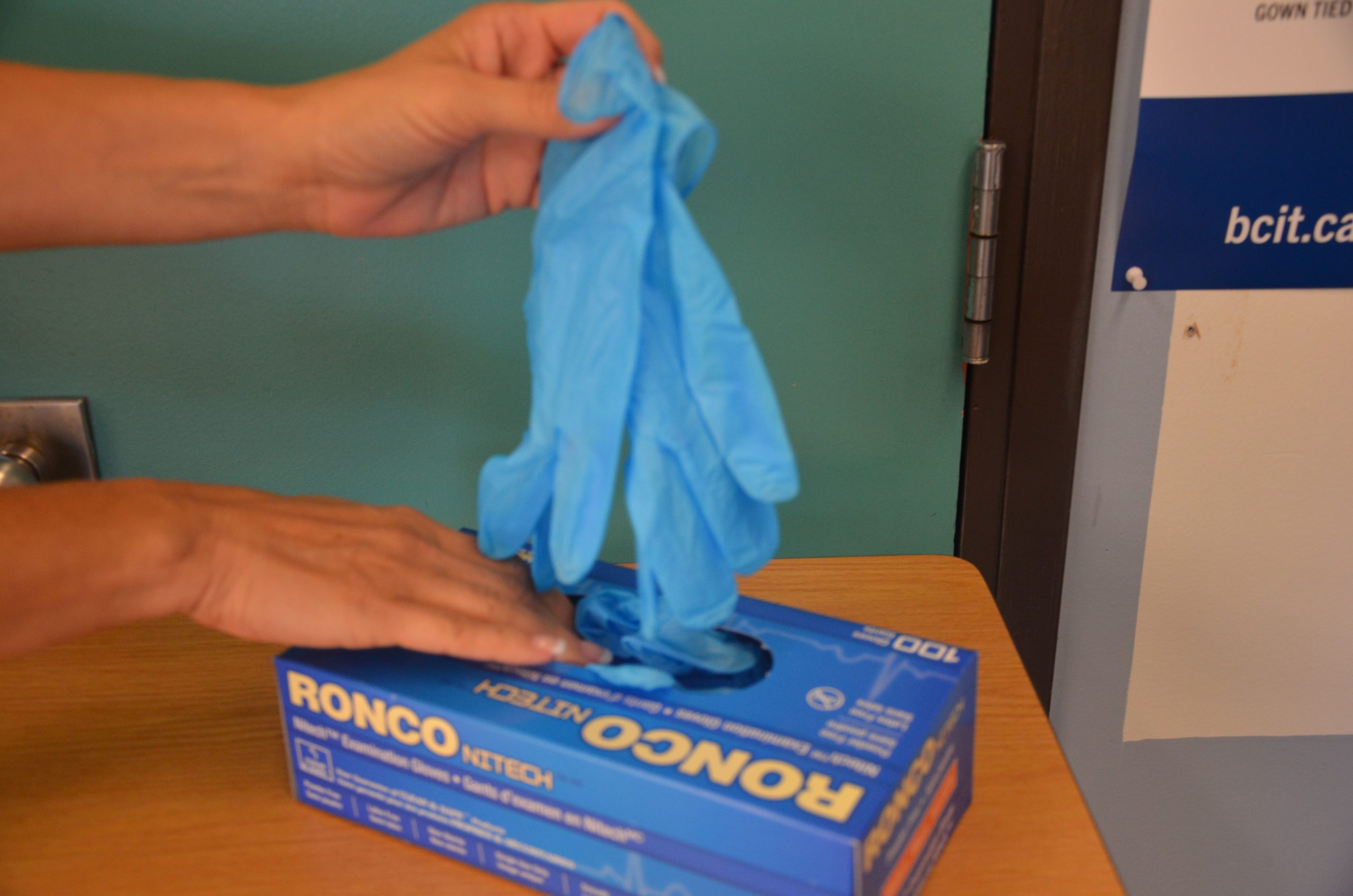
	</div>
			
				
				<div class="footnotes"><div id='1717-1'>Data sources: South Island Alliance, n.d.; Winnipeg Regional Health Authority (WRHA), 2008; WorkSafeBC, 2006</div></div>
	</div>
<div class="chapter numberless " id="chapter-types-of-client-transfers" title="8.5 Types of Client Transfers Overview">
	<div class="chapter-title-wrap">
		<p class="chapter-number"></p>
		<h1 class="chapter-title">8.5 Types of Client Transfers Overview</h1>
								</div>
	<div class="ugc chapter-ugc">
				 <p><span class="glossary-term">Transfers</span>&nbsp;involve moving a client from one flat surface to another, such as from a bed to a stretcher (Perry et al., 2018). Types of hospital transfers include bed to stretcher, bed to wheelchair, wheelchair to chair, and wheelchair to toilet, and vice versa. Table 8.5.1 outlines the types of transfers and client factors that help to determine appropriateness of each.</p> <table class="grid" style="font-weight: 400; width: 100%;"><caption>Table 8.5.1 Types of Transfers<span class="footnote"><span class="footnote-indirect" data-fnref="1718-1"></span></span></caption> <thead><tr><th scope="col">Type of Transfer</th> <th scope="col">Appropriateness</th> </tr> </thead> <tbody><tr><td>One-person standing pivot</td> <td>The client: <ul><li>Can bear weight on one or both legs.</li> <li>Is cooperative and predictable.</li> <li>Can sit with minimal support on the side of the bed.</li> </ul> <p><strong>Note:</strong> A gait belt may or may not be used.</p></td> </tr> <tr><td style="width: 36.4353%;">Two-person standing pivot</td> <td style="width: 63.4858%;">The client: <ul><li>Can assist with weight bearing but may be inconsistent.</li> <li>Is cooperative and predictable.</li> </ul> <p><strong>Note</strong>: Two-person transfer with a gait belt, a stander, or a two-person transfer with a slide board and a gait belt may be used.</p></td> </tr> <tr><td>One-person assist with transfer board</td> <td>The client: <ul><li>Is cooperative, follows directions, and has good trunk control.</li> <li>Can use their arms but cannot bear weight on both legs.</li> </ul> </td> </tr> <tr><td style="width: 36.4353%;">Two-person assist with transfer board</td> <td style="width: 63.4858%;">The client: <ul><li>Is cooperative and can follow directions.</li> <li>Can use their arms but cannot bear weight on both legs.</li> <li>Does not have good trunk control.</li> </ul> <p><strong>Note</strong>: If transferring out of a wheelchair, the chair must have removable arms.</p></td> </tr> <tr><td>Sit-to-stand lift</td> <td>The client: <ul><li>Can actively participate, with some ability to stand.</li> <li>Is reliable.</li> <li>Is predictable.</li> <li>Is a heavy two-person transfer.</li> <li>Does not have severe limb contractures or injuries where movement is medically contraindicated (e.g., spinal injury).</li> </ul> </td> </tr> <tr><td>Mechanical / ceiling track</td> <td>The client: <ul><li>Cannot reliably stand.</li> <li>Is unpredictable.</li> <li>Is too heavy for a two-person transfer.</li> </ul> </td> </tr> </tbody> </table> <div class="textbox"><p>Review the <a href="https://assets.website-files.com/5d710ad86986a61c7247fe82/5dcb1f62fd7b653d6d9165cf_Mobility_Decision_Support_Tool.pdf" data-url="https://assets.website-files.com/5d710ad86986a61c7247fe82/5dcb1f62fd7b653d6d9165cf_Mobility_Decision_Support_Tool.pdf">Mobility Decision Assessment Tool</a>.</p> </div> 
	</div>
			
				
				<div class="footnotes"><div id='1718-1'>Data sources: WorkSafeBC, 2006; WRHA, 2008</div></div>
	</div>
<div class="chapter numberless " id="chapter-transfers-without-mechanical-assistive-devices" title="8.6 Transfers without Mechanical Assistive Devices">
	<div class="chapter-title-wrap">
		<p class="chapter-number"></p>
		<h1 class="chapter-title">8.6 Transfers without Mechanical Assistive Devices</h1>
								</div>
	<div class="ugc chapter-ugc">
				 <h1>Types of Client Transfers: Transfers without Mechanical Assistive Devices</h1> <h2>Client Transfer from Bed to Stretcher</h2> <p style="text-align: justify;">A bed to stretcher transfer requires a minimum of three to four people, depending on the size of the client and the size and strength of the health care providers. Clients who require this type of transfer are generally immobile or acutely ill, so they may be unable to assist with the transfer. Checklist and Table 8.6.1 shows the steps for moving clients laterally from one surface to another.</p> <div class="textbox shaded"><p style="text-align: center;"><strong>Checklist 8.6.1: Moving a Client from Bed to Stretcher</strong></p> <p style="text-align: center;"><em><strong>Disclaimer:&nbsp;Always review and follow your agency policy regarding this specific skill.</strong></em></p> <p><strong>Safety considerations:&nbsp;</strong></p> <ul><li>Check room for additional precautions.</li> <li>Introduce yourself to client.</li> <li>Listen and attend to client cues.</li> <li>Ensure client’s privacy and dignity.</li> <li>Complete the point-of-care risk assessment for safer client handling.</li> <li>Inform the client what is about to happen and how they can assist.</li> <li>Ensure tubes and attachments are properly placed prior to the procedure to prevent accidental removal.</li> <li>Ensure brakes are locked on the bed and stretcher.</li> <li>A slider board and full-size sheet or friction-reducing sheet are required for the transfer.</li> </ul> </div> <table class="grid" style="width: 100%; height: 2494px;"><caption>Table 8.6.1: Moving a Client from Bed to Stretcher<span class="footnote"><span class="footnote-indirect" data-fnref="1728-1"></span></span></caption> <thead><tr style="height: 15px;"><th style="width: 2.97699%; height: 18px;">STEP</th> <th style="width: 41.5426%; height: 18px;" scope="col">ACTION</th> <th style="width: 55.4127%; height: 18px;" scope="col">&nbsp;ADDITIONAL INFORMATION</th> </tr> </thead> <tbody><tr style="height: 18px;"><td style="width: 2.97699%; height: 18px;"><strong>1.</strong></td> <td style="width: 41.5426%; height: 18px;">Perform hand hygiene</td> <td style="width: 55.4127%; height: 18px;"></td> </tr> <tr style="height: 36px;"><td style="width: 2.97699%; height: 36px;"><strong>2.</strong></td> <td style="width: 41.5426%; height: 36px;">Always predetermine the number of staff required to safely transfer a client horizontally.</td> <td style="width: 55.4127%; height: 36px;">Three to four&nbsp;health care providers are required for the transfer.</td> </tr> <tr style="height: 464px;"><td style="width: 2.97699%; height: 464px;"><strong>3.</strong></td> <td style="width: 41.5426%; height: 464px;">Introduce yourself. Explain what will happen and how the client can help (tucked-in chin, keep hands on chest). <p>Collect supplies.</p></td> <td style="width: 55.4127%; height: 464px;">This step provides the client with an opportunity to ask questions and help with the transfer. <div class="wp-caption aligncenter" aria-describedby="caption-attachment-1705" style="width: 195px"><img class="wp-image-1719" src="https://opentextbc.ca/hcalabtheoryandpractice/wp-content/uploads/sites/430/2024/09/Screenshot-2023-01-30-at-2.54.29-PM-276x300.png" alt="" width="195" height="212" srcset="https://opentextbc.ca/hcalabtheoryandpractice/wp-content/uploads/sites/430/2024/09/Screenshot-2023-01-30-at-2.54.29-PM-276x300.png 276w, https://opentextbc.ca/hcalabtheoryandpractice/wp-content/uploads/sites/430/2024/09/Screenshot-2023-01-30-at-2.54.29-PM-65x71.png 65w, https://opentextbc.ca/hcalabtheoryandpractice/wp-content/uploads/sites/430/2024/09/Screenshot-2023-01-30-at-2.54.29-PM-225x245.png 225w, https://opentextbc.ca/hcalabtheoryandpractice/wp-content/uploads/sites/430/2024/09/Screenshot-2023-01-30-at-2.54.29-PM-350x380.png 350w, https://opentextbc.ca/hcalabtheoryandpractice/wp-content/uploads/sites/430/2024/09/Screenshot-2023-01-30-at-2.54.29-PM.png 622w" sizes="(max-width: 195px) 100vw, 195px" title="" /><div class="wp-caption-text"><strong>Figure 8.6.1</strong> Stretcher and slider board</div></div> <div class="wp-caption aligncenter" aria-describedby="caption-attachment-1705" style="width: 260px"><img class="wp-image-1705" src="https://opentextbc.ca/hcalabtheoryandpractice/wp-content/uploads/sites/430/2024/09/Screenshot-2023-01-29-at-11.39.22-AM-300x158.png" alt="" width="260" height="137" srcset="https://opentextbc.ca/hcalabtheoryandpractice/wp-content/uploads/sites/430/2024/09/Screenshot-2023-01-29-at-11.39.22-AM-300x158.png 300w, https://opentextbc.ca/hcalabtheoryandpractice/wp-content/uploads/sites/430/2024/09/Screenshot-2023-01-29-at-11.39.22-AM-65x34.png 65w, https://opentextbc.ca/hcalabtheoryandpractice/wp-content/uploads/sites/430/2024/09/Screenshot-2023-01-29-at-11.39.22-AM-225x119.png 225w, https://opentextbc.ca/hcalabtheoryandpractice/wp-content/uploads/sites/430/2024/09/Screenshot-2023-01-29-at-11.39.22-AM-350x185.png 350w, https://opentextbc.ca/hcalabtheoryandpractice/wp-content/uploads/sites/430/2024/09/Screenshot-2023-01-29-at-11.39.22-AM.png 626w" sizes="(max-width: 260px) 100vw, 260px" title="" /><div class="wp-caption-text"><strong>Figure 8.6.2</strong> Chin tucked-in and arms across chest</div></div> </td> </tr> <tr style="height: 105px;"><td style="width: 2.97699%; height: 105px;"><strong>4.</strong></td> <td style="width: 41.5426%; height: 105px;">Raise bed to safe working height. Flatten the head of bed and side rails. <p>Position the client closest to the side of the bed where the stretcher will be placed.</p></td> <td style="width: 55.4127%; height: 105px;">Safe working height is at waist level of the shortest health care provider. <p>The client must be positioned correctly prior to the transfer to avoid straining and reaching.</p> <p>May need additional health care providers to move client to the side of the bed.</p></td> </tr> <tr style="height: 304px;"><td style="width: 2.97699%; height: 304px;"><strong>5.</strong></td> <td style="width: 41.5426%; height: 304px;">Position stretcher beside the bed on the side closest to the client with stretcher slightly lower. Apply brakes. <p>Caregiver #1 stands closest to the client.</p> <p>Caregivers #2 and #3 stand on the other side of the bed: #2 is at the head and shoulders, and #3 is at the hips and legs.</p> <p>Caregiver #4 can be used to move feet or equipment or help #2 and #3 with pulling.</p></td> <td style="width: 55.4127%; height: 304px;">The slider board will form a bridge between the bed and the stretcher. <p>The sheet must be between the client and the slider board to decrease friction between client and board.</p> <div class="wp-caption aligncenter" id="attachment_1720" aria-describedby="caption-attachment-1720" style="width: 252px"><img class="wp-image-1720" src="https://opentextbc.ca/hcalabtheoryandpractice/wp-content/uploads/sites/430/2024/09/Screenshot-2023-01-30-at-2.54.37-PM-300x211.png" alt="" width="252" height="177" srcset="https://opentextbc.ca/hcalabtheoryandpractice/wp-content/uploads/sites/430/2024/09/Screenshot-2023-01-30-at-2.54.37-PM-300x211.png 300w, https://opentextbc.ca/hcalabtheoryandpractice/wp-content/uploads/sites/430/2024/09/Screenshot-2023-01-30-at-2.54.37-PM-65x46.png 65w, https://opentextbc.ca/hcalabtheoryandpractice/wp-content/uploads/sites/430/2024/09/Screenshot-2023-01-30-at-2.54.37-PM-225x158.png 225w, https://opentextbc.ca/hcalabtheoryandpractice/wp-content/uploads/sites/430/2024/09/Screenshot-2023-01-30-at-2.54.37-PM-350x246.png 350w, https://opentextbc.ca/hcalabtheoryandpractice/wp-content/uploads/sites/430/2024/09/Screenshot-2023-01-30-at-2.54.37-PM.png 632w" sizes="(max-width: 252px) 100vw, 252px" title="" /><div class="wp-caption-text" id="caption-attachment-1720"><strong>Figure 8.6.3</strong> Place slider board</div></div> <p>Ensure all tubes and attachments are out of the way.</p></td> </tr> <tr style="height: 307px;"><td style="width: 2.97699%; height: 307px;"><strong>6.</strong></td> <td style="width: 41.5426%; height: 307px;">Caregiver #1 uses a front-to-back weight shift to roll client onto their side using the sliding sheet. <p>Meanwhile, caregivers #2 and #3 climb onto and kneel on the bed to place the slider board halfway under the client.</p> <p>The client is returned to the supine position.</p> <p>Client’s feet are positioned on the slider board.</p></td> <td style="width: 55.4127%; height: 307px;">Ensure proper body mechanics by keeping elbows close and backs tall. <p>The position of the health care providers keeps the heaviest part of the client near the health care providers’ centre of gravity for stability.</p> <div class="wp-caption aligncenter" aria-describedby="caption-attachment-1710" style="width: 232px"><img class="wp-image-1710" src="https://opentextbc.ca/hcalabtheoryandpractice/wp-content/uploads/sites/430/2024/09/Screenshot-2023-01-29-at-11.45.42-AM-300x230.png" alt="" width="232" height="178" srcset="https://opentextbc.ca/hcalabtheoryandpractice/wp-content/uploads/sites/430/2024/09/Screenshot-2023-01-29-at-11.45.42-AM-300x230.png 300w, https://opentextbc.ca/hcalabtheoryandpractice/wp-content/uploads/sites/430/2024/09/Screenshot-2023-01-29-at-11.45.42-AM-65x50.png 65w, https://opentextbc.ca/hcalabtheoryandpractice/wp-content/uploads/sites/430/2024/09/Screenshot-2023-01-29-at-11.45.42-AM-225x173.png 225w, https://opentextbc.ca/hcalabtheoryandpractice/wp-content/uploads/sites/430/2024/09/Screenshot-2023-01-29-at-11.45.42-AM-350x268.png 350w, https://opentextbc.ca/hcalabtheoryandpractice/wp-content/uploads/sites/430/2024/09/Screenshot-2023-01-29-at-11.45.42-AM.png 498w" sizes="(max-width: 232px) 100vw, 232px" title="" /><div class="wp-caption-text"><strong>Figure 8.6.4</strong> Caregiver at the head of the bed</div></div> </td> </tr> <tr style="height: 125px;"><td style="width: 2.97699%; height: 125px;"><strong>7.</strong></td> <td style="width: 41.5426%; height: 125px;">Caregivers #2 and #3 can remain on the stretcher. They grasp the draw sheet using a palms up technique, sitting-up tall, and keeping their elbows close to their body and backs straight. <p>Caregiver #1 remains on the far side of the bed, between the chest and hips of the client, with hands on hips and shoulders and forearms parallel to the bed.</p></td> <td style="width: 55.4127%; height: 125px;">Alternately, caregivers #2 and #3 can stand on the floor opposite to caregiver #1, grab the draw sheet using a palms up technique, and a front-to-back weight shift position.</td> </tr> <tr style="height: 142px;"><td style="width: 2.97699%; height: 142px;"><strong>8.</strong></td> <td style="width: 41.5426%; height: 142px;">The designated leader will count “1, 2, 3,” and start the move. <p>Caregiver #1 will push client just to arm’s length using a back-to-front weight shift.</p> <p>At the same time, caregivers #2 and #3 on the stretcher will move from a sitting-up-tall position to sitting on their heels, shifting their weight from the front leg to the back, bringing the client with them using the sheet.</p></td> <td style="width: 55.4127%; height: 142px;">Coordinating the move between health care providers prevents injury while transferring clients. <p>Using a weight shift from front-to-back uses the legs to minimize effort when moving a client.</p></td> </tr> <tr style="height: 628px;"><td style="width: 2.97699%; height: 628px;"><strong>9.</strong></td> <td style="width: 41.5426%; height: 628px;">Caregivers #2 and #3 will climb off the stretcher and stand at the side, and grasp the sheet keeping elbows tucked-in. <p>On the count of three, with backs straight and knees bent, they use a front-to-back weight shift and slide the client into the middle of the bed.</p></td> <td style="width: 55.4127%; height: 628px;">The step allows the client to be properly positioned in the bed and prevents back injury to health care providers. <div class="wp-caption aligncenter" aria-describedby="caption-attachment-1713" style="width: 252px"><img class="wp-image-1710" src="https://opentextbc.ca/hcalabtheoryandpractice/wp-content/uploads/sites/430/2024/09/Screenshot-2023-01-29-at-11.45.42-AM-300x230.png" alt="" width="252" height="193" srcset="https://opentextbc.ca/hcalabtheoryandpractice/wp-content/uploads/sites/430/2024/09/Screenshot-2023-01-29-at-11.45.42-AM-300x230.png 300w, https://opentextbc.ca/hcalabtheoryandpractice/wp-content/uploads/sites/430/2024/09/Screenshot-2023-01-29-at-11.45.42-AM-65x50.png 65w, https://opentextbc.ca/hcalabtheoryandpractice/wp-content/uploads/sites/430/2024/09/Screenshot-2023-01-29-at-11.45.42-AM-225x173.png 225w, https://opentextbc.ca/hcalabtheoryandpractice/wp-content/uploads/sites/430/2024/09/Screenshot-2023-01-29-at-11.45.42-AM-350x268.png 350w, https://opentextbc.ca/hcalabtheoryandpractice/wp-content/uploads/sites/430/2024/09/Screenshot-2023-01-29-at-11.45.42-AM.png 498w" sizes="(max-width: 252px) 100vw, 252px" title="" /><div class="wp-caption-text"><strong>Figure 8.6.5</strong> Caregiver at the head of the bed</div></div> <div class="wp-caption aligncenter" aria-describedby="caption-attachment-1713" style="width: 250px"><img class="wp-image-1712" src="https://opentextbc.ca/hcalabtheoryandpractice/wp-content/uploads/sites/430/2024/09/Screenshot-2023-01-29-at-11.45.56-AM-300x184.png" alt="" width="250" height="153" srcset="https://opentextbc.ca/hcalabtheoryandpractice/wp-content/uploads/sites/430/2024/09/Screenshot-2023-01-29-at-11.45.56-AM-300x184.png 300w, https://opentextbc.ca/hcalabtheoryandpractice/wp-content/uploads/sites/430/2024/09/Screenshot-2023-01-29-at-11.45.56-AM-65x40.png 65w, https://opentextbc.ca/hcalabtheoryandpractice/wp-content/uploads/sites/430/2024/09/Screenshot-2023-01-29-at-11.45.56-AM-225x138.png 225w, https://opentextbc.ca/hcalabtheoryandpractice/wp-content/uploads/sites/430/2024/09/Screenshot-2023-01-29-at-11.45.56-AM-350x215.png 350w, https://opentextbc.ca/hcalabtheoryandpractice/wp-content/uploads/sites/430/2024/09/Screenshot-2023-01-29-at-11.45.56-AM.png 462w" sizes="(max-width: 250px) 100vw, 250px" title="" /><div class="wp-caption-text"><strong>Figure 8.6.6</strong> Weight on front leg</div></div> <div class="wp-caption aligncenter" aria-describedby="caption-attachment-1713" style="width: 250px"><img class="wp-image-1713" src="https://opentextbc.ca/hcalabtheoryandpractice/wp-content/uploads/sites/430/2024/09/Screenshot-2023-01-29-at-11.46.03-AM-300x195.png" alt="" width="250" height="162" srcset="https://opentextbc.ca/hcalabtheoryandpractice/wp-content/uploads/sites/430/2024/09/Screenshot-2023-01-29-at-11.46.03-AM-300x195.png 300w, https://opentextbc.ca/hcalabtheoryandpractice/wp-content/uploads/sites/430/2024/09/Screenshot-2023-01-29-at-11.46.03-AM-65x42.png 65w, https://opentextbc.ca/hcalabtheoryandpractice/wp-content/uploads/sites/430/2024/09/Screenshot-2023-01-29-at-11.46.03-AM-225x147.png 225w, https://opentextbc.ca/hcalabtheoryandpractice/wp-content/uploads/sites/430/2024/09/Screenshot-2023-01-29-at-11.46.03-AM-350x228.png 350w, https://opentextbc.ca/hcalabtheoryandpractice/wp-content/uploads/sites/430/2024/09/Screenshot-2023-01-29-at-11.46.03-AM.png 488w" sizes="(max-width: 250px) 100vw, 250px" title="" /><div class="wp-caption-text"><strong>Figure 8.6.7</strong> Shift weight to back foot</div></div> </td> </tr> <tr style="height: 18px;"><td style="width: 2.97699%; height: 18px;"><strong>10.</strong></td> <td style="width: 41.5426%; height: 18px;">At the same time, caregiver #1 pulls the slider board out from under the client.</td> <td style="width: 55.4127%; height: 18px;">This step allows the client to lie flat on the bed.</td> </tr> <tr style="height: 18px;"><td style="width: 2.97699%; height: 18px;"><strong>11.</strong></td> <td style="width: 41.5426%; height: 18px;">Replace pillow under head, ensure client is comfortable, and cover the client with sheets.</td> <td style="width: 55.4127%; height: 18px;">This promotes comfort and prevents harm to client.</td> </tr> <tr style="height: 293px;"><td style="width: 2.97699%; height: 293px;"><strong>12.</strong></td> <td style="width: 41.5426%; height: 293px;">Lower bed. Raise side rails as required, and ensure call bell is within reach. <p>Perform hand hygiene.</p></td> <td style="width: 55.4127%; height: 293px;">Placing bed and side rails in a safe position reduces the likelihood of injury to client. Proper placement of call bell facilitates client’s ability to ask for assistance. <div class="wp-caption aligncenter" aria-describedby="caption-attachment-1707" style="width: 255px"><img class="wp-image-1707" src="https://opentextbc.ca/hcalabtheoryandpractice/wp-content/uploads/sites/430/2024/09/Screenshot-2023-01-29-at-11.39.37-AM-300x193.png" alt="" width="255" height="164" srcset="https://opentextbc.ca/hcalabtheoryandpractice/wp-content/uploads/sites/430/2024/09/Screenshot-2023-01-29-at-11.39.37-AM-300x193.png 300w, https://opentextbc.ca/hcalabtheoryandpractice/wp-content/uploads/sites/430/2024/09/Screenshot-2023-01-29-at-11.39.37-AM-65x42.png 65w, https://opentextbc.ca/hcalabtheoryandpractice/wp-content/uploads/sites/430/2024/09/Screenshot-2023-01-29-at-11.39.37-AM-225x145.png 225w, https://opentextbc.ca/hcalabtheoryandpractice/wp-content/uploads/sites/430/2024/09/Screenshot-2023-01-29-at-11.39.37-AM-350x225.png 350w, https://opentextbc.ca/hcalabtheoryandpractice/wp-content/uploads/sites/430/2024/09/Screenshot-2023-01-29-at-11.39.37-AM.png 532w" sizes="(max-width: 255px) 100vw, 255px" title="" /><div class="wp-caption-text"><strong>Figure 8.6.8</strong> Bed in lowest position, side rail up, call bell within reach</div></div> <p>Hand hygiene reduces the spread of microorganisms.</p></td> </tr> </tbody> </table> <div class="textbox"><p>For more information on sliding board transfers, sign up to take the 10-minute Provincial Health Authority course: <a href="https://learninghub.phsa.ca/Courses/19403/lateral-transfer-sliding-board" data-url="https://learninghub.phsa.ca/Courses/19403/lateral-transfer-sliding-board">Lateral Transfer Sliding Board – LearningHub (phsa.ca)</a></p> </div> <h2>Transfer from Bed to Wheelchair</h2> <p style="text-align: justify;">Clients often need assistance when moving from a bed to a wheelchair. A client must be cooperative and predictable, and able to bear weight on both legs and take small steps. If any of these criteria are not met, a two-person transfer or mechanical lift is recommended. Always complete the point-of-care risk assessment prior to all client-handling activities. See Checklist and Table 8.6.2 for the steps to transfer a client from the bed to the wheelchair (PHSA, 2010).</p> <div class="textbox shaded"><p style="text-align: center;">Checklist 8.6.2: Bed to Wheelchair Transfer—One Person Assist</p> <p style="text-align: center;"><b><i>Disclaimer:&nbsp;Always review and follow your agency policy regarding this specific skill.</i></b></p> <p><b><i>Safety considerations:</i></b><b><i>&nbsp;</i></b></p> <ul><li>Check the room for additional precautions.</li> <li>Listen and attend to client cues.</li> <li>Ensure client’s privacy and dignity.</li> <li>Complete the point-of-care risk assessment for safer client handling.</li> <li>Inform the client what is about to happen and how they can assist.</li> <li>Ensure tubes and attachments are properly placed prior to the procedure to prevent accidental removal.</li> <li>Ensure brakes are locked on the bed and stretcher.</li> <li>A gait belt and wheelchair are required.</li> </ul> </div> <table class="grid" style="width: 100%;"><caption>Table 8.6.2: Bed to Wheelchair Transfer—One-Person Assist<span class="footnote"><span class="footnote-indirect" data-fnref="1728-2"></span></span>[/footnote]</caption> <thead><tr><th style="width: 3.17997%;">STEP</th> <th style="width: 47%;" scope="col">ACTION</th> <th style="width: 47%;" scope="col">&nbsp;ADDITIONAL INFORMATION</th> </tr> </thead> <tbody><tr><td style="width: 3.17997%;"><strong>1.</strong></td> <td style="width: 50.8118%;">Perform hand hygiene.</td> <td style="width: 45.9405%;"></td> </tr> <tr><td style="width: 3.17997%;"><strong>2,</strong></td> <td style="width: 50.8118%;">Introduce yourself. Explain what will happen during the transfer and how the client can help.</td> <td style="width: 45.9405%;">This step provides the client with an opportunity to ask questions and help with the positioning. <div class="wp-caption aligncenter" id="attachment_1721" aria-describedby="caption-attachment-1721" style="width: 193px"><img class="wp-image-1721" src="https://opentextbc.ca/hcalabtheoryandpractice/wp-content/uploads/sites/430/2024/09/Screenshot-2023-01-30-at-3.34.28-PM-239x300.png" alt="" width="193" height="243" srcset="https://opentextbc.ca/hcalabtheoryandpractice/wp-content/uploads/sites/430/2024/09/Screenshot-2023-01-30-at-3.34.28-PM-239x300.png 239w, https://opentextbc.ca/hcalabtheoryandpractice/wp-content/uploads/sites/430/2024/09/Screenshot-2023-01-30-at-3.34.28-PM-65x82.png 65w, https://opentextbc.ca/hcalabtheoryandpractice/wp-content/uploads/sites/430/2024/09/Screenshot-2023-01-30-at-3.34.28-PM-225x283.png 225w, https://opentextbc.ca/hcalabtheoryandpractice/wp-content/uploads/sites/430/2024/09/Screenshot-2023-01-30-at-3.34.28-PM-350x440.png 350w, https://opentextbc.ca/hcalabtheoryandpractice/wp-content/uploads/sites/430/2024/09/Screenshot-2023-01-30-at-3.34.28-PM.png 452w" sizes="(max-width: 193px) 100vw, 193px" title="" /><div class="wp-caption-text" id="caption-attachment-1721"><strong>Figure 8.6.9</strong> Explain procedure to client</div></div> </td> </tr> <tr><td style="width: 3.17997%;"><strong>3.</strong></td> <td style="width: 50.8118%;">Apply proper footwear prior to ambulation.</td> <td style="width: 45.9405%;"><div class="wp-caption aligncenter" id="attachment_1722" aria-describedby="caption-attachment-1722" style="width: 211px"><img class="wp-image-1722" src="https://opentextbc.ca/hcalabtheoryandpractice/wp-content/uploads/sites/430/2024/09/Screenshot-2023-01-30-at-3.34.34-PM-300x179.png" alt="" width="211" height="126" srcset="https://opentextbc.ca/hcalabtheoryandpractice/wp-content/uploads/sites/430/2024/09/Screenshot-2023-01-30-at-3.34.34-PM-300x179.png 300w, https://opentextbc.ca/hcalabtheoryandpractice/wp-content/uploads/sites/430/2024/09/Screenshot-2023-01-30-at-3.34.34-PM-65x39.png 65w, https://opentextbc.ca/hcalabtheoryandpractice/wp-content/uploads/sites/430/2024/09/Screenshot-2023-01-30-at-3.34.34-PM-225x134.png 225w, https://opentextbc.ca/hcalabtheoryandpractice/wp-content/uploads/sites/430/2024/09/Screenshot-2023-01-30-at-3.34.34-PM-350x209.png 350w, https://opentextbc.ca/hcalabtheoryandpractice/wp-content/uploads/sites/430/2024/09/Screenshot-2023-01-30-at-3.34.34-PM.png 594w" sizes="(max-width: 211px) 100vw, 211px" title="" /><div class="wp-caption-text" id="caption-attachment-1722"><strong>Figure 8.6.10</strong> Proper footwear</div></div> </td> </tr> <tr><td style="width: 3.17997%;"><strong>4.</strong></td> <td style="width: 50.8118%;">Lower the bed and ensure that brakes are applied. <p>Place the wheelchair next to the bed at a 45-degree angle and apply brakes.</p> <p>If a client has weakness on one side, place the wheelchair on the stronger side.</p></td> <td style="height: 88px; width: 45.9405%;">Ensure brakes are applied on the wheelchair. <div class="wp-caption aligncenter" id="attachment_1723" aria-describedby="caption-attachment-1723" style="width: 167px"><img class="wp-image-1723" src="https://opentextbc.ca/hcalabtheoryandpractice/wp-content/uploads/sites/430/2024/09/Screenshot-2023-01-30-at-3.34.39-PM-197x300.png" alt="" width="167" height="254" srcset="https://opentextbc.ca/hcalabtheoryandpractice/wp-content/uploads/sites/430/2024/09/Screenshot-2023-01-30-at-3.34.39-PM-197x300.png 197w, https://opentextbc.ca/hcalabtheoryandpractice/wp-content/uploads/sites/430/2024/09/Screenshot-2023-01-30-at-3.34.39-PM-65x99.png 65w, https://opentextbc.ca/hcalabtheoryandpractice/wp-content/uploads/sites/430/2024/09/Screenshot-2023-01-30-at-3.34.39-PM-225x342.png 225w, https://opentextbc.ca/hcalabtheoryandpractice/wp-content/uploads/sites/430/2024/09/Screenshot-2023-01-30-at-3.34.39-PM-350x532.png 350w, https://opentextbc.ca/hcalabtheoryandpractice/wp-content/uploads/sites/430/2024/09/Screenshot-2023-01-30-at-3.34.39-PM.png 388w" sizes="(max-width: 167px) 100vw, 167px" title="" /><div class="wp-caption-text" id="caption-attachment-1723"><strong>Figure 8.6.11</strong> Wheelchair with one leg rest removed</div></div> </td> </tr> <tr><td style="width: 3.17997%;"><strong>5.</strong></td> <td style="width: 50.8118%;">Sit the client on the side of the bed with their feet on the floor. Apply the gait belt snugly around the waist (if required). <p>Place hands on waist to assist into a standing position.</p></td> <td style="width: 45.9405%;">The client’s feet should be in between the health care provider’s feet.</td> </tr> <tr><td style="width: 3.17997%;"><strong>6.</strong></td> <td style="width: 50.8118%;">As the client leans forward, grasp the gait belt (if required) on the side of the client, with your arms outside the client’s arms. Position your legs on the outside of the client’s legs. <p>The client’s feet should be flat on the floor.</p></td> <td style="width: 45.9405%;"><div class="wp-caption aligncenter" id="attachment_1724" aria-describedby="caption-attachment-1724" style="width: 194px"><img class="wp-image-1724" src="https://opentextbc.ca/hcalabtheoryandpractice/wp-content/uploads/sites/430/2024/09/Screenshot-2023-01-30-at-3.34.45-PM-243x300.png" alt="" width="194" height="240" srcset="https://opentextbc.ca/hcalabtheoryandpractice/wp-content/uploads/sites/430/2024/09/Screenshot-2023-01-30-at-3.34.45-PM-243x300.png 243w, https://opentextbc.ca/hcalabtheoryandpractice/wp-content/uploads/sites/430/2024/09/Screenshot-2023-01-30-at-3.34.45-PM-65x80.png 65w, https://opentextbc.ca/hcalabtheoryandpractice/wp-content/uploads/sites/430/2024/09/Screenshot-2023-01-30-at-3.34.45-PM-225x278.png 225w, https://opentextbc.ca/hcalabtheoryandpractice/wp-content/uploads/sites/430/2024/09/Screenshot-2023-01-30-at-3.34.45-PM-350x433.png 350w, https://opentextbc.ca/hcalabtheoryandpractice/wp-content/uploads/sites/430/2024/09/Screenshot-2023-01-30-at-3.34.45-PM.png 464w" sizes="(max-width: 194px) 100vw, 194px" title="" /><div class="wp-caption-text" id="caption-attachment-1724"><strong>Figure 8.6.12</strong> Assist to a standing position using a gait belt</div></div> </td> </tr> <tr><td style="width: 3.17997%;"><strong>7.</strong></td> <td style="width: 50.8118%;">Count to three and, using a rocking motion, help the client stand by shifting weight from the front foot to the back foot, keeping elbows in and back straight.</td> <td style="width: 45.9405%;"><div class="wp-caption aligncenter" id="attachment_1725" aria-describedby="caption-attachment-1725" style="width: 146px"><img class="wp-image-1725" src="https://opentextbc.ca/hcalabtheoryandpractice/wp-content/uploads/sites/430/2024/09/Screenshot-2023-01-30-at-3.34.52-PM-175x300.png" alt="" width="146" height="250" srcset="https://opentextbc.ca/hcalabtheoryandpractice/wp-content/uploads/sites/430/2024/09/Screenshot-2023-01-30-at-3.34.52-PM-175x300.png 175w, https://opentextbc.ca/hcalabtheoryandpractice/wp-content/uploads/sites/430/2024/09/Screenshot-2023-01-30-at-3.34.52-PM-65x111.png 65w, https://opentextbc.ca/hcalabtheoryandpractice/wp-content/uploads/sites/430/2024/09/Screenshot-2023-01-30-at-3.34.52-PM-225x385.png 225w, https://opentextbc.ca/hcalabtheoryandpractice/wp-content/uploads/sites/430/2024/09/Screenshot-2023-01-30-at-3.34.52-PM-350x599.png 350w, https://opentextbc.ca/hcalabtheoryandpractice/wp-content/uploads/sites/430/2024/09/Screenshot-2023-01-30-at-3.34.52-PM.png 366w" sizes="(max-width: 146px) 100vw, 146px" title="" /><div class="wp-caption-text" id="caption-attachment-1725"><strong>Figure 8.6.13</strong> Weight shift to back leg by health care provider</div></div> </td> </tr> <tr><td style="width: 3.17997%;"><strong>8.</strong></td> <td style="width: 50.8118%;">Once standing, have the client take a few steps to the side and back until they can feel the wheelchair on the back of their legs. <p>Have client grasp the arm of the wheelchair and lean forward slightly.</p></td> <td style="width: 45.9405%;">Ensure the client can feel the wheelchair on the back of the legs prior to sitting down. <div class="wp-caption aligncenter" id="attachment_1726" aria-describedby="caption-attachment-1726" style="width: 148px"><img class="wp-image-1726" src="https://opentextbc.ca/hcalabtheoryandpractice/wp-content/uploads/sites/430/2024/09/Screenshot-2023-01-30-at-3.34.58-PM-169x300.png" alt="" width="148" height="263" srcset="https://opentextbc.ca/hcalabtheoryandpractice/wp-content/uploads/sites/430/2024/09/Screenshot-2023-01-30-at-3.34.58-PM-169x300.png 169w, https://opentextbc.ca/hcalabtheoryandpractice/wp-content/uploads/sites/430/2024/09/Screenshot-2023-01-30-at-3.34.58-PM-65x115.png 65w, https://opentextbc.ca/hcalabtheoryandpractice/wp-content/uploads/sites/430/2024/09/Screenshot-2023-01-30-at-3.34.58-PM-225x400.png 225w, https://opentextbc.ca/hcalabtheoryandpractice/wp-content/uploads/sites/430/2024/09/Screenshot-2023-01-30-at-3.34.58-PM.png 322w" sizes="(max-width: 148px) 100vw, 148px" title="" /><div class="wp-caption-text" id="caption-attachment-1726"><strong>Figure 8.6.14</strong> Assist into the wheelchair</div></div> </td> </tr> <tr><td style="width: 3.17997%;"><strong>9.</strong></td> <td style="width: 50.8118%;">As the client sits down, shift your weight from back to front with bent knees, with trunk straight and elbows slightly bent. <p>Allow client to sit in wheelchair slowly, using armrests for support.</p></td> <td style="width: 45.9405%;">This allows the client to be properly positioned in the chair and prevents back injury to health care providers. <div class="wp-caption aligncenter" id="attachment_1727" aria-describedby="caption-attachment-1727" style="width: 164px"><img class="wp-image-1727" src="https://opentextbc.ca/hcalabtheoryandpractice/wp-content/uploads/sites/430/2024/09/Screenshot-2023-01-30-at-3.35.04-PM-195x300.png" alt="" width="164" height="252" srcset="https://opentextbc.ca/hcalabtheoryandpractice/wp-content/uploads/sites/430/2024/09/Screenshot-2023-01-30-at-3.35.04-PM-195x300.png 195w, https://opentextbc.ca/hcalabtheoryandpractice/wp-content/uploads/sites/430/2024/09/Screenshot-2023-01-30-at-3.35.04-PM-65x100.png 65w, https://opentextbc.ca/hcalabtheoryandpractice/wp-content/uploads/sites/430/2024/09/Screenshot-2023-01-30-at-3.35.04-PM-225x347.png 225w, https://opentextbc.ca/hcalabtheoryandpractice/wp-content/uploads/sites/430/2024/09/Screenshot-2023-01-30-at-3.35.04-PM-350x539.png 350w, https://opentextbc.ca/hcalabtheoryandpractice/wp-content/uploads/sites/430/2024/09/Screenshot-2023-01-30-at-3.35.04-PM.png 418w" sizes="(max-width: 164px) 100vw, 164px" title="" /><div class="wp-caption-text" id="caption-attachment-1727"><strong>Figure 8.6.15</strong> Transfer to wheelchair</div></div> </td> </tr> </tbody> </table> <p>Special considerations:</p> <ul><li>Do not allow clients to place their arms around your neck. Have them place their arms around your hips.</li> <li>Avoid lifting clients. Let them stand using their own strength.</li> <li>Stay close to your client during the transfer to keep the client’s<span class="Apple-converted-space">&nbsp;</span>weight close to your <span class="glossary-term">centre of gravity</span>.</li> <li>If the client has weakness on one side of the body (e.g., due to a&nbsp;cerebral vascular accident&nbsp;[CVA]&nbsp;or stroke), place the wheelchair on the stronger side.</li> </ul> <div class="textbox textbox--examples"><div class="textbox__header"><p class="textbox__title">Update</p> </div> <div class="textbox__content"><p>Some health authorities are no longer recommending the caregiver be positioned directly in front of the client being transferred. Instead, the caregiver should stand to the side of the client and use a gait/transfer belt to guide the client.</p> </div> </div> <div class="textbox textbox--examples"><div class="textbox__header"><p class="textbox__title">Watch the video produced by Thompson Rivers University – School of Nursing on how to assist a client from a bed to chair with a gait belt.</p> </div> <div class="textbox__content"><p><a href="https://barabus.tru.ca/nursing/ambulate_with_gait_belt.html" data-url="https://barabus.tru.ca/nursing/ambulate_with_gait_belt.html">&nbsp;<i>Assisting from Bed to Chair with a Gait Belt or Transfer Belt</i></a>&nbsp;(2018)&nbsp;by Kim Morris of Thompson Rivers University School of Nursing.</p> </div> </div> <div class="textbox textbox--exercises"><div class="textbox__header"><p class="textbox__title">Critical Thinking Exercises</p> </div> <div class="textbox__content"><ol><li>Prior to moving the client from bed to a wheelchair, where should the client’s feet be placed?</li> </ol> </div> </div> 
	</div>
			
				
				<div class="footnotes"><div id='1728-1'>
Data sources: Perry et al., 2018; PHSA, 2010. Images retrieved from <a href="https://opentextbc.ca/clinicalskills/chapter/3-7-transfers-and-ambulation/" data-url="https://opentextbc.ca/clinicalskills/chapter/3-7-transfers-and-ambulation/">3.7 Patient Transfers</a> in <a href="https://opentextbc.ca/clinicalskills/" data-url="https://opentextbc.ca/clinicalskills/">Clinical Procedures for Safer Patient Care</a> by Glynda Rees Doyle and Jodie Anita McCutcheon, <a href="https://creativecommons.org/licenses/by/4.0/" data-url="https://creativecommons.org/licenses/by/4.0/">CC BY 4.0</a>
</div><div id='1728-2'>
Data sources: Perry et al., 2018; PHSA, 2010. Images retrieved from <a href="https://opentextbc.ca/clinicalskills/chapter/3-7-transfers-and-ambulation/" data-url="https://opentextbc.ca/clinicalskills/chapter/3-7-transfers-and-ambulation/">3.7 Patient Transfers</a> in <a href="https://opentextbc.ca/clinicalskills/" data-url="https://opentextbc.ca/clinicalskills/">Clinical Procedures for Safer Patient Care</a> by Glynda Rees Doyle and Jodie Anita McCutcheon, <a href="https://creativecommons.org/licenses/by/4.0/" data-url="https://creativecommons.org/licenses/by/4.0/">CC BY 4.0</a>
</div></div>
	</div>
<div class="chapter numberless " id="chapter-assistive-devices" title="8.7 Assistive Devices">
	<div class="chapter-title-wrap">
		<p class="chapter-number"></p>
		<h1 class="chapter-title">8.7 Assistive Devices</h1>
								</div>
	<div class="ugc chapter-ugc">
				 <p>An <span class="glossary-term">assistive device</span>&nbsp;is an object or piece of equipment designed to help a client with activities of daily living, such as a walker, cane, gait belt, or mechanical lift (WHO, 2018). Assistive devices also allow the health care worker to transfer and move clients in a way that reduces risk for injury to themselves and clients. Table 8.7.1 lists some assistive devices found in the hospital and community settings that can be used to help transfer clients in and out of bed and within the bed.</p> <table class="grid" style="font-weight: 400; width: 100%;"><caption>Table 8.7.1 Assistive Devices to Help Transfer Clients In and Out of Bed and Within the Bed<span class="footnote"><span class="footnote-indirect" data-fnref="1735-1"></span></span></caption> <thead><tr><th scope="col">Type</th> <th scope="col">Definition</th> </tr> </thead> <tbody><tr><td>Gait belt or transfer belt</td> <td style="width: 72.0095%;">Used to ensure a good grip on potentially unstable clients. The device provides added stability when transferring clients. It is a 5-mm (2-inch) wide belt, with or without handles, that is placed around a client’s waist and fastened with Velcro. The gait belt must always be applied on top of clothing or gown to protect the client’s skin. A gait belt can be used with clients in both one-person or two-person pivot transfer, or in transfer with a slider board. <div class="wp-caption aligncenter" id="attachment_1729" aria-describedby="caption-attachment-1729" style="width: 300px"><img class="size-medium wp-image-1729" src="https://opentextbc.ca/hcalabtheoryandpractice/wp-content/uploads/sites/430/2024/09/Screenshot-2023-01-30-at-2.54.19-PM-300x194.png" alt="" width="300" height="194" srcset="https://opentextbc.ca/hcalabtheoryandpractice/wp-content/uploads/sites/430/2024/09/Screenshot-2023-01-30-at-2.54.19-PM-300x194.png 300w, https://opentextbc.ca/hcalabtheoryandpractice/wp-content/uploads/sites/430/2024/09/Screenshot-2023-01-30-at-2.54.19-PM-65x42.png 65w, https://opentextbc.ca/hcalabtheoryandpractice/wp-content/uploads/sites/430/2024/09/Screenshot-2023-01-30-at-2.54.19-PM-225x146.png 225w, https://opentextbc.ca/hcalabtheoryandpractice/wp-content/uploads/sites/430/2024/09/Screenshot-2023-01-30-at-2.54.19-PM-350x226.png 350w, https://opentextbc.ca/hcalabtheoryandpractice/wp-content/uploads/sites/430/2024/09/Screenshot-2023-01-30-at-2.54.19-PM.png 708w" sizes="(max-width: 300px) 100vw, 300px" title="" /><div class="wp-caption-text" id="caption-attachment-1729"><strong>Figure 8.7.1</strong> Gait belt</div></div> </td> </tr> <tr style="height: 161px;"><td style="height: 161px; width: 27.9116%;">Slider board (stretcher board)</td> <td style="height: 161px; width: 72.0095%;"><div class="wp-caption aligncenter" aria-describedby="caption-attachment-1720" style="width: 276px"><img class="wp-image-1719 size-medium" src="https://opentextbc.ca/hcalabtheoryandpractice/wp-content/uploads/sites/430/2024/09/Screenshot-2023-01-30-at-2.54.29-PM-276x300.png" alt="" width="276" height="300" srcset="https://opentextbc.ca/hcalabtheoryandpractice/wp-content/uploads/sites/430/2024/09/Screenshot-2023-01-30-at-2.54.29-PM-276x300.png 276w, https://opentextbc.ca/hcalabtheoryandpractice/wp-content/uploads/sites/430/2024/09/Screenshot-2023-01-30-at-2.54.29-PM-65x71.png 65w, https://opentextbc.ca/hcalabtheoryandpractice/wp-content/uploads/sites/430/2024/09/Screenshot-2023-01-30-at-2.54.29-PM-225x245.png 225w, https://opentextbc.ca/hcalabtheoryandpractice/wp-content/uploads/sites/430/2024/09/Screenshot-2023-01-30-at-2.54.29-PM-350x380.png 350w, https://opentextbc.ca/hcalabtheoryandpractice/wp-content/uploads/sites/430/2024/09/Screenshot-2023-01-30-at-2.54.29-PM.png 622w" sizes="(max-width: 276px) 100vw, 276px" title="" /><div class="wp-caption-text"><strong>Figure 8.7.2</strong> Slider board (red) on a stretcher</div></div> <div class="wp-caption aligncenter" aria-describedby="caption-attachment-1720" style="width: 300px"><img class="size-medium wp-image-1720" src="https://opentextbc.ca/hcalabtheoryandpractice/wp-content/uploads/sites/430/2024/09/Screenshot-2023-01-30-at-2.54.37-PM-300x211.png" alt="" width="300" height="211" srcset="https://opentextbc.ca/hcalabtheoryandpractice/wp-content/uploads/sites/430/2024/09/Screenshot-2023-01-30-at-2.54.37-PM-300x211.png 300w, https://opentextbc.ca/hcalabtheoryandpractice/wp-content/uploads/sites/430/2024/09/Screenshot-2023-01-30-at-2.54.37-PM-65x46.png 65w, https://opentextbc.ca/hcalabtheoryandpractice/wp-content/uploads/sites/430/2024/09/Screenshot-2023-01-30-at-2.54.37-PM-225x158.png 225w, https://opentextbc.ca/hcalabtheoryandpractice/wp-content/uploads/sites/430/2024/09/Screenshot-2023-01-30-at-2.54.37-PM-350x246.png 350w, https://opentextbc.ca/hcalabtheoryandpractice/wp-content/uploads/sites/430/2024/09/Screenshot-2023-01-30-at-2.54.37-PM.png 632w" sizes="(max-width: 300px) 100vw, 300px" title="" /><div class="wp-caption-text"><strong>Figure 8.7.3</strong> Placing a slider board under a client</div></div> <p>A slider board is used to transfer immobile clients from one surface to another while the client is lying supine. The board assists health care providers move immobile, bariatric, or complex clients more safely.</p></td> </tr> <tr style="height: 103px;"><td style="height: 103px; width: 27.9116%;">Mechanical lift</td> <td style="height: 103px; width: 72.0095%;">A mechanical lift is a hydraulic lift, usually attached to a ceiling, used to move clients who cannot bear weight, who are unpredictable or unreliable, or who have a medical condition that does not allow them to stand or assist with moving. <div class="wp-caption aligncenter" id="attachment_1730" aria-describedby="caption-attachment-1730" style="width: 234px"><img class="wp-image-1730" src="https://opentextbc.ca/hcalabtheoryandpractice/wp-content/uploads/sites/430/2024/09/Screenshot-2023-01-30-at-2.54.44-PM-300x300.png" alt="" width="234" height="234" srcset="https://opentextbc.ca/hcalabtheoryandpractice/wp-content/uploads/sites/430/2024/09/Screenshot-2023-01-30-at-2.54.44-PM-300x300.png 300w, https://opentextbc.ca/hcalabtheoryandpractice/wp-content/uploads/sites/430/2024/09/Screenshot-2023-01-30-at-2.54.44-PM-150x150.png 150w, https://opentextbc.ca/hcalabtheoryandpractice/wp-content/uploads/sites/430/2024/09/Screenshot-2023-01-30-at-2.54.44-PM-65x65.png 65w, https://opentextbc.ca/hcalabtheoryandpractice/wp-content/uploads/sites/430/2024/09/Screenshot-2023-01-30-at-2.54.44-PM-225x224.png 225w, https://opentextbc.ca/hcalabtheoryandpractice/wp-content/uploads/sites/430/2024/09/Screenshot-2023-01-30-at-2.54.44-PM-350x349.png 350w, https://opentextbc.ca/hcalabtheoryandpractice/wp-content/uploads/sites/430/2024/09/Screenshot-2023-01-30-at-2.54.44-PM.png 506w" sizes="(max-width: 234px) 100vw, 234px" title="" /><div class="wp-caption-text" id="caption-attachment-1730"><strong>Figure 8.7.4</strong> Mechanical lift</div></div> </td> </tr> <tr style="height: 44px;"><td style="height: 44px; width: 27.9116%;">Air transfer mattress (HoverMatt)</td> <td style="height: 44px; width: 72.0095%;">Using air assisted technology, air transfer mattresses allow caregivers to easily reposition and transfer clients laterally (i.e., bed to stretcher and vice versa). See: Product information for <a href="http://www.hovermatt.com/hovermatt.html" data-url="http://www.hovermatt.com/hovermatt.html">HoverMatt Air Transfer System</a>.</td> </tr> <tr style="height: 103px;"><td style="height: 103px; width: 27.9116%;">Slider sheets</td> <td style="height: 103px; width: 72.0095%;">Nylon sheets are used under the client. Sometimes the nylon is the undersurface of the transfer sheet. Sometimes a combination of a transfer sheet’s nylon surface in contact with a nylon surface fitted bed sheet can help to reduce friction during client moves in bed. <div class="wp-caption aligncenter" id="attachment_1731" aria-describedby="caption-attachment-1731" style="width: 264px"><img class="wp-image-1731" src="https://opentextbc.ca/hcalabtheoryandpractice/wp-content/uploads/sites/430/2024/09/Screenshot-2023-01-30-at-2.54.51-PM-300x222.png" alt="" width="264" height="195" srcset="https://opentextbc.ca/hcalabtheoryandpractice/wp-content/uploads/sites/430/2024/09/Screenshot-2023-01-30-at-2.54.51-PM-300x222.png 300w, https://opentextbc.ca/hcalabtheoryandpractice/wp-content/uploads/sites/430/2024/09/Screenshot-2023-01-30-at-2.54.51-PM-768x568.png 768w, https://opentextbc.ca/hcalabtheoryandpractice/wp-content/uploads/sites/430/2024/09/Screenshot-2023-01-30-at-2.54.51-PM-65x48.png 65w, https://opentextbc.ca/hcalabtheoryandpractice/wp-content/uploads/sites/430/2024/09/Screenshot-2023-01-30-at-2.54.51-PM-225x167.png 225w, https://opentextbc.ca/hcalabtheoryandpractice/wp-content/uploads/sites/430/2024/09/Screenshot-2023-01-30-at-2.54.51-PM-350x259.png 350w, https://opentextbc.ca/hcalabtheoryandpractice/wp-content/uploads/sites/430/2024/09/Screenshot-2023-01-30-at-2.54.51-PM.png 870w" sizes="(max-width: 264px) 100vw, 264px" title="" /><div class="wp-caption-text" id="caption-attachment-1731"><strong>Figure 8.7.5</strong> Slider sheet / turning sheet</div></div> </td> </tr> <tr style="height: 103px;"><td style="height: 103px; width: 27.9116%;">Medical trapeze</td> <td style="height: 103px; width: 72.0095%;">A trapeze positioned above the client near the head of the bed allows the client to grasp and reposition themselves or to help with re-positioning. The trapeze can be fixed to the bed or free standing. They are contraindicated in some situations including new spinal cord injury, post abdominal surgery, and shoulder conditions. <div class="wp-caption aligncenter" id="attachment_1732" aria-describedby="caption-attachment-1732" style="width: 208px"><img class="wp-image-1732" src="https://opentextbc.ca/hcalabtheoryandpractice/wp-content/uploads/sites/430/2024/09/Screenshot-2023-01-30-at-2.54.58-PM-252x300.png" alt="" width="208" height="248" srcset="https://opentextbc.ca/hcalabtheoryandpractice/wp-content/uploads/sites/430/2024/09/Screenshot-2023-01-30-at-2.54.58-PM-252x300.png 252w, https://opentextbc.ca/hcalabtheoryandpractice/wp-content/uploads/sites/430/2024/09/Screenshot-2023-01-30-at-2.54.58-PM-65x77.png 65w, https://opentextbc.ca/hcalabtheoryandpractice/wp-content/uploads/sites/430/2024/09/Screenshot-2023-01-30-at-2.54.58-PM-225x268.png 225w, https://opentextbc.ca/hcalabtheoryandpractice/wp-content/uploads/sites/430/2024/09/Screenshot-2023-01-30-at-2.54.58-PM-350x417.png 350w, https://opentextbc.ca/hcalabtheoryandpractice/wp-content/uploads/sites/430/2024/09/Screenshot-2023-01-30-at-2.54.58-PM.png 732w" sizes="(max-width: 208px) 100vw, 208px" title="" /><div class="wp-caption-text" id="caption-attachment-1732"><strong>Figure 8.7.6</strong> Bed trapeze</div></div> </td> </tr> <tr style="height: 88px;"><td style="height: 88px; width: 27.9116%;">Sit to stand lift (STS Lift) <p>&nbsp;</p></td> <td style="height: 88px; width: 72.0095%;">Device used to assist clients from a sitting to standing position. <div class="wp-caption aligncenter" id="attachment_1733" aria-describedby="caption-attachment-1733" style="width: 216px"><img class="wp-image-1733" src="https://opentextbc.ca/hcalabtheoryandpractice/wp-content/uploads/sites/430/2024/09/Screenshot-2023-01-30-at-2.55.05-PM-290x300.png" alt="" width="216" height="224" srcset="https://opentextbc.ca/hcalabtheoryandpractice/wp-content/uploads/sites/430/2024/09/Screenshot-2023-01-30-at-2.55.05-PM-290x300.png 290w, https://opentextbc.ca/hcalabtheoryandpractice/wp-content/uploads/sites/430/2024/09/Screenshot-2023-01-30-at-2.55.05-PM-768x796.png 768w, https://opentextbc.ca/hcalabtheoryandpractice/wp-content/uploads/sites/430/2024/09/Screenshot-2023-01-30-at-2.55.05-PM-65x67.png 65w, https://opentextbc.ca/hcalabtheoryandpractice/wp-content/uploads/sites/430/2024/09/Screenshot-2023-01-30-at-2.55.05-PM-225x233.png 225w, https://opentextbc.ca/hcalabtheoryandpractice/wp-content/uploads/sites/430/2024/09/Screenshot-2023-01-30-at-2.55.05-PM-350x363.png 350w, https://opentextbc.ca/hcalabtheoryandpractice/wp-content/uploads/sites/430/2024/09/Screenshot-2023-01-30-at-2.55.05-PM.png 834w" sizes="(max-width: 216px) 100vw, 216px" title="" /><div class="wp-caption-text" id="caption-attachment-1733"><strong>Figure 8.7.7</strong> Sit to stand mechanical lift</div></div> </td> </tr> <tr style="height: 118px;"><td style="height: 118px; width: 27.9116%;">Transfer board</td> <td style="height: 118px; width: 72.0095%;">Transfer boards (not to be confused with a slider or stretcher board) are small pieces of rigid wood or plastic used to bridge the gap between two surfaces. For example, between a wheelchair and a bed. <p>When a client is initially learning to use a transfer board, one to two health care workers may use a gait belt to assist. Eventually some clients are able to transfer independently from a wheelchair to bed using a transfer board.</p> <div class="wp-caption aligncenter" id="attachment_1734" aria-describedby="caption-attachment-1734" style="width: 239px"><img class="wp-image-1734" src="https://opentextbc.ca/hcalabtheoryandpractice/wp-content/uploads/sites/430/2024/09/Screenshot-2023-01-30-at-2.55.12-PM-300x222.png" alt="" width="239" height="177" srcset="https://opentextbc.ca/hcalabtheoryandpractice/wp-content/uploads/sites/430/2024/09/Screenshot-2023-01-30-at-2.55.12-PM-300x222.png 300w, https://opentextbc.ca/hcalabtheoryandpractice/wp-content/uploads/sites/430/2024/09/Screenshot-2023-01-30-at-2.55.12-PM-768x569.png 768w, https://opentextbc.ca/hcalabtheoryandpractice/wp-content/uploads/sites/430/2024/09/Screenshot-2023-01-30-at-2.55.12-PM-65x48.png 65w, https://opentextbc.ca/hcalabtheoryandpractice/wp-content/uploads/sites/430/2024/09/Screenshot-2023-01-30-at-2.55.12-PM-225x167.png 225w, https://opentextbc.ca/hcalabtheoryandpractice/wp-content/uploads/sites/430/2024/09/Screenshot-2023-01-30-at-2.55.12-PM-350x259.png 350w, https://opentextbc.ca/hcalabtheoryandpractice/wp-content/uploads/sites/430/2024/09/Screenshot-2023-01-30-at-2.55.12-PM.png 874w" sizes="(max-width: 239px) 100vw, 239px" title="" /><div class="wp-caption-text" id="caption-attachment-1734"><strong>Figure 8.7.8</strong> Slider board for transferring bed to chair and vice versa</div></div> </td> </tr> </tbody> </table> <p>Special considerations:</p> <ul><li>Use assistive devices only if properly trained in their safe use.</li> <li>Always tell clients what you are about to do, and how they should assist you in the procedure.</li> <li>Always perform a point-of-care risk assessment (mobility assessment) prior to using any assistive devices.</li> <li>Use proper body mechanics when using assistive devices to reduce risk of injury.</li> </ul> <div class="textbox textbox--exercises"><div class="textbox__header"><p class="textbox__title">Critical Thinking Exercise</p> </div> <div class="textbox__content"><p>A 100 kg client with limited mobility requires transfer from his bed to stretcher. The nurse chooses to use a HoverMatt© air transfer mattress for the transfer. Describe how this technology limits musculoskeletal strain and give the steps for its use in this situation.</p> </div> </div> 
	</div>
			
				
				<div class="footnotes"><div id='1735-1'>
Data sources: HoverTech International, 2016; Perry et al., 2018. Images retrieved from <a href="https://opentextbc.ca/clinicalskills/chapter/3-2-body-mechanics/" data-url="https://opentextbc.ca/clinicalskills/chapter/3-2-body-mechanics/">3.2 Body Mechanics</a> in <a href="https://opentextbc.ca/clinicalskills/" data-url="https://opentextbc.ca/clinicalskills/">Clinical Procedures for Safer Patient Care</a> by Glynda Rees Doyle and Jodie Anita McCutcheon, <a href="https://creativecommons.org/licenses/by/4.0/" data-url="https://creativecommons.org/licenses/by/4.0/">CC BY 4.0</a>
</div></div>
	</div>
<div class="chapter numberless " id="chapter-client-ambulation-using-assistive-devices" title="8.8 Client Ambulation Using Assistive Devices">
	<div class="chapter-title-wrap">
		<p class="chapter-number"></p>
		<h1 class="chapter-title">8.8 Client Ambulation Using Assistive Devices</h1>
								</div>
	<div class="ugc chapter-ugc">
				 <p>Immobility in hospitalized clients is known to cause functional decline and complications affecting the respiratory, cardiovascular, gastrointestinal, integumentary, musculoskeletal, and renal systems (Kalisch, Lee, &amp; Dabney, 2013). For surgical clients, early ambulation is the most significant factor in preventing complications (Sanguinetti, Wild, &amp; Fain, 2014). Lack of mobility and ambulation can be especially devastating to&nbsp;the older adult when the aging process causes a more rapid decline in function (Graf, 2006). Ambulation provides not only improved physical function, but also improves emotional and social well-being (Kalisch, Lee, &amp; Dabney, 2013).</p> <p>Prior to assisting a client to ambulate, it is important to perform a point-of-care risk assessment to determine how much assistance will be required. This assessment evaluates a client’s muscle strength, activity tolerance, and ability to move, as well as the need to use assistive devices or find additional help. The amount of assistance will depend on the client’s condition, length of stay and procedure, and any previous mobility restrictions.</p> <p>Before ambulating, the client may need assistance getting to a sitting position.</p> <h1>Assisting Client to the Sitting Position</h1> <p>Clients who have been immobile for a long period of time may experience <span class="glossary-term">vertigo</span>, a sensation of dizziness, and <span class="glossary-term">orthostatic hypotension</span>, a form of low blood pressure that occurs when changing position from lying down to sitting, making the client feel dizzy, faint, or lightheaded (Potter et al., 2017). For this reason, always begin the ambulation process by sitting the client on the side of the bed for a few minutes with legs dangling. Checklist 8.8.1 outlines the steps to positioning the client on the side of a bed prior to ambulation (Perry et al., 2018).</p> <div class="textbox shaded"><p style="text-align: center;"><strong>Checklist 8.8.1: Assisting a Client to a Sitting Position</strong></p> <p style="text-align: center;"><b><i>Disclaimer:&nbsp;Always review and follow your agency policy regarding this specific skill.</i></b></p> <p><em><b>Safety considerations:&nbsp;</b></em></p> <ul><li>Perform hand hygiene.</li> <li>Check room for additional precautions.</li> <li>Introduce yourself to client.</li> <li>Listen and attend to client cues.</li> <li>Ensure client’s privacy and dignity.</li> <li>Complete the point-of-care risk assessment for safer client handling.</li> <li>Ensure tubes and attachments are properly placed prior to the procedure to prevent accidental removal.</li> <li>Follow the principles of proper body mechanics with all client-handling procedures.</li> </ul> </div> <table class="grid" style="font-weight: 400; width: 100%;"><caption>Table 8.8.1: Assisting a Client to a Sitting Position<span class="footnote"><span class="footnote-indirect" data-fnref="1759-1"></span></span></caption> <thead><tr><th style="width: 1.08254%;">STEP</th> <th style="width: 48.9175%;" scope="col">ACTION</th> <th style="width: 49.9323%;" scope="col">&nbsp;ADDITIONAL INFORMATION</th> </tr> </thead> <tbody><tr><td style="width: 1.08254%;"><strong>1.</strong></td> <td style="width: 48.9175%;">Ensure the client is wearing proper footwear and you have the necessary equipment. <p>Check prescriber’s orders for any restrictions related to ambulation due to medical treatment or surgical procedure.</p></td> <td style="width: 49.9323%;">Equipment (proper footwear, gait belt, or assistive devices) must be gathered prior to ambulation. Do not leave client sitting on the side of the bed unsupervised, as this poses a safety risk.</td> </tr> <tr><td style="width: 1.08254%;"><strong>2.</strong></td> <td style="width: 48.9175%;">Explain what will happen and let the client know how they can help.</td> <td style="width: 49.9323%;">This step provides the client with an opportunity to ask questions and help with the positioning.</td> </tr> <tr><td style="width: 1.08254%;"><strong>3.</strong></td> <td style="width: 48.9175%;">Lower bed and ensure brakes are applied.</td> <td style="width: 49.9323%;">This prepares the work environment.</td> </tr> <tr><td style="width: 1.08254%;"><strong>4.</strong></td> <td style="width: 48.9175%;">Stand facing the head of the bed at a 45-degree angle with your feet apart, with one foot in front of the other. Stand next to the waist of the client.</td> <td style="width: 49.9323%;">Proper positioning helps prevent back injuries and provides support and balance.</td> </tr> <tr><td style="width: 1.08254%;"><strong>5.</strong></td> <td style="width: 48.9175%;">Have the client turn onto side, facing toward the caregiver. Assist the client to move close to the edge of the bed.</td> <td style="width: 49.9323%;">Turning, rolling, and leverage requires less work than lifting. This step prepares the client to be moved. <div class="wp-caption aligncenter" id="attachment_1736" aria-describedby="caption-attachment-1736" style="width: 258px"><img class="size-medium wp-image-1736" src="https://opentextbc.ca/hcalabtheoryandpractice/wp-content/uploads/sites/430/2024/09/Screenshot-2023-01-30-at-4.59.19-PM-258x300.png" alt="" width="258" height="300" srcset="https://opentextbc.ca/hcalabtheoryandpractice/wp-content/uploads/sites/430/2024/09/Screenshot-2023-01-30-at-4.59.19-PM-258x300.png 258w, https://opentextbc.ca/hcalabtheoryandpractice/wp-content/uploads/sites/430/2024/09/Screenshot-2023-01-30-at-4.59.19-PM-65x75.png 65w, https://opentextbc.ca/hcalabtheoryandpractice/wp-content/uploads/sites/430/2024/09/Screenshot-2023-01-30-at-4.59.19-PM-225x261.png 225w, https://opentextbc.ca/hcalabtheoryandpractice/wp-content/uploads/sites/430/2024/09/Screenshot-2023-01-30-at-4.59.19-PM-350x406.png 350w, https://opentextbc.ca/hcalabtheoryandpractice/wp-content/uploads/sites/430/2024/09/Screenshot-2023-01-30-at-4.59.19-PM.png 572w" sizes="(max-width: 258px) 100vw, 258px" title="" /><div class="wp-caption-text" id="caption-attachment-1736"><strong>Figure 8.8.1</strong> Positioning client on the side of the bed</div></div> </td> </tr> <tr><td style="width: 1.08254%;"><strong>6.</strong></td> <td style="width: 48.9175%;">Place one hand behind the client’s shoulders, supporting the neck and vertebrae.</td> <td style="width: 49.9323%;">This provides support for the client. <p>If available, use the electric bed to elevate the client’s torso to a sitting position.</p></td> </tr> <tr><td style="width: 1.08254%;"><strong>7.</strong></td> <td style="width: 48.9175%;">On the count of three, instruct the client to use their elbows to push up on the bed and then grasp the side rails, as you support the shoulders as the client sits up. Shift weight from the front foot to the back foot.</td> <td style="width: 49.9323%;">Do not allow the client to place their arms around your shoulders. This action can lead to serious back injuries.</td> </tr> <tr><td style="width: 1.08254%;"><strong>8.</strong></td> <td style="width: 48.9175%;">At the same time as you’re shifting your weight, gently grasp the client’s outer thighs with your other hand and help the client slide their feet off the bed to dangle or touch the floor.</td> <td style="width: 49.9323%;">This step helps the client sit up and move their legs off the bed at the same time. <div class="wp-caption aligncenter" id="attachment_1737" aria-describedby="caption-attachment-1737" style="width: 223px"><img class="size-medium wp-image-1737" src="https://opentextbc.ca/hcalabtheoryandpractice/wp-content/uploads/sites/430/2024/09/Screenshot-2023-01-30-at-4.59.25-PM-223x300.png" alt="" width="223" height="300" srcset="https://opentextbc.ca/hcalabtheoryandpractice/wp-content/uploads/sites/430/2024/09/Screenshot-2023-01-30-at-4.59.25-PM-223x300.png 223w, https://opentextbc.ca/hcalabtheoryandpractice/wp-content/uploads/sites/430/2024/09/Screenshot-2023-01-30-at-4.59.25-PM-65x88.png 65w, https://opentextbc.ca/hcalabtheoryandpractice/wp-content/uploads/sites/430/2024/09/Screenshot-2023-01-30-at-4.59.25-PM-225x303.png 225w, https://opentextbc.ca/hcalabtheoryandpractice/wp-content/uploads/sites/430/2024/09/Screenshot-2023-01-30-at-4.59.25-PM-350x471.png 350w, https://opentextbc.ca/hcalabtheoryandpractice/wp-content/uploads/sites/430/2024/09/Screenshot-2023-01-30-at-4.59.25-PM.png 588w" sizes="(max-width: 223px) 100vw, 223px" title="" /><div class="wp-caption-text" id="caption-attachment-1737"><strong>Figure 8.8.2</strong> Assisting client into a sitting position</div></div> </td> </tr> <tr><td style="width: 1.08254%;"><strong>9.</strong></td> <td style="width: 48.9175%;">Bend your knees and keep your back straight and neutral.</td> <td style="width: 49.9323%;">Use of proper body mechanics helps prevent injury when handling clients.</td> </tr> <tr><td style="width: 1.08254%;"><strong>10.</strong></td> <td style="width: 48.9175%;">On the count of three, gently raise the client to sitting position. Ask the client to push against bed with the arm closest to the bed, at the same time as you shift your weight from the front foot to the back foot.</td> <td style="width: 49.9323%;">This allows the client to help with the process and prevents injury to the health care provider. <div class="wp-caption aligncenter" id="attachment_1738" aria-describedby="caption-attachment-1738" style="width: 236px"><img class="size-medium wp-image-1738" src="https://opentextbc.ca/hcalabtheoryandpractice/wp-content/uploads/sites/430/2024/09/Screenshot-2023-01-30-at-4.59.30-PM-236x300.png" alt="" width="236" height="300" srcset="https://opentextbc.ca/hcalabtheoryandpractice/wp-content/uploads/sites/430/2024/09/Screenshot-2023-01-30-at-4.59.30-PM-236x300.png 236w, https://opentextbc.ca/hcalabtheoryandpractice/wp-content/uploads/sites/430/2024/09/Screenshot-2023-01-30-at-4.59.30-PM-65x83.png 65w, https://opentextbc.ca/hcalabtheoryandpractice/wp-content/uploads/sites/430/2024/09/Screenshot-2023-01-30-at-4.59.30-PM-225x287.png 225w, https://opentextbc.ca/hcalabtheoryandpractice/wp-content/uploads/sites/430/2024/09/Screenshot-2023-01-30-at-4.59.30-PM-350x446.png 350w, https://opentextbc.ca/hcalabtheoryandpractice/wp-content/uploads/sites/430/2024/09/Screenshot-2023-01-30-at-4.59.30-PM.png 482w" sizes="(max-width: 236px) 100vw, 236px" title="" /><div class="wp-caption-text" id="caption-attachment-1738"><strong>Figure 8.8.3</strong> Assist into a sitting position</div></div> </td> </tr> <tr><td style="width: 1.08254%;"><strong>11.</strong></td> <td style="width: 48.9175%;">Observe and evaluate the client for orthostatic hypotension or vertigo.</td> <td style="width: 49.9323%;">If client is not dizzy or lightheaded, the client is safe to ambulate. <p>If client becomes dizzy or faint, lay client back down on bed.</p></td> </tr> <tr><td style="width: 1.08254%;"><strong>12.</strong></td> <td style="width: 48.9175%;">Continue with mobilization procedures as required.</td> <td style="width: 49.9323%;">Mobilization helps prevent complications and improves physical function in hospitalized clients.</td> </tr> </tbody> </table> <h1>Assisting a Client to Ambulate</h1> <p><span class="glossary-term">Ambulation</span>&nbsp;is defined as walking a client from one place to another (Potter et al., 2010). Once a client is assessed as safe to ambulate, the nurse must determine if assistance from additional health care providers or assistive devices is required.</p> <p>The following checklists provide guidance in assisting to ambulate using a gait belt or transfer belt (see Checklist 8.8.2), walker (Checklist 8.8.3), crutches (Checklist 8.8.4), and a cane (Checklist 8.8.5).</p> <div class="textbox shaded"><p style="text-align: center;"><strong>Checklist 8.8.2: One-Person Assist Using Gait / Transfer Belt</strong></p> <p style="text-align: center;"><strong><em>Disclaimer: Always review and follow your agency policy regarding this specific skill.</em></strong></p> <div class="wp-caption aligncenter" id="attachment_1739" aria-describedby="caption-attachment-1739" style="width: 259px"><img class="wp-image-1739 size-medium" src="https://opentextbc.ca/hcalabtheoryandpractice/wp-content/uploads/sites/430/2024/09/Screenshot-2023-01-30-at-5.15.25-PM-259x300.png" alt="" width="259" height="300" srcset="https://opentextbc.ca/hcalabtheoryandpractice/wp-content/uploads/sites/430/2024/09/Screenshot-2023-01-30-at-5.15.25-PM-259x300.png 259w, https://opentextbc.ca/hcalabtheoryandpractice/wp-content/uploads/sites/430/2024/09/Screenshot-2023-01-30-at-5.15.25-PM-65x75.png 65w, https://opentextbc.ca/hcalabtheoryandpractice/wp-content/uploads/sites/430/2024/09/Screenshot-2023-01-30-at-5.15.25-PM-225x260.png 225w, https://opentextbc.ca/hcalabtheoryandpractice/wp-content/uploads/sites/430/2024/09/Screenshot-2023-01-30-at-5.15.25-PM-350x405.png 350w, https://opentextbc.ca/hcalabtheoryandpractice/wp-content/uploads/sites/430/2024/09/Screenshot-2023-01-30-at-5.15.25-PM.png 610w" sizes="(max-width: 259px) 100vw, 259px" title="" /><div class="wp-caption-text" id="caption-attachment-1739"><strong>Figure 8.8.4</strong></div></div> <p><em><strong>Safety considerations:&nbsp;</strong></em></p> <ul><li>Perform hand hygiene.</li> <li>Check room for additional precautions.</li> <li>Introduce yourself to the client.</li> <li>Listen and attend to client cues.</li> <li>Ensure client’s privacy and dignity.</li> <li>Complete the point-of-care risk assessment for safer client handling.</li> <li>Ensure tubes and attachments are properly placed prior to the procedure to prevent accidental removal.</li> <li>The gait belt should fit snug and not tight around the client’s waist.</li> </ul> </div> <table class="grid" style="width: 100%;"><caption>Table 8.8.2: One-Person Assist Using Gait / Transfer Belt<span class="footnote"><span class="footnote-indirect" data-fnref="1759-2"></span></span></caption> <thead><tr><th style="width: 2.90932%;">STEP</th> <th style="width: 48.5115%;" scope="col">ACTION</th> <th style="width: 48.5115%;" scope="col">&nbsp;ADDITIONAL INFORMATION</th> </tr> </thead> <tbody><tr><td style="width: 2.90932%;"><strong>1.</strong></td> <td style="width: 48.5115%;">Ensure the client does not feel dizzy or lightheaded and is tolerating the upright position. <p>Check physician’s orders for any activity restrictions related to treatment or surgical procedures.</p></td> <td style="width: 48.5115%;"></td> </tr> <tr><td style="width: 2.90932%;"><strong>2.</strong></td> <td style="width: 48.5115%;">&nbsp; <p>Ensure the client is wearing proper footwear.</p> <p>Let client know how far you will be ambulating.</p> <p>Position or instruct the client to sit on the edge of the bed or chair with their feet flat on the floor and slightly apart, prior to ambulation.</p> <p>&nbsp;</p></td> <td style="width: 48.5115%;">Proper footwear is non-slip or slip-resistant footwear. Socks are not considered proper footwear. Proper footwear is essential in preventing accidental falls. <div class="wp-caption aligncenter" id="attachment_1740" aria-describedby="caption-attachment-1740" style="width: 300px"><img class="size-medium wp-image-1740" src="https://opentextbc.ca/hcalabtheoryandpractice/wp-content/uploads/sites/430/2024/09/Screenshot-2023-01-30-at-5.22.57-PM-300x209.png" alt="" width="300" height="209" srcset="https://opentextbc.ca/hcalabtheoryandpractice/wp-content/uploads/sites/430/2024/09/Screenshot-2023-01-30-at-5.22.57-PM-300x209.png 300w, https://opentextbc.ca/hcalabtheoryandpractice/wp-content/uploads/sites/430/2024/09/Screenshot-2023-01-30-at-5.22.57-PM-65x45.png 65w, https://opentextbc.ca/hcalabtheoryandpractice/wp-content/uploads/sites/430/2024/09/Screenshot-2023-01-30-at-5.22.57-PM-225x157.png 225w, https://opentextbc.ca/hcalabtheoryandpractice/wp-content/uploads/sites/430/2024/09/Screenshot-2023-01-30-at-5.22.57-PM-350x244.png 350w, https://opentextbc.ca/hcalabtheoryandpractice/wp-content/uploads/sites/430/2024/09/Screenshot-2023-01-30-at-5.22.57-PM.png 548w" sizes="(max-width: 300px) 100vw, 300px" title="" /><div class="wp-caption-text" id="caption-attachment-1740"><strong>Figure 8.8.5</strong> Proper footwear</div></div> </td> </tr> <tr><td style="width: 2.90932%;"><strong>3.</strong></td> <td style="width: 48.5115%;">Explain to the client what will happen and what they can do to help. <p>Apply gait belt snugly around the client’s waist; be sure not to apply the belt directly over the client’s skin but rather over their clothes.</p> <p>If the transfer is to a wheelchair, be sure to have the wheelchair in close position and brakes locks engaged.</p></td> <td style="width: 48.5115%;"><div class="wp-caption aligncenter" id="attachment_1743" aria-describedby="caption-attachment-1743" style="width: 300px"><img class="size-medium wp-image-1741" src="https://opentextbc.ca/hcalabtheoryandpractice/wp-content/uploads/sites/430/2024/09/Screenshot-2023-01-30-at-5.23.03-PM-300x223.png" alt="" width="300" height="223" srcset="https://opentextbc.ca/hcalabtheoryandpractice/wp-content/uploads/sites/430/2024/09/Screenshot-2023-01-30-at-5.23.03-PM-300x223.png 300w, https://opentextbc.ca/hcalabtheoryandpractice/wp-content/uploads/sites/430/2024/09/Screenshot-2023-01-30-at-5.23.03-PM-65x48.png 65w, https://opentextbc.ca/hcalabtheoryandpractice/wp-content/uploads/sites/430/2024/09/Screenshot-2023-01-30-at-5.23.03-PM-225x167.png 225w, https://opentextbc.ca/hcalabtheoryandpractice/wp-content/uploads/sites/430/2024/09/Screenshot-2023-01-30-at-5.23.03-PM-350x260.png 350w, https://opentextbc.ca/hcalabtheoryandpractice/wp-content/uploads/sites/430/2024/09/Screenshot-2023-01-30-at-5.23.03-PM.png 612w" sizes="(max-width: 300px) 100vw, 300px" title="" /><div class="wp-caption-text" id="caption-attachment-1743"><strong>Figure 8.8.6</strong> Providing instructions prior to ambulation</div></div> <div class="wp-caption aligncenter" aria-describedby="caption-attachment-1743" style="width: 300px"><img class="size-medium wp-image-1742" src="https://opentextbc.ca/hcalabtheoryandpractice/wp-content/uploads/sites/430/2024/09/Screenshot-2023-01-30-at-5.23.09-PM-300x284.png" alt="" width="300" height="284" srcset="https://opentextbc.ca/hcalabtheoryandpractice/wp-content/uploads/sites/430/2024/09/Screenshot-2023-01-30-at-5.23.09-PM-300x284.png 300w, https://opentextbc.ca/hcalabtheoryandpractice/wp-content/uploads/sites/430/2024/09/Screenshot-2023-01-30-at-5.23.09-PM-65x62.png 65w, https://opentextbc.ca/hcalabtheoryandpractice/wp-content/uploads/sites/430/2024/09/Screenshot-2023-01-30-at-5.23.09-PM-225x213.png 225w, https://opentextbc.ca/hcalabtheoryandpractice/wp-content/uploads/sites/430/2024/09/Screenshot-2023-01-30-at-5.23.09-PM-350x332.png 350w, https://opentextbc.ca/hcalabtheoryandpractice/wp-content/uploads/sites/430/2024/09/Screenshot-2023-01-30-at-5.23.09-PM.png 536w" sizes="(max-width: 300px) 100vw, 300px" title="" /><div class="wp-caption-text"><strong>Figure 8.8.7</strong> Gait belts are applied over clothing.</div></div> <div class="wp-caption aligncenter" aria-describedby="caption-attachment-1743" style="width: 300px"><img class="size-medium wp-image-1743" src="https://opentextbc.ca/hcalabtheoryandpractice/wp-content/uploads/sites/430/2024/09/Screenshot-2023-01-30-at-5.23.14-PM-300x141.png" alt="" width="300" height="141" srcset="https://opentextbc.ca/hcalabtheoryandpractice/wp-content/uploads/sites/430/2024/09/Screenshot-2023-01-30-at-5.23.14-PM-300x141.png 300w, https://opentextbc.ca/hcalabtheoryandpractice/wp-content/uploads/sites/430/2024/09/Screenshot-2023-01-30-at-5.23.14-PM-65x31.png 65w, https://opentextbc.ca/hcalabtheoryandpractice/wp-content/uploads/sites/430/2024/09/Screenshot-2023-01-30-at-5.23.14-PM-225x106.png 225w, https://opentextbc.ca/hcalabtheoryandpractice/wp-content/uploads/sites/430/2024/09/Screenshot-2023-01-30-at-5.23.14-PM-350x165.png 350w, https://opentextbc.ca/hcalabtheoryandpractice/wp-content/uploads/sites/430/2024/09/Screenshot-2023-01-30-at-5.23.14-PM.png 620w" sizes="(max-width: 300px) 100vw, 300px" title="" /><div class="wp-caption-text"><strong>Figure 8.8.8</strong> Gait belt should be snug, not tight</div></div> </td> </tr> <tr><td style="width: 2.90932%;"><strong>4.</strong></td> <td style="width: 48.5115%;">Reach across the client’s back and grasp onto the transfer belt. <p>Ask the client to lean their upper body forward so their nose is over their toes.</p></td> <td style="width: 48.5115%;">The client must be cooperative and predictable, able to bear weight on own legs, and have good trunk control. <div class="wp-caption aligncenter" id="attachment_1744" aria-describedby="caption-attachment-1744" style="width: 281px"><img class="wp-image-1744 size-medium" src="https://opentextbc.ca/hcalabtheoryandpractice/wp-content/uploads/sites/430/2024/09/Screenshot-2023-01-30-at-5.23.21-PM-281x300.png" alt="" width="281" height="300" srcset="https://opentextbc.ca/hcalabtheoryandpractice/wp-content/uploads/sites/430/2024/09/Screenshot-2023-01-30-at-5.23.21-PM-281x300.png 281w, https://opentextbc.ca/hcalabtheoryandpractice/wp-content/uploads/sites/430/2024/09/Screenshot-2023-01-30-at-5.23.21-PM-65x69.png 65w, https://opentextbc.ca/hcalabtheoryandpractice/wp-content/uploads/sites/430/2024/09/Screenshot-2023-01-30-at-5.23.21-PM-225x240.png 225w, https://opentextbc.ca/hcalabtheoryandpractice/wp-content/uploads/sites/430/2024/09/Screenshot-2023-01-30-at-5.23.21-PM-350x374.png 350w, https://opentextbc.ca/hcalabtheoryandpractice/wp-content/uploads/sites/430/2024/09/Screenshot-2023-01-30-at-5.23.21-PM.png 640w" sizes="(max-width: 281px) 100vw, 281px" title="" /><div class="wp-caption-text" id="caption-attachment-1744"><strong>Figure 8.8.9</strong></div></div> <p>If the client is unable to carry out these actions, this may indicate a change in their ability; or if you feel you are at risk of injury with this client, contact the clinician or your supervisor for advice.</p></td> </tr> <tr><td style="width: 2.90932%;"><strong>5.</strong></td> <td style="width: 48.5115%;">Use a thumb-to-thumb grasp, place your right hand (palm up) into the client’s right hand (palm down) or left if on opposite side.</td> <td style="width: 48.5115%;"><div class="wp-caption aligncenter" id="attachment_1745" aria-describedby="caption-attachment-1745" style="width: 300px"><img class="wp-image-1745 size-medium" src="https://opentextbc.ca/hcalabtheoryandpractice/wp-content/uploads/sites/430/2024/09/Screenshot-2023-01-30-at-5.23.28-PM-300x289.png" alt="" width="300" height="289" srcset="https://opentextbc.ca/hcalabtheoryandpractice/wp-content/uploads/sites/430/2024/09/Screenshot-2023-01-30-at-5.23.28-PM-300x289.png 300w, https://opentextbc.ca/hcalabtheoryandpractice/wp-content/uploads/sites/430/2024/09/Screenshot-2023-01-30-at-5.23.28-PM-65x63.png 65w, https://opentextbc.ca/hcalabtheoryandpractice/wp-content/uploads/sites/430/2024/09/Screenshot-2023-01-30-at-5.23.28-PM-225x216.png 225w, https://opentextbc.ca/hcalabtheoryandpractice/wp-content/uploads/sites/430/2024/09/Screenshot-2023-01-30-at-5.23.28-PM-350x337.png 350w, https://opentextbc.ca/hcalabtheoryandpractice/wp-content/uploads/sites/430/2024/09/Screenshot-2023-01-30-at-5.23.28-PM.png 630w" sizes="(max-width: 300px) 100vw, 300px" title="" /><div class="wp-caption-text" id="caption-attachment-1745"><strong>Figure 8.8.10</strong></div></div> </td> </tr> <tr><td style="width: 2.90932%;"><strong>6.</strong></td> <td style="width: 48.5115%;">Ask the client to lean forwards and stand, providing guidance with the pressure of your arm and hand in a forward direction—<strong>not</strong> lifting up. <p>Caution is required when asking a client to reach back to the armrest. It may help them to support their weight as they sit; however, this may allow their trunk to lean too far back, throwing them—and you—off balance. Ensure you are prepared for this the first time you work with this client.</p></td> <td style="width: 48.5115%;"><div class="wp-caption aligncenter" id="attachment_1746" aria-describedby="caption-attachment-1746" style="width: 275px"><img class="wp-image-1746 size-medium" src="https://opentextbc.ca/hcalabtheoryandpractice/wp-content/uploads/sites/430/2024/09/Screenshot-2023-01-30-at-5.23.33-PM-275x300.png" alt="" width="275" height="300" srcset="https://opentextbc.ca/hcalabtheoryandpractice/wp-content/uploads/sites/430/2024/09/Screenshot-2023-01-30-at-5.23.33-PM-275x300.png 275w, https://opentextbc.ca/hcalabtheoryandpractice/wp-content/uploads/sites/430/2024/09/Screenshot-2023-01-30-at-5.23.33-PM-65x71.png 65w, https://opentextbc.ca/hcalabtheoryandpractice/wp-content/uploads/sites/430/2024/09/Screenshot-2023-01-30-at-5.23.33-PM-225x245.png 225w, https://opentextbc.ca/hcalabtheoryandpractice/wp-content/uploads/sites/430/2024/09/Screenshot-2023-01-30-at-5.23.33-PM-350x382.png 350w, https://opentextbc.ca/hcalabtheoryandpractice/wp-content/uploads/sites/430/2024/09/Screenshot-2023-01-30-at-5.23.33-PM.png 620w" sizes="(max-width: 275px) 100vw, 275px" title="" /><div class="wp-caption-text" id="caption-attachment-1746"><strong>Figure 8.8.11</strong></div></div> <p>Keeping the client’s weight forward as they sit will put you at less risk of overbalancing, taking too</p></td> </tr> <tr><td style="width: 2.90932%;"><strong>7.</strong></td> <td style="width: 48.5115%;">If you are planning on ambulating with the client. Once the client is standing and feels stable, grasp the gait belt in the middle of the back. Remain at their side to provide support with your hip and hand grasp. Only move away from the chair once you are sure the client can balance.</td> <td style="width: 48.5115%;"><div class="wp-caption aligncenter" id="attachment_1747" aria-describedby="caption-attachment-1747" style="width: 220px"><img class="wp-image-1747 size-medium" src="https://opentextbc.ca/hcalabtheoryandpractice/wp-content/uploads/sites/430/2024/09/Screenshot-2023-01-30-at-5.23.39-PM-220x300.png" alt="" width="220" height="300" srcset="https://opentextbc.ca/hcalabtheoryandpractice/wp-content/uploads/sites/430/2024/09/Screenshot-2023-01-30-at-5.23.39-PM-220x300.png 220w, https://opentextbc.ca/hcalabtheoryandpractice/wp-content/uploads/sites/430/2024/09/Screenshot-2023-01-30-at-5.23.39-PM-65x89.png 65w, https://opentextbc.ca/hcalabtheoryandpractice/wp-content/uploads/sites/430/2024/09/Screenshot-2023-01-30-at-5.23.39-PM-225x307.png 225w, https://opentextbc.ca/hcalabtheoryandpractice/wp-content/uploads/sites/430/2024/09/Screenshot-2023-01-30-at-5.23.39-PM-350x478.png 350w, https://opentextbc.ca/hcalabtheoryandpractice/wp-content/uploads/sites/430/2024/09/Screenshot-2023-01-30-at-5.23.39-PM.png 554w" sizes="(max-width: 220px) 100vw, 220px" title="" /><div class="wp-caption-text" id="caption-attachment-1747"><strong>Figure 8.8.12</strong></div></div> <p>Standing to the side of the client provides assistance without blocking the client.</p></td> </tr> <tr><td style="width: 2.90932%;"><strong>8.</strong></td> <td style="width: 48.5115%;">To help a client back to bed or sitting, have client stand with back of knees touching the bed or chair. Grasp the gait/transfer belt, again as per the directions in step #3 above. <p>When finished, remove the gait/transfer belt and settle the client.</p></td> <td style="width: 48.5115%;"><div class="wp-caption aligncenter" id="attachment_1748" aria-describedby="caption-attachment-1748" style="width: 300px"><img class="wp-image-1748 size-medium" src="https://opentextbc.ca/hcalabtheoryandpractice/wp-content/uploads/sites/430/2024/09/Screenshot-2023-01-30-at-5.23.46-PM-300x279.png" alt="" width="300" height="279" srcset="https://opentextbc.ca/hcalabtheoryandpractice/wp-content/uploads/sites/430/2024/09/Screenshot-2023-01-30-at-5.23.46-PM-300x279.png 300w, https://opentextbc.ca/hcalabtheoryandpractice/wp-content/uploads/sites/430/2024/09/Screenshot-2023-01-30-at-5.23.46-PM-65x61.png 65w, https://opentextbc.ca/hcalabtheoryandpractice/wp-content/uploads/sites/430/2024/09/Screenshot-2023-01-30-at-5.23.46-PM-225x209.png 225w, https://opentextbc.ca/hcalabtheoryandpractice/wp-content/uploads/sites/430/2024/09/Screenshot-2023-01-30-at-5.23.46-PM-350x326.png 350w, https://opentextbc.ca/hcalabtheoryandpractice/wp-content/uploads/sites/430/2024/09/Screenshot-2023-01-30-at-5.23.46-PM.png 578w" sizes="(max-width: 300px) 100vw, 300px" title="" /><div class="wp-caption-text" id="caption-attachment-1748"><strong>Figure 8.8.13</strong></div></div> <p>Keeping the client’s weight forward as they sit will put you at less risk of overbalancing, taking too much of the weight and being injured.</p></td> </tr> <tr><td style="width: 2.90932%;"><strong>9.</strong></td> <td style="width: 48.5115%;">Leave the client in a safe place. If in bed, place the bed in lowest position, raise side rails as required, and ensure call bell is within reach. Perform hand hygiene.</td> <td style="width: 48.5115%;">Placing bed and side rails in a safe position reduces the likelihood of injury to client. Proper placement of call bell facilitates client’s ability to ask for assistance. <div class="wp-caption aligncenter" id="attachment_1749" aria-describedby="caption-attachment-1749" style="width: 300px"><img class="wp-image-1749 size-medium" src="https://opentextbc.ca/hcalabtheoryandpractice/wp-content/uploads/sites/430/2024/09/Screenshot-2023-01-30-at-5.23.53-PM-300x198.png" alt="" width="300" height="198" srcset="https://opentextbc.ca/hcalabtheoryandpractice/wp-content/uploads/sites/430/2024/09/Screenshot-2023-01-30-at-5.23.53-PM-300x198.png 300w, https://opentextbc.ca/hcalabtheoryandpractice/wp-content/uploads/sites/430/2024/09/Screenshot-2023-01-30-at-5.23.53-PM-65x43.png 65w, https://opentextbc.ca/hcalabtheoryandpractice/wp-content/uploads/sites/430/2024/09/Screenshot-2023-01-30-at-5.23.53-PM-225x148.png 225w, https://opentextbc.ca/hcalabtheoryandpractice/wp-content/uploads/sites/430/2024/09/Screenshot-2023-01-30-at-5.23.53-PM-350x231.png 350w, https://opentextbc.ca/hcalabtheoryandpractice/wp-content/uploads/sites/430/2024/09/Screenshot-2023-01-30-at-5.23.53-PM.png 662w" sizes="(max-width: 300px) 100vw, 300px" title="" /><div class="wp-caption-text" id="caption-attachment-1749"><strong>Figure 8.8.14</strong></div></div> <p>Bed in the lowest position, call bell in reach, and side rail up</p> <p>Hand hygiene reduces the spread of microorganisms.</p></td> </tr> <tr><td style="width: 2.90932%;"><strong>10.</strong></td> <td style="width: 48.5115%;">Document the client’s ability to tolerate ambulation and type of assistance required. Update the care plan as required.</td> <td style="width: 48.5115%;">This provides a baseline of the client’s abilities and promotes clear communication between health care providers.</td> </tr> </tbody> </table> <div class="textbox textbox--examples"><div class="textbox__header"><p class="textbox__title">Watch the video:</p> </div> <div class="textbox__content"><p><a href="https://barabus.tru.ca/nursing/ambulate_with_gait_belt.html" data-url="https://barabus.tru.ca/nursing/ambulate_with_gait_belt.html">Ambulate with Gait Belt</a> (2018) by Kim Morris of Thompson Rivers University School of Nursing on how to ambulate using a gait belt.</p> </div> </div> <div class="textbox shaded"><p style="text-align: center;"><strong>Checklist 8.8.3: Ambulating with a Walker</strong></p> <div class="wp-caption aligncenter" id="attachment_1750" aria-describedby="caption-attachment-1750" style="width: 300px"><img class="wp-image-1750 size-medium" src="https://opentextbc.ca/hcalabtheoryandpractice/wp-content/uploads/sites/430/2024/09/Screenshot-2023-01-30-at-6.22.57-PM-300x206.png" alt="" width="300" height="206" srcset="https://opentextbc.ca/hcalabtheoryandpractice/wp-content/uploads/sites/430/2024/09/Screenshot-2023-01-30-at-6.22.57-PM-300x206.png 300w, https://opentextbc.ca/hcalabtheoryandpractice/wp-content/uploads/sites/430/2024/09/Screenshot-2023-01-30-at-6.22.57-PM-768x527.png 768w, https://opentextbc.ca/hcalabtheoryandpractice/wp-content/uploads/sites/430/2024/09/Screenshot-2023-01-30-at-6.22.57-PM-65x45.png 65w, https://opentextbc.ca/hcalabtheoryandpractice/wp-content/uploads/sites/430/2024/09/Screenshot-2023-01-30-at-6.22.57-PM-225x154.png 225w, https://opentextbc.ca/hcalabtheoryandpractice/wp-content/uploads/sites/430/2024/09/Screenshot-2023-01-30-at-6.22.57-PM-350x240.png 350w, https://opentextbc.ca/hcalabtheoryandpractice/wp-content/uploads/sites/430/2024/09/Screenshot-2023-01-30-at-6.22.57-PM.png 878w" sizes="(max-width: 300px) 100vw, 300px" title="" /><div class="wp-caption-text" id="caption-attachment-1750"><strong>Figure 8.8.15</strong> Walking with a walker</div></div> <p style="text-align: center;"><b><i>Disclaimer: Always review and follow your agency policy regarding this specific skill.</i></b></p> <p><em><b>Safety considerations:</b><b>&nbsp;</b></em></p> <ul><li>Perform hand hygiene.</li> <li>Check room for additional precautions.</li> <li>Introduce yourself to the client.</li> <li>Listen and attend to client cues.</li> <li>Ensure client’s privacy and dignity.</li> <li>Complete the point-of-care risk assessment for safer client handling.</li> <li>Ensure proper fitting footwear.</li> <li>Use rubber tips to prevent the device from slipping.</li> <li>Avoid scatter rugs.</li> <li>Inspect rubber ends after being outside and remove any gravel.</li> </ul> </div> <table class="grid" style="font-weight: 400; width: 100%;"><caption>Table 8.8.3: Ambulating with a Walker<span class="footnote"><span class="footnote-indirect" data-fnref="1759-3"></span></span></caption> <thead><tr><th style="width: 1.08254%;">STEP</th> <th style="width: 47%;" scope="col">ACTION</th> <th style="width: 47%;" scope="col">&nbsp;ADDITIONAL INFORMATION</th> </tr> </thead> <tbody><tr><td style="width: 1.08254%;"><strong>1.</strong></td> <td>Ensure the client is wearing proper footwear. <p>Let the client know how far you will be ambulating.</p> <p>If in acute care, check prescriber’s orders for any activity restrictions related to treatment or surgical procedures.</p></td> <td style="width: 64.276%;">Proper footwear is non-slip or slip-resistant footwear. It is is essential to prevent accidental falls. <p>An informed client is part of delivering safe client care.</p> <div class="wp-caption aligncenter" id="attachment_1751" aria-describedby="caption-attachment-1751" style="width: 300px"><img class="size-medium wp-image-1751" src="https://opentextbc.ca/hcalabtheoryandpractice/wp-content/uploads/sites/430/2024/09/Screenshot-2023-01-30-at-6.30.12-PM-300x178.png" alt="" width="300" height="178" srcset="https://opentextbc.ca/hcalabtheoryandpractice/wp-content/uploads/sites/430/2024/09/Screenshot-2023-01-30-at-6.30.12-PM-300x178.png 300w, https://opentextbc.ca/hcalabtheoryandpractice/wp-content/uploads/sites/430/2024/09/Screenshot-2023-01-30-at-6.30.12-PM-65x39.png 65w, https://opentextbc.ca/hcalabtheoryandpractice/wp-content/uploads/sites/430/2024/09/Screenshot-2023-01-30-at-6.30.12-PM-225x134.png 225w, https://opentextbc.ca/hcalabtheoryandpractice/wp-content/uploads/sites/430/2024/09/Screenshot-2023-01-30-at-6.30.12-PM-350x208.png 350w, https://opentextbc.ca/hcalabtheoryandpractice/wp-content/uploads/sites/430/2024/09/Screenshot-2023-01-30-at-6.30.12-PM.png 660w" sizes="(max-width: 300px) 100vw, 300px" title="" /><div class="wp-caption-text" id="caption-attachment-1751"><strong>Figure 8.8.16</strong> Proper Footwear</div></div> </td> </tr> <tr><td style="width: 1.08254%;"><strong>2.</strong></td> <td>Measure client for walker height.</td> <td style="width: 64.276%;"><div class="wp-caption aligncenter" id="attachment_1752" aria-describedby="caption-attachment-1752" style="width: 300px"><img class="size-medium wp-image-1752" src="https://opentextbc.ca/hcalabtheoryandpractice/wp-content/uploads/sites/430/2024/09/Screenshot-2023-01-30-at-6.32.27-PM-300x226.png" alt="" width="300" height="226" srcset="https://opentextbc.ca/hcalabtheoryandpractice/wp-content/uploads/sites/430/2024/09/Screenshot-2023-01-30-at-6.32.27-PM-300x226.png 300w, https://opentextbc.ca/hcalabtheoryandpractice/wp-content/uploads/sites/430/2024/09/Screenshot-2023-01-30-at-6.32.27-PM-65x49.png 65w, https://opentextbc.ca/hcalabtheoryandpractice/wp-content/uploads/sites/430/2024/09/Screenshot-2023-01-30-at-6.32.27-PM-225x170.png 225w, https://opentextbc.ca/hcalabtheoryandpractice/wp-content/uploads/sites/430/2024/09/Screenshot-2023-01-30-at-6.32.27-PM-350x264.png 350w, https://opentextbc.ca/hcalabtheoryandpractice/wp-content/uploads/sites/430/2024/09/Screenshot-2023-01-30-at-6.32.27-PM.png 538w" sizes="(max-width: 300px) 100vw, 300px" title="" /><div class="wp-caption-text" id="caption-attachment-1752"><strong>Figure 8.8.17</strong> Standing with the support of a walker</div></div> <p>The top of the walker should line up with the crease on the inside of the wrists when one is standing. Elbows should flex 15–30 degrees when standing inside the walker with hands on the hand grips.</p></td> </tr> <tr><td style="width: 1.08254%;"><strong>3.</strong></td> <td>Explain and demonstrate how to walk with a walker.</td> <td style="width: 64.276%;"><div class="wp-caption aligncenter" id="attachment_1753" aria-describedby="caption-attachment-1753" style="width: 300px"><img class="size-medium wp-image-1753" src="https://opentextbc.ca/hcalabtheoryandpractice/wp-content/uploads/sites/430/2024/09/Screenshot-2023-01-30-at-6.45.28-PM-300x221.png" alt="" width="300" height="221" srcset="https://opentextbc.ca/hcalabtheoryandpractice/wp-content/uploads/sites/430/2024/09/Screenshot-2023-01-30-at-6.45.28-PM-300x221.png 300w, https://opentextbc.ca/hcalabtheoryandpractice/wp-content/uploads/sites/430/2024/09/Screenshot-2023-01-30-at-6.45.28-PM-65x48.png 65w, https://opentextbc.ca/hcalabtheoryandpractice/wp-content/uploads/sites/430/2024/09/Screenshot-2023-01-30-at-6.45.28-PM-225x166.png 225w, https://opentextbc.ca/hcalabtheoryandpractice/wp-content/uploads/sites/430/2024/09/Screenshot-2023-01-30-at-6.45.28-PM-350x258.png 350w, https://opentextbc.ca/hcalabtheoryandpractice/wp-content/uploads/sites/430/2024/09/Screenshot-2023-01-30-at-6.45.28-PM.png 526w" sizes="(max-width: 300px) 100vw, 300px" title="" /><div class="wp-caption-text" id="caption-attachment-1753"><strong>Figure 8.8.18</strong> Providing instructions prior to ambulation</div></div> </td> </tr> <tr><td style="width: 1.08254%;"><strong>4.</strong></td> <td>From a sitting position, instruct client to push up from the chair’s armrest to a standing position.</td> <td style="width: 64.276%;">Do not use the walker to pull oneself up. It is not stable and could result in injury. <div class="wp-caption aligncenter" id="attachment_1754" aria-describedby="caption-attachment-1754" style="width: 300px"><img class="size-medium wp-image-1754" src="https://opentextbc.ca/hcalabtheoryandpractice/wp-content/uploads/sites/430/2024/09/Screenshot-2023-01-30-at-6.45.34-PM-300x190.png" alt="" width="300" height="190" srcset="https://opentextbc.ca/hcalabtheoryandpractice/wp-content/uploads/sites/430/2024/09/Screenshot-2023-01-30-at-6.45.34-PM-300x190.png 300w, https://opentextbc.ca/hcalabtheoryandpractice/wp-content/uploads/sites/430/2024/09/Screenshot-2023-01-30-at-6.45.34-PM-768x487.png 768w, https://opentextbc.ca/hcalabtheoryandpractice/wp-content/uploads/sites/430/2024/09/Screenshot-2023-01-30-at-6.45.34-PM-65x41.png 65w, https://opentextbc.ca/hcalabtheoryandpractice/wp-content/uploads/sites/430/2024/09/Screenshot-2023-01-30-at-6.45.34-PM-225x143.png 225w, https://opentextbc.ca/hcalabtheoryandpractice/wp-content/uploads/sites/430/2024/09/Screenshot-2023-01-30-at-6.45.34-PM-350x222.png 350w, https://opentextbc.ca/hcalabtheoryandpractice/wp-content/uploads/sites/430/2024/09/Screenshot-2023-01-30-at-6.45.34-PM.png 874w" sizes="(max-width: 300px) 100vw, 300px" title="" /><div class="wp-caption-text" id="caption-attachment-1754"><strong>Figure 8.8.19</strong> Preparing to move from a chair to using a walker</div></div> <p>Apply gait belt if required for additional support.</p></td> </tr> <tr><td style="width: 1.08254%;"><strong>5.</strong></td> <td>Firmly grip both sides of the walker. <p>Move the walker forward a short distance.</p></td> <td>The base of the walker provides a broad base of support. <p>Once client is standing and feels stable, move to the unaffected side. If using a gait belt, grasp the belt in the middle of the client’s back.</p></td> </tr> <tr><td style="width: 1.08254%;"><strong>6.</strong></td> <td>Ask client to step forward with the injured or weak leg first, taking the weight through their hands. <p>Then ask them them step with the stronger leg.</p></td> <td>Do not step forward if all four feet of the walker are not in contact with the floor. <p>Walker – weak leg – strong leg.</p> <p>Keep feet within the walker’s boundaries.</p> <p>Advise the client to look forward not down at the floor.</p></td> </tr> <tr><td style="width: 1.08254%;"><strong>7.</strong></td> <td>To turn, advise to take small steps, moving the walker and then the legs.</td> <td>Avoid twisting the knee joint when turning. Walking in a large circle may be necessary.</td> </tr> </tbody> </table> <div class="textbox shaded"><p style="text-align: center;"><strong>Checklist 8.8.4: Ambulating with Crutches</strong></p> <table class="no-lines" style="border-collapse: collapse; width: 100%;"><tbody><tr><td style="width: 50%; border: none;"><div class="wp-caption aligncenter" id="attachment_1755" aria-describedby="caption-attachment-1755" style="width: 163px"><img class="wp-image-1755 size-medium" src="https://opentextbc.ca/hcalabtheoryandpractice/wp-content/uploads/sites/430/2024/09/Screenshot-2023-01-30-at-6.48.33-PM-163x300.png" alt="" width="163" height="300" srcset="https://opentextbc.ca/hcalabtheoryandpractice/wp-content/uploads/sites/430/2024/09/Screenshot-2023-01-30-at-6.48.33-PM-163x300.png 163w, https://opentextbc.ca/hcalabtheoryandpractice/wp-content/uploads/sites/430/2024/09/Screenshot-2023-01-30-at-6.48.33-PM-65x120.png 65w, https://opentextbc.ca/hcalabtheoryandpractice/wp-content/uploads/sites/430/2024/09/Screenshot-2023-01-30-at-6.48.33-PM-225x415.png 225w, https://opentextbc.ca/hcalabtheoryandpractice/wp-content/uploads/sites/430/2024/09/Screenshot-2023-01-30-at-6.48.33-PM-350x645.png 350w, https://opentextbc.ca/hcalabtheoryandpractice/wp-content/uploads/sites/430/2024/09/Screenshot-2023-01-30-at-6.48.33-PM.png 548w" sizes="(max-width: 163px) 100vw, 163px" title="" /><div class="wp-caption-text" id="caption-attachment-1755"><strong>Figure 8.8.20</strong> Walking with forearm crutches</div></div> </td> <td style="width: 50%; border: none;"><div class="wp-caption aligncenter" id="attachment_1756" aria-describedby="caption-attachment-1756" style="width: 163px"><img class="wp-image-1756 size-medium" src="https://opentextbc.ca/hcalabtheoryandpractice/wp-content/uploads/sites/430/2024/09/Screenshot-2023-01-30-at-6.48.40-PM-163x300.png" alt="" width="163" height="300" srcset="https://opentextbc.ca/hcalabtheoryandpractice/wp-content/uploads/sites/430/2024/09/Screenshot-2023-01-30-at-6.48.40-PM-163x300.png 163w, https://opentextbc.ca/hcalabtheoryandpractice/wp-content/uploads/sites/430/2024/09/Screenshot-2023-01-30-at-6.48.40-PM-558x1024.png 558w, https://opentextbc.ca/hcalabtheoryandpractice/wp-content/uploads/sites/430/2024/09/Screenshot-2023-01-30-at-6.48.40-PM-65x119.png 65w, https://opentextbc.ca/hcalabtheoryandpractice/wp-content/uploads/sites/430/2024/09/Screenshot-2023-01-30-at-6.48.40-PM-225x413.png 225w, https://opentextbc.ca/hcalabtheoryandpractice/wp-content/uploads/sites/430/2024/09/Screenshot-2023-01-30-at-6.48.40-PM-350x643.png 350w, https://opentextbc.ca/hcalabtheoryandpractice/wp-content/uploads/sites/430/2024/09/Screenshot-2023-01-30-at-6.48.40-PM.png 560w" sizes="(max-width: 163px) 100vw, 163px" title="" /><div class="wp-caption-text" id="caption-attachment-1756"><strong>Figure 8.8.21</strong> Walking with crutches</div></div> </td> </tr> </tbody> </table> <p style="text-align: center;"><b><i>Disclaimer:&nbsp;Always review and follow your agency policy regarding this specific skill.</i></b></p> <p><em><b>Safety considerations:</b></em></p> <ul><li>Perform hand hygiene.</li> <li>Check room for additional precautions.</li> <li>Introduce yourself to client.</li> <li>Listen and attend to client cues.</li> <li>Ensure client’s privacy and dignity.</li> <li>Complete the point-of-care risk assessment safer client handling.</li> <li>Ensure proper fitting footwear.</li> <li>Use rubber tips to prevent the device from slipping.</li> <li>Avoid scatter rugs.</li> <li>Inspect rubber ends after being outside and remove any gravel.</li> <li>Ensure tubes and attachments are properly placed prior to the procedure to prevent accidental removal.</li> </ul> </div> <table class="grid" style="font-weight: 400; width: 100%;"><caption>Table 8.8.4: Ambulating with Crutches<span class="footnote"><span class="footnote-indirect" data-fnref="1759-4"></span></span></caption> <thead><tr><th style="width: 1.08254%;">STEP</th> <th style="width: 47%;" scope="col">ACTION</th> <th style="width: 47%;" scope="col">&nbsp;ADDITIONAL INFORMATION</th> </tr> </thead> <tbody><tr><td style="width: 1.08254%;"><strong>1.</strong></td> <td>Ensure the client is wearing proper footwear. <p>Let the client know how far you will be ambulating.</p> <p>If in acute care, check prescriber’s orders for any activity restrictions related to treatment or surgical procedures.</p></td> <td style="width: 64.682%;">&nbsp;Proper footwear is essential to prevent accidental falls. <p>An informed client is part of delivering safe client care.</p> <div class="wp-caption aligncenter" aria-describedby="caption-attachment-1751" style="width: 300px"><img class="size-medium wp-image-1751" src="https://opentextbc.ca/hcalabtheoryandpractice/wp-content/uploads/sites/430/2024/09/Screenshot-2023-01-30-at-6.30.12-PM-300x178.png" alt="" width="300" height="178" srcset="https://opentextbc.ca/hcalabtheoryandpractice/wp-content/uploads/sites/430/2024/09/Screenshot-2023-01-30-at-6.30.12-PM-300x178.png 300w, https://opentextbc.ca/hcalabtheoryandpractice/wp-content/uploads/sites/430/2024/09/Screenshot-2023-01-30-at-6.30.12-PM-65x39.png 65w, https://opentextbc.ca/hcalabtheoryandpractice/wp-content/uploads/sites/430/2024/09/Screenshot-2023-01-30-at-6.30.12-PM-225x134.png 225w, https://opentextbc.ca/hcalabtheoryandpractice/wp-content/uploads/sites/430/2024/09/Screenshot-2023-01-30-at-6.30.12-PM-350x208.png 350w, https://opentextbc.ca/hcalabtheoryandpractice/wp-content/uploads/sites/430/2024/09/Screenshot-2023-01-30-at-6.30.12-PM.png 660w" sizes="(max-width: 300px) 100vw, 300px" title="" /><div class="wp-caption-text"><strong>Figure 8.8.22</strong> Proper footwear</div></div> </td> </tr> <tr><td style="width: 1.08254%;"><strong>2.</strong></td> <td>&nbsp;Ensure crutch height is correct.</td> <td style="width: 64.682%;"><strong>Axilla height crutches</strong>: When standing, the there should be two to three finger widths from the axilla to the top of the crutch. The height of the hand grip will be adjusted to allow the elbow to be flexed 15–30 degrees or to the wrist crease. There are different crutch walking techniques that depend on the client’s ability to bear weight. <p><strong>Forearm crutches</strong>: The elbows should be flexed 15–30 degrees when holding the hand grips. The forearms should be supported roughly mid-point between the wrist and elbow.</p></td> </tr> <tr><td style="width: 1.08254%;"><strong>&nbsp;3.</strong></td> <td>Explain and demonstrate how to walk with crutches.</td> <td style="width: 64.682%;">&nbsp;An informed client may result in reduced risk of falls.</td> </tr> <tr><td style="width: 1.08254%;"><strong>4.</strong></td> <td>From a sitting position, advise the client to push up from the chair’s armrest to a standing position. Stand to gain balance. Advise the client to not lean on the underarm supports.</td> <td>The client should be cooperative and predictable, able to bear weight on own legs, and to have good trunk control. Apply gait belt if required for additional support. <p>Pressure on the axilla can cause damage to tissues and nerves.</p></td> </tr> <tr><td style="width: 1.08254%;"><strong>5a.</strong></td> <td style="width: 34.1678%;"><strong>Ambulation method #1</strong> <p>Advise client to do the following:</p> <ul><li>Establish balance.</li> <li>Move both crutches forward slightly.</li> <li>Move injured leg forward.</li> <li>Push down on the crutch hand grips.</li> <li>Step through the crutches with the good leg.</li> <li>Ensure balance is maintained.</li> <li>Repeat.</li> </ul> </td> <td>Bear in mind any weight bearing limitations.</td> </tr> <tr><td style="width: 1.08254%;"><strong>5b.</strong></td> <td style="width: 34.1678%;"><strong>Ambulation method #2</strong> <p>Advise client to do the following:</p> <ul><li>Establish balance.</li> <li>Move the crutches and the injured leg forward simultaneously.</li> <li>Push down on the crutch hand grips.</li> <li>Step through the crutches with the good leg.</li> <li>Ensure balance is maintained.</li> <li>Repeat.</li> </ul> </td> <td>Ambulation method #2 requires good balance and trunk strength.</td> </tr> <tr><td style="width: 1.08254%;"><strong>6a.</strong></td> <td style="width: 34.1678%;"><strong>Ascending stairs</strong> <p>Advise client to do the following:</p> <ul><li>Stand close to and facing the bottom step.</li> <li>Step up with the strong leg.</li> <li>Ensure balance is maintained.</li> <li>Move the weak / injured leg onto the step.</li> <li>Move the crutches up.</li> <li>Repeat.</li> </ul> </td> <td>Strong leg – weak leg – crutches. <p>Use of the handrail may be helpful.</p></td> </tr> <tr><td style="width: 1.08254%;"><strong>6b.</strong></td> <td style="width: 34.1678%;"><strong>Descending stairs</strong> <p>Advise client to do the following:</p> <ul><li>Stand close to the top step and face the stairs.</li> <li>Move crutches to the next step-down keeping weight on the hand grips.</li> <li>Step down with weak / injured leg.</li> <li>Ensure balance is maintained.</li> <li>Step down with good / strong leg.</li> <li>Repeat.</li> </ul> </td> <td>Crutches – weak leg – strong leg. <p>Use of the handrail may be helpful.</p></td> </tr> </tbody> </table> <div class="textbox textbox--examples"><div class="textbox__header"><p class="textbox__title">Watch the video:</p> </div> <div class="textbox__content"><p><a href="https://barabus.tru.ca/nursing/ambulate_with_crutches.html" data-url="https://barabus.tru.ca/nursing/ambulate_with_crutches.html">Ambulate with Crutches</a> (2018) by Kim Morris of Thompson Rivers University School of Nursing on how to ambulate with crutches.</p> </div> </div> <div class="textbox shaded"><p style="text-align: center;"><strong>Checklist 8.8.5: Ambulating with a Cane</strong></p> <div class="wp-caption aligncenter" id="attachment_1757" aria-describedby="caption-attachment-1757" style="width: 300px"><img class="size-medium wp-image-1757" src="https://opentextbc.ca/hcalabtheoryandpractice/wp-content/uploads/sites/430/2024/09/Screenshot-2023-01-30-at-6.58.25-PM-300x300.png" alt="" width="300" height="300" srcset="https://opentextbc.ca/hcalabtheoryandpractice/wp-content/uploads/sites/430/2024/09/Screenshot-2023-01-30-at-6.58.25-PM-300x300.png 300w, https://opentextbc.ca/hcalabtheoryandpractice/wp-content/uploads/sites/430/2024/09/Screenshot-2023-01-30-at-6.58.25-PM-150x150.png 150w, https://opentextbc.ca/hcalabtheoryandpractice/wp-content/uploads/sites/430/2024/09/Screenshot-2023-01-30-at-6.58.25-PM-65x65.png 65w, https://opentextbc.ca/hcalabtheoryandpractice/wp-content/uploads/sites/430/2024/09/Screenshot-2023-01-30-at-6.58.25-PM-225x226.png 225w, https://opentextbc.ca/hcalabtheoryandpractice/wp-content/uploads/sites/430/2024/09/Screenshot-2023-01-30-at-6.58.25-PM-350x351.png 350w, https://opentextbc.ca/hcalabtheoryandpractice/wp-content/uploads/sites/430/2024/09/Screenshot-2023-01-30-at-6.58.25-PM.png 684w" sizes="(max-width: 300px) 100vw, 300px" title="" /><div class="wp-caption-text" id="caption-attachment-1757"><strong>Figure 8.8.23</strong> Different types of canes</div></div> <p style="text-align: center;"><b><i>Disclaimer:&nbsp;Always review and follow your agency policy regarding this specific skill.</i></b></p> <p><b><i>Safety considerations:</i></b><b><i>&nbsp;</i></b></p> <ul><li>Perform hand hygiene.</li> <li>Check room for additional precautions.</li> <li>Introduce yourself to client.</li> <li>Listen and attend to client cues.</li> <li>Complete the point-of-care risk assessment for safer client handling.</li> <li>Ensure proper fitting footwear.</li> <li>Use rubber tips to prevent the device from slipping.</li> <li>Avoid scatter rugs.</li> <li>Inspect rubber ends after being outside and remove any gravel.</li> <li>Ensure tubes and attachments are properly placed prior to the procedure to prevent accidental removal.</li> </ul> </div> <table class="grid" style="font-weight: 400; width: 100%;"><caption>Table 8.8.5: Ambulating with a Cane<span class="footnote"><span class="footnote-indirect" data-fnref="1759-5"></span></span></caption> <thead><tr><th style="width: 2.23274%;">STEP</th> <th style="width: 47%;" scope="col">ACTION</th> <th style="width: 47%;" scope="col">&nbsp;ADDITIONAL INFORMATION</th> </tr> </thead> <tbody><tr><th scope="row">1.</th> <td>Ensure the client is wearing proper footwear. <p>If in acute care, check prescriber’s orders for any activity restrictions related to treatment or surgical procedures.</p> <p>Let the client know how far you will be ambulating.</p> <p>&nbsp;</p> <p>&nbsp;</p></td> <td style="width: 50.8796%;">Proper footwear is non-slip or slip-resistant footwear. It is is essential to prevent accidental falls. <p>An informed client is part of delivering safe client care.</p> <div class="wp-caption aligncenter" aria-describedby="caption-attachment-1751" style="width: 300px"><img class="wp-image-1751 size-medium" src="https://opentextbc.ca/hcalabtheoryandpractice/wp-content/uploads/sites/430/2024/09/Screenshot-2023-01-30-at-6.30.12-PM-300x178.png" alt="" width="300" height="178" srcset="https://opentextbc.ca/hcalabtheoryandpractice/wp-content/uploads/sites/430/2024/09/Screenshot-2023-01-30-at-6.30.12-PM-300x178.png 300w, https://opentextbc.ca/hcalabtheoryandpractice/wp-content/uploads/sites/430/2024/09/Screenshot-2023-01-30-at-6.30.12-PM-65x39.png 65w, https://opentextbc.ca/hcalabtheoryandpractice/wp-content/uploads/sites/430/2024/09/Screenshot-2023-01-30-at-6.30.12-PM-225x134.png 225w, https://opentextbc.ca/hcalabtheoryandpractice/wp-content/uploads/sites/430/2024/09/Screenshot-2023-01-30-at-6.30.12-PM-350x208.png 350w, https://opentextbc.ca/hcalabtheoryandpractice/wp-content/uploads/sites/430/2024/09/Screenshot-2023-01-30-at-6.30.12-PM.png 660w" sizes="(max-width: 300px) 100vw, 300px" title="" /><div class="wp-caption-text"><strong>Figure 8.8.24</strong> Proper footwear</div></div> </td> </tr> <tr><th scope="row">2.</th> <td>&nbsp;Ensure cane height is correct.</td> <td style="width: 50.8796%;">Cane height is the length from the greater trochanter to the floor. Allow 15–30-degree flexion at the elbow.</td> </tr> <tr><th scope="row">3.</th> <td>&nbsp;Explain and demonstrate how to walk with crutches.</td> <td style="width: 50.8796%;">&nbsp;An informed client may result in reduced risk of falls.</td> </tr> <tr><th scope="row">4.</th> <td>Encourage the client to get to a standing position.</td> <td style="width: 50.8796%;"><strong>Quad cane</strong>: Push up from the armrest of the chair to standing position. Grasp cane and establish balance. <div class="wp-caption aligncenter" id="attachment_1758" aria-describedby="caption-attachment-1758" style="width: 300px"><img class="size-medium wp-image-1758" src="https://opentextbc.ca/hcalabtheoryandpractice/wp-content/uploads/sites/430/2024/09/Screenshot-2023-01-30-at-7.02.27-PM-300x223.png" alt="" width="300" height="223" srcset="https://opentextbc.ca/hcalabtheoryandpractice/wp-content/uploads/sites/430/2024/09/Screenshot-2023-01-30-at-7.02.27-PM-300x223.png 300w, https://opentextbc.ca/hcalabtheoryandpractice/wp-content/uploads/sites/430/2024/09/Screenshot-2023-01-30-at-7.02.27-PM-768x572.png 768w, https://opentextbc.ca/hcalabtheoryandpractice/wp-content/uploads/sites/430/2024/09/Screenshot-2023-01-30-at-7.02.27-PM-65x48.png 65w, https://opentextbc.ca/hcalabtheoryandpractice/wp-content/uploads/sites/430/2024/09/Screenshot-2023-01-30-at-7.02.27-PM-225x168.png 225w, https://opentextbc.ca/hcalabtheoryandpractice/wp-content/uploads/sites/430/2024/09/Screenshot-2023-01-30-at-7.02.27-PM-350x261.png 350w, https://opentextbc.ca/hcalabtheoryandpractice/wp-content/uploads/sites/430/2024/09/Screenshot-2023-01-30-at-7.02.27-PM.png 878w" sizes="(max-width: 300px) 100vw, 300px" title="" /><div class="wp-caption-text" id="caption-attachment-1758"><strong>Figure 8.8.25</strong> Cane height – from floor to greater trochanter. Elbow bent slightly</div></div> <p><strong>Standard cane</strong>: Hold the cane handle in one hand. Push up from the armrest to standing position. Establish balance.</p></td> </tr> <tr><th scope="row">5.</th> <td>Advise the client to move the cane forward a short distance.</td> <td>Cane position is forward and slightly to the side when ambulating.</td> </tr> <tr><th scope="row">6.</th> <td>Step forward with injured / weak leg. Put weight onto the cane handle. Then step with the strong leg.</td> <td>Cane – weak leg – strong leg.</td> </tr> <tr><th scope="row">7a.</th> <td style="width: 46.82%;"><strong>Ascending stairs</strong> <p>Advise client to do the following:</p> <ul><li>Stand close to and facing the bottom step.</li> <li>Step up with the strong leg.</li> <li>Ensure balance is maintained.</li> <li>Step up with the injured / weak leg.</li> <li>Bring cane up.</li> <li>Repeat.</li> </ul> </td> <td>Strong leg – weak leg – cane. <p>Quad canes may have to be turned sideways to fit on a stair.</p> <p>Use of handrail may help improve balance.</p></td> </tr> <tr><th scope="row">7b.</th> <td style="width: 46.82%;"><strong>Descending stairs</strong> <p>Advise client to do the following:</p> <ul><li>Stand close to the top step and face the stairs.</li> <li>Place cane down onto the next step.</li> <li>Step down with weak / injured leg.</li> <li>Ensure balance is maintained.</li> <li>Step down with good / strong leg.</li> <li>Repeat.</li> </ul> </td> <td></td> </tr> </tbody> </table> <div class="textbox textbox--examples"><div class="textbox__header"><p class="textbox__title">Watch the video:</p> </div> <div class="textbox__content"><p><a href="https://barabus.tru.ca/nursing/ambulate_with_cane.html" data-url="https://barabus.tru.ca/nursing/ambulate_with_cane.html">Ambulate with cane</a> (2018) by Kim Morris of Thompson Rivers University School of Nursing on how to ambulate with a cane.</p> </div> </div> <div class="textbox textbox--exercises"><div class="textbox__header"><p class="textbox__title">Critical Thinking Exercises</p> </div> <div class="textbox__content"><ol><li>A 90-year-old client is required to ambulate. He had a total hip arthroplasty and is post-operative day 2. What risk factors should be considered prior to ambulating an older client who has been immobile after hip surgery?</li> <li>Does ambulation require an order from a prescriber?</li> <li>What should you do if a client feels dizzy or lightheaded before ambulation?</li> </ol> </div> </div> 
	</div>
			
				
				<div class="footnotes"><div id='1759-1'>
Data sources: Interior Health, 2013; Perry et al., 2018; PHSA, 2010. Images retrieved from&nbsp;<a href="https://opentextbc.ca/clinicalskills/chapter/3-5-positioning-a-patient-on-the-side-of-a-bed/" data-url="https://opentextbc.ca/clinicalskills/chapter/3-5-positioning-a-patient-on-the-side-of-a-bed/">3.6 Assisting a Patient to a Sitting Position and Ambulation</a>&nbsp;in&nbsp;<a href="https://opentextbc.ca/clinicalskills/" data-url="https://opentextbc.ca/clinicalskills/">Clinical Procedures for Safer Patient Care</a>&nbsp;by Glynda Rees Doyle and Jodie Anita McCutcheon,&nbsp;<a href="https://creativecommons.org/licenses/by/4.0/" data-url="https://creativecommons.org/licenses/by/4.0/">CC BY 4.0</a>&nbsp;
</div><div id='1759-2'>
Data sources: Interior Health, 2013; Perry et al., 2018; PHSA, 2010. Images retrieved from <a href="https://opentextbc.ca/clinicalskills/chapter/3-5-positioning-a-patient-on-the-side-of-a-bed/" data-url="https://opentextbc.ca/clinicalskills/chapter/3-5-positioning-a-patient-on-the-side-of-a-bed/">3.6 Assisting a Patient to a Sitting Position and Ambulation</a>&nbsp;in&nbsp;<a href="https://opentextbc.ca/clinicalskills/" data-url="https://opentextbc.ca/clinicalskills/">Clinical Procedures for Safer Patient Care</a>&nbsp;by Glynda Rees Doyle and Jodie Anita McCutcheon,&nbsp;<a href="https://creativecommons.org/licenses/by/4.0/" data-url="https://creativecommons.org/licenses/by/4.0/">CC BY 4.0</a>
</div><div id='1759-3'>
Data sources: Cleveland Clinic, 2018a; Perry et al., 2018. Images retrieved from <a href="https://pressbooks.bccampus.ca/clinicalproceduresforsaferpatientcaretrubscn/chapter/3-10-assisting-a-patient-to-a-sitting-position-and-ambulating-with-assistive-devices/" data-url="https://pressbooks.bccampus.ca/clinicalproceduresforsaferpatientcaretrubscn/chapter/3-10-assisting-a-patient-to-a-sitting-position-and-ambulating-with-assistive-devices/">3.10 Assisting a Patient to Ambulate Using Assistive Devices</a> in&nbsp;<a href="https://pressbooks.bccampus.ca/clinicalproceduresforsaferpatientcaretrubscn/" data-url="https://pressbooks.bccampus.ca/clinicalproceduresforsaferpatientcaretrubscn/">Clinical Procedures for Safer Patient Care - TRU Edition</a> by Renée Anderson, Glynda Rees Doyle, and Jodie Anita McCutcheon, <a href="https://creativecommons.org/licenses/by/4.0/" data-url="https://creativecommons.org/licenses/by/4.0/">CC BY 4.0</a>
</div><div id='1759-4'>Data sources: Cleveland Clinic, 2018b; Perry et al., 2018</div><div id='1759-5'>
Data sources: Cleveland Clinic, 2018c; Perry et al., 2018. Images retrieved from <a href="https://pressbooks.bccampus.ca/clinicalproceduresforsaferpatientcaretrubscn/chapter/3-10-assisting-a-patient-to-a-sitting-position-and-ambulating-with-assistive-devices/" data-url="https://pressbooks.bccampus.ca/clinicalproceduresforsaferpatientcaretrubscn/chapter/3-10-assisting-a-patient-to-a-sitting-position-and-ambulating-with-assistive-devices/">3.10 Assisting a Patient to Ambulate Using Assistive Devices</a> in&nbsp;<a href="https://pressbooks.bccampus.ca/clinicalproceduresforsaferpatientcaretrubscn/" data-url="https://pressbooks.bccampus.ca/clinicalproceduresforsaferpatientcaretrubscn/">Clinical Procedures for Safer Patient Care - TRU Edition</a> by Renée Anderson, Glynda Rees Doyle, and Jodie Anita McCutcheon, <a href="https://creativecommons.org/licenses/by/4.0/" data-url="https://creativecommons.org/licenses/by/4.0/">CC BY 4.0</a>
</div></div>
	</div>
<div class="chapter numberless " id="chapter-transferring-a-client-using-a-mechanical-lift" title="8.9 Transferring a Client Using a Mechanical Lift">
	<div class="chapter-title-wrap">
		<p class="chapter-number"></p>
		<h1 class="chapter-title">8.9 Transferring a Client Using a Mechanical Lift</h1>
								</div>
	<div class="ugc chapter-ugc">
				 <h1>Transfers Using Mechanical Aids: Overview</h1> <div class="wp-caption aligncenter" id="attachment_295" aria-describedby="caption-attachment-295" style="width: 600px"><img class="wp-image-293" style="font-size: 1em;" src="https://opentextbc.ca/hcalabtheoryandpractice/wp-content/uploads/sites/430/2024/09/Screenshot-2023-01-30-at-3.51.44-PM.png" alt="patient falls from lifts may cause injuries, including head trauma, fractures and death. Receive training and practice before operating a lift (floor-based full-body sling lift, overhead full-body sling lift, sit-to-stand lift)" width="600" height="707" title="" /><div class="wp-caption-text" id="caption-attachment-295"><strong>Figure 8.9.1</strong> Know Your Lift (Source: Kiwipoint FDA, n.d.)</div></div> <p>Many times you will be caring for clients who cannot assist you transferring them because they cannot bear weight. Mechanical lifts are safe solutions used to move a client from one position or place to another. Most often when working for an agency, they will likely have a <span class="glossary-term">no-lifting policy</span> in place. A no-lifting policy means health care providers are not to manually try to lift a client, as this may cause serious injury to the client and/or care provider. Wherever you are employed, be sure you know the policy related to lifting clients!</p> <p>Mechanical lifting equipment may vary from agency to agency, but the principle in their use is very similar. However, knowing how to use one does not mean you will know how to use other types. You should follow the agency procedures and know the instructions of the equipment manufacturer.</p> <p>Before using any mechanical lift equipment, be sure:</p> <ul><li>You are trained in its use.</li> <li>The lift is in good working order.</li> <li>The client’s weight does not exceed the lift capacity.</li> <li>You have reviewed the client’s transfer plan (care plan).</li> <li>You have two people to carry out the lift.<a id="f8.9.2" class="internal" data-url=""></a></li> </ul> <div class="wp-caption aligncenter" aria-describedby="caption-attachment-295" style="width: 600px"><img class="wp-image-294" src="https://opentextbc.ca/hcalabtheoryandpractice/wp-content/uploads/sites/430/2024/09/Screenshot-2023-01-30-at-3.52.30-PM.png" alt="" width="600" height="743" title="" /><div class="wp-caption-text"><strong>Figure 8.9.2</strong> Caregiver Safety Tips (Source: Kiwipoint FDA, n.d.) <a class="internal" href="#id8.9.2" data-url="https://opentextbc.ca/hcalabtheoryandpractice/chapter/transferring-a-client-using-a-mechanical-lift/#id8.9.2">[Image description]</a></div></div> <h1>Transfers Using Mechanical Aids</h1> <p style="text-align: justify;">Depending on the point-of-care risk assessment, the health care worker may choose to use a mechanical aid to assist with transferring a client. The following videos provide some general direction to do this. It is the HCA’s responsibility to be oriented to the equipment they are working with and always use it in a safe manner.</p> <div class="textbox textbox--examples"><div class="textbox__header"><p class="textbox__title">Watch the following videos on Transfers Using a Mechanical Lift developed by Thompson Rivers University – School of Nursing</p> </div> <div class="textbox__content"><div class="textbox interactive-content interactive-content--oembed"><span class="interactive-content__icon"></span> <p>One or more interactive elements has been excluded from this version of the text. You can view them online here: <a href="#oembed-4" title="Kim - How to Use a Hammock Sling" data-url="https://opentextbc.ca/hcalabtheoryandpractice/?p=1763#oembed-4">https://opentextbc.ca/hcalabtheoryandpractice/?p=1763#oembed-4</a> </p> </div> <p><em><a href="https://www.youtube.com/watch?v=JJ5QO4yFM8k" data-url="https://www.youtube.com/watch?v=JJ5QO4yFM8k">Kim – How to use a Hammock Sling</a></em> by TRU Media Production.</p> <div class="textbox interactive-content interactive-content--oembed"><span class="interactive-content__icon"></span> <p>One or more interactive elements has been excluded from this version of the text. You can view them online here: <a href="#oembed-5" title="Kim - How to Use a Ceiling Lift" data-url="https://opentextbc.ca/hcalabtheoryandpractice/?p=1763#oembed-5">https://opentextbc.ca/hcalabtheoryandpractice/?p=1763#oembed-5</a> </p> </div> <p><em><a href="https://www.youtube.com/watch?v=V41FBA1ZJF0" data-url="https://www.youtube.com/watch?v=V41FBA1ZJF0">Kim – How to Use a Ceiling</a> Lift</em> by TRU Media Production.</p> <div class="textbox interactive-content interactive-content--oembed"><span class="interactive-content__icon"></span> <p>One or more interactive elements has been excluded from this version of the text. You can view them online here: <a href="#oembed-6" title="Kim - How to Use a Hygiene Sling" data-url="https://opentextbc.ca/hcalabtheoryandpractice/?p=1763#oembed-6">https://opentextbc.ca/hcalabtheoryandpractice/?p=1763#oembed-6</a> </p> </div> <p><em><a href="https://www.youtube.com/watch?v=m0nbzMJK2ME" data-url="https://www.youtube.com/watch?v=m0nbzMJK2ME">Kim – How to Use a Hygiene</a> Sling</em> by TRU Media Production.</p> </div> </div> <table class="grid" style="width: 100%;"><caption>Table 8.9.1 Choosing a Sling to Be Used with the Ceiling Lift<span class="footnote"><span class="footnote-indirect" data-fnref="1763-1"></span></span></caption> <tbody><tr><th scope="col">Type of Sling</th> <th scope="col">Indications for Use</th> </tr> <tr><td>Universal slings</td> <td><ul><li>Can be applied while the client is sitting in a wheelchair</li> <li>Some universal slings are large enough to provide neck support</li> <li>Different loops allow the user to adjust the client’s position (i.e., head up, flat, etc.)</li> <li>Follow the manufacturer’s guidelines for use</li> </ul> </td> </tr> <tr><td>Hammock slings</td> <td><ul><li>Provide more support than a universal sling</li> <li>Fit from just above the knees to the back of the head, thus giving some neck support</li> <li>Cannot be taken off while the client is in a wheelchair</li> <li>Different loops allow for adjustments to the angle that the user will sit during the transfer</li> </ul> </td> </tr> <tr><td>Hygiene slings</td> <td><ul><li>Intended to be used for transfers associated with toileting and cleaning</li> <li>Provide relatively little support, as they have less material than a universal or hammock sling</li> <li>Intended to provide client support for a short time only</li> </ul> </td> </tr> </tbody> </table> <p>Special Considerations:</p> <ul><li>All mechanical aids have weight restrictions. Check your agency equipment and guidelines.</li> <li>All equipment has specific manufacturer’s guidelines for use.</li> <li>It is the agency’s responsibility to provide orientation resources on how to use all equipment.</li> <li>It is the health care worker’s responsibility to be oriented to the use of all equipment being used.<a id="f8.9.3" class="internal" data-url=""></a></li> </ul> <div class="wp-caption aligncenter" aria-describedby="caption-attachment-295" style="width: 600px"><img class="wp-image-295" src="https://opentextbc.ca/hcalabtheoryandpractice/wp-content/uploads/sites/430/2024/09/Screenshot-2023-01-30-at-4.51.21-PM.png" alt="" width="600" height="709" title="" /><div class="wp-caption-text"><strong>Figure 8.9.3 </strong>Selecting Sling Size <a class="internal" href="#id8.9.3" data-url="https://opentextbc.ca/hcalabtheoryandpractice/chapter/transferring-a-client-using-a-mechanical-lift/#id8.9.3">[Image description]</a></div></div> <div class="textbox textbox--exercises"><div class="textbox__header"><p class="textbox__title">Critical Thinking Exercises</p> </div> <div class="textbox__content"><ol><li>When using a ceiling lift, provide the rationale for your choice of the type of sling you should use when: <ol type="a"><li>transferring a client to a shower chair</li> <li>transferring a client to a wheelchair</li> </ol> </li> </ol> </div> </div> <h3>Image Descriptions</h3> <p><strong><a id="id8.9.2" class="internal" data-url=""></a>Figure 8.9.2 Caregiver Safety Tips</strong></p> <p>Using lifts for these activities may help caregivers avoid back injury:</p> <ul class="twocolumn"><li>lifting from floor</li> <li>bed-chair transfer</li> <li>lateral transfer</li> <li>lifting limbs</li> <li>toileting/bathing</li> <li>repositioning</li> </ul> <p>DO NOT push, pull or lift weight while…</p> <ul><li>off-balance or lean forward</li> <li>twisting and/or reaching</li> <li>entrapped in a confined space</li> </ul> <p>Work as close to client as possible to avoid stress of leaning.</p> <p><a class="internal" href="#f8.9.2" data-url="https://opentextbc.ca/hcalabtheoryandpractice/chapter/transferring-a-client-using-a-mechanical-lift/#f8.9.2">[Back to Figure 8.9.2]</a></p> <p><a id="id8.9.3" class="internal" data-url=""></a><strong>Figure 8.9.3 Selecting Sling Size</strong></p> <ol><li>Observe and evaluate the client’s size. If needed take their weight and hip measurements.</li> <li>Choose size of sling based on manufacturer recommendation for client’s measurements. Choosing correct sling size is critical for safe client transfer. <ul><li>Sling too large: client may slip out.</li> <li>Sling too small: client may fall out. Sling may worsen client’s condition.</li> <li>If between sizes: smaller size may keep client more secure.</li> </ul> </li> </ol> <p>Using the wrong sling or attaching the sling incorrectly may cause an accident that can result in serious injury or death.</p> <p><a class="internal" href="#f8.9.3" data-url="https://opentextbc.ca/hcalabtheoryandpractice/chapter/transferring-a-client-using-a-mechanical-lift/#f8.9.3">[Back to Figure 8.9.3]</a></p> 
	</div>
			
				
				<div class="footnotes"><div id='1763-1'>(Data source: Stewart, 2018)</div></div>
	</div>
<div class="chapter numberless " id="chapter-fall-prevention" title="8.10 Fall Prevention">
	<div class="chapter-title-wrap">
		<p class="chapter-number"></p>
		<h1 class="chapter-title">8.10 Fall Prevention</h1>
								</div>
	<div class="ugc chapter-ugc">
				 <p style="text-align: justify;">Client falls are the most reported client safety events in British Columbia and account for 40% of all adverse events (BCPSLS Central, 2015). Falls are a major priority in health care, and health care providers are responsible for identifying, managing, and eliminating potential hazards to clients. Older adults may be at increased risk for falls due to impaired mental status, decreased strength, impaired balance and mobility, and decreased sensory perception (Titler et al., 2011). Other clients may be at risk due to gait problems, cognitive ability, visual problems, urinary frequency, generalized weakness, and cognitive dysfunction. Specific treatments and medications may cause hypotension or drowsiness, which&nbsp;increases a client’s risk for falls&nbsp;(Hook &amp; Winchel, 2006).</p> <p style="text-align: justify;">If the client begins to fall during a transfer, never try to keep them from falling as this may cause both you and the client injury. Instead, you will assist the client to fall. First, widen your stance and bring the client’s body close to you to provide support. Bend your knees and using the strength of your thighs, lower the client to the ground. Health Care Assistants should<b>&nbsp;</b>report the near fall or any actual falls immediately to their supervisor. Do not attempt to get the client up alone. The agency may require the client gets evaluated by a nurse before helping the client back up. Report any injuries or concerns. Health Care Assistants will also likely be required to complete documentation following the agency policies.</p> <h1>Fall Prevention Strategies</h1> <p style="text-align: justify;">All clients should be observed and evaluated for risk factors, and necessary prevention measures should be implemented as per agency policy. Table 8.7 lists factors that affect client safety and general measures to prevent falls in health care.</p> <div class="textbox shaded"><p><strong>Prior to ambulation consider the following risk factors:</strong></p> <ul><li>Age of client</li> <li>Sensory-perception alteration</li> <li>Cognitive impairment (decreased LOC, confusion)</li> <li>Poly-pharmacology</li> <li>Urinary incontinence</li> <li>Ability to communicate (language barriers)</li> <li>Lack of safety awareness (height of bed, attachments and tubes)</li> <li>Environmental factors (dim light, tripping hazards, uneven floors)</li> </ul> </div> <table class="grid" style="font-weight: 400; width: 100%;"><caption>Table 8.10.1 Fall Prevention Strategies<span class="footnote"><span class="footnote-indirect" data-fnref="1767-1"></span></span></caption> <thead><tr><th scope="col">Prevention Strategies</th> <th scope="col">Safety Measures</th> </tr> </thead> <tbody><tr><td>Look for fall risk factors in all clients.</td> <td>Identifying specific factors helps you implement specific preventive measures. Risk factors include age, weakness on one side, the use of a cane or walker, history of dizziness or lightheadedness, low blood pressure, and weakness.</td> </tr> <tr><td>Follow hospital guidelines for transfers.</td> <td>Transfer guidelines provide a good baseline for further point-of-care risk assessments.</td> </tr> <tr><td>Orient client to surroundings.</td> <td>Orient clients to bed, surroundings, location of bathroom and call bell, and tripping hazards in the surrounding environment.</td> </tr> <tr><td>Answer call bells promptly.</td> <td>Long wait times may encourage unstable clients to ambulate independently.</td> </tr> <tr><td>Ensure basic elimination and personal needs are met.</td> <td>Provide opportunities for clients to use the bathroom and to ask for water, pain medication, or a blanket.</td> </tr> <tr><td style="width: 48.659306%;">Ensure client has proper footwear and mobility aids.</td> <td style="width: 51.26183%;">Proper footwear prevents slips. <div class="wp-caption aligncenter" aria-describedby="caption-attachment-1751" style="width: 300px"><img class="size-medium wp-image-1751" src="https://opentextbc.ca/hcalabtheoryandpractice/wp-content/uploads/sites/430/2024/09/Screenshot-2023-01-30-at-6.30.12-PM-300x178.png" alt="" width="300" height="178" srcset="https://opentextbc.ca/hcalabtheoryandpractice/wp-content/uploads/sites/430/2024/09/Screenshot-2023-01-30-at-6.30.12-PM-300x178.png 300w, https://opentextbc.ca/hcalabtheoryandpractice/wp-content/uploads/sites/430/2024/09/Screenshot-2023-01-30-at-6.30.12-PM-65x39.png 65w, https://opentextbc.ca/hcalabtheoryandpractice/wp-content/uploads/sites/430/2024/09/Screenshot-2023-01-30-at-6.30.12-PM-225x134.png 225w, https://opentextbc.ca/hcalabtheoryandpractice/wp-content/uploads/sites/430/2024/09/Screenshot-2023-01-30-at-6.30.12-PM-350x208.png 350w, https://opentextbc.ca/hcalabtheoryandpractice/wp-content/uploads/sites/430/2024/09/Screenshot-2023-01-30-at-6.30.12-PM.png 660w" sizes="(max-width: 300px) 100vw, 300px" title="" /><div class="wp-caption-text"><strong>Figure 8.10.1</strong> Proper Footwear</div></div> </td> </tr> <tr><td style="width: 48.659306%;">Communicate with your clients.</td> <td style="width: 51.26183%;">Let clients know when you will be back, and how you will help them ambulate.</td> </tr> <tr><td style="width: 48.659306%;">Keep bed in the lowest position for sedated, unconscious, or compromised clients.</td> <td style="width: 51.26183%;">This step prevents injury to clients should they attempt to get out of bed.</td> </tr> <tr><td style="width: 48.659306%;">Avoid using side rails when a client is confused.</td> <td style="width: 51.26183%;">Side rails may create a barrier that can be easily climbed and create a fall risk situation for confused clients.</td> </tr> <tr><td style="width: 48.659306%;">Keep assistive devices and other commonly used items close by.</td> <td style="width: 51.26183%;">Allow clients to access assistive devices quickly and safely. Items such as the call bell, water, and Kleenex should be kept close by, to avoid any excessive reaching.</td> </tr> </tbody> </table> <h1>Lowering a Client to the Floor</h1> <p>A client may fall while ambulating or being transferred from one surface to another. If a client begins to fall from a standing position, do not attempt to stop the fall or catch the client. Instead, control the fall by lowering the client to the floor. Checklist 34 lists the steps to assisting a client to the floor to minimize injury to client and health care provider (PHSA, 2010).</p> <div class="textbox shaded"><p style="text-align: center;"><strong>Checklist 8.10.1 Lowering a Client to the Floor</strong></p> <p style="text-align: center;"><b><i>Disclaimer:&nbsp;Always review and follow your agency policy regarding this specific skill.</i></b></p> <p><b><i>Safety considerations:&nbsp;</i></b></p> <ul><li>There is always a potential fall risk during transfers and ambulation. Prevention is key.</li> <li>If a client begins to feel dizzy, have them sit on a chair or the floor to avoid a fall.</li> <li>The head is the most important part of the body; always protect it as much as possible.</li> <li>In the event of a fall, stay with the client until help arrives.</li> <li>After a fall, always observe and evaluate a client for injuries prior to moving them. If the client remains weak or dizzy, do not attempt to ambulate them. Seek help.</li> <li>Document according to agency policy including the PSLS (client safety learning system).</li> </ul> </div> <table class="grid" style="font-weight: 400; width: 100%;"><caption>Table 8.10.2 Lowering a Client to the Floor<span class="footnote"><span class="footnote-indirect" data-fnref="1767-2"></span></span></caption> <thead><tr><th style="width: 1.08254%;">STEP</th> <th style="width: 45.8728%;" scope="col">ACTION</th> <th style="width: 52.977%;" scope="col">&nbsp;ADDITIONAL INFORMATION</th> </tr> </thead> <tbody><tr><td style="width: 1.08254%;"><strong>1.</strong></td> <td style="width: 45.8728%;">If a client starts to fall and you are close by, move behind the client and take one step back.</td> <td style="width: 52.977%;">Look and be attentive to cues if a client is feeling dizzy or weak. <div class="wp-caption aligncenter" aria-describedby="caption-attachment-1739" style="width: 259px"><img class="size-medium wp-image-1739" src="https://opentextbc.ca/hcalabtheoryandpractice/wp-content/uploads/sites/430/2024/09/Screenshot-2023-01-30-at-5.15.25-PM-259x300.png" alt="" width="259" height="300" srcset="https://opentextbc.ca/hcalabtheoryandpractice/wp-content/uploads/sites/430/2024/09/Screenshot-2023-01-30-at-5.15.25-PM-259x300.png 259w, https://opentextbc.ca/hcalabtheoryandpractice/wp-content/uploads/sites/430/2024/09/Screenshot-2023-01-30-at-5.15.25-PM-65x75.png 65w, https://opentextbc.ca/hcalabtheoryandpractice/wp-content/uploads/sites/430/2024/09/Screenshot-2023-01-30-at-5.15.25-PM-225x260.png 225w, https://opentextbc.ca/hcalabtheoryandpractice/wp-content/uploads/sites/430/2024/09/Screenshot-2023-01-30-at-5.15.25-PM-350x405.png 350w, https://opentextbc.ca/hcalabtheoryandpractice/wp-content/uploads/sites/430/2024/09/Screenshot-2023-01-30-at-5.15.25-PM.png 610w" sizes="(max-width: 259px) 100vw, 259px" title="" /><div class="wp-caption-text"><strong>Figure 8.10.2</strong> Stand behind client</div></div> </td> </tr> <tr><td style="width: 1.08254%;"><strong>2.</strong></td> <td style="width: 45.8728%;">Support the client around the waist or hip area or grab the gait belt. Bend your leg and place it in between the client’s legs.</td> <td style="width: 52.977%;">Hand placement allows for a solid grip on the client to guide the fall. <div class="wp-caption aligncenter" id="attachment_1764" aria-describedby="caption-attachment-1764" style="width: 233px"><img class="size-medium wp-image-1764" src="https://opentextbc.ca/hcalabtheoryandpractice/wp-content/uploads/sites/430/2024/09/Screenshot-2023-01-30-at-7.24.10-PM-233x300.png" alt="" width="233" height="300" srcset="https://opentextbc.ca/hcalabtheoryandpractice/wp-content/uploads/sites/430/2024/09/Screenshot-2023-01-30-at-7.24.10-PM-233x300.png 233w, https://opentextbc.ca/hcalabtheoryandpractice/wp-content/uploads/sites/430/2024/09/Screenshot-2023-01-30-at-7.24.10-PM-65x84.png 65w, https://opentextbc.ca/hcalabtheoryandpractice/wp-content/uploads/sites/430/2024/09/Screenshot-2023-01-30-at-7.24.10-PM-225x290.png 225w, https://opentextbc.ca/hcalabtheoryandpractice/wp-content/uploads/sites/430/2024/09/Screenshot-2023-01-30-at-7.24.10-PM.png 334w" sizes="(max-width: 233px) 100vw, 233px" title="" /><div class="wp-caption-text" id="caption-attachment-1764"><strong>Figure 8.10.3</strong> Support client by grabbing the hip area or gait belt</div></div> </td> </tr> <tr><td style="width: 1.08254%;"><strong>3.</strong></td> <td style="width: 45.8728%;">Slowly slide the client down your leg, lowering yourself at the same time. First, always protect the head.</td> <td style="width: 52.977%;">Lowering yourself with the client prevents back injury and allows you to protect the client’s head from hitting the floor or hard objects. <div class="wp-caption aligncenter" id="attachment_1765" aria-describedby="caption-attachment-1765" style="width: 300px"><img class="size-medium wp-image-1765" src="https://opentextbc.ca/hcalabtheoryandpractice/wp-content/uploads/sites/430/2024/09/Screenshot-2023-01-30-at-7.24.16-PM-300x295.png" alt="" width="300" height="295" srcset="https://opentextbc.ca/hcalabtheoryandpractice/wp-content/uploads/sites/430/2024/09/Screenshot-2023-01-30-at-7.24.16-PM-300x295.png 300w, https://opentextbc.ca/hcalabtheoryandpractice/wp-content/uploads/sites/430/2024/09/Screenshot-2023-01-30-at-7.24.16-PM-65x64.png 65w, https://opentextbc.ca/hcalabtheoryandpractice/wp-content/uploads/sites/430/2024/09/Screenshot-2023-01-30-at-7.24.16-PM-225x221.png 225w, https://opentextbc.ca/hcalabtheoryandpractice/wp-content/uploads/sites/430/2024/09/Screenshot-2023-01-30-at-7.24.16-PM-350x344.png 350w, https://opentextbc.ca/hcalabtheoryandpractice/wp-content/uploads/sites/430/2024/09/Screenshot-2023-01-30-at-7.24.16-PM.png 372w" sizes="(max-width: 300px) 100vw, 300px" title="" /><div class="wp-caption-text" id="caption-attachment-1765"><strong>Figure 8.10.4</strong> Lower client to the floor</div></div> </td> </tr> <tr><td style="width: 1.08254%;"><strong>4.</strong></td> <td style="width: 45.8728%;">Once the client is on the floor, observe and evaluate the client for injuries prior to moving.</td> <td style="width: 52.977%;">Determines the client’s ability to get off the floor or if additional help is needed. <div class="wp-caption aligncenter" id="attachment_1766" aria-describedby="caption-attachment-1766" style="width: 300px"><img class="size-medium wp-image-1766" src="https://opentextbc.ca/hcalabtheoryandpractice/wp-content/uploads/sites/430/2024/09/Screenshot-2023-01-30-at-7.25.19-PM-300x221.png" alt="" width="300" height="221" srcset="https://opentextbc.ca/hcalabtheoryandpractice/wp-content/uploads/sites/430/2024/09/Screenshot-2023-01-30-at-7.25.19-PM-300x221.png 300w, https://opentextbc.ca/hcalabtheoryandpractice/wp-content/uploads/sites/430/2024/09/Screenshot-2023-01-30-at-7.25.19-PM-65x48.png 65w, https://opentextbc.ca/hcalabtheoryandpractice/wp-content/uploads/sites/430/2024/09/Screenshot-2023-01-30-at-7.25.19-PM-225x165.png 225w, https://opentextbc.ca/hcalabtheoryandpractice/wp-content/uploads/sites/430/2024/09/Screenshot-2023-01-30-at-7.25.19-PM-350x257.png 350w, https://opentextbc.ca/hcalabtheoryandpractice/wp-content/uploads/sites/430/2024/09/Screenshot-2023-01-30-at-7.25.19-PM.png 468w" sizes="(max-width: 300px) 100vw, 300px" title="" /><div class="wp-caption-text" id="caption-attachment-1766"><strong>Figure 8.10.5</strong> observe and evaluate client prior to moving</div></div> </td> </tr> <tr><td style="width: 1.08254%;"><strong>5.</strong></td> <td style="width: 45.8728%;">Provide reassurance and seek assistance if required.</td> <td style="width: 52.977%;">If required, stay with the client and call out for help.</td> </tr> <tr><td style="width: 1.08254%;"><strong>6.</strong></td> <td style="width: 45.8728%;">If client is unable to get up off the floor, use a mechanical lift.</td> <td style="width: 52.977%;">If client still feels dizzy or weak, using a mechanical lift will prevent injury.</td> </tr> <tr><td style="width: 1.08254%;"><strong>7.</strong></td> <td style="width: 45.8728%;">Complete an incident report according to agency policy.</td> <td style="width: 52.977%;">An incident report helps identify and manage risks related to client falls.</td> </tr> </tbody> </table> <p>Special considerations:</p> <ul><li>Use a&nbsp;<a href="https://video.bccampus.ca/playlist/dedicated/26132/0_gmt3777b/0_1m7lxqfz" data-url="https://video.bccampus.ca/playlist/dedicated/26132/0_gmt3777b/0_1m7lxqfz">falls risk assessment tool</a>&nbsp;for all clients according to agency policy.</li> <li>Younger clients may not be aware of the effects of medication and treatments leading to dizziness and orthostatic hypotension.</li> <li>Inform clients and family members about the potential risks for falls in the hospital. If informed, people are more likely to call for assistance.</li> <li>Always ensure call bell is in place. Many falls occur due to incontinence issues. The call bell allows client and family to obtain assistance quickly.</li> <li>If appropriate, educate client about home maintenance and safety to prevent falls when returning home.</li> <li>Fall prevention is interdisciplinary. Proper communication by the care team is required to prevent falls.</li> </ul> <div class="textbox shaded"><p>Watch the video&nbsp;<a href="http://www.clipartqueen.com/image-files/human-body-diagram-contour.jpg" data-url="http://www.clipartqueen.com/image-files/human-body-diagram-contour.jpg"><i>Assisted Fall</i></a>&nbsp;(2018) by Kim Morris of Thompson Rivers University School of Nursing.</p> <p><strong>LearningHub is a province-wide course registry and learning management system for the health authorities in British Columbia. </strong>Sign up to learn more about safely <a href="https://learninghub.phsa.ca/Courses/19406/lowering-a-patient-to-the-floor" data-url="https://learninghub.phsa.ca/Courses/19406/lowering-a-patient-to-the-floor">lowering a client to the floor</a>.</p> </div> <div class="textbox textbox--exercises"><div class="textbox__header"><p class="textbox__title">Critical Thinking Exercises</p> </div> <div class="textbox__content"><ol><li>Name four fall prevention strategies that will help keep a client safe when ambulating in the hospital.</li> <li>A client is ambulating for the first time after surgery. Is it safe to encourage the client to ambulate independently?</li> <li>Many physiological risk factors can be identified from a routine point-of-care risk assessment to suggest risk for falls. Name three risk factors and three prevention strategies to manage these risks. For example, if a client has frequent toileting needs, a preventive action is to offer assistance to the toilet every hour, and to ensure the call bell is within reach at all times.</li> </ol> </div> </div> <div class="textbox textbox--key-takeaways"><div class="textbox__header"><p class="textbox__title">Summary</p> </div> <div class="textbox__content"><p style="text-align: justify;">The determination of when to use a mechanical lift in the home setting is complex. It requires a careful assessment of the client’s motor, communication, and cognitive abilities; physical characteristics; and the physical environment of the home.</p> <p style="text-align: justify;">Mechanical lifts and transfer can efficiently help move clients from one place to another, whether it is from a bed to a bath or from a wheelchair to a toilet They are designed to aid health care staff, particularly HCAs when working with clients who have mobility challenges. Knowing how to properly lift or transfer clients can minimize the amount of manual effort required to do so and reduces exposure to the known injury risk factors of excessive force and awkward posture, contributing musculoskeletal injuries. And, when used properly, they present an effective and efficient solution for moving clients.</p> <p style="text-align: justify;">To use the principles of body mechanics effectively and safely, health care providers must have the required training to perform a point-of-care risk assessment, knowledge about transfer assistive devices, and an understanding of the procedures for safe client handling. In addition, knowing risk factors for positioning, transferring, and ambulation, along with understanding falls prevention, will help prevent injuries to staff and clients. The goal of this chapter has been to help reduce the incidence and severity of injuries related to client-handling procedures.</p> </div> </div> <div class="textbox"><div class="textbox__header">Review Questions</div> <div class="h5p"><div class="textbox interactive-content"><span class="interactive-content__icon"></span> <p>An interactive H5P element has been excluded from this version of the text. You can view it online here:<br /> <a href="https://opentextbc.ca/hcalabtheoryandpractice/?p=1767#h5p-6" title="Unit 8 Multiple Choice" data-url="https://opentextbc.ca/hcalabtheoryandpractice/?p=1767#h5p-6">https://opentextbc.ca/hcalabtheoryandpractice/?p=1767#h5p-6</a> </p> </div> </div> <div class="pdf"><ol><li>What is the most common injury to health care workers, and how do these injuries occur? <ol type="a"><li>Lower back injury caused by a fall.</li> <li>Lower back injury while repositioning a client in bed.</li> <li>Shoulder injury due to repositioning clients.</li> <li>Neck injury when transferring a client. Wrist and hand injuries due to over- use while providing care.</li> </ol> </li> <li>What is the preferred method for repositioning a dependent client in bed? <ol type="a"><li>Ceiling lift with the two persons assisting.</li> <li>Use the sliding sheet with two persons to assist.</li> <li>Manually lifting the client Both the first and third answers are correct.</li> <li>Use the bed pad with two persons to assist.</li> </ol> </li> <li>One should not…. <ol type="a"><li>Pull on the hemiplegic arm</li> <li>Use a ceiling lift with only one person.</li> <li>All the above are correct.</li> <li>Ignore the mobility status sheet.</li> <li>Work overbed rails.</li> </ol> </li> <li>What is the Transfer Status Assessment used for? <ol type="a"><li>Used to lift a client.</li> <li>Assesses the ability to ambulate.</li> <li>Is to be used only by PT and OT.</li> <li>Used only once per admission.</li> <li>Assist in problem solving about what type of transfer is safe for a given level of client functioning.</li> </ol> </li> <li>An injury to a team member… <ol type="a"><li>Adversely affects every member to the team.</li> <li>Can be prevented.</li> <li>Causes everyone on the team to work harder.</li> <li>Can reduce the quality of client care.</li> <li>All of the above are true.</li> </ol> </li> <li>A mechanical lift is used when: <ol type="a"><li>You are new to the unit</li> <li>The client is minimal assist of one</li> <li>The client is unable to follow commands</li> <li>The client does not want to get out of bed</li> <li>You are alone</li> </ol> </li> <li>Weight bearing as tolerated (WBAT) refers to a: <ol type="a"><li>Client can weight bear through the affected leg as they feel comfortable</li> <li>Weight bearing status</li> <li>Client being able to walk to the washroom independently</li> <li>The first two options are correct</li> <li>None of the above are correct</li> </ol> </li> <li>Good caregiver body mechanics include working as close to the client as possible to reduce the “lever arm effect” <ol type="a"><li>False</li> <li>True</li> </ol> </li> <li>The emotional status of the client can affect the transfer status of the client <ol type="a"><li>True</li> <li>False</li> </ol> </li> </ol> </div> </div> <h1>Suggested Online Resources</h1> <ul><li>Agency for Health Care Research and Quality:&nbsp;<a href="https://pressbooks.bccampus.ca/clinicalproceduresforsaferpatientcaretrubscn/chapter/3-3-risk-assessment-for-safer-patient-handling/" data-url="https://pressbooks.bccampus.ca/clinicalproceduresforsaferpatientcaretrubscn/chapter/3-3-risk-assessment-for-safer-patient-handling/"><i>Which Fall Prevention Practices Do You Want to Use?</i></a>&nbsp;(2013). These universal fall risk precautions review physiological, anticipated, unanticipated, and environmental hazards with a focus on identifying risk factors and prevention strategies.</li> <li>BC&nbsp;Interior Health:&nbsp;<a href="https://pressbooks.bccampus.ca/clinicalproceduresforsaferpatientcaretrubscn/wp-content/uploads/sites/472/2018/06/Sept-22-2015-118.jpg" data-url="https://pressbooks.bccampus.ca/clinicalproceduresforsaferpatientcaretrubscn/wp-content/uploads/sites/472/2018/06/Sept-22-2015-118.jpg"><i>Safe Client Handling</i></a> (n.d.). This website lists excellent resources, including brochures and videos, about topics related to body mechanics, transfers, positions, and performing point-of-care risk assessments.</li> <li>BC Client Safety &amp; Quality Council:&nbsp;<a href="https://pressbooks.bccampus.ca/clinicalproceduresforsaferpatientcaretrubscn/wp-content/uploads/sites/472/2018/06/Sept-22-2015-132-001.jpg" data-url="https://pressbooks.bccampus.ca/clinicalproceduresforsaferpatientcaretrubscn/wp-content/uploads/sites/472/2018/06/Sept-22-2015-132-001.jpg"><i>Hospital Care for Seniors: 48/6 Approach</i></a>&nbsp;(2012). This resource offers a model of care for hospitalized seniors (aged 70 and older) in British Columbia. It is an integrated care initiative that addresses&nbsp;six care areas of functioning through client screening and assessment (assessments are completed only where screening shows areas of concern) within the first&nbsp;48&nbsp;hours of hospital admission.</li> <li>Canadian Fall Prevention Education Collaborative:&nbsp;<a href="https://www.purposegames.com/game/chain-of-infection/stats" data-url="https://www.purposegames.com/game/chain-of-infection/stats"><i>Canadian Fall Prevention Curriculum</i></a>&nbsp;(2017). This website provides&nbsp;information and tool kits for preventing falls in the community and acute care settings.</li> <li>Centers for Disease Control and Prevention:&nbsp;<a href="http://safecarebc.ca/wp-content/uploads/Mobility-Decision-Support-Tool.pdf" data-url="http://safecarebc.ca/wp-content/uploads/Mobility-Decision-Support-Tool.pdf"><i>Safe Client Handling Training for Schools of Nursing</i></a><i>&nbsp;</i>(2009). This resource was developed by the World Health Organization to create global awareness. It provides up-to-date algorithms for client transfers.</li> <li>Provincial Health Services Authority:&nbsp;<a href="https://www.youtube.com/watch" data-url="https://www.youtube.com/watch"><i>Safe Client Handling</i></a>&nbsp;(2010). These instructional video courses cover numerous topics including mechanical (ceiling) lifts, additional re-positioning techniques, transfers, and assisting a client off the floor.</li> </ul> <h1>Chapter 8 Attributions and References</h1> <h2>Unit 8.3 Image Attributions</h2> <ul><li><strong>Figure 8.3.7</strong> Tripod position by Renée Anderson is licensed under a&nbsp;<a href="https://milnepublishing.geneseo.edu/home-health-aide/back-matter/glossary" data-url="https://milnepublishing.geneseo.edu/home-health-aide/back-matter/glossary">CC BY 4.0 International licence</a>.</li> </ul> <h2>Unit 8.8 Image Attributions</h2> <ul><li><strong>Figure 8.8.17</strong> Standing with support of a walker by Renée Anderson is licensed under a&nbsp;<a href="https://milnepublishing.geneseo.edu/home-health-aide/back-matter/glossary" data-url="https://milnepublishing.geneseo.edu/home-health-aide/back-matter/glossary">CC BY 4.0 International licence</a>.</li> <li><strong>Figure 8.8.18</strong> Assessment and instructions prior to ambulation&nbsp;by Renée Anderson is licensed under a&nbsp;<a href="https://milnepublishing.geneseo.edu/home-health-aide/back-matter/glossary" data-url="https://milnepublishing.geneseo.edu/home-health-aide/back-matter/glossary">CC BY 4.0 International licence</a>.</li> <li><strong>Figure 8.8.19</strong> Preparing to move from chair to walker by Renée Anderson is licensed under a&nbsp;<a href="https://milnepublishing.geneseo.edu/home-health-aide/back-matter/glossary" data-url="https://milnepublishing.geneseo.edu/home-health-aide/back-matter/glossary">CC BY 4.0 International licence</a>.</li> <li><strong>Figure 8.8.20</strong> <a href="https://pressbooks.bccampus.ca/clinicalproceduresforsaferpatientcaretrubscn/wp-content/uploads/sites/472/2018/06/walking-with-forearm-crutches.jpg" data-url="https://pressbooks.bccampus.ca/clinicalproceduresforsaferpatientcaretrubscn/wp-content/uploads/sites/472/2018/06/walking-with-forearm-crutches.jpg">Teenage boy on crutches with walking boot</a>&nbsp;by Pagemaker787 is used under a&nbsp;<a href="https://www.interiorhealth.ca/sites/Partners/WHSresources/Documents/Manual%2520Transfers%2520-%2520One%2520Person%2520SWP.pdf" data-url="https://www.interiorhealth.ca/sites/Partners/WHSresources/Documents/Manual%2520Transfers%2520-%2520One%2520Person%2520SWP.pdf">Creative Commons</a>&nbsp;<a href="http://opentextbc.ca/clinicalskills/chapter/positioning-a-patient-in-bed/" data-url="http://opentextbc.ca/clinicalskills/chapter/positioning-a-patient-in-bed/">Attribution-Share Alike 4.0 International</a>&nbsp;license</li> <li><strong>Figure 8.8.21</strong> <a href="https://pressbooks.bccampus.ca/clinicalproceduresforsaferpatientcaretrubscn/wp-content/uploads/sites/472/2018/06/Book-pictures-2015-572.jpg" data-url="https://pressbooks.bccampus.ca/clinicalproceduresforsaferpatientcaretrubscn/wp-content/uploads/sites/472/2018/06/Book-pictures-2015-572.jpg">An illustration depicting walking on crutches</a>&nbsp;by&nbsp;<a href="https://commons.wikimedia.org/wiki/User:BruceBlaus" data-url="https://commons.wikimedia.org/wiki/User:BruceBlaus">BruceBlaus</a>&nbsp;is used under a&nbsp;<a href="http://solr.bccampus.ca:8001/bcc/file/c4d0d418-cca4-47cb-8845-b123152d9c52/1/Clinical-Procedures-for-Safer-Patient-Care-1601654804.pdf" data-url="http://solr.bccampus.ca:8001/bcc/file/c4d0d418-cca4-47cb-8845-b123152d9c52/1/Clinical-Procedures-for-Safer-Patient-Care-1601654804.pdf">Creative Commons</a>&nbsp;<a href="https://creativecommons.org/licenses/by-sa/4.0/deed.en" data-url="https://creativecommons.org/licenses/by-sa/4.0/deed.en">Attribution-Share Alike 4.0 International</a>&nbsp;license.</li> <li><strong>Figure 8.8.23</strong> <a href="https://milnepublishing.geneseo.edu/home-health-aide/chapter/food-nutrition-and-meal-preparation/" data-url="https://milnepublishing.geneseo.edu/home-health-aide/chapter/food-nutrition-and-meal-preparation/">An illustration depicting different cane</a>&nbsp;types by&nbsp;<a href="https://commons.wikimedia.org/wiki/User:BruceBlaus" data-url="https://commons.wikimedia.org/wiki/User:BruceBlaus">BruceBlaus</a>&nbsp;is used under a&nbsp;<a href="http://www.clipartqueen.com/image-files/human-body-diagram-contour.jpg" data-url="http://www.clipartqueen.com/image-files/human-body-diagram-contour.jpg">Creative Commons</a>&nbsp;<a href="https://barabus.tru.ca/nursing/hammock_sling.html" data-url="https://barabus.tru.ca/nursing/hammock_sling.html">Attribution-Share Alike 4.0 International</a>&nbsp;license.</li> </ul> <h2>Unit 8.9 Image Attributions</h2> <ul><li><strong>Figure 8.9.1</strong> (Source: Kiwipoint FDA, n.d.) With permission to use from Kiwipoint FDA</li> <li><strong>Figure 8.9.2</strong> (Source: Kiwipoint FDA, n.d.) With permission to use from Kiwipoint FDA</li> <li><strong>Figure 8.9.3</strong> (Source: Kiwipoint FDA, n.d.) With permission to use from Kiwipoint FDA</li> </ul> <h2>References</h2> <p class="hanging-indent">Anderson, R. Doyle, G. R. &amp; McCutcheon, J. A. (2018). 3.3: Risk Assessment for Safer Patient Handling. In <em>Clinical procedures for safer patient care</em>. British Columbia Institute of Technology/BCcampus. https://pressbooks.bccampus.ca/clinicalproceduresforsaferpatientcaretrubscn/chapter/3-3-risk-assessment-for-safer-patient-handling/</p> <p class="hanging-indent">Berman, A., &amp; Snyder, S. J. (2016).&nbsp;<i>Skills in clinical nursing</i>&nbsp;(8th ed.). Hoboken, NJ: Pearson.</p> <p class="hanging-indent">British Columbia Client Safety Learning System (BCPSLS) Central. (2015). <em>BC PSLS blog</em>. http://bcpslscentral.ca/.</p> <p class="hanging-indent">Canadian Client Safety Institute. (2015).&nbsp;<i>Reducing falls and injury from falls: Getting started kit</i>. Retrieved from&nbsp;http://www.clientsafetyinstitute.ca/en/toolsResources/Documents/Interventions/Reducing%20Falls%20and%20Injury%20from%20Falls/Falls%20Getting%20Started%20Kit.pdf.</p> <p class="hanging-indent">Canadian Patient Safety Institute. (2014) Resource Guide on Falls Prevention – For Home Care Service Providers. https://www.patientsafetyinstitute.ca/en/toolsResources/HomeCareSafety/Documents/Resources%20for%20home%20care%20providers%20-%20Resource%20guide%20on%20falls%20prevention.pdf</p> <p class="hanging-indent">Cleveland Clinic. (2018a).&nbsp;<i>Walkers</i>. https://my.clevelandclinic.org/health/articles/15542-walkers.</p> <p class="hanging-indent">Cleveland Clinic. (2018b).&nbsp;<i>Crutches</i>. https://my.clevelandclinic.org/health/articles/15543-crutches.</p> <p class="hanging-indent">Cleveland Cinic. (2018c).&nbsp;<i>Canes</i>. https://my.clevelandclinic.org/health/articles/15541-canes.</p> <p class="hanging-indent">Graf, C. (2006). Functional decline in hospitalized older adults. It’s often a consequence of hospitalization, but it doesn’t have to be.<i>&nbsp;American Journal of Nursing,</i>&nbsp;<i>101</i>(1), 58-67. http://www.researchgate.net/publication/232182376_Functional_Decline_in_Hospitalized_Older_Adults_Its_often_a_consequence_of_hospitalization_but_it_doesnt_have_to_be.</p> <p class="hanging-indent">Handicare. (2018). <em>How to choose the proper sling</em>. https://www.handicare.ca/blog/2018/08/24/how-to-choose-the-proper-sling/</p> <p class="hanging-indent">Hook, M. L., &amp; Winchel, S. (2006). Fall related injuries in acute care: Reducing the risk of harm.&nbsp;<i>Clinical Practice,</i>&nbsp;<i>15</i>(6), 370-377.</p> <p class="hanging-indent">HoverTech International. (2016).&nbsp;<i>HoverMatt air transfer system</i>. http://www.hovermatt.com/hovermatt.html.</p> <p class="hanging-indent">Interior Health. (2012).&nbsp;<i>Point-of-care risk assessment</i>. https://www.interiorhealth.ca/sites/Partners/WHSresources/Documents/Point%20of%20Care%20Risk%20Assessment%20Tool.pdf</p> <p class="hanging-indent">Interior Health. (2013).&nbsp;<i>Manual transfer: One person assist with help</i>. https://www.interiorhealth.ca/sites/Partners/WHSresources/Documents/Manual%20Transfers%20-%20One%20Person%20Assist%20with%20Help%20SWP.pdf.</p> <p class="hanging-indent">Kalisch, B. J., Lee, S., &amp; Dabney, B. W. (2013). Outcomes of inclient mobilization: A literature review.&nbsp;<i>Journal of Clinical Nursing, 23</i>(11-12), 1486-501.&nbsp;https://doi.org/10.1111/jocn.12315</p> <p class="hanging-indent">National Institute for Occupational Safety and Health (NIOSH). (2010).&nbsp;<i>Safe client handling training for schools of nursing</i>. Retrieved from&nbsp;http://www.cdc.gov/niosh/docs/2009-127/pdfs/2009-127.pdf.</p> <p class="hanging-indent">Peninsula Health. (1999).&nbsp;<i>Falls risk assessment tool (FRAT)</i>. https://www2.health.vic.gov.au/about/publications/policiesandguidelines/falls-risk-assessment-tool.</p> <p class="hanging-indent">Perry, A. G., Potter, P. A., &amp; Ostendorf, W. R. (2018).&nbsp;<i>Clinical nursing skills and techniques&nbsp;</i>(9th ed.). St. Louis, MO: Elsevier-Mosby.</p> <p class="hanging-indent">Potter, P. A., Perry, A. G., Stockert, P., Hall, A., Astle, B., &amp; Duggleby, W. (2017).&nbsp;<i>Canadian fundamentals of nursing</i>&nbsp;(6th ed.). Milton, ON: Mosby.</p> <p class="hanging-indent">Potter, P. A., Perry, A. G., Stockert, P. A., &amp; Hall, A. (2011).&nbsp;<i>Basic nursing</i>&nbsp;(7th ed.). St. Louis, MO: Elsevier-Mosby.</p> <p class="hanging-indent">Provincial Health Services Authority (PHSA). (2010).&nbsp;<i>Workplace health – Safe client handling</i> [Online courses]. http://learn.phsa.ca/phsa/clienthandling/.</p> <p class="hanging-indent">Registered Nursing. (n.d.).&nbsp;<i>Ergonomic principles: NCLEX-RN</i>. https://www.registerednursing.org/nclex/ergonomic-principles/.</p> <p class="hanging-indent">Sanguineti, V. A., Wild, J. R., &amp; Fain, M. J. (2014). Management of postoperative complications: A general approach.&nbsp;<i>Clinics in Geriatric Medicine,</i>&nbsp;<i>30</i>(2), 261-270.&nbsp;https://doi.org/10.1016/j.cger.2014.01.005.</p> <p class="hanging-indent">South Island Alliance. (n.d.).&nbsp;<i>Level of assistance definitions</i>. https://www.sialliance.health.nz/UserFiles/SouthIslandAlliance/File/LEVEL%20OF%20ASSISTANCE%20DEFINITIONS%202016.pdf.</p> <p class="hanging-indent">Stewart, D. (2018).&nbsp;<i>Ceiling lift sling information</i>. https://mobilitybasics.ca/ceiling-lifts/slings.</p> <p class="hanging-indent">Titler, M. G., Shever, L. L., Kanak, M. F., Picone, D. M., &amp; Qin, R. (2011). Factors associated with falls during hospitalization in an older adult population.&nbsp;<i>Research and Theory for Nursing Practice: An International Journal,</i>&nbsp;<i>25</i>(2), 127-152.&nbsp;https://doi.org/10.1891/1541-6577.25.2.127.</p> <p class="hanging-indent">Winnipeg Regional Health Authority (WRHA). (2015).&nbsp;<i>Safe client handling assessment form</i>. http://www.wrha.mb.ca/professionals/safety/files/SafeClientHandling/SafeClientHandlingAssessmentForm.pdf.</p> <p class="hanging-indent">Winnipeg Regional Health Authority (WRHA). (2008).&nbsp;<i>Client assessment procedures and screening tool</i>. http://www.wrha.mb.ca/professionals/safety/files/SafeClientHandling/ClientAssessmentProcedure.pdf.</p> <p class="hanging-indent">WorkSafeBC. (2006).&nbsp;<i>Handle with care: Client handling and the application of ergonomics (MSI) requirements</i>. https://www.worksafebc.com/en/resources/health-safety/books-guides/handle-with-care-client-handling-application-ergonomics-musculoskeletal-msi-requirements?lang=en&amp;origin=s&amp;returnurl=https%3A%2F%2Fwww.worksafebc.com%2Fen%2Fsearch%23q%3Dtransfer%2520assist%2520devices%2520for%2520safer%26sort%3Drelevancy%26f%3Alanguage-facet%3D%5BEnglish%5D.</p> <p class="hanging-indent">WorkSafeBC. (2008).&nbsp;<i>Understanding the risks of musculoskeletal injury (MSI): An educational guide for workers on sprains, strains, and other MSIs</i>. http://www.worksafebc.com/publications/Health_and_Safety/by_topic/assets/pdf/msi_workers.pdf.</p> <p class="hanging-indent">WorkSafeBC. (2010).&nbsp;<i>Client handling</i>. https://www.worksafebc.com/en/health-safety/industries/health-care-social-services/topics/client-handling.</p> <p class="hanging-indent">WorkSafeBC. (2013).&nbsp;<i>Preventing musculoskeletal injury (MSI)</i>. http://www.worksafebc.com/publications/health_and_safety/by_topic/assets/pdf/msi_employers.pdf.</p> <p class="hanging-indent">World Health Organization. (2018).&nbsp;<i>Assistive devices and technology</i>. https://www.who.int/disabilities/technology/en/.</p> 
	</div>
			
				
				<div class="footnotes"><div id='1767-1'>Data sources: Canadian Client Safety Institute, 2015; Perry et al., 2018; Titler et al., 2011</div><div id='1767-2'>Data sources: Perry et al., 2018; PHSA, 2010; Titler et al., 2011</div></div>
	</div>

</div>
<div class="part-wrapper" id="part-assisting-with-oxygen-needs-and-vital-signs-wrapper">
    <div class="part  " id="part-assisting-with-oxygen-needs-and-vital-signs">
	<div class="part-title-wrap">
		<p class="part-number">IX</p>
		<h1 class="part-title">Unit 9 – Assisting with Oxygen Needs and Vital Signs</h1>
	</div>
	<div class="ugc part-ugc">
		
	</div>
			
				
	</div>
<div class="chapter numberless " id="chapter-introduction-9" title="9.1 Introduction">
	<div class="chapter-title-wrap">
		<p class="chapter-number"></p>
		<h1 class="chapter-title">9.1 Introduction</h1>
								</div>
	<div class="ugc chapter-ugc">
				 <p style="text-align: left;">This unit covers care activities such as assisting with oxygen therapy and vital signs, and measuring height and weight. While administering oxygen is a restricted activity, as a Health Care Assistant you may be asked to care for clients receiving oxygen therapy. As an HCA you may also need to measure vital signs, such as taking a client’s temperature or pulse or measuring their respiratory rate. Vital signs must be accurately measured because they tell us a great deal about a client’s condition.</p> <p>When assisting with oxygen therapy and vital signs, it is important to understand what type of care activity is required to help the client meet their needs and whether that care activity is within your HCA role. Remember, there are two types of care activities:</p> <ul><li>Tasks: care activities that HCAs are educated and trained to perform as part of their assigned HCA role. For example, measuring temperature, pulse, respiratory rates, and height and weight are all tasks.</li> <li>Restricted activities: higher-risk care activities outlined in health professional regulations that an HCA cannot perform without authorization (delegation) by a regulated health professional, such as a registered nurse. Restricted activities are not considered HCA tasks. For example, administering oxygen is a restricted activity.</li> </ul> <div class="textbox textbox--learning-objectives"><div class="textbox__header"><p class="textbox__title">Learning Objectives</p> </div> <div class="textbox__content"><p><span class="TrackChangeTextInsertion TrackedChange SCXW12409334 BCX9"><span class="TextRun SCXW12409334 BCX9" xml:lang="EN-US" data-contrast="auto"><span class="NormalTextRun SCXW12409334 BCX9">Upon completion of this unit, the successful student will be able to:</span></span></span><span class="EOP TrackedChange SCXW12409334 BCX9" data-ccp-props="{&quot;134233117&quot;:true,&quot;134233118&quot;:true}">&nbsp;</span></p> <ol><li>Describe factors that affect oxygen needs.</li> <li>Discuss the safe use of oxygen.</li> <li>Identify oxygen concentrators, tanks (compressed oxygen) and liquate oxygen.</li> <li>Demonstrate how to deal with oxygen tubing.</li> <li>Describe vital signs.</li> <li>Demonstrate the measurement and recording of vital signs.</li> <li>Describe the importance of measuring height and weight.</li> <li>Demonstrate the measurement and recording of height and weight.</li> </ol> </div> </div> <div class="textbox textbox--key-takeaways"><div class="textbox__header"><p class="textbox__title">Terms to Know</p> </div> <div class="textbox__content"><div style="font-weight: 400;"><ul><li><span class="glossary-term">Alveoli</span></li> <li><span class="glossary-term">Anemia</span></li> <li><span class="glossary-term">Aorta</span></li> <li><span class="glossary-term">Apical pulse</span></li> <li><span class="glossary-term">Arteries</span></li> <li><span class="glossary-term">Asthma</span></li> <li><span class="glossary-term">Axillary</span></li> <li><span class="glossary-term">Bilevel Positive Airway Pressure (BiPAP)&nbsp;</span></li> <li><span class="glossary-term">Blood pressure</span></li> <li><span class="glossary-term">Brachial</span></li> <li><span class="glossary-term">Bradycardia</span></li> <li><span class="glossary-term">Bronchial</span></li> <li><span class="glossary-term">Carotid</span></li> <li><span class="glossary-term">Chronic Obstructive Pulmonary Disease (COPD)&nbsp;</span></li> <li><span class="glossary-term">Continuous positive airway pressure (CPAP)&nbsp;</span></li> <li><span class="glossary-term">Dermal</span></li> <li><span class="glossary-term">Diastolic pressure</span></li> <li><span class="glossary-term">Febrile</span></li> <li><span class="glossary-term">Hemoglobin</span></li> <li><span class="glossary-term">Hyperthermia</span></li> <li><span class="glossary-term">Hypothalamus</span></li> <li><span class="glossary-term">Hypothermia</span></li> <li><span class="glossary-term">Oral</span></li> <li><span class="glossary-term">Oxygenation</span></li> <li><span class="glossary-term">Oxygen concentrator</span></li> <li><span class="glossary-term">Oxygen saturation</span></li> <li><span class="glossary-term">Peripheral vasoconstriction</span></li> <li><span class="glossary-term">Peripheral vasodilation</span></li> <li><span class="glossary-term">Pneumonia</span></li> <li><span class="glossary-term">Pulse</span></li> <li><span class="glossary-term">Pulse equality</span></li> <li><span class="glossary-term">Pulse force</span></li> <li><span class="glossary-term">Pulse oximeter</span></li> <li><span class="glossary-term">Pulse pressure</span></li> <li><span class="glossary-term">Pulse rate</span></li> <li><span class="glossary-term">Pulse rhythm</span></li> <li><span class="glossary-term">Radial pulse</span></li> <li><span class="glossary-term">Rectal</span></li> <li><span class="glossary-term">Respiration</span></li> <li><span class="glossary-term">Stroke volume</span></li> <li><span class="glossary-term">Supplemental oxygen</span></li> <li><span class="glossary-term">Suctioning</span></li> <li><span class="glossary-term">Systolic pressure</span></li> <li><span class="glossary-term">Tachycardia</span></li> <li><span class="glossary-term">Temperature</span></li> <li><span class="glossary-term">Tympanic</span></li> </ul> </div> </div> </div> 
	</div>


	</div>
<div class="chapter numberless " id="chapter-the-need-for-oxygen" title="9.2 The Need for Oxygen">
	<div class="chapter-title-wrap">
		<p class="chapter-number"></p>
		<h1 class="chapter-title">9.2 The Need for Oxygen</h1>
								</div>
	<div class="ugc chapter-ugc">
				 <p style="text-align: justify;">The air we breathe contains 21% oxygen and is crucial for life. Several body systems must work collaboratively during the oxygenation process to take in oxygen from the air, carry it through the bloodstream, and adequately oxygenate tissues. First, the airway must be open and clear. The chest and lungs must mechanically move air in and out of the lungs. The <span class="glossary-term">bronchial</span> airways must be open and clear so that air can reach the <span class="glossary-term">alveoli</span>, where oxygen is absorbed into the bloodstream and carbon dioxide is released during exhalation. The heart must effectively pump this oxygenated blood to and from the lungs and through the systemic <span class="glossary-term">arteries</span>. The <span class="glossary-term">hemoglobin</span> in the blood must be in adequate amounts to sufficiently carry the oxygen to the tissues, where it is released, and carbon dioxide is absorbed and carried back to the lungs.</p> <p style="text-align: justify;">Several medical conditions, such as <span class="glossary-term">asthma</span>, <span class="glossary-term">chronic obstructive pulmonary disease (COPD)</span>, <span class="glossary-term">pneumonia</span>, heart disease, and <span class="glossary-term">anemia</span> can impair a person’s ability to sufficiently complete this oxygenation process, thus requiring the administration of <span class="glossary-term">supplemental oxygen</span>. Oxygen is considered a medication and, therefore, requires a prescription and continuous monitoring by the nurse to ensure its safe and effective use. As a Health Care Assistant, your role is to provide safe care to clients who are receiving oxygen therapy. Depending on your facility/agency, you may be trained to provide oral <span class="glossary-term">suctioning</span> and transfer a client’s oxygen source from a liquid canister to an <span class="glossary-term">oxygen concentrator</span> or portable cylinder. Se<span style="background-color: #ffffff;">e Tables 9.3.1 and 9.3.2 for oxygen sources and ty</span>pes of oxygen equipment.<span class="Apple-converted-space">&nbsp;</span></p> <h1>Cautions with Oxygen Therapy<span class="Apple-converted-space">&nbsp;</span></h1> <p style="text-align: justify;">Oxygen therapy supports life and supports combustion. While there are many benefits to inhaled oxygen, there are also hazards and side effects. Anyone involved in the administration of oxygen should be aware of potential hazards and side effects of this medication. Oxygen should be administered cautiously and according to the safety guidelines listed in Table&nbsp;9.2.1</p> <table class="grid" style="width: 100%; border-spacing: 0px;" cellpadding="0"><caption>Table 9.2.1 Oxygen Safety Guidelines for Home and Hospital<span class="footnote"><span class="footnote-indirect" data-fnref="1770-1"></span></span></caption> <tbody><tr style="height: 29px;"><th scope="col" valign="top">Guideline</th> <th scope="col" valign="top">Additional Information</th> </tr> <tr style="height: 29px;"><td valign="top">Oxygen is a medication</td> <td valign="top">Remind client that oxygen is a medication and should not be adjusted without consultation with a physician or respiratory therapist.</td> </tr> <tr style="height: 44px;"><td valign="top">Storage of oxygen cylinders</td> <td valign="top">When using oxygen cylinders, store them upright, chained, or in appropriate holders so that they will not fall over.</td> </tr> <tr style="height: 29px;"><td valign="top">No smoking</td> <td valign="top">Oxygen supports combustion. No smoking is permitted around any oxygen delivery devices in the hospital or home environment.</td> </tr> <tr style="height: 44px;"><td valign="top">Keep oxygen cylinders away from heat sources</td> <td valign="top">Keep oxygen delivery systems at least 1.5 metres from any heat source.</td> </tr> <tr style="height: 59px;"><td valign="top">Check for electrical hazards in the home or hospital prior to use</td> <td valign="top">Determine that electrical equipment in the room or home is in safe working condition. A small electrical spark in the presence of oxygen will result in a serious fire. The use of a gas stove, kerosene space heater, or smoker is unsafe in the presence of oxygen. Avoid items that may create a spark (e.g., electrical razor, hair dryer, synthetic fabrics that cause static electricity, or mechanical toys) with nasal cannula in use.</td> </tr> <tr style="height: 44px;"><td valign="top">Check levels of oxygen in portable tanks</td> <td valign="top">Check oxygen levels of portable tanks before transporting a client to ensure that there is enough oxygen in the tank.</td> </tr> </tbody> </table> 
	</div>
			
				
				<div class="footnotes"><div id='1770-1'>Data source: Perry et al., 2018; O’Driscoll et al., 2008</div></div>
	</div>
<div class="chapter numberless " id="chapter-oxygen-sources" title="9.3 Oxygen Sources">
	<div class="chapter-title-wrap">
		<p class="chapter-number"></p>
		<h1 class="chapter-title">9.3 Oxygen Sources</h1>
								</div>
	<div class="ugc chapter-ugc">
				 <p>How oxygen is supplied will depend on the client’s setting. In an acute care setting, oxygen is delivered directly to the client via a wall oxygen outlet. Oxygen tubing is attached to a flow meter, which is attached to green oxygen outlets. In home settings and complex care facilities, clients may use oxygen concentrators or portable oxygen tanks. See Table 9.3.1 for further description of these sources.</p> <table class="grid" style="width: 100%; border-spacing: 0px;" cellpadding="0"><caption>Table 9.3.1 Oxygen Sources<span class="footnote"><span class="footnote-indirect" data-fnref="1782-1"></span></span></caption> <tbody><tr><th style="width: 22.8707%;" scope="row" valign="top">Oxygen Supply Outlets <div class="wp-caption alignnone" id="attachment_308" aria-describedby="caption-attachment-308" style="width: 300px"><img class="wp-image-308 size-medium" src="https://opentextbc.ca/hcalabtheoryandpractice/wp-content/uploads/sites/430/2024/09/pexels-stephen-andrews-9408860-scaled-1.jpg" alt="" width="300" height="200" title="" /><div class="wp-caption-text" id="caption-attachment-308"><strong>Figure 9.3.1</strong> Oxygen flow meter</div></div> </th> <td style="width: 77.050474%; text-align: justify;" valign="top"><ul><li>In acute care settings, rooms are equipped with wall-mounted oxygen supply outlets that are nationally standardized in a green colour, whereas air outlets are standardized with a yellow colour. Oxygen flow meters are attached to the green oxygen outlets, and then the <span class="glossary-term">oxygenation</span> device is attached to the flow meter.</li> <li>An oxygen flow meter consists of a glass cylinder containing a steel ball with an opening through which oxygen from the supply source is injected through an adapter. This adapter is commonly referred to as a “tree” because of its appearance. Oxygen is turned on, and the flow rate of oxygen is controlled by turning the green valve on the side of the glass cylinder. The flow rate is set according to the location of a steel ball inside the cylinder and the numbered lines on the glass cylinder. For example, in Figure 9.3.1 the flow rate is currently set at 2 litres per minute (L/min). It is essential to implement safety precautions whenever oxygen is used.</li> </ul> </td> </tr> <tr><th style="width: 22.8707%;" scope="row" valign="top">Portable Oxygen Tanks <div class="wp-caption alignnone" id="attachment_1772" aria-describedby="caption-attachment-1772" style="width: 300px"><img class="wp-image-1772 size-medium" src="https://opentextbc.ca/hcalabtheoryandpractice/wp-content/uploads/sites/430/2024/09/Screenshot-2023-02-05-at-3.17.32-PM-300x224.png" alt="" width="300" height="224" srcset="https://opentextbc.ca/hcalabtheoryandpractice/wp-content/uploads/sites/430/2024/09/Screenshot-2023-02-05-at-3.17.32-PM-300x224.png 300w, https://opentextbc.ca/hcalabtheoryandpractice/wp-content/uploads/sites/430/2024/09/Screenshot-2023-02-05-at-3.17.32-PM-65x48.png 65w, https://opentextbc.ca/hcalabtheoryandpractice/wp-content/uploads/sites/430/2024/09/Screenshot-2023-02-05-at-3.17.32-PM-225x168.png 225w, https://opentextbc.ca/hcalabtheoryandpractice/wp-content/uploads/sites/430/2024/09/Screenshot-2023-02-05-at-3.17.32-PM-350x261.png 350w, https://opentextbc.ca/hcalabtheoryandpractice/wp-content/uploads/sites/430/2024/09/Screenshot-2023-02-05-at-3.17.32-PM.png 748w" sizes="(max-width: 300px) 100vw, 300px" title="" /><div class="wp-caption-text" id="caption-attachment-1772"><strong>Figure 9.3.2 </strong>Portable oxygen tank</div></div> </th> <td style="width: 77.050474%; text-align: justify;" valign="top"><ul><li>Portable oxygen tanks are commonly used when transporting a client to procedures within the hospital or to other agencies. See Figure 9.3.2 for an image of a portable oxygen tank.</li> <li>Oxygenation devices are connected to the tank in a similar manner as the wall-mounted oxygen flow meter. It is crucial for nurses and transporters to ensure the tank has an adequate amount of oxygen for use during transport, is turned on, and the appropriate flow rate is set.</li> </ul> </td> </tr> <tr><th style="width: 22.8707%;" scope="row" valign="top">Oxygen Concentrators <div class="wp-caption alignnone" id="attachment_1773" aria-describedby="caption-attachment-1773" style="width: 223px"><img class="wp-image-1773 size-medium" src="https://opentextbc.ca/hcalabtheoryandpractice/wp-content/uploads/sites/430/2024/09/Screenshot-2023-02-05-at-3.17.43-PM-223x300.png" alt="" width="223" height="300" srcset="https://opentextbc.ca/hcalabtheoryandpractice/wp-content/uploads/sites/430/2024/09/Screenshot-2023-02-05-at-3.17.43-PM-223x300.png 223w, https://opentextbc.ca/hcalabtheoryandpractice/wp-content/uploads/sites/430/2024/09/Screenshot-2023-02-05-at-3.17.43-PM-65x88.png 65w, https://opentextbc.ca/hcalabtheoryandpractice/wp-content/uploads/sites/430/2024/09/Screenshot-2023-02-05-at-3.17.43-PM-225x303.png 225w, https://opentextbc.ca/hcalabtheoryandpractice/wp-content/uploads/sites/430/2024/09/Screenshot-2023-02-05-at-3.17.43-PM-350x472.png 350w, https://opentextbc.ca/hcalabtheoryandpractice/wp-content/uploads/sites/430/2024/09/Screenshot-2023-02-05-at-3.17.43-PM.png 570w" sizes="(max-width: 223px) 100vw, 223px" title="" /><div class="wp-caption-text" id="caption-attachment-1773"><strong>Figure 9.3.3 </strong>Oxygen concentrator</div></div> </th> <td style="width: 77.050474%; text-align: justify;" valign="top"><ul><li>Instead of oxygen tanks, oxygen concentrators are commonly used by clients in their home environment. See Figure 9.3.3 for an image of a home oxygen concentrator.</li> <li>Oxygen concentrators are also produced in portable sizes that are lightweight and easy for the client to use while travelling and mobile in the community.</li> <li>Oxygen concentrators work by taking the 21% concentration of oxygen in the air, running it through a molecular sleeve to remove the nitrogen and concentrating the oxygen to a&nbsp;96% level, thus producing between 1 and 6 litres per minute of oxygen.</li> <li>Oxygen concentrators may provide pulse flow or continuous flow. Pulse flow only occurs on inhalation, whereas continuous flow delivers oxygen throughout the entire breath cycle. Pulse versions are the most lightweight because oxygen is provided only as needed by the client.</li> </ul> </td> </tr> </tbody> </table> <table class="grid" style="width: 100%;"><caption>Table 9.3.2 Types of Oxygen Tubing and Equipment<span class="footnote"><span class="footnote-indirect" data-fnref="1782-2"></span></span></caption> <thead><tr><th scope="col">Types of Oxygen&nbsp;Tubing and Equipment</th> <th scope="col">Additional Information</th> </tr> </thead> <tbody><tr style="height: 221px;"><td style="height: 221px; width: 22.318612%;">Nasal cannula (low-flow system)</td> <td style="height: 221px; width: 77.602524%;"><ul><li>Nasal cannula consists of a small bore tube connected to two short prongs that are inserted into the nares to supply oxygen directly from a flow meter or through humidified air to the client. It is used for short- or long-term therapy (such as for COPD clients), and is best used with stable clients who require low amounts of oxygen.</li> <li><strong>Advantages:</strong> Can provide 24% to 40% O2 (oxygen) concentration. Most common type of oxygen equipment. Can deliver O2 at 1 to 6 litres per minute (L/min). It is convenient as the client can talk and eat while receiving oxygen. May be drying to nares if level is above 4 L/min. Easy to use, low cost, and disposable.</li> <li><strong>Limitations:</strong> Easily dislodged, not as effective if a client is a mouth breather or has blocked nostrils or a deviated septum or polyps. Nasal dryness can occur.</li> </ul> <div class="wp-caption aligncenter" id="attachment_1775" aria-describedby="caption-attachment-1775" style="width: 300px"><img class="size-medium wp-image-1774" src="https://opentextbc.ca/hcalabtheoryandpractice/wp-content/uploads/sites/430/2024/09/Screenshot-2023-02-05-at-3.27.01-PM-300x223.png" alt="" width="300" height="223" srcset="https://opentextbc.ca/hcalabtheoryandpractice/wp-content/uploads/sites/430/2024/09/Screenshot-2023-02-05-at-3.27.01-PM-300x223.png 300w, https://opentextbc.ca/hcalabtheoryandpractice/wp-content/uploads/sites/430/2024/09/Screenshot-2023-02-05-at-3.27.01-PM-65x48.png 65w, https://opentextbc.ca/hcalabtheoryandpractice/wp-content/uploads/sites/430/2024/09/Screenshot-2023-02-05-at-3.27.01-PM-225x167.png 225w, https://opentextbc.ca/hcalabtheoryandpractice/wp-content/uploads/sites/430/2024/09/Screenshot-2023-02-05-at-3.27.01-PM-350x260.png 350w, https://opentextbc.ca/hcalabtheoryandpractice/wp-content/uploads/sites/430/2024/09/Screenshot-2023-02-05-at-3.27.01-PM.png 550w" sizes="(max-width: 300px) 100vw, 300px" title="" /><div class="wp-caption-text" id="caption-attachment-1775"><strong>Figure 9.3.4</strong> Applying a nasal cannula</div></div> <div class="wp-caption aligncenter" aria-describedby="caption-attachment-1775" style="width: 300px"><img class="wp-image-1775 size-medium" src="https://opentextbc.ca/hcalabtheoryandpractice/wp-content/uploads/sites/430/2024/09/Nasal_Cannula_Adult-300x300.png" alt="Figure 9.3.5 Client with a nasal cannula&nbsp;" width="300" height="300" srcset="https://opentextbc.ca/hcalabtheoryandpractice/wp-content/uploads/sites/430/2024/09/Nasal_Cannula_Adult-300x300.png 300w, https://opentextbc.ca/hcalabtheoryandpractice/wp-content/uploads/sites/430/2024/09/Nasal_Cannula_Adult-1024x1024.png 1024w, https://opentextbc.ca/hcalabtheoryandpractice/wp-content/uploads/sites/430/2024/09/Nasal_Cannula_Adult-150x150.png 150w, https://opentextbc.ca/hcalabtheoryandpractice/wp-content/uploads/sites/430/2024/09/Nasal_Cannula_Adult-768x768.png 768w, https://opentextbc.ca/hcalabtheoryandpractice/wp-content/uploads/sites/430/2024/09/Nasal_Cannula_Adult-65x65.png 65w, https://opentextbc.ca/hcalabtheoryandpractice/wp-content/uploads/sites/430/2024/09/Nasal_Cannula_Adult-225x225.png 225w, https://opentextbc.ca/hcalabtheoryandpractice/wp-content/uploads/sites/430/2024/09/Nasal_Cannula_Adult-350x350.png 350w, https://opentextbc.ca/hcalabtheoryandpractice/wp-content/uploads/sites/430/2024/09/Nasal_Cannula_Adult.png 1500w" sizes="(max-width: 300px) 100vw, 300px" title="" /><div class="wp-caption-text"><strong>Figure 9.3.5</strong> Client with a nasal cannula</div></div> </td> </tr> <tr style="height: 206px;"><td style="height: 206px; width: 22.318612%;">Simple face mask (low-flow system)</td> <td style="height: 206px; width: 77.602524%;"><ul><li>A mask fits over the mouth and nose of the client and consists of exhalation ports (holes on the side of the mask) through which the client exhales CO2 (carbon dioxide). These holes should always remain open. The mask is held in place by an elastic around the back of the head, and it has a metal piece to shape over the nose to allow for a better mask fit for the client. Humidified air may be attached if concentrations are drying for the client.</li> <li><strong>Advantages:</strong> Can provide 40% to 60% O2 concentration. Flow meter should be set to deliver O2 at 6 to 10 L/min. Used to provide moderate oxygen concentrations. Efficiency depends on how well mask fits and the client’s respiratory demands. Readily available on most hospital units. It provides higher oxygen for clients.</li> <li><strong>Disadvantages:</strong> Difficult to eat with mask on. Mask may be confining for some clients, who may feel claustrophobic with the mask on.</li> </ul> <div class="wp-caption aligncenter" id="attachment_312" aria-describedby="caption-attachment-312" style="width: 240px"><img class="wp-image-312 size-medium" src="https://opentextbc.ca/hcalabtheoryandpractice/wp-content/uploads/sites/430/2024/09/Simple_face_mask-scaled-1.jpg" alt="" width="240" height="300" title="" /><div class="wp-caption-text" id="caption-attachment-312"><strong>Figure 9.3.6</strong> Simple face mask</div></div> <ul><li>Note: exhalation ports/holes/vents on the sides of the mask must be open to allow for gas exchange</li> </ul> </td> </tr> <tr style="height: 237px;"><td style="height: 237px; width: 22.318612%;">Non-rebreather mask (high-flow system)</td> <td style="height: 237px; width: 77.602524%;"><ul><li style="text-align: justify;">Consists of a simple mask and a small reservoir bag attached to the oxygen tubing connecting to the flow meter. With a non-rebreather mask, there is no re-breathing of exhaled air. It has a series of one-way valves between the mask and the bag and the covers on the exhalation ports. On inspiration, the client only breathes in from the reservoir bag; on exhalation, gases are prevented from flowing into the reservoir bag and are directed out through the exhalation ports.</li> <li style="text-align: justify;"><strong>Advantages:</strong> With a good fit, the mask can deliver between 60% and 80%&nbsp;FiO2&nbsp;(fraction of inspired oxygen). The flow meter should be set to deliver&nbsp;O2&nbsp;at 10 to 15 L/min. Flow rate must be high enough to ensure that the reservoir bag remains partially inflated during inspiration.</li> </ul> <div class="wp-caption aligncenter" id="attachment_1777" aria-describedby="caption-attachment-1777" style="width: 228px"><img class="wp-image-1777 size-medium" src="https://opentextbc.ca/hcalabtheoryandpractice/wp-content/uploads/sites/430/2024/09/non-rebreather-228x300.jpg" alt="" width="228" height="300" srcset="https://opentextbc.ca/hcalabtheoryandpractice/wp-content/uploads/sites/430/2024/09/non-rebreather-228x300.jpg 228w, https://opentextbc.ca/hcalabtheoryandpractice/wp-content/uploads/sites/430/2024/09/non-rebreather-65x86.jpg 65w, https://opentextbc.ca/hcalabtheoryandpractice/wp-content/uploads/sites/430/2024/09/non-rebreather-225x296.jpg 225w, https://opentextbc.ca/hcalabtheoryandpractice/wp-content/uploads/sites/430/2024/09/non-rebreather-350x460.jpg 350w, https://opentextbc.ca/hcalabtheoryandpractice/wp-content/uploads/sites/430/2024/09/non-rebreather.jpg 640w" sizes="(max-width: 228px) 100vw, 228px" title="" /><div class="wp-caption-text" id="caption-attachment-1777"><strong>Figure 9.3.7</strong> Non-rebreather mask</div></div> <ul><li><strong>Disadvantages:</strong> These masks have a risk of suffocation if the gas flow is interrupted. The bag should never totally deflate. The client should never be left alone unless the one-way valves on the exhalation ports are removed. <span style="color: #000000;">This equipment is used by respiratory therapists for specific short-term, high oxygen requirements such as pre-intubation and client transport. They are not available on general ward</span><span style="color: #000000;">s</span> due to the risk of suffocation, the chance of hyper-oxygenation, the possible lack of humidity. The mask also requires a tight seal and may be hot and confining for the client. The mask will interfere with talking and eating.</li> </ul> </td> </tr> <tr style="height: 132px;"><td style="height: 132px; width: 22.318612%;">Face tent (low-flow system)</td> <td style="height: 132px; width: 77.602524%;"><ul><li>The mask covers the nose and mouth and does not create a seal around the nose.</li> <li><strong>Advantages:</strong> Can provide 28% to 100% O2. Flow meter should be set to deliver O2 at a minimum of 15 L/min. Face tents are used to provide a controlled concentration of oxygen and increase moisture for clients who have facial burn or a broken nose, or who are are claustrophobic.</li> <li><strong>Disadvantages:</strong> It is difficult to achieve high levels of oxygenation with this mask, but sometimes this mask is the only option</li> </ul> <div class="wp-caption aligncenter" id="attachment_1778" aria-describedby="caption-attachment-1778" style="width: 300px"><img class="size-medium wp-image-1778" src="https://opentextbc.ca/hcalabtheoryandpractice/wp-content/uploads/sites/430/2024/09/Screenshot-2023-02-05-at-3.27.31-PM-300x194.png" alt="" width="300" height="194" srcset="https://opentextbc.ca/hcalabtheoryandpractice/wp-content/uploads/sites/430/2024/09/Screenshot-2023-02-05-at-3.27.31-PM-300x194.png 300w, https://opentextbc.ca/hcalabtheoryandpractice/wp-content/uploads/sites/430/2024/09/Screenshot-2023-02-05-at-3.27.31-PM-65x42.png 65w, https://opentextbc.ca/hcalabtheoryandpractice/wp-content/uploads/sites/430/2024/09/Screenshot-2023-02-05-at-3.27.31-PM-225x145.png 225w, https://opentextbc.ca/hcalabtheoryandpractice/wp-content/uploads/sites/430/2024/09/Screenshot-2023-02-05-at-3.27.31-PM-350x226.png 350w, https://opentextbc.ca/hcalabtheoryandpractice/wp-content/uploads/sites/430/2024/09/Screenshot-2023-02-05-at-3.27.31-PM.png 554w" sizes="(max-width: 300px) 100vw, 300px" title="" /><div class="wp-caption-text" id="caption-attachment-1778"><strong>Figure 9.3.8</strong> Face tent</div></div> </td> </tr> <tr style="height: 192px;"><td style="height: 192px; width: 22.318612%;">Venturi mask (high-flow system)</td> <td style="height: 192px; width: 77.602524%;"><ul><li>High-flow system consisting of a bottle of sterile water, corrugated tubing, a drainage bag, air/oxygen ratio nebulizer system, and a mask that works with the corrugated tubing. The mask may be an aerosol face mask, tracheostomy mask, a T-piece, or a face tent. The key is that the flow of oxygen exceeds the peak inspiratory flow rate of the client, and there is little possibility for the client to breathe in air from the room.</li> <li><strong>Advantages:</strong> The system can provide 24% to 60% O2 at 4 to 12 L/min. Delivers a more precise level of oxygen by controlling the specific amounts of oxygen delivered. The port on the corrugated tubing (base of the mask) sets the oxygen concentration. Delivers humidified oxygen for client comfort. It does not dry mucous membranes.</li> <li><strong>Disadvantages:</strong> The mask may be hot and confining for some clients, and it interferes with talking and eating. Need a properly fitting mask. Nurses may be asked to set up a high-flow system. In other instances, respiratory therapists may be responsible for regulating and monitoring the high-flow systems.</li> </ul> <div class="wp-caption aligncenter" id="attachment_1779" aria-describedby="caption-attachment-1779" style="width: 205px"><img class="size-medium wp-image-1779" src="https://opentextbc.ca/hcalabtheoryandpractice/wp-content/uploads/sites/430/2024/09/Screenshot-2023-02-05-at-3.27.40-PM-205x300.png" alt="" width="205" height="300" srcset="https://opentextbc.ca/hcalabtheoryandpractice/wp-content/uploads/sites/430/2024/09/Screenshot-2023-02-05-at-3.27.40-PM-205x300.png 205w, https://opentextbc.ca/hcalabtheoryandpractice/wp-content/uploads/sites/430/2024/09/Screenshot-2023-02-05-at-3.27.40-PM-65x95.png 65w, https://opentextbc.ca/hcalabtheoryandpractice/wp-content/uploads/sites/430/2024/09/Screenshot-2023-02-05-at-3.27.40-PM-225x329.png 225w, https://opentextbc.ca/hcalabtheoryandpractice/wp-content/uploads/sites/430/2024/09/Screenshot-2023-02-05-at-3.27.40-PM-350x511.png 350w, https://opentextbc.ca/hcalabtheoryandpractice/wp-content/uploads/sites/430/2024/09/Screenshot-2023-02-05-at-3.27.40-PM.png 360w" sizes="(max-width: 205px) 100vw, 205px" title="" /><div class="wp-caption-text" id="caption-attachment-1779"><strong>Figure 9.3.9</strong> Venturi mask</div></div> </td> </tr> <tr style="height: 74px;"><td style="height: 74px; width: 22.318612%;">Oxygen concentrator aka nebulizer/humidifier (high-flow system)</td> <td style="height: 74px; width: 77.602524%;"><ul><li>Concentrates oxygen from the wall source up to 100%. Delivers humidified oxygen for client comfort and to reduce risk of drying out mucous membranes.</li> </ul> <div class="wp-caption aligncenter" id="attachment_316" aria-describedby="caption-attachment-316" style="width: 203px"><img class="wp-image-316 size-medium" src="https://opentextbc.ca/hcalabtheoryandpractice/wp-content/uploads/sites/430/2024/09/640px-Nebulizer.jpeg" alt="" width="203" height="300" title="" /><div class="wp-caption-text" id="caption-attachment-316"><strong>Figure 9.3.10</strong> Nebulizer</div></div> </td> </tr> <tr style="height: 160px;"><td style="height: 160px; width: 22.318612%;">High-flow oxygen therapy</td> <td style="height: 160px; width: 77.602524%;"><ul><li>Oxygen delivery system that has the ability to deliver: <ul><li>High flows of oxygen -up to 60 L/minute, concentrated up to 100%.</li> <li>Oxygen that is warmed to body temperature.</li> <li>Humidity to promote&nbsp;mucociliary clearance.</li> <li>Continuous flow and positive airway pressure delivery.</li> </ul> </li> </ul> <div class="wp-caption aligncenter" id="attachment_1781" aria-describedby="caption-attachment-1781" style="width: 300px"><img class="wp-image-1781 size-medium" src="https://opentextbc.ca/hcalabtheoryandpractice/wp-content/uploads/sites/430/2024/09/HFT_diagram-300x221.png" alt="" width="300" height="221" srcset="https://opentextbc.ca/hcalabtheoryandpractice/wp-content/uploads/sites/430/2024/09/HFT_diagram-300x221.png 300w, https://opentextbc.ca/hcalabtheoryandpractice/wp-content/uploads/sites/430/2024/09/HFT_diagram-768x566.png 768w, https://opentextbc.ca/hcalabtheoryandpractice/wp-content/uploads/sites/430/2024/09/HFT_diagram-65x48.png 65w, https://opentextbc.ca/hcalabtheoryandpractice/wp-content/uploads/sites/430/2024/09/HFT_diagram-225x166.png 225w, https://opentextbc.ca/hcalabtheoryandpractice/wp-content/uploads/sites/430/2024/09/HFT_diagram-350x258.png 350w, https://opentextbc.ca/hcalabtheoryandpractice/wp-content/uploads/sites/430/2024/09/HFT_diagram.png 782w" sizes="(max-width: 300px) 100vw, 300px" title="" /><div class="wp-caption-text" id="caption-attachment-1781"><strong>Figure 9.3.11</strong> High-flow nasal cannula</div></div> </td> </tr> </tbody> </table> <div class="textbox textbox--examples"><div class="textbox__header"><p class="textbox__title">Watch this YouTube video explaining how to administer oxygen therapy</p> </div> <div class="textbox__content"><div class="textbox interactive-content interactive-content--oembed"><span class="interactive-content__icon"></span> <p>One or more interactive elements has been excluded from this version of the text. You can view them online here: <a href="#oembed-2" title="Oxygen Therapy" data-url="https://opentextbc.ca/hcalabtheoryandpractice/?p=1782#oembed-2">https://opentextbc.ca/hcalabtheoryandpractice/?p=1782#oembed-2</a> </p> </div> <p><a href="https://www.youtube.com/watch?v=XzKWSx3fyEA&amp;amp;t=97s" data-url="https://www.youtube.com/watch?v=XzKWSx3fyEA&amp;amp;t=97s">Oxygen Therapy</a> by CareChannel.</p> </div> </div> 
	</div>
			
				
				<div class="footnotes"><div id='1782-1'>
Source: <a href="https://wtcs.pressbooks.pub/nursingskills/chapter/11-3-oxygenation-equipment/" data-url="https://wtcs.pressbooks.pub/nursingskills/chapter/11-3-oxygenation-equipment/">11.3 Oxygenation Equipment</a> in <a href="https://wtcs.pressbooks.pub/nursingskills/" data-url="https://wtcs.pressbooks.pub/nursingskills/">Nursing Skills</a> by Chippewa Valley Technical College,&nbsp;<a href="https://creativecommons.org/licenses/by/4.0/" data-url="https://creativecommons.org/licenses/by/4.0/">CC BY 4.0</a>
</div><div id='1782-2'>
Data source: Perry et al., 2018; Vancouver Coastal Health Authority, 2015; Fisher &amp; Paykel, 2018. Images retrieved from <a href="https://pressbooks.bccampus.ca/clinicalproceduresforsaferpatientcaretrubscn/chapter/5-6-management-of-hypoxia/" data-url="https://pressbooks.bccampus.ca/clinicalproceduresforsaferpatientcaretrubscn/chapter/5-6-management-of-hypoxia/">5.6 Management of Hypoxia</a> in <a href="https://pressbooks.bccampus.ca/clinicalproceduresforsaferpatientcaretrubscn/" data-url="https://pressbooks.bccampus.ca/clinicalproceduresforsaferpatientcaretrubscn/">Clinical Procedures for Safer Patient Care - TRU Edition</a>&nbsp;by Renée Anderson, Glynda Rees Doyle, and Jodie Anita McCutcheon,&nbsp;<a href="https://creativecommons.org/licenses/by/4.0/" data-url="https://creativecommons.org/licenses/by/4.0/">CC BY 4.0</a>&nbsp;
</div></div>
	</div>
<div class="chapter numberless " id="chapter-positive-airway-pressure-cpap" title="9.4 Positive Airway Pressure (CPAP and BiPAP)">
	<div class="chapter-title-wrap">
		<p class="chapter-number"></p>
		<h1 class="chapter-title">9.4 Positive Airway Pressure (CPAP and BiPAP)</h1>
								</div>
	<div class="ugc chapter-ugc">
				 <div class="wp-caption alignright" id="attachment_320" aria-describedby="caption-attachment-320" style="width: 400px"><img class="wp-image-320" src="https://opentextbc.ca/hcalabtheoryandpractice/wp-content/uploads/sites/430/2024/09/Screenshot-2023-02-05-at-4.01.55-PM.png" alt="" width="400" height="252" title="" /><div class="wp-caption-text" id="caption-attachment-320"><strong>Figure 9.4.1 </strong>A CPAP device is used for people who are able to breathe spontaneously on their own but need help in keeping their airway unobstructed, such as those with obstructive sleep apnea.</div></div> <h1>Continuous Positive Airway Pressure (CPAP)</h1> <p>A <span class="glossary-term">continuous positive airway pressure (CPAP)</span> device consists of a special mask that covers the client’s nose, or nose and mouth, and is attached to a machine that continuously applies mild air pressure to keep the client’s airways from collapsing.</p> <p>A prescription is required for a CPAP device in the hospital or client’s home environment. In the hospital, the FiO2 (fraction of inspired oxygen) is set up with the CPAP mask by the respiratory therapist. In a home setting, an adapter is added so that oxygen is attached using a flow meter with preprogrammed settings so the client and nurse and/or Health Care Assistant are only required to turn the machine on before sleeping and off upon awakening. It is important to keep the mask and tubing clean to prevent infection, so be sure to follow agency policy for cleaning the equipment regularly. If a humidifier is attached, distilled water or sterile water should be used to fill it, but never tap water. See Figure 9.4.1 for an illustration of a client wearing a CPAP device while sleeping.</p> <h1>Bilevel Positive Airway Pressure (BiPAP)</h1> <p>A <span class="glossary-term">bilevel positive airway pressure (BiPAP)</span> device is similar to a CPAP device in that it is used to prevent airways from collapsing, but BiPAP devices have two pressure settings. One setting occurs during inhalation and a lower-pressure setting is used during exhalation. Clients using BiPAP devices in their home environment for obstructive sleep apnea often find these two pressures more tolerable because they don’t have to exhale against continuous pressure. In acute care settings, BiPAP devices are also used for clients in acute respiratory distress as a non-invasive alternative to intubation and mechanical ventilation and are managed by respiratory therapists. BiPAP devices in home settings are set up in a similar manner as CPAP machines for ease of use.</p> <div class="textbox textbox--examples"><div class="textbox__header"><p class="textbox__title">Watch this YouTube video on how to use a CPAP machine</p> </div> <div class="textbox__content"><div class="textbox interactive-content interactive-content--oembed"><span class="interactive-content__icon"></span> <p>One or more interactive elements has been excluded from this version of the text. You can view them online here: <a href="#oembed-2" title="CPAP Tips from FDA" data-url="https://opentextbc.ca/hcalabtheoryandpractice/?p=1784#oembed-2">https://opentextbc.ca/hcalabtheoryandpractice/?p=1784#oembed-2</a> </p> </div> <p><a href="https://www.youtube.com/watch?v=B10ABypyGOo" data-url="https://www.youtube.com/watch?v=B10ABypyGOo">CPAP Tips from FDA</a> by U.S. Food and Drug Administration.</p> </div> </div> <div class="h5p"><div class="textbox interactive-content"><span class="interactive-content__icon"></span> <p>An interactive H5P element has been excluded from this version of the text. You can view it online here:<br /> <a href="https://opentextbc.ca/hcalabtheoryandpractice/?p=1784#h5p-7" title="Chapter 9.4 Review Questions" data-url="https://opentextbc.ca/hcalabtheoryandpractice/?p=1784#h5p-7">https://opentextbc.ca/hcalabtheoryandpractice/?p=1784#h5p-7</a> </p> </div> </div> <div class="pdf"><div class="textbox"><p><strong>Chapter 9.4 Review Questions</strong></p> <ol><li>Oxygen is considered a medicine <ol type="a"><li>False</li> <li>True</li> </ol> </li> <li>Clients should be allowed to smoke if using oxygen in their homes. <ol type="a"><li>True</li> <li>False</li> </ol> </li> <li>Which of the following statements is true about the use of an oxygen face mask? <ol type="a"><li>It may irritate the nose and throat.</li> <li>It makes eating difficult.</li> <li>It provides lower oxygen levels than nasal prongs.</li> <li>Face masks are not readily available.</li> </ol> </li> </ol> </div> </div> 
	</div>


	</div>
<div class="chapter standard " id="chapter-vital-signs" title="9.5 Vital Signs">
	<div class="chapter-title-wrap">
		<p class="chapter-number">1</p>
		<h1 class="chapter-title">9.5 Vital Signs</h1>
								</div>
	<div class="ugc chapter-ugc">
				 <h1>General Points to Consider in Vital Sign Measurement</h1> <h2>Therapeutic Environment and Informed Consent</h2> <p style="text-align: left;">It is important for Health Care Assistants to seek informed consent while creating a therapeutic and safe environment during all encounters with clients. You will usually begin by introducing yourself by name and designation, so the client knows who you are. Next, explain what you are going to do and always ask permission to touch before beginning vital sign measurement. For example, an appropriate introduction is:</p> <p style="text-align: left;">&nbsp;“Hello, I am (state your first name). I am a Health Care Assistant. Today, I am here to take your vital signs. It will involve me touching your arm, are you okay with that?”</p> <p style="text-align: left;">It is also important to ensure the client’s privacy by closing the curtains or the door to the room.</p> <h2 style="text-align: justify;">Infection Prevention and Control</h2> <p style="text-align: left;">Clean hands and clean equipment are essential to infection prevention and control when measuring vital signs. Ensuring cleanliness helps reduce communicable and infectious diseases, particularly health care-associated infections, which are infectious organisms acquired by a client while in hospital. Common infections include <em>clostridium difficile</em> (<em>C. difficile</em>), vancomycin-resistant enterococcus (VRE), and methicillin-resistant staphylococcus aureus (MRSA). Ensuring your hands are clean is the best way to prevent and control infection. Please see <a href="https://pressbooks.bccampus.ca/hcalabtheoryandpractice/part/infection-control-and-handwashing/" data-url="https://pressbooks.bccampus.ca/hcalabtheoryandpractice/part/infection-control-and-handwashing/">Unit 2 Infection Control and Handwashing</a>.</p> <h2>Equipment</h2> <p style="text-align: left;">Health care providers always inspect equipment before use to ensure it is in good working condition. Equipment (e.g., stethoscopes, pulse oximeters) can be cleaned with alcohol-based solutions to disinfect the surfaces. Automated devices should be regularly serviced to ensure accuracy. Biomedical technicians/experts are responsible for preventative maintenance and calibration to optimize functioning.</p> <h1>Order of Vital Sign Measurement</h1> <p style="text-align: left;">The order of vital sign measurement is influenced by the client situation. Health care providers often place the pulse oximeter probe on a client while proceeding to take pulse, respiration, blood pressure, and temperature. However, in some situations this order is modified, and the health care provider needs to critically observe and evaluate the situation to prioritize the vital sign measurement order. For example, with clients with cognitive impairment, it is best to proceed from least invasive to most invasive, so it is best to begin with respiration, pulse, oxygen saturation, temperature and if required, blood pressure. In an emergency situation or if a person loses consciousness, it is best to begin with pulse and blood pressure. Generally, it is important to conduct a complete set of vital signs unless otherwise indicated.</p> <h2>Significance of Measurements</h2> <p style="text-align: left;">Determining the significance of vital sign measurements involves a process of diagnostic reasoning. The role of the Health Care Assistant is to measure and report vital signs, but you are not trained to interpret. However, knowledge of normal ranges is important as prompt reporting will be necessary. Additionally, the HCA should consider the client’s baseline vital signs and immediately report any significant changes to the nurse.</p> <h2>Documentation</h2> <p style="text-align: left;">Timely documentation of vital sign measurements is imperative as a form of communication, to observe trends in vital sign measurements, and to ensure effective intervention when needed. Documentation occurs on paper-based vital sign records or electronic systems depending on the agency. Health care providers follow the agency’s documentation policy and the professional standards of practice. If using a vital sign record, health care providers use the symbols noted on the legend of the record.</p> 
	</div>


	</div>
<div class="chapter numberless " id="chapter-temperature" title="9.6 Temperature">
	<div class="chapter-title-wrap">
		<p class="chapter-number"></p>
		<h1 class="chapter-title">9.6 Temperature</h1>
								</div>
	<div class="ugc chapter-ugc">
				 <h1>What Is Temperature?</h1> <p><span class="glossary-term">Temperature</span>&nbsp;refers to the degree of heat or cold in an object or a human body. In humans, the brain’s&nbsp;<span class="glossary-term">hypothalamus</span>&nbsp;acts as the body’s thermostat and is responsible for regulating its temperature. See Figure 9.5.1&nbsp;of the hypothalamus.</p> <p>The human body is constantly adapting to internal health states and environmental conditions, and the hypothalamus is programmed to tell the body to generate heat if the body temperature is low. For example, the hypothalamus can activate <span class="glossary-term">peripheral vasoconstriction</span> and shivering (contraction of skeletal muscles) to prevent a decrease in body temperature. The hypothalamus can also reduce heat if the body temperature is too high. For example, it can activate <span class="glossary-term">peripheral vasodilation</span> to increase heat loss and cause a person to perspire, which cools the body.</p> <div class="wp-caption aligncenter" id="attachment_1792" aria-describedby="caption-attachment-1792" style="width: 368px"><img class="wp-image-1786" src="https://opentextbc.ca/hcalabtheoryandpractice/wp-content/uploads/sites/430/2024/09/Brain_Anatomy_Sagittal-300x225.png" alt="" width="368" height="276" srcset="https://opentextbc.ca/hcalabtheoryandpractice/wp-content/uploads/sites/430/2024/09/Brain_Anatomy_Sagittal-300x225.png 300w, https://opentextbc.ca/hcalabtheoryandpractice/wp-content/uploads/sites/430/2024/09/Brain_Anatomy_Sagittal-768x576.png 768w, https://opentextbc.ca/hcalabtheoryandpractice/wp-content/uploads/sites/430/2024/09/Brain_Anatomy_Sagittal-65x49.png 65w, https://opentextbc.ca/hcalabtheoryandpractice/wp-content/uploads/sites/430/2024/09/Brain_Anatomy_Sagittal-225x169.png 225w, https://opentextbc.ca/hcalabtheoryandpractice/wp-content/uploads/sites/430/2024/09/Brain_Anatomy_Sagittal-350x263.png 350w, https://opentextbc.ca/hcalabtheoryandpractice/wp-content/uploads/sites/430/2024/09/Brain_Anatomy_Sagittal.png 1024w" sizes="(max-width: 368px) 100vw, 368px" title="" /><div class="wp-caption-text" id="caption-attachment-1792"><strong>Figure 9.6.1</strong> Location of hypothalamus within the brain</div></div> <h1>Why Is Temperature Measured?</h1> <p>Health care providers measure a client’s temperature because it can give information about their state of health and influence clinical decisions. Accurate measurements and interpretation are vital so that <span class="glossary-term">hyperthermia</span> and <span class="glossary-term">hypothermia</span>&nbsp;can be identified and appropriate interventions determined.</p> <p>Hyperthermia refers to an elevated body temperature. It can be related to an internal or external source. External sources that increase body temperature could include exposure to excessive heat on a hot day or being in a sauna or hot tub. Internal sources that may increase body temperature include fever caused by an infection or tissue breakdown associated with physical trauma (e.g., surgery, myocardial infarction) or some neurological conditions (e.g., cerebral vascular accident, cerebral edema, brain tumour). Hyperthermia that is associated with an infectious agent, such as a bacteria or virus (e.g., the flu) is referred to as&nbsp;<span class="glossary-term">febrile</span>. Unresolved hyperthermic body states can lead to cell damage.</p> <p>Hypothermia&nbsp;refers to a lowered body temperature. It is usually related to an external source such as being exposed to the cold for an extended period of time. Hypothermia is sometimes purposefully induced during surgery, or for certain medical conditions, to reduce the body’s need for oxygen. Unresolved hypothermic body states can slow cellular processes and lead to loss of consciousness.</p> <h1>Methods of Measurement</h1> <p>Methods of measuring a client’s body temperature vary based on developmental age, cognitive functioning, level of consciousness, state of health, safety, and agency/unit policy. The nurse will choose the best method&nbsp;after considering client safety, accuracy, and least invasiveness, all contingent on the client’s health and illness state. The most accurate way to measure core body temperature is an invasive method through a pulmonary artery catheter. This is only performed in a critical care area when constant measurements are required along with other life-saving interventions.</p> <p>Methods of measurement include <span class="glossary-term">oral</span>, <span class="glossary-term">axillary</span>, <span class="glossary-term">tympanic</span>, <span class="glossary-term">rectal</span>, and <span class="glossary-term">dermal</span>&nbsp;routes.</p> <p>Oral temperature can be taken with clients who can follow instructions, so this kind of measurement is common for clients over the age of four, or even younger children if they are cooperative. Another route other than oral (e.g., tympanic or axillary) is preferable when a client is on oxygen delivered via a face mask because this can alter the temperature.</p> <p>For children younger than four or teenage or adult clients who cannot follow instructions, axillary temperature is commonly measured unless a more accurate reading is required.</p> <p>Rectal temperature is an accurate way to measure body temperature (Mazerolle, Ganio, Casa, Vingren, &amp; Klau, 2011). The rectal route is recommended by the Canadian Pediatric Society for children under two years of age (Leduc &amp; Woods, 2017). However, this method is not used on infants younger than 30 days or premature infants because of the risk of rectal tearing. If the rectal method is required, the procedure is generally only used by nurses and physicians.</p> <p>Dermal routes are alternative methods of measurement that may be used in some agencies and practice areas. This method can involve holding the device and sliding it over the skin of the forehead and then down over the temporal artery in one motion. Dermal strips can also be placed on the forehead to measure skin temperature, but are not yet widely used, and the accuracy of this method has not yet been verified. More recently, there has been an increase in non-contact infrared thermometers particularly in the era of COVID-19 and other highly transmissible diseases. Depending on the type, these thermometers can be held at a short distance from the forehead or temporal area to measure temperature. Alternatively, some handheld thermal scanners that use an infrared camera can be held at a greater distance to screen large masses of people. Please refer to the manufacturer’s suggested reference range for non-contact infrared thermometers and thermal scanners.</p> <h1>What Are Normal Temperature Ranges?</h1> <p>The human body’s core temperature (internal body temperature) is measured in degrees Celsius (ºC) or Fahrenheit (ºF). In Canada, Celsius is most commonly used.</p> <p>In adults, the normal core body temperature (referred to as normothermia or afebrile) is 36.5–37.5ºC.</p> <p>A wider temperature range is acceptable in infants and young children, and can range from 35.5–37.7ºC. Infants and children have a wider temperature range because their heat control mechanisms are less effective. They are at risk for heat loss for many reasons including having less subcutaneous fat than adults, a larger body surface area in comparison to weight (and larger head size in proportion to the rest of the body), immature metabolic mechanisms (e.g., they may be unable to shiver), and limited ability to produce heat through activity. They are also at risk of excessive heat production due to crying and restlessness as well as external factors such as being wrapped in too many blankets.</p> <p>Older adults&nbsp;tend to have lower body temperatures and are at risk for hypothermic states; reasons for this may include having less subcutaneous tissue acting as insulation, loss of peripheral vasoconstriction capacity, decreased cardiac output with resultant lowered blood flow to the extremities, decreased muscle mass resulting in reduced heat production capacity, and decreased metabolic responses.</p> <p>See Table 9.6.1 for normal temperature ranges based on method. The normal ranges vary slightly for each of the methods. It is important to consider a client’s baseline temperature as some individuals present with a temperature slightly above or below these ranges. It is not the Health Care Assistant’s role to make a clinical judgement about the temperature measurement; this is the responsibility of the nurse.</p> <table class="grid" style="width: 100%;"><caption>Table 9.6.1: Normal Temperature Ranges</caption> <tbody><tr><th scope="col">Method</th> <th scope="col">Range</th> </tr> <tr><td valign="middle">Oral</td> <td valign="middle">35.8–37.3ºC</td> </tr> <tr><td valign="middle">Axillary</td> <td valign="middle">34.8–36.3ºC</td> </tr> <tr><td valign="middle">Tympanic</td> <td valign="middle">36.1–37.9ºC</td> </tr> <tr><td valign="middle">Rectal</td> <td valign="middle">36.8–38.2ºC</td> </tr> </tbody> </table> <p><strong>Other factors that influence temperature</strong>&nbsp;include diurnal rhythm, exercise, stress, menstrual cycle, and pregnancy. The diurnal cycle causes a fluctuation of 1ºC, with temperatures lowest in the early morning and highest in the late afternoon. During exercise, body temperature rises because the body is using energy to power the muscles. Temperature can rise as a result of stress and anxiety, due to stimulation of the sympathetic nervous system and increased secretion of epinephrine and norepinephrine. Body temperature varies throughout a woman’s menstrual cycle due to hormonal fluctuations, rising after ovulation until menstruation by about 0.5–1ºC. Body temperature is slightly elevated during pregnancy as a result of increased metabolism and hormone production such as progesterone.</p> <h2>Oral Temperature</h2> <p>The normal oral temperature is 35.8–37.3ºC. Oral temperature measurement is common and reliable because it is close to the sublingual artery. An oral thermometer is shown in Figure 9.6.2. The device has&nbsp;blue colouring, indicating that it is an oral or axillary thermometer as opposed to a rectal thermometer, which has red colouring.</p> <div class="wp-caption aligncenter" aria-describedby="caption-attachment-1792" style="width: 300px"><img class="size-medium wp-image-1787" src="https://opentextbc.ca/hcalabtheoryandpractice/wp-content/uploads/sites/430/2024/09/Screenshot-2023-02-05-at-4.30.32-PM-300x211.png" alt="" width="300" height="211" srcset="https://opentextbc.ca/hcalabtheoryandpractice/wp-content/uploads/sites/430/2024/09/Screenshot-2023-02-05-at-4.30.32-PM-300x211.png 300w, https://opentextbc.ca/hcalabtheoryandpractice/wp-content/uploads/sites/430/2024/09/Screenshot-2023-02-05-at-4.30.32-PM-1024x719.png 1024w, https://opentextbc.ca/hcalabtheoryandpractice/wp-content/uploads/sites/430/2024/09/Screenshot-2023-02-05-at-4.30.32-PM-768x539.png 768w, https://opentextbc.ca/hcalabtheoryandpractice/wp-content/uploads/sites/430/2024/09/Screenshot-2023-02-05-at-4.30.32-PM-1536x1078.png 1536w, https://opentextbc.ca/hcalabtheoryandpractice/wp-content/uploads/sites/430/2024/09/Screenshot-2023-02-05-at-4.30.32-PM-65x46.png 65w, https://opentextbc.ca/hcalabtheoryandpractice/wp-content/uploads/sites/430/2024/09/Screenshot-2023-02-05-at-4.30.32-PM-225x158.png 225w, https://opentextbc.ca/hcalabtheoryandpractice/wp-content/uploads/sites/430/2024/09/Screenshot-2023-02-05-at-4.30.32-PM-350x246.png 350w, https://opentextbc.ca/hcalabtheoryandpractice/wp-content/uploads/sites/430/2024/09/Screenshot-2023-02-05-at-4.30.32-PM.png 1650w" sizes="(max-width: 300px) 100vw, 300px" title="" /><div class="wp-caption-text"><strong>Figure 9.6.2</strong>&nbsp;Oral thermometer.</div></div> <h2>Technique</h2> <p>Remove the probe from the device and place a probe cover (from the box) on the oral thermometer without touching the probe cover with your hands. Place the thermometer in the client’s mouth under the tongue and instruct client to keep mouth closed and not to bite on the thermometer. Ensure the thermometer probe is in the posterior sublingual pocket under the tongue, slightly off-centre. Leave the thermometer in place for as long as is indicated by the device manufacturer. The thermometer will beep within a few seconds when the temperature has been taken: most oral thermometers are electronic and provide a digital display of the reading. Discard the probe cover in the garbage (without touching the cover) and place the probe back into the device. See&nbsp;Figure 9.6.3&nbsp;of an oral temperature being taken.</p> <div class="wp-caption aligncenter" aria-describedby="caption-attachment-1792" style="width: 300px"><img class="size-medium wp-image-1788" src="https://opentextbc.ca/hcalabtheoryandpractice/wp-content/uploads/sites/430/2024/09/Screenshot-2023-02-05-at-4.31.51-PM-300x198.png" alt="" width="300" height="198" srcset="https://opentextbc.ca/hcalabtheoryandpractice/wp-content/uploads/sites/430/2024/09/Screenshot-2023-02-05-at-4.31.51-PM-300x198.png 300w, https://opentextbc.ca/hcalabtheoryandpractice/wp-content/uploads/sites/430/2024/09/Screenshot-2023-02-05-at-4.31.51-PM-1024x676.png 1024w, https://opentextbc.ca/hcalabtheoryandpractice/wp-content/uploads/sites/430/2024/09/Screenshot-2023-02-05-at-4.31.51-PM-768x507.png 768w, https://opentextbc.ca/hcalabtheoryandpractice/wp-content/uploads/sites/430/2024/09/Screenshot-2023-02-05-at-4.31.51-PM-1536x1015.png 1536w, https://opentextbc.ca/hcalabtheoryandpractice/wp-content/uploads/sites/430/2024/09/Screenshot-2023-02-05-at-4.31.51-PM-65x43.png 65w, https://opentextbc.ca/hcalabtheoryandpractice/wp-content/uploads/sites/430/2024/09/Screenshot-2023-02-05-at-4.31.51-PM-225x149.png 225w, https://opentextbc.ca/hcalabtheoryandpractice/wp-content/uploads/sites/430/2024/09/Screenshot-2023-02-05-at-4.31.51-PM-350x231.png 350w, https://opentextbc.ca/hcalabtheoryandpractice/wp-content/uploads/sites/430/2024/09/Screenshot-2023-02-05-at-4.31.51-PM.png 1768w" sizes="(max-width: 300px) 100vw, 300px" title="" /><div class="wp-caption-text"><strong>Figure 9.6.3</strong> Oral temperature being taken.</div></div> <div class="textbox beige"><p><strong>Technique Tip</strong></p> <p>Putting the probe cover on takes practice. You need to ensure that it snaps onto the probe. Sometimes the device will turn off after you take the probe out of the device if you take too long to put the probe cover on or insert it in the client’s mouth. If so, discard the probe cover and re-insert the probe into the device to reset it. Then try again.</p> </div> <h3>What Should the Health Care Assistant Consider?</h3> <p>Health Care Assistants often measure the oral temperature, particularly when the client is conscious and can follow directions. Measurement of the oral temperature is not recommended for individuals who are unconscious, unresponsive, confused, have an endotracheal tube secured in the mouth, and cannot follow instructions.</p> <p>Certain factors render the oral route less accurate with the potential for falsely high or falsely low findings. If the client has recently consumed hot or cold food or beverage, chewing gum, or has smoked prior to measurement, the health care provider should use another route such as tympanic or axillary. Selecting an alternate route under the aforementioned circumstances is most conducive to a fast-paced clinical environment and most respectful of the client’s time. If another route is not available, health care providers should wait 15–25 minutes to take the oral temperature following consumption of a hot or cold beverage/food. The temperature of the beverage/food also factors into the wait period, as extreme heat or cold will require longer wait times before measuring oral temperature. Health Care Assistants should wait about 5 minutes if the client is chewing gum or has just smoked since both of these activities can increase temperature.</p> <div class="textbox textbox--examples"><div class="textbox__header"><p class="textbox__title">Watch this YouTube video showing how to take an Oral Temperature</p> </div> <div class="textbox__content"><div class="textbox interactive-content interactive-content--oembed"><span class="interactive-content__icon"></span> <p>One or more interactive elements has been excluded from this version of the text. You can view them online here: <a href="#oembed-4" title="Oral Temperature - Taken Correctly" data-url="https://opentextbc.ca/hcalabtheoryandpractice/?p=1793#oembed-4">https://opentextbc.ca/hcalabtheoryandpractice/?p=1793#oembed-4</a> </p> </div> <p><a href="https://www.youtube.com/watch?v=HVpjXk0B6SA&amp;amp;t=7s" data-url="https://www.youtube.com/watch?v=HVpjXk0B6SA&amp;amp;t=7s">Oral Temperature – Taken Correctly</a> by Toronto Metropolitan University.</p> </div> </div> <h3>Test Yourself!</h3> <p>While watching the interactive video on measuring temperature with an oral thermometer, apply your knowledge and critical thinking skills to answer the questions throughout the video. Please note: there is no sound in this video.</p> <div class="textbox interactive-content"><span class="interactive-content__icon"></span> <p>An interactive H5P element has been excluded from this version of the text. You can view it online here:<br /> <a href="https://opentextbc.ca/hcalabtheoryandpractice/?p=1793#h5p-8" title="Oral Temperature" data-url="https://opentextbc.ca/hcalabtheoryandpractice/?p=1793#h5p-8">https://opentextbc.ca/hcalabtheoryandpractice/?p=1793#h5p-8</a> </p> </div> <h2>Tympanic Temperature</h2> <p>The normal tympanic temperature is usually 0.3–0.6°C higher than an oral temperature. It is accurate because the tympanic membrane shares the same vascular artery that perfuses the hypothalamus. A tympanic thermometer is shown in Figure 9.6.4.</p> <p>&nbsp;</p> <div class="wp-caption aligncenter" aria-describedby="caption-attachment-1792" style="width: 300px"><img class="wp-image-1789 size-medium" src="https://opentextbc.ca/hcalabtheoryandpractice/wp-content/uploads/sites/430/2024/09/Screenshot-2023-02-05-at-4.33.59-PM-300x197.png" alt="" width="300" height="197" srcset="https://opentextbc.ca/hcalabtheoryandpractice/wp-content/uploads/sites/430/2024/09/Screenshot-2023-02-05-at-4.33.59-PM-300x197.png 300w, https://opentextbc.ca/hcalabtheoryandpractice/wp-content/uploads/sites/430/2024/09/Screenshot-2023-02-05-at-4.33.59-PM-1024x672.png 1024w, https://opentextbc.ca/hcalabtheoryandpractice/wp-content/uploads/sites/430/2024/09/Screenshot-2023-02-05-at-4.33.59-PM-768x504.png 768w, https://opentextbc.ca/hcalabtheoryandpractice/wp-content/uploads/sites/430/2024/09/Screenshot-2023-02-05-at-4.33.59-PM-1536x1008.png 1536w, https://opentextbc.ca/hcalabtheoryandpractice/wp-content/uploads/sites/430/2024/09/Screenshot-2023-02-05-at-4.33.59-PM-65x43.png 65w, https://opentextbc.ca/hcalabtheoryandpractice/wp-content/uploads/sites/430/2024/09/Screenshot-2023-02-05-at-4.33.59-PM-225x148.png 225w, https://opentextbc.ca/hcalabtheoryandpractice/wp-content/uploads/sites/430/2024/09/Screenshot-2023-02-05-at-4.33.59-PM-350x230.png 350w, https://opentextbc.ca/hcalabtheoryandpractice/wp-content/uploads/sites/430/2024/09/Screenshot-2023-02-05-at-4.33.59-PM.png 1770w" sizes="(max-width: 300px) 100vw, 300px" title="" /><div class="wp-caption-text"><strong>Figure 9.6.4</strong> Tympanic thermometer</div></div> <h3>Technique</h3> <p>Remove the tympanic thermometer from the casing and place a probe cover (from the box) on the thermometer tip without touching the probe cover with your hands. Only touch the edge of the probe cover (if needed), to maintain clean technique. Turn the device on. Ask the client to keep their head still. For an adult or older child, gently pull the helix up and back to visualize the ear canal. For an infant or younger child (under 3), gently pull the lobe down. The probe is inserted just inside the opening of the ear. Never force the thermometer into the ear and do not occlude the ear canal. Only the tip of the probe is inserted in the opening – this is important to prevent damage to the ear canal. Activate the device; it will beep within a few seconds to signal it is done. Discard the probe cover in the garbage (without touching the cover) and place the device back into the holder. See Figure 9.6.5&nbsp;of a tympanic temperature being taken.</p> <div class="wp-caption aligncenter" aria-describedby="caption-attachment-1792" style="width: 300px"><img class="size-medium wp-image-1790" src="https://opentextbc.ca/hcalabtheoryandpractice/wp-content/uploads/sites/430/2024/09/Screenshot-2023-02-05-at-4.35.34-PM-300x223.png" alt="" width="300" height="223" srcset="https://opentextbc.ca/hcalabtheoryandpractice/wp-content/uploads/sites/430/2024/09/Screenshot-2023-02-05-at-4.35.34-PM-300x223.png 300w, https://opentextbc.ca/hcalabtheoryandpractice/wp-content/uploads/sites/430/2024/09/Screenshot-2023-02-05-at-4.35.34-PM-1024x762.png 1024w, https://opentextbc.ca/hcalabtheoryandpractice/wp-content/uploads/sites/430/2024/09/Screenshot-2023-02-05-at-4.35.34-PM-768x571.png 768w, https://opentextbc.ca/hcalabtheoryandpractice/wp-content/uploads/sites/430/2024/09/Screenshot-2023-02-05-at-4.35.34-PM-1536x1143.png 1536w, https://opentextbc.ca/hcalabtheoryandpractice/wp-content/uploads/sites/430/2024/09/Screenshot-2023-02-05-at-4.35.34-PM-65x48.png 65w, https://opentextbc.ca/hcalabtheoryandpractice/wp-content/uploads/sites/430/2024/09/Screenshot-2023-02-05-at-4.35.34-PM-225x167.png 225w, https://opentextbc.ca/hcalabtheoryandpractice/wp-content/uploads/sites/430/2024/09/Screenshot-2023-02-05-at-4.35.34-PM-350x260.png 350w, https://opentextbc.ca/hcalabtheoryandpractice/wp-content/uploads/sites/430/2024/09/Screenshot-2023-02-05-at-4.35.34-PM.png 1570w" sizes="(max-width: 300px) 100vw, 300px" title="" /><div class="wp-caption-text"><strong>Figure 9.6.5</strong> Tympanic temperature being taken.</div></div> <div class="textbox beige"><p><strong>Technique Tips</strong></p> <p>The technique of pulling the helix up and back (adult) or the lobe down (child under 3) is used to straighten the ear canal so the light can reflect on the tympanic membrane. If this is not correctly done, the reading may not be accurate. The probe tip is gently inserted into the opening to prevent damage to the ear canal. The ear canal is a sensitive and a highly innervated part of the body, so it is important not to force the tympanic probe into the ear.</p> </div> <h3>What Should the Health Care Assistant Consider?</h3> <p>The tympanic temperature method is a quick and minimally invasive way to take temperature. Although research has proven the accuracy of this method, some pediatric institutions prefer the accuracy of the rectal temperature. The Canadian Pediatric Society found equal evidence for and against the use of tympanic temperature route (Leduc &amp; Woods, 2017). It concluded that tympanic temperature is one option for use with children, but suggested using rectal temperature for children younger than two, particularly when accuracy is vital. The tympanic temperature is not measured when a client has a suspected ear infection. It is important to check your agency policy regarding tympanic temperature.</p> <div class="textbox textbox--examples"><div class="textbox__header"><p class="textbox__title">Watch this YouTube video showing how to take a Tympanic Temperature</p> </div> <div class="textbox__content"><div class="textbox interactive-content interactive-content--oembed"><span class="interactive-content__icon"></span> <p>One or more interactive elements has been excluded from this version of the text. You can view them online here: <a href="#oembed-5" title="Tympanic Temperature - Taken Correctly" data-url="https://opentextbc.ca/hcalabtheoryandpractice/?p=1793#oembed-5">https://opentextbc.ca/hcalabtheoryandpractice/?p=1793#oembed-5</a> </p> </div> <p><a href="https://www.youtube.com/watch?v=cVusEmUWTC8&amp;amp;t=4s" data-url="https://www.youtube.com/watch?v=cVusEmUWTC8&amp;amp;t=4s">Tympanic Temperature – Taken Correctly</a> by Toronto Metropolitan University.</p> </div> </div> <h3>Test Yourself!</h3> <p>While watching the interactive video on measuring temperature with a tympanic thermometer, apply your knowledge and critical thinking skills to answer the questions throughout the video. Please note: there is no sound in this video.</p> <div class="textbox interactive-content"><span class="interactive-content__icon"></span> <p>An interactive H5P element has been excluded from this version of the text. You can view it online here:<br /> <a href="https://opentextbc.ca/hcalabtheoryandpractice/?p=1793#h5p-9" title="Tympanic Temperature" data-url="https://opentextbc.ca/hcalabtheoryandpractice/?p=1793#h5p-9">https://opentextbc.ca/hcalabtheoryandpractice/?p=1793#h5p-9</a> </p> </div> <h2>Axillary Temperature</h2> <p>The normal axillary temperature may be as much as 1ºC lower than the oral temperature. An axillary thermometer is the same electronic device as an oral thermometer, and both have a&nbsp;blue end.</p> <h3>Technique</h3> <div class="wp-caption alignleft" aria-describedby="caption-attachment-1792" style="width: 265px"><img class="wp-image-1791" src="https://opentextbc.ca/hcalabtheoryandpractice/wp-content/uploads/sites/430/2024/09/Screenshot-2023-02-05-at-4.39.15-PM-300x229.png" alt="" width="265" height="202" srcset="https://opentextbc.ca/hcalabtheoryandpractice/wp-content/uploads/sites/430/2024/09/Screenshot-2023-02-05-at-4.39.15-PM-300x229.png 300w, https://opentextbc.ca/hcalabtheoryandpractice/wp-content/uploads/sites/430/2024/09/Screenshot-2023-02-05-at-4.39.15-PM-1024x783.png 1024w, https://opentextbc.ca/hcalabtheoryandpractice/wp-content/uploads/sites/430/2024/09/Screenshot-2023-02-05-at-4.39.15-PM-768x587.png 768w, https://opentextbc.ca/hcalabtheoryandpractice/wp-content/uploads/sites/430/2024/09/Screenshot-2023-02-05-at-4.39.15-PM-65x50.png 65w, https://opentextbc.ca/hcalabtheoryandpractice/wp-content/uploads/sites/430/2024/09/Screenshot-2023-02-05-at-4.39.15-PM-225x172.png 225w, https://opentextbc.ca/hcalabtheoryandpractice/wp-content/uploads/sites/430/2024/09/Screenshot-2023-02-05-at-4.39.15-PM-350x268.png 350w, https://opentextbc.ca/hcalabtheoryandpractice/wp-content/uploads/sites/430/2024/09/Screenshot-2023-02-05-at-4.39.15-PM.png 1528w" sizes="(max-width: 265px) 100vw, 265px" title="" /><div class="wp-caption-text"><strong>Figure 9.6.6</strong> Axillary temperature being taken</div></div> <p>Remove the probe from the device and place a probe cover (from the box) on the thermometer without touching the cover with your hands. Ask the client to raise the arm away from their body. Place the thermometer in the client’s armpit, on bare skin, as high up into the axilla as possible, with the point facing behind the client. Ask the client to lower their arm and leave the device in place for as long as is indicated by the device manufacturer. Usually the device beeps in 10–20 seconds. Discard the probe cover in the garbage (without touching the cover) and place the probe back into the device. See Figure 9.6.6&nbsp;of an axillary temperature being taken.</p> <h3>What Should the Health Care Assistant Consider?</h3> <p>The axillary route is a minimally invasive way to measure temperature. It is commonly used in children. It is important to ensure that the thermometer is as high up in the axilla as possible with full skin contact and that the client’s arm is then lowered down.</p> <div class="textbox textbox--examples"><div class="textbox__header"><p class="textbox__title">Watch this YouTube video showing how to take an axillary temperature.</p> </div> <div class="textbox__content"><div class="textbox interactive-content interactive-content--oembed"><span class="interactive-content__icon"></span> <p>One or more interactive elements has been excluded from this version of the text. You can view them online here: <a href="#oembed-6" title="Axilla Temperature - Taken Correctly" data-url="https://opentextbc.ca/hcalabtheoryandpractice/?p=1793#oembed-6">https://opentextbc.ca/hcalabtheoryandpractice/?p=1793#oembed-6</a> </p> </div> <p><a href="https://www.youtube.com/watch?v=m71ISuIJRlA" data-url="https://www.youtube.com/watch?v=m71ISuIJRlA">Axilla Temperature – Taken Correctly</a> by Toronto Metropolitan University.</p> </div> </div> <h3>Test Yourself!</h3> <p>While watching the interactive video on measuring temperature with an axillary thermometer, apply your knowledge and critical thinking skills to answer the questions throughout the video. Please note: there is no sound in this video.</p> <div class="textbox interactive-content"><span class="interactive-content__icon"></span> <p>An interactive H5P element has been excluded from this version of the text. You can view it online here:<br /> <a href="https://opentextbc.ca/hcalabtheoryandpractice/?p=1793#h5p-10" title="Axillary Temperature" data-url="https://opentextbc.ca/hcalabtheoryandpractice/?p=1793#h5p-10">https://opentextbc.ca/hcalabtheoryandpractice/?p=1793#h5p-10</a> </p> </div> <h2>Rectal Temperature</h2> <p>The normal rectal temperature is usually&nbsp;1ºC higher than oral temperature. A rectal thermometer has a&nbsp;red end&nbsp;to distinguish it from an oral/axillary thermometer. A rectal thermometer is shown in&nbsp;Figure 9.6.7.</p> <div class="wp-caption aligncenter" aria-describedby="caption-attachment-1792" style="width: 300px"><img class="size-medium wp-image-1792" src="https://opentextbc.ca/hcalabtheoryandpractice/wp-content/uploads/sites/430/2024/09/Screenshot-2023-02-05-at-4.43.20-PM-300x186.png" alt="" width="300" height="186" srcset="https://opentextbc.ca/hcalabtheoryandpractice/wp-content/uploads/sites/430/2024/09/Screenshot-2023-02-05-at-4.43.20-PM-300x186.png 300w, https://opentextbc.ca/hcalabtheoryandpractice/wp-content/uploads/sites/430/2024/09/Screenshot-2023-02-05-at-4.43.20-PM-1024x635.png 1024w, https://opentextbc.ca/hcalabtheoryandpractice/wp-content/uploads/sites/430/2024/09/Screenshot-2023-02-05-at-4.43.20-PM-768x476.png 768w, https://opentextbc.ca/hcalabtheoryandpractice/wp-content/uploads/sites/430/2024/09/Screenshot-2023-02-05-at-4.43.20-PM-1536x952.png 1536w, https://opentextbc.ca/hcalabtheoryandpractice/wp-content/uploads/sites/430/2024/09/Screenshot-2023-02-05-at-4.43.20-PM-65x40.png 65w, https://opentextbc.ca/hcalabtheoryandpractice/wp-content/uploads/sites/430/2024/09/Screenshot-2023-02-05-at-4.43.20-PM-225x140.png 225w, https://opentextbc.ca/hcalabtheoryandpractice/wp-content/uploads/sites/430/2024/09/Screenshot-2023-02-05-at-4.43.20-PM-350x217.png 350w, https://opentextbc.ca/hcalabtheoryandpractice/wp-content/uploads/sites/430/2024/09/Screenshot-2023-02-05-at-4.43.20-PM.png 1832w" sizes="(max-width: 300px) 100vw, 300px" title="" /><div class="wp-caption-text"><strong>Figure 9.6.7</strong> Rectal thermometer.</div></div> <h3>Technique</h3> <p>First, ensure the client’s privacy. Wash your hands and put on gloves. For infants, lie them down in a supine position and raise their legs up toward the chest. You can encourage a parent to hold the infant to decrease movement and provide a sense of safety. With older children and adults, assist them into a side lying position. Remove the probe from the device and place a probe cover (from the box) on the thermometer. Lubricate the cover with a water-based lubricant, and then&nbsp;gently insert the probe 2–3 cm inside the rectal opening of an adult, or less depending on the size of the client. The device beeps when it is done.</p> <h3>What Should the Health Care Assistant Consider?</h3> <p>Measuring rectal temperature is an invasive method. Some suggest its use only when other methods are not available, while others suggest that the rectal route is a gold standard in the infant population because of its accuracy. The Canadian Pediatric Society (Leduc &amp; Woods, 2017) has referred to research indicating that rectal temperatures may remain elevated after a client’s core temperature has started to return to normal, but after reviewing all available evidence, still recommends measuring rectal temperature for children under the age of two, particularly when accuracy is vital. Rectal temperature is not measured in infants under one month of age or premature newborns.</p> <div class="textbox textbox--key-takeaways"><div class="textbox__header"><p class="textbox__title">Summary</p> </div> <div class="textbox__content"><p>Temperature is an important vital sign because it provides current data about the client’s health and illness state. Changes in body temperature act as a cue for health care providers’ diagnostic reasoning.</p> <p>There are many ways to measure temperature. In determining the best method, the nurse considers agency policy, the client’s age and health and illness state, and the reason for taking the temperature. Health Care Assistants must use the correct technique when measuring temperature, because this can influence client data.</p> <p>The role of the Health Care Assistant is limited to measuring temperature. The nurse will determine the relevance of the temperature, and consider the client’s baseline data and the situation. Diagnostic reasoning about temperature always involves considering additional data including other vital sign measurements and subjective and objective client data.</p> </div> </div> <div class="textbox textbox--exercises"><div class="textbox__header"><p class="textbox__title">Exercises</p> </div> <div class="textbox__content"><div class="h5p"><div class="textbox interactive-content"><span class="interactive-content__icon"></span> <p>An interactive H5P element has been excluded from this version of the text. You can view it online here:<br /> <a href="https://opentextbc.ca/hcalabtheoryandpractice/?p=1793#h5p-11" title="Ch 9 Why is Temp Measured? Drag and Drop" data-url="https://opentextbc.ca/hcalabtheoryandpractice/?p=1793#h5p-11">https://opentextbc.ca/hcalabtheoryandpractice/?p=1793#h5p-11</a> </p> </div> <div class="textbox interactive-content"><span class="interactive-content__icon"></span> <p>An interactive H5P element has been excluded from this version of the text. You can view it online here:<br /> <a href="https://opentextbc.ca/hcalabtheoryandpractice/?p=1793#h5p-12" title="Ch 9 Things that influence temperature" data-url="https://opentextbc.ca/hcalabtheoryandpractice/?p=1793#h5p-12">https://opentextbc.ca/hcalabtheoryandpractice/?p=1793#h5p-12</a> </p> </div> <div class="textbox interactive-content"><span class="interactive-content__icon"></span> <p>An interactive H5P element has been excluded from this version of the text. You can view it online here:<br /> <a href="https://opentextbc.ca/hcalabtheoryandpractice/?p=1793#h5p-13" title="Ch 9.6 Multiple Choice" data-url="https://opentextbc.ca/hcalabtheoryandpractice/?p=1793#h5p-13">https://opentextbc.ca/hcalabtheoryandpractice/?p=1793#h5p-13</a> </p> </div> </div> <div class="pdf"><ol><li>Match “hyperthermia” and “hypothermia” with the correct description. <ol type="a"><li>Refers to an elevated temperature.</li> <li>Can occur from internal sources such as a fever caused by infection.</li> <li>Refers to a lowered body temperature.</li> <li>Can lead to cell damage.</li> <li>Can occur from external sources such as exposure to cold for an extended period of time.</li> <li>Can occur from external sources such as exposure to excessive heat on a hot day.</li> <li>Can lead to loss of consciousness.</li> </ol> </li> <li>What influence does the following have on oral temperature readings. Put “higher temperature” or “lower temperature” beside each item. <ol class="twocolumn" type="a"><li>Coffee</li> <li>Infant</li> <li>Pregnancy</li> <li>Morning</li> <li>Ice cream</li> <li>Exercise</li> <li>Stress</li> <li>Older Adult</li> <li>After Ovulation</li> </ol> </li> <li>Unlike other temperature measurements, a rectal thermometer prove has a red end. <ol type="a"><li>True</li> <li>False</li> </ol> </li> </ol> </div> </div> </div> 
	</div>


	</div>
<div class="chapter numberless " id="chapter-pulse" title="9.7 Pulse">
	<div class="chapter-title-wrap">
		<p class="chapter-number"></p>
		<h1 class="chapter-title">9.7 Pulse</h1>
								</div>
	<div class="ugc chapter-ugc">
				 <h1>What Is Pulse?</h1> <p>Pulse refers to a pressure wave that expands and recoils the artery when the heart contracts/beats. It is palpated at many points throughout the body. The most common locations to accurately measure pulse as part of vital sign measurement include <span class="glossary-term">radial</span>, <span class="glossary-term">brachial</span>, <span class="glossary-term">carotid</span>, and <span class="glossary-term">apical pulse</span>&nbsp;as shown in Figure 9.7.1 The techniques vary according to the location, as detailed later.</p> <div class="wp-caption aligncenter" id="attachment_1795" aria-describedby="caption-attachment-1795" style="width: 500px"><img class="wp-image-334" src="https://opentextbc.ca/hcalabtheoryandpractice/wp-content/uploads/sites/430/2024/09/Screenshot-2023-02-05-at-4.47.09-PM-e1681842048917.png" alt="" width="500" height="644" title="" /><div class="wp-caption-text" id="caption-attachment-1795"><strong>Figure 9.7.1</strong> Radial, brachial, carotid, and apical pulse (Illustration credit: Hilary Tang)</div></div> <p>The heart pumps a volume of blood per contraction into the <span class="glossary-term">aorta</span>. This volume is referred to as stroke volume. Age is one factor that influences stroke volume, which ranges from 5–80 mL from newborns to older adults.</p> <p>Pulse is measured in beats per minute, and the normal adult pulse rate (heart rate) at rest is 60–100 beats per minute. Newborn resting heart rates range from 100–175 beats per minute (bpm). Heart rate gradually decreases until young adulthood and then gradually increases again with age. A pregnant person’s heart rate is slightly higher than the pre-pregnant value (about 15 beats). See Table 9.7.1 for normal heart rate ranges based on age.</p> <table class="grid" style="width: 100%; border-spacing: 0px;" cellpadding="0"><caption>Table 9.7.1 Heart Rate Ranges</caption> <tbody><tr><th scope="col">Age</th> <th scope="col">Heart rate (beats per minute)</th> </tr> <tr><td valign="middle">Newborn to one month</td> <td valign="middle">100–175</td> </tr> <tr><td valign="middle">One month to two years</td> <td valign="middle">90–160</td> </tr> <tr><td valign="middle">Age 2–6 years</td> <td valign="middle">70–150</td> </tr> <tr><td valign="middle">Age 7–11 years</td> <td valign="middle">60–130</td> </tr> <tr><td valign="middle">Age 12–18 years</td> <td valign="middle">50–110</td> </tr> <tr><td valign="middle">Adult and older adult</td> <td valign="middle">60–100</td> </tr> </tbody> </table> <div class="textbox beige"><p><strong>Points to Consider</strong></p> <p>The ranges noted in Table 9.7.1 are generous. It is important to remember that the role of the Health Care Assistant is to take the pulse measurement and record and report. The nurse will consider each client and situation to determine whether the heart rate is normal. For example, heart rate is considered in the context of a client’s baseline heart rate. The nurse also considers the client’s health and illness state and determinants such as rest/sleep, awake/active, and presence of pain. You can expect higher pulse values when a client is in a stressed state such as when crying or in pain; this is particularly important in the newborn. It is best to measure the vital signs when the client is in a resting state. If you obtain a pulse when the client is not in a resting state, document the circumstances (e.g., stress, crying, or pain) and retake the measurements as needed.</p> </div> <h1>Why Is Pulse Measured?</h1> <p>Health care providers measure pulse because it provides information about a client’s state of health and influences diagnostic reasoning and clinical decision-making.</p> <h2>Tachycardia</h2> <p>Tachycardia refers to an elevated heart rate, typically above 100 bpm for an adult. Developmental considerations are important to consider, such as higher resting pulse rates in infants and children. For adults, tachycardia is not normal in a resting state but may be detected in pregnant people or individuals experiencing extreme stress. Tachycardia can be benign, such as when the sympathetic nervous system is activated with exercise and stress. Caffeine intake and nicotine can also elevate the heart rate. Tachycardia is also correlated with fever, anemia, hypoxia, hyperthyroidism, hypersecretion of catecholamines, some cardiomyopathies, some disorders of the valves, and acute exposure to radiation.</p> <h2>Bradycardia</h2> <p>Bradycardia is a condition in which the resting heart rate drops below 60 bpm in adults. In newborns, a resting heart rate below 100 bpm is considered bradycardia. However, a sleeping neonate’s pulse may be as low as 90 bpm. People who are physically fit (e.g., trained athletes) typically have lower heart rates. If the client is not exhibiting other symptoms, such as weakness, fatigue, dizziness, fainting, chest discomfort, palpitations, or respiratory distress, bradycardia is generally not considered clinically significant. However, if any of these symptoms are present, this may indicate that the heart is not providing sufficient oxygenated blood to the tissues. Bradycardia can be related to an electrical issue of the heart, ischemia, metabolic disorders, pathologies of the endocrine system, electrolyte imbalances, neurological disorders, prescription medications, and prolonged bedrest, among other conditions. Bradycardia is also related to some medications, such as beta blockers and digoxin.</p> <h1>What Pulse Qualities Are Observed?</h1> <p>The pulse rhythm, rate, force, and equality are observed when palpating pulses.</p> <h2>Pulse Rhythm</h2> <p>The normal&nbsp;pulse rhythm is regular, meaning that the frequency of the pulsation felt by your fingers follows an even tempo with equal intervals between pulsations. If you compare this to music, it involves a constant beat that does not speed up or slow down, but stays at the same tempo. Thus, the interval between pulsations is the same. However, sinus arrhythmia is a common condition in children, adolescents, and young adults. Sinus arrhythmia involves an irregular pulse rhythm in which the pulse rate varies with the respiratory cycle: the heart rate increases at inspiration and decreases back to normal upon expiration. The underlying physiology of sinus arrhythmia is that the heart rate increases to compensate for the decreased stroke volume from the heart’s left side upon inspiration.</p> <h2>Pulse Rate</h2> <p>The&nbsp;pulse rate is counted by starting at one, which correlates with the first beat felt by your fingers. Count for 30 seconds if the rhythm is regular (even tempo) and multiply by two to report in beats per minute. Count for one minute if the rhythm is irregular. In children, pulse is counted for one minute considering that irregularities in rhythm are common.</p> <h2>Pulse Force</h2> <p>The&nbsp;pulse force is the strength of the pulsation felt when palpating the pulse. For example, when you feel a client’s pulse against your fingers, is it gentle? Can you barely feel it? Alternatively, is the pulsation very forceful and bounding into your fingertips? The force is important to observe because it reflects the volume of blood, the heart’s functioning and cardiac output, and the <span class="glossary-term">arteries</span>’ elastic properties. Remember, stroke volume refers to the volume of blood pumped with each contraction of the heart (i.e., each heart beat). Thus, pulse force provides an idea of how hard the heart has to work to pump blood out of the heart and through the circulatory system.</p> <p style="text-align: justify;">Pulse force is recorded using a four-point scale:</p> <ul style="text-align: justify;"><li>3+ full, bounding</li> <li>2+ normal/strong</li> <li>1+ weak, diminished, thready</li> <li>0 absent/non-palpable</li> </ul> <p>Practise on many people to become skilled in measuring pulse force. While learning, it is helpful to observe pulse force along with an expert because there is a subjective element to the scale. A 1+ force (weak and thready) may reflect a decreased stroke volume and can be associated with conditions such as heart failure, heat exhaustion, or hemorrhagic shock, among other conditions. A 3+ force (full and bounding) may reflect an increased stroke volume and can be associated with exercise and stress, as well as abnormal health states including fluid overload and high blood pressure.</p> <h2>Pulse Equality</h2> <p>Pulse equality refers to whether the pulse force is comparable on both sides of the body. For example, palpate the radial pulse on the right and left wrist at the same time and compare whether the pulse force is equal. Pulse equality is observed because it provides data about conditions such as arterial obstructions and aortic coarctation. However, <b>the carotid pulses should never be palpated at the same time</b>&nbsp;as this can decrease and/or compromise cerebral blood flow.</p> <p>These are the upper body pulse points that will be covered in the following sections.</p> <h1>Radial Pulse Technique</h1> <p>Use the pads of your first three fingers to gently palpate the radial pulse. The pads of the fingers are placed along the radius bone, which is on the lateral side of the wrist (the thumb side; the bone on the other side of the wrist is the ulnar bone). Place your fingers on the radius bone close to the flexor aspect of the wrist, where the wrist meets the hand and bends. See Figure 9.7.2 for correct placement of fingers. Press down with your fingers until you can best feel the pulsation. Note the rate, rhythm, force, and equality when measuring the radial pulse.</p> <div class="wp-caption aligncenter" aria-describedby="caption-attachment-1795" style="width: 300px"><img class="size-medium wp-image-1795" src="https://opentextbc.ca/hcalabtheoryandpractice/wp-content/uploads/sites/430/2024/09/Screenshot-2023-02-05-at-4.57.18-PM-300x196.png" alt="" width="300" height="196" srcset="https://opentextbc.ca/hcalabtheoryandpractice/wp-content/uploads/sites/430/2024/09/Screenshot-2023-02-05-at-4.57.18-PM-300x196.png 300w, https://opentextbc.ca/hcalabtheoryandpractice/wp-content/uploads/sites/430/2024/09/Screenshot-2023-02-05-at-4.57.18-PM-1024x670.png 1024w, https://opentextbc.ca/hcalabtheoryandpractice/wp-content/uploads/sites/430/2024/09/Screenshot-2023-02-05-at-4.57.18-PM-768x503.png 768w, https://opentextbc.ca/hcalabtheoryandpractice/wp-content/uploads/sites/430/2024/09/Screenshot-2023-02-05-at-4.57.18-PM-65x43.png 65w, https://opentextbc.ca/hcalabtheoryandpractice/wp-content/uploads/sites/430/2024/09/Screenshot-2023-02-05-at-4.57.18-PM-225x147.png 225w, https://opentextbc.ca/hcalabtheoryandpractice/wp-content/uploads/sites/430/2024/09/Screenshot-2023-02-05-at-4.57.18-PM-350x229.png 350w, https://opentextbc.ca/hcalabtheoryandpractice/wp-content/uploads/sites/430/2024/09/Screenshot-2023-02-05-at-4.57.18-PM.png 1326w" sizes="(max-width: 300px) 100vw, 300px" title="" /><div class="wp-caption-text"><strong>Figure 9.7.2</strong> Correct placement of fingers</div></div> <div class="textbox beige"><p><strong>Technique Tips</strong></p> <p>Note the first beat felt in your fingers as “1” and then continue to count. Alternatively, start counting at “0” when your watch is at zero and then continue to count.</p> </div> <h2>What Should the Health Care Assistant Consider?</h2> <p>You may need to adjust the pressure of your fingers when palpating the radial pulse if you cannot feel the pulse. For example, sometimes pressing too hard can obliterate the pulse (make it disappear). Alternatively, if you do not press hard enough, you may not feel a pulse. You may also need to move your fingers around slightly. Radial pulses are difficult to palpate on newborns and children under five, so health care providers usually use the apical pulse or brachial pulse of newborns and children.</p> <div class="textbox textbox--examples"><div class="textbox__header"><p class="textbox__title">Watch this YouTube video on how to Take a Radial Pulse and Respirations</p> </div> <div class="textbox__content"><div class="textbox interactive-content interactive-content--oembed"><span class="interactive-content__icon"></span> <p>One or more interactive elements has been excluded from this version of the text. You can view them online here: <a href="#oembed-2" title="Radial Pulse / Respiration - Taken Correctly" data-url="https://opentextbc.ca/hcalabtheoryandpractice/?p=1796#oembed-2">https://opentextbc.ca/hcalabtheoryandpractice/?p=1796#oembed-2</a> </p> </div> <p><a href="https://www.youtube.com/watch?v=yxSoB3BiDLo" data-url="https://www.youtube.com/watch?v=yxSoB3BiDLo">Radial Pulse / Respiration – Taken Correctly</a> by Toronto Metropolitan University.</p> </div> </div> <div class="textbox textbox--exercises"><div class="textbox__header"><p class="textbox__title">Exercises</p> </div> <div class="textbox__content"><div class="h5p"><div class="textbox interactive-content"><span class="interactive-content__icon"></span> <p>An interactive H5P element has been excluded from this version of the text. You can view it online here:<br /> <a href="https://opentextbc.ca/hcalabtheoryandpractice/?p=1796#h5p-14" title="Ch 9.7 Multiple Choice" data-url="https://opentextbc.ca/hcalabtheoryandpractice/?p=1796#h5p-14">https://opentextbc.ca/hcalabtheoryandpractice/?p=1796#h5p-14</a> </p> </div> </div> <div class="pdf"><p>Pulse refers to:</p> <ol type="a"><li>The volume of blood that moves through the artery when the heart contracts/beats</li> <li>The volume of blood that moves through the vein when the heart contracts/beats</li> <li>The pressure wave that expands and recoils the vein when the heart contracts/beats</li> <li>The pressure wave that expands and recoils the artery when the heart contracts/beats</li> </ol> </div> </div> </div> 
	</div>


	</div>
<div class="chapter numberless " id="chapter-respiration" title="9.8 Respiration">
	<div class="chapter-title-wrap">
		<p class="chapter-number"></p>
		<h1 class="chapter-title">9.8 Respiration</h1>
								</div>
	<div class="ugc chapter-ugc">
				 <h1>What Is Respiration?</h1> <p>Respiration refers to a person’s breathing and the movement of air into and out of the lungs. The respiratory system provides oxygen to body tissues for cellular respiration, removes the waste product carbon dioxide, and helps maintain acid–base balance. Inspiration is the process that causes air to enter the lungs, and expiration is the process that causes air to leave the lungs. A respiratory cycle (or one breath while you are measuring respiratory rate) is one sequence of inspiration and expiration.</p> <div class="wp-caption alignright" id="attachment_1798" aria-describedby="caption-attachment-1798" style="width: 300px"><img class="wp-image-338 size-medium" src="https://opentextbc.ca/hcalabtheoryandpractice/wp-content/uploads/sites/430/2024/09/Runners_panting-scaled-1.jpg" alt="" width="300" height="200" title="" /><div class="wp-caption-text" id="caption-attachment-1798"><strong>Figure 9.8.1</strong> Tripod position after running</div></div> <p>The HCA observes respiration for quality, rhythm, and rate. The quality of a person’s breathing is normally relaxed and silent. It is important to note the use of accessory muscles in the neck and chest and indrawing of intercostal spaces (also referred to as intercostal tugging), which can indicate respiratory distress. Respiratory distress can also cause nasal flaring, and the person often moves into a tripod position, which involves leaning forward and placing arms and hands and/or upper body on one’s knees or on the bedside table. (See Figure 9.8.1.)</p> <p>Respiration normally has a regular&nbsp;rhythm. A regular rhythm&nbsp;means that the frequency of the respiration follows an even tempo with equal intervals between each respiration. If you compare this to music, it involves a constant beat that does not speed up or slow down, but stays at the same tempo.</p> <p>Respiratory rates vary based on age. The normal resting respiratory rate for adults is 10–20 breaths per minute. Children younger than one year normally have a respiratory rate of 30–60 breaths per minute, but by the age of 10, the normal rate is usually 18–30. By adolescence, the respiratory rate is usually similar to that of adults, 12–18 breaths per minute. The normal respiratory rate for children decreases from birth to adolescence. Respiratory rates often increase slightly over the age of 65.</p> <p>Estimated respiratory rates vary based on the source. Table 9.8.1 lists a generous range of normal respiratory rates based on age. The nurse will consider the client and the situation to determine whether the respiratory rate is normal. Other considerations will be the client’s health and illness state and factors such as rest/sleep, awake/active, presence of pain, and crying when observing the respiratory rate.</p> <table class="grid" style="width: 100%; border-spacing: 0px;" cellpadding="0"><caption>Table 9.8.1: Respiratory Rate Ranges</caption> <tbody><tr><th scope="col">Age</th> <th scope="col">Rate (breaths per minute)</th> </tr> <tr><td valign="middle">Newborn to 1 month</td> <td valign="middle">30–65</td> </tr> <tr><td valign="middle">1 month to 1 year</td> <td valign="middle">26–60</td> </tr> <tr><td valign="middle">1–10 years</td> <td valign="middle">14–50</td> </tr> <tr><td valign="middle">11–18 years</td> <td valign="middle">12–22</td> </tr> <tr><td valign="middle">Adult and older adult</td> <td valign="middle">10–20</td> </tr> </tbody> </table> <h1>Respiration Technique</h1> <p>The respiratory rate is counted after taking the pulse rate so that the client is not aware that you are taking it. Once you have finished counting the pulse, leave your fingers in place and then begin observing respiration. Observe the chest or abdomen rise and fall. One respiration includes a full respiratory cycle (including both inspiration and expiration). Thus, the rise and the fall of the abdomen or chest is counted as one full breath. Count for 30 seconds if the rhythm is regular or for a full minute if irregular. Report the respiration as breaths per minute, as well as whether breathing is relaxed, silent, and has a regular rhythm. Report whether chest movement is symmetrical.</p> <h2>Other Points to Consider</h2> <div class="wp-caption alignleft" aria-describedby="caption-attachment-1798" style="width: 300px"><img class="size-medium wp-image-1798" src="https://opentextbc.ca/hcalabtheoryandpractice/wp-content/uploads/sites/430/2024/09/Screenshot-2023-02-05-at-5.04.31-PM-300x225.png" alt="" width="300" height="225" srcset="https://opentextbc.ca/hcalabtheoryandpractice/wp-content/uploads/sites/430/2024/09/Screenshot-2023-02-05-at-5.04.31-PM-300x225.png 300w, https://opentextbc.ca/hcalabtheoryandpractice/wp-content/uploads/sites/430/2024/09/Screenshot-2023-02-05-at-5.04.31-PM-1024x767.png 1024w, https://opentextbc.ca/hcalabtheoryandpractice/wp-content/uploads/sites/430/2024/09/Screenshot-2023-02-05-at-5.04.31-PM-768x575.png 768w, https://opentextbc.ca/hcalabtheoryandpractice/wp-content/uploads/sites/430/2024/09/Screenshot-2023-02-05-at-5.04.31-PM-65x49.png 65w, https://opentextbc.ca/hcalabtheoryandpractice/wp-content/uploads/sites/430/2024/09/Screenshot-2023-02-05-at-5.04.31-PM-225x169.png 225w, https://opentextbc.ca/hcalabtheoryandpractice/wp-content/uploads/sites/430/2024/09/Screenshot-2023-02-05-at-5.04.31-PM-350x262.png 350w, https://opentextbc.ca/hcalabtheoryandpractice/wp-content/uploads/sites/430/2024/09/Screenshot-2023-02-05-at-5.04.31-PM.png 1124w" sizes="(max-width: 300px) 100vw, 300px" title="" /><div class="wp-caption-text"><strong>Figure 9.8.2</strong> Signs of respiratory distress. (Illustration credit: Paige Jones)</div></div> <p>Notice the movement of the chest with adults, and the movement of the abdomen with newborns and infants. Adults are normally thoracic breathers (the chest moves) while infants are normally diaphragmatic breathers (the abdomen moves). Some adults are abdominal breathers. Breathing rates are counted for one minute with infants because the respiratory rhythm (tempo) can vary significantly. For example, the breathing rates of infants can speed up and slow down with some short periods of apnea (pauses in breathing).</p> <p>When observing respirations, ensure that thick and bulky clothing is removed so you can clearly see the rise and fall of the chest or abdomen. Although respiratory rates are best counted at rest, sometimes this is not possible (e.g., in an emergency situation). In this case, document the situation. While observing respirations, it is important to note signs of respiratory distress, which can include loud breathing, nasal flaring, and intercostal retractions. Figure 9.8.2 shows the signs of respiratory distress, which would require further assessment and intervention by the nurse.</p> <div class="textbox textbox--key-takeaways"><div class="textbox__header"><p class="textbox__title">Summary for Pulse and Respiration</p> </div> <div class="textbox__content"><p>Measuring pulse and respiration is important because these vital signs provided current data about the client’s health and illness state. In some settings, HCAs may be asked to measure pulse and respiration, and report/record the measurements, but the nurse is responsible for monitoring and interpreting the measurements. The nurse will consider the client’s baseline data and the situation when determining the relevance of pulse and respiration data. Diagnostic reasoning about pulse and respiration always considers additional information, including other vital sign measurements and subjective and objective client data.</p> </div> </div> <div class="textbox textbox--exercises"><div class="textbox__header"><p class="textbox__title">Exercises</p> </div> <div class="textbox__content"><div class="h5p"><div class="textbox interactive-content"><span class="interactive-content__icon"></span> <p>An interactive H5P element has been excluded from this version of the text. You can view it online here:<br /> <a href="https://opentextbc.ca/hcalabtheoryandpractice/?p=1799#h5p-15" title="Normal Breathing with edits" data-url="https://opentextbc.ca/hcalabtheoryandpractice/?p=1799#h5p-15">https://opentextbc.ca/hcalabtheoryandpractice/?p=1799#h5p-15</a> </p> </div> <div class="textbox interactive-content"><span class="interactive-content__icon"></span> <p>An interactive H5P element has been excluded from this version of the text. You can view it online here:<br /> <a href="https://opentextbc.ca/hcalabtheoryandpractice/?p=1799#h5p-16" title="Ch 9.8 How many BPM?" data-url="https://opentextbc.ca/hcalabtheoryandpractice/?p=1799#h5p-16">https://opentextbc.ca/hcalabtheoryandpractice/?p=1799#h5p-16</a> </p> </div> <div class="textbox interactive-content"><span class="interactive-content__icon"></span> <p>An interactive H5P element has been excluded from this version of the text. You can view it online here:<br /> <a href="https://opentextbc.ca/hcalabtheoryandpractice/?p=1799#h5p-17" title="Ch. 9.8 Respiration Question Set" data-url="https://opentextbc.ca/hcalabtheoryandpractice/?p=1799#h5p-17">https://opentextbc.ca/hcalabtheoryandpractice/?p=1799#h5p-17</a> </p> </div> </div> <div class="pdf"><ol><li>Watch the <a href="https://pressbooks.bccampus.ca/hcalabtheoryandpractice/chapter/respiration/" data-url="https://pressbooks.bccampus.ca/hcalabtheoryandpractice/chapter/respiration/">interactive video in the webbook</a> and answer the following question: How many breaths per minute did you count (use numbers)? _______ bpm</li> <li>Match the definitions into the correct boxes <ul><li>Definitions: <ol type="a"><li>The characteristics of the respirations</li> <li>The process that causes air to enter the lungs</li> <li>The frequency of the respiratory cycle</li> <li>The process that causes air to leave the lungs</li> <li>The tempo of the respirations</li> <li>One sequence of inspiration and expiration</li> </ol> </li> <li>Terms <ul class="twocolumn"><li>Expiration</li> <li>A respiratory cycle</li> <li>Quality</li> <li>Rhythm</li> <li>Rate</li> <li>Inspiration</li> </ul> </li> </ul> </li> </ol> </div> </div> </div> 
	</div>


	</div>
<div class="chapter numberless " id="chapter-oxygen-saturation" title="9.9 Oxygen Saturation">
	<div class="chapter-title-wrap">
		<p class="chapter-number"></p>
		<h1 class="chapter-title">9.9 Oxygen Saturation</h1>
								</div>
	<div class="ugc chapter-ugc">
				 <h1>What Is Oxygen Saturation?</h1> <p>Oxygen saturation refers to the percentage of <span class="glossary-term">hemoglobin</span> molecules saturated with oxygen. Hemoglobin molecules can each carry four oxygen molecules; the oxygen binds or attaches to hemoglobin molecules. Oxygen saturation provides information about how much hemoglobin is carrying oxygen, compared to how much hemoglobin is not carrying oxygen.</p> <h1>Why Is Oxygen Saturation Measured?</h1> <p>Health care providers measure oxygen saturation because it provides information about a client’s state of health. The body’s tissues and organs require oxygen for metabolism, and oxygen saturation can reveal whether there is sufficient oxygen in the blood or whether the client is in a state called hypoxemia (insufficient oxygen in the blood).</p> <p>Oxygen saturation levels can influence clinical decisions about whether the client is receiving sufficient oxygen and/or requires supplemental oxygen. Oxygen saturation levels are also monitored during and after surgeries and treatments and to assess a client’s capacity for increased activity.</p> <h1>How Is Oxygen Saturation Measured?</h1> <p style="text-align: justify;">Oxygen saturation can be measured using a <span class="glossary-term">pulse</span> oximetry device, which is a non-invasive method to measure arterial oxygen saturation level. There are various types of pulse oximeter devices. See Figure 9.9.1 for an example of a fingertip pulse oximeter.</p> <div class="wp-caption aligncenter" id="attachment_1802" aria-describedby="caption-attachment-1802" style="width: 300px"><img class="wp-image-1800" style="color: #373d3f; font-weight: bold; font-size: 1em;" src="https://opentextbc.ca/hcalabtheoryandpractice/wp-content/uploads/sites/430/2024/09/FingertipPulseOximeter300C2-300x238.jpg" alt="" width="300" height="238" srcset="https://opentextbc.ca/hcalabtheoryandpractice/wp-content/uploads/sites/430/2024/09/FingertipPulseOximeter300C2-300x238.jpg 300w, https://opentextbc.ca/hcalabtheoryandpractice/wp-content/uploads/sites/430/2024/09/FingertipPulseOximeter300C2-768x609.jpg 768w, https://opentextbc.ca/hcalabtheoryandpractice/wp-content/uploads/sites/430/2024/09/FingertipPulseOximeter300C2-65x52.jpg 65w, https://opentextbc.ca/hcalabtheoryandpractice/wp-content/uploads/sites/430/2024/09/FingertipPulseOximeter300C2-225x179.jpg 225w, https://opentextbc.ca/hcalabtheoryandpractice/wp-content/uploads/sites/430/2024/09/FingertipPulseOximeter300C2-350x278.jpg 350w, https://opentextbc.ca/hcalabtheoryandpractice/wp-content/uploads/sites/430/2024/09/FingertipPulseOximeter300C2.jpg 915w" sizes="(max-width: 300px) 100vw, 300px" title="" /><div class="wp-caption-text" id="caption-attachment-1802"><strong>Figure 9.9.1</strong>: A fingertip pulse oximeter</div></div> <p>A pulse oximetry device includes a sensor that measures light absorption of hemoglobin and represents arterial SpO2. Oxyhemoglobin and unoxygenated hemoglobin absorb light differently. The sensor measures “the relative amount of light absorbed by oxyhemoglobin and unoxygenated (reduced) hemoglobin” and compares the amount of “light emitted to light absorbed” (Jarvis, 2014, p. 164). This comparison is then converted to a ratio and is expressed as a percentage of Sp02.</p> <p>The sensor is attached using various devices. One is a spring-loaded clip attached to a finger or toe as shown in&nbsp;Figure 9.9.2. It is used when an intermittent measurement is required.</p> <div class="wp-caption aligncenter" aria-describedby="caption-attachment-1802" style="width: 300px"><img class="wp-image-1801 size-medium" src="https://opentextbc.ca/hcalabtheoryandpractice/wp-content/uploads/sites/430/2024/09/Screenshot-2023-02-05-at-4.09.25-PM-300x244.png" alt="" width="300" height="244" srcset="https://opentextbc.ca/hcalabtheoryandpractice/wp-content/uploads/sites/430/2024/09/Screenshot-2023-02-05-at-4.09.25-PM-300x244.png 300w, https://opentextbc.ca/hcalabtheoryandpractice/wp-content/uploads/sites/430/2024/09/Screenshot-2023-02-05-at-4.09.25-PM-1024x833.png 1024w, https://opentextbc.ca/hcalabtheoryandpractice/wp-content/uploads/sites/430/2024/09/Screenshot-2023-02-05-at-4.09.25-PM-768x625.png 768w, https://opentextbc.ca/hcalabtheoryandpractice/wp-content/uploads/sites/430/2024/09/Screenshot-2023-02-05-at-4.09.25-PM-65x53.png 65w, https://opentextbc.ca/hcalabtheoryandpractice/wp-content/uploads/sites/430/2024/09/Screenshot-2023-02-05-at-4.09.25-PM-225x183.png 225w, https://opentextbc.ca/hcalabtheoryandpractice/wp-content/uploads/sites/430/2024/09/Screenshot-2023-02-05-at-4.09.25-PM-350x285.png 350w, https://opentextbc.ca/hcalabtheoryandpractice/wp-content/uploads/sites/430/2024/09/Screenshot-2023-02-05-at-4.09.25-PM.png 1532w" sizes="(max-width: 300px) 100vw, 300px" title="" /><div class="wp-caption-text"><strong>Figure 9.9.2</strong> Spring-loaded pulse oximeter</div></div> <h3>What Are Normal Oxygen Saturation Levels?</h3> <p>The acceptable oxygen saturation range is&nbsp;97–100%.</p> <p>Older adults typically have lower oxygen saturation levels than younger adults. For example, someone older than 70 years of age may have an oxygen saturation level of about 95%, which is an acceptable level.</p> <p>It is important to note that the oxygen saturation level varies considerably based on a person’s state of health. The Health Care Assistant’s role will be to measure oxygen saturation levels and report/record. The nurse will interpret the oxygen saturation levels. Listed below are conditions that may affect oxygen saturation levels:</p> <ul><li>People who are obese or have conditions such as lung and cardiovascular diseases, emphysema, chronic obstructive pulmonary disease, congenital heart disease and sleep apnea tend to have lower oxygen saturation levels.</li> <li>Smoking can influence the accuracy of pulse oximetry in which the SpO2 is low or falsely high depending on whether hypercapnia is present. With hypercapnia, it is difficult for the pulse oximeter to differentiate oxygen in the blood from carbon monoxide (caused by smoking).</li> <li>Oxygen saturation levels may decrease slightly when a person is talking.</li> <li>Oxygen saturation may remain normal (e.g., 97% and higher) for people with anemia. However, this may not indicate adequate oxygenation because there are less hemoglobin to carry an adequate supply of oxygen for people who have anemia. The inadequate supply of oxygen may be more prominent during activity for people with anemia.</li> <li>Falsely low oxygen saturation levels may be associated with hypothermia, decreased peripheral perfusion, and cold extremities. In these cases, an ear lobe pulse oximeter device or arterial blood gases would provide a more accurate oxygen saturation level. However, arterial blood gases are usually only taken in critical care or emergency settings.</li> </ul> <h1>Oxygen Saturation Technique</h1> <p>The pulse oximeter probe is clipped onto or taped around a client’s finger, as shown in&nbsp;Figure 9.9.3. The device displays an oxygen saturation level and a pulse within a few seconds. Palpate the client’s radial pulse (taken for 30 seconds if regular and one minute if irregular) while the oximeter is attached to the finger. The health care provider can have confidence in the accuracy of the measurement of the oxygen saturation level if the pulse displayed on the oximeter coincides with the radial pulse.</p> <div class="wp-caption aligncenter" aria-describedby="caption-attachment-1802" style="width: 300px"><img class="size-medium wp-image-1802" src="https://opentextbc.ca/hcalabtheoryandpractice/wp-content/uploads/sites/430/2024/09/Screenshot-2023-02-05-at-5.12.49-PM-300x196.png" alt="" width="300" height="196" srcset="https://opentextbc.ca/hcalabtheoryandpractice/wp-content/uploads/sites/430/2024/09/Screenshot-2023-02-05-at-5.12.49-PM-300x196.png 300w, https://opentextbc.ca/hcalabtheoryandpractice/wp-content/uploads/sites/430/2024/09/Screenshot-2023-02-05-at-5.12.49-PM-1024x670.png 1024w, https://opentextbc.ca/hcalabtheoryandpractice/wp-content/uploads/sites/430/2024/09/Screenshot-2023-02-05-at-5.12.49-PM-768x503.png 768w, https://opentextbc.ca/hcalabtheoryandpractice/wp-content/uploads/sites/430/2024/09/Screenshot-2023-02-05-at-5.12.49-PM-65x43.png 65w, https://opentextbc.ca/hcalabtheoryandpractice/wp-content/uploads/sites/430/2024/09/Screenshot-2023-02-05-at-5.12.49-PM-225x147.png 225w, https://opentextbc.ca/hcalabtheoryandpractice/wp-content/uploads/sites/430/2024/09/Screenshot-2023-02-05-at-5.12.49-PM-350x229.png 350w, https://opentextbc.ca/hcalabtheoryandpractice/wp-content/uploads/sites/430/2024/09/Screenshot-2023-02-05-at-5.12.49-PM.png 1320w" sizes="(max-width: 300px) 100vw, 300px" title="" /><div class="wp-caption-text"><strong>Figure 9.9.3</strong> Measuring oxygen saturation.</div></div> <div class="textbox textbox--examples"><div class="textbox__header"><p class="textbox__title">The follow video demonstrates how to Measure Oxygen Saturation</p> </div> <div class="textbox__content"><div class="textbox interactive-content interactive-content--oembed"><span class="interactive-content__icon"></span> <p>One or more interactive elements has been excluded from this version of the text. You can view them online here: <a href="#oembed-2" title="Oxygen Saturation - Taken Correctly" data-url="https://opentextbc.ca/hcalabtheoryandpractice/?p=1803#oembed-2">https://opentextbc.ca/hcalabtheoryandpractice/?p=1803#oembed-2</a> </p> </div> <p><a href="https://www.youtube.com/watch?v=6KTG1lWQ8bs" data-url="https://www.youtube.com/watch?v=6KTG1lWQ8bs">Oxygen Saturation – Taken Correctly</a> by Toronto Metropolitan University.</p> </div> </div> <div class="textbox beige"><p><strong>Points to Consider</strong></p> <p>Nail polish or artificial nails can interact with the absorption of light waves and influence the accuracy of the SpO2 measurement when using a probe clipped on the finger. Remove nail polish or use an alternative method.</p> </div> <div class="textbox textbox--key-takeaways"><div class="textbox__header"><p class="textbox__title">Chapter Summary</p> </div> <div class="textbox__content"><p>Measuring oxygen saturation via pulse oximetry is a non-invasive way to quickly assess a client’s oxygen level. The Health Care Assistant’s role is to measure the oxygen saturation and report/record. The nurse is responsible for interpreting the oxygen saturation level and will consider the client’s health and wellness state, including any underlying conditions. There are various types of pulse oximeter devices available. Most often they will be attached to a finger or a toe.</p> </div> </div> <div class="textbox textbox--exercises"><div class="textbox__header"><p class="textbox__title">Test Yourself</p> </div> <div class="textbox__content"><p>Now that you have completed this chapter, it’s time to test your knowledge. Try to answer the following questions.</p> <div class="h5p"><div class="textbox interactive-content"><span class="interactive-content__icon"></span> <p>An interactive H5P element has been excluded from this version of the text. You can view it online here:<br /> <a href="https://opentextbc.ca/hcalabtheoryandpractice/?p=1803#h5p-39" title="Chapter 9.9 Review Questions" data-url="https://opentextbc.ca/hcalabtheoryandpractice/?p=1803#h5p-39">https://opentextbc.ca/hcalabtheoryandpractice/?p=1803#h5p-39</a> </p> </div> </div> <div class="pdf"><ol><li>The acceptable oxygen saturation level is ______ % to _____ %.</li> <li>Match each person with the estimated SpO2 (95% SpO2, 97% SpO2, 92% SpO2). <ol type="a"><li>Health adolescent</li> <li>Adult with lung disease</li> <li>80-year-old adult</li> </ol> </li> <li>A client’s oxygen saturation is measured via pulse oximetry using a finger probe. The radial pulse does not coincide with the pulse displayed on the oximeter. How should the health care provider respond? <ol type="a"><li>Document the findings in the client’s chart.</li> <li>Repeat the measurements using an earlobe probe.</li> <li>Assume the client has hypoxic tissue injury.</li> <li>Notify the most responsible provider.</li> </ol> </li> <li>The physician asks for an oxygen saturation report on a client who has peripheral limb tremors. Where is the best location to place the probe? <ol type="a"><li>Thumb</li> <li>Finger</li> <li>Ear</li> <li>Toe</li> </ol> </li> <li>A person’s oxygen saturation is 89% and the pulse display on the pulse oximeter is aligned with the radial pulse. How should the Health Care Assistant respond? <ol type="a"><li>Give oxygen to the client.</li> <li>Ask the client, “Are you having any difficulty breathing?”</li> <li>Raise up the head of the client’s bed.</li> <li>Note this finding as normal and continue taking the vital signs.</li> </ol> </li> <li>Organize the steps below in the correct order. <ol type="a"><li>Take radial pulse (30 seconds if regular and 1 minute if irregular).</li> <li>Clean oximeter probe with alcohol swab.</li> <li>Document or report findings.</li> <li>Turn pulse oximeter on.</li> <li>Clip or tape probe onto the client’s finger.</li> <li>Remove the client’s nail polish.</li> <li>Ensure radial pulse is aligned with pulse on the pulse oximeter.</li> </ol> </li> <li>Which areas can a pulse oximeter sensor be attached on a person’s body? Select all that apply. <ol class="twocolumn" type="a"><li>Ankle</li> <li>Toe</li> <li>Forehead</li> <li>Neck</li> <li>Forearm</li> <li>Earlobe</li> <li>Finger</li> </ol> </li> </ol> <p>&nbsp;</p> </div> </div> </div> 
	</div>


	</div>
<div class="chapter numberless " id="chapter-blood-pressure" title="9.10 Blood Pressure">
	<div class="chapter-title-wrap">
		<p class="chapter-number"></p>
		<h1 class="chapter-title">9.10 Blood Pressure</h1>
								</div>
	<div class="ugc chapter-ugc">
				 <h1 style="text-align: justify;">What Is Blood Pressure?</h1> <p><span class="glossary-term">Blood pressure</span> is the force of blood exerted against the arterial walls and is reported in millimetres of mercury (mm Hg). Try turning your kitchen tap on just a little bit and then full blast. Compare the varying forces of water pressure as you adjust the tap. This comparison will give you a better sense of blood pressure.</p> <p>The pressure against the arterial walls (the blood pressure) changes depending on whether the heart is contracting and pushing blood out into the arteries or whether the heart is in a resting phase and filling with blood. There is always force against the arterial walls, even when the heart is in a resting phase. The&nbsp;<span class="glossary-term">systolic pressure</span> is the maximum pressure on the arteries during left ventricular contraction (systole). The left ventricle is a lower chamber of the heart responsible for pumping blood out to the body. The <span class="glossary-term">diastolic pressure</span>&nbsp;is the resting pressure on the arteries between each cardiac contraction when the heart’s chambers are filling with blood (diastole).</p> <p><span class="glossary-term">Stroke volume</span>&nbsp;is the amount of blood ejected from the left ventricle in a single contraction. Stroke volume provides information about the functioning of the heart. Stroke volume is influenced by age and typically ranges from 5–80 mL. Newborns have a stroke volume of about 5 mL per contraction while adults have a stroke volume of about 30–70 mL per contraction; the stroke volume increases as individuals grow and their hearts become stronger and can pump more volume per contraction. Direct measurement of stroke volume involves an invasive approach in which a catheter is passed into the pulmonary artery via a large neck vein; this monitoring device is only used during critical care situations.</p> <p>Indirect measurement of stroke volume involves assessing the&nbsp;pulse pressure, which is the difference between the systolic and diastolic values and signifies the force required by the heart each time it contracts. For example, if someone’s blood pressure is 120/80 mm Hg, the pulse pressure is 40 mm Hg. A higher pulse pressure can indicate arterial stiffness, which often happens as a result of aging or cardiovascular disease. A higher pulse pressure can also be indicative of aortic valvular insufficiency where the diastolic pressure is unusually low and the systolic pressure is mildly elevated or unchanged. A lower pulse pressure can be a marker of poor heart function, where cardiac output is decreased.</p> <h1>Why Is Blood Pressure Measured?</h1> <ul><li>A person’s blood pressure provides insight into the functioning of the body.</li> <li>Healthy body functioning is influenced by healthy blood pressure.</li> <li>The findings can provide information about the integrity of arteries and heart functioning, which can lead the nurse to conduct additional assessments.</li> <li>High blood pressure can cause the arteries to become weak and damaged and cause the heart to become weak and enlarged.</li> <li>Low blood pressure can decrease perfusion of nutrients and oxygen to the body’s cells, influencing ability to function and potentially cellular death.</li> <li>Chronic high blood pressure can contribute to conditions such as vascular disease, myocardial infarction, cerebral stroke, kidney disease, and dementia.</li> </ul> <h3 style="text-align: justify;">What Are Blood Pressure Ranges?</h3> <p>Blood pressure is reported in mm Hg (pronounced millimetres of mercury), in which the systolic is the numerator and diastolic is the denominator. See&nbsp;Table 9.10.1&nbsp;for an overview of estimated blood pressure ranges for healthy individuals.</p> <table class="grid" style="width: 100%; border-spacing: 0px;" cellpadding="0"><caption>Table 9.10.1: Estimated Blood Pressure Ranges (mm Hg)</caption> <tbody><tr><th scope="col">Age</th> <th scope="col">Systolic Range</th> <th scope="col">Diastolic Range</th> </tr> <tr style="height: 29px;"><td valign="middle">Newborn to 6 months</td> <td valign="middle">45–90</td> <td valign="middle">30–65</td> </tr> <tr style="height: 29px;"><td valign="middle">6 months to 2 years</td> <td valign="middle">80–100</td> <td valign="middle">40–70</td> </tr> <tr style="height: 29px;"><td valign="middle">Children (2–13 years)</td> <td valign="middle">80–120</td> <td valign="middle">40–80</td> </tr> <tr style="height: 29px;"><td valign="middle">Adolescent (14–18 years)</td> <td valign="middle">90–120</td> <td valign="middle">50–80</td> </tr> <tr style="height: 29px;"><td valign="middle">Adult (19–40 years)</td> <td valign="middle">95–135</td> <td valign="middle">60–80</td> </tr> <tr style="height: 29px;"><td valign="middle">Adult (41–60 years)</td> <td valign="middle">110–145</td> <td valign="middle">70–90</td> </tr> <tr style="height: 29px;"><td valign="middle">Older adult (61 years and older)</td> <td valign="middle">95–145</td> <td valign="middle">70–90</td> </tr> </tbody> </table> <div class="textbox shaded"><p><strong>Points to Consider</strong></p> <p>The average blood pressure for an adult is sometimes noted as 120/80 mm Hg. However, this is only an average and the nurse or physician needs to consider acceptable ranges for individual clients. For example, in adults, normal blood pressure can range from 95–145/60–90 mm Hg. The client’s baseline blood pressure and the client’s current health state in conjunction with subjective data and other objective data will be considered. For example, a blood pressure of 90/50 mm Hg may be normal for a healthy, asymptomatic 20-year-old adult.</p> </div> <h3><b>Factors that Influence Blood Pressure</b></h3> <p>Factors that influence blood pressure include age, sex, ethnicity, weight, exercise, emotions/stress, pregnancy, and diurnal rhythm as well as medication use and disease processes.</p> <ul><li>The general pattern is that blood pressure rises with age, so normal variations tend to be higher for older adults.</li> <li>Blood pressure is similar in childhood for males and females. After puberty, females have lower blood pressure than males, whereas after menopause females have higher blood pressure than males.</li> <li>Research has revealed that ethnicity may be a predictor of blood pressure, but this causation is not necessarily biological, but rather sociocultural. When determining risk for high blood pressure, it is important to consider ethnicity as a contributing factor.</li> <li>The diurnal cycle influences blood pressure to be lower in the morning and increase throughout the day until early evening. Try it out: take your blood pressure when you wake up in the morning and then again in late afternoon, and note the difference. This is one reason why health care providers document the time a client’s blood pressure is taken.</li> <li>Blood pressure can be higher in people who are obese because the heart has to work harder to perfuse the body’s tissues.</li> <li>The sympathetic nervous system is stimulated by exercise, stress, anxiety, pain, anger, and fear, which increases blood pressure. Blood pressure returns to baseline within 5 minutes of rest following activity. Try it out. Have a peer take your blood pressure. Then, run on the spot or do some other cardiac activity for 5 minutes. Have the peer take your blood pressure again, and then lie down and rest for 5 minutes. Take the blood pressure again. Note the changes.</li> <li>Blood pressure varies throughout the duration of pregnancy. It decreases about halfway through the first trimester until mid-pregnancy due to progesterone effects that relax the walls of blood vessels, causing decreased peripheral vascular resistance. It returns to pre-pregnancy values toward the end of pregnancy.</li> </ul> <div class="textbox shaded"><p><strong>Points to Consider</strong></p> <p>White coat syndrome refers to elevated blood pressure due to nervousness or anxiety when clients have their blood pressure taken by a health care provider. This occurs in approximately 20% of clients. If possible, have the client take their blood pressure at home with an automatic home blood pressure cuff and compare the findings. Alternatively, you can ask the client to sit quietly and leave the room while an automatic cuff takes a client’s blood pressure. The automatic cuff can be programmed to take three measurements and the blood pressure documented is an average of the three readings.</p> </div> <h1>How Is Blood Pressure Measured?</h1> <p>Blood pressure is measured in many ways including manual/auscultatory, automatic/electronic, cellular phone applications, and arterial catheters. The Health Care Assistant will use an automatic/electronic device, and nurses may use other methods. Whatever method is used, blood pressure must be measured using validated equipment. It has been found that blood pressure is often not measured accurately in clinical practice, particularly when using the auscultatory/manual method. It is important to ensure correct technique to obtain an accurate measurement. Hypertension Canada (2020) recommends electronic blood pressure measurement as the preferred method in clinical practice.</p> <h2>Client Positioning</h2> <p>Blood pressure is generally taken in a sitting or supine position with the bare arm at heart level. Certain health states prevent some clients from sitting, such as clients who are critically ill, unstable, or postoperative. Thus, health care providers document the client’s positioning (e.g., sitting, supine position, standing). If sitting, the feet are placed flat on the floor with the back resting comfortably against a chair. The health care provider checks to ensure that the client’s legs are not crossed, because this can increase blood pressure. The client sits resting for 5 minutes before you take the blood pressure. <b>This waiting period is not feasible when the client’s condition is deteriorating or a STAT blood pressure is required</b>. Because the client should be resting, you should ask them not to talk or move. Additionally, you should not ask them to hold any of your equipment during the blood pressure measurement.</p> <h2>Cuff Types and Sizes</h2> <p>Manual and automatic blood pressure measurement involves using a blood pressure cuff with a sphygmomanometer. Many cuff sizes are available to fit newborns, children, adults, people with small and larger arms, and people with cone-shaped arms. The cuff is typically wrapped around the upper arm. However, there is also a cuff that can be placed on the thigh when the arm is not feasible. See&nbsp;Figure 9.10.1&nbsp;of varying blood pressure cuff sizes. Wrist devices can be used for blood pressure estimation when clients have a large upper arm circumference (Nerenberg, 2018). When taking the measurement, make sure that the arm and wrist are supported at heart level (Nerenberg, 2018).</p> <div class="wp-caption aligncenter" id="attachment_1806" aria-describedby="caption-attachment-1806" style="width: 300px"><img class="size-medium wp-image-1804" src="https://opentextbc.ca/hcalabtheoryandpractice/wp-content/uploads/sites/430/2024/09/Screenshot-2023-02-05-at-5.20.57-PM-300x199.png" alt="" width="300" height="199" srcset="https://opentextbc.ca/hcalabtheoryandpractice/wp-content/uploads/sites/430/2024/09/Screenshot-2023-02-05-at-5.20.57-PM-300x199.png 300w, https://opentextbc.ca/hcalabtheoryandpractice/wp-content/uploads/sites/430/2024/09/Screenshot-2023-02-05-at-5.20.57-PM-1024x679.png 1024w, https://opentextbc.ca/hcalabtheoryandpractice/wp-content/uploads/sites/430/2024/09/Screenshot-2023-02-05-at-5.20.57-PM-768x509.png 768w, https://opentextbc.ca/hcalabtheoryandpractice/wp-content/uploads/sites/430/2024/09/Screenshot-2023-02-05-at-5.20.57-PM-65x43.png 65w, https://opentextbc.ca/hcalabtheoryandpractice/wp-content/uploads/sites/430/2024/09/Screenshot-2023-02-05-at-5.20.57-PM-225x149.png 225w, https://opentextbc.ca/hcalabtheoryandpractice/wp-content/uploads/sites/430/2024/09/Screenshot-2023-02-05-at-5.20.57-PM-350x232.png 350w, https://opentextbc.ca/hcalabtheoryandpractice/wp-content/uploads/sites/430/2024/09/Screenshot-2023-02-05-at-5.20.57-PM.png 1328w" sizes="(max-width: 300px) 100vw, 300px" title="" /><div class="wp-caption-text" id="caption-attachment-1806"><strong>Figure 9.10.1</strong> Varying blood pressure cuff sizes.</div></div> <p style="text-align: justify;">It is important to choose a cuff size that matches the client’s arm size, rather than their age. See Table 9.10.2 about cuff sizing. Measuring the client’s arm and determining cuff size may be the responsibility of the nurse.</p> <table class="grid" style="width: 100%; border-spacing: 0px;" cellpadding="0"><caption>Table 9.10.2: Cuff Sizing</caption> <tbody><tr><th>Cuff Sizing</th> </tr> <tr style="height: 29px;"><td valign="middle">The width of the cuff is 40% of the person’s arm circumference.</td> </tr> <tr style="height: 29px;"><td valign="middle">The length of the cuff’s bladder is 80–100% of the person’s arm circumference.</td> </tr> </tbody> </table> <h2>Blood Pressure Methods</h2> <p style="text-align: justify;">Ensure you are following your agency’s policy regarding blood pressure monitoring. Manual blood pressure measurement is taken using a blood pressure cuff with a sphygmomanometer and a stethoscope. See Figure 9.10.2.</p> <div class="wp-caption aligncenter" aria-describedby="caption-attachment-1806" style="width: 300px"><img class="size-medium wp-image-1805" src="https://opentextbc.ca/hcalabtheoryandpractice/wp-content/uploads/sites/430/2024/09/Screenshot-2023-02-05-at-5.23.39-PM-300x198.png" alt="" width="300" height="198" srcset="https://opentextbc.ca/hcalabtheoryandpractice/wp-content/uploads/sites/430/2024/09/Screenshot-2023-02-05-at-5.23.39-PM-300x198.png 300w, https://opentextbc.ca/hcalabtheoryandpractice/wp-content/uploads/sites/430/2024/09/Screenshot-2023-02-05-at-5.23.39-PM-1024x676.png 1024w, https://opentextbc.ca/hcalabtheoryandpractice/wp-content/uploads/sites/430/2024/09/Screenshot-2023-02-05-at-5.23.39-PM-768x507.png 768w, https://opentextbc.ca/hcalabtheoryandpractice/wp-content/uploads/sites/430/2024/09/Screenshot-2023-02-05-at-5.23.39-PM-65x43.png 65w, https://opentextbc.ca/hcalabtheoryandpractice/wp-content/uploads/sites/430/2024/09/Screenshot-2023-02-05-at-5.23.39-PM-225x149.png 225w, https://opentextbc.ca/hcalabtheoryandpractice/wp-content/uploads/sites/430/2024/09/Screenshot-2023-02-05-at-5.23.39-PM-350x231.png 350w, https://opentextbc.ca/hcalabtheoryandpractice/wp-content/uploads/sites/430/2024/09/Screenshot-2023-02-05-at-5.23.39-PM.png 1320w" sizes="(max-width: 300px) 100vw, 300px" title="" /><div class="wp-caption-text"><strong>Figure 9.10.2</strong>&nbsp;Blood pressure cuff with a sphygmomanometer and a stethoscope.</div></div> <p style="text-align: justify;">Automatic blood pressure cuffs are a digital way to measure blood pressure. See&nbsp;Figure 9.10.3. After positioning the client and the blood pressure cuff on the arm, press the start button on the monitor. The cuff is automatically inflated and then deflates at a rate of 2 mm Hg per second. The monitor has a digital display that shows the blood pressure reading when done. Automatic cuffs can be programmed to take a series of blood pressure readings in a row. If the health care provider is concerned about an initial high blood pressure reading on a client, the accuracy of the blood pressure is verified with the following actions:</p> <ul><li style="text-align: justify;">Have the client sit in a room by themselves</li> <li style="text-align: justify;">Quiet the room</li> <li style="text-align: justify;">Dim the lights</li> <li style="text-align: justify;">Allow the client to sit quietly, without talking</li> <li style="text-align: justify;">Take three measurements, a few minutes apart, with the automatic cuff. The blood pressure displayed is an average of the three readings.</li> </ul> <div class="wp-caption aligncenter" aria-describedby="caption-attachment-1806" style="width: 557px"><img class="wp-image-1806" src="https://opentextbc.ca/hcalabtheoryandpractice/wp-content/uploads/sites/430/2024/09/Screenshot-2023-02-05-at-5.24.56-PM-300x223.png" alt="" width="557" height="414" srcset="https://opentextbc.ca/hcalabtheoryandpractice/wp-content/uploads/sites/430/2024/09/Screenshot-2023-02-05-at-5.24.56-PM-300x223.png 300w, https://opentextbc.ca/hcalabtheoryandpractice/wp-content/uploads/sites/430/2024/09/Screenshot-2023-02-05-at-5.24.56-PM-1024x761.png 1024w, https://opentextbc.ca/hcalabtheoryandpractice/wp-content/uploads/sites/430/2024/09/Screenshot-2023-02-05-at-5.24.56-PM-768x570.png 768w, https://opentextbc.ca/hcalabtheoryandpractice/wp-content/uploads/sites/430/2024/09/Screenshot-2023-02-05-at-5.24.56-PM-65x48.png 65w, https://opentextbc.ca/hcalabtheoryandpractice/wp-content/uploads/sites/430/2024/09/Screenshot-2023-02-05-at-5.24.56-PM-225x167.png 225w, https://opentextbc.ca/hcalabtheoryandpractice/wp-content/uploads/sites/430/2024/09/Screenshot-2023-02-05-at-5.24.56-PM-350x260.png 350w, https://opentextbc.ca/hcalabtheoryandpractice/wp-content/uploads/sites/430/2024/09/Screenshot-2023-02-05-at-5.24.56-PM.png 1166w" sizes="(max-width: 557px) 100vw, 557px" title="" /><div class="wp-caption-text"><strong>Figure 9.10.3</strong>&nbsp;Automatic blood pressure cuff.</div></div> <p style="text-align: justify;">Clients can monitor their own blood pressure at home with an automatic digital blood pressure monitoring device. Clients are advised to use a device that meets the standards of the Association for the Advancement of Medical Instrumentation, the requirements of the British Hypertension Society protocol, or the International Protocol for Validation of Automated Blood Pressure Measuring Devices. The cuff is applied around the client’s upper arm or wrist. Similar to the automatic cuff noted above, the client presses the start button and the cuff inflates and deflates based on programmed levels displaying a digital reading. Clients are encouraged to document their blood pressure or use a device with data-recording capabilities to increase the reliability of their reported home blood pressure monitoring. These data can be shared with the client’s primary care provider.</p> <p style="text-align: justify;">Cellular phone applications have been developed to measure blood pressure, but the accuracy of this technology is still being investigated.</p> <div class="textbox textbox--key-takeaways"><div class="textbox__header"><p class="textbox__title">Summary</p> </div> <div class="textbox__content"><p>Blood pressure measurement is important because it provides objective data about the client’s health and illness state. Changes in blood pressure act as a cue for changes in the client’s health. So it is always important to ensure&nbsp;correct techniques when taking blood pressure.</p> <p>Blood pressure fluctuates with internal and external factors. M<span style="text-align: initial; font-size: 1em;">ore than one measurement must be taken before a clinical decision is made by a nurse or physician.&nbsp;</span></p> <p>Taking a blood pressure may or may not be included in your job description as an HCA, so it’s important to be aware of the agency policies related to blood pressure monitoring.</p> </div> </div> <div class="textbox textbox--examples"><div class="textbox__header"><p class="textbox__title">Examples</p> </div> <div class="textbox__content"><div class="h5p"><div class="textbox interactive-content"><span class="interactive-content__icon"></span> <p>An interactive H5P element has been excluded from this version of the text. You can view it online here:<br /> <a href="https://opentextbc.ca/hcalabtheoryandpractice/?p=1807#h5p-26" title="Ch 9.9 Drag the words" data-url="https://opentextbc.ca/hcalabtheoryandpractice/?p=1807#h5p-26">https://opentextbc.ca/hcalabtheoryandpractice/?p=1807#h5p-26</a> </p> </div> </div> <div class="pdf"><p>Put the words (systolic pressure, diastolic pressure) into the correct boxes</p> <p>In a blood pressure measurement of 110/70, the first number is the _________ and the second number is the ________.</p> </div> </div> </div> 
	</div>


	</div>
<div class="chapter numberless " id="chapter-weight-and-height" title="9.11 Weight and Height">
	<div class="chapter-title-wrap">
		<p class="chapter-number"></p>
		<h1 class="chapter-title">9.11 Weight and Height</h1>
								</div>
	<div class="ugc chapter-ugc">
				 <h1>Measuring Height and Weight</h1> <p>One of the tasks of the Health Care Assistant may be to measure the client’s height and weight on a regular basis. This helps to determine if the client is maintaining an adequate weight. Some clients may be on a special diet to lose weight, while others are prescribed diets to help them gain weight. Clients with conditions such as kidney or heart failure may have to be weighed on a daily basis to measure if the client is retaining fluid. Retaining fluid can lead to a worsening of their health condition.</p> <p>Accuracy is important when weighing a client. Always ensure the scale is balanced to zero before weighing a client. When weighing a client, Health Care Assistants should encourage them to empty their bladder and bowels first. Weigh clients first thing in the morning and while they are wearing light clothing, such as pajamas. Shoes or slippers can also affect weight and height.</p> <p>Depending on the client’s mobility, they may have a bed scale, chair scale, balance scale, or bathroom scale. Learn how to properly use each type of scale. It is important to ensure the safety of the client while weighing them. If a client appears unsteady and unable to stand in order to be weighed, inform the supervisor.</p> <p>Remember too that people may be sensitive about their weight. Never chastise (scold) or be judgmental toward a person about their weight. Maintain privacy while weighing a client and do not disclose a client’s weight to others outside of the health care team, unless the client states it is okay.</p> <h2>Types of Scales</h2> <ul><li>Bed scale (the client is weighed while in bed)</li> <li>Chair scale (the client sits while being weighed)</li> <li>Balance scale (the type found in a doctor’s office)</li> <li>Bathroom scale (digital or standard)</li> </ul> <table class="grid" style="border-collapse: collapse; width: 100%;"><caption>Procedure: Weighing a Client Using a Balance or Bathroom Scale</caption> <thead><tr><th scope="col">Step</th> <th scope="col">Action</th> <th scope="col">Rationale</th> </tr> </thead> <tbody><tr style="height: 15px;"><th scope="row">1</th> <td>Check the client’s care plan.</td> <td>This ensures the HCA has accurate information about the client.</td> </tr> <tr style="height: 15px;"><th scope="row">2</th> <td>Explain the procedure to the client.</td> <td>Clients have a right to information about their care.</td> </tr> <tr style="height: 15px;"><th scope="row">3</th> <td>Wash your hands. Don gloves as needed.</td> <td>Following routine practices prevents the spread of pathogens.</td> </tr> <tr style="height: 15px;"><th scope="row">4</th> <td>Check that the scale is at “0”. Readjust if it is not.</td> <td>This ensure the accuracy of the measurement.</td> </tr> <tr style="height: 15px;"><th scope="row">5</th> <td>Assist the client to the scale.</td> <td></td> </tr> <tr style="height: 15px;"><th scope="row">6</th> <td>Provide support while the client steadies themselves.</td> <td>Ensures safety of the client.</td> </tr> <tr style="height: 15px;"><th scope="row">7</th> <td>Note the weight once the dial stops moving.</td> <td></td> </tr> <tr style="height: 31px;"><th scope="row">8</th> <td>Assist the client off the scale and safely back into a chair or bed.</td> <td></td> </tr> <tr style="height: 15px;"><th scope="row">9</th> <td>Wash hands.</td> <td>Following routine practices prevents the spread of pathogens.</td> </tr> <tr style="height: 31px;"><th scope="row">10</th> <td>Record weight and any problems observed that the client may have had getting onto or off of the scale.</td> <td>Timely and accurate documentation promotes client safety.</td> </tr> <tr style="height: 31px;"><th scope="row">11</th> <td>Report any changes in condition or behaviour (such as an increase or decrease in weight).</td> <td>Timely and accurate documentation promotes client safety.</td> </tr> <tr style="height: 15px;"><th scope="row">12</th> <td>Store the scale in a safe place.</td> <td>Ensures a clutter free, safe environment.</td> </tr> </tbody> </table> <table class="grid" style="border-collapse: collapse; width: 100%; height: 288px;"><caption>Procedure: Weighing a Client’s Height in Bed<span class="footnote"><span class="footnote-indirect" data-fnref="1809-1"></span></span></caption> <thead><tr style="height: 18px;"><th style="height: 18px;" scope="col">Step</th> <th style="height: 18px;" scope="col">Action</th> <th style="height: 18px;" scope="col">Rationale</th> </tr> </thead> <tbody><tr style="height: 15px;"><th style="height: 18px;" scope="row">1</th> <td style="height: 18px;">Check the client’s care plan.</td> <td style="height: 18px;">This ensures the HCA has accurate information about the client.</td> </tr> <tr style="height: 15px;"><th style="height: 18px;" scope="row">2</th> <td style="height: 18px;">Explain the procedure to the client.</td> <td style="height: 18px;">Client’s have a right to information about their care.</td> </tr> <tr style="height: 15px;"><th style="height: 18px;" scope="row">3</th> <td style="height: 18px;">Wash your hands. Don gloves as needed.</td> <td style="height: 18px;">Following routine practices prevents the spread of pathogens.</td> </tr> <tr style="height: 15px;"><th style="height: 18px;" scope="row">4</th> <td style="height: 18px;">Gather Supplies needed: Measuring tape and ruler, notepad and pen</td> <td style="height: 18px;">Organization ensures efficiency of procedure.</td> </tr> <tr style="height: 15px;"><th style="height: 18px;" scope="row">5</th> <td style="height: 18px;">Assist the client into the supine position if able.</td> <td style="height: 18px;">This ensures an accurate measurement.</td> </tr> <tr style="height: 15px;"><th style="height: 18px;" scope="row">6</th> <td style="height: 18px;">Have an assistant hold the end of the measuring tape at the client’s heel.</td> <td style="height: 18px;">This ensures an accurate measurement.</td> </tr> <tr style="height: 15px;"><th style="height: 18px;" scope="row">7</th> <td style="height: 18px;">Pull the measuring tape alongside the client’s body until it extends past the head.</td> <td style="height: 18px;">This helps measure the client’s height as if the person were standing.</td> </tr> <tr style="height: 15px;"><th style="height: 36px;" scope="row">8</th> <td style="height: 36px;">Place the ruler flat across the top of the client’s head. It should extend from the client’s head to the measuring tape. Make sure the ruler is level.</td> <td style="height: 36px;">&nbsp;If the ruler is not flat, the measurement will not be accurate.</td> </tr> <tr style="height: 36px;"><th style="height: 36px;" scope="row">9</th> <td style="height: 36px;">Record the height on your notepad or assignment sheet.&nbsp;This ensures accurate recording of the height when transferring the information to the client’s record.</td> <td style="height: 36px;">This ensures accurate recording of the height when transferring the information to the client’s record.</td> </tr> <tr style="height: 18px;"><th style="height: 18px;" scope="row">10</th> <td style="height: 18px;">Ensure client is comfortable and provide call bell.</td> <td style="height: 18px;">Ensures client safety.</td> </tr> <tr style="height: 18px;"><th style="height: 18px;" scope="row">11</th> <td style="height: 18px;">Return equipment to proper location.</td> <td style="height: 18px;">Ensures a clutter free, safe environment.</td> </tr> <tr style="height: 18px;"><th style="height: 18px;" scope="row">12</th> <td style="height: 18px;">Wash hands.</td> <td style="height: 18px;">Following routine practices prevents the spread of pathogens.</td> </tr> <tr style="height: 18px;"><th style="height: 18px;" scope="row">13</th> <td style="height: 18px;">Report and record the height and your observations.</td> <td style="height: 18px;">Timely and accurate documentation promotes client safety.</td> </tr> </tbody> </table> <p>Body mass index (BMI) is a standardized reference range that is used to analyze a client’s weight status and provides a representation of body fat. However, it is important to note that BMI may not be accurate for athletes with increased muscle mass, people with edema or dehydration, or older adults who have lost a significant amount of muscle mass. See a BMI table in Figure 9.11.1.</p> <div class="wp-caption alignright" id="attachment_352" aria-describedby="caption-attachment-352" style="width: 400px"><img class="wp-image-352" src="https://opentextbc.ca/hcalabtheoryandpractice/wp-content/uploads/sites/430/2024/09/Body_mass_index.png" alt="" width="400" height="253" title="" /><div class="wp-caption-text" id="caption-attachment-352"><strong>Figure 9.11.1</strong> Body mass index</div></div> <p>BMI can also be calculated using the formula of BMI = kg/m2 (weight in kilograms divided by height in meters squared).</p> <p>The following classifications are used based on a person’s BMI:</p> <ul><li>Underweight: Below 18.5 kg/m2</li> <li>Healthy weight: 18.6 to 24.9 kg/m2</li> <li>Overweight: 25 to 29.9 kg/m2</li> <li>Obesity: Over 30 kg/m2 to 34.9 kg/m2</li> <li>Extreme obesity: Over 35 kg/m2</li> </ul> <div class="textbox textbox--key-takeaways"><div class="textbox__header"><p class="textbox__title">Summary</p> </div> <div class="textbox__content"><p>Health Care Assistants play an important role on the health care team and can support nurses in the detection and monitoring of client’s health. The trained HCA can monitor, record, and report vital signs but must do these accurately because they provide critical information about the client’s condition. The administration of oxygen is a restricted activity, but HCAs may assist in caring for clients with oxygen.</p> <p>Remember, when assisting with oxygen therapy and vital signs, it is important to understand what type of care activity is required to help the client meet their needs and whether that care activity is within your HCA role.</p> </div> </div> <h1>Chapter 9 Attributions and References</h1> <h2>Unit 9.3</h2> <ul><li><strong>Figure 9.3.1</strong> Oxygen flow meter by Stephen Andrews is licensed under <a href="https://www.pexels.com/license/" data-url="https://www.pexels.com/license/">Pexels&nbsp;</a></li> <li><strong>Figure 9.3.2</strong> <a href="https://commons.wikimedia.org/wiki/File:RECALLED_%E2%80%93_Portable_oxygen_cylinder_units_(8294127015).jpg" data-url="https://commons.wikimedia.org/wiki/File:RECALLED_%E2%80%93_Portable_oxygen_cylinder_units_(8294127015).jpg">Portable oxygen tank</a> by The U.S. food and Drug Administration is in the Public Domain</li> <li><strong>Figure 9.3.3</strong> <a href="https://commons.wikimedia.org/wiki/File:Invacare_Perfecto_2_Oxygen_Concentrator.JPG" data-url="https://commons.wikimedia.org/wiki/File:Invacare_Perfecto_2_Oxygen_Concentrator.JPG">Oxygen concentrator</a> by BrokenSphere is licensed under <a href="https://creativecommons.org/licenses/by-sa/3.0/deed.en" data-url="https://creativecommons.org/licenses/by-sa/3.0/deed.en">CC BY-SA 3.0</a></li> <li><strong>Figure 9.3.4</strong> Applying a nasal cannula is retrieved from <a href="https://pressbooks.bccampus.ca/clinicalproceduresforsaferpatientcaretrubscn/chapter/5-6-management-of-hypoxia/" data-url="https://pressbooks.bccampus.ca/clinicalproceduresforsaferpatientcaretrubscn/chapter/5-6-management-of-hypoxia/">5.6 Management of Hypoxia</a> in <a href="https://pressbooks.bccampus.ca/clinicalproceduresforsaferpatientcaretrubscn/" data-url="https://pressbooks.bccampus.ca/clinicalproceduresforsaferpatientcaretrubscn/">Clinical Procedures for Safer Patient Care – TRU Edition</a>&nbsp;by Renée Anderson, Glynda Rees Doyle, and Jodie Anita McCutcheon,&nbsp;<a href="https://creativecommons.org/licenses/by/4.0/" data-url="https://creativecommons.org/licenses/by/4.0/">CC BY 4.0</a>.</li> <li><strong>Figure 9.3.5</strong> <a href="https://commons.wikimedia.org/wiki/File:Nasal_Cannula_(Adult).png" data-url="https://commons.wikimedia.org/wiki/File:Nasal_Cannula_(Adult).png">Nasal cannula</a> by BruceBlaus is licensed under <a href="https://creativecommons.org/licenses/by-sa/4.0/deed.en" data-url="https://creativecommons.org/licenses/by-sa/4.0/deed.en">CC-BY-SA 4.0</a></li> <li><strong>Figure 9.3.6</strong> <a href="https://commons.wikimedia.org/wiki/File:Simple_face_mask.jpg" data-url="https://commons.wikimedia.org/wiki/File:Simple_face_mask.jpg">Simple face mask</a> by James Heilman, MD is licensed under <a href="https://creativecommons.org/licenses/by-sa/4.0/deed.en" data-url="https://creativecommons.org/licenses/by-sa/4.0/deed.en">CC-BY-SA 4.0</a></li> <li><strong>Figure 9.3.7</strong> <a href="https://commons.wikimedia.org/wiki/File:NRBer.JPG" data-url="https://commons.wikimedia.org/wiki/File:NRBer.JPG">Non rebreather mask</a> by James Heilman, MD is licensed under <a href="https://creativecommons.org/licenses/by-sa/4.0/deed.en" data-url="https://creativecommons.org/licenses/by-sa/4.0/deed.en">CC-BY-SA 4.0</a></li> <li><strong>Figure 9.3.8</strong> Face tent retrieved from <a href="https://pressbooks.bccampus.ca/clinicalproceduresforsaferpatientcaretrubscn/chapter/5-6-management-of-hypoxia/" data-url="https://pressbooks.bccampus.ca/clinicalproceduresforsaferpatientcaretrubscn/chapter/5-6-management-of-hypoxia/">5.6 Management of Hypoxia</a> in <a href="https://pressbooks.bccampus.ca/clinicalproceduresforsaferpatientcaretrubscn/" data-url="https://pressbooks.bccampus.ca/clinicalproceduresforsaferpatientcaretrubscn/">Clinical Procedures for Safer Patient Care – TRU Edition</a>&nbsp;by Renée Anderson, Glynda Rees Doyle, and Jodie Anita McCutcheon,&nbsp;<a href="https://creativecommons.org/licenses/by/4.0/" data-url="https://creativecommons.org/licenses/by/4.0/">CC BY 4.0</a>.</li> <li><strong>Figure 9.3.9</strong> Venturi mask from clinical procedures&nbsp;retrieved from <a href="https://pressbooks.bccampus.ca/clinicalproceduresforsaferpatientcaretrubscn/chapter/5-6-management-of-hypoxia/" data-url="https://pressbooks.bccampus.ca/clinicalproceduresforsaferpatientcaretrubscn/chapter/5-6-management-of-hypoxia/">5.6 Management of Hypoxia</a> in <a href="https://pressbooks.bccampus.ca/clinicalproceduresforsaferpatientcaretrubscn/" data-url="https://pressbooks.bccampus.ca/clinicalproceduresforsaferpatientcaretrubscn/">Clinical Procedures for Safer Patient Care – TRU Edition</a>&nbsp;by Renée Anderson, Glynda Rees Doyle, and Jodie Anita McCutcheon,&nbsp;<a href="https://creativecommons.org/licenses/by/4.0/" data-url="https://creativecommons.org/licenses/by/4.0/">CC BY 4.0</a>.</li> <li><strong>Figure 9.3.10</strong> <a href="https://commons.wikimedia.org/wiki/File:Nebulizer.JPG" data-url="https://commons.wikimedia.org/wiki/File:Nebulizer.JPG">Nebulizer</a> by James Heilman, MD is licensed under <a href="https://creativecommons.org/licenses/by-sa/4.0/deed.en" data-url="https://creativecommons.org/licenses/by-sa/4.0/deed.en">CC-BY-SA 4.0</a></li> <li><strong>Figure 9.3.11</strong> <a href="https://commons.wikimedia.org/wiki/File:HFT_diagram.png" data-url="https://commons.wikimedia.org/wiki/File:HFT_diagram.png">High flow nasal cannula</a> by Strangecow is licensed under <a href="https://creativecommons.org/publicdomain/zero/1.0/deed.en" data-url="https://creativecommons.org/publicdomain/zero/1.0/deed.en">CC0 1.0&nbsp;</a></li> </ul> <h2>Unit 9.4</h2> <ul><li><strong>Figure 9.4.1</strong> <a href="https://commons.wikimedia.org/wiki/File:Depiction_of_a_Sleep_Apnea_patient_using_a_CPAP_machine.png" data-url="https://commons.wikimedia.org/wiki/File:Depiction_of_a_Sleep_Apnea_patient_using_a_CPAP_machine.png">CPAP machine</a> by <a href="https://www.myupchar.com/en" data-url="https://www.myupchar.com/en">myupchar</a> is licensed under <a href="https://creativecommons.org/licenses/by-sa/4.0/deed.en" data-url="https://creativecommons.org/licenses/by-sa/4.0/deed.en">CC BY-SA 4.0</a></li> </ul> <h2>Unit 9.6</h2> <ul><li><strong>Figure 9.6.1</strong> <a href="https://commons.wikimedia.org/wiki/File:Brain_Anatomy_%28Sagittal%29.png" data-url="https://commons.wikimedia.org/wiki/File:Brain_Anatomy_%28Sagittal%29.png">Location of hypothalamus</a> within the brain by BruceBlaus is licensed under <a href="https://creativecommons.org/licenses/by-sa/4.0/deed.en" data-url="https://creativecommons.org/licenses/by-sa/4.0/deed.en">CC BY-SA 4.0</a></li> <li><strong>Figure 9.6.2</strong> Oral thermometer is retrieved from Chapter 2. Temperature in <em><a href="https://opentextbc.ca/vitalsignmeasurement/" data-url="https://opentextbc.ca/vitalsignmeasurement/">Vital Sign Measurement Across the Lifespan – 2nd Canadian Edition</a>&nbsp;</em>by Jennifer L. Lapum, Margaret Verkuyl, Wendy Garcia, Oona St-Amant, and Andy Tan, <a href="https://creativecommons.org/licenses/by/4.0/" data-url="https://creativecommons.org/licenses/by/4.0/">CC BY 4.0</a>.</li> <li><strong>Figure 9.6.3</strong> Oral temperature being taken is retrieved from Chapter 2. Temperature in <em><a href="https://opentextbc.ca/vitalsignmeasurement/" data-url="https://opentextbc.ca/vitalsignmeasurement/">Vital Sign Measurement Across the Lifespan – 2nd Canadian Edition</a>&nbsp;</em>by Jennifer L. Lapum, Margaret Verkuyl, Wendy Garcia, Oona St-Amant, and Andy Tan, <a href="https://creativecommons.org/licenses/by/4.0/" data-url="https://creativecommons.org/licenses/by/4.0/">CC BY 4.0</a>.</li> <li><strong>Figure 9.6.4</strong> Tympanic thermometer is&nbsp;retrieved from Chapter 2. Temperature in <em><a href="https://opentextbc.ca/vitalsignmeasurement/" data-url="https://opentextbc.ca/vitalsignmeasurement/">Vital Sign Measurement Across the Lifespan – 2nd Canadian Edition</a>&nbsp;</em>by Jennifer L. Lapum, Margaret Verkuyl, Wendy Garcia, Oona St-Amant, and Andy Tan, <a href="https://creativecommons.org/licenses/by/4.0/" data-url="https://creativecommons.org/licenses/by/4.0/">CC BY 4.0</a>.</li> <li><strong>Figure 9.6.5</strong> Tympanic temperature being taken is&nbsp;retrieved from Chapter 2. Temperature in <em><a href="https://opentextbc.ca/vitalsignmeasurement/" data-url="https://opentextbc.ca/vitalsignmeasurement/">Vital Sign Measurement Across the Lifespan – 2nd Canadian Edition</a>&nbsp;</em>by Jennifer L. Lapum, Margaret Verkuyl, Wendy Garcia, Oona St-Amant, and Andy Tan, <a href="https://creativecommons.org/licenses/by/4.0/" data-url="https://creativecommons.org/licenses/by/4.0/">CC BY 4.0</a>.</li> <li><strong>Figure 9.6.6</strong> Axillary temperature being taken is retrieved from Chapter 2. Temperature in <em><a href="https://opentextbc.ca/vitalsignmeasurement/" data-url="https://opentextbc.ca/vitalsignmeasurement/">Vital Sign Measurement Across the Lifespan – 2nd Canadian Edition</a>&nbsp;</em>by Jennifer L. Lapum, Margaret Verkuyl, Wendy Garcia, Oona St-Amant, and Andy Tan, <a href="https://creativecommons.org/licenses/by/4.0/" data-url="https://creativecommons.org/licenses/by/4.0/">CC BY 4.0</a>.</li> <li><strong>Figure 9.6.7</strong> Rectal thermometer is retrieved from Chapter 2. Temperature in <em><a href="https://opentextbc.ca/vitalsignmeasurement/" data-url="https://opentextbc.ca/vitalsignmeasurement/">Vital Sign Measurement Across the Lifespan – 2nd Canadian Edition</a>&nbsp;</em>by Jennifer L. Lapum, Margaret Verkuyl, Wendy Garcia, Oona St-Amant, and Andy Tan, <a href="https://creativecommons.org/licenses/by/4.0/" data-url="https://creativecommons.org/licenses/by/4.0/">CC BY 4.0</a>.</li> </ul> <h2>Unit 9.7</h2> <ul><li><strong>Figure 9.7.1</strong> Radial, brachial, carotid and apical pulse. (Illustration credit: Hilary Tang)</li> <li><strong>Figure 9.7.2</strong> Correct placement of fingers&nbsp;retrieved from <a href="https://opentextbc.ca/vitalsignmeasurement/chapter/radial-pulse/" data-url="https://opentextbc.ca/vitalsignmeasurement/chapter/radial-pulse/">Radial Pulse</a> in <em><a href="https://opentextbc.ca/vitalsignmeasurement/" data-url="https://opentextbc.ca/vitalsignmeasurement/">Vital Sign Measurement Across the Lifespan – 2nd Canadian Edition</a>&nbsp;</em>by Jennifer L. Lapum, Margaret Verkuyl, Wendy Garcia, Oona St-Amant, and Andy Tan, <a href="https://creativecommons.org/licenses/by/4.0/" data-url="https://creativecommons.org/licenses/by/4.0/">CC BY 4.0</a>.</li> </ul> <h2>Unit 9.8</h2> <ul><li><strong>Figure 9.8.1</strong> <a href="https://commons.wikimedia.org/wiki/File:Runners_panting.jpg" data-url="https://commons.wikimedia.org/wiki/File:Runners_panting.jpg">Tripod position after running</a> by Rennet Stowe is licensed under <a href="https://creativecommons.org/licenses/by/2.0/deed.en" data-url="https://creativecommons.org/licenses/by/2.0/deed.en">CC BY 2.0</a> licence.</li> <li><strong>Figure 9.8.2</strong> Signs of respiratory distress. (Illustration credit: Paige Jones)</li> </ul> <h2>Unit 9.9</h2> <ul><li><strong>Figure 9.9.1</strong> <a href="https://commons.wikimedia.org/wiki/File:FingertipPulseOximeter300C2.jpg" data-url="https://commons.wikimedia.org/wiki/File:FingertipPulseOximeter300C2.jpg">A fingertip pulse oximeter</a> by Thinkpaul is licensed under a <a href="https://creativecommons.org/licenses/by-sa/3.0/deed.en" data-url="https://creativecommons.org/licenses/by-sa/3.0/deed.en">CC BY-SA 3.0 Unported</a> licence.</li> <li><strong>Figure 9.9.2</strong> Spring loaded pulse oximeter is retrieved from <a href="https://wtcs.pressbooks.pub/nursingskills/chapter/11-3-oxygenation-equipment/" data-url="https://wtcs.pressbooks.pub/nursingskills/chapter/11-3-oxygenation-equipment/">11.3 Oxygenation Equipment</a> in <a href="https://wtcs.pressbooks.pub/nursingskills/" data-url="https://wtcs.pressbooks.pub/nursingskills/">Nursing Skills</a> by Open Resources for Nursing (Open RN),&nbsp;<a href="https://creativecommons.org/licenses/by/4.0/" data-url="https://creativecommons.org/licenses/by/4.0/">CC BY 4.0</a>.</li> <li><strong>Figure 9.9.3</strong> Measuring oxygen saturation is retrieved from <a style="text-align: initial; font-size: 14pt;" href="https://opentextbc.ca/vitalsignmeasurement/chapter/technique/" data-url="https://opentextbc.ca/vitalsignmeasurement/chapter/technique/">Oxygen Saturation Technique</a>&nbsp;in <em><a href="https://opentextbc.ca/vitalsignmeasurement/" data-url="https://opentextbc.ca/vitalsignmeasurement/">Vital Sign Measurement Across the Lifespan – 2nd Canadian Edition</a>&nbsp;</em>by Jennifer L. Lapum, Margaret Verkuyl, Wendy Garcia, Oona St-Amant, and Andy Tan, <a href="https://creativecommons.org/licenses/by/4.0/" data-url="https://creativecommons.org/licenses/by/4.0/">CC BY 4.0</a>.</li> </ul> <h2>Unit 9.10</h2> <ul><li><strong>Figure 9.10.1</strong> Varying blood pressure cuff sizes is retrieved from <a style="text-align: initial; font-size: 14pt;" href="https://opentextbc.ca/vitalsignmeasurement/chapter/how-is-blood-pressure-measured/" data-url="https://opentextbc.ca/vitalsignmeasurement/chapter/how-is-blood-pressure-measured/">How is Blood Pressure Measured?</a>&nbsp;in <em><a href="https://opentextbc.ca/vitalsignmeasurement/" data-url="https://opentextbc.ca/vitalsignmeasurement/">Vital Sign Measurement Across the Lifespan – 2nd Canadian Edition</a>&nbsp;</em>by Jennifer L. Lapum, Margaret Verkuyl, Wendy Garcia, Oona St-Amant, and Andy Tan, <a href="https://creativecommons.org/licenses/by/4.0/" data-url="https://creativecommons.org/licenses/by/4.0/">CC BY 4.0</a>.</li> <li><strong>Figure 9.10.2</strong> Blood pressure cuff with a sphygmomanometer and a stethoscope&nbsp;is retrieved from <a style="text-align: initial; font-size: 14pt;" href="https://opentextbc.ca/vitalsignmeasurement/chapter/how-is-blood-pressure-measured/" data-url="https://opentextbc.ca/vitalsignmeasurement/chapter/how-is-blood-pressure-measured/">How is Blood Pressure Measured?</a>&nbsp;in <em><a href="https://opentextbc.ca/vitalsignmeasurement/" data-url="https://opentextbc.ca/vitalsignmeasurement/">Vital Sign Measurement Across the Lifespan – 2nd Canadian Edition</a>&nbsp;</em>by Jennifer L. Lapum, Margaret Verkuyl, Wendy Garcia, Oona St-Amant, and Andy Tan, <a href="https://creativecommons.org/licenses/by/4.0/" data-url="https://creativecommons.org/licenses/by/4.0/">CC BY 4.0</a>.</li> <li><strong>Figure 9.10.3</strong> Automatic blood pressure cuff&nbsp;is retrieved from <a style="text-align: initial; font-size: 14pt;" href="https://opentextbc.ca/vitalsignmeasurement/chapter/how-is-blood-pressure-measured/" data-url="https://opentextbc.ca/vitalsignmeasurement/chapter/how-is-blood-pressure-measured/">How is Blood Pressure Measured?</a>&nbsp;in <em><a href="https://opentextbc.ca/vitalsignmeasurement/" data-url="https://opentextbc.ca/vitalsignmeasurement/">Vital Sign Measurement Across the Lifespan – 2nd Canadian Edition</a>&nbsp;</em>by Jennifer L. Lapum, Margaret Verkuyl, Wendy Garcia, Oona St-Amant, and Andy Tan, <a href="https://creativecommons.org/licenses/by/4.0/" data-url="https://creativecommons.org/licenses/by/4.0/">CC BY 4.0</a>.</li> </ul> <h2>Unit 9.11</h2> <ul><li><strong>Figure 9.11.1</strong> <a href="https://commons.wikimedia.org/wiki/File:Body_mass_index.png" data-url="https://commons.wikimedia.org/wiki/File:Body_mass_index.png">Body Mass Index</a> by Laurens van Lieshout is used under a <a href="https://creativecommons.org/licenses/by-sa/3.0/deed.en" data-url="https://creativecommons.org/licenses/by-sa/3.0/deed.en">CC BY-SA 3.0 license.&nbsp;</a></li> </ul> <h2>References</h2> <p class="hanging-indent">Fisher &amp; Paykel Health Care. (2018).&nbsp;<em>Optiflow™ provides respiratory support via nasal cannula</em>. https://www.fphcare.com/nz/hospital/adult-respiratory/optiflow/mechanisms-of-action/.</p> <p class="hanging-indent">Leduc, D., &amp; Woods, S., (2017). <em>Canadian Paediatric Society position statement: Temperature measurement in paediatrics.</em> http://www.cps.ca/en/documents/position/temperature-measurement</p> <p class="hanging-indent">Mazerolle, S., Ganio, M., Casa, D., Vingren, J., &amp; Klau, J. (2011). Is oral temperature an accurate measurement of deep body temperature? A systematic review.&nbsp;<em>Journal of Athletic Training</em>, 46(5), 566–573.</p> <p class="hanging-indent">O’Driscoll, B. R., Howard, L. S., &amp; Davison, A. G. (2008). Guideline for emergency oxygen use in adult patients.&nbsp;<em>Thorax, 63</em>(6). https://thorax.bmj.com/content/63/Suppl_6/vi1.</p> <p class="hanging-indent">Perry, A. G., Potter, P. A., &amp; Ostendorf, W. R. (2018).&nbsp;<em>Clinical nursing skills &amp; techniques</em>&nbsp;(9th ed.). St. Louis: Elsevier-Mosby.</p> <p class="hanging-indent">Wilk, M. (2022). <em>Sorrentino’s Canadian textbook for the support worker</em>. (5th Can. Ed).<br /> Toronto, ON: Elsevier Canada</p> 
	</div>
			
				
				<div class="footnotes"><div id='1809-1'>(Data Source: Wilk, 2022).</div></div>
	</div>

</div>
<div class="part-wrapper" id="part-acute-care-environment-wrapper">
    <div class="part  " id="part-acute-care-environment">
	<div class="part-title-wrap">
		<p class="part-number">X</p>
		<h1 class="part-title">Unit 10 – Acute Care Environment</h1>
	</div>
	<div class="ugc part-ugc">
		
	</div>
			
				
	</div>
<div class="chapter numberless " id="chapter-introduction-10" title="10.1 Introduction">
	<div class="chapter-title-wrap">
		<p class="chapter-number"></p>
		<h1 class="chapter-title">10.1 Introduction</h1>
								</div>
	<div class="ugc chapter-ugc">
				 <p style="text-align: left;">The acute care environment differs from the complex care, assisted living, group homes, and home support environments in various ways. The acute care environment is usually different because you, as the Health Care Assistant, will likely care for clients before and after surgery. If you are working in complex care, you may care for clients who have returned from acute care, where you will be providing basic care along with some post-operative care.<span class="Apple-converted-space">&nbsp;</span></p> <div class="textbox textbox--learning-objectives"><div class="textbox__header"><p class="textbox__title">Learning Objectives</p> </div> <div class="textbox__content"><p><span class="TrackChangeTextInsertion TrackedChange SCXW12409334 BCX9"><span class="TextRun SCXW12409334 BCX9" xml:lang="EN-US" data-contrast="auto"><span class="NormalTextRun SCXW12409334 BCX9">Upon completion of this unit, the successful student will be able to:</span></span></span><span class="EOP TrackedChange SCXW12409334 BCX9" data-ccp-props="{&quot;134233117&quot;:true,&quot;134233118&quot;:true}">&nbsp;</span></p> <ol><li>Identify lines and tubes that may be encountered in acute care.</li> <li>Describe how to provide care for clients with additional lines and tubes.</li> <li>Describe five general guidelines used while caring for clients with drainage systems.</li> <li>Identify when to seek assistance.</li> <li>Understand the role of the HCA in emergency response.</li> </ol> </div> </div> <div class="textbox textbox--key-takeaways"><div class="textbox__header"><p class="textbox__title">Terms to Know</p> </div> <div class="textbox__content"><ul><li><span class="glossary-term">Drainage tube</span></li> <li><span class="glossary-term">Emergency response</span></li> <li><span class="glossary-term">Hospital emergency codes</span></li> <li><span class="glossary-term">Nasogastric tube</span></li> <li><span class="glossary-term">Parenteral lines</span></li> </ul> </div> </div> <h1>Overview of HCAs in Acute Care Settings</h1> <p style="text-align: left;">The majority of HCAs work in non-acute settings, such as complex care and assisted living facilities. In these environments, older clients and those recovering from an illness often need help with the activities of daily living. Because people today live longer, the need for HCAs to help them, regardless of setting, is more prevalent than ever. When a client is treated in an acute care setting and needs assistance with the activities of daily living, the HCA support clients by helping with dressing, bathing, using the bathroom, eating, and mobility, and they may also change sheets and bedpans. HCAs must be caring and understanding when dealing with clients who may not be able to communicate their needs. Additionally, HCAs must be able to safely lift and transfer clients, and help them walk and get in and out of bed.</p> <p style="text-align: left;">The HCA is responsible for assisting other members of the health care team within various hospital departments and providing clients with help with their basic daily activities. The HCA will also observe both physical and psychological conditions, help with admission and discharge processes, lab skills, and collection of basic vitals and specimens. This unit will assist you in becoming familiar with the different aspects of the acute care setting, including different technology and clients with more complex medical needs. This unit includes a brief overview of the standardized emergency code system used in British Columbia to help prepare you to work in any environment.</p> 
	</div>


	</div>
<div class="chapter numberless " id="chapter-caring-for-clients-with-tubes-and-devices" title="10.2 Caring for Clients with Tubes and Devices">
	<div class="chapter-title-wrap">
		<p class="chapter-number"></p>
		<h1 class="chapter-title">10.2 Caring for Clients with Tubes and Devices</h1>
								</div>
	<div class="ugc chapter-ugc">
				 <p>There may be situations where the HCA will provide care for clients who may have medical tubes, lines, or drains. The care should be the same regardless of any medical tube or drain the client has. Tubes, drains, and lines have different purposes depending on where they are inserted. For example, <span class="glossary-term">parenteral lines</span> bypass the stomach to administer medications or nutrition through a a vein. Tubes that go directly into the gastrointestinal system and deliver nutrition for those clients who cannot eat orally are called <span class="glossary-term">feeding tubes</span>, such as <span class="glossary-term">nasogastric tubes</span>. <span class="glossary-term">(For more information on special diets and feeding tubes, see <a href="#chapter-special-diets" data-url="https://opentextbc.ca/hcalabtheoryandpractice/chapter/special-diets/">Chapter&nbsp;6.4: Special Diets</a>.) [pb_glossary id="1080"]Drainage tubes</span>&nbsp;are meant to drain fluids from the body, such a urinary catheter. (For more information on drainage tubes, see <a href="#chapter-introduction-7" data-url="https://opentextbc.ca/hcalabtheoryandpractice/chapter/introduction-7/">Unit 7: Assisting with Elimination Needs</a><span style="color: #333333;">)</span>. Regardless of the type of tube, drain, or line a client may have, the HCA will need to know how to provide personal care with attention to the complications these devices may have on the client's health and well-being and how to safely provide care without disruption to the placement of the tubes and drains. The following five principles apply to the care of lines, tubes, or drains. Knowledge of these principles should help the HCA to provide appropriate care to clients who have these kinds of tubes.<span class="Apple-converted-space">&nbsp;</span></p> <h1>Five Principles for Caring for Clients with Lines, Tubes, and Drains</h1> <ol><li>Closed cavities of the body are sterile cavities. Insertion of any tube must be performed a licensed professional with adherence to the principles of asepsis.</li> <li>A portal of entry that comes into contact with a non-sterile surface immediately becomes nonsterile. When disconnecting drainage tubes, such as a urinary catheter or a G-tube, the ends must be kept clean.</li> <li>Gravity promotes the flow of drainage from a cavity. Keep drainage tubes and collection bags at a lower level than the cavity being drained.</li> <li>Drainage will flow out of the tubing if the lumen is not occluded. Avoid kinks and coils in the tubing and watch that the person does not lie on the tubing. Do not clamp tubes without a prescriber’s order.</li> <li>Properly cleanse the site before accessing any tubing to reduce possible introduction of microorganisms into a cavity. An alcohol swab may be used to clean the entry point prior to accessing the tubing.</li> </ol> <p>Caring for clients patients with multiple tubes and attachments can be challenging. Follow the guidelines in Table 10.2.1 to help you care for clients with tubes and drains.</p> <table class="grid" style="font-weight: 400;"><caption>Table 10.2.1 Guidelines and Rationale for Caring for Clients with Tubes and Devices <span class="footnote"><span class="footnote-indirect" data-fnref="1812-1"></span></span></caption> <thead><tr><th style="width: 50%;" scope="col">Guideline</th> <th style="width: 50%;" scope="col">REASON</th> </tr> </thead> <tbody><tr><td><ul><li>Secure tubes to the skin with securement device or tape (non-allergenic).</li> <li>Drainage bags should be secured to stretcher’s frame, client gowns, etc., as appropriate.</li> <li>Connect tube to sterile tubing and drainage receptacle.</li> </ul> </td> <td><ul><li>When tension is applied to the tube, the stress will be taken by the tape rather than by the tube.</li> <li>This prevents undue stress on the drainage tube and/or accidental removal from the wound or body cavity.</li> </ul> </td> </tr> <tr><td><ul><li>Do not clamp tubing unless ordered</li> <li>To ensure continuous drainage, be sure tubing is not kinked, not caught in the bed rails, not underneath the client, and free from tension when turning, etc.</li> </ul> </td> <td><ul><li>.This helps keep wound or body cavity sterile and promotes flow of drainage.</li> <li>Any kinks in tubing can stop drainage from the client and cause further complications.</li> </ul> </td> </tr> <tr><td><ul><li>Dressing around tube, if any, should be clean and dry. Sterile technique is used if it is necessary to change the dressing. Dressings around tubes should not be cut if the frayed fibres have potential to get into the wound.</li> </ul> </td> <td><ul><li>This avoids irritation from tube rubbing the skin or from excessive drainage.</li> <li>Frayed fibres have potential to enter wounds present increased risk of infection.</li> </ul> </td> </tr> <tr><td><ul><li>Record and report patency of tube and amount; colour, character, and odour of drainage; and if an unusual situation occurs in your department. If the contents of a drainage tube are spilled, the approximate amount must be reported.</li> </ul> </td> <td><ul><li>The character and volume of drainage provide insight into wound healing.</li> <li>Decisions about drain removal are often made in consideration of these things.</li> </ul> </td> </tr> <tr><td><ul><li>If you are unsure how to empty the container or how to close it, seek help.</li> <li>Always follow agency regulations on how to clean up a blood or body fluid spill.</li> </ul> </td> <td><ul><li>Most drainage tubes must have the ends kept sterile.</li> <li>Important for infection prevention and control.</li> </ul> </td> </tr> <tr><td><ul><li>While the HCA does not need to know the exact purpose of the tube, you should know the location of the tube to understand what to expect.</li> <li>Always follow tubes back to the point of origin</li> </ul> </td> <td><ul><li>Some tubes are meant for drainage (JP, Hemovacs, penrose, T-tube, percutaneous drains, Foley catheters, nephrostomy), others for feeding.</li> <li>Feeding tubes can be nasogastric (NG), nasojejunal (NJ) , percutaneous endoscopic gastrostomy (PEG), percutaneous endoscopic jejunostomy (PEJ).</li> </ul> </td> </tr> </tbody> </table> <p>When clients have tubes and attachments to aid in their recovery, HCAs are required to understand how to provide care in a safe, person-centred manner to prevent harm to the client. This section reviewed some of the types of tubes and lines that HCAs may be exposed to in all settings.</p> <div class="textbox textbox--exercises"><div class="textbox__header"><p class="textbox__title">Learning Activity - hover your cursor over to find the answer</p> </div> <div class="textbox__content"><div class="textbox interactive-content"><span class="interactive-content__icon"></span> <p>An interactive H5P element has been excluded from this version of the text. You can view it online here:<br /> <a href="https://opentextbc.ca/hcalabtheoryandpractice/?p=1812#h5p-27" title="Interactive image Unit 10.2" data-url="https://opentextbc.ca/hcalabtheoryandpractice/?p=1812#h5p-27">https://opentextbc.ca/hcalabtheoryandpractice/?p=1812#h5p-27</a> </p> </div> </div> </div> 
	</div>
			
				
				<div class="footnotes"><div id='1812-1'>Data source: BCIT, 2015a; Perry et al., 2018</div></div>
	</div>
<div class="chapter numberless " id="chapter-the-role-of-the-hca-in-emergency-response" title="10.3 The Role of the HCA in Emergency Response">
	<div class="chapter-title-wrap">
		<p class="chapter-number"></p>
		<h1 class="chapter-title">10.3 The Role of the HCA in Emergency Response</h1>
								</div>
	<div class="ugc chapter-ugc">
				 <h1>Hospital Emergency Codes</h1> <p><span class="glossary-term">Emergency response</span> includes any systematic response to an unexpected or dangerous occurrence with the goal of quickly controlling the situation and lessening the impact on people and the environment. <span class="glossary-term">Hospital emergency codes</span> are coded messages often announced over a public address system in the hospital to alert staff to various classes of on-site emergencies. These colour codes are used in hospitals worldwide for various kinds of emergency situations. Unfortunately, the colours assigned to different types of emergencies have varied greatly between sites and regions, which causes confusion.</p> <p>In British Columbia, the use of standardized emergency codes (See Table 10.3.1) is intended to convey essential information quickly to appropriate staff through a common message that prevents misunderstanding and confusion.&nbsp;These standardized codes signal the need for an urgent response without unnecessarily alerting patients, clients, or visitors. This helps to minimize stress and prevent panic. Staff who are reassigned to a new facility or site or who practice in more than one facility need to be immediately familiar with a code identifying the nature of a given crisis and their expected response.</p> <p style="text-align: justify;">In order for a code call to be useful in activating the response of specific hospital personnel to a given situation, it is usually accompanied by a specific location description (e.g., “Code Blue, 7th floor, room 27″). In comparison, other codes will only signal hospital staff, as a whole to prepare for the consequences of some external event such as a natural disaster (e.g.,”Code Green”). <a id="10.3.1" class="internal" data-url=""></a></p> <div class="wp-caption aligncenter" id="attachment_1813" aria-describedby="caption-attachment-1813" style="width: 550px"><a href="https://opentextbc.ca/hcalabtheoryandpractice/wp-content/uploads/sites/430/2024/09/emergency-codes-scaled-1.jpg" data-url="https://opentextbc.ca/hcalabtheoryandpractice/wp-content/uploads/sites/430/2024/09/emergency-codes-scaled-1.jpg"><img class="wp-image-1813" src="https://opentextbc.ca/hcalabtheoryandpractice/wp-content/uploads/sites/430/2024/09/emergency-codes-scaled-1.jpg" alt="" width="550" height="850" srcset="https://opentextbc.ca/hcalabtheoryandpractice/wp-content/uploads/sites/430/2024/09/emergency-codes-scaled-1.jpg 1656w, https://opentextbc.ca/hcalabtheoryandpractice/wp-content/uploads/sites/430/2024/09/emergency-codes-scaled-1-194x300.jpg 194w, https://opentextbc.ca/hcalabtheoryandpractice/wp-content/uploads/sites/430/2024/09/emergency-codes-scaled-1-662x1024.jpg 662w, https://opentextbc.ca/hcalabtheoryandpractice/wp-content/uploads/sites/430/2024/09/emergency-codes-scaled-1-768x1187.jpg 768w, https://opentextbc.ca/hcalabtheoryandpractice/wp-content/uploads/sites/430/2024/09/emergency-codes-scaled-1-994x1536.jpg 994w, https://opentextbc.ca/hcalabtheoryandpractice/wp-content/uploads/sites/430/2024/09/emergency-codes-scaled-1-1325x2048.jpg 1325w, https://opentextbc.ca/hcalabtheoryandpractice/wp-content/uploads/sites/430/2024/09/emergency-codes-scaled-1-65x100.jpg 65w, https://opentextbc.ca/hcalabtheoryandpractice/wp-content/uploads/sites/430/2024/09/emergency-codes-scaled-1-225x348.jpg 225w, https://opentextbc.ca/hcalabtheoryandpractice/wp-content/uploads/sites/430/2024/09/emergency-codes-scaled-1-350x541.jpg 350w" sizes="(max-width: 550px) 100vw, 550px" title="" /></a><div class="wp-caption-text" id="caption-attachment-1813"><strong>Figure 10.3.1</strong> Colour Codes Quick Reference Guide <a class="internal" href="#id10.3.1" data-url="https://opentextbc.ca/hcalabtheoryandpractice/chapter/the-role-of-the-hca-in-emergency-response/#id10.3.1">[Image description]</a>. Click to view the image full size.</div></div> <p>The following lists are examples of what may be expected of HCAs for the four most called codes at a particular site. <strong>Remember, no matter the code, be sure to follow the agency procedures:</strong></p> <h2>Code BLUE</h2> <ul><li>Activate help (this may simply involve notifying the unit clerk or nearest to the phone system, or emergency call button).</li> <li>Remove all obstructions from the client’s bedside and room (bedside table, chairs, etc.).</li> <li>Close the privacy drapes of any clients in the same room.</li> <li>Stand in the hallway and direct emergency personnel to the correct room.</li> <li>Be available to retrieve supplies and equipment that the code response team may require.</li> <li>Comfort any clients who may be located in the same room.</li> <li>Clean and tidy the area after the event.</li> </ul> <h2>Code WHITE</h2> <ul><li>Activate help (this may simply involve notifying the unit clerk or nurse nearest to the phone system or emergency call button).</li> <li>Maintain personal safety at all times.</li> <li>Stand in the hallway and direct emergency personnel to the correct room.</li> <li>Be available to retrieve supplies and equipment that the code response team may require.</li> <li>Comfort any clients who may be located in the same room.</li> <li>Clean and tidy the area after the event.</li> <li>Recognizing that a member of the interprofessional care team may not be available as a resource for HCA practice during the time they are responding to an event, identify the next appropriate care provider who will provide guidance and direction.</li> </ul> <h2>Code YELLOW</h2> <ul><li>Activate help (this may involve notifying the unit clerk or nurse nearest to the phone system).</li> <li>Seek direction from the interprofessional care team.</li> <li>Join unit team members in the systematic search of the unit.</li> <li>Be specific and thorough in your search processes.</li> <li>Report back to the RN or team leader as soon as your area has been searched to receive further direction.</li> </ul> <h2>Code RED</h2> <ul><li>Activate help (this may simply involve notifying the unit clerk or nurse nearest to the phone system or emergency call button).</li> <li>Follow the procedures as outlined by the workplace. Content is covered by on-line orientation for students doing placements at health region sites.</li> </ul> <div class="textbox textbox--key-takeaways"><div class="textbox__header"><p class="textbox__title">Summary</p> </div> <div class="textbox__content"><p style="text-align: justify;">In this unit, you learned about some of the types of lines, tubes, and drainage systems, and dressings that you might encounter with acute care clients. As an HCA, it is important to know how to not only provide care for such clients, but also to make observations so as to document and report alterations that may mean negative changes in the client.</p> <p style="text-align: justify;">Also, you learned about the standardized emergency codes used throughout British Columbia. These codes allow for health care organizations to mobilize staff in a quick and efficient way to address the specified emergency. As an HCA, it is important for you to know these, what your role will be during emergencies, and how to respond. It is also important to follow each agency’s procedures for using these codes.</p> </div> </div> <h2>Attributions</h2> <p><strong>Figure 10.3.1</strong>: Standardized Codes in British Columbia B.C. Ministry of Health Services. https://www.fraserhealth.ca/-/media/Project/FraserHealth/FraserHealth/employees/clinical-resources/acute-care-orientation/Quick-reference-guide-poster-tabloid-7111-Dec22.pdf</p> <h2>References</h2> <p class="hanging-indent">Anderson, R., Rees, G., &amp; McCutcheon, J. (n.d.). <em>Clinical procedures for safer patient care- Thompson Rivers University edition.</em> https://pressbooks.bccampus.ca/clinicalproceduresforsaferpatientcaretrubscn/</p> <p class="hanging-indent">British Columbia Institute of Technology (BCIT). (2015a).&nbsp;Patient care for sonography. In,&nbsp;<em>NURS 1186</em>. Vancouver, BC: BCIT.</p> <p class="hanging-indent">B.C. Ministry of Health Services. (2011). <em>Policy communique: Standardised hospital colour codes.</em> https://www2.gov.bc.ca/assets/gov/health/keeping-bc-healthy-safe/health-emergency-response/standardized-hospital-colour-codes.pdf</p> <p class="hanging-indent">Interior Health Authority. (2016). <em>Royal Inland Hospital- Intensive care unit – “Let’s take the pressure off.”</em></p> <p class="hanging-indent">Perry, A. G., Potter, P. A., &amp; Ostendorf, W. R. (2018).&nbsp;<em>Clinical nursing skills and techniques</em>&nbsp;(9th ed.). St. Louis, MO: Elsevier-Mosby.</p> <h1 class="eoc">Image Descriptions</h1> <p><strong><a id="id10.3.1" class="internal" data-url=""></a>Figure 10.3.1 Colour Codes Quick Reference Guide</strong></p> <p>A table explaining the emergency colour codes with logos of Providence Health Care, Vancouver Coastal Health, Provincial Health Services Authority, Fraser Health, HEMBC.</p> <p>To activate a code, dial 7111. Refer to the site Emergency Response and Code Manual for site specific procedures.</p> <table class="grid" style="border-collapse: collapse; width: 100%;"><tbody><tr style="height: 21px;"><th style="width: 25%; height: 21px;" scope="col">Code</th> <th style="width: 25%; height: 21px;" scope="col">Who can activate</th> <th style="width: 25%; height: 21px;" scope="col">Who responds</th> <th style="width: 25%; height: 21px;" scope="col">What to do</th> </tr> <tr style="height: 127px;"><td style="width: 25%; height: 127px;">Red: Fire</td> <td style="width: 25%; height: 127px;">Anyone discovering smoke or fire</td> <td style="width: 25%; height: 127px;"><ul><li>All staff</li> <li>Code Red Response Team</li> <li>Fire Department</li> </ul> </td> <td style="width: 25%; height: 127px;"><ul><li>Remove people</li> <li>Activate alarm</li> <li>Contain smoke/fire</li> <li>Extinguish/Evacuate</li> </ul> </td> </tr> <tr style="height: 62px;"><td style="width: 25%; height: 62px;">Blue: Cardiac Arrest Medical Emergency (Adult/Pediatric when applicable)</td> <td style="width: 25%; height: 62px;">Anyone who finds a person in an immediate medical emergency</td> <td style="width: 25%; height: 62px;"><ul><li>&nbsp;Code Blue Team</li> </ul> </td> <td style="width: 25%; height: 62px;">Make way for the Code Blue Team, give assistance as directed.</td> </tr> <tr style="height: 84px;"><td style="width: 25%; height: 84px;">White: Violence/Aggressive Behaviour</td> <td style="width: 25%; height: 84px;">Anyone who witnesses violent/aggressive behaviour</td> <td style="width: 25%; height: 84px;"><ul><li>Code White Team</li> <li>Security</li> </ul> </td> <td style="width: 25%; height: 84px;">Assist as trained to do so or as directed</td> </tr> <tr style="height: 62px;"><td style="width: 25%; height: 62px;">Yellow: Missing Patient/client</td> <td style="width: 25%; height: 62px;">Charge Nurse/Designate</td> <td style="width: 25%; height: 62px;"><ul><li>All staff</li> </ul> </td> <td style="width: 25%; height: 62px;">Refer to missing patient/client description, search area</td> </tr> <tr style="height: 62px;"><td style="width: 25%; height: 62px;">Green: Evacuation</td> <td style="width: 25%; height: 62px;">Administrator In-Charge/Designate</td> <td style="width: 25%; height: 62px;"><ul><li>All staff</li> </ul> </td> <td style="width: 25%; height: 62px;">Prepare to assist with evacuation and/or receive patient/clients in your work area</td> </tr> <tr style="height: 21px;"><td style="width: 25%; height: 21px;">Orange: Mass Casualty/Disaster</td> <td style="width: 25%; height: 21px;">Administrator In-Charge/Designate</td> <td style="width: 25%; height: 21px;"><ul><li>All staff</li> </ul> </td> <td style="width: 25%; height: 21px;">Activate functional area or departmental plan as directed</td> </tr> <tr style="height: 21px;"><td style="width: 25%; height: 21px;">Black: Bomb Threat</td> <td style="width: 25%; height: 21px;">Administrator In-Charge/Designate</td> <td style="width: 25%; height: 21px;"><ul><li>All staff</li> <li>Security</li> <li>Police</li> </ul> </td> <td style="width: 25%; height: 21px;">Give assistance as directed, conduct a visual search of your area for unusual objects</td> </tr> <tr style="height: 21px;"><td style="width: 25%; height: 21px;">Brown: Hazardous Spill</td> <td style="width: 25%; height: 21px;">Supervisor/Designate when spill/leak meets workplace health guidelines</td> <td style="width: 25%; height: 21px;"><ul><li>Contracted Chemical Response Team</li> </ul> </td> <td style="width: 25%; height: 21px;">Keep yourself and others away from spill</td> </tr> <tr style="height: 21px;"><td style="width: 25%; height: 21px;">Grey: System Failure</td> <td style="width: 25%; height: 21px;">Administrator In-Charge/Designate</td> <td style="width: 25%; height: 21px;"><ul><li>System specialists</li> </ul> </td> <td style="width: 25%; height: 21px;">Give assistance as directed, refer to downtime and code procedures</td> </tr> <tr><td style="width: 25%;">Pink: Obstetric/Neonatal Emergency</td> <td style="width: 25%;">Clinical staff in designated units</td> <td style="width: 25%;"><ul><li>Code Pink Team</li> </ul> </td> <td style="width: 25%;">Make way for Code Pink Team</td> </tr> <tr><td style="width: 25%;">Amber: Missing or Abducted Infant/Child</td> <td style="width: 25%;">Manager/Designate</td> <td style="width: 25%;"><ul><li>All staff</li> </ul> </td> <td style="width: 25%;">Refer to missing or abducted infant/child description. search area</td> </tr> <tr><td style="width: 25%;">Silver: Active Attacker</td> <td style="width: 25%;">Anyone who discovers/witnesses/<br /> encounters an active attacker</td> <td style="width: 25%;"><ul><li>All staff</li> <li>Police</li> </ul> </td> <td style="width: 25%;"><ul><li>Run if there is a safe escape route</li> <li>Hide if you cannot evacuate</li> <li>Fight if your life is in imminent danger</li> </ul> </td> </tr> </tbody> </table> <p>Consider your safety first in any emergency.</p> <p>[Back to <a class="internal" href="#10.3.1" data-url="https://opentextbc.ca/hcalabtheoryandpractice/chapter/the-role-of-the-hca-in-emergency-response/#10.3.1">Figure 10.3.1</a>]</p> 
	</div>


	</div>

</div>
<div class="part-wrapper" id="part-home-management-wrapper">
    <div class="part  " id="part-home-management">
	<div class="part-title-wrap">
		<p class="part-number">XI</p>
		<h1 class="part-title">Unit 11 – Home Management</h1>
	</div>
	<div class="ugc part-ugc">
		
	</div>
			
				
	</div>
<div class="chapter numberless " id="chapter-introduction-11" title="11.1 Introduction">
	<div class="chapter-title-wrap">
		<p class="chapter-number"></p>
		<h1 class="chapter-title">11.1 Introduction</h1>
								</div>
	<div class="ugc chapter-ugc">
				 <p>The home support environment differs from the complex care and acute care environments in various ways. This unit focuses on different aspects of caring for a client in their home, which includes maintaining safety and medical asepsis in the home setting while managing the personal needs of the client.</p> <div class="textbox textbox--learning-objectives"><div class="textbox__header"><p class="textbox__title">Learning Objectives</p> </div> <div class="textbox__content"><p><span xml:lang="EN-US" data-contrast="auto">Upon completion of this unit, the successful student will be able to:</span></p> <ol><li>Identify how to observe and evaluate the home for safety risks (for client and caregiver).</li> <li>Identify fire hazards and safety precautions.<span class="Apple-converted-space">&nbsp;</span></li> <li>Describe the maintenance of safety and medical asepsis in the home setting.</li> <li>Discuss the use of common cleaning agents.<span class="Apple-converted-space">&nbsp;</span></li> <li>Describe adapting body mechanics to the home setting.</li> <li>Discuss how to manage emergencies in the home.</li> <li>Identify community resources and supports.</li> </ol> </div> </div> <div class="textbox textbox--exercises"><div class="textbox__header"><p class="textbox__title">Review Activity</p> </div> <div class="textbox__content"><div><p>Before reviewing this unit, try this activity by Riberdy, et al. (2022) from Seneca College: <a href="https://app.affinitylearning.ca/community/play/551/sessions/320954" data-url="https://app.affinitylearning.ca/community/play/551/sessions/320954">Identifying Environment Hazards in the Home</a>, from Affinity Learning.</p> <p>[This project was funded by eCampus Ontario and has a <a href="https://creativecommons.org/licenses/by-sa/4.0/" target="_blank" rel="noopener" data-v-a097a10a="" data-url="https://creativecommons.org/licenses/by-sa/4.0/">CC BY-SA 4.0</a> licence.]</p> </div> </div> </div> 
	</div>


	</div>
<div class="chapter numberless " id="chapter-safety-in-the-home" title="11.2 Safety in the Home">
	<div class="chapter-title-wrap">
		<p class="chapter-number"></p>
		<h1 class="chapter-title">11.2 Safety in the Home</h1>
								</div>
	<div class="ugc chapter-ugc">
				 <p style="text-align: left;">Consideration of your own safety and the client’s safety is an important aspect of providing care in someone’s home. Generally, HCAs are working more independently in home support, with access to supervisors via a phone. Sometimes a client’s care will require two HCAs. It is important to continuously observe and evaluate the environment to identify and address safety concerns.<span class="Apple-converted-space">&nbsp;</span></p> <p style="text-align: left;"><span class="Apple-converted-space">Below is a Sample Home Safety Evaluation Guide (Table 11.2.1). HCAs can use this guide to determine the safety of the home environment for the client, themselves, and others. Depending on agency policy, any concerns should be reported to the supervisor or appropriate person. </span>It is important to remember that the HCA should leave the situation if they feel unsafe.</p> <table class="grid aligncenter" style="width: 100%; height: 1251px; border-spacing: 0px;" cellpadding="0"><caption>Table 11.2.1 Sample Home Safety Evaluation Guide.<br /> Source: <a href="https://opentextbc.ca/hcasupplement/chapter/personal-care-and-assistance/#h5" data-url="https://opentextbc.ca/hcasupplement/chapter/personal-care-and-assistance/#h5">Health Care Assistant Program Supplement to the Provincial Curriculum (2023)</a></caption> <thead><tr style="height: 36px;"><th style="height: 36px; width: 9.05405%;" scope="col">Yes/No</th> <th style="height: 36px; width: 90.8108%;" scope="col">Home Environment</th> </tr> </thead> <tbody><tr style="height: 401px;"><td style="height: 401px; width: 9.05405%;">Yes/No</td> <td style="height: 401px; width: 90.8108%;"><strong>General Evaluation</strong> <ul><li>Is there adequate lighting outside and inside the home?</li> <li>Are walkways and stairs dry, in good repair, and clear of clutter?</li> <li>Are any pets in the home restrained during your visit?</li> <li>Is the home generally clean and fairly tidy?</li> <li>Do you note the absence of unpleasant odours?</li> <li>Are there smoke detectors and a fire extinguisher in the house?</li> <li>Are there indicators of hazardous chemicals in the house?</li> <li>Is it possible to keep the house well-ventilated?</li> <li>Are the materials and equipment required to care for the client (e.g., lift equipment) available and in working order?</li> <li>Is the environment smoke free during your visit (no one smoking in the home while you are there or one hour prior)?</li> <li>Are there indicators of use of illegal drugs by anyone in the home?</li> <li>Do you feel safe entering this house?</li> <li>What forms of security are in place to ensure your safety during the visit (e.g., locks, escape routes, mechanism for communication with your supervisor/employer)?</li> <li>Do you feel safe while inside the home (e.g., in terms of the client, other people in the home, weapons inside the home, etc.)?</li> </ul> </td> </tr> <tr style="height: 167px;"><td style="height: 167px; width: 9.05405%;" valign="top"><p style="text-align: right;">Yes/No</p> </td> <td style="height: 167px; width: 90.8108%;" valign="top"><strong>Living Room</strong> <ul><li>Are area rugs tacked down?</li> <li>Are electrical cords safely out of the way and not frayed (check throughout the home)?</li> <li>Have newspapers, magazines, or other flammable objects been removed?</li> <li>Is the lighting adequate?</li> </ul> </td> </tr> <tr style="height: 213px;"><td style="height: 213px; width: 9.05405%;" valign="top"><p style="text-align: right;">Yes/No</p> </td> <td style="height: 213px; width: 90.8108%;" valign="top"><strong>Kitchen</strong> <ul><li>Are kitchen appliances in good working order?</li> <li>Is the kitchen clean? Look both externally and inside the cupboards, drawers, oven, microwave, and refrigerator.</li> <li>Are appropriate cleaning products and equipment available?</li> <li>Have spoiled foods been removed from the refrigerator?</li> <li>Are there any indicators of rodent infestations?</li> </ul> </td> </tr> <tr style="height: 293px;"><td style="height: 293px; width: 9.05405%;" valign="top"><p style="text-align: right;">Yes/No</p> </td> <td style="height: 293px; width: 90.8108%;" valign="top"><strong>Bathroom</strong> <ul><li>Does the size of the bathroom contribute to safety (e.g., availability of space to manoeuvre during caregiving procedures)?</li> <li>Are grab bars available by the tub and toilet (if needed)?</li> <li>Is the height of the toilet appropriate for client needs?</li> <li>Does the location and height of the tub contribute to safe caregiving practice?</li> <li>Is there a rubber mat in the tub?</li> <li>Is there a bath bench or bath chair?</li> <li>Is there a hand-held shower head?</li> <li>Is the lighting adequate?</li> </ul> </td> </tr> <tr style="height: 141px;"><td style="height: 141px; width: 9.05405%;" valign="top"><p style="text-align: right;">Yes/No</p> </td> <td style="height: 141px; width: 90.8108%;" valign="top"><strong>Bedroom</strong> <ul><li>Is the height and location of the bed appropriate for safe caregiving practice?</li> <li>Is there adequate space to maneuver during caregiving procedures?</li> <li>Is the lighting adequate?</li> </ul> </td> </tr> </tbody> </table> <h1>Managing the Environment</h1> <p style="text-align: left;">As the eyes and ears of the health care team, the Health Care Assistant plays a very important role in preventing client injuries. They will be the person spending the most time in the home and will become very knowledgeable about their client, their family, and any changes in their condition and within their environment.</p> <p style="text-align: left;">The key for the Health Care Assistant in preventing injury with clients is to properly manage the environment, and to use all of their senses as they observe the client within their environment. By completing assigned household tasks within the home, they will be helping to keep the client’s home free from clutter, dirt, pests, and infection. By assisting their client with daily living tasks, such as bathing, they will help to maintain their well-being and general health.<span class="Apple-converted-space">&nbsp;</span></p> <h1>Where Household Injuries Commonly Occur</h1> <p style="text-align: left;">Two areas in the home, the kitchen and the bathroom, are the places where most household injuries occur (Leahy, Fuzy &amp; Grafe, 2013). People tend to spend a lot of time in both of these areas in the home. They are also places where many dangers lie.</p> <p style="text-align: left;">In the kitchen, using appliances improperly or near water could result in electrical injury. Other hazards in the kitchen include walking on a wet or greasy floor, improperly using knives, fire hazards while using the stove, and ingesting spoiled food or dangerous chemicals.</p> <p style="text-align: left;">In the bathroom, potential hazards involve slipping on a wet floor or in the bathtub, using appliances such as hair dryers near water, unsafe use of razors or scissors, and the ingestion of medications and other potentially dangerous substances.</p> <p style="text-align: left;">Health Care Assistants should take special precautions in the kitchen and bathroom to ensure that floors are dry, non-skid rugs and bath mats are used, handrails and grab bars are available, and sharp objects are put away when not in use. Cleaning solutions, chemicals, and medications should be kept in locked cabinets and out of reach of children and confused clients.</p> <h1>Factors Contributing to Injuries among Older Adults</h1> <p style="text-align: left;">As people age, they may experience physical, sensory, and cognitive changes that make them more likely to suffer an injury. Adults over the age of 65 are the most likely age group to fall (WHO, 2012). Older adults tend to have more physical diseases and take more medications. The more medications a person takes, the more they are at risk for potential medication interactions and side effects. Muscle weakness, injury, disability, coordination, or balance problems also put older adults at risk for falls. Health Care Assistants should teach clients to properly use ambulatory aids such as walkers and canes. Encourage clients to wear good non-skid footwear while ambulating.</p> <p style="text-align: left;">Older adults who experience confusion, as a result of dementia or illness, may not be completely aware of their surroundings and may not be as cautious while moving about as they normally would. Sensory impairments, such as vision problems and hearing loss, also put older adults at risk for falls as they may not adequately see or hear what is going on in their surroundings. As we age, we also have a reduction in our ability to taste and smell. This makes us more likely to not smell smoke if there is a fire, or to eat food that is spoiled without being aware.</p> <h1>Emergencies and Injuries in the Home<span class="Apple-converted-space">&nbsp;</span></h1> <p style="text-align: left;">The home is a common place for many&nbsp;unintentional injuries.&nbsp;Unintentional&nbsp;injuries&nbsp;are injuries that happen accidentally and are not on purpose. In Canada, unintentional injuries are the leading cause of death among people between the ages of 1–34 years (Public Health Agency of Canada, 2021). The most common household injuries include falls and poisoning. We will discuss these these common injuries and several others, with a focus on how to prevent them.</p> <div class="textbox textbox--examples"><div class="textbox__header"><p class="textbox__title">Watch the Video:</p> </div> <div class="textbox__content"><div class="textbox interactive-content interactive-content--oembed"><span class="interactive-content__icon"></span> <p>One or more interactive elements has been excluded from this version of the text. You can view them online here: <a href="#oembed-2" title="Leave When It's Unsafe" data-url="https://opentextbc.ca/hcalabtheoryandpractice/?p=1817#oembed-2">https://opentextbc.ca/hcalabtheoryandpractice/?p=1817#oembed-2</a> </p> </div> <p>Watch the WorkSafeBC (2008) video “<a href="https://www.youtube.com/watch?v=vnD2KgA2bIU" data-url="https://www.youtube.com/watch?v=vnD2KgA2bIU">Leave When It’s Unsafe</a>”.</p> </div> </div> 
	</div>


	</div>
<div class="chapter numberless " id="chapter-falls" title="11.3 Falls">
	<div class="chapter-title-wrap">
		<p class="chapter-number"></p>
		<h1 class="chapter-title">11.3 Falls</h1>
								</div>
	<div class="ugc chapter-ugc">
				 <p>A fall is a situation in which a person accidentally and suddenly moves from a higher to a lower position, in which injury may or may not occur (Leahy, Fuzy &amp; Grafe, 2013). Worldwide falls are the second leading cause of accidental injury (WHO, 2012). Each year approximately 424,000 people die from a fall globally, with about 80% of these falls occurring in low- to middle-income countries (WHO). Falls can be caused by many different things. Poor mobility, cognitive impairment, the ingestion of alcohol or drugs, poor balance and coordination, vision loss, and unsafe environments are some of the many possible causes of falls. Side effects from medications, neurological and cardiovascular diseases, and physical disabilities are other reasons why people may fall in the home. Confusion and improperly using assistive devices, such as walkers and canes, also put people at risk for an unintentional injury from a fall.</p> <p>Developmental changes that occur as children grow and as adults age are also important contributing factors for unintentional injuries from falls. Deaths from falls are highest for adults over the age of 60 years across the globe (WHO, 2012). Adults over 65 years, young adults aged 15–29 years, and children 15 years and younger have the highest morbidity rates across the world (WHO).</p> <p>Injuries from falls can range from relatively mild (such as a bruise) to life-threatening (such as suffering from a hip fracture or brain injury). <strong>Fall prevention strategies are the best way to prevent accidental injury from falls.&nbsp;</strong>Health Care Assistants play a crucial&nbsp;role&nbsp;in preventing falls in the home.</p> <h1 style="text-align: justify;">Guidelines for Fall Prevention</h1> <ul><li>Keep walkways free of clutter, throw rugs, and loose cords.</li> <li>Wipe or mop up spills immediately. Close off areas with wet floors until dry to prevent people from walking on wet areas.</li> <li>Do not use wax or use other floor cleaners which will leave the floor slippery.</li> <li>Ensure all carpeting is tacked down securely and all rugs have non-skid backing.</li> <li>Use non-skid mats in the tub.</li> <li>Ensure handrails and grab bars are installed in the shower. Health Care Assistants should teach clients how to use them.</li> <li>Use good lighting in all rooms of the home. Replace light bulbs that have dimmed or are no longer working.</li> <li>Ensure stairwells are properly lit and stairs are sturdy.</li> <li>Have clients wear non-skid shoes with tied laces.</li> <li>Ensure clothing fits and that pant or dress hems are not so long as to possibly cause the client to trip.</li> <li>Teach clients how to properly use ambulatory devices, such as walkers and canes.</li> <li>Have clients use glasses and hearing aids in order to better see and hear what is going on in their surroundings.</li> <li>Check for&nbsp;disorientation&nbsp;frequently and report any concerns to a supervisor immediately.</li> <li>Allow the client to slowly rise to a standing position by first sitting at the edge of the bed to prevent&nbsp;falls&nbsp;that result from dizziness due to rapid changes in position. This is called&nbsp;orthostatic&nbsp;hypotension.</li> <li>Always lock the wheelchair, chair, and bed brakes before completing transfers.</li> <li>Keep beds in their lowest position and ensure side rails are up in proper position.</li> <li>Frequently ask the client if they need to use the bathroom and stay close while they are in the restroom to quickly respond to requests for help.</li> <li>Assist the client with muscle strengthening exercises and walking as prescribed by the care plan to improve balance, coordination, and strength.</li> <li>Keep the home picked up and do not allow shoes, toys, or other items to be left on the floor.</li> <li>Keep items such as tissues, the phone, remote controls, and drinks within close reach of the client so they do not have to reach far to retrieve them.</li> </ul> <p>If a fall does happen, Health Care Assistants must report it immediately to their supervisor. The client needs to be checked for medical issues prior to helping them up from the floor.&nbsp;<strong>Health Care Assistants should NOT move their client until they have been thoroughly checked for injury and their supervisor has given them permission to move them.</strong></p> <p>Health Care Assistants may be asked to complete an incident report if their client falls. If this occurs, remember to only report the facts. Report the situation in a matter of fact manner, without being judgmental or emotional. The agency will provide specific training regarding their requirements in the event of a client fall.</p> 
	</div>


	</div>
<div class="chapter numberless " id="chapter-burns" title="11.4 Burns">
	<div class="chapter-title-wrap">
		<p class="chapter-number"></p>
		<h1 class="chapter-title">11.4 Burns</h1>
								</div>
	<div class="ugc chapter-ugc">
				 <p style="text-align: left;">Burns are another common unintentional household injury. Burns can be caused by dry or&nbsp;wet heat, chemicals, or electricity. Burns from&nbsp;dry&nbsp;heat&nbsp;can occur from fire, irons, hair dryers, curling irons, and stoves (American Institute for Preventive Medicine, 2012; Leahy, Fuzy &amp; Grafe, 2013). Burns from&nbsp;wet&nbsp;or&nbsp;moist&nbsp;heat&nbsp;occur from hot liquids, such as hot water or steam (American Institute for Preventive Medicine; Leahy, Fuzy &amp; Grafe). These types of burns are called&nbsp;scalds.&nbsp;Scalds can occur within seconds and cause serious injury. Chemical burns occur from chemical sources and can also cause serious burns when exposed to skin or if chemicals are swallowed, whether intentionally or unintentionally. Electrical burns can cause very serious injury as they can burn both the outside and inside of the person’s body, causing injury that cannot be seen and which can be life-threatening. Radiation burns can also occur from sources of radiation such as sunlight (American Institute for Preventive Medicine).</p> <h1>Types of Burns</h1> <p style="text-align: left;">Burns are divided into first, second, and third-degree burns.</p> <p style="text-align: left;"><b>First-degree burns</b>&nbsp;affect only the outer layer of the skin (epidermis). These types of burns are the least serious as they are only on the surface of the skin. First-degree burns usually appear red, dry, and slightly swollen (MedlinePlus, 2014). Blisters do not occur with this type of burn. They should heal within a couple of days (American Institute for Preventive Medicine, 2012).</p> <p style="text-align: left;"><b>Second-degree burns</b> affect the top layer of the skin and the second layer of skin underneath (dermis). They are more serious than first-degree burns. The skin may appear very swollen, red, moist, (MedlinePlus, 2014) and may have blisters or look watery and weepy (American Institute for Preventive Medicine, 2012).</p> <p style="text-align: left;"><b>Third-degree burns</b> are the most serious burn. A third-degree burn affects all layers of the skin and may affect the organs below the surface of the skin. The skin may appear white or black and charred (MedlinePlus, 2014). The person may deny pain because the nerve endings in their skin have been burned away (American Institute for Preventive Medicine, 2012). Third-degree burns require <strong>immediate</strong> medical treatment. If Health Care Assistants suspect their client has a third-degree burn, they should immediately call 911. Emergency services should also be called anytime a client was exposed to smoke. They need to have their airway checked for possible injury.</p> <p style="text-align: left;">Chemical burns can occur anytime a liquid or powder chemical comes into contact with skin or mucous membranes that line the eyes, nose, or throat. Chemical burns may also occur if a chemical is swallowed. These burns can cause serious injury and emergency services should be contacted. If a person receives a chemical burn, the chemical should be removed from the skin by using a gloved hand to brush it off and then wash the area with plenty of cool water. Electrical burns can occur if a person has been using an electrical appliance and is exposed to water or if an electrical short occurs while using the electrical appliance. Using faulty or frayed cords on electrical appliances can result in electrical burns. Electrical burns are a serious injury. Emergency medical services should be immediately activated.</p> <p style="text-align: left;">Never use oils such as butter or vegetable oil on any type of burn as this can cause further injury. For first or second-degree burns flush the area with plenty of cool (not ice cold) water for about 15 minutes or until the pain decreases and cover with a clean, dry bandage. Using ice or ice cold water can cause frostbite (American Institute for Preventive Medicine, 2012). For major burns remove any clothing that is not stuck to the skin, cover the burned area with a dry, clean cloth, and seek emergency assistance.</p> <h1 style="text-align: justify;">Guidelines to Prevent Burns</h1> <ul><li style="text-align: left;">Never allow children or confused adults to use electrical appliances unsupervised.</li> <li style="text-align: left;">Never use electrical appliances near water sources.</li> <li style="text-align: left;">Never use electrical appliances in which the cord appears to be damaged or frayed.</li> <li style="text-align: left;">Never pull a plug from the cord. Always remove a cord from an outlet by holding the base of the plug.</li> <li style="text-align: left;">Electrical appliances should <strong>never</strong> be used in the bathtub, sink, or near running or standing water.</li> <li style="text-align: left;">Cover electrical outlets with child-proof plugs. Never allow children to put anything inside an electrical outlet.</li> <li style="text-align: left;">Never place a metal object inside an electrical appliance while it is plugged in.</li> <li style="text-align: left;">Ensure stoves and other appliances are turned off when finished with them.</li> <li style="text-align: left;">Turn pot handles inward so that a person cannot accidentally bump a handle and spill hot liquids.</li> <li style="text-align: left;">Check water temperature prior to bathing or showering a client.</li> <li style="text-align: left;">Take care that any hot liquids served are cooled to the point where a client can safely drink them. Burns can very easily happen from spilling or drinking liquid that is too hot.</li> <li style="text-align: left;">Do not keep hot drinks, soups, or other liquids at the edges of tables or countertops.</li> <li style="text-align: left;">Always inform a client when giving them something hot to drink or eat.</li> <li style="text-align: left;">Do not allow clients to walk with hot beverages or food in their hands. Have them seated while consuming hot liquids.</li> <li style="text-align: left;">Do not use space heaters and other personal heaters close to a client where they could accidentally touch or fall against it.</li> <li style="text-align: left;">Check to be sure the hot water heater is not set too high. To avoid scalds from hot tap water, hot water heaters should be set to 50°C (120°F) or less (MedlinePlus, 2014).</li> <li style="text-align: left;">Do not allow children or confused adults to use lighters or matches.</li> <li style="text-align: left;">Discourage smoking in the home, and especially in bed, where a person is at more risk of falling asleep with a lit cigarette.</li> <li style="text-align: left;">Keep chemicals and cleaning solutions securely locked and out of reach of children and confused adults.</li> </ul> 
	</div>


	</div>
<div class="chapter numberless " id="chapter-cuts" title="11.5 Cuts">
	<div class="chapter-title-wrap">
		<p class="chapter-number"></p>
		<h1 class="chapter-title">11.5 Cuts</h1>
								</div>
	<div class="ugc chapter-ugc">
				 <p style="text-align: left;">Cuts<b>&nbsp;</b>can occur when a sharp object pierces through the surface of the skin. Some cuts may be minor and only pierce the surface layer of the skin. An example of a minor cut would be a paper cut. Other cuts can be so deep as to reach muscle, bone, or even an organ. These types of cuts can result in serious injury and possibly death due to blood loss or internal injury.</p> <h1>Guidelines for Preventing Cuts</h1> <ul><li>Keep sharp objects such as knives, razors, blades from kitchen appliances (such as blender or food processor blades), scissors, nail clippers, food graters, and household items that slice and prepare foods (such as a mandolin), out of reach of children and confused adults.</li> <li>Teach children how to use scissors and knives safely.</li> <li>Never hand a person a sharp object, such as scissors or a knife, with the blade pointing toward them.</li> <li>When preparing food using a knife, use a sturdy cutting board that will not slip.</li> <li>Ensure your hands are not wet or oily when using knives.&nbsp;Always&nbsp;cut&nbsp;with&nbsp;the&nbsp;blade&nbsp;facing&nbsp;away&nbsp;from&nbsp;you.</li> <li>Keep your fingers away from the knife’s edge while chopping and cutting foods.</li> <li>Put knives toward the back of the counter when you step away from the prepping area.</li> <li>Do not throw away metal can lids, broken glass, or other sharp items without first carefully wrapping them in a container that will prevent accidental&nbsp;cuts.</li> <li>Never push garbage down in a garbage pail with your hands. Teach others to avoid doing the same.</li> </ul> 
	</div>


	</div>
<div class="chapter numberless " id="chapter-poisoning-and-choking" title="11.6 Poisoning and Choking">
	<div class="chapter-title-wrap">
		<p class="chapter-number"></p>
		<h1 class="chapter-title">11.6 Poisoning and Choking</h1>
								</div>
	<div class="ugc chapter-ugc">
				 <h1>Poisoning</h1> <p style="text-align: left;">There are many hazards in the home which put people at risk for accidental poisoning. Poisoning can occur any time a harmful substance is intentionally or unintentionally ingested. Poisons come in many forms including plants, cleaning supplies, spoiled food, and medications. Children, who are naturally curious and like to explore, are, in particular, at risk for poisoning. Adults who may be confused or who have vision problems are also at risk of accidentally ingesting a substance that could potentially be poisonous. Never allow children or confused adults to have access to potentially harmful chemicals or medications.</p> <h2 style="text-align: left;">Guidelines to Prevent Poisoning</h2> <ul><li style="text-align: left;">Keep all cleaning supplies and chemicals locked.</li> <li style="text-align: left;">All medications should be kept in a locked storage area, out of reach.</li> <li style="text-align: left;">Check medications periodically for expiration dates and properly dispose of expired medications. Some medications become toxic when they are past their expiration date.</li> <li style="text-align: left;">Do not tell children that medication is “candy,” as this makes it look more attractive to them.</li> <li style="text-align: left;">Ensure all medications and chemicals are properly labelled. Childproof caps should be on medicine bottles.</li> <li style="text-align: left;">Ensure the client uses visual aids, such as glasses, when taking their medications and when using a household cleaner or chemical.</li> <li style="text-align: left;">Check the refrigerator weekly and dispose of spoiled, mouldy, or otherwise compromised food.</li> <li style="text-align: left;">Never use cans that have bulges or deep dents in them.</li> <li style="text-align: left;">Keep poisonous plants out of reach of children and pets.</li> <li style="text-align: left;">Keep the number for Poison Control near a telephone and ensure the family knows who to call in case of an emergency.</li> </ul> <h1>Choking</h1> <p style="text-align: left;">Choking&nbsp;can occur while a person is eating, drinking, taking medications, or if an object is put into the&nbsp;mouth&nbsp;and accidentally swallowed. Choking means the person’s airway is compromised and they are unable to breathe. Some signs of choking include a bluish skin colour, inability to talk, cry, or to make any sounds, a weak, ineffective cough, soft or high-pitched sounds while inhaling, ribs and chest pulling inward as the person is having difficulty breathing, and loss of consciousness if left without air (MedlinePlus, 2015).<span class="Apple-converted-space">&nbsp;</span></p> <h2 style="text-align: left;">Guidelines to Prevent Choking</h2> <ul><li style="text-align: left;">Cut food into bite-sized pieces for children and those with chewing or swallowing difficulties.</li> <li style="text-align: left;">Prepare food that is of appropriate consistency (such as pureed or special diets), and as according to the care plan.</li> <li style="text-align: left;">Ensure clients eat, drink, and take medications in a fully upright position.</li> <li style="text-align: left;">Keep clients who are at risk for choking in an upright position for 30–60 minutes after eating to prevent aspiration of food or liquids.</li> <li style="text-align: left;">Encourage clients to completely chew and swallow food and to eat slowly.</li> <li style="text-align: left;">Discourage clients from talking while eating, as this puts them at risk for choking.</li> <li style="text-align: left;">Avoid food items such as popcorn, nuts, pretzels, gum, and hot dogs with small children and those with swallowing difficulties.</li> </ul> 
	</div>


	</div>
<div class="chapter numberless " id="chapter-fire-safety" title="11.7 Fire Safety">
	<div class="chapter-title-wrap">
		<p class="chapter-number"></p>
		<h1 class="chapter-title">11.7 Fire Safety</h1>
								</div>
	<div class="ugc chapter-ugc">
				 <p>In addition to preventing accidental injuries from&nbsp;falls, burns,&nbsp;cuts,&nbsp;choking, and poisoning, Health Care Assistants also play an important role in fire prevention and fire safety. They must be aware of potential fire hazards and take steps to prevent fires.</p> <h1>Guidelines for Fire Prevention</h1> <ul><li>Ensure smoke and carbon monoxide detectors are on every home floor, including the basement. The batteries should be changed at least once per year (CDC, 2014a). If the client’s home does not have detectors, discuss their concern with your supervisor. Community and agency resources may be available to provide these to the client.</li> <li>Check batteries in smoke and carbon monoxide detectors several times a year to ensure they are properly working.</li> <li>Encourage and assist families to develop fire safety plans and to practise fire drills.</li> <li>Every family should have a designated safe meeting place in the event that they must leave the home during a fire.</li> <li>Every bedroom should have at least two exits (CDC, 2014a).</li> <li>Teach children fire safety.</li> <li>Teach clients to stop, drop, and roll if their clothing ever catches on fire.</li> <li>Never leave unattended candles or items such as incense with a flame where a potential burn can occur. Discourage clients from using these items if they require supervision to do so.</li> <li>Do not smoke in the home and discourage clients and family from doing so. Ensure cigarettes are fully extinguished. Before emptying ashtrays, ensure there are no hot ashes.</li> <li>Never leave the stove unattended while cooking.</li> <li>Pay attention that pots do not boil over.</li> <li>Take care not to splash oil while cooking to prevent grease fires.</li> <li>Empty the lint trap after every use of the dryer. Never run the dryer when you are not home.</li> <li>Never leave space heaters, electric heaters, kerosene, or gas heaters on unattended and when someone is not home. Ensure all these types of appliances are in good working order.</li> <li>Ensure fire extinguishers are in the home, that they have not expired, and that you and others in the family know how to use them.</li> <li>Do not store fire extinguishers near the stove where you may not be able to reach it if there is a fire on the stove.</li> <li>Do not wear loose clothing while working on the stove. Teach clients to roll up sleeves and to also avoid wearing loose clothing while cooking.</li> <li>Ensure hallways and exits, such as doorways and windows are not cluttered to prevent emergency exit.</li> <li>Keep emergency numbers near the phone for easy access.</li> </ul> <h1>How to Use a Fire Extinguisher</h1> <p style="text-align: left;">When using a fire extinguisher, the acronym&nbsp;PASS&nbsp;should be kept in mind.</p> <ul style="text-align: justify;"><li>P:&nbsp;Pull the pin.</li> <li>A: Aim at the base of the fire.</li> <li>S:&nbsp;Squeeze the handle.</li> <li>S:&nbsp;Sweep back and forth at the base of the fire.</li> </ul> <h1>In Case of Fire</h1> <p>In case of fire, remember the acronym&nbsp;RACE.</p> <ul><li>R: Remove clients from danger.</li> <li>A:&nbsp;Activate 911.</li> <li>C: Contain the fire if safe and possible to do so.</li> <li>E:&nbsp;Extinguish fire or call the fire department to do so.</li> </ul> <h2>Things to Remember in Case of a Fire</h2> <ul><li>The first priority is to get you and the client to safety.</li> <li>Remain calm and direct the client and others in the home to safety.</li> <li>Never try to put out a large fire or put yourself or others in danger.</li> <li>Stay low in rooms with fire.</li> <li>Close doors and if possible, plug doorways with blankets to prevent smoke from entering.</li> <li>Place a wet towel over the client’s face and your face to decrease smoke inhalation.</li> <li>If a person’s clothing catches on fire, remember to tell them to stop, drop, and roll.</li> <li>Keep the client and all others far away from the home once you have left.</li> <li>Wait for instruction from the fire department.</li> <li>Notify the supervisor once you have reached a safe destination.</li> </ul> 
	</div>


	</div>
<div class="chapter numberless " id="chapter-infection-control-in-the-home" title="11.8 Infection Control in the Home">
	<div class="chapter-title-wrap">
		<p class="chapter-number"></p>
		<h1 class="chapter-title">11.8 Infection Control in the Home</h1>
								</div>
	<div class="ugc chapter-ugc">
				 <p>Proper infection control will help to eliminate pests, bacteria, viruses, and fungi. All of these things can lead to disease. Health Care Assistants should complete proper handwashing before and after each care activity. This is the best way to prevent the spread of infection (CDC, 2015). If hot water and soap are not available, use an alcohol-based hand sanitizer with at least 60% alcohol (CDC, 2015). Hands should be washed prior to and after contact with the client and their belongings, prior to and after using the bathroom, prior to, during, and after preparing food, and after changing incontinence pads, handling pets or pet waste, or after coughing or sneezing (CDC, 2015).</p> <p>Use gloves as appropriate to the situation. HCAs should wear gloves whenever they will come into contact with body fluids such as blood, feces, urine, or saliva. Wear gloves when changing clients, assisting them to toilet or bathe, and when handling dirty linens. Never reuse disposable gloves. Discard them after one use. Review the handwashing procedure in <a class="internal" href="#chapter-introduction-2" data-url="https://opentextbc.ca/hcalabtheoryandpractice/chapter/introduction-2/">Unit 2: Infection Control and Handwashing</a><b>. </b>Use rubber or household gloves when handling harsh chemicals. These gloves can be sanitized and stored for later use.</p> <p>Use separate cleaning rags and towels for clean and dirty areas. Only use clean dishcloths and towels in the kitchen for handling food. Use a separate cleaning cloth and rubber gloves for the bathroom. Whenever possible, use disposable wipes or cloths for cleaning areas such as the toilet, which have many&nbsp;microorganisms&nbsp;on its surface.</p> <p>Ensure food is properly stored and refrigerators and freezers are at proper temperatures. Ensure that packaged food stored in cupboards is kept closed in air tight seals which will prevent spoilage and invasion of pests. If Health Care Assistants notice evidence of pests such as roaches, lice, bed bugs, or mice, they should inform a supervisor. Additional precautions will need to be taken to rid the client’s home of infestations.</p> <h1>Cleaning Products</h1> <p>There are many types of cleaning products on the market. The type used will depend on the surface being cleaned, the purpose of the cleaning, client preferences, and what is available in the client’s home. Health Care Assistants should ask their client if a cleaner is safe on a particular surface.</p> <ul><li>All–purpose cleaners are generally used for many purposes and on many surfaces. They can be used on countertops, cook ranges, walls, floors, and other surfaces. Always check the label to see what surface the cleanser can be used on. Some cleansers are not safe on surfaces such as unfinished wood. When in doubt, ask the client and/or a supervisor.</li> <li>Disinfectants are used to disinfect (get rid of germs) surfaces. They can be sprayed on surfaces such as faucet handles, doorknobs, light switches, phone handles, refrigerator handles, and other surfaces. Disinfectants come in many forms, such as sprays, wipes, and solutions.</li> <li style="text-align: left;">Bleach can be used as a disinfectant and cleaner to clean the bathroom and surfaces such as cutting boards, and for laundering white clothing. Never use full-strength bleach on surfaces. To make a cleaning solution using bleach, mix 5 ml (1 tsp.) of bleach to 3.78 litres (1 gallon) of water (CDC, 2014). Be cautious of spilling bleach on unsafe surfaces and clothing as it will discolour the surface. <b>Never&nbsp;mix&nbsp;bleach&nbsp;with&nbsp;ammonia&nbsp;or&nbsp;any&nbsp;other&nbsp;cleaner&nbsp;</b>(CDC, 2014). Fumes can be toxic and&nbsp;fatal.</li> <li>Soaps and detergents are used for washing dishes and laundry. Follow the manufacturer’s instructions for the amount of detergent required for dishwashers and washing machines. Using too much detergent can ruin the appliance.</li> <li>Abrasive cleansers are used for scouring surfaces such as stainless steel sinks and stovetops. These types of cleaners should only be used on certain surfaces as they could ruin surfaces for which abrasive agents should not be used.</li> <li>Glass cleaners&nbsp;are used for glass surfaces such as windows and mirrors.</li> <li>Dusting spray&nbsp;is used for dusting. Dusting spray should be sprayed onto a cleaning cloth and not directly onto the surface to be cleaned.</li> <li>Specialty cleansers&nbsp;are cleansers that are available for special purposes or surfaces. Stovetops, appliances, and electronics may require a specialty cleaner.</li> </ul> <h2>Safety Tips for Health Care Assistants Using Equipment and Supplies</h2> <ul><li><b>Never mix cleaning products.</b>&nbsp;Dangerous chemical reactions can occur that can harm you or a client.</li> <li><strong>Never mix bleach with ammonia or any other cleaning product,</strong> as the fumes are toxic and can lead to your or a client’s death.</li> <li>Always read the instructions on the label of the cleaning product and follow them exactly. Be familiar with WHMIS labels.<span class="Apple-converted-space">&nbsp;</span></li> <li>Whenever possible, open windows while cleaning and be cautious of using chemicals such as ammonia or bleach in closed-in spaces. Fumes can be toxic and deadly.</li> <li>Always find out how to use equipment by reading instruction manuals or by asking the client or a supervisor.</li> <li>Do not overload equipment on electrical circuits.</li> <li>Never use electrical equipment near water. This could result in electrocution and death.</li> <li>Always unplug electrical appliances before cleaning.</li> <li>Never poke or repair electrical equipment with metal objects.</li> <li>Never use electrical equipment with a frayed or damaged cord. This could result in electrocution and death.</li> <li>When unplugging appliances, grasp the plug at the base to remove from the electrical outlet. Never pull from the cord as this could damage the cord.</li> <li>Keep equipment clean and in good working order. Speak to the client and supervisor if equipment is in need of repair.</li> </ul> 
	</div>


	</div>
<div class="chapter standard " id="chapter-body-mechanics-in-the-home" title="11.9 Body Mechanics in the Home">
	<div class="chapter-title-wrap">
		<p class="chapter-number">2</p>
		<h1 class="chapter-title">11.9 Body Mechanics in the Home</h1>
								</div>
	<div class="ugc chapter-ugc">
				 <h1>Proper Body Mechanics in the Home Setting</h1> <p>The use of proper body mechanics is an important way to prevent injury to the health care worker as well as to the client. Health Care Assistants should always keep in mind proper body mechanics during their work with clients, whether it is while bathing, ambulating, or assisting with transfers. Ensure all the equipment used with the client is in good working order. Always remember the importance of ensuring locks are braked on wheelchairs, chairs, and beds, to prevent accidental injuries.</p> <p>Using proper body mechanics is of utmost importance. Proper body mechanics means using the body in an efficient and safe way. Using proper body mechanics prevents Health Care Assistants from injuring<b>&nbsp;</b>themselves or a client.<b>&nbsp;</b>Health Care Assistants should always be aware of performing care activities safely, and they should also encourage their client to do the same. Show a client safe ways of doing things and good body mechanics. Remember, using proper body mechanics helps prevent injury. This applies to both<span class="Apple-converted-space">&nbsp;</span>and their clients. Review the procedure in <a href="#chapter-introduction-3" data-url="https://opentextbc.ca/hcalabtheoryandpractice/chapter/introduction-3/">Unit 3: Body Mechanics</a>.</p> <h2>Maintaining&nbsp;Proper&nbsp;Body&nbsp;Mechanics</h2> <ul><li>When standing, keep your feet about hip width apart, about 30 cm. This provides a strong base of support and balance for you to work.</li> <li>Always bend at your hips and knees when lifting or stooping, instead of bending at the waist and overextending your back.</li> <li>Use the larger and stronger&nbsp;muscles&nbsp;of your thighs, hips, shoulders, and upper arms while bending or lifting objects. This protects your back and smaller muscles from injury.</li> <li>Hold heavy objects close to your body when lifting or carrying them.</li> <li>Turn your entire body, including your head and legs toward the care activity you are doing, rather than twisting.</li> <li>Remember good posture. Keep your back and trunk straight and aligned with your hips and your head facing forward toward the direction you are working. This prevents twisting,<b>&nbsp;</b>which increases your risk of injury.</li> <li>Always raise the bed to waist height when working with a client who is in bed, or making a bed. This prevents unnecessary bending of your back.</li> <li>When pushing, place one leg forward. When pulling, move one leg back. This provides you with a stronger and more stable base of support than if both legs were next to each other.</li> <li>Whenever possible, have another person help you with lifting, rolling, or moving clients.</li> <li>Have others help you with lifting or moving heavy objects.</li> <li>Do not perform care activities that will be physically dangerous to you, or for which you may not physically be capable.</li> <li>Keep in mind that when moving a client, the path or direction in which you are moving must be clear of objects that could get in the way and cause potential injury.</li> <li>Always lock the brakes on the bed and wheelchair before transferring a client. This prevents the bed or wheelchair from moving and causing potential injury to you or the client.</li> </ul> 
	</div>


	</div>
<div class="chapter numberless " id="chapter-pets" title="11.10 Pets">
	<div class="chapter-title-wrap">
		<p class="chapter-number"></p>
		<h1 class="chapter-title">11.10 Pets</h1>
								</div>
	<div class="ugc chapter-ugc">
				 <p>Some clients may have pets in their home. Find out prior to going to a client’s home for the first visit if they have pets on the premises. Ask the client how their pet is around strangers. If the client says that the pets are aggressive or do not like strangers, inform your supervisor and seek direction from them. Ask the clients to place their pets in a secured area during a visit. When being introduced to a pet, such as a dog, remain calm. Do not begin petting them before they become acquainted with you. You should allow the pet to become familiar with you. Some pets are more friendly and accepting of strangers.</p> <p>While walking to and from your car, you should be aware of pets in the neighbourhood. If there is a loose dog, try to stay away from the dog. Do not start panicking or running. This will make it more likely that the animal will run toward you. You should cross the street or return to your car if you are concerned about your safety.</p> <p>If you are bit by any pet, wash the area with water and soap for several minutes to wash away the saliva and accompanying bacteria. <strong>Do not squeeze the site of the bite.</strong> This pulls bacteria inside the wound. Inform your supervisor of the incident. Seek medical attention if necessary. Obtain the identifying information about the pet and vaccination records, such as rabies vaccination. If the pet is not up to date with immunizations, you will need to get the rabies vaccination when you seek medical treatment.</p> 
	</div>


	</div>
<div class="chapter numberless " id="chapter-transportation-safety" title="11.11 Personal and Transportation Safety">
	<div class="chapter-title-wrap">
		<p class="chapter-number"></p>
		<h1 class="chapter-title">11.11 Personal and Transportation Safety</h1>
								</div>
	<div class="ugc chapter-ugc">
				 <h1>Personal Safety</h1> <p>It is important that Health Care Assistants take precautions to keep themselves safe while working in the community and in the client’s home. Follow these guidelines to protect your safety.</p> <ul><li>Always know the route. Have maps and directions with you and know where you are going in advance. If needed, call the client for directions or obtain them from the agency prior to leaving for the destination.</li> <li>If you have a cell phone, keep it charged and with you. Do not use it while driving.</li> <li>Do not take unsafe shortcuts while driving or walking to and from a client’s home.</li> <li>Never alter your route without telling the agency. Always inform a supervisor about your whereabouts.</li> <li>Observe surroundings at all times and remain&nbsp;vigilant. Do not become distracted by talking, music, or using a cell phone.</li> <li>Keep your eyes on the road while driving and look around at your surroundings while walking to and from a client’s home.</li> <li>Do not carry a purse, large amounts of money, or wear expensive jewellery. This makes you a target for possible thieves. If you must carry a purse or belongings, hold them securely against your body.</li> <li>Lock your car and keep valuables hidden in the trunk, out of sight.</li> <li>Carry your keys in your hand so that you can quickly unlock your door.</li> <li>Park in well-lit areas and try to park as close to the client’s home as possible to reduce walking time.</li> <li>If you ever feel unsafe, leave the area immediately and go to a safer location. Call a supervisor for assistance.</li> </ul> <h1>Transportation Safety</h1> <p>It is important for Health Care Assistants to stay safe while driving to and from their client’s home. Follow these guidelines for transportation safety.</p> <ul><li>Be familiar with the roads and stay aware of surroundings.</li> <li>Have directions and a map handy.</li> <li>Ensure there is always enough fuel in the car. This helps to prevent unwanted stops in strange areas.</li> <li>If using your personal car, ensure it stays in good operating condition. Keep up to date with your annual inspection and keep insurance and registration materials current and in the car.</li> <li>Ensure that tires are inflated to the appropriate pressure and obtain vehicle maintenance on a regular basis.</li> <li>Know how to drive in&nbsp;inclement&nbsp;weather.</li> <li>Drive the appropriate speed limit to prevent accidents and tickets.</li> <li>Drive with the car doors locked.</li> <li>Never use a cell phone while driving. To avoid other distractions, limit talking and music.</li> <li>Always wear a seat belt. Ensure other car occupants wear their seat belt.</li> <li>Never ingest alcohol or drugs prior to or during driving.</li> </ul> 
	</div>


	</div>
<div class="chapter standard " id="chapter-community-resources" title="11.12 Community Resources">
	<div class="chapter-title-wrap">
		<p class="chapter-number">3</p>
		<h1 class="chapter-title">11.12 Community Resources</h1>
								</div>
	<div class="ugc chapter-ugc">
				 <h1>Community Resources and Supports</h1> <p>Clients living in their own homes may access other community resources to assist them in maintaining their independence. As a Health Care Assistant, you may encounter employees from these community resources, or you may assist in the care and maintenance of equipment provided by such resources.</p> <p>Below is a list of some community resources clients may access in British Columbia. Resources may vary from community to community.</p> <ul><li>Home oxygen therapy. CPAP supplies and sleep apnea testing. See examples from the <a href="https://www.vitalaire.ca/" data-url="https://www.vitalaire.ca/">Vital Aire</a>.</li> </ul> <ul><li>Meal delivery. See the <a href="https://www.interiorcommunityservices.bc.ca/programs/seniors/meals-wheels" data-url="https://www.interiorcommunityservices.bc.ca/programs/seniors/meals-wheels">Seniors Meals on Wheels</a> page on the Interior Community Services BC website for examples.</li> </ul> <ul><li>Better at Home Program — provides non-medical home support services. See examples from the <a href="https://betterathome.ca/" data-url="https://betterathome.ca/">Better at Home</a>.</li> <li>Medical alert systems. See examples from the <a href="https://www.lifeline.ca/en/" data-url="https://www.lifeline.ca/en/">LifeLine</a>.</li> </ul> <ul><li>Transportation services. See the <a href="https://www.translink.ca/rider-guide/transit-accessibility/handydart-faq" data-url="https://www.translink.ca/rider-guide/transit-accessibility/handydart-faq">Rider Guide Transit Accessibility HandyDART FAQ</a> page on the TransLink website.</li> </ul> <div class="textbox textbox--key-takeaways"><div class="textbox__header"><p class="textbox__title">Summary</p> </div> <div class="textbox__content"><p>Health Care Assistants working in the home support environment are often referred to as community health or home support workers. Working in the home environment, the HCA ensures the environment is safe for the client and themselves. The HCA performs personal care tasks, housekeeping tasks, as well as restricted activities that have been delegated to them by a registered nurse.</p> </div> </div> <div class="textbox"><div class="textbox__header">Review Questions</div> <div class="h5p"><div class="textbox interactive-content"><span class="interactive-content__icon"></span> <p>An interactive H5P element has been excluded from this version of the text. You can view it online here:<br /> <a href="https://opentextbc.ca/hcalabtheoryandpractice/?p=1827#h5p-40" title="Ch 11.12 Review Questions" data-url="https://opentextbc.ca/hcalabtheoryandpractice/?p=1827#h5p-40">https://opentextbc.ca/hcalabtheoryandpractice/?p=1827#h5p-40</a> </p> </div> </div> <div class="pdf"><ol><li>Which of the following guidelines will protect a Health Care Assistant’s safety when in home support? Select all that apply. <ol><li>Carry your keys in your hand when walking to and from your vehicle</li> <li>Keep your supervisor informed about your route and location</li> <li>Park in dimly lit areas</li> <li>Remain aware of your surroundings at all times</li> </ol> </li> <li>Bleach and ammonia should never be mixed together when cleaning. <ol type="a"><li>True</li> <li>False</li> </ol> </li> <li>The first step in using a fire extinguisher is: <ol><li>Squeeze the handle</li> <li>Pull the pin</li> <li>Aim at the base of the fire</li> <li>Push the handle</li> </ol> </li> <li>Older adults with vision problems are at risk for accidental poisoning. <ol type="a"><li>True</li> <li>False</li> </ol> </li> <li>When using a knife, cut with the blade facing away from you to avoid injury. <ol type="a"><li>True</li> <li>False</li> </ol> </li> <li>Methods to prevent burns in the home include: <ol type="a"><li>All of these are correct</li> <li>Turn pot handles inward on the stove</li> <li>Never use electrical appliances near water sources</li> <li>Check the temperature of the water before bathing a client</li> </ol> </li> <li>Household injuries most commonly occur in which rooms: (select all that apply) <ol type="a"><li>Kitchen</li> <li>Bathroom</li> <li>Living room</li> <li>Bedroom</li> </ol> </li> <li>It is acceptable for a Health Care Assistant to help a client off the floor if they have fallen. <ol type="a"><li>True</li> <li>False</li> </ol> </li> </ol> </div> </div> <h1>References</h1> <p class="hanging-indent">American Institute for Preventive Medicine. (2012). <em>Burns</em>. http://www.healthylife.com/online/HealthierAtHome/ASEA/Burns.html</p> <p class="hanging-indent">Centers for Disease Control and Prevention. (2014a, May 19). <em>Injury prevention</em>. http://www.cdc.gov/healthyhomes/bytopic/injury.html</p> <p class="hanging-indent">Leahy, W., Fuzy, J., &amp; Grafe, J. (2013).&nbsp;<em>Providing&nbsp;home&nbsp;care:&nbsp;A&nbsp;textbook&nbsp;for&nbsp;home&nbsp;health&nbsp;aides</em> (4th ed.). Hartman.</p> <p class="hanging-indent">MedlinePlus (2014, July 22). Burns. In&nbsp;<em>A.D.A.M.&nbsp;Medical&nbsp;Encyclopedia</em>. National Medical Library. http://www.nlm.nih.gov/medlineplus/ency/article/000030.htm</p> <p class="hanging-indent">Public Health Agency of Canada. (2021, August 23). <em>At-a-glance – 2015 injury deaths in Canada</em>. Government of Canada. https://www.canada.ca/en/public-health/services/reports-publications/health-promotion-chronic-disease-prevention-canada-research-policy-practice/vol-39-no-6-7-2019/2015-injury-deaths.html</p> <p class="hanging-indent">Riberdy, K., Brar, H., Gallacher, T. &amp; Samaroo, S. (2022) <em>Identifying Environment Hazards in the Home</em> [Activity website]. Seneca College/ Affinity Learning.</p> <p class="hanging-indent">World Health Organization. (2012, October). <em>Falls fact sheet</em> (No. 344). http://www.who.int/mediacentre/factsheets/fs344/en/</p> 
	</div>


	</div>

</div>
<div class="part-wrapper" id="part-assisting-with-medication-wrapper">
    <div class="part  " id="part-assisting-with-medication">
	<div class="part-title-wrap">
		<p class="part-number">XII</p>
		<h1 class="part-title">Unit 12 – Assisting with Medication</h1>
	</div>
	<div class="ugc part-ugc">
		
	</div>
			
				
	</div>
<div class="chapter numberless " id="chapter-introduction-12" title="12.1 Introduction">
	<div class="chapter-title-wrap">
		<p class="chapter-number"></p>
		<h1 class="chapter-title">12.1 Introduction</h1>
								</div>
	<div class="ugc chapter-ugc">
				 <p>A medication is a substance that assists in preventing or treating illness or disease. Taking medications is a daily reality of the patients and clients in various health care settings. This unit will discuss how Health Care Assistants can support their clients in taking prescribed medications.</p> <p>Supporting clients with medications requires different levels of support provided by different health care team members working in collaboration according to their scope of practice and role function. It is important for HCAs to know who the team members are and who is responsible for what aspects of medication management.<span style="text-align: initial;"><span style="font-size: 14pt;">While the responsibilities of HCAs may differ between workplace settings (such as acute care, complex care, home care, and group homes), the HCA role is determined by provincial government legislation, the B.C. Ministry of Health, and the 2023 HCA Program P</span><span style="font-size: 18.6667px;">rovincial</span> <span style="font-size: 14pt;">Curriculum. It is important for HCAs to understand how these legal limitations and regulatory obligations guide and limit their </span><span style="font-size: 18.6667px;">participation</span> <span style="font-size: 14pt;">in </span><span style="font-size: 18.6667px;">medication</span> <span style="font-size: 14pt;">management.&nbsp;</span></span></p> <p>This unit reviews essential information and safety regarding medication management.</p> <div class="textbox textbox--learning-objectives"><div class="textbox__header"><p class="textbox__title">Learning Objectives</p> </div> <div class="textbox__content"><p>Upon completion of this unit, the successful student will be able to:</p> <ol><li>Define terms for medication assistance.</li> <li>Describe the HCA’s role in assisting<b><i></i></b>with medications.</li> <li>Differentiate between <span class="glossary-term">medication assistance</span> <i></i>and <span class="glossary-term">medication administration</span>.</li> <li>Identify routes of medications.</li> <li>List the different forms of medication.</li> <li>Describe guidelines to follow when assisting with medications.</li> <li>List and describe the critical rights of assisting or administering medications.</li> <li>Discuss documentation in the medication record.</li> <li>Identify what to do in the case of a medication error.</li> </ol> </div> </div> <div class="textbox textbox--key-takeaways"><div class="textbox__header"><p class="textbox__title">Terms to Know</p> </div> <div class="textbox__content"><ul><li><span class="glossary-term">Alternative remedies/complementary medicine</span></li> <li><span class="glossary-term">Authorized prescriber</span></li> <li><span class="glossary-term">Competency</span></li> <li><span class="glossary-term">Delegation</span></li> <li><span class="glossary-term">Dispense/dispensing</span></li> <li><span class="glossary-term">Medication administration</span></li> <li><span class="glossary-term">Medication assistance</span></li> <li><span class="glossary-term">Medication review</span></li> <li><span class="glossary-term">Over-the-counter medication (OTC) medication</span></li> </ul> </div> </div> 
	</div>


	</div>
<div class="chapter numberless " id="chapter-medication-administration-versus-medication-assistance" title="12.2 Medication Administration vs. Medication Assistance">
	<div class="chapter-title-wrap">
		<p class="chapter-number"></p>
		<h1 class="chapter-title">12.2 Medication Administration vs. Medication Assistance</h1>
								</div>
	<div class="ugc chapter-ugc">
				 <p>There is a legal and notable difference between assisting with medications and administering medications. HCAs must be aware of this difference and understand the legal limitations of their role with both assisting and administering to ensure they are providing safe care. While the terms <span class="glossary-term">medication assistance</span> <span style="color: #000000;">and </span><span class="glossary-term">medication administration</span> <span style="color: #000000;">have been</span> used interchangeably in the past, it is important to differentiate between these terms to appreciate the different levels of responsibility and accountability between HCAs and regulated nurses (i.e., RN) when it comes to care activities involving medications. Remember, there are two types of care activities:</p> <ul><li>Tasks: care activities that HCAs are educated and trained to perform as part of their assigned HCA role. For example, medication assistance is a task.</li> <li>Restricted activities: higher-risk care activities outlined in health professional regulations that an HCA cannot perform without authorization (<span class="glossary-term">delegation</span>) by a regulated health professional, such as a registered nurse. For example, medication administration is a restricted activity.</li> </ul> <h2><strong>Medication Assistance</strong></h2> <p>Medication assistance is a form of support that helps clients take their medication as intended by the prescriber<span style="color: #000000;">.</span><span style="color: #ff6600;"><span style="color: #000000;">It is provided to clients who are unable to independently take their medications safely, but who are still able to direct their own care.</span> </span>Medication assistance includes a range of activities from observation, to verbal reminders, to hands-on assistance. It is a task carried out by a regulated health professional, (i.e., RN) that may be <strong>assigned</strong> to an unregulated care provider (i.e., HCA). To provide medication assistance to a client, the following criteria must be met:</p> <ul><li>The HCA is over the age of 19.</li> <li>The HCA providing the medication assistance has been assigned the task by a regulated health professional.</li> <li>The medication is indicated in the client’s care plan.</li> <li>The client is able t<span style="color: #000000;">o direct their own care (this means that the client can communicate with the HCA, can consent or refuse to take the medication, and that the client is not confused).</span></li> </ul> <p>Medication assistance includes the following activities:</p> <ul><li>Reminding the client to take their medication.</li> <li>Reading the medication label to the client.</li> <li>Providing the medication container to the client.</li> <li>Opening blister packs or dosettes.</li> <li>Loosening or removing container lids.</li> <li>Recapping the device or closing the medication container or bottle.</li> <li>Placing the medication in the client’s hand.</li> <li>Steadying the client’s hand while the client places medications in their own mouth or self-administers their own eye drops, nasal sprays, or other medication.</li> <li>Using an enabler (such as a medicine cup, spoon, or oral syringe) to assist the client in getting the medication into their mouth.</li> <li>Supervising clients during self-administration.</li> <li>Providing the client with water or other fluids for rinsing the client’s mouth or to help them swallow medication.</li> </ul> <h2><strong>Medication Administration</strong></h2> <p>Medication administration is the activity of supplying to a client a dose of a medication for immediate ingestion, application, inhalation, insertion, instillation or injection. It is more than just the physical task of handing a medication to a client. It is a cognitive and interactive aspect of nursing care and involves assessing the client, making clinical decisions, and planning care based on this assessment. It also often involves actively moving the medication into the client’s body with either limited or no participation by the client (such as injection and insertion). Medication administration is a <span class="glossary-term">restricted activity</span> and requires the knowledge and skills of a regulated health professional, which are outside of the role of the HCA.</p> <p>In&nbsp;<strong>some</strong> circumstances, a regulated health professional (i.e., RN) who has already performed an assessment on the client may authorize an HCA through client-specific delegation to perform a restricted activity, provided that the following criteria are met:</p> <ul><li>The restricted activity the regulated health professional wishes to delegate to an HCA is listed within the regulated health professional’s profession-specific regulation. For example, an RN could not delegate an HCA to suture (stitch) a cut on a client because suturing is not within the RN’s role or regulations. It is a task of physicians.</li> <li>The health professional’s regulatory college permits the regulated health professional to delegate that restricted activity. For example, the British Columbia College of Nurses and Midwives does not allow RNs to delegate HCAs to administer intravenous (IV) medications.</li> <li>The regulated health professional delegating the restricted activity is sure that the individual HCA has the education, training, and <span class="glossary-term">competency</span> to perform the restricted activity with that specific client.</li> <li>The HCA is willing to accept the delegation.</li> </ul> <p>The following restricted activities regarding medication administration are taught in the HCA curriculum. However, an HCA could <strong>only</strong> perform these restricted activities if delegated by a regulated health professional to perform it for a specific client, if the HCA is over the age of 19, and if it is indicated in the client’s care plan:</p> <ul><li>Applying a transdermal patch.</li> <li>Administering prescription ear or eye drops.</li> <li>Inserting a rectal suppository or enema.</li> <li>Applying a prescription cream or ointment.</li> </ul> <div class="textbox"><p><span style="color: #000000;"><strong>HCAs do not administer injections. This includes setting the dose on an injection device, such as an insulin pen.&nbsp;</strong></span></p> </div> <p><span style="font-family: Helvetica, Arial, 'GFS Neohellenic', sans-serif; font-size: 1.2em; font-weight: bold;">Team Members Involved with Medication Assistance and Medication Administration</span></p> <p>Different levels of support may be provided by different team members working in collaboration according to their scope of practice and role function, to support the client’s assessed unmet needs in medication management. These team members include the client and their family, a physician, a pharmacist and a registered nurse. In health care settings such as complex care, assisted living, group homes and home support, it also includes the HCA and supervisor. The role of each team member is outlined below.</p> <p>The <strong>physician</strong> is responsible for assessing the client, ordering the medication, and monitoring the client’s ongoing health status.</p> <p>The <strong>pharmacist</strong> is responsible for dispensing the medication. The pharmacist also is responsible for teaching the client/family when and how to take the medication correctly, to understand the desired effects of the medications and to be aware for any possible side effects.</p> <p>The <strong>registered nurse</strong> or <strong>RN</strong> will meet with the client and possibly their family, to determine what assistance with medication, if any, will be needed. For medication administration, the RN is responsible for authorizing the HCA to perform the restricted activity. This is done through a process called client-specific delegation. The RN is responsible for ensuring that the HCA has the education, training, and competency to perform the restricted activity with that specific client. The RN ensures the client and family understand the HCA’s role either medication assistance or administration. The RN may also be responsible for monitoring the outcome of the drug therapy.</p> <p>The <strong>supervisor</strong> is responsible for ensuring that HCAs are able to complete the requirements of their job. This means the supervisor is available to all HCAs to help solve problems, answer questions, mentor and teach skills, and provide information to the HCA so that they can successfully complete their work. The supervisor may be a registered nurse or they will consult with the registered nurse when care activities such as medication assistance or medication administration are being considered for a client.</p> <p>The <strong>HCA</strong> is responsible for assisting the client and completing care activities that are listed on the care plans. The HCA is also responsible for knowing how to document the care they have given and how to communicate any issues regarding the client or concerns regarding their own ability to carry out the care activities required.</p> <p>In some settings, like home support, the client and their family are responsible for purchasing and obtaining the medication.</p> <h1>Additional Conditions for HCA Involvement in Medication Assistance and Medication Administration</h1> <p>Employers are responsible for the assignment of work ensuring HCAs are individually competent to perform the work, regardless of their educational background or work experience. Health Care Assistants are responsible for identifying when they do not have the required knowledge/skill to perform the care activity and to ask for help if they are unsure. The following four conditions must all <span style="color: #000000;">be met to support HCA involvement in medication management (Health Quality Council of Alberta, 2012):</span></p> <ol><li>HCA job description must state that medication care activities are included in the HCA roles and responsibilities (either assistance or administration through delegation).</li> <li>Employer policies and procedures must specifically describe how medication care activities are to be done safely, including the type of medication system used and the types of medications with which HCAs can assist, including use of PRN (as needed) medication. They should indicate approved abbreviations and medical terms, types of forms and documentation, and how supervision will be carried out.</li> <li>Appropriate HCA education and training must include the knowledge, skills, and attitudes required to safely participate in medication care activities, and what to do in specific situations.</li> <li>Ongoing supervision must be provided, whether direct or indirect, from a regulated health-care professional (i.e., RN).</li> </ol> <h1>Levels of Medication Assistance</h1> <p>The following Table (12.2.2) shows the levels used to identify medication assistance:</p> <table class="grid" style="width: 100%; border-spacing: 0px;" cellpadding="0"><caption>Table 12.2.2 Medication Assistance Levels<span class="footnote"><span class="footnote-indirect" data-fnref="1830-1"></span></span></caption> <tbody><tr><th scope="col" valign="top">Medication Assistance Levels</th> <th scope="col" valign="top">Client Abilities and Support Needs</th> </tr> <tr><td valign="top"><strong>Level 1:</strong> Reminder</td> <td valign="top"><ul><li>Client can self-administer medication with a verbal reminder only.</li> <li>Client knows what medication to take and self-directs PRN (as needed) medication.</li> <li>The need for a controlled dosage system is determined by the client assessment. <ul><li>Client or family may prepare dosette or other medication for client to self-administer.</li> </ul> </li> <li>Client does not need to be supervised taking medication.</li> </ul> </td> </tr> <tr><td valign="top"><strong>Level 2: </strong>Some/partial assistance</td> <td valign="top"><ul><li>Client can self-administer own medications with minimal assistance, including PRN (as needed) medication.</li> <li>Client needs assistance in opening containers or stand-by/hands-on assistance.</li> <li>Client does not need to be supervised taking medication.</li> </ul> </td> </tr> <tr><td valign="top"><strong>Level 3:</strong> Full assistance</td> <td valign="top"><ul><li>Medication must be removed from packaging and/or prepared.</li> <li>Client requires hands-on assistance to take medication, including PRN (as needed) medication.</li> <li>Client needs supervision to ensure medications are taken.</li> </ul> </td> </tr> </tbody> </table> <p>When providing medication assistance at Level 1 (reminder), the HCA does not handle or prepare medication for the client. Therefore, they do not perform the medication rights or perform safety checks.</p> <p>When providing medication assistance at Level 2 (some/partial assistance) or Level 3 (full assistance), HCAs are not required to know the “right reason” for medication but are required to follow the other critical six “rights” of medication and perform medication safety checks. <a href="#chapter-medication-rights-and-safety-checks" data-url="https://opentextbc.ca/hcalabtheoryandpractice/chapter/medication-rights-and-safety-checks/">Chapter 12.3: Medication Rights and Safety Checks</a> provides more information about this.</p> <p>Regulated nurses in British Columbia follow the seven “rights” of medication administration and perform all three medication safety checks. It is important for HCAs to follow the employer’s policies and guidelines related to medication care activities.</p> 
	</div>
			
				
				<div class="footnotes"><div id='1830-1'>(Alberta Health Services, 2022)</div></div>
	</div>
<div class="chapter numberless " id="chapter-medication-rights-and-safety-checks" title="12.3 Medication Rights and Safety Checks">
	<div class="chapter-title-wrap">
		<p class="chapter-number"></p>
		<h1 class="chapter-title">12.3 Medication Rights and Safety Checks</h1>
								</div>
	<div class="ugc chapter-ugc">
				 <h1>Medication Rights and Safety Checks: The Role of the HCA</h1> <p>It is essential that HCAs are familiar with and always follow the rights of medication management and complete the medication safety checks whenever assisting clients in taking their medications or administering medications that have been delegated to them. This chapter covers both the medication rights and safety checks that HCAs must know when assisting with medication.</p> <h2>Medication Safety Checks</h2> <p>When managing medications it is important for the HCA to check the label for each medication three times; this is called the medication safety check.&nbsp;The safety check should happen:</p> <ol><li>When obtaining the medication from its storage location.</li> <li>Just before measuring/counting out the medication.</li> <li>When the medication container is returned to its storage location.</li> </ol> <h2>The Six Critical Rights for HCAs When Assisting with Medication</h2> <p><span style="color: #000000;">With each medication safety check,</span> the HCA must follow the six critical rights of assisting or administering medications as outlined in Figure 12.3.1. (Note: There are seven critical rights for regulated care providers, but HCAs are not required to know the right reason for medication as this is out of their scope.)</p> <p>In some community settings, an HCA may be working with more than one client, as in supportive care/assisted living sites, groups homes, or when both the client and the spouse are receiving assistance in the same home. When situations like these occur, there is an increased risk that a client may be given someone else’s medications. There are a number of ways to prevent this from occurring:</p> <ul><li>When meeting a client for the first time, HCAs must always use two client identifiers such as name, address, or date of birth to ensure you have the correct person.</li> <li>In some settings, a photograph may be used as a client identifier.</li> <li>If there is any indication or uncertainty on the client’s part regarding their name, look for another way to confirm this, such as asking the client their date of birth, mail addressed to the client, photos in the client’s room, or ask another care provider if available.</li> <li>Always give the medication to the client in the client’s room or suite, not in common areas such as a dining room. If the home support service plan directs you to provide medication assistance or administration in a common area, <span style="color: #000000;"><strong>do not proceed, </strong></span>and report this to your supervisor.</li> <li>Always check the controlled dosage system label for the client name to ensure you are using the correct one; the client may have a spouse in the same home with a similar blister pack.</li> <li>If there is any chance that the client’s identity could be mistaken, <span style="color: #000000;"><strong>do not proceed, </strong></span>and discuss this concern with your supervisor or RN.</li> </ul> <div class="wp-caption alignright" id="attachment_393" aria-describedby="caption-attachment-393" style="width: 387px"><img class="wp-image-393 size-full" src="https://opentextbc.ca/hcalabtheoryandpractice/wp-content/uploads/sites/430/2024/09/6-Rights.jpg" alt="right client, right dose, right medication, right route, right time, right documentation. These are critical rights, you may be taught other rights in your training program" width="387" height="458" title="" /><div class="wp-caption-text" id="caption-attachment-393"><strong>Figure 12.3.1</strong> The 6 Critical Rights for HCAs when assisting or administering medications</div></div> <h3>1. Right Client</h3> <p>Confirm that you have the right client by using two client identifiers such as the client’s name and date of birth. In some settings, a photograph may be used as a client identifier.</p> <h3>2. Right Medication</h3> <p>To ensure the right medication, check the label on the medication or packaging against the care plan or medication record. Also, check that the client’s name on the medication label confirms the medication belongs to the client.</p> <h3>3. Right Time</h3> <p>To ensure the right time, verify that the date and time the medication that’s provided (as identified on the controlled dosage system or medication label) corresponds to the care plan or medication record. It is important to know how to read the medication label and dosage system, and to be aware that if an HCA is asked to assist a client with medications from the dosage system, everything must be accurately labelled. If there is any discrepancy that does not include the client’s name, name of dispensing pharmacy, and a correct date range, <strong>stop what you are doing and report this </strong>to your supervisor or RN.</p> <h3>4. Right Dose (Amount)</h3> <p>To ensure the right dose, check that the correct number of tablets, capsules, or amount of medication (e.g., number of drops) is the same as what’s on the medication label and care plan or medication record.</p> <h3>5. Right Route</h3> <p>The right route is the method the medication is taken into the body. The route is identified on the medication label and in the care plan or medication record. It may seem very unlikely that the route for medications could be mixed up when assisting a client but it is possible. While most pills are swallowed, some pills are placed under the tongue to be absorbed. Suppositories can be given vaginally as well as rectally and could, therefore, be confused.</p> <p>When you think of the right route, you also need to think about the right place. For example, topical medications such as creams or ointments are usually applied to a specific area on the body. Transdermal patches are usually rotated from place to place, so getting the ‘right’ place is also very important. <span style="color: #000000;">If medications have been delegated for administration, th</span>e care plan needs to be checked very carefully for information regarding the right place.</p> <h3>6. Right Documentation</h3> <p>Documentation of the medication assistance or administration is completed immediately after the medication care activity has been completed, in accordance with the processes in the care setting. Signing that you completed the task (medication assistance) or restricted activity (medication administration) is part of the being accountable. Forgetting to sign the documentation is considered a medication error. In a court of law, unless there is a documented note saying that the task or restricted activity was done, it is considered to not be completed. Always sign the appropriate agency documentation form after completing medication care activities.</p> <h2><span style="color: #000000;">Additional Rights for Medication</span></h2> <h3><span style="color: #000000;">Right to Refusal</span></h3> <p>While not considered a critical right, the client has the right to refuse medications. If the client refuses medication, document the refusal and immediately notify the supervising regulated health care provider. Do not force the client to take the medication.</p> <h3><span style="color: #000000;"><b>Right</b> <b>R</b><b>eason (for Regulated Health Care Professionals)</b></span></h3> <p>The seventh right of medication is the right reason. Because HCAs are unregulated health care providers, they are not required to know the right reason for the medication when providing medication assistance or administration. Regulated health care providers (i.e., RNs) who regularly review the medication regimen in collaboration with the client and the health care team are responsible to ensure medication is taken for the right reason.</p> <div class="textbox textbox--examples"><div class="textbox__header"><p class="textbox__title">Before you give medications, watch the Alberta Health Services video to review general Medication Safety:</p> </div> <div class="textbox__content"><div class="textbox interactive-content interactive-content--oembed"><span class="interactive-content__icon"></span> <p>One or more interactive elements has been excluded from this version of the text. You can view them online here: <a href="#oembed-2" title="MAP Module 1" data-url="https://opentextbc.ca/hcalabtheoryandpractice/?p=1832#oembed-2">https://opentextbc.ca/hcalabtheoryandpractice/?p=1832#oembed-2</a> </p> </div> <p><a href="https://www.youtube.com/watch?v=ZGZTmh-xHSM" data-url="https://www.youtube.com/watch?v=ZGZTmh-xHSM">MAP Module 1</a> by Alberta Health Services.</p> </div> </div> 
	</div>


	</div>
<div class="chapter numberless " id="chapter-general-procedures-for-medication-assistance" title="12.4 General Procedures for Medication Assistance and Administration">
	<div class="chapter-title-wrap">
		<p class="chapter-number"></p>
		<h1 class="chapter-title">12.4 General Procedures for Medication Assistance and Administration</h1>
								</div>
	<div class="ugc chapter-ugc">
				 <p style="text-align: justify;">There are consistent steps that must be followed no matter what kind of medication is required. In addition, when medication administration has been delegated, each type of medication will include additional steps to be followed. These steps will be listed in the medication procedure and care plan provided by the agency.<span class="Apple-converted-space">&nbsp;</span></p> <p style="text-align: left;">General steps to follow each time you perform medication assistance or medication administration are outlined below:</p> <ol><li>Read the care plan carefully to ensure you know what type of medication care activity is being requested (task or restricted activity), directions specific for the client and the procedure specific to the type of medication.</li> <li>Discuss the care activity with the client prior to beginning and ensure they are in a comfortable position. Remember, the client always has the right to refuse any care activity.</li> <li>Gather all the supplies that you will need and verify what you will be doing with the care plan and the blister pack or medication container.<span class="Apple-converted-space">&nbsp;</span></li> <li>Complete the three medication safety checks while checking that you have the following: <ul><li>Right client</li> <li>Right medication</li> <li>Right time</li> <li>Right dose</li> <li>Right route</li> <li>Right documentation</li> </ul> </li> <li>Ensure your hands and the client’s hands (for medication assistance) are clean.</li> <li>Perform the medication care activity according to the specific steps in the care plan.</li> <li>Document on the appropriate agency documentation form that the care activity was completed. <span style="text-align: initial; font-size: 1em;">If the care activity was not completed, ensure you document this as well.</span></li> <li>Report to the supervisor or RN as needed.</li> </ol> <h1>Routes of Administration and Assisting with Medications</h1> <p>Medications can come in many different forms. No matter which form the medication is in, the HCA can only participate in medication care activities for prescribed medications that are listed in the care plan and medication administration record. Should a client ask the HCA to assist with medications not listed, including <span class="glossary-term">over-the-counter (OTC) medication</span> or <span class="glossary-term">alternative remedies/complementary medications</span>, do not proceed and instead notify the agency supervisor.</p> <p>The different forms of medication are listed below.</p> <h2>Oral</h2> <ul><li>Oral medication is taken by mouth and swallowed.</li> <li>Can be solid (pills or capsules) or liquid.</li> <li>HCAs <strong>do not</strong> crush medications.</li> <li>Liquid medications must be in a pre-measured single-dose container from pharmacy.</li> </ul> <h2>Sublingual</h2> <ul><li>Sublingual refers to medication that is absorbed through the lining of the mouth and under the tongue.</li> <li>It could be provided in pill or spray form.</li> </ul> <h2>Eye Medication</h2> <ul><li>Eye medication can be supplied in drops or ointment.</li> <li>It may be necessary to clean the eye area before giving the medication.</li> <li>If drops are stored in the fridge, warm to room temp before instilling.</li> <li>Blurring of vision may be present for a short time after the medication is given.</li> </ul> <h2>Ear Drops</h2> <ul><li>Ear drops should be at room temperature to prevent dizziness as internal ear structures are very sensitive to temperature extremes.</li> <li>The tip of the dropper should not touch the skin to help prevent infection from occurring.</li> <li>The tip of the dropper must not cover the ear canal as this can cause increased pressure in the ear and can cause injury to the ear drum.</li> </ul> <h2>Inhaled Medications</h2> <ul><li>Medications in the form of aerosol spray, mist, or fine powder are inhaled through the mouth directly to the lungs.</li> <li>Metered dose inhalers (MDI) deliver a specific pre-set amount of medication to the lungs during inhalation. They come in two forms: <ul><li>Without spacer/chamber – requires coordination of breathing with delivery of medication.</li> <li>With spacer/chamber – no coordination of breathing required, makes it easier to inhale medication within the chamber with two to three breaths.</li> </ul> </li> <li>Small volume nebulizers: <ul><li>Provide medications in an aerosolized form that is inhaled into the lungs.</li> <li>Coordination of breathing and medications delivery is not required.</li> </ul> </li> </ul> <h2>Topical Medications</h2> <p>Before applying any type of topical medication, skin must be clean. The different types of topical medications are listed below:</p> <h3>Medicated lotions, creams, and ointments:</h3> <ul><li>Wear gloves when applying. Lotions, creams, and ointments can be absorbed through the skin of hands.</li> <li>Read the care plan to ensure you understand exactly where the product is to be applied. If this is not clear contact the RN.</li> <li>It is important to pay attention to the amount of the product used.</li> </ul> <h3>Transdermal patches</h3> <ul><li>These are adhesive pads that are placed on the skin so that the drug is absorbed slowly through the skin</li> <li>Rotation of the site is needed to reduce skin irritation</li> </ul> <h3>Vaginal applications</h3> <ul><li>May be delivered in different preparations, including foam, jelly, cream or suppository</li> </ul> <h3>Rectal applications</h3> <ul><li>May be delivered as a suppository or pre-packaged enema.</li> </ul> <h2>Subcutaneous Injections</h2> <ul><li>For subcutaneous injections, the medication is delivered via an injection into the fatty tissue beneath the skin</li> <li>Insulin is delivered via subcutaneous injections. <span style="color: #000000;">However, HCAs <strong>do not</strong>&nbsp;perform injections, including adjusting the dosage on insulin pens.</span></li> </ul> <h1>Medication Delivery<span class="Apple-converted-space">&nbsp;</span></h1> <div class="wp-caption alignright" id="attachment_1833" aria-describedby="caption-attachment-1833" style="width: 300px"><img class="size-medium wp-image-1833" src="https://opentextbc.ca/hcalabtheoryandpractice/wp-content/uploads/sites/430/2024/09/lock-box-300x242.jpg" alt="" width="300" height="242" srcset="https://opentextbc.ca/hcalabtheoryandpractice/wp-content/uploads/sites/430/2024/09/lock-box-300x242.jpg 300w, https://opentextbc.ca/hcalabtheoryandpractice/wp-content/uploads/sites/430/2024/09/lock-box-65x52.jpg 65w, https://opentextbc.ca/hcalabtheoryandpractice/wp-content/uploads/sites/430/2024/09/lock-box-225x182.jpg 225w, https://opentextbc.ca/hcalabtheoryandpractice/wp-content/uploads/sites/430/2024/09/lock-box-350x283.jpg 350w, https://opentextbc.ca/hcalabtheoryandpractice/wp-content/uploads/sites/430/2024/09/lock-box.jpg 577w" sizes="(max-width: 300px) 100vw, 300px" title="" /><div class="wp-caption-text" id="caption-attachment-1833"><strong>Figure 12.4.1 </strong>Medication lockbox</div></div> <p>Health Care Assistants must always follow the laws and guidelines established by B.C.’s Ministry of Health when it comes to medication assistance and administration. These laws and guidelines are explained in the 2023 HCA Program Provincial Curriculum. Additionally, HCAs must follow the health authority or agency policies for medication administration and assistance. In most complex care settings, HCAs will only assist the regulated health professional with the administration of medications such as topical creams/ointments and rectal suppositories/enemas. <span style="color: #000000;">W</span><span style="color: #ff0000;"><span style="color: #000000;">hen working in assisted living, group homes, or home support, HCAs will participate more often in both medication assistance and medication administration, as per the limitations set in the HCA Program Provincial Curriculum (2023).</span></span> When working in these settings, some clients will require the use of a lockbox (see Figure 12.4.1) for their medications. The need for a lockbox in the client’s home will be assessed by the RN, who will advise the client/family on what items to purchase. Medication lockboxes will have either a combination or keyed lock on them. Directions for accessing medications in these lockboxes should be provided in the clients care plan as per the agency guidelines.</p> <p>Pharmacists often pre-package oral medications into daily doses for ease of use for clients. These pre-packaged medications come in the form of blister packs like the one in Figure 12.4.2. Other packages that HCAs may see include weekly pill dispensers to help the client know which day to take their medications (see Figure 12.4.3).</p> <table class="grid" style="border-collapse: collapse; width: 100%;"><tbody><tr><td style="width: 50%; border-color: white;"><div class="wp-caption aligncenter" id="attachment_1834" aria-describedby="caption-attachment-1834" style="width: 225px"><img class="wp-image-1834 size-medium" src="https://opentextbc.ca/hcalabtheoryandpractice/wp-content/uploads/sites/430/2024/09/Medication_blister_pack_2-225x300.jpg" alt="" width="225" height="300" srcset="https://opentextbc.ca/hcalabtheoryandpractice/wp-content/uploads/sites/430/2024/09/Medication_blister_pack_2-225x300.jpg 225w, https://opentextbc.ca/hcalabtheoryandpractice/wp-content/uploads/sites/430/2024/09/Medication_blister_pack_2-768x1024.jpg 768w, https://opentextbc.ca/hcalabtheoryandpractice/wp-content/uploads/sites/430/2024/09/Medication_blister_pack_2-65x87.jpg 65w, https://opentextbc.ca/hcalabtheoryandpractice/wp-content/uploads/sites/430/2024/09/Medication_blister_pack_2-350x467.jpg 350w, https://opentextbc.ca/hcalabtheoryandpractice/wp-content/uploads/sites/430/2024/09/Medication_blister_pack_2.jpg 960w" sizes="(max-width: 225px) 100vw, 225px" title="" /><div class="wp-caption-text" id="caption-attachment-1834"><strong>Figure 12.4.2 </strong>Pre-packaged medication in a blister pack</div></div> </td> <td style="width: 50%; border-color: white;"><div class="wp-caption aligncenter" id="attachment_398" aria-describedby="caption-attachment-398" style="width: 300px"><img class="size-medium wp-image-398" src="https://opentextbc.ca/hcalabtheoryandpractice/wp-content/uploads/sites/430/2024/09/Pill_Box_32636946385-scaled-1.jpg" alt="" width="300" height="214" title="" /><div class="wp-caption-text" id="caption-attachment-398"><strong>Figure 12.4.3 </strong>Pill dispenser</div></div> </td> </tr> </tbody> </table> <h2>Administration Procedures</h2> <p>The following videos produced by Alberta Health Services for their Medication Assistance Program (MAP) show the procedures for each type of medication.</p> <p>It is important to note that regulations regarding medications vary between the provinces and the following videos were made for an Alberta context. For HCAs working in British Columbia, medication assistance only includes activities that support the client in taking their own medication (self-administering). If the HCA is applying a cream or patch, squeezing in eye or ear drops, or inserting a suppository they are administering the medication, not assisting with medication. Therefore, in a B.C. context, the videos below would be considered medication administration, not medication assistance.</p> <ul><li>Transdermal Patch <a href="https://www.youtube.com/watch?v=3fgEI3UD83A" data-url="https://www.youtube.com/watch?v=3fgEI3UD83A">(63) MAP Module 3 – YouTube</a></li> <li>Topical Medications <a href="https://www.youtube.com/watch?v=GdxdZovhj_0" data-url="https://www.youtube.com/watch?v=GdxdZovhj_0">(63) MAP Module 4 – YouTube</a></li> <li>Eye Medications <a href="https://www.youtube.com/watch?v=673G5MRf8Jg" data-url="https://www.youtube.com/watch?v=673G5MRf8Jg">(63) MAP Module 5 – YouTube</a></li> <li>Ear Medications <a href="https://www.youtube.com/watch?v=NgdOkLSiPhg" data-url="https://www.youtube.com/watch?v=NgdOkLSiPhg">(63) MAP Module 6 – YouTube</a></li> </ul> <div class="textbox textbox--exercises"><div class="textbox__header"><p class="textbox__title">Learning Activity: Medication Assistance for Clients with Dementia (MAP Module 10)</p> </div> <div class="textbox__content"><p>In the following video, the home care nurse demonstrates two different approaches to working with a client with dementia who is distressed. As you watch the video, consider the reflection questions included in the video and how you might handle a similar situation.</p> <p>If you were the caregiver in this situation, when would you have completed the medication safety checks and rights? How would you maintain the positive connection with the client while completing the necessary safety protocols?</p> <div class="textbox interactive-content interactive-content--oembed"><span class="interactive-content__icon"></span> <p>One or more interactive elements has been excluded from this version of the text. You can view them online here: <a href="#oembed-2" title="MAP Module 10" data-url="https://opentextbc.ca/hcalabtheoryandpractice/?p=1836#oembed-2">https://opentextbc.ca/hcalabtheoryandpractice/?p=1836#oembed-2</a> </p> </div> </div> </div> 
	</div>


	</div>
<div class="chapter numberless " id="chapter-medication-record-and-documentation-2" title="12.5 Medication Record and Documentation">
	<div class="chapter-title-wrap">
		<p class="chapter-number"></p>
		<h1 class="chapter-title">12.5 Medication Record and Documentation</h1>
								</div>
	<div class="ugc chapter-ugc">
				 <h1>Documentation</h1> <p>In addition to the documentation in the records and forms, including electronic systems, the client and team members involved in medication management should have an up-to-date list of all medications the client is taking, including prescription, <span class="glossary-term">over-the-counter (OTC)</span>, and <span class="glossary-term">alternative remedies/complementary medicine</span>.</p> <h2>Medication Record</h2> <p>A medication administration record (MAR) is used by nurses and typically identifies individual medications and doses, including generic and trade names. When nurses administer medication, they are accountable for verifying that each medication administered matches the medication on the MAR, with space to sign each time it is provided to the client.</p> <p>Health Care Assistants must also have a form or record to document the medication(s) they assisted with or administered (through client-specific <span class="glossary-term">delegation</span>). As HCAs do not have training in pharmacology, they are not expected to have detailed knowledge of actions, interactions, contraindications, or indications of medication. By documenting in the medication record provided by the agency, the HCA acknowledges their participation in the medication care activity, confirms that the care activity was performed in accordance with the care plan and/or medication record, and provides written confirmation that it was completed at the specified date and time. The care plan and/or medication record provides any additional client-specific instructions, including the level of assistance the client may require.</p> <p style="text-align: left;">When an HCA documents on the medication record, a single signature and/or initial is required when assisting with a controlled dosage system that may contain single or multi-dose medication. See Figure 12.5.1.</p> <p>Each non-controlled dosage medication (e.g., a bottle of liquid eye drops or tube of prescription cream) also requires a signature and/or initial. Non-controlled dosage system medication should identify the name of the medication and additional direction as required such as route and/or specific location to be applied. See Figure 12.5.2.</p> <div class="textbox">Health Care Assistants are not accountable to create, alter, or verify the accuracy of medication records. Medication records must be prepared for use by a regulated health care provider or provided by a pharmacy in a paper record or electronic format.</div> <div class="wp-caption aligncenter" id="attachment_1838" aria-describedby="caption-attachment-1838" style="width: 300px"><img class="wp-image-1837 size-medium" src="https://opentextbc.ca/hcalabtheoryandpractice/wp-content/uploads/sites/430/2024/09/Screenshot-2023-02-20-at-10.32.49-AM-300x130.png" alt="" width="300" height="130" srcset="https://opentextbc.ca/hcalabtheoryandpractice/wp-content/uploads/sites/430/2024/09/Screenshot-2023-02-20-at-10.32.49-AM-300x130.png 300w, https://opentextbc.ca/hcalabtheoryandpractice/wp-content/uploads/sites/430/2024/09/Screenshot-2023-02-20-at-10.32.49-AM-65x28.png 65w, https://opentextbc.ca/hcalabtheoryandpractice/wp-content/uploads/sites/430/2024/09/Screenshot-2023-02-20-at-10.32.49-AM-225x97.png 225w, https://opentextbc.ca/hcalabtheoryandpractice/wp-content/uploads/sites/430/2024/09/Screenshot-2023-02-20-at-10.32.49-AM-350x151.png 350w, https://opentextbc.ca/hcalabtheoryandpractice/wp-content/uploads/sites/430/2024/09/Screenshot-2023-02-20-at-10.32.49-AM.png 602w" sizes="(max-width: 300px) 100vw, 300px" title="" /><div class="wp-caption-text" id="caption-attachment-1838"><strong>Figure 12.5.1 </strong>Medication record for controlled-dose medication in a blister pack</div></div> <div class="wp-caption aligncenter" aria-describedby="caption-attachment-1838" style="width: 300px"><img class="wp-image-1838 size-medium" src="https://opentextbc.ca/hcalabtheoryandpractice/wp-content/uploads/sites/430/2024/09/Screenshot-2023-02-20-at-10.32.58-AM-300x130.png" alt="" width="300" height="130" srcset="https://opentextbc.ca/hcalabtheoryandpractice/wp-content/uploads/sites/430/2024/09/Screenshot-2023-02-20-at-10.32.58-AM-300x130.png 300w, https://opentextbc.ca/hcalabtheoryandpractice/wp-content/uploads/sites/430/2024/09/Screenshot-2023-02-20-at-10.32.58-AM-65x28.png 65w, https://opentextbc.ca/hcalabtheoryandpractice/wp-content/uploads/sites/430/2024/09/Screenshot-2023-02-20-at-10.32.58-AM-225x97.png 225w, https://opentextbc.ca/hcalabtheoryandpractice/wp-content/uploads/sites/430/2024/09/Screenshot-2023-02-20-at-10.32.58-AM-350x152.png 350w, https://opentextbc.ca/hcalabtheoryandpractice/wp-content/uploads/sites/430/2024/09/Screenshot-2023-02-20-at-10.32.58-AM.png 596w" sizes="(max-width: 300px) 100vw, 300px" title="" /><div class="wp-caption-text"><strong>Figure 12.5.2 </strong>Medication record for non-controlled dose of eye drops</div></div> <h2>Additional Medication Documentation Recommendations</h2> <p>The following recommendations promote standardized documentation for&nbsp;effective communication and client safety:</p> <ul><li>Medication times should be identified using the 24-hour clock (e.g., 8:00 p.m. is recorded as 2000 hr.).</li> <li>Medication records must be available at the point of care for the HCA to perform required safety checks and the six rights of medication.</li> <li>Completion of the medication care activity shall be documented immediately after completion, at the point of care.</li> <li>Additional documentation is required when the client does not take medications as per the care plan, including the specific reason and follow-up action taken (e.g., Client refused morning medication. States “Blue pill upsets my stomach.” Supervisor and RN were notified (include the names of both).</li> <li>Documentation is only completed by the health care provider performing the activity and is never done on behalf of another health care provider.</li> <li>Documentation should be done for both the application and removal of transdermal patches.</li> <li>Track the site of application when medications, such as a transdermal patch, require rotating sites.</li> <li>When documenting in a paper-based systems: <ul><li>Use permanent blue or black ink; never write in pencil or use an eraser.</li> <li>Initials may be used to sign when the full name, signature, and initials are recorded on an employer maintained master signature record.</li> <li>Manage documentation errors according to employer policy, procedure or processes; never use white-out or felt markers to delete entries.</li> </ul> </li> <li>Completed medication records should be retained with the client’s health record in accordance with employer policy and made available to the regulated health care provider accountable for care planning and medication reviews.</li> </ul> <h2>Reporting Errors</h2> <p>The RN who authorizes an HCA to perform a restricted activity (through client-specific delegation) is the primary contact person when concerns arise around the restricted activity or client. This remains true even at times when there are other RNs covering. The RN coordinates all aspects of the client support and any restricted activities that have been delegated to the HCA. Please note that social workers and LPNs are not able to delegate to HCAs. A site supervisor or manager is able to assist and support HCAs in training related to restricted activities, but only an RN may authorize the actual delegation. Additionally, the authorizing RN is responsible to ensure that individual HCA has the education, training, and competency to perform the restricted activity with that client. Please ask to speak to a RN when seeking urgent direction around any restricted activity.</p> <p>Situations when the HCA should report an issue when assisting clients with medications may include:</p> <ul><li>An issue with the controlled dosage system, such as: <ul><li>Wrong name is on pack.</li> <li>Client reports that the pills or number of pills are different from what is usually given.</li> <li>The pack has been tampered with and there is no explanation documented.</li> <li>The medication is not available or is past the expiry date or date range is incorrect.</li> </ul> </li> <li>A possible medication error, such as: <ul><li>HCA forgot to give medication.</li> <li>HCA failed to follow one or more of the critical rights of medication.</li> <li>A pill was dropped in the sink or on the floor.</li> </ul> </li> <li>Medication from previously scheduled doses found remaining in used blister bubble, such as: <ul><li>Medications were given to client from incorrect blister pack.</li> <li>A transdermal patch was not removed at correct time.</li> </ul> </li> <li>Concerns regarding the client, such as: <ul><li>Client is ill.</li> <li>Client has vomited the medication.</li> <li>Client is refusing medication.</li> <li>Signs to observe that are noted on the care plan are present.</li> </ul> </li> <li>Changed medication or requests for additional client assistance is not listed on the care plan or medication record, such as: <ul><li>New time for oral meds to be given.</li> <li>New medication in the home.</li> <li>Request from client/family to assist with medication.</li> </ul> </li> <li>Other situations that arise that may be of concern to the HCA.</li> </ul> <p>Medication errors do occur. If you think that you or someone else has made a medication error you must report this to the supervisor and RN so decisions on next steps can be made. Failing to report a medication error could result in losing your job and/or possible legal action. Reporting errors can help prevent harm to your client. When reporting medication errors, agency policies and procedures may require you to document either in the client’s chart and/or the completion of an incident form.</p> <div class="textbox textbox--key-takeaways"><div class="textbox__header"><p class="textbox__title">Summary</p> </div> <div class="textbox__content"><p style="text-align: justify;">While medicines make a significant contribution to preventing and treating disease, increasing life expectancy, and improving quality of life, they also have the potential to cause harm. The inappropriate or incorrect use of medicines can have an adverse effect on the health of clients. Part of ensuring appropriate use is following instructions, protocols and guidelines. Health Care Assistants must understand their own roles and responsibilities and of those involved in medication management and follow the instructions, protocols, and guidelines in their role in providing assistance or administration.</p> <p style="text-align: justify;"><strong><span style="color: #000000;">Remember:</span></strong></p> <ul><li>HCAs may only administer medication under the direct supervision of a registered nurse.</li> <li>HCAs must never administer medication unless specifically delegated and trained to do so.</li> <li>HCAs are only able to administer the medications outlined in the <a href="https://opentextbc.ca/hcacurriculum/chapter/personal-care-and-assistance/" data-url="https://opentextbc.ca/hcacurriculum/chapter/personal-care-and-assistance/">HCA Program Provincial Curriculum 2023.&nbsp;</a></li> <li>HCA must adhere to procedures and requirements regarding medication assistance and administration that are outline by legislation, the HCA Program Provincial Curriculum and agency policies.</li> <li>HCAs can only participate in medications assistance or medication administration if they are over the age of 19.</li> </ul> </div> </div> <div class="textbox"><div class="textbox__header">Review Questions&nbsp;</div> <div class="h5p"><div class="textbox interactive-content"><span class="interactive-content__icon"></span> <p>An interactive H5P element has been excluded from this version of the text. You can view it online here:<br /> <a href="https://opentextbc.ca/hcalabtheoryandpractice/?p=1839#h5p-29" title="Medication Quiz Unit 12" data-url="https://opentextbc.ca/hcalabtheoryandpractice/?p=1839#h5p-29">https://opentextbc.ca/hcalabtheoryandpractice/?p=1839#h5p-29</a> </p> </div> </div> <div class="pdf"><ol><li>Who can authorize an HCA to perform a restricted activity like medication administration? <ol type="a"><li>Family members</li> <li>Physician</li> <li>Registered nurse (only RN can delegate to HCAs)</li> <li>All nurses and supervisors</li> </ol> </li> <li>What kind of information always needs to be included on the client’s medication label? <ol type="a"><li>Client name</li> <li>Pharmacy name &amp; phone number</li> <li>What route to be given</li> <li>All of the above</li> </ol> </li> <li>If problems occur pertaining to a medication lockbox in the home, the HCA should call the: <ol type="a"><li>Supervisor</li> <li>Client’s family</li> <li>The last HCA who visited the client</li> </ol> </li> <li>If the HCA has a concern about a restricted activity that has been delegated they should discuss the concern with the client or the family. <ol type="a"><li>True</li> <li>False (The HCA must discuss concerns with the regulated health professional who delegated the restricted activity.)</li> </ol> </li> <li>An HCA should follow the the 6 six critical rights of medication administration? <ol type="a"><li>When the client is unfamiliar</li> <li>There has been a change on the care plan</li> <li>Every time you the HCA assists with or administer medications (The HCA is accountable for ensuring the right client, right medication, right time &amp; day, right route, and right documentation is followed every time)</li> </ol> </li> <li>There are some things that may make the HCA suspicious that the medication in the blister pack they are about to use may be incorrect. What are they? <ol type="a"><li>Client states these are the wrong pills</li> <li>Blister pack has been opened or tampered with and no corrective notation on it</li> <li>Names or dates are missing</li> <li>All of the above (All of these are indicators that HCA should what they are doing stop and seek direction.</li> </ol> </li> <li>When an HCA documents on the medication record, a single signature and/or initial is required when assisting with a controlled dosage system. <ol type="a"><li>True</li> <li>False</li> </ol> </li> <li>If the HCA has read the care plan once, they don’t need to read it on future visits to the client’s home. <ol type="a"><li>True</li> <li>False. HCAs must read the HS Service Plan and care plan on every visit to the client’s home, as changes to the client’s service may occur at any time without the HCA being aware of them. Checking these documents carefully on every visit ensures safe and accurate care for both the client and HCA.</li> </ol> </li> <li>When should the HCA should report an issue? <ol type="a"><li>A possible medication error</li> <li>Concerns regarding the client</li> <li>Issue with the controlled dosage system</li> <li>All of the above (any or all of these should be reported to the supervisor or nurse).</li> </ol> </li> <li>When meeting a client for the first time, all HCAs must use two client identifiers to ensure they have the correct person. What are appropriate identifiers to use? <ol type="a"><li>Client name</li> <li>Date of birth</li> <li>Address</li> <li>All of above</li> </ol> </li> </ol> </div> </div> <h1>Unit 12 Attributions and References</h1> <h2>Unit 12.3 Image Attributions</h2> <ul><li><strong>Figure 12.3.1 </strong>Six Rights of Medication by T. Christianson is licensed under a <a href="https://creativecommons.org/licenses/by/4.0/" data-url="https://creativecommons.org/licenses/by/4.0/">CC BY 4.0</a> licence.</li> </ul> <h2>Unit 12.4 Image Attributions</h2> <ul><li><strong>Figure 12.4.1</strong> <a href="https://freesvg.org/vector-clip-art-of-3d-red-metallic-toolbox" data-url="https://freesvg.org/vector-clip-art-of-3d-red-metallic-toolbox">Lock box</a> by OpenClipart, SVG ID: 20711, on FreeSVG.org is in the <a href="https://creativecommons.org/licenses/publicdomain/" target="_blank" rel="license noopener" data-url="https://creativecommons.org/licenses/publicdomain/">public domain</a>.</li> <li><strong>Figure 12.4.2</strong> <a href="https://commons.wikimedia.org/wiki/File:Medication_blister_pack_2.jpg" data-url="https://commons.wikimedia.org/wiki/File:Medication_blister_pack_2.jpg">Blister Pack</a> by Sprinno, via Wikimedia Commons, is used under a <a href="https://creativecommons.org/licenses/by-sa/3.0" data-url="https://creativecommons.org/licenses/by-sa/3.0">CC BY-SA 3.0</a> licence.</li> <li><strong>Figure 12.4.3</strong> <a href="https://commons.wikimedia.org/wiki/File:Pill_Box_(32636946385).jpg" data-url="https://commons.wikimedia.org/wiki/File:Pill_Box_(32636946385).jpg">Pill box</a> by NIAID, via Wikimedia Commons, is used under a <a href="https://creativecommons.org/licenses/by/2.0" data-url="https://creativecommons.org/licenses/by/2.0">CC BY 2.0</a> licence.</li> </ul> <h2>References</h2> <p class="hanging-indent">Interior Health. (2017). <em>Community health worker medication competency program: Home support education</em>. Used with permission from the Director, Home Support Transformation.</p> <p class="hanging-indent">Alberta Health Services – Policy, Practice, Access &amp; Case Management Provincial Seniors Health and Continuing Care (2022). <em>Medication assistance program (MAP) manual</em>. https://www.albertahealthservices.ca/assets/info/seniors/if-sen-map-program-in-alberta.pdf</p> 
	</div>


	</div>

</div>
<div class="part-wrapper" id="part-hot-and-cold-applications-the-hca-role-wrapper">
    <div class="part  " id="part-hot-and-cold-applications-the-hca-role">
	<div class="part-title-wrap">
		<p class="part-number">XIII</p>
		<h1 class="part-title">Unit 13 – Hot and Cold Applications: The HCA Role</h1>
	</div>
	<div class="ugc part-ugc">
		
	</div>
			
				
	</div>
<div class="chapter numberless " id="chapter-introduction-13" title="13.1 Introduction">
	<div class="chapter-title-wrap">
		<p class="chapter-number"></p>
		<h1 class="chapter-title">13.1 Introduction</h1>
								</div>
	<div class="ugc chapter-ugc">
				 <p>One task that you may be asked to assist with as a Health Care Assistant is the application of hot and cold therapies. Hot and cold applications can help your client’s healing and comfort when injury occurs. Therefore, it is important to understand how to use these therapies safely and to ensure you can support clients and monitor for complications.</p> <div class="textbox textbox--learning-objectives"><div class="textbox__header"><p class="textbox__title">Learning Objectives</p> </div> <div class="textbox__content"><div><p>Upon completion of this unit, the successful student will be able to:</p> </div> <ol><li>Understand the concepts of hot and cold applications.</li> <li>Describe the guidelines for the application of heat and cold.</li> <li>List the physical conditions requiring the use of heat and cold.</li> <li>Name the types of heat and cold applications.</li> <li>Describe the effects of local hot and cold applications.</li> <li>List safety concerns related to the application of heat and cold.</li> </ol> </div> </div> <div class="textbox textbox--key-takeaways"><div class="textbox__header"><p class="textbox__title">Terms to Know</p> </div> <div><ul><li><span class="glossary-term">Aquathermia pad</span></li> <li><span class="glossary-term">Cold pack</span></li> <li><span class="glossary-term">Compress</span></li> <li><span class="glossary-term">Hyperthermia</span></li> <li><span class="glossary-term">Hypothermia</span></li> <li><span class="glossary-term">Vasoconstricting</span></li> <li><span class="glossary-term">Vasodilating</span></li> <li><span class="glossary-term">Sitz bath</span></li> </ul> </div> </div> 
	</div>


	</div>
<div class="chapter numberless " id="chapter-hot-and-cold-applications-the-role-of-the-hca" title="13.2 Hot and Cold Applications: The Role of the HCA">
	<div class="chapter-title-wrap">
		<p class="chapter-number"></p>
		<h1 class="chapter-title">13.2 Hot and Cold Applications: The Role of the HCA</h1>
								</div>
	<div class="ugc chapter-ugc">
				 <p style="font-weight: 400;">Heat and cold applications offer comfort by reducing tissue swelling and promote healing. They are ordered to relieve pain, fight local infection, reduce swelling or inflammation, control bleeding, and reduce body temperature (Acello &amp; Hegner, 2021). Regulated health care professionals (nurses, physiotherapists, and physicians) use heat and cold applications to reduce tissue swelling and promote healing and comfort for injuries and post-operations. Even though heat and cold are effective interventions, there are associated risks. Therefore, hot and cold applications should only be used if it is part of the client’s care plan if the task has been assigned to you by the nurse, and they should only be used for a specific length of time. Some facilities allow only regulated health professionals (i.e., nurses) to apply heat and cold, so be sure to follow the agency policies.</p> <div style="font-weight: 400;"><h1>Hot and Cold Effects</h1> <p>Think back to a time when you were really hot and you started sweating and your fingers were swollen. Now think about a time when you were really cold and you started to shiver and maybe your lips turned a little blue. What you experienced are the effects of heat and cold. Heat and cold have opposite effects on body functions. Heat increases blood flow by <span class="glossary-term">vasodilating</span> blood vessels. When heat is applied to an area, the blood vessels in that area will dilate to increase blood flow. However, when cold blood flow is slowed by <span class="glossary-term">vasoconstricting</span>&nbsp;blood vessels to conserve body heat. Applying a cold pack to an area will constrict blood flow in that area to reduce swelling. Figure 13.2.1 shows how an artery changes when it is vasodilated or vasoconstricted.</p> <div class="wp-caption aligncenter" id="attachment_408" aria-describedby="caption-attachment-408" style="width: 500px"><img class="wp-image-408" src="https://opentextbc.ca/hcalabtheoryandpractice/wp-content/uploads/sites/430/2024/09/Screenshot-2022-12-12-at-6.23.50-PM.png" alt="" width="500" height="213" title="" /><div class="wp-caption-text" id="caption-attachment-408"><strong>Figure 13.2.1</strong> Artery changes</div></div> </div> <h1>Heat Applications</h1> <p>Heat relieves pain, relaxes muscles, promotes healing, reduces tissue swelling, and decreases joint stiffness. When heat is applied to the skin blood vessels in the area dilate. Blood flow increases bringing more oxygen and nutrients to the surrounding tissue for healing. The vasodilation allows for excess fluid to be removed from the area faster. On observation, the skin will be red and warm to the touch <span xml:lang="EN-US" data-contrast="auto">(Acello &amp; Hegner, 2021; Sorrentino, et al., 2019).</span>&nbsp;Heat applications are also comforting. And the sensation of heat may decrease the transmission of pain signals to the brain which can relieve pain and discomfort. In addition, heat applications relax muscles and joints and this can decrease stiffness. Heat applications are used for chronic, or ongoing, conditions. These include back pain and arthritis. Heat applications may also be used only after the first two to three days following an acute, or sudden, injury (Acello &amp; Hegner, 2021).</p> <p>There are two types of heat applications: dry and moist. Dry heat applications are dry against the skin and no water touches the skin. Dry heat applications include hot packs, hot water bags, heating pads, and hot aquathermia pads. A dry application stays at the desired temperature longer. Moist heat applications are moist against the skin where the moisture or water touches the skin. Moist heat applications include hot compresses, hot soaks, and sitz baths. Moist heat applications Moist heat has greater and faster effects and are more penetrating than dry heat applications <span xml:lang="EN-US" data-contrast="auto">(Acello &amp; Hegner, 2021; Sorrentino, et al., 2019).</span><span xml:lang="EN-US" data-contrast="auto">&nbsp;</span></p> <h2>Complications</h2> <p>High temperatures can cause burns. When heat is applied for too long, blood vessels will start to constrict. Persons at risk for complications include older adults, fair-skinned persons, those with decreased sensation to heat and pain. Persons with dementia and those who have metal implants are also at risk for injury. Others at risk for complications include:</p> <ul><li>Loss of consciousness</li> <li>Scarring of the skin</li> <li>Use of some medications</li> <li>Spinal cord injuries</li> <li>Stroke</li> <li>Diabetes</li> <li>Aging</li> <li>Clients with dementia or cognitive impairment</li> <li>Clients with metal implants (pacemaker, joint replacement)</li> </ul> <p>For temperature guidelines for hot applications, see Table 13.2.1 below.</p> <h1>Cold Applications</h1> <div><p>Cold applications are used for acute or sudden injuries, such as treat sprains, fractures, or fevers, and are therefore useful right after an injury. Cold applications have a numbing effect, so they relieve or reduce pain. When the blood vessels vasoconstrict, less blood is able to flow to the area. This in turn, decreases bleeding and reduces swelling. Cold is applied during the first two to three days following an injury.</p> <p>There are two types of cold applications: dry and moist. Dry cold applications are dry against the skin and no water touches the skin. Dry cold applications include cold packs, ice bags, and cold aquathermia pads. Moist heat applications are moist against the skin where the moisture or water touches the skin. <span style="text-align: initial; font-size: 14pt;">Moist cold applications include cold compresses and cold soaks. Moist cold applications are more penetrating than dry cold applications (Acello &amp; Hegner, 2021; Sorrentino, et al., 2019).</span></p> </div> <h2>Complications</h2> <p>Cold temperature can cause burns, pain, blisters, and poor circulation (See Table 13.2.1.) When cold is applied for a long time, blood vessels dilate as the body tries to warm the body temperature. Persons at risk for complications include older adults, fair-skinned people, and those with decreased sensation to heat and pain. People with dementia and those who have metal implants are also at risk for injury. Others at risk for complications include:</p> <ul><li>Loss of consciousness</li> <li>Scarring of the skin</li> <li>Use of some medications</li> <li>Spinal cord injuries</li> <li>Stroke</li> <li>Diabetes</li> <li>Aging, which can cause decreased sensations due to changes in body function</li> <li>Clients with dementia or confusion</li> <li>Clients with metal implants (pacemaker, joint replacement)</li> </ul> <p>For temperature guidelines for cold applications, see Table 13.2.1 below.</p> <div class="textbox textbox--key-takeaways"><div class="textbox__header"><p class="textbox__title">Remember:</p> </div> <div class="textbox__content"><p>Follow the agency guidelines for all hot and cold applications.</p> </div> </div> <table class="grid" style="border-collapse: collapse; width: 100%;"><caption>Table 13.2.1 Approximate Range of Temperatures for Hot and Cold Applications&nbsp;</caption> <tbody><tr><th style="width: 33.3333%;">Type of Application</th> <td style="width: 33.3333%;"><strong>Temperature in Celsius</strong></td> <td style="width: 33.3333%;"><strong>Temperature in Farenheit</strong></td> </tr> <tr><th style="width: 33.3333%;" scope="row">Hot</th> <td style="width: 33.3333%;">37.7°C–40.5°C</td> <td style="width: 33.3333%;">100°F–105°F</td> </tr> <tr><th style="width: 33.3333%;" scope="row">Warm</th> <td style="width: 33.3333%;">35°C–37.7°C</td> <td style="width: 33.3333%;">95°F–100°F</td> </tr> <tr><th style="width: 33.3333%;" scope="row">Tepid</th> <td style="width: 33.3333%;">26.6°C–35°C</td> <td style="width: 33.3333%;">80°F–95°F</td> </tr> <tr><th style="width: 33.3333%;" scope="row">Cool</th> <td style="width: 33.3333%;">8.3°C–26.6°C</td> <td style="width: 33.3333%;">65°F–80°F</td> </tr> <tr><th style="width: 33.3333%;" scope="row">Cold</th> <td style="width: 33.3333%;">0°C–8.3°C</td> <td style="width: 33.3333%;">50°F–65°F</td> </tr> </tbody> </table> <ul><li>To convert Fahrenheit to Celsius: C = (F − 32) × 5⁄9</li> <li>To convert Celsius to Fahrenheit: F = (C × 5⁄9) + 32</li> </ul> <h1>Hypothermia and Hyperthermia</h1> <p><span class="glossary-term">Hypothermia</span>&nbsp;is when the core body temperature drops below 35°C. While <span class="glossary-term">hyperthermia</span>&nbsp;is when the core body temperature is excessively higher than normal. Under normal circumstances, the body is able to maintain its core body temperature within 1°C of 37°C. These excessively high or low body temperatures are managed and treated in acute care facilities. Hypothermia-hyperthermia blankets (aquathermia blankets) are placed over and under the clients to maintain temperature regardless of changes in the client’s body temperature. The health care team monitors the client’s temperature through a rectal, skin, or esophageal probe with the goal to maintain body temperature (Acello &amp; Hegner, 2021).</p> <h1><span xml:lang="EN-US" data-contrast="auto">Types of Applications</span></h1> <h2><span xml:lang="EN-US" data-contrast="auto">Aquathermia Pad (</span>Aqua K-Pad)</h2> <div style="font-weight: 400;"><p>An <span class="glossary-term">aquathermia pad</span> is a pad with tubes inside. The pad is attached to a cooling/heating unit with two hoses. The cooling/heating unit is filled with distilled water to bring to desired temperature. The water flows through one of the hoses and into the tubes in the pad. Then the water flows through the other hose and back into the cooling/heating unit to maintain the desired water temperature before flowing back into the pad.</p> <div class="wp-caption aligncenter" id="attachment_1843" aria-describedby="caption-attachment-1843" style="width: 300px"><img class="wp-image-1843 size-medium" src="https://opentextbc.ca/hcalabtheoryandpractice/wp-content/uploads/sites/430/2024/09/Aquatermic-pad-300x201.png" alt="" width="300" height="201" srcset="https://opentextbc.ca/hcalabtheoryandpractice/wp-content/uploads/sites/430/2024/09/Aquatermic-pad-300x201.png 300w, https://opentextbc.ca/hcalabtheoryandpractice/wp-content/uploads/sites/430/2024/09/Aquatermic-pad-768x514.png 768w, https://opentextbc.ca/hcalabtheoryandpractice/wp-content/uploads/sites/430/2024/09/Aquatermic-pad-65x43.png 65w, https://opentextbc.ca/hcalabtheoryandpractice/wp-content/uploads/sites/430/2024/09/Aquatermic-pad-225x150.png 225w, https://opentextbc.ca/hcalabtheoryandpractice/wp-content/uploads/sites/430/2024/09/Aquatermic-pad-350x234.png 350w, https://opentextbc.ca/hcalabtheoryandpractice/wp-content/uploads/sites/430/2024/09/Aquatermic-pad.png 957w" sizes="(max-width: 300px) 100vw, 300px" title="" /><div class="wp-caption-text" id="caption-attachment-1843"><strong>Figure 13.2.2</strong> Aqua K-pad</div></div> </div> <h2>Cold Pack</h2> <p><span xml:lang="EN-US" data-contrast="auto">A </span><span xml:lang="EN-US" data-contrast="auto"><span class="glossary-term">cold pack</span></span><span xml:lang="EN-US" data-contrast="auto">&nbsp;is a type of dry cold application. It is a pack that’s filled with cold fluid. Cold packs may be cooled by keeping them in the freezer, by striking or squeezing them to activate chemicals, or placing ice into bag or glove. The aquathermia pad can also be used as a cold pack. Cold packs are applied to the area of the body being treated. They may be reusable or disposable (Acello &amp; Hegner, 2021; Sorrentino, et al., 2019).</span><span xml:lang="EN-US" data-contrast="auto">&nbsp;</span></p> <div class="wp-caption aligncenter" id="attachment_411" aria-describedby="caption-attachment-411" style="width: 92px"><img class="wp-image-410 size-full" src="https://opentextbc.ca/hcalabtheoryandpractice/wp-content/uploads/sites/430/2024/09/Ice_pack.jpg" alt="" width="92" height="120" title="" /><div class="wp-caption-text" id="caption-attachment-411"><strong>Figure 13.2.3</strong> Cold pack</div></div> <h2><span class="TextRun Highlight MacChromeBold SCXW249032999 BCX9" xml:lang="EN-US" data-contrast="auto"><span class="NormalTextRun SCXW249032999 BCX9" data-ccp-charstyle="Strong">Cold</span> <span class="NormalTextRun SCXW249032999 BCX9" data-ccp-charstyle="Strong">C</span><span class="NormalTextRun SCXW249032999 BCX9" data-ccp-charstyle="Strong">ompresses</span></span><span class="EOP SCXW249032999 BCX9" data-ccp-props="{&quot;201341983&quot;:0,&quot;335559739&quot;:0,&quot;335559740&quot;:240}">&nbsp;</span></h2> <p>A <span class="glossary-term">cold compress</span>&nbsp;is a cloth or pad that is soaked in cold water. It is then applied to the area of the body being treated. A cold compress warms quickly so it must be resoaked and reapplied. Compresses such as 10 x 10 cm (4 × 4 inch) gauze pad or a Telfa pad, are used to apply moist cold to a small area. These compresses are easily made of washcloths or towels. Compresses and cold packs are usually not sterile. However, if there is a break in the client’s skin, sterile dressings may be used (Acello &amp; Hegner, 2021; Sorrentino, et al., 2019).</p> <div class="wp-caption aligncenter" aria-describedby="caption-attachment-411" style="width: 300px"><img class="wp-image-411 size-medium" src="https://opentextbc.ca/hcalabtheoryandpractice/wp-content/uploads/sites/430/2024/09/pexels-engin-akyurt-5624170-scaled-1.jpg" alt="" width="300" height="200" title="" /><div class="wp-caption-text"><strong>Figure 13.2.4</strong> Cold compress</div></div> <div style="font-weight: 400;"><h2>Hot Pack</h2> </div> <div style="font-weight: 400;"><p><span class="glossary-term">Hot packs</span>&nbsp;can be hot water bags, heating pads, and hot aquamatic pads.Some hot packs are filled with hot fluid. Hot packs can be heated in the microwave, immersed in hot water, or activated by striking or squeezing to initiate a chemical reaction. Hot packs are applied to the area of the body being treated. They may be reusable or disposable. The water temperature of a hot pack should not exceed 43°C. A hot pack such as an electric heating pad or an aquathermia pad, which produces dry heat, is used to treat muscle sprains and mild inflammations and for pain relief. K-pads use temperature-controlled, distilled water that flows through the waterproof pad. The water temperature of a hot aquamatic pad is typically 35°C–41°C (Acello &amp; Hegner, 2021; Sorrentino, et al., 2019).</p> <div class="wp-caption aligncenter" id="attachment_1849" aria-describedby="caption-attachment-1849" style="width: 300px"><img class="wp-image-1846 size-medium" src="https://opentextbc.ca/hcalabtheoryandpractice/wp-content/uploads/sites/430/2024/09/Cold_Hot_Pack-300x225.jpg" alt="" width="300" height="225" srcset="https://opentextbc.ca/hcalabtheoryandpractice/wp-content/uploads/sites/430/2024/09/Cold_Hot_Pack-300x225.jpg 300w, https://opentextbc.ca/hcalabtheoryandpractice/wp-content/uploads/sites/430/2024/09/Cold_Hot_Pack-768x576.jpg 768w, https://opentextbc.ca/hcalabtheoryandpractice/wp-content/uploads/sites/430/2024/09/Cold_Hot_Pack-65x49.jpg 65w, https://opentextbc.ca/hcalabtheoryandpractice/wp-content/uploads/sites/430/2024/09/Cold_Hot_Pack-225x169.jpg 225w, https://opentextbc.ca/hcalabtheoryandpractice/wp-content/uploads/sites/430/2024/09/Cold_Hot_Pack-350x263.jpg 350w, https://opentextbc.ca/hcalabtheoryandpractice/wp-content/uploads/sites/430/2024/09/Cold_Hot_Pack.jpg 800w" sizes="(max-width: 300px) 100vw, 300px" title="" /><div class="wp-caption-text" id="caption-attachment-1849"><strong>Figure 13.2.5</strong> Reusable cold and hot compress</div></div> <h2>Warm Compresses</h2> <p>Compresses, such as 10 x 10 cm (4 × 4 inch) gauze pad or a Telfa pad, are used to apply moist heat to a small area. Large warm, moist packs of cotton or terry cloth are used to apply heat over a larger area. Commercially prepared warm packs are also available and may be used to apply either dry or moist heat. Covering any hot pack with heavy, dry material helps it retain heat longer. Applying an Aqua-K pad over a hot pack enables the pack to remain heated almost indefinitely. The water temperature of a warm compress is typically 38°C–41°C. Compresses and hot packs are usually not sterile. However, if there is a break in the client’s skin, sterile dressings may be used <span xml:lang="EN-US" data-contrast="auto">(Acello &amp; Hegner, 2021; Sorrentino, et al., 2019).</span><span xml:lang="EN-US" data-contrast="auto">&nbsp;</span></p> <div class="wp-caption aligncenter" aria-describedby="caption-attachment-1849" style="width: 300px"><img class="wp-image-1847 size-medium" src="https://opentextbc.ca/hcalabtheoryandpractice/wp-content/uploads/sites/430/2024/09/Warm_compress-300x169.jpg" alt="" width="300" height="169" srcset="https://opentextbc.ca/hcalabtheoryandpractice/wp-content/uploads/sites/430/2024/09/Warm_compress-300x169.jpg 300w, https://opentextbc.ca/hcalabtheoryandpractice/wp-content/uploads/sites/430/2024/09/Warm_compress-1024x576.jpg 1024w, https://opentextbc.ca/hcalabtheoryandpractice/wp-content/uploads/sites/430/2024/09/Warm_compress-768x432.jpg 768w, https://opentextbc.ca/hcalabtheoryandpractice/wp-content/uploads/sites/430/2024/09/Warm_compress-65x37.jpg 65w, https://opentextbc.ca/hcalabtheoryandpractice/wp-content/uploads/sites/430/2024/09/Warm_compress-225x127.jpg 225w, https://opentextbc.ca/hcalabtheoryandpractice/wp-content/uploads/sites/430/2024/09/Warm_compress-350x197.jpg 350w, https://opentextbc.ca/hcalabtheoryandpractice/wp-content/uploads/sites/430/2024/09/Warm_compress.jpg 1200w" sizes="(max-width: 300px) 100vw, 300px" title="" /><div class="wp-caption-text"><strong>Figure 13.2.6</strong> Warm compress for eyes</div></div> <h2>Hot Soak</h2> <p>A hot soak is a type of moist heat application that involves immersing the client’s affected body part in warm water or medicated solution for a prescribed time. The area of the body being treated is placed in a basin filled with hot water. The water temperature of a hot soak is typically 41°C– 49°C <span xml:lang="EN-US" data-contrast="auto">(Acello &amp; Hegner, 2021; Sorrentino, et al., 2019).</span><span xml:lang="EN-US" data-contrast="auto">&nbsp;</span></p> <div class="wp-caption aligncenter" aria-describedby="caption-attachment-1849" style="width: 292px"><img class="wp-image-414 size-medium" src="https://opentextbc.ca/hcalabtheoryandpractice/wp-content/uploads/sites/430/2024/09/Foot_Soaking_at_a_spa-scaled-1.jpg" alt="" width="292" height="300" title="" /><div class="wp-caption-text"><strong>Figure 13.2.8</strong> Hot soak</div></div> <h2>Sitz Bath</h2> <p>A <span class="glossary-term">sitz bath</span>&nbsp;is a type of moist heat application. The pelvic, perineal, and rectal areas of the body are placed in hot water. The water temperature of a sitz bath is typically 41°C. Disposable sitz basins are often used or a regular bathtub with enough water to cover the client’s hips and perineum <span class="TextRun Highlight SCXW181985138 BCX9" xml:lang="EN-US" data-contrast="auto"><span class="NormalTextRun SCXW181985138 BCX9" data-ccp-charstyle="tr">(</span><span class="NormalTextRun SCXW181985138 BCX9" data-ccp-charstyle="tr">Acello</span> <span class="NormalTextRun SCXW181985138 BCX9" data-ccp-charstyle="tr">&amp; </span><span class="NormalTextRun SCXW181985138 BCX9" data-ccp-charstyle="tr">Hegner</span><span class="NormalTextRun SCXW181985138 BCX9" data-ccp-charstyle="tr">, 2021; Sorrentino, et al., 2019</span><span class="NormalTextRun CommentHighlightPipeRest SCXW181985138 BCX9" data-ccp-charstyle="tr">)</span><span class="NormalTextRun SCXW181985138 BCX9" data-ccp-charstyle="tr">.</span></span><span class="TextRun SCXW181985138 BCX9" xml:lang="EN-US" data-contrast="auto"><span class="NormalTextRun SCXW181985138 BCX9">&nbsp;</span></span></p> <div class="wp-caption aligncenter" aria-describedby="caption-attachment-1849" style="width: 300px"><img class="wp-image-1849 size-medium" src="https://opentextbc.ca/hcalabtheoryandpractice/wp-content/uploads/sites/430/2024/09/Sitz-Bath-300x262.jpg" alt="" width="300" height="262" srcset="https://opentextbc.ca/hcalabtheoryandpractice/wp-content/uploads/sites/430/2024/09/Sitz-Bath-300x262.jpg 300w, https://opentextbc.ca/hcalabtheoryandpractice/wp-content/uploads/sites/430/2024/09/Sitz-Bath-65x57.jpg 65w, https://opentextbc.ca/hcalabtheoryandpractice/wp-content/uploads/sites/430/2024/09/Sitz-Bath-225x196.jpg 225w, https://opentextbc.ca/hcalabtheoryandpractice/wp-content/uploads/sites/430/2024/09/Sitz-Bath-350x305.jpg 350w, https://opentextbc.ca/hcalabtheoryandpractice/wp-content/uploads/sites/430/2024/09/Sitz-Bath.jpg 464w" sizes="(max-width: 300px) 100vw, 300px" title="" /><div class="wp-caption-text"><strong>Figure 13.2.9</strong> Sitz bath</div></div> </div> <h1>Role of an Assistant Health Care Assistants in Cold and Heat Applications</h1> <p>When performing cold and heat applications, HCAs must follow the client’s care plan. Specifically, HCAs need the following information:</p> <ul><li data-leveltext="" data-font="Symbol" data-listid="26" data-list-defn-props="{&quot;335552541&quot;:1,&quot;335559684&quot;:-2,&quot;335559685&quot;:720,&quot;335559991&quot;:360,&quot;469769226&quot;:&quot;Symbol&quot;,&quot;469769242&quot;:[8226],&quot;469777803&quot;:&quot;left&quot;,&quot;469777804&quot;:&quot;&quot;,&quot;469777815&quot;:&quot;hybridMultilevel&quot;}" data-aria-posinset="1" data-aria-level="1">The area to be treated</li> <li data-leveltext="" data-font="Symbol" data-listid="26" data-list-defn-props="{&quot;335552541&quot;:1,&quot;335559684&quot;:-2,&quot;335559685&quot;:720,&quot;335559991&quot;:360,&quot;469769226&quot;:&quot;Symbol&quot;,&quot;469769242&quot;:[8226],&quot;469777803&quot;:&quot;left&quot;,&quot;469777804&quot;:&quot;&quot;,&quot;469777815&quot;:&quot;hybridMultilevel&quot;}" data-aria-posinset="2" data-aria-level="1">The type of application to be performed</li> <li data-leveltext="" data-font="Symbol" data-listid="26" data-list-defn-props="{&quot;335552541&quot;:1,&quot;335559684&quot;:-2,&quot;335559685&quot;:720,&quot;335559991&quot;:360,&quot;469769226&quot;:&quot;Symbol&quot;,&quot;469769242&quot;:[8226],&quot;469777803&quot;:&quot;left&quot;,&quot;469777804&quot;:&quot;&quot;,&quot;469777815&quot;:&quot;hybridMultilevel&quot;}" data-aria-posinset="3" data-aria-level="1">How to cover the application</li> <li data-leveltext="" data-font="Symbol" data-listid="26" data-list-defn-props="{&quot;335552541&quot;:1,&quot;335559684&quot;:-2,&quot;335559685&quot;:720,&quot;335559991&quot;:360,&quot;469769226&quot;:&quot;Symbol&quot;,&quot;469769242&quot;:[8226],&quot;469777803&quot;:&quot;left&quot;,&quot;469777804&quot;:&quot;&quot;,&quot;469777815&quot;:&quot;hybridMultilevel&quot;}" data-aria-posinset="4" data-aria-level="1">The temperature of the application</li> <li data-leveltext="" data-font="Symbol" data-listid="26" data-list-defn-props="{&quot;335552541&quot;:1,&quot;335559684&quot;:-2,&quot;335559685&quot;:720,&quot;335559991&quot;:360,&quot;469769226&quot;:&quot;Symbol&quot;,&quot;469769242&quot;:[8226],&quot;469777803&quot;:&quot;left&quot;,&quot;469777804&quot;:&quot;&quot;,&quot;469777815&quot;:&quot;hybridMultilevel&quot;}" data-aria-posinset="4" data-aria-level="1">How often to check the client</li> <li data-leveltext="" data-font="Symbol" data-listid="26" data-list-defn-props="{&quot;335552541&quot;:1,&quot;335559684&quot;:-2,&quot;335559685&quot;:720,&quot;335559991&quot;:360,&quot;469769226&quot;:&quot;Symbol&quot;,&quot;469769242&quot;:[8226],&quot;469777803&quot;:&quot;left&quot;,&quot;469777804&quot;:&quot;&quot;,&quot;469777815&quot;:&quot;hybridMultilevel&quot;}" data-aria-posinset="4" data-aria-level="1">How long to apply the application</li> </ul> <p>In some health authorities and agencies, only physicians, therapists, and nurses may perform cold and heat applications. Health care assistants should only perform cold and heat applications if their agency permit them to do so. While performing a cold or heat application, HCAs must immediately report any problems to their supervisor. After performing a cold or heat application, HCAs must report and document all of the actions taken, including any observations and if the application resulted in pain relief, decreased stiffness, or reduced swelling.</p> <h2>Guidelines for Cold and Heat Applications</h2> <p>Any client receiving a heat or cold application should be frequently checked for any signs of problems related to their use. Inspect the skin beneath the application frequently, according to the care plan. It is advisable to check the skin every 5 minutes for the first two checks, and at least every 15 minutes after that (Sorrentino et al., 2013)). Because not every client may report having any discomfort, you should be particularly aware of signs such as restlessness, agitation, or other changes in behaviour. When performing cold and heat applications, HCAs must follow these guidelines <span xml:lang="EN-US" data-contrast="auto">(Acello &amp; Hegner, 2021; Sorrentino, et al., 2019):</span></p> <ul><li data-leveltext="" data-font="Symbol" data-listid="25" data-list-defn-props="{&quot;335552541&quot;:1,&quot;335559684&quot;:-2,&quot;335559685&quot;:720,&quot;335559991&quot;:360,&quot;469769226&quot;:&quot;Symbol&quot;,&quot;469769242&quot;:[8226],&quot;469777803&quot;:&quot;left&quot;,&quot;469777804&quot;:&quot;&quot;,&quot;469777815&quot;:&quot;hybridMultilevel&quot;}" data-aria-posinset="1" data-aria-level="1">Make sure the application is the temperature authorized in the client’s care plan.</li> <li data-leveltext="" data-font="Symbol" data-listid="25" data-list-defn-props="{&quot;335552541&quot;:1,&quot;335559684&quot;:-2,&quot;335559685&quot;:720,&quot;335559991&quot;:360,&quot;469769226&quot;:&quot;Symbol&quot;,&quot;469769242&quot;:[8226],&quot;469777803&quot;:&quot;left&quot;,&quot;469777804&quot;:&quot;&quot;,&quot;469777815&quot;:&quot;hybridMultilevel&quot;}" data-aria-posinset="2" data-aria-level="1">Never place an application directly on a client’s skin. Protect skin with a cloth as appropriate.</li> <li data-leveltext="" data-font="Symbol" data-listid="25" data-list-defn-props="{&quot;335552541&quot;:1,&quot;335559684&quot;:-2,&quot;335559685&quot;:720,&quot;335559991&quot;:360,&quot;469769226&quot;:&quot;Symbol&quot;,&quot;469769242&quot;:[8226],&quot;469777803&quot;:&quot;left&quot;,&quot;469777804&quot;:&quot;&quot;,&quot;469777815&quot;:&quot;hybridMultilevel&quot;}" data-aria-posinset="3" data-aria-level="1">Check the client frequently. If skin discoloration, swelling, or blisters occur, remove the application and tell the supervisor immediately.</li> <li data-leveltext="" data-font="Symbol" data-listid="25" data-list-defn-props="{&quot;335552541&quot;:1,&quot;335559684&quot;:-2,&quot;335559685&quot;:720,&quot;335559991&quot;:360,&quot;469769226&quot;:&quot;Symbol&quot;,&quot;469769242&quot;:[8226],&quot;469777803&quot;:&quot;left&quot;,&quot;469777804&quot;:&quot;&quot;,&quot;469777815&quot;:&quot;hybridMultilevel&quot;}" data-aria-posinset="4" data-aria-level="1">If clients complain of discomfort, pain, or numbness, remove the application and tell the supervisor immediately.</li> <li data-leveltext="" data-font="Symbol" data-listid="25" data-list-defn-props="{&quot;335552541&quot;:1,&quot;335559684&quot;:-2,&quot;335559685&quot;:720,&quot;335559991&quot;:360,&quot;469769226&quot;:&quot;Symbol&quot;,&quot;469769242&quot;:[8226],&quot;469777803&quot;:&quot;left&quot;,&quot;469777804&quot;:&quot;&quot;,&quot;469777815&quot;:&quot;hybridMultilevel&quot;}" data-aria-posinset="5" data-aria-level="1">If clients complain of weakness, dizziness, drowsiness, or faintness, remove the application and tell the supervisor immediately.</li> <li data-leveltext="" data-font="Symbol" data-listid="25" data-list-defn-props="{&quot;335552541&quot;:1,&quot;335559684&quot;:-2,&quot;335559685&quot;:720,&quot;335559991&quot;:360,&quot;469769226&quot;:&quot;Symbol&quot;,&quot;469769242&quot;:[8226],&quot;469777803&quot;:&quot;left&quot;,&quot;469777804&quot;:&quot;&quot;,&quot;469777815&quot;:&quot;hybridMultilevel&quot;}" data-aria-posinset="5" data-aria-level="1">Apply the application only for the amount of time authorized in the client’s care plan.</li> </ul> <p>Because heat and cold applications produce different effects, HCAs must thoroughly understand the purposes, effects, and complications of these applications. There are risks involved, some employers allow only nurses to do the heat and cold applications. You, as the HCA, must be certain that this is within your role and the job description of the agency you work for.</p> <p>Before you <strong>undertake the application of hot or cold therapies</strong>, it is your responsibility to make sure of the following (Sorrentino et al., 2013)&nbsp;:</p> <div style="font-weight: 400;"><ul><li>Your employer’s policies allow you to perform the procedure.</li> <li><span style="text-align: initial; font-size: 1em;">The procedure is in your job description.</span></li> <li><span style="text-align: initial; font-size: 1em;">You have been assigned to do so by a regulated health professional (i.e., RN).</span></li> <li><span style="text-align: initial; font-size: 1em;">You have the necessary training.</span></li> <li><span style="text-align: initial; font-size: 1em;">You are familiar with the equipment.</span></li> <li><span style="text-align: initial; font-size: 1em;">You have reviewed the procedure with the RN.</span></li> <li><span style="text-align: initial; font-size: 1em;">An RN is available to answer questions and to supervise you.</span></li> <li><span style="text-align: initial; font-size: 1em;">You have confirmed what the temperature of the application should be and measured the temperature of moist applications before applying. </span></li> <li><span style="text-align: initial; font-size: 1em;">Follow employer policies for safe temperature ranges.&nbsp;</span><span style="text-align: initial; font-size: 1em;">Do not apply hot applications above 41.1°C because tissue damage can occur. Only a nurse can apply a very hot application.</span></li> <li><span style="text-align: initial; font-size: 1em;">Know the precise site of the application.</span></li> <li><span style="text-align: initial; font-size: 1em;">Cover dry heat or cold applications with cloth before applying them. Use a flannel or terrycloth cover, towel, or pillowcase, according to your employer policy.</span></li> <li><span style="text-align: initial; font-size: 1em;">Do not leave clients at risk unattended.</span></li> <li><span style="text-align: initial; font-size: 1em;">Observe the client’s skin, at least every 5 minutes, for signs of complications</span></li> <li><span style="text-align: initial; font-size: 1em;">Observe for changes in the client’s behaviour, which may indicate the client is in pain.</span></li> <li><span style="text-align: initial; font-size: 1em;">Remind the client not to change the temperature of the application.</span></li> <li><span style="text-align: initial; font-size: 1em;">Ask your supervisor how long to leave the application in place. Carefully watch the time. Heat and cold are applied for no longer than 15-minute periods.</span></li> <li><span style="text-align: initial; font-size: 1em;">If it is safe to leave, place the call bell within the client’s reach, or remain within easy hearing distance.</span></li> </ul> <div style="font-weight: 400;"><div class="textbox textbox--learning-objectives"><div class="textbox__header"><p class="textbox__title">Critical Reflection:</p> </div> <div class="textbox__content"><p>Situation: Mrs. Rosatti is 83 years old. This morning she twisted her ankle going to the bathroom. The nurse instructs you to apply a cold pack using ice to the area.</p> <ol><li>How will you prepare the cold pack? Why is it important to remove excess air?</li> <li>How would you protect the skin from injury? Why is this important?</li> <li>How will you secure the cold pack in place?</li> <li>How often should you check the area? What signs and symptoms would you be observing for? What response would cause you to remove the pack?</li> <li>What would you tell Mrs. Rosatti if she asks why the ice must be removed after 20 minutes?</li> </ol> </div> </div> </div> </div> <div class="textbox textbox--key-takeaways"><div class="textbox__header"><p class="textbox__title">Summary</p> </div> <div class="textbox__content"><p style="text-align: justify;">Hot and cold application have many benefits but if not performed correctly can cause injury. As a result, cold and heat applications must be performed correctly and physicians must order cold and heat applications for clients. Health care assistants may be able to support the health care team with such applications. However, the HCA must ensure that such tasks are within their role and they have received the appropriate training and support from the RN.</p> </div> </div> <div class="h5p"><div class="textbox interactive-content"><span class="interactive-content__icon"></span> <p>An interactive H5P element has been excluded from this version of the text. You can view it online here:<br /> <a href="https://opentextbc.ca/hcalabtheoryandpractice/?p=1850#h5p-30" title="Multiple Choice Chapter 13" data-url="https://opentextbc.ca/hcalabtheoryandpractice/?p=1850#h5p-30">https://opentextbc.ca/hcalabtheoryandpractice/?p=1850#h5p-30</a> </p> </div> </div> <div class="pdf"><div class="textbox"><p><strong>Chapter 13 Review Questions</strong></p> <ol><li>Which of the following is true about the area of heat application? <ol type="a"><li>It can reduce joint stiffness.</li> <li>It will treat recent sprains.</li> <li>It will cause an increase in muscle spasm.</li> <li>It will decrease the blood flow.</li> </ol> </li> <li>Which of the following is the greatest threat from heat applications? <ol type="a"><li>Chilling</li> <li>Burns</li> <li>Infection</li> <li>Pressure ulcers</li> </ol> </li> <li>Who has the greatest risk of complications from a heat application? <ol type="a"><li>A 10-year-old boy</li> <li>A 40-year-old woman</li> <li>A teenager</li> <li>An older adult with diabetes</li> </ol> </li> <li>When checking the area of skin under a heat application, which of the following should you report? <ol type="a"><li>Rash</li> <li>Warm skin</li> <li>Client sleeping</li> <li>Relaxed muscles</li> </ol> </li> <li>The temperature of a hot application is usually between: <ol type="a"><li>33.8°C and 36.6°C</li> <li>26.6°C and 33.8°C</li> <li>41.1°C and 46.1°C</li> <li>37.7°C and 40.5°C</li> </ol> </li> <li>Which of these statements about moist heat applications is true? <ol type="a"><li>Moist heat has a greater and faster effect than dry heat</li> <li>Water is never in contact with the skin</li> <li>Heat applications are more dangerous than cold applications</li> <li>Dry heat penetrates deeper than moist heat</li> </ol> </li> <li>A client has a warm compress. Which of the following is true? <ol type="a"><li>The warm compress is a dry heat application.</li> <li>The area is checked every 5 minutes.</li> <li>The compress should never be covered.</li> <li>The compress is applied no longer than 5 minutes.</li> </ol> </li> <li>Cold applications: <ol type="a"><li>Dilate blood vessels</li> <li>Are warmed in a microwave oven</li> <li>Prevent the spread of microbes</li> <li>Reduce pain, prevent swelling, and decrease circulation</li> </ol> </li> </ol> </div> </div> <h1>Chapter 13 Attributions &amp; References</h1> <h2>Image Attributions</h2> <ul><li>Figure 13.2.1: Artery Changes by T. Christianson is licensed under a CC BY 4.0 licence.&nbsp;<!--StartFragment --></li> <li class="pf0">Figure 13.2.2: <a href="https://www.intechopen.com/chapters/48584" data-url="https://www.intechopen.com/chapters/48584">Superficial Heat and Cold Applications in the Treatment of Knee Osteoarthritis | IntechOpen</a> by Nurcan, C., &amp; Karadağ, M. is licensed under a CC BY 3.0 licence.</li> <li>Figure 13.2.3: <a href="https://commons.wikimedia.org/wiki/File:Ice_pack.jpg" data-url="https://commons.wikimedia.org/wiki/File:Ice_pack.jpg">Ice pack</a> by Dhenning2005, aka Dave Henning is in the Public domain.</li> <li>Figure 13.2.4: <a href="https://www.pexels.com/photo/a-woman-putting-cold-compress-on-her-face-5624170/" data-url="https://www.pexels.com/photo/a-woman-putting-cold-compress-on-her-face-5624170/">A Woman Putting Cold Compress on Her Face</a> by <a href="https://www.pexels.com/@enginakyurt/" data-url="https://www.pexels.com/@enginakyurt/">Engin Akyurt</a> is licensed under a <a href="https://www.pexels.com/license/" data-url="https://www.pexels.com/license/">Pexels License</a>.</li> <li>Figure 13.2.5: <a href="https://commons.wikimedia.org/wiki/File:Cold_Hot_Pack.jpg" data-url="https://commons.wikimedia.org/wiki/File:Cold_Hot_Pack.jpg">Cold Hot Pack</a> by Mamun2a, , via Wikimedia Commons, is licensed under a <a href="https://creativecommons.org/licenses/by-sa/4.0" data-url="https://creativecommons.org/licenses/by-sa/4.0">CC BY-SA 4.0</a> licence.</li> <li>Figure 13.2.6 <a href="https://commons.wikimedia.org/wiki/File:Warm_compress.jpg" data-url="https://commons.wikimedia.org/wiki/File:Warm_compress.jpg">Warm Compress</a> by Neo139, via Wikimedia Commons, is licensed under a <a href="https://creativecommons.org/publicdomain/zero/1.0/deed.en" data-url="https://creativecommons.org/publicdomain/zero/1.0/deed.en">CC0</a> licence.</li> <li>Figure 13.2.8 <a href="https://commons.wikimedia.org/wiki/File:Foot_Soaking_at_a_spa.jpg" data-url="https://commons.wikimedia.org/wiki/File:Foot_Soaking_at_a_spa.jpg">Foot Soaking at a spa</a> by Kolobetsoo, via Wikimedia Commons, is licensed under a <a href="https://creativecommons.org/licenses/by-sa/4.0" data-url="https://creativecommons.org/licenses/by-sa/4.0">CC BY-SA 4.0</a> licence.</li> <li>Figure 13.2.9 <a href="https://www.flickr.com/photos/loonyhiker/5115026425" data-url="https://www.flickr.com/photos/loonyhiker/5115026425">Sitz bath</a> by loonyhiker is licensed under a <a href="https://creativecommons.org/licenses/by-nc-nd/2.0/" data-url="https://creativecommons.org/licenses/by-nc-nd/2.0/">CC BY-NC ND 2.0</a> licence.</li> </ul> <p><!--EndFragment --></p> <h2>References</h2> <div style="font-weight: 400;"><p class="hanging-indent"><span style="text-align: initial; font-size: 1em;">Acello, B., &amp; Hegner, B. (2021). <em>Nursing Assistant: A Nursing Process Approach, 12th ed.</em> Cengage.&nbsp;</span></p> <p class="hanging-indent">Sorrentino, S., Remmert, L., &amp; Wilks, M. (2019). <em>Mosby’s Canadian textbook for the support worker (4th ed.).</em></p> </div> 
	</div>


	</div>

</div>
<div class="back-matter glossary " id="back-matter-glossary-terms" title="Glossary Terms">
	<div class="back-matter-title-wrap">
		<p class="back-matter-number">1</p>
		<h1 class="back-matter-title">Glossary Terms</h1>
								</div>
	<div class="ugc back-matter-ugc">
				 <dl data-type="glossary"><dt data-type="glossterm"><dfn id="dfn-am-care">A.M. Care</dfn></dt> <dd data-type="glossdef"><p>Care given in the morning to prepare the client for the day. It includes bathing, shaving, dressing, grooming, and oral care.</p> </dd> <dt data-type="glossterm"><dfn id="dfn-additional-precautions">Additional precautions</dfn></dt> <dd data-type="glossdef"><p>Precautions (including contact, droplet, and airborne precautions) that are necessary in addition to routine practices for certain pathogens or clinical presentations.</p> </dd> <dt data-type="glossterm"><dfn id="dfn-alcohol-based-hand-rub-abhr">Alcohol-based hand rub (ABHR)</dfn></dt> <dd data-type="glossdef"><p>A liquid, foam, or gel formation of an alcohol-based solution used to reduce the number of microorganisms on the hands when the hands are not visibly soiled. A form of hand hygiene.</p> </dd> <dt data-type="glossterm"><dfn id="dfn-alternative-remedies-or-complementary-medicine">Alternative Remedies or Complementary medicine</dfn></dt> <dd data-type="glossdef"><p>A variety of treatments and remedies used in addition to traditional Western medicine. They include herbal or natural products available over-the-counter, such as St. John’s Wort, ginseng, or melatonin.</p> </dd> <dt data-type="glossterm"><dfn id="dfn-alveoli">Alveoli&nbsp;</dfn></dt> <dd data-type="glossdef"><p>Small sacs at the bottom of the lungs where oxygen and carbon dioxide exchange occur.</p> </dd> <dt data-type="glossterm"><dfn id="dfn-ambulation">Ambulation</dfn></dt> <dd data-type="glossdef"><p>The act of moving or walking a client from one place to another. Once a client is assessed as safe to ambulate, the nurse must determine if assistance from additional health care providers or assistive devices is required.</p> </dd> <dt data-type="glossterm"><dfn id="dfn-anemia">Anemia&nbsp;</dfn></dt> <dd data-type="glossdef"><p>A deficiency in red blood cells to carry adequate oxygen to the body’s tissues. Anemia can cause fatigue, weakness, and shortness of breath.</p> </dd> <dt data-type="glossterm"><dfn id="dfn-anti-embolism-stockings">Anti-embolism stockings</dfn></dt> <dd data-type="glossdef"><p>Stockings that place pressure on the legs to increase circulation and reduce a person’s risk of blood clots. They are made of stretchy material that slightly compresses the legs. The pressure is graduated, with each sock being tightest at the bottom by the foot and loosest at the top.</p> </dd> <dt data-type="glossterm"><dfn id="dfn-antibiotic-resistant-organisms-aro">Antibiotic-resistant organisms (ARO)</dfn></dt> <dd data-type="glossdef"><p>Microorganisms that have developed resistance to many antibiotic agents.</p> </dd> <dt data-type="glossterm"><dfn id="dfn-aorta">Aorta</dfn></dt> <dd data-type="glossdef"><p>The main artery that carries oxygenated blood away from the heart.</p> </dd> <dt data-type="glossterm"><dfn id="dfn-apical-pulse">Apical pulse</dfn></dt> <dd data-type="glossdef"><p>The pulse found on the chest at the bottom tip or apex of the heart.</p> </dd> <dt data-type="glossterm"><dfn id="dfn-aquathermia-pad">Aquathermia pad</dfn></dt> <dd data-type="glossdef"><p>A pad that has tubes inside where water flows in and out of a heating/cooling unit.</p> </dd> <dt data-type="glossterm"><dfn id="dfn-arteries">Arteries&nbsp;</dfn></dt> <dd data-type="glossdef"><p>Blood vessels that bring oxygen-rich blood from the heart to the body cells and tissues.</p> </dd> <dt data-type="glossterm"><dfn id="dfn-asepsis">Asepsis</dfn></dt> <dd data-type="glossdef"><p>The practice of minimizing or eliminating the presence of infectious material. Medical asepsis includes the procedures to reduce the number of microorganisms and prevent their spread. Surgical asepsis (or sterilization) includes the procedures to eliminate all microbial life.</p> </dd> <dt data-type="glossterm"><dfn id="dfn-asphyxia">Asphyxia</dfn></dt> <dd data-type="glossdef"><p>The inability of a person to acquire sufficient oxygen through breathing for an extended period of time. Asphyxia can cause coma or death.</p> </dd> <dt data-type="glossterm"><dfn id="dfn-aspiration">Aspiration</dfn></dt> <dd data-type="glossdef"><p>Inhalation of fluids or objects into the lungs.</p> </dd> <dt data-type="glossterm"><dfn id="dfn-aspiration-pneumonia">Aspiration pneumonia</dfn></dt> <dd data-type="glossdef"><p>Pneumonia is an infection in the lungs and large airways that causes inflammation (swelling). Aspiration pneumonia happens when food or liquid is breathed into the airways or lungs, instead of being swallowed.</p> </dd> <dt data-type="glossterm"><dfn id="dfn-assistive-device">Assistive device</dfn></dt> <dd data-type="glossdef"><p>An object or piece of equipment designed to help a client with activities of daily living, such as a walker, cane, gait belt, or mechanical lift.</p> </dd> <dt data-type="glossterm"><dfn id="dfn-asthma">Asthma</dfn></dt> <dd data-type="glossdef"><p>A condition that affects the airways of the lungs, causing them to become narrower and making it difficult to breathe.</p> </dd> <dt data-type="glossterm"><dfn id="dfn-authorized-prescriber">Authorized prescriber</dfn></dt> <dd data-type="glossdef"><p>A regulated health care provider who is permitted by federal and provincial legislation, their regulatory college, service provider/employer, and practice setting (where applicable) to prescribe medications.</p> </dd> <dt data-type="glossterm"><dfn id="dfn-axillary">Axillary</dfn></dt> <dd data-type="glossdef"><p>Relating to the armpit.</p> </dd> <dt data-type="glossterm"><dfn id="dfn-bacteria">Bacteria</dfn></dt> <dd data-type="glossdef"><p>Single-cell microorganisms that are typically a few micrometres in length and have several shapes, ranging from spheres to rods and spirals. Bacteria are present in most habitats, including soil and water. In the human body, bacteria outnumber human cells ten to one. The majority of them do not make us sick; in fact, our bodies give them a place to live, and many of them keep us alive.</p> </dd> <dt data-type="glossterm"><dfn id="dfn-bedpan">Bedpan</dfn></dt> <dd data-type="glossdef"><p>A container into which bowel or bladder elimination may occur. These devices are helpful for people who have mobility issues and have difficulty getting out of bed.</p> </dd> <dt data-type="glossterm"><dfn id="dfn-bilevel-positive-airway-pressure-bipap">Bilevel Positive Airway Pressure (BiPAP)&nbsp;</dfn></dt> <dd data-type="glossdef"><p>A machine that’s similar to a continuous positive airway pressure (CPAP) device but has two pressure settings: one during inhalation and a lower setting during exhalation.</p> </dd> <dt data-type="glossterm"><dfn id="dfn-bladder">Bladder</dfn></dt> <dd data-type="glossdef"><p>A muscular organ which stores urine.</p> </dd> <dt data-type="glossterm"><dfn id="dfn-blood-pressure">Blood pressure</dfn></dt> <dd data-type="glossdef"><p>The amount of force exerted by the blood against artery walls.</p> </dd> <dt data-type="glossterm"><dfn id="dfn-body-alignment">Body alignment</dfn></dt> <dd data-type="glossdef"><p>The way in which body parts (head, trunk arms and legs) are positioned in relation to one another.</p> </dd> <dt data-type="glossterm"><dfn id="dfn-body-balance">Body balance</dfn></dt> <dd data-type="glossdef"><p>Ability to maintain the line of gravity within a base of support.</p> </dd> <dt data-type="glossterm"><dfn id="dfn-body-mechanics">Body mechanics</dfn></dt> <dd data-type="glossdef"><p>The efficient and careful use of the body in moving and lifting.</p> </dd> <dt data-type="glossterm"><dfn id="dfn-body-movement">Body movement</dfn></dt> <dd data-type="glossdef"><p>A coordination of muscle activity with neurological integration. It involves the basic elements of body alignment (posture), balance, and coordinated movement.</p> </dd> <dt data-type="glossterm"><dfn id="dfn-bolus">Bolus</dfn></dt> <dd data-type="glossdef"><p>A ball-like mixture of food and saliva that forms in the mouth during the process of chewing.</p> </dd> <dt data-type="glossterm"><dfn id="dfn-brachial">Brachial</dfn></dt> <dd data-type="glossdef"><p>The pulse found on the inner aspect of the upper arm.</p> </dd> <dt data-type="glossterm"><dfn id="dfn-bradycardia">Bradycardia</dfn></dt> <dd data-type="glossdef"><p>A slow heart rate, less than 60 beats per minute.</p> </dd> <dt data-type="glossterm"><dfn id="dfn-bronchial">Bronchial</dfn></dt> <dd data-type="glossdef"><p>Passageways that connect the trachea to the lungs.</p> </dd> <dt data-type="glossterm"><dfn id="dfn-carotid">Carotid</dfn></dt> <dd data-type="glossdef"><p>Two main arteries that carry blood to the head and neck.</p> </dd> <dt data-type="glossterm"><dfn id="dfn-centre-of-gravity">Centre of gravity</dfn></dt> <dd data-type="glossdef"><p>The point in the body in which weight is evenly distributed or balanced on either side.</p> </dd> <dt data-type="glossterm"><dfn id="dfn-chronic-obstructive-pulmonary-disease-copd">Chronic Obstructive Pulmonary Disease (COPD)&nbsp;</dfn></dt> <dd data-type="glossdef"><p>A chronic lung disease that causes obstructed airflow from the lungs. Emphysema and chronic bronchitis contribute to COPD.</p> </dd> <dt data-type="glossterm"><dfn id="dfn-clinician">Clinician</dfn></dt> <dd data-type="glossdef"><p>A health care professional responsible for the assessment and care planning of the client and their health care needs. Some examples of clinicians are registered nurses, registered psychiatric nurses, physiotherapists, and occupational therapists. The clinician authorizes home support services based on their clinical assessment.</p> </dd> <dt data-type="glossterm"><dfn id="dfn-cold-compress">Cold compress</dfn></dt> <dd data-type="glossdef"><p>A cloth or pad that is soaked in cold water. It is then applied to the area of the body being treated.</p> </dd> <dt data-type="glossterm"><dfn id="dfn-cold-pack">Cold pack</dfn></dt> <dd data-type="glossdef"><p>A type of dry cold therapy used to reduce swelling and relieve pain. It consists of a pack filled with a cold substance, which can be cooled by various methods, such as freezing, chemical activation through squeezing or striking, or filling with ice.</p> </dd> <dt data-type="glossterm"><dfn id="dfn-colostomy">Colostomy</dfn></dt> <dd data-type="glossdef"><p>A surgically created artificial opening between the colon and the abdominal wall.</p> </dd> <dt data-type="glossterm"><dfn id="dfn-competency">Competency</dfn></dt> <dd data-type="glossdef"><p>The ability to demonstrate the requisite knowledge, skills, judgement and attitudes to perform a specific function.</p> </dd> <dt data-type="glossterm"><dfn id="dfn-compress">Compress</dfn></dt> <dd data-type="glossdef"><p>A warm or cold cloth or pad used therapeutically to treat injury.</p> </dd> <dt data-type="glossterm"><dfn id="dfn-compression-bandage">Compression bandage</dfn></dt> <dd data-type="glossdef"><p>A stretchable cloth used to wrap around a sprain or strain to reduce swelling resulting from injury. Also called a tensor bandage.</p> </dd> <dt data-type="glossterm"><dfn id="dfn-condom-catheter">Condom catheter</dfn></dt> <dd data-type="glossdef"><p>A soft, flexible sheath that is placed over the penis and connected to tubing leading to a drainage bag. It is used to manage urinary incontinence.</p> </dd> <dt data-type="glossterm"><dfn id="dfn-constipation">Constipation</dfn></dt> <dd data-type="glossdef"><p>Condition in which a person has delayed or infrequent bowel movements, and the stool is hard, dry, and difficult to pass.</p> </dd> <dt data-type="glossterm"><dfn id="dfn-continuous-positive-airway-pressure-cpap">Continuous positive airway pressure (CPAP)&nbsp;</dfn></dt> <dd data-type="glossdef"><p>A device used for people who are able to breathe spontaneously on their own but need help in keeping their airway unobstructed while they sleep.</p> </dd> <dt data-type="glossterm"><dfn id="dfn-defecation">Defecation</dfn></dt> <dd data-type="glossdef"><p>The process of eliminating waste from the digestive tract.</p> </dd> <dt data-type="glossterm"><dfn id="dfn-delegation">Delegation</dfn></dt> <dd data-type="glossdef"><p>When a regulated health professional (such as an RN) authorizes an unregulated care provider (such as an HCA) to perform a restricted activity. Delegation is required because the restricted activity is normally the responsibility of a regulated health care professional and, therefore, outside of the role and training of the unregulated care provider. Delegation must be client-specific and is limited by the boundaries permitted by legislation and the regulated health professional’s regulatory college.</p> </dd> <dt data-type="glossterm"><dfn id="dfn-dermal">Dermal</dfn></dt> <dd data-type="glossdef"><p>Relating to the skin.</p> </dd> <dt data-type="glossterm"><dfn id="dfn-diarrhea">Diarrhea</dfn></dt> <dd data-type="glossdef"><p>Frequent and loose bowel movements that are often watery.</p> </dd> <dt data-type="glossterm"><dfn id="dfn-diastolic-pressure">Diastolic pressure</dfn></dt> <dd data-type="glossdef"><p>The pressure in the arteries when the heart is at rest.</p> </dd> <dt data-type="glossterm"><dfn id="dfn-disinfection">Disinfection</dfn></dt> <dd data-type="glossdef"><p>A process that eliminates many or all pathogenic microorganisms, except bacterial spores, on inanimate objects.</p> </dd> <dt data-type="glossterm"><dfn id="dfn-dispensedispensing">Dispense/dispensing</dfn></dt> <dd data-type="glossdef"><p>Provide a medication pursuant to a prescription for a person but does not include the administration of a medication to a person. Dispensing is a restricted activity under the law.</p> </dd> <dt data-type="glossterm"><dfn id="dfn-drainage-tube">Drainage tube</dfn></dt> <dd data-type="glossdef"><p>Tubes used to remove fluids from the body. Examples include Hemovacs, Penrose drains, percutaneous drains, Foley catheters, and nephrostomy tubes.</p> </dd> <dt data-type="glossterm"><dfn id="dfn-draw-sheet">Draw sheet</dfn></dt> <dd data-type="glossdef"><p>Special linens placed underneath clients to help move and lift them in bed.</p> </dd> <dt data-type="glossterm"><dfn id="dfn-dysphagia">Dysphagia</dfn></dt> <dd data-type="glossdef"><p>Difficulty swallowing. Oropharyngeal dysphagia is difficulty controlling the position of food in the mouth, initiating a swallow, and nasal regurgitation. It is common to hear a gurgling voice after swallowing. Esophageal dysphagia is the inability to swallow solid food as food becomes stuck in the esophagus.</p> </dd> <dt data-type="glossterm"><dfn id="dfn-emergency-response">Emergency response</dfn></dt> <dd data-type="glossdef"><p>Any systematic response to an unexpected or dangerous occurrence with the goal to quickly control the situation and lessen the impact on people and the environment.</p> </dd> <dt data-type="glossterm"><dfn id="dfn-emesis">Emesis</dfn></dt> <dd data-type="glossdef"><p>Action or process of vomiting.</p> </dd> <dt data-type="glossterm"><dfn id="dfn-enteral-nutrition">Enteral nutrition</dfn></dt> <dd data-type="glossdef"><p>Nutrition in the form of a liquid. It is provided by drinking nutrition beverages or formulas and tube feeding.</p> </dd> <dt data-type="glossterm"><dfn id="dfn-environment">Environment</dfn></dt> <dd data-type="glossdef"><p>The surroundings or conditions in which a person lives.</p> </dd> <dt data-type="glossterm"><dfn id="dfn-excreted">Excreted</dfn></dt> <dd data-type="glossdef"><p>Eliminated or removed from the body.</p> </dd> <dt data-type="glossterm"><dfn id="dfn-fanfold">Fanfold</dfn></dt> <dd data-type="glossdef"><p>A method of folding the sheet in the manner of a fan or accordion so that the sheet is stacked upon itself.</p> </dd> <dt data-type="glossterm"><dfn id="dfn-febrile">Febrile</dfn></dt> <dd data-type="glossdef"><p>To have a body temperature of higher than 38°C.</p> </dd> <dt data-type="glossterm"><dfn id="dfn-fecal-impaction">Fecal impaction</dfn></dt> <dd data-type="glossdef"><p>Hard, dry stool that stays in the rectum.</p> </dd> <dt data-type="glossterm"><dfn id="dfn-fecal-incontinence">Fecal incontinence</dfn></dt> <dd data-type="glossdef"><p>The inability to control defecation.</p> </dd> <dt data-type="glossterm"><dfn id="dfn-feces">Feces</dfn></dt> <dd data-type="glossdef"><p>Body waste material discharged through the anus.</p> </dd> <dt data-type="glossterm"><dfn id="dfn-feeding-tube">Feeding tube</dfn></dt> <dd data-type="glossdef"><p>A flexible plastic tube used to supply nutrients and fluids to the body. Feeding tubes can be nasogastric (NG), nasojejunal (NJ), percutaneous endoscopic gastrostomy (PEG), percutaneous endoscopic jejunostomy (PEJ).</p> </dd> <dt data-type="glossterm"><dfn id="dfn-fitted-sheet">Fitted sheet</dfn></dt> <dd data-type="glossdef"><p>Sheet with elasticized corners that allow for the sheet to fit snugly on the bed; it is generally used as a bottom sheet.</p> </dd> <dt data-type="glossterm"><dfn id="dfn-flat-sheet">Flat sheet</dfn></dt> <dd data-type="glossdef"><p>Sheet without elasticized corners; it is generally used as a top sheet.</p> </dd> <dt data-type="glossterm"><dfn id="dfn-flatulence">Flatulence</dfn></dt> <dd data-type="glossdef"><p>Excessive flatus or gas in the intestinal tract.</p> </dd> <dt data-type="glossterm"><dfn id="dfn-flatus">Flatus</dfn></dt> <dd data-type="glossdef"><p>Gas passed through the anus.</p> </dd> <dt data-type="glossterm"><dfn id="dfn-food-or-fluid-intake">Food or fluid intake</dfn></dt> <dd data-type="glossdef"><p>Measuring by percentage how much food and liquid has been consumed.</p> </dd> <dt data-type="glossterm"><dfn id="dfn-foreskin">Foreskin</dfn></dt> <dd data-type="glossdef"><p>The outer skin that covers the end of the penis and can be retracted.</p> </dd> <dt data-type="glossterm"><dfn id="dfn-fowlers-position">Fowler’s position</dfn></dt> <dd data-type="glossdef"><p>The client’s head of bed is placed at an angle between 45 degrees and 60 degrees. Hips may or may not be flexed. It’s a common position to provide client comfort and care.</p> </dd> <dt data-type="glossterm"><dfn id="dfn-frequency">Frequency</dfn></dt> <dd data-type="glossdef"><p>Refers to how often a person voids over 24 hours.</p> </dd> <dt data-type="glossterm"><dfn id="dfn-friction">Friction</dfn></dt> <dd data-type="glossdef"><p>Rubbing of two surfaces together, such as the skin rubbing against a sheet.</p> </dd> <dt data-type="glossterm"><dfn id="dfn-full-bed-bath">Full bed bath</dfn></dt> <dd data-type="glossdef"><p>A complete bed bath that involves washing the entire body from head to toe.</p> </dd> <dt data-type="glossterm"><dfn id="dfn-fungus">Fungus</dfn></dt> <dd data-type="glossdef"><p>A member of a large group of organisms that includes microorganisms such as yeasts, moulds, mushrooms. Many fungi (mainly yeasts and moulds) live in our environment and on our bodies. Most of the organisms don’t cause illness unless they can invade areas where they are not normally found, such as in the lungs or under the skin.</p> </dd> <dt data-type="glossterm"><dfn id="dfn-gavage-tube">Gavage tube</dfn></dt> <dd data-type="glossdef"><p>A general term for feeding tubes that are passed into the stomach or small intestine and provide liquid nutritional formula. They are used for clients who are unable to swallow or take food orally.</p> </dd> <dt data-type="glossterm"><dfn id="dfn-hs-care">H.S Care</dfn></dt> <dd data-type="glossdef"><p>(Hour of sleep) care is done in the evening or at bedtime. If the resident is dressed, they change into sleepwear. It includes washing face and hands, and oral care. Dentures are removed and cleaned. A backrub can be given to help the resident relax before sleeping.</p> </dd> <dt data-type="glossterm"><dfn id="dfn-health-care-associated-infections-hais">Health care associated infections (HAIs)</dfn></dt> <dd data-type="glossdef"><p>Infections that develop as a result of contact with a pathogen in the health care setting or from a health care worker, that was not present at the time of admission. Also known as a nosocomial infection.</p> </dd> <dt data-type="glossterm"><dfn id="dfn-hematuria">Hematuria</dfn></dt> <dd data-type="glossdef"><p>Blood in the urine.</p> </dd> <dt data-type="glossterm"><dfn id="dfn-hemoglobin">Hemoglobin</dfn></dt> <dd data-type="glossdef"><p>A protein found in red blood cells that combines with oxygen to carry to cells and tissues of the body.</p> </dd> <dt data-type="glossterm"><dfn id="dfn-hospital-emergency-codes">Hospital emergency codes</dfn></dt> <dd data-type="glossdef"><p>Announced coded messages to alert hospital staff to various types of on-site emergencies intended to share essential information quickly and prevent visitor stress or panic.</p> </dd> <dt data-type="glossterm"><dfn id="dfn-hot-packs">Hot packs</dfn></dt> <dd data-type="glossdef"><p>Packs used for heat therapy to relieve pain, relax muscles, and increase blood circulation. Examples include hot water bags or bottles, heating pads, and hot aquamatic pads.</p> </dd> <dt data-type="glossterm"><dfn id="dfn-hyperthermia">Hyperthermia</dfn></dt> <dd data-type="glossdef"><p>A condition in which the core body temperature is excessively higher than normal.</p> </dd> <dt data-type="glossterm"><dfn id="dfn-hypothalamus">Hypothalamus</dfn></dt> <dd data-type="glossdef"><p>The portion of the brain that maintains the body’s internal balance (homeostasis).</p> </dd> <dt data-type="glossterm"><dfn id="dfn-hypothermia">Hypothermia</dfn></dt> <dd data-type="glossdef"><p>A condition in which the core body temperature drops below 35°C.</p> </dd> <dt data-type="glossterm"><dfn id="dfn-ileostomy">Ileostomy</dfn></dt> <dd data-type="glossdef"><p>A surgically created artificial opening between the ileum (final section of the small intestine) and the abdominal wall.</p> </dd> <dt data-type="glossterm"><dfn id="dfn-indwelling-catheter">Indwelling catheter</dfn></dt> <dd data-type="glossdef"><p>A urinary tube (catheter) that is left in the bladder to drain urine. It is held in place by a water-filled balloon, which prevents it from falling out.</p> </dd> <dt data-type="glossterm"><dfn id="dfn-infection">Infection</dfn></dt> <dd data-type="glossdef"><p>The invasion of the body tissues by pathogens, allowing them to multiply and cause a reaction of the immune system to their presence of the toxins they produce.</p> </dd> <dt data-type="glossterm"><dfn id="dfn-infection-prevention-and-control-ipac">Infection prevention and control (IPAC)</dfn></dt> <dd data-type="glossdef"><p>Evidence-based procedures and practices that, when used consistently in a health care setting, can prevent and reduce disease transmission, eliminate sources of potential infections, and prevent the transfer of pathogens from one person to another.</p> </dd> <dt data-type="glossterm"><dfn id="dfn-labia">Labia</dfn></dt> <dd data-type="glossdef"><p>The outer skin (or flaps of skin) around the vaginal opening. The labia majora on the outside tends to be larger and plump, covered with pubic hair. The labia minora are the inner set next to the labia majora.</p> </dd> <dt data-type="glossterm"><dfn id="dfn-level-of-assistance-required">Level of assistance required</dfn></dt> <dd data-type="glossdef"><p>Level of assistance required is based on the client’s ability to transfer, stand, and cooperate in care activities.</p> </dd> <dt data-type="glossterm"><dfn id="dfn-levels-of-assistance">Levels of assistance</dfn></dt> <dd data-type="glossdef"><p>The assessed and determined level of assistance a client requires based on their ability to transfer, stand, and cooperate in care activities.</p> </dd> <dt data-type="glossterm"><dfn id="dfn-meatus">Meatus</dfn></dt> <dd data-type="glossdef"><p>Urinary opening.</p> </dd> <dt data-type="glossterm"><dfn id="dfn-mechanical-lift">Mechanical lift</dfn></dt> <dd data-type="glossdef"><p>A hydraulic lift, usually attached to a ceiling, used to move clients who cannot bear weight, are unpredictable or unreliable, or have a medical condition that does not allow them to stand or assist with moving.</p> </dd> <dt data-type="glossterm"><dfn id="dfn-medical-asepsis">Medical asepsis</dfn></dt> <dd data-type="glossdef"><p>The procedures to reduce the number of microorganisms and prevent their spread. Also known as clean technique.</p> </dd> <dt data-type="glossterm"><dfn id="dfn-medication-administration">Medication administration</dfn></dt> <dd data-type="glossdef"><p>The activity of supplying a dose of a medication to a client for immediate ingestion, application, inhalation, insertion, instillation, or injection. Medication administration is more than just a psychomotor task of giving a medication to a client. It is a cognitive and interactive aspect of care and involves assessing the client, making clinical decisions, and planning care based on this assessment. Medication administration requires the knowledge and skills of a competent, regulated health care provider.</p> </dd> <dt data-type="glossterm"><dfn id="dfn-medication-assistance">Medication assistance</dfn></dt> <dd data-type="glossdef"><p>A service provided to a client to facilitate the client’s ability to self-administer medication for as long as possible and to promote medication taken as intended by the prescriber. Medication assistance includes medication reminders, some/partial assistance, or full assistance.</p> </dd> <dt data-type="glossterm"><dfn id="dfn-medication-review">Medication review</dfn></dt> <dd data-type="glossdef"><p>A critical examination by the interdisciplinary team of a client’s medications for appropriateness, effectiveness, interactions, and adverse reactions to optimize the impact of medications and minimize the number of medication-related problems.</p> </dd> <dt data-type="glossterm"><dfn id="dfn-microorganism">Microorganism</dfn></dt> <dd data-type="glossdef"><p>Microscopic, sometimes single-cell organisms including bacteria, fungi and viruses. A small proportion are pathogenic, meaning they can cause disease.</p> </dd> <dt data-type="glossterm"><dfn id="dfn-micturate">Micturate</dfn></dt> <dd data-type="glossdef"><p>To empty urine from the bladder.</p> </dd> <dt data-type="glossterm"><dfn id="dfn-mitre">Mitre</dfn></dt> <dd data-type="glossdef"><p>A tight-fitting triangular fold of a sheet on a bed so that it is anchored to the mattress.</p> </dd> <dt data-type="glossterm"><dfn id="dfn-muscles">Muscles</dfn></dt> <dd data-type="glossdef"><p>Bands of tissue that can contract to produce movement or maintain posture. They enable bodily motion, generate force, and provide strength for the body to move.</p> </dd> <dt data-type="glossterm"><dfn id="dfn-nasogastric-tube">Nasogastric tube</dfn></dt> <dd data-type="glossdef"><p>A flexible plastic tube inserted through the nostrils, down the nasopharynx, and into the stomach or the upper portion of the small intestine.</p> </dd> <dt data-type="glossterm"><dfn id="dfn-no-lifting-policy">No-lifting policy</dfn></dt> <dd data-type="glossdef"><p>A policy that says health care providers are not to manually try to lift a client as this may result in serious injury to the client or care provider.</p> </dd> <dt data-type="glossterm"><dfn id="dfn-nocturia">Nocturia</dfn></dt> <dd data-type="glossdef"><p>Increased need to void during the night.</p> </dd> <dt data-type="glossterm"><dfn id="dfn-oral">Oral</dfn></dt> <dd data-type="glossdef"><p>Relating to the mouth.</p> </dd> <dt data-type="glossterm"><dfn id="dfn-orthopneic-position">Orthopneic position</dfn></dt> <dd data-type="glossdef"><p>The client sits at the side of the bed with head resting on an over-bed table on top of several pillows. This position is used for clients with breathing difficulties.</p> </dd> <dt data-type="glossterm"><dfn id="dfn-orthostatic-hypotension">Orthostatic hypotension</dfn></dt> <dd data-type="glossdef"><p>Low blood pressure that causes dizziness, light-headedness, and even fainting when one goes from a lying or sitting position to a standing position. Also called postural hypotension.</p> </dd> <dt data-type="glossterm"><dfn id="dfn-osmosis">Osmosis</dfn></dt> <dd data-type="glossdef"><p>The movement of water from an area of high concentration of water to an area of low concentration of water through a semi-permeable membrane.</p> </dd> <dt data-type="glossterm"><dfn id="dfn-ostomy">Ostomy</dfn></dt> <dd data-type="glossdef"><p>A surgically created artificial opening in the abdomen for elimination of feces or urine.</p> </dd> <dt data-type="glossterm"><dfn id="dfn-over-the-counter-medication-otc-medication">Over-the-counter medication (OTC) medication</dfn></dt> <dd data-type="glossdef"><p>Medication that does not require a prescription and is taken to treat minor health problems at home.</p> </dd> <dt data-type="glossterm"><dfn id="dfn-oxygen-concentrator">Oxygen concentrator&nbsp;</dfn></dt> <dd data-type="glossdef"><p>A device that takes in air from the room and filters out nitrogen.</p> </dd> <dt data-type="glossterm"><dfn id="dfn-oxygen-saturation">Oxygen saturation</dfn></dt> <dd data-type="glossdef"><p>A measure of how much hemoglobin is bound to oxygen compared to how much remains unbound.</p> </dd> <dt data-type="glossterm"><dfn id="dfn-oxygenation">Oxygenation</dfn></dt> <dd data-type="glossdef"><p>The addition of oxygen to the human body.</p> </dd> <dt data-type="glossterm"><dfn id="dfn-pm-care">P.M. Care</dfn></dt> <dd data-type="glossdef"><p>Care given in the evening or at bedtime. It includes washing face and hands, oral care, and removing and cleaning dentures. If a client is dressed, they change into sleepwear. P.M. care may also include backrub to help a client relax before sleeping. Also called H.S. (hour of sleep) care.</p> </dd> <dt data-type="glossterm"><dfn id="dfn-parenteral-lines">Parenteral lines</dfn></dt> <dd data-type="glossdef"><p>Intravenous (IV) lines used to deliver medications or nutrition directly into the bloodstream, bypassing the digestive system.</p> </dd> <dt data-type="glossterm"><dfn id="dfn-partial-bed-bath">Partial bed bath</dfn></dt> <dd data-type="glossdef"><p>A partial bed bath involves washing the face, hands, underarms and genital/perineal area.</p> </dd> <dt data-type="glossterm"><dfn id="dfn-pathogen">Pathogen</dfn></dt> <dd data-type="glossdef"><p>A microorganism, such as a virus, bacterium, or fungus, that can cause disease.</p> </dd> <dt data-type="glossterm"><dfn id="dfn-perineal-care-peri-care">Perineal care (peri-care)</dfn></dt> <dd data-type="glossdef"><p>Washing or bathing the genitalia and surrounding area. Peri-care is commonly used as a shortened form of perineal care.</p> </dd> <dt data-type="glossterm"><dfn id="dfn-perineum">Perineum</dfn></dt> <dd data-type="glossdef"><p>The tiny area of sensitive skin between the genitals (vaginal opening or scrotum) and anus, and it’s also the bottom region of the pelvic cavity. Sometimes referred to as the peri-area.</p> </dd> <dt data-type="glossterm"><dfn id="dfn-peripheral-vasoconstriction">Peripheral vasoconstriction</dfn></dt> <dd data-type="glossdef"><p>Narrowing of the blood vessels in the extremities, such as the hands and feet.</p> </dd> <dt data-type="glossterm"><dfn id="dfn-peripheral-vasodilation">Peripheral vasodilation</dfn></dt> <dd data-type="glossdef"><p>Widening of the blood vessels in the extremities, such as the hands and feet.</p> </dd> <dt data-type="glossterm"><dfn id="dfn-peristalsis">Peristalsis</dfn></dt> <dd data-type="glossdef"><p>Muscular contractions of the gastrointestinal (GI) tract.</p> </dd> <dt data-type="glossterm"><dfn id="dfn-personal-protective-equipment-ppe">Personal protective equipment (PPE)</dfn></dt> <dd data-type="glossdef"><p>Clothing or equipment worn to protect against hazards.</p> </dd> <dt data-type="glossterm"><dfn id="dfn-pneumonia">Pneumonia&nbsp;</dfn></dt> <dd data-type="glossdef"><p>An infection of the lungs caused by viruses, bacteria, or fungi.</p> </dd> <dt data-type="glossterm"><dfn id="dfn-point-of-care-risk-assessment-pcra">Point-of-care-risk assessment (PCRA)</dfn></dt> <dd data-type="glossdef"><p>Part of routine practice should be conducted by a health care provider before every client interaction to assess the likelihood of exposing themselves and others to infectious agents. This assessment informs the selection of appropriate actions and additional personal protective equipment to minimize the risk of exposure to infection.</p> </dd> <dt data-type="glossterm"><dfn id="dfn-prone-position">Prone position</dfn></dt> <dd data-type="glossdef"><p>When the client lies on their stomach with the head turned to one side.</p> </dd> <dt data-type="glossterm"><dfn id="dfn-pulmonary-aspiration">Pulmonary aspiration</dfn></dt> <dd data-type="glossdef"><p>A condition in which foods, stomach contents, or fluids are breathed into the lungs through the windpipe/trachea.</p> </dd> <dt data-type="glossterm"><dfn id="dfn-pulse">Pulse</dfn></dt> <dd data-type="glossdef"><p>The beat of the heart that is felt at an artery as blood passes through.</p> </dd> <dt data-type="glossterm"><dfn id="dfn-pulse-equality">Pulse equality</dfn></dt> <dd data-type="glossdef"><p>Refers to whether the pulse force is similar on both sides of the body.</p> </dd> <dt data-type="glossterm"><dfn id="dfn-pulse-force">Pulse force</dfn></dt> <dd data-type="glossdef"><p>The strength of the pulse felt by your fingers.</p> </dd> <dt data-type="glossterm"><dfn id="dfn-pulse-oximeter">Pulse oximeter</dfn></dt> <dd data-type="glossdef"><p>An electronic device that measures oxygen saturation.</p> </dd> <dt data-type="glossterm"><dfn id="dfn-pulse-pressure">Pulse pressure</dfn></dt> <dd data-type="glossdef"><p>The difference between systolic and diastolic blood pressure.</p> </dd> <dt data-type="glossterm"><dfn id="dfn-pulse-rate">Pulse rate</dfn></dt> <dd data-type="glossdef"><p>The number of pulsations felt over an artery in one minute.</p> </dd> <dt data-type="glossterm"><dfn id="dfn-pulse-rhythm">Pulse rhythm</dfn></dt> <dd data-type="glossdef"><p>The pattern of the pulse felt by your fingers.</p> </dd> <dt data-type="glossterm"><dfn id="dfn-radial-pulse">Radial pulse</dfn></dt> <dd data-type="glossdef"><p>The pulse found in the radial artery between the wrist bone and the tendon on the thumb side of the wrist.</p> </dd> <dt data-type="glossterm"><dfn id="dfn-rectal">Rectal</dfn></dt> <dd data-type="glossdef"><p>Relating to the rectum, the last several centimetres of the large intestine.</p> </dd> <dt data-type="glossterm"><dfn id="dfn-regurgitation">Regurgitation</dfn></dt> <dd data-type="glossdef"><p>Backward flow of food/fluid from the stomach into the mouth.</p> </dd> <dt data-type="glossterm"><dfn id="dfn-respiration">Respiration</dfn></dt> <dd data-type="glossdef"><p>The process of inhalation and exhalation that moves oxygen to the cells and removes carbon dioxide.</p> </dd> <dt data-type="glossterm"><dfn id="dfn-restricted-activity">Restricted activity</dfn></dt> <dd data-type="glossdef"><p>Higher-risk care activities outlined in health professional regulations that an HCA cannot perform without authorization (delegation) by a regulated health professional, such as an RN. Restricted activities are not considered HCA tasks.</p> </dd> <dt data-type="glossterm"><dfn id="dfn-reverse-trendelenberg">Reverse Trendelenberg</dfn></dt> <dd data-type="glossdef"><p>Client lays flat on their back with head higher than feet by 15–30 degrees.</p> </dd> <dt data-type="glossterm"><dfn id="dfn-routine-practices">Routine practices</dfn></dt> <dd data-type="glossdef"><p>A system of prevention and control practices recommended by the Public Agency of Canada to be used for all patients/residents/clients during all care to prevent and control all transmission of microorganisms in all health care settings.</p> </dd> <dt data-type="glossterm"><dfn id="dfn-semi-fowlers-position">Semi-Fowler’s position</dfn></dt> <dd data-type="glossdef"><p>Slightly lower than Fowler’s position, the client is seated in bed at a 30–45-degree angle. The client’s head of bed is placed at a 30-degree angle. This position is used for clients who have cardiac or respiratory conditions and for patients with a nasogastric tube.</p> </dd> <dt data-type="glossterm"><dfn id="dfn-shaft">Shaft</dfn></dt> <dd data-type="glossdef"><p>The long part of the penis.</p> </dd> <dt data-type="glossterm"><dfn id="dfn-shearing">Shearing</dfn></dt> <dd data-type="glossdef"><p>When skin sticks to a surface, such as a sheet, and the muscles underneath slide in the direction the body moves.</p> </dd> <dt data-type="glossterm"><dfn id="dfn-sims-position">Sims' position</dfn></dt> <dd data-type="glossdef"><p>The client lies between supine and prone position with legs flexed in front of the client. Arms should be comfortably placed beside the client, not underneath.</p> </dd> <dt data-type="glossterm"><dfn id="dfn-sitz-bath">Sitz bath</dfn></dt> <dd data-type="glossdef"><p>A warm, shallow bath that a person sits in to relieve discomfort in the pelvic, perineal, and rectal areas.</p> </dd> <dt data-type="glossterm"><dfn id="dfn-slider-sheets">Slider sheets</dfn></dt> <dd data-type="glossdef"><p>Special linens placed underneath clients to help lift them in bed. Also be called a bed pad.</p> </dd> <dt data-type="glossterm"><dfn id="dfn-soaker-pad">Soaker pad</dfn></dt> <dd data-type="glossdef"><p>Quilted, absorbent squares of fabric placed on client’s beds to keep linens dry from incontinence.</p> </dd> <dt data-type="glossterm"><dfn id="dfn-sterilization">Sterilization</dfn></dt> <dd data-type="glossdef"><p>A process that destroys or eliminates all forms of microbial life and is carried out in health care facilities by physical or chemical methods. It includes a set of specific practices and procedures performed to make equipment and areas free from all microorganisms and to maintain that sterility. Also known as sterile asepsis.</p> </dd> <dt data-type="glossterm"><dfn id="dfn-stoma">Stoma</dfn></dt> <dd data-type="glossdef"><p>A surgically created opening on the surface of the skin that allows the passage of bodily waste out of the body. It is often used when a portion of the digestive or urinary system needs to be bypassed, as in cases of colostomy, ileostomy, or urostomy.</p> </dd> <dt data-type="glossterm"><dfn id="dfn-stool">Stool</dfn></dt> <dd data-type="glossdef"><p>Feces excreted from the colon.</p> </dd> <dt data-type="glossterm"><dfn id="dfn-stroke-volume">Stroke volume</dfn></dt> <dd data-type="glossdef"><p>The amount of blood pumped out of the left bentricle of the heart during each contraction.</p> </dd> <dt data-type="glossterm"><dfn id="dfn-suctioning">Suctioning</dfn></dt> <dd data-type="glossdef"><p>A method of removing mucous from the mouth and/or lungs.</p> </dd> <dt data-type="glossterm"><dfn id="dfn-supine-position">Supine position</dfn></dt> <dd data-type="glossdef"><p>The client lies flat on their back, facing upward. Additional supportive devices may be added for comfort.</p> </dd> <dt data-type="glossterm"><dfn id="dfn-supplemental-oxygen">Supplemental oxygen</dfn></dt> <dd data-type="glossdef"><p>Providing extra or additional oxygen.</p> </dd> <dt data-type="glossterm"><dfn id="dfn-swallowing">Swallowing</dfn></dt> <dd data-type="glossdef"><p>The transport of a substance from the mouth to the stomach.</p> </dd> <dt data-type="glossterm"><dfn id="dfn-systolic-pressure">Systolic pressure</dfn></dt> <dd data-type="glossdef"><p>The pressure in the arteries when the heart contracts.</p> </dd> <dt data-type="glossterm"><dfn id="dfn-tachycardia">Tachycardia</dfn></dt> <dd data-type="glossdef"><p>A fast heart rate, over 100 beats per minute.</p> </dd> <dt data-type="glossterm"><dfn id="dfn-temperature">Temperature</dfn></dt> <dd data-type="glossdef"><p>The degree of hear or cold in an object or a human body.</p> </dd> <dt data-type="glossterm"><dfn id="dfn-transfer">Transfer</dfn></dt> <dd data-type="glossdef"><p>Moving a client from one flat surface to another, such as from a bed to a stretcher.</p> </dd> <dt data-type="glossterm"><dfn id="dfn-trendelenberg-position">Trendelenberg position</dfn></dt> <dd data-type="glossdef"><p>A position that places the head of the bed lower than the feet. Client lays flat on their back with feet elevated higher than their head by 15–30 degrees. Used in situations such as hypotension and medical emergencies, this position helps promote venous return to major organs such as the head and heart.</p> </dd> <dt data-type="glossterm"><dfn id="dfn-tympanic">Tympanic</dfn></dt> <dd data-type="glossdef"><p>Relating to the eardrum.</p> </dd> <dt data-type="glossterm"><dfn id="dfn-uncircumcised">Uncircumcised</dfn></dt> <dd data-type="glossdef"><p>A person who has not had the foreskin of the penis removed.</p> </dd> <dt data-type="glossterm"><dfn id="dfn-urethra">Urethra</dfn></dt> <dd data-type="glossdef"><p>The anatomical tube extending from the urinary bladder to the urethral opening (urinary meatus), through which urine (and semen in people with penises) is excreted.</p> </dd> <dt data-type="glossterm"><dfn id="dfn-urgency">Urgency</dfn></dt> <dd data-type="glossdef"><p>The feeling of needing to urinate.</p> </dd> <dt data-type="glossterm"><dfn id="dfn-urinal">Urinal</dfn></dt> <dd data-type="glossdef"><p>A container or receptacle into which the client urinates. Handheld urinals are available to assist clients who have mobility issues.</p> </dd> <dt data-type="glossterm"><dfn id="dfn-urinary-catheter">Urinary catheter</dfn></dt> <dd data-type="glossdef"><p>A tube inserted into the bladder through the urethra to drain urine.</p> </dd> <dt data-type="glossterm"><dfn id="dfn-urinary-incontinence">Urinary incontinence</dfn></dt> <dd data-type="glossdef"><p>Loss of bladder control.</p> </dd> <dt data-type="glossterm"><dfn id="dfn-urinary-meatus">Urinary meatus</dfn></dt> <dd data-type="glossdef"><p>The opening at the end of the urethra through which urine (and semen in people with penises) is excreted from the body.</p> </dd> <dt data-type="glossterm"><dfn id="dfn-urinate">Urinate</dfn></dt> <dd data-type="glossdef"><p>To empty urine from the bladder.</p> </dd> <dt data-type="glossterm"><dfn id="dfn-vasoconstricting">Vasoconstricting</dfn></dt> <dd data-type="glossdef"><p>To narrow the diameter of a blood vessel.</p> </dd> <dt data-type="glossterm"><dfn id="dfn-vasodilating">Vasodilating</dfn></dt> <dd data-type="glossdef"><p>To become enlarged, widened to open up blood flow.</p> </dd> <dt data-type="glossterm"><dfn id="dfn-vertigo">Vertigo</dfn></dt> <dd data-type="glossdef"><p>A sensation of whirling in which an individual or the individual’s environment is spinning, making the individual feel dizzy</p> </dd> <dt data-type="glossterm"><dfn id="dfn-vigilant">Vigilant</dfn></dt> <dd data-type="glossdef"><p>Watchful, observant of surroundings.</p> </dd> <dt data-type="glossterm"><dfn id="dfn-virus">Virus</dfn></dt> <dd data-type="glossdef"><p>Infectious agents that reproduce inside the living cells of other organisms. They are unable to reproduce on their own but require the mechanisms of living cells to do so. Examples are influenza or COVID-19 in humans.</p> </dd> <dt data-type="glossterm"><dfn id="dfn-void">Void</dfn></dt> <dd data-type="glossdef"><p>To empty urine from the bladder.</p> </dd> <dt data-type="glossterm"><dfn id="dfn-wide-base-of-support">Wide base of support</dfn></dt> <dd data-type="glossdef"><p>Standing with feet shoulder width apart to improve stability.</p> </dd> </dl> 
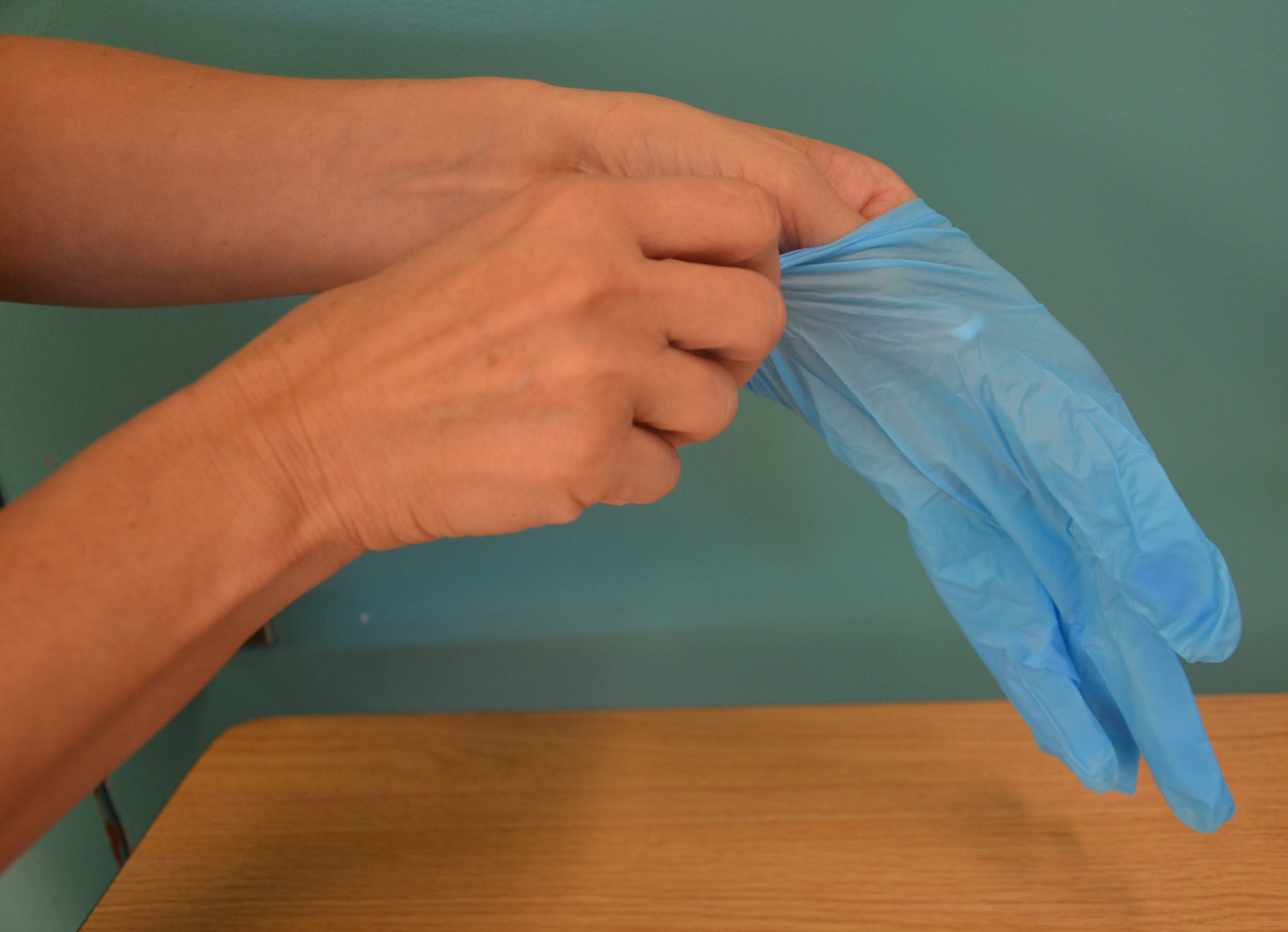
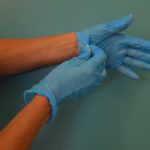
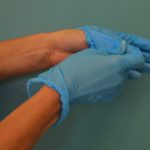
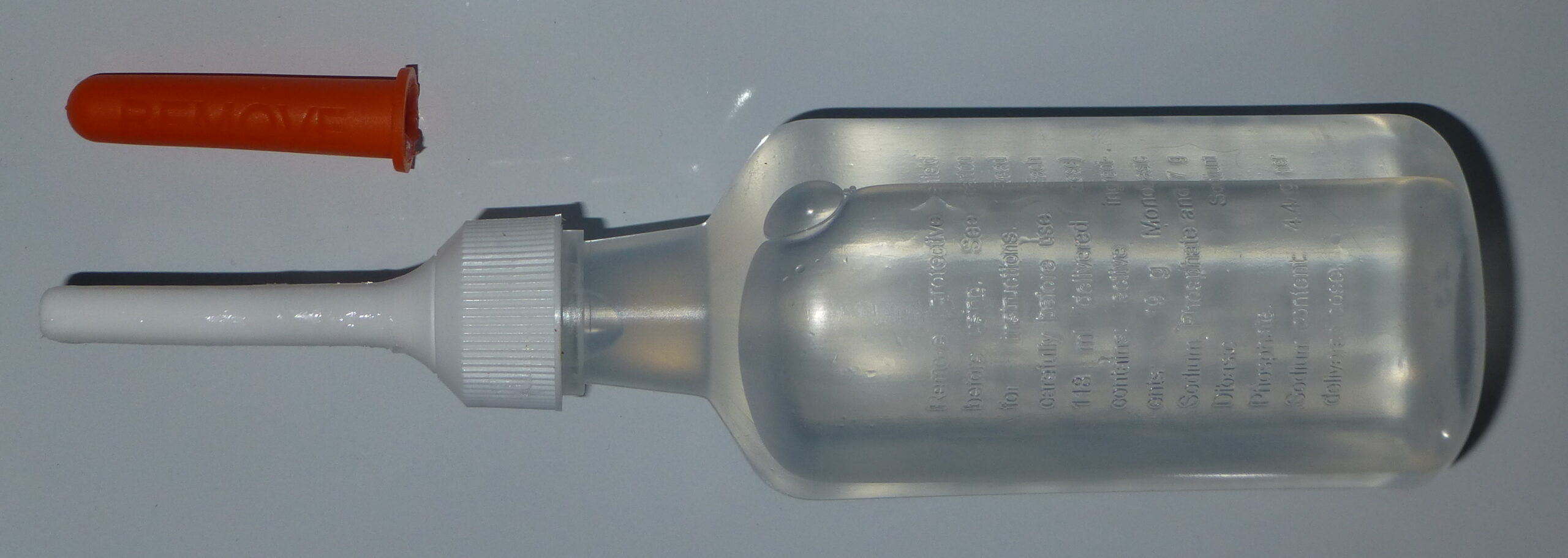
	</div>


	</div>
<div class="back-matter miscellaneous " id="back-matter-videos" title="Videos">
	<div class="back-matter-title-wrap">
		<p class="back-matter-number">2</p>
		<h1 class="back-matter-title">Videos</h1>
								</div>
	<div class="ugc back-matter-ugc">
				 <p>These videos from the playlist <a href="https://media.bccampus.ca/playlist/details/0_jm3aeehd/categoryId/175673" data-url="https://media.bccampus.ca/playlist/details/0_jm3aeehd/categoryId/175673">Personal Care – Health Care</a> by Selkirk College and COTR, are licensed under a <a href="https://creativecommons.org/licenses/by-nc/4.0/" data-url="https://creativecommons.org/licenses/by-nc/4.0/">CC BY-NC 4.0</a> licence.</p> <div class="textbox textbox--examples"><div class="textbox__header"><p class="textbox__title">Chapter 1- Considerations for AM Care</p> </div> <div class="textbox__content"><div class="textbox interactive-content interactive-content--oembed"><span class="interactive-content__icon"></span> <p>One or more interactive elements has been excluded from this version of the text. You can view them online here: <a href="#oembed-12" title="Chapter 1- Considerations for AM Care" data-url="https://opentextbc.ca/hcalabtheoryandpractice/?p=402#oembed-12">https://opentextbc.ca/hcalabtheoryandpractice/?p=402#oembed-12</a> </p> </div> </div> </div> <div class="textbox textbox--examples"><div class="textbox__header"><p class="textbox__title">Chapter 2- Before Beginning AM Care</p> </div> <div class="textbox__content"><div class="textbox interactive-content interactive-content--oembed"><span class="interactive-content__icon"></span> <p>One or more interactive elements has been excluded from this version of the text. You can view them online here: <a href="#oembed-13" title="Chapter 2- Before Beginning AM Care" data-url="https://opentextbc.ca/hcalabtheoryandpractice/?p=402#oembed-13">https://opentextbc.ca/hcalabtheoryandpractice/?p=402#oembed-13</a> </p> </div> </div> </div> <div class="textbox textbox--examples"><div class="textbox__header"><p class="textbox__title">Chapter 3- Personal Care- Oral Care</p> </div> <div class="textbox__content"><div class="textbox interactive-content interactive-content--oembed"><span class="interactive-content__icon"></span> <p>One or more interactive elements has been excluded from this version of the text. You can view them online here: <a href="#oembed-14" title="Chapter 3- Personal Care- Oral Care" data-url="https://opentextbc.ca/hcalabtheoryandpractice/?p=402#oembed-14">https://opentextbc.ca/hcalabtheoryandpractice/?p=402#oembed-14</a> </p> </div> </div> </div> <div class="textbox textbox--examples"><div class="textbox__header"><p class="textbox__title">Chapter 4- Personal Care – Washing the Face</p> </div> <div class="textbox__content"><div class="textbox interactive-content interactive-content--oembed"><span class="interactive-content__icon"></span> <p>One or more interactive elements has been excluded from this version of the text. You can view them online here: <a href="#oembed-15" title="Chapter 4- Personal Care – Washing the Face" data-url="https://opentextbc.ca/hcalabtheoryandpractice/?p=402#oembed-15">https://opentextbc.ca/hcalabtheoryandpractice/?p=402#oembed-15</a> </p> </div> </div> </div> <div class="textbox textbox--examples"><div class="textbox__header"><p class="textbox__title">Chapter 5- Personal Care – Cleaning the Upper Body</p> </div> <div class="textbox__content"><div class="textbox interactive-content interactive-content--oembed"><span class="interactive-content__icon"></span> <p>One or more interactive elements has been excluded from this version of the text. You can view them online here: <a href="#oembed-16" title="Chapter 5- Personal Care – Cleaning the Upper Body" data-url="https://opentextbc.ca/hcalabtheoryandpractice/?p=402#oembed-16">https://opentextbc.ca/hcalabtheoryandpractice/?p=402#oembed-16</a> </p> </div> </div> </div> <div class="textbox textbox--examples"><div class="textbox__header"><p class="textbox__title">Chapter 6- Personal Care – Cleaning the Hands</p> </div> <div class="textbox__content"><div class="textbox interactive-content interactive-content--oembed"><span class="interactive-content__icon"></span> <p>One or more interactive elements has been excluded from this version of the text. You can view them online here: <a href="#oembed-17" title="Chapter 6- Personal Care – Cleaning the Hands" data-url="https://opentextbc.ca/hcalabtheoryandpractice/?p=402#oembed-17">https://opentextbc.ca/hcalabtheoryandpractice/?p=402#oembed-17</a> </p> </div> </div> </div> <div class="textbox textbox--examples"><div class="textbox__header"><p class="textbox__title">Chapter 7- Personal Care – Dressing the Client in a Gown</p> </div> <div class="textbox__content"><div class="textbox interactive-content interactive-content--oembed"><span class="interactive-content__icon"></span> <p>One or more interactive elements has been excluded from this version of the text. You can view them online here: <a href="#oembed-18" title="Chapter 7- Personal Care – Dressing the Client in a Gown" data-url="https://opentextbc.ca/hcalabtheoryandpractice/?p=402#oembed-18">https://opentextbc.ca/hcalabtheoryandpractice/?p=402#oembed-18</a> </p> </div> </div> </div> <div class="textbox textbox--examples"><div class="textbox__header"><p class="textbox__title">Chapter 8- Personal Care – Perineal Care of the Penis</p> </div> <div class="textbox__content"><div class="textbox interactive-content interactive-content--oembed"><span class="interactive-content__icon"></span> <p>One or more interactive elements has been excluded from this version of the text. You can view them online here: <a href="#oembed-19" title="Chapter 8- Personal Care – Perineal Care of the Penis" data-url="https://opentextbc.ca/hcalabtheoryandpractice/?p=402#oembed-19">https://opentextbc.ca/hcalabtheoryandpractice/?p=402#oembed-19</a> </p> </div> </div> </div> <div class="textbox textbox--examples"><div class="textbox__header"><p class="textbox__title">Chapter 9- Personal Care – Perineal Care of the Vulva</p> </div> <div class="textbox__content"><div class="textbox interactive-content interactive-content--oembed"><span class="interactive-content__icon"></span> <p>One or more interactive elements has been excluded from this version of the text. You can view them online here: <a href="#oembed-20" title="Chapter 9- Personal Care – Perineal Care of the Vulva" data-url="https://opentextbc.ca/hcalabtheoryandpractice/?p=402#oembed-20">https://opentextbc.ca/hcalabtheoryandpractice/?p=402#oembed-20</a> </p> </div> </div> </div> <div class="textbox textbox--examples"><div class="textbox__header"><p class="textbox__title">Chapter 10- Personal Care – Cleaning of the Back and Buttocks</p> </div> <div class="textbox__content"><div class="textbox interactive-content interactive-content--oembed"><span class="interactive-content__icon"></span> <p>One or more interactive elements has been excluded from this version of the text. You can view them online here: <a href="#oembed-21" title="Chapter 10- Personal Care – Cleaning of the Back and Buttocks" data-url="https://opentextbc.ca/hcalabtheoryandpractice/?p=402#oembed-21">https://opentextbc.ca/hcalabtheoryandpractice/?p=402#oembed-21</a> </p> </div> </div> </div> <div class="textbox textbox--examples"><div class="textbox__header"><p class="textbox__title">Chapter 11- Post Procedure for AM Care</p> </div> <div class="textbox__content"><div class="textbox interactive-content interactive-content--oembed"><span class="interactive-content__icon"></span> <p>One or more interactive elements has been excluded from this version of the text. You can view them online here: <a href="#oembed-22" title="Chapter 11- Post Procedure for AM Care" data-url="https://opentextbc.ca/hcalabtheoryandpractice/?p=402#oembed-22">https://opentextbc.ca/hcalabtheoryandpractice/?p=402#oembed-22</a> </p> </div> </div> </div> 
	</div>


	</div>
<div class="back-matter miscellaneous " id="back-matter-versioning-history" title="Versioning History">
	<div class="back-matter-title-wrap">
		<p class="back-matter-number">3</p>
		<h1 class="back-matter-title">Versioning History</h1>
								</div>
	<div class="ugc back-matter-ugc">
				 <p>This page provides a record of edits and changes made to this book since its initial publication. Whenever edits or updates are made in the text, we provide a record and description of those changes here. If the change is minor, the version number increases by 0.01. If the edits involve substantial updates, the version number increases to the next full number.<br /> The files posted by this book always reflect the most recent version. If you find an error in this book, please fill out the <a href="https://collection.bccampus.ca/report-error" data-url="https://collection.bccampus.ca/report-error">Report an Error</a> form.</p> <table style="border-collapse: collapse; width: 100%;"><tbody><tr><th style="width: 10%;" scope="col">Version</th> <th style="width: 15%;" scope="col">Date</th> <th style="width: 35%;" scope="col">Change</th> <th style="width: 40%;" scope="col">Details</th> </tr> <tr><td style="width: 10%;">1.00</td> <td style="width: 15%;">April 30, 2023</td> <td style="width: 35%;">Book published.</td> <td style="width: 40%;"></td> </tr> <tr><td style="width: 10%;">1.01</td> <td style="width: 15%;">August 29, 2024</td> <td style="width: 35%;">Content update.</td> <td style="width: 40%;">Updated <a href="#chapter-nail-care" data-url="https://opentextbc.ca/hcalabtheoryandpractice/chapter/nail-care/">4.7 Nail Care</a> to align with <a href="https://opentextbc.ca/hcacurriculum/" data-url="https://opentextbc.ca/hcacurriculum/">Health Care Assistant Program Provincial Curriculum 2023</a>.</td> </tr> <tr><td style="width: 10%;">2.00</td> <td style="width: 15%;">October 3, 2024</td> <td style="width: 35%;">2nd edition published.</td> <td style="width: 40%;"><ol><li>Aligned language and terminology with the <a href="https://opentextbc.ca/hcacurriculum/" data-url="https://opentextbc.ca/hcacurriculum/">Health Care Assistant Program Provincial Curriculum 2023</a>&nbsp;updates regarding language and terminology</li> <li>Added procedural steps, videos and guidelines regarding hand/foot care and fingernail and toenail clipping, to align with the <a href="https://opentextbc.ca/hcacurriculum/" data-url="https://opentextbc.ca/hcacurriculum/">Health Care Assistant Program Provincial Curriculum 2023</a></li> <li>Reviewed videos and links that were broken and replaced them with new links and videos</li> <li>Reviewed all content in relation to <a href="https://opentextbc.ca/hcacurriculum/" data-url="https://opentextbc.ca/hcacurriculum/">Health Care Assistant Program Provincial Curriculum 2023</a>&nbsp;updates regarding the HCA role. Updated terminology related to “tasks” vs “restricted activities” and provided additional guidance and examples.</li> </ol> </td> </tr> </tbody> </table> 
	</div>


	</div>

</body>
</html>