<?xml version="1.0" encoding="UTF-8"?>
<!DOCTYPE html PUBLIC "-//W3C//DTD XHTML 1.1//EN" "http://www.w3.org/TR/xhtml11/DTD/xhtml11.dtd">
<html xmlns="http://www.w3.org/1999/xhtml" xml:lang="en">
<head>
<meta content="text/html; charset=UTF-8" http-equiv="content-type" />
<meta http-equiv="Content-Language" content="en" />
<meta name="generator" content="Pressbooks 6.8.0" />
<meta name="pb-editors" content="Arianna Cheveldave" />
<meta name="pb-authors" content="Lauri M. Aesoph" />
<meta name="pb-title" content="Print-on-Demand Guide" />
<meta name="pb-cover-image" content="https://opentextbc.ca/printondemand/wp-content/uploads/sites/160/2023/10/552052143-resource-covers-print-on-demand.png" />
<meta name="pb-copyright-year" content="2020" />
<meta name="pb-copyright-holder" content="BCcampus" />
<meta name="pb-book-license" content="cc-by" />
<meta name="pb-about-50" content="The Print-on-Demand Guide provides an overview for post-secondary institutions interested in offering on-demand and pre-order printing services for open textbooks and other OER. Discussions on why offering a print option enhances learning accessibility for some students are included, as well as, templates that can be used to take inventory of open educational activity and interest on campus." />
<meta name="pb-about-unlimited" content="The Print-on-Demand Guide provides an overview for post-secondary institutions interested in offering on-demand and pre-order printing services for open textbooks. In addition to being an instruction manual, various templates in this guide can be used as tools for taking inventory of open educational activity and interest on campus. For post-secondary institutions interested in expanding student accessibility to learning, information on personal preference, limited computer and internet availability, learning needs, literacy, and accessibility in general provides background on why to offer a print option for course materials.The guide is laid out in four parts and covers the history behind print on demand; situations when printing open textbooks is warranted; reasons why an on-campus print-on-demand service benefits the post-secondary community; suggestions, considerations, and templates for setting up a print-on-demand service. Chapters include research, real-life examples, and quotes from bookstores, printshops, and libraries." />
<meta name="pb-custom-copyright" content="© 2020 BCcampusThe CC licence permits you to retain, reuse, copy, redistribute, and revise this book — in whole or in part — for free, providing the author is attributed as follows:The BCcampus Open Education Print-on-Demand Guide by Lauri M. Aesoph is used under a CC BY 4.0 licence.If you redistribute all or part of this book, it is recommended the following statement be added to the copyright page so readers can access the original book at no cost:Download for free from the https://opentextbc.ca/printondemandThis guide can be referenced. In APA style, it should appear as follows:Aesoph, L.M. (2020). Print-on-Demand Guide. Victoria, BC: BCcampus. Retrieved from https://opentextbc.ca/printondemand/Cover image attribution:“Open Textbook – Authors Event” by BCcampus News is licensed under a CC BY-NC 2.0 licence.Visit BCcampus Open Education to learn about open education in British Columbia.Ebook ISBN: 978-1-77420-069-8Print ISBN: 978-1-77420-068-1" />
<meta name="pb-publisher" content="BCcampus" />
<meta name="pb-publisher-city" content="Victoria, B.C." />
<meta name="pb-subtitle" content="A reference for setting up an open textbook print-on-demand service" />
<meta name="pb-primary-subject" content="AFH" />
<meta name="pb-language" content="en-ca" />
<meta name="pb-publication-date" content="1593475200" />
<meta name="pb-ebook-isbn" content="978-1-77420-069-8" />
<meta name="pb-print-isbn" content="978-1-77420-068-1" />
<meta name="pb-additional-subjects" content="JNQ" />
<meta name="pb-keywords-tags" content="guide, print-on-demand, OER, open textbooks" />
<meta name="pb-bisac-subject" content="LAN028000 LANGUAGE ARTS &amp; DISCIPLINES / Style Manuals, LAN014000 LANGUAGE ARTS &amp; DISCIPLINES / Reference, LAN002000 LANGUAGE ARTS &amp; DISCIPLINES / Authorship, LAN027000 LANGUAGE ARTS &amp; DISCIPLINES / Publishing" />
<title>Print-on-Demand Guide</title>
</head>
<body lang='en' >
<div id="half-title-page"><h1 class="title">Print-on-Demand Guide</h1></div>
<div id="title-page">
			<h1 class="title">Print-on-Demand Guide</h1>
		<h2 class="subtitle">A reference for setting up an open textbook print-on-demand service</h2>
					<p class="author">Lauri M. Aesoph</p>
								<p class="publisher">BCcampus</p>
		<p class="publisher-city">Victoria, B.C.</p>
	</div>
<div id="copyright-page">
	<div class="ugc">
					
<div class="license-attribution"><p><img src="https://opentextbc.ca/printondemand/wp-content/themes/pressbooks-book/packages/buckram/assets/images/cc-by.svg" alt="Icon for the Creative Commons Attribution 4.0 International License" /></p><p>Print-on-Demand Guide by BCcampus is licensed under a <a rel="license" href="https://creativecommons.org/licenses/by/4.0/">Creative Commons Attribution 4.0 International License</a>, except where otherwise noted.</p></div>

							<p>© 2020 BCcampus</p><p>The CC licence permits you to retain, reuse, copy, redistribute, and revise this book — in whole or in part — for free, providing the author is attributed as follows:</p><div class="textbox">The BCcampus Open Education <a href="https://opentextbc.ca/printondemand/"><em>Print-on-Demand Guide</em></a> by Lauri M. Aesoph is used under a <a href="https://creativecommons.org/licenses/by/4.0/">CC BY 4.0</a> licence.</div><p>If you redistribute all or part of this book, it is recommended the following statement be added to the copyright page so readers can access the original book at no cost:</p><div class="textbox" style="text-align: center;">Download for free from the https://opentextbc.ca/printondemand</div><p>This guide can be referenced. In APA style, it should appear as follows:</p><div class="textbox">Aesoph, L.M. (2020). <em>Print-on-Demand Guide</em>. Victoria, BC: BCcampus. Retrieved from https://opentextbc.ca/printondemand/</div><p>Cover image attribution:</p><div class="textbox">&#8220;<a href="https://www.flickr.com/photos/61642799@N03/18190856480/">Open Textbook &#8211; Authors Event</a>&#8221; by <a href="https://www.flickr.com/photos/61642799@N03/">BCcampus News</a> is licensed under a <a href="https://creativecommons.org/licenses/by-nc/2.0/">CC BY-NC 2.0</a> licence.</div><p>Visit <a class="external-link" href="http://open.bccampus.ca/" rel="nofollow">BCcampus Open Education</a> to learn about open education in British Columbia.</p><p><strong>Ebook ISBN:</strong> 978-1-77420-069-8</p><p><strong>Print ISBN:</strong> 978-1-77420-068-1</p>
							</div>
</div>
<div id="toc">
	<h1>Contents</h1>
	<ul>
					<li class="front-matter miscellaneous">
	<a href="#front-matter-accessibility-statement">
		<span class="toc-chapter-title">Accessibility Statement</span>
							</a>
	</li>

					<li class="front-matter miscellaneous">
	<a href="#front-matter-about-this-guide">
		<span class="toc-chapter-title">About This Guide</span>
							</a>
	</li>

					<li class="front-matter miscellaneous">
	<a href="#front-matter-acknowledgements">
		<span class="toc-chapter-title">Acknowledgements</span>
							</a>
	</li>

					<li class="front-matter introduction">
	<a href="#front-matter-introduction">
		<span class="toc-chapter-title">Introduction</span>
							</a>
	</li>

					<li class="part">
	<a href="#part-print-open-textbooks">
					Printing Open Textbooks
			</a>
</li>

					<li class="chapter standard">
	<a href="#chapter-what-is-pod">
		<span class="toc-chapter-title">What Is Print on Demand?</span>
							</a>
	</li>

					<li class="chapter standard">
	<a href="#chapter-permissions">
		<span class="toc-chapter-title">Open Textbook Permissions</span>
							</a>
	</li>

					<li class="chapter standard">
	<a href="#chapter-nc-licence">
		<span class="toc-chapter-title">CC BY-NC (NonCommercial) Licences</span>
							</a>
	</li>

					<li class="part">
	<a href="#part-why-print">
					Why Print Textbooks
			</a>
</li>

					<li class="chapter standard">
	<a href="#chapter-prefer-own">
		<span class="toc-chapter-title">Preference and Ownership</span>
							</a>
	</li>

					<li class="chapter standard">
	<a href="#chapter-learni-literacy-access">
		<span class="toc-chapter-title">Learning, Literacy, Accessibility</span>
							</a>
	</li>

					<li class="chapter standard">
	<a href="#chapter-only-option">
		<span class="toc-chapter-title">When Print Is the Only Option</span>
							</a>
	</li>

					<li class="part">
	<a href="#part-pod-on-campus">
					PoD on Campus
			</a>
</li>

					<li class="chapter standard">
	<a href="#chapter-fast-cheap">
		<span class="toc-chapter-title">Faster and Cheaper</span>
							</a>
	</li>

					<li class="chapter standard">
	<a href="#chapter-familiarity-values">
		<span class="toc-chapter-title">Familiarity and Values</span>
							</a>
	</li>

					<li class="chapter standard">
	<a href="#chapter-control-flexibility">
		<span class="toc-chapter-title">Control and Flexibility</span>
							</a>
	</li>

					<li class="part">
	<a href="#part-pod-setup">
					PoD Setup
			</a>
</li>

					<li class="chapter standard">
	<a href="#chapter-plan">
		<span class="toc-chapter-title">The Plan</span>
							</a>
	</li>

					<li class="chapter standard">
	<a href="#chapter-printshop">
		<span class="toc-chapter-title">Printshop</span>
							</a>
	</li>

					<li class="chapter standard">
	<a href="#chapter-bookstore">
		<span class="toc-chapter-title">Bookstore</span>
							</a>
	</li>

					<li class="chapter standard">
	<a href="#chapter-library">
		<span class="toc-chapter-title">Library</span>
							</a>
	</li>

					<li class="back-matter miscellaneous">
	<a href="#back-matter-appendix-a">
		<span class="toc-chapter-title">Appendix A: Open Textbook Cover Toolkit</span>
							</a>
	</li>

					<li class="back-matter appendix">
	<a href="#back-matter-appendix-b">
		<span class="toc-chapter-title">Appendix B: Post-Secondary PoD Services</span>
							</a>
	</li>

					<li class="back-matter miscellaneous">
	<a href="#back-matter-appendix-c">
		<span class="toc-chapter-title">Appendix C: Additional Resources</span>
							</a>
	</li>

					<li class="back-matter miscellaneous">
	<a href="#back-matter-bibliography">
		<span class="toc-chapter-title">Bibliography</span>
							</a>
	</li>

					<li class="back-matter miscellaneous">
	<a href="#back-matter-versioning-history">
		<span class="toc-chapter-title">Versioning History</span>
							</a>
	</li>

			</ul>
</div>
<div class="front-matter miscellaneous " id="front-matter-accessibility-statement" title="Accessibility Statement">
	<div class="front-matter-title-wrap">
		<p class="front-matter-number">1</p>
		<h1 class="front-matter-title">Accessibility Statement</h1>
								</div>
	<div class="ugc front-matter-ugc">
				 <p>BCcampus Open Education believes that education should be available to everyone which means supporting the creation of free, open, and accessible educational resources. We are actively committed to increasing the accessibility and usability of the textbooks and resources we produce.</p> <h1>Accessibility features of the web version of this resource</h1> <p>The <a href="https://opentextbc.ca/printondemand/" data-url="https://opentextbc.ca/printondemand/">web version of the <em>Print-on-Demand Guide</em></a> has been designed with accessibility in mind and incorporates the following features:</p> <ul><li>It has been optimized for people who use screen-reader technology <ul><li>all content can be navigated using a keyboard</li> <li>links, headings, and tables are formatted to work with screen readers</li> <li>images have alt tags</li> </ul> </li> <li>Information is not conveyed by colour alone</li> <li>The option to increase font size (see tab on top right of screen)</li> </ul> <h1>Other file formats available</h1> <p>In addition to the web version, this book is available in a number of file formats, including PDF, EPUB (for eReaders), MOBI (for Kindles), and various editable files. Here is a link to where you can <a href="https://opentextbc.ca/printondemand/" data-url="https://opentextbc.ca/printondemand/">download this book in another file format</a>. Look for the “Download this book” drop-down menu to select the file type you want.</p> <p>This resource links to a number of external websites. If you are accessing this book in a print format, words that are linked will be underlined in the text, and you can find the full web address in the back matter of the book.</p> <h1>Known accessibility issues and areas for improvement</h1> <p>While we strive to ensure that this resource is as accessible and usable as possible, we might not always get it right. Any issues we identify will be listed below. There are currently no known issues.</p> <table style="border-collapse: collapse; width: 100%;"><caption>List of Known Accessibility Issues</caption> <tbody><tr style="height: 15px;"><th class="border" style="width: 25%; height: 15px;" scope="col">Location of issue</th> <th class="border" style="width: 25%; height: 15px;" scope="col">Need for improvement</th> <th class="border" style="width: 25%; height: 15px;" scope="col">Timeline</th> <th class="border" style="width: 25%; height: 15px;" scope="col">Work around</th> </tr> <tr style="height: 15px;"><td style="width: 25%; height: 15px;"></td> <td style="width: 25%; height: 15px;"></td> <td style="width: 25%; height: 15px;"></td> <td style="width: 25%; height: 15px;"></td> </tr> <tr style="height: 15px;"><td style="width: 25%; height: 15px;"></td> <td style="width: 25%; height: 15px;"></td> <td style="width: 25%; height: 15px;"></td> <td style="width: 25%; height: 15px;"></td> </tr> </tbody> </table> <h1>Accessibility standards</h1> <p>The web version of this resource has been designed to meet <a href="https://www.w3.org/TR/WCAG20/" data-url="https://www.w3.org/TR/WCAG20/">Web Content Accessibility Guidelines 2.0</a>, level AA. In addition, it follows all guidelines in <a href="https://opentextbc.ca/accessibilitytoolkit/back-matter/appendix-checklist-for-accessibility-toolkit/" data-url="https://opentextbc.ca/accessibilitytoolkit/back-matter/appendix-checklist-for-accessibility-toolkit/">Checklist for Accessibility</a> from the <em>Accessibility Toolkit – 2nd Edition</em>. The development of this toolkit involved working with students with various print disabilities who provided their personal perspectives and helped test the content.</p> <h1>Let us know if you are having problems accessing this guide<strong><br /> </strong></h1> <p>We are always looking for ways to make our resources more accessible. If you have problems accessing this resource, please contact us to let us know so we can fix the issue.</p> <p>Please include the following information:</p> <ul><li>The location of the problem by providing a web address or page description</li> <li>A description of the problem</li> <li>The computer, software, browser, and any assistive technology you are using that can help us diagnose and solve your issue <ul><li>e.g., Windows 10, Google Chrome (Version 65.0.3325.181), NVDA screen reader</li> </ul> </li> </ul> <p>You can contact us one of the following ways:</p> <ul><li>Contact form: <a href="https://collection.bccampus.ca/contact/" target="_blank" rel="noopener" data-url="https://collection.bccampus.ca/contact/">BCcampus OpenEd Help</a></li> <li>Web form: <a href="https://collection.bccampus.ca/report-error" target="_blank" rel="noopener" data-url="https://collection.bccampus.ca/report-error">Report an Error</a></li> </ul> <p><strong>This statement was last updated on June 30, 2020. </strong></p> 
	</div>


	</div>
<div class="front-matter miscellaneous " id="front-matter-about-this-guide" title="About This Guide">
	<div class="front-matter-title-wrap">
		<p class="front-matter-number">2</p>
		<h1 class="front-matter-title">About This Guide</h1>
								</div>
	<div class="ugc front-matter-ugc">
				 <div class="textbox shaded" style="text-align: center;">This is one of <a href="https://open.bccampus.ca/browse-our-collection/find-open-textbooks/?subject=Support%20Resources" data-url="https://open.bccampus.ca/browse-our-collection/find-open-textbooks/?subject=Support%20Resources">many support resources</a> from BCcampus Open Education. It is designed to supplement the central resource: the <a href="https://opentextbc.ca/selfpublishguide/" rel="noopener noreferrer" data-url="https://opentextbc.ca/selfpublishguide/"><em>Self-Publishing Guide</em></a>.</div> <p>Welcome to the BCcampus Open Education <em>Print-on-Demand Guide. </em>This guide was created to fill the demand for a support resource that covers the printing of open textbooks.</p> <p><a href="https://open.bccampus.ca/" data-url="https://open.bccampus.ca/">BCcampus Open Education</a> began in 2012 as the B.C. Open Textbook Project with the goal of making post-secondary education in British Columbia more accessible by reducing students’ costs through the use of open textbooks and other OER. <a href="https://bccampus.ca/about-us/" rel="noopener" data-url="https://bccampus.ca/about-us/">BCcampus</a> supports the post-secondary institutions of British Columbia as they adapt and evolve their teaching and learning practices to enable powerful learning opportunities for the students of B.C. BCcampus Open Education is funded by the&nbsp;<a href="https://www2.gov.bc.ca/gov/content/governments/organizational-structure/ministries-organizations/ministries/post-secondary-education-and-future-skills" data-url="https://www2.gov.bc.ca/gov/content/governments/organizational-structure/ministries-organizations/ministries/post-secondary-education-and-future-skills">British Columbia Ministry of Post-Secondary Education and Future Skills</a>, and the <a href="http://www.hewlett.org/" rel="noopener" data-url="http://www.hewlett.org/">Hewlett Foundation</a>.</p> <p>Open educational resources (OER) are defined as teaching, learning, and research resources that, through permissions granted by the copyright holder, allow others to use, distribute, keep, or make changes to them. We consider this publication — along with our guides, webinar slide decks, and other support materials — as a type of OER that trains faculty, staff, and students how to build, customize, and use open textbooks.</p> <p>The <a href="https://bccampus.ca/bccampus-editorial-guidelines-for-tone-voice-and-style/" rel="noopener" data-url="https://bccampus.ca/bccampus-editorial-guidelines-for-tone-voice-and-style/">BCcampus Writing Guidelines for Articles and Web Content</a> and <a href="https://opentextbc.ca/selfpublishguide/back-matter/appendix-2/" rel="noopener" data-url="https://opentextbc.ca/selfpublishguide/back-matter/appendix-2/">BCcampus Open Education Style Guide</a>, along with the <a href="https://opentextbc.ca/printondemand/wp-content/uploads/sites/160/2016/10/BCcampus-OpenEd-Style-Sheet-Print-on-Demand-Guide.docx" data-url="https://opentextbc.ca/printondemand/wp-content/uploads/sites/160/2016/10/BCcampus-OpenEd-Style-Sheet-Print-on-Demand-Guide.docx">attached style sheet [Word file]</a>, were referenced during the copy editing and proofreading phases of this guide.</p> <p>To ensure that standard barriers are addressed for maximum access by as many readers as possible, this guide meets the criteria laid out in the&nbsp;<a class="external-link" href="https://opentextbc.ca/accessibilitytoolkit/back-matter/appendix-checklist-for-accessibility-toolkit/" rel="nofollow noopener" data-url="https://opentextbc.ca/accessibilitytoolkit/back-matter/appendix-checklist-for-accessibility-toolkit/">Checklist for Accessibility</a> — including an <a href="https://opentextbc.ca/adoptopentextbook/front-matter/accessibility-statement/" data-url="https://opentextbc.ca/adoptopentextbook/front-matter/accessibility-statement/">Accessibility Statement</a> — and is flagged as “Accessible” in the B.C. Open Textbook Collection.</p> <p>This guide does not come with an index. Instead, use the search field located in the top-right of each page in the online version to locate a specific topic.</p> <div class="textbox shaded" style="text-align: center;">If you find an error in this guide, please report it using the <a href="https://collection.bccampus.ca/report-error" data-url="https://collection.bccampus.ca/report-error">Report an Error</a> form. For other feedback or comments, contact <a href="https://collection.bccampus.ca/contact/" target="_blank" rel="noopener" data-url="https://collection.bccampus.ca/contact/">BCcampus OpenEd Help</a>.</div> 
	</div>


	</div>
<div class="front-matter miscellaneous " id="front-matter-acknowledgements" title="Acknowledgements">
	<div class="front-matter-title-wrap">
		<p class="front-matter-number">3</p>
		<h1 class="front-matter-title">Acknowledgements</h1>
								</div>
	<div class="ugc front-matter-ugc">
				 <p>I’d like to thank everyone who partook in the BCcampus Print-on-Demand Survey<span class="footnote"><span class="footnote-indirect" data-fnref="1168-1"></span></span> and patiently answered my follow-up questions, as well as, the librarians, bookstore staff, printshop managers and faculty I called on to clarify points related to print-on-demand service and how it relates to open textbooks.</p> 
	</div>
			
				
				<div class="footnotes"><div id='1168-1'>
For a list of questions asked in the survey, see the <a href="https://opentextbc.ca/printondemand/wp-content/uploads/sites/160/2020/06/BCcampus-OpenEd-PoD-Guide-Survey.docx" data-url="https://opentextbc.ca/printondemand/wp-content/uploads/sites/160/2020/06/BCcampus-OpenEd-PoD-Guide-Survey.docx">BCcampus Print-on-Demand Survey [Word file]</a>.
</div></div>
	</div>
<div class="front-matter introduction " id="front-matter-introduction" title="Introduction">
	<div class="front-matter-title-wrap">
		<p class="front-matter-number">4</p>
		<h1 class="front-matter-title">Introduction</h1>
								</div>
	<div class="ugc front-matter-ugc">
				 <p>Most open textbooks are available online or in other digital formats. However, there are times when a student or instructor needs or wants a printed version.</p> <p>The <em>Print-on-Demand Guide</em> provides an overview for post-secondary institutions interested in offering on-demand and pre-order printing services for open textbooks, whether from the <a href="https://collection.bccampus.ca/" data-url="https://collection.bccampus.ca/">B.C. Open Collection</a> or other repositories. It’s also a guide to help colleges and universities expand accessibility for students who require the printed page, and a tool for taking inventory of open educational activity and interest on campus.</p> <p>This guide is laid out in four parts and covers the following topics:</p> <ol><li><strong>What</strong>. The history behind print on demand, and why open textbooks are ideal (and legal) print candidates for instructors, especially those interested in customizable classroom materials.</li> <li><strong>Why</strong>. A detailed description of situations in which the printing of open textbooks is warranted, such as learning accessibility for students.</li> <li><strong>Where</strong>. Half a dozen reasons why a print-on-demand service <em>on campus</em> benefits students, faculty, and the larger post-secondary community.</li> <li><strong>How</strong>. Suggestions, considerations, and templates that can be used by post-secondary institutions interested in setting up a print-on-demand service. These can be used to take inventory of open educational activity and interest on campus.</li> </ol> <p>Each part contains three or four chapters, each devoted to a specific aspect of the part subject. Each chapter begins with a summary of its content in the “in a nutshell” textbox.</p> <table style="border-collapse: collapse; width: 100%;"><tbody><tr><td style="width: 18.114%;"><img class="alignnone size-full wp-image-441" src="https://opentextbc.ca/printondemand/wp-content/uploads/sites/160/2016/07/Screen-Shot-2020-04-07-at-2.29.22-PM.png" alt="Acorn." width="382" height="285" srcset="https://opentextbc.ca/printondemand/wp-content/uploads/sites/160/2016/07/Screen-Shot-2020-04-07-at-2.29.22-PM.png 382w, https://opentextbc.ca/printondemand/wp-content/uploads/sites/160/2016/07/Screen-Shot-2020-04-07-at-2.29.22-PM-300x224.png 300w, https://opentextbc.ca/printondemand/wp-content/uploads/sites/160/2016/07/Screen-Shot-2020-04-07-at-2.29.22-PM-65x48.png 65w, https://opentextbc.ca/printondemand/wp-content/uploads/sites/160/2016/07/Screen-Shot-2020-04-07-at-2.29.22-PM-225x168.png 225w, https://opentextbc.ca/printondemand/wp-content/uploads/sites/160/2016/07/Screen-Shot-2020-04-07-at-2.29.22-PM-350x261.png 350w" title="" /></td> <td style="width: 81.886%;"><strong><span style="color: #000000; background-color: #ffffff;">In a nutshell.</span><br /> </strong></td> </tr> </tbody> </table> <p>Chapters include research, real-life examples, input from 28 B.C. post-secondary individuals who answered two dozen questions asked through a print-on-demand survey, and quotes from bookstores, printshops, and libraries across the province. At the end of each chapter in the final part, there is a green textbook that highlights concerns and considerations, such as “Service Interruption” and “Printshop Limitations.”</p> <p>Finally, in the appendices, readers will find additional PoD resources. These include an open textbook cover toolkit, a shortlist of post-secondary PoD services across Canada and the United States, and other useful information.</p> <div class="media-attributions clear"><h3>Media Attributions</h3><ul><li><a rel="cc:attributionURL" href="https://pixabay.com/photos/acorn-oak-brown-seeds-couple-two-1017796/" data-url="https://pixabay.com/photos/acorn-oak-brown-seeds-couple-two-1017796/">Acorn Oak Brown</a> © <a rel="dc:creator" href="https://pixabay.com/service/license/" data-url="https://pixabay.com/service/license/">svklimkin is used under a Pixabay License and is</a> adapted by Lauri Aesoph </li></ul></div> 
	</div>


	</div>
<div class="part-wrapper" id="part-print-open-textbooks-wrapper">
    <div class="part  " id="part-print-open-textbooks">
	<div class="part-title-wrap">
		<p class="part-number">I</p>
		<h1 class="part-title">Printing Open Textbooks</h1>
	</div>
	<div class="ugc part-ugc">
		<div class="textbox textbox--learning-objectives"><div class="textbox__header"><p class="textbox__title">Section Topics</p> </div> <div class="textbox__content"><p>This section describes the print-on-demand process and why this is permissible with open textbooks. Topics covered include:</p> <ul><li>What is Print-on-Demand?</li> <li>Open Textbook Permissions</li> <li>CC BY-NC (NonCommercial) Licences</li> </ul> </div> </div>
	</div>
			
				
	</div>
<div class="chapter standard " id="chapter-what-is-pod" title="What is PoD">
	<div class="chapter-title-wrap">
		<p class="chapter-number">1</p>
		<h1 class="chapter-title">What Is Print on Demand?</h1>
								</div>
	<div class="ugc chapter-ugc">
				 <table style="border-collapse: collapse; width: 100%;"><tbody><tr><td style="width: 18.114%;"><img class="alignnone wp-image-441 size-full" src="https://opentextbc.ca/printondemand/wp-content/uploads/sites/160/2016/07/Screen-Shot-2020-04-07-at-2.29.22-PM.png" alt="Acorn." width="382" height="285" srcset="https://opentextbc.ca/printondemand/wp-content/uploads/sites/160/2016/07/Screen-Shot-2020-04-07-at-2.29.22-PM.png 382w, https://opentextbc.ca/printondemand/wp-content/uploads/sites/160/2016/07/Screen-Shot-2020-04-07-at-2.29.22-PM-300x224.png 300w, https://opentextbc.ca/printondemand/wp-content/uploads/sites/160/2016/07/Screen-Shot-2020-04-07-at-2.29.22-PM-65x48.png 65w, https://opentextbc.ca/printondemand/wp-content/uploads/sites/160/2016/07/Screen-Shot-2020-04-07-at-2.29.22-PM-225x168.png 225w, https://opentextbc.ca/printondemand/wp-content/uploads/sites/160/2016/07/Screen-Shot-2020-04-07-at-2.29.22-PM-350x261.png 350w" title="" /></td> <td style="width: 81.886%;"><strong>Print on demand is a service for which individual copies of a textbook can be printed as requested (on demand).<br /> </strong></td> </tr> </tbody> </table> <p>Print on demand (PoD) is a service or process by which individual copies of a textbook or other resource that is usually available as a digital file can be printed upon request. This method allows publishers to provide books for a fixed cost per copy regardless of order size, be it one or one hundred copies. Prior to the digital age, most information was available in books that were printed by publishers in large (and expensive) allotments using offset printing.<span class="footnote"><span class="footnote-indirect" data-fnref="494-1"></span></span> The idea of requesting — and printing — a single copy of a book was unheard of.</p> <p>The PoD model began in the 1990s as digital press technology — as well as printing and binding methods — developed and improved, allowing publishers to retreat from printing large runs of books and then dealing with unsold copies.<span class="footnote"><span class="footnote-indirect" data-fnref="494-2"></span></span> Replacing the standard large-book-inventory method with on-demand book printing afforded publishers other savings, too, including a reduction in storage costs, less labour needed for handling inventory, and lower inventory management fees. In 2008, UBC Press — Canada’s third largest university press<span class="footnote"><span class="footnote-indirect" data-fnref="494-3"></span></span> — began using the print-on-demand and short-run digital printing models as part of its workflow to keep book inventory at workable levels.<span class="footnote"><span class="footnote-indirect" data-fnref="494-4"></span></span></p> <p>While the price of each print-on-demand copy is typically higher than those produced with offset printing, the average PoD cost <em>is</em> lower for small print runs because setup costs for digital printing — including technical configuration — are much lower than those for offset printing. This advantage not only reduces the publisher’s risks, but also leads to more choices for the consumer, such as the ability to order a discrete, professionally produced book. Still, less publisher liability can also mean lower quality control of the printed book.<span class="footnote"><span class="footnote-indirect" data-fnref="494-5"></span></span></p> <p>Nevertheless, the PoD model aligns well with open textbooks. For instructors who take full advantage of the open-copyright licence (the tool that makes a textbook <em>open</em>) by customizing the book to suit their teaching methods and curricula; updating it regularly to keep the material current; and/or inviting students to contribute to the book as part of a course assignment (in line with open pedagogical practice), printing textbooks on demand is the ideal way to go.</p> <div class="media-attributions clear"><h3>Media Attributions</h3><ul><li><a rel="cc:attributionURL" href="https://pixabay.com/photos/acorn-oak-brown-seeds-couple-two-1017796/" data-url="https://pixabay.com/photos/acorn-oak-brown-seeds-couple-two-1017796/">Acorn Oak Brown</a> © <a rel="dc:creator" href="https://pixabay.com/service/license/" data-url="https://pixabay.com/service/license/">svklimkin is used under a Pixabay License and is</a> adapted by Lauri Aesoph </li></ul></div> 
	</div>
			
				
				<div class="footnotes"><div id='494-1'>“Offset Printing,” Wikipedia, last modified April 17, 2020, https://en.wikipedia.org/wiki/Offset_printing.</div><div id='494-2'>Edmund Chamberlain, “Investigating Faster Techniques for Digitization and Print-on-Demand,” <em>New Review of Academic Librarianship</em> 18, no. 1 (2012): 64, https://doi.org/10.1080/13614533.2012.660769.</div><div id='494-3'>“About UBC Press,” About Us, UBC Press, accessed April 8, 2020, http://www.ubcpress.ca/about-us.</div><div id='494-4'>Sara Xue Ying Chang, “A Case Study of Print on Demand and Short-Run Digital Printing at the University of British Columbia Press” (master's project report, Simon Fraser University, 2017), https://summit.sfu.ca/item/17530.</div><div id='494-5'>“Print on Demand,” Wikipedia, last modified April 26, 2020, https://en.wikipedia.org/wiki/Print_on_demand.</div></div>
	</div>
<div class="chapter standard " id="chapter-permissions" title="Permissions">
	<div class="chapter-title-wrap">
		<p class="chapter-number">2</p>
		<h1 class="chapter-title">Open Textbook Permissions</h1>
								</div>
	<div class="ugc chapter-ugc">
				 <table style="border-collapse: collapse; width: 100%;"><tbody><tr><td style="width: 18.114%;"><img class="alignnone wp-image-441 size-full" src="https://opentextbc.ca/printondemand/wp-content/uploads/sites/160/2016/07/Screen-Shot-2020-04-07-at-2.29.22-PM.png" alt="Acorn." width="382" height="285" srcset="https://opentextbc.ca/printondemand/wp-content/uploads/sites/160/2016/07/Screen-Shot-2020-04-07-at-2.29.22-PM.png 382w, https://opentextbc.ca/printondemand/wp-content/uploads/sites/160/2016/07/Screen-Shot-2020-04-07-at-2.29.22-PM-300x224.png 300w, https://opentextbc.ca/printondemand/wp-content/uploads/sites/160/2016/07/Screen-Shot-2020-04-07-at-2.29.22-PM-65x48.png 65w, https://opentextbc.ca/printondemand/wp-content/uploads/sites/160/2016/07/Screen-Shot-2020-04-07-at-2.29.22-PM-225x168.png 225w, https://opentextbc.ca/printondemand/wp-content/uploads/sites/160/2016/07/Screen-Shot-2020-04-07-at-2.29.22-PM-350x261.png 350w" title="" /></td> <td style="width: 81.886%;"><strong>Anyone, anywhere may print and distribute an unlimited number of copies of an open textbook <em>without</em> asking the copyright holder for permission.</strong></td> </tr> </tbody> </table> <h1>Chapter table of contents</h1> <p><a class="internal" href="#copyrightconcerns" data-url="https://opentextbc.ca/printondemand/chapter/permissions/#copyrightconcerns">Copyright concerns</a></p> <p><a class="internal" href="#coursepack" data-url="https://opentextbc.ca/printondemand/chapter/permissions/#coursepack">The course pack precedent</a></p> <p><a class="internal" href="#printing" data-url="https://opentextbc.ca/printondemand/chapter/permissions/#printing">Printing open textbooks</a></p> <ul><li><a class="internal" href="#openlicences" data-url="https://opentextbc.ca/printondemand/chapter/permissions/#openlicences">Open-copyright licences</a></li> <li><a class="internal" href="#publicdomain" data-url="https://opentextbc.ca/printondemand/chapter/permissions/#publicdomain">Public domain</a></li> </ul> <h1 id="copyrightconcerns">Copyright concerns</h1> <p>Post-secondary institutions should understand the importance of educating their instructors and students about how copyright applies to teaching and learning, including with regard to the printing of copyrighted materials. Many individuals remain confused about copyright law and are hesitant to print anything, afraid they might be committing copyright fraud. Martin Warkentin, Copyright Librarian at the University of the Fraser Valley in Abbotsford, B.C., says, “Many folks I deal with who are conscientious about copyright are wary about physical printing — the (wrong) gut instinct seems to be printing a substantial part of anything is akin to infringement.”</p> <p>The open-copyright licence is not the only device designed to make copyrighted educational materials easier to use and print: another is <a href="https://fair-dealing.ca/what-is-fair-dealing/" data-url="https://fair-dealing.ca/what-is-fair-dealing/">fair dealing</a>. This copyright exception, added to the <a href="https://laws-lois.justice.gc.ca/eng/acts/c-42/" data-url="https://laws-lois.justice.gc.ca/eng/acts/c-42/">Canadian Copyright Act</a> in 1921, allows the use and printing of copyrighted works for educational purposes without permission as long as certain parameters are followed.<span class="footnote"><span class="footnote-indirect" data-fnref="65-1"></span></span> Like copyright in general, fair dealing and how it impacts the printing of course materials is covered in many university and college handbooks. At the University of British Columbia (UBC), for example, their “Copyright Guidelines for UBC Faculty, Staff and Students” includes a section entitled <a href="https://copyright.ubc.ca/copyright-guidelines/#fair-dealing" data-url="https://copyright.ubc.ca/copyright-guidelines/#fair-dealing">Is copying of the work permitted under the <em>Copyright Act</em>? The Fair Dealing Exception</a>. Adding openly licensed resources to the what-can-I-print discussion can further muddy the waters.</p> <p>Christina Hendricks, Academic Director for the Centre for Teaching, Learning and Technology at UBC, says, “There has been a lot of conversation at my institution over the past few years about ensuring one follows copyright rules when photocopying works, or making print copies of works and distributing them to students. Faculty might be worried that they could run afoul of copyright rules when reusing open educational resources if they don’t have enough knowledge about how open licences work.”</p> <h1 id="coursepack">The course pack precedent</h1> <p>The commonly used course pack is a study in how copyright can affect the printing of teaching materials. Examining the course pack’s history provides the context within which educators have operated for the past several decades in order to provide their students with the best learning resources possible.</p> <p>Course packs are “printed collections of readings assembled by teachers to supplement college and university courses.”<span class="footnote"><span class="footnote-indirect" data-fnref="65-2"></span></span> The practice of collecting handouts in one packet for a course as supplemental materials or to replace a textbook began in earnest in the 1980s and ’90s, when photocopying became easy. However, it is the fair dealing provision in Canada’s copyright law — followed by landmark decisions by the Supreme Court of Canada in 2004 and 2012 — that confirmed course packs are permitted and showed how they should be assembled under copyright law.<span class="footnote"><span class="footnote-indirect" data-fnref="65-3"></span></span></p> <p>Since then, instructors who use course packs and the librarians and staff who compile them have been careful during the copyright review phase of course pack creation, a step that requires time and money.</p> <p>The cost to produce a course pack at UBC through its bookstore, for example, varies depending not only on the number of pages in each packet and the quantity printed, but also on permission fees charged by copyright holders to use content that is beyond the scope of fair dealing or not covered by an institution’s <a href="https://www.accesscopyright.ca/" data-url="https://www.accesscopyright.ca/">Access Copyright</a> licence.<span class="footnote"><span class="footnote-indirect" data-fnref="65-4"></span></span></p> <p>The University of Victoria (UVic) requires that course pack orders be submitted two months prior to a course’s start date in order to conduct a complete copyright review, including receiving copyright permissions. Copyright permissions for course packs are typically granted for one academic term. This window of permission for a select classroom audience may result in the course pack being prohibited from inclusion in its institution’s course reserve, as is the case at UVic.<span class="footnote"><span class="footnote-indirect" data-fnref="65-5"></span></span></p> <p>More recently, some institutions are asking faculty to consider not only copyrighted materials, but also those in the public domain as well as open educational resources when compiling course packs as a way to save time and money. For an example of institutional recommendations, see <a href="https://camosun.libguides.com/copyright" data-url="https://camosun.libguides.com/copyright">Copyright guide for Camosun College</a> and navigate to “Coursepacks” under the “In Class” tab.</p> <h1 id="printing">Printing open textbooks</h1> <p>Anyone, anywhere may print and distribute an unlimited number of copies of a textbook released with an open-copyright — or open — licence without asking the copyright holder for permission. These openly licensed books are called <em>open textbooks</em>. Unfortunately, says Brendan Hunter, Course Materials Supervisor for the Langara Bookstore in Vancouver, “most people have no idea what the boundaries of open (i.e., open-copyright licences) are.”</p> <h2 id="openlicences">Open-copyright licences</h2> <p>Many, if not most, open textbooks are copyrighted. Copyright refers to the legal rights held by the copyright owner of a creative work who is often (but not always) the creator of the material. Typically, copyright holders choose to retain all their rights. What makes an open textbook different from a closed textbook is that, with the former, the copyright holder has released their work with an open-copyright licence. A licence is a contract or agreement by which the copyright holder gives permission to another entity or individual to copy and disseminate their work.</p> <p>The open licences used most often with educational materials are <a href="https://creativecommons.org/" data-url="https://creativecommons.org/">Creative Commons</a> (CC) licences. Like other copyright licences, CC licences are legal tools. A CC licence gives the copyright holder the ability to provide advanced permission to everyone to use their work. There is no limit to how many times the permissions afforded by a CC licensed work may be used, and these permissions have no expiration date. The only condition imposed when using an open work is that the user must attribute, or give credit to, the author.</p> <div class="textbox shaded"><p style="text-align: center;">For more information, see <a href="https://opentextbc.ca/selfpublishguide/chapter/copyright-and-open-licenses/" data-url="https://opentextbc.ca/selfpublishguide/chapter/copyright-and-open-licenses/">Copyright and Open Licences</a> and <a href="https://opentextbc.ca/selfpublishguide/chapter/concerns-about-plagiarism/" data-url="https://opentextbc.ca/selfpublishguide/chapter/concerns-about-plagiarism/">Concerns About Plagiarism</a> in the <em>Self-Publishing Guide</em>.</p> <p style="text-align: center;">For how to write an <a href="https://opentextbc.ca/selfpublishguide/chapter/resources-captions-attributions/#attributions" data-url="https://opentextbc.ca/selfpublishguide/chapter/resources-captions-attributions/#attributions">attribution statement</a>, see “Attributions” in the Resources: Captions and Attributions chapter of the <em>Self-Publishing Guide</em>.</p> <p style="text-align: center;">For details on how open textbook authors can provide copyright information, and examples of an attribution statement and citation for licensees and readers, see <a href="http://opentextbc.ca/pressbooks/chapter/book-info-page/#copyrightstatement" data-url="http://opentextbc.ca/pressbooks/chapter/book-info-page/#copyrightstatement">this copyright statement example</a> in the Book Info Page chapter of the <em>Pressbooks Guide</em>.</p> </div> <h2 id="publicdomain">Public domain</h2> <p>When copyright does <em>not</em> apply to a work because copyright has expired or the author has waived their <em>copy rights</em>, then that work is considered to be in the public domain. This means that anyone and everyone — i.e., the public — can use this work in any way they wish. Examples of creative works in the public domain are Shakespeare’s plays, Mary Shelley’s <em>Frankenstein</em>, and Beethoven’s compositions.</p> <p>Students, instructors, and others are free to print and make multiple copies of textbooks in the public domain. Without copyright in place, public domain resources are without legal restrictions or ownership and thus are bound by fewer conditions than textbooks covered by an open licence. It can be said that:</p> <ul><li>Copyrighted textbooks without an open licence have <em>all rights reserved</em></li> <li>Openly licensed textbooks have <em>some rights reserved</em></li> <li>Textbooks in the public domain have <em>no rights reserved</em></li> </ul> <p>Unfortunately, it isn’t always clear if a resource is in the public domain, though <a href="https://creativecommons.org/publicdomain/" data-url="https://creativecommons.org/publicdomain/">public domain tools</a> do exist for marking these works. Therefore, it is up to the individual to ensure that a textbook or educational resource is without copyright before printing it. Searching in <a href="https://opentextbc.ca/selfpublishguide/chapter/resources-search-find/" data-url="https://opentextbc.ca/selfpublishguide/chapter/resources-search-find/">repositories known to hold public domain resources</a> is a good place to start. And even though giving credit to the author of a work in the public domain is not legally required, doing so is considered good academic practice.</p> <div class="textbox shaded" style="text-align: center;">For more information, see <a href="https://opentextbc.ca/selfpublishguide/back-matter/appendix-1/" data-url="https://opentextbc.ca/selfpublishguide/back-matter/appendix-1/">Licences and Tools</a> in the <em>Self-Publishing Guide</em>.</div> <div class="media-attributions clear"><h3>Media Attributions</h3><ul><li><a rel="cc:attributionURL" href="https://pixabay.com/photos/acorn-oak-brown-seeds-couple-two-1017796/" data-url="https://pixabay.com/photos/acorn-oak-brown-seeds-couple-two-1017796/">Acorn Oak Brown</a> © <a rel="dc:creator" href="https://pixabay.com/service/license/" data-url="https://pixabay.com/service/license/">svklimkin is used under a Pixabay License and is</a> adapted by Lauri Aesoph </li></ul></div> 
	</div>
			
				
				<div class="footnotes"><div id='65-1'>“Fair Dealing in Canadian Copyright Law,” Wikipedia, last modified May 11, 2020, https://en.wikipedia.org/wiki/Fair_dealing_in_Canadian_copyright_law.</div><div id='65-2'>“Coursepacks,” Wikipedia, last modified August 13, 2017, https://en.wikipedia.org/wiki/Coursepacks.</div><div id='65-3'>Council of Ministers of Education, Canada, <em>Fair Dealing Guidelines</em> (poster, CMEC website, July 31, 2019), https://cmec.ca/docs/copyright/CMEC_POSTER_FDG_EN.pdf.</div><div id='65-4'>“Faculty FAQ: Classroom, 2.1 What Are the Copyright Rules that Apply to My Teaching?,” Copyright at UBC, University of British Columbia, accessed April 23, 2020, https://copyright.ubc.ca/instructor-faq/#2.1_What_are_the_copyright_rules_that_apply_to_my_teaching?.</div><div id='65-5'>“Coursepacks,” UVic Bookstore, University of Victoria, accessed April 23, 2020, https://www.uvicbookstore.ca/text/coursepacks.</div></div>
	</div>
<div class="chapter standard " id="chapter-nc-licence" title="NonCommercial Licence">
	<div class="chapter-title-wrap">
		<p class="chapter-number">3</p>
		<h1 class="chapter-title">CC BY-NC (NonCommercial) Licences</h1>
								</div>
	<div class="ugc chapter-ugc">
				 <table style="border-collapse: collapse; width: 100%;"><tbody><tr><td style="width: 18.114%;"><img class="alignnone wp-image-441 size-full" src="https://opentextbc.ca/printondemand/wp-content/uploads/sites/160/2016/07/Screen-Shot-2020-04-07-at-2.29.22-PM.png" alt="Acorn." width="382" height="285" srcset="https://opentextbc.ca/printondemand/wp-content/uploads/sites/160/2016/07/Screen-Shot-2020-04-07-at-2.29.22-PM.png 382w, https://opentextbc.ca/printondemand/wp-content/uploads/sites/160/2016/07/Screen-Shot-2020-04-07-at-2.29.22-PM-300x224.png 300w, https://opentextbc.ca/printondemand/wp-content/uploads/sites/160/2016/07/Screen-Shot-2020-04-07-at-2.29.22-PM-65x48.png 65w, https://opentextbc.ca/printondemand/wp-content/uploads/sites/160/2016/07/Screen-Shot-2020-04-07-at-2.29.22-PM-225x168.png 225w, https://opentextbc.ca/printondemand/wp-content/uploads/sites/160/2016/07/Screen-Shot-2020-04-07-at-2.29.22-PM-350x261.png 350w" title="" /></td> <td style="width: 81.886%;"><strong>Open textbooks released with a CC BY-NC licence may be sold as long as the price is set for cost recovery, not for profit.<br /> </strong></td> </tr> </tbody> </table> <p>Many wonder if it’s permissible for an individual or service to sell printed open textbooks that include the <a href="https://creativecommons.org/licenses/by-nc/4.0/" data-url="https://creativecommons.org/licenses/by-nc/4.0/">NonCommercial feature</a> as part of the Creative Commons licence.</p> <p>The answer is yes. So why are so many people concerned that they are breaking the law by doing so?</p> <p>Authors who are worried that their freely available work might be used for financial gain by an individual or company can add the NonCommercial (NC) option to a work with a CC BY licence. The NC component prohibits anyone from using “the material for commercial purposes.” Creative Commons defines “commercial purposes” as those that are “primarily intended for commercial advantage or monetary compensation.”<span class="footnote"><span class="footnote-indirect" data-fnref="67-1"></span></span></p> <p>The CC BY-NC licence and other NC variations have caused confusion and concern, as members within the open education community have grappled with how or if they are permitted to sell printed copies of NC-marked textbooks, especially in college or university bookstores.</p> <p>If the price set for an NC-marked textbook is for <em>cost recovery</em>, and not for profit or “commercial purposes,” then selling is allowed. “Cost recovery” refers to setting the price of an item such that it recovers or recoups the costs of a given expense. The costs recovered for an on-campus print-on-demand service might include the price of materials needed to produce a printed textbook, such as paper and ink, or labour costs.</p> <h1>Third-party printing services</h1> <div><p class="x_MsoNormal">Some post-secondary institutions and faculty elect to use third-party copy services to print NC-licensed materials for the classroom.</p> <div class="textbox"><strong>Question</strong>: Is this allowed if the third-party service makes a profit from the printing job?</div> <p class="x_MsoNormal">Two legal cases in the U.S. address this question.<span class="footnote"><span class="footnote-indirect" data-fnref="67-2"></span></span></p> <p class="x_MsoNormal">The first case involved <a href="https://greatminds.org/" data-url="https://greatminds.org/">Great Minds</a>, a nonprofit that creates curricula for the prekindergarten through grade 12 sector. In 2016, <a href="https://creativecommons.org/documents-great-minds-v-fedex-office-and-print-services-case/" data-url="https://creativecommons.org/documents-great-minds-v-fedex-office-and-print-services-case/">Great Minds sued FedEx</a>, arguing that, because FedEx made money from printing Great Minds’ NC-licensed OER for school districts, their use of the materials was commercial and thus violated the conditions of the licence. However, in 2018, the United States Court of Appeals for the Second Circuit ruled that a commercial copyshop may reproduce educational materials at the request of a school district that is using them under a CC BY-NC-SA licence.<span class="footnote"><span class="footnote-indirect" data-fnref="67-3"></span></span></p> <p>A second ruling in 2019, called Great Minds v. Office Depot, reached a similar conclusion. The United States Court of Appeals for the Ninth Circuit ruled that there “is no dispute that the school and school district licensees’ copying of Great Minds’ material is permitted under the License.”<span class="footnote"><span class="footnote-indirect" data-fnref="67-4"></span></span></p> <div class="textbox"><strong>Answer</strong>: The user, or licensee, of a NonCommercial work (i.e., the person exercising the NC licence rights) <em>is permitted </em>to pay a third-party printing service to make copies of the NC-licensed work on their behalf, as the printing service would not be a licensee and therefore would not be barred from making a profit when printing NC-licensed materials.</div> <p>What is <em>not</em> allowed is for licensees to print and sell NC-licensed works for commercial purposes.<span class="footnote"><span class="footnote-indirect" data-fnref="67-5"></span></span></p> </div> <div><div><div class="textbox textbox--key-takeaways"><div class="textbox__header"><p class="textbox__title">The Power of Copyright Ownership</p> </div> <div class="textbox__content"><p>Copyright is an asset, and those who own copyright have legal permission as the licensor to sell or distribute their work as they wish, including entering into more than one agreement about how that work can be used.</p> <p>Authors who want to restrict others from commercializing their work without advance notice can do so by assigning a Creative Commons Attribution-NonCommercial licence to it. However, because CC licences are <em>non-exclusive</em>, the author or copyright holder may also engage in non-CC sharing agreements, such as personally selling their work for a profit or giving others permission to do so.</p> </div> </div> </div> </div> <div class="media-attributions clear"><h3>Media Attributions</h3><ul><li><a rel="cc:attributionURL" href="https://pixabay.com/photos/acorn-oak-brown-seeds-couple-two-1017796/" data-url="https://pixabay.com/photos/acorn-oak-brown-seeds-couple-two-1017796/">Acorn Oak Brown</a> © <a rel="dc:creator" href="https://pixabay.com/service/license/" data-url="https://pixabay.com/service/license/">svklimkin is used under a Pixabay License and is</a> adapted by Lauri Aesoph </li></ul></div> 
	</div>
			
				
				<div class="footnotes"><div id='67-1'>“Attribution-NonCommercial 4.0 International — CC BY-NC 4.0,” Creative Commons, accessed March 11, 2020, https://creativecommons.org/licenses/by-nc/4.0/.</div><div id='67-2'>“Additional Resources,” Creative Commons Certificate for Educators and Librarians, Creative Commons, accessed March 11, 2020, https://certificates.creativecommons.org/cccertedu/chapter/additional-resources-4/.</div><div id='67-3'>Great Minds v. FedEx Office &amp; Print Services, Inc., No. 17-808, Justia (2nd Cir. 2018), https://law.justia.com/cases/federal/appellate-courts/ca2/17-808/17-808-2018-03-21.html.</div><div id='67-4'>Great Minds v. Office Depot, Inc., No. 18-55331, Justia (9th Cir. 2019), https://law.justia.com/cases/federal/appellate-courts/ca9/18-55331/18-55331-2019-12-27.html, at *8.</div><div id='67-5'>Diane Peters, “Recent U.S. Legal Decision Reinforces Strength of CC Licenses,” Creative Commons, April 2, 2018, https://creativecommons.org/2018/04/02/recent-u-s-legal-decision-reinforces-strength-cc-licenses/.</div></div>
	</div>

</div>
<div class="part-wrapper" id="part-why-print-wrapper">
    <div class="part  " id="part-why-print">
	<div class="part-title-wrap">
		<p class="part-number">II</p>
		<h1 class="part-title">Why Print Textbooks</h1>
	</div>
	<div class="ugc part-ugc">
		<div class="textbox textbox--learning-objectives"><div class="textbox__header"><p class="textbox__title">Section Topics</p> </div> <div class="textbox__content"><p>This section covers reasons why and situations when a printed textbook is preferable. Topics covered include:</p> <ul><li>Preference and Ownership</li> <li>Learning, Literacy, Accessibility</li> <li>When Print Is the Only Option</li> </ul> </div> </div>
	</div>
			
				
	</div>
<div class="chapter standard " id="chapter-prefer-own" title="Prefer and Own">
	<div class="chapter-title-wrap">
		<p class="chapter-number">4</p>
		<h1 class="chapter-title">Preference and Ownership</h1>
								</div>
	<div class="ugc chapter-ugc">
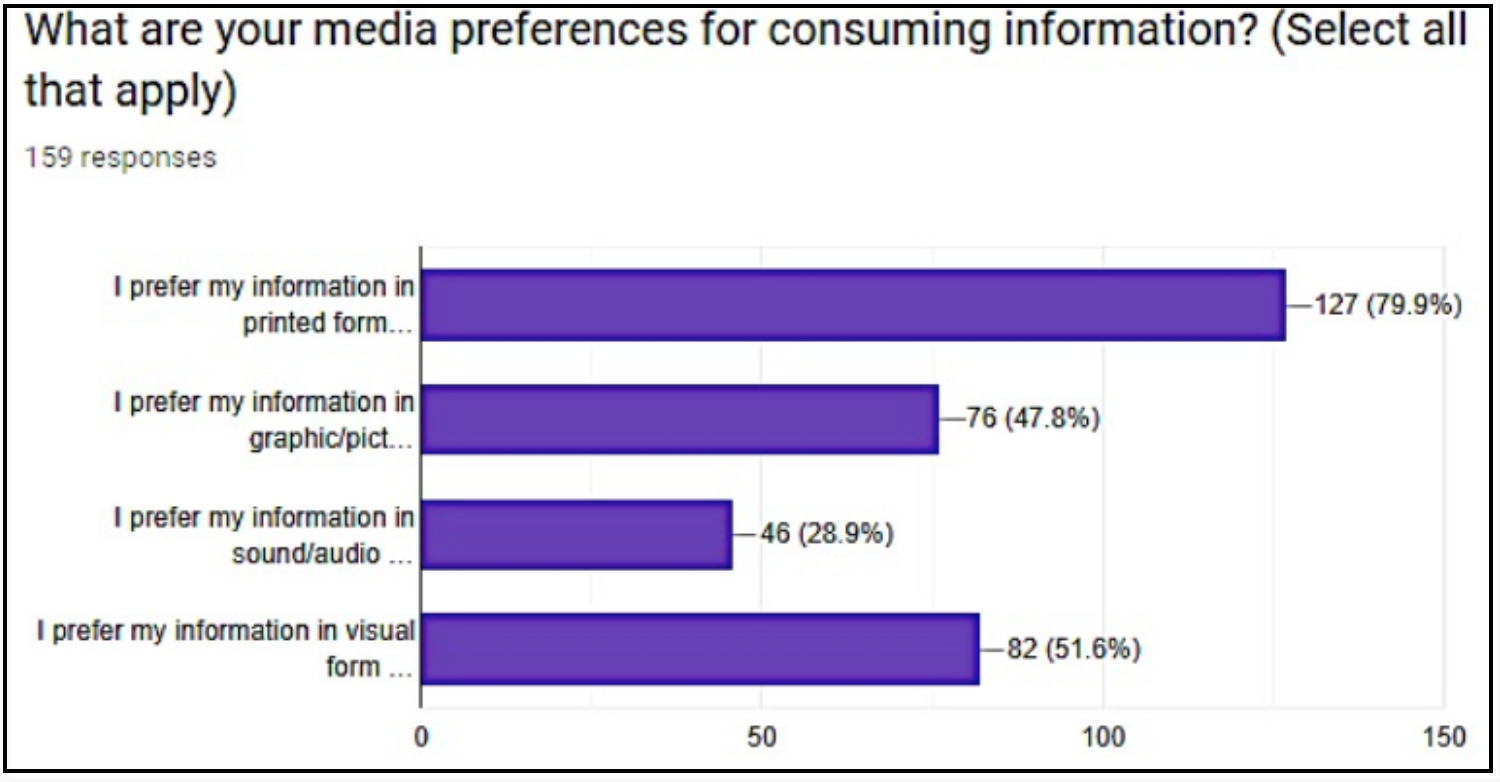
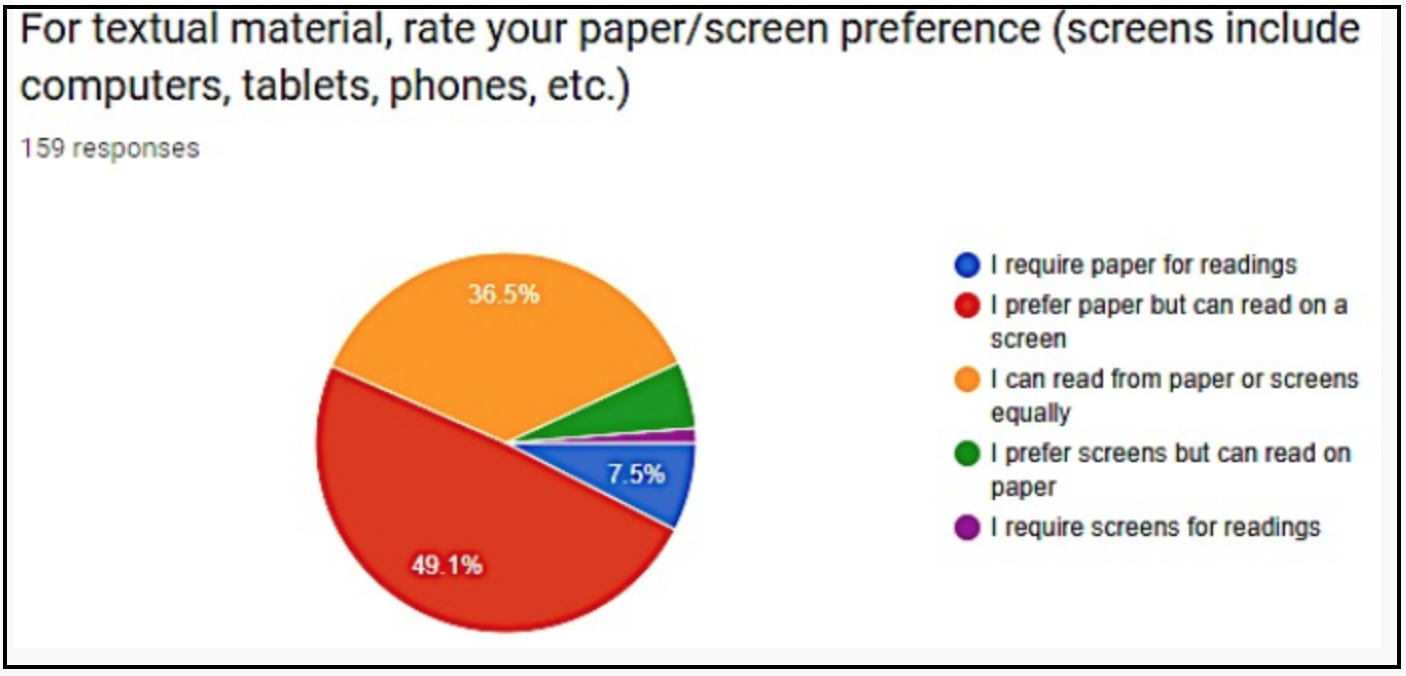
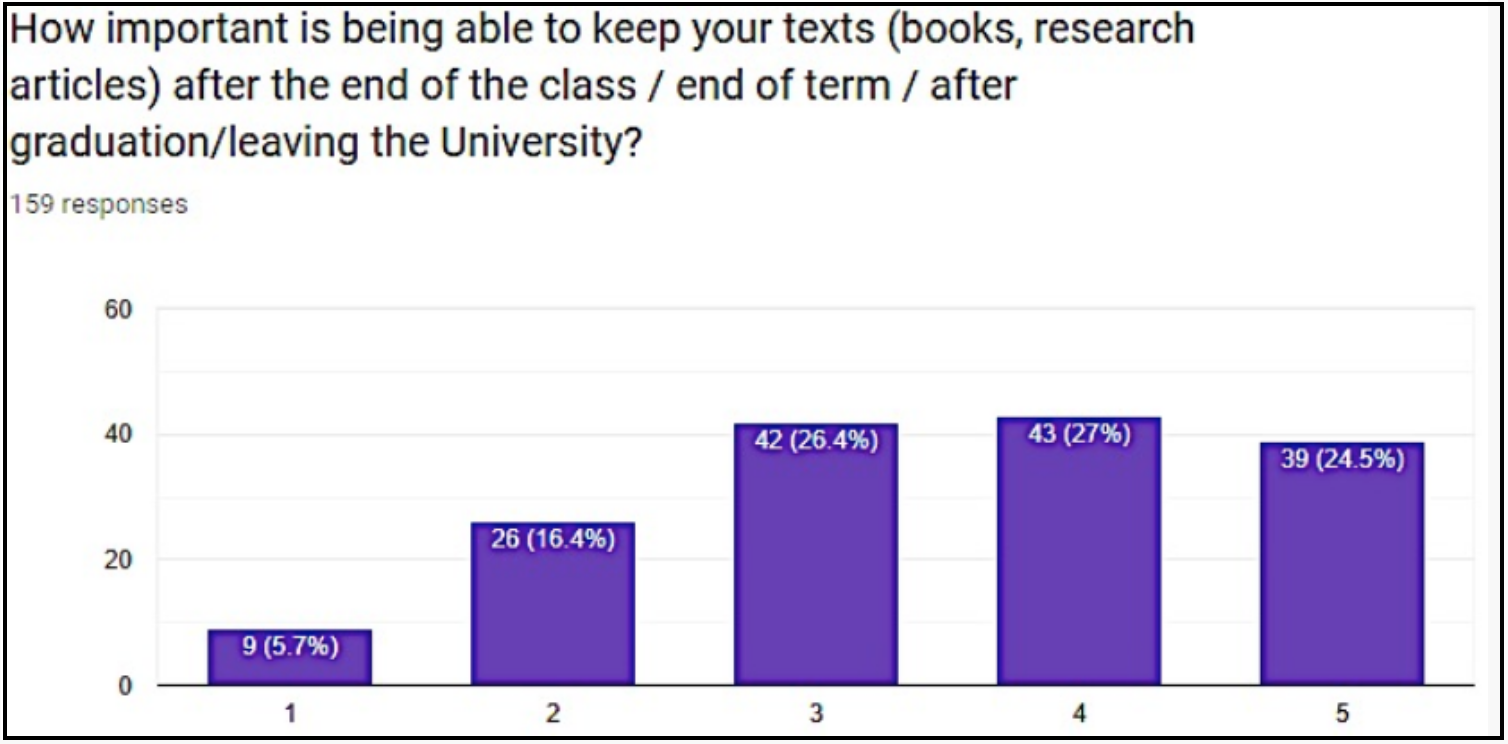
				 <table style="border-collapse: collapse; width: 100%;"><tbody><tr><td style="width: 18.114%;"><img class="alignnone wp-image-441 size-full" src="https://opentextbc.ca/printondemand/wp-content/uploads/sites/160/2016/07/Screen-Shot-2020-04-07-at-2.29.22-PM.png" alt="Acorn." width="382" height="285" srcset="https://opentextbc.ca/printondemand/wp-content/uploads/sites/160/2016/07/Screen-Shot-2020-04-07-at-2.29.22-PM.png 382w, https://opentextbc.ca/printondemand/wp-content/uploads/sites/160/2016/07/Screen-Shot-2020-04-07-at-2.29.22-PM-300x224.png 300w, https://opentextbc.ca/printondemand/wp-content/uploads/sites/160/2016/07/Screen-Shot-2020-04-07-at-2.29.22-PM-65x48.png 65w, https://opentextbc.ca/printondemand/wp-content/uploads/sites/160/2016/07/Screen-Shot-2020-04-07-at-2.29.22-PM-225x168.png 225w, https://opentextbc.ca/printondemand/wp-content/uploads/sites/160/2016/07/Screen-Shot-2020-04-07-at-2.29.22-PM-350x261.png 350w" title="" /></td> <td style="width: 81.886%;"><strong>Many students and instructors prefer printed textbooks over online versions.<br /> </strong></td> </tr> </tbody> </table> <p>Some people prefer to get their information from the printed page, not computer screens. Anecdotally, reasons for this range from personal preference to memories of being read to as a child. Some feel it’s easier to make notes when reading a physical book. Others are uncomfortable reading online or using technology. Still others like the flexibility of having a textbook that’s available both online <em>and</em> in hard copy. Hearsay aside, research supports the fact that not everyone’s first choice is digital.</p> <h1>Some professors prefer print</h1> <p>According to a print-on-demand survey, instructors expressed an array of preferences when it came to their teaching materials, be they print, digital, or a combination of both.<span class="footnote"><span class="footnote-indirect" data-fnref="400-1"></span></span> These personal tastes are reflected in other research, too.</p> <p>A survey of faculty conducted by the National Association of College Stores during the 2016–17 academic year found that half the instructors surveyed preferred a print textbook over a digital one. One-fifth said they liked to have both print and online components available, while 7 per cent favoured an exclusively digital format for teaching.<span class="footnote"><span class="footnote-indirect" data-fnref="400-2"></span></span></p> <h1>Some students prefer print</h1> <p>Even in this technological age, there are students who want to learn from an old-fashioned printed textbook. Some college bookstores in British Columbia report there are students who still lean toward printed textbooks for courses. Jodie Pickering, kinesiology instructor at the College of the Rockies in Cranbrook, B.C., reports that many of her students “like to have a paper copy to highlight and make notes in. Plus they like to be able to bring their textbook into the lab.”<em><br /> </em></p> <p>Research conducted at Adams State University, a small Hispanic-serving institution in rural Colorado, explored what format students prefer for their textbooks: print or digital. The resounding choice was print, at almost 80 per cent.<span class="footnote"><span class="footnote-indirect" data-fnref="400-3"></span></span></p> <p>&nbsp;</p> <div class="wp-caption aligncenter" id="attachment_1142" aria-describedby="caption-attachment-1142" style="width: 500px"><a class="internal" href="https://opentextbc.ca/printondemand/wp-content/uploads/sites/160/2020/06/Media-Preference.png" data-url="https://opentextbc.ca/printondemand/wp-content/uploads/sites/160/2020/06/Media-Preference.png"><img class="wp-image-1142" src="https://opentextbc.ca/printondemand/wp-content/uploads/sites/160/2020/06/Media-Preference.png" alt="Graph about media preference. Long description available." width="500" height="261" srcset="https://opentextbc.ca/printondemand/wp-content/uploads/sites/160/2020/06/Media-Preference.png 1500w, https://opentextbc.ca/printondemand/wp-content/uploads/sites/160/2020/06/Media-Preference-300x156.png 300w, https://opentextbc.ca/printondemand/wp-content/uploads/sites/160/2020/06/Media-Preference-1024x534.png 1024w, https://opentextbc.ca/printondemand/wp-content/uploads/sites/160/2020/06/Media-Preference-768x400.png 768w, https://opentextbc.ca/printondemand/wp-content/uploads/sites/160/2020/06/Media-Preference-65x34.png 65w, https://opentextbc.ca/printondemand/wp-content/uploads/sites/160/2020/06/Media-Preference-225x117.png 225w, https://opentextbc.ca/printondemand/wp-content/uploads/sites/160/2020/06/Media-Preference-350x182.png 350w" title="" /></a><div class="wp-caption-text" id="caption-attachment-1142">Figure 1: Media Preference <a class="internal" href="#fig1" data-url="https://opentextbc.ca/printondemand/chapter/prefer-own/#fig1">[Image Description]</a></div></div> <p>When probed about their favourite type for reading assignments, the majority of student respondents (49.1 per cent) again selected the printed page over a screen. Another 7.5 per cent said they <em>need</em> printed copies.</p> <p>&nbsp;</p> <div class="wp-caption aligncenter" id="attachment_1143" aria-describedby="caption-attachment-1143" style="width: 500px"><img class="wp-image-1143" src="https://opentextbc.ca/printondemand/wp-content/uploads/sites/160/2020/06/Reading-Format-Preference.png" alt="Pie chart describing reading format preference. Long description available." width="500" height="240" srcset="https://opentextbc.ca/printondemand/wp-content/uploads/sites/160/2020/06/Reading-Format-Preference.png 1406w, https://opentextbc.ca/printondemand/wp-content/uploads/sites/160/2020/06/Reading-Format-Preference-300x144.png 300w, https://opentextbc.ca/printondemand/wp-content/uploads/sites/160/2020/06/Reading-Format-Preference-1024x492.png 1024w, https://opentextbc.ca/printondemand/wp-content/uploads/sites/160/2020/06/Reading-Format-Preference-768x369.png 768w, https://opentextbc.ca/printondemand/wp-content/uploads/sites/160/2020/06/Reading-Format-Preference-65x31.png 65w, https://opentextbc.ca/printondemand/wp-content/uploads/sites/160/2020/06/Reading-Format-Preference-225x108.png 225w, https://opentextbc.ca/printondemand/wp-content/uploads/sites/160/2020/06/Reading-Format-Preference-350x168.png 350w" title="" /><div class="wp-caption-text" id="caption-attachment-1143">Figure 2: Medium Preference for Textual Material <a class="internal" href="#fig2" data-url="https://opentextbc.ca/printondemand/chapter/prefer-own/#fig2">[Image Description]</a></div></div> <p><a href="https://en.wikipedia.org/wiki/Naomi_Baron" data-url="https://en.wikipedia.org/wiki/Naomi_Baron">Dr. Naomi Baron</a>, a Professor of Linguistics for the Department of World Languages and Cultures at American University in Washington, D.C., asked over 300 university students in the U.S., Japan, Germany, and Slovakia which media they preferred for “serious” reading.<span class="footnote"><span class="footnote-indirect" data-fnref="400-4"></span></span> Over 90 per cent of students said they concentrate best when using a hard-copy book. The problem with reading online, says Dr. Baron, are the diversions scattered across the Internet.<span class="footnote"><span class="footnote-indirect" data-fnref="400-5"></span></span> Printed books, on the other hand, have few to no distractions.</p> <h1>Personal library</h1> <p>In addition to a preference for reading on paper, some students like the idea of keeping their textbook after a course is finished. More than half of the surveyed Adams State University students said holding onto their printed textbook was important or very important for either personal interest or professional reference.</p> <p>&nbsp;</p> <div class="wp-caption aligncenter" id="attachment_1146" aria-describedby="caption-attachment-1146" style="width: 500px"><img class="wp-image-1146" src="https://opentextbc.ca/printondemand/wp-content/uploads/sites/160/2020/04/Personal-library.png" alt="Pie chart describing feelings about keeping textbooks. Long description available." width="500" height="247" srcset="https://opentextbc.ca/printondemand/wp-content/uploads/sites/160/2020/04/Personal-library.png 1508w, https://opentextbc.ca/printondemand/wp-content/uploads/sites/160/2020/04/Personal-library-300x148.png 300w, https://opentextbc.ca/printondemand/wp-content/uploads/sites/160/2020/04/Personal-library-1024x505.png 1024w, https://opentextbc.ca/printondemand/wp-content/uploads/sites/160/2020/04/Personal-library-768x379.png 768w, https://opentextbc.ca/printondemand/wp-content/uploads/sites/160/2020/04/Personal-library-65x32.png 65w, https://opentextbc.ca/printondemand/wp-content/uploads/sites/160/2020/04/Personal-library-225x111.png 225w, https://opentextbc.ca/printondemand/wp-content/uploads/sites/160/2020/04/Personal-library-350x173.png 350w" title="" /><div class="wp-caption-text" id="caption-attachment-1146">Figure 3: Keeping Textbooks <a class="internal" href="#fig3" data-url="https://opentextbc.ca/printondemand/chapter/prefer-own/#fig3">[Image Description]</a></div></div> <p>There are other reasons to hold onto an old textbook. In her blog post “10 Reasons Why You Should Not Sell Back Your Textbook,” Jessica Lyons adds that a book that has been annotated and marked up during the learning process serves as a valuable personal reference.<span class="footnote"><span class="footnote-indirect" data-fnref="400-6"></span></span></p> <h1>Long descriptions</h1> <p><strong id="fig1">Figure 1 long description</strong>: Horizontal bar graph displaying answers to the question, “What are your media preferences for consuming information? (Select all that apply).” The data, based on 159 responses, is as follows:</p> <ul><li>127 respondents (79.9 per cent) selected “I prefer my information in printed form.”</li> <li>82 respondents (51.6 per cent) selected “I prefer my information in visual form.”</li> <li>76 respondents (47.8 per cent) selected “I prefer my information in graphic/picture form.”</li> <li>46 respondents (28.9 per cent) selected “I prefer my information in sound/audio form.”</li> </ul> <p><a class="internal" href="#attachment_1142" data-url="https://opentextbc.ca/printondemand/chapter/prefer-own/#attachment_1142">[Return to Figure 1]</a></p> <p><strong id="fig2">Figure 2 long description</strong>: Pie chart displaying responses to the prompt “For textual material, rate your paper/screen preference (screens include computers, tablets, phones, etc.).” The data, based on 159 responses, is as follows:</p> <ul><li>49.1 per cent of respondents said, “I prefer paper but can read on a screen.”</li> <li>36.5 per cent of respondents said, “I can read from paper or screens equally.”</li> <li>7.5 per cent of respondents said, “I require paper for readings.”</li> <li>5.7 per cent of respondents said, “I prefer screens but can read on paper.”</li> <li>1.2 per cent of respondents said, “I require screens for readings.”</li> </ul> <p><a class="internal" href="#attachment_1143" data-url="https://opentextbc.ca/printondemand/chapter/prefer-own/#attachment_1143">[Return to Figure 2]</a></p> <p><strong id="fig3">Figure 3 long description</strong>: Vertical bar graph displaying responses to the question “How important is being able to keep your texts (books, research articles) after the end of the class / end of term / after graduation / leaving the University?” The data, based on 159 responses, is as follows:</p> <ul><li>43 respondents (27 per cent) felt it was important</li> <li>42 respondents (26.4 per cent) had no feeling of importance (neutral)</li> <li>39 respondents (24.5 per cent) felt it was very important</li> <li>26 respondents (16.4 per cent) felt it was not very important</li> <li>9 respondents (5.7 per cent) felt it was unimportant</li> </ul> <p><a class="internal" href="#attachment_1146" data-url="https://opentextbc.ca/printondemand/chapter/prefer-own/#attachment_1146">[Return to Figure 3]</a></p> <div class="media-attributions clear"><h3>Media Attributions</h3><ul><li><a rel="cc:attributionURL" href="https://pixabay.com/photos/acorn-oak-brown-seeds-couple-two-1017796/" data-url="https://pixabay.com/photos/acorn-oak-brown-seeds-couple-two-1017796/">Acorn Oak Brown</a> © <a rel="dc:creator" href="https://pixabay.com/service/license/" data-url="https://pixabay.com/service/license/">svklimkin is used under a Pixabay License and is</a> adapted by Lauri Aesoph </li><li><a rel="cc:attributionURL" href="https://www.ijoer.org/bridging-the-gap-rural-librarians-journey-to-understanding-students-role-in-oer-outreach-doi10-18278-ijoer-2-1-7/" data-url="https://www.ijoer.org/bridging-the-gap-rural-librarians-journey-to-understanding-students-role-in-oer-outreach-doi10-18278-ijoer-2-1-7/">Figure 1: Media Preference</a> © Amanda N. Langdon and Katherine E. Parker adapted by Lauri Aesoph is licensed under a <a rel="license" href="https://creativecommons.org/licenses/by/4.0/" data-url="https://creativecommons.org/licenses/by/4.0/">CC BY (Attribution)</a> license</li><li><a rel="cc:attributionURL" href="https://www.ijoer.org/bridging-the-gap-rural-librarians-journey-to-understanding-students-role-in-oer-outreach-doi10-18278-ijoer-2-1-7/" data-url="https://www.ijoer.org/bridging-the-gap-rural-librarians-journey-to-understanding-students-role-in-oer-outreach-doi10-18278-ijoer-2-1-7/">Figure 2: Medium Preference for Textual Material</a> © Amanda N. Langdon and Katherine E. Parker adapted by Lauri Aesoph is licensed under a <a rel="license" href="https://creativecommons.org/licenses/by/4.0/" data-url="https://creativecommons.org/licenses/by/4.0/">CC BY (Attribution)</a> license</li><li><a rel="cc:attributionURL" href="https://www.ijoer.org/bridging-the-gap-rural-librarians-journey-to-understanding-students-role-in-oer-outreach-doi10-18278-ijoer-2-1-7/" data-url="https://www.ijoer.org/bridging-the-gap-rural-librarians-journey-to-understanding-students-role-in-oer-outreach-doi10-18278-ijoer-2-1-7/">Figure 3: Keeping Textbooks</a> © Amanda N. Langdon and Katherine E. Parker adapted by Lauri Aesoph is licensed under a <a rel="license" href="https://creativecommons.org/licenses/by/4.0/" data-url="https://creativecommons.org/licenses/by/4.0/">CC BY (Attribution)</a> license</li></ul></div> 
	</div>
			
				
				<div class="footnotes"><div id='400-1'>BCcampus Open Education, “Print-on-Demand Survey” (unpublished survey, 2020), Microsoft Form.</div><div id='400-2'>National Association of College Stores, “Report Shows Faculty Still Prefer Print over Digital and Open Educational Resources,” August 31, 2017, https://www.nacs.org/advocacynewsmedia/pressreleases/tabid/1579/ArticleID/644/Report-Shows-Faculty-Still-Prefer-Print-over-Digital-and-Open-Educational-Resources.aspx.</div><div id='400-3'>Amanda N. Langdon and Katherine E. Parker, “Bridging the Gap: Rural Librarians’ Journey to Understanding Students’ Role in OER Outreach,” <em>International Journal of Open Educational Resources</em> 2, no. 1 (Fall 2019/Winter 2020): 99–118, https://www.ijoer.org/bridging-the-gap-rural-librarians-journey-to-understanding-students-role-in-oer-outreach-doi10-18278-ijoer-2-1-7/.</div><div id='400-4'>Naomi S. Baron, “Reading in a Digital Age,” <em>Phi Delta Kappan</em> 99, no. 2 (2017): 15–20, https://doi.org/10.1177/0031721717734184.</div><div id='400-5'>“Is This the End of Print Textbooks?,” Two Sides, July 21, 2019, https://twosidesna.org/US/is-this-the-end-of-print-textbooks/.</div><div id='400-6'>Jessica Lyons, “10 Reasons Why You Should Not Sell Back Your Textbook,” <em>Education Insider News Blog</em>, Study.com, accessed April 3, 2020, https://study.com/articles/Selling_Back_Textbooks_Is_Not_a_Yes_or_No_Decision.html.</div></div>
	</div>
<div class="chapter standard " id="chapter-learni-literacy-access" title="Learning, Literacy, Accessibility">
	<div class="chapter-title-wrap">
		<p class="chapter-number">5</p>
		<h1 class="chapter-title">Learning, Literacy, Accessibility</h1>
								</div>
	<div class="ugc chapter-ugc">
				 <table style="border-collapse: collapse; width: 100%;"><tbody><tr><td style="width: 18.114%;"><img class="alignnone wp-image-441 size-full" src="https://opentextbc.ca/printondemand/wp-content/uploads/sites/160/2016/07/Screen-Shot-2020-04-07-at-2.29.22-PM.png" alt="Acorn." width="382" height="285" srcset="https://opentextbc.ca/printondemand/wp-content/uploads/sites/160/2016/07/Screen-Shot-2020-04-07-at-2.29.22-PM.png 382w, https://opentextbc.ca/printondemand/wp-content/uploads/sites/160/2016/07/Screen-Shot-2020-04-07-at-2.29.22-PM-300x224.png 300w, https://opentextbc.ca/printondemand/wp-content/uploads/sites/160/2016/07/Screen-Shot-2020-04-07-at-2.29.22-PM-65x48.png 65w, https://opentextbc.ca/printondemand/wp-content/uploads/sites/160/2016/07/Screen-Shot-2020-04-07-at-2.29.22-PM-225x168.png 225w, https://opentextbc.ca/printondemand/wp-content/uploads/sites/160/2016/07/Screen-Shot-2020-04-07-at-2.29.22-PM-350x261.png 350w" title="" /></td> <td style="width: 81.886%;"><strong>Some students require a printed textbook because of their learning style, literacy level, or accessibility needs.<br /> </strong></td> </tr> </tbody> </table> <h1>Chapter table of contents</h1> <p><a class="internal" href="#learnstyle" data-url="https://opentextbc.ca/printondemand/chapter/learni-literacy-access/#learnstyle">Learning style</a></p> <p><a class="internal" href="#learnenglish" data-url="https://opentextbc.ca/printondemand/chapter/learni-literacy-access/#learnenglish">Learning English</a></p> <ul><li><a class="internal" href="#abe" data-url="https://opentextbc.ca/printondemand/chapter/learni-literacy-access/#abe">Adult Basic Education (ABE)</a></li> <li><a class="internal" href="#ell" data-url="https://opentextbc.ca/printondemand/chapter/learni-literacy-access/#ell">English Language Learner (ELL)</a></li> </ul> <p><a class="internal" href="#accessibility" data-url="https://opentextbc.ca/printondemand/chapter/learni-literacy-access/#accessibility">Accessibility</a></p> <p><a href="https://www.merriam-webster.com/dictionary/learning" data-url="https://www.merriam-webster.com/dictionary/learning">Learning</a> is a complex process that involves acquisition of information through experience, instruction, and study. According to Gagné and Glaser, how <em>well</em> a student learns depends on several factors, such as working memory and academic ability.<span class="footnote"><span class="footnote-indirect" data-fnref="402-1"></span></span> Learning by reading the printed or digital page taps into even more competencies, including vocabulary, prior subject knowledge, and the speed — and comprehension level — at which one reads.<span class="footnote"><span class="footnote-indirect" data-fnref="402-2"></span></span> <span class="footnote"><span class="footnote-indirect" data-fnref="402-3"></span></span></p> <p>Some research suggests that choosing to read digital versus physical text can sacrifice a student’s depth of knowledge because of practices characteristic when using a screen: faster reading and extensive scrolling.<span class="footnote"><span class="footnote-indirect" data-fnref="402-4"></span></span> <span class="footnote"><span class="footnote-indirect" data-fnref="402-5"></span></span> Adding these effects to the learning challenges experienced by certain students makes the printed page a better choice — or even a necessity — for some.</p> <h1 id="learnstyle">Learning style</h1> <p>Many faculty and staff have observed that content format influences how well some of their students learn. Jennifer Kirkey, Chair of the Physics Department at Douglas College in British Columbia, says that she has “a small, but significant, number of students for whom print is essential due to problems with reading on the screen.”</p> <p>Jennifer Stacey, Course Materials Manager for the University of British Columbia Bookstore, points out that learning differences mean that various formats should be made available for students in order to increase accessibility, comprehension, and success.</p> <p>“Students should be able to access materials that support needs or preferences for how they best learn,” she says, “and, for some students, that means having a print option available.”</p> <h1 id="learnenglish">Learning English</h1> <h2 id="abe">Adult Basic Education</h2> <p>Shantel Ivits, Department Head of Basic Education at Vancouver Community College, says that having textbooks available in print ensures a level playing field for students who do not own the technology or possess the computer literacy skills to access textbooks online.</p> <p>“For adult literacy learners who are already working hard to learn to decode text,” explains Ivits, “the online interface adds an extra layer of intimidation and challenge. Printed texts remove this barrier and help make literacy learning a more comfortable experience.”</p> <div class="textbox shaded" style="text-align: center;">See the <a href="https://collection.bccampus.ca/search/?q=%2A&amp;educationalLevels[]=Adult%20Basic%20Education" data-url="https://collection.bccampus.ca/search/?q=%2A&amp;educationalLevels[]=Adult%20Basic%20Education">Adult Basic Education</a> options in the B.C. Open Collection.</div> <h2 id="ell">English language learning and foreign language learning</h2> <p>Learning another language is difficult for most people. In English-speaking countries, like Canada and the United States, we refer to these programs as ELL (English language learning), ESL (English as a second language), and EFL (English as a foreign language). A broader term given to language learning is FLL (foreign language learning). Regardless of the label, the form in which these learning materials are provided can affect the road to fluency.</p> <p>At the Acsenda School of Management in Vancouver, where over 80 per cent of students come from outside Canada, Ali de Haan, Manager of Library and Instructional Services, says that many international students report feeling more comfortable with a printed book.<span class="footnote"><span class="footnote-indirect" data-fnref="402-6"></span></span></p> <p>“A common bit of feedback I’ve heard,” says Ali, “is that it is easier to understand English in print, and they feel like they can take their time with it. Also, I think there is a comfort factor with print, as many of them haven’t used an eBook in their studies before.” <em><br /> </em></p> <p>This approach can also be applied to students who are native English speakers and learning a foreign language, such as French or Mandarin. In a 2019 paper from Indonesia, Pardede reviewed literature on reading comprehension among ELL students who were using digital text. He reported that, compared to the printed page, online reading requires a complex set of strategies, such as scrolling, navigating, decision making, and visual processing. These demands may result in lower comprehension scores for some students.<span class="footnote"><span class="footnote-indirect" data-fnref="402-7"></span></span></p> <h1 id="accessibility">Accessibility</h1> <p>Finally, for some students, online resources present accessibility problems. Susan Fleming, Educational Technologist at College of the Rockies in Cranbrook, B.C., says she has worked with students who have difficulty reading from a screen for more than a couple of minutes due to visual impairments, visual processing problems (e.g., dyslexia), and visual focusing issues. More specific conditions that can cause problems, says Fleming, include <a href="https://irlen.com/what-is-irlen-syndrome/" data-url="https://irlen.com/what-is-irlen-syndrome/">Meares-Irlen Syndrome</a>, which can result in chronic dizziness that can trigger psychiatric issues, and <a href="https://opto.ca/health-library/computer-vision-syndrome-digital-eye-strain" data-url="https://opto.ca/health-library/computer-vision-syndrome-digital-eye-strain">Computer Vision Syndrome</a>.<span class="footnote"><span class="footnote-indirect" data-fnref="402-8"></span></span></p> <div class="textbox shaded" style="text-align: center;">For more information, see the <a href="https://opentextbc.ca/accessibilitytoolkit/" data-url="https://opentextbc.ca/accessibilitytoolkit/"><em>Accessibility Toolkit – 2nd Edition</em></a>.</div> <div class="media-attributions clear"><h3>Media Attributions</h3><ul><li><a rel="cc:attributionURL" href="https://pixabay.com/photos/acorn-oak-brown-seeds-couple-two-1017796/" data-url="https://pixabay.com/photos/acorn-oak-brown-seeds-couple-two-1017796/">Acorn Oak Brown</a> © <a rel="dc:creator" href="https://pixabay.com/service/license/" data-url="https://pixabay.com/service/license/">svklimkin is used under a Pixabay License and is</a> adapted by Lauri Aesoph </li></ul></div> 
	</div>
			
				
				<div class="footnotes"><div id='402-1'>Robert M. Gagné and Robert Glaser, “Foundations in Learning Research,” in <em>Instructional Technology: Foundations</em>, ed. Robert M. Gagné (Mahwah, NJ: Lawrence Erlbaum Associates, 1987), 49–83.</div><div id='402-2'>Peter Afflerbach, ed., <em>Handbook of Individual Differences in Reading: Reader, Text, and Context </em>(New York: Routledge, 2015).</div><div id='402-3'>Steven G. Luke, John M. Henderson, and Fernanda Ferreira, “Children’s Eye-Movements During Reading Reflect the Quality of Lexical Representations: An Individual Differences Approach,” <em>Journal of Experimental Psychology</em> 41, no. 6 (November 2015): 1675–83, https://doi.org/10.1037/xlm0000133.</div><div id='402-4'>Wolfgang Lenhard, Ulrich Schroeders, and Alexandra Lenhard, “Equivalence of Screen Versus Print Reading Comprehension Depends on Task Complexity and Proficiency,” <em>Discourse Processes</em> 54, no. 5–6 (2017): 427–45, https://doi.org/10.1080/0163853X.2017.1319653.</div><div id='402-5'>Maria Giulia Cataldo and Jane Oakhill, “Why Are Poor Comprehenders Inefficient Searchers? An Investigation into the Effects of Text Representation and Spatial Memory on the Ability to Locate Information in Text,” <em>Journal of Educational Psychology</em> 92, no. 4 (2000): 791–799, https://doi.org/10.1037/0022-0663.92.4.791.</div><div id='402-6'>“Admissions,” Acsenda School of Management, accessed March 25, 2020, https://www.acsenda.com/admissions-for-international-business-programs/.</div><div id='402-7'>Parlindungan Pardede, “Print vs Digital Reading Comprehension in EFL,” <em>Journal of English Teaching</em> 5, no. 2 (2019), https://doi.org/10.33541/jet.v5i2.1059.</div><div id='402-8'>American Osteopathic Association, “Chronic Dizziness Can Result from, or Trigger, Psychiatric Disorders: Research Notes Psychiatric Disorders Present in 15 Percent of Patients with Chronic Dizziness,” <em>ScienceDaily</em>, April 30, 2018, www.sciencedaily.com/releases/2018/04/180430102506.htm.</div></div>
	</div>
<div class="chapter standard " id="chapter-only-option" title="Print is Only Option">
	<div class="chapter-title-wrap">
		<p class="chapter-number">6</p>
		<h1 class="chapter-title">When Print Is the Only Option</h1>
								</div>
	<div class="ugc chapter-ugc">
				 <table style="border-collapse: collapse; width: 100%;"><tbody><tr><td style="width: 18.114%;"><img class="alignnone wp-image-441 size-full" src="https://opentextbc.ca/printondemand/wp-content/uploads/sites/160/2016/07/Screen-Shot-2020-04-07-at-2.29.22-PM.png" alt="Acorn." width="382" height="285" srcset="https://opentextbc.ca/printondemand/wp-content/uploads/sites/160/2016/07/Screen-Shot-2020-04-07-at-2.29.22-PM.png 382w, https://opentextbc.ca/printondemand/wp-content/uploads/sites/160/2016/07/Screen-Shot-2020-04-07-at-2.29.22-PM-300x224.png 300w, https://opentextbc.ca/printondemand/wp-content/uploads/sites/160/2016/07/Screen-Shot-2020-04-07-at-2.29.22-PM-65x48.png 65w, https://opentextbc.ca/printondemand/wp-content/uploads/sites/160/2016/07/Screen-Shot-2020-04-07-at-2.29.22-PM-225x168.png 225w, https://opentextbc.ca/printondemand/wp-content/uploads/sites/160/2016/07/Screen-Shot-2020-04-07-at-2.29.22-PM-350x261.png 350w" title="" /></td> <td style="width: 81.886%;"><strong>Students with no or limited computer and/or internet access need a printed book for courses that use an online textbook.<br /> </strong></td> </tr> </tbody> </table> <p>It should not be assumed that all students have reliable, fast, or any internet access — or computers or mobile devices — at home or on campus. The B.C. provincial government reports that, while 93 per cent of its urban households have internet access at the <a href="https://crtc.gc.ca/eng/home-accueil.htm" data-url="https://crtc.gc.ca/eng/home-accueil.htm">Canadian Radio-television and Telecommunications Commission</a> (CRTC) target speeds of 50/10 Mbps,<span class="footnote"><span class="footnote-indirect" data-fnref="404-1"></span></span> approximately two-thirds of its rural and Indigenous communities do not.<span class="footnote"><span class="footnote-indirect" data-fnref="404-2"></span></span></p> <p>For post-secondary institutions in remote regions, pulling up an online open textbook can be difficult or impossible. For these situations, a printed textbook is needed. Jason Wallace, Purchasing Manager for Print and Retail Services at North Island College in Comox, B.C., concurs, stating, “Not all students have access to high-speed internet and computers. We have students and programs in very remote communities, and online-only is not a viable option.”</p> <p>The reasons for poor connectivity within a community, on campus, or for an individual or family are many, as listed on <a href="https://web.archive.org/web/20211123064622/https://www2.gov.bc.ca/gov/content/governments/connectivity-in-bc/connected-communities/success-factors" data-url="https://web.archive.org/web/20211123064622/https://www2.gov.bc.ca/gov/content/governments/connectivity-in-bc/connected-communities/success-factors">Connected Communities: Success Factors</a>. Connected Communities, an initiative of the B.C. Ministry of Citizens’ Services, was designed to “support the digital readiness of local governments, First Nations and rural communities.”<span class="footnote"><span class="footnote-indirect" data-fnref="404-3"></span></span></p> <p>The five success factors on the Connected Communities list are leadership and support, connectivity, digital capability, sustainability, and community well-being. From these can be drawn three general areas that need attention by regions looking to upgrade internet service. These are:</p> <ol><li>Leadership’s willingness and ability to collaborate with the internet service provider <em>and</em> strategically plan and implement steps to install (and maintain) online services</li> <li>Assurance that internet service will not only be affordable for the community, but provide adequate bandwidth and speed for students learning online and individuals working online</li> <li>A pledge that affordable training is made available for users with little or no computer and/or internet skills</li> </ol> <p>Carolee Clyne, BCcampus’ Open Education Advisor for Northern B.C., sums up the issue this way:</p> <blockquote><p>“Challenges with internet in the rural areas can be linked to distance from major urban centres. The farther away and the smaller the population, the less likely there is consistent access. Both cellphone service and wired internet services are limited. For many residents, the cost to have the services is more than they can afford, so they do without. Often, the computer literacy is limited, given this scarcity of access. In many communities, a key community centre will have access, and this would be the only place for access in these areas. People using the centre will also have limited opportunity to explore online for a couple of reasons: the quality of the connection is often poor and low bandwidth, so response times are slow, and this resource is shared with the community, so times are limited.”</p></blockquote> <div class="media-attributions clear"><h3>Media Attributions</h3><ul><li><a rel="cc:attributionURL" href="https://pixabay.com/photos/acorn-oak-brown-seeds-couple-two-1017796/" data-url="https://pixabay.com/photos/acorn-oak-brown-seeds-couple-two-1017796/">Acorn Oak Brown</a> © <a rel="dc:creator" href="https://pixabay.com/service/license/" data-url="https://pixabay.com/service/license/">svklimkin is used under a Pixabay License and is</a> adapted by Lauri Aesoph </li></ul></div> 
	</div>
			
				
				<div class="footnotes"><div id='404-1'>50 Mbps for downloads and 10 Mbps for uploads.</div><div id='404-2'>“Connectivity in B.C.,” Province of British Columbia, accessed April 24, 2020, https://www2.gov.bc.ca/gov/content/governments/connectivity-in-bc.</div><div id='404-3'>“Connected Communities: Success Factors,” Province of British Columbia, accessed April 24, 2020, https://web.archive.org/web/20211123064622/https://www2.gov.bc.ca/gov/content/governments/connectivity-in-bc/connected-communities/success-factors.</div></div>
	</div>

</div>
<div class="part-wrapper" id="part-pod-on-campus-wrapper">
    <div class="part  " id="part-pod-on-campus">
	<div class="part-title-wrap">
		<p class="part-number">III</p>
		<h1 class="part-title">PoD on Campus</h1>
	</div>
	<div class="ugc part-ugc">
		<div class="textbox textbox--learning-objectives"><div class="textbox__header"><p class="textbox__title">Section Topics</p> </div> <div class="textbox__content"><p>This section describes why a post-secondary institution might choose to install a print-on-demand service on campus. Topics covered include:</p> <ul><li>Faster and Cheaper</li> <li>Familiarity and Values</li> <li>Control and Flexibility</li> </ul> </div> </div>
	</div>
			
				
	</div>
<div class="chapter standard " id="chapter-fast-cheap" title="Faster and Cheaper">
	<div class="chapter-title-wrap">
		<p class="chapter-number">7</p>
		<h1 class="chapter-title">Faster and Cheaper</h1>
								</div>
	<div class="ugc chapter-ugc">
				 <table style="border-collapse: collapse; width: 100%;"><tbody><tr><td style="width: 18.114%;"><img class="alignnone wp-image-441 size-full" src="https://opentextbc.ca/printondemand/wp-content/uploads/sites/160/2016/07/Screen-Shot-2020-04-07-at-2.29.22-PM.png" alt="Acorn." width="382" height="285" srcset="https://opentextbc.ca/printondemand/wp-content/uploads/sites/160/2016/07/Screen-Shot-2020-04-07-at-2.29.22-PM.png 382w, https://opentextbc.ca/printondemand/wp-content/uploads/sites/160/2016/07/Screen-Shot-2020-04-07-at-2.29.22-PM-300x224.png 300w, https://opentextbc.ca/printondemand/wp-content/uploads/sites/160/2016/07/Screen-Shot-2020-04-07-at-2.29.22-PM-65x48.png 65w, https://opentextbc.ca/printondemand/wp-content/uploads/sites/160/2016/07/Screen-Shot-2020-04-07-at-2.29.22-PM-225x168.png 225w, https://opentextbc.ca/printondemand/wp-content/uploads/sites/160/2016/07/Screen-Shot-2020-04-07-at-2.29.22-PM-350x261.png 350w" title="" /></td> <td style="width: 81.886%;"><strong>Using an on-campus printing service eliminates shipping time and costs.</strong></td> </tr> </tbody> </table> <p>Print-on-demand options for open textbooks and other OER have been available as part of various collections and repositories for several years. Providing this same service at a student’s college or university offers two advantages over a service that is far away: it’s faster and cheaper. Martin Warkentin, Copyright Librarian at the University of the Fraser Valley, points out that savings include more than time and money.</p> <p>“From a sustainability perspective,” says Martin, “it makes sense for printing to occur locally with minimal transportation requirements … (and to avoid) unnecessary generation of more packaging and fuel consumption.”</p> <p>It’s faster because the purchaser doesn’t need to wait for an off-campus service to process the order, then print, bind, and ship the book. It has been observed, for example, that B.C. students and faculty ordering from the <a href="https://opentextbook.docsol.sfu.ca/store/shop/" data-url="https://opentextbook.docsol.sfu.ca/store/shop/">B.C. Open Collection store</a> receive shipments sooner than customers in eastern Canada and across the border in the United States.</p> <p>A campus-based print-on-demand service is cheaper because shipping is not part of the cost. Of course, the pricing structure for printed open textbooks and educational resources varies between institutions. A common topic among individuals interested in print on demand for OER is how to offer students an affordable printed alternative to traditional commercial textbooks.</p> <p>Jason Wallace, Purchasing Manager for Print and Retail Services at North Island College, points out some of the problems observed on his campus among students seeking printed books.</p> <p>“We have many students,” says Jason, “including remote students, with limited or no access to internet and electronic devices who find it unaffordable to photocopy materials through some place like Staples; others don’t even have access to a copy shop. Some people have trouble reading from screens. Some people don’t have a credit card to order a book online. So being able to go to their campus store and get what they need, often through funding — which they can’t use online — is not only convenient, but sometimes essential.”</p> <div class="textbox textbox--key-takeaways"><div class="textbox__header"><p class="textbox__title">Pressbooks BUY BOOK Option</p> </div> <div class="textbox__content"><p>For post-secondary institutions that have Pressbooks-based open textbooks written and published by their faculty, staff or students, using the BUY BOOK option in is an effective way for readers to learn about a campus’s print-on-demand option. This feature allows the author to post a BUY BOOK button on the home page of their book which can be linked to any printing or purchasing service.</p> <p>For more information, see the <a href="https://pressbooks.pub/guide/chapter/publish/" data-url="https://pressbooks.pub/guide/chapter/publish/">Publish chapter</a> in the <a href="https://pressbooks.pub/guide/" data-url="https://pressbooks.pub/guide/">Pressbooks User Guide</a>.</p> </div> </div> <div class="media-attributions clear"><h3>Media Attributions</h3><ul><li><a rel="cc:attributionURL" href="https://pixabay.com/photos/acorn-oak-brown-seeds-couple-two-1017796/" data-url="https://pixabay.com/photos/acorn-oak-brown-seeds-couple-two-1017796/">Acorn Oak Brown</a> © <a rel="dc:creator" href="https://pixabay.com/service/license/" data-url="https://pixabay.com/service/license/">svklimkin is used under a Pixabay License and is</a> adapted by Lauri Aesoph </li></ul></div> 
	</div>


	</div>
<div class="chapter standard " id="chapter-familiarity-values" title="Familiarity and Values">
	<div class="chapter-title-wrap">
		<p class="chapter-number">8</p>
		<h1 class="chapter-title">Familiarity and Values</h1>
								</div>
	<div class="ugc chapter-ugc">
				 <table style="border-collapse: collapse; width: 100%;"><tbody><tr><td style="width: 18.114%;"><img class="alignnone wp-image-441 size-full" src="https://opentextbc.ca/printondemand/wp-content/uploads/sites/160/2016/07/Screen-Shot-2020-04-07-at-2.29.22-PM.png" alt="Acorn." width="382" height="285" srcset="https://opentextbc.ca/printondemand/wp-content/uploads/sites/160/2016/07/Screen-Shot-2020-04-07-at-2.29.22-PM.png 382w, https://opentextbc.ca/printondemand/wp-content/uploads/sites/160/2016/07/Screen-Shot-2020-04-07-at-2.29.22-PM-300x224.png 300w, https://opentextbc.ca/printondemand/wp-content/uploads/sites/160/2016/07/Screen-Shot-2020-04-07-at-2.29.22-PM-65x48.png 65w, https://opentextbc.ca/printondemand/wp-content/uploads/sites/160/2016/07/Screen-Shot-2020-04-07-at-2.29.22-PM-225x168.png 225w, https://opentextbc.ca/printondemand/wp-content/uploads/sites/160/2016/07/Screen-Shot-2020-04-07-at-2.29.22-PM-350x261.png 350w" title="" /></td> <td style="width: 81.886%;"><strong>Familiarity with an institution’s values, culture, and process gives the on-campus print-on-demand service an advantage over an outside provider.<br /> </strong></td> </tr> </tbody> </table> <p>In his 2012 article “The University Culture,” Joseph Simplicio writes about the “unique and cherished culture.… [that is] steeped in tradition” at universities. He says that these values are important to an institution’s viability because they create “stability and continuity” for its members.<span class="footnote"><span class="footnote-indirect" data-fnref="338-1"></span></span> These shared values and experiences, as well as familiarity with institutional practices and policies, create a bond between individual members of a post-secondary community.</p> <p>Each post-secondary institution can come up with a list of ways that a campus-based printing service might access and incorporate its traditions and values. Here are some ideas:</p> <ol><li><strong>Showcase</strong>. Display printed open textbooks in the campus bookstore window to expand awareness.</li> <li><strong>Normalize</strong>. Place open textbooks on bookstore shelves alongside other printed resources, such as commercial textbooks and course packs, to standardize open textbook use.</li> <li><strong>Brand</strong>. Kwantlen Polytechnic University includes the KPU logo on the covers of open textbooks, such as <a href="https://kpu.pressbooks.pub/internationalstudents/" data-url="https://kpu.pressbooks.pub/internationalstudents/"><em>Getting to Know Your International Students</em></a>.</li> <li><strong>Educate</strong>. Ask the campus copyright officer to compose a statement about open licences that can be added to open textbooks.</li> <li><strong>Celebrate</strong>. Highlight open textbooks revised by the institution’s instructors. For example, Thompson Rivers University published an article when Renée Anderson adapted&nbsp;<a href="https://opentextbc.ca/clinicalskills/" data-url="https://opentextbc.ca/clinicalskills/"><em>Clinical Procedures for Safer Patient Care</em></a> to create <a href="https://pressbooks.bccampus.ca/clinicalproceduresforsaferpatientcaretrubscn/" data-url="https://pressbooks.bccampus.ca/clinicalproceduresforsaferpatientcaretrubscn/"><em>Clinical Procedures for Safer Patient Care – Thompson Rivers University Edition</em></a>. For more information, see this article called <a href="https://inside.tru.ca/2018/08/15/tru-makes-textbooks-free-and-available-online/" data-url="https://inside.tru.ca/2018/08/15/tru-makes-textbooks-free-and-available-online/">“TRU Makes Textbooks Free and Available Online.”</a></li> </ol> <div class="textbox textbox--key-takeaways"><div class="textbox__header"><p class="textbox__title">Campus Pride</p> </div> <div class="textbox__content"><p>A post-secondary institution’s website often includes a page describing its history, values, mission, and how they serve their students and the community surrounding them. Below are examples from 47 public and private colleges, institutes, and universities across British Columbia.<span class="footnote"><span class="footnote-indirect" data-fnref="338-2"></span></span></p> <ul class="twocolumn"><li><a class="internal" href="https://www.acsenda.com/about-us/" data-url="https://www.acsenda.com/about-us/">Acsenda School of Management</a></li> <li><a class="internal" href="https://www.adler.edu/page/about/welcome" data-url="https://www.adler.edu/page/about/welcome">Adler University</a></li> <li><a class="internal" href="https://alexandercollege.ca/about-us/" data-url="https://alexandercollege.ca/about-us/">Alexander College</a></li> <li><a class="internal" href="https://www.bcit.ca/about/" data-url="https://www.bcit.ca/about/">British Columbia Institute of Technology</a></li> <li><a class="internal" href="https://www.cambriacollege.ca/about" data-url="https://www.cambriacollege.ca/about">Cambria College</a></li> <li><a class="internal" href="http://camosun.ca/about/" data-url="http://camosun.ca/about/">Camosun College</a></li> <li><a class="internal" href="https://www.capilanou.ca/about-capu/get-to-know-us/" data-url="https://www.capilanou.ca/about-capu/get-to-know-us/">Capilano University</a></li> <li><a href="https://www.cdicollege.ca/study-on-campus/british-columbia/about-cdi-college/why-cdi-college/" data-url="https://www.cdicollege.ca/study-on-campus/british-columbia/about-cdi-college/why-cdi-college/">CDI College</a></li> <li><a class="internal" href="https://www.coastmountaincollege.ca/about-cmtn/about" data-url="https://www.coastmountaincollege.ca/about-cmtn/about">Coast Mountain College</a></li> <li><a class="internal" href="https://cnc.bc.ca/about" data-url="https://cnc.bc.ca/about">College of New Caledonia</a></li> <li><a class="internal" href="https://cotr.bc.ca/about-us/college-overview/" data-url="https://cotr.bc.ca/about-us/college-overview/">College of the Rockies</a></li> <li><a class="internal" href="https://www.columbiabc.edu/about/columbia" data-url="https://www.columbiabc.edu/about/columbia">Columbia Bible College</a></li> <li><a class="internal" href="https://www.columbiacollege.ca/about/a-legacy-of-education" data-url="https://www.columbiacollege.ca/about/a-legacy-of-education">Columbia College</a></li> <li><a class="internal" href="https://www.coquitlamcollege.com/about-us/vision-mission/" data-url="https://www.coquitlamcollege.com/about-us/vision-mission/">Coquitlam College</a></li> <li><a class="internal" href="https://corpuschristi.ca/campus-life-and-ministry/about/" data-url="https://corpuschristi.ca/campus-life-and-ministry/about/">Corpus Christi College</a></li> <li><a class="internal" href="http://www.dorsetcollege.bc.ca/about-dorset-college.html" data-url="http://www.dorsetcollege.bc.ca/about-dorset-college.html">Dorset College</a></li> <li><a class="internal" href="https://www.douglascollege.ca/about-douglas" data-url="https://www.douglascollege.ca/about-douglas">Douglas College</a></li> <li><a class="internal" href="https://www.ecuad.ca/about/at-a-glance" data-url="https://www.ecuad.ca/about/at-a-glance">Emily Carr University of Art + Design</a></li> <li><a class="internal" href="https://www.etoncollege.ca/about-eton-college/mission-and-history" data-url="https://www.etoncollege.ca/about-eton-college/mission-and-history">Eton College</a></li> <li><a class="internal" href="https://view2.fdu.edu/vancouver-campus/" data-url="https://view2.fdu.edu/vancouver-campus/">Farleigh Dickinson University</a></li> <li><a class="internal" href="https://www.fraseric.ca/about" data-url="https://www.fraseric.ca/about">Fraser International College</a></li> <li><a class="internal" href="https://www.jibc.ca/about-jibc" data-url="https://www.jibc.ca/about-jibc">Justice Institute of British Columbia</a></li> <li><a class="internal" href="https://www.kpu.ca/about" data-url="https://www.kpu.ca/about">Kwantlen Polytechnic University</a></li> <li><a class="internal" href="https://langara.ca/about-langara/" data-url="https://langara.ca/about-langara/">Langara College</a></li> <li><a class="internal" href="https://www.lasallecollegevancouver.com/about-us/our-campus" data-url="https://www.lasallecollegevancouver.com/about-us/our-campus">LaSalle College Vancouver</a></li> <li><a class="internal" href="http://www.necvancouver.org/about-us" data-url="http://www.necvancouver.org/about-us">Native Education College</a></li> <li><a class="internal" href="https://www.nvit.ca/about/default.htm" data-url="https://www.nvit.ca/about/default.htm">Nicola Valley Institute of Technology</a></li> <li><a class="internal" href="https://www.nic.bc.ca/about-us/" data-url="https://www.nic.bc.ca/about-us/">North Island College</a></li> <li><a class="internal" href="https://www.nlc.bc.ca/About-NLC/About-NLC" data-url="https://www.nlc.bc.ca/About-NLC/About-NLC">Northern Lights College</a></li> <li><a class="internal" href="https://www.okanagan.bc.ca/about/Heritage.html" data-url="https://www.okanagan.bc.ca/about/Heritage.html">Okanagan College</a></li> <li><a class="internal" href="https://www.pcu-whs.ca/about-pcu-whs/mission-statement-and-values/" data-url="https://www.pcu-whs.ca/about-pcu-whs/mission-statement-and-values/">Pacific Coast University for Workplace Health Sciences</a></li> <li><a class="internal" href="https://www.picachef.com/about" data-url="https://www.picachef.com/about">Pacific Institute of Culinary Arts</a></li> <li><a class="internal" href="https://www.royalroads.ca/about-royal-roads" data-url="https://www.royalroads.ca/about-royal-roads">Royal Roads University</a></li> <li><a class="internal" href="https://selkirk.ca/about-us/about-selkirk/selkirk-overview" data-url="https://selkirk.ca/about-us/about-selkirk/selkirk-overview">Selkirk College</a></li> <li><a class="internal" href="http://www.sfu.ca/about.html" data-url="http://www.sfu.ca/about.html">Simon Fraser University</a></li> <li><a class="internal" href="https://www.tru.ca/about.html" data-url="https://www.tru.ca/about.html">Thompson Rivers University</a></li> <li><a class="internal" href="https://www.twu.ca/about" data-url="https://www.twu.ca/about">Trinity Western University</a></li> <li><a class="internal" href="https://www.tulo.ca/mission" data-url="https://www.tulo.ca/mission">Tulo Centre of Indigenous Economics</a></li> <li><a class="internal" href="https://www.ucanwest.ca/about" data-url="https://www.ucanwest.ca/about">University Canada West</a></li> <li><a class="internal" href="https://www.ubc.ca/about/" data-url="https://www.ubc.ca/about/">University of British Columbia</a></li> <li><a class="internal" href="https://www.unbc.ca/about-unbc" data-url="https://www.unbc.ca/about-unbc">University of Northern British Columbia</a></li> <li><a class="internal" href="https://www.ufv.ca/about/" data-url="https://www.ufv.ca/about/">University of the Fraser Valley</a></li> <li><a class="internal" href="https://www.uvic.ca/home/about/about/index.php" data-url="https://www.uvic.ca/home/about/about/index.php">University of Victoria</a></li> <li><a class="internal" href="https://www.vcc.ca/about/college-information/about-vcc/" data-url="https://www.vcc.ca/about/college-information/about-vcc/">Vancouver Community College</a></li> <li><a class="internal" href="https://www.viu.ca/about" data-url="https://www.viu.ca/about">Vancouver Island University</a></li> <li><a class="internal" href="https://www.yorkvilleu.ca/about/" data-url="https://www.yorkvilleu.ca/about/">Yorkville University</a></li> </ul> </div> </div> <div class="media-attributions clear"><h3>Media Attributions</h3><ul><li><a rel="cc:attributionURL" href="https://pixabay.com/photos/acorn-oak-brown-seeds-couple-two-1017796/" data-url="https://pixabay.com/photos/acorn-oak-brown-seeds-couple-two-1017796/">Acorn Oak Brown</a> © <a rel="dc:creator" href="https://pixabay.com/service/license/" data-url="https://pixabay.com/service/license/">svklimkin is used under a Pixabay License and is</a> adapted by Lauri Aesoph </li></ul></div> 
	</div>
			
				
				<div class="footnotes"><div id='338-1'>Joseph Simplicio, “The University Culture,” <em>Education</em> 133, no. 2 (Winter 2012): 336–9, https://www.questia.com/library/journal/1G1-313160605/the-university-culture.</div><div id='338-2'>To avoid overcrowding this textbox, these links have been excluded from the print version of this book. To view a particular institution’s values page, enter “[institution name] values” into an internet search engine.</div></div>
	</div>
<div class="chapter standard " id="chapter-control-flexibility" title="Control and Flexibility">
	<div class="chapter-title-wrap">
		<p class="chapter-number">9</p>
		<h1 class="chapter-title">Control and Flexibility</h1>
								</div>
	<div class="ugc chapter-ugc">
				 <table style="border-collapse: collapse; width: 100%;"><tbody><tr><td style="width: 18.114%;"><img class="alignnone wp-image-441 size-full" src="https://opentextbc.ca/printondemand/wp-content/uploads/sites/160/2016/07/Screen-Shot-2020-04-07-at-2.29.22-PM.png" alt="Acorn." width="382" height="285" srcset="https://opentextbc.ca/printondemand/wp-content/uploads/sites/160/2016/07/Screen-Shot-2020-04-07-at-2.29.22-PM.png 382w, https://opentextbc.ca/printondemand/wp-content/uploads/sites/160/2016/07/Screen-Shot-2020-04-07-at-2.29.22-PM-300x224.png 300w, https://opentextbc.ca/printondemand/wp-content/uploads/sites/160/2016/07/Screen-Shot-2020-04-07-at-2.29.22-PM-65x48.png 65w, https://opentextbc.ca/printondemand/wp-content/uploads/sites/160/2016/07/Screen-Shot-2020-04-07-at-2.29.22-PM-225x168.png 225w, https://opentextbc.ca/printondemand/wp-content/uploads/sites/160/2016/07/Screen-Shot-2020-04-07-at-2.29.22-PM-350x261.png 350w" title="" /></td> <td style="width: 81.886%;"><strong>An on-campus PoD service allows control over setup and flexibility to make changes as needed.<br /> </strong></td> </tr> </tbody> </table> <p>Having control over how a print-on-demand service is constructed — and the flexibility to adjust the process as needed — are two more advantages of printing open textbooks on campus. However, before arranging for an open textbook PoD option, it is wise to consult with departments and individuals that will be involved in the process — the textbook touchpoints — to save time and aggravation later on.</p> <p>&nbsp;</p> <div class="textbox" style="width: 70%; margin: auto;"><div class="wp-caption alignnone" id="touchpoints" aria-describedby="caption-touchpoints" style="width: 500px"><img class="wp-image-804" src="https://opentextbc.ca/printondemand/wp-content/uploads/sites/160/2020/05/OER-print-on-demand-v2.png" alt="Graphic displaying the &amp;quot;textbook touchpoints.&amp;quot; Long description available." width="500" height="500" srcset="https://opentextbc.ca/printondemand/wp-content/uploads/sites/160/2020/05/OER-print-on-demand-v2.png 1000w, https://opentextbc.ca/printondemand/wp-content/uploads/sites/160/2020/05/OER-print-on-demand-v2-300x300.png 300w, https://opentextbc.ca/printondemand/wp-content/uploads/sites/160/2020/05/OER-print-on-demand-v2-150x150.png 150w, https://opentextbc.ca/printondemand/wp-content/uploads/sites/160/2020/05/OER-print-on-demand-v2-768x768.png 768w, https://opentextbc.ca/printondemand/wp-content/uploads/sites/160/2020/05/OER-print-on-demand-v2-65x65.png 65w, https://opentextbc.ca/printondemand/wp-content/uploads/sites/160/2020/05/OER-print-on-demand-v2-225x225.png 225w, https://opentextbc.ca/printondemand/wp-content/uploads/sites/160/2020/05/OER-print-on-demand-v2-350x350.png 350w" title="" /><div class="wp-caption-text" id="caption-touchpoints">Textbook Touchpoints <a class="internal" href="#tt" data-url="https://opentextbc.ca/printondemand/chapter/control-flexibility/#tt">[Image Description]</a></div></div> </div> <p>Some of the individuals and groups who use or handle textbooks are listed below.</p> <h1>Faculty: adoption and teaching</h1> <p>The decision about whether or not to use an open textbook in a course often rests with the instructor. At the very least, it is the instructor who must determine how the textbook will be used in the classroom and how it fits within the curriculum. Long term, the instructor might also consider how best and how often to make legally permitted changes to an assigned open textbook.</p> <p>The convenience of an on-campus service that is willing and able to print open textbooks on demand benefits faculty in several ways:</p> <ol><li><strong>Convenience</strong>. On-campus services are nearby.</li> <li><strong>Familiarity</strong>. Instructors are acquainted with their institutions’ bookstores and printshop ordering procedures.</li> <li><strong>Special orders</strong>. Campus bookstores and printshops are designed to support faculty and students, making it easier for instructors to request printed copies of textbooks, including adaptations.</li> </ol> <div class="textbox textbox--sidebar shaded">Also read <a class="internal" href="#chapter-printshop" data-url="/printondemand/chapter/printshop/">Printshop</a>.</div> <h1>Printshop: production</h1> <p>The printshop is the expert on the process, materials, and pricing models needed to process orders. They also know what their department can reasonably manage if in-house print-on-demand services are expanded or added.</p> <p><img class="alignnone wp-image-863 size-full" src="https://opentextbc.ca/printondemand/wp-content/uploads/sites/160/2020/06/Screen-Shot-2020-06-03-at-11.52.57-AM.png" alt="Printing press producing colourful prints." width="870" height="238" srcset="https://opentextbc.ca/printondemand/wp-content/uploads/sites/160/2020/06/Screen-Shot-2020-06-03-at-11.52.57-AM.png 870w, https://opentextbc.ca/printondemand/wp-content/uploads/sites/160/2020/06/Screen-Shot-2020-06-03-at-11.52.57-AM-300x82.png 300w, https://opentextbc.ca/printondemand/wp-content/uploads/sites/160/2020/06/Screen-Shot-2020-06-03-at-11.52.57-AM-768x210.png 768w, https://opentextbc.ca/printondemand/wp-content/uploads/sites/160/2020/06/Screen-Shot-2020-06-03-at-11.52.57-AM-65x18.png 65w, https://opentextbc.ca/printondemand/wp-content/uploads/sites/160/2020/06/Screen-Shot-2020-06-03-at-11.52.57-AM-225x62.png 225w, https://opentextbc.ca/printondemand/wp-content/uploads/sites/160/2020/06/Screen-Shot-2020-06-03-at-11.52.57-AM-350x96.png 350w" title="" /></p> <div class="textbox textbox--sidebar shaded">Also read <a class="internal" href="#chapter-bookstore" data-url="/printondemand/chapter/bookstore/">Bookstore</a>.</div> <h1>Bookstore: inventory and sales</h1> <p>An institution’s bookstore and its printshop are often inextricably linked. This relationship provides advantages for students who are assigned an open textbook and also want a printed version. Offering this option, either on demand or as pre-printed copies on the bookstore’s shelves, makes shopping for textbooks easier.</p> <p><img class="alignnone wp-image-865 size-full" src="https://opentextbc.ca/printondemand/wp-content/uploads/sites/160/2020/06/Screen-Shot-2020-06-03-at-11.56.18-AM.png" alt="A bookstore with floor-to-ceiling shelves and a large window." width="868" height="182" srcset="https://opentextbc.ca/printondemand/wp-content/uploads/sites/160/2020/06/Screen-Shot-2020-06-03-at-11.56.18-AM.png 868w, https://opentextbc.ca/printondemand/wp-content/uploads/sites/160/2020/06/Screen-Shot-2020-06-03-at-11.56.18-AM-300x63.png 300w, https://opentextbc.ca/printondemand/wp-content/uploads/sites/160/2020/06/Screen-Shot-2020-06-03-at-11.56.18-AM-768x161.png 768w, https://opentextbc.ca/printondemand/wp-content/uploads/sites/160/2020/06/Screen-Shot-2020-06-03-at-11.56.18-AM-65x14.png 65w, https://opentextbc.ca/printondemand/wp-content/uploads/sites/160/2020/06/Screen-Shot-2020-06-03-at-11.56.18-AM-225x47.png 225w, https://opentextbc.ca/printondemand/wp-content/uploads/sites/160/2020/06/Screen-Shot-2020-06-03-at-11.56.18-AM-350x73.png 350w" title="" /></p> <div class="textbox textbox--sidebar shaded">Also read <a class="internal" href="#chapter-library" data-url="/printondemand/chapter/library/">Library</a>.</div> <h1>Library: catalogue and course reserve</h1> <p>Post-secondary libraries manage the curation, collection, and cataloguing of resources that support their institutions’ curricula. One way this is done is by ensuring current copies of required materials — including open textbooks — are included in the library’s reserve collection.</p> <h1>Office of the Registrar: course schedule and registration</h1> <p>The registrar’s office is responsible for posting course schedules and administering enrolment services for students. Some registration systems include as part of each course description the required textbook and materials; some take this a step further and mark books that are open and free. Other colleges, institutes, and universities may note that an “open source” or open textbook is available for a course, but do not provide the name of the book.</p> <p>For post-secondary institutions that offer textbook print-on-demand services, adding information about this option to course registration listings makes for a clearer connection between course sign-up and course material availability and choices.</p> <h1>Students: using and learning</h1> <p>The end user of an open textbook — the student — should be included in a discussion about if and how a book should be made available in printed form. Students are appreciative when their institution makes affordable course materials available. They are also thankful when the process for how this information is shared is clear and easy to find.</p> <div class="textbox shaded" style="text-align: center;">Also see the <a href="https://opentextbc.ca/adoptopentextbook/" data-url="https://opentextbc.ca/adoptopentextbook/"><em>Adoption Guide – 2nd Edition</em></a>.</div> <h1>Long descriptions</h1> <p><strong id="tt">Textbook Touchpoints image description:</strong> The standard textbook touchpoints include faculty, students, and the institutional bookstore and printshop. Other textbook touchpoints include the registrar’s office, articulation committees, the library, department chairs, and academic governance. <a class="internal" href="#touchpoints" data-url="https://opentextbc.ca/printondemand/chapter/control-flexibility/#touchpoints">[return to Textbook Touchpoints]</a></p> <div class="media-attributions clear"><h3>Media Attributions</h3><ul><li><a rel="cc:attributionURL" href="https://pixabay.com/photos/acorn-oak-brown-seeds-couple-two-1017796/" data-url="https://pixabay.com/photos/acorn-oak-brown-seeds-couple-two-1017796/">Acorn Oak Brown</a> © <a rel="dc:creator" href="https://pixabay.com/service/license/" data-url="https://pixabay.com/service/license/">svklimkin is used under a Pixabay License and is</a> adapted by Lauri Aesoph </li><li><a rel="cc:attributionURL" href="https://opentextbc.ca/printondemand/wp-content/uploads/sites/160/2020/05/OER-print-on-demand-v2.png" data-url="https://opentextbc.ca/printondemand/wp-content/uploads/sites/160/2020/05/OER-print-on-demand-v2.png">Textbook Touchpoints</a> © BCcampus is licensed under a <a rel="license" href="https://creativecommons.org/licenses/by/4.0/" data-url="https://creativecommons.org/licenses/by/4.0/">CC BY (Attribution)</a> license</li><li><a rel="cc:attributionURL" href="https://pixabay.com/photos/printing-printing-industry-2159700/" data-url="https://pixabay.com/photos/printing-printing-industry-2159700/">Printing Industry</a> © <a rel="dc:creator" href="https://pixabay.com/service/license/" data-url="https://pixabay.com/service/license/">andreas160578 is used under a Pixabay License and is</a> adapted by Lauri Aesoph </li><li><a rel="cc:attributionURL" href="https://pixabay.com/photos/library-books-education-literature-869061/" data-url="https://pixabay.com/photos/library-books-education-literature-869061/">Library Books Education</a> © <a rel="dc:creator" href="https://pixabay.com/service/license/" data-url="https://pixabay.com/service/license/">Foundry Co is used under a Pixabay License and is</a> adapted by Lauri Aesoph </li></ul></div> 
	</div>


	</div>

</div>
<div class="part-wrapper" id="part-pod-setup-wrapper">
    <div class="part  " id="part-pod-setup">
	<div class="part-title-wrap">
		<p class="part-number">IV</p>
		<h1 class="part-title">PoD Setup</h1>
	</div>
	<div class="ugc part-ugc">
		<div class="textbox textbox--learning-objectives"><div class="textbox__header"><p class="textbox__title">Section Topics</p> </div> <div class="textbox__content"><p>This section explores the planning and departments behind setting up a print-on-demand service for open textbooks on campus. Topics covered include:</p> <ul><li>Planning</li> <li>Printshop</li> <li>Bookstore</li> <li>Library</li> </ul> </div> </div>
	</div>
			
				
	</div>
<div class="chapter standard " id="chapter-plan" title="The Plan">
	<div class="chapter-title-wrap">
		<p class="chapter-number">10</p>
		<h1 class="chapter-title">The Plan</h1>
								</div>
	<div class="ugc chapter-ugc">
				 <table style="border-collapse: collapse; width: 100%;"><tbody><tr><td style="width: 18.114%;"><img class="alignnone wp-image-441 size-full" src="https://opentextbc.ca/printondemand/wp-content/uploads/sites/160/2016/07/Screen-Shot-2020-04-07-at-2.29.22-PM.png" alt="Acorn." width="382" height="285" srcset="https://opentextbc.ca/printondemand/wp-content/uploads/sites/160/2016/07/Screen-Shot-2020-04-07-at-2.29.22-PM.png 382w, https://opentextbc.ca/printondemand/wp-content/uploads/sites/160/2016/07/Screen-Shot-2020-04-07-at-2.29.22-PM-300x224.png 300w, https://opentextbc.ca/printondemand/wp-content/uploads/sites/160/2016/07/Screen-Shot-2020-04-07-at-2.29.22-PM-65x48.png 65w, https://opentextbc.ca/printondemand/wp-content/uploads/sites/160/2016/07/Screen-Shot-2020-04-07-at-2.29.22-PM-225x168.png 225w, https://opentextbc.ca/printondemand/wp-content/uploads/sites/160/2016/07/Screen-Shot-2020-04-07-at-2.29.22-PM-350x261.png 350w" title="" /></td> <td style="width: 81.886%;"><strong>A successful print-on-demand service is not only easy for faculty and students to find and use, but is part of an institution’s regular workflow.<br /> </strong></td> </tr> </tbody> </table> <p>Installing a successful print-on-demand service for open textbooks begins with a plan that takes into account the available resources of the college, institute, or university, as well as the needs of its students and instructors. It anticipates potential problems during operation and includes a tracking method that can used during the service’s review and evaluation.</p> <p>If the goal of an open textbook print-on-demand service is to successfully provide students and instructors with an option that is easy to locate and simple to use, a good place to start is to invite representatives from <a class="internal" href="#touchpoints" data-url="/printondemand/chapter/control-flexibility/#touchpoints">textbook touchpoint</a> groups to provide input about the service and how they think print on demand for open textbooks should function. The below <a class="internal" href="#planconsider" data-url="https://opentextbc.ca/printondemand/chapter/plan/#planconsider">planning considerations</a> box lists questions that can be used during this first step.</p> <div class="textbox"><p><strong id="planconsider">Planning considerations</strong></p> <ul><li>What would an ideal printing service for open textbooks look like?</li> <li>What are the pros and cons of offering this service?</li> <li>Are there limitations to what can be provided? What are they and how do they affect the service?</li> <li>For institutions that do not have a campus-based bookstore and/or printshop, is there a way to assist students wanting a printed open textbook by providing instructions on how and where to do this through an independent service off campus?</li> <li>Will this service be rolled out in stages to allow an assessment of each phase and, if needed, an adjustment to the plan?</li> <li>What is the budget needed or available for launching this service? Is the goal to break even or to operate with a deficit that can be covered by the institution?<span class="footnote"><span class="footnote-indirect" data-fnref="500-1"></span></span></li> <li>Which departments and individuals will be involved and/or affected by this service?</li> <li>What steps should be taken to ensure that involved departments and individuals are coordinated in this process? For instance, how will communication regarding assigned responsibilities take place?</li> <li>What steps should be taken to ensure that open textbooks assigned to courses in a ZTC<span class="footnote"><span class="footnote-indirect" data-fnref="500-2"></span></span> program — including the option to print these books — are included in the textbook workflow?</li> <li>Will the process for ordering textbooks printed on demand be different for instructors and students?</li> <li>Will metrics for this service be tracked? If so, which information will be recorded and by whom?</li> <li>How will this new service be advertised to the campus community?</li> </ul> </div> <h1>Planning lists</h1> <p>Once feedback has been gathered, a planning committee can be formed by those who provided input and others to begin the work of determining if and how a PoD service should be implemented. The below documents are provided to help guide each phase of the planning process. (The information gathered from these records can also be used to take inventory of open educational activity and interest on campus.)</p> <ul><li><a href="https://opentextbc.ca/printondemand/wp-content/uploads/sites/160/2020/06/BCcampusOpenEd-PoDGuide-Plan-List-1.docx" data-url="https://opentextbc.ca/printondemand/wp-content/uploads/sites/160/2020/06/BCcampusOpenEd-PoDGuide-Plan-List-1.docx">Planning timeline [Word file]</a></li> <li><a href="https://opentextbc.ca/printondemand/wp-content/uploads/sites/160/2020/06/BCcampusOpenEd-PoDGuide-Plan-List-2.docx" data-url="https://opentextbc.ca/printondemand/wp-content/uploads/sites/160/2020/06/BCcampusOpenEd-PoDGuide-Plan-List-2.docx">Brainstorm blueprint [Word file]</a></li> <li><a href="https://opentextbc.ca/printondemand/wp-content/uploads/sites/160/2020/06/BCcampusOpenEd-PoDGuide-Plan-List-3.docx" data-url="https://opentextbc.ca/printondemand/wp-content/uploads/sites/160/2020/06/BCcampusOpenEd-PoDGuide-Plan-List-3.docx">Departments and groups [Word file]</a></li> <li><a href="https://opentextbc.ca/printondemand/wp-content/uploads/sites/160/2020/06/BCcampusOpenEd-PoDGuide-Plan-List-4.docx" data-url="https://opentextbc.ca/printondemand/wp-content/uploads/sites/160/2020/06/BCcampusOpenEd-PoDGuide-Plan-List-4.docx">Requirements and budget [Word file]</a></li> <li><a href="https://opentextbc.ca/printondemand/wp-content/uploads/sites/160/2020/06/BCcampusOpenEd-PoDGuide-Plan-List-5.docx" data-url="https://opentextbc.ca/printondemand/wp-content/uploads/sites/160/2020/06/BCcampusOpenEd-PoDGuide-Plan-List-5.docx">Messaging plan [Word file]</a></li> <li><a href="https://opentextbc.ca/printondemand/wp-content/uploads/sites/160/2020/06/BCcampusOpenEd-PoDGuide-Plan-List-6.docx" data-url="https://opentextbc.ca/printondemand/wp-content/uploads/sites/160/2020/06/BCcampusOpenEd-PoDGuide-Plan-List-6.docx">Tracking and assessment [Word file]</a></li> </ul> <h1>Service partners</h1> <p>Each institution will have a different set of individuals and departments that participate in the planning and undertaking of a PoD service. This guide covers three of those groups: the <a class="internal" href="#chapter-printshop" data-url="/printondemand/chapter/printshop/">Printshop</a>, <a class="internal" href="#chapter-bookstore" data-url="/printondemand/chapter/bookstore/">Bookstore</a>, and <a class="internal" href="#chapter-library" data-url="/printondemand/chapter/library/">Library</a>.</p> <div class="textbox textbox--key-takeaways"><div class="textbox__header"><p class="textbox__title">Service Interruption</p> </div> <div class="textbox__content"><p>There will be times when a print-on-demand service is interrupted. Anticipating and planning for this event should be part of the PoD service blueprint, including possible reasons for a halt to service; expected outage time; and a response plan.</p> </div> </div> <div class="media-attributions clear"><h3>Media Attributions</h3><ul><li><a rel="cc:attributionURL" href="https://pixabay.com/photos/acorn-oak-brown-seeds-couple-two-1017796/" data-url="https://pixabay.com/photos/acorn-oak-brown-seeds-couple-two-1017796/">Acorn Oak Brown</a> © <a rel="dc:creator" href="https://pixabay.com/service/license/" data-url="https://pixabay.com/service/license/">svklimkin is used under a Pixabay License and is</a> adapted by Lauri Aesoph </li></ul></div> 
	</div>
			
				
				<div class="footnotes"><div id='500-1'>Because the intention behind offering open textbooks is to provide students with an affordable course material option, most campus printshops do not make a profit from selling these items. Also, openly licensed books released with a NonCommercial (NC) provision do not allow books to be sold for profit.</div><div id='500-2'>Zero Textbook Cost</div></div>
	</div>
<div class="chapter standard " id="chapter-printshop" title="Printshop">
	<div class="chapter-title-wrap">
		<p class="chapter-number">11</p>
		<h1 class="chapter-title">Printshop</h1>
								</div>
	<div class="ugc chapter-ugc">
				 <table style="border-collapse: collapse; width: 100%;"><tbody><tr><td style="width: 18.114%;"><img class="alignnone size-full wp-image-441" src="https://opentextbc.ca/printondemand/wp-content/uploads/sites/160/2016/07/Screen-Shot-2020-04-07-at-2.29.22-PM.png" alt="Acorn." width="382" height="285" srcset="https://opentextbc.ca/printondemand/wp-content/uploads/sites/160/2016/07/Screen-Shot-2020-04-07-at-2.29.22-PM.png 382w, https://opentextbc.ca/printondemand/wp-content/uploads/sites/160/2016/07/Screen-Shot-2020-04-07-at-2.29.22-PM-300x224.png 300w, https://opentextbc.ca/printondemand/wp-content/uploads/sites/160/2016/07/Screen-Shot-2020-04-07-at-2.29.22-PM-65x48.png 65w, https://opentextbc.ca/printondemand/wp-content/uploads/sites/160/2016/07/Screen-Shot-2020-04-07-at-2.29.22-PM-225x168.png 225w, https://opentextbc.ca/printondemand/wp-content/uploads/sites/160/2016/07/Screen-Shot-2020-04-07-at-2.29.22-PM-350x261.png 350w" title="" /></td> <td style="width: 81.886%;"><strong>Printshop staff, as the experts who fill printing orders, are important contributors to the planning and setup of an open textbook PoD service.<br /> </strong></td> </tr> </tbody> </table> <p>The campus-based printshop is the on-the-ground workhorse that makes an open textbook print on demand possible. Its staff not only print open textbooks, but possess the skills to handle equipment and technology, know the process to complete jobs, and are familiar with its institution’s courses and programs, as well as the needs of its faculty and students (see <a class="internal" href="#chapter-familiarity-values" data-url="/printondemand/chapter/familiarity-values/">Familiarity and Values</a>).</p> <p>The on-site printshop also offers flexibility and convenience at a reasonable price (see <a class="internal" href="#chapter-control-flexibility" data-url="/printondemand/chapter/control-flexibility/">Control and Flexibility</a> and <a class="internal" href="#chapter-faster-cheaper" data-url="/printondemand/chapter/faster-cheaper/">Faster and Cheaper</a>). For example, a faculty member who has revised an open textbook that they don’t plan to share with the global community can still have their course-specific version printed for their students at a reasonable cost, which is something that may not be possible through a publisher specializing in instructor-customized textbooks. Students, looking to print a select number of pages or chapters for personal use, are also well served.</p> <p>A nearby printshop is not only handy, but allows individuals to ask questions directly of its staff, thus making complex orders less daunting. A book with many images, for example, might require special attention to colour printing and the expertise of a printshop staffer. Staff may determine that a book slated for heavy use requires a more sturdy construction than the typical printed book, such as with a book that a student plans to use for several courses or terms or an order for the library course reserve.</p> <p>Each printshop will have its own operational procedures and capacity, which may depend on the number of staff and available equipment. For those contemplating the addition of an open textbook print-on-demand service, below are <a class="internal" href="#printconsider" data-url="https://opentextbc.ca/printondemand/chapter/printshop/#printconsider">items to consider</a> during setup.</p> <div class="textbox"><p><strong id="printconsider">Printshop considerations</strong></p> <ul><li>Are there limitations to what can be offered? For example, can one copy be ordered, or is there a minimum number?</li> <li>What will the turnaround time be? Will it vary depending on the number of pages, customizations, and type of binding?</li> <li>Can a portion of an open textbook be printed? What information must the student or instructor provide for these customized orders?</li> <li>How much will each book cost? How will the price be calculated? Per page? What is the cost for extras, colour, or a rush job? Will quoted prices be honoured, or are there cases when the cost may change because of an unforeseen problem?</li> <li>In what format must the textbook contents be provided? For example, as a print PDF file? Must it be print ready?</li> <li>Must a print-ready digital file be provided for the textbook cover?</li> <li>What options will be provided for textbook covers, such as around size, paper colour, and weight?</li> <li>Will the PoD service include textbook cover design? If so, what information should be collected for inclusion on the cover (title, author, instructor, course, source)? <ul><li>Will a generic cover option be available?</li> </ul> </li> <li>How will the textbook pages be secured: bound vs. spiral-bound vs. loose leaf? <ul><li>If the textbook is to be bound, will it be paperback or hardcover?</li> <li>If textbooks are presented like course packs and printed with a three-hole punch, will they be shrink wrapped (to keeps prices affordable)?</li> </ul> </li> <li>Will both colour and black and white options be available?</li> <li>Is the printshop set up for students and faculty who prefer to print items on their own? Are students provided with a print credit or discount? Is there a way to incorporate this policy into printing open textbooks so, for example, the affordability of these course materials can be highlighted?</li> </ul> </div> <div class="textbox shaded" style="text-align: center;">See this sample <a href="https://jics.tbcc.cc.or.us/ICS/icsfs/OERprintrequestform2021.pdf?target=0dfc9af3-ae90-4192-a999-4eb7b4ae72e8" data-url="https://jics.tbcc.cc.or.us/ICS/icsfs/OERprintrequestform2021.pdf?target=0dfc9af3-ae90-4192-a999-4eb7b4ae72e8">OER Print Request Form [PDF]</a> from Tillamook Bay Community College.</div> <h1>Printshop instruction sheets</h1> <p>The permissions granted by the copyright holder of an open educational resource (OER) present unique opportunities — and uncertainty — for those wanting to print OER. Below are suggestions of what to include on instruction sheets for faculty and students using an open textbook print-on-demand service.</p> <ul><li><strong>Faculty instructions</strong> <ul><li>List the permissions allowed with an open-copyright (such as Creative Commons) licence, including the right to change, copy, keep, and share the work. Reassure the user that an openly licensed textbook or other educational resource may be changed or copied without risk of copyright infringement.</li> <li>Point out the flexibility of open textbooks, such as the right to print select portions of an open textbook (individual pages or chapters) or the entire book.</li> <li>Mention the ability to print an open textbook in which content has been removed, changed, or added to better suit the needs of the instructor and their course.</li> <li>Suggest adding a page to the printed book describing what has been changed or added to an open textbook, the revision date, and the institution’s policy or goal for open education.</li> </ul> </li> <li><strong>Student instructions</strong> <ul><li>Provide the definition of an open textbook. Explain that an openly licensed textbook or other educational resource may be changed or copied without risk of copyright infringement.</li> <li>List the advantages to students of using open textbooks: <ul><li>Cost: the online version is free</li> <li>Open pedagogy: course assignments that include students in meaningful activities, such as the generation of material that can be used by others</li> <li>Cooperation: allows and encourages collaboration among students and between students and instructors.</li> </ul> </li> <li>Include a list of reference materials targeted at students, such as the <a href="https://opentextbc.ca/studenttoolkit/" data-url="https://opentextbc.ca/studenttoolkit/"><em>OER Student Toolkit</em></a> and the <a href="https://openoregon.org/student-toolkit/" data-url="https://openoregon.org/student-toolkit/">Textbook Affordability Student Toolkit</a>.</li> </ul> </li> </ul> <div class="textbox shaded" style="text-align: center;">For more information, see <a href="https://opentextbc.ca/selfpublishguide/chapter/copyright-and-open-licenses/" data-url="https://opentextbc.ca/selfpublishguide/chapter/copyright-and-open-licenses/">Copyright and Open Licences</a> in the <em>Self-Publishing Guide</em>.</div> <h1>Textbook cover options</h1> <p>For printed open textbooks that require a cover, below are several options:</p> <ul><li>If the cover of an existing textbook is openly licensed, make a copy and save as a digital file.</li> <li>Use the <a href="https://opentextbc.ca/pressbooks/chapter/book-cover/" data-url="https://opentextbc.ca/pressbooks/chapter/book-cover/">book cover feature in Pressbooks</a>.</li> <li>Use the BCcampus <a class="internal" href="#back-matter-appendix-a" data-url="/printondemand/back-matter/appendix-a/">Open Textbook Cover Toolkit in Appendix A</a>.</li> <li>See <a href="https://opentextbc.ca/selfpublishguide/chapter/textbook-cover/" data-url="https://opentextbc.ca/selfpublishguide/chapter/textbook-cover/">Textbook Cover in the <em>Self-Publishing Guide</em></a>.</li> </ul> <div class="textbox textbox--key-takeaways"><div class="textbox__header"><p class="textbox__title">Printshop Limitations</p> </div> <div class="textbox__content"><p>Providing print-on-demand services for open textbooks is a stretch for some printshops, especially those managed by a staff of few or one. Other limitations might include:</p> <ul><li>The type and amount of equipment available to print, shrink-wrap, and bind</li> <li>The operational hours of the shop</li> <li>The shop’s budget</li> </ul> <p>Other demands for a printshop’s services also influence its ability to add a new service like print on demand or bulk orders for open textbooks. If the shop does proceed — knowing there will be limitations to service — it should determine in advance:</p> <ul><li>How many orders it can handle</li> <li>The turnaround time for orders</li> <li>How well it can respond to complex and customized requests</li> </ul> </div> </div> <div class="media-attributions clear"><h3>Media Attributions</h3><ul><li><a rel="cc:attributionURL" href="https://pixabay.com/photos/acorn-oak-brown-seeds-couple-two-1017796/" data-url="https://pixabay.com/photos/acorn-oak-brown-seeds-couple-two-1017796/">Acorn Oak Brown</a> © <a rel="dc:creator" href="https://pixabay.com/service/license/" data-url="https://pixabay.com/service/license/">svklimkin is used under a Pixabay License and is</a> adapted by Lauri Aesoph </li></ul></div> 
	</div>


	</div>
<div class="chapter standard " id="chapter-bookstore" title="Bookstore">
	<div class="chapter-title-wrap">
		<p class="chapter-number">12</p>
		<h1 class="chapter-title">Bookstore</h1>
								</div>
	<div class="ugc chapter-ugc">
				 <table style="border-collapse: collapse; width: 100%;"><tbody><tr><td style="width: 18.114%;"><img class="alignnone wp-image-441 size-full" src="https://opentextbc.ca/printondemand/wp-content/uploads/sites/160/2016/07/Screen-Shot-2020-04-07-at-2.29.22-PM.png" alt="Acorn." width="382" height="285" srcset="https://opentextbc.ca/printondemand/wp-content/uploads/sites/160/2016/07/Screen-Shot-2020-04-07-at-2.29.22-PM.png 382w, https://opentextbc.ca/printondemand/wp-content/uploads/sites/160/2016/07/Screen-Shot-2020-04-07-at-2.29.22-PM-300x224.png 300w, https://opentextbc.ca/printondemand/wp-content/uploads/sites/160/2016/07/Screen-Shot-2020-04-07-at-2.29.22-PM-65x48.png 65w, https://opentextbc.ca/printondemand/wp-content/uploads/sites/160/2016/07/Screen-Shot-2020-04-07-at-2.29.22-PM-225x168.png 225w, https://opentextbc.ca/printondemand/wp-content/uploads/sites/160/2016/07/Screen-Shot-2020-04-07-at-2.29.22-PM-350x261.png 350w" title="" /></td> <td style="width: 81.886%;"><strong>The bookstore, often the first stop for students searching for course materials, is well positioned to collect information about open textbook adoptions and sell printed copies to those who want or need them.<br /> </strong></td> </tr> </tbody> </table> <p>The bookstore contains the campus experts on textbooks and materials required for its institution’s courses. Bookstore staff note faculty adoptions, stock and manage inventory, and assist students buying these resources, while simultaneously maximizing student savings and attending to student concerns.</p> <p>Post-secondary bookstores have also had to keep up with the times as sales from textbooks have eroded due to digital books, books for rent, the used market, and big box and discount online stores. To survive, campus bookstores — which, decades ago, carried mostly textbooks — have downsized and diversified by carrying products like clothing and snacks.<span class="footnote"><span class="footnote-indirect" data-fnref="353-1"></span></span> Rajiv Jhangiani, Associate Vice Provost of Open Education at Kwantlen Polytechnic University, says that on-campus print-on-demand options provide a new potential revenue stream for bookstores.</p> <p>University and college bookstores can, and often do, work with their campus’s print service to arrange for print-on-demand copies of open textbooks and other educational resources. These arrangements might involve individual orders from students or bulk orders requested by instructors for courses. Mark Adams, Director of Ancillary Services for Langara College, is responsible for overseeing bookstore and print services operations at his college bookstore, where he says students continually request hard copies of books.</p> <p>“Giving students options,” he says, “is ideal.”</p> <p>The below <a class="internal" href="#bookconsider" data-url="https://opentextbc.ca/printondemand/chapter/bookstore/#bookconsider">list of considerations</a> is a starting point for bookstore and course materials managers and staff to explore this topic.</p> <div id="bookconsider" class="textbox"><p><strong>Bookstore considerations</strong></p> <ul><li>Does the bookstore have an established and clear communication channel with its faculty about how and when to report textbook and course material adoptions?</li> <li>Are faculty required to report open textbook adoptions, even though digital versions are free to students?</li> <li>Do faculty know they can and should report the assignment of an open textbook to the bookstore?</li> <li>What steps do faculty need to follow if they want the bookstore to provide printed copies of open textbooks assigned to a course?</li> <li>Should the bookstore’s online textbook list include open textbooks (even if free)?</li> <li>Should it be standard practice to print a set amount of assigned open textbooks for each course to display on the bookstore shelves for students to buy?</li> <li>Will courses assigned an open textbook be tagged with this information in the online store, thus allowing students to search for courses using OER? <ul><li>Will open textbooks assigned to courses that are part of the institution’s ZTC programs be included?</li> <li>Will a print-on-demand option be included in the description?</li> </ul> </li> <li>What factors will determine the cost of pre-printed open textbooks? <ul><li>Will these prices differ from print-on-demand orders?</li> <li>Will discounts be offered for bulk orders?</li> </ul> </li> <li>Will printed open textbooks be specially marked or labelled on bookstore shelves? <ul><li>Will the book come with a note and a link indicating that it’s available for free online?</li> <li>Will an explanation about open-copyright licences be provided?</li> </ul> </li> <li>Will returns of printed open textbooks be permitted? During what time frame? <ul><li>What form will refunds take? Cash refund? Rain check? Exchange?</li> </ul> </li> <li>Will printed open textbooks be eligible for the bookstore’s buyback program? <ul><li>Will this apply to all used open textbooks, or must they fit certain criteria, such as subject area, original text vs. faculty adaptation, book format (bound, loose leaf, Cerlox binding)?</li> </ul> </li> <li>Will there be a website or physical space — either bookstore-run or student-sponsored — for selling used open textbooks?</li> </ul> </div> <h1>Bookstore templates</h1> <p>Asking faculty to report open textbooks as adoptions — even if the online version is free — helps students who look to the bookstore for assistance identifying and gathering course materials. Below are two templates that can assist the bookstore in this effort:</p> <ul><li><a href="https://opentextbc.ca/printondemand/wp-content/uploads/sites/160/2020/06/BCcampusOpenEd-PoDGuide-Bookstore-1.docx" data-url="https://opentextbc.ca/printondemand/wp-content/uploads/sites/160/2020/06/BCcampusOpenEd-PoDGuide-Bookstore-1.docx">Faculty open textbook adoption form [Word file]</a></li> <li><a href="https://opentextbc.ca/printondemand/wp-content/uploads/sites/160/2020/06/BCcampusOpenEd-PoDGuide-Bookstore-2.docx" data-url="https://opentextbc.ca/printondemand/wp-content/uploads/sites/160/2020/06/BCcampusOpenEd-PoDGuide-Bookstore-2.docx">Open textbook adoption checklist [Word file]</a></li> </ul> <h1>Bookstores in action</h1> <h2>University of British Columbia (UBC)</h2> <p>The UBC Bookstore has a page called <a href="https://bookstore.ubc.ca/instructors/" data-url="https://bookstore.ubc.ca/instructors/">Instructors: Course Materials Resources</a> that includes a section on OER and links to open repositories. The bookstore also posts links to open repositories on the list of <a href="https://bookstore.ubc.ca/ubc-vancouver-publisher-contacts/" data-url="https://bookstore.ubc.ca/ubc-vancouver-publisher-contacts/">UBC Vancouver Publisher Contacts</a> and allows instructors to place orders for open resources. A procedure is in place to add this information to student book lists and the course registration website, according to Jennifer Stacey, Course Materials Manager. If a faculty member lets the bookstore know they are using an open resource, the bookstore will provide printed copies if printable files are available and the material can be properly bound.</p> <h2>Kwantlen Polytechnic University (KPU)</h2> <p>In KPU’s LibGuide on open educational resources, there is a <a href="https://libguides.kpu.ca/opentextbooks/KPUstudents" data-url="https://libguides.kpu.ca/opentextbooks/KPUstudents">page with a print on demand setup tutorial video</a> that instructs faculty to submit to the KPU printshop print-optimized PDF files for open textbooks selected for their course. Students pay for these books in the bookstore or online and can pick up their order 24–48 hours later, using the rain check procedure. Books are available in loose-leaf format.</p> <h2>Douglas College</h2> <p>At the Douglas College Bookstore, the Open Education Resource Assistance section of the Douglas College faculty intranet provides this guidance to instructors:</p> <blockquote><p><em>Douglas College Bookstore is committed to the accessibility and affordability of course materials. In addition to digital initiatives and involvement with national associations that enable us to find lower cost alternatives, we also actively support the Open Educational Resource movement. If OER materials are adopted, students who wish to print the material may quickly use their allotment of free printing. If you would like the OER materials available for students to have in printed form, the Bookstore can, dependent upon the rights associated with the material, reproduce the materials into a physical Coursepack. The Coursepack could be listed as optional for the course and be available for sale at the Bookstore in a double sided format. To begin this process, please contact the Coursepack &amp; Copyright Coordinator. If the OER materials are available in printed format direct from OpenStax, the materials can be purchased by the store for sale as an optional item for the course. As OERs continue to evolve, so will the Bookstore, but here are a few things that we are doing right now to assist with this initiative:</em></p> <ul><li><em>We include listings of required OERs on our Booklist so students can see all required course materials “at-a-glance” (on their personalized booklist).</em></li> <li><em>The Bookstore can provide inexpensive print-on-demand options for students who prefer to study and make notes in traditional print form.</em></li> <li><em>The Bookstore collaborates with faculty members and educational departments to ensure that OER communication and delivery is optimized.</em></li> <li><em>The Bookstore is dedicated to keeping up-to date on new trends in OERs to ensure we are able to adjust and add services that will improve the student experience on our campus.​</em></li> </ul> </blockquote> <div class="textbox textbox--key-takeaways"><div class="textbox__header"><p class="textbox__title">The Bookstore–Library Partnership</p> </div> <div class="textbox__content"><p>Many post-secondary bookstores have strong relationships with their campus’s libraries, particularly when it comes to how each department can support the usage and availability of open educational resources in both digital and printed formats.</p> <p>Inba Kehoe, Copyright Officer, Scholarly Communication &amp; Research Repository Librarian at the University of Victoria, says this about the situation at her institution:</p> <blockquote><p>The UVic Bookstore has been a great partner with UVic Libraries for quite a long time, and I am particularly grateful for their open and collegial partnership. We meet with the bookstore manager and the course materials manager on a monthly basis and cover issues related to copyright, library open access monograph publishing, OER textbook print on demand, future badging in the textbook catalogue, transitioning faculty away from print course packs to licensed electronic resources, etc. The UVic Bookstore’s primary goal is to help the students wherever they can, and staff have worked collaboratively with us on open access and education initiatives that would help lower the costs of course materials. I believe that we have the longest and strongest library–bookstore partnership in Canada.</p></blockquote> </div> </div> <div class="media-attributions clear"><h3>Media Attributions</h3><ul><li><a rel="cc:attributionURL" href="https://pixabay.com/photos/acorn-oak-brown-seeds-couple-two-1017796/" data-url="https://pixabay.com/photos/acorn-oak-brown-seeds-couple-two-1017796/">Acorn Oak Brown</a> © <a rel="dc:creator" href="https://pixabay.com/service/license/" data-url="https://pixabay.com/service/license/">svklimkin is used under a Pixabay License and is</a> adapted by Lauri Aesoph </li></ul></div> 
	</div>
			
				
				<div class="footnotes"><div id='353-1'>Rosanna Tamburri, “University Bookstores Change with the Times,” <em>University Affairs</em>, April 8, 2015, https://www.universityaffairs.ca/news/news-article/university-bookstores-change-with-the-times/.</div></div>
	</div>
<div class="chapter standard " id="chapter-library" title="Library">
	<div class="chapter-title-wrap">
		<p class="chapter-number">13</p>
		<h1 class="chapter-title">Library</h1>
								</div>
	<div class="ugc chapter-ugc">
				 <table style="border-collapse: collapse; width: 100%;"><tbody><tr><td style="width: 18.114%;"><img class="alignnone wp-image-441 size-full" src="https://opentextbc.ca/printondemand/wp-content/uploads/sites/160/2016/07/Screen-Shot-2020-04-07-at-2.29.22-PM.png" alt="Acorn." width="382" height="285" srcset="https://opentextbc.ca/printondemand/wp-content/uploads/sites/160/2016/07/Screen-Shot-2020-04-07-at-2.29.22-PM.png 382w, https://opentextbc.ca/printondemand/wp-content/uploads/sites/160/2016/07/Screen-Shot-2020-04-07-at-2.29.22-PM-300x224.png 300w, https://opentextbc.ca/printondemand/wp-content/uploads/sites/160/2016/07/Screen-Shot-2020-04-07-at-2.29.22-PM-65x48.png 65w, https://opentextbc.ca/printondemand/wp-content/uploads/sites/160/2016/07/Screen-Shot-2020-04-07-at-2.29.22-PM-225x168.png 225w, https://opentextbc.ca/printondemand/wp-content/uploads/sites/160/2016/07/Screen-Shot-2020-04-07-at-2.29.22-PM-350x261.png 350w" title="" /></td> <td style="width: 81.886%;"><strong>Adding printed open textbooks to the library provides examples for instructors considering adoption and access to students who need or want a physical book.<br /> </strong></td> </tr> </tbody> </table> <p>Like at UVic, the Langara College library and bookstore have a strong partnership with the goal of providing “students and instructors with a centralized place to gather course materials, whether print or digital, commercial or openly licensed.” Instructors who use OER in the classroom are asked to inform the <a href="https://langara.ca/bookstore/" data-url="https://langara.ca/bookstore/">Langara Bookstore</a> so these items can be added to the course materials list.<span class="footnote"><span class="footnote-indirect" data-fnref="47-1"></span></span></p> <p>Besides including open textbooks and other OER in its bookstore, Langara College is one of several post-secondary institutions in British Columbia that stocks open textbooks on its library shelves as course references. Still, not everyone agrees that college and university libraries should include printed open textbooks. The below <a class="internal" href="#libraryconsider" data-url="https://opentextbc.ca/printondemand/chapter/library/#libraryconsider">list of considerations</a> is a good place for libraries to begin the discussion about where they stand on this matter.</p> <div class="textbox"><p><strong id="libraryconsider">Library considerations</strong></p> <ul><li>Should a printed copy of all assigned open textbooks be added to the course reserve? If not, should a digital copy be added to the electronic reserve?</li> <li>How much of the library budget should be allocated to printing open textbooks?</li> <li>How many copies of each printed textbook should be added to the library reserve collection? What factors determine this number?</li> <li>Should the library add printed open textbooks to its reference collection for faculty considering the adoption of an OER for a course? How will these textbooks be chosen?</li> <li>Are there supplemental items that can be added to open textbooks, such as bookmarks, that explain the purpose behind using these course materials?</li> <li>Once a printed open textbook no longer meets the requirements of a course or has been revised and replaced by a newer version, what happens to the old one? Will it remain in the collection, or be donated to students or instructors? Can it be used as part of the open education advocacy work at the college, institute, or university?</li> </ul> </div> <p>Respondents to the BCcampus Print-on-Demand Survey were split on whether or not printed copies of open textbooks should be part of a post-secondary library’s collection. This is what they said.</p> <table style="border-collapse: collapse; width: 100%;"><caption>Why printed open textbooks …</caption> <tbody><tr><th style="width: 50%; vertical-align: top;" scope="col">… belong in the library</th> <th style="width: 50%; vertical-align: top;" scope="col">…&nbsp;do <em>not</em> belong in the library</th> </tr> <tr><td style="width: 50%; vertical-align: top;"><ol><li>Students should have as many options as possible available to them.</li> <li>There is student demand for printed textbooks.</li> <li>Reserve copies of all textbooks should be provided.</li> <li>Some students prefer printed textbooks.</li> <li>Not all students have access to a computer all the time.</li> <li>Printed textbooks allow for student flexibility.</li> <li>A printed reference copy can be handy for some students.</li> </ol> </td> <td style="width: 50%; vertical-align: top;"><ol><li>Printed textbooks take up too much space and waste paper.</li> <li>They are too expensive to produce, especially for small libraries with limited budgets.</li> <li>Most textbooks do not provide enough valuable information to meet the long-term needs of a library’s main collection, though adding them to the reserve collection might be appropriate.</li> <li>Because course materials can change from year to year, keeping older textbooks on the library shelf may not serve students well.</li> <li>Adding a printed copy of an open textbook seems unnecessary when the online version is free.</li> <li>If a student is able to print their own copy, then there is no need for the library to keep copies.</li> <li>If you are dealing with online students, they aren’t necessarily going to have easy access to the institution’s library and its print resources.</li> </ol> </td> </tr> </tbody> </table> <h1 id="library">Library templates</h1> <p>Here are templates to plan and direct the library’s participation in an open textbook printing service:</p> <ul><li><a href="https://opentextbc.ca/printondemand/wp-content/uploads/sites/160/2020/06/BCcampusOpenEd-PoDGuide-Library-1.docx" data-url="https://opentextbc.ca/printondemand/wp-content/uploads/sites/160/2020/06/BCcampusOpenEd-PoDGuide-Library-1.docx">Printed open textbook decision form [Word file]</a></li> <li><a href="https://opentextbc.ca/printondemand/wp-content/uploads/sites/160/2020/06/BCcampusOpenEd-PoDGuide-Library-2.docx" data-url="https://opentextbc.ca/printondemand/wp-content/uploads/sites/160/2020/06/BCcampusOpenEd-PoDGuide-Library-2.docx">Open textbook tracking form [Word file]</a></li> <li><a href="https://opentextbc.ca/printondemand/wp-content/uploads/sites/160/2020/06/BCcampusOpenEd-PoDGuide-Library-3.docx" data-url="https://opentextbc.ca/printondemand/wp-content/uploads/sites/160/2020/06/BCcampusOpenEd-PoDGuide-Library-3.docx">Open textbook options for adoption [Word file]</a></li> </ul> <h1>Libraries in action</h1> <p>Opinions aside, several colleges and universities are choosing to include printed OER in their library stacks. In addition to Langara College, other examples are listed below.</p> <h2>Douglas College</h2> <p>Debra Flewelling, Open Education &amp; Emerging Technologies Librarian at Douglas College, says that, in the past, her department would buy bound copies of select open textbooks so faculty could assess them as they considered adopting an open educational resource. If an instructor chose to use an open textbook, a printed copy was placed in the library’s course reserve.</p> <p>“What’s changing our practice these days,” adds Flewelling, “is that some of our faculty have moved beyond adoption to adaptation. We’re now experimenting with printing and Cerlox-binding textbooks in our printshop in order to include open textbooks in our course reserves.”</p> <h2>University of British Columbia (UBC)</h2> <p>The UBC Library houses several <a href="https://open.library.ubc.ca/" data-url="https://open.library.ubc.ca/">Open Collections</a>, including UBC publications and theses and dissertations by its students. <a href="https://circle.ubc.ca/" data-url="https://circle.ubc.ca/">cIRcle</a>, UBC’s open access digital repository, contains published and unpublished materials authored by UBC staff, faculty, students, and its partners and the surrounding community.</p> <div class="textbox interactive-content interactive-content--oembed"><span class="interactive-content__icon"></span> <p>One or more interactive elements has been excluded from this version of the text. You can view them online here: <a href="#oembed-2" title="Open Access at UBC Library" data-url="https://opentextbc.ca/printondemand/?p=47#oembed-2">https://opentextbc.ca/printondemand/?p=47#oembed-2</a> </p> </div> <h2>Kwantlen Polytechnic University (KPU)</h2> <p>At KPU, the library does not automatically put required open textbooks on reserve. Instead, it allows each faculty member to decide whether their adopted textbooks should be placed there.</p> <p>“We also leave it up to the student whether they would like to use the online or print copy of a required open textbook,” says Caroline Daniels, Librarian at KPU. “We have made print-on-demand (PoD) services available in a number of ways in hopes of accommodating all the different scenarios that may arise. While faculty can make arrangements in advance with the KPU bookstore to make printed books available to students within their courses, the library can also help students obtain print copies of open textbooks for any of their courses for the price of printing.”</p> <p>This is done, explains Daniels, either through KPU’s print services or, for books in the B.C. Open Collection, through <a class="internal" href="#sfuprint" data-url="/printondemand/back-matter/appendix-b/#sfuprint">SFU Document Solutions (see Appendix B)</a>. KPU has made a special arrangement with SFU whereby print-on-demand open textbooks are delivered at no charge to a KPU campus through B.C.’s post-secondary interlibrary loan service.</p> <p>“In the end,” says Daniels, “we try to think of what suits the student best.”</p> <div class="media-attributions clear"><h3>Media Attributions</h3><ul><li><a rel="cc:attributionURL" href="https://pixabay.com/photos/acorn-oak-brown-seeds-couple-two-1017796/" data-url="https://pixabay.com/photos/acorn-oak-brown-seeds-couple-two-1017796/">Acorn Oak Brown</a> © <a rel="dc:creator" href="https://pixabay.com/service/license/" data-url="https://pixabay.com/service/license/">svklimkin is used under a Pixabay License and is</a> adapted by Lauri Aesoph </li></ul></div> 
	</div>
			
				
				<div class="footnotes"><div id='47-1'>“Contact Us,” Open Education Research Guide, Langara College Library, last modified June 18, 2020, https://langara.libguides.com/open-education/contact-us.</div></div>
	</div>

</div>
<div class="back-matter miscellaneous " id="back-matter-appendix-a" title="Textbook Cover Toolkit">
	<div class="back-matter-title-wrap">
		<p class="back-matter-number">1</p>
		<h1 class="back-matter-title">Appendix A: Open Textbook Cover Toolkit</h1>
								</div>
	<div class="ugc back-matter-ugc">
				 <p>This toolkit can be used by printshops, providing print-on-demand services, for textbooks missing a cover or in cases when a different cover is needed. Authors and publishers are also welcome to use the toolkit.</p> <p>All images used to create the templates in this toolkit are either covered by a <a href="https://creativecommons.org/licenses/by/4.0/" data-url="https://creativecommons.org/licenses/by/4.0/">Creative Commons Attribution International Licence</a> or are in the public domain.</p> <h1>Book cover elements</h1> <p>This book cover toolkit allows for the essential items of a book cover to be added (title, author) as well as other optional items such as photos or other graphic types, a tag line, and logo. There are three book cover styles to choose from — simple, graphic, photo — each with a template file that can be copied as is or customized.</p> <h2>Template Files</h2> <p>There are two types of files:</p> <ul><li>Visual Guide (PDF)</li> <li>InDesign Template</li> </ul> <h2>Visual Guide</h2> <p>The Visual Guide will help you see the elements of the book cover so you can copy their styles, size and placement. If you do not own or have access to Adobe InDesign, then you may use another program that you are comfortable with.</p> <p><em><strong>Please note:</strong> Whichever program you use, you will need to export your cover to a JPEG image file to upload into Pressbooks to make the cover. Microsoft Word does not export with a high enough resolution to be usable. </em></p> <h2>InDesign template</h2> <p>InDesign is a layout program created by Adobe. If you own the program or have access to it, you can download the template and edit it with your book’s information. You can also modify the template to personalize your book by changing the fonts and colours used. If you have selected the photo or graphic template then you can modify those elements as well to suit your book. If you are not an InDesign user, but have hired a designer to create your book cover, you may pass the template onto them to modify.</p> <h2>Book cover styles</h2> <p>There are three book cover styles to choose from:</p> <ol><li>Simple: colour cover and text</li> <li>Graphic: pattern background and text</li> <li>Photo: image and/or pattern background and text</li> </ol> <p>Each book cover template has a screen or print version. The print version includes a spine and back cover. This is not required for screen viewing.</p> <h2>Book cover final files</h2> <p>When exporting your finished cover choose:</p> <ul><li>PDF for print files</li> <li>JPEG for screen files</li> </ul> <h2>Resources</h2> <p>If you decide to use the graphic or photo cover template, you can find a <a href="https://opentextbc.ca/selfpublishguide/chapter/resources-search-find/" rel="noopener" data-url="https://opentextbc.ca/selfpublishguide/chapter/resources-search-find/">list of openly licensed and public domain graphics (vectors) and images</a> in the <em>Self-Publishing Guide</em>.</p> <h2>Images</h2> <p>When choosing an image for your work, you need to decide if you will be using it for print or for screen. Images for print require a larger resolution than images for screen.</p> <p>See <a href="https://opentextbc.ca/selfpublishguide/chapter/textbook-cover/" rel="noopener noreferrer" data-url="https://opentextbc.ca/selfpublishguide/chapter/textbook-cover/">Textbook Cover in the <em>Self-Publishing Guide</em></a> for details on choosing an image.</p> <h2>Attribution statement</h2> <p>Attribution may be required if you are:</p> <ul><li>Adapting an open textbook</li> <li>Required to give credit for the graphic or image you are using</li> <li>Include the CC BY licence in your attribution statement</li> </ul> <p>For more information on best practices for attribution statements, see <a href="https://opentextbc.ca/selfpublishguide/chapter/resources-captions-attributions/#attributions" rel="noopener" data-url="https://opentextbc.ca/selfpublishguide/chapter/resources-captions-attributions/#attributions">Attributions in the <em>Self-Publishing Guide</em></a>.</p> <h2>Licensing</h2> <p>Visit <a href="https://creativecommons.org/share-your-work/licensing-types-examples/" rel="noopener" data-url="https://creativecommons.org/share-your-work/licensing-types-examples/">Creative Commons</a> to learn about the various licensing types. Creative Commons licences may be attached to content you wish to use or you may want to choose a licence for your own work.</p> <p>Find the files for download below.</p> <p>The Visual Guide is a PDF file that gives you an example of how you can design your book cover if you are using a different program than InDesign. There are notes — accessed by hovering over the dialogue icons — in the file that show size and placement of the book cover’s elements. The below example uses red arrows to identify the location dialogue icons for one of the textbook cover templates.</p> <div class="wp-caption aligncenter" id="attachment_167" aria-describedby="caption-attachment-167" style="width: 400px"><img class="wp-image-167" src="https://opentextbc.ca/printondemand/wp-content/uploads/sites/160/2018/02/Screen-Shot-2018-02-14-at-2.35.46-PM-copy.png" alt="An example of a visual guide PDF file." width="400" height="518" srcset="https://opentextbc.ca/printondemand/wp-content/uploads/sites/160/2018/02/Screen-Shot-2018-02-14-at-2.35.46-PM-copy.png 908w, https://opentextbc.ca/printondemand/wp-content/uploads/sites/160/2018/02/Screen-Shot-2018-02-14-at-2.35.46-PM-copy-232x300.png 232w, https://opentextbc.ca/printondemand/wp-content/uploads/sites/160/2018/02/Screen-Shot-2018-02-14-at-2.35.46-PM-copy-768x995.png 768w, https://opentextbc.ca/printondemand/wp-content/uploads/sites/160/2018/02/Screen-Shot-2018-02-14-at-2.35.46-PM-copy-791x1024.png 791w, https://opentextbc.ca/printondemand/wp-content/uploads/sites/160/2018/02/Screen-Shot-2018-02-14-at-2.35.46-PM-copy-65x84.png 65w, https://opentextbc.ca/printondemand/wp-content/uploads/sites/160/2018/02/Screen-Shot-2018-02-14-at-2.35.46-PM-copy-225x291.png 225w, https://opentextbc.ca/printondemand/wp-content/uploads/sites/160/2018/02/Screen-Shot-2018-02-14-at-2.35.46-PM-copy-350x453.png 350w" title="" /><div class="wp-caption-text" id="caption-attachment-167">Visual Guide Example. Look for the dialogue icons for notes about how to use this template.</div></div> <p>The InDesign Template is an InDesign file that you can use and/or modify to your liking.</p> <p>There are three options for both the Visual Guide and InDesign file, depending on your needs.</p> <table style="border-collapse: collapse; width: 100%;"><caption>Visual Guide</caption> <tbody><tr><th style="width: 25%;" scope="row">Print</th> <td style="width: 25%;"><a href="http://cloud.bccampus.ca/index.php/s/P1R3UGWkuGNaQgz/download" data-url="http://cloud.bccampus.ca/index.php/s/P1R3UGWkuGNaQgz/download">Simple [PDF file]</a></td> <td style="width: 25%;"><a href="http://cloud.bccampus.ca/index.php/s/L0V7lYIEjRowLRU/download" data-url="http://cloud.bccampus.ca/index.php/s/L0V7lYIEjRowLRU/download">Graphic [PDF file]</a></td> <td style="width: 25%;"><a href="http://cloud.bccampus.ca/index.php/s/jlDiluH8scmUAOF/download" data-url="http://cloud.bccampus.ca/index.php/s/jlDiluH8scmUAOF/download">Photo [PDF file]</a></td> </tr> <tr><th style="width: 25%;" scope="row">Screen</th> <td style="width: 25%;"><a href="http://cloud.bccampus.ca/index.php/s/R18XA2DwErmNUfR/download" data-url="http://cloud.bccampus.ca/index.php/s/R18XA2DwErmNUfR/download">Simple [PDF file]</a></td> <td style="width: 25%;"><a href="http://cloud.bccampus.ca/index.php/s/MUBPcW5eT9Uw9EL/download" data-url="http://cloud.bccampus.ca/index.php/s/MUBPcW5eT9Uw9EL/download">Graphic [PDF file]</a></td> <td style="width: 25%;"><a href="http://cloud.bccampus.ca/index.php/s/2aom49NrXcbguTf/download" data-url="http://cloud.bccampus.ca/index.php/s/2aom49NrXcbguTf/download">Photo [PDF file]</a></td> </tr> </tbody> </table> <table style="border-collapse: collapse; width: 100%;"><caption>InDesign Template</caption> <tbody><tr><th style="width: 25%;" scope="row">Print</th> <td style="width: 25%;"><a href="http://cloud.bccampus.ca/index.php/s/U9cQyItseSw7sKB/download" data-url="http://cloud.bccampus.ca/index.php/s/U9cQyItseSw7sKB/download">Simple [ZIP file]</a></td> <td style="width: 25%;"><a href="http://cloud.bccampus.ca/index.php/s/AvuMhO2tANiNH65/download" data-url="http://cloud.bccampus.ca/index.php/s/AvuMhO2tANiNH65/download">Graphic [ZIP file]</a></td> <td style="width: 25%;"><a href="http://cloud.bccampus.ca/index.php/s/REDsLFcQfPzL1jY/download" data-url="http://cloud.bccampus.ca/index.php/s/REDsLFcQfPzL1jY/download">Photo [ZIP file]</a></td> </tr> <tr><th style="width: 25%;" scope="row">Screen</th> <td style="width: 25%;"><a href="http://cloud.bccampus.ca/index.php/s/8yeu37rggLaGy5f/download" data-url="http://cloud.bccampus.ca/index.php/s/8yeu37rggLaGy5f/download">Simple [ZIP file]</a></td> <td style="width: 25%;"><a href="http://cloud.bccampus.ca/index.php/s/BEPosbw3vYYmcO8/download" data-url="http://cloud.bccampus.ca/index.php/s/BEPosbw3vYYmcO8/download">Graphic [ZIP file]</a></td> <td style="width: 25%;"><a href="http://cloud.bccampus.ca/index.php/s/kXYxip9Nxylepn4/download" data-url="http://cloud.bccampus.ca/index.php/s/kXYxip9Nxylepn4/download">Photo [ZIP file]</a></td> </tr> </tbody> </table> <h2>Template attribution statement</h2> <p>The textbook cover templates have been designed by Robyn Humphreys, Digital Designer for BCcampus, and are covered by the CC BY licence under which this guide is released. It is recommended that the attribution statement for the template is placed on the textbook’s copyright page as follows:</p> <div class="textbox" style="text-align: left;">The template used to create this textbook’s cover is by <a href="https://bccampus.ca/" data-url="https://bccampus.ca/">BCcampus</a> and used under a <a href="https://creativecommons.org/licenses/by/4.0/" data-url="https://creativecommons.org/licenses/by/4.0/">CC BY 4.0 International Licence</a>.</div> <div class="media-attributions clear"><h3>Media Attributions</h3><ul><li>Visual Guide © BCcampus is licensed under a <a rel="license" href="https://creativecommons.org/licenses/by/4.0/" data-url="https://creativecommons.org/licenses/by/4.0/">CC BY (Attribution)</a> license</li></ul></div> 
	</div>


	</div>
<div class="back-matter appendix " id="back-matter-appendix-b" title="Post-secondary PoD services">
	<div class="back-matter-title-wrap">
		<p class="back-matter-number">2</p>
		<h1 class="back-matter-title">Appendix B: Post-Secondary PoD Services</h1>
								</div>
	<div class="ugc back-matter-ugc">
				 <h1>British Columbia</h1> <h2><a href="https://collection.bccampus.ca/" data-url="https://collection.bccampus.ca/">B.C. Open Collection</a></h2> <ul><li id="SFUprint"><a href="https://opentextbook.docsol.sfu.ca/store/shop/" data-url="https://opentextbook.docsol.sfu.ca/store/shop/">Simon Fraser University Document Solutions’ Print-on-Demand Shop</a> provides printed textbook alternatives to digital versions of open textbooks. Books come in full colour or black and white, have attractive, perfectly bound colour softcovers, and are shipped via Canada Post. A link to this store is listed by each book in the collection. Answers to <a href="https://opentextbc.ca/faqs/part/order-a-print-copy/" data-url="https://opentextbc.ca/faqs/part/order-a-print-copy/">frequently asked questions about ordering print copies from the B.C. Open Collection</a> are also available.</li> </ul> <h2>Camosun College</h2> <ul><li>On the <a href="https://www.camosuncollegebookstore.ca/site_faculty.asp?" data-url="https://www.camosuncollegebookstore.ca/site_faculty.asp?">Camosun College Bookstore Faculty Adoptions page</a>, instructors are asked to identify course materials that are open educational resources.</li> </ul> <h2>Kwantlen Polytechnic University</h2> <ul><li>KPU has an on-campus option to purchase affordable print copies of open textbooks. The service is print on demand, which means that a student must prepay for their print copy before picking it up at the bookstore. Instructors are able to set up this service by using two existing procedures: the bookstore’s Verba Collect system and the printshop’s Course Manual Requisition form. KPU also provides a <a href="https://libguides.kpu.ca/opentextbooks/KPUstudents" data-url="https://libguides.kpu.ca/opentextbooks/KPUstudents">print on demand setup tutorial video</a>.</li> </ul> <h2>North Island College</h2> <ul><li>When an open textbook is adopted by faculty, staff in the purchasing and print department help create a PoD file, which is listed like a textbook option on the course description, visible in the book search and the bookstore. If a student wishes to order a print copy, they go to one of the college’s bookstores and order and pay for it. The order is then sent to purchasing or the printshop, and the book is printed for that student and returned to the bookstore for them to pick up. Faculty provide information about open textbooks they’ve adopted to purchasing staff on their textbook requisitions. Purchasing then works with the appropriate departments on things like copyright and licensing in order to create the PoD file. <ul><li>For more information, contact retailpurchasing@nic.bc.ca.</li> </ul> </li> </ul> <h2>University of British Columbia</h2> <ul><li>UBC Bookstore lists “Open Educational Resources” on its <a href="https://bookstore.ubc.ca/instructors/" data-url="https://bookstore.ubc.ca/instructors/">Instructors: Course Materials Resources</a> page and provides a <a href="https://vimeo.com/237793690" data-url="https://vimeo.com/237793690">video for faculty wanting to adopt an open textbook</a> or other OER. The video describes how faculty can locate OER and then use the bookstore online ordering website to select open textbooks so that students can easily locate required course materials at the bookstore before classes start. Additionally, instructors can request that OER be added to the course syllabus. <ul><li>For assistance or questions, email ubc.textbooks@ubc.ca.</li> </ul> </li> </ul> <h2>University of Victoria</h2> <ul><li>The UVic Bookstore sells paperback copies of books and textbooks published by the <a href="https://www.uvic.ca/library/featured/scholcomm/publish/books.php" data-url="https://www.uvic.ca/library/featured/scholcomm/publish/books.php">University of Victoria’s ePublishing Services</a>, which has adopted an open access business model by using <a href="https://creativecommons.org" data-url="https://creativecommons.org">Creative Commons</a> licences that allow authors to retain copyright. All of their open access books are available as free PDFs on <a href="https://dspace.library.uvic.ca/handle/1828/3859" data-url="https://dspace.library.uvic.ca/handle/1828/3859">UVicSpace</a> (UVic’s institutional repository). The <a href="https://www.uvicbookstore.ca/general/uvic-publishing" data-url="https://www.uvicbookstore.ca/general/uvic-publishing">UVic Bookstore’s page for open textbooks</a> is where you can buy printed versions of open textbooks.</li> </ul> <div class="textbox shaded" style="text-align: center;">For more information, see the <a href="https://opentextbc.ca/postsecondary/" data-url="https://opentextbc.ca/postsecondary/"><em>Post-Secondary Directory</em></a>.</div> <h1>Canada</h1> <h2>Ontario</h2> <p><a href="https://openlibrary.ecampusontario.ca/" data-url="https://openlibrary.ecampusontario.ca/">eCampusOntario Open Library</a></p> <ul><li>eCampusOntario partners with the University of Waterloo to offer the <a href="https://openlibrary.ecampusontario.ca/print-on-demand/" data-url="https://openlibrary.ecampusontario.ca/print-on-demand/">Open Library’s print-on-demand service</a>, which provides high-quality print copies of resources in the collection.</li> </ul> <h2>Saskatchewan</h2> <ul><li><a href="https://bookstore.usask.ca/students.php#OpenEducationalResources" data-url="https://bookstore.usask.ca/students.php#OpenEducationalResources">University of Saskatchewan Bookstore</a></li> </ul> <h1>United States</h1> <h2>New York</h2> <ul><li><a href="https://milneopentextbooks.org/" data-url="https://milneopentextbooks.org/">Milne Open Textbooks</a>: Links to purchase print-on-demand copies of each Milne’s textbooks are provided (ordered through Amazon).</li> </ul> <h2>Texas</h2> <ul><li><a href="https://openstax.org/subjects" data-url="https://openstax.org/subjects">OpenStax</a>: Links to purchase print copies of each of OpenStax’s textbooks are provided for individuals (ordered through Amazon) and for bookstores wanting to place bulk orders (through <a href="http://info.xanedu.com/openstax" data-url="http://info.xanedu.com/openstax">XanEdu</a>). Customized print-on-demand options are also available.</li> </ul> 
	</div>


	</div>
<div class="back-matter miscellaneous " id="back-matter-appendix-c" title="Additional Resources">
	<div class="back-matter-title-wrap">
		<p class="back-matter-number">3</p>
		<h1 class="back-matter-title">Appendix C: Additional Resources</h1>
								</div>
	<div class="ugc back-matter-ugc">
				 <h1>Associations</h1> <p><a href="https://campusstores.ca/" data-url="https://campusstores.ca/">Campus Stores Canada</a>: <span class="section-title">Provider of educational resources, professional development, and professional support to member stores that serve students, faculty, staff, vendors, and the government.</span></p> <p><a href="https://cupmac.ca/" data-url="https://cupmac.ca/">College and University Print Management Association of Canada (CUPMAC)</a>: From their website: “Established in 1968, CUPMAC is a community for print managers and industry professionals from post-secondary institutions across Canada to share knowledge, advance their operations and navigate the evolving print industry.”</p> <p><a href="http://www.nacs.org/default.aspx" data-url="http://www.nacs.org/default.aspx">National Association of College Stores (NACS)</a>: The professional trade association of the campus store industry, representing nearly 4,000 campuses in the U.S. and Canada and approximately 1,000 companies that supply goods and services to campus stores.</p> <ul><li><a href="https://www.camex.org/" data-url="https://www.camex.org/">CAMEX</a>: The Campus Market Expo is the annual convention for NACS.</li> </ul> <h1>Printing services<strong><br /> </strong></h1> <p>The below printing and print-on-demand services are a sample of those used by readers and publishers of open educational resources:<span class="footnote"><span class="footnote-indirect" data-fnref="307-1"></span></span></p> <ul><li><a href="https://www.createspace.com/" data-url="https://www.createspace.com/">CreateSpace (Amazon)</a></li> <li><a href="https://www.ingramcontent.com/publishers/print" data-url="https://www.ingramcontent.com/publishers/print">Ingram</a></li> <li><a href="http://ladcustompub.com/oer" data-url="http://ladcustompub.com/oer">LAD Custom Publishing</a></li> <li><a href="https://www.lulu.com/" data-url="https://www.lulu.com/">Lulu</a></li> <li><a href="https://www.rrd.com/services/print" data-url="https://www.rrd.com/services/print">RR Donnelley (RRD)</a></li> <li><a href="https://www.xanedu.com/" data-url="https://www.xanedu.com/">XanEdu</a></li> </ul> <h1>Further reading</h1> <ul><li><a href="https://rebus.foundation/2019/07/09/more-than-a-button-getting-open-textbooks-into-print-office-hours-summary/" data-url="https://rebus.foundation/2019/07/09/more-than-a-button-getting-open-textbooks-into-print-office-hours-summary/">More than a Button: Getting Open Textbooks into Print</a> (Rebus Foundation)</li> <li><a href="https://iastate.pressbooks.pub/oerstarterkit/chapter/oer-in-print/" data-url="https://iastate.pressbooks.pub/oerstarterkit/chapter/oer-in-print/">OER in Print</a> in the <em>The OER Starter Kit</em> (Iowa State University Digital Press)</li> <li><a href="https://sites.google.com/a/northshore.edu/student-guide-to-open-educational-resources/how-can-i-print-my-oer-materials" data-url="https://sites.google.com/a/northshore.edu/student-guide-to-open-educational-resources/how-can-i-print-my-oer-materials">Printing OER</a> in the <em>Student Guide to Open Educational Resources</em>&nbsp;(North Shore Community College Open Textbook Initiative)</li> <li><a href="https://libguides.hvcc.edu/oer/bookstore" data-url="https://libguides.hvcc.edu/oer/bookstore">OER: Working with the Bookstore &amp; Print Shop</a> (Hudson Valley Community College)</li> <li><a href="https://pressbooks.library.ryerson.ca/zerotextbookcost/chapter/working-with-the-bookstore/" data-url="https://pressbooks.library.ryerson.ca/zerotextbookcost/chapter/working-with-the-bookstore/">Working With the Campus Bookstore</a> in the <em>Zero Textbook Cost Degree Toolkit</em> (Toronto Metropolitan University)</li> </ul> <div class="textbox shaded" style="text-align: center;">Also see the <a href="https://opentextbc.ca/openedinfo/" data-url="https://opentextbc.ca/openedinfo/"><em>Information Directory</em></a> and <a href="https://opentextbc.ca/oerdiscipline/" data-url="https://opentextbc.ca/oerdiscipline/"><em>OER by Discipline Directory</em></a>.</div> 
	</div>
			
				
				<div class="footnotes"><div id='307-1'>This list is not intended to be an endorsement of these services.</div></div>
	</div>
<div class="back-matter miscellaneous " id="back-matter-bibliography" title="Bibliography">
	<div class="back-matter-title-wrap">
		<p class="back-matter-number">4</p>
		<h1 class="back-matter-title">Bibliography</h1>
								</div>
	<div class="ugc back-matter-ugc">
				 <p class="hanging-indent">Acsenda School of Management. “Admissions.” Accessed March 25, 2020. https://www.acsenda.com/admissions-for-international-business-programs/.</p> <p class="hanging-indent">Afflerbach, Peter, ed. <em>Handbook of Individual Differences in Reading: Reader, Text, and Context</em>. New York: Routledge, 2015.</p> <p class="hanging-indent">American Osteopathic Association. “Chronic Dizziness Can Result from, or Trigger, Psychiatric Disorders: Research Notes Psychiatric Disorders Present in 15 Percent of Patients with Chronic Dizziness.” <em>ScienceDaily</em>. April 30, 2018. www.sciencedaily.com/releases/2018/04/180430102506.htm.</p> <p class="hanging-indent">Baron, Naomi S. “Reading in a Digital Age.” <em>Phi Delta Kappan</em> 99, no. 2 (2017): 15–20. https://doi.org/10.1177/0031721717734184.</p> <p class="hanging-indent">BCcampus Open Education. “Print-on-Demand Survey.” Unpublished survey, 2020. Microsoft Form. https://opentextbc.ca/printondemand/wp-content/uploads/sites/160/2020/06/BCcampus-OpenEd-PoD-Guide-Survey.docx.</p> <p class="hanging-indent">Cataldo, Maria Giulia and Jane Oakhill. “Why Are Poor Comprehenders Inefficient Searchers? An Investigation into the Effects of Text Representation and Spatial Memory on the Ability to Locate Information in Text.” <em>Journal of Educational Psychology</em> 92, no. 4 (2000): 791–799. https://doi.org/10.1037/0022-0663.92.4.791.</p> <p class="hanging-indent">Chamberlain, Edmund. “Investigating Faster Techniques for Digitization and Print-on-Demand.” <i>New Review of Academic Librarianship</i> 18, no. 1 (2012): 64. https://doi.org/10.1080/13614533.2012.660769.</p> <p class="hanging-indent">Chang, Sara Xue Ying. “A Case Study of Print on Demand and Short-Run Digital Printing at the University of British Columbia Press.” Master’s project report, Simon Fraser University, 2017. https://summit.sfu.ca/item/17530.</p> <p class="hanging-indent">Council of Ministers of Education, Canada. <i>Fair Dealing Guidelines</i>. Poster published on the CMEC website, July 2019. https://cmec.ca/docs/copyright/CMEC_POSTER_FDG_EN.pdf.</p> <p class="hanging-indent">Creative Commons. “Additional Resources.” Creative Commons Certificate for Educators and Librarians. Accessed March 11, 2020. https://certificates.creativecommons.org/cccertedu/chapter/additional-resources-4/.</p> <p class="hanging-indent">Creative Commons. “Attribution-NonCommercial 4.0 International — CC BY-NC 4.0.” Accessed March 11, 2020. https://creativecommons.org/licenses/by-nc/4.0/.</p> <p class="hanging-indent">Gagné, Robert M. and Robert Glaser. “Foundations in Learning Research.” In <em>Instructional Technology: Foundations</em>, edited by Robert M. Gagné, 49–83. Mahwah, NJ: Lawrence Erlbaum Associates, 1987.</p> <p class="hanging-indent">Langara College Library. “Contact Us.” Open Education Research Guide. Last modified June 18, 2020. https://langara.libguides.com/open-education/contact-us.</p> <p class="hanging-indent">Langdon, Amanda N. and Katherine E. Parker. “Bridging the Gap: Rural Librarians’ Journey to Understanding Students’ Role in OER Outreach.” <em>International Journal of Open Educational Resources</em> 2, no. 1 (Fall 2019/Winter 2020): 99–118. https://www.ijoer.org/bridging-the-gap-rural-librarians-journey-to-understanding-students-role-in-oer-outreach-doi10-18278-ijoer-2-1-7/.</p> <p class="hanging-indent">Lenhard, Wolfgang, Ulrich Schroeders, and Alexandra Lenhard. “Equivalence of Screen Versus Print Reading Comprehension Depends on Task Complexity and Proficiency.” <em>Discourse Processes</em> 54, no. 5–6 (2017): 427–45. https://doi.org/10.1080/0163853X.2017.1319653.</p> <p class="hanging-indent">Luke, Steven G., John M. Henderson, and Fernanda Ferreira. “Children’s Eye-Movements During Reading Reflect the Quality of Lexical Representations: An Individual Differences Approach.” <em>Journal of Experimental Psychology</em> 41, no. 6 (November 2015): 1675–83. https://doi.org/10.1037/xlm0000133.</p> <p class="hanging-indent">Lyons, Jessica. “10 Reasons Why You Should Not Sell Back Your Textbook.” <em>Education Insider News Blog.</em> Study.com. Accessed April 3, 2020. https://study.com/articles/Selling_Back_Textbooks_Is_Not_a_Yes_or_No_Decision.html.</p> <p class="hanging-indent">National Association of College Stores. “Report Shows Faculty Still Prefer Print over Digital and Open Educational Resources.” August 31, 2017. https://www.nacs.org/advocacynewsmedia/pressreleases/tabid/1579/ArticleID/644/Report-Shows-Faculty-Still-Prefer-Print-over-Digital-and-Open-Educational-Resources.aspx.</p> <p class="hanging-indent"><span class="name">Pardede, Parlindungan. “Print vs Digital Reading Comprehension in EFL.” <em>Journal of English Teaching</em> 5, no. 2 (2019). https://doi.org/10.33541/jet.v5i2.1059.</span></p> <p class="hanging-indent">Peters, Diane. “Recent U.S. Legal Decision Reinforces Strength of CC Licenses.” Creative Commons. April 2, 2018. https://creativecommons.org/2018/04/02/recent-u-s-legal-decision-reinforces-strength-cc-licenses/.</p> <p class="hanging-indent">Province of British Columbia. “Connected Communities: Success Factors.” Accessed April 24, 2020. https://www2.gov.bc.ca/gov/content/governments/connectivity-in-bc/connected-communities.</p> <p class="hanging-indent">Province of British Columbia. “Connectivity in B.C.” Accessed April 24, 2020. https://www2.gov.bc.ca/gov/content/governments/connectivity-in-bc.</p> <p class="hanging-indent">Simplicio, Joseph. “The University Culture.” <em>Education</em> 133, no. 2 (Winter 2012): 336–9. https://www.questia.com/library/journal/1G1-313160605/the-university-culture.</p> <p class="hanging-indent">Tamburri, Rosanna. “University Bookstores Change with the Times.” <em>University Affairs</em>. April 8, 2015. https://www.universityaffairs.ca/news/news-article/university-bookstores-change-with-the-times/.</p> <p class="hanging-indent">Two Sides. “Is This the End of Print Textbooks?” July 21, 2019. https://twosidesna.org/US/is-this-the-end-of-print-textbooks/.</p> <p class="hanging-indent">UBC Press. “About UBC Press.” About Us. Accessed April 8, 2020. http://www.ubcpress.ca/about-us.</p> <p class="hanging-indent">University of British Columbia. “Faculty FAQ: Classroom, 2.1 What Are the Copyright Rules that Apply to My Teaching?,” Copyright at UBC. Accessed April 23, 2020. https://copyright.ubc.ca/instructor-faq/#2.1_What_are_the_copyright_rules_that_apply_to_my_teaching?.</p> <p class="hanging-indent">University of Victoria. “Coursepacks.” UVic Bookstore. Accessed April 23, 2020. https://www.uvicbookstore.ca/text/coursepacks.</p> <p class="hanging-indent">Wikipedia. “Coursepacks.” Last modified August 13, 2017. https://en.wikipedia.org/wiki/Coursepacks.</p> <p class="hanging-indent">Wikipedia. “Fair Dealing in Canadian Copyright Law.” Last modified May 11, 2020. https://en.wikipedia.org/wiki/Fair_dealing_in_Canadian_copyright_law.</p> <p class="hanging-indent">Wikipedia. “Offset Printing.” Last modified April 17, 2020. https://en.wikipedia.org/wiki/Offset_printing.</p> <p class="hanging-indent">Wikipedia. “Print on Demand.” Last modified April 26, 2020. https://en.wikipedia.org/wiki/Print_on_demand.</p> <p class="hanging-indent">Wiley, David. “On OER and College Bookstores.” <em>Iterating toward Openness </em>(blog). February 11, 2014. https://opencontent.org/blog/archives/3168.</p> 
	</div>


	</div>
<div class="back-matter miscellaneous " id="back-matter-versioning-history" title="Version History">
	<div class="back-matter-title-wrap">
		<p class="back-matter-number">5</p>
		<h1 class="back-matter-title">Versioning History</h1>
								</div>
	<div class="ugc back-matter-ugc">
				 <p>This page provides a record of changes made to this guide. Each set of edits is acknowledged with a 0.01 increase in the version number. If substantial updates are made, the version number increases to the next full number.</p> <p>The exported files for this toolkit reflect the most recent version. Fill out the&nbsp;<a href="https://open.bccampus.ca/browse-our-collection/reporting-an-error/" target="_blank" rel="noopener" data-url="https://open.bccampus.ca/browse-our-collection/reporting-an-error/">Report an Error</a> form to report an error found in this guide.</p> <table style="width: 629px;"><tbody><tr><td style="text-align: left; width: 61.2167px;"><strong>Version</strong></td> <td style="text-align: left; width: 158.5px;"><strong>Date</strong></td> <td style="text-align: left; width: 213.65px;"><strong>Change</strong></td> <td style="text-align: left; width: 190.6px;"><strong>Chapter or Part<br /> </strong></td> </tr> <tr><td style="width: 61.2167px;">1.00</td> <td style="width: 158.5px;">November 17, 2016</td> <td style="width: 213.65px;">Posted as open creation</td> <td style="width: 190.6px;"></td> </tr> <tr><td style="width: 61.2167px;">1.01</td> <td style="width: 158.5px;">February 16, 2018</td> <td style="width: 213.65px;">Added Open Textbook Cover Toolkit</td> <td style="width: 190.6px;">Appendix A</td> </tr> <tr><td style="width: 61.2167px;">1.02</td> <td style="width: 158.5px;">June 27, 2019</td> <td style="width: 213.65px;">Changed from Open Textbook theme to Clarke theme.</td> <td style="width: 190.6px;"></td> </tr> <tr><td style="width: 61.2167px;">2.00</td> <td style="width: 158.5px;">June 30, 2020</td> <td style="width: 213.65px;">Guide completed</td> <td style="width: 190.6px;"></td> </tr> <tr><td style="width: 61.2167px;">2.01</td> <td style="width: 158.5px;">September 14, 2022</td> <td style="width: 213.65px;">Broken links updated</td> <td style="width: 190.6px;"></td> </tr> <tr><td style="width: 61.2167px;">2.02</td> <td style="width: 158.5px;">August 18, 2023</td> <td style="width: 213.65px;">Removed now defunct Quest University from list of B.C. institutions.</td> <td style="width: 190.6px;">Familiarity and Values</td> </tr> <tr><td style="width: 61.2167px;">2.03</td> <td style="width: 158.5px;">September 13, 2023</td> <td style="width: 213.65px;">Added “Pressbooks BUY BOOK Option” textbook. <p>Removed COVID reference</p> <p>Updated B.C. Open Collection and Report an Error references.</p></td> <td style="width: 190.6px;">Faster and Cheaper <p>The Plan</p></td> </tr> <tr><td style="width: 61.2167px;">2.04</td> <td style="width: 158.5px;">October 31, 2023</td> <td style="width: 213.65px;">Updated cover image.</td> <td style="width: 190.6px;">&nbsp;</td> </tr> </tbody> </table> 
	</div>


	</div>

</body>
</html>